EP4050329A1 - Verfahren und algorithmus zur prüfung der alterungsbeständigkeit eines verbundwerkstoffs für neues energie-thermomanagement sowie verwendung davon - Google Patents
Verfahren und algorithmus zur prüfung der alterungsbeständigkeit eines verbundwerkstoffs für neues energie-thermomanagement sowie verwendung davon Download PDFInfo
- Publication number
- EP4050329A1 EP4050329A1 EP21890366.4A EP21890366A EP4050329A1 EP 4050329 A1 EP4050329 A1 EP 4050329A1 EP 21890366 A EP21890366 A EP 21890366A EP 4050329 A1 EP4050329 A1 EP 4050329A1
- Authority
- EP
- European Patent Office
- Prior art keywords
- equation
- aging
- specimen
- temperature
- chemical
- Prior art date
- Legal status (The legal status is an assumption and is not a legal conclusion. Google has not performed a legal analysis and makes no representation as to the accuracy of the status listed.)
- Ceased
Links
Images
















Classifications
-
- G—PHYSICS
- G01—MEASURING; TESTING
- G01N—INVESTIGATING OR ANALYSING MATERIALS BY DETERMINING THEIR CHEMICAL OR PHYSICAL PROPERTIES
- G01N17/00—Investigating resistance of materials to the weather, to corrosion, or to light
-
- G—PHYSICS
- G01—MEASURING; TESTING
- G01N—INVESTIGATING OR ANALYSING MATERIALS BY DETERMINING THEIR CHEMICAL OR PHYSICAL PROPERTIES
- G01N25/00—Investigating or analyzing materials by the use of thermal means
-
- G—PHYSICS
- G01—MEASURING; TESTING
- G01N—INVESTIGATING OR ANALYSING MATERIALS BY DETERMINING THEIR CHEMICAL OR PHYSICAL PROPERTIES
- G01N25/00—Investigating or analyzing materials by the use of thermal means
- G01N25/18—Investigating or analyzing materials by the use of thermal means by investigating thermal conductivity
-
- G—PHYSICS
- G01—MEASURING; TESTING
- G01N—INVESTIGATING OR ANALYSING MATERIALS BY DETERMINING THEIR CHEMICAL OR PHYSICAL PROPERTIES
- G01N3/00—Investigating strength properties of solid materials by application of mechanical stress
- G01N3/02—Details
- G01N3/06—Special adaptations of indicating or recording means
- G01N3/066—Special adaptations of indicating or recording means with electrical indicating or recording means
-
- G—PHYSICS
- G01—MEASURING; TESTING
- G01N—INVESTIGATING OR ANALYSING MATERIALS BY DETERMINING THEIR CHEMICAL OR PHYSICAL PROPERTIES
- G01N3/00—Investigating strength properties of solid materials by application of mechanical stress
- G01N3/08—Investigating strength properties of solid materials by application of mechanical stress by applying steady tensile or compressive forces
-
- G—PHYSICS
- G01—MEASURING; TESTING
- G01N—INVESTIGATING OR ANALYSING MATERIALS BY DETERMINING THEIR CHEMICAL OR PHYSICAL PROPERTIES
- G01N3/00—Investigating strength properties of solid materials by application of mechanical stress
- G01N3/08—Investigating strength properties of solid materials by application of mechanical stress by applying steady tensile or compressive forces
- G01N3/18—Performing tests at high or low temperatures
-
- G—PHYSICS
- G01—MEASURING; TESTING
- G01N—INVESTIGATING OR ANALYSING MATERIALS BY DETERMINING THEIR CHEMICAL OR PHYSICAL PROPERTIES
- G01N3/00—Investigating strength properties of solid materials by application of mechanical stress
- G01N3/32—Investigating strength properties of solid materials by application of mechanical stress by applying repeated or pulsating forces
-
- G—PHYSICS
- G01—MEASURING; TESTING
- G01N—INVESTIGATING OR ANALYSING MATERIALS BY DETERMINING THEIR CHEMICAL OR PHYSICAL PROPERTIES
- G01N3/00—Investigating strength properties of solid materials by application of mechanical stress
- G01N3/40—Investigating hardness or rebound hardness
- G01N3/54—Performing tests at high or low temperatures
-
- G—PHYSICS
- G01—MEASURING; TESTING
- G01N—INVESTIGATING OR ANALYSING MATERIALS BY DETERMINING THEIR CHEMICAL OR PHYSICAL PROPERTIES
- G01N3/00—Investigating strength properties of solid materials by application of mechanical stress
- G01N3/60—Investigating resistance of materials, e.g. refractory materials, to rapid heat changes
-
- G—PHYSICS
- G01—MEASURING; TESTING
- G01N—INVESTIGATING OR ANALYSING MATERIALS BY DETERMINING THEIR CHEMICAL OR PHYSICAL PROPERTIES
- G01N33/00—Investigating or analysing materials by specific methods not covered by groups G01N1/00 - G01N31/00
- G01N33/0003—Composite materials
-
- G—PHYSICS
- G01—MEASURING; TESTING
- G01N—INVESTIGATING OR ANALYSING MATERIALS BY DETERMINING THEIR CHEMICAL OR PHYSICAL PROPERTIES
- G01N33/00—Investigating or analysing materials by specific methods not covered by groups G01N1/00 - G01N31/00
- G01N33/44—Resins; Plastics; Rubber; Leather
-
- G—PHYSICS
- G01—MEASURING; TESTING
- G01N—INVESTIGATING OR ANALYSING MATERIALS BY DETERMINING THEIR CHEMICAL OR PHYSICAL PROPERTIES
- G01N33/00—Investigating or analysing materials by specific methods not covered by groups G01N1/00 - G01N31/00
- G01N33/44—Resins; Plastics; Rubber; Leather
- G01N33/442—Resins; Plastics
-
- H—ELECTRICITY
- H01—ELECTRIC ELEMENTS
- H01M—PROCESSES OR MEANS, e.g. BATTERIES, FOR THE DIRECT CONVERSION OF CHEMICAL ENERGY INTO ELECTRICAL ENERGY
- H01M10/00—Secondary cells; Manufacture thereof
- H01M10/60—Heating or cooling; Temperature control
- H01M10/65—Means for temperature control structurally associated with the cells
- H01M10/653—Means for temperature control structurally associated with the cells characterised by electrically insulating or thermally conductive materials
-
- G—PHYSICS
- G01—MEASURING; TESTING
- G01N—INVESTIGATING OR ANALYSING MATERIALS BY DETERMINING THEIR CHEMICAL OR PHYSICAL PROPERTIES
- G01N2203/00—Investigating strength properties of solid materials by application of mechanical stress
- G01N2203/02—Details not specific for a particular testing method
- G01N2203/0202—Control of the test
- G01N2203/0212—Theories, calculations
-
- G—PHYSICS
- G01—MEASURING; TESTING
- G01N—INVESTIGATING OR ANALYSING MATERIALS BY DETERMINING THEIR CHEMICAL OR PHYSICAL PROPERTIES
- G01N2203/00—Investigating strength properties of solid materials by application of mechanical stress
- G01N2203/02—Details not specific for a particular testing method
- G01N2203/022—Environment of the test
- G01N2203/0222—Temperature
-
- G—PHYSICS
- G01—MEASURING; TESTING
- G01N—INVESTIGATING OR ANALYSING MATERIALS BY DETERMINING THEIR CHEMICAL OR PHYSICAL PROPERTIES
- G01N2203/00—Investigating strength properties of solid materials by application of mechanical stress
- G01N2203/02—Details not specific for a particular testing method
- G01N2203/026—Specifications of the specimen
- G01N2203/0298—Manufacturing or preparing specimens
-
- G—PHYSICS
- G01—MEASURING; TESTING
- G01N—INVESTIGATING OR ANALYSING MATERIALS BY DETERMINING THEIR CHEMICAL OR PHYSICAL PROPERTIES
- G01N2203/00—Investigating strength properties of solid materials by application of mechanical stress
- G01N2203/02—Details not specific for a particular testing method
- G01N2203/06—Indicating or recording means; Sensing means
- G01N2203/0617—Electrical or magnetic indicating, recording or sensing means
-
- G—PHYSICS
- G01—MEASURING; TESTING
- G01R—MEASURING ELECTRIC VARIABLES; MEASURING MAGNETIC VARIABLES
- G01R31/00—Arrangements for testing electric properties; Arrangements for locating electric faults; Arrangements for electrical testing characterised by what is being tested not provided for elsewhere
- G01R31/36—Arrangements for testing, measuring or monitoring the electrical condition of accumulators or electric batteries, e.g. capacity or state of charge [SoC]
- G01R31/392—Determining battery ageing or deterioration, e.g. state of health
-
- G—PHYSICS
- G06—COMPUTING OR CALCULATING; COUNTING
- G06F—ELECTRIC DIGITAL DATA PROCESSING
- G06F2119/00—Details relating to the type or aim of the analysis or the optimisation
- G06F2119/04—Ageing analysis or optimisation against ageing
-
- G—PHYSICS
- G06—COMPUTING OR CALCULATING; COUNTING
- G06F—ELECTRIC DIGITAL DATA PROCESSING
- G06F30/00—Computer-aided design [CAD]
- G06F30/20—Design optimisation, verification or simulation
-
- Y—GENERAL TAGGING OF NEW TECHNOLOGICAL DEVELOPMENTS; GENERAL TAGGING OF CROSS-SECTIONAL TECHNOLOGIES SPANNING OVER SEVERAL SECTIONS OF THE IPC; TECHNICAL SUBJECTS COVERED BY FORMER USPC CROSS-REFERENCE ART COLLECTIONS [XRACs] AND DIGESTS
- Y02—TECHNOLOGIES OR APPLICATIONS FOR MITIGATION OR ADAPTATION AGAINST CLIMATE CHANGE
- Y02E—REDUCTION OF GREENHOUSE GAS [GHG] EMISSIONS, RELATED TO ENERGY GENERATION, TRANSMISSION OR DISTRIBUTION
- Y02E60/00—Enabling technologies; Technologies with a potential or indirect contribution to GHG emissions mitigation
- Y02E60/10—Energy storage using batteries
Definitions
- the present invention belongs to the field of test methods and algorithms for predicting long-term aging lives of polymer matrix composites, and proposes a method suitable for evaluating and predicting the long-term reliability, safety and environmental adaptability of polymer matrix composites under actual service working conditions.
- Specific application cases involve the evaluation or prediction of service lives of insulating and heat conducting materials applied to heat management interfaces of new energy power battery packs and 5G/6G equipment, interfaces of chips and heat sinks, and interfaces of heat sources and cold sinks.
- IEC 60068-2 standard as an "emergency plan", although it can pass the routine test of three aging conditions of "damp and hot, high and low temperature impact, and high and low temperature alternating cycle", it does not solve the difficulty in evaluating or predicting the long-term service lives of the interface insulating and heat conducting materials under actual service working conditions.
- the IEC 60068-2 standard is only applicable to the evaluation of short-term aging performance of small electrical and electronic components, and is not applicable to the evaluation or prediction of long-term reliability, safety and environmental adaptability of insulating and heat conducting materials of heat management interfaces of new energy power battery packs and 5G/6G equipment.
- the life targets of the electrical and electronic components are generally designed to be (8-10) years, while the design lives of fast consumer electronic component products, such as mobile phones and computers, are generally less than 8 years, so it is permissible and sufficient to evaluate the aging trend within (8-10) years according to the IEC 60068-2 series of standards.
- the interface insulating and heat conducting materials belong to polymer matrix composites, not only their aging behaviors are essentially different from those of the electrical and electronic components, but also the design requirements and the service life targets have also changed.
- a new energy power battery pack Take a new energy power battery pack as an example:
- the Arrhenius Equation using the activation energy of a single substance is used for prediction, which has a higher linear correlation coefficient R 2 for the prediction of the aging trends of higher purity, single-component materials and single crystal phase regions, but for the prediction of the aging trends of composites composed of multiple components in complex installation structure environments, the linear correlation coefficient R 2 is lower, and the prediction deviation will exceed the allowable boundary.
- the purpose of the present invention is to provide a test method and algorithm for aging lives of polymer matrix composites, especially interface insulating and heat conducting materials, and an application thereof, so as to solve the technical problem of evaluating or predicting 50-year aging trends of physical, chemical and electrical properties of power battery packs of new energy vehicles.
- a test method and algorithm for an aging life of a new energy heat management composite includes: preparing a target specimen into any one or a combined specimen of any two of an open specimen, a closed specimen and a fixture compression specimen, so as to serve as a standard specimen for an aging life test; respectively placing the standard specimens in at least four specified constant temperature environments, and making the standard specimens respectively undergo at least one condition of damp and hot, high and low temperature impact, and high and low temperature alternating cycle for a specified time or an accumulative number of cycles in each temperature environment; testing the physical, chemical and electrical properties of the target specimen by using the standard specimens or laminated combined test pieces; fitting fifteen parameters in a micro-gasification expansion oscillation equation (1) by using measured values of the physical, chemical and electrical properties; fitting three constants in a kinetic correlation equation (2) of the fifteen parameters; substituting the fitted constants back into the kinetic correlation equation (2) one by one, so as to calculate new values of the fifteen parameters in any specified constant temperature environment; and
- a use of the test method and algorithm for the aging life of the new energy heat management composite includes: by using the test method and algorithm for the aging life, evaluating or predicting the physical, chemical and electrical properties of the target specimen in any specified constant temperature environment for the specified time or the accumulative number of cycles, or evaluating or predicting a half-life period of any one of the physical, chemical and electrical properties in the specified constant temperature environment, or evaluating or predicting a rated temperature of any one of the physical, chemical and electrical properties at a specified service time of 20,000 hours; wherein the physical, chemical and electrical properties further include at least one of color, density, thermal conductivity, oil separation rate, compression set rate, specific heat, hardness, tensile strength, elongation at break, butt joint tension bonding strength, lap joint shear bonding strength, glass transition temperature, linear expansion coefficient, breakdown strength, DC or AC electric leakage resistance, volume resistivity, dielectric constant, loss factor, oxygen index, flame retardancy, vacuum volatiles
- the composite includes any one of solid, fluid and melt of a polymer matrix composite, or a mixture of any two states of solid, fluid and melt, or any one or a compound of rubber, plastic, fibers and thermosetting materials, or any one or a compound of elastomers, adhesives, sealants and foam materials.
- the target specimen includes: the composite material is made into a specimen that conforms to a shape specified by corresponding test standards for physical, chemical and electrical properties.
- the open specimen includes: the target specimen is not coated, wrapped, clamped or closed by using materials, wraps or containers that are different from the chemical components of the target specimen, but the target specimen is exposed to an aging environment.
- the closed specimen includes: a part or all of the superficial area of the target specimen is isolated from the aging environment by using materials, wraps or containers that are different from the chemical components of the target specimen, in any manner of coating, wrapping, clamping or closing.
- the combined specimen includes: on the superficial area of the target specimen, a part of the superficial area is in the state of the open specimen, and the other part of the superficial area is in the state of the closed specimen; or the fixture compression specimen is made into the state of the closed specimen again.
- the specified constant temperature includes: within an allowable temperature measurement error range, a constant temperature required for the experiment is set at a temperature below 400°C at least in an oven or a drying room or a warehouse; or a temperature curve is taken as a vertical coordinate, the time is taken as an abscissa, and an average temperature of ratios of areas below the temperature curve to corresponding times is taken as the constant temperature.
- the damp and hot includes: in the specified constant temperature environment, the moisture content of any one or a mixed medium of an air atmosphere, an oxidizing atmosphere, a reducing atmosphere and an inert gas atmosphere is controlled in the oven or the drying room or the warehouse, so as to control the relative humidity to (5-100)%.
- the high and low temperature impact includes: after a specified time in a specified higher temperature environment, the target specimen is transitioned to a lower temperature environment for the specified time according to a specified cooling rate; or, after a specified time in a specified lower temperature environment, the target specimen is transitioned to a higher temperature environment for the specified time according to a specified heating rate.
- the high and low temperature alternating cycle includes: according to a specified cooling rate and a heating rate, the target specimen is alternately transitioned for a specified time or an accumulative number of cycles between a higher specified constant temperature and a lower specified constant temperature environment; and the alternating transition is that the temperature curve is taken as the vertical coordinate, the time is taken as the abscissa, and the contour shape of the temperature curve includes any one of a straight line, a broken line and a cambered line, or a cyclic reciprocating and high-low undulating wave state formed by connecting any two lines end to end.
- the specified time or the accumulative number of cycles includes: the standard specimen is placed in the temperature-controlled oven or the drying room or the warehouse, is taken out from the oven or the drying room or the warehouse after a certain period of time or an accumulative number of times in accordance with established test procedures, and is placed in another specified constant temperature environment.
- the laminated combined test piece includes: during a constant temperature process, or when the physical, chemical and electrical properties are tested, at least one layer of materials or parts with known performance indicators and known dimensions is attached to the upper surface and the lower surface of the rigid plate of the fixture compression specimen, so that the instrument can accurately measure the physical, chemical and electrical properties.
- the measured value includes: data of the physical, chemical and electrical properties measured by an instrument or equipment that meets the requirements of test standards for the physical, chemical and electrical properties, in accordance with actions and conditions specified by corresponding standards.
- the micro-gasification expansion oscillation includes: with the observation of an oscillation phenomenon of the physical, chemical and electrical properties of the target specimen as a basis, and the superposition mechanism of micro-gasification, expansion, migration, volatilization and chemical reaction of low molecular substances generated by the target specimen as a mathematical model, a general equation (1) for the aging oscillation trend of the physical, chemical and electrical properties of the target specimen is mathematically deduced.
- the mathematical model further includes: aging failure model analysis, physical aging simplified treatment, and chemical aging simplified treatment.
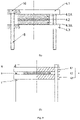
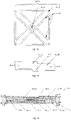
- the aging failure model analysis further includes: as shown in Fig. 10 , a target specimen 4.2 is clamped on both sides of a metal upper rigid plate 4.1 and a lower rigid plate 4.3, and is fastened by a metal screw rod 8 to form a "sandwich biscuit" structure, and the compression ratio of the target specimen 4.2 is adjusted to a specified value within the range of (0-40)%, for example, three types of fixture compression specimens with compression ratios of 10%, 20%, and 30% respectively; and the average thickness of an air layer sandwiched among the upper rigid plate 4.1, the lower rigid plate 4.3 and the target specimen 4.2 is reduced to less than one-half of an average particle size of powder fillers inside the target specimen 4.2, the average particle size dso of heat conducting powder or fillers is (1.5-15) ⁇ in general, especially grading composited powders, and the thickness of the target specimen 4.2 is (0.25-5)mm.
- the physical aging simplified treatment further includes:
- the chemical aging simplified treatment further includes:
- the parameters include: a total of fifteen parameters P ⁇ , P 0 ⁇ , P 0 ⁇ , ⁇ P 1 , ⁇ P 2 , ⁇ P 3 , t 0 , ⁇ 1 , ⁇ 2 , k 1 , k 2 , k 3 , k, ⁇ 1 , ⁇ 2 in the equation (1), fourteen of which are independent parameters, the other ⁇ P 1 is a linear correlation parameter, and the parameters do not change with time but change with temperature; and for the sake of brevity, a symbol "Q" is used for representing any one of the fifteen parameters.
- the parameter fitting includes: the measured value (P) of the physical, chemical and electrical properties is used as a verification specimen; an electronic calculation program or a parallax method is utilized to perform respective increase or decrease with a step pitch as small as possible, the measured value is input into the equation (1), and the respective "Q" values of the fifteen different parameters are repeatedly iterated and cycled to output calculated values (P t ); when a standard deviation of a difference value between the calculated value (P t ) and the measured value (P) converges to the minimum, the "Q" values corresponding to the fifteen parameters are used as optimal values; and due to a mathematical frequency doubling effect, if there is more than one optimal value among the fitted values of the fifteen parameters, only the group of fifteen smaller "Q" values closest to "1 time” is selected as the optimal parameters.
- the constant fitting includes: different "C” values are tentatively input, and are repeatedly iterated in the equation (2), plotting is performed by using the logarithms of the "Q" values of the fifteen optimal parameters as vertical coordinates, and using 1/(T+C) as abscissas, the points are connected into a line, and when the line is close to a straight line, "A, B and C" become the optimal fitted values; or a least square method electronic calculation program or a parallax method is utilized to perform increase or decrease with a step pitch as small as possible, different "C" values are input and are repeatedly iterated in the equation (2), when R 2 output by a calculation program system is ⁇ 0.990, it is considered that the line has been a straight line; the "A, B and C" in one-to-one correspondence with the obtained fifteen parameters become the optimal constants, wherein the minimum boundary of the value "C” is -273.
- the material of the rigid plate is selected from any one of ore, stainless steel, carbon steel, copper alloy, aluminum alloy, ceramics, polytetrafluoroethylene, polyimide, and polyphenylene sulfide, or the two rigid plates respectively select any two of the materials for permutation and combination.
- test method and algorithm for the aging life of the new energy heat management composite, and the use thereof in the present invention have the following beneficial technical effects:
- the eight use embodiments of the present invention list the application of the present invention in evaluating or predicting eight physical, chemical and electrical properties, that is, a thermal conductivity, a compression set rate, hardness, tensile strength, shear bonding strength, breakdown strength, volume resistivity and rated temperature, but the content and use of the present invention are not limited thereto.
- damp and hot, high and low temperature impact, and high and low temperature alternating cycle conditions of a short-term accelerated aging test are all completed in an air atmosphere, but the test atmosphere is not limited thereto.
- the first embodiment discloses one of the test method and algorithm for the aging life of the new energy heat management composite, and the use thereof in the present invention.
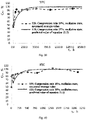
- the long-term change trend of the thermal conductivity of an interface target specimen during long-term service under actual working conditions is evaluated or predicted by using a short-term accelerated aging test method, including: using fixture compression specimens with three compression ratios of 10%, 20% and 30%; making the group of fixture compression specimens respectively undergo twelve specified times in four constant temperature environments within a temperature range of (218-298)°C under specified damp and hot conditions; in accordance with test procedures specified in ASTM D 5470, using a laminated combined test piece shown in Fig. 5 to Fig.
- each large group is divided into 12 intermediate aging time groups, the fixture compression specimens in each large group are respectively placed in four standard aging boxes conforming to the constant temperatures specified in Table 1 in advance, each fixture compression specimen in each compression ratio small group of each intermediate time group contains three parallel sub-specimens, and large temperature group, intermediate time group and compression ratio small group marks and operation circulation records are made for the fixture compression specimens in advance.
- the fixture compression specimens in the intermediate group are taken out of the large group of high temperature aging boxes and are placed at room temperature for (16-96)h, wherein the fixture compression specimens are placed under standard inspection conditions for not less than 30 minutes, and apparent thermal conductivitys and entire heat resistance of the fixture compression specimens after aging in a five-layer coaxial laminated combined test piece are tested, in accordance with the method shown in Fig.
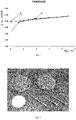
- the apparent thermal conductivity ( ⁇ a ) of the five-layer coaxial laminated combined test piece is converted into an equivalent thermal conductivity ( ⁇ e4.2 ) of a corresponding diameter according to an equation (7) by using commercial software or an electronic calculation form, and then is converted into a bulk thermal conductivity ( ⁇ n4.2 ) of a corresponding thickness, and the bulk thermal conductivity ( ⁇ n4.2 ) of the corresponding thickness is extended to an intrinsic thermal conductivity ( ⁇ ) by using the least square method according to Fig. 1 .
- the aging temperature and the aging time in the first embodiment are executed according to Table 1.
- the intrinsic thermal conductivity is preferably used as an object for inspection, evaluation and prediction of the aging test, but the use is not limited thereto. Under the established conditions that are convenient for each laboratory test, any one of the apparent thermal conductivity, the equivalent thermal conductivity, the bulk thermal conductivity, and the intrinsic thermal conductivity can be selected.
- the total equivalent thermal conductivity of the laminated combined test piece is measured by using the DRL thermal conductivity instrument.
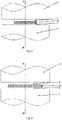
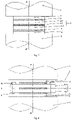
- an upper auxiliary elastic sheet 3 with a known thermal conductivity, a rigid target specimen 4.2 and a lower auxiliary elastic sheet 5 with a known thermal conductivity constitute a three-layer laminated combined test piece; and as shown in Fig. 7 and Fig.
- the upper rigid plate 4.1, the target specimen 4.2 and the lower rigid plate 4.3 are tightened and compressed into a non-detachable combined specimen 4 at first, and then the upper auxiliary elastic sheet 3 with the known thermal conductivity, the non-detachable combined specimen 4 and the lower auxiliary elastic sheet 5 with the known thermal conductivity constitute a five-layer combined test piece; and the total equivalent thermal conductivity of the three-layer laminated combined test piece and the five-layer combined test piece, that is, the apparent thermal conductivity ( ⁇ a ), is measured by using the DRL thermal conductivity instrument.
- the thermal conductivity of a single-layer target specimen 4.2 is measured by using the DRL thermal conductivity instrument.
- the DRL thermal conductivity instrument is used for testing the equivalent thermal conductivitys ( ⁇ e ) of homogeneous target specimens 4.2 with various thicknesses at the same pressure, after the equivalent thermal conductivitys ( ⁇ e ) are converted into bulk thermal conductivitys ( ⁇ n ) according to an equation (3), then plotting is performed by using the bulk thermal conductivitys ( ⁇ n ) as vertical coordinates and using the corresponding thicknesses ( ⁇ 4.2 ) of the target specimens 4.2 as abscissas, linear fitting is performed by using the bulk thermal conductivitys ( ⁇ n ) corresponding to the thicknesses ( ⁇ 4.2 ) greater than 0.75mm as specimens, and linear extension is performed to obtain an intersection of the thickness ( ⁇ 4.2 ) tending to zero and the vertical coordinates, and the intersection is considered as the intrinsic thermal conductivity ( ⁇ ).
- the thermal conductivity is tested by using the laminated combined test piece, including:
- the thicknesses of the upper auxiliary elastic sheet 3 and the lower auxiliary elastic sheet 5 are respectively ⁇ 3 and ⁇ 5 , and are known, the corresponding diameters ⁇ 3 and ⁇ 5 are known, the corresponding bulk thermal conductivitys ⁇ n 3 and ⁇ n 5 are known, and the thickness ⁇ 4.2 and the diameter ⁇ 4.2 of the target specimen 4.2 to be tested are known, after the apparent thermal conductivity ( ⁇ a ) of the three-layer coaxial laminated combined test piece is measured, the bulk thermal conductivity ⁇ n 4.2 of the target specimen 4.2 is calculated according to an equation (4) and an equation (5).
- ⁇ a ⁇ t ⁇ 3 30 ⁇ 3 2 ⁇ n 3 + ⁇ 4.2 30 ⁇ 4.2 2 ⁇ n 4.2 + ⁇ 5 30 ⁇ 5 2 ⁇ n 5 , the three ⁇ layer specimen in the equation (4),
- the thicknesses of the upper auxiliary elastic sheet 3 and the lower auxiliary elastic sheet 5 are respectively ⁇ 3 and ⁇ 5 , and are known, the corresponding diameters ⁇ 3 and ⁇ 5 are known, the corresponding bulk thermal conductivitys ⁇ n 3 and ⁇ n 5 are known, the thicknesses of the upper rigid plate 4.1 and the lower rigid plate 4.3 are respectively ⁇ 4.1 and ⁇ 4.3 , and are known, the corresponding diameters ⁇ 4.1 and ⁇ 4.3 are known, the corresponding bulk thermal conductivitys ⁇ n 4.1 and ⁇ n 4.3 are known, and the thickness ⁇ 4.2 and the diameter ⁇ 4.2 of the target specimen 4.2 to be tested are known, after the apparent thermal conductivity ( ⁇ a ) of the five-layer coaxial laminated combined test piece is measured, the bulk thermal conductivity ⁇ n4.2 of the target specimen 4.2 is calculated according to an equation (6) and an equation (7).
- any one of the apparent thermal conductivity ( ⁇ a ), the equivalent thermal conductivity ( ⁇ e ), the bulk thermal conductivity ( ⁇ n ), and the intrinsic thermal conductivity ( ⁇ ) is used, although all are equivalent, in this embodiment, in order to unify the concept, the apparent thermal conductivity ( ⁇ a ), the equivalent thermal conductivity ( ⁇ e ) and the bulk thermal conductivity ( ⁇ n ) are collectively converted into the intrinsic thermal conductivity ( ⁇ ) during the test process. It is only one of the manners of use, but is not a limitation of the use.
- the initial thicknesses of the upper auxiliary elastic sheet 3, the upper rigid plate 4.1, the target specimen 4.2, the lower rigid plate 4.3 and the lower auxiliary elastic sheet 5 in Fig. 3 to Fig 8 are shown in Table 2.
- the initial intrinsic thermal conductivitys of the upper auxiliary elastic sheet 3, the upper rigid plate 4.1, the target specimen 4.2, the lower rigid plate 4.3 and the lower auxiliary elastic sheet 5 in Fig. 5 to Fig. 8 are shown in Table 3.
- Table 2 Measurement results of initial thickness Fixture compression specimen Upper rigid plate Lower rigid plate Upper rigid plate Lower rigid plate Upper rigid plate Lower rigid plate Upper auxiliary elastic sheet Lower auxiliary elastic sheet Target specimen Material 304 Stainless steel A 304 Stainless steel B Copper nickel plated P40 P20 P40 Initial thickness mm 4.06+0.02 4.06+0.02 4.04+0.02 0.69+0.02 2.53+0.02 1.57+0.02 Table 3 Measurement results of initial intrinsic thermal conductivity Fixture compression specimen Upper rigid plate Lower rigid plate Upper rigid plate Lower rigid plate Upper rigid plate Lower rigid plate Upper auxiliary elastic sheet Lower auxiliary elastic sheet Target specimen Material 304 Stainless steel A 304 Stainless steel B Copper nickel plated P40 P20 P40 Initial Intrinsic thermal conductivity ⁇ , W/(m.K) 15.0+1.4 50.9+4.6
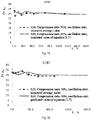
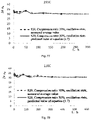
- the measured values of the intrinsic thermal conductivity changing with the aging time under constant temperature aging at 298°C and under three compression ratios of 10%, 20% and 30% of the fixture are listed in Table 4;
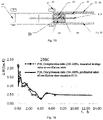
- the purpose of carrying out the T inspection in the first embodiment is to investigate the difference of degrees of influence of P20 or P40 on thermal conductivity aging under the conditions of three compression ratios of 10%, 20% and 30%, respectively.
- the data of the three compression ratios of 10%, 20% and 30% can be merged into a group of average values for observation and processing.
- One of the use of the algorithm of the present invention is to replace a general symbol (P) of the physical, chemical and electrical properties in the equation (1) with a specific symbol ( ⁇ ) of the intrinsic thermal conductivity, so as to convert the equation (1) into an equation (1.1):
- ⁇ t ⁇ ⁇ + ⁇ 0 ⁇ + ⁇ ⁇ t e ⁇ k 1 t ⁇ Sin ⁇ 1 t t 0 ⁇ 1 ⁇ 1 ⁇ + ⁇ ⁇ 2 e ⁇ k 2 t ⁇ Sin ⁇ 2 t t 0 ⁇ 1 ⁇ 2 ⁇ + ⁇ ⁇ 3 e ⁇ k 3 t ⁇ ⁇ ⁇ e ⁇ kt in the equation (1.1),
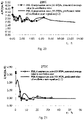
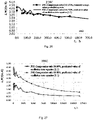
- the parameter is repeatedly and iteratively input into the equation (1.1) by using a parallax method, after each parameter is iterated for more than 50 times, the standard deviation of a difference value between a calculated value ( ⁇ t ) and a measured value ( ⁇ ) converges to the minimum, optimal values of the fifteen parameters "Q" of the thermal conductivity at each temperature are obtained, and the results of iterative optimization of P20 and P40 are listed in Table 10 and Table 11. Because of a mathematical frequency doubling effect, when there is more than one optimal value among the fitted values of the obtained fifteen parameters, only the smaller group of fifteen "Q" values closest to "1 time” is selected as optimal parameters.
- each parameter does not change with time, but only changes with temperature.
- the extended prediction temperature width is less than 0.8 times of the difference between the highest test temperature and the lowest test temperature.
- Arrhenius' Equation (Arrhenius' Equation) adopted by these framework standards belongs to a single chemical component, single activation energy and a single crystal phase region; and during the prediction, it is necessary to limit the extended prediction temperature width, so as to expect that an experimental temperature region and a prediction temperature region belong to the same activation energy and the same crystal phase region as much as possible, so that the predicted result does not exceed an allowable error range.
- the algorithm of the equation (1) in the present invention is a mathematical model that is established and experimented on the basis of the activation energy of multiple chemical reactions and the mechanism of cross-phase region, its linear correlation coefficient R 2 reaches the accuracy level of four "9", and when the prediction aging temperature width is extended, the range of 0.8 times of the experimental temperature width can be broken through, which is another ultimate important effect of the present invention.
- the second embodiment discloses another form of the test method and algorithm for the aging life of the new energy heat management composite, and the use thereof in the present invention.
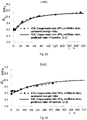
- the long-term change trend of the compression set rate of an interface target specimen during long-term service under actual working conditions is evaluated or predicted by using a short-term accelerated aging test method, including: using fixture compression specimens with a compression ratio of 30%; selecting six constant temperatures for the group of fixture compression specimens within a temperature range of (85-245)°C, and making the group of fixture compression specimens respectively undergo three aging conditions of damp and hot, high and low temperature, and high and low temperature alternating circle in each specified constant temperature environment for a specified time or an accumulative number of cycles; using the fixture compression specimen shown in Fig.
- the preparation of the fixture compression specimen for the compression set includes: injecting a uniformly mixed toothpaste-like target specimen 4.2 into a space between an aluminum alloy upper butt joint bonding plate 4.1A and a lower butt joint bonding plate 4.3A, placing the plates on a supporting mold in advance, so that the upper butt joint bonding plate 4.1A, the target specimen 4.2 and the lower butt joint bonding plate 4.3A solidify into a parallel and coaxial "sandwich biscuit" overall structure, and then clamping the upper butt joint bonding plate 4.1A and the lower butt joint bonding plate 4.3A by using a metal screw rod 8, an upper rigid plate 4.1 and a lower rigid plate 4.3, so that the thickness of the target specimen 4.2 is adjusted to 70% of the initial thickness, that is, the compression ratio is 30%.
- the target specimen 4.2 is a two-component organic silicone heat conducting adhesive product with a nominal thermal conductivity of 2 W/(m.K) and an initial casting thickness of 6.4mm, and the target specimen is referred to as S20 for short.
- the three aging conditions include: damp and hot, high and low temperature impact, and high and low temperature alternating cycle. Since there are more details involved, another three sections are used for further disclosure:
- each large group is divided into seven small groups, and parallel sub-specimens in each small group are executed according to corresponding test technical standards for physical, chemical and electrical properties (there are three parallel sub-specimens in the second embodiment); each large group is respectively placed in four standard aging boxes conforming to the constant temperatures specified in Table 19 in advance, and large temperature group and time small group marks and operation circulation records are made for the fixture compression specimens in advance; when the fixture compression specimens in each small group reach the constant times specified in Table 19, the fixture compression specimens in this small group are taken out from the large group of high temperature aging boxes; and the fixture compression specimens are placed at room temperature for (16-96)h, wherein the fixture compression specimens are placed under standard inspection conditions for not less than 30min, and physical, chemical and electrical property indicators of the target specimen 4.2 after aging are tested according to the test procedures specified in the corresponding technical standards for the physical, chemical and electrical properties (in the second embodiment, the compression set rate is test in accordance with the test procedure specified in GB
- the relative humidity refers to the gas-liquid equilibrium relative humidity of any saturated salt solution or glycerin aqueous solution in Table 20, and a saturated aqueous solution of potassium sulfate that meets the specifications of the GB/T 16496 standard, or a saturated aqueous solution of potassium chloride that meets the specifications of the GB/T 7118 standard, or an aqueous solution of glycerin (15 ⁇ 5)% that meets the specifications of the GB/T 13206 standard is injected into a white enamel basin with a length ⁇ 420mm, a width ⁇ 320mm and a depth ⁇ 35mm; the enamel basin is placed on a bottom layer of an inner cavity of the aging box, during a constant temperature process, water needs to be dripped in time, so as to ensure that there is always water and undissolved solid substance in the enamel basin, or to ensure that the liquid level of the glycerin aqueous solution is between the highest and lowest liquid levels specified in advance;
- each large group is divided into at least seven small groups, and parallel sub-specimens in each small group are executed according to corresponding test technical standards for the physical, chemical and electrical properties (there are three parallel sub-specimens in the second embodiment); each large group is respectively placed in four standard aging boxes conforming to the constant temperatures specified in Table 21 in advance, large temperature group and time small group marks and operation circulation records are made for the fixture compression specimens in advance; when the fixture compression specimens in each small group reach the constant times specified in Table 21, the fixture compression specimens in this small group are taken out from the large group of high temperature aging boxes, and the fixture compression specimens in this small group are placed in a freezer with a constant temperature specified according to Table 22 in advance within 10s; when the fixture compression specimens in each small group reach the constant times specified in Table 22, the fixture compression specimens in this small group are taken out from the low-temperature freezer; the fixture compression specimens are placed at room temperature for (16-96)h, wherein the fixture compression specimens are placed under standard
- each large group is divided into at least seven small groups, and parallel sub-specimens in each small group are executed according to corresponding test technical standards for the physical, chemical and electrical properties (there are three parallel sub-specimens in the second embodiment); each large group is respectively placed in four standard aging boxes conforming to the constant temperatures specified in Table 23 in advance, large temperature group and time small group marks and operation circulation records are made for the fixture compression specimens in advance; and in accordance with a high and low temperature alternating cycle operation:
- the T inspection indicates that the compression set rates under the three aging conditions of damp and hot, high and low temperature impact, and high and low temperature alternating cycle show similar aging change trends, and this indicates that the difference in the influence of the two factors, that is, high and low temperature impact, and high and low temperature alternating cycle, on the aging compression set rate of S20 is negligible. This is because the modulus of S20 is very small, and the stress impact generated by the temperature rise and fall speed of (5-10)°C/min is not sufficient to generate significant negative aging influence on S20; and the main determinant influencing the property aging is the accumulative time or the accumulative number of cycles and the mechanical compression ratio at high temperature.
- the three data specimen groups obtained under the three aging conditions of damp and hot, high and low temperature impact, and high and low temperature alternating cycle should be combined into a larger data specimen, and then data processing is carried out.
- a general symbol (P) of the physical, chemical and electrical properties in the equation (1) is replaced with a specific symbol (C A ) of the compression set rate, so as to convert the equation (1) into an equation (1.2):
- C At C A ⁇ + C A0 ⁇ + ⁇ C A1 e ⁇ k 1 t ⁇ Sin ⁇ 1 t t 0 ⁇ 1 ⁇ 1 ⁇ + ⁇ C A 2 e ⁇ k 2 t ⁇ + Sin ⁇ 2 t t 0 ⁇ 1 ⁇ 2 ⁇ + ⁇ C A 3 e ⁇ k 3 t ⁇ C A ⁇ e ⁇ kt in the equation (1.2),
- each parameter does not change with time, but only changes with temperature.
- the third embodiment discloses another form of the test method and algorithm for the aging life of the new energy heat management composite, and the use thereof in the present invention.
- the long-term change trend of the hardness of an interface target specimen during long-term service under actual working conditions is evaluated or predicted by using a short-term accelerated aging test method, including: using fixture compression specimens with a compression ratio of 30%; selecting six constant temperatures for the group of fixture compression specimens within a temperature range of (85-245)°C, and making the group of fixture compression specimens respectively undergo three aging conditions of damp and hot, high and low temperature, and high and low temperature alternating circle in each specified constant temperature environment for a specified time or an accumulative number of cycles; using the fixture compression specimen shown in Fig.
- the preparation of the fixture compression specimen for the hardness includes: injecting a uniformly mixed toothpaste-like target specimen 4.2 into a space between an aluminum alloy upper butt joint bonding plate 4.1A and a lower butt joint bonding plate 4.3A, placing the plates on a supporting mold in advance, so that the upper butt joint bonding plate 4.1A, the target specimen 4.2 and the lower butt joint bonding plate 4.3A solidify into a parallel and coaxial "sandwich biscuit" overall structure, and then clamping the upper butt joint bonding plate 4.1A and the lower butt joint bonding plate 4.3A by using a metal screw rod 8, an upper rigid plate 4.1 and a lower rigid plate 4.3, so that the thickness of the target specimen 4.2 is adjusted to 70% of the initial thickness, that is, the compression ratio is 30%.
- a bonding interface between the target specimen 4.2 and the upper butt joint bonding plate 4.1A is smoothly cut and peeled by using a sharp thin blade, and then a hardness test procedure is carried out; or, the target specimen 4.2 and the upper butt joint bonding plate 4.1A are not cut or peeled, only the probe of a hardmeter is in contact with the edge of the target specimen 4.2 between the upper butt joint bonding plate 4.1A and the lower butt joint bonding plate 4.3A to test the hardness, and the measured results of the two test methods are equivalent.
- the target specimen 4.2 is a two-component organic silicone heat conducting adhesive product, with a nominal thermal conductivity of 2 W/(m.K) and an initial casting thickness of 12.7mm, and the target specimen is referred to as S20 for short.
- the three aging conditions include: damp and hot, high and low temperature impact, and high and low temperature alternating cycle, which are completely the same as the three aging conditions disclosed in the second embodiment.
- the T inspection indicates that the hardness under the three aging conditions of damp and hot, high and low temperature impact, and high and low temperature alternating cycle shows similar aging change trends, and this indicates that the difference in the influence of the two factors, that is, high and low temperature impact, and high and low temperature alternating cycle, on the aging hardness of S20 is negligible. This is because the modulus of S20 is very small, and the stress impact generated by the temperature rise and fall speed of (5-10)°C/min is not sufficient to generate significant negative aging influence on S20; and the main determinant influencing the property aging is the accumulative time or the accumulative number of cycles at high temperature.
- the three data specimen groups obtained under the three aging conditions of damp and hot, high and low temperature impact, and high and low temperature alternating cycle should be combined into a larger data specimen, and then data processing is carried out.
- H t H ⁇ + H 0 ⁇ + ⁇ H 1 e ⁇ k 1 t ⁇ Sin ⁇ 1 t t 0 ⁇ 1 ⁇ 1 ⁇ + ⁇ H 2 e ⁇ k 2 t ⁇ Sin ⁇ 2 t t 0 ⁇ 1 ⁇ 2 ⁇ + ⁇ H 3 e ⁇ k 3 t ⁇ H ⁇ e ⁇ kt in the equation (1.3),
- each parameter does not change with time, but only changes with temperature.
- the fourth embodiment discloses another form of the test method and algorithm for the aging life of the new energy heat management composite, and the use thereof in the present invention.
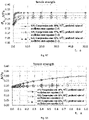
- the long-term change trend of the tensile strength of an interface target specimen during long-term service under actual working conditions is evaluated or predicted by using a short-term accelerated aging test method, including: using fixture compression specimens with a compression ratio of 30%; selecting six constant temperatures for the group of fixture compression specimens within a temperature range of (85-245)°C, and making the group of fixture compression specimens respectively undergo three aging conditions of damp and hot, high and low temperature, and high and low temperature alternating circle in each specified constant temperature environment for a specified time or an accumulative number of cycles; using the fixture compression specimen combined by a square clamping plate shown in Fig.
- the preparation of the tensile strength specimen includes: firstly paving a layer of isolating membrane (such as a PI membrane) that has no substance exchange and no chemical reaction with the target specimen 4.2 on the bottom of a rigid double-square-shaped mold frame with a depth of 1mm, injecting the uniformly mixed toothpaste-like target specimen 4.2 into the rigid mold frame, paving a layer of isolating membrane on the target specimen 4.2 after leveling the same, planishing the target specimen 4.2 under a press, performing curing molding on the target specimen 4.2, cutting the target specimen 4.2 into a 155 ⁇ 155 ⁇ 1 mm blank specimen, cutting the 155 ⁇ 155 ⁇ 1 mm blank specimen into five dumbbell specimens by using a Type 2 or Type 1B dumbbell cutting die of the GB/T 1040.3 standard, but at this time, the dumbbell specimens should not be separated from the 155 ⁇ 155 ⁇ 1 mm blank specimen or taken out, instead, clamping the 155 ⁇ 155 ⁇ 1 mm blank specimen that has been cut into the dumbbell specimen
- the isolating membranes are located among an upper square clamping plate 13.10 and the blank specimen, and between the blank specimen and a lower square clamping plate 13.20, so as to facilitate demolding, fastening the upper square clamping plate 13.10 and the lower square clamping plate 13.20 by using metal screw rods 8, so that the thickness of the blank specimen is compressed and locked to 70% of the initial thickness, that is, the compression ratio is 30%, and then the fixture compression specimen for the tensile strength is molded.
- the target specimen 4.2 is a two-component organic silicone heat conducting adhesive product, with a nominal thermal conductivity of 2 W/(m.K) and an initial casting thickness of 1.0mm, and the target specimen is referred to as S20 for short.
- the three aging conditions include: damp and hot, high and low temperature impact, and high and low temperature alternating cycle, and the specific details are completely the same as those disclosed in the second embodiment.
- the T inspection indicates that the tensile strength under the three aging conditions of damp and hot, high and low temperature impact, and high and low temperature alternating cycle shows similar aging change trends, and thus a larger data specimen may be assembled for evaluation or prediction.
- a general symbol (P) of the physical, chemical and electrical properties in the equation (1) is replaced with a specific symbol ( ⁇ ) of the tensile strength, so as to convert the equation (1) into an equation (1.4):
- ⁇ t ⁇ ⁇ + ⁇ 0 ⁇ + ⁇ 1 e - k 1 t ⁇ Sin ⁇ 1 t t 0 ⁇ 1 ⁇ 1 ⁇ + ⁇ 2 e - k 2 t ⁇ Sin ⁇ 2 t t 0 ⁇ 1 ⁇ 2 ⁇ + ⁇ 3 e - k 3 t ⁇ ⁇ ⁇ e - kt in the equation (1.4)
- each parameter does not change with time, but only changes with temperature.
- the fifth embodiment discloses another form of the test method and algorithm for the aging life of the new energy heat management composite, and the use thereof in the present invention.
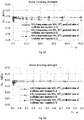
- the long-term change trend of the shear bonding strength of an interface target specimen during long-term service under actual working conditions is evaluated or predicted by using a short-term accelerated aging test method, including: using fixture compression specimens with a compression ratio of 30%; selecting six constant temperatures for the group of fixture compression specimens within a temperature range of (85-245)°C, and making the group of fixture compression specimens respectively undergo three aging conditions of damp and hot, high and low temperature, and high and low temperature alternating circle in each specified constant temperature environment for a specified time or an accumulative number of cycles; using the fixture compression specimen combined by a square clamping plate shown in Fig.
- lap joint bonding sheets are prepared, including: an upper lap joint bonding sheet 14.10, the target specimen 4.2 and a lower lap joint bonding sheet 14.20; and the upper lap joint bonding sheet 14.10 and the lower lap joint bonding sheet 14.20 are bonded and cured into an integral lap joint specimen by the target specimen 4.2.
- the fixture compression specimen for the shear bonding strength includes: screw rods 8, nuts 10, an upper square clamping plate 13.10, a lower square clamping plate 13.20, an upper lap joint bonding sheet 14.10, a lower lap joint bonding sheet 14.20, an upper positioning sheet A 15.1, a lower positioning sheet A 15.2, an upper positioning sheet B 15.3, and a lower positioning sheet B 15.4, wherein the upper lap joint bonding sheet 14.10 and the lower lap joint bonding sheet 14.20 are bonded and cured into an integral lap joint specmen by the target specimen 4.2; the upper square clamping plate 13.10, the lower square clamping plate 13.20, the upper lap joint bonding sheet 14.10, the integral lap joint specmen, the upper positioning sheet A 15.1, the lower positioning sheet A 15.2, the upper positioning sheet B 15.3 and the lower positioning sheet B 15.4 are fastened into an entirety by the screw rods 8 and nuts 10, so that the thickness of the target specimen 4.2 is compressed to 70% of the initial value, that is, the compression ratio is 30%; and the upper positioning sheet A
- the upper square clamping plate 13.10 is consistent with Fig. 11
- the lower square clamping plate 13.20 is consistent with Fig. 12 .
- the target specimen 4.2 is a two-component organic silicone heat conducting adhesive product, with a nominal thermal conductivity of 2 W/(m.K) and an initial casting thickness of 0.40mm, and the target specimen is referred to as S20 for short.
- the three aging conditions include: damp and hot, high and low temperature impact, and high and low temperature alternating cycle, and the specific details are completely the same as those disclosed in the second embodiment.
- the T inspection indicates that the shear bonding strength under the three aging conditions of damp and hot, high and low temperature impact, and high and low temperature alternating cycle shows similar aging change trends, and this indicates that the difference in the influence of the two factors, that is, high and low temperature impact, and high and low temperature alternating cycle, on the aging shear bonding strength of S20 is negligible.
- the three data specimen groups obtained under the three aging conditions of damp and hot, high and low temperature impact, and high and low temperature alternating cycle should be combined into a larger data specimen, and then data processing is carried out.
- each parameter does not change with time, but only changes with temperature.
- the sixth embodiment discloses another form of the test method and algorithm for the aging life of the new energy heat management composite, and the use thereof in the present invention.
- the long-term change trend of the breakdown strength of an interface target specimen during long-term service under actual working conditions is evaluated or predicted by using a short-term accelerated aging test method, including: using fixture compression specimens with a compression ratio of 30%; selecting six constant temperatures for the group of fixture compression specimens within a temperature range of (85-245)°C, and making the group of fixture compression specimens respectively undergo three aging conditions of damp and hot, high and low temperature, and high and low temperature alternating circle in each specified constant temperature environment for a specified time or an accumulative number of cycles; using the fixture compression specimen combined by a square clamping plate shown in Fig.
- an upper electrode 16.10 and a lower electrode 16.20 are fabricated, wherein the upper electrode 16.10 includes an upper electrode tip 16.11 and an upper electrode plate 16.12, the lower electrode 16.20 includes a lower electrode tip 16.21 and a lower electrode plate 16.22, and the electrode tips and the electrode plates are connected into an electrode entirety by threaded connection or soldering.
- the fixture compression specimen for the breakdown strength includes: a target specimen 4.2, screw rods 8, nuts 10, an upper square clamping plate 13.10, a lower square clamping plate 13.20, an upper electrode tip 16.11, an upper electrode plate 16.12, a lower electrode tip 16.21 and a lower electrode plate 16.22, wherein the electrode tips and the electrode plates are connected into an electrode entirety by threaded connection or soldering; the target specimen 4.2 is clamped by a pair of electrodes; and the pair of electrodes is fastened and locked by a pair of square clamping plates and insulating screw rods 8, so that the thickness of the target specimen 4.2 is compressed to 70% of the initial value, that is, the compression ratio is 30%, and a breakdown strength aging specimen is constituted.
- the upper square clamping plate 13.10 is consistent with Fig. 11
- the lower square clamping plate 13.20 is consistent with Fig. 12 .
- the target specimen 4.2 is selected to be flaky shape formed by solidifying solidified two-component organic silicone heat conducting adhesive, with a thickness of (0.7-1.2)mm and a nominal thermal conductivity of 2 W/(m.K), referred to as S20 for short.
- the three aging conditions include: damp and hot, high and low temperature impact, and high and low temperature alternating cycle, and the specific details are completely the same as those disclosed in the second embodiment.
- the T inspection indicates that the breakdown strength under the three aging conditions of damp and hot, high and low temperature impact, and high and low temperature alternating cycle shows similar aging change trends, and this indicates that the difference in the influence of the two factors, that is, high and low temperature impact, and high and low temperature alternating cycle, on the aging breakdown strength of S20 is negligible.
- the three data specimen groups obtained under the three aging conditions of damp and hot, high and low temperature impact, and high and low temperature alternating cycle should be combined into a larger data specimen, and then data processing is carried out.
- E t E ⁇ + E 0 ⁇ + ⁇ E 1 e ⁇ k 1 t ⁇ Sin ⁇ 1 t t 0 ⁇ 1 ⁇ 1 ⁇ + ⁇ E 2 e ⁇ k 2 t ⁇ Sin ⁇ 2 t t 0 ⁇ ⁇ 1 ⁇ 2 ⁇ + ⁇ E 3 e ⁇ k 3 t ⁇ E ⁇ e ⁇ kt in the equation (1.6)
- each parameter does not change with time, but only changes with temperature.
- the seventh embodiment discloses another form of the test method and algorithm for the aging life of the new energy heat management composite, and the use thereof in the present invention.
- the long-term change trend of the volume resistivity of an interface target specimen during long-term service under actual working conditions is evaluated or predicted by using a short-term accelerated aging test method, including: using fixture compression specimens with a compression ratio of 30%; selecting six constant temperatures for the group of fixture compression specimens within a temperature range of (85-245)°C, and making the group of fixture compression specimens respectively undergo three aging conditions of damp and hot, high and low temperature, and high and low temperature alternating circle in each specified constant temperature environment for a specified time or an accumulative number of cycles; using the fixture compression specimen combined by a square clamping plate shown in Fig.
- the fixture compression specimen for the volume resistivity includes: a target specimen 4.2, bolts 8, an upper square clamping plate 13.10, a lower square clamping plate 13.20, a high-temperature insulation sheet 17 resistant to 245 °C or higher (such as a PTFE insulation sheet), a protected electrode 18, a protection electrode 19, a non-protected electrode 20, and positioning screws (electrode tips) 21; an annular gap between the protected electrode 18 and the protection electrode 19 is filled with a high temperature insulation ring 23 resistant to 245 °C or higher (for example, being bonded by a PTFE insulation ring or an insulating pouring sealant), so as to form an isolated and insulated entirety; the protection electrode 19 is isolated from the upper square clamping plate 13.10 by using the high-temperature insulation sheet 17 resistant to 245 °C or higher, so that the protected electrode 18 is isolated and insulated from the protection electrode 19; a pair of positioning screws (electrode tips) 21 is vertically and fixedly or welded
- the protected electrode 18, the protection electrode 19 and the non-protected electrode 20 are fabricated according to sizes specified in GB/T 1410 or IEC 60093-1 or ASTM D 257.
- the upper square clamping plate 13.10 is consistent with Fig. 11
- the lower square clamping plate 13.20 is consistent with Fig. 12 .
- the target specimen 4.2 is selected to be flaky shape formed by solidifying solidified two-component organic silicone heat conducting adhesive, with a thickness of (0.7-1.0)mm and a nominal thermal conductivity of 2 W/(m.K), and the target specimen is referred to as S20 for short.
- the three aging conditions at six temperatures include: damp and hot, high and low temperature impact, and high and low temperature alternating cycle, and the specific details of the three aging conditions are completely the same as those disclosed in the second embodiment.
- the T inspection indicates that the volume resistivity under the three aging conditions of damp and hot, high and low temperature impact, and high and low temperature alternating cycle shows similar aging change trends, and this indicates that the difference in the influence of the two factors, that is, high and low temperature impact, and high and low temperature alternating cycle, on the aging volume resistivity of S20 is negligible.
- the three data specimen groups obtained under the three aging conditions of damp and hot, high and low temperature impact, and high and low temperature alternating cycle should be combined into a larger data specimen, and then data processing is carried out.
- a general symbol (P) of the physical, chemical and electrical properties in the equation (1) is replaced with a specific symbol ( ⁇ v ) of the natural logarithm of the volume resistivity, so as to convert the equation (1) into an equation (1.7):
- ⁇ vt ⁇ ⁇ + ⁇ v 0 ⁇ + ⁇ ⁇ v 1 e ⁇ k 1 t ⁇ Sin ⁇ 1 t t 0 ⁇ 1 ⁇ 1 ⁇ + ⁇ ⁇ v 2 e ⁇ k 2 t ⁇ Sin ⁇ 2 t t 0 ⁇ ⁇ 1 ⁇ 2 ⁇ + ⁇ ⁇ v 3 e ⁇ k 3 t ⁇ ⁇ v ⁇ e ⁇ kt in the equation (1.7)
- each parameter does not change with time, but only changes with temperature.
- test method and algorithm for the aging life of the new energy heat management composite is to evaluate or predict rated indicators of an interface target specimen corresponding to physical, chemical and electrical properties during long-term service under actual working conditions, by using a short-term accelerated aging test method, including: determining a half-life period of any one of the physical, chemical and electrical properties in a specified service temperature environment, or determining a rate temperature of any one of the physical, chemical and electrical properties at a specified service time of 20,000 hours, by using a micro-gasification expansion oscillation equation (1) and a dynamic correlation equation (2).
- a method for determining a half-life period and a rated temperature of a target specimen 4.2 under the thermal conductivity P40 including: using a micro-gasification expansion oscillation equation (1.1), a temperature correlation equation (2.1) and 15 groups of three "A, B, C” constant values in Table 11; substituting the 15 groups of three "A, B, C” constant values and different service temperatures (T i ) back into the dynamic correlation equation (2.1), so as to respectively calculate new values of the 15 parameters ( ⁇ ⁇ , t 0 , ⁇ 1 , ⁇ 2 , ⁇ 3 , ⁇ 0 ⁇ , ⁇ 0 ⁇ , ⁇ 1 , ⁇ 2 , k 1 , k 2 , k 3 , k, ⁇ 1 , ⁇ 2 ) in the environment of the service temperature (T i ) by using a software program or an electronic calculation form; and substituting the new values of this group of 15 parameters back into the micro-gasification expansion oscillation equation
- plotting is performed by using the half-life periods ( ⁇ i ) of the thermal conductivity in Table 43 as vertical coordinates and using the service temperatures (T i ) as abscissas, various points are connected into a smooth curve, the curve has an intersection with a 20,000-hour horizontal line of the vertical coordinates, an intersection of a vertical line and the abscissas is plotted by passing through the intersection, so as to obtain the rated temperature of the target specimen P40, and the rated temperature of the target specimen P40 under the thermal conductivity is 181°C.
Landscapes
- Physics & Mathematics (AREA)
- Life Sciences & Earth Sciences (AREA)
- Chemical & Material Sciences (AREA)
- General Physics & Mathematics (AREA)
- Health & Medical Sciences (AREA)
- Pathology (AREA)
- Analytical Chemistry (AREA)
- Biochemistry (AREA)
- General Health & Medical Sciences (AREA)
- Immunology (AREA)
- Engineering & Computer Science (AREA)
- Theoretical Computer Science (AREA)
- General Engineering & Computer Science (AREA)
- Computer Hardware Design (AREA)
- Evolutionary Computation (AREA)
- Geometry (AREA)
- Medicinal Chemistry (AREA)
- Food Science & Technology (AREA)
- Ecology (AREA)
- Biodiversity & Conservation Biology (AREA)
- Environmental & Geological Engineering (AREA)
- Environmental Sciences (AREA)
- Manufacturing & Machinery (AREA)
- Chemical Kinetics & Catalysis (AREA)
- Electrochemistry (AREA)
- General Chemical & Material Sciences (AREA)
- Testing Resistance To Weather, Investigating Materials By Mechanical Methods (AREA)
Applications Claiming Priority (2)
| Application Number | Priority Date | Filing Date | Title |
|---|---|---|---|
| CN202011645694.6A CN113189130A (zh) | 2020-12-31 | 2020-12-31 | 新能源热管理复合材料老化寿命试验方法和算法及用途 |
| PCT/CN2021/129423 WO2022142742A1 (zh) | 2020-12-31 | 2021-11-09 | 新能源热管理复合材料老化寿命试验方法和算法及用途 |
Publications (2)
| Publication Number | Publication Date |
|---|---|
| EP4050329A1 true EP4050329A1 (de) | 2022-08-31 |
| EP4050329A4 EP4050329A4 (de) | 2023-02-15 |
Family
ID=76972818
Family Applications (1)
| Application Number | Title | Priority Date | Filing Date |
|---|---|---|---|
| EP21890366.4A Ceased EP4050329A4 (de) | 2020-12-31 | 2021-11-09 | Verfahren und algorithmus zur prüfung der alterungsbeständigkeit eines verbundwerkstoffs für neues energie-thermomanagement sowie verwendung davon |
Country Status (6)
| Country | Link |
|---|---|
| US (1) | US20230160844A1 (de) |
| EP (1) | EP4050329A4 (de) |
| JP (1) | JP7749194B2 (de) |
| KR (1) | KR20220110588A (de) |
| CN (1) | CN113189130A (de) |
| WO (1) | WO2022142742A1 (de) |
Cited By (1)
| Publication number | Priority date | Publication date | Assignee | Title |
|---|---|---|---|---|
| US20230160844A1 (en) * | 2020-12-31 | 2023-05-25 | Shenzhen Goldlink Tongda Electronics Co., Ltd. | Test method and algorithm for aging life of new energy heat management composite, and use thereof |
Families Citing this family (27)
| Publication number | Priority date | Publication date | Assignee | Title |
|---|---|---|---|---|
| CN114113195B (zh) * | 2021-11-19 | 2023-09-12 | 安徽理工大学 | 一种冷热循环相变储热板耐久性能测定装置 |
| CN114324840B (zh) * | 2021-12-13 | 2024-01-23 | 天津六0九电缆有限公司 | 一种快速判定电缆料喷霜的试验方法 |
| CN115099013A (zh) * | 2022-06-07 | 2022-09-23 | 国家石油天然气管网集团有限公司 | 一种用于预测纤维复合材料剩余寿命的方法及装置 |
| CN115078130B (zh) * | 2022-08-23 | 2022-11-11 | 江苏华恬节能科技有限公司 | 一种塑料制品抗剪切强度测试装置 |
| CN116086957B (zh) * | 2022-12-29 | 2025-11-04 | 新源动力股份有限公司 | 一种燃料电池密封材料寿命测试装置及评估方法 |
| CN116384068B (zh) * | 2023-03-08 | 2024-01-23 | 中国石油大学(华东) | 一种微尺度空化数值预测方法 |
| CN116840079B (zh) * | 2023-07-04 | 2023-12-29 | 哈尔滨工业大学 | 一种金属构件冲击-高温耦合加载的试验系统及方法 |
| CN116776478B (zh) * | 2023-08-23 | 2023-11-28 | 武汉嘉晨电子技术有限公司 | 一种汽车bdu缓冲垫和导热垫的压缩率匹配方法 |
| CN116911068B (zh) * | 2023-09-06 | 2023-11-28 | 成都汉度科技有限公司 | 一种电缆接头有效寿命预测方法及系统 |
| CN117233076B (zh) * | 2023-10-25 | 2025-11-21 | 上海师范大学 | 一种密封胶拉剪和老化性能测试装置 |
| CN117438012B (zh) * | 2023-11-16 | 2024-05-24 | 国网山东省电力公司超高压公司 | 一种复合绝缘子材料多因素老化试验分析系统 |
| CN117554273B (zh) * | 2023-11-20 | 2024-08-06 | 西南交通大学 | 一种表面改性液体硅橡胶抗老化能力的评估方法 |
| CN117368623B (zh) * | 2023-12-07 | 2024-02-02 | 深圳鹏城新能科技有限公司 | 一种可对拖的储能逆变器老化检验方法、系统及介质 |
| CN117972990B (zh) * | 2023-12-28 | 2025-11-14 | 福建福清核电有限公司 | 一种核电应急柴油机冷却水膨胀节寿期评估方法 |
| CN117996234A (zh) * | 2024-01-30 | 2024-05-07 | 江苏正力新能电池技术有限公司 | 一种提高电池循环寿命的方法、系统及电池 |
| CN117740662B (zh) * | 2024-02-18 | 2024-05-14 | 中南大学 | 一种差异条件橡胶密封垫老化试验装置及测试方法 |
| CN118225605B (zh) * | 2024-04-28 | 2024-09-24 | 青岛鹏锐机械有限公司 | 一种紧固件连接结构中强度参数确定方法 |
| CN119086269A (zh) * | 2024-08-27 | 2024-12-06 | 北京科技大学 | 一种不同环境下有机质文物力学强度测试装置及方法 |
| CN118777371B (zh) * | 2024-09-09 | 2024-12-24 | 乐山京隆石英玻璃制品有限公司 | 一种坩埚检测方法及检测装置 |
| CN119164866B (zh) * | 2024-09-20 | 2026-04-14 | 东风汽车集团股份有限公司 | 橡胶材料的试验方法及相关设备 |
| CN119147369B (zh) * | 2024-11-13 | 2025-02-14 | 金锚电力控股有限公司 | 用于tpu材料的检测系统及方法 |
| CN119688560B (zh) * | 2024-12-10 | 2025-11-14 | 福建福清核电有限公司 | 一种核用丁腈橡胶密封圈的寿命评估方法 |
| CN119579603B (zh) * | 2025-02-08 | 2025-04-11 | 广东荣骏建设工程检测股份有限公司 | 基于混凝土管检测数据的寿命预测方法及系统 |
| CN119618956B (zh) * | 2025-02-17 | 2025-10-31 | 吉林省太羽科技制造有限公司 | 空气悬架尼龙管水蒸气阻隔测试方法 |
| CN120102433B (zh) * | 2025-05-09 | 2025-07-22 | 海安浩驰科技有限公司 | 一种膜用紫外快速老化试验箱 |
| CN121409761B (zh) * | 2025-12-29 | 2026-03-31 | 中山大学 | 塑料管寿命测试方法及其装置 |
| CN121480327A (zh) * | 2026-01-07 | 2026-02-06 | 浙江埃科汽车技术服务有限公司 | 智能座舱hmi多维耐久应力加速加载测试方法 |
Family Cites Families (26)
| Publication number | Priority date | Publication date | Assignee | Title |
|---|---|---|---|---|
| JPH03159511A (ja) * | 1989-08-24 | 1991-07-09 | Furukawa Electric Co Ltd:The | 自動車用電気接続箱及びその製造方法 |
| DE4419145A1 (de) * | 1994-06-01 | 1995-12-07 | Hagenuk Telecom Gmbh | Verfahren und Vorrichtung zur Teilentladungsmessung bei Kabelprüfungen mit VLF-Spannungen |
| JP2006300855A (ja) * | 2005-04-25 | 2006-11-02 | Kyocera Corp | 有機部材を具備する構造体の寿命推定方法 |
| JP2007024693A (ja) * | 2005-07-15 | 2007-02-01 | Central Res Inst Of Electric Power Ind | 高分子材料の耐久性評価システム及び方法、並びにプログラム及び記録媒体 |
| US7487666B2 (en) * | 2006-04-17 | 2009-02-10 | Kranbuehl David E | Method to predict the end-point, replacement time and to monitor changes in that time using pre aged witness coupons |
| CN101476998B (zh) * | 2008-12-17 | 2011-06-29 | 天津大学 | 机动车尾气净化催化材料强制老化的装置和工艺方法 |
| JP5722027B2 (ja) * | 2010-12-28 | 2015-05-20 | 株式会社東芝 | 絶縁材料の劣化診断装置、劣化診断方法、及び劣化診断プログラム |
| JP2014139514A (ja) * | 2013-01-21 | 2014-07-31 | Meidensha Corp | 絶縁材料の劣化度計測方法及び絶縁材料の劣化度計測装置 |
| KR20160050114A (ko) * | 2014-10-28 | 2016-05-11 | 현대모비스 주식회사 | 고무부시의 내구수명 예측 방법 |
| CN105352815B (zh) * | 2015-10-22 | 2018-04-10 | 广州机械科学研究院有限公司 | 一种静密封氟橡胶o形圈剩余使用寿命的预测方法 |
| CN106841935A (zh) * | 2015-12-04 | 2017-06-13 | 核动力运行研究所 | 用于绝缘介质老化状态评估的时域测试系统及评估方法 |
| CN106404531B (zh) * | 2016-08-23 | 2019-06-21 | 中车青岛四方机车车辆股份有限公司 | 一种预测轨道交通车辆用橡胶堆材料寿命的方法 |
| CN108204925B (zh) * | 2016-12-16 | 2020-03-20 | 海口未来技术研究院 | 复合材料的疲劳寿命预测方法及预测系统 |
| US11117293B2 (en) * | 2017-02-03 | 2021-09-14 | Viant As&O Holdings Llc | Integral indicators for single-procedure devices |
| GB201718707D0 (en) * | 2017-11-13 | 2017-12-27 | Dupont Teijin Films Us Lp | Polyester films and devices containing them |
| CN108918989A (zh) * | 2018-04-28 | 2018-11-30 | 国网上海市电力公司 | 一种基于多参数的服役电缆剩余寿命评估方法 |
| KR102054332B1 (ko) * | 2018-06-26 | 2019-12-10 | 엘에스산전 주식회사 | 배선용 차단기의 아크 소호실 베이스 |
| CN109188214B (zh) * | 2018-08-22 | 2019-11-29 | 云南电网有限责任公司电力科学研究院 | 一种乙丙橡胶电缆终端绝缘层典型故障模拟和测试方法 |
| CN109490077A (zh) * | 2018-12-19 | 2019-03-19 | 北京强度环境研究所 | 一种喷管橡胶堵盖加速贮存试验及寿命评估和验证方法 |
| JP7323770B2 (ja) | 2019-05-14 | 2023-08-09 | 横浜ゴム株式会社 | ホースの劣化判定方法 |
| CN111125960B (zh) * | 2019-12-26 | 2022-02-22 | 中国汽车工程研究院股份有限公司 | 一种gissmo材料失效模型参数优化方法 |
| CN111458225B (zh) * | 2020-04-29 | 2021-09-03 | 同济大学 | 一种质子交换膜燃料电池密封材料的寿命预测方法 |
| CN111678863B (zh) * | 2020-06-10 | 2021-03-09 | 吉林大学 | 一种对接、剪切粘结接头失效强度预测函数优化方法 |
| CN113189130A (zh) * | 2020-12-31 | 2021-07-30 | 深圳市金菱通达电子有限公司 | 新能源热管理复合材料老化寿命试验方法和算法及用途 |
| MX2024000394A (es) * | 2021-07-06 | 2024-04-08 | Celgard Llc | Celdas de baterías mejoradas y componentes de las mismas. |
| WO2023003730A1 (en) * | 2021-07-23 | 2023-01-26 | Celgard, Llc | Improved batteries, cells, components, and testing thereof |
-
2020
- 2020-12-31 CN CN202011645694.6A patent/CN113189130A/zh active Pending
-
2021
- 2021-11-09 KR KR1020227024704A patent/KR20220110588A/ko not_active Ceased
- 2021-11-09 WO PCT/CN2021/129423 patent/WO2022142742A1/zh not_active Ceased
- 2021-11-09 JP JP2022544223A patent/JP7749194B2/ja active Active
- 2021-11-09 US US17/773,673 patent/US20230160844A1/en not_active Abandoned
- 2021-11-09 EP EP21890366.4A patent/EP4050329A4/de not_active Ceased
Cited By (1)
| Publication number | Priority date | Publication date | Assignee | Title |
|---|---|---|---|---|
| US20230160844A1 (en) * | 2020-12-31 | 2023-05-25 | Shenzhen Goldlink Tongda Electronics Co., Ltd. | Test method and algorithm for aging life of new energy heat management composite, and use thereof |
Also Published As
| Publication number | Publication date |
|---|---|
| JP7749194B2 (ja) | 2025-10-06 |
| CN113189130A (zh) | 2021-07-30 |
| JP2023512962A (ja) | 2023-03-30 |
| WO2022142742A1 (zh) | 2022-07-07 |
| EP4050329A4 (de) | 2023-02-15 |
| KR20220110588A (ko) | 2022-08-08 |
| US20230160844A1 (en) | 2023-05-25 |
Similar Documents
| Publication | Publication Date | Title |
|---|---|---|
| EP4050329A1 (de) | Verfahren und algorithmus zur prüfung der alterungsbeständigkeit eines verbundwerkstoffs für neues energie-thermomanagement sowie verwendung davon | |
| Yang et al. | A coupled electrochemical-thermal-mechanical degradation modelling approach for lifetime assessment of lithium-ion batteries | |
| Hou et al. | Effect of strengthened road vibration on performance degradation of PEM fuel cell stack | |
| Sauerteig et al. | Electrochemical-mechanical coupled modeling and parameterization of swelling and ionic transport in lithium-ion batteries | |
| Dyantyi et al. | PEMFC for aeronautic applications: A review on the durability aspects | |
| Li et al. | Understanding the Stability of Copper Current Collector with Sulfide Electrolyte in All‐Solid‐State Batteries | |
| CN112881929B (zh) | 基于阶梯波的锂离子电池eis低频段在线测量方法 | |
| Matasso et al. | The effects of internal pressure evolution on the aging of commercial Li-ion cells | |
| Liu et al. | Vibration mode analysis of the proton exchange membrane fuel cell stack | |
| Watanabe et al. | Influences of Ni content and porosity on mechanical properties of Ni–YSZ composites under solid oxide fuel cell operating conditions | |
| Xu et al. | Study on interfacial leakage characteristics of rubber sealing under temperature cycle conditions in PEM fuel cell | |
| Chen et al. | Long Cycle Stability of All‐Solid‐State Lithium‐Sulfur Batteries at Low Pressure and Ambient Temperature: Addressing Contact and Diffusion Kinetics | |
| McDonald et al. | Theory and application of nonlinear electrochemical impedance spectroscopy | |
| Yu et al. | Li-Ion Battery Swelling Force: Multiphysics Coupling Modeling and In-Situ Quantification for Safety Enhancement | |
| Lim | Surface modifications of gasketless carbon composite bipolar plates for gas tightness of PEM fuel cells | |
| Brieske et al. | Transferring the internal processes of the lead–acid battery to the lithium–sulfur battery by verification with electrochemical impedance spectroscopy | |
| Liu et al. | Experimental investigation of electrode cycle performance and electrochemical kinetic performance under stress loading | |
| CN114551941A (zh) | 一种用于测试燃料电池运行状态封装力的方法及装置 | |
| Gibellini et al. | Dimensional changes in automotive pouch li-ion cells: A combined thermo-mechanical/electrochemical study | |
| Li et al. | Long-term sealing performance evaluation and service life prediction of O-rings under thermal–mechanical coupling conditions | |
| Allahar et al. | Characterizing the relaxation of the open-circuit potential during an AC-DC-AC accelerated test | |
| DE202004018521U1 (de) | Aktive Testbrennstoffzelle für die Charakterisierung und Qualifizierung von zelleninternen Brennstoffzellenkomponenten | |
| Scully | Electrochemical methods for laboratory corrosion testing | |
| Sun et al. | Chemo-mechanical hysteresis of sulfur conversion electrodes via operando acoustic transmission | |
| Roohparvarzadeh | Experimental characterization of the compressive behaviour of gas diffusion layers in PEM fuel cells |
Legal Events
| Date | Code | Title | Description |
|---|---|---|---|
| STAA | Information on the status of an ep patent application or granted ep patent |
Free format text: STATUS: UNKNOWN |
|
| STAA | Information on the status of an ep patent application or granted ep patent |
Free format text: STATUS: THE INTERNATIONAL PUBLICATION HAS BEEN MADE |
|
| PUAI | Public reference made under article 153(3) epc to a published international application that has entered the european phase |
Free format text: ORIGINAL CODE: 0009012 |
|
| STAA | Information on the status of an ep patent application or granted ep patent |
Free format text: STATUS: REQUEST FOR EXAMINATION WAS MADE |
|
| 17P | Request for examination filed |
Effective date: 20220519 |
|
| AK | Designated contracting states |
Kind code of ref document: A1 Designated state(s): AL AT BE BG CH CY CZ DE DK EE ES FI FR GB GR HR HU IE IS IT LI LT LU LV MC MK MT NL NO PL PT RO RS SE SI SK SM TR |
|
| A4 | Supplementary search report drawn up and despatched |
Effective date: 20230116 |
|
| RIC1 | Information provided on ipc code assigned before grant |
Ipc: G01N 33/44 19680901ALI20230110BHEP Ipc: G01N 25/18 19680901ALI20230110BHEP Ipc: G06F 119/04 20200101ALI20230110BHEP Ipc: G06F 30/20 20200101ALI20230110BHEP Ipc: G01N 3/54 19680901ALI20230110BHEP Ipc: G01N 3/32 19680901ALI20230110BHEP Ipc: G01N 3/18 19680901ALI20230110BHEP Ipc: G01N 25/00 19680901AFI20230110BHEP |
|
| STAA | Information on the status of an ep patent application or granted ep patent |
Free format text: STATUS: EXAMINATION IS IN PROGRESS |
|
| 17Q | First examination report despatched |
Effective date: 20230922 |
|
| DAV | Request for validation of the european patent (deleted) | ||
| DAX | Request for extension of the european patent (deleted) | ||
| REG | Reference to a national code |
Ref country code: DE Ref legal event code: R003 |
|
| STAA | Information on the status of an ep patent application or granted ep patent |
Free format text: STATUS: THE APPLICATION HAS BEEN REFUSED |
|
| 18R | Application refused |
Effective date: 20240913 |