EP4041599B1 - Lichtsignalvorrichtung für ein fahrerloses transportsystem - Google Patents
Lichtsignalvorrichtung für ein fahrerloses transportsystem Download PDFInfo
- Publication number
- EP4041599B1 EP4041599B1 EP20788761.3A EP20788761A EP4041599B1 EP 4041599 B1 EP4041599 B1 EP 4041599B1 EP 20788761 A EP20788761 A EP 20788761A EP 4041599 B1 EP4041599 B1 EP 4041599B1
- Authority
- EP
- European Patent Office
- Prior art keywords
- light
- transport system
- light signal
- driverless transport
- exit openings
- Prior art date
- Legal status (The legal status is an assumption and is not a legal conclusion. Google has not performed a legal analysis and makes no representation as to the accuracy of the status listed.)
- Active
Links
Images



Classifications
-
- F—MECHANICAL ENGINEERING; LIGHTING; HEATING; WEAPONS; BLASTING
- F21—LIGHTING
- F21S—NON-PORTABLE LIGHTING DEVICES; SYSTEMS THEREOF; VEHICLE LIGHTING DEVICES SPECIALLY ADAPTED FOR VEHICLE EXTERIORS
- F21S43/00—Signalling devices specially adapted for vehicle exteriors, e.g. brake lamps, direction indicator lights or reversing lights
- F21S43/20—Signalling devices specially adapted for vehicle exteriors, e.g. brake lamps, direction indicator lights or reversing lights characterised by refractors, transparent cover plates, light guides or filters
- F21S43/235—Light guides
- F21S43/236—Light guides characterised by the shape of the light guide
- F21S43/237—Light guides characterised by the shape of the light guide rod-shaped
-
- B—PERFORMING OPERATIONS; TRANSPORTING
- B60—VEHICLES IN GENERAL
- B60Q—ARRANGEMENT OF SIGNALLING OR LIGHTING DEVICES, THE MOUNTING OR SUPPORTING THEREOF OR CIRCUITS THEREFOR, FOR VEHICLES IN GENERAL
- B60Q1/00—Arrangement of optical signalling or lighting devices, the mounting or supporting thereof or circuits therefor
- B60Q1/26—Arrangement of optical signalling or lighting devices, the mounting or supporting thereof or circuits therefor the devices being primarily intended to indicate the vehicle, or parts thereof, or to give signals, to other traffic
- B60Q1/50—Arrangement of optical signalling or lighting devices, the mounting or supporting thereof or circuits therefor the devices being primarily intended to indicate the vehicle, or parts thereof, or to give signals, to other traffic for indicating other intentions or conditions, e.g. request for waiting or overtaking
- B60Q1/525—Arrangement of optical signalling or lighting devices, the mounting or supporting thereof or circuits therefor the devices being primarily intended to indicate the vehicle, or parts thereof, or to give signals, to other traffic for indicating other intentions or conditions, e.g. request for waiting or overtaking automatically indicating risk of collision between vehicles in traffic or with pedestrians, e.g. after risk assessment using the vehicle sensor data
-
- B—PERFORMING OPERATIONS; TRANSPORTING
- B60—VEHICLES IN GENERAL
- B60Q—ARRANGEMENT OF SIGNALLING OR LIGHTING DEVICES, THE MOUNTING OR SUPPORTING THEREOF OR CIRCUITS THEREFOR, FOR VEHICLES IN GENERAL
- B60Q1/00—Arrangement of optical signalling or lighting devices, the mounting or supporting thereof or circuits therefor
- B60Q1/26—Arrangement of optical signalling or lighting devices, the mounting or supporting thereof or circuits therefor the devices being primarily intended to indicate the vehicle, or parts thereof, or to give signals, to other traffic
- B60Q1/50—Arrangement of optical signalling or lighting devices, the mounting or supporting thereof or circuits therefor the devices being primarily intended to indicate the vehicle, or parts thereof, or to give signals, to other traffic for indicating other intentions or conditions, e.g. request for waiting or overtaking
-
- B—PERFORMING OPERATIONS; TRANSPORTING
- B60—VEHICLES IN GENERAL
- B60Q—ARRANGEMENT OF SIGNALLING OR LIGHTING DEVICES, THE MOUNTING OR SUPPORTING THEREOF OR CIRCUITS THEREFOR, FOR VEHICLES IN GENERAL
- B60Q1/00—Arrangement of optical signalling or lighting devices, the mounting or supporting thereof or circuits therefor
- B60Q1/26—Arrangement of optical signalling or lighting devices, the mounting or supporting thereof or circuits therefor the devices being primarily intended to indicate the vehicle, or parts thereof, or to give signals, to other traffic
- B60Q1/50—Arrangement of optical signalling or lighting devices, the mounting or supporting thereof or circuits therefor the devices being primarily intended to indicate the vehicle, or parts thereof, or to give signals, to other traffic for indicating other intentions or conditions, e.g. request for waiting or overtaking
- B60Q1/503—Arrangement of optical signalling or lighting devices, the mounting or supporting thereof or circuits therefor the devices being primarily intended to indicate the vehicle, or parts thereof, or to give signals, to other traffic for indicating other intentions or conditions, e.g. request for waiting or overtaking using luminous text or symbol displays in or on the vehicle, e.g. static text
-
- B—PERFORMING OPERATIONS; TRANSPORTING
- B60—VEHICLES IN GENERAL
- B60Q—ARRANGEMENT OF SIGNALLING OR LIGHTING DEVICES, THE MOUNTING OR SUPPORTING THEREOF OR CIRCUITS THEREFOR, FOR VEHICLES IN GENERAL
- B60Q1/00—Arrangement of optical signalling or lighting devices, the mounting or supporting thereof or circuits therefor
- B60Q1/26—Arrangement of optical signalling or lighting devices, the mounting or supporting thereof or circuits therefor the devices being primarily intended to indicate the vehicle, or parts thereof, or to give signals, to other traffic
- B60Q1/50—Arrangement of optical signalling or lighting devices, the mounting or supporting thereof or circuits therefor the devices being primarily intended to indicate the vehicle, or parts thereof, or to give signals, to other traffic for indicating other intentions or conditions, e.g. request for waiting or overtaking
- B60Q1/503—Arrangement of optical signalling or lighting devices, the mounting or supporting thereof or circuits therefor the devices being primarily intended to indicate the vehicle, or parts thereof, or to give signals, to other traffic for indicating other intentions or conditions, e.g. request for waiting or overtaking using luminous text or symbol displays in or on the vehicle, e.g. static text
- B60Q1/5035—Arrangement of optical signalling or lighting devices, the mounting or supporting thereof or circuits therefor the devices being primarily intended to indicate the vehicle, or parts thereof, or to give signals, to other traffic for indicating other intentions or conditions, e.g. request for waiting or overtaking using luminous text or symbol displays in or on the vehicle, e.g. static text electronic displays
- B60Q1/5037—Arrangement of optical signalling or lighting devices, the mounting or supporting thereof or circuits therefor the devices being primarily intended to indicate the vehicle, or parts thereof, or to give signals, to other traffic for indicating other intentions or conditions, e.g. request for waiting or overtaking using luminous text or symbol displays in or on the vehicle, e.g. static text electronic displays the display content changing automatically, e.g. depending on traffic situation
-
- B—PERFORMING OPERATIONS; TRANSPORTING
- B60—VEHICLES IN GENERAL
- B60Q—ARRANGEMENT OF SIGNALLING OR LIGHTING DEVICES, THE MOUNTING OR SUPPORTING THEREOF OR CIRCUITS THEREFOR, FOR VEHICLES IN GENERAL
- B60Q1/00—Arrangement of optical signalling or lighting devices, the mounting or supporting thereof or circuits therefor
- B60Q1/26—Arrangement of optical signalling or lighting devices, the mounting or supporting thereof or circuits therefor the devices being primarily intended to indicate the vehicle, or parts thereof, or to give signals, to other traffic
- B60Q1/50—Arrangement of optical signalling or lighting devices, the mounting or supporting thereof or circuits therefor the devices being primarily intended to indicate the vehicle, or parts thereof, or to give signals, to other traffic for indicating other intentions or conditions, e.g. request for waiting or overtaking
- B60Q1/507—Arrangement of optical signalling or lighting devices, the mounting or supporting thereof or circuits therefor the devices being primarily intended to indicate the vehicle, or parts thereof, or to give signals, to other traffic for indicating other intentions or conditions, e.g. request for waiting or overtaking specific to autonomous vehicles
-
- B—PERFORMING OPERATIONS; TRANSPORTING
- B60—VEHICLES IN GENERAL
- B60Q—ARRANGEMENT OF SIGNALLING OR LIGHTING DEVICES, THE MOUNTING OR SUPPORTING THEREOF OR CIRCUITS THEREFOR, FOR VEHICLES IN GENERAL
- B60Q1/00—Arrangement of optical signalling or lighting devices, the mounting or supporting thereof or circuits therefor
- B60Q1/26—Arrangement of optical signalling or lighting devices, the mounting or supporting thereof or circuits therefor the devices being primarily intended to indicate the vehicle, or parts thereof, or to give signals, to other traffic
- B60Q1/50—Arrangement of optical signalling or lighting devices, the mounting or supporting thereof or circuits therefor the devices being primarily intended to indicate the vehicle, or parts thereof, or to give signals, to other traffic for indicating other intentions or conditions, e.g. request for waiting or overtaking
- B60Q1/543—Arrangement of optical signalling or lighting devices, the mounting or supporting thereof or circuits therefor the devices being primarily intended to indicate the vehicle, or parts thereof, or to give signals, to other traffic for indicating other intentions or conditions, e.g. request for waiting or overtaking for indicating other states or conditions of the vehicle
-
- F—MECHANICAL ENGINEERING; LIGHTING; HEATING; WEAPONS; BLASTING
- F21—LIGHTING
- F21S—NON-PORTABLE LIGHTING DEVICES; SYSTEMS THEREOF; VEHICLE LIGHTING DEVICES SPECIALLY ADAPTED FOR VEHICLE EXTERIORS
- F21S43/00—Signalling devices specially adapted for vehicle exteriors, e.g. brake lamps, direction indicator lights or reversing lights
- F21S43/10—Signalling devices specially adapted for vehicle exteriors, e.g. brake lamps, direction indicator lights or reversing lights characterised by the light source
- F21S43/13—Signalling devices specially adapted for vehicle exteriors, e.g. brake lamps, direction indicator lights or reversing lights characterised by the light source characterised by the type of light source
- F21S43/14—Light emitting diodes [LED]
-
- F—MECHANICAL ENGINEERING; LIGHTING; HEATING; WEAPONS; BLASTING
- F21—LIGHTING
- F21S—NON-PORTABLE LIGHTING DEVICES; SYSTEMS THEREOF; VEHICLE LIGHTING DEVICES SPECIALLY ADAPTED FOR VEHICLE EXTERIORS
- F21S43/00—Signalling devices specially adapted for vehicle exteriors, e.g. brake lamps, direction indicator lights or reversing lights
- F21S43/20—Signalling devices specially adapted for vehicle exteriors, e.g. brake lamps, direction indicator lights or reversing lights characterised by refractors, transparent cover plates, light guides or filters
- F21S43/235—Light guides
- F21S43/242—Light guides characterised by the emission area
- F21S43/245—Light guides characterised by the emission area emitting light from one or more of its major surfaces
-
- F—MECHANICAL ENGINEERING; LIGHTING; HEATING; WEAPONS; BLASTING
- F21—LIGHTING
- F21S—NON-PORTABLE LIGHTING DEVICES; SYSTEMS THEREOF; VEHICLE LIGHTING DEVICES SPECIALLY ADAPTED FOR VEHICLE EXTERIORS
- F21S43/00—Signalling devices specially adapted for vehicle exteriors, e.g. brake lamps, direction indicator lights or reversing lights
- F21S43/20—Signalling devices specially adapted for vehicle exteriors, e.g. brake lamps, direction indicator lights or reversing lights characterised by refractors, transparent cover plates, light guides or filters
- F21S43/235—Light guides
- F21S43/242—Light guides characterised by the emission area
- F21S43/246—Light guides characterised by the emission area having two or more output branches
-
- F—MECHANICAL ENGINEERING; LIGHTING; HEATING; WEAPONS; BLASTING
- F21—LIGHTING
- F21S—NON-PORTABLE LIGHTING DEVICES; SYSTEMS THEREOF; VEHICLE LIGHTING DEVICES SPECIALLY ADAPTED FOR VEHICLE EXTERIORS
- F21S43/00—Signalling devices specially adapted for vehicle exteriors, e.g. brake lamps, direction indicator lights or reversing lights
- F21S43/20—Signalling devices specially adapted for vehicle exteriors, e.g. brake lamps, direction indicator lights or reversing lights characterised by refractors, transparent cover plates, light guides or filters
- F21S43/235—Light guides
- F21S43/249—Light guides with two or more light sources being coupled into the light guide
-
- F—MECHANICAL ENGINEERING; LIGHTING; HEATING; WEAPONS; BLASTING
- F21—LIGHTING
- F21S—NON-PORTABLE LIGHTING DEVICES; SYSTEMS THEREOF; VEHICLE LIGHTING DEVICES SPECIALLY ADAPTED FOR VEHICLE EXTERIORS
- F21S43/00—Signalling devices specially adapted for vehicle exteriors, e.g. brake lamps, direction indicator lights or reversing lights
- F21S43/20—Signalling devices specially adapted for vehicle exteriors, e.g. brake lamps, direction indicator lights or reversing lights characterised by refractors, transparent cover plates, light guides or filters
- F21S43/235—Light guides
- F21S43/249—Light guides with two or more light sources being coupled into the light guide
- F21S43/2492—Light guides with two or more light sources being coupled into the light guide having two or more input branches
-
- F—MECHANICAL ENGINEERING; LIGHTING; HEATING; WEAPONS; BLASTING
- F21—LIGHTING
- F21S—NON-PORTABLE LIGHTING DEVICES; SYSTEMS THEREOF; VEHICLE LIGHTING DEVICES SPECIALLY ADAPTED FOR VEHICLE EXTERIORS
- F21S43/00—Signalling devices specially adapted for vehicle exteriors, e.g. brake lamps, direction indicator lights or reversing lights
- F21S43/20—Signalling devices specially adapted for vehicle exteriors, e.g. brake lamps, direction indicator lights or reversing lights characterised by refractors, transparent cover plates, light guides or filters
- F21S43/235—Light guides
- F21S43/253—Two or more juxtaposed light guides
-
- G—PHYSICS
- G02—OPTICS
- G02B—OPTICAL ELEMENTS, SYSTEMS OR APPARATUS
- G02B6/00—Light guides; Structural details of arrangements comprising light guides and other optical elements, e.g. couplings
- G02B6/0001—Light guides; Structural details of arrangements comprising light guides and other optical elements, e.g. couplings specially adapted for lighting devices or systems
- G02B6/0005—Light guides; Structural details of arrangements comprising light guides and other optical elements, e.g. couplings specially adapted for lighting devices or systems the light guides being of the fibre type
- G02B6/001—Light guides; Structural details of arrangements comprising light guides and other optical elements, e.g. couplings specially adapted for lighting devices or systems the light guides being of the fibre type the light being emitted along at least a portion of the lateral surface of the fibre
-
- G—PHYSICS
- G02—OPTICS
- G02B—OPTICAL ELEMENTS, SYSTEMS OR APPARATUS
- G02B6/00—Light guides; Structural details of arrangements comprising light guides and other optical elements, e.g. couplings
- G02B6/0001—Light guides; Structural details of arrangements comprising light guides and other optical elements, e.g. couplings specially adapted for lighting devices or systems
- G02B6/0011—Light guides; Structural details of arrangements comprising light guides and other optical elements, e.g. couplings specially adapted for lighting devices or systems the light guides being planar or of plate-like form
- G02B6/0033—Means for improving the coupling-out of light from the light guide
- G02B6/005—Means for improving the coupling-out of light from the light guide provided by one optical element, or plurality thereof, placed on the light output side of the light guide
-
- G—PHYSICS
- G02—OPTICS
- G02B—OPTICAL ELEMENTS, SYSTEMS OR APPARATUS
- G02B6/00—Light guides; Structural details of arrangements comprising light guides and other optical elements, e.g. couplings
- G02B6/0001—Light guides; Structural details of arrangements comprising light guides and other optical elements, e.g. couplings specially adapted for lighting devices or systems
- G02B6/0011—Light guides; Structural details of arrangements comprising light guides and other optical elements, e.g. couplings specially adapted for lighting devices or systems the light guides being planar or of plate-like form
- G02B6/0066—Light guides; Structural details of arrangements comprising light guides and other optical elements, e.g. couplings specially adapted for lighting devices or systems the light guides being planar or of plate-like form characterised by the light source being coupled to the light guide
- G02B6/0068—Arrangements of plural sources, e.g. multi-colour light sources
-
- G—PHYSICS
- G02—OPTICS
- G02B—OPTICAL ELEMENTS, SYSTEMS OR APPARATUS
- G02B6/00—Light guides; Structural details of arrangements comprising light guides and other optical elements, e.g. couplings
- G02B6/0001—Light guides; Structural details of arrangements comprising light guides and other optical elements, e.g. couplings specially adapted for lighting devices or systems
- G02B6/0011—Light guides; Structural details of arrangements comprising light guides and other optical elements, e.g. couplings specially adapted for lighting devices or systems the light guides being planar or of plate-like form
- G02B6/0066—Light guides; Structural details of arrangements comprising light guides and other optical elements, e.g. couplings specially adapted for lighting devices or systems the light guides being planar or of plate-like form characterised by the light source being coupled to the light guide
- G02B6/0073—Light emitting diode [LED]
-
- G—PHYSICS
- G02—OPTICS
- G02B—OPTICAL ELEMENTS, SYSTEMS OR APPARATUS
- G02B6/00—Light guides; Structural details of arrangements comprising light guides and other optical elements, e.g. couplings
- G02B6/0001—Light guides; Structural details of arrangements comprising light guides and other optical elements, e.g. couplings specially adapted for lighting devices or systems
- G02B6/0011—Light guides; Structural details of arrangements comprising light guides and other optical elements, e.g. couplings specially adapted for lighting devices or systems the light guides being planar or of plate-like form
- G02B6/0075—Arrangements of multiple light guides
- G02B6/0078—Side-by-side arrangements, e.g. for large area displays
-
- B—PERFORMING OPERATIONS; TRANSPORTING
- B60—VEHICLES IN GENERAL
- B60Q—ARRANGEMENT OF SIGNALLING OR LIGHTING DEVICES, THE MOUNTING OR SUPPORTING THEREOF OR CIRCUITS THEREFOR, FOR VEHICLES IN GENERAL
- B60Q2400/00—Special features or arrangements of exterior signal lamps for vehicles
- B60Q2400/20—Multi-color single source or LED matrix, e.g. yellow blinker and red brake lamp generated by single lamp
-
- B—PERFORMING OPERATIONS; TRANSPORTING
- B60—VEHICLES IN GENERAL
- B60Q—ARRANGEMENT OF SIGNALLING OR LIGHTING DEVICES, THE MOUNTING OR SUPPORTING THEREOF OR CIRCUITS THEREFOR, FOR VEHICLES IN GENERAL
- B60Q2800/00—Features related to particular types of vehicles not otherwise provided for
- B60Q2800/20—Utility vehicles, e.g. for agriculture, construction work
-
- B—PERFORMING OPERATIONS; TRANSPORTING
- B60—VEHICLES IN GENERAL
- B60Q—ARRANGEMENT OF SIGNALLING OR LIGHTING DEVICES, THE MOUNTING OR SUPPORTING THEREOF OR CIRCUITS THEREFOR, FOR VEHICLES IN GENERAL
- B60Q2900/00—Features of lamps not covered by other groups in B60Q
- B60Q2900/40—Several lamps activated in sequence, e.g. sweep effect, progressive activation
-
- F—MECHANICAL ENGINEERING; LIGHTING; HEATING; WEAPONS; BLASTING
- F21—LIGHTING
- F21V—FUNCTIONAL FEATURES OR DETAILS OF LIGHTING DEVICES OR SYSTEMS THEREOF; STRUCTURAL COMBINATIONS OF LIGHTING DEVICES WITH OTHER ARTICLES, NOT OTHERWISE PROVIDED FOR
- F21V2200/00—Use of light guides, e.g. fibre optic devices, in lighting devices or systems
-
- F—MECHANICAL ENGINEERING; LIGHTING; HEATING; WEAPONS; BLASTING
- F21—LIGHTING
- F21W—INDEXING SCHEME ASSOCIATED WITH SUBCLASSES F21K, F21L, F21S and F21V, RELATING TO USES OR APPLICATIONS OF LIGHTING DEVICES OR SYSTEMS
- F21W2103/00—Exterior vehicle lighting devices for signalling purposes
-
- F—MECHANICAL ENGINEERING; LIGHTING; HEATING; WEAPONS; BLASTING
- F21—LIGHTING
- F21Y—INDEXING SCHEME ASSOCIATED WITH SUBCLASSES F21K, F21L, F21S and F21V, RELATING TO THE FORM OR THE KIND OF THE LIGHT SOURCES OR OF THE COLOUR OF THE LIGHT EMITTED
- F21Y2115/00—Light-generating elements of semiconductor light sources
- F21Y2115/10—Light-emitting diodes [LED]
Definitions
- the invention relates to a light signal device for a driverless transport system, a light signal arrangement for a driverless transport system and a driverless transport system.
- the invention further relates to a use of a light signaling device and an operating method for a driverless transport system.
- US 2012/0280528 A1 describes a light strip for an exterior surface of a vehicle with a light guide into which light from LEDs is coupled in at several points. A back side of the light guide is treated such that light is reflected out to the front of the light guide. On the front, the light bar has a one-way mirror that can be masked in areas so that, for example, glowing letters appear.
- DE 10 2012 211 052 A1 discloses a motor vehicle interior lighting with a plurality of light sources and a plurality of light guides, the light sources and light guides being designed and arranged relative to one another in such a way that light from different light sources is coupled into different light guides.
- the light guides each have several decoupling areas spaced apart in the main light propagation direction.
- the light guides can be arranged next to each other.
- the light guides can be held on a substantially transparent diffuser.
- the diffuser can have a diffusion plate or a printed film, through which the light guided through the diffuser and coupled out at the recess is homogenized.
- a light signaling device for a driverless transport system.
- the light signaling device serves to visually highlight the driverless transport system, in particular an operating state of the driverless transport system. This means that actions of the driverless transport system can be better assessed by people, such as production employees. This can help increase acceptance of driverless transport systems and prevent accidents.
- the light signaling device has a front element with a plurality of optically transparent light exit openings. Light can emerge through the light exit openings during operation of the light signaling device.
- the front element is basically non-transparent, ie not translucent.
- the light exit openings are designed as optically transparent areas in the otherwise non-transparent front element.
- the light exit openings can be designed as physical openings, ie openings in the front element.
- Front element Preferably it can Front element have a (physically) closed surface, with the front element being transparent in sections (to form the
- Light exit openings) and (otherwise) is non-transparent.
- the front element can have a flat, in particular smooth, surface.
- the light exit openings can be recessed or raised on the surface of the front element.
- the optical effect of the light signaling device during operation can be designed in a manner suitable for the respective application. If the light signaling device does not emit light, the light exit openings are typically not visible to the naked eye.
- the front element can be black, at least on its visible surface. This can contribute to improved visibility of lighting effects and to concealing the light exit openings when not backlit.
- the light signaling device also has several light generating units.
- Each light generating unit includes a light guide and two light sources arranged at opposite ends of the light guide.
- the light sources are used to introduce light into the light guide at its ends.
- the light sources can be designed and arranged for introducing light into end faces of the light guide.
- the light guide can be made of PMMA (polymethyl methacrylate).
- the light guide is typically elongated. A length of the light guide between the two light sources can be at least five times, typically at least 10 times, preferably at least 20 times as large as a width or height of the light guide measured perpendicular to the longitudinal extent.
- the light guide has a plurality of light output elements in order to emit light through the light exit openings.
- the light decoupling elements make it possible to guide the light from the two light sources to the plurality of light exit openings and to radiate it through the plurality of light exit openings.
- the light decoupling elements can be processed mechanically, for example by milling, or by printing For example, pad printing, digital printing or screen printing can be incorporated into the light guide.
- a processed or printed point on the light guide typically forms a light decoupling element.
- the front element can act as a diffuser medium for light coupled out from the light guides.
- light is supplied to a plurality of light exit openings through a single light decoupling element of the light guide.
- the light guide can have light decoupling elements that are not assigned to any light exit openings. This can make it possible to use identical light guides with different front elements, with different light output elements interacting with light exit openings depending on the front element.
- the light guide can extend in a straight line.
- the light exit openings are typically arranged parallel to the light guide.
- a light signal device designed in such a straight line can advantageously be used to highlight longitudinal or transverse contours of a driverless transport system.
- the light exit openings on the front element are arranged in several rows. This allows another dimension to be added to the light signaling device. This enables further refined visual effects to highlight the driverless transport system.
- a separate light generating unit is provided for each of the lines. In this way, the cells can be controlled or illuminated independently of each other.
- Each of the rows has several light exit openings in the height direction. The light exit openings are arranged closer to one another within one of the rows than between two adjacent rows.
- the light sources are preferably designed as LEDs, in particular RGB LEDs.
- Light-emitting diodes have particularly low energy consumption.
- RGB LEDs typically comprising a green, red and blue LED element
- any light color can be produced using suitable control be emitted.
- RGB LEDs enable the light color to be adapted to a particular operating state of the driverless transport system that needs to be highlighted, for example braking, moving forward or changing direction.
- RGB LEDs can advantageously be used as RGBW LEDs with an additional white LED element or particularly preferably as RGBWW LEDs for emitting white light of different color temperatures, in particular by mixing warm white and cool white light (typically available from a warm white and a cold white LED). Element of the RGBWW LED).
- the light exit openings form a common light spot.
- several light spots can each be formed by a plurality of light exit openings.
- the perceptibility of the lighting can be further improved by enlarging the light spots in this way.
- the shape and size of the light spot can be suitably determined by positioning the light exit openings.
- the light spots can, for example, be round, oval, rectangular, linear, triangular and/or arrow-shaped.
- a light decoupling element is typically assigned to exactly one light spot.
- the light exit openings forming a light spot are typically arranged so close to one another that they cannot be distinguished from one another with the naked eye (particularly when illuminated).
- the light exit openings in the front element are designed and arranged for quasi-continuous light emission. This can create the impression that the front element glows evenly.
- the light decoupling elements are particularly preferably designed and/or arranged for homogeneous light emission over the length of the light guide.
- the attenuation of the light fed into the light guide from the light sources can be counteracted in the light guide as the distance from the respective light source increases.
- the size, type and/or distribution of the light decoupling elements can be selected appropriately.
- the scope of the present invention also includes a light signal arrangement for a driverless transport system with several, preferably four or eight, light signal devices according to the invention described above. Additional optical effects can be achieved through the multiple light signal arrangements. In particular, different sides or edges of the driverless transport system can be highlighted by means of a respective light signal device of the light signal arrangement.
- the light signaling devices can form a, preferably rectangular, frame.
- the frame can be arranged all around the driverless transport system.
- Two or more light signaling devices are preferably arranged in succession along one side of the frame. This enables the two sections of the page to be illuminated independently of each other with the respective light signaling device. This can also improve the uniformity of lighting along the side of the frame.
- the light signal arrangement can also have a display, in particular a matrix display.
- the display can be used to display symbols and/or characters. Further information can be shown using the display. Information reproduced by the display can be directed directly to a viewer of the driverless transport system with the light signal arrangement.
- the scope of the present invention also includes a driverless transport system with a light signaling device according to the invention described above.
- the driverless transport system preferably has a light signal arrangement according to the invention described above with a plurality of light signal devices according to the invention described above.
- the driverless transport system also has a control device for controlling the light signal device or the light signal arrangement depending on an operating state of the driverless transport system. The driverless transport system is thereby able to visualize its operating status using the light signal device or light signal arrangement.
- the light signal device or the light signal arrangement (preferably all light signal devices of the light signal arrangement) can be aligned obliquely upwards for a, in particular directed, emission of light. This can advantageously be set up so that the light signal device or light signal arrangement is arranged to emit light in the direction of the eyes of an observer (who is in a typical position relative to the driverless transport system, for example standing a few meters next to the driverless transport system).
- the front element of the light signaling device(s) can form an angle between 30° and 75°, preferably between 50° and 70°, with the horizontal.
- the driverless transport system basically has a travel drive for automatically moving the driverless transport system and a load-carrying device for receiving loads (loads) to be transported.
- the control device can also be designed to control the travel drive.
- the control unit is preferably set up to carry out an operating method according to the invention described below.
- the light signal device or the light signal arrangement is arranged adjacent to the load-carrying device of the driverless transport system. This enables the load-carrying device or a picked-up load (load) to be visually highlighted.
- the load-carrying device is typically arranged at the top of the driverless transport system.
- the control device can be set up to visualize a (planned and/or already in execution) movement of the driverless transport system by means of the light signal device or the light signal arrangement. This makes it possible for a viewer to predict a movement of the driverless transport system before this movement is (completely) carried out.
- light effects preferably green-colored brightness maxima
- Braking can be indicated by a light, particularly red, on the back of the driverless transport system.
- a change in direction can be indicated by light effects propagating in the direction of the new direction of travel, in particular by orange brightness maxima, on the back and/or a front of the driverless transport system.
- the control device is preferably set up to display information about a loading status of the driverless transport system by means of the light signal device or the light signal arrangement.
- the information can, for example, concern compliance with or exceeding a permissible load.
- the information can relate to the positioning, in particular slipping, of a load on the driverless transport system. This makes the operation of the driverless transport system safer.
- control device is set up to respond by means of the light signal device or the light signal arrangement to indicate an impending collision between the driverless transport system and an obstacle.
- suitable light signals can be used to inform a person located in the planned route of the driverless transport system that they are blocking this route.
- Suitable light signals can also be used to inform people that there is an object as an obstacle in the planned path, so that they can remove the object.
- the control device is particularly preferably set up to stop the driverless transport system before it collides with the obstacle.
- the scope of the present invention also includes the use of a light signal device according to the invention described above, in particular a light signal arrangement according to the invention described above with a plurality of light signal devices, for visualizing an operating state of a driverless transport system.
- the light signal device or the light signal arrangement is typically an on-board light signal device or light signal arrangement of the driverless transport system.
- the driverless transport system can be a driverless transport system according to the invention described above.
- the operating state can describe a movement state of the driverless transport system, for example a driving speed and/or a direction of travel and/or their respective change.
- the operating state can describe a loading state, for example with regard to maintaining a permissible load and/or a position of a load (load).
- the operating state can describe a charging process and/or a charging state of a battery of the driverless transport system.
- the scope of the present invention includes an operating method for a light signaling device according to the invention described above, in particular for a driverless transport system according to the invention described above with a light signaling device.
- the operating method provides that at the same time a luminous flux emitted by one light source of the light generating unit is reduced and a luminous flux emitted by the other light source of the light generating unit is increased, so that a brightness maximum of emitted light traveling along the front element is generated.
- This operating method advantageously allows the visualization of an operating state of the driverless transport system, in particular a movement state or its change.
- additional effects can be generated by a time offset in the control of the light sources of the light generating units of the different rows.
- the optical impression of an arrow (for example moving in the direction of travel) can be generated by activating the light sources of the middle light generating unit(s) slightly earlier.
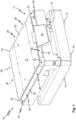
- FIG. 1 shows a driverless transport system 10.
- the driverless transport system 10 has a load-carrying device 12 for receiving loads (loads) not shown in detail.
- the driverless transport system 10 also has a traction drive with wheels 14 , which is not shown in detail on.
- the driverless transport system 10 can move automatically using the travel drive.
- the driverless transport system 10 has a light signal arrangement 16 .
- the light signal arrangement 16 is designed here in the form of a rectangular frame 17 , see also Figure 2 .
- the light signal arrangement 16 can be provided immediately adjacent to the load-carrying device 12 on the driverless transport system 10. Here the light signal arrangement 16 surrounds the load-carrying device 12 all around.
- the driverless transport system 10 has a control device 18 .
- the control device 18 is used to control the light signal arrangement 16 depending on an operating state of the driverless transport system 10. Furthermore, the control device 18 can be set up to control the travel drive, ie for automatically moving the driverless transport system 10 by means of the wheels 14.
- FIG 2 shows the light signal arrangement 16 of the driverless transport system 10 from Figure 1 in isolation.
- the light signal arrangement 16 is shown in an exploded view.
- the light signal arrangement 16 here comprises four side elements 20, four corner connectors 22, and a display 24.
- the display 24 is designed here as a matrix display.
- the display 24 is used in particular to display symbols and/or characters.
- the display 24 can be arranged, preferably in the middle, on one of the side elements 20.
- the display 24 can be a TFT display.
- the display 24 can have additional LEDs on the side.
- the side LEDs can be used to display predefined states, for example in the manner of information or warning lights.
- the display 24 in the middle can be used, for example, to simulate facial expressions of the driverless transport system 10 and/or to display more detailed status information (eg regarding loading of the driverless transport system 10).
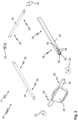
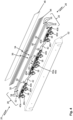
- FIG 4 shows a side element 20 in a schematic exploded view.
- Each of the side elements 20 has two light signaling devices 26 here.
- the two light signaling devices in 26 one of the side elements 20 are arranged one after the other in the longitudinal direction of the respective side element 20.
- the light signaling devices 26 each have a plurality of light generating units 28 .
- each light signal device 26 comprises three light generating units 28 arranged in rows one above the other.
- Each of the light generating units 28 comprises an elongated light guide 30.
- the light guides 30 are designed here to be straight and parallel to one another.
- Each of the light generating units 28 further comprises two light sources 32 for each of the light guides 30.
- the light sources 32 can be designed as LEDs.
- the light sources 32 are each designed as an RGB LED.
- the light sources 32 are each arranged at opposite ends 34, 36 of the light guides 30.
- the light sources 32 can be designed and arranged for a front-side introduction of light into the light guides 30.
- the light sources 32 for one of the ends 34, 36 of the three light guides 30 of one of the light signaling devices 26 are each arranged here on a common circuit board 38 .
- the circuit boards 38 can each have electronic components for controlling the light sources 32.
- four plug contacts 40a, 40b, 40c, 40d are provided on each of the circuit boards 38. In the exemplary embodiment shown, only the plug contacts 40a, 40b are used. The plug contacts 40c and 40d could be omitted.
- the plug contacts 40a and 40b of the two circuit boards 38 of one of the light signaling devices 26 can be connected by means of a cable 42 .
- the plug contacts 40a and 40b of the adjacent boards 38 of the two light signal devices 26 of the side element 20 can be plugged directly into one another.
- the light guides 30 of the two light signal devices 26 of the side element 20 are held here in a common light guide receptacle 44 .
- a separate light guide receptacle could also be provided for each of the light signaling devices 26 (not shown).
- the light signaling devices 26 have a front element 46 .
- a common front element 46 is provided for the two light signaling devices 26 of the side part 20.
- a separate front element could also be provided for each of the light signaling devices 26 (not shown).
- the front element 46 has a large number of optically transparent light exit openings. Apart from the light exit openings, the front element 46 is non-transparent (not translucent). The light exit openings cannot be seen in the figures due to their small size. Several light exit openings can be grouped in such a way that they form a common light spot 48 , compare Figure 3 .
- the light exit openings or the light spots 48 are arranged here in three rows 50 one above the other on the front element 46.
- the lines 50 on the front element 46 correspond to the three light guides 30 of the light signaling devices 26. In Figure 3 For example, four light spots 48 of each of the lines 50 are shown luminous.
- the light guides 30 each have a large number of light output elements (not shown in detail).
- the light decoupling elements can each be obtained by mechanically changing the surfaces of the light guides 30 facing the front element 46.
- the surface of the light guides 30 can be mechanically processed to form the light decoupling elements, for example by milling.
- the light decoupling elements can be printed on the light guides 30.
- the light decoupling elements can be distributed over the length of the light guide 30 or designed differently over the length so that when Light through one or both of the light sources 32 at the ends 34, 36 produces a uniform (homogeneous) light emission towards the front element 46. This can ensure that the perceptible brightness of the light emerging through the light exit openings of the front element 46 is at least approximately constant over the length of the light signaling device 26.
- the determination of a suitable design, in particular size, and/or distribution (arrangement) of the light decoupling elements can preferably be done computationally, in particular by simulation, or experimentally.
- Figure 5 shows a cross section through one of the light signaling devices 26 according to Figure 4 in assembled state.
- the circuit board 38 with the light sources 32, the light guides 30, the light guide receptacle 44 and the front element 46 are accommodated in a base body 52 of the light signaling device 26.
- the base body 52 is designed here to accommodate the two light signal devices 26 of the side element 20. Alternatively, a separate base body could be provided for each light signal device 26.
- the front element 46 closes here with the horizontal (the plane of movement of the driverless transport system 10, cf. Figure 1 ) an angle 53 of 60°. This causes a directed emission of light through the light exit openings diagonally upwards. In this way, the emitted light can be directed specifically into the eyes of a viewer standing at a typical distance of a few meters from the driverless transport system 10.
- the light signaling devices 26 therefore appear particularly bright to the viewer.
- FIG 6 shows in schematic form an operating method for a light signal device 26.
- the operating method on the one hand, one of the, in Figure 6 left, light source 32 of the light signaling device 26 emitted luminous flux F 1 is reduced over time t .
- one of the second, in Figure 6 Right light source 32 of the light signaling device 26 emitted luminous flux F 2 increases over time t.
- the two luminous fluxes F 1 and F 2 overlap in the (not shown in detail) Light guide of the light signaling device 26.
- a local brightness maximum 54 is emitted via the light exit openings of the front element 46.
- the brightness maximum 54 moves along the front element 46, here from left to right, compare arrow direction 56.
- the position of the brightness maximum 54 is shown at a time t 1 .
- This operating method can be used in particular to compare a movement, for example a direction of travel or a (planned) change in the direction of travel of a driverless transport system 10 Figure 1 , display.
- the control device 18 can be set up to carry out the operating method.
- the operating method for the driverless transport system 10 can further include that a loading status of the load-carrying device 12 is displayed by means of one or more of the light signal devices 26 and/or the display 24. Furthermore, the operating method for the driverless transport system 10 can include that an impending collision of the driverless transport system 10 with an obstacle is indicated by means of one or more of the light signal devices 26 and/or the display 24.
- the control device 18 can be set up to correspondingly control the light signal devices 26 or the display 24.
Landscapes
- Engineering & Computer Science (AREA)
- Physics & Mathematics (AREA)
- Mechanical Engineering (AREA)
- General Engineering & Computer Science (AREA)
- Optics & Photonics (AREA)
- General Physics & Mathematics (AREA)
- Microelectronics & Electronic Packaging (AREA)
- Automation & Control Theory (AREA)
- Transportation (AREA)
- Illuminated Signs And Luminous Advertising (AREA)
Description
- Die Erfindung betrifft eine Lichtsignalvorrichtung für ein fahrerloses Transportsystem, eine Lichtsignalanordnung für ein fahrerloses Transportsystem und ein fahrerloses Transportsystem. Ferner betrifft die Erfindung eine Verwendung einer Lichtsignalvorrichtung und ein Betriebsverfahren für ein fahrerloses Transportsystem.
- Fahrerlose Transportsysteme werden verbreitet zum Transport von Lasten in der Fertigung und Logistik eingesetzt.
- Es ist bekannt, fahrerlose Transportsysteme durch umlaufend angeordnete LED-Strips oder mittels LED-Matrizen zu beleuchten. Hierfür werden in der Praxis bisher oft viele LEDs mit einem entsprechend großen Stromverbrauch benötigt, was im Hinblick auf die begrenzte Akkukapazität des fahrerlosen Transportsystems nachteilig ist. Oft erfolgt eine statische Beleuchtung mit gleichbleibender Beleuchtungshelligkeit und -farbe, durch welche im Wesentlichen nur die Position bzw. Kontur des fahrerlosen Transportsystems hervorgehoben werden kann.
-
US 2012/0280528 A1 beschreibt eine Lichtleiste für eine Außenfläche eines Fahrzeugs mit einem Lichtleiter, in den an mehreren Stellen Licht aus LEDs eingekoppelt wird. Eine Rückseite des Lichtleiters ist derart behandelt, dass Licht zur Vorderseite des Lichtleiters hinausreflektiert wird. Frontseitig weist die Lichtleiste einen Einwegspiegel auf, der bereichsweise maskiert sein kann, sodass beispielsweise leuchtende Buchstaben erscheinen. -
DE 10 2012 211 052 A1 offenbart eine Kraftfahrzeuginnenbeleuchtung mit einer Vielzahl von Lichtquellen und einer Vielzahl von Lichtleitern, wobei die Lichtquellen und Lichtleiter derart ausgeführt und relativ zueinander angeordnet sind, dass Licht verschiedener Lichtquellen in verschiedene Lichtleiter eingekoppelt wird. Die Lichtleiter weisen jeweils mehrere in Hauptlichtausbreitungsrichtung beabstandete Auskoppelbereiche auf. Die Lichtleiter können nebeneinander verlaufend angeordnet sein. Die Lichtleiter können an einen im wesentlichen transparenten Streukörper gehalten sein. Am Ort einer Ausnehmung einer Fahrzeugtür-Innenverkleidung kann der Streukörper eine Diffusionsplatte oder eine bedruckte Folie aufweisen, durch welche das durch den Streukörper geführte und an der Ausnehmung ausgekoppelte Licht homogenisiert wird. -
DE 41 29 094 A1 offenbart eine weitere Lichtsignalvorrichtung. - Es ist Aufgabe der Erfindung, die Wahrnehmbarkeit von fahrerlosen Transportsystemen zu verbessern.
- Diese Aufgabe wird erfindungsgemäß gelöst durch eine Lichtsignalvorrichtung nach Anspruch 1, eine Lichtsignalanordnung nach Anspruch 5, ein fahrerloses Transportsystem nach Anspruch 9, eine Verwendung gemäß Anspruch 15 und ein Betriebsverfahren gemäß Anspruch 16.
- Erfindungsgemäß ist eine Lichtsignalvorrichtung für ein fahrerloses Transportsystem vorgesehen. Die Lichtsignalvorrichtung dient zur optischen Hervorhebung des fahrerlosen Transportsystems, insbesondere eines Betriebszustands des fahrerlosen Transportsystems. Dadurch können Aktionen des fahrerlosen Transportsystems von Menschen, beispielsweise Fertigungsmitarbeitern, besser eingeschätzt werden. Dies kann dazu beitragen, die Akzeptanz für fahrerlose Transportsysteme zu erhöhen und Unfälle zu vermeiden.
- Die Lichtsignalvorrichtung weist ein Frontelement mit einer Vielzahl von optisch transparenten Lichtaustrittsöffnungen auf. Durch die Lichtaustrittsöffnungen kann beim Betrieb der Lichtsignalvorrichtung Licht austreten. Abgesehen von den Lichtaustrittsöffnungen ist das Frontelement grundsätzlich intransparent, d. h. nicht lichtdurchlässig. Die Lichtaustrittsöffnungen sind mit anderen Worten als optisch transparente Bereiche in dem im Übrigen intransparenten Frontelement ausgebildet. Die Lichtaustrittsöffnungen können als physische Öffnungen, d. h. Durchbrechung des Frontelements, ausgebildet sein. Vorzugsweise kann das Frontelement eine (physisch) geschlossene Oberfläche aufweisen, wobei das Frontelement abschnittsweise transparent (zur Bildung der
- Lichtaustrittsöffnungen) und (im Übrigen) intransparent ist. Das Frontelement kann insgesamt eine ebene, insbesondere glatte, Oberfläche aufweisen. Alternativ können die Lichtaustrittsöffnungen vertieft oder erhaben an der Oberfläche des Frontelements ausgebildet sein. Durch die Verteilung, Größe, Anordnung und/oder Gestaltung der Lichtaustrittsöffnungen an dem Frontelement kann die optische Wirkung der Lichtsignalvorrichtung im Betrieb in für den jeweiligen Anwendungsfall geeigneter Weise gestaltet werden. Wenn die Lichtsignalvorrichtung kein Licht emittiert, sind die Lichtaustrittsöffnungen typischerweise mit bloßem Auge nicht erkennbar. Das Frontelement kann, zumindest an seiner sichtbaren Oberfläche, schwarz sein. Dies kann zur verbesserten Wahrnehmbarkeit von Beleuchtungseffekten und zum Verbergen der Lichtaustrittsöffnungen im nicht hinterleuchteten Zustand beitragen.
- Die Lichtsignalvorrichtung weist weiterhin mehrere Lichterzeugungseinheiten auf. Jede Lichterzeugungseinheit umfasst einen Lichtleiter und zwei an gegenüberliegenden Enden des Lichtleiters angeordnete Lichtquellen. Die Lichtquellen dienen der Einleitung von Licht in den Lichtleiter an dessen Enden. Insbesondere können die Lichtquellen zur Einleitung von Licht in Stirnseiten des Lichtleiters ausgebildet und angeordnet sein. Der Lichtleiter kann aus PMMA (Polymethylmethacrylat) bestehen. Der Lichtleiter ist typischerweise langgestreckt ausgebildet. Eine Länge des Lichtleiters zwischen den beiden Lichtquellen kann wenigstens fünfmal, typischerweise wenigstens 10-mal, vorzugsweise wenigstens 20-mal, so groß sein wie eine senkrecht zu der Längserstreckung gemessene Breite bzw. Höhe des Lichtleiters.
- Der Lichtleiter weist eine Vielzahl von Lichtauskoppelelementen auf, um Licht durch die Lichtaustrittsöffnungen zu emittieren. Die Lichtauskoppelelemente ermöglichen es, das Licht von den zwei Lichtquellen zu der Vielzahl von Lichtaustrittsöffnungen zu leiten und durch die Vielzahl von Lichtaustrittsöffnungen abzustrahlen. Die Lichtauskoppelelemente können durch mechanische Bearbeitung, zum Beispiel Fräsen, oder durch Bedrucken, zum Beispiel Tampon-, Digital-, oder Siebdruck, in den Lichtleiter eingebracht sein. Eine bearbeitete bzw. bedruckte Stelle des Lichtleiters bildet typischerweise jeweils ein Lichtauskoppelelement. Das Frontelement kann als ein Diffusormedium für von den Lichtleitern ausgekoppeltes Licht wirken.
- Erfindungsgemäß wird einer Mehrzahl von Lichtaustrittsöffnungen Licht durch ein einziges Lichtauskoppelelement des Lichtleiters zugeführt. Der Lichtleiter kann Lichtauskoppelelemente aufweisen, die keiner Lichtaustrittsöffnungen zugeordnet sind. Dies kann es ermöglichen, baugleiche Lichtleiter mit unterschiedlichen Frontelementen zu verwenden, wobei je nach Frontelement unterschiedliche Lichtauskoppelelemente mit Lichtaustrittsöffnungen zusammenwirken.
- Der Lichtleiter kann sich geradlinig erstrecken. Die Lichtaustrittsöffnungen sind typischerweise parallel zu dem Lichtleiter verlaufend angeordnet. Eine derart geradlinig ausgebildete Lichtsignalvorrichtung kann vorteilhafterweise zur Hervorhebung von Längs- oder Querkonturen eines fahrerlosen Transportsystems eingesetzt werden.
- Erfindungsgemäß sind die Lichtaustrittsöffnungen an dem Frontelement in mehreren Zeilen angeordnet. Dadurch kann der Lichtsignalvorrichtung eine weitere Dimension hinzugefügt werden. Dies ermöglicht weiter verfeinerte optische Effekte zur Hervorhebung des fahrerlosen Transportsystems. Für jede der Zeilen ist eine separate Lichterzeugungseinheit vorgesehen. Die Zellen können auf diese Weise unabhängig voneinander angesteuert bzw. beleuchtet werden. Jede der Zeilen weist in Höhenrichtung mehrere Lichtaustrittsöffnungen auf. Die Lichtaustrittsöffnungen sind innerhalb einer der Zeilen näher aneinander angeordnet als zwischen zwei benachbarten Zeilen.
- Vorzugsweise sind die Lichtquellen als LEDs, insbesondere RGB-LEDs, ausgebildet. Leuchtdioden weisen einen besonders geringen Energieverbrauch auf. Mittels RGB-LEDs (typischerweise umfassend je ein grünes, rotes und blaues LED-Element) können durch geeignete Ansteuerung beliebige Lichtfarben emittiert werden. Insbesondere ermöglichen RGB-LEDs die Anpassung der Lichtfarbe an einen jeweils hervorzuhebenden Betriebszustand des fahrerlosen Transportsystems, beispielsweise ein Abbremsen, eine Vorwärtsfahrt oder eine Richtungsänderung. RGB-LEDs können vorteilhafterweise als RGBW-LEDs mit einem zusätzlichen weißen LED-Element oder besonders bevorzugt als RGBWW-LEDs zur Abstrahlung von weißem Licht unterschiedlicher Farbtemperatur, insbesondere durch Mischen von warmweißem und kaltweißem Licht (typischerweise erhältlich von einem warmweißen und einem kaltweißen LED-Element der RGBWW-LED), ausgebildet sein.
- Es kann vorgesehen sein, dass mehrere der Lichtaustrittsöffnungen einen gemeinsamen Leuchtfleck bilden. Insbesondere können mehrere Leuchtflecke jeweils durch eine Mehrzahl der Lichtaustrittsöffnungen gebildet sein. Durch derart vergrößerte Leuchtflecke kann die Wahrnehmbarkeit der Beleuchtung weiter verbessert werden. Die Form und Größe des Leuchtflecks kann durch die Positionierung der Lichtaustrittsöffnungen geeigneter Weise festgelegt werden. Die Leuchtflecke können beispielsweise rund, oval, rechteckig, linienförmig, dreiecksförmig und/oder pfeilförmig ausgebildet sein. Ein Lichtauskoppelelement ist typischerweise genau einem Leuchtfleck zugeordnet. Die einen Lichtfleck bildenden Lichtaustrittsöffnungen sind typischerweise so dicht nebeneinander angeordnet, dass sie mit bloßem Auge (insbesondere im beleuchteten Zustand) nicht voneinander unterschieden werden können.
- Alternativ kann vorgesehen sein, dass die Lichtaustrittsöffnungen in dem Frontelement für eine quasi kontinuierliche Lichtabstrahlung ausgebildet und angeordnet sind. Dadurch kann der Eindruck eines gleichmäßigen Leuchtens des Frontelements erweckt werden.
- Besonders bevorzugt sind die Lichtauskoppelelemente für eine homogene Lichtabstrahlung über der Länge des Lichtleiters ausgebildet und/oder angeordnet. Dadurch kann der Dämpfung des von den Lichtquellen in den Lichtleiter eingespeisten Lichts in dem Lichtleiter bei zunehmendem Abstand von der jeweiligen Lichtquelle entgegengewirkt werden. Um dies zu erreichen, kann die Größe, Art und/oder Verteilung der Lichtauskoppelelemente geeignet gewählt werden.
- In den Rahmen der vorliegenden Erfindung fällt weiterhin eine Lichtsignalanordnung für ein fahrerloses Transportsystem mit mehreren, vorzugsweise vier oder acht, oben beschriebenen, erfindungsgemäßen Lichtsignalvorrichtungen. Durch die mehreren Lichtsignalanordnungen können zusätzliche optische Effekte erzielt werden. Insbesondere können unterschiedliche Seiten bzw. Kanten des fahrerlosen Transportsystems mittels jeweils einer Lichtsignalvorrichtung der Lichtsignalanordnung hervorgehoben werden.
- Die Lichtsignalvorrichtungen können einen, vorzugsweise rechteckförmigen, Rahmen bilden. Der Rahmen kann umlaufend an dem fahrerlosen Transportsystem angeordnet sein. Entlang einer Seite des Rahmens sind vorzugsweise zwei oder mehr Lichtsignalvorrichtungen aufeinanderfolgend angeordnet. Dies ermöglicht die Beleuchtung der beiden Teilabschnitte der Seite mit der jeweiligen Lichtsignalvorrichtung unabhängig voneinander. Zudem kann dies die Gleichmäßigkeit der Beleuchtung entlang der Seite des Rahmens verbessern.
- Die Lichtsignalanordnung kann weiterhin ein Display, insbesondere ein Matrix-Display, aufweisen. Das Display kann zur Anzeige von Symbolen und/oder Schriftzeichen dienen. Mittels des Displays können weitere Informationen wiedergegeben werden. Eine mittels des Displays wiedergegebene Information kann direkt an einen Betrachter des fahrerlosen Transportsystems mit der Lichtsignalanordnung gerichtet sein.
- In den Rahmen der vorliegenden Erfindung fällt ferner ein fahrerloses Transportsystem mit einer oben beschriebenen, erfindungsgemäßen Lichtsignalvorrichtung. Vorzugsweise weist das fahrerlose Transportsystem eine oben beschriebene, erfindungsgemäße Lichtsignalanordnung mit mehreren oben beschriebenen, erfindungsgemäßen Lichtsignalvorrichtungen auf. Das fahrerlose Transportsystem weist ferner eine Steuereinrichtung zur Ansteuerung der Lichtsignalvorrichtung bzw. der Lichtsignalanordnung in Abhängigkeit von einem Betriebszustand des fahrerlosen Transportsystems auf. Das fahrerlose Transportsystem ist dadurch in der Lage, seinen Betriebszustand mittels der Lichtsignalvorrichtung bzw. Lichtsignalanordnung zu visualisieren.
- Die Lichtsignalvorrichtung bzw. die Lichtsignalanordnung (vorzugsweise alle Lichtsignalvorrichtungen der Lichtsignalanordnung) können für eine, insbesondere gerichtete, Abstrahlung von Licht nach schräg oben ausgerichtet sein. Dadurch kann vorteilhafterweise eingerichtet sein, dass die Lichtsignalvorrichtung bzw. Lichtsignalanordnung für eine Abstrahlung von Licht in Richtung der Augen eines Betrachters (der sich in einer typischen Position relativ zum fahrerlosen Transportsystem befindet, beispielsweise wenige Meter neben dem fahrerlosen Transportsystem steht) angeordnet ist. Insbesondere kann das Frontelement der Lichtsignalvorrichtung(en) mit der Horizontalen einen Winkel zwischen 30° und 75°, vorzugsweise zwischen 50° und 70°, einschließen.
- Das fahrerlose Transportsystem weist grundsätzlich einen Fahrantrieb zum selbsttätigen Bewegen des fahrerlosen Transportsystems und eine Lastaufnahmevorrichtung zur Aufnahme von zu transportierenden Lasten (Ladungen) auf. Die Steuereinrichtung kann weiterhin zum Ansteuern des Fahrantriebs ausgebildet sein.
- Die Steuereinheit ist vorzugsweise zur Durchführung eines unten beschriebenen, erfindungsgemäßen Betriebsverfahrens eingerichtet.
- Vorzugsweise ist die Lichtsignalvorrichtung bzw. die Lichtsignalanordnung angrenzend an die Lastaufnahmevorrichtung des fahrerlosen Transportsystems angeordnet. Dies ermöglicht die optische Hervorhebung der Lastaufnahmevorrichtung bzw. einer aufgenommenen Last (Ladung). Die Lastaufnahmevorrichtung ist typischerweise oben an dem fahrerlosen Transportsystem angeordnet.
- Die Steuereinrichtung kann dazu eingerichtet sein, eine (geplante und/oder bereits in der Ausführung begriffene) Bewegung des fahrerlosen Transportsystems mittels der Lichtsignalvorrichtung bzw. der Lichtsignalanordnung zu visualisieren. Dadurch kann es einem Betrachter ermöglicht werden, eine Bewegung des fahrerlosen Transportsystems vorherzusehen, bevor diese Bewegung (vollständig) ausgeführt ist. Insbesondere kann vorgesehen sein, dass bei einer Vorwärts- oder Rückwärtsfahrt entlang von Seitenkanten des fahrerlosen Transportsystems Lichteffekte, vorzugsweise grünfarbige Helligkeitsmaxima, in Fahrtrichtung propagieren. Ein Abbremsen kann durch ein, insbesondere rotfarbiges, Aufleuchten an einer Rückseite des fahrerlosen Transportsystems angezeigt werden. Eine Richtungsänderung kann durch in Richtung der neuen Fahrtrichtung propagierende Lichteffekte, insbesondere durch orangefarbene Helligkeitsmaxima, an der Rückseite und/oder einer Vorderseite des fahrerlosen Transportsystems angezeigt werden.
- Vorzugsweise ist die Steuereinrichtung dazu eingerichtet, mittels der Lichtsignalvorrichtung bzw. der Lichtsignalanordnung eine Information über einen Beladungszustand des fahrerlosen Transportsystems wiederzugeben. Die Information kann beispielsweise das Einhalten bzw. das Überschreiten einer zulässigen Beladung betreffen. Alternativ oder zusätzlich kann die Information die Positionierung, insbesondere ein Verrutschen, einer Ladung auf dem fahrerlosen Transportsystem betreffen. Dadurch kann der Betrieb des fahrerlosen Transportsystems sicherer gestaltet werden.
- Es kann vorgesehen sein, dass die Steuereinrichtung dazu eingerichtet ist, mittels der Lichtsignalvorrichtung bzw. der Lichtsignalanordnung auf eine drohende Kollision des fahrerlosen Transportsystems mit einem Hindernis hinzuweisen. Insbesondere kann durch geeignete Lichtsignale einer im geplanten Fahrweg des fahrerlosen Transportsystems befindlichen Person mitgeteilt werden, dass sie diesen Fahrweg blockiert. Ebenso kann durch geeignete Lichtsignale einem Menschen mitgeteilt werden, dass sich ein Objekt als Hindernis im geplanten Fahrweg befindet, sodass dieser das Objekt entfernen kann. Die Steuereinrichtung ist besonders bevorzugt dazu eingerichtet, das fahrerlose Transportsystem anzuhalten, bevor es mit dem Hindernis kollidiert.
- In den Rahmen der vorliegenden Erfindung fällt zudem eine Verwendung einer oben beschriebenen, erfindungsgemäßen Lichtsignalvorrichtung, insbesondere einer oben beschriebenen, erfindungsgemäßen Lichtsignalanordnung mit mehreren Lichtsignalvorrichtungen, zur Visualisierung eines Betriebszustands eines fahrerlosen Transportsystems. Die Lichtsignalvorrichtung bzw. die Lichtsignalanordnung ist typischerweise eine bordeigene Lichtsignalvorrichtung bzw. Lichtsignalanordnung des fahrerlosen Transportsystems. Das fahrerlose Transportsystem kann ein oben beschriebenes, erfindungsgemäßes fahrerloses Transportsystem sein. Der Betriebszustand kann einen Bewegungszustand des fahrerlosen Transportsystems, beispielsweise eine Fahrgeschwindigkeit und/oder eine Fahrtrichtung und/oder deren jeweilige Änderung, beschreiben. Alternativ oder zusätzlich kann der Betriebszustand einen Beladungszustand beschreiben, beispielsweise im Hinblick auf das Einhalten einer zulässigen Beladung und/oder einer Position einer Last (Ladung). Ferner kann der Betriebszustand einen Ladevorgang und/oder einen Ladezustand eines Akkumulators des fahrerlosen Transportsystems beschreiben.
- In den Rahmen der vorliegenden Erfindung fällt schließlich ein Betriebsverfahren für eine oben beschriebene, erfindungsgemäße Lichtsignalvorrichtung, insbesondere für ein oben beschriebenes, erfindungsgemäßes fahrerloses Transportsystem mit einer Lichtsignalvorrichtung. Das Betriebsverfahren sieht vor, dass gleichzeitig ein von der einen Lichtquelle der Lichterzeugungseinheit abgegebener Lichtstrom reduziert und ein von der anderen Lichtquelle der Lichterzeugungseinheit abgegebener Lichtstrom erhöht wird, sodass ein entlang des Frontelements wanderndes Helligkeitsmaximum von emittiertem Licht erzeugt wird. Dieses Betriebsverfahren erlaubt in vorteilhafter Weise die Visualisierung eines Betriebszustands des fahrerlosen Transportsystems, insbesondere eines Bewegungszustands bzw. dessen Änderung. Wenn mehrere in Zeilen übereinanderliegend angeordnete Lichterzeugungseinheiten vorgesehen sind, können durch einen zeitlichen Versatz der Ansteuerung der Lichtquellen der Lichterzeugungseinheiten der unterschiedlichen Zeilen zusätzliche Effekte erzeugt werden. Insbesondere kann durch eine geringfügig frühere Ansteuerung der Lichtquellen der mittleren Lichterzeugungseinheit(en) der optische Eindruck eines (beispielsweise in Fahrtrichtung wandernden) Pfeils generiert werden.
- Weitere Merkmale und Vorteile der Erfindung ergeben sich aus der Beschreibung und der Zeichnung. Die vorstehend genannten und die noch weiter ausgeführten Merkmale können erfindungsgemäß jeweils einzeln für sich oder zu mehreren in beliebigen, zweckmäßigen Kombinationen Verwendung finden. Die gezeigten und beschriebenen Ausführungsformen sind nicht als abschließende Aufzählung zu verstehen, sondern haben vielmehr beispielhaften Charakter für die Schilderung der Erfindung.
- Die Erfindung ist in der Zeichnung dargestellt und wird anhand von Ausführungsbeispielen näher erläutert. Es zeigen:
- Fig. 1
- ein erfindungsgemäßes fahrerloses Transportsystem aufweisend eine erfindungsgemäße Lichtsignalanordnung mit mehreren erfindungsgemäßen Lichtsignalvorrichtungen, in einer schematischen Perspektivansicht;
- Fig. 2
- eine erfindungsgemäße Lichtsignalanordnung mit mehreren erfindungsgemäßen Lichtsignalvorrichtungen, die einen rechteckförmigen Rahmen bilden, und mit einem Matrix-Display, in einer schematischen Aufsicht;
- Fig. 3
- die Lichtsignalanordnung von
Figur 2 in einer schematischen Explosionsansicht; - Fig. 4
- zwei aufeinanderfolgend angeordnete erfindungsgemäße Lichtsignalvorrichtungen, in einer schematischen Explosionsansicht;
- Fig. 5
- eine erfindungsgemäße Lichtsignalvorrichtung in einer schematischen Querschnittsansicht;
- Fig. 6
- eine schematische Darstellung eines Betriebsverfahrens für eine Lichtsignalanordnung zur Erzeugung eines wandernden Helligkeitsmaximums.
-
Figur 1 zeigt ein fahrerloses Transportsystem 10. Das fahrerlose Transportsystem 10 weist eine Lastaufnahmevorrichtung 12 zur Aufnahme von nicht näher dargestellten Lasten (Ladungen) auf. Das fahrerlose Transportsystem 10 weist ferner einen nicht im Detail dargestellten Fahrantrieb mit Rädern 14 auf. Mittels des Fahrantriebs kann sich das fahrerlose Transportsystem 10 selbsttätig bewegen. - Das fahrerlose Transportsystem 10 weist eine Lichtsignalanordnung 16 auf. Die Lichtsignalanordnung 16 ist hier in der Form eines rechteckförmigen Rahmens 17 ausgebildet, siehe auch
Figur 2 . Die Lichtsignalanordnung 16 kann unmittelbar angrenzend an die Lastaufnahmevorrichtung 12 am fahrerlosen Transportsystem 10 vorgesehen sein. Hier umgibt die Lichtsignalanordnung 16 die Lastaufnahmevorrichtung 12 umlaufend. - Das fahrerlose Transportsystem 10 weist eine Steuereinrichtung 18 auf. Die Steuereinrichtung 18 dient zum Ansteuern der Lichtsignalanordnung 16 in Abhängigkeit von einem Betriebszustand des fahrerlosen Transportsystems 10. Ferner kann die Steuereinrichtung 18 zum Ansteuern des Fahrantriebs, d. h. zum selbsttätigen Bewegen des fahrerlosen Transportsystems 10 mittels der Räder 14, eingerichtet sein.
-
Figur 2 zeigt die Lichtsignalanordnung 16 des fahrerlosen Transportsystems 10 vonFigur 1 in Alleinstellung. InFigur 3 ist die Lichtsignalanordnung 16 in einer Explosionsansicht gezeigt. Die Lichtsignalanordnung 16 umfasst hier vier Seitenelemente 20, vier Eckverbinder 22, sowie ein Display 24. Das Display 24 ist hier als ein Matrix-Display ausgebildet. Das Display 24 dient insbesondere zur Anzeige von Symbolen und oder Schriftzeichen. Das Display 24 kann, vorzugsweise mittig, an einem der Seitenelemente 20 angeordnet sein. Das Display 24 kann ein TFT-Display sein. Das Display 24 kann seitlich zusätzliche LEDs aufweisen. Die seitlichen LEDs können dazu dienen, beispielsweise in der Art von Info- bzw. Warnleuchten, vordefinierte Zustände anzuzeigen. Das Display 24 in der Mitte kann beispielsweise dazu verwendet werden, eine Mimik des fahrerlosen Transportsystems 10 zu simulieren und/oder um detailliertere Statushinweise (z.B. betreffend eine Beladung des fahrerlosen Transportsystems 10) anzuzeigen. -
Figur 4 zeigt ein Seitenelement 20 in einer schematischen Explosionsansicht. Jedes der Seitenelemente 20 weist hier zwei Lichtsignalvorrichtungen 26 auf. Die beiden Lichtsignalvorrichtungen in 26 eines der Seitenelemente 20 sind in Längsrichtung des jeweiligen Seitenelements 20 aufeinanderfolgend angeordnet. - Die Lichtsignalvorrichtungen 26 weisen jeweils mehrere Lichterzeugungseinheiten 28 auf. Hier umfasst jede Lichtsignalvorrichtung 26 drei in Zeilen übereinanderliegend angeordnete Lichterzeugungseinheiten 28. Jede der Lichterzeugungseinheiten 28 umfasst einen langgestreckten Lichtleiter 30. Die Lichtleiter 30 sind hier geradlinig und parallel zueinander verlaufend ausgebildet. Jede der Lichterzeugungseinheiten 28 umfasst ferner für jeden der Lichtleiter 30 je zwei Lichtquellen 32. Die Lichtquellen 32 können als LEDs ausgebildet sein. Hier sind die Lichtquellen 32 jeweils als eine RGB-LED ausgebildet. Die Lichtquellen 32 sind jeweils an gegenüberliegenden Enden 34, 36 der Lichtleiter 30 angeordnet. Die Lichtquellen 32 können für eine stirnseitige Einleitung von Licht in die Lichtleiter 30 ausgebildet und angeordnet sein.
- Die Lichtquellen 32 für eines der Enden 34, 36 der drei Lichtleiter 30 einer der Lichtsignalvorrichtungen 26 sind hier jeweils auf einer gemeinsamen Platine 38 angeordnet. Die Platinen 38 können jeweils Elektronikbauteile zur Ansteuerung der Lichtquellen 32 aufweisen. Zur Versorgung der Lichtquellen 32 mit elektrischer Energie und Steuersignalen von der Steuereinrichtung 18 sind hier jeweils vier Steckkontakte 40a, 40b, 40c, 40d an jeder der Platinen 38 vorgesehen. Im gezeigten Ausführungsbeispiel werden nur die Steckkontakte 40a, 40b verwendet. Die Steckkontakte 40c und 40d könnten entfallen. Die Steckkontakte 40a und 40b der beiden Platinen 38 einer der Lichtsignalvorrichtungen 26 können mittels eines Kabels 42 verbunden sein. Die Steckkontakte 40a und 40b der aneinander grenzenden Platinen 38 der beiden Lichtsignalvorrichtungen 26 des Seitenelements 20 können unmittelbar ineinander eingesteckt sein.
- Die Lichtleiter 30 der beiden Lichtsignalvorrichtung 26 des Seitenelements 20 sind hier in einer gemeinsamen Lichtleiteraufnahme 44 gehalten. Alternativ könnte auch für jede der Lichtsignalvorrichtungen 26 eine separate Lichtleiteraufnahme vorgesehen sein (nicht dargestellt).
- Die Lichtsignalvorrichtungen 26 weisen ein Frontelement 46 auf. Hier ist ein gemeinsames Frontelement 46 für die beiden Lichtsignalvorrichtungen 26 des Seitenteils 20 vorgesehen. Alternativ könnte auch für jede der Lichtsignalvorrichtungen 26 ein separates Frontelement vorgesehen sein (nicht dargestellt).
- Das Frontelement 46 weist eine Vielzahl von optisch transparenten Lichtaustrittsöffnungen auf. Von denen Lichtaustrittsöffnungen abgesehen ist das Frontelement 46 intransparent (nicht lichtdurchlässig). Die Lichtaustrittsöffnungen sind aufgrund ihrer geringen Größe in den Figuren nicht zu erkennen. Mehrere Lichtaustrittsöffnungen können in einer solchen Weise gruppiert sein, dass sie einen gemeinsamen Leuchtfleck 48 bilden, vergleiche
Figur 3 . Die Lichtaustrittsöffnungen bzw. die Leuchtflecke 48 sind hier in drei übereinanderliegenden Zeilen 50 am Frontelement 46 angeordnet. Die Zeilen 50 am Frontelement 46 korrespondieren mit den drei Lichtleitern 30 der Lichtsignalvorrichtungen 26. InFigur 3 sind beispielhaft jeweils vier Leuchtflecke 48 jeder der Zeilen 50 leuchtend dargestellt. - Um Licht von den Lichtquellen 32 durch die Lichtaustrittsöffnungen des Frontelements 46 emittieren zu können, weisen die Lichtleiter 30 jeweils eine Vielzahl von Lichtauskoppelelementen (nicht im einzelnen dargestellt) auf. Die Lichtauskoppelelemente können jeweils durch eine mechanische Veränderung der dem Frontelement 46 zuweisenden Oberflächen der Lichtleiter 30 erhalten sein. Insbesondere kann die Oberfläche der Lichtleiter 30 zur Bildung der Lichtauskoppelelemente mechanisch bearbeitet sein, beispielsweise durch Fräsen. Alternativ können die Lichtauskoppelelemente auf die Lichtleiter 30 aufgedruckt sein.
- Die Lichtauskoppelelemente können über die Länge der Lichtleiter 30 so verteilt bzw. über der Länge unterschiedlich ausgebildet sein, dass bei Einleitung von Licht durch eine oder beide der Lichtquellen 32 an den Enden 34, 36 eine gleichmäßige (homogene) Lichtabstrahlung zu dem Frontelement 46 hin erfolgt. Dadurch kann erreicht werden, dass die wahrnehmbare Helligkeit des durch die Lichtaustrittsöffnungen des Frontelements 46 austretenden Lichts über der Länge der Lichtsignalvorrichtung 26 zumindest näherungsweise konstant ist. Die Bestimmung einer geeigneten Ausbildung, insbesondere Größe, und oder Verteilung (Anordnung) der Lichtauskoppelelemente kann vorzugsweise rechnerisch, insbesondere durch Simulation, oder experimentell erfolgen.
-
Figur 5 zeigt einen Querschnitt durch eine der Lichtsignalvorrichtungen 26 gemäßFigur 4 im montierten Zustand. Die Platine 38 mit den Lichtquellen 32, die Lichtleiter 30, die Lichtleiteraufnahme 44 und das Frontelement 46 sind in einem Grundkörper 52 der Lichtsignalvorrichtung 26 aufgenommen. Der Grundkörper 52 ist hier zur Aufnahme der beiden Lichtsignalvorrichtungen 26 des Seitenelements 20 ausgebildet. Alternativ könnte für jede Lichtsignalvorrichtung 26 ein separater Grundkörper vorgesehen sein. - Das Frontelement 46 schließt hier mit der Horizontalen (der Bewegungsebene des fahrerlosen Transportsystems 10, vgl.
Figur 1 ) einen Winkel 53 von 60° ein. Dadurch wird eine gerichtete Abstrahlung von Licht durch die Lichtaustrittsöffnungen nach schräg oben bewirkt. Das abgestrahlte Licht kann auf diese Weise gezielt in die Augen eines in einem typischen Abstand von einigen Metern zum fahrerlosen Transportsystem 10 stehenden Betrachters gelenkt werden. Die Lichtsignalvorrichtungen 26 erscheinen dem Betrachter daher besonders hell leuchtend. -
Figur 6 zeigt in schematischer Form ein Betriebsverfahren für eine Lichtsignalvorrichtung 26. Bei dem Betriebsverfahren wird zum einen ein von der einen, inFigur 6 linken, Lichtquelle 32 der Lichtsignalvorrichtung 26 abgegebener Lichtstrom F1 über der Zeit t verringert. Gleichzeitig mit der Verringerung des Lichtstroms F1 wird ein von der zweiten, inFigur 6 rechten Lichtquelle 32 der Lichtsignalvorrichtung 26 abgegebener Lichtstrom F2 über der Zeit t erhöht. Die beiden Lichtströme F1 und F2 überlagern sich in dem (nicht näher dargestellten) Lichtleiter der Lichtsignalvorrichtung 26. Dadurch wird über die Lichtaustrittsöffnungen des Frontelements 46 ein örtliches Helligkeitsmaximum 54 abgestrahlt. Durch das gleichzeitige Herunter- und Heraufdimmen der ersten bzw. der zweiten Lichtquelle 32 wandert das Helligkeitsmaximum 54 entlang des Frontelements 46, hier von links nach rechts, vergleiche Pfeilrichtung 56. InFigur 6 ist die Position des Helligkeitsmaximums 54 zu einem Zeitpunkt t1 dargestellt. - Dieses Betriebsverfahren kann insbesondere dazu angewandt werden, eine Bewegung, beispielsweise eine Fahrtrichtung oder eine (geplante) Änderung der Fahrtrichtung eines fahrerlosen Transportsystems 10, vergleiche
Figur 1 , anzuzeigen. Die Steuereinrichtung 18 kann zur Durchführung des Betriebsverfahrens eingerichtet sein. - Das Betriebsverfahren für das fahrerlose Transportsystem 10 kann weiterhin umfassen, dass ein Beladungszustand der Lastaufnahmevorrichtung 12 mittels einer oder mehrerer der Lichtsignalvorrichtungen 26 und/oder des Displays 24 angezeigt wird. Ferner kann das Betriebsverfahren für das fahrerlose Transportsystem 10 umfassen, dass mittels einer oder mehrerer der Lichtsignalvorrichtungen 26 und/oder des Displays 24 auf eine drohende Kollision des fahrerlosen Transportsystems 10 mit einem Hindernis hingewiesen wird. Die Steuereinrichtung 18 kann zur entsprechenden Ansteuerung der Lichtsignalvorrichtungen 26 bzw. des Displays 24 eingerichtet sein.
-
- fahrerloses Transportsystem 10
- Lastaufnahmevorrichtung 12
- Räder 14
- Lichtsignalanordnung 16
- Rahmen 17
- Steuereinrichtung 18
- Seitenelemente 20
- Eckverbinder 22
- Display 24
- Lichtsignalvorrichtungen 26
- Lichterzeugungseinheit 28
- Lichtleiter 30
- Lichtquellen 32
- gegenüberliegende Enden 34, 36
- Platine 38
- Steckkontakte 40a, 40b, 40c, 40d
- Kabel 42
- Lichtleiteraufnahme 44
- Frontelement 46
- Leuchtfleck 48
- Zeilen 50
- Grundkörper 52
- Winkel 53
- Lichtstrom F1, F2
- Zeit t
- Zeitpunkt t1
- Helligkeitsmaximum 54
- Pfeilrichtung 56
Claims (16)
- Lichtsignalvorrichtung (26) für ein fahrerloses Transportsystem (10) aufweisend- ein Frontelement (46) mit einer Vielzahl von optisch transparenten Lichtaustrittsöffnungen, wobei das Frontelement (46) von den Lichtaustrittsöffnungen abgesehen intransparent ist, und- mehrere Lichterzeugungseinheiten (28) mit jeweils einem Lichtleiter (30)und mit zwei an gegenüberliegenden Enden des Lichtleiters (30) angeordneten Lichtquellen (32),wobei der Lichtleiter (30) eine Vielzahl von Lichtauskoppelelementen aufweist, um Licht durch die Lichtaustrittsöffnungen zu emittieren,wobei die Lichtaustrittsöffnungen an dem Frontelement (46) in mehreren Zeilen (50) angeordnet sind, undwobei für jede der Zeilen (50) eine separate Lichterzeugungseinheit (28) vorgesehen ist,dadurch gekennzeichnet,dass jede der Zeilen (50) in Höhenrichtung mehrere Lichtaustrittsöffnungen aufweist, wobei die Lichtaustrittsöffnungen innerhalb einer der Zeilen (50) näher aneinander angeordnet sind als zwischen zwei benachbarten Zeilen (50), unddass einer Mehrzahl von Lichtaustrittsöffnungen Licht durch ein einziges Lichtauskoppelelement des jeweiligen Lichtleiters (30) zugeführt wird.
- Lichtsignalvorrichtung (26) nach Anspruch 1, dadurch gekennzeichnet, dass die Lichtquellen (32) als LEDs, insbesondere RGB-LEDs, ausgebildet sind.
- Lichtsignalvorrichtung (26) nach Anspruch 1 oder 2, dadurch gekennzeichnet, dass mehrere der Lichtaustrittsöffnungen einen gemeinsamen Leuchtfleck (48) bilden.
- Lichtsignalvorrichtung (26) nach einem der vorhergehenden Ansprüche, dadurch gekennzeichnet, dass die Lichtauskoppelelemente für eine homogene Lichtabstrahlung über der Länge des jeweiligen Lichtleiters (30) ausgebildet und/oder angeordnet sind.
- Lichtsignalanordnung (16) für ein fahrerloses Transportsystem (10) mit mehreren, vorzugsweise vier oder acht, Lichtsignalvorrichtungen (26) nach einem der vorhergehenden Ansprüche.
- Lichtsignalanordnung (16) nach Anspruch 5, dadurch gekennzeichnet, dass die Lichtsignalvorrichtungen (26) einen rechteckförmigen Rahmen (17) bilden.
- Lichtsignalanordnung (16) nach Anspruch 6, dadurch gekennzeichnet, dass entlang einer Seite des Rahmens (17) zwei Lichtsignalvorrichtungen (26) aufeinanderfolgend angeordnet sind.
- Lichtsignalanordnung (16) nach einem der Ansprüche 5 bis 7, weiterhin aufweisend ein Display (24), insbesondere ein Matrix-Display, zur Anzeige von Symbolen und/oder Schriftzeichen.
- Fahrerloses Transportsystem (10) mit einer Lichtsignalvorrichtung (26) nach einem der Ansprüche 1 bis 4, vorzugsweise mit einer Lichtsignalanordnung (16) nach einem der Ansprüche 5 bis 8, und mit einer Steuereinrichtung (18) zur Ansteuerung der Lichtsignalvorrichtung (26) bzw. der Lichtsignalanordnung (16) in Abhängigkeit von einem Betriebszustand des fahrerlosen Transportsystems (10).
- Fahrerloses Transportsystem (10) nach Anspruch 9, dadurch gekennzeichnet, dass die Lichtsignalvorrichtung (26) bzw. die Lichtsignalanordnung (16) für eine gerichtete Abstrahlung von Licht nach schräg oben ausgerichtet ist, insbesondere wobei das Frontelement (46) mit einer Bewegungsebene des fahrerlosen Transportsystems (10) einen Winkel zwischen 30° und 75°, vorzugsweise zwischen 50° und 70°, einschließt.
- Fahrerloses Transportsystem (10) nach Anspruch 9 oder 10, dadurch gekennzeichnet, dass die Lichtsignalvorrichtung (26) bzw. die Lichtsignalanordnung (16) angrenzend an eine Lastaufnahmevorrichtung (12) des fahrerlosen Transportsystems (10) angeordnet ist und die Lastaufnahmevorrichtung umlaufend umgibt.
- Fahrerloses Transportsystem (10) nach einem der Ansprüche 9 bis 11, dadurch gekennzeichnet, dass die Steuereinrichtung (18) dazu eingerichtet ist, eine Bewegung des fahrerlosen Transportsystems (10) mittels der Lichtsignalvorrichtung (26) bzw. der Lichtsignalanordnung (16) zu visualisieren.
- Fahrerloses Transportsystem (10) nach einem der Ansprüche 9 bis 12, dadurch gekennzeichnet, dass die Steuereinrichtung (18) dazu eingerichtet ist, mittels der Lichtsignalvorrichtung (26) bzw. der Lichtsignalanordnung (16) eine Information über einen Beladungszustand des fahrerlosen Transportsystems (10) wiederzugeben.
- Fahrerloses Transportsystem (10) nach einem der Ansprüche 9 bis 13, dadurch gekennzeichnet, dass die Steuereinrichtung (18) dazu eingerichtet ist, mittels der Lichtsignalvorrichtung (26) bzw. der Lichtsignalanordnung (16) auf eine drohende Kollision des fahrerlosen Transportsystems (10) mit einem Hindernis hinzuweisen.
- Verwendung einer Lichtsignalvorrichtung (26) nach einem der Ansprüche 1 bis 4, insbesondere einer Lichtsignalanordnung (16) nach einem der Ansprüche 5 bis 8, zur Visualisierung eines Betriebszustands eines fahrerlosen Transportsystems (10).
- Betriebsverfahren für eine Lichtsignalvorrichtung (26) nach einem der Ansprüche 1 bis 4, insbesondere für ein fahrerloses Transportsystem (10) nach einem der Ansprüche 9 bis 14, wobei gleichzeitig ein von der einen Lichtquelle (32) der Lichterzeugungseinheit (28) abgegebener Lichtstrom reduziert und ein von der anderen Lichtquelle (32) der Lichterzeugungseinheit (28) abgegebener Lichtstrom erhöht wird, sodass ein entlang des Frontelements (46) wanderndes Helligkeitsmaximum (54) von emittiertem Licht erzeugt wird.
Applications Claiming Priority (2)
| Application Number | Priority Date | Filing Date | Title |
|---|---|---|---|
| DE102019215332.1A DE102019215332A1 (de) | 2019-10-07 | 2019-10-07 | Lichtsignalvorrichtung für ein fahrerloses Transportsystem |
| PCT/EP2020/078103 WO2021069485A1 (de) | 2019-10-07 | 2020-10-07 | Lichtsignalvorrichtung für ein fahrerloses transportsystem |
Publications (3)
| Publication Number | Publication Date |
|---|---|
| EP4041599A1 EP4041599A1 (de) | 2022-08-17 |
| EP4041599B1 true EP4041599B1 (de) | 2023-12-20 |
| EP4041599C0 EP4041599C0 (de) | 2023-12-20 |
Family
ID=72801489
Family Applications (1)
| Application Number | Title | Priority Date | Filing Date |
|---|---|---|---|
| EP20788761.3A Active EP4041599B1 (de) | 2019-10-07 | 2020-10-07 | Lichtsignalvorrichtung für ein fahrerloses transportsystem |
Country Status (5)
| Country | Link |
|---|---|
| US (1) | US11904766B2 (de) |
| EP (1) | EP4041599B1 (de) |
| CN (1) | CN114502878A (de) |
| DE (1) | DE102019215332A1 (de) |
| WO (1) | WO2021069485A1 (de) |
Families Citing this family (3)
| Publication number | Priority date | Publication date | Assignee | Title |
|---|---|---|---|---|
| USD1060455S1 (en) * | 2019-10-07 | 2025-02-04 | W. Gessmann Gmbh | Transfer robot |
| JP7468484B2 (ja) * | 2021-09-03 | 2024-04-16 | 株式会社ダイフク | 物品搬送車 |
| EP4375140B1 (de) * | 2022-11-23 | 2025-05-28 | Marelli Automotive Lighting Italy S.p.A. Con Socio Unico | Rücklichtvorrichtung eines rennfahrzeugs und zugehöriges rennfahrzeug |
Citations (4)
| Publication number | Priority date | Publication date | Assignee | Title |
|---|---|---|---|---|
| DE4129094A1 (de) * | 1991-09-02 | 1993-03-04 | Hella Kg Hueck & Co | Signalleuchte fuer kraftfahrzeuge |
| US20140119038A1 (en) * | 2012-10-29 | 2014-05-01 | Vestatec (U.K.) Limited | Lighted trim assembly and perforated member therefor |
| US20160290626A1 (en) * | 2006-07-11 | 2016-10-06 | Apple Inc. | Invisible, light-transmissive display system |
| US20180319329A1 (en) * | 2017-05-03 | 2018-11-08 | Volkswagen Ag | Method for operating a lighting of a motor vehicle and motor vehicle for carrying out the method |
Family Cites Families (34)
| Publication number | Priority date | Publication date | Assignee | Title |
|---|---|---|---|---|
| DE3607135A1 (de) * | 1986-03-05 | 1987-09-10 | Feldmuehle Ag | Verfahren zum signalisieren der be- und ueberlastung |
| US6114954A (en) * | 1998-04-01 | 2000-09-05 | Palett; Anthony P. | Luggage carrier with illumination means |
| US20050134447A1 (en) * | 2003-12-22 | 2005-06-23 | Wen-Wei Su | Automobile indicator |
| DE102007012256A1 (de) * | 2007-03-12 | 2008-09-18 | Schefenacker Vision Systems Germany Gmbh | Leuchte für Fahrzeuge, insbesondere für Kraftfahrzeuge |
| DE102009058457A1 (de) * | 2009-12-16 | 2011-06-22 | Automotive Lighting Reutlingen GmbH, 72762 | Kraftfahrzeugbeleuchtungseinrichtung mit einem Lichtleiter und verschiedenfarbigen Lichtquellen |
| DE102010003270A1 (de) * | 2010-03-25 | 2011-09-29 | Bayerische Motoren Werke Aktiengesellschaft | Kraftfahrzeuginnenbeleuchtung |
| WO2012016047A1 (en) * | 2010-07-28 | 2012-02-02 | Flex Lighting Ii, Llc | Light emitting device with optical redundancy |
| JP5280428B2 (ja) * | 2010-11-22 | 2013-09-04 | 株式会社ジャパンディスプレイ | 液晶表示装置、および導光板 |
| US20130314942A1 (en) * | 2010-12-21 | 2013-11-28 | Anthony J. Nichol | Packaging comprising a lightguide |
| HUE030801T2 (en) | 2011-01-16 | 2017-05-29 | Hautau Gmbh | Controlling the closing movement of a sliding wing equipped with a damped closure |
| DE102011018806B4 (de) * | 2011-04-27 | 2024-08-01 | Still Gesellschaft Mit Beschränkter Haftung | Flurförderzeug mit einer Rundum-Kennleuchteneinrichtung |
| US20120280528A1 (en) * | 2011-05-06 | 2012-11-08 | Ford Global Technologies, Llc | Vehicle accent molding with puddle light |
| JP2013037963A (ja) * | 2011-08-10 | 2013-02-21 | Koito Mfg Co Ltd | 車両用灯具 |
| JP3176743U (ja) * | 2012-04-10 | 2012-07-05 | 株式会社クラレ | 車両用ハイマウントストップランプ |
| CN202831939U (zh) | 2012-06-08 | 2013-03-27 | 许姜德 | 一种装有阻尼管阻尼器的平趟门用轨道滑动架 |
| JP6091096B2 (ja) * | 2012-06-27 | 2017-03-08 | 矢崎総業株式会社 | 車両用室内照明装置 |
| DE102012211052A1 (de) * | 2012-06-27 | 2014-04-10 | Bayerische Motoren Werke Aktiengesellschaft | Kraftfahrzeuginnenbeleuchtung |
| DE102012211821B4 (de) * | 2012-07-06 | 2019-09-05 | Magna Mirrors Holding Gmbh | Leuchteneinheit für ein Kraftfahrzeug, bei der in einer Gehäuseschale mit Fensterabschnitt Leuchtmittel angeordnet sind |
| DE102012222684B4 (de) * | 2012-12-11 | 2022-02-03 | Bayerische Motoren Werke Aktiengesellschaft | Beleuchtungseinrichtung für ein Kraftfahrzeug |
| DE102013001079B4 (de) * | 2013-01-23 | 2023-02-16 | Sew-Eurodrive Gmbh & Co Kg | System mit Fahrzeugen und Verfahren zum Betreiben eines Systems mit mehreren Fahrzeugen |
| US10107951B2 (en) * | 2013-05-24 | 2018-10-23 | 3M Innovative Properties Company | Lightguides having angled light extracting surfaces and specific optical absorption coefficient |
| JP6090243B2 (ja) * | 2014-06-18 | 2017-03-08 | 株式会社デンソー | 手持ちポンプ |
| DE102014118665A1 (de) | 2014-12-15 | 2016-06-16 | Hautau Gmbh | Einzugsvorrichtung für ein Schiebefenster oder eine Schiebetür |
| EP3369622B1 (de) * | 2015-10-27 | 2023-08-23 | Koito Manufacturing Co., Ltd. | Fahrzeug mit beleuchtungsvorrichtung |
| CN108025670A (zh) * | 2015-10-27 | 2018-05-11 | 株式会社小糸制作所 | 车辆用灯具 |
| DE102016200339A1 (de) * | 2016-01-14 | 2017-07-20 | Volkswagen Aktiengesellschaft | Scheinwerfersystem und Verfahren zum Bereitstellen einer Kurvenlichtfunktion |
| DE102016204697A1 (de) * | 2016-03-22 | 2017-09-28 | Osram Gmbh | Retrofit-Lampe und Fahrzeugscheinwerfer mit Retrofit-Lampe |
| DE102016212199A1 (de) * | 2016-07-05 | 2018-01-11 | Osram Gmbh | Leuchtanordnung und Fahrzeugscheinwerfer |
| FR3054022B1 (fr) * | 2016-07-18 | 2020-03-20 | Valeo Vision Belgique | Module lumineux pour vehicule automobile |
| IT201600098928A1 (it) | 2016-10-03 | 2018-04-03 | Caimi S R L | Dispositivo per la movimentazione di ante scorrevoli ed articolo di mobilio comprendente tale dispositivo |
| DE102016225385A1 (de) | 2016-12-19 | 2018-06-21 | Roto Frank Ag | Verlagerungsanordnung mit Wälzlagerführung |
| AT520398B1 (de) * | 2017-08-29 | 2020-10-15 | Zkw Group Gmbh | Beleuchtungs- und/oder signalisierungsvorrichtung für ein kraftfahrzeug |
| US20190248421A1 (en) * | 2018-02-09 | 2019-08-15 | Cnh Industrial America Llc | Roof assembly for an autonomous work vehicle |
| US10991524B2 (en) * | 2019-04-10 | 2021-04-27 | Dell Products L.P. | Information handling system keyboard discrete row illumination |
-
2019
- 2019-10-07 DE DE102019215332.1A patent/DE102019215332A1/de not_active Ceased
-
2020
- 2020-10-07 CN CN202080070545.3A patent/CN114502878A/zh active Pending
- 2020-10-07 WO PCT/EP2020/078103 patent/WO2021069485A1/de not_active Ceased
- 2020-10-07 EP EP20788761.3A patent/EP4041599B1/de active Active
-
2022
- 2022-04-04 US US17/657,923 patent/US11904766B2/en active Active
Patent Citations (4)
| Publication number | Priority date | Publication date | Assignee | Title |
|---|---|---|---|---|
| DE4129094A1 (de) * | 1991-09-02 | 1993-03-04 | Hella Kg Hueck & Co | Signalleuchte fuer kraftfahrzeuge |
| US20160290626A1 (en) * | 2006-07-11 | 2016-10-06 | Apple Inc. | Invisible, light-transmissive display system |
| US20140119038A1 (en) * | 2012-10-29 | 2014-05-01 | Vestatec (U.K.) Limited | Lighted trim assembly and perforated member therefor |
| US20180319329A1 (en) * | 2017-05-03 | 2018-11-08 | Volkswagen Ag | Method for operating a lighting of a motor vehicle and motor vehicle for carrying out the method |
Also Published As
| Publication number | Publication date |
|---|---|
| DE102019215332A1 (de) | 2021-04-08 |
| US20220219601A1 (en) | 2022-07-14 |
| WO2021069485A1 (de) | 2021-04-15 |
| US11904766B2 (en) | 2024-02-20 |
| CN114502878A (zh) | 2022-05-13 |
| EP4041599A1 (de) | 2022-08-17 |
| EP4041599C0 (de) | 2023-12-20 |
Similar Documents
| Publication | Publication Date | Title |
|---|---|---|
| EP4041599B1 (de) | Lichtsignalvorrichtung für ein fahrerloses transportsystem | |
| DE102016009660B4 (de) | Beleuchtetes Zierteil | |
| DE102016110054B4 (de) | Beleuchtungseinrichtung und Interieurteil für ein Fahrzeug | |
| DE102012220696B4 (de) | Vorrichtung und Verfahren zur Erzeugung bewegter Lichteffekte | |
| EP3215791B1 (de) | Kraftfahrzeug aufweisend einen kraftfahrzeugscheinwerfer mit einem lichtsystem | |
| DE102017212657B4 (de) | Fensterscheibeneinrichtung für ein Fenster eines Kraftfahrzeugs sowie Verfahren und Kraftfahrzeug | |
| EP3377370B1 (de) | Beleuchtungsvorrichtung für ein kraftfahrzeug | |
| DE202020004535U1 (de) | Leuchte für ein Fahrzeug | |
| DE212019000330U1 (de) | Rückansichtanordnung mit beleuchteter Blende | |
| DE102016221918A1 (de) | Beleuchtungsvorrichtung, insbesondere für ein Kraftfahrzeug | |
| EP3755941B1 (de) | Kraftfahrzeugscheinwerfer mit lichtleitelementen angeordnet in matrixform | |
| DE102015122257A1 (de) | Innenausstattungsteil mit strangförmigem beleuchtungselement | |
| EP2986902B1 (de) | Kraftfahrzeuginnenbeleuchtung | |
| DE102017201831A1 (de) | Fahrzeuginnenbeleuchtungsvorrichtung | |
| EP2867064B1 (de) | Kraftfahrzeuginnenbeleuchtung | |
| DE102012103802A1 (de) | Schaltstufenindikator für ein fahrzeug | |
| WO2020187367A1 (de) | Optische vorrichtung, anordnung, fahrzeug und verfahren | |
| EP3407369A1 (de) | Vorrichtung, system und verfahren zur darstellung eines schwebenden lichtsymbols | |
| EP2889848B1 (de) | Leuchte | |
| EP1767986B1 (de) | Monochrome Anzeigevorrichtung mit einer Hintergrundbeleuchtung, Kraftfahrzeug und Verfahren zum Betreiben einer monochromen Anzeigevorrichtung | |
| DE102020121803A1 (de) | Kraftfahrzeug mit einem Kühlergrill | |
| DE102019128357A1 (de) | Beleuchtungseinrichtung für ein Kraftfahrzeug und Kraftfahrzeug | |
| AT520398B1 (de) | Beleuchtungs- und/oder signalisierungsvorrichtung für ein kraftfahrzeug | |
| EP3789668A1 (de) | Beleuchtungsvorrichtung mit lichtleiter sowie fahrzeug und verfahren | |
| DE102018215266B4 (de) | Kraftfahrzeug mit einer Anzeigeeinrichtung zum Bereitstellen einer dreidimensionalen Anzeige |
Legal Events
| Date | Code | Title | Description |
|---|---|---|---|
| STAA | Information on the status of an ep patent application or granted ep patent |
Free format text: STATUS: UNKNOWN |
|
| STAA | Information on the status of an ep patent application or granted ep patent |
Free format text: STATUS: THE INTERNATIONAL PUBLICATION HAS BEEN MADE |
|
| PUAI | Public reference made under article 153(3) epc to a published international application that has entered the european phase |
Free format text: ORIGINAL CODE: 0009012 |
|
| STAA | Information on the status of an ep patent application or granted ep patent |
Free format text: STATUS: REQUEST FOR EXAMINATION WAS MADE |
|
| 17P | Request for examination filed |
Effective date: 20220406 |
|
| AK | Designated contracting states |
Kind code of ref document: A1 Designated state(s): AL AT BE BG CH CY CZ DE DK EE ES FI FR GB GR HR HU IE IS IT LI LT LU LV MC MK MT NL NO PL PT RO RS SE SI SK SM TR |
|
| DAV | Request for validation of the european patent (deleted) | ||
| DAX | Request for extension of the european patent (deleted) | ||
| GRAP | Despatch of communication of intention to grant a patent |
Free format text: ORIGINAL CODE: EPIDOSNIGR1 |
|
| STAA | Information on the status of an ep patent application or granted ep patent |
Free format text: STATUS: GRANT OF PATENT IS INTENDED |
|
| INTG | Intention to grant announced |
Effective date: 20230719 |
|
| GRAS | Grant fee paid |
Free format text: ORIGINAL CODE: EPIDOSNIGR3 |
|
| GRAA | (expected) grant |
Free format text: ORIGINAL CODE: 0009210 |
|
| STAA | Information on the status of an ep patent application or granted ep patent |
Free format text: STATUS: THE PATENT HAS BEEN GRANTED |
|
| AK | Designated contracting states |
Kind code of ref document: B1 Designated state(s): AL AT BE BG CH CY CZ DE DK EE ES FI FR GB GR HR HU IE IS IT LI LT LU LV MC MK MT NL NO PL PT RO RS SE SI SK SM TR |
|
| REG | Reference to a national code |
Ref country code: GB Ref legal event code: FG4D Free format text: NOT ENGLISH |
|
| REG | Reference to a national code |
Ref country code: CH Ref legal event code: EP |
|
| REG | Reference to a national code |
Ref country code: DE Ref legal event code: R096 Ref document number: 502020006467 Country of ref document: DE |
|
| REG | Reference to a national code |
Ref country code: IE Ref legal event code: FG4D Free format text: LANGUAGE OF EP DOCUMENT: GERMAN |
|
| U01 | Request for unitary effect filed |
Effective date: 20240111 |
|
| U07 | Unitary effect registered |
Designated state(s): AT BE BG DE DK EE FI FR IT LT LU LV MT NL PT SE SI Effective date: 20240118 |
|
| PG25 | Lapsed in a contracting state [announced via postgrant information from national office to epo] |
Ref country code: GR Free format text: LAPSE BECAUSE OF FAILURE TO SUBMIT A TRANSLATION OF THE DESCRIPTION OR TO PAY THE FEE WITHIN THE PRESCRIBED TIME-LIMIT Effective date: 20240321 |
|
| PG25 | Lapsed in a contracting state [announced via postgrant information from national office to epo] |
Ref country code: ES Free format text: LAPSE BECAUSE OF FAILURE TO SUBMIT A TRANSLATION OF THE DESCRIPTION OR TO PAY THE FEE WITHIN THE PRESCRIBED TIME-LIMIT Effective date: 20231220 |
|
| PG25 | Lapsed in a contracting state [announced via postgrant information from national office to epo] |
Ref country code: GR Free format text: LAPSE BECAUSE OF FAILURE TO SUBMIT A TRANSLATION OF THE DESCRIPTION OR TO PAY THE FEE WITHIN THE PRESCRIBED TIME-LIMIT Effective date: 20240321 Ref country code: ES Free format text: LAPSE BECAUSE OF FAILURE TO SUBMIT A TRANSLATION OF THE DESCRIPTION OR TO PAY THE FEE WITHIN THE PRESCRIBED TIME-LIMIT Effective date: 20231220 |
|
| PG25 | Lapsed in a contracting state [announced via postgrant information from national office to epo] |
Ref country code: RS Free format text: LAPSE BECAUSE OF FAILURE TO SUBMIT A TRANSLATION OF THE DESCRIPTION OR TO PAY THE FEE WITHIN THE PRESCRIBED TIME-LIMIT Effective date: 20231220 Ref country code: NO Free format text: LAPSE BECAUSE OF FAILURE TO SUBMIT A TRANSLATION OF THE DESCRIPTION OR TO PAY THE FEE WITHIN THE PRESCRIBED TIME-LIMIT Effective date: 20240320 Ref country code: HR Free format text: LAPSE BECAUSE OF FAILURE TO SUBMIT A TRANSLATION OF THE DESCRIPTION OR TO PAY THE FEE WITHIN THE PRESCRIBED TIME-LIMIT Effective date: 20231220 |
|
| PG25 | Lapsed in a contracting state [announced via postgrant information from national office to epo] |
Ref country code: IS Free format text: LAPSE BECAUSE OF FAILURE TO SUBMIT A TRANSLATION OF THE DESCRIPTION OR TO PAY THE FEE WITHIN THE PRESCRIBED TIME-LIMIT Effective date: 20240420 |
|
| PG25 | Lapsed in a contracting state [announced via postgrant information from national office to epo] |
Ref country code: CZ Free format text: LAPSE BECAUSE OF FAILURE TO SUBMIT A TRANSLATION OF THE DESCRIPTION OR TO PAY THE FEE WITHIN THE PRESCRIBED TIME-LIMIT Effective date: 20231220 |
|
| PG25 | Lapsed in a contracting state [announced via postgrant information from national office to epo] |
Ref country code: SK Free format text: LAPSE BECAUSE OF FAILURE TO SUBMIT A TRANSLATION OF THE DESCRIPTION OR TO PAY THE FEE WITHIN THE PRESCRIBED TIME-LIMIT Effective date: 20231220 |
|
| PG25 | Lapsed in a contracting state [announced via postgrant information from national office to epo] |
Ref country code: SM Free format text: LAPSE BECAUSE OF FAILURE TO SUBMIT A TRANSLATION OF THE DESCRIPTION OR TO PAY THE FEE WITHIN THE PRESCRIBED TIME-LIMIT Effective date: 20231220 Ref country code: SK Free format text: LAPSE BECAUSE OF FAILURE TO SUBMIT A TRANSLATION OF THE DESCRIPTION OR TO PAY THE FEE WITHIN THE PRESCRIBED TIME-LIMIT Effective date: 20231220 Ref country code: RO Free format text: LAPSE BECAUSE OF FAILURE TO SUBMIT A TRANSLATION OF THE DESCRIPTION OR TO PAY THE FEE WITHIN THE PRESCRIBED TIME-LIMIT Effective date: 20231220 Ref country code: IS Free format text: LAPSE BECAUSE OF FAILURE TO SUBMIT A TRANSLATION OF THE DESCRIPTION OR TO PAY THE FEE WITHIN THE PRESCRIBED TIME-LIMIT Effective date: 20240420 Ref country code: CZ Free format text: LAPSE BECAUSE OF FAILURE TO SUBMIT A TRANSLATION OF THE DESCRIPTION OR TO PAY THE FEE WITHIN THE PRESCRIBED TIME-LIMIT Effective date: 20231220 |
|
| PG25 | Lapsed in a contracting state [announced via postgrant information from national office to epo] |
Ref country code: PL Free format text: LAPSE BECAUSE OF FAILURE TO SUBMIT A TRANSLATION OF THE DESCRIPTION OR TO PAY THE FEE WITHIN THE PRESCRIBED TIME-LIMIT Effective date: 20231220 |
|
| PG25 | Lapsed in a contracting state [announced via postgrant information from national office to epo] |
Ref country code: PL Free format text: LAPSE BECAUSE OF FAILURE TO SUBMIT A TRANSLATION OF THE DESCRIPTION OR TO PAY THE FEE WITHIN THE PRESCRIBED TIME-LIMIT Effective date: 20231220 |
|
| REG | Reference to a national code |
Ref country code: DE Ref legal event code: R097 Ref document number: 502020006467 Country of ref document: DE |
|
| PLBE | No opposition filed within time limit |
Free format text: ORIGINAL CODE: 0009261 |
|
| STAA | Information on the status of an ep patent application or granted ep patent |
Free format text: STATUS: NO OPPOSITION FILED WITHIN TIME LIMIT |
|
| U20 | Renewal fee for the european patent with unitary effect paid |
Year of fee payment: 5 Effective date: 20241009 |
|
| 26N | No opposition filed |
Effective date: 20240923 |
|
| REG | Reference to a national code |
Ref country code: CH Ref legal event code: PL |
|
| PG25 | Lapsed in a contracting state [announced via postgrant information from national office to epo] |
Ref country code: MC Free format text: LAPSE BECAUSE OF FAILURE TO SUBMIT A TRANSLATION OF THE DESCRIPTION OR TO PAY THE FEE WITHIN THE PRESCRIBED TIME-LIMIT Effective date: 20231220 |
|
| PG25 | Lapsed in a contracting state [announced via postgrant information from national office to epo] |
Ref country code: CH Free format text: LAPSE BECAUSE OF NON-PAYMENT OF DUE FEES Effective date: 20241031 |
|
| PG25 | Lapsed in a contracting state [announced via postgrant information from national office to epo] |
Ref country code: IE Free format text: LAPSE BECAUSE OF NON-PAYMENT OF DUE FEES Effective date: 20241007 |
|
| U20 | Renewal fee for the european patent with unitary effect paid |
Year of fee payment: 6 Effective date: 20251022 |
|
| PGFP | Annual fee paid to national office [announced via postgrant information from national office to epo] |
Ref country code: GB Payment date: 20251024 Year of fee payment: 6 |
|
| PG25 | Lapsed in a contracting state [announced via postgrant information from national office to epo] |
Ref country code: CY Free format text: LAPSE BECAUSE OF FAILURE TO SUBMIT A TRANSLATION OF THE DESCRIPTION OR TO PAY THE FEE WITHIN THE PRESCRIBED TIME-LIMIT; INVALID AB INITIO Effective date: 20201007 |
|
| PG25 | Lapsed in a contracting state [announced via postgrant information from national office to epo] |
Ref country code: HU Free format text: LAPSE BECAUSE OF FAILURE TO SUBMIT A TRANSLATION OF THE DESCRIPTION OR TO PAY THE FEE WITHIN THE PRESCRIBED TIME-LIMIT; INVALID AB INITIO Effective date: 20201007 |