EP4032786A1 - Verfahren und vorrichtung zum analysieren von schwingungsrauschen in einem kraftfahrzeugverkleidungsteil - Google Patents
Verfahren und vorrichtung zum analysieren von schwingungsrauschen in einem kraftfahrzeugverkleidungsteil Download PDFInfo
- Publication number
- EP4032786A1 EP4032786A1 EP20865408.7A EP20865408A EP4032786A1 EP 4032786 A1 EP4032786 A1 EP 4032786A1 EP 20865408 A EP20865408 A EP 20865408A EP 4032786 A1 EP4032786 A1 EP 4032786A1
- Authority
- EP
- European Patent Office
- Prior art keywords
- bead
- parameter distribution
- analysis
- erp
- distribution
- Prior art date
- Legal status (The legal status is an assumption and is not a legal conclusion. Google has not performed a legal analysis and makes no representation as to the accuracy of the status listed.)
- Granted
Links
Images


Classifications
-
- B—PERFORMING OPERATIONS; TRANSPORTING
- B62—LAND VEHICLES FOR TRAVELLING OTHERWISE THAN ON RAILS
- B62D—MOTOR VEHICLES; TRAILERS
- B62D25/00—Superstructure or monocoque structure sub-units; Parts or details thereof not otherwise provided for
- B62D25/20—Floors or bottom sub-units
-
- G—PHYSICS
- G06—COMPUTING OR CALCULATING; COUNTING
- G06F—ELECTRIC DIGITAL DATA PROCESSING
- G06F30/00—Computer-aided design [CAD]
- G06F30/10—Geometric CAD
-
- G—PHYSICS
- G06—COMPUTING OR CALCULATING; COUNTING
- G06F—ELECTRIC DIGITAL DATA PROCESSING
- G06F30/00—Computer-aided design [CAD]
- G06F30/10—Geometric CAD
- G06F30/15—Vehicle, aircraft or watercraft design
-
- G—PHYSICS
- G06—COMPUTING OR CALCULATING; COUNTING
- G06F—ELECTRIC DIGITAL DATA PROCESSING
- G06F30/00—Computer-aided design [CAD]
- G06F30/20—Design optimisation, verification or simulation
-
- G—PHYSICS
- G06—COMPUTING OR CALCULATING; COUNTING
- G06F—ELECTRIC DIGITAL DATA PROCESSING
- G06F2119/00—Details relating to the type or aim of the analysis or the optimisation
- G06F2119/10—Noise analysis or noise optimisation
-
- Y—GENERAL TAGGING OF NEW TECHNOLOGICAL DEVELOPMENTS; GENERAL TAGGING OF CROSS-SECTIONAL TECHNOLOGIES SPANNING OVER SEVERAL SECTIONS OF THE IPC; TECHNICAL SUBJECTS COVERED BY FORMER USPC CROSS-REFERENCE ART COLLECTIONS [XRACs] AND DIGESTS
- Y02—TECHNOLOGIES OR APPLICATIONS FOR MITIGATION OR ADAPTATION AGAINST CLIMATE CHANGE
- Y02T—CLIMATE CHANGE MITIGATION TECHNOLOGIES RELATED TO TRANSPORTATION
- Y02T10/00—Road transport of goods or passengers
- Y02T10/10—Internal combustion engine [ICE] based vehicles
- Y02T10/40—Engine management systems
Definitions
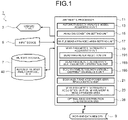
- the display device 3 is used for displaying analysis results and the like, and is formed by a liquid crystal monitor and the like.
- the analysis condition setting unit 15 sets bead parameter distribution analysis conditions for optimization analysis that acquires bead parameter distribution regarding beads to be provided in the floor panel model 43 (bead parameter distribution analysis), and vibration conditions in vibration mode analysis.
- Equation (1) ⁇ represents the radiation loss coefficient
- C represents the acoustic velocity
- RHO represents the material density of the floor panel model 43
- Ai represents the area of a two-dimensional element i of the single bead-arranged area of the floor panel model 43
- vi represents the vibration velocity of the two-dimensional element i.
- the vibration velocity vi the value acquired for each two-dimensional element i by the vibration mode analysis of the bead parameter distribution analysis model is assigned.
- the design variable set in a bead parameter distribution analysis model is a continuously changing value, and the magnitude of the value represents the contribution of the bead to the objective condition.
- bead parameter distribution is acquired based on the value of the design variable (for example, height h) acquired by the analysis process of the bead parameter distribution and other variables (position, shape, length, width, angle, and orientation) regarding the bead parameters selected by the bead parameter selection unit 191.
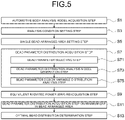
- the automotive body analysis model acquisition step S1 is a step of acquiring an automotive body analysis model 41 including a floor panel model 43 in which the floor panel 31 ( FIG. 2 ) is modeled with two-dimensional elements, and is performed by the automotive body analysis model acquisition unit 13 in the vibration noise reduction analyzer 1.
- the vibration conditions are analysis conditions related to vibration mode analysis for acquiring the equivalent radiated power (ERP) resulting from the vibration of the floor panel model 43, and set the position to which a cyclic load is applied in a bead parameter distribution analysis model, which is generated in a bead parameter distribution analysis model generation step S73 to be described below, the vibration amplitude value and the vaibratino period of the cyclic load, and the position to restrict the bead parameter distribution analysis model.
- the vibration mode analysis is performed to calculate the equivalent radiated power (ERP) resulting from the vibration of the floor panel model 43, and is performed in the bead parameter distribution acquisition step S7 and the equivalent radiated power (ERP) reacquisition step S9, which will be described below.
- the bead parameters regarding a bead includes the position of the bead 49, the shape (circular), the size of the bead 49 (length L, width w, height h), the angle ⁇ , and the orientation of the bead 49 (e.g., protruding inside the automobile or protruding outside the automobile).
- the bead parameter selection step S71 the upper and lower limits of the length L, the width w, the angle ⁇ , and the height h of the bead 49, the possible orientation of the bead 49, or the like are selected as bead parameters.
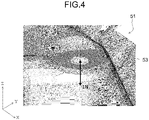
- the bead parameter distribution analysis model generation step S73 is a step of setting the one bead parameter selected in the bead parameter selection step S71 in the automotive body analysis model 41 as a design variable and generating a bead parameter distribution analysis model 51 for calculating the bead parameter distribution of beads to be provided in the single bead-arranged area, and is performed by the bead parameter distribution analysis model generation unit 193 in the vibration noise reduction analyzer 1.
- the vibration conditions set in the analysis condition setting step S3 are assigned to the bead parameter distribution of each design variable to perform vibration mode analysis (S751).
- vibration mode analysis the vibration velocity vi of each two-dimensional element i in the set single bead-arranged area of the floor panel model 43 is acquired with the selected design variable.
- the distribution of the selected design variable to be provided in the single bead-arranged area is acquired so as to satisfy the bead parameter distribution analysis conditions (objective condition and constraint condition) set in the analysis condition setting step S3. That is, under the constraint condition, which is a bead parameter distribution analysis condition, and with the objective condition being minimizing the equivalent radiated power (ERP) calculated by Equation (1), the design variables set in bead parameter distribution analysis models are updated to perform optimization analysis process that acquires, for each design variable, one bead parameter distribution with which the ERP of the floor panel model 43 is minimized.
- the constraint condition which is a bead parameter distribution analysis condition
- ERP equivalent radiated power
- the design variable set in a bead parameter distribution analysis model is a continuously changing value, and the magnitude of the value represents the contribution of the bead to the objective condition.
- bead parameter distribution (bead position, size at each bead position (length, width, height, etc.), angle, orientation) is acquired based on the value of the design variable acquired by the analysis process of the bead parameter distribution.
- the equivalent radiated power (ERP) reacquisition step S9 reacquires the equivalent radiated power (ERP) of the floor panel model 43 in which the bead parameter distribution acquired in the bead parameter distribution acquisition step S7 is set, and is performed by the equivalent radiated power (ERP) reacquisition unit 21 in the vibration noise reduction analyzer 1.
- vibration mode analysis is performed on the floor panel model 43 in which the bead parameter distribution acquired in the bead parameter distribution acquisition step S7 is set, and the vibration velocity vi acquired by this vibration mode analysis is substituted into Equation (1) described above to calculate the equivalent radiated power (ERP).
- the error in the bead parameter distribution analysis can be reduced by performing optimization analysis of bead parameter distribution (bead parameter distribution analysis) by changing the order in which the bead parameters are selected as design variables, and by reacquiring the equivalent radiated power (ERP) in the equivalent radiated power (ERP) reacquisition step S9.
- bead parameter distribution analysis by performing optimization analysis of bead parameter distribution (bead parameter distribution analysis) by changing the order in which the bead parameters are selected as design variables, and by reacquiring the equivalent radiated power (ERP) in the equivalent radiated power (ERP) reacquisition step S9.
- step S753 which calculates the equivalent radiated power (ERP) in the bead parameter design variable distribution analysis step S75, may be acquired, or the equivalent radiated power (ERP) reacquisition step S9 may be omitted.
- ERP equivalent radiated power
- the bead parameter distribution acquisition step S11 on minimum ERP in bead-arranged area changes the bead parameter acquired in the bead parameter distribution acquisition step S7, repeats the bead parameter distribution acquisition step S7 and the equivalent radiated power (ERP) reacquisition step S9, acquires the bead parameter distribution with which the ERP is minimized for the single bead-arranged area set in the single bead-arranged area setting step S5, and is performed by the bead parameter distribution acquisition unit 23 on minimum ERP in bead-arranged area in the vibration noise reduction analyzer 1.
- ERP equivalent radiated power
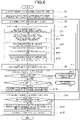
- FIG. 6 illustrates the specific process in the bead parameter distribution acquisition step S11 on minimum ERP in bead-arranged area.
- the minimum value of ERP is the minimum value, in the single bead-arranged area, of the ERP acquired for each design variable distribution that is acquired for each of the design variables selected from the bead parameters.
- the acquired ERP is not the minimum value in the bead parameter distribution acquisition step S11 on minimum ERP in bead-arranged area, one design variable regarding the bead parameters is changed (S113), and the bead parameter distribution analysis model generation step S73, the bead parameter design variable distribution analysis step S75, and the equivalent radiated power (ERP) reacquisition step S9 are repeated.
- the bead parameter distribution is acquired by changing all bead parameters, such as bead position, shape, size, angle, and orientation (S115). For example, the distribution that minimizes the ERP is first acquired in relation to the position of the bead, the ERP is then minimized in relation to another bead parameter, and the minimum ERP is acquired in relation to yet another bead parameter with the minimized bead parameter kept unchanged. This process is sequentially repeated.
- the bead parameter is changed to another bead parameter (S117), and the bead parameter distribution acquisition step (S7) and the equivalent radiated power (ERP) reacquisition step (S9) are repeated.
- the bead parameter distribution with the minimum ERP in the single bead-arranged area is saved (S119).
- the optimal bead distribution determination step S13 is a step of changing the single bead-arranged area in the floor panel model 43, repeating the single bead-arranged area setting step S5, the bead parameter distribution acquisition step S7, the equivalent radiated power (ERP) reacquisition step S9, and the bead parameter distribution acquisition step S11 on minimum ERP in the single bead-arranged area, and determining an area in the floor panel 31 to be provided with beads and the bead distribution in the area to be provided with the beads, and is performed by the optimal bead distribution determination unit 25 in the vibration noise reduction analyzer 1.
- ERP equivalent radiated power
- the bead parameter distribution is not acquired for all of the bead-arranged areas set in the floor panel model 43, it is determined that the single bead-arranged area is to be changed (S131), and the setting of another single bead-arranged area (S5), the acquirement of bead parameter distribution (S7), the reacquirement of the equivalent radiated power (ERP) (S9), and the acquirement of bead parameter distribution with the minimum ERP (S11) are repeated until bead parameter distribution is acquired for all bead-arranged areas.
- bead parameter distribution is acquired for all bead-arranged areas by bead parameter distribution analysis, it is determined that the single bead-arranged area is not to be changed (S131). Then, among the minimum ERP values acquired for the respective bead-arranged areas, the bead-arranged area with the lowest ERP is selected, and the bead parameter distribution (position, shape, size, angle, orientation) acquired for the selected bead-arranged area is acquired (S133). Furthermore, the bead parameter distribution acquired for the selected bead-arranged area is determined as optimal distribution of the beads to be provided in the floor panel 31 (S135).
- the optimal bead distribution determination step S13 may perform smoothing to smooth the bead parameter distribution acquired for the bead-arranged area with the minimum ERP, and the bead parameter distribution subjected to the smoothing may be determined as the bead distribution to be provided in the bead-arranged area of the floor panel 31.
- a specific example of bead parameter distribution subjected to smoothing in the optimal bead distribution determination step S13 will be described below.
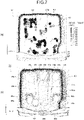
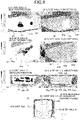
- FIGS. 7 and 8 illustrate examples of bead parameter distribution acquired by the vibration noise reduction analysis method and the analyzer 1 according to the present embodiment for a floor panel model 43, in which the floor panel 31 is modeled as a panel part and which includes the top portion 43a and the side wall portions 43b, 43c, and 43d.
- the beads 57 illustrated in FIG. 7 and the beads 61 illustrated in FIG. 8 are bead parameter distribution acquired by performing, on an automotive body analysis model 41 including the floor panel model 43, bead parameter distribution analysis (optimization analysis) in which the top portion 43a ( FIG. 7 ) or the side wall portions 43b to 43d ( FIG. 8 ) are set as the bead-arranged areas in the floor panel model 43 of a bead parameter distribution analysis model 51 generated by setting, as the design variable, the bead height h, which is one of the bead parameters.
- bead parameter distribution analysis optical analysis
- the bead parameter distribution analysis as the bead basic geometry, the bead length L and width (diameter) w were set to 35 mm, the height h was set to 3.0 mm, the angle ⁇ was set to 60°, and the bead orientation was set to both sides (inside/outside the automobile), and the bead parameters regarding the bead basic geometry, bead parameter distribution analysis conditions, and vibration conditions were set.
- the objective condition was set to minimizing the equivalent radiated power (ERP) with the set design variable, and the constraint condition was set to a bead area ratio of 50%.
- ERP equivalent radiated power
- a cyclic load of 1N (vibration amplitude value 1N) was applied in the Z direction (the up-down direction of the automotive body) with the rear shock portion 53 in the right side of the vehicle as the load input point (see FIG. 2 and FIG. 3 ).
- Topography optimization was used for the analysis process in the bead parameter distribution analysis.
- Table 1 illustrates the results of the equivalent radiated power (ERP) of the floor panel model 43 in which the distribution of the beads 57 ( FIG. 7 ), which was acquired using the vibration noise reduction analyzer 1 according to an embodiment of the present invention and by setting the top portion 43a as the bead-arranged area, was set in the top portion 43a, and the equivalent radiated power (ERP) of a floor panel model 43 of the original shape that was not provided with beads for comparison.
- Table 1 Floor panel model Frequency band (Hz) Equivalent radiated power (dB) Difference from original shape Original shape 80-90 42.2 - With bead (Top portion) 80-90 30.8 -11.4 dB
- the equivalent radiated power calculated for the floor panel model 43 of the original shape that was not provided with beads was reduced by 11.4 dB.
- Table 2 illustrates the results of the equivalent radiated power of the floor panel model 43 in which the beads 61 ( FIG. 8 (a-1) to (a-3)), which were bead parameter distribution acquired using the vibration noise reduction analyzer 1 according to the present invention and by setting the side wall portions 43b to 43d ( FIG. 8(c) ) as the bead-arranged area, were set in each of the side wall portions 43b to 43d, and the equivalent radiated power of a floor panel model of the original shape that was not provided with beads for comparison.
- Table 2 Floor panel model Frequency band (Hz) Equivalent radiated power (dB) Difference from original shape Original shape 80-90 42.2 - With bead (Side wall portion) 80-90 37.8 -4.4 dB
- the equivalent radiated power calculated for the floor panel model 63 in which the beads 61, which are the bead parameter distribution acquired by performing the bead parameter distribution analysis with the vibration noise reduction analyzer 1 according to the present invention, were set in the side wall portions 43b to 43d was reduced by 4.4 dB.
- Table 3 illustrates the result of comparison between the equivalent radiated power calculated for the floor panel model 43 in which beads 65 were set over the entire surface including the top portion 43a and the side wall portions 43b to 43d as illustrated FIG. 9 , and the equivalent radiated power of a floor panel entire surface model of the original shape that was not provided with beads.
- Table 3 Floor panel model Frequency band (Hz) Equivalent radiated power (dB) Difference from original shape Original shape 80-90 42.2 - With bead (Entire surface) 80-90 32.5 -9.7 dB
- the equivalent radiated power calculated for the floor panel model 43 of the original shape that was not provided with beads compared with the equivalent radiated power calculated for the floor panel model 43 of the original shape that was not provided with beads, the equivalent radiated power calculated for the floor panel model 43 in which the beads 65, which were bead parameter distribution acquired by performing bead parameter distribution analysis with the vibration noise reduction analyzer 1 according to the present invention, were set in the entire surface was reduced by 9.7 dB.
- FIG. 7(b) illustrates beads 59a to 59s acquired by smoothing the bead parameter distribution (beads 57) illustrated in FIG. 7(a)
- FIG. 8 (b-1) to (b-3) illustrate the beads 63a to 63m acquired by smoothing the bead parameter distribution (beads 61) illustrated in FIG. 8 (a-1) to FIG. 8 (a-3)
- FIG. 9(b) illustrates the beads 67a to 67w acquired by smoothing the bead parameter distribution (beads 65) illustrated in FIG. 9 (a) .
- a panel part with beads can be easily manufactured by determining the beads 59a to 59s, beads 63a to 63m, and beads 67a to 67w, which are subjected to smoothing, as the distribution of beads to be provided in the panel part.
- the bead parameter distribution is acquired by setting the entire surface of the top portion 43a as the bead-arranged area.
- the top portion 43a may be divided into a plurality of regions, one or two or more regions of these divided regions may be subjected to bead parameter distribution analysis as bead-arranged areas, and the bead-arranged area with which the ERP is minimized and its bead parameter distribution may be acquired.
- the side wall portions may be divided into a plurality of regions, one or two or more regions of these divided regions, one or two or more regions of these divided regions may be subjected to bead parameter distribution analysis as bead-arranged areas, and the bead-arranged area with which the ERP is minimized and its bead parameter distribution may be acquired.
- the side wall portions may bead-arranged area with which the ERP is minimized and its bead parameter distribution
- optimal distribution of beads to be provided in an automotive panel part can be accurately acquired, and by providing the panel part with beads according to the acquired optimal bead distribution, the equivalent radiated power radiated from the panel part can be reduced, thereby reducing the noise caused by vibration. This can contribute to the improvement in the quietness and the commercial value of the automobile.
- a vibration noise reduction analysis method and an analyzer for automotive panel parts are provided that can efficiently acquire, for a bead to be provided in an automotive panel part to reduce noise caused by the vibration of the panel part, optimal bead distribution (position, shape, size, angle, and orientation) that enables practical manufacturing.
Landscapes
- Engineering & Computer Science (AREA)
- Physics & Mathematics (AREA)
- Theoretical Computer Science (AREA)
- Geometry (AREA)
- General Physics & Mathematics (AREA)
- Computer Hardware Design (AREA)
- General Engineering & Computer Science (AREA)
- Evolutionary Computation (AREA)
- Computational Mathematics (AREA)
- Pure & Applied Mathematics (AREA)
- Mathematical Optimization (AREA)
- Mathematical Analysis (AREA)
- Aviation & Aerospace Engineering (AREA)
- Automation & Control Theory (AREA)
- Chemical & Material Sciences (AREA)
- Combustion & Propulsion (AREA)
- Transportation (AREA)
- Mechanical Engineering (AREA)
- Body Structure For Vehicles (AREA)
- Measurement Of Mechanical Vibrations Or Ultrasonic Waves (AREA)
Applications Claiming Priority (2)
| Application Number | Priority Date | Filing Date | Title |
|---|---|---|---|
| JP2019170362A JP6798595B1 (ja) | 2019-09-19 | 2019-09-19 | 自動車のパネル部品の振動騒音低減解析方法及び解析装置 |
| PCT/JP2020/018489 WO2021053872A1 (ja) | 2019-09-19 | 2020-05-07 | 自動車のパネル部品の振動騒音低減解析方法及び解析装置 |
Publications (3)
| Publication Number | Publication Date |
|---|---|
| EP4032786A1 true EP4032786A1 (de) | 2022-07-27 |
| EP4032786A4 EP4032786A4 (de) | 2022-11-30 |
| EP4032786B1 EP4032786B1 (de) | 2025-08-06 |
Family
ID=73646812
Family Applications (1)
| Application Number | Title | Priority Date | Filing Date |
|---|---|---|---|
| EP20865408.7A Active EP4032786B1 (de) | 2019-09-19 | 2020-05-07 | Verfahren und vorrichtung zum analysieren von schwingungsrauschen in einem kraftfahrzeugverkleidungsteil |
Country Status (7)
| Country | Link |
|---|---|
| US (1) | US12307170B2 (de) |
| EP (1) | EP4032786B1 (de) |
| JP (1) | JP6798595B1 (de) |
| KR (1) | KR102838459B1 (de) |
| CN (1) | CN114423671B (de) |
| MX (1) | MX2022003311A (de) |
| WO (1) | WO2021053872A1 (de) |
Families Citing this family (4)
| Publication number | Priority date | Publication date | Assignee | Title |
|---|---|---|---|---|
| JP6977817B1 (ja) * | 2020-07-01 | 2021-12-08 | Jfeスチール株式会社 | 自動車のパネル部品の振動騒音低減解析装置及び解析方法 |
| CN112149226B (zh) * | 2020-09-15 | 2023-10-31 | 青岛大学 | 一种基于局部无网格基本解法的车内噪声预测方法 |
| JP7513134B1 (ja) | 2023-02-09 | 2024-07-09 | Jfeスチール株式会社 | 自動車車体設計方法、装置及びプログラム、並びに自動車車体の製造方法 |
| CN117113786B (zh) * | 2023-10-25 | 2024-02-23 | 泉州装备制造研究所 | 一种基于动力学振动响应分析的经编机的优化方法 |
Family Cites Families (10)
| Publication number | Priority date | Publication date | Assignee | Title |
|---|---|---|---|---|
| JP4103140B2 (ja) * | 2003-11-11 | 2008-06-18 | マツダ株式会社 | 自動車のフロアパネル構造及び製造方法 |
| JP5361492B2 (ja) | 2009-03-30 | 2013-12-04 | ダイハツ工業株式会社 | 車両における車体前部構造 |
| JP6048006B2 (ja) | 2012-08-31 | 2016-12-21 | Jfeスチール株式会社 | 構造体を構成する部品の最適局所的補強位置検出方法、装置および最適局所的補強位置検出方法に基づいて部品を補強する方法 |
| JP6222467B2 (ja) | 2014-03-26 | 2017-11-01 | マツダ株式会社 | 振動解析モデル作成装置、及び振動解析モデル作成方法 |
| JP6222468B2 (ja) * | 2014-03-26 | 2017-11-01 | マツダ株式会社 | 振動解析装置、及び振動解析方法 |
| JP6278087B1 (ja) * | 2016-10-04 | 2018-02-14 | Jfeスチール株式会社 | 車体の接合位置の最適化解析方法及び装置 |
| JP6583309B2 (ja) | 2017-02-24 | 2019-10-02 | Jfeスチール株式会社 | 車体の補強部材の形状最適化方法及び装置 |
| JP7006174B2 (ja) * | 2017-11-22 | 2022-01-24 | 横浜ゴム株式会社 | シミュレーション方法、その装置およびプログラム |
| JP6935743B2 (ja) * | 2017-12-25 | 2021-09-15 | トヨタ自動車株式会社 | 車両のパネル部材の振動解析装置 |
| JP2019128868A (ja) | 2018-01-26 | 2019-08-01 | Jfeスチール株式会社 | 車体部品の補剛部材の形状最適化解析方法及び装置 |
-
2019
- 2019-09-19 JP JP2019170362A patent/JP6798595B1/ja active Active
-
2020
- 2020-05-07 US US17/761,025 patent/US12307170B2/en active Active
- 2020-05-07 MX MX2022003311A patent/MX2022003311A/es unknown
- 2020-05-07 CN CN202080064993.2A patent/CN114423671B/zh active Active
- 2020-05-07 KR KR1020227008368A patent/KR102838459B1/ko active Active
- 2020-05-07 EP EP20865408.7A patent/EP4032786B1/de active Active
- 2020-05-07 WO PCT/JP2020/018489 patent/WO2021053872A1/ja not_active Ceased
Also Published As
| Publication number | Publication date |
|---|---|
| US20220350940A1 (en) | 2022-11-03 |
| EP4032786A4 (de) | 2022-11-30 |
| CN114423671B (zh) | 2024-05-07 |
| WO2021053872A1 (ja) | 2021-03-25 |
| MX2022003311A (es) | 2022-04-18 |
| US12307170B2 (en) | 2025-05-20 |
| CN114423671A (zh) | 2022-04-29 |
| JP6798595B1 (ja) | 2020-12-09 |
| EP4032786B1 (de) | 2025-08-06 |
| KR20220047336A (ko) | 2022-04-15 |
| KR102838459B1 (ko) | 2025-07-24 |
| JP2021047686A (ja) | 2021-03-25 |
Similar Documents
| Publication | Publication Date | Title |
|---|---|---|
| EP4032786B1 (de) | Verfahren und vorrichtung zum analysieren von schwingungsrauschen in einem kraftfahrzeugverkleidungsteil | |
| CN114502451B (zh) | 汽车的板部件的振动噪音降低解析方法及解析装置 | |
| CN112889058B (zh) | 车身部件的灵敏度解析方法以及装置、车身部件的材料特性决定方法 | |
| JP2020046185A (ja) | 車体の振動特性の適正化解析方法及び装置 | |
| JP2010230584A (ja) | 車両の音響解析装置 | |
| KR102838462B1 (ko) | 자동차의 패널 부품의 진동 소음 저감 해석 장치 및 해석 방법 | |
| CN114357599A (zh) | 一种整车异响仿真分析方法、系统及计算机可读存储介质 | |
| JP7099561B1 (ja) | 車体部品の分割位置及び一体化の決定方法及び装置 | |
| JP6958670B1 (ja) | 車体の接着位置の最適化解析方法及び装置 | |
| JP6958675B1 (ja) | 車体の接合位置の最適化解析方法及び装置 | |
| EP4636637A1 (de) | Verfahren, vorrichtung und programm zum entwurf einer fahrzeugkarosserie und verfahren zur herstellung einer fahrzeugkarosserie | |
| JP7327424B2 (ja) | 自動車の車体部品の板厚感度解析方法、板厚感度解析装置及び板厚感度解析プログラム | |
| JP3201751B2 (ja) | 三次元加工方法及び三次元加工用制御プログラムを記録した媒体 | |
| JP3980121B2 (ja) | Fem解析方法及び装置 | |
| CN119989689A (zh) | 一种预测轮胎径向刚性的方法、系统和计算机软件 |
Legal Events
| Date | Code | Title | Description |
|---|---|---|---|
| STAA | Information on the status of an ep patent application or granted ep patent |
Free format text: STATUS: THE INTERNATIONAL PUBLICATION HAS BEEN MADE |
|
| PUAI | Public reference made under article 153(3) epc to a published international application that has entered the european phase |
Free format text: ORIGINAL CODE: 0009012 |
|
| STAA | Information on the status of an ep patent application or granted ep patent |
Free format text: STATUS: REQUEST FOR EXAMINATION WAS MADE |
|
| 17P | Request for examination filed |
Effective date: 20220316 |
|
| AK | Designated contracting states |
Kind code of ref document: A1 Designated state(s): AL AT BE BG CH CY CZ DE DK EE ES FI FR GB GR HR HU IE IS IT LI LT LU LV MC MK MT NL NO PL PT RO RS SE SI SK SM TR |
|
| A4 | Supplementary search report drawn up and despatched |
Effective date: 20221027 |
|
| RIC1 | Information provided on ipc code assigned before grant |
Ipc: G06F 30/10 20200101ALI20221021BHEP Ipc: B62D 25/20 20060101ALI20221021BHEP Ipc: G06F 30/20 20200101AFI20221021BHEP |
|
| DAV | Request for validation of the european patent (deleted) | ||
| DAX | Request for extension of the european patent (deleted) | ||
| REG | Reference to a national code |
Ref country code: DE Ref legal event code: R079 Free format text: PREVIOUS MAIN CLASS: B62D0025200000 Ipc: G06F0030200000 Ref document number: 602020056186 Country of ref document: DE |
|
| GRAP | Despatch of communication of intention to grant a patent |
Free format text: ORIGINAL CODE: EPIDOSNIGR1 |
|
| STAA | Information on the status of an ep patent application or granted ep patent |
Free format text: STATUS: GRANT OF PATENT IS INTENDED |
|
| RIC1 | Information provided on ipc code assigned before grant |
Ipc: G06F 119/10 20200101ALN20250320BHEP Ipc: B62D 25/20 20060101ALI20250320BHEP Ipc: G06F 30/10 20200101ALI20250320BHEP Ipc: G06F 30/15 20200101ALI20250320BHEP Ipc: G06F 30/20 20200101AFI20250320BHEP |
|
| INTG | Intention to grant announced |
Effective date: 20250404 |
|
| GRAS | Grant fee paid |
Free format text: ORIGINAL CODE: EPIDOSNIGR3 |
|
| GRAA | (expected) grant |
Free format text: ORIGINAL CODE: 0009210 |
|
| STAA | Information on the status of an ep patent application or granted ep patent |
Free format text: STATUS: THE PATENT HAS BEEN GRANTED |
|
| AK | Designated contracting states |
Kind code of ref document: B1 Designated state(s): AL AT BE BG CH CY CZ DE DK EE ES FI FR GB GR HR HU IE IS IT LI LT LU LV MC MK MT NL NO PL PT RO RS SE SI SK SM TR |
|
| REG | Reference to a national code |
Ref country code: GB Ref legal event code: FG4D |
|
| REG | Reference to a national code |
Ref country code: CH Ref legal event code: EP |
|
| REG | Reference to a national code |
Ref country code: IE Ref legal event code: FG4D |
|
| REG | Reference to a national code |
Ref country code: DE Ref legal event code: R096 Ref document number: 602020056186 Country of ref document: DE |
|
| REG | Reference to a national code |
Ref country code: NL Ref legal event code: MP Effective date: 20250806 |
|
| PG25 | Lapsed in a contracting state [announced via postgrant information from national office to epo] |
Ref country code: IS Free format text: LAPSE BECAUSE OF FAILURE TO SUBMIT A TRANSLATION OF THE DESCRIPTION OR TO PAY THE FEE WITHIN THE PRESCRIBED TIME-LIMIT Effective date: 20251206 |
|
| PG25 | Lapsed in a contracting state [announced via postgrant information from national office to epo] |
Ref country code: NO Free format text: LAPSE BECAUSE OF FAILURE TO SUBMIT A TRANSLATION OF THE DESCRIPTION OR TO PAY THE FEE WITHIN THE PRESCRIBED TIME-LIMIT Effective date: 20251106 |
|
| REG | Reference to a national code |
Ref country code: LT Ref legal event code: MG9D |
|
| PG25 | Lapsed in a contracting state [announced via postgrant information from national office to epo] |
Ref country code: PT Free format text: LAPSE BECAUSE OF FAILURE TO SUBMIT A TRANSLATION OF THE DESCRIPTION OR TO PAY THE FEE WITHIN THE PRESCRIBED TIME-LIMIT Effective date: 20251209 |
|
| PG25 | Lapsed in a contracting state [announced via postgrant information from national office to epo] |
Ref country code: FI Free format text: LAPSE BECAUSE OF FAILURE TO SUBMIT A TRANSLATION OF THE DESCRIPTION OR TO PAY THE FEE WITHIN THE PRESCRIBED TIME-LIMIT Effective date: 20250806 |
|
| PG25 | Lapsed in a contracting state [announced via postgrant information from national office to epo] |
Ref country code: HR Free format text: LAPSE BECAUSE OF FAILURE TO SUBMIT A TRANSLATION OF THE DESCRIPTION OR TO PAY THE FEE WITHIN THE PRESCRIBED TIME-LIMIT Effective date: 20250806 Ref country code: NL Free format text: LAPSE BECAUSE OF FAILURE TO SUBMIT A TRANSLATION OF THE DESCRIPTION OR TO PAY THE FEE WITHIN THE PRESCRIBED TIME-LIMIT Effective date: 20250806 |
|
| PG25 | Lapsed in a contracting state [announced via postgrant information from national office to epo] |
Ref country code: GR Free format text: LAPSE BECAUSE OF FAILURE TO SUBMIT A TRANSLATION OF THE DESCRIPTION OR TO PAY THE FEE WITHIN THE PRESCRIBED TIME-LIMIT Effective date: 20251107 |
|
| PG25 | Lapsed in a contracting state [announced via postgrant information from national office to epo] |
Ref country code: SE Free format text: LAPSE BECAUSE OF FAILURE TO SUBMIT A TRANSLATION OF THE DESCRIPTION OR TO PAY THE FEE WITHIN THE PRESCRIBED TIME-LIMIT Effective date: 20250806 |
|
| PG25 | Lapsed in a contracting state [announced via postgrant information from national office to epo] |
Ref country code: LV Free format text: LAPSE BECAUSE OF FAILURE TO SUBMIT A TRANSLATION OF THE DESCRIPTION OR TO PAY THE FEE WITHIN THE PRESCRIBED TIME-LIMIT Effective date: 20250806 |
|
| PG25 | Lapsed in a contracting state [announced via postgrant information from national office to epo] |
Ref country code: PL Free format text: LAPSE BECAUSE OF FAILURE TO SUBMIT A TRANSLATION OF THE DESCRIPTION OR TO PAY THE FEE WITHIN THE PRESCRIBED TIME-LIMIT Effective date: 20250806 Ref country code: BG Free format text: LAPSE BECAUSE OF FAILURE TO SUBMIT A TRANSLATION OF THE DESCRIPTION OR TO PAY THE FEE WITHIN THE PRESCRIBED TIME-LIMIT Effective date: 20250806 |
|
| PG25 | Lapsed in a contracting state [announced via postgrant information from national office to epo] |
Ref country code: RS Free format text: LAPSE BECAUSE OF FAILURE TO SUBMIT A TRANSLATION OF THE DESCRIPTION OR TO PAY THE FEE WITHIN THE PRESCRIBED TIME-LIMIT Effective date: 20251106 |
|
| PG25 | Lapsed in a contracting state [announced via postgrant information from national office to epo] |
Ref country code: ES Free format text: LAPSE BECAUSE OF FAILURE TO SUBMIT A TRANSLATION OF THE DESCRIPTION OR TO PAY THE FEE WITHIN THE PRESCRIBED TIME-LIMIT Effective date: 20250806 |
|
| REG | Reference to a national code |
Ref country code: AT Ref legal event code: MK05 Ref document number: 1822738 Country of ref document: AT Kind code of ref document: T Effective date: 20250806 |
|
| PG25 | Lapsed in a contracting state [announced via postgrant information from national office to epo] |
Ref country code: SM Free format text: LAPSE BECAUSE OF FAILURE TO SUBMIT A TRANSLATION OF THE DESCRIPTION OR TO PAY THE FEE WITHIN THE PRESCRIBED TIME-LIMIT Effective date: 20250806 |
|
| PG25 | Lapsed in a contracting state [announced via postgrant information from national office to epo] |
Ref country code: DK Free format text: LAPSE BECAUSE OF FAILURE TO SUBMIT A TRANSLATION OF THE DESCRIPTION OR TO PAY THE FEE WITHIN THE PRESCRIBED TIME-LIMIT Effective date: 20250806 |
|
| PG25 | Lapsed in a contracting state [announced via postgrant information from national office to epo] |
Ref country code: AT Free format text: LAPSE BECAUSE OF FAILURE TO SUBMIT A TRANSLATION OF THE DESCRIPTION OR TO PAY THE FEE WITHIN THE PRESCRIBED TIME-LIMIT Effective date: 20250806 |
|
| PG25 | Lapsed in a contracting state [announced via postgrant information from national office to epo] |
Ref country code: IT Free format text: LAPSE BECAUSE OF FAILURE TO SUBMIT A TRANSLATION OF THE DESCRIPTION OR TO PAY THE FEE WITHIN THE PRESCRIBED TIME-LIMIT Effective date: 20250806 |