EP4027352A1 - Verfahren und server zur bestimmung eines optimalen verlegungskrankenhauses - Google Patents
Verfahren und server zur bestimmung eines optimalen verlegungskrankenhauses Download PDFInfo
- Publication number
- EP4027352A1 EP4027352A1 EP20860494.2A EP20860494A EP4027352A1 EP 4027352 A1 EP4027352 A1 EP 4027352A1 EP 20860494 A EP20860494 A EP 20860494A EP 4027352 A1 EP4027352 A1 EP 4027352A1
- Authority
- EP
- European Patent Office
- Prior art keywords
- information
- hospital
- candidate
- emergency
- patient
- Prior art date
- Legal status (The legal status is an assumption and is not a legal conclusion. Google has not performed a legal analysis and makes no representation as to the accuracy of the status listed.)
- Pending
Links
Images


Classifications
-
- G—PHYSICS
- G16—INFORMATION AND COMMUNICATION TECHNOLOGY [ICT] SPECIALLY ADAPTED FOR SPECIFIC APPLICATION FIELDS
- G16H—HEALTHCARE INFORMATICS, i.e. INFORMATION AND COMMUNICATION TECHNOLOGY [ICT] SPECIALLY ADAPTED FOR THE HANDLING OR PROCESSING OF MEDICAL OR HEALTHCARE DATA
- G16H40/00—ICT specially adapted for the management or administration of healthcare resources or facilities; ICT specially adapted for the management or operation of medical equipment or devices
- G16H40/20—ICT specially adapted for the management or administration of healthcare resources or facilities; ICT specially adapted for the management or operation of medical equipment or devices for the management or administration of healthcare resources or facilities, e.g. managing hospital staff or surgery rooms
-
- G—PHYSICS
- G06—COMPUTING OR CALCULATING; COUNTING
- G06Q—INFORMATION AND COMMUNICATION TECHNOLOGY [ICT] SPECIALLY ADAPTED FOR ADMINISTRATIVE, COMMERCIAL, FINANCIAL, MANAGERIAL OR SUPERVISORY PURPOSES; SYSTEMS OR METHODS SPECIALLY ADAPTED FOR ADMINISTRATIVE, COMMERCIAL, FINANCIAL, MANAGERIAL OR SUPERVISORY PURPOSES, NOT OTHERWISE PROVIDED FOR
- G06Q10/00—Administration; Management
- G06Q10/06—Resources, workflows, human or project management; Enterprise or organisation planning; Enterprise or organisation modelling
-
- G—PHYSICS
- G06—COMPUTING OR CALCULATING; COUNTING
- G06Q—INFORMATION AND COMMUNICATION TECHNOLOGY [ICT] SPECIALLY ADAPTED FOR ADMINISTRATIVE, COMMERCIAL, FINANCIAL, MANAGERIAL OR SUPERVISORY PURPOSES; SYSTEMS OR METHODS SPECIALLY ADAPTED FOR ADMINISTRATIVE, COMMERCIAL, FINANCIAL, MANAGERIAL OR SUPERVISORY PURPOSES, NOT OTHERWISE PROVIDED FOR
- G06Q10/00—Administration; Management
- G06Q10/06—Resources, workflows, human or project management; Enterprise or organisation planning; Enterprise or organisation modelling
- G06Q10/063—Operations research, analysis or management
-
- G—PHYSICS
- G06—COMPUTING OR CALCULATING; COUNTING
- G06Q—INFORMATION AND COMMUNICATION TECHNOLOGY [ICT] SPECIALLY ADAPTED FOR ADMINISTRATIVE, COMMERCIAL, FINANCIAL, MANAGERIAL OR SUPERVISORY PURPOSES; SYSTEMS OR METHODS SPECIALLY ADAPTED FOR ADMINISTRATIVE, COMMERCIAL, FINANCIAL, MANAGERIAL OR SUPERVISORY PURPOSES, NOT OTHERWISE PROVIDED FOR
- G06Q50/00—Information and communication technology [ICT] specially adapted for implementation of business processes of specific business sectors, e.g. utilities or tourism
- G06Q50/10—Services
- G06Q50/22—Social work or social welfare, e.g. community support activities or counselling services
-
- G—PHYSICS
- G06—COMPUTING OR CALCULATING; COUNTING
- G06Q—INFORMATION AND COMMUNICATION TECHNOLOGY [ICT] SPECIALLY ADAPTED FOR ADMINISTRATIVE, COMMERCIAL, FINANCIAL, MANAGERIAL OR SUPERVISORY PURPOSES; SYSTEMS OR METHODS SPECIALLY ADAPTED FOR ADMINISTRATIVE, COMMERCIAL, FINANCIAL, MANAGERIAL OR SUPERVISORY PURPOSES, NOT OTHERWISE PROVIDED FOR
- G06Q50/00—Information and communication technology [ICT] specially adapted for implementation of business processes of specific business sectors, e.g. utilities or tourism
- G06Q50/10—Services
- G06Q50/26—Government or public services
-
- G—PHYSICS
- G16—INFORMATION AND COMMUNICATION TECHNOLOGY [ICT] SPECIALLY ADAPTED FOR SPECIFIC APPLICATION FIELDS
- G16H—HEALTHCARE INFORMATICS, i.e. INFORMATION AND COMMUNICATION TECHNOLOGY [ICT] SPECIALLY ADAPTED FOR THE HANDLING OR PROCESSING OF MEDICAL OR HEALTHCARE DATA
- G16H50/00—ICT specially adapted for medical diagnosis, medical simulation or medical data mining; ICT specially adapted for detecting, monitoring or modelling epidemics or pandemics
- G16H50/20—ICT specially adapted for medical diagnosis, medical simulation or medical data mining; ICT specially adapted for detecting, monitoring or modelling epidemics or pandemics for computer-aided diagnosis, e.g. based on medical expert systems
-
- G—PHYSICS
- G16—INFORMATION AND COMMUNICATION TECHNOLOGY [ICT] SPECIALLY ADAPTED FOR SPECIFIC APPLICATION FIELDS
- G16H—HEALTHCARE INFORMATICS, i.e. INFORMATION AND COMMUNICATION TECHNOLOGY [ICT] SPECIALLY ADAPTED FOR THE HANDLING OR PROCESSING OF MEDICAL OR HEALTHCARE DATA
- G16H50/00—ICT specially adapted for medical diagnosis, medical simulation or medical data mining; ICT specially adapted for detecting, monitoring or modelling epidemics or pandemics
- G16H50/30—ICT specially adapted for medical diagnosis, medical simulation or medical data mining; ICT specially adapted for detecting, monitoring or modelling epidemics or pandemics for calculating health indices; for individual health risk assessment
-
- A—HUMAN NECESSITIES
- A61—MEDICAL OR VETERINARY SCIENCE; HYGIENE
- A61B—DIAGNOSIS; SURGERY; IDENTIFICATION
- A61B5/00—Measuring for diagnostic purposes; Identification of persons
- A61B5/72—Signal processing specially adapted for physiological signals or for diagnostic purposes
- A61B5/7271—Specific aspects of physiological measurement analysis
- A61B5/7275—Determining trends in physiological measurement data; Predicting development of a medical condition based on physiological measurements, e.g. determining a risk factor
Definitions
- the present invention provides a method for determining an optimal transfer hospital of an emergency patient when an emergency patient occurs and a server providing the same.
- Registered Patent No. KR10-0800026 discloses a method and a system for transferring an emergency patient to an optimal medical institution.
- the present invention has been contrived to cope with the above-described background art and an object is to efficiently and accurately determine an optimal transfer hospital for an emergency patient when an emergency patient occurs.
- a first aspect of the exemplary embodiments of the present invention may provide an optimal transfer hospital determining method including: determining candidate hospitals; acquiring status information about an emergency patient; determining a severity of the patient on the basis of the acquired status information; calculating emergency event possibility information on the basis of the acquired status information; acquiring transport resources availability information about the determined candidate hospitals; calculating the suitability of each candidate hospital on the basis of the determined severity of the patient, the acquired emergency event possibility information, and the transport resource availability information; and determining an optimal transfer hospital on the basis of the calculated suitability of each candidate hospital.
- the status information of the emergency patient includes at least one of biosignal information, age information, complained symptom information, existing medical history information, consciousness information, and electrocardiogram information
- the emergency event possibility information includes at least one of intensive care unit hospitalization possibility information, STEMI possibility information, UA + NSTEM possibility information, LVO possibility information, cerebral infarction and cerebral hemorrhage possibility information, return of spontaneous circulation possibility information, and cardiac arrest recurrence possibility information
- the transport resource availability information may include at least one of real-time traffic information, location information of each candidate hospital, current position information, available sickbed information of each candidate hospital, duty doctor information of each candidate hospital, facility information of each candidate hospital, air ambulance location information, and air ambulance operation information.
- the method further includes re-determining candidate hospitals by expanding a search radius; calculating a suitability of the re-determined candidate hospitals; and re-determining an optimal transfer hospital on the basis of the calculated suitability of each candidate hospital.
- the following steps (1), (2), and (3) may be continuously repeated until the re-determined suitability of the optimal transfer hospital becomes equal to or higher than a predetermined value: (1) re-determining candidate hospitals by expanding a search radius; (2) calculating a suitability of the re-determined candidate hospitals; and (3) re-determining an optimal transfer hospital on the basis of the calculated suitability of each candidate hospital.
- the method may further include: determining whether to utilize an air ambulance to transport the emergency patient on the basis of at least one of the determined location information of the optimal transfer hospital, real-time traffic information, and air ambulance operation information, and determining an optimal handover point on the basis of at least one of position information of the determined transfer hospital, real-time traffic information, and air ambulance operation information when the air ambulance is utilized to transport the emergency patient.
- a first aspect of the exemplary embodiments of the present invention may provide an optimal transfer hospital determining server including a control unit which determines a severity of a patient on the basis of acquired status information about an emergency patient, calculates an emergency event possibility information, calculates a suitability of each candidate hospital on the basis of the determined severity of the patient, the emergency event possibility information, and transport resource availability information, and determines an optimal transfer hospital on the basis of the calculated suitability of each candidate hospital; and a storage unit which stores the status information of the emergency patient, the emergency event possibility information, and the transport resource availability information.
- the status information of the emergency patient includes at least one of biosignal information, age information, complained symptom information, existing medical history information, consciousness information, and electrocardiogram information
- the emergency event possibility information includes at least one of intensive care unit hospitalization possibility information, STEMI possibility information, UA + NSTEM possibility information, LVO possibility information, cerebral infarction and cerebral hemorrhage possibility information, return of spontaneous circulation possibility information, and cardiac arrest recurrence possibility information
- the transport resource availability information may include at least one of real-time traffic information, location information of each candidate hospital, current position information, available sickbed information of each candidate hospital, duty doctor information of each candidate hospital, facility information of each candidate hospital, air ambulance location information, and air ambulance operation information.
- the control unit re-determines candidate hospitals by expanding a search radius, calculates a suitability of re-determined candidate hospitals, and may re-determine an optimal transfer hospital on the basis of the calculated suitability of each candidate hospital.
- the following steps (1), (2), and (3) may be continuously repeated until the re-determined suitability of the optimal transfer hospital becomes equal to or higher than the predetermined value: (1) re-determining candidate hospitals by expanding a search radius; (2) calculating a suitability of the re-determined candidate hospitals; and (3) re-determining an optimal transfer hospital on the basis of the calculated suitability of each candidate hospital.
- a second aspect of the exemplary embodiments of the present invention may provide a method for determining a hospital to which each of a plurality of emergency patients is transported, including: determining candidate hospitals; generating weight information about each candidate hospital of each emergency patient; determining an optimal transfer hospital of each emergency patient; and inquiring the determined optimal transfer hospital about whether to accept the emergency patient, together with weight information.
- a weight for each candidate hospital of each emergency patient may be calculated by transport distance based hospital modeling and patient information based modeling.
- the weight information may be regenerated after updating information about the emergency patients and the candidate hospitals in real-time.
- the determining a final transfer hospital of each emergency patient includes: acquiring status information about an emergency patient; determining a severity of the patient on the basis of the acquired status information; calculating emergency event possibility information on the basis of the acquired status information; acquiring transport resources availability information about the determined candidate hospitals; calculating the suitability of each candidate hospital on the basis of the determined severity of the patient, the acquired emergency event possibility information, and the transport resource availability information; and determining an optimal transfer hospital on the basis of the calculated suitability of each candidate hospital.
- the status information of the emergency patient includes at least one of biosignal information, age information, complained symptom information, existing medical history information, consciousness information, and electrocardiogram information
- the emergency event possibility information includes at least one of intensive care unit hospitalization possibility information, STEMI possibility information, UA + NSTEM possibility information, LVO possibility information, cerebral infarction and cerebral hemorrhage possibility information, return of spontaneous circulation possibility information, and cardiac arrest recurrence possibility information
- the transport resource availability information may include at least one of real-time traffic information, location information of each candidate hospital, current position information, available sickbed information of each candidate hospital, duty doctor information of each candidate hospital, facility information of each candidate hospital, air ambulance location information, and air ambulance operation information.
- the method may further include: re-determining candidate hospitals by expanding a search radius; calculating a suitability of the re-determined candidate hospitals; and re-determining an optimal transfer hospital on the basis of the calculated suitability of each candidate hospital.
- the following steps (1), (2), and (3) may be continuously repeated until the re-determined suitability of the optimal transfer hospital becomes equal to or higher than the predetermined value: (1) re-determining candidate hospitals by expanding a search radius; (2) calculating a suitability of the re-determined candidate hospitals; and (3) re-determining an optimal transfer hospital on the basis of the calculated suitability of each candidate hospital.
- the method further includes: determining whether to utilize an air ambulance to transport the emergency patient on the basis of at least one of the determined location information of the optimal transfer hospital, real-time traffic information, and air ambulance operation information, and determining an optimal handover point on the basis of at least one of the location information of the determined optimal transfer hospital, real-time traffic information, and air ambulance operation information when the air ambulance is utilized to transport the emergency patient.
- a second aspect of the exemplary embodiments of the present invention provides a server for determining a hospital to which each of a plurality of emergency patients is transported including a control unit which determines candidate hospitals, generates weight information for candidate hospitals of each emergency patient, determines an optimal transfer hospital of each emergency patient, and inquires the determined optimal transfer hospital about whether to accept the emergency patient together with the weight information.
- the control unit determines a severity of a patient on the basis of the acquired status information of the emergency patient, calculates emergency event possibility information, calculates a suitability of each candidate hospital on the basis of the determined severity of the patient, emergency event possibility information, and the transport resource availability information, and determines an optimal transfer hospital on the basis of the calculated suitability of each candidate hospital
- the server for determining a hospital to which each of a plurality of emergency patients is transported further includes a storage unit which stores the status information of the emergency patient, the emergency event possibility information, and the transport resource availability information
- the status information of the emergency patient includes at least one of biosignal information, age information, complained symptom information, existing medical history information, consciousness information, and electrocardiogram information
- the emergency event possibility information includes at least one of intensive care unit hospitalization possibility information, STEMI possibility information, UA + NSTEM possibility information, LVO possibility information, cerebral infarction and cerebral hemorrhage possibility information, return of spontaneous circulation possibility information, and cardiac arrest recurrence possibility information
- the transport resource availability information includes at
- the present invention has been contrived to cope with the above-described background art and provides a method for determining an optimal transfer hospital for an emergency patient.
- a component may be a processing step which is executed in a processor, a processor, an object, an execution thread, a program and/or a computer, but is not limited thereto.
- an application which is executed in a computing apparatus and a computing apparatus may be a component.
- One or more components may be stayed in a processor and/or an executing thread, one component may be localized in one computer or distributed between two or more computers. Further, such components may be executed from various computer readable media having various data structures stored therein.
- the components may communicate with each other through local and/or remote processings in accordance with, for example, a signal including one or more data packets (for example, data through other system and a network, such as an Internet, through data and/or a signal from one component which interacts with other component in a local system or a distributed system).
- a signal including one or more data packets (for example, data through other system and a network, such as an Internet, through data and/or a signal from one component which interacts with other component in a local system or a distributed system).
- an ambulance device 1000 may include an arbitrary type of computer system or computer device such as a microprocessor, a main frame computer, a digital single processor, a portable device, and a device controller which are used in the ambulance.
- an emergency AI server 3000 may refer to a single server.
- the emergency AI server 3000 may also refer to a group configured by a plurality of servers. Further, the emergency AI server 3000 may refer to a cloud server, but is not limited thereto.
- an emergency medical server 2000 may refer to a single server.
- the emergency medical server 2000 may also refer to a group configured by a plurality of servers. Further, the emergency medical server 2000 may refer to a cloud server, but is not limited thereto.
- FIG. 1 illustrates an optimal transfer hospital determining system according to an exemplary embodiment of the present disclosure.
- paramedics when an emergency patient occurs, paramedics (for example, 119 paramedics) may be dispatched to the corresponding area.
- paramedics may give first aid and obtain information about the emergency patient.
- the paramedics may create an emergency activity log, record the voice of the emergency patient, and use a camera to take a picture of the emergency patient's condition. Further, the paramedic may measure biosignals of the emergency patient using various devices equipped in the ambulance.
- the ambulance device 1000 may include various devices which store information of the emergency patient and communicate with external devices, such as terminals used by the paramedics or computers equipped in the ambulance.
- the ambulance device 1000 may automatically acquire status information of the emergency patient.
- the ambulance device 1000 may automatically create the emergency activity log by recognizing syllables of the words of the paramedics. Further, the ambulance device 1000 automatically acquires the status information of the emergency patient by analyzing the photographed images.
- the ambulance device 1000 transmits the status information of the patient to an emergency artificial intelligence (AI) server 3000 and may request severity of the emergency patient and/or emergency event possibility information. Further, the ambulance device 1000 transmits the status information of the patient and may request the emergency AI server 3000 to determine an optimal transfer hospital.
- AI artificial intelligence
- the emergency AI server 3000 inputs the status information of the patient to a previously generated severity determination model in response to the request of the ambulance device 1000 to determine the severity of the patient and may provide the determined severity to the ambulance device 1000. Further, the emergency AI server 3000 inputs the status information of the patient to a previously generated machine learning model in response to the request of the ambulance device 1000 to generate severe illness event possibility information and may provide the generated information to the ambulance device 1000.
- the emergency AI server 3000 determines the optimal transfer hospital for the emergency patient in response to the request of the ambulance device 1000 and may provide information about the determined optimal transfer hospital to the ambulance device 1000.
- the emergency medical server 2000 may include various servers which provide information related to the emergency patient.
- the emergency medical server 2000 may include National Emergency Department Information Service (NEDIS) server.
- NEDIS National Emergency Department Information Service
- the emergency medical server 2000 may acquire and include various information related to the emergency medical service and provide the information to the ambulance device 1000 and/or the emergency AI server 3000.
- the emergency medical server 2000 may acquire and contain at least one of real-time traffic information, location information of each hospital, current position information, available sickbed information of each hospital, duty doctor information of each hospital, facility information of each candidate hospital, air ambulance location information, and air ambulance operation information, and may also acquire and include various information without being limited thereto. Further, the emergency medical server may provide the acquired information to the ambulance device 1000 and/or the emergency AI server 3000.
- FIG. 2 illustrates a method for determining an optimal transfer hospital according to an exemplary embodiment of the present disclosure.
- the emergency AI server 3000 may determine candidate hospitals for the optimal transfer hospital. For example, the emergency AI server 3000 may determine hospitals located within a predetermined distance (for example, 3 Km, 5 Km, or the like) from a location where the ambulance is located (or a location where an emergency patient occurs) as the candidate hospitals. Further, the emergency AI server 3000 may determine hospitals located in the city (for example, Seoul, Incheon, Suwon, or the like) including a location where the ambulance is located as the candidate hospitals.
- a predetermined distance for example, 3 Km, 5 Km, or the like
- the emergency AI server 3000 may determine hospitals located in the district (for example, Gangnam-gu, Seocho-gu, Gangdong-gu, or the like) where the ambulance is located as the candidate hospitals, but may determine the candidate hospitals by various methods without being limited thereto.
- the emergency AI server 3000 may acquire status information about the emergency patient.
- the emergency AI server 3000 may acquire the status information about the emergency patient from the ambulance device 1000.
- the status information of the emergency patient may include at least one of biosignal information, age information, complained symptom information, existing medical history information, consciousness information, and electrocardiogram information, but is not limited thereto.
- the emergency AI server 3000 may determine the severity of the emergency patient.
- the emergency AI server 3000 may determine the severity of the patient using the status information of the emergency patient.
- the emergency AI server 3000 may previously create (or previously include) a severity determination model through machine learning and input the status information of the emergency patient to the severity determination model to determine the severity of the emergency patient.
- the emergency AI server 3000 may determine the degree of emergency of the emergency patient on the basis of a prehospital Korean Triage and Acuity Scale (prehospital KTAS). For example, the emergency AI server 3000 primarily assigns a code by utilizing an age of the emergency patient, secondarily assigns a code by performing a major classification for symptom (for example, a digestive system, dermatology, neurology, or the like), tertiarily assigns a code by performing a middle classification for the major classification (for example, abdominal pain, vomiting/nausea, or the like), and quaternarily assigns a code by determining detailed symptoms (for example, dyspnea, shock, or the like) for the middle classification. Further, the emergency AI server 3000 may determine a severity (for example, levels 1, 2, 3, 4, and 5 and the level 1 is the most dangerous) matching the finally assigned code as the severity of the emergency patient.
- a severity for example, levels 1, 2, 3, 4, and 5 and the level 1 is the most dangerous
- the algorithm utilized to create the severity determination model may include at least one of supervised learning, support vector machines (SVM), random forest (RF), naive bayes (NB), artificial neural networks (ANN), decision tree, and Bayesian, but is not limited thereto.
- SVM support vector machines
- RF random forest
- NB naive bayes
- ANN artificial neural networks
- Bayesian Bayesian
- the emergency medical server 2000 may calculate emergency event possibility information using the status information of the emergency patient.
- the emergency event possibility information may include at least one of intensive care unit hospitalization possibility information, ST-elevation myocardial infarction (STEMI) possibility information, unstable angina (UA) and non ST-elevation myocardial infarction (NSTEMI) possibility information, large vessel occlusion (LVO) possibility information, cerebral infarction and cerebral hemorrhage possibility information, return of spontaneous circulation (ROSC) possibility information, and cardiac arrest recurrence possibility information.
- STEMI ST-elevation myocardial infarction
- U unstable angina
- NSTETEMI non ST-elevation myocardial infarction
- LVO large vessel occlusion
- cerebral infarction and cerebral hemorrhage possibility information cerebral infarction and cerebral hemorrhage possibility information
- ROSC return of spontaneous circulation
- the emergency AI server 3000 may acquire the event possibility information by inputting the status information of the emergency patient to the machine learning model generated by the machine learning in advance.
- the emergency AI server 3000 may generate an intensive care unit hospitalization screening model in advance and inputs the status information of the emergency patient to the intensive care unit hospitalization screening model to acquire the intensive care unit hospitalization possibility information.
- the emergency AI server 3000 may generate a STEMI screening model in advance and inputs the status information of the emergency patient to the STEMI screening model to acquire the STEMI possibility information.
- the emergency AI server 3000 may generate at least one of a UA and NSTEMI screening model, a LVO occurrence screening model, a cerebral infarction and cerebral hemorrhage screening model, a return of spontaneous circulation (ROSC) screening model, and a cardiac arrest recurrence screening model and input the status information of the emergency patient to each model to acquire at least one of unstable angina (UA) and non ST-elevation myocardial infarction (NSTEMI) possibility information, large vessel occlusion (LVO) possibility information, cerebral infarction and cerebral hemorrhage possibility information, return of spontaneous circulation (ROSC) possibility information, and cardiac arrest recurrence possibility information.
- UA unstable angina
- NSTEMI non ST-elevation myocardial infarction
- LVO large vessel occlusion
- ROI cerebral infarction and cerebral hemorrhage possibility information
- ROSC return of spontaneous circulation
- each screening model may be implemented by a Bayesian deep hierarchical network model which models simultaneously the inherent uncertainty of data and interprets the results, and also implemented by various methods without being limited thereto.
- the screening model may be implemented by one of supervised learning, support vector machines (SVM), random forest (RF), naive bayes (NB), artificial neural networks (ANN), decision tree, Bayesian, and the like, but is not limited thereto.
- the emergency AI server 3000 continuously performs the machine learning by utilizing the data of the emergency patient which is continuously input to improve the accuracy of each screening model.
- the emergency AI server 3000 may acquire transport resource availability information.
- the emergency AI server 3000 may acquire the transport resource availability information from the emergency medical server 2000. Further, the emergency AI server 3000 may acquire the transport resource availability information from the ambulance device 1000. Further, the emergency AI server 3000 may acquire the transport resource availability information from various external devices, without being limited thereto.
- the transport resource availability information is information about a resource consumed to transport the emergency patient and may include at least one of real-time traffic information, location information of each candidate hospital, current position information, available sickbed information of each candidate hospital, duty doctor information of each candidate hospital, facility information of each candidate hospital, air ambulance location information, and air ambulance operation information.
- the emergency AI server 3000 may calculate a suitability of each candidate hospital.
- the emergency AI server 3000 may calculate the suitability of each candidate hospital on the basis of at least one of the determined severity of the patient, the acquired emergency event possibility information, and the transport resource availability information.
- the emergency AI server 3000 may generate and include an optimal hospital selection model in advance and input the determined severity of the patient, the emergency event possibility information, and the transport resource availability information to the optimal hospital selection model to calculate the suitability for each candidate hospital.
- the algorithm utilized to create the optimal hospital selection model may include at least one of supervised learning, support vector machines (SVM), random forest (RF), naive bayes (NB), artificial neural networks (ANN), decision tree, and Bayesian, but is not limited thereto.
- SVM support vector machines
- RF random forest
- NB naive bayes
- ANN artificial neural networks
- Bayesian Bayesian
- step S270 the emergency AI server 3000 may select the optimal transfer hospital.
- the emergency AI server 3000 determines the optimal transfer hospital according to the higher order of the suitability of the candidate hospitals and may provide the information about the determined optimal transfer hospital to the ambulance device 1000. For example, the emergency AI server 3000 determines one hospital having the highest suitability among the candidate hospitals as an optimal transfer hospital and may provide information thereof to the ambulance device 1000. Further, the emergency AI server 3000 determines a predetermined number of hospitals (for example, two, three, or the like) according to the higher order of the suitability among the candidate hospitals as an optimal transfer hospital and may provide information thereof to the ambulance device 1000.
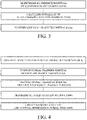
- FIG. 3 is a view for explaining a method for re-determining an optimal transfer hospital according to an exemplary embodiment of the present disclosure.
- the emergency AI server 3000 may re-determine the optimal transfer hospital.
- the emergency AI server 3000 may re-determine candidate hospitals by expanding a search radius.
- the emergency AI server 3000 may re-determine candidate hospitals by expanding a search radius (for example, increasing by 2 km, expanding the cities, expanding the region, or the like) from the location of the ambulance (or a location where the emergency patient occurs).
- the emergency AI server 3000 may calculate suitabilityes of re-determined candidate hospitals. For example, the emergency AI server 3000 may reacquire the transport resource availability information by reflecting the re-determined candidate hospitals and recalculate the suitability of each re-determined candidate hospital. The method for calculating the suitability has been described in FIG. 2 so that a detailed description thereof will be omitted.
- step S330 the emergency AI server 3000 may re-determine the optimal transfer hospital.
- the emergency AI server 3000 determines the optimal transfer hospital according to the higher order of the suitability among the re-determined candidate hospitals and may provide the information about the re-determined optimal transfer hospital to the ambulance device 1000. For example, the emergency AI server 3000 re-determines one hospital having the highest suitability among the candidate hospitals as an optimal transfer hospital and may provide information thereof to the ambulance device 1000.
- the step S310 of re-determining candidate hospitals by expanding the search radius, the step S320 of calculating a suitability of the re-determined candidate hospitals, and the step S330 of re-determining the optimal transfer hospital on the basis of the calculated suitability of each candidate hospital may be continuously repeated until the suitability of the re-determined optimal transfer hospital becomes equal to or higher than the predetermined value.
- FIG. 4 is a view for explaining a method for determining an optimal transfer hospital according to an exemplary embodiment of the present disclosure when a plurality of emergency patients occurs.
- the emergency AI server 3000 may generate weight information about each candidate hospital for each emergency patient using information about the emergency patients and information about the candidate hospital.
- a weight for the candidate hospitals for each emergency patient may be explained by the following Equation. w t i j k 0 ⁇ w t ⁇ 1 i j k 0 p z t i j k 0
- the weight of each emergency patient may be calculated by the following Equation.
- ⁇ t j k Transport distance based hospital modeling
- ⁇ t j k Transport distance based hospital modeling
- ⁇ t j k Transport distance based hospital modeling
- the emergency AI server 3000 may calculate the weight for the candidate hospital of each emergency patient by 1) transport distance based hospital modeling and 2) patient information based hospital modeling.
- the transport distance is closely related to golden time information corresponding to the representative severe disease. Accordingly, the weight for the candidate hospital of the emergency patient may be calculated on the basis of the transport distance information which is calculated together with hospital (j) and lesion (k) factor information.
- the weight for the candidate hospital of the emergency patient may be calculated on the basis of the patient information ⁇ about at least one of the cardiac arrest hospitalization survival rate, the major trauma, the STEMI acceptance rate, and the stroke acceptance rate, the lesion ⁇ , and whether to be hospitalized in the intensive care unit ⁇ .
- the weight may be calculated by the following Equations.
- a real-time patient weight may become 0 by the conditions c1, c2, c3, c4, c5, and c6.
- this case is simply related to the acceptance of the hospital such as the approval of the hospital, a sickbed situation, refraining from transporting so that a process of quickly searching a hospital as a second best option is necessary.
- the weight may not be 0.
- the patient information in the hospital list is not removed so that an available range is updated in real-time by the hospital to sequentially process.
- the emergency AI server 3000 may determine a final transfer hospital for each emergency patient.
- the method for determining an optimal transfer hospital has been described above so that a detailed description will be omitted here.
- the emergency AI server 3000 may inquire the determined optimal transfer hospital about whether to accept the patient together with the weight information of the emergency patient. Further, the emergency AI server may receive a response to the inquiry from the hospital.
- the emergency AI server may provide the information about the determined optimal transfer hospital and the weight information of the emergency patient to the ambulance device 1000 and the ambulance device 1000 may inquire the hospital about whether to accept the patient together with the weight information of the emergency patient.
- the hospital may determine whether to accept the emergency patient. Further, the hospital may transmit the answer about whether to accept the corresponding patient to the ambulance device and/or the emergency AI server 3000.
- the hospital may receive weight information about the plurality of emergency patients and determine an emergency patient to be accepted in consideration of the weight information. Further, the hospital may quickly assign patients who are not accepted to another hospital in consideration of the weight information.
- the emergency AI server 3000 may update information about the emergency patients and hospitals in real-time. For example, when a patient having a high weight is assigned to a specific hospital, acceptable patients of the specific hospital may be reduced. In this case, weight information of a patient having a low weight may be regenerated by reflecting the changed information.
- the emergency AI server 3000 determines a final transfer hospital for each emergency patient first and calculates weight information for the determined final transfer hospital to generate weight information for the final transfer hospital.
- the emergency AI server 3000 may determine the optimal transfer hospital before generating the weight information. For example, the emergency AI server 3000 determines a final transfer hospital for each emergency patient and generates weight information for the determined final transfer hospital, and then may inquire the optimal transfer hospital about whether to accept the patient together with the weight information. In this case, the number of hospitals which generate weight information is reduced so that the efficiency of the emergency AI server 3000 may be improved.
- FIG. 5 is a view for explaining a method for recommending an optimal handover point according to an exemplary embodiment of the present disclosure.
- the emergency AI server 3000 may acquire location information of an optimal transfer hospital, real-time traffic information, air ambulance operation information, and information about a candidate handover point (a location where an ambulance hands over an emergency patient to an air ambulance).
- the emergency AI server 3000 may determine whether to use an air ambulance to transport an emergency patient.
- the emergency AI server 3000 may determine to utilize an air ambulance.
- the emergency AI server 3000 may determine an optimal handover point on the basis of at least one of location information of the determined optimal transfer hospital, real-time traffic information, location information of a candidate handover point, ambulance location information (or location information where the emergency patient occurs), and air ambulance operation information.
- the emergency AI server 3000 may determines candidate handover points and determine a plurality of candidate routes which utilize an air ambulance. For example, the emergency AI server 3000 may determine a candidate route which utilizes the candidate handover points.
- the emergency AI server 3000 may calculate a time taken to go to the optimal transfer hospital through each of the plurality of candidate routes. For example, the emergency AI server 3000 may determine a taken time for each of the candidate routes by utilizing location information of the determined optimal transfer hospital, real-time traffic information, location information of a candidate handover point, ambulance location information (or location information where the emergency patient occurs), and air ambulance operation information.
- the emergency AI server 3000 may determine a candidate route having a shortest taken time as an optimal transport route.
- the emergency AI server 3000 may provide the information to the ambulance device 1000.
- the information provided to the ambulance device 1000 may include information about the optimal handover point.
- FIG. 6 is a view for explaining an algorithm for determining an optimal transfer hospital according to an exemplary embodiment of the present disclosure in detail.
- P z i 1
- x 1 : t , r i t may indicate a suitability of an i-th hospital when data during transport and current in-hospital resource information are given. This may be calculated by a conditional probability to be disclosed below.
- x 1 : t may indicate emergency event possibility information and a severity classification result when data during transport is given.
- d k , r i t indicates a suitability of an i-th hospital when emergency event possibility information and transport resource availability information are given.
- d k , r i t [Table 2] Classification List Type Remarks Input variable ( d k ) KTAS ⁇ 1, 2, 3, 4, 5 ⁇ non-continuity value Identify whether current input variable occurs through P(d k
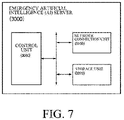
- FIG. 7 is a view for explaining components of an emergency AI server according to an exemplary embodiment of the present disclosure.
- the emergency AI server 3000 may include a control unit 3300, a network connection unit 3100, and a storage unit 3200, and may also include various components without being limited thereto.
- the storage unit 3200 may include various information.
- the storage unit 3200 may include received status information of the emergency patient (for example, biosignal information, age information, complained symptom information, existing medical history information, consciousness information, electrocardiogram information, and the like).
- the storage unit 3200 may include transport resource information (for example, real-time traffic information, location information of each candidate hospital, current position information, available sickbed information of each candidate hospital, duty doctor information of each candidate hospital, facility information of each candidate hospital, air ambulance location information, air ambulance operation information, and the like).
- the information stored in the storage unit 3200 may be updated in real-time or non-real-time on the basis of information received from an external device.
- the storage unit 3200 may be implemented by a non-volatile storage medium which consistently stores arbitrary data.
- the storage unit 3200 may include not only a disk, an optical disk, and a magneto-optical storage device, but also a flash memory and/or a battery back-up memory based storage device, but is not limited thereto.
- the storage unit 3200 may include various machine learning models.
- the storage unit 3200 may include at least one of a severity determination model, an intensive care unit hospitalization screening model, a STEMI screening model, a UA and NSTEMI screening model, an LVO occurrence screening model, a cerebral hemorrhage screening model, a ROSC recovery screening model, and a cardiac arrest recurrence screening model.
- the control unit 3300 can continuously update the machine learning models stored in the storage unit 3200 by performing the machine learning utilizing data acquired from the outside.
- the network connection unit 3100 may communicate with the ambulance device 1000 and the emergency medical server 2000 via an arbitrary type of network.
- the network connection unit 3100 may include a wired/wireless connection module for network connection.
- the wireless connection technique for example, wireless LAN (WLAN) (Wi-Fi), wireless broadband (Wibro), world interoperability for microwave access (Wimax), high speed downlink packet access (HSDPA), international mobile telecommunication system (IMT) 2000, IMT advanced, IMT-2020, and the like may be used.
- the control unit 3300 may be implemented by at least one processor.
- the control unit 3300 may be implemented by one processor or a plurality of processors.
- the plurality of processors may be located to be physically adjacent and to be physically spaced apart from each other.
- the control unit 3300 may determine candidate hospitals of the optimal transfer hospital. For example, the control unit 3300 may determine hospitals located within a predetermined distance (for example, 3 Km, 5 Km, or the like) from a location where the ambulance is located (or a location where an emergency patient occurs) as the candidate hospitals. Further, the control unit 3300 may determine hospitals located in the city (for example, Seoul, Incheon, Suwon, or the like) including a location where the ambulance is located as the candidate hospitals.
- a predetermined distance for example, 3 Km, 5 Km, or the like
- control unit 3300 may determine hospitals located in the district (for example, Gangnam-gu, Seocho-gu, Gangdong-gu, or the like) where the ambulance is located as the candidate hospitals, but may determine the candidate hospitals by various methods without being limited thereto.
- control unit 3300 may acquire status information about the emergency patient.
- the control unit 3300 may acquire the status information about the emergency patient from the ambulance device 1000.
- the control unit 3300 may determine a severity of the emergency patient. For example, the control unit 3300 may determine the severity of the patient using the status information about the emergency patient.
- control unit 3300 may previously create (or previously include) a severity determination model through machine learning and determine the severity of the emergency patient by inputting the status information of the emergency patient to the severity determination model.
- the control unit 3300 may determine the severity of the emergency patient on the basis of a prehospital Korean Triage and Acuity Scale (prehospital KTAS). For example, the control unit 3300 primarily assigns a code by utilizing an age of the emergency patient, secondarily assigns a code by performing a major classification for symptom (for example, a digestive system, dermatology, neurology, or the like), tertiarily assigns a code by performing a middle classification for the major classification (for example, abdominal pain, vomiting/nausea, or the like), and quaternarily assigns a code by determining detailed symptoms for the middle classification (for example, dyspnea, shock, or the like). Further, the control unit 3300 may determine a severity matching the finally assigned code as the severity of the emergency patient (for example, levels 1, 2, 3, 4, and 5 and the level 1 is the most dangerous).
- a severity matching the finally assigned code as the severity of the emergency patient (for example, levels 1, 2, 3, 4, and 5 and the level 1 is the most dangerous).
- the algorithm utilized to create the severity determination model may include at least one of supervised learning, support vector machines (SVM), random forest (RF), naive bayes (NB), artificial neural networks (ANN), decision tree, and Bayesian, but is not limited thereto.
- SVM support vector machines
- RF random forest
- NB naive bayes
- ANN artificial neural networks
- Bayesian Bayesian
- the emergency AI server 2000 may calculate emergency event possibility information using the status information of the emergency patient.
- the control unit 3300 may acquire the possibility information of the event by inputting the status information of the emergency patient to the machine learning model generated by the machine learning in advance.
- the control unit 3300 generates (and/or includes) an intensive care unit hospitalization screening model in advance and inputs the status information of the emergency patient to the intensive care unit hospitalization screening model to acquire the possibility information of entering to the intensive care unit.
- the control unit 3300 generates (and/or includes) a STEMI screening model in advance and inputs the status information of the emergency patient to the STEMI screening model to acquire the STEMI possibility information.
- control unit 3300 may generate (and/or include) at least one of a UA and NSTEMI screening model, a LVO occurrence screening model, a cerebral infarction and cerebral hemorrhage screening model, a return of spontaneous circulation (ROSC) screening model, and a cardiac arrest recurrence screening model and input the status information of the emergency patient to each model to acquire at least one of unstable angina (UA) and non ST-elevation myocardial infarction (NSTEMI) possibility information, large vessel occlusion (LVO) possibility information, cerebral infarction and cerebral hemorrhage possibility information, return of spontaneous circulation (ROSC) possibility information, and cardiac arrest recurrence possibility information.
- UA unstable angina
- NSTEMI non ST-elevation myocardial infarction
- LVO large vessel occlusion
- ROI cerebral infarction and cerebral hemorrhage possibility information
- ROSC return of spontaneous circulation
- each screening model may be implemented by a Bayesian deep hierarchical network model which models simultaneously the inherent uncertainty of data and interprets the results, and also implemented by various methods without being limited thereto.
- the screening model may be implemented by one of supervised learning, support vector machines (SVM), random forest (RF), naive bayes (NB), artificial neural networks (ANN), decision tree, Bayesian, and the like, but is not limited thereto.
- control unit 3300 may improve the accuracy of each screening model, by performing the machine learning continuously utilizing the data of the emergency patient which is continuously input.
- the control unit 3300 may calculate a suitability of each candidate hospital. According to the exemplary embodiment of the present disclosure, the control unit 3300 may calculate the suitability of each candidate hospital on the basis of at least one of the determined severity of the patient, the acquired emergency event possibility information, and the transport resource availability information.
- control unit 3300 may generate and include an optimal hospital selection model in advance and input the determined severity of the patient, the emergency event possibility information, and the transport resource availability information to the optimal hospital selection model to calculate the suitability for each candidate hospital.
- the control unit 3300 may select an optimal transfer hospital. According to the exemplary embodiment of the present disclosure, the control unit 3300 determines the optimal transfer hospital according to the higher order of the suitability among the candidate hospitals and may provide the information about the determined optimal transfer hospital to the ambulance device 1000. For example, the control unit 3300 determines one hospital having the highest suitability among the candidate hospitals as an optimal transfer hospital and may provide information thereof to the ambulance device 1000. Further, the control unit 3300 determines a predetermined number of hospitals (for example, two, three, or the like) according to the higher order of the suitability among the candidate hospitals as an optimal transfer hospital and may provide information thereof to the ambulance device 1000.
- a predetermined number of hospitals for example, two, three, or the like
- control unit 3300 may re-determine the optimal transfer hospital.
- the control unit 3300 may re-determine the candidate hospitals by expanding a search radius.
- the control unit 3300 may re-determine candidate hospitals by expanding a search radius (for example, increasing 2 km, expanding the cities, expanding the region, or the like) from the location of the ambulance (or a location where the emergency patient occurs).
- the control unit 3300 may calculate a suitability of re-determined candidate hospitals. For example, the control unit 3300 may reacquire the transport resource availability information by reflecting the re-determined candidate hospitals and may recalculate the suitability of each re-determined candidate hospital.
- the method for calculating the suitability has been described in FIG. 2 so that a detailed description thereof will be omitted.
- the control unit 3300 may re-determine an optimal transfer hospital. According to the exemplary embodiment of the present disclosure, the control unit 3300 determines the optimal transfer hospital according to the higher order of the suitability among the re-determined candidate hospitals and may provide the information about the re-determined optimal transfer hospital to the ambulance device 1000. For example, the control unit 3300 re-determines one hospital having the highest suitability among the candidate hospitals as an optimal transfer hospital and may provide information thereof to the ambulance device 1000.
- the step S310 of re-determining candidate hospitals by expanding the search radius, the step S320 of calculating a suitability of the re-determined candidate hospitals, and the step S330 of re-determining the optimal transfer hospital on the basis of the calculated suitability of each candidate hospital may be continuously repeated until the suitability of the re-determined optimal transfer hospital becomes equal to or higher than the predetermined value.
- control unit 3000 may generate weight information about each candidate hospital for each emergency patient using information about the emergency patients and information about the candidate hospitals. This has been described in detail in FIG. 4 .
- control unit 3300 may determine a final transfer hospital for each emergency patient.
- the method for determining an optimal transfer hospital has been described above so that a detailed description will be omitted here.
- the control unit 3300 may inquire the determined optimal transfer hospital about whether to accept the patient together with the weight information of the emergency patient. Further, the control unit may receive a response to the inquiry from the hospital.
- the hospital may determine whether to accept the emergency patient. Further, the hospital may transmit the answer about whether to accept the patient to the ambulance device and/or the emergency AI server 3300.
- the control unit 3300 may update information about emergency patients and hospitals in real-time. For example, when a patient having a high weight is assigned to a specific hospital, acceptable patients of the specific hospital may be reduced. In this case, weight information of a patient having a low weight may be regenerated by reflecting the changed information.
- control unit 3300 may acquire location information of an optimal transfer hospital, real-time traffic information, operation information of air ambulance, and information about a candidate handover point (a location where an ambulance hands over an emergency patient to an air ambulance).
- the control unit 3300 may determine whether to utilize an air ambulance to transport the emergency patient. For example, when the emergency patient's condition is urgent so that emergency measures are required or when it takes a lot of time to transport the patient (reflecting regional characteristics), the control unit 3300 may determine to utilize an air ambulance.
- control unit 3300 may determine an optimal handover point on the basis of at least one of location information of the determined optimal transfer hospital, real-time traffic information, location information of a candidate handover point, ambulance location information (or location information where the emergency patient occurs), and air ambulance operation information.
- control unit 3300 may determine candidate handover points and determine a plurality of candidate routes which utilize an air ambulance. For example, the control unit 3300 may determine a candidate route which utilizes the candidate handover points.
- control unit 3300 may calculate a time taken to go to the optimal transfer hospital through each of the plurality of candidate routes. For example, the control unit 3300 may determine a taken time for each of the candidate routes by utilizing location information of the determined optimal transfer hospital, real-time traffic information, location information of a candidate handover point, ambulance location information (or location information where the emergency patient occurs), and operation information of air ambulance.
- control unit 3300 may determine a candidate route having a shortest taken time as an optimal transport route.
- information and signals may be represented using various arbitrary technologies and techniques.
- data, indications, commands, information, signals, bits, symbols, and chips which may be referred in the above description may be represented by voltages, currents, electromagnetic waves, magnetic fields or particles, optical fields or particles, or an arbitrary combination thereof.
- the term "article” includes a computer program which is accessible from an arbitrary computer readable storage device, a carrier or a medium.
- the computer readable storage medium includes a magnetic storing device (for example, a hard disk, a floppy disk, a magnetic strip, or the like), an optical disk (for example, a CD, a DVD, or the like), a smart card, and a flash memory device (for example, an EEPROM, a card, a stick, a key drive, or the like), but is not limited thereto.
- various storage media suggested herein include one or more devices for storing information and/or other machine readable media.
Landscapes
- Business, Economics & Management (AREA)
- Engineering & Computer Science (AREA)
- Health & Medical Sciences (AREA)
- General Business, Economics & Management (AREA)
- Human Resources & Organizations (AREA)
- General Health & Medical Sciences (AREA)
- Public Health (AREA)
- Primary Health Care (AREA)
- Medical Informatics (AREA)
- Tourism & Hospitality (AREA)
- Strategic Management (AREA)
- Economics (AREA)
- Biomedical Technology (AREA)
- Epidemiology (AREA)
- Physics & Mathematics (AREA)
- Theoretical Computer Science (AREA)
- Marketing (AREA)
- Entrepreneurship & Innovation (AREA)
- General Physics & Mathematics (AREA)
- Development Economics (AREA)
- Educational Administration (AREA)
- Quality & Reliability (AREA)
- Operations Research (AREA)
- Game Theory and Decision Science (AREA)
- Data Mining & Analysis (AREA)
- Databases & Information Systems (AREA)
- Pathology (AREA)
- Child & Adolescent Psychology (AREA)
- Medical Treatment And Welfare Office Work (AREA)
Applications Claiming Priority (3)
| Application Number | Priority Date | Filing Date | Title |
|---|---|---|---|
| KR1020190109299A KR102402697B1 (ko) | 2019-09-04 | 2019-09-04 | 최적 이송 병원 결정 방법 및 서버 |
| KR1020190109300A KR102420336B1 (ko) | 2019-09-04 | 2019-09-04 | 복수의 응급환자들 각각이 이송될 병원을 결정하는 방법 및 서버 |
| PCT/KR2020/011872 WO2021045535A1 (ko) | 2019-09-04 | 2020-09-03 | 최적 이송 병원 결정 방법 및 서버 |
Publications (2)
| Publication Number | Publication Date |
|---|---|
| EP4027352A1 true EP4027352A1 (de) | 2022-07-13 |
| EP4027352A4 EP4027352A4 (de) | 2023-09-13 |
Family
ID=74853412
Family Applications (1)
| Application Number | Title | Priority Date | Filing Date |
|---|---|---|---|
| EP20860494.2A Pending EP4027352A4 (de) | 2019-09-04 | 2020-09-03 | Verfahren und server zur bestimmung eines optimalen verlegungskrankenhauses |
Country Status (4)
| Country | Link |
|---|---|
| US (1) | US20220328172A1 (de) |
| EP (1) | EP4027352A4 (de) |
| JP (1) | JP7495029B2 (de) |
| WO (1) | WO2021045535A1 (de) |
Cited By (1)
| Publication number | Priority date | Publication date | Assignee | Title |
|---|---|---|---|---|
| EP4542571A4 (de) * | 2022-07-14 | 2025-10-08 | Medical Ai Co Ltd | Verfahren, programm und vorrichtung zur bereitstellung von transportdiensten für notfallpatienten und überwachung von hospitalisierten patienten auf basis von elektrokardiogrammen |
Families Citing this family (10)
| Publication number | Priority date | Publication date | Assignee | Title |
|---|---|---|---|---|
| JP7298970B2 (ja) * | 2019-08-15 | 2023-06-27 | 株式会社カネカ | 脳血管障害を監視し、それに応答するためのシステム、コンピュータ、およびポータブルデバイス、ならびに脳血管障害を監視し、それに応答するための方法 |
| US20220384020A1 (en) * | 2019-11-08 | 2022-12-01 | Nippon Telegraph And Telephone Corporation | Estimating method, estimating device, and estimating program |
| US20230025985A1 (en) * | 2021-07-26 | 2023-01-26 | Open Water Internet Inc. | Large vessel occlusion early notification and emergency medical routing |
| CN114065066A (zh) * | 2021-11-29 | 2022-02-18 | 深圳市荣信诚科技有限公司 | 一种基于云计算的智慧城乡管理方法和系统 |
| CN114626836B (zh) * | 2022-05-17 | 2022-08-05 | 浙江大学 | 基于多智能体强化学习的急救后送决策系统及方法 |
| US20240221917A1 (en) * | 2022-12-31 | 2024-07-04 | Teletracking Technologies, Inc. | Patient transfer recommendation responsive to event identification |
| JP2025049017A (ja) * | 2023-09-21 | 2025-04-03 | ソフトバンクグループ株式会社 | システム |
| KR20250069025A (ko) * | 2023-11-10 | 2025-05-19 | 사회복지법인 삼성생명공익재단 | 병원 전 단계에서의 심정지 결과를 예측하는 방법, 장치, 및 컴퓨터프로그램 |
| CN118155820B (zh) * | 2024-05-11 | 2024-07-23 | 万链指数(青岛)信息科技有限公司 | 一种基于云端服务器的医院门诊应急服务系统及方法 |
| CN119092081A (zh) * | 2024-11-08 | 2024-12-06 | 航天科工广信智能技术有限公司 | 一种医院后勤预案生成方法、系统及存储介质 |
Family Cites Families (33)
| Publication number | Priority date | Publication date | Assignee | Title |
|---|---|---|---|---|
| JP2002007579A (ja) * | 2000-06-21 | 2002-01-11 | Hiroko Oki | 離島等における患者の転送時期決定方法およびその処理プログラムを記録した媒体 |
| JP2003150707A (ja) | 2001-11-12 | 2003-05-23 | Omron Corp | 医療用問診装置 |
| US8489419B2 (en) * | 2002-03-22 | 2013-07-16 | Thinksharp, Inc. | Transportation mode determination in non-mass casualty triage |
| JP2005071092A (ja) * | 2003-08-25 | 2005-03-17 | Hitachi Ltd | 救急患者の搬送システム及び搬送方法 |
| KR20060037684A (ko) * | 2004-10-28 | 2006-05-03 | 배중학 | 구급차량의 모니터링 시스템 |
| KR100759916B1 (ko) * | 2005-10-21 | 2007-09-18 | 연세대학교 산학협력단 | 중증도 분류 및 이송병원을 선정하는 응급의료정보 시스템 |
| JP2007128245A (ja) * | 2005-11-02 | 2007-05-24 | Keakomu:Kk | 救急搬送支援システムとその救急支援サーバ |
| KR100800026B1 (ko) | 2007-01-29 | 2008-02-01 | 대한민국 | 응급환자 이송 서비스 방법 및 시스템 |
| US20090198733A1 (en) * | 2008-02-01 | 2009-08-06 | Microsoft Corporation | Healthcare resource locator |
| JP2011048775A (ja) * | 2009-08-28 | 2011-03-10 | Chugoku Electric Power Co Inc:The | 救急病院選択システム、管理サーバ及び病院サーバ |
| KR101222379B1 (ko) * | 2010-05-19 | 2013-01-15 | 가톨릭대학교 산학협력단 | 응급환자 이송/협진 관리방법 |
| WO2012098613A1 (ja) * | 2011-01-21 | 2012-07-26 | Aoki Noriaki | 救急医療管制支援システム及びサーバ並びに携帯端末 |
| JP5375864B2 (ja) * | 2011-03-29 | 2013-12-25 | 沖電気工業株式会社 | 搬送支援システム、搬送支援サーバ及び搬送支援プログラム |
| WO2013065113A1 (ja) | 2011-10-31 | 2013-05-10 | ピーエフシー株式会社 | 救急支援システム |
| KR20130083067A (ko) * | 2011-12-28 | 2013-07-22 | 경북대학교 산학협력단 | 응급 진료 가능 의료기관 조회 시스템 및 방법 |
| JP2013148996A (ja) | 2012-01-18 | 2013-08-01 | Osaka Univ | 重症度判定装置、及び、重症度判定方法 |
| US9569593B2 (en) * | 2012-03-08 | 2017-02-14 | Nuance Communications, Inc. | Methods and apparatus for generating clinical reports |
| KR20140102572A (ko) * | 2013-02-14 | 2014-08-22 | 건국대학교 산학협력단 | 긴급 구조·구급 서비스를 위한 시청각 데이터를 실시간 전송하는 전송시스템 |
| WO2015121114A1 (en) * | 2014-02-11 | 2015-08-20 | Koninklijke Philips N.V. | Determining return of spontaneous circulation during cpr |
| KR20160119972A (ko) * | 2015-04-07 | 2016-10-17 | 주식회사 실리콘큐브 | 응급 환자 이송 과정 기록 시스템 및 방법 |
| JP2017162219A (ja) * | 2016-03-10 | 2017-09-14 | 佐々木 芳章 | タッチパネル式通信端末を活用した救急搬送システム |
| JP6355685B2 (ja) * | 2016-08-31 | 2018-07-11 | 株式会社アルム | 医療支援システム |
| CN106506502B (zh) * | 2016-11-15 | 2017-09-22 | 合肥工业大学 | 一种多模态移动电子病历系统及其工作方法 |
| US10349148B2 (en) * | 2016-12-20 | 2019-07-09 | Intergraph Corporation | Computer-aided dispatch systems and methods utilizing biometrics to assess responder condition and suitability |
| JP6869726B2 (ja) * | 2017-01-16 | 2021-05-12 | 株式会社日立製作所 | 救急情報システム、および救急情報管理方法 |
| US9849044B1 (en) * | 2017-01-30 | 2017-12-26 | SkyRyse, Inc. | Vehicle system and method for providing services |
| EP3404666B1 (de) * | 2017-04-28 | 2026-01-28 | Siemens Healthineers AG | Schnelle beurteilung und ergebnisanalyse für medizinische patienten |
| EP4471801A3 (de) * | 2017-05-05 | 2025-02-26 | Canary Speech, LLC | Auswahl von sprachmerkmalen zur konstruktion von modellen zur erkennung medizinischer leiden |
| JP6875734B2 (ja) * | 2017-07-20 | 2021-05-26 | 株式会社Smart119 | 救急出動支援システム |
| JP2019080875A (ja) * | 2017-10-31 | 2019-05-30 | テルモ株式会社 | 治療方法 |
| JP6692787B2 (ja) * | 2017-11-21 | 2020-05-13 | 正昭 川畑 | 救急搬送支援装置および救急搬送支援プログラム |
| US20190197438A1 (en) * | 2017-12-22 | 2019-06-27 | At&T Intellectual Property I, L.P | System and method for optimally routing ambulances and other vehicles in-route to hospitals |
| CN113228092A (zh) * | 2018-10-16 | 2021-08-06 | 赛耐普思合伙有限责任公司 | 用于个性化地面交通的系统和方法 |
-
2020
- 2020-09-03 EP EP20860494.2A patent/EP4027352A4/de active Pending
- 2020-09-03 WO PCT/KR2020/011872 patent/WO2021045535A1/ko not_active Ceased
- 2020-09-03 US US17/640,312 patent/US20220328172A1/en active Pending
- 2020-09-03 JP JP2022514162A patent/JP7495029B2/ja active Active
Cited By (1)
| Publication number | Priority date | Publication date | Assignee | Title |
|---|---|---|---|---|
| EP4542571A4 (de) * | 2022-07-14 | 2025-10-08 | Medical Ai Co Ltd | Verfahren, programm und vorrichtung zur bereitstellung von transportdiensten für notfallpatienten und überwachung von hospitalisierten patienten auf basis von elektrokardiogrammen |
Also Published As
| Publication number | Publication date |
|---|---|
| WO2021045535A1 (ko) | 2021-03-11 |
| JP7495029B2 (ja) | 2024-06-04 |
| EP4027352A4 (de) | 2023-09-13 |
| US20220328172A1 (en) | 2022-10-13 |
| JP2022547027A (ja) | 2022-11-10 |
Similar Documents
| Publication | Publication Date | Title |
|---|---|---|
| EP4027352A1 (de) | Verfahren und server zur bestimmung eines optimalen verlegungskrankenhauses | |
| KR102420336B1 (ko) | 복수의 응급환자들 각각이 이송될 병원을 결정하는 방법 및 서버 | |
| Bertsimas et al. | Predicting inpatient flow at a major hospital using interpretable analytics | |
| KR102537302B1 (ko) | 최적 이송 병원 결정 방법 및 서버 | |
| US11488694B2 (en) | Method and system for predicting patient outcomes using multi-modal input with missing data modalities | |
| Newgard et al. | The cost of overtriage: more than one-third of low-risk injured patients were taken to major trauma centers | |
| Nguyen et al. | Combining crowd and expert labels using decision theoretic active learning | |
| Memari et al. | Air and ground ambulance location-allocation-routing problem for designing a temporary emergency management system after a disaster | |
| Itani et al. | Capacity-constrained bus bridging optimization framework | |
| Sivagnanam et al. | Multi-agent reinforcement learning with hierarchical coordination for emergency responder stationing | |
| He et al. | Service location optimization model for improving rural emergency medical services | |
| Pethuraj et al. | Improving accuracy of medical data handling and processing using DCAF for IoT-based healthcare scenarios | |
| GB2582195A (en) | Medical institution selection server and medical institution selection method | |
| US20200365257A1 (en) | Location-procedure embedding based method for patient in-hospital location and procedure prediction | |
| Zamani et al. | Distributed edge to cloud ensemble deep learning architecture to diagnose Covid-19 from lung image in IoT based e-Health system | |
| CN111462876A (zh) | 一种基于云平台的智慧城市管理方法和系统 | |
| Rudramoorthi et al. | Repositioning game for ambulance services | |
| Cokyasar et al. | Dynamic ride-matching for large-scale transportation systems | |
| Radwan et al. | Ambulance routing optimization for CT-ready hospitals | |
| Molins et al. | Ambulance Routing for Optimizing Stroke Patient Outcomes | |
| Lei | A novel fault tolerance based load balancing technique in cloud computing | |
| CN111063436A (zh) | 数据处理方法及装置、存储介质及电子终端 | |
| KR102943135B1 (ko) | 예상 성인 키의 연산 방법 및 이를 수행하기 위한 장치 | |
| US20240183667A1 (en) | Using iot and analytics to prioritize dispatch of medical supplies by dynamic routing of autonomous vehicles | |
| Mahmoudi et al. | Presenting A Multi-objective Location Model in GIS Environment: A Case Study in East Tehran Emergency Stations |
Legal Events
| Date | Code | Title | Description |
|---|---|---|---|
| STAA | Information on the status of an ep patent application or granted ep patent |
Free format text: STATUS: THE INTERNATIONAL PUBLICATION HAS BEEN MADE |
|
| PUAI | Public reference made under article 153(3) epc to a published international application that has entered the european phase |
Free format text: ORIGINAL CODE: 0009012 |
|
| STAA | Information on the status of an ep patent application or granted ep patent |
Free format text: STATUS: REQUEST FOR EXAMINATION WAS MADE |
|
| 17P | Request for examination filed |
Effective date: 20220311 |
|
| AK | Designated contracting states |
Kind code of ref document: A1 Designated state(s): AL AT BE BG CH CY CZ DE DK EE ES FI FR GB GR HR HU IE IS IT LI LT LU LV MC MK MT NL NO PL PT RO RS SE SI SK SM TR |
|
| DAV | Request for validation of the european patent (deleted) | ||
| DAX | Request for extension of the european patent (deleted) | ||
| A4 | Supplementary search report drawn up and despatched |
Effective date: 20230814 |
|
| RIC1 | Information provided on ipc code assigned before grant |
Ipc: G06Q 10/06 20120101ALI20230808BHEP Ipc: G16H 50/70 20180101ALI20230808BHEP Ipc: G16H 50/50 20180101ALI20230808BHEP Ipc: G06Q 50/22 20180101ALI20230808BHEP Ipc: G16H 80/00 20180101ALI20230808BHEP Ipc: G16H 40/20 20180101AFI20230808BHEP |