EP4019707B1 - Vorgefertigte holzplatte für den bau von gebäuden - Google Patents
Vorgefertigte holzplatte für den bau von gebäuden Download PDFInfo
- Publication number
- EP4019707B1 EP4019707B1 EP21215876.0A EP21215876A EP4019707B1 EP 4019707 B1 EP4019707 B1 EP 4019707B1 EP 21215876 A EP21215876 A EP 21215876A EP 4019707 B1 EP4019707 B1 EP 4019707B1
- Authority
- EP
- European Patent Office
- Prior art keywords
- layer
- panel
- wood
- layers
- construction
- Prior art date
- Legal status (The legal status is an assumption and is not a legal conclusion. Google has not performed a legal analysis and makes no representation as to the accuracy of the status listed.)
- Active
Links
Images


Classifications
-
- E—FIXED CONSTRUCTIONS
- E04—BUILDING
- E04B—GENERAL BUILDING CONSTRUCTIONS; WALLS, e.g. PARTITIONS; ROOFS; FLOORS; CEILINGS; INSULATION OR OTHER PROTECTION OF BUILDINGS
- E04B2/00—Walls, e.g. partitions, for buildings; Wall construction with regard to insulation; Connections specially adapted to walls
- E04B2/74—Removable non-load-bearing partitions; Partitions with a free upper edge
- E04B2/7401—Removable non-load-bearing partitions; Partitions with a free upper edge assembled using panels without a frame or supporting posts, with or without upper or lower edge locating rails
- E04B2/7403—Removable non-load-bearing partitions; Partitions with a free upper edge assembled using panels without a frame or supporting posts, with or without upper or lower edge locating rails with special measures for sound or thermal insulation including fire protection
-
- B—PERFORMING OPERATIONS; TRANSPORTING
- B32—LAYERED PRODUCTS
- B32B—LAYERED PRODUCTS, i.e. PRODUCTS BUILT-UP OF STRATA OF FLAT OR NON-FLAT, e.g. CELLULAR OR HONEYCOMB, FORM
- B32B21/00—Layered products comprising a layer of wood, e.g. wood board, veneer, wood particle board
- B32B21/04—Layered products comprising a layer of wood, e.g. wood board, veneer, wood particle board comprising wood as the main or only constituent of a layer, which is next to another layer of the same or of a different material
-
- B—PERFORMING OPERATIONS; TRANSPORTING
- B32—LAYERED PRODUCTS
- B32B—LAYERED PRODUCTS, i.e. PRODUCTS BUILT-UP OF STRATA OF FLAT OR NON-FLAT, e.g. CELLULAR OR HONEYCOMB, FORM
- B32B21/00—Layered products comprising a layer of wood, e.g. wood board, veneer, wood particle board
- B32B21/04—Layered products comprising a layer of wood, e.g. wood board, veneer, wood particle board comprising wood as the main or only constituent of a layer, which is next to another layer of the same or of a different material
- B32B21/047—Layered products comprising a layer of wood, e.g. wood board, veneer, wood particle board comprising wood as the main or only constituent of a layer, which is next to another layer of the same or of a different material of foam
-
- B—PERFORMING OPERATIONS; TRANSPORTING
- B32—LAYERED PRODUCTS
- B32B—LAYERED PRODUCTS, i.e. PRODUCTS BUILT-UP OF STRATA OF FLAT OR NON-FLAT, e.g. CELLULAR OR HONEYCOMB, FORM
- B32B3/00—Layered products comprising a layer with external or internal discontinuities or unevennesses, or a layer of non-planar shape; Layered products comprising a layer having particular features of form
- B32B3/10—Layered products comprising a layer with external or internal discontinuities or unevennesses, or a layer of non-planar shape; Layered products comprising a layer having particular features of form characterised by a discontinuous layer, i.e. formed of separate pieces of material
-
- B—PERFORMING OPERATIONS; TRANSPORTING
- B32—LAYERED PRODUCTS
- B32B—LAYERED PRODUCTS, i.e. PRODUCTS BUILT-UP OF STRATA OF FLAT OR NON-FLAT, e.g. CELLULAR OR HONEYCOMB, FORM
- B32B5/00—Layered products characterised by the non- homogeneity or physical structure, i.e. comprising a fibrous, filamentary, particulate or foam layer; Layered products characterised by having a layer differing constitutionally or physically in different parts
- B32B5/18—Layered products characterised by the non- homogeneity or physical structure, i.e. comprising a fibrous, filamentary, particulate or foam layer; Layered products characterised by having a layer differing constitutionally or physically in different parts characterised by features of a layer of foamed material
-
- B—PERFORMING OPERATIONS; TRANSPORTING
- B32—LAYERED PRODUCTS
- B32B—LAYERED PRODUCTS, i.e. PRODUCTS BUILT-UP OF STRATA OF FLAT OR NON-FLAT, e.g. CELLULAR OR HONEYCOMB, FORM
- B32B9/00—Layered products comprising a layer of a particular substance not covered by groups B32B11/00 - B32B29/00
- B32B9/02—Layered products comprising a layer of a particular substance not covered by groups B32B11/00 - B32B29/00 comprising animal or vegetable substances, e.g. cork, bamboo, starch
-
- E—FIXED CONSTRUCTIONS
- E04—BUILDING
- E04B—GENERAL BUILDING CONSTRUCTIONS; WALLS, e.g. PARTITIONS; ROOFS; FLOORS; CEILINGS; INSULATION OR OTHER PROTECTION OF BUILDINGS
- E04B1/00—Constructions in general; Structures which are not restricted either to walls, e.g. partitions, or floors or ceilings or roofs
- E04B1/02—Structures consisting primarily of load-supporting, block-shaped, or slab-shaped elements
- E04B1/10—Structures consisting primarily of load-supporting, block-shaped, or slab-shaped elements the elements consisting of wood
-
- E—FIXED CONSTRUCTIONS
- E04—BUILDING
- E04B—GENERAL BUILDING CONSTRUCTIONS; WALLS, e.g. PARTITIONS; ROOFS; FLOORS; CEILINGS; INSULATION OR OTHER PROTECTION OF BUILDINGS
- E04B2/00—Walls, e.g. partitions, for buildings; Wall construction with regard to insulation; Connections specially adapted to walls
- E04B2/56—Load-bearing walls of framework or pillarwork; Walls incorporating load-bearing elongated members
- E04B2/70—Load-bearing walls of framework or pillarwork; Walls incorporating load-bearing elongated members with elongated members of wood
- E04B2/706—Load-bearing walls of framework or pillarwork; Walls incorporating load-bearing elongated members with elongated members of wood with supporting function
- E04B2/707—Load-bearing walls of framework or pillarwork; Walls incorporating load-bearing elongated members with elongated members of wood with supporting function obturation by means of panels
-
- E—FIXED CONSTRUCTIONS
- E04—BUILDING
- E04C—STRUCTURAL ELEMENTS; BUILDING MATERIALS
- E04C2/00—Building elements of relatively thin form for the construction of parts of buildings, e.g. sheet materials, slabs, or panels
- E04C2/02—Building elements of relatively thin form for the construction of parts of buildings, e.g. sheet materials, slabs, or panels characterised by specified materials
- E04C2/10—Building elements of relatively thin form for the construction of parts of buildings, e.g. sheet materials, slabs, or panels characterised by specified materials of wood, fibres, chips, vegetable stems, or the like; of plastics; of foamed products
- E04C2/24—Building elements of relatively thin form for the construction of parts of buildings, e.g. sheet materials, slabs, or panels characterised by specified materials of wood, fibres, chips, vegetable stems, or the like; of plastics; of foamed products laminated and composed of materials covered by two or more of groups E04C2/12, E04C2/16, E04C2/20
- E04C2/243—Building elements of relatively thin form for the construction of parts of buildings, e.g. sheet materials, slabs, or panels characterised by specified materials of wood, fibres, chips, vegetable stems, or the like; of plastics; of foamed products laminated and composed of materials covered by two or more of groups E04C2/12, E04C2/16, E04C2/20 one at least of the material being insulating
-
- E—FIXED CONSTRUCTIONS
- E04—BUILDING
- E04C—STRUCTURAL ELEMENTS; BUILDING MATERIALS
- E04C2/00—Building elements of relatively thin form for the construction of parts of buildings, e.g. sheet materials, slabs, or panels
- E04C2/30—Building elements of relatively thin form for the construction of parts of buildings, e.g. sheet materials, slabs, or panels characterised by the shape or structure
- E04C2/38—Building elements of relatively thin form for the construction of parts of buildings, e.g. sheet materials, slabs, or panels characterised by the shape or structure with attached ribs, flanges, or the like, e.g. framed panels
- E04C2/386—Building elements of relatively thin form for the construction of parts of buildings, e.g. sheet materials, slabs, or panels characterised by the shape or structure with attached ribs, flanges, or the like, e.g. framed panels with a frame of unreconstituted or laminated wood
-
- E—FIXED CONSTRUCTIONS
- E04—BUILDING
- E04C—STRUCTURAL ELEMENTS; BUILDING MATERIALS
- E04C2/00—Building elements of relatively thin form for the construction of parts of buildings, e.g. sheet materials, slabs, or panels
- E04C2/44—Building elements of relatively thin form for the construction of parts of buildings, e.g. sheet materials, slabs, or panels characterised by the purpose
- E04C2/52—Building elements of relatively thin form for the construction of parts of buildings, e.g. sheet materials, slabs, or panels characterised by the purpose with special adaptations for auxiliary purposes, e.g. serving for locating conduits
- E04C2/521—Building elements of relatively thin form for the construction of parts of buildings, e.g. sheet materials, slabs, or panels characterised by the purpose with special adaptations for auxiliary purposes, e.g. serving for locating conduits serving for locating conduits; for ventilating, heating or cooling
-
- B—PERFORMING OPERATIONS; TRANSPORTING
- B32—LAYERED PRODUCTS
- B32B—LAYERED PRODUCTS, i.e. PRODUCTS BUILT-UP OF STRATA OF FLAT OR NON-FLAT, e.g. CELLULAR OR HONEYCOMB, FORM
- B32B2266/00—Composition of foam
- B32B2266/02—Organic
- B32B2266/0214—Materials belonging to B32B27/00
- B32B2266/0278—Polyurethane
-
- B—PERFORMING OPERATIONS; TRANSPORTING
- B32—LAYERED PRODUCTS
- B32B—LAYERED PRODUCTS, i.e. PRODUCTS BUILT-UP OF STRATA OF FLAT OR NON-FLAT, e.g. CELLULAR OR HONEYCOMB, FORM
- B32B2307/00—Properties of the layers or laminate
- B32B2307/30—Properties of the layers or laminate having particular thermal properties
- B32B2307/304—Insulating
-
- B—PERFORMING OPERATIONS; TRANSPORTING
- B32—LAYERED PRODUCTS
- B32B—LAYERED PRODUCTS, i.e. PRODUCTS BUILT-UP OF STRATA OF FLAT OR NON-FLAT, e.g. CELLULAR OR HONEYCOMB, FORM
- B32B2419/00—Buildings or parts thereof
Definitions
- the present invention relates to a prefabricated wooden panel for the construction of buildings, said panel comprising a multilayer structure assembled by press gluing.
- panels prefabricated in workshops such as those described for example in the publications EP0560013 , EP2220305 And DE20216634U1 . They are formed of a plurality of layers of non-joining, intersecting wooden strips, that is to say that the wooden strips of two consecutive layers are oriented in different directions, and in particular perpendicular.
- This type of panel allows the creation of interior gaps in the shape of a baffle which can be left empty to pass the technical ducts, or filled with insulating material to provide thermal and/or sound insulation.
- panels of this type do not constitute complete, finished, ready-to-install products as such.
- a CLT panel is a multi-layer panel made up of 3 to 11 layers of strips or strips of wood (generally boards around thirty millimeters thick) glued together. The number of layers or plies is usually an odd number. Each layer contains slats arranged in one direction. The layers are crossed at 90 degrees and glued together to increase the rigidity and stability of the panels in all directions.
- CLT panels are known for their lightness and their excellent mechanical resistance allowing them to support a high load capacity. For example, they have mechanical performances equivalent to those of reinforced concrete, but being four times lighter than concrete. Thus, they can be advantageously used as a structural element or load-bearing element in buildings, replacing concrete or steel.
- This construction material also has great thermal and acoustic resistance, as well as the ability to regulate ambient humidity and absorb harmful substances.
- This construction material also has a positive carbon footprint, which makes it an eco-responsible and healthy construction solution. For example, 1 m 3 of CLT allows the removal of approximately 930 kg of CO 2 .
- this building material requires multiple plies, hence a large amount of wood to achieve its optimal performance.
- it is never used alone and is always supplemented in the factory and/or on site with insulation thermal from the outside (ITE), a rain shield, cladding, etc. to achieve the performances imposed by the regulations in force.
- ITE insulation thermal from the outside
- cladding etc.
- the massive design of CLT panels does not allow the passage of technical ducts. This constraint again requires additional work in the factory and/or on site to machine grooves in the panels and/or add boxes or cladding to create an internal technical void.
- This building material therefore achieves a relatively high selling price per square meter.
- additional interventions penalize the cost and duration of the construction site, as well as the final quality of the construction.
- the present invention aims to overcome these drawbacks by proposing a factory-prefabricated wooden panel, complete, finished, ready to install on site, integrating all the elements which make up a wall, these elements being assembled in one go in order to limit as much as possible interventions once the panel has been installed on site.
- the invention also aims at a light and resistant prefabricated wooden panel, dimensionally stable, self-supporting, which integrates all the functionalities of structure, bracing, facing, passage of networks, thermal insulation, acoustic insulation and aesthetic, which can be used as a structural element or load-bearing element in a construction.
- the invention also targets a wooden panel made from 100% recyclable biosourced materials, and with a low carbon footprint.
- the invention aims at a complete, simple constructive system, integrating all the needs of a construction (structure, networks, thermal, acoustic, aesthetic) in a single constructive panel designed in a standardized and industrializable manner, and can be used as an exterior wall, interior partition, floor slab, roof support, etc.
- this new design of wooden panel offers project managers a complete construction system, produced industrially, without thermal bridge and without mechanical fixing, offering all the guarantees of quality, compliance with current standards, precision and reproducibility , this system being suitable for any type of construction from single-family to collective. Additionally, this new design makes it easier access to the technical void throughout the life of the panel, allows the passage of electrical networks directly by cable, without plastic sheathing, the technical networks remaining accessible throughout construction and even after construction.
- said first direction of the rails of the second layer and the fourth layer corresponds to a substantially horizontal direction, when said panel is arranged to form a wall, and said second direction of the spacers of the third layer corresponds to a substantially vertical direction.
- the wooden plate of the first layer and the wooden plate of the fifth layer are each chosen from the group comprising a raw wooden board, an OSB (Oriented Strand Board) plate, a fiberboard plate.
- OSB Oriented Strand Board
- glued wood type AGEPAN ® a plate of agglomerated wood particles, a plate of glued laminated wood, and preferably a plate of cross laminated wood (CLT Cross Laminated Timber).
- the thermally insulating material of the second layer and the thermally insulating material of the fourth layer are each advantageously chosen from the group comprising wood wool, rock wool, extruded polystyrene, polyurethane foam, cork, the combination of at least two of these materials.
- the rails of the second layer and the rails of the fourth layer, as well as the spacers of the third layer are arranged to define the thickness respectively of said second and fourth layers and of the third layer.
- they are each chosen from the group comprising strips of raw wood, solid finger-jointed wood, laminated wood, and glued-laminated wood.
- the rails and said spacers may have the same section, or a different section in each of the second, third and fourth layers.
- the panel according to the invention may advantageously comprise at least one opening chosen from the group comprising a window, a door, a bay.
- the invention also relates to a method of manufacturing a prefabricated wooden panel in which, on a press table, the layers of said multilayer structure are superimposed in the order of the first layer to the fifth layer or vice versa from the fifth layer to the first layer, glue is deposited on each of the layers before depositing the next layer, and the multilayer structure is put under pressure to bind said layers together and form said prefabricated wooden panel, finished and ready to install.
- said panel obtained after manufacturing can be cut to create at least one opening intended to form a window, a door, a bay.
- the invention further relates to a construction obtained by assembling several of said prefabricated wooden panels in which said panels can form all or part of the walls of said construction including the exterior walls, the interior partitions, the floor slabs , the roof supports, said panels being able to be assembled together by lag bolts and screws, or any suitable means of fixing.
- panel 1 may differ depending on the specifications.
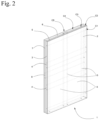
- panel 1 of the invention as described and shown in the figures with five layers C1 to C5 is the preferred embodiment of the invention, which makes it possible to achieve the set goals, namely a panel 1 finished, self-supporting, complete and ready to install.
- the panel 1 according to the invention can be manufactured according to a known manufacturing process, similar to the technique of manufacturing a glued-laminated or cross-glued-laminated (CLT) panel.
- the layers C1 to C5 of the multilayer structure are deposited in order from the first layer C1 to the fifth layer C5 or vice versa from the fifth layer C5 to the first layer C1 on a press table.
- a layer of glue is deposited between each layer, that is to say on each of the layers deposited before depositing the next layer.
- the multi-layer structure is then put under pressure, to bind layers C1 to C5 together and form a prefabricated wooden panel 1, finished and ready to install. This manufacturing process therefore does not require any mechanical fixing.
- the glue used in the context of the invention may be a known glue, used in the manufacture of a glue-laminated or cross-glued laminated (CLT) panel, such as, for example, a glue based on polyurethane which hardens when cold. It is an elastomeric glue with high mechanical performance and water resistance, widely used in different technical fields including the wood industry.
- any other similar glue may be suitable and in particular a glue based on phenol-resorcinol-formaldehyde (PRF), iso-cyanate polymer emulsion (EPI), or even a natural and biodegradable glue with or without natural latex.
- the glue used enters the composition of panel 1 at a very low percentage and for example at 0.2% without this example being limiting. This quantity of glue is therefore insignificant and does not prohibit the recycling of the panel and its waste. Notably, pieces of panel from cuts can be 100% recycled and transformed into panel made from sawdust, particles or similar, into pellets or chips for heating, etc.
- the presses used for this type of manufacturing are known and will not be described in this application.
- the assembly pressure can for example be of the order of 6 bars, without this example being limiting.
- the presses used have the advantage of allowing the manufacture of panels 1 of large dimensions, for example 20 meters long by 4 meters wide, without this example being limiting.
- panel 1 After manufacturing and if necessary, panel 1 can be cut to measure in the workshop by numerically controlled machines. Thus, the openings in panel 1 intended to form a window, a door, a bay or the like can be made during this step. In fact, the panels 1 thus manufactured arrive on the site, ready to be assembled using a crane. They therefore allow dry, fast and precise construction sites, without waste, which translates into savings in time and costs. Their lightness (4 times lighter than concrete) makes it possible to reduce the size of foundations, to build in seismic zones or to easily consider multi-storey buildings.
- the first and fifth layers C1 and C5 form the supporting structure and the bracing of the panel 1 and are each made up of a solid wooden plate 2 and 9.
- the wooden plate 2, 9 of each of the first and fifth layers C1 and C5 can be chosen from the group comprising any type of structural plate having a bracing sail function, such as a raw wooden board, an OSB (Oriented Strand Board) plate, a plate of glued wood fibers such as AGEPAN ® or similar, a plate of agglomerated wood particles, a plate of glued-laminated timber, a plate of cross-laminated timber (CLT - Cross Laminated Timber) or any type of cross-plyed plates.
- a bracing sail function such as a raw wooden board, an OSB (Oriented Strand Board) plate, a plate of glued wood fibers such as AGEPAN ® or similar, a plate of agglomerated wood particles, a plate of glued-laminated timber, a plate of cross-la
- At least one of the plates 2 and 9 of the first and fifth layers C1 and C5 can consist of a CLT plate, for example three-ply, without this example being limiting.
- the thickness of the plies and the number of plies constituting each wooden plate 2, 9 can be variable and defined according to specifications.
- these plates 2, 9 can each have three plies of 9mm, i.e. a total plate thickness of 27mm, these values not being limiting.
- the wooden plates 2, 9 of the first and fifth layers C1 and C5 may be identical or not, of the same thickness or not, of the same nature or not.
- the visible faces of the wooden plates 2, 9 of the first and fifth layers C1 and C5 can have different surface aspects, depending on whether these faces are interior or exterior faces of the building, and depending on whether they form smooth or structured facings.
- layer C1 of panel 1 is intended to be located outside the building and layer C5 is intended to be located inside said building.
- the panel 1 is not intended to receive an interior and/or exterior covering, since the CLT wooden plates 2, 9 form a finished surface, naturally airtight, without the need to add any vapor barrier from petrochemicals or its derivatives.
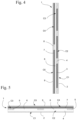
- the second and fourth layers C2 and C4 form the insulating structure of the panel 1 and are each made up of insulating material 3, 7 interposed between rails 4, 8.
- the thermally insulating material 3, 7 can be made up of one or more materials , selected from the group consisting of wood wool, rock wool, extruded polystyrene, polyurethane foam, cork, or the like, and the combination of these materials. It can be in the form of flat plates or strips, of thickness substantially equal to the thickness of the rails 4, 8, and of high density. Preferably, we will choose wood wool plates with a density of approximately 160 kg/m 2 , without this example being limiting. A high density of the plates or strips of insulating material 3, 7 is important because it makes it possible to avoid crushing of the insulating material under the press during the assembly of the panel 1 which would have a negative impact on the thermal coefficient of the panel 1.
- the rails 4, 8 interposed between the plates or strips of insulating material 3, 7 determine the thickness of the second and fourth layers C2 and C4, and therefore the thickness of the insulation.
- the second and fourth layers C2 and C4 can have an equal or different thickness, depending on the specifications.
- the rails 4, 8 are preferably positioned horizontally along the axis X, when the panel 1 forms an exterior wall or an interior partition.
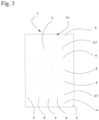
- the rails 4 of the second layer C2 are not located at the same level along the axis Z of the rails 8 of the fourth layer C4, and are offset relative to each other. This alternating arrangement of the rails 4, 8 has the advantage of limiting or even eliminating thermal bridges at the intersections between the rails 4, 8 and the spacers 5 of the third layer C3.
- the rails 4, 8 preferably have a square or rectangular section, and can be chosen from the group comprising battens of raw wood, solid finger-jointed wood, laminated wood, glued laminated wood, or the like.
- the second layer C2 which follows the first layer C1 intended to be located outside the building, comprises four rails 4 and three plates of insulating material 5.
- the four rails 4 are distributed regularly along the length of the first layer C1, the first and fourth smooth 4 being aligned with the edges of the lower and upper ends of the wooden plate 2 of the first layer C1.
- the fourth layer C4 which precedes the fifth layer C5 intended to be located inside the building, comprises a single rail 8 located in the center and two plates of insulating material 7 located on either side of the central rail 8.
- the rail 8 of the fourth layer C4 is positioned between the second and third rails 4 of the second layer C2.
- the number of rails 4, 8 as well as their distribution, which may be regular or not, in the second and fourth layers C2 and C4 of panel 1, and respectively the quantity of insulating material 3, 7, can vary depending on of the specifications.
- the second layer C2 intended to be oriented towards the exterior of the building, may in particular comprise a number of rails 4 greater than the number of rails 8 of the fourth layer C4, intended to be oriented towards the interior of the building, in accordance with the example shown.
- This example is however not limiting and other arrangements may be suitable depending on the specifications.
- the third layer C3 forms the technical void of panel 1 and is made up of spacers 5 delimiting between them empty and through channels 6.
- the spacers 5 are arranged in an orientation different from that of the beams 4, 8 to create a three-dimensional grid structure.
- the spacers 5 are preferably positioned vertically along the Z axis, when the panel 1 forms an exterior wall or an interior partition. They determine the thickness of the third layer C3, and therefore the thickness of the channels 6. This thickness varies depending on the specifications.
- the third layer C3 comprises three spacers 5, distributed regularly over the width of the second layer C2, the first and third spacers 5 being aligned with the edges of the lateral ends of the second layer C2.
- the spacers 5 preferably have a square or rectangular section, and can be chosen from the group comprising battens of raw wood, solid jointed wood, laminated wood, glued laminated wood, or the like.
- the channels 6 thus form a regular and axial technical void inside the panel 1, which remains empty and accessible because it is never filled by an insulating material.
- the channels 6 allow, throughout the life of the panel 1, to be able to integrate technical networks without having to dismantle or machine said panel 1. By this principle, it is possible to modify or recycle a wall without having to consume new materials or generate significant work. Also due to access to this central stratum of panel 1 through its ends, it is possible to pass the electrical networks directly into cables and therefore no longer use plastic sheaths. This represents a valuable benefit for the environment.
- the redrawing rule requires that “the conductors or cables must be able to be replaced in the event of failure of one of them. Therefore, when cables are embedded in walls, they must be placed in a plastic sheath.”
- the cables are certainly arranged in a wall but remain accessible because said wall is made up of a regular void which makes it possible to precisely identify where the technical networks are located and to locate them. channel inside the channels 6 formed between the spacers 5 of the third layer C3.
- the on-site assembly of the panels 1 according to the invention can be carried out by assembling the different panels 1 together using various lag screw and screw systems. It is possible to use the same assembly technique as that used for the assembly of CLT panels, which is known and will not be described in this application.
- the panels 1 to be assembled may or may not be identical depending on their use in exterior walls, interior partitions, floors, roofs, balconies, etc. In particular, the thicknesses and/or composition of layers C1 to C5 may vary to adapt to the specifications of each part of the construction.
- the figures 6 and 7 show an example of assembling two identical panels 1a, 1b, to form a right angle between two walls of a building.
- the angle is made by fitting the side end of one of the panels 1a into the side end of the other panel 1b.
- the lateral end of panel 1b is hollowed out to a width corresponding to the width of panel 1a. More precisely, part of the layers C2 to C5 of the panel 1b is cut to release an L-shaped nesting zone.
- the lateral end of the panel 1a is further completed by a spacer 5a, which was added in the fourth layer C4 to overlap at least partly with the end spacer 5 of the third layer C3.
- the assembly of the two panels 1a, 1b is carried out on one side of the corner by lag screws 10 or similar, which pass through the panel 1a and penetrate into the edge of the panel 1b by screwing into the different spacers 5, 5a .
- Screws 11 can complete this assembly by screwing on the other side of the angle through the wooden plate 2 of the first layer C1 of the panel 1b and into the end spacer 5 of the panel 1a.
- the spacer 5a can be added in the panel 1a directly during the assembly of layers C1 to C5 in the press, or during a specific step after the manufacture of the panel 1a.
- the industrial factory prefabrication of the panel 1 is complete, since it includes the facings, the supporting structure, the sealing solutions, and the technical void, which are assembled in such a manner industrial, by bonding under press all layers C1 to C5.
- all of the materials of the supporting structure and the insulation can be made of wood exclusively, or of wood combined with other natural fibers, that is to say biosourced materials for environmental and environmental reasons. recycling.
- CLT panels are excellent carbon sinks.
- all the waste produced is wood, with or without additional natural fibers, therefore easily recyclable in its entirety, to produce pellets or similar.
- Industrial prefabrication also makes it possible to anticipate openings, without compromising the structural and thermal qualities of the panels 1.
- the panel 1 according to the invention constitutes in itself a complete and competitive construction system compared to other construction systems.
Landscapes
- Engineering & Computer Science (AREA)
- Architecture (AREA)
- Civil Engineering (AREA)
- Structural Engineering (AREA)
- Life Sciences & Earth Sciences (AREA)
- Wood Science & Technology (AREA)
- Physics & Mathematics (AREA)
- Electromagnetism (AREA)
- Building Environments (AREA)
- Laminated Bodies (AREA)
- Panels For Use In Building Construction (AREA)
Claims (11)
- Vorgefertigtes Holzpaneel (1) für den Bau von Gebäuden, wobei das Paneel eine mehrschichtige Struktur aufweist, die durch Verkleben in einer Presse zusammengefügt wurde, wobei das Paneel (1) der Reihenfolge nach Folgendes umfasst:- eine erste Schicht (C1), die aus einer Massivholzplatte (2) besteht,- eine zweite Schicht (C2), die aus einem wärmedämmenden Material (3) in Form von Platten oder flachen Streifen besteht, wobei es zwischen parallelen Holmen (4) eingefügt ist, welche sich in einer ersten Richtung erstrecken,- eine dritte Schicht (C3), die aus parallelen Querstreben (5) besteht, welche sich in einer zweiten Richtung erstrecken, die rechtwinklig zur ersten Richtung ist, um Kanäle (6) zwischen den Querstreben (5) zu schaffen,- eine vierte Schicht (C4), die aus einem wärmedämmenden Material (7) in Form von Platten oder flachen Streifen besteht, wobei es zwischen parallelen Holmen (8) eingefügt ist, welche sich in der ersten Richtung erstrecken,- eine fünfte Schicht (C5), die aus einer Massivholzplatte (9) besteht, wobei weiterhin die Holme (4) der zweiten Schicht (C2) und die Holme (8) der vierten Schicht (C4) zueinander parallel sind und gegeneinander gemäß der zweiten Richtung versetzt sind, um Wärmebrücken zu vermeiden, wobei die erste und die fünfte Schicht (C1, C5) derart angeordnet sind, dass sie die tragende Struktur und die Querverbindung des Paneels (1) bilden, wobei die zweite und die vierte Schicht (C2, C4) derart angeordnet sind, dass sie die Dämmstruktur des Paneels (1) bilden, und wobei die dritte Schicht (C3) derart angeordnet ist, dass sie den technischen Hohlraum des Paneels (1) bildet, wobei die Kanäle (6) hohl, durchgehend und derart angeordnet sind, dass sie technische Leitungen aufnehmen können.
- Paneel (1) nach Anspruch 1, dadurch gekennzeichnet, dass die erste Richtung der Holme (4, 8) der zweiten Schicht (C2) und der vierten Schicht (C4) einer Richtung entspricht, die im Wesentlichen horizontal ist, wenn das Paneel (1) angeordnet wird, um eine Wand zu bilden, und die zweite Richtung der Querstreben (5) der dritten Schicht (C3) einer Richtung entspricht, die im Wesentlichen vertikal ist.
- Paneel nach Anspruch 1, dadurch gekennzeichnet, dass die Holzplatte (2) der ersten Schicht (C1) und die Holzplatte (9) der fünften Schicht (C5) jeweils aus der Gruppe ausgewählt sind, die ein Rohholzbrett, eine Grobspanplatte (OSB, Oriented Strand Board), eine Holzfaserplatte, eine Flachpressplatte, eine Sperrholzplatte umfasst, wobei es sich vorzugsweise um eine Brettsperrholzplatte (CLT, Cross-laminated Timber) handelt.
- Paneel (1) nach Anspruch 1, dadurch gekennzeichnet, dass das Wärmedämmmaterial (3) der zweiten Schicht (C2) und das Wärmedämmmaterial (7) der vierten Schicht (C4) jeweils aus der Gruppe ausgewählt sind, die Holzwolle, Steinwolle, extrudiertes Polystyrol, Polyurethanschaum, Kork, Kombinationen aus mindestens zwei dieser Materialien umfasst.
- Paneel (1) nach einem beliebigen der vorhergehenden Ansprüche, dadurch gekennzeichnet, dass die Holme (4) der zweiten Schicht (C2) und die Holme (8) der vierten Schicht (C4) und die Querstreben (5) der dritten Schicht (C3) derart angeordnet sind, dass sie die Dicke der zweiten und vierten Schicht (C2, C4) beziehungsweise der dritten Schicht (C3) festlegen, wobei sie jeweils aus der Gruppe ausgewählt sind, die Leisten aus Rohholz, aus aneinandergefügtem Massivholz, aus Furnierschichtholz, aus Brettschichtholz umfasst.
- Paneel (1) nach Anspruch 5, dadurch gekennzeichnet, dass die Holme (4, 8) und die Querstreben (5) denselben Querschnitt aufweisen.
- Paneel (1) nach einem beliebigen der vorhergehenden Ansprüche, dadurch gekennzeichnet, dass es mindestens eine Öffnung aufweist, die aus der Gruppe ausgewählt ist, welche ein Fenster, eine Tür, einen Einbauplatz umfasst.
- Verfahren zur Herstellung eines vorgefertigte Holzpaneels (1) nach einem beliebigen der vorhergehenden Ansprüche, dadurch gekennzeichnet, dass auf einem Pressentisch die Schichten (C1 bis C5) der mehrschichtigen Struktur der Reihenfolge nach von der ersten Schicht (C1) bis zur fünften Schicht (C5), oder umgekehrt von der fünften Schicht (C5) bis zur ersten Schicht (C1), angeordnet werden, und dadurch, dass auf jede der Schichten Klebstoff aufgebracht wird, bevor die nachfolgende Schicht aufgelegt wird, und dadurch, dass auf die mehrschichtige Struktur ein Druck einwirken gelassen wird, um die Schichten (C1 bis C5) miteinander zu verbinden, sodass das vorgefertigte Holzpaneel (1) gebildet wird, welches das einsatzbereite Endprodukt darstellt.
- Verfahren nach Anspruch 8, dadurch gekennzeichnet, dass das Paneel (1), welches infolge der Herstellung erhalten wurde, einem Schneidevorgang unterzogen wird, um mindestens eine Öffnung zu schaffen, die dazu bestimmt ist, ein Fenster, eine Tür, einen Einbauplatz zu bilden.
- Bauwerk, das erhalten wurde, indem mehrere vorgefertigte Holzpaneele (1) nach einem beliebigen der Ansprüche 1 bis 9 zusammengefügt wurden, dadurch gekennzeichnet, dass die Paneele (1) die Gesamtheit oder einen Abschnitt der flächigen Elemente des Bauwerks bilden, wobei dazu Außenwände, Innenwände, Deckenplatten und Dachstützelemente gehören.
- Bauwerk nach Anspruch 10, dadurch gekennzeichnet, dass die Paneele (1) mittels Schlüsselschrauben (10) und Schrauben (11) zusammengefügt werden.
Applications Claiming Priority (1)
| Application Number | Priority Date | Filing Date | Title |
|---|---|---|---|
| FR2014118A FR3118470B1 (fr) | 2020-12-24 | 2020-12-24 | Panneau en bois prefabrique pour la construction de bâtiments |
Publications (3)
| Publication Number | Publication Date |
|---|---|
| EP4019707A1 EP4019707A1 (de) | 2022-06-29 |
| EP4019707B1 true EP4019707B1 (de) | 2024-07-17 |
| EP4019707C0 EP4019707C0 (de) | 2024-07-17 |
Family
ID=74860174
Family Applications (1)
| Application Number | Title | Priority Date | Filing Date |
|---|---|---|---|
| EP21215876.0A Active EP4019707B1 (de) | 2020-12-24 | 2021-12-20 | Vorgefertigte holzplatte für den bau von gebäuden |
Country Status (2)
| Country | Link |
|---|---|
| EP (1) | EP4019707B1 (de) |
| FR (1) | FR3118470B1 (de) |
Families Citing this family (2)
| Publication number | Priority date | Publication date | Assignee | Title |
|---|---|---|---|---|
| CN116145853A (zh) * | 2023-02-08 | 2023-05-23 | 南京工业大学 | 一种隔声正交胶合木墙体及其制作方法 |
| EP4528045A1 (de) * | 2023-09-21 | 2025-03-26 | ARTHeco Group GmbH | Clt-platte und hieraus errichtete clt-paneele |
Family Cites Families (8)
| Publication number | Priority date | Publication date | Assignee | Title |
|---|---|---|---|---|
| DE4207752A1 (de) | 1992-03-12 | 1993-09-16 | Holzbau Amann Gmbh | Holzbautafel |
| AT413713B (de) * | 2000-09-14 | 2006-05-15 | Jandl Adolf | Gebäude |
| DE20216634U1 (de) * | 2002-10-28 | 2003-01-09 | Hartmann, Heinz, 93092 Barbing | Mehrschichtiges Kreuzverbund-Holzbauelement |
| AT504175B1 (de) * | 2006-09-06 | 2008-11-15 | Erwin Ing Thoma | Verfahren zur herstellung von plattenförmigen bauelementen |
| FR2922565B1 (fr) | 2007-10-23 | 2009-12-25 | Wood Winner | Panneau de bois |
| SI23841B (sl) | 2012-11-14 | 2022-04-29 | Cbd D.O.O. | Gradbeni element za lesene stenske in stropne konstrukcije ter metoda izdelave |
| CN108374499A (zh) | 2018-02-27 | 2018-08-07 | 沈阳建筑大学 | Ncclt保温板及其与基础的连接方法 |
| FR3080393A1 (fr) * | 2018-04-23 | 2019-10-25 | Valeurs Alpines | Element de construction |
-
2020
- 2020-12-24 FR FR2014118A patent/FR3118470B1/fr active Active
-
2021
- 2021-12-20 EP EP21215876.0A patent/EP4019707B1/de active Active
Also Published As
| Publication number | Publication date |
|---|---|
| FR3118470A1 (fr) | 2022-07-01 |
| EP4019707A1 (de) | 2022-06-29 |
| FR3118470B1 (fr) | 2023-07-21 |
| EP4019707C0 (de) | 2024-07-17 |
Similar Documents
| Publication | Publication Date | Title |
|---|---|---|
| EP4019707B1 (de) | Vorgefertigte holzplatte für den bau von gebäuden | |
| CH698215B1 (fr) | Unité isolée empilable pour construction de mur et procédé de fabrication de celle-ci. | |
| WO2014053905A2 (fr) | Poutrelle structuree et element modulaire de construction realise avec cette poutrelle | |
| EP3102755B1 (de) | Verbundwand für gebäude sowie gebäudeeinheiten mit mindestens einer derartigen verbundwand | |
| WO2017153352A1 (fr) | Paroi composite pour la construction d'un bâtiment, ainsi qu'ensemble de construction d'un bâtiment comportant une telle paroi composite | |
| EP1771629B1 (de) | Flaches montage- und anordungselement aus einem oder mehreren elementen | |
| EP1149213A1 (de) | Platte, zusammenbau solcher platten und verwendung zum aufnehmen schwerer lasten | |
| EP3058150B1 (de) | Konstruktionsmodul aus karton und herstellungsmethode hierfür | |
| EP4219848B1 (de) | Boden für ein wohnmodul | |
| EP3510211B1 (de) | Verfahren zum zusammenbau von bauelementen und so hergestelltes gebäude | |
| EP2576933B1 (de) | Kartonbauelement und konstruktionsverfahren unter verwendung solcher elemente | |
| WO2016189210A1 (fr) | Bâtiment dont les composants sont majoritairement préfabriqués | |
| EP2412886B1 (de) | Mehrstöckige Gebäudestruktur aus Holz | |
| FR3022926A1 (fr) | Systeme constructif modulaire structurant et/ou isolant pour le batiment | |
| EP1317590B1 (de) | Selbsttragendes baulelement aus holz | |
| FR2918395A1 (fr) | Immeuble et procede de construction d'un immeuble | |
| FR2710928A1 (fr) | Construction industrialisée à ossature bois. | |
| CH714228A2 (fr) | Élément structuré et procédé de construction d'une cloison avec plusieurs de tels éléments. | |
| WO2011045649A1 (fr) | Module de construction a base de carton | |
| EP3317468A1 (de) | Verbundwand für eine konstruktion und konstruktionsanordnung mit mindestens einer solchen verbundwand | |
| FR3147969A1 (fr) | Panneau sandwich bi matière et procédé de fabrication. | |
| FR3159344A1 (fr) | Panneau Composite Thermo-acoustique Autoporteur | |
| EP4571002A1 (de) | Modulares bausystem | |
| EP2418333B1 (de) | Modulpaneel mit zentraler Schicht und Dämmung auf beiden Seiten | |
| FR2716477A1 (fr) | Procédé de réalisation d'un plancher composite léger pour les bâtiments à structure ponctuelle. |
Legal Events
| Date | Code | Title | Description |
|---|---|---|---|
| PUAI | Public reference made under article 153(3) epc to a published international application that has entered the european phase |
Free format text: ORIGINAL CODE: 0009012 |
|
| STAA | Information on the status of an ep patent application or granted ep patent |
Free format text: STATUS: THE APPLICATION HAS BEEN PUBLISHED |
|
| AK | Designated contracting states |
Kind code of ref document: A1 Designated state(s): AL AT BE BG CH CY CZ DE DK EE ES FI FR GB GR HR HU IE IS IT LI LT LU LV MC MK MT NL NO PL PT RO RS SE SI SK SM TR |
|
| STAA | Information on the status of an ep patent application or granted ep patent |
Free format text: STATUS: REQUEST FOR EXAMINATION WAS MADE |
|
| 17P | Request for examination filed |
Effective date: 20221201 |
|
| RBV | Designated contracting states (corrected) |
Designated state(s): AL AT BE BG CH CY CZ DE DK EE ES FI FR GB GR HR HU IE IS IT LI LT LU LV MC MK MT NL NO PL PT RO RS SE SI SK SM TR |
|
| GRAP | Despatch of communication of intention to grant a patent |
Free format text: ORIGINAL CODE: EPIDOSNIGR1 |
|
| STAA | Information on the status of an ep patent application or granted ep patent |
Free format text: STATUS: GRANT OF PATENT IS INTENDED |
|
| RIC1 | Information provided on ipc code assigned before grant |
Ipc: E04C 2/42 20060101ALN20240320BHEP Ipc: E04C 2/12 20060101ALN20240320BHEP Ipc: B32B 21/04 20060101ALI20240320BHEP Ipc: B32B 9/02 20060101ALI20240320BHEP Ipc: B32B 5/18 20060101ALI20240320BHEP Ipc: E04C 2/38 20060101ALI20240320BHEP Ipc: E04C 2/52 20060101ALI20240320BHEP Ipc: B32B 7/12 20060101ALI20240320BHEP Ipc: B32B 3/10 20060101ALI20240320BHEP Ipc: E04B 2/70 20060101ALI20240320BHEP Ipc: E04B 1/10 20060101ALI20240320BHEP Ipc: E04B 2/80 20060101ALI20240320BHEP Ipc: E04B 2/74 20060101ALI20240320BHEP Ipc: E04C 2/24 20060101AFI20240320BHEP |
|
| RIC1 | Information provided on ipc code assigned before grant |
Ipc: E04C 2/42 20060101ALN20240327BHEP Ipc: E04C 2/12 20060101ALN20240327BHEP Ipc: B32B 21/04 20060101ALI20240327BHEP Ipc: B32B 9/02 20060101ALI20240327BHEP Ipc: B32B 5/18 20060101ALI20240327BHEP Ipc: E04C 2/38 20060101ALI20240327BHEP Ipc: E04C 2/52 20060101ALI20240327BHEP Ipc: B32B 7/12 20060101ALI20240327BHEP Ipc: B32B 3/10 20060101ALI20240327BHEP Ipc: E04B 2/70 20060101ALI20240327BHEP Ipc: E04B 1/10 20060101ALI20240327BHEP Ipc: E04B 2/80 20060101ALI20240327BHEP Ipc: E04B 2/74 20060101ALI20240327BHEP Ipc: E04C 2/24 20060101AFI20240327BHEP |
|
| INTG | Intention to grant announced |
Effective date: 20240410 |
|
| GRAS | Grant fee paid |
Free format text: ORIGINAL CODE: EPIDOSNIGR3 |
|
| GRAA | (expected) grant |
Free format text: ORIGINAL CODE: 0009210 |
|
| STAA | Information on the status of an ep patent application or granted ep patent |
Free format text: STATUS: THE PATENT HAS BEEN GRANTED |
|
| AK | Designated contracting states |
Kind code of ref document: B1 Designated state(s): AL AT BE BG CH CY CZ DE DK EE ES FI FR GB GR HR HU IE IS IT LI LT LU LV MC MK MT NL NO PL PT RO RS SE SI SK SM TR |
|
| REG | Reference to a national code |
Ref country code: CH Ref legal event code: EP |
|
| REG | Reference to a national code |
Ref country code: DE Ref legal event code: R096 Ref document number: 602021015784 Country of ref document: DE |
|
| REG | Reference to a national code |
Ref country code: IE Ref legal event code: FG4D Free format text: LANGUAGE OF EP DOCUMENT: FRENCH |
|
| U01 | Request for unitary effect filed |
Effective date: 20240723 |
|
| U07 | Unitary effect registered |
Designated state(s): AT BE BG DE DK EE FI FR IT LT LU LV MT NL PT RO SE SI Effective date: 20240902 |
|
| PG25 | Lapsed in a contracting state [announced via postgrant information from national office to epo] |
Ref country code: NO Free format text: LAPSE BECAUSE OF FAILURE TO SUBMIT A TRANSLATION OF THE DESCRIPTION OR TO PAY THE FEE WITHIN THE PRESCRIBED TIME-LIMIT Effective date: 20241017 |
|
| PG25 | Lapsed in a contracting state [announced via postgrant information from national office to epo] |
Ref country code: PL Free format text: LAPSE BECAUSE OF FAILURE TO SUBMIT A TRANSLATION OF THE DESCRIPTION OR TO PAY THE FEE WITHIN THE PRESCRIBED TIME-LIMIT Effective date: 20240717 Ref country code: GR Free format text: LAPSE BECAUSE OF FAILURE TO SUBMIT A TRANSLATION OF THE DESCRIPTION OR TO PAY THE FEE WITHIN THE PRESCRIBED TIME-LIMIT Effective date: 20241018 |
|
| PG25 | Lapsed in a contracting state [announced via postgrant information from national office to epo] |
Ref country code: IS Free format text: LAPSE BECAUSE OF FAILURE TO SUBMIT A TRANSLATION OF THE DESCRIPTION OR TO PAY THE FEE WITHIN THE PRESCRIBED TIME-LIMIT Effective date: 20241117 |
|
| PG25 | Lapsed in a contracting state [announced via postgrant information from national office to epo] |
Ref country code: HR Free format text: LAPSE BECAUSE OF FAILURE TO SUBMIT A TRANSLATION OF THE DESCRIPTION OR TO PAY THE FEE WITHIN THE PRESCRIBED TIME-LIMIT Effective date: 20240717 |
|
| PG25 | Lapsed in a contracting state [announced via postgrant information from national office to epo] |
Ref country code: ES Free format text: LAPSE BECAUSE OF FAILURE TO SUBMIT A TRANSLATION OF THE DESCRIPTION OR TO PAY THE FEE WITHIN THE PRESCRIBED TIME-LIMIT Effective date: 20240717 Ref country code: RS Free format text: LAPSE BECAUSE OF FAILURE TO SUBMIT A TRANSLATION OF THE DESCRIPTION OR TO PAY THE FEE WITHIN THE PRESCRIBED TIME-LIMIT Effective date: 20241017 |
|
| PG25 | Lapsed in a contracting state [announced via postgrant information from national office to epo] |
Ref country code: RS Free format text: LAPSE BECAUSE OF FAILURE TO SUBMIT A TRANSLATION OF THE DESCRIPTION OR TO PAY THE FEE WITHIN THE PRESCRIBED TIME-LIMIT Effective date: 20241017 Ref country code: PL Free format text: LAPSE BECAUSE OF FAILURE TO SUBMIT A TRANSLATION OF THE DESCRIPTION OR TO PAY THE FEE WITHIN THE PRESCRIBED TIME-LIMIT Effective date: 20240717 Ref country code: NO Free format text: LAPSE BECAUSE OF FAILURE TO SUBMIT A TRANSLATION OF THE DESCRIPTION OR TO PAY THE FEE WITHIN THE PRESCRIBED TIME-LIMIT Effective date: 20241017 Ref country code: IS Free format text: LAPSE BECAUSE OF FAILURE TO SUBMIT A TRANSLATION OF THE DESCRIPTION OR TO PAY THE FEE WITHIN THE PRESCRIBED TIME-LIMIT Effective date: 20241117 Ref country code: HR Free format text: LAPSE BECAUSE OF FAILURE TO SUBMIT A TRANSLATION OF THE DESCRIPTION OR TO PAY THE FEE WITHIN THE PRESCRIBED TIME-LIMIT Effective date: 20240717 Ref country code: GR Free format text: LAPSE BECAUSE OF FAILURE TO SUBMIT A TRANSLATION OF THE DESCRIPTION OR TO PAY THE FEE WITHIN THE PRESCRIBED TIME-LIMIT Effective date: 20241018 Ref country code: ES Free format text: LAPSE BECAUSE OF FAILURE TO SUBMIT A TRANSLATION OF THE DESCRIPTION OR TO PAY THE FEE WITHIN THE PRESCRIBED TIME-LIMIT Effective date: 20240717 |
|
| U20 | Renewal fee for the european patent with unitary effect paid |
Year of fee payment: 4 Effective date: 20241230 |
|
| PG25 | Lapsed in a contracting state [announced via postgrant information from national office to epo] |
Ref country code: SM Free format text: LAPSE BECAUSE OF FAILURE TO SUBMIT A TRANSLATION OF THE DESCRIPTION OR TO PAY THE FEE WITHIN THE PRESCRIBED TIME-LIMIT Effective date: 20240717 |
|
| PGFP | Annual fee paid to national office [announced via postgrant information from national office to epo] |
Ref country code: CH Payment date: 20250101 Year of fee payment: 4 |
|
| PG25 | Lapsed in a contracting state [announced via postgrant information from national office to epo] |
Ref country code: CZ Free format text: LAPSE BECAUSE OF FAILURE TO SUBMIT A TRANSLATION OF THE DESCRIPTION OR TO PAY THE FEE WITHIN THE PRESCRIBED TIME-LIMIT Effective date: 20240717 |
|
| PG25 | Lapsed in a contracting state [announced via postgrant information from national office to epo] |
Ref country code: SK Free format text: LAPSE BECAUSE OF FAILURE TO SUBMIT A TRANSLATION OF THE DESCRIPTION OR TO PAY THE FEE WITHIN THE PRESCRIBED TIME-LIMIT Effective date: 20240717 |
|
| PLBE | No opposition filed within time limit |
Free format text: ORIGINAL CODE: 0009261 |
|
| STAA | Information on the status of an ep patent application or granted ep patent |
Free format text: STATUS: NO OPPOSITION FILED WITHIN TIME LIMIT |
|
| 26N | No opposition filed |
Effective date: 20250422 |
|
| PG25 | Lapsed in a contracting state [announced via postgrant information from national office to epo] |
Ref country code: MC Free format text: LAPSE BECAUSE OF FAILURE TO SUBMIT A TRANSLATION OF THE DESCRIPTION OR TO PAY THE FEE WITHIN THE PRESCRIBED TIME-LIMIT Effective date: 20240717 |
|
| PG25 | Lapsed in a contracting state [announced via postgrant information from national office to epo] |
Ref country code: IE Free format text: LAPSE BECAUSE OF NON-PAYMENT OF DUE FEES Effective date: 20241220 |
|
| REG | Reference to a national code |
Ref country code: CH Ref legal event code: U11 Free format text: ST27 STATUS EVENT CODE: U-0-0-U10-U11 (AS PROVIDED BY THE NATIONAL OFFICE) Effective date: 20260101 |
|
| U20 | Renewal fee for the european patent with unitary effect paid |
Year of fee payment: 5 Effective date: 20251229 |