EP4006869A2 - Verfahren und vorrichtung zum erkennen von lichtzustandsdaten - Google Patents
Verfahren und vorrichtung zum erkennen von lichtzustandsdaten Download PDFInfo
- Publication number
- EP4006869A2 EP4006869A2 EP22152392.1A EP22152392A EP4006869A2 EP 4006869 A2 EP4006869 A2 EP 4006869A2 EP 22152392 A EP22152392 A EP 22152392A EP 4006869 A2 EP4006869 A2 EP 4006869A2
- Authority
- EP
- European Patent Office
- Prior art keywords
- time information
- lighting
- information
- state data
- determining
- Prior art date
- Legal status (The legal status is an assumption and is not a legal conclusion. Google has not performed a legal analysis and makes no representation as to the accuracy of the status listed.)
- Withdrawn
Links
- 238000000034 method Methods 0.000 title claims abstract description 46
- 238000001514 detection method Methods 0.000 claims abstract description 127
- 238000000819 phase cycle Methods 0.000 claims abstract description 61
- 230000002159 abnormal effect Effects 0.000 claims description 21
- 238000004590 computer program Methods 0.000 claims description 20
- 230000000694 effects Effects 0.000 abstract description 15
- 238000005516 engineering process Methods 0.000 abstract description 9
- 238000013473 artificial intelligence Methods 0.000 abstract description 4
- 238000010586 diagram Methods 0.000 description 16
- 238000004891 communication Methods 0.000 description 8
- 238000012545 processing Methods 0.000 description 7
- 230000006870 function Effects 0.000 description 6
- 230000008447 perception Effects 0.000 description 6
- 230000003247 decreasing effect Effects 0.000 description 5
- 238000004458 analytical method Methods 0.000 description 4
- 238000012986 modification Methods 0.000 description 3
- 230000004048 modification Effects 0.000 description 3
- 230000003287 optical effect Effects 0.000 description 3
- 230000003993 interaction Effects 0.000 description 2
- 239000004973 liquid crystal related substance Substances 0.000 description 2
- 238000005457 optimization Methods 0.000 description 2
- 230000008569 process Effects 0.000 description 2
- 238000006467 substitution reaction Methods 0.000 description 2
- 238000003491 array Methods 0.000 description 1
- 230000001413 cellular effect Effects 0.000 description 1
- 239000003086 colorant Substances 0.000 description 1
- 238000013461 design Methods 0.000 description 1
- 238000011161 development Methods 0.000 description 1
- 238000002955 isolation Methods 0.000 description 1
- 238000010801 machine learning Methods 0.000 description 1
- 239000013307 optical fiber Substances 0.000 description 1
- 239000004065 semiconductor Substances 0.000 description 1
- 230000001953 sensory effect Effects 0.000 description 1
- 230000000007 visual effect Effects 0.000 description 1
Images



Classifications
-
- G—PHYSICS
- G08—SIGNALLING
- G08G—TRAFFIC CONTROL SYSTEMS
- G08G1/00—Traffic control systems for road vehicles
- G08G1/09—Arrangements for giving variable traffic instructions
- G08G1/096—Arrangements for giving variable traffic instructions provided with indicators in which a mark progresses showing the time elapsed, e.g. of green phase
-
- G—PHYSICS
- G08—SIGNALLING
- G08G—TRAFFIC CONTROL SYSTEMS
- G08G1/00—Traffic control systems for road vehicles
- G08G1/07—Controlling traffic signals
- G08G1/075—Ramp control
-
- G—PHYSICS
- G08—SIGNALLING
- G08G—TRAFFIC CONTROL SYSTEMS
- G08G1/00—Traffic control systems for road vehicles
- G08G1/07—Controlling traffic signals
- G08G1/081—Plural intersections under common control
- G08G1/083—Controlling the allocation of time between phases of a cycle
-
- G—PHYSICS
- G08—SIGNALLING
- G08G—TRAFFIC CONTROL SYSTEMS
- G08G1/00—Traffic control systems for road vehicles
- G08G1/09—Arrangements for giving variable traffic instructions
- G08G1/0962—Arrangements for giving variable traffic instructions having an indicator mounted inside the vehicle, e.g. giving voice messages
- G08G1/0967—Systems involving transmission of highway information, e.g. weather, speed limits
- G08G1/096766—Systems involving transmission of highway information, e.g. weather, speed limits where the system is characterised by the origin of the information transmission
- G08G1/096775—Systems involving transmission of highway information, e.g. weather, speed limits where the system is characterised by the origin of the information transmission where the origin of the information is a central station
-
- G—PHYSICS
- G08—SIGNALLING
- G08G—TRAFFIC CONTROL SYSTEMS
- G08G1/00—Traffic control systems for road vehicles
- G08G1/097—Supervising of traffic control systems, e.g. by giving an alarm if two crossing streets have green light simultaneously
Definitions
- the present disclosure relates to the field of intelligent traffic and automatic driving technologies in the field of artificial intelligence technologies, and in particular, to a method and an apparatus for detecting light state data.
- a commonly used method for detecting light state data includes: light state data is collected; a detection rule is formulated according to the light state data in a previous time period, for example, the light state data of the first half hour is projected on an absolute time axis of twenty-four hours a day; based on the time axis, missing and repeating conditions of the light state data in a subsequent time period are determined; and a detection result of the light state data is determined according to the missing and repeating conditions.
- the present disclosure provides a method and an apparatus for detecting light state data, which improve accuracy of a detection.
- a method for detecting light state data including:
- an apparatus for detecting light state data including:
- an electronic device including:
- a non-transitory computer readable storage medium storing computer instructions, where the computer instructions are used for causing a computer to perform the method according to the first aspect.
- a computer program product where the computer program product includes a computer program, and the computer program is stored in a readable storage medium, at least one processor of an electronic device can read the computer program from the readable storage medium, and the computer program is executed by the at least one processor to enable the electronic device to perform the method according to the first aspect.
- a traffic signal machine is one of important components of modern urban traffic systems, and is mainly used for control and management of urban road traffic signals.
- the traffic signal machine is composed of multiple function module plug-in boards including a main liquid crystal display screen, a central processing unit (CPU) board, a control board, a light group drive board with optocoupler isolation, a switching power supply, a button board, etc., and a power distribution board, a terminal block, etc.
- the traffic signal machine includes at least one light holder, each light holder can display different colors and time, etc., and the traffic signal machine is configured to indicate travel-related data of a vehicle and/or a pedestrian, which can be referred to as light state data, that is, the light state data can be understood as data that provides indication for the travel of the vehicle and/or the pedestrian from a time dimension, a color dimension, and a direction dimension, etc.
- the light state data is usually used for traffic information release, traffic information control, traffic information optimization, and the like, and it is necessary to detect the light state data in order to improve travel reliability and security and the like of the vehicle and/or the pedestrian.
- a commonly used method for detecting light state data includes: light state data in a first time period is collected firstly; a detection rule is formulated according to the light state data in the first time period, for example, the light state data of the first half hour (namely, the first time period) is projected on an absolute time axis of twenty-four hours a day; based on the time axis, missing and repeating conditions of the light state data in a second time period (for a time period after the first time period) are determined; and a detection result of the light state data is determined according to the missing and repeating conditions.
- the detection rule is formulated based on the light state data in the first time period, accuracy and reliability and the like of the light state data in the first time period are uncertain, therefore, the accuracy and reliability of the detection rule specified based on the light state data in the first time period are uncertain, thus, when the light state data in the second time period is detected based on the detection rule, there may be a technical problem of low detection accuracy and reliability.
- the light state data is processed in segments, and part of the light state data is detected (namely, the light state data in the second time period is detected), a detection has shortcomings of lacking comprehensiveness, which may lead to a technical problem of low detection accuracy.
- the present disclosure provides a method and an apparatus for detecting light state data, which are applied to the technical field of intelligent traffic and automatic driving in the field of artificial intelligence technologies to achieve the accuracy and reliability of detecting light state data.
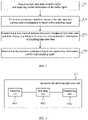
- FIG. 1 is a schematic diagram according to a first embodiment of the present disclosure, as shown in FIG. 1 , a method for detecting light state data according to an embodiment of the present disclosure includes: S101: acquiring light state data of traffic lights, and acquiring control information of the traffic lights.
- the light state data includes period time information and/or phase sequence information; the period time information characterizes time information of lighting each light holder in the traffic lights in a period; the phase sequence information characterizes a green light order of each phase corresponding to the traffic lights; and the control information characterizes a control rule of the traffic lights.
- the execution entity of the present embodiment may be an apparatus for detecting light state data (hereinafter referred to as a detection apparatus), and the detection apparatus may be a server (including a local server and a cloud server, and the server may be a cloud control platform, a vehicle-road collaborative management platform, a central subsystem, an edge computing platform, a cloud computing platform, etc.), it may also be a roadside device, a terminal device, a processor, a chip, etc., which are not limited in the present embodiment.
- a detection apparatus may be a server (including a local server and a cloud server, and the server may be a cloud control platform, a vehicle-road collaborative management platform, a central subsystem, an edge computing platform, a cloud computing platform, etc.), it may also be a roadside device, a terminal device, a processor, a chip, etc., which are not limited in the present embodiment.
- the roadside device includes, for example, a roadside perception device having a computing function and a roadside computing device connected to the roadside perception device.
- the roadside device includes a roadside perception device and a roadside computing device, the roadside perception device (for example, a roadside camera) is connected to the roadside computing device (for example, a roadside computing unit RSCU), the roadside computing device is connected to the server, and the server may communicate with an automatic driving vehicle or an assisting driving vehicle in various ways; or, the roadside perception device itself includes a computing function, and the roadside perception device is directly connected to the server.
- the above connections may be wired or wireless.
- a manner in which the detection apparatus acquires the light state data is not limited.
- the detection apparatus may be connected to a first platform that manufactures traffic lights and receives light state data transmitted by the first platform.
- the detection apparatus may also be connected to a second platform that controls traffic lights and receives light state data transmitted by the second platform.
- S102 performing consistency matching between the light state data and the control information to obtain a first matching result, and determining a detection result of the light state data according to the first matching result.
- this step can be understood as follows: the detection apparatus performs consistency matching between the period time information and the control information to obtain a first matching result, and determines a detection result based on the first matching result.
- this step may also be understood as follows: the detection apparatus performs consistency matching between the phase sequence information and the control information to obtain a first matching result, and determines a detection result based on the first matching result.
- this step may be understood as follows: the detection apparatus performs consistency matching between the period time information and the control information to obtain a first sub-matching result, performs consistency matching between the phase sequence information and the control information to obtain a second sub-matching result, and determines a detection result based on the first sub-matching result and the second sub-matching result.
- the detection result may be determined based on the consistency between the period time information and the control information, or may be determined based on the consistency between the phase sequence information and the control information, or may be determined based on results of the foregoing two consistencies.
- the detection apparatus may pre-assign weight coefficients to the first sub-matching result and the second sub-matching result, so as to determine the detection result based on the first sub-matching result, the second sub-matching result, and the respectively corresponding weight coefficient.
- the present embodiment provides a method for detecting light state data, including: acquiring light state data of traffic lights, and acquiring control information of the traffic lights, where the light state data includes period time information and/or phase sequence information, the period time information characterizes time information of lighting each light holder in the traffic lights in a period, the phase sequence information characterizes a green light order of each phase corresponding to the traffic lights, and the control information characterizes a control rule of the traffic lights; and performing consistency matching between the light state data and the control information to obtain a first matching result, and determining a detection result of the light state data according to the first matching result.
- features of determining the first matching result obtained by the consistency matching between the light state data and the control information, and determining the detection result based on the first matching result are introduced, so as to avoid disadvantage in the related technology that determining the detection result of part of the light state data as a whole detection result, which may cause the detection result to be one-sided, lack of accuracy and reliability.
- a manner of determining the detection result based on the first matching result obtained by the consistency matching between the light state data and the control information is adopted, which can achieve the technical effect that improving comprehensiveness and integrity of detecting the light state data when the consistency matching is performed between the light state data and the control information, thereby improving the comprehensiveness and accuracy of the detection.
- the light state data can be used for indicating the travel of the vehicle and/or the pedestrian, and the method for detecting light state date in the present embodiment has high accuracy and reliability, therefore, when the light state data is specifically applied, the light state data may be detected firstly, and when a detection result meets a preset application requirement, the light state data is applied, thereby improving the reliability of the application of the light state data and satisfying travel demands of the vehicle and/or the pedestrian.
- the detection result may characterize accuracy of the quality of the light state data, and if it is determined through the detection result that the accuracy of the quality of the light state data is greater than a preset accuracy requirement, traffic information may be released based on the light state data, for example, the traffic information may be released in a map, so that when the vehicle is traveling based on the map, a traffic failure load section can be avoided timely, and a new path can be planned in advance, thereby achieving the technical effect of improving traveling security.
- the light state data satisfying the accuracy requirement may also be displayed on electronic devices such as a DuMirror and a traffic signal control screen and the like, so as to achieve the technical effect of improving traveling security of the vehicle and/or pedestrian.
- an intersection may be composed of a first load section, a second load section, a third load section, and a fourth load section.
- the first load section and the third load section may be referred to as load sections facing each other, and the second load section and the fourth load section may be referred to as load sections facing each other.
- Traffic light 201 disposed at the first load section are used for indicating traveling of a vehicle on the third load section according to the corresponding light state data.
- Traffic light 202 disposed at the second load section are used for indicating traveling of a vehicle on the fourth load section according to the corresponding light state data.
- Traffic light 203 disposed at the third load section are used for indicating traveling of a vehicle on the first load section according to the corresponding light state data.
- Traffic light 204 disposed at the fourth load section are used for indicating traveling of a vehicle of the second load section according to the corresponding light state data.
- a server 205 may acquire light state data of at least one of traffic lights in the traffic light 201, the traffic light 202, the traffic light 203, and the traffic light 204, and perform a detection on the acquired light state data by using the method for detecting light state data provided by the present embodiment to obtain a detection result; and when the detection result satisfies a preset application requirement (for example, it may be the accuracy requirement described above), the light state data is displayed on the map, and the map which includes the light state data is pushed to a vehicle 206, so that the vehicle 206 executes a corresponding driving strategy according to the map which includes the light state data, such as replanning the driving route and the like.
- a preset application requirement for example, it may be the accuracy requirement described above
- FIG. 3 is a schematic diagram according to a second embodiment of the present disclosure.
- a method for detecting light state data includes: S301: acquiring light state data of traffic lights, and acquiring control information of the traffic lights.
- the light state data includes period time information, the period time information characterizes time information of lighting each light holder in the traffic lights in a period, and the control information characterizes a control rule of the traffic lights.
- S302 determining an actual lighting duration of the traffic lights in the period time information, and determining a lighting period duration of the traffic lights in the control information.
- the traffic lights may not be turned on during the whole period, but only a part of the time is turned on, that is, an actual running duration of the traffic lights may be less than a period time, and the actual lighting duration in this step is a duration for which the traffic lights is actually turned on in the period time corresponding to the period time information.
- S303 determining a first matching result based on a difference between the actual lighting duration in the period time information and the lighting period duration in the control information, and determining a detection result according to the first matching result.
- the detection apparatus may determine the first matching result based on (t1-t2).
- the first matching result and (t1-t2) are of an inversely proportional relationship, that is, the larger (t1-t2) is, the smaller the first matching result is (namely, the lower the consistency matching is); otherwise, the smaller (t1-t2) is, the larger the first matching result is (namely, the higher the consistency matching is).
- the detection result is a detection result characterizing the quality of the light state data
- S302 and S303 may be replaced by: determining a lighting period duration of the traffic lights in the period time information, determining a lighting period duration of the traffic lights in the control information, determining a first matching result based on a difference between the lighting period duration in the period time information and the lighting period duration in the control information, and determining a detection result according to the first matching result.
- the first matching result may be determined according to (t3-t2).
- the first matching result and (t3- t2) are of an inversely proportional relationship, that is, the larger (t3- t2) is, the smaller the first matching result is (namely, the lower the consistency matching is); otherwise, the smaller (t3- t2) is, the larger the first matching result is (namely, the higher the consistency matching is).
- each embodiment in the present embodiment may be implemented separately, or may be combined into one embodiment, and when a plurality of embodiments are combined, a weight coefficient may be assigned to a matching result obtained in each embodiment, and a detection result may be determined based on each matching result and each weight coefficient.
- the period time information includes lighting time information of the traffic lights and a lighting period duration of the traffic lights; the determining a detection result of the light state data according to the first matching result includes the following steps.
- a first step determining a first degree of confidence of the period time information according to the lighting time information in the period time information and the lighting period duration in the period time information, where the first degree of confidence characterizes accuracy and/or integrity of the lighting time information in the period time information.
- a second step determining the detection result according to the first matching result and the first degree of confidence.
- the detection apparatus can determine the accuracy and/or integrity of the period time information itself, that is, determine the first degree of confidence, and obtain the detection result by combining the first matching result and the first degree of confidence.
- determining the detection result based on the first degree of confidence of the period time information may be a separate embodiment, and the present disclosure is not limited thereto.
- the detection result is determined by combining the first matching result which characterizes the consistency between light state information and the control information and the first degree of confidence which characterizes the accuracy and/or the integrity of the light state information, thus, it is possible to detect the light state data from a plurality of dimensions, thereby achieving the technical effect of comprehensiveness and accuracy of the detection result.
- the first step may include: determining an actual lighting duration of the traffic lights according to the lighting time information in the period time information, computing first difference information between the actual lighting duration of the traffic lights and the lighting period duration in the period time information, and determining the first degree of confidence according to the first difference information.
- the actual lighting duration of the traffic lights is an actual lighting duration of the traffic lights in a period
- the first difference information may be expressed as (the actual lighting duration of the traffic lights - the lighting period duration in the period time information).
- the actual lighting duration of the traffic lights is an actual lighting duration of the traffic lights in a period
- the first difference information may be expressed as (the actual lighting duration of the traffic lights-a step), where the step is countdown seconds, for example, if the countdown goes from m seconds to n seconds, the step is (m-n).
- the actual lighting duration of the traffic lights is (the lighting period duration in the period time information-time of the start of the countdown), and the first difference information may be expressed as ((the lighting period duration in the period time information-the time of the start of the countdown)/ the lighting period duration in the period time information).
- the actual lighting duration of the traffic lights is remaining time at the end of the countdown
- the first difference information may be expressed as (the remaining time at the end of the countdown / the lighting period duration in the period time information).
- the first degree of confidence is determined by the first difference information, and specifically, the first difference information is determined by the actual lighting duration of the traffic lights and the lighting period duration in the period time information, and it is possible to enable the first degree of confidence to reliably characterize the accuracy and/or the integrity of the light state data, thus, the technical effect of improving the accuracy and reliability of the first degree of confidence can be achieved.
- the first step may include: determining a first number of abnormal hopping seconds of time information of the traffic lights according to the lighting time information in the period time information, computing a first ratio between the first number of abnormal hopping seconds and the lighting period duration in the period time information, and determining the first degree of confidence according to the first ratio.
- the first number of abnormal hopping seconds may be a sum of the number of the hopping abnormal seconds in a period, and the hopping abnormal may be understood as: when the countdown is eighty-nine seconds, it should have jumped to eighty-eight seconds firstly but jump to eighty-seven seconds, then it is determined that the number of abnormal hopping seconds is one second, and so on.
- the sum of the number of abnormal hopping seconds in the entire period is determined, and the first ratio may be expressed as (the sum of the number of abnormal hopping seconds in the period/ the lighting period duration in the period time information).
- the first abnormal hopping seconds may be a sum of the number of unchanged seconds in a period, and the number of the unchanged seconds may be understood as: when the countdown is eighty-nine seconds, it should have jumped to eighty-eight seconds firstly, but still hold eighty-nine seconds, and the number of unchanged seconds is one second, and so on.
- the sum of the number of unchanged seconds in the entire period is determined, and the first ratio may be expressed as (the sum of the number of unchanged seconds in the period/ the lighting period duration in the period time information).
- the first abnormal hopping seconds may be a sum of the number of non-monotonically decreasing seconds in a period, and the number of the non-monotonically decreasing seconds may be understood as: when the countdown is eighty-nine seconds, it should have jumped to eighty-eight seconds firstly, but jump to ninety seconds, and then jump to eighty-eight seconds, then it is determined that the number of non-monotonically decreasing seconds in the period is one second, and so on.
- the sum of the number of non-monotonically decreasing seconds in the entire period is determined, and the first ratio may be expressed as (the sum of the number of non-monotonically decreasing seconds in the period/the lighting period duration in the period time information).
- the first degree of confidence is determined by using the number of the first abnormal hopping seconds, it is possible to enable the first degree of confidence to accurately characterize a hopping situation of the traffic lights, thereby the technical effect of improving the accuracy and reliability of the first degree of confidence can be achieved.
- FIG. 4 is a schematic diagram according to a third embodiment of the present disclosure, and as shown in FIG. 4 , a method for detecting light state data according to an embodiment of the present disclosure includes: S401: acquiring light state data of traffic lights, and acquiring control information of the traffic lights.
- the light state data includes phase sequence information, the phase sequence information characterizes a green light order of each phase corresponding to the traffic lights, and the control information characterizes a control rule of the traffic lights.
- S402 determining sequence information among each phase of the traffic lights in the phase sequence information, and determining sequence information among phases of the traffic lights in the control information.
- S403 performing consistency matching between the sequence information among the each phase in the phase sequence information and the sequence information among the each phase in the control information to obtain a first matching result, and determining a detection result according to the first matching result.
- sequence information among the each phase in the phase sequence information is a left turn phase, a straight phase and a right turn phase
- the sequence information among the each phase in the control information is a left turn phase, a right turn phase and a straight phase, then it shows that the consistency of the both is low, and the first matching result is relatively small.
- sequence information among the each phase in the phase sequence information is a left turn phase, a straight phase and a right turn phase
- the sequence information among the each phase in the control information is a left turn phase, a straight phase and a right turn phase
- the detection result is determined by the matching result of consistency matching which is performed between the sequence information among the each phase in the phase sequence information and the sequence information among the each phase in the control information, it is possible to enable the detection result to characterize the consistency of the phase sequence information between the light state data and the control information, thus, the detection result is a comparable detection result and a reliable detection result, therefore, the detection result can have technical effects of high reliability and accuracy.
- S402 and S403 may be replaced by: determining a lighting duration of each lighting color of the traffic lights in the phase sequence information, determining a lighting duration of each lighting color of the traffic lights in the control information, and performing consistency matching between the lighting duration in the phase sequence information and the lighting duration in the control information to obtain the first matching result.
- the detection apparatus compares the contents from two dimensions (the contents from the two dimensions have a high association) in the light state data and the control information, and the content of one dimension is lighting color (for example, yellow light, green light, red light), and the content of the another dimension is lighting duration of the lighting color (for example, a lighting duration of yellow light is ten seconds).
- the content of one dimension is lighting color (for example, yellow light, green light, red light)
- the content of the another dimension is lighting duration of the lighting color (for example, a lighting duration of yellow light is ten seconds).
- the detection result is determined by the matching result of consistency between the lighting duration in the phase sequence information and the lighting duration in the control information, so that the detection result can have technical effects of high accuracy and reliability.
- the determining a detection result according to the first matching result may include the following steps.
- a first step determining each phase in the phase sequence information, and determining each phase of the traffic lights in a preset traffic network, and performing consistency matching between each phase in the phase sequence information and each phase in the preset traffic network to obtain a second matching result.
- the traffic network refers to a network structure which is constructed based on traffic lights disposed at an intersection, the traffic network includes a plurality of nodes, each node has an associated property between the traffic lights and the intersection, and each node has a phase property.
- this step can be understood as follows: the detection apparatus compares each phase in the phase sequence information with each phase in the traffic network, and determines whether each phase in the phase sequence information is consistent with each phase in the traffic network, thereby obtaining the second matching result.
- a second step determining the detection result according to the first matching result and the second matching result.
- accuracy of each phase in the light state data is determined by combining the traffic network, so as to determine the detection result in combination with an accurate result (namely, the second matching result), thereby achieving the technical effect of dimensional diversity and manner flexibility of determining the detection result.
- the light state data includes phase time information
- the phase time information includes lighting time information of the traffic lights at each phase and a lighting period duration of the traffic lights at each phase
- the determining a detection result according to the first matching result may include the following steps.
- a first step determining a second degree of confidence of the phase time information according to the lighting time information in the phase time information and the lighting period duration in the phase time information.
- the second degree of confidence characterizes accuracy and/or integrity of the lighting time information in the phase time information.
- the first step may include: determining an actual lighting duration of the traffic lights according to the lighting time information in the phase time information, computing second difference information between the actual lighting duration of the traffic lights and the lighting period duration in the phase time information, and determining the second degree of confidence according to the difference information.
- the first step may include: determining a second number of abnormal hopping seconds of time information of the traffic lights according to the lighting time information in the phase time information, computing a second ratio between the second number of abnormal hopping seconds and the lighting period duration in the phase time information, and determining the second degree of confidence according to the second ratio.
- a second step determining the detection result according to the first matching result and the second degree of confidence.
- the detection result is determined according to the accuracy and/or the integrity of the lighting time information in the phase time information, thereby achieving the technical effect of improving the accuracy and reliability of the detection result.
- each embodiment in the present embodiment may be implemented separately, or may be combined into one embodiment, and when a plurality of embodiments are combined, a weight coefficient may be assigned to a matching result obtained in each embodiment, and a detection result may be determined based on each matching result and each weight coefficient.
- the second embodiment and the third embodiment may be separate embodiments, and may also be combined into one embodiment, and the combined processing manner may refer to the foregoing description, and details are not described herein again.
- the detection result is a detection result obtained by performing matching from a plurality of dimensions (namely, the period time information and the phase sequence information)
- the detection result has comprehensiveness, and the technical effect of further improving the accuracy and reliability of the detection result can be achieved.
- FIG. 5 is a schematic diagram according to a fourth embodiment of the present disclosure.
- a method for detecting light state data includes: S501: acquiring light state data of traffic lights, and acquiring control information of the traffic lights.
- the light state data includes period time information and/or phase sequence information, the period time information characterizes time information of lighting each light holder in the traffic lights in a period, the phase sequence information characterizes a green light order of each phase corresponding to the traffic lights, and the control information characterizes a control rule of the traffic lights.
- S503 determining a time interval between two pieces of adjacent light state data, and determining, according to the time interval, equalization information of acquiring light state data.
- the equalization information is used for characterizing accuracy of acquiring the light state data.
- the detection apparatus may determine a variance or a standard deviation of the time interval, and determine the equalization information according to the variance or the standard deviation.
- the accuracy of acquiring the light state data can be characterized by the equalization information, therefore, when the detection result is determined in combination with the equalization information, the association between the detection result and the accuracy of acquiring light state data can be high. This is equivalent to characterizing the detection result of the light state data from more dimensions, and hence the technical effect of improving the comprehensiveness and reliability of the detection result can be achieved.
- the detection result of the light state data can be determined according to the light state data and the control information.
- the light state data may include period time information, and the detection result may be determined according to the period time information and the control information.
- the light state data may include phase sequence information, and the detection result may be determined according to the phase sequence information and the control information.
- the light state data may include the period time information and the phase sequence information, and the detection result may be determined according to the period time information, the phase sequence information, and the control information.
- the detection result of the light state data may be determined according to the light state data.
- the light state data may include period time information, and the detection result may be determined according to the period time information.
- the light state data may include phase sequence information, and the detection result may be determined according to the phase sequence information.
- the light state data may include phase time information, and the detection result may be determined according to the phase time information.
- the detection result may be determined according to a time interval between two pieces of adjacent light state data that is obtained.
- the detection result may be determined according to the light state data and the traffic network.
- FIG. 6 is a schematic diagram according to a fifth embodiment of the present disclosure.
- an apparatus 600 for detecting light state data includes:
- FIG. 7 is a schematic diagram according to a sixth embodiment of the present disclosure, and as shown in FIG. 7 , an apparatus 700 for detecting light state data according to the embodiment of the present disclosure includes:
- the light state data includes period time information
- the matching unit 702 includes:
- the matching unit 702 includes:
- the matching unit 702 includes:
- the matching unit 702 includes:
- the determining unit 703 is configured to determine a detection result of the light state data according to the first matching result.
- the period time information includes lighting time information of the traffic lights and a lighting period duration of the traffic lights; and the determining unit 703 includes: a fourth determining subunit 7031, configured to determine a first degree of confidence of the period time information according to the lighting time information in the period time information and the lighting period duration in the period time information, where the first degree of confidence characterizes accuracy and/or integrity of the lighting time information in the period time information.
- the fourth determining subunit 7031 includes:
- a fifth determining subunit 7032 is configured to determine the detection result according to the first matching result and the first degree of confidence.
- the determining unit 703 includes:
- the light state data includes phase time information
- the phase time information includes lighting time information of the lights at each phase and a lighting period duration of the traffic lights at each phase
- the determining unit 703 includes: a fourth determining subunit 7031, configured to determine a second degree of confidence of the phase time information according to the lighting time information in the phase time information and the lighting period duration in the phase time information, where the second degree of confidence characterizes accuracy and/or integrity of the lighting time information in the phase time information.
- the fourth determining subunit 7031 includes:
- a fifth determining subunit 7032 is configured to determine the detection result according to the first matching result and the second degree of confidence.
- the determining unit 703 includes:
- the present disclosure further provides an electronic device and a readable storage medium.
- the present disclosure further provides a computer program product, where the computer program product includes a computer program stored in a readable storage medium; at least one processor of an electronic device can read the computer program from the readable storage medium; and at least one processor executes the computer program to cause the electronic device to execute the solution provided by any of the above embodiments.
- FIG. 8 shows a schematic block diagram of an exemplary electronic device 800 that may be configured to implement embodiments of the present disclosure.
- the electronic device is intended to represent various forms of digital computers, such as laptops, desktops, workstations, personal digital assistants, servers, blade servers, mainframes, and other appropriate computers.
- the electronic device may also represent various forms of mobile apparatuses, such as personal digital assistants, cellular telephones, smart phones, wearable devices, and other similar computing apparatuses.
- the components shown herein, their connections and relationships, and their functions, are meant to be examples only, and are not intended to limit implementations of the present disclosure described and/or claimed herein.
- the electronic device 800 includes a computing unit 801 that can perform various appropriate operations and processes according to a computer program stored in a read-only memory (ROM) 802 or a computer program loaded from a storage unit 808 into a random access memory (RAM) 803.
- ROM read-only memory
- RAM random access memory
- various programs and data required for operations of the device 800 may also be stored.
- the computing unit 801, the ROM 802, and the RAM 803 are connected to each other through a bus 804.
- An input/output (I/O) interface 805 is also connected to the bus 804.
- a plurality of components of the device 800 are connected to the I/O interface 805, including an input unit 806, such as a keyboard, a mouse, and the like; an output unit 807, such as various types of displays, speakers, and the like; a storage unit 808, such as a magnetic disk, an optical disk, and the like; and a communication unit 809, such as a network card, a modem, a wireless communication transceiver, and the like.
- the communication unit 809 allows the device 800 to exchange information/data with other devices through a computer network such as the Internet and/or various telecommunication networks.
- the computing unit 801 may be a variety of general and/or specific processing components with processing and computing capabilities. Some examples of the computing unit 801 include, but are not limited to, a central processing unit (CPU), a graphics processing unit (GPU), various specific artificial intelligence (AI) computing chips, various computing units running machine learning model algorithms, a digital signal processor (DSP), and any suitable processor, controller, microcontroller, etc.
- the computing unit 801 performs the various methods and processes described above, for example, the method for detecting light state data.
- the method for detecting light state data may be implemented as a computer software program contained in a machine-readable medium tangibly, such as the storage unit 808.
- some or all of the computer programs may be loaded and/or installed into the device 800 via the ROM 802 and/or the communication unit 809.
- the computer program When the computer program is loaded into the RAM 803 and executed by the computing unit 801, one or more steps of the method for detecting light state data described above may be performed.
- the computing unit 801 may be configured to perform the method for detecting light state data in any other suitable manner (e.g. by means of firmware).
- Various implementations of the systems and techniques described above herein can be realized in a digital electronic circuit system, an integrated circuit system, field programmable gate arrays (FPGA), application specific integrated circuits (ASIC), application specific standard products (ASSP), a system-on-chip system (SOC), a complex programming logic device (CPLD), a computer hardware, a firmware, software, and/or their combinations.
- FPGA field programmable gate arrays
- ASIC application specific integrated circuits
- ASSP application specific standard products
- SOC system-on-chip system
- CPLD complex programming logic device
- These various implementations may include an implementation implemented in one or more computer programs that are executable and/or interpretable in a programmable system including at least one programmable processor.
- the programmable processor may be specific or general programmable processor, and may receive data and instructions from, and transmit data and instructions to, a storage system, at least one input apparatus, and at least one output apparatus.
- Program codes for implementing the method of the present disclosure may be written in any combination of one or more programming languages. These program codes may be provided to a processor or a controller of a general computer, a specific computer or other programmable data processing apparatuses causing the functions/operations specified in the flowchart and/or block diagram to be implemented when the program codes are executed by the processor or the controller.
- the program codes may be executed entirely by the machine, partially by the machine, partially by the machine as a stand-alone software package and partially by a remote machine or entirely by a remote machine or server.
- a machine readable medium may be a tangible medium that may contain or store a program for use by an instruction execution system, apparatus, or device or a program for use in connection with an instruction execution system, apparatus, or device.
- the machine readable medium may be a machine readable signal medium or a machine readable storage medium.
- the machine readable medium may include, but is not limited to, an electronic, magnetic, optical, electromagnetic, infrared, or semiconductor system, apparatus, or device, or any suitable combination of the foregoing.
- machine readable storage medium may include electrical connections based on one or more wires, portable computer disks, hard disks, a random access memory (RAM), a read only memory (ROM), an erasable programmable read only memory (EPROM or a flash memory), optical fibers, a compact disk read only memory (CD-ROM), optical storage devices, magnetic storage devices, or any suitable combination of the foregoing.
- RAM random access memory
- ROM read only memory
- CD-ROM compact disk read only memory
- CD-ROM compact disk read only memory
- the computer has: a display apparatus (e.g. a CRT (cathode ray tube) or an LCD (liquid crystal display) monitor) for displaying information to a user; and a keyboard and a pointing apparatus (e.g. a mouse or a trackball).
- a display apparatus e.g. a CRT (cathode ray tube) or an LCD (liquid crystal display) monitor
- a keyboard and a pointing apparatus e.g. a mouse or a trackball
- a user may provide input to the computer through the keyboard and the pointing apparatus.
- Other kinds of apparatuses may also be used to provide for interaction with the user.
- feedback provided to the user can be any form of sensory feedback (e.g. visual feedback, auditory feedback, or tactile feedback).
- input from the user can be received in any form (including acoustic, speech, or tactile input).
- the systems and techniques described here can be implemented in a computing system that includes a back-end component (e.g. as a data server), or a computing system that includes a middleware component (e.g. an application server), or a computing system that includes a front-end component (e.g. a user computer having a graphical user interface or a web browser through which a user can interact with an implementation of the systems and techniques described herein), or a computing system that includes any combination of such back-end, middleware, or front-end components.
- the components of the systems can be interconnected by any form or medium of digital data communication (e.g. a communication network). Examples of communication networks include: local area networks (LANs), wide area networks (WAN), and the Internet.
- a computer system may include a client and a server.
- the client and the server are generally located remotely from each other and typically interact through a communication network.
- the relationship of client and server arises by virtue of computer programs running on respective computers and having a client-server relationship therebetween.
- the server can be a cloud server, which is also referred to as a cloud computing server or a cloud host, and it is a host product in a cloud computing service system to solve shortcomings of difficult management and weak business scalability existing in a traditional physical host and a VPS (Virtual Private Server) service.
- the server can also be a server of a distributed system, or a server combined with a blockchain.
- steps may be reordered, added, or deleted according to the various processes described above.
- steps described in the present application may be executed in parallel, sequentially, or in different orders, which are not limited herein as long as the desired results of the technical solutions provided in the present disclosure can be achieved.
Landscapes
- Physics & Mathematics (AREA)
- General Physics & Mathematics (AREA)
- Life Sciences & Earth Sciences (AREA)
- Atmospheric Sciences (AREA)
- Traffic Control Systems (AREA)
- Optical Communication System (AREA)
Applications Claiming Priority (1)
| Application Number | Priority Date | Filing Date | Title |
|---|---|---|---|
| CN202110587590.2A CN113327449B (zh) | 2021-05-27 | 2021-05-27 | 灯态数据的检测方法和装置 |
Publications (2)
| Publication Number | Publication Date |
|---|---|
| EP4006869A2 true EP4006869A2 (de) | 2022-06-01 |
| EP4006869A3 EP4006869A3 (de) | 2022-08-03 |
Family
ID=77421770
Family Applications (1)
| Application Number | Title | Priority Date | Filing Date |
|---|---|---|---|
| EP22152392.1A Withdrawn EP4006869A3 (de) | 2021-05-27 | 2022-01-20 | Verfahren und vorrichtung zum erkennen von lichtzustandsdaten |
Country Status (5)
| Country | Link |
|---|---|
| US (1) | US20220139220A1 (de) |
| EP (1) | EP4006869A3 (de) |
| JP (1) | JP7381620B2 (de) |
| KR (1) | KR20220013948A (de) |
| CN (1) | CN113327449B (de) |
Families Citing this family (6)
| Publication number | Priority date | Publication date | Assignee | Title |
|---|---|---|---|---|
| CN113129625B (zh) * | 2021-04-16 | 2023-01-24 | 阿波罗智联(北京)科技有限公司 | 车辆控制方法、装置、电子设备和车辆 |
| US12347317B2 (en) * | 2022-03-29 | 2025-07-01 | Mitsubishi Electric Research Laboratories, Inc. | System and method for jointly controlling connected autonomous vehicles (CAVs) and manual connected vehicles (MCVs) |
| CN116434576B (zh) * | 2022-12-12 | 2024-03-12 | 中电信数字城市科技有限公司 | 一种交通灯配时方案确定方法、装置、系统及设备 |
| CN116469258B (zh) * | 2023-03-22 | 2024-12-20 | 滴图(北京)科技有限公司 | 处理信号灯的周期信息的方法和装置 |
| DE102023203278A1 (de) | 2023-04-11 | 2024-10-17 | Robert Bosch Gesellschaft mit beschränkter Haftung | Verfahren zum Durchführen einer Plausibilitätsüberprüfung eines gesendeten Ampelsignals an einer Straßenkreuzungsanlage |
| FR3164309A1 (fr) * | 2024-07-04 | 2026-01-09 | Fareco | Systèmes et procédés de contrôle du trafic routier dans un carrefour à feux |
Family Cites Families (19)
| Publication number | Priority date | Publication date | Assignee | Title |
|---|---|---|---|---|
| DE19848405C2 (de) * | 1997-04-21 | 2002-10-10 | Stuehrenberg Gmbh Elektrobau S | Verfahren zur Verkehrssignalsteuerung |
| CA2667711C (en) * | 2008-06-02 | 2019-12-17 | James Roy Bradley | Apparatus and method for transit prediction |
| KR20160087713A (ko) * | 2015-01-14 | 2016-07-22 | 유영근 | 통행차량 검지를 위한 검지영역 설정 방법과 이를 이용한 교통 신호 제어방법. |
| JP6881001B2 (ja) | 2017-05-01 | 2021-06-02 | 株式会社デンソー | 自動走行制御装置 |
| CN107895496B (zh) * | 2017-07-26 | 2020-05-08 | 赵瑞锋 | 一种可预测式交通信号控制器、装置及方法 |
| US11866046B2 (en) * | 2017-12-10 | 2024-01-09 | Anatoly S. Weiser | Smart traffic control devices and beacons, methods of their operation, and use by vehicles of information provided by the devices and beacons |
| JPWO2019171569A1 (ja) | 2018-03-09 | 2021-02-12 | パイオニア株式会社 | 情報処理装置、情報処理方法、情報処理用プログラム、及び記録媒体 |
| US11561541B2 (en) * | 2018-04-09 | 2023-01-24 | SafeAI, Inc. | Dynamically controlling sensor behavior |
| US11443625B2 (en) * | 2018-04-09 | 2022-09-13 | Power Monitors, Inc. | Method and apparatus for a cloud-based traffic monitoring system |
| CN109035831B (zh) * | 2018-09-07 | 2021-07-27 | 百度在线网络技术(北京)有限公司 | 交通指示灯的识别方法、装置、设备、存储介质及车辆 |
| CN112823382B (zh) * | 2018-10-12 | 2023-02-28 | 住友电气工业株式会社 | 交通信号信息分发系统和交通信号信息分发方法 |
| CN109284801B (zh) * | 2018-10-29 | 2022-03-04 | 百度在线网络技术(北京)有限公司 | 交通指示灯的状态识别方法、装置、电子设备及存储介质 |
| CN111477025B (zh) * | 2019-01-23 | 2023-08-25 | 罗伯特·博世有限公司 | 信号灯盲区辅助系统及其控制单元和控制方法 |
| CN109767637B (zh) * | 2019-02-28 | 2021-08-10 | 杭州飞步科技有限公司 | 倒计时信号灯识别及处理的方法和装置 |
| CN110119725B (zh) * | 2019-05-20 | 2021-05-25 | 百度在线网络技术(北京)有限公司 | 用于检测信号灯的方法及装置 |
| CN110060495A (zh) * | 2019-05-27 | 2019-07-26 | 无锡安邦电气股份有限公司 | 交通信号灯状态监测系统和方法 |
| CN110619307B (zh) * | 2019-09-18 | 2020-09-18 | 广州文远知行科技有限公司 | 交通灯状态确定方法、装置、设备和存储介质 |
| US11373519B2 (en) * | 2019-11-11 | 2022-06-28 | GM Global Technology Operations LLC | Traffic signal management for autonomous vehicle operation |
| CN112634621B (zh) * | 2020-12-25 | 2023-02-28 | 北京百度网讯科技有限公司 | 交通灯数据质量检测方法、装置、电子设备和介质 |
-
2021
- 2021-05-27 CN CN202110587590.2A patent/CN113327449B/zh active Active
-
2022
- 2022-01-17 KR KR1020220006711A patent/KR20220013948A/ko not_active Abandoned
- 2022-01-18 US US17/578,419 patent/US20220139220A1/en not_active Abandoned
- 2022-01-19 JP JP2022006161A patent/JP7381620B2/ja active Active
- 2022-01-20 EP EP22152392.1A patent/EP4006869A3/de not_active Withdrawn
Also Published As
| Publication number | Publication date |
|---|---|
| KR20220013948A (ko) | 2022-02-04 |
| JP7381620B2 (ja) | 2023-11-15 |
| JP2022058659A (ja) | 2022-04-12 |
| CN113327449A (zh) | 2021-08-31 |
| US20220139220A1 (en) | 2022-05-05 |
| EP4006869A3 (de) | 2022-08-03 |
| CN113327449B (zh) | 2024-01-02 |
Similar Documents
| Publication | Publication Date | Title |
|---|---|---|
| EP4006869A2 (de) | Verfahren und vorrichtung zum erkennen von lichtzustandsdaten | |
| JP2022050658A (ja) | 車両制御方法、装置、電子機器及び車両 | |
| CN113269971B (zh) | 信号灯的控制方法、装置及系统 | |
| EP3961582A2 (de) | Verfahren und vorrichtung zur steuerung eines fahrzeugs sowie elektronische vorrichtung | |
| EP4119896A2 (de) | Verfahren und vorrichtung zur verarbeitung hochauflösender kartendaten, elektronische vorrichtung, medium und produkt | |
| CN112486817B (zh) | 一种数据更新的测评方法、装置、设备及存储介质 | |
| EP3982345B1 (de) | Verfahren zur steuerung von anzeigern, elektronisches gerät und computerlesbares speichermedium | |
| EP3951741A2 (de) | Verfahren zur erfassung des verkehrszustandes, entsprechende vorrichtung, strassenseitige vorrichtung und cloud-steuerungsplattform | |
| CN113129596B (zh) | 行驶数据处理方法、装置、设备、存储介质及程序产品 | |
| JP2022095860A (ja) | 信号灯の故障監視方法、信号灯の故障監視装置、電子機器及び記憶媒体 | |
| KR20220024314A (ko) | 데이터 검증 방법, 장치, 설비 및 저장 매체 | |
| CN114701501A (zh) | 一种车道间隙的选取方法、装置、电子设备及存储介质 | |
| KR20230088332A (ko) | 데이터 어노테이션 방법, 장치, 시스템, 기기 및 저장 매체 | |
| CN113899381A (zh) | 用于生成路线信息的方法、装置、设备、介质和产品 | |
| CN113487864A (zh) | 确定路口状态的方法、装置、电子设备和存储介质 | |
| CN114639253B (zh) | 交通信号控制方法、边缘计算设备、存储介质及产品 | |
| EP4113476A1 (de) | Datenverarbeitungsverfahren und -vorrichtung, elektronische vorrichtung und lesbares speichermedium | |
| CN113219505B (zh) | 用于车路协同隧道场景的采集gps坐标的方法、装置和设备 | |
| CN113313944B (zh) | 灯态数据的处理方法、装置及系统 | |
| CN119248898A (zh) | 一种车道线数据检测方法、装置、设备及介质 | |
| CN116343519A (zh) | 一种行驶路线确定方法、装置、设备及介质 | |
| CN115973190A (zh) | 自动驾驶车辆的决策方法、装置和电子设备 | |
| CN115716483A (zh) | 自动驾驶车辆的障碍物轨迹预测方法、装置和电子设备 | |
| CN114674331B (zh) | 路径规划方法、装置、电子设备及可读存储介质 | |
| CN113674544A (zh) | 信号机的报警方法、装置、电子设备和可读存储介质 |
Legal Events
| Date | Code | Title | Description |
|---|---|---|---|
| PUAI | Public reference made under article 153(3) epc to a published international application that has entered the european phase |
Free format text: ORIGINAL CODE: 0009012 |
|
| STAA | Information on the status of an ep patent application or granted ep patent |
Free format text: STATUS: REQUEST FOR EXAMINATION WAS MADE |
|
| 17P | Request for examination filed |
Effective date: 20220120 |
|
| AK | Designated contracting states |
Kind code of ref document: A2 Designated state(s): AL AT BE BG CH CY CZ DE DK EE ES FI FR GB GR HR HU IE IS IT LI LT LU LV MC MK MT NL NO PL PT RO RS SE SI SK SM TR |
|
| PUAL | Search report despatched |
Free format text: ORIGINAL CODE: 0009013 |
|
| AK | Designated contracting states |
Kind code of ref document: A3 Designated state(s): AL AT BE BG CH CY CZ DE DK EE ES FI FR GB GR HR HU IE IS IT LI LT LU LV MC MK MT NL NO PL PT RO RS SE SI SK SM TR |
|
| RIC1 | Information provided on ipc code assigned before grant |
Ipc: G08G 1/0967 20060101ALI20220630BHEP Ipc: G08G 1/097 20060101ALI20220630BHEP Ipc: G08G 1/096 20060101ALI20220630BHEP Ipc: G08G 1/083 20060101AFI20220630BHEP |
|
| STAA | Information on the status of an ep patent application or granted ep patent |
Free format text: STATUS: EXAMINATION IS IN PROGRESS |
|
| 17Q | First examination report despatched |
Effective date: 20230419 |
|
| STAA | Information on the status of an ep patent application or granted ep patent |
Free format text: STATUS: THE APPLICATION HAS BEEN WITHDRAWN |
|
| 18W | Application withdrawn |
Effective date: 20230811 |