EP3998567B1 - Communication system, communication method, and sensor unit - Google Patents
Communication system, communication method, and sensor unit Download PDFInfo
- Publication number
- EP3998567B1 EP3998567B1 EP20837085.8A EP20837085A EP3998567B1 EP 3998567 B1 EP3998567 B1 EP 3998567B1 EP 20837085 A EP20837085 A EP 20837085A EP 3998567 B1 EP3998567 B1 EP 3998567B1
- Authority
- EP
- European Patent Office
- Prior art keywords
- vending machine
- server apparatus
- encrypted data
- automatic vending
- terminal apparatus
- Prior art date
- Legal status (The legal status is an assumption and is not a legal conclusion. Google has not performed a legal analysis and makes no representation as to the accuracy of the status listed.)
- Active
Links
Images



Classifications
-
- G—PHYSICS
- G06—COMPUTING OR CALCULATING; COUNTING
- G06Q—INFORMATION AND COMMUNICATION TECHNOLOGY [ICT] SPECIALLY ADAPTED FOR ADMINISTRATIVE, COMMERCIAL, FINANCIAL, MANAGERIAL OR SUPERVISORY PURPOSES; SYSTEMS OR METHODS SPECIALLY ADAPTED FOR ADMINISTRATIVE, COMMERCIAL, FINANCIAL, MANAGERIAL OR SUPERVISORY PURPOSES, NOT OTHERWISE PROVIDED FOR
- G06Q50/00—Information and communication technology [ICT] specially adapted for implementation of business processes of specific business sectors, e.g. utilities or tourism
- G06Q50/10—Services
-
- G—PHYSICS
- G06—COMPUTING OR CALCULATING; COUNTING
- G06F—ELECTRIC DIGITAL DATA PROCESSING
- G06F21/00—Security arrangements for protecting computers, components thereof, programs or data against unauthorised activity
- G06F21/60—Protecting data
- G06F21/606—Protecting data by securing the transmission between two devices or processes
-
- G—PHYSICS
- G06—COMPUTING OR CALCULATING; COUNTING
- G06F—ELECTRIC DIGITAL DATA PROCESSING
- G06F21/00—Security arrangements for protecting computers, components thereof, programs or data against unauthorised activity
- G06F21/30—Authentication, i.e. establishing the identity or authorisation of security principals
- G06F21/44—Program or device authentication
-
- G—PHYSICS
- G06—COMPUTING OR CALCULATING; COUNTING
- G06K—GRAPHICAL DATA READING; PRESENTATION OF DATA; RECORD CARRIERS; HANDLING RECORD CARRIERS
- G06K19/00—Record carriers for use with machines and with at least a part designed to carry digital markings
- G06K19/06—Record carriers for use with machines and with at least a part designed to carry digital markings characterised by the kind of the digital marking, e.g. shape, nature, code
- G06K19/06009—Record carriers for use with machines and with at least a part designed to carry digital markings characterised by the kind of the digital marking, e.g. shape, nature, code with optically detectable marking
-
- G—PHYSICS
- G06—COMPUTING OR CALCULATING; COUNTING
- G06K—GRAPHICAL DATA READING; PRESENTATION OF DATA; RECORD CARRIERS; HANDLING RECORD CARRIERS
- G06K19/00—Record carriers for use with machines and with at least a part designed to carry digital markings
- G06K19/06—Record carriers for use with machines and with at least a part designed to carry digital markings characterised by the kind of the digital marking, e.g. shape, nature, code
- G06K19/06009—Record carriers for use with machines and with at least a part designed to carry digital markings characterised by the kind of the digital marking, e.g. shape, nature, code with optically detectable marking
- G06K19/06037—Record carriers for use with machines and with at least a part designed to carry digital markings characterised by the kind of the digital marking, e.g. shape, nature, code with optically detectable marking multi-dimensional coding
-
- G—PHYSICS
- G06—COMPUTING OR CALCULATING; COUNTING
- G06K—GRAPHICAL DATA READING; PRESENTATION OF DATA; RECORD CARRIERS; HANDLING RECORD CARRIERS
- G06K7/00—Methods or arrangements for sensing record carriers, e.g. for reading patterns
- G06K7/10—Methods or arrangements for sensing record carriers, e.g. for reading patterns by electromagnetic radiation, e.g. optical sensing; by corpuscular radiation
- G06K7/14—Methods or arrangements for sensing record carriers, e.g. for reading patterns by electromagnetic radiation, e.g. optical sensing; by corpuscular radiation using light without selection of wavelength, e.g. sensing reflected white light
- G06K7/1404—Methods for optical code recognition
- G06K7/1408—Methods for optical code recognition the method being specifically adapted for the type of code
- G06K7/1417—2D bar codes
-
- G—PHYSICS
- G06—COMPUTING OR CALCULATING; COUNTING
- G06Q—INFORMATION AND COMMUNICATION TECHNOLOGY [ICT] SPECIALLY ADAPTED FOR ADMINISTRATIVE, COMMERCIAL, FINANCIAL, MANAGERIAL OR SUPERVISORY PURPOSES; SYSTEMS OR METHODS SPECIALLY ADAPTED FOR ADMINISTRATIVE, COMMERCIAL, FINANCIAL, MANAGERIAL OR SUPERVISORY PURPOSES, NOT OTHERWISE PROVIDED FOR
- G06Q20/00—Payment architectures, schemes or protocols
- G06Q20/08—Payment architectures
- G06Q20/18—Payment architectures involving self-service terminals [SST], vending machines, kiosks or multimedia terminals
-
- G—PHYSICS
- G06—COMPUTING OR CALCULATING; COUNTING
- G06Q—INFORMATION AND COMMUNICATION TECHNOLOGY [ICT] SPECIALLY ADAPTED FOR ADMINISTRATIVE, COMMERCIAL, FINANCIAL, MANAGERIAL OR SUPERVISORY PURPOSES; SYSTEMS OR METHODS SPECIALLY ADAPTED FOR ADMINISTRATIVE, COMMERCIAL, FINANCIAL, MANAGERIAL OR SUPERVISORY PURPOSES, NOT OTHERWISE PROVIDED FOR
- G06Q20/00—Payment architectures, schemes or protocols
- G06Q20/30—Payment architectures, schemes or protocols characterised by the use of specific devices or networks
- G06Q20/32—Payment architectures, schemes or protocols characterised by the use of specific devices or networks using wireless devices
- G06Q20/327—Short range or proximity payments by means of M-devices
-
- G—PHYSICS
- G06—COMPUTING OR CALCULATING; COUNTING
- G06Q—INFORMATION AND COMMUNICATION TECHNOLOGY [ICT] SPECIALLY ADAPTED FOR ADMINISTRATIVE, COMMERCIAL, FINANCIAL, MANAGERIAL OR SUPERVISORY PURPOSES; SYSTEMS OR METHODS SPECIALLY ADAPTED FOR ADMINISTRATIVE, COMMERCIAL, FINANCIAL, MANAGERIAL OR SUPERVISORY PURPOSES, NOT OTHERWISE PROVIDED FOR
- G06Q20/00—Payment architectures, schemes or protocols
- G06Q20/30—Payment architectures, schemes or protocols characterised by the use of specific devices or networks
- G06Q20/32—Payment architectures, schemes or protocols characterised by the use of specific devices or networks using wireless devices
- G06Q20/327—Short range or proximity payments by means of M-devices
- G06Q20/3276—Short range or proximity payments by means of M-devices using a pictured code, e.g. barcode or QR-code, being read by the M-device
-
- G—PHYSICS
- G06—COMPUTING OR CALCULATING; COUNTING
- G06Q—INFORMATION AND COMMUNICATION TECHNOLOGY [ICT] SPECIALLY ADAPTED FOR ADMINISTRATIVE, COMMERCIAL, FINANCIAL, MANAGERIAL OR SUPERVISORY PURPOSES; SYSTEMS OR METHODS SPECIALLY ADAPTED FOR ADMINISTRATIVE, COMMERCIAL, FINANCIAL, MANAGERIAL OR SUPERVISORY PURPOSES, NOT OTHERWISE PROVIDED FOR
- G06Q20/00—Payment architectures, schemes or protocols
- G06Q20/38—Payment protocols; Details thereof
- G06Q20/382—Payment protocols; Details thereof insuring higher security of transaction
- G06Q20/3827—Use of message hashing
-
- G—PHYSICS
- G06—COMPUTING OR CALCULATING; COUNTING
- G06Q—INFORMATION AND COMMUNICATION TECHNOLOGY [ICT] SPECIALLY ADAPTED FOR ADMINISTRATIVE, COMMERCIAL, FINANCIAL, MANAGERIAL OR SUPERVISORY PURPOSES; SYSTEMS OR METHODS SPECIALLY ADAPTED FOR ADMINISTRATIVE, COMMERCIAL, FINANCIAL, MANAGERIAL OR SUPERVISORY PURPOSES, NOT OTHERWISE PROVIDED FOR
- G06Q20/00—Payment architectures, schemes or protocols
- G06Q20/38—Payment protocols; Details thereof
- G06Q20/42—Confirmation, e.g. check or permission by the legal debtor of payment
- G06Q20/425—Confirmation, e.g. check or permission by the legal debtor of payment using two different networks, one for transaction and one for security confirmation
-
- G—PHYSICS
- G06—COMPUTING OR CALCULATING; COUNTING
- G06Q—INFORMATION AND COMMUNICATION TECHNOLOGY [ICT] SPECIALLY ADAPTED FOR ADMINISTRATIVE, COMMERCIAL, FINANCIAL, MANAGERIAL OR SUPERVISORY PURPOSES; SYSTEMS OR METHODS SPECIALLY ADAPTED FOR ADMINISTRATIVE, COMMERCIAL, FINANCIAL, MANAGERIAL OR SUPERVISORY PURPOSES, NOT OTHERWISE PROVIDED FOR
- G06Q30/00—Commerce
- G06Q30/06—Buying, selling or leasing transactions
-
- G—PHYSICS
- G07—CHECKING-DEVICES
- G07F—COIN-FREED OR LIKE APPARATUS
- G07F11/00—Coin-freed apparatus for dispensing, or the like, discrete articles
- G07F11/02—Coin-freed apparatus for dispensing, or the like, discrete articles from non-movable magazines
- G07F11/44—Coin-freed apparatus for dispensing, or the like, discrete articles from non-movable magazines in which magazines the articles are stored in bulk
-
- G—PHYSICS
- G07—CHECKING-DEVICES
- G07F—COIN-FREED OR LIKE APPARATUS
- G07F7/00—Mechanisms actuated by objects other than coins to free or to actuate vending, hiring, coin or paper currency dispensing or refunding apparatus
- G07F7/02—Mechanisms actuated by objects other than coins to free or to actuate vending, hiring, coin or paper currency dispensing or refunding apparatus by keys or other credit registering devices
-
- G—PHYSICS
- G07—CHECKING-DEVICES
- G07F—COIN-FREED OR LIKE APPARATUS
- G07F7/00—Mechanisms actuated by objects other than coins to free or to actuate vending, hiring, coin or paper currency dispensing or refunding apparatus
- G07F7/08—Mechanisms actuated by objects other than coins to free or to actuate vending, hiring, coin or paper currency dispensing or refunding apparatus by coded identity card or credit card or other personal identification means
- G07F7/10—Mechanisms actuated by objects other than coins to free or to actuate vending, hiring, coin or paper currency dispensing or refunding apparatus by coded identity card or credit card or other personal identification means together with a coded signal, e.g. in the form of personal identification information, like personal identification number [PIN] or biometric data
-
- G—PHYSICS
- G07—CHECKING-DEVICES
- G07F—COIN-FREED OR LIKE APPARATUS
- G07F9/00—Details other than those peculiar to special kinds or types of apparatus
- G07F9/001—Interfacing with vending machines using mobile or wearable devices
-
- G—PHYSICS
- G07—CHECKING-DEVICES
- G07F—COIN-FREED OR LIKE APPARATUS
- G07F9/00—Details other than those peculiar to special kinds or types of apparatus
- G07F9/002—Vending machines being part of a centrally controlled network of vending machines
-
- H—ELECTRICITY
- H04—ELECTRIC COMMUNICATION TECHNIQUE
- H04L—TRANSMISSION OF DIGITAL INFORMATION, e.g. TELEGRAPHIC COMMUNICATION
- H04L9/00—Cryptographic mechanisms or cryptographic arrangements for secret or secure communications; Network security protocols
- H04L9/06—Cryptographic mechanisms or cryptographic arrangements for secret or secure communications; Network security protocols the encryption apparatus using shift registers or memories for block-wise or stream coding, e.g. DES systems or RC4; Hash functions; Pseudorandom sequence generators
- H04L9/0643—Hash functions, e.g. MD5, SHA, HMAC or f9 MAC
-
- H—ELECTRICITY
- H04—ELECTRIC COMMUNICATION TECHNIQUE
- H04L—TRANSMISSION OF DIGITAL INFORMATION, e.g. TELEGRAPHIC COMMUNICATION
- H04L9/00—Cryptographic mechanisms or cryptographic arrangements for secret or secure communications; Network security protocols
- H04L9/08—Key distribution or management, e.g. generation, sharing or updating, of cryptographic keys or passwords
- H04L9/0816—Key establishment, i.e. cryptographic processes or cryptographic protocols whereby a shared secret becomes available to two or more parties, for subsequent use
- H04L9/0819—Key transport or distribution, i.e. key establishment techniques where one party creates or otherwise obtains a secret value, and securely transfers it to the other(s)
- H04L9/0825—Key transport or distribution, i.e. key establishment techniques where one party creates or otherwise obtains a secret value, and securely transfers it to the other(s) using asymmetric-key encryption or public key infrastructure [PKI], e.g. key signature or public key certificates
-
- H—ELECTRICITY
- H04—ELECTRIC COMMUNICATION TECHNIQUE
- H04L—TRANSMISSION OF DIGITAL INFORMATION, e.g. TELEGRAPHIC COMMUNICATION
- H04L9/00—Cryptographic mechanisms or cryptographic arrangements for secret or secure communications; Network security protocols
- H04L9/08—Key distribution or management, e.g. generation, sharing or updating, of cryptographic keys or passwords
- H04L9/0861—Generation of secret information including derivation or calculation of cryptographic keys or passwords
-
- H—ELECTRICITY
- H04—ELECTRIC COMMUNICATION TECHNIQUE
- H04L—TRANSMISSION OF DIGITAL INFORMATION, e.g. TELEGRAPHIC COMMUNICATION
- H04L9/00—Cryptographic mechanisms or cryptographic arrangements for secret or secure communications; Network security protocols
- H04L9/30—Public key, i.e. encryption algorithm being computationally infeasible to invert or user's encryption keys not requiring secrecy
-
- H—ELECTRICITY
- H04—ELECTRIC COMMUNICATION TECHNIQUE
- H04L—TRANSMISSION OF DIGITAL INFORMATION, e.g. TELEGRAPHIC COMMUNICATION
- H04L9/00—Cryptographic mechanisms or cryptographic arrangements for secret or secure communications; Network security protocols
- H04L9/32—Cryptographic mechanisms or cryptographic arrangements for secret or secure communications; Network security protocols including means for verifying the identity or authority of a user of the system or for message authentication, e.g. authorization, entity authentication, data integrity or data verification, non-repudiation, key authentication or verification of credentials
- H04L9/321—Cryptographic mechanisms or cryptographic arrangements for secret or secure communications; Network security protocols including means for verifying the identity or authority of a user of the system or for message authentication, e.g. authorization, entity authentication, data integrity or data verification, non-repudiation, key authentication or verification of credentials involving a third party or a trusted authority
- H04L9/3213—Cryptographic mechanisms or cryptographic arrangements for secret or secure communications; Network security protocols including means for verifying the identity or authority of a user of the system or for message authentication, e.g. authorization, entity authentication, data integrity or data verification, non-repudiation, key authentication or verification of credentials involving a third party or a trusted authority using tickets or tokens, e.g. Kerberos
-
- H—ELECTRICITY
- H04—ELECTRIC COMMUNICATION TECHNIQUE
- H04L—TRANSMISSION OF DIGITAL INFORMATION, e.g. TELEGRAPHIC COMMUNICATION
- H04L9/00—Cryptographic mechanisms or cryptographic arrangements for secret or secure communications; Network security protocols
- H04L9/32—Cryptographic mechanisms or cryptographic arrangements for secret or secure communications; Network security protocols including means for verifying the identity or authority of a user of the system or for message authentication, e.g. authorization, entity authentication, data integrity or data verification, non-repudiation, key authentication or verification of credentials
- H04L9/3215—Cryptographic mechanisms or cryptographic arrangements for secret or secure communications; Network security protocols including means for verifying the identity or authority of a user of the system or for message authentication, e.g. authorization, entity authentication, data integrity or data verification, non-repudiation, key authentication or verification of credentials using a plurality of channels
-
- H—ELECTRICITY
- H04—ELECTRIC COMMUNICATION TECHNIQUE
- H04L—TRANSMISSION OF DIGITAL INFORMATION, e.g. TELEGRAPHIC COMMUNICATION
- H04L9/00—Cryptographic mechanisms or cryptographic arrangements for secret or secure communications; Network security protocols
- H04L9/32—Cryptographic mechanisms or cryptographic arrangements for secret or secure communications; Network security protocols including means for verifying the identity or authority of a user of the system or for message authentication, e.g. authorization, entity authentication, data integrity or data verification, non-repudiation, key authentication or verification of credentials
- H04L9/3226—Cryptographic mechanisms or cryptographic arrangements for secret or secure communications; Network security protocols including means for verifying the identity or authority of a user of the system or for message authentication, e.g. authorization, entity authentication, data integrity or data verification, non-repudiation, key authentication or verification of credentials using a predetermined code, e.g. password, passphrase or PIN
-
- H—ELECTRICITY
- H04—ELECTRIC COMMUNICATION TECHNIQUE
- H04L—TRANSMISSION OF DIGITAL INFORMATION, e.g. TELEGRAPHIC COMMUNICATION
- H04L9/00—Cryptographic mechanisms or cryptographic arrangements for secret or secure communications; Network security protocols
- H04L9/32—Cryptographic mechanisms or cryptographic arrangements for secret or secure communications; Network security protocols including means for verifying the identity or authority of a user of the system or for message authentication, e.g. authorization, entity authentication, data integrity or data verification, non-repudiation, key authentication or verification of credentials
- H04L9/3236—Cryptographic mechanisms or cryptographic arrangements for secret or secure communications; Network security protocols including means for verifying the identity or authority of a user of the system or for message authentication, e.g. authorization, entity authentication, data integrity or data verification, non-repudiation, key authentication or verification of credentials using cryptographic hash functions
-
- H—ELECTRICITY
- H04—ELECTRIC COMMUNICATION TECHNIQUE
- H04W—WIRELESS COMMUNICATION NETWORKS
- H04W12/00—Security arrangements; Authentication; Protecting privacy or anonymity
- H04W12/06—Authentication
- H04W12/068—Authentication using credential vaults, e.g. password manager applications or one time password [OTP] applications
-
- H—ELECTRICITY
- H04—ELECTRIC COMMUNICATION TECHNIQUE
- H04W—WIRELESS COMMUNICATION NETWORKS
- H04W12/00—Security arrangements; Authentication; Protecting privacy or anonymity
- H04W12/08—Access security
- H04W12/084—Access security using delegated authorisation, e.g. open authorisation [OAuth] protocol
-
- H—ELECTRICITY
- H04—ELECTRIC COMMUNICATION TECHNIQUE
- H04W—WIRELESS COMMUNICATION NETWORKS
- H04W12/00—Security arrangements; Authentication; Protecting privacy or anonymity
- H04W12/60—Context-dependent security
- H04W12/63—Location-dependent; Proximity-dependent
-
- H—ELECTRICITY
- H04—ELECTRIC COMMUNICATION TECHNIQUE
- H04W—WIRELESS COMMUNICATION NETWORKS
- H04W12/00—Security arrangements; Authentication; Protecting privacy or anonymity
- H04W12/60—Context-dependent security
- H04W12/69—Identity-dependent
- H04W12/77—Graphical identity
-
- H—ELECTRICITY
- H04—ELECTRIC COMMUNICATION TECHNIQUE
- H04W—WIRELESS COMMUNICATION NETWORKS
- H04W4/00—Services specially adapted for wireless communication networks; Facilities therefor
- H04W4/02—Services making use of location information
-
- H—ELECTRICITY
- H04—ELECTRIC COMMUNICATION TECHNIQUE
- H04W—WIRELESS COMMUNICATION NETWORKS
- H04W4/00—Services specially adapted for wireless communication networks; Facilities therefor
- H04W4/80—Services using short range communication, e.g. near-field communication [NFC], radio-frequency identification [RFID] or low energy communication
-
- G—PHYSICS
- G06—COMPUTING OR CALCULATING; COUNTING
- G06F—ELECTRIC DIGITAL DATA PROCESSING
- G06F2221/00—Indexing scheme relating to security arrangements for protecting computers, components thereof, programs or data against unauthorised activity
- G06F2221/21—Indexing scheme relating to G06F21/00 and subgroups addressing additional information or applications relating to security arrangements for protecting computers, components thereof, programs or data against unauthorised activity
- G06F2221/2111—Location-sensitive, e.g. geographical location, GPS
-
- G—PHYSICS
- G06—COMPUTING OR CALCULATING; COUNTING
- G06Q—INFORMATION AND COMMUNICATION TECHNOLOGY [ICT] SPECIALLY ADAPTED FOR ADMINISTRATIVE, COMMERCIAL, FINANCIAL, MANAGERIAL OR SUPERVISORY PURPOSES; SYSTEMS OR METHODS SPECIALLY ADAPTED FOR ADMINISTRATIVE, COMMERCIAL, FINANCIAL, MANAGERIAL OR SUPERVISORY PURPOSES, NOT OTHERWISE PROVIDED FOR
- G06Q2220/00—Business processing using cryptography
-
- H—ELECTRICITY
- H04—ELECTRIC COMMUNICATION TECHNIQUE
- H04W—WIRELESS COMMUNICATION NETWORKS
- H04W12/00—Security arrangements; Authentication; Protecting privacy or anonymity
- H04W12/03—Protecting confidentiality, e.g. by encryption
Definitions
- the present invention relates to a communication system, a communication method, and a sensor unit.
- Some games using an electric communication line employ mechanisms called “gacha” as mechanisms for obtaining special items in games, game characters and the like.
- “Gacha” is a virtual automatic vending machine that simulates an automatic vending machine that discharges a capsule containing a toy when a coin is inserted and a handle is turned (what is called “gacha-gacha” or “gachapon”: see Patent Literature 1).
- a game using gacha allows an item or the like to be obtained by inserting, in to the gacha, a virtual coin distributed for a fee or free. In such a type of game, purchasing a fee-based coin is called charging.
- gacha that requires a fee-based coin can obtain a strong item or a rare character that is normally unavailable (or difficult to obtain) by charging of several hundred yen per time. Accordingly, there are users who pay a considerable amount until a desired item or the like is obtained, and have great difficulty in paying the amount. This is not limited to item vending through virtual automatic vending machines, and is a problem common to item vending through automatic vending machines including "gacha-gacha".
- the present invention has been made in view of the situations described above, and has an object to provide a technology capable of remotely managing item vending through automatic vending machines.
- a communication method includes: a first step of causing a terminal apparatus to image a two-dimensional code assigned to an automatic vending machine and obtain a vending machine ID, obtain position information, and transmit the vending machine ID and the position information to a first server apparatus, to thus request obtainment of encrypted data pertaining to unlocking of the automatic vending machine; a second step of causing the first server apparatus to determine whether the vending machine ID and the position information match with stored information, and transmit item information to the terminal apparatus when the information matches; a third step of causing a second server apparatus to receive a settlement request issued by the terminal apparatus, execute a settlement process, and transmit a settlement token to the first server apparatus; a fourth step of causing the first server apparatus to receive the settlement token, generate a hash value obtained by hashing sensor information through a hash function, and transmit the hash value to the terminal apparatus; a fifth step of causing the terminal apparatus to issue a search request to a virtual server apparatus group that
- a communication system includes: a terminal apparatus that images a two-dimensional code assigned to an automatic vending machine and obtains a vending machine ID, obtains position information during imaging, transmits the vending machine ID and the position information to a first server apparatus, and issues a search request to a virtual server apparatus group that achieves a hash pool by a hash value transmitted from the first server apparatus, and then transmits encrypted data transmitted from a third server apparatus, to a sensor unit of the automatic vending machine, to thus request unlocking of the automatic vending machine; the first server apparatus determines whether the vending machine ID and the position information match with stored information, transmits item information to the terminal apparatus when the information matches, and upon receipt of a settlement token, generates the hash value obtained by hashing stored sensor information through a hash function, and transmits the hash value to the terminal apparatus; a virtual server apparatus group that, when receiving a search request by the hash value from the terminal apparatus, identifies presence of the hash value, and transmits
- a sensor unit is a sensor unit that is installed in an automatic vending machine, and unlocks the automatic vending machine, based on encrypted data transmitted from a terminal apparatus, the sensor unit including: an encryption processor that generates a public key and a private key, and encrypts an unlocking code with the public key; a hash generator that hashes, through a hash function, sensor information including at least a sensor ID and position information on a sensor, and outputs a hash value; a manager that stores, in a storage, at least the public key generated by the encryption processor, and the hash value generated by the hash generator, in association with each other, and manages the public key and the hash value; and an unlocker that determines success or failure of encrypted data transmitted from the terminal apparatus, and unlocks the automatic vending machine when the encrypted data matches with encrypted data generated by the encryption processor.
- the present invention can provide a technology capable of remotely managing vending of an item through an automatic vending machine.
- the sensor unit can be implemented by retrofitting to an existing automatic vending machine, such as gacha. In this case, vending through the existing automatic vending machine or the like can be remotely managed.
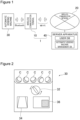
- FIG 1 is a block diagram showing a configuration example of a wireless communication system 1 according to a first embodiment of the present invention.
- the wireless communication system 1 includes a wireless communication terminal 10, and a server apparatus 40 connected to a wireless communication network 20.
- the wireless communication network 20 includes a wired communication network.
- the server apparatus 40 is connected to the wired communication network.
- the wireless communication terminal 10 is, for example, a smartphone.
- the wireless communication terminal 10 is housed in the wireless communication network 20, and wirelessly communicates according to a predetermined wireless communication standard (WI-FI in this embodiment but is not limited thereto).
- the wireless communication terminal 10 has a function of performing near field communication with another apparatus in conformity with a wireless communication standard different from the wireless communication standard described above.
- the latter wireless communication standard is called "first wireless communication standard”
- the former wireless communication standard is called "second wireless communication standard”.
- a specific example of the second wireless communication standard is WI-FI.
- a specific example of the first wireless communication standard may be Bluetooth (registered trademark) or IrDA. In this embodiment, Bluetooth (registered trademark) is adopted as the first wireless communication standard.
- the automatic vending machine 30 in Figure 1 is "gacha-gacha" described above.
- the automatic vending machine 30 has a function of performing near field communication with the wireless communication terminal 10 in conformity with the first wireless communication standard.
- Figure 1 shows only one automatic vending machine 30.
- the number of automatic vending machines 30 may be two or more.
- Figure 2 is a front view of the automatic vending machine 30.
- a handle 32 is turned in the direction of arrows, one capsule C that contains a toy is discharged from an outlet 34.
- a printed copy 36 on which a matrix two-dimensional code associated with an identifier (e.g., a character string made up of a predetermined number of alphanumeric characters) uniquely indicating the automatic vending machine 30 is printed is pasted.
- an identifier e.g., a character string made up of a predetermined number of alphanumeric characters
- the automatic vending machine 30 is in a locked state of prohibiting items from being vended until receipt of a security code for lifting the prohibition of vending items, through near field communication. Even if the handle 32 is turned in a state where the security code has not been received yet, the capsule C is not discharged.
- the security code is one-time 256-byte data that is randomly generated by the server apparatus 40. Every time the server apparatus 40 receives an identifier uniquely indicating the automatic vending machine 30, this apparatus issues a security code associated with the identifier, and returns the code to the source of the identifier.
- the server apparatus 40 is a computer apparatus that includes a user DB and an automatic vending machine management DB, and not only issues the security code and the virtual coin, but also settles the issuance fee for the virtual coin (in other words, settles the payment for an item).
- Position information indicating the installation place of the automatic vending machine 30 e.g., information indicating the latitude and longitude of the installation place
- information for issuing the security code are stored in association with the identifier of the automatic vending machine 30 in the automatic vending machine management DB.
- specific examples of information for issuing a security code include an initial value (what is called a seed of the pseudorandom number) in the algorithm, and a most recently issued security code.
- the user DB is a database for lifting prohibition of item vending by the automatic vending machine 30 and for managing a user intending to purchase an item, using the wireless communication system 1.
- the user DB stores information that indicates histories of purchases of items by users and settlement histories of payments for items, in association with the identifiers uniquely indicating the respective users.
- Specific examples of identifiers for uniquely identifying users include user IDs assigned to the respective users when contracts for using services by the wireless communication system 1 are signed.
- a distributed ledger technology that is called a blockchain is used for settlements of payments for items in this embodiment.
- the blockchain is a database that includes a sequentially increasing list of ordered records that are called blocks.
- each block in the blockchain corresponds to one settlement.
- Each block includes information about the settlement, a timestamp indicating the time of execution of the settlement, and a link to a previous block.
- the wireless communication terminal 10 reads the matrix two-dimensional code using the wireless communication terminal 10, transmits the identifier obtained from the code to the server apparatus 40, thereby allowing the locked state of the automatic vending machine 30 to be unlocked (i.e., allowing prohibition of item vending to be lifted).
- the wireless communication terminal 10 that plays a primary role when lifting the prohibition of item vending by the automatic vending machine 30 is described.
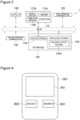
- FIG 3 is a block diagram showing a configuration example of the wireless communication terminal 10.
- the wireless communication terminal 10 includes a controller 100, a user interface section 110, a first wireless communicator 120, a second wireless communicator 130, a storage 140, and a bus 150 that intermediates about data exchange between these configuration elements.
- the user interface section is abbreviated as "UI section”.
- UI section the user interface section
- the controller 100 is, for example, a computer, such as a CPU (Central Processing Unit).
- the controller 100 executes a program stored in the storage 140 (more correctly, a nonvolatile storage 144), and functions as a control center of the wireless communication terminal 10.
- the UI section 110 is an aggregation of devices that provide user interfaces for allowing the user to use the wireless communication terminal 10. As shown in Figure 1 , the UI section 110 includes a display section 110a, an operation section 110b, and an imager 110c. The UI section 110 includes not only these components, but also an audio input and output section that collects audio of a user and outputs audio represented by audio data. However, the audio input and output section has little relationship with the present invention. Accordingly, illustration and detailed description of the audio input and output section are omitted.
- the display section 110a is, for example, a liquid crystal display, and a drive circuit for this display.
- the display section 110a displays images of various screens for prompting the user to use the wireless communication terminal 10, under control by the controller 100.
- the imager 110c is, for example, an image sensor.
- the imager 110c takes an image in an imaging view field, and outputs image data representing the imaging result, to the controller 100.
- the operation section 110b is a transparent sheet-shaped touch sensor provided so as to cover a display area of the display section 110a.
- the operation section 110b, together with the display section 110a, forms what is called a touch panel.
- the user of the wireless communication terminal 10 can achieve various inputs through a touch operation or a flick operation onto the operation section 110b. When the user performs a touch operation, a flick operation or the like onto the operation section 110b, this operation section 110b outputs data representing operation content of the user, to the controller 100. The operation performed by the user is thus transmitted to the controller 100.
- the first wireless communicator 120 is a communication circuit that performs wireless communication conforming to the first wireless communication standard.
- the first wireless communicator 120 receives data transmitted from an opposite apparatus of wireless communication conforming to the first wireless communication standard and transfers the data to the controller 100, and transmits the data transferred from the controller 100, to the opposite apparatus.
- the second wireless communicator 130 performs wireless communication conforming to the second wireless communication standard, with a base station of the wireless communication network 20.
- the second wireless communicator 130 transmits the data provided by the controller 100, to the wireless communication network 20, and receives the data sent from the wireless communication network 20 and transfers the received data to the controller 100.
- the storage 140 includes a volatile storage 142, and a nonvolatile storage 144.
- the volatile storage 142 is, for example, a RAM (Random Access Memory).
- the volatile storage 142 is used, by the controller 100, as a work area when the program is executed.
- the nonvolatile storage 144 is, for example, a flash ROM (Read Only Memory).
- the nonvolatile storage 144 stores various types of programs and various types of data. Specific examples of the programs stored in the nonvolatile storage 144 include a kernel program for causing the controller 100 to achieve an OS (Operating System), various types of application programs such as a web browser and an email client, and a purchase support program 144a for causing the controller 100 to perform an unlocking process that significantly indicates the characteristics of the present invention.
- OS Operating System
- application programs such as a web browser and an email client
- purchase support program 144a for causing the controller 100 to perform an unlocking process that significantly indicates the characteristics of the present invention.
- programs other than the purchase support program 144a are not specifically different from those installed in a typical smartphones.
- the controller 100 reads the kernel program from the nonvolatile storage 144 into the volatile storage 142, and starts execution of this program.
- the controller 100 which is activated according to the kernel program and is in a state of achieving the OS, can execute the purchase support program 144a and other application programs, and perform operation control for the configuration elements, such as the UI section 110, other than the controller 100, according to an instruction input through an operation onto the operation section 110b.
- the programs other than the purchase support program 144a are not specifically different from those installed in a typical smartphones. Accordingly, the detailed description is omitted.
- the purchase support program 144a is mainly described.
- the controller 100 instructed to execute the purchase support program 144a through the operation onto the operation section 110b reads the purchase support program 144a from the nonvolatile storage 144 into the volatile storage 142, and starts the execution of the program.
- the controller 100 in operation according to the purchase support program 144a causes the display section 110a to display a screen G01 shown in Figure 4 .
- a virtual operation piece B01 on the screen G01 is a virtual operation piece for searching for the installation place of the automatic vending machine 30.
- the controller 100 transmits, to the server apparatus 40, position information indicating the current position of the wireless communication terminal 10.
- the current position of the wireless communication terminal 10 may be identified using an existing technology, such as GPS.
- the server apparatus 40 refers to the automatic vending machine management DB, and identifies the automatic vending machine 30 installed in a predetermined range (e.g., a range with a radius of 100 meters) centered on the position indicated by the position information received from the wireless communication terminal 10. The server apparatus 40 then returns the position information indicating the installation place of the identified automatic vending machine 30, to the wireless communication terminal 10.
- a predetermined range e.g., a range with a radius of 100 meters
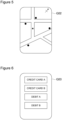
- the controller 100 Upon receipt of the position information returned from the server apparatus 40, the controller 100 causes the display section 110a to display a search result screen G02 shown in Figure 5 .
- An image of the search result screen G02 is an image obtained by plotting an icon (a star-shaped icon in Figure 5 ) indicating the current position, and icons (black filled circles in Figure 5 ) corresponding to the respective automatic vending machines 30, on an image of a map in the predetermined range.
- the user viewing the search result screen G02 can refer to information displayed on the search result screen G02, and go to the installation place of a nearby automatic vending machine 30.
- the controller 100 When a touch operation onto the virtual operation piece B02 on the screen G01 is performed, the controller 100 causes the displayed image on the display section 110a to transition to a settlement means selection screen G03 shown in Figure 6 .
- the settlement means selection screen G03 is a screen for allowing the user to select settlement means (a credit card etc.) used to settle a virtual coin for purchasing an item.
- the controller 100 When the settlement means is selected by an operation onto the operation section 110b, the controller 100 writes information indicating the selected settlement means into the volatile storage 142, and causes the displayed image on the display section 110a to transition to the screen G01.
- an image taken by the imager 110c is displayed.
- the user of the wireless communication terminal 10 holds the wireless communication terminal 10 in proximity to the outlet 34 of the automatic vending machine 30 and adjusts the attitude of the terminal so as to display, in the area A01, the entire matrix two-dimensional code associated with the identifier of the automatic vending machine 30, and takes an image of the matrix two-dimensional code.
- the controller 100 obtains the identifier of the automatic vending machine 30 by analyzing the taken image.
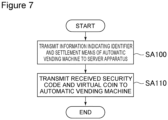
- FIG 7 is a flowchart indicating the flow of the unlocking process. As shown in Figure 7 , first, the controller 100 transmits the identifier obtained by the procedures described above, and information indicating the settlement means selected on the settlement means selection screen G03, through the second wireless communicator 130, to the server apparatus 40 (step SA100).
- the server apparatus 40 Upon receipt of the identifier and the information indicating the settlement means transmitted from the wireless communication terminal 10, the server apparatus 40 refers to the stored content in the automatic vending machine management DB and issues a security code associated with the identifier, and issues a virtual coin for purchasing an item and settles the payment for the item through the settlement means indicated by the received information. The server apparatus 40 then returns the issued security code and virtual coin to the source of the identifier.
- the controller 100 Upon receipt of the security code and the virtual coin returned from the server apparatus 40, the controller 100 transmits the received security code and virtual coin through the first wireless communicator 120 to the automatic vending machine 30 (step SA110).
- the automatic vending machine 30 Upon receipt of the security code and virtual coin transmitted from the wireless communication terminal 10, the automatic vending machine 30 lifts the prohibition of item purchasing. Accordingly, the item to be vended by the automatic vending machine 30 can be purchased (execution of the gacha-gacha in this embodiment). When the item purchasing by the user of the wireless communication terminal 10 is completed, the automatic vending machine 30 is returned to the lock state.
- vending of items by the automatic vending machine can be remotely managed. For example, after the total amount of item purchasing payments in a predetermined period (e.g., one month) reaches a predetermined upper limit value, a new security code is prevented from being issued until this period elapses, which can in turn prevent excessive charging on gacha-gacha.
- a predetermined period e.g., one month
- the wireless communication terminal is allowed to function as the wireless communication terminal 10 in the embodiment described above, by installing the program in a conventional wireless communication terminal, and causing a controller (computer) of the wireless communication terminal to operate according to the program.
- specific providing modes of the program described above include a mode of writing the program in a computer-readable recording medium, such as a flash ROM, and distributing the medium, and a mode of distributing the program through downloading via an electric communication line, such as the Internet.
- a communication system, a communication method and a sensor unit according to the second embodiment of the present invention can unlock a lock pertaining to vending of an automatic vending machine, such as gacha, through a terminal apparatus of a user having completed settlement, and allow items to be purchased.
- the sensor unit can be implemented by retrofitting to an existing automatic vending machine.
- unlocking and item purchasing can be allowed through the terminal apparatus of the user.
- a function equivalent to that of the sensor unit can be implemented by retrofitting, as a plug-in.
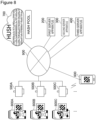
- Figure 8 shows the configuration of a communication system according to the second embodiment, and description is made.
- the communication system includes: a first server apparatus 200 that may be a database server apparatus or the like; a second server apparatus 300 equipped with settlement means; a third server apparatus 400; automatic vending machines 800A to 800C... (hereinafter a symbol 800 is used for collective reference); sensor units 500A to 500C (hereinafter a symbol 500 is used for collective reference) mounted on the respective automatic vending machines 800A to 800C...; a terminal apparatus 600 of a user; and a virtual server apparatus group 700 that achieves a hash pool.
- a communication system may be achieved with any combination of some of these components in some cases.
- the terminal apparatus 600 of the user may be any of various types, such as a smartphone or a tablet terminal, and a node type personal computer.
- the terminal apparatus 600 of the user images a two-dimensional code assigned to an automatic vending machine 800 and obtains an ID of the automatic vending machine, obtains position information during imaging, and transmits these pieces of information to the first server apparatus 200, thus requesting obtainment of encrypted data pertaining to unlocking of the automatic vending machine 800.
- the first server apparatus 200 determines whether the ID of the automatic vending machine and the position information obtained match with recorded information. In a case of matching, the first server apparatus 200 transmits item information about a line of items in the automatic vending machine to the terminal apparatus 600.
- the terminal apparatus 600 of the user displays the item information in a selectable manner, and allows a desired item to be identified, thus proceeding settlement procedures.
- a settlement request issued by the terminal apparatus 600 of the user is sent to the second server apparatus 300 that achieves the selected settlement means.
- the settlement process is executed by the second server apparatus 300, and subsequently a settlement token is sent to the first server apparatus 200.
- the second server apparatus 200 Upon receipt of the settlement token, the second server apparatus 200 generates a hash value obtained by hashing sensor information through a hash function, and transmits the hash value to the terminal apparatus 600 of the user.
- the terminal apparatus 600 of the user issues a search request based on the received hash value, to the virtual server apparatus group 700 that achieves the hash pool.
- the virtual server apparatus group 700 Upon receipt of the search request, the virtual server apparatus group 700 identifies presence of the hash value, and transmits a public key to the third server apparatus 400 in a case of the presence.
- the third server apparatus 400 generates an unlocking code, encrypts the unlocking code with the public key, and transmits the encrypted data to the terminal apparatus 600.
- the terminal apparatus 600 wirelessly communicates with the sensor unit 500 of the automatic vending machine 800 through wireless means, such as Bluetooth (registered trademark), and transmits the encrypted data to the sensor unit 500, thus requesting unlocking of the automatic vending machine.
- wireless means such as Bluetooth (registered trademark)
- the sensor unit 500 determines success or failure of the encrypted data, and unlocks the automatic vending machine 800 in a case of the success. The user thus obtains an item through the automatic vending machine 800.
- Figure 10 shows the configuration of the first server apparatus, and description is made.
- the first server apparatus may be, for example, a database server apparatus or the like.
- the first server apparatus 200 includes a controller 201, a communicator 202, and a storage 203.
- the controller 201, the communicator 202, and the storage 203 are communicably connected to each other via a bus.
- an input section that includes a keyboard and a mouse, and a display section, such as a liquid crystal display, for displaying various types of indications may be provided.
- the communicator 202 is a communication interface that is achieved by, for example, a network interface card (NIC) or the like, is connected wiredly or wirelessly to a communication network 900, such as the Internet, and communicates with the terminal apparatus 600 and the like.
- NIC network interface card
- the storage 203 is achieved by, for example, a semiconductor memory element, such as a RAM (Random Access Memory) or a flash memory, a hard disk drive (HDD), an optical disk device or the like, and preliminarily stores a program to be executed by the controller 201.
- the storage 203 includes a vending machine information storage 204, an item information storage 205, and a sensor information storage 206.
- the vending machine information storage 204 stores the vending machine ID, position information about the installation place of the vending machine, the item ID of the item to be vended and the like in association with each other.
- the item information storage 205 stores each item ID, and detailed information about the corresponding item (the type name, unit price, quantity, etc.) in association with each other.
- the sensor information storage 20 stores the sensor ID of the sensor unit 500, position information (location), and the vending machine ID of the automatic vending machine where the storage is installed, in association with each other.
- the controller 201 is achieved by a CPU (Central Processing Unit), an MPU (Micro Processing Unit) and the like, and executes the program stored in the storage 203, thereby functioning as a transmitter 201a, a receiver 201b, an item information identifier 201c, and a hash generator 201d.
- the controller 201 may include an integrated circuit, such as an ASIC (Application Specific Integrated Circuit) or an FPGA (Field Programmable Array).
- the transmitter 201a transmits, for example, item information in the item information storage 205, the hash value generated by the hash generator 201d and the like, to the terminal apparatus 600 of the user via the communicator 202.
- the receiver 201b receives, via the communicator 202, the vending machine ID and the position information sent from the terminal apparatus 600 of the user, and the settlement token and the like transmitted from the second server apparatus 300.
- the item information identifier 201c then refers to the vending machine information storage 204 on the basis of the vending machine ID sent from the terminal apparatus 600 of the user, identifies the item ID of an item to be vended, refers to the item information storage 205 on the basis of the item ID, and identifies the item information.
- the hash generator 201d hashes the sensor information stored in the sensor information storage 206, through a hash function, and generates a hash value.
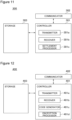
- FIG. 11 shows the configuration of the second server apparatus, and description is made.
- the second server apparatus 300 includes a controller 301, a communicator 302, and a storage 303.
- the controller 301, the communicator 302, and the storage 203 are communicably connected to each other via a bus.
- an input section that includes a keyboard and a mouse, and a display section, such as a liquid crystal display, for displaying various types of indications may be provided.
- the communicator 302 is a communication interface that is achieved by, for example, an NIC or the like, is connected wiredly or wirelessly to a communication network 900, such as the Internet, and communicates with the terminal apparatus 600 and the like.
- the storage 303 is achieved by, for example, a semiconductor memory element, such as a RAM or a flash memory, an HDD, an optical disk device or the like, and preliminarily stores a program to be executed by the controller 301.
- the storage 303 further stores settlement information.
- the controller 301 is achieved by a CPU, an MPU or the like, and executes the program stored in the storage 303, thus functioning as a transmitter 301a, a receiver 301b, and a settlement processor 301c.
- the controller 301 may include an integrated circuit, such as an ASIC or an FPGA.
- the transmitter 301a transmits, for example, a settlement token to the first server apparatus 200 via the communicator 302.
- the receiver 301b receives, via the communicator 302, a settlement request transmitted by the terminal apparatus 600 of the user.
- the settlement processor 301c performs a settlement process on the basis of the settlement request. A result of the settlement process is stored as settlement information in the storage 303.
- Figure 12 shows the configuration of the third server apparatus, and description is made.
- the third server apparatus 400 includes a controller 401, a communicator 402, and a storage 403.
- the controller 401, the communicator 402, and the storage 403 are communicably connected to each other via a bus.
- an input section that includes a keyboard and a mouse
- a display section such as a liquid crystal display, for displaying various types of indications may be provided.
- the communicator 402 is a communication interface that is achieved by, for example, an NIC or the like, is connected wiredly or wirelessly to a communication network 900, and communicates with the terminal apparatus 600 and the like.
- the storage 403 is achieved by, for example, a semiconductor memory element, such as a RAM or a flash memory, an HDD, an optical disk device or the like, and preliminarily stores a program to be executed by the controller 401.
- the controller 401 is achieved by a CPU, an MPU or the like, and executes the program stored in the storage 403, thus functioning as a transmitter 401a, a receiver 401b, a code generator 401c, and an encryption processor 401d.
- the controller 401 may include an integrated circuit, such as an ASIC or an FPGA.
- the transmitter 401a transmits, for example, encrypted data generated by the encryption processor 401d, to the terminal apparatus 600 of the user via the communicator 402.
- the receiver 401b receives, via the communicator 402, a public key sent from the virtual server apparatus group 700.
- the code generator 401c generates an unlocking code.
- the encryption processor 401d then encrypts the unlocking code with the public key, and generates encrypted data.
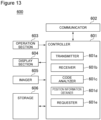
- FIG. 13 shows the configuration of the terminal apparatus, and description is made.
- the terminal apparatus 600 includes a controller 601, a communicator 602, an operation section 603, a display section 604, an imager 605, and a storage 606. These elements 601 to 606 are communicably connected to each other via a control bus.
- the communicator 602 is a communication interface that is achieved by, for example, an NIC or the like, is connected wiredly or wirelessly to a communication network 4, such as the Internet, and communicates with the first server apparatus 200 and the like.
- the operation section 603 is achieved by a mouse, a keyboard and the like, and accepts various types of operation inputs by a user.
- the display section 604 is achieved by a liquid crystal display or the like, and displays various types of indications. Note that the operation section 603 and the display section 604 may be integrally configured as a touch panel.
- the imager 605 images a two-dimensional code or the like assigned to a vending machine 800.
- the storage 606 is achieved by, for example, a semiconductor memory element, such as a RAM or a flash memory, an HDD, an optical disk device or the like, and stores a program to be executed by the controller 601.
- the controller 601 is achieved by a CPU, an MPU or the like, and executes the program stored in the storage 606, thus functioning as a transmitter 601a, a receiver 601b, a code analyzer 601c, a position information obtainer 601d, and a requester 601e.
- the controller 11 may include an integrated circuit, such as an ASIC or an FPGA.
- the transmitter 601a transmits the vending machine ID obtained by imaging the two-dimensional code assigned to the vending machine 800 through the imager 605, and further by analysis through the code analyzer 601c, and the position information obtained by the position information obtainer 601d, to the first server apparatus 200 via the communicator 602.
- the receiver 601b receives, via the communicator 602, the encrypted data or the like sent from the third server apparatus 400.
- the code analyzer 601c analyzes the two-dimensional code imaged by the imager 605, and obtains the vending machine ID.
- the position information obtainer 601d obtains position information on the terminal apparatus 600 (or the vending machine 800) at the time of imaging, through means, such as the GPS (Global Positioning System) or BLE (Bluetooth (registered trademark) Low Energy).
- the requester 601e issues a request or the like pertaining to unlocking, to the sensor unit 500, on the basis of an operation on the operation section 603.
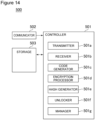
- FIG 14 shows the configuration of the sensor unit, and description is made.
- the sensor unit is a module installed in the automatic vending machine 800.
- the sensor unit 500 installed in the automatic vending machine 800 includes a controller 501 that achieves the entire control, a communicator 502, and a storage 503.
- the communicator 502 is, for example, a communication interface that is connected wiredly or wirelessly to the communication network 4, such as the Internet, and communicates with the terminal apparatus 600 of the user, the first server apparatus 200 and the like, through near field communication, such as Bluetooth (registered trademark).
- the storage 503 is achieved by, for example, a semiconductor memory element, such as a RAM or a flash memory, and stores a program to be executed by the controller 501. Furthermore, the storage 503 stores the generated code, the encrypted data having been encrypted, the generated hash and the like.
- the controller 501 is achieved by a CPU or the like, and executes the program stored in the storage 503, thus functioning as a transmitter 501a, a receiver 501b, a code generator 501c, an encryption processor 501d, a hash generator 501e, an unlocker 501f, a manager 501g and the like.
- the transmitter 501a transmits the generated public key, via the communicator 502, to the virtual server apparatus group 700 that achieves the hash pool.
- the receiver 501b receives, via the communicator 502, the encrypted data transmitted from the terminal apparatus 600 of the user.
- the code generator 501c generates a variation number unlocking code.
- the variation number means that a code generated by a predetermined algorithm is changed every time.
- the encryption processor 501d generates a public key and a private key on the basis of, for example, public-key cryptography, and associates a hash value described later with the public key, as required. Furthermore, as required, the variation number unlocking code is encrypted with the public key.
- the public key is open to the public, and a receiving party holds the private key that forms a pair with the public key, and decrypts the received content with the private key as required.
- the sensor unit 500 may be both a transmission party and a receiving party.
- the public-key cryptography includes three algorithms that are a key generation algorithm, an encryption algorithm, and a decryption algorithm. Based on these algorithms, key generation, encryption, and decryption are performed.
- the key generation algorithm generates and outputs a pair of a public key and a private key.
- the encryption algorithm receives input of the public key and a bit string called a plain text (a variation number unlocking code in this example), generates an encrypted text (encrypted data), and outputs the text.
- the decryption algorithm receives input of the private key and the encrypted text (encrypted data), generates the plain text (the variation number unlocking code in this example), and outputs the text.
- the hash generator 501e hashes, through a hash function, sensor information (a sensor ID, position information, etc.), and outputs a hash value.
- the unlocker 501g determines success or failure of the encrypted data sent from the terminal apparatus 600 of the user. When the encrypted data matches with the held encrypted data (or the variation number unlocking code), this unlocker performs unlocking.
- the unlocking means unlocking of a drive system pertaining to item discharge, and discharging an item.
- the manager 501h stores, in the storage 503, the public key generated by the encryption processor 501d, and the hash value generated by the hash generator 501e, in association with each other, and manages the public key and the hash value.
- the imager 605 images the two-dimensional code assigned to the automatic vending machine 800
- the code analyzer 601c analyzes the image to thus obtain the vending machine ID of the automatic vending machine (S1)
- the position information obtainer 601d obtains position information during imaging through means, such as GPS or GLE (S2)
- the transmitter 601a transmits the vending machine ID, and position information to the first server apparatus via the communicator 602 to thus request for obtaining the encrypted data pertaining to the unlocking of the automatic vending machine 800 (S3).
- the receiver 201b receives the vending machine ID and the position information via the communicator 202 (S4), the item information identifier 201c determines whether the obtained vending machine ID and position information match with the information stored in the vending machine information storage 204, and reads the item information about the item to be vended by the automatic vending machine from the item information storage 205 in the case of matching (S5), and the transmitter 201a transmits the item information in an HTML form or the like to the terminal apparatus 600 of the user via the communicator 202 (S6) .
- the receiver 601b receives the item information via the communicator 602 (S7), the item information is displayed with the settlement means on the display section 604 in a selectable manner, and when a desired item is identified by an operation on the operation section 603, the requester 601e issues a settlement request to the second server apparatus 300 via the communicator 602 (S8).
- the receiver 301b receives the settlement request via the communicator 302 (S9), and the settlement processor 301c performs the settlement process pertaining to an electronic settlement (S10), and the transmitter 301a transmits a settlement token that certifies completion of the electronic settlement to the first server apparatus 200 via the communicator 302 (S11).
- the receiver 201b receives the settlement token via the communicator 202 (S12), and then the hash generator 201d generates a hash value obtained by hashing, through the hash function, sensor information (the sensor ID, the sensor location, etc.) stored in the sensor information storage 206, and the transmitter 201a transmits the value to the terminal apparatus 600 of the user via the communicator 202 (S13).
- the hash function that the hash generator 201d uses for hashing is the same as the hash function used in the hash generator 501e of the sensor unit 501, and the sensor information to be hashed is also the same. Accordingly, the same hash value as that on the sensor unit 501 side can be generated.
- the receiver 601b receives the hash value via the communicator 602 (S14), and then the requester 601e issues a search request based on the received hash value to the virtual server apparatus group 700 that achieves the hash pool via the communicator 602 (SS15).
- the virtual server apparatus group 700 identifies presence of the hash value, and transmits a public key to the third server apparatus 400 in a case of the presence (S16).
- the receiver 401b receives the public key via the communicator 402 (S17), the code generator 401c generates the variation number unlocking code, the encryption processor 401d encrypts the unlocking code with the public key on the basis of the encryption logic, and the transmitter 401a transmits the encrypted data to the terminal apparatus 600 via the communicator 402 (S18).
- the encryption logic used for the encryption process in the third server apparatus 400 is the same as the encryption logic used in the sensor unit 500.
- the code generation logic used in the code generator 401c is also the same as that used in the sensor unit 500.
- the receiver 601b receives the encrypted data via the communicator 602 (S19), and the requester 601e transmits the encrypted data to the sensor unit 500 installed in the automatic vending machine 800 via the communicator 602 through near field communication, such as Bluetooth (registered trademark), to thus issue a sensor unlock request (S20).
- near field communication such as Bluetooth (registered trademark)
- the transmitter 501a of the sensor unit 500 receives the encrypted data via the communicator 502 (S21), the unlocker 501f determines success or failure of the encrypted data, and when it is determined that the encrypted data is correct, this unlocker unlocks the automatic vending machine 800 (S22). The user thus obtains an item through the automatic vending machine 800.
- the code generator 501c may generate the variation number unlocking code, and the success or failure of the encrypted data may be determined by comparing the encrypted data encrypted by the encryption processor 501d according to the encryption logic with the received encrypted data. Alternatively, the determination may be made by decrypting the received encrypted data according to the decryption logic of the encryption processor 501d to obtain the variation number unlocking code, and comparing this code with the variation number unlocking code generated by the code generator 501c.
- the terminal apparatus of the user is only provided with the hash value generated based on the sensor information and the encrypted data. Accordingly, the variation number unlocking code can be prevented from leaking on the web, and more secure transactions can be achieved.
- the first server apparatus that may be a database server or the like, and the third server apparatus that generates the encrypted data, use the same logic as the sensor unit for generating hash and for generating the encrypted data. Accordingly, the variation number unlocking code and the hash are not required to be transmitted or received. Also in this point, more secure transactions can be achieved.
- the encryption data is generated by encrypting the variation number unlocking code with the public key by the third server apparatus having received the public key from the hash pool. Accordingly, the encrypted data can be prevented from leaking. That is, superiority for preventing encrypted data leaking accidents can be secured.
- the hash value is generated by the first server apparatus, and transmitted to the terminal apparatus of the user.
- the encrypted data is generated by the third server apparatus and transmitted to the terminal apparatus of the user.
- the public key is managed by the hash pool. Accordingly, in case of an attack, the area can be immediately moved and the pool can be rebuilt. Thus, the public key can be more safely managed.
- the encrypted data generated by the third server apparatus is updated in a short time period. Accordingly, even in case of an attack, the possibility of decryption is probabilistically equivalent to zero.
- the hash management is adopted as the basis. Accordingly, in view of probability, the more the system increases, the more the safety is secured.
- the present invention has thus been described above.
- the present invention is not limited thereto, and various modifications and changes can be made.
- the sensor units installed in the respective automatic vending machines form a sensor network in predetermined units, and uploading of the public key to the hash pool and the like may be integrally performed by a sensor unit having a sufficient amount in the power source, thus achieving power saving.
- 1...Wireless communication system 10...Wireless communication terminal, 20...Wireless communication network, 30...Automatic vending machine, 40...Server apparatus.
Landscapes
- Engineering & Computer Science (AREA)
- Computer Security & Cryptography (AREA)
- Business, Economics & Management (AREA)
- Physics & Mathematics (AREA)
- General Physics & Mathematics (AREA)
- Theoretical Computer Science (AREA)
- Computer Networks & Wireless Communication (AREA)
- Signal Processing (AREA)
- Accounting & Taxation (AREA)
- General Business, Economics & Management (AREA)
- Strategic Management (AREA)
- Finance (AREA)
- Health & Medical Sciences (AREA)
- General Health & Medical Sciences (AREA)
- Tourism & Hospitality (AREA)
- General Engineering & Computer Science (AREA)
- Software Systems (AREA)
- Marketing (AREA)
- Computer Hardware Design (AREA)
- Economics (AREA)
- Artificial Intelligence (AREA)
- Toxicology (AREA)
- Electromagnetism (AREA)
- Computer Vision & Pattern Recognition (AREA)
- Power Engineering (AREA)
- Computing Systems (AREA)
- Human Resources & Organizations (AREA)
- Primary Health Care (AREA)
- Development Economics (AREA)
- Bioethics (AREA)
- Control Of Vending Devices And Auxiliary Devices For Vending Devices (AREA)
- Management, Administration, Business Operations System, And Electronic Commerce (AREA)
- Financial Or Insurance-Related Operations Such As Payment And Settlement (AREA)
Applications Claiming Priority (3)
| Application Number | Priority Date | Filing Date | Title |
|---|---|---|---|
| JP2019515390A JPWO2020100207A1 (ja) | 2018-11-13 | 2018-11-13 | 無線通信システム、無線通信端末、およびプログラム |
| JP2019128812A JP6681501B1 (ja) | 2018-11-13 | 2019-07-10 | 通信システム、通信方法、およびセンサユニット |
| PCT/JP2020/012426 WO2021005841A1 (ja) | 2018-11-13 | 2020-03-19 | 通信システム、通信方法、およびセンサユニット |
Publications (4)
| Publication Number | Publication Date |
|---|---|
| EP3998567A1 EP3998567A1 (en) | 2022-05-18 |
| EP3998567A4 EP3998567A4 (en) | 2023-07-19 |
| EP3998567C0 EP3998567C0 (en) | 2024-12-18 |
| EP3998567B1 true EP3998567B1 (en) | 2024-12-18 |
Family
ID=70168413
Family Applications (1)
| Application Number | Title | Priority Date | Filing Date |
|---|---|---|---|
| EP20837085.8A Active EP3998567B1 (en) | 2018-11-13 | 2020-03-19 | Communication system, communication method, and sensor unit |
Country Status (6)
| Country | Link |
|---|---|
| US (1) | US11941598B2 (enExample) |
| EP (1) | EP3998567B1 (enExample) |
| JP (3) | JP6681501B1 (enExample) |
| KR (1) | KR102767547B1 (enExample) |
| CN (1) | CN114026585B (enExample) |
| WO (1) | WO2021005841A1 (enExample) |
Families Citing this family (1)
| Publication number | Priority date | Publication date | Assignee | Title |
|---|---|---|---|---|
| JP7023474B1 (ja) | 2021-09-01 | 2022-02-22 | 株式会社バンダイ | 物品供給装置、物品供給システム及び管理装置 |
Family Cites Families (40)
| Publication number | Priority date | Publication date | Assignee | Title |
|---|---|---|---|---|
| JPH07148358A (ja) | 1993-12-01 | 1995-06-13 | Sega Enterp Ltd | カプセル玩具 |
| JP2001227217A (ja) * | 2000-02-14 | 2001-08-24 | Matsushita Electric Ind Co Ltd | キーレスエントリシステム |
| JP2002115436A (ja) | 2000-08-02 | 2002-04-19 | Sanyo Electric Co Ltd | 自動販売機およびその扉開閉制御システム |
| JP2002117442A (ja) * | 2000-10-06 | 2002-04-19 | Tietech Co Ltd | 自動販売機の販売制限解除方式 |
| JP2002140756A (ja) * | 2000-11-01 | 2002-05-17 | Ids:Kk | サービス享受システム |
| JP4543539B2 (ja) * | 2000-11-07 | 2010-09-15 | 富士電機リテイルシステムズ株式会社 | 自動販売機、自動販売機の利用者管理装置、および自動販売機の販売制限システム |
| US7110954B2 (en) | 2001-03-12 | 2006-09-19 | University Of Hong Kong | Wireless purchase and on-line inventory apparatus and method for vending machines |
| JP2002298203A (ja) * | 2001-03-30 | 2002-10-11 | Mitsubishi Electric Corp | サーバと該サーバを含む自動販売機システム |
| JP2002344438A (ja) | 2001-05-14 | 2002-11-29 | Nippon Telegr & Teleph Corp <Ntt> | 鍵共有システム及び装置並びにプログラム |
| US20030125836A1 (en) | 2002-11-23 | 2003-07-03 | Munroe Chirnomas | Method and apparatus for controlling a vending machine |
| US7725897B2 (en) * | 2004-11-24 | 2010-05-25 | Kabushiki Kaisha Toshiba | Systems and methods for performing real-time processing using multiple processors |
| JP4271491B2 (ja) * | 2003-05-20 | 2009-06-03 | 日本電信電話株式会社 | 通信方法および認証装置 |
| US7389530B2 (en) * | 2003-09-12 | 2008-06-17 | International Business Machines Corporation | Portable electronic door opener device and method for secure door opening |
| WO2006116115A2 (en) * | 2005-04-22 | 2006-11-02 | Redbox Automated Retail, L.L.C. | System and method for communicating vending information |
| US8931072B2 (en) * | 2006-09-28 | 2015-01-06 | Niklas Magnusson | Method of gaining access to a device |
| GB0901589D0 (en) * | 2009-01-30 | 2009-03-11 | Omar Ralph M | Improvements relating to multifunction authentication systems |
| US20120187187A1 (en) | 2011-01-20 | 2012-07-26 | Lai Games Australia Pty Ltd | Two-way symbological communication between electronic devices |
| KR101245984B1 (ko) * | 2011-11-11 | 2013-03-20 | 인하대학교 산학협력단 | 단말기를 사용한 자산 관리 장치 및 방법 |
| JP5035715B1 (ja) * | 2012-05-09 | 2012-09-26 | 株式会社日本マシンサービス | 事業所内自動販売機管理システム |
| WO2014018796A1 (en) * | 2012-07-25 | 2014-01-30 | Ebay Inc. | Electronic payments to non-internet connected devices systems and methods |
| JP5960035B2 (ja) * | 2012-11-28 | 2016-08-02 | 株式会社日立産機システム | 位置情報システム |
| US9898884B1 (en) * | 2013-04-04 | 2018-02-20 | Cantaloupe Systems, Inc. | Method and system of personal vending |
| JP6361098B2 (ja) * | 2013-08-28 | 2018-07-25 | 株式会社リコー | 認証システム及び認証プログラム |
| US10019724B2 (en) * | 2015-01-30 | 2018-07-10 | PayRange Inc. | Method and system for providing offers for automated retail machines via mobile devices |
| JP6304590B2 (ja) * | 2014-03-13 | 2018-04-04 | 株式会社コナミデジタルエンタテインメント | ゲームシステム、管理装置及びプログラム |
| US9852423B2 (en) * | 2014-04-08 | 2017-12-26 | Usa Technologies, Inc. | Systems and methods for wireless authorization of transactions with mobile payment devices |
| US10628789B2 (en) * | 2014-05-20 | 2020-04-21 | Gimme Vending LLC | Communication device for vending machine and method of using the same |
| GB201506135D0 (en) * | 2015-04-10 | 2015-05-27 | Mastercard International Inc | Vending machine transactions |
| TWM537270U (zh) * | 2016-03-18 | 2017-02-21 | Ming-Jian Huang | 選物販賣之網路互動系統 |
| JP6855169B2 (ja) * | 2016-04-11 | 2021-04-07 | 進 松川 | 携帯端末機及び広告配信システム |
| SE542426C2 (en) * | 2016-04-12 | 2020-04-28 | Surfboard Payments Ab | Method and system for authorizing a transaction |
| WO2018042669A1 (ja) * | 2016-09-05 | 2018-03-08 | 楽天株式会社 | 自動販売機管理システム、自動販売機管理方法、管理装置、携帯端末、及びプログラム |
| JP7051859B2 (ja) | 2016-12-12 | 2022-04-11 | トゥルソナ,インコーポレイテッド | 光検出を用いたネットワーク対応アカウント作成のための方法及びシステム |
| US11042862B2 (en) | 2016-12-13 | 2021-06-22 | ViaTouch Media, Inc. | Methods and utilities for consumer interaction with a self service system |
| CN207249809U (zh) * | 2017-08-07 | 2018-04-17 | 王海巍 | 自动售货机 |
| CN109035509A (zh) * | 2018-07-12 | 2018-12-18 | 佛山伊苏巨森科技有限公司 | 一种通过区块链启闭智能门锁的方法 |
| CN109858898A (zh) * | 2019-01-24 | 2019-06-07 | 深圳市萝趣电子商务有限公司 | 自动售货机出货开门系统以及购物系统 |
| US11989706B2 (en) * | 2019-12-19 | 2024-05-21 | Kishore Swaminathan | Open infrastructure for vending machine payments from mobile devices |
| CA3177070A1 (en) * | 2020-04-27 | 2021-11-04 | Andrew Donaghey | Vending machine system |
| US11837060B2 (en) * | 2020-07-07 | 2023-12-05 | Romaine Empire, Inc. | Systems and methods for contactless pickup at a vending machine |
-
2019
- 2019-07-10 JP JP2019128812A patent/JP6681501B1/ja active Active
-
2020
- 2020-03-19 CN CN202080047847.9A patent/CN114026585B/zh active Active
- 2020-03-19 WO PCT/JP2020/012426 patent/WO2021005841A1/ja not_active Ceased
- 2020-03-19 EP EP20837085.8A patent/EP3998567B1/en active Active
- 2020-03-19 KR KR1020227004435A patent/KR102767547B1/ko active Active
- 2020-03-19 US US17/626,052 patent/US11941598B2/en active Active
- 2020-03-19 JP JP2020049663A patent/JP2020115649A/ja active Pending
-
2024
- 2024-03-13 JP JP2024039296A patent/JP7660732B2/ja active Active
Also Published As
| Publication number | Publication date |
|---|---|
| WO2021005841A1 (ja) | 2021-01-14 |
| KR20220035165A (ko) | 2022-03-21 |
| CN114026585B (zh) | 2025-06-24 |
| JP2020080139A (ja) | 2020-05-28 |
| KR102767547B1 (ko) | 2025-02-12 |
| JP6681501B1 (ja) | 2020-04-15 |
| EP3998567C0 (en) | 2024-12-18 |
| CN114026585A (zh) | 2022-02-08 |
| JP7660732B2 (ja) | 2025-04-11 |
| EP3998567A4 (en) | 2023-07-19 |
| JP2024071425A (ja) | 2024-05-24 |
| US11941598B2 (en) | 2024-03-26 |
| US20220253818A1 (en) | 2022-08-11 |
| EP3998567A1 (en) | 2022-05-18 |
| JP2020115649A (ja) | 2020-07-30 |
Similar Documents
| Publication | Publication Date | Title |
|---|---|---|
| US20200184441A1 (en) | Portable handheld device for wireless order entry and real time payment authorization and related methods | |
| US11176548B2 (en) | Systems and methods for cold payment solution | |
| KR20190119454A (ko) | 가챠 시스템의 확률 정보를 획득하는 방법, 장치 및 컴퓨터 프로그램 | |
| JP7660732B2 (ja) | 通信システム、通信方法 | |
| CN100392589C (zh) | 执行交易的系统和方法以及用于操作终端的方法 | |
| US20220108293A1 (en) | Systems and methods for reader device registration, use, and management | |
| US20250272366A1 (en) | Systems and methods for authentication of physical access tokens at access terminals | |
| CN110599184A (zh) | 用于网络服务账号交易的方法和装置、服务器和存储介质 | |
| CN110930146A (zh) | 凭证验证辅助装置、系统及其方法 | |
| US12393736B2 (en) | Secure signing of applications for a payment terminal | |
| US12314932B2 (en) | Handoff between applications on a payment terminal | |
| US20240152394A1 (en) | Deploying applications to a payment terminal | |
| US12182247B1 (en) | Systems and methods for authentication of physical access tokens at access terminals | |
| KR20190085840A (ko) | 경비 관리 시스템 및 이를 이용한 경비 관리 방법 | |
| US11514454B2 (en) | Payment system using customer's fingerprints | |
| US20250265572A1 (en) | Utilizing signal-emitting cards to improve security, efficiency, and accuracy of user interface digital information entry and validation across computer networks | |
| WO2020100207A1 (ja) | 無線通信システム、無線通信端末、およびプログラム | |
| CN116206376A (zh) | 一种信息保护方法、系统、装置、终端、存储介质 | |
| CN114556398A (zh) | 用于基于卡交易的架构、系统和方法 | |
| JP2003337705A (ja) | インターネットを利用したソフトウェア配送システムおよびその方法 |
Legal Events
| Date | Code | Title | Description |
|---|---|---|---|
| STAA | Information on the status of an ep patent application or granted ep patent |
Free format text: STATUS: THE INTERNATIONAL PUBLICATION HAS BEEN MADE |
|
| PUAI | Public reference made under article 153(3) epc to a published international application that has entered the european phase |
Free format text: ORIGINAL CODE: 0009012 |
|
| STAA | Information on the status of an ep patent application or granted ep patent |
Free format text: STATUS: REQUEST FOR EXAMINATION WAS MADE |
|
| 17P | Request for examination filed |
Effective date: 20220110 |
|
| AK | Designated contracting states |
Kind code of ref document: A1 Designated state(s): AL AT BE BG CH CY CZ DE DK EE ES FI FR GB GR HR HU IE IS IT LI LT LU LV MC MK MT NL NO PL PT RO RS SE SI SK SM TR |
|
| DAV | Request for validation of the european patent (deleted) | ||
| DAX | Request for extension of the european patent (deleted) | ||
| REG | Reference to a national code |
Ref country code: DE Ref legal event code: R079 Free format text: PREVIOUS MAIN CLASS: G06Q0020180000 Ipc: G06F0021440000 Ref document number: 602020043465 Country of ref document: DE |
|
| A4 | Supplementary search report drawn up and despatched |
Effective date: 20230615 |
|
| RIC1 | Information provided on ipc code assigned before grant |
Ipc: G07F 11/44 20060101ALI20230609BHEP Ipc: G06Q 30/06 20120101ALI20230609BHEP Ipc: G07F 9/00 20060101ALI20230609BHEP Ipc: G07F 7/10 20060101ALI20230609BHEP Ipc: G07F 7/02 20060101ALI20230609BHEP Ipc: G06Q 20/42 20120101ALI20230609BHEP Ipc: G06Q 20/38 20120101ALI20230609BHEP Ipc: G06Q 20/32 20120101ALI20230609BHEP Ipc: G06Q 20/18 20120101ALI20230609BHEP Ipc: H04W 12/77 20210101ALI20230609BHEP Ipc: H04W 12/63 20210101ALI20230609BHEP Ipc: H04W 12/084 20210101ALI20230609BHEP Ipc: H04W 12/06 20210101ALI20230609BHEP Ipc: H04L 9/32 20060101ALI20230609BHEP Ipc: H04L 9/08 20060101ALI20230609BHEP Ipc: G06F 21/60 20130101ALI20230609BHEP Ipc: G06F 21/44 20130101AFI20230609BHEP |
|
| GRAP | Despatch of communication of intention to grant a patent |
Free format text: ORIGINAL CODE: EPIDOSNIGR1 |
|
| STAA | Information on the status of an ep patent application or granted ep patent |
Free format text: STATUS: GRANT OF PATENT IS INTENDED |
|
| RIC1 | Information provided on ipc code assigned before grant |
Ipc: G07F 11/44 20060101ALI20240112BHEP Ipc: G06Q 30/06 20120101ALI20240112BHEP Ipc: G07F 9/00 20060101ALI20240112BHEP Ipc: G07F 7/10 20060101ALI20240112BHEP Ipc: G07F 7/02 20060101ALI20240112BHEP Ipc: G06Q 20/42 20120101ALI20240112BHEP Ipc: G06Q 20/38 20120101ALI20240112BHEP Ipc: G06Q 20/32 20120101ALI20240112BHEP Ipc: G06Q 20/18 20120101ALI20240112BHEP Ipc: H04W 12/77 20210101ALI20240112BHEP Ipc: H04W 12/63 20210101ALI20240112BHEP Ipc: H04W 12/084 20210101ALI20240112BHEP Ipc: H04W 12/06 20210101ALI20240112BHEP Ipc: H04L 9/32 20060101ALI20240112BHEP Ipc: H04L 9/08 20060101ALI20240112BHEP Ipc: G06F 21/60 20130101ALI20240112BHEP Ipc: G06F 21/44 20130101AFI20240112BHEP |
|
| INTG | Intention to grant announced |
Effective date: 20240130 |
|
| GRAJ | Information related to disapproval of communication of intention to grant by the applicant or resumption of examination proceedings by the epo deleted |
Free format text: ORIGINAL CODE: EPIDOSDIGR1 |
|
| STAA | Information on the status of an ep patent application or granted ep patent |
Free format text: STATUS: REQUEST FOR EXAMINATION WAS MADE |
|
| GRAS | Grant fee paid |
Free format text: ORIGINAL CODE: EPIDOSNIGR3 |
|
| INTC | Intention to grant announced (deleted) | ||
| STAA | Information on the status of an ep patent application or granted ep patent |
Free format text: STATUS: GRANT OF PATENT IS INTENDED |
|
| GRAP | Despatch of communication of intention to grant a patent |
Free format text: ORIGINAL CODE: EPIDOSNIGR1 |
|
| INTG | Intention to grant announced |
Effective date: 20240627 |
|
| GRAA | (expected) grant |
Free format text: ORIGINAL CODE: 0009210 |
|
| STAA | Information on the status of an ep patent application or granted ep patent |
Free format text: STATUS: THE PATENT HAS BEEN GRANTED |
|
| AK | Designated contracting states |
Kind code of ref document: B1 Designated state(s): AL AT BE BG CH CY CZ DE DK EE ES FI FR GB GR HR HU IE IS IT LI LT LU LV MC MK MT NL NO PL PT RO RS SE SI SK SM TR |
|
| REG | Reference to a national code |
Ref country code: CH Ref legal event code: EP |
|
| REG | Reference to a national code |
Ref country code: DE Ref legal event code: R096 Ref document number: 602020043465 Country of ref document: DE |
|
| REG | Reference to a national code |
Ref country code: IE Ref legal event code: FG4D |
|
| U01 | Request for unitary effect filed |
Effective date: 20241220 |
|
| U07 | Unitary effect registered |
Designated state(s): AT BE BG DE DK EE FI FR IT LT LU LV MT NL PT RO SE SI Effective date: 20250113 |
|
| PG25 | Lapsed in a contracting state [announced via postgrant information from national office to epo] |
Ref country code: HR Free format text: LAPSE BECAUSE OF FAILURE TO SUBMIT A TRANSLATION OF THE DESCRIPTION OR TO PAY THE FEE WITHIN THE PRESCRIBED TIME-LIMIT Effective date: 20241218 |
|
| PG25 | Lapsed in a contracting state [announced via postgrant information from national office to epo] |
Ref country code: NO Free format text: LAPSE BECAUSE OF FAILURE TO SUBMIT A TRANSLATION OF THE DESCRIPTION OR TO PAY THE FEE WITHIN THE PRESCRIBED TIME-LIMIT Effective date: 20250318 |
|
| PG25 | Lapsed in a contracting state [announced via postgrant information from national office to epo] |
Ref country code: GR Free format text: LAPSE BECAUSE OF FAILURE TO SUBMIT A TRANSLATION OF THE DESCRIPTION OR TO PAY THE FEE WITHIN THE PRESCRIBED TIME-LIMIT Effective date: 20250319 |
|
| PG25 | Lapsed in a contracting state [announced via postgrant information from national office to epo] |
Ref country code: RS Free format text: LAPSE BECAUSE OF FAILURE TO SUBMIT A TRANSLATION OF THE DESCRIPTION OR TO PAY THE FEE WITHIN THE PRESCRIBED TIME-LIMIT Effective date: 20250318 |
|
| U20 | Renewal fee for the european patent with unitary effect paid |
Year of fee payment: 6 Effective date: 20250331 |
|
| PG25 | Lapsed in a contracting state [announced via postgrant information from national office to epo] |
Ref country code: SM Free format text: LAPSE BECAUSE OF FAILURE TO SUBMIT A TRANSLATION OF THE DESCRIPTION OR TO PAY THE FEE WITHIN THE PRESCRIBED TIME-LIMIT Effective date: 20241218 |
|
| PG25 | Lapsed in a contracting state [announced via postgrant information from national office to epo] |
Ref country code: PL Free format text: LAPSE BECAUSE OF FAILURE TO SUBMIT A TRANSLATION OF THE DESCRIPTION OR TO PAY THE FEE WITHIN THE PRESCRIBED TIME-LIMIT Effective date: 20241218 |
|
| PG25 | Lapsed in a contracting state [announced via postgrant information from national office to epo] |
Ref country code: ES Free format text: LAPSE BECAUSE OF FAILURE TO SUBMIT A TRANSLATION OF THE DESCRIPTION OR TO PAY THE FEE WITHIN THE PRESCRIBED TIME-LIMIT Effective date: 20241218 |
|
| PG25 | Lapsed in a contracting state [announced via postgrant information from national office to epo] |
Ref country code: IS Free format text: LAPSE BECAUSE OF FAILURE TO SUBMIT A TRANSLATION OF THE DESCRIPTION OR TO PAY THE FEE WITHIN THE PRESCRIBED TIME-LIMIT Effective date: 20250418 |
|
| PG25 | Lapsed in a contracting state [announced via postgrant information from national office to epo] |
Ref country code: SK Free format text: LAPSE BECAUSE OF FAILURE TO SUBMIT A TRANSLATION OF THE DESCRIPTION OR TO PAY THE FEE WITHIN THE PRESCRIBED TIME-LIMIT Effective date: 20241218 |
|
| PG25 | Lapsed in a contracting state [announced via postgrant information from national office to epo] |
Ref country code: CZ Free format text: LAPSE BECAUSE OF FAILURE TO SUBMIT A TRANSLATION OF THE DESCRIPTION OR TO PAY THE FEE WITHIN THE PRESCRIBED TIME-LIMIT Effective date: 20241218 |
|
| PG25 | Lapsed in a contracting state [announced via postgrant information from national office to epo] |
Ref country code: MC Free format text: LAPSE BECAUSE OF FAILURE TO SUBMIT A TRANSLATION OF THE DESCRIPTION OR TO PAY THE FEE WITHIN THE PRESCRIBED TIME-LIMIT Effective date: 20241218 |
|
| PLBE | No opposition filed within time limit |
Free format text: ORIGINAL CODE: 0009261 |
|
| REG | Reference to a national code |
Ref country code: CH Ref legal event code: H13 Free format text: ST27 STATUS EVENT CODE: U-0-0-H10-H13 (AS PROVIDED BY THE NATIONAL OFFICE) Effective date: 20251024 |
|
| STAA | Information on the status of an ep patent application or granted ep patent |
Free format text: STATUS: NO OPPOSITION FILED WITHIN TIME LIMIT |
|
| 26N | No opposition filed |
Effective date: 20250919 |
|
| GBPC | Gb: european patent ceased through non-payment of renewal fee |
Effective date: 20250319 |