EP3965524A1 - Verfahren, vorrichtung und system zum aufbau einer pc5-verbindung - Google Patents
Verfahren, vorrichtung und system zum aufbau einer pc5-verbindung Download PDFInfo
- Publication number
- EP3965524A1 EP3965524A1 EP20798091.3A EP20798091A EP3965524A1 EP 3965524 A1 EP3965524 A1 EP 3965524A1 EP 20798091 A EP20798091 A EP 20798091A EP 3965524 A1 EP3965524 A1 EP 3965524A1
- Authority
- EP
- European Patent Office
- Prior art keywords
- identifier
- direct communication
- link
- service
- establishment
- Prior art date
- Legal status (The legal status is an assumption and is not a legal conclusion. Google has not performed a legal analysis and makes no representation as to the accuracy of the status listed.)
- Granted
Links
Images

Classifications
-
- H—ELECTRICITY
- H04—ELECTRIC COMMUNICATION TECHNIQUE
- H04W—WIRELESS COMMUNICATION NETWORKS
- H04W8/00—Network data management
- H04W8/005—Discovery of network devices, e.g. terminals
-
- H—ELECTRICITY
- H04—ELECTRIC COMMUNICATION TECHNIQUE
- H04W—WIRELESS COMMUNICATION NETWORKS
- H04W76/00—Connection management
- H04W76/10—Connection setup
- H04W76/11—Allocation or use of connection identifiers
-
- H—ELECTRICITY
- H04—ELECTRIC COMMUNICATION TECHNIQUE
- H04W—WIRELESS COMMUNICATION NETWORKS
- H04W76/00—Connection management
- H04W76/10—Connection setup
- H04W76/14—Direct-mode setup
-
- H—ELECTRICITY
- H04—ELECTRIC COMMUNICATION TECHNIQUE
- H04W—WIRELESS COMMUNICATION NETWORKS
- H04W8/00—Network data management
- H04W8/26—Network addressing or numbering for mobility support
-
- H—ELECTRICITY
- H04—ELECTRIC COMMUNICATION TECHNIQUE
- H04L—TRANSMISSION OF DIGITAL INFORMATION, e.g. TELEGRAPHIC COMMUNICATION
- H04L2101/00—Indexing scheme associated with group H04L61/00
- H04L2101/60—Types of network addresses
- H04L2101/618—Details of network addresses
- H04L2101/654—International mobile subscriber identity [IMSI] numbers
-
- H—ELECTRICITY
- H04—ELECTRIC COMMUNICATION TECHNIQUE
- H04W—WIRELESS COMMUNICATION NETWORKS
- H04W92/00—Interfaces specially adapted for wireless communication networks
- H04W92/16—Interfaces between hierarchically similar devices
- H04W92/18—Interfaces between hierarchically similar devices between terminal devices
Definitions
- Embodiments of this disclosure relate to the field of communications technologies, and in particular, to a method for PC5 link establishment, a device, and a system.
- V2X vehicle to X
- V2X Vehicle to X
- V2V vehicle to Vehicle
- V2P vehicle to pedestrian
- V2I vehicle to infrastructure
- V2X services such as V2V and V2P may be transmitted through a PC5 interface between user equipments (User Equipment, UE).
- UE User Equipment
- a PC5 link needs to be established between UE 1 and UE 2 in advance.
- UE 1 broadcasts a direct communication request message (hereinafter referred to as direct communication request message 1) that carries at least a layer 2 address of UE 1.
- direct communication request message 1 a direct communication request message that carries at least a layer 2 address of UE 1.
- UE 2 near UE 1 can reply to UE 1 with a direct communication accept message after UE 2 receives direct communication request message 1.
- UE 1 can establish the PC5 link with UE 2.
- UE 1 when UE 1 needs to establish another PC5 link for the same service with another UE, UE 1 again broadcasts a direct communication request message in which the layer 2 address of UE 1 may have been changed. Therefore, UE 2 may establish another PC5 link with UE 1 after receiving the direct communication request message broadcast again. In other words, a plurality of PC5 links for the same service may be established between UE 1 and UE 2, resulting in waste of air interface resources.
- the foregoing direct communication request message 1 also carries identifiers of a plurality of UEs, only some of the UEs may reply to UE 1 with direct communication accept messages. As a result, UE 1 may fail to identify which UEs accept the direct communication request, further leading to a PC5 link establishment failure. Therefore, in the foregoing two aspects, PC5 links between UEs cannot be well established.
- Embodiments of this disclosure provide a method for PC5 link establishment, a device, and a system, to resolve a problem that PC5 links between UEs cannot be well established in the related art.
- an embodiment of this disclosure provides a method for PC5 link establishment, applied to first UE and including: sending a direct communication request message, where the direct communication request message carries an identifier of the first UE, and is used to request establishment of a PC5 link; and receiving a direct communication accept message sent by second UE, where the direct communication accept message carries an identifier of the second UE, and is used to accept the establishment of the PC5 link with the first UE.
- an embodiment of this disclosure provides a method for PC5 link establishment, applied to second UE and including: receiving a direct communication request message sent by first UE, where the direct communication request message carries an identifier of the first UE, and is used to request establishment of a PC5 link; and sending a direct communication accept message to the first UE, where the direct communication accept message carries an identifier of the second UE, and is used to accept the establishment of the PC5 link with the first UE.
- an embodiment of this disclosure provides UE.
- the UE is first UE, and includes a sending module and a receiving module, where the sending module is configured to send a direct communication request message, where the direct communication request message carries an identifier of the first UE, and is used to request establishment of a PC5 link; and the receiving module is configured to receive a direct communication accept message sent by second UE, where the direct communication accept message carries an identifier of the second UE, and is used to accept the establishment of the PC5 link with the first UE.
- an embodiment of this disclosure provides UE.
- the UE is second UE, and includes a receiving module and a sending module, where the receiving module is configured to receive a direct communication request message sent by first UE, where the direct communication request message carries an identifier of the first UE, and is used to request establishment of a PC5 link; and the sending module is configured to send a direct communication accept message to the first UE, where the direct communication accept message carries an identifier of the second UE, and is used to accept the establishment of the PC5 link with the first UE.
- an embodiment of this disclosure provides UE, including a processor, a memory, and a computer program stored in the memory and capable of running on the processor, where when the computer program is executed by the processor, the steps of the method for PC5 link establishment according to the first aspect are implemented.
- an embodiment of this disclosure provides UE, including a processor, a memory, and a computer program stored in the memory and capable of running on the processor, where when the computer program is executed by the processor, the steps of the method for PC5 link establishment according to the second aspect are implemented.
- an embodiment of this disclosure provides a communications system, where the communications system includes the UE in the third aspect and the UE in the fourth aspect.
- the communications system includes the UE in the fifth aspect and the UE in the sixth aspect.
- an embodiment of this disclosure provides a computer-readable storage medium, where the computer-readable storage medium stores a computer program, and when the computer program is executed by a processor, the steps of the method for PC5 link establishment according to the first aspect and the second aspect are implemented.
- the first UE may send the direct communication request message, and receive the direct communication accept message sent by the second UE, where the direct communication request message carries the identifier of the first UE, and is used to request the establishment of the PC5 link, and the direct communication accept message carries the identifier of the second UE, and is used to accept the establishment of the PC5 link with the first UE.
- the direct communication request message carries the identifier that uniquely identifies the first UE
- the direct communication accept message carries the identifier that uniquely identifies the second UE, the first UE and the second UE can recognize each other.
- a plurality of means two or more than two, for example, a plurality of processing units mean two or more processing units; a plurality of elements mean two or more elements; or the like, unless otherwise specified.
- a and/or B may represent the following three cases: Only A exists, both A and B exist, and only B exists.
- the symbol "/" herein indicates an "or" relationship of associated objects.
- A/B means A or B.
- Provider service identifier indicates a service that UE needs to transmit.
- Source layer 2 identifier indicates a layer 2 address of UE that sends a message. For example, if UE 1 sends a message carrying a source layer2 identifier, the source layer2 identifier is a layer 2 address of UE 1.
- PC5 link indicates a unicast link that transmits a service between two UEs through a PC5 interface.
- first UE may send a direct communication request message, and receive a direct communication accept message sent by second UE, where the direct communication request message carries an identifier of the first UE, and is used to request establishment of a PC5 link, and the direct communication accept message carries an identifier of the second UE, and is used to accept the establishment of the PC5 link with the first UE.
- the direct communication request message carries the identifier that uniquely identifies the first UE
- the direct communication accept message carries the identifier that uniquely identifies the second UE, the first UE and the second UE can recognize each other.
- the method for PC5 link establishment, the device, and the system in the embodiments of this disclosure may be applied to communications systems, for example, a long term evolution (Long Term Evolution, LTE) system, a new radio (new radio, NR) system, or a plurality of communications fusion systems, and may be specifically applied to transmission of a V2X service, such as V2V or V2P, through a PC5 interface between UEs based on the communications system.
- LTE Long Term Evolution
- NR new radio
- V2X service such as V2V or V2P
- FIG. 1 is a schematic architectural diagram of a communications system according to an embodiment of this disclosure.
- the communications system may include at least one UE (UE 101 and UE 102 in FIG. 1 are used as an example of the at least one UE).
- a PC5 link may be established between two UEs of the at least one UE through a PC5 interface, and a service may be transmitted through the established PC5 link.
- the UE is a device that provides a user with voice and/or data connectivity, a handheld device with a wireless or wired connection function, or another processing device connected to a wireless modem.
- the UE may communicate with one or more core network devices through a radio access network (Radio Access Network, RAN).
- RAN Radio Access Network
- the UE may be a mobile terminal, such as a mobile phone (or referred to as a "cellular" phone) and a computer with a mobile terminal, or may be a portable, pocket-sized, handheld, computer built-in or vehicle-mounted mobile apparatus, which exchanges a voice and/or data with the RAN.
- the UE is a device such as a personal communication service (Personal Communication Service, PCS) phone, a cordless telephone set, a session initiation protocol (SIP) phone, a wireless local loop (Wireless Local Loop, WLL) station, or a personal digital assistant (Personal Digital Assistant, PDA).
- PCS Personal Communication Service
- SIP session initiation protocol
- WLL Wireless Local Loop
- PDA Personal Digital Assistant
- the UE may also be referred to as a user agent (User Agent), a terminal device, or the like.
- the method for PC5 link establishment may be applied to but is not limited to the following two scenarios.
- the following provides an exemplary description by using an example in which UE 1 is UE that sends a direct communication request message (direct communication request) (a UE that initiates PC5 link establishment), and UE 2 and/or UE 3 is UE(s) that send(s) a direct communication accept message (direct communication accept).
- a V2X application layer of UE 1 provides an identifier of UE 2 and an identifier of UE 3 (that is, UE 1 knows an identifier of at least one target UE (user info))
- UE 1 broadcasts the direct communication request message carrying a source layer2 identifier, an application layer ID (application layer ID) of UE 2, and an application layer ID of UE 3.
- UE 2 and UE 3 determine, based on the application layer IDs (for example, based on whether the direct communication request message includes the application layer IDs), whether to send a direct communication accept message to UE 1, and then determine whether to establish a PC5 link with UE 1.
- a direct communication accept message sent by UE as a reply does not carry an identifier of the UE.
- UE 1 may fail to establish the PC5 links (that is, UE 1 cannot establish the PC5 link with UE 2 or the PC5 link with UE 3).
- the direct communication request message carries the identifier of UE 1
- the direct communication accept message carries the identifier of the corresponding UE
- the direct communication accept message carries the identifier of UE 2 (for example, the application layer ID of UE 2); or if UE 3 replies with the direct communication accept message, the direct communication accept message carries the identifier of UE 3 (for example, the application layer ID of UE 3)).
- UE 1 when receiving only one direct communication accept message, UE 1 can identify, based on the identifier of the corresponding UE carried in the direct communication accept message, whether UE 2 or UE 3 replies with the direct communication accept message. In this way, UE 1 can successfully establish a PC5 link with the UE (UE 2 or UE 3) that replies with the direct communication accept message.
- Second scenario In a case that UE 1 does not know any UE identifier, UE 1 broadcasts a direct communication request message carrying a source layer2 identifier. After receiving the direct communication request message, UE 2 and/or UE 3 may determine, based on service interests (that is, whether a service needs to be transmitted), whether to send the direct communication accept message to UE 1, and further determine whether to establish the PC5 link with UE 1. A direct communication accept message sent by UE as a reply does not carry an identifier of the UE.
- UE 1 does not need to know whether UE 2 or UE 3 replies to the direct communication request of UE 1.
- UE 1 if UE 1 has established one PC5 link for service 1 with UE 2, and needs to establish PC5 links for service 1 with more UEs, UE 1 broadcasts a direct communication request message again.
- a source layer2 identifier carried in the direct communication request message broadcast again by UE 1 may be different from the source layer2 identifier carried in the previously broadcast direct communication request message (that is, the layer 2 address of UE 1 is changed).
- UE 2 when UE 2 also needs to establish PC5 links for service 1 with more UEs, UE 2 may establish another PC5 link with UE 1 after receiving the direct communication request message broadcast again by UE 1. As a result, UE 1 and UE 2 may establish two or more PC5 links for service 1. However, establishing a plurality of PC5 links for a same service between two UEs is unnecessary, and only leads to waste of air interface resources.
- the direct communication request message carries the identifier of UE 1
- the direct communication accept message carries the identifier of the corresponding UE (if UE 2 replies with the direct communication accept message, the direct communication accept message carries the identifier of UE 2; or if UE 3 replies with the direct communication accept message, the direct communication accept message carries the identifier of UE 3). Therefore, after receiving the direct communication accept message, UE 1 can identify, based on the identifier of the corresponding UE carried in the direct communication accept message, whether UE 2 or UE 3 replies with the direct communication accept message. In this way, UE 1 can successfully establish the PC5 link with UE 2 that replies with the direct communication accept message, and/or successfully establish the PC5 link with UE 3 that replies with the direct communication accept message.
- each UE Because each UE generates its own layer 2 address, when UE 1 receives direct communication accept messages (carrying layer 2 addresses of UEs) sent by a plurality of UEs, source layer2 identifiers carried in direct communication accept messages sent by different UEs may be the same (this case has a relatively low probability). As a result, UE 1 may fail to determine whether the direct communication accept messages are direct communication accept messages sent by different UEs, or one direct communication accept message sent twice by same UE (for example, the UE does not receive a confirmation message from UE 1 in time).
- the direct communication request message carries the identifier of UE 1
- the direct communication accept message carries the identifier of the corresponding UE (if UE 2 replies with the direct communication accept message, the direct communication accept message carries the identifier of UE 2; or if UE 3 replies with the direct communication accept message, the direct communication accept message carries the identifier of UE 3).
- UE 1 when receiving a plurality of direct communication accept messages carrying a same source layer2 identifier, UE 1 can identify whether the direct communication accept messages are direct communication accept messages sent by different UEs, or one direct communication accept message sent repeatedly by a same UE (for example, the UE does not receive a confirmation message from UE 1 in time).
- the method for PC5 link establishment provided in this embodiment of this disclosure can resolve a problem that a PC5 link between UEs cannot be well established in the related art.
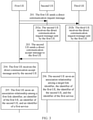
- an embodiment of this disclosure provides a method for PC5 link establishment. As shown in FIG. 2 , the method may include the following step 201 to step 204.
- Step 201 First UE sends a direct communication request message.
- the first UE broadcasts the direct communication request message. All UEs near the first UE can receive the direct communication request message.
- Any UE that receives the direct communication request message may or may not reply with a direct communication accept message. This may be specifically determined based on an actual usage status, and is not limited in this embodiment of this disclosure.
- the second UE may receive the direct communication request message, and the third UE may also receive the direct communication request message.
- the following provides an exemplary description by using an example in which the second UE replies with the direct communication accept message, but the third UE does not reply with the direct communication accept message.
- Step 202a Second UE receives the direct communication request message sent by the first UE.
- the second UE receives the direct communication request message broadcast by the first UE.
- the direct communication request message carries an identifier of the first UE, and is used to request establishment of a PC5 link.
- the identifier of the first UE is used to uniquely identify the first UE.
- a layer 2 address of the first UE is not the identifier of the first UE.
- an identifier of UE is an identifier that uniquely identifies the UE. Because a layer 2 address of UE is not an identifier that uniquely identifies the UE, and the UE may have a plurality of different layer 2 addresses at the same time, the layer 2 address of the UE is not the identifier of the UE.
- the identifier of the first UE is an application layer ID of the first UE, an international mobile subscriber identification number (International Mobile Subscriber Identification Number, IMSI) of the first UE, a permanent equipment identifier (Permanent Equipment Identifier, PEI) of the first UE, or another identifier of the first UE that is used to uniquely identify the first UE. This is not limited in this embodiment of this disclosure.
- the application layer ID of the first UE may be provided by a V2X service, or self-designed by the first UE. This may be specifically determined based on an actual usage status, and is not limited in this embodiment of this disclosure.
- the second UE may determine, based on a preset rule, whether to reply with the direct communication accept message.
- the direct communication request message further carries the layer 2 address of the first UE, and may further carry other information. This may be specifically determined according to an actual usage requirement, and is not limited in this embodiment of this disclosure.
- Step 202b A third UE receives the direct communication request message sent by the first UE.
- the third UE does not send the direct communication accept message to the first UE.
- Step 203 The second UE sends a direct communication accept message to the first UE.
- Step 204 The first UE receives the direct communication accept message sent by the second UE.
- the direct communication accept message carries an identifier of the second UE, and is used to accept the establishment of the PC5 link with the first UE.
- the identifier of the second UE is used to uniquely identify the second UE.
- a layer 2 address of the second UE is not the identifier of the second UE.
- the identifier of the second UE is an application layer ID of the second UE, an IMSI of the second UE, a PEI of the second UE, or another identifier that is used to uniquely identify the second UE. This is not limited in this embodiment of this disclosure.
- the application layer ID of the second UE may be provided by a V2X service, or self-designed by the second UE. This may be specifically determined based on an actual usage status, and is not limited in this embodiment of this disclosure.
- the direct communication accept message further carries the layer 2 address of the second UE, and may also carry other information. This may be specifically determined according to an actual usage requirement, and is not limited in this embodiment of this disclosure.
- the first UE may send the direct communication request message, and receive the direct communication accept message sent by the second UE, where the direct communication request message carries the identifier of the first UE, and is used to request the establishment of the PC5 link, and the direct communication accept message carries the identifier of the second UE, and is used to accept the establishment of the PC5 link with the first UE.
- the direct communication request message carries the identifier that uniquely identifies the first UE
- the direct communication accept message carries the identifier that uniquely identifies the second UE, the first UE and the second UE can recognize each other.
- the direct communication request message further carries an identifier of at least one target UE.
- An identifier of each target UE in the identifier of the at least one target UE may uniquely identify the target UE.
- the identifier of each target UE may be an application layer ID of the target UE, an IMSI of the target UE, a PEI of the target UE, or another identifier that is used to uniquely identify the target UE. This is not limited in this embodiment of this disclosure.
- the direct communication request message is specifically used to request establishment of a PC5 link with the at least one target UE. Specifically, the direct communication request message is used to request establishment of a PC5 link with each of the at least one target UE.
- the identifier of the at least one target UE may include the identifier of the second UE (in this case, the second UE is a target UE), or may not include the identifier of the second UE (in this case, the second UE is not the target UE). This may be specifically determined according to an actual usage requirement, and is not limited in this embodiment of this disclosure.
- step 203 may be specifically implemented by using the following step 203a.
- Step 203a In a case that the identifier of the at least one target UE includes the identifier of the second UE, the second UE sends the direct communication accept message to the first UE.
- the second UE detects that the identifier of the at least one target UE that is carried in the direct communication request message includes the identifier of the second UE, the second UE sends the direct communication accept message to the first UE.
- the third UE detects that the identifier of the at least one target UE that is carried in the direct communication request message does not include the identifier of the third UE, the third UE dost not reply to the direct communication request message (that is, the third UE does not send the direct communication accept message to the first UE).
- the identifier of the at least one target UE carried in the direct communication request message can identify target UE with which the first UE needs to establish a PC5 link. Therefore, the first UE can establish a better PC5 link.
- the second UE may further determine, with reference to information that is in the identifier of the at least one target UE and that is different from the identifier of the second UE, whether to send the direct communication accept message to the first UE. This may be specifically determined according to an actual usage requirement, and is not limited in this embodiment of this disclosure.
- the direct communication request message further carries an identifier of a first service.
- the identifier of the first service is used to indicate the first service.
- the target UE is specifically UE that is in the at least one target UE and that needs to transmit the first service.
- step 203a may be specifically implemented by using the following step 203a1.
- Step 203a1 In a case that the identifier of the at least one target UE includes the identifier of the second UE, and the second UE needs to transmit the first service, the second UE sends the direct communication accept message to the first UE.
- the second UE detects that the direct communication accept message carries the identifier of the at least one target UE and the identifier of the first service, detects that the identifier of the at least one target UE includes the identifier of the second UE, and determines that the second UE needs to transmit the first service (that is, the second UE is a target UE), the second UE sends the direct communication accept message to the first UE.
- the third UE detects that the identifier of the at least one target UE does not include the identifier of the third UE, and/or, determines that the third UE does not need to transmit the first service, the third UE does not reply to the direct communication request message.
- the identifier of the at least one target UE and the identifier of the first service that are carried in the direct communication request message can further identify the target UE with which the first UE needs to establish the PC5 link. Therefore, the first UE can establish a better PC5 link.
- the direct communication request message further carries an identifier of a first service.
- the identifier of the first service is used to indicate the first service.
- the direct communication request message is specifically used to request the establishment of the PC5 link with the target UE.
- the target UE is UE that needs to transmit the first service.
- step 203 may be specifically implemented by using the following step 203b.
- Step 203b In a case that the second UE needs to transmit the first service, the second UE sends the direct communication accept message to the first UE.
- the second UE detects that the direct communication request message carries the identifier of the first service, and the second UE needs to transmit the first service, the second UE sends the direct communication accept message to the first UE.
- the third UE detects that the direct communication request message carries the identifier of the first service, but the third UE does not need to transmit the first service, the third UE does not reply to the direct communication request message.
- the identifier of the first service carried in the direct communication request message can further identify the target UE with which the first UE needs to establish the PC5 link, and help UE (for example, the second UE) that receives the direct communication request message to determine, based on the identifier of the first service, whether to reply to the direct communication request message. Therefore, the first UE can establish a better PC5 link.
- the direct communication accept message further carries the identifier of the first service, where the direct communication accept message is specifically used to accept establishment of a PC5 link with the first UE for transmitting the first service.
- the direct communication accept message further carries the identifier of the first service, which can clearly indicate that the second UE accepts the establishment of the PC5 link with the first UE for transmitting the first service, helping the first UE establish the PC5 link.
- the second UE may further determine, with reference to information that is different from the identifier of the first service, whether to send the direct communication accept message to the first UE. This may be specifically determined according to an actual usage requirement, and is not limited in this embodiment of this disclosure.
- the method for PC5 link establishment provided in this embodiment of this disclosure may further include the following step 205 and step 206.
- Step 205 The first UE saves an association relationship among a first link identifier, an identifier of the first UE, an identifier of the second UE, and an identifier of a first service.
- the first link identifier is used to indicate the PC5 link (hereinafter referred to as first link) established between the first UE and the second UE.
- the first link identifier is an identifier generated by the first UE according to its own requirements to indicate the PC5 link established between the first UE and the second UE.
- the first UE may save the association relationship (hereinafter referred to as first association relationship) among the first link identifier, the identifier of the first UE, the identifier of the second UE, and the identifier of the first service in text of the first link in the first UE.
- first association relationship may be specifically an association relationship among the first link identifier, the identifier of the first UE, the identifier of the second UE, the identifier of the first service, the layer 2 address of the first UE, and the layer 2 address of the second UE.
- the first UE saves the first association relationship, to identify the second UE more conveniently, thereby helping the first UE establish the PC5 link with the second UE.
- Step 206 The second UE saves an association relationship among a target link identifier, the identifier of the first UE, the identifier of the second UE, and the identifier of the first service.
- the target link identifier is used to indicate the PC5 link (the same as the first link in step 205) established between the first UE and the second UE.
- the target link identifier is an identifier generated by the second UE according to its own requirements to indicate the PC5 link established between the first UE and the second UE.
- the second UE may save the association relationship (hereinafter referred to as second association relationship) among the target link identifier, the identifier of the first UE, the identifier of the second UE, and the identifier of the first service in text of the first link in the second UE.
- the second association relationship may be specifically an association relationship among the target link identifier, the identifier of the first UE, the identifier of the second UE, the identifier of the first service, the layer 2 address of the first UE, and the layer 2 address of the second UE.
- the first link identifier may be the same as or different from the target link identifier. This may be specifically determined according to an actual usage requirement, and is not limited in this embodiment of this disclosure.
- step 205 is executed after step 204.
- step 204 neither an execution sequence of step 206 and step 203 nor an execution sequence of step 206 and step 204 is limited in this embodiment of this disclosure.
- the execution sequence of step 206 and step 203 is not limited.
- Step 203 may be executed before or after step 206, or step 203 and step 206 may be executed simultaneously.
- the second UE saves the second association relationship, to identify the first UE more conveniently. Therefore, the second UE can better establish the PC5 link with the first UE.
- the following describes in detail specific establishment processes of the two PC5 links provided in this embodiment of this disclosure by using an example in which UE 1 (the first UE) establishes the PC5 links with UE 2 (the second UE) and UE 3 (the third UE) respectively and the identifier of the UE is the application layer ID of the UE.
- the specific establishment process of the first PC5 link is as follows: 1.
- a V2X application layer of UE 1 provides an application layer ID of UE 2 and an application layer ID of UE 3
- UE 1 sends the direct communication request message through broadcasting, where the direct communication request message carries the identifier of the first service, the layer 2 address of UE 1, the application layer ID of UE 1, the application layer ID of UE 2, and the application layer ID of UE 3.
- UE 2 After receiving the direct communication request message sent by UE 1, UE 2 detects that the direct communication request message carries the application layer ID of UE 2, and sends to UE 1 the direct communication accept message carrying the identifier of the first service, the layer 2 address of UE 2, and the application layer ID of UE 2.
- UE 3 After receiving the direct communication request message sent by UE 1, UE 3 does not send the direct communication accept message to UE 1, although it detects that the direct communication request message carries the application layer ID of UE 3. After receiving the direct communication request message sent by UE 1, UE 4 does not send a direct communication accept message to UE 1 because it detects that the direct communication request message does not carry an application layer ID of UE 4. 3.
- UE 2 creates and saves text (hereinafter referred to as text 1) of a PC5 link (hereinafter referred to as PC5 link 1) used to transmit the first service with UE 1 (the first association relationship among identifier 1 of PC5 link 1, the layer 2 address of UE 1, the layer 2 address of UE 2, the identifier of the first service, the application layer ID of UE 1, and the application layer ID of UE 2 is stored in text 1, where identifier 1 of PC5 link 1 is generated by UE 2).
- text 1 of PC5 link 1 hereinafter referred to as PC5 link 1
- PC5 link 1 the first association relationship among identifier 1 of PC5 link 1, the layer 2 address of UE 1, the layer 2 address of UE 2, the identifier of the first service, the application layer ID of UE 1, and the application layer ID of UE 2 is stored in text 1, where identifier 1 of PC5 link 1 is generated by UE 2).
- UE 1 creates and saves text (hereinafter referred to as text 2) of PC5 link 1 (the second association relationship among identifier 2 of PC5 link 1, the layer 2 address of UE 1, the layer 2 address of UE 2, the identifier of the first service, the application layer ID of UE 1, and the application layer ID of UE 2 is stored in text 2, where identifier 2 of PC5 link 1 is generated by UE 1, and may be different from identifier 1 of PC5 link 1).
- text 2 creates text 1 and UE 1 creates text 2
- PC5 link 1 between UE 1 and UE 2 is successfully established, and UE 1 and UE 2 can transmit the first service through PC5 link 1.
- the specific establishment process of the second PC5 link is as follows: 1. In a case that UE 1 does not obtain any UE identifier information through a V2X application layer, UE 1 sends the direct communication request message through broadcasting, where the direct communication request message carries the identifier of the first service, the layer 2 address of UE 1, and the application layer ID of UE 1. 2. If UE 2 needs to transmit the first service after receiving the direct communication request message, UE 2 sends to UE 1 the direct communication accept message carrying the identifier of the first service, the layer 2 address of UE 2, and the application layer ID of UE 2. If UE 3 does not need to transmit the first service after receiving the direct communication request message sent by UE 1, UE 3 does not send a direct communication accept message to UE 1. 3.
- UE 2 creates and saves text (hereinafter referred to as text 1) of a PC5 link (hereinafter referred to as PC5 link 1) used to transmit the first service with UE 1 (the first association relationship among identifier 1 of PC5 link 1, the layer 2 address of UE 1, the layer 2 address of UE 2, the identifier of the first service, the application layer ID of UE 1, and the application layer ID of UE 2 is stored in text 1, where identifier 1 of PC5 link 1 is generated by UE 2).
- text 1 of PC5 link 1 hereinafter referred to as PC5 link 1
- PC5 link 1 the first association relationship among identifier 1 of PC5 link 1, the layer 2 address of UE 1, the layer 2 address of UE 2, the identifier of the first service, the application layer ID of UE 1, and the application layer ID of UE 2 is stored in text 1, where identifier 1 of PC5 link 1 is generated by UE 2).
- UE 1 creates and saves text (hereinafter referred to as text 2) of PC5 link 1 (the second association relationship among identifier 2 of PC5 link 1, the layer 2 address of UE 1, the layer 2 address of UE 2, the identifier of the first service, the application layer ID of UE 1, and the application layer ID of UE 2 is stored in text 2, where identifier 2 of PC5 link 1 is generated by UE 1, and may be different from identifier 1 of PC5 link 1).
- text 2 creates text 1 and UE 1 creates text 2
- PC5 link 1 between UE 1 and UE 2 is successfully established, and UE 1 and UE 2 can transmit the first service through PC5 link 1.
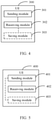
- an embodiment of this disclosure provides UE 300.
- the UE 300 is first UE, and includes a sending module 301 and a receiving module 302.
- the sending module 301 is configured to send a direct communication request message, where the direct communication request message carries an identifier of the first UE, and is used to request establishment of a PC5 link.
- the receiving module 302 is configured to receive a direct communication accept message sent by second UE, where the direct communication accept message carries an identifier of the second UE, and is used to accept the establishment of the PC5 link with the first UE.
- the direct communication request message further carries an identifier of at least one target UE, where the direct communication request message is specifically used to request establishment of a PC5 link with the at least one target UE.
- the direct communication request message further carries an identifier of a first service, where the direct communication request message is specifically used to request establishment of a PC5 link with UE that needs to transmit the first service.
- the UE 300 further includes a saving module 303.
- the saving module 303 is configured to: after the receiving module 302 receives the direct communication accept message sent by the second UE, save an association relationship among a first link identifier, the identifier of the first UE, the identifier of the second UE, and the identifier of the first service, where the first link identifier is used to indicate the PC5 link established between the first UE and the second UE.
- the UE 300 shown in FIG. 4 may include only the sending module 301 and the receiving module 302, or may include the sending module 301, the receiving module 302, and the saving module 303.
- the saving module 303 is illustrated with a dashed frame in FIG. 4 .
- the direct communication accept message further carries the identifier of the first service, where the direct communication accept message is specifically used to accept establishment of a PC5 link with the first UE for transmitting the first service.
- the identifier of the first UE is an application layer ID of the first UE, an IMSI of the first UE, or a PEI of the first UE; and the identifier of the second UE is an application layer ID of the second UE, an IMSI of the second UE, or a PEI of the second UE.
- the terminal device provided in this embodiment of this disclosure can implement the process in the foregoing embodiment. To avoid repetition, details are not described herein again.
- the UE may be first UE.
- the first UE may send a direct communication request message, and receive a direct communication accept message sent by second UE, where the direct communication request message carries an identifier of the first UE, and is used to request establishment of a PC5 link, and the direct communication accept message carries an identifier of second UE, and is used to accept the establishment of the PC5 link with the first UE.
- the direct communication request message carries the identifier that uniquely identifies the first UE
- the direct communication accept message carries the identifier that uniquely identifies the second UE, the first UE and the second UE can recognize each other.
- an embodiment of this disclosure provides UE 400.
- the UE 400 is second UE, and includes a receiving module 401 and a sending module 402.
- the receiving module 401 is configured to receive a direct communication request message sent by first UE, where the direct communication request message carries an identifier of the first UE, and is used to request establishment of a PC5 link.
- the sending module 402 is configured to send a direct communication accept message to the first UE, where the direct communication accept message carries an identifier of the second UE, and is used to accept the establishment of the PC5 link with the first UE.
- the direct communication request message further carries an identifier of at least one target UE
- the sending module 402 is specifically configured to: in a case that the identifier of the at least one target UE includes the identifier of the second UE, send the direct communication accept message to the first UE.
- the direct communication request message further carries an identifier of a first service
- the sending module 402 is specifically configured to: in a case that the second UE needs to transmit the first service, send the direct communication accept message to the first UE.
- the UE 400 further includes a saving module 403.
- the saving module 403 is configured to: after the receiving module 401 receives the direct communication request message sent by the first UE, save an association relationship among a target link identifier, the identifier of the first UE, the identifier of the second UE, and the identifier of the first service, where the target link identifier is used to indicate the PC5 link established between the first UE and the second UE.
- the UE 400 shown in FIG. 5 may include only the receiving module 401 and the sending module 402, or may include the receiving module 401, the sending module 402, and the saving module 403.
- the saving module 403 is illustrated with a dashed frame in FIG. 5 .
- the direct communication accept message further carries the identifier of the first service, where the direct communication accept message is specifically used to accept establishment of a PC5 link with the first UE for transmitting the first service.
- the identifier of the first UE is an application layer ID of the first UE, an IMSI of the first UE, or a PEI of the first UE; and the identifier of the second UE is an application layer ID of the second UE, an IMSI of the second UE, or a PEI of the second UE.
- the terminal device provided in this embodiment of this disclosure can implement the process in the foregoing embodiment. To avoid repetition, details are not described herein again.
- the UE may be second UE.
- the second UE may receive a direct communication request message sent by first UE, and send a direct communication accept message to the first UE, where the direct communication request message carries an identifier of the first UE, and is used to request establishment of a PC5 link, and the direct communication accept message carries an identifier of the second UE, and is used to accept the establishment of the PC5 link with the first UE.
- the direct communication request message carries the identifier that uniquely identifies the first UE
- the direct communication accept message carries the identifier that uniquely identifies the second UE, the first UE and the second UE can recognize each other.
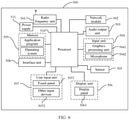
- FIG. 6 is a schematic structural diagram of hardware of UE according to an embodiment of this disclosure.
- the UE 500 includes but is not limited to: a radio frequency unit 501, a network module 502, an audio output unit 503, an input unit 504, a sensor 505, a display unit 506, a user input unit 507, an interface unit 508, a memory 509, a processor 510, a power supply 511, and the like.
- a structure of the UE 500 shown in FIG. 6 does not constitute a limitation on the UE, and the UE 500 may include more or fewer components than those shown in the figure, or some components may be combined, or there may be a different component arrangement.
- the UE 500 includes but is not limited to: a mobile phone, a tablet computer, a notebook computer, a palmtop computer, a vehicle-mounted UE, a wearable device, a pedometer, or the like.
- the radio frequency unit 501 is configured to: send a direct communication request message, where the direct communication request message carries an identifier of first UE, and is used to request establishment of a PC5 link; and receive a direct communication accept message sent by second UE, where the direct communication accept message carries an identifier of the second UE, and is used to accept the establishment of the PC5 link with the first UE.
- the UE may be first UE.
- the first UE may send a direct communication request message, and receive a direct communication accept message sent by second UE, where the direct communication request message carries an identifier of the first UE, and is used to request establishment of a PC5 link, and the direct communication accept message carries an identifier of second UE, and is used to accept the establishment of the PC5 link with the first UE.
- the direct communication request message carries the identifier that uniquely identifies the first UE
- the direct communication accept message carries the identifier that uniquely identifies the second UE, the first UE and the second UE can recognize each other.
- the radio frequency unit 501 is configured to: receive a direct communication request message sent by first UE, where the direct communication request message carries an identifier of the first UE, and is used to request establishment of a PC5 link; and send a direct communication accept message to the first UE, where the direct communication accept message carries an identifier of the second UE, and is used to accept the establishment of the PC5 link with the first UE.
- the UE may be second UE.
- the second UE may receive a direct communication request message sent by first UE, and send a direct communication accept message to the first UE, where the direct communication request message carries an identifier of the first UE, and is used to request establishment of a PC5 link, and the direct communication accept message carries an identifier of the second UE, and is used to accept the establishment of the PC5 link with the first UE.
- the direct communication request message carries the identifier that uniquely identifies the first UE
- the direct communication accept message carries the identifier that uniquely identifies the second UE, the first UE and the second UE can recognize each other.
- the radio frequency unit 501 may be configured to transmit and receive a signal in an information transmitting/receiving or call process. Specifically, the radio frequency unit 501 receives downlink data from a base station and transmits the downlink data to the processor 510 for processing; and transmits uplink data to the base station.
- the radio frequency unit 501 includes but is not limited to an antenna, at least one amplifier, a transceiver, a coupler, a low noise amplifier, a duplexer, and the like.
- the radio frequency unit 501 may also communicate with a network and another device via a wireless communications system.
- the UE 500 provides the user with wireless broadband Internet access by using the network module 502, for example, helps the user send or receive an email, browse a web page, access streaming media, and the like.
- the audio output unit 503 may convert audio data received by the radio frequency unit 501 or the network module 502 or stored in the memory 509 into an audio signal and output the audio signal as a sound.
- the audio output unit 503 may further provide an audio output (for example, a call signal reception sound or a message reception sound) related to a specific function performed by the UE 500.
- the audio output unit 503 includes a speaker, a buzzer, a receiver, and the like.
- the input unit 504 is configured to receive an audio or video signal.
- the input unit 504 may include a graphics processing unit (Graphics Processing Unit, GPU) 5041 and a microphone 5042.
- the graphics processing unit 5041 processes image data of a static picture or a video obtained by an image capture apparatus (for example, a camera) in an image capture mode or a video capture mode.
- a processed image frame may be displayed on the display unit 506.
- An image frame processed by the graphics processing unit 5041 may be stored in the memory 509 (or another storage medium) or transmitted by the radio frequency unit 501 or the network module 502.
- the microphone 5042 can receive sounds and process such sounds into audio data.
- the processed audio data may be converted in a call mode into a format that can be sent by the radio frequency unit 501 to a mobile communication base station for outputting.
- the UE 500 further includes at least one sensor 505, for example, an optical sensor, a motion sensor, and another sensor.
- the optical sensor includes an ambient light sensor and a proximity sensor, where the ambient light sensor can adjust luminance of the display panel 5061 based on brightness of ambient light, and the proximity sensor can turn off the display panel 5061 and/or backlight when the UE 500 is moved to an ear.
- an accelerometer sensor can detect magnitudes of accelerations in all directions (usually three axes), can detect a magnitude and a direction of gravity when the mobile phone is in a static state, and can be applied to UE posture recognition (such as screen switching between portrait and landscape, related games, and magnetometer posture calibration), functions related to vibration recognition (such as pedometer and tapping), and the like.
- the sensor 505 may also include a fingerprint sensor, a pressure sensor, an iris sensor, a molecular sensor, a gyroscope, a barometer, a hygrometer, a thermometer, an infrared sensor, and the like. Details are not described herein.
- the display unit 506 is configured to display information input by the user or information provided to the user.
- the display unit 506 may include the display panel 5061.
- the display panel 5061 may be configured in a form of a liquid crystal display (Liquid Crystal Display, LCD), an organic light-emitting diode (Organic Light-Emitting Diode, OLED), or the like.
- the user input unit 507 may be configured to receive input digit or character information and generate key signal input related to user setting and function control of the UE 500.
- the user input unit 507 includes a touch panel 5071 and other input devices 5072.
- the touch panel 5071 is also referred to as a touchscreen, and may collect a touch operation of the user on or near the touch panel (for example, an operation performed on or near the touch panel 5071 by the user by using any appropriate object or accessory such as a finger or a stylus).
- the touch panel 5071 may include two parts: a touch detection apparatus and a touch controller.
- the touch detection apparatus detects a touch orientation of the user, detects a signal brought by the touch operation, and transmits the signal to the touch controller.
- the touch controller receives touch information from the touch detection apparatus, converts the touch information into touch point coordinates, transmits the touch point coordinates to the processor 510, and receives and executes a command transmitted by the processor 510.
- the touch panel 5071 may be implemented in a plurality of forms, for example, as a resistive, capacitive, infrared, or surface acoustic wave touch panel.
- the user input unit 507 may further include other input devices 5072.
- the other input devices 5072 may include but are not limited to a physical keyboard, a function key (for example, a volume control key or a power on/off key), a trackball, a mouse, and a joystick. Details are not described herein.
- the touch panel 5071 may cover the display panel 5061.
- the touch panel 5071 transmits the touch operation to the processor 510 for determining a type of the touch event. Then, the processor 510 provides a corresponding visual output on the display panel 5061 based on the type of the touch event.
- the touch panel 5071 and the display panel 5061 act as two separate parts to implement input and output functions of the UE 500, in some embodiments, the touch panel 5071 and the display panel 5061 may be integrated to implement the input and output functions of the UE 500. This is not specifically limited herein.
- the interface unit 508 is an interface connecting an external apparatus to the UE 500.
- the external apparatus may include a wired or wireless headphone port, an external power supply (or battery charger) port, a wired or wireless data port, a memory card port, a port for connecting an apparatus with an identification module, an audio input/output (I/O) port, a video I/O port, a headset port, or the like.
- the interface unit 508 may be configured to receive input (for example, data information and power) from the external apparatus, and transmit the received input to one or more elements of the UE 500, or may be configured to transmit data between the UE 500 and the external apparatus.
- the memory 509 may be configured to store software programs and various data.
- the memory 509 may mainly include a program storage area and a data storage area.
- the program storage area may store an operating system, an application program required for at least one function (for example, a sound play function and an image play function), and the like.
- the data storage area may store data created based on use of the mobile phone (for example, audio data and a phone book), and the like.
- the memory 509 may include a high-speed random access memory, and may further include a non-volatile memory such as a disk storage device, a flash memory device, or another volatile solid-state storage device.
- the processor 510 is a control center of the UE 500, and is connected to all components of the UE 500 by using various interfaces and lines. By running or executing a software program and/or module that is stored in the memory 509 and calling data stored in the memory 509, the processor 510 executes various functions of the UE 500 and processes data, so as to perform overall monitoring on the UE 500.
- the processor 510 may include one or more processing units.
- the processor 510 may integrate an application processor and a modem processor.
- the application processor mainly processes an operating system, a user interface, an application program, and the like.
- the modem processor mainly processes wireless communication. It can be understood that the modem processor may alternatively be not integrated in the processor 510.
- the UE 500 may further include the power supply 511 (for example, a battery) supplying power to each component.
- the power supply 511 may be logically connected to the processor 510 by using a power management system, so that functions such as charge and discharge management and power consumption management are implemented by using the power management system.
- the UE 500 includes some function modules that are not shown, details of which are not described herein.
- an embodiment of this disclosure further provides UE, where the UE is first UE, and the UE includes the processor 510 and the memory 509 that are shown in FIG. 6 , and a computer program that is stored in the memory 509 and capable of running on the processor 510.
- the computer program is executed by the processor 510, the processes of the foregoing method embodiments are implemented, with the same technical effects achieved. To avoid repetition, details are not described again herein.
- an embodiment of this disclosure further provides UE, where the UE is second UE, and the UE includes the processor 510 and the memory 509 that are shown in FIG. 6 , and a computer program that is stored in the memory 509 and capable of running on the processor 510.
- the computer program is executed by the processor 510, the processes of the foregoing method embodiments are implemented, with the same technical effects achieved. To avoid repetition, details are not described again herein.
- an embodiment of this disclosure further provides a communications system.
- the communications system includes the first UE and the second UE that are provided in the foregoing embodiments.
- An embodiment of this disclosure further provides a computer-readable storage medium, where the computer-readable storage medium stores a computer program.
- the computer-readable storage medium may be a read-only memory (Read-Only Memory, ROM for short), a random access memory (Random Access Memory, RAM for short), a magnetic disk, an optical disc, or the like.
- the method in the foregoing embodiments may be implemented by software on a necessary universal hardware platform or by hardware only. In most cases, the former is a more preferred implementation though.
- the technical solutions of this disclosure essentially, or the part contributing to the related art may be implemented in a form of a software product.
- the computer software product is stored in a storage medium (for example, a ROM/RAM, a magnetic disk, or an optical disc), and includes several instructions for instructing a terminal device (which may be a mobile phone, a computer, a server, an air conditioner, a network device, or the like) to perform the method described in the embodiments of this disclosure.
Landscapes
- Engineering & Computer Science (AREA)
- Computer Networks & Wireless Communication (AREA)
- Signal Processing (AREA)
- Databases & Information Systems (AREA)
- Mobile Radio Communication Systems (AREA)
- Communication Control (AREA)
Applications Claiming Priority (2)
| Application Number | Priority Date | Filing Date | Title |
|---|---|---|---|
| CN201910365449.0A CN111615219B (zh) | 2019-04-30 | 2019-04-30 | 一种pc5链路建立方法、设备及系统 |
| PCT/CN2020/087843 WO2020221308A1 (zh) | 2019-04-30 | 2020-04-29 | Pc5链路建立方法、设备及系统 |
Publications (3)
| Publication Number | Publication Date |
|---|---|
| EP3965524A1 true EP3965524A1 (de) | 2022-03-09 |
| EP3965524A4 EP3965524A4 (de) | 2022-06-15 |
| EP3965524B1 EP3965524B1 (de) | 2025-08-27 |
Family
ID=72205250
Family Applications (1)
| Application Number | Title | Priority Date | Filing Date |
|---|---|---|---|
| EP20798091.3A Active EP3965524B1 (de) | 2019-04-30 | 2020-04-29 | Verfahren, vorrichtungen und system zum aufbau einer pc5-verbindung |
Country Status (9)
| Country | Link |
|---|---|
| US (1) | US20220053585A1 (de) |
| EP (1) | EP3965524B1 (de) |
| JP (1) | JP7249436B2 (de) |
| KR (1) | KR102596801B1 (de) |
| CN (1) | CN111615219B (de) |
| BR (1) | BR112021021772A2 (de) |
| ES (1) | ES3042141T3 (de) |
| SG (1) | SG11202112082YA (de) |
| WO (1) | WO2020221308A1 (de) |
Families Citing this family (5)
| Publication number | Priority date | Publication date | Assignee | Title |
|---|---|---|---|---|
| CN115119334B (zh) * | 2021-03-22 | 2025-08-22 | 中国移动通信有限公司研究院 | 信息交互的方法及装置 |
| CN115835413B (zh) * | 2021-09-17 | 2026-01-30 | 中信科智联科技有限公司 | 车联网中的id碰撞处理方法、装置及用户设备 |
| CN116546478A (zh) * | 2022-01-25 | 2023-08-04 | 维沃移动通信有限公司 | 近距离通信的发现方法、装置、ue及介质 |
| CN118450538A (zh) * | 2023-02-03 | 2024-08-06 | 大唐移动通信设备有限公司 | 连接建立方法、终端及网络侧设备 |
| GB2627257A (en) * | 2023-02-17 | 2024-08-21 | Nokia Technologies Oy | Method and apparatus for relayed connection between nodes |
Family Cites Families (107)
| Publication number | Priority date | Publication date | Assignee | Title |
|---|---|---|---|---|
| WO2006095787A1 (ja) * | 2005-03-10 | 2006-09-14 | Matsushita Electric Industrial Co., Ltd. | 中継装置 |
| JP4484226B2 (ja) * | 2006-01-27 | 2010-06-16 | Kddi株式会社 | Ieee802.16を適用した中継局におけるサービス接続識別子の集約方法、プログラム及び中継局 |
| JP2007221564A (ja) * | 2006-02-17 | 2007-08-30 | Nec Corp | 通信装置、通信システムおよび方法 |
| JP2007295541A (ja) * | 2006-03-28 | 2007-11-08 | Matsushita Electric Ind Co Ltd | 無線通信システム |
| US7760712B2 (en) * | 2006-08-11 | 2010-07-20 | Research In Motion Limited | System and method for managing call continuity in IMS network environment |
| US9204476B2 (en) * | 2010-04-23 | 2015-12-01 | Lg Electronics Inc. | Method and apparatus for direct communications in a wireless communication system |
| WO2012150815A2 (ko) * | 2011-05-02 | 2012-11-08 | 엘지전자 주식회사 | 무선 접속 시스템에서 장치 간 통신 수행 방법 및 이를 위한 장치 |
| US8666313B2 (en) * | 2011-07-29 | 2014-03-04 | Motorola Solutions, Inc. | Pairing devices using data exchanged in an out-of-band channel |
| KR101826327B1 (ko) * | 2011-08-02 | 2018-02-07 | 삼성전자주식회사 | 와이파이 피투피 그룹의 생성 방법 |
| US9148776B1 (en) * | 2011-09-28 | 2015-09-29 | Pulse Secure, Llc | Network address preservation in mobile networks |
| US8594628B1 (en) * | 2011-09-28 | 2013-11-26 | Juniper Networks, Inc. | Credential generation for automatic authentication on wireless access network |
| CN102497221B (zh) * | 2011-12-13 | 2014-12-31 | 华为终端有限公司 | 终端之间传输数据的方法和终端 |
| US9554406B2 (en) * | 2012-03-19 | 2017-01-24 | Industrial Technology Research Institute | Method for device to device communication and control node using the same |
| CN102724322B (zh) * | 2012-06-26 | 2017-10-03 | 中兴通讯股份有限公司 | 一种实现远程操控的方法及装置 |
| ES2624429T3 (es) * | 2012-07-06 | 2017-07-14 | Huawei Technologies Co., Ltd. | Método, dispositivo y sistema de descubrimiento de servicio |
| EP2696643B1 (de) * | 2012-08-08 | 2020-09-30 | Samsung Electronics Co., Ltd | Vorrichtung und Verfahren für einen Verbindungsdienst gemäß den Zwecken des Benutzers |
| US9398631B2 (en) * | 2012-08-30 | 2016-07-19 | Htc Corporation | Method for establishing communications between peer devices, wireless communication device using the same and computer-readable medium |
| KR20140073076A (ko) * | 2012-12-06 | 2014-06-16 | 한국전자통신연구원 | 디바이스간 직접통신 서비스에서 사용자 카테고리에 의한 선택적 디스커버리 방법 및 장치 |
| JP2016530733A (ja) * | 2013-06-28 | 2016-09-29 | 日本電気株式会社 | プロキシミティベースサービス通信に関するセキュアディスカバリ |
| CN105340307A (zh) * | 2013-06-28 | 2016-02-17 | 日本电气株式会社 | 用于prose组通信的安全 |
| KR102237199B1 (ko) * | 2013-06-28 | 2021-04-07 | 삼성전자주식회사 | 디바이스-투-디바이스 통신 방법 및 장치 |
| WO2015005158A1 (ja) * | 2013-07-09 | 2015-01-15 | シャープ株式会社 | 通信制御方法、端末装置および基地局装置 |
| US9888506B2 (en) * | 2013-08-22 | 2018-02-06 | Huawei Technologies Co., Ltd. | Contention-based integration of device to device (D2D) networks with wireless infrastructure |
| WO2015063991A1 (en) * | 2013-10-30 | 2015-05-07 | Nec Corporation | Apparatus, system and method for secure direct communcation in proximity based services |
| US10462766B2 (en) * | 2013-11-14 | 2019-10-29 | Samsung Electronics Co., Ltd. | Method and apparatus for paging between devices performing direct communication |
| WO2015156288A1 (ja) * | 2014-04-07 | 2015-10-15 | シャープ株式会社 | 端末装置、リレー端末装置および通信制御方法 |
| US10462660B2 (en) * | 2014-05-12 | 2019-10-29 | Nokia Technologies Oy | Method, network element, user equipment and system for securing device-to-device communication in a wireless network |
| US11391830B2 (en) * | 2014-07-30 | 2022-07-19 | Origin Wireless, Inc. | Method, apparatus, and system for qualified wireless sensing |
| US10154475B2 (en) * | 2014-08-10 | 2018-12-11 | Lg Electronics Inc. | Method and device for selecting relay in wireless communication system |
| CN105611533B (zh) * | 2014-11-06 | 2020-01-07 | 中兴通讯股份有限公司 | 完整性校验码mic检查方法及装置 |
| EP3216259A2 (de) * | 2014-11-07 | 2017-09-13 | Interdigital Patent Holdings, Inc. | Optimierungen für relaiskommunikationen |
| CN105704837B (zh) * | 2014-11-28 | 2020-02-14 | 华为终端有限公司 | 一种用于建立无线连接的方法及设备 |
| TWI554141B (zh) * | 2014-12-23 | 2016-10-11 | 緯創資通股份有限公司 | 行動電子裝置、伺服器以及連線方法 |
| CN105991702B (zh) * | 2015-02-09 | 2020-04-14 | 阿里巴巴集团控股有限公司 | 一种连接建立方法和装置 |
| JP2016167696A (ja) * | 2015-03-09 | 2016-09-15 | 富士通株式会社 | 中継装置、及び、通信システム |
| US9936530B2 (en) * | 2015-03-10 | 2018-04-03 | Intel IP Corporation | Systems, methods, and devices for device-to-device relay communication |
| US9893894B2 (en) * | 2015-03-13 | 2018-02-13 | Intel IP Corporation | Systems, methods, and devices for secure device-to-device discovery and communication |
| KR20260003367A (ko) * | 2015-04-08 | 2026-01-06 | 인터디지탈 패튼 홀딩스, 인크 | 디바이스 대 디바이스간(d2d) 통신을 위한 모바일 릴레이 구현 |
| JP6709459B2 (ja) * | 2015-04-20 | 2020-06-17 | 京セラ株式会社 | 通信制御方法、無線端末及びプロセッサ |
| CN107771398B (zh) * | 2015-06-23 | 2020-11-06 | 交互数字专利控股公司 | 用于邻近服务通信的优先级处理 |
| WO2017015788A1 (en) * | 2015-07-24 | 2017-02-02 | Panasonic Intellectual Property Corporation Of America | Improved Relay UE Discovery for Proximity Services |
| WO2017018553A1 (ko) * | 2015-07-27 | 2017-02-02 | 엘지전자 주식회사 | 무선 통신 시스템에서 단말이 다중 링크를 설정하는 방법 및 이를 위한 장치 |
| WO2017024453A1 (zh) * | 2015-08-07 | 2017-02-16 | 华为技术有限公司 | 连接控制装置及方法 |
| CN106470380A (zh) * | 2015-08-14 | 2017-03-01 | 中兴通讯股份有限公司 | 设备到设备标识冲突的解决方法、设备到设备用户设备 |
| US10194459B2 (en) * | 2016-02-18 | 2019-01-29 | Lg Electronics Inc. | Method of transmitting and receiving message for communication between UEs in wireless communication system and apparatus using method |
| US10299302B2 (en) * | 2016-03-01 | 2019-05-21 | Intel IP Corporation | Apparatus, system and method of peer-to-peer connection session setup |
| US11140729B2 (en) * | 2016-03-30 | 2021-10-05 | Guangdong Oppo Mobile Telecommunications Corp., Ltd. | Relay transmission method and device |
| TW201737728A (zh) * | 2016-04-12 | 2017-10-16 | 財團法人工業技術研究院 | 裝置到裝置通訊管理方法、使用者設備和網路實體 |
| US10433286B2 (en) * | 2016-07-14 | 2019-10-01 | Nokia Of America Corporation | Layer 2 relay to support coverage and resource-constrained devices in wireless networks |
| US20200178048A1 (en) * | 2016-10-06 | 2020-06-04 | Lg Electronics Inc. | V2x communication support method in wireless communication system |
| KR102497592B1 (ko) * | 2016-12-16 | 2023-02-08 | 삼성전자 주식회사 | 프로파일 다운로드 방법 및 장치 |
| US10701745B2 (en) * | 2016-12-28 | 2020-06-30 | Intel IP Corporation | Secure ad hoc network access |
| US20180192461A1 (en) * | 2017-01-05 | 2018-07-05 | Industrial Technology Research Institute | Method and device for connecting non-3gpp or non-ip device to lte-based communication system |
| US10924912B2 (en) * | 2017-01-06 | 2021-02-16 | Lg Electronics Inc. | Method for transmitting and receiving data through relay in wireless communication system and apparatus therefor |
| WO2018126452A1 (zh) * | 2017-01-06 | 2018-07-12 | 华为技术有限公司 | 授权验证方法和装置 |
| WO2018227039A1 (en) * | 2017-06-09 | 2018-12-13 | Convida Wireless, Llc | Efficient vehicular services |
| US20180359633A1 (en) * | 2017-06-12 | 2018-12-13 | Apple Inc. | Neighbor Awareness Networking Device Pairing |
| CN107426828B (zh) * | 2017-07-03 | 2021-01-08 | Oppo广东移动通信有限公司 | 数据传输方法、装置及移动终端 |
| WO2019017835A1 (zh) * | 2017-07-20 | 2019-01-24 | 华为国际有限公司 | 网络验证方法、相关设备及系统 |
| CN110169102B (zh) * | 2017-07-30 | 2021-05-18 | 华为技术有限公司 | 隐私保护的方法及设备 |
| WO2019061180A1 (en) * | 2017-09-28 | 2019-04-04 | Zte Corporation | SYSTEMS AND METHODS FOR EXECUTING DOUBLE CONNECTIVITY LATERAL LINK COMMUNICATIONS |
| CN109673008B (zh) * | 2017-10-17 | 2022-04-22 | 华为技术有限公司 | 终端设备的状态的确定方法、装置及设备 |
| WO2019084822A1 (zh) * | 2017-10-31 | 2019-05-09 | 华为技术有限公司 | 通信方法、设备及系统 |
| KR102428227B1 (ko) * | 2017-11-20 | 2022-08-02 | 레노보 (싱가포르) 피티이. 엘티디. | 모바일 네트워크 정책 신규함 |
| CN110167190B (zh) * | 2018-02-14 | 2021-02-12 | 华为技术有限公司 | 会话建立方法和设备 |
| US11265699B2 (en) * | 2018-02-23 | 2022-03-01 | T-Mobile Usa, Inc. | Identifier-based access control in mobile networks |
| US11671822B2 (en) * | 2018-04-10 | 2023-06-06 | Apple Inc. | UE capabilities provisioning and retrieval in cellular networks |
| EP3794857A1 (de) * | 2018-05-18 | 2021-03-24 | Convida Wireless, Llc | Identitätsschicht für iot-vorrichtungen |
| CN110519802B (zh) * | 2018-05-21 | 2022-05-10 | 华为技术有限公司 | 一种数据处理方法、发送方法及装置 |
| EP3811644B1 (de) * | 2018-06-22 | 2024-10-23 | InterDigital Patent Holdings, Inc. | Verfahren zum ermöglichen von privatsphäre für wtrus mittels pc5-kommunikation |
| US11496573B2 (en) * | 2018-06-22 | 2022-11-08 | Huawei Technologies Co., Ltd. | Optimizing user equipment operation by conditioning multiple policies on information elements |
| US10880812B2 (en) * | 2018-07-23 | 2020-12-29 | Blackberry Limited | Vehicle-to-everything (V2X) service access |
| US11457335B2 (en) * | 2018-09-06 | 2022-09-27 | Qualcomm Incorporated | Link identity determination and signaling |
| US10855851B2 (en) * | 2018-09-13 | 2020-12-01 | Ofinno, Llc | Charging control with SMF |
| WO2020060333A1 (en) * | 2018-09-20 | 2020-03-26 | Lg Electronics Inc. | Method and apparatus for performing qos prediction based on ue autonomous prediction in nr v2x |
| WO2020068835A1 (en) * | 2018-09-24 | 2020-04-02 | Intel Corporation | Negotiation of a pc5 rat for a v2x service |
| KR20210077670A (ko) * | 2018-09-25 | 2021-06-25 | 아이디에이씨 홀딩스, 인크. | 유니캐스트 및/또는 멀티캐스트 링크 확립 및 유지보수를 위한 l2 프로시저 |
| US11102839B2 (en) * | 2018-11-02 | 2021-08-24 | Qualcomm Incorporated | Unicast sidelink establishment |
| CN111182655B (zh) * | 2018-11-09 | 2021-09-07 | 华硕电脑股份有限公司 | 改进无线通信系统中侧链路通信的连接的方法和设备 |
| CN116600405A (zh) * | 2018-12-14 | 2023-08-15 | 华为技术有限公司 | 侧链通信方法和装置 |
| JP2020102842A (ja) * | 2018-12-24 | 2020-07-02 | 華碩電腦股▲ふん▼有限公司 | 無線通信システムにおいて1対1のサイドリンク通信を支援するための方法および装置 |
| KR102303882B1 (ko) * | 2019-01-04 | 2021-09-23 | 아서스테크 컴퓨터 인코포레이션 | 무선 통신 시스템에 있어서 일대일 사이드링크 통신 링크에서 v2x 서비스를 지원하는 방법 및 장치 |
| US11553542B2 (en) * | 2019-01-11 | 2023-01-10 | Qualcomm Incorporated | Device-to-device signaling |
| CN111278165B (zh) * | 2019-01-11 | 2022-01-28 | 维沃移动通信有限公司 | 连接建立方法、终端设备及网络设备 |
| US12256296B2 (en) * | 2019-01-16 | 2025-03-18 | Apple Inc. | Sidelink connection establishment design to support unicast and groupcast communication for NR V2X |
| CA3127095A1 (en) * | 2019-01-18 | 2020-07-23 | Idac Holdings, Inc. | Procedures enabling v2x unicast communication over pc5 interface |
| US11252777B2 (en) * | 2019-01-27 | 2022-02-15 | Qualcomm Incorporated | Coordinating radio resource control signaling with upper layer direct link establishment procedures |
| US10972901B2 (en) * | 2019-01-30 | 2021-04-06 | T-Mobile Usa, Inc. | Remote SIM unlock (RSU) implementation using blockchain |
| KR102871843B1 (ko) * | 2019-02-12 | 2025-10-15 | 인터디지탈 패튼 홀딩스, 인크 | 사이드링크 무선 링크 모니터링 및 무선 링크 실패 결정 방법 |
| KR20210126691A (ko) * | 2019-02-13 | 2021-10-20 | 콘비다 와이어리스, 엘엘씨 | 5g에서의 접속 지향 차량-대-x(vtx) 통신을 위한 장치, 시스템, 방법 및 컴퓨터 판독가능 매체 |
| CN113647134B (zh) * | 2019-02-14 | 2025-09-30 | 交互数字专利控股公司 | Pc5通信的拥塞控制过程 |
| WO2020164071A1 (en) * | 2019-02-14 | 2020-08-20 | Zte Corporation | Link measurements for vehicular device-to-device links |
| WO2020164068A1 (zh) * | 2019-02-14 | 2020-08-20 | Oppo广东移动通信有限公司 | 连接管理方法、装置、终端及系统 |
| WO2020172576A1 (en) * | 2019-02-22 | 2020-08-27 | Idac Holdings, Inc. | Methods for nr sl multi-sub-channel pscch transmission |
| US11463980B2 (en) * | 2019-02-22 | 2022-10-04 | Huawei Technologies Co., Ltd. | Methods and apparatuses using sensing system in cooperation with wireless communication system |
| US20220159758A1 (en) * | 2019-03-04 | 2022-05-19 | Nokia Technologies Oy | Apparatuses and Methods for Data Duplication |
| ES2897684T3 (es) * | 2019-03-14 | 2022-03-02 | Asustek Comp Inc | Procedimientos y aparatos para el establecimiento de canales lógicos de enlace lateral en un sistema de comunicación inalámbrica |
| US11350295B2 (en) * | 2019-03-21 | 2022-05-31 | Radcom Ltd. | Generation node and data store |
| CN113261361B (zh) * | 2019-03-28 | 2023-04-11 | 华为技术有限公司 | 用于辅助侧行链路通信的控制单元和方法 |
| KR102925171B1 (ko) * | 2019-03-29 | 2026-02-06 | 삼성전자주식회사 | 무선 통신 시스템에서 일대일 통신 서비스를 제공하는 방법 및 장치 |
| US11864247B2 (en) * | 2019-04-05 | 2024-01-02 | Telefonaktiebolaget Lm Ericsson (Publ) | Data network name (DNN) manipulation |
| US11540106B2 (en) * | 2019-04-05 | 2022-12-27 | Qualcomm Incorporated | Beam sweeping on millimeter wave frequencies for device-to-device communications |
| EP3723442B8 (de) * | 2019-04-12 | 2022-02-23 | ASUSTek Computer Inc. | Verfahren und vorrichtungen zur handhabung des wechselns von sidelink-identifikatoren in einem drahtloskommunikationssystem |
| WO2022236072A1 (en) * | 2021-05-07 | 2022-11-10 | Idac Holdings, Inc. | Multicast and broadcast service transmission for a remote wtru via a relay wtru |
| CN115707097B (zh) * | 2021-08-13 | 2025-10-28 | 维沃移动通信有限公司 | 节点选择方法、终端及网络侧设备 |
| US12490317B2 (en) * | 2022-07-05 | 2025-12-02 | Qualcomm Incorporated | Indications associating layer 2 identifiers with a user equipment for sidelink |
| KR102922523B1 (ko) * | 2022-10-04 | 2026-02-04 | 아서스 테크놀러지 라이센싱 아이엔씨. | 무선 통신 시스템에서 사이드링크 포지셔닝을 위한 유니캐스트 링크 설정을 지원하기 위한 방법 및 장치 |
-
2019
- 2019-04-30 CN CN201910365449.0A patent/CN111615219B/zh active Active
-
2020
- 2020-04-29 EP EP20798091.3A patent/EP3965524B1/de active Active
- 2020-04-29 KR KR1020217037672A patent/KR102596801B1/ko active Active
- 2020-04-29 ES ES20798091T patent/ES3042141T3/es active Active
- 2020-04-29 JP JP2021564518A patent/JP7249436B2/ja active Active
- 2020-04-29 SG SG11202112082YA patent/SG11202112082YA/en unknown
- 2020-04-29 BR BR112021021772A patent/BR112021021772A2/pt unknown
- 2020-04-29 WO PCT/CN2020/087843 patent/WO2020221308A1/zh not_active Ceased
-
2021
- 2021-10-29 US US17/514,035 patent/US20220053585A1/en not_active Abandoned
Also Published As
| Publication number | Publication date |
|---|---|
| JP2022531234A (ja) | 2022-07-06 |
| WO2020221308A1 (zh) | 2020-11-05 |
| BR112021021772A2 (pt) | 2021-12-28 |
| CN111615219B (zh) | 2022-02-22 |
| KR20210151971A (ko) | 2021-12-14 |
| CN111615219A (zh) | 2020-09-01 |
| EP3965524A4 (de) | 2022-06-15 |
| JP7249436B2 (ja) | 2023-03-30 |
| KR102596801B1 (ko) | 2023-11-01 |
| SG11202112082YA (en) | 2021-12-30 |
| EP3965524B1 (de) | 2025-08-27 |
| ES3042141T3 (en) | 2025-11-18 |
| US20220053585A1 (en) | 2022-02-17 |
Similar Documents
| Publication | Publication Date | Title |
|---|---|---|
| EP3965524B1 (de) | Verfahren, vorrichtungen und system zum aufbau einer pc5-verbindung | |
| EP4057767A1 (de) | Relaisverbindungsaufbauverfahren und -vorrichtung | |
| US12432529B2 (en) | Multicast service processing method, multicast service configuration method, and communications device | |
| US20220322050A1 (en) | Transmission method and transmission processing method of multicast service and related device | |
| US20250089075A1 (en) | Multimedia broadcast multicast service configuration method, terminal, and network-side device | |
| CN111800794A (zh) | 解调参考信号位置的确定方法及设备 | |
| CN112566249B (zh) | 一种信息指示方法、设备及系统 | |
| CN111132187B (zh) | 确定方法、终端设备及网络设备 | |
| CN111556552B (zh) | 数据传输方法及电子设备 | |
| US12035377B2 (en) | Data processing method and user equipment | |
| WO2020169028A1 (zh) | 副链路组播通信的配置方法和终端 | |
| CN111800879B (zh) | Mbms、单播数据传输方法、网络设备及终端设备 | |
| CN110621034A (zh) | 一种传输控制方法、装置及系统 | |
| WO2021213279A1 (zh) | 状态通知方法、设备及系统 | |
| CN110621022A (zh) | 一种资源指示方法、装置及系统 | |
| CN110366273B (zh) | 一种通信方法及相关设备 | |
| HK40061256A (en) | Pc5 link establishment methods, devices and system | |
| CN108650403B (zh) | 一种消息发送方法、移动终端及服务器 | |
| HK40061256B (en) | Pc5 link establishment methods, devices and system | |
| WO2020244477A1 (zh) | 网络标识信息的发送方法、接收方法及通信设备 | |
| CN113543081B (zh) | 一种信息传输方法及终端 | |
| HK40078056A (en) | Multicast service transmission method, transmission processing method, and related device | |
| HK40078859A (en) | Multicast service processing method, multicast service configuration method, and communication device | |
| WO2021027732A1 (zh) | 数据接收方法及设备 | |
| CN110740438A (zh) | 通信方法、设备、系统及可读存储介质 |
Legal Events
| Date | Code | Title | Description |
|---|---|---|---|
| STAA | Information on the status of an ep patent application or granted ep patent |
Free format text: STATUS: THE INTERNATIONAL PUBLICATION HAS BEEN MADE |
|
| PUAI | Public reference made under article 153(3) epc to a published international application that has entered the european phase |
Free format text: ORIGINAL CODE: 0009012 |
|
| STAA | Information on the status of an ep patent application or granted ep patent |
Free format text: STATUS: REQUEST FOR EXAMINATION WAS MADE |
|
| 17P | Request for examination filed |
Effective date: 20211124 |
|
| AK | Designated contracting states |
Kind code of ref document: A1 Designated state(s): AL AT BE BG CH CY CZ DE DK EE ES FI FR GB GR HR HU IE IS IT LI LT LU LV MC MK MT NL NO PL PT RO RS SE SI SK SM TR |
|
| REG | Reference to a national code |
Ref country code: HK Ref legal event code: DE Ref document number: 40061256 Country of ref document: HK |
|
| A4 | Supplementary search report drawn up and despatched |
Effective date: 20220513 |
|
| RIC1 | Information provided on ipc code assigned before grant |
Ipc: H04W 8/00 20090101ALI20220509BHEP Ipc: H04W 76/14 20180101ALI20220509BHEP Ipc: H04W 76/11 20180101AFI20220509BHEP |
|
| DAV | Request for validation of the european patent (deleted) | ||
| DAX | Request for extension of the european patent (deleted) | ||
| STAA | Information on the status of an ep patent application or granted ep patent |
Free format text: STATUS: EXAMINATION IS IN PROGRESS |
|
| 17Q | First examination report despatched |
Effective date: 20230623 |
|
| GRAP | Despatch of communication of intention to grant a patent |
Free format text: ORIGINAL CODE: EPIDOSNIGR1 |
|
| STAA | Information on the status of an ep patent application or granted ep patent |
Free format text: STATUS: GRANT OF PATENT IS INTENDED |
|
| RIC1 | Information provided on ipc code assigned before grant |
Ipc: H04L 101/654 20220101ALN20250328BHEP Ipc: H04W 8/00 20090101ALI20250328BHEP Ipc: H04W 76/14 20180101ALI20250328BHEP Ipc: H04W 76/11 20180101AFI20250328BHEP |
|
| INTG | Intention to grant announced |
Effective date: 20250410 |
|
| GRAS | Grant fee paid |
Free format text: ORIGINAL CODE: EPIDOSNIGR3 |
|
| GRAA | (expected) grant |
Free format text: ORIGINAL CODE: 0009210 |
|
| STAA | Information on the status of an ep patent application or granted ep patent |
Free format text: STATUS: THE PATENT HAS BEEN GRANTED |
|
| AK | Designated contracting states |
Kind code of ref document: B1 Designated state(s): AL AT BE BG CH CY CZ DE DK EE ES FI FR GB GR HR HU IE IS IT LI LT LU LV MC MK MT NL NO PL PT RO RS SE SI SK SM TR |
|
| REG | Reference to a national code |
Ref country code: CH Ref legal event code: EP |
|
| REG | Reference to a national code |
Ref country code: DE Ref legal event code: R096 Ref document number: 602020057521 Country of ref document: DE |
|
| REG | Reference to a national code |
Ref country code: IE Ref legal event code: FG4D |
|
| REG | Reference to a national code |
Ref country code: NL Ref legal event code: FP |
|
| REG | Reference to a national code |
Ref country code: ES Ref legal event code: FG2A Ref document number: 3042141 Country of ref document: ES Kind code of ref document: T3 Effective date: 20251118 |
|
| PG25 | Lapsed in a contracting state [announced via postgrant information from national office to epo] |
Ref country code: IS Free format text: LAPSE BECAUSE OF FAILURE TO SUBMIT A TRANSLATION OF THE DESCRIPTION OR TO PAY THE FEE WITHIN THE PRESCRIBED TIME-LIMIT Effective date: 20251227 |
|
| PG25 | Lapsed in a contracting state [announced via postgrant information from national office to epo] |
Ref country code: NO Free format text: LAPSE BECAUSE OF FAILURE TO SUBMIT A TRANSLATION OF THE DESCRIPTION OR TO PAY THE FEE WITHIN THE PRESCRIBED TIME-LIMIT Effective date: 20251127 |
|
| REG | Reference to a national code |
Ref country code: LT Ref legal event code: MG9D |
|
| PG25 | Lapsed in a contracting state [announced via postgrant information from national office to epo] |
Ref country code: PT Free format text: LAPSE BECAUSE OF FAILURE TO SUBMIT A TRANSLATION OF THE DESCRIPTION OR TO PAY THE FEE WITHIN THE PRESCRIBED TIME-LIMIT Effective date: 20251229 |
|
| PG25 | Lapsed in a contracting state [announced via postgrant information from national office to epo] |
Ref country code: FI Free format text: LAPSE BECAUSE OF FAILURE TO SUBMIT A TRANSLATION OF THE DESCRIPTION OR TO PAY THE FEE WITHIN THE PRESCRIBED TIME-LIMIT Effective date: 20250827 |
|
| PG25 | Lapsed in a contracting state [announced via postgrant information from national office to epo] |
Ref country code: HR Free format text: LAPSE BECAUSE OF FAILURE TO SUBMIT A TRANSLATION OF THE DESCRIPTION OR TO PAY THE FEE WITHIN THE PRESCRIBED TIME-LIMIT Effective date: 20250827 |
|
| PG25 | Lapsed in a contracting state [announced via postgrant information from national office to epo] |
Ref country code: GR Free format text: LAPSE BECAUSE OF FAILURE TO SUBMIT A TRANSLATION OF THE DESCRIPTION OR TO PAY THE FEE WITHIN THE PRESCRIBED TIME-LIMIT Effective date: 20251128 |
|
| PG25 | Lapsed in a contracting state [announced via postgrant information from national office to epo] |
Ref country code: SE Free format text: LAPSE BECAUSE OF FAILURE TO SUBMIT A TRANSLATION OF THE DESCRIPTION OR TO PAY THE FEE WITHIN THE PRESCRIBED TIME-LIMIT Effective date: 20250827 |
|
| PG25 | Lapsed in a contracting state [announced via postgrant information from national office to epo] |
Ref country code: LV Free format text: LAPSE BECAUSE OF FAILURE TO SUBMIT A TRANSLATION OF THE DESCRIPTION OR TO PAY THE FEE WITHIN THE PRESCRIBED TIME-LIMIT Effective date: 20250827 |
|
| PG25 | Lapsed in a contracting state [announced via postgrant information from national office to epo] |
Ref country code: PL Free format text: LAPSE BECAUSE OF FAILURE TO SUBMIT A TRANSLATION OF THE DESCRIPTION OR TO PAY THE FEE WITHIN THE PRESCRIBED TIME-LIMIT Effective date: 20250827 Ref country code: BG Free format text: LAPSE BECAUSE OF FAILURE TO SUBMIT A TRANSLATION OF THE DESCRIPTION OR TO PAY THE FEE WITHIN THE PRESCRIBED TIME-LIMIT Effective date: 20250827 |
|
| PG25 | Lapsed in a contracting state [announced via postgrant information from national office to epo] |
Ref country code: RS Free format text: LAPSE BECAUSE OF FAILURE TO SUBMIT A TRANSLATION OF THE DESCRIPTION OR TO PAY THE FEE WITHIN THE PRESCRIBED TIME-LIMIT Effective date: 20251127 |
|
| REG | Reference to a national code |
Ref country code: AT Ref legal event code: MK05 Ref document number: 1831666 Country of ref document: AT Kind code of ref document: T Effective date: 20250827 |
|
| PG25 | Lapsed in a contracting state [announced via postgrant information from national office to epo] |
Ref country code: SM Free format text: LAPSE BECAUSE OF FAILURE TO SUBMIT A TRANSLATION OF THE DESCRIPTION OR TO PAY THE FEE WITHIN THE PRESCRIBED TIME-LIMIT Effective date: 20250827 |
|
| PGFP | Annual fee paid to national office [announced via postgrant information from national office to epo] |
Ref country code: GB Payment date: 20260312 Year of fee payment: 7 |
|
| PG25 | Lapsed in a contracting state [announced via postgrant information from national office to epo] |
Ref country code: DK Free format text: LAPSE BECAUSE OF FAILURE TO SUBMIT A TRANSLATION OF THE DESCRIPTION OR TO PAY THE FEE WITHIN THE PRESCRIBED TIME-LIMIT Effective date: 20250827 |
|
| PG25 | Lapsed in a contracting state [announced via postgrant information from national office to epo] |
Ref country code: AT Free format text: LAPSE BECAUSE OF FAILURE TO SUBMIT A TRANSLATION OF THE DESCRIPTION OR TO PAY THE FEE WITHIN THE PRESCRIBED TIME-LIMIT Effective date: 20250827 |
|
| PGFP | Annual fee paid to national office [announced via postgrant information from national office to epo] |
Ref country code: IT Payment date: 20260320 Year of fee payment: 7 |
|
| PGFP | Annual fee paid to national office [announced via postgrant information from national office to epo] |
Ref country code: NL Payment date: 20260317 Year of fee payment: 7 |
|
| PGFP | Annual fee paid to national office [announced via postgrant information from national office to epo] |
Ref country code: FR Payment date: 20260309 Year of fee payment: 7 |
|
| PG25 | Lapsed in a contracting state [announced via postgrant information from national office to epo] |
Ref country code: CZ Free format text: LAPSE BECAUSE OF FAILURE TO SUBMIT A TRANSLATION OF THE DESCRIPTION OR TO PAY THE FEE WITHIN THE PRESCRIBED TIME-LIMIT Effective date: 20250827 |
|
| PG25 | Lapsed in a contracting state [announced via postgrant information from national office to epo] |
Ref country code: EE Free format text: LAPSE BECAUSE OF FAILURE TO SUBMIT A TRANSLATION OF THE DESCRIPTION OR TO PAY THE FEE WITHIN THE PRESCRIBED TIME-LIMIT Effective date: 20250827 Ref country code: SK Free format text: LAPSE BECAUSE OF FAILURE TO SUBMIT A TRANSLATION OF THE DESCRIPTION OR TO PAY THE FEE WITHIN THE PRESCRIBED TIME-LIMIT Effective date: 20250827 |
|
| REG | Reference to a national code |
Ref country code: DE Ref legal event code: R097 Ref document number: 602020057521 Country of ref document: DE |
|
| PG25 | Lapsed in a contracting state [announced via postgrant information from national office to epo] |
Ref country code: LT Free format text: LAPSE BECAUSE OF FAILURE TO SUBMIT A TRANSLATION OF THE DESCRIPTION OR TO PAY THE FEE WITHIN THE PRESCRIBED TIME-LIMIT Effective date: 20250827 |
|
| PLBE | No opposition filed within time limit |
Free format text: ORIGINAL CODE: 0009261 |
|
| STAA | Information on the status of an ep patent application or granted ep patent |
Free format text: STATUS: NO OPPOSITION FILED WITHIN TIME LIMIT |
|
| PGFP | Annual fee paid to national office [announced via postgrant information from national office to epo] |
Ref country code: ES Payment date: 20260512 Year of fee payment: 7 |
|
| REG | Reference to a national code |
Ref country code: CH Ref legal event code: L10 Free format text: ST27 STATUS EVENT CODE: U-0-0-L10-L00 (AS PROVIDED BY THE NATIONAL OFFICE) Effective date: 20260708 |
|
| PGFP | Annual fee paid to national office [announced via postgrant information from national office to epo] |
Ref country code: DE Payment date: 20260305 Year of fee payment: 7 |
|
| 26N | No opposition filed |
Effective date: 20260528 |