EP3916669B1 - Verfahren zum austausch von daten - Google Patents
Verfahren zum austausch von daten Download PDFInfo
- Publication number
- EP3916669B1 EP3916669B1 EP21175385.0A EP21175385A EP3916669B1 EP 3916669 B1 EP3916669 B1 EP 3916669B1 EP 21175385 A EP21175385 A EP 21175385A EP 3916669 B1 EP3916669 B1 EP 3916669B1
- Authority
- EP
- European Patent Office
- Prior art keywords
- mobile device
- passenger
- passenger transport
- real time
- time information
- Prior art date
- Legal status (The legal status is an assumption and is not a legal conclusion. Google has not performed a legal analysis and makes no representation as to the accuracy of the status listed.)
- Active
Links
Images

Classifications
-
- G—PHYSICS
- G06—COMPUTING OR CALCULATING; COUNTING
- G06Q—INFORMATION AND COMMUNICATION TECHNOLOGY [ICT] SPECIALLY ADAPTED FOR ADMINISTRATIVE, COMMERCIAL, FINANCIAL, MANAGERIAL OR SUPERVISORY PURPOSES; SYSTEMS OR METHODS SPECIALLY ADAPTED FOR ADMINISTRATIVE, COMMERCIAL, FINANCIAL, MANAGERIAL OR SUPERVISORY PURPOSES, NOT OTHERWISE PROVIDED FOR
- G06Q50/00—Information and communication technology [ICT] specially adapted for implementation of business processes of specific business sectors, e.g. utilities or tourism
- G06Q50/40—Business processes related to the transportation industry
Definitions
- the invention relates to a method for an exchange of data between a mobile device and a means for passenger transport.
- buttons are arranged both inside and outside the trains to open doors.
- the push buttons are located directly on or at the doors, which they are to open by pressing the buttons.
- the glass partitions make it significantly more difficult to place push buttons, as they can no longer be attached on the doors or next to the doors.
- the push buttons could be placed at the passenger stops, which would require additional structural infrastructure facilities.
- the publication KR20160093205A (Daegu University) relates to a low-floor bus ride notification apparatus for handicapped and a method thereof.
- the low-floor bus ride notification apparatus includes a QR code attached to a bus stop, a smartphone carried by a handicapped user and storing a low-floor bus app and a control means which receives a signal from the smartphone of the handicapped user to a drive an angle unit of the notification apparatus. Further the apparatus comprises sign lamps for boarding and unboarding the handicapped user which are installed on the front surface of a driver seat in a low-floor bus and lit in accordance with the operation of the control means.
- the apparatus comprises a safe distance ensuring electrical signboard which is installed on the rear glass of the low-floor bus and displays information in accordance with the operation of the control means.
- the low-floor bus ride notification apparatus notifies the presence of a handicapped user using a wheelchair waiting to board a bus for a bus driver to easily guide the handicapped user using the wheelchair to board the bus.
- the information regarding the handicapped user boarding the bus is automatically transmitted to the low-floor bus driver to ensure safe boarding of the handicapped user.
- the smartphone app can be used to display the boarding information of the handicapped user on the instrument panel of the low-floor bus as sign lamps to ensure the recognition of the driver and be linked to the safe distance ensuring electrical signboard on the rear glass of the low-floor bus.
- the known procedures for assisting disabled passengers to use public transport require additional infrastructural measures and do not allow a direct exchange of information with the driver of the means of passenger transport. Furthermore, the known solutions are very inflexible and do not provide the passenger with information that is dependent on a location or a driving status of the means of passenger transport.
- Patent document KR 101 994 171 B1 describes a bus arrival notification system, wherein the passenger scans a QR code at the bus stop with his smartphone to inform a server about his intention to board the bus at that bus stop. After boarding the bus, when the passenger arrives near the destination and transmits a signal indicating the get-off destination through the smartphone, the signal is conveyed to the bus terminal through the server, indicating that there is a person scheduled to get off.
- Patent document KR 2016 0058295 A describes a system for the operation of a public transportation network.
- a user of the network selects a desired bus connection on his mobile device, wherein data of the user are subsequently transmitted to a terminal of the bus, so that the bus driver obtains information about the passengers boarding the vehicle at a specific station.
- the method for an exchange of data between a mobile device and an additional mobile device assigned to a means for passenger transport comprises the steps of:
- a mobile device in the sense of the invention may be a smartphone, tablet PC, PDA, laptop, smart watch or any other means capable of automatically recording readable information and establishing a data connection for use of the mobile internet.
- An automatically readable information can be any automatically recordable information such as optical, acoustic, radio or any other possible automatic provision of information.
- any automatically recordable information such as optical, acoustic, radio or any other possible automatic provision of information.
- barcodes, OR-codes, acoustic signals or even radio connections such as Bluetooth are suitable for this purpose.
- Real time information can include position signals, speed signals, congestion, accidents, delays, passenger occupancy, specific characteristics such as the ability to accommodate wheelchairs, scheduled arrival or departure times, etc.
- real time information is continuously exchanged between the means for passenger transport and the data server, such that the data server is always provided with up-to-date information relating to the means of transport of the respective fleet.
- the means for passenger transport may be equipped with a suitable transmitter and receiver device designed to automatically exchange information with the server.
- a means for passenger transport can be a bus, a taxi, a train, a ship or any other means of transport which is suitable for transporting passengers and which allows a direct data connection between a mobile device of a passenger and a mobile device assigned to the means of passenger transport.
- the first data connection and the second data connection do not necessarily have to be the same type of data connection.
- the first data connection can be created via a mobile internet connection
- the second data connection can be created via a cellular telecommunication network using standards such as 5G, 4G, 3G or GSM.
- buttons or push-buttons in or outside the means for passenger transport. Additionally, it is not necessary to invest in expensive infrastructure at passenger stops of the means of transport.
- a further advantage results from the fact that the first data connection to the server allows a dynamic interpretation of the automatically readable information. This means that the automatically readable information does not directly refer to a certain target destination such as a phone number, URL or media file. Instead, indirectly the automatically readable information refers to the server, which provides the final target. The final target is dependent of the real time information exchanged between a means for passenger transport and the data server. Therewith the target can be modified on the server without changing the automatically readable information.
- a concrete automatically readable information can always remain identical at all means of passenger transport and passenger stops.
- the target of the connection can be flexibly modified by the server at any time.
- An additional advantage of the invention is that the method can also be adapted for other functionalities without the need for major investment or adaptation of the infrastructure.
- the additional mobile device can, for example, be used by the driver of the means of passenger transport, wherein the concrete assignment of a means of passenger transport can be flexibly made to the mobile device of the driver. All in all, the method according to the invention significantly increases the quality of service for passengers, since every passenger can directly contact the driver of the means of passenger transport.
- a wheelchair user can inform the driver of a means of passenger transport that the passenger intends to board or unboard the means of passenger transport with the wheelchair. In the case of boarding, the driver of the means of passenger transport can also inform the wheelchair user which door of the means of passenger transport is accessible via a ramp.
- the second data connection is a voice connection.
- This allows a passenger to make a direct voice contact with the driver of the means of transport. This allows effective communication and a simple solution to everyday challenges.
- the calling passenger may receive an automated voice message from the data server or a voice communication server informing about the temporary non-availability of the driver, preferably supplemented by an indication about the waiting time ("The driver is not available at the moment. You will be connected to the driver within about 30 seconds. Please hold.")
- the real time information indicates that the voice connection is not allowed if the means for passenger transport is moving.
- This safety function does not have to be actively activated by the driver of the means of passenger transport, but is automatically activated based on the movement of the means of passenger transport.
- the security function can be set automatically, for example, by exchanging real-time information with the server.
- the real time information indicates that the voice connection is allowed if the means for passenger transport is not moving.
- This safety function also does not have to be actively activated by the driver of the means of passenger transport, but it can be automatically activated based on movement or not movement of the means of passenger transport.
- the security function also can be set automatically, for example, by exchanging real-time information with the server.
- the real time information comprises a position signal of the means for passenger transport.
- the position signal can be used to calculate the arrival or departure times of the means of transport. This data can also be combined with current traffic and congestion calculations, for example, allowing precise monitoring of the timetable. In the event of traffic accidents, rapid medical first aid can also be provided.
- a position signal can be provided based on the Global Positioning System (GPS).
- GPS Global Positioning System
- the automatically readable information provides a unique data element that is assigned to the position of the automatically readable information.
- the unique data element may be a unique ID for the automatically readable information or for a certain location.
- the position will be assigned based on a lookup table relating the unique IDs to locations.
- the unique data element may directly encode location data (e. g. longitude and latitude) of the respective location.
- the server is informed of the exact location of the user's mobile device. This in turn allows the conclusion to which line of a means of passenger transport and at which passenger stop of the line the user or presumed passenger is located. This is the basis for deciding which means of passenger transport is closest to the passenger and how long it takes the means of passenger transport to reach the identified passenger stop. On this basis, the server can determine the means of passenger transport the additional mobile device is assigned to.
- the data server selects a certain means for passenger transport based on the real time information and the unique data element.
- the server is informed which line of a means of passenger transport and at which passenger stop the user of the mobile device is located.
- the data server can decide which means of passenger transport is closest to the passenger and how long it will take to reach the identified passenger stop. Therewith the server decides which additional mobile device has to be connected by creation of the second data connection to the mobile device used by the passenger.
- the data server provides calculated timetable information of the selected means for passenger transport to the mobile device based on the real time information and the unique data element.
- the real time information comprises a property of the means for passenger transport that is provided to the mobile device.
- the user of the mobile device receives detailed information about how to enter the means for passenger transport with a wheelchair.
- the passenger further can be informed of the door of the means of passenger transport that is equipped with a ramp for access with a wheelchair.
- next means of passenger transport is not wheelchair accessible or is already occupied by one or more wheelchairs
- a recommendation could be sent to the user of the mobile device to use the next means of passenger transport that follows.
- the automatically readable information is positioned in a passenger compartment inside a means for passenger transport.
- passengers travelling with the means for passenger transport could contact the driver directly for example to report an accident, an assault or a medical emergency.
- the automatically readable information is positioned at a passenger stop of a means for passenger transport.
- this enables the user of a mobile device to contact the driver of the next means for passenger transport, which drives to the stop where the user of the mobile device is located, directly.
- the data server provides user-selectable communication options to the mobile device based on the real time information and/or the automatically readable information.
- the options are transferred directly to the display of the user of a mobile device recording the automatically readable information or announced via an automated voice message.
- the communication options provide the passenger with a choice, allowing to act appropriately. Creating a direct voice connection to the driver of a means for passenger transport is only one possible communication option.
- a medical emergency call, a call to the next fire brigade or the police could be available as communication options.
- Other possible communication options would be a voice connection to a call center or an indication of the next possible transport connection, shown on the display or announced by an automated voice message.
- the automatically readable information comprises a quick-response code usually referred to as OR-code.
- OR-code Due to an automatic error correction, the use of a OR-code to create a data connection is very robust and therefore widely used. Most mobile devices such as (smart) mobile phones or tablets automatically resolve recorded OR-codes, dispensing with the need for dedicated applications.
- the OR-code is very easy to print on stickers which can be placed on even surfaces like windows.
- the invention further encompasses a system for an exchange of data, between a mobile device and an additional mobile device assigned to a means for passenger transport, the system comprising:
- the first data connection to the server allows a dynamic interpretation of the automatically readable information.
- the automatically readable information does not directly refer to a certain target destination such as a phone number, URL or media file.
- the automatically readable information refers to the server, which provides the final target.
- the final target is dependent of the real time information exchanged between a means for passenger transport and the data server. Therewith the target can be modified on the server without changing the automatically readable information.
- a concrete automatically readable information can always remain identical at all means of passenger transport and passenger stops.
- the target of the connection can be flexibly modified by the server at any time.
- An additional advantage of the invention is that the method can also be adapted for other functionalities without the need for major investment or adaptation of the infrastructure.
- the additional mobile device is used by the driver of the means of passenger transport, wherein the concrete assignment of a means of passenger transport can be flexibly made to the mobile device of the driver.
- the system according to the invention significantly increases the quality of service for passengers, since every passenger can directly contact the driver of the means of passenger transport.
- the service quality especially for disabled people e.g. wheelchair users is improved, because they can inform the driver of a means of passenger transport that the passenger intends to board or unboard the means of passenger transport with the wheelchair. In the case of boarding, the driver of the means of passenger transport can also inform the wheelchair user which door of the means of passenger transport is accessible via a ramp.
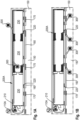
- Figure 1A shows a schematic top view of a means for passenger transport 200A which stops next to a passenger stop 150.
- the means for passenger transport 200A is a bus, featuring a passenger compartment and a driver's compartment including the driver's seat 210.
- glass partitions 160 are placed between the means for passenger transport 200A and the passenger stop 150 to separate waiting passengers from the road.
- an automatically readable information 300 in the form of a OR-code is positioned in the passenger compartment 230 to be accessible for passengers.
- a passenger scans the OR-code with a mobile device 100
- a first data connection between the mobile device 100 and a data server 400 is created via mobile internet.
- the data server 400 exchanges real time information between the bus and the data server 400.
- Based on the real time information a second data connection between the mobile device 100 and an additional mobile device 110A which is assigned to the bus can be created.
- the additional mobile device 110A assigned to the bus is the one of the bus driver.
- wheelchair users can inform the driver of the bus that they want to leave the bus at the next stop. This alerts the driver to take extra caution, as leaving the passenger compartment 230 with a wheelchair may take a longer time. Additionally a passenger in the passenger compartment 230 can contact the driver directly for example to report an accident or a medical emergency.
- Figure 1B shows a further top view of a means for passenger transport 200A which stops next to a passenger stop 150.
- the means for passenger transport 200A is a bus including a driver seat 210 at the front of the bus.
- automatically readable information 300 in the form of a OR-code is positioned at the passenger stop 150 of the bus. This enables a passenger to use a mobile device 100 to contact the driver of the bus directly from the outside of the bus via a voice connection.
- a passenger scans the OR-code with his mobile device 100 a first data connection between the mobile device 100 and a data server 400 via mobile internet is created.
- the data server 400 exchanges real time information between the bus and the data server 400.
- Based on the real time information a second data connection between the mobile device 100 and an additional mobile device 110A which is assigned to the bus can be created.
- the additional mobile device 110A assigned to the bus is the one of the bus driver.
- the passenger who is waiting at the bus stop 150 outside the bus and who has scanned the OR-code that is fixed on a glass partition 160 or on a slidable door 170 can contact the driver of the bus directly via a voice connection.
- a wheelchair user can inform the driver of the bus that he wants to enter the bus. This alerts the driver to take extra caution, as entering the passenger compartment 230 with a wheelchair may take a longer time.
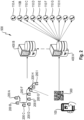
- Figure 2 shows a schematic diagram of a system 500 for an exchange of data, between a mobile device 100 and an additional mobile device 110 A, 110 B, 110 C, 110 D, 110 E, 110 F, 110 G, 110 H, 110 I,...
- the system 500 comprises a data server 400 B adapted to exchange real time information between a means for passenger transport 200A, 200B, 200C,... and the data server 400B.
- the means for passenger transport 200A, 200B, 200C, 200D, 200E, 200F, 200G, 200H, 200 I comprise a plurality of buses.
- the plurality of buses are assigned to a specific line.
- the data server has detailed and essentially real-time information on the location, speed, load, free capacities, free wheelchair spaces, etc. of each bus. However, further information can be provided.
- the system 500 further comprises an automatically readable information 300 in the form of a OR-code.
- a user may create a first data connection between the mobile device 100 and the data server 400A.
- Figure 2 shows two separate data servers 400A and 400B.
- a first data server 400B is adapted to exchange real time information with at least one means for passenger transport 200A, 200B, 200C.
- a second data server 400A is adapted to create a first data connection between the mobile device 100 and the data server 400A.
- the first data server 400B and the second data server 400A are adapted to exchange data with each other.
- the functions of the two servers 400A, 400B may be covered by a single data server 400.
- the data server 400 is adapted to create a second data connection between the mobile device 100 and the additional mobile device 110 assigned to the means for passenger transport 200A based on the real time information.
- the first data connection to the data server 400 allows for a dynamic interpretation of the OR-code 300.
- the OR-code 300 does not directly refer to a certain target destination e.g. phone number, URL, image, etc. Instead, indirectly the OR-code 300 refers to the data server 400, which provides the final destination.
- the final destination is dependent of the content of the OR-code 300 and of real time information exchanged between the plurality of buses 200A, 200B, 200C and the data server 400.
- the target can be modified on the server 400 without changing the OR-code 300.
- a concrete QR-code 300 can always remain identical at all buses 200A, 200B, 200C and all passenger stops 150.
- the destination of the connection can be flexibly modified by the server 400 at any time, e.g. to a certain additional mobile device 110 A, 110 B, 110 C, 110 D, 110 E, 110 F, 110 G, 110 H, 110 I that is assigned to a certain bus 200A, 200B, 200C based on the real time information.
- the real time information can indicate that the voice connection is not allowed if a certain bus 200A is moving.
- This safety function does not have to be actively activated by the driver of the bus 200A, but is automatically activated based on the movement of the bus 200A.
- the security function can be set automatically, for example, by exchanging the real time information with the server 400.
- a position signal in the form of a GPS signal can also be used to calculate the arrival or departure times of the bus 200A. This data can also be combined with current traffic and congestion calculations, for example, allowing precise monitoring of the timetable.
- the data server 400 selects a certain bus 200A based on the real time information and a unique data element relating to the concrete position of the OR-code 300. By scanning the OR-code 300, the server 400 is informed which line of the bus and at which passenger stop 150 the user of the mobile device 100 is located. In combination with the position signal of bus 200A the data server 400 decides which bus 200A is closest to the passenger and how long it will take to reach the identified passenger stop 150. Therewith the server 400 decides which additional mobile device 110A has to be connected by creation of the second data connection to the mobile device 100 used by the passenger. The user of the mobile device 100 can thus communicate directly via voice communication with the bus driver of the identified bus 200A.
- Figure 3 shows a block diagram of a method for an exchange of data between a mobile device 100 and an additional mobile device 110.
- the method for an exchange of data between a mobile device 100 and an additional mobile device 110 assigned to a means for passenger transport 200A, 200B, 200C,... comprises the step A of recording an automatically readable information 300 via a mobile device 100 to create a first data connection between the mobile device 100 and a data server 400.
- step B real time information is exchanged between a means for passenger transport 200A, 200B, 200C,... and the data server 400.
- the method further comprises step C of creating a second data connection between the mobile device 100 and the additional mobile device 110 assigned to the means for passenger transport 200A based on the real time information.
Landscapes
- Business, Economics & Management (AREA)
- Health & Medical Sciences (AREA)
- Economics (AREA)
- General Health & Medical Sciences (AREA)
- Human Resources & Organizations (AREA)
- Marketing (AREA)
- Primary Health Care (AREA)
- Strategic Management (AREA)
- Tourism & Hospitality (AREA)
- Physics & Mathematics (AREA)
- General Business, Economics & Management (AREA)
- General Physics & Mathematics (AREA)
- Engineering & Computer Science (AREA)
- Theoretical Computer Science (AREA)
- Traffic Control Systems (AREA)
Claims (11)
- Verfahren zum Austausch von Daten zwischen einem Mobilgerät (100) und einem weiteren Mobilgerät (110), das einem Personenbeförderungsmittel (200A, 200B, 200C, ...) zugeordnet ist, mit den Schritten:A) Scannen eines Quick-Response-Codes (300), der ein eindeutiges Datenelement, das der Position des Quick-Response-Codes (300) zugeordnet ist, bereitstellt, mit einem Mobilgerät (100) und Herstellen einer Verbindung zwischen dem Mobilgerät (100) und einem Datenserver (400);B) Austauschen von Echtzeitinformationen zwischen einem Personenbeförderungsmittel (200A, 200B, 200C, ...) und dem Datenserver (400), wobei die Echtzeitinformationen ein Positionssignal des Personenbeförderungsmittels (200A) umfassen; undC) Erzeugen einer zweiten Datenverbindung zwischen dem Mobilgerät (100) und dem weiteren Mobilgerät (110), das dem Personenbeförderungsmittel (200A) zugeordnet ist, das durch den Datenserver (400) als das nächstgelegene Personenbeförderungsmittel (200A) zu einem das Mobilgerät (100) verwendenden Passagier ausgewählt wird, basierend auf den Echtzeitinformationen und dem eindeutigen Datenelement, um es dem Passagier zu ermöglichen, einen Fahrer des Personenbeförderungsmittels (200A) direkt zu kontaktieren.
- Verfahren nach Anspruch 1, dadurch gekennzeichnet, dass die zweite Datenverbindung eine Sprachverbindung ist.
- Verfahren nach Anspruch 2, dadurch gekennzeichnet, dass basierend auf den Echtzeitinformationen die Sprachverbindung zwischen dem Mobilgerät (100) und einem Call-Center (120) erzeugt wird, wenn die Echtzeitinformationen anzeigen, dass die Sprachverbindung zwischen dem Mobilgerät (100) und dem weiteren Mobilgerät (110) nicht erlaubt ist.
- Verfahren nach Anspruch 3, dadurch gekennzeichnet, dass die Echtzeitinformationen anzeigen, dass die Sprachverbindung nicht erlaubt ist, wenn sich das Personenbeförderungsmittel (200A) bewegt.
- Verfahren nach Anspruch 3, dadurch gekennzeichnet, dass die Echtzeitinformationen anzeigen, dass die Sprachverbindung erlaubt ist, wenn sich das Personenbeförderungsmittel (200A) nicht bewegt.
- Verfahren nach Anspruch 1, dadurch gekennzeichnet, dass der Datenserver (400) berechnete Fahrplaninformationen des Personenbeförderungsmittels (200A), das dem Passagier am nächsten ist, für das Mobilgerät (100) basierend auf den Echtzeitinformationen und dem eindeutigen Datenelement bereitstellt.
- Verfahren nach einem der Ansprüche 1 bis 6, dadurch gekennzeichnet, dass die Echtzeitinformationen eine Eigenschaft des Personenbeförderungsmittels (200A) umfassen, die dem Mobilgerät (100) bereitgestellt wird.
- Verfahren nach einem der Ansprüche 1 bis 7, dadurch gekennzeichnet, dass der Quick-Response-Code (300) in einem Fahrgastraum (210A) innerhalb eines Personenbeförderungsmittels (200A) positioniert ist.
- Verfahren nach einem der Ansprüche 1 bis 8, dadurch gekennzeichnet, dass der Quick-Response-Code (300) an einer Passagierhaltestelle eines Personenbeförderungsmittels positioniert ist.
- Verfahren nach einem der Ansprüche 1 bis 9, dadurch gekennzeichnet, dass der Datenserver (400) durch einen Benutzer auswählbare Kommunikationsoptionen für das Mobilgerät (100) basierend auf den Echtzeitinformationen und/oder dem Quick-Response-Code (300) bereitstellt.
- System (500) zum Austausch von Daten zwischen einem Mobilgerät (100) und einem weiteren Mobilgerät (110), das einem Personenbeförderungsmittel (200A, 200B, 200C, ...) zugeordnet ist, wobei das System (500) umfasst:A) einen Datenserver (400), der dazu eingerichtet ist, Echtzeitinformationen mit einem Personenbeförderungsmittel (200A, 200B, 200C, ...) auszutauschen, wobei die Echtzeitinformationen ein Positionssignal eines Personenbeförderungsmittels (200A, 200B, 200C, ...) umfassen,B) einen Quick-Response-Code (300), der ein eindeutiges Datenelement bereitstellt, das einer Position des Quick-Response-Codes (300) zugeordnet ist, wobei
der Datenserver (400) dazu eingerichtet ist, das eindeutige Datenelement von einem Mobilgerät zu empfangen, dazu eingerichtet ist, den Quick-Response-Code (300) aufzuzeichnen, und dazu eingerichtet ist, eine erste Datenverbindung zwischen dem Mobilgerät (100) und dem Datenserver (400) zu erzeugen und eine zweite Datenverbindung zwischen dem Mobilgerät (100) und dem weiteren Mobilgerät (110), das dem Personenbeförderungsmittel (200A) zugeordnet ist, das einem das Mobilgerät (100) verwendenden Passagier am nächsten ist, basierend auf dem eindeutigen Datenelement und den Echtzeitinformationen zu erzeugen, um es dem Passagier zu ermöglichen, einen Fahrer des Personenbeförderungsmittels (200A) direkt zu kontaktieren.
Applications Claiming Priority (1)
| Application Number | Priority Date | Filing Date | Title |
|---|---|---|---|
| CH6262020 | 2020-05-26 |
Publications (3)
| Publication Number | Publication Date |
|---|---|
| EP3916669A1 EP3916669A1 (de) | 2021-12-01 |
| EP3916669C0 EP3916669C0 (de) | 2025-01-01 |
| EP3916669B1 true EP3916669B1 (de) | 2025-01-01 |
Family
ID=73597718
Family Applications (1)
| Application Number | Title | Priority Date | Filing Date |
|---|---|---|---|
| EP21175385.0A Active EP3916669B1 (de) | 2020-05-26 | 2021-05-21 | Verfahren zum austausch von daten |
Country Status (2)
| Country | Link |
|---|---|
| EP (1) | EP3916669B1 (de) |
| AU (1) | AU2021203307A1 (de) |
Family Cites Families (6)
| Publication number | Priority date | Publication date | Assignee | Title |
|---|---|---|---|---|
| KR20070080772A (ko) * | 2006-02-08 | 2007-08-13 | 주식회사 팬택 | 바코드를 이용한 휴대 단말기의 교통 정보 제공 방법 및상기 방법을 수행하는 휴대 단말기 |
| JP4849271B2 (ja) * | 2008-02-14 | 2012-01-11 | エヌイーシーコンピュータテクノ株式会社 | 公共交通機関の車両内での情報表示システム |
| KR20160058295A (ko) * | 2014-11-14 | 2016-05-25 | 이명의 | 대중교통 운용장치, 대중교통 운용방법 및 이동통신 단말기 |
| KR20160093205A (ko) | 2015-01-28 | 2016-08-08 | 대구대학교 산학협력단 | 장애인을 위한 저상버스 탑승 알림장치 |
| KR101994171B1 (ko) * | 2017-12-20 | 2019-06-28 | 충남대학교산학협력단 | 버스 도착 알림 시스템 |
| KR101935040B1 (ko) * | 2018-09-12 | 2019-01-03 | 이현수 | 음성안내 기반 대중교통 경로 안내 서비스 제공 방법 및 시스템 |
-
2021
- 2021-05-21 EP EP21175385.0A patent/EP3916669B1/de active Active
- 2021-05-22 AU AU2021203307A patent/AU2021203307A1/en active Pending
Also Published As
| Publication number | Publication date |
|---|---|
| EP3916669C0 (de) | 2025-01-01 |
| EP3916669A1 (de) | 2021-12-01 |
| AU2021203307A1 (en) | 2021-12-16 |
Similar Documents
| Publication | Publication Date | Title |
|---|---|---|
| US20230116116A1 (en) | Roadside and emergency assistance system | |
| US7174153B2 (en) | System and method for providing information to an operator of an emergency response vehicle | |
| JP3119182B2 (ja) | 緊急通報システム | |
| US8483651B1 (en) | Notifying mobile-device users of emergency vehicles | |
| CN106327894A (zh) | 汽车间交流及车载广告综合系统 | |
| CN108352048A (zh) | 用于提供旅行信息的方法和信息系统 | |
| US20100017215A1 (en) | Public transportation standing and sitting room notification system | |
| CN113438624A (zh) | 一种车辆救援方法及其装置 | |
| KR100944797B1 (ko) | 버스정보시스템의 통합 버스탑재 단말장치 | |
| US20210352451A1 (en) | Vehicle Communication System | |
| JP4317477B2 (ja) | バス運行システム、並びにこれに利用されるバス運行管理装置 | |
| EP3916669A1 (de) | Verfahren zum austausch von daten | |
| JP2021082956A (ja) | 列車用通話システム | |
| EP2107531A1 (de) | Server und Verfahren zur Kopie von Daten von einer mobilen Plattform auf ein mobiles Endgerät | |
| KR101815885B1 (ko) | 시각 장애인용 교통 안내 시스템 및 그 제어방법, 이를 수행하기 위한 기록매체 | |
| KR20140085617A (ko) | 통학버스를 이용한 원생 승차 및 하차 관리장치 | |
| GB2490104A (en) | Tracking and communicating information about a person to a provider of goods or services | |
| KR100988288B1 (ko) | 시각장애인을 위한 교통안내 서비스 시스템 및 서비스 방법 | |
| JP2007249778A (ja) | 運転者管理システム、携帯無線通信端末、サーバ装置、運転者管理方法およびプログラム | |
| JP2003256992A (ja) | サービス提供方法 | |
| KR20100033259A (ko) | 도착시간 알림 서비스를 제공하는 이동통신단말기 및 그의 동작방법 | |
| KR20120020604A (ko) | 택시 비상사태 알림 시스템 | |
| JP2002298292A (ja) | 緊急時通報システムおよび緊急時通報装置 | |
| JP2003025996A (ja) | 車両の乗車状況報知システム | |
| JP2010030541A (ja) | 列車状況案内システム |
Legal Events
| Date | Code | Title | Description |
|---|---|---|---|
| PUAI | Public reference made under article 153(3) epc to a published international application that has entered the european phase |
Free format text: ORIGINAL CODE: 0009012 |
|
| STAA | Information on the status of an ep patent application or granted ep patent |
Free format text: STATUS: THE APPLICATION HAS BEEN PUBLISHED |
|
| AK | Designated contracting states |
Kind code of ref document: A1 Designated state(s): AL AT BE BG CH CY CZ DE DK EE ES FI FR GB GR HR HU IE IS IT LI LT LU LV MC MK MT NL NO PL PT RO RS SE SI SK SM TR |
|
| B565 | Issuance of search results under rule 164(2) epc |
Effective date: 20211025 |
|
| STAA | Information on the status of an ep patent application or granted ep patent |
Free format text: STATUS: REQUEST FOR EXAMINATION WAS MADE |
|
| 17P | Request for examination filed |
Effective date: 20220531 |
|
| RBV | Designated contracting states (corrected) |
Designated state(s): AL AT BE BG CH CY CZ DE DK EE ES FI FR GB GR HR HU IE IS IT LI LT LU LV MC MK MT NL NO PL PT RO RS SE SI SK SM TR |
|
| REG | Reference to a national code |
Ref country code: DE Ref legal event code: R079 Ref document number: 602021024101 Country of ref document: DE Free format text: PREVIOUS MAIN CLASS: G06Q0050300000 Ipc: G06Q0050400000 |
|
| GRAP | Despatch of communication of intention to grant a patent |
Free format text: ORIGINAL CODE: EPIDOSNIGR1 |
|
| STAA | Information on the status of an ep patent application or granted ep patent |
Free format text: STATUS: GRANT OF PATENT IS INTENDED |
|
| RIC1 | Information provided on ipc code assigned before grant |
Ipc: G08G 1/123 20060101ALI20240628BHEP Ipc: G06Q 50/40 20240101AFI20240628BHEP |
|
| INTG | Intention to grant announced |
Effective date: 20240730 |
|
| GRAS | Grant fee paid |
Free format text: ORIGINAL CODE: EPIDOSNIGR3 |
|
| GRAA | (expected) grant |
Free format text: ORIGINAL CODE: 0009210 |
|
| STAA | Information on the status of an ep patent application or granted ep patent |
Free format text: STATUS: THE PATENT HAS BEEN GRANTED |
|
| AK | Designated contracting states |
Kind code of ref document: B1 Designated state(s): AL AT BE BG CH CY CZ DE DK EE ES FI FR GB GR HR HU IE IS IT LI LT LU LV MC MK MT NL NO PL PT RO RS SE SI SK SM TR |
|
| REG | Reference to a national code |
Ref country code: GB Ref legal event code: FG4D |
|
| REG | Reference to a national code |
Ref country code: DE Ref legal event code: R096 Ref document number: 602021024101 Country of ref document: DE |
|
| REG | Reference to a national code |
Ref country code: CH Ref legal event code: EP |
|
| REG | Reference to a national code |
Ref country code: IE Ref legal event code: FG4D |
|
| U01 | Request for unitary effect filed |
Effective date: 20250124 |
|
| U07 | Unitary effect registered |
Designated state(s): AT BE BG DE DK EE FI FR IT LT LU LV MT NL PT RO SE SI Effective date: 20250131 |
|
| U20 | Renewal fee for the european patent with unitary effect paid |
Year of fee payment: 5 Effective date: 20250528 |
|
| PG25 | Lapsed in a contracting state [announced via postgrant information from national office to epo] |
Ref country code: PL Free format text: LAPSE BECAUSE OF FAILURE TO SUBMIT A TRANSLATION OF THE DESCRIPTION OR TO PAY THE FEE WITHIN THE PRESCRIBED TIME-LIMIT Effective date: 20250101 |
|
| PG25 | Lapsed in a contracting state [announced via postgrant information from national office to epo] |
Ref country code: ES Free format text: LAPSE BECAUSE OF FAILURE TO SUBMIT A TRANSLATION OF THE DESCRIPTION OR TO PAY THE FEE WITHIN THE PRESCRIBED TIME-LIMIT Effective date: 20250101 |
|
| PG25 | Lapsed in a contracting state [announced via postgrant information from national office to epo] |
Ref country code: NO Free format text: LAPSE BECAUSE OF FAILURE TO SUBMIT A TRANSLATION OF THE DESCRIPTION OR TO PAY THE FEE WITHIN THE PRESCRIBED TIME-LIMIT Effective date: 20250401 Ref country code: IS Free format text: LAPSE BECAUSE OF FAILURE TO SUBMIT A TRANSLATION OF THE DESCRIPTION OR TO PAY THE FEE WITHIN THE PRESCRIBED TIME-LIMIT Effective date: 20250501 |
|
| PG25 | Lapsed in a contracting state [announced via postgrant information from national office to epo] |
Ref country code: HR Free format text: LAPSE BECAUSE OF FAILURE TO SUBMIT A TRANSLATION OF THE DESCRIPTION OR TO PAY THE FEE WITHIN THE PRESCRIBED TIME-LIMIT Effective date: 20250101 |
|
| PG25 | Lapsed in a contracting state [announced via postgrant information from national office to epo] |
Ref country code: GR Free format text: LAPSE BECAUSE OF FAILURE TO SUBMIT A TRANSLATION OF THE DESCRIPTION OR TO PAY THE FEE WITHIN THE PRESCRIBED TIME-LIMIT Effective date: 20250402 |
|
| PGFP | Annual fee paid to national office [announced via postgrant information from national office to epo] |
Ref country code: CH Payment date: 20250601 Year of fee payment: 5 |
|
| PG25 | Lapsed in a contracting state [announced via postgrant information from national office to epo] |
Ref country code: CZ Free format text: LAPSE BECAUSE OF FAILURE TO SUBMIT A TRANSLATION OF THE DESCRIPTION OR TO PAY THE FEE WITHIN THE PRESCRIBED TIME-LIMIT Effective date: 20250101 |
|
| PG25 | Lapsed in a contracting state [announced via postgrant information from national office to epo] |
Ref country code: SM Free format text: LAPSE BECAUSE OF FAILURE TO SUBMIT A TRANSLATION OF THE DESCRIPTION OR TO PAY THE FEE WITHIN THE PRESCRIBED TIME-LIMIT Effective date: 20250101 |
|
| PG25 | Lapsed in a contracting state [announced via postgrant information from national office to epo] |
Ref country code: SK Free format text: LAPSE BECAUSE OF FAILURE TO SUBMIT A TRANSLATION OF THE DESCRIPTION OR TO PAY THE FEE WITHIN THE PRESCRIBED TIME-LIMIT Effective date: 20250101 |
|
| PLBE | No opposition filed within time limit |
Free format text: ORIGINAL CODE: 0009261 |
|
| STAA | Information on the status of an ep patent application or granted ep patent |
Free format text: STATUS: NO OPPOSITION FILED WITHIN TIME LIMIT |
|
| 26N | No opposition filed |
Effective date: 20251002 |
|
| GBPC | Gb: european patent ceased through non-payment of renewal fee |
Effective date: 20250521 |
|
| PG25 | Lapsed in a contracting state [announced via postgrant information from national office to epo] |
Ref country code: MC Free format text: LAPSE BECAUSE OF FAILURE TO SUBMIT A TRANSLATION OF THE DESCRIPTION OR TO PAY THE FEE WITHIN THE PRESCRIBED TIME-LIMIT Effective date: 20250101 |
|
| PG25 | Lapsed in a contracting state [announced via postgrant information from national office to epo] |
Ref country code: GB Free format text: LAPSE BECAUSE OF NON-PAYMENT OF DUE FEES Effective date: 20250521 |
|
| PG25 | Lapsed in a contracting state [announced via postgrant information from national office to epo] |
Ref country code: IE Free format text: LAPSE BECAUSE OF NON-PAYMENT OF DUE FEES Effective date: 20250521 |