EP3866708B1 - Vorrichtung zur extraktion von thromben aus einem blutgefäss und einer thrombectomievorrichtung - Google Patents
Vorrichtung zur extraktion von thromben aus einem blutgefäss und einer thrombectomievorrichtung Download PDFInfo
- Publication number
- EP3866708B1 EP3866708B1 EP19786789.8A EP19786789A EP3866708B1 EP 3866708 B1 EP3866708 B1 EP 3866708B1 EP 19786789 A EP19786789 A EP 19786789A EP 3866708 B1 EP3866708 B1 EP 3866708B1
- Authority
- EP
- European Patent Office
- Prior art keywords
- section
- thrombus
- segment
- sub
- blood vessel
- Prior art date
- Legal status (The legal status is an assumption and is not a legal conclusion. Google has not performed a legal analysis and makes no representation as to the accuracy of the status listed.)
- Active
Links
Images


Classifications
-
- A—HUMAN NECESSITIES
- A61—MEDICAL OR VETERINARY SCIENCE; HYGIENE
- A61B—DIAGNOSIS; SURGERY; IDENTIFICATION
- A61B17/00—Surgical instruments, devices or methods
- A61B17/22—Implements for squeezing-off ulcers or the like on inner organs of the body; Implements for scraping-out cavities of body organs, e.g. bones; for invasive removal or destruction of calculus using mechanical vibrations; for removing obstructions in blood vessels, not otherwise provided for
- A61B17/221—Gripping devices in the form of loops or baskets for gripping calculi or similar types of obstructions
-
- A—HUMAN NECESSITIES
- A61—MEDICAL OR VETERINARY SCIENCE; HYGIENE
- A61B—DIAGNOSIS; SURGERY; IDENTIFICATION
- A61B17/00—Surgical instruments, devices or methods
- A61B17/32—Surgical cutting instruments
- A61B17/3205—Excision instruments
- A61B17/3207—Atherectomy devices working by cutting or abrading; Similar devices specially adapted for non-vascular obstructions
-
- A—HUMAN NECESSITIES
- A61—MEDICAL OR VETERINARY SCIENCE; HYGIENE
- A61L—METHODS OR APPARATUS FOR STERILISING MATERIALS OR OBJECTS IN GENERAL; DISINFECTION, STERILISATION OR DEODORISATION OF AIR; CHEMICAL ASPECTS OF BANDAGES, DRESSINGS, ABSORBENT PADS OR SURGICAL ARTICLES; MATERIALS FOR BANDAGES, DRESSINGS, ABSORBENT PADS OR SURGICAL ARTICLES
- A61L31/00—Materials for other surgical articles, e.g. stents, stent-grafts, shunts, surgical drapes, guide wires, materials for adhesion prevention, occluding devices, surgical gloves, tissue fixation devices
- A61L31/02—Inorganic materials
- A61L31/022—Metals or alloys
-
- A—HUMAN NECESSITIES
- A61—MEDICAL OR VETERINARY SCIENCE; HYGIENE
- A61L—METHODS OR APPARATUS FOR STERILISING MATERIALS OR OBJECTS IN GENERAL; DISINFECTION, STERILISATION OR DEODORISATION OF AIR; CHEMICAL ASPECTS OF BANDAGES, DRESSINGS, ABSORBENT PADS OR SURGICAL ARTICLES; MATERIALS FOR BANDAGES, DRESSINGS, ABSORBENT PADS OR SURGICAL ARTICLES
- A61L31/00—Materials for other surgical articles, e.g. stents, stent-grafts, shunts, surgical drapes, guide wires, materials for adhesion prevention, occluding devices, surgical gloves, tissue fixation devices
- A61L31/08—Materials for coatings
- A61L31/10—Macromolecular materials
-
- A—HUMAN NECESSITIES
- A61—MEDICAL OR VETERINARY SCIENCE; HYGIENE
- A61B—DIAGNOSIS; SURGERY; IDENTIFICATION
- A61B17/00—Surgical instruments, devices or methods
- A61B17/22—Implements for squeezing-off ulcers or the like on inner organs of the body; Implements for scraping-out cavities of body organs, e.g. bones; for invasive removal or destruction of calculus using mechanical vibrations; for removing obstructions in blood vessels, not otherwise provided for
- A61B2017/22001—Angioplasty, e.g. PCTA
-
- A—HUMAN NECESSITIES
- A61—MEDICAL OR VETERINARY SCIENCE; HYGIENE
- A61B—DIAGNOSIS; SURGERY; IDENTIFICATION
- A61B17/00—Surgical instruments, devices or methods
- A61B17/22—Implements for squeezing-off ulcers or the like on inner organs of the body; Implements for scraping-out cavities of body organs, e.g. bones; for invasive removal or destruction of calculus using mechanical vibrations; for removing obstructions in blood vessels, not otherwise provided for
- A61B2017/22072—Implements for squeezing-off ulcers or the like on inner organs of the body; Implements for scraping-out cavities of body organs, e.g. bones; for invasive removal or destruction of calculus using mechanical vibrations; for removing obstructions in blood vessels, not otherwise provided for with an instrument channel, e.g. for replacing one instrument by the other
-
- A—HUMAN NECESSITIES
- A61—MEDICAL OR VETERINARY SCIENCE; HYGIENE
- A61B—DIAGNOSIS; SURGERY; IDENTIFICATION
- A61B17/00—Surgical instruments, devices or methods
- A61B17/22—Implements for squeezing-off ulcers or the like on inner organs of the body; Implements for scraping-out cavities of body organs, e.g. bones; for invasive removal or destruction of calculus using mechanical vibrations; for removing obstructions in blood vessels, not otherwise provided for
- A61B2017/22079—Implements for squeezing-off ulcers or the like on inner organs of the body; Implements for scraping-out cavities of body organs, e.g. bones; for invasive removal or destruction of calculus using mechanical vibrations; for removing obstructions in blood vessels, not otherwise provided for with suction of debris
-
- A—HUMAN NECESSITIES
- A61—MEDICAL OR VETERINARY SCIENCE; HYGIENE
- A61B—DIAGNOSIS; SURGERY; IDENTIFICATION
- A61B17/00—Surgical instruments, devices or methods
- A61B17/22—Implements for squeezing-off ulcers or the like on inner organs of the body; Implements for scraping-out cavities of body organs, e.g. bones; for invasive removal or destruction of calculus using mechanical vibrations; for removing obstructions in blood vessels, not otherwise provided for
- A61B2017/22081—Treatment of vulnerable plaque
-
- A—HUMAN NECESSITIES
- A61—MEDICAL OR VETERINARY SCIENCE; HYGIENE
- A61B—DIAGNOSIS; SURGERY; IDENTIFICATION
- A61B17/00—Surgical instruments, devices or methods
- A61B17/22—Implements for squeezing-off ulcers or the like on inner organs of the body; Implements for scraping-out cavities of body organs, e.g. bones; for invasive removal or destruction of calculus using mechanical vibrations; for removing obstructions in blood vessels, not otherwise provided for
- A61B2017/22094—Implements for squeezing-off ulcers or the like on inner organs of the body; Implements for scraping-out cavities of body organs, e.g. bones; for invasive removal or destruction of calculus using mechanical vibrations; for removing obstructions in blood vessels, not otherwise provided for for crossing total occlusions, i.e. piercing
-
- A—HUMAN NECESSITIES
- A61—MEDICAL OR VETERINARY SCIENCE; HYGIENE
- A61B—DIAGNOSIS; SURGERY; IDENTIFICATION
- A61B17/00—Surgical instruments, devices or methods
- A61B17/22—Implements for squeezing-off ulcers or the like on inner organs of the body; Implements for scraping-out cavities of body organs, e.g. bones; for invasive removal or destruction of calculus using mechanical vibrations; for removing obstructions in blood vessels, not otherwise provided for
- A61B17/221—Gripping devices in the form of loops or baskets for gripping calculi or similar types of obstructions
- A61B2017/2212—Gripping devices in the form of loops or baskets for gripping calculi or similar types of obstructions having a closed distal end, e.g. a loop
-
- A—HUMAN NECESSITIES
- A61—MEDICAL OR VETERINARY SCIENCE; HYGIENE
- A61B—DIAGNOSIS; SURGERY; IDENTIFICATION
- A61B17/00—Surgical instruments, devices or methods
- A61B17/22—Implements for squeezing-off ulcers or the like on inner organs of the body; Implements for scraping-out cavities of body organs, e.g. bones; for invasive removal or destruction of calculus using mechanical vibrations; for removing obstructions in blood vessels, not otherwise provided for
- A61B17/221—Gripping devices in the form of loops or baskets for gripping calculi or similar types of obstructions
- A61B2017/2215—Gripping devices in the form of loops or baskets for gripping calculi or similar types of obstructions having an open distal end
-
- A—HUMAN NECESSITIES
- A61—MEDICAL OR VETERINARY SCIENCE; HYGIENE
- A61B—DIAGNOSIS; SURGERY; IDENTIFICATION
- A61B17/00—Surgical instruments, devices or methods
- A61B17/32—Surgical cutting instruments
- A61B17/3205—Excision instruments
- A61B17/3207—Atherectomy devices working by cutting or abrading; Similar devices specially adapted for non-vascular obstructions
- A61B2017/320716—Atherectomy devices working by cutting or abrading; Similar devices specially adapted for non-vascular obstructions comprising means for preventing embolism by dislodged material
Definitions
- the present invention is directed, in general, to the field of medical devices.
- the invention relates to a device conceived for extraction of thrombus from a blood vessel and to a thrombectomy apparatus that includes said device.
- the disclosure also provides a method not forming part of the invention, for extraction of thrombus from a blood vessel.
- the extraction of thrombus from a blood vessel has to solve the problem of thrombus fragmentation at the moment of the extraction with the risk of the dispersion of fragments of the thrombus through the blood vessel.
- WO 2012156924-A1 discloses an apparatus for aspirating blood from a blood vessel through a catheter located in the blood vessel comprising an expandable member including a flow tube having at a distal end a flow blocker and a flow blocker control activating lines.
- Expansion support frame of flow blocker comprises a plurality of prestressed fingers that extend from a collar of and expandable pre-stressed rib cage.
- WO 2016113047-A1 discloses a thrombectomy apparatus comprising a delivery catheter, a dilator catheter and a funnel, defining a distal end and a proximal end.
- the funnel is positionable in a retracted position and in an extended position and comprises a covering.
- the diameter of the distal end of the funnel is greater in the extended position than in the retracted position. It permits an aspiration from a very close proximity to the thrombus and with a large mouth, allowing occlusion of the artery, stopping the flow, and aspirating the entire thrombus without fragmenting it.
- US 20040098099-A1 relates to braided stents and stent-grafts having segments of different strength and rigidity along the length, and/or different diameters of varying or constant strength and rigidity along the length.
- the braided stent of this US patent application comprises a distal end with a broader region delimited by a ring of sawtooth filament not suitable to capture a thrombus.
- the braided stent further comprises a transition region (the central region 130) having a lower mesh density than the distal and proximal ends and a proximal end of the braided stent (i.e. narrow region 110) having greater flexibility than the distal end.
- WO 2014087245-A2 discloses a treatment device and method for treatment.
- the treatment device can include a shaft, an expandable member, a first elongated control member and a second elongated control member.
- the expandable member can further include at least a first controllable portion and a second controllable portion, where the expandable member, including the first controllable portion and the second controllable portion, is configured to transition between at least a partially retracted configuration and an expanded configuration under control of at least the first elongated control member.
- the variation of the girth and the filament density is controlled by said elongated control members, i.e. by external member, not by the mesh itself by means of having a particular braiding angle.
- WO 2005027751-A1 discloses a thrombus/embolus collecting device, comprising a body part freely radially contracted and enlarged and normally radially enlarged in a cylindrical shape, a tail part formed continuously with the body part, freely radially contracted and enlarged, and normally radially enlarged in a tapered shape, a stent formed continuously with the tail part and formed of a strut part, and a bag-like (conical-shaped) filter formed of an opening part and a body part.
- the body part and the tail part of the stent are formed in a braided cord structure by spirally twisting one or a plurality of wires, the bag-like filter is inserted into the body part of the stent, and the opening part of the bag-like filter is engaged with the tip of the body part of the stent by an engagement means.
- Apparatus or stents known to the inventors are not designed to have specific distribution of radial forces along their different portions/sections thus they cannot uniformly adapt its surface to be appositioned against the inner wall of a blood vessel to facilitate the reception and retention of a thrombus.
- Alternative devices and methods are therefore needed for extraction of thrombus from a blood vessel.
- present invention proposes according to a first aspect a device for extraction of thrombus, of different sizes, shapes and dimensions, from a blood vessel.
- the invention is defined by appended claim 1, preferred embodiments are defined in the dependent claims.
- the proposed device as the known solutions in the field, comprises a segment defining a distal end and a proximal end and is configured to adapt at least its shape to a surrounding blood vessel from a retracted position in a compressed state (in the delivery configuration), particularly inside a carrier, for example a delivery catheter, to an extended and expanded position (also referred in this description as "in a deployment configuration"), to be appositioned against the inner wall of a blood vessel to receive and retain a thrombus.
- a carrier for example a delivery catheter
- an extended and expanded position also referred in this description as "in a deployment configuration”
- the proposed device which is self-expandable, is formed by a mesh of at least two sets, equals or different, of helicoidal filaments (or wires) turning respectively in opposite directions and being intertwined.
- the mesh comprises a first tubular section, particularly of a uniform diameter, and a second tubular section.
- the second section is comprised of a first sub-section having a shape with a progressive reduction of diameter, with a shape configured to open and create a space for the thrombus, and a second sub-section of a tubular uniform diameter configured to provide a connection to a catheter or to a hypotube (with appropriate connectors at the proximal end).
- the mesh of the first section has helicoidal filaments with a braiding angle ( ⁇ ) configured to provide radial forces, i.e. pressure, higher than in the second section (without needing additional control members as in the device taught by WO 2014087245-A2 ). Consequently, the first section becomes better appositioned, or overlapped, against the inner wall of the blood vessel.
- the first sub-section has a conical shape (or funnel shape) and comprises a braiding angle ( ⁇ ) that changes at its proximal and distal ends to provide radial strength to maintain the conical shape and to stop a proximal blood flow during the removal of the thrombus.
- ⁇ braiding angle
- the first section i.e. the portion closer to said distal end, comprises closed loops at the distal end configured to act as a spring, such that the radial forces in first and second end portions (or extremes) of the first section are higher than in an intermediate portion of this first section.
- the cited loops also provide a smooth end to the device thus reducing the possible vessel damage and improving navigability conditions of the device within the blood vessel.
- the cited loops reduce the possibility of entanglement with other devices, that at the same time, reduce the risk of damage of the blood vessel.
- Other options for increasing the radial forces are by having a single thread mesh in the first section, or by the first section having some weld spot, or by the density, composition or diameter of the mesh being higher.
- the straight shape of the first section of the proposed device creates a space which will accommodate the thrombus once it has been aspirated.
- the first section is adaptable to the vessel geometry and its outer surface overlaps the inner wall of the blood vessel.
- the proposed device can be produced in different sizes.
- the first section is longer than the second section.
- the first section comprises a length ranging between 4 and 40 millimeters and an outer diameter ranging between 3.5 and 6 millimeters
- the second sub-section comprises a length ranging between 1 and 10 millimeters and an outer diameter ranging between 1 and 2 millimeters.
- the braiding angle ( ⁇ ) of the first sub-section is comprised between 15 and 45 degrees with regard to a longitudinal axis of the device. This angle favors having more radial force thereby stopping the flow, but at the same time that there is a seal of the blood vessel it also has to allow the device to be compressed.
- the proposed the device further comprises a coating, hydrophilic or hydrophobic.
- the coating is a non-permeable coating.
- the coating can be disposed over the first section only or over the first and second sections. In this latter case, a portion of the second section besides the proximal end is preserved uncoated.
- the coating in an embodiment comprises a polymer such as silicone or polyurethane, among others.
- the coating thickness is in the range between 5 and 25 ⁇ m, particularly 15 ⁇ m.
- the coating may comprise holes thus collapse of the device is avoided.
- Another option to avoid the collapse of the device is by the threads of the mesh having different diameter.
- the helicoidal filaments of the mesh can be made of a metal, a metal alloy or a composite including, among others, Nitinol or Nitinol/Platinum, or also Niti#1-DFT R (Drawn Filled Tube), with a percentage of Platinum from 10% to 40%; in particular with 20% Platinum (Niti#1-DFT R -20%Pt).
- the helicoidal filaments in an embodiment comprise a number ranging between 12 and 48 filaments, and particularly between 24 and 48 filaments.
- the number of filaments is 12, 18, 24 or 48; more particularly the number of filaments is 24.
- the filaments have a cross section comprised in a range between 40 and 60 ⁇ m, and particularly 50 ⁇ m, and the braiding angle ( ⁇ ) of the filaments with regard to the longitudinal axis of the device is comprised between 50 and 65 degrees for the first section, and between 15 and 50 for the second sub-section.
- the device may also include or have attached thereto one or more sensors to provide information thereof.
- a lighting sensor or sensors providing information of whether the device is in the retracted position within the carrier or in the extended and expanded position.
- the sensor(s) can alternatively, or additionally, provide information on whether the device is well extended and expanded, on whether the thrombus is in or out, about the composition of the thrombus, or about the position of the funnel in relation to the blood vessel.
- the sensor(s) may include a piezoelectric sensor providing information about the radial forces in each of the different sections or subsections of the device.
- the sensor(s) may provide information to distinguish between clot obstruction and intracranial atherosclerotic disease.
- the proposed device can also comprise at least one radiopaque marker at its distal end and/or other strategic point(s) of the mesh which allow a physician to know the precise location of the device while using fluoroscopy.
- Another aspect of the invention is related to a thrombectomy apparatus including the device of the first aspect of the invention, and particular embodiments thereof.
- a further aspect of this disclosure provides a method, not forming part of the invention, of extracting a thrombus from a thrombus site in a blood vessel of a patient.
- the method includes the steps of advancing a thrombus extraction device through a delivery catheter in a delivery configuration to a thrombus site within a blood vessel, the thrombus extraction device including a mesh of at least first and second sets of oppositely wound and intertwined helicoidal filaments having a first section at a distal end and a second section extending proximally from a proximal end of the first section, the first set of helicoidal filaments forming a distally facing first angle with the second set of helicoidal filaments in the delivery configuration; expanding the first section of the thrombus extraction device with a first outward radial force into a deployment configuration in apposition with an inner wall of the blood vessel proximate the thrombus site, the first set of helicoidal
- the method also includes the optional step of supporting the proximal end of the first section with a distal end of the second section.
- the step of expanding the first section includes the step of applying spring force to a distal of the first section with closed ends of the helicoidal filaments.
- the first outward radial force can be uniformly distributed along the first section in the deployment configuration.
- the first and second end portions of the first section have outward radial forces in the deployment configuration greater than an outward radial force of an intermediate portion of the first section in the deployment configuration.
- the thrombus extraction device may optionally include a coating over the first and second sections, in which case the reducing step of some or all of these exemplary methods may include the step of permitting blood to flow through holes in the coating.
- Some embodiments may include the optional step of, after the aspirating step, moving the thrombus extraction device from the deployment configuration to a capture configuration (i.e. when the thrombus is inside) in which the first and second sets of helicoidal filaments form a third angle less than the second angle.
- the thrombus extraction device may optionally include a catheter attached to a proximal end of the second section, in which case the aspirating step of some or all of these exemplary methods may include the step of applying a vacuum through the catheter to interior spaces of the first and second sections.
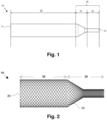
- Figs. 1 and 2 show particular embodiments of the proposed device for extraction of thrombus from a blood vessel.
- the proposed device includes a segment 10 which is self-expandable and defines a distal end 11 and a proximal end 12 and can adapt its shape to a surrounding blood vessel from a retracted position in a compressed state, for example inside a carrier such a delivery catheter (not shown), to an extended/expanded position, once coming out of the carrier, to be appositioned against the inner wall of a blood vessel to receive and retain a thrombus.
- the segment 10 comprises a mesh 13 having two sets of helicoidal filaments turning respectively in opposite directions and being intertwined.
- the mesh 13 in an embodiment can follow a diamond-type structure or a regular structure.
- the density of the mesh 13 defines the elasticity of the segment 10.
- the mesh angle (or braiding angle ( ⁇ )) with regard to a longitudinal direction can be variable.
- the helicoidal filaments can be made of a metal (including metal alloys), polymers, a composite including Nitinol or Nitinol/Platinum, or also DFT R (Drawn Filled Tube), among other materials having suitable mechanical properties.
- the mesh 13 defines two distinct tubular sections, a first section 20 and a second section 30.
- the second section 30 comprises two sub sections, a first sub section 31 and a second sub section 32.
- the end portion of the first section 20 at the distal end 11 comprises closed loops 23 facilitating the expansion of the segment 10 once it comes out of the cited carrier.
- these closed loops 23 act as a spring or fixing point by limiting the movement between the helicoidal filaments and thus increasing the outward radial force.
- the closed loops 23 also provide a smooth distal end to reduce possible vessel damage and improve navigability of the device within the blood vessel.
- the rest of the first section 20 creates the space which will accommodate the thrombus once it has been aspirated.
- the first section 20 is adaptable to the vessel geometry and, because of its configuration (e.g., diameter and braiding angle), provides outward radial forces higher than in the second section 30 so that the segment 10 is better appositioned against the inner wall of the vessel.
- the radial forces in the end portions of the first section 20 are particularly higher than in an intermediate portion thereof, e.g., because of the spring action of closed loops 23.
- the radial forces in the first section 20 could be uniformly distributed along all its generatrix.
- the first sub-section 31 (or portion of the second section 30 adjacent to the first section 20) is cone-shaped or funnel-shaped. Because of its shape, this sub-section 31 has features enabling it to withstand the blood pressure without collapsing.
- the braiding angle ( ⁇ ) changes at the proximal and distal ends of sub-section 31 provide radial strength to maintain the conical shape.
- the braiding angle ( ⁇ ) change at the distal end of sub-section 31 also works with the closed loops 23 to maintain first section 20 in an open position and create the space for the thrombus.
- the covering over sub-section 31 stops the blood flow during the capture and removal of the thrombus and protects the captured thrombus during the withdrawal of the segment 10 to the carrier.
- This sub-section 31 is also the transition from the larger diameter of section 20 to the smaller diameter sub-section 32 for connection to an aspiration catheter or a hypotube (not shown).
- the second sub-section 32 (or portion of the second section 30 adjacent to proximal end 12) has a tubular uniform diameter and provides the connection to the aspiration catheter or to the hypotube.
- the aspiration catheter is a PTFE-lined braided catheter covered by an outer jacket.
- the aspiration catheter's braid and liner extend distally from the outer jacket.
- a layer of polymer material may be placed around the protruding braid and liner, and a mandrel may be placed within the braid and liner. Thereafter, the second sub-section 32 of segment 10 may be placed over this polymer section, and another layer of polymer may be placed over the mesh of subsection 32.
- This outer layer of polymer material is then melted so that polymer flows through the cells of the mesh 13, the mandrel is removed, and a smooth surface is left over the entire aspiration catheter.
- This attachment approach adds structure and stiffness to the attachment section of the aspiration catheter, so it should be as short as possible without compromising the integrity of the attachment of segment 10 to the catheter.
- segment 10 to an aspiration catheter
- the mesh 13 of the sub-section 32 is welded to a Nitinol ring. This ring is welded directly to the hypotube.
- a Stainless-steel ring can be glued to the mesh 13 of the sub-section 32. Then, the Stainless-steel ring is welded to the hypotube.
- Another option is to directly mesh the segment 10 over a perforated ring so that the filaments pass through the holes.
- segment 10 When the segment 10 is compressed inside the carrier, segment 10 elongates to move the helicoidal filaments toward a longitudinal alignment so as to reduce the spring effect and to facilitate the movement of segment 10 within the carrier by reducing friction effects and by increasing pushability.
- the pushability of the segment inside the carrier is related to the navigability of the segment 10 within the arteries.
- the mesh angle ( ⁇ ) allows the mesh 13 to be adapted to a curve of the blood vessel, avoiding the kinking and creating a free space inside the mesh for unobstructed suction.
- Table 1 indicates the main specifications of the device.
- Table 2 indicates the exemplary measuring method used for calculating such parameters.
- Table 1. Main specifications of the device Example Range Big Ref. Small Ref. Shape parameters OD sec 20 [mm] 6 3.5--6 5.2 Approx.
- Table 1 shows the parameters for particular embodiments.
- the parameters of the device are such indicated in Table 1 for a big blood vessel ("Big Ref.") of e.g. 4.5 mm diameter, such as the final part of the carotid or the carotid siphon.
- the parameters of the device are such indicated in Table 1 for a small blood vessel (“Small Ref.") of e.g. 2.5 mm diameter, such as the Internal Carotid Artery (ICA) or the Middle Cerebral Artery (MCA).
- ICA Internal Carotid Artery
- MCA Middle Cerebral Artery
- Wire number Alternative 1 Counting the number of distal loops and multiplying by 2
- Alternative 2 Counting the number of reels used for meshing ⁇ sec 20 [o]
- Alternative 1 Measuring the number of wire crossings in a given length measured in the axial direction.
- Alternative 2 If the mandrel is manufactured with grooves so that during the meshing the wires are inserted inside and the manufacturing is improved, it is simply measured that the mandrel is manufactured with the appropriate parameters.
- the device may be in two configurations: in a retracted form (or compressed state) inside the carrier while approaching the thrombus site, and in an extended and expanded (deployed) form when there is no interaction with the carrier or the blood vessel.
- the parameters specified herein relate to the device in its natural (relaxed) form; i.e. extended and expanded (deployed) position.
- the segment 10 may include radiopaque markers made of platinum, tungsten, barium derivatives, gold, iridium, among others, at its distal end 11 and/or other strategic points within the mesh 13 which allow a physician to know the precise location of the device while using fluoroscopy.
- the radiopaque material can be deposited on the helicoidal filaments once manufactured (if the device has a coating, the material may also be dispersed on the surface of the coating).
- Alternative possibilities to confer radiopacity to the segment 10 are using helicoidal filaments of different material and opacity grade (e.g. Nitinol and Platinum). In a particular embodiment, Nitinol wires with a Platinum core are used.
- the delivery catheter may also include radiopaque markers.
- the segment 10 may have a coating, for example covering the first section 20 only or covering the whole segment 10.
- the coating goes from the closed loops 23 to sub-section 32.
- the coating is applied about attachment of segment 10 to an aspiration catheter by dipping segment 10 into a liquid polymer, the allowing the polymer to solidify.
- a mandrel may be disposed inside the mesh 13 of segment 10 when it is dipped into the polymeric coating material.
- the coating material may be sprayed onto the mesh.
- the coating may be applied before attaching segment 10 to an aspiration catheter. In such embodiments, the coating does not reach the proximal end 12 of sub-section 32, but there is an uncoated space between the helicoidal filaments, leaving them free to allow assembly with the aspiration catheter.
- the coating prevents damage to the arteries, avoiding direct contact with the helicoidal filaments. Moreover, the coating provides a watertight compartment so that the thrombus can be sucked in and protected during removal.
- the mesh 13 is attached to the carrier or delivery catheter and then the coating is applied.
- An interior or exterior glaze can be also applied to the coating to improve its properties.
- a hydrophilic or hydrophobic coating to the exterior surface of the segment 10
- the exterior surface can be more easily displaced into the carrier and through the blood vessel by reducing the coefficient of friction.
- an adhesion effect that retains the thrombus once it is inside can be achieved.
- the coating is made of an elastic material.
- the device coating is silicone.
- polyurethanes or other types of plastic materials can be used.
- a blend of polyurethane and silicone may also be employed.
- the coating can be treated by the addition of a material as explained, or can have constitutively such features by the structure of the mesh itself.
- the coating can include holes to avoid collapse of the segment 10. Such holes may be formed after the coating has been applied by perforating the coating.
- segment 10 depend on the dimensions of the blood vessel in which it will be used to capture a thrombus.
- the dimensions of the sub-sections of segment 10 and the braid angles of the mesh help segment 10 provide a reduced radially outward force when compressed into the delivery catheter and sufficient outward force when expanded to avoid collapse from the blood pressure.
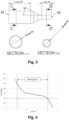
- Fig. 4 illustrates a possible work curve of one embodiment of the segment 10.
- Y-axis defines the device pressure (mmHg) whereas X-axis defines the diameter of the arteries (mm).
- the horizontal dotted line marks the blood pressure limit.
- the diameter range of the arteries in which the device of this invention may be used is 2 to 5 mm.
- the segment 10 is designed so that it can expand without being blocked by the artery working in a standard range of 2 to 5 mm and so that it can cope with a blood pressure greater than 200 mmHg. As shown by Fig. 4 , this particular embodiment is not designed to be compressed to a diameter less than 2 mm. Compression of the segment 10 within the delivery catheter may result in radially outward forces high enough to inhibit advancement of the device within the carrier.
- the method at step 501 comprises advancing a thrombus extraction device through a delivery catheter in a delivery configuration to a thrombus site within a blood vessel.
- the thrombus extraction device comprising a mesh 13 of at least first and second sets of oppositely wound and intertwined helicoidal filaments having a first section 20 at a distal end 11 and a second section 30 extending proximally from a proximal end 12 of the first section 20, the first set of helicoidal filaments forming a distally facing first angle with the second set of helicoidal filaments in the delivery configuration.
- the method comprises expanding the first section 20 of the thrombus extraction device with a first outward radial force into a deployment configuration in apposition with an inner wall of the blood vessel proximate the thrombus site, the first set of helicoidal filaments forming a second angle with the second set of helicoidal filaments in the delivery configuration, the second angle being greater than the first angle.
- the method comprises expanding the second section 30 of the thrombus extraction device into a conically shaped deployment configuration with a second outward radial force less than the first outward radial force sufficient to stop proximal blood flow, a proximal end of the second section 30 having a smaller diameter in the deployment configuration than a distal end of the second section 30.
- the method comprises aspirating a thrombus into the thrombus extraction device.
- Embodiments of the present invention also provide a thrombectomy apparatus 600 for extraction of thrombus from a blood vessel including the proposed segment 10 of any of the described embodiments.
- Some embodiments of the invention may be automated for use in traditional (hospital) and non-traditional (nursing home, assisted care facility) environments which may allow for greater deployment and usage of the present invention and hasten the removal of thrombus, thus significantly improving patient outcomes, as flow may be restored (e.g., to critical areas of the brain) within much shorter times.
- One such automated device is illustrated in WO2016/113047 .
- segment 10 and the aspiration catheter or hypotube to which it is attached are advanced through a delivery catheter to a thrombus site within a blood vessel of the patient.
- the segment 10 is in a delivery configuration in which the first and second sets of helicoidal filaments form a first distally facing angle with respect to each other.
- segment 10 emerges from the delivery catheter, it begins to self-expand to a deployment configuration.
- the spring action of the closed loops of the helicoidal filaments helps the first section 20 expand into apposition with the blood vessel proximate to the thrombus site.
- the first and second sets of helicoidal filaments form a second distally facing angle less than the first angle (i.e., the filaments are less longitudinally aligned in the deployment configuration than they were in the delivery configuration).
- Sub-section 31 also self-expands to a conical or funnel shape. The distal end of sub-section 31 helps support the proximal end of section 20 in its deployment configuration.
- the coating on the outside of sub-section 31 and section 20 reduce blood flow to the thrombus site.
- the optional holes through the coating permit a small amount of blood to pass through the device to avoid collapse of sub-section 31 caused by the blood pressure and also by the difference of pressure between the blood pressure (externally) and the vacuum applied (internally).
- suction may be applied through the catheter or hypotube to the interior spaces of sub-section 31 and section 20 to aspirate the thrombus into section 20.
- Device 10 capturing the thrombus may then be removed from the patient. In the capture configuration (i.e.
- the first and second sets of filaments form a third distally-facing angle less than the first distally-faced angle (i.e., the filaments become more longitudinally aligned) as the device assumes a longer and smaller diameter shape.
- Fig. 6 depicts an example of the thrombectomy apparatus 600 of the present invention which allows for the automated maneuvering of the thrombectomy apparatus 600 through a vascular system.
- an automated proximal device 601 provides a guidance system to deploy the thrombectomy apparatus 600.
- an imaging device 602 can detect the radiopaque markers included in the segment 10, and also in the delivery catheter, and a communications channel 603 can be used to provide means to transport the image to a control module 604.
- the control module 604 is programmed or configured to allow for guidance of the deployment of the thrombectomy apparatus 600 and storage of data on a data storage device 605.
- the control module 604 may be a programmable logic controller, a computer, or the like. In this particular embodiment the control module 604 is guided by a computer assisted controller 606.
- the communications channel 603 can be Ethernet, WiFi, Bluetooth, or the like.
- the control module 604 is programmed to guide a physician or technician operating the thrombectomy apparatus 600 which allows for the thrombectomy apparatus 600 to be used in non-hospital settings such as nursing homes or assisted care living facilities.
- the time required to perform the thrombectomy is greatly reduced significantly improving patient outcomes.
- the control may also be via a controller such as those in use in other current medical devices.
- the system may be controlled manually.
- thrombectomy apparatus also referred as ANCD device
- Advanced Neurovascular Aspiration catheter also referred as ANA catheter
- EXAMPLE 1 In vivo assay: Chronic Evaluation of Performance and Safety of the ANCD Advanced Flow Restriction System in a Swine Model.
- EVT Endovascular treatment
- LVO vessel occlusion
- Highest degree of recanalization in the shortest time with the minimum number of attempts have been demonstrated to correlate with improved clinical outcomes.
- failure to reach complete recanalization has been reported in about 20% of treated patients.
- different devices and combinations are under development to increase the first pass complete recanalization rate.
- the development of such devices includes preclinical testing in phantom models simulating the cerebrovascular human anatomy, and animal models in which device related vessel injury can be assessed. Each simulation model has its own characteristics and therefore it is recommended that any new device or combination will prove its efficacy and safety in different conditions before final evaluation in a first in human study.
- the Advanced Thrombectomy System is a novel stroke thrombectomy apparatus that includes the proposed device for extraction of thrombus from a blood vessel, a self-expanding radiopaque braid covered by a continuous polymeric coating, designed to reduce clot fragmentation and facilitate retrieval by inducing local flow restriction and allowing distal aspiration.
- the aim of this study was to evaluate the pre-clinical efficacy and safety of the ANCD, in a swine model 3 and 30 days following 3 passes, and specifically confirm that the use of the novel self-expanding funnel is unrelated to higher vascular injury in comparison with a commonly used device, the FlowGate TM Balloon Guide Catheter.
- the ANCD is a thrombectomy apparatus that is comprised of two coaxial catheters: a funnel catheter and a delivery catheter.
- the funnel catheter is comprised of highly flexible polymers onto a braided metallic structure. It is intended to restrict locally the blood flow during the intervention. It is composed of a self-expanding funnel that, when unsheathed, can expand to the diameter of the blood vessel, adapting to its shape, thereby restricting the blood flow.
- the funnel catheter can provide an effective aspiration that serves as a complementary mechanism when combined with retrieval devices.
- the funnel is designed to have enough flexibility to adapt to the neurovascular tortuosity.
- the funnel is comprised of a radiopaque braid and a polymeric film.
- the delivery catheter is the outermost catheter of the device, which navigates until reaching the target vessel. It has a hydrophilic coating to reduce friction during use and a radiopaque marker on the distal end for angiographic visualization.
- the materials of the catheter allow enhanced flexibility in the tip and sufficient stiffness and pushability of the proximal portion.
- FlowGate TM Balloon Guide Catheter is a common commercial device which offers proximal flow control and a stable platform to facilitate the insertion and guidance of an intravascular catheter. It provides a balance of trackability and support with a large lumen and is indicated for use as a conduit for retrieval devices.
- swine model was chosen as the experimental species for this study because the size and anatomy of the vascular system is clinically relevant for the purpose of testing catheter-based medical devices for the treatment of vascular disease. Also, swine is an established animal model for vascular studies and generally accepted as a scientific standard.
- an 8F Mach 1 TM guide catheter (CGC: Boston Scientific, Marlborough, MA) was advanced through the sheath over a guide wire into the descending aorta and to the target arteries.
- Angiographic images of the vessels were obtained with contrast media to identify a suitable location for the treatment site.
- Angiograms were performed throughout the procedure: baseline, after each pass, and prior to necropsy.
- the parameters assessed by angiography were: vessel anatomy, target site, device monitoring, vessel status-injury, vasospasm, and blood flow (mTICI scale).
- the two devices were used per Instructions for Use (IFU) for the interventions of the target vessels:
- Renal, cervical and lingual arteries were targeted. These arteries cover the diameter range between 2.2 and 5 mm for ANCD, and 2.7 to 5 mm for the BGC, which represents the size of the target vessels in the cerebrovasculature (internal carotid artery (ICA), middle cerebral artery (MCA)).
- ICA internal carotid artery
- MCA middle cerebral artery
- ANCD and BGC devices were distributed among target vessels to ensure assessment was made in all vascular beds at each time point. Randomization of animals was not required for this study as each animal had both ANCD and BGC devices evaluations.
- Intravascular devices were maneuvered under fluoroscopic guidance and angiographic images of the vessels were obtained to identify the proper location of the device.
- intervention 1 the BGC was inflated to arrest flow, as per IFU and usual practice, aspiration was applied through the BGC.
- intervention 2 the ANCD catheter system was advanced close to the target vessel site and the funnel deployed creating local flow arrest.
- aspiration during the thrombectomy procedure was performed with a 60 cc syringe (Vaclock; Merit Medical) connected to a three-way stopcock through either the BGC (intervention 1), or the ANCD funnel catheter (intervention 2).
- Acute performance evaluations on the day of procedure included user interface and ability to maneuver the device.
- the potential vascular injury caused by the devices was also assessed during the procedure by angiography.
- Treated vessels were dissected and relevant tissues/organs were collected, fixed in 10% NBF (Neutral Buffered Formalin) and paraffin embedded and stained with H&E (hematoxylin and eosin) and Verhoeff's for histomorphologic assessment.
- NBF Neutral Buffered Formalin
- H&E hematoxylin and eosin
- Verhoeff's histomorphologic assessment.
- Each treated vessel was trimmed to yield at least six cross-sections (2 proximal, 2 mid and 2 distal) within the putative area of treatment.
- the treated vessel sections were taken from the breadloafed tongue sections and may include surrounding parenchyma. Additionally, untreated distal sections of the vessel were obtained within approximately 5 mm of the distal end of the putative treated area.
- Histomorphological scoring was used to determine histomorphological scoring of parameters that reflected the degree and extent of the host response/repair process to the treatment in target vessels. Histomorphometric markers included: vascular injury, vascular mural compression lesion, inflammation, endothelization, luminal fibrin/thrombus deposition, neointima formation, and adventitial fibrosis. Histologic sections of vessels were also examined for other microscopic changes including hemorrhage, necrosis, and type and relative amounts of inflammatory cell infiltrates. Sections of representative downstream tissues were evaluated for any adverse effects associated with treatment, including thrombosis, necrosis, inflammation and presence of embolic material.
- Scoring values were calculated for every section and level and reported as an overall mean of each vessel, ranking from 0 (no injury) to 3 (highest possible degree of injury) in all markers except for endothelization than ranked from 0 (absence of endothelial covering) to 4 (complete endothelial covering).
- the pathologist was blinded to the treatment matrix at the time of the pathologist read.
- the ANCD navigability and pushability through vessel curvatures was better compared with the FlowGate BGC.
- the funnel of the ANCD device performed adequately in most cases, with complete deployment, accuracy and adaptability to vessel curvatures, and significant reduction of the antegrade blood flow.
- the ANCD device avoided kinking during the navigability and deployment on the target vessel.
- the ANCD device was able to complete the 3 passes with correct performance and maintained its general integrity. Radiopacity, withdrawal of the catheter and hemostasis were adequate.
- the devices could potentially generate clots in situ due to the interaction with blood.
- no thrombus was observed on the catheters or funnels surfaces after removal from the body, supporting the adequate thromboresistance of both devices.
- Vasospasm was a common observation to varying degrees for both test and control devices. This is a common observation in the swine model as pigs are prone to vasospasm. Histomorphologic markers of vascular injury after 3 and 30 days, respectively, were absent to minimal across all groups, and generally improved over time. Downstream tissues showed sparse and minimal evidence of embolic material and was not correlated with necrosis or other evidence of circulatory compromise in the target organs. Findings of embolic foreign material was minimal and was similar across treatment groups, indicating a shared origin, and was most consistent with lubricious coating used on various ancillary products. Other findings, like inflammation, thrombosis and necrosis were absent to minimal in all groups and time points.
- the endovascular treatment of ischemic stroke involves a wide range of devices and techniques.
- the aspiration thrombectomy technique is intended to restore blood flow in patients experiencing acute ischemic stroke due to vessel occlusion by applying a suction force to remove the clot.
- This research is aiming to analyse the suction-forces over the clot of two different catheter designs using experimental analysis. To study the suction tip-force, the clot was considered as rigid.
- ACE ACE68 Reperfusion Catheter
- ANA ANA Advanced Neurovascular Aspiration catheter
- ANA is a funnel catheter comprised of highly flexible polymers onto a braided metallic structure. It is intended to restrict locally the blood flow during the intervention. It is composed of a self-expanding funnel that, when unsheathed, can expand to the diameter of the blood vessel, adapting to its shape, thereby restricting the blood flow.
- the funnel catheter can provide an effective aspiration and it can be used as a complementary mechanism when combined with retrieval devices.
- the funnel is designed to have enough flexibility to adapt to the neurovascular tortuosity.
- the funnel is comprised of a radiopaque braid and a polymeric film.
- ACE is a reperfusion catheter comprised of a coil-winding geometry along 16 transitions. It is intended to create an optimal tracking profile to facilitate clot extraction from proximal large vessels with the vacuum power of the Penumbra Pump MAX TM associated to the catheter.
- the test was performed with the purpose of analysing thrombus suction-forces and stresses induced by different aspiration devices for the treatment of ischemic stroke.
- the experimental model shown in Fig. 6 was defined.
- the INSTRON-EQ152 tensile tester with 10N load cell was used.
- a specially designed tool was connected to the load cell, tool that was capable of occluding the inner tip diameter of the two catheters (units) selected for this study (ANA and ACE).
- ANA and ACE the two catheters selected for this study
- a negative pressure of 500 mmHg was applied using a VacMaxi Pump (APEX) intended for suction catheters. Then a constant speed of 50 mm/min was applied and the force necessary for the separation of the tool was evaluated.
- APEX VacMaxi Pump
Landscapes
- Health & Medical Sciences (AREA)
- Surgery (AREA)
- Life Sciences & Earth Sciences (AREA)
- Veterinary Medicine (AREA)
- Heart & Thoracic Surgery (AREA)
- Vascular Medicine (AREA)
- Animal Behavior & Ethology (AREA)
- General Health & Medical Sciences (AREA)
- Public Health (AREA)
- Biomedical Technology (AREA)
- Nuclear Medicine, Radiotherapy & Molecular Imaging (AREA)
- Engineering & Computer Science (AREA)
- Medical Informatics (AREA)
- Molecular Biology (AREA)
- Epidemiology (AREA)
- Orthopedic Medicine & Surgery (AREA)
- Chemical & Material Sciences (AREA)
- Inorganic Chemistry (AREA)
- Surgical Instruments (AREA)
Claims (15)
- Vorrichtung zur Extraktion von Thromben aus einem Blutgefäß, wobei die Vorrichtung ein Segment (10) umfasst, das ein distales Ende (11) und ein proximales Ende (12) definiert und so ausgebildet ist, dass es seine Form aus einer zurückgezogenen Position in einem zusammengepressten Zustand in eine ausgefahrene und expandierte Position verändert, um an der inneren Wand eines Blutgefäßes angebracht zu werden, um einen Thrombus aufzunehmen und zurückzuhalten, wobei das Segment (10) durch ein Netz (13) aus mindestens zwei Sätzen von schraubenförmigen Filamenten gebildet wird, die jeweils in entgegengesetzte Richtungen gedreht und miteinander verflochten sind, und wobei das Netz (13) zwei unterschiedliche Rohrabschnitte umfasst, einen ersten Abschnitt (20) und einen zweiten Abschnitt (30), wobei der zweite Abschnitt (30) aus zwei Unterabschnitten besteht, einem ersten Unterabschnitt (31), der eine Form mit einer fortschreitenden Reduktion des Durchmessers aufweist, der so ausgebildet ist, dass er sich öffnet und einen Raum für den Thrombus erstellt, und einem zweiten Unterabschnitt (32) mit einem gleichmäßigen Rohrdurchmesser, der so ausgebildet ist, dass er eine Verbindung mit einem Katheter oder einem Hypotubus bereitstellt;
dadurch gekennzeichnet, dass:das Netz (13) des ersten Abschnitts (20) schraubenförmige Filamente mit einem Flechtwinkel aufweist, der so ausgebildet ist, dass er höhere Radialkräfte nach außen bereitstellt als im zweiten Abschnitt (30), so dass der erste Abschnitt (20) an der inneren Wand des Blutgefäßes angebracht wird; undder erste Unterabschnitt (31) eine konische Form aufweist und einen Flechtwinkel umfasst, der sich an seinem proximalen und distalen Ende verändert, um eine Radialkraft bereitzustellen, um die konische Form beizubehalten und einen proximalen Blutfluss während des Entfernens des Thrombus zu stoppen. - Vorrichtung nach Anspruch 1, wobei:der erste Abschnitt (20) geschlossene Schleifen am distalen Ende (11) umfasst, die so ausgebildet sind, dass sie als Feder wirken, so dass die Radialkräfte im ersten und zweiten Endteil des ersten Abschnitts (20) höher sind als in einem Zwischenteil davon.
- Vorrichtung nach den vorhergehenden Ansprüchen, wobei das Segment (10) ferner eine Beschichtung umfasst, die mindestens den ersten Abschnitt (20) abdeckt.
- Vorrichtung nach Anspruch 3, wobei die Beschichtung die beiden Abschnitte (20, 30) abdeckt, wobei mindestens ein Teil des zweiten Abschnitts (30) neben dem proximalen Ende (12) unbeschichtet bleibt.
- Vorrichtung nach Anspruch 3 oder 4, wobei die Beschichtung eine nicht durchlässige Beschichtung ist.
- Vorrichtung nach Anspruch 3, 4 oder 5, wobei die Beschichtung Löcher umfasst.
- Vorrichtung nach den vorhergehenden Ansprüchen, wobei die schraubenförmigen Filamente des Netzes (13) aus einem Metall, einer Metalllegierung oder einem Verbundwerkstoff, der Nitinol oder Nitinol/Platin einschließt, hergestellt sind.
- Vorrichtung nach Anspruch 7, wobei die Beschichtung ein Polymer umfasst, der Silikon oder Polyurethan einschließt.
- Vorrichtung nach den vorhergehenden Ansprüchen, wobei:die schraubenförmigen Filamente eine Anzahl in einem Bereich zwischen 24 und 48 umfassen, wobei die Filamente einen Querschnitt aufweisen, der in einem Bereich zwischen 40 und 60 µm liegt; undder Flechtwinkel der schraubenförmigen Filamente in Bezug auf eine Längsachse des Segments (10) zwischen 50 und 65 Grad für den ersten Abschnitt (20) und zwischen 15 und 50 für den zweiten Unterabschnitt (32) umfasst.
- Vorrichtung nach Anspruch 1, wobei:der erste Abschnitt (20) eine Länge im Bereich zwischen 4 und 40 Millimetern umfasst und der zweite Unterabschnitt (32) eine Länge im Bereich zwischen 1 und 10 Millimetern umfasst; undder erste Abschnitt (20) einen Außendurchmesser im Bereich zwischen 3,5 und 6 Millimetern umfasst und der zweite Unterabschnitt (32) einen Außendurchmesser im Bereich zwischen 1 und 2 Millimetern umfasst.
- Vorrichtung nach Anspruch 1 oder 10, wobei der Flechtwinkel des ersten Unterabschnitts (31) zwischen 15 und 45 Grad in Bezug auf eine Längsachse des Segments (10) umfasst.
- Vorrichtung nach den vorhergehenden Ansprüchen, wobei das Segment (10) ferner einen oder mehrere Sensoren umfasst, die darin eingeschlossen oder daran befestigt sind, um Informationen davon bereitzustellen, einschließlich Informationen darüber, ob der Thrombus innen oder außen liegt, über die Zusammensetzung des Thrombus, über die Position des Segments (10) in Bezug auf das Blutgefäß, darüber, ob sich das Segment (10) in der zurückgezogenen Position oder in der ausgefahrenen und expandierten Position befindet, darüber, ob das Segment (10) gut ausgefahren ist, oder über die Radialkräfte.
- Vorrichtung nach Anspruch 7, wobei die schraubenförmigen Filamente des Netzes aus einem Nitinol/Platin umfassenden Verbundwerkstoff mit einem Anteil an Platin von 10 % bis 40 % hergestellt sind.
- Thrombektomiegerät, das ein Segment (10) zur Extraktion von Thromben aus einem Blutgefäß einschließt, nach einem der Ansprüche 1 bis 13.
- Thrombektomiegerät nach Anspruch 14, das ferner eine automatisierte proximale Vorrichtung (601), die so ausgebildet ist, dass sie ein Führungssystem zum Entfalten des Thrombektomiegeräts (600) bereitstellt; eine Bildgebungsvorrichtung (602), die so ausgebildet ist, dass sie röntgendichte Marker erkennt, die mindestens in dem Segment (10) enthalten sind; einen Kommunikationskanal (603); ein Steuermodul (604), das so ausgebildet ist, dass es die Führung des Entfaltens des Thrombektomiegeräts (600) ermöglicht; eine Datenspeichervorrichtung (605); und eine computergestützte Steuerung (606), die so ausgebildet ist, dass sie das Steuermodul (604) führt, umfasst.
Priority Applications (1)
| Application Number | Priority Date | Filing Date | Title |
|---|---|---|---|
| EP23186409.1A EP4238513A3 (de) | 2018-10-16 | 2019-10-16 | Vorrichtung und thrombektomievorrichtung zur extraktion von thromben aus einem blutgefäss |
Applications Claiming Priority (2)
| Application Number | Priority Date | Filing Date | Title |
|---|---|---|---|
| EP18382736.9A EP3639768A1 (de) | 2018-10-16 | 2018-10-16 | Vorrichtung zur extraktion von thromben aus einem blutgefäss und einer thrombectomievorrichtung |
| PCT/EP2019/078088 WO2020079082A1 (en) | 2018-10-16 | 2019-10-16 | A device and a thrombectomy apparatus for extraction of thrombus from a blood vessel |
Related Child Applications (2)
| Application Number | Title | Priority Date | Filing Date |
|---|---|---|---|
| EP23186409.1A Division-Into EP4238513A3 (de) | 2018-10-16 | 2019-10-16 | Vorrichtung und thrombektomievorrichtung zur extraktion von thromben aus einem blutgefäss |
| EP23186409.1A Division EP4238513A3 (de) | 2018-10-16 | 2019-10-16 | Vorrichtung und thrombektomievorrichtung zur extraktion von thromben aus einem blutgefäss |
Publications (3)
| Publication Number | Publication Date |
|---|---|
| EP3866708A1 EP3866708A1 (de) | 2021-08-25 |
| EP3866708B1 true EP3866708B1 (de) | 2023-09-27 |
| EP3866708C0 EP3866708C0 (de) | 2023-09-27 |
Family
ID=64049038
Family Applications (3)
| Application Number | Title | Priority Date | Filing Date |
|---|---|---|---|
| EP18382736.9A Withdrawn EP3639768A1 (de) | 2015-01-13 | 2018-10-16 | Vorrichtung zur extraktion von thromben aus einem blutgefäss und einer thrombectomievorrichtung |
| EP19786789.8A Active EP3866708B1 (de) | 2018-10-16 | 2019-10-16 | Vorrichtung zur extraktion von thromben aus einem blutgefäss und einer thrombectomievorrichtung |
| EP23186409.1A Pending EP4238513A3 (de) | 2018-10-16 | 2019-10-16 | Vorrichtung und thrombektomievorrichtung zur extraktion von thromben aus einem blutgefäss |
Family Applications Before (1)
| Application Number | Title | Priority Date | Filing Date |
|---|---|---|---|
| EP18382736.9A Withdrawn EP3639768A1 (de) | 2015-01-13 | 2018-10-16 | Vorrichtung zur extraktion von thromben aus einem blutgefäss und einer thrombectomievorrichtung |
Family Applications After (1)
| Application Number | Title | Priority Date | Filing Date |
|---|---|---|---|
| EP23186409.1A Pending EP4238513A3 (de) | 2018-10-16 | 2019-10-16 | Vorrichtung und thrombektomievorrichtung zur extraktion von thromben aus einem blutgefäss |
Country Status (10)
| Country | Link |
|---|---|
| US (1) | US11986195B2 (de) |
| EP (3) | EP3639768A1 (de) |
| JP (1) | JP7193625B2 (de) |
| KR (1) | KR102324931B1 (de) |
| CN (2) | CN115317076A (de) |
| AU (1) | AU2019363274B2 (de) |
| CA (1) | CA3116507A1 (de) |
| ES (1) | ES2966102T3 (de) |
| IL (2) | IL282354B2 (de) |
| WO (1) | WO2020079082A1 (de) |
Families Citing this family (19)
| Publication number | Priority date | Publication date | Assignee | Title |
|---|---|---|---|---|
| US11160572B2 (en) | 2014-01-03 | 2021-11-02 | Legacy Ventures LLC | Clot retrieval system |
| US11771446B2 (en) | 2020-10-19 | 2023-10-03 | Anaconda Biomed, S.L. | Thrombectomy system and method of use |
| US12575845B2 (en) | 2015-12-11 | 2026-03-17 | Anaconda Biomed, S.L. | Thrombectomy device, system and method for extraction of vascular thrombi from a blood vessel |
| EP3639768A1 (de) | 2018-10-16 | 2020-04-22 | Anaconda Biomed, S.L. | Vorrichtung zur extraktion von thromben aus einem blutgefäss und einer thrombectomievorrichtung |
| CN111511296A (zh) | 2017-09-30 | 2020-08-07 | 赛瑞特锐弗有限公司 | 取出系统 |
| ES3000010T3 (en) | 2018-08-13 | 2025-02-27 | Inari Medical Inc | System for treating embolism and associated devices and methods |
| US12569264B2 (en) | 2018-10-16 | 2026-03-10 | Anaconda Biomed, S.L. | Device and a thrombectomy apparatus for extraction of thrombus from a blood vessel |
| EP3908212B1 (de) | 2019-01-11 | 2023-03-22 | Anaconda Biomed, S.L. | Ladevorrichtung zum laden einer medizinischen vorrichtung in einen katheter |
| EP3990083B1 (de) | 2019-06-28 | 2023-03-29 | Anaconda Biomed, S.L. | Abgabekathetervorrichtung und system zum zugriff auf das intrakranielle gefässsystem |
| AU2021283979A1 (en) | 2020-06-05 | 2023-01-19 | Stryker Corporation | Recapturable funnel catheters, and associated systems and methods |
| IL303465B2 (en) | 2020-12-09 | 2026-06-01 | Ceretrieve Ltd | Retrieval system and method |
| US11679195B2 (en) | 2021-04-27 | 2023-06-20 | Contego Medical, Inc. | Thrombus aspiration system and methods for controlling blood loss |
| JP2025501729A (ja) | 2021-12-21 | 2025-01-23 | アナコンダ ビオメッド, エス.エル. | その要素のアタッチメントを改善した血管内デバイス及びその製造方法 |
| EP4452099B1 (de) * | 2021-12-21 | 2025-11-12 | Anaconda BioMed, SL | Intravaskuläre vorrichtung mit verbesserter befestigung ihrer elemente und verfahren zur herstellung davon |
| JP2025503965A (ja) | 2022-02-08 | 2025-02-06 | イナリ メディカル, インコーポレイテッド | 拡張器係止機構を有する凝塊治療システム、並びに関連するデバイス及び方法 |
| CN115281784A (zh) * | 2022-02-15 | 2022-11-04 | 上海市第六人民医院 | 一种病变组织清除收集系统 |
| WO2023192201A1 (en) | 2022-03-28 | 2023-10-05 | Elixir Medical Corporation | Aspiration catheters with expandable distal tip |
| CN118662192B (zh) * | 2024-06-19 | 2025-02-28 | 北京海盛医疗器械有限公司 | 一种取栓支架、取栓装置以及外周血管取栓系统 |
| US12594079B2 (en) | 2024-06-27 | 2026-04-07 | Muhammad Ali | Vacuum assisted occlusion of the left atrial appendage |
Family Cites Families (142)
| Publication number | Priority date | Publication date | Assignee | Title |
|---|---|---|---|---|
| JPS58112534A (ja) * | 1981-12-28 | 1983-07-05 | オリンパス光学工業株式会社 | 内視鏡用処置具 |
| US4921478A (en) | 1988-02-23 | 1990-05-01 | C. R. Bard, Inc. | Cerebral balloon angioplasty system |
| US5011488A (en) | 1988-12-07 | 1991-04-30 | Robert Ginsburg | Thrombus extraction system |
| DE8910603U1 (de) | 1989-09-06 | 1989-12-07 | Günther, Rolf W., Prof. Dr. | Vorrichtung zum Ausbringen von Blutgerinnseln aus Arterien und Venen |
| US5190561A (en) | 1991-01-23 | 1993-03-02 | Surgical Innovations, Inc. | Tissue and organ extractor |
| US6858024B1 (en) | 1994-02-14 | 2005-02-22 | Scimed Life Systems, Inc. | Guide catheter having selected flexural modulus segments |
| US5605530A (en) | 1995-03-23 | 1997-02-25 | Fischell; Robert E. | System for safe implantation of radioisotope stents |
| US5769871A (en) | 1995-11-17 | 1998-06-23 | Louisville Laboratories, Inc. | Embolectomy catheter |
| US5971938A (en) | 1996-04-02 | 1999-10-26 | Hart; Charles C. | Access device with expandable containment member |
| US5908435A (en) | 1997-10-23 | 1999-06-01 | Samuels; Shaun L. W. | Expandable lumen device and method of use |
| US20100030256A1 (en) | 1997-11-12 | 2010-02-04 | Genesis Technologies Llc | Medical Devices and Methods |
| US6221006B1 (en) | 1998-02-10 | 2001-04-24 | Artemis Medical Inc. | Entrapping apparatus and method for use |
| US20040260333A1 (en) * | 1997-11-12 | 2004-12-23 | Dubrul William R. | Medical device and method |
| ATE459390T1 (de) | 1998-03-13 | 2010-03-15 | Gore Enterprise Holdings Inc | Schutzvorrichtung gegen embolisierung bei karotidangioplastie |
| US6960222B2 (en) | 1998-03-13 | 2005-11-01 | Gore Enterprise Holdins, Inc. | Catheter having a funnel-shaped occlusion balloon of uniform thickness and methods of manufacture |
| DE69933657T2 (de) | 1998-04-02 | 2007-08-23 | Salviac Ltd. | Implantationskatheter |
| US6511492B1 (en) | 1998-05-01 | 2003-01-28 | Microvention, Inc. | Embolectomy catheters and methods for treating stroke and other small vessel thromboembolic disorders |
| US6190303B1 (en) | 1999-01-25 | 2001-02-20 | Isostent, Inc. | Shield assembly with removable inner-tube apparatus for radioactive stents |
| US20020169474A1 (en) * | 1999-03-08 | 2002-11-14 | Microvena Corporation | Minimally invasive medical device deployment and retrieval system |
| GB2352944B (en) | 1999-05-31 | 2004-02-11 | Korea Electronics Telecomm | Apparatus and method for moduating data message by employing orthogonal variable spreading factor (OVSF) codes in mobile communication sytem |
| US6402771B1 (en) | 1999-12-23 | 2002-06-11 | Guidant Endovascular Solutions | Snare |
| US6514273B1 (en) | 2000-03-22 | 2003-02-04 | Endovascular Technologies, Inc. | Device for removal of thrombus through physiological adhesion |
| CA2410971C (en) | 2000-05-31 | 2007-12-18 | Tyco Healthcare Group, Lp | Embolization protection system for vascular procedures |
| US6663650B2 (en) | 2000-06-29 | 2003-12-16 | Concentric Medical, Inc. | Systems, methods and devices for removing obstructions from a blood vessel |
| US20040073243A1 (en) | 2000-06-29 | 2004-04-15 | Concentric Medical, Inc., A Delaware Corporation | Systems, methods and devices for removing obstructions from a blood vessel |
| IL137326A0 (en) * | 2000-07-17 | 2001-07-24 | Mind Guard Ltd | Implantable braided stroke preventing device and method of manufacturing |
| US7037330B1 (en) | 2000-10-16 | 2006-05-02 | Scimed Life Systems, Inc. | Neurovascular stent and method |
| US6679893B1 (en) | 2000-11-16 | 2004-01-20 | Chestnut Medical Technologies, Inc. | Grasping device and method of use |
| US7422579B2 (en) | 2001-05-01 | 2008-09-09 | St. Jude Medical Cardiology Divison, Inc. | Emboli protection devices and related methods of use |
| CA2458148C (en) | 2001-08-22 | 2010-03-23 | Arteria Medical Science, Inc. | Apparatus and methods for treating stroke and controlling cerebral flow characteristics |
| US7029488B2 (en) | 2001-08-22 | 2006-04-18 | Gore Enterprise Holdings, Inc. | Mechanical thrombectomy device for use in cerebral vessels |
| CA2483395C (en) | 2002-05-01 | 2010-11-30 | Venetec International, Inc. | Medical line securement device |
| US7232452B2 (en) | 2002-07-12 | 2007-06-19 | Ev3 Inc. | Device to create proximal stasis |
| DE10242444A1 (de) * | 2002-09-11 | 2004-04-01 | pfm Produkte für die Medizin AG | Extraktionsvorrichtung |
| US7001425B2 (en) | 2002-11-15 | 2006-02-21 | Scimed Life Systems, Inc. | Braided stent method for its manufacture |
| US20040143317A1 (en) * | 2003-01-17 | 2004-07-22 | Stinson Jonathan S. | Medical devices |
| JP3660931B2 (ja) * | 2003-09-22 | 2005-06-15 | 新 石丸 | 血栓塞栓捕獲装置 |
| US7686825B2 (en) | 2004-03-25 | 2010-03-30 | Hauser David L | Vascular filter device |
| US20060004323A1 (en) | 2004-04-21 | 2006-01-05 | Exploramed Nc1, Inc. | Apparatus and methods for dilating and modifying ostia of paranasal sinuses and other intranasal or paranasal structures |
| US8366735B2 (en) | 2004-09-10 | 2013-02-05 | Penumbra, Inc. | System and method for treating ischemic stroke |
| US20060058837A1 (en) | 2004-09-10 | 2006-03-16 | Arani Bose | System and method for treating ischemic stroke |
| US9655633B2 (en) | 2004-09-10 | 2017-05-23 | Penumbra, Inc. | System and method for treating ischemic stroke |
| US7963988B2 (en) | 2005-06-23 | 2011-06-21 | Boston Scientific Scimed, Inc. | ePTFE lamination—resizing ePTFE tubing |
| DE102005059670A1 (de) | 2005-12-12 | 2007-06-14 | Phenox Gmbh | Vorrichtung zur Entfernung von Thromben aus Blutgefässen |
| US20100004607A1 (en) | 2006-07-21 | 2010-01-07 | Scott Wilson | Devices and methods for accessing a cerebral vessel |
| US9149609B2 (en) | 2006-10-16 | 2015-10-06 | Embolitech, Llc | Catheter for removal of an organized embolic thrombus |
| WO2008124567A1 (en) | 2007-04-05 | 2008-10-16 | Edwards Lifesciences Corporation | Vascular thrombus extractor and extraction method |
| US20090030400A1 (en) | 2007-07-25 | 2009-01-29 | Arani Bose | System and method for intracranial access |
| US8585713B2 (en) | 2007-10-17 | 2013-11-19 | Covidien Lp | Expandable tip assembly for thrombus management |
| US8066757B2 (en) | 2007-10-17 | 2011-11-29 | Mindframe, Inc. | Blood flow restoration and thrombus management methods |
| US20110213290A1 (en) | 2007-12-20 | 2011-09-01 | Vortex Medical | Systems and Methods for Removing Undesirable Material Within a Circulatory System |
| WO2009082513A1 (en) | 2007-12-20 | 2009-07-02 | Vortex Medical | Systems and methods for removing undesirable material within a circulatory system |
| US8734374B2 (en) | 2007-12-20 | 2014-05-27 | Angiodynamics, Inc. | Systems and methods for removing undesirable material within a circulatory system during a surgical procedure |
| CN102014772B (zh) | 2008-02-22 | 2013-11-13 | 泰科保健集团有限合伙公司 | 用于去除血栓的自扩张装置和可去除的结合血栓的装置 |
| US8758364B2 (en) * | 2008-08-29 | 2014-06-24 | Rapid Medical Ltd. | Device and method for clot engagement and capture |
| US9034008B2 (en) | 2008-08-29 | 2015-05-19 | Rapid Medical Ltd. | Device and method involving stabilization during clot removal |
| US8864792B2 (en) | 2008-08-29 | 2014-10-21 | Rapid Medical, Ltd. | Device and method for clot engagement |
| US9005237B2 (en) | 2008-08-29 | 2015-04-14 | Rapid Medical Ltd. | Device and method for clot capture |
| CH701695A1 (de) | 2009-08-27 | 2011-02-28 | Straub Medical Ag | Katheter mit Protektionssystem zum Ansaugen, Fragmentieren und Hinausfördern von entfernbarem Material aus Hohlkörpern bzw. Gefässen, insbesondere des menschlichen oder tierischen Körpers. |
| WO2011025966A1 (en) * | 2009-08-31 | 2011-03-03 | Boston Scientific Scimed, Inc. | Recanalization device with expandable cage |
| US8696698B2 (en) * | 2009-12-02 | 2014-04-15 | Surefire Medical, Inc. | Microvalve protection device and method of use for protection against embolization agent reflux |
| US9539081B2 (en) | 2009-12-02 | 2017-01-10 | Surefire Medical, Inc. | Method of operating a microvalve protection device |
| US8858497B2 (en) | 2010-09-07 | 2014-10-14 | Angio Dynamics, Inc. | Device and method for removing material from a hollow anatomical structure |
| US10039900B2 (en) | 2010-09-07 | 2018-08-07 | Angiodynamics, Inc. | Fluid delivery and treatment device and method of use |
| US9039749B2 (en) | 2010-10-01 | 2015-05-26 | Covidien Lp | Methods and apparatuses for flow restoration and implanting members in the human body |
| WO2012054762A2 (en) * | 2010-10-20 | 2012-04-26 | Medtronic Ardian Luxembourg S.A.R.L. | Catheter apparatuses having expandable mesh structures for renal neuromodulation and associated systems and methods |
| CN103547235B (zh) | 2011-02-04 | 2016-04-27 | 同心医疗公司 | 血管及体内导管的治疗装置及方法 |
| WO2012156924A1 (en) | 2011-05-17 | 2012-11-22 | Cardioflow Ltd. | Vascular occlusion and aspiration device |
| US8469970B2 (en) | 2011-07-11 | 2013-06-25 | Great Aspirations Ltd. | Apparatus for entrapping and extracting objects from body cavities |
| US9039715B2 (en) * | 2011-07-11 | 2015-05-26 | Great Aspirations Ltd. | Apparatus for entrapping and extracting objects from body cavities |
| US12096951B2 (en) | 2011-10-05 | 2024-09-24 | Penumbra, Inc. | System and method for treating ischemic stroke |
| WO2013072777A2 (en) | 2011-10-24 | 2013-05-23 | Rapid Medical Ltd. | Clot removal devices and methods |
| HK1203793A1 (en) | 2012-01-04 | 2015-11-06 | Rapid Medical Ltd. | Braided devices for assisting medical treatments |
| GB2498349B (en) | 2012-01-10 | 2013-12-11 | Cook Medical Technologies Llc | Object capture device |
| ES2943709T3 (es) | 2012-04-06 | 2023-06-15 | Merlin Md Pte Ltd | Dispositivos para tratar un aneurisma |
| DE102012010687B4 (de) | 2012-05-30 | 2021-08-19 | ADMEDES GmbH | Verfahren zum Herstellen eines Körperimplantats, Baugruppe aus einem Führungsdraht und einem Körperimplantat sowie medizinisches Instrument |
| US9445828B2 (en) | 2012-07-05 | 2016-09-20 | Cognition Medical Corp. | Methods, devices, and systems for postconditioning with clot removal |
| US9308007B2 (en) | 2012-08-14 | 2016-04-12 | W. L. Gore & Associates, Inc. | Devices and systems for thrombus treatment |
| US9597171B2 (en) | 2012-09-11 | 2017-03-21 | Covidien Lp | Retrieval catheter with expandable tip |
| WO2014076748A1 (ja) | 2012-11-13 | 2014-05-22 | テルモ株式会社 | カテーテル |
| US8784434B2 (en) | 2012-11-20 | 2014-07-22 | Inceptus Medical, Inc. | Methods and apparatus for treating embolism |
| CN102973332B (zh) | 2012-11-23 | 2015-01-21 | 杭州启明医疗器械有限公司 | 血栓过滤器及其使用方法 |
| CN105007842B (zh) * | 2012-12-05 | 2018-03-09 | 急速医疗有限公司 | 用于辅助医学治疗的装置 |
| US20140228869A1 (en) | 2013-02-13 | 2014-08-14 | Medrad, Inc. | Thrombectomy catheter |
| US20160256255A9 (en) | 2013-02-22 | 2016-09-08 | Jianlu Ma | Design and methods for a device with blood flow restriction feature for embolus removal in human vasculature |
| US9585741B2 (en) | 2013-02-22 | 2017-03-07 | NeuroVasc Technologies, Inc | Embolus removal device with blood flow restriction and related methods |
| US20140277015A1 (en) | 2013-03-14 | 2014-09-18 | Curtiss T. Stinis | Vascular plaque removal systems, devices, and methods |
| KR101317434B1 (ko) | 2013-05-31 | 2013-10-10 | (주) 더아이엔지메디칼 | 혈관 이물질 적출용 카테터 |
| WO2014204860A1 (en) | 2013-06-18 | 2014-12-24 | Slik Road Medical, Inc. | Methods and systems for tretment of acute ischemic stroke |
| EP3019097A4 (de) | 2013-07-12 | 2017-03-08 | Inceptus Medical, LLC | Verfahren und vorrichtung zur behandlung von lungenembolie |
| US9782186B2 (en) | 2013-08-27 | 2017-10-10 | Covidien Lp | Vascular intervention system |
| US10383644B2 (en) | 2013-10-17 | 2019-08-20 | Covidien Lp | Mechanical thrombectomy with proximal occlusion |
| US9265512B2 (en) | 2013-12-23 | 2016-02-23 | Silk Road Medical, Inc. | Transcarotid neurovascular catheter |
| US10321925B2 (en) | 2014-01-03 | 2019-06-18 | Legacy Ventures LLC | Clot retrieval system |
| US10285720B2 (en) | 2014-03-11 | 2019-05-14 | Neuravi Limited | Clot retrieval system for removing occlusive clot from a blood vessel |
| US9968740B2 (en) * | 2014-03-25 | 2018-05-15 | Surefire Medical, Inc. | Closed tip dynamic microvalve protection device |
| WO2015189354A1 (en) | 2014-06-13 | 2015-12-17 | Neuravi Limited | Devices for removal of acute blockages from blood vessels |
| US10792056B2 (en) * | 2014-06-13 | 2020-10-06 | Neuravi Limited | Devices and methods for removal of acute blockages from blood vessels |
| EP3212275B1 (de) | 2014-10-31 | 2020-08-05 | Cerevasc, LLC | System zur behandlung von hydrozephalus |
| US12575845B2 (en) | 2015-12-11 | 2026-03-17 | Anaconda Biomed, S.L. | Thrombectomy device, system and method for extraction of vascular thrombi from a blood vessel |
| ES2577288B8 (es) * | 2015-01-13 | 2019-01-10 | Anaconda Biomed S L | Dispositivo para trombectomía |
| US11771446B2 (en) | 2020-10-19 | 2023-10-03 | Anaconda Biomed, S.L. | Thrombectomy system and method of use |
| EP3639768A1 (de) | 2018-10-16 | 2020-04-22 | Anaconda Biomed, S.L. | Vorrichtung zur extraktion von thromben aus einem blutgefäss und einer thrombectomievorrichtung |
| HK1247798A1 (zh) | 2015-02-06 | 2018-10-05 | Rapid Medical Ltd. | 用於血管内阻塞物清除的系统和方法 |
| US9987028B2 (en) * | 2015-02-12 | 2018-06-05 | Cook Medical Technologies Llc | Partially covered braided funnel aspiration catheter |
| US20180235711A1 (en) | 2015-07-22 | 2018-08-23 | Cardioguidance Biomedical, Llc | Guidewire navigation system with direct visualization feature |
| WO2017019572A1 (en) | 2015-07-24 | 2017-02-02 | Ichor Vascular Inc. | Embolectomy system and methods of making same |
| US10092324B2 (en) * | 2015-09-04 | 2018-10-09 | The Trustees Of The University Of Pennsylvania | Systems and methods for percutaneous removal of objects from an internal body space |
| TW201716037A (zh) * | 2015-09-09 | 2017-05-16 | 富瑞德麥得科技公司 | 用於預防中風的分叉式三維過濾器 |
| ES2836686T3 (es) | 2015-09-28 | 2021-06-28 | Stryker Corp | Aparatos de trombectomía mecánica |
| WO2017072663A1 (en) | 2015-10-26 | 2017-05-04 | Ronen Jaffe | A catheter and a retrieval system using the catheter |
| CA2979816C (en) | 2015-10-26 | 2020-12-15 | Blockade Medical, LLC | Ischemic stroke thrombus aspiration system, processes, and products thereby |
| WO2017075544A1 (en) | 2015-10-30 | 2017-05-04 | Cerevasc, Llc | Systems and methods for treating hydrocephalus |
| EP3367930B1 (de) | 2015-10-31 | 2021-06-02 | NeuroVasc Technologies, Inc. | Vorrichtung zur embolusentfernung mit blutflussdrosselung |
| AU2016349116B2 (en) | 2015-11-04 | 2021-09-16 | Rapid Medical Ltd. | Intraluminal device |
| US20200008822A1 (en) | 2015-12-16 | 2020-01-09 | Rapid Medical Ltd. | Intraluminal device |
| US20170239444A1 (en) | 2016-02-23 | 2017-08-24 | Steven Parker | Catheter grip |
| US20170333060A1 (en) * | 2016-05-19 | 2017-11-23 | Justin P. Panian | Catheter assembly for blood clots removal |
| EP3500191B1 (de) | 2016-08-17 | 2020-09-23 | Neuravi Limited | Gerinnselherausholsystem zum entfernen von okklusiven blutgerinnseln aus einem blutgefäss |
| US9993257B2 (en) | 2016-09-07 | 2018-06-12 | NeuroVarc Technologies Inc. | Clot retrieval device for ischemic stroke treatment |
| EP3509507A1 (de) | 2016-09-12 | 2019-07-17 | Stryker Corporation | Selbstrollende thrombektomievorrichtungen und verfahren |
| CN107198554B (zh) | 2016-09-23 | 2020-02-04 | 赛诺医疗科学技术股份有限公司 | 一种取栓器械 |
| CN110312481B (zh) | 2016-10-24 | 2023-04-11 | 伊纳里医疗有限公司 | 用于治疗血管闭塞的装置和方法 |
| US12016581B2 (en) | 2016-10-27 | 2024-06-25 | Rapid Medical Ltd. | Woven wire intraluminal device |
| CN110662494A (zh) | 2016-11-16 | 2020-01-07 | O·O·扎伊达特 | 用于吞没血栓的系统和设备 |
| AU2017374846A1 (en) | 2016-12-18 | 2019-06-13 | Rapid Medical Ltd. | Controllable retriever with distal clot anchor |
| EP3570928A1 (de) | 2017-01-20 | 2019-11-27 | Route 92 Medical, Inc. | Einbedienersysteme zur intrakraniellen freisetzung von medizinprodukten und verfahren zur verwendung |
| US11771875B2 (en) | 2017-03-02 | 2023-10-03 | CereVasc, Inc. | Catheter systems and methods for medical procedures using catheters |
| US11141178B2 (en) | 2017-03-03 | 2021-10-12 | Maria G. Aboytes | Systems, devices, and methods for obstruction retrieval and treatment |
| WO2018232044A1 (en) | 2017-06-12 | 2018-12-20 | Covidien Lp | Tools for sheathing treatment devices and associated systems and methods |
| CN111511296A (zh) * | 2017-09-30 | 2020-08-07 | 赛瑞特锐弗有限公司 | 取出系统 |
| CA3089554A1 (en) | 2018-01-25 | 2019-08-01 | Ischemicure Ltd. | Devices, systems and methods to remove blood clots |
| US11191556B2 (en) | 2018-03-01 | 2021-12-07 | Covidien Lp | Catheter including an expandable member |
| CN111867495A (zh) | 2018-03-12 | 2020-10-30 | 纽瓦斯克医疗科技有限公司 | 缺血性中风治疗用血流保护装置 |
| WO2019178165A1 (en) | 2018-03-12 | 2019-09-19 | Xtract Medical | Devices and methods for removing material from a patient |
| CN119405388A (zh) | 2018-05-01 | 2025-02-11 | 因赛普特有限责任公司 | 用于从血管内部位去除闭塞性物质的装置和方法 |
| KR20210038910A (ko) | 2018-07-26 | 2021-04-08 | 라피드 메디칼 리미티드 | 와이어 편조 구성을 구비한 관강내 장치 |
| US10842498B2 (en) | 2018-09-13 | 2020-11-24 | Neuravi Limited | Systems and methods of restoring perfusion to a vessel |
| AU2019380578B2 (en) | 2018-11-13 | 2024-07-25 | Anaconda Biomed, Sl | A thrombectomy system and methods of extracting a thrombus from a thrombus site in a blood vessel of a patient |
| US20200205838A1 (en) | 2018-12-26 | 2020-07-02 | Daniel E. Walzman | Method for Transfemoral Percutaneous Establishment of Retrograde Blood Flow |
| ES3039168T3 (en) | 2019-03-04 | 2025-10-17 | Neuravi Ltd | Funnel actuation systems |
| JP2022540692A (ja) | 2019-07-19 | 2022-09-16 | エリクシアー メディカル コーポレイション | 血栓の吸引のためのデバイスおよび方法 |
-
2018
- 2018-10-16 EP EP18382736.9A patent/EP3639768A1/de not_active Withdrawn
-
2019
- 2019-10-16 CA CA3116507A patent/CA3116507A1/en active Pending
- 2019-10-16 JP JP2021520304A patent/JP7193625B2/ja active Active
- 2019-10-16 KR KR1020217011308A patent/KR102324931B1/ko active Active
- 2019-10-16 AU AU2019363274A patent/AU2019363274B2/en active Active
- 2019-10-16 EP EP19786789.8A patent/EP3866708B1/de active Active
- 2019-10-16 CN CN202210801085.8A patent/CN115317076A/zh active Pending
- 2019-10-16 EP EP23186409.1A patent/EP4238513A3/de active Pending
- 2019-10-16 ES ES19786789T patent/ES2966102T3/es active Active
- 2019-10-16 US US17/274,973 patent/US11986195B2/en active Active
- 2019-10-16 WO PCT/EP2019/078088 patent/WO2020079082A1/en not_active Ceased
- 2019-10-16 IL IL282354A patent/IL282354B2/en unknown
- 2019-10-16 CN CN201980067394.3A patent/CN112888384B/zh active Active
-
2025
- 2025-10-16 IL IL324007A patent/IL324007A/en unknown
Also Published As
| Publication number | Publication date |
|---|---|
| CA3116507A1 (en) | 2020-04-23 |
| ES2966102T3 (es) | 2024-04-18 |
| KR102324931B1 (ko) | 2021-11-11 |
| JP7193625B2 (ja) | 2022-12-20 |
| IL282354B2 (en) | 2026-03-01 |
| JP2021531142A (ja) | 2021-11-18 |
| CN112888384A (zh) | 2021-06-01 |
| IL282354B1 (en) | 2025-11-01 |
| IL324007A (en) | 2025-12-01 |
| EP4238513A3 (de) | 2023-12-06 |
| AU2019363274B2 (en) | 2024-07-11 |
| AU2019363274A1 (en) | 2021-05-13 |
| EP3639768A1 (de) | 2020-04-22 |
| CN115317076A (zh) | 2022-11-11 |
| WO2020079082A1 (en) | 2020-04-23 |
| US20210393280A1 (en) | 2021-12-23 |
| BR112021007203A2 (pt) | 2021-08-10 |
| IL282354A (en) | 2021-05-31 |
| KR20210049176A (ko) | 2021-05-04 |
| US11986195B2 (en) | 2024-05-21 |
| CN112888384B (zh) | 2022-07-29 |
| EP3866708A1 (de) | 2021-08-25 |
| EP3866708C0 (de) | 2023-09-27 |
| EP4238513A2 (de) | 2023-09-06 |
Similar Documents
| Publication | Publication Date | Title |
|---|---|---|
| US11986195B2 (en) | Device and a thrombectomy apparatus for extraction of thrombus from a blood vessel | |
| US12364492B2 (en) | Thrombectomy system and method of use | |
| EP3880090B1 (de) | Thrombektomiesystem | |
| US20230074271A1 (en) | Retrieval systems and methods for use thereof | |
| US11517339B2 (en) | Flexible intravascular treatment devices and associated systems and methods of use | |
| EP3888570B1 (de) | Kathetertrichtererweiterung | |
| US20250032134A1 (en) | Thrombectomy system and method of use | |
| US12569264B2 (en) | Device and a thrombectomy apparatus for extraction of thrombus from a blood vessel | |
| HK40083135A (en) | A device and a thrombectomy apparatus for extraction of thrombus from a blood vessel | |
| BR112021007203B1 (pt) | Dispositivo para extração de trombo de um vaso sanguíneo, aparelho para trombectomia e sistema para manobra automatizada do aparelho de trombectomia | |
| AU2025248755A1 (en) | Thrombectomy system and method of use |
Legal Events
| Date | Code | Title | Description |
|---|---|---|---|
| STAA | Information on the status of an ep patent application or granted ep patent |
Free format text: STATUS: UNKNOWN |
|
| STAA | Information on the status of an ep patent application or granted ep patent |
Free format text: STATUS: THE INTERNATIONAL PUBLICATION HAS BEEN MADE |
|
| PUAI | Public reference made under article 153(3) epc to a published international application that has entered the european phase |
Free format text: ORIGINAL CODE: 0009012 |
|
| STAA | Information on the status of an ep patent application or granted ep patent |
Free format text: STATUS: REQUEST FOR EXAMINATION WAS MADE |
|
| 17P | Request for examination filed |
Effective date: 20210312 |
|
| AK | Designated contracting states |
Kind code of ref document: A1 Designated state(s): AL AT BE BG CH CY CZ DE DK EE ES FI FR GB GR HR HU IE IS IT LI LT LU LV MC MK MT NL NO PL PT RO RS SE SI SK SM TR |
|
| DAV | Request for validation of the european patent (deleted) | ||
| DAX | Request for extension of the european patent (deleted) | ||
| GRAP | Despatch of communication of intention to grant a patent |
Free format text: ORIGINAL CODE: EPIDOSNIGR1 |
|
| STAA | Information on the status of an ep patent application or granted ep patent |
Free format text: STATUS: GRANT OF PATENT IS INTENDED |
|
| INTG | Intention to grant announced |
Effective date: 20230512 |
|
| GRAS | Grant fee paid |
Free format text: ORIGINAL CODE: EPIDOSNIGR3 |
|
| GRAA | (expected) grant |
Free format text: ORIGINAL CODE: 0009210 |
|
| STAA | Information on the status of an ep patent application or granted ep patent |
Free format text: STATUS: THE PATENT HAS BEEN GRANTED |
|
| AK | Designated contracting states |
Kind code of ref document: B1 Designated state(s): AL AT BE BG CH CY CZ DE DK EE ES FI FR GB GR HR HU IE IS IT LI LT LU LV MC MK MT NL NO PL PT RO RS SE SI SK SM TR |
|
| REG | Reference to a national code |
Ref country code: GB Ref legal event code: FG4D |
|
| REG | Reference to a national code |
Ref country code: CH Ref legal event code: EP |
|
| REG | Reference to a national code |
Ref country code: DE Ref legal event code: R096 Ref document number: 602019038293 Country of ref document: DE |
|
| REG | Reference to a national code |
Ref country code: IE Ref legal event code: FG4D |
|
| U01 | Request for unitary effect filed |
Effective date: 20231017 |
|
| U07 | Unitary effect registered |
Designated state(s): AT BE BG DE DK EE FI FR IT LT LU LV MT NL PT SE SI Effective date: 20231026 |
|
| U20 | Renewal fee for the european patent with unitary effect paid |
Year of fee payment: 5 Effective date: 20231027 |
|
| RAP4 | Party data changed (patent owner data changed or rights of a patent transferred) |
Owner name: ANACONDA BIOMED, S.L. |
|
| U1H | Name or address of the proprietor changed after the registration of the unitary effect |
Owner name: ANACONDA BIOMED, S.L.; ES |
|
| PG25 | Lapsed in a contracting state [announced via postgrant information from national office to epo] |
Ref country code: GR Free format text: LAPSE BECAUSE OF FAILURE TO SUBMIT A TRANSLATION OF THE DESCRIPTION OR TO PAY THE FEE WITHIN THE PRESCRIBED TIME-LIMIT Effective date: 20231228 |
|
| PG25 | Lapsed in a contracting state [announced via postgrant information from national office to epo] |
Ref country code: RS Free format text: LAPSE BECAUSE OF FAILURE TO SUBMIT A TRANSLATION OF THE DESCRIPTION OR TO PAY THE FEE WITHIN THE PRESCRIBED TIME-LIMIT Effective date: 20230927 Ref country code: NO Free format text: LAPSE BECAUSE OF FAILURE TO SUBMIT A TRANSLATION OF THE DESCRIPTION OR TO PAY THE FEE WITHIN THE PRESCRIBED TIME-LIMIT Effective date: 20231227 Ref country code: HR Free format text: LAPSE BECAUSE OF FAILURE TO SUBMIT A TRANSLATION OF THE DESCRIPTION OR TO PAY THE FEE WITHIN THE PRESCRIBED TIME-LIMIT Effective date: 20230927 Ref country code: GR Free format text: LAPSE BECAUSE OF FAILURE TO SUBMIT A TRANSLATION OF THE DESCRIPTION OR TO PAY THE FEE WITHIN THE PRESCRIBED TIME-LIMIT Effective date: 20231228 |
|
| PG25 | Lapsed in a contracting state [announced via postgrant information from national office to epo] |
Ref country code: IS Free format text: LAPSE BECAUSE OF FAILURE TO SUBMIT A TRANSLATION OF THE DESCRIPTION OR TO PAY THE FEE WITHIN THE PRESCRIBED TIME-LIMIT Effective date: 20240127 |
|
| REG | Reference to a national code |
Ref country code: ES Ref legal event code: FG2A Ref document number: 2966102 Country of ref document: ES Kind code of ref document: T3 Effective date: 20240418 |
|
| PG25 | Lapsed in a contracting state [announced via postgrant information from national office to epo] |
Ref country code: SM Free format text: LAPSE BECAUSE OF FAILURE TO SUBMIT A TRANSLATION OF THE DESCRIPTION OR TO PAY THE FEE WITHIN THE PRESCRIBED TIME-LIMIT Effective date: 20230927 Ref country code: RO Free format text: LAPSE BECAUSE OF FAILURE TO SUBMIT A TRANSLATION OF THE DESCRIPTION OR TO PAY THE FEE WITHIN THE PRESCRIBED TIME-LIMIT Effective date: 20230927 Ref country code: IS Free format text: LAPSE BECAUSE OF FAILURE TO SUBMIT A TRANSLATION OF THE DESCRIPTION OR TO PAY THE FEE WITHIN THE PRESCRIBED TIME-LIMIT Effective date: 20240127 Ref country code: CZ Free format text: LAPSE BECAUSE OF FAILURE TO SUBMIT A TRANSLATION OF THE DESCRIPTION OR TO PAY THE FEE WITHIN THE PRESCRIBED TIME-LIMIT Effective date: 20230927 Ref country code: SK Free format text: LAPSE BECAUSE OF FAILURE TO SUBMIT A TRANSLATION OF THE DESCRIPTION OR TO PAY THE FEE WITHIN THE PRESCRIBED TIME-LIMIT Effective date: 20230927 |
|
| PG25 | Lapsed in a contracting state [announced via postgrant information from national office to epo] |
Ref country code: PL Free format text: LAPSE BECAUSE OF FAILURE TO SUBMIT A TRANSLATION OF THE DESCRIPTION OR TO PAY THE FEE WITHIN THE PRESCRIBED TIME-LIMIT Effective date: 20230927 |
|
| REG | Reference to a national code |
Ref country code: CH Ref legal event code: PL |
|
| REG | Reference to a national code |
Ref country code: DE Ref legal event code: R097 Ref document number: 602019038293 Country of ref document: DE |
|
| PG25 | Lapsed in a contracting state [announced via postgrant information from national office to epo] |
Ref country code: MC Free format text: LAPSE BECAUSE OF FAILURE TO SUBMIT A TRANSLATION OF THE DESCRIPTION OR TO PAY THE FEE WITHIN THE PRESCRIBED TIME-LIMIT Effective date: 20230927 |
|
| PG25 | Lapsed in a contracting state [announced via postgrant information from national office to epo] |
Ref country code: CH Free format text: LAPSE BECAUSE OF NON-PAYMENT OF DUE FEES Effective date: 20231031 |
|
| PG25 | Lapsed in a contracting state [announced via postgrant information from national office to epo] |
Ref country code: MC Free format text: LAPSE BECAUSE OF FAILURE TO SUBMIT A TRANSLATION OF THE DESCRIPTION OR TO PAY THE FEE WITHIN THE PRESCRIBED TIME-LIMIT Effective date: 20230927 Ref country code: CH Free format text: LAPSE BECAUSE OF NON-PAYMENT OF DUE FEES Effective date: 20231031 |
|
| PLBE | No opposition filed within time limit |
Free format text: ORIGINAL CODE: 0009261 |
|
| STAA | Information on the status of an ep patent application or granted ep patent |
Free format text: STATUS: NO OPPOSITION FILED WITHIN TIME LIMIT |
|
| 26N | No opposition filed |
Effective date: 20240628 |
|
| PG25 | Lapsed in a contracting state [announced via postgrant information from national office to epo] |
Ref country code: IE Free format text: LAPSE BECAUSE OF NON-PAYMENT OF DUE FEES Effective date: 20231016 |
|
| PG25 | Lapsed in a contracting state [announced via postgrant information from national office to epo] |
Ref country code: IE Free format text: LAPSE BECAUSE OF NON-PAYMENT OF DUE FEES Effective date: 20231016 |
|
| U20 | Renewal fee for the european patent with unitary effect paid |
Year of fee payment: 6 Effective date: 20241028 |
|
| PG25 | Lapsed in a contracting state [announced via postgrant information from national office to epo] |
Ref country code: CY Free format text: LAPSE BECAUSE OF FAILURE TO SUBMIT A TRANSLATION OF THE DESCRIPTION OR TO PAY THE FEE WITHIN THE PRESCRIBED TIME-LIMIT; INVALID AB INITIO Effective date: 20191016 |
|
| PG25 | Lapsed in a contracting state [announced via postgrant information from national office to epo] |
Ref country code: HU Free format text: LAPSE BECAUSE OF FAILURE TO SUBMIT A TRANSLATION OF THE DESCRIPTION OR TO PAY THE FEE WITHIN THE PRESCRIBED TIME-LIMIT; INVALID AB INITIO Effective date: 20191016 |
|
| U20 | Renewal fee for the european patent with unitary effect paid |
Year of fee payment: 7 Effective date: 20251027 |
|
| PG25 | Lapsed in a contracting state [announced via postgrant information from national office to epo] |
Ref country code: TR Free format text: LAPSE BECAUSE OF FAILURE TO SUBMIT A TRANSLATION OF THE DESCRIPTION OR TO PAY THE FEE WITHIN THE PRESCRIBED TIME-LIMIT Effective date: 20230927 |
|
| PGFP | Annual fee paid to national office [announced via postgrant information from national office to epo] |
Ref country code: GB Payment date: 20251027 Year of fee payment: 7 |
|
| PGFP | Annual fee paid to national office [announced via postgrant information from national office to epo] |
Ref country code: ES Payment date: 20251103 Year of fee payment: 7 |