EP3824093B1 - Production of steviol glycosides through whole cell biotransformation - Google Patents
Production of steviol glycosides through whole cell biotransformation Download PDFInfo
- Publication number
- EP3824093B1 EP3824093B1 EP19837740.0A EP19837740A EP3824093B1 EP 3824093 B1 EP3824093 B1 EP 3824093B1 EP 19837740 A EP19837740 A EP 19837740A EP 3824093 B1 EP3824093 B1 EP 3824093B1
- Authority
- EP
- European Patent Office
- Prior art keywords
- seq
- ugt
- cell
- udp
- glucose
- Prior art date
- Legal status (The legal status is an assumption and is not a legal conclusion. Google has not performed a legal analysis and makes no representation as to the accuracy of the status listed.)
- Active
Links
Images





Classifications
-
- C—CHEMISTRY; METALLURGY
- C12—BIOCHEMISTRY; BEER; SPIRITS; WINE; VINEGAR; MICROBIOLOGY; ENZYMOLOGY; MUTATION OR GENETIC ENGINEERING
- C12P—FERMENTATION OR ENZYME-USING PROCESSES TO SYNTHESISE A DESIRED CHEMICAL COMPOUND OR COMPOSITION OR TO SEPARATE OPTICAL ISOMERS FROM A RACEMIC MIXTURE
- C12P19/00—Preparation of compounds containing saccharide radicals
- C12P19/18—Preparation of compounds containing saccharide radicals produced by the action of a glycosyl transferase, e.g. alpha-, beta- or gamma-cyclodextrins
-
- C—CHEMISTRY; METALLURGY
- C12—BIOCHEMISTRY; BEER; SPIRITS; WINE; VINEGAR; MICROBIOLOGY; ENZYMOLOGY; MUTATION OR GENETIC ENGINEERING
- C12N—MICROORGANISMS OR ENZYMES; COMPOSITIONS THEREOF; PROPAGATING, PRESERVING, OR MAINTAINING MICROORGANISMS; MUTATION OR GENETIC ENGINEERING; CULTURE MEDIA
- C12N15/00—Mutation or genetic engineering; DNA or RNA concerning genetic engineering, vectors, e.g. plasmids, or their isolation, preparation or purification; Use of hosts therefor
- C12N15/09—Recombinant DNA-technology
- C12N15/63—Introduction of foreign genetic material using vectors; Vectors; Use of hosts therefor; Regulation of expression
- C12N15/70—Vectors or expression systems specially adapted for E. coli
-
- C—CHEMISTRY; METALLURGY
- C12—BIOCHEMISTRY; BEER; SPIRITS; WINE; VINEGAR; MICROBIOLOGY; ENZYMOLOGY; MUTATION OR GENETIC ENGINEERING
- C12N—MICROORGANISMS OR ENZYMES; COMPOSITIONS THEREOF; PROPAGATING, PRESERVING, OR MAINTAINING MICROORGANISMS; MUTATION OR GENETIC ENGINEERING; CULTURE MEDIA
- C12N15/00—Mutation or genetic engineering; DNA or RNA concerning genetic engineering, vectors, e.g. plasmids, or their isolation, preparation or purification; Use of hosts therefor
- C12N15/09—Recombinant DNA-technology
- C12N15/63—Introduction of foreign genetic material using vectors; Vectors; Use of hosts therefor; Regulation of expression
- C12N15/79—Vectors or expression systems specially adapted for eukaryotic hosts
- C12N15/80—Vectors or expression systems specially adapted for eukaryotic hosts for fungi
- C12N15/81—Vectors or expression systems specially adapted for eukaryotic hosts for fungi for yeasts
-
- C—CHEMISTRY; METALLURGY
- C12—BIOCHEMISTRY; BEER; SPIRITS; WINE; VINEGAR; MICROBIOLOGY; ENZYMOLOGY; MUTATION OR GENETIC ENGINEERING
- C12N—MICROORGANISMS OR ENZYMES; COMPOSITIONS THEREOF; PROPAGATING, PRESERVING, OR MAINTAINING MICROORGANISMS; MUTATION OR GENETIC ENGINEERING; CULTURE MEDIA
- C12N9/00—Enzymes; Proenzymes; Compositions thereof; Processes for preparing, activating, inhibiting, separating or purifying enzymes
- C12N9/0004—Oxidoreductases (1.)
- C12N9/0006—Oxidoreductases (1.) acting on CH-OH groups as donors (1.1)
-
- C—CHEMISTRY; METALLURGY
- C12—BIOCHEMISTRY; BEER; SPIRITS; WINE; VINEGAR; MICROBIOLOGY; ENZYMOLOGY; MUTATION OR GENETIC ENGINEERING
- C12N—MICROORGANISMS OR ENZYMES; COMPOSITIONS THEREOF; PROPAGATING, PRESERVING, OR MAINTAINING MICROORGANISMS; MUTATION OR GENETIC ENGINEERING; CULTURE MEDIA
- C12N9/00—Enzymes; Proenzymes; Compositions thereof; Processes for preparing, activating, inhibiting, separating or purifying enzymes
- C12N9/10—Transferases (2.)
- C12N9/1048—Glycosyltransferases (2.4)
-
- C—CHEMISTRY; METALLURGY
- C12—BIOCHEMISTRY; BEER; SPIRITS; WINE; VINEGAR; MICROBIOLOGY; ENZYMOLOGY; MUTATION OR GENETIC ENGINEERING
- C12N—MICROORGANISMS OR ENZYMES; COMPOSITIONS THEREOF; PROPAGATING, PRESERVING, OR MAINTAINING MICROORGANISMS; MUTATION OR GENETIC ENGINEERING; CULTURE MEDIA
- C12N9/00—Enzymes; Proenzymes; Compositions thereof; Processes for preparing, activating, inhibiting, separating or purifying enzymes
- C12N9/10—Transferases (2.)
- C12N9/1048—Glycosyltransferases (2.4)
- C12N9/1051—Hexosyltransferases (2.4.1)
-
- C—CHEMISTRY; METALLURGY
- C12—BIOCHEMISTRY; BEER; SPIRITS; WINE; VINEGAR; MICROBIOLOGY; ENZYMOLOGY; MUTATION OR GENETIC ENGINEERING
- C12N—MICROORGANISMS OR ENZYMES; COMPOSITIONS THEREOF; PROPAGATING, PRESERVING, OR MAINTAINING MICROORGANISMS; MUTATION OR GENETIC ENGINEERING; CULTURE MEDIA
- C12N9/00—Enzymes; Proenzymes; Compositions thereof; Processes for preparing, activating, inhibiting, separating or purifying enzymes
- C12N9/10—Transferases (2.)
- C12N9/12—Transferases (2.) transferring phosphorus containing groups, e.g. kinases (2.7)
- C12N9/1241—Nucleotidyltransferases (2.7.7)
-
- C—CHEMISTRY; METALLURGY
- C12—BIOCHEMISTRY; BEER; SPIRITS; WINE; VINEGAR; MICROBIOLOGY; ENZYMOLOGY; MUTATION OR GENETIC ENGINEERING
- C12N—MICROORGANISMS OR ENZYMES; COMPOSITIONS THEREOF; PROPAGATING, PRESERVING, OR MAINTAINING MICROORGANISMS; MUTATION OR GENETIC ENGINEERING; CULTURE MEDIA
- C12N9/00—Enzymes; Proenzymes; Compositions thereof; Processes for preparing, activating, inhibiting, separating or purifying enzymes
- C12N9/14—Hydrolases (3)
-
- C—CHEMISTRY; METALLURGY
- C12—BIOCHEMISTRY; BEER; SPIRITS; WINE; VINEGAR; MICROBIOLOGY; ENZYMOLOGY; MUTATION OR GENETIC ENGINEERING
- C12N—MICROORGANISMS OR ENZYMES; COMPOSITIONS THEREOF; PROPAGATING, PRESERVING, OR MAINTAINING MICROORGANISMS; MUTATION OR GENETIC ENGINEERING; CULTURE MEDIA
- C12N9/00—Enzymes; Proenzymes; Compositions thereof; Processes for preparing, activating, inhibiting, separating or purifying enzymes
- C12N9/14—Hydrolases (3)
- C12N9/16—Hydrolases (3) acting on ester bonds (3.1)
-
- C—CHEMISTRY; METALLURGY
- C12—BIOCHEMISTRY; BEER; SPIRITS; WINE; VINEGAR; MICROBIOLOGY; ENZYMOLOGY; MUTATION OR GENETIC ENGINEERING
- C12N—MICROORGANISMS OR ENZYMES; COMPOSITIONS THEREOF; PROPAGATING, PRESERVING, OR MAINTAINING MICROORGANISMS; MUTATION OR GENETIC ENGINEERING; CULTURE MEDIA
- C12N9/00—Enzymes; Proenzymes; Compositions thereof; Processes for preparing, activating, inhibiting, separating or purifying enzymes
- C12N9/90—Isomerases (5.)
-
- C—CHEMISTRY; METALLURGY
- C12—BIOCHEMISTRY; BEER; SPIRITS; WINE; VINEGAR; MICROBIOLOGY; ENZYMOLOGY; MUTATION OR GENETIC ENGINEERING
- C12N—MICROORGANISMS OR ENZYMES; COMPOSITIONS THEREOF; PROPAGATING, PRESERVING, OR MAINTAINING MICROORGANISMS; MUTATION OR GENETIC ENGINEERING; CULTURE MEDIA
- C12N9/00—Enzymes; Proenzymes; Compositions thereof; Processes for preparing, activating, inhibiting, separating or purifying enzymes
- C12N9/90—Isomerases (5.)
- C12N9/92—Glucose isomerase (5.3.1.5; 5.3.1.9; 5.3.1.18)
-
- C—CHEMISTRY; METALLURGY
- C12—BIOCHEMISTRY; BEER; SPIRITS; WINE; VINEGAR; MICROBIOLOGY; ENZYMOLOGY; MUTATION OR GENETIC ENGINEERING
- C12P—FERMENTATION OR ENZYME-USING PROCESSES TO SYNTHESISE A DESIRED CHEMICAL COMPOUND OR COMPOSITION OR TO SEPARATE OPTICAL ISOMERS FROM A RACEMIC MIXTURE
- C12P19/00—Preparation of compounds containing saccharide radicals
- C12P19/44—Preparation of O-glycosides, e.g. glucosides
- C12P19/56—Preparation of O-glycosides, e.g. glucosides having an oxygen atom of the saccharide radical directly bound to a condensed ring system having three or more carbocyclic rings, e.g. daunomycin, adriamycin
-
- C—CHEMISTRY; METALLURGY
- C12—BIOCHEMISTRY; BEER; SPIRITS; WINE; VINEGAR; MICROBIOLOGY; ENZYMOLOGY; MUTATION OR GENETIC ENGINEERING
- C12Y—ENZYMES
- C12Y101/00—Oxidoreductases acting on the CH-OH group of donors (1.1)
- C12Y101/01—Oxidoreductases acting on the CH-OH group of donors (1.1) with NAD+ or NADP+ as acceptor (1.1.1)
- C12Y101/01022—UDP-glucose 6-dehydrogenase (1.1.1.22)
-
- C—CHEMISTRY; METALLURGY
- C12—BIOCHEMISTRY; BEER; SPIRITS; WINE; VINEGAR; MICROBIOLOGY; ENZYMOLOGY; MUTATION OR GENETIC ENGINEERING
- C12Y—ENZYMES
- C12Y204/00—Glycosyltransferases (2.4)
- C12Y204/02—Pentosyltransferases (2.4.2)
- C12Y204/02009—Uracil phosphoribosyltransferase (2.4.2.9)
-
- C—CHEMISTRY; METALLURGY
- C12—BIOCHEMISTRY; BEER; SPIRITS; WINE; VINEGAR; MICROBIOLOGY; ENZYMOLOGY; MUTATION OR GENETIC ENGINEERING
- C12Y—ENZYMES
- C12Y207/00—Transferases transferring phosphorus-containing groups (2.7)
- C12Y207/04—Phosphotransferases with a phosphate group as acceptor (2.7.4)
- C12Y207/04022—UMP kinase (2.7.4.22)
-
- C—CHEMISTRY; METALLURGY
- C12—BIOCHEMISTRY; BEER; SPIRITS; WINE; VINEGAR; MICROBIOLOGY; ENZYMOLOGY; MUTATION OR GENETIC ENGINEERING
- C12Y—ENZYMES
- C12Y207/00—Transferases transferring phosphorus-containing groups (2.7)
- C12Y207/07—Nucleotidyltransferases (2.7.7)
- C12Y207/07024—Glucose-1-phosphate thymidylyltransferase (2.7.7.24)
-
- C—CHEMISTRY; METALLURGY
- C12—BIOCHEMISTRY; BEER; SPIRITS; WINE; VINEGAR; MICROBIOLOGY; ENZYMOLOGY; MUTATION OR GENETIC ENGINEERING
- C12Y—ENZYMES
- C12Y207/00—Transferases transferring phosphorus-containing groups (2.7)
- C12Y207/07—Nucleotidyltransferases (2.7.7)
- C12Y207/07027—Glucose-1-phosphate adenylyltransferase (2.7.7.27), i.e. ADP-glucose pyrophosphorylase
-
- C—CHEMISTRY; METALLURGY
- C12—BIOCHEMISTRY; BEER; SPIRITS; WINE; VINEGAR; MICROBIOLOGY; ENZYMOLOGY; MUTATION OR GENETIC ENGINEERING
- C12Y—ENZYMES
- C12Y301/00—Hydrolases acting on ester bonds (3.1)
- C12Y301/03—Phosphoric monoester hydrolases (3.1.3)
- C12Y301/0301—Glucose-1-phosphatase (3.1.3.10)
-
- C—CHEMISTRY; METALLURGY
- C12—BIOCHEMISTRY; BEER; SPIRITS; WINE; VINEGAR; MICROBIOLOGY; ENZYMOLOGY; MUTATION OR GENETIC ENGINEERING
- C12Y—ENZYMES
- C12Y504/00—Intramolecular transferases (5.4)
- C12Y504/02—Phosphotransferases (phosphomutases) (5.4.2)
- C12Y504/02006—Beta-phosphoglucomutase (5.4.2.6)
-
- C—CHEMISTRY; METALLURGY
- C12—BIOCHEMISTRY; BEER; SPIRITS; WINE; VINEGAR; MICROBIOLOGY; ENZYMOLOGY; MUTATION OR GENETIC ENGINEERING
- C12R—INDEXING SCHEME ASSOCIATED WITH SUBCLASSES C12C - C12Q, RELATING TO MICROORGANISMS
- C12R2001/00—Microorganisms ; Processes using microorganisms
- C12R2001/01—Bacteria or Actinomycetales ; using bacteria or Actinomycetales
-
- C—CHEMISTRY; METALLURGY
- C12—BIOCHEMISTRY; BEER; SPIRITS; WINE; VINEGAR; MICROBIOLOGY; ENZYMOLOGY; MUTATION OR GENETIC ENGINEERING
- C12R—INDEXING SCHEME ASSOCIATED WITH SUBCLASSES C12C - C12Q, RELATING TO MICROORGANISMS
- C12R2001/00—Microorganisms ; Processes using microorganisms
- C12R2001/01—Bacteria or Actinomycetales ; using bacteria or Actinomycetales
- C12R2001/185—Escherichia
- C12R2001/19—Escherichia coli
-
- C—CHEMISTRY; METALLURGY
- C12—BIOCHEMISTRY; BEER; SPIRITS; WINE; VINEGAR; MICROBIOLOGY; ENZYMOLOGY; MUTATION OR GENETIC ENGINEERING
- C12R—INDEXING SCHEME ASSOCIATED WITH SUBCLASSES C12C - C12Q, RELATING TO MICROORGANISMS
- C12R2001/00—Microorganisms ; Processes using microorganisms
- C12R2001/645—Fungi ; Processes using fungi
- C12R2001/85—Saccharomyces
-
- C—CHEMISTRY; METALLURGY
- C12—BIOCHEMISTRY; BEER; SPIRITS; WINE; VINEGAR; MICROBIOLOGY; ENZYMOLOGY; MUTATION OR GENETIC ENGINEERING
- C12Y—ENZYMES
- C12Y204/00—Glycosyltransferases (2.4)
- C12Y204/01—Hexosyltransferases (2.4.1)
-
- C—CHEMISTRY; METALLURGY
- C12—BIOCHEMISTRY; BEER; SPIRITS; WINE; VINEGAR; MICROBIOLOGY; ENZYMOLOGY; MUTATION OR GENETIC ENGINEERING
- C12Y—ENZYMES
- C12Y207/00—Transferases transferring phosphorus-containing groups (2.7)
- C12Y207/07—Nucleotidyltransferases (2.7.7)
- C12Y207/07009—UTP-glucose-1-phosphate uridylyltransferase (2.7.7.9), i.e. UDP-glucose-pyrophosphorylase
-
- C—CHEMISTRY; METALLURGY
- C12—BIOCHEMISTRY; BEER; SPIRITS; WINE; VINEGAR; MICROBIOLOGY; ENZYMOLOGY; MUTATION OR GENETIC ENGINEERING
- C12Y—ENZYMES
- C12Y207/00—Transferases transferring phosphorus-containing groups (2.7)
- C12Y207/07—Nucleotidyltransferases (2.7.7)
- C12Y207/07012—UDP-glucose--hexose-1-phosphate uridylyltransferase (2.7.7.12)
-
- C—CHEMISTRY; METALLURGY
- C12—BIOCHEMISTRY; BEER; SPIRITS; WINE; VINEGAR; MICROBIOLOGY; ENZYMOLOGY; MUTATION OR GENETIC ENGINEERING
- C12Y—ENZYMES
- C12Y306/00—Hydrolases acting on acid anhydrides (3.6)
- C12Y306/01—Hydrolases acting on acid anhydrides (3.6) in phosphorus-containing anhydrides (3.6.1)
- C12Y306/01045—UDP-sugar diphosphatase (3.6.1.45)
-
- C—CHEMISTRY; METALLURGY
- C12—BIOCHEMISTRY; BEER; SPIRITS; WINE; VINEGAR; MICROBIOLOGY; ENZYMOLOGY; MUTATION OR GENETIC ENGINEERING
- C12Y—ENZYMES
- C12Y501/00—Racemaces and epimerases (5.1)
- C12Y501/03—Racemaces and epimerases (5.1) acting on carbohydrates and derivatives (5.1.3)
- C12Y501/03002—UDP-glucose 4-epimerase (5.1.3.2), i.e. UDP-galactose 4-epimerase
-
- C—CHEMISTRY; METALLURGY
- C12—BIOCHEMISTRY; BEER; SPIRITS; WINE; VINEGAR; MICROBIOLOGY; ENZYMOLOGY; MUTATION OR GENETIC ENGINEERING
- C12Y—ENZYMES
- C12Y503/00—Intramolecular oxidoreductases (5.3)
- C12Y503/01—Intramolecular oxidoreductases (5.3) interconverting aldoses and ketoses (5.3.1)
- C12Y503/01009—Glucose-6-phosphate isomerase (5.3.1.9)
-
- C—CHEMISTRY; METALLURGY
- C12—BIOCHEMISTRY; BEER; SPIRITS; WINE; VINEGAR; MICROBIOLOGY; ENZYMOLOGY; MUTATION OR GENETIC ENGINEERING
- C12Y—ENZYMES
- C12Y504/00—Intramolecular transferases (5.4)
- C12Y504/02—Phosphotransferases (phosphomutases) (5.4.2)
- C12Y504/02002—Phosphoglucomutase (5.4.2.2)
Definitions
- Glycosyltransferases of small molecules are encoded by a large multigene family in the plant kingdom. These enzymes transfer sugars from nucleotide sugars to a wide range of secondary metabolites, thereby altering the physical and chemical properties of the acceptor molecule.
- steviol glycosides are a class of compounds found in the leaves of Stevia rebaudiana Bertoni, a perennial shrub of the Asteraceae ( Compositae ) family native to certain regions of South America. They are characterized structurally by a single base, steviol, differing by the presence of carbohydrate residues at positions C13 and C19. They accumulate in stevia leaves, composing approximately 10% to 20% of the total dry weight.
- the four major glycosides found in the leaves of Stevia typically include stevioside (9.1%), rebaudioside A (3.8%), rebaudioside C (0.6-1.0%) and dulcoside A (0.3%).
- Other steviol glycosides are present at small or trace amounts, including rebaudioside B, D, E, F, G, H, I, J, K, L, M and O, dulcoside B, steviolbioside and rubusoside.
- the minor glycosylation product rebaudioside M (RebM) is estimated to be about 200-350 times more potent than sucrose, and is described as possessing a clean, sweet taste with a slightly bitter or licorice aftertaste.
- RebM The minor glycosylation product rebaudioside M
- KR 2016/0116775 A discloses a mutant microorganism and a method for producing stevioside by using the mutant microorganism. Based on these mutations an increase in stevioside production could be observed.
- the present invention differs from this mutant microorganism in that ushA, galETKM and pgi are deleted, inactivated or reduced in expression and in that pgm and galU are overexpressed.
- the invention provides microbial cells and methods for producing advanced glycosylation products from lower glycosylated intermediates.
- the microbial cell expresses one or more UDP-dependent glycosyl transferase enzymes (e.g., intracellularly), for glycosylation of the intermediates.
- the microbial cell has one or more genetic modifications that increase the availability of UDP-glucose.
- the glycoside intermediates e.g., from a plant extract or fraction thereof
- these glycoside intermediates are available to the cell for further glycosylation by intracellularly-expressed glycosyltransferase enzymes.
- the advanced glycosylation products can be recovered from the media, or in some embodiments, are recovered from the media and microbial cells.
- glycoside intermediates can be any glycosylated secondary metabolite, such as those naturally found in plant extracts, including glycosylated terpenoids, glycosylated flavonoids, glycosylated cannabinoids, glycosylated polyketides, glycosylated stilbenoids, and glycosylated polyphenols, among others.
- the glycoside intermediate is a glycosylated terpenoid, such as steviol glycoside or mogroside.
- the glycoside intermediate has one, two, three, four, or five glycosyl groups, including glycosyl groups selected from glucosyl, galactosyl, mannosyl, xylosyl, and rhamnosyl groups, among others.
- the glycosylated product has at least four glycosyl groups, or at least five glycosyl groups, or at least six glycosyl groups.
- the product has seven, eight, nine, or more glycosyl groups.
- biosynthesis of the product involves at least two glycosylations of the intermediate by the microbial cell.
- the glycoside intermediates are from stevia leaf extract.
- steviol glycosides having five, six, or more glycosylations may be biosynthesized from steviol glycoside intermediates such as stevioside, steviolbioside, rebaudioside A, dulcoside A, dulcoside B, rebaudioside C, and rebaudioside F, among others.
- the microbial cell expresses one or more UDP-dependent glycosyl transferase enzymes for glycosylation of these lower value precursors.
- the UDP-dependent glycosyl transferase enzymes are expressed "intracellularly", in that the enzymes do not possess membrane translocation or secretion peptides or domains. Thus, expression of the UGT enzymes takes place in the cytoplasm, and these enzymes are not directed outside the cell via a secretion or transport signal.
- the UGT enzymes do not contain membrane anchoring domains. That is, in various embodiments the UGT enzymes do not comprise a transmembrane domain.
- the process uses advanced intermediates in the stevia leaf extract, namely steviol (the aglycone intermediate) and steviol glycosides having from one to five glycosylations, which are available to the microbial cell for further glycosylation.
- Advanced intermediates from stevia leaf extract are readily available from existing industrial extraction of steviol glycosides.
- leaf extract may contain primarily the pathway intermediates stevioside and rebaudioside A (RebA).
- the stevia leaf extract is an extraction of steviol glycosides.
- the extract comprises one or more of stevioside, steviolbioside, and rebaudioside A, as prominent components.
- the extract comprises one or more of dulcoside A, dulcoside B, RebC and/or RebF as prominent components.
- a prominent component generally makes up at least about 10% of the steviol glycosides in the extract or fraction thereof, but in some embodiments, may make up at least about 20%, or at least about 25%, or at least about 30% of the steviol glycosides in the extract or fraction thereof.
- RebM is illustrated in FIG. 1 .
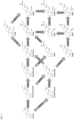
- RebM contains six glycosylations of a steviol core: (1) a C13 O-glycosylation, (2) a C13 1-2' glycosylation, (3) a C13 1-3' glycosylation, (4) a C19 O-glycosylation, (5) a C19 1-2' glycosylation, and (6) a C19 1-3' glycosylation. While various glycosylation products are possible ( FIG. 2 ), RebM can be synthesized from steviol through the action of four UGT enzymes, and UGT glycosylation enzymes are each capable of acting on a number of substrates.
- both UGT91D2 and OsUGT1-2 are 1-2' glycosylating enzymes that can produce steviolbioside from steviolmonoside (by action at C13), as well as RebD from RebA (by action at C19).
- UGT76G1 is a 1-3' glycosylating enzyme that can produce RebA from stevioside (by action at C13), as well as RebM from RebD (by action at C19).
- UGT enzymes for glycosylation of steviol and steviol glycosides are disclosed in US 2017/0332673 .
- Exemplary UGT enzymes are listed in Table 1, below: Table 1:
- Example UGT Enzymes Type of glycosylation Enzyme Gene ID Protein ID Description C13 SrUGT85C2 AY345978.1 AAR06916.1 MbUGTC13 US 2017/0332673 C19 SrUGT74G 1 AY345982.1 AAR06920.1 MbUGTc19 - - US 2017/0332673 MbUGTc19-2 US 2017/0332673 1-2' SrUGT91D1 AY345980.1 AAR06918.1 SrUGT91D2 ACE87855.1 ACE87855.1 SrUGT91D2e - - US 2011/038967 OsUGT1-2 NM_001057542.1 NP_001051007.2 WO 2013/022989 MbUGT1,2 - - US 2017
- SEQ ID NOS: 1-17 Amino acid sequences for exemplary UGT enzymes are provided by this disclosure as SEQ ID NOS: 1-17.
- SEQ ID NO:1 is Stevia rebaudiana UGT85C2.
- SEQ ID NO: 13 is SrUGT85C2 with a P215T substitution, and insertion of an Ala at the 2nd position to increase stability.
- SEQ ID NO:2 is Stevia rebaudiana UGT74G1 (with insertion of Ala at the 2nd position).
- SEQ ID NOS:8 and 12 are circular permutants based on SrUGT74G1 (MbUGTC19 and MbUGTC19-2).
- SEQ ID NO:3 is Stevia rebaudiana UGT76G1.
- Circular permutants with 1-3' glycosylating activity are disclosed as SEQ ID NO:10 (MbUGT1-3) and SEQ ID NOS:15, 16, and 17 (MbUGT1-3_1, MbUGT1-3_1.5, and MbUGT1-3_2, respectively).
- UGT76G1 with a L200A substitution, and Ala at position 2 is disclosed as SEQ ID NO:14.
- Stevia rebaudiana UGT91D1, UGT91D2, and UGT91D2e are disclosed as SEQ ID NOS:4, 5, and 6.
- Oryza sativa UGT1-2 is disclosed as SEQ ID NO:7.
- MbUGT1,2 and MbUGT1,2.2 are circular permutant enzymes with 1-2' glycosylating activity (SEQ ID NOS: 9 and 11).
- UGT enzymes are provided as SEQ ID NOS:18 to 46, from species Siraitia grosvenorii (monk fruit), Momordica charantia (bitter melon), Cucumis sativa (Cucumber), Cucurbita maxima (squash), Cucurbita moschata (squash, pumpkin), Prunus persica (peach), Theobroma cacao (cacao), Corchorus capsularis (white jute), Ziziphus jujube (red date), Vitis vinifera (grape vine), Juglans regia (walnut), Hevea brasiliensis (rubber tree), Manihot esculenta (cassava), Cephalotus follicularis (pitcher plant), and Coffea Arabica (coffee).
- UGT enzymes can be selected and optionally engineered based on the desired product and available intermediate.
- the microbial cell expresses at least one, or at least two, or at least three, or at least four UGT enzymes.
- the UGT enzymes glycosylate a steviol glycoside substrate, including those listed in Table 2.
- the microbial cell expresses four UGT enzymes that glycosylate a steviol glycoside intermediate, such as a 13-0 UGT glycosylating enzyme, a 19-0 UGT glycosylating enzyme, a 1-2' UGT glycosylating enzyme, and a 1-3' UGT glycosylating enzyme.
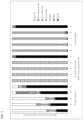
- the action of these general classes of UGT enzymes on glycosylated intermediates of the stevia leaf are depicted in FIGS. 2 and 3 .
- the microbial cell expresses a 1-3' glycosylating UGT enzyme.
- the 1-3' glycosylating UGT enzyme may be selected from SrUGT76G1, MbUGT1-3_1, MbUGT1-3_1.5, and MbUGT1-3_2, and derivatives thereof.
- the microbial cell expresses a 1-2' glycosylating UGT enzyme.
- the 1-2' glycosylating UGT enzyme may be selected from SrUGT91D2, SrUGT91D1, SrUGT91D2e, OsUGT1-2, MbUGT1,2, MbUGT1,2.2, and derivatives thereof.
- the microbial cell expresses a C13 O-glycosylating UGT enzyme.
- the C13 O-glycosylating UGT enzyme may be selected from SrUGT85C2 and derivatives thereof (e.g., MbUGTC13).
- the microbial cell expresses a C19 O-glycosylating UGT enzyme.
- the C19 O-glycosylating enzyme may be selected from SrUGT74G1, MbUGTc19, and derivatives thereof (e.g., MbUGTc19-2).
- the microbial cell expresses a 1-3' glycosylating UGT enzyme and a 1-2' glycosylating UGT enzyme. In some embodiments, the microbial cell expresses a 1-3' glycosylating UGT enzyme, a 1-2' glycosylating UGT enzyme, and a C13 O-glycosylating UGT enzyme. In some embodiments, the microbial cell expresses a 1-3' glycosylating UGT enzyme, a 1-2' glycosylating UGT enzyme, a C19 O-glycosylating UGT enzyme, and a C19 O-glycosylating UGT enzyme.
- the microbial cell expresses a 1-3' glycosylating UGT enzyme, a 1-2' glycosylating UGT enzyme, a C19 O-glycosylating UGT enzyme, and a C13 O-glycosylating UGT enzyme.
- the microbial cell expresses a SrUGT85C2 or derivative thereof (e.g., MbUGTC13), MbUGT1,2.2 or derivative thereof, SrUGT74G1 or derivative thereof (e.g., MbUGTc19 or MbUGTc19-2), and SrUGT76G1 or MbUGT1-3_1 or derivative thereof (e.g., 76G1_L200A, MbUGT1-3_1.5, or MbUGT1-3_2).
- a SrUGT85C2 or derivative thereof e.g., MbUGTC13
- MbUGT1,2.2 or derivative thereof e.g., MbUGT74G1 or derivative thereof (e.g., MbUGTc19 or MbUGTc19-2)
- SrUGT76G1 or MbUGT1-3_1 or derivative thereof e.g., 76G1_L200A, MbUGT1-3_1.5, or MbUGT1-3_2.
- engineered UGT enzymes may provide for increased carbon flux to RebM (as well as higher glycosylation products), and particularly due to substrate binding pockets that are better able to accommodate larger substrates, without substantial loss of activity on lower glycosylated intermediates.
- the UGT enzymes (such as the 1-3' and 1-2' glycosylating UGT enzymes) may have an increased rate of activity (e.g., rate of substrate binding and turnover) with more highly glycosylated steviol substrates such as RebA or RebD.
- the 1-3' UGT has two or three of a methionine (M) at the position corresponding to position 183 of SEQ ID NO:15, a glycine (G) at the position corresponding to position 54 of SEQ ID NO:15, and a leucine (L) at the position corresponding to position 111 of SEQ ID NO:15.
- M methionine
- G glycine
- L leucine
- the 1-3' UGT enzyme comprises an insertion of from 5 to about 15 amino acids, such as from 6 to 12 amino acids, or about 6 or about 11 amino acids, after the position corresponding to position 155 of SEQ ID NO: 15.
- the insertion is a flexible and hydrophilic sequence that is predominately Glycine and Serine residues.
- the sequence is GSGGSG (SEQ ID NO:47) or GSGGSGGSG (SEQ ID NO:48).
- the 1-3' UGT enzyme shows improved conversion of stevioside to Reb A, and improved conversion of RebD to RebM, as compared to UGT76G1-L200A (SEQ ID NO:14). This improved conversion is exhibited in a bioconversion assay where stevioside or RebD substrate is fed to microbial cells expressing the 1-3' UGT enzyme. Improved conversion can be demonstrated in reactions with cell lysates containing recombinantly expressed 1-3' UGT, or in vitro reactions with purified or partially purified 1-3' UGT.
- Changes to the amino acid sequence of an enzyme can alter its activity or have no measurable effect. Silent changes with no measurable effect are often conservative substitutions and small insertions or deletions on solvent-exposed surfaces that are located away from active sites and substrate-binding sites. In contrast, enzymatic activity is more likely to be affected by non-conservative substitutions, large insertions or deletions, and changes within active sites, substrate-binding sites, and at buried positions important for protein folding or conformation. Changes that alter enzymatic activity may increase or decrease the reaction rate or increase or decrease the affinity or specificity for a particular substrate. For example, changes that increase the size of a substrate-binding site may permit an enzyme to act on larger substrates and changes that position a catalytic amino acid side chain closer to a target site on a substrate may increase the enzymatic rate.
- Plant UGTs share a highly conserved secondary and tertiary structure while having relatively low amino acid sequence identity. Osmani et al, Substrate specificity of plant UDP-dependent glycosyltransferases predicted from crystal structures and homology modeling, Phytochemistry 70 (2009) 325-347 . The sugar acceptor and sugar donor substrates of UGTs are accommodated in a cleft formed between the N- and C-terminal domains. Several regions of the primary sequence contribute to the formation of the substrate binding pocket including structurally conserved domains as well as loop regions differing both with respect to their amino acid sequence and sequence length.
- UGT derivatives can be guided based on homology modeling compared to known structures. For example, based on crystal structure analysis of SrUGT76G1_L200A and an amino acid sequence alignment of SrUGT76G1 to MbUGT3-1_1, it is predicted that the steviol core of stevioside is close (within 4 ⁇ ) to the following residues of MbUGT3-1_1: I244, L280, W351, A354, I357, M362, and T438. Further, the C19 1-2 glycosylation is predicted to be close (within 4 ⁇ ) to T438.
- the steviol core of RebD is predicted to be close (within 4 ⁇ ) of the following hydrophobic side chains of MbUGT3-1_1: L239, M242, I244, L280, I353, A354, and I357.
- the C13 1-2' glycosylation is predicted to be close (within 4 ⁇ ) of the following hydrogen bonding side chains of MbUGT3-1_1: S301 and D77.
- Positioning and amino acid content of the V341-Q352 and K355-A367 helices of MbUGT3-1_1 may be important for catalysis as the mutation corresponding to L200A is in a loop between these helices.
- Positions L76 and/or D77 of MbUGT3-1_1 may interact with the C13 glycosylation of stevioside.
- the amino acid sequence of one or more of the UGT enzymes can optionally include an alanine inserted or substituted at position 2 to decrease turnover in the cell.
- one or more UGT enzymes comprise an alanine amino acid residue inserted or substituted at position 2 to provide additional stability in vivo.
- Identity of amino acid sequences can be determined via sequence alignments. Such alignments can be carried out with several known algorithms, such as that described by Karlin and Altschul ( Karlin & Altschul (1993) Proc. Natl. Acad. Sci. USA 90: 5873-5877 ), with hmmalign (HMMER package) or with the CLUSTAL algorithm ( Thompson, J. D., Higgins, D. G. & Gibson, T. J. (1994) Nucleic Acids Res. 22, 4673-80 ). The grade of sequence identity (sequence matching) may be calculated using e.g. BLAST, BLAT or BlastZ (or BlastX).
- the UGT enzymes may be integrated into the chromosome of the microbial cell, or alternatively, are expressed extrachromosomally.
- the UGT enzymes may be expressed from a bacterial artificial chromosome (BAC) or yeast artificial chromosome (YAC).
- BAC bacterial artificial chromosome
- YAC yeast artificial chromosome
- Expression of the UGT enzymes can be tuned for optimal activity, using, for example, gene modules (e.g., operons) or independent expression of the UGT enzymes.
- expression of the genes or operons can be regulated through selection of promoters, such as inducible or constitutive promoters, with different strengths (e.g., strong, intermediate, or weak).
- promoters such as inducible or constitutive promoters
- strengths e.g., strong, intermediate, or weak
- promoters of different strengths include Trc, T5 and T7.
- expression of genes or operons can be regulated through manipulation of the copy number of the gene or operon in the cell.
- the cell expresses a single copy of each UGT enzyme.
- expression of genes or operons can be regulated through manipulating the order of the genes within a module, where the genes transcribed first are generally expressed at a higher level. In some embodiments, expression of genes or operons is regulated through integration of one or more genes or operons into the chromosome.
- US 2017/0332673 describes E. coli strains that overexpress MEP pathway enzymes, along with a downstream steviol biosynthesis pathway, and UGT enzymes to drive production of RebM from glucose.
- these strains do not perform biocatalysis of fed steviol glycoside intermediates to RebM, which may be, in part, due to the inability of the host cell to gain access to the steviol glycoside substrate.
- genetic modifications to the microbial cell allow for glycosylated intermediates to be available for further glycosylation in a whole cell system. Further, product can be recovered from the extracellular media, which facilitates downstream purification and processing of the product.
- the microbial cell has one or more genetic modifications that increase UDP-glucose availability. In some embodiments, without wishing to be bound by theory, these modifications may also stress the cell for glucose availability, leading to the increased expression of endogenous transporters to import steviol glycosides into the cell. Wild-type UDP-glucose levels in exponentially growing E. coli is about 2.5 mM ( Bennett BD, Kimball EH, Gao M, Osterhout R, Van dien SJ, Rabinowitz JD. Absolute metabolite concentrations and implied enzyme active site occupancy in Escherichia coli. Nat Chem Biol. 2009;5(8):593-9 .).
- genetic modifications to the host cell are engineered to increase UDP-glucose, e.g., to at least 5 mM, or at least 10 mM, in exponentially growing cells (e.g., that do not have recombinant expression of UGT enzymes).
- the microbial cell has a deletion, inactivation, or reduced activity or expression of a gene encoding an enzyme that consumes UDP-glucose.
- the microbial cell may have a deletion, inactivation, or reduced activity of ushA (UDP-sugar hydrolase) and/or one or more of galE, galT, galK, and galM (which are responsible for UDP-galactose biosynthesis from UDP-glucose), or ortholog thereof in the microbial species.
- ushA UDP-sugar hydrolase
- galE, galT, galK, and galM which are responsible for UDP-galactose biosynthesis from UDP-glucose
- galETKM genes are inactivated, deleted, or substantially reduced in expression.
- the microbial cell has a deletion, inactivation, or reduced activity or expression of E.
- coli otsA (trehalose-6-phosphate synthase), or ortholog thereof in the microbial species.
- the microbial cell has a deletion, inactivation, or reduced activity or expression of E. coli ugd (UDP-glucose 6-dehydrogenase), or ortholog thereof in the microbial species. Reducing or eliminating activity of otsA and ugd can remove or reduce UDP-glucose sinks to trehalose or UDP-glucuronidate, respectively.
- UDP-glucose sinks that can be reduced or eliminated include eliminating or reducing activity or expression of genes responsible for lipid glycosylation and LPS biosynthesis, and genes responsible for glycosylating undecaprenyl-diphosphate (UPP).
- Genes involved in glycosylating lipids or LPS biosynthesis include E. coli waaG (lipopolysaccharide glucosyltransferase 1), E. coli waaO (UDP-D-glucose:(glucosyl)LPS ⁇ -1,3-glucosyltransferase)), and E. coli waaJ (UDP-glucose:(glycosyl)LPS ⁇ -1,2-glucosyltransferase)).
- Genes responsible for glycosylating undecaprenyl-diphosphate include E. coli yfdG (putative bactoprenol-linked glucose translocase), E. coli yfdH (bactoprenol glucosyl transferase), E. coli yfdI (serotype specific glucosyl transferase), and E. coli wcaJ (undecaprenyl-phosphate glucose phosphotransferase). Deletion, inactivation, or reduction in activity or expression of one or more of these gene products (or corresponding othologs in the microbial cell) can increase UDP-glucose availability.
- the microbial cell has a deletion, inactivation, or reduced activity or expression of a gene encoding an enzyme that consumes a precursor to UDP-glucose.
- the microbial cell has a deletion, inactivation, or reduced activity or expression of pgi (glucose-6 phosphate isomerase), or ortholog thereof in the microbial species of the host cell.
- the cell has an overexpression or increased activity of one or more genes encoding an enzyme involved in converting glucose-6-phosphate to UDP-glucose.
- an enzyme involved in converting glucose-6-phosphate to UDP-glucose For example, pgm (phosphoglucomutase) and/or galU (UTP-glucose-1-phosphate uridylyltransferase) (or ortholog or derivative thereof) can be overexpressed, or modified to increase enzyme productivity.
- coli ycjU ( ⁇ -phosphoglucomutase), which converts glucose-6-phosphate to glucose-1-phosphate
- Bifidobacterium bifidum ugpA which converts glucose-1-phosphate to UDP, or ortholog or derivative of these enzymes, can be overexpressed, or modified to increase enzyme productivity.
- the microbial cell has one or more genetic modifications that increase flux to the pentose phosphate pathway (PPP), such as an overexpression or increased activity of E. coli zwf (or homologue or engineered derivative thereof), which is an NADP+-dependent glucose-6-phosphate dehydrogenase.
- PPP pentose phosphate pathway
- the microbial cell has one or more genetic modifications that increase glucose transport.
- modifications include increased expression or activity of E. coli galP (galactose:H+symporter) and E. coli glk (glucokinase), or alternatively Zymomonas mobilis glf and E. coli glk, or homologues, orthologs, or engineered derivatives of these genes.
- the microbial cell has one or more genetic modifications that increase UTP production and recycling.
- modifications include increased expression or activity of E. coli pyrH (UMP kinase), E. coli cmk (cytidylate kinase), E . coli adk (adenylate kinase), or E. coli ndk (nucleoside diphosphate kinase), or homologs, orthologs, or engineered derivatives of these enzymes.
- the microbial cell has one or more genetic modifications that increase UDP production.
- modifications include overexpression or increased activity of one or more of E. coli upp (uracil phosphoribosyltransferase), E . coli dctA (C4 dicarboxylate/orotate:H+symporter), E. coli pyrE (orotate phosphoribosyltransferase), and E . coli pyrF (orotidine-5'-phosphate decarboxylase), including homologs, orthologs, or engineered derivatives thereof.
- E. coli upp uracil phosphoribosyltransferase
- E . coli dctA C4 dicarboxylate/orotate:H+symporter
- E. coli pyrE orotate phosphoribosyltransferase
- E . coli pyrF orotidine-5'-phosphate decarboxylase
- the microbial cell overexpresses or has increased activity of upp, pyrH and cmk, or homolog or engineered derivative thereof.
- the microbial cell overexpresses or has increased activity of dctA, pyre, pyrH and cmk, or homolog or engineered derivative thereof.
- the microbial cell may have one or more genetic modifications to remove or reduce regulation of glucose uptake.
- the microbial cell may have a deletion, inactivation, or reduced expression of sgrS, which is a small regulatory RNA in E . coli.
- the microbial cell may have one or more genetic modifications that reduce dephosphorylation of glucose-1-phosphate.
- Exemplary modifications include deletion, inactivation, or reduced expression or activity of one or more of E. coli agp (glucose-1-phosphatase), E. coli yihX ( ⁇ -D-glucose-1-phosphate phosphatase), E. coli ybiV (sugar phosphatase), E. coli yidA (sugar phosphatase), E. coli yigL (phosphosugar phosphatase), and E. coli phoA (alkaline phosphatase), or an ortholog thereof in the microbial cell.
- the microbial cell may have one or more genetic modifications that reduce conversion of glucose-1-phosphate to TDP-glucose.
- Exemplary modifications include deletion, inactivation, or reduced expression or activity of one or more of E. coli rffH (dTDP-glucose pyrophosphorylase) and E. coli rfbA (dTDP glucose pyrophosphorylase), or an ortholog thereof in the microbial cell.
- the microbial cell may have one or more genetic modifications that reduce conversion of glucose-1-phosphate to ADP-glucose.
- Exemplary modifications include deletion, inactivation, or reduced expression or activity of E. coli gigC (glucose-1-phosphate adenylyltransferase), or an ortholog thereof in the microbial cell.
- the microbial cell is a bacterial cell comprising the genetic modifications: ushA and galETKM are deleted, inactivated, or reduced in expression; pgi is deleted, inactivated, or reduced in expression; and pgm and galU are overexpressed or complemented.
- endogenous genes are edited, to either inactivate or reduce enzymatic activity by changing the amino acid sequence of the encoded protein, or to reduce expression through editing of expression control sequences.
- Editing can modify endogenous promoters, ribosomal binding sequences, or other expression control sequences, and/or in some embodiments modifies trans-acting and/or cis-acting factors in gene regulation.
- Genome editing can take place using CRISPR/Cas genome editing techniques, or similar techniques employing zinc finger nucleases and TALENs.
- the endogenous genes are replaced by homologous recombination.
- the microbial cell in various embodiments does not express a recombinant biosynthesis pathway for production of precursors (e.g., comprising one or more plant enzymes).
- precursors e.g., comprising one or more plant enzymes.
- microbial cells producing RebM (and other advanced glycosylation products) do not express a steviol biosynthesis pathway, such as copalyl synthase, kaurene synthase, kaurene oxidase and/or kaurenoic acid hydroxylase, such that production of RebM and other advanced glycosylation products is dependent on feeding steviol glycoside intermediates to the cell.
- the microbial cell is a bacteria selected from Escherichia spp., Bacillus spp., Rhodobacter spp., Zymomonas spp., or Pseudomonas spp.
- the bacterial species is selected from Escherichia coli, Bacillus subtilis, Rhodobacter capsulatus, Rhodobacter sphaeroides, Zymomonas mobilis, or Pseudomonas putida.
- the bacterial cell is E. coli.
- the cell is a fungal cell such as a yeast cell, such as, for example, Saccharomyces spp., Schizosaccharomyces spp., Pichia spp., Phaffia spp., Kluyveromyces spp., Candida spp., Talaromyces spp., Brettanomyces spp., Pachysolen spp., Debaryomyces spp., Yarrowia spp., and industrial polyploid yeast strains.
- Saccharomyces spp. Schizosaccharomyces spp.
- Pichia spp. Phaffia spp.
- Kluyveromyces spp. Kluyveromyces spp.
- Candida spp. Talaromyces spp.
- Brettanomyces spp. Brettanomyces spp.
- Pachysolen spp. Debaryomyces spp.
- the microbial cell has an overexpression of one or more endogenous transporters (e.g., as compared to a parent microbial strain), or in certain embodiments, is modified to express a recombinant and/or engineered transport protein.
- the microbial cell expresses one or more additional copies of an endogenous transport protein, or derivative thereof.
- expression or activity of transport proteins can be modified to increase transport into the cell of steviol glycoside intermediates (e.g., one or more of stevioside, steviolbioside, and RebA, among others), while exporting product, such as RebM and/or RebD, and/or other advanced glycosylated steviol glycosides.
Landscapes
- Chemical & Material Sciences (AREA)
- Life Sciences & Earth Sciences (AREA)
- Organic Chemistry (AREA)
- Health & Medical Sciences (AREA)
- Engineering & Computer Science (AREA)
- Genetics & Genomics (AREA)
- Zoology (AREA)
- Wood Science & Technology (AREA)
- Bioinformatics & Cheminformatics (AREA)
- General Engineering & Computer Science (AREA)
- Biochemistry (AREA)
- General Health & Medical Sciences (AREA)
- Biotechnology (AREA)
- Microbiology (AREA)
- Biomedical Technology (AREA)
- Molecular Biology (AREA)
- Medicinal Chemistry (AREA)
- Chemical Kinetics & Catalysis (AREA)
- General Chemical & Material Sciences (AREA)
- Physics & Mathematics (AREA)
- Biophysics (AREA)
- Plant Pathology (AREA)
- Mycology (AREA)
- Preparation Of Compounds By Using Micro-Organisms (AREA)
- Micro-Organisms Or Cultivation Processes Thereof (AREA)
- Enzymes And Modification Thereof (AREA)
Priority Applications (1)
| Application Number | Priority Date | Filing Date | Title |
|---|---|---|---|
| EP24213834.5A EP4509609A3 (en) | 2018-07-16 | 2019-07-16 | Production of steviol glycosides through whole cell biotransformation |
Applications Claiming Priority (2)
| Application Number | Priority Date | Filing Date | Title |
|---|---|---|---|
| US201862698617P | 2018-07-16 | 2018-07-16 | |
| PCT/US2019/041957 WO2020018506A2 (en) | 2018-07-16 | 2019-07-16 | Production of steviol glycosides through whole cell biotransformation |
Related Child Applications (1)
| Application Number | Title | Priority Date | Filing Date |
|---|---|---|---|
| EP24213834.5A Division EP4509609A3 (en) | 2018-07-16 | 2019-07-16 | Production of steviol glycosides through whole cell biotransformation |
Publications (3)
| Publication Number | Publication Date |
|---|---|
| EP3824093A2 EP3824093A2 (en) | 2021-05-26 |
| EP3824093A4 EP3824093A4 (en) | 2022-06-01 |
| EP3824093B1 true EP3824093B1 (en) | 2024-11-20 |
Family
ID=69164862
Family Applications (2)
| Application Number | Title | Priority Date | Filing Date |
|---|---|---|---|
| EP19837740.0A Active EP3824093B1 (en) | 2018-07-16 | 2019-07-16 | Production of steviol glycosides through whole cell biotransformation |
| EP24213834.5A Pending EP4509609A3 (en) | 2018-07-16 | 2019-07-16 | Production of steviol glycosides through whole cell biotransformation |
Family Applications After (1)
| Application Number | Title | Priority Date | Filing Date |
|---|---|---|---|
| EP24213834.5A Pending EP4509609A3 (en) | 2018-07-16 | 2019-07-16 | Production of steviol glycosides through whole cell biotransformation |
Country Status (14)
| Country | Link |
|---|---|
| US (2) | US11230724B2 (https=) |
| EP (2) | EP3824093B1 (https=) |
| JP (1) | JP7305087B2 (https=) |
| KR (1) | KR102532079B1 (https=) |
| CN (1) | CN112867799B (https=) |
| AU (1) | AU2019304965B2 (https=) |
| BR (1) | BR112021000876A2 (https=) |
| CA (1) | CA3106633A1 (https=) |
| ES (1) | ES3013059T3 (https=) |
| IL (1) | IL280151A (https=) |
| MX (1) | MX2021000605A (https=) |
| MY (1) | MY204735A (https=) |
| SG (1) | SG11202100450TA (https=) |
| WO (1) | WO2020018506A2 (https=) |
Families Citing this family (23)
| Publication number | Priority date | Publication date | Assignee | Title |
|---|---|---|---|---|
| CN111868252B (zh) * | 2018-03-12 | 2025-06-03 | 科纳根公司 | 甜菊糖苷莱苞迪苷j和莱苞迪苷n的生物合成生产 |
| AU2019304965B2 (en) * | 2018-07-16 | 2025-04-24 | Manus Bio, Inc. | Production of steviol glycosides through whole cell biotransformation |
| CN113302298B (zh) | 2018-11-09 | 2025-02-25 | 银杏生物制品公司 | 罗汉果甙的生物合成 |
| CN109402152B (zh) * | 2018-11-09 | 2021-08-13 | 沈阳农业大学 | 一种表达制备udp-葡萄糖-4-差向异构酶的方法 |
| CN109295087B (zh) * | 2018-11-09 | 2021-08-24 | 沈阳农业大学 | 一种表达制备udp-葡萄糖-己糖-1-磷酸尿苷酰转移酶的方法 |
| WO2020264179A1 (en) | 2019-06-25 | 2020-12-30 | Manus Bio, Inc. | Uridine diphosphate-dependent glycosyltransferase enzyme |
| CN110699373B (zh) * | 2019-10-16 | 2023-05-26 | 中国药科大学 | 尿苷二磷酸葡萄糖高产菌株及其应用 |
| CN111518825B (zh) * | 2020-04-30 | 2022-10-11 | 浙江工业大学 | 一种多基因组合表达制备蛹虫草多糖的方法 |
| US20230174993A1 (en) * | 2020-05-13 | 2023-06-08 | Ginkgo Bioworks, Inc. | Biosynthesis of mogrosides |
| WO2022002918A1 (en) * | 2020-07-03 | 2022-01-06 | C-Lecta Gmbh | One-pot cell-free glycosylation process |
| CA3200689A1 (en) * | 2020-11-24 | 2022-06-02 | Manus Bio Inc. | Glycoside product biosynthesis and recovery |
| US20250320470A1 (en) * | 2020-12-23 | 2025-10-16 | Samyang Corporation | Glycosyltransferase and steviol glucoside preparation method using same |
| JP7720917B2 (ja) * | 2021-01-27 | 2025-08-08 | コリア アドバンスト インスティテュート オブ サイエンス アンド テクノロジー | C-グリコシルトランスフェラーゼ変異体およびその用途 |
| WO2023000243A1 (zh) * | 2021-07-22 | 2023-01-26 | 深圳先进技术研究院 | 重组酵母生物转化生产葡萄糖的方法 |
| WO2023121426A1 (ko) * | 2021-12-24 | 2023-06-29 | 주식회사 삼양사 | 레바우디오사이드의 생산 |
| CN114540396A (zh) * | 2022-02-24 | 2022-05-27 | 天津大学 | 希瓦氏菌株中葡萄糖代谢通路的构建方法 |
| CN114561310B (zh) * | 2022-03-17 | 2022-12-02 | 江南大学 | 一种生产甜茶苷的酿酒酵母及其应用 |
| WO2024121721A1 (en) * | 2022-12-05 | 2024-06-13 | Tate & Lyle Solutions Usa Llc | Methods for obtaining steviol glycosides |
| WO2024146325A1 (zh) * | 2023-01-06 | 2024-07-11 | 中国人民解放军军事科学院军事医学研究院 | 用于生产抗原多糖-载体蛋白生物偶联产物的工程菌及其应用 |
| CN115975902B (zh) * | 2023-01-31 | 2025-07-01 | 深圳中科欣扬生物科技有限公司 | 一种全细胞催化合成阿魏酸葡萄糖苷的基因工程菌及其应用 |
| CN118240855A (zh) * | 2024-03-22 | 2024-06-25 | 百开盛(上海)生物科技有限公司 | Udpg生产菌株及其构建方法和应用 |
| CN118374427B (zh) * | 2024-05-07 | 2025-01-24 | 山东三元生物科技股份有限公司 | 一株催化甜菊糖粗糖生成莱鲍迪甙d的重组菌及其应用 |
| WO2025238040A1 (en) * | 2024-05-16 | 2025-11-20 | Evonik Operations Gmbh | A novel glucolipid |
Citations (1)
| Publication number | Priority date | Publication date | Assignee | Title |
|---|---|---|---|---|
| KR20160116775A (ko) * | 2015-03-31 | 2016-10-10 | 아주대학교산학협력단 | 스테비오사이드 생산능을 가지는 재조합 미생물 및 이를 이용한 스테비오사이드의 생산 방법 |
Family Cites Families (11)
| Publication number | Priority date | Publication date | Assignee | Title |
|---|---|---|---|---|
| US6586214B1 (en) * | 1999-09-15 | 2003-07-01 | Degussa Ag | Method for increasing the metabolic flux through the pentose phosphate cycle in coryneform bacteria by regulation of the phosphoglucose isomerase (pgi gene) |
| CN105671108A (zh) * | 2010-06-02 | 2016-06-15 | 沃维公司 | 甜菊糖苷的重组生产 |
| CN108396044A (zh) * | 2011-08-08 | 2018-08-14 | 埃沃尔瓦公司 | 甜菊醇糖苷类的重组生产 |
| BR112014028819A2 (pt) * | 2012-05-22 | 2017-07-25 | Purecircle Sdn Bhd | glicosídeos de esteviol de pureza elevada |
| CN103397064B (zh) * | 2013-08-14 | 2015-04-15 | 苏州汉酶生物技术有限公司 | 一种酶法制备瑞鲍迪甙m的方法 |
| EP3215629B1 (en) | 2014-11-05 | 2024-08-07 | Manus Bio Inc. | Microbial production of steviol glycosides |
| US20180057850A1 (en) * | 2015-03-23 | 2018-03-01 | Dsm Ip Assets B.V. | Udp-glycosyltransferases from solanum lycopersicum |
| US20190169664A1 (en) | 2016-05-06 | 2019-06-06 | University Of Georgia Research Foundation, Inc. | Microbial platform for production of glycosylated compounds |
| CA3175070A1 (en) * | 2017-02-03 | 2018-08-09 | Codexis, Inc. | Engineered glycosyltransferases and steviol glycoside glucosylation methods |
| AU2019304965B2 (en) * | 2018-07-16 | 2025-04-24 | Manus Bio, Inc. | Production of steviol glycosides through whole cell biotransformation |
| WO2020264179A1 (en) * | 2019-06-25 | 2020-12-30 | Manus Bio, Inc. | Uridine diphosphate-dependent glycosyltransferase enzyme |
-
2019
- 2019-07-16 AU AU2019304965A patent/AU2019304965B2/en active Active
- 2019-07-16 SG SG11202100450TA patent/SG11202100450TA/en unknown
- 2019-07-16 ES ES19837740T patent/ES3013059T3/es active Active
- 2019-07-16 CN CN201980057392.6A patent/CN112867799B/zh active Active
- 2019-07-16 BR BR112021000876-4A patent/BR112021000876A2/pt unknown
- 2019-07-16 MX MX2021000605A patent/MX2021000605A/es unknown
- 2019-07-16 MY MYPI2021000233A patent/MY204735A/en unknown
- 2019-07-16 EP EP19837740.0A patent/EP3824093B1/en active Active
- 2019-07-16 EP EP24213834.5A patent/EP4509609A3/en active Pending
- 2019-07-16 US US16/512,874 patent/US11230724B2/en active Active
- 2019-07-16 WO PCT/US2019/041957 patent/WO2020018506A2/en not_active Ceased
- 2019-07-16 JP JP2021501337A patent/JP7305087B2/ja active Active
- 2019-07-16 KR KR1020217004366A patent/KR102532079B1/ko active Active
- 2019-07-16 CA CA3106633A patent/CA3106633A1/en active Pending
-
2021
- 2021-01-13 IL IL280151A patent/IL280151A/en unknown
- 2021-12-09 US US17/546,758 patent/US12012626B2/en active Active
Patent Citations (1)
| Publication number | Priority date | Publication date | Assignee | Title |
|---|---|---|---|---|
| KR20160116775A (ko) * | 2015-03-31 | 2016-10-10 | 아주대학교산학협력단 | 스테비오사이드 생산능을 가지는 재조합 미생물 및 이를 이용한 스테비오사이드의 생산 방법 |
Also Published As
| Publication number | Publication date |
|---|---|
| US20220162658A1 (en) | 2022-05-26 |
| EP4509609A3 (en) | 2025-07-23 |
| CA3106633A1 (en) | 2020-01-23 |
| JP2021530228A (ja) | 2021-11-11 |
| IL280151A (en) | 2021-03-01 |
| CN112867799B (zh) | 2024-09-24 |
| US20200087692A1 (en) | 2020-03-19 |
| AU2019304965B2 (en) | 2025-04-24 |
| MX2021000605A (es) | 2021-06-23 |
| EP3824093A2 (en) | 2021-05-26 |
| JP7305087B2 (ja) | 2023-07-10 |
| KR20210066790A (ko) | 2021-06-07 |
| SG11202100450TA (en) | 2021-02-25 |
| EP3824093A4 (en) | 2022-06-01 |
| KR102532079B1 (ko) | 2023-05-12 |
| US11230724B2 (en) | 2022-01-25 |
| EP4509609A2 (en) | 2025-02-19 |
| BR112021000876A2 (pt) | 2021-04-13 |
| US12012626B2 (en) | 2024-06-18 |
| AU2019304965A1 (en) | 2021-02-11 |
| WO2020018506A3 (en) | 2020-03-12 |
| WO2020018506A2 (en) | 2020-01-23 |
| CN112867799A (zh) | 2021-05-28 |
| MY204735A (en) | 2024-09-11 |
| ES3013059T3 (en) | 2025-04-10 |
Similar Documents
| Publication | Publication Date | Title |
|---|---|---|
| US12012626B2 (en) | Production of steviol glycosides through whole cell biotransformation of steviol glycoside intermediates | |
| US11788070B2 (en) | Uridine diphosphate-dependent glycosyltransferase enzyme | |
| US20190226000A1 (en) | Diterpene production in yarrowia | |
| BR112017004712B1 (pt) | Hospedeiro recombinante que produz um precursor de glicosídeo de esteviol, métodos para produzir um precursor de glicosídeo de esteviol, um esteviol ou um ou mais glicosídeos de esteviol, cultura do dito hospedeiro e lisado da cultura do dito hospedeiro | |
| BR112016002092B1 (pt) | Recuperação de glicosídeos de esteviol | |
| CN107922913B (zh) | 甜菊醇糖苷转运 | |
| US20240093258A1 (en) | Glycoside product biosynthesis and recovery | |
| KR101522961B1 (ko) | 신규한 퀘세틴-3-o-n-아세틸-퀴노보사민 화합물 및 이의 제조방법 | |
| BR112021026306B1 (pt) | Enzima glicosiltransferase (ugt) dependente de difosfato uridina(udp), microrganismo recombinante isolado e métodos relacionados |
Legal Events
| Date | Code | Title | Description |
|---|---|---|---|
| STAA | Information on the status of an ep patent application or granted ep patent |
Free format text: STATUS: THE INTERNATIONAL PUBLICATION HAS BEEN MADE |
|
| PUAI | Public reference made under article 153(3) epc to a published international application that has entered the european phase |
Free format text: ORIGINAL CODE: 0009012 |
|
| STAA | Information on the status of an ep patent application or granted ep patent |
Free format text: STATUS: REQUEST FOR EXAMINATION WAS MADE |
|
| 17P | Request for examination filed |
Effective date: 20210215 |
|
| AK | Designated contracting states |
Kind code of ref document: A2 Designated state(s): AL AT BE BG CH CY CZ DE DK EE ES FI FR GB GR HR HU IE IS IT LI LT LU LV MC MK MT NL NO PL PT RO RS SE SI SK SM TR |
|
| DAV | Request for validation of the european patent (deleted) | ||
| DAX | Request for extension of the european patent (deleted) | ||
| A4 | Supplementary search report drawn up and despatched |
Effective date: 20220502 |
|
| RIC1 | Information provided on ipc code assigned before grant |
Ipc: C12N 15/81 20060101ALI20220425BHEP Ipc: C12N 15/70 20060101ALI20220425BHEP Ipc: C12N 9/92 20060101ALI20220425BHEP Ipc: C12N 9/90 20060101ALI20220425BHEP Ipc: C12N 9/14 20060101ALI20220425BHEP Ipc: C12N 9/12 20060101ALI20220425BHEP Ipc: C12N 9/10 20060101ALI20220425BHEP Ipc: C12N 15/63 20060101ALI20220425BHEP Ipc: C12P 19/00 20060101ALI20220425BHEP Ipc: C12P 19/44 20060101ALI20220425BHEP Ipc: C12P 19/56 20060101AFI20220425BHEP |
|
| RAP3 | Party data changed (applicant data changed or rights of an application transferred) |
Owner name: MANUS BIO, INC. |
|
| STAA | Information on the status of an ep patent application or granted ep patent |
Free format text: STATUS: EXAMINATION IS IN PROGRESS |
|
| 17Q | First examination report despatched |
Effective date: 20240321 |
|
| GRAP | Despatch of communication of intention to grant a patent |
Free format text: ORIGINAL CODE: EPIDOSNIGR1 |
|
| STAA | Information on the status of an ep patent application or granted ep patent |
Free format text: STATUS: GRANT OF PATENT IS INTENDED |
|
| INTG | Intention to grant announced |
Effective date: 20240712 |
|
| GRAS | Grant fee paid |
Free format text: ORIGINAL CODE: EPIDOSNIGR3 |
|
| GRAA | (expected) grant |
Free format text: ORIGINAL CODE: 0009210 |
|
| STAA | Information on the status of an ep patent application or granted ep patent |
Free format text: STATUS: THE PATENT HAS BEEN GRANTED |
|
| P01 | Opt-out of the competence of the unified patent court (upc) registered |
Free format text: CASE NUMBER: APP_52375/2024 Effective date: 20240918 |
|
| AK | Designated contracting states |
Kind code of ref document: B1 Designated state(s): AL AT BE BG CH CY CZ DE DK EE ES FI FR GB GR HR HU IE IS IT LI LT LU LV MC MK MT NL NO PL PT RO RS SE SI SK SM TR |
|
| REG | Reference to a national code |
Ref country code: GB Ref legal event code: FG4D |
|
| RIN1 | Information on inventor provided before grant (corrected) |
Inventor name: LOVE, AARON Inventor name: FREI, CHRISTOPHER, SCOTT Inventor name: PHILIPPE, RYAN, N. Inventor name: FOWLER, MARY, ELIZABETH Inventor name: DONALD, JASON, ERIC Inventor name: SANTOS, CHRISTINE, NICOLE S. Inventor name: KUMARAN, AJIKUMAR, PARAYIL |
|
| REG | Reference to a national code |
Ref country code: CH Ref legal event code: EP |
|
| REG | Reference to a national code |
Ref country code: DE Ref legal event code: R096 Ref document number: 602019062338 Country of ref document: DE |
|
| REG | Reference to a national code |
Ref country code: IE Ref legal event code: FG4D |
|
| REG | Reference to a national code |
Ref country code: LT Ref legal event code: MG9D |
|
| REG | Reference to a national code |
Ref country code: NL Ref legal event code: MP Effective date: 20241120 |
|
| REG | Reference to a national code |
Ref country code: ES Ref legal event code: FG2A Ref document number: 3013059 Country of ref document: ES Kind code of ref document: T3 Effective date: 20250410 |
|
| PG25 | Lapsed in a contracting state [announced via postgrant information from national office to epo] |
Ref country code: PT Free format text: LAPSE BECAUSE OF FAILURE TO SUBMIT A TRANSLATION OF THE DESCRIPTION OR TO PAY THE FEE WITHIN THE PRESCRIBED TIME-LIMIT Effective date: 20250320 Ref country code: HR Free format text: LAPSE BECAUSE OF FAILURE TO SUBMIT A TRANSLATION OF THE DESCRIPTION OR TO PAY THE FEE WITHIN THE PRESCRIBED TIME-LIMIT Effective date: 20241120 Ref country code: IS Free format text: LAPSE BECAUSE OF FAILURE TO SUBMIT A TRANSLATION OF THE DESCRIPTION OR TO PAY THE FEE WITHIN THE PRESCRIBED TIME-LIMIT Effective date: 20250320 |
|
| PG25 | Lapsed in a contracting state [announced via postgrant information from national office to epo] |
Ref country code: FI Free format text: LAPSE BECAUSE OF FAILURE TO SUBMIT A TRANSLATION OF THE DESCRIPTION OR TO PAY THE FEE WITHIN THE PRESCRIBED TIME-LIMIT Effective date: 20241120 Ref country code: NL Free format text: LAPSE BECAUSE OF FAILURE TO SUBMIT A TRANSLATION OF THE DESCRIPTION OR TO PAY THE FEE WITHIN THE PRESCRIBED TIME-LIMIT Effective date: 20241120 |
|
| REG | Reference to a national code |
Ref country code: AT Ref legal event code: MK05 Ref document number: 1743611 Country of ref document: AT Kind code of ref document: T Effective date: 20241120 |
|
| PG25 | Lapsed in a contracting state [announced via postgrant information from national office to epo] |
Ref country code: BG Free format text: LAPSE BECAUSE OF FAILURE TO SUBMIT A TRANSLATION OF THE DESCRIPTION OR TO PAY THE FEE WITHIN THE PRESCRIBED TIME-LIMIT Effective date: 20241120 |
|
| PG25 | Lapsed in a contracting state [announced via postgrant information from national office to epo] |
Ref country code: NO Free format text: LAPSE BECAUSE OF FAILURE TO SUBMIT A TRANSLATION OF THE DESCRIPTION OR TO PAY THE FEE WITHIN THE PRESCRIBED TIME-LIMIT Effective date: 20250220 |
|
| PG25 | Lapsed in a contracting state [announced via postgrant information from national office to epo] |
Ref country code: GR Free format text: LAPSE BECAUSE OF FAILURE TO SUBMIT A TRANSLATION OF THE DESCRIPTION OR TO PAY THE FEE WITHIN THE PRESCRIBED TIME-LIMIT Effective date: 20250221 Ref country code: AT Free format text: LAPSE BECAUSE OF FAILURE TO SUBMIT A TRANSLATION OF THE DESCRIPTION OR TO PAY THE FEE WITHIN THE PRESCRIBED TIME-LIMIT Effective date: 20241120 Ref country code: LV Free format text: LAPSE BECAUSE OF FAILURE TO SUBMIT A TRANSLATION OF THE DESCRIPTION OR TO PAY THE FEE WITHIN THE PRESCRIBED TIME-LIMIT Effective date: 20241120 |
|
| PG25 | Lapsed in a contracting state [announced via postgrant information from national office to epo] |
Ref country code: PL Free format text: LAPSE BECAUSE OF FAILURE TO SUBMIT A TRANSLATION OF THE DESCRIPTION OR TO PAY THE FEE WITHIN THE PRESCRIBED TIME-LIMIT Effective date: 20241120 |
|
| PG25 | Lapsed in a contracting state [announced via postgrant information from national office to epo] |
Ref country code: RS Free format text: LAPSE BECAUSE OF FAILURE TO SUBMIT A TRANSLATION OF THE DESCRIPTION OR TO PAY THE FEE WITHIN THE PRESCRIBED TIME-LIMIT Effective date: 20250220 |
|
| PG25 | Lapsed in a contracting state [announced via postgrant information from national office to epo] |
Ref country code: SM Free format text: LAPSE BECAUSE OF FAILURE TO SUBMIT A TRANSLATION OF THE DESCRIPTION OR TO PAY THE FEE WITHIN THE PRESCRIBED TIME-LIMIT Effective date: 20241120 |
|
| PG25 | Lapsed in a contracting state [announced via postgrant information from national office to epo] |
Ref country code: DK Free format text: LAPSE BECAUSE OF FAILURE TO SUBMIT A TRANSLATION OF THE DESCRIPTION OR TO PAY THE FEE WITHIN THE PRESCRIBED TIME-LIMIT Effective date: 20241120 |
|
| PG25 | Lapsed in a contracting state [announced via postgrant information from national office to epo] |
Ref country code: EE Free format text: LAPSE BECAUSE OF FAILURE TO SUBMIT A TRANSLATION OF THE DESCRIPTION OR TO PAY THE FEE WITHIN THE PRESCRIBED TIME-LIMIT Effective date: 20241120 |
|
| PG25 | Lapsed in a contracting state [announced via postgrant information from national office to epo] |
Ref country code: RO Free format text: LAPSE BECAUSE OF FAILURE TO SUBMIT A TRANSLATION OF THE DESCRIPTION OR TO PAY THE FEE WITHIN THE PRESCRIBED TIME-LIMIT Effective date: 20241120 |
|
| PG25 | Lapsed in a contracting state [announced via postgrant information from national office to epo] |
Ref country code: SK Free format text: LAPSE BECAUSE OF FAILURE TO SUBMIT A TRANSLATION OF THE DESCRIPTION OR TO PAY THE FEE WITHIN THE PRESCRIBED TIME-LIMIT Effective date: 20241120 |
|
| PG25 | Lapsed in a contracting state [announced via postgrant information from national office to epo] |
Ref country code: CZ Free format text: LAPSE BECAUSE OF FAILURE TO SUBMIT A TRANSLATION OF THE DESCRIPTION OR TO PAY THE FEE WITHIN THE PRESCRIBED TIME-LIMIT Effective date: 20241120 |
|
| REG | Reference to a national code |
Ref country code: DE Ref legal event code: R097 Ref document number: 602019062338 Country of ref document: DE |
|
| PG25 | Lapsed in a contracting state [announced via postgrant information from national office to epo] |
Ref country code: SE Free format text: LAPSE BECAUSE OF FAILURE TO SUBMIT A TRANSLATION OF THE DESCRIPTION OR TO PAY THE FEE WITHIN THE PRESCRIBED TIME-LIMIT Effective date: 20241120 |
|
| PLBE | No opposition filed within time limit |
Free format text: ORIGINAL CODE: 0009261 |
|
| STAA | Information on the status of an ep patent application or granted ep patent |
Free format text: STATUS: NO OPPOSITION FILED WITHIN TIME LIMIT |
|
| PGFP | Annual fee paid to national office [announced via postgrant information from national office to epo] |
Ref country code: ES Payment date: 20250819 Year of fee payment: 7 |
|
| PGFP | Annual fee paid to national office [announced via postgrant information from national office to epo] |
Ref country code: DE Payment date: 20250702 Year of fee payment: 7 |
|
| PGFP | Annual fee paid to national office [announced via postgrant information from national office to epo] |
Ref country code: TR Payment date: 20250710 Year of fee payment: 7 Ref country code: IT Payment date: 20250731 Year of fee payment: 7 |
|
| PGFP | Annual fee paid to national office [announced via postgrant information from national office to epo] |
Ref country code: BE Payment date: 20250722 Year of fee payment: 7 Ref country code: GB Payment date: 20250724 Year of fee payment: 7 |
|
| PGFP | Annual fee paid to national office [announced via postgrant information from national office to epo] |
Ref country code: FR Payment date: 20250723 Year of fee payment: 7 |
|
| PGFP | Annual fee paid to national office [announced via postgrant information from national office to epo] |
Ref country code: CH Payment date: 20250801 Year of fee payment: 7 |
|
| 26N | No opposition filed |
Effective date: 20250821 |
|
| PG25 | Lapsed in a contracting state [announced via postgrant information from national office to epo] |
Ref country code: LU Free format text: LAPSE BECAUSE OF NON-PAYMENT OF DUE FEES Effective date: 20250716 |