EP3821157B1 - Kombination eines deckels und eines gehäuses - Google Patents
Kombination eines deckels und eines gehäuses Download PDFInfo
- Publication number
- EP3821157B1 EP3821157B1 EP19712515.6A EP19712515A EP3821157B1 EP 3821157 B1 EP3821157 B1 EP 3821157B1 EP 19712515 A EP19712515 A EP 19712515A EP 3821157 B1 EP3821157 B1 EP 3821157B1
- Authority
- EP
- European Patent Office
- Prior art keywords
- cover
- groove
- receptacle
- housing
- introduction
- Prior art date
- Legal status (The legal status is an assumption and is not a legal conclusion. Google has not performed a legal analysis and makes no representation as to the accuracy of the status listed.)
- Active
Links
Images


Classifications
-
- F—MECHANICAL ENGINEERING; LIGHTING; HEATING; WEAPONS; BLASTING
- F16—ENGINEERING ELEMENTS AND UNITS; GENERAL MEASURES FOR PRODUCING AND MAINTAINING EFFECTIVE FUNCTIONING OF MACHINES OR INSTALLATIONS; THERMAL INSULATION IN GENERAL
- F16J—PISTONS; CYLINDERS; SEALINGS
- F16J13/00—Covers or similar closure members for pressure vessels in general
- F16J13/02—Detachable closure members; Means for tightening closures
- F16J13/14—Detachable closure members; Means for tightening closures attached exclusively by spring action or elastic action
-
- F—MECHANICAL ENGINEERING; LIGHTING; HEATING; WEAPONS; BLASTING
- F16—ENGINEERING ELEMENTS AND UNITS; GENERAL MEASURES FOR PRODUCING AND MAINTAINING EFFECTIVE FUNCTIONING OF MACHINES OR INSTALLATIONS; THERMAL INSULATION IN GENERAL
- F16L—PIPES; JOINTS OR FITTINGS FOR PIPES; SUPPORTS FOR PIPES, CABLES OR PROTECTIVE TUBING; MEANS FOR THERMAL INSULATION IN GENERAL
- F16L55/00—Devices or appurtenances for use in, or in connection with, pipes or pipe systems
- F16L55/10—Means for stopping flow in pipes or hoses
- F16L55/115—Caps
-
- F—MECHANICAL ENGINEERING; LIGHTING; HEATING; WEAPONS; BLASTING
- F16—ENGINEERING ELEMENTS AND UNITS; GENERAL MEASURES FOR PRODUCING AND MAINTAINING EFFECTIVE FUNCTIONING OF MACHINES OR INSTALLATIONS; THERMAL INSULATION IN GENERAL
- F16L—PIPES; JOINTS OR FITTINGS FOR PIPES; SUPPORTS FOR PIPES, CABLES OR PROTECTIVE TUBING; MEANS FOR THERMAL INSULATION IN GENERAL
- F16L55/00—Devices or appurtenances for use in, or in connection with, pipes or pipe systems
- F16L55/10—Means for stopping flow in pipes or hoses
- F16L55/12—Means for stopping flow in pipes or hoses by introducing into the pipe a member expandable in situ
- F16L55/128—Means for stopping flow in pipes or hoses by introducing into the pipe a member expandable in situ introduced axially into the pipe or hose
- F16L55/136—Means for stopping flow in pipes or hoses by introducing into the pipe a member expandable in situ introduced axially into the pipe or hose the closure device being a plug fixed by radially expanding or deforming a split ring, hooks or the like
-
- B—PERFORMING OPERATIONS; TRANSPORTING
- B60—VEHICLES IN GENERAL
- B60T—VEHICLE BRAKE CONTROL SYSTEMS OR PARTS THEREOF; BRAKE CONTROL SYSTEMS OR PARTS THEREOF, IN GENERAL; ARRANGEMENT OF BRAKING ELEMENTS ON VEHICLES IN GENERAL; PORTABLE DEVICES FOR PREVENTING UNWANTED MOVEMENT OF VEHICLES; VEHICLE MODIFICATIONS TO FACILITATE COOLING OF BRAKES
- B60T17/00—Component parts, details, or accessories of power brake systems not covered by groups B60T8/00, B60T13/00 or B60T15/00, or presenting other characteristic features
-
- B—PERFORMING OPERATIONS; TRANSPORTING
- B60—VEHICLES IN GENERAL
- B60T—VEHICLE BRAKE CONTROL SYSTEMS OR PARTS THEREOF; BRAKE CONTROL SYSTEMS OR PARTS THEREOF, IN GENERAL; ARRANGEMENT OF BRAKING ELEMENTS ON VEHICLES IN GENERAL; PORTABLE DEVICES FOR PREVENTING UNWANTED MOVEMENT OF VEHICLES; VEHICLE MODIFICATIONS TO FACILITATE COOLING OF BRAKES
- B60T8/00—Arrangements for adjusting wheel-braking force to meet varying vehicular or ground-surface conditions, e.g. limiting or varying distribution of braking force
- B60T8/32—Arrangements for adjusting wheel-braking force to meet varying vehicular or ground-surface conditions, e.g. limiting or varying distribution of braking force responsive to a speed condition, e.g. acceleration or deceleration
- B60T8/34—Arrangements for adjusting wheel-braking force to meet varying vehicular or ground-surface conditions, e.g. limiting or varying distribution of braking force responsive to a speed condition, e.g. acceleration or deceleration having a fluid pressure regulator responsive to a speed condition
- B60T8/40—Arrangements for adjusting wheel-braking force to meet varying vehicular or ground-surface conditions, e.g. limiting or varying distribution of braking force responsive to a speed condition, e.g. acceleration or deceleration having a fluid pressure regulator responsive to a speed condition comprising an additional fluid circuit including fluid pressurising means for modifying the pressure of the braking fluid, e.g. including wheel driven pumps for detecting a speed condition, or pumps which are controlled by means independent of the braking system
- B60T8/4072—Systems in which a driver input signal is used as a control signal for the additional fluid circuit which is normally used for braking
- B60T8/4081—Systems with stroke simulating devices for driver input
- B60T8/409—Systems with stroke simulating devices for driver input characterised by details of the stroke simulating device
Definitions
- the invention relates to a combination of a cover and a housing with features of the preamble of claim 1.
- a unit consisting of a master cylinder and a reservoir for a hydraulic pressure medium is known.
- the reservoir has a pin-shaped projection with which it is held in a holder on the master cylinder.
- the master cylinder and reservoir are firmly connected to one another by an elastic ring which is arranged in opposing grooves on the outer circumference of the projection and on the inner circumferential wall of the holder.
- a front groove flank of the groove of the holder in the direction of insertion of the cover runs from the inside to the outside at an angle in the direction of insertion, while the groove flanks of the groove on the projection run at right angles to the direction of insertion of the cover.
- the European patent application EP 0 133 455 A2 discloses a closure with a lid, which has an axially short, tubular collar that projects into an opening of a plastic container. Between the collar and an inner circumferential surface of the opening of the container, a clamping ring made of a soft elastic rubber is arranged, which is clamped by an oversize between the collar of the lid and the inner circumferential surface of the opening of the container and connects the lid to the container by friction.
- the collar of the lid has a circumferential conical surface on the outside, which clamps the rubber-elastic clamping ring radially outward against the inner circumferential surface of the opening of the container when an outward force is exerted on the lid.
- a clamping force with which the lid radially clamps the clamping ring The higher the outward force on the lid, the greater the tension that is exerted, so that the lid cannot be removed from the container without damaging it.
- the patent US 3,429,476 discloses a closure of a container with a lid by means of a clamping ring, which consists of two half rings that can be stretched apart and pulled together in opposite directions using clamping mechanisms.
- the two clamping mechanisms are arranged at opposite circumferential points of the clamping ring and each have two pairs of levers and a screw clamp.
- the half rings lie in a circumferential groove on the outside of the lid and can be clamped outwards in opposite directions using the two clamping mechanisms until they engage in a circumferential groove in an inner circumferential surface of an opening in the container and thereby connect the lid to the container.
- the Russian patent application SU 1 569 478 A1 discloses a fastening of a closure in one end of a hydraulic cylinder, wherein the closure has an axial passage for a piston rod.
- the closure has a circumferential ring step on its outer circumference and the cylinder has a circumferential groove in its inner circumference opposite the ring step, in which a radially corrugated and springy connecting ring lies in such a way that outwardly directed corrugations of the connecting ring engage in the circumferential groove in the end of the cylinder and inwardly directed corrugations of the connecting ring engage behind the ring step of the closure.
- the combination according to the invention with the features of claim 1 has a cover and a housing, wherein the housing has a recess as a receptacle for the cover, into which the cover is completely or preferably partially inserted in an insertion direction and from which the cover can protrude. Inserting the cover into the receptacle of the housing can also be understood as inserting the cover into the receptacle of the housing.
- An inner peripheral wall of the receptacle of the housing for the cover runs in the insertion direction.
- the inner peripheral wall of the receptacle is cylindrical, but it can also have another round and/or have a square cross-section that is constant in shape and size over the depth of the recording.
- the cover has a circumferential groove on the outside and the holder has a circumferential groove on the inside in its inner peripheral wall.
- the grooves are opposite one another when the cover is attached to the housing, whereby the grooves can be slightly offset in the direction of insertion.
- a connecting ring is arranged in the grooves, which springs in the radial direction to enable the attachment.
- the connecting ring engages both inwards in the groove of the cover and outwards in the groove in the inner peripheral wall of the holder of the housing for the cover and connects the cover to the housing by resting on the groove flanks of the two grooves that are opposite one another in the direction of insertion.
- a front groove flank of the groove of the cover in the direction of insertion and a rear groove flank of the groove in the direction of insertion in the inner peripheral wall of the housing receptacle for the cover run obliquely from the inside to the outside in the direction of insertion, wherein the front groove flank of the groove of the cover in the direction of insertion has a more obtuse cone angle than the rear groove flank of the groove in the direction of insertion in the inner peripheral wall of the housing receptacle for the cover.
- the connecting ring Due to the opposing pressure on the connecting ring by the groove flanks of the grooves in the cover and in the inner peripheral wall of the receptacle, the connecting ring is held in these two grooves in such a way that even when there is high pressure in the receptacle and in the cover, it protrudes into both grooves and rests against both groove flanks so that the cover is held securely in the receptacle.
- the invention is particularly intended for fastenings with a receptacle diameter of approximately 26 mm and more, because from such a diameter onwards, fastening and sealing by caulking at an opening of the receptacle requires too high a forming force.
- the invention enables the cover to be attached to the housing in a simple and quick manner by inserting the cover into the housing's receptacle.
- the invention enables the cover to be attached to the housing in a mechanically stable manner, which can withstand high loosening forces directed against the direction of insertion.
- the invention is particularly intended for a hydraulic block of a hydraulic unit of a brake pressure control of a hydraulic vehicle brake system.
- the cover is attached to, for example, a blind hole, which serves, for example, to accommodate a pedal travel simulator, a hydraulic accumulator or a damper chamber.
- a hydraulic block is used for mechanical fastening and hydraulic connection of components of the brake pressure control such as solenoid valves, a pedal travel simulator, hydraulic accumulators, damper chambers and other components.
- Connection means a hydraulic connection of the components according to a hydraulic circuit diagram of the brake pressure control. Equipped with the components of the brake pressure control
- the hydraulic block forms the hydraulic unit for brake pressure control. It is connected to a master brake cylinder via brake lines and hydraulic wheel brakes are also connected to the hydraulic block or hydraulic unit via brake lines.
- brake pressure control means a control of hydraulic brake pressure during power braking and/or a slip control.
- Slip control systems include, for example, anti-lock control, traction control and vehicle dynamics control, the latter also being referred to as an electronic stability program and colloquially often as anti-skid control.
- ABS, ASR, FDR and ESP are used for these slip controls.
- Such brake pressure controls are well known and will not be explained further here.
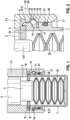
- Figure 1 shows a breakout of a hydraulic block 1 of a hydraulic unit of a brake pressure control of a hydraulic vehicle brake system in the area of a so-called pedal travel simulator.
- the hydraulic block 1 has a cylindrical blind hole 2 to accommodate a piston 4 of the pedal travel simulator.
- a hydraulic accumulator and/or a damper chamber can also be arranged in the blind hole 2.
- the list is exemplary and not exhaustive.
- the hydraulic block 1 can also be understood as the housing 3 of the pedal travel simulator, hydraulic accumulator or the damper chamber and generally as the housing 3.
- the piston 4 has a cylindrical extension 5 with a smaller diameter at an end facing an opening of the blind hole 2.
- the blind hole 2 widens to a larger diameter with an annular step.
- the annular step forms a depth stop 6 for a cover 7.
- a larger diameter section of the blind hole 2 between the annular step and the mouth of the blind hole 2 forms a recess in the hydraulic block 1 and a receptacle 8 for the cover 7 in the hydraulic block 1, which forms the housing 3 of a combination according to the invention.
- the cover 7 is a cup-shaped, cylindrical hollow body with a closed and an open end, with the open end being located in the receptacle 8 of the hydraulic block 1 forming the housing 3.
- the closed end of the cover 7 protrudes from the hydraulic block 1.
- a disc spring assembly 22 as a piston spring, which is supported on the inside at the closed end of the cover 7 and presses the piston 4 into the blind hole 2.
- a perforated disk 10 is arranged between a front edge 9 at the open end of the cover 7 and the annular step of the blind hole 2 forming the depth stop 6, which holds the piston 4 in the blind hole 2.
- the extension 5 of the piston 4 projects through the perforated disk 10.
- the front edge 9 at the open end of the cover 7 is also referred to here as the front front edge 9 or as the front front edge 9 of the cover 7 in a direction of insertion of the cover 7 into the receptacle 8 of the hydraulic block 1 forming the housing 3.
- the cover 7 has a circumferential groove 11 on the outside.
- the distance of the groove 11 from the front edge 9 is a few millimeters or a fraction of a diameter of the cover 7.
- the holder 8 for the cover 7 also has a circumferential groove 12 in an inner peripheral wall 13.
- the groove 12 in the inner peripheral wall 13 of the holder 8 is slightly offset in the direction of the depth stop 6 compared to the groove 11 on the outside of the cover 7, but in such a way that the two grooves 11, 12 overlap each other.
- a radially resilient connecting ring 14 is arranged in the grooves 11, 12, which engages both inwardly in the groove 11 of the cover 7 and outwardly in the groove 12 in the inner circumferential wall 13 of the receptacle 8 and thereby holds the cover 7 in the receptacle 8.
- the connecting ring 14 is a circular ring with a circular ring cross-section that is open at one circumferential point, although other open or closed connecting rings are possible.
- the connecting ring 14 can have a ring cross-section other than a circular one and/or have a radial corrugation running in a circumferential direction for radial resilience (not shown).
- a front groove flank 15 of the groove 11 on the outside of the cover 7 in the direction of insertion of the cover 7 into the receptacle 8 of the hydraulic block 1 forming the housing 3 of the combination according to the invention and a rear groove flank 16 of the groove 12 in the inner peripheral wall 13 of the receptacle 8 in the direction of insertion are truncated cone surfaces, i.e. the groove flanks 15, 16 of the grooves 11, 12 of the cover 7 and the receptacle 8 for the cover 7 in the direction of insertion run obliquely from the inside to the outside in the direction of insertion.
- the front groove flank 15 of the groove 11 of the cover 7 in the direction of insertion of the cover 7 into the receptacle 8 is located on a side of the groove 11 close to the front end edge 9 at the open end of the cover 7.
- the rear groove flank 16 of the groove 12 in the inner peripheral wall 13 of the receptacle 8 is located on a side of the groove 12 close to the mouth of the receptacle 8.
- the groove flanks 15, 16 of the grooves 11, 12 are the groove flanks 15, 16 against which the connecting ring 14 of the combination according to the invention rests when the cover 7 is forced to release from the receptacle 8, for example by an internal pressure in the blind hole 2 and in the cover 7.
- the truncated cone shape of the front groove flank 15 of the groove 11 on the outside of the cover 7 or the course of this groove flank 15 from the inside to the outside at an angle in the direction in which the cover 7 is inserted into the receptacle 8 acts on the connecting ring 14 radially outwards in the sense of widening the connecting ring 14 when the cover 7 is forced to release from the receptacle 8.
- the truncated cone shape of the rear groove flank 16 of the groove 12 in the inner peripheral wall 13 of the receptacle 8 or the course of this groove flank 16 from the inside to the outside at an angle in the direction in which the cover 7 is inserted into the receptacle 8 acts on the connecting ring 14 radially inwards in the sense of reducing its diameter.
- the connecting ring 14 Due to the opposing loading of the connecting ring 14 by the groove flanks 15, 16 of the grooves 11, 12 of the cover 7 and in the inner peripheral wall 13 of the receptacle 8, the connecting ring 14 is held in these two grooves 11, 12 in such a way that it protrudes into both grooves 11, 12 even at high pressure in the blind hole 2 and in the cover 7 and rests against both groove flanks 15, 16, so that the cover 7 is securely held in the receptacle 8.
- the fastening of the cover 7 in the holder 8 of the hydraulic block 1 forming the housing 3 is non-detachable, i.e. the cover 7 can only be released from the holder 8 by damaging or destroying the holder 8 and/or the cover 7.
- the frustoconical groove flanks 15, 16, which run obliquely from the inside to the outside in the direction in which the cover 7 is inserted into the receptacle 8, ensure that the front edge 9 of the cover 7 rests against the perforated disk 10 and the perforated disk 10 rests against the depth stop 6 of the receptacle 8 for the cover 7.
- the truncated cone-shaped groove flanks 15, 16 ensure that the cover 7 is secured in the receptacle 8 without axial play, even if there are diameter tolerances of the cover 7 in the area of the groove 11 and the receptacle 8.
- the front groove flank 15 of the groove 11 of the cover 7 expands the radially resilient connecting ring 14, and if the diameter of the cover 7 and/or the receptacle 8 is small due to tolerance, the rear groove flank 16 of the groove 12 in the inner peripheral wall 13 of the receptacle 8 reduces the diameter of the connecting ring 14, so that the connecting ring 14 always projects into both grooves 11, 12 and the front edge 9 of the cover 7 rests on the perforated disc 10 and the perforated disc 10 rests on the depth stop 6 in the holder 8.
- the groove flanks 15, 16 of the two grooves 11, 12 are inclined at different angles, namely the front groove flank 15 of the groove 11 on the outside of the cover 7 is flatter, i.e. it has a more obtuse cone angle than the rear groove flank 16 of the groove 12 in the holder 8 for the cover 7.
- the different angles of the groove flanks 15, 16 of the two grooves 11, 12 are in Figure 2 illustrated with the two dash-dotted surface lines 23, 24 of the groove flanks 15, 16.
- the flatter front groove flank 15 of the groove 11 on the outside in the cover 7 acts on the connecting ring 14 outwards in the sense of an expansion of the connecting ring 14.
- the connecting ring 14 can possibly roll on the oblique groove flanks 15, 16 of the two grooves 11, 12; otherwise it slides on the groove flanks 15, 16 or it carries out a combined sliding and rolling movement on the groove flanks 15, 16.
- the connecting ring 14 moves outwards on the rear groove flank 16 of the groove 12 in the receptacle 8 for the cover 7. Because the groove flank 16 is slanted, the connecting ring 14 simultaneously moves axially deeper into the receptacle 8.
- the connecting ring 14 moves axially further relative to the receptacle 8 than relative to the cover 7 when it widens. This causes the cover 7 to move deeper into the receptacle 8 or forces the cover 7 into the receptacle 8. This ensures that the cover 7 fits in the receptacle 8 without play in the axial direction right from the start and when the blind hole 2 is depressurized.
- the groove 12 in the holder 8 is so deep that the connecting ring 14 has sufficient radial play outwards for all tolerances of the holder 8 including its depth stop 6, the cover 7 in the area of the fastening and the perforated disk 10 that it is spread open by an axial load on the cover 7 to such an extent that it presses the cover 7 against the perforated disk 14 without axial play and the perforated disk 14 against the annular step forming the depth stop 6 of the holder 8.
- the cover 7 clamps the perforated disk 10 without play between its front edge 9 and the annular step forming the depth stop 6. Even if the combination according to the invention were designed without the perforated disk 10 between the cover 7 and the depth stop 6, the cover 7 would rest directly against the depth stop 6 without axial play.
- Roundings at transitions of the groove flanks 11, 12, 15, 16 to the groove bases of the two grooves 11, 12 have a radius at least as large as the ring cross-section of the connecting ring 14, so that the connecting ring 14 is not lifted off the groove flanks 11, 12, 15, 16.
- the cover 7 is moved in the insertion direction, namely axially into the receptacle 8 of the hydraulic block 1 forming the housing 3, until the front end wall 9 of the cover 7 rests against the perforated disk 10 and the perforated disk 10 rests against the depth stop 6 of the receptacle 8.
- This movement can also be understood as inserting the cover 7 into the receptacle 8 of the housing 3.
- the connecting ring 14 is in the groove 11 of the cover 7.
- the insertion bevel 17 is a chamfer, that is to say a frustoconical surface at a transition from the holder 8 to an outer surface of the hydraulic block 1.
- the circumferential groove 11 on the outside of the cover 7 is at least as deep as the diameter of the ring cross section of the connecting ring 14. If the connecting ring 14 has a ring cross section other than a circular one, the groove 11 on the outside of the cover 7 is at least as deep as a width of the ring cross section of the connecting ring 14 in the radial direction. This allows the connecting ring 14 to be completely sunk into the groove 11 in the cover 7 so that it can be pushed into the receptacle 8 in the hydraulic block 1 forming the housing 3.
- the connecting ring 14 in the groove 12 in the inner peripheral wall 13 of the receptacle 8 is also possible to arrange the connecting ring 14 in the groove 12 in the inner peripheral wall 13 of the receptacle 8 to produce the combination according to the invention.
- the insertion bevel is arranged on the front edge 9 of the cover 7 and the groove 12 in the inner peripheral wall 13 of the receptacle 8 is at least as deep as the diameter or the width of the ring cross section of the connecting ring 14 (not shown), so that the insertion bevel in this case of the cover 7 presses the connecting ring 14 into the groove 12 in the inner peripheral wall 13 of the receptacle 8 and the cover 7 can be pushed into the connecting ring 14 in the groove 12 in the inner peripheral wall 13 of the receptacle 8.
- the connecting ring 14 springs up so that it projects into both grooves 11, 12 and fastens the cover 7 in the receptacle 8 and thus connects it to the hydraulic block 1 forming the housing 3.
- a rear groove flank 18 of the groove 11 of the cover 7 in the insertion direction is a radial surface, i.e. it runs perpendicular to the insertion direction so that when the cover 7 is inserted into the receptacle 8 it pushes the connecting ring 14 into the receptacle 8.
- a front groove flank 19 of the groove 12 in the inner peripheral wall 13 of the receptacle 8 in the insertion direction is also a radial surface running perpendicular to the insertion direction.
- the cover 7 On a side of the groove 11 facing away from the front edge 9 of the cover 7, the cover 7 has a further circumferential groove on the outside, which is referred to here as a sealing groove 20.
- a sealing ring 21 is arranged in the sealing groove 20, which is located between the cover 7 and the receptacle 8 of the hydraulic block forming the housing 3. 1.
- the sealing ring 21 is an O-ring, but other sealing rings such as a quad ring or a ring with a square or rectangular ring cross-section can also be used.
- the inner peripheral wall 13 of the receptacle 8 is cylindrical and coaxial with the blind hole 2 in the hydraulic block 1 and with the cover 7.
- the inner peripheral wall 13 therefore runs in the direction in which the cover 7 is inserted into the receptacle 8.
- the hydraulic block 1 is a cuboid-shaped metal block made of an aluminum alloy, although it is not essential for the invention to be made of metal.
- the hydraulic block 1 serves for mechanical fastening and hydraulic connection of components of the brake pressure control of the hydraulic vehicle brake system (not shown).
- the brake pressure control can be a control of a hydraulic brake pressure including the generation of the hydraulic brake pressure during external power braking and/or a slip control, whereby wheel brake pressures are preferably controlled individually in hydraulic wheel brakes for slip control.
- Slip controls are an anti-lock control, a traction control and a driving dynamics control, which is also referred to as an electronic stability program and colloquially as an anti-skid control.
- ABS, ASR and FDR or ESP are common for these controls. Such brake pressure controls are known and will not be explained here.
- Hydraulic components of the brake pressure control include solenoid valves, check valves, hydraulic pumps, hydraulic accumulators, damper chambers, pedal travel simulators and pressure sensors. The list is not necessarily complete. Equipped with the components, the hydraulic block forms a hydraulic unit for the brake pressure control of the hydraulic vehicle brake system (not shown).
- Hydraulic connection means a hydraulic connection of the components according to a hydraulic circuit diagram of the brake pressure control.
- FIG. 5 shows a Figure 1 corresponding axial section of an embodiment of the invention without the piston 4, the perforated disc 10 and the disc spring package 22.
- the cover 7 is as above to Figures 1 and 2 explained with the connecting ring 14 in the receptacle 8 of the housing 3 or hydraulic block 1.
- the cover 7 is not mechanically acted upon by the disc spring assembly 22 or, when the piston 4 is in contact with the perforated disk 10, mechanically by the perforated disk 10, but hydraulically by a hydraulic pressure prevailing in the blind hole 2, which the cover 7 closes, and in the cover 7.
- the connecting ring 14 holds as to Figures 1 and 2 explains the cover 7 axially free of play against the hydraulic pressure prevailing in it in the holder 8 of the hydraulic block 1 forming the housing 3.
- the front edge 9 at the open end of the cover 7 made of Figure 5 has no ring step for the perforated disc 10, which makes it Figure 5 is not present, but the front edge 9 of the cover 7 lies directly against the ring step forming the depth stop 6 in the holder 8 for the cover 7.
- the connecting ring 14 presses the cover 7 without axial play with the front edge 9 against the ring step forming the depth stop 6 in the holder 8.
Landscapes
- Engineering & Computer Science (AREA)
- General Engineering & Computer Science (AREA)
- Mechanical Engineering (AREA)
- Snaps, Bayonet Connections, Set Pins, And Snap Rings (AREA)
- Regulating Braking Force (AREA)
- Braking Elements And Transmission Devices (AREA)
- Mutual Connection Of Rods And Tubes (AREA)
- Pressure Vessels And Lids Thereof (AREA)
Description
- Die Erfindung betrifft eine Kombination eines Deckels und eines Gehäuses mit Merkmalen des Oberbegriffs des Anspruchs 1.
- Aus der
US 3,479,068 A ist ein Aggregat aus einem Hauptzylinder und einem Reservoir für ein hydraulisches Druckmittel bekannt. Das Reservoir hat einen zapfenförmigen Vorsprung, mit dem es in einer Aufnahme am Hauptzylinder aufgenommen ist. Hauptzylinder und Reservoir sind durch einen elastischen Ring fest miteinander verbunden, welcher in einander gegenüberliegenden Nuten am Außenumfang des Vorsprungs und an der Innenumfangswand der Aufnahme angeordnet ist. Eine in Einbringrichtung des Deckels vordere Nutflanke der Nut der Aufnahme verläuft von innen nach außen schräg in der Einbringrichtung, während die Nutflanken der Nut am Vorsprung rechtwinklig zur Einbringrichtung des Deckels verlaufen. - Die europäische Patentanmeldung
EP 0 133 455 A2 offenbart einen Verschluss mit einem Deckel, der einen axial kurzen, rohrförmigen Kragen aufweist, der in eine Öffnung eines Behälters aus Kunststoff ragt. Zwischen dem Kragen und einer Innenumfangsfläche der Öffnung des Behälters ist ein Klemmring aus einem weichelastischen Gummi angeordnet, der durch ein Übermaß zwischen dem Kragen des Deckels und der Innenumfangsfläche der Öffnung des Behälters eingespannt ist und den Deckel durch Reibschluss mit dem Behälter verbindet. Der Kragen des Deckels weist außen eine umlaufende Kegelfläche auf, die den gummielastischen Klemmring radial nach außen gegen die Innenumfangsfläche der Öffnung des Behälters spannt, wenn eine auswärts gerichtete Kraft auf den Deckel ausgeübt wird. Eine Spannkraft, mit der der Deckel den Klemmring radial nach außen spannt, ist umso größer, je höher die auswärts gerichtete Kraft auf den Deckel ist, so dass sich der Deckel nicht zerstörungsfrei vom Behälter abnehmen lässt. - Das Patent
US 3,429,476 offenbart einen Verschluss eines Behälters mit einem Deckel mittels eines Spannrings, der aus zwei Halbringen besteht, die mit Spannmechanismen in entgegengesetzte Richtungen auseinander gespannt und zusammen gezogen werden können. Die beiden Spannmechanismen sind an gegenüberliegenden Umfangsstellen des Spannrings angeordnet und weisen jeweils zwei Hebelpaare und einen Schraubenspanner auf. Die Halbringe liegen in einer umlaufenden Nut außen in dem Deckel ein und lassen sich mit den beiden Spannmechanismen so weit in entgegengesetzte Richtungen nach außen spannen, dass sie in eine umlaufende Nut in einer Innenumfangsfläche einer Öffnung des Behälters greifen und dadurch den Deckel mit dem Behälter verbinden. - Die russische Patentanmeldung
SU 1 569 478 A1 - Die erfindungsgemäße Kombination mit den Merkmalen des Anspruchs 1 weist einen Deckel und ein Gehäuse auf, wobei das Gehäuse eine Vertiefung als Aufnahme für den Deckel aufweist, in die der Deckel vollständig oder vorzugsweise ein Stück weit in einer Einbringrichtung eingebracht ist und aus der der Deckel vorstehen kann. Das Einbringen des Deckels in die Aufnahme des Gehäuses kann auch als Stecken des Deckels in die Aufnahme des Gehäuses aufgefasst werden. Eine Innenumfangswand der Aufnahme des Gehäuses für den Deckel verläuft in der Einbringrichtung. Insbesondere ist die Innenumfangswand der Aufnahme zylindrisch, sie kann allerdings auch einen anderen runden und/oder eckigen Querschnitt aufweisen, der über eine Tiefe der Aufnahme konstant in Form und Größe ist.
- Der Deckel weist außen eine umlaufende Nut und die Aufnahme weist innen eine umlaufende Nut in ihrer Innenumfangswand auf. Die Nuten liegen einander gegenüber, wenn der Deckel am Gehäuse befestigt ist, wobei die Nuten etwas Versatz in der Einbringrichtung aufweisen können. In den Nuten ist ein Verbindungsring angeordnet, der zur Herstellbarkeit der Befestigung in radialer Richtung federt. Der Verbindungsring greift sowohl nach innen in die Nut des Deckels als auch nach außen in die Nut in der Innenumfangswand der Aufnahme des Gehäuses für den Deckel und verbindet den Deckel mit dem Gehäuse durch Anlage an einander in der Einbringrichtung gegenüberliegenden Nutflanken der beiden Nuten.
- Erfindungsgemäß verlaufen eine in der Einbringrichtung vordere Nutflanke der Nut des Deckels und eine in der Einbringrichtung hintere Nutflanke der Nut in der Innenumfangswand der Aufnahme des Gehäuses für den Deckel von innen nach außen schräg in der Einbringrichtung, wobei die in der Einbringrichtung vordere Nutflanke der Nut des Deckels einen stumpferen Kegelwinkel aufweist als die in der Einbringrichtung hintere Nutflanke der Nut in der Innenumfangswand der Aufnahme des Gehäuses für den Deckel.
- Der Verlauf der vorderen Nutflanke der Nut des Deckels von innen nach außen schräg in der Einbringrichtung des Deckels in die Aufnahme beaufschlagt den Verbindungsring radial nach außen im Sinne einer Aufweitung des Verbindungsrings, wenn der Deckel auf ein Lösen aus der Aufnahme beaufschlagt wird. Entgegengesetzt beaufschlagt der Verlauf der hinteren Nutflanke in der Innenumfangswand der Aufnahme des Gehäuses für den Deckel von innen nach außen schräg in der Einbringrichtung des Deckels in die Aufnahme den Verbindungsring radial nach innen im Sinne einer Durchmesserverkleinerung. Durch die einander entgegengerichtete Beaufschlagung des Verbindungsrings durch die Nutflanken der Nuten des Deckels und in der Innenumfangswand der Aufnahme wird der Verbindungsring so in diesen beiden Nuten gehalten, dass er auch bei hohem Druck in der Aufnahme und im Deckel in beide Nuten ragt und an beiden Nutflanken anliegt, so dass der Deckel sicher in der Aufnahme gehalten ist.
- Die Erfindung ist insbesondere für Befestigungen mit einem Durchmesser der Aufnahme von etwa 26 mm und mehr vorgesehen, weil ab etwa einem solchen Durchmesser eine Befestigung und Abdichtung durch Verstemmen an einer Mündung der Aufnahme eine zu hohe Umformkraft erfordert.
- Die Erfindung ermöglicht eine Befestigung des Deckels an dem Gehäuse, die einfach und schnell herstellbar ist, indem der Deckel in die Aufnahme des Gehäuses eingebracht wird. Außerdem ermöglicht die Erfindung eine mechanisch stabile Befestigung des Deckels an dem Gehäuse, die hohen, der Einbringrichtung entgegen gerichteten Lösekräften widersteht.
- Die abhängigen Ansprüche haben Weiterbildungen und vorteilhafte Ausgestaltungen der im unabhängigen Anspruch angegebenen Erfindung zum Gegenstand.
- Die Erfindung ist insbesondere für einen Hydraulikblock eines Hydraulikaggregats einer Bremsdruckregelung einer hydraulischen Fahrzeugbremsanlage vorgesehen. Dort ist der Deckel an beispielsweise einem Sackloch befestigt, das beispielsweise der Aufnahme eines Pedalwegsimulators, eines Hydrospeichers oder einer Dämpferkammer dient. Ein solcher Hydraulikblock dient einer mechanischen Befestigung und hydraulischen Verschaltung von Bauelementen der Bremsdruckregelung wie Magnetventilen, eines Pedalwegsimulators, Hydrospeichern, Dämpferkammern und weiteren Bauelementen. Verschaltung meint eine hydraulische Verbindung der Bauelemente entsprechend einem hydraulischen Schaltplan der Bremsdruckregelung. Bestückt mit den Bauelementen der Bremsdruckregelung bildet der Hydraulikblock das Hydraulikaggregat der Bremsdruckregelung. Er wird mit Bremsleitungen an einen Hauptbremszylinder und es werden hydraulische Radbremsen ebenfalls mit Bremsleitungen an den Hydraulikblock bzw. an das Hydraulikaggregat angeschlossen.
- Mit "Bremsdruckregelung" ist beispielsweise eine Regelung eines hydraulischen Bremsdrucks bei einer Fremdkraftbremsung und/oder einer Schlupfregelung gemeint. Schlupfregelungen sind beispielsweise eine Blockierschutzregelung, Antriebsschlupfregelung und eine Fahrdynamikregelung gemeint, wobei letztere auch als elektronisches Stabilitätsprogramm und umgangssprachlich oft als Schleuderschutzregelung bezeichnet wird. Für diese Schlupfregelungen sind die Abkürzungen ABS, ASR, FDR und ESP gebräuchlich. Solche Bremsdruckregelungen sind bekannt und werden hier nicht weiter erläutert.
- Die Erfindung wird nachfolgend anhand einer in der Zeichnung dargestellten Ausführungsform näher erläutert. Es zeigen:
- Figur 1
- eine erfindungsgemäße Kombination im Achsschnitt;
- Figur 2
- eine vergrößerte Darstellung der Kombination;
- Figuren 3 und 4
- zwei Zustände während einer Herstellung der Kombination; und
- Figur 5
- einen Achsschnitt einer zweiten Ausführungsform einer erfindungsgemäßen Kombination.
-
Figur 1 zeigt einen Ausbruch eines Hydraulikblocks 1 eines Hydraulikaggregats einer Bremsdruckregelung einer hydraulischen Fahrzeugbremsanlage im Bereich eines sogenannten Pedalwegsimulators. Der Hydraulikblock 1 weist ein zylindrisches Sackloch 2 als Aufnahme eines Kolbens 4 des Pedalwegsimulators auf. Anstelle des Pedalwegsimulators können in dem Sackloch 2 beispielsweise auch ein Hydrospeicher und/oder eine Dämpferkammer angeordnet sein. Die Aufzählung ist beispielhaft und nicht abschließend. Der Hydraulikblock 1 kann auch als Gehäuse 3 des Pedalwegsimulators, Hydrospeichers oder der Dämpferkammer und allgemein als Gehäuse 3 aufgefasst werden. Der Kolben 4 weist einen zylindrischen Fortsatz 5 mit einem kleineren Durchmesser an einem einer Mündung des Sacklochs 2 zugewandten Ende auf. - Zu der Mündung hin erweitert sich das Sackloch 2 mit einer Ringstufe auf einen größeren Durchmesser. Die Ringstufe bildet einen Tiefenanschlag 6 für einen Deckel 7. Ein durchmessergrößerer Abschnitt des Sacklochs 2 zwischen der Ringstufe und der Mündung des Sacklochs 2 bildet eine Vertiefung im Hydraulikblock 1 und eine Aufnahme 8 für den Deckel 7 im Hydraulikblock 1, der das Gehäuse 3 einer erfindungsgemäßen Kombination bildet.
- Der Deckel 7 ist ein napfförmiger, zylindrischer Hohlkörper mit einem geschlossenen und einem offenen Ende, wobei sich das offene Ende in der Aufnahme 8 des das Gehäuse 3 bildenden Hydraulikblocks 1 befindet. Das geschlossene Ende des Deckels 7 steht aus dem Hydraulikblock 1 vor. In dem Deckel 7 befindet sich ein Tellerfederpaket 22 als Kolbenfeder, das sich innen am geschlossenen Ende des Deckels 7 abstützt und den Kolben 4 in das Sackloch 2 beaufschlagt.
- Zwischen einem Stirnrand 9 am offenen Ende des Deckels 7 und der den Tiefenanschlag 6 bildenden Ringstufe des Sacklochs 2 ist eine Lochscheibe 10 angeordnet, die den Kolben 4 im Sackloch 2 hält. Der Fortsatz 5 des Kolbens 4 ragt durch die Lochscheibe 10 durch. Der Stirnrand 9 am offenen Ende des Deckels 7 wird hier auch als vorderer Stirnrand 9 bzw. als in einer Einbringrichtung des Deckels 7 in die Aufnahme 8 des das Gehäuse 3 bildenden Hydraulikblocks 1 vorderer Stirnrand 9 des Deckels 7 bezeichnet.
- Mit etwas Abstand vom vorderen Stirnrand 9 weist der Deckel 7 außen eine umlaufende Nut 11 auf. Der Abstand der der Nut 11 vom vorderen Stirnrand 9 beträgt wenige Millimeter bzw. einen Bruchteil eines Durchmessers des Deckels 7.
- Der Nut 11 des Deckels 7 gegenüber weist die Aufnahme 8 für den Deckel 7 eine ebenfalls umlaufende Nut 12 in einer Innenumfangswand 13 auf. Die Nut 12 in der Innenumfangswand 13 der Aufnahme 8 ist gegenüber der Nut 11 außen im Deckel 7 ein wenig in Richtung des Tiefenanschlags 6 versetzt, allerdings so, dass die beiden Nuten 11, 12 einander überdecken.
- In den Nuten 11, 12 ist ein in radialer Richtung federnder Verbindungsring 14 angeordnet, der sowohl nach innen in die Nut 11 des Deckels 7 als auch nach außen in die Nut 12 in der Innenumfangswand 13 der Aufnahme 8 greift und dadurch den Deckel 7 in der Aufnahme 8 hält. Der Verbindungsring 14 ist ein an einer Umfangsstelle offener Kreisring mit kreisförmigem Ringquerschnitt, wobei andere offene oder geschlossene Verbindungsringe möglich sind. Der Verbindungsring 14 kann einen anderen als einen kreisförmigen Ringquerschnitt aufweisen und/oder eine in einer Umfangsrichtung verlaufende, radiale Wellung zum radialen Federn aufweisen (nicht dargestellt).
- Wie insbesondere in der Vergrößerung der
Figur 2 zu sehen, sind eine in der Einbringrichtung des Deckels 7 in die Aufnahme 8 des das Gehäuse 3 der erfindungsgemäßen Kombination bildenden Hydraulikblocks 1 vordere Nutflanke 15 der Nut 11 außen im Deckel 7 und eine in der Einbringrichtung hintere Nutflanke 16 der Nut 12 in der Innenumfangswand 13 der Aufnahme 8 Kegelstumpfflächen, das heißt die in der Einbringrichtung Nutflanken 15, 16 der Nuten 11, 12 des Deckels 7 und der Aufnahme 8 für den Deckel 7 verlaufen schräg von innen nach außen in der Einbringrichtung. Die in der Einbringrichtung des Deckels 7 in die Aufnahme 8 vordere Nutflanke 15 der Nut 11 des Deckels 7 befindet sich auf einer dem vorderen Stirnrand 9 am offenen Ende des Deckels 7 nahen Seite der Nut 11. Die hintere Nutflanke 16 der Nut 12 in der Innenumfangswand 13 der Aufnahme 8 befindet sich auf einer der Mündung der Aufnahme 8 nahen Seite der Nut 12. Die Nutflanken 15, 16 der Nuten 11, 12 sind die Nutflanken 15, 16, an denen der Verbindungsring 14 der erfindungsgemäßen Kombination anliegt, wenn der Deckel 7 beispielsweise durch einen Innendruck im Sackloch 2 und im Deckel 7 auf Lösen aus der Aufnahme 8 beaufschlagt wird. - Die Kegelstumpfform der vorderen Nutflanke 15 der Nut 11 außen im Deckel 7 bzw. der Verlauf dieser Nutflanke 15 von innen nach außen schräg in der Einbringrichtung des Deckels 7 in die Aufnahme 8 beaufschlagt den Verbindungsring 14 radial nach außen im Sinne einer Aufweitung des Verbindungsrings 14, wenn der Deckel 7 auf ein Lösen aus der Aufnahme 8 beaufschlagt wird. Entgegengesetzt beaufschlagt die Kegelstumpfform der hinteren Nutflanke 16 der Nut 12 in der Innenumfangswand 13 der Aufnahme 8 bzw. der Verlauf dieser Nutflanke 16 von innen nach außen schräg in der Einbringrichtung des Deckels 7 in die Aufnahme 8 den Verbindungsring 14 radial nach innen im Sinne einer Durchmesserverkleinerung. Durch die einander entgegengerichtete Beaufschlagung des Verbindungsrings 14 durch die Nutflanken 15, 16 der Nuten 11, 12 des Deckels 7 und in der Innenumfangswand 13 der Aufnahme 8 wird der Verbindungsring 14 so in diesen beiden Nuten 11, 12 gehalten, dass er auch bei hohem Druck im Sackloch 2 und im Deckel 7 in beide Nuten 11, 12 ragt und an beiden Nutflanken 15, 16 anliegt, so dass der Deckel 7 sicher in der Aufnahme 8 gehalten ist.
- Die Befestigung des Deckels 7 in der Aufnahme 8 des das Gehäuse 3 bildenden Hydraulikblocks 1 ist unlösbar, das heißt der Deckel 7 lässt sich nur durch eine Beschädigung oder Zerstörung der Aufnahme 8 und/oder des Deckels 7 aus der Aufnahme 8 lösen.
- Außerdem sorgen die von innen nach außen schräg in der Einbringrichtung des Deckels 7 in die Aufnahme 8 verlaufenden, kegelstumpfförmigen Nutflanken 15, 16 dafür, dass der vordere Stirnrand 9 des Deckels 7 an der Lochscheibe 10 und die Lochscheibe 10 am Tiefenanschlag 6 der Aufnahme 8 für den Deckel 7 anliegt. Das heißt, die kegelstumpfförmigen Nutflanken 15, 16 bewirken auch bei Durchmessertoleranzen des Deckels 7 im Bereich der Nut 11 und der Aufnahme 8 eine axial spielfreie Befestigung des Deckels 7 in der Aufnahme 8. Bei einem aufgrund von Toleranz großen Durchmesser des Deckels 7 und/oder der Aufnahme 8 weitet die vordere Nutflanke 15 der Nut 11 des Deckels 7 den in radialer Richtung federnden Verbindungsring 14 auf und bei einem aufgrund von Toleranz kleinen Durchmesser des Deckels 7 und/oder der Aufnahme 8 verkleinert die hintere Nutflanke 16 der Nut 12 in der Innenumfangswand 13 der Aufnahme 8 den Durchmesser des Verbindungsrings 14, so dass der Verbindungsring 14 immer in beide Nuten 11, 12 ragt und der vordere Stirnrand 9 des Deckels 7 an der Lochscheibe 10 und die Lochscheibe 10 am Tifefenanschlag 6 in der Aufnahme 8 anliegt.
- Die Nutflanken 15, 16 der beiden Nuten 11, 12 sind unterschiedlich schräg, und zwar ist die vordere Nutflanke 15 der Nut 11 außen im Deckel 7 flacher, das heißt sie weist einen stumpferen Kegelwinkel als die hintere Nutflanke 16 der Nut 12 in der Aufnahme 8 für den Deckel 7 auf. Die unterschiedlichen Schrägen der Nutflanken 15, 16 der beiden Nuten 11, 12 ist in
Figur 2 mit den beiden strichpunktierten Mantellinien 23, 24 der Nutflanken 15, 16 veranschaulicht. Die flachere vordere Nutflanke 15 der Nut 11 außen im Deckel 7 beaufschlagt den Verbindungsring 14 nach außen im Sinne einer Aufweitung des Verbindungsrings 14. Weist der Verbindungsring 14 wie in der dargestellten und beschriebenen Ausführungsform einen kreisförmigen Ringquerschnitt auf, kann er eventuell auf den schrägen Nutflanken 15, 16 der beiden Nuten 11,12 wälzen; ansonsten gleitet er auf den Nutflanken 15, 16 oder er führt eine kombinierte Gleit- und Wälzbewegung auf den Nutflanken 15, 16 aus. Bei seiner Aufweitung bewegt sich der Verbindungsring 14 auf der hinteren Nutflanke 16 der Nut 12 in der Aufnahme 8 für den Deckel 7 nach außen. Weil die Nutflanke 16 schräg ist, bewegt sich der Verbindungsring 14 zugleich axial tiefer in die Aufnahme 8. Weil die hintere Nutflanke 16 der Nut 12 in der Aufnahme 8 steiler als die ebenfalls schräge vordere Nutflanke 15 der Nut 11 außen im Deckel 7 ist, bewegt sich der Verbindungsring 14 bei seiner Aufweitung axial weiter gegenüber der Aufnahme 8 als gegenüber dem Deckel 7. Das erzeugt eine Bewegung des Deckels 7 tiefer in die Aufnahme 8 hinein bzw. beaufschlagt den Deckel 7 in die Aufnahme 8 hinein. Dadurch wird ein in axialer Richtung spielfreier Sitz des Deckels 7 in der Aufnahme 8 von Anfang an und bei drucklosem Sackloch 2 erreicht. - Die Nut 12 in der Aufnahme 8 so tief, dass der Verbindungsring 14 bei allen Toleranzen der Aufnahme 8 einschließlich ihres Tiefenanschlags 6, des Deckels 7 im Bereich der Befestigung und der Lochscheibe 10 ausreichend Radialspiel nach außen aufweist, dass er durch eine Axialbeaufschlagung des Deckels 7 so weit aufgespreizt wird, dass er den Deckel 7 ohne Axialspiel gegen die Lochscheibe 14 und die Lochscheibe 14 gegen die den Tiefenanschlag 6 der Aufnahme 8 bildende Ringstufe drückt.
- Eine Druckbeaufschlagung bzw. allgemein eine Beaufschlagung im Sinne eines Lösens des Deckels 7 aus der Aufnahme 8 verstärkt den Effekt: eine axial aus der Aufnahme 8 heraus wirkende, am Deckel 7 angreifende Kraft drückt den Verbindungsring 14 über die schräge vordere Nutflanke 15 der Nut 11 außen im Deckel 7 stärker nach außen und gegen die ebenfalls schräge hintere Nutflanke 16 der Nut 12 in der Aufnahme 8, die, weil sie steiler ist, den Deckel 7 stärker axial in die Aufnahme 8 hinein beaufschlagt. Der axial spielfreie Sitz des Deckels 7 in der Aufnahme 8 des Gehäuses 3 bzw. des Hydraulikblocks 1 ist bei beliebigem Druck gewährleistet.
- Der Deckel 7 klemmt die Lochscheibe 10 spielfrei zwischen seinem vorderen Stirnrand 9 und der den Tiefenanschlag 6 bildenden Ringstufe fest. Auch bei einer Ausführung der erfindungsgemäßen Kombination ohne die Lochscheibe 10 zwischen dem Deckel 7 und dem Tiefenanschlag 6 würde der Deckel 7 ohne Axialspiel unmittelbar an dem Tiefenanschlag 6 anliegen.
- Rundungen an Übergängen der Nutflanken 11, 12, 15, 16 zu Nutgründen der beiden Nuten 11, 12 weisen einen mindestens so großen Radius wie der Ringquerschnitt des Verbindungsrings 14 auf, so dass der Verbindungsring 14 nicht von den Nutflanken 11, 12, 15, 16 abgehoben wird.
- Zur Herstellung der erfindungsgemäßen Kombination wird der Deckel 7 in der Einbringrichtung, nämlich axial in die Aufnahme 8 des das Gehäuse 3 bildenden Hydraulikblocks 1 bewegt, bis der vordere Stirnwand 9 des Deckels 7 an der Lochscheibe 10 und die Lochscheibe 10 an dem Tiefenanschlag 6 der Aufnahme 8 anliegt. Diese Bewegung kann auch als Stecken des Deckels 7 in die Aufnahme 8 des Gehäuses 3 aufgefasst werden. Beim Einbringen des Deckels 7 in die Aufnahme 8 befindet sich der Verbindungsring 14 in der Nut 11 des Deckels 7. Er gelangt, wie in
Figur 3 zu sehen, in Anlage an eine Einführschräge 17, von der er zusammen gedrückt wird, bis sein Außendurchmesser so groß wie ein Durchmesser der Innenumfangswand 13 der Aufnahme 8 ist, wodurch der Verbindungsring 14 in die Aufnahme 8 geschoben werden kann. Die Einführschräge 17 ist eine Fase, das heißt eine kegelstumpfförmige Fläche an einem Übergang von der Aufnahme 8 zu einer Außenfläche des Hydraulikblocks 1. - Die umlaufende Nut 11 außen im Deckel 7 ist mindestens so tief wie der Durchmesser des Ringquerschnitts des Verbindungsrings 14. Weist der Verbindungsring 14 einen anderen als einen kreisförmigen Ringquerschnitt auf, ist die Nut 11 außen im Deckel 7 mindestens so tief wie eine Breite des Ringquerschnitts des Verbindungsrings 14 in radialer Richtung. Dadurch lässt sich der Verbindungsring 14 vollständig in der Nut 11 im Deckel 7 versenken, so dass er in die Aufnahme 8 in dem das Gehäuse 3 bildenden Hydraulikblock 1 geschoben werden kann.
- Es ist auch möglich, den Verbindungsring 14 zur Herstellung der erfindungsgemäßen Kombination in die Nut 12 in der Innenumfangswand 13 der Aufnahme 8 anzuordnen. In diesem Fall ist die Einführschräge am vorderen Stirnrand 9 des Deckels 7 angeordnet und die Nut 12 in der Innenumfangswand 13 der Aufnahme 8 ist mindestens so tief, wie der Durchmesser bzw. die Breite des Ringquerschnitt des Verbindungsrings 14 (nicht dargestellt), so dass die Einführschräge in diesem Fall des Deckels 7 den Verbindungsring 14 in die Nut 12 in der Innenumfangswand 13 der Aufnahme 8 drückt und der Deckel 7 in den Verbindungsring 14 in der Nut 12 in der Innenumfangswand 13 der Aufnahme 8 geschoben werden kann.
- Erreichen beim Einbringen des Deckels 7 in die Aufnahme 8 die Nuten 11, 12 des Deckels 7 und der Aufnahme 8 einander, federt der Verbindungsring 14 auf, so dass er in beide Nuten 11, 12 ragt und den Deckel 7 in der Aufnahme 8 befestigt und damit mit dem das Gehäuse 3 bildenden Hydraulikblock 1 verbindet.
- Eine in der Einbringrichtung hintere Nutflanke 18 der Nut 11 des Deckels 7 ist eine Radialfläche, das heißt sie verläuft senkrecht zur Einbringrichtung, damit sie beim Einbringen des Deckels 7 in die Aufnahme 8 den Verbindungsring 14 in die Aufnahme 8 schiebt. Eine in der Einbringrichtung vordere Nutflanke 19 der Nut 12 in der Innenumfangswand 13 der Aufnahme 8 ist ebenfalls eine senkrecht zur Einbringrichtung verlaufende Radialfläche.
- Auf einer dem vorderen Stirnrand 9 des Deckels 7 abgewandten Seite der Nut 11 weist der Deckel 7 außen eine weitere umlaufende Nut auf, die hier als Dichtnut 20 bezeichnet wird. In der Dichtnut 20 ist ein Dichtring 21 angeordnet, der zwischen dem Deckel 7 und der Aufnahme 8 des das Gehäuse 3 bildenden Hydraulikblocks 1 abdichtet. In der dargestellten und beschriebenen Ausführungsform ist der Dichtring 21 ein O-Ring, es können allerdings auch andere Dichtringe wie ein Quadring oder ein Ring mit quadratischem- oder rechteckigen Ringquerschnitt verwendet werden. Wie in
Figur 4 zu sehen wird der Dichtring 21 beim Einbringen des Deckels 7 in die Aufnahme 8 von der Einführschräge 17 in die Dichtnut 20 gedrückt, so dass er in dichtende Anlage an der Innenumfangswand 13 der Aufnahme 8 gelangt. - Die Innenumfangswand 13 der Aufnahme 8 ist zylindrisch und koaxial zum Sackloch 2 im Hydraulikblock 1 und zum Deckel 7. Die Innenumfangswand 13 verläuft also in der Einbringrichtung des Deckels 7 in die Aufnahme 8.
- Der Hydraulikblock 1 ist ein quaderförmiger Metallblock aus einer Aluminiumlegierung, wobei eine Herstellung aus Metall nicht zwingend für die Erfindung ist. Der Hydraulikblock 1 dient einer mechanischen Befestigung und hydraulischen Verschaltung von Bauelementen der Bremsdruckregelung der nicht dargestellten hydraulischen Fahrzeugbremsanlage. Die Bremsdruckregelung kann eine Regelung eines hydraulischen Bremsdrucks einschließlich der Erzeugung des hydraulischen Bremsdrucks bei einer Fremdkraftbremsung und/oder eine Schlupfregelung sein, wobei zur Schlupfregelung Radbremsdrücke vorzugsweise einzelne in hydraulischen Radbremsen geregelt werden. Schlupfregelungen sind eine Blockierschutzregelung, eine Antriebsschlupfregelung und eine Fahrdynamikregelung, die auch als elektronisches Stabilitätsprogramm und umgangssprachlich als Schleuderschutzregelung bezeichnet wird. Für diese Regelungen sind die Abkürzungen ABS, ASR und FDR bzw. ESP gebräuchlich. Solche Bremsdruckregelungen sind bekannt und werden hier nicht erläutert.
- Hydraulische Bauelemente der Bremsdruckregelung sind unter anderem Magnetventile, Rückschlagventile, Hydropumpen, Hydrospeicher, Dämpferkammern, Pedalwegsimulatoren und Drucksensoren. Die Aufzählung ist nicht zwingend vollständig. Bestückt mit den Bauelementen bildet der Hydraulikblock ein Hydraulikaggregat der Bremsdruckregelung der im Übrigen nicht dargestellten hydraulischen Fahrzeugbremsanlage.
- "Hydraulische Verschaltung" bedeutet eine hydraulische Verbindung der Bauelemente entsprechend einem hydraulischen Schaltplan der Bremsdruckregelung.
- Die erfindungsgemäße Kombination ist nicht nur für den Deckel 7 des Pedalwegsimulators möglich, sondern ermöglicht grundsätzlich die Befestigung eines beliebigen Deckels 7 oder allgemein eines Bauteils in der Aufnahme 7 des Hydraulikblocks 1, des Gehäuses 3 oder allgemein eines beliebigen anderen Bauteils.
Figur 5 zeigt einenFigur 1 entsprechenden Achsschnitt einer Ausführungsform der Erfindung ohne den Kolben 4, die Lochscheibe 10 und das Tellerfederpaket 22. Der Deckel 7 ist wie vorstehend zuFiguren 1 und 2 erläutert mit dem Verbindungsring 14 in der Aufnahme 8 des Gehäuses 3 oder Hydraulikblocks 1 befestigt. Der Deckel 7 wird bei dieser Ausführung der Erfindung nicht mechanisch vom Tellerfederpaket 22 oder bei Anlage des Kolbens 4 an der Lochscheibe 10 mechanisch von der Lochscheibe 10, sondern hydraulisch von einem in dem Sackloch 2, das der Deckel 7 verschließt, und im Deckel 7 herrschenden hydraulischen Druck beaufschlagt. Der Verbindungsring 14 hält wie zuFiguren 1 und 2 erläutert den Deckel 7 gegen den in ihm herrschenden hydraulischen Druck axial spielfrei in der Aufnahme 8 des das Gehäuse 3 bildenden Hydraulikblocks 1. - Der Stirnrand 9 am offenen Ende des Deckels 7 aus
Figur 5 weist keine Ringstufe für die Lochscheibe 10 auf, die es inFigur 5 nicht gibt, sondern der Stirnrand 9 des Deckels 7 liegt unmittelbar an der den Tiefenanschlag 6 bildenden Ringstufe in der Aufnahme 8 für den Deckel 7 an. Wie erläutert, drückt der Verbindungsring 14 bei einer hydraulischen Druckbeaufschlagung des Deckels 7 von innen den Deckel 7 ohne Axialspiel mit dem Stirnrand 9 gegen die den Tiefenanschlag 6 bildende Ringstufe in der Aufnahme 8.
Claims (9)
- Kombination eines Deckels (7) und eines Gehäuses (3), wobei zur Befestigung des Deckels (7) an dem Gehäuse (3) das Gehäuse (3) eine Vertiefung als Aufnahme (8) für den Deckel (7) aufweist, in die der Deckel (7) in einer Einbringrichtung eingebracht ist, wobei eine Innenumfangswand (13) der die Aufnahme (8) bildenden Vertiefung des Gehäuses (3) in der Einbringrichtung verläuft, wobei der Deckel (7) außen und die Aufnahme (8) in der Innenumfangswand (13) je eine umlaufende Nut (11, 12) aufweisen, in denen ein in radialer Richtung federnder Verbindungsring (14) einliegt, der nach innen in die umlaufende Nut (11) des Deckels (7) und nach außen in die umlaufende Nut (12) in der Innenumfangswand (13) der Aufnahme (8) des Gehäuses (3) für den Deckel (7) ragt und dadurch den Deckel (7) mit dem Gehäuse (3) verbindet, dadurch gekennzeichnet, dass eine in der Einbringrichtung vordere Nutflanke (15) der Nut (11) des Deckels (7) und eine in der Einbringrichtung hintere Nutflanke (16) der Nut (12) in der Innenumfangswand (13) der Aufnahme (8) des Gehäuses (3) für den Deckel (7) von innen nach außen schräg zu irr der Einbringrichtung verlaufen, wobei die in der Einbringrichtung vordere Nutflanke (15) der Nut (11) des Deckels (7) einen stumpferen Kegelwinkel aufweist als die in der Einbringrichtung hintere Nutflanke (16) der Nut (12) in der Innenumfangswand (13) der Aufnahme (8) des Gehäuses (3) für den Deckel (7).
- Kombination nach Anspruch 1, dadurch gekennzeichnet, dass die Aufnahme (8) des Gehäuses (3) für den Deckel (7) einen Tiefenanschlag (6) aufweist, der eine Einbringtiefe des Deckels (7) in die Aufnahme (8) des Gehäuses (3) begrenzt.
- Kombination nach Anspruch 2, dadurch gekennzeichnet, dass die Aufnahme (8) des Gehäuses (3) eine von ihrer Innenumfangswand (14) nach innen stehende Stufe als Tiefenanschlag (6) für den Deckel (7) aufweist.
- Kombination nach einem oder mehreren der vorhergehenden Ansprüche, dadurch gekennzeichnet, dass eine in der Einbringrichtung hintere Nutflanke (18) der Nut (11) des Deckels (7) und/oder eine in der Einbringrichtung vordere Nutflanke (19) der Nut (12) in der Innenumfangswand (13) der Aufnahme (8) des Gehäuses (3) für den Deckel (7) senkrecht zur Einbringrichtung verlaufen.
- Kombination nach einem oder mehreren der vorhergehenden Ansprüche, dadurch gekennzeichnet, dass der in radialer Richtung federnde Verbindungsring (14) an einer Umfangsstelle offen ist und/oder einen runden Ringquerschnitt aufweist.
- Kombination nach einem oder mehreren der vorhergehenden Ansprüche, dadurch gekennzeichnet, dass der Deckel (7) außen und/oder die Aufnahme (8) des Gehäuses (3) für den Deckel (7) eine Dichtnut (20) aufweist, in der ein Dichtring (21) angeordnet ist.
- Kombination nach einem oder mehreren der vorhergehenden Ansprüche, dadurch gekennzeichnet, dass die Nut (11) außen am Deckel (7) und/oder die Nut (12) in der Innenumfangswand (13) der Aufnahme (8) des Gehäuses (3) für den Deckel (7) mindestens so tief wie ein Ringquerschnitt des Verbindungsrings (14) in radialer Richtung breit ist, so dass sich der Verbindungsring (14) in der Nut (7, 8) versenken lässt.
- Kombination nach einem oder mehreren der vorhergehenden Ansprüche, dadurch gekennzeichnet, dass der Deckel (7) an einem Übergang von einem in der Einbringrichtung vorderen Stirnrand (9) zu einem Außenumfang und/oder die Aufnahme (8) des Gehäuses (3) für den Deckel (7) an einer Mündung der Aufnahme (8) eine Einführschräge (17) aufweist, die den Verbindungsring (14) beim Einbringen des Deckels (7) in die Aufnahme (8) des Gehäuses (3) in die Nut (11) des Deckels (7) oder in die Nut (12) in der Innenumfangswand (13) der Aufnahme (8) drückt.
- Kombination nach einem oder mehreren der vorhergehenden Ansprüche, dadurch gekennzeichnet, dass das Gehäuse (3) ein Hydraulikblock (1) einer Bremsdruckregelung einer hydraulischen Fahrzeugbremsanlage ist.
Applications Claiming Priority (2)
| Application Number | Priority Date | Filing Date | Title |
|---|---|---|---|
| DE102018211436.6A DE102018211436A1 (de) | 2018-07-10 | 2018-07-10 | Befestigung eines Deckels an einem Gehäuse |
| PCT/EP2019/055692 WO2020011405A1 (de) | 2018-07-10 | 2019-03-07 | Befestigung eines deckels an einem gehäuse |
Publications (2)
| Publication Number | Publication Date |
|---|---|
| EP3821157A1 EP3821157A1 (de) | 2021-05-19 |
| EP3821157B1 true EP3821157B1 (de) | 2024-12-11 |
Family
ID=65861240
Family Applications (1)
| Application Number | Title | Priority Date | Filing Date |
|---|---|---|---|
| EP19712515.6A Active EP3821157B1 (de) | 2018-07-10 | 2019-03-07 | Kombination eines deckels und eines gehäuses |
Country Status (7)
| Country | Link |
|---|---|
| US (1) | US11976727B2 (de) |
| EP (1) | EP3821157B1 (de) |
| JP (1) | JP7184495B2 (de) |
| KR (1) | KR102638500B1 (de) |
| CN (1) | CN112352121B (de) |
| DE (1) | DE102018211436A1 (de) |
| WO (1) | WO2020011405A1 (de) |
Families Citing this family (1)
| Publication number | Priority date | Publication date | Assignee | Title |
|---|---|---|---|---|
| DE102021210766A1 (de) * | 2021-09-27 | 2023-03-30 | Robert Bosch Gesellschaft mit beschränkter Haftung | Hydraulikblock für eine hydraulische Fremdkraftbremsanlage |
Citations (2)
| Publication number | Priority date | Publication date | Assignee | Title |
|---|---|---|---|---|
| US3479068A (en) * | 1965-09-03 | 1969-11-18 | Girling Ltd | Permanently coupled assemblies |
| EP0133455B1 (de) * | 1983-08-03 | 1987-08-12 | Firma Carl Freudenberg | Verschluss- oder Kupplungsvorrichtung |
Family Cites Families (25)
| Publication number | Priority date | Publication date | Assignee | Title |
|---|---|---|---|---|
| US2615735A (en) * | 1949-12-27 | 1952-10-28 | Waldes Kohinoor Inc | Spring retaining ring for machine parts |
| DE946580C (de) * | 1951-06-01 | 1956-08-02 | Arnold Vogts | Loesbare Verbindung |
| US3429476A (en) | 1966-01-26 | 1969-02-25 | Gen Descaling Co Ltd | Pipe or vessel closure |
| US3650182A (en) * | 1969-09-17 | 1972-03-21 | Cessna Aircraft Co | Closure for fluid pressure vessel |
| US3643551A (en) * | 1970-08-07 | 1972-02-22 | Allis Chalmers Mfg Co | Hydraulic cylinder |
| US4186946A (en) * | 1977-05-13 | 1980-02-05 | Eaton Corporation | Rotatable hose or tube coupling |
| DE3333152A1 (de) * | 1983-09-14 | 1985-03-28 | Alfred Teves Gmbh, 6000 Frankfurt | Vorrichtung zum verschliessen eines unter druck setzbaren behaelters |
| SU1569478A1 (ru) | 1988-04-27 | 1990-06-07 | Воронежский сельскохозяйственный институт им.К.Д.Глинки | Устройство дл креплени крышки гидроцилиндра в корпусе |
| EP0367721B1 (de) * | 1988-11-01 | 1993-08-25 | GebràDer Sulzer Aktiengesellschaft | Verschliessbares Gefäss, insbesondere Druckgefäss |
| DE4311263A1 (de) * | 1993-04-06 | 1994-10-13 | Bosch Gmbh Robert | Dämpfungseinrichtung insbesondere für ein hydraulisches Bremssystem |
| DE4425082A1 (de) * | 1994-07-15 | 1996-01-18 | Teves Gmbh Alfred | Verschlußvorrichtung zum Verschließen von Hohlräumen in einem Gehäuse |
| GB2306593A (en) * | 1995-08-04 | 1997-05-07 | Smiths Industries Plc | Releasable Fluid coupling |
| US5857753A (en) * | 1996-09-20 | 1999-01-12 | Itt Automotive Inc. | Submersible cover for a low pressure accumulator |
| US6139119A (en) * | 1997-08-08 | 2000-10-31 | Toyota Jidosha Kabushiki Kaisha | Brake stroke simulator and method |
| JP4369617B2 (ja) * | 1997-11-14 | 2009-11-25 | コンティネンタル・テーベス・アクチエンゲゼルシヤフト・ウント・コンパニー・オッフェネ・ハンデルスゲゼルシヤフト | スリップコントロール式ブレーキ装置用の液圧装置 |
| US6263779B1 (en) * | 1999-10-05 | 2001-07-24 | Delphi Technologies, Inc. | Snap ring closure system |
| JP2004529292A (ja) * | 2001-03-05 | 2004-09-24 | バル・シール・エンジニアリング・カンパニー | ばね係止式コネクタ |
| WO2003046392A2 (en) | 2001-11-21 | 2003-06-05 | Bal Seal Engineering Co., Inc. | Connector with radial spring |
| NL2001389C2 (nl) * | 2008-03-19 | 2009-09-22 | Actuant Corp | Hydraulische cilinder en werkwijze voor het vervaardigen daarvan. |
| EP2597348A1 (de) * | 2011-11-24 | 2013-05-29 | Eaton Germany GmbH | Steckanschluss für eine Halteklammer |
| DE202012008998U1 (de) | 2012-09-19 | 2014-01-09 | Bümach Engineering International B.V. | Arbeitszylinder |
| DE102013009650A1 (de) * | 2013-06-08 | 2014-12-11 | Hydac Fluidtechnik Gmbh | Ventil |
| DE102014215076A1 (de) * | 2014-07-31 | 2016-02-04 | Robert Bosch Gmbh | Fahrerbremskraftsimulator für ein Bremssystem eines Fahrzeugs und Herstellungsverfahren für einen Fahrerbremskraftsimulator |
| DE102015007356A1 (de) | 2015-03-30 | 2016-10-06 | Wabco Gmbh | Steckbare Verbindungsanordnung und Verfahren zur Vorbereitung einer steckbaren Verbindungsanordnung |
| DE102016226304A1 (de) | 2016-12-29 | 2018-07-05 | Robert Bosch Gmbh | Hydraulikblock für ein Hydraulikaggregat einer Bremsregelung einer hydraulischen Fahrzeugbremsanlage |
-
2018
- 2018-07-10 DE DE102018211436.6A patent/DE102018211436A1/de active Pending
-
2019
- 2019-03-07 JP JP2020572512A patent/JP7184495B2/ja active Active
- 2019-03-07 KR KR1020217003668A patent/KR102638500B1/ko active Active
- 2019-03-07 US US17/252,444 patent/US11976727B2/en active Active
- 2019-03-07 WO PCT/EP2019/055692 patent/WO2020011405A1/de not_active Ceased
- 2019-03-07 CN CN201980046204.XA patent/CN112352121B/zh active Active
- 2019-03-07 EP EP19712515.6A patent/EP3821157B1/de active Active
Patent Citations (2)
| Publication number | Priority date | Publication date | Assignee | Title |
|---|---|---|---|---|
| US3479068A (en) * | 1965-09-03 | 1969-11-18 | Girling Ltd | Permanently coupled assemblies |
| EP0133455B1 (de) * | 1983-08-03 | 1987-08-12 | Firma Carl Freudenberg | Verschluss- oder Kupplungsvorrichtung |
Also Published As
| Publication number | Publication date |
|---|---|
| DE102018211436A1 (de) | 2020-01-16 |
| JP2021528610A (ja) | 2021-10-21 |
| KR102638500B1 (ko) | 2024-02-21 |
| US20210254713A1 (en) | 2021-08-19 |
| CN112352121B (zh) | 2023-03-07 |
| CN112352121A (zh) | 2021-02-09 |
| WO2020011405A1 (de) | 2020-01-16 |
| US11976727B2 (en) | 2024-05-07 |
| JP7184495B2 (ja) | 2022-12-06 |
| KR20210028685A (ko) | 2021-03-12 |
| EP3821157A1 (de) | 2021-05-19 |
Similar Documents
| Publication | Publication Date | Title |
|---|---|---|
| EP0759134B1 (de) | Verschlussvorrichtung und verfahren zum verschliessen von druckmittel führenden kanälen in einem gehäuse | |
| EP3027928B2 (de) | Scheibenbremse für ein kraftfahrzeug mit für elektronische parkbremse ausgelegter dichtungsanordnung | |
| EP1706302A1 (de) | Hauptzylinder insbesondere für ein geregeltes bremssystem | |
| EP1549538B1 (de) | Vorrichtung zur schwingungsdämpfenden anordnung eines aggregats und mit derartigen vorrichtungen ausgestattetes aggregat | |
| EP3181418B1 (de) | Pneumatisches regelventil | |
| DE102004013662B4 (de) | Hauptbremszylinder mit integrierter Transportsicherung | |
| DE102011087090A1 (de) | Hydraulisch gesteuertes Speicherkammerventil | |
| DE102017206289A1 (de) | Hauptbremszylinder für eine hydraulische Fahrzeugbremsanlage | |
| DE102017008142A1 (de) | Adapterkörper für eine Bremsbetätigungseinrichtung einer Fahrzeugbremsanlage | |
| WO2015055375A1 (de) | Verfahren zum befestigen eines zuganschlags an einer kolbenstange eines schwingungsdämpfers | |
| EP3177844B1 (de) | Geberzylinder mit führungshülse für dichtlippe des schnüffelsystems | |
| EP3821157A1 (de) | Befestigung eines deckels an einem gehäuse | |
| DE102017204454A1 (de) | Speicherkolben, insbesondere für einen Druckmittelspeicher eines Hydraulikaggregats einer elektronisch schlupfregelbaren Fahrzeugbremsanlage | |
| EP1650467B1 (de) | Schwingungsdämpfer | |
| EP1317328B1 (de) | Verstemmstempel und verwendung desselben | |
| DE20120029U1 (de) | Stutzen für eine Behälterwand | |
| DE69100818T2 (de) | Halteorgan für einen Dichtungsring verschiebbar in einem teleskopischen System. | |
| DE102015207634A1 (de) | Hydraulikblock für ein Hydroaggregat einer Bremsregelung | |
| DE102018006341A1 (de) | Bremsbelaghalteelement für eine Fahrzeugscheibenbremse | |
| DE102019120227A1 (de) | Ventil und Vorrichtung zur Regelung von Drücken eines Strömungsmittels mit dem Ventil sowie Vorrichtung zur Sicherung des Ventils in dem Getriebebauteil | |
| DE102011018782A1 (de) | Hauptbremszylinder für eine Fahrzeugbremsanlage | |
| DE102022205414A1 (de) | Zuganker für eine Betätigungseinrichtung einer Bremsanlage, Betätigungseinrichtung | |
| DE2213496C3 (de) | Bremsdrucksteuervorrichtung für eine hydraulische Fahrzeugbremsanlage | |
| WO2024170022A1 (de) | Pulsationsdämpfer mit einer klemmhülse und verfahren zur herstellung eines pulsationsdämpfers mit einer klemmhülse | |
| DE102007032000B3 (de) | Element mit Führungs- und Dichtfunktion |
Legal Events
| Date | Code | Title | Description |
|---|---|---|---|
| STAA | Information on the status of an ep patent application or granted ep patent |
Free format text: STATUS: UNKNOWN |
|
| STAA | Information on the status of an ep patent application or granted ep patent |
Free format text: STATUS: THE INTERNATIONAL PUBLICATION HAS BEEN MADE |
|
| PUAI | Public reference made under article 153(3) epc to a published international application that has entered the european phase |
Free format text: ORIGINAL CODE: 0009012 |
|
| STAA | Information on the status of an ep patent application or granted ep patent |
Free format text: STATUS: REQUEST FOR EXAMINATION WAS MADE |
|
| 17P | Request for examination filed |
Effective date: 20210210 |
|
| AK | Designated contracting states |
Kind code of ref document: A1 Designated state(s): AL AT BE BG CH CY CZ DE DK EE ES FI FR GB GR HR HU IE IS IT LI LT LU LV MC MK MT NL NO PL PT RO RS SE SI SK SM TR |
|
| DAV | Request for validation of the european patent (deleted) | ||
| DAX | Request for extension of the european patent (deleted) | ||
| STAA | Information on the status of an ep patent application or granted ep patent |
Free format text: STATUS: EXAMINATION IS IN PROGRESS |
|
| 17Q | First examination report despatched |
Effective date: 20220629 |
|
| P01 | Opt-out of the competence of the unified patent court (upc) registered |
Effective date: 20230509 |
|
| GRAP | Despatch of communication of intention to grant a patent |
Free format text: ORIGINAL CODE: EPIDOSNIGR1 |
|
| STAA | Information on the status of an ep patent application or granted ep patent |
Free format text: STATUS: GRANT OF PATENT IS INTENDED |
|
| INTG | Intention to grant announced |
Effective date: 20240805 |
|
| GRAS | Grant fee paid |
Free format text: ORIGINAL CODE: EPIDOSNIGR3 |
|
| GRAA | (expected) grant |
Free format text: ORIGINAL CODE: 0009210 |
|
| STAA | Information on the status of an ep patent application or granted ep patent |
Free format text: STATUS: THE PATENT HAS BEEN GRANTED |
|
| AK | Designated contracting states |
Kind code of ref document: B1 Designated state(s): AL AT BE BG CH CY CZ DE DK EE ES FI FR GB GR HR HU IE IS IT LI LT LU LV MC MK MT NL NO PL PT RO RS SE SI SK SM TR |
|
| REG | Reference to a national code |
Ref country code: GB Ref legal event code: FG4D Free format text: NOT ENGLISH |
|
| REG | Reference to a national code |
Ref country code: CH Ref legal event code: EP |
|
| REG | Reference to a national code |
Ref country code: IE Ref legal event code: FG4D Free format text: LANGUAGE OF EP DOCUMENT: GERMAN |
|
| REG | Reference to a national code |
Ref country code: DE Ref legal event code: R096 Ref document number: 502019012641 Country of ref document: DE |
|
| REG | Reference to a national code |
Ref country code: LT Ref legal event code: MG9D |
|
| PG25 | Lapsed in a contracting state [announced via postgrant information from national office to epo] |
Ref country code: HR Free format text: LAPSE BECAUSE OF FAILURE TO SUBMIT A TRANSLATION OF THE DESCRIPTION OR TO PAY THE FEE WITHIN THE PRESCRIBED TIME-LIMIT Effective date: 20241211 |
|
| PG25 | Lapsed in a contracting state [announced via postgrant information from national office to epo] |
Ref country code: FI Free format text: LAPSE BECAUSE OF FAILURE TO SUBMIT A TRANSLATION OF THE DESCRIPTION OR TO PAY THE FEE WITHIN THE PRESCRIBED TIME-LIMIT Effective date: 20241211 |
|
| PG25 | Lapsed in a contracting state [announced via postgrant information from national office to epo] |
Ref country code: BG Free format text: LAPSE BECAUSE OF FAILURE TO SUBMIT A TRANSLATION OF THE DESCRIPTION OR TO PAY THE FEE WITHIN THE PRESCRIBED TIME-LIMIT Effective date: 20241211 |
|
| REG | Reference to a national code |
Ref country code: NL Ref legal event code: MP Effective date: 20241211 |
|
| PG25 | Lapsed in a contracting state [announced via postgrant information from national office to epo] |
Ref country code: ES Free format text: LAPSE BECAUSE OF FAILURE TO SUBMIT A TRANSLATION OF THE DESCRIPTION OR TO PAY THE FEE WITHIN THE PRESCRIBED TIME-LIMIT Effective date: 20241211 |
|
| PG25 | Lapsed in a contracting state [announced via postgrant information from national office to epo] |
Ref country code: NO Free format text: LAPSE BECAUSE OF FAILURE TO SUBMIT A TRANSLATION OF THE DESCRIPTION OR TO PAY THE FEE WITHIN THE PRESCRIBED TIME-LIMIT Effective date: 20250311 |
|
| PG25 | Lapsed in a contracting state [announced via postgrant information from national office to epo] |
Ref country code: GR Free format text: LAPSE BECAUSE OF FAILURE TO SUBMIT A TRANSLATION OF THE DESCRIPTION OR TO PAY THE FEE WITHIN THE PRESCRIBED TIME-LIMIT Effective date: 20250312 Ref country code: LV Free format text: LAPSE BECAUSE OF FAILURE TO SUBMIT A TRANSLATION OF THE DESCRIPTION OR TO PAY THE FEE WITHIN THE PRESCRIBED TIME-LIMIT Effective date: 20241211 |
|
| PG25 | Lapsed in a contracting state [announced via postgrant information from national office to epo] |
Ref country code: RS Free format text: LAPSE BECAUSE OF FAILURE TO SUBMIT A TRANSLATION OF THE DESCRIPTION OR TO PAY THE FEE WITHIN THE PRESCRIBED TIME-LIMIT Effective date: 20250311 |
|
| PG25 | Lapsed in a contracting state [announced via postgrant information from national office to epo] |
Ref country code: NL Free format text: LAPSE BECAUSE OF FAILURE TO SUBMIT A TRANSLATION OF THE DESCRIPTION OR TO PAY THE FEE WITHIN THE PRESCRIBED TIME-LIMIT Effective date: 20241211 |
|
| PG25 | Lapsed in a contracting state [announced via postgrant information from national office to epo] |
Ref country code: SM Free format text: LAPSE BECAUSE OF FAILURE TO SUBMIT A TRANSLATION OF THE DESCRIPTION OR TO PAY THE FEE WITHIN THE PRESCRIBED TIME-LIMIT Effective date: 20241211 |
|
| PG25 | Lapsed in a contracting state [announced via postgrant information from national office to epo] |
Ref country code: PL Free format text: LAPSE BECAUSE OF FAILURE TO SUBMIT A TRANSLATION OF THE DESCRIPTION OR TO PAY THE FEE WITHIN THE PRESCRIBED TIME-LIMIT Effective date: 20241211 |
|
| PGFP | Annual fee paid to national office [announced via postgrant information from national office to epo] |
Ref country code: DE Payment date: 20250522 Year of fee payment: 7 |
|
| PG25 | Lapsed in a contracting state [announced via postgrant information from national office to epo] |
Ref country code: IS Free format text: LAPSE BECAUSE OF FAILURE TO SUBMIT A TRANSLATION OF THE DESCRIPTION OR TO PAY THE FEE WITHIN THE PRESCRIBED TIME-LIMIT Effective date: 20250411 |
|
| PG25 | Lapsed in a contracting state [announced via postgrant information from national office to epo] |
Ref country code: PT Free format text: LAPSE BECAUSE OF FAILURE TO SUBMIT A TRANSLATION OF THE DESCRIPTION OR TO PAY THE FEE WITHIN THE PRESCRIBED TIME-LIMIT Effective date: 20250411 |
|
| PG25 | Lapsed in a contracting state [announced via postgrant information from national office to epo] |
Ref country code: EE Free format text: LAPSE BECAUSE OF FAILURE TO SUBMIT A TRANSLATION OF THE DESCRIPTION OR TO PAY THE FEE WITHIN THE PRESCRIBED TIME-LIMIT Effective date: 20241211 |
|
| PG25 | Lapsed in a contracting state [announced via postgrant information from national office to epo] |
Ref country code: RO Free format text: LAPSE BECAUSE OF FAILURE TO SUBMIT A TRANSLATION OF THE DESCRIPTION OR TO PAY THE FEE WITHIN THE PRESCRIBED TIME-LIMIT Effective date: 20241211 |
|
| PG25 | Lapsed in a contracting state [announced via postgrant information from national office to epo] |
Ref country code: SK Free format text: LAPSE BECAUSE OF FAILURE TO SUBMIT A TRANSLATION OF THE DESCRIPTION OR TO PAY THE FEE WITHIN THE PRESCRIBED TIME-LIMIT Effective date: 20241211 |
|
| PG25 | Lapsed in a contracting state [announced via postgrant information from national office to epo] |
Ref country code: CZ Free format text: LAPSE BECAUSE OF FAILURE TO SUBMIT A TRANSLATION OF THE DESCRIPTION OR TO PAY THE FEE WITHIN THE PRESCRIBED TIME-LIMIT Effective date: 20241211 |
|
| PG25 | Lapsed in a contracting state [announced via postgrant information from national office to epo] |
Ref country code: IT Free format text: LAPSE BECAUSE OF FAILURE TO SUBMIT A TRANSLATION OF THE DESCRIPTION OR TO PAY THE FEE WITHIN THE PRESCRIBED TIME-LIMIT Effective date: 20241211 |
|
| PG25 | Lapsed in a contracting state [announced via postgrant information from national office to epo] |
Ref country code: SE Free format text: LAPSE BECAUSE OF FAILURE TO SUBMIT A TRANSLATION OF THE DESCRIPTION OR TO PAY THE FEE WITHIN THE PRESCRIBED TIME-LIMIT Effective date: 20241211 |
|
| REG | Reference to a national code |
Ref country code: DE Ref legal event code: R097 Ref document number: 502019012641 Country of ref document: DE |
|
| PG25 | Lapsed in a contracting state [announced via postgrant information from national office to epo] |
Ref country code: DK Free format text: LAPSE BECAUSE OF FAILURE TO SUBMIT A TRANSLATION OF THE DESCRIPTION OR TO PAY THE FEE WITHIN THE PRESCRIBED TIME-LIMIT Effective date: 20241211 |
|
| PG25 | Lapsed in a contracting state [announced via postgrant information from national office to epo] |
Ref country code: MC Free format text: LAPSE BECAUSE OF FAILURE TO SUBMIT A TRANSLATION OF THE DESCRIPTION OR TO PAY THE FEE WITHIN THE PRESCRIBED TIME-LIMIT Effective date: 20241211 |
|
| PLBE | No opposition filed within time limit |
Free format text: ORIGINAL CODE: 0009261 |
|
| STAA | Information on the status of an ep patent application or granted ep patent |
Free format text: STATUS: NO OPPOSITION FILED WITHIN TIME LIMIT |
|
| REG | Reference to a national code |
Ref country code: CH Ref legal event code: L10 Free format text: ST27 STATUS EVENT CODE: U-0-0-L10-L00 (AS PROVIDED BY THE NATIONAL OFFICE) Effective date: 20251022 |
|
| REG | Reference to a national code |
Ref country code: CH Ref legal event code: H13 Free format text: ST27 STATUS EVENT CODE: U-0-0-H10-H13 (AS PROVIDED BY THE NATIONAL OFFICE) Effective date: 20251023 |
|
| PG25 | Lapsed in a contracting state [announced via postgrant information from national office to epo] |
Ref country code: LU Free format text: LAPSE BECAUSE OF NON-PAYMENT OF DUE FEES Effective date: 20250307 |
|
| 26N | No opposition filed |
Effective date: 20250912 |
|
| REG | Reference to a national code |
Ref country code: BE Ref legal event code: MM Effective date: 20250331 |
|
| PG25 | Lapsed in a contracting state [announced via postgrant information from national office to epo] |
Ref country code: BE Free format text: LAPSE BECAUSE OF NON-PAYMENT OF DUE FEES Effective date: 20250331 |
|
| PG25 | Lapsed in a contracting state [announced via postgrant information from national office to epo] |
Ref country code: CH Free format text: LAPSE BECAUSE OF NON-PAYMENT OF DUE FEES Effective date: 20250331 |
|
| PG25 | Lapsed in a contracting state [announced via postgrant information from national office to epo] |
Ref country code: IE Free format text: LAPSE BECAUSE OF NON-PAYMENT OF DUE FEES Effective date: 20250307 |
|
| PGFP | Annual fee paid to national office [announced via postgrant information from national office to epo] |
Ref country code: GB Payment date: 20260324 Year of fee payment: 8 |
|
| PGFP | Annual fee paid to national office [announced via postgrant information from national office to epo] |
Ref country code: FR Payment date: 20260324 Year of fee payment: 8 |