EP3789451B1 - Porous cyclodextrin polymeric materials - Google Patents
Porous cyclodextrin polymeric materials Download PDFInfo
- Publication number
- EP3789451B1 EP3789451B1 EP20189692.5A EP20189692A EP3789451B1 EP 3789451 B1 EP3789451 B1 EP 3789451B1 EP 20189692 A EP20189692 A EP 20189692A EP 3789451 B1 EP3789451 B1 EP 3789451B1
- Authority
- EP
- European Patent Office
- Prior art keywords
- cdp
- cyclodextrin
- polymeric material
- adsorption
- bpa
- Prior art date
- Legal status (The legal status is an assumption and is not a legal conclusion. Google has not performed a legal analysis and makes no representation as to the accuracy of the status listed.)
- Active
Links
Images























Classifications
-
- C—CHEMISTRY; METALLURGY
- C08—ORGANIC MACROMOLECULAR COMPOUNDS; THEIR PREPARATION OR CHEMICAL WORKING-UP; COMPOSITIONS BASED THEREON
- C08J—WORKING-UP; GENERAL PROCESSES OF COMPOUNDING; AFTER-TREATMENT NOT COVERED BY SUBCLASSES C08B, C08C, C08F, C08G or C08H
- C08J3/00—Processes of treating or compounding macromolecular substances
- C08J3/24—Crosslinking, e.g. vulcanising, of macromolecules
-
- B—PERFORMING OPERATIONS; TRANSPORTING
- B01—PHYSICAL OR CHEMICAL PROCESSES OR APPARATUS IN GENERAL
- B01J—CHEMICAL OR PHYSICAL PROCESSES, e.g. CATALYSIS OR COLLOID CHEMISTRY; THEIR RELEVANT APPARATUS
- B01J20/00—Solid sorbent compositions or filter aid compositions; Sorbents for chromatography; Processes for preparing, regenerating or reactivating thereof
- B01J20/22—Solid sorbent compositions or filter aid compositions; Sorbents for chromatography; Processes for preparing, regenerating or reactivating thereof comprising organic material
- B01J20/24—Naturally occurring macromolecular compounds, e.g. humic acids or their derivatives
-
- B—PERFORMING OPERATIONS; TRANSPORTING
- B01—PHYSICAL OR CHEMICAL PROCESSES OR APPARATUS IN GENERAL
- B01D—SEPARATION
- B01D15/00—Separating processes involving the treatment of liquids with solid sorbents; Apparatus therefor
- B01D15/08—Selective adsorption, e.g. chromatography
- B01D15/26—Selective adsorption, e.g. chromatography characterised by the separation mechanism
- B01D15/40—Selective adsorption, e.g. chromatography characterised by the separation mechanism using supercritical fluid as mobile phase or eluent
-
- B—PERFORMING OPERATIONS; TRANSPORTING
- B01—PHYSICAL OR CHEMICAL PROCESSES OR APPARATUS IN GENERAL
- B01D—SEPARATION
- B01D53/00—Separation of gases or vapours; Recovering vapours of volatile solvents from gases; Chemical or biological purification of waste gases, e.g. engine exhaust gases, smoke, fumes, flue gases, aerosols
- B01D53/02—Separation of gases or vapours; Recovering vapours of volatile solvents from gases; Chemical or biological purification of waste gases, e.g. engine exhaust gases, smoke, fumes, flue gases, aerosols by adsorption, e.g. preparative gas chromatography
- B01D53/025—Separation of gases or vapours; Recovering vapours of volatile solvents from gases; Chemical or biological purification of waste gases, e.g. engine exhaust gases, smoke, fumes, flue gases, aerosols by adsorption, e.g. preparative gas chromatography with wetted adsorbents; Chromatography
-
- B—PERFORMING OPERATIONS; TRANSPORTING
- B01—PHYSICAL OR CHEMICAL PROCESSES OR APPARATUS IN GENERAL
- B01J—CHEMICAL OR PHYSICAL PROCESSES, e.g. CATALYSIS OR COLLOID CHEMISTRY; THEIR RELEVANT APPARATUS
- B01J20/00—Solid sorbent compositions or filter aid compositions; Sorbents for chromatography; Processes for preparing, regenerating or reactivating thereof
- B01J20/28—Solid sorbent compositions or filter aid compositions; Sorbents for chromatography; Processes for preparing, regenerating or reactivating thereof characterised by their form or physical properties
- B01J20/28014—Solid sorbent compositions or filter aid compositions; Sorbents for chromatography; Processes for preparing, regenerating or reactivating thereof characterised by their form or physical properties characterised by their form
- B01J20/28033—Membrane, sheet, cloth, pad, lamellar or mat
-
- B—PERFORMING OPERATIONS; TRANSPORTING
- B01—PHYSICAL OR CHEMICAL PROCESSES OR APPARATUS IN GENERAL
- B01J—CHEMICAL OR PHYSICAL PROCESSES, e.g. CATALYSIS OR COLLOID CHEMISTRY; THEIR RELEVANT APPARATUS
- B01J20/00—Solid sorbent compositions or filter aid compositions; Sorbents for chromatography; Processes for preparing, regenerating or reactivating thereof
- B01J20/281—Sorbents specially adapted for preparative, analytical or investigative chromatography
- B01J20/286—Phases chemically bonded to a substrate, e.g. to silica or to polymers
- B01J20/289—Phases chemically bonded to a substrate, e.g. to silica or to polymers bonded via a spacer
-
- B—PERFORMING OPERATIONS; TRANSPORTING
- B01—PHYSICAL OR CHEMICAL PROCESSES OR APPARATUS IN GENERAL
- B01J—CHEMICAL OR PHYSICAL PROCESSES, e.g. CATALYSIS OR COLLOID CHEMISTRY; THEIR RELEVANT APPARATUS
- B01J20/00—Solid sorbent compositions or filter aid compositions; Sorbents for chromatography; Processes for preparing, regenerating or reactivating thereof
- B01J20/30—Processes for preparing, regenerating, or reactivating
- B01J20/32—Impregnating or coating ; Solid sorbent compositions obtained from processes involving impregnating or coating
- B01J20/3202—Impregnating or coating ; Solid sorbent compositions obtained from processes involving impregnating or coating characterised by the carrier, support or substrate used for impregnation or coating
- B01J20/3204—Inorganic carriers, supports or substrates
-
- B—PERFORMING OPERATIONS; TRANSPORTING
- B01—PHYSICAL OR CHEMICAL PROCESSES OR APPARATUS IN GENERAL
- B01J—CHEMICAL OR PHYSICAL PROCESSES, e.g. CATALYSIS OR COLLOID CHEMISTRY; THEIR RELEVANT APPARATUS
- B01J20/00—Solid sorbent compositions or filter aid compositions; Sorbents for chromatography; Processes for preparing, regenerating or reactivating thereof
- B01J20/30—Processes for preparing, regenerating, or reactivating
- B01J20/32—Impregnating or coating ; Solid sorbent compositions obtained from processes involving impregnating or coating
- B01J20/3202—Impregnating or coating ; Solid sorbent compositions obtained from processes involving impregnating or coating characterised by the carrier, support or substrate used for impregnation or coating
- B01J20/3206—Organic carriers, supports or substrates
- B01J20/3208—Polymeric carriers, supports or substrates
- B01J20/3212—Polymeric carriers, supports or substrates consisting of a polymer obtained by reactions otherwise than involving only carbon to carbon unsaturated bonds
-
- B—PERFORMING OPERATIONS; TRANSPORTING
- B01—PHYSICAL OR CHEMICAL PROCESSES OR APPARATUS IN GENERAL
- B01J—CHEMICAL OR PHYSICAL PROCESSES, e.g. CATALYSIS OR COLLOID CHEMISTRY; THEIR RELEVANT APPARATUS
- B01J20/00—Solid sorbent compositions or filter aid compositions; Sorbents for chromatography; Processes for preparing, regenerating or reactivating thereof
- B01J20/30—Processes for preparing, regenerating, or reactivating
- B01J20/32—Impregnating or coating ; Solid sorbent compositions obtained from processes involving impregnating or coating
- B01J20/3231—Impregnating or coating ; Solid sorbent compositions obtained from processes involving impregnating or coating characterised by the coating or impregnating layer
- B01J20/3242—Layers with a functional group, e.g. an affinity material, a ligand, a reactant or a complexing group
- B01J20/3268—Macromolecular compounds
- B01J20/3272—Polymers obtained by reactions otherwise than involving only carbon to carbon unsaturated bonds
-
- B—PERFORMING OPERATIONS; TRANSPORTING
- B01—PHYSICAL OR CHEMICAL PROCESSES OR APPARATUS IN GENERAL
- B01J—CHEMICAL OR PHYSICAL PROCESSES, e.g. CATALYSIS OR COLLOID CHEMISTRY; THEIR RELEVANT APPARATUS
- B01J20/00—Solid sorbent compositions or filter aid compositions; Sorbents for chromatography; Processes for preparing, regenerating or reactivating thereof
- B01J20/30—Processes for preparing, regenerating, or reactivating
- B01J20/32—Impregnating or coating ; Solid sorbent compositions obtained from processes involving impregnating or coating
- B01J20/3231—Impregnating or coating ; Solid sorbent compositions obtained from processes involving impregnating or coating characterised by the coating or impregnating layer
- B01J20/3242—Layers with a functional group, e.g. an affinity material, a ligand, a reactant or a complexing group
- B01J20/3268—Macromolecular compounds
- B01J20/328—Polymers on the carrier being further modified
- B01J20/3282—Crosslinked polymers
-
- B—PERFORMING OPERATIONS; TRANSPORTING
- B01—PHYSICAL OR CHEMICAL PROCESSES OR APPARATUS IN GENERAL
- B01J—CHEMICAL OR PHYSICAL PROCESSES, e.g. CATALYSIS OR COLLOID CHEMISTRY; THEIR RELEVANT APPARATUS
- B01J20/00—Solid sorbent compositions or filter aid compositions; Sorbents for chromatography; Processes for preparing, regenerating or reactivating thereof
- B01J20/30—Processes for preparing, regenerating, or reactivating
- B01J20/34—Regenerating or reactivating
- B01J20/3425—Regenerating or reactivating of sorbents or filter aids comprising organic materials
-
- B—PERFORMING OPERATIONS; TRANSPORTING
- B01—PHYSICAL OR CHEMICAL PROCESSES OR APPARATUS IN GENERAL
- B01J—CHEMICAL OR PHYSICAL PROCESSES, e.g. CATALYSIS OR COLLOID CHEMISTRY; THEIR RELEVANT APPARATUS
- B01J20/00—Solid sorbent compositions or filter aid compositions; Sorbents for chromatography; Processes for preparing, regenerating or reactivating thereof
- B01J20/30—Processes for preparing, regenerating, or reactivating
- B01J20/34—Regenerating or reactivating
- B01J20/345—Regenerating or reactivating using a particular desorbing compound or mixture
- B01J20/3475—Regenerating or reactivating using a particular desorbing compound or mixture in the liquid phase
-
- B—PERFORMING OPERATIONS; TRANSPORTING
- B01—PHYSICAL OR CHEMICAL PROCESSES OR APPARATUS IN GENERAL
- B01J—CHEMICAL OR PHYSICAL PROCESSES, e.g. CATALYSIS OR COLLOID CHEMISTRY; THEIR RELEVANT APPARATUS
- B01J20/00—Solid sorbent compositions or filter aid compositions; Sorbents for chromatography; Processes for preparing, regenerating or reactivating thereof
- B01J20/30—Processes for preparing, regenerating, or reactivating
- B01J20/34—Regenerating or reactivating
- B01J20/3483—Regenerating or reactivating by thermal treatment not covered by groups B01J20/3441 - B01J20/3475, e.g. by heating or cooling
-
- C—CHEMISTRY; METALLURGY
- C02—TREATMENT OF WATER, WASTE WATER, SEWAGE, OR SLUDGE
- C02F—TREATMENT OF WATER, WASTE WATER, SEWAGE, OR SLUDGE
- C02F1/00—Treatment of water, waste water, or sewage
- C02F1/28—Treatment of water, waste water, or sewage by sorption
- C02F1/285—Treatment of water, waste water, or sewage by sorption using synthetic organic sorbents
-
- C—CHEMISTRY; METALLURGY
- C08—ORGANIC MACROMOLECULAR COMPOUNDS; THEIR PREPARATION OR CHEMICAL WORKING-UP; COMPOSITIONS BASED THEREON
- C08B—POLYSACCHARIDES; DERIVATIVES THEREOF
- C08B15/00—Preparation of other cellulose derivatives or modified cellulose, e.g. complexes
-
- C—CHEMISTRY; METALLURGY
- C08—ORGANIC MACROMOLECULAR COMPOUNDS; THEIR PREPARATION OR CHEMICAL WORKING-UP; COMPOSITIONS BASED THEREON
- C08B—POLYSACCHARIDES; DERIVATIVES THEREOF
- C08B37/00—Preparation of polysaccharides not provided for in groups C08B1/00 - C08B35/00; Derivatives thereof
- C08B37/0006—Homoglycans, i.e. polysaccharides having a main chain consisting of one single sugar, e.g. colominic acid
- C08B37/0009—Homoglycans, i.e. polysaccharides having a main chain consisting of one single sugar, e.g. colominic acid alpha-D-Glucans, e.g. polydextrose, alternan, glycogen; (alpha-1,4)(alpha-1,6)-D-Glucans; (alpha-1,3)(alpha-1,4)-D-Glucans, e.g. isolichenan or nigeran; (alpha-1,4)-D-Glucans; (alpha-1,3)-D-Glucans, e.g. pseudonigeran; Derivatives thereof
- C08B37/0012—Cyclodextrin [CD], e.g. cycle with 6 units (alpha), with 7 units (beta) and with 8 units (gamma), large-ring cyclodextrin or cycloamylose with 9 units or more; Derivatives thereof
-
- G—PHYSICS
- G01—MEASURING; TESTING
- G01N—INVESTIGATING OR ANALYSING MATERIALS BY DETERMINING THEIR CHEMICAL OR PHYSICAL PROPERTIES
- G01N30/00—Investigating or analysing materials by separation into components using adsorption, absorption or similar phenomena or using ion-exchange, e.g. chromatography or field flow fractionation
- G01N30/02—Column chromatography
-
- G—PHYSICS
- G01—MEASURING; TESTING
- G01N—INVESTIGATING OR ANALYSING MATERIALS BY DETERMINING THEIR CHEMICAL OR PHYSICAL PROPERTIES
- G01N30/00—Investigating or analysing materials by separation into components using adsorption, absorption or similar phenomena or using ion-exchange, e.g. chromatography or field flow fractionation
- G01N30/02—Column chromatography
- G01N30/04—Preparation or injection of sample to be analysed
- G01N30/06—Preparation
- G01N30/14—Preparation by elimination of some components
-
- G—PHYSICS
- G01—MEASURING; TESTING
- G01N—INVESTIGATING OR ANALYSING MATERIALS BY DETERMINING THEIR CHEMICAL OR PHYSICAL PROPERTIES
- G01N30/00—Investigating or analysing materials by separation into components using adsorption, absorption or similar phenomena or using ion-exchange, e.g. chromatography or field flow fractionation
- G01N30/02—Column chromatography
- G01N30/26—Conditioning of the fluid carrier; Flow patterns
- G01N30/28—Control of physical parameters of the fluid carrier
- G01N30/30—Control of physical parameters of the fluid carrier of temperature
-
- G—PHYSICS
- G01—MEASURING; TESTING
- G01N—INVESTIGATING OR ANALYSING MATERIALS BY DETERMINING THEIR CHEMICAL OR PHYSICAL PROPERTIES
- G01N30/00—Investigating or analysing materials by separation into components using adsorption, absorption or similar phenomena or using ion-exchange, e.g. chromatography or field flow fractionation
- G01N30/02—Column chromatography
- G01N30/62—Detectors specially adapted therefor
- G01N30/72—Mass spectrometers
-
- G—PHYSICS
- G01—MEASURING; TESTING
- G01N—INVESTIGATING OR ANALYSING MATERIALS BY DETERMINING THEIR CHEMICAL OR PHYSICAL PROPERTIES
- G01N30/00—Investigating or analysing materials by separation into components using adsorption, absorption or similar phenomena or using ion-exchange, e.g. chromatography or field flow fractionation
- G01N30/02—Column chromatography
- G01N30/62—Detectors specially adapted therefor
- G01N30/72—Mass spectrometers
- G01N30/7206—Mass spectrometers interfaced to gas chromatograph
-
- G—PHYSICS
- G01—MEASURING; TESTING
- G01N—INVESTIGATING OR ANALYSING MATERIALS BY DETERMINING THEIR CHEMICAL OR PHYSICAL PROPERTIES
- G01N30/00—Investigating or analysing materials by separation into components using adsorption, absorption or similar phenomena or using ion-exchange, e.g. chromatography or field flow fractionation
- G01N30/02—Column chromatography
- G01N30/62—Detectors specially adapted therefor
- G01N30/72—Mass spectrometers
- G01N30/7233—Mass spectrometers interfaced to liquid or supercritical fluid chromatograph
-
- G—PHYSICS
- G01—MEASURING; TESTING
- G01N—INVESTIGATING OR ANALYSING MATERIALS BY DETERMINING THEIR CHEMICAL OR PHYSICAL PROPERTIES
- G01N33/00—Investigating or analysing materials by specific methods not covered by groups G01N1/00 - G01N31/00
- G01N33/02—Food
-
- B—PERFORMING OPERATIONS; TRANSPORTING
- B01—PHYSICAL OR CHEMICAL PROCESSES OR APPARATUS IN GENERAL
- B01D—SEPARATION
- B01D2253/00—Adsorbents used in seperation treatment of gases and vapours
- B01D2253/20—Organic adsorbents
- B01D2253/202—Polymeric adsorbents
-
- B—PERFORMING OPERATIONS; TRANSPORTING
- B01—PHYSICAL OR CHEMICAL PROCESSES OR APPARATUS IN GENERAL
- B01D—SEPARATION
- B01D2253/00—Adsorbents used in seperation treatment of gases and vapours
- B01D2253/30—Physical properties of adsorbents
- B01D2253/302—Dimensions
- B01D2253/306—Surface area, e.g. BET-specific surface
-
- B—PERFORMING OPERATIONS; TRANSPORTING
- B01—PHYSICAL OR CHEMICAL PROCESSES OR APPARATUS IN GENERAL
- B01D—SEPARATION
- B01D2253/00—Adsorbents used in seperation treatment of gases and vapours
- B01D2253/30—Physical properties of adsorbents
- B01D2253/302—Dimensions
- B01D2253/308—Pore size
-
- B—PERFORMING OPERATIONS; TRANSPORTING
- B01—PHYSICAL OR CHEMICAL PROCESSES OR APPARATUS IN GENERAL
- B01D—SEPARATION
- B01D2253/00—Adsorbents used in seperation treatment of gases and vapours
- B01D2253/30—Physical properties of adsorbents
- B01D2253/302—Dimensions
- B01D2253/31—Pore size distribution
-
- B—PERFORMING OPERATIONS; TRANSPORTING
- B01—PHYSICAL OR CHEMICAL PROCESSES OR APPARATUS IN GENERAL
- B01D—SEPARATION
- B01D2257/00—Components to be removed
- B01D2257/70—Organic compounds not provided for in groups B01D2257/00 - B01D2257/602
- B01D2257/708—Volatile organic compounds V.O.C.'s
-
- C—CHEMISTRY; METALLURGY
- C02—TREATMENT OF WATER, WASTE WATER, SEWAGE, OR SLUDGE
- C02F—TREATMENT OF WATER, WASTE WATER, SEWAGE, OR SLUDGE
- C02F2101/00—Nature of the contaminant
- C02F2101/30—Organic compounds
- C02F2101/305—Endocrine disruptive agents
-
- C—CHEMISTRY; METALLURGY
- C02—TREATMENT OF WATER, WASTE WATER, SEWAGE, OR SLUDGE
- C02F—TREATMENT OF WATER, WASTE WATER, SEWAGE, OR SLUDGE
- C02F2101/00—Nature of the contaminant
- C02F2101/30—Organic compounds
- C02F2101/32—Hydrocarbons, e.g. oil
- C02F2101/322—Volatile compounds, e.g. benzene
-
- C—CHEMISTRY; METALLURGY
- C02—TREATMENT OF WATER, WASTE WATER, SEWAGE, OR SLUDGE
- C02F—TREATMENT OF WATER, WASTE WATER, SEWAGE, OR SLUDGE
- C02F2101/00—Nature of the contaminant
- C02F2101/30—Organic compounds
- C02F2101/34—Organic compounds containing oxygen
-
- C—CHEMISTRY; METALLURGY
- C02—TREATMENT OF WATER, WASTE WATER, SEWAGE, OR SLUDGE
- C02F—TREATMENT OF WATER, WASTE WATER, SEWAGE, OR SLUDGE
- C02F2101/00—Nature of the contaminant
- C02F2101/30—Organic compounds
- C02F2101/38—Organic compounds containing nitrogen
-
- C—CHEMISTRY; METALLURGY
- C02—TREATMENT OF WATER, WASTE WATER, SEWAGE, OR SLUDGE
- C02F—TREATMENT OF WATER, WASTE WATER, SEWAGE, OR SLUDGE
- C02F2101/00—Nature of the contaminant
- C02F2101/30—Organic compounds
- C02F2101/40—Organic compounds containing sulfur
-
- C—CHEMISTRY; METALLURGY
- C02—TREATMENT OF WATER, WASTE WATER, SEWAGE, OR SLUDGE
- C02F—TREATMENT OF WATER, WASTE WATER, SEWAGE, OR SLUDGE
- C02F2103/00—Nature of the water, waste water, sewage or sludge to be treated
- C02F2103/06—Contaminated groundwater or leachate
-
- C—CHEMISTRY; METALLURGY
- C02—TREATMENT OF WATER, WASTE WATER, SEWAGE, OR SLUDGE
- C02F—TREATMENT OF WATER, WASTE WATER, SEWAGE, OR SLUDGE
- C02F2103/00—Nature of the water, waste water, sewage or sludge to be treated
- C02F2103/34—Nature of the water, waste water, sewage or sludge to be treated from industrial activities not provided for in groups C02F2103/12 - C02F2103/32
-
- C—CHEMISTRY; METALLURGY
- C08—ORGANIC MACROMOLECULAR COMPOUNDS; THEIR PREPARATION OR CHEMICAL WORKING-UP; COMPOSITIONS BASED THEREON
- C08J—WORKING-UP; GENERAL PROCESSES OF COMPOUNDING; AFTER-TREATMENT NOT COVERED BY SUBCLASSES C08B, C08C, C08F, C08G or C08H
- C08J2305/00—Characterised by the use of polysaccharides or of their derivatives not provided for in groups C08J2301/00 or C08J2303/00
- C08J2305/16—Cyclodextrin; Derivatives thereof
-
- C—CHEMISTRY; METALLURGY
- C08—ORGANIC MACROMOLECULAR COMPOUNDS; THEIR PREPARATION OR CHEMICAL WORKING-UP; COMPOSITIONS BASED THEREON
- C08K—Use of inorganic or non-macromolecular organic substances as compounding ingredients
- C08K5/00—Use of organic ingredients
- C08K5/04—Oxygen-containing compounds
- C08K5/07—Aldehydes; Ketones
-
- C—CHEMISTRY; METALLURGY
- C08—ORGANIC MACROMOLECULAR COMPOUNDS; THEIR PREPARATION OR CHEMICAL WORKING-UP; COMPOSITIONS BASED THEREON
- C08K—Use of inorganic or non-macromolecular organic substances as compounding ingredients
- C08K5/00—Use of organic ingredients
- C08K5/16—Nitrogen-containing compounds
- C08K5/315—Compounds containing carbon-to-nitrogen triple bonds
-
- C—CHEMISTRY; METALLURGY
- C08—ORGANIC MACROMOLECULAR COMPOUNDS; THEIR PREPARATION OR CHEMICAL WORKING-UP; COMPOSITIONS BASED THEREON
- C08K—Use of inorganic or non-macromolecular organic substances as compounding ingredients
- C08K5/00—Use of organic ingredients
- C08K5/36—Sulfur-, selenium-, or tellurium-containing compounds
- C08K5/41—Compounds containing sulfur bound to oxygen
-
- G—PHYSICS
- G01—MEASURING; TESTING
- G01N—INVESTIGATING OR ANALYSING MATERIALS BY DETERMINING THEIR CHEMICAL OR PHYSICAL PROPERTIES
- G01N30/00—Investigating or analysing materials by separation into components using adsorption, absorption or similar phenomena or using ion-exchange, e.g. chromatography or field flow fractionation
- G01N30/02—Column chromatography
- G01N2030/022—Column chromatography characterised by the kind of separation mechanism
- G01N2030/025—Gas chromatography
-
- G—PHYSICS
- G01—MEASURING; TESTING
- G01N—INVESTIGATING OR ANALYSING MATERIALS BY DETERMINING THEIR CHEMICAL OR PHYSICAL PROPERTIES
- G01N30/00—Investigating or analysing materials by separation into components using adsorption, absorption or similar phenomena or using ion-exchange, e.g. chromatography or field flow fractionation
- G01N30/02—Column chromatography
- G01N2030/022—Column chromatography characterised by the kind of separation mechanism
- G01N2030/027—Liquid chromatography
-
- Y—GENERAL TAGGING OF NEW TECHNOLOGICAL DEVELOPMENTS; GENERAL TAGGING OF CROSS-SECTIONAL TECHNOLOGIES SPANNING OVER SEVERAL SECTIONS OF THE IPC; TECHNICAL SUBJECTS COVERED BY FORMER USPC CROSS-REFERENCE ART COLLECTIONS [XRACs] AND DIGESTS
- Y02—TECHNOLOGIES OR APPLICATIONS FOR MITIGATION OR ADAPTATION AGAINST CLIMATE CHANGE
- Y02C—CAPTURE, STORAGE, SEQUESTRATION OR DISPOSAL OF GREENHOUSE GASES [GHG]
- Y02C20/00—Capture or disposal of greenhouse gases
- Y02C20/40—Capture or disposal of greenhouse gases of CO2
Definitions
- VOCs Volatile organic compounds
- Adsorption processes can be employed to remove specific contaminants or contaminant classes from fluids like air and water.
- Activated carbons are the most widespread sorbents used to remove organic pollutants, and their efficacy derives primarily from their high surface areas, nanostructured pores, and hydrophobicity.
- no single type of AC removes all contaminants well.
- optimal adsorption selectivities require empirical screening at new installations, precluding rational design and improvement.
- regenerating spent AC is energy intensive (heating to 500-900 °C or other energy intensive procedures) and does not restore full performance.
- AC also has a slow pollutant uptake rate, achieving its uptake equilibrium in hours to days, such that more rapid contaminant removal requires excess sorbent.
- AC can perform poorly for many emerging contaminants, particularly those that are relatively hydrophilic.
- An alternative adsorbent material can be made from polymeric cyclodextrin materials produced from insoluble polymers of ⁇ -cyclodextrin ( ⁇ -CD ), which are toroidal macrocycles comprised of seven glucose units whose internal cavities are capable of binding organic compounds.
- ⁇ -CD is an inexpensive and sustainably produced monomer derived from cornstarch that is used extensively to formulate and stabilize pharmaceuticals, flavorants, and fragrances, as well as within chiral chromatography stationary phases.
- Insoluble ⁇ -CD polymers have been formed by crosslinking with epichlorohydrin and other reactive compounds that feature well defined binding sites and high association constants. Insoluble ⁇ -CD polymers crosslinked with epichlorohydrin have been investigated as alternatives to AC for water purification, but their low surface areas result in inferior sorbent performance relative to AC s.
- a mesoporous polymeric material comprising crosslinked cyclodextrin.
- the essential features of the invention are in independent product claim 1. Further preferred embodiments are described in dependent claims 2 - 9..
- the present disclosure provides porous, high surface area cyclodextrin polymeric materials.
- the present disclosure also provides methods of making and using these materials, although such methods are not according to the invention.
- the present disclosure provides a porous, high surface area cyclodextrin polymeric material. These materials may also be referred to herein as polymers, polymeric materials, or porous polymeric materials.
- the polymeric materials of the present disclosure comprise a plurality of cyclodextrin moieties crosslinked by one or more aryl moieties.
- the porous polymeric material does not have an aliphatic ether bond to a crosslinking moiety.
- the molar ratio of cyclodextrin moieties to aryl moieties ranges from about 1:1 to about 1:X, wherein X is three times the average number of glucose subunits in the cyclodextrin moieties.
- the cyclodextrin moieties comprise ⁇ -cyclodextrin.
- the porous polymeric material is mesoporous.
- the porous polymeric material has a Brunauer-Emmett-Teller (BET) surface area of 50 m 2 /g to 2000 m 2 /g.
- BET Brunauer-Emmett-Teller
- the cyclodextrin moieties comprise ⁇ -cyclodextrin and the ratio of ⁇ -cyclodextrin moieties to crosslinking moieties is 1: 1 to 1:21.
- the present disclosure is directed to compositions comprising any of the porous polymeric material described herein, although said compositions are not according to the present invention.
- the composition comprises any of the porous polymeric materials described herein covalently bonded to a support material, wherein the support material can be any cellulosic material, such as cotton, in any form, such as fibers, fabrics, etc.
- the present disclosure is directed to methods of purifying a fluid sample comprising one or more pollutants, typically organic pollutants, wherein the sample is a fluid such as water or other liquids, air or other gases, by adsorbing the pollutants with the porous polymeric material, typically in an amount of at least about 50 et.% of the total amount of said pollutants, although said methods are not according to the present invention.
- the present disclosure is directed to methods of determining the presence or absence of compounds, such as pollutants, in a fluid sample as described herein, by contacting any of the porous polymeric materials herein with the fluid, adsorbing the compounds with the porous polymeric material, separating the porous polymeric material from the fluid sample, then releasing the compounds adsorbed on the porous polymeric material, for example by heating or solvent extraction, then determining the presence or absence, and optionally the amount, of compound release from the porous polymeric material, although said methods are not according to the present invention.
- compounds such as pollutants
- the present disclosure is directed to methods of removing compounds from a fluid same (as described herein) by contacting any of the porous polymeric materials herein with the fluid, adsorbing the compounds with the porous polymeric material, separating the porous polymeric material from the fluid sample, then releasing the compounds adsorbed on the porous polymeric material, for example by heating or solvent extraction, and optionally isolating the compounds released from the porous polymeric material, although said methods are not according to the present invention.
- the porous polymeric compositions of the present disclosure can be incorporated into clothing, for example to provide deodorizing properties, or to protect the wearer from exposure to organic contaminants in the environments (e.g., as protective gear or vapor masks).
- the present disclosure provides porous, typically high surface area cyclodextrin polymeric materials ( P-CDP ), as well as methods of making and using these materials, although said methods are not according to the present invention.
- P-CDP s are comprised of insoluble polymers of cyclodextrin, which is an inexpensive, sustainably produced macrocycle of glucose.
- the polymers of cyclodextrin are comprised of cyclodextrin moieties that are derived from cyclodextrins.
- the cyclodextrin moiety(s) can be derived from naturally occurring cyclodextrins (e.g., ⁇ -, ⁇ -, and ⁇ -, comprising 6, 7, and 8 glucose units, respectively) or synthetic cyclodextrins.
- the cyclodextrin moiety has at least one -O- bond derived from an -OH group on the cyclodextrin from which it is derived.
- the cyclodextrin moieties can comprise 3-20 glucose units, including 3, 4, 5, 6, 7, 8, 9, 10, 11, 12, 13, 14, 15, 16, 17, 18, 19, and 20 glucose units, inclusive of all ranges therebetween.
- the cyclodextrin moieties are derived from starch, and comprise 6-9 glucose units.
- the polymeric materials may comprise two or more different cyclodextrin moieties.
- the P-CDP is comprised of insoluble polymers of ⁇ -cyclodextrin ( ⁇ -CD ).
- the P-CDP can also comprise cyclodextrin derivatives or modified cyclodextrins.
- the derivatives of cyclodextrin consist mainly of molecules wherein some of the OH groups are converted to OR groups.
- the cyclodextrin derivatives can, for example, have one or more additional moieties that provide additional functionality, such as desirable solubility behavior and affinity characteristics.
- Suitable cyclodextrin derivative materials include methylated cyclodextrins (e.g., RAMEB, randomly methylated ⁇ -cyclodextrins), hydroxyalkylated cyclodextrins (e.g., hydroxypropyl- ⁇ -cyclodextrin and hydroxypropyl- ⁇ -cyclodextrin), acetylated cyclodextrins (e.g., acetyl- ⁇ -cyclodextrin), reactive cyclodextrins (e.g., chlorotriazinyl- ⁇ -CD ), branched cyclodextrins (e.g., glucosyl- ⁇ -cyclodextrin and maltosyl- ⁇ -cyclodextrin), sulfobutyl- ⁇ -cyclodextrin, and sulfated cyclodextrins.
- the cyclodextrin moiety further comprises
- the P-CDP can also comprise cyclodextrin derivatives as disclosed in U.S. Patent No. 6,881,712 including, e.g., cyclodextrin derivatives with short chain alkyl groups such as methylated cyclodextrins, and ethylated cyclodextrins, wherein R is a methyl or an ethyl group; those with hydroxyalkyl substituted groups, such as hydroxypropyl cyclodextrins and/or hydroxyethyl cyclodextrins, wherein R is a -CH 2 -CH(OH)-CH 3 or a - CH 2 CH 2 -OH group; branched cyclodextrins such as maltose-bonded cyclodextrins; cationic cyclodextrins such as those containing 2-hydroxy-3-(dimethylamino)propyl ether, wherein R is CH 2 -CH(OH)
- the P-CDP of the present disclosure can also comprise a variety of aryl crosslinking moieties.
- the aryl crosslinking moiety is derived from an aryl compound that can react with a cyclodextrin to form an aryl ether bond.
- the aryl crosslinking moiety may comprise one or more electron-withdrawing group (e.g., a halide group, such as -Cl and -F, -NO 2 , and - CN group).
- the electron-withdrawing groups can be the same or different. Without intending to be bound by any particular theory, it is considered that the electron withdrawing group(s) facilitates a nucleophilic aromatic substitution reaction between the cyclodextrin and aryl compound.
- the aryl crosslinking moiety has 0, 1, or 2 cyano groups and, optionally, 0, 1, 2, 3, or 4 halide groups.
- the aryl moiety comprises one or more aromatic ring.
- the aromatic ring(s) comprise 4 to 40 carbons, including 4, 5, 6, 7, 8, 9, 10, 11, 12, 13, 14, 15, 16, 17, 18, 19, 20, 21, 22, 23, 24, 25, 26, 27, 28, 29, 30, 31, 32, 33, 34, 35, 36, 37, 38, 39, and 40 carbons, including all ranges therebetween.
- the aryl moiety can be a fused aromatic ring structure or have at least two aromatic rings linked by a covalent bond (e.g., a biphenyl moiety).
- the aryl moiety can be a hydrocarbon aryl moiety or heteroaryl moiety.
- the heteroaryl moiety has one or more heteroatom in an aryl ring or rings.
- aryl moieties include phenyl moieties, biphenyl moieties, napthyl moieties, and anthracene moieties.
- the aryl moiety is a dicyanophenyl moiety with 0, 1, or 2 halide groups (i.e., substituents).
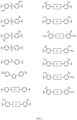
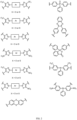
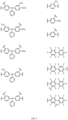
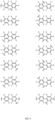
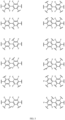
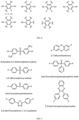
- Suitable aryl moieties include, but are not limited to, the aryl moieties shown in FIGS. 1-6 .
- Ar is an aryl moiety as described herein.
- the porous polymeric material comprises a plurality of cyclodextrin moieties, for example ⁇ -cyclodextrin moieties.
- the porous polymeric material comprises a plurality of ⁇ -cyclodextrin moieties crosslinked by one or more aryl (e.g., dicyano diflurophenyl) moieties.
- aryl e.g., dicyano diflurophenyl
- at least two of the plurality of ⁇ -cyclodextrin moieties are crosslinked by two or more aryl moieties.
- polymeric material of the present disclosure can also include any of the cyclodextrin moieties disclosed herein, for example ⁇ - or ⁇ -cyclodextrin moieties in addition to, or instead of the ⁇ -cyclodextrin moieties.
- the aryl moieties can crosslink the primary and/or secondary groups on the cyclodextrin.
- the crosslinked cyclodextrin moieties can be covalently bonded to various positions.
- the aryl crosslinking moiety comprises a phenyl moiety
- the crosslinking bonds can be to 1,2-, 1,3-, and/or 1,4-positions (relative positions) of the phenyl moiety on the aryl crosslinking moiety, depending on the available bonding sites on the phenyl moiety.
- the porous polymeric materials can include various regioisomers of the material.
- the porous polymeric material comprises one or more regioisomer of the porous polymeric material.
- the porous polymeric material of the present disclosure can have pores ranging in size (i.e., the longest dimension (e.g., diameter) of an orifice of a pore) from about 1 nm to about 50 nm, about 1 nm to about 20 nm, about 1 nm to about 10 nm, or about 1 nm to about 5 nm, including about 1 nm, about 2 nm, about 3 nm, about 4 nm, about 5 nm, about 6 nm, about 7 nm, about 8 nm, about 9 nm, about 10 nm, about 11 nm, about 12 nm, about 13 nm, about 14 nm, about 15 nm, about 16 nm, about 17 nm, about 18 nm, about 19 nm, about 20 nm, about 21 nm, about 22 nm, about 23 nm, about 24 nm, about 25 nm, about 26 nm, about 27
- the porous polymeric material is mesoporous.
- the porous polymeric material comprises pores of about 1.5 nm to about 5 nm in size.
- about 50% or more, about 80% or more, about 90% or more, about 95% or more, about 99% or more of the pores in the porous polymeric material are about 1 nm to about 50 nm in size.
- about 50% or more, about 80% or more, about 90% or more, about 95% or more, about 99% or more of the pores in the porous polymeric material are about 10 nm or less in size.
- the porous polymeric material has a relatively large surface area, which substantially improves the adsorption kinetics and/or capacity compared to conventional nonporous cyclodextrin polymers.
- the porous polymeric materials of the present disclosure can have a surface area ranging from about 50 m 2 /g to about 2000 m 2 /g, including all integer m 2 /g values and ranges therebetween.
- the surface area is about 50 m 2 /g, about 100 m 2 /g, about 150 m 2 /g, about 200 m 2 /g, about 250 m 2 /g, about 300 m 2 /g, about 350 m 2 /g, about 400 m 2 /g, about 450 m 2 /g, about 500 m 2 /g, about 550 m 2 /g, about 600 m 2 /g, about 650 m 2 /g, about 700 m 2 /g, about 750 m 2 /g, about 800 m 2 /g, about 850 m 2 /g, about 900 m 2 /g, about 950 m 2 /g, about 1000 m 2 /g, about 1100 m 2 /g, about 1200 m 2 /g, about 1300 m 2 /g, about 1400 m 2 /g, about 1500 m 2 /g, about 1600 m 2 /g, about
- the ratio of cyclodextrin moieties to aryl crosslinking moieties is 1:1 to 1:X, where X is three times the average number of glucose subunits in the cyclodextrin moieties of the polymer.
- the ratio of cyclodextrin moieties to aryl crosslinking moieties is about 1:1 to about 1:24, including about 1:1, about 1:1.5, about 1:2, about 1:2.5, about 1:3, about 1:3.5, about 1:4, about 1:4.5, about 1:5, about 1:5.5, about 1:6, about 1:6.5, about 1:7, about 1:7.5, about 1:8, about 1:8.5, about 1:9, about 1:9.5, about 1:10, about 1:10.5, about 1:11, about 1:11.5, about 1:12, about 1:12.5, about 1:13, about 1:13.5, about 1:14, about 1:14.5, about 1:15, about 1:15.5, about 1:16, about 1:16.5, about 1:17, about 1:17.5, about 1:18, about 1:18.5, about 1:19, about 1:19.5, about 1:20,
- composition comprising one or more porous polymeric materials of the present disclosure.
- the composition comprises a support material supporting the porous polymeric materials of the present disclosure.
- the composition consists essentially of one or more porous polymeric material.
- a composition comprises one or more porous polymeric material and one or more support materials, where the porous polymeric material is covalently bonded to the support material.
- support materials include cellulose (e.g., cellulose fibers), carbon-based materials such as activated carbon, graphene oxide, and oxidized carbon materials, silica, alumina.
- cellulose e.g., cellulose fibers
- carbon-based materials such as activated carbon, graphene oxide, and oxidized carbon materials, silica, alumina.
- the composition is in the form a membrane or a column packing material.
- the support is a fiber (e.g., a cellulose fiber).
- the support is a porous particulate material (e.g., porous silica and porous alumina).
- porous polymeric materials are also disclosed herein but not according to the present invention.
- the porous polymeric material is made by a method disclosed herein.
- the porous polymeric materials of the present disclosure comprise cyclodextrin moieties crosslinked with a suitable crosslinking agent that provides a porous, relatively high surface area polymeric material as described herein.
- suitable crosslinking agents can include any, at least difunctional compound capable of reaction with any of the cyclodextrins disclosed herein to form a crosslinked network of cyclodextrin moieties.
- the crosslinking agent should be relatively rigid and inflexible, such as the aryl crosslinkers disclosed herein.
- crosslinking agents other than aryl crosslinkers can be used, provided they have similar ranges of flexibility.
- crosslinkers which form crosslinks with no more than about 6 "rotable" bonds (e.g., 2, 3, 4, 5, or 6 rotable bonds) may be suitable.
- the term rotable refers to bonds in the crosslink having a calculated rotational barrier which is no more than about 80 kJ/mol (298 K), for example in the range of about 10-30 kJ/mol.
- Such crosslinks have limited mobility, which is believed to aid in the formation of high porosity and surface area materials.
- a method of making a porous polymeric material comprises contacting a cyclodextrin with a crosslinking agent, such as an aryl compound such that the crosslinking agent (e.g., aryl compound) crosslinks at least two cyclodextrin moieties.
- the crosslinking agent comprises at least two groups (e.g., halide groups, if the crosslinking agent is an aryl compound) that can react with the cyclodextrin to form covalent (e.g., aryl ether bonds).
- the reaction between a cyclodextrin and an aryl compound is a nucleophilic aromatic substitution reaction.
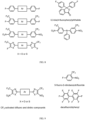
- Suitable aryl compounds that react to form aryl crosslinking moieties include the moieties shown in FIGS. 7-9 , where Ar is an aryl moiety as defined herein.
- Two or more of the functional groups e.g., halide, -NO 2 , and/or -CF3 groups
- react to form an aryl crosslinking group e.g., the aryl compound is tetrafluoroterephthalonitrile, decafluorobiphenyl, or octafluoronaphthalene.
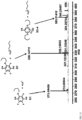
- porous ⁇ -CD -containing polymers can be derived from nucleophilic aromatic substitution of tetrafluoroterephthalonitrile ("1," as referenced in the figures) by hydroxyl groups of ⁇ -CD .
- tetrafluoroterephthalonitrile has been copolymerized with bifunctional catechols previously, its reaction with aliphatic alkoxides does not appear to have been described.
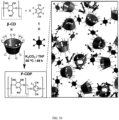
- ⁇ -CD and tetrafluoroterephthalonitrile were polymerized in a suspension of K 2 CO 3 in THF at 80 °C to provide a pale-yellow precipitate in 20% yield, which provided a mesoporous high surface area polymer with the expected chemical bonds as represented by FIG. 10 .
- the yield was further improved to 45% by performing the polymerization in THF:DMF (9:1 v/v), in which ⁇ -CD is more soluble.
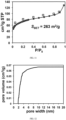
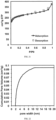
- N 2 porosimetry of the P-CDP s provided type II isotherms indicative of mesoporosity, and their Brunauer-Emmett-Teller surface areas ( S BET ) ranged from 35-263 m 2 /g as shown in the Table 1 below, depending on the molar feed ratio of ( 1 ) tetrafluoroterephthalonitrile: ⁇ -CD employed in the polymerization as shown in FIG. 11 .
- the closed squares in FIG. 11 represent the N 2 adsorption isotherms, and the open squares represent the N 2 desorption isotherms at 77 K of a P-CDP.
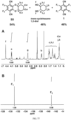
- compositional analysis and spectroscopic characterization of the P-CDP and NP-CDP networks indicated the presence of both tetrafluoroterephthalonitrile and ⁇ -CD moieties in the polymers.
- the ratio of tetrafluoroterephthalonitrile: ⁇ -CD in each polymer was determined by combustion analysis, with 6.1 equivalents of tetrafluoroterephthalonitrile per ⁇ -CD for P-CDP and 3.5 equivalents of tetrafluoroterephthalonitrile per ⁇ -CD for NP-CDP as shown in FIGS. 25 and 26 and the Table 3 below.
- the F:N ratio also indicates that the terephthalonitrile moieties in each polymer are substituted by 2.1 and 2.2 alkoxides on average, which are consistent with model studies, which suggest that the ⁇ -CD macrocycles are linked predominantly at both the small and large rims through disubstituted terephthalonitrile moieties.
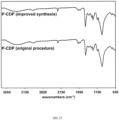
- the FTIR spectra of each polymer showed absorbances at 2235 cm -1 , corresponding to the nitrile stretch, as well as 1670 and 1463 cm -1 , corresponding to C-C aromatic stretches.
- the 1,4-, 1,3-, and 1,2-disubstituted products were formed at 6:3:1 ratio, respectively.
- a larger fraction of disubstituted products with a similar distribution of regioisomers was formed when 4 equivalents of n-BuOH were employed, yet tri- or tetrasubstituted products were still not observed as shown in FIG. 76 .
- This experiment suggests that tri- and tetrasubstituted linkages are unlikely in the CD polymers.
- trans-1,2-cyclohexanediol was found to form a 1,2-cyclic disubstitution product with tetrafluoroterephthalonitrile as shown in FIG. 77 .
- BPA Bisphenol A
- NP-CDP a component of plastics that has attracted attention as an endocrine disruptor
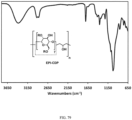
- EPI-CDP a nonporous ⁇ -CD polymer crosslinked with epichlorohydrin
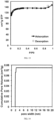
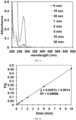
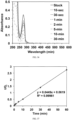
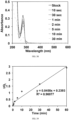
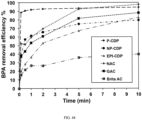
- NP-CDP required 30 min to reach equilibrium and adsorbed only 46% of its equilibrium value in 10 s, indicating that the near-instantaneous adsorption of BPA by P-CDP is attributable to its porosity.
- EPI-CDP required more than 1 h to reach equilibrium and only adsorbed 22% of its equilibrium value after 10 s, which is consistent with previous reports.
- the three AC s also showed slower BPA uptake with the Brita AC and GAC each requiring more than 1 h to reach equilibrium, while NAC required 10 min as shown in FIG. 44 . NAC only adsorbed 53% of its equilibrium value in 10 s despite its nearly four times higher surface area than P-CDP.
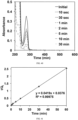
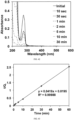
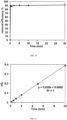
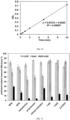
- the apparent pseudo-second order rate constant ( k obs ) of BPA (0.1 mM) adsorption to P-CDP is 1.5 mg g -1 min -1 , which is 15 times higher than the high performance NAC and two or more orders of magnitude higher than the other studied adsorbents as shown in FIG. 32, FIG. 33 , Table 4 and Table 5, below.
- this rate constant is the highest reported for BPA or any other pollutant removed by AC s , mesoporous silicas, or carbohydrate-based adsorbents under similar experimental conditions.
- k obs amalgamates the performance of readily accessible binding sites (conceptualized as the outer surface of the adsorbent) and less accessible, slower binding sites (conceptualized as being within the adsorbent's interior).
- P-CDP s superior k obs for BPA adsorption indicates that nearly all of its ⁇ -CD binding sites are readily accessible, a feature not found in other adsorbents.
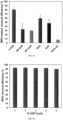
- each adsorbent was investigated by determining the instantaneous uptake of BPA, or that achieved after very short contact times, as shown in Fig. 45 .
- High instantaneous uptake is also desirable for rapid flow-through water purification.
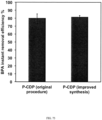
- the adsorbent ( ⁇ 3 mg) was trapped as a thin layer on a 0.2 ⁇ m syringe filter, and aqueous BPA (3 mL, 0.1 mM) was passed rapidly through the filter at a flow rate of 9 mL/min. Under these conditions, P-CDP removed 80% of the BPA from the solution, corresponding to more than 85% of its equilibrium uptake as shown in FIG.
- thermodynamic parameters of P-CDP s BPA adsorption are consistent with the formation of ⁇ -CD inclusion complexes.
- P-CDP s equilibrium uptake at 20 °C as a function of [BPA] 0 fit the Langmuir model as shown in Table 6, below, suggesting 1: 1 inclusion complex formation with an association constant (K) of 56000 M -1 , which is comparable to the values reported for other ⁇ -CD polymers.
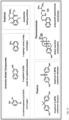
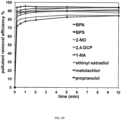
- P-CDP In addition to BPA, the ability of P-CDP to remove pollutants of different size, functionality, and hydrophobicity that span simple aromatics, pharmaceuticals, and pesticides was evaluated as shown in FIG. 47 .
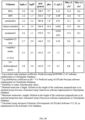
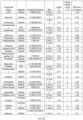
- the molecular descriptor values for micropollutants used in the study are shown in FIG. 48 .
- P-CDP rapidly removes many organic pollutants, including several pollutants of emerging concern that are not removed effectively by current water or wastewater treatment processes.
- Simple aromatics include: 2,4-dichlorophenol (DCP or 2,4-DCP), an intermediate in herbicide production and degradation product of the antibacterial agent triclosan; 1-naphthyl amine (1-NA), an azo dye precursor and known carcinogen; and 2-naphthol (2-NO), a model for various naphthol pollutants.
- DCP 2,4-dichlorophenol
- 1-NA 1-naphthyl amine
- 2-NO 2-naphthol
- BPS bisphenol S
- metolachlor one of the most common herbicides that is often detected in streams and groundwater
- ethinyl estradiol an estrogen mimic used in oral contraceptives that has caused the collapse of fish populations at concentrations as low as 5 ng/L
- propranolol a beta-blocker used to treat hypertension, which is not removed efficiently by water or wastewater treatment protocols and has been detected in wastewater effluent streams at concentrations similar to blood serum levels of its users.
- P-CDP shows excellent instant uptake of all pollutants, in stark contrast to the nonporous EPI-CDP, and it also outperforms NAC for all of the studied emerging contaminants. P-CDP even shows similar performance as NAC for the planar aromatic model compounds, which interact strongly with AC s . P-CDP s superior performance for anthropogenic contaminants indicates a major advantage of ⁇ -CD -based adsorbents: their three-dimensional cavities are a better match for non-planar compounds. Overall, these results show the broad scope and robust nature of the P-CDP for removing relevant emerging pollutants with diverse size, hydrophobicity, and pendant functionality.
- ⁇ -cyclodextrin ( ⁇ -CD ) >97%) and tetrafluoroterephthalonitrile (>99%) were purchased from Sigma Aldrich and used without further purification.
- Tetrahydrofuran (THF) was purified and dried in a custom-built activated alumina solvent purification system.
- Epichlorohydrin (>99%) was purchased from Sigma Aldrich and used as received.
- Aqueous solutions of pollutants were prepared using 18 MQ deionized H 2 O at neutral pH. Pollutant model compounds were obtained from commercial sources and used as received.
- Norit RO 0.8 activated carbon ( NAC ) pellets was purchased from Sigma Aldrich and ground into a fine powder before use.
- Brita AC was obtained from a "Brita Advanced Faucet" point-of-use water filter and was ground into fine powder before use.
- Granular activated carbon GAC, DARCO 12-20 mesh
- GAC Granular activated carbon
- UV-Vis spectroscopy was performed on Cary 5000 Varian UV-Vis spectrometer. UV-Vis spectra were recorded at room temperature over the range of 200-600 nm, corrected against an appropriate background spectrum, and normalized to zero absorbance at 600 nm.
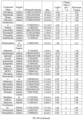
- Analytes were quantified from external calibration standards based on the analyte responses by linear least-squares regression. Limits of quantification for each analyte were determined as the lowest point in the external calibration curve at which at least 8 scans were measured across a chromatographic peak and the most intense MS/MS product ion was still detected. Exact molecular masses, ionization behavior, retention times, and limits of quantification used for the detection and quantification of each analyte are provided in FIGS. 80-82 .
- Infrared spectroscopy was performed on a Thermo Nicolet iS10 with a diamond ATR attachment.
- Solution-phase NMR experiments were performed on a Varian INOVA-400 using a standard 1 H ⁇ 13 C, 15 N ⁇ Z-PFG probe with a 20 Hz sample spin rate.
- Solid-state NMR analyses were conducted on a Varian INOVA-400 spectrometer using an external Kalmus 1 H linear pulse amplifier blanked using a spare line. Samples were packed into 7 mm outside diameter silicon nitride rotors and inserted into a Varian HX magic angle spinning (MAS) probe.
- MAS Varian HX magic angle spinning
- Thermogravimetric (TGA) analysis was performed on a TA Instruments Q500 Thermogravimetric Analyzer. Parameters included a heating range of 20-600 °C using a 10 °C/min ramp as shown in FIG. 73
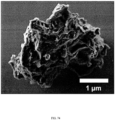
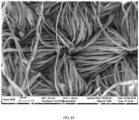
- FIG. 74 is a representative scanning electron micrograph of a P-CDP particle. Scanning electron microscopy was performed on a LEO 1550 FESEM (Keck SEM) operating at 2.00 kV and a working distance of 3-4 mm with an aperture size of 20 ⁇ m. Samples were prepared by adsorption onto a silicon wafer, which was then attached to a flat aluminum platform sample holder.
- LEO 1550 FESEM Ker SEM
- a flame dried 20 mL scintillation vial equipped with a magnetic stir bar was charged with ⁇ -CD (0.200 g, 0.176 mmol), (1) tetrafluoroterephthalonitrile (0.100 g, 0.500 mmol), and K 2 CO 3 (0.300 g, 2.17 mmol).
- the vial was flushed with N 2 gas for 5 min, then dry THF (8 mL) was added and the vial was bubbled with N 2 for additional 2-3 min.
- the N 2 inlet was removed and the mixture was placed on a hot stirring plate (85 °C) and stirred at 500 rpm for 2 d.
- NP-CDP nonporous ⁇ -cyclodextrin polymer
- ⁇ -CD (2.00 g, 1.76 mmol) and tetrafluoroterephthalonitrile (0.200 g, 1.00 mmol) were mixed vigorously in an aqueous NaOH solution (6.25 N, 2.00 mL) at 85 °C.
- the mixture solidified within 1 h, after which deionized H 2 O was added and the suspension was filtered.
- the solid was washed by soaking in deionized H 2 O (2 ⁇ 150 mL) for 15 min, THF (3 ⁇ 15 mL) for 30 min and CH 2 Cl 2 (1 ⁇ 15 mL) for 15 min.
- FIG. 25 shows IR spectra of as-synthesized NP-CDP. The assignments of the major IR peaks for the spectra shown in FIG. 25 are found in Table 11, below.
- ⁇ -CD (0.300 g, 2.64 mmol) was dissolved aqueous NaOH (6.25 N, 5.00 mL) at 60 °C.
- Epichlorohydrin (2.50 mL, 32.4 mmol,) was added to this solution dropwise while stirring vigorously at 60 °C.
- the mixture turned into a yellow gel within 1 h, after which 10 mL of deionized H 2 O was added, and the mixture was filtered on a Büchner funnel.
- the solid was washed by soaking in deionized H 2 O (2 ⁇ 150 mL) for 15 min, THF (3 ⁇ 15 mL) for 30 min and CH 2 Cl 2 (1 ⁇ 15 mL) for 15 min.
- the polymer (18 mg) was initially washed with H 2 O for 2-3 min and then filtered on 11 ⁇ m Whatman filter paper. The polymer was then transferred to a 20 mL scintillation vial and then a pollutant stock solution (18 mL) was added. The mixture was immediately stirred and 2 mL aliquots of the suspension were taken at certain intervals via syringe and filtered immediately by a Whatman 0.2 ⁇ m inorganic membrane filter. The residual concentration of the pollutant in each sample was determined by UV-Vis spectroscopy.
- the adsorbent (6 mg) was added to a 20 mL scintillation vial and then a pollutant stock solution (6 mL) was added. The vial was stirred for a measured amount of time before the suspension was filtered using a Whatman 0.2 ⁇ m inorganic membrane filter.
- Pollutant Removal Efficiency % C 0 ⁇ C t c 0 ⁇ 100 where C 0 (mmol/L) and C t (mmol/L) are the initial and residual concentration of pollutant in the stock solution and filtrate, respectively.
- q e (mg/g) is the amount of pollutant adsorbed at equilibrium.
- q max,e (mg/g) is the maximum adsorption capacity of adsorbent at equilibrium.
- c (mol/L) is the residual pollutant concentration at equilibrium.
- K (mol -1 ) is the equilibrium constant.
- a flame dried 20 mL scintillation vial equipped with a magnetic stir bar was charged with ⁇ -CD (0.205 g, 0.181 mmol), (1) tetrafluoroterephthalonitrile (0.100 g, 0.515 mmol), and K 2 CO 3 (0.320 g, 2.32 mmol).
- the vial was flushed with N 2 gas for 5 min, then an anhydrous THF/DMF mixture (9:1 v/v, 8 mL) was added and the vial was sparged with N 2 for additional 2-3 min.
- the N 2 inlet was removed and the mixture was placed on a hot stirring plate (85 °C) and stirred at 500 rpm for 2 d.
- LX-91 was synthesized under similar conditions as LX-113 but employed a different crosslinker, octafluoronaphthalene (Scheme 3).
- LX-105 and LX-113 are not according to the present invention.
- each polymer sample was isolated from the reaction mixture by filtration, washed with solvents, and dried under vacuum.
- the surface area ( S BET ) of each sample was characterized by N 2 adsorption performed at 77 K (Table 1).
- the fluorine content of each sample was measured by combustion analysis.
- both LX-91 and LX-105 provided surface areas that approach that of the P-CDP as well as increased fluorine content.
- LX-113 did not exhibit permanent porosity, yet it had the highest fluorine content.
- each polymer sequester perfluorooctanoic acid (PFOA), a model for perfluorinated compound pollutants in water, was evaluated using liquid chromatography mass spectrometry.
- PFOA perfluorooctanoic acid
- Each polymer (10 mg/L) was introduced to a water sample containing PFOA (1 ⁇ g/L) for 4 days, after which an aliquot of the water sample was removed and the remaining concentration measured as shown in FIG. 83 .
- the four-day contact time was chosen to characterize the equilibrium uptake of the PFOA.
- the PFOA uptake of each polymer ranged from poor (-10% for P-CDP) to high (100% for LX-113), which appears correlated to the fluorine content of each polymer.
- the porous cyclodextrin polymer materials of the present disclosure can also be prepared on a support material, for example covalently bonded, adhesively bonded, or mechanically attached to a support such as a fibrous substrate.
- the support material can be any material that has one or more hydroxyl groups that can form a covalent bond with a crosslinking agent.
- one end of a crosslinking agent is covalently bound to the substrate material and another end of the crosslinking agent is covalently bound to a glucose unit of a cyclodextrin. It is desirable that the support material not dissolve (e.g., to an observable extent by, for example, visual inspection, gravimetric methods, or spectroscopic methods) in aqueous media.
- support materials include, but are not limited to, polymer materials (e.g., acrylate materials, methacrylate materials, styrenic materials, polyester materials, nylon materials, and combinations thereof) or inorganic materials (e.g., silicates, silicones, metal oxides such as alumina, titania, zirconia, and hafnia, and combinations thereof).
- the polymer materials are homopolymers, copolymers, or resins (e.g., resins comprising polymeric materials).
- the support material can be in the form a fiber, cloth, particulate (e.g., a powder), or a solid surface.
- the fibrous substrate is a cellulosic substrate.
- Cellulosic substrates can comprise any suitable form of cellulose, such as cellulose derived from plant sources such as wood pulp (e.g., paper or paper fibers), cotton, regenerated cellulose, modified cellulosics such cellulose esters and/or ethers, and the like.
- the cellulosic substrate can be in the form of a fabric, such as a woven or nonwoven fabric, or as fibers, films, or any other suitable shape, particularly shapes that provide high surface area or porosity.
- the porous cyclodextrin polymer materials of the present disclosure are bonded to fibers, for example, a cellulosic fiber or a fabric, such as cotton.
- the N 2 inlet was removed, the flask was sealed and the mixture was placed on a hot stirring plate (85 °C) and stirred at 500 r.p.m. for 2 days.
- the resulting orange suspension was cooled and filtered, and the residual K 2 CO 3 was removed by washing the cotton 400 fabric with 1 N HCl until CO 2 evolution stopped.
- the fabric was isolated from the solid formed and activated by soaking in 200 mL H 2 O for 1 day, then washed with methanol using a Soxhlet system for 1 day.
- the fabric was removed by filtration and dried under high vacuum at room temperature for 1 day, providing 1.472 g of a yellowish fabric.
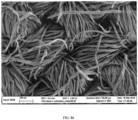
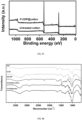
- the fabric was characterized by SEM, XPS, and IR spectroscopy as shown in FIGS. 85-88 .
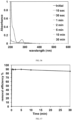
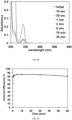
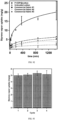
- FIG. 90 shows a clear difference in the BPA uptake as a function of time, and BPA concentration of the treated fabric in comparison with the untreated one.
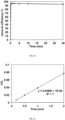
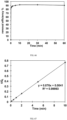
- the kinetic studies based on the BPA uptake over time are shown in FIG. 90 .
- the graph indicates a good agreement with a pseudo-second order adsorption rate law for the treated fabric and the control.
- the BPA adsorbed in the fabric at equilibrium shows a significant enhancement of the fabric capacity after the P-CDP @cotton compared to 0.37 mg BPA/g of untreated cotton.
- Two models were fit to the data as shown in FIG. 91 .
- the Langmuir model fits the behavior of the P-CDP @cotton fabric well, yet does not describe the behavior of the control.
- the Freundlich model better describes the modest BPA uptake of the untreated fabric, which suggests that a more heterogeneous, poorly defined adsorption of the BPA occurs. Calculation of the constants and capacities for the Langmuir and Freundlich models shows higher values for the treated fabric in comparison with the control.
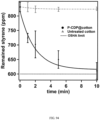
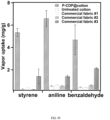
- Styrene uptake was also evaluated at lower relative vapor pressures.
- the fabrics were tested in sealed vials with styrene vapor pressures of 850 ppm, after which the quantity of the styrene on the fabric was evaluated the fabric.
- These experiments provided a maximum uptake of 0.48 mg styrene/g of P-CDP @cotton at 40 min of exposure, which represents an uptake of 43.1% of the total styrene injected in the chamber (850 ppm).
- the uptake at 40 min of the untreated cotton is just 2.6%. As shown in FIG.
- the use of the P-CDP @cotton can lower the styrene concentration to similar or lower than the maximum levels of styrene accepted by OSHA (600 ppm), unlike the untreated cotton that has a minimal effect on the styrene concentration.
- micropollutants were selected based on their environmental relevance, their previous investigation for adsorption onto activated carbon, and their broad range of physicochemical properties including polarity, charge state, and molecular volume. Detailed information on each MP can be found in FIG. 80 .
- Stock solutions of each chemical were prepared at a concentration of 1 g/L using 100% HPLC-grade methanol with the exception of penciclovir which was prepared in Milli-Q water. The stock solutions were used to prepare two experimental mixes at a concentration of 100 mg/L using Milli-Q water.
- Mix-A contained all 83 MPs and was used for the kinetics experiments and the instantaneous uptake experiments.
- Mix-B contained 8 MPs and was used for the isotherm experiments.
- the stock solutions and the analytical mixes were stored in a freezer at -20°C and a refrigerator at 4°C, respectively.
- Adsorbents Two adsorbents were investigated in this research: a porous ⁇ -cyclodextrin-containing polymer ( P-CDP ) synthesized according to a published nucleophilic aromatic substitution method; and a coconut-shell based GAC ( CCAC, AquaCarb 1230C, Westates Carbon, Siemens, Roseville, MN). To increase the similarity in particle size between the P-CDP and the CCAC and to enhance the adsorption rate of CCAC in isotherm experiments, the CCAC was pulverized with a mortar and pestle until >95% (mass) passed a 74- ⁇ m sieve (200 U.S. mesh).
- the CCAC that remained on the sieve was remixed with the CCAC that passed through the sieve to get an unbiased mixture.
- the P-CDP and the pulverized CCAC were dried under vacuum in a desiccator for one week and stored in a refrigerator at 4 °C.
- the adsorption kinetics experiments were performed in 125 ml glass Erlenmeyer flasks with magnetic stir bars.
- the experiments were conducted at 23°C on a multi-position stirrer (VWR) with the stirring rate at 400 revolutions per minute (rpm).
- VWR multi-position stirrer
- the adsorbent dose was 10 mg/L and the MPs were spiked to generate an initial adsorbate concentration of 1 ⁇ g/L.
- the adsorbent and MP doses were selected according to previous research investigating MP adsorption on the same CCAC.
- adsorbent P-CDP or CCAC
- 10 mg of adsorbent P-CDP or CCAC
- 10 mg of adsorbent P-CDP or CCAC
- 10 mg of adsorbent P-CDP or CCAC
- a vortex mixer Fisher Scientific
- the suspension was sonicated for 1 minute to break small aggregates and then stirred on a multi-position stirrer for 30 minutes at 360 rpm.
- 98 ml of Milli-Q water, 1 ml of Mix-A (100 ⁇ g/L), and 1 ml of the activated adsorbent suspension were added to a flask successively.
- the adsorbent suspension was added after the addition of MPs to simulate the real situation in drinking water treatment.
- Samples were collected in 8 mL volumes at predetermined sampling times (0, 0.05, 0.17, 0.5, 1, 5, 10, 30, 60, 90, 120 minutes) and filtered with a 0.22 ⁇ m PVDF syringe filter (Restek). Control experiments were performed under the same condition with no addition of adsorbent and samples were collected at 120 minutes. All kinetics experiments (including controls) were performed with 5 replicates.
- the values for k obs at t 30 minutes were estimated for all MPs and for both adsorbents.
- MP Removal C 0 ⁇ C t C 0 ⁇ 100 MP Removal was calculated for each of the five replicate experiments and is reported as the average value plus/minus the standard deviation.
- Instantaneous uptake experiments were performed with a 10 ml Luer-Lock tip glass syringe and Whatman 0.2 ⁇ m inorganic syringe filters at 23°C with a constant flow rate of 25 ml/min as described in the preceding.
- the adsorbents were activated prior to conducting the instantaneous uptake experiments in the same way as was described for the kinetics experiments to generate an activated suspension of each adsorbent at a concentration of 1 g/L.
- the syringe filters were loaded with adsorbent by passing 0.3 mL of the activated suspension through the inorganic syringe filter to form a thin layer of 0.3 mg of adsorbent on the filter surface. Following loading of the filters with adsorbent, 8 mL of Mix-A (1 ⁇ g/L) was pushed through the adsorbent-loaded filter with constant pressure over 20 s. Control experiments were performed in the same way with no adsorbent on the filter to account for losses through the filter itself. All instantaneous uptake experiments and controls were conducted in triplicate.
- MP Removal C 0 ⁇ C I C 0 ⁇ 100 where C 0 (ng l -1 ) is the average concentration of a MP in the samples of control experiments; and C I (ng l -1 ) is the concentration of a MP in the filtrate. MP Removal was calculated for each of the three replicate experiments and is reported as the average value plus/minus the standard deviation.
- the analytical method was adopted from one previously reported for ultratrace level screening of polar and semi-polar organic chemicals and involved HPLC-MS and on-line solid phase extraction (EQuan Max Plus, ThermoFisher Scientific). Samples were injected at 5 ml volumes and were loaded onto an XBridge (Waters) C-18 Intelligent Speed (2.1 mm ⁇ 20 mm, particle size 5 ⁇ m) trap column. Elution from the trap column and onto an XBridge (Waters) C-18 analytical column (2.1 mm ⁇ 50 mm, particle size 3.5 ⁇ m) was performed using a gradient pump delivering 200 ⁇ l min -1 of a water and MeOH mobile phase, each containing 0.1 vol.% formic acid.
- the HPLC-MS was operated with electrospray ionization in positive and negative polarity modes.
- the MS acquired full-scan MS data within a mass-to-charge range of 100-1,000 for each sample followed by a data-dependent acquisition of product ion spectra (MS/MS).
- Analytes were quantified from external calibration standards based on the analyte responses by linear least-squares regression. Limits of quantification for each analyte were determined as the lowest point in the external calibration curve at which at least 8 scans were measured across a chromatographic peak and the most intense MS/MS product ion was still detected. Exact molecular masses, ionization behavior, retention times, and limits of quantification used for the detection and quantification of each analyte are provided in FIG. 81 .
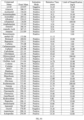
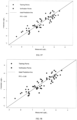
- the estimated values of k obs for each MP for CCAC and P-CDP are presented in FIG. 82 .
- the k obs describes the rate at which MP uptake is complete (i.e., the rate at which the system reaches equilibrium). This can lead to some misleading values for the magnitude of k obs for MPs that have little or no uptake.
- 2,4-D is hardly removed by P-CDP, yet the estimated value for k obs is 72.9 g mg -1 min -1 .
- 2,4-D is removed fairly well by CCAC and the estimated value for k obs is only 11.0 g mg -1 min -1 .
- the k obs of 2,4-D is greater for the P-CDP, but only because it rapidly reaches an equilibrium condition of no removal. In other cases, little or no removal can lead to negative values of k obs when applying the model of Ho and McKay. Because of this, the k obs for all MPs that removed less than 5% are reported as zero with the estimated value based on the Ho and McKay model given in parentheses. Two MPs were removed to less than 5% for CCAC and 12 MPs were removed to less than 5% for the P-CDP.
- each MP contains compounds with removal between 80 - 100%; group 2 (G2) contains compounds with removal between 60 - 80%; group 3 (G3) contains compounds with removal between 20 - 60%; group 4(G4) contains compounds with removal between 5 - 20%; group 5 (G5) contains compounds with no removal.
- the P-CDP is formed by crosslinking cyclodextrin that is selected from the group consisting of ⁇ -cyclodextrin, ⁇ -cyclodextrin, ⁇ -cyclodextrin, randomly methylated ⁇ -cyclodextrin, hydroxypropyl- ⁇ -cyclodextrin, hydroxypropyl- ⁇ -cyclodextrin, acetyl- ⁇ -cyclodextrin, chlorotriazinyl- ⁇ -cyclodextrin, glucosyl- ⁇ -cyclodextrin, maltosyl- ⁇ -cyclodextrin, sulfobutyl- ⁇ -cyclodextrin, sulfated cyclodextrin, and combinations thereof.
- cyclodextrin that is selected from the group consisting of ⁇ -cyclodextrin, ⁇ -cyclodextrin, ⁇ -cyclodextrin, randomly methylated ⁇ -cyclo
- the crosslinker may be selected from the group consisting of tetrafluoroterephthalonitrile, octafluoronaphthelene, and combinations thereof. In instances of the disclosure but not according to the invention, the crosslinker may also be decafluorobiphenyl.
- the disclosed mesoporous polymeric materials are according to the invention unless otherwise indicated, the processes themselves for forming the mesoporous polymeric materials are not according to the invention.
- the P-CDP is formed by crosslinking ⁇ -cyclodextrin with tetrafluoroterephthalonitrile. In one instance, the P-CDP is formed by crosslinking ⁇ -cyclodextrin with tetrafluoroterephthalonitrile. In one instance, the P-CDP is formed by crosslinking ⁇ -cyclodextrin with tetrafluoroterephthalonitrile. In one instance, the P-CDP is formed by crosslinking randomly methylated ⁇ -cyclodextrin with tetrafluoroterephthalonitrile.
- the P-CDP is formed by crosslinking hydroxypropyl- ⁇ -cyclodextrin with tetrafluoroterephthalonitrile. In one instance, the P-CDP is formed by crosslinking hydroxypropyl- ⁇ -cyclodextrin with tetrafluoroterephthalonitrile. In one instance, the P-CDP is formed by crosslinking acetyl- ⁇ -cyclodextrin with tetrafluoroterephthalonitrile. In one instance, the P-CDP is formed by crosslinking chlorotriazinyl- ⁇ -cyclodextrin with tetrafluoroterephthalonitrile.
- the P-CDP is formed by crosslinking glucosyl- ⁇ -cyclodextrin with tetrafluoroterephthalonitrile. In one instance, the P-CDP is formed by crosslinking maltosyl- ⁇ -cyclodextrin with tetrafluoroterephthalonitrile. In one instance, the P-CDP is formed by crosslinking sulfobutyl- ⁇ -cyclodextrin with tetrafluoroterephthalonitrile. In one instance, the P-CDP is formed by crosslinking sulfated cyclodextrin with tetrafluoroterephthalonitrile.
- the P-CDP is formed by crosslinking ⁇ -cyclodextrin with octafluoronaphthelene. In one instance, the P-CDP is formed by crosslinking ⁇ -cyclodextrin with octafluoronaphthelene. In one instance, the P-CDP is formed by crosslinking ⁇ -cyclodextrin with octafluoronaphthelene. In one instance, the P-CDP is formed by crosslinking randomly methylated ⁇ -cyclodextrin with octafluoronaphthelene.
- the P-CDP is formed by crosslinking hydroxypropyl- ⁇ -cyclodextrin with octafluoronaphthelene. In one instance, the P-CDP is formed by crosslinking hydroxypropyl- ⁇ -cyclodextrin with octafluoronaphthelene. In one instance, the P-CDP is formed by crosslinking acetyl- ⁇ -cyclodextrin with octafluoronaphthelene. In one instance, the P-CDP is formed by crosslinking chlorotriazinyl- ⁇ -cyclodextrin with octafluoronaphthelene.
- the P-CDP is formed by crosslinking glucosyl- ⁇ -cyclodextrin with octafluoronaphthelene. In one instance, the P-CDP is formed by crosslinking maltosyl- ⁇ -cyclodextrin with octafluoronaphthelene. In one instance, the P-CDP is formed by crosslinking sulfobutyl- ⁇ -cyclodextrin with octafluoronaphthelene. In one instance, the P-CDP is formed by crosslinking sulfated cyclodextrin with octafluoronaphthelene.
- the crosslinker used is decafluorobiphenyl, although these instances are not according to the invention.
- the P-CDP is formed by crosslinking ⁇ -cyclodextrin with decafluorobiphenyl.
- the P-CDP is formed by crosslinking ⁇ -cyclodextrin with decafluorobiphenyl.
- the P-CDP is formed by crosslinking ⁇ -cyclodextrin with decafluorobiphenyl.
- the P-CDP is formed by crosslinking randomly methylated ⁇ -cyclodextrin with decafluorobiphenyl.
- the P-CDP is formed by crosslinking hydroxypropyl- ⁇ -cyclodextrin with decafluorobiphenyl. In one instance, the P-CDP is formed by crosslinking hydroxypropyl- ⁇ -cyclodextrin with decafluorobiphenyl. In one instance, the P-CDP is formed by crosslinking acetyl- ⁇ -cyclodextrin with decafluorobiphenyl. In one instance, the P-CDP is formed by crosslinking chlorotriazinyl- ⁇ -cyclodextrin with decafluorobiphenyl.
- the P-CDP is formed by crosslinking glucosyl- ⁇ -cyclodextrin with decafluorobiphenyl. In one instance, the P-CDP is formed by crosslinking maltosyl- ⁇ -cyclodextrin with decafluorobiphenyl. In one instance, the P-CDP is formed by crosslinking sulfobutyl- ⁇ -cyclodextrin with decafluorobiphenyl. In one instance, the P-CDP is formed by crosslinking sulfated cyclodextrin with decafluorobiphenyl.
- the present disclosure provides uses of the porous polymeric material.
- the described cyclodextrin polymer formulations rapidly remove chemical contaminants, micropollutants, and other contaminants from both liquid and gas phases.
- the porous polymeric material can be used in water purification applications, food analysis applications, and remediation applications.
- the P-CDP is used in water treatment applications including in water filtration, purification, treatment or conditioning systems or processes, used in commercial, domestic, or municipal applications. These applications include municipal water treatment, point-of-use or other domestic filtration systems, water conditioning for businesses in the beverage, pharmaceutical, food service, hospital and health care industries.
- the P-CDP can be deployed in filters, columns, or other filtration mechanisms.
- the adsorbent will be deployed as a chemically bonded coating on a fibrous material (e.g., cloth or membrane filter).
- the P-CDP is used in the removal of fluorinated organic compounds (FOCs) from contaminated water in industrial, agricultural, military, or domestic installations.
- FOCs fluorinated organic compounds
- the P-CDP can be deployed in filters, columns, stagnation pools, or as a chemically bonded coating on a fibrous material (e.g., cloth or membrane filter).
- the P-CDP is used in point-of-use filtration.
- Point-of-use filtration is a large business in the US, with brand names such as Brita ® and PUR and products such as batch water pitchers and continuous flow systems that attach to sinks.
- the P-CDP removes organic contaminants far more effectively and rapidly than the activated carbons used in these products.
- Point-of-use filtration is also used in the food industry to allow breweries and other food manufacturers to transform municipal water supplies into water sources that meet their needs. Point-of-use filtration is also important in the developing world, where this material might be used to remove pesticides from well water or other sources of contaminated water.
- the P-CDP is used in wastewater treatment systems or processes, including industrial, agricultural, municipal, military, or household installations. Once used in homes, factories, or for agriculture, water is contaminated with, for example, surfactants, industrial organic chemicals, dye stuffs, pesticides, and pharmaceuticals. This water is treated in wastewater treatment plants, but many compounds are not removed by this process, leading to so-called "emerging organic contaminants.”
- the P-CDP rapidly removes many of these contaminants from water, including those not currently removed by existing methods.
- the P-CDP can be deployed in filters, columns, stagnation pools, or as a chemically bonded coating on a fibrous material (e.g., cloth or membrane filter).
- the P-CDP is used in environmental remediation applications including the removal by adsorption of contaminants from environmental media such as soil, groundwater, sediment or surface water.
- environmental media such as soil, groundwater, sediment or surface water.
- PCBs polychlorinated biphenyls
- polybrominated aromatics often used as flame retardants
- the P-CDP can be deployed in on-site or off-site systems through pump and treatment filtration methods, containment pools or the direct application of the polymer material to contaminated media in packets, membranes, or as a chemically-bonded coating on a fibrous material (e.g., cloth or membrane filter).
- a fibrous material e.g., cloth or membrane filter
- the P-CDP is used in food science and fragrance applications.
- This analysis can be done using solid-phase extraction, e.g., using SPME (Solid-Phase MicroExtraction), in which a sorbent is held in the headspace over the sample, where it adsorbs the volatile compounds (e.g. organics) from a liquid or a vapor phase, and is then connected to analysis equipment (e.g., gas chromatography / mass spectrometry).
- SPME Solid-Phase MicroExtraction
- Conventional SPME materials require 10-30 minutes of contact time with the sample to achieve enough signal for analysis.
- P-CDP significantly reduces the required contact time, e.g., to just a few seconds, allowing rapid analysis, and potentially, real-time analysis, of food samples during their manufacture or processing.
- the P-CDP is used to test the composition of foods, beverages, soils, water samples, or the breath, urine, blood, stool, mucus, or other samples collected from humans or animals.
- the P-CDP is used in personal protective equipment applications including respiratory equipment to protect workers or soldiers operating in environments with, for example, organic contaminants or nerve agents.
- the P-CDP removes volatile organic compounds (VOCs) or other airborne contaminants in gas phase by vapor extraction through filters, respirators, protective clothing or as a chemically bonded coating on a fibrous material (e.g., cloth or membrane filter).
- VOCs volatile organic compounds
- the P-CDP can also be used in other air treatment applications, including industrial and consumer applications for removing objectionable odors from the air.
- the P-CDP is used in odor-reducing fabrics (e.g., cotton fabric that has been treated with cyclodextrin polymer formulations), including clothing constructed from such functionalized fabrics to remove odors (e.g., in clothing for hunting, camping, manual labor, or exercise) or contaminants (e.g., curtains that remove VOCs or other airborne contaminants from the vapor phase in the home or workplace).
- odor-reducing fabrics e.g., cotton fabric that has been treated with cyclodextrin polymer formulations
- clothing constructed from such functionalized fabrics to remove odors e.g., in clothing for hunting, camping, manual labor, or exercise
- contaminants e.g., curtains that remove VOCs or other airborne contaminants from the vapor phase in the home or workplace.
- the P-CDP is used in enantioselective separation applications including the analytical or preparative separation of chemical mixtures (e.g., mixtures of compounds, constitutional isomers, and/or stereoisomers) in pharmaceutical, fine chemical, agricultural, analytical service, research, or other industries.
- chemical mixtures e.g., mixtures of compounds, constitutional isomers, and/or stereoisomers
- Most pharmaceutical agents exist as so-called “left-handed” and "right-handed” forms, which are mirror images of one another. These compounds are known as "enantiomers”. These enantiomers exhibit different biological activity - in extreme cases one form might have the desired effect and the other form might be toxic. Therefore, it is very important to be able to separate these forms, both to test them individually and to administer the desired form to patients.
- Chromatography is sometimes used for this purpose, in which the mixture of enantiomers are separated by passing them through a column packed with separation media. These columns are quite expensive (e.g., $500-$1000 each), despite containing only a very small amount of the separation medium.
- P-CDP deployed as a chromatographic stationary phase provides desirable performance in this application.
- a nucleophilic aromatic substitution reaction is used to crosslink ⁇ -CD with a rigid aromatic group, providing the first mesoporous, high surface area ⁇ -CD organic polymer.
- This material combines the desirable molecular recognition properties and hydrophilicity of ⁇ -CD with the high surface area of AC s.
- ⁇ -CD can encapsulates pollutants to form well-defined host-guest complexes, but previously-produced, crosslinked ⁇ -CD polymers have low surface areas and poor removal performance compared to conventional ACs.
- the present invention includes, in various embodiments, crosslinked ⁇ -CD with rigid aromatic groups, providing the first high surface area, mesoporous ⁇ -CD polymer.
- a method of purifying an aqueous sample comprises one or more organic compounds, the method comprising contacting the aqueous sample with a porous polymeric material disclosed herein such that, for example, at least 50% to at least 99% of the one or more pollutants is bound to one or more of the ⁇ -cyclodextrin moieties of the porous polymeric material.
- the aqueous sample is flowed across, around, or through the porous polymeric material.
- the aqueous sample contacted with the porous polymeric material under static conditions for an incubation period and after the incubation period the aqueous sample is separated (e.g., by filtration) from the porous polymeric material.
- the method can be used to purify aqueous samples such as drinking water, wastewater, ground water, aqueous extracts from contaminated soils, and landfill leachates.
- a method of determining the presence or absence of compounds (e.g., organic compounds) in a sample comprises: a) contacting the sample with a porous polymeric material disclosed herein for an incubation period (e.g., 1 minute or less, 5 minutes or less, or 10 minutes or less); b) isolating the porous polymeric material from a) from the sample; and c) heating the porous polymeric material from b) or contacting the porous polymeric material from b) with a solvent (e.g., methanol) such that at least part of the compounds are then released by the porous polymeric material; and d) determining the presence or absence of any compounds, wherein the presence of one or more compounds correlates to the presence of the one or more compounds in the sample, or isolating (e.g., by filtration) the compounds.
- a solvent e.g., methanol
- the determining is carried out by gas chromatography or mass spectrometry.
- the sample is a food or beverage (e.g., milk, wine, fruit juice (e.g., orange juice, apple juice, and grape juice), or an alcoholic beverage (e.g., beer and spirits)) and the compounds are volatile organic compounds.
- the porous polymeric material (or a composition comprising the porous polymeric material) can be the extracting phase in a solid phase microextraction (SPME) device.
- SPME solid phase microextraction
- a method for removing compounds (e.g., organic compounds) from a sample comprises: a) contacting the sample with a porous polymeric material disclosed herein for an incubation period such that at least some of the compounds are sequestered in the polymer; b) isolating the porous polymeric material from a) from the sample; c) heating the porous polymeric material from b) or contacting the porous polymeric material from b) with a solvent (e.g., methanol) such that at least part of the compounds are released by the porous polymeric material; and d) optionally, isolating at least a portion of the compounds.
- a solvent e.g., methanol
- the compounds can be organic compounds.
- the compounds can be desirable compounds such as flavorants (e.g., compounds that impact the palatability of foods) or pharmaceutical compounds (or pharmaceutical intermediates), contaminants (e.g., PCBs, PBAs, etc.), and/or adulterants.
- the cyclodextrins are chiral.
- a chiral compound is sequestered, detected, and/or isolated.
- a chiral column e.g., a preparative-scale or analytical-scale column is packed with a chiral porous polymeric material or composition comprising chiral porous polymeric material
- a chiral column is used to separate and detect or isolate (or at least significantly enrich the sample in one enantiomer) a single enantiomer of a compound.
- the porous polymeric material can be regenerated (e.g., for reuse in the methods).
- the porous polymeric material is regenerated by heating and/or exposure to solvent (e.g., alcohols such as methanol or ethanol, and aqueous mixtures thereof).
- the steps of the methods described in the various instances and examples disclosed herein are sufficient to produce the porous polymeric material of the present disclosure.
- the method consists essentially of a combination of the steps of the method disclosed herein. In another instance, the method consists of such steps.
- the present disclosure provides an article of manufacture comprising one or more porous polymeric material or composition comprising one or more porous polymeric material disclosed herein.
- the article of manufacture is protective equipment.
- the article of manufacture is clothing comprising one or more porous polymeric material or a composition comprising one or more porous polymeric material (e.g., clothing such as a uniform at least partially coated with the porous polymeric material or composition).
- the article is filtration medium comprising one or more porous polymeric material or a composition comprising one or more porous polymeric material.
- the filtration medium can be used in a gas mask.
- the article is a gas mask comprising the filtration medium.
- the article is a solid phase microphase (SPME) extraction device comprising the porous polymeric material (or a composition comprising the porous polymeric material), where the porous polymeric material is the extracting phase the device.
- SPME solid phase microphase
- the article is a device for a solid-phase extraction of polar and semi-polar organic molecules.
- the device comprises the porous polymeric material (or a composition comprising the porous polymeric material) instead of HLB media (hydrophilic/lypophilic balanced).
- HLB media hydrophilic/lypophilic balanced
- LSER Model Linear solvation energy relationships (LSERs) are models used to predict the distribution of an organic solute between aqueous and solid phases by using specific solvatochromic parameters.
- SP is a response parameter of the solute in a specific solvent system and where the solvatochromic parameters are defined as follows: ⁇ H is the overall or summation solute hydrogen bond acidity; ⁇ H is the overall or summation solute hydrogen bond basicity; ⁇ H is the combined dipolarity/polarizability descriptor; R is the excess molar refraction (the molar refraction of the solute minus the molar refraction of an alkane of equivalent volume);and V is McGowan's characteristic volume in units of (cm 3 mol -1 /100).
- the LSER model was applied to a dataset that described the affinity (the response parameter) of a set of micropollutants (MPs) to a porous ⁇ -cyclodextrin polymer (P-CDP) in an aqueous solution.
- the response parameter, K ⁇ represents the affinity coefficient of an organic solute to the adsorbent ( P-CDP ) at infinite dilution which can be calculated for each micropollutant based on the equilibrium condition achieved with 100 mg/L of P-CDP.
- Affinity experiments were carried out using a P-CDP dose of 100 mg/L and initial MP concentrations of 1 ⁇ g/L per compound. The adsorbent and adsorbate doses were selected based on the results of kinetics experiments. Experiments were performed in 125 ml glass Erlenmeyer flasks with magnetic stir bars at 23°C on a multi-position stirrer (VWR) with the stirring rate at 400 rpm.
- VWR multi-position stirrer
- a 10 g/L adsorbent suspension was prepared and activated with the same procedures as described for the kinetics experiments. Aliquots of the activated adsorbent suspension were added to flasks containing a fixed volume of Mix-A (100 ⁇ g/L) and Milli-Q water to generate experimental solutions with initial MP concentrations of 1 ⁇ g/L per compound and a P-CDP dose of 100 mg/L. Experiments were mixed for 45 minutes to allow the suspension to reach equilibrium with the MPs. Samples were collected in 8 mL volumes at 45 minutes and filtered with a 0.22 ⁇ m PVDF syringe filter (Restek). Control experiments were performed under the same conditions with no addition of adsorbent and samples were collected at 45 minutes. Affinity experiments were performed in 5 replicates.
- K ⁇ values were calculated for 79 MPs and 60 of them used in model training and verification are reported the table found in FIG. 96 .
- the K ⁇ values from a representative set of 40 MPs were selected for model training.
- Validation data set Independent of the training data, 20 K ⁇ values were used as a validation data set to validate the generated model coefficients.
- Solvatochromic Descriptors The solvatochromix descriptors ( ⁇ H , ⁇ H , ⁇ H , R, V) used to describe the properties of each individual MP were calculated with the software PaDEL-Descriptor developed by the National Singapore University through a group contribution approach. See FIG. 96 for the estimated values of each descriptor.
- MLR Multiple linear regression
- R Studio was used to fit equations and perform the analysis of variance (ANOVA).
- ANOVA analysis of variance
- the regression model was evaluated by p-values. Ap-value of the F test that was less than 0.01 indicates that at least one independent variable in the constructed model is useful in the prediction of K ⁇ at a 99% significant level. p -values less than 0.1 in ANOVA table indicated that the respective coefficients are non-zero at the 90% significant level.
- the part of the data set that can be explained by the parameters selected for this model was represented by the coefficient of determination ( r 2 ). r 2 was also calculated for the validation data set to quantify the goodness of fit of the model predictions.
- Affinity descriptors were calculated for 79 MPs based on the equilibrium distribution between the aqueous phase and 100 mg/L of P-CDP. A subset of 60 MPs were selected for the model training and validation. All of the data is presented in FIG. 96 .
- the p -value of the F test for this model was 1.531E-10 indicating that this model can be useful in the prediction of K ⁇ at a significance level much higher than 99%.
- the magnitude of the coefficient of the V term was much higher than the coefficients of the other terms indicating that the McGowan's characteristic volume was the most influential descriptor in the LSER model for P-CDP and contributed the most to the goodness-of-fit of this model ( r 2 ).
- the uniform size of the adsorption sites of the P-CDP the high selectivity of P-CDP to the actual volume of adsorbates can be explained.
- FIG. 97 shows the full LSER model derived using the five LSER descriptors.
- the blue circle points are the 40 training MPs and the red square points are the 20 validation MPs.
- the model results including the fit of the training and validation data and the coefficient of determination are presented in FIG. 98 .
- the p-value of the F test for this model was 2.499E-11 indicating that the significance of the reduced model was improved by excluding the term ⁇ H compared with the full model.
- the existence of the term ⁇ H made no statistical difference on the LSER model for P-CDP.
- the LSER between MPs and P-CDP in aqueous solution can be described with a subset of solvatochromic descriptors with ⁇ H , ⁇ H , R and V.
- the model we developed can be used to predict the affinity of other organic chemicals to the P-CDP based on the estimated values of these four solvatochromic descriptors.
- FIG. 98 shows the reduced LSER model derived using the four LSER descriptors.
- the blue circle points are the 40 training MPs and the red square points are the 20 validation MPs.
Landscapes
- Chemical & Material Sciences (AREA)
- Analytical Chemistry (AREA)
- Chemical Kinetics & Catalysis (AREA)
- Organic Chemistry (AREA)
- Life Sciences & Earth Sciences (AREA)
- Health & Medical Sciences (AREA)
- Biochemistry (AREA)
- Engineering & Computer Science (AREA)
- General Health & Medical Sciences (AREA)
- Physics & Mathematics (AREA)
- General Physics & Mathematics (AREA)
- Immunology (AREA)
- Pathology (AREA)
- Medicinal Chemistry (AREA)
- Polymers & Plastics (AREA)
- Materials Engineering (AREA)
- Food Science & Technology (AREA)
- Molecular Biology (AREA)
- Hydrology & Water Resources (AREA)
- Environmental & Geological Engineering (AREA)
- Water Supply & Treatment (AREA)
- General Chemical & Material Sciences (AREA)
- Oil, Petroleum & Natural Gas (AREA)
- Inorganic Chemistry (AREA)
- Thermal Sciences (AREA)
- Solid-Sorbent Or Filter-Aiding Compositions (AREA)
- Polysaccharides And Polysaccharide Derivatives (AREA)
- Separation Of Gases By Adsorption (AREA)
- Water Treatment By Sorption (AREA)
- Compositions Of Macromolecular Compounds (AREA)
Applications Claiming Priority (3)
| Application Number | Priority Date | Filing Date | Title |
|---|---|---|---|
| US201562149975P | 2015-04-20 | 2015-04-20 | |
| PCT/US2016/028304 WO2016172118A1 (en) | 2015-04-20 | 2016-04-19 | Porous cyclodextrin polymeric materials and methods of making and using same |
| EP16783696.4A EP3286261B1 (en) | 2015-04-20 | 2016-04-19 | Porous cyclodextrin polymeric materials and methods of making same |
Related Parent Applications (2)
| Application Number | Title | Priority Date | Filing Date |
|---|---|---|---|
| EP16783696.4A Division-Into EP3286261B1 (en) | 2015-04-20 | 2016-04-19 | Porous cyclodextrin polymeric materials and methods of making same |
| EP16783696.4A Division EP3286261B1 (en) | 2015-04-20 | 2016-04-19 | Porous cyclodextrin polymeric materials and methods of making same |
Publications (3)
| Publication Number | Publication Date |
|---|---|
| EP3789451A1 EP3789451A1 (en) | 2021-03-10 |
| EP3789451C0 EP3789451C0 (en) | 2023-06-07 |
| EP3789451B1 true EP3789451B1 (en) | 2023-06-07 |
Family
ID=57129648
Family Applications (2)
| Application Number | Title | Priority Date | Filing Date |
|---|---|---|---|
| EP20189692.5A Active EP3789451B1 (en) | 2015-04-20 | 2016-04-19 | Porous cyclodextrin polymeric materials |
| EP16783696.4A Active EP3286261B1 (en) | 2015-04-20 | 2016-04-19 | Porous cyclodextrin polymeric materials and methods of making same |
Family Applications After (1)
| Application Number | Title | Priority Date | Filing Date |
|---|---|---|---|
| EP16783696.4A Active EP3286261B1 (en) | 2015-04-20 | 2016-04-19 | Porous cyclodextrin polymeric materials and methods of making same |
Country Status (17)
| Country | Link |
|---|---|
| US (5) | US9624314B2 (pl) |
| EP (2) | EP3789451B1 (pl) |
| JP (1) | JP6956407B2 (pl) |
| KR (1) | KR102740136B1 (pl) |
| CN (2) | CN112552535B (pl) |
| AU (1) | AU2016252388B2 (pl) |
| BR (1) | BR112017022524B1 (pl) |
| CA (1) | CA2983147C (pl) |
| DK (1) | DK3286261T3 (pl) |
| ES (2) | ES2949850T3 (pl) |
| HU (2) | HUE062732T2 (pl) |
| IL (1) | IL255619B (pl) |
| MX (2) | MX373387B (pl) |
| PL (2) | PL3286261T3 (pl) |
| PT (1) | PT3286261T (pl) |
| SG (1) | SG11201708514RA (pl) |
| WO (1) | WO2016172118A1 (pl) |
Families Citing this family (38)
| Publication number | Priority date | Publication date | Assignee | Title |
|---|---|---|---|---|
| WO2018200857A1 (en) * | 2017-04-26 | 2018-11-01 | Cornell University | Grafted porous cyclodextrin polymeric material and methods of making and using same |
| US11325100B2 (en) * | 2017-11-06 | 2022-05-10 | The Government Of The United States Of America, As Represented By The Secretary Of The Navy | Bisphenol hypersorbents for enhanced detection of, or protection from, hazardous chemicals |
| CN109839444B (zh) * | 2017-11-27 | 2022-03-15 | 武汉科福新药有限责任公司 | 萘酚衍生物的分离方法及其应用 |
| CN108246272A (zh) * | 2018-03-19 | 2018-07-06 | 宁波金特信钢铁科技有限公司 | 一种水凝胶型重金属废水吸附剂的制备方法 |
| CN108404878A (zh) * | 2018-04-17 | 2018-08-17 | 江苏国创环保科技有限公司 | 一种磁性多孔超分子环糊精吸附材料的制备方法及应用 |
| CN108250325B (zh) * | 2018-04-20 | 2021-08-10 | 中国科学院合肥物质科学研究院 | 高效去除水中抗生素的多孔环糊精聚合物的简易合成方法 |
| CN108727600A (zh) * | 2018-06-07 | 2018-11-02 | 常州大学 | 一种基于β-环糊精聚合物的规整纳米微球的制备方法 |
| CN109021149A (zh) * | 2018-06-08 | 2018-12-18 | 南京大学 | 新型环糊精聚合物材料及其制备方法和应用 |
| CN108802123A (zh) * | 2018-06-21 | 2018-11-13 | 常州大学 | 一种环糊精纳米微球电化学识别氨基酸对映体的方法 |
| CN110841601B (zh) * | 2018-08-21 | 2022-06-28 | 中国石油大学(华东) | 一种用于脱除水中有机污染物的β-环糊精二聚体及其制备与使用方法 |
| CN109046280B (zh) * | 2018-08-23 | 2021-04-02 | 四川大学 | 一种β-环糊精聚合物吸附剂及其制备方法和应用 |
| CN109331793A (zh) * | 2018-10-12 | 2019-02-15 | 广东石油化工学院 | 一种磁性交联β-环糊精聚合物吸附剂及其制备方法 |
| CN109298108A (zh) * | 2018-12-07 | 2019-02-01 | 赣南医学院 | 一种脐橙皮中挥发油和黄酮苷类成分的提取及检测方法 |
| US11001645B2 (en) * | 2019-02-14 | 2021-05-11 | Cyclopure, Inc. | Charge-bearing cyclodextrin polymeric materials and methods of making and using same |
| JP7403855B2 (ja) * | 2019-02-14 | 2023-12-25 | サイクロピュア, インコーポレイテッド | 電荷を有するシクロデキストリンポリマー材料ならびにその製造法及び使用法 |
| WO2020167375A1 (en) * | 2019-02-14 | 2020-08-20 | Cornell University | Post-synthetically modified cyclodextrin polymeric materials and methods of making and using same |
| CN110172108A (zh) * | 2019-05-14 | 2019-08-27 | 滨州学院 | 不溶性环糊精聚合物及其复合材料回收疏水聚合物的方法 |
| CN110586034B (zh) * | 2019-09-26 | 2022-05-17 | 哈尔滨工程大学 | 两步法制备载季铵盐基团氧化石墨烯材料的方法及其应用 |
| CN112646058A (zh) * | 2019-10-11 | 2021-04-13 | 南京大学 | 一种两亲性多孔环糊精聚合物 |
| CN110927368B (zh) * | 2019-11-28 | 2020-11-17 | 中国农业大学 | 一种农产品物流封闭环境中残留杀虫剂的检测方法 |
| CN111215034B (zh) * | 2020-02-07 | 2022-10-25 | 北京工商大学 | 一种吸附剂及其制备方法和应用 |
| WO2022018472A1 (en) | 2020-07-21 | 2022-01-27 | Suez Groupe | Pfas treatment process for liquid effluent |
| CN111793148A (zh) * | 2020-07-28 | 2020-10-20 | 福州海关技术中心 | 一种基于β环糊精的可重复使用固相萃取材料的制备方法 |
| US11911745B2 (en) | 2020-08-09 | 2024-02-27 | Technion Research & Development Foundation Limited | Beta-cyclodextrin-based monoliths through emulsion templating |
| CN112010517B (zh) * | 2020-09-09 | 2022-06-03 | 远贺(佛山)新材料科技有限公司 | 一种环保型处理工业污泥的方法 |
| CN112427021A (zh) * | 2020-11-25 | 2021-03-02 | 西安交通大学 | 一种磁性纳米颗粒-环糊精复合吸附剂、制备方法及应用 |
| CN113289589B (zh) * | 2021-05-28 | 2022-08-02 | 中国石油大学(华东) | 一种苯环修饰的β-环糊精凝胶吸附剂、制备方法及其应用 |
| CN113754796B (zh) * | 2021-10-18 | 2022-09-30 | 中国石油大学(华东) | 一种萘修饰交联的β-环糊精凝胶、制备方法及应用 |
| KR20240122482A (ko) * | 2021-12-06 | 2024-08-12 | 노쓰웨스턴유니버시티 | 수질 복원을 위한 관능화된 시클로덱스트린 단량체 및 중합체 |
| US12428319B2 (en) * | 2022-06-23 | 2025-09-30 | King Fahd University Of Petroleum And Minerals | 2-anthracene ammonium-based magnetic ionic liquids for selective removal of heavy metals from water |
| CN115656507B (zh) * | 2022-10-09 | 2023-09-26 | 云南大学 | 一种基于糖信号放大模式的诺如病毒检测方法、材料及应用 |
| CN115925078A (zh) * | 2022-12-29 | 2023-04-07 | 咸阳师范学院 | 一种污水中重金属离子的处理方法 |
| EP4419249A1 (en) | 2023-01-12 | 2024-08-28 | Cyclopure, Inc. | Regeneration of polymeric cyclodextrin adsorbents |
| EP4661996A1 (en) * | 2023-02-09 | 2025-12-17 | Altr Fltr Inc. | Separation methods and systems |
| CN116651409A (zh) * | 2023-06-27 | 2023-08-29 | 中南林业科技大学 | 利用磁性可膨胀多孔β-环糊精聚合物实现城市森林微塑料污染治理及促进碳循环的方法 |
| CN118491248B (zh) * | 2024-04-25 | 2024-10-18 | 江苏环保产业技术研究院股份公司 | 一种rt培司连续缩合工段尾气的处理方法 |
| CN119161506B (zh) * | 2024-09-23 | 2026-03-03 | 中国科学院兰州化学物理研究所 | 一种标记端炔化合物的固相探针及其合成方法与应用 |
| CN119874965B (zh) * | 2025-03-27 | 2025-06-10 | 杭州毕昇生物材料有限公司 | 一种寡聚环糊精及其在解毒剂中的应用 |
Family Cites Families (27)
| Publication number | Priority date | Publication date | Assignee | Title |
|---|---|---|---|---|
| US3459731A (en) | 1966-12-16 | 1969-08-05 | Corn Products Co | Cyclodextrin polyethers and their production |
| US3426011A (en) | 1967-02-13 | 1969-02-04 | Corn Products Co | Cyclodextrins with anionic properties |
| US3453257A (en) | 1967-02-13 | 1969-07-01 | Corn Products Co | Cyclodextrin with cationic properties |
| US3453258A (en) | 1967-02-20 | 1969-07-01 | Corn Products Co | Reaction products of cyclodextrin and unsaturated compounds |
| US3453259A (en) | 1967-03-22 | 1969-07-01 | Corn Products Co | Cyclodextrin polyol ethers and their oxidation products |
| US3453260A (en) | 1967-03-22 | 1969-07-01 | Corn Products Co | Cyclic anhydride esters of cyclodextrin |
| US3565887A (en) | 1968-05-15 | 1971-02-23 | Corn Products Co | Unsaturated and long chain esters of cyclodextrin |
| US3553191A (en) | 1968-05-21 | 1971-01-05 | Cpc International Inc | Aminoethyl cyclodextrin and method of making same |
| HU191101B (en) | 1983-02-14 | 1987-01-28 | Chinoin Gyogyszer Es Vegyeszeti Termekek Gyara Rt,Hu | Process for preparing water-soluble cyclodextrin polymers substituted with ionic groups |
| DE3477929D1 (en) | 1983-12-17 | 1989-06-01 | Hoechst Ag | Beta-cyclodextrin and process for its preparation |
| US4616008A (en) | 1984-05-02 | 1986-10-07 | Takeda Chemical Industries, Ltd. | Antibacterial solid composition for oral administration |
| JPH0651725B2 (ja) | 1985-02-28 | 1994-07-06 | メルシャン株式会社 | 部分メチル化シクロデキストリン及びその製造方法 |
| US4678598A (en) | 1985-08-06 | 1987-07-07 | Kao Corporation | Liquid shampoo composition |
| US4958015A (en) * | 1988-09-30 | 1990-09-18 | Uop | Preparation of crosslinked cyclodextrin resins with enhanced porosity |
| DE4006923A1 (de) * | 1990-03-06 | 1991-09-12 | Merck Patent Gmbh | Trennmaterialien fuer die chromatographie |
| GB9503057D0 (en) * | 1995-02-16 | 1995-04-05 | Secr Defence | Porous rubber materials |
| AU7299198A (en) * | 1996-11-22 | 1998-06-10 | Dequan Li | Cyclodextrin polymer separation materials |
| WO2003085002A1 (en) * | 2002-04-10 | 2003-10-16 | Sea Marconi Technologies Di W. Tumiatti S.A.S | Cross-linked polymers based on cyclodextrins for removing polluting agents |
| DE10238818A1 (de) * | 2002-08-23 | 2004-03-04 | Wacker-Chemie Gmbh | Cyclodextrinreste aufweisende Organosiliciumverbindungen |
| EP1632503A1 (en) | 2004-06-25 | 2006-03-08 | Sea Marconi Technologies Di Wander Tumiatti S.A.S. | Ultrasound-assisted synthesis of cyclodextrin-based nanosponges |
| DE102007062525A1 (de) * | 2007-12-20 | 2009-06-25 | Tag Composites & Carpets Gmbh | Polyurethane mit Cyclodextrinen als Synthesebausteinen |
| WO2011102346A1 (ja) * | 2010-02-16 | 2011-08-25 | 株式会社ネオス | 媒体に含有されるハロゲン化芳香族化合物の選択固着剤及び選択固着方法 |
| ITTO20110372A1 (it) * | 2011-04-28 | 2012-10-29 | Univ Degli Studi Torino | Metodo per la preparazione di nanospugne di destrine |
| ITMI20120915A1 (it) * | 2012-05-28 | 2013-11-29 | Esseco S R L | Procedimento di trattamento di bevande di origine vegetale |
| US9505850B2 (en) * | 2012-05-30 | 2016-11-29 | National University Corporation Kumamoto University | Endotoxin adsorbent |
| CN104140544A (zh) * | 2013-05-10 | 2014-11-12 | 国家纳米科学中心 | 一种环糊精多孔纳米囊、其制备方法及其用途 |
| ITTO20130831A1 (it) * | 2013-10-15 | 2015-04-16 | Univ Degli Studi Torino | Nanospugne ciclodestriniche per applicazione nel settore del ritardo alla fiamma di materiali polimerici |
-
2016
- 2016-04-19 EP EP20189692.5A patent/EP3789451B1/en active Active
- 2016-04-19 HU HUE20189692A patent/HUE062732T2/hu unknown
- 2016-04-19 MX MX2017013406A patent/MX373387B/es active IP Right Grant
- 2016-04-19 CN CN202011450365.6A patent/CN112552535B/zh active Active
- 2016-04-19 CA CA2983147A patent/CA2983147C/en active Active
- 2016-04-19 DK DK16783696.4T patent/DK3286261T3/da active
- 2016-04-19 KR KR1020177033043A patent/KR102740136B1/ko active Active
- 2016-04-19 MX MX2020007231A patent/MX393381B/es unknown
- 2016-04-19 ES ES20189692T patent/ES2949850T3/es active Active
- 2016-04-19 AU AU2016252388A patent/AU2016252388B2/en active Active
- 2016-04-19 HU HUE16783696A patent/HUE052202T2/hu unknown
- 2016-04-19 SG SG11201708514RA patent/SG11201708514RA/en unknown
- 2016-04-19 EP EP16783696.4A patent/EP3286261B1/en active Active
- 2016-04-19 PL PL16783696T patent/PL3286261T3/pl unknown
- 2016-04-19 ES ES16783696T patent/ES2845684T3/es active Active
- 2016-04-19 CN CN201680036119.1A patent/CN107709441B/zh active Active
- 2016-04-19 BR BR112017022524-7A patent/BR112017022524B1/pt active IP Right Grant
- 2016-04-19 WO PCT/US2016/028304 patent/WO2016172118A1/en not_active Ceased
- 2016-04-19 PL PL20189692.5T patent/PL3789451T3/pl unknown
- 2016-04-19 PT PT167836964T patent/PT3286261T/pt unknown
- 2016-04-19 JP JP2017555401A patent/JP6956407B2/ja active Active
- 2016-04-20 US US15/134,030 patent/US9624314B2/en active Active
-
2017
- 2017-03-03 US US15/449,206 patent/US9855545B2/en active Active
- 2017-11-13 IL IL255619A patent/IL255619B/en active IP Right Grant
- 2017-11-27 US US15/822,614 patent/US10086360B2/en active Active
-
2018
- 2018-08-24 US US16/111,812 patent/US10882023B2/en active Active
-
2020
- 2020-10-28 US US17/082,976 patent/US11491460B2/en active Active
Also Published As
Similar Documents
| Publication | Publication Date | Title |
|---|---|---|
| US11491460B2 (en) | Porous cyclodextrin polymeric materials and methods of making and using same | |
| Ching et al. | β-Cyclodextrin polymers with different cross-linkers and ion-exchange resins exhibit variable adsorption of anionic, zwitterionic, and nonionic PFASs | |
| Azlan et al. | Chitosan and chemically modified chitosan beads for acid dyes sorption | |
| Qureshi et al. | Utilization of Pine Nut Shell derived carbon as an efficient alternate for the sequestration of phthalates from aqueous system | |
| US20250043032A1 (en) | Functionalized cyclodextrin monomer and polymer for water remediation | |
| Surikumaran et al. | Synthesis and evaluation of methacrylic acid functionalized β-cyclodextrin based molecular imprinted polymer for 2, 4-dichlorophenol in water samples | |
| HK40045345B (en) | Porous cyclodextrin polymeric materials | |
| HK40045345A (en) | Porous cyclodextrin polymeric materials | |
| HK1251600B (en) | Porous cyclodextrin polymeric materials and methods of making same | |
| Shah et al. | Synthesis of chitosan grafted poly (methacrylic acid) copolymer magnetic composite for efficient removal of fluoroquinolones moxifloxacin and levofloxacin from water samples | |
| Liu et al. | Dual-phase nicotine adsorption by phenolic hydroxyl-enriched activated carbon | |
| Xiao | TUNING HOST-GUEST CHEMISTRY IN THE DEVELOPMENT OF ADSORBENTS FOR REMEDIATION OF ORGANIC POLLUTANTS | |
| Hakim Mohd Azmi et al. | Can Metal Organic Frameworks Outperform Adsorptive Removal of Harmful Phenolic Compound 2-Chlorophenol by Activated Carbon? | |
| Wang et al. | Preparation and recognition ability of dual-templates molecularly imprinted polymer for fluoroquinolones | |
| Guo | Polysaccharide Materials and Sorption Studies of Chloroform and Total Trihalomethanes (TTHMs) in Aqueous Solution |
Legal Events
| Date | Code | Title | Description |
|---|---|---|---|
| PUAI | Public reference made under article 153(3) epc to a published international application that has entered the european phase |
Free format text: ORIGINAL CODE: 0009012 |
|
| STAA | Information on the status of an ep patent application or granted ep patent |
Free format text: STATUS: THE APPLICATION HAS BEEN PUBLISHED |
|
| AC | Divisional application: reference to earlier application |
Ref document number: 3286261 Country of ref document: EP Kind code of ref document: P |
|
| AK | Designated contracting states |
Kind code of ref document: A1 Designated state(s): AL AT BE BG CH CY CZ DE DK EE ES FI FR GB GR HR HU IE IS IT LI LT LU LV MC MK MT NL NO PL PT RO RS SE SI SK SM TR |
|
| STAA | Information on the status of an ep patent application or granted ep patent |
Free format text: STATUS: REQUEST FOR EXAMINATION WAS MADE |
|
| 17P | Request for examination filed |
Effective date: 20210908 |
|
| RBV | Designated contracting states (corrected) |
Designated state(s): AL AT BE BG CH CY CZ DE DK EE ES FI FR GB GR HR HU IE IS IT LI LT LU LV MC MK MT NL NO PL PT RO RS SE SI SK SM TR |
|
| REG | Reference to a national code |
Ref country code: HK Ref legal event code: DE Ref document number: 40045345 Country of ref document: HK |
|
| GRAP | Despatch of communication of intention to grant a patent |
Free format text: ORIGINAL CODE: EPIDOSNIGR1 |
|
| STAA | Information on the status of an ep patent application or granted ep patent |
Free format text: STATUS: GRANT OF PATENT IS INTENDED |
|
| RIC1 | Information provided on ipc code assigned before grant |
Ipc: C02F 103/06 20060101ALN20220622BHEP Ipc: C02F 101/32 20060101ALN20220622BHEP Ipc: C02F 103/34 20060101ALN20220622BHEP Ipc: C02F 101/38 20060101ALN20220622BHEP Ipc: C02F 101/34 20060101ALN20220622BHEP Ipc: C02F 101/30 20060101ALN20220622BHEP Ipc: B01J 20/289 20060101ALI20220622BHEP Ipc: C08B 37/16 20060101ALI20220622BHEP Ipc: C08B 15/00 20060101ALI20220622BHEP Ipc: B01J 20/34 20060101ALI20220622BHEP Ipc: B01J 20/32 20060101ALI20220622BHEP Ipc: B01J 20/28 20060101ALI20220622BHEP Ipc: B01D 53/02 20060101ALI20220622BHEP Ipc: B01D 15/40 20060101ALI20220622BHEP Ipc: B01J 20/24 20060101ALI20220622BHEP Ipc: C02F 1/28 20060101ALI20220622BHEP Ipc: C08L 23/26 20060101ALI20220622BHEP Ipc: C08L 23/02 20060101AFI20220622BHEP |
|
| INTG | Intention to grant announced |
Effective date: 20220708 |
|
| RIC1 | Information provided on ipc code assigned before grant |
Ipc: C02F 103/06 20060101ALN20220624BHEP Ipc: C02F 101/32 20060101ALN20220624BHEP Ipc: C02F 103/34 20060101ALN20220624BHEP Ipc: C02F 101/38 20060101ALN20220624BHEP Ipc: C02F 101/34 20060101ALN20220624BHEP Ipc: C02F 101/30 20060101ALN20220624BHEP Ipc: B01J 20/289 20060101ALI20220624BHEP Ipc: C08B 37/16 20060101ALI20220624BHEP Ipc: C08B 15/00 20060101ALI20220624BHEP Ipc: B01J 20/34 20060101ALI20220624BHEP Ipc: B01J 20/32 20060101ALI20220624BHEP Ipc: B01J 20/28 20060101ALI20220624BHEP Ipc: B01D 53/02 20060101ALI20220624BHEP Ipc: B01D 15/40 20060101ALI20220624BHEP Ipc: B01J 20/24 20060101ALI20220624BHEP Ipc: C02F 1/28 20060101ALI20220624BHEP Ipc: C08L 23/26 20060101ALI20220624BHEP Ipc: C08L 23/02 20060101AFI20220624BHEP |
|
| GRAJ | Information related to disapproval of communication of intention to grant by the applicant or resumption of examination proceedings by the epo deleted |
Free format text: ORIGINAL CODE: EPIDOSDIGR1 |
|
| STAA | Information on the status of an ep patent application or granted ep patent |
Free format text: STATUS: REQUEST FOR EXAMINATION WAS MADE |
|
| INTC | Intention to grant announced (deleted) | ||
| GRAP | Despatch of communication of intention to grant a patent |
Free format text: ORIGINAL CODE: EPIDOSNIGR1 |
|
| STAA | Information on the status of an ep patent application or granted ep patent |
Free format text: STATUS: GRANT OF PATENT IS INTENDED |
|
| RIC1 | Information provided on ipc code assigned before grant |
Ipc: C02F 103/06 20060101ALN20221020BHEP Ipc: C02F 101/32 20060101ALN20221020BHEP Ipc: C02F 103/34 20060101ALN20221020BHEP Ipc: C02F 101/38 20060101ALN20221020BHEP Ipc: C02F 101/34 20060101ALN20221020BHEP Ipc: C02F 101/30 20060101ALN20221020BHEP Ipc: B01J 20/289 20060101ALI20221020BHEP Ipc: C08B 37/16 20060101ALI20221020BHEP Ipc: C08B 15/00 20060101ALI20221020BHEP Ipc: B01J 20/34 20060101ALI20221020BHEP Ipc: B01J 20/32 20060101ALI20221020BHEP Ipc: B01J 20/28 20060101ALI20221020BHEP Ipc: B01D 53/02 20060101ALI20221020BHEP Ipc: B01D 15/40 20060101ALI20221020BHEP Ipc: B01J 20/24 20060101ALI20221020BHEP Ipc: C02F 1/28 20060101ALI20221020BHEP Ipc: C08L 23/26 20060101ALI20221020BHEP Ipc: C08L 23/02 20060101AFI20221020BHEP |
|
| RIC1 | Information provided on ipc code assigned before grant |
Ipc: C02F 103/06 20060101ALN20221101BHEP Ipc: C02F 101/32 20060101ALN20221101BHEP Ipc: C02F 103/34 20060101ALN20221101BHEP Ipc: C02F 101/38 20060101ALN20221101BHEP Ipc: C02F 101/34 20060101ALN20221101BHEP Ipc: C02F 101/30 20060101ALN20221101BHEP Ipc: B01J 20/289 20060101ALI20221101BHEP Ipc: C08B 37/16 20060101ALI20221101BHEP Ipc: C08B 15/00 20060101ALI20221101BHEP Ipc: B01J 20/34 20060101ALI20221101BHEP Ipc: B01J 20/32 20060101ALI20221101BHEP Ipc: B01J 20/28 20060101ALI20221101BHEP Ipc: B01D 53/02 20060101ALI20221101BHEP Ipc: B01D 15/40 20060101ALI20221101BHEP Ipc: B01J 20/24 20060101ALI20221101BHEP Ipc: C02F 1/28 20060101ALI20221101BHEP Ipc: C08L 23/26 20060101ALI20221101BHEP Ipc: C08L 23/02 20060101AFI20221101BHEP |
|
| INTG | Intention to grant announced |
Effective date: 20221115 |
|
| GRAS | Grant fee paid |
Free format text: ORIGINAL CODE: EPIDOSNIGR3 |
|
| GRAA | (expected) grant |
Free format text: ORIGINAL CODE: 0009210 |
|
| STAA | Information on the status of an ep patent application or granted ep patent |
Free format text: STATUS: THE PATENT HAS BEEN GRANTED |
|
| AC | Divisional application: reference to earlier application |
Ref document number: 3286261 Country of ref document: EP Kind code of ref document: P |
|
| AK | Designated contracting states |
Kind code of ref document: B1 Designated state(s): AL AT BE BG CH CY CZ DE DK EE ES FI FR GB GR HR HU IE IS IT LI LT LU LV MC MK MT NL NO PL PT RO RS SE SI SK SM TR |
|
| REG | Reference to a national code |
Ref country code: GB Ref legal event code: FG4D |
|
| REG | Reference to a national code |
Ref country code: CH Ref legal event code: EP Ref country code: AT Ref legal event code: REF Ref document number: 1574926 Country of ref document: AT Kind code of ref document: T Effective date: 20230615 |
|
| REG | Reference to a national code |
Ref country code: DE Ref legal event code: R096 Ref document number: 602016080271 Country of ref document: DE |
|
| U01 | Request for unitary effect filed |
Effective date: 20230704 |
|
| REG | Reference to a national code |
Ref country code: NO Ref legal event code: T2 Effective date: 20230607 |
|
| U07 | Unitary effect registered |
Designated state(s): AT BE BG DE DK EE FI FR IT LT LU LV MT NL PT SE SI Effective date: 20230713 |
|
| REG | Reference to a national code |
Ref country code: LT Ref legal event code: MG9D |
|
| REG | Reference to a national code |
Ref country code: ES Ref legal event code: FG2A Ref document number: 2949850 Country of ref document: ES Kind code of ref document: T3 Effective date: 20231003 |
|
| REG | Reference to a national code |
Ref country code: GR Ref legal event code: EP Ref document number: 20230401414 Country of ref document: GR Effective date: 20231010 |
|
| PG25 | Lapsed in a contracting state [announced via postgrant information from national office to epo] |
Ref country code: RS Free format text: LAPSE BECAUSE OF FAILURE TO SUBMIT A TRANSLATION OF THE DESCRIPTION OR TO PAY THE FEE WITHIN THE PRESCRIBED TIME-LIMIT Effective date: 20230607 Ref country code: HR Free format text: LAPSE BECAUSE OF FAILURE TO SUBMIT A TRANSLATION OF THE DESCRIPTION OR TO PAY THE FEE WITHIN THE PRESCRIBED TIME-LIMIT Effective date: 20230607 |
|
| REG | Reference to a national code |
Ref country code: HU Ref legal event code: AG4A Ref document number: E062732 Country of ref document: HU |
|
| PG25 | Lapsed in a contracting state [announced via postgrant information from national office to epo] |
Ref country code: SK Free format text: LAPSE BECAUSE OF FAILURE TO SUBMIT A TRANSLATION OF THE DESCRIPTION OR TO PAY THE FEE WITHIN THE PRESCRIBED TIME-LIMIT Effective date: 20230607 |
|
| PG25 | Lapsed in a contracting state [announced via postgrant information from national office to epo] |
Ref country code: SM Free format text: LAPSE BECAUSE OF FAILURE TO SUBMIT A TRANSLATION OF THE DESCRIPTION OR TO PAY THE FEE WITHIN THE PRESCRIBED TIME-LIMIT Effective date: 20230607 Ref country code: SK Free format text: LAPSE BECAUSE OF FAILURE TO SUBMIT A TRANSLATION OF THE DESCRIPTION OR TO PAY THE FEE WITHIN THE PRESCRIBED TIME-LIMIT Effective date: 20230607 Ref country code: RO Free format text: LAPSE BECAUSE OF FAILURE TO SUBMIT A TRANSLATION OF THE DESCRIPTION OR TO PAY THE FEE WITHIN THE PRESCRIBED TIME-LIMIT Effective date: 20230607 Ref country code: CZ Free format text: LAPSE BECAUSE OF FAILURE TO SUBMIT A TRANSLATION OF THE DESCRIPTION OR TO PAY THE FEE WITHIN THE PRESCRIBED TIME-LIMIT Effective date: 20230607 |
|
| REG | Reference to a national code |
Ref country code: DE Ref legal event code: R097 Ref document number: 602016080271 Country of ref document: DE |
|
| PLBE | No opposition filed within time limit |
Free format text: ORIGINAL CODE: 0009261 |
|
| STAA | Information on the status of an ep patent application or granted ep patent |
Free format text: STATUS: NO OPPOSITION FILED WITHIN TIME LIMIT |
|
| 26N | No opposition filed |
Effective date: 20240308 |
|
| PG25 | Lapsed in a contracting state [announced via postgrant information from national office to epo] |
Ref country code: MC Free format text: LAPSE BECAUSE OF FAILURE TO SUBMIT A TRANSLATION OF THE DESCRIPTION OR TO PAY THE FEE WITHIN THE PRESCRIBED TIME-LIMIT Effective date: 20230607 |
|
| PG25 | Lapsed in a contracting state [announced via postgrant information from national office to epo] |
Ref country code: MC Free format text: LAPSE BECAUSE OF FAILURE TO SUBMIT A TRANSLATION OF THE DESCRIPTION OR TO PAY THE FEE WITHIN THE PRESCRIBED TIME-LIMIT Effective date: 20230607 |
|
| U21 | Renewal fee for the european patent with unitary effect paid with additional fee |
Year of fee payment: 9 Effective date: 20241030 |
|
| GBPC | Gb: european patent ceased through non-payment of renewal fee |
Effective date: 20240419 |
|
| PG25 | Lapsed in a contracting state [announced via postgrant information from national office to epo] |
Ref country code: GB Free format text: LAPSE BECAUSE OF NON-PAYMENT OF DUE FEES Effective date: 20240419 |
|
| PG25 | Lapsed in a contracting state [announced via postgrant information from national office to epo] |
Ref country code: GB Free format text: LAPSE BECAUSE OF NON-PAYMENT OF DUE FEES Effective date: 20240419 |
|
| U20 | Renewal fee for the european patent with unitary effect paid |
Year of fee payment: 10 Effective date: 20250428 |
|
| PGFP | Annual fee paid to national office [announced via postgrant information from national office to epo] |
Ref country code: PL Payment date: 20250407 Year of fee payment: 10 |
|
| PGFP | Annual fee paid to national office [announced via postgrant information from national office to epo] |
Ref country code: ES Payment date: 20250505 Year of fee payment: 10 |
|
| PGFP | Annual fee paid to national office [announced via postgrant information from national office to epo] |
Ref country code: HU Payment date: 20250422 Year of fee payment: 10 Ref country code: IS Payment date: 20250414 Year of fee payment: 10 Ref country code: NO Payment date: 20250429 Year of fee payment: 10 |
|
| PGFP | Annual fee paid to national office [announced via postgrant information from national office to epo] |
Ref country code: GR Payment date: 20250430 Year of fee payment: 10 |
|
| PGFP | Annual fee paid to national office [announced via postgrant information from national office to epo] |
Ref country code: CH Payment date: 20250501 Year of fee payment: 10 |
|
| PGFP | Annual fee paid to national office [announced via postgrant information from national office to epo] |
Ref country code: TR Payment date: 20250418 Year of fee payment: 10 |
|
| PGFP | Annual fee paid to national office [announced via postgrant information from national office to epo] |
Ref country code: IE Payment date: 20250428 Year of fee payment: 10 |
|
| PG25 | Lapsed in a contracting state [announced via postgrant information from national office to epo] |
Ref country code: CY Free format text: LAPSE BECAUSE OF FAILURE TO SUBMIT A TRANSLATION OF THE DESCRIPTION OR TO PAY THE FEE WITHIN THE PRESCRIBED TIME-LIMIT; INVALID AB INITIO Effective date: 20160419 |
|
| REG | Reference to a national code |
Ref country code: GB Ref legal event code: S28 Free format text: APPLICATION FILED |
|
| REG | Reference to a national code |
Ref country code: GB Ref legal event code: S28 Free format text: RESTORATION ALLOWED Effective date: 20260205 |