EP3773995B1 - Verfahren zur formung einer speziierten ammoniumcarbamatlösung - Google Patents
Verfahren zur formung einer speziierten ammoniumcarbamatlösung Download PDFInfo
- Publication number
- EP3773995B1 EP3773995B1 EP19781825.5A EP19781825A EP3773995B1 EP 3773995 B1 EP3773995 B1 EP 3773995B1 EP 19781825 A EP19781825 A EP 19781825A EP 3773995 B1 EP3773995 B1 EP 3773995B1
- Authority
- EP
- European Patent Office
- Prior art keywords
- solution
- carbon dioxide
- ammonia
- ammonium carbamate
- mixture
- Prior art date
- Legal status (The legal status is an assumption and is not a legal conclusion. Google has not performed a legal analysis and makes no representation as to the accuracy of the status listed.)
- Active
Links
Images



Classifications
-
- C—CHEMISTRY; METALLURGY
- C07—ORGANIC CHEMISTRY
- C07C—ACYCLIC OR CARBOCYCLIC COMPOUNDS
- C07C269/00—Preparation of derivatives of carbamic acid, i.e. compounds containing any of the groups, the nitrogen atom not being part of nitro or nitroso groups
- C07C269/04—Preparation of derivatives of carbamic acid, i.e. compounds containing any of the groups, the nitrogen atom not being part of nitro or nitroso groups from amines with formation of carbamate groups
-
- B—PERFORMING OPERATIONS; TRANSPORTING
- B01—PHYSICAL OR CHEMICAL PROCESSES OR APPARATUS IN GENERAL
- B01D—SEPARATION
- B01D53/00—Separation of gases or vapours; Recovering vapours of volatile solvents from gases; Chemical or biological purification of waste gases, e.g. engine exhaust gases, smoke, fumes, flue gases, aerosols
- B01D53/34—Chemical or biological purification of waste gases
- B01D53/46—Removing components of defined structure
- B01D53/54—Nitrogen compounds
- B01D53/58—Ammonia
-
- B—PERFORMING OPERATIONS; TRANSPORTING
- B01—PHYSICAL OR CHEMICAL PROCESSES OR APPARATUS IN GENERAL
- B01D—SEPARATION
- B01D53/00—Separation of gases or vapours; Recovering vapours of volatile solvents from gases; Chemical or biological purification of waste gases, e.g. engine exhaust gases, smoke, fumes, flue gases, aerosols
- B01D53/34—Chemical or biological purification of waste gases
- B01D53/46—Removing components of defined structure
- B01D53/62—Carbon oxides
-
- B—PERFORMING OPERATIONS; TRANSPORTING
- B01—PHYSICAL OR CHEMICAL PROCESSES OR APPARATUS IN GENERAL
- B01F—MIXING, e.g. DISSOLVING, EMULSIFYING OR DISPERSING
- B01F23/00—Mixing according to the phases to be mixed, e.g. dispersing or emulsifying
- B01F23/20—Mixing gases with liquids
- B01F23/23—Mixing gases with liquids by introducing gases into liquid media, e.g. for producing aerated liquids
- B01F23/231—Mixing gases with liquids by introducing gases into liquid media, e.g. for producing aerated liquids by bubbling
-
- B—PERFORMING OPERATIONS; TRANSPORTING
- B01—PHYSICAL OR CHEMICAL PROCESSES OR APPARATUS IN GENERAL
- B01F—MIXING, e.g. DISSOLVING, EMULSIFYING OR DISPERSING
- B01F23/00—Mixing according to the phases to be mixed, e.g. dispersing or emulsifying
- B01F23/20—Mixing gases with liquids
- B01F23/23—Mixing gases with liquids by introducing gases into liquid media, e.g. for producing aerated liquids
- B01F23/237—Mixing gases with liquids by introducing gases into liquid media, e.g. for producing aerated liquids characterised by the physical or chemical properties of gases or vapours introduced in the liquid media
- B01F23/2376—Mixing gases with liquids by introducing gases into liquid media, e.g. for producing aerated liquids characterised by the physical or chemical properties of gases or vapours introduced in the liquid media characterised by the gas being introduced
- B01F23/23762—Carbon dioxide
-
- B—PERFORMING OPERATIONS; TRANSPORTING
- B01—PHYSICAL OR CHEMICAL PROCESSES OR APPARATUS IN GENERAL
- B01J—CHEMICAL OR PHYSICAL PROCESSES, e.g. CATALYSIS OR COLLOID CHEMISTRY; THEIR RELEVANT APPARATUS
- B01J23/00—Catalysts comprising metals or metal oxides or hydroxides, not provided for in group B01J21/00
- B01J23/02—Catalysts comprising metals or metal oxides or hydroxides, not provided for in group B01J21/00 of the alkali- or alkaline earth metals or beryllium
- B01J23/04—Alkali metals
-
- C—CHEMISTRY; METALLURGY
- C01—INORGANIC CHEMISTRY
- C01B—NON-METALLIC ELEMENTS; COMPOUNDS THEREOF; METALLOIDS OR COMPOUNDS THEREOF NOT COVERED BY SUBCLASS C01C
- C01B21/00—Nitrogen; Compounds thereof
- C01B21/082—Compounds containing nitrogen and non-metals and optionally metals
- C01B21/12—Carbamic acid or thiocarbamic acid; Salts thereof
-
- C—CHEMISTRY; METALLURGY
- C07—ORGANIC CHEMISTRY
- C07C—ACYCLIC OR CARBOCYCLIC COMPOUNDS
- C07C271/00—Derivatives of carbamic acids, i.e. compounds containing any of the groups, the nitrogen atom not being part of nitro or nitroso groups
- C07C271/02—Carbamic acids; Salts of carbamic acids
-
- B—PERFORMING OPERATIONS; TRANSPORTING
- B01—PHYSICAL OR CHEMICAL PROCESSES OR APPARATUS IN GENERAL
- B01D—SEPARATION
- B01D2251/00—Reactants
- B01D2251/30—Alkali metal compounds
- B01D2251/304—Alkali metal compounds of sodium
-
- B—PERFORMING OPERATIONS; TRANSPORTING
- B01—PHYSICAL OR CHEMICAL PROCESSES OR APPARATUS IN GENERAL
- B01D—SEPARATION
- B01D2251/00—Reactants
- B01D2251/60—Inorganic bases or salts
- B01D2251/604—Hydroxides
-
- B—PERFORMING OPERATIONS; TRANSPORTING
- B01—PHYSICAL OR CHEMICAL PROCESSES OR APPARATUS IN GENERAL
- B01D—SEPARATION
- B01D2251/00—Reactants
- B01D2251/80—Organic bases or salts
-
- B—PERFORMING OPERATIONS; TRANSPORTING
- B01—PHYSICAL OR CHEMICAL PROCESSES OR APPARATUS IN GENERAL
- B01F—MIXING, e.g. DISSOLVING, EMULSIFYING OR DISPERSING
- B01F23/00—Mixing according to the phases to be mixed, e.g. dispersing or emulsifying
- B01F23/20—Mixing gases with liquids
- B01F23/23—Mixing gases with liquids by introducing gases into liquid media, e.g. for producing aerated liquids
- B01F23/237—Mixing gases with liquids by introducing gases into liquid media, e.g. for producing aerated liquids characterised by the physical or chemical properties of gases or vapours introduced in the liquid media
- B01F23/2376—Mixing gases with liquids by introducing gases into liquid media, e.g. for producing aerated liquids characterised by the physical or chemical properties of gases or vapours introduced in the liquid media characterised by the gas being introduced
- B01F23/23765—Nitrogen
-
- Y—GENERAL TAGGING OF NEW TECHNOLOGICAL DEVELOPMENTS; GENERAL TAGGING OF CROSS-SECTIONAL TECHNOLOGIES SPANNING OVER SEVERAL SECTIONS OF THE IPC; TECHNICAL SUBJECTS COVERED BY FORMER USPC CROSS-REFERENCE ART COLLECTIONS [XRACs] AND DIGESTS
- Y02—TECHNOLOGIES OR APPLICATIONS FOR MITIGATION OR ADAPTATION AGAINST CLIMATE CHANGE
- Y02P—CLIMATE CHANGE MITIGATION TECHNOLOGIES IN THE PRODUCTION OR PROCESSING OF GOODS
- Y02P20/00—Technologies relating to chemical industry
- Y02P20/141—Feedstock
Definitions
- the present disclosure generally relates to methods for forming ammonium carbamate and more particularly relates to methods for forming aqueous solutions of ammonium carbamate.
- ammonium carbamate rely on the reaction of gaseous mixtures of ammonia, water, and carbon dioxide to form solid ammonium carbamate.
- One conventional system and method for forming ammonium carbamate utilizes a synthesis reaction bag and introducing the gases ammonia and carbon dioxide at opposite ends of the reaction bag. As the gases of ammonia and carbon dioxide disperse through the reaction bag, reaction of the gases proceeds upon contact of the gases to one another to form the solid ammonium carbamate. The solid ammonium carbamate is then removed from the synthesis reaction bag and provided to users as a solid raw material. The users may then form aqueous solutions of ammonium carbamate from the solid ammonium carbamate for use in various industrial, commercial, and agricultural applications, such as biocides and fertilizer.
- solid ammonium carbamate poses several challenges related to quality and handling.
- the solid ammonium carbamate is in equilibrium with its atmosphere resulting in partial decomposition of the ammonium carbamate depending on transport duration and temperature.
- the purity of solid ammonium carbamate can vary, thereby impacting the quality of the aqueous solution formed therefrom.
- the solid ammonium carbamate off-gases ammonia during handling when processing into an aqueous solution, thereby requiring environmental controls to reduce exposure to workers.
- WO 2016/094498 relates to methods and systems to generate electricity and/or useful compounds from captured carbon dioxide.
- US2012/093704 describes a process for preparing ceramics for the absorption of acidic gases.
- a method for forming a solution of ammonium carbamate includes, but is not limited to, providing a reactor comprising a solution of ammonia.
- the method further includes, but is not limited to, feeding carbon dioxide through the solution of ammonia to form a mixture.
- the method further includes, but is not limited to, combining a solution of sodium hydroxide and the mixture to form ammonium carbamate.
- the system includes, but is not limited to, a reactor defining an interior.
- the reactor includes, but is not limited to, a feed line disposed within the interior.
- the feed line includes, but is not limited to, an inlet and an outlet with the inlet in fluid communication with the outlet.
- the outlet is disposed within the interior of the reactor.
- the system further includes, but is not limited to, a solution of ammonia disposed in the interior.
- the system further includes, but is not limited to, a carbon dioxide source including, but not limited to, carbon dioxide and in fluid communication with the inlet.
- the system further includes, but is not limited to, a sodium hydroxide source including, but not limited to, sodium hydroxide and in fluid communication with the reactor.
- the feed line is configured to receive the carbon dioxide from the carbon dioxide source at the inlet and release the carbon dioxide through the outlet.
- the carbon dioxide released through the outlet is configured to feed through the solution of ammonia during formation of the ammonium carbamate solution.
- a solution of ammonium carbamate is provided herein.
- the solution of ammonium carbamate includes the reaction product of a solution of ammonia, carbon dioxide, and a solution of sodium hydroxide.
- the solution of ammonia and the carbon dioxide are reacted to form a mixture.
- the mixture may be combined with the solution of sodium hydroxide to form the ammonium carbamate.
- the order of addition of the solution of ammonia, the carbon dioxide, and the solution of sodium hydroxide may improve the reaction efficiency of forming the ammonium carbamate. As one example, if the carbon dioxide was charged to the water in the absence of ammonia, the carbon dioxide would not solubilize in the water due to its low solubility in water.
- ammonia and sodium hydroxide were first combined to form a solution, the higher pH and the temperature rise of the solution may cause off-gassing of ammonia. Additionally, the carbon dioxide charged to this ammonia/sodium hydroxide solution would lead to precipitation of carbonate salts.
- a method for forming ammonium carbamate is also provided herein.
- the method may be a semi-batch or a continuous process.
- a semi-batch process a fixed volume and concentration of ammonia may be combined with carbon dioxide and sodium hydroxide.
- a continuous process ammonia, carbon dioxide, and sodium hydroxide are combined at a controlled flow rate.
- the method below will describe the detailed method for a semi-batch process; however, one skilled in the art could easily convert this method to one or more continuous processes.
- the method includes the steps of providing a reactor 12 including the solution of ammonia.
- the solution of ammonia may include ammonia and a solvent, such as water.
- the solution of ammonia may include ammonia in an amount of at least about 5 wt.%, alternatively at least about 7 wt.%, or alternatively at least about 10 wt.%, based on a total weight of the solution of ammonia.
- the solution of ammonia may include ammonia in an amount of from about 5 to about 50 wt.%, alternatively from about 7 to about 40 wt.%, or alternatively from about 10 to about 30 wt.%, based on a total weight of the solution of ammonia.
- the solution of ammonia is an aqueous solution including water in an amount of from about 50 to about 95 wt.%, alternatively from about 60 to about 93 wt.%, or alternatively from about 70 to about 90 wt.%, based on a total weight of the solution of ammonia.
- the method further includes the step of feeding carbon dioxide through the solution of ammonia to form the mixture.
- the solution of ammonia refers to the solution of ammonia including at least about 1 wt.%, alternatively at least about 5 wt.%, alternatively at least about 10 wt.%, alternatively at least about 15 wt.%, or alternatively at least about 25 wt.% based on a total weight of the solution of ammonia.
- carbon dioxide is introduced into the reactor 12 exhibiting improved interfacial contact with the solution of ammonia.
- the carbon dioxide is fed through the solution of ammonia to an NH 3 /CO 2 molar ratio of from about 1.6 to about 2.1, alternatively from about 1.8 to about 2.1, or alternatively from about 2.0 to about 2.1.
- feeding of carbon dioxide into the reactor 12 is halted upon reaching the desired molar ratio.
- the step of feeding carbon dioxide is performed as quickly as is permitted by heat and mass transfer limitations of the system.
- the step of feeding carbon dioxide is defined as feeding a plurality of bubbles of gaseous carbon dioxide through the solution of ammonia to form the mixture. It is to be appreciated that the plurality of bubbles of gaseous carbon dioxide may only feed through a portion of the solution of ammonia and still be considered to feed through the solution of ammonia.
- the method may further include the step of forming the plurality of bubbles having a small enough diameter, using an appropriate combination of sparger orifice/pore size and agitation conditions. In one embodiment, sufficiently small bubbles were generated with a porous sparge element whose pore size varied between 2 and 10 microns.
- the plurality of bubbles may have a surface area to volume ratio of at least about 8100 m 2 /m 3 .
- the plurality of bubbles may have a surface area to volume ratio of from about 8,100 to about 60,000,000 m 2 /m 3 , alternatively from about 8,100 to about 600,000 m 2 /m 3 , or alternatively from about 8,100 to about 14000 m 2 /m 3 .
- the smaller pore size leads to bubbles with a smaller diameter and larger surface area to volume ratio, which increases interfacial contact between the gaseous carbon dioxide and the solution of ammonia. Greater interfacial contact between the gaseous carbon dioxide and the solution of ammonia may increase rate of dissolving of the carbon dioxide within the solution of ammonia, thereby improving reaction kinetics of the carbon dioxide and the ammonia.
- the plurality of bubbles may include carbon dioxide in an amount of at least about 50 vol.%, alternatively at least about 75 vol.%, or alternatively at least about 90 vol.%, based on a total volume of the plurality of bubbles.
- the plurality of bubbles may include carbon dioxide in an amount of from about 50 to 100 vol.%, alternatively from about 75 to 100 vol.%, or alternatively from about 90 to 100 vol.%, based on a total volume of the plurality of bubbles.
- the carbon dioxide is pure carbon dioxide supplied as a liquid and then vaporized to a gas prior to being utilized to form the ammonium carbamate.
- the method further includes the step of combining the solution of sodium hydroxide and the mixture to form the ammonium carbamate.
- the solution of sodium hydroxide is combined with the mixture at a weight ratio of sodium hydroxide to carbon dioxide of from about 0.54 to about 0.91, alternatively from about 0.64 to about 0.83, or alternatively from about 0.64 to about 0.74.
- the solution of sodium hydroxide is an aqueous solution including water.
- the step of combining the solution of sodium hydroxide and the mixture is performed after the solution of ammonia reaches an NH 3 /CO 2 molar ratio of from about 1.6 to about 2.1, alternatively from about 1.8 to about 2.1, or alternatively from about 2.0 to about 2.1.
- the solution of ammonium carbamate may include ammonium carbamate and a solvent, such as water.
- the solution may include ammonium carbamate (formed from the ammonia and the carbon dioxide) in an amount of at least about 15 wt.%, alternatively at least about 17 wt.%, or alternatively at least about 19 wt.%, based on a total weight of the solution.
- the solution may include ammonium carbamate (formed from the ammonia and the carbon dioxide) in an amount of from about 15 to about 50 wt.%, alternatively from about 17 to about 40 wt.%, or alternatively from about 19 to about 30 wt.%, based on a total weight of the solution. It is to be appreciated that the solution is in equilibrium and thus the ammonium carbamate will exist at a moment in time at an amount of at least about 15 wt.% but may not at another moment in time.
- the solution of ammonium carbamate may have a pH of at least about 9.2, alternatively at least about 10.4, or alternatively at least about 10.6.
- the solution may have a pH of from about 9.2 to about 11.0, alternatively from about 10.4 to about 11.0, or alternatively from about 10.6 to about 10.8. pH of the solution may be utilized to determine of compounds contained within the solution. In embodiments, an increase in the amount of sodium hydroxide utilized to form the ammonium carbamate results in an increase in the pH of the solution.
- the solution of ammonium carbamate may have a conductivity at 25°C of at least about 75 mS/cm, alternatively at least about 86 mS/cm, or alternatively at least about 97 mS/cm.
- the solution may have a conductivity at 25°C of from about 75 mS/cm to about 160 mS/cm, alternatively from about 86 mS/cm to about 109 mS/cm, or alternatively from about 97 mS/cm to about 100 mS/cm.
- Conductivity of the solution may also be utilized to determine speciation of compounds contained within the solution of ammonium carbamate.
- the solution of ammonium carbamate may have a nitrogen content of at least about 47,200 ppm, alternatively at least about 53,500 ppm, or alternatively at least about 59,700 ppm.
- the solution may have a nitrogen content of from about 47,200 ppm to about 184,000 ppm, alternatively from about 53,500 ppm to about 147,000 ppm, or alternatively from about 59,700 ppm to about 111,000 ppm.
- the method further includes the step of monitoring an amount of carbon dioxide fed through the solution of ammonia.
- data generated during monitoring of the amount of carbon dioxide fed through the solution of ammonia can be utilized to improve control of the amount of carbon dioxide fed through the solution of ammonia.
- the step of monitoring the amount of carbon dioxide includes one or more of the steps of determining pH of the mixture, determining conductivity of the mixture, and determining temperature of the mixture.
- a carbon dioxide mass flow controller may be utilized to determine the amount of carbon dioxide fed through the solution of ammonia.
- pH is utilized to determine the amount of carbon dioxide fed through the solution of ammonia. pH measurement could be carried out with a calibrated, online pH probe submerged in the reaction mixture, or samples could be pulled from the reactor and tested with a calibrated, benchtop pH meter. As the NH 3 /CO 2 molar ratio decreases, for example from about 3:1 to about 1.5:1, the pH of the mixture may decrease, for example, from a pH of about 10.4 at 25°C to a pH of about 9.2 at 25°C, respectively.
- conductivity is utilized to determine the amount of carbon dioxide fed through the solution of ammonia.
- a calibrated, online conductivity probe submerged in the reaction mixture could be used to track conductivity, or a sample could be taken from the reactor and analyzed with a benchtop conductivity meter.
- the conductivity of the mixture may increase, for example, from about 115 millisiemens per cm (mS/cm) at 25°C to about 170 mS/cm at 25°C, respectively.
- an energy balance is utilized to determine the amount of carbon dioxide fed through the solution of ammonia.
- the reaction of carbon dioxide and ammonia is exothermic; therefore, heat generated by the reaction may be an indicator of the amount of carbon dioxide that has been reacted with the ammonia thereby indicating the NH 3 /CO 2 molar ratio.
- Real-time measurement of reaction temperature, along with real-time measurement of the heat removal rate via reaction jacket and/or external heat exchanger, could be used to track the amount of carbon dioxide that has reacted with ammonia.
- the method for forming ammonium carbamate may be an isothermal process. This isothermal process may proceed at a range of different temperatures, with the temperature of the mixture being maintained at a given temperature between 15°C and 55°C, at ambient or elevated pressure, during the process.
- the method for forming ammonium carbamate may be a semi-adiabatic process. This semi-adiabatic process may proceed with the mixture starting at a temperature as low as 15 °C, and increasing to about 55°C. Heat generated during the method may be removed from the mixture utilizing a jacket or circulating the mixture through a heat exchanger. Although 55 °C is noted as a maximum operating temperature here, one skilled in the art could operate at higher temperatures and pressures while minimizing losses of NH 3 to the headspace of the reactor.
- FIG. 1 is a flow chart illustrating a non-limiting embodiment of the system 10 for forming ammonium carbamate.
- the system 10 includes the reactor 12.
- the reactor 12 defines an interior 14.
- the reactor 12 includes a feed line 16 disposed within the interior 14.
- the feed line 16 includes an inlet 18 and an outlet 20 with the inlet 18 in fluid communication with the outlet 20.
- the outlet 20 is disposed within the interior 14 of the reactor 12.
- the system 10 further includes the solution of ammonia disposed in the interior 14.
- the system 10 further includes a carbon dioxide source 22 including carbon dioxide and in fluid communication with the inlet 18.
- the system 10 further includes a sodium hydroxide source 24 including sodium hydroxide and in fluid communication with the reactor 12.
- the feed line 16 is configured to receive the carbon dioxide from the carbon dioxide source 22 at the inlet 18 and release the carbon dioxide through the outlet 20.
- the carbon dioxide released through the outlet 20 is configured to feed through the solution of ammonia during formation of the ammonium carbamate.
- the reactor 12 includes a reaction portion 26 and a headspace portion 28 adjacent the reaction portion 26 with the headspace portion 28 substantially free of ammonium carbamate and other ammonium salts during formation of the ammonium carbamate.
- substantially free means that the headspace portion 28 includes less than about 5 wt.%, alternatively less than about 1 wt.%, or alternatively less than about 0.1 wt.% based on a total volume (w/v %) of the headspace portion 28.
- bubbles or droplets including carbon dioxide and having a reduced surface area to volume ratio may travel through the solution of ammonia too quickly while stripping ammonia vapor from the solution of ammonia thereby forming deposits on dry surfaces of the reactor 12 (e.g., in the headspace). Therefore, in embodiments, formation of the ammonium carbamate within the headspace portion 28 is minimized or prevented through adequate dissolving of carbon dioxide within the solution of ammonia.
- the outlet 20 is submerged in the solution of ammonia during formation of the ammonium carbamate.
- the outlet 20 may define a plurality of orifices and the carbon dioxide may be released through the plurality of orifices.
- the plurality of orifices may be configured to form the bubbles of carbon dioxide or the droplets of carbon dioxide as the carbon dioxide travels through the plurality of orifices.
- Each of the plurality of orifices may have a diameter of no greater than about 60 microns, alternatively no greater than about 30 microns, or alternatively no greater than about 10 microns.
- Each of the plurality of orifices may have a diameter of from about 1 to about 60 microns, alternatively from about 2 to about 30 microns, or alternatively from about 2 to about 10 microns.
- the system 10 includes a water source 32 including water, such as deionized or softened water.
- the system 10 may further include an ammonia source 34 including ammonia.
- the system 10 may further include a heat exchanger 36 for transferring heat from the reactor 12.
- the system 10 may further include a scrubber 38 for minimizing release of gases into the environment.
- the solution of ammonium carbamate, the system for forming the same, or the method forming the same, may be utilized in a variety of applications including, but not limited to, formation of biocides and synthesis of urea.
- Prophetic Formulations for exemplary solutions of ammonium carbamate may be prepared as follows.
- the solution of ammonia is diluted to approximately 12 wt% in a reaction vessel with cooling capabilities. Carbon dioxide is charged over time to give a final molar ratio of NH 3 /CO 2 of about 2.
- Different concentrations of ammonia and NaOH can be used, and the quantity of water adjusted accordingly. Assuming a 25 wt% ammonia solution and a 50 wt% NaOH solution, 35.96 - 39.38 parts of water and 34.03 - 35.05 parts of ammonia solution are blended at ambient temperature in a vessel. This can be done with or without cooling.
- Carbon dioxide is charged into mixture such that the mole ratio of ammonia to carbon dioxide is between 2.00 and 2.06 (10.99 parts is a typical charge.) Carbon dioxide reacts with ammonia in solution to form ammonium carbamate. Charging can either occur inside the vessel, or can occur in a recirculation loop of the vessel. Vessel can be run at atmospheric pressure or under pressure. Mixture is cooled while carbon dioxide is added, to keep temperature below 60°C, since the reaction gives off heat.
- Table 1 Ingredient 7.8 wt% solid NaOH addition, 2.00:1 NH 3 /CO 2 molar ratio 8.0 wt% solid NaOH addition, 2.03:1 NH 3 /CO 2 molar ratio 9.0 wt% solid NaOH addition, 2.06:1 NH 3 /CO 2 molar ratio water 39.38 38.47 35.96 50.0 wt% NaOH 15.60 16.00 18.00 25.0 wt% NH 3 34.03 34.54 35.05 CO 2 10.99 10.99 10.99
- Exemplary solutions of ammonium carbamate were prepared as follows. For each solution, a 12-liter jacketed glass vessel was fitted with a Mott Series 850 Porous Tube Assembly (part number 850-3/4-06) for sparging of carbon dioxide. The porous tube assembly has a pore size of 10 microns. Carbon dioxide was supplied by a gas cylinder, and the flow rate was controlled with a mass flow controller. 3.54 kg of 28.4 wt% aqueous ammonia solution and 4.673 kg of DI water were charged to the vessel. The reactor was sealed, except for one port that was connected to the Porous Tube Assembly and an outlet port that went to a bubbler.
- Example 3 Comparative Solution of Ammonium Carbamate Exhibiting Formation of Solids in Headspace Portion of Reactor Due to Large Bubbles of Carbon Dioxide
- a comparative solution of ammonium carbamate (C1) was prepared in a 1-liter reactor in accordance with the solution of ammonium carbamate prepared in Example 1 with the exception that the pore size of the sparging element was larger, thereby forming bubbles having a smaller surface area to volume ratio (i.e., the bubbles were larger).
- Example 4 Comparative Solution of Ammonium Carbamate Exhibiting Formation of Solids in Headspace Portion of Reactor Due to Charging Headspace Portion with Carbon Dioxide
- a comparative solution of ammonium carbamate (C2) was prepared in a 1-liter sealed reactor in accordance with the solution of ammonium carbamate prepared in Example 1 with the exception that carbon dioxide was charged to the headspace portion of the reactor, rather than being flowed through the solution of ammonia (i.e. sparged). A solution of sodium hydroxide was then charged to the reactor.
- Exemplary mixtures (E6-E25) formed from solutions of ammonia and carbon dioxide were prepared as follows. A series of isothermal reactions were carried out, in which carbon dioxide was gradually charged through a Porous Tube Assembly into a solution of ammonia including 12.15 wt% of ammonia. pH and conductivity measurements were determined for the reaction mixtures at four different NH 3 /CO 2 molar ratios, as provided in Table 3 and illustrated in FIG. 3 and FIG. 4 . Values of conductivity and pH listed in Table 3 are for solutions after carbon dioxide has been charged into solution of ammonia, but before solution of sodium hydroxide has been added to make the final product.
- conductivities of the exemplary mixtures increase inversely relative to the decrease in the NH 3 /CO 2 molar ratio and the pH of the exemplary mixtures decrease relative to the decrease in the NH 3 /CO 2 molar ratio.
- the data demonstrate that measurements of temperature, pH, and conductivity can be used to verify the amount of carbon dioxide charged to the reactor. Such predictable measurements are achieved due to charging CO 2 into the reactor as fine bubbles and preventing escape of CO 2 and NH 3 vapor from the mixture.
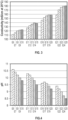
- Exemplary solutions of ammonium carbamate were prepared as follows. A series of four reactions were carried out at 35°C, in which carbon dioxide was gradually charged through a Porous Tube Assembly into a solution of ammonia including 12.15 wt.% of ammonia. Each reaction was carried out to a different NH 3 /CO 2 molar ratio. After charging carbon dioxide, the batch was divided into four portions, and a different level of sodium hydroxide was added to each portion, along with an appropriate amount of water to put each sample on an equal solids basis. Conductivity and pH were determined as a function of NH 3 /CO 2 ratio and the amount of sodium hydroxide added, as provided in Table 4 and illustrated in FIGS. 5 and 6 .
- FIG. 7 is an image of the solution of ammonium carbamate after the 3 days. The vials were turned upside down before the image was captured.
- conductivities of the exemplary solutions of ammonium carbamate increase inversely relative to the decrease in the NH 3 /CO 2 molar ratio and decrease inversely relative to the increase in the amount of NaOH.
- the pH of the exemplary solutions of ammonium carbamate decrease relative to the decrease in the NH 3 /CO 2 molar ratio and increase relative to the increase in the amount of NaOH.
- conductivities of the exemplary solutions of ammonium carbamate increase as the NH 3 /CO 2 ratio decreases, and as NaOH level decreases.
- exemplary solutions of ammonium carbamate including 7 wt.% of NaOH exhibit improved freezing resistance as compared to exemplary solutions of ammonium carbamate including 9 wt.% of NaOH.
Landscapes
- Chemical & Material Sciences (AREA)
- Organic Chemistry (AREA)
- Engineering & Computer Science (AREA)
- Chemical Kinetics & Catalysis (AREA)
- Health & Medical Sciences (AREA)
- Biomedical Technology (AREA)
- Environmental & Geological Engineering (AREA)
- Analytical Chemistry (AREA)
- General Chemical & Material Sciences (AREA)
- Oil, Petroleum & Natural Gas (AREA)
- Inorganic Chemistry (AREA)
- Materials Engineering (AREA)
- Organic Low-Molecular-Weight Compounds And Preparation Thereof (AREA)
Claims (13)
- Verfahren zur Bildung einer Lösung von Ammoniumcarbamat, wobei das Verfahren umfasst:Bereitstellen eines Reaktors, der eine Ammoniaklösung enthält;Zugabe von Kohlendioxid durch die Ammoniaklösung, um ein Gemisch zu bilden; undKombinieren einer Natriumhydroxidlösung und des Gemisches, um Ammoniumcarbamat zu bilden.
- Verfahren gemäß Anspruch 1, wobei der Schritt der Zugabe von Kohlendioxid weiter definiert ist als die Zugabe einer Vielzahl von Blasen gasförmigen Kohlendioxids durch die Ammoniaklösung, um das Gemisch zu bilden, wobei die Vielzahl von Blasen Kohlendioxid in einer Menge von mindestens 50 Vol.-% basierend auf dem Gesamtvolumen der Vielzahl von Blasen vorhanden ist.
- Verfahren gemäß Anspruch 2, das ferner den Schritt der Bildung der Vielzahl von Blasen mit einem Verhältnis von Oberfläche zu Volumen von mindestens 8.100 m2/m3 umfasst.
- Verfahren gemäß einem der Ansprüche 2 oder 3, wobei die Vielzahl der Blasen Kohlendioxid in einer Menge von mindestens 95 Vol.-%, bezogen auf das Gesamtvolumen der Vielzahl von Blasen, enthält.
- Verfahren gemäß einem der Ansprüche 1 bis 4, das ferner den Schritt der Überwachung der Menge an Kohlendioxid umfasst, die durch die Ammoniaklösung geleitet wird.
- Verfahren gemäß Anspruch 5, wobei der Schritt der Überwachung der Menge an Kohlendioxid einen oder mehrere der folgenden Schritte umfasst:Bestimmung des pH-Werts des Gemischs;Bestimmung der Leitfähigkeit des Gemischs; undBestimmung der gesamten Wärmeentwicklung in dem Gemisch.
- Verfahren gemäß einem der Ansprüche 1 bis 6, wobei die Lösung von Ammoniumcarbamat Ammoniumcarbamat in einer Menge von mindestens 15 Gew.-%, bezogen auf das Gesamtgewicht der Lösung von Ammoniumcarbamat, enthält.
- Verfahren gemäß einem der Ansprüche 1 bis 7, wobei die Ammoniaklösung Ammoniak in einer Menge von mindestens 5 Gew.-% enthält.
- Verfahren gemäß einem der Ansprüche 1 bis 8, das ferner den Schritt der Kombination von Wasser und der Ammoniaklösung vor dem Schritt der Zugabe von Kohlendioxid umfasst.
- Verfahren gemäß einem der Ansprüche 1 bis 9, wobei das Kohlendioxid durch die Ammoniaklösung bis zu einem NH3/CO2-Molverhältnis von 1,6 bis 2,1 zugegeben wird.
- Verfahren gemäß einem der Ansprüche 1 bis 8, wobei der Schritt der Kombination der Natriumhydroxidlösung und des Gemisches durchgeführt wird, nachdem das Kohlendioxid durch die Ammoniaklösung geleitet wurde.
- Verfahren gemäß einem der Ansprüche 1 bis 11, wobei die Natriumhydroxidlösung mit dem Gemisch in einem Gewichtsverhältnis von Natriumhydroxid zu Kohlendioxid von 0,54 bis 0,91 kombiniert wird.
- Verfahren gemäß einem der Ansprüche 1 bis 12, wobei:die Lösung von Ammoniumcarbamat einen pH-Wert von mindestens 9,2 aufweist;die Ammoniumcarbamatlösung eine Leitfähigkeit von mindestens 75 mS/cm hat;die Ammoniumcarbamatlösung einen Stickstoffgehalt von mindestens 47.200 ppm aufweist; oder Kombinationen davon.
Applications Claiming Priority (2)
| Application Number | Priority Date | Filing Date | Title |
|---|---|---|---|
| US15/947,182 US10315986B1 (en) | 2018-04-06 | 2018-04-06 | Systems and methods for forming a solution of ammonium carbamate |
| PCT/US2019/026015 WO2019195696A1 (en) | 2018-04-06 | 2019-04-05 | Systems and methods for forming a speciated solution of ammonium carbamate |
Publications (3)
| Publication Number | Publication Date |
|---|---|
| EP3773995A1 EP3773995A1 (de) | 2021-02-17 |
| EP3773995A4 EP3773995A4 (de) | 2022-01-05 |
| EP3773995B1 true EP3773995B1 (de) | 2024-08-14 |
Family
ID=66767649
Family Applications (1)
| Application Number | Title | Priority Date | Filing Date |
|---|---|---|---|
| EP19781825.5A Active EP3773995B1 (de) | 2018-04-06 | 2019-04-05 | Verfahren zur formung einer speziierten ammoniumcarbamatlösung |
Country Status (12)
| Country | Link |
|---|---|
| US (1) | US10315986B1 (de) |
| EP (1) | EP3773995B1 (de) |
| KR (1) | KR102722226B1 (de) |
| CN (1) | CN112154024A (de) |
| AU (1) | AU2019249244B2 (de) |
| CA (1) | CA3096215A1 (de) |
| ES (1) | ES2989462T3 (de) |
| FI (1) | FI3773995T3 (de) |
| MX (1) | MX2020010516A (de) |
| PL (1) | PL3773995T3 (de) |
| TW (1) | TWI841557B (de) |
| WO (1) | WO2019195696A1 (de) |
Families Citing this family (2)
| Publication number | Priority date | Publication date | Assignee | Title |
|---|---|---|---|---|
| KR102828293B1 (ko) | 2019-07-08 | 2025-07-03 | 에이.와이. 래보레이토리즈 리미티드 | 카밤산암모늄 용액의 제조 방법 |
| CN117105188B (zh) * | 2023-08-04 | 2025-08-22 | 南京乐透思高新材料科技有限公司 | 一种高活性氨基甲酸铵粉体及其制备方法 |
Citations (1)
| Publication number | Priority date | Publication date | Assignee | Title |
|---|---|---|---|---|
| US20120093704A1 (en) * | 2009-03-13 | 2012-04-19 | Ama Soluções Tecnológicas (Amatech) | Ceramic materials for absorption of acidic gases, process of preparing thereof and cyclic process for absorption and regeneration of acidic gases |
Family Cites Families (11)
| Publication number | Priority date | Publication date | Assignee | Title |
|---|---|---|---|---|
| GB332584A (en) * | 1930-10-17 | 1930-07-21 | Ig Farbenindustrie Ag | Improvements in the manufacture and production of metal carbamates |
| JPS5535378B2 (de) * | 1973-02-14 | 1980-09-12 | ||
| IT1115610B (it) * | 1977-03-03 | 1986-02-03 | Snam Progetti | Procedimento integrato urea-ammoniaca |
| US4888138A (en) * | 1988-11-10 | 1989-12-19 | Ethyl Corporation | Substituted ammonium carbamates and method for preparing same |
| JP2004536011A (ja) * | 2001-07-24 | 2004-12-02 | ディーエスエム アイピー アセッツ ビー.ブイ. | Nh3、h2o及びco2を含む気体混合物からアンモニウムカルバメート溶液を得る方法 |
| DE102007030069A1 (de) * | 2007-06-29 | 2009-01-02 | Siemens Ag | Verfahren zur Abtrennung von Kohlendioxid aus Rauchgasen und zugehörige Vorrichtung |
| SG188445A1 (en) * | 2010-09-09 | 2013-05-31 | Exxonmobil Res & Eng Co | Mixed amine and non-nucleophilic base co2 scrubbing process for improved adsorption at increased temperatures |
| US20130129612A1 (en) * | 2011-11-18 | 2013-05-23 | Basf Se | Process for Ion Exchange on Zeolites |
| BR112015018854B1 (pt) * | 2013-02-07 | 2021-08-24 | A.Y. Laboratories Ltd | Método e aparelho para a produção de um biocida |
| CN203803478U (zh) * | 2014-04-01 | 2014-09-03 | 姬生冕 | 一种实验室制备氨基甲酸铵装置 |
| US9624111B2 (en) * | 2014-12-10 | 2017-04-18 | Ethan Novek | Integrated process for carbon capture and energy production |
-
2018
- 2018-04-06 US US15/947,182 patent/US10315986B1/en active Active
-
2019
- 2019-04-05 ES ES19781825T patent/ES2989462T3/es active Active
- 2019-04-05 EP EP19781825.5A patent/EP3773995B1/de active Active
- 2019-04-05 CN CN201980032431.7A patent/CN112154024A/zh active Pending
- 2019-04-05 PL PL19781825.5T patent/PL3773995T3/pl unknown
- 2019-04-05 AU AU2019249244A patent/AU2019249244B2/en not_active Expired - Fee Related
- 2019-04-05 WO PCT/US2019/026015 patent/WO2019195696A1/en not_active Ceased
- 2019-04-05 CA CA3096215A patent/CA3096215A1/en active Pending
- 2019-04-05 MX MX2020010516A patent/MX2020010516A/es unknown
- 2019-04-05 FI FIEP19781825.5T patent/FI3773995T3/fi active
- 2019-04-05 KR KR1020207031945A patent/KR102722226B1/ko active Active
- 2019-04-08 TW TW108112211A patent/TWI841557B/zh not_active IP Right Cessation
Patent Citations (1)
| Publication number | Priority date | Publication date | Assignee | Title |
|---|---|---|---|---|
| US20120093704A1 (en) * | 2009-03-13 | 2012-04-19 | Ama Soluções Tecnológicas (Amatech) | Ceramic materials for absorption of acidic gases, process of preparing thereof and cyclic process for absorption and regeneration of acidic gases |
Also Published As
| Publication number | Publication date |
|---|---|
| PL3773995T3 (pl) | 2024-11-04 |
| TWI841557B (zh) | 2024-05-11 |
| FI3773995T3 (fi) | 2024-10-29 |
| AU2019249244B2 (en) | 2025-02-27 |
| EP3773995A1 (de) | 2021-02-17 |
| CN112154024A (zh) | 2020-12-29 |
| KR102722226B1 (ko) | 2024-10-28 |
| MX2020010516A (es) | 2021-01-08 |
| CA3096215A1 (en) | 2019-10-10 |
| KR20200139791A (ko) | 2020-12-14 |
| TW201943692A (zh) | 2019-11-16 |
| EP3773995A4 (de) | 2022-01-05 |
| RU2020135960A (ru) | 2022-05-06 |
| WO2019195696A1 (en) | 2019-10-10 |
| AU2019249244A1 (en) | 2020-11-26 |
| BR112020020487A2 (pt) | 2021-01-12 |
| US10315986B1 (en) | 2019-06-11 |
| ES2989462T3 (es) | 2024-11-26 |
Similar Documents
| Publication | Publication Date | Title |
|---|---|---|
| US8722005B1 (en) | Synthesis of hydrogen bis(fluorosulfonyl)imide | |
| CN104364198B (zh) | 高纯度氟化锂的制备 | |
| KR102228574B1 (ko) | 포타슘 티오설페이트 제조를 위한 산화 공정 | |
| RU2468003C2 (ru) | Способы получения соли | |
| US10315986B1 (en) | Systems and methods for forming a solution of ammonium carbamate | |
| RU2518901C2 (ru) | Способы производства высококонцентрированного раствора бикарбоната аргинина при высоком давлении | |
| US12606444B2 (en) | Method for manufacturing silica sol | |
| EP1486460B1 (de) | Verfahren sowie Gerät zur Herstellung von Calciumtiosulfatlösungen | |
| EP3954651A1 (de) | Wässrige alkalimetal-bis(fluorosulfonyl)imid-lösung, behälter mit besagter wässriger lösung darin und verfahren zum lagern oder transportieren der besagten wässrigen lösung | |
| AU2010331975B2 (en) | Methods for production of arginine bicarbonate at low pressure | |
| RU2792667C2 (ru) | Системы и способы получения содержащего равновесную смесь раствора карбамата аммония | |
| US20140018573A1 (en) | Method of preparing power of a solid carbazic acid derivative | |
| US4044055A (en) | Process for manufacture of tetrakis-(hydroxymethyl)-phosphonium salts | |
| JP2012131658A (ja) | ホウフッ化リチウムの製造方法 | |
| RU2178384C1 (ru) | Способ получения фторидов азота | |
| JP2004043353A (ja) | 有機チタンペルオキソ化合物の連続的製造方法及びその装置 | |
| US20090054686A1 (en) | Process for preparing concentrated solutions of salts of organic acids | |
| RU2308415C1 (ru) | Способ получения компонента электролита на основе гексафторфосфата лития | |
| JP3017714B2 (ja) | カルバジン酸ヒドラジニウム塩水溶液の製造方法 | |
| EP3208234A1 (de) | Oxidationsverfahren zur herstellung von kaliumthiosulfat | |
| KR20260047233A (ko) | 비스(플루오로설포닐)이미드 염의 제조 방법 | |
| CA1128284A (en) | Production of sodium polyphosphate | |
| JPH06345421A (ja) | アンモニウム氷晶石の製造法 |
Legal Events
| Date | Code | Title | Description |
|---|---|---|---|
| STAA | Information on the status of an ep patent application or granted ep patent |
Free format text: STATUS: THE INTERNATIONAL PUBLICATION HAS BEEN MADE |
|
| PUAI | Public reference made under article 153(3) epc to a published international application that has entered the european phase |
Free format text: ORIGINAL CODE: 0009012 |
|
| STAA | Information on the status of an ep patent application or granted ep patent |
Free format text: STATUS: REQUEST FOR EXAMINATION WAS MADE |
|
| 17P | Request for examination filed |
Effective date: 20201029 |
|
| AK | Designated contracting states |
Kind code of ref document: A1 Designated state(s): AL AT BE BG CH CY CZ DE DK EE ES FI FR GB GR HR HU IE IS IT LI LT LU LV MC MK MT NL NO PL PT RO RS SE SI SK SM TR |
|
| AX | Request for extension of the european patent |
Extension state: BA ME |
|
| DAV | Request for validation of the european patent (deleted) | ||
| DAX | Request for extension of the european patent (deleted) | ||
| A4 | Supplementary search report drawn up and despatched |
Effective date: 20211206 |
|
| RIC1 | Information provided on ipc code assigned before grant |
Ipc: B01F 3/04 20060101ALI20211130BHEP Ipc: C01B 21/12 20060101ALI20211130BHEP Ipc: B01D 53/94 20060101ALI20211130BHEP Ipc: B01D 53/90 20060101AFI20211130BHEP |
|
| STAA | Information on the status of an ep patent application or granted ep patent |
Free format text: STATUS: EXAMINATION IS IN PROGRESS |
|
| 17Q | First examination report despatched |
Effective date: 20220602 |
|
| P01 | Opt-out of the competence of the unified patent court (upc) registered |
Effective date: 20230503 |
|
| REG | Reference to a national code |
Ref country code: DE Ref legal event code: R079 Free format text: PREVIOUS MAIN CLASS: B01D0053900000 Ipc: C01B0021120000 Ref document number: 602019057033 Country of ref document: DE |
|
| GRAP | Despatch of communication of intention to grant a patent |
Free format text: ORIGINAL CODE: EPIDOSNIGR1 |
|
| STAA | Information on the status of an ep patent application or granted ep patent |
Free format text: STATUS: GRANT OF PATENT IS INTENDED |
|
| RIC1 | Information provided on ipc code assigned before grant |
Ipc: B01F 23/237 20220101ALI20240205BHEP Ipc: C01B 21/12 20060101AFI20240205BHEP |
|
| INTG | Intention to grant announced |
Effective date: 20240311 |
|
| GRAS | Grant fee paid |
Free format text: ORIGINAL CODE: EPIDOSNIGR3 |
|
| GRAA | (expected) grant |
Free format text: ORIGINAL CODE: 0009210 |
|
| STAA | Information on the status of an ep patent application or granted ep patent |
Free format text: STATUS: THE PATENT HAS BEEN GRANTED |
|
| AK | Designated contracting states |
Kind code of ref document: B1 Designated state(s): AL AT BE BG CH CY CZ DE DK EE ES FI FR GB GR HR HU IE IS IT LI LT LU LV MC MK MT NL NO PL PT RO RS SE SI SK SM TR |
|
| REG | Reference to a national code |
Ref country code: GB Ref legal event code: FG4D |
|
| REG | Reference to a national code |
Ref country code: CH Ref legal event code: EP |
|
| REG | Reference to a national code |
Ref country code: DE Ref legal event code: R096 Ref document number: 602019057033 Country of ref document: DE |
|
| REG | Reference to a national code |
Ref country code: IE Ref legal event code: FG4D |
|
| REG | Reference to a national code |
Ref country code: FI Ref legal event code: FGE |
|
| REG | Reference to a national code |
Ref country code: SE Ref legal event code: TRGR |
|
| REG | Reference to a national code |
Ref country code: ES Ref legal event code: FG2A Ref document number: 2989462 Country of ref document: ES Kind code of ref document: T3 Effective date: 20241126 |
|
| REG | Reference to a national code |
Ref country code: LT Ref legal event code: MG9D |
|
| REG | Reference to a national code |
Ref country code: NL Ref legal event code: MP Effective date: 20240814 |
|
| PG25 | Lapsed in a contracting state [announced via postgrant information from national office to epo] |
Ref country code: NO Free format text: LAPSE BECAUSE OF FAILURE TO SUBMIT A TRANSLATION OF THE DESCRIPTION OR TO PAY THE FEE WITHIN THE PRESCRIBED TIME-LIMIT Effective date: 20241114 |
|
| RAP2 | Party data changed (patent owner data changed or rights of a patent transferred) |
Owner name: SOLENIS TECHNOLOGIES CAYMAN, L.P. |
|
| REG | Reference to a national code |
Ref country code: AT Ref legal event code: MK05 Ref document number: 1713175 Country of ref document: AT Kind code of ref document: T Effective date: 20240814 |
|
| PG25 | Lapsed in a contracting state [announced via postgrant information from national office to epo] |
Ref country code: GR Free format text: LAPSE BECAUSE OF FAILURE TO SUBMIT A TRANSLATION OF THE DESCRIPTION OR TO PAY THE FEE WITHIN THE PRESCRIBED TIME-LIMIT Effective date: 20241115 Ref country code: NL Free format text: LAPSE BECAUSE OF FAILURE TO SUBMIT A TRANSLATION OF THE DESCRIPTION OR TO PAY THE FEE WITHIN THE PRESCRIBED TIME-LIMIT Effective date: 20240814 Ref country code: PT Free format text: LAPSE BECAUSE OF FAILURE TO SUBMIT A TRANSLATION OF THE DESCRIPTION OR TO PAY THE FEE WITHIN THE PRESCRIBED TIME-LIMIT Effective date: 20241216 |
|
| PG25 | Lapsed in a contracting state [announced via postgrant information from national office to epo] |
Ref country code: BG Free format text: LAPSE BECAUSE OF FAILURE TO SUBMIT A TRANSLATION OF THE DESCRIPTION OR TO PAY THE FEE WITHIN THE PRESCRIBED TIME-LIMIT Effective date: 20240814 |
|
| PG25 | Lapsed in a contracting state [announced via postgrant information from national office to epo] |
Ref country code: LV Free format text: LAPSE BECAUSE OF FAILURE TO SUBMIT A TRANSLATION OF THE DESCRIPTION OR TO PAY THE FEE WITHIN THE PRESCRIBED TIME-LIMIT Effective date: 20240814 |
|
| PG25 | Lapsed in a contracting state [announced via postgrant information from national office to epo] |
Ref country code: AT Free format text: LAPSE BECAUSE OF FAILURE TO SUBMIT A TRANSLATION OF THE DESCRIPTION OR TO PAY THE FEE WITHIN THE PRESCRIBED TIME-LIMIT Effective date: 20240814 Ref country code: IS Free format text: LAPSE BECAUSE OF FAILURE TO SUBMIT A TRANSLATION OF THE DESCRIPTION OR TO PAY THE FEE WITHIN THE PRESCRIBED TIME-LIMIT Effective date: 20241214 |
|
| PG25 | Lapsed in a contracting state [announced via postgrant information from national office to epo] |
Ref country code: HR Free format text: LAPSE BECAUSE OF FAILURE TO SUBMIT A TRANSLATION OF THE DESCRIPTION OR TO PAY THE FEE WITHIN THE PRESCRIBED TIME-LIMIT Effective date: 20240814 |
|
| PG25 | Lapsed in a contracting state [announced via postgrant information from national office to epo] |
Ref country code: RS Free format text: LAPSE BECAUSE OF FAILURE TO SUBMIT A TRANSLATION OF THE DESCRIPTION OR TO PAY THE FEE WITHIN THE PRESCRIBED TIME-LIMIT Effective date: 20241114 |
|
| PG25 | Lapsed in a contracting state [announced via postgrant information from national office to epo] |
Ref country code: RS Free format text: LAPSE BECAUSE OF FAILURE TO SUBMIT A TRANSLATION OF THE DESCRIPTION OR TO PAY THE FEE WITHIN THE PRESCRIBED TIME-LIMIT Effective date: 20241114 Ref country code: PT Free format text: LAPSE BECAUSE OF FAILURE TO SUBMIT A TRANSLATION OF THE DESCRIPTION OR TO PAY THE FEE WITHIN THE PRESCRIBED TIME-LIMIT Effective date: 20241216 Ref country code: NO Free format text: LAPSE BECAUSE OF FAILURE TO SUBMIT A TRANSLATION OF THE DESCRIPTION OR TO PAY THE FEE WITHIN THE PRESCRIBED TIME-LIMIT Effective date: 20241114 Ref country code: NL Free format text: LAPSE BECAUSE OF FAILURE TO SUBMIT A TRANSLATION OF THE DESCRIPTION OR TO PAY THE FEE WITHIN THE PRESCRIBED TIME-LIMIT Effective date: 20240814 Ref country code: LV Free format text: LAPSE BECAUSE OF FAILURE TO SUBMIT A TRANSLATION OF THE DESCRIPTION OR TO PAY THE FEE WITHIN THE PRESCRIBED TIME-LIMIT Effective date: 20240814 Ref country code: IS Free format text: LAPSE BECAUSE OF FAILURE TO SUBMIT A TRANSLATION OF THE DESCRIPTION OR TO PAY THE FEE WITHIN THE PRESCRIBED TIME-LIMIT Effective date: 20241214 Ref country code: HR Free format text: LAPSE BECAUSE OF FAILURE TO SUBMIT A TRANSLATION OF THE DESCRIPTION OR TO PAY THE FEE WITHIN THE PRESCRIBED TIME-LIMIT Effective date: 20240814 Ref country code: GR Free format text: LAPSE BECAUSE OF FAILURE TO SUBMIT A TRANSLATION OF THE DESCRIPTION OR TO PAY THE FEE WITHIN THE PRESCRIBED TIME-LIMIT Effective date: 20241115 Ref country code: BG Free format text: LAPSE BECAUSE OF FAILURE TO SUBMIT A TRANSLATION OF THE DESCRIPTION OR TO PAY THE FEE WITHIN THE PRESCRIBED TIME-LIMIT Effective date: 20240814 Ref country code: AT Free format text: LAPSE BECAUSE OF FAILURE TO SUBMIT A TRANSLATION OF THE DESCRIPTION OR TO PAY THE FEE WITHIN THE PRESCRIBED TIME-LIMIT Effective date: 20240814 |
|
| PG25 | Lapsed in a contracting state [announced via postgrant information from national office to epo] |
Ref country code: SM Free format text: LAPSE BECAUSE OF FAILURE TO SUBMIT A TRANSLATION OF THE DESCRIPTION OR TO PAY THE FEE WITHIN THE PRESCRIBED TIME-LIMIT Effective date: 20240814 Ref country code: DK Free format text: LAPSE BECAUSE OF FAILURE TO SUBMIT A TRANSLATION OF THE DESCRIPTION OR TO PAY THE FEE WITHIN THE PRESCRIBED TIME-LIMIT Effective date: 20240814 Ref country code: RO Free format text: LAPSE BECAUSE OF FAILURE TO SUBMIT A TRANSLATION OF THE DESCRIPTION OR TO PAY THE FEE WITHIN THE PRESCRIBED TIME-LIMIT Effective date: 20240814 |
|
| PG25 | Lapsed in a contracting state [announced via postgrant information from national office to epo] |
Ref country code: EE Free format text: LAPSE BECAUSE OF FAILURE TO SUBMIT A TRANSLATION OF THE DESCRIPTION OR TO PAY THE FEE WITHIN THE PRESCRIBED TIME-LIMIT Effective date: 20240814 |
|
| PG25 | Lapsed in a contracting state [announced via postgrant information from national office to epo] |
Ref country code: CZ Free format text: LAPSE BECAUSE OF FAILURE TO SUBMIT A TRANSLATION OF THE DESCRIPTION OR TO PAY THE FEE WITHIN THE PRESCRIBED TIME-LIMIT Effective date: 20240814 |
|
| PG25 | Lapsed in a contracting state [announced via postgrant information from national office to epo] |
Ref country code: SK Free format text: LAPSE BECAUSE OF FAILURE TO SUBMIT A TRANSLATION OF THE DESCRIPTION OR TO PAY THE FEE WITHIN THE PRESCRIBED TIME-LIMIT Effective date: 20240814 |
|
| REG | Reference to a national code |
Ref country code: DE Ref legal event code: R097 Ref document number: 602019057033 Country of ref document: DE |
|
| PLBE | No opposition filed within time limit |
Free format text: ORIGINAL CODE: 0009261 |
|
| STAA | Information on the status of an ep patent application or granted ep patent |
Free format text: STATUS: NO OPPOSITION FILED WITHIN TIME LIMIT |
|
| PGFP | Annual fee paid to national office [announced via postgrant information from national office to epo] |
Ref country code: FI Payment date: 20250425 Year of fee payment: 7 |
|
| PGFP | Annual fee paid to national office [announced via postgrant information from national office to epo] |
Ref country code: DE Payment date: 20250429 Year of fee payment: 7 |
|
| PGFP | Annual fee paid to national office [announced via postgrant information from national office to epo] |
Ref country code: GB Payment date: 20250428 Year of fee payment: 7 Ref country code: ES Payment date: 20250505 Year of fee payment: 7 |
|
| PGFP | Annual fee paid to national office [announced via postgrant information from national office to epo] |
Ref country code: IT Payment date: 20250422 Year of fee payment: 7 |
|
| PGFP | Annual fee paid to national office [announced via postgrant information from national office to epo] |
Ref country code: FR Payment date: 20250425 Year of fee payment: 7 |
|
| 26N | No opposition filed |
Effective date: 20250515 |
|
| PGFP | Annual fee paid to national office [announced via postgrant information from national office to epo] |
Ref country code: SE Payment date: 20250507 Year of fee payment: 7 |
|
| REG | Reference to a national code |
Ref country code: CH Ref legal event code: H13 Free format text: ST27 STATUS EVENT CODE: U-0-0-H10-H13 (AS PROVIDED BY THE NATIONAL OFFICE) Effective date: 20251125 |
|
| PG25 | Lapsed in a contracting state [announced via postgrant information from national office to epo] |
Ref country code: LU Free format text: LAPSE BECAUSE OF NON-PAYMENT OF DUE FEES Effective date: 20250405 |
|
| PG25 | Lapsed in a contracting state [announced via postgrant information from national office to epo] |
Ref country code: MC Free format text: LAPSE BECAUSE OF FAILURE TO SUBMIT A TRANSLATION OF THE DESCRIPTION OR TO PAY THE FEE WITHIN THE PRESCRIBED TIME-LIMIT Effective date: 20240814 |
|
| REG | Reference to a national code |
Ref country code: BE Ref legal event code: MM Effective date: 20250430 |
|
| PG25 | Lapsed in a contracting state [announced via postgrant information from national office to epo] |
Ref country code: BE Free format text: LAPSE BECAUSE OF NON-PAYMENT OF DUE FEES Effective date: 20250430 |
|
| PG25 | Lapsed in a contracting state [announced via postgrant information from national office to epo] |
Ref country code: CH Free format text: LAPSE BECAUSE OF NON-PAYMENT OF DUE FEES Effective date: 20250430 |
|
| PG25 | Lapsed in a contracting state [announced via postgrant information from national office to epo] |
Ref country code: IE Free format text: LAPSE BECAUSE OF NON-PAYMENT OF DUE FEES Effective date: 20250405 |
|
| PG25 | Lapsed in a contracting state [announced via postgrant information from national office to epo] |
Ref country code: PL Free format text: LAPSE BECAUSE OF NON-PAYMENT OF DUE FEES Effective date: 20250405 |