EP3770752B1 - Zufallszahlengenerator und verfahren zur erzeugung einer ausgangszufallszahl - Google Patents
Zufallszahlengenerator und verfahren zur erzeugung einer ausgangszufallszahl Download PDFInfo
- Publication number
- EP3770752B1 EP3770752B1 EP20187081.3A EP20187081A EP3770752B1 EP 3770752 B1 EP3770752 B1 EP 3770752B1 EP 20187081 A EP20187081 A EP 20187081A EP 3770752 B1 EP3770752 B1 EP 3770752B1
- Authority
- EP
- European Patent Office
- Prior art keywords
- random number
- pool
- lively
- number sequence
- strn
- Prior art date
- Legal status (The legal status is an assumption and is not a legal conclusion. Google has not performed a legal analysis and makes no representation as to the accuracy of the status listed.)
- Active
Links
Images



Classifications
-
- H—ELECTRICITY
- H04—ELECTRIC COMMUNICATION TECHNIQUE
- H04L—TRANSMISSION OF DIGITAL INFORMATION, e.g. TELEGRAPHIC COMMUNICATION
- H04L9/00—Cryptographic mechanisms or cryptographic arrangements for secret or secure communications; Network security protocols
- H04L9/06—Cryptographic mechanisms or cryptographic arrangements for secret or secure communications; Network security protocols the encryption apparatus using shift registers or memories for block-wise or stream coding, e.g. DES systems or RC4; Hash functions; Pseudorandom sequence generators
- H04L9/0618—Block ciphers, i.e. encrypting groups of characters of a plain text message using fixed encryption transformation
-
- G—PHYSICS
- G06—COMPUTING OR CALCULATING; COUNTING
- G06F—ELECTRIC DIGITAL DATA PROCESSING
- G06F7/00—Methods or arrangements for processing data by operating upon the order or content of the data handled
- G06F7/58—Random or pseudo-random number generators
- G06F7/588—Random number generators, i.e. based on natural stochastic processes
-
- H—ELECTRICITY
- H04—ELECTRIC COMMUNICATION TECHNIQUE
- H04L—TRANSMISSION OF DIGITAL INFORMATION, e.g. TELEGRAPHIC COMMUNICATION
- H04L9/00—Cryptographic mechanisms or cryptographic arrangements for secret or secure communications; Network security protocols
- H04L9/06—Cryptographic mechanisms or cryptographic arrangements for secret or secure communications; Network security protocols the encryption apparatus using shift registers or memories for block-wise or stream coding, e.g. DES systems or RC4; Hash functions; Pseudorandom sequence generators
-
- H—ELECTRICITY
- H04—ELECTRIC COMMUNICATION TECHNIQUE
- H04L—TRANSMISSION OF DIGITAL INFORMATION, e.g. TELEGRAPHIC COMMUNICATION
- H04L9/00—Cryptographic mechanisms or cryptographic arrangements for secret or secure communications; Network security protocols
- H04L9/08—Key distribution or management, e.g. generation, sharing or updating, of cryptographic keys or passwords
- H04L9/0816—Key establishment, i.e. cryptographic processes or cryptographic protocols whereby a shared secret becomes available to two or more parties, for subsequent use
- H04L9/0838—Key agreement, i.e. key establishment technique in which a shared key is derived by parties as a function of information contributed by, or associated with, each of these
- H04L9/0841—Key agreement, i.e. key establishment technique in which a shared key is derived by parties as a function of information contributed by, or associated with, each of these involving Diffie-Hellman or related key agreement protocols
-
- H—ELECTRICITY
- H04—ELECTRIC COMMUNICATION TECHNIQUE
- H04L—TRANSMISSION OF DIGITAL INFORMATION, e.g. TELEGRAPHIC COMMUNICATION
- H04L9/00—Cryptographic mechanisms or cryptographic arrangements for secret or secure communications; Network security protocols
- H04L9/08—Key distribution or management, e.g. generation, sharing or updating, of cryptographic keys or passwords
- H04L9/0816—Key establishment, i.e. cryptographic processes or cryptographic protocols whereby a shared secret becomes available to two or more parties, for subsequent use
- H04L9/085—Secret sharing or secret splitting, e.g. threshold schemes
-
- H—ELECTRICITY
- H04—ELECTRIC COMMUNICATION TECHNIQUE
- H04L—TRANSMISSION OF DIGITAL INFORMATION, e.g. TELEGRAPHIC COMMUNICATION
- H04L9/00—Cryptographic mechanisms or cryptographic arrangements for secret or secure communications; Network security protocols
- H04L9/08—Key distribution or management, e.g. generation, sharing or updating, of cryptographic keys or passwords
- H04L9/0861—Generation of secret information including derivation or calculation of cryptographic keys or passwords
- H04L9/0869—Generation of secret information including derivation or calculation of cryptographic keys or passwords involving random numbers or seeds
-
- H—ELECTRICITY
- H04—ELECTRIC COMMUNICATION TECHNIQUE
- H04L—TRANSMISSION OF DIGITAL INFORMATION, e.g. TELEGRAPHIC COMMUNICATION
- H04L9/00—Cryptographic mechanisms or cryptographic arrangements for secret or secure communications; Network security protocols
- H04L9/08—Key distribution or management, e.g. generation, sharing or updating, of cryptographic keys or passwords
- H04L9/0894—Escrow, recovery or storing of secret information, e.g. secret key escrow or cryptographic key storage
-
- H—ELECTRICITY
- H04—ELECTRIC COMMUNICATION TECHNIQUE
- H04L—TRANSMISSION OF DIGITAL INFORMATION, e.g. TELEGRAPHIC COMMUNICATION
- H04L9/00—Cryptographic mechanisms or cryptographic arrangements for secret or secure communications; Network security protocols
- H04L9/32—Cryptographic mechanisms or cryptographic arrangements for secret or secure communications; Network security protocols including means for verifying the identity or authority of a user of the system or for message authentication, e.g. authorization, entity authentication, data integrity or data verification, non-repudiation, key authentication or verification of credentials
- H04L9/3271—Cryptographic mechanisms or cryptographic arrangements for secret or secure communications; Network security protocols including means for verifying the identity or authority of a user of the system or for message authentication, e.g. authorization, entity authentication, data integrity or data verification, non-repudiation, key authentication or verification of credentials using challenge-response
- H04L9/3278—Cryptographic mechanisms or cryptographic arrangements for secret or secure communications; Network security protocols including means for verifying the identity or authority of a user of the system or for message authentication, e.g. authorization, entity authentication, data integrity or data verification, non-repudiation, key authentication or verification of credentials using challenge-response using physically unclonable functions [PUF]
Definitions
- the disclosure relates to random number generation, and in particular, to a random number generator and a method of generating an output random number.
- Random numbers are widely used in the fields of information security and statistical sampling. Random numbers generation is generation of a sequence of unpredicted and independent numbers conforming to a specified distribution. A pseudo-random number generator generates the sequence of numbers using a seed. An insufficient random seed may result in an insufficient random sequence, leading to insecure cryptographic systems or inaccurate sampling results.
- Reference D1 US 2018/314493A1 discloses a random number generator for generating random numbers using an SRAM PUF and dynamically generated data.
- SRAM PUF holds a fixed set of PUF bits, leading to the possibility of data breach.
- the present disclosure aims at providing a random number generator and a method of generating an output random number. This is achieved by a random number generator according to claim 1 and a method of generating an output random number according to claim 9.
- a random number generator includes a static random number generator, at least one dynamic entropy source, a counter and a combining circuit.
- the static random number generator includes an initial random number pool and a static random number pool, and is used to output a static random number sequence from one of the initial random number pool and the static random number pool.
- the at least one dynamic entropy source is used to generate a dynamic entropy bit.
- the counter is coupled to the at least one dynamic entropy source and used to generate a dynamic random number sequence according to the dynamic entropy bit.
- the combining circuit is coupled to the static random number generator and the counter, and is used to receive the static random number sequence, and output a true random number sequence to a lively random number pool according to the static random number sequence and the dynamic random number sequence.
- the static random number pool is updated when the lively random number pool is fully updated.
- a method of generating an output random number including: during an initialization phase, generating an initial static random number sequence from an initial random number pool, generating an initial true random number sequence according to the initial static random number sequence and an initial dynamic random number sequence, and initiating the static random number pool according to the initial true random number sequence; and during an operation phase, outputting the output random number, generating a subsequent static random number sequence from the static random number pool, generating a subsequent true random number sequence according to the subsequent static random number sequence and a subsequent dynamic random number sequence, and updating the static random number pool according to the subsequent true random number sequence.
- true random refers to a bit stream or a data sequence that is substantially 50% in a hamming weight and an inter-device (ID) hamming distance, and is substantially 1 in a minimum entropy (min-entropy).
- the hamming weight measures an expected value of non-zero symbols in the bit stream in a percentage form.
- the ID hamming distance measures a hamming distance between two static entropy bit streams produced by two static entropy sources in response to an identical challenge.
- the min-entropy is a lower bound of entropy of the bit stream, measuring unpredictability of the bit stream.
- FIG. 1 is a block diagram of a random number generator 1 according to an embodiment of the invention.
- the random number generator 1 may initially update a lively random number pool according to data from an initial random number pool, and then update a static random number pool according to data from the lively random number pool on a continuous and iterative basis. Further, the random number generator 1 may extract an output random number Srno from the lively random number pool upon request of an external circuit, e.g., a deterministic random bit generator or a cryptographic system.
- the initial random number pool may contain fixed data for all devices employing the random number generator 1.
- the devices may be field programmable gate arrays (FPGA).
- the static random number pool may be constantly changing and unique to all the devices.
- the random number generator 1 may include a static random number generator 15, dynamic entropy sources 12(1) to 12(N), a counter 14, a combining circuit 16, a lively random number pool 17 and an update circuit 18, N being a positive integer.
- the static random number generator 15 may include an initial random number pool 10, a static random number pool 11 and a multiplexer 13.
- the dynamic entropy sources 12(1) to 12(N) may be coupled to the counter 14.
- the initial random number pool 10 and the static random number pool 11 may be coupled to the multiplexer 13.
- the multiplexer 13 and the counter 14 may be coupled to the combining circuit 16.
- the combining circuit 16 may be coupled to the lively random number pool 17.
- the update circuit 18 is coupled to the lively random number pool 17 and the static random number pool 11. While a plurality of dynamic entropy sources 12(1) to 12(N) are used in the embodiment, adopting only one dynamic entropy source 12(1) in the random number generator 1 is also within the scope of the invention.
- the random number generator 1 may operate in an initialization phase and an operation phase.
- the initial random number pool 10 may generate an initial static random number sequence Ssrn(0)
- the multiplexer 13 may select the initial static random number sequence Ssrn(0) from the initial random number pool 10 as the static random number sequence Ssrn according to a selection signal Sel.
- the initialization phase may be adopted upon power-up or activation of the random number generator 1.
- the selection signal Sel may be generated from an external control circuit.
- the static random number pool 11 may generate a subsequent random number sequence Ssrn(1), the multiplexer 13 may select according to the selection signal Sel the subsequent random number sequence Ssrn(1) from the static random number pool 11 as the static random number sequence Ssrn.
- the operation phase may be adopted upon initiation or update of the static random number pool 11. While the multiplexer 13 is adopted in the embodiment to select between data from the initial random number pool 10 and data form the static random number pool 11, it is also within the scope of the invention that the multiplexer 13 is eliminated from the random number generator 1, and instead a selection circuit may be included to enable one of the initial random number pool 10 and the static random number pool 11 according to an appropriate timing, so as to output the static random number sequence Ssrn therefrom.
- the initial random number pool 10 may be a physically unclonable function (PUF) cell array, a non-volatile memory, a volatile memory or a fixed logic circuit containing a plurality of static entropy bits.
- the plurality of static entropy bits may be independent and identically distributed random variables (IID).
- the initial static random number sequence Ssrn(0) may have a predetermined data length, e.g., 32-bit.
- the initial random number pool 10 may be 32-bit-by-32-bit one-time programmable (OTP) memory cells, and each row, column or diagonal line of the memory cells may contain truly random entropy bits.
- OTP one-time programmable
- the OTP memory cells may be antifuse-based and the truly random entropy bits may be programmed into the OTP memory cells during manufacturing setup.
- the initial random number pool 10 is a volatile memory such as a static random access memory (SRAM) or a register bank
- the truly random entropy bits may be programmed into the initial random number pool 10 upon receiving requests for generating the initial static random number sequence Ssrn(0).
- the truly random entropy bits may be fixed in values and identical to all devices employing the random number generator 1.
- the initial random number pool 10 may output the initial static random number sequence Ssrn(0) according to a predetermined selecting algorithm.
- the initial static entropy source 10 may select 32-bit entropy bits from rows of memory cells in a predetermined row order to serve as the initial static random number sequence Ssrn(0).
- the initial random number pool 10 may be a deterministic random bit generator (DRBG) generating a set of initial random numbers upon power-up or activation.
- DRBG deterministic random bit generator
- the static random number pool 11 may be a register bank and may have a size equal to or different from that of the initial random number pool 10. In some embodiments, both the static random number pool 11 and the initial random number pool 10 may be 1k bits in size.
- the dynamic entropy sources 12(1) to 12(N) may generate dynamic entropy bits E(1) to E(N), respectively and in real time.
- the dynamic entropy bits E(1) to E(N) may each be 1 bit in length.
- the counter 14 may generate an dynamic random number sequence Sd according to at least one of the dynamic entropy bits E(1) to E(N).
- the counter 14 may be a linear feedback shift register (LFSR) or a digital counter, e.g., a 32-bit LFSR.
- the dynamic random number sequence Sd may have a data length equal to that of the static random number sequence Ssrn, e.g., 32-bit.
- the counter 14 may generate an initial dynamic random number sequence Sd, and during the operation phase, the counter 14 may generate a subsequent dynamic random number sequence Sd.
- the counter 14 may be seeded by a seed sequence generated by the initial random number pool 10 upon power-up or activation, and the seed sequence may be 32-bit in length. In other embodiments, the counter 14 may be initialized by a fixed seed sequence upon power-up or activation, and the fixed seed sequence may be 32-bit in length.
- the counter 14 may receive the dynamic entropy bits E(1) to E(N) from the dynamic entropy sources 12(1) to 12(N), receive a predetermined bit in the true random number sequence Strn from the combining circuit 16 via a feedback path Pfb, combine the dynamic entropy bits E(1) to E(N) and the predetermined bit in the true random number sequence Strn to generate a reseeding control bit, and control reseeding of the counter 14 according to the reseeding control bit.
- the counter 14 may perform an XOR operation on the dynamic entropy bits E(1) to E(N) and the predetermined bit in the true random number sequence Strn to generate the reseeding control bit.
- the counter 14 may proceed counting, and when the reseeding control bit is a logic level "1", the counter 14 may be reseeded by a new seed sequence.
- the new seed sequence may be generated by the initial random number pool 10.
- the new seed sequence may be provided by an output data sequence of the combining circuit 16.
- the counter 14 may be reseeded in a random manner.
- the counter 14 may employ a portion of the dynamic entropy bits E(1) to E(N) to generate the reseeding control bit.
- the combining circuit 16 may combine the static random number sequence Ssrn and the dynamic random number sequence Sd in a bitwise manner to generate a true random number sequence Strn.
- the combining circuit 16 may be an XOR gate or a processor employing a data encryption standard (DES) algorithm, an advanced encryption standard (AES) algorithm or a hash function.
- DES data encryption standard
- AES advanced encryption standard
- the combining circuit 16 may combine the 32-bit static random number sequence Ssrn and the 32-bit dynamic random number sequence Sd in a bitwise manner to generate a 32-bit true random number sequence Strn.
- the true random number sequence Strn may be truly random regardless of the dynamic random number sequence Sd being truly random or not.
- the dynamic random number sequence Sd may be used to randomize the static random number sequence Ssrn to generate the true random number sequence Strn unique to the device.
- the static random number sequence Ssrn may be the initial static random number sequence Ssrn(0), and the combining circuit 16 may generate an initial true random number sequence Strn by combining the initial static random number sequence Ssrn(0) and the initial dynamic random number sequence Sd.
- the static random number sequence Ssrn may be the subsequent static random number sequence Ssrn(1), and the combining circuit 16 may generate a subsequent true random number sequence Strn by combining the subsequent static random number sequence Ssrn(1) and the subsequent dynamic random number sequence Sd.
- the lively random number pool 17 may be updated according to the true random number sequence Strn.
- the lively random number pool 17 may be updated according to the initial true random number sequence Strn.
- the lively random number pool 17 may be updated according to the subsequent true random number sequence Strn, and may output an output random number Srno upon request, thereby enhancing data security.
- the lively random number pool 17 may sequentially receive a plurality of true random number sequences Strn from the combining circuit 16 and store the same until it is fully updated.
- the lively random number pool 17 is fully updated when a quantity of random numbers in the lively random number pool 17 reaches a target quantity, e.g., 1k bits.
- the lively random number pool 17 is fully updated when a time period of updating the lively random number pool 17 reaches a target time period, e.g., 32 clock cycles.
- the lively random number pool 17 may be a register bank and may have a size equal to or different from that of the initial random number pool 10.
- both the lively random number pool 17 and the initial random number pool 10 may be 1k bits in size.
- the update circuit 18 may update the random numbers Ssrn(2) from the lively random number pool 17 to the static random number pool 11. In some embodiments, the update circuit 18 may directly forward the random numbers Ssrn(2) from the lively random number pool 17 to replace the data in the static random number pool 11. In other embodiments, the update circuit 18 may apply a compression and a nonlinear function to the random numbers Ssrn(2) from the lively random number pool 17 to generate updated true random numbers Ssrn'(2), and update the updated true random numbers Ssrn'(2) into the static random number pool 11.
- the compression may be a cryptographic hash function such as an MD5 algorithm, an SHA1 algorithm, an SHA2 algorithm and/or an SHA3 algorithm.
- the nonlinear function may be a substitution-box (S-box) and/or a block cipher.
- S-box substitution-box
- block cipher a block cipher.
- the static random number pool 11 may be constantly updated.
- the static random number pool 11 may be updated each time the lively random number pool 17 is fully updated.
- the random numbers in the static random number pool 11 may be transmitted to a non-volatile memory for storage. Later when the device returns to a normal operation mode, the static random number pool 11 may restore the random numbers from the non-volatile memory to continue the operation.
- the random number generator 1 generates in the initialization phase a unique set of truly random numbers in the static random number pool 11 from a fixed set of truly random numbers in the initial random number pool 10 via the lively random number pool 17, and continues in the operation phase to generate a new set of truly random numbers using the random numbers from the static random number pool 11, and update the new set of truly random numbers into the static random number pool 11 via the lively random number pool 17, while outputting the output random number Srno from the via the lively random number pool 17, saving random number resources while enhancing data security.
- FIG. 2 is a block diagram of a random number generator 2 according to another embodiment of the invention.
- the random number generator 2 is different from the random number generator 1 in that a compression circuit 20 is further included, the following discussion will focus on the difference.
- the compression circuit 20 may be coupled between the combining circuit 16 and the lively random number pool 17.
- the compression circuit 20 may compress the true random number sequence Strn into a compressed true random number sequence Strn', further enhancing data security.
- the compression circuit 20 may include an XOR gate.
- the compression circuit 20 may include 8 4-input XOR gates compressing a 32-bit true random number sequence Strn into an 8-bit compressed true random number sequence Strn'.
- the compression circuit 20 may include a 128-bit buffer and 32 4-input XOR gates coupled thereto.
- the 128-bit buffer may store 4 32-bit true random number sequences Strn sequentially in a buffering duration of 4 clock cycles.
- each of the 32 4-input XOR gates may compress 4 corresponding bits of the 4 32-bit true random number sequences Strn into 1 corresponding bit in the compressed true random number sequence Strn', thereby generating a 32-bit compressed true random number sequence Strn'.
- the compressed true random number sequence Strn' is then transmitted to the lively random number pool 17 to update the same. While a particular quantity and type of the XOR gate are used in the embodiment, other quantities and/or types of the XOR gate may be used to implement the compression circuit 20, e.g., 4 8-input XOR gates may be used. Likewise, other sizes and buffering durations of the buffer may be adopted to meet the design requirements.
- the random number generator 2 employs the compression circuit 20 to increase data security.
- FIG. 3 shows a block diagram of the counter 14 for use in the random number generators 1 and 2.
- the counter 14 may include a conditional feedback circuit 140 and a linear feedback shift register (LFSR) 142.
- the conditional feedback circuit 140 may be coupled to the dynamic entropy sources 12(1) to 12(N) and the combining circuit 16.
- the LFSR 142 may be coupled between the conditional feedback circuit 140 and the combining circuit 16.
- the conditional feedback circuit 140 may receive an ith true random number sequence Strn from the combining circuit 16 via the feedback path Pfb, and generate the reseeding control bit Bc according to the ith dynamic entropy bits E(1) to E(N) and the predetermined bit of the true random number sequence Strn.
- the conditional feedback circuit 140 may include an XOR gate to perform the XOR operation on the ith dynamic entropy bits E(1) to E(N) and the predetermined bit, so as to generate the reseeding control bit Bc.
- the LFSR 142 may be reseeded according to the reseeding control bit Bc to generate an ith dynamic random number sequence Sd.
- the conditional feedback circuit 140 may generate the reseeding control bit Bc upon an update of the dynamic entropy bits E(1) to E(N) or the predetermined bit of the true random number sequence Strn. That is, the reseeding control bit Bc may be updated each clock cycle, and the LFSR 142 may be reseed each clock cycle depending on the value of the reseeding control bit Bc.
- FIG. 4 is a block diagram of an exemplary dynamic entropy source 12(n) in FIGs. 1 and 2 , n is a positive integer ranging between 1 and N.
- the dynamic entropy source 12(n) may include a first oscillator 40, a second oscillator 42 and a combining circuit 44.
- the combining circuit 44 may include a flip-flop 440.
- the first oscillator 40 and the second oscillator 42 may be coupled to the flip-flop 440.
- the first oscillator 40 may generate a first oscillation signal OSC1 oscillating in a first frequency.
- the second oscillator 42 may generate a second oscillation signal OSC2 oscillating in a second frequency.
- the combining circuit 44 may combine the first oscillation signal OSC1 and the second oscillation signal OSC2 to generate an dynamic entropy bit E(n).
- the first oscillator 40 and the second oscillator 42 may be ring oscillators.
- the flip-flop 440 may sample the first oscillation signal OSC1 using the second oscillation signal OSC2, so as to generate the dynamic entropy bit E(n).
- the first frequency and the second frequency are different, and each of the first frequency and the second frequency may be a multiple of a prime number, misaligning level transitions of the first oscillation signal OSC1 and the second oscillation signal OSC2.
- the first frequency may be 3MHz and the second frequency may be 5MHz. Since one prime number multiple may not be fully divided by another prime number multiple, the flip-flop 440 may sequentially generate the dynamic entropy bit E(n).
- the first frequency and the second frequency are substantially equal, e.g., the first frequency and the second frequency may both be 3MHz. Since the devices, the routing and the voltage and operating temperature environment of the first oscillator 40 and the second oscillator 42 may not be fully identical, the first oscillation signal OSC1 and the second oscillation signal OSC2 may continuously race with each other to arrive the flip-flop 440, thereby sequentially generating an arbitrary logic level "0" or logic level "1" as the dynamic entropy bit E(n).
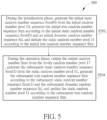
- FIG. 5 is a flowchart of a method 500 of generating the output random number Srno for use in the random number generators 1 and 2.
- the method 500 includes Steps S502 and S504 for generating the output random number Srno.
- Step S502 is used to update the lively random number pool 17 using the fixed and truly random numbers in the initial random number pool 10.
- Step S504 is used to generate the output random number Srno and to constantly update the static random number pool 11. Any reasonable step change or adjustment is within the scope of the disclosure.
- Step S502 During the initialization phase, generate the initial static random number sequence Ssrn(0) from the initial random number pool 10, generate the initial true random number sequence Strn according to the initial static random number sequence Ssm(0) and the initial dynamic random number sequence Sd, and initiate the static random number pool 11 according to the initial true random number sequence Strn;
- Step S504 During the operation phase, output the output random number Srno from the lively random number pool 17, generate the subsequent static random number sequence Ssrn(1) from the static random number pool 11, generate the subsequent true random number sequence Strn according to the subsequent static random number sequence Ssrn(1) and the subsequent dynamic random number sequence Sd, and update the static random number pool 11 according to the subsequent true random number sequence Strn(1).
- the details of the method 500 have been provided in the preceding paragraphs, and will not be repeated here.
- the method 500 employs in the initiation phase the fixed set of truly random numbers in the initial random number pool 10 to generate the initial true random number sequence Strn and to initiate the static random number pool 11 with the initial true random number sequence Strn. Later in the operation phase, the method 500 employs the static random number pool 11 to output the output random number Srno while updating the static random number pool 11 in a constant manner, saving random number resources while ensuring data security.
- FIG. 6 is a flowchart of a method for implementing Step S502 in FIG 5 .
- the method includes Steps S602 to S612 for initiating the static random number pool 11 using the fixed set of truly random numbers in the initial random number pool 10. Any reasonable step change or adjustment is within the scope of the disclosure.
- Step S602 The initial random number pool 10 generates the initial static random number sequence Ssm(0);
- Step S604 Generate the dynamic entropy bits E(1) to E(N), and generate the initial dynamic random number sequence Sd according to the dynamic entropy bits E(1) to E(N);
- Step S606 Combine the initial static random number sequence Ssrn(0) and the initial dynamic random number sequence Sd to generate the initial true random number sequence Strn;
- Step S608 Update the lively random number pool 17 according to the initial true random number sequence Strn;
- Step S610 Is the lively random number pool 17 fully updated? If so, go to Step S612; and if not, go to Step S602;
- Step S612 Update the static random number pool 11; go to Step S504.
- the details of the method have been provided in the preceding paragraphs, and will not be repeated here.
- the method employs the fixed set of truly random numbers in the initial random number pool 10 to generate the initial true random number sequence Strn to update the static random number pool 11. Therefore, devices employing the method may derive unique sets of truly random numbers from the fixed set of truly random numbers in the initial random number pool 10, saving resources while ensuring data security.
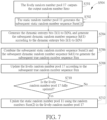
- FIG. 7 is a flowchart of a method for implementing Step S504 in FIG 5 .
- the method includes Steps S701 to S712 for updating the static random number pool 11 in a continuous and iterative fashion and outputting the output random number Srno from the lively random number pool 17.
- Step S701 is used to output the output random number Srno.
- Steps S702 to S710 are used to generate a new set of truly random numbers based on a previous set of truly random numbers.
- Step S712 is used to update the new set of truly random numbers into the lively random number pool 17. Any reasonable step change or adjustment is within the scope of the disclosure.
- Step S701 The lively random number pool 17 outputs the output random number Srno;
- Step S702 The static random number pool 11 generates the subsequent static random number sequence Ssrn(1);
- Step S704 Generate the dynamic entropy bits E(1) to E(N), and generate the subsequent dynamic random number sequence Sd according to the dynamic entropy bits E(1) to E(N);
- Step S706 Combine the subsequent static random number sequence Ssm(1) and the subsequent dynamic random number sequence Sd to generate the subsequent true random number sequence Strn;
- Step S708 Update the lively random number pool 17 according to the subsequent true random number sequence Strn;
- Step S710 Is the lively random number pool 17 fully updated? If so, go to Step S712; and if not, go to Step S702;
- Step S712 Update the static random number pool 11 using the random numbers in the lively random number pool 17; go to Step S702.
- the method updates the static random number pool 11 continuously and iteratively using the previous set of truly random numbers from the static random number pool 11, outputting the output random number Srno from the lively random number pool 17 that is regularly changing, saving resources while further enhancing data security.
Landscapes
- Engineering & Computer Science (AREA)
- Computer Security & Cryptography (AREA)
- Signal Processing (AREA)
- Computer Networks & Wireless Communication (AREA)
- Theoretical Computer Science (AREA)
- General Physics & Mathematics (AREA)
- Physics & Mathematics (AREA)
- Mathematical Optimization (AREA)
- General Engineering & Computer Science (AREA)
- Pure & Applied Mathematics (AREA)
- Mathematical Analysis (AREA)
- Computational Mathematics (AREA)
- Storage Device Security (AREA)
- Compression, Expansion, Code Conversion, And Decoders (AREA)
- Pinball Game Machines (AREA)
- Manipulation Of Pulses (AREA)
Claims (14)
- Zufallszahlengenerator (1, 2), welcher umfasst:einen statischen Zufallszahlengenerator (15), der einen anfänglichen Zufallszahlenpool (10) und einen statischen Zufallszahlenpool (11) umfasst und konfiguriert ist, eine statische Zufallszahlenfolge (Ssrn) entweder aus dem anfänglichen Zufallszahlenpool (10) oder dem statischen Zufallszahlenpool (11) auszugeben;mindestens eine dynamische Entropiequelle (12(1) bis 12(N)), die konfiguriert ist, ein dynamisches Entropiebit (eines von E(1) bis E(N)) zu erzeugen;einen Zähler (14), der mit der mindestens einen dynamischen Entropiequelle (12(1) bis 12(N)) gekoppelt und konfiguriert ist, eine dynamische Zufallszahlenfolge (Sd) gemäß dem dynamischen Entropiebit (eines von E(1) bis E(N)) zu erzeugen; undeine Kombinationsschaltung (16), die mit dem statischen Zufallszahlengenerator (15) und dem Zähler (14) gekoppelt und konfiguriert ist, die statische Zufallszahlenfolge (Ssrn) zu empfangen und eine wahre Zufallszahlenfolge (Strn) an einen lebendigen Zufallszahlenpool (17) gemäß der statischen Zufallszahlenfolge (Ssrn) und der dynamischen Zufallszahlenfolge (Sd) auszugeben;worin der statische Zufallszahlenpool (11) konfiguriert ist, aktualisiert zu werden, wenn der lebendige Zufallszahlenpool (17) vollständig aktualisiert ist;worin der statische Zufallszahlenpool (11) ferner konfiguriert, während einer Betriebsphase eine nachfolgende statische Zufallszahlenfolge (Ssrn(1)) zu erzeugen, und die Kombinationsschaltung (16) ferner konfiguriert, eine nachfolgende wahre Zufallszahlenfolge (Strn) gemäß der nachfolgenden statischen Zufallszahlenfolge (Ssrn(1)) und einer nachfolgenden dynamischen Zufallszahlenfolge (Sd) zu erzeugen und den lebendigen Zufallszahlenpool (17) gemäß der nachfolgenden wahren Zufallszahlenfolge (Strn) zu aktualisieren; undworin die statische Zufallszahlenfolge (Ssrn) ein Hamming-Gewicht von im Wesentlichen 50%, eine Hamming-Distanz von im Wesentlichen 50% und eine Min-Entropie von im Wesentlichen 1 aufweist.
- Zufallszahlengenerator (1, 2) nach einem der vorstehenden Ansprüche, welcher ferner umfasst:eine Aktualisierungsschaltung (18), die mit dem statischen Zufallszahlenpool (11) und dem lebendigen Zufallszahlenpool (17) gekoppelt und konfiguriert ist, eine Kompression und eine nichtlineare Funktion auf Zufallszahlen (Ssrn(2)) aus dem lebendigen Zufallszahlenpool (17) anzuwenden, um aktualisierte wahre Zufallszahlen (Ssrn'(2)) zu erzeugen, wenn der lebendige Zufallszahlenpool (17) vollständig aktualisiert ist, und die aktualisierten wahren Zufallszahlen (Ssrn'(2)) in den statischen Zufallszahlenpool (11) zu aktualisieren.
- Zufallszahlengenerator (1, 2) nach einem der vorstehenden Ansprüche, worin der Zähler (14) umfasst:eine bedingte Rückkopplungsschaltung (140), die mit der mindestens einen dynamischen Entropiequelle (12(1) bis 12(N)) und der Kombinationsschaltung (16) gekoppelt ist und konfiguriert ist, ein Reseeding-Steuerbit (Bc) entsprechend dem dynamischen Entropiebit (eines von E(1) bis E(N)) und einem bestimmten Bit in der wahren Zufallszahlenfolge (Strn) zu erzeugen; undein lineares Rückkopplungs-Schieberegister (142), das zwischen die bedingte Rückkopplungsschaltung (140) und die Kombinationsschaltung (16) geschaltet ist und konfiguriert ist, gemäß dem Reseeding-Steuerbit (Bc) neu beschickt zu werden.
- Zufallszahlengenerator (1, 2) nach Anspruch 3, worin die bedingte Rückkopplungsschaltung (140) konfiguriert ist, bei jedem Taktzyklus das Reseeding-Steuerbit (Bc) zu erzeugen.
- Zufallszahlengenerator (2) nach einem der vorstehenden Ansprüche, welcher ferner umfasst:eine Kompressionsschaltung (20), die zwischen die Kombinationsschaltung (16) und den lebendigen Zufallszahlenpool (17) geschaltet und konfiguriert ist, die wahre Zufallszahlenfolge (Strn) in eine komprimierte wahre Zufallszahlenfolge (Strn') zu komprimieren;wobei der lebendige Zufallszahlenpool (17) mit der komprimierten wahren Zufallszahlenfolge (Strn') aktualisiert wird.
- Zufallszahlengenerator (1) nach einem der Ansprüche 1 bis 4, wobei der lebendige Zufallszahlenpool (17) mit der wahren Zufallszahlenfolge (Strn) aktualisiert wird.
- Zufallszahlengenerator (1, 2) nach einem der vorstehenden Ansprüche, worin der anfängliche Zufallszahlenpool (10) ein Zellenfeld mit physikalisch nicht klonierbaren Funktionen (PUF) oder ein Pool mit unabhängigen und identisch verteilten Zufallsvariablen (IID) ist.
- Zufallszahlengenerator (1, 2) nach einem der vorstehenden Ansprüche, welcher ferner einen deterministischen Zufallsbitgenerator umfasst, der konfiguriert ist, statische Zufallszahlen zu erzeugen und die statischen Zufallszahlen an den anfänglichen Zufallszahlenpool (10) auszugeben.
- Verfahren (500) zum Erzeugen einer Zufallszahl, wobei das Verfahren umfasst:während einer Initialisierungsphase, Erzeugen einer anfänglichen statischen Zufallszahlenfolge (Ssrn(0)) aus einem anfänglichen Zufallszahlenpool (10), Erzeugen einer anfänglichen wahren Zufallszahlenfolge (Strn) gemäß der anfänglichen statischen Zufallszahlenfolge (Ssrn(0)) und einer anfänglichen dynamischen Zufallszahlenfolge (Sd), wobei die anfängliche dynamische Zufallszahlenfolge (SD) gemäß einem dynamischen Entropiebit erzeugt wird, das von mindestens einer dynamischen Entropiequelle ausgegeben wird, und Initiieren eines statischen Zufallszahlenpools (11) gemäß der anfänglichen wahren Zufallszahlenfolge (Strn); undwährend einer Betriebsphase, Ausgabe der anfänglichen wahren Zufallszahlenfolge (Strn), bis ein lebendiger Zufallszahlenpool (17) vollständig aktualisiert ist; Erzeugen einer nachfolgenden statischen wahren Zufallszahlenfolge (Strn(1)) aus dem statischen Zufallszahlenpool (11), Erzeugen einer nachfolgenden wahren Zufallszahlenfolge (Strn), wobei das Erzeugen einer nachfolgenden wahren Zufallszahlenfolge (Strn) das Erzeugen der nachfolgenden wahren Zufallszahlenfolge (Strn) gemäß der nachfolgenden statischen Zufallszahlenfolge (Ssrn(1)) und einer nachfolgenden dynamischen Zufallszahlenfolge (Sd) umfasst, und Aktualisieren des lebendigen Zufallszahlenpools (17) gemäß der nachfolgenden wahren Zufallszahlenfolge (Strn).
- Verfahren (500) nach Anspruch 9, welches ferner umfasst:während der Initialisierungsphase, Initiieren des statischen Zufallszahlenpools (11) gemäß der anfänglichen wahren Zufallszahlenfolge (Strn), umfassend:Aktualisieren des lebendigen Zufallszahlenpools (17) gemäß der anfänglichen wahren Zufallszahlenfolge (Strn); undAktualisieren des statischen Zufallszahlenpools (11), wenn der lebendige Zufallszahlenpool (17) vollständig aktualisiert ist;während der Betriebsphase, Ausgeben der Ausgabezufallszahl (Srno), umfassend:
Ausgeben der Ausgabezufallszahl (Srno) aus dem lebendigen Zufallszahlenpool (17); undwährend der Betriebsphase, Aktualisieren des statischen Zufallszahlenpools (11) gemäß der nachfolgenden wahren Zufallszahlenfolge (Strn) umfassend:Aktualisieren des lebendigen Zufallszahlenpools (17) gemäß der nachfolgenden wahren Zufallszahlenfolge (Strn); undAktualisieren des statischen Zufallszahlenpools (11), wenn der lebendige Zufallszahlenpool (17) vollständig aktualisiert ist. - Verfahren (500) nach Anspruch 10, wobei das Aktualisieren des statischen Zufallszahlenpools (11), wenn der lebendige Zufallszahlenpool (17) vollständig aktualisiert ist, umfasst:
wenn der Lebendige Zufallszahlenpool (17) vollständig aktualisiert ist, Anwenden einer Kompression und einer nichtlinearen Funktion auf Zufallszahlen (Ssrn(2)) aus dem lebendigen Zufallszahlenpool (17) durch eine Aktualisierungsschaltung (18), um aktualisierte wahre Zufallszahlen (Ssrn'(2)) zu erzeugen, und Aktualisieren der aktualisierten wahren Zufallszahlen (Ssrn'(2)) in dem statischen Zufallszahlenpool (11) durch die Aktualisierungsschaltung (18),. - Verfahren (500) nach einem der Ansprüche 10 oder 11, welches ferner umfasst,
dass der lebendige Zufallszahlenpool (17) vollständig aktualisiert ist, wenn eine Menge von Zufallszahlen, die in dem lebendigen Zufallszahlenpool (17) aktualisiert sind, eine Zielmenge erreichen. - Verfahren (500) nach einem der Ansprüche 10 oder 11, welches ferner umfasst,
dass der lebendige Zufallszahlenpool (17) vollständig aktualisiert ist, wenn eine Zeitspanne der Aktualisierung des lebendigen Zufallszahlenpools (17) eine Zielzeitspanne erreicht. - Verfahren (500) nach einem der Ansprüche 9 bis 13, welches ferner umfasst:Erzeugen eines Reseeding-Steuerbits (Bc) entsprechend dem dynamischen Entropie-Bit (eines von E(1) bis E(N)) und einem bestimmten Bit in der nachfolgenden wahren Zufallszahlenfolge (Strn) durch eine bedingte Rückkopplungsschaltung (140);erneutes Einspeisen eines linearen Rückkopplungs-Schieberegisters (142) entsprechend dem Rückkopplungs-Steuerbit (Bc) während der Initialisierungsphase, um die anfängliche dynamische Zufallszahlenfolge (Sd) zu erzeugen; underneutes Einspeisen des linearen Rückkopplungs-Schieberegisters (142) entsprechend dem Rückkopplungs-Steuerbit (Bc) während der Betriebsphase, um die nachfolgende dynamische Zufallszahlenfolge (Sd) zu erzeugen.
Applications Claiming Priority (1)
| Application Number | Priority Date | Filing Date | Title |
|---|---|---|---|
| US201962878725P | 2019-07-25 | 2019-07-25 |
Publications (2)
| Publication Number | Publication Date |
|---|---|
| EP3770752A1 EP3770752A1 (de) | 2021-01-27 |
| EP3770752B1 true EP3770752B1 (de) | 2025-05-28 |
Family
ID=71527732
Family Applications (2)
| Application Number | Title | Priority Date | Filing Date |
|---|---|---|---|
| EP20186101.0A Active EP3770751B1 (de) | 2019-07-25 | 2020-07-16 | Hochgeschwindigkeitsschlüsselerzeugungsmotor |
| EP20187081.3A Active EP3770752B1 (de) | 2019-07-25 | 2020-07-22 | Zufallszahlengenerator und verfahren zur erzeugung einer ausgangszufallszahl |
Family Applications Before (1)
| Application Number | Title | Priority Date | Filing Date |
|---|---|---|---|
| EP20186101.0A Active EP3770751B1 (de) | 2019-07-25 | 2020-07-16 | Hochgeschwindigkeitsschlüsselerzeugungsmotor |
Country Status (5)
| Country | Link |
|---|---|
| US (2) | US11381394B2 (de) |
| EP (2) | EP3770751B1 (de) |
| JP (2) | JP7122722B2 (de) |
| CN (2) | CN112291056B (de) |
| TW (2) | TWI793429B (de) |
Families Citing this family (15)
| Publication number | Priority date | Publication date | Assignee | Title |
|---|---|---|---|---|
| US11567733B2 (en) * | 2020-04-15 | 2023-01-31 | Intel Corporation | System, method and apparatus for race-condition true random number generator |
| US11856114B2 (en) * | 2021-02-12 | 2023-12-26 | Taiwan Semiconductor Manufacturing Co., Ltd. | Device signature based on trim and redundancy information |
| US12493449B2 (en) * | 2021-02-18 | 2025-12-09 | PUFsecurity Corporation | Random number generator |
| US20220300255A1 (en) * | 2021-03-21 | 2022-09-22 | Gsi Technology Inc. | Ram true random number generator |
| US12095911B2 (en) | 2021-04-07 | 2024-09-17 | Samsung Electronics Co., Ltd. | Electronic device to enhance randomness of security module using multiple hardware random number generator and the method thereof |
| US11924339B2 (en) | 2021-04-15 | 2024-03-05 | Real Random IP, LLC | System and method for secure end-to-end electronic communication using a privately shared table of entropy |
| WO2022221725A1 (en) * | 2021-04-15 | 2022-10-20 | Real Random IP, LLC | System and method for secure end-to-end electronic communication using a privately shared table of entropy |
| US12407502B2 (en) | 2021-04-15 | 2025-09-02 | Real Random IP, LLC | System and method for secure end-to-end electronic communication using a mutating table of entropy |
| US11791988B2 (en) * | 2021-11-22 | 2023-10-17 | Theon Technology Llc | Use of random entropy in cryptography |
| US20240126509A1 (en) * | 2022-10-11 | 2024-04-18 | Analog Devices International Unlimited Company | Random number generation |
| US12261952B2 (en) | 2022-11-04 | 2025-03-25 | Crown Sterling Limited, LLC | Multiple vector one-time key pad |
| US12250310B2 (en) | 2023-01-09 | 2025-03-11 | Crown Sterling Limited, LLC | Use of irrational numbers in elliptic curve cryptography |
| CN119232364B (zh) * | 2023-06-29 | 2025-09-09 | 智能资安科技股份有限公司 | 基于puf的根密钥与多个数字输入序列纠缠的电子系统及根密钥提取器 |
| GR1010938B (el) * | 2024-05-21 | 2025-05-13 | Eulambia Advanced Technologies Επε, | Αρχη φυσικης μη κλωνοποιησιμης συναρτησης (puf) για εμπιστοσυνη ταυτοποιησης σε επικοινωνιες με συσκευες διαδικτυου των πραγματων (iot) |
| CN121098481B (zh) * | 2025-11-11 | 2026-01-27 | 上海伊世智能科技有限公司 | 一种伪随机数硬件加速与真随机种子协同生成方法及系统 |
Family Cites Families (55)
| Publication number | Priority date | Publication date | Assignee | Title |
|---|---|---|---|---|
| JP2567681B2 (ja) * | 1988-09-30 | 1996-12-25 | 三洋電機株式会社 | 乱数発生装置 |
| JP2000066879A (ja) | 1998-08-21 | 2000-03-03 | Nec Corp | 乱数発生装置 |
| JP3396883B2 (ja) | 1998-11-12 | 2003-04-14 | 独立行政法人通信総合研究所 | 光カオス乱数発生装置 |
| JP3034516B1 (ja) | 1999-03-08 | 2000-04-17 | 株式会社東芝 | 物理乱数発生装置 |
| JP2001043069A (ja) | 1999-07-30 | 2001-02-16 | Sony Corp | 乱数発生装置 |
| US6954770B1 (en) * | 2001-08-23 | 2005-10-11 | Cavium Networks | Random number generator |
| JP4491706B2 (ja) * | 2002-04-19 | 2010-06-30 | ソニー株式会社 | 暗号化復号化装置およびデータ受信装置 |
| KR100575182B1 (ko) | 2002-09-13 | 2006-05-02 | 가부시끼가이샤 도시바 | 난수 발생 회로 |
| DE10250831B3 (de) | 2002-10-31 | 2004-06-17 | Infineon Technologies Ag | Vorrichtung und Verfahren zum Erzeugen einer pseudozufälligen Folge von Zahlen |
| JP4248950B2 (ja) | 2003-06-24 | 2009-04-02 | 株式会社ルネサステクノロジ | 乱数発生装置 |
| US7496616B2 (en) * | 2004-11-12 | 2009-02-24 | International Business Machines Corporation | Method, apparatus and system for resistance to side channel attacks on random number generators |
| TW200629192A (en) | 2005-02-03 | 2006-08-16 | Sanyo Electric Co | Random number generating circuit |
| TWI307038B (en) | 2005-12-27 | 2009-03-01 | Ind Tech Res Inst | Random number generator for radio frequency identifciation tag and seed number generator for generating a seed number for operation of the random number generator |
| US7894602B2 (en) * | 2006-03-31 | 2011-02-22 | Sap Ag | System and method for generating pseudo-random numbers |
| JP2008003438A (ja) | 2006-06-26 | 2008-01-10 | Sony Corp | 乱数生成装置、乱数生成制御方法、メモリアクセス制御装置、および、通信装置 |
| ATE459912T1 (de) | 2006-11-28 | 2010-03-15 | Koninkl Philips Electronics Nv | Verfahren zur generierung von zufallszahlen mit einer ausgangszahl |
| JP2008180592A (ja) | 2007-01-24 | 2008-08-07 | Nec Electronics Corp | テストパターン生成回路及びテスト回路 |
| US20090083361A1 (en) | 2007-09-24 | 2009-03-26 | Moore Charles H | Shift-add based multiplication |
| JP4308293B2 (ja) | 2007-11-20 | 2009-08-05 | 際国 董 | 乱数生成装置及び方法 |
| CN101242265A (zh) * | 2008-03-07 | 2008-08-13 | 四川虹微技术有限公司 | 安全系统中流密码、伪随机数产生方法 |
| WO2010035202A1 (en) * | 2008-09-26 | 2010-04-01 | Koninklijke Philips Electronics N.V. | Authenticating a device and a user |
| GB2469393C (en) * | 2010-04-22 | 2014-08-06 | Cen Jung Tjhai | Public encryption system using deliberatily corrupted codewords from an error correcting code |
| US8667265B1 (en) * | 2010-07-28 | 2014-03-04 | Sandia Corporation | Hardware device binding and mutual authentication |
| JP2012174147A (ja) | 2011-02-23 | 2012-09-10 | Fujitsu Ltd | 情報提供プログラム、情報提供装置および情報提供方法 |
| JP5813380B2 (ja) | 2011-06-03 | 2015-11-17 | 株式会社東芝 | 半導体記憶装置 |
| JP2014075082A (ja) | 2012-10-05 | 2014-04-24 | Renesas Electronics Corp | 乱数生成器および乱数生成方法 |
| JP6034153B2 (ja) | 2012-11-21 | 2016-11-30 | 株式会社東芝 | 乱数生成回路 |
| US9047152B2 (en) | 2013-01-16 | 2015-06-02 | Skymedi Corporation | Delay device, method, and random number generator using the same |
| US9060265B2 (en) * | 2013-02-06 | 2015-06-16 | I-Shou University | Wireless sensor network and central node device thereof |
| JP6285536B2 (ja) | 2013-04-18 | 2018-02-28 | リソフトデブ,インコーポレイテッド | データを暗号化するシステムおよび方法 |
| US10230369B2 (en) * | 2013-08-28 | 2019-03-12 | Stc.Unm | Systems and methods for leveraging path delay variations in a circuit and generating error-tolerant bitstrings |
| DE102013109315B4 (de) * | 2013-08-28 | 2016-08-04 | Infineon Technologies Ag | Verfahren und Datenverarbeitungseinrichtung zum Rekonstruieren eines Vektors |
| JP6372295B2 (ja) | 2014-10-15 | 2018-08-15 | 富士通株式会社 | 物理乱数生成回路の品質テスト方法、乱数発生器および電子装置 |
| US9696965B2 (en) * | 2014-12-16 | 2017-07-04 | Nuvoton Technology Corporation | Input-dependent random number generation using memory arrays |
| US20160179472A1 (en) * | 2014-12-19 | 2016-06-23 | Megachips Corporation | Random number generation device and method for generating random number |
| US10142103B2 (en) | 2015-12-07 | 2018-11-27 | The Boeing Company | Hardware assisted fast pseudorandom number generation |
| US10031723B1 (en) | 2016-03-08 | 2018-07-24 | Secturion Systems, Inc. | Systolic random number generator |
| US10855477B2 (en) * | 2016-08-04 | 2020-12-01 | Macronix International Co., Ltd. | Non-volatile memory with physical unclonable function and random number generator |
| CN109478132B (zh) | 2016-08-19 | 2023-03-24 | 甲骨文国际公司 | 在计算装置中产生熵和在伪随机数发生器中播种熵的方法 |
| US10785022B2 (en) * | 2016-09-13 | 2020-09-22 | Hiroshi Watanabe | Network without abuse of a private key |
| US10078493B2 (en) * | 2016-10-10 | 2018-09-18 | International Business Machines Corporation | Secured pseudo-random number generator |
| US10511451B2 (en) | 2016-11-04 | 2019-12-17 | Taiwan Semiconductor Manufacturing Company Ltd. | Physically unclonable function (PUF) device and method of extending challenge/response pairs in a PUF device |
| US10140096B1 (en) | 2016-12-14 | 2018-11-27 | Amazon Technologies, Inc. | Preventing ring oscillator phase-lock |
| US10742405B2 (en) | 2016-12-16 | 2020-08-11 | The Boeing Company | Method and system for generation of cipher round keys by bit-mixers |
| GB2551865B (en) * | 2017-01-14 | 2020-03-18 | PQ Solutions Ltd | Improved stream cipher system |
| JP6972562B2 (ja) * | 2017-01-24 | 2021-11-24 | セイコーエプソン株式会社 | 回路装置、発振デバイス、物理量測定装置、電子機器及び移動体 |
| EP3407335B1 (de) * | 2017-05-22 | 2023-07-26 | Macronix International Co., Ltd. | Non-volatile memory-basierte physisch unklonbare funktion mit zufallszahlengenerator |
| JP6538908B2 (ja) | 2017-09-12 | 2019-07-03 | 力旺電子股▲ふん▼有限公司eMemory Technology Inc. | エントロピービットを用いたセキュリティシステム |
| US11646867B2 (en) * | 2017-12-22 | 2023-05-09 | The Boeing Company | Systems and methods implementing countermeasures to phase tracking attacks on ring oscillator based entropy sources |
| CN110018810B (zh) | 2018-01-10 | 2021-05-18 | 力旺电子股份有限公司 | 随机码产生器 |
| WO2019169297A1 (en) * | 2018-03-02 | 2019-09-06 | Intertrust Technologies Corporation | Trust and identity management systems and methods |
| US11055065B2 (en) | 2018-04-18 | 2021-07-06 | Ememory Technology Inc. | PUF-based true random number generation system |
| CN108681442B (zh) | 2018-05-07 | 2021-10-19 | 温州大学 | 一种具有自适应匹配功能的真随机数发生器 |
| CN109508174A (zh) | 2018-11-05 | 2019-03-22 | 杭州电子科技大学 | 一种单级真随机数发生器 |
| US11126404B2 (en) * | 2019-05-20 | 2021-09-21 | Nxp B.V. | Random number generator using multiple entropy sources and a method for generating random numbers |
-
2020
- 2020-07-16 EP EP20186101.0A patent/EP3770751B1/de active Active
- 2020-07-16 TW TW109124016A patent/TWI793429B/zh active
- 2020-07-16 US US16/930,336 patent/US11381394B2/en active Active
- 2020-07-16 CN CN202010686131.5A patent/CN112291056B/zh active Active
- 2020-07-16 JP JP2020121803A patent/JP7122722B2/ja active Active
- 2020-07-22 JP JP2020125111A patent/JP7006887B2/ja active Active
- 2020-07-22 US US16/935,212 patent/US11876899B2/en active Active
- 2020-07-22 EP EP20187081.3A patent/EP3770752B1/de active Active
- 2020-07-22 CN CN202010709991.6A patent/CN112286493B/zh active Active
- 2020-07-22 TW TW109124716A patent/TWI749654B/zh active
Also Published As
| Publication number | Publication date |
|---|---|
| US11876899B2 (en) | 2024-01-16 |
| JP2021022378A (ja) | 2021-02-18 |
| CN112291056B (zh) | 2024-02-23 |
| CN112286493A (zh) | 2021-01-29 |
| US20210026603A1 (en) | 2021-01-28 |
| TW202105168A (zh) | 2021-02-01 |
| TWI793429B (zh) | 2023-02-21 |
| US20210028935A1 (en) | 2021-01-28 |
| EP3770751A1 (de) | 2021-01-27 |
| JP7006887B2 (ja) | 2022-01-24 |
| CN112291056A (zh) | 2021-01-29 |
| TWI749654B (zh) | 2021-12-11 |
| JP2021022924A (ja) | 2021-02-18 |
| EP3770751B1 (de) | 2023-10-18 |
| EP3770752A1 (de) | 2021-01-27 |
| JP7122722B2 (ja) | 2022-08-22 |
| CN112286493B (zh) | 2024-06-21 |
| TW202105957A (zh) | 2021-02-01 |
| US11381394B2 (en) | 2022-07-05 |
Similar Documents
| Publication | Publication Date | Title |
|---|---|---|
| EP3770752A1 (de) | Zufallszahlengenerator und verfahren zur erzeugung einer ausgangszufallszahl | |
| US10333708B1 (en) | Hybrid random-number generator | |
| US8990276B2 (en) | Circuit and method for generating a true, circuit-specific and time-invariant random number | |
| KR101987141B1 (ko) | 난수 발생기 | |
| EP1977511B1 (de) | Signalgeneratorbasierte vorrichtungssicherheit | |
| EP2695052B1 (de) | System zur erzeugung von zufallszahlen basierend auf rauschen bei der speicher-einschaltung | |
| US11997200B2 (en) | Generating unique cryptographic keys from a pool of random elements | |
| US20050055391A1 (en) | Random number generator | |
| EP1100198B1 (de) | System zur Erzeugung einer Bitfolge | |
| US8351599B2 (en) | Cryptographic device for fast session switching | |
| TWI801742B (zh) | 熵產生器及產生增強熵的方法 | |
| Yakut et al. | Secure and efficient hybrid random number generator based on sponge constructions for cryptographic applications | |
| WO2003081829A2 (en) | Method and apparatus for remote digital key generation | |
| US11095442B1 (en) | Generating unique cryptographic keys from a pool of random elements | |
| US20160170711A1 (en) | Input-dependent random number generation using memory arrays | |
| US11487505B2 (en) | Physical unclonable function based true random number generator, method for generating true random numbers, and associated electronic device | |
| EP4327502A1 (de) | Systeme und verfahren für eine schlüsselableitungsfunktion auf basis einer physikalisch unklonbaren funktion (puf) | |
| WO2016128463A1 (en) | Method to generate high quality random mask from small entropy source | |
| JP2022043731A5 (de) | ||
| TWI782540B (zh) | 基於物理不可複製功能的真隨機數產生器以及用於產生真隨機數的方法 | |
| CN117573073A (zh) | 伪随机数生成方法、装置、设备及存储介质 | |
| KR101649996B1 (ko) | 임계클럭조절형 랜덤 암호 발생기 | |
| Lee et al. | Metastability-based feedback method for enhancing fpga-based trng | |
| EP3973660A1 (de) | Erzeugung eindeutiger kryptografischer schlüssel aus pool-zufallselementen | |
| Wu et al. | Ring-oscillator-assisted CTR_DRBG on FPGA with improved statistical properties |
Legal Events
| Date | Code | Title | Description |
|---|---|---|---|
| PUAI | Public reference made under article 153(3) epc to a published international application that has entered the european phase |
Free format text: ORIGINAL CODE: 0009012 |
|
| STAA | Information on the status of an ep patent application or granted ep patent |
Free format text: STATUS: THE APPLICATION HAS BEEN PUBLISHED |
|
| AK | Designated contracting states |
Kind code of ref document: A1 Designated state(s): AL AT BE BG CH CY CZ DE DK EE ES FI FR GB GR HR HU IE IS IT LI LT LU LV MC MK MT NL NO PL PT RO RS SE SI SK SM TR |
|
| AX | Request for extension of the european patent |
Extension state: BA ME |
|
| STAA | Information on the status of an ep patent application or granted ep patent |
Free format text: STATUS: REQUEST FOR EXAMINATION WAS MADE |
|
| 17P | Request for examination filed |
Effective date: 20210713 |
|
| RBV | Designated contracting states (corrected) |
Designated state(s): AL AT BE BG CH CY CZ DE DK EE ES FI FR GB GR HR HU IE IS IT LI LT LU LV MC MK MT NL NO PL PT RO RS SE SI SK SM TR |
|
| STAA | Information on the status of an ep patent application or granted ep patent |
Free format text: STATUS: EXAMINATION IS IN PROGRESS |
|
| 17Q | First examination report despatched |
Effective date: 20220609 |
|
| GRAP | Despatch of communication of intention to grant a patent |
Free format text: ORIGINAL CODE: EPIDOSNIGR1 |
|
| STAA | Information on the status of an ep patent application or granted ep patent |
Free format text: STATUS: GRANT OF PATENT IS INTENDED |
|
| INTG | Intention to grant announced |
Effective date: 20250130 |
|
| GRAS | Grant fee paid |
Free format text: ORIGINAL CODE: EPIDOSNIGR3 |
|
| GRAA | (expected) grant |
Free format text: ORIGINAL CODE: 0009210 |
|
| STAA | Information on the status of an ep patent application or granted ep patent |
Free format text: STATUS: THE PATENT HAS BEEN GRANTED |
|
| AK | Designated contracting states |
Kind code of ref document: B1 Designated state(s): AL AT BE BG CH CY CZ DE DK EE ES FI FR GB GR HR HU IE IS IT LI LT LU LV MC MK MT NL NO PL PT RO RS SE SI SK SM TR |
|
| REG | Reference to a national code |
Ref country code: GB Ref legal event code: FG4D |
|
| REG | Reference to a national code |
Ref country code: CH Ref legal event code: EP |
|
| REG | Reference to a national code |
Ref country code: IE Ref legal event code: FG4D Ref country code: DE Ref legal event code: R096 Ref document number: 602020051950 Country of ref document: DE |
|
| REG | Reference to a national code |
Ref country code: NL Ref legal event code: FP |
|
| PGFP | Annual fee paid to national office [announced via postgrant information from national office to epo] |
Ref country code: NL Payment date: 20250723 Year of fee payment: 6 |
|
| PG25 | Lapsed in a contracting state [announced via postgrant information from national office to epo] |
Ref country code: FI Free format text: LAPSE BECAUSE OF FAILURE TO SUBMIT A TRANSLATION OF THE DESCRIPTION OR TO PAY THE FEE WITHIN THE PRESCRIBED TIME-LIMIT Effective date: 20250528 Ref country code: ES Free format text: LAPSE BECAUSE OF FAILURE TO SUBMIT A TRANSLATION OF THE DESCRIPTION OR TO PAY THE FEE WITHIN THE PRESCRIBED TIME-LIMIT Effective date: 20250528 |
|
| PGFP | Annual fee paid to national office [announced via postgrant information from national office to epo] |
Ref country code: DE Payment date: 20250519 Year of fee payment: 6 |
|
| REG | Reference to a national code |
Ref country code: LT Ref legal event code: MG9D |
|
| PG25 | Lapsed in a contracting state [announced via postgrant information from national office to epo] |
Ref country code: NO Free format text: LAPSE BECAUSE OF FAILURE TO SUBMIT A TRANSLATION OF THE DESCRIPTION OR TO PAY THE FEE WITHIN THE PRESCRIBED TIME-LIMIT Effective date: 20250828 Ref country code: GR Free format text: LAPSE BECAUSE OF FAILURE TO SUBMIT A TRANSLATION OF THE DESCRIPTION OR TO PAY THE FEE WITHIN THE PRESCRIBED TIME-LIMIT Effective date: 20250829 |
|
| PG25 | Lapsed in a contracting state [announced via postgrant information from national office to epo] |
Ref country code: PL Free format text: LAPSE BECAUSE OF FAILURE TO SUBMIT A TRANSLATION OF THE DESCRIPTION OR TO PAY THE FEE WITHIN THE PRESCRIBED TIME-LIMIT Effective date: 20250528 |
|
| PG25 | Lapsed in a contracting state [announced via postgrant information from national office to epo] |
Ref country code: BG Free format text: LAPSE BECAUSE OF FAILURE TO SUBMIT A TRANSLATION OF THE DESCRIPTION OR TO PAY THE FEE WITHIN THE PRESCRIBED TIME-LIMIT Effective date: 20250528 |
|
| PGFP | Annual fee paid to national office [announced via postgrant information from national office to epo] |
Ref country code: GB Payment date: 20250724 Year of fee payment: 6 |
|
| PG25 | Lapsed in a contracting state [announced via postgrant information from national office to epo] |
Ref country code: HR Free format text: LAPSE BECAUSE OF FAILURE TO SUBMIT A TRANSLATION OF THE DESCRIPTION OR TO PAY THE FEE WITHIN THE PRESCRIBED TIME-LIMIT Effective date: 20250528 |
|
| PG25 | Lapsed in a contracting state [announced via postgrant information from national office to epo] |
Ref country code: RS Free format text: LAPSE BECAUSE OF FAILURE TO SUBMIT A TRANSLATION OF THE DESCRIPTION OR TO PAY THE FEE WITHIN THE PRESCRIBED TIME-LIMIT Effective date: 20250828 |
|
| PG25 | Lapsed in a contracting state [announced via postgrant information from national office to epo] |
Ref country code: IS Free format text: LAPSE BECAUSE OF FAILURE TO SUBMIT A TRANSLATION OF THE DESCRIPTION OR TO PAY THE FEE WITHIN THE PRESCRIBED TIME-LIMIT Effective date: 20250928 |
|
| PG25 | Lapsed in a contracting state [announced via postgrant information from national office to epo] |
Ref country code: LV Free format text: LAPSE BECAUSE OF FAILURE TO SUBMIT A TRANSLATION OF THE DESCRIPTION OR TO PAY THE FEE WITHIN THE PRESCRIBED TIME-LIMIT Effective date: 20250528 |
|
| REG | Reference to a national code |
Ref country code: AT Ref legal event code: MK05 Ref document number: 1798997 Country of ref document: AT Kind code of ref document: T Effective date: 20250528 |
|
| PG25 | Lapsed in a contracting state [announced via postgrant information from national office to epo] |
Ref country code: SM Free format text: LAPSE BECAUSE OF FAILURE TO SUBMIT A TRANSLATION OF THE DESCRIPTION OR TO PAY THE FEE WITHIN THE PRESCRIBED TIME-LIMIT Effective date: 20250528 Ref country code: DK Free format text: LAPSE BECAUSE OF FAILURE TO SUBMIT A TRANSLATION OF THE DESCRIPTION OR TO PAY THE FEE WITHIN THE PRESCRIBED TIME-LIMIT Effective date: 20250528 Ref country code: AT Free format text: LAPSE BECAUSE OF FAILURE TO SUBMIT A TRANSLATION OF THE DESCRIPTION OR TO PAY THE FEE WITHIN THE PRESCRIBED TIME-LIMIT Effective date: 20250528 |
|
| PG25 | Lapsed in a contracting state [announced via postgrant information from national office to epo] |
Ref country code: CZ Free format text: LAPSE BECAUSE OF FAILURE TO SUBMIT A TRANSLATION OF THE DESCRIPTION OR TO PAY THE FEE WITHIN THE PRESCRIBED TIME-LIMIT Effective date: 20250528 |
|
| PG25 | Lapsed in a contracting state [announced via postgrant information from national office to epo] |
Ref country code: EE Free format text: LAPSE BECAUSE OF FAILURE TO SUBMIT A TRANSLATION OF THE DESCRIPTION OR TO PAY THE FEE WITHIN THE PRESCRIBED TIME-LIMIT Effective date: 20250528 |
|
| PG25 | Lapsed in a contracting state [announced via postgrant information from national office to epo] |
Ref country code: SK Free format text: LAPSE BECAUSE OF FAILURE TO SUBMIT A TRANSLATION OF THE DESCRIPTION OR TO PAY THE FEE WITHIN THE PRESCRIBED TIME-LIMIT Effective date: 20250528 |
|
| PG25 | Lapsed in a contracting state [announced via postgrant information from national office to epo] |
Ref country code: IT Free format text: LAPSE BECAUSE OF FAILURE TO SUBMIT A TRANSLATION OF THE DESCRIPTION OR TO PAY THE FEE WITHIN THE PRESCRIBED TIME-LIMIT Effective date: 20250528 |
|
| REG | Reference to a national code |
Ref country code: CH Ref legal event code: H13 Free format text: ST27 STATUS EVENT CODE: U-0-0-H10-H13 (AS PROVIDED BY THE NATIONAL OFFICE) Effective date: 20260224 |
|
| REG | Reference to a national code |
Ref country code: DE Ref legal event code: R097 Ref document number: 602020051950 Country of ref document: DE |
|
| PG25 | Lapsed in a contracting state [announced via postgrant information from national office to epo] |
Ref country code: RO Free format text: LAPSE BECAUSE OF FAILURE TO SUBMIT A TRANSLATION OF THE DESCRIPTION OR TO PAY THE FEE WITHIN THE PRESCRIBED TIME-LIMIT Effective date: 20250528 Ref country code: LU Free format text: LAPSE BECAUSE OF NON-PAYMENT OF DUE FEES Effective date: 20250722 |
|
| REG | Reference to a national code |
Ref country code: BE Ref legal event code: MM Effective date: 20250731 |
|
| PLBE | No opposition filed within time limit |
Free format text: ORIGINAL CODE: 0009261 |
|
| STAA | Information on the status of an ep patent application or granted ep patent |
Free format text: STATUS: NO OPPOSITION FILED WITHIN TIME LIMIT |
|
| REG | Reference to a national code |
Ref country code: CH Ref legal event code: L10 Free format text: ST27 STATUS EVENT CODE: U-0-0-L10-L00 (AS PROVIDED BY THE NATIONAL OFFICE) Effective date: 20260409 |
|
| PG25 | Lapsed in a contracting state [announced via postgrant information from national office to epo] |
Ref country code: BE Free format text: LAPSE BECAUSE OF NON-PAYMENT OF DUE FEES Effective date: 20250731 |
|
| PG25 | Lapsed in a contracting state [announced via postgrant information from national office to epo] |
Ref country code: FR Free format text: LAPSE BECAUSE OF NON-PAYMENT OF DUE FEES Effective date: 20250728 |
|
| PG25 | Lapsed in a contracting state [announced via postgrant information from national office to epo] |
Ref country code: CH Free format text: LAPSE BECAUSE OF NON-PAYMENT OF DUE FEES Effective date: 20250731 |
|
| 26N | No opposition filed |
Effective date: 20260303 |