EP3757708B1 - Verfahren und vorrichtung zur verwendung einer drohne auf einem sich bewegenden objekt - Google Patents
Verfahren und vorrichtung zur verwendung einer drohne auf einem sich bewegenden objekt Download PDFInfo
- Publication number
- EP3757708B1 EP3757708B1 EP20181891.1A EP20181891A EP3757708B1 EP 3757708 B1 EP3757708 B1 EP 3757708B1 EP 20181891 A EP20181891 A EP 20181891A EP 3757708 B1 EP3757708 B1 EP 3757708B1
- Authority
- EP
- European Patent Office
- Prior art keywords
- moving object
- drone
- event
- information
- operation mode
- Prior art date
- Legal status (The legal status is an assumption and is not a legal conclusion. Google has not performed a legal analysis and makes no representation as to the accuracy of the status listed.)
- Active
Links
Images





Classifications
-
- G—PHYSICS
- G05—CONTROLLING; REGULATING
- G05D—SYSTEMS FOR CONTROLLING OR REGULATING NON-ELECTRIC VARIABLES
- G05D1/00—Control of position, course, altitude or attitude of land, water, air or space vehicles, e.g. using automatic pilots
- G05D1/0011—Control of position, course, altitude or attitude of land, water, air or space vehicles, e.g. using automatic pilots associated with a remote control arrangement
- G05D1/0016—Control of position, course, altitude or attitude of land, water, air or space vehicles, e.g. using automatic pilots associated with a remote control arrangement characterised by the operator's input device
-
- G—PHYSICS
- G05—CONTROLLING; REGULATING
- G05D—SYSTEMS FOR CONTROLLING OR REGULATING NON-ELECTRIC VARIABLES
- G05D1/00—Control of position, course, altitude or attitude of land, water, air or space vehicles, e.g. using automatic pilots
- G05D1/40—Control within particular dimensions
- G05D1/46—Control of position or course in three dimensions [3D]
-
- G—PHYSICS
- G05—CONTROLLING; REGULATING
- G05D—SYSTEMS FOR CONTROLLING OR REGULATING NON-ELECTRIC VARIABLES
- G05D1/00—Control of position, course, altitude or attitude of land, water, air or space vehicles, e.g. using automatic pilots
- G05D1/0094—Control of position, course, altitude or attitude of land, water, air or space vehicles, e.g. using automatic pilots involving pointing a payload, e.g. camera, weapon, sensor, towards a fixed or moving target
-
- B—PERFORMING OPERATIONS; TRANSPORTING
- B60—VEHICLES IN GENERAL
- B60R—VEHICLES, VEHICLE FITTINGS, OR VEHICLE PARTS, NOT OTHERWISE PROVIDED FOR
- B60R11/00—Arrangements for holding or mounting articles, not otherwise provided for
-
- B—PERFORMING OPERATIONS; TRANSPORTING
- B60—VEHICLES IN GENERAL
- B60R—VEHICLES, VEHICLE FITTINGS, OR VEHICLE PARTS, NOT OTHERWISE PROVIDED FOR
- B60R21/00—Arrangements or fittings on vehicles for protecting or preventing injuries to occupants or pedestrians in case of accidents or other traffic risks
- B60R21/02—Occupant safety arrangements or fittings, e.g. crash pads
- B60R21/16—Inflatable occupant restraints or confinements designed to inflate upon impact or impending impact, e.g. air bags
-
- B—PERFORMING OPERATIONS; TRANSPORTING
- B60—VEHICLES IN GENERAL
- B60W—CONJOINT CONTROL OF VEHICLE SUB-UNITS OF DIFFERENT TYPE OR DIFFERENT FUNCTION; CONTROL SYSTEMS SPECIALLY ADAPTED FOR HYBRID VEHICLES; ROAD VEHICLE DRIVE CONTROL SYSTEMS FOR PURPOSES NOT RELATED TO THE CONTROL OF A PARTICULAR SUB-UNIT
- B60W40/00—Estimation or calculation of non-directly measurable driving parameters for road vehicle drive control systems not related to the control of a particular sub unit, e.g. by using mathematical models
- B60W40/08—Estimation or calculation of non-directly measurable driving parameters for road vehicle drive control systems not related to the control of a particular sub unit, e.g. by using mathematical models related to drivers or passengers
-
- B—PERFORMING OPERATIONS; TRANSPORTING
- B64—AIRCRAFT; AVIATION; COSMONAUTICS
- B64U—UNMANNED AERIAL VEHICLES [UAV]; EQUIPMENT THEREFOR
- B64U40/00—On-board mechanical arrangements for adjusting control surfaces or rotors; On-board mechanical arrangements for in-flight adjustment of the base configuration
-
- B—PERFORMING OPERATIONS; TRANSPORTING
- B64—AIRCRAFT; AVIATION; COSMONAUTICS
- B64U—UNMANNED AERIAL VEHICLES [UAV]; EQUIPMENT THEREFOR
- B64U80/00—Transport or storage specially adapted for UAVs
- B64U80/80—Transport or storage specially adapted for UAVs by vehicles
-
- G—PHYSICS
- G05—CONTROLLING; REGULATING
- G05D—SYSTEMS FOR CONTROLLING OR REGULATING NON-ELECTRIC VARIABLES
- G05D1/00—Control of position, course, altitude or attitude of land, water, air or space vehicles, e.g. using automatic pilots
- G05D1/0011—Control of position, course, altitude or attitude of land, water, air or space vehicles, e.g. using automatic pilots associated with a remote control arrangement
- G05D1/0022—Control of position, course, altitude or attitude of land, water, air or space vehicles, e.g. using automatic pilots associated with a remote control arrangement characterised by the communication link
-
- G—PHYSICS
- G05—CONTROLLING; REGULATING
- G05D—SYSTEMS FOR CONTROLLING OR REGULATING NON-ELECTRIC VARIABLES
- G05D1/00—Control of position, course, altitude or attitude of land, water, air or space vehicles, e.g. using automatic pilots
- G05D1/0011—Control of position, course, altitude or attitude of land, water, air or space vehicles, e.g. using automatic pilots associated with a remote control arrangement
- G05D1/0027—Control of position, course, altitude or attitude of land, water, air or space vehicles, e.g. using automatic pilots associated with a remote control arrangement involving a plurality of vehicles, e.g. fleet or convoy travelling
-
- G—PHYSICS
- G05—CONTROLLING; REGULATING
- G05D—SYSTEMS FOR CONTROLLING OR REGULATING NON-ELECTRIC VARIABLES
- G05D1/00—Control of position, course, altitude or attitude of land, water, air or space vehicles, e.g. using automatic pilots
- G05D1/0011—Control of position, course, altitude or attitude of land, water, air or space vehicles, e.g. using automatic pilots associated with a remote control arrangement
- G05D1/005—Control of position, course, altitude or attitude of land, water, air or space vehicles, e.g. using automatic pilots associated with a remote control arrangement by providing the operator with signals other than visual, e.g. acoustic, haptic
-
- G—PHYSICS
- G05—CONTROLLING; REGULATING
- G05D—SYSTEMS FOR CONTROLLING OR REGULATING NON-ELECTRIC VARIABLES
- G05D1/00—Control of position, course, altitude or attitude of land, water, air or space vehicles, e.g. using automatic pilots
- G05D1/60—Intended control result
- G05D1/656—Interaction with payloads or external entities
-
- G—PHYSICS
- G06—COMPUTING OR CALCULATING; COUNTING
- G06F—ELECTRIC DIGITAL DATA PROCESSING
- G06F1/00—Details not covered by groups G06F3/00 - G06F13/00 and G06F21/00
- G06F1/26—Power supply means, e.g. regulation thereof
- G06F1/32—Means for saving power
- G06F1/3203—Power management, i.e. event-based initiation of a power-saving mode
- G06F1/3206—Monitoring of events, devices or parameters that trigger a change in power modality
- G06F1/3228—Monitoring task completion, e.g. by use of idle timers, stop commands or wait commands
-
- G—PHYSICS
- G06—COMPUTING OR CALCULATING; COUNTING
- G06F—ELECTRIC DIGITAL DATA PROCESSING
- G06F3/00—Input arrangements for transferring data to be processed into a form capable of being handled by the computer; Output arrangements for transferring data from processing unit to output unit, e.g. interface arrangements
- G06F3/01—Input arrangements or combined input and output arrangements for interaction between user and computer
-
- G—PHYSICS
- G08—SIGNALLING
- G08G—TRAFFIC CONTROL SYSTEMS
- G08G1/00—Traffic control systems for road vehicles
- G08G1/01—Detecting movement of traffic to be counted or controlled
- G08G1/0104—Measuring and analyzing of parameters relative to traffic conditions
- G08G1/0108—Measuring and analyzing of parameters relative to traffic conditions based on the source of data
- G08G1/012—Measuring and analyzing of parameters relative to traffic conditions based on the source of data from other sources than vehicle or roadside beacons, e.g. mobile networks
-
- G—PHYSICS
- G08—SIGNALLING
- G08G—TRAFFIC CONTROL SYSTEMS
- G08G1/00—Traffic control systems for road vehicles
- G08G1/01—Detecting movement of traffic to be counted or controlled
- G08G1/0104—Measuring and analyzing of parameters relative to traffic conditions
- G08G1/0125—Traffic data processing
- G08G1/0133—Traffic data processing for classifying traffic situation
-
- G—PHYSICS
- G08—SIGNALLING
- G08G—TRAFFIC CONTROL SYSTEMS
- G08G1/00—Traffic control systems for road vehicles
- G08G1/01—Detecting movement of traffic to be counted or controlled
- G08G1/04—Detecting movement of traffic to be counted or controlled using optical or ultrasonic detectors
-
- H—ELECTRICITY
- H04—ELECTRIC COMMUNICATION TECHNIQUE
- H04L—TRANSMISSION OF DIGITAL INFORMATION, e.g. TELEGRAPHIC COMMUNICATION
- H04L67/00—Network arrangements or protocols for supporting network services or applications
- H04L67/01—Protocols
- H04L67/12—Protocols specially adapted for proprietary or special-purpose networking environments, e.g. medical networks, sensor networks, networks in vehicles or remote metering networks
-
- H—ELECTRICITY
- H04—ELECTRIC COMMUNICATION TECHNIQUE
- H04W—WIRELESS COMMUNICATION NETWORKS
- H04W4/00—Services specially adapted for wireless communication networks; Facilities therefor
- H04W4/30—Services specially adapted for particular environments, situations or purposes
- H04W4/40—Services specially adapted for particular environments, situations or purposes for vehicles, e.g. vehicle-to-pedestrians [V2P]
- H04W4/42—Services specially adapted for particular environments, situations or purposes for vehicles, e.g. vehicle-to-pedestrians [V2P] for mass transport vehicles, e.g. buses, trains or aircraft
-
- B—PERFORMING OPERATIONS; TRANSPORTING
- B60—VEHICLES IN GENERAL
- B60R—VEHICLES, VEHICLE FITTINGS, OR VEHICLE PARTS, NOT OTHERWISE PROVIDED FOR
- B60R11/00—Arrangements for holding or mounting articles, not otherwise provided for
- B60R2011/0001—Arrangements for holding or mounting articles, not otherwise provided for characterised by position
- B60R2011/0003—Arrangements for holding or mounting articles, not otherwise provided for characterised by position inside the vehicle
- B60R2011/0036—Luggage compartment
-
- B—PERFORMING OPERATIONS; TRANSPORTING
- B60—VEHICLES IN GENERAL
- B60R—VEHICLES, VEHICLE FITTINGS, OR VEHICLE PARTS, NOT OTHERWISE PROVIDED FOR
- B60R11/00—Arrangements for holding or mounting articles, not otherwise provided for
- B60R2011/0001—Arrangements for holding or mounting articles, not otherwise provided for characterised by position
- B60R2011/004—Arrangements for holding or mounting articles, not otherwise provided for characterised by position outside the vehicle
-
- B—PERFORMING OPERATIONS; TRANSPORTING
- B60—VEHICLES IN GENERAL
- B60W—CONJOINT CONTROL OF VEHICLE SUB-UNITS OF DIFFERENT TYPE OR DIFFERENT FUNCTION; CONTROL SYSTEMS SPECIALLY ADAPTED FOR HYBRID VEHICLES; ROAD VEHICLE DRIVE CONTROL SYSTEMS FOR PURPOSES NOT RELATED TO THE CONTROL OF A PARTICULAR SUB-UNIT
- B60W2540/00—Input parameters relating to occupants
- B60W2540/221—Physiology, e.g. weight, heartbeat, health or special needs
-
- B—PERFORMING OPERATIONS; TRANSPORTING
- B60—VEHICLES IN GENERAL
- B60W—CONJOINT CONTROL OF VEHICLE SUB-UNITS OF DIFFERENT TYPE OR DIFFERENT FUNCTION; CONTROL SYSTEMS SPECIALLY ADAPTED FOR HYBRID VEHICLES; ROAD VEHICLE DRIVE CONTROL SYSTEMS FOR PURPOSES NOT RELATED TO THE CONTROL OF A PARTICULAR SUB-UNIT
- B60W30/00—Purposes of road vehicle drive control systems not related to the control of a particular sub-unit, e.g. of systems using conjoint control of vehicle sub-units
-
- B—PERFORMING OPERATIONS; TRANSPORTING
- B64—AIRCRAFT; AVIATION; COSMONAUTICS
- B64U—UNMANNED AERIAL VEHICLES [UAV]; EQUIPMENT THEREFOR
- B64U2101/00—UAVs specially adapted for particular uses or applications
- B64U2101/30—UAVs specially adapted for particular uses or applications for imaging, photography or videography
Definitions
- the present disclosure relates to a method and apparatus for using an unmanned aerial vehicle (UAV) or a drone in a moving object.
- UAV unmanned aerial vehicle
- the present disclosure relates to a method and apparatus for performing communication with another moving object or device using a drone in a moving object.
- a vehicle may communicate with other devices on the basis of various types of communication methods.
- various devices are used for mobility, and methods for performing communication through these devices are being developed.
- UAV unmanned aerial vehicle
- drone which has been actively used not only in leisure but also in the military industry as one of the fourth industrial revolution technologies, is applicable to various industries such as construction, logistics, etc., thanks to the development of battery and communication technology as well as airplane technology.
- Recently, the application area of the drone has been continuously expanded through enlargement of traditional drones, as well as miniaturization thereof.
- US 2016/016663 A1 provides an automotive drone deployment system that includes at least a vehicle and a deployable drone that is configured to attach and detach from the vehicle.
- WO 2017/157863 A1 provides one or more support operations for a land vehicle using an unmanned autonomous vehicle (UAV) such as an aerial drone.
- UAV unmanned autonomous vehicle
- US 2018/251234 A1 provides a vehicle configured to couple with an unmanned aerial vehicle (UAV) and a landing connection component configured to form a connection between the UAV and the vehicle and to prevent detachment of the UAV from the vehicle.
- UAV unmanned aerial vehicle
- the present disclosure may provide a method and apparatus for using a UAV or a drone in a moving object.
- the present disclosure may provide a method and apparatus for utilizing a UAV or a drone in consideration of an emergency situation of a moving object.
- the present disclosure may provide a method and apparatus for using a plurality of UAVs or drones in a moving object.
- a method of operating a moving object on which a drone is mounted includes detecting, by the moving object, occurrence of an event; determining whether to use the drone on the basis of the detected event; and determining an operation mode, among a first operation mode and a second operation mode, of the drone when the drone is used.
- the method further comprises: transmitting an event related information in at least one of the first operation mode and the second operation mode.
- the detecting occurrence of the event comprises the detecting occurrence of the event when an abnormality occurs in the moving object or an emergency situation is recognized.
- a moving object on which a drone is mounted is provided, as defined by independent claim 1.
- the moving object includes a transceiver configured to transmit and receive a signal; and a processor configured to control the transceiver.
- the processor may be configured to detect occurrence of an event when an abnormality occurs in the moving object or an emergency situation is recognized, determine whether to use the drone on the basis of the detected event, and determine an operation mode, among a first operation mode and a second operation mode, of the drone when the drone is used.
- the processor is configured to transmit an event related information in at least one of the first operation mode and the second operation mode.
- the drone may be configured to remain in a sleep state before the moving object detects the occurrence of the event; and the drone may be configured to, when the moving object detects the occurrence of the event, switch from the sleep state to an awake state.
- the drone may be configured to, when the drone is switched to the awake state, start the flight and output at least one of an ultrasonic wave or an electromagnetic wave.
- the moving object may be configured to, when an airbag installed in the moving body is operated, detect the occurrence of the event.
- the moving object may be configured to, when a user input is detected for an emergency button installed on the moving object, detect the occurrence of the event.
- the moving object may be configured to detect the occurrence of the event through at least one sensor installed on the moving object.
- the drone may be configured to, when the moving object detects the event and then detects a user input via a human machine interface (HMI), operate on the basis of the first operation mode.
- HMI human machine interface
- the drone may be configured to, when the moving object detects the event and then does not detect the user input via the HMI, operate on the basis of the second operation mode.
- the moving object may be configured to obtain location information about the moving object; and in a case that the moving object is located in a first area predetermined on the basis of the location information, the drone may be configured to, when the event is detected, operate on the basis of the first operation mode.
- the drone in a case that the moving object is located in a second area predetermined on the basis of the location information, the drone may be configured to, when the event is detected, operate on the basis of the second operation mode.
- the drone in a case that the moving object is located in an area other than the first area predetermined on the basis of the location information, the drone may be configured to, when the event is detected, operate on the basis of the second operation mode.
- the moving object may be configured to, when the operation mode of the drone is the first operation mode, transmit a message including the event related information in a broadcast manner using the drone to at least one moving object within a predetermined range from the moving object.
- the message including the event related information may include location information of the moving object.
- the message including the event related information may include transmission type information indicating the broadcast manner; and the moving object may be configured to transmit the message including the event related information to the at least one moving object within a predetermined range on the basis of a local area network without the base station.
- the moving object may be configured to, when the operation mode of the drone is the second operation mode, transmit the message including the event related information to the base station in a unicast manner using the drone.
- the message including the event related information may include at least one of moving object ID information, location information, or data.
- the base station may provide the event related information to at least one moving object located within a predetermined distance from the moving object, on the basis of the moving object ID information and the location information of the message including the event related information.
- the base station may provide the event related information to at least one of the server or a device associated with the moving object, on the basis of the moving object ID information and the location information of the message including the event related information.
- the moving object may be equipped with one or more drones; the one or more drones may be configured to, when the moving object detects the event, switch to the awake state; and the one or more drones may be configured to perform operations different from each other.
- a first drone of the one or more drones may acquire image information on the moving object through the flight turning around the moving object; and a second drone of the one or more drones may communicate with at least one of the moving object, another moving object, a device, or a base station, and exchange information about the event.
- a component when a component is "connected”, “coupled”, or “fixed” to another component, it means that the component is not only directly connected to the another component, but also the component is indirectly connected to the another component with other components in between.
- a component when a component “includes” or “has” another component, it means that the component may further include another component without excluding other components, unless specifically stated otherwise.
- first and second are used only for the purpose of distinguishing one component from other components, and do not limit the order or importance between the components unless specifically mentioned. Accordingly, within the scope of the present disclosure, a first component in one embodiment may be referred to as a second component in another embodiment, and likewise, a second component in one embodiment may be referred to as a first component in another embodiment.
- the components distinguished from each other are for clearly describing each feature, and do not necessarily mean that the components are separated. That is, a plurality of components may be integrated into one hardware or software unit, or one component may be distributed and formed into a plurality of hardware or software units. Therefore, even if not mentioned otherwise, such integrated or distributed embodiments are included in the scope of the present disclosure.
- components described in various embodiments do not necessarily mean essential components, and some of them may be optional components. Therefore, an embodiment composed of a subset of components described in an embodiment is also included in the scope of the present disclosure. In addition, embodiments including other components in addition to the components described in the various embodiments are included in the scope of the present disclosure.
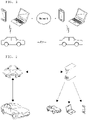
- FIG. 1 is a diagram illustrating a method in which a moving object communicates with other moving objects or devices through a network.
- a moving object may communicate with other moving object or other device.
- the moving object may communicate with other moving object or other device, based on cellular communication, WAVE communication, dedicated short range communication (DSRC), or another communication scheme. That is, as the cellular communication network, a communication network such as LTE, 5G, Wi-Fi communication network, WAVE communication network, etc. may be used.
- a local area network used in a moving object such as DSRC may be used, but the present disclosure is not limited thereto.
- a module capable of communication with only a device located inside the moving object and a module capable of communication with a device outside the moving object may be separated from each other for the security of the moving object.
- communication may be performed on the basis of security only for a device within a certain range of the moving object, such as Wi-Fi communication.
- a moving object and a moving object driver's personal device may include a communication module for performing only communication with each other. That is, the moving object and the moving object driver's personal device may use a communication network that is blocked from an external communication network.
- the moving object may include a communication module for performing communication with an external device.
- the above-described module may be implemented as one module. That is, the moving object may communicate with another device on the basis of one module, but the present disclosure is not limited thereto. That is, the communication method may be implemented in the moving object on the basis of various methods, but the present disclosure is not limited thereto.
- the moving object may refer to a device capable of moving.
- the moving object includes a vehicle (such as an autonomous vehicle or an automated vehicle), a drone, mobility, a mobile office, a mobile hotel, or a personal air vehicle (PAV).
- the moving object may be another moving device, but the present disclosure is not limited thereto.
- FIG. 2 is a diagram illustrating a method in which a drone (or UAV) is mounted on a moving object to be used.
- a drone may be mounted on a moving object.
- the drone may mean an object capable of flying.
- the drone may be referred to as a UAV or the like, but is not limited thereto. That is, the drone may refer to a device capable of flying and communicating with another device. However, hereinafter, it is referred to as a drone for convenience of description, but the present disclosure is not limited thereto.
- a drone may be mounted on a moving object.
- the moving object may be equipped with a plurality of drones.
- the state in which the drone is mounted on the moving object may vary, which will be described later.
- the drone may be separated from the moving object to communicate with another device.
- the drone may communicate with servers for emergency rescue.
- the server may be a server associated with accident processing of a moving object.
- the server may be a server associated with traffic conditions.
- the server may be any other server and is not limited to the above-described embodiment. That is, the drone may be separated from the moving object in an emergency situation to communicate with other devices and transmit necessary information to the server. Meanwhile, the server may transmit information received from the drone to another moving object, a smartphone, or other device, which will be described later.
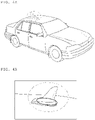
- FIGS. 3A to 4B are diagrams illustrating a method of mounting a drone on a moving object.
- a drone may be mounted on a moving object.
- the drone may be mounted inside the moving object to be invisible from the outside.
- the drone may be mounted at the topmost inside the moving object.
- the drone of a sunroof type may be installed in a predetermined space inside the moving object.
- a door of a sunroof type is opened in the moving object, and the drone is separated at a point in which the door is opened so that the drone may start the flight.
- a drone may be installed in an item storage area or other storage area in a moving object.
- the drone may be mounted in a predetermined space of the trunk or boot of the moving object.
- the trunk may be opened from the moving object, and the drone may be separated to start the flight.
- an upper structure considering a radar may be mounted on a moving object.
- the upper structure may be mounted on the top of the moving object.
- the moving object may be equipped with an antenna structure for communicating with other devices.
- a radar structure for sensing may be mounted on the moving object.
- an upper structure for another purpose may be mounted on the moving object, but the present disclosure is not limited thereto.
- the drone may be mounted on the bottom of the upper structure.
- the drone may be mounted on other parts of the upper structure. That is, the drone may be mounted on the upper structure mounted on the moving object as described above.
- the present disclosure is not limited to the examples shown in FIG. 3A and 3B , and the upper structure may be of another type.
- a structure for an antenna may be mounted on a moving object.
- the structure for the antenna of the moving object may be smaller than that of the upper structure of FIG. 3A or 3B and may be installed in the moving object.
- a drone may be mounted on a structure for an antenna of a moving object.
- the structure for the antenna of the moving object may be configured with a larger size compared to the existing structure so that the drone may be mounted.
- the structure for the antenna of the moving object may play a role as an antenna for transmitting and receiving a signal, as well as perform a function of mounting a drone.
- the signal reception performance of the moving object may be improved. That is, the drone may be mounted with the size of the antenna structure being increased so that the moving object may communicate with other devices, but the present disclosure is limited thereto.
- FIGS. 4A and 4B show only an example in which the antenna structure is mounted, and the antenna may be also mounted in other forms.
- the drone remains in a sleep state in which the drone is mounted on a moving object, and the drone may be switched to an awake state to start a flight when the drone is separated from the moving object. More specifically, when the drone is used in an emergency situation, the drone may remain in a sleep state in a normal situation. In other words, the power is prevented from supplied to the drone in a situation where an accident does not occur, thereby preventing the drone from consuming unnecessary power.
- the moving object may switch the drone to an awake state. For example, the moving object may determine whether there is an emergency situation.
- the moving object may determine whether there is an emergency situation on the basis of whether the moving object is damaged, whether the moving object is malfunctioning, whether the moving object is fired, the internal temperature of the moving object, and other information related to the moving object.
- the moving object may determine that an emergency situation occurs and awake the drone when an airbag is deployed. That is, it is possible to awake the drone at a time point when the airbag is deployed in association with the airbag.
- the moving object may determine an input for an emergency button (e.g., ecall) from the user. That is, the user may press the emergency button in the emergency situation.
- the moving object may switch the drone to an awake state.
- the moving object may include a plurality of sensors for determining whether there is an abnormality as described above.
- the moving object may determine whether the moving object is abnormal on the basis of information collected from the plurality of sensors, and determine whether the abnormality of the moving object is equal to or higher than a predetermined level. For example, when an abnormality does not occur in the moving object, the drone may remain in a sleep state.
- the abnormality of the moving object is equal to or higher than the predetermined level, the drone may be switched to the awake state.
- the moving object may supply power to the drone and switch the drone to a state capable of flying.
- the moving object may awake the drone when the gravity acceleration value of the sensor mounted on the moving object is equal to or higher than a predetermined value.
- the moving object may awake the drone, when the gravitational acceleration value is equal to or greater than a predetermined value, i.e., when the moving object does not receive a response from a driver by a Human Machine Interface (HMI).
- HMI Human Machine Interface
- the moving object may awake the drone when an emergency is recognized.
- a case in which the driver does not directly transmit an event occurrence at the time of an emergency situation of a moving object may be considered.
- sensors included in the moving object may not operate properly when the moving object is damaged and may not detect the event.
- the event may be detected through an external organization (e.g., rescue organization, 119, etc.) or an application of the device. More specifically, although an event occurs in the moving object, the moving object itself or the driver may not detect the event.
- the event may be detected externally, and the occurrence of the event may be detected on the basis of information from an organization related to the event.
- an event occurring in a moving object may be detected by an external organization to be engaged, and a drone may be awakened when the event is detected.
- an event may be detected through an application of a device of a driver or another user.
- the event may be detected through the device of the driver or another user in the case that the event may not be detected by the moving object itself or by the driver.
- the drone receiving the event related signal from the device may be awakened. That is, the event may be detected on the basis of at least one of a moving object inside, a driver input, an external organization, or an external device, but the present disclosure is not limited thereto.
- the drone may be awakened, which was described above.
- the drone when the drone is switched to the awake state to start the flight, the drone may start the flight on the basis of the predetermined driving information.
- the driving information may be set so that the drone has an altitude perpendicular to the moving object as driving information predetermined in the drone.
- the drive information may be set so that the drone acquires an image around the moving object through the flight within a predetermined distance from the moving object.
- the drone may maintain the stationary flight state while maintaining a predetermined distance from the moving object, but the present disclosure is not limited thereto. Based on the foregoing, the drone may operate separately from the moving object.
- the drone may perform communication with another device, which will be described later.
- the drone may autonomously perform a flight on the basis of the predetermined driving information.
- the moving object when the moving object recognizes an emergency situation, the moving object may switch the drone to an awake state and provide a control right for the drone to the registered device.
- the registered device may be a device associated with a moving object or a device of a moving object driver, but the present disclosure is not limited thereto.
- the registered device may control the awakened drone, and communicate with other devices or acquire the surrounding image through the drone control.
- the drone when the drone remain in a sleep state, the drone may not communicate with a moving object or another device in consideration of power consumption.
- the drone when the drone remains in a sleep state, the drone may exchange a simple message with the moving object or another device in consideration of a long period. Through this, the moving object or another device may determine whether the drone is abnormal.
- the information about the drone since the information about the drone is transmitted to the moving object or another device in consideration of a long period, it is possible to prevent power consumption by the drone.
- the drone when the drone is switched to an awake state, the drone may communicate with at least one of a moving object and another device. That is, the drone may be switched to a state in which communication is possible. Accordingly, the drone may exchange necessary information with at least one of other devices, organizations, and moving objects.
- the drone may be switched from the awake state back to the sleep state.
- the moving object may switch the drone to the sleep state when determining a user input for switching the drone to the sleep state.
- the user input comprises a touch input or an input for a predetermined button.
- the drone may be switched to a sleep state when the drone is engaged with an organization (or a rescue organization) to receive a message about the end of the flight from the organization. More specifically, the drone may provide information associated with the event to the organization or other device on the basis of the event.
- the organization or another device may receive information related to the event from the drone, and when the confirmation of the information about the event occurring in the moving object is completed and no further information is needed, the drone may receive a message about the end of the flight.
- the drone may terminate the flight and be switched to a sleep state.
- the control authority of the drone is switched to an external device of the moving object, the drone may receive a flight termination command from the external device and be switched to a sleep state on the basis of the command, but the present disclosure is not limited thereto.
- FIG. 5 is a diagram illustrating a case where an emergency situation of a moving object occurs.
- the drone when the moving object determines an emergency situation, the drone may be awakened to operate.
- the moving object determines an emergency situation there may be various forms. More specifically, the drone may operate separately from the moving object when an emergency situation of the moving object occurs. Therefore, when the moving object determines an emergency situation through incorrect information due to a malfunction, the drone may be unnecessarily separated from the moving object and operate, thereby causing a problem. In consideration of the foregoing, it may be necessary to distinguish a case where the moving object determines an emergency situation.
- the moving object may determine an emergency situation by a sensor that has already mounted.
- the moving object may determine an emergency situation when the airbag operates inside the moving object. That is, when the moving object detects that the airbag is deployed, the moving object may determine an emergency situation and switch the drone to an awake state.
- the moving object when the moving object detects that a fire occurs in the moving object using a temperature sensor, the moving object may determine an emergency situation and switch the drone to an awake state.
- the drone may be switched to an awake state by a moving object user.
- the battery of the moving object may be discharged or a problem may occur in driving of the moving object due to a malfunction.
- the moving object is required to operate using the drone, which may be not determined as an emergency situation.
- the moving object may determine an input for the drone awake from the user of the moving object, and switch the drone to an awake state to operate the drone on the basis of the input.
- the moving object may include a plurality of sensors for recognizing an emergency situation.
- the moving object may predetermine a plurality of values for recognizing the emergency situation and determine the emergency situation on the basis of the predetermined values.
- the emergency situation may be an event.
- the drone may operate separately from the moving object, but the present disclosure is not limited thereto.
- the drone when a moving object 510 collides with another moving object 520 while moving, the drone may be switched to an awake state to be operated. For example, when a collision of the moving object 510 occurs, the airbag of the moving object 510 may be deployed, and the drone may be switched to an awake state on the basis of the same.
- the moving object 510 may include a collision detection sensor, and when a collision at a level equal to or higher than a predetermined level is detected by the sensor in the moving object 510, the drone may be awakened as described above. That is, the drone may be switched to an awake state to be operated on the basis of a predetermined condition in the moving object 510, and the predetermined condition is not limited to the above.
- FIG. 6 is a diagram illustrating a drone operation in an operation mode.
- the drone when the drone is switched to an awake state, the drone may be operated separately from the moving object.
- the drone may start the flight and communicate with other devices.
- the flight of the drone and the communication of the drone may be set differently according to the operation mode.
- the drone when the drone is operated separately from the moving object, the drone may detect the surrounding objects in consideration of flight.
- another vehicle e.g. helicopter, another drone
- the drone may not switch from an awake state back to a sleep state without starting the flight.
- the drone may detect whether another vehicle exists and determine a collision possibility for the purpose of for flight.
- the drone when it is determined that the drone has a low possibility of collision and is capable of flying, the drone may remain in an awake state to perform the flight. Meanwhile, when it is determined that the drone has a high possibility of collision and is not capable of flying, the drone may switch from an awake state to a sleep state not to perform the flight.
- the operation to be performed in the drone may be performed through the aircraft that has already flight, but the present disclosure is not limited thereto.
- the drone when an accident occurs on the moving object, the drone may operate differently depending on the importance of the accident.
- the moving object when the moving object causes a simple collision or an accident so as to disturb traffic, the moving object may not communicate with an emergency situation server or organizations associated with the emergency situation.
- the emergency situation server or emergency situation organization may obtain a plurality of pieces of accident information.
- the emergency situation server or emergency situation organization may also receive information that does not substantially require additional measures, and unnecessary operations may be performed according to the same.
- the drone may operate differently according to the operation mode.
- the drone when a drone is switched to an awake state regardless of an operation mode of the drone, the drone is required to inform surrounding moving objects or devices of its existence.
- the drone when the drone is awakened, the drone may provide output information.
- the output information may include at least one of sound and light. More specifically, when the drone is switched to an awake state, it is possible to generate ultrasonic waves, infrared light, or visible light for communication. That is, the drone may provide an alarm that notifies surrounding moving objects and devices of drone's awake state.
- the drone when the drone is switched to an awake state, it is possible to generate light. In other words, when the drone is switched to an awake state, it is possible to generate electromagnetic waves.
- the drone may further include a light emitting unit, and light (or electromagnetic waves) may be generated through the light emitting unit when the drone is awakened. Accordingly, the surrounding moving objects or other devices may easily recognize that the drone is awakened, and processing on the emergency situation may be performed on the basis of the foregoing.
- the drone when the drone is awakened, the drone may further activate other functions, but the present disclosure is not limited thereto.
- the drone may operate in different operation modes according to the emergency situation as described above.
- the drone 620 when the drone 620 operates in a first operation mode, the drone 620 may perform only flight vertical with respect to the moving object 610.
- the drone 620 may transmit a broadcast message to a predetermined area around the moving object 610 without directly communicating with the base station or the server.
- the broadcast message may include at least one pieces of information of information indicating that the transmission type is a broadcast type, information indicating that an accident occurs in the moving object, an accident occurrence point of the moving object, and accident related information.
- moving objects located within a predetermined distance from the moving object 610 around the moving object 610 may receive the broadcast message without a base station or a server. Through this, the surrounding moving objects may confirm that an accident has occurred or the traffic condition is not good at a certain point, and thus may bypass the route or perform other actions.
- the drone 620 transmits only relevant information to neighboring moving objects located within a predetermined distance using the broadcast message, not through a base station or a server, so that transmission overhead may be small and simple information may be transmitted.
- the first operation mode may be an operation mode in a case in which a human injury does not occur and a shock or the like occurs in the moving object.
- the moving object may determine the level of the emergency situation.
- the level of the emergency situation may be determined on the basis of at least one of an image sensor inside the moving object, whether the moving object is damaged, or whether there is a fire. That is, in case of a minor accident, the drone may be operated in the first operation mode.
- the moving object may notify the surrounding moving objects of the location of the moving object, and a plurality of moving objects may perform transmission without transmission overhead through the broadcast method.
- the broadcast message includes the location information of the moving object and information indicating whether there is an accident.
- the message size may be small and the message may be easily transmitted to a plurality of moving objects.
- a drone may use various types of communication networks to transmit broadcast messages, but the present disclosure is not limited thereto.
- an event in which the moving object 610 collides with another moving object may be considered.
- the drone 620 may be awakened in the moving object 610.
- the drone 620 awakened from the moving object 610 may provide collision related information to surrounding moving objects.
- the drone 620 may include accident related information in the broadcast message and provide the same to surrounding moving objects.
- the collision related information may be transmitted to at least one of a moving object and a device located within a predetermined distance with respect to the moving object 610.
- the surrounding moving objects are continuously moving, and the drone 620 may transmit a message to the moving object entering within a predetermined distance. That is, the drone 620 transmits, as the broadcast message, collision related information to the moving objects and devices located within a predetermined distance when an event (collision) occurs, and then checks the moving objects and devices entering within the predetermined distance so that message may be further transmitted to the same. That is, the drone 620 may transmit event related information to at least one of the surrounding moving objects and devices through the broadcast message in the first operation mode.
- an event collision
- the drone 620 when the drone 620 operates in a second operation mode, the drone 620 may rotate while photographing an image around the moving object 610.
- the drone 620 may communicate with the base station, and thus directly communicate with an emergency situation server or an emergency situation organization.
- the drone 620 may further include information indicating the emergency situation of the moving object 610 and location information of the moving object 610, as well as black box image information of the moving object 610 or surrounding image information and transmit the same to an emergency situation server or an emergency situation organization.
- the drone 620 when the drone 620 operates in the second operation mode, the drone 620 may obtain emergency situation related image information while turning around the moving object 610 as described above.
- the drone 620 may communicate with the moving object 610 and acquire an internal image stored in the black box of the moving object 610.
- the drone 620 may obtain necessary information from the peripheral device (e.g. RSU) or other moving objects, and transmit the information to the emergency situation server or organization through the base station.
- the peripheral device e.g. RSU
- the drone may exchange a message including a plurality of pieces of information with the base station via a unicast method. Accordingly, the drone may transmit a large number of messages to the server, and the moving object user may perform a specific response to the emergency situation. Meanwhile, for example, the base station may transmit a message received through the drone to server and other devices, but the present disclosure is not limited thereto.
- the second operation mode may be an operation mode in the case that a human injury occurs or an impact occurs in the moving object.
- the moving object may determine the level of the emergency situation.
- the level of the emergency situation may be determined on the basis of at least one of an image sensor inside the moving object, whether a moving object is damaged, or whether there is a fire.
- the second operation mode may be an operation mode in the case that it is determined that the emergency situation is urgent so that the moving object is required to perform a specific action with the emergency situation server or organization.
- the drone may use a wireless mobile communication network to perform a large amount of data transmission, and may perform specific accident processing.
- the second operation mode may be an operation mode considering an emergency situation.
- the driver may not be able to communicate the event (or accident) occurrence to the rescue organization (e.g. 911) directly.
- the rescue organization e.g. 911
- the drone may operate in engagement with an organization (or rescue organization).
- the drone may be engaged with the driver's device in the second operation mode.
- an application related to a drone of a moving object may be installed in the driver device.
- the drone when the drone is awakened on the basis of above-described second operation mode as the emergency situation, the drone may be engaged with the driver's device to provide information about the event. That is, when the event occurs in the moving object, the drone may be predetermined to be engaged with the driver device considering the case where the information may not be transmitted due to the damage of the moving object.
- the drone may operate to be directly engaged with the organization in the second operation mode, thereby efficiently responding to the event.
- an event in which the moving object 610 collides with another moving object may be considered.
- the drone 620 may be awakened in the moving object 610.
- the drone 620 awakened in the moving object 610 may communicate with the base station and provide collision related information.
- collision related information may be provided to at least one of a moving object and a device located within a predetermined distance from the moving object 610 through a base station.
- the base station may check the location information of the moving object 610, check moving objects and devices within a predetermined distance on the basis of location information of the moving object 610, and transmit an event (collision) related message.
- the base station may transmit a message to moving objects entering within a predetermined distance from the moving object. That is, the base station transmits, as a message, collision related information to a moving object and devices located within a predetermined distance when an event (collision) occurs, and then checks the moving objects and devices entering within a predetermined distance to additionally transmit the message to the same.
- the moving object may determine the operation mode of the drone. For example, when an emergency situation occurs in the moving object, the moving object may determine whether the driver reacts through the HMI.
- the moving object may operate on the basis of the first operation mode. That is, the moving object may determine that the event is a minor accident when the driver reacts through the HMI to be operated in the first operation mode.
- the drone may operate on the basis of the second operation mode. That is, the moving object may activate the drone on the basis of the second operation mode when the accident is serious enough that the driver may not react through the HMI, thereby enabling quick responses to the emergency situations.
- the HMI may refer to an interface through which a moving object can recognize a driver.
- the moving object may recognize the gesture of the driver through the HMI.
- the moving object may receive touch input or button input information received from the driver through the HMI.
- the moving object may check biometric information about the driver through the HMI.
- the moving object may check biometric information related to EEG, respiration, pulse, and heart rate of the driver. That is, the HMI may refer to an interface for recognition between the moving object and the driver, but the present disclosure is not limited thereto.
- the moving object may detect the driver's response through the HMI, and determine the operation mode on the basis of the foregoing, which was as described above.
- the operation mode of the drone may be determined according to a road on which a moving object is driving or a traffic situation. More specifically, when an emergency situation occurs while the moving object is driving in the city center or at a low speed, the drone may operate on the basis of the first operation mode. For example, the user may cope with an emergency situation occurring when driving in a city center or at a low speed. Therefore, the moving object may operate the drone on the basis of the first operation mode when an emergency situation occurs while driving in a city center or at a low speed. As a specific example, the moving object may determine whether the moving object is located in the city center by checking the location information and the map information of the moving object.
- the city center may be predetermined as a predetermined area in the map information, but the present disclosure is not limited thereto.
- the moving object may check the speed of the moving object when an emergency situation occurs.
- the moving object may operate the drone on the basis of the first operation mode.
- the moving object may operate the drone on the basis of the second operation mode.
- the moving object may determine whether the moving object is located in the city center by checking the location information and the map information of the moving object.
- the city center may be predetermined as a predetermined area in the map information, but the present disclosure is not limited thereto.
- the moving object when the moving object is not located in the predetermined area, it may be determined that the moving object is not driving in the city center.
- the moving object when the moving object is located in an area outside the city center which is the predetermined area, it may be determined that the moving object is not driving in the city center.
- the moving object when an emergency situation of the moving object occurs at a non-city area, the moving object user needs to directly contact a server or an organization associated with an emergency situation. Therefore, in consideration of the foregoing, the moving object may operate the drone on the basis of the second operation mode. Also, as an example, the moving object may check the speed of the moving object when an emergency situation occurs.
- the moving object when the moving speed of the moving object is greater than the predetermined speed, the moving object may operate the drone on the basis of the second operation mode. That is, when an emergency situation occurs while the moving object is driving at a high speed, there is high probability of occurrence of the emergency situation, so that the drone may operate on the basis of the first operation mode.
- the first operation mode and the second operation mode may be set on the basis of other methods, and are not limited to the above-described embodiment.
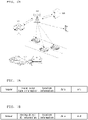
- FIGS. 7A and 7B are diagrams illustrating a data format used when a drone performs data transfer.
- the drone when the drone operates in the first operation mode, the drone may transmit data on the basis of a first type format.
- the first type format may include at least one of a header, transport type information, location information, and other data.
- the first type format may be a message of a small size. More specifically, the first type format may include a header including control information related to a message.
- the first type format may include transport type information to indicate that a simple message is transmitted to neighboring moving objects on the basis of the broadcast type.
- the first type format may include information for indicating a location of a moving object.
- the first type format may further include other necessary information, and is not limited to the above-described embodiment.
- the first type format may be a message of a small size and may be transmitted to a plurality of moving objects through a broadcast method.
- the drone when the drone operates in the second operation mode, the drone may transmit a message on the basis of the second type format.
- the second type format may include at least one of a header, moving object ID information, location information, and data.
- the header may include control information required for message transmission.
- the second type format may include moving object ID information.
- moving objects that receive the same do not need to check the ID of the moving object. That is, other moving objects may check only information on the accident point and whether there is an accident.
- the second type format may further include moving object ID information.
- the second type format information may include location information of the moving object.
- the second type format may include moving object surrounding image information, moving object black box image information, and other information as data information, as described above. That is, the second type format may transmit a message of a large size as specific information to the server through the base station in a unicast manner, as described above.
- FIG. 8 is a diagram illustrating a specific example of the operation according to the present disclosure.
- an event may occur in a moving object (S810).
- the event may be an emergency situation as described above. That is, the event may refer to a case where a drone is switched to an awake state to be separated from a moving object on the basis of a predetermined condition, and is not limited to the above-described embodiment.
- the moving object may determine whether the event is at a level less than a predetermined level (S830).
- whether the event is at a level less than the predetermined level may be determined on the basis of the information measured from the object.
- whether the event is at a level less than the predetermined level may be determined on the basis of acceleration/deceleration rate of the moving object.
- the acceleration and deceleration of the moving object may be information related to the amount of impact at the time of collision of the moving object.
- the moving object may determine whether the event is at a level less than the predetermined level on the basis of the acceleration/deceleration speed of the moving object.
- the acceleration/deceleration speed is smaller than the predetermined speed, the moving object may sufficiently secure the braking distance and the amount of impact may be small, in which the event may be at a level less than the predetermined level.
- the acceleration/deceleration speed is higher than the predetermined speed, the amount of impact generated in the moving object may be large, and herein the event may be at a level exceeding the predetermined level.
- the moving object may determine whether the event is at a level less than the predetermined level by another sensor or according to other condition, but the present disclosure is not limited thereto.
- whether the event is at a level less than the predetermined level may be determined with respect to whether the drone operates in the first operation mode or the second operation mode.
- the predetermined level may be determined on the basis of a plurality of sensors included in the moving object as described above.
- the drone may operate on the basis of the first operation mode.
- the drone may be awakened to transmit accident information to surrounding moving objects in a broadcast manner, as described above (S840).
- the drone when the event is at a level equal to or higher than the predetermined level, the drone operates on the basis of the second operation mode.
- the drone is awakened to transmit a large amount of data to the server through the base station in a unicast manner, by which a specific operation may be performed, as described above (S850).
- the drone when the drone is separated in the event, the drone may be switched to an awake state. For example, after a drone is switched to an awake state, information may be exchanged by performing communication with a moving object.
- the moving object may provide the drone with information on whether the operation mode is the first operation mode or the second operation mode on the basis of the predetermined level according to the detected information. Through this, the drone may check the operation mode and operate.
- the drone may be in a state where communication with the moving object is impossible.
- the drone may not be able to communicate with the moving object in the case of a breakdown or overturn of the moving object.
- the drone when the drone is unable to communicate with the moving object, the drone may operate in the second operation mode. That is, when the drone is incapable of communicating with the moving object, the drone may be determined to be in an emergency situation and operate on the basis of the second operation mode as the event is at a level exceeding the predetermined level, but the present disclosure is not limited thereto.
- FIG. 9 is a diagram illustrating a method in which a drone collects event related information and transmits the information to a server.
- the drone 920 when an event occurs in the moving object 910, it may be determined whether the drone 920 may be utilized.
- the determination as to whether drone 920 is utilized may be as shown in FIG. 8 .
- the drone 920 when the airbag is activated in the moving object 910, the drone 920 may be activated.
- the drone 920 when an abnormality occurs in a sensor included in the moving object 910, the drone 920 may be activated.
- the event may be an accident occurring in the moving object 910 or an unusual matter occurring in the other moving object 910, but the present disclosure is not limited thereto.
- the moving object 910 may activate the drone 920.
- the moving object 910 may transmit a signal for activating the drone 920 to the drone 920. That is, the moving object 910 may transmit the awake signal to the drone 920. Thereafter, the drone 920 may switch from the sleep state to the awake state to perform a flight.
- the drone 920 may collect data related to the event. As a specific example, information related to the sensor in the moving object 910 and the inside of the moving object 910 may be directly checked by the moving object 910 and transmitted to the server 930.
- the server 930 may mean a server of an organization related to the moving object 910, a rescue organization, or another organization for managing moving objects, but the present disclosure is not limited thereto. That is, the server 930 may be a subject that receives information about an event of the moving object 910.
- the external state information may be time information.
- the external state information may be information related to external temperature or whether there is an external fire.
- the external state information may be information capable of being checked outside the moving object 910, but the present disclosure is not limited thereto.
- the drone 920 may be activated to collect data related to the event while performing a flight.
- the drone 920 may capture an image of a moving object related to an event while flying around the moving object.
- the drone 920 may also capture an image around a moving object.
- the drone 920 may capture image information of another moving object.
- the drone 920 may capture image information about the guard rail. That is, the drone 920 may acquire image information about the outside of the moving object 910.
- the drone 920 may further measure fire or temperature information around the moving object 910, but the present disclosure is not limited thereto. That is, the drone 920 may collect data outside the moving object 910 with respect to the event.
- the drone 920 may transmit the collected data to the server 930.
- the server 930 may check an event occurring in the moving object 910 on the basis of the data collected from the drone 920.
- the server 930 may include pre-stored information related to the event.
- the previously stored information may be information about an event occurring in another moving object.
- the server 930 may pre-store image information related to a moving object accident.
- the server 930 may compare the pre-stored image information with image information collected from the drone 920.
- the server 930 may pre-store a plurality of images on the basis of an artificial intelligence (AI) system.
- AI artificial intelligence
- the server 930 may continuously acquire an event related image of the moving object.
- the server 930 may receive image information collected through the drone 920 as an input and continuously update information about an event on the basis of machine learning. Thereafter, the server 930 may continuously perform the update while matching the collected image information with the event. For example, as the event-related information in the server 930 increases, the event determination accuracy of the server 930 increases.
- the server 930 may check the event through the pre-stored data through the AI system on the basis of the data collected from the drone 920. For example, when the server 930 may check the event on the basis of the information collected from the drone 920, the server 930 may perform an additional action on the basis of the determined event. As an example, the additional action may be an action that is set for each event. As a specific example, the server 930 may transmit a signal to an insurance company or a rescue organization, and request a dispatch service. As another example, the server 930 may transmit information necessary for processing an event to a user of a moving object in which an event occurs, but the present disclosure is not limited thereto.
- the server 930 may not be able to identify the event on the basis of the information collected from the drone 920.
- the server 930 may make a request for additional data to the drone 920 through an additional data request signal.
- the server 930 may check the insufficient data with respect to the event, and include the insufficient data related information in the request message to transmit the same to the drone 920.
- the drone 920 may obtain necessary additional data on the basis of the received request message.
- the drone 920 may acquire necessary information on the basis of the insufficient data related information included in the request message. Thereafter, the drone 920 may further transmit the collected data to the server 930.
- the server 930 may stop the request for additional data, when event identification is possible on the basis of the collected data. Meanwhile, when the server 930 may not identify an event, the server 930 may request related information from the drone 920, but the present disclosure is not limited thereto.
- the server 930 may further request event related information from the drone 920 on the basis of a predetermined period. More specifically, even when the server 930 identifies the event, time series additional information may be needed considering the event processing procedure. That is, the drone 920 may secure data around the moving object 910 continuously or for a predetermined period from the time when the event occurs.
- the server 930 receives the above-described information from the drone 920, by which the information on the event processing procedure may be confirmed in real time.
- the server 930 may perform necessary actions for the event on the basis of the information confirmed in real time, whereby it is possible to perform control on the event.
- the server 930 or the drone 920 may transmit event related information to at least one of moving objects and devices around the moving object 910.
- the server 930 may check the location information of the moving object 910 as well as the event information of the moving object 910.
- the server 930 may transmit information about an event to at least one of surrounding moving objects and devices located within a predetermined distance from the moving object 910. Accordingly, the surrounding moving objects may check the event occurring in the moving object 910.
- the above information may be transmitted by the drone 920.
- the drone 920 performs the flight turning around the moving object 910, and may directly transmit event-related information to the moving object 910 and at least one of surrounding moving objects and devices located at a predetermined distance, but the present disclosure is not limited thereto.
- FIG. 10 is a diagram illustrating a method in which a moving object uses a plurality of drones.
- a plurality of drones 1020-1, 1020-2, and 1020-3 may be mounted on the moving object 1010.
- the plurality of drones 1020-1, 1020-2, and 1020-3 are awakened to be separated from the moving object 1010.
- the moving object 1010 is equipped with a plurality of drones 1020-1, 1020-2, and 1020-3, the respective drones 1020-1, 1020-2, and 1020-3 may perform respective functions.
- the first drone 1020-1 is awakened when an event (e.g., traffic accident) occurs and thus functions to communicate with a base station and thus deliver related information to the base station.
- the second drone 1020-2 is awakened when an event (e.
- the third drone 1020-3 functions to deliver information indicating that an event (e.g., accident) has occurred in the moving object 910 to other vehicles approaching from the rear, in which the third drone 1020-3 may move to the rear of the accident occurrence point to transmit information on the front situation to other surrounding moving objects through the LED display board or the lighting device.
- an event e.g., accident
- the first drone 1020-1 mounted on the moving object 1010 may communicate with a base station and transmit related information to a server. To this end, the first drone 1020-1 may be separated from the moving object 1010 and rise vertically from the moving object 1010 to perform a stop flight.
- the second drone 1020-2 mounted on the moving object 1010 may acquire image information around the moving object 1010. To this end, the second drone 1020-2 may perform a flight turning around the moving object 1010, thereby obtaining an image around the moving object 1010. Meanwhile, the first drone 1020-1 and the second drone 1020-2 may communicate with each other, and the second drone 1020-2 may transmit the obtained information to the first drone 1020-1.
- the first drone 1020-1 may transmit information obtained from the second drone 1020-2 to the server through the base station, thereby performing specific accident processing.
- the third drone 1020-3 may be further mounted on the moving object.
- the third drone 1020-3 may transmit information on an emergency situation to other moving objects around the moving object.
- the third drone 1020-3 may communicate with the first drone 1020-1 in a different manner.
- the first drone 1020-1 may perform message transmission in a unicast manner similar to the second operation mode as described above.
- the third drone 1020-3 may perform message transmission in a broadcast manner similar to the first operation mode as described above, but the present disclosure is not limited thereto.
- the moving object may be equipped with a plurality of drones in consideration of various functions, but the present disclosure is not limited thereto.
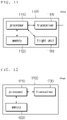
- FIG. 11 is a diagram showing a drone according to an embodiment of the present disclosure.
- the drone 1100 may include at least one of a processor 1111, a memory 1120, a transceiver 1130, and a flight unit 1140.
- the above-described configuration may be a software configuration or a hardware configuration. That is, the above-described configuration in the drone 1100 may be implemented or mounted in a physical form, but the present disclosure is not limited thereto.
- the processor 1110 may control the memory 1120, the transceiver 1130, and the flight unit 1140.
- the processor 1110 may be configured to control operations related to the drone.
- the memory 1120 may store information related to the drone 1100 or information processed by the processor 1110.
- the memory 1120 may store information obtained through the transceiver 1130, but the present disclosure is not limited thereto.
- the transceiver 1130 may be configured to communicate with another drone or another device.
- the processor 1110 may control the transceiver 1130 to transmit data to another drone or a device, but the present disclosure is not limited thereto.
- the flight unit 1140 may be configured to control the flight of the drone 1100.
- the flight unit 1140 may be a hardware configuration.
- the flight unit 1140 may control an operation related to the flight of the drone, but the present disclosure is not limited thereto.
- FIG. 12 is a diagram showing a configuration of an apparatus.
- the apparatus may include at least one of the moving object, device, server, and RSU that are above-described. That is, the apparatus may be engaged with another device to communicate with the same, but the present disclosure is not limited thereto.
- the apparatus 1200 may include at least one of a processor 1210, a memory 1220, and a transceiver 1230 for the purpose of the above-described operation. That is, the apparatus may include a configuration necessary for communicating with another apparatus.
- the apparatus may include other components in addition to the above-described configuration. That is, the apparatus is configured to perform communication with other devices, but the present disclosure is not limited thereto and may operate on the basis of the foregoing.
- step may further include other steps, may include remaining steps except for some steps, or may include other additional steps except for some steps.
- the aforementioned operations/functions may be embodied as computer readable code/algorithm/software stored on a non-transitory computer readable recording medium, such as the memory 1120 and/or memory 1220.
- the computer readable recording medium is any data storage device that can store data which can thereafter be read by a computer or a processor/microprocessor such as the processor 1110 and/or processor 1210.
- Examples of the computer readable recording medium include a hard disk drive (HDD), a solid state drive (SSD), a silicon disc drive (SDD), read-only memory (ROM), random-access memory (RAM), CD-ROM, magnetic tapes, floppy disks, optical data storage devices, etc.
- the processor 1110 and/or processor 1210 may perform the above described operations/functions, by executing the computer readable code/algorithm/software stored on the non-transitory computer readable recording medium.
- various embodiments of the present disclosure may be implemented by hardware, firmware, software, or a combination thereof.
- the hardware may be implemented by one or more of application specific Integrated Circuits (ASICs), Digital Signal Processors (DSPs), Digital Signal Processing Devices (DSPDs), Programmable Logic Devices (PLDs), Field Programmable Gate Arrays (FPGAs), a general processor, a controller, a microcontroller, a microprocessor, and the like.
- ASICs application specific Integrated Circuits
- DSPs Digital Signal Processors
- DSPDs Digital Signal Processing Devices
- PLDs Programmable Logic Devices
- FPGAs Field Programmable Gate Arrays
- general processor a controller, a microcontroller, a microprocessor, and the like.
- scope of the disclosure includes software or machine-executable instructions (e.g., an operating system, an application, firmware, a program, etc.) that causes an operation in accordance with various embodiments to be executed on an apparatus or a computer, and non-transitory computer-readable media that are executable on a device or computer in which such software or instructions, and the like are stored.
- software or machine-executable instructions e.g., an operating system, an application, firmware, a program, etc.
Landscapes
- Engineering & Computer Science (AREA)
- Physics & Mathematics (AREA)
- General Physics & Mathematics (AREA)
- Aviation & Aerospace Engineering (AREA)
- Remote Sensing (AREA)
- Automation & Control Theory (AREA)
- Radar, Positioning & Navigation (AREA)
- Theoretical Computer Science (AREA)
- Mechanical Engineering (AREA)
- General Engineering & Computer Science (AREA)
- Transportation (AREA)
- Computer Networks & Wireless Communication (AREA)
- Signal Processing (AREA)
- Computing Systems (AREA)
- Mathematical Physics (AREA)
- Human Computer Interaction (AREA)
- Analytical Chemistry (AREA)
- Chemical & Material Sciences (AREA)
- Health & Medical Sciences (AREA)
- General Health & Medical Sciences (AREA)
- Medical Informatics (AREA)
- Acoustics & Sound (AREA)
- Alarm Systems (AREA)
- Traffic Control Systems (AREA)
- Control Of Position, Course, Altitude, Or Attitude Of Moving Bodies (AREA)
Claims (18)
- Sich bewegendes Objekt (610), auf dem eine Drohne (620) montiert ist, wobei das sich bewegende Objekt (610) umfasst:einen Sendeempfänger (1230), der eingerichtet ist, um ein Signal zu senden und zu empfangen; undeinen Prozessor (1200), der eingerichtet ist, um den Sendeempfänger (1230) zu steuern,dadurch gekennzeichnet, dass der Prozessor (1200) eingerichtet ist zum:Erfassen eines Auftretens eines Ereignisses, wenn eine Anomalie in dem sich bewegenden Objekt (610) auftritt oder eine Notsituation erkannt wird,Bestimmen, ob die Drohne (620) zu verwenden ist, auf der Basis des erfassten Ereignisses undBestimmen eines Betriebsmodus, unter einem ersten Betriebsmodus und einem zweiten Betriebsmodus, der Drohne (620), wenn die Drohne (620) verwendet wird,wobei der Prozessor (1200) eingerichtet ist, um eine ereignisbezogene Information in dem ersten Betriebsmodus und/oder dem zweiten Betriebsmodus zu senden.
- Sich bewegendes Objekt (610) nach Anspruch 1, wobei die Drohne (620) eingerichtet ist, um in einem Ruhezustand zu bleiben, bevor das sich bewegende Objekt (610) das Auftreten des Ereignisses erfasst; und
wobei die Drohne (620) eingerichtet ist, um von dem Ruhezustand in einen Aktivzustand umzuschalten, wenn das sich bewegende Objekt (610) das Auftreten des Ereignisses erfasst. - Sich bewegendes Objekt (610) nach Anspruch 2, wobei die Drohne (620) eingerichtet ist, um einen Flug zu starten und eine Ultraschallwelle und/oder eine elektromagnetische Welle auszugeben, wenn die Drohne (620) in den Aktivzustand umgeschaltet wird.
- Sich bewegendes Objekt (610) nach Anspruch 2, wobei die Drohne (620) eingerichtet ist, um einen Flug zu starten, um Daten in Bezug auf das Ereignis zu sammeln und die gesammelten Daten an einen Server (640) zu senden, wenn die Drohne (620) in den Aktivzustand umgeschaltet wird.
- Sich bewegendes Objekt (610) nach Anspruch 4, wobei die Drohne (620) eingerichtet ist, um die Daten in Bezug auf das Ereignis während des Fluges zu sammeln; und
wobei die Daten in Bezug auf das Ereignis Bildinformationen außerhalb des sich bewegenden Objekts (610) und/oder Bildinformationen rund um das sich bewegende Objekt (610) umfassen. - Sich bewegendes Objekt (610) nach Anspruch 4, wobei die Drohne (620) eingerichtet ist, um die gesammelten Daten an den Server (640) zu senden, um den Server (640) zu veranlassen, zuvor gespeicherte Daten mit Daten in Bezug auf das empfangene Ereignis zu vergleichen und das Ereignis auf der Basis der verglichenen Informationen zu identifizieren.
- Sich bewegendes Objekt (610) nach Anspruch 1, wobei das sich bewegende Objekt (610) eingerichtet ist, um das Auftreten des Ereignisses auf der Basis des Falles, dass ein in dem sich bewegenden Körper installierter Airbag betätigt wird, und/oder des Falles, dass eine Benutzereingabe für einen Notrufknopf auf dem sich bewegenden Objekt (610) erfasst wird, und/oder des Falles, dass das Auftreten des Ereignisses durch mindestens einen auf dem sich bewegenden Objekt (610) installierten Sensor erfasst wird, zu erfassen.
- Sich bewegendes Objekt (610) nach Anspruch 1, wobei die Drohne (620) eingerichtet ist, um auf der Basis des ersten Betriebsmodus betrieben zu werden, wenn das sich bewegende Objekt (610) das Ereignis erfasst und dann eine Benutzereingabe über eine Mensch-Maschine-Schnittstelle (MMS) erfasst.
- Sich bewegendes Objekt (610) nach Anspruch 8, wobei die Drohne (620) eingerichtet ist, um auf der Basis des zweiten Betriebsmodus betrieben zu werden, wenn das sich bewegende Objekt (610) das Ereignis erfasst und dann keine Benutzereingabe über die MMS erfasst.
- Sich bewegendes Objekt (610) nach Anspruch 8, wobei die MMS eingerichtet ist, um die Benutzereingabe durch eine Geste und/oder eine Benutzer-Berührungseingabe und/oder eine Benutzer-Knopfeingabe und/oder biometrische Informationen zu erfassen; und
wobei die biometrischen Informationen eine Gehirnwelle und/oder eine Atmung und/oder eine Pulsfrequenz und/oder eine Herzfrequenz umfasst. - Sich bewegendes Objekt (610) nach Anspruch 1, wobei das sich bewegende Objekt (610) eingerichtet ist, um Standortinformationen über das sich bewegende Objekt (610) zu erhalten; und
wobei für den Fall, dass sich das sich bewegende Objekt (610) in einem ersten Bereich befindet, der auf der Basis der Standortinformationen vorbestimmt ist, die Drohne (620) eingerichtet ist, um auf der Basis des ersten Betriebsmodus betrieben zu werden, wenn das Ereignis erfasst wird. - Sich bewegendes Objekt (610) nach Anspruch 11, wobei für den Fall, dass sich das sich bewegende Objekt (610) in einem zweiten Bereich befindet, der auf der Basis der Standortinformationen vorbestimmt ist, die Drohne (620) eingerichtet ist, um auf der Basis des zweiten Betriebsmodus betrieben zu werden, wenn das Ereignis erfasst wird.
- Sich bewegendes Objekt (610) nach Anspruch 12, wobei das sich bewegende Objekt (610) eingerichtet ist, um eine erste Nachricht, welche die ereignisbezogenen Informationen umfasst, in einer Broadcast-Weise unter Verwendung der Drohne (620) an mindestens ein sich bewegendes Objekt innerhalb eines vorbestimmten Bereichs von dem sich bewegenden Objekt (610) zu senden, wenn der Betriebsmodus der Drohne (620) der erste Betriebsmodus ist; und
wobei das sich bewegende Objekt (610) eingerichtet ist, um eine zweite Nachricht, die ereignisbezogene Informationen umfasst, an eine Basisstation in einer Unicast-Weise unter Verwendung der Drohne (620) zu senden, wenn der Betriebsmodus der Drohne (620) der zweite Betriebsmodus ist. - Sich bewegendes Objekt (610) nach Anspruch 13, wobei die erste Nachricht, welche die ereignisbezogenen Informationen umfasst, Standortinformation des sich bewegenden Objekts (610) und/oder Sendetyp-Informationen, welche die Broadcast-Weise angeben, umfasst; und
wobei das sich bewegende Objekt (610) eingerichtet ist, um die erste Nachricht, welche die ereignisbezogenen Informationen umfasst, an das mindestens eine sich bewegende Objekt innerhalb eines vorbestimmten Bereichs auf der Basis eines lokalen Bereichsnetzwerks ohne die Basisstation (630) zu senden. - Sich bewegendes Objekt (610) nach Anspruch 13, wobei die zweite Nachricht, welche die ereignisbezogenen Informationen umfasst, eine ID-Information des sich bewegenden Objekts und/oder Standortinformationen und/oder Daten umfasst.
- Sich bewegendes Objekt (610) nach Anspruch 15, wobei die Basisstation die ereignisbezogenen Informationen an sich bewegende Objekte, die sich innerhalb eines vorbestimmten Abstands von dem sich bewegenden Objekt (610) befinden, und/oder den Server (640) und/oder eine Vorrichtung, die dem sich bewegenden Objekt (610) zugeordnet ist, auf der Basis der ID-Informationen des sich bewegenden Objekts und den Standortinformationen der zweiten Nachricht, welche die ereignisbezogenen Informationen umfasst, bereitstellt.
- Sich bewegendes Objekt (610) nach Anspruch 1, wobei das sich bewegende Objekt (610, 1010) mit mehreren Drohnen (1020-1, 1020-2) versehen ist, die eine erste Drohne (1020-1) und eine zweite Drohne (1020-2) umfassen; wobei die mehreren Drohnen (1020-1, 1020-2) eingerichtet sind, um in den Aktivzustand umzuschalten, wenn das sich bewegende Objekt (610, 1010) das Ereignis erfasst; wobei die erste Drohne (1020-1) der mehreren Drohnen (1020-1, 1020-2) eingerichtet ist, um Bildinformationen über das sich bewegende Objekt (610, 1010) durch einen Flug um das sich bewegende Objekt (610, 1010) zu gewinnen; und
wobei die zweite Drohne (1020-2) der mehreren Drohnen (1020-1, 1020-2) eingerichtet ist, um mit dem sich bewegenden Objekt (610, 1010) und/oder einem anderen sich bewegenden Objekt und/oder einer Vorrichtung und/oder einer Basisstation zu kommunizieren und Informationen über das Ereignis auszutauschen. - Verfahren zum Betreiben eines sich bewegenden Objekts (610), auf dem eine Drohne (620) montiert ist, wobei das Verfahren umfasst:Erfassen (S810), durch das sich bewegende Objekt (610), eines Auftretens eines Ereignisses;Bestimmen, (S820), ob die Drohne (620) zu verwenden ist, auf der Basis des erfassten Ereignisses; undBestimmen (S830) eines Betriebsmodus, unter einem ersten Betriebsmodus und einem zweiten Betriebsmodus, der Drohne (620), wenn die Drohne (620) verwendet wird,dadurch gekennzeichnet, dass das Verfahren ferner umfasst:Senden einer ereignisbezogenen Information in dem ersten Betriebsmodus und/oder dem zweiten Betriebsmodus,wobei das Erfassen (S810) eines Auftretens des Ereignisses das Erfassen eines Auftretens des Ereignisses, wenn eine Anomalie in dem sich bewegenden Objekt (610) auftritt oder eine Notsituation erkannt wird, umfasst.
Applications Claiming Priority (1)
| Application Number | Priority Date | Filing Date | Title |
|---|---|---|---|
| KR1020190075262A KR102740147B1 (ko) | 2019-06-24 | 2019-06-24 | 이동체에서 드론을 이용하는 방법 및 장치 |
Publications (2)
| Publication Number | Publication Date |
|---|---|
| EP3757708A1 EP3757708A1 (de) | 2020-12-30 |
| EP3757708B1 true EP3757708B1 (de) | 2022-06-22 |
Family
ID=71138683
Family Applications (1)
| Application Number | Title | Priority Date | Filing Date |
|---|---|---|---|
| EP20181891.1A Active EP3757708B1 (de) | 2019-06-24 | 2020-06-24 | Verfahren und vorrichtung zur verwendung einer drohne auf einem sich bewegenden objekt |
Country Status (3)
| Country | Link |
|---|---|
| US (1) | US11493916B2 (de) |
| EP (1) | EP3757708B1 (de) |
| KR (1) | KR102740147B1 (de) |
Families Citing this family (3)
| Publication number | Priority date | Publication date | Assignee | Title |
|---|---|---|---|---|
| JP7099338B2 (ja) * | 2019-01-18 | 2022-07-12 | トヨタ自動車株式会社 | サーバ、サーバ制御方法、サーバ制御プログラム、車両、車両制御方法、及び車両制御プログラム |
| CN113923242B (zh) * | 2021-09-30 | 2023-08-29 | 伟志股份公司 | 基于gis的自然灾害风险调查系统及方法 |
| CN117980844A (zh) * | 2021-11-12 | 2024-05-03 | 深圳市大疆创新科技有限公司 | 可移动平台的控制方法、装置、系统及控制终端 |
Family Cites Families (12)
| Publication number | Priority date | Publication date | Assignee | Title |
|---|---|---|---|---|
| EP3246776B1 (de) * | 2014-05-30 | 2020-11-18 | SZ DJI Technology Co., Ltd. | Systeme und verfahren zur uav-andockung |
| US9409644B2 (en) | 2014-07-16 | 2016-08-09 | Ford Global Technologies, Llc | Automotive drone deployment system |
| US10535103B1 (en) * | 2014-09-22 | 2020-01-14 | State Farm Mutual Automobile Insurance Company | Systems and methods of utilizing unmanned vehicles to detect insurance claim buildup |
| DE102015008768B4 (de) * | 2015-07-06 | 2018-12-13 | Audi Ag | Verfahren zum Begutachten eines an einem Unfall beteiligten Kraftfahrzeugs und Kraftfahrzeug |
| KR101746579B1 (ko) * | 2016-01-29 | 2017-06-13 | 동서대학교 산학협력단 | 드론을 이용한 차량 블랙박스 시스템 |
| KR101810964B1 (ko) * | 2016-02-29 | 2017-12-20 | 국민대학교산학협력단 | 도로에서 안전한 법 집행을 위한 드론 장치 및 그의 제어 방법 |
| GB2548369B (en) | 2016-03-15 | 2021-02-17 | Jaguar Land Rover Ltd | System for providing land vehicle support operations using an unmanned autonomous vehicle |
| CN109641659B (zh) | 2016-07-07 | 2023-01-24 | 福特全球技术公司 | 车辆集成的无人机 |
| WO2018045354A2 (en) | 2016-09-02 | 2018-03-08 | FLIR Belgium BVBA | Unmanned aerial system assisted navigational systems and methods |
| US10472091B2 (en) * | 2016-12-02 | 2019-11-12 | Adesa, Inc. | Method and apparatus using a drone to input vehicle data |
| KR101888930B1 (ko) * | 2016-12-12 | 2018-08-16 | 주식회사 숨비 | 드론 모바일스테이션을 이용한 안전관리 시스템 |
| CN108156418A (zh) | 2017-12-14 | 2018-06-12 | 沈阳无距科技有限公司 | 通过无人机获取实时影像的方法、装置和系统 |
-
2019
- 2019-06-24 KR KR1020190075262A patent/KR102740147B1/ko active Active
-
2020
- 2020-06-23 US US16/909,037 patent/US11493916B2/en active Active
- 2020-06-24 EP EP20181891.1A patent/EP3757708B1/de active Active
Also Published As
| Publication number | Publication date |
|---|---|
| KR20210000220A (ko) | 2021-01-04 |
| US20200401128A1 (en) | 2020-12-24 |
| US11493916B2 (en) | 2022-11-08 |
| EP3757708A1 (de) | 2020-12-30 |
| KR102740147B1 (ko) | 2024-12-06 |
Similar Documents
| Publication | Publication Date | Title |
|---|---|---|
| US20210208580A1 (en) | Local drone identification verification | |
| EP3757708B1 (de) | Verfahren und vorrichtung zur verwendung einer drohne auf einem sich bewegenden objekt | |
| EP3523155B1 (de) | Fahrzeugkollisionserkennungsverfahren und -system | |
| US9786188B2 (en) | Safety motor controller for a vehicle | |
| KR20190116192A (ko) | 자율주행 차량 해킹 대응 방법 및 그 장치 | |
| CN109781124B (zh) | 一种无人机救援方法、装置、无人机及车辆 | |
| EP3346441A1 (de) | Verfahren, benutzerendgerät, server und erfassungsvorrichtung zur überwachung des fluges eines unbemannten luftfahrzeugs | |
| JP7205204B2 (ja) | 車両の制御装置及び自動運転システム | |
| US20140324255A1 (en) | Aircraft emergency system using ads-b | |
| CN106549699A (zh) | 利用无人飞行器的车辆中的发送sos的装置和方法 | |
| CN203876988U (zh) | 飞行器的保护控制系统及飞行器 | |
| CN105652884A (zh) | 无人机飞行方法以及无人机飞行系统 | |
| US20240021092A1 (en) | Systems and methods for tracking aircraft | |
| CN111627256A (zh) | 无人机控制方法、车载终端及计算机可读存储介质 | |
| KR20150146040A (ko) | 경호용 무인 항공기 | |
| JP2021520547A (ja) | 盗まれたロボットビークルの追跡 | |
| CN110487119A (zh) | 一种集成于智慧警务车的无人机击落系统和击落方法 | |
| KR101800680B1 (ko) | 다목적 기능을 제공하는 드론 시스템 | |
| CN115380316B (zh) | 用于监测在飞行器的环境中的对象的方法和系统 | |
| KR20160083328A (ko) | 무인 항공기를 이용한 차량 번호 인식 방법 | |
| US12132986B2 (en) | Computer vision system used in vehicles | |
| JP7470265B2 (ja) | 無人航空機システムの制御方法 | |
| JP2016097966A (ja) | 車両保護に用いる方法、車両保護に用いる設備、及び非暫時性コンピュータ可読媒体 | |
| CN114162125B (zh) | 用于控制自动驾驶车辆的方法、装置、介质及车辆 | |
| KR102338661B1 (ko) | 사고 처리 시스템 및 사고 처리 방법 |
Legal Events
| Date | Code | Title | Description |
|---|---|---|---|
| PUAI | Public reference made under article 153(3) epc to a published international application that has entered the european phase |
Free format text: ORIGINAL CODE: 0009012 |
|
| STAA | Information on the status of an ep patent application or granted ep patent |
Free format text: STATUS: THE APPLICATION HAS BEEN PUBLISHED |
|
| AK | Designated contracting states |
Kind code of ref document: A1 Designated state(s): AL AT BE BG CH CY CZ DE DK EE ES FI FR GB GR HR HU IE IS IT LI LT LU LV MC MK MT NL NO PL PT RO RS SE SI SK SM TR |
|
| AX | Request for extension of the european patent |
Extension state: BA ME |
|
| STAA | Information on the status of an ep patent application or granted ep patent |
Free format text: STATUS: REQUEST FOR EXAMINATION WAS MADE |
|
| 17P | Request for examination filed |
Effective date: 20210630 |
|
| RAP3 | Party data changed (applicant data changed or rights of an application transferred) |
Owner name: HYUNDAI MOTOR COMPANY Owner name: KIA CORPORATION Owner name: AJOU UNIVERSITY INDUSTRY-ACADEMIC COOPERATION FOUNDATION |
|
| RBV | Designated contracting states (corrected) |
Designated state(s): AL AT BE BG CH CY CZ DE DK EE ES FI FR GB GR HR HU IE IS IT LI LT LU LV MC MK MT NL NO PL PT RO RS SE SI SK SM TR |
|
| GRAP | Despatch of communication of intention to grant a patent |
Free format text: ORIGINAL CODE: EPIDOSNIGR1 |
|
| STAA | Information on the status of an ep patent application or granted ep patent |
Free format text: STATUS: GRANT OF PATENT IS INTENDED |
|
| RIC1 | Information provided on ipc code assigned before grant |
Ipc: G08G 1/04 20060101ALI20211216BHEP Ipc: G08G 1/01 20060101ALI20211216BHEP Ipc: G08G 1/00 20060101ALI20211216BHEP Ipc: B64C 39/00 20060101ALI20211216BHEP Ipc: B60W 30/00 20060101ALI20211216BHEP Ipc: G05D 1/00 20060101AFI20211216BHEP |
|
| INTG | Intention to grant announced |
Effective date: 20220112 |
|
| GRAS | Grant fee paid |
Free format text: ORIGINAL CODE: EPIDOSNIGR3 |
|
| GRAA | (expected) grant |
Free format text: ORIGINAL CODE: 0009210 |
|
| STAA | Information on the status of an ep patent application or granted ep patent |
Free format text: STATUS: THE PATENT HAS BEEN GRANTED |
|
| AK | Designated contracting states |
Kind code of ref document: B1 Designated state(s): AL AT BE BG CH CY CZ DE DK EE ES FI FR GB GR HR HU IE IS IT LI LT LU LV MC MK MT NL NO PL PT RO RS SE SI SK SM TR |
|
| REG | Reference to a national code |
Ref country code: GB Ref legal event code: FG4D |
|
| REG | Reference to a national code |
Ref country code: CH Ref legal event code: EP |
|
| REG | Reference to a national code |
Ref country code: DE Ref legal event code: R096 Ref document number: 602020003629 Country of ref document: DE |
|
| REG | Reference to a national code |
Ref country code: AT Ref legal event code: REF Ref document number: 1500179 Country of ref document: AT Kind code of ref document: T Effective date: 20220715 |
|
| REG | Reference to a national code |
Ref country code: IE Ref legal event code: FG4D |
|
| REG | Reference to a national code |
Ref country code: LT Ref legal event code: MG9D |
|
| REG | Reference to a national code |
Ref country code: NL Ref legal event code: MP Effective date: 20220622 |
|
| PG25 | Lapsed in a contracting state [announced via postgrant information from national office to epo] |
Ref country code: SE Free format text: LAPSE BECAUSE OF FAILURE TO SUBMIT A TRANSLATION OF THE DESCRIPTION OR TO PAY THE FEE WITHIN THE PRESCRIBED TIME-LIMIT Effective date: 20220622 Ref country code: NO Free format text: LAPSE BECAUSE OF FAILURE TO SUBMIT A TRANSLATION OF THE DESCRIPTION OR TO PAY THE FEE WITHIN THE PRESCRIBED TIME-LIMIT Effective date: 20220922 Ref country code: LT Free format text: LAPSE BECAUSE OF FAILURE TO SUBMIT A TRANSLATION OF THE DESCRIPTION OR TO PAY THE FEE WITHIN THE PRESCRIBED TIME-LIMIT Effective date: 20220622 Ref country code: HR Free format text: LAPSE BECAUSE OF FAILURE TO SUBMIT A TRANSLATION OF THE DESCRIPTION OR TO PAY THE FEE WITHIN THE PRESCRIBED TIME-LIMIT Effective date: 20220622 Ref country code: GR Free format text: LAPSE BECAUSE OF FAILURE TO SUBMIT A TRANSLATION OF THE DESCRIPTION OR TO PAY THE FEE WITHIN THE PRESCRIBED TIME-LIMIT Effective date: 20220923 Ref country code: FI Free format text: LAPSE BECAUSE OF FAILURE TO SUBMIT A TRANSLATION OF THE DESCRIPTION OR TO PAY THE FEE WITHIN THE PRESCRIBED TIME-LIMIT Effective date: 20220622 Ref country code: BG Free format text: LAPSE BECAUSE OF FAILURE TO SUBMIT A TRANSLATION OF THE DESCRIPTION OR TO PAY THE FEE WITHIN THE PRESCRIBED TIME-LIMIT Effective date: 20220922 |
|
| REG | Reference to a national code |
Ref country code: AT Ref legal event code: MK05 Ref document number: 1500179 Country of ref document: AT Kind code of ref document: T Effective date: 20220622 |
|
| PG25 | Lapsed in a contracting state [announced via postgrant information from national office to epo] |
Ref country code: RS Free format text: LAPSE BECAUSE OF FAILURE TO SUBMIT A TRANSLATION OF THE DESCRIPTION OR TO PAY THE FEE WITHIN THE PRESCRIBED TIME-LIMIT Effective date: 20220622 Ref country code: LV Free format text: LAPSE BECAUSE OF FAILURE TO SUBMIT A TRANSLATION OF THE DESCRIPTION OR TO PAY THE FEE WITHIN THE PRESCRIBED TIME-LIMIT Effective date: 20220622 |
|
| PG25 | Lapsed in a contracting state [announced via postgrant information from national office to epo] |
Ref country code: NL Free format text: LAPSE BECAUSE OF FAILURE TO SUBMIT A TRANSLATION OF THE DESCRIPTION OR TO PAY THE FEE WITHIN THE PRESCRIBED TIME-LIMIT Effective date: 20220622 |
|
| PG25 | Lapsed in a contracting state [announced via postgrant information from national office to epo] |
Ref country code: SM Free format text: LAPSE BECAUSE OF FAILURE TO SUBMIT A TRANSLATION OF THE DESCRIPTION OR TO PAY THE FEE WITHIN THE PRESCRIBED TIME-LIMIT Effective date: 20220622 Ref country code: SK Free format text: LAPSE BECAUSE OF FAILURE TO SUBMIT A TRANSLATION OF THE DESCRIPTION OR TO PAY THE FEE WITHIN THE PRESCRIBED TIME-LIMIT Effective date: 20220622 Ref country code: RO Free format text: LAPSE BECAUSE OF FAILURE TO SUBMIT A TRANSLATION OF THE DESCRIPTION OR TO PAY THE FEE WITHIN THE PRESCRIBED TIME-LIMIT Effective date: 20220622 Ref country code: PT Free format text: LAPSE BECAUSE OF FAILURE TO SUBMIT A TRANSLATION OF THE DESCRIPTION OR TO PAY THE FEE WITHIN THE PRESCRIBED TIME-LIMIT Effective date: 20221024 Ref country code: ES Free format text: LAPSE BECAUSE OF FAILURE TO SUBMIT A TRANSLATION OF THE DESCRIPTION OR TO PAY THE FEE WITHIN THE PRESCRIBED TIME-LIMIT Effective date: 20220622 Ref country code: EE Free format text: LAPSE BECAUSE OF FAILURE TO SUBMIT A TRANSLATION OF THE DESCRIPTION OR TO PAY THE FEE WITHIN THE PRESCRIBED TIME-LIMIT Effective date: 20220622 Ref country code: CZ Free format text: LAPSE BECAUSE OF FAILURE TO SUBMIT A TRANSLATION OF THE DESCRIPTION OR TO PAY THE FEE WITHIN THE PRESCRIBED TIME-LIMIT Effective date: 20220622 Ref country code: AT Free format text: LAPSE BECAUSE OF FAILURE TO SUBMIT A TRANSLATION OF THE DESCRIPTION OR TO PAY THE FEE WITHIN THE PRESCRIBED TIME-LIMIT Effective date: 20220622 |
|
| REG | Reference to a national code |
Ref country code: BE Ref legal event code: MM Effective date: 20220630 |
|
| PG25 | Lapsed in a contracting state [announced via postgrant information from national office to epo] |
Ref country code: PL Free format text: LAPSE BECAUSE OF FAILURE TO SUBMIT A TRANSLATION OF THE DESCRIPTION OR TO PAY THE FEE WITHIN THE PRESCRIBED TIME-LIMIT Effective date: 20220622 Ref country code: IS Free format text: LAPSE BECAUSE OF FAILURE TO SUBMIT A TRANSLATION OF THE DESCRIPTION OR TO PAY THE FEE WITHIN THE PRESCRIBED TIME-LIMIT Effective date: 20221022 |
|
| REG | Reference to a national code |
Ref country code: DE Ref legal event code: R097 Ref document number: 602020003629 Country of ref document: DE |
|
| PG25 | Lapsed in a contracting state [announced via postgrant information from national office to epo] |
Ref country code: MC Free format text: LAPSE BECAUSE OF FAILURE TO SUBMIT A TRANSLATION OF THE DESCRIPTION OR TO PAY THE FEE WITHIN THE PRESCRIBED TIME-LIMIT Effective date: 20220622 Ref country code: AL Free format text: LAPSE BECAUSE OF FAILURE TO SUBMIT A TRANSLATION OF THE DESCRIPTION OR TO PAY THE FEE WITHIN THE PRESCRIBED TIME-LIMIT Effective date: 20220622 |
|
| PG25 | Lapsed in a contracting state [announced via postgrant information from national office to epo] |
Ref country code: LU Free format text: LAPSE BECAUSE OF NON-PAYMENT OF DUE FEES Effective date: 20220624 Ref country code: IE Free format text: LAPSE BECAUSE OF NON-PAYMENT OF DUE FEES Effective date: 20220624 Ref country code: DK Free format text: LAPSE BECAUSE OF FAILURE TO SUBMIT A TRANSLATION OF THE DESCRIPTION OR TO PAY THE FEE WITHIN THE PRESCRIBED TIME-LIMIT Effective date: 20220622 |
|
| PLBE | No opposition filed within time limit |
Free format text: ORIGINAL CODE: 0009261 |
|
| STAA | Information on the status of an ep patent application or granted ep patent |
Free format text: STATUS: NO OPPOSITION FILED WITHIN TIME LIMIT |
|
| 26N | No opposition filed |
Effective date: 20230323 |
|
| PG25 | Lapsed in a contracting state [announced via postgrant information from national office to epo] |
Ref country code: BE Free format text: LAPSE BECAUSE OF NON-PAYMENT OF DUE FEES Effective date: 20220630 |
|
| P01 | Opt-out of the competence of the unified patent court (upc) registered |
Effective date: 20230425 |
|
| PG25 | Lapsed in a contracting state [announced via postgrant information from national office to epo] |
Ref country code: SI Free format text: LAPSE BECAUSE OF FAILURE TO SUBMIT A TRANSLATION OF THE DESCRIPTION OR TO PAY THE FEE WITHIN THE PRESCRIBED TIME-LIMIT Effective date: 20220622 |
|
| PG25 | Lapsed in a contracting state [announced via postgrant information from national office to epo] |
Ref country code: IT Free format text: LAPSE BECAUSE OF FAILURE TO SUBMIT A TRANSLATION OF THE DESCRIPTION OR TO PAY THE FEE WITHIN THE PRESCRIBED TIME-LIMIT Effective date: 20220622 |
|
| REG | Reference to a national code |
Ref country code: CH Ref legal event code: PL |
|
| PG25 | Lapsed in a contracting state [announced via postgrant information from national office to epo] |
Ref country code: MK Free format text: LAPSE BECAUSE OF FAILURE TO SUBMIT A TRANSLATION OF THE DESCRIPTION OR TO PAY THE FEE WITHIN THE PRESCRIBED TIME-LIMIT Effective date: 20220622 Ref country code: CY Free format text: LAPSE BECAUSE OF FAILURE TO SUBMIT A TRANSLATION OF THE DESCRIPTION OR TO PAY THE FEE WITHIN THE PRESCRIBED TIME-LIMIT Effective date: 20220622 Ref country code: CH Free format text: LAPSE BECAUSE OF NON-PAYMENT OF DUE FEES Effective date: 20230630 |
|
| PG25 | Lapsed in a contracting state [announced via postgrant information from national office to epo] |
Ref country code: HU Free format text: LAPSE BECAUSE OF FAILURE TO SUBMIT A TRANSLATION OF THE DESCRIPTION OR TO PAY THE FEE WITHIN THE PRESCRIBED TIME-LIMIT; INVALID AB INITIO Effective date: 20200624 |
|
| PG25 | Lapsed in a contracting state [announced via postgrant information from national office to epo] |
Ref country code: TR Free format text: LAPSE BECAUSE OF FAILURE TO SUBMIT A TRANSLATION OF THE DESCRIPTION OR TO PAY THE FEE WITHIN THE PRESCRIBED TIME-LIMIT Effective date: 20220622 |
|
| PG25 | Lapsed in a contracting state [announced via postgrant information from national office to epo] |
Ref country code: MT Free format text: LAPSE BECAUSE OF FAILURE TO SUBMIT A TRANSLATION OF THE DESCRIPTION OR TO PAY THE FEE WITHIN THE PRESCRIBED TIME-LIMIT Effective date: 20220622 |
|
| PG25 | Lapsed in a contracting state [announced via postgrant information from national office to epo] |
Ref country code: BG Free format text: LAPSE BECAUSE OF FAILURE TO SUBMIT A TRANSLATION OF THE DESCRIPTION OR TO PAY THE FEE WITHIN THE PRESCRIBED TIME-LIMIT Effective date: 20220622 |
|
| PG25 | Lapsed in a contracting state [announced via postgrant information from national office to epo] |
Ref country code: BG Free format text: LAPSE BECAUSE OF FAILURE TO SUBMIT A TRANSLATION OF THE DESCRIPTION OR TO PAY THE FEE WITHIN THE PRESCRIBED TIME-LIMIT Effective date: 20220622 |
|
| GBPC | Gb: european patent ceased through non-payment of renewal fee |
Effective date: 20240624 |
|
| PG25 | Lapsed in a contracting state [announced via postgrant information from national office to epo] |
Ref country code: GB Free format text: LAPSE BECAUSE OF NON-PAYMENT OF DUE FEES Effective date: 20240624 |
|
| PGFP | Annual fee paid to national office [announced via postgrant information from national office to epo] |
Ref country code: DE Payment date: 20250520 Year of fee payment: 6 |
|
| PGFP | Annual fee paid to national office [announced via postgrant information from national office to epo] |
Ref country code: FR Payment date: 20250521 Year of fee payment: 6 |