EP3752392B1 - Kraftfahrzeugteppichboden - Google Patents
Kraftfahrzeugteppichboden Download PDFInfo
- Publication number
- EP3752392B1 EP3752392B1 EP19704751.7A EP19704751A EP3752392B1 EP 3752392 B1 EP3752392 B1 EP 3752392B1 EP 19704751 A EP19704751 A EP 19704751A EP 3752392 B1 EP3752392 B1 EP 3752392B1
- Authority
- EP
- European Patent Office
- Prior art keywords
- foam
- floor
- motor vehicle
- floor covering
- insulation
- Prior art date
- Legal status (The legal status is an assumption and is not a legal conclusion. Google has not performed a legal analysis and makes no representation as to the accuracy of the status listed.)
- Active
Links
Images

Classifications
-
- B—PERFORMING OPERATIONS; TRANSPORTING
- B60—VEHICLES IN GENERAL
- B60R—VEHICLES, VEHICLE FITTINGS, OR VEHICLE PARTS, NOT OTHERWISE PROVIDED FOR
- B60R13/00—Elements for body-finishing, identifying, or decorating; Arrangements or adaptations for advertising purposes
- B60R13/08—Insulating elements, e.g. for sound insulation
-
- B—PERFORMING OPERATIONS; TRANSPORTING
- B60—VEHICLES IN GENERAL
- B60R—VEHICLES, VEHICLE FITTINGS, OR VEHICLE PARTS, NOT OTHERWISE PROVIDED FOR
- B60R13/00—Elements for body-finishing, identifying, or decorating; Arrangements or adaptations for advertising purposes
- B60R13/08—Insulating elements, e.g. for sound insulation
- B60R13/0815—Acoustic or thermal insulation of passenger compartments
-
- B—PERFORMING OPERATIONS; TRANSPORTING
- B29—WORKING OF PLASTICS; WORKING OF SUBSTANCES IN A PLASTIC STATE IN GENERAL
- B29C—SHAPING OR JOINING OF PLASTICS; SHAPING OF MATERIAL IN A PLASTIC STATE, NOT OTHERWISE PROVIDED FOR; AFTER-TREATMENT OF THE SHAPED PRODUCTS, e.g. REPAIRING
- B29C44/00—Shaping by internal pressure generated in the material, e.g. swelling or foaming ; Producing porous or cellular expanded plastics articles
- B29C44/02—Shaping by internal pressure generated in the material, e.g. swelling or foaming ; Producing porous or cellular expanded plastics articles for articles of definite length, i.e. discrete articles
- B29C44/12—Incorporating or moulding on preformed parts, e.g. inserts or reinforcements
- B29C44/14—Incorporating or moulding on preformed parts, e.g. inserts or reinforcements the preformed part being a lining
-
- B—PERFORMING OPERATIONS; TRANSPORTING
- B60—VEHICLES IN GENERAL
- B60N—SEATS SPECIALLY ADAPTED FOR VEHICLES; VEHICLE PASSENGER ACCOMMODATION NOT OTHERWISE PROVIDED FOR
- B60N3/00—Arrangements or adaptations of other passenger fittings, not otherwise provided for
- B60N3/04—Arrangements or adaptations of other passenger fittings, not otherwise provided for of floor mats or carpets
- B60N3/042—Arrangements or adaptations of other passenger fittings, not otherwise provided for of floor mats or carpets of carpets
-
- B—PERFORMING OPERATIONS; TRANSPORTING
- B60—VEHICLES IN GENERAL
- B60N—SEATS SPECIALLY ADAPTED FOR VEHICLES; VEHICLE PASSENGER ACCOMMODATION NOT OTHERWISE PROVIDED FOR
- B60N3/00—Arrangements or adaptations of other passenger fittings, not otherwise provided for
- B60N3/04—Arrangements or adaptations of other passenger fittings, not otherwise provided for of floor mats or carpets
- B60N3/048—Arrangements or adaptations of other passenger fittings, not otherwise provided for of floor mats or carpets characterised by their structure
-
- B—PERFORMING OPERATIONS; TRANSPORTING
- B29—WORKING OF PLASTICS; WORKING OF SUBSTANCES IN A PLASTIC STATE IN GENERAL
- B29K—INDEXING SCHEME ASSOCIATED WITH SUBCLASSES B29B, B29C OR B29D, RELATING TO MOULDING MATERIALS OR TO MATERIALS FOR MOULDS, REINFORCEMENTS, FILLERS OR PREFORMED PARTS, e.g. INSERTS
- B29K2075/00—Use of PU, i.e. polyureas or polyurethanes or derivatives thereof, as moulding material
-
- B—PERFORMING OPERATIONS; TRANSPORTING
- B29—WORKING OF PLASTICS; WORKING OF SUBSTANCES IN A PLASTIC STATE IN GENERAL
- B29K—INDEXING SCHEME ASSOCIATED WITH SUBCLASSES B29B, B29C OR B29D, RELATING TO MOULDING MATERIALS OR TO MATERIALS FOR MOULDS, REINFORCEMENTS, FILLERS OR PREFORMED PARTS, e.g. INSERTS
- B29K2995/00—Properties of moulding materials, reinforcements, fillers, preformed parts or moulds
- B29K2995/0037—Other properties
- B29K2995/0063—Density
-
- B—PERFORMING OPERATIONS; TRANSPORTING
- B29—WORKING OF PLASTICS; WORKING OF SUBSTANCES IN A PLASTIC STATE IN GENERAL
- B29K—INDEXING SCHEME ASSOCIATED WITH SUBCLASSES B29B, B29C OR B29D, RELATING TO MOULDING MATERIALS OR TO MATERIALS FOR MOULDS, REINFORCEMENTS, FILLERS OR PREFORMED PARTS, e.g. INSERTS
- B29K2995/00—Properties of moulding materials, reinforcements, fillers, preformed parts or moulds
- B29K2995/0037—Other properties
- B29K2995/0082—Flexural strength; Flexion stiffness
-
- B—PERFORMING OPERATIONS; TRANSPORTING
- B29—WORKING OF PLASTICS; WORKING OF SUBSTANCES IN A PLASTIC STATE IN GENERAL
- B29L—INDEXING SCHEME ASSOCIATED WITH SUBCLASS B29C, RELATING TO PARTICULAR ARTICLES
- B29L2031/00—Other particular articles
- B29L2031/30—Vehicles, e.g. ships or aircraft, or body parts thereof
- B29L2031/3005—Body finishings
- B29L2031/3017—Floor coverings
Definitions
- the invention relates to a floor covering insulation for a motor vehicle made of one or more foamed viscoelastic polyurethane foam(s), which can differ zone by zone (partially) over the area and thickness of the insulation in its formulation as well as in its physical and mechanical properties, and to a method for its production.
- the aim is to improve the acoustic effectiveness of floor covering systems in motor vehicles by increasing the insulating properties through foam insulation.
- heavy layers are also used in the material structure of floor coverings, either over the entire surface or partially, as an intermediate layer; furthermore, PE/PA/PE and PE/PA films with higher PA basis weight and so-called PE/PA/PE + PET film fleeces are used as contact fleeces to the foam.
- crash elements floor mat fastening elements and footrest elements are foamed in or around.
- EPS, EPP and PEPP inserts are also primarily foamed into the foam insulation to increase, among other things, the tread stiffness.
- anti-noise foil is (partially) applied to the carpet composite in several places in a force-fitting or material-fitting manner.
- Anti-noise coverings are, for example, DE 10 2011 085 190 A1 described, which are traditionally applied to the body floor. Sound-damping pads are heavy-duty foils that are attached to the body floor as separate components, as needed. This means additional work steps during assembly and an increase in the weight of the vehicle itself.
- a seat is described in which two foams of different densities are layered on top of each other.
- the lower foam layer is viscoelastic.
- the object of the invention is to modify a known PU foam formulation for a floor covering such that it has a high degree of sound-insulating properties, whereby the foam system has demand-oriented properties across the area of the floor covering insulation and thus the surface weight of anti-noise coverings can be reduced, or these can be omitted as an additional component.
- the foaming tools are divided into individual zones/nests according to demand-oriented requirements.
- the zone/nest separators seal the underside of the carpet/top fabric with a force fit.
- the PU foam formulations are poured into the open tool by foaming:
- the foaming tool is open; the carpet/outer fabric is located in the upper tool; the foam systems are poured or foamed into the corresponding cavities of the lower tool via one or more mixing heads mounted on a robot arm.
- So-called duplex mixing heads are preferably used here, allowing two foam systems to be introduced simultaneously or at different times via one mixing head.
- the density of the individual foam systems is also varied by the shot weight.
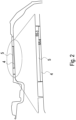
- FIG. 1 and 2 an embodiment of the present invention is shown: Four possible foam systems are shown here; in practical implementation, the foam system SS-4 (4) is glued to the underside of the carpet/outer fabric before foaming; and the foam systems SS-1 (3) to SS-3 (5) are then poured/foamed in using mixing heads on robot arms.
- the body-side foam surface can be ribbed or contoured. This is used when the focus is on insulation, but not when the focus is on reducing sheet metal vibrations.
- the design of the foam surface on the sheet metal/body side also depends on the contours of the body floor and the cables and air ducts located there.
- the adhesion of the foam surface also depends on this and the floor panel installation conditions.
- the core of the present invention is the integration of the insulating properties into the foam insulation; that is, into the PU foam formulation even without additional manufacturing processes or work steps.
- the advantage is the elimination of a component, or rather, the reduction in the weight per unit area, namely that of the sound-absorbing flooring.
- Another advantage of this innovative solution is its cost: increased sound insulation is integrated into the floor covering—the insulation is integrated into the PU foam itself—and an additional manufacturing step is eliminated.
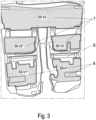
- a floor covering/car carpet 1 with increased insulation properties of the foam insulation 2 was produced (see Fig. 3 ).
- the outer fabric was a commercially available Dilour carpet (600 g/m 2 PET fiber, black with 100 g/m 2 latex binding and 100 g/m 2 PE coating), laminated with 1000 g/m 2 heavy layer and a PE/PA film, 100 ⁇ m.
- the foam surface of the SS-V2 7 and SS-V2* 7 foams was adhesively bonded.
- the foam-free areas 8 between the independent, localized areas of the underside of the carpet, each with a different foam composition, are clearly visible here, as shown in Table 2.
Landscapes
- Engineering & Computer Science (AREA)
- Mechanical Engineering (AREA)
- Transportation (AREA)
- Physics & Mathematics (AREA)
- Acoustics & Sound (AREA)
- Passenger Equipment (AREA)
- Vehicle Interior And Exterior Ornaments, Soundproofing, And Insulation (AREA)
- Laminated Bodies (AREA)
Description
- Gegenstand der Erfindung ist eine Bodenverkleidungs-Isolation für ein Kraftfahrzeug aus einem oder mehreren geschäumten viskoelastischen Polyurethan-Schaumstoff(en), der sich zonenweise (partiell) über Fläche und Dicke der Isolation in seiner Formulierung sowie den physikalischen und mechanischen Eigenschaften unterscheiden kann und ein Verfahren zu dessen Herstellung.
- Ziel ist dabei die Verbesserung der akustischen Wirksamkeit von Bodenverkleidungssystemen in Kraftfahrzeugen infolge der Erhöhung der Dämmungseigenschaften durch die Schaumstoff-Isolation.
- Im Stand der Technik sind die folgenden Bodenverkleidungs-Isolationen bekannt:
- a.)Viskoelastischer Schaumstoff,
DE 39 05 607 A1 ,WO 2006/032433 A1 - b.)Leichtschaumstoff (
Schnitt-Schaum), DE 10 2008 017 893 A1 (partiell) - c.) Schaumstoff mit partiell unterschiedlicher
Dichte, EP 0 210 102 B1 ,EP 0 169 627 A2 - d.)Vlies (aufgeklebte/kaschierte Vliesstanzteile)
- e.)Vorgeformte (aufgeklebte) Vliese
- f.) Faser-Flock-Isolation (HMP),
DE 10 2008 013 808 A1 ,DE 103 24 735 B3 - g.)Vliese mit stehender/senkrechter
Faserausrichtung, US 2017/0008462 A1 ,US 9 321 412 B2 - h.)Faser-Flock-Isolation (HMP) mit stehender/senkrechter
Faserausrichtung, DE 10 2012 003 093 A1 ,DE 10 2010 034 159 A1 - Zur Dämpfung werden in der Materialstruktur von Bodenverkleidungen auch Schwerschichten, vollflächig und/oder partiell, als Zwischenschicht eingesetzt; des weiteren PE/PA/PE - und PE/PA - Folien mit höheren PA-Flächengewicht und sogenannte PE/PA/PE + PET - Folienvliese als Kontaktvliese zum Schaumstoff.
- Bekannt ist weiterhin, dass sogenannte crash-Elemente, Fußmatten-Befestigungs-Elemente und Fußstützen-Elemente mit ein- beziehungsweise umschäumt werden.
- Auch werden vornehmlich EPS-, EPP- und PEPP-Einleger in der Schaumstoff-Isolation eingeschäumt um u.a. die Trittsteifigkeit zu erhöhen.
- In
DE 10 2009 058 819 A1 wird eine Struktur mit Abstandshaltern hierfür beschrieben. - Des Weiteren ist bekannt, Verbundschaumstücke einzuschäumen (
DE 36 23 789 A1 ). - In
DE 20 2008 004 918 U1 wird angeführt, dass Antidröhnfolie (partiell) an mehreren Stellen kraft- oder stoffschlüssig am Teppichverbund appliziert sind. - Antidröhnbeläge sind beispielsweise in
DE 10 2011 085 190 A1 beschrieben, die klassisch auf dem Karosserieboden appliziert werden. Antidröhnbeläge sind Schwerfolien, die als separate Bauteile partiell, bedarfsorientiert, auf den Karosserieboden befestigt werden. D.h., in der Montage hat man zusätzliche Arbeitsschritte sowie im Fahrzeug selbst eine Gewichtserhöhung. - Die in der
DE 20 2008 004 918 U1 dargelegte Lösung, in die Bodenverkleidung partiell Schwer-/Antidröhnfolien zu integrieren, setzt ein aufwendiges Herstellungsverfahren voraus. Des Weiteren sind hierbei separate Bauteile/Folien (einzeln) herzustellen, die dann durch zusätzliche Arbeitsschritte im Werkzeug wiederum platziert werden müssen. - In
DE 199 58 663 A1 , welche die Basis für den Oberbegriff vom Anspruch 1 bildet, wird eine leichte Schallisolierung mit partieller Trittfestigkeit beschrieben. Angeführt ist, dass mindestens ein örtlich begrenzter Bereich ein unterschiedliches Mischungsverhältnis von Polyol und Isocyanat zu angrenzenden Bereichen aufweist, die Dichte kleiner 70 g/l ist, die angrenzenden Bereiche in etwa eine gleiche Dichte aufweisen; und der Flächenanteil des mindestens einen örtlich begrenzten Bereiches etwa 20% der Gesamtfläche nicht überschreitet. Bezüglich des Schaumsystems wird nicht über eine schalldämmende Wirkung berichtet; im Gegenteil, es wird beschrieben, dass zwischen der Dämmschicht und dem Schaumsystem noch eine Vlieslage angeordnet ist. - Die weiteren Bodenverkleidungs-Isolationen, die im Stand der Technik angeführt sind, besitzen keine speziellen -im Sinne der vorliegenden Erfindung- Dämmungseigenschaften.
- In
DE 20 2015 004 233 U1 wird ein Sitz beschrieben, bei dem zwei Schäume mit unterschiedliche Dichten übereinander gelagert sind. Die untere Schaumstoffschicht ist viskoelastisch. Eine bedarfsorientierte (entsprechend einer Verbrennungsmotor-Variante beziehungsweise Elektro-Antriebs-Ausführung) Mehrzonen-Ausführung der PU-Schaumstoff-Isolation, nämlich unterschiedliche PU-SchaumstoffEigenschaften über die Fläche und Dicke der Isolation liegt nicht vor. Aufgabe der Erfindung ist es, eine ansich bekannte PU-Schaumstoff-Formulierung für eine Bodenverkleidung dahingehend zu modifizieren, dass diese ein hohes Maß an schalldämmenden Eigenschaften aufweist, wobei das Schaumstoffsystem über die Fläche der Bodenverkleidungs-Isolation bedarfsorientierte Eigenschaften aufweist und damit das Flächengewicht von Antidröhnbelägen verringert werden kann, beziehungsweise diese als zusätzliches Bauteil wegfallen können. - Die vorgenannte Aufgabe wird in einer ersten Ausführungsform durch einen Kraftfahrzeugteppichboden mit den technischen Merkmalen des Anspruchs 1 gelöst.
- Die Schäumwerkzeuge sind, entsprechend den bedarfsorientierten Anforderungen, in einzelne Zonen/Nester unterteilt. Die Zonen-/Nester-Trennstege dichten auf der Teppich-/Oberwarenunterseite kraftschlüssig ab.
- In einer weiteren Ausführungsform der vorliegenden Erfindung wird die vorgenannte Aufgabe durch ein Verfahren mit den technischen Merkmalen des Anspruchs 7 gelöst.
- Prinzipiell werden die PU-Schaumstoff-Formulierungen mittels Schäumen in das offene Werkzeug gegossen:
Das Schäum-Werkzeug ist geöffnet; der Teppich/die Oberware befindet sich im Oberwerkzeug; die Schaumsysteme werden über einen oder mehrere Mischköpfe -die sich an einem Roboterarm befinden- in die entsprechenden Formnester des Unterwerkzeuges gegossen oder geschäumt. Vorzugsweise finden hierbei sogenannte Duplex-Mischköpfe Anwendung, bei denen 2 Schaumsysteme über einen Mischkopf gleichzeitig oder auch zeitversetzt eingebracht werden können. - Die Dichte der einzelnen Schaumsysteme wird des Weiteren über das Schußgewicht variiert.
- In den
Fig. 1 und2 ist eine Ausführungsform der vorliegenden Erfindung aufgezeigt:
Hier sind 4 mögliche Schaumsysteme dargestellt; wobei bei der praktischen Umsetzung das Schaumsystem SS-4 (4) vor dem Schäumen auf die Teppich-/Oberwarenunterseite aufgeklebt ist; und die Schaumsysteme SS-1 (3) bis SS-3 (5) dann mittels an Roboterarmen befindlichen Mischköpfe eingegossen/eingeschäumt werden. - Hier dargestellt [SS-3 (5) / SS-4 (4)], die über die Dicke angeordnet sind; 2 unterschiedliche Schaumsysteme und damit unterschiedliche Schaumstoffeigenschaften.
- In der folgenden Tabelle 1 sind beispielhaft die physikalischen Schaumeigenschaften der verschiedenen Bereiche gemäß
Fig. 1 wiedergegeben:
- In der folgenden Tabelle 2 sind beispielhaft die physikalischen Schaumeigenschaften der verschiedenen Bereiche gemäß
Fig. 3 wiedergegeben:
- Die karosserieseitige Schaumoberfläche kann hierbei gerippt beziehungsweise konturiert sein. Das kommt zur Anwendung, wenn der Schwerpunkt auf der Isolation liegt, jedoch nicht, wenn der Schwerpunkt auf der Reduzierung der Blechschwingungen liegt.
- Natürlich richtet sich die Gestaltung der blech-/karosserieseitigen Schaumoberseite/-fläche auch nach Kontur des Karosseriebodens sowie den dort befindlichen Kabeln und Luftführungen. Hiervon und von den Bodenverkleidungs-Montagebedingungen hängt dann auch die Einstellung der Adhäsion der Schaumoberfläche ab.
- Kern der vorliegenden Erfindung ist also die Integration der Dämmungseigenschaften in die Schaumstoff-Isolation; das heißt in die PU-Schaumstoff-Formulierung selbst ohne zusätzliche Herstellungsverfahren beziehungsweise Arbeitsschritte.
- Des Weiteren können in der bedarfsorientierten (entsprechend Verbrennungsmotor-Variante bzw. Elektro-Antriebs-Ausführung) Mehrzonen-Ausführung der PU-Schaumstoff-Isolation unterschiedliche PU-Schaumstoff-Eigenschaften über die Fläche und Dicke der Isolation eingestellt werden.
- Der Vorteil ist der Wegfall eines Bauteils beziehungsweise die Verringerung des Flächengewichtes, nämlich des der Antidröhnbeläge. Weiterhin besteht der Vorteil der erfinderischen Lösung in den Kosten: erhöhte Schalldämmung in der Bodenverkleidungs-Isolation integriert-im PU-Schaumstoff selbst und dem Wegfall eines zusätzlichen Herstellungsschritts.
- Erfindungsgemäß wurde eine Bodenverkleidung/ Kraftfahrzeugteppichboden 1 mit erhöhten Dämmungseigenschaften der Schaumstoff-Isolation 2 hergestellt (siehe
Fig. 3 ). - Die Oberware war ein handelsüblicher Dilour-Teppich (600 g/m2 PET-Faser, schwarz mit 100 g/m2 Latex-Einbindung und 100 g/m2 PE-Beschichtung), kaschiert mit 1000 g/m2 Schwerschicht und einer PE/PA-Folie, 100µm.
- Die Verformung der Oberware erfolgte in einer Standard-Thermoverformungsanlage (Ablagetisch / Kaschierung im Kontaktheizfeld / Verformung). Diese verformte Oberware wurde im Prozeß "Schäumen in das offene Werkzeug" mit 2 Schaumstoffsystemen (SS-V1 6 und SS-V2 7) hinterschäumt; die Dichten der 2 Schaumstoffsysteme wurden durch das Schussgewicht variiert (*). Als Mischkopf fand ein handelsüblicher Duplex-Mischkopf Anwendung.
- Die Schaumstoffoberfläche des Schaumstoffes SS-V2 7 und SS-V2* 7 wurde adhäsiv eingestellt. Deutlich sind hier auch die schaumstofffreien Flächen 8 zwischen den unabhängigen örtlich begrenzten Bereichen der Unterseite des Teppichbodens mit jeweils verschiedener Schaumzusammensetzung gemäß Tabelle 2 erkennbar.
Claims (10)
- Kraftfahrzeugteppichboden (1) mit einer Bodenverkleidungs-Isolation (2) aus einem geschäumten Polyurethan-Schaumstoff mit viskoelastischen Eigenschaften,wobei die Bodenverkleidungs-Isolation (2) bedarfsorientiert aus einem oder mehreren unabhängigen oder untereinander verbundenen örtlich begrenzten Bereichen die Unterseite des Teppichbodens mit jeweils gleicher oder verschiedener Schaumzusammensetzung bedeckt, wobei der Schaumstoff der Bodenverkleidungs-Isolation (2) einen E-Modul im Bereich von 20 bis 250 kN/m2, einen Verlustfaktor im Bereich von 0,1 bis 0,8 und eine Dichte im Bereich von 35 bis 120 g/l aufweist,dadurch gekennzeichnet, dassder Schaumstoff EPS-, EPP- und/oder PEPP-Einleger umfasst und dass die untere, im Einbauzustand mit der Karosserie in Kontakt stehende Oberfläche der Bodenverkleidungs-Isolation (2) adhäsive Eigenschaften aufweist.
- Kraftfahrzeugteppichboden (1) nach Anspruch 1,
dadurch gekennzeichnet, dass
der Schaumstoff der Bodenverkleidungs-Isolation (2) einen Verlustfaktor im Bereich von 0,2 bis 0,6 und eine Dichte im Bereich von 45 bis 80 g/l aufweist. - Kraftfahrzeugteppichboden (1) nach Anspruch 1 oder 2,
dadurch gekennzeichnet,
dass die Bereiche der Bodenverkleidungs-Isolation (2) verschiedene Schaumzusammensetzungen mit unterschiedlicher Stauchhärte aufweisen. - Kraftfahrzeugteppichboden (1) nach einem der Ansprüche 1 bis 3,
dadurch gekennzeichnet, dass
die Dicke der Bodenverkleidungs-Isolation (2) bedarfsorientiert örtlich begrenzt karosserieseitig angepasst ist. - Kraftfahrzeugteppichboden (1) nach einem der Ansprüche 1 bis 4,
dadurch gekennzeichnet, dass
die karosserieseitige Schaumstoffoberfläche konturiert ist, insbesondere eine Rippenstruktur aufweist. - Kraftfahrzeugteppichboden (1) nach einem der Ansprüche 1 bis 5,
dadurch gekennzeichnet, dass
der Schaumstoff Abstandsgewirke umfasst. - Verfahren zur Herstellung eines Kraftfahrzeugteppichbodens (1) nach einem der Ansprüche 1 bis 6,
dadurch gekennzeichnet, dass
man(a) in einem offenen Werkzeug, bei dem ein konturierter Teppichboden an der oberen Werkzeughälfte platziert ist, in die untere Werkzeughälfte bedarfsorientiert örtlich begrenzt ein oder mehrere Polyurethan-Komponentengemisch(e) zur Herstellung von Schaumstoff mit viskoelastischen Eigenschaften einbringt und(b) das Werkzeug, gegebenenfalls unter Erwärmung, schließt und(c) das oder die Komponentengemisch(e) aufschäumt und ausreagiert, wobei man die Dichte der Schaumzusammensetzung der Bodenverkleidungs-Isolation (2) durch Variation des Schussgewichts einstellt. - Verfahren nach Anspruch 7,
dadurch gekennzeichnet,
dass man das oder die Polyurethan-Komponentengemisch(e) örtlich begrenzt in ein oder mehrere Formnester der unteren Werkzeughälfte einbringt. - Verfahren nach Anspruch 7 oder 8,
dadurch gekennzeichnet, dass
man das oder die Polyurethan-Komponentengemisch(e) in die untere Werkzeughälfte mit einem oder mehreren Mischköpfen eingießt. - Verfahren nach einem der Ansprüche 7 bis 9,
dadurch gekennzeichnet, dass
man die Zusammensetzung des oder der Polyurethan-Komponentengemischs(e) während des Einbringens in die untere Werkzeughälfte bedarfsorientiert variiert.
Applications Claiming Priority (2)
| Application Number | Priority Date | Filing Date | Title |
|---|---|---|---|
| DE102018103462.8A DE102018103462A1 (de) | 2018-02-15 | 2018-02-15 | Kraftfahrzeugteppichboden |
| PCT/EP2019/052702 WO2019158389A1 (de) | 2018-02-15 | 2019-02-05 | Kraftfahrzeugteppichboden |
Publications (2)
| Publication Number | Publication Date |
|---|---|
| EP3752392A1 EP3752392A1 (de) | 2020-12-23 |
| EP3752392B1 true EP3752392B1 (de) | 2025-07-09 |
Family
ID=65409053
Family Applications (1)
| Application Number | Title | Priority Date | Filing Date |
|---|---|---|---|
| EP19704751.7A Active EP3752392B1 (de) | 2018-02-15 | 2019-02-05 | Kraftfahrzeugteppichboden |
Country Status (7)
| Country | Link |
|---|---|
| US (1) | US12296761B2 (de) |
| EP (1) | EP3752392B1 (de) |
| JP (1) | JP7365348B2 (de) |
| CN (1) | CN111867889B (de) |
| DE (1) | DE102018103462A1 (de) |
| RU (1) | RU2762577C1 (de) |
| WO (1) | WO2019158389A1 (de) |
Families Citing this family (4)
| Publication number | Priority date | Publication date | Assignee | Title |
|---|---|---|---|---|
| US11052987B2 (en) * | 2018-05-30 | 2021-07-06 | The Boeing Company | Integrally damped composite aircraft floor panels |
| JP7607434B2 (ja) * | 2020-10-26 | 2024-12-27 | 株式会社イノアックコーポレーション | 車両用フロアサイレンサーとその製造方法 |
| JP7820066B2 (ja) * | 2022-06-26 | 2026-02-25 | 株式会社イノアックコーポレーション | 制振部材、ルーフライナー、車両の天井構造及び制振構造 |
| USD1081497S1 (en) * | 2025-04-16 | 2025-07-01 | Bo Lan | Car roof insulation pad |
Citations (1)
| Publication number | Priority date | Publication date | Assignee | Title |
|---|---|---|---|---|
| EP0210102A2 (de) * | 1985-07-15 | 1987-01-28 | COLLINS & AIKMAN CORPORATION | Geformter Teppich mit schalldämpfendem Schaumrücken |
Family Cites Families (30)
| Publication number | Priority date | Publication date | Assignee | Title |
|---|---|---|---|---|
| DE3313624C2 (de) * | 1983-04-12 | 1986-04-03 | Teroson Gmbh, 6900 Heidelberg | Polyurethanweichschaumstoff sowie dessen Verwendung |
| US4529639A (en) | 1984-06-27 | 1985-07-16 | Collins & Aikman Corporation | Molded foam-backed carpet assembly and method of producing same |
| DE3623789C2 (de) | 1986-07-15 | 1998-02-05 | Helmut Pelzer | Mehrschichtiges, dreidimensional verformtes schalldämpfendes und dämmendes Abdeckelement |
| DE3904812A1 (de) * | 1989-02-17 | 1990-08-23 | Basf Ag | Verfahren zur herstellung von urethangruppen enthaltenden, weichelastischen formkoerpern mit einer verdichteten randzone und einem zelligen kern mit verbesserten entformungseigenschaften und hierfuer geeignete innere formtrennmittel |
| DE3905607A1 (de) | 1989-02-23 | 1990-08-30 | Bayerische Motoren Werke Ag | Schichtaufbau zur herstellung von schallisolierungenm schallisolierungen und verfahren zur herstellung des schichtaufbaus bzw. der schallisolierungen |
| DE4222023A1 (de) * | 1992-07-04 | 1994-01-05 | H P Chemie Pelzer Res & Dev | Textile Oberböden in Kraftfahrzeugen |
| DE4343970A1 (de) * | 1993-12-22 | 1995-06-29 | Stankiewicz Gmbh | Modularer schalldämmender Belag |
| DE19958663A1 (de) | 1999-12-06 | 2001-06-21 | Stankiewicz Gmbh | Leichte Schallisolation mit partieller Trittfestigkeit |
| RU2003134009A (ru) * | 2001-05-22 | 2005-02-10 | Риэтер Техноложиз Аг (Ch) | Звукопоглощающий защитный мат |
| DE10324735B3 (de) | 2003-05-30 | 2004-11-11 | Fiber Engineering Gmbh | Verfahren und Vorrichtung zur Herstellung von dreidimensional ausgeprägten Formteilen sowie Formteil |
| WO2005069273A1 (en) | 2004-01-12 | 2005-07-28 | Dow Global Technologies, Inc. | Automotive dash insulators containing viscoelastic foams |
| DE102004039438A1 (de) | 2004-08-13 | 2006-02-23 | Stankiewicz Gmbh | Verfahren zum Herstellen eines Schallisolations-Formteils mit Masse und Feder |
| DE102004046201B4 (de) | 2004-09-22 | 2007-08-02 | Carcoustics Tech Center Gmbh | Hinterschäumtes Teppichformteil für Kraftfahrzeuge und Verfahren zu dessen Herstellung |
| DE102004054646B4 (de) * | 2004-11-11 | 2008-12-04 | Carcoustics Tech Center Gmbh | Leichte schallisolierende Verkleidung für ein Karosserieteil eines Kraftfahrzeuges und Verfahren zu ihrer Herstellung |
| JP5410424B2 (ja) * | 2007-07-27 | 2014-02-05 | ジョンソン コントロールズ テクノロジー カンパニー | 改善された音響性能を有する複合ヘッドライナ |
| DE102008013808A1 (de) | 2008-03-12 | 2009-09-17 | Entwicklungsgesellschaft für Akustik (EfA) mit beschränkter Haftung | Herstellung von einem Halbzeug aus Flocken |
| DE102008017893B4 (de) | 2008-04-09 | 2022-08-25 | Dr. Ing. H.C. F. Porsche Aktiengesellschaft | Bodenbelag |
| DE202008004918U1 (de) | 2008-04-10 | 2008-07-03 | Aksys Gmbh | Separat handhabbares, flächiges Schallisolationsteil |
| US8151933B2 (en) * | 2009-05-13 | 2012-04-10 | Cvg Management Corporation | Thermally and acoustically insulative vehicle flooring |
| DE102009058819A1 (de) | 2009-12-18 | 2010-08-05 | Daimler Ag | Bodenbelag für ein Kraftfahrzeug |
| DE102010034159A1 (de) | 2010-08-10 | 2012-02-16 | Grimm-Schirp Gs Technologie Gmbh | Vorrichtung und Verfahren zur Herstellung eines Faserformteils und Faserformteil |
| DK2554091T3 (en) | 2011-08-01 | 2017-06-19 | Faist Chem Tec Gmbh | Noise-canceling sandwich plate with perforation |
| JP5829112B2 (ja) | 2011-12-13 | 2015-12-09 | 林テレンプ株式会社 | 車両用成形内装材、及び、その製造方法 |
| DE102012003093A1 (de) | 2012-02-09 | 2013-08-14 | Grimm-Schirp Gs Technologie Gmbh | Vorrichtung und Verfahren zur Herstellung eines Faserformteils |
| DE202012004594U1 (de) * | 2012-05-09 | 2013-08-12 | Hp Pelzer Holding Gmbh | Kraftfahrzeugteile |
| JP6426707B2 (ja) | 2014-03-25 | 2018-11-21 | 林テレンプ株式会社 | 自動車用サイレンサー |
| EP2985140B1 (de) * | 2014-08-11 | 2017-12-27 | Ford Global Technologies, LLC | Verkleidungselement für einen fahrzeugboden |
| EP3012155A1 (de) | 2014-10-20 | 2016-04-27 | Autoneum Management AG | Hauptbodenelement für ein kleines Nutzfahrzeug |
| JP6430284B2 (ja) * | 2015-02-25 | 2018-11-28 | 林テレンプ株式会社 | 自動車用サイレンサー、及び、その製造方法 |
| DE202015004233U1 (de) | 2015-06-15 | 2016-09-16 | GM Global Technology Operations LLC (n. d. Ges. d. Staates Delaware) | Sitz für ein Kraftfahrzeug |
-
2018
- 2018-02-15 DE DE102018103462.8A patent/DE102018103462A1/de active Pending
-
2019
- 2019-02-05 WO PCT/EP2019/052702 patent/WO2019158389A1/de not_active Ceased
- 2019-02-05 EP EP19704751.7A patent/EP3752392B1/de active Active
- 2019-02-05 CN CN201980012239.1A patent/CN111867889B/zh active Active
- 2019-02-05 JP JP2020543181A patent/JP7365348B2/ja active Active
- 2019-02-05 RU RU2020127080A patent/RU2762577C1/ru active
- 2019-02-05 US US16/969,747 patent/US12296761B2/en active Active
Patent Citations (1)
| Publication number | Priority date | Publication date | Assignee | Title |
|---|---|---|---|---|
| EP0210102A2 (de) * | 1985-07-15 | 1987-01-28 | COLLINS & AIKMAN CORPORATION | Geformter Teppich mit schalldämpfendem Schaumrücken |
Also Published As
| Publication number | Publication date |
|---|---|
| CN111867889A (zh) | 2020-10-30 |
| JP2021514323A (ja) | 2021-06-10 |
| US12296761B2 (en) | 2025-05-13 |
| CN111867889B (zh) | 2024-02-13 |
| EP3752392A1 (de) | 2020-12-23 |
| RU2762577C1 (ru) | 2021-12-21 |
| WO2019158389A1 (de) | 2019-08-22 |
| DE102018103462A1 (de) | 2019-08-22 |
| US20210001787A1 (en) | 2021-01-07 |
| BR112020015584A2 (pt) | 2021-01-05 |
| JP7365348B2 (ja) | 2023-10-19 |
Similar Documents
| Publication | Publication Date | Title |
|---|---|---|
| DE3430775C2 (de) | Teppichteil, Verfahren zu seiner Herstellung und seine Verwendung | |
| DE60007342T2 (de) | Verfahren zur herstellung eines dachhimmels mit integriertem, energieabsorbierendem schaum | |
| EP0901430B1 (de) | Schockabsorbierende innenverkleidung | |
| DE3809980C2 (de) | Aufbau zur Schallisolation, Verfahren zu seiner Herstellung und seine Verwendung | |
| WO2019158389A1 (de) | Kraftfahrzeugteppichboden | |
| EP3535117B1 (de) | Absorptives-schallisolationselement-herstellungsverfahren sowie absorptives schallisolationskraftfahrzeugverkleidungselement | |
| DE102004054646B4 (de) | Leichte schallisolierende Verkleidung für ein Karosserieteil eines Kraftfahrzeuges und Verfahren zu ihrer Herstellung | |
| EP2358589A1 (de) | Flugzeugkabinenpaneel zur schallreduktion | |
| DE102013104715A1 (de) | Hinterschäumbares Akustikelement eines Kraftfahrzeugkarosserieverkleidungsbauteils | |
| EP2394860B1 (de) | Verkleidungsbauteil für den Innenraum eines Kraftfahrzeuges | |
| DE102004037767B4 (de) | Schallisolator für eine Insassenzelle eines Fahrzeuges | |
| EP2617588B1 (de) | Vorrichtung zur Klimatisierung und/oder Belüftung eines Innenraumes | |
| EP1237751B1 (de) | Leichte schallisolation mit partieller trittfestigkeit | |
| DE19949643C2 (de) | Verfahren zur Herstellung einer Dachversteifung für Fahrzeuge und Dachversteifung | |
| DE602004012504T2 (de) | Unterbauabweiser mit Lärmschutzeigenschaften | |
| EP1954532A1 (de) | Schallisolationsteil und verfahren zu dessen herstellung | |
| WO2013007489A2 (de) | Hochabsorptives schallisolationsbauteil, insbesondere für den kraftfahrzeuginnenraum | |
| EP2279859B1 (de) | Akustisch wirksame Dach-Versteifungs-Dämpfungs-Platte und Verfahren zu ihrer Herstellung | |
| DE19643818A1 (de) | Mehrschichtige Schaumstoffelemente | |
| WO1998021066A1 (de) | Wiederverwertbares teppichbodenformteil | |
| DE19719274A1 (de) | Wiederverwertbares Teppichbodenformteil | |
| DE102024125692A1 (de) | Funktionsbauteil zur Schalldämmung für ein Nutzfahrzeug, Nutzfahrzeug und Verfahren | |
| DE102014203333A1 (de) | Bodenverkleidung für eine Fahrgastzelle eines Kraftfahrzeugs | |
| DE202009011255U1 (de) | Vliesstoffplatte, -formteil | |
| AT513036A4 (de) | Innenverkleidungsteil für den Dachhimmel eines Kraftfahrzeuges mit einem mehrschichtigen Aufbau und Verfahren zur Herstellung eines Innenverkleidungsteils |
Legal Events
| Date | Code | Title | Description |
|---|---|---|---|
| STAA | Information on the status of an ep patent application or granted ep patent |
Free format text: STATUS: UNKNOWN |
|
| STAA | Information on the status of an ep patent application or granted ep patent |
Free format text: STATUS: THE INTERNATIONAL PUBLICATION HAS BEEN MADE |
|
| PUAI | Public reference made under article 153(3) epc to a published international application that has entered the european phase |
Free format text: ORIGINAL CODE: 0009012 |
|
| STAA | Information on the status of an ep patent application or granted ep patent |
Free format text: STATUS: REQUEST FOR EXAMINATION WAS MADE |
|
| 17P | Request for examination filed |
Effective date: 20200729 |
|
| AK | Designated contracting states |
Kind code of ref document: A1 Designated state(s): AL AT BE BG CH CY CZ DE DK EE ES FI FR GB GR HR HU IE IS IT LI LT LU LV MC MK MT NL NO PL PT RO RS SE SI SK SM TR |
|
| AX | Request for extension of the european patent |
Extension state: BA ME |
|
| DAV | Request for validation of the european patent (deleted) | ||
| DAX | Request for extension of the european patent (deleted) | ||
| STAA | Information on the status of an ep patent application or granted ep patent |
Free format text: STATUS: EXAMINATION IS IN PROGRESS |
|
| 17Q | First examination report despatched |
Effective date: 20220208 |
|
| P01 | Opt-out of the competence of the unified patent court (upc) registered |
Effective date: 20230526 |
|
| GRAP | Despatch of communication of intention to grant a patent |
Free format text: ORIGINAL CODE: EPIDOSNIGR1 |
|
| STAA | Information on the status of an ep patent application or granted ep patent |
Free format text: STATUS: GRANT OF PATENT IS INTENDED |
|
| INTG | Intention to grant announced |
Effective date: 20250103 |
|
| GRAJ | Information related to disapproval of communication of intention to grant by the applicant or resumption of examination proceedings by the epo deleted |
Free format text: ORIGINAL CODE: EPIDOSDIGR1 |
|
| STAA | Information on the status of an ep patent application or granted ep patent |
Free format text: STATUS: EXAMINATION IS IN PROGRESS |
|
| GRAS | Grant fee paid |
Free format text: ORIGINAL CODE: EPIDOSNIGR3 |
|
| STAA | Information on the status of an ep patent application or granted ep patent |
Free format text: STATUS: GRANT OF PATENT IS INTENDED |
|
| GRAP | Despatch of communication of intention to grant a patent |
Free format text: ORIGINAL CODE: EPIDOSNIGR1 |
|
| INTC | Intention to grant announced (deleted) | ||
| GRAA | (expected) grant |
Free format text: ORIGINAL CODE: 0009210 |
|
| STAA | Information on the status of an ep patent application or granted ep patent |
Free format text: STATUS: THE PATENT HAS BEEN GRANTED |
|
| INTG | Intention to grant announced |
Effective date: 20250522 |
|
| AK | Designated contracting states |
Kind code of ref document: B1 Designated state(s): AL AT BE BG CH CY CZ DE DK EE ES FI FR GB GR HR HU IE IS IT LI LT LU LV MC MK MT NL NO PL PT RO RS SE SI SK SM TR |
|
| REG | Reference to a national code |
Ref country code: GB Ref legal event code: FG4D Free format text: NOT ENGLISH |
|
| REG | Reference to a national code |
Ref country code: CH Ref legal event code: EP |
|
| REG | Reference to a national code |
Ref country code: IE Ref legal event code: FG4D Free format text: LANGUAGE OF EP DOCUMENT: GERMAN |
|
| REG | Reference to a national code |
Ref country code: DE Ref legal event code: R096 Ref document number: 502019013582 Country of ref document: DE |
|
| REG | Reference to a national code |
Ref country code: NL Ref legal event code: MP Effective date: 20250709 |
|
| PG25 | Lapsed in a contracting state [announced via postgrant information from national office to epo] |
Ref country code: PT Free format text: LAPSE BECAUSE OF FAILURE TO SUBMIT A TRANSLATION OF THE DESCRIPTION OR TO PAY THE FEE WITHIN THE PRESCRIBED TIME-LIMIT Effective date: 20251110 |
|
| PG25 | Lapsed in a contracting state [announced via postgrant information from national office to epo] |
Ref country code: NL Free format text: LAPSE BECAUSE OF FAILURE TO SUBMIT A TRANSLATION OF THE DESCRIPTION OR TO PAY THE FEE WITHIN THE PRESCRIBED TIME-LIMIT Effective date: 20250709 |
|
| PG25 | Lapsed in a contracting state [announced via postgrant information from national office to epo] |
Ref country code: IS Free format text: LAPSE BECAUSE OF FAILURE TO SUBMIT A TRANSLATION OF THE DESCRIPTION OR TO PAY THE FEE WITHIN THE PRESCRIBED TIME-LIMIT Effective date: 20251109 |
|
| PG25 | Lapsed in a contracting state [announced via postgrant information from national office to epo] |
Ref country code: NO Free format text: LAPSE BECAUSE OF FAILURE TO SUBMIT A TRANSLATION OF THE DESCRIPTION OR TO PAY THE FEE WITHIN THE PRESCRIBED TIME-LIMIT Effective date: 20251009 |
|
| REG | Reference to a national code |
Ref country code: LT Ref legal event code: MG9D |
|
| PG25 | Lapsed in a contracting state [announced via postgrant information from national office to epo] |
Ref country code: FI Free format text: LAPSE BECAUSE OF FAILURE TO SUBMIT A TRANSLATION OF THE DESCRIPTION OR TO PAY THE FEE WITHIN THE PRESCRIBED TIME-LIMIT Effective date: 20250709 |
|
| PG25 | Lapsed in a contracting state [announced via postgrant information from national office to epo] |
Ref country code: HR Free format text: LAPSE BECAUSE OF FAILURE TO SUBMIT A TRANSLATION OF THE DESCRIPTION OR TO PAY THE FEE WITHIN THE PRESCRIBED TIME-LIMIT Effective date: 20250709 |
|
| PG25 | Lapsed in a contracting state [announced via postgrant information from national office to epo] |
Ref country code: GR Free format text: LAPSE BECAUSE OF FAILURE TO SUBMIT A TRANSLATION OF THE DESCRIPTION OR TO PAY THE FEE WITHIN THE PRESCRIBED TIME-LIMIT Effective date: 20251010 |
|
| PG25 | Lapsed in a contracting state [announced via postgrant information from national office to epo] |
Ref country code: SE Free format text: LAPSE BECAUSE OF FAILURE TO SUBMIT A TRANSLATION OF THE DESCRIPTION OR TO PAY THE FEE WITHIN THE PRESCRIBED TIME-LIMIT Effective date: 20250709 |
|
| PG25 | Lapsed in a contracting state [announced via postgrant information from national office to epo] |
Ref country code: LV Free format text: LAPSE BECAUSE OF FAILURE TO SUBMIT A TRANSLATION OF THE DESCRIPTION OR TO PAY THE FEE WITHIN THE PRESCRIBED TIME-LIMIT Effective date: 20250709 |
|
| PG25 | Lapsed in a contracting state [announced via postgrant information from national office to epo] |
Ref country code: PL Free format text: LAPSE BECAUSE OF FAILURE TO SUBMIT A TRANSLATION OF THE DESCRIPTION OR TO PAY THE FEE WITHIN THE PRESCRIBED TIME-LIMIT Effective date: 20250709 Ref country code: BG Free format text: LAPSE BECAUSE OF FAILURE TO SUBMIT A TRANSLATION OF THE DESCRIPTION OR TO PAY THE FEE WITHIN THE PRESCRIBED TIME-LIMIT Effective date: 20250709 |
|
| PG25 | Lapsed in a contracting state [announced via postgrant information from national office to epo] |
Ref country code: RS Free format text: LAPSE BECAUSE OF FAILURE TO SUBMIT A TRANSLATION OF THE DESCRIPTION OR TO PAY THE FEE WITHIN THE PRESCRIBED TIME-LIMIT Effective date: 20251009 |
|
| PG25 | Lapsed in a contracting state [announced via postgrant information from national office to epo] |
Ref country code: ES Free format text: LAPSE BECAUSE OF FAILURE TO SUBMIT A TRANSLATION OF THE DESCRIPTION OR TO PAY THE FEE WITHIN THE PRESCRIBED TIME-LIMIT Effective date: 20250709 |
|
| PG25 | Lapsed in a contracting state [announced via postgrant information from national office to epo] |
Ref country code: SM Free format text: LAPSE BECAUSE OF FAILURE TO SUBMIT A TRANSLATION OF THE DESCRIPTION OR TO PAY THE FEE WITHIN THE PRESCRIBED TIME-LIMIT Effective date: 20250709 |
|
| PGFP | Annual fee paid to national office [announced via postgrant information from national office to epo] |
Ref country code: GB Payment date: 20260219 Year of fee payment: 8 |
|
| REG | Reference to a national code |
Ref country code: DE Ref legal event code: R097 Ref document number: 502019013582 Country of ref document: DE |
|
| PG25 | Lapsed in a contracting state [announced via postgrant information from national office to epo] |
Ref country code: DK Free format text: LAPSE BECAUSE OF FAILURE TO SUBMIT A TRANSLATION OF THE DESCRIPTION OR TO PAY THE FEE WITHIN THE PRESCRIBED TIME-LIMIT Effective date: 20250709 |
|
| PGFP | Annual fee paid to national office [announced via postgrant information from national office to epo] |
Ref country code: DE Payment date: 20260206 Year of fee payment: 8 |
|
| PGFP | Annual fee paid to national office [announced via postgrant information from national office to epo] |
Ref country code: IT Payment date: 20260209 Year of fee payment: 8 |
|
| PGFP | Annual fee paid to national office [announced via postgrant information from national office to epo] |
Ref country code: FR Payment date: 20260227 Year of fee payment: 8 |
|
| PG25 | Lapsed in a contracting state [announced via postgrant information from national office to epo] |
Ref country code: CZ Free format text: LAPSE BECAUSE OF FAILURE TO SUBMIT A TRANSLATION OF THE DESCRIPTION OR TO PAY THE FEE WITHIN THE PRESCRIBED TIME-LIMIT Effective date: 20250709 |
|
| PG25 | Lapsed in a contracting state [announced via postgrant information from national office to epo] |
Ref country code: EE Free format text: LAPSE BECAUSE OF FAILURE TO SUBMIT A TRANSLATION OF THE DESCRIPTION OR TO PAY THE FEE WITHIN THE PRESCRIBED TIME-LIMIT Effective date: 20250709 Ref country code: SK Free format text: LAPSE BECAUSE OF FAILURE TO SUBMIT A TRANSLATION OF THE DESCRIPTION OR TO PAY THE FEE WITHIN THE PRESCRIBED TIME-LIMIT Effective date: 20250709 |
|
| PLBE | No opposition filed within time limit |
Free format text: ORIGINAL CODE: 0009261 |
|
| STAA | Information on the status of an ep patent application or granted ep patent |
Free format text: STATUS: NO OPPOSITION FILED WITHIN TIME LIMIT |
|
| REG | Reference to a national code |
Ref country code: CH Ref legal event code: L10 Free format text: ST27 STATUS EVENT CODE: U-0-0-L10-L00 (AS PROVIDED BY THE NATIONAL OFFICE) Effective date: 20260521 |
|
| 26N | No opposition filed |
Effective date: 20260410 |
|
| PG25 | Lapsed in a contracting state [announced via postgrant information from national office to epo] |
Ref country code: LT Free format text: LAPSE BECAUSE OF FAILURE TO SUBMIT A TRANSLATION OF THE DESCRIPTION OR TO PAY THE FEE WITHIN THE PRESCRIBED TIME-LIMIT Effective date: 20250709 |