EP3738813B1 - Kraftstofftankanordnung mit mindestens zwei getrennten tankkörpern - Google Patents
Kraftstofftankanordnung mit mindestens zwei getrennten tankkörpern Download PDFInfo
- Publication number
- EP3738813B1 EP3738813B1 EP20165794.7A EP20165794A EP3738813B1 EP 3738813 B1 EP3738813 B1 EP 3738813B1 EP 20165794 A EP20165794 A EP 20165794A EP 3738813 B1 EP3738813 B1 EP 3738813B1
- Authority
- EP
- European Patent Office
- Prior art keywords
- tank
- fuel
- fuel tank
- distributor
- bodies
- Prior art date
- Legal status (The legal status is an assumption and is not a legal conclusion. Google has not performed a legal analysis and makes no representation as to the accuracy of the status listed.)
- Active
Links
Images






Classifications
-
- B—PERFORMING OPERATIONS; TRANSPORTING
- B60—VEHICLES IN GENERAL
- B60K—ARRANGEMENT OR MOUNTING OF PROPULSION UNITS OR OF TRANSMISSIONS IN VEHICLES; ARRANGEMENT OR MOUNTING OF PLURAL DIVERSE PRIME-MOVERS IN VEHICLES; AUXILIARY DRIVES FOR VEHICLES; INSTRUMENTATION OR DASHBOARDS FOR VEHICLES; ARRANGEMENTS IN CONNECTION WITH COOLING, AIR INTAKE, GAS EXHAUST OR FUEL SUPPLY OF PROPULSION UNITS IN VEHICLES
- B60K15/00—Arrangement in connection with fuel supply of combustion engines or other fuel consuming energy converters, e.g. fuel cells; Mounting or construction of fuel tanks
- B60K15/03—Fuel tanks
- B60K15/03177—Fuel tanks made of non-metallic material, e.g. plastics, or of a combination of non-metallic and metallic material
-
- B—PERFORMING OPERATIONS; TRANSPORTING
- B60—VEHICLES IN GENERAL
- B60K—ARRANGEMENT OR MOUNTING OF PROPULSION UNITS OR OF TRANSMISSIONS IN VEHICLES; ARRANGEMENT OR MOUNTING OF PLURAL DIVERSE PRIME-MOVERS IN VEHICLES; AUXILIARY DRIVES FOR VEHICLES; INSTRUMENTATION OR DASHBOARDS FOR VEHICLES; ARRANGEMENTS IN CONNECTION WITH COOLING, AIR INTAKE, GAS EXHAUST OR FUEL SUPPLY OF PROPULSION UNITS IN VEHICLES
- B60K15/00—Arrangement in connection with fuel supply of combustion engines or other fuel consuming energy converters, e.g. fuel cells; Mounting or construction of fuel tanks
- B60K15/03—Fuel tanks
-
- B—PERFORMING OPERATIONS; TRANSPORTING
- B60—VEHICLES IN GENERAL
- B60K—ARRANGEMENT OR MOUNTING OF PROPULSION UNITS OR OF TRANSMISSIONS IN VEHICLES; ARRANGEMENT OR MOUNTING OF PLURAL DIVERSE PRIME-MOVERS IN VEHICLES; AUXILIARY DRIVES FOR VEHICLES; INSTRUMENTATION OR DASHBOARDS FOR VEHICLES; ARRANGEMENTS IN CONNECTION WITH COOLING, AIR INTAKE, GAS EXHAUST OR FUEL SUPPLY OF PROPULSION UNITS IN VEHICLES
- B60K15/00—Arrangement in connection with fuel supply of combustion engines or other fuel consuming energy converters, e.g. fuel cells; Mounting or construction of fuel tanks
- B60K15/03—Fuel tanks
- B60K15/035—Fuel tanks characterised by venting means
-
- B—PERFORMING OPERATIONS; TRANSPORTING
- B60—VEHICLES IN GENERAL
- B60K—ARRANGEMENT OR MOUNTING OF PROPULSION UNITS OR OF TRANSMISSIONS IN VEHICLES; ARRANGEMENT OR MOUNTING OF PLURAL DIVERSE PRIME-MOVERS IN VEHICLES; AUXILIARY DRIVES FOR VEHICLES; INSTRUMENTATION OR DASHBOARDS FOR VEHICLES; ARRANGEMENTS IN CONNECTION WITH COOLING, AIR INTAKE, GAS EXHAUST OR FUEL SUPPLY OF PROPULSION UNITS IN VEHICLES
- B60K15/00—Arrangement in connection with fuel supply of combustion engines or other fuel consuming energy converters, e.g. fuel cells; Mounting or construction of fuel tanks
- B60K15/03—Fuel tanks
- B60K15/04—Tank inlets
- B60K15/0406—Filler caps for fuel tanks
-
- B—PERFORMING OPERATIONS; TRANSPORTING
- B60—VEHICLES IN GENERAL
- B60K—ARRANGEMENT OR MOUNTING OF PROPULSION UNITS OR OF TRANSMISSIONS IN VEHICLES; ARRANGEMENT OR MOUNTING OF PLURAL DIVERSE PRIME-MOVERS IN VEHICLES; AUXILIARY DRIVES FOR VEHICLES; INSTRUMENTATION OR DASHBOARDS FOR VEHICLES; ARRANGEMENTS IN CONNECTION WITH COOLING, AIR INTAKE, GAS EXHAUST OR FUEL SUPPLY OF PROPULSION UNITS IN VEHICLES
- B60K15/00—Arrangement in connection with fuel supply of combustion engines or other fuel consuming energy converters, e.g. fuel cells; Mounting or construction of fuel tanks
- B60K15/03—Fuel tanks
- B60K15/063—Arrangement of tanks
- B60K15/067—Mounting of tanks
-
- B—PERFORMING OPERATIONS; TRANSPORTING
- B62—LAND VEHICLES FOR TRAVELLING OTHERWISE THAN ON RAILS
- B62J—CYCLE SADDLES OR SEATS; AUXILIARY DEVICES OR ACCESSORIES SPECIALLY ADAPTED TO CYCLES AND NOT OTHERWISE PROVIDED FOR, e.g. ARTICLE CARRIERS OR CYCLE PROTECTORS
- B62J35/00—Fuel tanks specially adapted for motorcycles or engine-assisted cycles; Arrangements thereof
-
- B—PERFORMING OPERATIONS; TRANSPORTING
- B60—VEHICLES IN GENERAL
- B60K—ARRANGEMENT OR MOUNTING OF PROPULSION UNITS OR OF TRANSMISSIONS IN VEHICLES; ARRANGEMENT OR MOUNTING OF PLURAL DIVERSE PRIME-MOVERS IN VEHICLES; AUXILIARY DRIVES FOR VEHICLES; INSTRUMENTATION OR DASHBOARDS FOR VEHICLES; ARRANGEMENTS IN CONNECTION WITH COOLING, AIR INTAKE, GAS EXHAUST OR FUEL SUPPLY OF PROPULSION UNITS IN VEHICLES
- B60K15/00—Arrangement in connection with fuel supply of combustion engines or other fuel consuming energy converters, e.g. fuel cells; Mounting or construction of fuel tanks
- B60K15/03—Fuel tanks
- B60K2015/03032—Manufacturing of fuel tanks
-
- B—PERFORMING OPERATIONS; TRANSPORTING
- B60—VEHICLES IN GENERAL
- B60K—ARRANGEMENT OR MOUNTING OF PROPULSION UNITS OR OF TRANSMISSIONS IN VEHICLES; ARRANGEMENT OR MOUNTING OF PLURAL DIVERSE PRIME-MOVERS IN VEHICLES; AUXILIARY DRIVES FOR VEHICLES; INSTRUMENTATION OR DASHBOARDS FOR VEHICLES; ARRANGEMENTS IN CONNECTION WITH COOLING, AIR INTAKE, GAS EXHAUST OR FUEL SUPPLY OF PROPULSION UNITS IN VEHICLES
- B60K15/00—Arrangement in connection with fuel supply of combustion engines or other fuel consuming energy converters, e.g. fuel cells; Mounting or construction of fuel tanks
- B60K15/03—Fuel tanks
- B60K2015/03118—Multiple tanks, i.e. two or more separate tanks
-
- B—PERFORMING OPERATIONS; TRANSPORTING
- B60—VEHICLES IN GENERAL
- B60K—ARRANGEMENT OR MOUNTING OF PROPULSION UNITS OR OF TRANSMISSIONS IN VEHICLES; ARRANGEMENT OR MOUNTING OF PLURAL DIVERSE PRIME-MOVERS IN VEHICLES; AUXILIARY DRIVES FOR VEHICLES; INSTRUMENTATION OR DASHBOARDS FOR VEHICLES; ARRANGEMENTS IN CONNECTION WITH COOLING, AIR INTAKE, GAS EXHAUST OR FUEL SUPPLY OF PROPULSION UNITS IN VEHICLES
- B60K15/00—Arrangement in connection with fuel supply of combustion engines or other fuel consuming energy converters, e.g. fuel cells; Mounting or construction of fuel tanks
- B60K15/03—Fuel tanks
- B60K2015/03118—Multiple tanks, i.e. two or more separate tanks
- B60K2015/03131—Systems for filling dual tanks
-
- B—PERFORMING OPERATIONS; TRANSPORTING
- B60—VEHICLES IN GENERAL
- B60K—ARRANGEMENT OR MOUNTING OF PROPULSION UNITS OR OF TRANSMISSIONS IN VEHICLES; ARRANGEMENT OR MOUNTING OF PLURAL DIVERSE PRIME-MOVERS IN VEHICLES; AUXILIARY DRIVES FOR VEHICLES; INSTRUMENTATION OR DASHBOARDS FOR VEHICLES; ARRANGEMENTS IN CONNECTION WITH COOLING, AIR INTAKE, GAS EXHAUST OR FUEL SUPPLY OF PROPULSION UNITS IN VEHICLES
- B60K15/00—Arrangement in connection with fuel supply of combustion engines or other fuel consuming energy converters, e.g. fuel cells; Mounting or construction of fuel tanks
- B60K15/03—Fuel tanks
- B60K2015/03118—Multiple tanks, i.e. two or more separate tanks
- B60K2015/03144—Fluid connections between the tanks
-
- B—PERFORMING OPERATIONS; TRANSPORTING
- B60—VEHICLES IN GENERAL
- B60K—ARRANGEMENT OR MOUNTING OF PROPULSION UNITS OR OF TRANSMISSIONS IN VEHICLES; ARRANGEMENT OR MOUNTING OF PLURAL DIVERSE PRIME-MOVERS IN VEHICLES; AUXILIARY DRIVES FOR VEHICLES; INSTRUMENTATION OR DASHBOARDS FOR VEHICLES; ARRANGEMENTS IN CONNECTION WITH COOLING, AIR INTAKE, GAS EXHAUST OR FUEL SUPPLY OF PROPULSION UNITS IN VEHICLES
- B60K15/00—Arrangement in connection with fuel supply of combustion engines or other fuel consuming energy converters, e.g. fuel cells; Mounting or construction of fuel tanks
- B60K15/03—Fuel tanks
- B60K2015/03118—Multiple tanks, i.e. two or more separate tanks
- B60K2015/03151—Mechanical connection between the tanks
-
- B—PERFORMING OPERATIONS; TRANSPORTING
- B60—VEHICLES IN GENERAL
- B60K—ARRANGEMENT OR MOUNTING OF PROPULSION UNITS OR OF TRANSMISSIONS IN VEHICLES; ARRANGEMENT OR MOUNTING OF PLURAL DIVERSE PRIME-MOVERS IN VEHICLES; AUXILIARY DRIVES FOR VEHICLES; INSTRUMENTATION OR DASHBOARDS FOR VEHICLES; ARRANGEMENTS IN CONNECTION WITH COOLING, AIR INTAKE, GAS EXHAUST OR FUEL SUPPLY OF PROPULSION UNITS IN VEHICLES
- B60K15/00—Arrangement in connection with fuel supply of combustion engines or other fuel consuming energy converters, e.g. fuel cells; Mounting or construction of fuel tanks
- B60K15/03—Fuel tanks
- B60K2015/0321—Fuel tanks characterised by special sensors, the mounting thereof
- B60K2015/03217—Fuel level sensors
-
- B—PERFORMING OPERATIONS; TRANSPORTING
- B60—VEHICLES IN GENERAL
- B60K—ARRANGEMENT OR MOUNTING OF PROPULSION UNITS OR OF TRANSMISSIONS IN VEHICLES; ARRANGEMENT OR MOUNTING OF PLURAL DIVERSE PRIME-MOVERS IN VEHICLES; AUXILIARY DRIVES FOR VEHICLES; INSTRUMENTATION OR DASHBOARDS FOR VEHICLES; ARRANGEMENTS IN CONNECTION WITH COOLING, AIR INTAKE, GAS EXHAUST OR FUEL SUPPLY OF PROPULSION UNITS IN VEHICLES
- B60K15/00—Arrangement in connection with fuel supply of combustion engines or other fuel consuming energy converters, e.g. fuel cells; Mounting or construction of fuel tanks
- B60K15/03—Fuel tanks
- B60K2015/03243—Fuel tanks characterised by special pumps, the mounting thereof
-
- B—PERFORMING OPERATIONS; TRANSPORTING
- B60—VEHICLES IN GENERAL
- B60K—ARRANGEMENT OR MOUNTING OF PROPULSION UNITS OR OF TRANSMISSIONS IN VEHICLES; ARRANGEMENT OR MOUNTING OF PLURAL DIVERSE PRIME-MOVERS IN VEHICLES; AUXILIARY DRIVES FOR VEHICLES; INSTRUMENTATION OR DASHBOARDS FOR VEHICLES; ARRANGEMENTS IN CONNECTION WITH COOLING, AIR INTAKE, GAS EXHAUST OR FUEL SUPPLY OF PROPULSION UNITS IN VEHICLES
- B60K15/00—Arrangement in connection with fuel supply of combustion engines or other fuel consuming energy converters, e.g. fuel cells; Mounting or construction of fuel tanks
- B60K15/03—Fuel tanks
- B60K2015/03486—Fuel tanks characterised by the materials the tank or parts thereof are essentially made from
- B60K2015/03493—Fuel tanks characterised by the materials the tank or parts thereof are essentially made from made of plastics
-
- B—PERFORMING OPERATIONS; TRANSPORTING
- B60—VEHICLES IN GENERAL
- B60K—ARRANGEMENT OR MOUNTING OF PROPULSION UNITS OR OF TRANSMISSIONS IN VEHICLES; ARRANGEMENT OR MOUNTING OF PLURAL DIVERSE PRIME-MOVERS IN VEHICLES; AUXILIARY DRIVES FOR VEHICLES; INSTRUMENTATION OR DASHBOARDS FOR VEHICLES; ARRANGEMENTS IN CONNECTION WITH COOLING, AIR INTAKE, GAS EXHAUST OR FUEL SUPPLY OF PROPULSION UNITS IN VEHICLES
- B60K15/00—Arrangement in connection with fuel supply of combustion engines or other fuel consuming energy converters, e.g. fuel cells; Mounting or construction of fuel tanks
- B60K15/03—Fuel tanks
- B60K15/04—Tank inlets
- B60K2015/0458—Details of the tank inlet
- B60K2015/0496—Details of the tank inlet the fuel inlet being arranged on the top of the fuel tank
-
- B—PERFORMING OPERATIONS; TRANSPORTING
- B60—VEHICLES IN GENERAL
- B60Y—INDEXING SCHEME RELATING TO ASPECTS CROSS-CUTTING VEHICLE TECHNOLOGY
- B60Y2200/00—Type of vehicle
- B60Y2200/10—Road Vehicles
- B60Y2200/12—Motorcycles, Trikes; Quads; Scooters
Definitions
- the present invention relates to a fuel tank arrangement with at least two separate tank bodies with a respective tank body interior and at least one connecting element connecting the tank bodies for fluid communication, the tank bodies and the fuel tank arrangement being designed with receiving means for arrangement on a frame component of a vehicle with a driver's saddle, according to the preamble of claim 1.
- the vehicle with a driver's seat can be a motorcycle, for example, or a vehicle with more than one track in the form of a quad or ATV, for example.
- the fuel tank arrangement is often designed as a saddle tank which, viewed in the direction of travel of the vehicle, is arranged in front of the driver's saddle and spans an upper frame part in the form of, for example, a top pull tube.
- a one-piece fuel tank made of a plastic material in the form of a saddle tank has become known, which is covered by a multi-part cover, which are connected to one another via connecting elements in the form of clips, for example, and the cover serves to cover the fuel tank.
- a multi-part fuel tank which is designed as a saddle tank and is assembled as a welded construction from three parts, namely a tank top part, a tank bottom part and a tank front part, which are accordingly connected to one another by welding.
- a multi-part tank for a motorcycle which consists of a fuel tank, an air filter box and an expansion tank for the coolant of the motorcycle engine.
- a saddle tank for motorcycles which is designed in one piece and has a left and a right tank volume and both tank volumes are connected to one another by means of a middle tank area.
- a connecting line is arranged within the saddle tank formed in this way, which connects the two tank volumes, and a baffle plate inside the tank ensures that when the known tank is filled with fuel, the fuel first flows primarily into a tank volume and, when the fuel level inside the tank rises, due to the rising fuel level Air is displaced from the connecting line and when the motorcycle engine is running, the fuel level in both tank volumes drops in the same way.
- a fuel tank arrangement with two separate tank bodies has become known with a respective tank interior and a connecting element connecting the tank bodies for fluid communication.
- the two tank bodies are formed by means of a plastic material and the two tank bodies can be fixed by means of receiving means on a frame component of the vehicle with a rider's saddle in the form of a motorcycle.
- both tank bodies have a respective fuel filling opening with a respective tank cap, which can be actuated by the driver of the vehicle using a key.
- the tank bodies which are separate from one another, are fixed separately to the frame of the vehicle by means of screw connections when the vehicle is assembled.
- the invention creates a fuel tank arrangement with at least two separate tank bodies with a respective tank body interior and at least one connecting element connecting the tank bodies for fluid communication, the tank bodies and the fuel tank arrangement being designed with receiving means for arrangement on a frame component of a vehicle with a driver's saddle, the fuel tank arrangement having a distributor element having a fuel filler opening and the distributor element is connected in a fluid-conducting manner to the tank bodies by means of at least one fluid-conducting connecting means.
- the fuel tank arrangement according to the invention thus configured also has a distributor element which is also connected to the tank bodies in a fluid-conducting manner and the distributor element has only one common fuel filler opening, via which both tank bodies can be filled when the Fuel tank assembly according to the invention can be filled with fuel.
- sealing cap for the fuel filler opening it is possible not only to save on a sealing cap for the fuel filler opening, but it is also possible in this way to increase the comfort for the user of the vehicle, since the sealing cap for the fuel filler opening that is then simply necessary can also be operated by means of an electromagnetically operated one Locking member lockable tank cap can be formed.
- Such a tank cap requires additional components in the form of, for example, an electronic control device and the locking element mentioned, and the omission of a closure cap ensures, on the one hand, a corresponding savings potential with regard to the costs of the fuel tank arrangement and a gain in comfort for the user, since the fuel tank arrangement according to the invention requires the operation of only one closure cap can refuel, which can be locked after refueling without the operation of a key in the locked state by means of the locking member, which in addition to the gain in comfort through the need for only one refueling process is accompanied by an increase in safety for the user of the vehicle.
- the tank bodies are made of a plastic material, for example, but can also be made of a metallic material, ie they can also be made of sheet metal material, for example, or have a configuration based on a composite construction.
- the distributor element is designed in such a way that the tank bodies can be filled with fuel using only one fuel filling opening of the distributor element.
- the distributor element can have a distributor body with an interior space in the distributor body, from which the at least one fluid-conducting connection means to the tank bodies is provided for filling the tank bodies with fuel.
- a fluid-conducting connection means to extend, starting from the interior of the distributor body, to a tank body, from which a fluid-conducting connection means runs to the second tank body, or also a configuration according to which a fluid-conducting connection means extends from the interior of the distributor body to the physically separate bodies separate tank bodies extends and in both cases thus on the filling of the distributor body interior with fuel via the only one fuel filler opening, the separate tank body can be filled.
- the fuel tank arrangement has a first fluid-conducting venting device between a respective tank body and the distributor element and a second fluid-conducting venting device between a respective tank body and the distributor element.
- the saddle tank is ventilated when the tank is being filled with fuel via the open fuel filler opening, through which the fuel is filled into the interior of the tank, and during operation of the vehicle with the tank cap closed, via the tank cap itself, since the fuel is inside the tank can expand operationally due to the heat applied to the fuel during operation and for this purpose a corresponding volume of air in the tank interior must be displaced.
- the first fluid-conducting venting device is provided for venting during the refueling process.
- This first fluid-conducting ventilation device can be of a hose line or other fluid connection between the tank interior of the tank body and the distributor body interior are formed, so that when the fuel fill level in the tank body interior slowly rises during the refueling process and fuel is flowing through the fluid-conducting connecting means, air displaced by the rising fuel level can escape via the first fluid-conducting ventilation device from the tank interior.
- the interior of the distributor body is also filled with fuel and the fuel level in the interior of the distributor body rises in the direction of the fuel filler opening.
- the second fluid-conducting venting device between the distributor element and the tank body which acts like a throttle, from the interior of the distributor body in the direction of the interior of the tank body and, in return, an empty space in the interior of the distributor body is released, which is available as an expansion tank for expanding fuel during operation of the vehicle operated with the fuel tank arrangement according to the invention.
- the user of the vehicle can therefore proceed during the refueling process in the usual way known to the user and insert the fuel nozzle through the fuel filler opening into the interior of the distributor body and continue the refueling process until the automatic shut-off function of the fuel nozzle stops the subsequent flow of fuel or a visual check of the fuel level inside the distributor body shows the user that the refueling process is complete.
- a fuel then located in the distributor body interior flows via the second fluid-conducting venting device between the respective tank body and the distributor element into the respective tank body, which means that the compensation volume described above is provided in the interior of the distributor body.
- the respective first and second ventilation device extends from the tank body interior of a respective tank body to the distributor body interior and at least one ventilation device is arranged at least along a partial region of the extension from the tank body interior to the distributor body interior within the fluid-conducting connecting means.
- the fluid-conducting connecting means in the form of a connecting hose for example, is arranged between the interior space of the distributor body and the interior space of the tank body inside the connecting hose, and a configuration that saves space and is easy to assemble is thus achieved.
- the above-mentioned second venting device has a throttle in the area of the fluid-conducting connection to the interior of the distributor body or the interior of the tank body, which is represented by a diameter reduction of the inner diameter of a fluid-conducting connecting line of the second venting device.
- This throttle allows the fuel volume in the interior of the distributor body to flow out slowly after the refueling process and prevents fuel from escaping from the rise of air bubbles from the interior of the tank body during the after-flow process.
- an advantage of the fuel tank assembly of the present invention is that the individual body members of the volumetric fuel tank assembly, while capable of being integrated into a single assembly as will be discussed below, can be manufactured using an inexpensive blow molding operation.
- the invention is characterized by a further development in that the tank body and the distributor element are each produced by means of a blow molding process from one Plastic material are made and each have a connecting piece on associated connection areas, which is made of a plastic material by means of an injection molding process and is positively fixed to the respective connection area.
- connection areas or connection surfaces can be formed with volume inner spaces during the manufacture of the respective body elements, while connection elements having higher tightness requirements can be manufactured separately from the body elements and can then be connected to the body elements in a fluid-tight manner, for example by means of a welding process.
- the fluid-conducting connecting means is a tubular body which can be releasably fixed between the tank body and the distributor body and has an inner diameter that is dimensioned to accommodate a fluid-conducting ventilation device.
- the distributor body has a connecting surface for releasably fixing a receptacle for fixing a fuel tank cap of the vehicle.
- This connection surface can therefore be formed in an advantageous manner during manufacture of the distributor body, so that it is prepared for fixing the receptacle for the tank cap.
- the receptacle can be a tank cap base, for example, which is fixed to the receptacle by means of screw connections.
- the receiving means mentioned at the outset is provided in the form of a receiving device, which is provided with a first receiving surface for releasably attaching the distributor element to the receiving device and second receiving surfaces for releasably attaching the tank bodies to the receiving device and mounting surfaces for releasably attaching the fuel tank assembly to the frame member of the vehicle.
- the receiving device is therefore a carrier module on which both the distributor element and the tank bodies can be releasably fixed in a state that is still separate from the frame component of the vehicle, for example by means of screw connections, and the unit preassembled in this way can then be detached as a fuel tank arrangement on the frame component of the vehicle can be set.
- This configuration has the advantage that the fuel tank arrangement can be preassembled separately and can be subjected to any tests as an overall tank system and can be separated from the vehicle as an overall tank system for any service work on the vehicle, and therefore the risk of leaks when the tank is dismantled can also be reduced.
- the receiving device also has the advantage of providing additional attachment points for add-on parts on the vehicle, such as panels, storage compartments, or add-on parts for fixing the driver's saddle and the like.
- the mentioned receiving means is formed by means of a plastic material and has a largely rectangular configuration in a plan view with fastening lugs extending away from an underside surface for detachably fastening the tank body.
- the receiving means can also be provided with handle surfaces or handle recesses on the respective transverse sides, which are advantageous for assembly and disassembly of the fuel tank arrangement on the frame component and from the frame component are, since in this way defined areas of the fuel tank arrangement are created for their handling.
- a tank body has a receiving surface for detachably fixing a fuel pump on an underside area and a tank body has a receiving surface for detachably fixing a fill level measuring device on an underside area.
- the receiving surfaces can be flange surfaces on which the fuel pump or the fill-level measuring device can be detachably fixed, for example by means of screw connections, or they can also be designed as screw sockets or threaded sockets, on which the fuel pump or the fill-level measuring device can be mounted can be fixed in each case with the arrangement of sealing devices, for example by means of a union nut, so that in the event of a repair of the components mentioned, a simple possibility of disassembly and reassembly is given.
- the tank bodies are provided with receiving surfaces for supporting the tank bodies on elastic receiving means, which can be detachably fixed to the frame component.
- the receiving surfaces can be, for example, centering surfaces or sliding seats, into which the elastic receiving means for supporting the tank bodies can be easily inserted and the tank bodies are additionally fixed in this way after the fixing of the receiving means in the form of spacers, for example, on the frame component.
- the connecting element mentioned at the outset is a connecting line that can be releasably fixed to the tank body in the region of its respective underside.
- quick-release couplings can be provided, for example, which automatically seal when the connecting line is disassembled and can automatically establish a flood-conducting connection when the connecting line is assembled.
- These quick connect couplings or nozzles for accommodating the quick-release couplings can be provided at the lowest point of the tank body in the vertical axis direction of the operational vehicle.
- the distributor element has an equalization chamber which is designed to hold fuel, which can hold the fuel, for example, when the vehicle is in operation and the fuel expands.
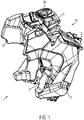
- the fuel tank assembly 1 has a first or forward direction of the motorcycle 17 considers a left tank body 2 and a second or right tank body 3, which in the illustrated embodiment are formed of a plastic material.
- the fuel tank assembly 1 has a receiving means 4 in the form of a closer reference to figure 5 the drawing apparent carrier module 5 and a distribution element 6, which is in the form of a closer reference to 3 the drawing apparent distributor body 7 is formed.
- the fuel tank assembly 1 in the area of the underside of the tank bodies 2, 3 has a connecting element 8 in the form of a closer reference to FIG 6 the drawing apparent connecting hose 9 on.
- Two or more than two connecting elements 8 can also be provided between the tank bodies.
- the drawing can be seen, the respective fluorine rubber hose 11 being detachably fixed to the respective connection piece 12 by means of a fastener in the form of a clamp 13 .
- the clamps 13 shown in the drawings can be so-called ear clamps, which ensure a fluid-tight connection arrangement between the respective connection piece 12 and the hose 11 .
- Both tank bodies 2, 3 have a respective tank body interior 14, 15, as shown in 6 is shown in the drawing and at the top of the distributor element 6 there is a closer reference to FIG 2 fuel filler opening shown in the drawing 16 arranged through which the fuel when refueling the fuel tank assembly 1 in the distributor body interior 17 ( 13 ) can be filled in, starting from which the fuel can flow through the hoses 11 into the tank body interiors 14, 15.
- a tank cap 18 can be attached to the fuel filling opening 16 of the distributor element 6, which can be a tank cap which can be operated with a key or a tank cap which can be operated electromagnetically by means of a locking element.
- the configuration of the distributor element 6 or distributor body 7 ensures that the tank bodies 2 , 3 can be refueled using only a single fuel filler opening 16 on the distributor element 6 or distributor element 7 .
- the two tank bodies 2, 3 can be manufactured using an inexpensive blow molding process, and the distributor body 7 can also be manufactured using an inexpensive blow molding process.
- the distributor body 7 has a largely triangular configuration in a plan view with outlets or connection areas 25, to each of which a connection piece 26 can be fixed in a fluid-tight manner by means of a welding process in the form of, for example, an infrared welding process.
- the connecting pieces 26 can be present as injection molded parts that are welded to the distributor body 7 in the area of the outlets 25 .
- a connecting flange 28 which can also be made of a plastic material and can be fixed as an injection molded part on the blow molded part distributor body 7 by means of a welding process.
- the two tank bodies 2, 3 have a configuration similar to an upside-down letter "L" when viewed from the side, with an opening 20 formed on the upper side 19, through which the fuel fed via the hoses 11 can flow into the tank interiors 14 , 15 can flow.
- both tank bodies 2, 3 have a receiving surface 22 on the respective underside, on which a 6 the drawing shown fuel pump 23 and a level measuring device 24 can be releasably fixed.
- a first ventilation device 29 in the form of a ventilation hose 30 extends into the tank interior 14 of the tank body 2, specifically through the interior 31 of the hose 11 and into the distributor body interior 17 of the distributor body 7.
- the other tank body 3 also has such a first venting device 29 and is thus fluidically connected to the interior space 17 of the distributor body 7 .
- the tank bodies 2, 3 have connection pieces 12 on the respective connection area 32, which can be fixed there in a fluid-tight manner by means of a welding process.
- a second venting device 33 between the distributor body interior 17 and the tank body interior 14, 15 is provided.
- the second ventilation device shown in the drawing can be provided in the form of a ventilation hose 34 which can be fixed to the connection piece 12 of the distributor body 7 and tank body 2, 3 via hose connection pieces 35, 36.
- the second ventilation device 33 has a throttle 37, which is in the form of a diameter reduction 38, as is the case with reference to FIG 13 can be seen in the drawing and ends in the region of the distributor body interior 17 or the distributor body at the highest point of the system in the direction of the vertical axis.
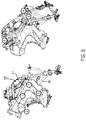
- the upper left representation of the 16 shows the fuel tank assembly 1 in a state without fuel.
- the top right illustration shows the fuel level after filling the tank shells 2, 3 and, since the fuel level exceeds the in 12
- the outlet end 39 of the ventilation hose 30 that can be seen in the drawing has been reached, no more air can escape through the first ventilation device 29 in the direction of the interior space 17 of the distributor body once this fill level has been reached.
- a further refilling of fuel leads to the distributor body interior 17 being filled with fuel, as is shown in the lower left representation of FIG 16 can be seen in the drawing.
- An increase in the fuel level leads to the nozzle shown schematically switching off automatically or to the user interrupting the process of refueling at the nozzle.
- FIG. 5 shows a perspective view of the carrier module 5 already mentioned above, to which the tank bodies 2, 3 and the distributor body 7 can be detachably fixed, so that the 1 configuration of the fuel tank assembly 1 shown in the drawing.
- the carrier module 5 has a first receiving surface 43 to which the distributor element 6 can be detachably fixed, for example via screw connections that are not shown in detail.
- the carrier module 5 has second receiving surfaces 44, on each of which the tank body 2, 3 can be detachably fixed, also via screw connections or the like.
- fastening lugs 45 which extend largely at right angles downwards from the underside of the carrier module 5 and to which the tank bodies 2, 3 can be detachably fixed, as is shown, for example, with reference to FIG 6 can be seen in the drawing.
- the two tank bodies 2, 3 on the respective inner side of the tank body 2, 3 have receiving surfaces 46 for supporting the tank bodies 2, 3 on elastic receiving means 47, as can be seen from FIG 6 and 10 can be seen in the drawing.
- the elastic receiving means 47 can be attached to the frame or frame component 48, for example in 8 the drawing can be seen, are releasably fixed and thus serve to provide additional support for the tank body 2, 3 on the frame 48.
- the support module 5 has a third receiving surface 50 on the upper side, on which an air filter box 50 can be fixed, as is also the case with reference to FIG 8 can be seen in the drawing.
- the carrier module 5 has handle elements 51, 52 on the respective transverse sides 53, by means of which, for example, when assembling the in 17 .
- Drawing illustrated motorcycle 54 the fuel tank assembly 1 can be placed on the frame 48, so that the fuel assembly 1 of the invention also has the advantage of easy handling during assembly of the motorcycle.
- the frame has main support points 55, as can be seen from FIG 9 the drawing can be seen, where the fuel tank assembly 1 can be placed as is based on 8 can be seen in the drawing.
- the fuel tank arrangement 1 is arranged on the frame 48 in such a way that mounting surfaces 56 (see figure 5 ) come to rest on the respective overhead tube 57 at the main bearing points, as can be seen from the in 8 is shown with the number 1 in the circle and the fuel tank arrangement can be fixed to the frame 48 via lateral screw points (number 2 in the circle) and a sliding seat (number 3 in the circle) and screw points (number 4 in the circle).
- the drawing shows a view from above of the fuel assembly 1, how it can be fixed to the frame via the carrier module 5 with three connection points 58 on the frame.
- the tank body 2 has a receiving surface 59 on the underside 21 in the form of a flange surface 60 which can be fixed to the underside 21 by means of a welding process.
- the fuel pump 23 has a housing 61 with a pump flange 62 which can be brought to rest on the flange surface 60 and with the interposition of a sealing device 63 ensures a fluid-tight configuration.
- the filling level measuring device 24 in the tank body 23 shown in the drawing takes place in the illustrated embodiment by means of a device formed on the tank body and in 15 the drawing visible threaded flange 64, on which the level measuring device 24 with the interposition of a sealing device 65 via a also in 7 the drawing apparent union nut 66 can be fixed fluid-tight and detachable.
- the fuel tank assembly 1 can be mounted on a motorcycle 54 and releasably secured to the frame 48 thereof.
- the motorcycle 54 which has a front wheel 67 and a rear wheel 68 and a drive motor 69, as can be seen from FIG 18 the drawing can be seen, also a driver's seat 70, where a user can sit down and how this is also based on 18
- the fuel tank assembly 1 can be completely covered by trim components 71, so that it is not necessary for the tank bodies 2, 3 of the fuel tank assembly 1 to be provided separately with a coat of paint or top coat.
- the fuel tank arrangement according to the invention is characterized in that separate tank bodies can be preassembled on a tank carrier and can be mounted in the preassembled state on the vehicle in the form of a motorcycle, for example.
- the distributor body which is also separate, ensures that the fuel can be filled into the separate tank bodies via just one fuel filler opening and that a separate, closable fuel filler opening is not required for each tank body.
- the manifold body is fluidly connected to the tank bodies via fluid lines and the fuel tank assembly can be positioned and mounted on the vehicle as a unit or assembly.
- the fuel tank assembly as a whole can be subjected to any inspections and can be easily disassembled as a whole for maintenance work on the vehicle provided therewith, while maintaining the requirement of the fluid-tight configuration.
- the tank carrier also has the advantage that it also has connection surfaces ready for other components, such as panels, storage compartments, and other components, such as the driver's saddle.
Landscapes
- Engineering & Computer Science (AREA)
- Mechanical Engineering (AREA)
- Life Sciences & Earth Sciences (AREA)
- Sustainable Development (AREA)
- Sustainable Energy (AREA)
- Chemical & Material Sciences (AREA)
- Combustion & Propulsion (AREA)
- Transportation (AREA)
- Cooling, Air Intake And Gas Exhaust, And Fuel Tank Arrangements In Propulsion Units (AREA)
Description
- Die vorliegende Erfindung betrifft eine Kraftstofftankanordnung mit mindestens zwei getrennten Tankkörpern mit einem jeweiligen Tankkörperinnenraum und mindestens einem die Tankkörper zur Fluidkommunikation verbindenden Verbindungselement, wobei die Tankkörper und die Kraftstofftankanordnung mit Aufnahmemitteln zur Anordnung an einem Rahmenbauteil eines Fahrzeugs mit einem Fahrersattel ausgebildet ist, nach dem Oberbegriff des Anspruchs 1.
- Bei dem Fahrzeug mit einem Fahrersattel kann es sich beispielsweise um ein Motorrad handeln oder auch ein mehr als einspuriges Fahrzeug in der Form beispielsweise eines Quads oder ATVs.
- Bei bekannten derartigen Fahrzeugen ist die Kraftstofftankanordnung oftmals als Satteltank ausgebildet, der in Fahrtrichtung des Fahrzeugs betrachtet vor dem Fahrersattel angeordnet ist und ein Rahmenoberteil in der Form beispielsweise eines Oberzugrohrs überspannt.
- So ist beispielsweise anhand der
EP 2 165 921 B1 ein einteiliger Kraftstofftank aus einem Kunststoffwerkstoff in der Form eines Satteltanks bekannt geworden, welcher von einer mehrteiligen Abdeckung abgedeckt wird, die über Verbindungselemente in der Form von beispielsweise Klammern miteinander verbunden sind und die Abdeckung der Abdeckung des Kraftstofftanks dient. - Anhand der
EP 3 002 193 B1 ist ein Kraftstofftank für ein Motorrad bekannt geworden, welcher durch Umformung eines Aluminiumbleches gefertigt ist. - Anhand der
DE 10 2007 009 113 B4 ist ein mehrteiliger Kraftstofftank bekannt geworden, der als Satteltank ausgebildet ist und als Schweißkonstruktion aus drei Teilen zusammengesetzt wird, nämlich einem Tankoberteil, einem Tankunterteil und einem Tankvorderteil, die demgemäß durch Schweißen miteinander verbunden werden. - Anhand der
DE 698 27 782 T2 ist ein mehrteiliger Tank für ein Motorrad bekannt geworden, der sich zusammensetzt aus einem Kraftstoffbehälter, einer Luftfilterbox und einem Ausgleichsbehälter für die Kühlflüssigkeit des Motors des Motorrads. - Anhand der
DE 10 2004 021 649 A1 ist ein Satteltank für Motorräder bekannt geworden, welcher einteilig ausgebildet ist und ein linkes sowie ein rechtes Tankvolumen besitzt und beide Tankvolumina sind mittels eines mittleren Tankbereichs miteinander verbunden. - Innerhalb des so gebildeten Satteltanks ist eine Verbindungsleitung angeordnet, welche die beiden Tankvolumina verbindet und ein Schwallblech im Tankinneren sorgt dafür, dass beim Befüllen des bekannten Tanks mit Kraftstoff der Kraftstoff zunächst primär in ein Tankvolumen strömt und beim Ansteigen des Kraftstoffpegels im Tankinneren durch den ansteigenden Kraftstoffpegel Luft aus der Verbindungsleitung verdrängt wird und beim Betrieb des Motors des Motorrads der Kraftstoffpegel in beiden Tankvolumina in gleicher Weise absinkt.
- Schließlich ist anhand der Anmelderin eine Kraftstofftankanordnung mit zwei getrennten Tankkörpern bekannt geworden mit einem jeweiligen Tankinnenraum und einem die Tankkörper zur Fluidkommunikation verbindenden Verbindungselement. Bei der bekannten Kraftstofftankanordnung sind die beiden Tankkörper mittels eines Kunststoffwerkstoffes gebildet und die beiden Tankkörper können mittels Aufnahmemitteln an einem Rahmenbauteil des damit versehenen Fahrzeugs mit Fahrersattel in der Form eines Motorrads festgelegt werden.
- Bei dieser bekannten Kraftstofftankanordnung besitzen beide Tankkörper eine jeweilige Kraftstoffeinfüllöffnung mit einem jeweiligen Tankdeckel, welcher mittels eines Schlüssels vom Fahrer des Fahrzeugs betätigt werden kann. Die voneinander separaten Tankkörper werden bei der Montage des Fahrzeugs separat am Rahmen des Fahrzeugs mittels Schraubenverbindungen festgelegt.
- Obwohl sich diese bekannte Konfiguration einer Kraftstofftankanordnung in der Praxis bereits bestens bewährt hat, besitzt sie trotzdem Raum für Veränderung zur Erreichung einer besseren Handhabbarkeit bei der Montage des mit der Kraftstofftankanordnung zu versehenen Fahrzeugs und auch zur Vereinfachung der Kraftstofftankanordnung.
- Die Erfindung weist zur Lösung dieser Aufgabe die im Anspruch 1 angegebenen Merkmale auf. Vorteilhafte Ausgestaltungen hiervon sind den weiteren Ansprüchen beschrieben.
- Die Erfindung schafft eine Kraftstofftankanordnung mit mindestens zwei getrennten Tankkörpern mit einem jeweiligen Tankkörperinnenraum und mindestens einem die Tankkörper zur Fluidkommunikation verbindenden Verbindungselement, wobei die Tankkörper und die Kraftstofftankanordnung mit Aufnahmemitteln zur Anordnung an einem Rahmenbauteil eines Fahrzeugs mit einem Fahrersattel ausgebildet ist, wobei die Kraftstofftankanordnung ein Verteilerelement mit einer Kraftstoffeinfüllöffnung aufweist und das Verteilerelement mittels mindestens eines fluidleitenden Verbindungsmittels mit den Tankkörpern fluidleitend verbunden ist.
- Die so ausgebildete erfindungsgemäße Kraftstofftankanordnung weist also neben den getrennten Tankkörpern, die über mindestens ein Verbindungselement zur Fluidkommunikation verbunden sind, ein Verteilerelement auf, welches ebenfalls mit den Tankkörpern fluidleitend verbunden ist und das Verteilerelement nur eine gemeinsame Kraftstoffeinfüllöffnung besitzt, über die beide Tankkörper beim Befüllen der erfindungsgemäßen Kraftstofftankanordnung mit Kraftstoff befüllt werden können.
- Auf diese Weise ist es möglich, nicht nur einen Verschlussdeckel der Kraftstoffeinfüllöffnung einzusparen, sondern es wird auf diese Weise auch möglich, den Komfort für den Benutzer des Fahrzeugs zu erhöhen, da der dann nur mehr einfach notwendige Verschlussdeckel der Kraftstoffeinfüllöffnung auch als mittels eines elektromagnetisch betätigten Sperrglieds verriegelbarer Tankdeckel ausgebildet sein kann. Ein solcher Tankdeckel benötigt Zusatzbauteile in der Form beispielsweise einer elektronischen Steuereinrichtung und des erwähnten Sperrglieds und ein Wegfall eines Verschlussdeckels sorgt einerseits für ein entsprechendes Einsparpotenzial bezüglich der Kosten der Kraftstofftankanordnung und beim Benutzer für einen Komfortgewinn, da er die erfindungsgemäße Kraftstofftankanordnung über die Bedienung nur eines Verschlussdeckels betanken kann, die nach der Betankung auch ohne die Bedienung mittels eines Schlüssels im verschlossenen Zustand mittels des Sperrglieds verriegelt werden kann, wodurch neben dem Komfortgewinn durch die Notwendigkeit nur mehr eines Betankungsvorgangs auch ein Sicherheitsgewinn für den Benutzer des Fahrzeugs einhergeht.
- Die Tankkörper sind beispielsweise aus einem Kunststoffwerkstoff ausgebildet, können aber auch aus einem metallischen Werkstoff ausgebildet sein, also beispielsweise auch als aus einem Metallblechmaterial gefertigt sein oder eine Konfiguration auf der Basis einer Kompositbauweise besitzen.
- Nach einer Weiterbildung der Erfindung ist es vorgesehen, dass das Verteilerelement derart ausgebildet ist, dass die Tankkörper mittels nur einer Kraftstoffeinfüllöffnung des Verteilerelements mit Kraftstoff befüllbar sind.
- Hierzu kann das Verteilerelement einen Verteilerkörper mit einem Verteilerkörperinnenraum aufweisen, von dem ausgehend das mindestens eine fluidleitende Verbindungsmittel zu den Tankkörpern zur Befüllung der Tankkörper mit Kraftstoff vorgesehen ist.
- Nach dieser Konfiguration ist es also möglich, dass sich vom Verteilerkörperinnenraum ausgehend ein fluidleitendes Verbindungsmittel zu einem Tankkörper erstreckt, von dem ausgehend ein fluidleitendes Verbindungsmittel zum zweiten Tankkörper verläuft oder auch eine Konfiguration, nach der sich vom Verteilerkörperinnenraum ausgehend jeweils ein fluidleitendes Verbindungsmittel zu den körperlich voneinander getrennten Tankkörpern erstreckt und in beiden Fällen somit über die Befüllung des Verteilerkörperinnenraums mit Kraftstoff über die nur eine Kraftstoffeinfüllöffnung die getrennten Tankkörper befüllt werden können.
- Es ist nach einer Weiterbildung der Erfindung vorgesehen, dass die Kraftstofftankanordnung eine erste fluidleitende Entlüftungseinrichtung zwischen einem jeweiligen Tankkörper und dem Verteilerelement sowie eine zweite fluidleitende Entlüftungseinrichtung zwischen einem jeweiligen Tankkörper und dem Verteilerelement besitzt.
- Bei einem einstückigen Satteltank findet die Entlüftung des Satteltanks beim Befüllen des Tanks mit Kraftstoff über die geöffnete Kraftstoffeinfüllöffnung statt, über die der Kraftstoff in den Tankinnenraum gefüllt wird und während des Betriebs des Fahrzeugs bei geschlossenem Tankdeckel über den Tankdeckel selbst, da sich der Kraftstoff im Tankinnenraum betriebsbedingt durch während des Betriebs den Kraftstoff beaufschlagende Wärme ausdehnen kann und hierzu ein entsprechendes Luftvolumen im Tankinnenraum verdrängt werden muss.
- Im Gegensatz hierzu sind für die Entlüftung der erfindungsgemäßen Kraftstofftankanordnung zwei separate Entlüftungseinrichtungen für jeden Tankkörper vorgesehen.
- Die erste fluidleitende Entlüftungseinrichtung ist dabei für die Entlüftung während des Betankungsvorgangs vorgesehen. Diese erste fluidleitende Entlüftungseinrichtung kann dabei von einer Schlauchleitung oder einer anderen Fluidverbindung zwischen dem Tankinnenraum des Tankkörpers und dem Verteilerkörperinnenraum gebildet werden, sodass bei einem langsamen Ansteigen des Kraftstofffüllstands im Tankkörperinnenraum während des Tankvorgangs und durch das fluidleitende Verbindungsmittel strömendem Kraftstoff vom ansteigenden Kraftstoffpegel verdrängte Luft über die erste fluidleitende Entlüftungseinrichtung aus dem Tankinnenraum entströmen kann.
- Erreicht dann der Kraftstoffpegel das Austrittsende der ersten fluidleitenden Entlüftungseinrichtung im Tankkörperinnenraum, dann kann bei weiter steigendem Kraftstoffpegel keine Luft aus dem Tankinnenraum mehr durch die erste fluidleitende Entlüftungseinrichtung in Richtung zum Verteilerkörperinnenraum entweichen.
- Dies führt dazu, dass sich auch der Verteilerkörperinnenraum mit Kraftstoff füllt und der Kraftstoffpegel im Verteilerkörperinnenraum in Richtung zur Kraftstoffeinfüllöffnung ansteigt. Nach Abschluss des Tankvorgangs befindet sich also Kraftstoff im Verteilerkörperinnenraum, der dann aber über die zweite fluidleitende Entlüftungseinrichtung zwischen dem Verteilerelement und dem Tankkörper, welche nach der Art einer Drossel wirkt, langsam aus dem Verteilerkörperinnenraum in Richtung zum Tankkörperinnenraum absinkt und im Gegenzug ein Leerraum im Verteilerkörperinnenraum freigegeben wird, welcher als Ausgleichsbehälter für sich während des Betriebs des mit der erfindungsgemäßen Kraftstofftankanordnung betriebenen Fahrzeugs ausdehnenden Kraftstoffs zur Verfügung steht.
- Der Benutzer des Fahrzeugs kann also beim Betankungsvorgang in der dem Benutzer bekannten üblichen Weise vorgehen und die Zapfpistole durch die Kraftstoffeinfüllöffnung in den Verteilerkörperinnenraum einführen und den Betankungsvorgang so lange durchführen, bis die Selbstabschaltfunktion der Zapfpistole das Nachströmen von Kraftstoff beendet oder aber eine visuelle Prüfung des Kraftstoffpegels im Verteilerkörperinnenraum dem Benutzer zeigt, dass der Betankungsvorgang abgeschlossen ist.
- Ein sich sodann im Verteilerkörperinnenraum befindlicher Kraftstoff strömt über die zweite fluidleitende Entlüftungseinrichtung zwischen dem jeweiligen Tankkörper und dem Verteilerelement in den jeweiligen Tankkörper nach, was dazu führt, dass das vorstehend beschriebene Ausgleichsvolumen im Verteilerkörperinnenraum bereitgestellt wird.
- Es ist dabei nach einer Weiterbildung der Erfindung vorgesehen, dass sich die jeweils erste und zweite Entlüftungseinrichtung vom Tankkörperinnenraum eines jeweiligen Tankkörpers bis zum Verteilerkörperinnenraum erstreckt und mindestens eine Entlüftungseinrichtung zumindest entlang eines Teilbereichs der Erstreckung vom Tanckörperinnenraum zum Verteilerkörperinnenraum innerhalb des fluidleitenden Verbindungsmittels angeordnet ist. Auf diese Weise wird erreicht, dass das fluidleitende Verbindungsmittel in der Form beispielsweise eines Verbindungsschlauches zwischen dem Verteilerkörperinnenraum und dem Tankkörperinnenraum innerhalb des Verbindungsschlauches angeordnet ist und somit eine platzsparende und montagefreundliche Konfiguration erreicht ist.
- Es ist nach einer Weiterbildung der Erfindung auch vorgesehen, dass die vorstehend erwähnte zweite Entlüftungsreinrichtung jeweils im Bereich der fluidleitenden Verbindung zum Verteilerkörperinnenraum oder Tankkörperinnenraum eine Drossel aufweist, welche durch eine Durchmesserreduzierung des Innendurchmessers einer fluidleitenden Verbindungsleitung der zweiten Entlüftungseinrichtung dargestellt ist. Durch diese Drossel wird das langsame Abströmen des sich im Verteilerkörperinnenraum nach dem Betankungsvorgang befindlichen Kraftstoffvolumens erreicht und das Austreten von Kraftstoff durch das Aufsteigen von Luftblasen aus dem Tankkörperinnenraum während des Nachströmvorgangs vermieden.
- Ein Vorteil der erfindungsgemäßen Kraftstofftankanordnung besteht beispielsweise darin, dass die einzelnen Körperelemente der Kraftstofftankanordnung mit Volumeninnenräumen, obwohl diese zu einer einzigen Baugruppe integriert werden können, wie dies nachfolgend noch erläutert werden wird, mittels eines kostengünstigen Blasformvorgangs gefertigt werden können.
- Die Erfindung zeichnet sich also nach einer Weiterbildung dadurch aus, dass die Tankkörper und das Verteilerelement jeweils mittels eines Blasformvorgangs aus einem Kunststoffwerkstoff gefertigt sind und an einander zugeordneten Anschlußbereichen jeweils einen Anschlussstutzen aufweisen, welcher mittels eines Spritzgießvorgangs aus einem Kunststoffwerkstoff gefertigt ist und formschlüssig am jeweiligen Anschlussbereich festgelegt ist.
- Dies führt auch zu dem Vorteil, dass die Anschlussbereiche oder Anschlussflächen bei der Fertigung der jeweiligen Körperelemente mit Volumeninnenräumen ausgebildet werden können, während höhere Dichtigkeitsanforderungen aufweisende Anschlußelemente separat von den Körperelementen gefertigt werden können und dann beispielsweise mittels eines Schweißvorgangs mit den Körperelementen fluiddicht verbunden werden können.
- Es ist nach einer Weiterbildung der Erfindung auch vorgesehen, dass das fluidleitende Verbindungsmittel ein schlauchförmiger Körper ist, welcher jeweils zwischen Tankkörper und Verteilerkörper lösbar festlegbar ist und einen Innendurchmesser aufweist, der zur Aufnahme einer fluidleitenden Entlüftungseinrichtung dimensioniert ist.
- Dadurch kann nach einem solchen "Leitung in Leitung System" eine platzsparende Konfiguration geschaffen werden, welche zudem durch die Reduzierung von außen angebrachter, also exponierter Bauteile die Gefahr einer Beschädigung der Entlüftungseinrichtung reduziert.
- Auch ist es nach einer Weiterbildung der Erfindung vorgesehen, dass der Verteilerkörper eine Anschlussfläche zur lösbaren Festlegung einer Aufnahme zur Festlegung eines Tankdeckel des Fahrzeugs aufweist. Diese Anschlussfläche kann daher in vorteilhafter Weise bei der Fertigung des Verteilerkörpers ausgebildet werden, sodass sie zur Festlegung der Aufnahme für den Tankdeckel vorbereitet ist. Bei der Aufnahme kann es sich beispielsweise um eine Tankdeckelbasis handeln, welche mittels Schraubenverbindungen an der Aufnahme festgelegt wird.
- Es ist nach einer Weiterbildung der Erfindung auch vorgesehen, dass das eingangs erwähnte Aufnahmemittel in der Form einer Aufnahmeeinrichtung vorgesehen ist, welche mit einer ersten Aufnahmefläche zur lösbaren Festlegung des Verteilerelements an der Aufnahmeeinrichtung und zweiten Aufnahmeflächen zur lösbaren Festlegung der Tankkörper an der Aufnahmeeinrichtung und Montageflächen zur lösbaren Festlegung der Kraftstofftankanordnung an dem Rahmenbauteil des Fahrzeugs versehen ist.
- Bei der Aufnahmeeinrichtung handelt es sich also um ein Trägermodul, an dem sowohl das Verteilerelement als auch die Tankkörper in einem noch vom Rahmenbauteil des Fahrzeugs getrennten Zustand lösbar festgelegt werden können, beispielsweise mittels Schraubenverbindungen und die so vormontierte Einheit dann als Kraftstofftankanordnung am Rahmenbauteil des Fahrzeugs lösbar festgelegt werden kann.
- Diese Konfiguration besitzt den Vorteil, dass die Kraftstofftankanordnung separat vormontiert werden kann und als Gesamttanksystem etwaigen Prüfungen unterzogen werden kann und für etwaige Servicearbeiten am Fahrzeug als Gesamttanksystem vom Fahrzeug getrennt werden kann und daher auch die Gefahr von Undichtigkeiten bei der Demontage des Tanks verringert werden kann.
- Zudem besitzt die Aufnahmeeinrichtung auch noch den Vorteil, zusätzliche Befestigungspunkte für Anbauteile am Fahrzeug bereitzustellen, wie beispielsweise Verkleidungen, Staufächer, oder auch Anbauteile zur Festlegung des Fahrersattels und dergleichen.
- Es ist nach einer Weiterbildung der Erfindung vorgesehen, dass das erwähnte Aufnahmemittel mittels eines Kunststoffwerkstoffes gebildet ist und in einer Draufsichtansicht eine weitgehend rechteckförmige Konfiguration aufweist mit sich von einer Unterseitenfläche weg erstreckenden Befestigungslaschen zur lösbaren Festlegung der Tankkörper.
- Das Aufnahmemittel kann an den jeweiligen Querseiten auch mit Handgriffflächen oder Handgriffausnehmungen versehen sein, welche zur Montage und zur Demontage der Kraftstofftankanordnung am Rahmenbauteil und vom Rahmenbauteil von Vorteil sind, da auf diese Weise definierte Bereiche der Kraftstofftankanordnung zu deren Handhabung geschaffen sind.
- Es ist nach einer Weiterbildung der Erfindung auch vorgesehen, dass ein Tankkörper an einem Unterseitenbereich eine Aufnahmefläche zur lösbaren Festlegung einer Kraftstoffpumpe aufweist und ein Tankkörper an einem Unterseitenbereich eine Aufnahmefläche zur lösbaren Festlegung einer Füllstandsmeßeinrichtung aufweist.
- Bei den Aufnahmeflächen kann es sich um Flanschflächen handeln, an der oder denen die Kraftstoffpumpe oder die Füllstandsmeßeinrichtung lösbar festgelegt werden kann, beispielsweise mittels Schraubenverbindungen oder es kann sich auch um als Schraubstutzen oder Gewindestutzen ausgebildete Aufnahmeflächen handeln, an der oder denen die Kraftstoffpumpe oder die Füllstandsmeßeinrichtung jeweils unter Anordnung von Dichtungseinrichtungen beispielsweise mittels einer Überwurfmutter festgelegt werden kann, sodass im Falle einer Reparatur der genannten Bauteile eine einfache Demontage- und Wiedermontagemöglichkeit gegeben ist.
- Es ist nach einer Weiterbildung der Erfindung auch vorgesehen, dass die Tankkörper mit Aufnahmeflächen zur Abstützung der Tankkörper an elastischen Aufnahmemittel versehen sind, welche lösbar an dem Rahmenbauteil festlegbar sind. Bei den Aufnahmeflächen kann es sich beispielsweise um Zentrierflächen oder Schiebesitze handeln, in welche die elastischen Aufnahmemittel zur Abstützung der Tankkörper einfach eingeführt werden können und die Tankkörper auf diese Weise nach der Festlegung der Aufnahmemittel in Form von beispielsweise Abstandhaltern an dem Rahmenbauteil zusätzlich festgelegt sind.
- Es ist nach einer Weiterbildung der Erfindung auch vorgesehen, dass das eingangs erwähnte Verbindungselement eine an den Tankkörper im Bereich deren jeweiliger Unterseite lösbar festlegbare Verbindungsleitung ist. Zur fluiddichten und lösbaren Festlegung der Verbindungsleitung an den Tankkörper können beispielsweise Schnellverschlusskupplungen vorgesehen sein, welche bei der Demontage der Verbindungsleitung automatisch abdichten und bei der Montage der Verbindungsleitung automatisch eine flutleitende Verbindung herstellen können. Diese Schnellverschlusskupplungen beziehungsweise Stutzen zur Aufnahme der Schnellverschlusskupplungen können an der in Hochachsrichtung des betriebsbereiten Fahrzeugs jeweils tiefsten Stelle der Tankkörper vorgesehen werden.
- Schließlich ist es nach einer Weiterbildung der Erfindung auch vorgesehen, dass das Verteilerelement einen Ausgleichsraum aufweist, der zur Aufnahme von Kraftstoff ausgebildet ist, welcher beispielsweise beim Betrieb des Fahrzeugs und sich ausdehnendem Kraftstoff den Kraftstoff aufnehmen kann.
- Die Erfindung wird im Folgenden anhand der Zeichnung näher erläutert. Diese zeigt in:
-
Fig. 1 eine perspektivische Darstellung einer Ausführungsform der Kraftstofftankanordnung gemäß der vorliegenden Erfindung in einer Gesamtansicht; -
Fig. 2 eine perspektivische Darstellung des Verteilerkörpers; -
Fig. 3 eine perspektivische Vorderseitenansicht des Verteilerkörpers mit Anschlussstutzen; -
Fig. 4 eine Ausschnittsdarstellung eines Bereichs zwischen dem Verteilerkörper und einem Tankkörper; -
Fig. 5 eine perspektivische Darstellung einer Aufnahmeeinrichtung in der Form eines Trägermoduls, an dem sowohl die Tankkörper als auch der Verteilerkörper lösbar festgelegt werden können; -
Fig. 6 eine perspektivische Darstellung der Kraftstofftankanordnung, welche auch die Kraftstoffpumpe und die Füllstandsmeßeinrichtung zeigt; -
Fig. 7 eine Darstellung ähnlich derjenigen nachFig. 6 , welche die Kraftstofftankanordnung in einer Ansicht von unten zeigt; -
Fig. 8 zwei Darstellungen, welche die Anordnung der Kraftstofftankanordnung an einem Rahmenbauteil eines Motorrads zeigen; -
Fig. 9 eine Darstellung und eine vergrößerte Darstellung, welche die Hauptauflagepunkte am Rahmenbauteil zur Anordnung der Kraftstofftankanordnung zeigt; -
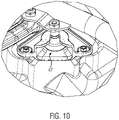
Fig. 10 eine Seitenansicht des Rahmenbauteils mit einem daran über elastische Aufnahmemittel festgelegten Tankkörper; -
Fig. 11 eine Ansicht von oben auf eine Ausschnitt des Rahmenbauteils mit der daran angeordneten Kraftstofftankanordnung; -
Fig. 12 eine Ausschnittsdarstellung der Kraftstofftankanordnung zur Erläuterung der Entlüftungseinrichtungen; -
Fig. 13 eine vergrößerte Ausschnittsdarstellung nachFig. 12 ; -
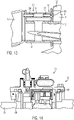
Fig. 14 eine Darstellung zur Erläuterung der Anordnung der Kraftstoffpumpe am Tankkörper; -
Fig. 15 eine Darstellung zur Erläuterung der Anordnung der Füllstandsmeßeinrichtung am Tankkörper; -
Fig. 16 vier Darstellungen zur Erläuterung der Entlüftung der Kraftstofftankanordnung beim Betankungsvorgang; -
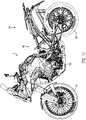
Fig. 17 eine Darstellung eines Motorrads von der Seite mit der am Rahmen des Motorrads angeordneten Kraftstofftankanordnung; und -
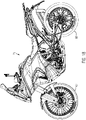
Fig. 18 eine Darstellung ähnlich derjenigen nachFig. 17 , welche das Motorrad mit die Kraftstofftankanordnung überdeckenden Abdeckungen zeigt. -
Fig. 1 zeigt eine perspektivische Darstellung einer Ausführungsform der Kraftstofftankanordnung 1 gemäß der vorliegenden Erfindung in einer Gesamtansicht. - Die Kraftstofftankanordnung 1 weist einen ersten oder in Fahrtrichtung des Motorrads nach
Fig. 17 betrachtet linken Tankkörper 2 auf und einen zweiten oder rechten Tankkörper 3, welche bei der dargestellten Ausführungsform aus einem Kunststoffwerkstoff gebildet sind. - Darüber hinaus besitzt die Kraftstofftankanordnung 1 ein Aufnahmemittel 4 in der Form eines näher anhand von
Fig. 5 der Zeichnung ersichtlichen Trägermoduls 5 und ein Verteilerelement 6, das in der Form eines näher anhand vonFig. 3 der Zeichnung ersichtlichen Verteilerkörpers 7 ausgebildet ist. - Zudem weist die Kraftstofftankanordnung 1 im Bereich der Unterseite der Tankkörper 2, 3 ein Verbindungselement 8 in der Form eines näher anhand von
Fig. 6 der Zeichnung ersichtlichen Verbindungsschlauches 9 auf. Es können auch zwei oder mehr als zwei Verbindungselemente 8 zwischen den Tankkörpern vorgesehen sein. - Darüber hinaus ist zwischen dem Verteilerelement 6 und dem jeweiligen in
Fig. 6 der Zeichnung anhand von gestrichelt dargestellten Umrißkanten ersichtlichen Tankkörper 2, 3 jeweils ein fluidleitendes Verbindungsmittel 10 in der Form eines näher anhand vonFig. 2 der Zeichnung ersichtlichen Fluorkautschukschlauches 11 vorgesehen, welcher beidseits über einen jeweiligen Anschlussstutzen 12 fluiddicht angebunden ist, wie dies anhand vonFig. 4 der Zeichnung ersichtlich ist, wobei der jeweilige Fluorkautschukschlauch 11 über ein Befestigungsmittel in der Form einer Schelle 13 am jeweiligen Anschlussstutzen 12 lösbar festgelegt ist. Bei den inFig. 2 der Zeichnungen ersichtlichen Schellen 13 kann es sich um sogenannte Ohrklemmen handeln, welche für eine fluiddichte Verbindungsanordnung zwischen den jeweiligen Anschlussstutzen 12 und dem Schlauch 11 sorgen. - Beide Tankkörper 2, 3 weisen einen jeweiligen Tankkörperinnenraum 14, 15 auf, wie dies in
Fig. 6 der Zeichnung dargestellt ist und an der Oberseite des Verteilerelements 6 befindet sich eine näher anhand vonFig. 2 der Zeichnung ersichtliche Kraftstoffeinfüllöffnung 16 angeordnet, durch die hindurch der Kraftstoff bei der Betankung der Kraftstofftankanordnung 1 in den Verteilerkörperinnenraum 17 (Fig. 13 ) eingefüllt werden kann, von dem ausgehend der Kraftstoff über die Schläuche 11 in die Tanckörperinnenräume 14, 15 strömen kann. - Wie es darüber hinaus anhand von
Fig. 1 der Zeichnung ersichtlich ist, kann an der Kraftstoffeinfüllöffnung 16 des Verteilerelements 6 ein Tankdeckel 18 angebracht werden, bei dem es sich um einen mit einem Schlüssel betätigbaren Tankdeckel handeln kann oder um einen Tankdeckel, der elektromagnetisch mittels eines Sperrglieds betätigbar ist. - Die Konfiguration des Verteilerelements 6 beziehungsweise Verteilerkörpers 7 sorgt dafür, dass die Tankkörper 2, 3 mittels nur einer einzigen Kraftstoffeinfüllöffnung 16 am Verteilerelement 6 beziehungsweise Verteilerelement 7 betankt werden können.
- Die beiden Tankkörper 2, 3 können mittels eines kostengünstigen Blasformvorgangs gefertigt werden und auch der Verteilerkörper 7 kann mittels eines kostengünstigen Blasformvorgangs gefertigt werden.
- Wie es sich anhand von
Fig. 3 der Zeichnung erschließt, besitzt der Verteilerkörper 7 eine in einer Draufsichtansicht weitgehend dreieckförmige Konfiguration mit Auslässen oder Anschlußbereichen 25, an denen jeweils einen Anschlussstutzen 26 mittels eines Schweißvorgangs in der Form beispielsweise eines Infrarot Schweißvorgangs fluiddicht festgelegt werden kann. Die Anschlussstutzen 26 können dabei als Spritzgussteile vorliegen, die mit dem Verteilerkörper 7 im Bereich der Auslässe 25 verschweißt werden. - An der Oberseite 27 des Verteilerkörpers 7 befindet sich ein Anschlussflansch 28 angeordnet, der ebenfalls aus einem Kunststoffwerkstoff gefertigt sein kann und als Spritzgussteil an dem Blasformteil Verteilerkörper 7 mittels eines Schweißvorgangs festgelegt werden kann.
- Wie es anhand von
Fig. 1 der Zeichnung ersichtlich ist, besitzen die beiden Tankkörper 2, 3 eine in einer Seitenansicht einem auf dem Kopf stehenden Buchstaben "L" ähnliche Konfiguration mit einer an der Oberseite 19 ausgebildeten Öffnung 20, durch die hindurch über die Schläuche 11 geführter Kraftstoff in die Tankinnenräume 14, 15 strömen kann. - Wie es darüber hinaus anhand von
Fig. 6 undFig. 7 der Zeichnung ersichtlich ist, weisen beide Tankkörper 2, 3 an der jeweiligen Unterseite eine Aufnahmefläche 22 auf, an der eine inFig. 6 der Zeichnung dargestellte Kraftstoffpumpe 23 und eine Füllstandsmeßeinrichtung 24 lösbar festgelegt werden können. -
Fig. 12 der Zeichnung zeigt, dass sich eine erste Entlüftungseinrichtung 29 in der Form eines Entlüftungsschlauches 30 bis in den Tankinnenraum 14 des Tankkörpers 2 erstreckt und zwar durch den Innenraum 31 des Schlauches 11 hindurch und bis in den Verteilerkörperinnenraum 17 des Verteilerkörpers 7 hinein. - Auch der andere Tankkörper 3 weist eine solche erste Entlüftungseinrichtung 29 auf und ist so fluidisch mit dem Verteilerkörperinnenraum 17 des Verteilerkörpers 7 verbunden.
- Die Tankkörper 2, 3 weisen am jeweiligen Anschlussbereich 32 Anschlussstutzen 12 auf, welche dort mittels eines Schweißvorgangs fluiddicht festgelegt werden können.
- Wie es am einfachsten anhand von
Fig. 4 . Zeichnung ersichtlich ist, ist neben der ersten Entlüftungseinrichtung 29 eine zweite Entlüftungseinrichtung 33 zwischen dem Verteilerkörperinnenraum 17 und dem Tankkörperinnenraum 14, 15 vorgesehen. - Diese auch anhand von
Fig. 2 der Zeichnung ersichtliche zweite Entlüftungseinrichtung kann in der Form eines Entlüftungsschlauches 34 vorgesehen sein, welcher über Schlauchanschlussstutzen 35, 36 an den Anschlussstutzen 12 des Verteilerkörpers 7 und Tankkörpers 2, 3 festgelegt werden kann. - Die zweite Entlüftungseinrichtung 33 besitzt eine Drossel 37, welche in der Form einer Durchmesserreduzierung 38 ausgebildet ist, wie dies anhand von
Fig. 13 der Zeichnung ersichtlich ist und endet im Bereich des Verteilerkörperinnenraums 17 beziehungsweise des Verteilerkörpers am in Hochachsrichtung höchsten Punkt des Systems. - Anhand von
Fig. 16 der Zeichnung wird nachfolgend der Betankungsvorgang erläutert. - Die linke obere Darstellung der
Fig. 16 zeigt die Kraftstofftankanordnung 1 in einem Zustand ohne Kraftstoff. Die rechte obere Darstellung zeigt den Kraftstofffüllstand nach dem Füllen der Tankkörper 2, 3 und, da der Kraftstofffüllstand das inFig. 12 der Zeichnung ersichtliche Auslassende 39 des Entlüftungsschlauches 30 erreicht hat, kann ab dem Erreichen dieses Füllstandsniveaus keine Luft mehr durch die erste Entlüftungseinrichtung 29 in Richtung zum Verteilerkörperinnenraum 17 entweichen. - Ein weiteres Nachfüllen von Kraftstoff führt dazu, dass sich der Verteilerkörperinnenraum 17 mit Kraftstoff füllt, wie dies in der unteren linken Darstellung der
Fig. 16 der Zeichnung ersichtlich ist. - Ein Ansteigen des Kraftstoffpegels führt dazu, dass die schematisch dargestellte Zapfpistole automatisch abschaltet oder der Benutzer den Vorgang des Betankens von sich aus an der Zapfpistole unterbricht.
- Da nach dem Abschluss des Betankungsvorgangs keine Luft mehr durch die erste Entlüftungseinrichtung 29 entweichen kann, sich aber noch Luft oberhalb des Kraftstoffpegels 40 im Tankkörperinnenraum 14 und 15 befindet, und sich dieser anhand von
Fig. 4 der Zeichnung ersichtliche Restraum 41 in Fluidkommunikation befindet mit der zweiten Entlüftungseinrichtung 33, kann die im Restraum 41 eingeschlossene Luft langsam gegen den im Verteilerkörperinnenraum 17 befindlichen Kraftstoff ausgetauscht werden, indem der Kraftstoff langsam über die Drossel 37 in den Restraum 41 nachströmt. - Es stellt sich somit der in der rechten unteren Darstellung der
Fig. 16 ersichtliche Kraftstoffpegel ein und im Verteilerkörperinnenraum 17 steht ein Ausgleichsraum zur Verfügung, der für die Aufnahme von sich in den Tankkörpern 2 und 3 ausdehnendem Kraftstoff zur Verfügung steht und die zweite Entlüftungseinrichtung 33 wirkt somit wieder als Entlüftung. -
Fig. 5 der Zeichnung zeigt in einer perspektivischen Darstellung das vorstehend bereits erwähnte Trägermodul 5, an dem die Tankkörper 2, 3 und der Verteilerkörper 7 lösbar festgelegt werden können, sodass sich die inFig. 1 der Zeichnung dargestellte Konfiguration der Kraftstofftankanordnung 1 ergibt. - Das Trägermodul 5 weist eine erste Aufnahmefläche 43 auf, an der das Verteilerelement 6 lösbar festgelegt werden kann, beispielsweise über nicht näher dargestellte Schraubenverbindungen.
- Darüber hinaus besitzt das Trägermodul 5 zweite Aufnahmeflächen 44, an denen jeweils der Tankkörper 2, 3 lösbar festgelegt werden kann und zwar ebenfalls über Schraubenverbindungen oder dergleichen.
- Zudem sind am Trägermodul 5 zwei sich von der Unterseite des Trägermoduls 5 weitgehend rechtwinklig nach unten erstreckende Befestigungslaschen 45 vorgesehen, an denen die Tankkörper 2, 3 lösbar festgelegt werden können, wie dies beispielsweise anhand von
Fig. 6 der Zeichnung ersichtlich ist. - Zu dem weisen die beiden Tankkörper 2, 3 an der jeweiligen Innenseite des Tankkörpers 2, 3 Aufnahmeflächen 46 zur Abstützung der Tankkörper 2, 3 an elastischen Aufnahmemitteln 47 auf, wie dies anhand von
Fig. 6 undFig. 10 der Zeichnung ersichtlich ist. Die elastischen Aufnahmemittel 47 können am Rahmen oder Rahmenbauteil 48, der beispielsweise inFig. 8 der Zeichnung ersichtlich ist, lösbar festgelegt werden und dienen somit zur zusätzlichen Abstützung der Tankkörper 2, 3 am Rahmen 48. - Wie es darüber hinaus anhand von
Fig. 5 der Zeichnung ersichtlich ist, besitzt das Trägermodul 5 an der Oberseite eine dritte Aufnahmefläche 50, an welcher eine Luftfilterbox 50 festgelegt werden kann, wie dies ebenfalls anhand vonFig. 8 der Zeichnung ersichtlich ist. - Darüber hinaus weist das Trägermodul 5 an den jeweiligen Querseiten 53 Handgriffelemente 51, 52 auf, mittels der beispielsweise bei der Montage des in
Fig. 17 . Zeichnung dargestellten Motorrads 54 die Kraftstofftankanordnung 1 auf den Rahmen 48 aufgesetzt werden kann, sodass die erfindungsgemäße Kraftstoffanordnung 1 auch den Vorteil der einfachen Handhabung bei der Montage des Motorrads besitzt. - Zur Montage und Befestigung der Kraftstofftankanordnung 1 am Rahmen 48 weist der Rahmen Hauptauflagerpunkte 55 auf, wie dies anhand von
Fig. 9 der Zeichnung ersichtlich ist, an denen die Kraftstofftankanordnung 1 aufgesetzt werden kann und zwar wie dies anhand vonFig. 8 der Zeichnung ersichtlich ist. - Zu diesem Zweck wird die Kraftstofftankanordnung 1 so am Rahmen 48 angeordnet, dass Montageflächen 56 (siehe
Fig. 5 ) am jeweiligen Oberzugrohr 57 an den Hauptauflagerpunkten zur Anlage kommen, wie dies anhand der inFig. 8 mit der im Kreis befindlichen Zahl 1 dargestellt ist und über seitliche Schraubpunkte (Zahl 2 im Kreis) und einen Schiebesitz (Zahl 3 im Kreis) sowie Schraubpunkten (Zahl 4 im Kreis) die Kraftstofftankanordnung am Rahmen 48 festgelegt werden kann. -
Fig. 11 der Zeichnung zeigt in einer Ansicht von oben auf die Kraftstoffanordnung 1, wie diese an dem Rahmen über das Trägermodul 5 mit drei Anbindungspunkten 58 am Rahmen festgelegt werden kann. - Die unter anderem anhand von
Fig. 6 der Zeichnung ersichtliche Kraftstoffpumpe 23 und deren Befestigung an der Unterseite 21 des Tankkörpers 2 ist näher anhand vonFig. 14 der Zeichnung ersichtlich. - Wie es ohne weiteres ersichtlich ist, besitzt der Tankkörper 2 an der Unterseite 21 eine Aufnahmefläche 59 in der Form einer Flanschfläche 60, welche an der Unterseite 21 mittels eines Schweißvorgangs festgelegt werden kann.
- Die Kraftstoffpumpe 23 weist ein Gehäuse 61 mit einem Pumpenflansch 62 auf, der an der Flanschfläche 60 zur Auflage gebracht werden kann und unter Zwischenschaltung einer Dichtungseinrichtung 63 für eine fluiddichte Konfiguration sorgt.
- Die Anordnung der in
Fig. 6 der Zeichnung ersichtlichen Füllstandsmeßeinrichtung 24 im Tankkörper 23 erfolgt bei der dargestellten Ausführungsform mittels eines an dem Tankkörper ausgebildeten und inFig. 15 der Zeichnung ersichtlichen Gewindeflansches 64, an dem die Füllstandsmeßeinrichtung 24 unter Zwischenlage einer Dichtungseinrichtung 65 über eine auch inFig. 7 der Zeichnung ersichtliche Überwurfmutter 66 fluiddicht und lösbar festgelegt werden kann. - Wie es anhand von
Fig. 17 der Zeichnung ersichtlich ist, kann die Kraftstofftankanordnung 1 an einem Motorrad 54 angeordnet werden und an dessen Rahmen 48 lösbar festgelegt werden. Das ein Vorderrad 67 und ein Hinterrad 68 sowie einen Antriebsmotor 69 aufweisende Motorrad 54 besitzt, wie dies anhand vonFig. 18 der Zeichnung ersichtlich ist, auch einen Fahrersattel 70, an dem ein Benutzer Platz nehmen kann und, wie dies darüber hinaus anhand vonFig. 18 der Zeichnung ersichtlich ist, die Kraftstofftankanordnung 1 kann über Verkleidungsbauteile 71 vollständig abgedeckt werden, so dass es nicht erforderlich ist, dass die Tankkörper 2, 3 der Kraftstofftankanordnung 1 separat mit einem Farbauftrag oder Decklack versehen werden müssen. - Die erfindungsgemäße Kraftstofftankanordnung zeichnet sich dadurch aus, dass separate Tankkörper auf einem Tankträger vormontiert werden können und im vormontierten Zustand an dem Fahrzeug in der Form beispielsweise eines Motorrads montiert werden können. Der ebenfalls separate Verteilerkörper sorgt dafür, dass der Kraftstoff über nur eine Kraftstoffeinfüllöffnung in die separaten Tankkörper eingefüllt werden kann und nicht pro Tankkörper eine eigenständige, verschließbare Kraftstoffeinfüllöffnung notwendig ist.
- Der Verteilerkörper wird über Fluidleitungen fluidführend mit den Tankkörpern verbunden und die Kraftstofftankanordnung kann als Einheit oder Baugruppe an dem Fahrzeug positioniert und montiert werden.
- Die Kraftstofftankanordnung kann als Gesamtsystem etwaigen Prüfungen unterzogen werden und kann für Wartungsarbeiten am damit versehene Fahrzeug als Gesamtsystem einfach demontiert werden und das Erfordernis der fluiddichten Konfiguration wird dabei beibehalten.
- Der Tankträger besitzt zudem den Vorteil, dass er Anbindungsflächen auch für weitere Bauteile, wie Verkleidungen, Staufächer, und andere Bauteile, wie beispielsweise auch den Fahrersattel bereithält.
- Hinsichtlich vorstehend im Einzelnen nicht näher erläuterter Merkmale der Erfindung wird in übrigen ausdrücklich auf die Patentansprüche und die Zeichnung verwiesen.
-
- 1. Kraftstofftankanordnung
- 2. Tankkörper
- 3. Tankkörper
- 4. Aufnahmemittel
- 5. Trägermodul
- 6. Verteilerelement
- 7. Verteilerkörper
- 8. Verbindungselement
- 9. Verbindungsschlauch
- 10. Verbindungsmittel
- 11. Fluorkautschukschlauch, Schlauch
- 12. Anschlussstutzen
- 13. Schelle
- 14. Tankkörperinnenraum
- 15. Tankkörperinnenraum
- 16. Kraftstoffeinfüllöffnung
- 17. Verteilerkörperinnenraum
- 18. Tankdeckel
- 19. Oberseite
- 20. Öffnung
- 21. Unterseite
- 22. Aufnahmefläche
- 23. Kraftstoffpumpe
- 24. Füllstandsmeßeinrichtung
- 25. Auslass
- 26. Anschlussstutzen
- 27. Oberseite
- 28. Anschluss
- 29. erste Entlüftungseinrichtung
- 30. Entlüftungsschlauch
- 31. Innenraum
- 32. Anschlussbereich
- 33. zweite Entlüftungseinrichtung
- 34. Entlüftungsschlauch
- 35. Schlauchanschlussstutzen
- 36. Schlauchanschlussstutzen
- 37. Drossel
- 38. Durchmesserreduzierung
- 39. Auslassende
- 40. Kraftstoffpegel
- 41. Restraum
- 42. Ausgleichsraum
- 43. erste Aufnahmefläche
- 44. zweite Aufnahmefläche
- 45. Befestigungslasche
- 46. Aufnahmefläche
- 47. elastisches Aufnahmemittel
- 48. Rahmen, Rahmenbauteil
- 49. Oberseite
- 50. dritte Aufnahmefläche
- 51. Handgriffelement
- 52. Handgriffelement
- 53. Querseite
- 54. Motorrad
- 55. Hauptauflagerpunkte
- 56. Montagefläche
- 57. Oberzugrohr
- 58. Anbindungspunkte
- 59. Aufnahmefläche
- 60. Flanschfläche
- 61. Gehäuse
- 62. Pumpenflansch
- 63. Dichtungseinrichtung
- 64. Gewindeflansch
- 65. Dichtungseinrichtung
- 66. Überwurfmutter
- 67. Vorderrad
- 68. Hinterrad
- 69. Antriebsmotor
- 70. Fahrersattel
- 71. Verkleidungsbauteile
Claims (16)
- Kraftstofftankanordnung (1) mit mindestens zwei getrennten Tankkörpern (2, 3) mit einem jeweiligen Tankkörperinnenraum (14, 15) und mindestens einem die Tankkörper (2, 3) zur Fluidkommunikation verbindenden Verbindungselement (9), wobei die Tankkörper (2, 3) und die Kraftstofftankanordnung (1) mit Aufnahmemitteln (5) zur Anordnung an einem Rahmenbauteil (48) eines Fahrzeugs (54) mit einem Fahrersattel (70) ausgebildet ist, dadurch gekennzeichnet, dass die Kraftstofftankanordnung (1) ein Verteilerelement (6) mit einer Kraftstoffeinfüllöffnung (16) aufweist und das Verteilerelement (6) mittels mindestens eines fluidleitenden Verbindungsmittels (11) mit den Tankkörpern (2, 3) fluidleitend verbunden ist.
- Kraftstofftankanordnung (1) nach Anspruch 1, dadurch gekennzeichnet, dass das Verteilerelement (6) derart ausgebildet ist, dass die Tankkörper (2, 3) mittels nur einer Kraftstoffeinfüllöffnung (16) des Verteilerelements (6) mit Kraftstoff befüllbar sind.
- Kraftstofftankanordnung (1) nach Anspruch 1 oder 2, dadurch gekennzeichnet, dass das Verteilerelement (6) einen Verteilerkörper (7) mit einem Verteilerkörperinnenraum (17) aufweist, von dem ausgehend das mindestens eine fluidleitende Verbindungsmittel (11) zu den Tankkörpern (2, 3) zur Befüllung der Tankkörper (2, 3) mit Kraftstoff vorgesehen ist.
- Kraftstofftankanordnung (1) nach einem der vorstehenden Ansprüche, gekennzeichnet durch eine erste fluidleitende Entlüftungseinrichtung (29) zwischen einem jeweiligen Tankkörper (2, 3) und dem Verteilerelement (6) sowie eine zweite fluidleitende Entlüftungseinrichtung (33) zwischen einem jeweiligen Tankkörper (2, 3) und dem Verteilerelement (6).
- Kraftstofftankanordnung (1) nach Anspruch 4, dadurch gekennzeichnet, dass sich die jeweils erste (29) und zweite (33) Entlüftungseinrichtung vom Tankkörperinnenraum (14, 15) eines jeweiligen Tankkörpers (2, 3) bis zum Verteilerkörperinnenraum (17) erstreckt und mindestens eine Entlüftungseinrichtung (29, 33) zumindest entlang eines Teilbereichs der Erstreckung vom Tankkörperinnenraum (14, 15) zum Verteilerkörperinnenraum (17) innerhalb des fluidleitenden Verbindungsmittels (11) angeordnet ist.
- Kraftstofftankanordnung (1) nach Anspruch 4 oder 5, dadurch gekennzeichnet, dass die zweite Entlüftungsreinrichtung (33) jeweils im Bereich der fluidleitenden Verbindung zum Verteilerkörperinnenraum (17) eine Drossel (37) aufweist, welche durch eine Durchmesserreduzierung (38) des Innendurchmessers einer fluidleitenden Verbindungsleitung (34) der zweiten Entlüftungseinrichtung (33) dargestellt ist.
- Kraftstofftankanordnung (1) nach einem der vorstehenden Ansprüche, dadurch gekennzeichnet, dass die Tankkörper (2, 3) und das Verteilerelement (6) jeweils mittels eines Blasformvorgangs aus einem Kunststoffwerkstoff gefertigt sind und an einander zugeordneten Anschlußbereichen (25) jeweils einen Anschlußstutzen (12) aufweisen, welcher mittels eines Spritzgießvorgangs aus einem Kunststoffwerkstoff gefertigt ist und formschlüssig am jeweiligen Anschlußbereich (25) festgelegt ist.
- Kraftstofftankanordnung (1) nach einem der vorstehenden Ansprüche, dadurch gekennzeichnet, dass das fluidleitende Verbindungsmittel (11) ein schlauchförmiger Körper ist, welcher jeweils zwischen Tankkörper (2, 3) und Verteilerkörper (7) lösbar festlegbar ist und einen Innendurchmesser aufweist, der zur Aufnahme einer fluidleitenden Entlüftungseinrichtung (29, 30) dimensioniert ist.
- Kraftstofftankanordnung (1) nach einem der vorstehenden Ansprüche, dadurch gekennzeichnet, dass der Verteilerkörper (7) eine Anschlußfläche (27) zur lösbaren Festlegung einer Aufnahme (28) zur Festlegung eines Tankdeckels (18) des Fahrzeugs aufweist.
- Kraftstofftankanordnung (1) nach einem der vorstehenden Ansprüche, dadurch gekennzeichnet, dass als Aufnahmemittel eine Aufnahmeeinrichtung (5) vorgesehen ist, welche mit einer ersten Aufnahmefläche (43) zur lösbaren Festlegung des Verteilerlements (6) an der Aufnahmeeinrichtung (5) und zweiten Aufnahmeflächen (44) zur lösbaren Festlegung der Tankkörper (2, 3) an der Aufnahmeeinrichtung (5) und Montageflächen (56) zur lösbaren Festlegung der Kraftstofftankanordnung (1) an dem Rahmenbauteil (48) des Fahrzeugs versehen ist.
- Kraftstofftankanordnung (1) nach einem der vorstehenden Ansprüche, dadurch gekennzeichnet, dass das Aufnahmemittel (5) mittels eines Kunststoffwerkstoffes gebildet ist und in einer Draufsichtansicht eine weitgehend rechteckförmige Konfiguration aufweist mit sich von einer Unterseitenfläche weg erstreckenden Befestigungslaschen (25) zur lösbaren Festlegung der Tankkörper (2, 3).
- Kraftstofftankanordnung (1) nach einem der vorstehenden Ansprüche, dadurch gekennzeichnet, dass ein Tankkörper (2, 3) an einem Unterseitenbereich (21) eine Aufnahmefläche (22) zur lösbaren Festlegung einer Kraftstoffpumpe (23) aufweist und ein Tankkörper (2, 3) an einem Unterseitenbereich (21) eine Aufnahmefläche (22) zur lösbaren Festlegung einer Füllstandsmeßeinrichtung (24) aufweist.
- Kraftstofftankanordnung (1) nach einem der vorstehenden Ansprüche, dadurch gekennzeichnet, dass die Tankkörper (2, 3) mit Aufnahmeflächen (46) zur Abstützung der Tankkörper (2, 3) an elastischen Aufnahmemitteln (47) versehen sind, welche lösbar an dem Rahmenbauteil (48) festlegbar sind.
- Kraftstofftankanordnung (1) nach einem der vorstehenden Ansprüche, dadurch gekennzeichnet, dass das mindestens eine Verbindungselement (9) eine an den Tankkörpern (2, 3) im Bereich deren jeweiliger Unterseite lösbar festlegbare Verbindungsleitung (9) ist.
- Kraftstofftankanordnung (1) nach einem der vorstehenden Ansprüche, dadurch gekennzeichnet, dass das Verteilerelement (6) einen Ausgleichsraum (42) aufweist, der zur Aufnahme von Kraftstoff ausgebildet ist.
- Motorrad (54) mit einem Vorderrad (67) und einem Hinterrad (68) sowie einem Rahmenbauteil (48) und einem Fahrersattel (70), gekennzeichnet durch eine Kraftstofftankanordnung (1) nach einem der vorstehenden Ansprüche.
Applications Claiming Priority (1)
| Application Number | Priority Date | Filing Date | Title |
|---|---|---|---|
| DE102019112741.6A DE102019112741B3 (de) | 2019-05-15 | 2019-05-15 | Kraftstofftankanordnung mit mindestens zwei getrennten Tankkörpern |
Publications (2)
| Publication Number | Publication Date |
|---|---|
| EP3738813A1 EP3738813A1 (de) | 2020-11-18 |
| EP3738813B1 true EP3738813B1 (de) | 2022-05-04 |
Family
ID=70008439
Family Applications (1)
| Application Number | Title | Priority Date | Filing Date |
|---|---|---|---|
| EP20165794.7A Active EP3738813B1 (de) | 2019-05-15 | 2020-03-26 | Kraftstofftankanordnung mit mindestens zwei getrennten tankkörpern |
Country Status (4)
| Country | Link |
|---|---|
| US (1) | US10981615B2 (de) |
| EP (1) | EP3738813B1 (de) |
| DE (1) | DE102019112741B3 (de) |
| ES (1) | ES2915594T3 (de) |
Families Citing this family (3)
| Publication number | Priority date | Publication date | Assignee | Title |
|---|---|---|---|---|
| DE102018120441B4 (de) | 2017-09-28 | 2021-12-16 | Honda Motor Co., Ltd. | Aus Harz hergestellter Kraftstoffbehälter |
| IT201900021492A1 (it) | 2019-11-18 | 2021-05-18 | Yamaha Motor Co Ltd | Veicolo del tipo a cavaliere e metodo di funzionamento di un veicolo del tipo a cavaliere |
| AT18107U1 (de) * | 2022-04-13 | 2024-02-15 | Ktm Ag | Kraftstofftankanordnung und Fahrzeug mit derselben |
Family Cites Families (33)
| Publication number | Priority date | Publication date | Assignee | Title |
|---|---|---|---|---|
| US3021855A (en) * | 1958-03-10 | 1962-02-20 | Theodore R Cartwright | Self-motivating automatic syphoning and equalizing tank system |
| US3083720A (en) * | 1958-11-10 | 1963-04-02 | Theodore R Cartwright | Self-motivating automatic siphoning and equalizing tank system |
| US4799569A (en) * | 1985-08-23 | 1989-01-24 | Honda Giken Kogyo Kabushiki Kaisha | Motorcycle |
| JPH0413235Y2 (de) * | 1985-09-13 | 1992-03-27 | ||
| DE3915185C1 (de) * | 1989-05-10 | 1990-10-04 | Daimler-Benz Aktiengesellschaft, 7000 Stuttgart, De | |
| US4951699A (en) * | 1989-11-06 | 1990-08-28 | Chrysler Corporation | Fuel transfer system with aspirator |
| JP3141397B2 (ja) * | 1991-01-16 | 2001-03-05 | スズキ株式会社 | 自動二輪車の燃料タンク |
| DE4400919A1 (de) * | 1994-01-14 | 1995-07-20 | Pierburg Gmbh & Co Kg | Vorrichtung zur Brennstoffabsaugung |
| US5360034A (en) * | 1994-02-28 | 1994-11-01 | General Motors Corporation | Dual fuel tank system |
| US5732684A (en) * | 1994-09-22 | 1998-03-31 | Ford Global Technologies, Inc. | Automotive fuel delivery system with pressure actuated auxiliary fuel pump |
| IT237831Y1 (it) | 1997-07-29 | 2000-09-29 | Crc Ct Ricerche Cagiva S A | Gruppo serbatoio multiplo per motocicletta o similare |
| US6494226B2 (en) * | 1999-09-21 | 2002-12-17 | Federal-Mogul World-Wide, Inc. | Fuel transfer pump and control |
| DE50003990D1 (de) * | 1999-10-28 | 2003-11-13 | Bayerische Motoren Werke Ag | Kraftstoffbehälter für ein kraftfahrzeug |
| US6283142B1 (en) * | 2000-02-04 | 2001-09-04 | Robert Bosch Corporation | Dual fuel delivery module system for bifurcated automotive fuel tanks |
| JP3948194B2 (ja) * | 2000-06-27 | 2007-07-25 | 日産自動車株式会社 | 燃料タンク給油量規制バルブ及び燃料タンク装置 |
| US6792966B2 (en) * | 2000-10-03 | 2004-09-21 | Federal-Mogul World Wide, Inc. | Fuel transfer pump and control |
| DE10055355C2 (de) * | 2000-11-08 | 2003-07-10 | Kautex Textron Gmbh & Co Kg | Kraftstofftank |
| DE102004021649A1 (de) | 2004-05-03 | 2005-12-01 | Bayerische Motoren Werke Ag | Satteltank, insbesondere für Motorräder |
| US7614854B2 (en) * | 2004-08-31 | 2009-11-10 | Tesma Motoren-und Getriebetechnick GmbH | Multichamber tank for motor vehicles |
| GB2434347A (en) * | 2006-01-18 | 2007-07-25 | Cnh Uk Ltd | Auxiliary fuel tank system for agricultural vehicles |
| US7883136B2 (en) | 2007-01-17 | 2011-02-08 | Polaris Industries Inc. | Two-wheeled vehicle |
| US7748746B2 (en) * | 2007-01-17 | 2010-07-06 | Polaris Industries Inc. | Fuel tank arrangement for a vehicle |
| JP5007129B2 (ja) * | 2007-02-13 | 2012-08-22 | 本田技研工業株式会社 | 燃料タンク装置 |
| DE102007009113B4 (de) | 2007-02-24 | 2018-01-18 | Bayerische Motoren Werke Aktiengesellschaft | Motorrad mit einem Kraftstofftank |
| ATE456505T1 (de) | 2007-09-03 | 2010-02-15 | Yamaha Motor Res & Dev Europe Srl | Kraftstofftankanordnung für ein motorrad und mit einer solchen tankanordnung ausgestattetes motorrad |
| DE102009010406B4 (de) * | 2009-02-26 | 2011-09-22 | Magna Steyr Fuel Systems Gesmbh | Einfüllkopf für einen Kraftstoffbehälter mit einer Schutzvorrichtung |
| JP5530293B2 (ja) * | 2010-07-30 | 2014-06-25 | 本田技研工業株式会社 | 自動二輪車 |
| JP5352008B2 (ja) * | 2010-07-30 | 2013-11-27 | 本田技研工業株式会社 | 車両用燃料タンク組立体 |
| US8622074B2 (en) * | 2012-01-26 | 2014-01-07 | Ti Automotive Technology Center Gmbh | Fuel tank venting system |
| EP2647516B1 (de) * | 2012-04-03 | 2014-12-17 | Inergy Automotive Systems Research (Société Anonyme) | Verfahren und Ventil zum Entlüften eines Sattelkraftstofftanks |
| JP2016068881A (ja) | 2014-10-01 | 2016-05-09 | ヤマハ発動機株式会社 | 鞍乗型車両 |
| JP2018094967A (ja) * | 2016-12-08 | 2018-06-21 | 本田技研工業株式会社 | 鞍型燃料タンク |
| DE102017119706B4 (de) * | 2017-08-28 | 2022-05-19 | Kautex Textron Gmbh & Co. Kg | Spritzgussverfahren und Flüssigkeitsbehälter für ein Kraftfahrzeug |
-
2019
- 2019-05-15 DE DE102019112741.6A patent/DE102019112741B3/de active Active
-
2020
- 2020-03-26 ES ES20165794T patent/ES2915594T3/es active Active
- 2020-03-26 EP EP20165794.7A patent/EP3738813B1/de active Active
- 2020-05-13 US US15/931,208 patent/US10981615B2/en active Active
Also Published As
| Publication number | Publication date |
|---|---|
| EP3738813A1 (de) | 2020-11-18 |
| US20200361556A1 (en) | 2020-11-19 |
| US10981615B2 (en) | 2021-04-20 |
| ES2915594T3 (es) | 2022-06-23 |
| DE102019112741B3 (de) | 2020-05-20 |
Similar Documents
| Publication | Publication Date | Title |
|---|---|---|
| EP3738813B1 (de) | Kraftstofftankanordnung mit mindestens zwei getrennten tankkörpern | |
| EP0124093B1 (de) | Vormontierte Baueinheit für den Cockpit-Bereich von Kraftfahrzeugen, insbesondere Personenkraftwagen, und Verfahren zum Einbau einer solchen vormontierten Baueinheit | |
| DE102017110905B4 (de) | Fahrzeug mit modularer Kraftstoffeinfüllstutzenanordnung | |
| EP0997336B1 (de) | Kraftstoff-Tanksystem für ein Kraftfahrzeug | |
| WO2021043993A1 (de) | Fahrzeugboden für eine energiespeicher-bodengruppe eines kraftwagens | |
| DE102010005236A1 (de) | Personenkraftfahrzeug mit innerhalb eines Fahrgastraumes angeordnetem Kraftstoffmodul | |
| DE102019123845A1 (de) | Energiespeicher-Bodengruppe für einen Kraftwagen | |
| DE3546462A1 (de) | Anordnung zur gasabscheidung | |
| AT522131B1 (de) | Motorrad mit schwenkbarem Kraftstofftank | |
| DE102009043363A9 (de) | Frontendmodul | |
| EP3121051B1 (de) | Tanksystem für ein fahrzeug | |
| DE69315932T2 (de) | System zur Abführung von Gasen für einen Kraftstofftank und Verfahren zu seiner Herstellung | |
| DE102007040416B4 (de) | Kraftstoffbehälter für Nutzfahrzeuge | |
| EP1970241A2 (de) | Kraftstoffbehälter | |
| DE102012112666B3 (de) | Abdeckung mit Einfüllstutzen | |
| DE10254348B4 (de) | Baugruppe für einen Cockpit-Bereich | |
| DE69218244T2 (de) | Anordnung eines kraftstofftanks für kraftfahrzeuge | |
| DE19712963B4 (de) | Kraftstoff-Versorgungsanlage | |
| EP1974975A1 (de) | Kraftstoffbehälter für Nutzfahrzeuge | |
| DE2648407A1 (de) | Vorrichtung zur halterung eines wasserkuehlers | |
| DE202013105753U1 (de) | Tankeinheit oder Tankattrappeneinheit, insbesondere für ein Motorrad, und Motorradrahmen | |
| DE102014006026A1 (de) | Sicherheitsvorrichtung für einen Brennstoffzellenstapel | |
| DE19547177A1 (de) | Kraftstoffbehälter mit separatem Ausgleichsvolumenbehälter | |
| DE10151385A1 (de) | Modulare Vorrichtung zur Reinigung der Windschutzscheibe eines Kraftfahrzeuges | |
| DE19619933A1 (de) | Kraftstoffbehälter |
Legal Events
| Date | Code | Title | Description |
|---|---|---|---|
| PUAI | Public reference made under article 153(3) epc to a published international application that has entered the european phase |
Free format text: ORIGINAL CODE: 0009012 |
|
| STAA | Information on the status of an ep patent application or granted ep patent |
Free format text: STATUS: REQUEST FOR EXAMINATION WAS MADE |
|
| 17P | Request for examination filed |
Effective date: 20200330 |
|
| AK | Designated contracting states |
Kind code of ref document: A1 Designated state(s): AL AT BE BG CH CY CZ DE DK EE ES FI FR GB GR HR HU IE IS IT LI LT LU LV MC MK MT NL NO PL PT RO RS SE SI SK SM TR |
|
| AX | Request for extension of the european patent |
Extension state: BA ME |
|
| GRAP | Despatch of communication of intention to grant a patent |
Free format text: ORIGINAL CODE: EPIDOSNIGR1 |
|
| STAA | Information on the status of an ep patent application or granted ep patent |
Free format text: STATUS: GRANT OF PATENT IS INTENDED |
|
| INTG | Intention to grant announced |
Effective date: 20211206 |
|
| GRAS | Grant fee paid |
Free format text: ORIGINAL CODE: EPIDOSNIGR3 |
|
| GRAA | (expected) grant |
Free format text: ORIGINAL CODE: 0009210 |
|
| STAA | Information on the status of an ep patent application or granted ep patent |
Free format text: STATUS: THE PATENT HAS BEEN GRANTED |
|
| AK | Designated contracting states |
Kind code of ref document: B1 Designated state(s): AL AT BE BG CH CY CZ DE DK EE ES FI FR GB GR HR HU IE IS IT LI LT LU LV MC MK MT NL NO PL PT RO RS SE SI SK SM TR |
|
| REG | Reference to a national code |
Ref country code: GB Ref legal event code: FG4D Free format text: NOT ENGLISH |
|
| REG | Reference to a national code |
Ref country code: CH Ref legal event code: EP |
|
| REG | Reference to a national code |
Ref country code: AT Ref legal event code: REF Ref document number: 1488689 Country of ref document: AT Kind code of ref document: T Effective date: 20220515 |
|
| REG | Reference to a national code |
Ref country code: IE Ref legal event code: FG4D Free format text: LANGUAGE OF EP DOCUMENT: GERMAN Ref country code: DE Ref legal event code: R096 Ref document number: 502020001041 Country of ref document: DE |
|
| REG | Reference to a national code |
Ref country code: ES Ref legal event code: FG2A Ref document number: 2915594 Country of ref document: ES Kind code of ref document: T3 Effective date: 20220623 |
|
| REG | Reference to a national code |
Ref country code: LT Ref legal event code: MG9D |
|
| REG | Reference to a national code |
Ref country code: NL Ref legal event code: MP Effective date: 20220504 |
|
| PG25 | Lapsed in a contracting state [announced via postgrant information from national office to epo] |
Ref country code: SE Free format text: LAPSE BECAUSE OF FAILURE TO SUBMIT A TRANSLATION OF THE DESCRIPTION OR TO PAY THE FEE WITHIN THE PRESCRIBED TIME-LIMIT Effective date: 20220504 Ref country code: PT Free format text: LAPSE BECAUSE OF FAILURE TO SUBMIT A TRANSLATION OF THE DESCRIPTION OR TO PAY THE FEE WITHIN THE PRESCRIBED TIME-LIMIT Effective date: 20220905 Ref country code: NO Free format text: LAPSE BECAUSE OF FAILURE TO SUBMIT A TRANSLATION OF THE DESCRIPTION OR TO PAY THE FEE WITHIN THE PRESCRIBED TIME-LIMIT Effective date: 20220804 Ref country code: NL Free format text: LAPSE BECAUSE OF FAILURE TO SUBMIT A TRANSLATION OF THE DESCRIPTION OR TO PAY THE FEE WITHIN THE PRESCRIBED TIME-LIMIT Effective date: 20220504 Ref country code: LT Free format text: LAPSE BECAUSE OF FAILURE TO SUBMIT A TRANSLATION OF THE DESCRIPTION OR TO PAY THE FEE WITHIN THE PRESCRIBED TIME-LIMIT Effective date: 20220504 Ref country code: HR Free format text: LAPSE BECAUSE OF FAILURE TO SUBMIT A TRANSLATION OF THE DESCRIPTION OR TO PAY THE FEE WITHIN THE PRESCRIBED TIME-LIMIT Effective date: 20220504 Ref country code: GR Free format text: LAPSE BECAUSE OF FAILURE TO SUBMIT A TRANSLATION OF THE DESCRIPTION OR TO PAY THE FEE WITHIN THE PRESCRIBED TIME-LIMIT Effective date: 20220805 Ref country code: FI Free format text: LAPSE BECAUSE OF FAILURE TO SUBMIT A TRANSLATION OF THE DESCRIPTION OR TO PAY THE FEE WITHIN THE PRESCRIBED TIME-LIMIT Effective date: 20220504 Ref country code: BG Free format text: LAPSE BECAUSE OF FAILURE TO SUBMIT A TRANSLATION OF THE DESCRIPTION OR TO PAY THE FEE WITHIN THE PRESCRIBED TIME-LIMIT Effective date: 20220804 |
|
| PG25 | Lapsed in a contracting state [announced via postgrant information from national office to epo] |
Ref country code: RS Free format text: LAPSE BECAUSE OF FAILURE TO SUBMIT A TRANSLATION OF THE DESCRIPTION OR TO PAY THE FEE WITHIN THE PRESCRIBED TIME-LIMIT Effective date: 20220504 Ref country code: PL Free format text: LAPSE BECAUSE OF FAILURE TO SUBMIT A TRANSLATION OF THE DESCRIPTION OR TO PAY THE FEE WITHIN THE PRESCRIBED TIME-LIMIT Effective date: 20220504 Ref country code: LV Free format text: LAPSE BECAUSE OF FAILURE TO SUBMIT A TRANSLATION OF THE DESCRIPTION OR TO PAY THE FEE WITHIN THE PRESCRIBED TIME-LIMIT Effective date: 20220504 Ref country code: IS Free format text: LAPSE BECAUSE OF FAILURE TO SUBMIT A TRANSLATION OF THE DESCRIPTION OR TO PAY THE FEE WITHIN THE PRESCRIBED TIME-LIMIT Effective date: 20220904 |
|
| PG25 | Lapsed in a contracting state [announced via postgrant information from national office to epo] |
Ref country code: SM Free format text: LAPSE BECAUSE OF FAILURE TO SUBMIT A TRANSLATION OF THE DESCRIPTION OR TO PAY THE FEE WITHIN THE PRESCRIBED TIME-LIMIT Effective date: 20220504 Ref country code: SK Free format text: LAPSE BECAUSE OF FAILURE TO SUBMIT A TRANSLATION OF THE DESCRIPTION OR TO PAY THE FEE WITHIN THE PRESCRIBED TIME-LIMIT Effective date: 20220504 Ref country code: RO Free format text: LAPSE BECAUSE OF FAILURE TO SUBMIT A TRANSLATION OF THE DESCRIPTION OR TO PAY THE FEE WITHIN THE PRESCRIBED TIME-LIMIT Effective date: 20220504 Ref country code: EE Free format text: LAPSE BECAUSE OF FAILURE TO SUBMIT A TRANSLATION OF THE DESCRIPTION OR TO PAY THE FEE WITHIN THE PRESCRIBED TIME-LIMIT Effective date: 20220504 Ref country code: DK Free format text: LAPSE BECAUSE OF FAILURE TO SUBMIT A TRANSLATION OF THE DESCRIPTION OR TO PAY THE FEE WITHIN THE PRESCRIBED TIME-LIMIT Effective date: 20220504 Ref country code: CZ Free format text: LAPSE BECAUSE OF FAILURE TO SUBMIT A TRANSLATION OF THE DESCRIPTION OR TO PAY THE FEE WITHIN THE PRESCRIBED TIME-LIMIT Effective date: 20220504 |
|
| REG | Reference to a national code |
Ref country code: DE Ref legal event code: R097 Ref document number: 502020001041 Country of ref document: DE |
|
| PLBE | No opposition filed within time limit |
Free format text: ORIGINAL CODE: 0009261 |
|
| STAA | Information on the status of an ep patent application or granted ep patent |
Free format text: STATUS: NO OPPOSITION FILED WITHIN TIME LIMIT |
|
| PG25 | Lapsed in a contracting state [announced via postgrant information from national office to epo] |
Ref country code: AL Free format text: LAPSE BECAUSE OF FAILURE TO SUBMIT A TRANSLATION OF THE DESCRIPTION OR TO PAY THE FEE WITHIN THE PRESCRIBED TIME-LIMIT Effective date: 20220504 |
|
| 26N | No opposition filed |
Effective date: 20230207 |
|
| PG25 | Lapsed in a contracting state [announced via postgrant information from national office to epo] |
Ref country code: SI Free format text: LAPSE BECAUSE OF FAILURE TO SUBMIT A TRANSLATION OF THE DESCRIPTION OR TO PAY THE FEE WITHIN THE PRESCRIBED TIME-LIMIT Effective date: 20220504 |
|
| P01 | Opt-out of the competence of the unified patent court (upc) registered |
Effective date: 20230517 |
|
| PG25 | Lapsed in a contracting state [announced via postgrant information from national office to epo] |
Ref country code: MC Free format text: LAPSE BECAUSE OF FAILURE TO SUBMIT A TRANSLATION OF THE DESCRIPTION OR TO PAY THE FEE WITHIN THE PRESCRIBED TIME-LIMIT Effective date: 20220504 |
|
| REG | Reference to a national code |
Ref country code: CH Ref legal event code: PL |
|
| REG | Reference to a national code |
Ref country code: BE Ref legal event code: MM Effective date: 20230331 |
|
| PG25 | Lapsed in a contracting state [announced via postgrant information from national office to epo] |
Ref country code: LU Free format text: LAPSE BECAUSE OF NON-PAYMENT OF DUE FEES Effective date: 20230326 |
|
| REG | Reference to a national code |
Ref country code: IE Ref legal event code: MM4A |
|
| PG25 | Lapsed in a contracting state [announced via postgrant information from national office to epo] |
Ref country code: LI Free format text: LAPSE BECAUSE OF NON-PAYMENT OF DUE FEES Effective date: 20230331 Ref country code: IE Free format text: LAPSE BECAUSE OF NON-PAYMENT OF DUE FEES Effective date: 20230326 Ref country code: CH Free format text: LAPSE BECAUSE OF NON-PAYMENT OF DUE FEES Effective date: 20230331 |
|
| PG25 | Lapsed in a contracting state [announced via postgrant information from national office to epo] |
Ref country code: BE Free format text: LAPSE BECAUSE OF NON-PAYMENT OF DUE FEES Effective date: 20230331 |
|
| PG25 | Lapsed in a contracting state [announced via postgrant information from national office to epo] |
Ref country code: BG Free format text: LAPSE BECAUSE OF FAILURE TO SUBMIT A TRANSLATION OF THE DESCRIPTION OR TO PAY THE FEE WITHIN THE PRESCRIBED TIME-LIMIT Effective date: 20220504 |
|
| GBPC | Gb: european patent ceased through non-payment of renewal fee |
Effective date: 20240326 |
|
| PG25 | Lapsed in a contracting state [announced via postgrant information from national office to epo] |
Ref country code: BG Free format text: LAPSE BECAUSE OF FAILURE TO SUBMIT A TRANSLATION OF THE DESCRIPTION OR TO PAY THE FEE WITHIN THE PRESCRIBED TIME-LIMIT Effective date: 20220504 |
|
| PG25 | Lapsed in a contracting state [announced via postgrant information from national office to epo] |
Ref country code: GB Free format text: LAPSE BECAUSE OF NON-PAYMENT OF DUE FEES Effective date: 20240326 |
|
| PG25 | Lapsed in a contracting state [announced via postgrant information from national office to epo] |
Ref country code: GB Free format text: LAPSE BECAUSE OF NON-PAYMENT OF DUE FEES Effective date: 20240326 |
|
| PGFP | Annual fee paid to national office [announced via postgrant information from national office to epo] |
Ref country code: ES Payment date: 20250416 Year of fee payment: 6 |
|
| PGFP | Annual fee paid to national office [announced via postgrant information from national office to epo] |
Ref country code: IT Payment date: 20250331 Year of fee payment: 6 |
|
| PG25 | Lapsed in a contracting state [announced via postgrant information from national office to epo] |
Ref country code: CY Free format text: LAPSE BECAUSE OF FAILURE TO SUBMIT A TRANSLATION OF THE DESCRIPTION OR TO PAY THE FEE WITHIN THE PRESCRIBED TIME-LIMIT; INVALID AB INITIO Effective date: 20200326 |
|
| PG25 | Lapsed in a contracting state [announced via postgrant information from national office to epo] |
Ref country code: HU Free format text: LAPSE BECAUSE OF FAILURE TO SUBMIT A TRANSLATION OF THE DESCRIPTION OR TO PAY THE FEE WITHIN THE PRESCRIBED TIME-LIMIT; INVALID AB INITIO Effective date: 20200326 |
|
| PG25 | Lapsed in a contracting state [announced via postgrant information from national office to epo] |
Ref country code: TR Free format text: LAPSE BECAUSE OF FAILURE TO SUBMIT A TRANSLATION OF THE DESCRIPTION OR TO PAY THE FEE WITHIN THE PRESCRIBED TIME-LIMIT Effective date: 20220504 |
|
| PGFP | Annual fee paid to national office [announced via postgrant information from national office to epo] |
Ref country code: DE Payment date: 20260112 Year of fee payment: 7 |
|
| PGFP | Annual fee paid to national office [announced via postgrant information from national office to epo] |
Ref country code: AT Payment date: 20260319 Year of fee payment: 7 |
|
| PGFP | Annual fee paid to national office [announced via postgrant information from national office to epo] |
Ref country code: FR Payment date: 20260325 Year of fee payment: 7 |