EP3736623A1 - Verfahren zur herstellung einer lichtregenerationsschicht und anzeigesystem - Google Patents
Verfahren zur herstellung einer lichtregenerationsschicht und anzeigesystem Download PDFInfo
- Publication number
- EP3736623A1 EP3736623A1 EP20177394.2A EP20177394A EP3736623A1 EP 3736623 A1 EP3736623 A1 EP 3736623A1 EP 20177394 A EP20177394 A EP 20177394A EP 3736623 A1 EP3736623 A1 EP 3736623A1
- Authority
- EP
- European Patent Office
- Prior art keywords
- light
- color
- regeneration
- layers
- sheets
- Prior art date
- Legal status (The legal status is an assumption and is not a legal conclusion. Google has not performed a legal analysis and makes no representation as to the accuracy of the status listed.)
- Granted
Links
Images









Classifications
-
- G—PHYSICS
- G02—OPTICS
- G02F—OPTICAL DEVICES OR ARRANGEMENTS FOR THE CONTROL OF LIGHT BY MODIFICATION OF THE OPTICAL PROPERTIES OF THE MEDIA OF THE ELEMENTS INVOLVED THEREIN; NON-LINEAR OPTICS; FREQUENCY-CHANGING OF LIGHT; OPTICAL LOGIC ELEMENTS; OPTICAL ANALOGUE/DIGITAL CONVERTERS
- G02F1/00—Devices or arrangements for the control of the intensity, colour, phase, polarisation or direction of light arriving from an independent light source, e.g. switching, gating or modulating; Non-linear optics
- G02F1/01—Devices or arrangements for the control of the intensity, colour, phase, polarisation or direction of light arriving from an independent light source, e.g. switching, gating or modulating; Non-linear optics for the control of the intensity, phase, polarisation or colour
- G02F1/13—Devices or arrangements for the control of the intensity, colour, phase, polarisation or direction of light arriving from an independent light source, e.g. switching, gating or modulating; Non-linear optics for the control of the intensity, phase, polarisation or colour based on liquid crystals, e.g. single liquid crystal display cells
- G02F1/133—Constructional arrangements; Operation of liquid crystal cells; Circuit arrangements
- G02F1/1333—Constructional arrangements; Manufacturing methods
- G02F1/1335—Structural association of cells with optical devices, e.g. polarisers or reflectors
- G02F1/133509—Filters, e.g. light shielding masks
- G02F1/133514—Colour filters
-
- B—PERFORMING OPERATIONS; TRANSPORTING
- B82—NANOTECHNOLOGY
- B82Y—SPECIFIC USES OR APPLICATIONS OF NANOSTRUCTURES; MEASUREMENT OR ANALYSIS OF NANOSTRUCTURES; MANUFACTURE OR TREATMENT OF NANOSTRUCTURES
- B82Y20/00—Nanooptics, e.g. quantum optics or photonic crystals
-
- F—MECHANICAL ENGINEERING; LIGHTING; HEATING; WEAPONS; BLASTING
- F21—LIGHTING
- F21V—FUNCTIONAL FEATURES OR DETAILS OF LIGHTING DEVICES OR SYSTEMS THEREOF; STRUCTURAL COMBINATIONS OF LIGHTING DEVICES WITH OTHER ARTICLES, NOT OTHERWISE PROVIDED FOR
- F21V9/00—Elements for modifying spectral properties, polarisation or intensity of the light emitted, e.g. filters
- F21V9/08—Elements for modifying spectral properties, polarisation or intensity of the light emitted, e.g. filters for producing coloured light, e.g. monochromatic; for reducing intensity of light
-
- G—PHYSICS
- G02—OPTICS
- G02B—OPTICAL ELEMENTS, SYSTEMS OR APPARATUS
- G02B5/00—Optical elements other than lenses
- G02B5/20—Filters
- G02B5/201—Filters in the form of arrays
-
- G—PHYSICS
- G02—OPTICS
- G02B—OPTICAL ELEMENTS, SYSTEMS OR APPARATUS
- G02B5/00—Optical elements other than lenses
- G02B5/20—Filters
- G02B5/22—Absorbing filters
-
- G—PHYSICS
- G02—OPTICS
- G02F—OPTICAL DEVICES OR ARRANGEMENTS FOR THE CONTROL OF LIGHT BY MODIFICATION OF THE OPTICAL PROPERTIES OF THE MEDIA OF THE ELEMENTS INVOLVED THEREIN; NON-LINEAR OPTICS; FREQUENCY-CHANGING OF LIGHT; OPTICAL LOGIC ELEMENTS; OPTICAL ANALOGUE/DIGITAL CONVERTERS
- G02F1/00—Devices or arrangements for the control of the intensity, colour, phase, polarisation or direction of light arriving from an independent light source, e.g. switching, gating or modulating; Non-linear optics
- G02F1/01—Devices or arrangements for the control of the intensity, colour, phase, polarisation or direction of light arriving from an independent light source, e.g. switching, gating or modulating; Non-linear optics for the control of the intensity, phase, polarisation or colour
- G02F1/13—Devices or arrangements for the control of the intensity, colour, phase, polarisation or direction of light arriving from an independent light source, e.g. switching, gating or modulating; Non-linear optics for the control of the intensity, phase, polarisation or colour based on liquid crystals, e.g. single liquid crystal display cells
- G02F1/133—Constructional arrangements; Operation of liquid crystal cells; Circuit arrangements
- G02F1/1333—Constructional arrangements; Manufacturing methods
- G02F1/1335—Structural association of cells with optical devices, e.g. polarisers or reflectors
- G02F1/1336—Illuminating devices
- G02F1/133617—Illumination with ultraviolet light; Luminescent elements or materials associated to the cell
-
- H—ELECTRICITY
- H10—SEMICONDUCTOR DEVICES; ELECTRIC SOLID-STATE DEVICES NOT OTHERWISE PROVIDED FOR
- H10K—ORGANIC ELECTRIC SOLID-STATE DEVICES
- H10K59/00—Integrated devices, or assemblies of multiple devices, comprising at least one organic light-emitting element covered by group H10K50/00
- H10K59/30—Devices specially adapted for multicolour light emission
- H10K59/38—Devices specially adapted for multicolour light emission comprising colour filters or colour changing media [CCM]
-
- H—ELECTRICITY
- H10—SEMICONDUCTOR DEVICES; ELECTRIC SOLID-STATE DEVICES NOT OTHERWISE PROVIDED FOR
- H10K—ORGANIC ELECTRIC SOLID-STATE DEVICES
- H10K71/00—Manufacture or treatment specially adapted for the organic devices covered by this subclass
-
- G—PHYSICS
- G02—OPTICS
- G02F—OPTICAL DEVICES OR ARRANGEMENTS FOR THE CONTROL OF LIGHT BY MODIFICATION OF THE OPTICAL PROPERTIES OF THE MEDIA OF THE ELEMENTS INVOLVED THEREIN; NON-LINEAR OPTICS; FREQUENCY-CHANGING OF LIGHT; OPTICAL LOGIC ELEMENTS; OPTICAL ANALOGUE/DIGITAL CONVERTERS
- G02F1/00—Devices or arrangements for the control of the intensity, colour, phase, polarisation or direction of light arriving from an independent light source, e.g. switching, gating or modulating; Non-linear optics
- G02F1/01—Devices or arrangements for the control of the intensity, colour, phase, polarisation or direction of light arriving from an independent light source, e.g. switching, gating or modulating; Non-linear optics for the control of the intensity, phase, polarisation or colour
- G02F1/13—Devices or arrangements for the control of the intensity, colour, phase, polarisation or direction of light arriving from an independent light source, e.g. switching, gating or modulating; Non-linear optics for the control of the intensity, phase, polarisation or colour based on liquid crystals, e.g. single liquid crystal display cells
- G02F1/133—Constructional arrangements; Operation of liquid crystal cells; Circuit arrangements
- G02F1/1333—Constructional arrangements; Manufacturing methods
- G02F1/1335—Structural association of cells with optical devices, e.g. polarisers or reflectors
- G02F1/133509—Filters, e.g. light shielding masks
- G02F1/133514—Colour filters
- G02F1/133516—Methods for their manufacture, e.g. printing, electro-deposition or photolithography
-
- G—PHYSICS
- G02—OPTICS
- G02F—OPTICAL DEVICES OR ARRANGEMENTS FOR THE CONTROL OF LIGHT BY MODIFICATION OF THE OPTICAL PROPERTIES OF THE MEDIA OF THE ELEMENTS INVOLVED THEREIN; NON-LINEAR OPTICS; FREQUENCY-CHANGING OF LIGHT; OPTICAL LOGIC ELEMENTS; OPTICAL ANALOGUE/DIGITAL CONVERTERS
- G02F1/00—Devices or arrangements for the control of the intensity, colour, phase, polarisation or direction of light arriving from an independent light source, e.g. switching, gating or modulating; Non-linear optics
- G02F1/01—Devices or arrangements for the control of the intensity, colour, phase, polarisation or direction of light arriving from an independent light source, e.g. switching, gating or modulating; Non-linear optics for the control of the intensity, phase, polarisation or colour
- G02F1/13—Devices or arrangements for the control of the intensity, colour, phase, polarisation or direction of light arriving from an independent light source, e.g. switching, gating or modulating; Non-linear optics for the control of the intensity, phase, polarisation or colour based on liquid crystals, e.g. single liquid crystal display cells
- G02F1/133—Constructional arrangements; Operation of liquid crystal cells; Circuit arrangements
- G02F1/1333—Constructional arrangements; Manufacturing methods
- G02F1/1335—Structural association of cells with optical devices, e.g. polarisers or reflectors
- G02F1/1336—Illuminating devices
- G02F1/133614—Illuminating devices using photoluminescence, e.g. phosphors illuminated by UV or blue light
-
- G—PHYSICS
- G02—OPTICS
- G02F—OPTICAL DEVICES OR ARRANGEMENTS FOR THE CONTROL OF LIGHT BY MODIFICATION OF THE OPTICAL PROPERTIES OF THE MEDIA OF THE ELEMENTS INVOLVED THEREIN; NON-LINEAR OPTICS; FREQUENCY-CHANGING OF LIGHT; OPTICAL LOGIC ELEMENTS; OPTICAL ANALOGUE/DIGITAL CONVERTERS
- G02F2202/00—Materials and properties
- G02F2202/04—Materials and properties dye
- G02F2202/046—Materials and properties dye fluorescent
-
- H—ELECTRICITY
- H04—ELECTRIC COMMUNICATION TECHNIQUE
- H04N—PICTORIAL COMMUNICATION, e.g. TELEVISION
- H04N13/00—Stereoscopic video systems; Multi-view video systems; Details thereof
- H04N13/30—Image reproducers
- H04N13/332—Displays for viewing with the aid of special glasses or head-mounted displays [HMD]
- H04N13/334—Displays for viewing with the aid of special glasses or head-mounted displays [HMD] using spectral multiplexing
-
- H—ELECTRICITY
- H10—SEMICONDUCTOR DEVICES; ELECTRIC SOLID-STATE DEVICES NOT OTHERWISE PROVIDED FOR
- H10K—ORGANIC ELECTRIC SOLID-STATE DEVICES
- H10K2102/00—Constructional details relating to the organic devices covered by this subclass
- H10K2102/301—Details of OLEDs
- H10K2102/331—Nanoparticles used in non-emissive layers, e.g. in packaging layer
-
- Y—GENERAL TAGGING OF NEW TECHNOLOGICAL DEVELOPMENTS; GENERAL TAGGING OF CROSS-SECTIONAL TECHNOLOGIES SPANNING OVER SEVERAL SECTIONS OF THE IPC; TECHNICAL SUBJECTS COVERED BY FORMER USPC CROSS-REFERENCE ART COLLECTIONS [XRACs] AND DIGESTS
- Y10—TECHNICAL SUBJECTS COVERED BY FORMER USPC
- Y10S—TECHNICAL SUBJECTS COVERED BY FORMER USPC CROSS-REFERENCE ART COLLECTIONS [XRACs] AND DIGESTS
- Y10S977/00—Nanotechnology
- Y10S977/70—Nanostructure
- Y10S977/773—Nanoparticle, i.e. structure having three dimensions of 100 nm or less
- Y10S977/774—Exhibiting three-dimensional carrier confinement, e.g. quantum dots
Definitions
- the present invention relates generally to display techniques, and in particular, to display techniques using light regeneration materials.
- Color filter arrays in LCD and OLED displays are commonly produced by photolithographic techniques, or printing techniques, as part of the LCD and OLED panel production process of the LCD or OLED.
- Color filters in emissive displays such as LCD and OLED displays typically consist of red, green and blue filters.
- the color filters are patterned over the pixel array to allow the pixel elements to modulate the emitted light by color instead of only by intensity.
- a broadband light source provides light to pixel elements, for example, in LCD display systems.
- broadband light is created by white OLED pixel elements in OLED display systems.
- a pixel element can vary the intensity of the broadband light transmitting out of the pixel element.
- the intensity-modulated broadband light of each pixel element can be further color-filtered by overlaying color filter. Light is much wasted by color filters because, for example, in order to produce red light, green and blue light from the broadband light source would be blocked.
- a typical display system comprises many passive light filtering components, much (e.g., over 95%) of the light generated by a light source in the display system is not only inefficiently wasted but also converted into harmful heat which degrades the performance and lifetime of the display system.
- Example possible embodiments which relate to remote phosphor (RP)/quantum-dot (QD) based display improvement techniques, are described herein.
- RP remote phosphor
- QD quantum-dot
- light that renders an image to a viewer travels through many optical layers, modules, structures, components, etc., from light sources to the viewer, and constitutes only a portion of total light output from the light sources. A significant portion of the total light output fails to reach the viewer for a variety of reasons. In an example, if a pixel is to represent a red pixel value in an image to be rendered, light of non-red colors is rejected or absorbed for the pixel.
- a pixel is to represent a relatively dark pixel value in an image to be rendered, much of light incident on a light modulation layer such as a liquid crystal cell of the pixel is not allowed to transmit through the light modulation layer, as the liquid crystal cell is set to a relatively less transparent state based on the relatively dark pixel value.
- Light regeneration materials can be disposed with a display system to increase optical efficiencies of display systems, for example, as described in as described in U.S. Provisional Application No. 61/486,160, filed on May 13, 2011 , entitled “TECHNIQUES FOR QUANTUM DOTS”; U.S. Provisional Application No. 61/486,166, filed on May 13, 2011 , entitled “TECHNIQUES FOR QUANTUM DOT ILLUMINATIONS”; U.S. Provisional Application No. 61/486,171, filed on May 13, 2011 , entitled “QUANTUM DOT FOR DISPLAY PANELS,” the contents of which are hereby incorporated herein by reference for all purposes as if fully set forth herein.
- a light regeneration layer can be stimulated not only by light from light sources but also recycled light. Shorter-wavelength light can be converted by the light regeneration layer into longer-wavelength light. For example, at least a portion of UV or blue light rejected along optical paths from the light sources to the viewer can be recycled into green or red light, which may be able to transmit through green or red color filters and reach the viewer.
- a spectral power distribution of the recycled light that stimulates a light regeneration light is typically different from a spectral power distribution of light emitted by light sources.
- the recycled light may contain relatively high amounts and local peaks of relatively low light wavelengths as compared with the light emitted by the light sources.
- light recycling also can produce light of intermediate colors between primary colors of a display system. Consequently, even though maximum luminance for individual pixels may be increased with light recycling, light perceived by a viewer from those pixels contains the intermediate colors, which desaturate the primary colors and negatively impact wide gamut display operations.
- intermediate colors produced in part by a light regeneration layer from recycled light can be removed by notch filters disposed in front of (closer to a viewer) the light regeneration layer. Notch filters can be configured to reject specific light wavelengths associated with the intermediate colors.
- Color shift (e.g., white light tinted with yellow, etc.) caused by recycled light can be especially significant around central portions of point spread functions of light emitters in display systems using direct-lit light sources.
- direct-lit refers to light injection by light emitters (e.g., LEDs, etc.) in a direction directly or substantially directly to a viewer.
- intermediate colors that are caused in part by recycled light can be reduced or avoided by using pass band filters disposed behind (further from a viewer) a light regeneration layer.
- Pass band filters which include but are not limited only to dichroic mirrors, can be configured to pass specific light wavelengths - for example - associated with light sources.
- pass band filters localizes light of the specific light wavelengths (e.g., UV light, blue light, associated with light sources, etc.) in a particular light recycling region on one side of the pass band filters, and confines light of other wavelengths (e.g., green, red, not associated with the light sources, etc.) on the other side of the pass band filters.
- specific light wavelengths e.g., UV light, blue light, associated with light sources, etc.
- other wavelengths e.g., green, red, not associated with the light sources, etc.
- Notch filters and pass band filters, in conjunction with light regeneration layers may be used individually or in combination in a display system. These filters can also be deployed in different individual parts of a display system. In an example, either notch filters, or pass band filters, or both types of filters, can be implemented in conjunction with light regeneration layers in light sources. In another example, either notch filters, or pass band filters, or both types of filters, can be implemented in conjunction with (e.g., together with, etc.) light regeneration layers in one or more optical stacks between light units and light modulation layers.
- either notch filters, or pass band filters, or both types of filters can be implemented in conjunction with light regeneration layers in one or more optical stacks between a viewer and one or more light modulation layers; such optical stacks may, but are not limited to, be implemented as a part of a pixel structure comprising color filters and/or liquid crystal cells.
- light sources with notch filters and/or pass band filters can be used to generate light of multiple (e.g., two, etc.) independent sets of primary colors.
- Light of a primary color in a first set of primary colors and light of a corresponding primary color in a second set of primary colors can have narrow wavelength ranges and/or have little or no mutual overlap in light wavelengths. Accordingly, light of multiple sets of primary colors that have little or no mutual overlap in light wavelengths can be emitted simultaneously in a display system.
- the first set of primary colors can be used to render an image for a left eye perspective, while the second set of primary colors can be used to render a corresponding image for a right eye perspective.
- Both images may together form a 3-dimensional (3D) image at the same time or in a frame sequential manner.
- 3D glasses with a left eye glass transparent to the first set of primary colors but opaque to the second set of primary colors and a right eye glass transparent to the second set of primary colors but opaque to the first set of primary colors can perceive the 3D image rendered simultaneously or in a frame sequential manner without needing to synchronize with image rendering operations of the display system.
- a method comprises providing a display system as described herein.
- mechanisms as described herein form a part of a display system, including but not limited to a handheld device, tablet computer, theater system, outdoor display, game machine, television, laptop computer, netbook computer, cellular radiotelephone, electronic book reader, point of sale terminal, desktop computer, computer workstation, computer kiosk, PDA and various other kinds of terminals and display units.
- One or more light regeneration layers can be used in an optical configuration of a display system.
- a light regeneration layer may, but is not limited to, be formed by adding QD, RP, or other light regeneration materials to an (e.g., existing or new) optical layer.
- Light regeneration materials may be coated, attached to, doped, or otherwise disposed on the top surface, the bottom surface, or both surfaces of the optical layer.
- Light regeneration materials may also be embedded within the optical layer.
- Light regeneration materials may be disposed with the optical layer in any combination or order of various disposition methods.
- FIG. 1A illustrates an example display system configuration comprising a backlight unit 110 (BLU), optical stack 1 (108), a light regeneration layer 106, optical stack 2 (104), and a color filter layer (102).
- Pixel structures can be implemented in one or more of the illustrated layers in FIG. 1A .
- pixel structures that are used to modulate light intensity of transmissive light are embedded in the color filter layer (which may comprise filters of different colors for corresponding subpixels) and optical stack 2 (which may comprise liquid crystal unit structures for corresponding subpixels).
- FIG. 1B illustrates an example side-lit display system configuration.
- FIG. 1C illustrates an example direct-lit display system configuration.
- light sources as described in U.S. Provisional Application No. 61/681,870, filed on August 10, 2012 , entitled "LIGHT DIRECTED MODULATION DISPLAYS,” the contents of which are hereby incorporated herein by reference for all purposes as if fully set forth herein, can be used with a display system as described herein. As illustrated in FIG.
- one or more light sources 112-1 are configured to inject light into a light guide in a BLU 110-1 in a side direction that is different from (e.g., perpendicular to) a light transmission direction in which pixels are illuminated by transmissive light in the side-lit display system.
- one or more light sources 112-2 are configured to inject light into a light guide in a BLU 110-2 in a direction that is similar to (e.g., substantially aligned with) a light transmission direction in which pixels are illuminated by transmissive light in the direct-lit display system.
- Other light injection methods including but limited to those that combine both side-lit and direct-lit light injection methods, may also be used in a display system as described herein.
- Light injected by a light source may comprise one or more of a wide variety of light wavelength distribution patterns (spectral components of less than 1nm, less than 5nm, between 5nm and 30nm inclusive, greater than 30nm, etc.).
- Injected light in a BLU 110 may include but is not limited to: one or more of blue light, violet light, ultraviolet light (including near (about 400-300 nm); middle (about 299-200 nm); far (about 199-122 nm)), etc.
- light sources 112-1 and 112-2 of FIG. 1B and FIG. 1C are configured to emit blue light; light regeneration layer 106 comprises light regeneration materials configured to convert blue light into green and red light.
- Color filters in display systems can vary from vendor to vendor.
- color filters can be preconfigured to absorb much of the light that does not have wavelengths in pass bands of the color filters.
- color filters can be preconfigured to reject much of the light that does not have wavelengths in pass bands of the color filters.
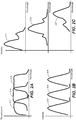
- FIG. 2A illustrates example transmittances 212, 214, and 216 versus wavelengths for blue, green, and red color filters, respectively. Since color filters are typically optimized for light transmission and not color gamut, transmittances 212, 214, and 216 may have relatively large flat responses over relatively large wavelength ranges that overlap with one another. As a result, a color filter of a specific color (e.g., blue, green, red, etc.) tends to pass a mixture of colors other than the specific color, resulting in a desaturation of the specific color.
- a specific color e.g., blue, green, red, etc.
- FIG. 2B illustrates example light spectral power distributions 202, 204, and 206 respectively for blue light from a light pump/emitter (e.g., LED, light sources 112-1, light sources 112-2, etc.), green light converted from the blue light by a light regeneration layer (e.g., 106), and red light converted from the blue light by light regeneration layer 106.
- a light pump/emitter e.g., LED, light sources 112-1, light sources 112-2, etc.
- green light converted from the blue light by a light regeneration layer e.g., 106
- red light converted from the blue light by light regeneration layer 106 red light converted from the blue light by light regeneration layer 106.
- other primary colors other than red, green, and blue colors may also be used.
- more than three, three, fewer than three primary colors may be used in a color system adopted by a display system.
- Light may be reflected or bounced around at interfaces of different types of light media in a display system as transmissive light travels from a BLU to a viewer (not shown) located at the top of FIG. 1A, FIG. 1B, and FIG. 1C .
- light reflectors, light scatter elements, optical retardation films, optical wave plates, reflection enhancement films, prisms, etc. may be configured in a display system to recycle light. Some rejected light will be lost due to optical inefficiency, while some other rejected light can be recycled inside the light guide in the BLU (110-1) of the side-lit display system of FIG. 1B , in or at optical stack 1 (108), in or at light regeneration layer 106, in or at optical stack 2 (104), etc.
- the recycled light may be of a different light spectral power distribution (e.g., containing differentially attenuated/rejected intermediate colors between primary colors, etc.) than that of 202 of FIG. 2B , the latter of which represents the light spectral power distribution of blue light from a light pump/emitter (e.g., LED, light sources 112-1, light sources 112-2, etc.).
- a light pump/emitter e.g., LED, light sources 112-1, light sources 112-2, etc.
- a portion of the recycled light When recycled light is incident on the light regeneration layer 106, a portion of the recycled light will be converted by the light regeneration layer 106 to light of different (e.g., longer than that of incident light, etc.) wavelengths than those of the recycled light. A portion of converted/regenerated light may transmit through pixels to a viewer, while other portions of regenerated light may be further rejected and further recycled.
- FIG. 2C illustrates example light spectral power distributions 222, 224, and 226, as viewed by a viewer through respective blue, green, and red color filters, taking into consideration recycled light.
- Primary color light as perceived by a viewer at the front of a display screen is not the saturated color light as represented by light spectral power distributions 202, 204, and 206, but rather is significantly desaturated color light as represented by light spectral power distributions 222, 224, and 226 that contain bumps (e.g., local peaks or lobes) of intermediate colors between the peaks of primary colors.
- light spectral power distributions 202, 204, and 206 as illustrated in FIG. 2B , which respectively correspond to blue light as emitted by light sources (e.g., 112-1, 112-2, etc.), green light as converted by light regeneration layer 106 from the blue light, and red light as converted by light regeneration layer 106 from the blue light may have little or no mutual overlaps in light wavelengths.
- light spectral power distributions 222, 224, and 226, as illustrated in FIG. 2C which respectively correspond to blue, green, and red light as transmitted through the color filters (e.g., in color filter layer 102) comprise significant mutual overlaps in light wavelengths.
- the (effective) light spectral power distribution stimulating light regeneration layer 106 may not be the same as that of light spectral power distribution 202 of the light sources (e.g., 112-1, 112-2, etc.).
- Blue light excites light regeneration materials such as quantum dots more easily than non-blue light and hence is converted to other colors of light more easily than non-blue light.
- light of a non-blue color such as green and red light does not excite the light regeneration materials as much as the blue light, and hence is dispersed more widely than blue light, as light is being recycled in various parts of the display system.
- light spectral power distribution 202 can be that of a UV source, a broad light source, etc., converted into blue by light regeneration layer 106. Accordingly, in this alternative embodiment, the recycled light would then be the UV or broad light source, not blue.
- FIG. 3A illustrates an example display system configuration comprising a BLU (110), optical stack 1 (108), a notch filter layer (302), a light regeneration layer (106), optical stack 2 (104), and a color filter layer (102).
- FIG. 3B illustrates an example side-lit display system configuration that comprises one or more notch filter layers (e.g., 302).
- FIG. 3C illustrates an example direct-lit display system configuration that comprises one or more notch filter layers (e.g., 302).
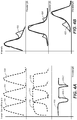
- FIG. 4A illustrates an example transmittance 402 of notch filter layer 302.
- Transmittance 402 of notch filter layer 302 is preconfigured with one or more notches (e.g., 404-1, 404-2, etc.).
- a notch (404-1) can be preconfigured in a bandwidth region between blue and green light spectral power distributions 202 and 204, or between blue and green transmittances 212 and 214.
- a notch (404-2) can be preconfigured in a bandwidth region between green and red light spectral power distributions 204 and 206, or between green and red transmittances 214 and 216.
- a notch filter layer can be configured with additional optical properties other than notches in the transmittance response in specific wavelength ranges.
- notches may also be configured in various possible implementations.
- a color system e.g. an RGB system, an RGB+ system, etc.
- blue light regeneration materials may be configured with a light regeneration layer (e.g., 106); one or more notches may be configured with a notch filter layer (e.g., 302) between UV wavelengths and blue light wavelengths.
- a notch filter layer (e.g., 302) is disposed above a light regeneration layer (e.g., 106), and is closer to the viewer than the light regeneration layer (106).
- the presence of notch filter layer 302 rejects or reduces transmission of light in wavelengths that correspond to the notches (e.g., 404-1, 404-2, etc.). Rejected light by notch filter layer 302 may be recycled and sooner or later either absorbed or converted into light in wavelengths that can be transmitted through notch filter layer 302.
- FIG. 4B illustrates example light spectral power distributions 422, 424, and 426 (denoted as solid curves), as viewed by a viewer through respective blue, green, and red color filters.
- Color light as perceived by a viewer is now a highly saturated color light, similar to those represented by light spectral power distributions 202, 204, and 206, instead of desaturated color light as represented by light spectral power distributions 222, 224, and 226 of FIG. 2C (denoted as dotted curves in FIG. 4B ).
- intermediate colors such as blue green and green red light, which exist in light spectral power distributions 222, 224, and 226 of FIG. 2C are rejected by notch filter layer 302.
- notch filter layer 302 may comprise a rejection sheet or another light rejection mechanism (e.g., dichroic mirrors, etc.) to direct rejected light away from the viewer for further light recycling. Since there is at least one light regeneration layer (e.g., 106, etc.) in the display system, when rejected light hits light regeneration layer 106, the rejected light is reconverted to light of longer wavelengths. Some light fits in the pass bands of notch filter layer 302 and color filter layer 102, goes through notch filter layer 302 and color filter layer 102, and produces saturated (or pure) colors to support wide color gamut display operations. Other light that (fits in the notches and) does not fit in the pass bands of notch filter layer 302 and color filter layer 102, repeats the light regeneration/reconversion process.
- a rejection sheet or another light rejection mechanism e.g., dichroic mirrors, etc.
- a notch filter layer can be configured or preconfigured to filter as many light wavelengths in mutual overlaps between transmittances of different color filters as possible. In some embodiments, a notch filter layer can be designed based at least in part on further considerations relating to manufacturing processes, costs, color gamut requirements, etc.
- light regeneration materials may be selected with wide separations between different primary colors (red, green, and blue, etc., in a RGB color system) in both injected and regenerated light.
- Light spectral power distributions of light sources may also be specifically tuned to reduce bumps that are to be filtered out by notch filter layers.
- stimulating light such as UV light, blue light, etc., emitted by light sources may be configured with (e.g., moved to, etc.) relatively short wavelengths away from green and red light spectral power distributions as regenerated by light regeneration layer 106 from the blue light.
- red light regenerated by light regeneration layer 106 may be configured with (e.g., moved to, etc.) relatively long wavelengths away from those regenerated by light regeneration layer 106.
- One or more band pass filter layers may be used in an optical configuration of a display system. These band pass filters can be configured to pass light in one or more specific wavelength ranges (pass bands).
- the specific wavelength ranges may be in UV wavelength ranges for UV light sources if the UV light sources are used to excite light regeneration materials in the display system.
- the specific wavelength ranges may be in blue wavelength ranges for blue light sources if the blue light sources are used to excite light regeneration materials in the display system. If other light sources are used, the specific wavelength ranges may be selected to match wavelength ranges supported by the other light sources.
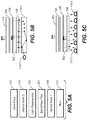
- FIG. 5A illustrates an example display system configuration comprising a BLU (110), optical stack 1 (108), a light regeneration layer (106), a band pass filter layer (502), optical stack 2 (104), and a color filter layer (102).
- FIG. 5B illustrates an example side-lit display system configuration that comprises one or more band pass filter layers (e.g., 502).
- FIG. 5C illustrates an example direct-lit display system configuration that comprises one or more band pass filter layers (e.g., 302).
- FIG. 6 illustrates an example transmittance 602 of band pass filter layer 502. Transmittance 602 of band pass filter layer 502 is preconfigured with one or more pass bands.
- a blue pass band is configured for transmittance 602 of band pass filter layer 502.
- Other pass bands may also be configured in various possible implementations.
- UV light sources are used to create primary colors (e.g., red, green and blue) in a color system (e.g. an RGB system, an RGB+ system, etc.)
- blue light regeneration materials may be configured with a light regeneration layer (e.g., 106); one or more pass bands may be configured with a band pass filter layer (e.g., 502) in UV wavelength ranges.
- a band pass filter layer (e.g., 502) is disposed below a light regeneration layer (e.g., 106), and is further away from the viewer than the light regeneration layer (106).
- Light from the BLU 110 initially passes through band pass filter layer 502.
- a portion of the initial light e.g., blue, etc.
- light regeneration layer 106 is converted by light regeneration layer 106 to green and red light, while the other portion of the initial light, which is not converted, passes through light regeneration layer 106 as blue light. Blue light and converted light may be transmitted to a viewer; or rejected, reflected and/or redirected back towards BLU 110.
- red and green filters may reject one or more portions of initial and converted light away from the direction of a viewer and back toward BLU 110. Additional optical medium changes, if any, in optical paths towards the viewer may cause one or more portions of initial and converted light to be redirected toward BLU 110.
- pass band filter 502 Due to the optical properties (e.g., transmittance 602) of pass band filter 502, only light in the pass bands pass through, while light not in the pass bands is rejected back. Thus, the presence of pass band filter 502 keeps white light above pass band filter 502, and light in specific pass bands below pass band filter 502. For example, in embodiments in which blue light sources are used, the presence of pass band filter 502 keeps white light above pass band filter 502, and blue light below pass band filter 502. Accordingly, light conversion is localized to a specific spatial region in which light not in the pass bands is trapped.
- UV light sources In embodiments in which UV light sources are used, only UV light passes into a light recycling region between pass band filter 502 and BLU 110. Color light regenerated from UV light is rejected by pass band filter 502 and redirect back towards the viewer. In embodiments in which blue light sources are used, only blue light passes into a light recycling region between pass band filter 502 and BLU 110. Other (e.g., green and red) color light is rejected by pass band filter 502 and redirected back toward the viewer.
- the presence of a band pass filter (502) recycles, and hence increases the amount of, converted light (as regenerated by a light regeneration layer (106)) toward the viewer. The converted light travels a much shorter optical path in reaching the viewer with the presence of the band pass filter than otherwise.
- a pass band filter Without the presence of a pass band filter, some portions of the converted light (e.g., non-UV light, non-blue light, etc.) would travel relatively long optical paths, be redirected back to spatial regions close to or in light sources, spatially spread into wide angles and areas, and cause color shifts (e.g., yellow tails) as the rejected converted light dispersed further away from light incident directions of the initial light from BLU 110.
- color shift degradation may be especially noticeable or even visually prominent in a direct-lit system.
- the first pass light in the center of a point spread function of a direct-lit light emitter would be mostly converted but rejected light component would likely bounce back in and convert with less green and red as the distance from the center of the point spread function of the light emitter to out circumferences increases, giving rise to a color shift to the point spread function.
- the two or more sets of primary colors at least comprise a first set of primary colors, for example, a first primary red color (R1), a first primary green (G1), a first primary blue (B1), etc., in a RGB or RGB+ color system; and a second set of primary colors, for example, a second primary red color (R2), a second primary green (G2), a second primary blue (B2), etc., in the RGB or RGB+ color system.
- a first primary red color (R1), a first primary green (G1), a first primary blue (B1), etc. in a RGB or RGB+ color system
- a second set of primary colors for example, a second primary red color (R2), a second primary green (G2), a second primary blue (B2), etc.
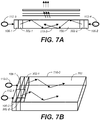
- FIG. 7A illustrates an example (front or back) light unit (110-3) comprising one or more first light sources (112-3) and one or more second light sources (112-4), one or more first light regeneration layers (106-1), one or more second light regeneration layers (106-2), one or more first filter layers (302-1), one or more second filter layers (302-2), and a light recycling region 702 (which may be a light guide in some implementations).
- Light sources e.g., 112-3, 112-4, etc.
- FIG. 7B illustrates an alternative configuration in which light sources 112-2 and 112-4 in light unit 110-3 are located along the same side/wall.
- Light unit 110-3 can be configured to emit and/or regenerate more than one set of primary colors.
- Light recycling region 702 can be configured with one or more light directing components to direct the generated and regenerated light in light recycling region towards a viewer of a display system that operates with light unit (110-3).
- light unit 110-3 is configured to generate the first and second sets of primary colors as mentioned above.
- the one or more first light sources (112-3), the one or more first light regeneration layers (106-1) and the one or more first filter layers (302-1) are configured to generate or regenerate the first set of primary colors, whereas the one or more second light sources (112-4), the one or more second light regeneration layers (106-2) and the one or more second filter layers (302-2) are configured to generate or regenerate the second set of primary colors.
- the one or more first light sources (112-3) are configured to emit blue light of a wavelength composition that covers wavelengths of the first blue light (B1); the one or more first light regeneration layers (106-1) are configured to regenerate red light of a wavelength composition that covers wavelengths of the first red light (R1) and green light of a wavelength composition that covers wavelengths of the first green light (G1).
- the one or more second light sources (112-4) are configured to emit blue light of a wavelength composition that covers wavelengths of the second blue light (B2); the one or more second light regeneration layers (106-2) are configured to regenerate red light of a wavelength composition that covers wavelengths of the second red light (R2) and green light of a wavelength composition that covers wavelengths of the second green light (G2).
- other permutations (color composition) of initial light from light emitters and converted light (color composition) from light regeneration materials may be used to generate the first and second sets of primary colors.
- FIG. 8 illustrates example light spectral power distributions 202-1 and 202-2 generated by first light sources (112-3) and second light sources (112-4), respectively; example light spectral power distributions 204-1 and 204-2 generated by first light regeneration layers (106-1) and second light regeneration layers (106-2), respectively; example light spectral power distributions 206-1 and 206-2 generated by first light regeneration layers (106-1) and second light regeneration layers (106-2), respectively; and example transmittances 402-1 and 402-2 of first filter layers 302-1 and second filter layers 302-2, respectively.
- techniques as described herein for 3D or non-3D display operations may be used with a wide variety of color filters including those (which, for example, may be of transmittances 212, 214 and 216 of FIG. 2A ) that have mutual overlaps in bandwidths.
- transmittance 402-1 of first filter layers 302-1 is configured or preconfigured with one or more first opaque or low transmittance ranges (e.g., first notches, etc.).
- the first low transmittance ranges can be configured or preconfigured between first blue and green light spectral power distributions 202-1 and 204-1 and between first green and red light spectral power distributions 204-1 and 206-1.
- transmittance 402-2 of second filter layers 302-2 can be configured or preconfigured with one or more second opaque or low transmittance ranges (e.g., second notches, etc.).
- the second low transmittance ranges can be configured or preconfigured between second blue and green light spectral power distributions 202-2 and 204-2 and between second green and red light spectral power distributions 204-2 and 206-2.
- filters may also be configured or pre-configured in various possible implementations.
- a color system e.g. an RGB system, an RGB+ system, etc.
- two different types of blue light regeneration materials may be configured with light regeneration layers (e.g., 106-1 and 106-2) in addition to different types of green light regeneration materials and different types of red light regeneration materials
- opaque or low transmittance regions may be configured with filter layers (e.g., 302-1 and 302-2) between UV wavelengths and different types of blue light wavelengths in addition to opaque or low transmittance regions between respective different colors in the two sets of primary colors.
- pass band filter layers may be provisioned between light sources (112-3, 112-4, etc.) and light regeneration layers (302-1, 302-2, etc.). These pass band filter layers can increase efficiency by trapping/retaining converted light from the light regeneration layers (302-1, 302-2, etc.) within light recycling region 702 so that the converted light can be redirected in light recycling region 702 to a viewer.
- Two different sets of primary colors can be used to support 3-dimensional (3D) display operations.
- a first set of primary colors e.g., R1, G1, B1, etc.
- a second set of primary colors e.g., R2, G2, B2, etc.
- the left view and right view images together form a 3D image.
- light wavelengths of the first set of primary colors have no or little overlapping with light wavelengths of the second set of primary colors (R2, G2 and B2).
- a viewer may wear a pair of glasses with a left perspective configured to be transmissive for one set in the first and second sets of primary colors but opaque for the other set in the first and second sets of primary colors, and with a right perspective configured to be opaque for the one set in the first and second sets of primary colors but transmissive for the other set in the first and second sets of primary colors.
- synchronization between a viewer's glasses and image rendering operations of a 3D display system is not needed in 3D display applications.
- FIG. 9A illustrates an example pixel structure comprising a plurality of pixels (one of which is pixel 906-1).
- pixel 906-1 comprises three subpixels each of which comprises a color filter (e.g., 902) and a liquid crystal cell (904).
- Color filter 902 is a part of a color filter array
- liquid crystal cell 904 is a part of liquid crystal cell array.
- Liquid crystal cell 904 is configured to modulate white transmissive light directed at a viewer along the up direction of FIG. 9A .
- the modulated white transmissive light subsequently hits color filter 902, which may be configured to impart a primary color such as red color in a RGB or RGB+ color system.
- a portion of modulated white transmissive light becomes filtered light (e.g., red light) directed at the viewer, while the remaining portion (e.g., blue light, green light, a portion of red light, etc.) of modulated white transmissive light is absorbed and/or rejected by color filter 902.
- filtered light e.g., red light
- the remaining portion e.g., blue light, green light, a portion of red light, etc.
- FIG. 9B illustrates an example pixel structure comprising a plurality of pixels (one of which is pixel 906-2) configured with a light regeneration layer 908-1 between color filters and liquid crystal cells.
- Light regeneration layer 908-1 is configured with light regeneration materials to convert incident light of certain wavelengths into regenerated light of certain other wavelengths.
- light regeneration layer 908-1 comprises a homogeneous composition/structure configured to convert UV into blue, green and red light, convert blue light into green light, convert blue light into red light, and/or convert green light into red light.
- light regeneration layer 908-1 comprises a black matrix similar to, or as an extension of, that of the color filter array. The black matrix can be configured to prevent light leakage between different subpixels and/or between different pixels.
- liquid crystal cell 904 of FIG. 9B is configured to receive and modulate white transmissive light directed at a viewer along the up direction.
- the modulated white transmissive light subsequently hits light regeneration layer 908-1.
- Light regeneration layer 908-1 is configured to regenerate green and red light from a portion of the modulated white light (e.g., blue and/or green light) and to pass the remaining portion of the modulated white light.
- the passed portion of the modulated white light and regenerated green and red light hit color filter 902, which may be configured to impart a primary color such as red color in a RGB or RGB+ color system.
- a portion of incident light at color filter 902 becomes filtered light (e.g., red light) directed at the viewer, the remaining portion (e.g., blue light, green light, a portion of red light, etc.) of the incident light, other than the filtered light or light loss due to absorption, as rejected by color filter 902, is at least partially recycled and converted to usable light (e.g., red light for the subpixel comprising color filter 902 and liquid crystal cell 904) by light regeneration layer 908-1, resulting in an optically efficient display system relative to a display system of FIG. 9A .
- usable light e.g., red light for the subpixel comprising color filter 902 and liquid crystal cell 904
- liquid crystal cell 904 is configured to receive and modulate blue transmissive light directed at a viewer along the up direction of FIG. 9A .
- the modulated blue transmissive light subsequently hits light regeneration layer 908-1.
- Light regeneration layer 908-1 is configured to regenerate green and red light from a portion of blue light and to pass the remaining portion of blue light.
- Blue light and regenerated green and red light hit color filter 902, which may be configured to impart a primary color such as red color in a RGB or RGB+ color system.
- a portion of incident light at color filter 902 becomes filtered light (e.g., red light) directed at the viewer, while the remaining portion of the incident light is absorbed and/or rejected by color filter 902.
- the incident light not lost to absorption, as rejected by color filter 902, is at least partially recycled and converted to usable light (e.g., red light for the subpixel comprising color filter 902 and liquid crystal cell 904) by light regeneration layer 908-1, resulting in an optically efficient display system relative to a display system of FIG. 9A .
- liquid crystal cell 904 of FIG. 9B is configured to receive and modulate UV light directed at a viewer along the up direction.
- the modulated UV transmissive light subsequently hits light regeneration layer 908-1.
- Light regeneration layer 908-1 is configured to regenerate blue, green and red light from the modulated UV light and other incident light (e.g., UV, blue and/or green light).
- the regenerated blue, green and red light hits and at least partially passes through color filter 902, which may be configured to impart/pass a primary color such as red color in a RGB or RGB+ color system.
- a portion of incident light at color filter 902 becomes filtered light (e.g., red light) directed at the viewer, the remaining portion (e.g., blue light, green light, a portion of red light, etc.) of the incident light, other than the filtered light or light loss due to absorption, as rejected by color filter 902, is at least partially recycled and converted to usable light (e.g., red light for the subpixel comprising color filter 902 and liquid crystal cell 904) by light regeneration layer 908-1, resulting in an optically efficient display system relative to a display system of FIG. 9A .
- usable light e.g., red light for the subpixel comprising color filter 902 and liquid crystal cell 904
- FIG. 9C illustrates an example pixel structure comprising a plurality of pixels (one of which is pixel 906-2) configured with a light regeneration layer 908-2 between color filters and liquid crystal cells.
- Light regeneration layer 908-2 is configured with light regeneration materials to convert incident light of certain wavelengths into regenerated light of certain other wavelengths.
- light regeneration layer 908-2 comprises a patterned composition/structure, which corresponds to the subpixel or pixel structure of the color filters and the liquid crystal cells.
- a light regeneration unit 910 in light regeneration layer 908-2) that corresponds to color filter 902 and liquid crystal cell 904 in a red subpixel or pixel can be configured to convert other light such as UV, blue and/or green light into red light.
- a light regeneration unit (in light regeneration layer 908-2) in a green subpixel or pixel can be configured to convert other light such as UV and/or blue light into green light.
- a light regeneration unit (in light regeneration layer 908-2) in a blue subpixel or pixel can be configured to convert other light such as UV light into blue light and/or pass blue light.
- light regeneration layer 908-1 comprises a black matrix similar to, or as an extension of, that of the color filter array.
- the black matrix can be configured (e.g., with opaque metallic or non-metallic materials, light regeneration materials that generate invisible infrared light, etc.) to prevent light leakage between different subpixels and/or between different pixels.
- Liquid crystal cells in FIG. 9C may be illuminated by one or more of different types of transmissive light (e.g., UV light, blue light, etc.). Due to the presence of light regeneration layer 908-2, the remaining portion of the incident light, other than the filtered light or light loss due to absorption, as rejected by the color filter, is at least partially recycled and converted to usable light by light regeneration layer 908-2, resulting in an optically efficient display system relative to a display system of FIG. 9A.
- FIG. 9D illustrates an alternative example pixel structure to the pixel structure depicted in FIG. 9C .
- the light regeneration layer 908-2 may be placed below the liquid crystal cells and the color filters. Thus, the liquid crystal cells and the color filters form a LCD panel.
- the light regeneration layer 908-2 comprises a pixel structure in which light regeneration units of different colors are aligned respectively with color filters of the different colors. Also, there can be (optionally) intervening layers (e.g., BEF/DBEF, etc.) above or under the light regeneration layer. It should be noted that the rectangular shapes used in FIG. 9C and FIG. 9D to represent light regeneration units are for illustration purposes only. Other shapes may be used to implement the light regeneration units. In some embodiments, for example, shapes of light regeneration units in a light regeneration layer as described herein can be configured to be lenticular in order to focus/collimate light towards color filters.
- a black matrix as described herein may be configured with light regeneration materials that convert blue, green and/or red light into longer wavelengths (e.g., wavelengths of invisible light such as infrared, etc.) and hence prevent light leakages between different subpixels and/or between different pixels.
- a black matrix is disposed between color filters in a color filter array.
- the black matrix may be configured with light regeneration materials that convert visible light to invisible light such as infrared light in addition to, or in place of, light absorption materials.
- Light leaked through a liquid crystal cell e.g., in a closed state, in a dark state, etc.
- One or more light diverting mechanisms can be configured in a pixel structure to divert light from dark state liquid crystal cells to the black matrix in order to produce deeper black levels in subpixels or pixels that represent dark pixel values in image data to be rendered in a display system.
- light regeneration materials used in a light regeneration layer as described herein may be configured to create wideband colors, medium band colors, narrow band colors, combinations of the foregoing, etc.
- liquid regeneration materials can be selected to emit narrow band color light configured to support wide color gamut or 3D display applications.
- notch filters and pass band filters may be configured with a light regeneration layer implemented in subpixel or pixel structures such as illustrated in FIG. 9B and FIG. 9C . These notch filters and pass band filters may be used to improve optical efficiency and/or color gamut, to produce saturated colors, to support 3D display applications, etc.
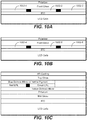
- FIG. 10A illustrates an example pixel with color filters (1002-1, 1002-2 and 1002-3) covering red, green and blue subpixels in the pixel.
- a transparent conductive layer such as an ITO film may be formed over color filters 1002-1, 1002-2 and 1002-3.
- Color filters and a black matrix that separates color filters of different subpixels may be patterned in stripes using photolithography.
- Color filters 1002-1, 1002-2 and 1002-3 may be formed or disposed on or near a front substrate (e.g., glass, etc.).
- the front substrate (along with another substrate between Liquid crystal cells and a BLU may be used to encapsulate Liquid crystal materials in the Liquid crystal cells.
- the Liquid crystal cells may be illuminated with white light.
- Color filters 1002-1, 1002-2 and 1002-3 may comprise passive color pigments supporting high contrast display operations.
- FIG. 10B illustrates an example pixel with color and colorless filters (1002-4, 1002-5 and 1002-6) covering red, green and blue subpixels in the pixel.
- Color filters 1002-4 and 1002-5 comprise red and green light regeneration materials, respectively; and cover red and green subpixels in the pixel, respectively.
- Colorless filter 1002-6 e.g., a transparent binder material
- the Liquid crystal cells may be illuminated with blue light instead of white light.
- FIG. 10C illustrates an example pixel.
- An ITO layer may be patterned on a mid-glass with a polarizer layer on top of the mid-glass.
- a top (contiguous) filter layer comprising a blue dichroic mirror or yellow pigments is disposed or formed near or above a red light regeneration layer (red LRL) and a green light regeneration layer (green LRL).
- the red and green LRLs can emit light in all directions; however, the top filter layer can be configured (e.g., with light-redirecting microstructures, etc.) to redirect red and green light in the forward direction (along the up direction of FIG. 10C ).
- a bottom (contiguous) filter layer comprising a yellow dichroic mirror is disposed or formed near or under the red LRL, the green LRL and a transparent layer in a blue pixel of the pixel.
- the bottom filter layer is configured to pass blue light and hence has no filtering effect in the blue subpixel.
- black matrix elements may, but do not need to, be present around the transparent layer in the blue subpixel.
- the top filter layer absorbs ambient light incident from the top, and prevents or lessens stimulations of the light generation materials in the red and green LRLs; otherwise, the stimulations of the light generation materials in the red and green LRLs by ambient light would cause a rise in lowest achievable dark level which would in turn reduce contrast in display operations.
- polarizer layers and anti-reflection (AR) layers are depicted for illustration purposes only. Other placement choices or spatial arrangements other than that depicted in FIG. 10C or other figures may be used.
- one or more transparent materials may be disposed above the bottom filter layer in the blue pixel of the pixel.
- FIG. 10D illustrates an alternative configuration to that of the pixel depicted in FIG 10C .
- the pixel of FIG. 10D comprises two separate red and green dichroic mirrors in red and green subpixels, respectively, instead of a yellow dichroic mirror for both red and green subpixels as illustrated in FIG. 10C .
- Transmittances of red and green dichroic mirrors can be adjusted to narrow frequency bands of light regenerated by the red and green LRLs, in order to improve color gamut in a display system which implements the pixel configuration of FIG. 10D .
- FIG. 10E illustrates an alternative configuration to that of the pixel depicted in FIG 10C .
- the pixel of FIG. 10E comprises a UV blocking layer at least in red and green subpixels, instead of a yellow dichroic mirror in red and green subpixels as illustrated in FIG. 10C .
- the UV blocking layer prevents ambient light from stimulating the red and green LRL. This reduces light emissions from the red and green LRL caused by ambient light when modulated transmissive light is at the lowest level (lowest achievable dark level). Accordingly, both contrast and dynamic range in display operations can be improved.
- FIG. 10F illustrates an alternative configuration to that of the pixel depicted in FIG 10C .
- the top glass of FIG. 10C is replaced with a UV blocking layer.
- the top filter layer of FIG. 10C is removed.
- the presence of the UV blocking layer reduces light emissions from the red and green LRL caused by ambient light when modulated transmissive light is at the lowest level (lowest achievable dark level). Accordingly, both contrast and dynamic range in display operations can be improved.
- the pixel configuration of FIG. 10F is likely a low cost solution to make and to produce relatively high contrast.
- a substrate or glass e.g., the top glass, cover class, etc.
- a substrate or glass may be implemented in a large TV size using a Gorilla type or other types of substrates or glasses.
- yellow dichroic mirrors may be coated on a cover glass followed by color filters and a smoothing layer.
- display system configurations, light unit configurations and pixel configurations in figures herein are provided for illustration purposes only. Other configurations, permutations, combinations, types of components or layers, etc., may be used in implementing techniques as described herein.
- the SPD of a light source is fixed, for example, due to the light source's physical or chemical composition. Even when using an RGB LED system, only the relative intensities of component LEDs' SPDs can be changed, but not the distribution of the whole power spectrum (e.g., shifting the peak wavelength of one of the LEDs).
- a light regeneration layer e.g., a spatial gradient quantum dots sheet/film, light regeneration materials of specific spectral distributions and densities/concentrations, etc.
- a light regeneration layer may be used to shape the SPD of a light source.
- the approach under these techniques does not have the limitations of other approaches, since the SPD of the light source can be shaped arbitrarily under the approach by using spatial light modulating device and a light regeneration layer, which for example may be configured to convert spatially modulated light into spectrally modulated light, as will be further discussed in detail.
- the same techniques can be used to de-speckle lasers by widening a narrow bandwidth SPD of a laser-based light source into light of a broader bandwidth SPD.
- a narrow band light from a laser source can be converted by quantum dots to a wider band collimated light.
- FIG. 11 illustrates shaping SPD with light from a narrow band laser source.
- a short wavelength laser e.g. blue
- Step 1 emits a narrow band (monochromatic) beam.
- This beam is (e.g., uniformly, non-uniformly, etc.) widened in Step 2 and projected onto a spatial light modulating device shown in Step 3 - which can be a digital mirror device or DMD, etc.
- a laser scanning device which can be a galvanometer, moving/oscillating MEMS device, etc. - may be used in place of, or in addition to, beam expanding optics in Step 2 to spatially modulate the blue laser beam.
- the DMD or galvanometer can be 1D or 2D, depending on the required complexity as well as energy throughput of the system.
- the spatially modulated light is projected on a gradient quantum dot sheet (Step 4).
- 'Gradient' in this context means that the regenerated light wavelength properties of the quantum dots vary spatially over the area of the sheet.
- the quantum dot properties could be set to convert to 400nm while the same input light can be converted to 780nm on the right side of the sheet (B).
- Spatial areas in-between A and B can cover the wavebands in-between 400 and 780nm. It should be noted that the spatial quantum dot gradient does not have to be uniform or even monotonically increasing.
- any kind of gradient distribution is possible such as a weighting of primary colors in regenerated light used in digital projection systems or having wider wavebands at any given spatial position.
- areas close to side A can convert the input monochromatic laser light to CIE illuminant A
- areas close to side B can convert the input monochromatic laser light to CIE illuminant D65, thereby optimizing the total energy throughput of the system.
- the light leaving the gradient quantum dots sheet is now spectrally modulated as a function of the spatial setup of the galvanometer or DMD described in Step 3.
- the gradient quantum dot sheets may scatter the output light into different spatial directions or direction ranges to some extent.
- the scattered light can be collimated again to avoid or reduce energy loss and to improve efficiency. This can be achieved using a fiber optics collimator illustrated in Step 5.
- the spatial orientation and position may no longer be critical; any kind of light collimation (e.g., lenses, mirrors, different forms of total inner reflection, etc.) can be implemented.
- the desired output of the light system is a spatially uniform beam of light that has a desired SPD defined by the spatial setting of the galvanometer or DMD.
- the mirror shown in Step 6 is a broadband mirror to reflect the light back into the optical path direction of the original laser but can also be left out or replaced with other optical elements such as lenses or optical filters.
- Example SPDs are illustrated in FIG. 11 . As shown, the narrow band width blue laser beam is converted to an SPD of a CCFL light source.
- An alternative form to using a complex spatial light modulation device such as galvanometer or DMD is using a light path switch which can for example be used to physically switch the laser beam to a particular (uniform, not gradient) area on a quantum dot sheet.
- a light path switch which can for example be used to physically switch the laser beam to a particular (uniform, not gradient) area on a quantum dot sheet.
- the spatial composition of the gradient quantum dots sheet can be flexibly optimized to a specific display application, the light source can be very efficient and thus cost effective.
- a red quantum dot or phosphor material absorbs light of higher energies or shorter wavelengths such as green and blue light and emits red light.
- a green quantum dot or phosphor material absorbs blue light and emit green light.
- Higher system efficiency can be achieved by replacing the (passive pigment-based) red filter with red quantum dot or red phosphor materials, the green filter with green quantum dot or green phosphor materials, and the blue filter with a clear filter, operating in conjunction with a display system backlit with blue LEDs or with a display system using blue OLED.
- the red and green light can be emitted by converting from blue light source and blue light is emitted directly without filtering from the blue light source.
- Quantum dots and phosphors may be processed by photolithographic techniques.
- Color filter materials could be inert or passive pigments or dyes that are mixed into photoresist materials in the photolithographic process during color filter construction.
- quantum dots and phosphor materials tend to be active, sensitive to environment and surround chemicals.
- Various techniques including but not limited to any of: printing techniques, photolithographic techniques, etc., can be used to deposit the quantum dot or phosphor into color array patterns.
- Techniques as described herein can be used to construct color array panels having strips of quantum dots or phosphors by processing thin sheets of materials having quantum dots or phosphors.
- sheets of materials having sheet thicknesses that match the subpixel pitch of a target display where each pixel contains multiple subpixels that can be stacked in sequence to construct a color array panel.
- a first sheet contains red quantum dot or phosphor materials and is referred to as Sheet R.
- a second sheet contains green quantum dot or phosphor materials and is referred to as Sheet G.
- a passive filler sheet without quantum dots or phosphors is referred to as Sheet W.
- FIG. 12 illustrates an example configuration in which the sheets are stacked in a sequence of Sheet R, Sheet G and Sheet W, wherein respective sheet thicknesses of Sheet R, Sheet G and Sheet W match the respective subpixel pitches of red, green and blue subpixels of pixels.
- the color array panel may be used to replace the color filter array in a color LCD or OLED display. System efficiency can be improved significantly by reducing wasted light.
- an LCD panel can be manufactured as a monochrome panel backlit by blue backlight and without color filters.
- an OLED display can be constructed as a blue OLED panel only instead of white OLED with color filters.
- the color array panel comprising quantum dot or phosphor materials can be added in front of (as illustrated in FIG. 13 ), behind the monochrome LCD panel, or even behind an optical film (e.g., Dual Brightness Enhancement Films (DBEF), reflective polarizers, etc.).
- DBEF Dual Brightness Enhancement Films
- the color array panel comprising quantum dot or phosphor materials can be added in front of (as illustrated in FIG. 13 ).
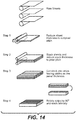
- FIG. 14 illustrates example steps in constructing a color array panel as described herein.
- Step 1 of FIG. 14 raw sheets are reduced to thicknesses that match target subpixel pitches. This step may be accomplished by passing the sheets through heated rollers. Operational parameters such as roller temperature, roll rate, roller separation, etc., may be controlled by industrial control system to achieve the target thicknesses. Examples of raw sheets include but are not limited to: plastics containing quantum dots or phosphors. Step 1 of FIG. 14 is applied to all of different color sheets containing quantum dots or phosphors as well as filler sheets which do not contain any quantum dots or phosphors.
- Step 2 of FIG. 14 the sheets processed by Step 1 of FIG. 14 are stacked in a desired sequence (e.g., matching the sequence of different color subpixels) and bonded.
- a stack thickness equals the total thickness contributed from each of different color sheets and a filler sheet.
- the stack thickness may be further reduced to ensure matching a target pixel pitch which equals the total thickness contributed from each of different color subpixels (e.g., RGB subpixels in a RGB color system, other color subpixels in a non-RGB color system, etc.).
- Optical measurements for quality control may be made in Step 2 of FIG. 14 to ensure the stack thickness and sheet thicknesses match the pixel pitch and subpixel pitches.
- Step 3 of FIG. 14 the stack is sliced into strips of uniform widths.
- the strip width determines the final thickness of the color array panel.
- the cutting can be accomplished by mechanical means involving physical contact with the material or by laser cutting.
- Step 4 of FIG. 14 the strips are rotated by 90° axially and then the rotated strips are stacked to form the (final) color array panel.
- the process may be applied on continuous rolls of the raw materials.
- the blue light from the backlight of an LCD or from a blue OLED is either converted to red light by the red strip or green light by the green strip, and/or diffused through the filler strip.
- the thickness of the color array panel can be used as a design parameter to control a preconfigured white point of the display panel comprising the color array panel.
- the panel thickness affects the optical path lengths and likelihood with which incident blue light may be converted to the red and green light.
- the strip width in Step 3 of the example construction process of the color array panel in FIG. 14 can be used to control the display panel to realize the desired white point.
- Color array panels can be manufactured to adapt to different pixel pitches since for a given display size there are usually a range of display resolution available. It should also be noted that for a LCD and an OLED of the same pixel pitch, a color array panel can be selected and applied to either display without extra customization.
- FIG. 15 illustrates an example configuration of display logic (1502) in a display system as described herein, in accordance with some possible embodiments of the present invention.
- display logic 1502 additionally and/or optionally may comprise light source control logic (1504) configured to control component(s) in a light source (e.g., BLU 110) in the display system.
- the display logic 1502 may be operatively coupled with an image data source 1506 (e.g., a set-top box, networked server, storage media or the like) and is configured to receive image data from the image data source 1506.
- image data source 1506 e.g., a set-top box, networked server, storage media or the like
- the image data may be provided by the image data source 1506 in a variety of ways including from an over-the-air broadcast, or Ethernet, High-Definition Multimedia Interface (HDMI), wireless network interface, devices (e.g., set-top box, server, storage medium, etc.), etc.
- Image frames received or generated from image data from an internal or external source may be used by the display logic 1502 to drive the light source in the display system.
- display logic 1502 may be configured to control the light source to illuminate one or more pixels or sub-pixels with a specific intensity.
- the image frames may be used by the display logic 1502 to derive individual or aggregate pixel values in various frames in various resolutions on an image rendering surface as described herein.
- the techniques described herein are implemented by one or more special-purpose computing devices.
- the special-purpose computing devices may be hard-wired to perform the techniques, or may include digital electronic devices such as one or more application-specific integrated circuits (ASICs) or field programmable gate arrays (FPGAs) that are persistently programmed to perform the techniques, or may include one or more general purpose hardware processors programmed to perform the techniques pursuant to program instructions in firmware, memory, other storage, or a combination.
- ASICs application-specific integrated circuits
- FPGAs field programmable gate arrays
- Such special-purpose computing devices may also combine custom hard-wired logic, ASICs, or FPGAs with custom programming to accomplish the techniques.
- the special-purpose computing devices may be desktop computer systems, portable computer systems, handheld devices, networking devices or any other device that incorporates hard-wired and/or program logic to implement the techniques.
- FIG. 16 is a block diagram that illustrates a computer system 1600 upon which an embodiment of the invention may be implemented.
- Computer system 1600 includes a bus 1602 or other communication mechanism for communicating information, and a hardware processor 1604 coupled with bus 1602 for processing information.
- Hardware processor 1604 may be, for example, a general purpose microprocessor.
- Computer system 1600 also includes a main memory 1606, such as a random access memory (RAM) or other dynamic storage device, coupled to bus 1602 for storing information and instructions to be executed by processor 1604.
- Main memory 1606 also may be used for storing temporary variables or other intermediate information during execution of instructions to be executed by processor 1604.
- Such instructions when stored in non-transitory storage media accessible to processor 1604, render computer system 1600 into a special-purpose machine that is customized to perform the operations specified in the instructions.
- Computer system 1600 further includes a read only memory (ROM) 1608 or other static storage device coupled to bus 1602 for storing static information and instructions for processor 1604.
- ROM read only memory
- a storage device 1610 such as a magnetic disk or optical disk, is provided and coupled to bus 1602 for storing information and instructions.
- Computer system 1600 may be coupled via bus 1602 to a display 1612, such as a liquid crystal display, for displaying information to a computer user.
- a display 1612 such as a liquid crystal display
- An input device 1614 is coupled to bus 1602 for communicating information and command selections to processor 1604.
- cursor control 1616 is Another type of user input device
- cursor control 1616 such as a mouse, a trackball, or cursor direction keys for communicating direction information and command selections to processor 1604 and for controlling cursor movement on display 1612.
- This input device typically has two degrees of freedom in two axes, a first axis (e.g., x) and a second axis (e.g., y), that allows the device to specify positions in a plane.
- Computer system 1600 may implement the techniques described herein using customized hard-wired logic, one or more ASICs or FPGAs, firmware and/or program logic which in combination with the computer system causes or programs computer system 1600 to be a special-purpose machine. According to one embodiment, the techniques as described herein are performed by computer system 1600 in response to processor 1604 executing one or more sequences of one or more instructions contained in main memory 1606. Such instructions may be read into main memory 1606 from another storage medium, such as storage device 1610. Execution of the sequences of instructions contained in main memory 1606 causes processor 1604 to perform the process steps described herein. In alternative embodiments, hard-wired circuitry may be used in place of or in combination with software instructions.
- Non-volatile media includes, for example, optical or magnetic disks, such as storage device 1610.
- Volatile media includes dynamic memory, such as main memory 1606.
- Common forms of storage media include, for example, a floppy disk, a flexible disk, hard disk, solid state drive, magnetic tape, or any other magnetic data storage medium, a CD-ROM, any other optical data storage medium, any physical medium with patterns of holes, a RAM, a PROM, and EPROM, a FLASH-EPROM, NVRAM, any other memory chip or cartridge.
- Storage media is distinct from but may be used in conjunction with transmission media.
- Transmission media participates in transferring information between storage media.
- transmission media includes coaxial cables, copper wire and fiber optics, including the wires that comprise bus 1602.
- transmission media can also take the form of acoustic or light waves, such as those generated during radio-wave and infra-red data communications.
- Various forms of media may be involved in carrying one or more sequences of one or more instructions to processor 1604 for execution.
- the instructions may initially be carried on a magnetic disk or solid state drive of a remote computer.
- the remote computer can load the instructions into its dynamic memory and send the instructions over a telephone line using a modem.
- a modem local to computer system 1600 can receive the data on the telephone line and use an infra-red transmitter to convert the data to an infra-red signal.
- An infra-red detector can receive the data carried in the infra-red signal and appropriate circuitry can place the data on bus 1602.
- Bus 1602 carries the data to main memory 1606, from which processor 1604 retrieves and executes the instructions.
- the instructions received by main memory 1606 may optionally be stored on storage device 1610 either before or after execution by processor 1604.
- Computer system 1600 also includes a communication interface 1618 coupled to bus 1602.
- Communication interface 1618 provides a two-way data communication coupling to a network link 1620 that is connected to a local network 1622.
- communication interface 1618 may be an integrated services digital network (ISDN) card, cable modem, satellite modem, or a modem to provide a data communication connection to a corresponding type of telephone line.
- ISDN integrated services digital network
- communication interface 1618 may be a local area network (LAN) card to provide a data communication connection to a compatible LAN.
- LAN local area network
- Wireless links may also be implemented.
- communication interface 1618 sends and receives electrical, electromagnetic or optical signals that carry digital data streams representing various types of information.
- Network link 1620 typically provides data communication through one or more networks to other data devices.
- network link 1620 may provide a connection through local network 1622 to a host computer 1624 or to data equipment operated by an Internet Service Provider (ISP) 1626.
- ISP 1626 in turn provides data communication services through the world wide packet data communication network now commonly referred to as the "Internet" 1628.
- Internet 1628 uses electrical, electromagnetic or optical signals that carry digital data streams.
- the signals through the various networks and the signals on network link 1620 and through communication interface 1618, which carry the digital data to and from computer system 1600, are example forms of transmission media.
- Computer system 1600 can send messages and receive data, including program code, through the network(s), network link 1620 and communication interface 1618.
- a server 1630 might transmit a requested code for an application program through Internet 1628, ISP 1626, local network 1622 and communication interface 1618.
- the received code may be executed by processor 1604 as it is received, and/or stored in storage device 1610, or other non-volatile storage for later execution.
- EEEs Enumerated Example Embodiments
- a display system comprising: one or more light sources configured to emit first light with a first spectral power distribution; one or more light regeneration layers configured to be stimulated by the first light and to convert at least a portion of the first light and recycled light into second light, the second light comprising (a) primary spectral components that correspond to one or more primary colors and (b) secondary spectral components that do not correspond to the one or more primary colors; and one or more notch filter layers configured to receive a portion of the second light and to filter out the secondary spectral components from the portion of the second light, wherein the portion of the second light is directed to a viewer of the display system and configured to render images viewable to the viewer.
- one or more light sources configured to emit first light with a first spectral power distribution
- one or more light regeneration layers configured to be stimulated by the first light and to convert at least a portion of the first light and recycled light into second light, the second light comprising (a) primary spectral components that correspond to one or more primary colors and (b) secondary spectral components
- the display system as recited in EEE 1, wherein at least one of the light regeneration layers comprises one or more of: quantum dot materials or remote phosphor materials.
- EEE8. The display system as recited in EEE 1, wherein the primary spectral components represent at least two sets of primary colors, wherein each set in the at least two sets of primary colors is configured to support a full complement of a primary color system, wherein a plurality of primary spectral components corresponds to a plurality of non-overlapping light wavelength ranges, and wherein each of the plurality of primary spectral components in the at least two sets of primary colors is in a respective light wavelength range in the plurality of non-overlapping light wavelength ranges.
- the display system as recited in EEE 1, wherein the display system is configured to recycle at least a portion of transmissive light comprises one or more of light originated from the one or more light sources, light regenerated by the one or more light regeneration layers, or light reflected by one or more components in the display system.
- the display system is configured to recycle at least a portion of transmissive light comprises one or more of light originated from the one or more light sources, light regenerated by the one or more light regeneration layers, or light reflected by one or more components in the display system.
- a display system at least comprising: one or more light sources configured to emit first light with a first spectral power distribution, wherein the first spectral power distribution comprising one or more first spectral components; one or more pass band filter layers configured to pass light of one or more first wavelength bands represented by the one or more first spectral components, and to reflect light of one or more primary colors, wherein the light of the one or more primary colors comprises wavelengths outside the one or more first wavelength bands; and one or more light regeneration layers configured to be stimulated by the first light as filtered by the one or more pass band filter and to convert at least a portion of the filtered first light and recycled light into second light, the second light comprising primary spectral components that include the one or more primary colors.
- one or more light sources configured to emit first light with a first spectral power distribution, wherein the first spectral power distribution comprising one or more first spectral components
- one or more pass band filter layers configured to pass light of one or more first wavelength bands represented by the one or more first spectral components, and to
- EEE12 The display system as recited in EEE 10, wherein the one or more light sources comprises one or more of laser light sources, light-emitting diodes (LEDs), or cold cathode fluorescent lights (CCFLs).
- EEE13 The display system as recited in EEE 10, wherein at least one of the light regeneration layers comprises one or more of quantum dot materials, or remote phosphor materials.
- EEE17. The display system as recited in EEE 10, wherein the primary spectral components represents at least two sets of primary colors, wherein each set in the at least two sets of primary colors is configured to support a full complement of a primary color system, wherein a plurality of primary spectral components corresponds to a plurality of non-overlapping light wavelength ranges, and wherein each of the plurality of primary spectral components in the at least two sets of primary colors is in a respective light wavelength range in the plurality of non-overlapping light wavelength ranges.
- the second light further comprises secondary spectral components that do not correspond to the one or more primary colors
- the display system further comprises one or more notch filter layers configured to receive a portion of the second light and to filter out the secondary spectral components from the portion of the second light, wherein the portion of the second light is directed to a viewer of the display system and configured to render images viewable to the viewer.
- a display system at least comprising: one or more light modulation layers configured to modulate transmissive light; one or more color filter layers configured to pass light of one or more primary colors in a plurality of primary colors and to reject light of one or more other primary colors in the plurality of primary colors towards a viewer of the display system, wherein the light of one or more primary colors comprises at least a portion of the transmissive light as filtered through the one or more color filter layers; and one or more light regeneration layers, disposed in between the one or more light modulation layers and the one or more color filter layers, configured to be stimulated by one or more specific spectral components of light that transmits through the one or more light regeneration layers from at least one side of the one or more light regeneration layers and to convert at least a portion of the one or more specific spectral components of light into second light, the second light comprising primary spectral components that include the one or more primary colors.
- EEE20 The display system as recited in EEE 19, wherein the one or more light regeneration layers comprise at least one light regeneration layer that extends across a plurality of subpixels with homogeneous distribution of light regeneration materials over subpixels of different primary colors in the plurality of subpixels.
- EEE21 The display system as recited in EEE 19, wherein the one or more light regeneration layers comprise at least one light regeneration layer that extends across a plurality of subpixels with non-homogeneous distribution of light regeneration materials configured to generate the one or more primary colors over subpixels of corresponding primary colors in the plurality of subpixels.
- EEE22 The display system as recited in EEE 19, wherein the one or more light regeneration layers comprise at least one light regeneration layer that extends across a plurality of subpixels with homogeneous distribution of light regeneration materials over subpixels of different primary colors in the plurality of subpixels.
- the one or more second color filter layers comprise a non-homogeneous dichroic mirror configured to pass light of the one or more primary colors over subpixels of corresponding primary colors in the plurality of subpixels.
- a display system at least comprising: one or more light modulation layers configured to modulate transmissive light; one or more optical layers configured to attenuate ambient light; and one or more light regeneration layers, disposed in between the one or more light modulation layers and the one or more optical layers, configured to be stimulated by one or more specific spectral components of light that transmits through the one or more light regeneration layers from at least one side of the one or more light regeneration layers and to convert at least a portion of the one or more specific spectral components of light into second light, the second light comprising primary spectral components that include one or more primary colors.
- EEE27 EEE27.
- the one or more optical layers comprise at least one of: one or more polarizer layers, one or more anti-reflective coating layers, or one or more UV blocking layers.
- EEE28. The display system as recited in EEE 26, wherein the one or more light regeneration layers comprise at least one light regeneration layer that extends across a plurality of subpixels with non-homogeneous distribution of light regeneration materials configured to generate the one or more primary colors over subpixels of corresponding primary colors in the plurality of subpixels, and wherein the at least one light regeneration layer comprises a black matrix between subpixel portions of the at least one light regeneration layer.
- a light source at least comprising: one or more light sources configured to emit a first beam of light with a first spectral power distribution; one or more light regeneration layers configured to be stimulated light of the first spectral power and to convert the light of the first spectral power distribution into second light of a second spectral power distribution, wherein the one or more light regeneration layers comprise at least one light regeneration layer of one of gradient distributions of light regeneration materials or other spatial distributions of light regeneration materials; and one or more optical components configured to redirect the first beam of light into a light receiving surface of the one or more light regeneration layers.
- a light source at least comprising: one or more light sources configured to emit a first beam of light with a first spectral power distribution; one or more light regeneration layers configured to be stimulated light of the first spectral power and to convert the light of the first spectral power distribution into second light of a second spectral power distribution, wherein the one or more light regeneration layers comprise at least one light regeneration layer of one of gradient distributions of light regeneration materials or other spatial distributions of light
- EEE32. The light source as recited in EEE 30, wherein the one or more optical components comprise one or more of stationary beam expanding optical components, or non-stationary beam redirecting components.
- a method comprising: individually reducing each stack sheet of two or more stack sheets to a respective thickness, wherein at least one of the two or more stack sheets comprises light regeneration materials, and wherein each stack sheet of the two or more stack sheets corresponds to each subpixel type in a plurality of subpixel types; stacking the two or more stack sheets in an order that matches an order in which the plurality of subpixel types is stacked in one or more display panels; applying a mechanical pressure over the two or more stack sheets as stacked, along one of planar directions of the two or more stacked sheets, to a specific overall thickness; repeatedly cutting the stacked two or more stack sheets, along the one of planar directions of the two or more stacked sheets across each of the two or more stack sheets, into stacking segments, wherein each of the stacking segments is of a same specific thickness; rotating the stacking segments around the one of planar directions of the two or more stacked sheets by 90 degrees; and stacking the stacking segments on top of one another along the one of planar directions to form a light regeneration layer that comprises a specific
- EEE 33 wherein the light generation materials comprise at least one of quantum dot materials, or remote phosphor materials.
- EEE35 The method as recited in EEE 33, wherein each subpixel type in the plurality of subpixel types imparts a respective primary color in a color system.
- EEE36 One or more light regeneration layers that are manufactured with any of the methods as recited in EEEs 33-35.
- EEE37 A display system that comprises one or more light regeneration layers that are manufactured with any of the methods as recited in EEEs 33-35.
- EEE38 is
- a method comprising: emitting, with one or more light sources, first light with a first spectral power distribution; stimulating one or more light regeneration layers with the first light to convert at least a portion of the first light and recycled light into second light, the second light comprising (a) primary spectral components that correspond to one or more primary colors and (b) secondary spectral components that do not correspond to the one or more primary colors; and receiving, by one or more notch filter layers, a portion of the second light, wherein the one or more notch filter layers filter out the secondary spectral components from the portion of the second light, wherein the portion of the second light is directed to a viewer of a display system and configured to render images viewable to the viewer.
- the first light comprises one or more of UV spectral components, or blue light spectral components.
- the one or more light sources comprises one or more of laser light sources, light-emitting diodes (LEDs), or cold cathode fluorescent lights (CCFLs).
- the method as recited in EEE 38, wherein at least one of the light regeneration layers comprises one or more of: quantum dot materials or remote phosphor materials.
- EEE 38 further comprising: modulating, with one or more light modulation layers, light transmitting through individual subpixels in a plurality of subpixels of the display system; imparting designated primary colors to the individual subpixels in the plurality of subpixels with one or more color filter layers.
- EEE43 The method as recited in EEE 38, wherein at least one of the one or more light sources, at least one of the one or more light regeneration layers, and at least one of the one or more notch filter layers form a light unit to the display system.
- EEE44 The method as recited in EEE 38, wherein at least one of the one or more light regeneration layers and the one or more notch filter layers do not belong to any light unit to the display system.
- the primary spectral components represents at least two sets of primary colors, wherein each set in the at least two sets of primary colors is configured to support a full complement of a primary color system, wherein a plurality of primary spectral components corresponds to a plurality of non-overlapping light wavelength ranges, and wherein each of the plurality of primary spectral components in the at least two sets of primary colors is in a respective light wavelength range in the plurality of non-overlapping light wavelength ranges.
- a method comprising: emitting, with one or more light sources, first light with a first spectral power distribution, wherein the first spectral power distribution comprising one or more first spectral components; passing, with one or more pass band filter layers, light of one or more first wavelength bands represented by the one or more first spectral components, and to reflect light of one or more primary colors, wherein the light of the one or more primary colors comprises wavelengths outside the one or more first wavelength bands; and stimulating one or more light regeneration layers with the first light as filtered by the one or more pass band filter to convert at least a portion of the filtered first light and recycled light into second light, the second light comprising primary spectral components that include the one or more primary colors.
- EEE48 EEE48.
- the first light comprises one or more of: UV spectral components or blue light spectral components.
- the one or more light sources comprises one or more of: laser light sources, light-emitting diodes (LEDs), or cold cathode fluorescent lights (CCFLs).
- EEE50 The method as recited in EEE 47, wherein at least one of the light regeneration layers comprises one or more of: quantum dot materials or remote phosphor materials. EEE51.
- EEE 47 further comprising: modulating, with one or more light modulation layers, light transmitting through individual subpixels in a plurality of subpixels of the display system; imparting designated primary colors to the individual subpixels in the plurality of subpixels with one or more color filter layers.
- EEE52 The method as recited in EEE 47, wherein at least one of the one or more light sources, at least one of the one or more light regeneration layers, and at least one of the one or more pass band filter layers form a light unit to the display system.
- EEE53 The method as recited in EEE 47, wherein at least one of the one or more light regeneration layers and the one or more pass band filter layers do not belong to any light unit to the display system.
- EEE54 The method as recited in EEE 47, wherein at least one of the one or more light regeneration layers and the one or more pass band filter layers do not belong to any light unit to the display system.
- the primary spectral components represents at least two sets of primary colors, wherein each set in the at least two sets of primary colors is configured to support a full complement of a primary color system, wherein a plurality of primary spectral components corresponds to a plurality of non-overlapping light wavelength ranges, and wherein each of the plurality of primary spectral components in the at least two sets of primary colors is in a respective light wavelength range in the plurality of non-overlapping light wavelength ranges.
- the second light further comprises secondary spectral components that do not correspond to the one or more primary colors
- the display system further comprises one or more notch filter layers configured to receive a portion of the second light and to filter out the secondary spectral components from the portion of the second light, wherein the portion of the second light is directed to a viewer of the display system and configured to render images viewable to the viewer.
- a method comprising: modulating, with one or more light modulation layers, transmissive light; passing, with one or more color filter layers, light of one or more primary colors in a plurality of primary colors and to reject light of one or more other primary colors in the plurality of primary colors towards a viewer of the display system, wherein the light of one or more primary colors comprises at least a portion of the transmissive light is filtered through the one or more color filter layers; and stimulating one or more light regeneration layers, disposed in between the one or more light modulation layers and the one or more color filter layers, with one or more specific spectral components of light that transmits through the one or more light regeneration layers from at least one side of the one or more light regeneration layers to convert at least a portion of the one or more specific spectral components of light into second light, the second light comprising primary spectral components that include the one or more primary colors.
- EEE57 The method as recited in EEE 57, wherein the one or more light regeneration layers comprise at least one light regeneration layer that extends across a plurality of subpixels with homogeneous distribution of light regeneration materials over subpixels of different primary colors in the plurality of subpixels.
- EEE58 The method as recited in EEE 57, wherein the one or more light regeneration layers comprise at least one light regeneration layer that extends across a plurality of subpixels with non-homogeneous distribution of light regeneration materials configured to generate the one or more primary colors over subpixels of corresponding primary colors in the plurality of subpixels.
- EEE59 The method as recited in EEE 57, wherein the one or more light regeneration layers comprise at least one light regeneration layer that extends across a plurality of subpixels with homogeneous distribution of light regeneration materials over subpixels of different primary colors in the plurality of subpixels.
- EEE 57 wherein the one or more color filter layers comprise a dichroic mirror that reflects the light of the one or more other primary colors.
- EEE60 The method as recited in EEE 57, wherein the display system further comprises one or more second color filter layers disposed in between the one or more light regeneration layers and the one or more light modulation layers.
- EEE61 The method as recited in EEE 60, wherein the one or more second color filter layers comprise a homogeneous dichroic mirror configured to reject light of the one or more primary colors.
- EEE62
- the one or more second color filter layers comprise a non-homogeneous dichroic mirror configured to pass light of the one or more primary colors over subpixels of corresponding primary colors in the plurality of subpixels.
- a method comprising: modulating, with one or more light modulation layers, transmissive light; attenuating, with one or more optical layers, ambient light; and stimulating one or more light regeneration layers, disposed in between the one or more light modulation layers and the one or more optical layers, with one or more specific spectral components of light that transmits through the one or more light regeneration layers from at least one side of the one or more light regeneration layers to convert at least a portion of the one or more specific spectral components of light into second light, the second light comprising primary spectral components that include one or more primary colors.
- EEE64 comprising: modulating, with one or more light modulation layers, transmissive light; attenuating, with one or more optical layers, ambient light; and stimulating one or more light regeneration layers, disposed in between the one or more light modulation layers and the one or more optical layers, with one or more specific spectral components of light that transmits through the one or more light regeneration layers from at least one side of the one or more light regeneration layers to convert at least a portion of
- the one or more optical layers comprise at least one of one or more polarizer layers, one or more anti-reflective coating layers, or one or more UV blocking layers.
- EEE65. The method as recited in EEE 63, wherein the one or more light regeneration layers comprise at least one light regeneration layer that extends across a plurality of subpixels with non-homogeneous distribution of light regeneration materials configured to generate the one or more primary colors over subpixels of corresponding primary colors in the plurality of subpixels, and wherein the at least one light regeneration layer comprises a black matrix between subpixel portions of the at least one light regeneration layer.
- EEE 65 wherein the black matrix comprises light regeneration materials that configured to convert light of primary colors into invisible light.
- EEE67 A method, comprising: emitting, with one or more light sources, a first beam of light with a first spectral power distribution; stimulating one or more light regeneration layers with light of the first spectral power distribution to convert the light of the first spectral power into second light of a second spectral power distribution, wherein the one or more light regeneration layers comprise at least one light regeneration layer of one of gradient distributions of light regeneration materials or other spatial distributions of light of light regeneration materials; and redirecting, with one or more optical components, the first beam of light into a light receiving surface of the one or more light regeneration layers.
- EEE68 A method, comprising: emitting, with one or more light sources, a first beam of light with a first spectral power distribution; stimulating one or more light regeneration layers with light of the first spectral power distribution to convert the light of the first spectral power into second light of a second spectral power distribution, wherein the one or
- the method as recited in EEE 67 further comprising setting, with a control mechanism configured, one or more light redirecting properties of the one or more optical components; wherein the one or more light redirecting properties are set based on input parameters comprising one of gradient distributions of light regeneration materials or other spatial distributions of light of light regeneration materials, the first spectral power distribution, and the second spectral power distribution; and wherein the one or more light redirecting properties determine specific amounts of irradiations received by different portions of the one or more light regeneration layers within a unit time.
- the one or more optical components comprise one or more of: stationary beam expanding optical components or non-stationary beam redirecting components.
- An apparatus comprising a processor and configured to perform the method recited in any of EEEs 38-69.
- EEE71. A computer readable storage medium, storing software instructions, which when executed by one or more processors cause performance of the methods recited in any of EEEs 38-69.
- EEE72. A computing device comprising one or more processors and one or more storage media storing a set of instructions which, when executed by the one or more processors, cause performance of the method recited in any of EEEs 38-69.
Landscapes
- Physics & Mathematics (AREA)
- Nonlinear Science (AREA)
- Optics & Photonics (AREA)
- Engineering & Computer Science (AREA)
- General Physics & Mathematics (AREA)
- Chemical & Material Sciences (AREA)
- Crystallography & Structural Chemistry (AREA)
- Mathematical Physics (AREA)
- Manufacturing & Machinery (AREA)
- Spectroscopy & Molecular Physics (AREA)
- General Engineering & Computer Science (AREA)
- Nanotechnology (AREA)
- Life Sciences & Earth Sciences (AREA)
- Biophysics (AREA)
- Devices For Indicating Variable Information By Combining Individual Elements (AREA)
- Optical Filters (AREA)
- Control Of Indicators Other Than Cathode Ray Tubes (AREA)
- Liquid Crystal (AREA)
Applications Claiming Priority (2)
| Application Number | Priority Date | Filing Date | Title |
|---|---|---|---|
| US201261703020P | 2012-09-19 | 2012-09-19 | |
| EP13184792.3A EP2711768B1 (de) | 2012-09-19 | 2013-09-17 | Anzeigesystem |
Related Parent Applications (1)
| Application Number | Title | Priority Date | Filing Date |
|---|---|---|---|
| EP13184792.3A Division EP2711768B1 (de) | 2012-09-19 | 2013-09-17 | Anzeigesystem |
Publications (2)
| Publication Number | Publication Date |
|---|---|
| EP3736623A1 true EP3736623A1 (de) | 2020-11-11 |
| EP3736623B1 EP3736623B1 (de) | 2025-04-09 |
Family
ID=49212643
Family Applications (2)
| Application Number | Title | Priority Date | Filing Date |
|---|---|---|---|
| EP20177394.2A Active EP3736623B1 (de) | 2012-09-19 | 2013-09-17 | Verfahren zur herstellung einer farbfeldtafel und anzeigesystem |
| EP13184792.3A Active EP2711768B1 (de) | 2012-09-19 | 2013-09-17 | Anzeigesystem |
Family Applications After (1)
| Application Number | Title | Priority Date | Filing Date |
|---|---|---|---|
| EP13184792.3A Active EP2711768B1 (de) | 2012-09-19 | 2013-09-17 | Anzeigesystem |
Country Status (6)
| Country | Link |
|---|---|
| US (3) | US9746157B2 (de) |
| EP (2) | EP3736623B1 (de) |
| KR (1) | KR102118309B1 (de) |
| CN (1) | CN103680367B (de) |
| ES (2) | ES3028335T3 (de) |
| PL (2) | PL3736623T3 (de) |
Families Citing this family (46)
| Publication number | Priority date | Publication date | Assignee | Title |
|---|---|---|---|---|
| KR102118309B1 (ko) * | 2012-09-19 | 2020-06-03 | 돌비 레버러토리즈 라이쎈싱 코오포레이션 | 양자점/리모트 인광 디스플레이 시스템 개선 |
| EP2965308B1 (de) | 2013-03-08 | 2020-09-09 | Dolby Laboratories Licensing Corporation | Techniken für eine doppelmodulationsanzeige mit lichtumwandlung |
| KR20150033198A (ko) * | 2013-09-23 | 2015-04-01 | 삼성디스플레이 주식회사 | 양자점 발광 소자 및 표시 장치 |
| KR102144993B1 (ko) * | 2013-10-02 | 2020-08-14 | 삼성전자주식회사 | 디스플레이 장치 |
| US10083660B2 (en) * | 2014-01-16 | 2018-09-25 | Sharp Kabushiki Kaisha | Liquid-crystal display device and liquid-crystal display device control method |
| CN111243533B (zh) | 2014-03-26 | 2022-11-25 | 杜比实验室特许公司 | 各种显示器中的全局光补偿 |
| CN103885244A (zh) * | 2014-04-03 | 2014-06-25 | 深圳市华星光电技术有限公司 | Lcd显示装置实现高色饱的方法及背光模组 |
| KR101581762B1 (ko) * | 2014-06-27 | 2016-01-04 | 엘지전자 주식회사 | 백라이트유닛 및 이를 구비하는 디스플레이 장치 |
| CN108873477B (zh) * | 2014-08-21 | 2021-08-17 | 杜比实验室特许公司 | 用于驱动局部调光显示器的方法、设备和存储介质 |
| US9685635B2 (en) | 2015-01-05 | 2017-06-20 | Apple Inc. | Displays having polarizing structures formed using narrowband dichroic dyes |
| EP3043336B1 (de) * | 2015-01-08 | 2021-06-23 | Nokia Technologies Oy | Lichtumwandlungselement |
| KR101660163B1 (ko) * | 2015-02-04 | 2016-09-26 | 엘지전자 주식회사 | 광 변환 부재, 이를 포함하는 백라이트 유닛 및 디스플레이 장치 |
| EP3053874B1 (de) | 2015-02-04 | 2017-11-22 | LG Electronics Inc. | Lichtumwandlungselement und rückbeleuchtungseinheit und anzeigevorrichtung damit |
| JP2018511830A (ja) * | 2015-03-17 | 2018-04-26 | メルク パテント ゲゼルシャフト ミット ベシュレンクテル ハフツングMerck Patent Gesellschaft mit beschraenkter Haftung | 色変換フィルム、および光学デバイス |
| CN104777670B (zh) | 2015-05-05 | 2017-12-29 | 武汉华星光电技术有限公司 | 量子点膜片和液晶显示器 |
| US11112653B2 (en) | 2015-05-29 | 2021-09-07 | Harman International Industries, Incorporated | Wide color-gamut vehicle infotainment display system with quantum dot element |
| US10656465B2 (en) | 2015-05-29 | 2020-05-19 | Harman International Industries, Incorporated | Wide color-gamut vehicle infotainment display system with quantum dot element |
| US10725227B2 (en) | 2015-05-29 | 2020-07-28 | Harman International Industries, Incorporated | Wide color-gamut vehicle infotainment display system |
| CN111812889B (zh) * | 2015-07-10 | 2023-03-24 | 迪睿合株式会社 | 荧光体片、具备该荧光体片的白色光源装置、以及具备该白色光源装置的显示装置 |
| KR102121676B1 (ko) | 2015-09-21 | 2020-06-10 | 돌비 레버러토리즈 라이쎈싱 코오포레이션 | 지각 코드 공간에서 디스플레이를 동작시키기 위한 기술들 |
| US20170097530A1 (en) * | 2015-10-01 | 2017-04-06 | Au Optronics Corporation | Photo-conversion means for liquid crystal displays |
| CN105301836A (zh) * | 2015-11-10 | 2016-02-03 | 青岛海信电器股份有限公司 | 直下式背光模组及显示装置 |
| US20170146859A1 (en) | 2015-11-20 | 2017-05-25 | A. U. Vista, Inc. | Quantum-dot embedded polarizer component and display device using same |
| CN105259699B (zh) * | 2015-11-27 | 2018-09-11 | 武汉华星光电技术有限公司 | 液晶显示器及其显示方法 |
| KR102473591B1 (ko) * | 2016-01-19 | 2022-12-05 | 삼성전자주식회사 | 디스플레이 장치 및 그에 포함되는 백 라이트 유닛 |
| CN106782101B (zh) * | 2016-12-11 | 2019-12-20 | 北京方瑞博石数字技术有限公司 | 一种基于数字白色光源的反射式光纤电视 |
| CN106530975B (zh) * | 2016-12-11 | 2019-08-13 | 北京方瑞博石数字技术有限公司 | 一种基于数字式白光的透射式光纤电视 |
| CN106782112B (zh) * | 2016-12-11 | 2019-12-20 | 北京方瑞博石数字技术有限公司 | 一种透射式量子点电视 |
| CN106409171B (zh) * | 2016-12-11 | 2019-07-12 | 北京方瑞博石数字技术有限公司 | 一种反射式量子点电视 |
| KR102707517B1 (ko) * | 2017-01-19 | 2024-09-23 | 삼성디스플레이 주식회사 | 표시 장치 및 이의 제조 방법 |
| CN108957844A (zh) * | 2017-05-25 | 2018-12-07 | 张家港康得新光电材料有限公司 | 量子点膜、背光模组及液晶显示装置 |
| CN107527980B (zh) * | 2017-08-21 | 2019-05-03 | 苏州轻光材料科技有限公司 | 一种量子点复合的紫外激发白光led器件 |
| CN110456557A (zh) * | 2018-05-08 | 2019-11-15 | 京东方科技集团股份有限公司 | 背光源和显示装置 |
| CN109037271B (zh) * | 2018-08-16 | 2021-10-26 | 京东方科技集团股份有限公司 | 光学器件及其制造方法、显示装置 |
| CN109164632A (zh) * | 2018-08-31 | 2019-01-08 | 华南师范大学 | 一种高色域液晶显示背光模组及其制备方法 |
| CN119300195A (zh) | 2019-03-29 | 2025-01-10 | 索尼集团公司 | 发光装置、显示器、电子设备及手术室系统 |
| US11971616B1 (en) * | 2019-04-11 | 2024-04-30 | PixelDisplay Inc. | Apparatus and method for creating highly-functional meta-materials from luminescing nanoparticles |
| CN111917046A (zh) * | 2019-05-07 | 2020-11-10 | 硕天科技股份有限公司 | 电力装置及其讯息可视化方法 |
| CN111341939A (zh) * | 2020-03-16 | 2020-06-26 | 京东方科技集团股份有限公司 | 一种阵列基板、其制作方法、显示面板及显示装置 |
| DE102020112898A1 (de) * | 2020-05-13 | 2021-11-18 | Bayerische Motoren Werke Aktiengesellschaft | Beleuchtungsvorrichtung für ein Kraftfahrzeug |
| CN115917769A (zh) | 2020-06-30 | 2023-04-04 | 哈曼国际工业有限公司 | 车辆量子点显示系统和方法 |
| KR102892379B1 (ko) * | 2020-10-22 | 2025-12-01 | 엘지전자 주식회사 | 커버 글래스, 커버 글래스 제조방법 및 이동 단말기 |
| CN112305808B (zh) * | 2020-11-13 | 2022-07-12 | 武汉华星光电技术有限公司 | 彩膜板、显示面板及指纹识别显示装置 |
| KR20240018372A (ko) | 2022-08-02 | 2024-02-13 | 재단법인대구경북과학기술원 | 로메리진을 유효성분으로 포함하는 신경염증, 아밀로이드및 타우 관련 질병 또는 퇴행성 뇌질환의 예방 또는 치료용 조성물 |
| US20240295743A1 (en) * | 2023-03-02 | 2024-09-05 | Orbotech Ltd. | System and method for imaging using speckle-free illumination |
| EP4592142A1 (de) * | 2024-01-23 | 2025-07-30 | Alps Alpine Co., Ltd. | Beleuchtungsvorrichtung, fahrzeugbeleuchtungssystem und fahrzeug |
Citations (2)
| Publication number | Priority date | Publication date | Assignee | Title |
|---|---|---|---|---|
| WO1996016349A1 (en) * | 1994-11-22 | 1996-05-30 | Raphael Glass | A color filter for electronic displays and method for its manufacture |
| US20120139409A1 (en) * | 2010-12-06 | 2012-06-07 | Sharp Kabushiki Kaisha | Lighting device and vehicle headlamp |
Family Cites Families (166)
| Publication number | Priority date | Publication date | Assignee | Title |
|---|---|---|---|---|
| EP0154953B1 (de) * | 1984-03-12 | 1991-01-30 | Matsushita Electric Industrial Co., Ltd. | Optischer Filter und Verfahren zur Herstellung |
| JPH0278393A (ja) | 1988-09-14 | 1990-03-19 | Hitachi Ltd | 立体カラー画像表示装置 |
| JPH0341890A (ja) | 1989-07-07 | 1991-02-22 | Pioneer Electron Corp | ビームインデックス方式カラー表示装置 |
| DE69427860T2 (de) | 1993-02-03 | 2002-04-11 | Nitor, San Jose | Verfahren und vorrichtung zur projektion von bildern |
| JP3187669B2 (ja) | 1994-04-01 | 2001-07-11 | 日本碍子株式会社 | ディスプレイ素子及びディスプレイ装置 |
| US5737045A (en) * | 1995-09-22 | 1998-04-07 | Ois Optical Imaging Systems, Inc. | LCD with notch filter |
| US5754159A (en) | 1995-11-20 | 1998-05-19 | Texas Instruments Incorporated | Integrated liquid crystal display and backlight system for an electronic apparatus |
| KR100286828B1 (ko) | 1996-09-18 | 2001-04-16 | 니시무로 타이죠 | 플랫패널표시장치 |
| JP3787983B2 (ja) | 1997-06-18 | 2006-06-21 | セイコーエプソン株式会社 | 光スイッチング素子、画像表示装置及び投射装置 |
| US6864626B1 (en) * | 1998-06-03 | 2005-03-08 | The Regents Of The University Of California | Electronic displays using optically pumped luminescent semiconductor nanocrystals |
| US20050146258A1 (en) | 1999-06-02 | 2005-07-07 | Shimon Weiss | Electronic displays using optically pumped luminescent semiconductor nanocrystals |
| WO2000017903A2 (en) | 1998-09-22 | 2000-03-30 | Fed Corporation | Inorganic-based color conversion matrix element for organic color display devices and method of fabrication |
| JP2001265296A (ja) | 2000-01-14 | 2001-09-28 | Sharp Corp | 透過型液晶表示装置および画像処理方法 |
| GB2379317A (en) | 2001-08-30 | 2003-03-05 | Cambridge Display Tech Ltd | Optoelectronic display operating by photoluminescence quenching |
| US7015991B2 (en) * | 2001-12-21 | 2006-03-21 | 3M Innovative Properties Company | Color pre-filter for single-panel projection display system |
| JPWO2003058726A1 (ja) | 2001-12-28 | 2005-05-19 | サンケン電気株式会社 | 半導体発光素子、発光表示体、半導体発光素子の製造方法及び発光表示体の製造方法 |
| JP2003346530A (ja) | 2002-05-23 | 2003-12-05 | Nippon Sheet Glass Co Ltd | 面状光源装置および画像読み取り装置 |
| EP1525778A2 (de) | 2002-07-23 | 2005-04-27 | Koninklijke Philips Electronics N.V. | Elektrolumineszenzanzeige, diese enthaltende elektronische vorrichtung und verfahren zur herstellung einer elektrolumineszenzanzeige |
| WO2004025617A2 (en) | 2002-09-12 | 2004-03-25 | Koninklijke Philips Electronics N.V. | Transflective liquid crystal display with reduced flicker |
| KR100712334B1 (ko) | 2002-09-30 | 2007-05-02 | 엘지전자 주식회사 | 액정 표시기의 밝기 레벨 조절방법 |
| US7062610B2 (en) | 2002-09-30 | 2006-06-13 | Advanced Micro Devices, Inc. | Method and apparatus for reducing overhead in a data processing system with a cache |
| EP1550317A1 (de) | 2002-10-01 | 2005-07-06 | Koninklijke Philips Electronics N.V. | Farbanzeigeeinrichtung |
| JP4087681B2 (ja) | 2002-10-29 | 2008-05-21 | 株式会社日立製作所 | 照明装置及びそれを用いた表示装置 |
| ATE392122T1 (de) | 2002-12-26 | 2008-04-15 | Koninkl Philips Electronics Nv | Farbtemperaturkorrektur für led mit wellenlängenwandlung auf phosphorbasis |
| JP2004325647A (ja) | 2003-04-23 | 2004-11-18 | Sharp Corp | 表示素子 |
| DE602004020345D1 (de) | 2003-06-20 | 2009-05-14 | Sharp Kk | Anzeige |
| US7126254B2 (en) | 2003-07-22 | 2006-10-24 | Ngk Insulators, Ltd. | Actuator element and device including the actuator element |
| US7052152B2 (en) * | 2003-10-03 | 2006-05-30 | Philips Lumileds Lighting Company, Llc | LCD backlight using two-dimensional array LEDs |
| US7354172B2 (en) | 2004-03-15 | 2008-04-08 | Philips Solid-State Lighting Solutions, Inc. | Methods and apparatus for controlled lighting based on a reference gamut |
| JP4139344B2 (ja) | 2004-03-15 | 2008-08-27 | シャープ株式会社 | 表示装置 |
| US7768023B2 (en) | 2005-10-14 | 2010-08-03 | The Regents Of The University Of California | Photonic structures for efficient light extraction and conversion in multi-color light emitting devices |
| US7480042B1 (en) * | 2004-06-30 | 2009-01-20 | Applied Biosystems Inc. | Luminescence reference standards |
| KR101121131B1 (ko) | 2004-07-27 | 2012-03-20 | 돌비 레버러토리즈 라이쎈싱 코오포레이션 | 이중-변조기 디스플레이에서의 신속한 이미지 렌더링 |
| US7113670B2 (en) | 2004-09-15 | 2006-09-26 | Research In Motion Limited | Method and device to improve backlight uniformity |
| JP2006114909A (ja) | 2004-10-14 | 2006-04-27 | Agilent Technol Inc | フラッシュ・モジュール |
| US7481562B2 (en) | 2004-11-18 | 2009-01-27 | Avago Technologies Ecbu Ip (Singapore) Pte. Ltd. | Device and method for providing illuminating light using quantum dots |
| KR100735148B1 (ko) | 2004-11-22 | 2007-07-03 | (주)케이디티 | 백라이트 장치용 광 여기 확산시트, 이를 이용한액정표시용 백라이트 장치 |
| TWI263802B (en) | 2004-12-03 | 2006-10-11 | Innolux Display Corp | Color filter |
| JP5084111B2 (ja) | 2005-03-31 | 2012-11-28 | 三洋電機株式会社 | 表示装置及び表示装置の駆動方法 |
| US20060221022A1 (en) | 2005-04-01 | 2006-10-05 | Roger Hajjar | Laser vector scanner systems with display screens having optical fluorescent materials |
| WO2006107720A1 (en) | 2005-04-01 | 2006-10-12 | Spudnik, Inc. | Display systems and devices having screens with optical fluorescent materials |
| JP4432818B2 (ja) | 2005-04-01 | 2010-03-17 | セイコーエプソン株式会社 | 画像表示装置、画像表示方法、および画像表示プログラム |
| US7791561B2 (en) | 2005-04-01 | 2010-09-07 | Prysm, Inc. | Display systems having screens with optical fluorescent materials |
| JP2006309219A (ja) | 2005-04-25 | 2006-11-09 | Samsung Electronics Co Ltd | 自発光液晶表示装置 |
| JP2006309238A (ja) | 2005-04-27 | 2006-11-09 | Samsung Electronics Co Ltd | 光ルミネセンス液晶ディスプレイ |
| US8000005B2 (en) | 2006-03-31 | 2011-08-16 | Prysm, Inc. | Multilayered fluorescent screens for scanning beam display systems |
| KR101110071B1 (ko) | 2005-04-29 | 2012-02-24 | 삼성전자주식회사 | 자발광 lcd |
| KR101110072B1 (ko) | 2005-06-02 | 2012-02-24 | 삼성전자주식회사 | 자발광 lcd |
| US8718437B2 (en) | 2006-03-07 | 2014-05-06 | Qd Vision, Inc. | Compositions, optical component, system including an optical component, devices, and other products |
| US8215815B2 (en) | 2005-06-07 | 2012-07-10 | Oree, Inc. | Illumination apparatus and methods of forming the same |
| US7733017B2 (en) | 2005-07-08 | 2010-06-08 | Peysakh Shapiro | Display apparatus with replaceable electroluminescent element |
| US7513669B2 (en) | 2005-08-01 | 2009-04-07 | Avago Technologies General Ip (Singapore) Pte. Ltd. | Light source for LCD back-lit displays |
| WO2007015192A2 (en) | 2005-08-02 | 2007-02-08 | Koninklijke Philips Electronics N.V. | Display device |
| TWI271883B (en) | 2005-08-04 | 2007-01-21 | Jung-Chieh Su | Light-emitting devices with high extraction efficiency |
| CN101243557B (zh) | 2005-08-15 | 2010-11-10 | 皇家飞利浦电子股份有限公司 | 用于产生颜色和/或亮度可改变的光的光源和方法 |
| CN100517016C (zh) | 2005-10-27 | 2009-07-22 | 鸿富锦精密工业(深圳)有限公司 | 光源与背光模组 |
| US7420323B2 (en) | 2005-10-31 | 2008-09-02 | Osram Opto Semiconductors Gmbh | Electroluminescent apparatus having a structured luminescence conversion layer |
| US7321193B2 (en) | 2005-10-31 | 2008-01-22 | Osram Opto Semiconductors Gmbh | Device structure for OLED light device having multi element light extraction and luminescence conversion layer |
| US7486304B2 (en) | 2005-12-21 | 2009-02-03 | Nokia Corporation | Display device with dynamic color gamut |
| US7486854B2 (en) | 2006-01-24 | 2009-02-03 | Uni-Pixel Displays, Inc. | Optical microstructures for light extraction and control |
| US7486354B2 (en) * | 2006-01-26 | 2009-02-03 | Hannstar Display Corp. | Backlight module of a liquid crystal display, display device, method of improving color gamut of a display device |
| US20080018558A1 (en) | 2006-04-04 | 2008-01-24 | Microvision, Inc. | Electronic display with photoluminescent wavelength conversion |
| KR100783251B1 (ko) | 2006-04-10 | 2007-12-06 | 삼성전기주식회사 | 양자점을 이용한 다층 구조 백색 발광 다이오드 및 그의제조방법 |
| WO2007124315A2 (en) * | 2006-04-19 | 2007-11-01 | 3M Innovative Properties Company | Transflective lc display having narrow band backlight and spectrally notched transflector |
| US20070268240A1 (en) | 2006-05-19 | 2007-11-22 | Lee Sang-Jin | Display device and method of driving the display device |
| US7825891B2 (en) | 2006-06-02 | 2010-11-02 | Apple Inc. | Dynamic backlight control system |
| US7880381B2 (en) | 2006-07-05 | 2011-02-01 | Avago Technologies General Ip (Singapore) Pte. Ltd. | LED with light absorbing encapsulant and related methodology |
| US8947619B2 (en) * | 2006-07-06 | 2015-02-03 | Intematix Corporation | Photoluminescence color display comprising quantum dots material and a wavelength selective filter that allows passage of excitation radiation and prevents passage of light generated by photoluminescence materials |
| US20080074583A1 (en) * | 2006-07-06 | 2008-03-27 | Intematix Corporation | Photo-luminescence color liquid crystal display |
| US7751663B2 (en) | 2006-09-21 | 2010-07-06 | Uni-Pixel Displays, Inc. | Backside reflection optical display |
| KR20090057114A (ko) | 2006-09-27 | 2009-06-03 | 가부시끼가이샤 도시바 | 반도체 발광 장치, 이 반도체 발광 장치로 이루어진 백라이트 및 표시 장치 |
| GB2442505A (en) | 2006-10-04 | 2008-04-09 | Sharp Kk | A display with a primary light source for illuminating a nanophosphor re-emission material |
| JP4851908B2 (ja) | 2006-10-10 | 2012-01-11 | 株式会社 日立ディスプレイズ | 液晶表示装置 |
| KR101361861B1 (ko) | 2006-11-08 | 2014-02-12 | 엘지디스플레이 주식회사 | 유기발광다이오드 및 이의 제조 방법 |
| CN101543084A (zh) | 2006-11-30 | 2009-09-23 | Nxp股份有限公司 | 处理彩色图像数据的装置和方法 |
| JP2008145551A (ja) | 2006-12-06 | 2008-06-26 | Sony Corp | 表示装置 |
| CA2708978C (en) | 2006-12-11 | 2016-03-15 | Tir Technology Lp | Luminaire control system and method |
| US7845822B2 (en) | 2006-12-29 | 2010-12-07 | Koninklijke Philips Electronics N.V. | Illumination device including a color selecting panel for recycling unwanted light |
| US20080172197A1 (en) | 2007-01-11 | 2008-07-17 | Motorola, Inc. | Single laser multi-color projection display with quantum dot screen |
| DE102007009530A1 (de) | 2007-02-27 | 2008-08-28 | Osram Opto Semiconductors Gmbh | OLED mit Farbkonversion |
| US8941566B2 (en) | 2007-03-08 | 2015-01-27 | 3M Innovative Properties Company | Array of luminescent elements |
| US7478922B2 (en) | 2007-03-14 | 2009-01-20 | Renaissance Lighting, Inc. | Set-point validation for color/intensity settings of light fixtures |
| US20100155749A1 (en) | 2007-03-19 | 2010-06-24 | Nanosys, Inc. | Light-emitting diode (led) devices comprising nanocrystals |
| US7687816B2 (en) | 2007-03-20 | 2010-03-30 | International Business Machines Corporation | Light emitting diode |
| CN201062757Y (zh) | 2007-06-05 | 2008-05-21 | 诸建平 | 白光面光源发光装置 |
| JP2010533976A (ja) | 2007-07-18 | 2010-10-28 | キユーデイー・ビジヨン・インコーポレーテツド | 固体照明に有用な量子ドットベースの光シート |
| WO2009014707A2 (en) | 2007-07-23 | 2009-01-29 | Qd Vision, Inc. | Quantum dot light enhancement substrate and lighting device including same |
| US8585273B2 (en) | 2007-07-31 | 2013-11-19 | Rambus Delaware Llc | Illumination assembly including wavelength converting material |
| TWI345671B (en) | 2007-08-10 | 2011-07-21 | Au Optronics Corp | Thin film transistor, pixel structure and liquid crystal display panel |
| US8128249B2 (en) | 2007-08-28 | 2012-03-06 | Qd Vision, Inc. | Apparatus for selectively backlighting a material |
| JP4856249B2 (ja) | 2007-09-27 | 2012-01-18 | シャープ株式会社 | 表示装置 |
| WO2009041594A1 (ja) | 2007-09-28 | 2009-04-02 | Dai Nippon Printing Co., Ltd. | エレクトロルミネッセンス素子 |
| KR101376755B1 (ko) | 2007-10-09 | 2014-03-24 | 삼성디스플레이 주식회사 | 표시장치 |
| KR101415566B1 (ko) | 2007-10-29 | 2014-07-04 | 삼성디스플레이 주식회사 | 표시 장치 |
| KR20090044292A (ko) | 2007-10-31 | 2009-05-07 | 삼성전자주식회사 | 표시 장치 및 이의 구동방법 |
| US7671542B2 (en) | 2007-11-07 | 2010-03-02 | Au Optronics Corporation | Color control of multi-zone LED backlight |
| JP2009283438A (ja) | 2007-12-07 | 2009-12-03 | Sony Corp | 照明装置、表示装置、照明装置の製造方法 |
| JP4613947B2 (ja) | 2007-12-07 | 2011-01-19 | ソニー株式会社 | 照明装置、色変換素子及び表示装置 |
| WO2009078426A1 (ja) | 2007-12-18 | 2009-06-25 | Idec Corporation | 波長変換器及び発光装置 |
| KR101460155B1 (ko) | 2008-01-15 | 2014-11-10 | 삼성전자주식회사 | 백라이트 유닛 및 이를 구비한 액정 디스플레이 장치 |
| US8029139B2 (en) * | 2008-01-29 | 2011-10-04 | Eastman Kodak Company | 2D/3D switchable color display apparatus with narrow band emitters |
| US20090194774A1 (en) | 2008-02-04 | 2009-08-06 | Kismart Corporation | Light source module with wavelength converting structure and the method of forming the same |
| US7832885B2 (en) | 2008-02-05 | 2010-11-16 | Kismart Corporation | Patterned wavelength converting structure |
| BRPI0822306A2 (pt) | 2008-02-14 | 2015-06-16 | Sharp Kk | Dispositivo de exibição |
| EP2249201A4 (de) | 2008-03-03 | 2011-08-10 | Sharp Kk | Anzeigevorrichtung mit lichtsensor |
| TW200938913A (en) | 2008-03-13 | 2009-09-16 | Kismart Corp | A flat panel display capable of multi-sided viewings and its back light module |
| JP2009251129A (ja) | 2008-04-02 | 2009-10-29 | Optoelectronic Industry & Technology Development Association | 液晶表示装置用カラーフィルタ、液晶表示装置 |
| JP5369486B2 (ja) | 2008-04-28 | 2013-12-18 | 豊田合成株式会社 | 発光装置 |
| EP2120448A1 (de) | 2008-05-14 | 2009-11-18 | Thomson Licensing | Verfahren zur Verarbeitung eines komprimierten Bildes in ein Farbskalenbild mit räumlicher Frequenzanalyse |
| US9400212B2 (en) | 2008-06-13 | 2016-07-26 | Barco Inc. | Smart pixel addressing |
| US20090322800A1 (en) | 2008-06-25 | 2009-12-31 | Dolby Laboratories Licensing Corporation | Method and apparatus in various embodiments for hdr implementation in display devices |
| US7988311B2 (en) | 2008-06-30 | 2011-08-02 | Bridgelux, Inc. | Light emitting device having a phosphor layer |
| US8459855B2 (en) | 2008-07-28 | 2013-06-11 | Munisamy Anandan | UV LED based color pixel backlight incorporating quantum dots for increasing color gamut of LCD |
| US8314767B2 (en) | 2008-08-30 | 2012-11-20 | Sharp Laboratories Of America, Inc. | Methods and systems for reducing view-angle-induced color shift |
| EP2164302A1 (de) | 2008-09-12 | 2010-03-17 | Ilford Imaging Switzerland Gmbh | Optisches Element und Verfahren zu seiner Herstellung |
| US7858409B2 (en) | 2008-09-18 | 2010-12-28 | Koninklijke Philips Electronics N.V. | White point compensated LEDs for LCD displays |
| US8294848B2 (en) | 2008-10-01 | 2012-10-23 | Samsung Display Co., Ltd. | Liquid crystal display having light diffusion layer |
| JP2010092705A (ja) | 2008-10-08 | 2010-04-22 | Sony Corp | 照明装置及びこれを用いた表示装置 |
| US8890902B2 (en) | 2008-10-14 | 2014-11-18 | Dolby Laboratories Licensing Corporation | Backlight simulation at reduced resolutions to determine spatial modulation of light for high dynamic range images |
| TWI416454B (zh) | 2008-10-31 | 2013-11-21 | Dynascan Technology Corp | A method for compensating the uniformity of a liquid crystal display with a non - uniform backlight and the display |
| GB0821122D0 (en) | 2008-11-19 | 2008-12-24 | Nanoco Technologies Ltd | Semiconductor nanoparticle - based light emitting devices and associated materials and methods |
| US8363100B2 (en) | 2008-11-19 | 2013-01-29 | Honeywell International Inc. | Three dimensional display systems and methods for producing three dimensional images |
| US8272770B2 (en) | 2009-01-02 | 2012-09-25 | Rambus International Ltd. | TIR switched flat panel display |
| JP5367383B2 (ja) | 2009-01-14 | 2013-12-11 | 株式会社東芝 | 表示装置及びその駆動方法 |
| WO2010085505A1 (en) | 2009-01-21 | 2010-07-29 | Dolby Laboratories Licensing Corporation | Apparatus and methods for color displays |
| KR101562022B1 (ko) | 2009-02-02 | 2015-10-21 | 삼성디스플레이 주식회사 | 발광 다이오드 유닛, 이를 포함하는 표시 장치 및 발광 다이오드 유닛 제조 방법 |
| KR101584663B1 (ko) * | 2009-02-17 | 2016-01-13 | 삼성전자주식회사 | 양자 점을 이용한 고분자 분산형 액정 디스플레이 장치 |
| KR101631986B1 (ko) | 2009-02-18 | 2016-06-21 | 삼성전자주식회사 | 도광판 및 이를 포함하는 디스플레이 장치 |
| US20100207865A1 (en) | 2009-02-19 | 2010-08-19 | Zoran Corporation | Systems and methods for display device backlight compensation |
| US20100214282A1 (en) | 2009-02-24 | 2010-08-26 | Dolby Laboratories Licensing Corporation | Apparatus for providing light source modulation in dual modulator displays |
| US9524700B2 (en) | 2009-05-14 | 2016-12-20 | Pure Depth Limited | Method and system for displaying images of various formats on a single display |
| US8379039B2 (en) | 2009-06-07 | 2013-02-19 | Apple Inc. | Reformatting content with proper color-region conversion |
| KR20110012246A (ko) | 2009-07-30 | 2011-02-09 | 엘지이노텍 주식회사 | 백라이트 유닛 |
| US9341887B2 (en) | 2009-09-11 | 2016-05-17 | Dolby Laboratories Licensing Corporation | Displays with a backlight incorporating reflecting layer |
| KR20110041824A (ko) | 2009-10-16 | 2011-04-22 | 엘지디스플레이 주식회사 | 양자점을 이용한 표시장치 |
| KR101318444B1 (ko) | 2009-11-23 | 2013-10-16 | 엘지디스플레이 주식회사 | 픽셀 데이터 보상 방법과 이를 이용한 액정표시장치 |
| KR101563478B1 (ko) | 2009-12-22 | 2015-10-26 | 엘지이노텍 주식회사 | 양자점을 포함하는 백라이트 장치 |
| US20110205251A1 (en) * | 2010-02-22 | 2011-08-25 | David Auld | Passive eyewear stereoscopic viewing system with frequency selective emitter |
| DK2539880T3 (en) | 2010-02-22 | 2015-05-18 | Dolby Lab Licensing Corp | Methods and systems to reduce energy consumption in double modulation displays |
| TR201001777A2 (tr) | 2010-03-09 | 2011-09-21 | Vestel Elektroni̇k Sanayi̇ Ve Ti̇caret Anoni̇m Şi̇rketi̇@ | Sıvı kristal ekran için arka ışık ünitesi ve yapım yöntemi. |
| US8294168B2 (en) | 2010-06-04 | 2012-10-23 | Samsung Electronics Co., Ltd. | Light source module using quantum dots, backlight unit employing the light source module, display apparatus, and illumination apparatus |
| TW201219835A (en) | 2010-07-28 | 2012-05-16 | Unipixel Displays Inc | Two and three-dimensional image display with optical emission frequency control |
| US8436549B2 (en) | 2010-08-13 | 2013-05-07 | Bridgelux, Inc. | Drive circuit for a color temperature tunable LED light source |
| US20120050632A1 (en) | 2010-08-31 | 2012-03-01 | Chi Lin Technology Co., Ltd. | Display apparatus having quantum dot layer |
| US8736674B2 (en) | 2010-09-23 | 2014-05-27 | Dolby Laboratories Licensing Corporation | Method and system for 3D display calibration with feedback determined by a camera device |
| US8994714B2 (en) | 2010-09-23 | 2015-03-31 | Dolby Laboratories Licensing Corporation | Method and system for display calibration with feedback determined by a camera device |
| EP2638321B1 (de) | 2010-11-10 | 2019-05-08 | Nanosys, Inc. | Quantenpunktfilme, beleuchtungsvorrichtungen und beleuchtungsverfahren |
| US8514352B2 (en) * | 2010-12-10 | 2013-08-20 | Sharp Kabushiki Kaisha | Phosphor-based display |
| US9564078B2 (en) | 2010-12-17 | 2017-02-07 | Dolby Laboratories Licensing Corporation | Quantum dots for display panels |
| KR20120078883A (ko) | 2011-01-03 | 2012-07-11 | 엘지전자 주식회사 | 디스플레이 장치 |
| KR101177480B1 (ko) * | 2011-02-14 | 2012-08-24 | 엘지전자 주식회사 | 조명 장치 및 이를 포함하는 디스플레이 장치 |
| US9183811B2 (en) | 2011-04-01 | 2015-11-10 | Sharp Kabushiki Kaisha | Method of correcting unevenness of display panel and correction system |
| KR20120131628A (ko) | 2011-05-26 | 2012-12-05 | 삼성디스플레이 주식회사 | 표시 장치 |
| KR101793741B1 (ko) | 2011-06-23 | 2017-11-03 | 엘지이노텍 주식회사 | 표시장치 |
| US9082349B2 (en) | 2011-08-30 | 2015-07-14 | Sharp Laboratories Of America, Inc. | Multi-primary display with active backlight |
| WO2013043197A1 (en) | 2011-09-23 | 2013-03-28 | Universal Display Corporation | Digitized oled light source |
| JP5902908B2 (ja) | 2011-10-19 | 2016-04-13 | スタンレー電気株式会社 | 半導体発光装置および車両用灯具 |
| JP2013161053A (ja) | 2012-02-08 | 2013-08-19 | Nikon Corp | 画像表示装置 |
| US20130215136A1 (en) | 2012-02-20 | 2013-08-22 | Apple Inc. | Liquid crystal display with large color gamut |
| US20130335677A1 (en) | 2012-06-15 | 2013-12-19 | Apple Inc. | Quantum Dot-Enhanced Display Having Dichroic Filter |
| US9607556B2 (en) | 2012-06-15 | 2017-03-28 | Dolby Laboratories Licensing Corporation | Systems and methods for controlling dual modulation displays |
| US9864232B2 (en) | 2012-08-10 | 2018-01-09 | Dolby Laboratories Licensing Corporation | Light directed modulation displays |
| US8807817B2 (en) | 2012-08-13 | 2014-08-19 | 3M Innovative Properties Company | Colorful diffractive luminaires providing white light illumination |
| KR102118309B1 (ko) * | 2012-09-19 | 2020-06-03 | 돌비 레버러토리즈 라이쎈싱 코오포레이션 | 양자점/리모트 인광 디스플레이 시스템 개선 |
| EP2965308B1 (de) | 2013-03-08 | 2020-09-09 | Dolby Laboratories Licensing Corporation | Techniken für eine doppelmodulationsanzeige mit lichtumwandlung |
| CN103544901B (zh) | 2013-11-15 | 2016-04-13 | 北京京东方光电科技有限公司 | 显示面板及其显示方法、显示装置 |
-
2013
- 2013-09-11 KR KR1020130108882A patent/KR102118309B1/ko active Active
- 2013-09-17 PL PL20177394.2T patent/PL3736623T3/pl unknown
- 2013-09-17 EP EP20177394.2A patent/EP3736623B1/de active Active
- 2013-09-17 EP EP13184792.3A patent/EP2711768B1/de active Active
- 2013-09-17 ES ES20177394T patent/ES3028335T3/es active Active
- 2013-09-17 PL PL13184792T patent/PL2711768T3/pl unknown
- 2013-09-17 ES ES13184792T patent/ES2807352T3/es active Active
- 2013-09-18 CN CN201310426177.3A patent/CN103680367B/zh active Active
- 2013-09-18 US US14/030,896 patent/US9746157B2/en active Active
-
2017
- 2017-05-16 US US15/596,564 patent/US10443818B2/en active Active
-
2019
- 2019-09-11 US US16/568,201 patent/US11454847B2/en active Active
Patent Citations (2)
| Publication number | Priority date | Publication date | Assignee | Title |
|---|---|---|---|---|
| WO1996016349A1 (en) * | 1994-11-22 | 1996-05-30 | Raphael Glass | A color filter for electronic displays and method for its manufacture |
| US20120139409A1 (en) * | 2010-12-06 | 2012-06-07 | Sharp Kabushiki Kaisha | Lighting device and vehicle headlamp |
Also Published As
| Publication number | Publication date |
|---|---|
| CN103680367A (zh) | 2014-03-26 |
| US9746157B2 (en) | 2017-08-29 |
| EP2711768A1 (de) | 2014-03-26 |
| PL3736623T3 (pl) | 2025-06-23 |
| KR102118309B1 (ko) | 2020-06-03 |
| US20200003394A1 (en) | 2020-01-02 |
| KR20140037760A (ko) | 2014-03-27 |
| EP2711768B1 (de) | 2020-06-24 |
| ES3028335T3 (en) | 2025-06-18 |
| US11454847B2 (en) | 2022-09-27 |
| PL2711768T3 (pl) | 2020-10-19 |
| CN103680367B (zh) | 2018-03-23 |
| US20140078716A1 (en) | 2014-03-20 |
| ES2807352T3 (es) | 2021-02-22 |
| EP3736623B1 (de) | 2025-04-09 |
| US10443818B2 (en) | 2019-10-15 |
| US20170248745A1 (en) | 2017-08-31 |
Similar Documents
| Publication | Publication Date | Title |
|---|---|---|
| US11454847B2 (en) | Quantum dot/remote phosphor display system improvements | |
| US9464769B2 (en) | Techniques for using quantum dots to regenerate light in display systems | |
| CN103048782B (zh) | 包括mems/imod组件的高动态范围显示器 | |
| US10657906B2 (en) | Techniques for dual modulation display with light conversion | |
| US10534222B2 (en) | Techniques for dual modulation with light conversion | |
| JP2016509686A (ja) | 多機能アクティブマトリクス型液晶ディスプレイ用の多原色バックライト | |
| JP2014516218A (ja) | 4色3dlcd装置 | |
| US10955702B2 (en) | Photoluminescent nanocrystals based color liquid crystal display for switchable two dimensional/three dimensional displays with wider color gamut and high energy efficiency | |
| HK1194524A (en) | Quantum dot/remote phosphor display system improvements | |
| HK1194524B (en) | Quantum dot/remote phosphor display system improvements | |
| HK1171256B (en) | Techniques for quantum dots |
Legal Events
| Date | Code | Title | Description |
|---|---|---|---|
| PUAI | Public reference made under article 153(3) epc to a published international application that has entered the european phase |
Free format text: ORIGINAL CODE: 0009012 |
|
| STAA | Information on the status of an ep patent application or granted ep patent |
Free format text: STATUS: THE APPLICATION HAS BEEN PUBLISHED |
|
| AC | Divisional application: reference to earlier application |
Ref document number: 2711768 Country of ref document: EP Kind code of ref document: P |
|
| AK | Designated contracting states |
Kind code of ref document: A1 Designated state(s): AL AT BE BG CH CY CZ DE DK EE ES FI FR GB GR HR HU IE IS IT LI LT LU LV MC MK MT NL NO PL PT RO RS SE SI SK SM TR |
|
| STAA | Information on the status of an ep patent application or granted ep patent |
Free format text: STATUS: REQUEST FOR EXAMINATION WAS MADE |
|
| 17P | Request for examination filed |
Effective date: 20210511 |
|
| RBV | Designated contracting states (corrected) |
Designated state(s): AL AT BE BG CH CY CZ DE DK EE ES FI FR GB GR HR HU IE IS IT LI LT LU LV MC MK MT NL NO PL PT RO RS SE SI SK SM TR |
|
| STAA | Information on the status of an ep patent application or granted ep patent |
Free format text: STATUS: EXAMINATION IS IN PROGRESS |
|
| 17Q | First examination report despatched |
Effective date: 20230102 |
|
| P01 | Opt-out of the competence of the unified patent court (upc) registered |
Effective date: 20230417 |
|
| GRAP | Despatch of communication of intention to grant a patent |
Free format text: ORIGINAL CODE: EPIDOSNIGR1 |
|
| STAA | Information on the status of an ep patent application or granted ep patent |
Free format text: STATUS: GRANT OF PATENT IS INTENDED |
|
| RIC1 | Information provided on ipc code assigned before grant |
Ipc: H04N 13/334 20180101ALN20241018BHEP Ipc: G02F 1/1335 20060101ALN20241018BHEP Ipc: H10K 71/00 20230101ALI20241018BHEP Ipc: G02F 1/13357 20060101AFI20241018BHEP |
|
| INTG | Intention to grant announced |
Effective date: 20241107 |
|
| GRAS | Grant fee paid |
Free format text: ORIGINAL CODE: EPIDOSNIGR3 |
|
| GRAA | (expected) grant |
Free format text: ORIGINAL CODE: 0009210 |
|
| STAA | Information on the status of an ep patent application or granted ep patent |
Free format text: STATUS: THE PATENT HAS BEEN GRANTED |
|
| AC | Divisional application: reference to earlier application |
Ref document number: 2711768 Country of ref document: EP Kind code of ref document: P |
|
| AK | Designated contracting states |
Kind code of ref document: B1 Designated state(s): AL AT BE BG CH CY CZ DE DK EE ES FI FR GB GR HR HU IE IS IT LI LT LU LV MC MK MT NL NO PL PT RO RS SE SI SK SM TR |
|
| REG | Reference to a national code |
Ref country code: GB Ref legal event code: FG4D |
|
| REG | Reference to a national code |
Ref country code: CH Ref legal event code: EP |
|
| REG | Reference to a national code |
Ref country code: DE Ref legal event code: R096 Ref document number: 602013086671 Country of ref document: DE |
|
| REG | Reference to a national code |
Ref country code: IE Ref legal event code: FG4D |
|
| REG | Reference to a national code |
Ref country code: ES Ref legal event code: FG2A Ref document number: 3028335 Country of ref document: ES Kind code of ref document: T3 Effective date: 20250618 |
|
| REG | Reference to a national code |
Ref country code: NL Ref legal event code: MP Effective date: 20250409 |
|
| PG25 | Lapsed in a contracting state [announced via postgrant information from national office to epo] |
Ref country code: NL Free format text: LAPSE BECAUSE OF FAILURE TO SUBMIT A TRANSLATION OF THE DESCRIPTION OR TO PAY THE FEE WITHIN THE PRESCRIBED TIME-LIMIT Effective date: 20250409 |
|
| REG | Reference to a national code |
Ref country code: AT Ref legal event code: MK05 Ref document number: 1784049 Country of ref document: AT Kind code of ref document: T Effective date: 20250409 |
|
| PG25 | Lapsed in a contracting state [announced via postgrant information from national office to epo] |
Ref country code: FI Free format text: LAPSE BECAUSE OF FAILURE TO SUBMIT A TRANSLATION OF THE DESCRIPTION OR TO PAY THE FEE WITHIN THE PRESCRIBED TIME-LIMIT Effective date: 20250409 Ref country code: PT Free format text: LAPSE BECAUSE OF FAILURE TO SUBMIT A TRANSLATION OF THE DESCRIPTION OR TO PAY THE FEE WITHIN THE PRESCRIBED TIME-LIMIT Effective date: 20250811 |
|
| PGFP | Annual fee paid to national office [announced via postgrant information from national office to epo] |
Ref country code: DE Payment date: 20250820 Year of fee payment: 13 |
|
| REG | Reference to a national code |
Ref country code: LT Ref legal event code: MG9D |
|
| PG25 | Lapsed in a contracting state [announced via postgrant information from national office to epo] |
Ref country code: GR Free format text: LAPSE BECAUSE OF FAILURE TO SUBMIT A TRANSLATION OF THE DESCRIPTION OR TO PAY THE FEE WITHIN THE PRESCRIBED TIME-LIMIT Effective date: 20250710 Ref country code: NO Free format text: LAPSE BECAUSE OF FAILURE TO SUBMIT A TRANSLATION OF THE DESCRIPTION OR TO PAY THE FEE WITHIN THE PRESCRIBED TIME-LIMIT Effective date: 20250709 |
|
| PGFP | Annual fee paid to national office [announced via postgrant information from national office to epo] |
Ref country code: IT Payment date: 20250820 Year of fee payment: 13 Ref country code: PL Payment date: 20250825 Year of fee payment: 13 |
|
| PG25 | Lapsed in a contracting state [announced via postgrant information from national office to epo] |
Ref country code: BG Free format text: LAPSE BECAUSE OF FAILURE TO SUBMIT A TRANSLATION OF THE DESCRIPTION OR TO PAY THE FEE WITHIN THE PRESCRIBED TIME-LIMIT Effective date: 20250409 |
|
| PGFP | Annual fee paid to national office [announced via postgrant information from national office to epo] |
Ref country code: GB Payment date: 20250820 Year of fee payment: 13 |
|
| PG25 | Lapsed in a contracting state [announced via postgrant information from national office to epo] |
Ref country code: HR Free format text: LAPSE BECAUSE OF FAILURE TO SUBMIT A TRANSLATION OF THE DESCRIPTION OR TO PAY THE FEE WITHIN THE PRESCRIBED TIME-LIMIT Effective date: 20250409 |
|
| PG25 | Lapsed in a contracting state [announced via postgrant information from national office to epo] |
Ref country code: AT Free format text: LAPSE BECAUSE OF FAILURE TO SUBMIT A TRANSLATION OF THE DESCRIPTION OR TO PAY THE FEE WITHIN THE PRESCRIBED TIME-LIMIT Effective date: 20250409 |
|
| PGFP | Annual fee paid to national office [announced via postgrant information from national office to epo] |
Ref country code: FR Payment date: 20250820 Year of fee payment: 13 |
|
| PG25 | Lapsed in a contracting state [announced via postgrant information from national office to epo] |
Ref country code: RS Free format text: LAPSE BECAUSE OF FAILURE TO SUBMIT A TRANSLATION OF THE DESCRIPTION OR TO PAY THE FEE WITHIN THE PRESCRIBED TIME-LIMIT Effective date: 20250709 |
|
| PG25 | Lapsed in a contracting state [announced via postgrant information from national office to epo] |
Ref country code: IS Free format text: LAPSE BECAUSE OF FAILURE TO SUBMIT A TRANSLATION OF THE DESCRIPTION OR TO PAY THE FEE WITHIN THE PRESCRIBED TIME-LIMIT Effective date: 20250809 |
|
| PG25 | Lapsed in a contracting state [announced via postgrant information from national office to epo] |
Ref country code: LV Free format text: LAPSE BECAUSE OF FAILURE TO SUBMIT A TRANSLATION OF THE DESCRIPTION OR TO PAY THE FEE WITHIN THE PRESCRIBED TIME-LIMIT Effective date: 20250409 |
|
| REG | Reference to a national code |
Ref country code: DE Ref legal event code: R097 Ref document number: 602013086671 Country of ref document: DE |
|
| PG25 | Lapsed in a contracting state [announced via postgrant information from national office to epo] |
Ref country code: DK Free format text: LAPSE BECAUSE OF FAILURE TO SUBMIT A TRANSLATION OF THE DESCRIPTION OR TO PAY THE FEE WITHIN THE PRESCRIBED TIME-LIMIT Effective date: 20250409 Ref country code: SM Free format text: LAPSE BECAUSE OF FAILURE TO SUBMIT A TRANSLATION OF THE DESCRIPTION OR TO PAY THE FEE WITHIN THE PRESCRIBED TIME-LIMIT Effective date: 20250409 |
|
| PG25 | Lapsed in a contracting state [announced via postgrant information from national office to epo] |
Ref country code: CZ Free format text: LAPSE BECAUSE OF FAILURE TO SUBMIT A TRANSLATION OF THE DESCRIPTION OR TO PAY THE FEE WITHIN THE PRESCRIBED TIME-LIMIT Effective date: 20250409 |
|
| PG25 | Lapsed in a contracting state [announced via postgrant information from national office to epo] |
Ref country code: EE Free format text: LAPSE BECAUSE OF FAILURE TO SUBMIT A TRANSLATION OF THE DESCRIPTION OR TO PAY THE FEE WITHIN THE PRESCRIBED TIME-LIMIT Effective date: 20250409 |
|
| PG25 | Lapsed in a contracting state [announced via postgrant information from national office to epo] |
Ref country code: SK Free format text: LAPSE BECAUSE OF FAILURE TO SUBMIT A TRANSLATION OF THE DESCRIPTION OR TO PAY THE FEE WITHIN THE PRESCRIBED TIME-LIMIT Effective date: 20250409 Ref country code: RO Free format text: LAPSE BECAUSE OF FAILURE TO SUBMIT A TRANSLATION OF THE DESCRIPTION OR TO PAY THE FEE WITHIN THE PRESCRIBED TIME-LIMIT Effective date: 20250409 |
|
| PGFP | Annual fee paid to national office [announced via postgrant information from national office to epo] |
Ref country code: ES Payment date: 20251001 Year of fee payment: 13 |
|
| PLBE | No opposition filed within time limit |
Free format text: ORIGINAL CODE: 0009261 |
|
| STAA | Information on the status of an ep patent application or granted ep patent |
Free format text: STATUS: NO OPPOSITION FILED WITHIN TIME LIMIT |
|
| REG | Reference to a national code |
Ref country code: CH Ref legal event code: L10 Free format text: ST27 STATUS EVENT CODE: U-0-0-L10-L00 (AS PROVIDED BY THE NATIONAL OFFICE) Effective date: 20260218 |
|
| 26N | No opposition filed |
Effective date: 20260112 |