EP3714747B1 - Küchenmaschine mit siedepunkterkennung - Google Patents
Küchenmaschine mit siedepunkterkennung Download PDFInfo
- Publication number
- EP3714747B1 EP3714747B1 EP19166082.8A EP19166082A EP3714747B1 EP 3714747 B1 EP3714747 B1 EP 3714747B1 EP 19166082 A EP19166082 A EP 19166082A EP 3714747 B1 EP3714747 B1 EP 3714747B1
- Authority
- EP
- European Patent Office
- Prior art keywords
- value
- pot
- food
- temperature
- monitoring device
- Prior art date
- Legal status (The legal status is an assumption and is not a legal conclusion. Google has not performed a legal analysis and makes no representation as to the accuracy of the status listed.)
- Active
Links
Images


Classifications
-
- A—HUMAN NECESSITIES
- A47—FURNITURE; DOMESTIC ARTICLES OR APPLIANCES; COFFEE MILLS; SPICE MILLS; SUCTION CLEANERS IN GENERAL
- A47J—KITCHEN EQUIPMENT; COFFEE MILLS; SPICE MILLS; APPARATUS FOR MAKING BEVERAGES
- A47J36/00—Parts, details or accessories of cooking-vessels
- A47J36/32—Time-controlled igniting mechanisms or alarm devices
-
- A—HUMAN NECESSITIES
- A47—FURNITURE; DOMESTIC ARTICLES OR APPLIANCES; COFFEE MILLS; SPICE MILLS; SUCTION CLEANERS IN GENERAL
- A47J—KITCHEN EQUIPMENT; COFFEE MILLS; SPICE MILLS; APPARATUS FOR MAKING BEVERAGES
- A47J27/00—Cooking-vessels
-
- A—HUMAN NECESSITIES
- A23—FOODS OR FOODSTUFFS; TREATMENT THEREOF, NOT COVERED BY OTHER CLASSES
- A23L—FOODS, FOODSTUFFS OR NON-ALCOHOLIC BEVERAGES, NOT OTHERWISE PROVIDED FOR; PREPARATION OR TREATMENT THEREOF
- A23L5/00—Preparation or treatment of foods or foodstuffs, in general; Food or foodstuffs obtained thereby; Materials therefor
- A23L5/10—General methods of cooking foods, e.g. by roasting or frying
- A23L5/15—General methods of cooking foods, e.g. by roasting or frying using wave energy, irradiation, electrical means or magnetic fields, e.g. oven cooking or roasting using radiant dry heat
-
- A—HUMAN NECESSITIES
- A47—FURNITURE; DOMESTIC ARTICLES OR APPLIANCES; COFFEE MILLS; SPICE MILLS; SUCTION CLEANERS IN GENERAL
- A47J—KITCHEN EQUIPMENT; COFFEE MILLS; SPICE MILLS; APPARATUS FOR MAKING BEVERAGES
- A47J27/00—Cooking-vessels
- A47J27/004—Cooking-vessels with integral electrical heating means
-
- A—HUMAN NECESSITIES
- A47—FURNITURE; DOMESTIC ARTICLES OR APPLIANCES; COFFEE MILLS; SPICE MILLS; SUCTION CLEANERS IN GENERAL
- A47J—KITCHEN EQUIPMENT; COFFEE MILLS; SPICE MILLS; APPARATUS FOR MAKING BEVERAGES
- A47J43/00—Implements for preparing or holding food, not provided for in other groups of this subclass
- A47J43/04—Machines for domestic use not covered elsewhere, e.g. for grinding, mixing, stirring, kneading, emulsifying, whipping or beating foodstuffs, e.g. power-driven
- A47J43/046—Machines for domestic use not covered elsewhere, e.g. for grinding, mixing, stirring, kneading, emulsifying, whipping or beating foodstuffs, e.g. power-driven with tools driven from the bottom side
-
- A—HUMAN NECESSITIES
- A47—FURNITURE; DOMESTIC ARTICLES OR APPLIANCES; COFFEE MILLS; SPICE MILLS; SUCTION CLEANERS IN GENERAL
- A47J—KITCHEN EQUIPMENT; COFFEE MILLS; SPICE MILLS; APPARATUS FOR MAKING BEVERAGES
- A47J43/00—Implements for preparing or holding food, not provided for in other groups of this subclass
- A47J43/04—Machines for domestic use not covered elsewhere, e.g. for grinding, mixing, stirring, kneading, emulsifying, whipping or beating foodstuffs, e.g. power-driven
- A47J43/07—Parts or details, e.g. mixing tools, whipping tools
- A47J43/0716—Parts or details, e.g. mixing tools, whipping tools for machines with tools driven from the lower side
-
- A—HUMAN NECESSITIES
- A23—FOODS OR FOODSTUFFS; TREATMENT THEREOF, NOT COVERED BY OTHER CLASSES
- A23V—INDEXING SCHEME RELATING TO FOODS, FOODSTUFFS OR NON-ALCOHOLIC BEVERAGES AND LACTIC OR PROPIONIC ACID BACTERIA USED IN FOODSTUFFS OR FOOD PREPARATION
- A23V2002/00—Food compositions, function of food ingredients or processes for food or foodstuffs
-
- A—HUMAN NECESSITIES
- A47—FURNITURE; DOMESTIC ARTICLES OR APPLIANCES; COFFEE MILLS; SPICE MILLS; SUCTION CLEANERS IN GENERAL
- A47J—KITCHEN EQUIPMENT; COFFEE MILLS; SPICE MILLS; APPARATUS FOR MAKING BEVERAGES
- A47J2202/00—Devices having temperature indicating means
-
- A—HUMAN NECESSITIES
- A47—FURNITURE; DOMESTIC ARTICLES OR APPLIANCES; COFFEE MILLS; SPICE MILLS; SUCTION CLEANERS IN GENERAL
- A47J—KITCHEN EQUIPMENT; COFFEE MILLS; SPICE MILLS; APPARATUS FOR MAKING BEVERAGES
- A47J27/00—Cooking-vessels
- A47J27/21—Water-boiling vessels, e.g. kettles
Definitions
- the invention relates to a food processor for preparing a meal in a pot.
- the food processor includes the pot, a heating element for heating the pot or a food in the pot and a temperature sensor for determining a temperature of the pot or a food in the pot.
- the invention further relates to a method.
- the boiling state is of particular importance. For example, the quality of the cooking result can suffer if a food is cooked above the boiling point for too long.
- a stove it is from the literature US9675199 and US8791399 known to detect the boiling of water using a microphone and analysis of the microphone signal.
- the Senseboil ⁇ system from AEG uses an acceleration sensor for this.
- this is also a stove and not a food processor.
- the publication DE-A-10 2013 106691 discloses a food processor according to the preamble of claim 1.
- a food processor for preparing a meal in a pot of the food processor typically has a heating element and a temperature sensor.
- a mixing tool is generally provided for mixing and/or chopping the food in the pot.
- additional sensors or components for special additional functions generally increases the manufacturing effort. It is the object of the invention to provide a further developed food processor.
- a food processor according to the main claim and a method according to the secondary claim are used to solve the problem. Advantageous embodiments result from the subclaims.
- the task is solved using a food processor to prepare a meal in a pot.
- the food processor includes the pot, a heating element for heating the pot or a food in the pot and a temperature sensor for determining a temperature of the pot or a food in the pot.
- the food processor according to the invention has a monitoring device which is configured in such a way that the monitoring device can detect that a boiling point of a food in the pot is exceeded based on a temperature measurement value from the temperature sensor and an electrical measurement value which depends on an energy supply to the heating element.
- a food processor with boiling point detection can be provided in this way with particularly little manufacturing effort. Additional sensors or components that are not normally provided in a food processor with a heating element and temperature sensor are not required.
- a food processor differs from a stove or other electrical household appliance in the kitchen in that a food processor includes its own pot. Furthermore, a food processor implies the presence of a tool of the food processor for processing a food in the pot, for example for mixing and/or chopping.
- the temperature sensor and/or the heating element are in particular attached directly to the pot, i.e. there is direct contact.
- the pot can be heated particularly efficiently.
- a temperature of the pot or the food in the pot can be determined, i.e. calculated, particularly reliably based on the temperature measurement value.
- the temperature measurement value and/or the electrical measurement value are provided in a defined and/or constant time interval.
- the electrical measured value describes the electrical power or the current strength of the electrical energy that is supplied to the heating element and/or consumed by the heating element for heating.
- the control device controls the energy supply to the heating element and/or provides the electrical measured value.
- the temperature measurement value and/or the electrical measurement value can be an analog or digital signal that has preferably undergone signal processing.
- the time interval results from a sampling rate of the temperature sensor and/or from an operating frequency of the control device. A sampling rate of the temperature sensor is preferably equal to an operating frequency of the control device.
- Detecting the exceeding of a boiling point of a food provides an indication that the boiling point has been exceeded at the time of detection, after the boiling point had not previously been reached.
- food is meant an at least partially liquid food. When the boiling point is exceeded, liquid components of the food evaporate.
- boiling point means that from the boiling point onwards, a change occurs, for example from a liquid phase to a vapor phase.
- the boiling point is generally the normal boiling point, i.e. the boiling point at approx. 1 bar.
- the boiling point for water is around 100°C.
- the monitoring device can detect whether a boiling point of a food in the pot is exceeded based on the temperature measurement value and the electrical measurement value, i.e. the temperature measurement value and the electrical measurement value are input variables for the monitoring device.
- the monitoring device determines a disturbance value from the temperature measurement value and the electrical measurement value, which correlates with a heat loss.
- the heat loss, on which the disturbance value depends, is caused by a food boiling in the pot, i.e. by exceeding a boiling point. Boiling point monitoring can therefore be carried out based on a calculated value and the food processor can be provided with little manufacturing effort.
- Heat loss means that energy is supplied for heating, but is not heated or not heated appropriately due to a phase transformation.
- the heat output removed by boiling is the heat loss with which the disturbance value correlates.
- the disturbance value takes on a value that is different from zero.
- a change in the disturbance value from zero due to heat loss through boiling is referred to as an increase.
- the increase and exceeding of a boiling point can be directed both in the direction of increasing positive values and in the opposite direction of a value scale.
- the monitoring device or a monitoring unit of the monitoring device monitors the disturbance value in order to detect that the boiling point of a food in the pot is exceeded.
- a food processor can be manufactured with particularly little effort.
- monitoring is carried out using a threshold value, so that exceeding the boiling point is detected when the disturbance value reaches the threshold value.
- the disturbance value is ideally zero if the boiling point is not exceeded.
- the supply of heat through the heating element then leads to a temperature that approximately occurs when there is no heat loss through boiling. Ideally means that errors resulting from external influences and other deviations between theory and practice were excluded from this consideration or were taken into account by parameters without errors.
- the monitoring device uses an algorithm or a system of equations to map a thermal system in which heat supply through the heating element leads to an increase in the temperature minus the disturbance value. Boiling point detection is therefore possible with little effort.
- the heat supply through the heating element is described by the electrical measured value, which depends on the energy supply to the heating element.
- the increase in temperature corresponds to a change that can be determined from two successive temperature measured values, in particular by forming the difference.
- Input variables can be entered into the system of equations or the algorithm and at least one output variable can be obtained based on the input variables.
- the input variables are variables that are replaced with numerical values during use.
- a numerical value for the output variable is obtained based on the numerical values of the input variables.
- the system of equations or the algorithm comprises a large number of coefficients.
- all or the majority of input variables are multiplicatively linked to their own coefficient.
- the coefficients are system parameters for a thermal conductivity, a heat transfer, a specific heat capacity, an area dimension, for example, of the bottom of the pot and/or a volume, for example, of a space defined by the pot.
- the coefficients are preferably firmly defined and are no longer changed during use.
- at least one coefficient is provided that can be adapted to a cooking process.
- the thermal system is defined in particular in such a way that a heat output supplied by the heating element leads to an increase in the temperature of the pot and/or the food in the pot.
- External influences are either taken into account in the system through parameters or excluded from consideration. External influences include, for example, a loss of heat due to a cooler environment or an addition of heat by adding an already heated ingredient to the pot.
- the algorithm or system of equations is applied in successive cycles. This enables the use of output variables from a current cycle as input variables for a next cycle. The effort required to provide a food processor with boiling point detection can be reduced in this way.
- the time interval between two cycles corresponds to the time interval mentioned above.
- the temperature measurement value of a current cycle and the electrical measurement value of a current cycle as well as a disturbance value that was determined in the previous cycle using the algorithm or the system of equations are used as input variables for determining the disturbance value that is monitored in the current cycle Exceeding the boiling point of a food to be detected in the pot, in particular by the monitoring unit. Boiling point detection is therefore possible with little effort.
- the disturbance value monitored in the current cycle and the disturbance value determined in the previous cycle have been calculated by the same algorithm or system of equations.
- the monitoring device comprises a prediction value determination unit which determines a prediction disturbance value, a prediction temperature measurement value, a prediction pot temperature value and/or a prediction food temperature value as prediction output variables.
- the prediction temperature measurement value ⁇ P NTC (k+1) of the next cycle k+1 is determined on the basis of the electrical measurement value u(k) of the current cycle k and/or of input variables of only the current cycle k.
- the input variables are preferably an estimated temperature measurement value ⁇ NTC (k) and/or a difference ⁇ SUR (k) - ⁇ NTC (k) of an estimated pot temperature value ⁇ SUR (k) and the estimated temperature measurement value ⁇ NTC (k).
- the monitoring device comprises a correction value determination unit which generates a correction disturbance value ( ⁇ K (k+1)), a correction temperature measurement value ( ⁇ K NTC (k+1)), a correction pot temperature value ( ⁇ K SUR ( k+1)) and/or a correction food temperature value ( ⁇ K MED (k+1)) is determined as correction output variables.
- the correction value determination unit uses a disturbance variable value ⁇ (k+1) adapted to the actual conditions of the system for monitoring and boiling point detection is achieved with little effort.
- the correction disturbance value of the next cycle and/or all correction output variables of the next cycle k+1 are determined on the basis of the temperature measurement value T NTC (k) of the current cycle k and/or of input variables of only the current cycle k.
- An input variable is preferably an estimated temperature measurement value ⁇ NTC (k).
- all correction output variables are calculated based on a difference T NTC (k) - ⁇ NTC (k) of the temperature measurement value T NTC (k) and the estimated temperature measurement value ⁇ NTC (k).
- the monitoring device comprises an estimated value determination unit which contains an estimated disturbance value ⁇ (k+1), an estimated temperature measurement value ⁇ NTC (k+1), an estimated pot temperature value ⁇ SUR (k+1) and/or an estimate -Food temperature value ⁇ MED (k+1) determined as estimated output variables.
- all input variables and/or all estimated output variables from the next cycle are k+1.
- the estimated output variables of the estimated value determination unit therefore form input variables for the next cycle, in particular for the prediction value determination unit and/or the correction value determination unit.
- the estimated temperature measurement value ⁇ NTC (k+1) is determined on the basis of the prediction temperature measurement value ⁇ P NTC (k+1) and the correction temperature measurement value ⁇ K NTC (k+1), in particular by images of the sum of the aforementioned two Input variables.
- the estimated pot temperature value ⁇ SUR (k+1) is determined on the basis of the prediction pot temperature value ⁇ P SUR (k+1) and the correction pot temperature value ⁇ K SUR (k+1), in particular by forming the sum of the aforementioned two Input variables.
- the estimated food temperature value ⁇ MED (k+1) is determined on the basis of the prediction food temperature value ⁇ P MED (k+1) and the correction food temperature value ⁇ K MED (k+1), in particular by forming the sum of the aforementioned two Input variables.
- the disturbance value is the estimated disturbance value ⁇ (k+1).
- the disturbance value that is monitored to detect that the boiling point has been exceeded was therefore calculated by the estimated value determination unit.
- the estimated disturbance value ⁇ (k+1) for the next cycle is determined by the estimated value determination unit by summing up the prediction temperature measurement value ⁇ P NTC (k+1) the prediction value determination unit and the correction temperature measurement value ⁇ K NTC (k+1) of the correction value determination unit.
- the at least one prediction output variable x ⁇ P (k+1) of the prediction value determination unit and/or the at least one correction output variable x ⁇ K (k+1) of the correction value determination unit forms the at least one input variable for the estimated value determination unit .
- several prediction output variables x ⁇ P (k+1) and/or several correction output variables x ⁇ K (k+1) are provided.
- Several prediction output variables x ⁇ P or several correction output variables x ⁇ K or several estimated output variables x ⁇ each form a set of output variable values. Such a set can be called (in linear algebra) a vector, which contains several values as elements.
- the disturbance value ⁇ (k+1) corresponds to a sum of the prediction disturbance value ⁇ P (k+1) and the correction disturbance value ⁇ K (k+1). Boiling point detection can be achieved with little effort.
- the monitoring device comprises a monitoring unit which is configured such that the monitoring unit monitors the disturbance value to detect that the boiling point has been exceeded and/or determines a steam rate based on the disturbance value.
- a food processor that monitors the boiling of a food during food preparation can be produced with little effort.
- a steam rate indicates the amount of steam released by the food in the pot per unit of time.
- the steam rate is determined by the monitoring unit.
- the steam rate is preferably determined based on an amplitude of the disturbance value. This embodiment is based on the knowledge that the amplitude of the disturbance value correlates with the steam rate.
- the monitoring unit is configured such that the monitoring unit detects when the boiling point has been reached by calculating a derivative of the disturbance value over time and comparing it with a target profile.
- the target profile is defined in such a way that exceeding the boiling point is detected if the derivative of the disturbance value is above a lower limit for a minimum period of time.
- a further aspect of the invention relates to a method for monitoring the preparation of a dish in a pot using a food processor, according to claim 15.
- the Figure 1 shows a food processor 1 with a pot 2 for holding a food 20 that contains liquid components or is liquid.
- the pot 2 can be covered by a lid 6 with a lid opening 7.
- An opening cover, not shown, can be provided to loosely cover the lid opening 7 so that steam 21 can always escape from the pot 2.
- the lid 6 can be locked on the pot using a lock 8.
- a rotatable tool 5 for chopping and/or mixing is provided on the bottom of the pot 13.
- a housing 9 of the food processor 1 holds the pot 2 stably.
- a display 22 and a user interface 23 enable interaction with a user.
- a control device 10 with a processor 11 and a memory 12 are provided to control the food processor.
- a heating element 3 and a temperature sensor 4 are arranged, preferably approximately centrally between a center point of the bottom of the pot and an outer circumference.
- the heating element 3 and/or the temperature sensor 4 are in direct contact with the pot 2, especially with the pot bottom 13.
- the heating element 3 and the temperature sensor 4 are preferably arranged opposite each other on both sides of the center point of the pot bottom.
- the pot 2 is made of metal.
- the temperature sensor 4 is preferably a thermistor with a negative temperature coefficient.
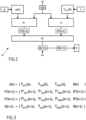
- the Figure 2 shows a flowchart that is implemented in a monitoring device 15.
- the monitoring device 15 includes a prediction value determination unit 16, a correction value determination unit 17 and an estimated value determination unit 18, which is as in Figure 2 shown can be used to determine an estimated disturbance value ⁇ (k+1).
- the system of equations or the algorithm that is represented by the flowchart (especially in connection with the formulas of the Figures 3 , 4a, 4b and 4c ) is described, is run through for a current cycle k.
- the estimated output variables of the last cycle correspond to the input variables x ⁇ (k) of the current cycle.
- no temperature measurement value T NTC (k) from the temperature sensor 4 and an electrical measurement value u(k), preferably the current operating current power of the heating element 3, are transmitted or made available by the control device 10 to the monitoring device 15.
- the electrical measured value u(k) represents an input variable for the prediction value determination unit 16 and/or the temperature measurement value T NTC (k) represents an input variable for the correction value determination unit 17.
- the estimated input variables x ⁇ (k) which in the last cycle k-1 were determined, in particular the estimated temperature measurement value ⁇ NTC (k), the estimated pot temperature value ⁇ SUR (k) and / or the estimated food temperature value ⁇ MED (k) represent input variables for the prediction value determination unit 16, such as Figures 3 and 4a show.
- the estimated temperature measurement value ⁇ NTC (k) in particular represents an input variable for the correction value determination unit 17, like that Figures 3 and 4b show.
- the prediction output variables x ⁇ P (k+1) determined by the prediction value determination unit 16 and the correction output variables x ⁇ K (k+1) determined by the correction value determination unit 17, which are exemplary in Fig. 3 are shown represent the input variables for the estimated value determination unit 18.
- the estimated output variables x ⁇ (k+1) is determined for the next cycle k+1.
- the estimated output variables x ⁇ (k+1) which in particular contains a set of different elements as output variables in vector form, are calculated by the estimated value determination unit 18.
- the estimated disturbance value ⁇ (k+1) which is an element of the set x ⁇ (k+1), is transmitted to the monitoring unit 19 in order to, on the basis of the estimated disturbance value ⁇ (k+1) to carry out a boiling point detection and alternatively or additionally a steam rate determination for the current cycle k.
- the estimated output variables x ⁇ (k+1) form the input variables of the next cycle k+1 and the same algorithm or the same system of equations is run through again.
- an estimated disturbance value ⁇ (k+2) is calculated and used for monitoring by the monitoring unit 19 of the next cycle k+1.
- the Figure 3 shows exemplary prediction output variables x ⁇ P (k+1), correction output variables x ⁇ K (k+1) as well as estimated output variables x ⁇ (k) of the last cycle and estimated output variables x ⁇ (k+1) of the current cycle k.
- the individual elements are discussed in the 4a, 4b and 4c discussed in more detail.
- the prediction temperature measurement value ⁇ P NTC (k+1) is determined based on the last estimated temperature measurement value ⁇ NTC (k), the heat supply through the heating element being determined by the electrical measurement value u(k) as well as a heat exchange between the temperature sensor 4 and the pot 2 at the interface of which is taken into account by the temperature difference ⁇ SUR (k) - ⁇ NTC (k).
- the other formulas are constructed similarly, which always start from the respective, last estimated temperature and take into account the different influences from heat supply directly or indirectly via the heating element 3, influences from heat exchange at an interface and influences from heat release to the environment.
- the coefficients a1, a2, a3, b1, b2, c1, c2 and h are corresponding to take into account parameters such as thermal conductivity, heat transfer coefficients, surface area and / or volume, which depend on the structure of the pot base 13 and on the properties of the food, intended.
- the boiling of the liquid food 20 can be detected by first predicting the overall state of the pot 2 by the prediction value determination unit 16.
- the measured temperature measurement value T NTC (k) is then compared with the predicted temperature measurement value ⁇ NTC (k) by the correction value determination unit 17 and corresponding deviations are provided as correction output variables x ⁇ K (k+1), which are derived from the estimated value in the next step.
- Determination unit 18 can be used to correct the predicted values of the prediction value determination unit 16.
- the coefficients I 1 , I 2 , I 3 and I 4 weight the influence of the softening on the respective correction temperature value ⁇ K NTC , ⁇ K SUR , ⁇ K MED , and the correction disturbance value ⁇ K .
- the unmeasured temperatures T SUR of the pot 2 or the bottom of the pot 15 and T MED of the food can also be approximately calculated, i.e. estimated, using the procedure described above.
- T NTC the Temperature measurement value
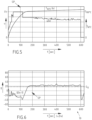
- the Figure 6 shows for the experiment Figure 5 the determined estimated disturbance value ⁇ (k+1) over time t.
- the time interval Z between two successive cycles k is so short that the individual estimated disturbance values ⁇ (k+1) form a continuous curve.
- the time t is equal to the product of the time interval Z and the cycle k.
- the estimated disturbance value ⁇ (k+1) would basically be zero until the time of boiling and could jump to a fixed value greater than 0 at the time of boiling.
- the model does not fully describe the physical behavior and there is an error, there are visible deviations and fluctuations in the curve Fig. 6 .
- the detection of exceeding the boiling point works despite the existing deviations and errors. The reason is that the influence of energy extraction during boiling is greater than the effect of deviations and errors.
- control device 10 is configured so that the user automatically changes a target temperature depending on the detected time when the boiling point is exceeded is requested via the display 22 to add a specific ingredient and/or to end the food preparation process.
- stored recipes can be carried out with an increased level of automation.
- an intensity of the boiling (steam rate) can be set specifically and/or the cooking process can be ended without knowing the amount of food in the pot 2 at a time that results in a particularly high quality of the cooking result.
Landscapes
- Engineering & Computer Science (AREA)
- Food Science & Technology (AREA)
- Mechanical Engineering (AREA)
- Health & Medical Sciences (AREA)
- Nutrition Science (AREA)
- Life Sciences & Earth Sciences (AREA)
- Chemical & Material Sciences (AREA)
- Polymers & Plastics (AREA)
- Cookers (AREA)
- Commercial Cooking Devices (AREA)
Priority Applications (5)
| Application Number | Priority Date | Filing Date | Title |
|---|---|---|---|
| EP19166082.8A EP3714747B1 (de) | 2019-03-29 | 2019-03-29 | Küchenmaschine mit siedepunkterkennung |
| PL19166082.8T PL3714747T3 (pl) | 2019-03-29 | 2019-03-29 | Urządzenie kuchenne z rozpoznawaniem temperatury wrzenia |
| ES19166082T ES2976183T3 (es) | 2019-03-29 | 2019-03-29 | Robot de cocina con detección de punto de ebullición |
| US16/827,173 US11311142B2 (en) | 2019-03-29 | 2020-03-23 | Food processor with boiling point recognition |
| CN202010231514.3A CN111743384B (zh) | 2019-03-29 | 2020-03-27 | 具有沸点识别的厨房多用机 |
Applications Claiming Priority (1)
| Application Number | Priority Date | Filing Date | Title |
|---|---|---|---|
| EP19166082.8A EP3714747B1 (de) | 2019-03-29 | 2019-03-29 | Küchenmaschine mit siedepunkterkennung |
Publications (3)
| Publication Number | Publication Date |
|---|---|
| EP3714747A1 EP3714747A1 (de) | 2020-09-30 |
| EP3714747B1 true EP3714747B1 (de) | 2024-02-21 |
| EP3714747C0 EP3714747C0 (de) | 2024-02-21 |
Family
ID=66041160
Family Applications (1)
| Application Number | Title | Priority Date | Filing Date |
|---|---|---|---|
| EP19166082.8A Active EP3714747B1 (de) | 2019-03-29 | 2019-03-29 | Küchenmaschine mit siedepunkterkennung |
Country Status (5)
| Country | Link |
|---|---|
| US (1) | US11311142B2 (pl) |
| EP (1) | EP3714747B1 (pl) |
| CN (1) | CN111743384B (pl) |
| ES (1) | ES2976183T3 (pl) |
| PL (1) | PL3714747T3 (pl) |
Families Citing this family (6)
| Publication number | Priority date | Publication date | Assignee | Title |
|---|---|---|---|---|
| EP3973831B1 (de) * | 2020-09-24 | 2024-06-12 | Vorwerk & Co. Interholding GmbH | Küchenmaschine nebst verfahren zum entnehmen einer speisenprobe |
| US12070146B2 (en) | 2020-12-31 | 2024-08-27 | Sharkninja Operating Llc | Cooking device and components thereof |
| ES2919230A1 (es) * | 2021-01-21 | 2022-07-22 | Cecotec Res And Development S L | Sistema de ebullicion inteligente para aparato automatico o semiautomatico de preparacion de alimentos y metodo asociado |
| US20220256895A1 (en) * | 2021-02-17 | 2022-08-18 | Mihira Karnik | Method and Device for Cooking to Preserve Nutritional Value |
| TWI789327B (zh) * | 2022-07-29 | 2023-01-01 | 永順利食品機械股份有限公司 | 煮鍋 |
| DE102023208465A1 (de) | 2023-09-01 | 2025-03-06 | BSH Hausgeräte GmbH | Vorrichtung und Verfahren zur Ermittlung der Siedetemperatur für den Betrieb einer Küchenmaschine |
Family Cites Families (18)
| Publication number | Priority date | Publication date | Assignee | Title |
|---|---|---|---|---|
| JPH10149875A (ja) * | 1996-11-21 | 1998-06-02 | Matsushita Electric Ind Co Ltd | 誘導加熱調理器 |
| US6469282B1 (en) * | 2000-07-28 | 2002-10-22 | General Electric Company | Boil dry detection in cooking appliances |
| JP3621870B2 (ja) * | 2000-07-31 | 2005-02-16 | リンナイ株式会社 | 調理装置 |
| DE10138455A1 (de) * | 2001-08-04 | 2003-02-13 | Braun Gmbh | Verfahren zum Aufheizen von Flüssigkeit für ein Gerät mit Heizelement, insbesondere einen Wassererhitzer |
| JP3928586B2 (ja) * | 2003-05-23 | 2007-06-13 | タイガー魔法瓶株式会社 | 電気ポット |
| CN100541359C (zh) * | 2005-07-26 | 2009-09-16 | 钟神耀 | 液体加热沸腾的模糊控制方法 |
| JP5043833B2 (ja) | 2006-05-11 | 2012-10-10 | パナソニック株式会社 | 誘導加熱調理器、誘導加熱調理方法、誘導加熱調理プログラム、共振音検知装置、共振音検知方法及び共振音検知プログラム |
| CN101398676A (zh) * | 2008-09-22 | 2009-04-01 | 东莞市步步高家用电器有限公司 | 检测电子装置液体沸腾的控制方法 |
| CN101457264B (zh) * | 2008-12-29 | 2010-07-21 | 杭州电子科技大学 | 高炉炉温优化控制方法 |
| JP2010162060A (ja) * | 2009-01-13 | 2010-07-29 | Sanyo Electric Co Ltd | 電気炊飯器 |
| CN101662433B (zh) * | 2009-06-23 | 2013-03-20 | 中山大学 | 一种基于粒子滤波修正的信道预测方法 |
| CN102763051A (zh) * | 2009-12-07 | 2012-10-31 | Msx技术股份公司 | 用于控制烹饪过程的方法 |
| CN102283564B (zh) * | 2011-04-19 | 2015-11-18 | 浙江苏泊尔家电制造有限公司 | 适用不同海拔的电饭锅控制方法及适用该方法的电饭锅 |
| DE102013106691A1 (de) * | 2012-07-23 | 2014-01-23 | Vorwerk & Co. Interholding Gmbh | Elektromotorisch betriebene Küchenmaschine und Verfahren zum selbsttätigen Zubereiten einer Speise |
| US9395078B2 (en) | 2012-08-22 | 2016-07-19 | Whirlpool Corporation | Boil and boil-dry detection systems for cooking appliances using vibration sensors |
| JP2015088356A (ja) * | 2013-10-31 | 2015-05-07 | 三菱電機株式会社 | 加熱調理器 |
| DE102015216455A1 (de) * | 2015-08-27 | 2017-03-02 | E.G.O. Elektro-Gerätebau GmbH | Verfahren zur Temperaturbestimmung |
| DE102016212330A1 (de) * | 2016-07-06 | 2018-01-11 | E.G.O. Elektro-Gerätebau GmbH | Verfahren zum Betrieb eines Kochfelds und Kochfeld |
-
2019
- 2019-03-29 EP EP19166082.8A patent/EP3714747B1/de active Active
- 2019-03-29 PL PL19166082.8T patent/PL3714747T3/pl unknown
- 2019-03-29 ES ES19166082T patent/ES2976183T3/es active Active
-
2020
- 2020-03-23 US US16/827,173 patent/US11311142B2/en active Active
- 2020-03-27 CN CN202010231514.3A patent/CN111743384B/zh active Active
Also Published As
| Publication number | Publication date |
|---|---|
| EP3714747A1 (de) | 2020-09-30 |
| CN111743384B (zh) | 2022-12-30 |
| US20200305639A1 (en) | 2020-10-01 |
| PL3714747T3 (pl) | 2024-06-24 |
| US11311142B2 (en) | 2022-04-26 |
| ES2976183T3 (es) | 2024-07-26 |
| CN111743384A (zh) | 2020-10-09 |
| EP3714747C0 (de) | 2024-02-21 |
Similar Documents
| Publication | Publication Date | Title |
|---|---|---|
| EP3714747A1 (de) | Küchenmaschine mit siedepunkterkennung | |
| EP1028602B1 (de) | Verfahren zum Erkennen des Leerkochens von Geschirr bei Kochfeldern mit einer Glaskeramik-Kochfläche und zugehörige Vorrichtung | |
| EP0146780B1 (de) | Anordnung zum Steuern und Regeln der Heizleistung in der Aufheizphase eines Dampfdruckkochgefässes | |
| DE69811353T2 (de) | Erhitzungsgefäss und verfahren zum regulieren des erhitzungselementes eines solchen gefässes. | |
| EP3273165B1 (de) | Kochfeldeinrichtung und verfahren zum betreiben | |
| DE102016121306B3 (de) | Haushaltgerät und Elektrisches Heizelement zur Verwendung in einem Haushaltgerät | |
| EP2438796B1 (de) | Kochfeld mit einem temperatursensor | |
| CH645229A5 (de) | Kocheinrichtung zur induktiven beheizung eines kochgefaesses. | |
| DE102016205005A1 (de) | Kochvorrichtung mit Kalibrierfunktion | |
| EP3705006B1 (de) | Küchenmaschine mit überwachungseinrichtung | |
| EP2095684B1 (de) | Verfahren zum erzeugen, verarbeiten und auswerten eines mit der temperatur korrelierten signals und entsprechende vorrichtung | |
| CH669297A5 (de) | Verfahren zum steuern und regeln der heizleistung in der aufheizphase eines kochgefaesses. | |
| WO2023099287A1 (de) | Verfahren zum bestimmen einer von einem in einem garraum befindlichen gargut absorbierten leistung sowie gargerät und computerprogramm | |
| DE102016212330A1 (de) | Verfahren zum Betrieb eines Kochfelds und Kochfeld | |
| DE102017214753A1 (de) | Haushalts-Gargerät | |
| EP3513698B1 (de) | Verfahren zum betreiben eines heizelements | |
| EP4260659A1 (de) | Betreiben eines haushalts-mikrowellengeräts | |
| EP4248134A1 (de) | Haushaltsgargerät und verfahren zum betreiben desselben | |
| EP4147615A1 (de) | Verfahren zum zubereiten einer speise nebst küchenmaschine | |
| EP0260629A1 (de) | Wärmespeicherheizgerät und Verfahren zur Regelung der Raumtemperatur | |
| EP1768461B1 (de) | Verfahren zum Erzeugen, Verarbeiten und Auswerten eines mit der Temperatur korrelierten Signals und entsprechende Vorrichtung | |
| DE112013002181T5 (de) | Verfahren zur Bestimmung der Kochbedingungen und System zur Bestimmung der Kochbedingungen | |
| DE102005045872A1 (de) | Verfahren zum Erzeugen, Verarbeiten und Auswerten eines mit der Temperatur korrelierten Signals und entsprechende Vorrichtung | |
| EP3339827B1 (de) | Kerntemperaturfühler für ein gargerät, verfahren zur setzerkennung eines kerntemperaturfühlers sowie verfahren zur bestimmung der wärmeleitfähigkeit eines gargeräts | |
| DE60313181T2 (de) | Verfahren und vorrichtung zur bestimmung eines phasenübergangs einer substanz |
Legal Events
| Date | Code | Title | Description |
|---|---|---|---|
| PUAI | Public reference made under article 153(3) epc to a published international application that has entered the european phase |
Free format text: ORIGINAL CODE: 0009012 |
|
| STAA | Information on the status of an ep patent application or granted ep patent |
Free format text: STATUS: THE APPLICATION HAS BEEN PUBLISHED |
|
| AK | Designated contracting states |
Kind code of ref document: A1 Designated state(s): AL AT BE BG CH CY CZ DE DK EE ES FI FR GB GR HR HU IE IS IT LI LT LU LV MC MK MT NL NO PL PT RO RS SE SI SK SM TR |
|
| AX | Request for extension of the european patent |
Extension state: BA ME |
|
| STAA | Information on the status of an ep patent application or granted ep patent |
Free format text: STATUS: REQUEST FOR EXAMINATION WAS MADE |
|
| 17P | Request for examination filed |
Effective date: 20201111 |
|
| RBV | Designated contracting states (corrected) |
Designated state(s): AL AT BE BG CH CY CZ DE DK EE ES FI FR GB GR HR HU IE IS IT LI LT LU LV MC MK MT NL NO PL PT RO RS SE SI SK SM TR |
|
| STAA | Information on the status of an ep patent application or granted ep patent |
Free format text: STATUS: EXAMINATION IS IN PROGRESS |
|
| 17Q | First examination report despatched |
Effective date: 20220809 |
|
| GRAP | Despatch of communication of intention to grant a patent |
Free format text: ORIGINAL CODE: EPIDOSNIGR1 |
|
| STAA | Information on the status of an ep patent application or granted ep patent |
Free format text: STATUS: GRANT OF PATENT IS INTENDED |
|
| INTG | Intention to grant announced |
Effective date: 20230922 |
|
| GRAS | Grant fee paid |
Free format text: ORIGINAL CODE: EPIDOSNIGR3 |
|
| GRAA | (expected) grant |
Free format text: ORIGINAL CODE: 0009210 |
|
| STAA | Information on the status of an ep patent application or granted ep patent |
Free format text: STATUS: THE PATENT HAS BEEN GRANTED |
|
| AK | Designated contracting states |
Kind code of ref document: B1 Designated state(s): AL AT BE BG CH CY CZ DE DK EE ES FI FR GB GR HR HU IE IS IT LI LT LU LV MC MK MT NL NO PL PT RO RS SE SI SK SM TR |
|
| REG | Reference to a national code |
Ref country code: GB Ref legal event code: FG4D Free format text: NOT ENGLISH |
|
| REG | Reference to a national code |
Ref country code: CH Ref legal event code: EP |
|
| REG | Reference to a national code |
Ref country code: DE Ref legal event code: R096 Ref document number: 502019010608 Country of ref document: DE |
|
| REG | Reference to a national code |
Ref country code: IE Ref legal event code: FG4D Free format text: LANGUAGE OF EP DOCUMENT: GERMAN |
|
| U01 | Request for unitary effect filed |
Effective date: 20240221 |
|
| U07 | Unitary effect registered |
Designated state(s): AT BE BG DE DK EE FI FR IT LT LU LV MT NL PT SE SI Effective date: 20240227 |
|
| U20 | Renewal fee for the european patent with unitary effect paid |
Year of fee payment: 6 Effective date: 20240502 |
|
| PG25 | Lapsed in a contracting state [announced via postgrant information from national office to epo] |
Ref country code: IS Free format text: LAPSE BECAUSE OF FAILURE TO SUBMIT A TRANSLATION OF THE DESCRIPTION OR TO PAY THE FEE WITHIN THE PRESCRIBED TIME-LIMIT Effective date: 20240621 |
|
| PG25 | Lapsed in a contracting state [announced via postgrant information from national office to epo] |
Ref country code: GR Free format text: LAPSE BECAUSE OF FAILURE TO SUBMIT A TRANSLATION OF THE DESCRIPTION OR TO PAY THE FEE WITHIN THE PRESCRIBED TIME-LIMIT Effective date: 20240522 |
|
| PG25 | Lapsed in a contracting state [announced via postgrant information from national office to epo] |
Ref country code: RS Free format text: LAPSE BECAUSE OF FAILURE TO SUBMIT A TRANSLATION OF THE DESCRIPTION OR TO PAY THE FEE WITHIN THE PRESCRIBED TIME-LIMIT Effective date: 20240521 Ref country code: HR Free format text: LAPSE BECAUSE OF FAILURE TO SUBMIT A TRANSLATION OF THE DESCRIPTION OR TO PAY THE FEE WITHIN THE PRESCRIBED TIME-LIMIT Effective date: 20240221 |
|
| REG | Reference to a national code |
Ref country code: ES Ref legal event code: FG2A Ref document number: 2976183 Country of ref document: ES Kind code of ref document: T3 Effective date: 20240726 |
|
| PG25 | Lapsed in a contracting state [announced via postgrant information from national office to epo] |
Ref country code: RS Free format text: LAPSE BECAUSE OF FAILURE TO SUBMIT A TRANSLATION OF THE DESCRIPTION OR TO PAY THE FEE WITHIN THE PRESCRIBED TIME-LIMIT Effective date: 20240521 Ref country code: NO Free format text: LAPSE BECAUSE OF FAILURE TO SUBMIT A TRANSLATION OF THE DESCRIPTION OR TO PAY THE FEE WITHIN THE PRESCRIBED TIME-LIMIT Effective date: 20240521 Ref country code: IS Free format text: LAPSE BECAUSE OF FAILURE TO SUBMIT A TRANSLATION OF THE DESCRIPTION OR TO PAY THE FEE WITHIN THE PRESCRIBED TIME-LIMIT Effective date: 20240621 Ref country code: HR Free format text: LAPSE BECAUSE OF FAILURE TO SUBMIT A TRANSLATION OF THE DESCRIPTION OR TO PAY THE FEE WITHIN THE PRESCRIBED TIME-LIMIT Effective date: 20240221 Ref country code: GR Free format text: LAPSE BECAUSE OF FAILURE TO SUBMIT A TRANSLATION OF THE DESCRIPTION OR TO PAY THE FEE WITHIN THE PRESCRIBED TIME-LIMIT Effective date: 20240522 |
|
| PG25 | Lapsed in a contracting state [announced via postgrant information from national office to epo] |
Ref country code: SM Free format text: LAPSE BECAUSE OF FAILURE TO SUBMIT A TRANSLATION OF THE DESCRIPTION OR TO PAY THE FEE WITHIN THE PRESCRIBED TIME-LIMIT Effective date: 20240221 |
|
| PG25 | Lapsed in a contracting state [announced via postgrant information from national office to epo] |
Ref country code: CZ Free format text: LAPSE BECAUSE OF FAILURE TO SUBMIT A TRANSLATION OF THE DESCRIPTION OR TO PAY THE FEE WITHIN THE PRESCRIBED TIME-LIMIT Effective date: 20240221 |
|
| PG25 | Lapsed in a contracting state [announced via postgrant information from national office to epo] |
Ref country code: SK Free format text: LAPSE BECAUSE OF FAILURE TO SUBMIT A TRANSLATION OF THE DESCRIPTION OR TO PAY THE FEE WITHIN THE PRESCRIBED TIME-LIMIT Effective date: 20240221 |
|
| PG25 | Lapsed in a contracting state [announced via postgrant information from national office to epo] |
Ref country code: SM Free format text: LAPSE BECAUSE OF FAILURE TO SUBMIT A TRANSLATION OF THE DESCRIPTION OR TO PAY THE FEE WITHIN THE PRESCRIBED TIME-LIMIT Effective date: 20240221 Ref country code: SK Free format text: LAPSE BECAUSE OF FAILURE TO SUBMIT A TRANSLATION OF THE DESCRIPTION OR TO PAY THE FEE WITHIN THE PRESCRIBED TIME-LIMIT Effective date: 20240221 Ref country code: RO Free format text: LAPSE BECAUSE OF FAILURE TO SUBMIT A TRANSLATION OF THE DESCRIPTION OR TO PAY THE FEE WITHIN THE PRESCRIBED TIME-LIMIT Effective date: 20240221 Ref country code: CZ Free format text: LAPSE BECAUSE OF FAILURE TO SUBMIT A TRANSLATION OF THE DESCRIPTION OR TO PAY THE FEE WITHIN THE PRESCRIBED TIME-LIMIT Effective date: 20240221 |
|
| PG25 | Lapsed in a contracting state [announced via postgrant information from national office to epo] |
Ref country code: MC Free format text: LAPSE BECAUSE OF FAILURE TO SUBMIT A TRANSLATION OF THE DESCRIPTION OR TO PAY THE FEE WITHIN THE PRESCRIBED TIME-LIMIT Effective date: 20240221 |
|
| REG | Reference to a national code |
Ref country code: DE Ref legal event code: R097 Ref document number: 502019010608 Country of ref document: DE |
|
| PG25 | Lapsed in a contracting state [announced via postgrant information from national office to epo] |
Ref country code: MC Free format text: LAPSE BECAUSE OF FAILURE TO SUBMIT A TRANSLATION OF THE DESCRIPTION OR TO PAY THE FEE WITHIN THE PRESCRIBED TIME-LIMIT Effective date: 20240221 |
|
| PLBE | No opposition filed within time limit |
Free format text: ORIGINAL CODE: 0009261 |
|
| STAA | Information on the status of an ep patent application or granted ep patent |
Free format text: STATUS: NO OPPOSITION FILED WITHIN TIME LIMIT |
|
| PG25 | Lapsed in a contracting state [announced via postgrant information from national office to epo] |
Ref country code: IE Free format text: LAPSE BECAUSE OF NON-PAYMENT OF DUE FEES Effective date: 20240329 |
|
| 26N | No opposition filed |
Effective date: 20241122 |
|
| PG25 | Lapsed in a contracting state [announced via postgrant information from national office to epo] |
Ref country code: IE Free format text: LAPSE BECAUSE OF NON-PAYMENT OF DUE FEES Effective date: 20240329 |
|
| U20 | Renewal fee for the european patent with unitary effect paid |
Year of fee payment: 7 Effective date: 20250325 |
|
| PGFP | Annual fee paid to national office [announced via postgrant information from national office to epo] |
Ref country code: ES Payment date: 20250416 Year of fee payment: 7 |
|
| PGFP | Annual fee paid to national office [announced via postgrant information from national office to epo] |
Ref country code: CH Payment date: 20250401 Year of fee payment: 7 |
|
| PG25 | Lapsed in a contracting state [announced via postgrant information from national office to epo] |
Ref country code: CY Free format text: LAPSE BECAUSE OF FAILURE TO SUBMIT A TRANSLATION OF THE DESCRIPTION OR TO PAY THE FEE WITHIN THE PRESCRIBED TIME-LIMIT; INVALID AB INITIO Effective date: 20190329 |
|
| PG25 | Lapsed in a contracting state [announced via postgrant information from national office to epo] |
Ref country code: HU Free format text: LAPSE BECAUSE OF FAILURE TO SUBMIT A TRANSLATION OF THE DESCRIPTION OR TO PAY THE FEE WITHIN THE PRESCRIBED TIME-LIMIT; INVALID AB INITIO Effective date: 20190329 |
|
| PG25 | Lapsed in a contracting state [announced via postgrant information from national office to epo] |
Ref country code: TR Free format text: LAPSE BECAUSE OF FAILURE TO SUBMIT A TRANSLATION OF THE DESCRIPTION OR TO PAY THE FEE WITHIN THE PRESCRIBED TIME-LIMIT Effective date: 20240221 |
|
| REG | Reference to a national code |
Ref country code: CH Ref legal event code: U11 Free format text: ST27 STATUS EVENT CODE: U-0-0-U10-U11 (AS PROVIDED BY THE NATIONAL OFFICE) Effective date: 20260401 |
|
| PGFP | Annual fee paid to national office [announced via postgrant information from national office to epo] |
Ref country code: GB Payment date: 20260324 Year of fee payment: 8 |
|
| PGFP | Annual fee paid to national office [announced via postgrant information from national office to epo] |
Ref country code: PL Payment date: 20260317 Year of fee payment: 8 |
|
| U20 | Renewal fee for the european patent with unitary effect paid |
Year of fee payment: 8 Effective date: 20260327 |