EP3705242B1 - Griff für einen endeffektor eines roboter-chirurgieinstruments - Google Patents
Griff für einen endeffektor eines roboter-chirurgieinstruments Download PDFInfo
- Publication number
- EP3705242B1 EP3705242B1 EP20168090.7A EP20168090A EP3705242B1 EP 3705242 B1 EP3705242 B1 EP 3705242B1 EP 20168090 A EP20168090 A EP 20168090A EP 3705242 B1 EP3705242 B1 EP 3705242B1
- Authority
- EP
- European Patent Office
- Prior art keywords
- input
- procedure
- input signal
- end effector
- gripping force
- Prior art date
- Legal status (The legal status is an assumption and is not a legal conclusion. Google has not performed a legal analysis and makes no representation as to the accuracy of the status listed.)
- Active
Links
Images




Classifications
-
- A—HUMAN NECESSITIES
- A61—MEDICAL OR VETERINARY SCIENCE; HYGIENE
- A61B—DIAGNOSIS; SURGERY; IDENTIFICATION
- A61B17/00—Surgical instruments, devices or methods
- A61B17/28—Surgical forceps
- A61B17/285—Surgical forceps combined with cutting implements
-
- A—HUMAN NECESSITIES
- A61—MEDICAL OR VETERINARY SCIENCE; HYGIENE
- A61B—DIAGNOSIS; SURGERY; IDENTIFICATION
- A61B17/00—Surgical instruments, devices or methods
- A61B17/28—Surgical forceps
- A61B17/29—Forceps for use in minimally invasive surgery
-
- A—HUMAN NECESSITIES
- A61—MEDICAL OR VETERINARY SCIENCE; HYGIENE
- A61B—DIAGNOSIS; SURGERY; IDENTIFICATION
- A61B34/00—Computer-aided surgery; Manipulators or robots specially adapted for use in surgery
- A61B34/30—Surgical robots
-
- A—HUMAN NECESSITIES
- A61—MEDICAL OR VETERINARY SCIENCE; HYGIENE
- A61B—DIAGNOSIS; SURGERY; IDENTIFICATION
- A61B34/00—Computer-aided surgery; Manipulators or robots specially adapted for use in surgery
- A61B34/30—Surgical robots
- A61B34/37—Leader-follower robots
-
- A—HUMAN NECESSITIES
- A61—MEDICAL OR VETERINARY SCIENCE; HYGIENE
- A61B—DIAGNOSIS; SURGERY; IDENTIFICATION
- A61B34/00—Computer-aided surgery; Manipulators or robots specially adapted for use in surgery
- A61B34/70—Manipulators specially adapted for use in surgery
- A61B34/74—Manipulators with manual electric input means
-
- A—HUMAN NECESSITIES
- A61—MEDICAL OR VETERINARY SCIENCE; HYGIENE
- A61B—DIAGNOSIS; SURGERY; IDENTIFICATION
- A61B34/00—Computer-aided surgery; Manipulators or robots specially adapted for use in surgery
- A61B34/70—Manipulators specially adapted for use in surgery
- A61B34/76—Manipulators having means for providing feel, e.g. force or tactile feedback
-
- A—HUMAN NECESSITIES
- A61—MEDICAL OR VETERINARY SCIENCE; HYGIENE
- A61B—DIAGNOSIS; SURGERY; IDENTIFICATION
- A61B17/00—Surgical instruments, devices or methods
- A61B2017/00017—Electrical control of surgical instruments
- A61B2017/00022—Sensing or detecting at the treatment site
-
- A—HUMAN NECESSITIES
- A61—MEDICAL OR VETERINARY SCIENCE; HYGIENE
- A61B—DIAGNOSIS; SURGERY; IDENTIFICATION
- A61B17/00—Surgical instruments, devices or methods
- A61B2017/00017—Electrical control of surgical instruments
- A61B2017/00199—Electrical control of surgical instruments with a console, e.g. a control panel with a display
-
- A—HUMAN NECESSITIES
- A61—MEDICAL OR VETERINARY SCIENCE; HYGIENE
- A61B—DIAGNOSIS; SURGERY; IDENTIFICATION
- A61B17/00—Surgical instruments, devices or methods
- A61B17/00234—Surgical instruments, devices or methods for minimally invasive surgery
- A61B2017/00238—Type of minimally invasive operation
-
- A—HUMAN NECESSITIES
- A61—MEDICAL OR VETERINARY SCIENCE; HYGIENE
- A61B—DIAGNOSIS; SURGERY; IDENTIFICATION
- A61B17/00—Surgical instruments, devices or methods
- A61B2017/00367—Details of actuation of instruments, e.g. relations between pushing buttons, or the like, and activation of the tool, working tip, or the like
- A61B2017/00398—Details of actuation of instruments, e.g. relations between pushing buttons, or the like, and activation of the tool, working tip, or the like using powered actuators, e.g. stepper motors, solenoids
-
- A—HUMAN NECESSITIES
- A61—MEDICAL OR VETERINARY SCIENCE; HYGIENE
- A61B—DIAGNOSIS; SURGERY; IDENTIFICATION
- A61B18/00—Surgical instruments, devices or methods for transferring non-mechanical forms of energy to or from the body
- A61B2018/00571—Surgical instruments, devices or methods for transferring non-mechanical forms of energy to or from the body for achieving a particular surgical effect
- A61B2018/00601—Cutting
-
- A—HUMAN NECESSITIES
- A61—MEDICAL OR VETERINARY SCIENCE; HYGIENE
- A61B—DIAGNOSIS; SURGERY; IDENTIFICATION
- A61B18/00—Surgical instruments, devices or methods for transferring non-mechanical forms of energy to or from the body
- A61B2018/00571—Surgical instruments, devices or methods for transferring non-mechanical forms of energy to or from the body for achieving a particular surgical effect
- A61B2018/0063—Sealing
-
- A—HUMAN NECESSITIES
- A61—MEDICAL OR VETERINARY SCIENCE; HYGIENE
- A61B—DIAGNOSIS; SURGERY; IDENTIFICATION
- A61B18/00—Surgical instruments, devices or methods for transferring non-mechanical forms of energy to or from the body
- A61B18/04—Surgical instruments, devices or methods for transferring non-mechanical forms of energy to or from the body by heating
- A61B18/12—Surgical instruments, devices or methods for transferring non-mechanical forms of energy to or from the body by heating by passing a current through the tissue to be heated, e.g. high-frequency current
- A61B18/14—Probes or electrodes therefor
- A61B18/1442—Probes having pivoting end effectors, e.g. forceps
- A61B2018/1452—Probes having pivoting end effectors, e.g. forceps including means for cutting
- A61B2018/1455—Probes having pivoting end effectors, e.g. forceps including means for cutting having a moving blade for cutting tissue grasped by the jaws
-
- A—HUMAN NECESSITIES
- A61—MEDICAL OR VETERINARY SCIENCE; HYGIENE
- A61B—DIAGNOSIS; SURGERY; IDENTIFICATION
- A61B34/00—Computer-aided surgery; Manipulators or robots specially adapted for use in surgery
- A61B34/25—User interfaces for surgical systems
- A61B2034/254—User interfaces for surgical systems being adapted depending on the stage of the surgical procedure
-
- A—HUMAN NECESSITIES
- A61—MEDICAL OR VETERINARY SCIENCE; HYGIENE
- A61B—DIAGNOSIS; SURGERY; IDENTIFICATION
- A61B34/00—Computer-aided surgery; Manipulators or robots specially adapted for use in surgery
- A61B34/30—Surgical robots
- A61B2034/301—Surgical robots for introducing or steering flexible instruments inserted into the body, e.g. catheters or endoscopes
-
- A—HUMAN NECESSITIES
- A61—MEDICAL OR VETERINARY SCIENCE; HYGIENE
- A61B—DIAGNOSIS; SURGERY; IDENTIFICATION
- A61B90/00—Instruments, implements or accessories specially adapted for surgery or diagnosis and not covered by any of the groups A61B1/00 - A61B50/00, e.g. for luxation treatment or for protecting wound edges
- A61B90/03—Automatic limiting or abutting means, e.g. for safety
- A61B2090/031—Automatic limiting or abutting means, e.g. for safety torque limiting
-
- A—HUMAN NECESSITIES
- A61—MEDICAL OR VETERINARY SCIENCE; HYGIENE
- A61B—DIAGNOSIS; SURGERY; IDENTIFICATION
- A61B34/00—Computer-aided surgery; Manipulators or robots specially adapted for use in surgery
- A61B34/25—User interfaces for surgical systems
Definitions
- the present disclosure is generally directed to controlling a surgical instrument end effector. More particularly, aspects of the present disclosure relate to controlling the gripping force of an end effector for a robotically-controlled surgical instrument.
- Minimally invasive surgical techniques generally attempt to perform surgical procedures while minimizing damage to healthy tissue.
- Robotically-controlled surgical instruments can be used to perform various minimally invasive surgical procedures remotely.
- surgeons manipulate various input devices at a surgeon console (sometimes referred to herein as master inputs).
- the input at the surgeon console is communicated to a patient side cart that interfaces with one or more robotically-controlled surgical instruments, where teleoperated/telerobotic manipulation of the surgical instrument occurs to perform a surgical and/or other procedure on the patient.
- Minimally invasive, robotically-controlled surgical instruments may be used in a variety of operations and have various configurations.
- Many such instruments include a surgical end effector mounted at a distal end of a long shaft that is configured to be inserted (e.g., laporoscopically or thoracoscopically) through an opening (e.g., body wall incision, natural orifice) to reach a remote surgical site within a patient.
- an articulating wrist mechanism is mounted to the distal end of the instrument's shaft to support the end effector and alter an orientation (e.g., pitch and/or yaw) of the end effector with reference to the shaft's longitudinal axis.
- Telerobotically controlled end effectors may be configured to perform various functions, including any of a variety of surgical procedures that are conventionally performed in either open or manual minimally invasive surgical procedures. Examples include, but are not limited to, sealing, cutting, cauterizing, ablating, suturing, stapling, etc.
- the end effectors may include a gripping device, such as jaws or blades, in cases in which tissue may need to be grasped and held as a procedure is performed, for example, during sealing (e.g., via cauterizing) or cutting of the tissue.
- the control of the gripping device of a surgical instrument end effector occurs through master grip input from a surgeon at the surgeon console.
- servo-actuators e.g., servo motors
- servo-actuators can be used to transmit force or torque to various components that ultimately transmit from a transmission mechanism that interfaces with the patient side manipulator down the shaft and to the end effector.
- a surgical instrument that includes an end effector having a gripping device
- lower gripping forces may be desirable when using the gripping device to move tissue and/or other body parts/materials around so as to minimize the risk of damaging the same.
- higher gripping forces may be desirable when using the gripping device for other procedures.
- a translating blade used to cut transversely through the tissue could push the tissue distally instead of cutting all the way through the tissue.
- the gripping force is not high enough during a procedure such as sealing (e.g., cauterizing), for example, effective contact for sealing of tissue surfaces (e.g., opposing wall portions of a vessel) may not be achieved.
- the user may indicate that a higher gripping force is to be used by, for example, squeezing a gripping input mechanism that controls the gripping force at the end effector.
- the user may inadvertently squeeze the gripping input mechanism too hard, resulting in a higher gripping force at the end effector during operations of the end effector in which a higher gripping force is not desired.
- the user may squeeze the gripping input mechanism hard enough to result in higher gripping forces at the end effector.
- undesired pitch or yaw motions may occur as the end effector rolls.
- unintentional and/or unsteady movement of the end effector may occur during the high grip force action due to movement in one of pitch/yaw by a wrist, roll of the shaft, and/or translation along the shaft. Such movement instability of the end effector can negatively impact the desired surgical procedure.
- US 2009/088774 discloses a method in which a lock sensing mode is entered for a robotic surgical instrument. In the lock sensing mode, the degrees of freedom of movement in the robotic surgical instrument are switchably reduced. Further in the lock sensing mode, one or more end effectors of the robotic surgical instrument are switchably clamped together in the robotic surgical instrument. An increased level of torque may also be applied to the end effectors to increase a gripping force applied by the one or more end effectors in response to the reduced degrees of freedom of movement in the robotic surgical instrument.
- the present teachings contemplate a sequence of controlling a gripping force of an end effector of a robotically-controlled surgical instrument.
- the method includes receiving a first input signal indicative of a high grip level input at a master gripping mechanism that controls a slave gripping force of the end effector; receiving a second input signal indicative of a user's readiness to operate the surgical instrument to perform a surgical procedure; and outputting an actuation signal in response to receiving the first input signal and the second input signal together to increase the slave gripping force from a first level to a second level higher than the first level during the surgical procedure.
- the present disclosure contemplates controlling a robotically-controlled surgical instrument end effector gripping device such that a relatively lower or higher gripping force may be exerted by the gripping device, depending upon the application involved as indicated by input received at a surgeon console.
- a robotically-controlled surgical instrument end effector gripping device such that a relatively lower or higher gripping force may be exerted by the gripping device, depending upon the application involved as indicated by input received at a surgeon console.
- the end effector gripping device may be controlled to exert a relatively lower gripping force to allow the tissue to be grasped and moved without unnecessarily damaging the tissue.
- the end effector gripping device may be controlled to exert a higher gripping force sufficient to hold the tissue relatively firmly to effectively perform the desired surgical procedure that is implemented with a relatively high gripping force.
- Various exemplary embodiments therefore, provide an automatic control technique of an end effector gripping device to elevate and hold the gripping force at relatively higher levels during the appropriate procedures and lower levels during other procedures in which the high gripping force is not necessary and may not be desirable.
- various exemplary embodiments limit the higher gripping force from occurring when the operation that necessitates the higher gripping force is not being performed.
- a sequence of controlling a gripping force of an end effector provides a higher gripping force based on two inputs from a surgeon - the first input being indicative of a higher gripping level input by the user at a surgeon master gripping input and the second input being indicative of the user's readiness to operate the surgical instrument to perform a surgical procedure that utilizes the relatively higher gripping force of the end effector.
- the gripping force of the end effector is controlled by altering or limiting a torque of an electric motor (e.g., servo motor) at the patient side cart that interfaces with a drive input of a transmission mechanism associated with the surgical instrument.
- an electric motor e.g., servo motor
- various exemplary embodiments of the present invention provide a control sequence of locking (i.e., preventing actuation) one or more degrees of freedom of the end effector during certain surgical procedures to provide a higher level of stability while the procedure is being performed.
- the principles of the exemplary embodiments could be applied to other surgical procedures, including but not limited to, for example, clamping of a vessel or other hollow body structure, cutting tissue using pivoting blades of an end effector, surgically stapling tissue, and/or other procedures where a relatively high gripping force may be desirable.
- the relatively high end effector gripping force is generated by a servo motor torque that is higher than the highest motor torque normally used to operate other jawed instruments, such as surgical shears, tissue graspers, needle drivers, and the like.
- FIG. 6 an exemplary embodiment of a robotically-controlled surgical instrument 600 is depicted.
- FIG. 6 is a perspective view of the surgical instrument 600
- FIG. 7 is a detailed view of an exemplary, non-limiting embodiment of the corresponding portions denoted in FIG. 6 that the surgical instrument 600 can include.
- the directions “proximal” and “distal” are used herein to define the directions as shown in FIG. 6 , with distal generally being in a direction further along a kinematic arm or closest to the surgical work site in the intended operational use of the instrument 600, for example, in use for performing surgical procedures.
- the "proximal” and “distal” directions as used herein are labeled on FIG. 6 . As shown in FIG.
- the instrument 600 generally includes a force/torque drive transmission mechanism 602 at its proximal end, an instrument shaft 604 mounted to the transmission mechanism 602, and an end effector 606 disposed at the distal end of the shaft 604.
- the surgical instrument 600 a portion of which is shown in more detail in FIG. 7 , also includes an optional articulating wrist mechanism 608 mounted at the distal end of the shaft 604 to support the end effector 606 and change its orientation with reference to the shaft's 604 longitudinal axis.
- the instrument 600 is configured to be mounted on and used with a minimally invasive robotic surgical system, which in an exemplary embodiment includes a patient side cart 800, a surgeon console 802, and an electronics/control console 804, as illustrated in a diagrammatic view of FIG. 8 (it is noted that the system components in FIG. 8 are not shown in any particular positioning and can be arranged as desired, with the patient side cart being disposed relative to the patient so as to effect surgery on the patient).
- a robotic surgical system with which the instrument 600 can be utilized is a da Vinci ® Si (model no. IS3000) commercialized by Intuitive Surgical, Inc. of Sunnyvale, California.
- the robotic surgical system is used to perform minimally invasive robotic surgery by interfacing with and controlling a variety of surgical instruments, as those of ordinary skill in the art are generally familiar.
- the patient side cart 800 includes various arms 810 for holding, positioning, and manipulating various tools. As shown in FIG. 8 , one arm 810 is configured to interface with and control a robotically-controlled surgical instrument 600, including an end effector 606.
- the surgeon console 802 receives inputs from a surgeon by various input devices, including but not limited to, grip input levers 900a, 900b of a master grip input mechanism 806 and foot pedals 808, etc., and serves as a master controller by which the patient side cart 800 acts as a slave to implement the desired motions of the surgical instrument(s) (e.g., instrument 600) interfaced therewith, and accordingly perform the desired surgical procedure.
- the patient side cart 800 can include a plurality of jointed arms 810 configured to hold various tools, including, but not limited to, for example, a surgical instrument with an end effector (e.g., surgical instrument 600), and an endoscope (not shown).
- An electronic data processing system including a processing device, and which may be provided at one or more of the surgeon console 802, the electronics/control console 804 and the patient side cart 800, may receive and process inputs from the surgeon console 802 and control the manipulation of the surgical instrument 600 at the patient side cart 800 based on the inputs received at the surgeon console 802.
- the present disclosure is not limited to receiving inputs at the surgeon console 802, and inputs may be received at any device which results in manipulation of an end effector of the surgical instrument 600.
- the surgical instrument 600 may be manipulated at the patient side cart 800, or alternatively, may be manipulated in combination with any other type of surgical instrument support device, or entirely separately from a support device, as a result of inputs received from the user, e.g., the surgeon.
- inputs from the surgeon console 802 or from input units otherwise accessible to a surgeon can be provided to the controller(s) via various master input devices, such as, for example, one or more pedals 808, and one or more hand-held grip input levers 900a, 900b.
- the pedals 808 may be used to send signals to perform a sealing and/or cutting operation of the robotically controlled surgical instrument 600 and the hand-held grip input levers 900a, 900b may be used to send signals to control movement of the wrist 608 (e.g., pitch/yaw movement), the instrument shaft 604 (e.g., roll and/or translation), and/or opening and closing (gripping) movement of an end effector gripping device (e.g., jaws or blades).
- a sealing and/or cutting operation of the robotically controlled surgical instrument 600 and the hand-held grip input levers 900a, 900b may be used to send signals to control movement of the wrist 608 (e.g., pitch/yaw movement), the instrument shaft 604 (e.g., roll and/or translation), and/or opening and closing (gripping) movement of an end effector gripping device (e.g., jaws or blades).
- Those having ordinary skill in the art are familiar with the general use of such teleoperated robotic surgical systems
- the patient side cart 800 can interface with the transmission mechanism 602 of the surgical instrument 600 to position and actuate the instrument 600 to perform a desired medical procedure.
- the transmission mechanism 602 which includes various torque/drive input mechanisms (e.g., in the form of drive disks) configured to be driven via teleoperated servo actuators (e.g., motors) associated with the patient side cart 800, can transmit the inputs into various forces and/or torques to ultimately actuate (drive) the overall instrument 600 to perform a surgical procedure.
- various torque/drive input mechanisms e.g., in the form of drive disks
- teleoperated servo actuators e.g., motors
- master inputs from the surgeon console 802 can be converted at the patient side cart 800 through the transmission mechanism 602 to roll shaft 604, articulate the wrist 608 relative to the shaft (e.g., in pitch and/or yaw), and/or to open and close the gripping device 700 (see FIG. 7 ).
- the electronics/control console 804 which may include, for example, an electrosurgical processing unit, receives and transmits various control signals to and from the patient side cart 800 and the surgeon console 802, and can transmit light and process images (e.g., from an endoscope at the patient side cart 800) for display, such as, for example, display 812 at the surgeon console 802 and/or on a display 814 associated with the electronics/control console 804.
- an electrosurgical processing unit receives and transmits various control signals to and from the patient side cart 800 and the surgeon console 802 and can transmit light and process images (e.g., from an endoscope at the patient side cart 800) for display, such as, for example, display 812 at the surgeon console 802 and/or on a display 814 associated with the electronics/control console 804.
- the patient side cart 800 is positioned proximate to a patient and the surgical instrument 600 is used to perform various surgical procedures at a work site in the patient's body through the use of the remotely actuated end effector 606.
- Exemplary surgical procedures that the end effector 606 can perform include, but are not limited to, for example, clamping of a vessel or other hollow body structure, cutting tissue using pivoting blades of an end effector, and/or other procedures where a relatively high gripping force may be desirable.
- an exemplary embodiment of an end effector 606 of the instrument 600 is shown, although the end effector 606 is not limited thereto and may be any end effector configured for use to perform surgical procedures that utilize gripping forces.
- the end effector 606 may be provided with a gripping device 700, such as, for example, opposing jaws 701a, 701b or gripping blades (e.g., similar to scissors), provided at the end effector 606.
- the jaws 701a, 701b are configured to move to and from an open position and a closed position. In the closed position, the jaws 701a, 701b can grip material, such as tissue and the like.
- the jaws 701a, 701b can deliver electrosurgical energy, for example via electrodes provided on opposing faces of the jaws 701a, 701b, sufficient to seal (e.g., cauterize) tissue together.
- the end effector 606 may also include a cutting element in the form of a short cutting blade 702 attached to a cable 704. The cutting blade 702 may be received in a groove 706 of the bottom jaw 701b and operable to traverse in proximal and distal directions along a length of the jaws 701a, 701b to perform a cutting operation. While FIG.
- FIG. 7 shows an example of an end effector that may be used during operation of the gripping force control method, it is to be understood by those of ordinary skill in the art that any type of end effector may be used in which a relatively high gripping force is used during the implementation of a surgical procedure, such as, for example, cutting or sealing.
- any type of end effector may be used in which a relatively high gripping force is used during the implementation of a surgical procedure, such as, for example, cutting or sealing.
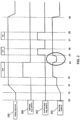
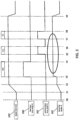
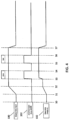
- event-based state diagrams are shown which illustrate exemplary methods of controlling the gripping force of the end effector 606 of the surgical instrument 600.
- Elements S0-Sn illustrate the occurrence of events and are not necessarily intended to correspond with periods of time.
- Elements S0-Sn do not necessarily correspond to the same occurrences in each of the state diagrams and are to be read independently of one another, depending on the individual state diagram.
- elements S0-Sn may relate to times at which each of the events occurs.
- the master grip input signal 100 is in an "off" state.
- the gripping force (e.g., slave grip 102) of the gripping device 701 is in an "off state at S0. As described above, in an exemplary embodiment, therefore no torque is provided by the teleoperated servo motor that controls the opening/closing (gripping) of the jaws 701a, 701b.
- a procedure input 104 indicative of the user's command to cause a surgical procedure relying on a relatively high gripping force (e.g., sealing or cutting) to be performed at the end effector 606 of the surgical instrument 600 is not received, and thus the seal or cut procedure input 104 is indicated to be in an off state in the state diagram of FIG. 1A .
- a relatively high gripping force e.g., sealing or cutting
- the user at the surgeon console 802 When the user at the surgeon console 802 is ready to perform a procedure using the gripping device 700, e.g., jaws 701a, 701b, at S1 the user manipulates a master grip input mechanism 806 at the surgeon console 802.
- the surgeon may squeeze grip levers 900a, 900b together.
- the master grip input is not limited thereto and may be an input other than squeezing the gripping levers 900a, 900b together that provides an indication from a user, e.g., a surgeon, that the user desires a high slave gripping force at the end effector.
- the master grip input may be a user pressing one or more of the pedals 808.
- a so-called “bumper” mechanism may be used to increase the resistance against squeezing the levers 900a, 900b together that the user experiences as two grip levers 900a, 900b are brought closer together.
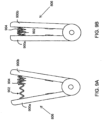
- a biasing transition mechanism including, for example, a first biasing mechanism, such as, for example, a first coiled spring 902 (shown in FIGS.
- a magnet, etc. and a second biasing mechanism, such as, for example, a second coiled spring 904, a magnet, etc. provides haptic feedback to the user to provide an indication of squeezing against a first level of resistance. Compression of the first biasing mechanism 902 may indicate a lower gripping input range, while compression of the second biasing mechanism 904 may indicate a higher gripping input range.
- the second biasing mechanism for example, second coiled spring 904 (see FIGS. 9A-9B ) may have a greater stiffness than the first biasing mechanism, e.g., first spring 902.
- the biasing system may rely on a single variable rate spring where portions of the variable rate spring correspond to the first biasing mechanism and the second biasing mechanism, rather than the two different springs shown in FIGS. 9A and 9B .
- biasing mechanisms reference is made to U.S. Patent No. 6,594,552 (issued July 15, 2003 ; entitled “GRIP STRENGTH WITH TACTILE FEEDBACK FOR ROBOTIC SURGERY”).
- the biasing transition mechanism can provide the user with feedback that the gripping device of the end effector is transitioning from a relatively lower gripping force to a relatively higher gripping force.
- the torque of the motor that ultimately controls the gripping force (slave grip 102) of the corresponding gripping device 700 begins to increase to provide a gripping force to the gripping device 700.
- the motor may actuate a clutch mechanism, which actuates the gripping of the end effector.
- the master grip input signal 100 increases between S1 to S2
- the corresponding force of the slave grip 102 increases from zero gripping force at S1 to a low gripping force at S2.
- the master grip input signal 100 reaches a squeezing force threshold that corresponds to a predetermined, high grip level at the master grip input mechanism 806.
- the squeezing force threshold may correspond to any input at the master grip, such as, for example, actuating the grip levers 900a, 900b of the master grip input mechanism 806 beyond some threshold level of actuation, e.g., beyond a threshold range of motion of the grip levers 900a, 900b toward one another, that may indicate that a higher slave gripping force is desired at the end effector 606.
- a mechanism is used to provide haptic feedback to the user, such as in FIGS.
- the compression amount may correspond to a compression amount into a higher gripping force input range, for example, approximately 80% compression applied to the second biasing mechanism or 80% compression applied to the portion of the variable rate spring corresponding to a second biasing mechanism.
- the actuation threshold may be indicated by, for example, the compression of the second biasing mechanism, such as second spring 904, to a point that is indicative of the user's intent to apply the higher gripping, rather than a repositioning or shifting of the user's grip.
- a compression of the second biasing mechanism to a point 80% to 100% of the fully closed/actuated position may be indicative of an intentional compression by the user.
- the actuation threshold range is exemplary, and a specific range may be chosen based on the type of procedure, the type of grip used, the type of biasing mechanism used, and other factors.
- the present disclosure is not limited to the biasing mechanisms described and any of a variety of biasing devices or gripping level indicators may be used.
- the master grip input mechanism 806, such as gripping levers 900a, 900b provides feedback to the user to indicate a lower gripping input level and a higher gripping input level.
- the system recognizes that a higher gripping input level is achieved when the squeezing force threshold at the master grip input mechanism 806 is reached, and at this point, the master grip input signal 100 is at a relatively high gripping input level.
- Setting the squeezing force threshold to correspond to a relatively high amount of the compression of the second biasing mechanism can help to ensure that the user is intending to provide a higher level of grip of the master grip input mechanism 806, e.g., by providing feedback to the user. This can provide an additional safety feature to assist in preventing the user from increasing the master gripping force, and consequently the slave gripping force, to too high a level when the user is not intending for that level to be used.
- the motor torque (and consequently slave grip force 102) also increases, thereby increasing the gripping force of the gripping device, indicated by zero slave gripping force at S1 increased to a low gripping force at S2.
- the motor actuates a clutch mechanism at the force/torque drive transmission mechanism 602, which causes the slave gripping force.
- a relatively low slave gripping force is output.
- the relatively low end effector grip actuation torque output at S2 may be, for example, about 0.3 Nm.
- the procedure input 104 e.g., a sealing, cutting or stapling procedure
- the procedure input is in an off state.
- an input indicative of a user's desire for the end effector 606 to perform a surgical procedure that relies on a relatively high gripping force is received, indicated in the state diagram as procedure input 104 transitioning from an off state to an on state.
- the surgical procedure to be performed may be one or more of, for example, a sealing procedure, a cutting procedure, etc. However, it is to be understood that these procedures are merely meant to be exemplary and any other type of procedure that would be implemented using a high gripping force by an end effector gripping device may be indicated by actuation of the input devices, such as pedals 808.
- the motor torque and corresponding slave gripping force 102 is increased from the relatively low levels shown between S2 and S3, to the relatively higher levels depicted at S3.
- the high torque level of the servomotor that ultimately causes actuation of end effector grip, which results in the relatively higher gripping force may be about 1.5 Nm.
- the relatively high torque level of the motor and the relatively high gripping force of the end effector gripping device 700 are maintained at least through to the completion of the procedure, such as, e.g., a sealing procedure, a cutting procedure, etc. It is noted that the 0.3 Nm lower gripping force at the end effector and the 1.5 Nm higher gripping force at the end effector may be altered, depending on a desired slave gripping force.
- the servomotor may actuate a clutch mechanism provided at the force/torque drive transmission mechanism 602, which actuates the end effector, increasing the gripping force at the end effector to the higher gripping force.
- a grip force torque control mechanism may be interfaced with the servomotor to ultimately control the delivery of the torque forces to actuate the end effector.
- the surgical procedure such as sealing or cutting, may occur while both the additional input, such as the depression of one or more pedals 808, is actuated and the squeezing force at the master grip input levers 900a, 900b is maintained at or above the squeezing force threshold.
- the system senses the completion of the desired procedure and signals such to the user at the surgeon console 802, or at any location that would provide such an indication to a user, after which the user may be prompted to stop the master grip input by, for example, releasing the grip levers 900a, 900b.
- the surgical procedure such as sealing, cutting or stapling, therefore ends at 84, indicated by the off state in the state diagram.
- the surgical procedure may be indicated by ending actuation of the seal, cut or staple input device (e.g., releasing one of the pedals 808), by recognizing, for example, that the tissue has been cut or by recognizing that the tissue has been sealed (e.g., by analyzing the conductance of the tissue), etc.
- the surgical procedure may end when the user, e.g., the surgeon, releases the additional input device, such as, for example, one or more pedals 808.
- the surgical procedure is performed until a processing device, such as an electrosurgical processing unit at, for example, the electronics/control console 804, senses that the procedure has been completed based on detecting information from the tissue.
- a processing device such as an electrosurgical processing unit at, for example, the electronics/control console 804
- senses that the procedure has been completed based on detecting information from the tissue.
- the procedure may be sensed to have been completed when the tissue is determined to be less conductive after, for example, a sealing procedure.
- a cutting element position may be used to indicate that the procedure, such as a cutting procedure, is complete.
- the procedure may be performed only while the input device is actuated or may be performed upon actuation of the input device and ended after a processing device determines that the procedure may end, such as, for example, when the gripped tissue has been fully cut, after a designated amount of time has elapsed from the initiation of the surgical procedure, etc.
- the master grip input signal 100 is maintained in an on state after the surgical procedure ends at S4.
- the master grip input signal 100 can be maintained in the on state, for example, until a releasing threshold is sensed at the master grip levers 900a, 900b of the master grip input mechanism 806.
- the releasing threshold may be a releasing amount of release of the master grip levers 900a, 900b beyond a specific releasing amount and may provide a safety mechanism to ensure that a user is intending to stop a procedure that uses a relatively high gripping force.
- the releasing threshold may be approximately 20 percent or more of a releasing amount of the master grip levers 900a, 900b at the master grip input mechanism 806.
- the releasing threshold may be about a 20% release of the second biasing mechanism of the master grip input mechanism 806 when the grip levers 900a, 900b have been released at S5. That is, the releasing threshold may be indicated by, for example, the release of the second biasing mechanism, such as second spring 904 shown in FIGS. 9A-9B , a bumper, etc., to a point that is indicative of the user's intent to release the grip, rather than a repositioning or shifting of the user's grip. For example, a release of the second biasing mechanism to a point 20% to 40% away from the fully closed/actuated position, may be indicative of an intentional release by the user.
- the second biasing mechanism such as second spring 904 shown in FIGS. 9A-9B , a bumper, etc.
- the release range is exemplary, and a specific range may be chosen based on the type of procedure, the type of grip used, the type of biasing mechanism used, and other factors. If the user, e.g., a surgeon, releases the master grip input levers 900a, 900b of the master grip input mechanism 806 at the surgeon console 802, when a processing device recognizes that the grip levers 900a, 900b have been released beyond the releasing threshold at S5, the slave gripping force 102 decreases from the high torque level indicative of a high grip at S5. The slave gripping force 102 may decrease from the higher torque level to the lower torque level or, in an alternative embodiment, may decrease from the higher torque level indicative of the high gripping force to no torque.
- the motor torque and corresponding slave gripping force 102 can automatically drop to a relatively low level when the surgical procedure is complete, but prior to the releasing threshold being reached.
- FIGS. 1A and 1B show a sealing or cutting operation, one of ordinary skill in the art would understand that a combined sealing and cutting operation may occur.
- FIG. 2 is a state diagram of a sequence for controlling gripping force of a robotically-controlled surgical instrument end effector that performs a sealing procedure followed by a cutting procedure in accordance with another exemplary embodiment.
- FIG. 2 is similar to FIG. 1 at S0-S4 in relation to the master grip input 100, the slave gripping force 102 (which may be based on motor torque, for example), and the additional seal input 200.
- the motor torque and slave gripping force 102 return to a relatively low torque level at S4 until a subsequent operation, such as an arming operation which corresponds to a readiness of the user to perform a cutting procedure, occurs at S5.
- the slave gripping force 102 remains at the relatively high torque level from S4 to S5.
- the user provides a second additional input 202, for example through actuation of an input device, such as one or more of pedals 808 (which may be a different pedal, for example, than the pedal used for the additional seal input 200), to indicate a readiness to actuate the surgical instrument 600 to perform the cutting procedure, i.e., the surgical instrument is "armed".
- an input device such as one or more of pedals 808 (which may be a different pedal, for example, than the pedal used for the additional seal input 200)
- the "arming" state is indicated in the state diagram as the arm/cut input 202 transitioning from an off state at S4 to an on state at S5 in anticipation of a cutting procedure.
- an output signal can be output to provide feedback to the user that indicates that the user has "armed” the surgical instrument 600.
- the relatively high levels can be maintained.
- the high motor torque and corresponding slave gripping force 102 can be maintained after the arming of the end effector 606 occurs at S5.
- the arm/cut input 202 transitioning from an on state at S5 to an off state at S6 in the state diagram indicates that the input to "arm" the surgical instrument 600 has ended.
- a user at the second additional input device e.g., one or more of the pedals 808 at the surgeon console 802
- provides another input to begin the cutting procedure at S7 which is indicated in the state diagram as the arm/cut input 206 transitioning from the off state at S6 to the on state at S7.
- the motor torque may either be maintained at the relatively high torque level until the releasing threshold has been reached at S9, as shown in FIG. 2 , or the motor torque may drop to the relatively low torque level or no torque immediately following the cutting operation.
- FIG. 2 indicates that the motor torque and slave gripping force 102 are maintained at the relatively high torque level from the initiation of the arming input at S5 through the beginning of the cutting operation at S7, in an alternative embodiment, they may decrease from a high torque level to a low torque level between the end of the arming input at S6 and the beginning of the cutting operation at S7. In another embodiment, the relatively low torque and slave gripping force levels can be maintained from the end of the sealing operation at S4 through the initiation of the cutting operation at S7.
- the motor torque may be lowered to the low torque level after the sealing operation at S4, raised to the high torque level during the arming operation at S5, lowered to the low torque level after the end of the arming operation at S6 and then ultimately raised to the high torque level during the cutting operation at S7.
- the motor torque and slave gripping force 102 may be maintained at the relatively high levels from the initiation of the sealing operation at S3 through at least the end of the cutting operation at S8 and optionally until the releasing threshold has been achieved at S9.
- the sealing procedure may not be performed and only an arming and subsequent cutting procedure may be performed.
- the slave gripping force 102 controlled by the motor torque for example, may be increased at the arming operation at S3 to a relatively high level and maintained at the high level either through the pendency of the cutting operation at S6 or until the releasing threshold has been achieved at S7.
- DOF movement of the surgical instrument e.g., of the wrist and/or shaft
- Such control may be desirable, for example, to provide stability and/or other control over the surgical instrument during procedures that require high gripping force.
- various exemplary embodiments contemplate locking and unlocking (i.e., allowing or preventing) one or more DOF movement of the surgical instrument depending on the state of the surgical instrument and the particular procedure being performed by the surgical instrument.
- FIG. 5 a state diagram that depicts an exemplary control sequence of the system of the present invention, including control over the DOF movement of the surgical instrument, is depicted.
- the degrees of freedom (DOFs) of the surgical instrument such as the pitch and yaw through the wrist mechanism 606, the roll through the shaft 604 and the movement of the instrument 600 in X, Y, and Z directions, which is controlled by the jointed arms 810 of the patient side cart 800, are locked or unlocked depending on, for example, the operation involved.
- the slave gripping force 102 has been omitted as the unlocking and locking of the DOFs 500 occurs independently of the operation of the slave gripping force 102.
- the DOFs 500 are locked, indicated by the transition from the off state at S2 to the on state at S3.
- the DOFs 500 may be unlocked to permit, for example, the surgeon to be able to manipulate the surgical instrument to move tissue or the like.
- the DOFs 500 may be maintained in a locked state following the sealing procedure at S4.
- the DOFs 500 are locked during the arming operation.
- the DOFs 500 may be locked through the end of arming at S6, through the initiation of cutting at S7, through the end of cutting at S8, and through until the releasing threshold has been achieved at S9.
- the DOFs 500 may be unlocked from after the sealing procedure at S4 through the initiation of the cutting procedure at S7, whereupon the DOFs 500 are locked, i.e., the DOFs 500 are unlocked during the arming procedure.
- the DOFs 500 may be unlocked between each of the procedures, e.g., between S4 and S5, and between S6 and S7. Further, the DOFs 500 may be unlocked immediately following the cutting procedure at S8. Additionally, one or more DOFs 500 may be selectively locked or unlocked between procedures, e.g., the sealing or cutting procedures, and/or operations, e.g., the arming operation, or during the procedures or operations.
- the DOFs 500 While the unlocking and locking of the DOFs 500 occurs independently of the higher and lower slave gripping forces at the end effector, the DOFs 500 are typically locked while the higher gripping force occurs at the end effector and the DOFs 500 are typically unlocked while the lower gripping force or the zero gripping force occurs at the end effector.
- various exemplary embodiments in accordance with the present disclosure can provide a gripping force control scheme that increases a gripping force of an end effector gripping device to a higher level when two inputs indicative of an increased grip level and an initiation of a surgical procedure are both received.
- the present disclosure enhances stability and control of a surgical instrument during a surgical procedure, even when relatively high gripping forces are used, by locking and unlocking various instrument DOF motions depending on the operational state of the surgical instrument.
- the embodiments can be implemented in computing hardware (computing apparatus) and/or software, such as (in a non-limiting example) any computer that can store, retrieve, process and/or output data and/or communicate with other computers.
- the results produced can be displayed on a display of the computing hardware.
- One or more programs/software comprising algorithms to effect the various responses and signal processing in accordance with various exemplary embodiments of the present disclosure can be implemented by a processor of or in conjunction with the electronics/control console 804, such as an electrosurgical processing unit discussed above, and may be recorded on computer-readable media including computer-readable recording and/or storage media.
- Examples of the computer-readable recording media include a magnetic recording apparatus, an optical disk, a magneto-optical disk, and/or a semiconductor memory (for example, RAM, ROM, etc.).
- Examples of the magnetic recording apparatus include a hard disk device (HOD), a flexible disk (FD), and a magnetic tape (MT).
- Examples of the optical disk include a DVD (Digital Versatile Disc), a DVD-RAM, a CD-ROM (Compact Disc - Read Only Memory), and a CD-R (Recordable)/RW.
- the systems in accordance with various exemplary embodiments can be used in conjunction with a surgical instrument having an end effector configured to perform multiple surgical procedures via components that are actuated via a transmission mechanism at the proximal end of the instrument. Further, according to an aspect of the embodiments, any combinations of the described features, functions and/or operations can be provided.
Landscapes
- Health & Medical Sciences (AREA)
- Life Sciences & Earth Sciences (AREA)
- Surgery (AREA)
- Engineering & Computer Science (AREA)
- Medical Informatics (AREA)
- Veterinary Medicine (AREA)
- Biomedical Technology (AREA)
- Heart & Thoracic Surgery (AREA)
- Nuclear Medicine, Radiotherapy & Molecular Imaging (AREA)
- Molecular Biology (AREA)
- Animal Behavior & Ethology (AREA)
- General Health & Medical Sciences (AREA)
- Public Health (AREA)
- Robotics (AREA)
- Ophthalmology & Optometry (AREA)
- Manipulator (AREA)
- Surgical Instruments (AREA)
- Human Computer Interaction (AREA)
Claims (12)
- Teleoperiertes chirurgisches System, das Folgendes umfasst:einen Hauptgriff-Eingabemechanismus (100, 900a, 900b);ein chirurgisches Instrument (600), das Folgendes umfasst:einen Schaft (604);einen Endeffektor (606), der zum Aufbringen einer Nebengreifkraft als Reaktion auf eine Griffeingabe am Hauptgriff-Eingabemechanismus konfiguriert ist; undein Handgelenk (608), das den Endeffektor mit dem Schaft koppelt; undeine Steuerung, konfiguriert zum:Empfangen eines ersten Eingangssignals als Reaktion auf eine Griffeingabe über einem vorbestimmten Schwellenwert am Hauptgriff-Eingabemechanismus, wobei der Hauptgriff-Eingabemechanismus operativ zum Steuern einer Nebengreifkraft des Endeffektors gekoppelt ist;Empfangen eines zweiten Eingangssignals, wobei das zweite Eingangssignal als Reaktion auf eine Eingriffseingabe an einem Haupteingabegerät empfangen wird, wobei sich die Eingriffseingabe von der Griffeingabe am Hauptgriff-Eingabemechanismus unterscheidet, wobei die Eingriffseingabe die Bereitschaft eines Benutzers anzeigt, das chirurgische Instrument zur Durchführung eines chirurgischen Eingriffs zu bedienen; undBewirken, als Reaktion auf den Empfang des zweiten Eingangssignals, während des Empfangs des erstes Eingangssignals, dass ein oder mehrere Freiheitsgrade der Bewegung des Schafts und/oder des Handgelenks in einen verriegelten Zustand versetzt werden.
- Teleoperiertes chirurgisches System nach Anspruch 1, wobei die ein oder mehreren Freiheitsgrade der Bewegung des Schafts (604) und/oder des Handgelenks des chirurgischen Instruments (600) ein beliebiges von Artikulation, Rollen und/oder Translation des Schafts und/oder Handgelenks des chirurgischen Instruments umfassen.
- Teleoperiertes chirurgisches System nach Anspruch 1 oder 2, wobei die Steuerung ferner konfiguriert ist zum:Empfangen eines zusätzlichen Eingangssignals, das die Bereitschaft eines Benutzers anzeigt, das chirurgische Instrument (600) zu bedienen, um einen nachfolgenden chirurgischen Eingriff durchzuführen; undBewirken, als Reaktion auf den Empfang des zusätzlichen Eingangssignals, dass die ein oder mehreren Freiheitsgrade der Bewegung des Schafts und/oder des Handgelenks (604) des chirurgischen Instruments zwischen dem chirurgischen Eingriff und dem nachfolgenden chirurgischen Eingriff in einen entriegelten Zustand versetzt werden.
- Teleoperiertes chirurgisches System nach einem der Ansprüche 1-3, wobei das zusätzliche Eingangssignal ein Scharfschaltungs-Eingangssignal umfasst, das die Bereitschaft des Benutzers zur Durchführung eines Schneidvorgangs anzeigt.
- Teleoperiertes chirurgisches System nach Anspruch 4, wobei die Steuerung ferner zum Emmpfangen eines Schneideingangssignals nach dem Empfang des Scharfschaltungs-Eingangssignals konfiguriert ist, wobei das Schneideingangssignal anzeigt, dass der Schneidvorgang beginnen soll.
- Teleoperiertes chirurgisches System nach einem der Ansprüche 1-5, wobei die Steuerung ferner konfiguriert ist zum:Bewirken als Reaktion auf den Empfang des ersten Eingangssignals, dass der Endeffektor (606) eine Greifkraft mit einem ersten Wert aufbringt; undBewirken als Reaktion auf den Empfang des zweiten Eingangssignals, während des Empfangs des ersten Eingangssignals, dass der Endeffektor eine Greifkraft mit einem zweiten Wert aufbringt, der höher ist als der erste Wert.
- Teleoperiertes chirurgisches System nach Anspruch 1, wobei die Steuerung ferner so konfiguriert ist, dass sie einem Benutzer über einen Vorspannungsmechanismus (904) des Hauptgriff-Eingabemechanismus (100, 900a, 900b) haptisches Feedback gibt.
- Teleoperiertes chirurgisches System nach Anspruch 7, wobei die Steuerung ferner so konfiguriert ist, dass sie das haptische Feedback gibt, um anzuzeigen, dass der Endeffektor vom Aufbringen der Greifkraft auf der ersten Ebene zum Aufbringen der Greifkraft auf der zweiten Ebene übergeht.
- Teleoperiertes chirurgisches System nach Anspruch 7, wobei der Kraftschwellenwert 80 Prozent oder mehr Kompression des Vorspannungsmechanismus des Hauptgriff-Eingabemechanismus (100, 900a, 900b) beträgt.
- Teleoperiertes chirurgisches System nach einem der Ansprüche 1-9, wobei die Steuerung ferner konfiguriert ist zum:Bewirken als Reaktion auf den Empfang des ersten Eingangssignals, dass ein Drehmoment eines Antriebseingangs (602), der zum Steuern der Greifkraft des Endeffektors (606) gekoppelt ist, auf einen ersten Wert ansteigt; undBewirken als Reaktion auf den Empfang des zweiten Eingangssignals, während des Empfangs des ersten Eingangssignals, dass das Drehmoment des Antriebseingangs vom ersten Pegel auf einen zweiten Pegel, der höher als der erste Pegel ist, ansteigt,wobei das zweite Eingangssignal ein Scharfschaltungs-Eingangssignal als Reaktion auf einen Scharfschaltungseingang umfasst, um das chirurgische Instrument (600) scharfzuschalten, um einen Schneidvorgang durchzuführen, undwobei der zweite Pegel des Drehmoments des Antriebseingangs zwischen dem Scharfschalten des chirurgischen Instruments und dem Durchführen des Schneidvorgangs aufrechterhalten wird.
- Teleoperiertes chirurgisches System nach Anspruch 10, wobei die Steuerung ferner konfiguriert ist zum:Empfangen, nach Abschluss des chirurgischen Eingriffs, eines zusätzlichen Eingangssignals, wobei das zusätzliche Eingangssignal die Bereitschaft eines Benutzers anzeigt, das chirurgische Instrument (600) zur Durchführung eines nachfolgenden chirurgischen Eingriffs zu betätigen; undBewirken einer Verringerung der vom Endeffektor (606) aufgebrachten Greifkraft zwischen dem chirurgischen Eingriff und dem nachfolgenden chirurgischen Eingriff.
- Teleoperiertes chirurgisches System nach einem der Ansprüche 1 bis 11, wobei das zweite Eingangssignal als Reaktion auf eine Eingriffseingabe an einem Haupteingabegerät (808) empfangen wird.
Applications Claiming Priority (3)
| Application Number | Priority Date | Filing Date | Title |
|---|---|---|---|
| US201161550356P | 2011-10-21 | 2011-10-21 | |
| PCT/US2012/061093 WO2013059643A1 (en) | 2011-10-21 | 2012-10-19 | Grip force control for robotic surgical instrument end effector |
| EP12841954.6A EP2768419B1 (de) | 2011-10-21 | 2012-10-19 | Griff für einen endeffektor eines roboter-chirurgieinstruments |
Related Parent Applications (2)
| Application Number | Title | Priority Date | Filing Date |
|---|---|---|---|
| EP12841954.6A Division EP2768419B1 (de) | 2011-10-21 | 2012-10-19 | Griff für einen endeffektor eines roboter-chirurgieinstruments |
| EP12841954.6A Division-Into EP2768419B1 (de) | 2011-10-21 | 2012-10-19 | Griff für einen endeffektor eines roboter-chirurgieinstruments |
Publications (2)
| Publication Number | Publication Date |
|---|---|
| EP3705242A1 EP3705242A1 (de) | 2020-09-09 |
| EP3705242B1 true EP3705242B1 (de) | 2025-03-05 |
Family
ID=48136574
Family Applications (2)
| Application Number | Title | Priority Date | Filing Date |
|---|---|---|---|
| EP20168090.7A Active EP3705242B1 (de) | 2011-10-21 | 2012-10-19 | Griff für einen endeffektor eines roboter-chirurgieinstruments |
| EP12841954.6A Active EP2768419B1 (de) | 2011-10-21 | 2012-10-19 | Griff für einen endeffektor eines roboter-chirurgieinstruments |
Family Applications After (1)
| Application Number | Title | Priority Date | Filing Date |
|---|---|---|---|
| EP12841954.6A Active EP2768419B1 (de) | 2011-10-21 | 2012-10-19 | Griff für einen endeffektor eines roboter-chirurgieinstruments |
Country Status (6)
| Country | Link |
|---|---|
| US (6) | US9314307B2 (de) |
| EP (2) | EP3705242B1 (de) |
| JP (4) | JP6141289B2 (de) |
| KR (2) | KR102067458B1 (de) |
| CN (2) | CN103889360B (de) |
| WO (1) | WO2013059643A1 (de) |
Families Citing this family (160)
| Publication number | Priority date | Publication date | Assignee | Title |
|---|---|---|---|---|
| JP6309447B2 (ja) | 2011-05-31 | 2018-04-11 | インテュイティブ サージカル オペレーションズ, インコーポレイテッド | ロボットによる手術用器具のエンドエフェクタの積極的な制御 |
| EP3705242B1 (de) * | 2011-10-21 | 2025-03-05 | Intuitive Surgical Operations, Inc. | Griff für einen endeffektor eines roboter-chirurgieinstruments |
| US9144456B2 (en) | 2012-04-09 | 2015-09-29 | Intuitive Surgical Operations, Inc. | Surgical instrument control |
| CN107495949A (zh) * | 2012-07-05 | 2017-12-22 | 微创医学科技有限公司 | 直接部署系统和方法 |
| US9387045B2 (en) * | 2013-05-14 | 2016-07-12 | Intuitive Surgical Operations, Inc. | Grip force normalization for surgical instrument |
| EP3578119B1 (de) | 2013-12-11 | 2021-03-17 | Covidien LP | Handgelenk- und backenanordnungen für chirurgische robotersysteme |
| CN103919610B (zh) * | 2014-04-25 | 2016-01-27 | 哈尔滨工程大学 | 多自由度微创外科手术持械臂机构 |
| AU2015302216B2 (en) | 2014-08-13 | 2019-09-26 | Covidien Lp | Robotically controlling mechanical advantage gripping |
| CN107249498B (zh) | 2015-02-19 | 2024-04-23 | 柯惠Lp公司 | 机器人手术系统的输入装置的重定位方法 |
| CA2977413A1 (en) | 2015-03-10 | 2016-09-15 | Covidien Lp | Measuring health of a connector member of a robotic surgical system |
| US10874465B2 (en) * | 2015-05-15 | 2020-12-29 | Intuitive Surgical Operations, Inc. | System and method for minimally invasive cutting instrument operation |
| CN107666866A (zh) | 2015-06-03 | 2018-02-06 | 柯惠Lp公司 | 偏置器械驱动单元 |
| AU2016279993B2 (en) | 2015-06-16 | 2021-09-09 | Covidien Lp | Robotic surgical system torque transduction sensing |
| AU2016284040B2 (en) | 2015-06-23 | 2020-04-30 | Covidien Lp | Robotic surgical assemblies |
| US20170083666A1 (en) * | 2015-09-22 | 2017-03-23 | Novartis Ag | Presurgical planning for use during surgical procedure |
| EP4252674A3 (de) | 2015-09-25 | 2024-03-20 | Covidien LP | Robotische chirurgische anordnungen und instrumentenantriebsverbinder dafür |
| ITUB20154977A1 (it) | 2015-10-16 | 2017-04-16 | Medical Microinstruments S R L | Strumento medicale e metodo di fabbricazione di detto strumento medicale |
| WO2017070275A1 (en) | 2015-10-23 | 2017-04-27 | Covidien Lp | Surgical system for detecting gradual changes in perfusion |
| WO2017087439A1 (en) | 2015-11-19 | 2017-05-26 | Covidien Lp | Optical force sensor for robotic surgical system |
| US9888975B2 (en) | 2015-12-04 | 2018-02-13 | Ethicon Endo-Surgery, Llc | Methods, systems, and devices for control of surgical tools in a robotic surgical system |
| US9872738B2 (en) * | 2016-01-06 | 2018-01-23 | Ethicon Endo-Surgery, Llc | Methods, systems, and devices for control of surgical tools in a robotic surgical system |
| CN108601624B (zh) | 2016-01-12 | 2022-07-08 | 直观外科手术操作公司 | 触觉致动器的均匀缩放 |
| EP3834765B1 (de) | 2016-01-12 | 2024-07-17 | Intuitive Surgical Operations, Inc. | Gestufte kraftrückkopplung zwischen steuerungszuständen |
| US10973519B2 (en) | 2016-01-29 | 2021-04-13 | Intuitive Surgical Operations, Inc. | System and method for variable velocity surgical instrument |
| EP3422990B1 (de) | 2016-03-04 | 2026-04-29 | Covidien LP | Inverse kinematische steuerungssysteme für chirurgisches robotersystem |
| WO2017173524A1 (en) | 2016-04-07 | 2017-10-12 | Titan Medical Inc. | Camera positioning method and apparatus for capturing images during a medical procedure |
| CA3022139A1 (en) | 2016-05-26 | 2017-11-30 | Covidien Lp | Instrument drive units |
| JP6959944B2 (ja) | 2016-05-26 | 2021-11-05 | コヴィディエン リミテッド パートナーシップ | ロボット外科手術アセンブリ |
| WO2017210499A1 (en) | 2016-06-03 | 2017-12-07 | Covidien Lp | Control arm for robotic surgical systems |
| US11553984B2 (en) | 2016-06-03 | 2023-01-17 | Covidien Lp | Robotic surgical system with an embedded imager |
| US11612446B2 (en) | 2016-06-03 | 2023-03-28 | Covidien Lp | Systems, methods, and computer-readable program products for controlling a robotically delivered manipulator |
| US10874470B2 (en) | 2016-06-03 | 2020-12-29 | Covidien Lp | Passive axis system for robotic surgical systems |
| CN106214257B (zh) * | 2016-07-08 | 2018-08-28 | 天津大学 | 一种微创手术机器人用主操作平台 |
| US10478256B2 (en) * | 2016-08-16 | 2019-11-19 | Ethicon Llc | Robotics tool bailouts |
| US11633246B2 (en) | 2016-12-15 | 2023-04-25 | Intuitive Surgical Operations, Inc. | Actuated grips for controller |
| US11690691B2 (en) | 2017-02-15 | 2023-07-04 | Covidien Lp | System and apparatus for crush prevention for medical robot applications |
| WO2018217429A1 (en) | 2017-05-24 | 2018-11-29 | Covidien Lp | Presence detection for electrosurgical tools in a robotic system |
| JP2020520694A (ja) | 2017-05-25 | 2020-07-16 | コヴィディエン リミテッド パートナーシップ | ロボット手術システムおよびロボット手術システムのコンポーネントを覆うためのドレープ |
| US11839441B2 (en) | 2017-05-25 | 2023-12-12 | Covidien Lp | Robotic surgical system with automated guidance |
| JP7130003B2 (ja) | 2017-05-25 | 2022-09-02 | コヴィディエン リミテッド パートナーシップ | 画像捕捉デバイスの視野内の物体の検出のためのシステムおよび方法 |
| WO2018217435A1 (en) * | 2017-05-26 | 2018-11-29 | Covidien Lp | Handle assemblies for robotic surgical systems |
| EP3668433B1 (de) | 2017-08-16 | 2022-11-23 | Covidien LP | Endeffektor mit handgelenkanordnung und monopolarem werkzeug für chirurgische robotersysteme |
| JP7349992B2 (ja) | 2017-09-05 | 2023-09-25 | コヴィディエン リミテッド パートナーシップ | ロボット手術システムのための衝突処理アルゴリズム |
| JP2020533061A (ja) | 2017-09-06 | 2020-11-19 | コヴィディエン リミテッド パートナーシップ | 手術ロボットの境界スケーリング |
| AU2018330433A1 (en) | 2017-09-08 | 2020-03-19 | Covidien Lp | Energy disconnect for robotic surgical assemblies |
| CN111386085B (zh) * | 2017-10-02 | 2023-12-26 | 直观外科手术操作公司 | 至主控制器的末端执行器力反馈 |
| US11160621B2 (en) * | 2017-11-17 | 2021-11-02 | Intuitive Surgical Operations, Inc. | Surgical instrument sterile adapter with optical coupler |
| CN111417356A (zh) | 2017-12-01 | 2020-07-14 | 柯惠Lp公司 | 用于机器人手术系统的帷帘管理组件 |
| EP3735199A4 (de) | 2018-01-04 | 2021-10-13 | Covidien LP | Systeme und anordnungen zur befestigung eines chirurgischen zubehörteils an robotische chirurgische systeme und bereitstellung von zugang dadurch |
| US12029510B2 (en) | 2018-01-10 | 2024-07-09 | Covidien Lp | Determining positions and conditions of tools of a robotic surgical system utilizing computer vision |
| US12102403B2 (en) | 2018-02-02 | 2024-10-01 | Coviden Lp | Robotic surgical systems with user engagement monitoring |
| EP4647021A3 (de) * | 2018-02-21 | 2026-01-21 | Intuitive Surgical Operations, Inc. | Systeme und verfahren zur automatischen griffeinstellung während der energieabgabe |
| US11189379B2 (en) | 2018-03-06 | 2021-11-30 | Digital Surgery Limited | Methods and systems for using multiple data structures to process surgical data |
| JP2021514220A (ja) | 2018-03-08 | 2021-06-10 | コヴィディエン リミテッド パートナーシップ | 手術ロボットシステム |
| JP6481791B1 (ja) * | 2018-03-23 | 2019-03-13 | 第一精工株式会社 | 電動ハンド及び対象物体の把持方法 |
| US11986261B2 (en) | 2018-04-20 | 2024-05-21 | Covidien Lp | Systems and methods for surgical robotic cart placement |
| WO2019204012A1 (en) | 2018-04-20 | 2019-10-24 | Covidien Lp | Compensation for observer movement in robotic surgical systems having stereoscopic displays |
| DE102019202827A1 (de) * | 2018-04-25 | 2019-10-31 | Deere & Company | Steuerung mobiler maschinen mit einem roboter-anbaugerät |
| CN112218595B (zh) | 2018-05-18 | 2026-04-03 | 奥瑞斯健康公司 | 用于机器人使能的远程操作的系统的控制器 |
| US11576739B2 (en) | 2018-07-03 | 2023-02-14 | Covidien Lp | Systems, methods, and computer-readable media for detecting image degradation during surgical procedures |
| CN112702967A (zh) | 2018-09-14 | 2021-04-23 | 柯惠Lp公司 | 手术机器人系统和跟踪其手术器械的使用的方法 |
| WO2020060789A1 (en) | 2018-09-17 | 2020-03-26 | Covidien Lp | Surgical robotic systems |
| WO2020060790A1 (en) | 2018-09-17 | 2020-03-26 | Covidien Lp | Surgical robotic systems |
| US11109746B2 (en) | 2018-10-10 | 2021-09-07 | Titan Medical Inc. | Instrument insertion system, method, and apparatus for performing medical procedures |
| DE102018128870A1 (de) * | 2018-11-16 | 2020-05-20 | Aesculap Ag | Bipolares Versiegelungsinstrument mit teilautomatisiertem Betätigungsmechanismus |
| US11141231B2 (en) * | 2018-12-13 | 2021-10-12 | Cilag Gmbh International | Surgical tool performance via measurement and display of tissue tension |
| KR102221090B1 (ko) * | 2018-12-18 | 2021-02-26 | (주)미래컴퍼니 | 사용자 인터페이스 장치, 수술 로봇 장치의 마스터 콘솔 및 그 조작방법 |
| US11586106B2 (en) | 2018-12-28 | 2023-02-21 | Titan Medical Inc. | Imaging apparatus having configurable stereoscopic perspective |
| US11717355B2 (en) | 2019-01-29 | 2023-08-08 | Covidien Lp | Drive mechanisms for surgical instruments such as for use in robotic surgical systems |
| US11576733B2 (en) | 2019-02-06 | 2023-02-14 | Covidien Lp | Robotic surgical assemblies including electrosurgical instruments having articulatable wrist assemblies |
| US11484372B2 (en) | 2019-02-15 | 2022-11-01 | Covidien Lp | Articulation mechanisms for surgical instruments such as for use in robotic surgical systems |
| JP6940542B2 (ja) * | 2019-03-14 | 2021-09-29 | ファナック株式会社 | 把持力調整装置及び把持力調整システム |
| US12082901B2 (en) | 2019-03-27 | 2024-09-10 | Sina Robotics And Medical Innovators Co., Ltd. | Controlling a laparoscopic instrument |
| CN110215287A (zh) * | 2019-03-29 | 2019-09-10 | 上海联影医疗科技有限公司 | 一种主从式医疗操控系统 |
| KR102700881B1 (ko) * | 2019-05-10 | 2024-09-03 | 인튜어티브 서지컬 오퍼레이션즈 인코포레이티드 | 제어된 파지 및 에너지 전달을 위한 시스템 및 방법 |
| EP3972518A4 (de) | 2019-05-22 | 2023-10-11 | Covidien LP | Aufbewahrungsanordnungen für chirurgische roboterarme und verfahren zum ersetzen chirurgischer roboterarme unter verwendung der aufbewahrungsanordnungen |
| CN112057170B (zh) * | 2019-09-10 | 2022-02-15 | 深圳市精锋医疗科技股份有限公司 | 手术机器人及其控制方法、控制装置 |
| EP4028985A4 (de) | 2019-09-11 | 2023-06-07 | Covidien LP | Systeme und verfahren zur farbwiederherstellung auf der grundlage eines neuronalen netzes |
| EP4028986A4 (de) | 2019-09-11 | 2023-06-07 | Covidien LP | Systeme und verfahren zur rauchminderung bei bildern |
| CN110575248A (zh) * | 2019-09-20 | 2019-12-17 | 哈尔滨工业大学 | 一种用于微创消融手术的机器人系统 |
| CN110664486B (zh) * | 2019-09-25 | 2022-02-08 | 中国科学院重庆绿色智能技术研究院 | 一种应用于手术机器人的器械和设备 |
| EP4042263B1 (de) | 2019-10-08 | 2025-04-02 | Intuitive Surgical Operations, Inc. | Handpräsenzerfassung am steuereingangsgerät |
| GB2588176B (en) * | 2019-10-11 | 2023-07-26 | Cmr Surgical Ltd | Controlling a surgical instrument |
| GB2590593B (en) * | 2019-10-28 | 2023-09-13 | Cmr Surgical Ltd | Controlling a surgical instrument |
| WO2021126545A1 (en) | 2019-12-16 | 2021-06-24 | Covidien Lp | Surgical robotic systems including surgical instruments with articulation |
| CN115443108A (zh) | 2019-12-23 | 2022-12-06 | 柯惠Lp公司 | 手术程序指导系统 |
| US20210205040A1 (en) * | 2020-01-03 | 2021-07-08 | Auris Health, Inc. | Foot pedal assemblies with indicators for robotic medical systems |
| US12611086B2 (en) | 2020-02-04 | 2026-04-28 | Covidien Lp | Systems and methods for machine readable identification of surgical tools in-situ |
| EP4099915B1 (de) | 2020-02-06 | 2025-09-03 | Covidien LP | Systeme und verfahren zur nahtführung |
| US12262964B2 (en) | 2020-02-26 | 2025-04-01 | Covidien Lp | Robotic surgical instrument including linear encoders for measuring cable displacement |
| GB2593913B (en) * | 2020-04-08 | 2024-10-02 | Cmr Surgical Ltd | Surgical robot system with operatator configurable instrument control parameters |
| WO2021231508A1 (en) | 2020-05-12 | 2021-11-18 | Covidien Lp | Systems and methods for image mapping and fusion during surgical procedures |
| US12030195B2 (en) | 2020-05-27 | 2024-07-09 | Covidien Lp | Tensioning mechanisms and methods for articulating surgical instruments such as for use in robotic surgical systems |
| GB2596543B (en) | 2020-06-30 | 2025-02-19 | Cmr Surgical Ltd | Controlling a surgical instrument |
| USD963851S1 (en) | 2020-07-10 | 2022-09-13 | Covidien Lp | Port apparatus |
| CN111772852B (zh) | 2020-07-17 | 2025-07-22 | 雅客智慧(北京)科技有限公司 | 一种牙科机器人及口腔导航方法 |
| CN116322557A (zh) * | 2020-09-30 | 2023-06-23 | 威博外科公司 | 在位置控制模式下限制夹持力并保持钳口的最小打开力并且当在位置控制模式与力模式之间转变时控制夹持力 |
| US11723744B2 (en) * | 2020-09-30 | 2023-08-15 | Verb Surgical Inc. | Systems and methods for controlling grip force of jaws when transitioning between position control mode and force mode |
| US11969297B2 (en) | 2020-09-30 | 2024-04-30 | Verb Surgical Inc. | Systems and methods for limiting grip force of closing jaws in position control mode |
| US20220096184A1 (en) * | 2020-09-30 | 2022-03-31 | Verb Surgical Inc. | Systems and methods for maintaining minimum opening force of jaws in position control mode |
| CN115040252B (zh) * | 2020-11-30 | 2025-01-28 | 天津大学医疗机器人与智能系统研究院 | 一种前端执行器及其方法、机械手装置及外科手术器械 |
| KR102390284B1 (ko) | 2020-12-30 | 2022-04-22 | 이동준 | 다이버 장비의 기능 결함 시험용 음압발생장치 |
| CN112932617B (zh) * | 2021-03-09 | 2022-06-07 | 济南新本信息技术有限公司 | 一种用于精确控制的感触介质以及使用该感触介质的狭窄腔道用夹持器具 |
| CN115105209B (zh) * | 2021-03-18 | 2026-03-31 | 北京术锐机器人股份有限公司 | 夹持器械的夹持力确定方法及手术机器人系统 |
| US12167900B2 (en) | 2021-03-31 | 2024-12-17 | Moon Surgical Sas | Co-manipulation surgical system having automated preset robot arm configurations |
| US11819302B2 (en) | 2021-03-31 | 2023-11-21 | Moon Surgical Sas | Co-manipulation surgical system having user guided stage control |
| US12042241B2 (en) | 2021-03-31 | 2024-07-23 | Moon Surgical Sas | Co-manipulation surgical system having automated preset robot arm configurations |
| US11844583B2 (en) | 2021-03-31 | 2023-12-19 | Moon Surgical Sas | Co-manipulation surgical system having an instrument centering mode for automatic scope movements |
| US11812938B2 (en) | 2021-03-31 | 2023-11-14 | Moon Surgical Sas | Co-manipulation surgical system having a coupling mechanism removeably attachable to surgical instruments |
| ES3047738T3 (en) | 2021-03-31 | 2025-12-04 | Moon Surgical Sas | Co-manipulation surgical system for use with surgical instruments for performing laparoscopic surgery |
| US12178418B2 (en) | 2021-03-31 | 2024-12-31 | Moon Surgical Sas | Co-manipulation surgical system having a coupling mechanism removeably attachable to surgical instruments |
| US11832909B2 (en) | 2021-03-31 | 2023-12-05 | Moon Surgical Sas | Co-manipulation surgical system having actuatable setup joints |
| US12409003B2 (en) | 2021-05-14 | 2025-09-09 | Covidien Lp | Instrument cassette assemblies for robotic surgical instruments |
| US12369998B2 (en) | 2021-05-28 | 2025-07-29 | Covidien Lp | Real time monitoring of a robotic drive module |
| US11948226B2 (en) | 2021-05-28 | 2024-04-02 | Covidien Lp | Systems and methods for clinical workspace simulation |
| US12447317B2 (en) | 2022-08-01 | 2025-10-21 | Imperative Care, Inc. | Method of priming concentrically stacked interventional devices |
| US12419703B2 (en) | 2022-08-01 | 2025-09-23 | Imperative Care, Inc. | Robotic drive system for achieving supra-aortic access |
| US12564414B2 (en) | 2022-08-01 | 2026-03-03 | Imperative Care, Inc. | Method of supra-aortic access for a neurovascular procedure |
| US12564458B2 (en) | 2022-08-01 | 2026-03-03 | Imperative Care, Inc. | Method of robotically driving a multi catheter assembly above the aortic arch |
| US12446979B2 (en) | 2022-08-01 | 2025-10-21 | Imperative Care, Inc. | Method of performing a multi catheter robotic neurovascular procedure |
| US12558175B2 (en) | 2021-08-12 | 2026-02-24 | Imperative Care, Inc. | Multi catheter method of performing a robotic neurovascular procedure |
| US12440289B2 (en) | 2022-08-01 | 2025-10-14 | Imperative Care, Inc. | Method of priming an interventional device assembly |
| US12611246B2 (en) * | 2021-08-16 | 2026-04-28 | Covidien Lp | End effector drive mechanisms for surgical instruments such as for use in robotic surgical systems |
| US11779332B2 (en) * | 2021-08-16 | 2023-10-10 | Cilag Gmbh International | Powered surgical stapler having independently operable closure and firing systems |
| WO2023021423A1 (en) | 2021-08-20 | 2023-02-23 | Covidien Lp | Surgical robotic system with orientation setup device and method |
| US12611272B2 (en) | 2021-09-09 | 2026-04-28 | Covidien Lp | Surgical robotic system with user engagement monitoring |
| US12564457B2 (en) | 2021-09-14 | 2026-03-03 | Covidien Lp | Robotic surgical instruments |
| US12496119B2 (en) | 2021-12-06 | 2025-12-16 | Covidien Lp | Jaw member, end effector assembly, and method of manufacturing a jaw member of an electrosurgical instrument |
| US12390294B2 (en) | 2021-12-14 | 2025-08-19 | Covidien Lp | Robotic surgical assemblies including surgical instruments having articulatable wrist assemblies |
| WO2023116577A1 (zh) * | 2021-12-24 | 2023-06-29 | 深圳市精锋医疗科技股份有限公司 | 手术系统、咬合力控制方法及计算机可读存储介质 |
| US12433699B2 (en) | 2022-02-10 | 2025-10-07 | Covidien Lp | Surgical robotic systems and robotic arm carts thereof |
| CN114343854B (zh) * | 2022-02-14 | 2024-01-23 | 上海微创医疗机器人(集团)股份有限公司 | 夹持器械的夹持力控制方法、机器人系统、设备和介质 |
| US12548667B2 (en) | 2022-02-15 | 2026-02-10 | Covidien Lp | System and method for checking compatibility of hardware and software components in a surgical robot |
| US20230371968A1 (en) * | 2022-05-18 | 2023-11-23 | Cilag Gmbh International | Autonomous Intra-Instrument Surgical System Actuation |
| US12617078B2 (en) | 2022-06-15 | 2026-05-05 | Covidien Lp | Robotic surgical assemblies including surgical instruments having articulatable wrist assemblies |
| US20240041480A1 (en) | 2022-08-02 | 2024-02-08 | Imperative Care, Inc. | Multi catheter system with integrated fluidics management |
| US12479098B2 (en) | 2022-08-03 | 2025-11-25 | Covidien Lp | Surgical robotic system with access port storage |
| US12465447B2 (en) | 2022-08-25 | 2025-11-11 | Covidien Lp | Surgical robotic system with instrument detection |
| US12496728B2 (en) | 2022-10-25 | 2025-12-16 | Covidien Lp | Surgical robotic system and method for restoring operational state |
| CN120529878A (zh) | 2022-12-01 | 2025-08-22 | 因普瑞缇夫护理公司 | 伸缩驱动台及使用方法 |
| JP2026500622A (ja) | 2022-12-01 | 2026-01-08 | インペラティブ ケア インコーポレイテッド | ロボットカテーテル駆動システムのためのコントローラ |
| CN120529877A (zh) | 2022-12-01 | 2025-08-22 | 因普瑞缇夫护理公司 | 用于机器人化导管驱动系统的防屈曲装置 |
| US12370001B2 (en) | 2023-01-09 | 2025-07-29 | Moon Surgical Sas | Co-manipulation surgical system having automated user override detection |
| US11839442B1 (en) | 2023-01-09 | 2023-12-12 | Moon Surgical Sas | Co-manipulation surgical system for use with surgical instruments for performing laparoscopic surgery while estimating hold force |
| US11986165B1 (en) | 2023-01-09 | 2024-05-21 | Moon Surgical Sas | Co-manipulation surgical system for use with surgical instruments for performing laparoscopic surgery while estimating hold force |
| USD1066381S1 (en) | 2023-01-13 | 2025-03-11 | Covidien Lp | Display screen with graphical user interface |
| USD1066378S1 (en) | 2023-01-13 | 2025-03-11 | Covidien Lp | Display screen with graphical user interface |
| USD1066382S1 (en) | 2023-01-13 | 2025-03-11 | Covidien Lp | Display screen with graphical user interface |
| USD1066404S1 (en) | 2023-01-13 | 2025-03-11 | Covidien Lp | Display screen with graphical user interface |
| USD1066379S1 (en) | 2023-01-13 | 2025-03-11 | Covidien Lp | Display screen with graphical user interface |
| USD1066380S1 (en) | 2023-01-13 | 2025-03-11 | Covidien Lp | Display screen with graphical user interface |
| USD1066405S1 (en) | 2023-01-13 | 2025-03-11 | Covidien Lp | Display screen with graphical user interface |
| USD1066383S1 (en) | 2023-01-13 | 2025-03-11 | Covidien Lp | Display screen with graphical user interface |
| US12599445B2 (en) | 2023-01-26 | 2026-04-14 | Covidien Lp | Surgical robotic system and method for cart power switchover |
| WO2024238831A2 (en) | 2023-05-17 | 2024-11-21 | Imperative Care, Inc. | Fluidics control system for multi catheter stack |
| WO2024249670A2 (en) | 2023-05-31 | 2024-12-05 | Imperative Care, Inc. | Magnetic coupling through a sterile field barrier |
| USD1087995S1 (en) | 2023-08-02 | 2025-08-12 | Covidien Lp | Surgeon display screen with a transitional graphical user interface having staple firing icon |
| USD1087135S1 (en) | 2023-08-02 | 2025-08-05 | Covidien Lp | Surgeon display screen with a graphical user interface having spent staple icon |
| US12616474B2 (en) | 2023-10-17 | 2026-05-05 | Covidien Lp | Robotic or powered surgical stapler with predictive stapling end stop |
| USD1119865S1 (en) | 2023-11-30 | 2026-03-24 | Imperative Care, Inc. | Controller |
Family Cites Families (78)
| Publication number | Priority date | Publication date | Assignee | Title |
|---|---|---|---|---|
| US1003471A (en) | 1911-02-04 | 1911-09-19 | Frederick William Knowles | Machine for manufacturing glass bottles, jars, and the like. |
| US5762458A (en) * | 1996-02-20 | 1998-06-09 | Computer Motion, Inc. | Method and apparatus for performing minimally invasive cardiac procedures |
| US5343385A (en) * | 1993-08-17 | 1994-08-30 | International Business Machines Corporation | Interference-free insertion of a solid body into a cavity |
| US5876325A (en) * | 1993-11-02 | 1999-03-02 | Olympus Optical Co., Ltd. | Surgical manipulation system |
| US5720742A (en) * | 1994-10-11 | 1998-02-24 | Zacharias; Jaime | Controller and actuating system for surgical instrument |
| US5575789A (en) | 1994-10-27 | 1996-11-19 | Valleylab Inc. | Energizable surgical tool safety device and method |
| JPH08323664A (ja) | 1995-05-31 | 1996-12-10 | Nippon Steel Corp | ロボットの制御装置 |
| US5691898A (en) | 1995-09-27 | 1997-11-25 | Immersion Human Interface Corp. | Safe and low cost computer peripherals with force feedback for consumer applications |
| US6132368A (en) * | 1996-12-12 | 2000-10-17 | Intuitive Surgical, Inc. | Multi-component telepresence system and method |
| US8600551B2 (en) * | 1998-11-20 | 2013-12-03 | Intuitive Surgical Operations, Inc. | Medical robotic system with operatively couplable simulator unit for surgeon training |
| US6459926B1 (en) * | 1998-11-20 | 2002-10-01 | Intuitive Surgical, Inc. | Repositioning and reorientation of master/slave relationship in minimally invasive telesurgery |
| US8527094B2 (en) * | 1998-11-20 | 2013-09-03 | Intuitive Surgical Operations, Inc. | Multi-user medical robotic system for collaboration or training in minimally invasive surgical procedures |
| US6659939B2 (en) * | 1998-11-20 | 2003-12-09 | Intuitive Surgical, Inc. | Cooperative minimally invasive telesurgical system |
| US7125403B2 (en) * | 1998-12-08 | 2006-10-24 | Intuitive Surgical | In vivo accessories for minimally invasive robotic surgery |
| US6522906B1 (en) * | 1998-12-08 | 2003-02-18 | Intuitive Surgical, Inc. | Devices and methods for presenting and regulating auxiliary information on an image display of a telesurgical system to assist an operator in performing a surgical procedure |
| US6620173B2 (en) * | 1998-12-08 | 2003-09-16 | Intuitive Surgical, Inc. | Method for introducing an end effector to a surgical site in minimally invasive surgery |
| US6309397B1 (en) * | 1999-12-02 | 2001-10-30 | Sri International | Accessories for minimally invasive robotic surgery and methods |
| US6285902B1 (en) | 1999-02-10 | 2001-09-04 | Surgical Insights, Inc. | Computer assisted targeting device for use in orthopaedic surgery |
| US6594552B1 (en) | 1999-04-07 | 2003-07-15 | Intuitive Surgical, Inc. | Grip strength with tactile feedback for robotic surgery |
| US6424885B1 (en) * | 1999-04-07 | 2002-07-23 | Intuitive Surgical, Inc. | Camera referenced control in a minimally invasive surgical apparatus |
| US8004229B2 (en) | 2005-05-19 | 2011-08-23 | Intuitive Surgical Operations, Inc. | Software center and highly configurable robotic systems for surgery and other uses |
| US6312435B1 (en) * | 1999-10-08 | 2001-11-06 | Intuitive Surgical, Inc. | Surgical instrument with extended reach for use in minimally invasive surgery |
| JP2001142512A (ja) | 1999-11-16 | 2001-05-25 | Mitsubishi Electric Corp | ロボットの遠隔操作システム |
| US20010034530A1 (en) | 2000-01-27 | 2001-10-25 | Malackowski Donald W. | Surgery system |
| US6592315B2 (en) | 2000-05-08 | 2003-07-15 | William Joseph Osborne, Jr. | Self-feeding apparatus with hover mode |
| US6817974B2 (en) | 2001-06-29 | 2004-11-16 | Intuitive Surgical, Inc. | Surgical tool having positively positionable tendon-actuated multi-disk wrist joint |
| US6793653B2 (en) * | 2001-12-08 | 2004-09-21 | Computer Motion, Inc. | Multifunctional handle for a medical robotic system |
| US8010180B2 (en) | 2002-03-06 | 2011-08-30 | Mako Surgical Corp. | Haptic guidance system and method |
| US8801720B2 (en) * | 2002-05-15 | 2014-08-12 | Otismed Corporation | Total joint arthroplasty system |
| CA2633137C (en) * | 2002-08-13 | 2012-10-23 | The Governors Of The University Of Calgary | Microsurgical robot system |
| US7166114B2 (en) | 2002-09-18 | 2007-01-23 | Stryker Leibinger Gmbh & Co Kg | Method and system for calibrating a surgical tool and adapter thereof |
| US7386365B2 (en) | 2004-05-04 | 2008-06-10 | Intuitive Surgical, Inc. | Tool grip calibration for robotic surgery |
| US7295893B2 (en) | 2003-03-31 | 2007-11-13 | Kabushiki Kaisha Toshiba | Manipulator and its control apparatus and method |
| JPWO2004106009A1 (ja) | 2003-06-02 | 2006-07-20 | 松下電器産業株式会社 | 物品取扱いシステムおよび物品取扱いサーバ |
| US20050096670A1 (en) * | 2003-10-31 | 2005-05-05 | Parris Wellman | Surgical end effector |
| GB0519252D0 (en) | 2005-09-21 | 2005-10-26 | Dezac Ltd | Laser hair removal device |
| US7835498B2 (en) | 2005-02-18 | 2010-11-16 | Koninklijke Philips Electronics N. V. | Automatic control of a medical device |
| US8945095B2 (en) * | 2005-03-30 | 2015-02-03 | Intuitive Surgical Operations, Inc. | Force and torque sensing for surgical instruments |
| US8375808B2 (en) * | 2005-12-30 | 2013-02-19 | Intuitive Surgical Operations, Inc. | Force sensing for surgical instruments |
| WO2006106419A2 (en) * | 2005-04-07 | 2006-10-12 | Perception Raisonnement Action En Medecine | Robotic guide assembly for use in computer-aided surgery |
| EP1871233A1 (de) * | 2005-04-11 | 2008-01-02 | Philips Intellectual Property & Standards GmbH | Dreidimensionale bildgebung zur führung interventioneller medizinischer vorrichtungen in einem körpervolumen |
| US8398541B2 (en) * | 2006-06-06 | 2013-03-19 | Intuitive Surgical Operations, Inc. | Interactive user interfaces for robotic minimally invasive surgical systems |
| JP4422655B2 (ja) * | 2005-08-03 | 2010-02-24 | オリンパスメディカルシステムズ株式会社 | 手術装置システム |
| US8989893B2 (en) | 2006-01-31 | 2015-03-24 | Robofusion, Inc. | Method and apparatus for dispensing frozen confectionery |
| US9675375B2 (en) * | 2006-03-29 | 2017-06-13 | Ethicon Llc | Ultrasonic surgical system and method |
| US8512365B2 (en) * | 2007-07-31 | 2013-08-20 | Ethicon Endo-Surgery, Inc. | Surgical instruments |
| US9050120B2 (en) * | 2007-09-30 | 2015-06-09 | Intuitive Surgical Operations, Inc. | Apparatus and method of user interface with alternate tool mode for robotic surgical tools |
| JP5028219B2 (ja) * | 2007-10-30 | 2012-09-19 | オリンパスメディカルシステムズ株式会社 | マニピュレータ装置および医療機器システム |
| US9241768B2 (en) | 2008-03-27 | 2016-01-26 | St. Jude Medical, Atrial Fibrillation Division, Inc. | Intelligent input device controller for a robotic catheter system |
| US9161817B2 (en) | 2008-03-27 | 2015-10-20 | St. Jude Medical, Atrial Fibrillation Division, Inc. | Robotic catheter system |
| US20100030233A1 (en) * | 2008-07-08 | 2010-02-04 | Whitman Michael P | Surgical attachment for use with a robotic surgical system |
| BRPI0915893B1 (pt) * | 2008-07-11 | 2019-12-24 | Houston Medical Robotics Inc | dispositivo guiado à imagem para introdução de um dispositivo médico |
| WO2010025338A1 (en) | 2008-08-29 | 2010-03-04 | Corindus Ltd. | Catheter control system and graphical user interface |
| KR101553521B1 (ko) | 2008-12-11 | 2015-09-16 | 삼성전자 주식회사 | 지능형 로봇 및 그 제어방법 |
| US8184880B2 (en) * | 2008-12-31 | 2012-05-22 | Intuitive Surgical Operations, Inc. | Robust sparse image matching for robotic surgery |
| US8830224B2 (en) * | 2008-12-31 | 2014-09-09 | Intuitive Surgical Operations, Inc. | Efficient 3-D telestration for local robotic proctoring |
| JP5157946B2 (ja) | 2009-02-09 | 2013-03-06 | 株式会社デンソーウェーブ | タッチパネル式入力装置及びタッチパネル式入力装置の画面表示方法 |
| US8120301B2 (en) | 2009-03-09 | 2012-02-21 | Intuitive Surgical Operations, Inc. | Ergonomic surgeon control console in robotic surgical systems |
| US8423182B2 (en) | 2009-03-09 | 2013-04-16 | Intuitive Surgical Operations, Inc. | Adaptable integrated energy control system for electrosurgical tools in robotic surgical systems |
| CN102123670B (zh) * | 2009-03-24 | 2014-03-19 | 奥林巴斯医疗株式会社 | 内窥镜处置用机器人系统 |
| CN107510506A (zh) | 2009-03-24 | 2017-12-26 | 伊顿株式会社 | 利用增强现实技术的手术机器人系统及其控制方法 |
| US8226575B2 (en) | 2009-05-15 | 2012-07-24 | Mayo Foundation For Medical Education And Research | Biopsy needle assemblies |
| BR112012011424B1 (pt) * | 2009-11-13 | 2020-10-20 | Intuitive Surgical Operations, Inc | instrumento cirúrgico |
| US8521331B2 (en) * | 2009-11-13 | 2013-08-27 | Intuitive Surgical Operations, Inc. | Patient-side surgeon interface for a minimally invasive, teleoperated surgical instrument |
| EP4059460A1 (de) * | 2009-11-13 | 2022-09-21 | Intuitive Surgical Operations, Inc. | Chirurgisches instrument mit einem kompakten handgelenk |
| US8935003B2 (en) * | 2010-09-21 | 2015-01-13 | Intuitive Surgical Operations | Method and system for hand presence detection in a minimally invasive surgical system |
| JP5445229B2 (ja) | 2010-03-04 | 2014-03-19 | 株式会社デンソーウェーブ | ロボットの制御装置及びロボットの接続不良判定方法 |
| IT1401669B1 (it) | 2010-04-07 | 2013-08-02 | Sofar Spa | Sistema di chirurgia robotizzata con controllo perfezionato. |
| KR101993815B1 (ko) | 2010-11-15 | 2019-06-27 | 인튜어티브 서지컬 오퍼레이션즈 인코포레이티드 | 수술 기구에서 기구 샤프트 감김과 단부 작동기 작동의 해제 |
| US8818556B2 (en) | 2011-01-13 | 2014-08-26 | Microsoft Corporation | Multi-state model for robot and user interaction |
| KR102028644B1 (ko) | 2011-02-18 | 2019-10-04 | 인튜어티브 서지컬 오퍼레이션즈 인코포레이티드 | 접합 및 절단 수술 기구와 관련 방법 |
| US9370362B2 (en) * | 2011-04-07 | 2016-06-21 | Wake Forest University Health Sciences | Surgical staplers with tissue protection and related methods |
| WO2012166806A1 (en) | 2011-05-31 | 2012-12-06 | Intuitive Surgical Operations, Inc. | Grip force control in a robotic surgical instrument |
| EP2713927B1 (de) | 2011-05-31 | 2022-07-20 | Intuitive Surgical Operations, Inc. | Chirurgisches instrument mit steuerung für erkannten fehlerzustand |
| JP6309447B2 (ja) * | 2011-05-31 | 2018-04-11 | インテュイティブ サージカル オペレーションズ, インコーポレイテッド | ロボットによる手術用器具のエンドエフェクタの積極的な制御 |
| WO2012166817A2 (en) | 2011-05-31 | 2012-12-06 | Intuitive Surgical Operations, Inc. | Surgical instrument with single drive input for two end effector mechanisms |
| US8761933B2 (en) | 2011-08-02 | 2014-06-24 | Microsoft Corporation | Finding a called party |
| EP3705242B1 (de) | 2011-10-21 | 2025-03-05 | Intuitive Surgical Operations, Inc. | Griff für einen endeffektor eines roboter-chirurgieinstruments |
-
2012
- 2012-10-19 EP EP20168090.7A patent/EP3705242B1/de active Active
- 2012-10-19 JP JP2014537305A patent/JP6141289B2/ja active Active
- 2012-10-19 US US13/655,999 patent/US9314307B2/en active Active
- 2012-10-19 CN CN201280051637.2A patent/CN103889360B/zh active Active
- 2012-10-19 KR KR1020147008473A patent/KR102067458B1/ko active Active
- 2012-10-19 WO PCT/US2012/061093 patent/WO2013059643A1/en not_active Ceased
- 2012-10-19 CN CN201710853677.3A patent/CN107693121B/zh active Active
- 2012-10-19 KR KR1020207000891A patent/KR20200010563A/ko not_active Ceased
- 2012-10-19 EP EP12841954.6A patent/EP2768419B1/de active Active
-
2016
- 2016-04-04 US US15/090,059 patent/US9820823B2/en active Active
-
2017
- 2017-05-02 JP JP2017091598A patent/JP6345841B2/ja active Active
- 2017-11-07 US US15/805,371 patent/US10034719B2/en active Active
-
2018
- 2018-05-23 JP JP2018098815A patent/JP6622850B2/ja active Active
- 2018-06-22 US US16/015,380 patent/US10500007B2/en active Active
-
2019
- 2019-11-15 US US16/685,251 patent/US10952802B2/en active Active
- 2019-11-22 JP JP2019211035A patent/JP6920402B2/ja active Active
-
2021
- 2021-03-05 US US17/193,016 patent/US12186044B2/en active Active
Also Published As
| Publication number | Publication date |
|---|---|
| JP6345841B2 (ja) | 2018-06-20 |
| US12186044B2 (en) | 2025-01-07 |
| KR20140088081A (ko) | 2014-07-09 |
| CN107693121B (zh) | 2021-12-31 |
| US20180055587A1 (en) | 2018-03-01 |
| US20200078121A1 (en) | 2020-03-12 |
| KR20200010563A (ko) | 2020-01-30 |
| EP2768419A1 (de) | 2014-08-27 |
| JP2015506721A (ja) | 2015-03-05 |
| JP2020039898A (ja) | 2020-03-19 |
| US20210259793A1 (en) | 2021-08-26 |
| JP2017148582A (ja) | 2017-08-31 |
| US9314307B2 (en) | 2016-04-19 |
| US20180296287A1 (en) | 2018-10-18 |
| CN103889360B (zh) | 2017-10-24 |
| WO2013059643A1 (en) | 2013-04-25 |
| US20160213437A1 (en) | 2016-07-28 |
| US10952802B2 (en) | 2021-03-23 |
| US9820823B2 (en) | 2017-11-21 |
| JP6622850B2 (ja) | 2019-12-18 |
| KR102067458B1 (ko) | 2020-01-20 |
| JP6920402B2 (ja) | 2021-08-18 |
| JP2018167036A (ja) | 2018-11-01 |
| US20130103050A1 (en) | 2013-04-25 |
| JP6141289B2 (ja) | 2017-06-07 |
| EP2768419B1 (de) | 2020-05-13 |
| US10034719B2 (en) | 2018-07-31 |
| CN107693121A (zh) | 2018-02-16 |
| US10500007B2 (en) | 2019-12-10 |
| EP2768419A4 (de) | 2015-11-18 |
| EP3705242A1 (de) | 2020-09-09 |
| CN103889360A (zh) | 2014-06-25 |
Similar Documents
| Publication | Publication Date | Title |
|---|---|---|
| US12186044B2 (en) | Grip force control for robotic surgical instrument end effector | |
| JP6596528B2 (ja) | ロボットによる手術用器具のエンドエフェクタの積極的な制御 | |
| US10835332B2 (en) | Surgical instrument with motor | |
| JP2024054315A (ja) | 外科手術器具の制御 |
Legal Events
| Date | Code | Title | Description |
|---|---|---|---|
| PUAI | Public reference made under article 153(3) epc to a published international application that has entered the european phase |
Free format text: ORIGINAL CODE: 0009012 |
|
| STAA | Information on the status of an ep patent application or granted ep patent |
Free format text: STATUS: THE APPLICATION HAS BEEN PUBLISHED |
|
| AC | Divisional application: reference to earlier application |
Ref document number: 2768419 Country of ref document: EP Kind code of ref document: P |
|
| AK | Designated contracting states |
Kind code of ref document: A1 Designated state(s): AL AT BE BG CH CY CZ DE DK EE ES FI FR GB GR HR HU IE IS IT LI LT LU LV MC MK MT NL NO PL PT RO RS SE SI SK SM TR |
|
| STAA | Information on the status of an ep patent application or granted ep patent |
Free format text: STATUS: REQUEST FOR EXAMINATION WAS MADE |
|
| 17P | Request for examination filed |
Effective date: 20210304 |
|
| RBV | Designated contracting states (corrected) |
Designated state(s): AL AT BE BG CH CY CZ DE DK EE ES FI FR GB GR HR HU IE IS IT LI LT LU LV MC MK MT NL NO PL PT RO RS SE SI SK SM TR |
|
| P01 | Opt-out of the competence of the unified patent court (upc) registered |
Effective date: 20230510 |
|
| GRAP | Despatch of communication of intention to grant a patent |
Free format text: ORIGINAL CODE: EPIDOSNIGR1 |
|
| STAA | Information on the status of an ep patent application or granted ep patent |
Free format text: STATUS: GRANT OF PATENT IS INTENDED |
|
| RIC1 | Information provided on ipc code assigned before grant |
Ipc: A61B 18/14 20060101ALN20240325BHEP Ipc: A61B 17/285 20060101ALI20240325BHEP Ipc: A61B 34/37 20160101ALI20240325BHEP Ipc: A61B 17/29 20060101ALI20240325BHEP Ipc: B25J 15/08 20060101ALI20240325BHEP Ipc: B25J 13/00 20060101AFI20240325BHEP |
|
| RIC1 | Information provided on ipc code assigned before grant |
Ipc: A61B 18/14 20060101ALN20240402BHEP Ipc: A61B 17/285 20060101ALI20240402BHEP Ipc: A61B 34/37 20160101ALI20240402BHEP Ipc: A61B 17/29 20060101ALI20240402BHEP Ipc: B25J 15/08 20060101ALI20240402BHEP Ipc: B25J 13/00 20060101AFI20240402BHEP |
|
| INTG | Intention to grant announced |
Effective date: 20240429 |
|
| RIN1 | Information on inventor provided before grant (corrected) |
Inventor name: GUTHART, GARY S. Inventor name: RICHMOND, GREGORY F. |
|
| GRAJ | Information related to disapproval of communication of intention to grant by the applicant or resumption of examination proceedings by the epo deleted |
Free format text: ORIGINAL CODE: EPIDOSDIGR1 |
|
| STAA | Information on the status of an ep patent application or granted ep patent |
Free format text: STATUS: REQUEST FOR EXAMINATION WAS MADE |
|
| GRAP | Despatch of communication of intention to grant a patent |
Free format text: ORIGINAL CODE: EPIDOSNIGR1 |
|
| STAA | Information on the status of an ep patent application or granted ep patent |
Free format text: STATUS: GRANT OF PATENT IS INTENDED |
|
| INTC | Intention to grant announced (deleted) | ||
| RIC1 | Information provided on ipc code assigned before grant |
Ipc: A61B 18/14 20060101ALN20240906BHEP Ipc: A61B 17/285 20060101ALI20240906BHEP Ipc: A61B 34/37 20160101ALI20240906BHEP Ipc: A61B 17/29 20060101ALI20240906BHEP Ipc: B25J 15/08 20060101ALI20240906BHEP Ipc: B25J 13/00 20060101AFI20240906BHEP |
|
| INTG | Intention to grant announced |
Effective date: 20240930 |
|
| GRAS | Grant fee paid |
Free format text: ORIGINAL CODE: EPIDOSNIGR3 |
|
| GRAA | (expected) grant |
Free format text: ORIGINAL CODE: 0009210 |
|
| STAA | Information on the status of an ep patent application or granted ep patent |
Free format text: STATUS: THE PATENT HAS BEEN GRANTED |
|
| AC | Divisional application: reference to earlier application |
Ref document number: 2768419 Country of ref document: EP Kind code of ref document: P |
|
| AK | Designated contracting states |
Kind code of ref document: B1 Designated state(s): AL AT BE BG CH CY CZ DE DK EE ES FI FR GB GR HR HU IE IS IT LI LT LU LV MC MK MT NL NO PL PT RO RS SE SI SK SM TR |
|
| REG | Reference to a national code |
Ref country code: GB Ref legal event code: FG4D |
|
| REG | Reference to a national code |
Ref country code: CH Ref legal event code: EP |
|
| REG | Reference to a national code |
Ref country code: IE Ref legal event code: FG4D |
|
| REG | Reference to a national code |
Ref country code: DE Ref legal event code: R096 Ref document number: 602012081404 Country of ref document: DE |
|
| PG25 | Lapsed in a contracting state [announced via postgrant information from national office to epo] |
Ref country code: RS Free format text: LAPSE BECAUSE OF FAILURE TO SUBMIT A TRANSLATION OF THE DESCRIPTION OR TO PAY THE FEE WITHIN THE PRESCRIBED TIME-LIMIT Effective date: 20250605 |
|
| PG25 | Lapsed in a contracting state [announced via postgrant information from national office to epo] |
Ref country code: FI Free format text: LAPSE BECAUSE OF FAILURE TO SUBMIT A TRANSLATION OF THE DESCRIPTION OR TO PAY THE FEE WITHIN THE PRESCRIBED TIME-LIMIT Effective date: 20250305 |
|
| REG | Reference to a national code |
Ref country code: NL Ref legal event code: MP Effective date: 20250305 |
|
| PG25 | Lapsed in a contracting state [announced via postgrant information from national office to epo] |
Ref country code: ES Free format text: LAPSE BECAUSE OF FAILURE TO SUBMIT A TRANSLATION OF THE DESCRIPTION OR TO PAY THE FEE WITHIN THE PRESCRIBED TIME-LIMIT Effective date: 20250305 |
|
| REG | Reference to a national code |
Ref country code: LT Ref legal event code: MG9D |
|
| PG25 | Lapsed in a contracting state [announced via postgrant information from national office to epo] |
Ref country code: NO Free format text: LAPSE BECAUSE OF FAILURE TO SUBMIT A TRANSLATION OF THE DESCRIPTION OR TO PAY THE FEE WITHIN THE PRESCRIBED TIME-LIMIT Effective date: 20250605 |
|
| PG25 | Lapsed in a contracting state [announced via postgrant information from national office to epo] |
Ref country code: HR Free format text: LAPSE BECAUSE OF FAILURE TO SUBMIT A TRANSLATION OF THE DESCRIPTION OR TO PAY THE FEE WITHIN THE PRESCRIBED TIME-LIMIT Effective date: 20250305 |
|
| PG25 | Lapsed in a contracting state [announced via postgrant information from national office to epo] |
Ref country code: LV Free format text: LAPSE BECAUSE OF FAILURE TO SUBMIT A TRANSLATION OF THE DESCRIPTION OR TO PAY THE FEE WITHIN THE PRESCRIBED TIME-LIMIT Effective date: 20250305 |
|
| PG25 | Lapsed in a contracting state [announced via postgrant information from national office to epo] |
Ref country code: GR Free format text: LAPSE BECAUSE OF FAILURE TO SUBMIT A TRANSLATION OF THE DESCRIPTION OR TO PAY THE FEE WITHIN THE PRESCRIBED TIME-LIMIT Effective date: 20250606 Ref country code: BG Free format text: LAPSE BECAUSE OF FAILURE TO SUBMIT A TRANSLATION OF THE DESCRIPTION OR TO PAY THE FEE WITHIN THE PRESCRIBED TIME-LIMIT Effective date: 20250305 |
|
| REG | Reference to a national code |
Ref country code: AT Ref legal event code: MK05 Ref document number: 1772529 Country of ref document: AT Kind code of ref document: T Effective date: 20250305 |
|
| PG25 | Lapsed in a contracting state [announced via postgrant information from national office to epo] |
Ref country code: NL Free format text: LAPSE BECAUSE OF FAILURE TO SUBMIT A TRANSLATION OF THE DESCRIPTION OR TO PAY THE FEE WITHIN THE PRESCRIBED TIME-LIMIT Effective date: 20250305 |
|
| PG25 | Lapsed in a contracting state [announced via postgrant information from national office to epo] |
Ref country code: SE Free format text: LAPSE BECAUSE OF FAILURE TO SUBMIT A TRANSLATION OF THE DESCRIPTION OR TO PAY THE FEE WITHIN THE PRESCRIBED TIME-LIMIT Effective date: 20250305 |
|
| PG25 | Lapsed in a contracting state [announced via postgrant information from national office to epo] |
Ref country code: SM Free format text: LAPSE BECAUSE OF FAILURE TO SUBMIT A TRANSLATION OF THE DESCRIPTION OR TO PAY THE FEE WITHIN THE PRESCRIBED TIME-LIMIT Effective date: 20250305 |
|
| PG25 | Lapsed in a contracting state [announced via postgrant information from national office to epo] |
Ref country code: PT Free format text: LAPSE BECAUSE OF FAILURE TO SUBMIT A TRANSLATION OF THE DESCRIPTION OR TO PAY THE FEE WITHIN THE PRESCRIBED TIME-LIMIT Effective date: 20250707 |
|
| PG25 | Lapsed in a contracting state [announced via postgrant information from national office to epo] |
Ref country code: PL Free format text: LAPSE BECAUSE OF FAILURE TO SUBMIT A TRANSLATION OF THE DESCRIPTION OR TO PAY THE FEE WITHIN THE PRESCRIBED TIME-LIMIT Effective date: 20250305 Ref country code: IT Free format text: LAPSE BECAUSE OF FAILURE TO SUBMIT A TRANSLATION OF THE DESCRIPTION OR TO PAY THE FEE WITHIN THE PRESCRIBED TIME-LIMIT Effective date: 20250305 |
|
| PG25 | Lapsed in a contracting state [announced via postgrant information from national office to epo] |
Ref country code: AT Free format text: LAPSE BECAUSE OF FAILURE TO SUBMIT A TRANSLATION OF THE DESCRIPTION OR TO PAY THE FEE WITHIN THE PRESCRIBED TIME-LIMIT Effective date: 20250305 |
|
| PG25 | Lapsed in a contracting state [announced via postgrant information from national office to epo] |
Ref country code: CZ Free format text: LAPSE BECAUSE OF FAILURE TO SUBMIT A TRANSLATION OF THE DESCRIPTION OR TO PAY THE FEE WITHIN THE PRESCRIBED TIME-LIMIT Effective date: 20250305 Ref country code: EE Free format text: LAPSE BECAUSE OF FAILURE TO SUBMIT A TRANSLATION OF THE DESCRIPTION OR TO PAY THE FEE WITHIN THE PRESCRIBED TIME-LIMIT Effective date: 20250305 |
|
| PG25 | Lapsed in a contracting state [announced via postgrant information from national office to epo] |
Ref country code: RO Free format text: LAPSE BECAUSE OF FAILURE TO SUBMIT A TRANSLATION OF THE DESCRIPTION OR TO PAY THE FEE WITHIN THE PRESCRIBED TIME-LIMIT Effective date: 20250305 |
|
| PG25 | Lapsed in a contracting state [announced via postgrant information from national office to epo] |
Ref country code: SK Free format text: LAPSE BECAUSE OF FAILURE TO SUBMIT A TRANSLATION OF THE DESCRIPTION OR TO PAY THE FEE WITHIN THE PRESCRIBED TIME-LIMIT Effective date: 20250305 |
|
| PG25 | Lapsed in a contracting state [announced via postgrant information from national office to epo] |
Ref country code: IS Free format text: LAPSE BECAUSE OF FAILURE TO SUBMIT A TRANSLATION OF THE DESCRIPTION OR TO PAY THE FEE WITHIN THE PRESCRIBED TIME-LIMIT Effective date: 20250705 |
|
| REG | Reference to a national code |
Ref country code: DE Ref legal event code: R097 Ref document number: 602012081404 Country of ref document: DE |
|
| PGFP | Annual fee paid to national office [announced via postgrant information from national office to epo] |
Ref country code: DE Payment date: 20251028 Year of fee payment: 14 |
|
| PGFP | Annual fee paid to national office [announced via postgrant information from national office to epo] |
Ref country code: GB Payment date: 20251023 Year of fee payment: 14 |
|
| PLBE | No opposition filed within time limit |
Free format text: ORIGINAL CODE: 0009261 |
|
| STAA | Information on the status of an ep patent application or granted ep patent |
Free format text: STATUS: NO OPPOSITION FILED WITHIN TIME LIMIT |
|
| PG25 | Lapsed in a contracting state [announced via postgrant information from national office to epo] |
Ref country code: DK Free format text: LAPSE BECAUSE OF FAILURE TO SUBMIT A TRANSLATION OF THE DESCRIPTION OR TO PAY THE FEE WITHIN THE PRESCRIBED TIME-LIMIT Effective date: 20250305 |
|
| REG | Reference to a national code |
Ref country code: CH Ref legal event code: L10 Free format text: ST27 STATUS EVENT CODE: U-0-0-L10-L00 (AS PROVIDED BY THE NATIONAL OFFICE) Effective date: 20260114 |
|
| PGFP | Annual fee paid to national office [announced via postgrant information from national office to epo] |
Ref country code: FR Payment date: 20251027 Year of fee payment: 14 |
|
| 26N | No opposition filed |
Effective date: 20251208 |