EP3661555B1 - Bispecific antibodies and uses thereof - Google Patents
Bispecific antibodies and uses thereof Download PDFInfo
- Publication number
- EP3661555B1 EP3661555B1 EP18840836.3A EP18840836A EP3661555B1 EP 3661555 B1 EP3661555 B1 EP 3661555B1 EP 18840836 A EP18840836 A EP 18840836A EP 3661555 B1 EP3661555 B1 EP 3661555B1
- Authority
- EP
- European Patent Office
- Prior art keywords
- antibody
- antigen
- antibodies
- cells
- seq
- Prior art date
- Legal status (The legal status is an assumption and is not a legal conclusion. Google has not performed a legal analysis and makes no representation as to the accuracy of the status listed.)
- Active
Links
Images















Classifications
-
- C—CHEMISTRY; METALLURGY
- C07—ORGANIC CHEMISTRY
- C07K—PEPTIDES
- C07K16/00—Immunoglobulins [IGs], e.g. monoclonal or polyclonal antibodies
- C07K16/18—Immunoglobulins [IGs], e.g. monoclonal or polyclonal antibodies against material from animals or humans
- C07K16/28—Immunoglobulins [IGs], e.g. monoclonal or polyclonal antibodies against material from animals or humans against receptors, cell surface antigens or cell surface determinants
- C07K16/2887—Immunoglobulins [IGs], e.g. monoclonal or polyclonal antibodies against material from animals or humans against receptors, cell surface antigens or cell surface determinants against CD20
-
- C—CHEMISTRY; METALLURGY
- C07—ORGANIC CHEMISTRY
- C07K—PEPTIDES
- C07K16/00—Immunoglobulins [IGs], e.g. monoclonal or polyclonal antibodies
- C07K16/46—Hybrid immunoglobulins
- C07K16/468—Immunoglobulins having two or more different antigen binding sites, e.g. multifunctional antibodies
-
- A—HUMAN NECESSITIES
- A61—MEDICAL OR VETERINARY SCIENCE; HYGIENE
- A61K—PREPARATIONS FOR MEDICAL, DENTAL OR TOILETRY PURPOSES
- A61K47/00—Medicinal preparations characterised by the non-active ingredients used, e.g. carriers or inert additives; Targeting or modifying agents chemically bound to the active ingredient
- A61K47/50—Medicinal preparations characterised by the non-active ingredients used, e.g. carriers or inert additives; Targeting or modifying agents chemically bound to the active ingredient the non-active ingredient being chemically bound to the active ingredient, e.g. polymer-drug conjugates
- A61K47/51—Medicinal preparations characterised by the non-active ingredients used, e.g. carriers or inert additives; Targeting or modifying agents chemically bound to the active ingredient the non-active ingredient being chemically bound to the active ingredient, e.g. polymer-drug conjugates the non-active ingredient being a modifying agent
- A61K47/68—Medicinal preparations characterised by the non-active ingredients used, e.g. carriers or inert additives; Targeting or modifying agents chemically bound to the active ingredient the non-active ingredient being chemically bound to the active ingredient, e.g. polymer-drug conjugates the non-active ingredient being a modifying agent the modifying agent being an antibody, an immunoglobulin or a fragment thereof, e.g. an Fc-fragment
- A61K47/6801—Drug-antibody or immunoglobulin conjugates defined by the pharmacologically or therapeutically active agent
- A61K47/6803—Drugs conjugated to an antibody or immunoglobulin, e.g. cisplatin-antibody conjugates
-
- A—HUMAN NECESSITIES
- A61—MEDICAL OR VETERINARY SCIENCE; HYGIENE
- A61P—SPECIFIC THERAPEUTIC ACTIVITY OF CHEMICAL COMPOUNDS OR MEDICINAL PREPARATIONS
- A61P35/00—Antineoplastic agents
-
- A—HUMAN NECESSITIES
- A61—MEDICAL OR VETERINARY SCIENCE; HYGIENE
- A61P—SPECIFIC THERAPEUTIC ACTIVITY OF CHEMICAL COMPOUNDS OR MEDICINAL PREPARATIONS
- A61P35/00—Antineoplastic agents
- A61P35/02—Antineoplastic agents specific for leukemia
-
- C—CHEMISTRY; METALLURGY
- C07—ORGANIC CHEMISTRY
- C07K—PEPTIDES
- C07K16/00—Immunoglobulins [IGs], e.g. monoclonal or polyclonal antibodies
- C07K16/18—Immunoglobulins [IGs], e.g. monoclonal or polyclonal antibodies against material from animals or humans
- C07K16/28—Immunoglobulins [IGs], e.g. monoclonal or polyclonal antibodies against material from animals or humans against receptors, cell surface antigens or cell surface determinants
- C07K16/2803—Immunoglobulins [IGs], e.g. monoclonal or polyclonal antibodies against material from animals or humans against receptors, cell surface antigens or cell surface determinants against the immunoglobulin superfamily
- C07K16/2809—Immunoglobulins [IGs], e.g. monoclonal or polyclonal antibodies against material from animals or humans against receptors, cell surface antigens or cell surface determinants against the immunoglobulin superfamily against the T-cell receptor (TcR)-CD3 complex
-
- C—CHEMISTRY; METALLURGY
- C07—ORGANIC CHEMISTRY
- C07K—PEPTIDES
- C07K16/00—Immunoglobulins [IGs], e.g. monoclonal or polyclonal antibodies
- C07K16/18—Immunoglobulins [IGs], e.g. monoclonal or polyclonal antibodies against material from animals or humans
- C07K16/28—Immunoglobulins [IGs], e.g. monoclonal or polyclonal antibodies against material from animals or humans against receptors, cell surface antigens or cell surface determinants
- C07K16/2803—Immunoglobulins [IGs], e.g. monoclonal or polyclonal antibodies against material from animals or humans against receptors, cell surface antigens or cell surface determinants against the immunoglobulin superfamily
- C07K16/2827—Immunoglobulins [IGs], e.g. monoclonal or polyclonal antibodies against material from animals or humans against receptors, cell surface antigens or cell surface determinants against the immunoglobulin superfamily against B7 molecules, e.g. CD80, CD86
-
- C—CHEMISTRY; METALLURGY
- C07—ORGANIC CHEMISTRY
- C07K—PEPTIDES
- C07K16/00—Immunoglobulins [IGs], e.g. monoclonal or polyclonal antibodies
- C07K16/18—Immunoglobulins [IGs], e.g. monoclonal or polyclonal antibodies against material from animals or humans
- C07K16/28—Immunoglobulins [IGs], e.g. monoclonal or polyclonal antibodies against material from animals or humans against receptors, cell surface antigens or cell surface determinants
- C07K16/2896—Immunoglobulins [IGs], e.g. monoclonal or polyclonal antibodies against material from animals or humans against receptors, cell surface antigens or cell surface determinants against molecules with a "CD"-designation, not provided for elsewhere
-
- A—HUMAN NECESSITIES
- A61—MEDICAL OR VETERINARY SCIENCE; HYGIENE
- A61K—PREPARATIONS FOR MEDICAL, DENTAL OR TOILETRY PURPOSES
- A61K39/00—Medicinal preparations containing antigens or antibodies
- A61K2039/505—Medicinal preparations containing antigens or antibodies comprising antibodies
-
- C—CHEMISTRY; METALLURGY
- C07—ORGANIC CHEMISTRY
- C07K—PEPTIDES
- C07K2317/00—Immunoglobulins specific features
- C07K2317/20—Immunoglobulins specific features characterized by taxonomic origin
- C07K2317/24—Immunoglobulins specific features characterized by taxonomic origin containing regions, domains or residues from different species, e.g. chimeric, humanized or veneered
-
- C—CHEMISTRY; METALLURGY
- C07—ORGANIC CHEMISTRY
- C07K—PEPTIDES
- C07K2317/00—Immunoglobulins specific features
- C07K2317/30—Immunoglobulins specific features characterized by aspects of specificity or valency
- C07K2317/31—Immunoglobulins specific features characterized by aspects of specificity or valency multispecific
-
- C—CHEMISTRY; METALLURGY
- C07—ORGANIC CHEMISTRY
- C07K—PEPTIDES
- C07K2317/00—Immunoglobulins specific features
- C07K2317/50—Immunoglobulins specific features characterized by immunoglobulin fragments
- C07K2317/515—Complete light chain, i.e. VL + CL
-
- C—CHEMISTRY; METALLURGY
- C07—ORGANIC CHEMISTRY
- C07K—PEPTIDES
- C07K2317/00—Immunoglobulins specific features
- C07K2317/50—Immunoglobulins specific features characterized by immunoglobulin fragments
- C07K2317/52—Constant or Fc region; Isotype
- C07K2317/524—CH2 domain
-
- C—CHEMISTRY; METALLURGY
- C07—ORGANIC CHEMISTRY
- C07K—PEPTIDES
- C07K2317/00—Immunoglobulins specific features
- C07K2317/50—Immunoglobulins specific features characterized by immunoglobulin fragments
- C07K2317/52—Constant or Fc region; Isotype
- C07K2317/526—CH3 domain
-
- C—CHEMISTRY; METALLURGY
- C07—ORGANIC CHEMISTRY
- C07K—PEPTIDES
- C07K2317/00—Immunoglobulins specific features
- C07K2317/50—Immunoglobulins specific features characterized by immunoglobulin fragments
- C07K2317/56—Immunoglobulins specific features characterized by immunoglobulin fragments variable (Fv) region, i.e. VH and/or VL
- C07K2317/567—Framework region [FR]
-
- C—CHEMISTRY; METALLURGY
- C07—ORGANIC CHEMISTRY
- C07K—PEPTIDES
- C07K2317/00—Immunoglobulins specific features
- C07K2317/70—Immunoglobulins specific features characterized by effect upon binding to a cell or to an antigen
- C07K2317/71—Decreased effector function due to an Fc-modification
-
- C—CHEMISTRY; METALLURGY
- C07—ORGANIC CHEMISTRY
- C07K—PEPTIDES
- C07K2317/00—Immunoglobulins specific features
- C07K2317/70—Immunoglobulins specific features characterized by effect upon binding to a cell or to an antigen
- C07K2317/72—Increased effector function due to an Fc-modification
-
- C—CHEMISTRY; METALLURGY
- C07—ORGANIC CHEMISTRY
- C07K—PEPTIDES
- C07K2317/00—Immunoglobulins specific features
- C07K2317/70—Immunoglobulins specific features characterized by effect upon binding to a cell or to an antigen
- C07K2317/73—Inducing cell death, e.g. apoptosis, necrosis or inhibition of cell proliferation
- C07K2317/732—Antibody-dependent cellular cytotoxicity [ADCC]
-
- C—CHEMISTRY; METALLURGY
- C07—ORGANIC CHEMISTRY
- C07K—PEPTIDES
- C07K2317/00—Immunoglobulins specific features
- C07K2317/70—Immunoglobulins specific features characterized by effect upon binding to a cell or to an antigen
- C07K2317/73—Inducing cell death, e.g. apoptosis, necrosis or inhibition of cell proliferation
- C07K2317/734—Complement-dependent cytotoxicity [CDC]
-
- C—CHEMISTRY; METALLURGY
- C07—ORGANIC CHEMISTRY
- C07K—PEPTIDES
- C07K2317/00—Immunoglobulins specific features
- C07K2317/70—Immunoglobulins specific features characterized by effect upon binding to a cell or to an antigen
- C07K2317/77—Internalization into the cell
-
- C—CHEMISTRY; METALLURGY
- C07—ORGANIC CHEMISTRY
- C07K—PEPTIDES
- C07K2317/00—Immunoglobulins specific features
- C07K2317/90—Immunoglobulins specific features characterized by (pharmaco)kinetic aspects or by stability of the immunoglobulin
- C07K2317/92—Affinity (KD), association rate (Ka), dissociation rate (Kd) or EC50 value
-
- C—CHEMISTRY; METALLURGY
- C07—ORGANIC CHEMISTRY
- C07K—PEPTIDES
- C07K2317/00—Immunoglobulins specific features
- C07K2317/90—Immunoglobulins specific features characterized by (pharmaco)kinetic aspects or by stability of the immunoglobulin
- C07K2317/94—Stability, e.g. half-life, pH, temperature or enzyme-resistance
Definitions
- This disclosure relates to bispecific antibodies or antigen-binding fragments thereof.
- a bispecific antibody is an artificial protein that can simultaneously bind to two different types of antigens or two different epitopes. This dual specificity opens up a wide range of applications, including redirecting T cells to tumor cells, blocking two different signaling pathways simultaneously, dual targeting of different disease mediators, and delivering payloads to targeted sites.
- catumaxomab anti-EpCAM and anti-CD3
- blinatumomab anti-CD19 and anti-CD3
- This disclosure relates to imbalanced bispecific antibodies or antigen-binding fragments, wherein the bispecific antibodies or antigen-binding fragments specifically bind to two different antigens with different binding affinities.
- this disclosure provides a bispecific antibody or antigen-binding fragment thereof comprising a first heavy chain variable region (VH1), a second heavy chain variable region (VH2), a first light chain variable region (VL1), and a second light chain variable region (VL2), wherein the VH1 and the VL1 associate with each other, forming a first antigen binding region that specifically binds to CD20, and the VH2 and the VL2 associate with each other, forming a second antigen binding region that specifically binds to CD3, wherein the VL1 and the VL2 are identical, and wherein the VH1 comprises an amino acid sequence that is identical to SEQ ID NO: 1; the VH2 comprises an amino acid sequence that is identical to SEQ ID NO: 2; the VL1 comprises an amino acid sequence that is identical to SEQ ID NO: 3; and the VL2 comprises an amino acid sequence that is identical to SEQ ID NO: 3.
- VH1 comprises an amino acid sequence that is identical to SEQ ID NO: 1
- the bispecific antibody comprises a first heavy chain comprising the VH1, a second heavy chain comprising the VH2, a first light chain comprising the VL1, and a second light chain comprising the VL2, wherein the first heavy chain and the second heavy chain associate with each other by the knobs into holes approach.
- the bispecific antibody has a functional Fc region that can induce antibody - dependent cellular cytotoxicity (ADCC).
- ADCC antibody - dependent cellular cytotoxicity
- this disclosure further provides a composition comprising the bispecific antibody or antigen-binding fragment thereof described above for use in a method of treating a subject having cancer, the method comprising administering a therapeutically effective amount of the composition to the subject.
- a bispecific antibody or antigen-binding fragment thereof is an artificial protein that can simultaneously bind to two different types of antigens.
- a bispecific antibody or antigen-binding fragment thereof can have two arms (Arms A and B). Each arm has one heavy chain variable region and one light chain variable region.
- the bispecific antibody or antigen-binding fragment thereof can be IgG-like and non-IgG-like.
- the IgG-like bispecific antibody can have two Fab arms and one Fc region, and the two Fab arms bind to different antigens.
- the non-IgG-like bispecific antibody or antigen-binding fragment can be e.g., chemically linked Fabs (e.g., two Fab regions are chemically linked), and single-chain variable fragments (scFVs).
- a scFV can have two heavy chain variable regions and two light chain variable regions.
- the two arms can bind to the respective target antigens with different affinities.
- Ka for one arm or one antigen binding region can be greater than 10 5 M -1 , 10 6 M -1 , 10 7 M -1 , 10 8 M -1 , 10 9 M -1 , 10 10 M -1 , 10 11 M -1 , or 10 12 M -1 .
- the Ka can be less than 10 5 M -1 , 10 6 M -1 , 10 7 M -1 , 10 8 M -1 , 10 9 M -1 , 10 10 M -1 , 10 11 M -1 , or 10 12 M -1 .
- the Ka for the first arm or the first antigen binding region (A) can be greater than 10 7 M -1 , 10 8 M -1 , 10 9 M -1 , 10 10 M -1 , 10 11 M -1 , or 10 12 M -1 .
- the Ka for the first arm or the first antigen binding region (A) can be 10, 100, 1000, 10000, or 100000 times greater than the Ka for the second arm or the second antigen binding region (B).
- the binding affinity can also be expressed by the dissociation constant (Kd).
- Kd Antibody Antigen / Antibody ⁇ Antigen
- the bispecific antibody or antigen-binding fragment thereof comprises two light chains and two heavy chains.
- Each of the two light chains has one light chain variable region (VL) and one light chain constant region (CL).
- Each of the two heavy chains has one heavy chain variable region (VH) and three heavy chain constant regions (CH1, CH2, and CH3).
- the two light chains for Arm A and Arm B are the same.
- the CDRs in the VL of two light chains can be the same.
- the two heavy chains in the bispecific antibody or antigen-binding fragment thereof are different.
- the CDRs in the VH of two heavy chains are different.
- the "knobs into holes” approach introduces a mutation for an amino acid with a large sidechain in one heavy chain, and a mutation for an amino acid with a small sidechain in the other heavy chain.
- the "knobs into holes” approaches are described, e.g., in Ridgway, John BB, Leonard G. Presta, and Paul Carter. "'Knobs-into-holes' engineering of antibody CH3 domains for heavy chain heterodimerization.” Protein Engineering, Design and Selection 9.7 (1996).
- Bispecific antibodies with a T cell specific antigen (e.g., CD3, CD4, or CD8) binding arm that can recruit and activate T cells have been widely studied for cancer therapy.
- T cell specific antigen e.g., CD3, CD4, or CD8 binding arm
- an antibody's effector function such as ADCC and CDC have been shown to play a critical role in cancer cell killing
- "safely" maintaining an antibody's effector function would expand the mechanisms of action of an therapeutic antibody as well as improve the antibody's cancer killing function.
- an imbalanced bispecific antibody technology platform has been developed based on computational antibody design.
- the first antigen binding region targets a cancer specific antigen
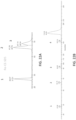
- the second antigen binding region targets a T cell specific antigen (e.g., CD3, CD4, or CD8) to recruit T cell to attack cancer with the cancer specific antigen ( FIG. 28 ).
- a T cell specific antigen e.g., CD3, CD4, or CD8
- cancer specific antigen refers to antigens that are specifically expressed on cancer cell surfaces. These antigens can be used to identify tumor cells. Normal cells rarely express cancer specific antigens.
- Some exemplary cancer specific antigens include, e.g., CD20, PSA, PSCA, PD-L1, Her2, Her3, Her1, ⁇ -Catenin, CD19, CEACAM3, EGFR, c-Met, EPCAM, PSMA, CD40, MUC1, and IGF1R, etc.
- PSA are primarily expressed on prostate cancer cells
- Her2 are primarily expressed on breast cancer cells.
- bispecific antibodies When multiple bispecific antibodies are presented on a target cancer cells (e.g., in a cluster) and bridge the interaction between cancer cell and T cell, these bispecific antibodies can trigger T-cell signaling though CD3 in a multivalent fashion, and the activated T cells will then kill the target cancer cells.
- the disclosure provides bispecific antibody or antigen-binding fragment thereof comprising two heavy chain variable regions and two light chain variable regions, wherein the first heavy chain variable region comprises a sequence that is at least 80%, 85%, 90%, 91%, 92%, 93%, 94%, 95%, 96%, 97%, 98%,or 99% identical to SEQ ID NO: 1, the second heavy chain variable region comprises a sequence that is at least 80%, 85%, 90%, 91%, 92%, 93%, 94%, 95%, 96%, 97%, 98%, or 99% identical to SEQ ID NO: 2, and the first and the second light chain variable regions comprise a sequence that is at least 80%, 85%, 90%, 91%, 92%, 93%, 94%, 95%, 96%, 97%, 98%, or 99% identical to SEQ ID NO: 3.
- the bispecific antibody or antigen or antigen-binding fragment thereof can also be made by the following methods:
- VHa-VLc cannot bind to the first antigen with a desired affinity, additional steps can be performed. For example, if VLc is at least 80% identical to VLa, a new common light chain can be designed. In some examples that are not claimed as such, the process starts with VLa, and the amino acids can be mutated to the amino acid in VLc based on the methods described herein (e.g., based on the 3D structure of VLa and VLc).
- the heavy chains which each contain one variable domain (or variable region, VH) and multiple constant domains (or constant regions), bind to one another via disulfide bonding within their constant domains to form the "stem" of the antibody.
- the light chains which each contain one variable domain (or variable region, VL) and one constant domain (or constant region), each bind to one heavy chain via disulfide binding.
- the variable region of each light chain is aligned with the variable region of the heavy chain to which it is bound.
- the variable regions of both the light chains and heavy chains contain three hypervariable regions sandwiched between more conserved framework regions (FR).
- CDRs complementary determining regions
- the four framework regions largely adopt a beta-sheet conformation and the CDRs form loops connecting, and in some cases forming part of, the beta-sheet structure.
- the CDRs in each chain are held in close proximity by the framework regions and, with the CDRs from the other chain, contribute to the formation of the antigen-binding region.
- the antigen binding fragment can form a part of a chimeric antigen receptor (CAR).
- the chimeric antigen receptor are fusions of single-chain variable fragments (scFv) as described herein, fused to CD3-zeta transmembrane- and endodomain.
- the chimeric antigen receptor also comprises intracellular signaling domains from various costimulatory protein receptors (e.g., CD28, 41BB, ICOS).
- the chimeric antigen receptor comprises multiple signaling domains, e.g., CD3z-CD28-41BB or CD3z-CD28-OX40, to increase potency.
- the disclosure further provides cells (e.g., T cells) that express the chimeric antigen receptors as described herein.
- the antibodies or antigen-binding fragments thereof can bind to two different antigens or two different epitopes.
- the antibodies or antigen-binding fragments thereof can comprises one, two, or three heavy chain variable region CDRs selected from Table 1, Table 2, Table 11 and Table 12. In some examples that are not claimed as such, the antibodies or antigen-binding fragments thereof can comprises one, two, or three light chain variable region CDRs selected from Table 3, Table 13 and Table 14.
- the antibodies can have a heavy chain variable region (VH) comprising complementarity determining regions (CDRs) 1, 2, 3, wherein the CDR1 region comprises or consists of an amino acid sequence that is at least 80%, 85%, 90%, or 95% identical to a selected VH CDR1 amino acid sequence, the CDR2 region comprises or consists of an amino acid sequence that is at least 80%, 85%, 90%, or 95% identical to a selected VH CDR2 amino acid sequence, and the CDR3 region comprises or consists of an amino acid sequence that is at least 80%, 85%, 90%, or 95% identical to a selected VH CDR3 amino acid sequence, and a light chain variable region (VL) comprising CDRs 1, 2, 3, wherein the CDR1 region comprises or consists of an amino acid sequence that is at least 80%, 85%, 90%, or 95% identical to a selected VL CDR1 amino acid sequence, the CDR2 region comprises or consists of an amino acid sequence that is at least consists of VL CDR1 amino acid
- the antibody or an antigen-binding fragment described herein can contain a heavy chain variable domain containing one, two, or three of the CDRs selected from Table 1, Table 2, Table 11 and Table 12 with zero, one or two amino acid insertions, deletions, or substitutions.
- the antibody or an antigen-binding fragment described herein can contain a light chain variable domain containing one, two, or three of the CDRs selected from Table 3, Table 13 and Table 14 with zero, one or two amino acid insertions, deletions, or substitutions.
- the insertions, deletions, and substitutions can be within the CDR sequence, or at one or both terminal ends of the CDR sequence.
- Multimerization of antibodies may be accomplished through natural aggregation of antibodies or through chemical or recombinant linking techniques known in the art. For example, some percentage of purified antibody preparations (e.g., purified IgG1 molecules) spontaneously form protein aggregates containing antibody homodimers and other higher-order antibody multimers.
- purified antibody preparations e.g., purified IgG1 molecules
- any of the antibodies or antigen-binding fragments described herein may be conjugated to a stabilizing molecule (e.g., a molecule that increases the half-life of the antibody or antigen-binding fragment thereof in a subject or in solution).
- stabilizing molecules include: a polymer (e.g., a polyethylene glycol) or a protein (e.g., serum albumin, such as human serum albumin).
- the conjugation of a stabilizing molecule can increase the half-life or extend the biological activity of an antibody or an antigen-binding fragment in vitro (e.g., in tissue culture or when stored as a pharmaceutical composition) or in vivo (e.g., in a human).
- the antibodies or antigen-binding fragments (e.g., bispecific antibodies) described herein can be conjugated to a therapeutic agent.
- the antibody-drug conjugate comprising the antibody or antigen-binding fragment thereof can covalently or non-covalently bind to a therapeutic agent.
- the therapeutic agent is a cytotoxic or cytostatic agent (e.g., cytochalasin B, gramicidin D, ethidium bromide, emetine, mitomycin, etoposide, tenoposide, vincristine, vinblastine, colchicin, doxorubicin, daunorubicin, dihydroxy anthracin, maytansinoids such as DM-1 and DM-4, dione, mitoxantrone, mithramycin, actinomycin D, 1-dehydrotestosterone, glucocorticoids, procaine, tetracaine, lidocaine, propranolol, puromycin, epirubicin, and cyclophosphamide and analogs).
- cytotoxic or cytostatic agent e.g., cytochalasin B, gramicidin D, ethidium bromide, emetine, mitomycin, etoposide, tenoposide,
- the antibodies or antigen-binding fragments thereof can increase immune response.
- the antibodies or antigen-binding fragments thereof as described herein can increase immune response, activity or number of T cells (e.g., CD3+ cells, CD8+ and/or CD4+ cells) by at least 10%, 20%, 30%, 40%, 50%, 60%, 70%, 80%, 90%, 100%, 2 folds, 3 folds, 5 folds, 10 folds, or 20 folds .
- the antibodies or antigen-binding fragments thereof as described herein can decrease the activity or number of T cells by at least 10%, 20%, 30%, 40%, 50%, 60%, 70%, 80%, 90%, 100%, 2 folds, 3 folds, 5 folds, 10 folds, or 20 folds.
- the antibodies or antigen-binding fragments thereof as described herein does not induce immune response in normal cells (e.g., non-tumor cells) or in the absence of tumor cells.
- the antibodies or antigen-binding fragments thereof can bind to CD3.
- the antibodies or antigen-binding fragments thereof described herein can recruit T cells to a target cell.
- the antibody specifically binds to an antigen (e.g., a human protein, a monkey protein, and/or a mouse protein) with a dissociation rate (koff) of less than 0.1 s -1 , less than 0.01 s -1 , less than 0.001 s -1 , less than 0.0001 s -1 , or less than 0.00001 s -1 .
- an antigen e.g., a human protein, a monkey protein, and/or a mouse protein
- Koff dissociation rate
- the antibodies or antigen binding fragments as described herein has a Tm D2 greater than 60, 61, 62, 63, 64, 65, 66, 67, 68, 69, 70, 71, 72, 73, 74, 75, 76, 77, 78, 79, 80, 81, 82, 83, 84, 85, 86, 87, 88, 89, 90, 91, 92, 93, 94, or 95 °C.
- Tagg266 or Tagg473 is less than 60, 61, 62, 63, 64, 65, 66, 67, 68, 69, 70, 71, 72, 73, 74, 75, 76, 77, 78, 79, 80, 81, 82, 83, 84, 85, 86, 87, 88, 89, 90, 91, 92, 93, 94, or 95 °C.
- the antibody has a tumor growth inhibition percentage (TGI%) that is greater than 10%, 20%, 30%, 40%, 50%, 60%, 70%, 80%, 90%, 100%, 110%, 120%, 130%, 140%, 150%, 160%, 170%, 180%, 190%, or 200%. In some examples that are not claimed as such, the antibody has a tumor growth inhibition percentage that is less than 60%, 70%, 80%, 90%, 100%, 110%, 120%, 130%, 140%, 150%, 160%, 170%, 180%, 190%, or 200%.
- TGI% tumor growth inhibition percentage
- the antibodies or antigen binding fragments can increase complement dependent cytotoxicity (CDC) by at least 10%, 20%, 30%, 40%, 50%, 60%, 70%, 80%, 90%, 100%, 2 folds, 3 folds, 5 folds, 10 folds, or 20 folds.
- CDC complement dependent cytotoxicity
- the antibodies or antigen binding fragments can increase phagocytosis rate by at least 10%, 20%, 30%, 40%, 50%, 60%, 70%, 80%, 90%, 100%, 2 folds, 3 folds, 5 folds, 10 folds, or 20 folds.
- the present disclosure also provides recombinant vectors (e.g., an expression vectors) that include an isolated polynucleotide disclosed herein (e.g., a polynucleotide that encodes a polypeptide disclosed herein), host cells into which are introduced the recombinant vectors (i.e., such that the host cells contain the polynucleotide and/or a vector comprising the polynucleotide), and the production of recombinant antibody polypeptides or fragments thereof by recombinant techniques.
- recombinant vectors e.g., an expression vectors
- an isolated polynucleotide disclosed herein e.g., a polynucleotide that encodes a polypeptide disclosed herein
- host cells into which are introduced the recombinant vectors (i.e., such that the host cells contain the polynucleotide and/or a vector comprising the polynucleotide)
- Non-limiting bacterial promoters suitable for use include the E. coli lacI and lacZ promoters, the T3 and T7 promoters, the gpt promoter, the lambda PR and PL promoters and the trp promoter.
- Suitable eukaryotic promoters include the CMV immediate early promoter, the HSV thymidine kinase promoter, the early and late SV40 promoters, the promoters of retroviral LTRs, such as those of the Rous sarcoma virus (RSV), and metallothionein promoters, such as the mouse metallothionein-I promoter.
- yeast Saccharomyces cerevisiae a number of vectors containing constitutive or inducible promoters such as alpha factor, alcohol oxidase, and PGH may be used.
- constitutive or inducible promoters such as alpha factor, alcohol oxidase, and PGH.
- Enhancers are cis-acting elements of DNA, usually about from 10 to 300 bp that act to increase transcriptional activity of a promoter in a given host cell-type.
- enhancers include the SV40 enhancer, which is located on the late side of the replication origin at base pairs 100 to 270, the cytomegalovirus early promoter enhancer, the polyoma enhancer on the late side of the replication origin, and adenovirus enhancers.
- secretion signals may be incorporated into the expressed polypeptide.
- the signals may be endogenous to the polypeptide or they may be heterologous signals.
- the polypeptide (e.g., antibody) can be expressed in a modified form, such as a fusion protein (e.g., a GST-fusion) or with a histidine-tag, and may include not only secretion signals, but also additional heterologous functional regions. For instance, a region of additional amino acids, particularly charged amino acids, may be added to the N-terminus of the polypeptide to improve stability and persistence in the host cell, during purification, or during subsequent handling and storage. Also, peptide moieties can be added to the polypeptide to facilitate purification. Such regions can be removed prior to final preparation of the polypeptide. The addition of peptide moieties to polypeptides to engender secretion or excretion, to improve stability and to facilitate purification, among others, are familiar and routine techniques in the art.
- the disclosure also provides a nucleic acid sequence that has a homology of at least 1%, 2%, 3%, 4%, 5%, 6%, 7%, 8%, 9%, 10%, 15%, 20%, 25%, 30%, 35%, 40%, 45%, 50%, 55%, 60%, 65%, 70%, 75%, 80%, 85%, 90%, 91%, 92%, 93%, 94%, 95%, 96%, 97%, 98%, 99% to any nucleotide sequence as described herein, and an amino acid sequence that has a homology of at least 1%, 2%, 3%, 4%, 5%, 6%, 7%, 8%, 9%, 10%, 15%, 20%, 25%, 30%, 35%, 40%, 45%, 50%, 55%, 60%, 65%, 70%, 75%, 80%, 85%, 90%, 91%, 92%, 93%, 94%, 95%, 96%, 97%, 98%, 99% to any amino acid sequence as described herein.
- the disclosure relates to nucleotide sequences encoding any peptides that are described herein, or any amino acid sequences that are encoded by any nucleotide sequences as described herein.
- the nucleic acid sequence is less than 10, 20, 30, 40, 50, 60, 70, 80, 90, 100, 110, 120, 130, 150, 200, 250, 300, 350, 400, 500, or 600 nucleotides.
- the amino acid sequence is less than 5, 6, 7, 8, 9, 10, 20, 30, 40, 50, 60, 70, 80, 90, 100, 110, 120, 130, 140, 150, 160, 170, 180, 190, 200, 250, 300, 350, or 400 amino acid residues.
- the amino acid sequence (i) comprises an amino acid sequence; or (ii) consists of an amino acid sequence, wherein the amino acid sequence is any one of the sequences as described herein.
- the sequences are aligned for optimal comparison purposes (e.g., gaps can be introduced in one or both of a first and a second amino acid or nucleic acid sequence for optimal alignment and non-homologous sequences can be disregarded for comparison purposes).
- the length of a reference sequence aligned for comparison purposes is at least 80% of the length of the reference sequence, and in some examples that are not claimed as such is at least 90%, 95%, or 100%.
- the amino acid residues or nucleotides at corresponding amino acid positions or nucleotide positions are then compared.
- An immunogen typically is used to prepare antibodies by immunizing a suitable subject (e.g., human or transgenic animal expressing at least one human immunoglobulin locus).
- a suitable subject e.g., human or transgenic animal expressing at least one human immunoglobulin locus.
- An appropriate immunogenic preparation can contain, for example, a recombinantly-expressed or a chemically-synthesized polypeptide.
- the preparation can further include an adjuvant, such as Freund's complete or incomplete adjuvant, or a similar immunostimulatory agent.
- antibody-producing cells can be obtained from the subject and used to prepare monoclonal antibodies by standard techniques, such as the hybridoma technique originally described by Kohler et al. (Nature 256:495-497, 1975 ), the human B cell hybridoma technique ( Kozbor et al., Immunol. Today 4:72, 1983 ), the EBV-hybridoma technique ( Cole et al., Monoclonal Antibodies and Cancer Therapy, Alan R. Liss, Inc., pp. 77-96, 1985 ), or trioma techniques.
- standard techniques such as the hybridoma technique originally described by Kohler et al. (Nature 256:495-497, 1975 ), the human B cell hybridoma technique ( Kozbor et al., Immunol. Today 4:72, 1983 ), the EBV-hybridoma technique ( Cole et al., Monoclonal Antibodies and Cancer Therapy, Alan R. Liss, Inc., pp.
- Hybridoma cells producing a monoclonal antibody are detected by screening the hybridoma culture supernatants for antibodies that bind the polypeptide or epitope of interest, e.g., using a standard ELISA assay.
- Phage display can be used to optimize antibody sequences with desired binding affinities.
- a gene encoding single chain Fv (comprising VH or VL) can be inserted into a phage coat protein gene, causing the phage to "display" the scFv on its outside while containing the gene for the protein on its inside, resulting in a connection between genotype and phenotype.
- These displaying phages can then be screened against target antigens, in order to detect interaction between the displayed antigen binding sites and the target antigen.
- large libraries of proteins can be screened and amplified in a process called in vitro selection, and antibodies sequences with desired binding affinities can be obtained.
- Human and humanized antibodies include antibodies having variable and constant regions derived from (or having the same amino acid sequence as those derived from) human germline immunoglobulin sequences. Human antibodies may include amino acid residues not encoded by human germline immunoglobulin sequences (e.g., mutations introduced by random or site-specific mutagenesis in vitro or by somatic mutation in vivo), for example in the CDRs.
- a humanized antibody typically has a human framework (FR) grafted with non-human CDRs.
- FR human framework
- a humanized antibody has one or more amino acid sequence introduced into it from a source which is non-human. These non-human amino acid residues are often referred to as "import" residues, which are typically taken from an “import” variable domain. Humanization can be essentially performed by e.g., substituting rodent CDRs or CDR sequences for the corresponding sequences of a human antibody.
- humanized antibodies are chimeric antibodies wherein substantially less than an intact human V domain has been substituted by the corresponding sequence from a non-human species.
- humanized antibodies are typically mouse antibodies in which some CDR residues and some FR residues are substituted by residues from analogous sites in human antibodies.
- humanized antibodies can be prepared by a process of analysis of the parental sequences and various conceptual humanized products using three-dimensional models of the parental and humanized sequences.
- Three-dimensional immunoglobulin models are commonly available and are familiar to those skilled in the art.
- Computer programs are available which illustrate and display probable three-dimensional conformational structures of selected candidate immunoglobulin sequences. Inspection of these displays permits analysis of the likely role of the residues in the functioning of the candidate immunoglobulin sequence, i.e., the analysis of residues that influence the ability of the candidate immunoglobulin to bind its antigen.
- FR residues can be selected and combined from the recipient and import sequences so that the desired antibody characteristic, such as increased affinity for the target antigen(s), is achieved.
- Identity or homology with respect to an original sequence is usually the percentage of amino acid residues present within the candidate sequence that are identical with a sequence present within the human, humanized, or chimeric antibody or fragment, after aligning the sequences and introducing gaps, if necessary, to achieve the maximum percent sequence identity, and not considering any conservative substitutions as part of the sequence identity.
- a covalent modification can be made to the antibody or antigen-binding fragment thereof.
- These covalent modifications can be made by chemical or enzymatic synthesis, or by enzymatic or chemical cleavage.
- Other types of covalent modifications of the antibody or antibody fragment are introduced into the molecule by reacting targeted amino acid residues of the antibody or fragment with an organic derivatization agent that is capable of reacting with selected side chains or the N- or C-terminal residues.
- antibody variants having a carbohydrate structure that lacks fucose attached (directly or indirectly) to an Fc region.
- the amount of fucose in such antibody may be from 1% to 80%, from 1% to 65%, from 5% to 65% or from 20% to 40%.
- the amount of fucose is determined by calculating the average amount of fucose within the sugar chain at Asn297, relative to the sum of all glycostructures attached to Asn 297 (e.g. complex, hybrid and high mannose structures) as measured by MALDI-TOF mass spectrometry, as described in WO 2008/077546 , for example.
- Asn297 refers to the asparagine residue located at about position 297 in the Fc region (Eu numbering of Fc region residues; or position 314 in Kabat numbering); however, Asn297 may also be located about ⁇ 3 amino acids upstream or downstream of position 297, i.e., between positions 294 and 300, due to minor sequence variations in antibodies. Such fucosylation variants may have improved ADCC function.
- the Fc region of the antibody can be further engineered to replace the Asparagine at position 297 with Alanine (N297A).
- the Fc region of the antibodies was further engineered to replace the serine at position 228 (EU numbering) of IgG4 with proline (S228P).
- S228P serine at position 228
- a detailed description regarding S228 mutation is described, e.g., in Silva et al. "The S228P mutation prevents in vivo and in vitro IgG4 Fab-arm exchange as demonstrated using a combination of novel quantitative immunoassays and physiological matrix preparation.” Journal of Biological Chemistry 290.9 (2015): 5462-5469 .
- one or more amino acid residues in the CH3 portion of the IgG are substituted.
- one heavy chain has one or more of the following substitutions Y349C and T366W.
- the other heavy chain can have one or more the following substitutions E356C, T366S, L368A, and Y407V.
- a substitution (-ppcpScp-->-ppcpPcp-) can also be introduced at the hinge regions of both substituted IgG.
- one heavy chain has a T366Y (knob) substitution
- the other heavy chain has a Y407T (hole) substation.
- the amino acid residue at Kabat numbering position 83 is lysine, arginine, or histidine.
- the amino acid residues at one or more of the positions 1, 6, 43, 81, and 105 is aspartic acid or glutamic acid.
- the amino acid residues at one or more of the positions 13 and 105 is aspartic acid or glutamic acid. In some examples that are not claimed as such, the amino acid residues at one or more of the positions 13 and 42 (Kabat numbering) is lysine, arginine, histidine, or glycine.
- cancer refers to cells having the capacity for autonomous growth, i.e., an abnormal state or condition characterized by rapidly proliferating cell growth.
- the term is meant to include all types of cancerous growths or oncogenic processes, metastatic tissues or malignantly transformed cells, tissues, or organs, irrespective of histopathologic type or stage of invasiveness.
- tumor refers to cancerous cells, e.g., a mass of cancerous cells.
- compositions and methods disclosed herein can be used for treatment of patients at risk for a cancer.
- Patients with cancer can be identified with various methods known in the art.
- a typical daily dosage of an effective amount of an antibody is 0.01 mg/kg to 100 mg/kg. In some examples that are not claimed as such, the dosage can be less than 100 mg/kg, 10 mg/kg, 9 mg/kg, 8 mg/kg, 7 mg/kg, 6 mg/kg, 5 mg/kg, 4 mg/kg, 3 mg/kg, 2 mg/kg, 1 mg/kg, 0.5 mg/kg, or 0.1 mg/kg.
- the one or more additional therapeutic agents can be administered to the subject prior to, or after administering the at least one antibody, antigen-binding antibody fragment, antibody-drug conjugate, or pharmaceutical composition (e.g., any of the antibodies, antigen-binding antibody fragments, or pharmaceutical compositions described herein).
- the additional therapeutic agent can comprise one or more inhibitors selected from the group consisting of an inhibitor of HER3, an inhibitor of LSD1, an inhibitor of MDM2, an inhibitor of BCL2, an inhibitor of CHK1, an inhibitor of activated hedgehog signaling pathway, and an agent that selectively degrades the estrogen receptor.
- carboplatin, nab-paclitaxel, paclitaxel, cisplatin, pemetrexed, gemcitabine, FOLFOX, or FOLFIRI are administered to the subject.
- the additional therapeutic agent is an anti-OX40 antibody, an anti-PD-1 antibody, an anti-PD-L1 antibody, an anti-PD-L2 antibody, an anti-LAG-3 antibody, an anti-TIGIT antibody, an anti-BTLA antibody, an anti-CTLA-4 antibody, or an anti-GITR antibody.
- compositions are formulated to be compatible with their intended route of administration (e.g., intravenous, intraarterial, intramuscular, intradermal, subcutaneous, or intraperitoneal).
- the compositions can include a sterile diluent (e.g., sterile water or saline), a fixed oil, polyethylene glycol, glycerine, propylene glycol or other synthetic solvents, antibacterial or antifungal agents, such as benzyl alcohol or methyl parabens, chlorobutanol, phenol, ascorbic acid, thimerosal, and the like, antioxidants, such as ascorbic acid or sodium bisulfite, chelating agents, such as ethylenediaminetetraacetic acid, buffers, such as acetates, citrates, or phosphates, and isotonic agents, such as sugars (e.g., dextrose), polyalcohols (e.g., mannitol or sorbitol),
- Liposomal suspensions can also be used as pharmaceutically acceptable carriers (see, e.g., U.S. Patent No. 4,522,811 ).
- Preparations of the compositions can be formulated and enclosed in ampules, disposable syringes, or multiple dose vials. Where required (as in, for example, injectable formulations), proper fluidity can be maintained by, for example, the use of a coating, such as lecithin, or a surfactant.
- Absorption of the antibody or antigen-binding fragment thereof can be prolonged by including an agent that delays absorption (e.g., aluminum monostearate and gelatin).
- controlled release can be achieved by implants and microencapsulated delivery systems, which can include biodegradable, biocompatible polymers (e.g., ethylene vinyl acetate, polyanhydrides, polyglycolic acid, collagen, polyorthoesters, and polylactic acid; Alza Corporation and Nova Pharmaceutical, Inc.).
- biodegradable, biocompatible polymers e.g., ethylene vinyl acetate, polyanhydrides, polyglycolic acid, collagen, polyorthoesters, and polylactic acid; Alza Corporation and Nova Pharmaceutical, Inc.
- compositions containing one or more of any of the antibodies, antigen-binding fragments, antibody-drug conjugates described herein can be formulated for parenteral (e.g., intravenous, intraarterial, intramuscular, intradermal, subcutaneous, or intraperitoneal) administration in dosage unit form (i.e., physically discrete units containing a predetermined quantity of active compound for ease of administration and uniformity of dosage).
- parenteral e.g., intravenous, intraarterial, intramuscular, intradermal, subcutaneous, or intraperitoneal
- dosage unit form i.e., physically discrete units containing a predetermined quantity of active compound for ease of administration and uniformity of dosage.
- Toxicity and therapeutic efficacy of compositions can be determined by standard pharmaceutical procedures in cell cultures or experimental animals (e.g., monkeys).
- Agents that exhibit high therapeutic indices are preferred. Where an agent exhibits an undesirable side effect, care should be taken to minimize potential damage (i.e., reduce unwanted side effects).
- Toxicity and therapeutic efficacy can be determined by other standard pharmaceutical procedures.
- a therapeutically effective amount of the one or more (e.g., one, two, three, or four) antibodies or antigen-binding fragments thereof (e.g., any of the antibodies or antibody fragments described herein) will be an amount that treats the disease in a subject (e.g., kills cancer cells ) in a subject (e.g., a human subject identified as having cancer), or a subject identified as being at risk of developing the disease (e.g., a subject who has previously developed cancer but now has been cured), decreases the severity, frequency, and/or duration of one or more symptoms of a disease in a subject (e.g., a human).
- any of the antibodies or antigen-binding fragments described herein can be determined by a health care professional or veterinary professional using methods known in the art, as well as by the observation of one or more symptoms of disease in a subject (e.g., a human). Certain factors may influence the dosage and timing required to effectively treat a subject (e.g., the severity of the disease or disorder, previous treatments, the general health and/or age of the subject, and the presence of other diseases).
- relatively low doses are administered at first, and the attending health care professional or veterinary professional (in the case of therapeutic application) or a researcher (when still working at the development stage) can subsequently and gradually increase the dose until an appropriate response is obtained.
- the specific dose level for any particular subject will depend upon a variety of factors including the activity of the specific compound employed, the age, body weight, general health, gender, and diet of the subject, the time of administration, the route of administration, the rate of excretion, and the half-life of the antibody or antibody fragment in vivo.
- compositions can be included in a container, pack, or dispenser together with instructions for administration.
- the disclosure also provides methods of manufacturing the antibodies or antigen binding fragments thereof, or antibody-drug conjugates for various uses as described herein.
- ADCC Antibody-dependent Cellular Cytotoxicity
- PBMC peripheral blood mononuclear cell
- EXAMPLE 2 A bispecific antibody that binds to CD20 and CD3
- a bispecific antibody was designed to bind to CD20 and CD3.
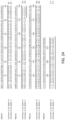
- This bispecific antibody has two common light chains (with identical sequence) and two different heavy chains. The sequences for the variable regions of the two heavy chains and the common light chain are shown below.
- the 3D (3-dimentional) isoelectric point (PI) for Rituximab Fv (VH+VL) is 9.9, and the 3D PI for 12F6 Fv is 9.8.
- the 3D PI for VHa + common VL is 10.0, and the 3D PI for VHb + common VL is 9.1.
- the PI change does not affect the binding affinity to CD20, and the second antigen binding region still maintains a reasonable binding affinity to CD3.
- the mutations in the two VH chains are shown in the tables below. Table 4.
- Modified amino acids in VH (CD3) Kabat numbering Amino acid in parental Amino acid after the modification 1 Q E 6 Q E 43 Q E 81 Q E 105 Q E
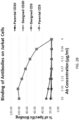
- FIGS. 1A and 1B antigen binding ability of redesigned Rituximab (antibody A) and redesigned 12F6 (antibody B) were tested respectively.
- FIG. 1A shows that redesigned Rituximab (antibody A) binds to CD20 positive Raji cells.
- Antibody A is a homodimer with two VHa (SEQ ID NO: 1) and two common VL (SEQ IN NO: 3).
- FIG. 1B shows that redesigned 12F6 (antibody B) binds to CD3 positive Jurkart cells.
- Antibody B is also a homodimer with two VHb (SEQ ID NO: 2) and two common VL (SEQ ID NO: 3).
- This imbalanced bispecific antibody also includes the following features: (1) CD3 binding affinity was significantly reduced to increase safety; (2) ADCC/CDC effector functions were maintained in order to broaden clinical implementation; (3) Biochemical and biophysical features of the CD20 binding arm and the CD3 binding arm were differentiated to enable better isolation of bispecific antibody during downstream purification process.
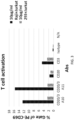
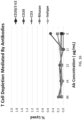
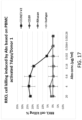
- PBMC peripheral blood mononuclear cells
- CD3+ Jurkat cells were used as the control. Only the highest antibody concentration (10 ug/ml) was tested.
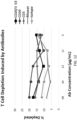
- Pre-T cell activation results are shown in FIG. 8 .
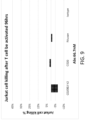
- Post T cell activation (4 days) results are shown in FIG. 9 .
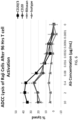
- Post T cell activation (7 days) results are shown in FIG. 10 .
- the number of Jurkat cells in the group treated with PBS was set as the baseline. Thus, the killing percentage would be zero if the number of Jurkat cells is equivalent to the group treated with PBS. The killing percentage would be negative if the number of cells is more than the group treated with PBS.
- EXAMPLE 7 Induction of complement dependent cytotoxicity
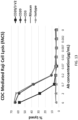
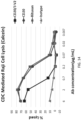
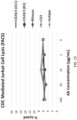
- CD20/CD3 BsMab Since the CD20/CD3 BsMab has an arm binding to CD20 with a high affinity, experiments were performed to test whether the CD20-arm-binding is sufficient to induce complement dependent cytotoxicity.
- the antibodies were incubated with human complement enriched serum and CD20+ Raji cells.
- Imbalanced CD20/CD3 BsMab had reduced CDC efficacy compared to Rituximab and CD20 homodimer antibody.
- Detection results by FACS (7AAD) is shown in FIG. 13 .
- Detection results by calcein release is shown in FIG. 14 .
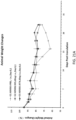
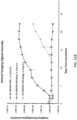
- Raji cells, human PBMC, and imbalanced CD20/CD3 BsMab were mixed and injected into mice through intravenous administration. These Raji cells were labeled by luciferase.
- Each mouse (B-NDG, Biocytogen, Beijing, Cat# 201811808) in the treatment group received 5 ⁇ 10 5 Raji cells, 2.5 ⁇ 10 6 human PBMC cells, and 60 ⁇ g of antibodies. The mice were imaged to track the Raji cell depletion at day 0, day2, day 3 and every three days after day 3.
- mice were imaged for the first time 15 minutes post intravenous (i.v.) injection, and then were imaged at day 2, day 3 and every 3 days after day 3.
- i.v. intravenous
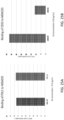
- FIG. 21A shows that the CD20/CD3 BsMab and Rituximab did not have obvious toxic effects.
- FIG. 21B shows that that both CD20/CD3 BsMab and Rituximab had tumor inhibitory effects, and Rituximab were not as effective as the CD20/CD3 BsMab. The difference in tumor inhibitory effects was observed starting from day 16 post injection.
- Tagg it is the temperature at which SLS starts to detect aggregation.
- Tagg266 measures SLS at 266 nm, which is more sensitive and suitable to detect smaller particles.
- Tagg473 measures at 473 nm, and better to detect larger particles.
- 3D PI for Avelumab Fv (VH+VL) is 9.4, and 3D PI for anti-CD55 Fv is 9.8.
- 3D PI for VHa + common VL is 9.9
- 3D PI for VHb + common VL is 9.3.
- the mutations for the two VH chains are shown in the tables below. Table 9. Modified amino acids in VH (PD-L1) Kabat numbering Amino acid in parental Amino acid after the modification 13 Q E 105 Q E Table 10. Modified amino acids in VH (CD55) Kabat numbering Amino acid in parental Amino acid after the modification 13 Q K 42 D G
- the bispecific antibody should bind to the cancer specific antigen (PD-L1) with high affinity, and the other arm of the bispecific antibody should bind to the cancer-associated antigen (CD55) with low affinity, the antibodies (CD55 v1 and PD-L1 v1) did not satisfy this requirement.
- a second version of the bispecific antibody was designed to bind to PD-L1 and CD55 (PD-L1/CD55 BsMab v2).
- the VHa and the VHb for the second version of the bispecific antibody are identical to the VHa and the VHb of the first version of the bispecific antibody.
- the common light chain was redesigned based on the methods described herein. The sequence for the redesigned common light chain is shown below: Common VL2 (Re-designed from SEQ ID NO: 6):
- VHa for PD-L1 heavy chain CDR-H1 CDR-H2 CDR-H3 Kabat SYIMM SIYPSGGITFYADTVKG IKLGTVTTVDY (SEQ ID NO: 41) (SEQ ID NO: 42) (SEQ ID NO: 43) Chothia GFTFSSY (SEQ ID NO: 44) YPSGGI (SEQ ID NO: 45) IKLGTVTTVDY (SEQ ID NO: 46) Table 12.
- Anti-PD-L1 homodimer IgG (PD-L1 v2) containing the designed VH sequence (SEQ ID NO: 4) and the common VL2 sequence (SEQ ID NO: 7) had similar binding affinity as compared to the parental anti-PD-L1 antibody (PD-L1 wt) ( FIG. 25A ).
- Anti-CD55 homodimer IgG (CD55 v2) containing the designed VH sequence (SEQ ID NO: 5) and the common VL2 sequence (SEQ ID NO: 7) had weaker binding affinity as compared to the parental anti-CD55 antibody (CD55 wt) ( FIG. 25B ).
- the binding affinities for antibodies with the re-designed sequences meet the requirements, and PD-L1/CD55 BsMab v2 was selected for further experiments.
- the PD-L1/CD55 BsMab v2 has two common light chains (kappa chain) comprising SEQ ID NO: 7, one IgG1 heavy chain comprising SEQ ID NO: 4 and one IgG1 heavy chain comprising SEQ ID NO: 5.
- the heavy chain for PD-L1 has Y407T mutation (EU numbering)
- the IgG1 heavy chain for CD55 has a T366Y (EU numbering) mutation.
- both anti-PD-L1 (PD-L1 wt) and anti-CD55 (CD55 wt) parental antibodies can induce CDC.
- PD-L1/CD55 bispecific antibody v1 had much lower CDC as compared to the parental anti-PD-L1 antibody (PD-L1 wt) and the parental anti-CD55 antibody (CD55 wt).
- PD-L1/CD55 bispecific antibody v2 had much higher CDC than the first version, the parental anti-PD-L1 antibody (PD-L1 wt) and the parental anti-CD55 antibody (CD55 wt).
- the CDC effect of PD-L1/CD55 bispecific antibody v2 was about 4.5 folds higher than the CDC efficacy of the first version of bispecific antibody.
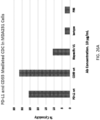
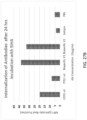
- MDA231 cells were used in the first internalization experiment ( FIG. 27A ) and SIHA cells were used in the second internalization experiment ( FIG. 27B ).
- Cells were mixed with 20 ug/ml antibodies, and incubated at 37°C for 30 minutes. Then pHrodo-labeled secondary antibody was added and incubated with the cells at 37°C for 24 hours. Cells were then harvested and analyzed on FACS.
- the CD55 expression is higher than PD-L1 in SIHA cells.
- Both PD-L1/CD55 bispecific antibodies v1 and v2 can induce better internalization than the parental anti-PD-L1 antibody and the parental anti-CD55 antibody.
- the PD-L1/CD55 BsMab v2 should have better efficacy/safety balance in vivo, and should be safer than PD-L1/CD55 BsMab v1.
- PD-L1/CD55 BsMab can induce target cancer cell death at three different levels: (1) block PD1/PD-L1 interaction; (2) induce PD-L1 internalization; 3) When conjugated to a drug, the antibody drug conjugate can kill the cancer cell.
Landscapes
- Health & Medical Sciences (AREA)
- Chemical & Material Sciences (AREA)
- Immunology (AREA)
- Organic Chemistry (AREA)
- Life Sciences & Earth Sciences (AREA)
- General Health & Medical Sciences (AREA)
- Medicinal Chemistry (AREA)
- Genetics & Genomics (AREA)
- Biochemistry (AREA)
- Molecular Biology (AREA)
- Biophysics (AREA)
- Proteomics, Peptides & Aminoacids (AREA)
- Pharmacology & Pharmacy (AREA)
- Animal Behavior & Ethology (AREA)
- Public Health (AREA)
- Veterinary Medicine (AREA)
- General Chemical & Material Sciences (AREA)
- Nuclear Medicine, Radiotherapy & Molecular Imaging (AREA)
- Chemical Kinetics & Catalysis (AREA)
- Engineering & Computer Science (AREA)
- Bioinformatics & Cheminformatics (AREA)
- Oncology (AREA)
- Hematology (AREA)
- Epidemiology (AREA)
- Peptides Or Proteins (AREA)
- Biomedical Technology (AREA)
- Zoology (AREA)
- Biotechnology (AREA)
- General Engineering & Computer Science (AREA)
- Wood Science & Technology (AREA)
- Microbiology (AREA)
- Plant Pathology (AREA)
- Physics & Mathematics (AREA)
- Medicines Containing Antibodies Or Antigens For Use As Internal Diagnostic Agents (AREA)
- Preparation Of Compounds By Using Micro-Organisms (AREA)
- Micro-Organisms Or Cultivation Processes Thereof (AREA)
- Medicinal Preparation (AREA)
- Mycology (AREA)
- Medicines That Contain Protein Lipid Enzymes And Other Medicines (AREA)
Priority Applications (1)
| Application Number | Priority Date | Filing Date | Title |
|---|---|---|---|
| EP22160823.5A EP4088783A1 (en) | 2017-08-01 | 2018-08-01 | Bispecific antibodies and uses thereof |
Applications Claiming Priority (3)
| Application Number | Priority Date | Filing Date | Title |
|---|---|---|---|
| US201762539970P | 2017-08-01 | 2017-08-01 | |
| US201862654112P | 2018-04-06 | 2018-04-06 | |
| PCT/US2018/044778 WO2019028125A1 (en) | 2017-08-01 | 2018-08-01 | Bispecific antibodies and uses thereof |
Related Child Applications (2)
| Application Number | Title | Priority Date | Filing Date |
|---|---|---|---|
| EP22160823.5A Division-Into EP4088783A1 (en) | 2017-08-01 | 2018-08-01 | Bispecific antibodies and uses thereof |
| EP22160823.5A Division EP4088783A1 (en) | 2017-08-01 | 2018-08-01 | Bispecific antibodies and uses thereof |
Publications (4)
| Publication Number | Publication Date |
|---|---|
| EP3661555A1 EP3661555A1 (en) | 2020-06-10 |
| EP3661555A4 EP3661555A4 (en) | 2021-07-14 |
| EP3661555C0 EP3661555C0 (en) | 2025-04-16 |
| EP3661555B1 true EP3661555B1 (en) | 2025-04-16 |
Family
ID=65233048
Family Applications (2)
| Application Number | Title | Priority Date | Filing Date |
|---|---|---|---|
| EP18840836.3A Active EP3661555B1 (en) | 2017-08-01 | 2018-08-01 | Bispecific antibodies and uses thereof |
| EP22160823.5A Pending EP4088783A1 (en) | 2017-08-01 | 2018-08-01 | Bispecific antibodies and uses thereof |
Family Applications After (1)
| Application Number | Title | Priority Date | Filing Date |
|---|---|---|---|
| EP22160823.5A Pending EP4088783A1 (en) | 2017-08-01 | 2018-08-01 | Bispecific antibodies and uses thereof |
Country Status (7)
| Country | Link |
|---|---|
| US (4) | US12049517B2 (enExample) |
| EP (2) | EP3661555B1 (enExample) |
| JP (3) | JP2020533016A (enExample) |
| KR (2) | KR102794369B1 (enExample) |
| CN (3) | CN111356477B (enExample) |
| ES (1) | ES3023158T3 (enExample) |
| WO (1) | WO2019028125A1 (enExample) |
Families Citing this family (11)
| Publication number | Priority date | Publication date | Assignee | Title |
|---|---|---|---|---|
| CN111356477B (zh) * | 2017-08-01 | 2024-08-30 | Ab工作室有限公司 | 双特异性抗体及其用途 |
| US12463463B2 (en) | 2019-01-28 | 2025-11-04 | Ab Therapeutics, Inc. | Bispecific antibodies and uses thereof |
| WO2020177717A1 (zh) * | 2019-03-04 | 2020-09-10 | 上海一宸医药科技有限公司 | 新型双特异性结合分子及其药物偶联物 |
| WO2020198683A1 (en) * | 2019-03-28 | 2020-10-01 | Ab Studio Inc. | Heteromultimeric proteins and methods of use thereof |
| PE20230160A1 (es) * | 2019-12-17 | 2023-02-01 | Pfizer | Anticuerpos especificos para cd47, pd-l1 y sus usos |
| CN112062855B (zh) * | 2020-08-26 | 2024-08-30 | 北京天诺健成医药科技有限公司 | 一种含有衔接器的药物治疗剂的开发和应用 |
| WO2022100694A1 (zh) * | 2020-11-12 | 2022-05-19 | 迈威(上海)生物科技股份有限公司 | 抗体及其制备方法 |
| CN112430271B (zh) * | 2020-11-13 | 2021-09-03 | 武汉滨会生物科技股份有限公司 | 一种双特异性单链抗体及应用 |
| CN118369340A (zh) * | 2021-11-25 | 2024-07-19 | 盛禾(中国)生物制药有限公司 | 一种双特异性抗原结合蛋白 |
| CN116143948A (zh) * | 2023-02-14 | 2023-05-23 | 中国药科大学 | 一种以Jurkat为平台的靶向CD24和PD-L1双特异性嵌合抗原受体CAR及其应用 |
| WO2024255756A1 (zh) * | 2023-06-13 | 2024-12-19 | 南京维立志博生物科技股份有限公司 | 基于共同轻链产生双特异性抗体的方法 |
Citations (1)
| Publication number | Priority date | Publication date | Assignee | Title |
|---|---|---|---|---|
| WO2014189973A2 (en) * | 2013-05-20 | 2014-11-27 | Genentech, Inc. | Anti-transferrin receptor antibodies and methods of use |
Family Cites Families (46)
| Publication number | Priority date | Publication date | Assignee | Title |
|---|---|---|---|---|
| US4769330A (en) | 1981-12-24 | 1988-09-06 | Health Research, Incorporated | Modified vaccinia virus and methods for making and using the same |
| US4603112A (en) | 1981-12-24 | 1986-07-29 | Health Research, Incorporated | Modified vaccinia virus |
| US4522811A (en) | 1982-07-08 | 1985-06-11 | Syntex (U.S.A.) Inc. | Serial injection of muramyldipeptides and liposomes enhances the anti-infective activity of muramyldipeptides |
| GB8508845D0 (en) | 1985-04-04 | 1985-05-09 | Hoffmann La Roche | Vaccinia dna |
| US4676980A (en) | 1985-09-23 | 1987-06-30 | The United States Of America As Represented By The Secretary Of The Department Of Health And Human Services | Target specific cross-linked heteroantibodies |
| US4777127A (en) | 1985-09-30 | 1988-10-11 | Labsystems Oy | Human retrovirus-related products and methods of diagnosing and treating conditions associated with said retrovirus |
| GB8702816D0 (en) | 1987-02-07 | 1987-03-11 | Al Sumidaie A M K | Obtaining retrovirus-containing fraction |
| WO1989001973A2 (en) | 1987-09-02 | 1989-03-09 | Applied Biotechnology, Inc. | Recombinant pox virus for immunization against tumor-associated antigens |
| AP129A (en) | 1988-06-03 | 1991-04-17 | Smithkline Biologicals S A | Expression of retrovirus gag protein eukaryotic cells |
| EP1645635A3 (en) | 1989-08-18 | 2010-07-07 | Oxford Biomedica (UK) Limited | Replication defective recombinant retroviruses expressing a palliative |
| US5731168A (en) | 1995-03-01 | 1998-03-24 | Genentech, Inc. | Method for making heteromultimeric polypeptides |
| CN100522999C (zh) * | 2002-02-14 | 2009-08-05 | 免疫医疗公司 | 抗cd20抗体及其融合蛋白和使用方法 |
| JP2005538738A (ja) * | 2002-09-16 | 2005-12-22 | エリューシス セラピューティクス,インコーポレーテッド | 抗原結合性抗体フラグメントに架橋された抗cr1抗体を含む二重特異性分子 |
| WO2004065611A1 (ja) * | 2003-01-21 | 2004-08-05 | Chugai Seiyaku Kabushiki Kaisha | 抗体の軽鎖スクリーニング方法 |
| CA2522586C (en) | 2003-05-31 | 2017-02-21 | Micromet Ag | Pharmaceutical compositions comprising bispecific anti-cd3, anti-cd19 antibody constructs for the treatment of b-cell related disorders |
| EP1876236B9 (en) * | 2005-04-08 | 2015-02-25 | Chugai Seiyaku Kabushiki Kaisha | Antibody substituting for function of blood coagulation factor viii |
| US8394926B2 (en) | 2005-12-21 | 2013-03-12 | Micromet Ag | Pharmaceutical compositions with resistance to soluble CEA |
| EP2009101B1 (en) * | 2006-03-31 | 2017-10-25 | Chugai Seiyaku Kabushiki Kaisha | Antibody modification method for purifying bispecific antibody |
| EP2037961B1 (en) * | 2006-06-14 | 2015-11-11 | MacroGenics, Inc. | Methods for the treatment of autoimmune disorders using monoclonal antibodies with reduced toxicity |
| US20080226635A1 (en) | 2006-12-22 | 2008-09-18 | Hans Koll | Antibodies against insulin-like growth factor I receptor and uses thereof |
| MX368932B (es) * | 2009-06-26 | 2019-10-22 | Regeneron Pharma | Anticuerpos biespecificos facilmente aislados con formato de inmunoglobulina original. |
| EP2785375B1 (en) * | 2011-11-28 | 2020-07-22 | Merck Patent GmbH | Anti-pd-l1 antibodies and uses thereof |
| PL2794905T3 (pl) | 2011-12-20 | 2020-11-02 | Medimmune, Llc | Zmodyfikowane polipeptydy dla rusztowań przeciwciał dwuswoistych |
| ES2812849T3 (es) | 2012-02-24 | 2021-03-18 | Abbvie Stemcentrx Llc | Anticuerpos anti-DLL3 y procedimientos de utilización de los mismos |
| WO2013163427A1 (en) | 2012-04-25 | 2013-10-31 | The United States Of America, As Represented By The Secretary, Department Of Health & Human Services | Antibodies to treat hiv-1 infection |
| AU2013259276B2 (en) * | 2012-05-10 | 2018-03-22 | Bioatla Llc | Multi-specific monoclonal antibodies |
| CA2878843A1 (en) | 2012-07-13 | 2014-01-16 | Zymeworks Inc. | Bispecific asymmetric heterodimers comprising anti-cd3 constructs |
| AU2013302696B9 (en) * | 2012-08-14 | 2018-08-09 | Ibc Pharmaceuticals, Inc. | T-cell redirecting bispecific antibodies for treatment of disease |
| UA128182C2 (uk) | 2012-11-13 | 2024-05-01 | Біонтех Аґ | Агенти для лікування експресуючих клаудин ракових захворювань |
| MX2016000272A (es) * | 2013-07-12 | 2016-08-03 | Zymeworks Inc | Construcciones de unión a los antígenos cd19 y cd3 biespecificos. |
| RU2016115866A (ru) * | 2013-10-11 | 2017-11-16 | Ф. Хоффманн-Ля Рош Аг | Мультиспецифические антитела с обменянными доменами и одинаковыми вариабельными доменами легкой цепи |
| JP6510532B2 (ja) | 2013-12-20 | 2019-05-08 | エフ・ホフマン−ラ・ロシュ・アクチェンゲゼルシャフト | 二重特異性her2抗体及び使用方法 |
| TWI680138B (zh) | 2014-01-23 | 2019-12-21 | 美商再生元醫藥公司 | 抗pd-l1之人類抗體 |
| CA2938933A1 (en) * | 2014-03-12 | 2015-09-17 | Prothena Biosciences Limited | Anti-laminin4 antibodies specific for lg4-5 |
| TWI701042B (zh) * | 2014-03-19 | 2020-08-11 | 美商再生元醫藥公司 | 用於腫瘤治療之方法及抗體組成物 |
| EA201790871A1 (ru) | 2014-11-11 | 2017-11-30 | Амуникс Оперэйтинг Инк. | Нацеленные конъюгатные композиции xten и способы их получения |
| CN116333153A (zh) | 2014-11-26 | 2023-06-27 | 森科股份有限公司 | 结合cd3和肿瘤抗原的异二聚体抗体 |
| CN110658340B (zh) * | 2015-01-08 | 2023-10-31 | 苏州康宁杰瑞生物科技有限公司 | 具有共同轻链的双特异性抗体或抗体混合物 |
| CN114478792A (zh) * | 2015-01-08 | 2022-05-13 | 根马布股份公司 | 针对cd3和cd20的双特异性抗体 |
| EP3242889A4 (en) * | 2015-01-09 | 2018-09-26 | Immunomedics, Inc. | Tumor therapy by bispecific antibody pretargeting |
| US10464999B2 (en) * | 2015-01-28 | 2019-11-05 | Prothena Biosciences Limited | Anti-transthyretin antibodies |
| EP3345928B1 (en) * | 2015-07-10 | 2020-06-24 | Merus N.V. | Human cd3 binding antibody |
| US11034765B2 (en) | 2015-10-02 | 2021-06-15 | Symphogen A/S | Anti-PD-1 antibodies and compositions |
| KR20180085800A (ko) * | 2015-12-07 | 2018-07-27 | 젠코어 인코포레이티드 | Cd3 및 psma에 결합하는 이종이합체성 항체 |
| WO2017106462A1 (en) * | 2015-12-18 | 2017-06-22 | Biogen Ma Inc. | Bispecific antibody platform |
| CN111356477B (zh) * | 2017-08-01 | 2024-08-30 | Ab工作室有限公司 | 双特异性抗体及其用途 |
-
2018
- 2018-08-01 CN CN201880062833.7A patent/CN111356477B/zh active Active
- 2018-08-01 ES ES18840836T patent/ES3023158T3/es active Active
- 2018-08-01 WO PCT/US2018/044778 patent/WO2019028125A1/en not_active Ceased
- 2018-08-01 EP EP18840836.3A patent/EP3661555B1/en active Active
- 2018-08-01 CN CN202111079150.2A patent/CN113896797B/zh active Active
- 2018-08-01 CN CN202411097878.1A patent/CN119019564A/zh active Pending
- 2018-08-01 US US16/635,878 patent/US12049517B2/en active Active
- 2018-08-01 EP EP22160823.5A patent/EP4088783A1/en active Pending
- 2018-08-01 KR KR1020207006195A patent/KR102794369B1/ko active Active
- 2018-08-01 KR KR1020257011307A patent/KR20250052490A/ko active Pending
- 2018-08-01 JP JP2020529100A patent/JP2020533016A/ja active Pending
-
2021
- 2021-08-10 US US17/398,853 patent/US11440972B2/en active Active
- 2021-08-10 US US17/398,807 patent/US11566083B2/en active Active
-
2023
- 2023-06-28 JP JP2023105890A patent/JP7685771B2/ja active Active
-
2024
- 2024-06-14 US US18/743,295 patent/US20240336702A1/en active Pending
-
2025
- 2025-04-25 JP JP2025072790A patent/JP2025111661A/ja active Pending
Patent Citations (1)
| Publication number | Priority date | Publication date | Assignee | Title |
|---|---|---|---|---|
| WO2014189973A2 (en) * | 2013-05-20 | 2014-11-27 | Genentech, Inc. | Anti-transferrin receptor antibodies and methods of use |
Non-Patent Citations (1)
| Title |
|---|
| CAI WENYAN ET AL: "Biological activity validation of a computationally designed Rituximab/CD3 T cell engager targeting CD20+ cancers with multiple mechanisms of action", ANTIBODY THERAPEUTICS, vol. 4, no. 4, 8 October 2021 (2021-10-08), pages 228 - 241, XP055893319, DOI: 10.1093/abt/tbab024 * |
Also Published As
| Publication number | Publication date |
|---|---|
| US20220017641A1 (en) | 2022-01-20 |
| EP3661555A4 (en) | 2021-07-14 |
| CN111356477B (zh) | 2024-08-30 |
| JP7685771B2 (ja) | 2025-05-30 |
| US20240336702A1 (en) | 2024-10-10 |
| US12049517B2 (en) | 2024-07-30 |
| KR20250052490A (ko) | 2025-04-18 |
| EP3661555C0 (en) | 2025-04-16 |
| US11440972B2 (en) | 2022-09-13 |
| WO2019028125A1 (en) | 2019-02-07 |
| CN119019564A (zh) | 2024-11-26 |
| EP3661555A1 (en) | 2020-06-10 |
| ES3023158T3 (en) | 2025-05-30 |
| JP2020533016A (ja) | 2020-11-19 |
| JP2025111661A (ja) | 2025-07-30 |
| JP2023123725A (ja) | 2023-09-05 |
| KR102794369B1 (ko) | 2025-04-15 |
| CN113896797B (zh) | 2023-05-09 |
| US20220025072A1 (en) | 2022-01-27 |
| US20210206882A1 (en) | 2021-07-08 |
| EP4088783A1 (en) | 2022-11-16 |
| CN113896797A (zh) | 2022-01-07 |
| CN111356477A (zh) | 2020-06-30 |
| KR20200041897A (ko) | 2020-04-22 |
| US11566083B2 (en) | 2023-01-31 |
Similar Documents
| Publication | Publication Date | Title |
|---|---|---|
| US11566083B2 (en) | Bispecific antibodies and uses thereof | |
| AU2018409906B2 (en) | Anti-PD-1 antibodies and uses thereof | |
| US20240002539A1 (en) | Multispecific antibodies and uses thereof | |
| US20240109963A1 (en) | Multispecific antibodies and uses thereof | |
| WO2021098851A1 (en) | Anti-ctla4/ox40 bispecific antibodies and uses thereof | |
| CA3197463A1 (en) | Anti-pd-1/cd40 bispecific antibodies and uses thereof | |
| US12463463B2 (en) | Bispecific antibodies and uses thereof | |
| WO2021041300A2 (en) | Bispecific antibodies and uses thereof | |
| WO2023143597A1 (en) | Anti-ctla4/ox40 bispecific antibodies and uses thereof | |
| HK40064279A (en) | Bispecific antibodies and uses thereof | |
| HK40033364A (en) | Bispecific antibodies and uses thereof | |
| HK40064279B (zh) | 双特异性抗体及其用途 | |
| HK40033364B (zh) | 双特异性抗体及其用途 |
Legal Events
| Date | Code | Title | Description |
|---|---|---|---|
| STAA | Information on the status of an ep patent application or granted ep patent |
Free format text: STATUS: THE INTERNATIONAL PUBLICATION HAS BEEN MADE |
|
| PUAI | Public reference made under article 153(3) epc to a published international application that has entered the european phase |
Free format text: ORIGINAL CODE: 0009012 |
|
| STAA | Information on the status of an ep patent application or granted ep patent |
Free format text: STATUS: REQUEST FOR EXAMINATION WAS MADE |
|
| 17P | Request for examination filed |
Effective date: 20200302 |
|
| AK | Designated contracting states |
Kind code of ref document: A1 Designated state(s): AL AT BE BG CH CY CZ DE DK EE ES FI FR GB GR HR HU IE IS IT LI LT LU LV MC MK MT NL NO PL PT RO RS SE SI SK SM TR |
|
| AX | Request for extension of the european patent |
Extension state: BA ME |
|
| DAV | Request for validation of the european patent (deleted) | ||
| DAX | Request for extension of the european patent (deleted) | ||
| RIC1 | Information provided on ipc code assigned before grant |
Ipc: A61P 35/00 20060101AFI20210308BHEP Ipc: C07K 16/28 20060101ALI20210308BHEP Ipc: C07K 16/46 20060101ALI20210308BHEP Ipc: A61P 35/02 20060101ALI20210308BHEP |
|
| REG | Reference to a national code |
Ref country code: DE Ref legal event code: R079 Free format text: PREVIOUS MAIN CLASS: A61K0039395000 Ipc: A61P0035000000 Ref document number: 602018081183 Country of ref document: DE |
|
| A4 | Supplementary search report drawn up and despatched |
Effective date: 20210615 |
|
| RIC1 | Information provided on ipc code assigned before grant |
Ipc: A61P 35/00 20060101AFI20210609BHEP Ipc: C07K 16/28 20060101ALI20210609BHEP Ipc: C07K 16/46 20060101ALI20210609BHEP Ipc: A61P 35/02 20060101ALI20210609BHEP |
|
| STAA | Information on the status of an ep patent application or granted ep patent |
Free format text: STATUS: EXAMINATION IS IN PROGRESS |
|
| 17Q | First examination report despatched |
Effective date: 20220225 |
|
| GRAP | Despatch of communication of intention to grant a patent |
Free format text: ORIGINAL CODE: EPIDOSNIGR1 |
|
| STAA | Information on the status of an ep patent application or granted ep patent |
Free format text: STATUS: GRANT OF PATENT IS INTENDED |
|
| INTG | Intention to grant announced |
Effective date: 20241205 |
|
| RAP1 | Party data changed (applicant data changed or rights of an application transferred) |
Owner name: AB THERAPEUTICS, INC. |
|
| GRAS | Grant fee paid |
Free format text: ORIGINAL CODE: EPIDOSNIGR3 |
|
| GRAA | (expected) grant |
Free format text: ORIGINAL CODE: 0009210 |
|
| STAA | Information on the status of an ep patent application or granted ep patent |
Free format text: STATUS: THE PATENT HAS BEEN GRANTED |
|
| AK | Designated contracting states |
Kind code of ref document: B1 Designated state(s): AL AT BE BG CH CY CZ DE DK EE ES FI FR GB GR HR HU IE IS IT LI LT LU LV MC MK MT NL NO PL PT RO RS SE SI SK SM TR |
|
| REG | Reference to a national code |
Ref country code: GB Ref legal event code: FG4D |
|
| REG | Reference to a national code |
Ref country code: CH Ref legal event code: EP Ref country code: DE Ref legal event code: R096 Ref document number: 602018081183 Country of ref document: DE |
|
| REG | Reference to a national code |
Ref country code: IE Ref legal event code: FG4D |
|
| REG | Reference to a national code |
Ref country code: ES Ref legal event code: FG2A Ref document number: 3023158 Country of ref document: ES Kind code of ref document: T3 Effective date: 20250530 |
|
| U01 | Request for unitary effect filed |
Effective date: 20250505 |
|
| U07 | Unitary effect registered |
Designated state(s): AT BE BG DE DK EE FI FR IT LT LU LV MT NL PT RO SE SI Effective date: 20250509 |
|
| PGFP | Annual fee paid to national office [announced via postgrant information from national office to epo] |
Ref country code: GB Payment date: 20250612 Year of fee payment: 8 |
|
| U20 | Renewal fee for the european patent with unitary effect paid |
Year of fee payment: 8 Effective date: 20250709 |
|
| PGFP | Annual fee paid to national office [announced via postgrant information from national office to epo] |
Ref country code: ES Payment date: 20250905 Year of fee payment: 8 |
|
| PG25 | Lapsed in a contracting state [announced via postgrant information from national office to epo] |
Ref country code: NO Free format text: LAPSE BECAUSE OF FAILURE TO SUBMIT A TRANSLATION OF THE DESCRIPTION OR TO PAY THE FEE WITHIN THE PRESCRIBED TIME-LIMIT Effective date: 20250716 Ref country code: GR Free format text: LAPSE BECAUSE OF FAILURE TO SUBMIT A TRANSLATION OF THE DESCRIPTION OR TO PAY THE FEE WITHIN THE PRESCRIBED TIME-LIMIT Effective date: 20250717 |
|
| PG25 | Lapsed in a contracting state [announced via postgrant information from national office to epo] |
Ref country code: PL Free format text: LAPSE BECAUSE OF FAILURE TO SUBMIT A TRANSLATION OF THE DESCRIPTION OR TO PAY THE FEE WITHIN THE PRESCRIBED TIME-LIMIT Effective date: 20250416 |
|
| PG25 | Lapsed in a contracting state [announced via postgrant information from national office to epo] |
Ref country code: HR Free format text: LAPSE BECAUSE OF FAILURE TO SUBMIT A TRANSLATION OF THE DESCRIPTION OR TO PAY THE FEE WITHIN THE PRESCRIBED TIME-LIMIT Effective date: 20250416 |
|
| PGFP | Annual fee paid to national office [announced via postgrant information from national office to epo] |
Ref country code: CH Payment date: 20250901 Year of fee payment: 8 |
|
| PG25 | Lapsed in a contracting state [announced via postgrant information from national office to epo] |
Ref country code: RS Free format text: LAPSE BECAUSE OF FAILURE TO SUBMIT A TRANSLATION OF THE DESCRIPTION OR TO PAY THE FEE WITHIN THE PRESCRIBED TIME-LIMIT Effective date: 20250716 |
|
| PG25 | Lapsed in a contracting state [announced via postgrant information from national office to epo] |
Ref country code: IS Free format text: LAPSE BECAUSE OF FAILURE TO SUBMIT A TRANSLATION OF THE DESCRIPTION OR TO PAY THE FEE WITHIN THE PRESCRIBED TIME-LIMIT Effective date: 20250816 |