EP3645573B1 - Novel t cell receptors and immune therapy using the same - Google Patents
Novel t cell receptors and immune therapy using the same Download PDFInfo
- Publication number
- EP3645573B1 EP3645573B1 EP18737546.4A EP18737546A EP3645573B1 EP 3645573 B1 EP3645573 B1 EP 3645573B1 EP 18737546 A EP18737546 A EP 18737546A EP 3645573 B1 EP3645573 B1 EP 3645573B1
- Authority
- EP
- European Patent Office
- Prior art keywords
- seq
- tcr
- cdr1
- cdr3
- variable domain
- Prior art date
- Legal status (The legal status is an assumption and is not a legal conclusion. Google has not performed a legal analysis and makes no representation as to the accuracy of the status listed.)
- Active
Links
Images












Classifications
-
- C—CHEMISTRY; METALLURGY
- C07—ORGANIC CHEMISTRY
- C07K—PEPTIDES
- C07K16/00—Immunoglobulins [IG], e.g. monoclonal or polyclonal antibodies
- C07K16/18—Immunoglobulins [IG], e.g. monoclonal or polyclonal antibodies against material from animals or humans
- C07K16/26—Immunoglobulins [IG], e.g. monoclonal or polyclonal antibodies against material from animals or humans against hormones ; against hormone releasing or inhibiting factors
-
- A—HUMAN NECESSITIES
- A61—MEDICAL OR VETERINARY SCIENCE; HYGIENE
- A61K—PREPARATIONS FOR MEDICAL, DENTAL OR TOILETRY PURPOSES
- A61K40/00—Cellular immunotherapy
- A61K40/10—Cellular immunotherapy characterised by the cell type used
- A61K40/11—T-cells, e.g. tumour infiltrating lymphocytes [TIL] or regulatory T [Treg] cells; Lymphokine-activated killer [LAK] cells
-
- A—HUMAN NECESSITIES
- A61—MEDICAL OR VETERINARY SCIENCE; HYGIENE
- A61K—PREPARATIONS FOR MEDICAL, DENTAL OR TOILETRY PURPOSES
- A61K40/00—Cellular immunotherapy
- A61K40/30—Cellular immunotherapy characterised by the recombinant expression of specific molecules in the cells of the immune system
- A61K40/32—T-cell receptors [TCR]
-
- A—HUMAN NECESSITIES
- A61—MEDICAL OR VETERINARY SCIENCE; HYGIENE
- A61K—PREPARATIONS FOR MEDICAL, DENTAL OR TOILETRY PURPOSES
- A61K40/00—Cellular immunotherapy
- A61K40/40—Cellular immunotherapy characterised by antigens that are targeted or presented by cells of the immune system
- A61K40/41—Vertebrate antigens
- A61K40/42—Cancer antigens
-
- C—CHEMISTRY; METALLURGY
- C07—ORGANIC CHEMISTRY
- C07K—PEPTIDES
- C07K14/00—Peptides having more than 20 amino acids; Gastrins; Somatostatins; Melanotropins; Derivatives thereof
- C07K14/435—Peptides having more than 20 amino acids; Gastrins; Somatostatins; Melanotropins; Derivatives thereof from animals; from humans
- C07K14/705—Receptors; Cell surface antigens; Cell surface determinants
- C07K14/70503—Immunoglobulin superfamily
- C07K14/7051—T-cell receptor (TcR)-CD3 complex
-
- C—CHEMISTRY; METALLURGY
- C07—ORGANIC CHEMISTRY
- C07K—PEPTIDES
- C07K14/00—Peptides having more than 20 amino acids; Gastrins; Somatostatins; Melanotropins; Derivatives thereof
- C07K14/81—Protease inhibitors
- C07K14/8107—Endopeptidase (E.C. 3.4.21-99) inhibitors
- C07K14/811—Serine protease (E.C. 3.4.21) inhibitors
- C07K14/8135—Kazal type inhibitors, e.g. pancreatic secretory inhibitor, ovomucoid
-
- C—CHEMISTRY; METALLURGY
- C07—ORGANIC CHEMISTRY
- C07K—PEPTIDES
- C07K16/00—Immunoglobulins [IG], e.g. monoclonal or polyclonal antibodies
- C07K16/18—Immunoglobulins [IG], e.g. monoclonal or polyclonal antibodies against material from animals or humans
- C07K16/28—Immunoglobulins [IG], e.g. monoclonal or polyclonal antibodies against material from animals or humans against receptors, cell surface antigens or cell surface determinants
- C07K16/2803—Immunoglobulins [IG], e.g. monoclonal or polyclonal antibodies against material from animals or humans against receptors, cell surface antigens or cell surface determinants against the immunoglobulin superfamily
- C07K16/2833—Immunoglobulins [IG], e.g. monoclonal or polyclonal antibodies against material from animals or humans against receptors, cell surface antigens or cell surface determinants against the immunoglobulin superfamily against MHC-molecules, e.g. HLA-molecules
-
- C—CHEMISTRY; METALLURGY
- C07—ORGANIC CHEMISTRY
- C07K—PEPTIDES
- C07K16/00—Immunoglobulins [IG], e.g. monoclonal or polyclonal antibodies
- C07K16/38—Immunoglobulins [IG], e.g. monoclonal or polyclonal antibodies against protease inhibitors of peptide structure
-
- C—CHEMISTRY; METALLURGY
- C12—BIOCHEMISTRY; BEER; SPIRITS; WINE; VINEGAR; MICROBIOLOGY; ENZYMOLOGY; MUTATION OR GENETIC ENGINEERING
- C12N—MICROORGANISMS OR ENZYMES; COMPOSITIONS THEREOF; PROPAGATING, PRESERVING, OR MAINTAINING MICROORGANISMS; MUTATION OR GENETIC ENGINEERING; CULTURE MEDIA
- C12N15/00—Mutation or genetic engineering; DNA or RNA concerning genetic engineering, vectors, e.g. plasmids, or their isolation, preparation or purification; Use of hosts therefor
- C12N15/09—Recombinant DNA-technology
- C12N15/63—Introduction of foreign genetic material using vectors; Vectors; Use of hosts therefor; Regulation of expression
- C12N15/79—Vectors or expression systems specially adapted for eukaryotic hosts
- C12N15/85—Vectors or expression systems specially adapted for eukaryotic hosts for animal cells
-
- C—CHEMISTRY; METALLURGY
- C12—BIOCHEMISTRY; BEER; SPIRITS; WINE; VINEGAR; MICROBIOLOGY; ENZYMOLOGY; MUTATION OR GENETIC ENGINEERING
- C12N—MICROORGANISMS OR ENZYMES; COMPOSITIONS THEREOF; PROPAGATING, PRESERVING, OR MAINTAINING MICROORGANISMS; MUTATION OR GENETIC ENGINEERING; CULTURE MEDIA
- C12N5/00—Undifferentiated human, animal or plant cells, e.g. cell lines; Tissues; Cultivation or maintenance thereof; Culture media therefor
- C12N5/06—Animal cells or tissues; Human cells or tissues
- C12N5/0602—Vertebrate cells
- C12N5/0634—Cells from the blood or the immune system
- C12N5/0636—T lymphocytes
-
- C—CHEMISTRY; METALLURGY
- C07—ORGANIC CHEMISTRY
- C07K—PEPTIDES
- C07K2317/00—Immunoglobulins specific features
- C07K2317/30—Immunoglobulins specific features characterized by aspects of specificity or valency
-
- C—CHEMISTRY; METALLURGY
- C07—ORGANIC CHEMISTRY
- C07K—PEPTIDES
- C07K2317/00—Immunoglobulins specific features
- C07K2317/30—Immunoglobulins specific features characterized by aspects of specificity or valency
- C07K2317/32—Immunoglobulins specific features characterized by aspects of specificity or valency specific for a neo-epitope on a complex, e.g. antibody-antigen or ligand-receptor
-
- C—CHEMISTRY; METALLURGY
- C07—ORGANIC CHEMISTRY
- C07K—PEPTIDES
- C07K2317/00—Immunoglobulins specific features
- C07K2317/50—Immunoglobulins specific features characterized by immunoglobulin fragments
- C07K2317/56—Immunoglobulins specific features characterized by immunoglobulin fragments variable (Fv) region, i.e. VH and/or VL
- C07K2317/565—Complementarity determining region [CDR]
-
- C—CHEMISTRY; METALLURGY
- C07—ORGANIC CHEMISTRY
- C07K—PEPTIDES
- C07K2317/00—Immunoglobulins specific features
- C07K2317/60—Immunoglobulins specific features characterized by non-natural combinations of immunoglobulin fragments
- C07K2317/62—Immunoglobulins specific features characterized by non-natural combinations of immunoglobulin fragments comprising only variable region components
-
- C—CHEMISTRY; METALLURGY
- C12—BIOCHEMISTRY; BEER; SPIRITS; WINE; VINEGAR; MICROBIOLOGY; ENZYMOLOGY; MUTATION OR GENETIC ENGINEERING
- C12N—MICROORGANISMS OR ENZYMES; COMPOSITIONS THEREOF; PROPAGATING, PRESERVING, OR MAINTAINING MICROORGANISMS; MUTATION OR GENETIC ENGINEERING; CULTURE MEDIA
- C12N15/00—Mutation or genetic engineering; DNA or RNA concerning genetic engineering, vectors, e.g. plasmids, or their isolation, preparation or purification; Use of hosts therefor
- C12N15/09—Recombinant DNA-technology
- C12N15/63—Introduction of foreign genetic material using vectors; Vectors; Use of hosts therefor; Regulation of expression
- C12N15/79—Vectors or expression systems specially adapted for eukaryotic hosts
- C12N15/85—Vectors or expression systems specially adapted for eukaryotic hosts for animal cells
- C12N15/8509—Vectors or expression systems specially adapted for eukaryotic hosts for animal cells for producing genetically modified animals, e.g. transgenic
- C12N2015/8518—Vectors or expression systems specially adapted for eukaryotic hosts for animal cells for producing genetically modified animals, e.g. transgenic expressing industrially exogenous proteins, e.g. for pharmaceutical use, human insulin, blood factors, immunoglobulins, pseudoparticles
Definitions
- the present invention pertains to antigen recognizing constructs against tumor associated antigens (TAA), in particular the TAA Serine protease inhibitor Kazal-type 2 (SPINK2).
- TAA tumor associated antigens
- SPINK2 TAA Serine protease inhibitor Kazal-type 2
- the invention in particular provides novel T cell receptor (TCR) based molecules which are selective and specific for the tumor expressed antigen of the invention.
- TCR of the invention, and SPINK2 binding fragments derived therefrom are of use for the diagnosis, treatment and prevention of SPINK2 expressing cancerous diseases.
- nucleic acids encoding the antigen recognizing constructs of the invention, vectors comprising these nucleic acids, recombinant cells expressing the antigen recognizing constructs and pharmaceutical compositions comprising the compounds of the invention.
- Serine protease inhibitor Kazal-type 2 (SPINK2) is also known as acrosin-trypsin inhibitor, and is a protein that in humans is encoded by the SPINK2 gene.
- the encoded protein acts as a trypsin and acrosin inhibitor in the genital tract and is localized in the spermatozoa.
- the protein has been associated with the progression of lymphomas.
- Alternative splicing results in multiple transcript variants.
- T-cell based immunotherapy targets represent peptide epitopes derived from tumor-associated or tumor-specific proteins, which are presented by molecules of the major histocompatibility complex (MHC).
- MHC major histocompatibility complex
- TAAs tumor associated antigens
- TAAs can be peptides derived from all protein classes, such as enzymes, receptors, transcription factors, etc. which are expressed and, as compared to unaltered cells of the same origin, usually up-regulated in cells of the respective tumor.
- T-cells capable of specifically recognizing and destroying tumor cells.
- the isolation of T-cells from tumor-infiltrating cell populations or from peripheral blood suggests that such cells play an important role in natural immune defense against cancer.
- CD8-positive T-cells in particular, which recognize class I molecules of the major histocompatibility complex (MHC)-bearing peptides of usually 8 to 10 amino acid residues derived from proteins or defective ribosomal products (DRiPs) located in the cytosol, play an important role in this response.
- MHC-molecules of the human are also designated as human leukocyte-antigens (HLA).
- MHC-molecules There are two classes of MHC-molecules, MHC class I and MHC class II. Complexes of peptide and MHC class I are recognized by CD8-positive T-cells bearing the appropriate T-cell receptor (TCR), whereas complexes of peptide and MHC class II molecules are recognized by CD4-positive-helper-T-cells bearing the appropriate TCR. Since both types of response, CD8 and CD4 dependent, contribute jointly and synergistically to the anti-tumor effect, the identification and characterization of tumor-associated antigens and corresponding T cell receptors is important in the development of cancer immunotherapies such as vaccines and cell therapies.
- TCR T-cell receptor
- CD4-positive-helper-T-cells bearing the appropriate TCR. Since both types of response, CD8 and CD4 dependent, contribute jointly and synergistically to the anti-tumor effect, the identification and characterization of tumor-associated antigens and corresponding T cell receptors is important in the development of cancer immunotherapies such as vaccines
- TAAs are a starting point for the development of a T-cell based therapy including but not limited to tumor vaccines and cell therapies.
- T cells Approximately 90 percent of peripheral blood T cells express a TCR consisting of an ⁇ polypeptide and a ⁇ polypeptide. A small percentage of T cells (about 5% of total T cells) have been shown to express a TCR consisting of a ⁇ polypeptide and a ⁇ polypeptide.
- ⁇ T cells are found at their highest abundance in the gut mucosa, within a population of lymphocytes known as intraepithelial lymphocytes (IELs). The antigenic molecules that activate ⁇ T cells are still widely unknown. However, ⁇ T cells are not MHC restricted and seem to be able to recognize whole proteins rather than requiring peptides to be presented by MHC molecules on antigen presenting cells, although some recognize MHC class IB molecules.
- Human Vy9/V62 T cells which constitute the major ⁇ T cell population in peripheral blood, are unique in that they specifically and rapidly respond to a small non-peptidic microbial metabolite, HMB-PP, an isopentenyl pyrophosphate precursor.
- HMB-PP non-peptidic microbial metabolite
- the chains of the T cell antigen receptor of a T cell clone are each composed of a unique combination of domains designated variable (V), [diversity (D),] joining (J), and constant (C).
- V variable
- D [diversity
- J joining
- C constant
- the combination of V, D and J domains of both the alpha and the beta chains or of both the delta and gamma chains participates in antigen recognition in a manner which is uniquely characteristic of that T cell clone and defines a unique binding site, also known as the idiotype of the T cell clone.
- the C domain does not participate in antigen binding.
- a TCR is a heterodimeric cell surface protein of the immunoglobulin super-family, which is associated with invariant proteins of the CD3 complex involved in mediating signal transduction.
- TCRs exist in ⁇ and ⁇ forms, which are structurally similar but have quite distinct anatomical locations and probably functions.
- the extracellular portion of native heterodimeric ⁇ TCR and ⁇ TCR each contain two polypeptides, each of which has a membrane-proximal constant domain, and a membrane-distal variable domain.
- Each of the constant and variable domains includes an intra-chain disulfide bond.
- the variable domains contain the highly polymorphic loops analogous to the complementarity determining regions (CDRs) of antibodies.
- CDRs complementarity determining regions
- TCR will be transduced into central memory T cells or T cells with stem cell characteristics, which may ensure better persistence and function upon transfer.
- TCR-engineered T cells will be infused into cancer patients rendered lymphopenic by chemotherapy or irradiation, allowing efficient engraftment but inhibiting immune suppression.
- WO2017/097699 discloses peptides bound to HLA molecules as targets of TCRs and recites the SPINK2 peptide ALSVLRLAL as binding to HLA-A2.
- TAA in context of the invention relates in particular to the protein SPINK2 and even more preferably to the epitope SPINK2-001 as also disclosed herein elsewhere
- references in the description to methods of treatment refer to the compounds, pharmaceutical compositions and medicaments of the present invention for use in a method for treatment of the human (or animal) body by therapy (or for diagnosis).
- the invention provides an antigen recognizing construct specifically binding to a complex of a SPINK2-001 antigenic peptide of SEQ ID NO. 133 and a HLA-A2 molecule, wherein said antigen recognizing construct is selected from a T cell receptor (TCR) or an antigen-binding fragment thereof or a fusion protein comprising a TCR or an antigen-binding fragment thereof, and comprises
- TCR T cell receptor
- the antigen recognizing construct is a ⁇ / ⁇ T cell receptor (TCR) or an antigen-binding fragment thereof, or a ⁇ / ⁇ TCR or an antigen-binding fragment thereof.
- TCR T cell receptor
- the antigen recognizing construct is a single chain antigen recognizing construct or is composed of at least two amino acid chains.
- the TCR is a soluble TCR.
- the antigen recognizing construct is a fusion protein further comprising an immunoglobulin or portion thereof.
- the antigen recognizing construct comprises a TCR variable domain having at least 80% sequence identity to an amino acid sequence selected from SEQ ID Nos. 4, 10, 16, 22, 28, 34, 40, 46, 52, 58, 64, 70, 76, 82, 88, 94, 100, 106, 112, and 118 and comprising the CDR1, CDR2 and CDR3 of SEQ ID NO: 1, 2 and 3; 7, 8 and 9; 13, 14 and 15; 19, 20 and 21; 25, 26 and 17; 31, 32 and 33; 37, 38 and 39; 43, 44 and 45; 49, 50 and 51; 55, 56 and 57; 61, 62 and 63; 67, 68 or 69, 73, 74 and 75; 79, 80 and 81; 85, 86 and 87; 91, 92 and 93; 97, 98 and 99, 103, 104 and 105; 109, 110 and 111; 115, 116, 117.
- the antigen recognizing construct comprises a modified TCR ⁇ or ⁇ chain, and wherein in the variable domain of the modified TCR ⁇ or ⁇ chain, an amino acid at position 44 according to the IMGT numbering is substituted with another suitable amino acid thereby improving stability and/or pairing of said chains.
- the percentage identity can be determined by the Blast searches supported at the NCBI web site; in particular for amino acid identity, those using BLASTP with the following parameters: Expected threshold 10; Word size: 6; Matrix: BLOSUM62; Gap Costs: Existence: 11, Extension: 1; Neighboring words threshold: 11; Compositional adjustments: Conditional compositional score matrix adjustment.
- CDR1 and CDR2 are found in the variable (V) region of a polypeptide chain, and CDR3 includes some of V, all of diversity (D) and joining (J) regions.
- CDR3 is the most variable and is the main CDR responsible for specifically and selectively recognizing an antigen.
- Native alpha-beta heterodimeric TCRs have an alpha chain and a beta chain.
- Each chain comprises variable, joining and constant regions, and the beta chain also usually contains a short diversity region between the variable and joining regions, but this diversity region is often considered as part of the joining region.
- Each variable region comprises three CDRs (Complementarity Determining Regions) embedded in a framework sequence, one being the hypervariable region named CDR3.
- CDRs Complementarity Determining Regions
- V ⁇ types are referred to in IMGT nomenclature by a unique TRAV number, V ⁇ types are referred to by a unique TRBV number.
- V ⁇ types are referred to by a unique TRBV number.
- Im-MunoGeneTics information system ® Lefranc M-P et al (Nucleic Acids Res. 2015 Jan;43(Database issue):D413-22; and http://www.imgt.org/ ).
- antigen recognizing construct can specifically bind to said antigen, preferably a TAA antigen, more preferably with high avidity, when said antigen is presented by HLA, preferably by HLA-A*02.
- a TCR as antigen recognizing construct, may be considered to have "antigenic specificity" for the TAA, if T cells expressing the TCR and contacted with a TAA presenting HLA secrete at least about 200 pg/ml or more (e.g., 250 pg/ml or more, 300 pg/ml or more, 400 pg/ml or more, 500 pg/ml or more, 600 pg/ml or more, 700 pg/ml or more, 1000 pg ml or more, 2,000 pg/ml or more, 2,500 pg/ml or more, 5,000 pg/ml or more) of interferon ⁇ (IFN- ⁇ ) upon co-culture with target cells pulsed with a low concentration of a TAA antigen, such as the TAA epitopes and antigens provided herein below (e.g., about 10 ⁇ -11 mol/l, 10 ⁇ -10 mol/l, 10 ⁇ -9 mol/
- a TCR may be considered to have "antigenic specificity" for the TAA, if T cells expressing the TCR secrete at least twice as much IFN- ⁇ as the untransduced background level of IFN- ⁇ upon co-culture with target cells pulsed with a low concentration of the TAA antigens.
- a "specificity" as described above can - for example - be analyzed with an ELISA.
- selectivity or “selective recognizing/binding” is understood to refer to the property of an antigen recognizing construct, such as a TCR or antibody, to selectively recognize or bind to preferably only one specific epitope and preferably shows no or substantially no cross-reactivity to another epitope.
- antigen recognizing construct e.g. a TCR
- the antigen recognizing construct according to the invention is preferably selected from an antibody, or derivative or fragment thereof, or a T cell receptor (TCR), or derivative or fragment thereof.
- a derivative or fragment of an antibody or TCR of the invention shall preferably retain the antigen binding/recognizing ability of the parent molecule, in particular its specificity and/or selectivity as explained above. Such binding functionality may be retained by the presence of a CDR3 region as defined herein.
- the invention provides both single chain antigen recognizing construct and double chain recognizing constructs.
- the TCR alpha variable domain has at least one mutation relative to a TCR alpha domain shown in Table 1; and/or the TCR beta variable domain has at least one mutation relative to a TCR alpha domain shown in Table 1.
- a TCR comprising at least one mutation in the TCR alpha variable domain and/or TCR beta variable domain has a binding affinity for, and/or a binding half-life for, a TAA peptide-HLA molecule complex, which is at least double that of a TCR comprising the unmutated TCR alpha domain and/or unmutated TCR beta variable domain.
- the TCR alpha chains of the present description may further comprise a TCR alpha transmembrane domain and/or a TCR alpha intracellular domain.
- the TCR beta chains of the present description may further comprise a TCR beta transmembrane domain and/or a TCR beta intracellular domain.
- the invention in particular provides a TCR as antigen recognizing construct, or fragment or derivative thereof.
- the TCR preferably is of human, which is understood as being generated from a human TCR locus and therefore comprising human TCR sequences.
- the TCR of the invention may be characterized in that it is of human origin and specifically recognizes a TAA antigen of the invention.
- Another embodiment of the invention additionally or alternatively provides the antigen recognizing construct described above, which induces an immune response, preferably wherein the immune response is characterized by an increase in interferon (IFN) ⁇ levels.
- IFN interferon
- TCRs of the invention may be provided as single chain ⁇ or ⁇ , or ⁇ and ⁇ , molecules, or alternatively as double chain constructs composed of both the ⁇ and ⁇ chain, or ⁇ and ⁇ chain.
- any one, two or all CDR regions of a given TCR as described in the present invention is grafted from one TCR chain type into another, it is in some embodiments preferred that such CDR originally derived from an ⁇ chain could be grafted into a ⁇ or ⁇ chain, and/or such CDR of a ⁇ chain could be grafted into a ⁇ or ⁇ chain framework.
- the antigen recognizing construct of the invention is composed of at least two amino acid chains, such as a double chain TCR, or antigen binding fragment thereof
- the antigen recognizing construct may comprises in a first polypeptide chain the amino acid sequence according to SEQ ID NO: 3, and in a second polypeptide chain the amino acid sequence according to SEQ ID NO: 9; or in a first polypeptide chain the amino acid sequence according to SEQ ID NO: 15, and in a second polypeptide chain the amino acid sequence according to SEQ ID NO: 21; or in a first polypeptide chain the amino acid sequence according to SEQ ID NO: 27, and in a second polypeptide chain the amino acid sequence according to SEQ ID NO: 33; or in a first polypeptide chain the amino acid sequence according to SEQ ID NO: 39, and in a second polypeptide chain the amino acid sequence according to SEQ ID NO: 45; or in a first polypeptide chain the amino acid sequence according to SEQ ID NO: 51, and in a second polypeptide chain the amino acid sequence according to S
- the first polypeptide chain may be a TCR ⁇ or ⁇ chain
- the second polypeptide chain may be a TCR ⁇ or ⁇ chain.
- Preferred is the combination of an ⁇ or ⁇ TCR.
- the TCR is in some embodiments composed of a TCR ⁇ and a TCR ⁇ chain, or ⁇ and ⁇ chain.
- a double chain TCR comprises within each chain variable regions, and the variable regions each comprise one CDR1, one CDR2 and one CDR3 sequence.
- the TCRs comprises the CDR1 to CDR3 sequences as comprised in the variable chain amino acid sequence of SEQ ID NOs: 4 and 10; or 16 and 22; or 28 and 34; or 40 and 46; or 52 and 58; or 64 and 70; or 76 and 82; or 88 and 94; or 100 and 106; or 112 and 118.
- Some embodiments of the invention pertain to a TCR, or a fragment thereof, composed of a TCR ⁇ and a TCR ⁇ chain, wherein said TCR comprises the variable region sequences having at least 50%, 60%, 70%, 80%, 90%, 95%, 98%, 99%, or preferably 100% sequence identity to the amino acid sequence selected from the ⁇ and ⁇ chain according to SEQ ID NOs: 4 and 10; or 16 and 22; or 28 and 34; or 40 and 46; or 52 and 58; or 64 and 70; or 76 and 82; or 88 and 94; or 100 and 106; or 112 and 118.
- the inventive TCRs may further comprise a constant region derived from any suitable species, such as any mammal, e.g., human, rat, monkey, rabbit, donkey, or mouse.
- the inventive TCRs further comprise a human constant region.
- the constant region of the TCR of the invention may be slightly modified, for example, by the introduction of heterologous sequences, preferably mouse sequences, which may increase TCR expression and stability.
- the inventive TCRs may further comprise modified T cell receptor (TCR) a or ⁇ chains, or heterodimers comprising the same, wherein in the variable domain of said modified a or ⁇ chain, an amino acid at position 44 according to the IMGT numbering is substituted with another suitable amino acid, in order to improve pairing of desired chains.
- TCR T cell receptor
- said recombinant T cell receptor (TCR) heterodimer in at least the a or ⁇ chain, the amino acid as present at position 44 in the variable domain is substituted by one amino acid selected from the group consisting of Q, R, D, E, K, L, W, and V.
- inventive TCRs may further include one of the preferred substitution pairs selected from the following lists:
- ⁇ Q44R/ ⁇ Q44D shall mean, for example, that, in the variable domain of the ⁇ chain, Q44 is substituted by R, while in the variable domain of the ⁇ chain, Q44 is substituted by D.
- Some embodiments of the invention pertain to a TCR, or a fragment thereof, composed of a TCR ⁇ and a TCR ⁇ chain, wherein said TCR comprises the constant region having at least 50%, 60%, 70%, 80%, 90%, 95%, 98%, 99%, or preferably 100% sequence identity to an amino acid sequence selected from of the ⁇ and ⁇ chain according to SEQ ID NOs: 5 and 11; or 17 and 23; or 29 and 35; or 41 and 47; or 53 and 59; or 65 and 71; or 77 and 83; or 89 and 95; or 101 and 107; or 113 and 119.
- the antigen recognizing construct may in a further embodiment comprise a binding fragment of a TCR, and wherein said binding fragment comprises in one chain CDR1 to CDR3 selected from the CDR1 to CDR3 sequences having the amino acid sequences of SEQ ID Nos.
- the antigen recognizing construct as described herein elsewhere is a TCR, or a fragment thereof, composed of at least one TCR ⁇ and one TCR ⁇ chain sequence, wherein said TCR ⁇ chain sequence comprises the CDR1 to CDR3 sequences having the amino acid sequences of SEQ ID NO: 1 to 3, and said TCR ⁇ chain sequence comprises the CDR1 to CDR3 sequences having the amino acid sequences of SEQ ID NO: 7 to 9; or wherein said TCR ⁇ chain sequence comprises the CDR1 to CDR3 sequences having the amino acid sequences of SEQ ID NO: 13 to 15, and said TCR ⁇ chain sequence comprises the CDR1 to CDR3 sequences having the amino acid sequences of SEQ ID NO: 19 to 21; or wherein said TCR ⁇ chain sequence comprises the CDR1 to CDR3 sequences having the amino acid sequences of SEQ ID NO: 25 to 27, and said TCR ⁇ chain sequence comprises the CDR1 to CDR3 sequences having the amino acid sequences of SEQ ID NO:
- the antigen recognizing construct as described herein before is a TCR, or a fragment thereof, comprising at least one TCR ⁇ and one TCR ⁇ chain sequence, wherein said TCR ⁇ chain sequence comprises a variable region sequence having the amino acid sequence of SEQ ID No. 4, and wherein said TCR ⁇ chain sequence comprises a variable region sequence having the amino acid sequence of SEQ ID No. 10; or wherein said TCR ⁇ chain sequence comprises a variable region sequence having the amino acid sequence of SEQ ID No. 16, and wherein said TCR ⁇ chain sequence comprises a variable region sequence having the amino acid sequence of SEQ ID No. 22; or wherein said TCR ⁇ chain sequence comprises a variable region sequence having the amino acid sequence of SEQ ID No.
- said TCR ⁇ chain sequence comprises a variable region sequence having the amino acid sequence of SEQ ID No. 34; or wherein said TCR ⁇ chain sequence comprises a variable region sequence having the amino acid sequence of SEQ ID No. 40, and wherein said TCR ⁇ chain sequence comprises a variable region sequence having the amino acid sequence of SEQ ID No. 46; or wherein said TCR ⁇ chain sequence comprises a variable region sequence having the amino acid sequence of SEQ ID No. 52, and wherein said TCR ⁇ chain sequence comprises a variable region sequence having the amino acid sequence of SEQ ID No. 58; or wherein said TCR ⁇ chain sequence comprises a variable region sequence having the amino acid sequence of SEQ ID No.
- TCR ⁇ chain sequence comprises a variable region sequence having the amino acid sequence of SEQ ID No. 70; or wherein said TCR ⁇ chain sequence comprises a variable region sequence having the amino acid sequence of SEQ ID No. 76, and wherein said TCR ⁇ chain sequence comprises a variable region sequence having the amino acid sequence of SEQ ID No. 82; or wherein said TCR ⁇ chain sequence comprises a variable region sequence having the amino acid sequence of SEQ ID No. 88, and wherein said TCR ⁇ chain sequence comprises a variable region sequence having the amino acid sequence of SEQ ID No. 94; or wherein said TCR ⁇ chain sequence comprises a variable region sequence having the amino acid sequence of SEQ ID No.
- TCR ⁇ chain sequence comprises a variable region sequence having the amino acid sequence of SEQ ID No. 106; or wherein said TCR ⁇ chain sequence comprises a variable region sequence having the amino acid sequence of SEQ ID No. 112, and wherein said TCR ⁇ chain sequence comprises a variable region sequence having the amino acid sequence of SEQ ID No. 118.
- the antigen recognizing construct as described herein before is a TCR, or a fragment thereof, further comprising a TCR constant region having at least 50%, 60%, 70%, 80%, 90%, 95%, 98%, 99%, or 100% sequence identity to an amino acid sequence selected from SEQ ID Nos.
- the TCR is composed of at least one TCR ⁇ and one TCR ⁇ chain sequence, wherein the TCR ⁇ chain sequence comprises a constant region having at least 50%, 60%, 70%, 80%, 90%, 95%, 98%, 99%, or 100% sequence identity to an amino acid sequence selected from SEQ ID Nos.
- TCR ⁇ chain sequence comprises a constant region having at least 50%, 60%, 70%, 80%, 90%, 95%, 98%, 99%, or 100% sequence identity to an amino acid sequence selected from SEQ ID Nos. 11, 23, 35, 47, 59, 71, 83, 95, 107, and 119.
- antigen recognizing constructs as described herein before comprising a first TCR chain having at least 50%, 60%, 70%, 80%, 90%, 95%, 98%, 99%, or 100% sequence identity to the amino acid sequence of SEQ ID No. 6, and a second TCR chain having at least 50%, 60%, 70%, 80%, 90%, 95%, 98%, 99%, or 100% sequence identity to the amino acid sequence of SEQ ID No. 12.
- the invention also provides TCRs comprising a first TCR chain having at least 50%, 60%, 70%, 80%, 90%, 95%, 98%, 99%, or 100% sequence identity to the amino acid sequence of SEQ ID No.
- the invention provides antigen recognizing constructs which are TCR and comprise a first TCR chain having at least 50%, 60%, 70%, 80%, 90%, 95%, 98%, 99%, or 100% sequence identity to the amino acid sequence of SEQ ID No. 30, and a second TCR chain having at least 50%, 60%, 70%, 80%, 90%, 95%, 98%, 99%, or 100% sequence identity to the amino acid sequence of SEQ ID No. 36.
- the invention provides antigen recognizing constructs which are TCR and comprise a first TCR chain having at least 50%, 60%, 70%, 80%, 90%, 95%, 98%, 99%, or 100% sequence identity to the amino acid sequence of SEQ ID No. 42, and a second TCR chain having at least 50%, 60%, 70%, 80%, 90%, 95%, 98%, 99%, or 100% sequence identity to the amino acid sequence of SEQ ID No. 48.
- the invention provides antigen recognizing constructs which are TCR and comprise a first TCR chain having at least 50%, 60%, 70%, 80%, 90%, 95%, 98%, 99%, or 100% sequence identity to the amino acid sequence of SEQ ID No.
- the invention provides antigen recognizing constructs which are TCR and comprise a first TCR chain having at least 50%, 60%, 70%, 80%, 90%, 95%, 98%, 99%, or 100% sequence identity to the amino acid sequence of SEQ ID No.66, and a second TCR chain having at least 50%, 60%, 70%, 80%, 90%, 95%, 98%, 99%, or 100% sequence identity to the amino acid sequence of SEQ ID No. 72.
- the invention provides antigen recognizing constructs which are TCR and comprise a first TCR chain having at least 50%, 60%, 70%, 80%, 90%, 95%, 98%, 99%, or 100% sequence identity to the amino acid sequence of SEQ ID No. 78, and a second TCR chain having at least 50%, 60%, 70%, 80%, 90%, 95%, 98%, 99%, or 100% sequence identity to the amino acid sequence of SEQ ID No. 84.
- the invention provides antigen recognizing constructs which are TCR and comprise a first TCR chain having at least 50%, 60%, 70%, 80%, 90%, 95%, 98%, 99%, or 100% sequence identity to the amino acid sequence of SEQ ID No.
- the invention provides antigen recognizing constructs which are TCR and comprise a first TCR chain having at least 50%, 60%, 70%, 80%, 90%, 95%, 98%, 99%, or 100% sequence identity to the amino acid sequence of SEQ ID No. 102, and a second TCR chain having at least 50%, 60%, 70%, 80%, 90%, 95%, 98%, 99%, or 100% sequence identity to the amino acid sequence of SEQ ID No. 108.
- the invention provides antigen recognizing constructs which are TCR and comprise a first TCR chain having at least 50%, 60%, 70%, 80%, 90%, 95%, 98%, 99%, or 100% sequence identity to the amino acid sequence of SEQ ID No. 114, and a second TCR chain having at least 50%, 60%, 70%, 80%, 90%, 95%, 98%, 99%, or 100% sequence identity to the amino acid sequence of SEQ ID No. 120.
- the term "murine” or “human,” when referring to an antigen recognizing construct, or a TCR, or any component of a TCR described herein means a TCR (or component thereof), which is derived from a mouse or a human unrearranged TCR locus, respectively.
- chimeric TCR are provided, wherein the TCR chains comprise sequences from multiple species.
- a TCR of the invention may comprise an ⁇ chain comprising a human variable region of an ⁇ chain and, for example, a murine constant region of a murine TCR ⁇ chain.
- the TCR of the invention is a human TCR comprising human variable regions according to the above embodiments and human constant regions.
- the antigen recognizing construct is murinized or humanized. These terms are used when amino acid sequences from a foreign species are introduced into a construct of the invention.
- the TCR of the invention may be provided as a single chain TCR (scTCR).
- a scTCR according to the invention shall comprise in one polypeptide chain a full or partial alpha chain sequence and a full or partial beta chain sequence, preferably connected via a peptide linker.
- a scTCR can comprise a polypeptide of a variable region of a first TCR chain (e.g., an alpha chain) and a polypeptide of an entire (full-length) second TCR chain (e.g., a beta chain), or vice versa.
- the scTCR can optionally comprise one or more linkers which join the two or more polypeptides together.
- the linker can be, for instance, a peptide, which joins together two single chains, as described herein. Also provided is such a scTCR of the invention, which is fused to a human cytokine, such as IL-2, IL-7 or IL-15.
- the antigen recognizing construct according to the invention can also be provided in the form of a multimeric complex, comprising at least two scTCR molecules, wherein said scTCR molecules are each fused to at least one biotin moiety, or other interconnecting molecule/linker, and wherein said scTCRs are interconnected by biotin-streptavidin interaction to allow the formation of said multimeric complex.
- a multimeric complex comprising at least two scTCR molecules, wherein said scTCR molecules are each fused to at least one biotin moiety, or other interconnecting molecule/linker, and wherein said scTCRs are interconnected by biotin-streptavidin interaction to allow the formation of said multimeric complex.
- biotin moiety or other interconnecting molecule/linker
- biotin-streptavidin interaction to allow the formation of said multimeric complex.
- a TCR is a moiety having at least one TCR alpha or gamma and/or TCR beta or delta variable domain. Generally, they comprise both a TCR alpha variable domain and a TCR beta variable domain, alternatively both a TCR gamma variable domain and a TCR delta variable domain. They may be ⁇ / ⁇ heterodimers or may be in single chain format. For use in adoptive therapy, an ⁇ or ⁇ heterodimeric TCR may, for example, be transfected as full-length chains having both cytoplasmic and transmembrane domains. If desired, an introduced disulfide bond between residues of the respective constant domains may be present.
- the antigen recognizing construct is a human TCR, or fragment or derivative thereof.
- a human TCR or fragment or derivative thereof is a TCR, which comprises over 50% of the corresponding human TCR sequence.
- Preferably, only a small part of the TCR sequence is of artificial origin or derived from other species.
- chimeric TCRs e.g. derived from human origin with murine sequences in the constant domains, are advantageous.
- Particularly preferred are, therefore, TCRs in accordance with the present invention, which contains murine sequences in the extracellular part of their constant domains.
- the inventive antigen recognizing construct is able to recognize its antigen in a human leucocyte antigen (HLA-A*02) dependent manner.
- HLA-A*02 human leucocyte antigen
- the term "HLA dependent manner" in the context of the present invention means that the antigen recognizing construct binds to the antigen only in the event that the antigenic peptide is presented by said HLA.
- the antigen recognizing construct in accordance with the invention in one embodiment preferably induces an immune response, preferably wherein the immune response is characterized by the increase in interferon (IFN) ⁇ levels.
- IFN interferon
- polypeptide comprising a functional portion of any of the TCRs (or functional variants thereof) described herein, for examples, of any one of the TCRs selected from R39P1C12, R39P1F5, R40P1C2, R41P3E6, R43P3G4, R44P3B3, R44P3E7, R49P2B7, R55P1G7 and R59P2A7, as provided in the example section and table 1.
- polypeptide as used herein includes oligopeptides and refers to a single chain of amino acids connected by one or more peptide bonds.
- the functional portion can be any portion comprising contiguous amino acids of the TCR (or functional variant thereof), of which it is a part, provided that the functional portion specifically binds to the TAA antigen, preferably as disclosed herein in Table 2, and peptides A2 to A9 (SEQ ID NOs: 134-140) and T1 to T9 (SEQ ID: 141-149).
- the term "functional portion" when used in reference to a TCR (or functional variant thereof) refers to any part or fragment of the TCR (or functional variant thereof) of the invention, which part or fragment retains the biological activity of the TCR (or functional variant thereof), of which it is a part (the parent TCR or parent functional variant thereof).
- Functional portions encompass, for example, those parts of a TCR (or functional variant thereof) that retain the ability to specifically bind to the TAA antigen (in an HLA dependent manner), or detect, treat, or prevent cancer, to a similar extent, the same extent, or to a higher extent, as the parent TCR (or functional variant thereof).
- the functional portion can comprise, for instance, about 10%, 25%, 30%, 50%, 68%, 80%, 90%, 95%, or more, of the parent TCR variable sequences (or functional variant thereof).
- the functional portion can comprise additional amino acids at the amino or carboxy terminus of the portion, or at both termini, in which additional amino acids are not found in the amino acid sequence of the parent TCR or functional variant thereof.
- the additional amino acids do not interfere with the biological function of the functional portion, e.g., specifically binding to the TAA antigens; and/or having the ability to detect cancer, treat or prevent cancer, etc. More desirably, the additional amino acids enhance the biological activity, as compared to the biological activity of the parent TCR or functional variant thereof.
- the polypeptide can comprise a functional portion of either or both of the ⁇ and ⁇ chains of the TCRs or functional variant thereof of the invention, such as a functional portion comprising one of more of CDR1, CDR2, and (preferably) CDR3 of the variable region(s) of the ⁇ chain and/or ⁇ chain of a TCR or functional variant thereof of the invention.
- the polypeptide can comprise a functional portion comprising the amino acid sequence of SEQ ID NO: 3, 9, 15, 21, 27, 33, 39, 45, 51, 57, 63, 69, 75, 81, 87, 93, 99, 105, 111, and 117 (CDR3 of the variable regions of the TCR of the invention), or a combination thereof.
- the inventive polypeptide can comprise, for instance, the variable region of the inventive TCR or functional variant thereof comprising a combination of the CDR regions set forth above.
- the polypeptide can comprise the amino acid sequence of any of SEQ ID NO: 4, 10, 16, 22, 28, 34, 40, 46, 52, 58, 64, 70, 76, 82, 88, 94, 100, 106, 112, and 118 (the variable regions of an ⁇ or ⁇ chain of the TCR of the invention).
- the construct of the invention may comprise one or two polypeptide chains comprising a sequences according to any of the SEQ ID NO: 1 to 120 (CDR sequences, constant and variable regions and full length sequences), or functional fragments thereof, and further comprise(s) other amino acid sequences, e.g., an amino acid sequence encoding an immunoglobulin or a portion thereof, then the inventive protein can be a fusion protein.
- the invention also provides a fusion protein comprising at least one of the inventive polypeptides described herein along with at least one other polypeptide.
- the other polypeptide can exist as a separate polypeptide of the fusion protein, or can exist as a polypeptide, which is expressed in frame (in tandem) with one of the inventive polypeptides described herein.
- the other polypeptide may include any peptidic or proteinaceous molecule, or a portion thereof, including, but not limited to an immunoglobulin, CD3, CD4, CD8, an MHC molecule, a CD1 molecule, e.g., CD1a, CD1b, CD1c, CD1d, etc.
- the fusion protein can comprise one or more copies of the inventive polypeptide and/or one or more copies of the other polypeptide.
- the fusion protein can comprise 1, 2, 3, 4, 5, or more, copies of the inventive polypeptide and/or of the other polypeptide.
- Suitable methods of making fusion proteins are known in the art, and include, for example, recombinant methods.
- the TCRs (and functional portions and functional variants thereof), polypeptides, and proteins of the invention may be expressed as a single protein comprising a linker peptide linking the ⁇ chain and the ⁇ chain, and linking the ⁇ chain and the ⁇ chain.
- the TCRs (and functional variants and functional portions thereof), polypeptides, and proteins of the invention comprising the amino acid sequences of the variable regions of the TCR of the invention and may further comprise a linker peptide.
- the linker peptide may advantageously facilitate the expression of a recombinant TCR (including functional portions and functional variants thereof), polypeptide, and/or protein in a host cell.
- the linker peptide may comprise any suitable amino acid sequence.
- Linker sequences for single chain TCR constructs are well known in the art. Such a single chain construct may further comprise one, or two, constant domain sequences.
- the linker peptide may also be cleaved, resulting in separated ⁇ and ⁇ chains, and separated ⁇ and ⁇ chain.
- the binding functionality of the TCR of the invention may be provided in the framework of an antibody.
- CDR sequences of the TCR of the invention possibly including additional 3, 2 or 1 N and/or C terminal framework residues, may be directly grafted into an antibody variable heavy/light chain sequence.
- antibody in its various grammatical forms is used herein to refer to immunoglobulin molecules and immunologically active portions of immunoglobulin molecules, i.e., molecules that contain an antigen-binding site or a paratope. Such molecules are also referred to as "antigen binding fragments" of immunoglobulin molecules.
- the invention further provides an antibody, or antigen binding portion thereof, which specifically binds to the antigens described herein.
- the antibody can be any type of immunoglobulin that is known in the art.
- the antibody can be of any isotype, e.g., IgA, IgD, IgE, IgG, IgM, etc.
- the antibody can be monoclonal or polyclonal.
- the antibody can be a naturally-occurring antibody, e.g., an antibody isolated and/or purified from a mammal, e.g., mouse, rabbit, goat, horse, chicken, hamster, human, etc.
- the antibody can be a genetically-engineered antibody, e.g., a humanized antibody or a chimeric antibody.
- the antibody can be in monomeric or polymeric form.
- antibody includes, but is not limited to, genetically engineered or otherwise modified forms of immunoglobulins, such as intrabodies, chimeric antibodies, fully human antibodies, humanized antibodies (e.g. generated by "CDR-grafting"), antibody fragments, and hetero-conjugate antibodies (e.g., bispecific antibodies, diabodies, triabodies, tetra-bodies, etc.).
- immunoglobulins such as intrabodies, chimeric antibodies, fully human antibodies, humanized antibodies (e.g. generated by "CDR-grafting"), antibody fragments, and hetero-conjugate antibodies (e.g., bispecific antibodies, diabodies, triabodies, tetra-bodies, etc.).
- CDR-grafting humanized antibodies
- hetero-conjugate antibodies e.g., bispecific antibodies, diabodies, triabodies, tetra-bodies, etc.
- antibody includes cys-diabodies and minibodies.
- antibody includes a polypeptide of the immunoglobulin family or a polypeptide comprising fragments of an immunoglobulin that is capable of non-covalently, reversibly, and in a specific manner binding a corresponding antigen, preferably the TAA of the invention, as disclosed herein.
- An exemplary antibody structural unit comprises a tetramer.
- a full length antibody can be composed of two identical pairs of polypeptide chains, each pair having one "light” and one "heavy” chain (connected through a disulfide bond).
- Antibody structure and isotypes are well known to the skilled artisan (for example from Janeway's Immunobiology, 9th edition, 2016 ).
- the recognized immunoglobulin genes of mammals include the kappa, lambda, alpha, gamma, delta, epsilon, and mu constant region genes, as well as the myriad immunoglobulin variable region genes (for more information on immunoglobulin genes see the international Im-Muno-GeneTics information system ® , Lefranc M-P et al, Nucleic Acids Res. 2015 Jan;43(Database issue):D413-22; and http://www.imgt.org/ ). For full-length chains, the light chains are classified as either kappa or lambda.
- variable light chain VL
- VH variable heavy chain
- the anti-body binds specifically to a peptide TAA of the invention.
- Preferred antigen recognizing constructs according to the invention include an antibody heavy chain, preferably the variable domain thereof, or an antigen binding fragment thereof, and/or an antibody light chain, preferably the variable domain thereof, or an antigen binding fragment thereof.
- disulfide-stabilized variable region fragments can be prepared by recombinant DNA technology
- antibody fragments of the invention are not limited to these exemplary types of antibody fragments.
- the antibody, or antigen binding portion thereof can be modified to comprise a detectable label, such as, for instance, a radioisotope, a fluorophore (e.g., fluorescein isothiocyanate (FITC), phycoerythrin (PE)), an enzyme (e.g., alkaline phosphatase, horseradish peroxidase), and element particles (e.g., gold particles).
- a detectable label such as, for instance, a radioisotope, a fluorophore (e.g., fluorescein isothiocyanate (FITC), phycoerythrin (PE)
- FITC fluorescein isothiocyanate
- PE phycoerythrin
- an enzyme e.g., alkaline phosphata
- the TCR CDR3 sequence may be slightly modified, but preferably by not more than 3 amino acid residues, preferably only two and most preferably only one amino acid position, as compared to the CDR3 sequences provided in SEQ ID NO of the CDR3 in table 1.
- the antibodies comprise the CDR3, preferably all of CDR1 to CDR3 regions in the combination, as indicated for the TCR of the invention in table 1, in each case independently, optionally with not more than three or two, preferably one, amino acid substitution(s), insertion(s) and/or deletion(s) compared to these sequences.
- Suitable methods of making antibodies are known in the art. For instance, standard hybridoma methods are described in, e.g., Kohler and Milstein, Eur. J. Immunol, 5, 51 1-519 (1976 ), Har-low and Lane (eds.), Antibodies: A Laboratory Manual, CSH Press (1988 ), and C.A. Janeway et al. (eds.), Immunobiology, 8 Ed., Garland Publishing, New York, NY (201 1 )). Alternatively, other methods, such as EBV-hybridoma methods ( Haskard and Archer, J. Immunol.
- TCRs or functional fragments and polypeptides thereof, which are soluble TCRs.
- soluble T-cell receptor refers to heterodimeric truncated variants of native TCRs, which comprise extracellular portions of the TCR ⁇ -chain and ⁇ -chain, for example linked by a disulfide bond, but which lack the transmembrane and cytosolic domains of the native protein.
- soluble T-cell receptor ⁇ -chain sequence and soluble T-cell receptor ⁇ -chain sequence refer to TCR ⁇ -chain and ⁇ -chain sequences that lack the transmembrane and cytosolic domains.
- the sequence (amino acid or nucleic acid) of the soluble TCR ⁇ -chain and ⁇ -chains may be identical to the corresponding sequences in a native TCR or may comprise variant soluble TCR ⁇ -chain and ⁇ -chain sequences, as compared to the corresponding native TCR sequences.
- the term "soluble T-cell receptor" as used herein encompasses soluble TCRs with variant or non-variant soluble TCR ⁇ -chain and ⁇ -chain sequences.
- the variations may be in the variable or constant regions of the soluble TCR ⁇ -chain and ⁇ -chain sequences and can include, but are not limited to, amino acid deletion, insertion, substitution mutations as well as changes to the nucleic acid sequence, which do not alter the amino acid sequence. Soluble TCR of the invention in any case retain the binding functionality of their parent molecules.
- the inventon provides a nucleic acid encoding for the antigen recognizing construct of the invention.
- the nucleic acid preferably (a) has a strand encoding for an antigen recognizing construct according to the invention; (b) has a strand complementary to the strand in (a); or (c) has a strand that hybridizes under stringent conditions with a molecule as described in (a) or (b). Stringent conditions are known to the person of skill in the art, specifically from Sambrook et al, "Molecular Cloning ".
- the nucleic acid optionally has further sequences, which are necessary for expressing the nucleic acid sequence corresponding to the protein, specifically for expression in a mammalian/human cell.
- the nucleic acid used can be contained in a vector suitable for allowing expression of the nucleic acid sequence corresponding to the peptide in a cell.
- the nucleic acids can also be used to transform an antigen-presenting cell, which may not be restricted to classical antigen-presenting cells, such as dendritic cells, in such a way that they themselves produce the corresponding proteins on their cellular surface.
- the polypeptides of the antigen recognizing constructs can be encoded by nucleic acids and expressed in vivo or in vitro.
- a nucleic acid encoding an antigen recognizing construct is provided.
- the nucleic acid encodes one part or monomer of an antigen recognizing construct of the invention (for example one of two chains of a TCR of the invention), and/or another nucleic acid encodes another part or monomer of an antigen recognizing construct of the invention (for example the other of two chains of the TCR).
- the nucleic acid encodes two or more antigen recognizing construct polypeptide chains, for example, at least 2 TCR chains.
- Nucleic acids encoding multiple antigen recognizing construct chains can include nucleic acid cleavage sites between at least two chain sequences, can encode transcription or translation start site between two or more chains sequences, and/or can encode proteolytic target sites between two or more antigen recognizing construct chains.
- nucleic acid includes “polynucleotide,” “oligonucleotide,” and “nucleic acid molecule,” and generally means a polymer of DNA or RNA, which can be single-stranded or double-stranded, synthesized or obtained (e.g., isolated and/or purified) from natural sources, which can contain natural, non-natural or altered nucleotides, and can contain a natural, non-natural or altered internucleotide linkage, such as a phosphoroamidate linkage or a phos-phorothioate linkage, instead of the phosphodiester found between the nucleotides of an unmodified oligonucleotide.
- the nucleic acids of the invention are recombinant.
- the term “recombinant” refers to (i) molecules that are constructed outside living cells by joining natural or synthetic nucleic acid segments to nucleic acid molecules that can replicate in a living cell, or (ii) molecules that result from the replication of those described in (i) above.
- the replication can be in vitro replication or in vivo replication.
- the nucleic acid can comprise any nucleotide sequence, which encodes any of the TCRs, polypeptides, or proteins, or functional portions or functional variants thereof described herein.
- the invention provides a vector comprising a nucleic acid in accordance to the invention as described above.
- the vector is an expression vector or a recombinant expression vector.
- the term "recombinant expression vector" refers in context of the present invention to a nucleic acid construct that allows for the expression of an mRNA, protein or polypeptide in a suitable host cell.
- the recombinant expression vector of the invention can be any suitable recombinant expression vector, and can be used to transform or transfect any suitable host. Suitable vectors include those designed for propagation and expansion or for expression or both, such as plasmids and viruses. Examples of animal expression vectors include pEUK-Cl, pMAM, and pMAMneo.
- the recombinant expression vector is a viral vector, e.g., a retroviral vector.
- the recombinant expression vector comprises regulatory sequences, such as transcription and translation initiation and termination codons, which are specific to the type of host cell (e.g., bacterium, fungus, plant, or animal), into which the vector is to be introduced and in which the expression of the nucleic acid of the invention may be performed.
- the vector of the invention may include one or more marker genes, which allow for selection of transformed or transfected hosts.
- the recombinant expression vector can comprise a native or normative promoter operably linked to the nucleotide sequence encoding the constructs of the invention, or to the nucleotide sequence, which is complementary to or which hybridizes to the nucleotide sequence encoding the constructs of the invention.
- the selections of promoters include, e.g., strong, weak, inducible, tissue-specific and developmental-specific promoters.
- the promoter can be a non-viral promoter or a viral promoter.
- the inventive recombinant expression vectors can be designed for either transient expression, for stable expression, or for both. Also, the recombinant expression vectors can be made for constitutive expression or for inducible expression.
- the invention also pertains to a host cell comprising an antigen recognizing construct in accordance with the invention.
- the host cell of the invention comprises a nucleic acid, or a vector as described herein above.
- the host cell can be a eukaryotic cell, e.g., plant, animal, fungi, or algae, or can be a prokaryotic cell, e.g., bacteria or protozoa.
- the host cell can be a cultured cell or a primary cell, i.e., isolated directly from an organism, e.g., a human.
- the host cell can be an adherent cell or a suspended cell, i.e., a cell that grows in suspension.
- the host cell is preferably a mammalian cell. Most preferably, the host cell is a human cell. While the host cell can be of any cell type, can originate from any type of tissue, and can be of any developmental stage, the host cell preferably is a peripheral blood leukocyte (PBL) or a peripheral blood mononuclear cell (PBMC). More preferably, the host cell is a T cell.
- PBL peripheral blood leukocyte
- PBMC peripheral blood mononuclear cell
- the T cell can be any T cell, such as a cultured T cell, e.g., a primary T cell, or a T cell from a cultured T cell line, e.g., Jurkat, SupT1, etc., or a T cell obtained from a mammal, preferably a T cell or T cell precursor from a human patient. If obtained from a mammal, the T cell can be obtained from numerous sources, including but not limited to blood, bone marrow, lymph node, the thymus, or other tissues or fluids. T cells can also be enriched for or purified.
- the T cell is a human T cell. More preferably, the T cell is a T cell isolated from a human.
- the T cell can be any type of T cell and can be of any developmental stage, including but not limited to, CD4-positive and/or CD8-positive, CD4-positive helper T cells, e.g., Th1 and Th2 cells, CD8-positive T cells (e.g., cytotoxic T cells), tumor infiltrating cells (TILs), memory T cells, naive T cells, and the like.
- CD4-positive and/or CD8-positive CD4-positive helper T cells
- CD8-positive T cells e.g., cytotoxic T cells
- TILs tumor infiltrating cells
- memory T cells e.g., naive T cells, and the like.
- the T cell is a CD8-positive T cell or a CD4-positive T cell.
- the host cell of the invention is a lymphocyte, preferably, a T lymphocyte, such as a CD4-positive or CD8-positive T-cell.
- the host cell furthermore preferably is a tumor reactive T cell specific for TAA expressing tumor cells.
- the objective of the invention is also solved by a method of manufacturing a TAA specific antigen recognizing construct, or of a TAA specific antigen recognizing construct expressing cell line, comprising
- the method may further comprise a step of cell surface presentation of said antigen recognizing construct on said suitable host cell.
- the genetic construct is an expression construct comprising a promoter sequence operably linked to said coding sequence.
- said antigen recognizing construct is of mammalian origin, preferably of human origin.
- the preferred suitable host cell for use in the method of the invention is a mammalian cell, such as a human cell, in particular a human T lymphocyte. T cells for use in the invention are described in detail herein above.
- said antigen recognizing construct is a modified TCR, wherein said modification is the addition of functional domains, such as a label or a therapeutically active substance.
- TCR having alternative domains, such as an alternative membrane anchor domain instead of the endogenous transmembrane region.
- the transfection system for introducing the genetic construct into said suitable host cell is a retroviral vector system.
- retroviral vector system Such systems are well known to the skilled artisan.
- Also comprised by the present invention is in one embodiment the additional method step of isolation and purification of the antigen recognizing construct from the cell and, optionally, the reconstitution of the translated antigen recognizing construct-fragments in a T-cell.
- a T-cell obtained or obtainable by a method for the production of a T cell receptor (TCR), which is specific for tumorous cells and has high avidity as described herein above.
- TCR T cell receptor
- Such a T cell is depending on the host cell used in the method of the invention, for example, a human or non-human T-cell, preferably a human TCR.
- isolated refers to a polypeptide that is purified from proteins or polypeptides or other contaminants that would interfere with its therapeutic, diagnostic, prophylactic, research or other use.
- An antigen recognizing construct according to the invention may be a recombinant, synthetic or modified (non-natural) antigen binding construct.
- nucleic acid or cells refers to a nucleic acid or cells that is/are purified from DNA, RNA, proteins or polypeptides or other contaminants (such as other cells) that would interfere with its therapeutic, diagnostic, prophylactic, research or other use, or it refers to a recombinant, synthetic or modified (non-natural) nucleic acid.
- a "recombinant" protein/polypeptide or nucleic acid is one made using recombinant techniques. Methods and techniques for the production of recombinant nucleic acids and proteins are well known in the art.
- One further aspect of the present invention relates to the herein disclosed antigen recognizing constructs, nucleic acids, vectors, pharmaceutical compositions and/or host cell for use in medicine.
- the use in medicine in one preferred embodiment includes the use in the diagnosis, prevention and/or treatment of a tumor disease, such as a malignant or benign tumor disease.
- the tumor disease is, for example, a tumor disease characterized by the expression of the TAA, in a cancer or tumor cell of said tumor disease.
- references in the description to methods of treatment refer to the compounds, pharmaceutical compositions and medicaments of the present invention for use in a method for treatment of the human (or animal) body by therapy (or for diagnosis).
- the to be treated and/or to be diagnosed diseases can be any proliferative disorder, preferably characterized by the expression of the TAA or TAA epitope sequence of the invention, for example any cancer, including any of acute lymphocytic cancer, acute myeloid leukemia, alveolar rhabdomyosarcoma, bone cancer, brain cancer, breast cancer, cancer of the anus, anal canal, or anorectum, cancer of the eye, cancer of the intrahepatic bile duct, cancer of the joints, cancer of the neck, gallbladder, or pleura, cancer of the nose, nasal cavity, or middle ear, cancer of the oral cavity, cancer of the vagina, cancer of the vulva, chronic lymphocytic leukemia, chronic myeloid cancer, colon cancer, esophageal cancer, cervical cancer, gastrointestinal carcinoid tumor
- a preferred cancer is cancer is cancer of the uterine cervix, oropharynx, anus, anal canal, anorectum, vagina, vulva, or penis.
- a particularly preferred cancer is a TAA positive cancer, including preferably lymphoma.
- the constructs, proteins, TCRs antibodies, polypeptides and nucleic acids of the invention are in particular for use in immune therapy, preferably, in adoptive T cell therapy.
- the administration of the compounds of the invention can, for example, involve the infusion of T cells of the invention into said patient.
- T cells are autologous T cells of the patient and in vitro transduced with a nucleic acid or antigen recognizing construct of the present invention.
- inventive antigen recognizing constructs, TCRs, polypeptides, proteins (including functional variants thereof), nucleic acids, recombinant expression vectors, host cells (including populations thereof), and antibodies (including antigen binding portions thereof), all of which are collectively referred to as "inventive TCR materials" hereinafter, can be formulated into a composition, such as a pharmaceutical composition.
- the invention provides a pharmaceutical composition comprising any of the antigen recognizing constructs, TCRs, polypeptides, proteins, functional portions, functional variants, nucleic acids, expression vectors, host cells (including populations thereof), and antibodies (including antigen binding portions thereof) described herein, and a pharmaceutically acceptable carrier, excipient and/or stabilizer.
- inventive pharmaceutical compositions containing any of the inventive TCR materials can comprise more than one inventive TCR material, e.g., a polypeptide and a nucleic acid, or two or more different TCRs (including functional portions and functional variants thereof).
- the pharmaceutical composition can comprise an inventive TCR material in combination with another pharmaceutically active agent(s) or drug(s), such as chemotherapeutic agents, e.g., asparaginase, busulfan, carboplatin, cisplatin, daunorubicin, doxorubicin, fluorouracil, gemcitabine, hydroxyurea, methotrexate, paclitaxel, rituximab, vinblastine, vincristine, etc.
- chemotherapeutic agents e.g., asparaginase, busulfan, carboplatin, cisplatin, daunorubicin, doxorubicin, fluorouracil, gemcitabine, hydroxyurea, methotrexate,
- the carrier is a pharmaceutically acceptable carrier.
- the carrier can be any of those conventionally used for the particular inventive TCR material under consideration.
- Such pharmaceutically acceptable carriers are well-known to those skilled in the art and are readily available to the public. It is preferred that the pharmaceutically acceptable carrier be one, which has no detrimental side effects or toxicity under the conditions of use.
- compositions comprising any of the herein described products of the invention and TCR materials of the invention, specifically any proteins, nucleic acids or host cells.
- pharmaceutical composition is for immune therapy, preferably adoptive cell therapy.
- the inventive TCR material is administered by injection, e.g., intravenously.
- the pharmaceutically acceptable carrier for the cells for injection may include any isotonic carrier such as, for example, normal saline (about 0.90% w/v of NaCl in water, about 300 mOsm/L NaCl in water, or about 9.0 g NaCl per liter of water), NORMOSOL R electrolyte solution (Abbott, Chicago, IL), PLASMA-LYTE A (Baxter, Deerfield, IL), about 5% dextrose in water, or Ringer's lactate.
- the pharmaceutically acceptable carrier is supplemented with human serum albumen.
- the amount or dose (e.g., numbers of cells when the inventive TCR material is one or more cells) of the inventive TCR material administered may be sufficient to affect, e.g., a therapeutic or prophylactic response, in the subject or animal over a reasonable time frame.
- the dose of the inventive TCR material should be sufficient to bind to a cancer antigen, or detect, treat or prevent cancer in a period of from about 2 hours or longer, e.g., 12 to 24 or more hours, from the time of administration. In certain embodiments, the time period could be even longer.
- the dose will be determined by the efficacy of the particular inventive TCR material and the condition of the animal (e.g., human), as well as the body weight of the animal (e.g., human) to be treated.
- inventive pharmaceutical compositions, antigen recognizing constructs, TCRs (including functional variants thereof), polypeptides, proteins, nucleic acids, recombinant expression vectors, host cells, or populations of cells can be used in methods of treating or preventing cancer, or TAA-positive premalignancy.
- inventive TCRs (and functional variants thereof) are believed to bind specifically to the TAA of the invention, such that the TCR (or related inventive polypeptide or protein and functional variants thereof), when expressed by or on a cell, such as a T cell, is able to mediate an immune response against a target cell expressing the TAA of the invention, preferably presenting TAA peptides via MHC I or II on the surface of said target cell.
- the invention provides a method of treating or preventing a condition, in particular cancer, in a mammal, comprising administering to the mammal any of the pharmaceutical compositions, antigen recognizing constructs, in particular TCRs (and functional variants thereof), polypeptides, or proteins described herein, any nucleic acid or recombinant expression vector comprising a nucleotide sequence encoding any of the TCRs (and functional variants thereof), polypeptides, proteins described herein, or any host cell or population of cells comprising a nucleic acid or recombinant vector, which encodes any of the constructs of the invention (and functional variants thereof), polypeptides, or proteins described herein, in an amount effective to treat or prevent the condition in the mammal, wherein the condition is preferably cancer, such as a cancer expressing the TAA of the invention.
- the condition is preferably cancer, such as a cancer expressing the TAA of the invention.
- Examples of pharmaceutically acceptable carriers or diluents useful in the present invention include stabilizers such as SPGA, carbohydrates (e.g. sorbitol, mannitol, starch, sucrose, glucose, dextran), proteins such as albumin or casein, protein containing agents such as bovine serum or skimmed milk and buffers (e.g. phosphate buffer).
- stabilizers such as SPGA
- carbohydrates e.g. sorbitol, mannitol, starch, sucrose, glucose, dextran
- proteins such as albumin or casein
- protein containing agents such as bovine serum or skimmed milk
- buffers e.g. phosphate buffer
- inventive methods can provide any amount of any level of treatment or prevention of a condition in a mammal.
- the treatment or prevention provided by the inventive method can include treatment or prevention of one or more conditions or symptoms of the condition, e.g., cancer, being treated or prevented.
- treatment or prevention can include promoting the regression of a tumor.
- prevention can encompass delaying the onset of the condition, or a symptom or condition thereof.
- the present invention also relates to a method of treating cancer comprising administering a TCR, a nucleic acid, or a host cell of the present description in combination with at least one chemotherapeutic agent and/or radiation therapy.
- Another aspect of the invention further pertains to a method for detecting a TAA protein, or a complex of MHC and the TAA protein (protein epitope of the TAA), in a (biological) sample -such as one obtained from a subject or patient - comprising contacting the sample with an antigen recognizing construct specifically binding to said TAA peptide, or to the TAA peptide/MHC complex, and detecting the binding between said antigen recognizing construct and said TAA peptide, or to the TAA peptide/MHC complex.
- the antigen recognizing construct is a TCR or antibody, or similar constructs, or preferably the antigen recognizing construct according to the herein described invention.
- the (biological) sample is a sample of a tumor or a cancer (such as one of those described elsewhere herein) for example a sample comprising tumor or cancer cells.
- Also provided is a method of detecting cancer in a biological sample comprising:
- the method of detecting cancer is carried out in vitro, in vivo or in situ.
- the method comprises (i) contacting a sample comprising one or more cells from the mammal with any of the inventive TCRs (and functional variants thereof), polypeptides, proteins, nucleic acids, recombinant expression vectors, host cells, populations of cells, antibodies, or antigen binding portions thereof, or pharmaceutical compositions described herein, thereby forming a complex, and detecting the complex, wherein detection of the complex is indicative of the presence of the condition in the mammal, wherein the condition is cancer, such as a TAA expressing malignancy.
- the sample of cells can be a sample comprising whole cells, lysates thereof, or a fraction of the whole cell lysates, e.g., a nuclear or cytoplasmic fraction, a whole protein fraction, or a nucleic acid fraction.
- the contacting can take place in vitro or in vivo with respect to the mammal.
- the contacting is in vitro.
- the inventive antigen recognizing constructs and functional variants thereof, polypeptides, proteins, nucleic acids, recombinant expression vectors, host cells, populations of cells, or antibodies or TCRs, or antigen binding portions thereof, described herein, can be la-beled with a detectable label such as, for instance, a radioisotope, a fluorophore (e.g., fluorescein isothiocyanate (FITC), phycoerythrin (PE)), an enzyme (e.g., alkaline phosphatase, horseradish peroxidase), and element particles (e.g., gold particles).
- a detectable label such as, for instance, a radioisotope, a fluorophore (e.g., fluorescein isothiocyanate (FITC), phycoerythrin (PE)), an enzyme (e.g., alkaline phosphatase, horseradish peroxidase), and element particles (e.g
- the cells can be cells that are allogeneic or autologous to the mammal.
- the cells are autologous to the mammal.
- the to be treated and/or diagnosed cancer can be any cancer, including any of acute lymphocytic cancer, acute myeloid leukemia, alveolar rhabdomyosarcoma, bone cancer, brain cancer, breast cancer, cancer of the anus, anal canal, or anorectum, cancer of the eye, cancer of the intrahepatic bile duct, cancer of the joints, cancer of the neck, gallbladder, or pleura, cancer of the nose, nasal cavity, or middle ear, cancer of the oral cavity, cancer of the vagina, cancer of the vulva, chronic lymphocytic leukemia, chronic myeloid cancer, colon cancer, esophageal cancer, cervical cancer, gastrointestinal carcinoid tumor, glioma, Hodgkin lymphoma, hypopharynx cancer, kidney cancer, larynx cancer, liver cancer, lung cancer, malignant mesothelioma, melanoma, multiple myel
- a preferred cancer is cancer of the uterine cervix, oropharynx, anus, anal canal, anorectum, vagina, vulva, or penis.
- a particularly preferred cancer is a TAA positive cancer, such as a Spink2 positive lymphoma.
- the invention provides a method for treating a subject suffering from a tumor or tumor disease comprising the administration of the antigen recognizing constructs, nucleic acids, vectors, pharmaceutical compositions and/or host cell as disclosed by the present invention.
- the subject is a subject in need of such a treatment.
- the subject in preferred embodiments is a mammalian subject, preferably a human patient, suffering from a tumor or tumor disease, which is TAA-positive.
- TCRs Ten SPINK2-001-specific TCRs (R39P1C12, R39P1F5, R40P1C2, R41P3E6, R43P3G4, R44P3B3, R44P3E7, R49P2B7, R55P1G7 and R59P2A7, see Table 1), each encoding tumor specific TCR-alpha and TCR-beta chains, were isolated and amplified from T-cells of healthy donors. Cells from healthy donors were in vitro stimulated according to a method previously described ( Walter et al., 2003 J Immunol., Nov 15; 171(10):4974-8 ) and target-specific cells were single-cell sorted using HLA-A*02 multimers and then used for subsequent TCR isolation.
- TCR sequences were isolated via 5' RACE by standard methods as described by e.g. Molecular Cloning a laboratory manual fourth edition by Green and Sambrook .
- the alpha and beta variable regions of TCRs R39P1C12, R39P1F5, R40P1C2, R41P3E6, R43P3G4, R44P3B3, R44P3E7, R49P2B7, R55P1G7 and R59P2A7 were sequenced and expression constructs were generated by gene synthesis for further functional characterization.
- R41P3E6, R43P3G4, R55P1G7 and R59P2A7 are derived from HLA-A*02 negative donor (allo-reactive setting) and R39P1C12, R39P1F5, R40P1C2, R44P3B3, R44P3E7 and R49P2B7 are derived from a HLA-A*02 positive donor.
- TCRs of interest were expressed in human T cells, e.g. through mRNA electroporation.
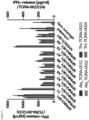
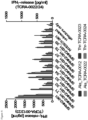
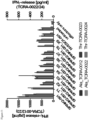
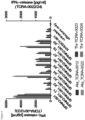
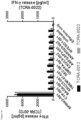
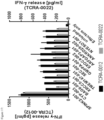
- the T cells were assessed for IFN- ⁇ release after co-culture with different target cells, such as T2 cells loaded with different peptides as well as tumor cell lines.
- target cells such as T2 cells loaded with different peptides as well as tumor cell lines.
- data is either shown as absolute IFN ⁇ levels or as background subtracted data, indicated below.
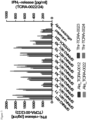
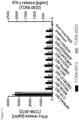
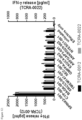
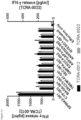
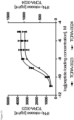
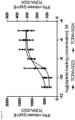
- Efficacy of CD8+ T cells expressing TCRs R55P1G7 and R44P3B3 was determined e.g. by T cell activation studies (IFN ⁇ release) using different tumor cell lines as target cells.
- SDbg(TCRoi; co) [SD(TCRoi; co) 2 +SD(TCRoil; effector only) 2 +SD(mock; co) 2 +SD(mock; effector only) 2 ] ⁇ [1/2]
- BLI Biolayer interferometry binding analysis for SPINK2-001 TCRs, expressed as soluble TCRs according to a previously described method ( Willcox BE et al., 1999 Protein Sci., Nov;8(11):2418-23 ), and HLA-A*02/SPINK2-001 complex was used for affinity determination.
- BLI binding data for 1G4 TCR and HLA-A*02/NYESO1-001 are used as control.
- TCR R39P1C12 (SEQ ID NO: 1-12) is restricted towards HLA-A*02-presented SPINK2-001 (SEQ ID NO: 133) (see Figure 11 ).
- R39P1C12 specifically recognizes SPINK2-001 as human primary CD8+ T-cells re-expressing this TCR release IFNy upon co-incubation with HLA-A*02+ target cells, loaded either with SPINK2-001 peptide or alanine or threonine substitution variants of SPINK2-001 ( Figure 1 ) or different peptides showing high degree of sequence similarity to SPINK2-001 ( Figure 11 ). NYESO1-001 peptide is used as negative control.
- TCR R39P1F5 (SEQ ID NO: 13-24) is restricted towards HLA-A*02-presented SPINK2-001 (SEQ ID NO: 133) (see Figure 12 ).
- R39P1F5 specifically recognizes SPINK2-001 as human primary CD8+ T-cells re-expressing this TCR release IFN ⁇ upon co-incubation with HLA-A*02+ target cells, loaded either with SPINK2-001 peptide or alanine or threonine substitution variants of SPINK2-001 ( Figure 2 ) or different peptides showing high degree of sequence similarity to SPINK2-001 ( Figure 12 ). NYESO1-001 peptide is used as negative control.
- TCR R40P1C2 (SEQ ID NO: 25-36) is restricted towards HLA-A*02-presented SPINK2-001 (SEQ ID NO: 133) (see Figure 13 ).
- R40P1C2 specifically recognizes SPINK2-001 as human primary CD8+ T-cells re-expressing this TCR release IFN ⁇ upon co-incubation with HLA-A*02+ target cells, loaded either with SPINK2-001 peptide or alanine or threonine substitution variants of SPINK2-001 ( Figure 3 ) or different peptides showing high degree of sequence similarity to SPINK2-001 ( Figure 13 ). NYESO1-001 peptide is used as negative control.
- TCR R40P1C2 has an EC 50 of 1.94 nM ( Figure 23 ).
- TCR R41P3E6 (SEQ ID NO: 37-48) is restricted towards HLA-A*02-presented SPINK2-001 (SEQ ID NO: 133) (see Figure 14 ).
- R41P3E6 specifically recognizes SPINK2-001 as human primary CD8+ T-cells re-expressing this TCR release IFN ⁇ upon co-incubation with HLA-A*02+ target cells and bind HLA-A*02 tetramers ( Figure 31 ), respectively, loaded either with SPINK2-001 peptide or alanine or threonine substitution variants of SPINK2-001 ( Figure 4 ) or different peptides showing high degree of sequence similarity to SPINK2-001 ( Figure 14 ). NYESO1-001 peptide is used as negative control.
- TCR R43P3G4 (SEQ ID NO: 49-60) is restricted towards HLA-A*02-presented SPINK2-001 (SEQ ID NO: 133) (see Figure 15 ).
- R43P3G4 specifically recognizes SPINK2-001 as human primary CD8+ T-cells re-expressing this TCR release IFN ⁇ upon co-incubation with HLA-A*02+ target cells, loaded either with SPINK2-001 peptide or alanine or threonine substitution variants of SPINK2-001 ( Figure 5 ) or different peptides showing high degree of sequence similarity to SPINK2-001 ( Figure 15 ). NYESO1-001 peptide is used as negative control.
- TCR R43P3G4 has an EC 50 of 1.34 nM ( Figure 25 ).
- TCR R44P3B3 (SEQ ID NO: 61-72) is restricted towards HLA-A*02-presented SPINK2-001 (SEQ ID NO: 133) (see figure 16 ).
- R44P3B3 specifically recognizes SPINK2-001 as human primary CD8+ T-cells re-expressing this TCR release IFN ⁇ upon co-incubation with HLA-A*02+ target cells and bind HLA-A*02 tetramers ( Figure 31 ), respectively, loaded either with SPINK2-001 peptide or alanine or threonine substitution variants of SPINK2-001 ( Figure 6 ) or different peptides showing high degree of sequence similarity to SPINK2-001 ( Figure 16 ). NYESO1-001 peptide is used as negative control.
- T-cell activation upon co-culture with cell lines expressing HLA-A *02 and SPINK2-001 reflects the recognition of endogenously presented target pHLA (peptide presented on human leukocyte antigen) by TCR R44P3B3.
- TCR R44P3E7 (SEQ ID NO: 73-84) is restricted towards HLA-A*02-presented SPINK2-001 (SEQ ID NO: 133) (see Figure 17 ).
- R44P3E7 specifically recognizes SPINK2-001 as human primary CD8+ T-cells re-expressing this TCR release IFN ⁇ upon co-incubation with HLA-A*02+ target cells, loaded either with SPINK2-001 peptide or alanine or threonine substitution variants of SPINK2-001 ( Figure 7 ) or different peptides showing high degree of sequence similarity to SPINK2-001 ( Figure 17 ). NYESO1-001 peptide is used as negative control.
- TCR R44P3E7 has an EC 50 of 0.86 nM ( Figure 27 ).
- TCR R49P2A7 (SEQ ID NO: 85-96) is restricted towards HLA-A*02-presented SPINK2-001 (SEQ ID NO: 133) (see Figure 18 ).
- R49P2A7 specifically recognizes SPINK2-001 as human primary CD8+ T-cells re-expressing this TCR release IFN ⁇ upon co-incubation with HLA-A*02+ target cells and bind HLA-A*02 tetramers ( Figure 31 ), respectively, loaded either with SPINK2-001 peptide or alanine or threonine substitution variants of SPINK2-001 ( Figure 8 ) or different peptides showing high degree of sequence similarity to SPINK2-001 ( Figure 18 ). NYESO1-001 peptide is used as negative control.
- TCR R49P2A7 has an EC 50 of >83.24 nM ( Figure 28 ).
- TCRR55P1G7 (SEQ ID NO: 97-108) is restricted towards HLA-A*02-presented SPINK2-001 (SEQ ID NO: 133) (see Figure 19 ).
- R55P1G7 specifically recognizes SPINK2-001 as human primary CD8+ T-cells re-expressing this TCR release IFN ⁇ upon co-incubation with HLA-A*02+ target cells and bind HLA-A*02 tetramers ( Figure 31 ), respectively, loaded either with SPINK2-001 peptide or alanine or threonine substitution variants of SPINK2-001 ( Figure 9 ) or different peptides showing high degree of sequence similarity to SPINK2-001 ( Figure 19 ). NYESO1-001 peptide is used as negative control.
- T-cell activation upon co-culture with cell lines expressing HLA-A*02 and SPINK2-001 reflects the recognition of endogenously presented target pHLA (peptide presented on human leukocyte antigen) by TCR R55P1G7.
- TCR R59P2A7 (SEQ ID NO: 109-120) is restricted towards HLA-A*02-presented SPINK2-001 (SEQ ID NO: 133) (see Figure 20 ).
- R59P2A7 specifically recognizes SPINK2-001 as human primary CD8+ T-cells re-expressing this TCR release IFN ⁇ upon co-incubation with HLA-A*02+ target cells, loaded either with SPINK2-001 peptide or alanine or threonine substitution variants of SPINK2-001 ( Figure 10 ) or different peptides showing high degree of sequence similarity to SPINK2-001 ( Figure 20 ). NYESO1-001 peptide is used as negative control.
- TCR R59P2A7 has an EC 50 of 0.86 nM ( Figure 30 ).
Landscapes
- Health & Medical Sciences (AREA)
- Chemical & Material Sciences (AREA)
- Life Sciences & Earth Sciences (AREA)
- Organic Chemistry (AREA)
- Immunology (AREA)
- General Health & Medical Sciences (AREA)
- Genetics & Genomics (AREA)
- Biochemistry (AREA)
- Engineering & Computer Science (AREA)
- Biophysics (AREA)
- Molecular Biology (AREA)
- Proteomics, Peptides & Aminoacids (AREA)
- Medicinal Chemistry (AREA)
- Biomedical Technology (AREA)
- Zoology (AREA)
- Veterinary Medicine (AREA)
- Public Health (AREA)
- Animal Behavior & Ethology (AREA)
- Epidemiology (AREA)
- Biotechnology (AREA)
- Bioinformatics & Cheminformatics (AREA)
- Wood Science & Technology (AREA)
- Gastroenterology & Hepatology (AREA)
- Cell Biology (AREA)
- General Engineering & Computer Science (AREA)
- Microbiology (AREA)
- Hematology (AREA)
- Toxicology (AREA)
- Physics & Mathematics (AREA)
- Endocrinology (AREA)
- Plant Pathology (AREA)
- Micro-Organisms Or Cultivation Processes Thereof (AREA)
- Peptides Or Proteins (AREA)
- Medicines That Contain Protein Lipid Enzymes And Other Medicines (AREA)
- Medicines Containing Material From Animals Or Micro-Organisms (AREA)
- Pharmaceuticals Containing Other Organic And Inorganic Compounds (AREA)
- Preparation Of Compounds By Using Micro-Organisms (AREA)
- Medicines Containing Antibodies Or Antigens For Use As Internal Diagnostic Agents (AREA)
Applications Claiming Priority (3)
| Application Number | Priority Date | Filing Date | Title |
|---|---|---|---|
| US201762527844P | 2017-06-30 | 2017-06-30 | |
| DE102017114737.3A DE102017114737A1 (de) | 2017-06-30 | 2017-06-30 | Neue T-Zellrezeptoren und deren Verwendung in Immuntherapie |
| PCT/EP2018/067380 WO2019002444A1 (en) | 2017-06-30 | 2018-06-28 | NEW T CELL RECEPTORS AND IMMUNOTHERAPY USING THE SAME |
Publications (2)
| Publication Number | Publication Date |
|---|---|
| EP3645573A1 EP3645573A1 (en) | 2020-05-06 |
| EP3645573B1 true EP3645573B1 (en) | 2024-10-16 |
Family
ID=64662173
Family Applications (1)
| Application Number | Title | Priority Date | Filing Date |
|---|---|---|---|
| EP18737546.4A Active EP3645573B1 (en) | 2017-06-30 | 2018-06-28 | Novel t cell receptors and immune therapy using the same |
Country Status (22)
| Country | Link |
|---|---|
| US (5) | US10590194B2 (enExample) |
| EP (1) | EP3645573B1 (enExample) |
| JP (1) | JP7235316B2 (enExample) |
| KR (1) | KR20200023288A (enExample) |
| CN (1) | CN110753705A (enExample) |
| AR (1) | AR112604A1 (enExample) |
| AU (1) | AU2018293322A1 (enExample) |
| BR (1) | BR112019025323A2 (enExample) |
| CA (1) | CA3067757A1 (enExample) |
| CL (1) | CL2019003885A1 (enExample) |
| CO (1) | CO2020000357A2 (enExample) |
| CR (1) | CR20190594A (enExample) |
| DE (1) | DE102017114737A1 (enExample) |
| IL (1) | IL271751A (enExample) |
| MA (1) | MA49503A (enExample) |
| MX (1) | MX2019015742A (enExample) |
| MY (1) | MY205262A (enExample) |
| PE (1) | PE20200337A1 (enExample) |
| PH (1) | PH12019502847A1 (enExample) |
| SG (1) | SG11201911437VA (enExample) |
| TW (1) | TWI727182B (enExample) |
| WO (1) | WO2019002444A1 (enExample) |
Families Citing this family (21)
| Publication number | Priority date | Publication date | Assignee | Title |
|---|---|---|---|---|
| MY196837A (en) | 2015-12-11 | 2023-05-03 | Immatics Biotechnologies Gmbh | Novel peptides and combination of peptides for use in immunotherapy against various cancers |
| DE102018108612A1 (de) | 2018-03-21 | 2019-09-26 | Immatics US, Inc. | Verfahren zur erhöhung der persistenz von adoptiv infundierten t-zellen |
| US20200297768A1 (en) | 2019-03-19 | 2020-09-24 | Immatics US, Inc. | Cd28 t cell cultures, compositions, and methods of using thereof |
| DE102019108125B4 (de) | 2019-03-28 | 2022-02-03 | Immatics US, Inc. | Cd28 t-zellkulturen, zusammensetzungen und verfahren zu deren verwendung |
| KR20220029584A (ko) | 2019-05-27 | 2022-03-08 | 이매틱스 유에스 인코포레이티드 | 바이러스 벡터 및 입양 세포 요법에서 그 사용 |
| US20210032370A1 (en) | 2019-08-02 | 2021-02-04 | Immatics Biotechnologies Gmbh | Recruiting agent further binding an mhc molecule |
| CN112442119B (zh) * | 2019-09-05 | 2023-02-24 | 香雪生命科学技术(广东)有限公司 | 一种识别ssx2的高亲和力t细胞受体 |
| JP2023515131A (ja) | 2020-02-24 | 2023-04-12 | イマティクス ユーエス,アイエヌシー. | がんおよび関連する悪性腫瘍の治療のためにt細胞を増殖させる方法 |
| DE102020111571A1 (de) | 2020-03-11 | 2021-09-16 | Immatics US, Inc. | Wpre-mutantenkonstrukte, zusammensetzungen und zugehörige verfahren |
| WO2022040631A1 (en) | 2020-08-21 | 2022-02-24 | Immatics US, Inc. | Methods for isolating cd8+ selected t cells |
| CR20230295A (es) | 2020-12-31 | 2023-07-27 | Immatics Us Inc | Polipéptidos cd8, composiciones y métodos de uso de estos |
| DE102021100038A1 (de) | 2020-12-31 | 2022-06-30 | Immatics US, Inc. | Modifizierte cd8-polypeptide, zusammensetzungen und verfahren zu deren verwendung |
| KR20240004937A (ko) | 2021-05-05 | 2024-01-11 | 이매틱스 바이오테크놀로지스 게엠베하 | Bma031 항원 결합 폴리펩타이드 |
| US20230089392A1 (en) | 2021-09-20 | 2023-03-23 | Immatics US, Inc. | Monocyte depletion of t cells populations for t-cell therapy |
| US20230142468A1 (en) | 2021-11-08 | 2023-05-11 | Immatics US, Inc. | Methods for generating cell spheroids |
| US20230348561A1 (en) | 2022-04-28 | 2023-11-02 | Immatics US, Inc. | Dominant negative tgfbeta receptor polypeptides, cd8 polypeptides, cells, compositions, and methods of using thereof |
| WO2023212655A1 (en) | 2022-04-28 | 2023-11-02 | Immatics US, Inc. | Il-12 polypeptides, il-15 polypeptides, il-18 polypeptides, cd8 polypeptides, compositions, and methods of using thereof |
| KR20250018168A (ko) | 2022-04-28 | 2025-02-04 | 이매틱스 유에스 인코포레이티드 | 막-결합된 il-15, cd8 폴리펩티드, 세포, 조성물, 및 이의 사용 방법 |
| EP4519418A1 (en) | 2022-05-05 | 2025-03-12 | Immatics US, Inc. | Methods for improving t cell efficacy |
| AU2024309123A1 (en) * | 2023-06-28 | 2026-01-15 | The United States Of America, As Represented By The Secretary, Department Of Health And Human Services | T cell receptors targeting ras with g12d, g12r, or g12v mutation |
| US20250134931A1 (en) | 2023-11-01 | 2025-05-01 | Immatics US, Inc. | Membrane-bound il-15, cd8 polypeptides, cells, compositions, and methods of using thereof |
Family Cites Families (15)
| Publication number | Priority date | Publication date | Assignee | Title |
|---|---|---|---|---|
| US5545806A (en) | 1990-08-29 | 1996-08-13 | Genpharm International, Inc. | Ransgenic non-human animals for producing heterologous antibodies |
| ES2246502T3 (es) | 1990-08-29 | 2006-02-16 | Genpharm International, Inc. | Animales no humanos transgenicos capaces de producir anticuerpos heterologos. |
| US5714352A (en) | 1996-03-20 | 1998-02-03 | Xenotech Incorporated | Directed switch-mediated DNA recombination |
| WO2000006732A2 (en) * | 1998-07-31 | 2000-02-10 | Diagnostic Products Corporation | Polynucleotide encoding an autoantigen associated with endometriosis |
| WO2001058479A1 (en) | 2000-02-08 | 2001-08-16 | The Penn State Research Foundation | Immunotherapy using interleukin 13 receptor subunit alpha 2 |
| GB0525999D0 (en) * | 2005-12-21 | 2006-02-01 | Ares Trading Sa | Novel members of the kazal family of serine protease inhibitors |
| KR101773690B1 (ko) * | 2007-03-05 | 2017-08-31 | 인터내셔널 인스티튜트 오브 캔서 이무놀로지 인코퍼레이티드 | 암 항원 특이적 t 세포의 수용체 유전자 및 그것에 따라 코드되는 펩티드 및 이들의 사용 |
| CA2881431C (en) | 2012-08-08 | 2021-10-19 | Daiichi Sankyo Company, Limited | Peptide library and use thereof |
| CN110511960B (zh) * | 2013-07-15 | 2023-05-23 | 美国卫生和人力服务部 | 抗人乳头瘤病毒16 e6 t细胞受体 |
| GB201314404D0 (en) * | 2013-08-12 | 2013-09-25 | Immunocore Ltd | T Cell Receptors |
| RU2739500C2 (ru) * | 2014-11-05 | 2020-12-25 | Дженентек, Инк. | Способы получения двуцепочечных белков в бактериях |
| EP3156067A1 (en) * | 2015-10-16 | 2017-04-19 | Max-Delbrück-Centrum Für Molekulare Medizin | High avidity hpv t-cell receptors |
| GB201520567D0 (en) * | 2015-11-23 | 2016-01-06 | Immunocore Ltd & Adaptimmune Ltd | Peptides |
| GB201520597D0 (en) * | 2015-11-23 | 2016-01-06 | Immunocore Ltd & Adaptimmune Ltd | Peptides |
| GB201521894D0 (en) * | 2015-12-11 | 2016-01-27 | Immatics Biotechnologies Gmbh | Novel peptides and combination of peptides for use in immunotherapy against various cancers |
-
2017
- 2017-06-30 DE DE102017114737.3A patent/DE102017114737A1/de not_active Withdrawn
-
2018
- 2018-06-28 JP JP2019569676A patent/JP7235316B2/ja active Active
- 2018-06-28 CN CN201880033171.0A patent/CN110753705A/zh active Pending
- 2018-06-28 PE PE2019002620A patent/PE20200337A1/es unknown
- 2018-06-28 MX MX2019015742A patent/MX2019015742A/es unknown
- 2018-06-28 BR BR112019025323-8A patent/BR112019025323A2/pt not_active Application Discontinuation
- 2018-06-28 TW TW107122290A patent/TWI727182B/zh not_active IP Right Cessation
- 2018-06-28 CR CR20190594A patent/CR20190594A/es unknown
- 2018-06-28 AU AU2018293322A patent/AU2018293322A1/en not_active Abandoned
- 2018-06-28 MY MYPI2019007601A patent/MY205262A/en unknown
- 2018-06-28 CA CA3067757A patent/CA3067757A1/en active Pending
- 2018-06-28 SG SG11201911437VA patent/SG11201911437VA/en unknown
- 2018-06-28 KR KR1020197036902A patent/KR20200023288A/ko not_active Ceased
- 2018-06-28 PH PH1/2019/502847A patent/PH12019502847A1/en unknown
- 2018-06-28 WO PCT/EP2018/067380 patent/WO2019002444A1/en not_active Ceased
- 2018-06-28 MA MA049503A patent/MA49503A/fr unknown
- 2018-06-28 EP EP18737546.4A patent/EP3645573B1/en active Active
- 2018-06-29 AR ARP180101832 patent/AR112604A1/es not_active Application Discontinuation
- 2018-06-29 US US16/023,731 patent/US10590194B2/en not_active Expired - Fee Related
-
2019
- 2019-05-03 US US16/403,269 patent/US10723796B2/en active Active
- 2019-12-27 CL CL2019003885A patent/CL2019003885A1/es unknown
- 2019-12-29 IL IL271751A patent/IL271751A/en unknown
-
2020
- 2020-01-03 US US16/733,845 patent/US11111294B2/en active Active
- 2020-01-14 CO CONC2020/0000357A patent/CO2020000357A2/es unknown
-
2021
- 2021-08-09 US US17/397,656 patent/US20210388079A1/en not_active Abandoned
-
2024
- 2024-10-16 US US18/916,878 patent/US20250154246A1/en active Pending
Non-Patent Citations (1)
| Title |
|---|
| D. K. COLE ET AL: "T-cell Receptor (TCR)-Peptide Specificity Overrides Affinity-enhancing TCR-Major Histocompatibility Complex Interactions", JOURNAL OF BIOLOGICAL CHEMISTRY, vol. 289, no. 2, 10 January 2014 (2014-01-10), US, pages 628 - 638, XP055273969, ISSN: 0021-9258, DOI: 10.1074/jbc.M113.522110 * |
Also Published As
| Publication number | Publication date |
|---|---|
| US20200140540A1 (en) | 2020-05-07 |
| PH12019502847A1 (en) | 2020-10-26 |
| WO2019002444A9 (en) | 2019-03-14 |
| JP2020529830A (ja) | 2020-10-15 |
| CA3067757A1 (en) | 2019-01-03 |
| JP7235316B2 (ja) | 2023-03-08 |
| PE20200337A1 (es) | 2020-02-14 |
| IL271751A (en) | 2020-02-27 |
| MX2019015742A (es) | 2020-02-20 |
| US11111294B2 (en) | 2021-09-07 |
| EP3645573A1 (en) | 2020-05-06 |
| CR20190594A (es) | 2020-03-02 |
| CL2019003885A1 (es) | 2020-05-29 |
| US20190002556A1 (en) | 2019-01-03 |
| WO2019002444A1 (en) | 2019-01-03 |
| US20190256590A1 (en) | 2019-08-22 |
| MY205262A (en) | 2024-10-10 |
| DE102017114737A1 (de) | 2019-01-03 |
| KR20200023288A (ko) | 2020-03-04 |
| TW201904989A (zh) | 2019-02-01 |
| US10590194B2 (en) | 2020-03-17 |
| US20210388079A1 (en) | 2021-12-16 |
| AR112604A1 (es) | 2019-11-20 |
| TWI727182B (zh) | 2021-05-11 |
| BR112019025323A2 (pt) | 2020-06-23 |
| MA49503A (fr) | 2020-05-06 |
| SG11201911437VA (en) | 2020-01-30 |
| US10723796B2 (en) | 2020-07-28 |
| CN110753705A (zh) | 2020-02-04 |
| US20250154246A1 (en) | 2025-05-15 |
| CO2020000357A2 (es) | 2020-01-31 |
| AU2018293322A1 (en) | 2020-01-16 |
Similar Documents
| Publication | Publication Date | Title |
|---|---|---|
| US20250154246A1 (en) | Novel t cell receptors and immune therapy using the same | |
| US11111286B2 (en) | T cell receptors and immune therapy using the same against PRAME positive cancers | |
| EP3600409B1 (en) | T cell receptors and immune therapy using the same against prame positive cancers | |
| US10725044B2 (en) | T cell receptors and immune therapy using the same | |
| EP3551221B1 (en) | Novel t cell receptors and immune therapy using the same | |
| EP4032544A2 (en) | Novel t cell receptors and immune therapy using the same | |
| EP3354658A1 (en) | Novel t cell receptors and immune therapy using the same for the treatment of cancer and infectious diseases | |
| HK40117524A (en) | T cell receptors and immune therapy using the same against prame positive cancers | |
| HK40078003A (en) | Novel t cell receptors and immune therapy using the same | |
| HK40020731A (en) | T cell receptors and immune therapy using the same against prame positive cancers | |
| HK40020731B (en) | T cell receptors and immune therapy using the same against prame positive cancers | |
| HK40014640B (en) | Novel t cell receptors and immune therapy using the same | |
| HK40014640A (en) | Novel t cell receptors and immune therapy using the same |
Legal Events
| Date | Code | Title | Description |
|---|---|---|---|
| STAA | Information on the status of an ep patent application or granted ep patent |
Free format text: STATUS: UNKNOWN |
|
| STAA | Information on the status of an ep patent application or granted ep patent |
Free format text: STATUS: THE INTERNATIONAL PUBLICATION HAS BEEN MADE |
|
| PUAI | Public reference made under article 153(3) epc to a published international application that has entered the european phase |
Free format text: ORIGINAL CODE: 0009012 |
|
| STAA | Information on the status of an ep patent application or granted ep patent |
Free format text: STATUS: REQUEST FOR EXAMINATION WAS MADE |
|
| 17P | Request for examination filed |
Effective date: 20200130 |
|
| AK | Designated contracting states |
Kind code of ref document: A1 Designated state(s): AL AT BE BG CH CY CZ DE DK EE ES FI FR GB GR HR HU IE IS IT LI LT LU LV MC MK MT NL NO PL PT RO RS SE SI SK SM TR |
|
| AX | Request for extension of the european patent |
Extension state: BA ME |
|
| STAA | Information on the status of an ep patent application or granted ep patent |
Free format text: STATUS: EXAMINATION IS IN PROGRESS |
|
| 17Q | First examination report despatched |
Effective date: 20200525 |
|
| REG | Reference to a national code |
Ref country code: HK Ref legal event code: DE Ref document number: 40028714 Country of ref document: HK |
|
| P01 | Opt-out of the competence of the unified patent court (upc) registered |
Effective date: 20230526 |
|
| GRAP | Despatch of communication of intention to grant a patent |
Free format text: ORIGINAL CODE: EPIDOSNIGR1 |
|
| STAA | Information on the status of an ep patent application or granted ep patent |
Free format text: STATUS: GRANT OF PATENT IS INTENDED |
|
| INTG | Intention to grant announced |
Effective date: 20231025 |
|
| GRAS | Grant fee paid |
Free format text: ORIGINAL CODE: EPIDOSNIGR3 |
|
| GRAJ | Information related to disapproval of communication of intention to grant by the applicant or resumption of examination proceedings by the epo deleted |
Free format text: ORIGINAL CODE: EPIDOSDIGR1 |
|
| GRAL | Information related to payment of fee for publishing/printing deleted |
Free format text: ORIGINAL CODE: EPIDOSDIGR3 |
|
| STAA | Information on the status of an ep patent application or granted ep patent |
Free format text: STATUS: EXAMINATION IS IN PROGRESS |
|
| INTC | Intention to grant announced (deleted) | ||
| GRAP | Despatch of communication of intention to grant a patent |
Free format text: ORIGINAL CODE: EPIDOSNIGR1 |
|
| STAA | Information on the status of an ep patent application or granted ep patent |
Free format text: STATUS: GRANT OF PATENT IS INTENDED |
|
| INTG | Intention to grant announced |
Effective date: 20240122 |
|
| GRAJ | Information related to disapproval of communication of intention to grant by the applicant or resumption of examination proceedings by the epo deleted |
Free format text: ORIGINAL CODE: EPIDOSDIGR1 |
|
| GRAL | Information related to payment of fee for publishing/printing deleted |
Free format text: ORIGINAL CODE: EPIDOSDIGR3 |
|
| STAA | Information on the status of an ep patent application or granted ep patent |
Free format text: STATUS: EXAMINATION IS IN PROGRESS |
|
| GRAP | Despatch of communication of intention to grant a patent |
Free format text: ORIGINAL CODE: EPIDOSNIGR1 |
|
| STAA | Information on the status of an ep patent application or granted ep patent |
Free format text: STATUS: GRANT OF PATENT IS INTENDED |
|
| INTC | Intention to grant announced (deleted) | ||
| INTG | Intention to grant announced |
Effective date: 20240516 |
|
| GRAS | Grant fee paid |
Free format text: ORIGINAL CODE: EPIDOSNIGR3 |
|
| GRAA | (expected) grant |
Free format text: ORIGINAL CODE: 0009210 |
|
| STAA | Information on the status of an ep patent application or granted ep patent |
Free format text: STATUS: THE PATENT HAS BEEN GRANTED |
|
| AK | Designated contracting states |
Kind code of ref document: B1 Designated state(s): AL AT BE BG CH CY CZ DE DK EE ES FI FR GB GR HR HU IE IS IT LI LT LU LV MC MK MT NL NO PL PT RO RS SE SI SK SM TR |
|
| REG | Reference to a national code |
Ref country code: GB Ref legal event code: FG4D |
|
| REG | Reference to a national code |
Ref country code: CH Ref legal event code: EP |
|
| REG | Reference to a national code |
Ref country code: IE Ref legal event code: FG4D |
|
| REG | Reference to a national code |
Ref country code: DE Ref legal event code: R096 Ref document number: 602018075490 Country of ref document: DE |
|
| REG | Reference to a national code |
Ref country code: LT Ref legal event code: MG9D |
|
| REG | Reference to a national code |
Ref country code: NL Ref legal event code: MP Effective date: 20241016 |
|
| REG | Reference to a national code |
Ref country code: AT Ref legal event code: MK05 Ref document number: 1732865 Country of ref document: AT Kind code of ref document: T Effective date: 20241016 |
|
| PG25 | Lapsed in a contracting state [announced via postgrant information from national office to epo] |
Ref country code: NL Free format text: LAPSE BECAUSE OF FAILURE TO SUBMIT A TRANSLATION OF THE DESCRIPTION OR TO PAY THE FEE WITHIN THE PRESCRIBED TIME-LIMIT Effective date: 20241016 |
|
| PG25 | Lapsed in a contracting state [announced via postgrant information from national office to epo] |
Ref country code: NL Free format text: LAPSE BECAUSE OF FAILURE TO SUBMIT A TRANSLATION OF THE DESCRIPTION OR TO PAY THE FEE WITHIN THE PRESCRIBED TIME-LIMIT Effective date: 20241016 |
|
| PG25 | Lapsed in a contracting state [announced via postgrant information from national office to epo] |
Ref country code: HR Free format text: LAPSE BECAUSE OF FAILURE TO SUBMIT A TRANSLATION OF THE DESCRIPTION OR TO PAY THE FEE WITHIN THE PRESCRIBED TIME-LIMIT Effective date: 20241016 Ref country code: PT Free format text: LAPSE BECAUSE OF FAILURE TO SUBMIT A TRANSLATION OF THE DESCRIPTION OR TO PAY THE FEE WITHIN THE PRESCRIBED TIME-LIMIT Effective date: 20250217 Ref country code: IS Free format text: LAPSE BECAUSE OF FAILURE TO SUBMIT A TRANSLATION OF THE DESCRIPTION OR TO PAY THE FEE WITHIN THE PRESCRIBED TIME-LIMIT Effective date: 20250216 |
|
| PG25 | Lapsed in a contracting state [announced via postgrant information from national office to epo] |
Ref country code: FI Free format text: LAPSE BECAUSE OF FAILURE TO SUBMIT A TRANSLATION OF THE DESCRIPTION OR TO PAY THE FEE WITHIN THE PRESCRIBED TIME-LIMIT Effective date: 20241016 |
|
| PG25 | Lapsed in a contracting state [announced via postgrant information from national office to epo] |
Ref country code: BG Free format text: LAPSE BECAUSE OF FAILURE TO SUBMIT A TRANSLATION OF THE DESCRIPTION OR TO PAY THE FEE WITHIN THE PRESCRIBED TIME-LIMIT Effective date: 20241016 |
|
| PG25 | Lapsed in a contracting state [announced via postgrant information from national office to epo] |
Ref country code: ES Free format text: LAPSE BECAUSE OF FAILURE TO SUBMIT A TRANSLATION OF THE DESCRIPTION OR TO PAY THE FEE WITHIN THE PRESCRIBED TIME-LIMIT Effective date: 20241016 |
|
| PG25 | Lapsed in a contracting state [announced via postgrant information from national office to epo] |
Ref country code: NO Free format text: LAPSE BECAUSE OF FAILURE TO SUBMIT A TRANSLATION OF THE DESCRIPTION OR TO PAY THE FEE WITHIN THE PRESCRIBED TIME-LIMIT Effective date: 20250116 |
|
| PG25 | Lapsed in a contracting state [announced via postgrant information from national office to epo] |
Ref country code: AT Free format text: LAPSE BECAUSE OF FAILURE TO SUBMIT A TRANSLATION OF THE DESCRIPTION OR TO PAY THE FEE WITHIN THE PRESCRIBED TIME-LIMIT Effective date: 20241016 Ref country code: LV Free format text: LAPSE BECAUSE OF FAILURE TO SUBMIT A TRANSLATION OF THE DESCRIPTION OR TO PAY THE FEE WITHIN THE PRESCRIBED TIME-LIMIT Effective date: 20241016 Ref country code: GR Free format text: LAPSE BECAUSE OF FAILURE TO SUBMIT A TRANSLATION OF THE DESCRIPTION OR TO PAY THE FEE WITHIN THE PRESCRIBED TIME-LIMIT Effective date: 20250117 |
|
| PG25 | Lapsed in a contracting state [announced via postgrant information from national office to epo] |
Ref country code: PL Free format text: LAPSE BECAUSE OF FAILURE TO SUBMIT A TRANSLATION OF THE DESCRIPTION OR TO PAY THE FEE WITHIN THE PRESCRIBED TIME-LIMIT Effective date: 20241016 |
|
| PG25 | Lapsed in a contracting state [announced via postgrant information from national office to epo] |
Ref country code: RS Free format text: LAPSE BECAUSE OF FAILURE TO SUBMIT A TRANSLATION OF THE DESCRIPTION OR TO PAY THE FEE WITHIN THE PRESCRIBED TIME-LIMIT Effective date: 20250116 |
|
| PG25 | Lapsed in a contracting state [announced via postgrant information from national office to epo] |
Ref country code: SM Free format text: LAPSE BECAUSE OF FAILURE TO SUBMIT A TRANSLATION OF THE DESCRIPTION OR TO PAY THE FEE WITHIN THE PRESCRIBED TIME-LIMIT Effective date: 20241016 |
|
| PG25 | Lapsed in a contracting state [announced via postgrant information from national office to epo] |
Ref country code: DK Free format text: LAPSE BECAUSE OF FAILURE TO SUBMIT A TRANSLATION OF THE DESCRIPTION OR TO PAY THE FEE WITHIN THE PRESCRIBED TIME-LIMIT Effective date: 20241016 |
|
| VS25 | Lapsed in a validation state [announced via postgrant information from nat. office to epo] |
Ref country code: MD Free format text: LAPSE BECAUSE OF FAILURE TO SUBMIT A TRANSLATION OF THE DESCRIPTION OR TO PAY THE FEE WITHIN THE PRESCRIBED TIME-LIMIT Effective date: 20241016 |
|
| REG | Reference to a national code |
Ref country code: DE Ref legal event code: R097 Ref document number: 602018075490 Country of ref document: DE |
|
| PG25 | Lapsed in a contracting state [announced via postgrant information from national office to epo] |
Ref country code: EE Free format text: LAPSE BECAUSE OF FAILURE TO SUBMIT A TRANSLATION OF THE DESCRIPTION OR TO PAY THE FEE WITHIN THE PRESCRIBED TIME-LIMIT Effective date: 20241016 |
|
| PG25 | Lapsed in a contracting state [announced via postgrant information from national office to epo] |
Ref country code: RO Free format text: LAPSE BECAUSE OF FAILURE TO SUBMIT A TRANSLATION OF THE DESCRIPTION OR TO PAY THE FEE WITHIN THE PRESCRIBED TIME-LIMIT Effective date: 20241016 |
|
| PG25 | Lapsed in a contracting state [announced via postgrant information from national office to epo] |
Ref country code: SK Free format text: LAPSE BECAUSE OF FAILURE TO SUBMIT A TRANSLATION OF THE DESCRIPTION OR TO PAY THE FEE WITHIN THE PRESCRIBED TIME-LIMIT Effective date: 20241016 |
|
| PG25 | Lapsed in a contracting state [announced via postgrant information from national office to epo] |
Ref country code: CZ Free format text: LAPSE BECAUSE OF FAILURE TO SUBMIT A TRANSLATION OF THE DESCRIPTION OR TO PAY THE FEE WITHIN THE PRESCRIBED TIME-LIMIT Effective date: 20241016 |
|
| PG25 | Lapsed in a contracting state [announced via postgrant information from national office to epo] |
Ref country code: IT Free format text: LAPSE BECAUSE OF FAILURE TO SUBMIT A TRANSLATION OF THE DESCRIPTION OR TO PAY THE FEE WITHIN THE PRESCRIBED TIME-LIMIT Effective date: 20241016 |
|
| PLBE | No opposition filed within time limit |
Free format text: ORIGINAL CODE: 0009261 |
|
| STAA | Information on the status of an ep patent application or granted ep patent |
Free format text: STATUS: NO OPPOSITION FILED WITHIN TIME LIMIT |
|
| PG25 | Lapsed in a contracting state [announced via postgrant information from national office to epo] |
Ref country code: SE Free format text: LAPSE BECAUSE OF FAILURE TO SUBMIT A TRANSLATION OF THE DESCRIPTION OR TO PAY THE FEE WITHIN THE PRESCRIBED TIME-LIMIT Effective date: 20241016 |
|
| 26N | No opposition filed |
Effective date: 20250717 |
|
| REG | Reference to a national code |
Ref country code: CH Ref legal event code: H13 Free format text: ST27 STATUS EVENT CODE: U-0-0-H10-H13 (AS PROVIDED BY THE NATIONAL OFFICE) Effective date: 20260127 |
|
| PG25 | Lapsed in a contracting state [announced via postgrant information from national office to epo] |
Ref country code: MC Free format text: LAPSE BECAUSE OF FAILURE TO SUBMIT A TRANSLATION OF THE DESCRIPTION OR TO PAY THE FEE WITHIN THE PRESCRIBED TIME-LIMIT Effective date: 20241016 |
|
| VS25 | Lapsed in a validation state [announced via postgrant information from nat. office to epo] |
Ref country code: MA Free format text: FAILURE TO ELECT DOMICILE IN THE NATIONAL COUNTRY Effective date: 20250117 |
|
| PG25 | Lapsed in a contracting state [announced via postgrant information from national office to epo] |
Ref country code: LU Free format text: LAPSE BECAUSE OF NON-PAYMENT OF DUE FEES Effective date: 20250628 |
|
| GBPC | Gb: european patent ceased through non-payment of renewal fee |
Effective date: 20250628 |
|
| REG | Reference to a national code |
Ref country code: BE Ref legal event code: MM Effective date: 20250630 |
|
| VS25 | Lapsed in a validation state [announced via postgrant information from nat. office to epo] |
Ref country code: MA Free format text: LAPSE BECAUSE OF FAILURE TO SUBMIT A TRANSLATION OF THE DESCRIPTION OR TO PAY THE FEE WITHIN THE PRESCRIBED TIME-LIMIT Effective date: 20241016 |
|
| PG25 | Lapsed in a contracting state [announced via postgrant information from national office to epo] |
Ref country code: GB Free format text: LAPSE BECAUSE OF NON-PAYMENT OF DUE FEES Effective date: 20250628 |
|
| PG25 | Lapsed in a contracting state [announced via postgrant information from national office to epo] |
Ref country code: IE Free format text: LAPSE BECAUSE OF NON-PAYMENT OF DUE FEES Effective date: 20250628 |
|
| PG25 | Lapsed in a contracting state [announced via postgrant information from national office to epo] |
Ref country code: BE Free format text: LAPSE BECAUSE OF NON-PAYMENT OF DUE FEES Effective date: 20250630 |
|
| PG25 | Lapsed in a contracting state [announced via postgrant information from national office to epo] |
Ref country code: FR Free format text: LAPSE BECAUSE OF NON-PAYMENT OF DUE FEES Effective date: 20250630 |
|
| PG25 | Lapsed in a contracting state [announced via postgrant information from national office to epo] |
Ref country code: CH Free format text: LAPSE BECAUSE OF NON-PAYMENT OF DUE FEES Effective date: 20250630 |
|
| PG25 | Lapsed in a contracting state [announced via postgrant information from national office to epo] |
Ref country code: LT Free format text: LAPSE BECAUSE OF FAILURE TO SUBMIT A TRANSLATION OF THE DESCRIPTION OR TO PAY THE FEE WITHIN THE PRESCRIBED TIME-LIMIT Effective date: 20241016 |
|
| PGFP | Annual fee paid to national office [announced via postgrant information from national office to epo] |
Ref country code: DE Payment date: 20260623 Year of fee payment: 9 |
|
| PG25 | Lapsed in a contracting state [announced via postgrant information from national office to epo] |
Ref country code: CY Free format text: LAPSE BECAUSE OF FAILURE TO SUBMIT A TRANSLATION OF THE DESCRIPTION OR TO PAY THE FEE WITHIN THE PRESCRIBED TIME-LIMIT Effective date: 20241016 |