EP3630102B1 - Formulierungen zur behandlung von posttraumatischer belastungsstörung - Google Patents
Formulierungen zur behandlung von posttraumatischer belastungsstörung Download PDFInfo
- Publication number
- EP3630102B1 EP3630102B1 EP18805411.8A EP18805411A EP3630102B1 EP 3630102 B1 EP3630102 B1 EP 3630102B1 EP 18805411 A EP18805411 A EP 18805411A EP 3630102 B1 EP3630102 B1 EP 3630102B1
- Authority
- EP
- European Patent Office
- Prior art keywords
- cycloserine
- composition
- depression
- mirtazapine
- administered
- Prior art date
- Legal status (The legal status is an assumption and is not a legal conclusion. Google has not performed a legal analysis and makes no representation as to the accuracy of the status listed.)
- Active
Links
Images

Classifications
-
- A—HUMAN NECESSITIES
- A61—MEDICAL OR VETERINARY SCIENCE; HYGIENE
- A61K—PREPARATIONS FOR MEDICAL, DENTAL OR TOILETRY PURPOSES
- A61K31/00—Medicinal preparations containing organic active ingredients
- A61K31/13—Amines
- A61K31/135—Amines having aromatic rings, e.g. ketamine, nortriptyline
-
- A—HUMAN NECESSITIES
- A61—MEDICAL OR VETERINARY SCIENCE; HYGIENE
- A61K—PREPARATIONS FOR MEDICAL, DENTAL OR TOILETRY PURPOSES
- A61K31/00—Medicinal preparations containing organic active ingredients
- A61K31/16—Amides, e.g. hydroxamic acids
- A61K31/165—Amides, e.g. hydroxamic acids having aromatic rings, e.g. colchicine, atenolol, progabide
-
- A—HUMAN NECESSITIES
- A61—MEDICAL OR VETERINARY SCIENCE; HYGIENE
- A61K—PREPARATIONS FOR MEDICAL, DENTAL OR TOILETRY PURPOSES
- A61K31/00—Medicinal preparations containing organic active ingredients
- A61K31/33—Heterocyclic compounds
- A61K31/395—Heterocyclic compounds having nitrogen as a ring hetero atom, e.g. guanethidine or rifamycins
- A61K31/40—Heterocyclic compounds having nitrogen as a ring hetero atom, e.g. guanethidine or rifamycins having five-membered rings with one nitrogen as the only ring hetero atom, e.g. sulpiride, succinimide, tolmetin, buflomedil
- A61K31/403—Heterocyclic compounds having nitrogen as a ring hetero atom, e.g. guanethidine or rifamycins having five-membered rings with one nitrogen as the only ring hetero atom, e.g. sulpiride, succinimide, tolmetin, buflomedil condensed with carbocyclic rings, e.g. carbazole
- A61K31/404—Indoles, e.g. pindolol
- A61K31/405—Indole-alkanecarboxylic acids; Derivatives thereof, e.g. tryptophan, indomethacin
-
- A—HUMAN NECESSITIES
- A61—MEDICAL OR VETERINARY SCIENCE; HYGIENE
- A61K—PREPARATIONS FOR MEDICAL, DENTAL OR TOILETRY PURPOSES
- A61K31/00—Medicinal preparations containing organic active ingredients
- A61K31/33—Heterocyclic compounds
- A61K31/395—Heterocyclic compounds having nitrogen as a ring hetero atom, e.g. guanethidine or rifamycins
- A61K31/41—Heterocyclic compounds having nitrogen as a ring hetero atom, e.g. guanethidine or rifamycins having five-membered rings with two or more ring hetero atoms, at least one of which being nitrogen, e.g. tetrazole
- A61K31/415—1,2-Diazoles
- A61K31/4152—1,2-Diazoles having oxo groups directly attached to the heterocyclic ring, e.g. antipyrine, phenylbutazone, sulfinpyrazone
-
- A—HUMAN NECESSITIES
- A61—MEDICAL OR VETERINARY SCIENCE; HYGIENE
- A61K—PREPARATIONS FOR MEDICAL, DENTAL OR TOILETRY PURPOSES
- A61K31/00—Medicinal preparations containing organic active ingredients
- A61K31/33—Heterocyclic compounds
- A61K31/395—Heterocyclic compounds having nitrogen as a ring hetero atom, e.g. guanethidine or rifamycins
- A61K31/41—Heterocyclic compounds having nitrogen as a ring hetero atom, e.g. guanethidine or rifamycins having five-membered rings with two or more ring hetero atoms, at least one of which being nitrogen, e.g. tetrazole
- A61K31/42—Oxazoles
-
- A—HUMAN NECESSITIES
- A61—MEDICAL OR VETERINARY SCIENCE; HYGIENE
- A61K—PREPARATIONS FOR MEDICAL, DENTAL OR TOILETRY PURPOSES
- A61K31/00—Medicinal preparations containing organic active ingredients
- A61K31/33—Heterocyclic compounds
- A61K31/395—Heterocyclic compounds having nitrogen as a ring hetero atom, e.g. guanethidine or rifamycins
- A61K31/435—Heterocyclic compounds having nitrogen as a ring hetero atom, e.g. guanethidine or rifamycins having six-membered rings with one nitrogen as the only ring hetero atom
- A61K31/44—Non condensed pyridines; Hydrogenated derivatives thereof
- A61K31/445—Non condensed piperidines, e.g. piperocaine
- A61K31/4523—Non condensed piperidines, e.g. piperocaine containing further heterocyclic ring systems
- A61K31/4525—Non condensed piperidines, e.g. piperocaine containing further heterocyclic ring systems containing a five-membered ring with oxygen as a ring hetero atom
-
- A—HUMAN NECESSITIES
- A61—MEDICAL OR VETERINARY SCIENCE; HYGIENE
- A61K—PREPARATIONS FOR MEDICAL, DENTAL OR TOILETRY PURPOSES
- A61K31/00—Medicinal preparations containing organic active ingredients
- A61K31/33—Heterocyclic compounds
- A61K31/395—Heterocyclic compounds having nitrogen as a ring hetero atom, e.g. guanethidine or rifamycins
- A61K31/495—Heterocyclic compounds having nitrogen as a ring hetero atom, e.g. guanethidine or rifamycins having six-membered rings with two or more nitrogen atoms as the only ring heteroatoms, e.g. piperazine or tetrazines
-
- A—HUMAN NECESSITIES
- A61—MEDICAL OR VETERINARY SCIENCE; HYGIENE
- A61K—PREPARATIONS FOR MEDICAL, DENTAL OR TOILETRY PURPOSES
- A61K31/00—Medicinal preparations containing organic active ingredients
- A61K31/33—Heterocyclic compounds
- A61K31/395—Heterocyclic compounds having nitrogen as a ring hetero atom, e.g. guanethidine or rifamycins
- A61K31/495—Heterocyclic compounds having nitrogen as a ring hetero atom, e.g. guanethidine or rifamycins having six-membered rings with two or more nitrogen atoms as the only ring heteroatoms, e.g. piperazine or tetrazines
- A61K31/496—Non-condensed piperazines containing further heterocyclic rings, e.g. rifampin, thiothixene or sparfloxacin
-
- A—HUMAN NECESSITIES
- A61—MEDICAL OR VETERINARY SCIENCE; HYGIENE
- A61K—PREPARATIONS FOR MEDICAL, DENTAL OR TOILETRY PURPOSES
- A61K31/00—Medicinal preparations containing organic active ingredients
- A61K31/33—Heterocyclic compounds
- A61K31/395—Heterocyclic compounds having nitrogen as a ring hetero atom, e.g. guanethidine or rifamycins
- A61K31/55—Heterocyclic compounds having nitrogen as a ring hetero atom, e.g. guanethidine or rifamycins having seven-membered rings, e.g. azelastine, pentylenetetrazole
-
- A—HUMAN NECESSITIES
- A61—MEDICAL OR VETERINARY SCIENCE; HYGIENE
- A61K—PREPARATIONS FOR MEDICAL, DENTAL OR TOILETRY PURPOSES
- A61K31/00—Medicinal preparations containing organic active ingredients
- A61K31/33—Heterocyclic compounds
- A61K31/395—Heterocyclic compounds having nitrogen as a ring hetero atom, e.g. guanethidine or rifamycins
- A61K31/55—Heterocyclic compounds having nitrogen as a ring hetero atom, e.g. guanethidine or rifamycins having seven-membered rings, e.g. azelastine, pentylenetetrazole
- A61K31/554—Heterocyclic compounds having nitrogen as a ring hetero atom, e.g. guanethidine or rifamycins having seven-membered rings, e.g. azelastine, pentylenetetrazole having at least one nitrogen and one sulfur as ring hetero atoms, e.g. clothiapine, diltiazem
-
- A—HUMAN NECESSITIES
- A61—MEDICAL OR VETERINARY SCIENCE; HYGIENE
- A61K—PREPARATIONS FOR MEDICAL, DENTAL OR TOILETRY PURPOSES
- A61K45/00—Medicinal preparations containing active ingredients not provided for in groups A61K31/00 - A61K41/00
- A61K45/06—Mixtures of active ingredients without chemical characterisation, e.g. antiphlogistics and cardiaca
-
- A—HUMAN NECESSITIES
- A61—MEDICAL OR VETERINARY SCIENCE; HYGIENE
- A61K—PREPARATIONS FOR MEDICAL, DENTAL OR TOILETRY PURPOSES
- A61K47/00—Medicinal preparations characterised by the non-active ingredients used, e.g. carriers or inert additives; Targeting or modifying agents chemically bound to the active ingredient
- A61K47/30—Macromolecular organic or inorganic compounds, e.g. inorganic polyphosphates
- A61K47/36—Polysaccharides; Derivatives thereof, e.g. gums, starch, alginate, dextrin, hyaluronic acid, chitosan, inulin, agar or pectin
- A61K47/40—Cyclodextrins; Derivatives thereof
-
- A—HUMAN NECESSITIES
- A61—MEDICAL OR VETERINARY SCIENCE; HYGIENE
- A61K—PREPARATIONS FOR MEDICAL, DENTAL OR TOILETRY PURPOSES
- A61K9/00—Medicinal preparations characterised by special physical form
- A61K9/0012—Galenical forms characterised by the site of application
- A61K9/0019—Injectable compositions; Intramuscular, intravenous, arterial, subcutaneous administration; Compositions to be administered through the skin in an invasive manner
-
- A—HUMAN NECESSITIES
- A61—MEDICAL OR VETERINARY SCIENCE; HYGIENE
- A61P—SPECIFIC THERAPEUTIC ACTIVITY OF CHEMICAL COMPOUNDS OR MEDICINAL PREPARATIONS
- A61P25/00—Drugs for disorders of the nervous system
-
- A—HUMAN NECESSITIES
- A61—MEDICAL OR VETERINARY SCIENCE; HYGIENE
- A61P—SPECIFIC THERAPEUTIC ACTIVITY OF CHEMICAL COMPOUNDS OR MEDICINAL PREPARATIONS
- A61P25/00—Drugs for disorders of the nervous system
- A61P25/22—Anxiolytics
-
- A—HUMAN NECESSITIES
- A61—MEDICAL OR VETERINARY SCIENCE; HYGIENE
- A61P—SPECIFIC THERAPEUTIC ACTIVITY OF CHEMICAL COMPOUNDS OR MEDICINAL PREPARATIONS
- A61P25/00—Drugs for disorders of the nervous system
- A61P25/24—Antidepressants
-
- A—HUMAN NECESSITIES
- A61—MEDICAL OR VETERINARY SCIENCE; HYGIENE
- A61K—PREPARATIONS FOR MEDICAL, DENTAL OR TOILETRY PURPOSES
- A61K2300/00—Mixtures or combinations of active ingredients, wherein at least one active ingredient is fully defined in groups A61K31/00 - A61K41/00
-
- A—HUMAN NECESSITIES
- A61—MEDICAL OR VETERINARY SCIENCE; HYGIENE
- A61K—PREPARATIONS FOR MEDICAL, DENTAL OR TOILETRY PURPOSES
- A61K9/00—Medicinal preparations characterised by special physical form
- A61K9/0012—Galenical forms characterised by the site of application
- A61K9/0053—Mouth and digestive tract, i.e. intraoral and peroral administration
Definitions
- compositions that include a combination of D-cycloserine administered at a dosage of ⁇ 500 mg/d to ⁇ 1000 mg/d, and formulated to produce blood levels in excess of 25 microgram ( ⁇ g)/mL for reducing symptoms of post-traumatic stress disorder (PTSD).
- PTSD post-traumatic stress disorder
- Post-traumatic stress disorder is a severe neuropsychiatric disorder that affects 1-15% of individuals worldwide, including 10-60% of combat veterans. Diagnosis of PTSD may be determined using criteria described in standard textbooks of the art, such as the Diagnostic and Statistical Manual of Mental Disorders-fifth edition (DSM-5) published by the American Psychiatric Association .
- PTSD is defined as the development of characteristic and persistent symptoms along with difficulty functioning after exposure to situations known to induce severe stress, including death, threatened death, actual or threatened serious injury or actual or threatened sexual violence.
- the stressful situation may be experienced either directly or indirectly
- Characteristic and persistent symptoms include re-experiencing symptoms, avoidance symptoms, and increased arousal. These are described in Alexander, "Pharmacotherapy for Post-traumatic Stress Disorder In Combat Veterans: Focus on Antidepressants and Atypical Antipsychotic Agents," P T. 37(1):32-8, 2012 PMC3278188, among others. Symptoms of PTSD can be rated using standardized scales such as versions of the Clinician administered PTSD scale (CAPS). These scales can be used to determine criteria for response and remission.
- CUA Clinician administered PTSD scale
- PTSD can be divided into acute vs. chronic subtypes. In general, symptoms lasting less than 3 months are considered to be acute, whereas symptoms lasting greater than 3 months are considered chronic.
- Symptoms of PTSD may also be categorized as re-experiencing, active avoidance, emotional numbing, dysphoric arousal, and anxious arousal.
- Re-experiencing can refer to both positive and negative events. Both positive and negative dissociation may also occur.
- Symptoms of PTSD may also be categorized into intrusion, avoidance and hyperarousal categories using scales such as the Impact of Event Scale-Revised. Other subdivisions of PTSD symptoms may also be proposed.
- PTSD symptoms Differences in the severity of PTSD symptoms may be observed across individuals. These symptom types may respond differentially to specific types of pharmacological or behavioral intervention.
- Major depression is a clinical syndrome that includes a persistent sad mood or loss of interest in activities, which persists for at least two weeks in the absence of treatment.
- Symptoms of major depression are typically measured using rating scales such as the Hamilton Depression Rating Scale (HAM-D), the Montgomery Asburg Depression Rating Scale (MADRS) or the Beck Depression Inventory (BDI).
- HAM-D Hamilton Depression Rating Scale
- MADRS Montgomery Asburg Depression Rating Scale
- BDI Beck Depression Inventory
- the HAM-D also contains symptoms sensitive to psychosis, including items for guilt, depersonalization/derealization and paranoia. Depression may be studied in animal models such as the forced swim test.
- Symptoms of PTSD can be modeled using rodent assays of re-experiencing, avoidance and arousal symptoms.
- One effective model is the Wistar-Kyoto (WKY) conditioned fear model (e.g. Laitman et al., "The alpha1 adrenoceptor antagonist prazosin enhances sleep continuity in fear-conditioned Wistar-Kyoto rats," Prog Neuropsychopharmacol Biol Psychiatry 49:7-15. 2014 , PMC3969852).
- WO2005016319A2 discloses the use of D-cycloserine (DCS) in rats and reports on experiments to assess learning.
- DCS D-cycloserine
- US2010216805A1 describes experiments employing a combination of DCS and various small molecule compounds on neural stem cells in-vitro.
- Heresco-Levy et al. Intern.J Neuropsychopharmacology 2002, 5, 301-307 report on a clinical trial where the verum group received 25mg DCS twice daily.
- US2014018349A1 describes the use of DCS in treatment of depression.
- WO2014011590A2 reports on results of pharmacological intervention, including DCS administration, in an akathisia assay in mice.
- WO2016061320A2 describes the use of a non-pharmacological intervention (Trauma Interventions using Mindfulness Based Extinction or Reconsolidation, TIMBER) in PTSD patients.
- Such pharmaceutical agents include selective serotonin reuptake inhibitors (SSRI), serotonin/norepinephrine (SNRI) reuptake inhibitors, and atypical antipsychotics including sertraline, paroxetine, venlafaxine, and quetiapine.
- SSRI selective serotonin reuptake inhibitors
- SNRI serotonin/norepinephrine
- atypical antipsychotics including sertraline, paroxetine, venlafaxine, and quetiapine.
- the tetracyclic antidepressant mirtazapine has been shown to be effective as an adjunctive agent to SSRIs and SNRIs.
- formulations containing the NMDAR antagonist D-cycloserine administered at a dosage of ⁇ 500 mg/d to ⁇ 1000 mg/d, and formulated to produce blood levels in excess of 25 microgram ( ⁇ g)/mL, combined, in certain embodiments, with an anti-depression or anti-psychosis agent for use in the treatment of PTSD and symptoms of PTSD.
- an oral dosage regimen consisting essentially of two therapeutic agents, wherein a first of said two active ingredients is an NMDAR antagonist and the second is an antidepressant or atypical antipsychotic agent.
- the first therapeutic agent consists of D-cycloserine, administered at a dosage of ⁇ 500 mg/d to ⁇ 1000 mg/d, and formulated to produce blood levels in excess of 25 microgram ( ⁇ g)/mL.
- Such net-antagonist dosages of D-cycloserine include in certain embodiments, a dosage of equal or greater than 10 mg/kg, and more particularly wherein the D-cycloserine is administered at a dose of 7.5-12.5 mg/kg/day.
- the antagonist of the glycine site of the NMDAR is drawn from a list that includes gavestinel, rapastinel (GlyX-13), apimostinel (NRX-1074), AV-101, Cerc-301 and D-cycloserine formulated to produce plasma concentrations greater than 25 ⁇ g/mL.
- the first therapeutic agent is a competitive antagonist of the NMDAR.
- the first therapeutic agent is drawn from a list that includes gavestinel, D-CPPene, ketamine, dextromethorphan, CNS-1102, AZD6765, or CGS-19755.
- the second therapeutic agent comprises a tetracyclic antidepressant (TeCA), selective serotonin reuptake inhibitor (SSRI), a serotonin/norepinephrine reuptake inhibitor (SNRI) a Noradrenaline and specific serotonin agent (NaSSa), an atypical antidepressant, a 5-HT2A antagonist or a combination thereof.
- TeCA tetracyclic antidepressant
- SSRI selective serotonin reuptake inhibitor
- SNRI serotonin/norepinephrine reuptake inhibitor
- NaSSa Noradrenaline and specific serotonin agent
- an atypical antidepressant a 5-HT2A antagonist or a combination thereof.
- the second therapeutic agent is drawn from a list that includes sertraline, paroxetine or quetiapine.
- the antidepressant is drawn from a list that includes imipramine, amitryptiline, amoxapine, bupropion, citalopram, clomipramine, desipramine, desvenlafaxine, duloxetine, escitalopram, fluoxetine, fluvoxamine, levomilnacipran, maprotiline, mianserin, milnacipran, levomilnacipran, mirtazapine, nefazodone, paroxetine, sertraline, setiptiline, trazodone, venlafaxine, venlafaxine XR, dapoxetine, indalpine, vilazodone and vortioxetine.
- the anti-depression agent is drawn from a list that includes S-(+)-mirtazapine or R-(-)-mirtazapine.
- the second agent is a selective 5-HT2A receptor antagonist or inverse agonist.
- the second agent is drawn from a list that includes volinanserin (MDL100,907, also known as M100907) pruvanserin (EMD281014), eplivanserin (SR-46349, Citryri), CYR-101 and pimavanserin (ACP-103).
- the second therapeutic agent is drawn from a list that includes agomelatine, Lu AA21004, F2695, SEP-227162, LuAA24530, SEP-225289, Eplivanserine, SR46349, LY12624803, HY10275, TIK-301/LY156735, Lonasen, LU-31-130, SLV313, Edivoxetine, OPC-34712, lisdexamfetamine, sacomeline, coluracetam, BMS-82036 and M100907.
- the combination of an NMDAR antagonist and an anti-depressant medication is administered following initial treatment with parenteral ketamine administration, such as intravenous, intranasal or subcutaneous administration.
- parenteral ketamine administration such as intravenous, intranasal or subcutaneous administration.
- specific enantiomers S-ketamine or R-ketamine are used for initial treatment.
- compositions including a net antagonist effective amount of D-cycloserine; and R-(-)-mirtazapine, in which the net antagonist effective amount of D-cycloserine is a dosage ⁇ 500 mg/d to ⁇ 1000 mg/d, and formulated to produce blood levels in excess of 25 microgram ( ⁇ g)/mL, and which in particular embodiments is D-cycloserine provided at a dosage of equal or greater than 10 mg/kg, and more particularly wherein the D-cycloserine is administered at a dose of 7.5-12.5 mg/kg/day.
- an "effective” amount or a “therapeutically effective amount” of therapeutic agents referenced herein it is meant a nontoxic but sufficient amount of the same to provide the desired effect.
- an "effective amount" of one component of the combination is the amount of that compound that is effective to provide the desired effect when used in combination with the other components of the combination.
- the amount that is “effective” will vary from subject to subject, depending on the age and general condition of the individual, the particular active agent or agents, and the like. Thus, it is not always possible to specify an exact “effective amount.” However, an appropriate “effective” amount in any individual case may be determined by one of ordinary skill in the art using routine experimentation
- treating and “treatment” as used herein refer to reduction in severity and/or frequency of symptoms, elimination of symptoms and/or underlying cause, prevention of the occurrence of symptoms and/or their underlying cause, and improvement or remediation of damage.
- “treating” a patient involves prevention of a particular disorder or adverse physiological event in a susceptible individual as well as treatment of a clinically symptomatic individual.
- Symptoms of PTSD include re-experiencing, active avoidance, emotional numbing, dysphoric arousal, and anxious arousal.
- Re-experiencing can refer to both positive and negative events. Both positive and negative dissociation may also occur.
- Symptoms of PTSD can also be categorized into intrusion, avoidance and hyperarousal categories using scales such as the Impact of Event Scale-Revised. The compositions described herein can be used to treat these and other symptoms associated with PTSD.
- D-cycloserine refers to the chemical D-cycloserine (CA Index Name: 3-Isoxazolidinone, 4-amino-, (4R)- (9CI); CAS Registry No. 68-41-7 ), or pharmaceutically acceptable salts thereof.
- DCS is an FDA (United States Food and Drug Administration)-approved drug for treatment of tuberculosis, and is sold by Eli Lilly and Company under the trade name Seromycin ® .
- DCS is a structural analog of D-alanine, and is a broad-spectrum antibiotic produced by some strains of Streptomyces orchidaceus and S. garphalus.
- Described herein are oral or parenteral dosage regimens for use in treatment of PTSD, and symptoms thereof such as re-experiencing, avoidance, and/or increased arousal.
- One embodiment of the described use includes administering to a subject in need thereof a therapeutically effective amount of an N-methyl-D-aspartate receptor (NMDAR) antagonist.
- NMDAR N-methyl-D-aspartate receptor
- an oral dosage regimen for use in treating PTSD, or symptoms thereof wherein the dosage regimen includes two therapeutic agents (active ingredients).
- the first of the active ingredients is an NMDAR antagonist and the second is an antidepressant or atypical antipsychotic agent.
- NMDARs are a type of neuronal receptor for the brain neurotransmitter glutamate. NMDARs participate in a range of brain functions including sensory processing, cognition, and emotion regulation. NMDARs are comprised of multiple subunits termed GluN1, GluN2 and GluN3 (formerly NR1, NR2, NR3). Multiple forms of GluN1, GluN2 and GluN3 exist. An NMDAR may consist of various combinations of GluN1, GluN2 and GluN3 subunits in various amounts. Agonists and antagonists may affect all NMDARs equivalently, or may be selective for an NMDAR containing specific subunit types.
- NMDARs contain binding sites for the neurotransmitter glutamate and for the endogenous modulatory amino acids glycine and D-serine. NMDARs also are sensitive to the redox state of the surrounding tissue via a redox site/polyamine binding site. Agents that bind to these sites and reduce NMDAR activity are termed competitive inhibitors.
- the NMDAR glutamate binding site selectively binds the synthetic glutamate derivative N-methyl-D-aspartate with high affinity. This site is alternately referred to as the glutamate recognition site or the NMDA recognition site of the NMDAR.
- the NMDAR glycine/D-serine binding site has been referred to as the glycine modulatory site, the allosteric modulatory site or the glycine-B receptor.
- NMDARs form an ion channel that is blocked by several drugs of abuse, such as phencyclidine (PCP), ketamine, or dizocilpine (MK-801). These compounds bind to a site that has been termed the PCP receptor.
- PCP phencyclidine
- MK-8801 ketamine
- MK-8801 dizocilpine
- NMDAR channel blockers Blockade of NMDARs by channel blockers leads to a clinical psychotic state that closely resembles schizophrenia.
- NMDARs may also be inhibited by antagonists that bind to the glutamate recognition sites, the glycine recognition site, or the polyamine binding site.
- antagonists that bind to the glutamate recognition sites, the glycine recognition site, or the polyamine binding site.
- high affinity NMDAR antagonists have been used in multiple clinical settings.
- NMDAR inhibition is effected by D-cycloserine, administered at an antagonist producing dosage.
- D-cycloserine is an anti-tuberculosis medication that also acts as a partial glycine-site antagonist (aka mixed agonist/antagonist). D-cycloserine produces primarily agonist effects at doses up to approximately 100 mg, and primarily antagonist effects at doses above 500 mg, with intermediate effects at intermediate doses. Plasma concentrations associated with primarily agonist effects are primarily ⁇ 10 ⁇ g/mL. Plasma concentrations associated with antagonist effects are >25 ⁇ g/ml. Increased liability for toxicity is observed at plasma levels >35 ⁇ g/mL.
- D-cycloserine is typically administered for the treatment of tuberculosis at doses of 250-1000 mg.
- typical doses are 250 mg, 500 mg, 750 mg or 1000 mg.
- Intermediate doses such as 550, 600, 650, 700, 800, 850 or 900 mg are also possible.
- D-cycloserine is administered to a subject at a dose of greater than 500 mg/day to less than or equal to 1000 mg/day, including but not limited to the above intermediate doses.
- Effective doses of D-cycloserine for the intended use in humans require sustained plasma levels exceed >25 ⁇ g/ml, which in particular embodiments is provided by a dosage of equal or greater than 10 mg/kg in an adult subject.
- compositions can include D-cycloserine provided at a weight-based dose of between 10-25 mg/kg/day, such as but not limited to 12, 14, 15, 16, 20, 22, and 24 mg/kg/day. Achievement of these levels requires human doses in excess of 500 mg/day, which in an average adult will be about 700 mg/day. Human dosing of D-cycloserine to produce net antagonist effects can be understood from human pharmacokinetics studies. Depending on the weight of the subject, in certain embodiments, and more particularly the D-cycloserine is administered at a dose of 7.5-12.5 mg/kg/day to achieve the necessary net antagonist dose.
- PK Pharmacokinetics of D-cycloserine in humans after a dose of 500 mg have been previously studied.
- Critical parameters include maximum (peak) concentration achieved (Cmax), time to maximum concentration (Tmax) and area under the curve (AUC) during the dosing interval.
- Zhu et al. Zhu M, Nix DE, Adam RD, Childs JM, Peloquin CA. Pharmacokinetics of cycloserine under fasting conditions and with high-fat meal, orange juice, and antacids. Pharmacotherapy. 2001;21(8):891-7 ) showed median Cmax values of 14.8 microgram/mL under fasting conditions, with a range of 12.1-30.6 microgram/mL.
- Median AUC levels over 24 hr were 214 microgram-hr/mL with a range of 163-352, corresponding to median sustained plasma levels of 8.9 microgram/mL with a range of 6.8 - 14.7 microgram/mL.
- sustained plasma doses following 500 mg administration of D-cycloserine are consistently below 25 microgram/mL.
- the anti-PTSD effects of D-cycloserine are observed at dosages above 25 microgram/mL. Accordingly, the daily dose for producing such plasma levels will necessarily be above 500 mg/day, as described above.
- Felbamate is another example of a compound that may act via the glycine binding site, and which can be used in the described use in treatment of PTSD or the symptoms thereof,.
- felbamate When administered to humans, felbamate produces psychotic effects that limit its clinical utility (e.g. Besag FM, Expert Opin Drug Saf 3:1-8, 2004 ).
- NMDAR antagonists have no established clinical utility.
- NMDAR antagonists are considered contraindicated for use in psychotic, anxiety or depressive disorders.
- the NMDAR antagonist D-cycloserine is contraindicated by FDA for use in depression, severe anxiety or psychosis.
- D-cycloserine has previously been studied for treatment of PTSD, but primarily at low doses (e.g. 50 mg) at which it is considered to act as an NMDAR agonist, and is used primarily as an adjunct to behavioral intervention. Its use as an NMDAR antagonist for treatment of PTSD has not been described prior to the current disclosure.
- particular embodiments of the described treatments for treating PTSD, or symptoms thereof include a dosage regimen that includes one or two primary therapeutic agents (active ingredients).
- the first of the active ingredients is an NMDAR antagonist and the second is an antidepressant or atypical antipsychotic agent.
- the first therapeutic agent is D-cycloserine administered at a dosage greater than 500 mg/day, such as between 500 and 1000 mg/day,and is formulated to produce plasma levels in excess of 25 microgram/mL.
- the NMDAR antagonist is combined with an anti-depression agent or an atypical antipsychotic, also referred to herein as the "second therapeutic agent".
- an anti-depression agent or an atypical antipsychotic also referred to herein as the "second therapeutic agent”.
- Many such agents operate by modulation of serotonin (5-HT), norepinephrine and dopamine are neurotransmitter signaling.
- Serotonin (5-HT), norepinephrine, and dopamine are neurotransmitters in brain thought to be involved in the etiology of neuropsychiatric disorders.
- 5-HT2A receptors are a type of receptor for the neurotransmitter serotonin (5-HT).
- 5-HT2A antagonists such as those for use in the described methods, are compounds that inhibit effects of agonists such as serotonin on 5-HT2A receptors. Inverse agonists are compounds that, in addition, reduce activity below basal levels.
- 5-HT2A receptor antagonists can be non-selective for 5-HT2A vs. other serotonin receptors (e.g. 5-HT2C), or selective for 5-HT2A receptors.
- Selective 5-HT2A antagonists can be developed and characterized using standard assay procedures, such as those described in US patent 7,713,995 issued on May 11, 2010 .
- Agents that act as non-selective serotonin receptor antagonists include ritanserin, ketanserin, seganserin, and ICI-169369.
- Agents that act as selective 5-HT2A antagonists or inverse agonists include volinanserin (MDL100,907, also known as M100907) pruvanserin (EMD281014), eplivanserin (SR-46349, Citryri), CYR-101 and pimavanserin (ACP-103).
- Selective 5-HT2A receptor antagonists and inverse agonists are presently under development for treatment of both depression and psychosis and are viewed as potential antidepressant/antipsychotic agents, generally and for the purposed of the currently-disclosed uses.
- SSRI selective serotonin reuptake inhibitors
- SNRI fluvoxamine and serotonin/norepinephrine
- NMDAR receptor antagonist for the use described herein
- NMDAR receptor antagonists include Noradrenergic and Specific Serotonergic (NaSSAs) such as aptazapine, esmirtazapine, mianserin, mirtazapine and setiptiline/tecipitiine, and atypical antidepressants such as bupropion, nefazodone, vilazodone and vortioxetine.
- NaSSAs Noradrenergic and Specific Serotonergic
- aptazapine such as aptazapine, esmirtazapine, mianserin, mirtazapine and setiptiline/tecipitiine
- atypical antidepressants such as bupropion, nefazodone, vilazodone and vortioxetine.
- agents approved for treatment of depression and which can be used in the disclosed treatments include atypical antipsychotics such as risperidone, olanzapine, quetiapine, quetiapine XR, aripiprazole, brexpiprazole and lurasidone.
- atypical antipsychotics include amisulpride, aripiprazole, asenapine, bioanserin, bifeprunox, cariprazine, clotiapine, clozapine, iloperidone, lumatoperone (ITI-007), lurasidone, mosaproamine, olanzapine, paliperidone, perospirone, quetiapine, remoxipride, risperidone, sertindole, sulpiride, ziprasidone, zotepine.
- Certain examples of atypical antipsychotics may function as antagonists of both dopamine D2 and serotonin 5-HT2A receptors.
- Agents that act at both D2 and 5-HT2A receptors have been termed serotonin-dopamine antagonists (SDAs).
- TeCA tetracyclic antidepressant
- SSRI selective serotonin reuptake inhibitor
- SNRI serotonin/norepinephrine reuptake inhibitor
- NaSSAs Noradrenergic and Specific Serotonergic
- an atypical antidepressant a 5-HT2A receptor antagonist
- an atypical antipsychotic approved for use in treatment of depression or a combination thereof an atypical antipsychotic approved for
- the two active ingredients are provided in a single pharmaceutical composition, and in some embodiments, a kit or combined dispenser packet is contemplated containing each of the two active ingredients. It is to be understood that the current disclosure contemplates the co-administration of either of the two active ingredients to a subject, whether such administration is combined in a single formulation or in separate formulations and whether such administration is coincident or staggered.
- the D-cycloserine for treating PTSD is administered as an oral dosage regimen, as described.
- the subject also suffers from depression or anxiety.
- the invention provides a use in reducing the severity of depression and anxiety, along with symptoms of PTSD.
- a patient suffering from PTSD and who could benefit from the described methods, will not necessary also be suffering from depression or anxiety.
- the subject also suffers from suicidality, including suicidal ideation or behavior.
- the invention provides a method for reducing the severity of suicidality, along with symptoms of PTSD.
- PTSD a patient suffering from PTSD, and who could benefit from the described methods, will not necessary also be suffering from suicidality.
- the NMDAR receptor antagonist agent is used in a single-agent formulation for treatment of PTSD, or symptoms thereof.
- the NMDAR antagonist agent is administered at a dosage, which is considered to be suboptimal for treating depression in said subject when treating said subject.
- compositions for use as described can be administered to the subject by any, or a combination, of several routes, such as oral, intravenous, trans-mucosal (e.g., nasal, vaginal, etc.), pulmonary, transdermal, ocular, buccal, sublingual, intraperitoneal, intrathecal, intramuscular, or long term depot preparation.
- Solid compositions for oral administration can contain suitable carriers or excipients, such as corn starch, gelatin, lactose, acacia, sucrose, microcrystalline cellulose, kaolin, mannitol, dicalcium phosphate, calcium carbonate, sodium chloride, lipids, alginic acid, or ingredients for controlled slow release.
- Disintegrators that can be used include, without limitation, micro-crystalline cellulose, corn starch, sodium starch glycolate and alginic acid.
- Tablet binders that may be used include, without limitation, acacia, methylcellulose, sodium carboxymethylcellulose, polyvinylpyrrolidone (Povidone), hydroxypropyl methylcellulose, sucrose, starch, and ethylcellulose.
- compositions can be formulated to reduce gastric degradation of D-cycloserine or other constituents, for example by application of an enteric coating agent that reduces pH-dependent gastric hydrolysis.
- the compositions can also be formulated for extended release using standard approaches.
- Liquid compositions for oral administration prepared in water or other aqueous vehicles can include solutions, emulsions, syrups, and elixirs containing, together with the active compound(s), wetting agents, sweeteners, coloring agents, and flavoring agents.
- Various liquid and powder compositions can be prepared by conventional methods for inhalation into the lungs of the patient to be treated.
- Injectable compositions may contain various carriers such as vegetable oils, dimethylacetamide, dimethylformamide, ethyl lactate, ethyl carbonate, isopropyl myristate, ethanol, polyols (glycerol, propylene glycol, liquid polyethylene glycol, and the like).
- the compounds may be administered by the drip method, whereby a pharmaceutical composition containing the active compound(s) and a physiologically acceptable excipient is infused.
- Physiologically acceptable excipients may include, for example, 5% dextrose, 0.9% saline, Ringer's solution or other suitable excipients.
- a sterile composition of a suitable soluble salt form of the compound can be dissolved and administered in a pharmaceutical excipient such as Water-for-Injection, 0.9% saline, or 5% glucose solution, or depot forms of the compounds (e.g., decanoate, palmitate, undecylenic, enanthate) can be dissolved in sesame oil.
- a pharmaceutical excipient such as Water-for-Injection, 0.9% saline, or 5% glucose solution
- depot forms of the compounds e.g., decanoate, palmitate, undecylenic, enanthate
- the pharmaceutical composition can be formulated as a chewing gum, lollipop, or the like.
- a subject undergoing treatment with the described methods can experience significant improvements in symptoms of PTSD. Relative to subjects treated with alternative treatments for PTSD, subjects treated according to the described methods will experience, in some embodiments, greater improvement, or more long-lasting improvement, as measured by any clinically recognized assessment method for PTSD (e.g., the CAPS Scale).
- Example 1 Treatment of PTSD with NMDAR antagonists and anti-depressants
- NMDAR antagonists reduce re-experiencing, avoidance and increased arousal symptoms associated with PTSD.
- D-cycloserine given at a dose designed to produce NMDAR antagonist effects unexpectedly reduces re-experiencing, avoidance and increased arousal symptoms associated with PTSD. Similar effects are not observed with competitive NMDAR antagonists targeting the glutamate binding sites.
- WKY rats Inbred Wistar-Kyoto (WKY) rats have been used as models of several behavioral deficits, such as stress vulnerability and sleep disturbance. WKY rats also showed perseveration of avoidance after applying mild electric shock. In our validation studies with fear conditioning, WKY rats exhibited an obvious deficit in fear extinction compared to the Wistar rats. These evidences suggest WKY rats may be an ideal model in screening compounds which possesses potentials in treating psychiatric conditions of PTSD.
- FC Pavlovian fear conditioning
- the experiment was conducted in the fear conditioning system manufactured by Coulbourn Instruments (PA, USA). Animal's body movements are captured with a video system and the FreezeFrame software, and freezing is analyzed automatically by the Freeze View software (Coulbourn Instruments, PA, USA).
- Extinction training was conducted twice at 24 and 72 hr post FC training. A cued FC extinction paradigm was applied. The extinction training was conducted in the "cylinder", a changed context which is different from the boxes of FC training. The extinction training lasted 32-40 min, including 8-10 identical bins. Each bin includes a 2 min tone period followed by a 2 min no-tone period (inter-trial interval, ITI).
- ITI inter-trial interval
- Percent freezing during bins 7-8 of extinction trainings (24 hr and 72 hr) was used to evaluate effectiveness of treatment. Data were analyzed by one-way analyses of variance (ANOVA), with treatment/group and extinction stage (cues or bins) set as factors. Fisher LSD method was used in Post hoc comparisons if applicable.
- NMDAR antagonists may reduce re-experiencing, avoidance and increased arousal (PTSD-related) behaviors in rodents.
- the anti-PTSD effects of D-cycloserine were selectively induced in rodents by administration of a dose of 300 mg/kg (i.e. a dose of D-cycloserine know to produce an NMDAR antagonist effect), and were not observed at a dose of 30 mg/kg (i.e. a dose of D-cycloserine known to produce NMDAR agonist effects).
- the effect persisted in the presence of the SSRI sertraline, but not in the presence of the 5-HT2A receptor antagonists lurasidone or quetiapine.
- the competitive NMDAR antagonist D-CPPene produced an increase rather than decrease in freezing behavior, suggesting unexpected beneficial effect of glycine-site vs. glutamate-site antagonism of NMDAR function.
- Table 1 Percentage animals showing freezing behavior >85% of the time in response to cue stimuli across day 1 and 3 following fear conditioning by strain of rat (Wistar-Kyoto (WKY) vs. Wistar) strain# N observations Mean Std. Deviation Std.
- mice Male C57BL/6J mice (8 weeks old) from Jackson Laboratories (Bar Harbor, Maine) were used. Upon receipt, mice were assigned unique identification numbers (tail marked) and were group housed in OPTImice cages. All animals were acclimated to the colony room for 1 week prior to testing. During the period of acclimation, animals were examined on a regular basis, handled, and weighed to assure adequate health and suitability. Animals were maintained on a 12/12 light/dark cycle. The room temperature was maintained between 20 and 23°C with a relative humidity maintained between 30% and 70%. Chow and water were provided ad libitum for the duration of the study. All testing was performed during the animal's light cycle phase.
- the open field (OF) test was performed using Plexiglas square chambers (27.3 x 27.3 x 20.3 cm; Med Associates Inc., St Albans, VT) surrounded by infrared photobeams (16 x 16 x 16) to measure horizontal and vertical activities. Mice were brought to the activity experimental room for at least 1 hr acclimation to the experimental room conditions prior to testing. Animals were administered with vehicle, or test compound and placed in the OF. For assessment of D-cycloserine effects, mice were injected with DCS prior to entry into the test chamber, and activity was monitored for 60 min.
- vehicle or D-cycloserine was administered 30-min prior to challenge with amphetamine (4 mg/kg) or phencyclidine (5 mg/kg), and activity was summed for 60 min following vehicle or D-cycloserine administration.
- animals were treated with vehicle or antidepressant agents, following which baseline activity was recorded for 30 minutes. Mice then received DCS injections and were placed back into OF chambers for a 60 minute session. At the end of each OF test session the OF chambers were thoroughly cleaned.
- Table 3 Summary of Locomotor activity data showing number of animals (N), Mean distance travelled over 30 min (Mean), Standard deviation and statistical comparisons for animals treated with Vehicle or D-cycloserine Condition N Mean Std. Deviation p vs. Vehicle Vehicle 10.0 4881.4 1165.3 DCS, 30 mg/kg 10.0 4432.1 1712.9 0.5 DCS, 300 mg/kg 10.0 7588.5 1456.2 ⁇ 0.001 DCS, 1000 mg/kg 9.0 9049.8 1862.9 ⁇ 0.001
- NDRIs buproprion
- tricyclic anti-depressants desipramine, imipramine
- SSRIs/SNRIs associated with high serotonergic transport (SERT) inhibition activity sertraline, venlafaxine, duloxetine, fluoxetine, citalopram
- newer agents associated with low serotonergic transport inhibition activity relative to other targets such as norepinephrine transporters (levomilnacipran, milnacipran, vilazodone, vortioxetine), unexpected differences among the drug classes were observed (Table 4) .
- antidepressants show differential effects on locomotor hyperactivity in the presence of D-cycloserine, with preferential effect noted for agents such as TCAs or the newer antidepressants vilazodone, vortioxetine, milnacipran and levomilnacipran, relative to traditional SSRI/SNRIs or bupropion, a dopamine-norephrine reuptake inhibitor.
- Newer SNRIs and atypical antidepressants differ from traditional medications in that they have higher specificity for targets other than the serotonin transporter, and thus are relatively more similar to TCAs.
- Marble burying is used as a model for both anxiety disorders, including PTSD, and obsessive-compulsive disorder (OCD), and is most tied to the constructs of active avoidance and anxious arousal.
- mice On individual placement in a cage containing glass marbles, mice have been shown to bury the marbles.
- Anxiolytic agents such as benzodiazepines decrease the marble burying behaviors in rodents.
- NMDAR antagonists and anti-depressants would have synergistic effects on marble burying.
- mice were brought to the activity experimental room for at least one hr acclimation to experimental room conditions prior to testing. Mice were placed individually in clean mouse cages containing approximately 6 cm of hard wood bedding and twenty black marbles placed in spaced rows of 5 for 30 min. Distance traveled during the test was captured by cameras and quantified using Video Tracker Software (ViewPoint Life Sciences Software, France). At the end of the test mice were removed from the cages and the number of unburied marbles was counted. A marble was considered buried if it was covered at least two thirds with bedding.
- mice 10 mice were tested in each of the following test groups:
- Mirtazapine is a racemic mix of separate R(-) and S(+) isomers. A follow-up study evaluated the relative effects of the two isomers independently. Methods are the same as for Example 3. Test compounds are as follows:
- paroxetine The effects of paroxetine, mirtazapine, S-mirtazapine, R-mirtazapine and D-cycloserine on marble-burying behavior are presented in Figure 2 .
- One-Way ANOVA found a significant treatment effect.
- Post-hoc comparisons demonstrated that paroxetine (5 mg/kg), mirtazapine (1, 2.5, 5, and 10 mg/kg), S-mirtazapine (1, 2.5, 5, 10 mg/kg), as well as R-mirtazapine (10 mg/kg) significantly reduced the number of marbles buried compared to vehicle.
- R-mirtazapine (1, 2.5, and 5 mg/kg) did not affect this measure.
- mice Male C57BL/6J mice (8 weeks old) from Jackson Laboratories (Bar Harbor, Maine) were used. Upon receipt, mice were assigned unique identification numbers (tail marked) and were group housed in OPTImice cages. All animals were acclimated to the colony room for 1 week prior to testing. During the period of acclimation, animals were examined on a regular basis, handled, and weighed to assure adequate health and suitability. Animals were maintained on a 12 /12 light/dark cycle. The room temperature was maintained between 20 and 23°C with a relative humidity maintained between 30% and 70%. Chow and water were provided ad libitum for the duration of the study. All testing was performed during the animal's light cycle phase.
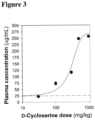
- DCS (30, 100, 300, 500 and 1000 mg/kg) was dissolved in PTS vehicle (5%PEG200: 5%Tween80: 90%NaCl) and administered IP at a dose volume of 10 mL/kg.
- mice 8 mice were used in each of the following treatment groups, per time point:
- DCS standards for plasma sample analysis were prepared in mouse plasma which were subsequently filtered (3kDa cutoff Amicon filter) and then diluted prior to analysis by combining 5 ⁇ L of filtrate with 45 ⁇ L of a 1.0ng/mL D9-Ach internal standard solution prepared in 10% water/acetonitrile. The range of standards utilized was 1.0-1000ng/mL. Plasma samples were prepared in the same manner but with 10 ⁇ L of sample and 90 ⁇ L of the internal standard mix to provide 100 ⁇ L of sample after dilution for triplicate analysis.
- Detection of the analyte was performed by monitoring unique fragments formed from the parent ion of DCS (parent 102.7Da to two fragments 74.7, 57.7 Da).
- the internal standards D9-Ach (parent 154.95DA to fragment 86.7DA) was incorporated into the samples to correct for sample matrix and instrument variability providing a more robust data set.
Landscapes
- Health & Medical Sciences (AREA)
- Chemical & Material Sciences (AREA)
- Life Sciences & Earth Sciences (AREA)
- Animal Behavior & Ethology (AREA)
- General Health & Medical Sciences (AREA)
- Public Health (AREA)
- Veterinary Medicine (AREA)
- Medicinal Chemistry (AREA)
- Pharmacology & Pharmacy (AREA)
- Epidemiology (AREA)
- Engineering & Computer Science (AREA)
- Bioinformatics & Cheminformatics (AREA)
- Neurosurgery (AREA)
- Neurology (AREA)
- Biomedical Technology (AREA)
- Chemical Kinetics & Catalysis (AREA)
- General Chemical & Material Sciences (AREA)
- Nuclear Medicine, Radiotherapy & Molecular Imaging (AREA)
- Organic Chemistry (AREA)
- Psychiatry (AREA)
- Pain & Pain Management (AREA)
- Dermatology (AREA)
- Inorganic Chemistry (AREA)
- Nutrition Science (AREA)
- Physiology (AREA)
- Acyclic And Carbocyclic Compounds In Medicinal Compositions (AREA)
- Pharmaceuticals Containing Other Organic And Inorganic Compounds (AREA)
- Medicines That Contain Protein Lipid Enzymes And Other Medicines (AREA)
- Medicinal Preparation (AREA)
Claims (9)
- Eine Zusammensetzung zur Verwendung bei der Behandlung von posttraumatischer Belastungsstörung, (PTSD), oder deren Symptomen, umfassend D-Cycloserin, das in einer Dosierungvon ≥ 500 mg/d bis ≤ 1000 mg/d verabreicht wird und so formuliert ist, dass es Blutspiegel von über 25 Mikrogramm (µg)/mL erzeugt.
- Eine Zusammensetzung zur Verwendung nach Anspruch 1, die außerdem ein antidepressiv oder antipsychotisch wirkendes Mittel umfasst.
- Die Zusammensetzung zur Verwendung nach Anspruch 2, wobei das Antidepressivum ausgewählt ist aus der Gruppe bestehend aus einem tetrazyklischen Antidepressivum (TeCA), einem selektiven Serotonin-Wiederaufnahme-Inhibitor (SSRI), einem Serotonin/Norepinephrin-Wiederaufnahme-Inhibitor (SNRI), einem Noradrenalin- und spezifischen Serotonin-Mittel (NaSSa), einem atypischen Antidepressivum, einem 5-HT2A-Antagonisten und Kombinationen davon.
- Die Zusammensetzung zur Verwendung nach Anspruch 2, wobei das antidepressiv oder antipsychotisch wirkende Mittel ausgewählt ist aus der Gruppe bestehend aus Sertralin, Paroxetin und Quetiapin.
- Die Zusammensetzung zur Verwendung nach Anspruch 2, wobei das antidepressiv wirkende Mittel ausgewählt ist aus der Gruppe bestehend aus Imipramin, Amitryptilin, Amoxapin, Bupropion, Citalopram, Clomipramin, Desipramin, Desvenlafaxin, Duloxetin, Escitalopram, Fluoxetin, Fluvoxamin, Levomilnacipran, Maprotilin, Mianserin, Milnacipran, racemisches Mirtazapin, S-(+)-Mirtazapin, R-(-)-Mirtazapin, Nefazodon, Paroxetin, Sertralin, Setiptilin, Trazodon, Venlafaxin, Venlafaxin XR, Dapoxetin, Indalpin, Vilazodon und Vortioxetin.
- Die Zusammensetzung zur Verwendung nach Anspruch 2, wobei das antidepressiv oder antipsychotisch wirkende Mittel ein selektiver 5-HT2A-Rezeptorantagonist oder inverser Agonist ist.
- Die Zusammensetzung zur Verwendung nach Anspruch 2, wobei das antidepressiv oder antipsychotisch wirkende Mittel ausgewählt ist aus der Gruppe bestehend aus Volinanserin (MDL100,907), Pruvanserin (EMD281014), Eplivanserin (SR-46349, Citryri), CYR-101 Pimavanserin (ACP-103), Agomelatin, Lu AA21004, F2695, SEP-227162, LuAA24530, SEP- 225289, LY12624803, HY10275, TIK-301 /LY156735, Lonasen, LU-31-130, SLV313, Edivoxetin, OPC-34712, Lisdexamfetamin, Sacomelin, Clouracetam und BMS-82036.
- Die Zusammensetzung zur Verwendung nach Anspruch 2, die außerdem die parenterale Verabreichung von Ketamin, S-Ketamin oder R-Ketamin an die Person vor der Verabreichung des NMDAR-Antagonisten und der antidepressiv wirkenden Mittel umfasst.
- Die Zusammensetzung zur Verwendung nach Anspruch 8, wobei das Ketamin intravenös, intranasal oder subkutan verabreicht wird.
Applications Claiming Priority (3)
| Application Number | Priority Date | Filing Date | Title |
|---|---|---|---|
| US201762510801P | 2017-05-25 | 2017-05-25 | |
| US201762518020P | 2017-06-12 | 2017-06-12 | |
| PCT/IL2018/050567 WO2018216018A1 (en) | 2017-05-25 | 2018-05-24 | Formulations for treatment of post-traumatic stress disorder |
Publications (4)
| Publication Number | Publication Date |
|---|---|
| EP3630102A1 EP3630102A1 (de) | 2020-04-08 |
| EP3630102A4 EP3630102A4 (de) | 2021-04-14 |
| EP3630102B1 true EP3630102B1 (de) | 2024-08-14 |
| EP3630102C0 EP3630102C0 (de) | 2024-08-14 |
Family
ID=64396350
Family Applications (2)
| Application Number | Title | Priority Date | Filing Date |
|---|---|---|---|
| EP18805411.8A Active EP3630102B1 (de) | 2017-05-25 | 2018-05-24 | Formulierungen zur behandlung von posttraumatischer belastungsstörung |
| EP18806042.0A Active EP3630103B1 (de) | 2017-05-25 | 2018-05-24 | Kombinationstherapie für auf nmdar-antagonist ansprechende neuropsychiatrische erkrankungen |
Family Applications After (1)
| Application Number | Title | Priority Date | Filing Date |
|---|---|---|---|
| EP18806042.0A Active EP3630103B1 (de) | 2017-05-25 | 2018-05-24 | Kombinationstherapie für auf nmdar-antagonist ansprechende neuropsychiatrische erkrankungen |
Country Status (13)
| Country | Link |
|---|---|
| US (4) | US10881665B2 (de) |
| EP (2) | EP3630102B1 (de) |
| JP (4) | JP7312116B2 (de) |
| KR (2) | KR102608479B1 (de) |
| CN (2) | CN110996947A (de) |
| AU (2) | AU2018274765A1 (de) |
| BR (2) | BR112019024817A2 (de) |
| CA (2) | CA3065003A1 (de) |
| IL (2) | IL270916B2 (de) |
| MX (2) | MX394876B (de) |
| RU (2) | RU2019143573A (de) |
| WO (2) | WO2018216020A1 (de) |
| ZA (2) | ZA201908616B (de) |
Families Citing this family (11)
| Publication number | Priority date | Publication date | Assignee | Title |
|---|---|---|---|---|
| BR112019024817A2 (pt) * | 2017-05-25 | 2020-08-18 | Glytech Llc. | formulações para tratamento de distúrbio de estresse pós-traumático |
| EP3505157B1 (de) | 2017-12-29 | 2021-12-08 | Celon Pharma S.A. | Trockenpulver-ketamin zusammensetzung zur pulmonalen verabreichung bei behandlungsresistenter depression |
| CN118453559A (zh) | 2018-02-15 | 2024-08-09 | 国立大学法人千叶大学 | 炎症性疾病或骨病的预防或治疗剂及医药组合物 |
| CN112533595A (zh) | 2018-05-04 | 2021-03-19 | 感知神经科学公司 | 治疗物质滥用的方法 |
| US20210386689A1 (en) * | 2018-10-31 | 2021-12-16 | Sunovion Pharmaceuticals Inc. | Methods of treating central nervous system disorders |
| EP3952856A4 (de) * | 2019-04-09 | 2023-01-11 | Vistagen Therapeutics, Inc. | Genetische varianten im zusammenhang mit der reaktion auf die behandlung von neurologischen erkrankungen |
| KR20220164470A (ko) * | 2020-01-03 | 2022-12-13 | 유니버시티 오브 파도바 | 신경정신 장애 및 질병에 대한 질병-조절 치료제로서의 덱스트로메타돈 |
| CN115677519A (zh) * | 2021-07-22 | 2023-02-03 | 立科时代(武汉)生物科技有限公司 | L-4-溴-犬尿氨酸及其在制备治疗抑郁症药物中的应用 |
| CN113648320A (zh) * | 2021-08-16 | 2021-11-16 | 中国人民解放军军事科学院军事医学研究院 | 赛洛西宾抗创伤后应激障碍的医药用途 |
| WO2025004042A1 (en) * | 2023-06-29 | 2025-01-02 | The Sarah Herzog Memorial Hospital-Ezrath Nashim | Nmdar antagonist for the treatment of inflammatory diseases in patients with depression comorbidity |
| US12303604B1 (en) | 2024-10-16 | 2025-05-20 | Currax Pharmaceuticals Llc | Pharmaceutical formulations comprising naltrexone and/or bupropion |
Family Cites Families (22)
| Publication number | Priority date | Publication date | Assignee | Title |
|---|---|---|---|---|
| US6391922B1 (en) | 1998-01-13 | 2002-05-21 | Synchroneuron, Llc | Treatment of posttraumatic stress disorder, obsessive-compulsive disorder and related neuropsychiatric disorders |
| PT1073432E (pt) * | 1998-04-14 | 2007-10-22 | Gen Hospital Corp | Utilização da d-alanina ou da d-serina para o tratamento da esquizofrenia |
| US20050096396A1 (en) * | 2002-03-28 | 2005-05-05 | Emory University | Acute pharmacologic augmentation of psychotherapy with enhancers of learning or conditioning |
| WO2005016319A2 (en) * | 2003-08-06 | 2005-02-24 | Emory University | Acute pharmacologic augmentation of psychotherapy with enhancers of learning or conditioning |
| SI1587789T1 (sl) | 2003-01-16 | 2009-02-28 | Acadia Pharm Inc | Selektivni inverzni agonisti serotoninskega 2A/2Creceptorja kot terapevtiki za nevrodegenerativne bolezni |
| US7838029B1 (en) * | 2003-07-31 | 2010-11-23 | Watson Laboratories, Inc. | Mirtazapine solid dosage forms |
| US20050209218A1 (en) | 2004-02-13 | 2005-09-22 | Meyerson Laurence R | Methods and compositions for the treatment of psychiatric conditions |
| US20050261278A1 (en) | 2004-05-21 | 2005-11-24 | Weiner David M | Selective serotonin receptor inverse agonists as therapeutics for disease |
| US7820695B2 (en) | 2004-05-21 | 2010-10-26 | Acadia Pharmaceuticals, Inc. | Selective serotonin receptor inverse agonists as therapeutics for disease |
| ES2412207T3 (es) | 2004-09-27 | 2013-07-10 | Acadia Pharmaceuticals Inc. | Forma cristalina de hemitartrato de N-(4-fluorobencil)-N-(1-metilpiperidin-4-il)-N'-(4-(2-metilpropiloxi)fenilmetil)carbamida |
| TW200631584A (en) * | 2004-11-15 | 2006-09-16 | Akzo Nobel Nv | A medicament related to mirtazapine for the treatment of hot flush |
| EP2099444A4 (de) | 2006-12-14 | 2012-11-07 | Nps Pharma Inc | Verwendung von d-serin-derivaten zur behandlung von angststörungen |
| US20100216805A1 (en) | 2009-02-25 | 2010-08-26 | Braincells, Inc. | Modulation of neurogenesis using d-cycloserine combinations |
| US9737531B2 (en) * | 2012-07-12 | 2017-08-22 | Glytech, Llc | Composition and method for treatment of depression and psychosis in humans |
| EP2670409B1 (de) | 2011-01-31 | 2018-04-18 | Serotech, LLC | Dosierungsplan, medikamentenausgabeverpackung und ihre verwendung zur behandlung von schweren depressionen |
| AU2013251426A1 (en) | 2012-04-27 | 2014-11-20 | Indiana University Research And Technology Corporation | Compositions and methods for treating PTSD and related diseases |
| SMT202000398T1 (it) * | 2013-10-18 | 2020-09-10 | Emalex Biosciences Inc | Benzazepine fuse per il trattamento della balbuzie |
| WO2016049048A1 (en) | 2014-09-22 | 2016-03-31 | Rugen Holdings (Cayman) Limited | Treatment of anxiety disorders and autism spectrum disorders |
| WO2016061320A2 (en) * | 2014-10-15 | 2016-04-21 | Rowan University | Timber therapy for post-traumatic stress disorder |
| JP2018526345A (ja) | 2015-08-04 | 2018-09-13 | コンフルーエンス ファーマシューティカルズ,エルエルシー | アカンプロセートおよびd−サイクロセリンを使用する組み合わせ療法 |
| US20190054067A1 (en) * | 2016-03-15 | 2019-02-21 | University Of The Sciences | Compositions and methods for treating compulsive-like behavior in a subject |
| BR112019024817A2 (pt) * | 2017-05-25 | 2020-08-18 | Glytech Llc. | formulações para tratamento de distúrbio de estresse pós-traumático |
-
2018
- 2018-05-24 BR BR112019024817-0A patent/BR112019024817A2/pt active Search and Examination
- 2018-05-24 MX MX2019014114A patent/MX394876B/es unknown
- 2018-05-24 IL IL270916A patent/IL270916B2/en unknown
- 2018-05-24 RU RU2019143573A patent/RU2019143573A/ru not_active Application Discontinuation
- 2018-05-24 RU RU2019143572A patent/RU2019143572A/ru not_active Application Discontinuation
- 2018-05-24 CN CN201880048653.3A patent/CN110996947A/zh active Pending
- 2018-05-24 KR KR1020197038209A patent/KR102608479B1/ko active Active
- 2018-05-24 JP JP2019564988A patent/JP7312116B2/ja active Active
- 2018-05-24 EP EP18805411.8A patent/EP3630102B1/de active Active
- 2018-05-24 WO PCT/IL2018/050570 patent/WO2018216020A1/en not_active Ceased
- 2018-05-24 CA CA3065003A patent/CA3065003A1/en active Pending
- 2018-05-24 EP EP18806042.0A patent/EP3630103B1/de active Active
- 2018-05-24 BR BR112019024802-1A patent/BR112019024802A2/pt unknown
- 2018-05-24 AU AU2018274765A patent/AU2018274765A1/en not_active Abandoned
- 2018-05-24 CN CN201880048442.XA patent/CN110996946A/zh active Pending
- 2018-05-24 IL IL270885A patent/IL270885B2/en unknown
- 2018-05-24 MX MX2019014113A patent/MX394875B/es unknown
- 2018-05-24 US US15/987,933 patent/US10881665B2/en active Active
- 2018-05-24 US US15/987,941 patent/US20180338956A1/en not_active Abandoned
- 2018-05-24 AU AU2018274767A patent/AU2018274767A1/en not_active Abandoned
- 2018-05-24 WO PCT/IL2018/050567 patent/WO2018216018A1/en not_active Ceased
- 2018-05-24 CA CA3064846A patent/CA3064846A1/en active Pending
- 2018-05-24 KR KR1020197038205A patent/KR102654569B1/ko active Active
- 2018-05-24 JP JP2019564867A patent/JP7308761B2/ja active Active
-
2019
- 2019-12-23 ZA ZA2019/08616A patent/ZA201908616B/en unknown
- 2019-12-23 ZA ZA2019/08617A patent/ZA201908617B/en unknown
-
2021
- 2021-01-01 US US17/139,999 patent/US11969431B2/en active Active
-
2022
- 2022-01-28 US US17/586,828 patent/US20220143041A1/en active Pending
-
2023
- 2023-03-07 JP JP2023034164A patent/JP7585369B2/ja active Active
- 2023-05-10 JP JP2023077666A patent/JP7537675B2/ja active Active
Non-Patent Citations (1)
| Title |
|---|
| DIFEDE JOANN ET AL: "D-Cycloserine Augmentation of Exposure Therapy for Post-Traumatic Stress Disorder: A Pilot Randomized Clinical Trial", NEUROPSYCHOPHARMACOLOGY, vol. 39, no. 5, 1 April 2014 (2014-04-01), Cham, pages 1052 - 1058, XP093020337, ISSN: 0893-133X, DOI: 10.1038/npp.2013.317 * |
Also Published As
Similar Documents
| Publication | Publication Date | Title |
|---|---|---|
| EP3630102B1 (de) | Formulierungen zur behandlung von posttraumatischer belastungsstörung | |
| US20110319384A1 (en) | Pharmaceutical Compositions | |
| US20230201193A1 (en) | Composition and method for treatment of depression and psychosis in humans | |
| US20240277728A1 (en) | Formulations for treatment of post-traumatic stress disorder | |
| JP2014502981A (ja) | ストレス又は急性聴力損失に関連する耳鳴の治療又は予防のためのネラメキサン | |
| CA3067162A1 (en) | Treatment of depression with nmda antagonists and d2/5ht2a or selective 5ht2a antagonists | |
| US20250302825A1 (en) | Combination treatments for depression utilizing an nmdar antagonist | |
| US20220323435A1 (en) | Composition and method for treatment of depression and psychosis in humans | |
| US20250144090A1 (en) | Composition and method for treatment of depression and psychosis in humans | |
| CA2846768A1 (en) | Combinations comprising a s1p receptor modulator | |
| KR20160143846A (ko) | 이명 환자의 치료용 약제 |
Legal Events
| Date | Code | Title | Description |
|---|---|---|---|
| STAA | Information on the status of an ep patent application or granted ep patent |
Free format text: STATUS: THE INTERNATIONAL PUBLICATION HAS BEEN MADE |
|
| PUAI | Public reference made under article 153(3) epc to a published international application that has entered the european phase |
Free format text: ORIGINAL CODE: 0009012 |
|
| STAA | Information on the status of an ep patent application or granted ep patent |
Free format text: STATUS: REQUEST FOR EXAMINATION WAS MADE |
|
| 17P | Request for examination filed |
Effective date: 20191223 |
|
| AK | Designated contracting states |
Kind code of ref document: A1 Designated state(s): AL AT BE BG CH CY CZ DE DK EE ES FI FR GB GR HR HU IE IS IT LI LT LU LV MC MK MT NL NO PL PT RO RS SE SI SK SM TR |
|
| AX | Request for extension of the european patent |
Extension state: BA ME |
|
| DAV | Request for validation of the european patent (deleted) | ||
| DAX | Request for extension of the european patent (deleted) | ||
| A4 | Supplementary search report drawn up and despatched |
Effective date: 20210315 |
|
| RIC1 | Information provided on ipc code assigned before grant |
Ipc: A61K 31/42 20060101AFI20210309BHEP Ipc: A61K 31/4545 20060101ALI20210309BHEP Ipc: A61K 31/497 20060101ALI20210309BHEP Ipc: A61K 31/554 20060101ALI20210309BHEP Ipc: A61P 25/24 20060101ALI20210309BHEP Ipc: A61K 31/405 20060101ALI20210309BHEP Ipc: A61K 9/00 20060101ALI20210309BHEP Ipc: A61K 31/135 20060101ALI20210309BHEP Ipc: A61K 31/165 20060101ALI20210309BHEP Ipc: A61K 31/4152 20060101ALI20210309BHEP Ipc: A61K 31/4525 20060101ALI20210309BHEP Ipc: A61K 31/55 20060101ALI20210309BHEP Ipc: A61K 45/06 20060101ALI20210309BHEP Ipc: A61K 47/40 20060101ALI20210309BHEP Ipc: A61P 25/00 20060101ALI20210309BHEP Ipc: A61P 25/22 20060101ALI20210309BHEP |
|
| STAA | Information on the status of an ep patent application or granted ep patent |
Free format text: STATUS: EXAMINATION IS IN PROGRESS |
|
| 17Q | First examination report despatched |
Effective date: 20230210 |
|
| GRAP | Despatch of communication of intention to grant a patent |
Free format text: ORIGINAL CODE: EPIDOSNIGR1 |
|
| STAA | Information on the status of an ep patent application or granted ep patent |
Free format text: STATUS: GRANT OF PATENT IS INTENDED |
|
| INTG | Intention to grant announced |
Effective date: 20240105 |
|
| GRAJ | Information related to disapproval of communication of intention to grant by the applicant or resumption of examination proceedings by the epo deleted |
Free format text: ORIGINAL CODE: EPIDOSDIGR1 |
|
| STAA | Information on the status of an ep patent application or granted ep patent |
Free format text: STATUS: EXAMINATION IS IN PROGRESS |
|
| GRAS | Grant fee paid |
Free format text: ORIGINAL CODE: EPIDOSNIGR3 |
|
| STAA | Information on the status of an ep patent application or granted ep patent |
Free format text: STATUS: GRANT OF PATENT IS INTENDED |
|
| GRAP | Despatch of communication of intention to grant a patent |
Free format text: ORIGINAL CODE: EPIDOSNIGR1 |
|
| RAP3 | Party data changed (applicant data changed or rights of an application transferred) |
Owner name: GLYTECH LLC. |
|
| INTC | Intention to grant announced (deleted) | ||
| INTG | Intention to grant announced |
Effective date: 20240516 |
|
| GRAA | (expected) grant |
Free format text: ORIGINAL CODE: 0009210 |
|
| STAA | Information on the status of an ep patent application or granted ep patent |
Free format text: STATUS: THE PATENT HAS BEEN GRANTED |
|
| AK | Designated contracting states |
Kind code of ref document: B1 Designated state(s): AL AT BE BG CH CY CZ DE DK EE ES FI FR GB GR HR HU IE IS IT LI LT LU LV MC MK MT NL NO PL PT RO RS SE SI SK SM TR |
|
| REG | Reference to a national code |
Ref country code: GB Ref legal event code: FG4D |
|
| REG | Reference to a national code |
Ref country code: CH Ref legal event code: EP |
|
| REG | Reference to a national code |
Ref country code: DE Ref legal event code: R096 Ref document number: 602018073136 Country of ref document: DE |
|
| REG | Reference to a national code |
Ref country code: IE Ref legal event code: FG4D |
|
| U01 | Request for unitary effect filed |
Effective date: 20240913 |
|
| U07 | Unitary effect registered |
Designated state(s): AT BE BG DE DK EE FI FR IT LT LU LV MT NL PT RO SE SI Effective date: 20241108 |
|
| PG25 | Lapsed in a contracting state [announced via postgrant information from national office to epo] |
Ref country code: NO Free format text: LAPSE BECAUSE OF FAILURE TO SUBMIT A TRANSLATION OF THE DESCRIPTION OR TO PAY THE FEE WITHIN THE PRESCRIBED TIME-LIMIT Effective date: 20241114 |
|
| PG25 | Lapsed in a contracting state [announced via postgrant information from national office to epo] |
Ref country code: PL Free format text: LAPSE BECAUSE OF FAILURE TO SUBMIT A TRANSLATION OF THE DESCRIPTION OR TO PAY THE FEE WITHIN THE PRESCRIBED TIME-LIMIT Effective date: 20240814 Ref country code: GR Free format text: LAPSE BECAUSE OF FAILURE TO SUBMIT A TRANSLATION OF THE DESCRIPTION OR TO PAY THE FEE WITHIN THE PRESCRIBED TIME-LIMIT Effective date: 20241115 |
|
| PG25 | Lapsed in a contracting state [announced via postgrant information from national office to epo] |
Ref country code: IS Free format text: LAPSE BECAUSE OF FAILURE TO SUBMIT A TRANSLATION OF THE DESCRIPTION OR TO PAY THE FEE WITHIN THE PRESCRIBED TIME-LIMIT Effective date: 20241214 |
|
| PG25 | Lapsed in a contracting state [announced via postgrant information from national office to epo] |
Ref country code: HR Free format text: LAPSE BECAUSE OF FAILURE TO SUBMIT A TRANSLATION OF THE DESCRIPTION OR TO PAY THE FEE WITHIN THE PRESCRIBED TIME-LIMIT Effective date: 20240814 |
|
| PG25 | Lapsed in a contracting state [announced via postgrant information from national office to epo] |
Ref country code: RS Free format text: LAPSE BECAUSE OF FAILURE TO SUBMIT A TRANSLATION OF THE DESCRIPTION OR TO PAY THE FEE WITHIN THE PRESCRIBED TIME-LIMIT Effective date: 20241114 Ref country code: ES Free format text: LAPSE BECAUSE OF FAILURE TO SUBMIT A TRANSLATION OF THE DESCRIPTION OR TO PAY THE FEE WITHIN THE PRESCRIBED TIME-LIMIT Effective date: 20240814 |
|
| PG25 | Lapsed in a contracting state [announced via postgrant information from national office to epo] |
Ref country code: RS Free format text: LAPSE BECAUSE OF FAILURE TO SUBMIT A TRANSLATION OF THE DESCRIPTION OR TO PAY THE FEE WITHIN THE PRESCRIBED TIME-LIMIT Effective date: 20241114 Ref country code: PL Free format text: LAPSE BECAUSE OF FAILURE TO SUBMIT A TRANSLATION OF THE DESCRIPTION OR TO PAY THE FEE WITHIN THE PRESCRIBED TIME-LIMIT Effective date: 20240814 Ref country code: NO Free format text: LAPSE BECAUSE OF FAILURE TO SUBMIT A TRANSLATION OF THE DESCRIPTION OR TO PAY THE FEE WITHIN THE PRESCRIBED TIME-LIMIT Effective date: 20241114 Ref country code: IS Free format text: LAPSE BECAUSE OF FAILURE TO SUBMIT A TRANSLATION OF THE DESCRIPTION OR TO PAY THE FEE WITHIN THE PRESCRIBED TIME-LIMIT Effective date: 20241214 Ref country code: HR Free format text: LAPSE BECAUSE OF FAILURE TO SUBMIT A TRANSLATION OF THE DESCRIPTION OR TO PAY THE FEE WITHIN THE PRESCRIBED TIME-LIMIT Effective date: 20240814 Ref country code: GR Free format text: LAPSE BECAUSE OF FAILURE TO SUBMIT A TRANSLATION OF THE DESCRIPTION OR TO PAY THE FEE WITHIN THE PRESCRIBED TIME-LIMIT Effective date: 20241115 Ref country code: ES Free format text: LAPSE BECAUSE OF FAILURE TO SUBMIT A TRANSLATION OF THE DESCRIPTION OR TO PAY THE FEE WITHIN THE PRESCRIBED TIME-LIMIT Effective date: 20240814 |
|
| PG25 | Lapsed in a contracting state [announced via postgrant information from national office to epo] |
Ref country code: SM Free format text: LAPSE BECAUSE OF FAILURE TO SUBMIT A TRANSLATION OF THE DESCRIPTION OR TO PAY THE FEE WITHIN THE PRESCRIBED TIME-LIMIT Effective date: 20240814 |
|
| PG25 | Lapsed in a contracting state [announced via postgrant information from national office to epo] |
Ref country code: CZ Free format text: LAPSE BECAUSE OF FAILURE TO SUBMIT A TRANSLATION OF THE DESCRIPTION OR TO PAY THE FEE WITHIN THE PRESCRIBED TIME-LIMIT Effective date: 20240814 |
|
| PG25 | Lapsed in a contracting state [announced via postgrant information from national office to epo] |
Ref country code: SK Free format text: LAPSE BECAUSE OF FAILURE TO SUBMIT A TRANSLATION OF THE DESCRIPTION OR TO PAY THE FEE WITHIN THE PRESCRIBED TIME-LIMIT Effective date: 20240814 |
|
| U20 | Renewal fee for the european patent with unitary effect paid |
Year of fee payment: 8 Effective date: 20250506 |
|
| PLBE | No opposition filed within time limit |
Free format text: ORIGINAL CODE: 0009261 |
|
| STAA | Information on the status of an ep patent application or granted ep patent |
Free format text: STATUS: NO OPPOSITION FILED WITHIN TIME LIMIT |
|
| PGFP | Annual fee paid to national office [announced via postgrant information from national office to epo] |
Ref country code: GB Payment date: 20250514 Year of fee payment: 8 |
|
| 26N | No opposition filed |
Effective date: 20250515 |