EP3629762B1 - Mehle als aromaträger - Google Patents
Mehle als aromaträger Download PDFInfo
- Publication number
- EP3629762B1 EP3629762B1 EP17733978.5A EP17733978A EP3629762B1 EP 3629762 B1 EP3629762 B1 EP 3629762B1 EP 17733978 A EP17733978 A EP 17733978A EP 3629762 B1 EP3629762 B1 EP 3629762B1
- Authority
- EP
- European Patent Office
- Prior art keywords
- flour
- spray
- dried
- flavouring composition
- weight
- Prior art date
- Legal status (The legal status is an assumption and is not a legal conclusion. Google has not performed a legal analysis and makes no representation as to the accuracy of the status listed.)
- Active
Links
Images


Classifications
-
- A—HUMAN NECESSITIES
- A23—FOODS OR FOODSTUFFS; TREATMENT THEREOF, NOT COVERED BY OTHER CLASSES
- A23L—FOODS, FOODSTUFFS OR NON-ALCOHOLIC BEVERAGES, NOT OTHERWISE PROVIDED FOR; PREPARATION OR TREATMENT THEREOF
- A23L27/00—Spices; Flavouring agents or condiments; Artificial sweetening agents; Table salts; Dietetic salt substitutes; Preparation or treatment thereof
- A23L27/70—Fixation, conservation, or encapsulation of flavouring agents
- A23L27/72—Encapsulation
-
- A—HUMAN NECESSITIES
- A21—BAKING; EDIBLE DOUGHS
- A21D—TREATMENT OF FLOUR OR DOUGH FOR BAKING, e.g. BY ADDITION OF MATERIALS; BAKING; BAKERY PRODUCTS
- A21D2/00—Treatment of flour or dough by adding materials thereto before or during baking
- A21D2/08—Treatment of flour or dough by adding materials thereto before or during baking by adding organic substances
- A21D2/36—Vegetable material
-
- A—HUMAN NECESSITIES
- A23—FOODS OR FOODSTUFFS; TREATMENT THEREOF, NOT COVERED BY OTHER CLASSES
- A23K—FODDER
- A23K10/00—Animal feeding-stuffs
- A23K10/30—Animal feeding-stuffs from material of plant origin, e.g. roots, seeds or hay; from material of fungal origin, e.g. mushrooms
-
- A—HUMAN NECESSITIES
- A23—FOODS OR FOODSTUFFS; TREATMENT THEREOF, NOT COVERED BY OTHER CLASSES
- A23L—FOODS, FOODSTUFFS OR NON-ALCOHOLIC BEVERAGES, NOT OTHERWISE PROVIDED FOR; PREPARATION OR TREATMENT THEREOF
- A23L29/00—Foods or foodstuffs containing additives; Preparation or treatment thereof
- A23L29/20—Foods or foodstuffs containing additives; Preparation or treatment thereof containing gelling or thickening agents
- A23L29/206—Foods or foodstuffs containing additives; Preparation or treatment thereof containing gelling or thickening agents of vegetable origin
- A23L29/212—Starch; Modified starch; Starch derivatives, e.g. esters or ethers
- A23L29/225—Farinaceous thickening agents other than isolated starch or derivatives
-
- A—HUMAN NECESSITIES
- A23—FOODS OR FOODSTUFFS; TREATMENT THEREOF, NOT COVERED BY OTHER CLASSES
- A23L—FOODS, FOODSTUFFS OR NON-ALCOHOLIC BEVERAGES, NOT OTHERWISE PROVIDED FOR; PREPARATION OR TREATMENT THEREOF
- A23L7/00—Cereal-derived products; Malt products; Preparation or treatment thereof
- A23L7/10—Cereal-derived products
- A23L7/198—Dry unshaped finely divided cereal products, not provided for in groups A23L7/117 - A23L7/196 and A23L29/00, e.g. meal, flour, powder, dried cereal creams or extracts
Definitions
- the present invention relates to spray-dried flavor compositions comprising a flavor and flour as a carrier.
- the present invention relates to spray-dried flavor compositions with flour as a carrier, in which the use of emulsifiers can be reduced or the use of emulsifiers can be completely dispensed with.
- the present invention relates to methods for producing spray-dried flavor compositions as described herein.
- the invention also relates to the use of flour as a carrier in a spray-dried flavor composition, in particular for encapsulating flavors in a spray-dried flavor composition.
- Flavorings are used in numerous foods and beverages, semi-finished products, pharmaceutical and cosmetic products, as well as oral care products.
- the carrier When preparing a spray dried flavour composition, the carrier is usually first dispersed in water with an emulsifier (usually gum arabic or modified starch) and once this mixture is fully solvated, the flavour is added and homogenised. The mixture is then spray dried to a powder.
- an emulsifier usually gum arabic or modified starch
- Maltodextrin has been used as a standard carrier for flavoring compositions. Particularly when products are intended for consumption, it is becoming increasingly attractive to use only "natural” ingredients, i.e. substances that consumers immediately classify as common foods. Since maltodextrin is considered a "chemical” additive, it does not meet this requirement.
- the raw material characterization was used to record the raw material properties and did not constitute an exclusion criterion.
- the dry mass was required in order to be able to weigh comparable quantities for the recipes.
- the dust value should be as low as possible to ensure safety in production.
- the particle size of the raw materials is related to the dust value.
- the raw materials should be as free-flowing as possible.
- the flowability was measured as an FFC value using a texture analyzer. The values mean: The flowability was measured as FFC value. The following applies to the FFC values: 0 ⁇ FFC ⁇ 11 free-flowing 11 ⁇ FFC ⁇ 14 easy flowing 14 ⁇ FFC ⁇ 16 cohesive 16 ⁇ FFC ⁇ 19 very cohesive FFC > 19 solidified
- the viscosity was measured in three stages.
- the raw material was dispersed in water at a concentration of 10, 30 and 60% and measured.
- the viscosity of the 30% sample should not exceed 300 mPa*s so that the raw material is suitable as a carrier.
- the three concentrations of the carriers in water were tested for sedimentation stability using a 12-24 hour standing test. It is desirable that there is no sedimentation at all for at least 12 hours.
- the storage stability was tested at 40 °C and 80% relative humidity and at 60 °C and 55% relative humidity by sealing 10 g of the samples in the films used for storage and storing them for 10 days under the conditions mentioned. After 10 days, the samples were weighed back and the water absorption was determined. The samples were also visually checked for their consistency. Samples with little to no water absorption and existing flowability after storage were desired here.
- flours not only satisfactorily meet the above requirements, but can also encapsulate flavors so efficiently through spray drying that the flavors are even better protected from oxidative spoilage than with the standard carrier maltodextrin.
- the standard use of emulsifiers can be reduced or even completely dispensed with.
- Table 1 shows the results of the accelerated storage tests.
- the starches fail the accelerated storage test overall.
- the flours show good protection of the flavor over the storage time tested.
- Table 2 shows a comparison between flour and maltodextrin as a carrier for various flavors over a simulated storage time of one year. The flours are clearly superior to maltodextrin and stabilize the flavor much better.
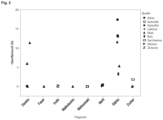
- Figures 1 and 2 show the aroma loading and the surface oil of various spray-dried compositions with different carriers.
- An aroma loading with little loss (0 to max. 10 wt. %) of the aroma used during spray drying is an indication of good stabilization (encapsulation) of the aroma by the carrier.
- the aroma loading in the spray-dried composition is almost at the 20 wt. .-% aroma used in the formulation before spray drying, ie there is There is hardly any loss of aroma.
- Another measure of the stabilization (encapsulation) of the aroma by the carrier is the surface oil content. If the stabilization is insufficient, oil will leak out on the surface.
- the spray-dried flavor composition can optionally contain other ingredients.
- it can contain an emulsifier.
- the spray-dried flavor composition consists only of the flavor and the flour.
- an aroma is understood to mean one or a mixture of two or more odor and/or flavoring substances which impart one or more odor or flavor notes.
- This also includes complex flavours, such as spice mixtures.
- the flavour can contain other usual ingredients in addition to the odour and/or flavouring agent(s).
- flour is understood to mean a powder that is produced, for example, by grinding rice, grains, pulses, quinoa, peas or potatoes. Flours generally contain around 70% carbohydrates (mainly starch), 14% water, around 10% protein, 1% fat and 1% mineral salts. However, these values can vary depending on their origin and processing.
- the term "flour" in the context of the present invention includes flours obtained in various ways, e.g. wet- or dry-milled flours, as well as specially treated flours that have been (enzymatically) hydrolyzed, for example.
- the aroma load of the flours used according to the invention is between 17 and 20% by weight of the spray-dried aroma composition.
- 20% by weight of aroma was used in the formulation before spray drying.
- the starches only reach values of up to approx. 16% by weight of aroma in the spray-dried aroma composition. Flours are therefore better suited to stabilizing aromas, so that there is hardly any loss of aroma during spray drying.
- the loss is therefore less than 10% by weight of the flavour used before spray drying, preferably less than 5% by weight, particularly preferably less than 3% by weight and most particularly preferably less than 1% by weight.
- Spray drying is a common method in process engineering that is well known to those skilled in the art.
- a solution, suspension or emulsion containing the material to be dried is atomized in a hot gas stream and thus dried to a fine powder.
- the flour to be used according to the invention preferably has a particle size of less than 200 ⁇ m, particularly preferably less than 100 ⁇ m, most preferably less than 50 ⁇ m.
- the flour is selected from the group consisting of rice flour, cereal flour, legume flour, quinoa flour, and potato flour, preferably selected from the group consisting of rice flour, wheat flour, pea flour and potato flour.
- a spray-dried flavor composition as described above is also preferred, wherein the flour is dry- or wet-milled and/or enzymatically modified, preferably hydrolyzed with an amylase.
- the flour used can be obtained in different ways and may have been additionally treated. Enzymatic treatments such as (partial) hydrolysis by amylases lead to particularly suitable properties. When pre-treating the flour, however, care must be taken to ensure that the proteins it contains are not denatured to such an extent that they lose their emulsifying properties.
- a spray-dried flavor composition as described above, wherein the flour has a protein content of 0.5 wt.% to 15 wt.%, preferably 3 wt.% to 10 wt.%, based on the total weight of the flour.
- a spray-dried flavor composition as described above, wherein the flavor is selected from the group consisting of fruit flavors, in particular citrus flavors, meat, vegetable and spice flavors as well as meat, vegetable and spice extracts.
- the aroma composition according to the invention is advantageously suitable for the processing of important aromas such as fruit, meat, vegetable and spice aromas, as well as the respective extracts. This ensures versatile application in food and beverages, seasoning mixtures, pet food, pharmaceutical and oral care products.
- the flavor composition according to the invention contains less than 20% by weight, preferably less than 10% by weight, particularly preferably less than 1% by weight of emulsifier and very particularly preferably no emulsifier.
- Standard recipes for spray-dried powders consist of approximately 20% by weight of flavor, 20% by weight of emulsifier (e.g. gum arabic) and 60% by weight of carrier.
- emulsifier e.g. gum arabic
- carrier 60% by weight of carrier.
- the spray-dried aroma composition has a surface oil content of less than 3% by weight, preferably less than 1% by weight, in each case based on the total weight of the spray-dried aroma composition.
- the low surface oil content of the spray-dried aroma composition according to the invention results from the particularly stable encapsulation of the aroma by the flour.
- the aroma composition is therefore dry and does not tend to stick. If oil comes out on the surface, this means that the carrier is not able to encapsulate the aroma sufficiently.
- the spray-dried flavour compositions with the flours to be used according to the invention as carriers have a surface oil content of less than 5 wt.%, which is not achieved with starches.
- a product comprising a spray-dried flavor composition as described above, preferably selected from nutritional or pleasure products, pharmaceutical products, oral care products, pet food and seasoning mixtures.
- the spray-dried aroma composition according to the invention can be used in a variety of ways and processed into different products.
- the proportion of the spray-dried aroma composition in the respective product is between 0.01 and 5% by weight, depending on its nature, in each case based on the total weight of the product.
- Such coloring compositions preferably contain coloring substances of plant origin and very particularly preferably also consist exclusively of ingredients that the consumer understands as natural foods and which are therefore suitable for "clean label" products.
- Examples of the proportion of the aroma composition according to the invention in % by weight in various products Dough 0.05 - 2.0 % fat filling 0.1 - 2.5 % candy 0.1 - 0.4 % fruit gums 0.04 - 0.3 % Ice 0.05 - 0.5% dessert 0.03 - 0.6 % tea 1.5 - 5.0 % soup & sauce 0.04 - 0.5 % dressing 0.02 - 0.5 % Sausage 0.03 - 0.6 % lettuce 0.02 - 0.3% Cheese 0.03 - 0.6 % ready meals 0.05 - 0.5% animal feed 0.001 - 0.5 %
- the flour and the optional emulsifier are first dispersed in a dispersing agent, preferably water. As soon as this mixture is completely solvated, the flavor is added and homogenized.
- a dispersing agent preferably water.
- the flavor is added and homogenized.
- the composition according to the invention is obtained by spray drying the resulting mixture.
- the flour is selected from the group consisting of rice flour, cereal flour, legume flour, quinoa flour and potato flour, preferably selected from the group consisting of rice flour, wheat flour, pea flour and potato flour.
- the flour preferably has a protein content of 0.5 wt.% to 15 wt.%, preferably 3 wt.% to 10 wt.% based on the total weight of the flour.
- the above applies accordingly with regard to the flour and its protein content as well as the processing and optional (enzymatic) treatment.
- the pretreatment is too denaturing, the flour can lose all or part of its solubility and thus its emulsifying properties. It is therefore important to ensure that the proteins contained are not subjected to any denaturing pretreatment, as otherwise the encapsulation effect is lost. In particular, high temperatures should be avoided during processing.
- the present invention also relates to a spray-dried flavor composition as described above, preparable or prepared by a process as described above.
- the production of the flavor composition according to the invention results in a particularly stable encapsulation of the flavor due to the natural protein content of the flour used as described above, whereby the flavor is protected from oxidation and has a particularly good storage stability.
- the present invention also relates to the use of flour as a carrier in a spray-dried flavor composition, for encapsulating flavors in a spray-dried flavor composition.
- the flour is selected from the group consisting of rice flour, cereal flour, pulse flour, quinoa flour and potato flour, preferably selected from the group consisting of rice flour, wheat flour, pea flour and potato flour.
- the flour can have a protein content of 0.5% to 15% by weight, preferably 3% to 10% by weight, based on the total weight of the flour.
- flours as a carrier for spray-dried flavor compositions brings with it surprising advantages. These are primarily attributed to the natural protein content of the flours, which enables a particularly stable emulsion and encapsulation of the flavor, so that the composition remains stable over a long period of time and the use of emulsifiers in production can be (largely) dispensed with.
- Example 2 Formulations for an iced tea drink (black tea)
- Black tea extract was dissolved in water and mixed in a beaker together with sugar, a flavor preparation and the spray-dried flavor.
- Example 3 Formulations for a chewing gum
- Parts A to D were mixed and kneaded intensively.
- the raw mass can be processed into thin strips, for example, to make ready-to-eat chewing gum.
Landscapes
- Life Sciences & Earth Sciences (AREA)
- Engineering & Computer Science (AREA)
- Chemical & Material Sciences (AREA)
- Food Science & Technology (AREA)
- Polymers & Plastics (AREA)
- Health & Medical Sciences (AREA)
- Nutrition Science (AREA)
- Biotechnology (AREA)
- Dispersion Chemistry (AREA)
- Botany (AREA)
- Molecular Biology (AREA)
- Mycology (AREA)
- Physiology (AREA)
- Animal Husbandry (AREA)
- Zoology (AREA)
- Seasonings (AREA)
Description
- Die vorliegende Erfindung betrifft sprühgetrocknete Aromazusammensetzungen umfassend ein Aroma und Mehl als Trägerstoff. Insbesondere betrifft die vorliegende Erfindung sprühgetrocknete Aromazusammensetzungen mit Mehlen als Trägerstoff, bei denen der Einsatz von Emulgatoren reduziert werden bzw. vollständig auf den Einsatz von Emulgatoren verzichtet werden kann. Ferner betrifft die vorliegende Erfindung Verfahren zur Herstellung von sprühgetrockneten Aromazusammensetzungen wie hierin beschrieben. Schließlich betrifft die Erfindung auch die Verwendung von Mehl als Trägerstoff in einer sprühgetrockneten Aromazusammensetzung, insbesondere zum Verkapseln von Aromen in einer sprühgetrockneten Aromazusammensetzung.
- Der Einschluss von Geschmacksstoffen und Ölen mittels Sprühtrocknung in verschiedene Trägermaterialien ist z.B. aus folgendem Dokument bekannt: Jafari S. "Encapsulation efficiency of food flavours and oils during spray drying", Drying Technology. 26: p. 816-835 (2008).
- Aromastoffe werden in zahlreichen Nahrungs- und Genussmitteln, Halbfertigwaren, pharmazeutischen und kosmetischen Produkten, sowie Mundpflegeprodukten eingesetzt.
- Bei der Herstellung einer sprühgetrockneten Aromazusammensetzungen wird der Trägerstoff in der Regel mit einem Emulgator (üblicherweise Gummi arabicum oder modifizierte Stärke) zunächst in Wasser dispergiert und sobald diese Mischung vollständig solvatisiert ist, wird das Aroma zugefügt und homogenisiert. Anschließend erfolgt die Sprühtrocknung zu einem Pulver.
- Als Trägerstoff für Aromazusammensetzungen wird bislang standardmäßig Maltodextrin verwendet. Insbesondere wenn Produkte dem Verzehr dienen, wird es zunehmend attraktiver ausschließlich "natürliche" Inhaltsstoffe zu verwenden, d.h. solche Stoffe, die der Verbraucher sofort als gängiges Nahrungsmittel einordnet. Da Maltodextrin als "chemischer" Zusatz verstanden wird, erfüllt es diese Anforderung nicht.
- Um geeignete Alternativen für so genannte "clean label"-Produkte zu finden wurden über 30 Materialien aus natürlichen Rohstoffen untersucht und auf Ihre Eignung als Trägerstoff für Aromen getestet. Darunter waren Mehle, Stärken, Dextrine, Inulin, Zucker, Malzextrakt und Fasern aus verschiedenen pflanzlichen Quellen vertreten. Zunächst wurden die Rohstoffe charakterisiert. Hierzu wurden die Trockenmasse, Staubwert, Partikelgröße, Fließfähigkeit und die Viskosität sowie Sedimentationsstabilität bei verschiedenen Trockenmassen in Dispersion gemessen. Geeignete Materialien wurden dann in einer Standardrezeptur als Ersatz und in direktem Vergleich zu Maltodextrin als bisher verwendeter Trägerstoff sprühgetrocknet. Die sprühgetrockneten Pulver wurden anschließend auf ihre Aromabeladung, Partikelgröße, Fließfähigkeit, Oberflächenöl, Öltröpfchengröße und Lagerstabilität unter europäischen und asiatischen Klimabedingungen untersucht.
- Die Rohstoffcharakterisierung diente der Erfassung der Rohstoffeigenschaften und stellte noch kein Ausschlusskriterium dar. Die Trockenmasse wurde benötigt, um vergleichbare Mengen für die Rezepturen einwiegen zu können. Der Staubwert sollte möglichst gering sein, um die Sicherheit in der Produktion zu gewährleisten. Die Partikelgröße der Rohstoffe ist in Zusammenhang mit dem Staubwert zu sehen. Die Rohstoffe sollten möglichst frei fließend sein. Die Fließfähigkeit wurde als FFC-Wert mittels Texture-Analyser gemessen. Dabei bedeuten die Werte:
Die Fließfähigkeit wurde als FFC-Wert gemessen. Dabei gilt für die FFC - Werte:0 < FFC < 11 frei fließend 11 < FFC < 14 leicht fließend 14 < FFC < 16 kohäsiv 16 < FFC < 19 sehr kohäsiv FFC > 19 verfestigt - Die Viskosität wurde in drei Stufen gemessen. Der Rohstoff wurde in einer Konzentration von 10, 30 und 60% in Wasser dispergiert und vermessen. Hierbei sollte die Viskosität der 30%igen Probe 300 mPa*s nicht überschreiten, damit der Rohstoff als Trägerstoff geeignet ist.
- Die drei Konzentrationen der Träger in Wasser wurden mittels 12-24 stündigem Standtest auf Sedimentationsstabilität überprüft. Wünschenswert ist hier keinerlei Sedimentation für mindestens 12 Stunden.
- Die Lagerstabilität wurde bei 40 °C und 80 % rel. Luftfeuchte sowie bei 60 °C und 55 % rel. Luftfeuchte untersucht indem 10 g der Proben in die zur Lagerung verwendeten Folien eingeschweißt und für 10 Tage bei den genannten Bedingungen gelagert wurden. Nach 10 Tagen wurden die Proben zurück gewogen und somit die Wasseraufnahme bestimmt. Weiterhin wurden die Proben optisch auf ihre Konsistenz hin geprüft. Erwünscht waren hier Proben mit geringer bis keiner Wasseraufnahme und bestehender Fließfähigkeit nach der Lagerung.
- Überraschenderweise wurde nun herausgefunden, dass Mehle nicht nur die oben genannten Anforderungen zufriedenstellend erfüllen, sondern darüberhinaus Aromen durch Sprühtrocknung so effizient verkapseln können, dass die Aromen vor oxidativem Verderb noch besser geschützt sind als mit dem Standardträger Maltodextrin. Zudem kann der standardmäßige Einsatz von Emulgatoren reduziert bzw. sogar vollständig auf Emulgatoren verzichtet werden.
- Es wird davon ausgegangen, dass der natürliche Proteingehalt des Mehls den überraschenden Verkapselungseffekt dadurch verursacht, dass sich die Proteine an der Grenzfläche anlagern, die Emulsion bis zur Trocknung stabilisieren und später im Pulver durch eine verstärkte Grenzschicht das Aroma vor der Oxidation schützen. Reine Stärke dagegen ist beispielsweise nicht geeignet die Emulsion stabil zu halten.
- In Tabelle 1 sind die Ergebnisse der beschleunigten Lagertests gezeigt. Die Stärken fallen insgesamt durch den beschleunigten Lagertest durch. Die Mehle zeigen dagegen einen guten Schutz des Aromas über die getestete Lagerzeit. In Tabelle 2 ist ein Vergleich zwischen Mehl und Maltodextrin als Trägerstoff für verschiedene Aromen über eine simulierte Lagerzeit von einem Jahr gezeigt. Die Mehle sind dem Maltodextrin dabei sichtlich überlegen und stabilisieren das Aroma deutlich besser.
-
Figuren 1 und2 zeigen jeweils die Aromabeladung und das Oberflächenöl verschiedener sprühgetrockneter Zusammensetzungen mit unterschiedlichen Trägerstoffen. Eine Aromabeladung mit wenig Verlust (0 bis max. 10 Gew.-%) des eingesetzten Aromas bei der Sprühtrocknung ist dabei ein Anzeichen für eine gute Stabilisierung (Verkapselung) des Aromas durch den Träger. Bei den erfindungsgemäß einzusetzenden Mehlen liegt die Aromabeladung in der sprühgetrockneten Zusammensetzung fast bei den in der Formulierung eingesetzten 20 Gew.-% Aroma vor der Sprühtrocknung, d.h. es kommt kaum zu Verlust des Aromas. Ein weiteres Maß für die Stabilisierung (Verkapselung) des Aromas durch den Träger ist der Oberflächenölanteil. Wenn die Stabilisierung unzureichend ist, kommt es zum Austritt von Öl auf der Oberfläche.Figur 2 ist zu entnehmen, dass das Oberflächenöl der sprühgetrockneten Zusammensetzungen mit Mehlen als Trägerstoff unter 5 Gew.-% liegt. Wünschenswert ist insbesondere ein Oberflächenölanteil von 0 bis maximal 1 Gew.-%. Schließlich sollte auch die Öltröpfchengröße vor und nach der Sprühtrocknung unverändert kleiner/gleich 1 µm im D50 sein. - Es war eine Aufgabe der vorliegenden Erfindung einen natürlichen Trägerstoff für eine sprühgetrocknete Aromazusammensetzung bereitzustellen, der eine ausreichend hohe Aromabeladung erlaubt.
- Weiterhin war es Aufgabe der vorliegenden Erfindung einen natürlichen Trägerstoff für eine sprühgetrocknete Aromazusammensetzung bereitzustellen, der einen möglichst geringen Oberflächenölanteil der damit hergestellten sprühgetrockneten Aromazusammensetzung ermöglicht.
- Schließlich war es auch eine Aufgabe der vorliegenden Erfindung einen natürlichen Trägerstoff für eine sprühgetrocknete Aromazusammensetzung bereitzustellen, der eine gute Lagerstabilität der Aromazusammensetzung gewährleistet.
- Die oben genannten Aufgaben werden erfindungsgemäß gelöst durch die sprühgetrockneten Aromazusammensetzungen wie in den Ansprüche dargestellt. Offenbart sind (im gesamten Umfang nicht gemäss der Erfindung) sprühgetrocknete Aromazusammensetzung umfassend oder bestehend aus:
- a) 5 Gew.-% bis 60 Gew.-%, bevorzugt 10 Gew.-% bis 30 Gew.-% eines Aromas, und
- b) 10 Gew.-% bis 80 Gew.-%, bevorzugt 20 Gew.-% bis 60 Gew.-% Mehl,
- Die sprühgetrocknete Aromazusammensetzung kann neben dem Mehl und dem Aroma optional noch weitere Inhaltsstoffe umfassen. Insbesondere kann ein Emulgator enthalten sein. Bevorzugt besteht die sprühgetrocknete Aromazusammensetzung aber nur aus dem Aroma und dem Mehl.
- Unter einem Aroma ist im Zusammenhang mit der vorliegenden Erfindung ein oder eine Mischung aus zwei oder mehr Geruchs- und oder Geschmacksstoff(en) zu verstehen, welche eine oder mehrere Geruchs- oder Geschmacksnote(n) vermitteln. Insbesondere umfasst sind auch komplexe Aromen, so wie z.B. Würzmischungen. Das Aroma kann neben dem/den Geruchs- und oder Geschmacksstoff(en) noch weitere übliche Inhaltsstoffe enthalten.
- Unter einem Mehl ist im Zusammenhang mit der vorliegenden Erfindung ein Pulver zu verstehen, dass z.B. beim Mahlen von Reis, Getreide, Hülsenfrüchten, Quinoa, Erbsen oder Kartoffeln entsteht. Mehle enthalten in der Regel ca. 70 % Kohlenhydrate (hauptsächlich Stärke), 14 % Wasser, ca. 10% Protein, 1 % Fett und 1 % Mineralsalze. Je nach Herkunft und Verarbeitung können diese Werte jedoch abweichen. Umfasst sind von dem Begriff "Mehl" im Zusammenhang mit der vorliegenden Erfindung auf verschiedene Arten erhaltene, z.B. nass- oder trockenvermahlene Mehle, sowie speziell behandelte Mehle, die beispielsweise (enzymatisch) hydrolysiert wurden.
- Wie den
Figuren 1 und3 gezeigt, liegt die Aromabeladung bei den erfindungsgemäß einzusetzenden Mehle zwischen 17 und 20 Gew.-% der sprühgetrockneten Aromazusammensetzung. Bei der Bestimmung dieser Werte wurden 20 Gew.-% Aroma vor der Sprühtrocknung in der Formulierung eingesetzt. Die Stärken erreichen nur Werte bis ca. 16 Gew.-% Aroma in der sprühgetrockneten Aromazusammensetzung. Mehle sind daher besser geeignet Aromen zu stabilisieren, so dass es beim Sprühtrocknen kaum zu Verlusten an Aroma kommt. - Bei einem erfindungsgemäß einzusetzenden Mehl liegt der Verlust daher unter 10 Gew.-% des eingesetzten Aromas vor der Sprühtrocknung, bevorzugt unter 5 Gew.-%, besonders bevorzugt unter 3 und ganz besonders bevorzugt unter 1 Gew.-%.
- Sprühtrocknung stellt eine gängige Methode aus der Verfahrenstechnik dar, die dem Fachmann hinlänglich bekannt ist. Dabei wird eine Lösung, Suspension oder Emulsion enthaltend das zu trocknende Gut in einem heißen Gasstrom zerstäubt und dadurch zu einem feinen Pulver getrocknet.
- Bevorzugt hat das erfindungsgemäß einzusetzende Mehl eine Partikelgröße von kleiner 200 µm, besonders bevorzugt kleiner 100 µm, ganz besonders bevorzugt kleiner 50 µm.
- Gemäß der Erfindung ist das Mehl ausgewählt aus der Gruppe bestehend aus Reismehl, Getreidemehl, Hülsenfruchtmehl, Quinoamehl, und Kartoffelmehl bevorzugt ausgewählt aus der Gruppe bestehend aus Reismehl, Weizenmehl, Erbsenmehl und Kartoffelmehl.
- Im Rahmen der vorliegenden Erfindung wurden verschiede Mehle unter mehreren Gesichtspunkten, auf ihre Eignung als Trägerstoff für Aromazusammensetzungen untersucht. Dabei haben sich die oben genannten Mehle als besonders vorteilhaft herausgestellt. Ganz besonders bevorzugt ist ein hydrolysiertes Reismehl.
- Erfindungsgemäß bevorzugt ist weiterhin eine sprühgetrocknete Aromazusammensetzung wie oben beschrieben, wobei das Mehl trocken- oder nassvermahlen und/oder enzymatisch modifiziert, vorzugsweise mit einer Amylase hydrolysiert ist.
- Das eingesetzte Mehl kann auf unterschiedliche Weisen erhalten und gegebenenfalls zusätzlich behandelt worden sein. Enzymatische Behandlungen wie z.B. die (teilweise) Hydrolyse durch Amylasen führen zu besonders geeigneten Eigenschaften. Bei der Vorbehandlung des Mehls ist allerdings darauf zu achten, dass die enthaltenen Proteine nicht so stark denaturiert werden, dass sie Ihre emulgierenden Eigenschaften verlieren.
- Besonders bevorzugt ist eine sprühgetrocknete Aromazusammensetzung wie oben beschrieben, wobei das Mehl einen Proteinanteil von 0.5 Gew.-% bis 15 Gew.-%, bevorzugt 3 Gew.-% bis 10 Gew.-% bezogen auf das Gesamtgewicht des Mehls aufweist.
- Es hat sich im Rahmen der vorliegenden Erfindung gezeigt, dass ein gewisser Proteinanteil im Mehl zu einer besonders guten Verkapselung des bzw. der Aromen führt. Wie weiter oben ausgeführt wird davon ausgegangen, dass sich die Proteine an der Grenzfläche anlagern, die Emulsion dadurch bis zur Trocknung stabilisieren und später im Pulver durch eine verstärkte Grenzschicht das Aroma vor der Oxidation schützen. Damit ist das Aroma stabil verkapselt und die Aromazusammensetzung deutlich länger lagerungsbeständig als beispielweise eine Aromazusammensetzung mit Maltodextrin als Trägerstoff.
- Erfindungsgemäß bevorzugt ist auch eine sprühgetrocknete Aromazusammensetzung wie oben beschrieben, wobei das Aroma ausgewählt ist aus der Gruppe bestehend aus Fruchtaromen, insbesondere Zitrusaromen, Fleisch-, Gemüse- und Gewürzaromen sowie Fleisch-, Gemüse- und Gewürzextrakte.
- Vorteilhafterweise eignet sich die erfindungsgemäße Aromazusammensetzung für die Verarbeitung wichtiger Aromen wie Früchte-, Fleisch-, Gemüse- und Gewürzaromen, sowie die jeweiligen Extrakte. Damit ist eine vielseitige Anwendung in Nahrungs- und Genussmitteln, Würzmischungen, Tiernahrung, pharmazeutischen und der Mundpflege dienenden Produkten gewährleistet.
- Gemäß einer besonders bevorzugten Ausführungsform enthält die erfindungsgemäße Aromazusammensetzung weniger als 20 Gew.-%, bevorzugt weniger als 10 Gew.-%, besonders bevorzugt weniger als 1 Gew.-% Emulgator und ganz besonders bevorzugt keinen Emulgator.
- Standardrezepturen für sprühgetrocknete Pulver bestehen aus etwa 20 Gew.-% Aroma, 20 Gew.-% Emulgator (z.B. Gummi arabicum) und 60 Gew.-% Trägerstoff. Im Rahmen der vorliegenden Erfindung hat sich herausgestellt, dass wenn die erfindungsgemäß einzusetzenden Mehle verwendet werden, der Anteil an Emulgator in der sprühgetrockneten Aromazusammensetzung signifikant reduziert oder sogar vollständig auf den Einsatz von Emulgator verzichtet werden kann. Dabei reicht der natürliche Proteinanteil des Mehls dazu aus des Aroma zu emulgieren und es kann vorteilhafterweise der Zusatz eines weiteren als "nicht natürlich" empfundenen Zusatzstoffes reduziert bzw. vermieden werden.
- Die sprühgetrocknete Aromazusammensetzung weist gemäß einer Ausführungsform der vorliegenden Erfindung einen Oberflächenölanteil von weniger als 3 Gew.-% bevorzugt weniger als 1 Gew.-% auf, jeweils bezogen auf das Gesamtgewicht der sprühgetrockneten Aromazusammensetzung.
- Der geringe Oberflächenölanteil der erfindungsgemäßen sprühgetrockneten Aromazusammensetzung ergibt sich aus der besonders stabilen Verkapselung des Aromas durch das Mehl. Die Aromazusammensetzung ist daher trocken und neigt nicht zum Verkleben. Tritt Öl an der Oberfläche aus, bedeutet dies, dass der Träger nicht in der Lage ist das Aroma ausreichend zu verkapseln. Wie den
Figuren 2 und3 zu entnehmen ist, haben die sprühgetrockneten Aromazusammensetzungen mit den erfindungsgemäß einzusetzenden Mehlen als Träger einen Oberflächenölanteil von unter 5 Gew.-%, was mit Stärken nicht erreicht wird. - Offenbart wird auch ein Produkt enthaltend eine sprühgetrocknete Aromazusammensetzung wie oben beschrieben, bevorzugt ausgewählt aus der Ernährung oder dem Genuss dienenden Produkten, pharmazeutischen Produkten, der Mundpflege dienenden Produkten, Tiernahrung und Würzmischungen.
- Die erfindungsgemäße sprühgetrocknete Aromazusammensetzung kann vielseitig eingesetzt und in verschiedenen Produkten verarbeitet werden. Dabei liegt der Anteil an der sprühgetrockneten Aromazusammensetzung in dem jeweiligen Produkt abhängig von dessen Beschaffenheit etwa zwischen 0.01 und 5 Gew.-%, jeweils bezogen auf das Gesamtgewicht des Produkts. Ja nach Art des Produktes enthält dieses neben der sprühgetrockneten Aromazusammensetzung weitere übliche Inhaltsstoffe, besonders bevorzugt enthält das Produkt (sprühgetrocknete) färbende Zusammensetzungen. Solche färbenden Zusammensetzungen enthalten vorzugweise färbende Substanzen pflanzlichen Ursprungs und bestehen ganz besonders bevorzugt ebenfalls ausschließlich aus Inhaltsstoffen, die der Verbraucher als natürliche Nahrungsmittel versteht und die daher für "clean label"-Produkte geeignet sind.
- Beispiele für den Anteil der erfindungsgemäßen Aromazusammensetzung in Gew.-% in verschiedenen Produkten:
Teig 0.05 - 2.0 % Fettfüllung 0.1 - 2.5 % Bonbons 0.1 - 0.4 % Fruchtgummis 0.04 - 0.3 % Eis 0.05 - 0.5 % Dessert 0.03 - 0.6 % Tee 1.5 - 5.0 % Suppe & Soße 0.04 - 0.5 % Dressing 0.02 - 0.5 % Wurst 0.03 - 0.6 % Salat 0.02 - 0.3 % Käse 0.03 - 0.6 % Fertiggerichte 0.05 - 0.5 % Tierfutter 0.001 - 0.5 % - Die vorliegende Erfindung betrifft auch ein Verfahren zur Herstellung einer sprühgetrockneten Aromazusammensetzung wie oben beschrieben, umfassend die oder bestehend aus den folgenden Schritten:
- i) Dispergieren eines Mehls und optional eines Emulgators in einem Dispersionsmittel,
- ii) Hinzufügen eines Aromas zu der Dispersion aus Schritt i),
- iii) Homogenisieren der Mischung aus Schritt ii), und
- iv) Sprühtrocknen der Mischung aus Schritt iii) um eine sprühgetrocknete Aromazusammensetzung zu erhalten.
- Das Mehl und der optional zu verwendende Emulgator (üblicherweise Gummi arabicum oder modifizierte Stärke) werden zunächst in einem Dispersionsmittel, bevorzugt Wasser dispergiert. Sobald diese Mischung vollständig solvatisiert ist wird das Aroma zugefügt und homogenisiert. Durch Sprühtrocknung der entstandenen Mischung wird die erfindungsgemäße Zusammensetzung erhalten.
- Bevorzugte Viskositäten des Trägerstoffes liegen bei:
- Für eine 10 %ige Dispersion: 1-10 mPa*s
- für eine 30 %ige Dispersion : 3 - 50 mPa*s
- für eine 60 %ige Dispersion: 50 - 500 mPa*s
- Das Mehl ist ausgewählt aus der Gruppe bestehend aus Reismehl, Getreidemehl, Hülsenfruchtmehl, Quinoamehl, und Kartoffelmehl bevorzugt ausgewählt aus der Gruppe bestehend aus Reismehl, Weizenmehl, Erbsenmehl und Kartoffelmehl.
- Das Mehl hat bevorzugt einen Proteinanteil von 0.5 Gew.-% bis 15 Gew.-%, bevorzugt 3 Gew.-% bis 10 Gew.-% bezogen auf das Gesamtgewicht des Mehls.
- Im Hinblick auf das Mehl und dessen Proteinanteil sowie die Verarbeitung und optionale (enzymatische) Behandlung gilt das oben Gesagte entsprechend. Allerdings kann bei zu stark denaturierender Vorbehandlung das Mehl seine Löslichkeit und damit auch seine emulgierenden Eigenschaften ganz oder teilweise verlieren. Es ist daher darauf zu achten, dass die enthaltenen Proteine keiner denaturierenden Vorbehandlung ausgesetzt werden, da sonst der Verkapselungseffekt verloren geht. Insbesondere sollten hohe Temperaturen bei der Verarbeitung vermieden werden.
- Die vorliegende Erfindung betrifft auch eine sprühgetrocknete Aromazusammensetzung wie oben beschrieben, herstellbar oder hergestellt durch ein Verfahren wie oben beschrieben.
- Durch die erfindungsgemäße Herstellung der Aromazusammensetzung kommt es zu einer besonders stabilen Verkapselung des Aromas aufgrund des natürlichen Proteinanteils des verwendeten Mehls wie oben beschrieben, wodurch das Aroma vor Oxidation geschützt wird und eine besonders gute Lagerstabilität aufweist.
- Schließlich betrifft die vorliegende Erfindung auch die Verwendung von Mehl als Trägerstoff in einer sprühgetrockneten Aromazusammensetzung, zum Verkapseln von Aromen in einer sprühgetrockneten Aromazusammensetzung.
- Das Mehl ist dabei ausgewählt aus der Gruppe bestehend aus Reismehl, Getreidemehl, Hülsenfruchtmehl, Quinoamehl, und Kartoffelmehl bevorzugt ausgewählt aus der Gruppe bestehend aus Reismehl, Weizenmehl, Erbsenmehl und Kartoffelmehl. Das Mehl kann einen Proteinanteil von 0.5 Gew.-% bis 15 Gew.-%, bevorzugt 3 Gew.-% bis 10 Gew.-% bezogen auf das Gesamtgewicht des Mehls aufweisen.
- Die Verwendung von Mehlen als Trägerstoff für sprühgetrocknete Aromazusammensetzungen bringt überraschende Vorteile mit sich. Diese werden in erster Linie auf den natürlichen Proteingehalt der Mehle zurückgeführt, der eine besonders stabile Emulsion und Verkapselung des Aromas ermöglicht, so dass die Zusammensetzung über lange Zeit stabil bleibt und auf den Einsatz von Emulgatoren bei der Herstellung (weitgehend) verzichtet werden kann.
-
-
Figur 1 zeigt die Aromabeladung einiger Trägerarten. Die Bestimmung der Aromabeladung der sprühgetrockneten Pulver wurde mittels simultaner Destillation und Extraktion durchgeführt. Dafür wurden 0,5 g Probe mit 70 g gesättigter NatriumchloridLösung, 1 % internen Standard (2-Nonanol) und 5 ml tert-Butyl-Methyl-Ether (TBME) in einem Rundkolben vermischt und erhitzt. Auf Grund des Temperaturanstieges trennen sich die leichtflüchtigen Stoffe von den nicht-flüchtigen Komponenten. Der Wasserdampf trägt die leichtflüchtigen Stoffe in den Extraktions-Behälter mit Soxhlet Aufsatz. Die Aromamoleküle reichern sich in der organischen Phase an. Das kondensierte Wasser wird zurück in den Glaskolben geführt. Dieser Zyklus wiederholt sich dreimal. Die organische Phase wird anschließend über wasserfreiem Natriumsulfat getrocknet und mittels Gaschromatographie analysiert. -
Figur 2 zeigt das Oberflächenöl einiger Trägerarten. Die Bestimmung des Oberflächenöls der Pulver erfolgte indem das Aroma mittels eines Lösungsmittels von der Oberfläche des Sprühproduktes gewaschen wurde. Dafür wurden 0,5 g der Probe in ein Reagenzglas eingewogen und 4 g eines organischen Lösungsmittels, in diesem Fall n-Pentan/ Diethyl Ether (2:1), hinzugegeben. Die Mischung wurde für 10 min geschüttelt, anschließend die Öl-Phase abfiltriert und das abgewaschene Aroma gravimetrisch bestimmt. -
Figur 3 zeigt die Verkapselungseffizienz der getesteten Mehle und Stärken und von Maltodextrin. Die linke Säule stellt dabei jeweils die Aromabeladung in Gew.-% und die rechte Säule das Oberflächenöl in Gew.-% jeweils bezogen auf das Gesamtgewicht der sprühgetrockneten Aromazusammensetzung dar. Die genannten Reismehle, Maismehle und Kartoffelmehle sind jeweils von verschiedenen Herstellern und unterscheiden sich in der Partikelgröße, der Viskosität und/oder der Vorbehandlung. -
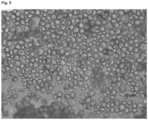
Figur 4 zeigt die Partikelgrößenverteilung von Emulsionen, die aus a) 20 Gew.-% Aroma, 20 Gew.-% Emulgator (modifizierte Stärke) und 60 gew.-% Trägerstoff (Reismehl) bzw. b) 20 Gew.-% Aroma und 80 Gew.-% Trägerstoff (Reismehl) bestehen. Rezepturen: dunklere Linie bestehend aus 20 Gew.-% Aroma, 20 Gew.-% Emulgator (modifizierte Stärke) und 60 Gew.-% Trägermaterial (Reismehl); hellere Linie bestehend aus 20 Gew.-% Aroma und 80 Gew.-% Träger (Reismehl). Beide Rezepturen wurden mit der gleichen Masse an Wasser und Feststoffanteil hergestellt. Die entstandenen Emulsionen wurden mittels Mastersizer 2000 vermessen. Es ist festzustellen, dass die Kurven mit und ohne standardmäßig verwendetem Emulgator (mod. Stärke) nahezu deckungsgleich sind. -
Figur 5 zeigt eine mikroskopische Aufnahme der Emulsion. Man sieht deutlich Stärkekörner im Größenbereich von 5-10 µm, die dem 2. Peak in der Mastersizer-Messung entsprechen. - Verwendet wurde nassvermahlenes Reismehl mit 6,5 - 10 Gew.-% Proteingehalt (Laut Spezifikation).
- Rezepturen:
- a) 20 Gew.-% Aroma, 20 gew.-% Emulgator (modifizierte Stärke) und 60 Gew.-% Trägermaterial (Reismehl);
- b) 20 Gew.-% Aroma und 80 Gew.-% Träger (Reismehl)
- Beide Rezepturen wurden mit der gleichen Masse an Wasser und Feststoffanteil hergestellt. Die entstandenen Emulsionen wurden mittels Mastersizer 2000 vermessen.
- In
Figur 4 sind die Ergebnisse dargestellt. Es ist festzustellen, dass die Kurven mit und ohne standardmäßig verwendetem Emulgator (modifizierte Stärke) nahezu deckungsgleich sind. Besonderes Augenmerk ist auf den ersten Peak bei 1 µm zu richten, der die Öltröpfchen darstellt. Der zweite Peak wird durch die Stärkekörnchen hervorgerufen wie in der mikroskopischen Aufnahme (Figur 5 ) zu sehen ist. Der Balken entspricht 10 µm. Der dritte Peak zeigt vermutlich Agglomerate, die in der Dispersionseinheit des Mastersizers nicht separiert werden. - Beide hergestellten Emulsionen zeigen nach 20 Stunden keinen Ölabsatz. Durch diese Versuche kann die Theorie, dass der Proteingehalt des Mehles für die guten verkapselnden Eigenschaften der Mehle verantwortlich ist belegt werden.
- Diese Art Versuche wurden noch mit weiteren Reismehlen durchgeführt, die sich in der Art der Vermahlung (nass und trocken), im Amylosegehalt (hoch und niedrig), in der Partikelgröße (D90 von 50 - 150 µm), in der Viskosität und in der Art des Reis (normaler Reis oder Wachsreis) unterscheiden.
- Die Ergebnisse sind den dargestellten vergleichbar.
- Damit muss festgehalten werden, dass nicht nur enzymatisch aufgeschlossene Mehle als kombinierte Träger und Emulgatoren für die Sprühtrocknung funktionieren, sondern auch rein mechanisch behandelte (trocken- und nassvermahlen).
-
Inhaltsstoff Einsatz in Gew.-% A B Schwarztee-Extrakt 1,4 1,4 Zucker 7 7 Zitronensäure (kristallin) 1,2 1,2 Ascorbinsäure 0,2 0,2 Sprühgetrocknetes Aroma mit Zitronengeschmack 3.0 5,5 Wasser Ad 100 - Schwarztee-Extrakt wurde in Wasser gelöst und zusammen mit Zucker, einer Aromazubereitung sowie dem sprühgetrockneten Aroma in einem Becherglas verrührt.
-
Teil Inhaltsstoff Einsatz in Gew.-% A Kaugummibase, Company "Jagum T" 30,00 B Sorbit, pulverisiert 39,00 Isomalt® (Palatinit GmbH) 9,50 Xylit 2,00 Mannit 3,00 Aspartam® 0,10 Acesulfam®K 0,10 Emulgum® (Colloides Naturels, Inc.) 0,30 C Sorbitol, 70%ig in Wasser 14,00 Glycerin 1,00 D Sprühgetrocknetes Aroma mit Sparemintgeschmack 1,00 - Die Teile A bis D wurden gemischt und intensiv geknetet. Die Rohmasse kann z.B. in Form von dünnen Streifen zu verzehrfertigen Kaugummis verarbeitet werden.
-
Inhaltstoff Einsatz in Gew.-% Butter 33,00 Puderzucker 16,00 Salz Prise Ei 1 Stück Mehl 50,00 Sprühgetrocknetes Aroma mit Orangengeschmack 1,00 - Die Komponenten werden zügig zu einem geschmeidigen Teig verarbeitet. Der Teig wird nach 1 Stunde Ruhezeit bei ca. 5°C wie gewünscht ausgeformt und bei 190°C 12 - 15 Minuten gebacken.
Tabelle 1 Träger Reis-Stärke Mais-Stärke KartoffelStärke KartoffelStärke Erbsen-Stärke Mais-Stärke WeizenMehl Reis-Mehl ErbsenMehl simulierter Zeitraum 12 Monate 12 Monate 12 Monate 12 Monate 12 Monate 12 Monate 12 Monate 12 Monate 12 Monate Menge 20g 20g 20g 20g 20g 20g 20g 20g 20g Datum 11.07.2016 18.07.2016 18.07.2016 19.07.2016 19.07.2016 19.07.2016 18.07.2016 19.07.2016 19.07.2016 Farbe ΔE (gealtert/frisch) kein Farbunterschied kein Farbunterschied kein Farbunterschied kein Farbunterschied kein Farbunterschied kein Farbunterschied kein Farbunterschied kein Farbunterschied kein Farbunterschied Druckabfall -9,49 -14,36 -12,92 -6,36 -2,55 -9,15 -1,21 -14,41 -0,81 sensorische Signifikanz Ja Ja Ja Ja 9:1 Ja 7:3 Ja 7:3 Nein Nein Nein sensorische Beschreibung dumpfer, oxidiert, minimal ranzig, weniger frisch, flach im Profil alt, vergammelt, schalig, bitter (3x), grün (2x), oxibiert, seifig, plastik, leicht ranzig, Profilverschiebung, sauer, extrem ranzige Note, oxidiert (3x) bitter (2x), grün, schalig, kaputt, alt, terpenig, furchtbar, schwächer, breits geruchlich zu erkenen, gestresst, oxidiert (4x), terpenig, schalig, leicht bittere Noten, leicht ranzig, schwächer, breits geruchlich zu erkenen, gestresst, oxidiert (4x), terpenig, schalig, leicht bittere Noten, leicht ranzig, terpenig, oxidiert, deutlich flacher im Profil, - - - Evaluierung Durchgefallen Durchgefallen Durchgefallen Durchgefallen Durchgefallen Durchgefallen Bestanden Bestanden Bestanden Tabelle 2 Zitronenaroma Aroma Typ Pfeffer Huhnaroma Träger Reismehl Maltodextrin Reismehl Maltodextrin Reismehl Maltodextrin simulierter Zeitraum 12 Monate 12 Monate 12 Monate 12 Monate 12 Monate 12 Monate Menge 20g 20g 20g 20g 20g 20g Datum 19.07.2016 17.08.2016 27.02.2017 21.02.2017 13.12.2016 14.12.2016 Farbe ΔE (gealtert/frisch) kein Farbunterschied kein Farbunterschied kein Farbunterschied kein Farbunterschied 4,62 6,05 Druckabfall -14,41 -4,28* -1,83 -1,34 -20,23 -7,74 sensorische Signifikanz Nein Nein(Grenz wertig) Nein Grenzwertig Nein Ja sensorische Beschreibung - flacher im Profil, weniger fruchtig, oxidiert, schalig bitter, - im Geschmack und Geruch intensiver, weniger schärfe, frischer, stärker (2x), deutlich schwächer - weniger intensiv, bitter, "nasser H schwächer pap Evaluierung Bestanden Durchgefallen Bestanden Grenzwertig Bestanden Durchgefalle
Claims (10)
- Sprühgetrocknete Aromazusammensetzung umfassend oder bestehend aus:a) 10 Gew.-% bis 30 Gew.-% eines Aromas, undb) 10 Gew.-% bis 80 Gew.-%, bevorzugt 20 Gew.-% bis 60 Gew.-% Mehl,jeweils bezogen auf das Gesamtgewicht der sprühgetrockneten Aromazusammensetzung, wobei das Mehl ausgewählt ist aus der Gruppe bestehend aus Reismehl, Getreidemehl, Hülsenfruchtmehl, Quinoamehl und Kartoffelmehl bevorzugt ausgewählt aus der Gruppe bestehend aus Reismehl, Weizenmehl, Erbsenmehl und Kartoffelmehl.
- Sprühgetrocknete Aromazusammensetzung nach Anspruch 1, wobei das Mehl trocken- oder nassvermahlen und/oder enzymatisch modifiziert, vorzugsweise mit einer Amylase hydrolysiert, ist.
- Sprühgetrocknete Aromazusammensetzung nach Anspruch 1 oder 2, wobei das Mehl einen Proteinanteil von 0.5 Gew.-% bis 15 Gew.-%, bevorzugt 3 Gew.-% bis 10 Gew.-% bezogen auf das Gesamtgewicht des Mehls aufweist.
- Sprühgetrocknete Aromazusammensetzung nach einem der vorhergehenden Ansprüche, wobei das Aroma ausgewählt ist aus der Gruppe bestehend aus Fruchtaromen, insbesondere Zitrusaromen, Fleisch-, Gemüse- und Gewürzaromen sowie Fleisch-, Gemüse- und Gewürzextrakte.
- Sprühgetrocknete Aromazusammensetzung nach einem der vorhergehenden Ansprüche, wobei die sprühgetrocknete Aromazusammensetzung weniger als 20 Gew.-%, bevorzugt weniger als 10 Gew.-%, besonders bevorzugt weniger als 1 Gew.-% Emulgator und ganz besonders bevorzugt keinen Emulgator enthält, jeweils bezogen auf das Gesamtgewicht der sprühgetrockneten Aromazusammensetzung.
- Sprühgetrocknete Aromazusammensetzung nach einem der vorhergehenden Ansprüche, wobei die sprühgetrocknete Aromazusammensetzung einen Oberflächenölanteil von weniger als 3 Gew.-% bevorzugt weniger als 1 Gew.-% aufweist, jeweils bezogen auf das Gesamtgewicht der sprühgetrockneten Aromazusammensetzung.
- Verfahren zur Herstellung einer sprühgetrockneten Aromazusammensetzung nach einem der Ansprüche 1 bis 6, umfassend die oder bestehend aus den folgenden Schritten:i) Dispergieren eines Mehls und optional eines Emulgators in einem Dispersionsmittel,ii) Hinzufügen eines Aromas zu der Dispersion aus Schritt i),iii) Homogenisieren der Mischung aus Schritt ii), undiv) Sprühtrocknen der Mischung aus Schritt iii) um eine sprühgetrocknete Aromazusammensetzung zu erhalten.
- Sprühgetrocknete Aromazusammensetzung nach einem der Ansprüche 1 bis 6, herstellbar oder hergestellt durch ein Verfahren nach Anspruch 7.
- Verwendung von Mehl als Trägerstoff in einer sprühgetrockneten Aromazusammensetzung zum Verkapseln von Aromen in einer sprühgetrockneten Aromazusammensetzung, wobei das Mehl ausgewählt ist aus der Gruppe bestehend aus Reismehl, Getreidemehl, Hülsenfruchtmehl, Quinoamehl, und Kartoffelmehl bevorzugt ausgewählt aus der Gruppe bestehend aus Reismehl, Weizenmehl, Erbsenmehl und Kartoffelmehl.
- Verwendung nach Anspruch 9, wobei das Mehl einen Proteinanteil von 0.5 Gew.-% bis 15 Gew.-%, bevorzugt 3 Gew.-% bis 10 Gew.-% bezogen auf das Gesamtgewicht des Mehls aufweist.
Applications Claiming Priority (1)
| Application Number | Priority Date | Filing Date | Title |
|---|---|---|---|
| PCT/EP2017/063350 WO2018219465A1 (de) | 2017-06-01 | 2017-06-01 | Mehle als aromaträger |
Publications (2)
| Publication Number | Publication Date |
|---|---|
| EP3629762A1 EP3629762A1 (de) | 2020-04-08 |
| EP3629762B1 true EP3629762B1 (de) | 2024-10-16 |
Family
ID=59253453
Family Applications (1)
| Application Number | Title | Priority Date | Filing Date |
|---|---|---|---|
| EP17733978.5A Active EP3629762B1 (de) | 2017-06-01 | 2017-06-01 | Mehle als aromaträger |
Country Status (2)
| Country | Link |
|---|---|
| EP (1) | EP3629762B1 (de) |
| WO (1) | WO2018219465A1 (de) |
Families Citing this family (3)
| Publication number | Priority date | Publication date | Assignee | Title |
|---|---|---|---|---|
| EP3629762B1 (de) | 2017-06-01 | 2024-10-16 | Symrise AG | Mehle als aromaträger |
| US20200260768A1 (en) * | 2019-02-19 | 2020-08-20 | Paragon Flavors, Inc. | System and method for flavor encapsulation |
| EP3704954A1 (de) | 2019-03-05 | 2020-09-09 | Symrise AG | Mischung aus d-allulose und geschmacksverändernden verbindungen |
Citations (4)
| Publication number | Priority date | Publication date | Assignee | Title |
|---|---|---|---|---|
| GB952640A (en) | 1960-11-18 | 1964-03-18 | Procter And Gamble Ltd | Process for preparing improved culinary mixes |
| NL7508414A (en) * | 1975-06-12 | 1976-12-14 | Molkereigenossenschaft Dahlenb | Dried egg powder compsn. contg. e.g. flour - can be kept for long periods and is easy to store and transport |
| CN103651657A (zh) | 2013-08-09 | 2014-03-26 | 江西江中制药(集团)有限责任公司 | 一种保健面粉组合物及食品 |
| CN104544060A (zh) * | 2014-12-23 | 2015-04-29 | 山东世纪春食品有限公司 | 一种供女性贫血人群食用的富含花生肽的特殊膳食用食品 |
Family Cites Families (3)
| Publication number | Priority date | Publication date | Assignee | Title |
|---|---|---|---|---|
| JP3054443B2 (ja) * | 1992-03-30 | 2000-06-19 | ジボーダン − ルール (アンテルナシヨナル)ソシエテ アノニム | 熱安定性かつ破砕性の,噴霧乾燥した自由流動性フレーバー油カプセル,その製造方法および食品における使用 |
| DE19645712A1 (de) * | 1996-11-06 | 1998-05-07 | Laevosan Gmbh & Co Kg | Herstellung von trockenen Lactulose-Arzneiformen |
| EP3629762B1 (de) | 2017-06-01 | 2024-10-16 | Symrise AG | Mehle als aromaträger |
-
2017
- 2017-06-01 EP EP17733978.5A patent/EP3629762B1/de active Active
- 2017-06-01 WO PCT/EP2017/063350 patent/WO2018219465A1/de not_active Ceased
Patent Citations (4)
| Publication number | Priority date | Publication date | Assignee | Title |
|---|---|---|---|---|
| GB952640A (en) | 1960-11-18 | 1964-03-18 | Procter And Gamble Ltd | Process for preparing improved culinary mixes |
| NL7508414A (en) * | 1975-06-12 | 1976-12-14 | Molkereigenossenschaft Dahlenb | Dried egg powder compsn. contg. e.g. flour - can be kept for long periods and is easy to store and transport |
| CN103651657A (zh) | 2013-08-09 | 2014-03-26 | 江西江中制药(集团)有限责任公司 | 一种保健面粉组合物及食品 |
| CN104544060A (zh) * | 2014-12-23 | 2015-04-29 | 山东世纪春食品有限公司 | 一种供女性贫血人群食用的富含花生肽的特殊膳食用食品 |
Non-Patent Citations (11)
| Title |
|---|
| "Dried egg powder compsn. contg. e.g. flour - can be kept for long periods and is easy to store and transport", WPI / 2017 CLARIVATE ANALYTICS,, vol. 1977, no. 1, 13 December 1976 (1976-12-13), XP002772425 * |
| ANONYMOUS: "Arrowhead Mills Organic Whole Wheat Flour - Stone Ground", ARROWHEAD MILLS, 1 January 2025 (2025-01-01), XP093300436, Retrieved from the Internet <URL:https://arrowheadmills.com/products/flours/organic-whole-wheat-flour-stone-ground/> |
| ANONYMOUS: "Website of Bob’s Red Mill", BOB’S RED MILL, 1 January 2025 (2025-01-01), XP093300437, Retrieved from the Internet <URL: https://www.bobsredmill.com/product/garbanzo-bean-flour > |
| CHEN, CHENG-HUA, ZHANG JING, LIU BINGJIE, MENG XIANGHONG: "Analysis and evaluation of nutritional components of blueberry pomace", FOOD AND FERMENTATION INDUSTRIES, vol. 42, no. 9, 1 January 2016 (2016-01-01), pages 223 - 227, XP055825392 |
| CN 101133837 A, ENGLISH MACHINE TRANSLATION |
| CN 101347235 A, ENGLISH MACHINE TRANSLATION |
| CORREIA ROBERTA ET AL: "Wild blueberry polyphenol-protein food ingredients produced by three drying methods: Comparative physico-chemical properties, phytochemical content, and stability during storage", FOOD CHEMISTRY, ELSEVIER LTD, NL, vol. 235, 10 May 2017 (2017-05-10), pages 76 - 85, XP085042263, ISSN: 0308-8146, DOI: 10.1016/J.FOODCHEM.2017.05.042 * |
| CORREIA ROBERTA; GRACE MARY H.; ESPOSITO DEBORA; LILA MARY ANN: "Wild blueberry polyphenol-protein food ingredients produced by three drying methods: Comparative physico-chemical properties, phytochemical content, and stability during storage", FOOD CHEMISTRY, ELSEVIER LTD., NL, vol. 235, 10 May 2017 (2017-05-10), NL , pages 76 - 85, XP085042263, ISSN: 0308-8146, DOI: 10.1016/j.foodchem.2017.05.042 |
| D3a - English machine translation of D3 |
| GAO J ET AL: "Diet food useful for treating anemia in women, prepared by adding e.g. peanut peptide, soybean powder, red jujube, black sesame, and longan pulp, mixing, grinding, and spray drying mixture, and dissolving powder in warm water", WPI / 2017 CLARIVATE ANALYTICS,, vol. 2015, no. 63, 29 April 2015 (2015-04-29), XP002772424 * |
| LOKSUWAN J.: "Stability of spray-dried microencapsulated citral", XVIITH INTERNATIONAL CONFERENCE ON BIOENCAPSULATION, 24 September 2009 (2009-09-24) - 26 September 2009 (2009-09-26), XP093300441 |
Also Published As
| Publication number | Publication date |
|---|---|
| WO2018219465A1 (de) | 2018-12-06 |
| EP3629762A1 (de) | 2020-04-08 |
Similar Documents
| Publication | Publication Date | Title |
|---|---|---|
| DE69929085T2 (de) | Körnerförmiges nahrungsmittel | |
| DE69313010T2 (de) | Dispergierbare Polydextrose, diese enthaltende Zusammensetzungen und Verfahren zu ihrer Herstellung | |
| DE60310914T2 (de) | Pulverzusammensetzung | |
| EP2424380A1 (de) | Konzentrierte, cremige bis feste und trockene zusammensetzungen einer öl-in-wasser-emulsion, verfahren zu deren herstellung und deren verwendung zur herstellung sensorisch und ernährungsphysiologisch verbesserter nahrungsmittel | |
| DE60030046T2 (de) | Die Entwicklung von vitalen Weizengluten in einem nicht-wässerigen Medium | |
| GB2471149A (en) | Olive oil based edible spread | |
| TW202011821A (zh) | 源自豆類蛋白質之豆臭之遮蔽劑 | |
| DE69806247T2 (de) | Wasserdispergierbare carotenoidpigment zubereitung | |
| EP3629762B1 (de) | Mehle als aromaträger | |
| CH641328A5 (en) | Beta-cyclodextrin inclusion complexes of natural or synthetic flavourings and seasonings | |
| JP7008858B1 (ja) | 酸性液状調味料 | |
| CN103260435B (zh) | 含芝麻的酸性液体调味料 | |
| WO2010112216A2 (de) | Mehl aus amaranth und/oder quinoa als ersatzstoff für lebensmittelzusatzstoffe in der lebensmittelherstellung | |
| DE102014015214B4 (de) | Nahrungsmittelzusammensetzung, deren Herstellung, deren Verwendung und Backware mit dieser Nahrungsmittelzusammensetzung | |
| JP6684082B2 (ja) | 酸性液状調味料 | |
| EP1956925A2 (de) | Basismaterial für die herstellung von lebens- und futtermitteln | |
| DE2546035C3 (de) | Verfahren zur Herstellung eines Aromatisierungsmittels mit einem Geschmack nach gekochtem Fleisch und die Verwendung desselben | |
| EP3823455B1 (de) | Zusammensetzung zur substitution von zucker in backwaren | |
| CN109288021A (zh) | 一种牛肉味香基及应用该香基制备的牛肉味香精 | |
| KR102738393B1 (ko) | 식감이 향상된 돈가스 소스의 제조방법 | |
| EP2628397B1 (de) | Sucralosehaltige Süßstoffzusammensetzungen | |
| DE212021000385U1 (de) | Hülsenfruchtzusammensetzung | |
| DE69920574T2 (de) | Zuckerreiches Nahrungsergänzungsmittel aus vermahlten und getrockneten Wurzeln, wie Zuckerrüben und Herstellung desselben | |
| EP4171260A1 (de) | Partikuläre erzeugnisse aus scharfem gelblauch | |
| US12389928B1 (en) | Flavor-changing product |
Legal Events
| Date | Code | Title | Description |
|---|---|---|---|
| STAA | Information on the status of an ep patent application or granted ep patent |
Free format text: STATUS: UNKNOWN |
|
| STAA | Information on the status of an ep patent application or granted ep patent |
Free format text: STATUS: THE INTERNATIONAL PUBLICATION HAS BEEN MADE |
|
| PUAI | Public reference made under article 153(3) epc to a published international application that has entered the european phase |
Free format text: ORIGINAL CODE: 0009012 |
|
| STAA | Information on the status of an ep patent application or granted ep patent |
Free format text: STATUS: REQUEST FOR EXAMINATION WAS MADE |
|
| 17P | Request for examination filed |
Effective date: 20200102 |
|
| AK | Designated contracting states |
Kind code of ref document: A1 Designated state(s): AL AT BE BG CH CY CZ DE DK EE ES FI FR GB GR HR HU IE IS IT LI LT LU LV MC MK MT NL NO PL PT RO RS SE SI SK SM TR |
|
| AX | Request for extension of the european patent |
Extension state: BA ME |
|
| DAV | Request for validation of the european patent (deleted) | ||
| DAX | Request for extension of the european patent (deleted) | ||
| TPAC | Observations filed by third parties |
Free format text: ORIGINAL CODE: EPIDOSNTIPA |
|
| STAA | Information on the status of an ep patent application or granted ep patent |
Free format text: STATUS: EXAMINATION IS IN PROGRESS |
|
| 17Q | First examination report despatched |
Effective date: 20230313 |
|
| RIC1 | Information provided on ipc code assigned before grant |
Ipc: A23L 29/225 20160101ALI20240305BHEP Ipc: A23K 10/30 20160101ALI20240305BHEP Ipc: A21D 2/36 20060101ALI20240305BHEP Ipc: A23L 7/10 20160101ALI20240305BHEP Ipc: A23L 27/00 20160101AFI20240305BHEP |
|
| GRAP | Despatch of communication of intention to grant a patent |
Free format text: ORIGINAL CODE: EPIDOSNIGR1 |
|
| STAA | Information on the status of an ep patent application or granted ep patent |
Free format text: STATUS: GRANT OF PATENT IS INTENDED |
|
| INTG | Intention to grant announced |
Effective date: 20240510 |
|
| GRAS | Grant fee paid |
Free format text: ORIGINAL CODE: EPIDOSNIGR3 |
|
| GRAA | (expected) grant |
Free format text: ORIGINAL CODE: 0009210 |
|
| STAA | Information on the status of an ep patent application or granted ep patent |
Free format text: STATUS: THE PATENT HAS BEEN GRANTED |
|
| AK | Designated contracting states |
Kind code of ref document: B1 Designated state(s): AL AT BE BG CH CY CZ DE DK EE ES FI FR GB GR HR HU IE IS IT LI LT LU LV MC MK MT NL NO PL PT RO RS SE SI SK SM TR |
|
| REG | Reference to a national code |
Ref country code: GB Ref legal event code: FG4D Free format text: NOT ENGLISH |
|
| REG | Reference to a national code |
Ref country code: CH Ref legal event code: EP |
|
| REG | Reference to a national code |
Ref country code: IE Ref legal event code: FG4D Free format text: LANGUAGE OF EP DOCUMENT: GERMAN |
|
| REG | Reference to a national code |
Ref country code: DE Ref legal event code: R096 Ref document number: 502017016493 Country of ref document: DE |
|
| REG | Reference to a national code |
Ref country code: LT Ref legal event code: MG9D |
|
| REG | Reference to a national code |
Ref country code: NL Ref legal event code: MP Effective date: 20241016 |
|
| PG25 | Lapsed in a contracting state [announced via postgrant information from national office to epo] |
Ref country code: NL Free format text: LAPSE BECAUSE OF FAILURE TO SUBMIT A TRANSLATION OF THE DESCRIPTION OR TO PAY THE FEE WITHIN THE PRESCRIBED TIME-LIMIT Effective date: 20241016 |
|
| PG25 | Lapsed in a contracting state [announced via postgrant information from national office to epo] |
Ref country code: NL Free format text: LAPSE BECAUSE OF FAILURE TO SUBMIT A TRANSLATION OF THE DESCRIPTION OR TO PAY THE FEE WITHIN THE PRESCRIBED TIME-LIMIT Effective date: 20241016 |
|
| PG25 | Lapsed in a contracting state [announced via postgrant information from national office to epo] |
Ref country code: IS Free format text: LAPSE BECAUSE OF FAILURE TO SUBMIT A TRANSLATION OF THE DESCRIPTION OR TO PAY THE FEE WITHIN THE PRESCRIBED TIME-LIMIT Effective date: 20250216 Ref country code: HR Free format text: LAPSE BECAUSE OF FAILURE TO SUBMIT A TRANSLATION OF THE DESCRIPTION OR TO PAY THE FEE WITHIN THE PRESCRIBED TIME-LIMIT Effective date: 20241016 Ref country code: PT Free format text: LAPSE BECAUSE OF FAILURE TO SUBMIT A TRANSLATION OF THE DESCRIPTION OR TO PAY THE FEE WITHIN THE PRESCRIBED TIME-LIMIT Effective date: 20250217 |
|
| PG25 | Lapsed in a contracting state [announced via postgrant information from national office to epo] |
Ref country code: FI Free format text: LAPSE BECAUSE OF FAILURE TO SUBMIT A TRANSLATION OF THE DESCRIPTION OR TO PAY THE FEE WITHIN THE PRESCRIBED TIME-LIMIT Effective date: 20241016 |
|
| PG25 | Lapsed in a contracting state [announced via postgrant information from national office to epo] |
Ref country code: BG Free format text: LAPSE BECAUSE OF FAILURE TO SUBMIT A TRANSLATION OF THE DESCRIPTION OR TO PAY THE FEE WITHIN THE PRESCRIBED TIME-LIMIT Effective date: 20241016 |
|
| PG25 | Lapsed in a contracting state [announced via postgrant information from national office to epo] |
Ref country code: ES Free format text: LAPSE BECAUSE OF FAILURE TO SUBMIT A TRANSLATION OF THE DESCRIPTION OR TO PAY THE FEE WITHIN THE PRESCRIBED TIME-LIMIT Effective date: 20241016 |
|
| PG25 | Lapsed in a contracting state [announced via postgrant information from national office to epo] |
Ref country code: NO Free format text: LAPSE BECAUSE OF FAILURE TO SUBMIT A TRANSLATION OF THE DESCRIPTION OR TO PAY THE FEE WITHIN THE PRESCRIBED TIME-LIMIT Effective date: 20250116 |
|
| PG25 | Lapsed in a contracting state [announced via postgrant information from national office to epo] |
Ref country code: LV Free format text: LAPSE BECAUSE OF FAILURE TO SUBMIT A TRANSLATION OF THE DESCRIPTION OR TO PAY THE FEE WITHIN THE PRESCRIBED TIME-LIMIT Effective date: 20241016 Ref country code: GR Free format text: LAPSE BECAUSE OF FAILURE TO SUBMIT A TRANSLATION OF THE DESCRIPTION OR TO PAY THE FEE WITHIN THE PRESCRIBED TIME-LIMIT Effective date: 20250117 |
|
| PG25 | Lapsed in a contracting state [announced via postgrant information from national office to epo] |
Ref country code: PL Free format text: LAPSE BECAUSE OF FAILURE TO SUBMIT A TRANSLATION OF THE DESCRIPTION OR TO PAY THE FEE WITHIN THE PRESCRIBED TIME-LIMIT Effective date: 20241016 |
|
| PG25 | Lapsed in a contracting state [announced via postgrant information from national office to epo] |
Ref country code: RS Free format text: LAPSE BECAUSE OF FAILURE TO SUBMIT A TRANSLATION OF THE DESCRIPTION OR TO PAY THE FEE WITHIN THE PRESCRIBED TIME-LIMIT Effective date: 20250116 |
|
| PG25 | Lapsed in a contracting state [announced via postgrant information from national office to epo] |
Ref country code: SM Free format text: LAPSE BECAUSE OF FAILURE TO SUBMIT A TRANSLATION OF THE DESCRIPTION OR TO PAY THE FEE WITHIN THE PRESCRIBED TIME-LIMIT Effective date: 20241016 |
|
| PGFP | Annual fee paid to national office [announced via postgrant information from national office to epo] |
Ref country code: DE Payment date: 20250618 Year of fee payment: 9 |
|
| PG25 | Lapsed in a contracting state [announced via postgrant information from national office to epo] |
Ref country code: DK Free format text: LAPSE BECAUSE OF FAILURE TO SUBMIT A TRANSLATION OF THE DESCRIPTION OR TO PAY THE FEE WITHIN THE PRESCRIBED TIME-LIMIT Effective date: 20241016 |
|
| PGFP | Annual fee paid to national office [announced via postgrant information from national office to epo] |
Ref country code: GB Payment date: 20250620 Year of fee payment: 9 |
|
| REG | Reference to a national code |
Ref country code: DE Ref legal event code: R026 Ref document number: 502017016493 Country of ref document: DE |
|
| PG25 | Lapsed in a contracting state [announced via postgrant information from national office to epo] |
Ref country code: EE Free format text: LAPSE BECAUSE OF FAILURE TO SUBMIT A TRANSLATION OF THE DESCRIPTION OR TO PAY THE FEE WITHIN THE PRESCRIBED TIME-LIMIT Effective date: 20241016 |
|
| PGFP | Annual fee paid to national office [announced via postgrant information from national office to epo] |
Ref country code: FR Payment date: 20250618 Year of fee payment: 9 |
|
| PLBI | Opposition filed |
Free format text: ORIGINAL CODE: 0009260 |
|
| PG25 | Lapsed in a contracting state [announced via postgrant information from national office to epo] |
Ref country code: RO Free format text: LAPSE BECAUSE OF FAILURE TO SUBMIT A TRANSLATION OF THE DESCRIPTION OR TO PAY THE FEE WITHIN THE PRESCRIBED TIME-LIMIT Effective date: 20241016 |
|
| PG25 | Lapsed in a contracting state [announced via postgrant information from national office to epo] |
Ref country code: SK Free format text: LAPSE BECAUSE OF FAILURE TO SUBMIT A TRANSLATION OF THE DESCRIPTION OR TO PAY THE FEE WITHIN THE PRESCRIBED TIME-LIMIT Effective date: 20241016 |
|
| PLAX | Notice of opposition and request to file observation + time limit sent |
Free format text: ORIGINAL CODE: EPIDOSNOBS2 |
|
| PG25 | Lapsed in a contracting state [announced via postgrant information from national office to epo] |
Ref country code: CZ Free format text: LAPSE BECAUSE OF FAILURE TO SUBMIT A TRANSLATION OF THE DESCRIPTION OR TO PAY THE FEE WITHIN THE PRESCRIBED TIME-LIMIT Effective date: 20241016 |
|
| PG25 | Lapsed in a contracting state [announced via postgrant information from national office to epo] |
Ref country code: IT Free format text: LAPSE BECAUSE OF FAILURE TO SUBMIT A TRANSLATION OF THE DESCRIPTION OR TO PAY THE FEE WITHIN THE PRESCRIBED TIME-LIMIT Effective date: 20241016 |
|
| 26 | Opposition filed |
Opponent name: MITSCHERLICH, PATENT- UND RECHTSANWAELTE PARTMBB Effective date: 20250716 |
|
| PG25 | Lapsed in a contracting state [announced via postgrant information from national office to epo] |
Ref country code: SE Free format text: LAPSE BECAUSE OF FAILURE TO SUBMIT A TRANSLATION OF THE DESCRIPTION OR TO PAY THE FEE WITHIN THE PRESCRIBED TIME-LIMIT Effective date: 20241016 |
|
| PLBB | Reply of patent proprietor to notice(s) of opposition received |
Free format text: ORIGINAL CODE: EPIDOSNOBS3 |
|
| REG | Reference to a national code |
Ref country code: CH Ref legal event code: H13 Free format text: ST27 STATUS EVENT CODE: U-0-0-H10-H13 (AS PROVIDED BY THE NATIONAL OFFICE) Effective date: 20260127 |
|
| PG25 | Lapsed in a contracting state [announced via postgrant information from national office to epo] |
Ref country code: MC Free format text: LAPSE BECAUSE OF FAILURE TO SUBMIT A TRANSLATION OF THE DESCRIPTION OR TO PAY THE FEE WITHIN THE PRESCRIBED TIME-LIMIT Effective date: 20241016 |
|
| PG25 | Lapsed in a contracting state [announced via postgrant information from national office to epo] |
Ref country code: LU Free format text: LAPSE BECAUSE OF NON-PAYMENT OF DUE FEES Effective date: 20250601 |
|
| REG | Reference to a national code |
Ref country code: BE Ref legal event code: MM Effective date: 20250630 |