EP3616721B1 - Blood purification by alkalinizing agent - Google Patents
Blood purification by alkalinizing agent Download PDFInfo
- Publication number
- EP3616721B1 EP3616721B1 EP18787098.5A EP18787098A EP3616721B1 EP 3616721 B1 EP3616721 B1 EP 3616721B1 EP 18787098 A EP18787098 A EP 18787098A EP 3616721 B1 EP3616721 B1 EP 3616721B1
- Authority
- EP
- European Patent Office
- Prior art keywords
- urine
- concentration
- group
- pharmaceutical composition
- citrate
- Prior art date
- Legal status (The legal status is an assumption and is not a legal conclusion. Google has not performed a legal analysis and makes no representation as to the accuracy of the status listed.)
- Active
Links
Images




Classifications
-
- A—HUMAN NECESSITIES
- A23—FOODS OR FOODSTUFFS; TREATMENT THEREOF, NOT COVERED BY OTHER CLASSES
- A23L—FOODS, FOODSTUFFS OR NON-ALCOHOLIC BEVERAGES, NOT OTHERWISE PROVIDED FOR; PREPARATION OR TREATMENT THEREOF
- A23L33/00—Modifying nutritive qualities of foods; Dietetic products; Preparation or treatment thereof
- A23L33/10—Modifying nutritive qualities of foods; Dietetic products; Preparation or treatment thereof using additives
- A23L33/135—Bacteria or derivatives thereof, e.g. probiotics
-
- A—HUMAN NECESSITIES
- A61—MEDICAL OR VETERINARY SCIENCE; HYGIENE
- A61K—PREPARATIONS FOR MEDICAL, DENTAL OR TOILETRY PURPOSES
- A61K33/00—Medicinal preparations containing inorganic active ingredients
-
- A—HUMAN NECESSITIES
- A23—FOODS OR FOODSTUFFS; TREATMENT THEREOF, NOT COVERED BY OTHER CLASSES
- A23L—FOODS, FOODSTUFFS OR NON-ALCOHOLIC BEVERAGES, NOT OTHERWISE PROVIDED FOR; PREPARATION OR TREATMENT THEREOF
- A23L33/00—Modifying nutritive qualities of foods; Dietetic products; Preparation or treatment thereof
- A23L33/30—Dietetic or nutritional methods, e.g. for losing weight
-
- A—HUMAN NECESSITIES
- A61—MEDICAL OR VETERINARY SCIENCE; HYGIENE
- A61K—PREPARATIONS FOR MEDICAL, DENTAL OR TOILETRY PURPOSES
- A61K31/00—Medicinal preparations containing organic active ingredients
- A61K31/185—Acids; Anhydrides, halides or salts thereof, e.g. sulfur acids, imidic, hydrazonic or hydroximic acids
- A61K31/19—Carboxylic acids, e.g. valproic acid
-
- A—HUMAN NECESSITIES
- A61—MEDICAL OR VETERINARY SCIENCE; HYGIENE
- A61K—PREPARATIONS FOR MEDICAL, DENTAL OR TOILETRY PURPOSES
- A61K31/00—Medicinal preparations containing organic active ingredients
- A61K31/185—Acids; Anhydrides, halides or salts thereof, e.g. sulfur acids, imidic, hydrazonic or hydroximic acids
- A61K31/19—Carboxylic acids, e.g. valproic acid
- A61K31/194—Carboxylic acids, e.g. valproic acid having two or more carboxyl groups, e.g. succinic, maleic or phthalic acid
-
- A—HUMAN NECESSITIES
- A61—MEDICAL OR VETERINARY SCIENCE; HYGIENE
- A61P—SPECIFIC THERAPEUTIC ACTIVITY OF CHEMICAL COMPOUNDS OR MEDICINAL PREPARATIONS
- A61P13/00—Drugs for disorders of the urinary system
- A61P13/12—Drugs for disorders of the urinary system of the kidneys
-
- A—HUMAN NECESSITIES
- A61—MEDICAL OR VETERINARY SCIENCE; HYGIENE
- A61P—SPECIFIC THERAPEUTIC ACTIVITY OF CHEMICAL COMPOUNDS OR MEDICINAL PREPARATIONS
- A61P19/00—Drugs for skeletal disorders
- A61P19/06—Antigout agents, e.g. antihyperuricemic or uricosuric agents
-
- A—HUMAN NECESSITIES
- A61—MEDICAL OR VETERINARY SCIENCE; HYGIENE
- A61P—SPECIFIC THERAPEUTIC ACTIVITY OF CHEMICAL COMPOUNDS OR MEDICINAL PREPARATIONS
- A61P43/00—Drugs for specific purposes, not provided for in groups A61P1/00-A61P41/00
-
- A—HUMAN NECESSITIES
- A61—MEDICAL OR VETERINARY SCIENCE; HYGIENE
- A61P—SPECIFIC THERAPEUTIC ACTIVITY OF CHEMICAL COMPOUNDS OR MEDICINAL PREPARATIONS
- A61P7/00—Drugs for disorders of the blood or the extracellular fluid
-
- A—HUMAN NECESSITIES
- A61—MEDICAL OR VETERINARY SCIENCE; HYGIENE
- A61P—SPECIFIC THERAPEUTIC ACTIVITY OF CHEMICAL COMPOUNDS OR MEDICINAL PREPARATIONS
- A61P9/00—Drugs for disorders of the cardiovascular system
-
- A—HUMAN NECESSITIES
- A61—MEDICAL OR VETERINARY SCIENCE; HYGIENE
- A61P—SPECIFIC THERAPEUTIC ACTIVITY OF CHEMICAL COMPOUNDS OR MEDICINAL PREPARATIONS
- A61P9/00—Drugs for disorders of the cardiovascular system
- A61P9/10—Drugs for disorders of the cardiovascular system for treating ischaemic or atherosclerotic diseases, e.g. antianginal drugs, coronary vasodilators, drugs for myocardial infarction, retinopathy, cerebrovascula insufficiency, renal arteriosclerosis
Definitions
- the present invention relates to blood purification by an alkalinizing agent. More specifically, the invention relates to a pharmaceutical composition comprising an alkalinizing agent for use in treating or preventing kidney tubular damage or in suppressing progression of chronic kidney disease, as further defined in the claims.
- any reference to a non-patentable method of treatment of the human or animal body by therapy involving the use of a compound or composition is to be understood as referring to said compound or composition for use in said treatment.
- EKD end-stage kidney disease
- CKD Chronic kidney disease
- GFR glomerular filtration rate
- CVD cardiovascular disease
- CKD various uremic substances accumulate in the body as renal clearance decreases.
- a concentration of indoxyl sulfate which is a metabolic end-product of tryptophan, in blood increases with progression of CKD, and a high concentration (100 ⁇ M to 1 mM) of indoxyl sulfate accumulates in the blood.
- Indoxyl sulfate is known to be deeply involved in progression of kidney damage due to kidney fibrosis, and CKD complications such as CVD due to vascular calcification. It is reported that a concentration of indoxyl sulfate in serum correlates with a mortality rate and incidence of cardiovascular events in dialysis patients (Non-Patent Literature 1).
- a spherical carbonaceous adsorbent which adsorbs indole, which is a precursor of indoxyl sulfate, in the intestinal tract to decrease a concentration of indoxyl sulfate in blood, delays introduction of dialysis in CKD patients, thereby ameliorating arteriosclerosis (Non-Patent Literature 2).
- Non-Patent Literature 3 a concentration of bicarbonate ions in blood decreases and metabolic acidosis develops in patients with advanced CKD
- an alkalinizing agent such as sodium bicarbonate or a citric acid preparation is administered.
- progression of CKD is suppressed by administration of sodium bicarbonate that is an alkalinizing agent.
- oral administration of sodium bicarbonate suppresses kidney tubular cell damage due to acidic urine in an animal model with nephrosis caused by protein overload (Non-Patent Literature 4).
- Sorot Phisitkul et al. (Kidney International, vol. 77, no. 7, pages 617-623 ) report that amelioration of metabolic acidosis in patients with low GFR reduced kidney endothelin production and kidney injury, and better preserved GFR.
- Nimrit Goraya et al. (Kidney International, vol. 81, no. 1, pages 86-93 ) report that dietary acid reduction with fruits and vegetables or bicarbonate attenuates kidney injury in patients with a moderately reduced glomerular filtration rate due to hypertensive nephropathy.
- Ashutosh Mahajan et al. (Kidney International, vol. 78, no.
- An object of the present invention is to provide a medicine useful for blood purification in a patient with kidney disease. More specifically, the object of the present invention is to provide a medicine useful for suppressing progression of chronic kidney disease (advancing in severity of chronic kidney disease) and a medicine useful for treating or preventing kidney tubular damage.
- a medicine useful for treating and preventing uremic symptoms, and delaying introduction of dialysis a medicine useful for suppressing progression from acute kidney failure to chronic kidney disease, a food for promoting excretion of uremic substance outside the body, a food for maintenance of kidney function (for example, for suppression of kidney tubular damage, for protection of kidney tubular cells, or for maintenance of kidney tubular function), a method for determining suppression of progression of chronic kidney disease, or a method for determining a decrease in concentration of uremic substance in blood, and/or a promotion of excretion of uremic substance into urine.
- the inventors of the present invention have performed extensive studies to achieve the above-mentioned objects. As a result, they have found that an agent that alkalinizes a body fluid is useful for promoting excretion of uremic substance from the body of a patient with kidney disease (for example, promoting excretion of uremic substance into urine), and therefore have completed the present invention.
- the invention provides a pharmaceutical composition
- a pharmaceutical composition comprising an alkalinizing agent for use in treating or preventing kidney tubular damage or in suppressing progression of chronic kidney disease, wherein the alkalinizing agent is a mixture of sodium citrate or a hydrate thereof, and potassium citrate or a hydrate thereof, 0.1 to 5 g/day of each of sodium citrate or the hydrate thereof, and potassium citrate or the hydrate thereof are orally administered at a total of 0.2 to 10 g/day, 1 to 5 times a day, and the alkalinizing agent is administered to a patient with stage G2 to stage G3b chronic kidney disease.
- the alkalinizing agent is a mixture of sodium citrate or a hydrate thereof, and potassium citrate or a hydrate thereof, 0.1 to 5 g/day of each of sodium citrate or the hydrate thereof, and potassium citrate or the hydrate thereof are orally administered at a total of 0.2 to 10 g/day, 1 to 5 times a day, and the alkalinizing agent is
- a pharmaceutical composition for promoting excretion of uremic substance outside the body comprising an alkalinizing agent, a pharmaceutical composition for decreasing a concentration of uremic substance in blood, comprising an alkalinizing agent, a pharmaceutical composition for promoting excretion into urine in chronic kidney disease, comprising an alkalinizing agent, a pharmaceutical composition for ameliorating uremic symptoms in chronic kidney disease, comprising an alkalinizing agent, a pharmaceutical composition for delaying introduction of dialysis in chronic kidney disease, comprising an alkalinizing agent, a pharmaceutical composition for treating or preventing cardiovascular disease associated with chronic kidney disease, comprising an alkalinizing agent, a pharmaceutical composition for suppressing progression from acute kidney failure to chronic kidney disease, comprising an alkalinizing agent, a food composition for promoting excretion of uremic substance outside the body, comprising an alkalinizing agent, a method for determining suppression of progression of chronic kidney disease, and a method for determining a decrease in concentration of uremic toxins in
- a pharmaceutical composition comprising an alkalinizing agent for use in treating or preventing kidney tubular damage, wherein the alkalinizing agent is a mixture of sodium citrate or a hydrate thereof, and potassium citrate or a hydrate thereof, 0.1 to 5 g/day of each of sodium citrate or the hydrate thereof, and potassium citrate or the hydrate thereof are orally administered at a total of 0.2 to 10 g/day, 1 to 5 times a day, and the alkalinizing agent is administered to a patient with stage G2 to stage G3b chronic kidney disease.
- the alkalinizing agent is a mixture of sodium citrate or a hydrate thereof, and potassium citrate or a hydrate thereof, 0.1 to 5 g/day of each of sodium citrate or the hydrate thereof, and potassium citrate or the hydrate thereof are orally administered at a total of 0.2 to 10 g/day, 1 to 5 times a day, and the alkalinizing agent is administered to a patient with stage G2 to stage G3b chronic kidney disease.
- a pharmaceutical composition comprising an alkalinizing agent for use in suppressing progression of chronic kidney disease, wherein the alkalinizing agent is a mixture of sodium citrate or a hydrate thereof, and potassium citrate or a hydrate thereof, 0.1 to 5 g/day of each of sodium citrate or the hydrate thereof, and potassium citrate or the hydrate thereof are orally administered at a total of 0.2 to 10 g/day, 1 to 5 times a day, and the alkalinizing agent is administered to a patient with stage G2 to stage G3b chronic kidney disease.
- the alkalinizing agent is a mixture of sodium citrate or a hydrate thereof, and potassium citrate or a hydrate thereof, 0.1 to 5 g/day of each of sodium citrate or the hydrate thereof, and potassium citrate or the hydrate thereof are orally administered at a total of 0.2 to 10 g/day, 1 to 5 times a day, and the alkalinizing agent is administered to a patient with stage G2 to stage G3b chronic kidney disease.
- uremic substance is at least one selected from the group consisting of indoxyl sulfate, p-cresyl sulfate, phenylacetyl-L-glutamine, hippuric acid and argininosuccinic acid.
- uremic substance is excreted outside the body in mammals.
- a pharmaceutical composition provided by the present invention comprises an alkalinizing agent as an active ingredient, wherein the alkalinizing agent is a mixture of sodium citrate or a hydrate thereof, and potassium citrate or a hydrate thereof, as further defined in the claims.
- an alkalinizing agent is an agent having the ability to increase the HCO 3 - concentration and pH of body fluids of mammals (particularly a human), such as blood or urine.
- alkalinizing agents include a pharmaceutically acceptable salt of citric acid or a hydrate thereof, or a mixture thereof, and sodium bicarbonate (baking soda).
- a pharmaceutically acceptable salt of citric acid include an alkali metal salt of citric acid.
- Examples of an alkali metal salt of citric acid include potassium citrate and sodium citrate.
- Potassium citrate may be a hydrate such as a stable potassium citrate monohydrate (C 6 H 5 K 3 O 7 ⁇ H 2 O), and sodium citrate may be a hydrate such as sodium citrate dihydrate (C 6 H 5 Na 3 O 7 ⁇ 2H 2 O).
- the alkalinizing agent contained in the the pharmaceutical composition provided by the present invention is a mixture of sodium citrate or a hydrate thereof, and potassium citrate or a hydrate thereof.
- the alkalinizing agent may be a mixture of a potassium citrate monohydrate (C 6 H 5 K 3 O 7 ⁇ H 2 O) and sodium citrate dihydrate (C 6 H 5 Na 3 O 7 ⁇ 2H 2 O).
- a mixing ratio of a potassium citrate monohydrate (C 6 H 5 K 3 O 7 ⁇ H 2 O) and a sodium citrate dihydrate (C 6 H 5 Na 3 O 7 ⁇ 2H 2 O) can be appropriately set by those skilled in the art.
- a molar ratio of a potassium citrate monohydrate to a sodium citrate dihydrate can be set to 1 (for a potassium citrate monohydrate) to 0.01 to 100 (for a sodium citrate dihydrate).
- the mixing ratio may be about 1: 1 as a molar ratio.
- the alkalinizing agent contained in the pharmaceutical composition of the present invention may be composed of only a mixture of sodium citrate or a hydrate thereof and potassium citrate or a hydrate thereof.
- an alkalinizing agent for example, a potassium citrate monohydrate (C 6 H 5 K 3 O 7 ⁇ H 2 O) and a sodium citrate dihydrate (C 6 H 5 Na 3 O 7 ⁇ 2H 2 O)
- this weight may be a dry weight.
- a uremic substance is a substance (waste products, toxins, and the like) excreted by normal kidneys, and it means a substance that increases (accumulates) in the blood and causes uremic symptoms or diseases when the excretory function deteriorates due to some cause such as deteriorated kidney function.
- uremic substance include indoxyl sulfate, p-cresyl sulfate, phenylacetyl-L-glutamine, hippuric acid, and argininosuccinic acid.
- indoxyl sulfate is produced by oxidation and sulfate conjugation of indole produced by enteric bacteria from tryptophan derived from dietary protein. Most of the indoxyl sulfate is present by being bound to albumin in the blood and is not metabolized. In healthy subjects, it is excreted from the kidneys into the urine, but in a case of a patient with kidney disease, it remains accumulated at high concentrations in the blood.
- Indoxyl sulfate which is a uremic substance, not only causes uremia in a patient with kidney disease, but also causes a patient with chronic kidney disease to be subjected to introduction of dialysis.
- a patient with chronic kidney disease has progressive chronic kidney disease.
- the expression [A, B, and/or C] represents "at least one selected from the group consisting of A, B, and C.” Accordingly, for example, "indoxyl sulfate, p-cresyl sulfate, phenylacetyl-L-glutamine, hippuric acid, and/or argininosuccinic acid” means at least one selected from the group consisting of "indoxyl sulfate, p-cresyl sulfate, phenylacetyl-L-glutamine, hippuric acid, and argininosuccinic acid.”
- indoxyl sulfate which is a uremic substance, causes myocardial fibrosis, arteriosclerosis, vascular smooth muscle cell proliferation, vascular endothelial cell injury, thickening of the arterial wall, calcification of the aorta, and the like, and allows cardiovascular disease (for example, heart failure, myocardial infarction), which is one of the complications in a patient with chronic kidney disease, and/or a stroke, which is a cerebrovascular disease, to develop.
- cardiovascular disease for example, heart failure, myocardial infarction
- indoxyl sulfate decreases myocardial fibrosis, arteriosclerosis, vascular smooth muscle cell proliferation, vascular endothelial cell injury, thickening of the arterial wall, calcification of the aorta, and the like, and thereby it becomes possible to treat and/or prevent cardiovascular disease, which is one of the complications in a patient with chronic kidney disease, and/or cerebrovascular disease.
- uremic substance for example, indoxyl sulfate, p-cresyl sulfate, phenylacetyl-L-glutamine, hippuric acid, argininosuccinic acid, and a combination thereof
- uremic substance for example, indoxyl sulfate, p-cresyl sulfate, phenylacetyl-L-glutamine, hippuric acid, argininosuccinic acid, and a combination thereof
- indoxyl sulfate, p-cresyl sulfate, phenylacetyl-L-glutamine, hippuric acid, argininosuccinic acid, and a combination thereof examples include indoxyl sulfate, p-cresyl sulfate, hippuric acid, and phenylacetyl-L-glutamine; indoxyl sulfate, p-cresyl sulfate, and phenylacetyl-L-glutamine; indoxyl sulfate, hippuric acid, and phenylacetyl-L-glutamine; indoxyl sulfate and p-cresyl sulfate; indoxyl sulfate and hippuric acid; indoxyl sulfate and phenylacetyl-L-glutamine; p-cresyl sulfate and phenylacetyl-L
- decreasing a concentration of uremic substance in the blood means that the concentration of uremic substance in the blood after administration of the pharmaceutical composition provided by the present invention decreases compared to the concentration of uremic substance in the blood before the administration, or means that the concentration of uremic substance in the blood is decreased by administration of the pharmaceutical composition provided by the present invention, compared to placebo administration.
- administration of the pharmaceutical composition provided by the present invention decreases a concentration of uremic substance (for example, indoxyl sulfate, p-cresyl sulfate, phenylacetyl-L-glutamine, hippuric acid, argininosuccinic acid, and a combination thereof (for example, indoxyl sulfate, p-cresyl sulfate, hippuric acid, and phenylacetyl-L-glutamine; indoxyl sulfate, p-cresyl sulfate, and phenylacetyl-L-glutamine; indoxyl sulfate, hippuric acid, and phenylacetyl-L-glutamine; indoxyl sulfate and p-cresyl sulfate; indoxyl sulfate and hippuric acid; indoxyl sulfate and p-cresyl sul
- an amount of decrease in concentration of uremic substance in the blood is calculated by Calculation Equation (1).
- Amount of decrease in concentration of uremic substance in blood (%) [(concentration (ng/mL) of uremic substance in blood before administration of pharmaceutical composition - concentration (ng/mL) of uremic substance in blood after administration of pharmaceutical composition)/concentration (ng/mL) of uremic substance in blood before administration of pharamceutical composition] ⁇ 100
- continuous administration of the pharmaceutical composition provided by the present invention for 6, 12, or 24 weeks decreases a concentration of uremic substance (for example, indoxyl sulfate, p-cresyl sulfate, phenylacetyl-L-glutamine, hippuric acid, argininosuccinic acid, and a combination thereof (for example, indoxyl sulfate, p-cresyl sulfate, hippuric acid, and phenylacetyl-L-glutamine; indoxyl sulfate, p-cresyl sulfate, and phenylacetyl-L-glutamine; indoxyl sulfate, hippuric acid, and phenylacetyl-L-glutamine; indoxyl sulfate and p-cresyl sulfate; indoxyl sulfate and hippuric acid; indoxyl sulfate and p-
- uremic substance for example, indoxyl sulfate, p-cresyl sulfate, phenylacetyl-L-glutamine, hippuric acid, argininosuccinic acid, and a combination thereof
- urine for example, indoxyl sulfate, p-cresyl sulfate, phenylacetyl-L-glutamine, hippuric acid, argininosuccinic acid, and a combination thereof
- indoxyl sulfate, p-cresyl sulfate, phenylacetyl-L-glutamine, hippuric acid, argininosuccinic acid, and a combination thereof include indoxyl sulfate, p-cresyl sulfate, phenylacetyl-L-glutamine, hippuric acid, and argininosuccinic acid; indoxyl sulfate, p-cresyl sulfate, phenylacetyl-L-glutamine, and argininosuccinic acid; indoxyl sulfate, p-cresyl sulfate, hippuric acid, and phenylacetyl-L-glutamine; indoxyl sulfate, p-cresyl sulfate, and phenylacetyl-L-glutamine; indoxyl sulfate, phenylace
- promoting excretion of uremic substance into the urine means that a concentration of uremic substance in the urine after administration increases compared to the concentration of uremic substance in the urine before administration of the pharmaceutical composition provided by the present invention; means that a concentration of uremic substance in the urine increases by administration of the pharmaceutical composition provided by the present invention compared to placebo administration; means that an amount of uremic substance in the urine after administration increases compared to the amount of uremic substance in urine before administration of the pharmaceutical composition provided by the present invention; or means that the amount of uremic substance in the urine increases by administration of the pharmaceutical composition provided by the present invention compared to placebo administration.
- in urine means, for example, "in early morning urine.”
- a concentration of uremic substance for example, indoxyl sulfate, p-cresyl sulfate, phenylacetyl-L-glutamine, hippuric acid, argininosuccinic acid, and a combination thereof (for example, indoxyl sulfate, p-cresyl sulfate, phenylacetyl-L-glutamine, hippuric acid, and argininosuccinic acid; indoxyl sulfate, p-cresyl sulfate, phenylacetyl-L-glutamine, and argininosuccinic acid; indoxyl sulfate, p-cresyl sulfate, hippuric acid, and phenylacetyl-L-glutamine; indoxyl sulfate, p-cresyl sulfate, p-cresyl sulfate, hippur
- the amount of increase in concentration of uremic substance in urine is calculated by Calculation Equation (2).
- Amount of increase in concentration of uremic substance in urine (%) [(concentration (ng/mL) of uremic substance in urine after administration of pharmaceutical composition - concentration (ng/mL) of uremic substance in urine before administration of pharmaceutical composition)/concentration (ng/mL) of uremic substance in urine before administration of pharmaceutical composition] ⁇ 100
- a concentration of uremic substance for example, indoxyl sulfate, p-cresyl sulfate, phenylacetyl-L-glutamine, hippuric acid, argininosuccinic acid, and a combination thereof (for example, indoxyl sulfate, p-cresyl sulfate, phenylacetyl-L-glutamine, hippuric acid, and argininosuccinic acid; indoxyl sulfate, p-cresyl sulfate, phenylacetyl-L-glutamine, and argininosuccinic acid; indoxyl sulfate, p-cresyl sulfate, hippuric acid, and phenylacetyl-L-glutamine; indoxyl sulfate, p-cresyl sulfate, p-cresyl sulfate, hippur
- uremic substance for example, indoxyl sulfate, p-cresyl sulfate, phenylacetyl-L-glutamine, hippuric acid, argininosuccinic acid, and a combination thereof
- uremic substance for example, indoxyl sulfate, p-cresyl sulfate, phenylacetyl-L-glutamine, hippuric acid, argininosuccinic acid, and a combination thereof
- indoxyl sulfate, p-cresyl sulfate, phenylacetyl-L-glutamine, hippuric acid, argininosuccinic acid, and a combination thereof include indoxyl sulfate, p-cresyl sulfate, phenylacetyl-L-glutamine, hippuric acid, and argininosuccinic acid; indoxyl sulfate, p-cresyl sulfate, phenylacetyl-L-glutamine, and argininosuccinic acid; indoxyl sulfate, p-cresyl sulfate, hippuric acid, and phenylacetyl-L-glutamine; indoxyl sulfate, p-cresyl sulfate, and phenylacetyl-L-glutamine; indoxyl sulfate, phenylace
- a ratio of a concentration of uremic substance in urine to a concentration of uremic substance in blood after administration increases compared to a ratio of a concentration of uremic substance in urine to a concentration of uremic substance in blood before administration of the pharmaceutical composition provided by the present invention.
- administration of the pharmaceutical composition provided by the present invention increases the ratio of a concentration of uremic substance in urine to a concentration of uremic substance in blood, compared to placebo administration.
- a ratio of a concentration of uremic substance for example, indoxyl sulfate, p-cresyl sulfate, phenylacetyl-L-glutamine, hippuric acid, argininosuccinic acid, and a combination thereof (for example, indoxyl sulfate, p-cresyl sulfate, phenylacetyl-L-glutamine, hippuric acid, and argininosuccinic acid; indoxyl sulfate, p-cresyl sulfate, phenylacetyl-L-glutamine, and argininosuccinic acid; indoxyl sulfate, p-cresyl sulfate, hippuric acid, and phenylacetyl-L-glutamine; indoxyl sulfate, p-cresyl sulfate, p-cresyl sulf
- an increase in ratio of a concentration of uremic substance in urine to a concentration of uremic substance in blood is calculated by Calculation Equation (3).
- a ratio of a concentration of uremic substance for example, indoxyl sulfate, p-cresyl sulfate, phenylacetyl-L-glutamine, hippuric acid, argininosuccinic acid, and a combination thereof (for example, indoxyl sulfate, p-cresyl sulfate, phenylacetyl-L-glutamine, hippuric acid, and argininosuccinic acid; indoxyl sulfate, p-cresyl sulfate, phenylacetyl-L-glutamine, and argininosuccinic acid; indoxyl sulfate, p-cresyl sulfate, hippuric acid, and phenylacetyl-L-glutamine; indoxyl sulfate, p-cresyl sulfate, hippuric acid, and phenylacet
- the administration of the pharmaceutical composition provided by the present invention promotes excretion of the uremic substance outside the body depending on a concentration of uremic substance in blood.
- the administration of the pharmaceutical composition provided by the present invention promotes excretion of uremic substance (for example, indoxyl sulfate, p-cresyl sulfate, phenylacetyl-L-glutamine, hippuric acid, argininosuccinic acid, and a combination thereof) into urine depending on a concentration of uremic substance in blood.
- uremic substance for example, indoxyl sulfate, p-cresyl sulfate, phenylacetyl-L-glutamine, hippuric acid, argininosuccinic acid, and a combination thereof
- uremic substance for example, indoxyl sulfate, p-cresyl sulfate, phenylacetyl-L-glutamine, hippuric acid, argininosuccinic acid, and a combination thereof
- the amount of uremic substance excreted into the urine becomes a high value in accordance with
- indoxyl sulfate, p-cresyl sulfate, phenylacetyl-L-glutamine, hippuric acid, argininosuccinic acid, and a combination thereof include indoxyl sulfate, p-cresyl sulfate, phenylacetyl-L-glutamine, hippuric acid, and argininosuccinic acid; indoxyl sulfate, p-cresyl sulfate, and phenylacetyl-L-glutamine; indoxyl sulfate and phenylacetyl-L-glutamine; indoxyl sulfate and p-cresyl sulfate; p-cresyl sulfate
- the administration of the pharmaceutical composition provided by the present invention promotes excretion of uremic substance (for example, indoxyl sulfate, p-cresyl sulfate, phenylacetyl-L-glutamine, hippuric acid, argininosuccinic acid, and a combination thereof) into urine depending on a concentration of uremic substance in blood, and thereby a concentration of uremic substance in blood is decreased.
- uremic substance for example, indoxyl sulfate, p-cresyl sulfate, phenylacetyl-L-glutamine, hippuric acid, argininosuccinic acid, and a combination thereof
- indoxyl sulfate, p-cresyl sulfate, phenylacetyl-L-glutamine, hippuric acid, argininosuccinic acid, and a combination thereof include indoxyl sulfate, p-cresyl sulfate, phenylacetyl-L-glutamine, hippuric acid, and argininosuccinic acid; indoxyl sulfate, p-cresyl sulfate, and phenylacetyl-L-glutamine; indoxyl sulfate and phenylacetyl-L-glutamine; indoxyl sulfate and p-cresyl sulfate; p-cresyl sulfate and phenylacetyl-L-glutamine; indoxyl sulfate; p-cresyl sulfate; and phenylacetyl
- administration of the pharmaceutical composition provided by the present invention excretes indoxyl sulfate into the urine depending on a concentration of indoxyl sulfate in blood, and as a result, a ratio of a concentration of indoxyl sulfate in urine to a concentration of indoxyl sulfate in blood (a concentration in urine/a concentration in blood) can become 1 to 1000, preferably 1 to 200, more preferably 1 to 100, and even more preferably 10 to 100.
- the pharmaceutical composition provided by the present invention may be administered to a human (for example, a patient with chronic kidney disease) in which a concentration of indoxyl sulfate in blood is 0.01 to 100 ⁇ g/mL (for example, 0.1 to 30 ⁇ g/mL). Furthermore, as a result of the administration, the concentration of indoxyl sulfate in blood may become 0.01 to 10 ⁇ g/mL (for example, 0.03 to 10 ⁇ g/mL).
- administration of the pharmaceutical composition provided by the present invention excretes p-cresyl sulfate into the urine depending on a concentration of p-cresyl sulfate in blood, and as a result, a ratio of a concentration of p-cresyl sulfate in urine to a concentration of p-cresyl sulfate in blood (a concentration in urine/a concentration in blood) can become 0.1 to 1000, preferably 1 to 300, more preferably 1 to 150, and even more preferably 1 to 100.
- the pharmaceutical composition provided by the present invention may be administered to a human (for example, a patient with chronic kidney disease) in which a concentration of p-cresyl sulfate in blood is 0.003 to 300 ⁇ g/mL (for example, 0.01 to 30 ⁇ g/mL). Furthermore, as a result of the administration, the concentration of p-cresyl sulfate in blood may become 0.001 to 100 ⁇ g/mL (for example, 0.001 to 30 ⁇ g/mL).
- administration of the pharmaceutical composition provided by the present invention excretes phenylacetyl-L-glutamine into the urine depending on a concentration of phenylacetyl-L-glutamine in blood, and as a result, a ratio of a concentration of phenylacetyl-L-glutamine in urine to a concentration of phenylacetyl-L-glutamine in blood (a concentration in urine/a concentration in blood) can become 1 to 1500, preferably 1 to 1000, more preferably 1 to 800, and even more preferably 10 to 600.
- the pharmaceutical composition provided by the present invention may be administered to a human (for example, a patient with chronic kidney disease) in which a concentration of phenylacetyl-L-glutamine in blood is 0.03 to 30 ⁇ g/mL (for example, 0.1 to 10 ⁇ g/mL). Furthermore, as a result of the administration, the concentration of phenylacetyl-L-glutamine in blood may become 0.01 to 10 ⁇ g/mL (for example, 0.03 to 10 ⁇ g/mL).
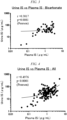
- the pharmaceutical composition provided by the present invention is administered to a plurality of humans (for example, patients with chronic kidney disease), and a ratio of a concentration of indoxyl sulfate in urine to a concentration of indoxyl sulfate in blood in each individual (a concentration in urine/a concentration in blood) shows high correlation.
- high correlation may be indicated by a Pearson test in which an r value is 0.4 to 1, 0.5 to 1, 0.6 to 1, or 0.7 to 1 (preferably 0.7 to 1).
- the pharmaceutical composition provided by the present invention may be administered to a human (for example, a patient with chronic kidney disease) in which a concentration of indoxyl sulfate in blood is 0.01 to 10 ⁇ g/mL (for example, 0.1 to 10 ⁇ g/mL), and as a result of the administration, a concentration of indoxyl sulfate in blood may become 0.01 to 10 ⁇ g/mL (for example, 0.1 to 10 ⁇ g/mL).
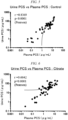
- the pharmaceutical composition provided by the present invention is administered to a plurality of humans (for example, patients with chronic kidney disease), and a ratio of a concentration of p-cresyl sulfate in urine to a concentration of p-cresyl sulfate in blood in each individual (a concentration in urine/a concentration in blood) shows high correlation.
- high correlation may be indicated by a Pearson test in which an r value is 0.4 to 1, 0.5 to 1, 0.6 to 1, or 0.7 to 1 (preferably 0.7 to 1).
- the pharmaceutical composition provided by the present invention may be administered to a human (for example, a patient with chronic kidney disease) in which a concentration of p-cresyl sulfate in blood is 0.001 to 100 ⁇ g/mL (for example, 0.01 to 50 ⁇ g/mL), and as a result of the administration, a concentration of p-cresyl sulfate in blood may become 0.001 to 100 ⁇ g/mL (for example, 0.01 to 50 ⁇ g/mL).
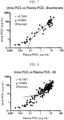
- the pharmaceutical composition provided by the present invention is administered to a plurality of humans (for example, patients with chronic kidney disease), and a ratio of a concentration of phenylacetyl-L-glutamine in urine to a concentration of phenylacetyl-L-glutamine in blood in each individual (a concentration in urine/a concentration in blood) shows high correlation.
- high correlation may be indicated by a Pearson test in which an r value is 0.4 to 1, 0.5 to 1, 0.6 to 1, or 0.7 to 1 (preferably 0.7 to 1).
- the pharmaceutical composition provided by the present invention may be administered to a human (for example, a patient with chronic kidney disease) in which a concentration of phenylacetyl-L-glutamine in blood is 0.01 to 10 ⁇ g/mL (for example, 0.05 to 10 ⁇ g/mL), and as a result of the administration, a concentration of phenylacetyl-L-glutamine in blood may become 0.01 to 10 ⁇ g/mL (for example, 0.05 to 10 ⁇ g/mL).
- the pharmaceutical composition for the use according to the present invention is a pharmaceutical composition comprising an alkalinizing agent for use in treating or preventing kidney tubular damage as further defined in claim 1 or a pharmaceutical composition comprising an alkalinizing agent for use in suppressing progression of chronic kidney disease as further defined in claim 2.
- the pharmaceutical composition not only can be used as a pharmaceutical composition for decreasing a concentration of uremic substance in blood and/or a pharmaceutical composition for promoting excretion of uremic substance into urine, but also can be used as any of a pharmaceutical composition for ameliorating uremic symptoms in a patient with kidney disease, a pharmaceutical composition for treating and/or preventing uremic symptoms in a patient with kidney disease, a pharmaceutical composition for suppressing progression of chronic kidney disease, and a pharmaceutical composition for delaying introduction of dialysis in a patient with chronic kidney disease.
- the term “amelioration” is a concept encompassing bringing "pathological” or “abnormal” symptoms, conditions, or diseases closer to “healthy” or “normal” conditions, or action therefor; and making “pathological” or “abnormal” symptoms, conditions, or diseases “healthy” or “normal” conditions, or action therefor. Accordingly, in one embodiment, the term “amelioration” encompasses a concept in which a numerical value indicative of "pathological" or “abnormal” symptoms or conditions decreases or increases in accordance with the "amelioration,” and becomes closer to a normal value or becomes a normal value.
- the term “amelioration” encompasses a concept in which, in accordance with the "amelioration," a concentration of uremic substance in blood is decreased, a concentration of uremic substance in urine increases, and a concentration of uremic substance in urine may turn to a decrease when a concentration of uremic substance in blood becomes sufficiently small.
- the term “healthy” represents a state in which there is no acute or chronic disease or disorder
- the term “normal” represents in a state that a healthy subject usually expresses.
- treatment encompasses a concept in which "pathological” or “abnormal” symptoms, conditions, or diseases are eliminated, completely cured, healed, or in remission, and action therefor; a deterioration in “pathological” or “abnormal” symptoms, conditions, or diseases is suppressed, and action therefor; and the “amelioration.”
- the term suppression has the meaning to be described later.
- the term “treatment” means that "pathological” or “abnormal” symptoms, conditions, or diseases are eliminated, completely cured, healed, or in remission, and means action therefor.
- treatment means that "pathological” or “abnormal” symptoms, conditions, or diseases are eliminated, completely cured, healed, or in remission.
- prevention encompasses a concept in which onset of "pathological” or “abnormal” symptoms, conditions, or diseases is prevented before they occur, and action therefor.
- delay encompasses a concept in which a time for an object phenomenon to occur is extended, and action therefor; and a time is extended so that the object phenomenon does not occur.
- the term “suppression” encompasses a concept in which a deterioration or progression of symptoms, conditions, or diseases is stopped or slowed down, or action therefor; and the symptoms, conditions, or the diseases are ameliorated, or action therefor.
- amelioration has the meaning as described above.
- the above-mentioned "deterioration or progression of symptoms, conditions, or diseases” includes a deterioration or progression of "pathological” or “abnormal” symptoms, conditions, or diseases; and a deterioration or progression of "pathological” or “abnormal” symptoms, conditions, or diseases from “healthy” or "normal” conditions.
- the term “suppression” means that a deterioration or progression of symptoms, conditions, or diseases is stopped or slowed down, or means action therefor. In another embodiment, the term “suppression” means that a deterioration or progression of symptoms, conditions, or diseases is stopped or slowed down.
- the symptoms, conditions, or diseases are compared before and after administration of the pharmaceutical composition provided by the present invention.
- the pharmaceutical composition can be used as any of a pharmaceutical composition for suppressing myocardial fibrosis in a patient with kidney disease, a pharmaceutical composition for suppressing arteriosclerosis in a patient with kidney disease, a pharmaceutical composition for suppressing vascular smooth muscle cell proliferation in a patient with kidney disease, a pharmaceutical composition for suppressing vascular endothelial cell injury in a patient with kidney disease, a pharmaceutical composition for suppressing thickening of the arterial wall of a patient with kidney disease, a pharmaceutical composition for suppressing calcification of the aorta of a patient with kidney disease, and a pharmaceutical composition for treating and/or preventing cardiovascular disease associated with chronic kidney disease.
- a pharmaceutical composition which decreases the concentration of indoxyl sulfate in blood can be used as a pharmaceutical composition for ameliorating arteriosclerosis or a pharmaceutical composition for ameliorating thickening of the arterial wall (for example, carotid artery) of a patient with kidney disease (preferably a patient with chronic kidney disease, more preferably a patient with non-diabetic chronic kidney disease).
- a pharmaceutical composition which decreases the concentration of indoxyl sulfate in blood can be used as a pharmaceutical composition for treating acute kidney failure, or a pharmaceutical composition for suppressing progression from acute kidney failure to chronic kidney disease.
- p-cresyl sulfate which is a uremic substance
- vascular endothelial damage Meijers B.K., et. Al.,: The uremic retention solute p-cresyl sulfate and markers of endothelial damage., Am. J. Kidney Dis., 54: 891-901, 2009 ).
- a pharmaceutical composition which promotes excretion of p-cresyl sulfate into urine can be used as a pharmaceutical composition for suppressing vascular endothelial damage in a patient with kidney disease (preferably a patient with chronic kidney disease).
- phenylacetyl-L-glutamine which is a uremic substance, has been reported to increase the risk of developing cardiovascular disease in a patient with chronic kidney disease.
- a pharmaceutical composition provided which promotes excretion of phenylacetyl-L-glutamine into urine can be used as a pharmaceutical composition for treating and/or preventing cardiovascular disease in a patient with chronic kidney disease.
- the pharmaceutical composition promotes excretion of uremic substance into urine, such as indoxyl sulfate, p-cresyl sulfate, hippuric acid, argininosuccinic acid, and phenylacetyl-L-glutamine
- the pharmaceutical composition can be used as a pharmaceutical composition for promoting excretion of indoxyl sulfate, p-cresyl sulfate, hippuric acid, argininosuccinic acid, and/or phenylacetyl-L-glutamine into urine of a patient with kidney disease (preferably a patient with chronic kidney disease).
- the pharmaceutical composition provided by the present invention can be used as a pharmaceutical composition for treating kidney tubular damage, a pharmaceutical composition for preventing kidney tubular damage, or a pharmaceutical composition for suppressing kidney tubular damage.
- a kidney tubule may be, for example, a kidney proximal tubule.
- the pharmaceutical composition provided by the present invention can be used as a pharmaceutical composition for maintaining kidney function.
- the pharmaceutical composition provided by the present invention is a pharmaceutical composition for suppressing kidney tubular cell damage, a pharmaceutical composition for protecting kidney tubular cells, or a pharmaceutical composition for maintaining kidney tubular cell function (for example, reabsorption of water, sodium ion, potassium ion, calcium ion, phosphate ion, bicarbonate ion, chloride ion, glucose, amino acid, vitamin, and the like).
- the pharmaceutical composition provided by the present invention is a pharmaceutical composition for suppressing kidney proximal tubular cell damage, a pharmaceutical composition for protecting kidney proximal tubular cells, or a pharmaceutical composition for maintaining kidney proximal tubular cell function (for example, reabsorption of glucose, amino acid, vitamin, and the like).
- the pharmaceutical composition provided by the present invention suppresses an increase in the amount (concentration) of ⁇ 2-microglobulin in urine (for example, early morning urine) associated with progression of a stage of chronic kidney disease.
- the pharmaceutical composition provided by the present invention does not affect the glomerular function of a patient with chronic kidney disease, whereas it suppresses kidney proximal tubular cell damage associated with progression of a stage of chronic kidney disease to protect kidney proximal tubular cells.
- kidney tubule may be, for example, a kidney proximal tubule, and one aspect of maintenance of kidney tubular function or kidney proximal tubular function is to maintain kidney tubular cell function or to maintain kidney proximal tubular cell function.
- protection of cells means maintenance or preservation of cell states or suppression of cell damage.
- suppression has the above-mentioned meaning.
- maintenance of cell function means preservation of cell function or suppression of deterioration of cell function.
- suppression has the above-mentioned meaning.
- the state or function of cells is compared before and after administration of the pharmaceutical composition provided by the present invention.
- the pharmaceutical composition provided by the present invention suppresses an increase in the amount (concentration) of ⁇ 2-microglobulin in urine (for example, early morning urine) 6 weeks, 12 weeks, and/or 24 weeks after administration, as compared with that before the start of administration.
- the pharmaceutical composition provided by the present invention suppresses an increase in the amount (concentration) of ⁇ 2-microglobulin in urine (for example, early morning urine) associated with progression of a stage of chronic kidney disease, but an amount (concentration) of ⁇ 2-microglobulin in urine (for example, early morning urine) is not substantially decreased compared to that before the start of administration of the pharmaceutical composition provided by the present invention.
- the amount (concentration) of ⁇ 2-microglobulin in urine (for example, early morning urine) before the start of administration of the pharmaceutical composition provided by the present invention is 1, the amount (concentration) of ⁇ 2-microglobulin in urine (for example, early morning urine) after administration may be 0.7 to 1.0 or 1.0 or more, 0.8 to 1.0 or 1.0 or more, 0.85 to 1.0 or 1.0 or more, 0.9 to 1.0 or 1.0 or more 0.7 to 2.0, 0.8 to 2.0, 0.85 to 2.0, 0.9 to 2.0, 0.7 to 1.6, 0.8 to 1.6, 0.85 to 1.6, or 0.9 to 1.6.
- the pharmaceutical composition provided by the present invention suppresses an increase in the amount (concentration) of ⁇ 2-microglobulin in urine (for example, early morning urine) associated with progression of a stage of chronic kidney disease, but an amount (concentration) of ⁇ 2-microglobulin in urine (for example, early morning urine) is not substantially decreased 6 weeks after administration, 12 weeks after administration, and/or 24 weeks after administration, compared to that before the start of administration of the pharmaceutical composition provided by the present invention.
- the amount (concentration) of ⁇ 2-microglobulin in urine (for example, early morning urine) before the start of administration of the pharmaceutical composition provided by the present invention is 1, the amount (concentration) of ⁇ 2-microglobulin in urine (for example, early morning urine) 6 weeks after administration, 12 weeks after administration, or 24 weeks after administration may be 0.7 to 1.0 or 1.0 or more, 0.8 to 1.0 or 1.0 or more, 0.85 to 1.0 or 1.0 or more, 0.9 to 1.0 or 1.0 or more 0.7 to 2.0, 0.8 to 2.0, 0.85 to 2.0, 0.9 to 2.0, 0.7 to 1.6, 0.8 to 1.6, 0.85 to 1.6, or 0.9 to 1.6.
- the pharmaceutical composition provided by the present invention does not substantially increase the amount (concentration) of cystatin C in the blood (for example, plasma) compared to before the start of administration.
- the amount (concentration) of cystatin C in blood (for example, in plasma) before the start of administration of the pharmaceutical composition provided by the present invention is 1, the amount (concentration) of cystatin C in blood (for example, in plasma) after administration may be 1.0 or less or 1.0 to 1.2, 1.0 or less or 1.0 to 1.15, 1.0 or less or 1.0 to 1.1, 1.0 or less or 1.0 to 1.05, 0.9 to 1.2, 0.9 to 1.15, 0.9 to 1.1, 0.9 to 1.05, 0.95 to 1.2, 0.95 to 1.15, 0.95 to 1.1, or 0.95 to 1.05.
- the pharmaceutical composition provided by the present invention does not substantially increase the amount (concentration) of cystatin C in the blood (for example, plasma) 6 weeks after administration, 12 weeks after administration, and/or 24 weeks after administration, compared to before the start of administration.
- the amount (concentration) of cystatin C in blood (for example, in plasma) 6 weeks after administration, 12 weeks after administration, or 24 weeks after administration may be 1.0 or less or 1.0 to 1.2, 1.0 or less or 1.0 to 1.15, 1.0 or less or 1.0 to 1.1, 1.0 or less or 1.0 to 1.05, 0.9 to 1.2, 0.9 to 1.15, 0.9 to 1.1, 0.9 to 1.05, 0.95 to 1.2, 0.95 to 1.15, 0.95 to 1.1, or 0.95 to 1.05.
- a decrease in the blood concentration of the uremic substance, promotion of urinary excretion of the uremic substance, and/or promotion of excretion of the uremic substance outside of the body is observed 6 weeks after administration, 12 weeks after administration, and/or 24 weeks after administration, as compared to before the start of administration.
- a decrease in the blood concentration of the uremic substance, promotion of urinary excretion of the uremic substance, and/or promotion of excretion of the uremic substance outside the body is observed 6 weeks after administration, 12 weeks after administration, and/or 24 weeks after administration, as compared to before the start of administration.
- the pharmaceutical composition provided by the present invention is orally administered to a human or other mammals.
- the pharmaceutical composition provided by the present invention may be prepared as an alkalinizing agent as it is or may be prepared by mixing an alkalinizing agent with a pharmaceutically acceptable carrier such as excipients (for example, lactose, D-mannitol, crystalline cellulose, and glucose), binders (for example, hydroxypropylcellulose (HPC), gelatin, and polyvinylpyrrolidone (PVP)), lubricants (for example, magnesium stearate, and talc), disintegrants (for example, starch and carboxymethylcellulose calcium (CMC-Ca)), diluents (for example, water for injection and saline), and other additives if necessary (for example, pH adjusters, surfactants, solubilizers, preservatives, emulsifiers, tonicity agents, and stabilizers), or may be preparation such as a tablet, capsule, suspension, injection, or suppository.
- a pharmaceutically acceptable carrier such as excipients (for example, lac
- the alkalinizing agent may be mixed with excipients (for example, lactose, D-mannitol, crystalline cellulose, and glucose), disintegrants (for example, starch and carboxymethylcellulose calcium (CMC-Ca)), binders (for example, hydroxypropylcellulose (HPC), gelatin, and polyvinylpyrrolidone (PVP)), lubricants (for example, magnesium stearate and talc), and the like to be formulated.
- excipients for example, lactose, D-mannitol, crystalline cellulose, and glucose
- disintegrants for example, starch and carboxymethylcellulose calcium (CMC-Ca)
- binders for example, hydroxypropylcellulose (HPC), gelatin, and polyvinylpyrrolidone (PVP)
- lubricants for example, magnesium stearate and talc
- the pharmaceutical composition provided by the present invention is a tablet.
- the tablet provided by the present invention may comprise pharmaceutically acceptable additives customary in the pharmaceutical field, in addition to the alkalinizing agent.
- additives include excipients, binders, disintegrants, fluidizers, flavoring agents, lubricants, pH adjusters, surfactants, stabilizers, and fragrances.
- the content of the alkalinizing agent in the tablet provided by the present invention may be 10% to 95% by weight, preferably 30% to 90% by weight, and more preferably 60% to 85% by weight with respect of the tablet.
- excipients examples include lactose (for example, lactose hydrate, and anhydrous lactose), sugars such as glucose, sucrose, fructose, and maltose, sugar alcohols such as erythritol, sorbitol, maltitol, xylitol, and D-mannitol, starch (for example, corn starch, potato starch, rice starch, and wheat starch), crystalline cellulose, magnesium aluminate metasilicate, anhydrous calcium phosphate, precipitated calcium carbonate, calcium silicate, calcium lactate, and ethylcellulose, among which crystalline cellulose is particularly preferable.
- lactose for example, lactose hydrate, and anhydrous lactose
- sugars such as glucose, sucrose, fructose, and maltose
- sugar alcohols such as erythritol, sorbitol, maltitol, xylitol, and D-manni
- the content of the excipient in the tablet provided by the present invention may be 1% to 95% by weight, preferably 1% to 80% by weight, more preferably 3% to 80% by weight, and even more preferably 3% to 20% by weight with respect to the tablet.
- binders examples include hydroxypropylcellulose, hydroxypropyl methylcellulose, polyvinylpyrrolidone, dextrin, methylcellulose, polyvinyl alcohol, sodium alginate, aminoalkyl methacrylate copolymer, polyethylene glycol, pregelatinized starch (for example, partially pregelatinized starch), agar, and gelatin, among which hydroxypropylcellulose is particularly preferable.
- the content of the binder in the tablet provided by the present invention may be 0.1% to 30% by weight, preferably 0.1% to 10% by weight, and more preferably 0.3% to 3% by weight with respect to the tablet.
- disintegrants examples include croscarmellose sodium, carmellose calcium, carboxymethyl starch sodium, low substituted hydroxypropylcellulose, crospovidone, starch (for example, wheat starch, corn starch, and partially pregelatinized starch), and carmellose, among which partially pregelatinized starch is particularly preferable.
- the content of the disintegrant in the tablet provided by the present invention may be 0.3% to 20% by weight, preferably 1% to 10% by weight, and more preferably 3% to 10% by weight with respect to the tablet.
- fluidizers examples include light anhydrous silicic acid, talc, and magnesium aluminate metasilicate.
- the content of the fluidizers in the tablet provided by the present invention may be 0.03% to 3% by weight, preferably 0.1% to 3% by weight, and more preferably 0.3% to 3% by weight with respect to the tablet.
- flavoring agents examples include citric acid (for example, anhydrous citric acid), acidulants such as malic acid, acetic acid, tartaric acid, fumaric acid, and ascorbic acid (where, the said flavoring agent does not comprise the alkalinizing agent according to the present invention), saccharin sodium, dipotassium glycyrrhizinate, aspartame (registered trademark), and sweeteners such as stevia, thaumatin, and sucralose.
- citric acid for example, anhydrous citric acid
- acidulants such as malic acid, acetic acid, tartaric acid, fumaric acid, and ascorbic acid
- saccharin sodium dipotassium glycyrrhizinate
- aspartame registered trademark
- sweeteners such as stevia, thaumatin, and sucralose.
- the content of the flavoring agent in the tablet provided by the present invention may be 0.03% to 3% by weight, preferably 0.1% to 3% by weight, and more preferably 0.3% to 3% by weight with respect to the tablet.
- Examples of lubricants that can be used in the tablets provided by the present invention include magnesium stearate, calcium stearate, talc, light anhydrous silicic acid, sucrose fatty acid esters, carnauba wax, macrogol, and sodium stearyl fumarate, among which magnesium stearate is particularly preferable.
- the lubricant content in the tablet provided by the present invention may be 0.1% to 30% by weight, preferably 0.3% to 10% by weight, and more preferably 1% to 3% by weight with respect to the tablet.
- pH adjusters examples include citric acid, phosphates (for example, sodium dihydrogen phosphate and potassium dihydrogen phosphate), carbonates (for example, magnesium carbonate and sodium carbonate), tartrate, fumarate, acetate, and amino acid salts (where, the pH adjuster does not include the alkalinizing agent according to the present invention).
- the content of the pH adjuster in the tablet provided by the present invention may be 0.1% to 30% by weight, preferably 0.3% to 10% by weight, and more preferably 1% to 5% by weight with respect to the tablet.
- surfactants examples include sodium lauryl sulfate, polysorbate, sucrose fatty acid ester, polyoxyethylene hydrogenated castor oil, polyoxyl stearate, macrogol, and poloxamer.
- the content of the surfactant in the tablet provided by the present invention may be 0.01% to 3% by weight, preferably 0.03% to 1% by weight, and more preferably 0.03% to 0.5% by weight with respect to the tablet.
- stabilizers examples include citric acid (for example, anhydrous citric acid), malic acid, acetic acid, tartaric acid, maleic acid, ascorbic acid, edetate sodium, and tocopherol (where, the stabilizer does not include the alkalinizing agent according to the present invention), among which anhydrous citric acid is particularly preferable.
- citric acid for example, anhydrous citric acid
- malic acid for example, malic acid
- acetic acid tartaric acid
- maleic acid ascorbic acid
- edetate sodium edetate sodium
- tocopherol where, the stabilizer does not include the alkalinizing agent according to the present invention
- the content of the stabilizer in the tablet provided by the present invention may be 0.01% to 30% by weight, preferably 0.1% to 30% by weight, and more preferably 1% to 20% by weight with respect to the tablet.
- An appropriate amount thereof can be contained in the tablet (for example, 0.01% to 1% by weight, and more preferably 0.01% to 0.1% by weight with respect to the tablet).
- the total content of the alkalinizing agent and the pharmaceutically acceptable additives in the tablet provided by the present invention does not exceed 100% by weight with respect to the tablet.
- the tablet provided by the present invention can be an uncoated tablet comprising the above components and not having a coating layer, or a film-coated tablet having a coating layer.
- the content of the coating layer can be appropriately set by those skilled in the art. For example, it may be 0.1% to 10% by weight with respect to the uncoated tablet.
- a plasticizer, a coloring agent, a brightening agent, and the like can be appropriately incorporated.
- Examples of coating bases that can be used for tablets provided by the present invention include hydroxypropylcellulose, hydroxypropyl methylcellulose, ethylcellulose, cellulose acetate phthalate, methacrylic acid copolymer, and polyvinylpyrrolidone, among which hydroxypropyl methylcellulose is particularly preferable.
- the content of the coating base in the tablet provided by the present invention may be 0.01% to 10% by weight, and preferably 0.3% to 3% by weight with respect to the tablet.
- Examples of coating plasticizers that can be used in tablets provided by the present invention include triethyl citrate, medium chain fatty acid triglyceride, triacetin, glycerin, and propylene glycol and polyethylene glycol (for example, Macrogol 6000), among which Macrogol 6000 is particularly preferable.
- the content of the coating plasticizer in the tablet provided by the present invention may be 0.01% to 1% by weight, and preferably 0.03% to 3% by weight with respect to the tablet.
- Examples of coating colorants that can be used in the tablets provided by the present invention include titanium oxide, yellow iron sesquioxide, iron sesquioxide, black iron oxide, food blue No. 2, and food blue No. 2 aluminum lake.
- the content of the coating colorant in the tablet provided by the present invention may be 0.01% to 1% by weight, and preferably 0.03% to 3% by weight with respect to the tablet.
- coating brighteners examples include carnauba wax.
- the content of the coating brightener in the tablet provided by the present invention may be 0.0001% to 0.1% by weight, and preferably 0.001% to 0.01% by weight with respect to the tablet.
- the pharmaceutical composition provided by the present invention can be produced by a method known in the pharmaceutical field.
- the production method may comprise a mixing step of mixing an additive with the alkalinizing agent, a granulation step, a tableting step, and/or a coating step.
- the mixing step may comprise a step of mixing an alkalinizing agent and an additive such as an excipient, a stabilizer, a disintegrant and/or a binder.
- an additive such as an excipient, a stabilizer, a disintegrant and/or a binder.
- a step in which a mixture comprising the alkalinizing agent and an additive is mixed with a lubricant, flavoring agent, and/or fragrance may further be provided.
- Mixing can be performed using a V-type mixer, a W-type mixer, a container mixer, a tumbler mixer, a stirring mixer, or the like.
- the granulation step can be performed by a known granulation method in the pharmaceutical field.
- granulation methods include a dry granulation method, a wet granulation method, and a fluidized bed granulation method.
- the mixture obtained in the mixing step and the granulated product obtained in the granulation step are appropriately pulverized and/or sieved to obtain a mixture or granulated product having a desired particle size.
- the pulverization can be performed by a pulverizer known in the pharmaceutical field, such as a ball mill, a jet mill, or a hammer mill.
- the sieving can be performed using a 16 mesh sieve (aperture of 1000 ⁇ m) to 32 mesh sieve (aperture of 500 ⁇ m), and the like.
- the tableting step can be performed by a tableting method known in the pharmaceutical field.
- tableting methods include a direct tableting method, a dry tableting method, a wet tableting method, and an external lubricant tableting method.
- the mixture or granulated product obtained in the above steps can be tableted using a tableting machine known in the pharmaceutical field, such as a single-shot tableting machine or a rotary tableting machine.
- a tableting pressure of 1 kN to 30 kN can be employed.
- the coating step can be performed by a method known in the pharmaceutical field.
- the coating can be performed by spray coating the outside of the uncoated tablet with a coating liquid appropriately comprising a coating base, and a plasticizer, colorant, brightener, or the like.
- the tablet provided by the present invention can be produced by mixing an alkalinizing agent with excipients (for example, lactose, D-mannitol, crystalline cellulose, and/or glucose), binders (for example, hydroxypropylcellulose (HPC), gelatin, and/or polyvinylpyrrolidone (PVP)), stabilizers (for example, anhydrous citric acid), disintegrants (for example, starch (for example, partially pregelatinized starch) and/or carboxymethylcellulose calcium (CMC-Ca)), and lubricants (for example, magnesium stearate) to obtain uncoated tablets by tableting; and forming, on the outside of the uncoated tablet, a coating layer comprising a coating base (for example, hydroxypropylcellulose, hydroxypropyl methylcellulose, and/or PVP), plasticizers (for example, triethyl citrate and/or Macrogol 6000), colorants (for example, iron sesquioxide and/or titanium oxide
- the tablets obtained can have a hardness of 10 to 200 N, preferably 30 to 150 N.
- the amount of the alkalinizing agent in the pharmaceutical composition provided by the present invention can be appropriately set within the limits defined by independent claims 1 and 2.
- the amount of the alkalinizing agent in the pharmaceutical composition provided by the present invention may be set to an amount that enables amelioration in acid urine in gout or hyperuricemia by administering the alkalinizing agent to a human, or an amount smaller that the above amount.
- an amount may be set to be 1% to 50% or 10% to 20% of the daily dose approved in Japan for amelioration in acid urine in gout or hyperuricemia (for example, in a case where the alkalinizing agent is a citric acid preparation: a tablet in which one tablet comprises 231.5 mg of potassium citrate (C 6 H 5 K 3 O 7 ⁇ H 2 O) and 195.0 mg of sodium citrate hydrate (C 6 H 5 Na 3 O 7 ⁇ 2H 2 O) is orally administered 3 times a day, 2 tablets at one time).
- the alkalinizing agent is a citric acid preparation: a tablet in which one tablet comprises 231.5 mg of potassium citrate (C 6 H 5 K 3 O 7 ⁇ H 2 O) and 195.0 mg of sodium citrate hydrate (C 6 H 5 Na 3 O 7 ⁇ 2H 2 O) is orally administered 3 times a day, 2 tablets at one time).
- the pharmaceutical composition provided by the present invention is a tablet, and it may comprise, in one tablet, 10 mg to 300 mg for each, a total of 20 mg to 600 mg, preferably, 150 to 250 mg for each, a total of 400 to 500 mg, and more preferably 190 to 240 mg for each, a total of 400 to 450 mg of potassium citrate monohydrate and sodium citrate dihydrate.
- the pharmaceutical composition provided by the present invention is a tablet, and it comprises, as an alkalinizing agent, potassium citrate monohydrate 231.5 mg and sodium citrate dihydrate 195.0 mg; and may comprise, as an additive, anhydrous citric acid, crystalline cellulose, partially pregelatinized starch, hydroxypropylcellulose, magnesium stearate, hypromellose, macrogol 6000, titanium oxide, and carnauba wax.
- a tablet comprising potassium citrate monohydrate 231.5 mg and sodium citrate dihydrate 195.0 mg may be a single dosage unit.
- dosage unit represents a unit of the preparation
- one dosage unit represents the minimum unit of the preparation. Accordingly, for example, in the case of tablets, the dosage unit is each tablet, and one dosage unit represents one tablet.
- the dosage unit is an injection contained in a sealed container such as an ampoule or vial, and one dosage unit represents an injection contained in a sealed container such as one ampoule or vial.
- one or more of the above dosage units may be administered at one time, or the one dosage unit may be divided and administered.
- the dose of the alkalinizing agent is appropriately determined according to the type of the alkalinizing agent, the method of administration, the age, weight, sex, symptom, sensitivity to the drug, and the like of a subject of administration, but it may be adjusted depending on the condition of symptom amelioration, provided that 0.1 to 5 g/day of each of sodium citrate or the hydrate thereof, and potassium citrate or the hydrate thereof are orally administered at a total of 0.2 to 10 g/day, 1 to 5 times a day.
- a mixture of potassium citrate monohydrate and sodium citrate dihydrate as an alkalinizing agent to a human half of the daily dose approved in Japan for amelioration in acid urine in gout or hyperuricemia (for example, in a case where the alkalinizing agent is a citric acid preparation: a tablet in which one tablet comprises 231.5 mg of potassium citrate (C 6 H 5 K 3 O 7 ⁇ H 2 O) and 195.0 mg of sodium citrate hydrate (C 6 H 5 Na 3 O 7 ⁇ 2H 2 O) is orally administered 3 times a day, 2 tablets at one time) may be set to a daily dose.
- the alkalinizing agent is a citric acid preparation: a tablet in which one tablet comprises 231.5 mg of potassium citrate (C 6 H 5 K 3 O 7 ⁇ H 2 O) and 195.0 mg of sodium citrate hydrate (C 6 H 5 Na 3 O 7 ⁇ 2H 2 O) is orally administered 3 times a day, 2 tablets at one time
- the daily dose approved in Japan for amelioration in acid urine in gout or hyperuricemia (for example, in a case where the alkalinizing agent is a citric acid preparation: a tablet in which one tablet comprises 231.5 mg of potassium citrate (C 6 H 5 K 3 O 7 ⁇ H 2 O) and 195.0 mg of sodium citrate hydrate (C 6 H 5 Na 3 O 7 ⁇ 2H 2 O) is orally administered 3 times a day, 2 tablets at one time) may be set to a daily dose.
- a mixture of potassium citrate monohydrate and sodium citrate dihydrate as an alkalinizing agent to a human half of the daily dose approved in Japan for amelioration in acid urine in gout or hyperuricemia (for example, in a case where the alkalinizing agent is a citric acid preparation: a tablet in which one tablet comprises 231.5 mg of potassium citrate (C 6 H 5 K 3 O 7 ⁇ H 2 O) and 195.0 mg of sodium citrate hydrate (C 6 H 5 Na 3 O 7 ⁇ 2H 2 O) is orally administered 3 times a day, 2 tablets at one time) may be set to a daily dose to start administration, and thereafter, the dosage may be increased to a daily dosage approved in Japan for the amelioration of acidic urine in gout and hyperuricemia.
- the alkalinizing agent is a citric acid preparation: a tablet in which one tablet comprises 231.5 mg of potassium citrate (C 6 H 5 K 3 O 7 ⁇ H 2 O) and 195.0 mg of sodium citrate hydrate (C 6 H 5 Na 3 O
- the dosage amount of the alkalinizing agent may be a dosage amount such that, when the alkalinizing agent is orally administered, the pH of human urine (for example, early morning urine) becomes pH 5.2 to pH 6.8, pH 5.5 to pH 6.8, pH 5.8 to pH 6.8, pH 5.8 to pH 6.5, pH 5.8 to pH 6.2, pH 5.8 or more and less than pH 6.2, pH 6.0 to pH 6.5, pH 6.0 to pH 6.4, pH 6.0 to pH 6.3, pH 6.0 to pH 6.2, pH 6.0 or more and less than pH 6.2, pH 6.1 to pH 6.3, pH 6.2 to 6.8, pH 6.2 to pH 6.5, or pH 6.5 to 6.8.
- the dosage amount of the alkalinizing agent may be a dosage amount such that, when the alkalinizing agent is orally administered, the pH of human urine (for example, early morning urine) becomes pH 5.2 to pH 6.8, pH 5.5 to pH 6.8, pH 5.8 to pH 6.8, pH 5.8 to pH 6.5, pH 5.8 to pH 6.2, pH 5.8 or more and less than pH 6.2, pH 6.0 to pH 6.5, pH 6.0 to pH 6.4, pH 6.0 to pH 6.3, pH 6.0 to pH 6.2, pH 6.0 or more and less than pH 6.2, pH 6.1 to pH 6.3, pH 6.2 to 6.8, pH 6.2 to pH 6.5, or pH 6.5 to 6.8, 6 weeks, 12 weeks, or 24 weeks after the oral administration of the alkalinizing agent.
- potassium citrate monohydrate and sodium citrate dihydrate may be administered at 0.1 to 3g/day for each, a total of 0.2 to 6g/day, 0.5 to 3g/day for each, a total of 1 to 6g/day, preferably, 0.5 to 1.5 g/day for each, a total of 1 to 3 g/day, 1 to 1.5g/day for each, a total of 2 to 3g/day, or 0.5 to 1 g/day for each, a total of 1 to 2 g/day; or may be divided and administered 1 to 5 times a day, preferably 3 times a day.
- the alkalinizing agent may be administered for a long period of time, for example, for 1 week, 2 weeks, 3 weeks, 6 weeks, 8 weeks, 10 weeks, 12 weeks, 24 weeks, 40 weeks, 60 weeks, 80 weeks, 100 weeks, 120 weeks, 1 week or more, 2 weeks or more, 3 weeks or more, 6 weeks or more, 8 weeks or more, 10 weeks or more, 12 weeks or more, 24 weeks or more, 40 weeks or more, 60 weeks or more, 80 weeks or more, 100 weeks or more, 120 weeks or more, 6 to 24 weeks, 12 to 24 weeks, 6 to 30 weeks, 12 to 30 weeks, 6 to 40 weeks, 12 to 40 weeks, 12 to 40 weeks, 6 to 60 weeks, 12 to 60 weeks, 6 to 80 weeks, 12 to 80 weeks, 6 to 100 weeks, 12 to 100 weeks, 6 to 120 weeks, or 12 to 120 weeks.
- beneficial effects for a patient with kidney disease for example, chronic kidney disease
- a concentration of uremic substance for example, indoxyl sulfate, p-cresyl sulfate, phenylacetyl-L-glutamine, hippuric acid, and/or argininosuccinic acid
- an effect of increasing a concentration of uremic substance for example, indoxyl sulfate, p-cresyl sulfate, phenylacetyl-L-glutamine, hippuric acid, and/or argininosuccinic acid
- urine an effect of promoting excretion into urine
- an effect of increasing a urinary ⁇ 2-microglobulin concentration can be detected.
- the pharmaceutical composition provided by the present invention is administered to a patient with stage G2 to stage G3b chronic kidney disease.
- Kidney disease includes acute kidney failure and chronic kidney disease unless otherwise specified.
- kidney failure examples include acute kidney failure due to drugs (for example, platinum preparations such as non-steroidal anti-inflammatory drugs, angiotensin converting enzyme inhibitors, angiotensin II receptor antagonists, aminoglycoside antibiotics, new quinolone antibacterials, iodinated contrast agents, platinum preparations such as cisplatin, and the like), and acute kidney failure caused by kidney ischemia.
- drugs for example, platinum preparations such as non-steroidal anti-inflammatory drugs, angiotensin converting enzyme inhibitors, angiotensin II receptor antagonists, aminoglycoside antibiotics, new quinolone antibacterials, iodinated contrast agents, platinum preparations such as cisplatin, and the like
- acute kidney failure caused by kidney ischemia for example, platinum preparations such as non-steroidal anti-inflammatory drugs, angiotensin converting enzyme inhibitors, angiotensin II receptor antagonists, aminoglycoside antibiotics, new quinolone antibacterials, iodinated contrast agents,
- Chronic kidney disease is a concept encompassing kidney disease that chronically progresses regardless of the underlying disease, and is a concept encompassing all clinical conditions in which kidney function expressed by glomerular filtration rate (GFR) deteriorates, or findings that suggest damage in kidneys is maintained chronically (3 months or longer).
- GFR glomerular filtration rate
- the severity of chronic kidney disease is evaluated by classification according to cause (Cause: C), kidney function (GFR: G), and proteinuria (albuminuria: A).
- GFR The classification of GFR is as follows.
- the classification by proteinuria is classified as follows using the urine albumin/creatinine (Cr) ratio when the primary disease is diabetes.
- proteinuria albuminuria: A
- Cr urine protein/creatinine
- CKD medical care guide 2012 (Nichijinkaishi 2012) the severity classification of chronic kidney disease (CKD) is expressed as, for example, diabetes G2A3, chronic nephritis G3bA1, and the like using the above C, G, and A.
- the severity of chronic kidney disease has conventionally been described only in the stages classified by GFR, and as in the related art, the severity of chronic kidney disease can be expressed in stages of G1, G2, G3a, G3b, G4, and G5.
- the pharmaceutical composition provided by the present invention is administered to a patient with chronic kidney disease in stage G2 or more and stage G3b or less (for example, stage G2 and stage G3a; or stage G2, stage G3a and stage G3b).
- the pharmaceutical composition provided by the present invention is administered to a patient with chronic kidney disease in stage G3b or less and microalbuminuria, preferably administered to a patient with kidney disease in stage G2 and chronic albuminuria.
- the pharmaceutical composition provided by the present invention is administered to a patient with chronic kidney disease in stage G2 or more and stage G3b or less (for example, stage G2 and stage G3a; or stage G2, stage G3a and stage G3b) and which is microalbuminuria.
- the pharmaceutical composition provided by the present invention is administered to a patient with chronic kidney disease in stage G2 to stage G3b or lower and whose urinary protein excretion is less than 3.5 g/gCr, and is preferably administered to a patient with chronic kidney disease in stage G2 and whose urinary protein excretion is less than 3.5 g/gCr.
- the pharmaceutical composition provided by the present invention is administered to a patient with chronic kidney disease in stage G2 or more and stage G3b or less (for example, stage G2 and stage G3a; or stage G2, stage G3a and stage G3b) and whose urinary protein excretion is less than 3.5 g/gCr.
- the pharmaceutical composition provided by the present invention is administered to a patient with stage G2 to stage G3b progressive chronic kidney disease.
- the pharmaceutical composition provided by the present invention is administered to a patient with stage G2 to stage G3b chronic kidney disease whose concentration of ⁇ 2-microglobulin in urine (for example, early morning urine) is 2000 ⁇ g/L or less, 1000 ⁇ g/L or less, 800 ⁇ g/L or less, 290 ⁇ g/L or less, 200 ⁇ g/L or less, 1 to 2000 ⁇ g/L, 1 to 1000 ⁇ g/L, 1 to 800 ⁇ g/L, 1 to 290 ⁇ g/L, 1 to 200 ⁇ g/L, 10 to 2000 ⁇ g/L, 10 to 1000 ⁇ g/L, 10 to 800 ⁇ g/L, 10 to 290 ⁇ g/L, 10 to 200 ⁇ g/L, or 80 to 200 ⁇ g/L.
- ⁇ 2-microglobulin in urine for example, early morning urine
- the pharmaceutical composition provided by the present invention is administered to a patient with stage G2 to stage G3b chronic kidney disease whose cystatin C in blood (for example, in plasma or in serum) is 0.1 to 3.0 mg/L, 0.1 to 2.0 mg/L, 0.1 to 1.6 mg/L, 0.1 to 1.3 mg/L, 0.5 to 3.0 mg/L, 0.5 to 2.0 mg/L, 0.5 to 1.6 mg/L, 0.5 to 1.3 mg/L, or 0.9 to 1.3 mg/mL.
- the pharmaceutical composition provided by the present invention is administered to a patient with stage G2 to stage G3b chronic kidney disease whose indoxyl sulfate concentration in blood is 0.001 to 100 ⁇ g/mL (for example, 0.1 to 30 ⁇ g/mL).
- the pharmaceutical composition provided by the present invention is administered to a patient with stage G2 to stage G3b chronic kidney disease whose concentration of p-cresyl sulfate in blood is 0.003 to 300 ⁇ g/mL (for example, 0.01 to 30 ⁇ g/mL).
- the pharmaceutical composition provided by the present invention is administered to a patient with stage G2 to stage G3b chronic kidney disease whose hippuric acid concentration in blood is 0.01 to 100 ⁇ g/mL (for example, 0.01 to 10 ⁇ g/mL).
- the pharmaceutical composition provided by the present invention is administered to a patient with stage G2 to stage G3b chronic kidney disease whose argininosuccinic acid concentration in blood is 0.01 to 100 ⁇ g/mL (for example, 0.1 to 10 ⁇ g/mL).
- the pharmaceutical composition provided by the present invention is administered to a patient with stage G2 to stage G3b chronic kidney disease whose concentration of phenylacetyl-L-glutamine in blood is 0.03 to 30 ⁇ g/mL (for example, 0.1 to 10 ⁇ g/mL).
- the pharmaceutical composition provided by the present invention is administered to a patient with stage G2 to stage G3b chronic kidney disease receiving treatment according to a CKD medical guide.
- a CKD medical guide For example, it is administered to a patient subjected to, according to CKD medical guide, blood pressure management (administration of RA inhibitors such as ARB and ACE inhibitors, diuretics, Ca antagonists), anti-proteinuria measures (administration of RA inhibitors, and the like), blood glucose level control (administration of ⁇ -glucosidase inhibitor, and the like), lipid management (administration of statins, fibrates, and the like), anemia management (for example, erythropoietin administration), and/or bone/mineral measures (bisphosphonate administration and the like).
- RA inhibitors such as ARB and ACE inhibitors, diuretics, Ca antagonists
- anti-proteinuria measures administration of RA inhibitors, and the like
- blood glucose level control administration of ⁇ -glucosidase inhibitor, and the like
- the pharmaceutical composition provided by the present invention is used in combination with an antihypertensive agent (for example, ARB, ACE inhibitor, diuretic, Ca antagonist).
- an antihypertensive agent for example, ARB, ACE inhibitor, diuretic, Ca antagonist.
- the pharmaceutical composition provided by the present invention is used in combination with a spherical carbonaceous adsorbent (sold in Japan as KREMEZIN (registered trademark)) obtained by oxidation and reduction treatment of spherical fine porous carbon derived from petroleum hydrocarbons at high temperature.
- a spherical carbonaceous adsorbent sold in Japan as KREMEZIN (registered trademark) obtained by oxidation and reduction treatment of spherical fine porous carbon derived from petroleum hydrocarbons at high temperature.
- the pharmaceutical composition provided by the present invention is administered to a patient with low-severity, stage G2 to stage G3b chronic kidney disease (for example, a patient with chronic kidney disease in stage G2 and stage G3a, and even more preferably stage G2), and thereby a concentration of uremic substance (for example, indoxyl sulfate, hippuric acid, and/or phenylacetyl-L-glutamine) in blood of a patient is decreased, and excretion of uremic substance (for example, indoxyl sulfate, p-cresyl sulfate, hippuric acid, argininosuccinic acid, and/or phenylacetyl-L-glutamine) outside the body (for example, into urine) is promoted.
- uremic substance for example, indoxyl sulfate, p-cresyl sulfate, hippuric acid, argininosuccinic acid, and/or phenylacet
- the pharmaceutical composition provided by the present invention may be a pharmaceutical composition for ameliorating uremic symptoms, a pharmaceutical composition for treating or preventing uremia, a pharmaceutical composition for suppressing progression of chronic kidney disease, a pharmaceutical composition for delaying introduction of dialysis, a pharmaceutical composition for suppressing myocardial fibrosis, a pharmaceutical composition for suppressing arteriosclerosis, a pharmaceutical composition for ameliorating arteriosclerosis, a pharmaceutical composition for suppressing vascular smooth muscle cell proliferation, a pharmaceutical composition for suppressing vascular endothelial cell injury, a pharmaceutical composition for suppressing arterial wall thickening, a pharmaceutical composition for ameliorating arterial wall thickening, a pharmaceutical composition for suppressing calcification of the aorta, or a pharmaceutical composition for treating or preventing cardiovascular disease, which is a complication (for example, heart failure, myocardial infarction, stroke, and the like).
- a complication for example, heart failure, myocardial infarction, stroke, and the like.
- the pharmaceutical composition provided by the present invention is administered to a patient with low-severity, stage G2 to stage G3b chronic kidney disease (for example, a patient with chronic kidney disease in stage G2 and stage G3a, and even more preferably stage G2), and thereby an increase in urinary ⁇ 2-microglobulin in the patient is suppressed.
- stage G2 to stage G3b chronic kidney disease for example, a patient with chronic kidney disease in stage G2 and stage G3a, and even more preferably stage G2
- the pharmaceutical composition provided by the present invention may be a composition for suppressing damage of kidney tubule (for example, kidney proximal tubule), a composition for suppressing damage of kidney tubular cells (for example, kidney proximal tubular cells), a composition for protecting kidney tubular cells (for example, kidney proximal tubular cells), or a pharmaceutical composition for maintaining kidney tubular cell function (for example, reabsorption of glucose, amino acids, and the like) (for example, kidney proximal tubular cell function).
- kidney tubule for example, kidney proximal tubule
- a composition for suppressing damage of kidney tubular cells for example, kidney proximal tubular cells
- a composition for protecting kidney tubular cells for example, kidney proximal tubular cells
- a pharmaceutical composition for maintaining kidney tubular cell function for example, reabsorption of glucose, amino acids, and the like
- the pharmaceutical composition provided by the present invention is administered to a patient with chronic kidney disease in stage G3b, and thereby a concentration of uremic substance (for example, indoxyl sulfate, hippuric acid, and/or phenylacetyl-L-glutamine) in blood of the patient is decreased, and excretion of uremic substance (for example, indoxyl sulfate, p-cresyl sulfate, hippuric acid, argininosuccinic acid, and/or phenylacetyl-L-glutamine) outside the body (for example, into urine) is promoted.
- uremic substance for example, indoxyl sulfate, hippuric acid, and/or phenylacetyl-L-glutamine
- the pharmaceutical composition provided by the present invention may be a pharmaceutical composition for ameliorating uremic symptoms, a pharmaceutical composition for treating or preventing uremia, a pharmaceutical composition for suppressing progression of chronic kidney disease, a pharmaceutical composition for delaying introduction of dialysis, a pharmaceutical composition for suppressing myocardial fibrosis, a pharmaceutical composition for suppressing arteriosclerosis, a pharmaceutical composition for ameliorating arteriosclerosis, a pharmaceutical composition for suppressing vascular smooth muscle cell proliferation, a pharmaceutical composition for suppressing vascular endothelial cell injury, a pharmaceutical composition for suppressing arterial wall thickening, a pharmaceutical composition for ameliorating arterial wall thickening, a pharmaceutical composition for suppressing calcification of the aorta, a pharmaceutical composition for suppressing a decrease in energy production in muscle cells, a pharmaceutical composition for suppressing a decrease in muscle mass and/or muscle strength, or a pharmaceutical composition for treating or preventing cardiovascular disease, which is a complication (for example, heart failure, myocardial infarction, stroke, and the
- the pharmaceutical composition provided by the present invention is administered to a patient with chronic kidney disease in stage G3b, and thereby an increase in urinary ⁇ 2-microglobulin in the patient is suppressed.
- the pharmaceutical composition provided by the present invention may be a composition for suppressing damage of kidney tubule (for example, kidney proximal tubule), a composition for suppressing damage of kidney tubular cells (for example, kidney proximal tubular cells), a composition for protecting kidney tubular cells (for example, kidney proximal tubular cells), or a pharmaceutical composition for maintaining kidney tubular cell function (for example, reabsorption of glucose, amino acids, and the like) (for example, kidney proximal tubular cell function).
- kidney tubule for example, kidney proximal tubule
- a composition for suppressing damage of kidney tubular cells for example, kidney proximal tubular cells
- a composition for protecting kidney tubular cells for example, kidney proximal tubular cells
- a pharmaceutical composition for maintaining kidney tubular cell function for example
- a food composition described herein, but not claimed as such comprises an alkalinizing agent and exhibits an effect of promoting excretion, outside the body, of uremic substance (for example, indoxyl sulfate, p-cresyl sulfate, phenylacetyl-L-glutamine, hippuric acid, and/or argininosuccinic acid, preferably indoxyl sulfate, p-cresyl sulfate, and phenylacetyl-L-glutamine, more preferably indoxyl sulfate and phenylacetyl-L-glutamine, and even more preferably indoxyl sulfate).
- uremic substance for example, indoxyl sulfate, p-cresyl sulfate, phenylacetyl-L-glutamine, hippuric acid, and/or argininosuccinic acid, preferably indoxyl sul
- the food composition comprises an alkalinizing agent and exhibits an effect of decreasing the concentration of uremic substance in blood.
- the food composition comprises an alkalinizing agent and exhibits an effect of promoting excretion of uremic substance into urine.
- the food composition comprises an alkalinizing agent and exhibits a kidney function maintenance effect.
- the food composition comprises an alkalinizing agent and exhibits an effect of suppressing kidney tubular damage.
- kidney tubules include a kidney proximal tubule.
- the food composition comprises an alkalinizing agent and exhibits an effect of suppressing kidney proximal tubular cell damage.
- the food composition comprises an alkalinizing agent and exhibits an effect of protecting kidney proximal tubular cells.
- the food composition comprises an alkalinizing agent, and exhibits an effect of maintaining kidney tubular function (for example, reabsorption of water, sodium ion, potassium ion, calcium ion, phosphate ion, bicarbonate ion, chloride ion, glucose, amino acid, vitamin, and the like).
- kidney tubules include a kidney proximal tubule, and examples of kidney proximal tubular function include reabsorption of glucose, amino acids, vitamins, and the like.
- the food composition exhibits an effect of suppressing an increase in the amount (concentration) of ⁇ 2-microglobulin in urine (for example, early morning urine) associated with progression of a stage of chronic kidney disease.
- the food composition does not affect the glomerular function of a patient with chronic kidney disease, whereas it exhibits an effect of suppressing kidney proximal tubular cell damage associated with progression of a stage of chronic kidney disease to protect kidney proximal tubular cells.
- alkalinizing agent the alkalinizing agent described in "1.
- Pharmaceutical composition can be applied.
- alkalinizing agents include a pharmaceutically acceptable salt of citric acid as acceptable salts of citric acid as food (for example, an alkali metal salt of citric acid or a hydrate thereof, or a mixture thereof), and sodium bicarbonate.
- a pharmaceutically acceptable salt of citric acid as acceptable salts of citric acid as food for example, an alkali metal salt of citric acid or a hydrate thereof, or a mixture thereof
- sodium bicarbonate sodium bicarbonate.
- a mixture of a potassium citrate monohydrate (C 6 H 5 K 3 O 7 ⁇ H 2 O) and a sodium citrate dihydrate (C 6 H 5 Na 3 O 7 ⁇ 2H 2 O), or sodium citrate dihydrate is preferable.
- Uremic substance is also as described in "1. Pharmaceutical composition" above.
- uremic substances include indoxyl sulfate, p-cresyl sulfate, phenylacetyl-L-glutamine, hippuric acid, and argininosuccinic acid.
- the content of the alkalinizing agent in the food composition can be appropriately determined depending on the type of food.
- food compositions include foods for specified health use, dietary supplements, functional foods, hospital patient foods, and supplements.
- the form of these food compositions is not particularly limited as long as it comprises an effective amount of an alkalinizing agent for exerting the above-mentioned effects and can be taken orally.
- the form may be a form of a normal food or drink, or the food composition may be provided as a preparation suitable for oral administration, for example, a preparation such as a tablet, a capsule, or a suspension, among preparations that can be applied to the pharmaceutical composition.
- a preparation suitable for oral administration for example, a preparation such as a tablet, a capsule, or a suspension, among preparations that can be applied to the pharmaceutical composition.
- the constitution and production method of these preparations in the present specification, the constitution and production method of the pharmaceutical preparation described in the above "1.
- Pharmaceutical composition can be applied as it is, and known formulation techniques in the field of
- an amount of 1/3 of a total of 1 to 3 g of a potassium citrate monohydrate and a sodium citrate dihydrate may be contained as an alkalinizing agent, or an amount of 1/3 of 1 to 6 g of a sodium hydrogen carbonate may be contained as an alkalinizing agent.
- 70% to 80% by weight of the alkalinizing agent may be contained in 300 mg to 600 mg of a tablet.
- the food composition When the food composition is not formulated and is provided in the form of a normal food or drink, it can be appropriately produced by those skilled in the art depending on the type of the food. For example, it can be produced by blending an alkalinizing agent (for example, potassium citrate and/or sodium citrate) with the food material.
- an alkalinizing agent for example, potassium citrate and/or sodium citrate
- the form of the food and drink is a liquid or milky or pasty food such as a beverage, soy sauce, milk, yogurt, or miso; a semi-solid food such as jelly or gummy; solid foods such as rice cakes, gums, tofu, and supplements; powdered foods; and the like.
- beverages include fruit juice, fruit drinks, coffee drinks, oolong tea drinks, green tea drinks, tea drinks, barley tea drinks, vegetable drinks, carbonated soft drinks, fruit extract drinks, vegetable extract juices, near water, sports drinks, diet drinks, and the like.
- additives such as antioxidants, fragrances, various esters, organic acids, organic acid salts, inorganic acids, inorganic acid salts, inorganic salts, pigments, emulsifiers, preservatives, seasonings, sweeteners, acidulants, fruit juice extracts, vegetable extracts, nectar extract, pH adjusters, and quality stabilizers can be blended in individually or in combination.
- the food composition can be used in the same manner as the method of using the pharmaceutical composition described in the above "1.
- Pharmaceutical composition can also be used within a range not intended to treat or prevent diseases. That is, when the alkalinizing agent contained in the food composition is used as a reference, it can be applied to an application target of the pharmaceutical composition such that the amount of the alkalinizing agent used in the food composition becomes the same as the alkalinizing agent contained in the pharmaceutical composition.
- the "food composition” can be applied to a subject (for example, a human or other mammals) who does not have "morbid” or "abnormal” symptoms, conditions, or diseases, that is, a subject (for example, a human or other mammals) in a "healthy” or “normal” state in order to maintain or enhance a "healthy” or “normal” state.
- a subject for example, a human or other mammals
- it can be applied to a "healthy subject concerned about kidney health” or "healthy subject concerned about kidney tubule health” in order to maintain or improve a "healthy” or "normal” state.
- the alkalinizing agent is a component of the pharmaceutical composition or a component of the food composition
- the pharmacological effect of the alkalinizing agent itself is basically the same. Accordingly, the application amount and application method of the food composition can be appropriately adjusted based on the alkalinizing agent according to an expected effect.
- a food composition applied to a subject for example, a human or other mammals
- a subject for example, a human or other mammals
- a subject for example, a human or other mammals
- a “healthy” or “normal” state in order to maintain or enhance a "healthy” or “normal” state
- functional food in some cases.
- administration described in the above "1.
- Pharmaceutical composition can also be applied to the "food composition”.
- administration can be read as "ingestion.” Accordingly, for example, the terms “administer,” “administered,” and the like can be read as “is ingested,” “ingest,” “ingesting,” and the like, with different word forms depending on the context.
- effects of decreasing a concentration of uremic substance in blood effects of promotion of excretion of uremic substance into urine; effects of maintenance of kidney function; effects of suppression of kidney tubular damage; effects of suppression of kidney tubular cell damage; effects of suppression of kidney proximal tubular cell damage; effects of protection of kidney tubular cells; effects of protection of kidney proximal tubular cells; effects of maintenance of kidney tubular function (for example, reabsorption of water, sodium ion, potassium ion, calcium ion, phosphate ion, bicarbonate ion, chloride ion, glucose, amino acid, vitamin, and the like), preferably maintenance of kidney proximal tubular function (for example, reabsorption of glucose, amino acids, vitamins, and the like); and the like; are preferably indicated.
- maintenance of kidney tubular function for example, reabsorption of water, sodium ion, potassium ion, calcium ion, phosphate ion, bicarbonate ion, chloride ion, glucose, amino acid,
- the "food composition” is ingested by a subject (for example, a human or other mammals) in which a urinary ⁇ 2-microglobulin concentration is 290 ⁇ g/L or less, preferably 50 to 150 ⁇ g/L.
- the "food composition” is ingested by a subject (for example, a human or other mammals) in which a blood cystatin C concentration is 0.5 to 2.2 mg/L, preferably 1.0 to 1.3 mg/L.
- the ingestion of the "food composition” suppresses an increase in urinary ⁇ 2-microglobulin concentration.
- the ingestion of the "food composition” suppresses an increase in urinary ⁇ 2-microglobulin concentration 12 weeks after the administration.
- the ingestion of the "food composition” does not substantially decrease a urinary ⁇ 2-microglobulin concentration compared to before the start of administration.
- the ingestion of the "food composition” does not substantially decrease a urinary ⁇ 2-microglobulin concentration 12 weeks after administration, compared to before the start of administration.
- the ingestion of the "food composition” does not substantially increase blood cystatin C compared to before the start of administration.
- the ingestion of the "food composition” does not substantially increase blood cystatin C compared to before the start of administration.
- the ingestion of the "food composition” suppresses, in early morning urine, an increase of a ⁇ 2-microglobulin amount which is associated with progression of a stage of chronic kidney disease.
- the ingestion of the "food composition” does not affect the glomerular function of a patient with chronic kidney disease, whereas it suppresses kidney proximal tubular cell damage associated with progression of a stage of chronic kidney disease progression to protect kidney proximal tubular cells.
- a method for determining a decrease in concentration of uremic substance for example, indoxyl sulfate, p-cresyl sulfate, phenylacetyl-L-glutamine, hippuric acid, and/or argininosuccinic acid, preferably indoxyl sulfate, hippuric acid, and phenylacetyl-L-glutamine, more preferably indoxyl sulfate and phenylacetyl-L-glutamine, and even more preferably indoxyl sulfate) in blood of a patient with chronic kidney disease, which is described herein but not claimed as such, comprises measuring a pH of urine.
- uremic substance for example, indoxyl sulfate, p-cresyl sulfate, phenylacetyl-L-glutamine, hippuric acid, and/or argininosuccinic acid, preferably indoxyl sulfate, hip
- a method for determining a promotion of excretion of uremic substance comprises measuring a pH of urine.
- Measurement of the content of uremic substance (for example, indoxyl sulfate) in body fluid can be performed by a HPLC method or enzyme method.
- these measurement methods require specialized and expensive reagents.
- a concentration of uremic substance in blood is decreased by administering the alkalinizing agent, and thereby excretion of these uremic substance into the urine is promoted.
- a pH of urine of a patient with chronic kidney disease very simply and inexpensively, it is possible to determine a decrease in concentration of uremic substance in blood (for example, indoxyl sulfate, p-cresyl sulfate, phenylacetyl-L-glutamine, hippuric acid, and/or argininosuccinic acid), and/or a promotion of excretion of uremic substance into urine (for example, indoxyl sulfate, p-cresyl sulfate, phenylacetyl-L-glutamine, hippuric acid, and/or argininosuccinic acid).
- a well-known technique may be used.
- a pH test paper, a pH test solution, or a simple pH measuring device can be used.
- a patient with chronic kidney disease measures a pH of early morning urine (wake up first urine) over time from the start of taking an alkalinizing agent (for example, a mixture of a potassium citrate monohydrate and a sodium citrate dihydrate, or sodium citrate dihydrate), and if the urine pH is high, it can be easily determined that a decrease in concentration of uremic substance in blood (for example, indoxyl sulfate, p-cresyl sulfate, phenylacetyl-L-glutamine, hippuric acid, and/or argininosuccinic acid, preferably indoxyl sulfate, hippuric acid, and/or phenylacetyl-L-glutamine, more preferably indoxyl sulfate and phenylacetyl-L-glutamine, and even more preferably indoxyl sulfate), and/or a promotion of excretion of uremic substance into urine (for example, indoxyl
- a patient with chronic kidney disease measures a pH of early morning urine (wake up first urine) over time after taking an alkalinizing agent (for example, a mixture of a potassium citrate monohydrate and a sodium citrate dihydrate, or sodium citrate dihydrate).
- an alkalinizing agent for example, a mixture of a potassium citrate monohydrate and a sodium citrate dihydrate, or sodium citrate dihydrate.
- the urine pH is within a range of 5.2 to 6.8 (for example, the pH of urine is within a range of pH 5.5 to pH 6.8, pH 5.8 to pH 6.8, pH 5.8 to pH 6.5, pH 5.8 to pH 6.2, pH 5.8 or more and less than pH 6.2, pH 6.
- a decrease in concentration of uremic substance in blood for example, indoxyl sulfate, p-cresyl sulfate, phenylacetyl-L-glutamine, hippuric acid, and/or argininosuccinic acid, preferably indoxyl sulfate, hippuric acid, and/or phenylacetyl-L-glutamine, more preferably indoxyl sulfate and phenylacetyl-L-glutamine, and even more preferably indoxyl sulfate), and/or a promotion of excretion of uremic substance into urine (for example, indoxyl sulf
- the determination, which is thus obtained as above, as to whether or not a decrease in concentration of uremic substance in blood (for example, indoxyl sulfate, p-cresyl sulfate, phenylacetyl-L-glutamine, hippuric acid, and/or argininosuccinic acid), and/or a promotion of excretion of uremic substance into urine (for example, indoxyl sulfate, p-cresyl sulfate, phenylacetyl-L-glutamine, hippuric acid, and/or argininosuccinic acid) is achieved can aid the diagnosis of whether or not progression of chronic kidney disease is suppressed.
- a method for determining suppression of progression of chronic kidney disease comprises measuring the pH of urine (for example, early morning urine) of a patient to which an alkalinizing agent (for example, a mixture of a potassium citrate monohydrate and a sodium citrate dihydrate, or sodium citrate dihydrate) has been administered. If it is recognized that the urine pH increases over time or the urine pH is within the range of 5.8 to 6.8 (for example, the urine pH is within the range of 6.0 to 6.2), this can then aid the diagnosis that progression of a stage of chronic kidney disease progression are suppressed.
- an alkalinizing agent for example, a mixture of a potassium citrate monohydrate and a sodium citrate dihydrate, or sodium citrate dihydrate
- the pharmaceutical composition provided by the present invention is a pharmaceutical composition comprising an alkalinizing agent for use in suppressing progression of chronic kidney disease, in which 0.5 to 1.5 g/day of each of a potassium citrate monohydrate and a sodium citrate dihydrate as the alkalinizing agent are orally administered at a total of 1 to 3 g/day, 1 to 5 times a day, preferably 3 times a day.
- the pharmaceutical composition provided by the present invention is a pharmaceutical composition comprising an alkalinizing agent for use in suppressing progression of chronic kidney disease, in which one dosage unit (preferably one tablet) contains 231.5 mg potassium citrate monohydrate and 195.0 mg sodium citrate dihydrate, and 3 to 6 dosage units per day are orally administered in three divided doses per day.
- the pharmaceutical composition provided by the present invention is a pharmaceutical composition comprising an alkalinizing agent for use in treating or preventing kidney tubular damage, in which 0.5 to 1.5 g/day of each of a potassium citrate monohydrate and a sodium citrate dihydrate as the alkalinizing agent are orally administered at a total of 1 to 3 g/day, 1 to 5 times a day, preferably 3 times a day.
- the pharmaceutical composition provided by the present invention is a pharmaceutical composition comprising an alkalinizing agent for use in treating or preventing kidney tubular damage, in which one dosage unit (preferably one tablet) contains 231.5 mg potassium citrate monohydrate and 195.0 mg sodium citrate dihydrate, and 3 to 6 dosage units per day are orally administered in three divided doses per day.
- a human clinical trial was conducted to examine whether oral administration of a combination preparation of hydrates of potassium citrate and sodium citrate, and a sodium bicarbonate preparation, which are oral alkalinizing agents, promotes excretion of uremic substance into urine.
- An alkalinizing agent was not administered to the control group.
- 3 tablets a day in which each tablet contained potassium citrate (C 6 H 5 K 3 O 7 ⁇ H 2 O) 231.5 mg and a sodium citrate hydrate (C 6 H 5 Na 3 O 7 ⁇ 2H 2 O) 195.0 mg were orally administered 3 times a day (morning, noon, evening) for 24 weeks.
- a pH of early morning urine was controlled over time so that the dosage could be increased up to 6 tablets, 3 times a day (morning, noon, evening) as needed according to the discretion of the physician in cases where a pH of early morning urine was less than pH 6.5.
- each tablet contained 500 mg of sodium bicarbonate were orally administered 3 times a day (morning, noon, evening) for 24 weeks.
- a pH of early morning urine was controlled over time so that the dosage could be increased up to 6 tablets, 3 times a day (morning, noon, evening) as needed according to the discretion of the physician in cases where a pH of early morning urine was less than pH 6.5.
- NANOSPACE SI-2 manufactured by Shiseido
- CAPCELLPAK MGIII was selected as the analytical column.
- TSQ Quantiva manufactured by Thermo Fisher Scientific Co., Ltd.
- five compounds were ionized in the negative mode and detected using the Selected Reaction Monitoring method.
- the quantitative value was calculated using a calibration curve prepared with a standard solution of each compound.
- the amount of urinary ⁇ 2-microglobulin was measured by latex agglutination method using the LZ test "Eiken” ⁇ 2-M and LZ- ⁇ 2-M standard U “Eiken” (Eiken Chemical Co., Tokyo, Japan). Furthermore, the amount of cystatin C in the serum was measured by a colloidal gold agglutination method using Nescoat GC Cystatin C (Nm) (Alfresa Pharma, Osaka, Japan).
- the average value and SD of each group were calculated for (i) to (ix) above.
- the average value and SD of each group were calculated for all data of 6 weeks, 12 weeks, and 24 weeks after the start of administration in each group.
- an indoxyl sulfate concentration in plasma 6, 12, and 24 weeks after the administration was a lower value, compared to those of the group B (Bicarbonate: the group to which the sodium bicarbonate preparation had been administered) and the group C (Control: the control group) (refer to Table 1-1-1).
- an indoxyl sulfate (IS) concentration in early morning urine 12 and 24 weeks after administration was a higher value than that in the group C (refer to Table 1-2-1).
- the indoxyl sulfate concentration in plasma at 6 to 24 weeks was a significantly lower value in the group A than those in the groups B and C (refer to Table 1-1-1), and the indoxyl sulfate concentration in early morning urine at 6 to 24 weeks was significantly greater in the group A than those in the groups B and C (refer to Table 1-2-2).
- the combination preparation of hydrates of potassium citrate and sodium citrate exhibited an excellent effect of decreasing an indoxyl sulfate concentration in blood, and an excellent effect of increasing an indoxyl sulfate concentration in urine.
- the effect of decreasing the indoxyl sulfate concentration in blood and the effect of increasing the indoxyl sulfate concentration in urine by the combination preparation of hydrates of potassium citrate and sodium citrate were recognized from 12 weeks after the administration.
- PCS p-cresyl sulfate
- group A the group to which the combination preparation of hydrates of potassium citrate and sodium citrate had been administered
- concentration of p-cresyl sulfate in the early morning urine 12 and 24 weeks after administration was a higher value than that of the group C (Control: the control group).
- group B the group to which the sodium bicarbonate preparation had been administered
- the p-cresyl sulfate concentration in the early morning urine at 6, 12, and 24 weeks after administration was a higher value (refer to Table 2-2-1).
- An increase in p-cresyl sulfate concentration in early morning urine at 6 to 24 weeks was recognized only in the group A (refer to Table 2-2-2).
- hippuric acid in the group A (Citrate: the group to which the combination preparation of hydrates of potassium citrate and sodium citrate had been administered), a hippuric acid concentration in plasma 24 weeks after the administration was a lower value, compared to those of the group B (Bicarbonate: the group to which the sodium bicarbonate preparation had been administered) and the group C (Control: the control group) (refer to Table 3-1-1). Such an effect was not seen in the administration of the sodium bicarbonate preparation.
- the hippuric acid concentration in the early morning urine 12 and 24 weeks after administration was a higher value than that in the group C (refer to Table 3-2-1).
- the concentration of hippuric acid which is a uremic substance, in plasma 24 weeks after administration was decreased as compared to that before administration (refer to Tables 3-1-1 and 3-2-2), and the concentration of hippuric acid in urine increased compared to that before administration (refer to Tables 3-2-1 and 3-2-2).
- the combination preparation of hydrates of potassium citrate and sodium citrate exhibited an excellent effect of increasing a hippuric acid concentration in urine.
- the effect of increasing the hippuric acid concentration in urine by the combination preparation of hydrates of potassium citrate and sodium citrate was recognized from 6 weeks after administration.
- ASA argininosuccinic acid
- phenylacetyl-L-glutamine in the group A (Citrate: the group to which the combination preparation of hydrates of potassium citrate and sodium citrate had been administered), a phenylacetyl-L-glutamine concentration in plasma was a lower value compared to that of the group C (Control: the control group) (refer to Table 5-1-1).
- a phenylacetyl-L-glutamine concentration in early morning urine 12 and 24 weeks after administration was a higher value than that in the group C (refer to Table 5-2-1).
- an effect of increasing a uremic substance concentration in urine by the alkalinizing agent is clearly recognized by indoxyl sulfate (IS), p-cresyl sulfate (PCS), hippuric acid (HA), argininosuccinic acid (ASA), and phenylacetyl-L-glutamine (PAG).
- IS indoxyl sulfate
- PCS p-cresyl sulfate
- HA hippuric acid
- ASA argininosuccinic acid
- PAG phenylacetyl-L-glutamine
- the combination preparation of hydrates of potassium citrate and sodium citrate exhibits a greater effect of excreting the uremic substance outside the body compared to the sodium bicarbonate preparation.
- administration of the alkalinizing agent to patients with stage G2 chronic kidney disease as well as stage G3b can suppress progression of chronic kidney disease, and it was suggested that the combination preparation of hydrates of potassium citrate and sodium citrate further suppresses the progression of chronic kidney disease than the sodium bicarbonate preparation.
- the concentration of cystatin C in the plasma was not different between the group A (Citrate: the group to which the combination preparation of hydrates of potassium citrate and sodium citrate had been administered), the group B (Bicarbonate: the group to which the sodium bicarbonate preparation had been administered), and the group C (Control: the control group), and there was no influence on the function of glomeruli by the group to which the combination preparation of hydrates of potassium citrate and sodium citrate had been administered, and the group to which the sodium bicarbonate preparation had been administered (Table 8).
- a urinary ⁇ 2-microglobulin concentration in the group A (Citrate: the group to which the combination preparation of hydrates of potassium citrate and sodium citrate had been administered), a urinary ⁇ 2-microglobulin concentration was a lower value compared to that of the group C (Control: the control group), and even in comparison with the group B (Bicarbonate: the group to which the sodium bicarbonate preparation had been administered), a urinary ⁇ 2-microglobulin concentration of the group A (the group to which the combination preparation of hydrates of potassium citrate and sodium citrate had been administered) was a lower value.
- the group B (Bicarbonate: the group to which the sodium bicarbonate preparation had been administered) had a higher urinary ⁇ 2-microglobulin concentration than that of the group C (Control: the control group).
- Administration of the combination preparation of hydrates of potassium citrate and sodium citrate suppresses an increase in urinary ⁇ 2-microglobulin concentration associated with progression of the stage, and it was recognized that there is no change in the urinary ⁇ 2-microglobulin concentration compared to before administration.
- kidney tubular damage kidney proximal tubular damage
- sodium bicarbonate preparation did not suppress kidney tubular damage (kidney proximal tubular damage) associated with progression of the stage, and it rather worsened the progression.
- an effect of increasing a concentration of uremic substance in urine and an effect of decreasing a concentration of uremic substance in blood by administration of the combination preparation of hydrates of potassium citrate and sodium citrate was not recognized to have a correlation with an effect of suppressing an increase in urinary ⁇ 2-microglobulin concentration by administration of the combination preparation of hydrates of potassium citrate and sodium citrate. It was suggested that an effect of promoting excretion of uremic substance into urine by administration of the combination preparation of hydrates of potassium citrate and sodium citrate was not caused only by suppression of glomerular and kidney proximal tubular damage.
- indoxyl sulfate For indoxyl sulfate, a higher correlation between plasma concentration and urine concentration was recognized in the group to which the combination preparation of hydrates of potassium citrate and sodium citrate had been administered as compared to the control group, and a high correlation was recognized even when compared to the group to which the sodium bicarbonate preparation had been administered (refer to r values in FIGS. 1 to 3 ). Based on FIGS. 1 to 4 , it was suggested that administration of the combination preparation of hydrates of potassium citrate and sodium citrate causes excretion of indoxyl sulfate into urine depending on the indoxyl sulfate concentration in blood.
- hippuric acid no high correlation between plasma concentration and urinary concentration in the control group, the group to which the sodium bicarbonate preparation had been administered, and the group to which the combination preparation of hydrates of potassium citrate and sodium citrate had been administered was recognized.
- phenylacetyl-L-glutamine a correlation between plasma concentration and urine concentration was recognized between the control group, the group to which the combination preparation of hydrates of potassium citrate and sodium citrate had been administered, and the group to which the sodium bicarbonate preparation had been administered, and a higher correlation was recognized in the group to which the sodium bicarbonate preparation had been administered as compared to the group to which the combination preparation of hydrates of potassium citrate and sodium citrate had been administered (refer to r values in FIGS. 17 to 19 ). Based on FIGS.
- the combination preparation of hydrates of potassium citrate and sodium citrate may increase concentrations of indoxyl sulfate, phenylacetyl-L-glutamine, p-cresyl sulfate, and argininosuccinic acid in urine by the same mechanism.
- the sodium bicarbonate preparation may increase concentrations of indoxyl sulfate, phenylacetyl-L-glutamine, p-cresyl sulfate, and argininosuccinic acid in urine by the same mechanism.
- the combination preparation of hydrates of potassium citrate and sodium citrate may reduce concentrations of indoxyl sulfate, phenylacetyl-L-glutamine, and p-cresyl sulfate in blood by the same mechanism.
- the sodium bicarbonate preparation may reduce concentrations of p-cresyl sulfate and phenylacetyl-L-glutamine in blood by the same mechanism. It was suggested that the combination preparation of hydrates of potassium citrate and sodium citrate and the sodium bicarbonate preparation have different mechanisms for reducing the concentration of uremic substance in blood.
- a urinary specific gravity of early morning urine before the start of the test (0 W) and at 6, 12, and 24 weeks after the start of the test (6 W, 12 W, and 24 W) was analyzed for each of the group C (Control: the control group), the group A (Citrate: the group to which the combination preparation of hydrates of potassium citrate and sodium citrate had been administered), and the group B (Bicarbonate: the group to which the sodium bicarbonate preparation had been administered). The results are shown in Table 11-0-1.
- the urinary specific gravity value was maintained or increased over 6, 12, and 24 weeks after the start of the test.
- the urinary specific gravity showed tendency to be more favorably maintained or to increase.
- Table 11-1-1 The results are shown in Table 11-1-1, Table 11-2-1, Table 11-3-1, Table 11-4-1, and Table 11-5-1.
- amounts of change in the values obtained by correcting, with the urinary specific gravity, the concentration of the uremic substance in the early morning urine 6, 12, and 24 weeks after the start of the test are respectively shown as a % relative value with respect to the correction value before the start of the test, and a difference from the correction value before the start of the test in Table 11-1-2, Table 11-1-3, Table 11-2-2, Table 11-2-3, Table 11-3-2, Table 11-3-3, Table 11-4-2, Table 11-4-3, Table 11-5-2, and Table 11-5-3.
- the concentration of uremic substance in urine increased in the group to which the combination preparation of hydrates of potassium citrate and sodium citrate (Citrate) had been administered than that group to which the sodium bicarbonate preparation (Bicarbonate) had been administered and the control group.
- administration of the combination preparation of hydrates of potassium citrate and sodium citrate (Citrate) increased concentrations of indoxyl sulfate (IS), p-cresyl sulfate (PCS), and phenylacetyl-L-glutamine (PAG) in the urine (excretion into urine) compared to before the start of the test (0 W).
- the osmotic pressure of early morning urine before the start of the test (0 W) and at 6, 12, and 24 weeks after the start of the test (6 W, 12 W, and 24 W) was analyzed for each of the group C (Control: the control group), the group A (Citrate: the group to which the combination preparation of hydrates of potassium citrate and sodium citrate had been administered), and the group B (Bicarbonate: the group to which the sodium bicarbonate preparation had been administered).
- the results are shown in Table 12-0-1.
- Table 12-1-1 The results are shown in Table 12-1-1, Table 12-2-1, Table 12-3-1, Table 12-4-1, and Table 12-5-1.
- amounts of change in the values obtained by correcting, with the osmotic pressure of the early morning urine, the concentration of the uremic substance in the early morning urine 6, 12, and 24 weeks after the start of the test are respectively shown as a % relative value with respect to the correction value before the start of the test, and a difference from the correction value before the start of the test in Table 12-1-2, Table 12-1-3, Table 12-2-2, Table 12-2-3, Table 12-3-2, Table 12-3-3, Table 12-4-2, Table 12-4-3, Table 12-5-2, and Table 12-5-3.
- the concentration of uremic substance in urine increased in the group to which the combination preparation of hydrates of potassium citrate and sodium citrate (Citrate) had been administered than that group to which the sodium bicarbonate preparation (Bicarbonate) had been administered and the control group.
- administration of the combination preparation of hydrates of potassium citrate and sodium citrate increased concentrations of indoxyl sulfate (IS), p-cresyl sulfate (PCS), and phenylacetyl-L-glutamine (PAG) in the urine (excretion into urine) compared to before the start of the test (0 W).
- IS indoxyl sulfate
- PCS p-cresyl sulfate
- PAG phenylacetyl-L-glutamine
- uremic substance are excreted outside the body in mammals.
Landscapes
- Health & Medical Sciences (AREA)
- Life Sciences & Earth Sciences (AREA)
- Chemical & Material Sciences (AREA)
- Animal Behavior & Ethology (AREA)
- Pharmacology & Pharmacy (AREA)
- Medicinal Chemistry (AREA)
- General Health & Medical Sciences (AREA)
- Public Health (AREA)
- Veterinary Medicine (AREA)
- Engineering & Computer Science (AREA)
- Bioinformatics & Cheminformatics (AREA)
- Nuclear Medicine, Radiotherapy & Molecular Imaging (AREA)
- Organic Chemistry (AREA)
- Chemical Kinetics & Catalysis (AREA)
- General Chemical & Material Sciences (AREA)
- Epidemiology (AREA)
- Urology & Nephrology (AREA)
- Nutrition Science (AREA)
- Mycology (AREA)
- Food Science & Technology (AREA)
- Polymers & Plastics (AREA)
- Heart & Thoracic Surgery (AREA)
- Cardiology (AREA)
- Inorganic Chemistry (AREA)
- Vascular Medicine (AREA)
- Physical Education & Sports Medicine (AREA)
- Rheumatology (AREA)
- Pain & Pain Management (AREA)
- Hematology (AREA)
- Diabetes (AREA)
- Pharmaceuticals Containing Other Organic And Inorganic Compounds (AREA)
- Acyclic And Carbocyclic Compounds In Medicinal Compositions (AREA)
- Medicines That Contain Protein Lipid Enzymes And Other Medicines (AREA)
- Medicinal Preparation (AREA)
- Coloring Foods And Improving Nutritive Qualities (AREA)
- Medicines Containing Material From Animals Or Micro-Organisms (AREA)
Applications Claiming Priority (5)
| Application Number | Priority Date | Filing Date | Title |
|---|---|---|---|
| JP2017082423 | 2017-04-18 | ||
| JP2017085741A JP7578234B2 (ja) | 2017-04-18 | 2017-04-24 | アルカリ性化剤による血液浄化 |
| JP2017103935 | 2017-05-25 | ||
| PCT/JP2017/032931 WO2018193648A1 (ja) | 2017-04-18 | 2017-09-12 | アルカリ性化剤による血液浄化 |
| PCT/JP2018/009679 WO2018193752A1 (ja) | 2017-04-18 | 2018-03-13 | アルカリ性化剤による血液浄化 |
Publications (4)
| Publication Number | Publication Date |
|---|---|
| EP3616721A1 EP3616721A1 (en) | 2020-03-04 |
| EP3616721A4 EP3616721A4 (en) | 2020-12-30 |
| EP3616721C0 EP3616721C0 (en) | 2024-12-04 |
| EP3616721B1 true EP3616721B1 (en) | 2024-12-04 |
Family
ID=65033758
Family Applications (1)
| Application Number | Title | Priority Date | Filing Date |
|---|---|---|---|
| EP18787098.5A Active EP3616721B1 (en) | 2017-04-18 | 2018-03-13 | Blood purification by alkalinizing agent |
Country Status (8)
| Country | Link |
|---|---|
| US (1) | US20210121426A1 (enExample) |
| EP (1) | EP3616721B1 (enExample) |
| JP (3) | JP7219898B2 (enExample) |
| KR (1) | KR102685723B1 (enExample) |
| CN (1) | CN110799214A (enExample) |
| AU (1) | AU2018254884C1 (enExample) |
| CA (1) | CA3060154A1 (enExample) |
| TW (1) | TWI813560B (enExample) |
Families Citing this family (4)
| Publication number | Priority date | Publication date | Assignee | Title |
|---|---|---|---|---|
| CN112203686A (zh) * | 2018-05-25 | 2021-01-08 | 国立大学法人琉球大学 | 代谢改善剂 |
| US12324793B2 (en) | 2018-10-17 | 2025-06-10 | Tohoku University | Method for renal protection |
| JPWO2021193856A1 (enExample) * | 2020-03-26 | 2021-09-30 | ||
| CN114794346A (zh) * | 2022-04-25 | 2022-07-29 | 武汉汇天诚科技有限公司 | 一种复合固体饮料的配方 |
Citations (1)
| Publication number | Priority date | Publication date | Assignee | Title |
|---|---|---|---|---|
| WO2008141353A1 (en) * | 2007-05-24 | 2008-11-27 | Austin Health | Prevention of acute kidney injury |
Family Cites Families (14)
| Publication number | Priority date | Publication date | Assignee | Title |
|---|---|---|---|---|
| JPS60105619A (ja) * | 1983-11-15 | 1985-06-11 | Nippon Chemiphar Co Ltd | 尿アルカリ化性食品組成物 |
| JP4087929B2 (ja) * | 1997-08-27 | 2008-05-21 | 日清ペットフード株式会社 | 猫慢性腎不全治療用組成物及びその治療方法 |
| JP2004131406A (ja) * | 2002-10-09 | 2004-04-30 | Sekisui Chem Co Ltd | 尿毒症性物質特異的認識ポリマー及び経口吸着剤 |
| EP1978808B1 (en) * | 2006-01-30 | 2018-08-29 | Panion & BF Biotech Inc. | Ferric citrate for reversing, preventing, delaying or stabilizing soft tissue calcification |
| JP2007217366A (ja) * | 2006-02-17 | 2007-08-30 | Kirin Brewery Co Ltd | 尿酸値降下用組成物 |
| EP2194977A1 (en) | 2007-08-31 | 2010-06-16 | C.B. Fleet Company Incorporated | Method of preventing nephrocalcinosis |
| WO2010126146A1 (ja) * | 2009-04-30 | 2010-11-04 | Tanaka Noriaki | 腎疾患重篤度を判定する方法又は装置若しくはその作動方法 |
| JP6164719B2 (ja) * | 2009-10-27 | 2017-07-19 | エイワイファーマ株式会社 | 白金含有薬剤投与による腎障害の軽減剤 |
| CN105671120B (zh) * | 2010-07-05 | 2019-02-19 | 株式会社明治 | 具有肠内腐败物质的减少作用的双歧杆菌 |
| MX357998B (es) * | 2015-03-20 | 2018-07-11 | Antonio Hernandez Miramontes Jorge | Una mezcla de acidos carboxilicos, especificamente acido citrico, acido succinico, acido fumarico y acido malico para el tratamiento de pacientes con insuficiencia renal cronica, insuficiencia renal aguda, hepatopatias agudas o cronicas que cursen con hiperamonemia, enfermedades congenitas con alteraciones enzimaticas en el ciclo de la urea, asi como condiciones clínicas que cursen con balance nitrogenado negativo. |
| JP6490614B2 (ja) * | 2015-03-30 | 2019-03-27 | 景博 内田 | インドキシル硫酸の測定方法 |
| US12324793B2 (en) * | 2018-10-17 | 2025-06-10 | Tohoku University | Method for renal protection |
| CA3116290A1 (en) * | 2018-10-17 | 2020-04-23 | Nippon Chemiphar Co., Ltd. | Therapeutic or prophylactic agent for nocturnal polyuria |
| EP3964264A4 (en) * | 2019-04-28 | 2023-07-12 | Tohoku University | NOVEL PHARMACEUTICAL COMPOSITION |
-
2017
- 2017-09-12 JP JP2019513213A patent/JP7219898B2/ja active Active
-
2018
- 2018-03-13 EP EP18787098.5A patent/EP3616721B1/en active Active
- 2018-03-13 AU AU2018254884A patent/AU2018254884C1/en active Active
- 2018-03-13 CA CA3060154A patent/CA3060154A1/en active Pending
- 2018-03-13 JP JP2019513265A patent/JP7756863B2/ja active Active
- 2018-03-13 KR KR1020197033580A patent/KR102685723B1/ko active Active
- 2018-03-13 TW TW107108443A patent/TWI813560B/zh active
- 2018-03-13 CN CN201880025628.3A patent/CN110799214A/zh active Pending
- 2018-03-13 US US16/605,885 patent/US20210121426A1/en active Pending
-
2023
- 2023-06-28 JP JP2023106201A patent/JP2023115271A/ja active Pending
Patent Citations (1)
| Publication number | Priority date | Publication date | Assignee | Title |
|---|---|---|---|---|
| WO2008141353A1 (en) * | 2007-05-24 | 2008-11-27 | Austin Health | Prevention of acute kidney injury |
Non-Patent Citations (2)
| Title |
|---|
| G A TANNER ET AL: "Potassium citrate/citric acid intake improves renal function in rats with polycystic kidney disease", JOURNAL OF THE AMERICAN SOCIETY OF NEPHROLOGY : JASN, 1 July 1998 (1998-07-01), United States, pages 1242 - 1248, XP055556949, Retrieved from the Internet <URL:https://jasn.asnjournals.org/content/jnephrol/9/7/1242.full.pdf> * |
| SOROT PHISITKUL ET AL: "Amelioration of metabolic acidosis in patients with low GFR reduced kidney endothelin production and kidney injury, and better preserved GFR", KIDNEY INTERNATIONAL, vol. 77, no. 7, 1 April 2010 (2010-04-01), pages 617 - 623, XP055751794, ISSN: 0085-2538, DOI: 10.1038/ki.2009.519 * |
Also Published As
| Publication number | Publication date |
|---|---|
| AU2018254884B2 (en) | 2023-12-14 |
| US20210121426A1 (en) | 2021-04-29 |
| AU2018254884C1 (en) | 2024-04-11 |
| JP7756863B2 (ja) | 2025-10-21 |
| AU2018254884A1 (en) | 2019-11-07 |
| KR20190137147A (ko) | 2019-12-10 |
| JPWO2018193648A1 (ja) | 2020-02-27 |
| JPWO2018193752A1 (ja) | 2020-03-05 |
| EP3616721A1 (en) | 2020-03-04 |
| KR102685723B1 (ko) | 2024-07-16 |
| CA3060154A1 (en) | 2018-10-25 |
| JP2023115271A (ja) | 2023-08-18 |
| EP3616721A4 (en) | 2020-12-30 |
| JP7219898B2 (ja) | 2023-02-09 |
| CN110799214A (zh) | 2020-02-14 |
| TWI813560B (zh) | 2023-09-01 |
| EP3616721C0 (en) | 2024-12-04 |
| TW201838684A (zh) | 2018-11-01 |
Similar Documents
| Publication | Publication Date | Title |
|---|---|---|
| KR102773144B1 (ko) | 시트르산의 의약적으로 허용 가능한 염, 혹은 그 수화물 또는 그들의 혼합물을 포함하는 의약 조성물 | |
| JP2023115271A (ja) | アルカリ性化剤による血液浄化 | |
| JPWO2020080499A1 (ja) | 新規医薬組成物 | |
| JP2026063342A (ja) | 腎機能保護剤 | |
| JP7482033B2 (ja) | 夜間多尿の治療又は予防剤 | |
| WO2020222302A1 (ja) | 新規医薬組成物 | |
| EP3868215A1 (en) | Agent for improving quality of sleep | |
| HK40079287A (en) | Renal function protectant | |
| TW202547454A (zh) | 治療前的尿白蛋白濃度在特定範圍之慢性腎臟病的治療用醫藥組成物 |
Legal Events
| Date | Code | Title | Description |
|---|---|---|---|
| STAA | Information on the status of an ep patent application or granted ep patent |
Free format text: STATUS: THE INTERNATIONAL PUBLICATION HAS BEEN MADE |
|
| PUAI | Public reference made under article 153(3) epc to a published international application that has entered the european phase |
Free format text: ORIGINAL CODE: 0009012 |
|
| STAA | Information on the status of an ep patent application or granted ep patent |
Free format text: STATUS: REQUEST FOR EXAMINATION WAS MADE |
|
| 17P | Request for examination filed |
Effective date: 20191011 |
|
| AK | Designated contracting states |
Kind code of ref document: A1 Designated state(s): AL AT BE BG CH CY CZ DE DK EE ES FI FR GB GR HR HU IE IS IT LI LT LU LV MC MK MT NL NO PL PT RO RS SE SI SK SM TR |
|
| AX | Request for extension of the european patent |
Extension state: BA ME |
|
| DAV | Request for validation of the european patent (deleted) | ||
| DAX | Request for extension of the european patent (deleted) | ||
| A4 | Supplementary search report drawn up and despatched |
Effective date: 20201127 |
|
| RIC1 | Information provided on ipc code assigned before grant |
Ipc: A23L 33/00 20160101ALI20201123BHEP Ipc: A61P 43/00 20060101ALI20201123BHEP Ipc: A61K 31/194 20060101ALI20201123BHEP Ipc: A61P 13/12 20060101ALI20201123BHEP Ipc: A61P 9/10 20060101ALI20201123BHEP Ipc: A23L 33/10 20160101ALI20201123BHEP Ipc: A61K 9/20 20060101ALI20201123BHEP Ipc: A61P 7/00 20060101ALI20201123BHEP Ipc: A61P 9/00 20060101ALI20201123BHEP Ipc: A61K 45/00 20060101AFI20201123BHEP Ipc: A23L 33/135 20160101ALI20201123BHEP Ipc: A61P 19/06 20060101ALI20201123BHEP |
|
| STAA | Information on the status of an ep patent application or granted ep patent |
Free format text: STATUS: EXAMINATION IS IN PROGRESS |
|
| 17Q | First examination report despatched |
Effective date: 20221213 |
|
| REG | Reference to a national code |
Ref country code: DE Ref legal event code: R079 Free format text: PREVIOUS MAIN CLASS: A61K0045000000 Ipc: A61K0031194000 Ref country code: DE Ref legal event code: R079 Ref document number: 602018077263 Country of ref document: DE Free format text: PREVIOUS MAIN CLASS: A61K0045000000 Ipc: A61K0031194000 |
|
| GRAP | Despatch of communication of intention to grant a patent |
Free format text: ORIGINAL CODE: EPIDOSNIGR1 |
|
| STAA | Information on the status of an ep patent application or granted ep patent |
Free format text: STATUS: GRANT OF PATENT IS INTENDED |
|
| RIC1 | Information provided on ipc code assigned before grant |
Ipc: A23L 33/10 20160101ALI20240613BHEP Ipc: A61K 9/20 20060101ALI20240613BHEP Ipc: A61P 9/00 20060101ALI20240613BHEP Ipc: A61P 9/10 20060101ALI20240613BHEP Ipc: A61P 13/12 20060101ALI20240613BHEP Ipc: A61P 19/06 20060101ALI20240613BHEP Ipc: A23L 33/135 20160101ALI20240613BHEP Ipc: A23L 33/00 20160101ALI20240613BHEP Ipc: A61P 7/00 20060101ALI20240613BHEP Ipc: A61P 43/00 20060101ALI20240613BHEP Ipc: A61K 45/00 20060101ALI20240613BHEP Ipc: A61K 31/194 20060101AFI20240613BHEP |
|
| INTG | Intention to grant announced |
Effective date: 20240628 |
|
| GRAS | Grant fee paid |
Free format text: ORIGINAL CODE: EPIDOSNIGR3 |
|
| GRAA | (expected) grant |
Free format text: ORIGINAL CODE: 0009210 |
|
| STAA | Information on the status of an ep patent application or granted ep patent |
Free format text: STATUS: THE PATENT HAS BEEN GRANTED |
|
| AK | Designated contracting states |
Kind code of ref document: B1 Designated state(s): AL AT BE BG CH CY CZ DE DK EE ES FI FR GB GR HR HU IE IS IT LI LT LU LV MC MK MT NL NO PL PT RO RS SE SI SK SM TR |
|
| REG | Reference to a national code |
Ref country code: GB Ref legal event code: FG4D |
|
| REG | Reference to a national code |
Ref country code: CH Ref legal event code: EP |
|
| REG | Reference to a national code |
Ref country code: DE Ref legal event code: R096 Ref document number: 602018077263 Country of ref document: DE |
|
| REG | Reference to a national code |
Ref country code: IE Ref legal event code: FG4D |
|
| U01 | Request for unitary effect filed |
Effective date: 20241209 |
|
| U07 | Unitary effect registered |
Designated state(s): AT BE BG DE DK EE FI FR IT LT LU LV MT NL PT RO SE SI Effective date: 20241219 |
|
| REG | Reference to a national code |
Ref country code: ES Ref legal event code: FG2A Ref document number: 3003888 Country of ref document: ES Kind code of ref document: T3 Effective date: 20250311 |
|
| PG25 | Lapsed in a contracting state [announced via postgrant information from national office to epo] |
Ref country code: HR Free format text: LAPSE BECAUSE OF FAILURE TO SUBMIT A TRANSLATION OF THE DESCRIPTION OR TO PAY THE FEE WITHIN THE PRESCRIBED TIME-LIMIT Effective date: 20241204 |
|
| PG25 | Lapsed in a contracting state [announced via postgrant information from national office to epo] |
Ref country code: NO Free format text: LAPSE BECAUSE OF FAILURE TO SUBMIT A TRANSLATION OF THE DESCRIPTION OR TO PAY THE FEE WITHIN THE PRESCRIBED TIME-LIMIT Effective date: 20250304 |
|
| PG25 | Lapsed in a contracting state [announced via postgrant information from national office to epo] |
Ref country code: GR Free format text: LAPSE BECAUSE OF FAILURE TO SUBMIT A TRANSLATION OF THE DESCRIPTION OR TO PAY THE FEE WITHIN THE PRESCRIBED TIME-LIMIT Effective date: 20250305 |
|
| PG25 | Lapsed in a contracting state [announced via postgrant information from national office to epo] |
Ref country code: RS Free format text: LAPSE BECAUSE OF FAILURE TO SUBMIT A TRANSLATION OF THE DESCRIPTION OR TO PAY THE FEE WITHIN THE PRESCRIBED TIME-LIMIT Effective date: 20250304 |
|
| U20 | Renewal fee for the european patent with unitary effect paid |
Year of fee payment: 8 Effective date: 20250326 |
|
| PG25 | Lapsed in a contracting state [announced via postgrant information from national office to epo] |
Ref country code: SM Free format text: LAPSE BECAUSE OF FAILURE TO SUBMIT A TRANSLATION OF THE DESCRIPTION OR TO PAY THE FEE WITHIN THE PRESCRIBED TIME-LIMIT Effective date: 20241204 |
|
| PG25 | Lapsed in a contracting state [announced via postgrant information from national office to epo] |
Ref country code: PL Free format text: LAPSE BECAUSE OF FAILURE TO SUBMIT A TRANSLATION OF THE DESCRIPTION OR TO PAY THE FEE WITHIN THE PRESCRIBED TIME-LIMIT Effective date: 20241204 |
|
| PG25 | Lapsed in a contracting state [announced via postgrant information from national office to epo] |
Ref country code: IS Free format text: LAPSE BECAUSE OF FAILURE TO SUBMIT A TRANSLATION OF THE DESCRIPTION OR TO PAY THE FEE WITHIN THE PRESCRIBED TIME-LIMIT Effective date: 20250404 |
|
| PG25 | Lapsed in a contracting state [announced via postgrant information from national office to epo] |
Ref country code: SK Free format text: LAPSE BECAUSE OF FAILURE TO SUBMIT A TRANSLATION OF THE DESCRIPTION OR TO PAY THE FEE WITHIN THE PRESCRIBED TIME-LIMIT Effective date: 20241204 |
|
| PG25 | Lapsed in a contracting state [announced via postgrant information from national office to epo] |
Ref country code: CZ Free format text: LAPSE BECAUSE OF FAILURE TO SUBMIT A TRANSLATION OF THE DESCRIPTION OR TO PAY THE FEE WITHIN THE PRESCRIBED TIME-LIMIT Effective date: 20241204 |
|
| PLBE | No opposition filed within time limit |
Free format text: ORIGINAL CODE: 0009261 |
|
| STAA | Information on the status of an ep patent application or granted ep patent |
Free format text: STATUS: NO OPPOSITION FILED WITHIN TIME LIMIT |
|
| PG25 | Lapsed in a contracting state [announced via postgrant information from national office to epo] |
Ref country code: MC Free format text: LAPSE BECAUSE OF FAILURE TO SUBMIT A TRANSLATION OF THE DESCRIPTION OR TO PAY THE FEE WITHIN THE PRESCRIBED TIME-LIMIT Effective date: 20241204 |
|
| REG | Reference to a national code |
Ref country code: CH Ref legal event code: L10 Free format text: ST27 STATUS EVENT CODE: U-0-0-L10-L00 (AS PROVIDED BY THE NATIONAL OFFICE) Effective date: 20251015 |
|
| 26N | No opposition filed |
Effective date: 20250905 |
|
| PG25 | Lapsed in a contracting state [announced via postgrant information from national office to epo] |
Ref country code: IE Free format text: LAPSE BECAUSE OF NON-PAYMENT OF DUE FEES Effective date: 20250313 |
|
| REG | Reference to a national code |
Ref country code: CH Ref legal event code: U11 Free format text: ST27 STATUS EVENT CODE: U-0-0-U10-U11 (AS PROVIDED BY THE NATIONAL OFFICE) Effective date: 20260401 |
|
| PGFP | Annual fee paid to national office [announced via postgrant information from national office to epo] |
Ref country code: GB Payment date: 20260324 Year of fee payment: 9 |
|
| U20 | Renewal fee for the european patent with unitary effect paid |
Year of fee payment: 9 Effective date: 20260311 |
|
| PG25 | Lapsed in a contracting state [announced via postgrant information from national office to epo] |
Ref country code: CY Free format text: LAPSE BECAUSE OF FAILURE TO SUBMIT A TRANSLATION OF THE DESCRIPTION OR TO PAY THE FEE WITHIN THE PRESCRIBED TIME-LIMIT Effective date: 20241204 |
|
| PG25 | Lapsed in a contracting state [announced via postgrant information from national office to epo] |
Ref country code: TR Free format text: LAPSE BECAUSE OF FAILURE TO SUBMIT A TRANSLATION OF THE DESCRIPTION OR TO PAY THE FEE WITHIN THE PRESCRIBED TIME-LIMIT Effective date: 20241204 |
|
| PGFP | Annual fee paid to national office [announced via postgrant information from national office to epo] |
Ref country code: ES Payment date: 20260420 Year of fee payment: 9 |
|
| PGFP | Annual fee paid to national office [announced via postgrant information from national office to epo] |
Ref country code: CH Payment date: 20260401 Year of fee payment: 9 |