EP3615526B1 - Phenoxyquinazoline compounds and their use in treating cancer - Google Patents
Phenoxyquinazoline compounds and their use in treating cancer Download PDFInfo
- Publication number
- EP3615526B1 EP3615526B1 EP18724488.4A EP18724488A EP3615526B1 EP 3615526 B1 EP3615526 B1 EP 3615526B1 EP 18724488 A EP18724488 A EP 18724488A EP 3615526 B1 EP3615526 B1 EP 3615526B1
- Authority
- EP
- European Patent Office
- Prior art keywords
- compound
- oxy
- formula
- isopropyl
- triazol
- Prior art date
- Legal status (The legal status is an assumption and is not a legal conclusion. Google has not performed a legal analysis and makes no representation as to the accuracy of the status listed.)
- Active
Links
- 0 *c1c[n](CC(O)=O)nn1 Chemical compound *c1c[n](CC(O)=O)nn1 0.000 description 1
Images
Classifications
-
- C—CHEMISTRY; METALLURGY
- C07—ORGANIC CHEMISTRY
- C07D—HETEROCYCLIC COMPOUNDS
- C07D403/00—Heterocyclic compounds containing two or more hetero rings, having nitrogen atoms as the only ring hetero atoms, not provided for by group C07D401/00
- C07D403/02—Heterocyclic compounds containing two or more hetero rings, having nitrogen atoms as the only ring hetero atoms, not provided for by group C07D401/00 containing two hetero rings
- C07D403/12—Heterocyclic compounds containing two or more hetero rings, having nitrogen atoms as the only ring hetero atoms, not provided for by group C07D401/00 containing two hetero rings linked by a chain containing hetero atoms as chain links
-
- A—HUMAN NECESSITIES
- A61—MEDICAL OR VETERINARY SCIENCE; HYGIENE
- A61K—PREPARATIONS FOR MEDICAL, DENTAL OR TOILETRY PURPOSES
- A61K31/00—Medicinal preparations containing organic active ingredients
- A61K31/33—Heterocyclic compounds
- A61K31/395—Heterocyclic compounds having nitrogen as a ring hetero atom, e.g. guanethidine or rifamycins
- A61K31/495—Heterocyclic compounds having nitrogen as a ring hetero atom, e.g. guanethidine or rifamycins having six-membered rings with two or more nitrogen atoms as the only ring heteroatoms, e.g. piperazine or tetrazines
- A61K31/505—Pyrimidines; Hydrogenated pyrimidines, e.g. trimethoprim
- A61K31/517—Pyrimidines; Hydrogenated pyrimidines, e.g. trimethoprim ortho- or peri-condensed with carbocyclic ring systems, e.g. quinazoline, perimidine
-
- A—HUMAN NECESSITIES
- A61—MEDICAL OR VETERINARY SCIENCE; HYGIENE
- A61P—SPECIFIC THERAPEUTIC ACTIVITY OF CHEMICAL COMPOUNDS OR MEDICINAL PREPARATIONS
- A61P35/00—Antineoplastic agents
-
- A—HUMAN NECESSITIES
- A61—MEDICAL OR VETERINARY SCIENCE; HYGIENE
- A61P—SPECIFIC THERAPEUTIC ACTIVITY OF CHEMICAL COMPOUNDS OR MEDICINAL PREPARATIONS
- A61P35/00—Antineoplastic agents
- A61P35/04—Antineoplastic agents specific for metastasis
-
- C—CHEMISTRY; METALLURGY
- C07—ORGANIC CHEMISTRY
- C07D—HETEROCYCLIC COMPOUNDS
- C07D405/00—Heterocyclic compounds containing both one or more hetero rings having oxygen atoms as the only ring hetero atoms, and one or more rings having nitrogen as the only ring hetero atom
- C07D405/14—Heterocyclic compounds containing both one or more hetero rings having oxygen atoms as the only ring hetero atoms, and one or more rings having nitrogen as the only ring hetero atom containing three or more hetero rings
-
- C—CHEMISTRY; METALLURGY
- C07—ORGANIC CHEMISTRY
- C07B—GENERAL METHODS OF ORGANIC CHEMISTRY; APPARATUS THEREFOR
- C07B2200/00—Indexing scheme relating to specific properties of organic compounds
- C07B2200/13—Crystalline forms, e.g. polymorphs
Definitions
- the specification generally relates to substituted phenoxyquinazoline compounds and pharmaceutically acceptable salts thereof. These compounds and their pharmaceutically acceptable salts selectively modulate KIT, including wildtype KIT and primary and secondary KIT mutations, and the specification therefore also relates to the use of such compounds and salts thereof to treat or prevent KIT mediated disease, including cancer.
- the specification further relates to crystalline forms of substituted phenoxyquinazoline compounds and pharmaceutically acceptable salts thereof; pharmaceutical compositions comprising such compounds and salts; kits comprising such compounds and salts; methods of manufacture of such compounds and salts; and to methods of treating KIT mediated disease, including cancer, using such compounds and salts.
- Sunitinib is a multikinase inhibitor including KIT and PDGFR. Sunitinib demonstrated clinical activity in GIST patients following progression on imatinib ( G. D. Demetri et al., Lancet 368, 1329 (2006 )). Clinical benefit with sunitinib was observed in patients with primary exon 9 mutations. In addition, patients with secondary mutations affecting exon 13 and 14 had longer progression-free and overall survival compared to patients with secondary mutations affecting the A loop ( M. C. Heinrich et al., J. Clin. Oncol. 26, 5352 (2008 )). Clinical progression with sunitnib was observed within 1 year of treatment. Ectopic expression of KIT with primary and secondary mutations in CHO cells showed that sunitinib reduced KIT phosphorylation preferentially when KIT aberrations affected the ATP binding pocket or the gatekeeper.
- the compounds of the disclosure have been found to possess potent anti-tumour activity, being useful in inhibiting a range of secondary KIT mutations, including V654A, D816H and T670I, as well as primary mutations and wildtype KIT, and furthermore are selective against KDR.
- the compounds of the disclosure have the required pharmaceutical properties, for example, good PK properties.
- This specification also describes, in part, a compound of Formula (I), or a pharmaceutically acceptable salt thereof, for the manufacture of a medicament for the treatment of cancer.
- Suitable 4 to 6 membered heterocyclyl rings containing one oxygen atom include an oxetanyl ring, a tetrahydrofuranyl ring and an oxanyl ring.
- tetrahydrofuranyl includes tetrahydrofuran-3-yl, the structure of which is shown below. tetrahydrofuran-3 -yl.
- substituted means that one or more hydrogens (for example one or two hydrogens, or alternatively one hydrogen) on the designated group is replaced by the indicated substituent(s) (for example one or two substituents, or alternatively one substituent), provided that any atom(s) bearing a substituent maintains a permitted valency.
- Substituent combinations encompass only stable compounds and stable synthetic intermediates. "Stable” means that the relevant compound or intermediate is sufficiently robust to be isolated and have utility either as a synthetic intermediate or as an agent having potential therapeutic utility. If a group is not described as “substituted”, or “optionally substituted”, it is to be regarded as unsubstituted ( i.e. that none of the hydrogens on the designated group have been replaced).
- R 1 is selected from ethyl, isopropyl and cyclopropyl. In one embodiment R 1 is ethyl. In one embodiment R 1 is isopropyl. In one embodiment R 1 is cyclopropyl.
- R 2 is selected from methyl, isopropyl, hydroxyethyl, 2-(dimethylamino)ethyl, 2-(pyrrolidin-1-yl)ethyl), 2-methoxyethyl, oxetan-3-yl, tetrahydrofuran-3-yl and oxan-4-yl.
- R 2 is methyl. In one embodiment R 2 is isopropyl. In one embodiment R 2 is hydroxyethyl.
- R 1 is isopropyl
- R 2 is methyl
- R 3 and R 4 are both independently hydrogen.
- solvated forms may be a hydrated form, such as a hemihydrate, a mono-hydrate, a di-hydrate, a tri-hydrate or an alternative quantity thereof.
- the invention encompasses all such solvated and unsolvated forms of compounds of Formula (I), particularly to the extent that such forms possess KIT inhibitory activity, as for example measured using the tests described herein.
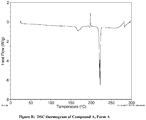
- crystalline materials may be analysed using conventional techniques such as, for example, X-ray powder diffraction (hereinafter XRPD) analysis and Differential Scanning Calorimetry (hereinafter DSC).
- XRPD X-ray powder diffraction
- DSC Differential Scanning Calorimetry
- Example 1 exhibits crystallinity and two crystalline forms, Form A and Form B, have been identified.
- a further aspect of the invention is Form A of Compound A (Example 1).
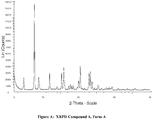
- a crystalline form, Form A, of Compound A which has an XRPD pattern substantially the same as the XRPD shown in Figure A, measured using CuK ⁇ radiation.
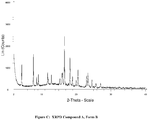
- a crystalline form, Form B, of Compound A which has an XRPD pattern substantially the same as the XRPD shown in Figure C, measured using CuK ⁇ radiation.
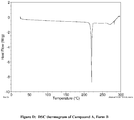
- DSC analysis shows Compound A, Form B is a high melting solid with an onset of melting at about 218.3°C and a peak at about 220.3°C.
- the degree of crystallinity is conveniently greater than about 60%, more conveniently greater than about 80%, preferably greater than about 90% and more preferably greater than about 95%. Most preferably the degree of crystallinity is greater than about 98%.
- an X-ray powder diffraction pattern may be obtained which has one or more measurement errors depending on measurement conditions (such as equipment or machine used).
- intensities in an X- ray powder diffraction pattern may fluctuate depending on measurement conditions. Therefore it should be understood that Compound A, Form A and Form B, of the invention are not limited to the crystals that provide X-ray powder diffraction patterns identical to the X-ray powder diffraction pattern shown in Figures A and C, and any crystals providing X-ray powder diffraction patterns substantially the same as those shown in Figures A and C fall within the scope of the invention.
- a person skilled in the art of X-ray powder diffraction is able to judge the substantial identity of X-ray powder diffraction patterns.
- the compounds of Formula (I) include one or more chiral centres.
- a structure or chemical name in this specification does not indicate chirality, the structure or name is intended to encompass any single stereoisomer (i.e. any single chiral isomer) corresponding to that structure or name, as well as any mixture of stereoisomers (e.g. a racemate).
- any single stereoisomer i.e. any single chiral isomer
- a racemate any mixture of stereoisomers
- a single stereoisomer can be obtained by isolating it from a mixtures of isomers (e.g. a racemate) using, for example, chiral chromatographic separation.
- a single stereoisomer is obtained through direct synthesis from, for example, a chiral starting material.
- the reaction is conveniently performed in the presence of a coupling agent (for example (1-[bis(dimethylamino)methylene]-1H-1,2,3-triazolo[4,5-b]pyridinium 3-oxid hexafluorophosphate (HATU)) in a suitable solvent (for example N,N-dimethylformamide (DMF)) and in the presence of a base (for example diisopropylethylamine (DIPEA)) at a suitable temperature (for example in the range 20-50°C would be typical temperatures).
- a coupling agent for example (1-[bis(dimethylamino)methylene]-1H-1,2,3-triazolo[4,5-b]pyridinium 3-oxid hexafluorophosphate (HATU)
- a suitable solvent for example N,N-dimethylformamide (DMF)
- DIPEA diisopropylethylamine
- the compound of Formula (III) may, for example, be prepared by reaction of a compound of Formula (V): where R 1 is as defined in any of the embodiments herein.
- the reaction is conveniently performed in a mixture of water and a suitable solvent (for example tetrahydrofuran (THF)) in the presence of a weak base (for example lithium hydroxide) at a suitable temperature, such as room temperature.
- a suitable solvent for example tetrahydrofuran (THF)
- a weak base for example lithium hydroxide
- the compound of Formula (V) may, for example, be prepared by reaction of a compound of Formula (VI) : in a suitable solvent (for example acetonitrile) with in the presence of a metal halide (for example copper (I) iodide) and a base (for example triethylamine), wherein R 1 is as defined in any of the embodiments herein.
- This reaction can be carried out in batch at a suitable temperature (for example 20°C) for a suitable time (for example 16h). It can also be carried out under flow conditions at a suitable temperature (for example 120°C) for a suitable time (for example 5 minutes). A higher temperature is necessary in flow to achieve a useful reaction rate for processing large amounts of material.
- the intermediates are high energy compounds, but as only a small amount is being reacted at any time, the risk is minimal.
- the azide is then cooled to 15-40°C for the subsequent step.
- the compound of Formula (VI) may, for example, be prepared by reaction of ethyl 2-bromoacetate with an inorganic azide (for example sodium azide) in the presence of isopropylalcohol.
- an inorganic azide for example sodium azide
- Tel-KDR myc was cloned into pBCS2004, a retroviral vector, wherein KDR (K790-V1356) is fused to the C-terminus of Tel. Retroviral particles were generated in HEK293T cells.
- the Tel-KDR plasmid was co-transfected with helper viruses (gag-Pol and VSV-G) into HEK293T cells using calcium phosphate and the virus was harvested 72h after transfection.
- Exponentially grown Ba/F3 cells (1.5X10⁶ cells in 2 ml medium) were infected with 2 ml of viral suspension in a 6-well plate in the presence of mIL-3 (10 ng/ml) and polybrene (4 ⁇ g/ml) (Sigma Aldrich, St. Louis, MO) and incubated for 24h. After 24h, the cells were centrifuged and the viral supernatant was discarded. The cells were then re-suspended in fresh medium and allowed to recover for another day. The following day, the cells were seeded in complete medium without murine IL-3. After a week or two, when cells started proliferating, a selection was carried out by gradually increasing the puromycin concentration to 0.5 ug/ml. Once the cells were growing exponentially in puromycin, batches of cells were frozen down for banking.
- MTS assay 3-(4,5-dimethylthiazol-2-yl)-2,5-diphenyltetrazolium bromide (MTT) in the presence of phenazine methosulfate (PMS) was used.
- MTS 3-(4,5-dimethylthiazol-2-yl)-2,5-diphenyltetrazolium bromide
- PMS phenazine methosulfate
- the mitochondrial reductase forms a formazan which absorbs at 490 nm.
- Cells in exponential growth phase were added to 384-well plates containing pre-dispensed compounds (top concentration 10 uM, 10-point curve).
- the cells were incubated for 72h at 37°C and 5% CO 2 . After 72h, MTS reagent was added to the plates and incubated an additional 2h at 37°C before measuring the absorbance at 490 nm on a Tecan microplate reader using Magellan Software (Tecan Trading AG, Switzerland).
- the data shows that the compounds of the invention inhibit KIT carrying both primary and secondary KIT mutations simultaneously, and furthermore, are selective against KDR.
- the compound of Formula (I), and pharmaceutically acceptable salts thereof are expected to be useful in therapy.
- the term “therapy” is intended to have its normal meaning of dealing with a disease in order to entirely or partially relieve one, some or all of its symptoms, or to correct or compensate for the underlying pathology.
- the term “therapy” also includes “prophylaxis” unless there are specific indications to the contrary.
- the terms “therapeutic” and “therapeutically” should be interpreted in a corresponding manner.
- prophylaxis is intended to have its normal meaning and includes primary prophylaxis to prevent the development of the disease and secondary prophylaxis whereby the disease has already developed and the patient is temporarily or permanently protected against exacerbation or worsening of the disease or the development of new symptoms associated with the disease.
- treatment is used synonymously with “therapy”.
- treat can be regarded as “applying therapy” where “therapy” is as defined herein.
- the disease mediated by KIT is cancer.
- the cancer is selected from the group consisting of gastrointestinal stromal tumor (GIST), melanoma, lung cancers, glioblastoma, leukemias, testicular carcinomas and head and neck cancers.
- Lung cancers include small cell lung cancer (SCLC), adenocarcinomas and squamous carcinomas of the lung.
- Leukemias include acute myeloid leukaemia (AML) and mast cell leukemias.
- a compound of Formula (I), or a pharmaceutically acceptable salt thereof for use in the treatment of cancer.
- a method for treating a disease in which inhibition of KIT is beneficial in a warm-blooded animal in need of such treatment which comprises administering to said warm-blooded animal a therapeutically effective amount of a compound of Formula (I), or a pharmaceutically acceptable salt thereof.
- the disease is cancer.
- the cancer is selected from the group consisting of gastrointestinal stromal tumor (GIST), melanoma, lung cancers, glioblastoma, leukemias, testicular carcinomas and head and neck cancers.
- Lung cancers include small cell lung cancer (SCLC), adenocarcinomas and squamous carcinomas of the lung.
- Leukemias include acute myeloid leukaemia (AML) and mast cell leukemias.
- the cancer is a gastrointestinal stromal tumor.
- therapeutically effective amount refers to an amount of a compound of Formula (I) as described in any of the embodiments herein which is effective to provide "therapy” in a subject, or to “treat” a disease or disorder in a subject.
- the therapeutically effective amount may cause any of the changes observable or measurable in a subject as described in the definition of "therapy", “treatment” and “prophylaxis” above.
- the effective amount can reduce the number of cancer or tumour cells; reduce the overall tumour size; inhibit or stop tumour cell infiltration into peripheral organs including, for example, the soft tissue and bone; inhibit and stop tumour metastasis; inhibit and stop tumour growth; relieve to some extent one or more of the symptoms associated with the cancer; reduce morbidity and mortality; improve quality of life; or a combination of such effects.
- An effective amount may be an amount sufficient to decrease the symptoms of a disease responsive to inhibition of KIT activity.
- efficacy in-vivo can, for example, be measured by assessing the duration of survival, time to disease progression (TTP), the response rates (RR), duration of response, and/or quality of life.
- effective amounts may vary depending on route of administration, excipient usage, and co-usage with other agents.
- the amount of the compound of Formula (I) or pharmaceutically acceptable salt described in this specification and the amount of the other pharmaceutically active agent(s) are, when combined, jointly effective to treat a targeted disorder in the animal patient.
- the combined amounts are in a "therapeutically effective amount” if they are, when combined, sufficient to decrease the symptoms of a disease responsive to inhibition of KIT activity as described above.
- such amounts may be determined by one skilled in the art by, for example, starting with the dosage range described in this specification for the compound of Formula (I) or pharmaceutically acceptable salt thereof and an approved or otherwise published dosage range(s) of the other pharmaceutically active compound(s).
- Warm-blooded animals include, for example, humans.
- the anti-cancer treatment described in this specification may be useful as a sole therapy, or may involve, in addition to administration of the compound of Formula (I), or a pharmaceutically acceptable salt thereof, conventional surgery, radiotherapy or chemotherapy; or a combination of such additional therapies.
- Such conventional surgery, radiotherapy or chemotherapy may be administered simultaneously, sequentially or separately to treatment with the compound of Formula (I) or a pharmaceutically acceptable salt thereof.
- a combination therapy is administered "simultaneously" this includes treatment of a patient with a single dosage form (e.g. a tablet) comprising both a compound of Formula (I), or a pharmaceutically acceptable salt thereof and an additional anti-cancer substance; and also simultaneous dosing of separate dosage forms each separately comprising one of the respective combination partners.
- a single dosage form e.g. a tablet
- simultaneous dosing of separate dosage forms each separately comprising one of the respective combination partners.
- a compound of Formula (I), or a pharmaceutically acceptable salt thereof for use in the treatment of cancer, where the compound of Formula (I), or a pharmaceutically acceptable salt thereof is administered before surgery.
- Administration of a compound of Formula (I), or a pharmaceutically acceptable salt thereof, before surgery to entirely or partially remove a cancer may be referred to as "neo-adjuvant therapy".
- the goal of administering the compound of Formula (I), or a pharmaceutically acceptable salt thereof is generally to reduce the size of the target tumour in order to increase the chances of a successful resection.
- the length of time the compound of Formula (I), or a pharmaceutically acceptable salt thereof is dosed before surgery may be judged by a skilled practitioner with reference to the information within this specification.
- a compound of Formula (I), or a pharmaceutically acceptable salt thereof for use in the treatment of cancer, where the compound of Formula (I), or a pharmaceutically acceptable salt thereof is administered after surgery.
- a compound of Formula (I), or a pharmaceutically acceptable salt thereof for use in the treatment of cancer, where the compound of Formula (I), or a pharmaceutically acceptable salt thereof is administered simultaneously, sequentially or separately with at least one additional anti-cancer substance.
- anti-cancer substances may include one or more of the following categories of anti-tumour agents:-
- a compound of Formula (I), or a pharmaceutically acceptable salt thereof, and at least one additional anti-tumour substance, for use in the treatment of cancer In one embodiment there is provided a compound of Formula (I), or a pharmaceutically acceptable salt thereof, for use in the treatment of cancer, where the compound of Formula (I), or a pharmaceutically acceptable salt thereof is administered in combination with an additional anti-tumour substance. In one embodiment there is one additional anti-tumour substance. In one embodiment there are two additional anti-tumour substances. In one embodiment there are three or more additional anti-tumour substances.
- a compound of Formula (I), or a pharmaceutically acceptable salt thereof and at least one additional anti-tumour substance for use in the simultaneous, separate or sequential treatment of cancer.
- a method of treating cancer in a warm-blooded animal who is in need of such treatment which comprises administering to said warm-blooded animal a compound of Formula (I), or a pharmaceutically acceptable salt thereof and at least one additional anti-tumour substance, wherein the amounts of the compound of Formula (I), or a pharmaceutically acceptable salt thereof, and the additional anti-tumour substance are jointly effective in producing an anti-cancer effect.
- the additional anti-tumour substance is selected from the group consisting of one or more of the anti-tumour substances listed under points (i) - (iii) above.
- the compounds of Formula (I), and pharmaceutically acceptable salts thereof, may be administered as pharmaceutical compositions, comprising one or more pharmaceutically acceptable diluents or carriers.
- compositions comprising a compound of Formula (I), or a pharmaceutically acceptable salt thereof, and at least one pharmaceutically acceptable diluent or carrier.
- the compositions may be in a form suitable for oral use (for example as tablets, lozenges, hard or soft capsules, aqueous or oily suspensions, emulsions, dispersible powders or granules, syrups or elixirs), for topical use (for example as creams, ointments, gels, or aqueous or oily solutions or suspensions), for administration by inhalation (for example as a finely divided powder or a liquid aerosol), for administration by insufflation (for example as a finely divided powder) or for parenteral administration (for example as a sterile aqueous or oily solution for intravenous, subcutaneous or intramuscular dosing), or as a suppository for rectal dosing.
- the compositions may be obtained by conventional procedures using conventional pharmaceutical excipient
- a pharmaceutical composition comprising a compound of Formula (I), or a pharmaceutically acceptable salt thereof, and at least one pharmaceutically acceptable diluent or carrier, for use in therapy.
- a pharmaceutical composition comprising a compound of Formula (I), or a pharmaceutically acceptable salt thereof, and at least one pharmaceutically acceptable diluent or carrier, for use in the treatment of cancer.
- said cancer is selected from the group consisting of gastrointestinal stromal tumor (GIST), melanoma, lung cancers, glioblastoma, leukemias, testicular carcinomas and head and neck cancers.
- Lung cancers include small cell lung cancer (SCLC), adenocarcinomas and squamous carcinomas of the lung.
- Leukemias include acute myeloid leukaemia (AML) and mast cell leukemias.
- the compound of Formula (I) will normally be administered to a warm-blooded animal at a unit dose within the range 2.5-5000 mg/m 2 body area of the animal, or approximately 0.05-100 mg/kg, and this normally provides a therapeutically-effective dose.
- a unit dose form such as a tablet or capsule will usually contain, for example 0.1-500 mg of active ingredient.
- the daily dose will necessarily be varied depending upon the host treated, the particular route of administration, any therapies being co-administered, and the severity of the illness being treated. Accordingly the practitioner who is treating any particular patient may determine the optimum dosage.
- HATU (8.4 g, 22.1 mmol) was added as a solution in DMF (30 mL) to a suspension of 4-((6,7-dimethoxyquinazolin-4-yl)oxy)aniline (5.1 g, 17 mmol), 45% strength 2-(4-isopropyl-1 H- 1,2,3-triazol-1-yl)acetic acid (7.7 g, 20.4 mmol) and DIPEA (8.9 ml, 51 mmol) in DMF (120 mL) at ambient temperature. The mixture was sonicated to aid solubility then stirred at ambient temperature for 16 hours.
- Example 1 The intermediates used in Example 1 were prepared as follows:
- Lithium hydroxide hydrate (10.2 g, 242.5 mmol) in water (540 mL) was added to a solution of ethyl 2-(4-isopropyl-1 H -1,2,3-triazol-1-yl)acetate (15.9 g, 80.8 mmol) in THF (180 mL). The mixture was stirred for 90 minutes, then concentrated to a volume such that the organic solvents had been removed. The resulting aqueous solution was acidified to pH5 with 2M HCl and extracted with ethyl acetate (200 mL).
- Form B material was produced by slurrying N -(4-((6,7-dimethoxyquinazolin-4-yl)oxy)phenyl)-2-(4-isopropyl-1 H -1,2,3-triazol-1-yl)acetamide, Form A in water at room temperature. Approximately 10 mg of material was placed in a 1.5 ml glass vial with a magnetic stirrer bar, and approximately 0.5 ml of water added. The vial was then sealed tightly with a cap and left to stir on a magnetic stirrer plate. After approximately 3 days, the sample was removed from the plate, the cap taken off and the slurry left to dry under ambient conditions before it was analysed by XRPD, DSC and TGA.
- Form B was determined to be crystalline by XRPD. This material had a melting point of 203.8°C (onset). The material showed a decrease in weight of 0.4% after heating from 25°C to 200°C, suggesting that Form B is anhydrous.
- HATU (249 mg, 0.7 mmol) was added to a solution of 4-((6,7-dimethoxyquinazolin-4-yl)oxy)aniline (150 mg, 0.5 mmol), 2-(4-cyclopropyl-1 H -1,2,3-triazol-1-yl)acetic acid (93 mg, 0.6 mmol) and DIPEA (0.26 mL, 1.5 mmol) in DMF (7 mL) at ambient temperature. The mixture was stirred at ambient temperature for 5 hours. The mixture was poured into water (50 mL) and extracted with ethyl acetate (3 x 50 mL).
- HATU (0.2 g, 0.5 mmol) was added to a solution of 4-((6,7-dimethoxyquinazolin-4-yl)oxy)-2-methoxyaniline (0.1 g, 0.3 mmol), 2-(4-isopropyl-1 H -1,2,3-triazol-1-yl)acetic acid (0.19 g, 0.5 mmol) and DIPEA (0.16 mL, 0.9 mmol) in DMF (4 mL) at ambient temperature. The mixture was stirred at ambient temperature for 1 hour. Water (5 mL) was added and the mixture was stirred at ambient temperature for 3 days. The mixture was basified with 2M K 2 CO 3 (50 mL) and extracted with DCM (70 mL).
- HATU (289 mg, 0.8 mmol) was added to 2-(4-isopropyl-1 H -1,2,3-triazol-1-yl)acetic acid (86 mg, 0.5 mmol), 4-((6,7-dimethoxyquinazolin-4-yl)oxy)-3-fluoroaniline (160 mg, 0.5 mmol) and DIPEA (0.18 mL, 1 mmol) in DMF (10 mL) under nitrogen. The resulting mixture was stirred at 25°C for 2 h. The crude product was purified by preparative HPLC. Fractions containing the desired compound were evaporated to dryness to afford the title compound as a white solid (85 mg, 36%).
- DIPEA (0.26 mL, 1.5 mmol) was added to a solution of 2-(4-isopropyl-1 H -1,2,3-triazol-1-yl)acetic acid (0.14 g, 0.4 mmol), 4-((6-methoxy-7-(2-methoxyethoxy)quinazolin-4-yl)oxy)aniline (0.1 g, 0.3 mmol) and HATU (0.19 g, 0.5 mmol) in DMF (2 mL). The solution was stirred at room temperature for 4 hours. The reaction was diluted with ethyl acetate (50 mL) then washed with saturated NaHCO 3 (25 mL) and brine (25 mL).
- HATU (421 mg, 1.1 mmol) was added to a solution of 2-(4-isopropyl-1 H -1,2,3-triazol-1-yl)acetic acid (342 mg, 0.9 mmol), 4-((6-methoxy-7-(2-(pyrrolidin-1-yl)ethoxy)quinazolin-4-yl)oxy)aniline (248 mg, 0.7 mmol) and DIPEA (0.57 mL, 3.3 mmol) in DMF (10 mL). The solution was stirred at ambient temperature for 16 hours. The reaction mixture was partitioned between ethyl acetate (80 mL) and water (80 mL).
- the aqueous layer was extracted with ethyl acetate (3 x 80 mL) and the extracts combined with the organic layer. The combined extracts were washed with water (3 x 80 mL) and saturated brine (80 mL), dried, filtered and concentrated under vacuum.
- the crude product was purified by flash silica chromatography, elution gradient 3 to 6% (10:1 methanol/conc. NH 3 (aq)) in DCM. Pure fractions were evaporated to dryness and the residue crystallised from acetonitrile to afford the title compound as a white crystalline solid (119 mg, 34%).
- Example 7 The intermediates used in Example 7 were prepared as follows:
Landscapes
- Chemical & Material Sciences (AREA)
- Organic Chemistry (AREA)
- Health & Medical Sciences (AREA)
- Medicinal Chemistry (AREA)
- Pharmacology & Pharmacy (AREA)
- Life Sciences & Earth Sciences (AREA)
- Animal Behavior & Ethology (AREA)
- General Health & Medical Sciences (AREA)
- Public Health (AREA)
- Veterinary Medicine (AREA)
- Chemical Kinetics & Catalysis (AREA)
- General Chemical & Material Sciences (AREA)
- Nuclear Medicine, Radiotherapy & Molecular Imaging (AREA)
- Oncology (AREA)
- Epidemiology (AREA)
- Pharmaceuticals Containing Other Organic And Inorganic Compounds (AREA)
- Plural Heterocyclic Compounds (AREA)
Applications Claiming Priority (2)
| Application Number | Priority Date | Filing Date | Title |
|---|---|---|---|
| US201762490865P | 2017-04-27 | 2017-04-27 | |
| PCT/EP2018/060800 WO2018197643A1 (en) | 2017-04-27 | 2018-04-26 | Phenoxyquinazoline compounds and their use in treating cancer |
Publications (2)
| Publication Number | Publication Date |
|---|---|
| EP3615526A1 EP3615526A1 (en) | 2020-03-04 |
| EP3615526B1 true EP3615526B1 (en) | 2021-08-04 |
Family
ID=62165533
Family Applications (1)
| Application Number | Title | Priority Date | Filing Date |
|---|---|---|---|
| EP18724488.4A Active EP3615526B1 (en) | 2017-04-27 | 2018-04-26 | Phenoxyquinazoline compounds and their use in treating cancer |
Country Status (7)
| Country | Link |
|---|---|
| US (1) | US11053223B2 (enExample) |
| EP (1) | EP3615526B1 (enExample) |
| JP (1) | JP7117323B2 (enExample) |
| CN (1) | CN110546147B (enExample) |
| CA (1) | CA3059660A1 (enExample) |
| ES (1) | ES2887261T3 (enExample) |
| WO (1) | WO2018197643A1 (enExample) |
Families Citing this family (4)
| Publication number | Priority date | Publication date | Assignee | Title |
|---|---|---|---|---|
| AU2018259078B2 (en) | 2017-04-27 | 2021-10-07 | Astrazeneca Ab | C5-anilinoquinazoline compounds and their use in treating cancer |
| KR102674404B1 (ko) * | 2018-04-20 | 2024-06-13 | 엘지전자 주식회사 | 저온 저장고의 냉각 시스템 |
| KR102908062B1 (ko) * | 2023-11-16 | 2026-01-05 | (주)신테카바이오 | 헤테로아릴 유도체 화합물 및 이의 용도 |
| CN118772070B (zh) * | 2024-06-12 | 2025-12-16 | 天津济坤医药科技有限公司 | 一种喹唑啉衍生物及其制备方法和应用 |
Family Cites Families (12)
| Publication number | Priority date | Publication date | Assignee | Title |
|---|---|---|---|---|
| GB9510757D0 (en) * | 1994-09-19 | 1995-07-19 | Wellcome Found | Therapeuticaly active compounds |
| GB9514265D0 (en) * | 1995-07-13 | 1995-09-13 | Wellcome Found | Hetrocyclic compounds |
| GB9707800D0 (en) | 1996-05-06 | 1997-06-04 | Zeneca Ltd | Chemical compounds |
| EE200200119A (et) * | 1999-09-21 | 2003-04-15 | Astrazeneca Ab | Kinasoliini derivaadid ja nende kasutamine ravimitena |
| EP1382604B1 (en) | 2001-04-27 | 2005-12-28 | Kirin Beer Kabushiki Kaisha | Quinoline derivative having azolyl group and quinazoline derivative |
| TW200505452A (en) * | 2003-06-17 | 2005-02-16 | Astrazeneca Ab | Chemical compounds |
| EP2210607B1 (en) * | 2003-09-26 | 2011-08-17 | Exelixis Inc. | N-[3-fluoro-4-({6-(methyloxy)-7-[(3-morpholin-4-ylpropyl)oxy]quinolin-4-yl}oxy)phenyl]-N'-(4-fluorophenyl)cyclopropane-1,1-dicarboxamide for the treatment of cancer |
| MX2007004403A (es) * | 2004-10-12 | 2007-04-27 | Astrazeneca Ab | Derivados de quinazolina. |
| CN1313449C (zh) * | 2005-07-14 | 2007-05-02 | 沈阳中海生物技术开发有限公司 | 新的喹唑啉类衍生物、含有其的药物组合物以及它们的用途 |
| CN102267952B (zh) * | 2011-06-21 | 2013-12-11 | 天津市汉康医药生物技术有限公司 | 喹唑啉类化合物、其制备方法和用途 |
| CN103254142B (zh) * | 2013-04-26 | 2015-10-28 | 浙江工业大学 | 4-[4-(2-取代氨基乙酰氨基)苯胺基]喹唑啉类衍生物及制备和应用 |
| CN104130200B (zh) * | 2014-07-01 | 2016-04-20 | 中山大学 | 一种2-取代苯基-4-芳胺基喹唑啉衍生物及其制备方法和应用 |
-
2018
- 2018-04-26 US US16/608,212 patent/US11053223B2/en active Active
- 2018-04-26 EP EP18724488.4A patent/EP3615526B1/en active Active
- 2018-04-26 CN CN201880027738.3A patent/CN110546147B/zh active Active
- 2018-04-26 WO PCT/EP2018/060800 patent/WO2018197643A1/en not_active Ceased
- 2018-04-26 ES ES18724488T patent/ES2887261T3/es active Active
- 2018-04-26 JP JP2019557759A patent/JP7117323B2/ja active Active
- 2018-04-26 CA CA3059660A patent/CA3059660A1/en active Pending
Non-Patent Citations (1)
| Title |
|---|
| None * |
Also Published As
| Publication number | Publication date |
|---|---|
| CA3059660A1 (en) | 2018-11-01 |
| JP2020517676A (ja) | 2020-06-18 |
| JP7117323B2 (ja) | 2022-08-12 |
| ES2887261T3 (es) | 2021-12-22 |
| WO2018197643A1 (en) | 2018-11-01 |
| US11053223B2 (en) | 2021-07-06 |
| CN110546147B (zh) | 2023-05-23 |
| EP3615526A1 (en) | 2020-03-04 |
| US20200223828A1 (en) | 2020-07-16 |
| CN110546147A (zh) | 2019-12-06 |
Similar Documents
| Publication | Publication Date | Title |
|---|---|---|
| US10829479B2 (en) | C5-anilinoquinazoline compounds and their use in treating cancer | |
| US9718806B2 (en) | Quinazoline inhibitors of activating mutant forms of epidermal growth factor receptor | |
| US11053223B2 (en) | Phenoxyquinazoline compounds and their use in treating cancer | |
| BR112019022229B1 (pt) | Compostos de anilinoquinazolina c5, composição farmacêutica e uso dos compostos no tratamento do câncer | |
| HK40109469A (en) | Compounds and compositions for modulating egfr mutant kinase activities | |
| HK1216315B (en) | Quinazoline inhibitors of activating mutant forms of epidermal growth factor receptor |
Legal Events
| Date | Code | Title | Description |
|---|---|---|---|
| STAA | Information on the status of an ep patent application or granted ep patent |
Free format text: STATUS: UNKNOWN |
|
| STAA | Information on the status of an ep patent application or granted ep patent |
Free format text: STATUS: THE INTERNATIONAL PUBLICATION HAS BEEN MADE |
|
| PUAI | Public reference made under article 153(3) epc to a published international application that has entered the european phase |
Free format text: ORIGINAL CODE: 0009012 |
|
| STAA | Information on the status of an ep patent application or granted ep patent |
Free format text: STATUS: REQUEST FOR EXAMINATION WAS MADE |
|
| 17P | Request for examination filed |
Effective date: 20191127 |
|
| AK | Designated contracting states |
Kind code of ref document: A1 Designated state(s): AL AT BE BG CH CY CZ DE DK EE ES FI FR GB GR HR HU IE IS IT LI LT LU LV MC MK MT NL NO PL PT RO RS SE SI SK SM TR |
|
| AX | Request for extension of the european patent |
Extension state: BA ME |
|
| DAV | Request for validation of the european patent (deleted) | ||
| STAA | Information on the status of an ep patent application or granted ep patent |
Free format text: STATUS: EXAMINATION IS IN PROGRESS |
|
| 17Q | First examination report despatched |
Effective date: 20201008 |
|
| GRAP | Despatch of communication of intention to grant a patent |
Free format text: ORIGINAL CODE: EPIDOSNIGR1 |
|
| STAA | Information on the status of an ep patent application or granted ep patent |
Free format text: STATUS: GRANT OF PATENT IS INTENDED |
|
| INTG | Intention to grant announced |
Effective date: 20210326 |
|
| GRAS | Grant fee paid |
Free format text: ORIGINAL CODE: EPIDOSNIGR3 |
|
| GRAA | (expected) grant |
Free format text: ORIGINAL CODE: 0009210 |
|
| STAA | Information on the status of an ep patent application or granted ep patent |
Free format text: STATUS: THE PATENT HAS BEEN GRANTED |
|
| AK | Designated contracting states |
Kind code of ref document: B1 Designated state(s): AL AT BE BG CH CY CZ DE DK EE ES FI FR GB GR HR HU IE IS IT LI LT LU LV MC MK MT NL NO PL PT RO RS SE SI SK SM TR |
|
| REG | Reference to a national code |
Ref country code: GB Ref legal event code: FG4D |
|
| REG | Reference to a national code |
Ref country code: AT Ref legal event code: REF Ref document number: 1416873 Country of ref document: AT Kind code of ref document: T Effective date: 20210815 |
|
| REG | Reference to a national code |
Ref country code: CH Ref legal event code: EP |
|
| REG | Reference to a national code |
Ref country code: DE Ref legal event code: R096 Ref document number: 602018021211 Country of ref document: DE |
|
| REG | Reference to a national code |
Ref country code: IE Ref legal event code: FG4D |
|
| REG | Reference to a national code |
Ref country code: LT Ref legal event code: MG9D |
|
| REG | Reference to a national code |
Ref country code: NL Ref legal event code: MP Effective date: 20210804 |
|
| REG | Reference to a national code |
Ref country code: ES Ref legal event code: FG2A Ref document number: 2887261 Country of ref document: ES Kind code of ref document: T3 Effective date: 20211222 |
|
| REG | Reference to a national code |
Ref country code: AT Ref legal event code: MK05 Ref document number: 1416873 Country of ref document: AT Kind code of ref document: T Effective date: 20210804 |
|
| PG25 | Lapsed in a contracting state [announced via postgrant information from national office to epo] |
Ref country code: RS Free format text: LAPSE BECAUSE OF FAILURE TO SUBMIT A TRANSLATION OF THE DESCRIPTION OR TO PAY THE FEE WITHIN THE PRESCRIBED TIME-LIMIT Effective date: 20210804 Ref country code: SE Free format text: LAPSE BECAUSE OF FAILURE TO SUBMIT A TRANSLATION OF THE DESCRIPTION OR TO PAY THE FEE WITHIN THE PRESCRIBED TIME-LIMIT Effective date: 20210804 Ref country code: HR Free format text: LAPSE BECAUSE OF FAILURE TO SUBMIT A TRANSLATION OF THE DESCRIPTION OR TO PAY THE FEE WITHIN THE PRESCRIBED TIME-LIMIT Effective date: 20210804 Ref country code: FI Free format text: LAPSE BECAUSE OF FAILURE TO SUBMIT A TRANSLATION OF THE DESCRIPTION OR TO PAY THE FEE WITHIN THE PRESCRIBED TIME-LIMIT Effective date: 20210804 Ref country code: PT Free format text: LAPSE BECAUSE OF FAILURE TO SUBMIT A TRANSLATION OF THE DESCRIPTION OR TO PAY THE FEE WITHIN THE PRESCRIBED TIME-LIMIT Effective date: 20211206 Ref country code: NO Free format text: LAPSE BECAUSE OF FAILURE TO SUBMIT A TRANSLATION OF THE DESCRIPTION OR TO PAY THE FEE WITHIN THE PRESCRIBED TIME-LIMIT Effective date: 20211104 Ref country code: LT Free format text: LAPSE BECAUSE OF FAILURE TO SUBMIT A TRANSLATION OF THE DESCRIPTION OR TO PAY THE FEE WITHIN THE PRESCRIBED TIME-LIMIT Effective date: 20210804 Ref country code: AT Free format text: LAPSE BECAUSE OF FAILURE TO SUBMIT A TRANSLATION OF THE DESCRIPTION OR TO PAY THE FEE WITHIN THE PRESCRIBED TIME-LIMIT Effective date: 20210804 Ref country code: BG Free format text: LAPSE BECAUSE OF FAILURE TO SUBMIT A TRANSLATION OF THE DESCRIPTION OR TO PAY THE FEE WITHIN THE PRESCRIBED TIME-LIMIT Effective date: 20211104 |
|
| PG25 | Lapsed in a contracting state [announced via postgrant information from national office to epo] |
Ref country code: PL Free format text: LAPSE BECAUSE OF FAILURE TO SUBMIT A TRANSLATION OF THE DESCRIPTION OR TO PAY THE FEE WITHIN THE PRESCRIBED TIME-LIMIT Effective date: 20210804 Ref country code: LV Free format text: LAPSE BECAUSE OF FAILURE TO SUBMIT A TRANSLATION OF THE DESCRIPTION OR TO PAY THE FEE WITHIN THE PRESCRIBED TIME-LIMIT Effective date: 20210804 Ref country code: GR Free format text: LAPSE BECAUSE OF FAILURE TO SUBMIT A TRANSLATION OF THE DESCRIPTION OR TO PAY THE FEE WITHIN THE PRESCRIBED TIME-LIMIT Effective date: 20211105 |
|
| PG25 | Lapsed in a contracting state [announced via postgrant information from national office to epo] |
Ref country code: NL Free format text: LAPSE BECAUSE OF FAILURE TO SUBMIT A TRANSLATION OF THE DESCRIPTION OR TO PAY THE FEE WITHIN THE PRESCRIBED TIME-LIMIT Effective date: 20210804 |
|
| PG25 | Lapsed in a contracting state [announced via postgrant information from national office to epo] |
Ref country code: DK Free format text: LAPSE BECAUSE OF FAILURE TO SUBMIT A TRANSLATION OF THE DESCRIPTION OR TO PAY THE FEE WITHIN THE PRESCRIBED TIME-LIMIT Effective date: 20210804 |
|
| REG | Reference to a national code |
Ref country code: DE Ref legal event code: R097 Ref document number: 602018021211 Country of ref document: DE |
|
| PG25 | Lapsed in a contracting state [announced via postgrant information from national office to epo] |
Ref country code: SM Free format text: LAPSE BECAUSE OF FAILURE TO SUBMIT A TRANSLATION OF THE DESCRIPTION OR TO PAY THE FEE WITHIN THE PRESCRIBED TIME-LIMIT Effective date: 20210804 Ref country code: SK Free format text: LAPSE BECAUSE OF FAILURE TO SUBMIT A TRANSLATION OF THE DESCRIPTION OR TO PAY THE FEE WITHIN THE PRESCRIBED TIME-LIMIT Effective date: 20210804 Ref country code: RO Free format text: LAPSE BECAUSE OF FAILURE TO SUBMIT A TRANSLATION OF THE DESCRIPTION OR TO PAY THE FEE WITHIN THE PRESCRIBED TIME-LIMIT Effective date: 20210804 Ref country code: EE Free format text: LAPSE BECAUSE OF FAILURE TO SUBMIT A TRANSLATION OF THE DESCRIPTION OR TO PAY THE FEE WITHIN THE PRESCRIBED TIME-LIMIT Effective date: 20210804 Ref country code: CZ Free format text: LAPSE BECAUSE OF FAILURE TO SUBMIT A TRANSLATION OF THE DESCRIPTION OR TO PAY THE FEE WITHIN THE PRESCRIBED TIME-LIMIT Effective date: 20210804 Ref country code: AL Free format text: LAPSE BECAUSE OF FAILURE TO SUBMIT A TRANSLATION OF THE DESCRIPTION OR TO PAY THE FEE WITHIN THE PRESCRIBED TIME-LIMIT Effective date: 20210804 |
|
| PLBE | No opposition filed within time limit |
Free format text: ORIGINAL CODE: 0009261 |
|
| STAA | Information on the status of an ep patent application or granted ep patent |
Free format text: STATUS: NO OPPOSITION FILED WITHIN TIME LIMIT |
|
| 26N | No opposition filed |
Effective date: 20220506 |
|
| PG25 | Lapsed in a contracting state [announced via postgrant information from national office to epo] |
Ref country code: SI Free format text: LAPSE BECAUSE OF FAILURE TO SUBMIT A TRANSLATION OF THE DESCRIPTION OR TO PAY THE FEE WITHIN THE PRESCRIBED TIME-LIMIT Effective date: 20210804 |
|
| PG25 | Lapsed in a contracting state [announced via postgrant information from national office to epo] |
Ref country code: MC Free format text: LAPSE BECAUSE OF FAILURE TO SUBMIT A TRANSLATION OF THE DESCRIPTION OR TO PAY THE FEE WITHIN THE PRESCRIBED TIME-LIMIT Effective date: 20210804 Ref country code: LU Free format text: LAPSE BECAUSE OF NON-PAYMENT OF DUE FEES Effective date: 20220426 |
|
| PG25 | Lapsed in a contracting state [announced via postgrant information from national office to epo] |
Ref country code: IE Free format text: LAPSE BECAUSE OF NON-PAYMENT OF DUE FEES Effective date: 20220426 |
|
| P01 | Opt-out of the competence of the unified patent court (upc) registered |
Effective date: 20230414 |
|
| PG25 | Lapsed in a contracting state [announced via postgrant information from national office to epo] |
Ref country code: MK Free format text: LAPSE BECAUSE OF FAILURE TO SUBMIT A TRANSLATION OF THE DESCRIPTION OR TO PAY THE FEE WITHIN THE PRESCRIBED TIME-LIMIT Effective date: 20210804 Ref country code: CY Free format text: LAPSE BECAUSE OF FAILURE TO SUBMIT A TRANSLATION OF THE DESCRIPTION OR TO PAY THE FEE WITHIN THE PRESCRIBED TIME-LIMIT Effective date: 20210804 |
|
| PG25 | Lapsed in a contracting state [announced via postgrant information from national office to epo] |
Ref country code: HU Free format text: LAPSE BECAUSE OF FAILURE TO SUBMIT A TRANSLATION OF THE DESCRIPTION OR TO PAY THE FEE WITHIN THE PRESCRIBED TIME-LIMIT; INVALID AB INITIO Effective date: 20180426 |
|
| PG25 | Lapsed in a contracting state [announced via postgrant information from national office to epo] |
Ref country code: MT Free format text: LAPSE BECAUSE OF FAILURE TO SUBMIT A TRANSLATION OF THE DESCRIPTION OR TO PAY THE FEE WITHIN THE PRESCRIBED TIME-LIMIT Effective date: 20210804 |
|
| PG25 | Lapsed in a contracting state [announced via postgrant information from national office to epo] |
Ref country code: TR Free format text: LAPSE BECAUSE OF FAILURE TO SUBMIT A TRANSLATION OF THE DESCRIPTION OR TO PAY THE FEE WITHIN THE PRESCRIBED TIME-LIMIT Effective date: 20210804 |
|
| PGFP | Annual fee paid to national office [announced via postgrant information from national office to epo] |
Ref country code: GB Payment date: 20260304 Year of fee payment: 9 |
|
| PGFP | Annual fee paid to national office [announced via postgrant information from national office to epo] |
Ref country code: FR Payment date: 20260130 Year of fee payment: 9 |
|
| REG | Reference to a national code |
Ref country code: CH Ref legal event code: U11 Free format text: ST27 STATUS EVENT CODE: U-0-0-U10-U11 (AS PROVIDED BY THE NATIONAL OFFICE) Effective date: 20260501 |
|
| PGFP | Annual fee paid to national office [announced via postgrant information from national office to epo] |
Ref country code: ES Payment date: 20260511 Year of fee payment: 9 |
|
| PGFP | Annual fee paid to national office [announced via postgrant information from national office to epo] |
Ref country code: IT Payment date: 20260422 Year of fee payment: 9 |
|
| PGFP | Annual fee paid to national office [announced via postgrant information from national office to epo] |
Ref country code: DE Payment date: 20260421 Year of fee payment: 9 |
|
| PGFP | Annual fee paid to national office [announced via postgrant information from national office to epo] |
Ref country code: CH Payment date: 20260501 Year of fee payment: 9 Ref country code: BE Payment date: 20260420 Year of fee payment: 9 |