EP3598416B1 - Verfahren zur kommunikation von fahrzeug zu fahrzeug - Google Patents
Verfahren zur kommunikation von fahrzeug zu fahrzeug Download PDFInfo
- Publication number
- EP3598416B1 EP3598416B1 EP19171569.7A EP19171569A EP3598416B1 EP 3598416 B1 EP3598416 B1 EP 3598416B1 EP 19171569 A EP19171569 A EP 19171569A EP 3598416 B1 EP3598416 B1 EP 3598416B1
- Authority
- EP
- European Patent Office
- Prior art keywords
- vehicle
- cqi
- message
- communication
- transmits
- Prior art date
- Legal status (The legal status is an assumption and is not a legal conclusion. Google has not performed a legal analysis and makes no representation as to the accuracy of the status listed.)
- Active
Links
Images

Classifications
-
- H—ELECTRICITY
- H04—ELECTRIC COMMUNICATION TECHNIQUE
- H04W—WIRELESS COMMUNICATION NETWORKS
- H04W4/00—Services specially adapted for wireless communication networks; Facilities therefor
- H04W4/02—Services making use of location information
- H04W4/025—Services making use of location information using location based information parameters
-
- G—PHYSICS
- G08—SIGNALLING
- G08G—TRAFFIC CONTROL SYSTEMS
- G08G1/00—Traffic control systems for road vehicles
- G08G1/01—Detecting movement of traffic to be counted or controlled
- G08G1/0104—Measuring and analyzing of parameters relative to traffic conditions
- G08G1/0108—Measuring and analyzing of parameters relative to traffic conditions based on the source of data
- G08G1/0112—Measuring and analyzing of parameters relative to traffic conditions based on the source of data from the vehicle, e.g. floating car data [FCD]
-
- G—PHYSICS
- G08—SIGNALLING
- G08G—TRAFFIC CONTROL SYSTEMS
- G08G1/00—Traffic control systems for road vehicles
- G08G1/01—Detecting movement of traffic to be counted or controlled
- G08G1/0104—Measuring and analyzing of parameters relative to traffic conditions
- G08G1/0125—Traffic data processing
-
- G—PHYSICS
- G08—SIGNALLING
- G08G—TRAFFIC CONTROL SYSTEMS
- G08G1/00—Traffic control systems for road vehicles
- G08G1/01—Detecting movement of traffic to be counted or controlled
- G08G1/0104—Measuring and analyzing of parameters relative to traffic conditions
- G08G1/0137—Measuring and analyzing of parameters relative to traffic conditions for specific applications
- G08G1/0145—Measuring and analyzing of parameters relative to traffic conditions for specific applications for active traffic flow control
-
- G—PHYSICS
- G08—SIGNALLING
- G08G—TRAFFIC CONTROL SYSTEMS
- G08G1/00—Traffic control systems for road vehicles
- G08G1/01—Detecting movement of traffic to be counted or controlled
- G08G1/056—Detecting movement of traffic to be counted or controlled with provision for distinguishing direction of travel
-
- G—PHYSICS
- G08—SIGNALLING
- G08G—TRAFFIC CONTROL SYSTEMS
- G08G1/00—Traffic control systems for road vehicles
- G08G1/09—Arrangements for giving variable traffic instructions
- G08G1/0962—Arrangements for giving variable traffic instructions having an indicator mounted inside the vehicle, e.g. giving voice messages
- G08G1/0967—Systems involving transmission of highway information, e.g. weather, speed limits
- G08G1/096708—Systems involving transmission of highway information, e.g. weather, speed limits where the received information might be used to generate an automatic action on the vehicle control
-
- G—PHYSICS
- G08—SIGNALLING
- G08G—TRAFFIC CONTROL SYSTEMS
- G08G1/00—Traffic control systems for road vehicles
- G08G1/09—Arrangements for giving variable traffic instructions
- G08G1/0962—Arrangements for giving variable traffic instructions having an indicator mounted inside the vehicle, e.g. giving voice messages
- G08G1/0967—Systems involving transmission of highway information, e.g. weather, speed limits
- G08G1/096733—Systems involving transmission of highway information, e.g. weather, speed limits where a selection of the information might take place
- G08G1/096741—Systems involving transmission of highway information, e.g. weather, speed limits where a selection of the information might take place where the source of the transmitted information selects which information to transmit to each vehicle
-
- G—PHYSICS
- G08—SIGNALLING
- G08G—TRAFFIC CONTROL SYSTEMS
- G08G1/00—Traffic control systems for road vehicles
- G08G1/09—Arrangements for giving variable traffic instructions
- G08G1/0962—Arrangements for giving variable traffic instructions having an indicator mounted inside the vehicle, e.g. giving voice messages
- G08G1/0967—Systems involving transmission of highway information, e.g. weather, speed limits
- G08G1/096766—Systems involving transmission of highway information, e.g. weather, speed limits where the system is characterised by the origin of the information transmission
- G08G1/096791—Systems involving transmission of highway information, e.g. weather, speed limits where the system is characterised by the origin of the information transmission where the origin of the information is another vehicle
-
- G—PHYSICS
- G08—SIGNALLING
- G08G—TRAFFIC CONTROL SYSTEMS
- G08G1/00—Traffic control systems for road vehicles
- G08G1/16—Anti-collision systems
- G08G1/161—Decentralised systems, e.g. inter-vehicle communication
- G08G1/163—Decentralised systems, e.g. inter-vehicle communication involving continuous checking
-
- H—ELECTRICITY
- H04—ELECTRIC COMMUNICATION TECHNIQUE
- H04B—TRANSMISSION
- H04B17/00—Monitoring; Testing
- H04B17/30—Monitoring; Testing of propagation channels
- H04B17/309—Measuring or estimating channel quality parameters
-
- H—ELECTRICITY
- H04—ELECTRIC COMMUNICATION TECHNIQUE
- H04B—TRANSMISSION
- H04B17/00—Monitoring; Testing
- H04B17/30—Monitoring; Testing of propagation channels
- H04B17/373—Predicting channel quality or other radio frequency [RF] parameters
-
- H—ELECTRICITY
- H04—ELECTRIC COMMUNICATION TECHNIQUE
- H04B—TRANSMISSION
- H04B7/00—Radio transmission systems, i.e. using radiation field
- H04B7/02—Diversity systems; Multi-antenna system, i.e. transmission or reception using multiple antennas
- H04B7/04—Diversity systems; Multi-antenna system, i.e. transmission or reception using multiple antennas using two or more spaced independent antennas
- H04B7/0413—MIMO systems
-
- H—ELECTRICITY
- H04—ELECTRIC COMMUNICATION TECHNIQUE
- H04B—TRANSMISSION
- H04B7/00—Radio transmission systems, i.e. using radiation field
- H04B7/02—Diversity systems; Multi-antenna system, i.e. transmission or reception using multiple antennas
- H04B7/04—Diversity systems; Multi-antenna system, i.e. transmission or reception using multiple antennas using two or more spaced independent antennas
- H04B7/06—Diversity systems; Multi-antenna system, i.e. transmission or reception using multiple antennas using two or more spaced independent antennas at the transmitting station
- H04B7/0613—Diversity systems; Multi-antenna system, i.e. transmission or reception using multiple antennas using two or more spaced independent antennas at the transmitting station using simultaneous transmission
- H04B7/0615—Diversity systems; Multi-antenna system, i.e. transmission or reception using multiple antennas using two or more spaced independent antennas at the transmitting station using simultaneous transmission of weighted versions of same signal
- H04B7/0619—Diversity systems; Multi-antenna system, i.e. transmission or reception using multiple antennas using two or more spaced independent antennas at the transmitting station using simultaneous transmission of weighted versions of same signal using feedback from receiving side
- H04B7/0621—Feedback content
- H04B7/0626—Channel coefficients, e.g. channel state information [CSI]
-
- H—ELECTRICITY
- H04—ELECTRIC COMMUNICATION TECHNIQUE
- H04B—TRANSMISSION
- H04B7/00—Radio transmission systems, i.e. using radiation field
- H04B7/02—Diversity systems; Multi-antenna system, i.e. transmission or reception using multiple antennas
- H04B7/04—Diversity systems; Multi-antenna system, i.e. transmission or reception using multiple antennas using two or more spaced independent antennas
- H04B7/08—Diversity systems; Multi-antenna system, i.e. transmission or reception using multiple antennas using two or more spaced independent antennas at the receiving station
- H04B7/0837—Diversity systems; Multi-antenna system, i.e. transmission or reception using multiple antennas using two or more spaced independent antennas at the receiving station using pre-detection combining
- H04B7/0842—Weighted combining
- H04B7/086—Weighted combining using weights depending on external parameters, e.g. direction of arrival [DOA], predetermined weights or beamforming
-
- H—ELECTRICITY
- H04—ELECTRIC COMMUNICATION TECHNIQUE
- H04L—TRANSMISSION OF DIGITAL INFORMATION, e.g. TELEGRAPHIC COMMUNICATION
- H04L1/00—Arrangements for detecting or preventing errors in the information received
- H04L1/0001—Systems modifying transmission characteristics according to link quality, e.g. power backoff
- H04L1/0023—Systems modifying transmission characteristics according to link quality, e.g. power backoff characterised by the signalling
- H04L1/0026—Transmission of channel quality indication
-
- H—ELECTRICITY
- H04—ELECTRIC COMMUNICATION TECHNIQUE
- H04L—TRANSMISSION OF DIGITAL INFORMATION, e.g. TELEGRAPHIC COMMUNICATION
- H04L43/00—Arrangements for monitoring or testing data switching networks
- H04L43/08—Monitoring or testing based on specific metrics, e.g. QoS, energy consumption or environmental parameters
- H04L43/0876—Network utilisation, e.g. volume of load or congestion level
- H04L43/0882—Utilisation of link capacity
-
- H—ELECTRICITY
- H04—ELECTRIC COMMUNICATION TECHNIQUE
- H04L—TRANSMISSION OF DIGITAL INFORMATION, e.g. TELEGRAPHIC COMMUNICATION
- H04L47/00—Traffic control in data switching networks
- H04L47/10—Flow control; Congestion control
- H04L47/12—Avoiding congestion; Recovering from congestion
- H04L47/127—Avoiding congestion; Recovering from congestion by using congestion prediction
-
- H—ELECTRICITY
- H04—ELECTRIC COMMUNICATION TECHNIQUE
- H04W—WIRELESS COMMUNICATION NETWORKS
- H04W16/00—Network planning, e.g. coverage or traffic planning tools; Network deployment, e.g. resource partitioning or cells structures
- H04W16/24—Cell structures
- H04W16/28—Cell structures using beam steering
-
- H—ELECTRICITY
- H04—ELECTRIC COMMUNICATION TECHNIQUE
- H04W—WIRELESS COMMUNICATION NETWORKS
- H04W24/00—Supervisory, monitoring or testing arrangements
- H04W24/06—Testing, supervising or monitoring using simulated traffic
-
- H—ELECTRICITY
- H04—ELECTRIC COMMUNICATION TECHNIQUE
- H04W—WIRELESS COMMUNICATION NETWORKS
- H04W24/00—Supervisory, monitoring or testing arrangements
- H04W24/08—Testing, supervising or monitoring using real traffic
-
- H—ELECTRICITY
- H04—ELECTRIC COMMUNICATION TECHNIQUE
- H04W—WIRELESS COMMUNICATION NETWORKS
- H04W24/00—Supervisory, monitoring or testing arrangements
- H04W24/10—Scheduling measurement reports ; Arrangements for measurement reports
-
- H—ELECTRICITY
- H04—ELECTRIC COMMUNICATION TECHNIQUE
- H04W—WIRELESS COMMUNICATION NETWORKS
- H04W28/00—Network traffic management; Network resource management
- H04W28/02—Traffic management, e.g. flow control or congestion control
- H04W28/0273—Traffic management, e.g. flow control or congestion control adapting protocols for flow control or congestion control to wireless environment, e.g. adapting transmission control protocol [TCP]
-
- H—ELECTRICITY
- H04—ELECTRIC COMMUNICATION TECHNIQUE
- H04W—WIRELESS COMMUNICATION NETWORKS
- H04W28/00—Network traffic management; Network resource management
- H04W28/02—Traffic management, e.g. flow control or congestion control
- H04W28/0284—Traffic management, e.g. flow control or congestion control detecting congestion or overload during communication
-
- H—ELECTRICITY
- H04—ELECTRIC COMMUNICATION TECHNIQUE
- H04W—WIRELESS COMMUNICATION NETWORKS
- H04W4/00—Services specially adapted for wireless communication networks; Facilities therefor
- H04W4/02—Services making use of location information
-
- H—ELECTRICITY
- H04—ELECTRIC COMMUNICATION TECHNIQUE
- H04W—WIRELESS COMMUNICATION NETWORKS
- H04W4/00—Services specially adapted for wireless communication networks; Facilities therefor
- H04W4/02—Services making use of location information
- H04W4/021—Services related to particular areas, e.g. point of interest [POI] services, venue services or geofences
-
- H—ELECTRICITY
- H04—ELECTRIC COMMUNICATION TECHNIQUE
- H04W—WIRELESS COMMUNICATION NETWORKS
- H04W4/00—Services specially adapted for wireless communication networks; Facilities therefor
- H04W4/02—Services making use of location information
- H04W4/023—Services making use of location information using mutual or relative location information between multiple location based services [LBS] targets or of distance thresholds
-
- H—ELECTRICITY
- H04—ELECTRIC COMMUNICATION TECHNIQUE
- H04W—WIRELESS COMMUNICATION NETWORKS
- H04W4/00—Services specially adapted for wireless communication networks; Facilities therefor
- H04W4/02—Services making use of location information
- H04W4/025—Services making use of location information using location based information parameters
- H04W4/027—Services making use of location information using location based information parameters using movement velocity, acceleration information
-
- H—ELECTRICITY
- H04—ELECTRIC COMMUNICATION TECHNIQUE
- H04W—WIRELESS COMMUNICATION NETWORKS
- H04W4/00—Services specially adapted for wireless communication networks; Facilities therefor
- H04W4/30—Services specially adapted for particular environments, situations or purposes
- H04W4/40—Services specially adapted for particular environments, situations or purposes for vehicles, e.g. vehicle-to-pedestrians [V2P]
-
- H—ELECTRICITY
- H04—ELECTRIC COMMUNICATION TECHNIQUE
- H04W—WIRELESS COMMUNICATION NETWORKS
- H04W4/00—Services specially adapted for wireless communication networks; Facilities therefor
- H04W4/30—Services specially adapted for particular environments, situations or purposes
- H04W4/40—Services specially adapted for particular environments, situations or purposes for vehicles, e.g. vehicle-to-pedestrians [V2P]
- H04W4/44—Services specially adapted for particular environments, situations or purposes for vehicles, e.g. vehicle-to-pedestrians [V2P] for communication between vehicles and infrastructures, e.g. vehicle-to-cloud [V2C] or vehicle-to-home [V2H]
-
- H—ELECTRICITY
- H04—ELECTRIC COMMUNICATION TECHNIQUE
- H04W—WIRELESS COMMUNICATION NETWORKS
- H04W4/00—Services specially adapted for wireless communication networks; Facilities therefor
- H04W4/30—Services specially adapted for particular environments, situations or purposes
- H04W4/40—Services specially adapted for particular environments, situations or purposes for vehicles, e.g. vehicle-to-pedestrians [V2P]
- H04W4/46—Services specially adapted for particular environments, situations or purposes for vehicles, e.g. vehicle-to-pedestrians [V2P] for vehicle-to-vehicle communication [V2V]
-
- H—ELECTRICITY
- H04—ELECTRIC COMMUNICATION TECHNIQUE
- H04W—WIRELESS COMMUNICATION NETWORKS
- H04W64/00—Locating users or terminals or network equipment for network management purposes, e.g. mobility management
- H04W64/006—Locating users or terminals or network equipment for network management purposes, e.g. mobility management with additional information processing, e.g. for direction or speed determination
-
- H—ELECTRICITY
- H04—ELECTRIC COMMUNICATION TECHNIQUE
- H04W—WIRELESS COMMUNICATION NETWORKS
- H04W72/00—Local resource management
- H04W72/50—Allocation or scheduling criteria for wireless resources
- H04W72/54—Allocation or scheduling criteria for wireless resources based on quality criteria
- H04W72/542—Allocation or scheduling criteria for wireless resources based on quality criteria using measured or perceived quality
-
- H—ELECTRICITY
- H04—ELECTRIC COMMUNICATION TECHNIQUE
- H04W—WIRELESS COMMUNICATION NETWORKS
- H04W84/00—Network topologies
- H04W84/02—Hierarchically pre-organised networks, e.g. paging networks, cellular networks, WLAN [Wireless Local Area Network] or WLL [Wireless Local Loop]
- H04W84/10—Small scale networks; Flat hierarchical networks
- H04W84/12—WLAN [Wireless Local Area Networks]
-
- H—ELECTRICITY
- H04—ELECTRIC COMMUNICATION TECHNIQUE
- H04L—TRANSMISSION OF DIGITAL INFORMATION, e.g. TELEGRAPHIC COMMUNICATION
- H04L1/00—Arrangements for detecting or preventing errors in the information received
- H04L1/0001—Systems modifying transmission characteristics according to link quality, e.g. power backoff
- H04L1/0033—Systems modifying transmission characteristics according to link quality, e.g. power backoff arrangements specific to the transmitter
-
- H—ELECTRICITY
- H04—ELECTRIC COMMUNICATION TECHNIQUE
- H04L—TRANSMISSION OF DIGITAL INFORMATION, e.g. TELEGRAPHIC COMMUNICATION
- H04L1/00—Arrangements for detecting or preventing errors in the information received
- H04L1/0001—Systems modifying transmission characteristics according to link quality, e.g. power backoff
- H04L1/0036—Systems modifying transmission characteristics according to link quality, e.g. power backoff arrangements specific to the receiver
-
- H—ELECTRICITY
- H04—ELECTRIC COMMUNICATION TECHNIQUE
- H04W—WIRELESS COMMUNICATION NETWORKS
- H04W28/00—Network traffic management; Network resource management
- H04W28/02—Traffic management, e.g. flow control or congestion control
- H04W28/0268—Traffic management, e.g. flow control or congestion control using specific QoS parameters for wireless networks, e.g. QoS class identifier [QCI] or guaranteed bit rate [GBR]
-
- H—ELECTRICITY
- H04—ELECTRIC COMMUNICATION TECHNIQUE
- H04W—WIRELESS COMMUNICATION NETWORKS
- H04W72/00—Local resource management
- H04W72/02—Selection of wireless resources by user or terminal
Definitions
- the present invention relates to a method for selectively forwarding channel quality indicating, CQI, messages between vehicles, particularly for selectively forwarding shared channel quality, SCQ, messages and/or cooperative communication message, CCM, between vehicles.
- the invention further relates to a vehicle configured for performing such method, particularly to a vehicle comprising a control unit configured for performing such method and a computer program for enabling a computer to perform such method.
- Automotive applications and mobile communications become more and more entangled, particularly due to the increasing interest in autonomous driving that requires larger amounts of data when compared to conventional driving. These data amounts are provided partially by the vehicle itself (i.e., by sensors thereof) and partially via an air interface. Via the air interface either a vehicle to vehicle, V2V, communication or a vehicle to everything, V2X, communication is carried out, the latter including communication with road side units, RSUs.
- V2V vehicle to vehicle
- V2X vehicle to everything
- V2X communication is carried out via a cellular mobile network, such as e.g., a LTE or 5G communication network, it is referred to as cellular-V2X, C-V2X.
- cellular-V2X, C-V2X The V2V and C-V2X communications can be carried out in a LTE or 5G network with sidelink carries at the PHY layer (PC5 sidelink) or based on WLAN communication according to IEEE 802.11p standard.
- US 2018/0261097 A1 disclose a method of a first vehicle that determines, through sensors of the first vehicle, second and/or third vehicle information associated with a second and/or third vehicle, respectively, and that generates and transmits a safety message that includes the determined second and/or third vehicle information.
- channel congestion may be considered in determining whether to include only second vehicle information or also third vehicle information in the safety message.
- the vehicle information itself comprise a position, a velocity, an acceleration, a heading, a brake status, a vehicle size, a path history, a path prediction, or exterior light states of the second and/or third vehicle but no information on channel congestion.
- V2V communication to supplement V2X communication in that vehicles might share information on network coverage etc.
- QoS prediction and/or to schedule application critical data upload or download
- the benefit of such V2V sidelink communication is deteriorated, if the messaging related to such V2V communication would congest the radio channel itself.
- US 2018/01 15889 A1 is concerned with over-the-air, OTA, data transmission from a vehicle backend system to a target vehicle, wherein preferred geographical regions meeting or exceeding a certain QoS threshold are determined and data transmission to a vehicle is preferably carried out when the vehicle is within such a preferred geographical region.
- OTA over-the-air
- this method might be useful to improve user experience and reduce loss rates of data transmission it focusses solely on performance characteristic of the V2X communication.
- a method for vehicle-to-vehicle, V2V communication that enables a vehicle to selectively forward a received message.
- the following steps are performed by a control unit of the vehicle as well as by a communication module of the vehicle, the latter preferably under control of the control unit.
- the method of the invention comprises the step of receiving a first message from a second vehicle (different from the first vehicle), wherein the first message comprises first channel quality information, CQ, wherein the first CQI is related to a first position and wherein the first position is indicated in the first message.
- the first CQI preferably comprises the measurement of a received power of a signal received by the second vehicle via a channel of a communication network, such as e.g., a cellular network or a WLAN network.
- the first CQI may further comprise information on an error rate of said communication, such as e.g., a packet error loss rate or a bit error rate.
- the first channel quality information, CQI may further be configured similarly to a Quality of Service (QoS) Class Identifier, QCI, or a channel quality indicator, CQI, according to LTE-A but is however not limited to such an embodiment.
- QoS Quality of Service
- CQI channel quality indicator
- the vehicle further performs the step of comparing the first CQI with a second CQI, wherein the second CQI is related to a second position and wherein the second CQI is or has been determined by the first vehicle.
- the format of the second CQI is preferably similar, particularly preferred identical to the format of the first CQI.
- the first CQI and the second CQI comprise a scalar value
- the comparison is preferably carried out as a numerical comparison of these scalar values.
- the comparison is preferably carried out element-wise or by comparing a norm of the CQIs, e.g., a Euclidean norm.
- a norm of the CQIs e.g., a Euclidean norm.
- the vehicle particularly determines whether or not the channel quality indicated by the first CQI persists at or near the first location or changed.
- the second CQI is determined by the first vehicle in an identical or similar manner as the first CQI is determined by the second vehicle, e.g., based on received power.
- the vehicle selectively transmits a second message comprising the first CQI and/or the second CQI to a third vehicle.
- the vehicle forwards either the first message as a second message or transmits a second message comprising solely or additionally the second CQI, or transmits no message at all to the third vehicle.
- the vehicle determines, by the comparison, whether rather the first CQI and/or the second CQI is interesting for the third vehicle and transmits at least one of the first CQI and the second CQI, if the respective value is of interest to the third vehicle and does not transmit the respective CQI value if it is of no interest for the third vehicle as described in detail below.
- the amount of transmitted messages comprising CQI values can be adapted to the need and hence be reduced.
- congestion of shared channels used for transmitting such messages can be avoided.
- the second position is identical to the first position.
- the first vehicle compares a second CQI that it measured itself for the same location for which the first CQI received from the second vehicle was measured.
- the comparison yields an exact outcome on the channel quality for that location.
- the second position is within a predetermined range about the first position.
- the vehicles will measure CQI at specific, e.g., predefined, intervals, and hence the locations of measurement depend on these intervals.
- occurrence of CQIs measured for the exact same location might be rare and considering a predetermined range allows for carrying out the invention for many cases.
- a region of interest, ROI, for channel quality (or a critical area) might change its position as described in detail below. Again, allowing a predetermined range around the first location allows covering such cases.
- the first vehicle transmits the first CQI and/or the second CQI to the third vehicle if a difference between the first CQI and the second CQI is below a predetermined CQI threshold.
- the first vehicle transmits the first CQI and/or the second CQI to the third vehicle only if a difference between the first CQI and the second CQI is below a predetermined CQI threshold.
- the first vehicle transmits the second message solely if it determined, e.g., measured, a same or similar CQI for the same or a similar location as the second vehicle, i.e., if a CQI at the location persists.
- the first vehicle transmits (solely) the first CQI to the third vehicle if a difference between the first CQI and the second CQI is below a first predetermined CQI threshold.
- the first CQI threshold is set such that it allows e.g. for concluding that a critical area, i.e., an area with a CQI indicating a high channel load and/or low quality of service, QoS, remains at the same or a nearby location.
- the first vehicle transmits the first CQI received by the second vehicle to the third vehicle.
- the first vehicle transmits the second CQI to the third vehicle if a difference between the first CQI and the second CQI is below a second predetermined CQI threshold.
- the second threshold is preferably higher than the first threshold.
- the first vehicle e.g., determines that the critical area persists in principal but that characteristics of the critical area have changed, such as e.g., the location and/or the CQI of such critical area.
- the second CQI still indicates a high channel load and/or low quality of service, QoS, for the same or a similar location but the vehicle determines that the second CQI is of more interest for the third vehicle. This might be due to that the second CQI is more accurate or more significant for an actual or future location of the third vehicle.
- the first CQI or the first message comprises information on a time of the measurement of the first CQI, i.e., a time stamp. Then if a difference between the first CQI and the second CQI is below a second predetermined CQI threshold the first vehicle preferably transmits the second CQI if it has been measured at a later time than the first CQI, i.e., if a timestamp associated with the second CQI indicates that it is more actual than the first CQI and thus is of more interest for the third vehicle than the first CQI.
- the first vehicle may further transmit the second CQI if it is fresher than the first CQI and if it is determined that it is associated to the same critical area as the first one, where however the location of the critical area has changed since the measurement of the first CQI (see below).
- the first vehicle does not transmit the first CQI or the second CQI to the third vehicle if a difference between the first CQI and the second CQI is above a predetermined CQI threshold, wherein this CQI threshold is preferably above the second CQI threshold.
- this CQI threshold is preferably above the second CQI threshold.
- the predetermined range about the first location that is allowable in a comparison with a second CQI is indicated in the first message.
- the predetermined range might depend on a velocity of the second vehicle while measuring the first CQI or might be based on multiple measurements of the second vehicle, e.g., yielding the same results.
- the first CQI might be indicated in the first message itself to apply rather to a region (area) than to a specific location.
- such area might also be indicated differently than by a location and a range about it, such as e.g., by specifying the locations of a boundary of the region or by specifying an identifier of a base station of a communication network responsible for the coverage of that area or region. Then, any second CQI present in the first vehicle for such area can be used for comparison.
- the predetermined range about the first location that is allowable in a comparison with a second CQI is determined based on a propagation direction and a velocity for the first position. Such propagation direction and a velocity for the first position are preferably indicated in the first message and might be determined by the second vehicle based on several CQI measurements carried out in a critical area associated with the first location. Further preferred, the predetermined range about the first location that is allowable in a comparison with a second CQI is determined based on an identifier of at least one other vehicle associated with the first position and/or the first CQI. This is due to that critical areas are prone to be generated by moving clusters of other vehicles using the same communication network infrastructure.
- a (moving) critical area might be also associated with the positions of one or more of such vehicles.
- the first vehicle can determine an actual position thereof and, based on such actual position, which second CQI value to use for comparison with a first CQI value.
- the first vehicle may transmit the second CQI if it is fresher than the first CQI and if it is determined that it is associated to the same critical area as the first one, where however the location of the critical area has changed since the measurement of the first CQI.
- the first vehicle thus preferably transmits the second CQI corresponding to the first CQI even if the second position is outside the predetermined range.
- the first vehicle would determined that a second CQI exists that corresponds to the first CQI, e.g., by being related to the same moving vehicle cluster, and that might still indicate a high channel load or a low quality of service, QoS.
- forwarding the first CQI is not sensible as it relates only to a previous location of the critical area (the moving clusters of vehicles), whereas the second CQI relates to a more recent position of the critical area and provides more valuable information to the third vehicle.
- the first CQI preferably relates to a channel load and/or to a quality of service available via this channel.
- the channel is preferably one of a mobile bearer of a 4G or 5G LTE network or a WLAN bearer of a WLAN connection according to IEEE 802.11p standard.
- the method of the invention aims at decreasing channel congestion related to the transmission of service message.
- the first message indicates that the first CQI relates to a channel load of above 80% of channel capacity, preferably of above 90% channel capacity.
- a first message is only transmitted by the second vehicle, i.e., received by the first vehicle, if the channel load exceeds the above percentage of channel capacity.
- a first message is solely received if data transmission in an area previously referred to as critical area is indeed critical.
- the first message and, eventually, the second message of the invention enable the first vehicle and the third vehicle, respectively, to plan UL or DL data transmission such that data transmission in the critical area is avoided.
- the second CQI threshold hence preferably relates to a channel load below 80% of the channel capacity.
- the first message and/or the second message is a shared channel quality, SCQ, message configured to inform vehicles that will pass a critical area with high channel load as described in detail in 19158381.4.
- the first message and/or the second message is a cooperative communication message, CCM, configured to comprise information on a channel as well as on surrounding structures that might have an impact on the channel quality as described in detail in 18184352.5.
- CCM cooperative communication message
- the first vehicle does not transmits the first CQI and/or the second CQI to the third vehicle if a distance between an actual position of the first vehicle and the first position and/or the second position exceeds a predetermined distance threshold.
- the forwarding of a received first CQI and/or the transmitting of a determined second CQI is limited to a specific area around a first position and/or second position, i.e., the position of a previously detected critical area.
- This preferred embodiment is based on the assumption that accuracy of the first or second CQI on any area further away than the predetermined distance threshold is limited anyway.
- the predetermined distance threshold is about 2 km, further preferred about 3 km, and particularly preferred about 5 km.
- the forwarding of the first CQI and/or the transmission of the second CQI is limited to a 5km radius about critical area.
- the predetermined distance threshold differs based on a
- the first vehicle transmits the first CQI and/or the second CQI to the third vehicle if the third vehicle is outside of a transmission area of the second vehicle, particularly preferred only if the third vehicle is outside of a transmission area of the second vehicle.
- This condition may be applied additionally to the conditions discussed before.
- the first vehicle will solely forward the first CQI to the third vehicle, if the third vehicle cannot receive the first CQI from the second vehicle directly.
- the first vehicle will solely transmit the second CQI to the third vehicle, if the third vehicle cannot receive a first CQI from the second vehicle.
- the first vehicle transmits the first CQI and/or the second CQI to the third vehicle (only) if the third vehicle is within the predetermined distance threshold about the first position and/or second position.
- the first vehicle transmits the first CQI and/or second CQI to the third vehicle only if the third vehicle can make any use of the first CQI and/or the second CQI.
- the first vehicle does not transmit the first CQI if the first vehicle did not determine a second CQI.
- the first vehicle will not forward any first CQI received for such first location, as the first vehicle is not able to confirm such first CQI.
- the comparison carried out will always yield a negative result due to the lacking input of a second CQI or due to the input of a second CQI indicating the situation, e.g., by being empty.
- the method of the second vehicle preferably comprises the steps of determining first channel quality information, CQI, related to a first position.
- this step comprises measuring a channel load of a channel of a communication network using transmission and/or reception of at least one reference signal.
- the determination of a first CQI comprises at least one measurement of a received power of a signal received by the second vehicle via a channel of a communication network, such as e.g., a cellular network or a WLAN network.
- the first CQI may further comprise information on an error rate of said communication, such as e.g., a packet error loss rate or a bit error rate.
- the first channel quality information, CQI may further be configured similarly to a Quality of Service (QoS) Class Identifier, CQI, according to LTE-A but is however not limited to such an embodiment.
- QoS Quality of Service
- the method of the second vehicle further comprises the step of transmitting a first message to a first vehicle, wherein the first vehicle is within a transmission area of the second vehicle, and wherein the first message comprises the first CQI.
- the second vehicle transmits the first message (only) if the second vehicle and/or the first vehicle is within a predetermined distance threshold about the first position.
- a first vehicle comes into the transmission area of the second vehicle only after the second vehicle moved away from the measurement of a first CQI indicating a critical area, e.g., a channel load of more than 80 % of a channel capacity
- the second vehicle will not even send the first message comprising the first CQI, as it is assumed that this CQI is not relevant any more and/or of no particular interest to the first vehicle.
- a congestion of a channel used for such messages is avoided.
- a first vehicle comprising a communication module that is configured to communicate with a second vehicle and with at least one station of a communication network.
- the communication module may comprise further components to enable such communication with another vehicle (i.e., an identical or similar communication module of another vehicle) in the mobile communication system.
- Such components may include transceiver (transmitter and/or receiver) components, such as one or more Low-Noise Amplifiers (LNAs), one or more Power-Amplifiers (PAs), one or more duplexers, one or more diplexers, one or more filters or filter circuitry, one or more converters, one or more mixers, accordingly adapted radio frequency components, etc.
- LNAs Low-Noise Amplifiers
- PAs Power-Amplifiers
- duplexers one or more diplexers
- filters or filter circuitry one or more converters, one or more mixers, accordingly adapted radio frequency components, etc.
- antennas may correspond to any transmit and/or receive antennas, such as horn antennas, dipole antennas, patch antennas, sector antennas etc.
- the antennas may be arranged in a defined geometrical setting, such as a uniform array, a linear array, a circular array, a triangular array, a uniform field antenna, a field array, etc.
- the first vehicle further comprises a control unit that is connected to the communication module, particularly via respective interfaces, and that is configured to control the communication module to receive and transmit respective data.
- the control unit is particularly configured to receive a message comprising first CQI information related to a first position (i.e., a first message) while being in a transmission area of the second vehicle, to compare the received first CQI with a second CQI related to a second position, wherein the second CQI is determined by the first vehicle and is further configured to selectively transmit a message comprising the first CQI and/or the second CQI to a third vehicle in accordance with the comparison of the first CQI and the second CQI.
- the vehicle of the present invention is configured to act as a first vehicle
- Another aspect of the present invention relates to a computer program comprising instructions which, when the program is executed by a control unit of a vehicle, cause the control unit to carry out a method of a first vehicle for V2V communication as set forth above and/or to carry out a method of a second vehicle for V2V communication as set forth above.
- first and second are used to describe various elements, these elements should not be limited by these terms. These terms are only used to distinguish one element from another element. For example, a first element may be named a second element and, similarly, a second element may be named a first element, without departing from the scope of the present invention.
- the term “and/or” includes any and all combinations of one or more of the associated listed items and expressions such as "at least one of' when preceding a list of elements, modify the entire list of elements.
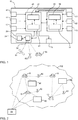
- FIG. 1 schematically illustrates an exemplary vehicle 10, particularly a vehicle with combustion, electric or hybrid motor.
- the vehicle 10 comprises a multiple primary sensors, particularly a first sensor 11, a second sensor 12, and a third sensor 13.
- the primary sensors 11, 12, 13 are configured for detecting environmental information of the vehicle and comprise e.g., a camera for detecting images of a road upfront the vehicle 10, distance sensors, such as e.g., ultrasound-based sensors or LIDAR-based sensors, etc.
- the primary sensors 11, 12, 13 transmit the detected signals to a control unit 40 of the vehicle 10.
- the vehicle 10 further comprises a plurality of secondary sensors, particularly a fourth sensor 51, a fifth sensor 52, and a sixth sensor 53.
- the secondary sensors 51, 52, 53 are configured for detecting information regarding the vehicle 10 itself, particularly data regrading an actual position and motion state of the vehicle 10.
- the secondary sensors 51, 52, 53 thus preferably comprise velocity sensors, acceleration sensors, tilt sensors, or the like.
- the secondary signals transmit the detected signals to the control unit 40 of the vehicle 10.
- the vehicle 10 further comprises a communication module 20 with a memory and one or more transponders 22.
- the transponders 22 might be configured as radio, WLAN, GPS and/or Bluetooth transponder or the like.
- the transponder 22 communicates with an internal memory 21 of the communication module, preferably via a suitable data bus.
- the communication module 20 is configured to perform V2V and (C-)V2X communication.
- the communication module 20 also communicates with the control unit 40.
- the communication module 20 is adapted for communicating messages according to the WLAN p communication system (IEEE 802.11p) and/ or according to a LTE-V mode 4 communication system.
- the vehicle 10 further comprises a driving system 30 that is configured for performing fully or partially autonomous driving of the vehicle 10, particularly for longitudinal and lateral control thereof.
- the driving system 30 comprises a navigation module 32 that is configured to determine a navigation route between a starting point and an end point input by a user.
- the driving system further comprises an internal memory 31, e.g., for map material, that communicates with the navigation module 32, e.g., via a suitable data bus. At least part of the secondary sensors 51, 52, 53 transmit their signals directly to the driving system 30, particularly including the actual position and movement information of the vehicle 10.
- the vehicle further comprises a control unit 40 that is configured for performing the method of the invention as set forth in detail below.
- the control unit 40 comprises an internal memory 41 and a CPU 42 that communicate with each other via a suitable data bus.
- the control unit communicates with at least the primary sensors 11, 12, 13, the secondary sensors 51, 52, 53, the communication module 20 und the driving system 30, e.g., via one or more CAN, SPI, or other suitable connections.
- FIG 2 schematically illustrates a smart environment for performing the method of the invention comprising vehicles as of Figure 1 , base stations 62 of a mobile communication network and a server 70 and road side units, RSUs, 90 operated by a vehicle manufacturer.
- communication i.e. transmission, reception or both, takes place among vehicles 10 directly and/or between vehicles 10 and a network component, particularly a base station 62, a road side unit 90, and/or an application or back end server 70.
- the communication thus either utilizes a mobile communication system or vehicle-to-vehicle, V2V, communication.
- the base stations 62 are usually operated by a network operator of a mobile communication network while the road side units 90 might be operated by a vehicle manufacturer or a service partner thereof.
- the road side units 90 communicate with the server 70 that can also communicate directly with vehicles 10.
- the mobile communication system used for the V2V and/or the V2X communication may, for example, correspond to one of the Third Generation Partnership Project (3GPP)-standardized mobile communication networks, where the term mobile communication system is used synonymously to mobile communication network.
- the mobile or wireless communication system 400 may correspond to a mobile communication system of the 5th Generation (5G) and may use mm-wave technology.
- the mobile communication system may correspond to or comprise, for example, a Long-Term Evolution (LTE), an LTE-Advanced (LTE-A), High Speed Packet Access (HSPA), a Universal Mobile Telecommunication System (UMTS) or a UMTS Terrestrial Radio Access Network (UTRAN), an evolved-UTRAN (e-UTRAN), a Global System for Mobile communication (GSM) or Enhanced Data rates for GSM Evolution (EDGE) network, a GSM/EDGE Radio Access Network (GERAN), or mobile communication networks with different standards, for example, a Worldwide Inter-operability for Microwave Access (WIMAX) network IEEE 802.16 or Wireless Local Area Network (WLAN) IEEE 802.11, generally an Orthogonal Frequency Division Multiple Access (OFDMA) network, a Time Division Multiple Access (TDMA) network, a Code Division Multiple Access (CDMA) network, a Wideband-CDMA (WCDMA) network, a Frequency Division Multiple Access (FDMA) network, a Spatial Division Multiple Access (SDMA) network, etc
- Figure 3 illustrates an application case of a method according to the invention, particularly of a method for V2V communication according to an embodiment of the invention.
- two critical areas Z1 and Z2 exist along a road network, wherein in each of the critical areas the channel load for a mobile communication network as described above is high.
- the channel load particularly refers to a connection between one of the vehicles illustrated in Figure 3 with one of a mobile base station 62, a (backend) server 70 and a road side unit 90.
- a channel load for a connection to one of the aforementioned entities is above 80 % of a channel capacity and hence guaranteed quality of service, QoS, is poor in the regions Z1, Z2.
- vehicles V0, V1, V2, V3 and V4 are vehicles 10, 62 that are configured for V2X and for V2V communication.
- each of the vehicles V0, V1, V2, V3 and V4 is a vehicle according to an embodiment of the invention.
- the vehicles PL2, PL1 are trucks which are organized in a platoon and which are also configured for V2X communication.
- trucks PL2, PL1 might be configured as vehicle of the invention.
- each of the vehicles V0, V1, V2 and V3 has driven through a critical area Z1 with has a poor channel quality due to a high channel load.
- the vehicle V0 is the first vehicle to drive through the critical area Z1 and to determine a first CQI related to a first position within the critical area Z1. Further, the vehicle V0 transmits the first CQI via broadcast SCQ information concerning the critical area Z1. Particularly, vehicle V0 transmits the SCQ message with a variable frequency between e.g. 1 to 10 Hz, wherein the utilized frequency depends on a velocity and/or a position change of V0.
- the vehicle V1 receives the SCQ message from vehicle V0, whereas the vehicles V2, V3 and V4 do not receive any SCQ message from vehicle V0 due to the limited communication range of the transmission of vehicle V0.
- the vehicle V1 also measured the critical area Z1 concerned in the SCQ message transmitted by the vehicle V0, i.e., also detected a CQI indicating a high channel load for a location within the critical area Z1.
- vehicle V1 determines that the SCQ message received from vehicle V0 contains a first CQI on the critical area Z1 that corresponds to the CQI measured by vehicle V1 itself for area Z1.
- vehicle V1 forwards the SCQ message initially sent by vehicle V0 to any other vehicle capable of V2X and V2V communication that is outside of reception area of vehicle V0.
- vehicle V1 will additionally or alternatively send the second CQI that itself has detected for critical area Z1, if the critical area Z1 has significantly changed in terms of channel conditions, i.e., channel load etc., in terms of position, or terms of speed etc. Vehicle V1 might further consider whether information about critical area Z1 are relevant for the vehicles detected outside a transmission range of vehicle V0 and inside that of vehicle V1.
- vehicle V1 passed the critical area Z1 without measuring a second CQI that indicates a high channel load for a location within area Z1, which might be due to that the critical area Z1 does not exist anymore as a critical area, e.g., due to that channel load has significantly decreased since vehicle V0 passed the critical area Z1.
- vehicle V1 will neither forward the received SCQ message nor transmit an own SCQ message. This is based on that vehicle V1 did not measure any critical areas on the way and that vehicle V1 compares these own measurement of channel load with the SCQ message from vehicle V0.
- the vehicle V2 is out of a transmission range of the vehicles V0 and V1. Hence, the vehicle V2 does not receive any SCQ messages from vehicles V0 and V1 independent of the existence of a critical area Z1. Vehicle V2 will rather just receive messages from vehicle V4 about a critical area Z2. However, as vehicle V2 did not pass critical area Z2 itself, it will not forward this SCQ message received from vehicle V4 although it might consider it for its own data DL and UL scheduling. Further, vehicle V2 will send a SCQ message regarding the critical area Z1 insofar it was still critical when the vehicle V2 passed the critical area Z1. This message might be received by vehicles V3 and V4 depending on their distance to vehicle V2.
- vehicle V3 receives a SCQ message transmitted from vehicle V2.
- vehicle V3 performs a method that is similar to that described with respect to vehicle V1 that received a SCQ message from vehicle V0.
- vehicle V3 forwards the SCQ message by broadcasting it, if it also detected a critical area Z1 and if it detects another vehicle within its transmission range but outside of a transmission range of vehicle V2.
- vehicle V4 receives SCQ messages from vehicle V1 and from vehicle V2.
- vehicle V4 might consider the SCQ messages, particularly the information on a critical area Z1 therein, for its own data UL or DL scheduling (particularly due to receiving to SCQ messages with same or similar content from different vehicles), it will not forward the received SCQ messages as itself is not able to confirm the critical area Z1.
- vehicle V4 will broadcast an own SCQ message regarding the critical area Z2, which will be received by vehicle V2 as well as by vehicle V3.
- vehicle V2 will determine whether an intended route passes through critical area Z2.
- the determination of an intended route might be based on e.g., a navigation route based on a user input of a target location and/or by a detection of a direction indicator turned on by a user of vehicle V2.
- the vehicle V2 will consider the SCQ message received by vehicle V4 for its data UL or DL.
- vehicle V3 determines that its intended route does not pass critical area Z2 and will thus not consider the SCQ message received by vehicle V4.
- vehicles PL1 and PL2 have received the SCQ message from vehicle V1 and, based on a determination carried out at least by platoon leader PL1 that an intended route of the platoon will cross critical area Z2, will consider the SCQ message for the UL and DL data scheduling.
- vehicle PL1 adapts the platooning application parameters utilized in the platoon at least by vehicle PL2, e.g., by increasing the distance to be kept by vehicle PL2 with respect to vehicle PL1 in order to account for that also V2V might be impeded by the high channel load in critical area Z1 and thus communication of information from platoon leader PL1 to vehicle PL2, e.g., about a braking manoeuvre, might be impeded within the critical area Z1 or at least delayed for a time span. The additional distance might account for the consequence of such delay at an actual speed of the platoon.
- the vehicles PL1 and PL2, particularly platoon leader PL2 will prompt further vehicles V2, V3 coming into a transmission range of vehicles PL1 and PL2 about information about critical area Z1 or will at least compare information received from further vehicles V2, V3 with the SCQ information received by vehicle V1. If vehicle PL1 does not receive any SCQ message from vehicle V2 and/or V3 regarding critical area Z1, it might assume that the channel load in critical area Z1 is not above a certain threshold anymore. In response thereto, vehicle PL1 might again adopt the UL or DL data scheduling and may again change a distance to the following vehicles PL, both e.g., by setting initial parameters again.
- the electronic or electric devices and/or any other relevant devices or components according to embodiments of the present invention described herein, except those described explicitly as hardware, may be implemented utilizing any suitable hardware, firmware (e.g. an application-specific integrated circuit), software, or a combination of software, firmware, and hardware.
- the various components of these devices may be formed on one integrated circuit (IC) chip or on separate IC chips.
- the various components of these devices may be implemented on a flexible printed circuit film, a tape carrier package (TCP), a printed circuit board (PCB), or formed on one substrate.
- the electrical connections or interconnections described herein may be realized by wires or conducting elements, e.g. on a PCB or another kind of circuit carrier.
- the conducting elements may comprise metallization, e.g.
- the various components of these devices may be a process or thread, running on one or more processors, in one or more computing devices, executing computer program instructions and interacting with other system components for performing the various functionalities described herein.
- the computer program instructions are stored in a memory which may be implemented in a computing device using a standard memory device, such as, for example, a random access memory (RAM).
- the computer program instructions may also be stored in other non-transitory computer readable media such as, for example, a CD-ROM, flash drive, or the like.
Landscapes
- Engineering & Computer Science (AREA)
- Computer Networks & Wireless Communication (AREA)
- Signal Processing (AREA)
- Quality & Reliability (AREA)
- Physics & Mathematics (AREA)
- General Physics & Mathematics (AREA)
- Chemical & Material Sciences (AREA)
- Analytical Chemistry (AREA)
- Electromagnetism (AREA)
- Life Sciences & Earth Sciences (AREA)
- Atmospheric Sciences (AREA)
- Environmental & Geological Engineering (AREA)
- Traffic Control Systems (AREA)
- Mobile Radio Communication Systems (AREA)
Claims (14)
- Verfahren eines ersten Fahrzeugs (10) zur Kommunikation von Fahrzeug zu Fahrzeug, V2V, das Folgendes umfasst:Empfangen, innerhalb eines Übertragungsbereichs eines zweiten Fahrzeugs (10, 63), einer ersten Nachricht von einem zweiten Fahrzeug (10, 63), umfassend eine erste Kanalqualitätsinformation, CQI, bezüglich einer in der Nachricht angezeigten ersten Position;Vergleichen der ersten CQI mit einer zweiten CQI bezüglich einer zweiten Position, wobei die zweite CQI durch das erste Fahrzeug (10) bestimmt wird; undgezieltes Senden einer zweiten Nachricht, umfassend die erste CQI und/oder die zweite CQI, an ein drittes Fahrzeug (10, 63) entsprechend dem Vergleich der ersten CQI und der zweiten CQI,wobei die zweite Position identisch mit der ersten Position oder innerhalb eines vorbestimmten Bereichs um die erste Position ist.
- Verfahren nach Anspruch 1, wobei das erste Fahrzeug (10) die erste CQI und/oder die zweite CQI an das dritte Fahrzeug (10, 63) sendet, wenn eine Differenz zwischen der ersten CQI und der zweiten CQI unter einer vorbestimmten CQI-Schwelle liegt.
- Verfahren nach Anspruch 2, wobei das erste Fahrzeug (10) die erste CQI an das dritte Fahrzeug (10, 63) sendet, wenn eine Differenz zwischen der ersten CQI und der zweiten CQI unter einer ersten vorbestimmten CQI-Schwelle liegt, und wobei das erste Fahrzeug (10) die zweite CQI an das dritte Fahrzeug (10, 63) sendet, wenn eine Differenz zwischen der ersten CQI und der zweiten CQI unter einer zweiten vorbestimmten CQI-Schwelle liegt.
- Verfahren nach Anspruch 1, wobei das erste Fahrzeug (10) die erste CQI oder die zweite CQI nicht an das dritte Fahrzeug (10, 63) sendet, wenn eine Differenz zwischen der ersten CQI und der zweiten CQI über einer vorbestimmten CQI-Schwelle liegt.
- Verfahren nach Anspruch 1, wobei der vorbestimmte Bereich in der ersten Nachricht angezeigt ist oder basierend auf einer Ausbreitungsrichtung und einer Geschwindigkeit für die erste Position und/oder basierend auf einer Kennung von zumindest einem anderen Fahrzeug (10, 63) in Verbindung mit der ersten Position und/oder der ersten CQI bestimmt wird.
- Verfahren nach Anspruch 5, wobei das erste Fahrzeug (10) die zweite CQI entsprechend der ersten CQI sendet, wenn die zweite Position außerhalb des vorbestimmten Bereichs ist.
- Verfahren nach einem der vorhergehenden Ansprüche, wobei die erste Nachricht anzeigt, dass sich die erste CQI auf eine Kanallast von über 80 % der Kanalkapazität bezieht.
- Verfahren nach einem der vorhergehenden Ansprüche, wobei die erste Nachricht und/oder die zweite Nachricht eine aus einer SCQ-Nachricht zu gemeinsam genutzter Kanalqualität und/oder einer CCM-Nachricht zu kooperativer Kommunikation ist.
- Verfahren nach einem der vorhergehenden Ansprüche, wobei das erste Fahrzeug (10) die erste CQI und/oder die zweite CQI nicht an das dritte Fahrzeug (10, 63) sendet, wenn ein Abstand zwischen einer tatsächlichen Position des ersten Fahrzeugs (10) und der ersten Position und/oder der zweiten Position eine vorbestimmte Abstandsschwelle überschreitet.
- Verfahren nach einem der vorhergehenden Ansprüche, wobei das erste Fahrzeug (10) die erste CQI und/oder die zweite CQI an das dritte Fahrzeug (10, 63) sendet, wenn das dritte Fahrzeug (10, 63) außerhalb eines Übertragungsbereichs des zweiten Fahrzeugs (10, 63) ist.
- Verfahren nach einem der vorhergehenden Ansprüche, wobei das erste Fahrzeug (10) die erste CQI nicht sendet, wenn das erste Fahrzeug (10) keine zweite CQI bestimmt hat.
- Verfahren eines zweiten Fahrzeugs (10, 63) zur Kommunikation von Fahrzeug zu Fahrzeug, V2V, das Folgendes umfasst:Bestimmen einer ersten Kanalqualitätsinformation, CQI, bezüglich einer ersten Position;Senden einer ersten Nachricht an ein erstes Fahrzeug (10) innerhalb eines Übertragungsbereichs des zweiten Fahrzeugs (10, 63), wobei die erste Nachricht die erste CQI umfasst,wobei das zweite Fahrzeug (10, 63) die erste Nachricht sendet, wenn es und/oder das erste Fahrzeug (10) innerhalb einer vorbestimmten Abstandsschwelle um die erste Position ist.
- Erstes Fahrzeug (10), das Folgendes umfasst:
ein Kommunikationsmodul (20), ausgelegt zum Kommunizieren mit einem zweiten Fahrzeug und mit einer Station (62, 70, 90) eines Kommunikationsnetzwerks; und eine Steuereinheit, ausgelegt zum:Empfangen, innerhalb eines Übertragungsbereichs des zweiten Fahrzeugs (10, 63), einer Nachricht, umfassend eine erste CQI-Information bezüglich einer ersten Position;Vergleichen der empfangenen ersten CQI mit einer zweiten CQI bezüglich einer zweiten Position, wobei die zweite CQI durch das erste Fahrzeug (10) bestimmt wird und wobei die zweite Position identisch mit der ersten Position oder innerhalb eines vorbestimmten Bereichs um die erste Position ist; undgezieltes Senden einer Nachricht, umfassend die erste CQI und/oder die zweite CQI, an ein drittes Fahrzeug (10, 63) entsprechend dem Vergleich der ersten CQI und der zweiten CQI. - Computerprogramm, umfassend Anweisungen, die, wenn auf einem Computer einer Steuereinheit eines Fahrzeugs ausgeführt, die Steuereinheit veranlassen, das Verfahren nach Anspruch 1 oder 12 auszuführen.
Priority Applications (14)
| Application Number | Priority Date | Filing Date | Title |
|---|---|---|---|
| EP20152152.3A EP3699885B1 (de) | 2019-02-20 | 2020-01-16 | Verfahren zur vorhersage der kanalbelastung |
| EP20154605.8A EP3699887B1 (de) | 2019-02-20 | 2020-01-30 | Verfahren zur vorhersage der kanalbelastung |
| US17/428,652 US11751028B2 (en) | 2019-02-20 | 2020-02-18 | Method for predicting channel load |
| US17/429,258 US12120589B2 (en) | 2019-02-20 | 2020-02-18 | Method for predicting channel load |
| JP2021549149A JP7553457B2 (ja) | 2019-02-20 | 2020-02-18 | チャネル負荷を予測するための方法 |
| CN202080015764.1A CN113424241B (zh) | 2019-02-20 | 2020-02-18 | 一种用于预测信道负载的方法 |
| KR1020217029069A KR102665155B1 (ko) | 2019-02-20 | 2020-02-18 | 채널 부하를 예측하기 위한 방법 |
| CN202080015846.6A CN113424571B (zh) | 2019-02-20 | 2020-02-18 | 用于预测信道负载的方法 |
| JP2021549151A JP7223153B2 (ja) | 2019-02-20 | 2020-02-18 | チャネル負荷を予測するための方法 |
| PCT/EP2020/054180 WO2020169569A1 (en) | 2019-02-20 | 2020-02-18 | Method for predicting channel load |
| PCT/EP2020/054179 WO2020169568A1 (en) | 2019-02-20 | 2020-02-18 | Method for predicting channel load |
| US16/795,331 US11310640B2 (en) | 2019-02-20 | 2020-02-19 | Method for vehicle-to-vehicle communication |
| KR1020200020435A KR102291306B1 (ko) | 2019-02-20 | 2020-02-19 | 차량 대 차량 통신을 위한 방법 |
| CN202010104440.7A CN111601236B (zh) | 2019-02-20 | 2020-02-20 | 车辆对车辆通信的方法 |
Applications Claiming Priority (2)
| Application Number | Priority Date | Filing Date | Title |
|---|---|---|---|
| EP18184352.5A EP3598413A1 (de) | 2018-07-19 | 2018-07-19 | Vorrichtung, verfahren und computerprogramm für einen mobilen sender-empfänger |
| EP19158381.4A EP3700108B1 (de) | 2019-02-20 | 2019-02-20 | Verfahren zum unterstützen einer ersten mobilstation zum vorhersagen der kanalqualität für eine geplante dezentrale drahtlose kommunikation zu einer kommunikationspartnerstation und mobilstation |
Publications (2)
| Publication Number | Publication Date |
|---|---|
| EP3598416A1 EP3598416A1 (de) | 2020-01-22 |
| EP3598416B1 true EP3598416B1 (de) | 2021-04-07 |
Family
ID=65628546
Family Applications (4)
| Application Number | Title | Priority Date | Filing Date |
|---|---|---|---|
| EP19158381.4A Active EP3700108B1 (de) | 2018-07-19 | 2019-02-20 | Verfahren zum unterstützen einer ersten mobilstation zum vorhersagen der kanalqualität für eine geplante dezentrale drahtlose kommunikation zu einer kommunikationspartnerstation und mobilstation |
| EP19171569.7A Active EP3598416B1 (de) | 2018-07-19 | 2019-04-29 | Verfahren zur kommunikation von fahrzeug zu fahrzeug |
| EP20152152.3A Active EP3699885B1 (de) | 2019-02-20 | 2020-01-16 | Verfahren zur vorhersage der kanalbelastung |
| EP20154605.8A Active EP3699887B1 (de) | 2019-02-20 | 2020-01-30 | Verfahren zur vorhersage der kanalbelastung |
Family Applications Before (1)
| Application Number | Title | Priority Date | Filing Date |
|---|---|---|---|
| EP19158381.4A Active EP3700108B1 (de) | 2018-07-19 | 2019-02-20 | Verfahren zum unterstützen einer ersten mobilstation zum vorhersagen der kanalqualität für eine geplante dezentrale drahtlose kommunikation zu einer kommunikationspartnerstation und mobilstation |
Family Applications After (2)
| Application Number | Title | Priority Date | Filing Date |
|---|---|---|---|
| EP20152152.3A Active EP3699885B1 (de) | 2019-02-20 | 2020-01-16 | Verfahren zur vorhersage der kanalbelastung |
| EP20154605.8A Active EP3699887B1 (de) | 2019-02-20 | 2020-01-30 | Verfahren zur vorhersage der kanalbelastung |
Country Status (6)
| Country | Link |
|---|---|
| US (4) | US11129002B2 (de) |
| EP (4) | EP3700108B1 (de) |
| JP (2) | JP7553457B2 (de) |
| KR (3) | KR102665155B1 (de) |
| CN (4) | CN113424241B (de) |
| WO (2) | WO2020169569A1 (de) |
Families Citing this family (20)
| Publication number | Priority date | Publication date | Assignee | Title |
|---|---|---|---|---|
| CN110476473B (zh) * | 2017-03-31 | 2021-08-03 | 华为技术有限公司 | 具有上行信标传输的网络节点和用户设备 |
| JP2019162988A (ja) * | 2018-03-20 | 2019-09-26 | 本田技研工業株式会社 | 車両制御装置及び車両制御方法 |
| CN113661737B (zh) * | 2019-04-09 | 2024-06-21 | 日产自动车株式会社 | 信息处理装置、信息处理方法以及服务器 |
| DE102019206666B3 (de) * | 2019-05-09 | 2020-06-10 | Audi Ag | Verfahren und Steuervorrichtung zum Konfigurieren einer Kanalkodierung während einer Übertragung von Datenpaketen von einem Sendegerät hin zu einem Empfängergerät sowie Kraftfahrzeug |
| JP7321033B2 (ja) * | 2019-08-23 | 2023-08-04 | 日立Astemo株式会社 | 無線通信システム、及び無線通信機 |
| DE102019213316A1 (de) * | 2019-09-03 | 2021-03-04 | Robert Bosch Gmbh | Verfahren zur Generierung einer Referenz-Repräsentation |
| US11455890B2 (en) * | 2020-03-23 | 2022-09-27 | Toyota Motor Eng & Mfg North America, Inc. | Traffic-adaptive deployment of vehicle functions |
| EP3910829A1 (de) * | 2020-05-12 | 2021-11-17 | Volkswagen Aktiengesellschaft | Fahrzeug, infrastruktur, sendeempfänger, vorrichtung, verfahren und computerprogramms zur bestimmung einer konfiguration einer physikalischen schicht für eine funkverbindung |
| DE102020209871A1 (de) * | 2020-08-05 | 2022-02-10 | Robert Bosch Gesellschaft mit beschränkter Haftung | Verfahren zur Sicherung einer Kommunikation zwischen einem ersten und einem zweiten Fahrzeug, Steuereinrichtung, Kommunikationsanordnung und Fahrzeuganordnung |
| US11706658B2 (en) | 2021-05-19 | 2023-07-18 | Microsoft Technology Licensing, Llc | 5G admission by verifying slice SLA guarantees |
| CN113613201B (zh) * | 2021-08-02 | 2025-01-17 | 腾讯科技(深圳)有限公司 | 应用于车辆间的数据分享方法、装置、介质及电子设备 |
| CN113450572B (zh) * | 2021-09-02 | 2021-11-12 | 西南交通大学 | 一种交通状态估计方法、装置、设备及可读存储介质 |
| DE102021213818A1 (de) | 2021-12-06 | 2023-06-07 | Robert Bosch Gesellschaft mit beschränkter Haftung | Verfahren zum Bestimmen einer Datenübertragungsqualität eines Infrastruktursystems zur Fahrunterstützung von zumindest teilautomatisiert geführten vernetzten Kraftfahrzeugen |
| DE102021213819A1 (de) | 2021-12-06 | 2023-06-07 | Robert Bosch Gesellschaft mit beschränkter Haftung | Verfahren zum Bestimmen einer Datenübertragungsqualität einer Kommunikationsverbindung zwischen vernetzten Kraftfahrzeugen und einem Infrastruktursystem zur Fahrunterstützung von zumindest teilautomatisiert geführten vernetzten Kraftfahrzeugen |
| KR20230106315A (ko) | 2022-01-06 | 2023-07-13 | 한국과학기술연구원 | 부착 가능한 패치형 초음파 트랜스듀서를 활용한 진단 시스템 |
| FR3132588B1 (fr) * | 2022-02-07 | 2024-07-19 | Renault Sas | Procédé d’élaboration d’un horizon artificiel |
| DE102022207903A1 (de) * | 2022-08-01 | 2024-02-01 | Volkswagen Aktiengesellschaft | Verfahren und System zum Überprüfen einer Plantrajektorie eines teilautomatisiert oder automatisiert fahrenden Fahrzeugs |
| EP4340407B1 (de) * | 2022-09-15 | 2025-06-11 | Mitsubishi Electric R&D Centre Europe B.V. | Verfahren und server zum konfigurieren eines parametersatzes von mindestens zwei sich in der nähe bewegenden formationen |
| EP4478776A1 (de) * | 2023-06-13 | 2024-12-18 | Volkswagen Ag | Ein verfahren zur bestimmung einer prädiktiven dienstqualität, pqos, in der mobilkommunikation |
| US20250172954A1 (en) * | 2023-11-29 | 2025-05-29 | Ford Global Technologies, Llc | Adaptive response for marshaling failure modes |
Family Cites Families (94)
| Publication number | Priority date | Publication date | Assignee | Title |
|---|---|---|---|---|
| DE19526148C2 (de) | 1995-07-07 | 1997-06-05 | Mannesmann Ag | Verfahren und System zur Prognose von Verkehrsströmen |
| JP3184873B2 (ja) | 1997-09-04 | 2001-07-09 | 国土交通省土木研究所長 | 車両通信システムおよび方法 |
| US7236462B2 (en) | 1999-10-04 | 2007-06-26 | General Electric Company | Method for data exchange with a mobile asset considering communication link quality |
| JP2005150848A (ja) * | 2003-11-11 | 2005-06-09 | Nissan Motor Co Ltd | 車車間通信装置 |
| JP2005156169A (ja) | 2003-11-20 | 2005-06-16 | Nissan Motor Co Ltd | タイミング制御型ダウンロードシステム |
| KR20060119743A (ko) | 2005-05-18 | 2006-11-24 | 엘지전자 주식회사 | 구간 속도에 대한 예측정보를 제공하고 이를 이용하는 방법및 장치 |
| US7546182B2 (en) * | 2006-02-21 | 2009-06-09 | Gm Global Technology Operations, Inc. | Inter vehicular ad hoc routing protocol and communication system |
| US8917598B2 (en) | 2007-12-21 | 2014-12-23 | Qualcomm Incorporated | Downlink flow control |
| KR101513503B1 (ko) * | 2008-08-11 | 2015-04-22 | 삼성전자주식회사 | Dual-cell HSDPA 를 지원하는 이동통신 시스템에서 CQI전송 오버헤드를 감소시키는 방법 및 장치 |
| KR20100035088A (ko) * | 2008-09-25 | 2010-04-02 | 한국전자통신연구원 | 협력 통신 방법 및 그 기지국 |
| JP5262579B2 (ja) | 2008-10-27 | 2013-08-14 | 住友電気工業株式会社 | 通信システム、無線通信方法及び通信装置 |
| KR101723411B1 (ko) | 2009-08-21 | 2017-04-05 | 엘지전자 주식회사 | 멀티 캐리어 시스템의 슬립모드 동작 방법 및 장치 |
| ITVI20100165A1 (it) | 2010-06-11 | 2011-12-12 | St Microelectronics Srl | Metodo e sistema basato su mappa perbroadcast in vanet |
| DE102010038640A1 (de) | 2010-07-29 | 2012-02-02 | Continental Teves Ag & Co. Ohg | Vorrichtung und Verfahren zur C2X-Kommunikation |
| US8954567B1 (en) * | 2011-06-29 | 2015-02-10 | Google Inc | Predicting mediaplan traffic |
| EP2555569B1 (de) * | 2011-08-04 | 2013-10-09 | Deutsche Telekom AG | Verfahren und System zur proaktiven und dynamischen Cross-Layer-Optimierung von Datenübertragungen an Fahrzeuge |
| WO2013031835A1 (ja) | 2011-08-30 | 2013-03-07 | 株式会社トヨタIt開発センター | 無線通信装置および無線通信方法 |
| CN102421142B (zh) | 2011-12-01 | 2015-09-09 | 重庆邮电大学 | 一种车载通信网中基于跨层设计的tcp拥塞控制方法 |
| WO2013125140A1 (ja) | 2012-02-20 | 2013-08-29 | 日本電気株式会社 | 車載装置および輻輳制御方法 |
| CN102624896B (zh) * | 2012-03-12 | 2015-05-06 | 东南大学 | 一种基于车辆间通信的车辆密度感知系统及其感知方法 |
| DE102012204098A1 (de) | 2012-03-15 | 2013-09-19 | Continental Automotive Gmbh | Verfahren zur Stauerkennung mittels einer drahtlosen Fahrzeug-zu-Fahrzeug-Kommunikation |
| DE102013207587B4 (de) | 2012-05-03 | 2015-12-10 | GM Global Technology Operations LLC (n. d. Gesetzen des Staates Delaware) | Autonomes Fahrzeug-Positionsbestimmungssystem zum Bestimmen einer Position eines entfernten Fahrzeugs relativ zu einem mobilen Trägerfahrzeug auf der Basis von Sicherheitsalarmnachrichten |
| WO2013187743A1 (ko) * | 2012-06-15 | 2013-12-19 | 엘지전자 주식회사 | 고정된 경로를 이동하는 고속 이동체를 위한 무선 통신 시스템 |
| KR20140042532A (ko) * | 2012-09-28 | 2014-04-07 | 한국전자통신연구원 | 차량 통신을 위한 혼잡 제어 장치 및 방법 |
| US9143883B2 (en) * | 2012-10-31 | 2015-09-22 | Hewlett-Packard Development Company, L.P. | Method and system for improving performance in discovery stage of fast roaming |
| KR101909274B1 (ko) * | 2012-11-08 | 2018-10-17 | 현대모비스 주식회사 | 주변 차량들이 제공하는 정보를 이용한 채널 부하 측정 방법 |
| US9154284B1 (en) * | 2013-09-04 | 2015-10-06 | Sprint Communications Company L.P. | Estimating sounding reference signals for secondary radio-frequency channels |
| KR101533192B1 (ko) * | 2013-11-07 | 2015-07-03 | 경희대학교 산학협력단 | 차량 통신 네트워크의 패킷 송신 방법 |
| KR101506598B1 (ko) | 2013-11-29 | 2015-03-27 | 현대모비스 주식회사 | 차량간 통신을 위한 통신 장치 |
| KR101534969B1 (ko) * | 2013-12-18 | 2015-07-07 | 현대자동차주식회사 | 차량간 메시지 전송 충돌을 방지하기 위한 장치 및 그 방법 |
| JP6432596B2 (ja) | 2014-03-04 | 2018-12-05 | 日本電気株式会社 | 通信装置、輻輳制御方法およびプログラム |
| JP6139441B2 (ja) | 2014-03-07 | 2017-05-31 | トヨタ自動車株式会社 | 無線通信方法、車載無線通信装置、およびプログラム |
| CN105023424B (zh) * | 2014-04-24 | 2017-08-08 | 深圳市赛格导航科技股份有限公司 | 一种道路交通拥堵控制方法及控制系统 |
| DE102014208084A1 (de) | 2014-04-29 | 2015-10-29 | Volkswagen Aktiengesellschaft | Schätzen einer Empfangswahrscheinlichkeit eines Datenpakets und einer Übertragungsrate für Datenpakete |
| DE102014212989A1 (de) | 2014-07-04 | 2016-01-07 | Bayerische Motoren Werke Aktiengesellschaft | Steuern von Datenverbindungen und/oder Datenübertragungen in einer mobilen Funkeinrichtung |
| US10015289B2 (en) | 2014-08-12 | 2018-07-03 | Cisco Technology, Inc. | System and method for distribution of radio channel state and base station congestion state in a network environment |
| CN106471826B (zh) | 2014-10-29 | 2019-10-25 | 宝马股份公司 | 用于在蜂窝网络中支持车辆通信的方法、远程通信服务器和基站 |
| US10440666B2 (en) * | 2014-11-20 | 2019-10-08 | Nec Corporation | Managing communication between a plurality of moving objects through control of transmit power and/or transmit rate |
| CN104408921A (zh) | 2014-11-28 | 2015-03-11 | 江苏物联网研究发展中心 | 基于交通仿真的交通流预测方法 |
| DE102015001016A1 (de) | 2015-01-28 | 2016-07-28 | GM Global Technology Operations LLC (n. d. Gesetzen des Staates Delaware) | Verfahren und System zur Fahrzeuglokalisieung sowie Fahrzeug mit einer Vorrichtung zur Durchführung einer Fahrzeug-Zu-X Kommunikation |
| US20160295624A1 (en) | 2015-04-02 | 2016-10-06 | Samsung Electronics Co., Ltd | Methods and apparatus for resource pool design for vehicular communications |
| US10187766B2 (en) | 2015-04-09 | 2019-01-22 | Lg Electronics Inc. | Method and apparatus for gathering location information of vehicle user equipment in a wireless access system supporting V2X services |
| US9576481B2 (en) * | 2015-04-30 | 2017-02-21 | Here Global B.V. | Method and system for intelligent traffic jam detection |
| DE102015214968B4 (de) | 2015-08-05 | 2022-10-06 | Volkswagen Aktiengesellschaft | Verfahren und Vorrichtung zur Anpassung mindestens eines Parameters eines Kommunikationssystems |
| WO2017026977A1 (en) * | 2015-08-11 | 2017-02-16 | Intel Corporation | Measurement for device-to-device (d2d) communication |
| JP6447412B2 (ja) | 2015-08-19 | 2019-01-09 | トヨタ自動車株式会社 | 無線通信方法、無線通信システム、およびプログラム |
| WO2017030572A1 (en) * | 2015-08-19 | 2017-02-23 | Nokia Solutions And Networks Oy | Measurement control for ue relay selection in prose based ue-to-network relay |
| CN106506386B (zh) | 2015-09-07 | 2019-11-08 | 电信科学技术研究院 | 一种车联网集中拥塞控制方法及装置 |
| WO2017045139A1 (en) | 2015-09-15 | 2017-03-23 | Huawei Technologies Co., Ltd. | Apparatus and method for transmitting communication messages |
| DE102015217793A1 (de) | 2015-09-17 | 2017-03-23 | Volkswagen Aktiengesellschaft | Vorrichtung, Verfahren und Computerprogramm zum Bereitstellen von Stauinformation über eine Fahrzeug-zu-Fahrzeug-Schnittstelle |
| CN107925906B (zh) * | 2015-09-24 | 2021-11-16 | 苹果公司 | 用于车辆到万物服务的拥塞控制 |
| EP3360350B1 (de) * | 2015-10-06 | 2021-08-04 | LG Electronics Inc. | Verfahren und vorrichtung zum senden einer warnmeldung anhand der verwendung von v2x-diensten in einem drahtloszugangssystem |
| GB2544518B (en) | 2015-11-19 | 2020-02-12 | Samsung Electronics Co Ltd | Channel quality indicators |
| JP6098698B2 (ja) | 2015-11-25 | 2017-03-22 | 日本電気株式会社 | 車載装置および輻輳制御方法 |
| SG11201805627VA (en) * | 2016-01-03 | 2018-07-30 | Yosef Mintz | System and methods to apply robust predictive traffic load balancing control and robust cooperative safe driving for smart cities |
| JP6910308B2 (ja) * | 2016-01-22 | 2021-07-28 | 京セラ株式会社 | 無線端末及びプロセッサ |
| JP6508072B2 (ja) | 2016-01-26 | 2019-05-08 | 株式会社デンソー | 報知制御装置及び報知制御方法 |
| CN107040959B (zh) | 2016-02-04 | 2020-06-02 | 中兴通讯股份有限公司 | 车联网业务拥塞控制的方法及装置 |
| US11146928B2 (en) | 2016-02-04 | 2021-10-12 | Nokia Solutions And Networks Oy | Vehicular communication of road traffic status |
| CN105791143B (zh) | 2016-03-09 | 2019-10-11 | 大连理工大学 | 一种移动性与dsrc/wave网络相关反馈的自适应速率控制方法 |
| FR3049065B1 (fr) | 2016-03-16 | 2018-03-23 | Continental Automotive France | Procede de determination de la position d'un equipement portable d'utilisateur autour d'un vehicule et dispositif de localisation associe |
| JP6497345B2 (ja) | 2016-03-22 | 2019-04-10 | トヨタ自動車株式会社 | 無線リソース割当装置、方法、および無線通信システム |
| CN105844370B (zh) * | 2016-05-16 | 2019-08-13 | 西安电子科技大学 | 基于粒子群算法的城市道路车辆连通度优化方法 |
| CN109076371B (zh) | 2016-06-01 | 2023-03-24 | 苹果公司 | 用于灵活传输模式切换的cqi上报 |
| WO2018019394A1 (en) * | 2016-07-29 | 2018-02-01 | Nokia Technologies Oy | Method and system for causing a mobile device to travel based on a network condition |
| CN106657209B (zh) | 2016-07-31 | 2020-11-24 | 华南理工大学 | 一种基于vanet的obu与rsu快速切换方法 |
| US20180082586A1 (en) * | 2016-09-21 | 2018-03-22 | Conduent Business Services, Llc | Method and system for real-time prediction of crowdedness in vehicles in transit |
| US10028133B2 (en) | 2016-10-24 | 2018-07-17 | General Motors Llc | Timing delivery of over-the-air data to a vehicle |
| SE541478C2 (en) | 2016-12-16 | 2019-10-15 | Scania Cv Ab | Method and control unit for adjusting an inter vehicular distance between vehicles in a platoon |
| DE102016226050B4 (de) | 2016-12-22 | 2022-07-21 | Volkswagen Aktiengesellschaft | Verfahren zur vorausschauenden Buchung von Netzwerkressourcen in einem Mobilfunknetz sowie Mobilfunknetz-Teilnehmerstation und Mobilfunknetz-Verwaltungseinheit zur Verwendung bei dem Verfahren, sowie Kraftfahrzeug |
| CN108269395B (zh) | 2016-12-30 | 2019-10-25 | 大唐高鸿信息通信研究院(义乌)有限公司 | 适用于车载短距离通信网络交通拥塞预测和处理方法 |
| WO2018130302A1 (en) * | 2017-01-13 | 2018-07-19 | Huawei Technologies Co., Ltd. | Techniques for congestion mitigation in a radio access network |
| CN106710215B (zh) | 2017-02-06 | 2019-02-01 | 同济大学 | 瓶颈上游车道级交通状态预测系统及实现方法 |
| US10304339B2 (en) * | 2017-03-07 | 2019-05-28 | Qualcomm Incorporated | Extending vehicle-to-vehicle communications via sensors |
| US10515542B2 (en) | 2017-03-27 | 2019-12-24 | Iheartmedia Management Services, Inc. | Automated traffic data validation |
| CN110495227B (zh) | 2017-04-10 | 2023-03-28 | Lg电子株式会社 | 在无线通信系统中分配用于装置到装置直接通信的发送资源的方法和用于其的设备 |
| DE102017108428A1 (de) | 2017-04-20 | 2018-10-25 | Bayerische Motoren Werke Aktiengesellschaft | System, Mobilkommunikationssystem, Vorrichtungen, Verfahren und Computerprogramme zur Planung einer Ressourcenvergabe in einem Mobilkommunikationssystem |
| EP3533152B1 (de) * | 2017-05-04 | 2020-02-19 | Telefonaktiebolaget LM Ericsson (publ) | Zellwechsel in einem drahtlosen kommunikationssystem |
| CN107071855B (zh) | 2017-05-08 | 2020-07-31 | 电子科技大学 | 基于半双工通信的安全告警信息中继方法 |
| CN109150478B (zh) | 2017-06-16 | 2020-09-08 | 华为技术有限公司 | 信道质量反馈方法及装置 |
| EP3646662B1 (de) * | 2017-06-30 | 2026-03-11 | Intel Corporation | V2x-kommunikation mit mehreren funkzugangstechnologien (multi-rat) |
| CN107563026B (zh) * | 2017-08-21 | 2020-07-24 | 哈尔滨工程大学 | 一种基于干扰的二维车载网安全应用的分析方法 |
| CN107742420A (zh) * | 2017-09-22 | 2018-02-27 | 北京交通大学 | 一种用于突发交通事件下道路交通流预测的方法 |
| CN107705607A (zh) * | 2017-09-29 | 2018-02-16 | 联想(北京)有限公司 | 一种信息处理方法及信息处理装置 |
| DE102017010969B3 (de) | 2017-11-24 | 2019-02-21 | Schora Aslanjan | Steuergerät für ein Routenplanungssystem zur Findung optimaler Routen für handelsübliche Fahrzeuge |
| EP3525374B1 (de) | 2018-02-07 | 2021-10-06 | Volkswagen Aktiengesellschaft | Verfahren zur datenkommunikation zwischen mindestens zwei teilnehmern in einem drahtlos-kommunikations-system, korrespondierende kontrolleinheit, fahrzeug mit kontrolleinheit, sowie computer programm |
| CN111527706A (zh) * | 2018-03-30 | 2020-08-11 | 英特尔Ip公司 | 具有共用天线的智能运输系统(its)无线电台在同一频率带中的同时操作 |
| EP4668865A3 (de) * | 2018-05-10 | 2026-02-25 | InterDigital Patent Holdings, Inc. | Server in einem internet-der-dinge-kommunikationspfad |
| EP3598413A1 (de) | 2018-07-19 | 2020-01-22 | Volkswagen Aktiengesellschaft | Vorrichtung, verfahren und computerprogramm für einen mobilen sender-empfänger |
| WO2020043298A1 (en) * | 2018-08-30 | 2020-03-05 | Huawei Technologies Co., Ltd. | Techniques for group-based feedback |
| US11228506B2 (en) * | 2018-09-06 | 2022-01-18 | Hewlett Packard Enterprise Development Lp | Systems and methods for detecting anomalies in performance indicators of network devices |
| CN113261312A (zh) * | 2018-10-31 | 2021-08-13 | 弗劳恩霍夫应用研究促进协会 | 侧链路通信中的邻近意识 |
| US11178565B2 (en) * | 2018-11-02 | 2021-11-16 | FG Innovation Company Limited | Sidelink measurement reporting in next generation wireless networks |
| US11548512B2 (en) | 2019-08-23 | 2023-01-10 | Zoox, Inc. | Yield behavior modeling and prediction |
-
2019
- 2019-02-20 EP EP19158381.4A patent/EP3700108B1/de active Active
- 2019-04-29 EP EP19171569.7A patent/EP3598416B1/de active Active
-
2020
- 2020-01-16 EP EP20152152.3A patent/EP3699885B1/de active Active
- 2020-01-30 EP EP20154605.8A patent/EP3699887B1/de active Active
- 2020-02-17 US US16/792,731 patent/US11129002B2/en active Active
- 2020-02-18 US US17/428,652 patent/US11751028B2/en active Active
- 2020-02-18 KR KR1020217029069A patent/KR102665155B1/ko active Active
- 2020-02-18 JP JP2021549149A patent/JP7553457B2/ja active Active
- 2020-02-18 CN CN202080015764.1A patent/CN113424241B/zh active Active
- 2020-02-18 US US17/429,258 patent/US12120589B2/en active Active
- 2020-02-18 WO PCT/EP2020/054180 patent/WO2020169569A1/en not_active Ceased
- 2020-02-18 WO PCT/EP2020/054179 patent/WO2020169568A1/en not_active Ceased
- 2020-02-18 CN CN202080015846.6A patent/CN113424571B/zh active Active
- 2020-02-18 JP JP2021549151A patent/JP7223153B2/ja active Active
- 2020-02-19 KR KR1020200020435A patent/KR102291306B1/ko active Active
- 2020-02-19 US US16/795,331 patent/US11310640B2/en active Active
- 2020-02-19 KR KR1020200020436A patent/KR102353558B1/ko active Active
- 2020-02-20 CN CN202010104440.7A patent/CN111601236B/zh active Active
- 2020-02-20 CN CN202010104551.8A patent/CN111601237B/zh active Active
Non-Patent Citations (1)
| Title |
|---|
| None * |
Also Published As
Similar Documents
| Publication | Publication Date | Title |
|---|---|---|
| US11310640B2 (en) | Method for vehicle-to-vehicle communication | |
| CN111654810B (zh) | 无线通信的方法以及在交通工具中使用的装置和交通工具 | |
| US9871641B2 (en) | Apparatus and method for selecting an antenna for uplink communication | |
| US11381953B2 (en) | Method for vehicle-to-vehicle communication | |
| CN108934000B (zh) | 无线车内通信以及车辆的信息提供 | |
| CN108207016B (zh) | 用于移动设备的方法、装置和计算机程序 | |
| US12388547B2 (en) | Methods for user equipment for improving position information, apparatus, vehicle and computer program | |
| CN120642353A (zh) | 在无线通信系统中由终端发送消息的方法及其设备 | |
| CN120642354A (zh) | 在无线通信系统中网络发送消息的方法及其设备 |
Legal Events
| Date | Code | Title | Description |
|---|---|---|---|
| PUAI | Public reference made under article 153(3) epc to a published international application that has entered the european phase |
Free format text: ORIGINAL CODE: 0009012 |
|
| STAA | Information on the status of an ep patent application or granted ep patent |
Free format text: STATUS: THE APPLICATION HAS BEEN PUBLISHED |
|
| AK | Designated contracting states |
Kind code of ref document: A1 Designated state(s): AL AT BE BG CH CY CZ DE DK EE ES FI FR GB GR HR HU IE IS IT LI LT LU LV MC MK MT NL NO PL PT RO RS SE SI SK SM TR |
|
| AX | Request for extension of the european patent |
Extension state: BA ME |
|
| STAA | Information on the status of an ep patent application or granted ep patent |
Free format text: STATUS: REQUEST FOR EXAMINATION WAS MADE |
|
| 17P | Request for examination filed |
Effective date: 20200722 |
|
| RBV | Designated contracting states (corrected) |
Designated state(s): AL AT BE BG CH CY CZ DE DK EE ES FI FR GB GR HR HU IE IS IT LI LT LU LV MC MK MT NL NO PL PT RO RS SE SI SK SM TR |
|
| GRAP | Despatch of communication of intention to grant a patent |
Free format text: ORIGINAL CODE: EPIDOSNIGR1 |
|
| STAA | Information on the status of an ep patent application or granted ep patent |
Free format text: STATUS: GRANT OF PATENT IS INTENDED |
|
| INTG | Intention to grant announced |
Effective date: 20201116 |
|
| GRAS | Grant fee paid |
Free format text: ORIGINAL CODE: EPIDOSNIGR3 |
|
| GRAA | (expected) grant |
Free format text: ORIGINAL CODE: 0009210 |
|
| STAA | Information on the status of an ep patent application or granted ep patent |
Free format text: STATUS: THE PATENT HAS BEEN GRANTED |
|
| AK | Designated contracting states |
Kind code of ref document: B1 Designated state(s): AL AT BE BG CH CY CZ DE DK EE ES FI FR GB GR HR HU IE IS IT LI LT LU LV MC MK MT NL NO PL PT RO RS SE SI SK SM TR |
|
| REG | Reference to a national code |
Ref country code: GB Ref legal event code: FG4D |
|
| REG | Reference to a national code |
Ref country code: AT Ref legal event code: REF Ref document number: 1380713 Country of ref document: AT Kind code of ref document: T Effective date: 20210415 Ref country code: CH Ref legal event code: EP |
|
| REG | Reference to a national code |
Ref country code: DE Ref legal event code: R096 Ref document number: 602019003694 Country of ref document: DE |
|
| REG | Reference to a national code |
Ref country code: IE Ref legal event code: FG4D |
|
| REG | Reference to a national code |
Ref country code: LT Ref legal event code: MG9D |
|
| REG | Reference to a national code |
Ref country code: NL Ref legal event code: MP Effective date: 20210407 Ref country code: AT Ref legal event code: MK05 Ref document number: 1380713 Country of ref document: AT Kind code of ref document: T Effective date: 20210407 |
|
| PG25 | Lapsed in a contracting state [announced via postgrant information from national office to epo] |
Ref country code: HR Free format text: LAPSE BECAUSE OF FAILURE TO SUBMIT A TRANSLATION OF THE DESCRIPTION OR TO PAY THE FEE WITHIN THE PRESCRIBED TIME-LIMIT Effective date: 20210407 Ref country code: LT Free format text: LAPSE BECAUSE OF FAILURE TO SUBMIT A TRANSLATION OF THE DESCRIPTION OR TO PAY THE FEE WITHIN THE PRESCRIBED TIME-LIMIT Effective date: 20210407 Ref country code: FI Free format text: LAPSE BECAUSE OF FAILURE TO SUBMIT A TRANSLATION OF THE DESCRIPTION OR TO PAY THE FEE WITHIN THE PRESCRIBED TIME-LIMIT Effective date: 20210407 Ref country code: AT Free format text: LAPSE BECAUSE OF FAILURE TO SUBMIT A TRANSLATION OF THE DESCRIPTION OR TO PAY THE FEE WITHIN THE PRESCRIBED TIME-LIMIT Effective date: 20210407 Ref country code: BG Free format text: LAPSE BECAUSE OF FAILURE TO SUBMIT A TRANSLATION OF THE DESCRIPTION OR TO PAY THE FEE WITHIN THE PRESCRIBED TIME-LIMIT Effective date: 20210707 Ref country code: NL Free format text: LAPSE BECAUSE OF FAILURE TO SUBMIT A TRANSLATION OF THE DESCRIPTION OR TO PAY THE FEE WITHIN THE PRESCRIBED TIME-LIMIT Effective date: 20210407 |
|
| PG25 | Lapsed in a contracting state [announced via postgrant information from national office to epo] |
Ref country code: IS Free format text: LAPSE BECAUSE OF FAILURE TO SUBMIT A TRANSLATION OF THE DESCRIPTION OR TO PAY THE FEE WITHIN THE PRESCRIBED TIME-LIMIT Effective date: 20210807 Ref country code: GR Free format text: LAPSE BECAUSE OF FAILURE TO SUBMIT A TRANSLATION OF THE DESCRIPTION OR TO PAY THE FEE WITHIN THE PRESCRIBED TIME-LIMIT Effective date: 20210708 Ref country code: SE Free format text: LAPSE BECAUSE OF FAILURE TO SUBMIT A TRANSLATION OF THE DESCRIPTION OR TO PAY THE FEE WITHIN THE PRESCRIBED TIME-LIMIT Effective date: 20210407 Ref country code: RS Free format text: LAPSE BECAUSE OF FAILURE TO SUBMIT A TRANSLATION OF THE DESCRIPTION OR TO PAY THE FEE WITHIN THE PRESCRIBED TIME-LIMIT Effective date: 20210407 Ref country code: PT Free format text: LAPSE BECAUSE OF FAILURE TO SUBMIT A TRANSLATION OF THE DESCRIPTION OR TO PAY THE FEE WITHIN THE PRESCRIBED TIME-LIMIT Effective date: 20210809 Ref country code: LV Free format text: LAPSE BECAUSE OF FAILURE TO SUBMIT A TRANSLATION OF THE DESCRIPTION OR TO PAY THE FEE WITHIN THE PRESCRIBED TIME-LIMIT Effective date: 20210407 Ref country code: NO Free format text: LAPSE BECAUSE OF FAILURE TO SUBMIT A TRANSLATION OF THE DESCRIPTION OR TO PAY THE FEE WITHIN THE PRESCRIBED TIME-LIMIT Effective date: 20210707 Ref country code: PL Free format text: LAPSE BECAUSE OF FAILURE TO SUBMIT A TRANSLATION OF THE DESCRIPTION OR TO PAY THE FEE WITHIN THE PRESCRIBED TIME-LIMIT Effective date: 20210407 |
|
| PG25 | Lapsed in a contracting state [announced via postgrant information from national office to epo] |
Ref country code: LU Free format text: LAPSE BECAUSE OF NON-PAYMENT OF DUE FEES Effective date: 20210429 |
|
| REG | Reference to a national code |
Ref country code: DE Ref legal event code: R097 Ref document number: 602019003694 Country of ref document: DE |
|
| REG | Reference to a national code |
Ref country code: BE Ref legal event code: MM Effective date: 20210430 |
|
| PG25 | Lapsed in a contracting state [announced via postgrant information from national office to epo] |
Ref country code: DK Free format text: LAPSE BECAUSE OF FAILURE TO SUBMIT A TRANSLATION OF THE DESCRIPTION OR TO PAY THE FEE WITHIN THE PRESCRIBED TIME-LIMIT Effective date: 20210407 Ref country code: CZ Free format text: LAPSE BECAUSE OF FAILURE TO SUBMIT A TRANSLATION OF THE DESCRIPTION OR TO PAY THE FEE WITHIN THE PRESCRIBED TIME-LIMIT Effective date: 20210407 Ref country code: SM Free format text: LAPSE BECAUSE OF FAILURE TO SUBMIT A TRANSLATION OF THE DESCRIPTION OR TO PAY THE FEE WITHIN THE PRESCRIBED TIME-LIMIT Effective date: 20210407 Ref country code: MC Free format text: LAPSE BECAUSE OF FAILURE TO SUBMIT A TRANSLATION OF THE DESCRIPTION OR TO PAY THE FEE WITHIN THE PRESCRIBED TIME-LIMIT Effective date: 20210407 Ref country code: RO Free format text: LAPSE BECAUSE OF FAILURE TO SUBMIT A TRANSLATION OF THE DESCRIPTION OR TO PAY THE FEE WITHIN THE PRESCRIBED TIME-LIMIT Effective date: 20210407 Ref country code: EE Free format text: LAPSE BECAUSE OF FAILURE TO SUBMIT A TRANSLATION OF THE DESCRIPTION OR TO PAY THE FEE WITHIN THE PRESCRIBED TIME-LIMIT Effective date: 20210407 Ref country code: ES Free format text: LAPSE BECAUSE OF FAILURE TO SUBMIT A TRANSLATION OF THE DESCRIPTION OR TO PAY THE FEE WITHIN THE PRESCRIBED TIME-LIMIT Effective date: 20210407 Ref country code: SK Free format text: LAPSE BECAUSE OF FAILURE TO SUBMIT A TRANSLATION OF THE DESCRIPTION OR TO PAY THE FEE WITHIN THE PRESCRIBED TIME-LIMIT Effective date: 20210407 |
|
| PLBE | No opposition filed within time limit |
Free format text: ORIGINAL CODE: 0009261 |
|
| STAA | Information on the status of an ep patent application or granted ep patent |
Free format text: STATUS: NO OPPOSITION FILED WITHIN TIME LIMIT |
|
| 26N | No opposition filed |
Effective date: 20220110 |
|
| PG25 | Lapsed in a contracting state [announced via postgrant information from national office to epo] |
Ref country code: IE Free format text: LAPSE BECAUSE OF NON-PAYMENT OF DUE FEES Effective date: 20210429 |
|
| PG25 | Lapsed in a contracting state [announced via postgrant information from national office to epo] |
Ref country code: IS Free format text: LAPSE BECAUSE OF FAILURE TO SUBMIT A TRANSLATION OF THE DESCRIPTION OR TO PAY THE FEE WITHIN THE PRESCRIBED TIME-LIMIT Effective date: 20210807 Ref country code: AL Free format text: LAPSE BECAUSE OF FAILURE TO SUBMIT A TRANSLATION OF THE DESCRIPTION OR TO PAY THE FEE WITHIN THE PRESCRIBED TIME-LIMIT Effective date: 20210407 |
|
| PG25 | Lapsed in a contracting state [announced via postgrant information from national office to epo] |
Ref country code: IT Free format text: LAPSE BECAUSE OF FAILURE TO SUBMIT A TRANSLATION OF THE DESCRIPTION OR TO PAY THE FEE WITHIN THE PRESCRIBED TIME-LIMIT Effective date: 20210407 Ref country code: BE Free format text: LAPSE BECAUSE OF NON-PAYMENT OF DUE FEES Effective date: 20210430 |
|
| REG | Reference to a national code |
Ref country code: CH Ref legal event code: PL |
|
| PG25 | Lapsed in a contracting state [announced via postgrant information from national office to epo] |
Ref country code: LI Free format text: LAPSE BECAUSE OF NON-PAYMENT OF DUE FEES Effective date: 20220430 Ref country code: CH Free format text: LAPSE BECAUSE OF NON-PAYMENT OF DUE FEES Effective date: 20220430 |
|
| P01 | Opt-out of the competence of the unified patent court (upc) registered |
Effective date: 20230523 |
|
| PG25 | Lapsed in a contracting state [announced via postgrant information from national office to epo] |
Ref country code: CY Free format text: LAPSE BECAUSE OF FAILURE TO SUBMIT A TRANSLATION OF THE DESCRIPTION OR TO PAY THE FEE WITHIN THE PRESCRIBED TIME-LIMIT Effective date: 20210407 |
|
| PG25 | Lapsed in a contracting state [announced via postgrant information from national office to epo] |
Ref country code: HU Free format text: LAPSE BECAUSE OF FAILURE TO SUBMIT A TRANSLATION OF THE DESCRIPTION OR TO PAY THE FEE WITHIN THE PRESCRIBED TIME-LIMIT; INVALID AB INITIO Effective date: 20190429 |
|
| PG25 | Lapsed in a contracting state [announced via postgrant information from national office to epo] |
Ref country code: MK Free format text: LAPSE BECAUSE OF FAILURE TO SUBMIT A TRANSLATION OF THE DESCRIPTION OR TO PAY THE FEE WITHIN THE PRESCRIBED TIME-LIMIT Effective date: 20210407 |
|
| PG25 | Lapsed in a contracting state [announced via postgrant information from national office to epo] |
Ref country code: MT Free format text: LAPSE BECAUSE OF FAILURE TO SUBMIT A TRANSLATION OF THE DESCRIPTION OR TO PAY THE FEE WITHIN THE PRESCRIBED TIME-LIMIT Effective date: 20210407 |
|
| PGFP | Annual fee paid to national office [announced via postgrant information from national office to epo] |
Ref country code: DE Payment date: 20250430 Year of fee payment: 7 |
|
| PGFP | Annual fee paid to national office [announced via postgrant information from national office to epo] |
Ref country code: GB Payment date: 20250422 Year of fee payment: 7 |
|
| PGFP | Annual fee paid to national office [announced via postgrant information from national office to epo] |
Ref country code: FR Payment date: 20250424 Year of fee payment: 7 |
|
| PG25 | Lapsed in a contracting state [announced via postgrant information from national office to epo] |
Ref country code: TR Free format text: LAPSE BECAUSE OF FAILURE TO SUBMIT A TRANSLATION OF THE DESCRIPTION OR TO PAY THE FEE WITHIN THE PRESCRIBED TIME-LIMIT Effective date: 20210407 |