EP3569767A1 - A railway weed control vehicle - Google Patents
A railway weed control vehicle Download PDFInfo
- Publication number
- EP3569767A1 EP3569767A1 EP18172063.2A EP18172063A EP3569767A1 EP 3569767 A1 EP3569767 A1 EP 3569767A1 EP 18172063 A EP18172063 A EP 18172063A EP 3569767 A1 EP3569767 A1 EP 3569767A1
- Authority
- EP
- European Patent Office
- Prior art keywords
- weed control
- electrode based
- sensor
- railway
- vehicle
- Prior art date
- Legal status (The legal status is an assumption and is not a legal conclusion. Google has not performed a legal analysis and makes no representation as to the accuracy of the status listed.)
- Withdrawn
Links
- 241000196324 Embryophyta Species 0.000 title claims abstract description 221
- 230000033001 locomotion Effects 0.000 claims abstract description 39
- 230000004913 activation Effects 0.000 claims abstract description 35
- 238000000034 method Methods 0.000 claims description 23
- 238000004590 computer program Methods 0.000 claims description 17
- 238000004458 analytical method Methods 0.000 claims description 10
- 230000004048 modification Effects 0.000 claims description 9
- 238000012986 modification Methods 0.000 claims description 9
- 230000003213 activating effect Effects 0.000 claims description 8
- 230000009849 deactivation Effects 0.000 claims description 7
- 238000010191 image analysis Methods 0.000 claims description 7
- 238000010801 machine learning Methods 0.000 description 5
- 238000001514 detection method Methods 0.000 description 4
- 238000005516 engineering process Methods 0.000 description 4
- 241001465754 Metazoa Species 0.000 description 3
- 238000013528 artificial neural network Methods 0.000 description 3
- 230000001419 dependent effect Effects 0.000 description 3
- 239000002184 metal Substances 0.000 description 3
- 230000008569 process Effects 0.000 description 3
- 230000009471 action Effects 0.000 description 2
- 230000008901 benefit Effects 0.000 description 2
- 238000003066 decision tree Methods 0.000 description 2
- 230000003936 working memory Effects 0.000 description 2
- 241000282472 Canis lupus familiaris Species 0.000 description 1
- 241000282326 Felis catus Species 0.000 description 1
- 241000283973 Oryctolagus cuniculus Species 0.000 description 1
- 230000003190 augmentative effect Effects 0.000 description 1
- 230000008859 change Effects 0.000 description 1
- 238000004891 communication Methods 0.000 description 1
- 230000000694 effects Effects 0.000 description 1
- 230000007613 environmental effect Effects 0.000 description 1
- 230000006870 function Effects 0.000 description 1
- 238000005286 illumination Methods 0.000 description 1
- 230000000116 mitigating effect Effects 0.000 description 1
- 230000003287 optical effect Effects 0.000 description 1
- 230000037452 priming Effects 0.000 description 1
- 230000009467 reduction Effects 0.000 description 1
- 238000000926 separation method Methods 0.000 description 1
- 230000011664 signaling Effects 0.000 description 1
- 239000007787 solid Substances 0.000 description 1
- 239000007921 spray Substances 0.000 description 1
- 239000000126 substance Substances 0.000 description 1
- 230000002195 synergetic effect Effects 0.000 description 1
Images


Classifications
-
- E—FIXED CONSTRUCTIONS
- E01—CONSTRUCTION OF ROADS, RAILWAYS, OR BRIDGES
- E01H—STREET CLEANING; CLEANING OF PERMANENT WAYS; CLEANING BEACHES; DISPERSING OR PREVENTING FOG IN GENERAL CLEANING STREET OR RAILWAY FURNITURE OR TUNNEL WALLS
- E01H11/00—Control of undesirable vegetation on roads or similar surfaces or permanent ways of railways, e.g. devices for scorching weeds or for applying herbicides; Applying liquids, e.g. water, weed-killer bitumen, to permanent ways
-
- A—HUMAN NECESSITIES
- A01—AGRICULTURE; FORESTRY; ANIMAL HUSBANDRY; HUNTING; TRAPPING; FISHING
- A01M—CATCHING, TRAPPING OR SCARING OF ANIMALS; APPARATUS FOR THE DESTRUCTION OF NOXIOUS ANIMALS OR NOXIOUS PLANTS
- A01M21/00—Apparatus for the destruction of unwanted vegetation, e.g. weeds
- A01M21/04—Apparatus for destruction by steam, chemicals, burning, or electricity
- A01M21/046—Apparatus for destruction by steam, chemicals, burning, or electricity by electricity
-
- E—FIXED CONSTRUCTIONS
- E01—CONSTRUCTION OF ROADS, RAILWAYS, OR BRIDGES
- E01H—STREET CLEANING; CLEANING OF PERMANENT WAYS; CLEANING BEACHES; DISPERSING OR PREVENTING FOG IN GENERAL CLEANING STREET OR RAILWAY FURNITURE OR TUNNEL WALLS
- E01H8/00—Removing undesirable matter from the permanent way of railways; Removing undesirable matter from tramway rails
- E01H8/10—Removing undesirable matter from rails, flange grooves, or the like railway parts, e.g. removing ice from contact rails, removing mud from flange grooves
-
- E—FIXED CONSTRUCTIONS
- E01—CONSTRUCTION OF ROADS, RAILWAYS, OR BRIDGES
- E01H—STREET CLEANING; CLEANING OF PERMANENT WAYS; CLEANING BEACHES; DISPERSING OR PREVENTING FOG IN GENERAL CLEANING STREET OR RAILWAY FURNITURE OR TUNNEL WALLS
- E01H8/00—Removing undesirable matter from the permanent way of railways; Removing undesirable matter from tramway rails
- E01H8/10—Removing undesirable matter from rails, flange grooves, or the like railway parts, e.g. removing ice from contact rails, removing mud from flange grooves
- E01H8/105—Pneumatically or hydraulically loosening, removing or dislodging undesirable matter, e.g. removing by blowing, flushing, suction; Application of melting liquids; Loosening or removing by means of heat, e.g. cleaning by plasma torches, drying by burners
-
- E—FIXED CONSTRUCTIONS
- E01—CONSTRUCTION OF ROADS, RAILWAYS, OR BRIDGES
- E01H—STREET CLEANING; CLEANING OF PERMANENT WAYS; CLEANING BEACHES; DISPERSING OR PREVENTING FOG IN GENERAL CLEANING STREET OR RAILWAY FURNITURE OR TUNNEL WALLS
- E01H8/00—Removing undesirable matter from the permanent way of railways; Removing undesirable matter from tramway rails
- E01H8/10—Removing undesirable matter from rails, flange grooves, or the like railway parts, e.g. removing ice from contact rails, removing mud from flange grooves
- E01H8/12—Removing undesirable matter from rails, flange grooves, or the like railway parts, e.g. removing ice from contact rails, removing mud from flange grooves specially adapted to grooved rails, flangeways, or like parts of the permanent way, e.g. level crossings or switches
- E01H8/125—Pneumatically or hydraulically loosening, removing or dislodging undesirable matter, e.g. removing by blowing, suction or flushing ; Loosening or removing by means of heat
-
- E—FIXED CONSTRUCTIONS
- E01—CONSTRUCTION OF ROADS, RAILWAYS, OR BRIDGES
- E01B—PERMANENT WAY; PERMANENT-WAY TOOLS; MACHINES FOR MAKING RAILWAYS OF ALL KINDS
- E01B31/00—Working rails, sleepers, baseplates, or the like, in or on the line; Machines, tools, or auxiliary devices specially designed therefor
- E01B31/20—Working or treating non-metal sleepers in or on the line, e.g. marking, creosoting
Definitions
- the present invention relates to a railway weed control vehicle, and to a method of controlling weeds with a railway weed control vehicle, as well as to a computer program element and a computer readable medium.
- the general background of this invention is weed control. Areas around and between railway tracks need to have the vegetation controlled. Such control improves visibility from the perspective of people on the train such as the driver and improves visibility from the perspective of people working on the tracks. Such control can lead to improved safety. Additionally, vegetation can disrupt or damage tracks and associated signaling and communication lines. Control of the vegetation is then required to mitigate this. Vegetation control, also called weed control, can be very time and resource consuming, especially if carried out manually. There is a need to reduce the environmental impact of chemical sprays frequently used for weed control. Electrode based weed control technologies has been proposed to control weeds, with high voltage being applied between electrodes and the current passing from one electrode to the other via the ground and weeds killing the weeds. However, the environment where weeds are to be controlled can pose difficulties, having infrastructure components that can be damaged by such electrode based weed control units.
- a railway weed control vehicle comprising:
- the at least one electrode based weed control unit is mounted at at least one first position of the vehicle.
- the at least one sensor is mounted at at least one second position of the vehicle. With respect to a forward movement direction of the vehicle the at least one second position is in front of the at least one first position.
- Activation of the at least one weed control unit is used to control weeds along and around a railway track.
- the railway track comprises rails and sleepers.
- the at least one sensor is configured to acquire sensor data relating to at least one location along and around the railway track.
- the at least one sensor is configured to provide the sensor data to the processing unit.
- the processing unit is configured to analyse the sensor data to determine locations of rail infrastructure components in addition to the rails and sleepers.
- the processing unit is configured to modify activation of one or more electrode based weed control units of the at least one electrode based weed control unit comprising utilisation of at least one location of the determined locations of the rail infrastructure components.
- sensor data is utilized to enable weed control along a railway track using electrode based weed control units to automatically control weeds, even where sensitive infrastructure components are parts are located, because appropriate action is automatically undertaken to ensure that such sensitive parts and components are not damaged.
- modification of activation of the one or more electrode based weed control unit comprises deactivation of the one or more electrode based weed control units.
- the electrodes are in effect switched off to ensure that a high voltage and accompanying current that passes through the ground does not occur where the sensitive infrastructure components are located.
- modification of activation of the one or more electrode based weed units comprises a determination not to activate the one or more electrode based weed control units.
- the processing unit on the basis of sensor data can determine that there are no weeds and the weed control units not be activated. Then, and area with weeds can be encountered and on the basis of sensor data the weed control units may normally be activated to control the weeds. However, on the basis of sensor data the processing unit can determine that in that area in addition to the weeds there is sensitive infrastructure components and the decision can be made not to activate the weed control units because such activating could damage that infrastructure.
- modification of activation of the one or more electrode based weed control units comprises a movement of the one or more electrode based weed control units away from the at least one location of the determined locations.
- the movement can be conducted when the units are still activated or can be accompanied with a deactivation of the units.
- the movement can be vertical, to move the units over the infrastructure components, horizontal to move the units around the infrastructure components, or a combination of horizontal and vertical movement.
- the movement is horizontal, if the movement leads to the units remaining over weeds or leads to movement such that the units are now over weeds then maintaining activation in terms of maintaining the high voltage and current application enables these weeds to be controlled, thereby providing efficiency of weed control.
- the movement comprises a vertical movement.
- the movement comprises a horizontal movement.
- each electrode based weed control unit is movably attached to the vehicle via an associated actuator, and wherein the processing unit is configured to control an actuator to move the associated electrode based weed control unit.
- the processing unit is configured to analyse the sensor data to identify the rail infrastructure components at the determined locations.
- the at least one location of the determined locations comprises at least one location of an identified rail infrastructure component is susceptible to damage from activation of an electrode based weed control unit.
- the decision to modify the activation of the electrode based weed based technology by for example having the unit not activating when in the vicinity of infrastructure components and/or moving over or around those components is based on what those components are.
- identified infrastructure components that are robust with respect to physical contact and high voltage application can be identified and the weed control units can operate as normal in their vicinity to control weeds.
- infrastructure components such as cables or electronic or electrical systems that could be damaged due to physical contact with the electrodes of and/or high voltage application from the units, can be identified and the decision can be made to move the electrodes over the components and/or not have the electrodes activating in the vicinity.
- robust components that would not be damaged may be large enough to damage the electrode based weed control units themselves.
- activation of the units can again be modified, through for example movement of the units vertically and/or horizontally in order that the electrodes do not hit the robust infrastructure component.
- the sensor data comprises image data
- identification of the rail infrastructure components comprises image analysis of the image data
- the at least one sensor comprises one or more of: a camera; an IR sensor; a LIDAR sensor; a flexible contact sensor; and a radar sensor.
- a method of controlling weeds with a railway weed control vehicle comprising:
- step e) comprises deactivation of the one or more electrode based weed control units.
- step e) comprises a movement of the one or more electrode based weed control units away from the at least one location of the determined locations.
- a computer program element for controlling parts of the vehicle of the first aspect, which when executed by a processor is configured to carry out the method of the second aspect.
- a computer readable medium having stored the program element.
- Fig. 1 shows an example of a railway weed control vehicle 10.
- the vehicle comprises at least one electrode based weed control unit 20, at least one sensor 30, and a processing unit 40.
- the at least one electrode based weed control unit 20 is mounted at at least one first position of the vehicle 10.
- the at least one sensor 30 is mounted at at least one second position of the vehicle 10. With respect to a forward movement direction of the vehicle 10 the at least one second position is in front of the at least one first position.
- Activation of the at least one weed control unit 20 is used to control weeds along and around a railway track.
- the railway track comprises rails and sleepers.
- the at least one sensor 30 is configured to acquire sensor data relating to at least one location along and around the railway track.
- the at least one sensor 30 is configured to provide the sensor data to the processing unit 40.
- the processing unit 40 is configured to analyse the sensor data to determine locations of rail infrastructure components in addition to the rails and sleepers.
- the processing unit 40 is configured to modify activation of one or more electrode based weed control units of the at least one electrode based weed control unit 40 comprising utilisation of at least one location of the determined locations of the rail infrastructure components.
- modification of activation of the one or more electrode based weed control unit comprises deactivation of the one or more electrode based weed control units.
- modification of activation of the one or more electrode based weed units comprises a determination not to activate the one or more electrode based weed control units.
- modification of activation of the one or more electrode based weed control units comprises a movement of the one or more electrode based weed control units away from the at least one location of the determined locations.
- the movement comprises a vertical movement.
- the movement comprises a horizontal movement.
- each electrode based weed control unit is movably attached to the vehicle via an associated actuator, and wherein the processing unit is configured to control an actuator to move the associated electrode based weed control unit.
- the processing unit is configured to analyse the sensor data to identify the rail infrastructure components at the determined locations.
- the at least one location of the determined locations comprises at least one location of an identified rail infrastructure component that is susceptible to damage from activation of an electrode based weed control unit.
- the at least one location of the determined locations comprises at least one location of an identified rail infrastructure component that is a component that could lead to damage of an electrode based weed control unit.
- the at least one location of the determined locations comprises at least one location of an identified rail infrastructure component that is a component that could lead to damage of an electrode based weed control unit when activated.
- the sensor data comprises image data
- identification of the rail infrastructure components comprises image analysis of the image data
- the at least one sensor comprises one or more of: a camera; an IR sensor; a LIDAR sensor; a flexible contact sensor; and a radar sensor.
- Fig. 2 shows a method 100 of controlling weeds with a railway weed control vehicle in its basic steps.
- the method 100 comprises:
- step e) comprises deactivation of the one or more electrode based weed control units.
- step e) comprises a determination not to activate the one or more electrode based weed control units.
- step e) comprises a movement of the one or more electrode based weed control units away from the at least one location of the determined locations.
- the movement comprises a vertical movement.
- the movement comprises a horizontal movement.
- each electrode based weed control unit is movably attached to the vehicle via an associated actuator, and wherein the processing unit is configured to control an actuator to move the associated electrode based weed control unit.
- step d) comprises analysing the sensor data to identify the rail infrastructure components at the determined locations, and wherein the at least one location of the determined locations comprises at least one location of an identified rail infrastructure component that is susceptible to damage from activation of an electrode based weed control unit.
- the at least one sensor comprises a camera, wherein the sensor data comprises image data acquired by the camera, and wherein identification of the rail infrastructure components comprises image analysis of the image data.
- the at least one sensor comprises one or more of: a camera; an IR sensor; a LIDAR sensor; a flexible contact sensor.
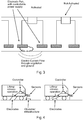
- Fig. 3 shows an example of a number of weed control units in the form or pairs of high voltage electrodes. Pairs of electrodes are provided to form the individual electrode based weed control units, where a high voltage can be applied between the electrodes forming a pair of electrodes. When an electrode pair is activated electric current flows from one electrode to the other via the weed and the ground including the weed's root.
- One sub-unit shown can have one electrode pair or indeed have a number of electrode pairs in order to provide for greater resolution and a smaller spatial extent of the application of such high voltage based weed control.
- the high voltage can be applied in a DC mode for a period of time or in an AC mode for a period of time.
- the electrodes have flexible end parts, not shown, in the form of metal tape or wires that form a flexible near ground surface (or ground surface) contact with the ground.
- flexible end parts not shown
- robust structural components of electrodes are quite close to the ground, and such then can hit and damage sensitive railway infrastructure components, and activation over or in the vicinity of certain sensitive infrastructure components can also damage such components.
- Fig. 4 shows a detailed example of a railway weed control vehicle.
- Fig. 4 shows the two images of the railway weed control vehicle, with the image of the left showing the vehicle at an earlier time than the image on the right.
- the railway weed control vehicle is running along a railway track, and is observed from the side in Fig. 4 .
- the railway weed control vehicle is moving in a forward direction, which is in a left to right direction shown in Fig. 4 .
- a number of sensors are mounted at the front of the vehicle. These sensors sense the ground to enable a determination to be made if sensitive infrastructure components are about to the encountered, or if components are about to be encountered that could damage electrodes if they were positioned ready for activation.
- the left hand image there are weeds under and around the vehicle (not shown) and the electrodes are being activated to kill the weeds by passing current at high potential through the plants and the ground including the root of the weeds.
- the vehicle has moved forward however on the basis of the analyzed sensor data a processing unit of the vehicle has modified activation of the electrode based weed control units that would encounter the infrastructure component by causing an actuator to lift the electrodes over the component and at the same time the electrodes have been deactivated.
- the railway weed control train has a GPS unit that determines where the train is, which can be augmented by image processing derived information and/or movement based information provided from knowledge of the speed of the train and/or using inertial navigation based sensors.
- the processing unit of the weed control trains knows over what part of the ground the electrode based weed control units are located.
- the GPS coordinates of weeds can be provided to the weed control train that then uses its own GPS unit to activate electrodes where required.
- the imagery acquired by the cameras of the railway weed control, that is used to identify infrastructure components is also analysed to determine if weeds are present, their locations and what types of weeds they are.
- the images are provided to the processing unit, which processes the images to determine if weeds are present, what those weeds are and if so their location on the ground can be determined.
- the electrodes can operate to kill the weeds, where the electrodes can operate differently depending upon what weeds have been identified.
- This imagery is similarly analysed to identify infrastructure components, enabling activation of the units to be modified accordingly in order that these components are nor damaged, and/or the electrodes are not damaged.
- the image analysis can determine a weed type, and this can be used to change the current and/or voltage being applied in order to account for the different weed types encountered. This ensures that easy to kill weeds can be controlled with a lower power setting than more difficult to control weeds.
- the processing unit analyses an image to determine the areas within the image where vegetation is to be found. Vegetation can be detected based on the shape of features within acquired images, where for example edge detection software is used to delineate the outer perimeter of objects and the outer perimeter of features within the outer perimeter of the object itself.
- a database of vegetation imagery can be used in helping determine if a feature in imagery relates to vegetation or not, using for example a trained machine learning algorithm such as an artificial neural network or decision tree analysis.
- the camera can acquire multi-spectral imagery, with imagery having information relating to the colour within images, and this can be used alone, or in combination with feature detection to determine where in an image vegetation is to be found.
- a trained machine learning algorithm is used to identify infrastructure components, with a touch sensor helping that identification by providing information relating to the actual size of the component.
- images of specific weeds are acquired, with information also relating to the size of weeds being used.
- Information relating to a geographical location in the world, where such a weed is to be found and information relating to a time of year when that weed is to be found, including when in flower etc. can be tagged with the imagery.
- the names of the weeds can also be tagged with the imagery of the weeds.
- the machine learning analyser which can be based on an artificial neural network or a decision tree analyser, is then trained on this ground truth acquired imagery.
- the analyser determines the specific type of weed that is in the image through a comparison of imagery of a weed found in the new image with imagery of different weeds it has been trained on, where the size of weeds, and where and when they grow can also be taken into account.
- the specific location of that weed type on the ground within the environment, and its size, can therefore be determined.
- the infrastructure component detection and identification machine learning algorithm has similarly been trained on the basis of imagery of components to be found around railway tracks, and can be trained using imagery of animals such as cats, dogs, rabbits etc in order that mitigating action can be taken in order that animals are not electrocuted, thereby providing for animal welfare to the extent possible.
- Other types of sensor and image processing can be used to detect and identify weeds, and other types of sensor and image processing can be used to detect and identify railway infrastructure components, such as the processing of data from radar or lidar based sensor systems.
- a touch sensor can be used to augment the image processing and can be useful when a robust component is located within a clump of weeds, and can not be imaged.
- a large lump of metal could be on the track with weeds growing around and over it.
- Image processing of a camera cannot then be used to identify, and in some cases processing of a lidar image can be used to detect and identify the metal object.
- the touch sensor provides a simple way to determine that there is an object present that would damage electrodes, and appropriate action such as lifting the electrodes over the object and/or to one side of the object can be undertaken.
- the electrode based weed control units could also be deactivated.
- the exact geographical location of the weed is then not then required to be determined. Also, because the weed control train is itself determining from acquired imagery the location and types of infrastructure components, the exact geographical location of the components is then not then required to be determined. Rather, on the basis of a relative spacing between the sensors (e.g. cameras) and the electrode based weed control units, along with knowledge of the forward motion of the weed control train (its speed), once a weed/component is located and identified, at a later time the electrode based weed control units can be activated at that location to kill the weed or the activation modified in order that sensitive infrastructure components are not damaged.
- the sensors e.g. cameras
- the electrode based weed control units along with knowledge of the forward motion of the weed control train (its speed)
- the cameras must be spaced forward of the electrode based weed control units by 5m, 10m or 20m for this train velocity.
- a reduction in train velocity enables the separation to be reduced.
- the cameras that are acquiring the imagery can have very short exposure times in order that image smear due to movement of the train during the exposure time is minimized. This can be by various means, including the use of cameras with short exposure times or short pulsed illumination via for example lasers or LEDs in combination with filters for example.
- the train can use a GPS system and/or inertial navigation system and/or image analysis to determine an exact geographical location of weeds and infrastructure components and the electrode based weed control units can have associated location determining means, such as a GPS system and/or inertial navigation system and/or image based system that can be used to provide the exact position of the units.
- a front carriage of a train can have the cameras that acquire imagery from which infrastructure components and weeds can be identified and located along with GPS data, then a rear carriage of a train that could be many tens or hundreds of metres behind the front carriage can have the the weed control units.
- the electrode based weed control units can be activated at the correct positions again using GPS data to kill weeds or have their activation modified in order not to damage infrastructure components, even if the train becomes shorter or longer due to going up or down hill.
- Fig. 5 shows examples of sensitive infrastructure components around a railway track, with the presently described railway weed control train being able to control using electrode based weed control units without damaging these infrastructure components.
- a computer program or computer program element is provided that is characterized by being configured to execute the method steps of the method according to one of the preceding embodiments, on an appropriate system.
- the computer program element might therefore be stored on a computer unit, which might also be part of an embodiment.
- This computing unit may be configured to perform or induce performing of the steps of the method described above. Moreover, it may be configured to operate the components of the above described apparatus and/or system.
- the computing unit can be configured to operate automatically and/or to execute the orders of a user.
- a computer program may be loaded into a working memory of a data processor. The data processor may thus be equipped to carry out the method according to one of the preceding embodiments.
- This exemplary embodiment of the invention covers both, a computer program that right from the beginning uses the invention and computer program that by means of an update turns an existing program into a program that uses invention.
- the computer program element might be able to provide all necessary steps to fulfill the procedure of an exemplary embodiment of the method as described above.
- a computer readable medium such as a CD-ROM, USB stick or the like
- the computer readable medium has a computer program element stored on it which computer program element is described by the preceding section.
- a computer program may be stored and/or distributed on a suitable medium, such as an optical storage medium or a solid state medium supplied together with or as part of other hardware, but may also be distributed in other forms, such as via the internet or other wired or wireless telecommunication systems.
- a suitable medium such as an optical storage medium or a solid state medium supplied together with or as part of other hardware, but may also be distributed in other forms, such as via the internet or other wired or wireless telecommunication systems.
- the computer program may also be presented over a network like the World Wide Web and can be downloaded into the working memory of a data processor from such a network.
- a medium for making a computer program element available for downloading is provided, which computer program element is arranged to perform a method according to one of the previously described embodiments of the invention.
Landscapes
- Engineering & Computer Science (AREA)
- Architecture (AREA)
- Civil Engineering (AREA)
- Structural Engineering (AREA)
- Life Sciences & Earth Sciences (AREA)
- Physics & Mathematics (AREA)
- Plasma & Fusion (AREA)
- Pest Control & Pesticides (AREA)
- Zoology (AREA)
- Environmental Sciences (AREA)
- Wood Science & Technology (AREA)
- Insects & Arthropods (AREA)
- Catching Or Destruction (AREA)
- Soil Working Implements (AREA)
Priority Applications (12)
| Application Number | Priority Date | Filing Date | Title |
|---|---|---|---|
| EP18172063.2A EP3569767A1 (en) | 2018-05-14 | 2018-05-14 | A railway weed control vehicle |
| MX2020012157A MX2020012157A (es) | 2018-05-14 | 2019-05-02 | Vehiculo ferroviario de control de malezas. |
| US17/055,380 US12024837B2 (en) | 2018-05-14 | 2019-05-02 | Railway weed control vehicle |
| JP2020564083A JP7699929B2 (ja) | 2018-05-14 | 2019-05-02 | 鉄道用雑草防除車両 |
| CA3099858A CA3099858A1 (en) | 2018-05-14 | 2019-05-02 | A railway weed control vehicle |
| BR112020021176-1A BR112020021176B1 (pt) | 2018-05-14 | 2019-05-02 | Veículo ferroviário de controle de plantas daninhas |
| EP19720643.6A EP3794182B1 (en) | 2018-05-14 | 2019-05-02 | A railway weed control vehicle |
| AU2019268975A AU2019268975A1 (en) | 2018-05-14 | 2019-05-02 | A railway weed control vehicle |
| PCT/EP2019/061206 WO2019219394A1 (en) | 2018-05-14 | 2019-05-02 | A railway weed control vehicle |
| ARP190101282A AR114905A1 (es) | 2018-05-14 | 2019-05-14 | Vehículo ferroviario de control de malezas |
| ZA2020/06369A ZA202006369B (en) | 2018-05-14 | 2020-10-14 | A railway weed control vehicle |
| ARP220103194A AR127727A2 (es) | 2018-05-14 | 2022-11-18 | Vehículo ferroviario de control de malezas |
Applications Claiming Priority (1)
| Application Number | Priority Date | Filing Date | Title |
|---|---|---|---|
| EP18172063.2A EP3569767A1 (en) | 2018-05-14 | 2018-05-14 | A railway weed control vehicle |
Publications (1)
| Publication Number | Publication Date |
|---|---|
| EP3569767A1 true EP3569767A1 (en) | 2019-11-20 |
Family
ID=62455324
Family Applications (2)
| Application Number | Title | Priority Date | Filing Date |
|---|---|---|---|
| EP18172063.2A Withdrawn EP3569767A1 (en) | 2018-05-14 | 2018-05-14 | A railway weed control vehicle |
| EP19720643.6A Active EP3794182B1 (en) | 2018-05-14 | 2019-05-02 | A railway weed control vehicle |
Family Applications After (1)
| Application Number | Title | Priority Date | Filing Date |
|---|---|---|---|
| EP19720643.6A Active EP3794182B1 (en) | 2018-05-14 | 2019-05-02 | A railway weed control vehicle |
Country Status (9)
| Country | Link |
|---|---|
| US (1) | US12024837B2 (https=) |
| EP (2) | EP3569767A1 (https=) |
| JP (1) | JP7699929B2 (https=) |
| AR (2) | AR114905A1 (https=) |
| AU (1) | AU2019268975A1 (https=) |
| CA (1) | CA3099858A1 (https=) |
| MX (1) | MX2020012157A (https=) |
| WO (1) | WO2019219394A1 (https=) |
| ZA (1) | ZA202006369B (https=) |
Cited By (2)
| Publication number | Priority date | Publication date | Assignee | Title |
|---|---|---|---|---|
| DE102020102928A1 (de) | 2020-02-05 | 2021-08-05 | G. Zwiehoff GmbH | Autonom fahrendes Schienenfahrzeug |
| EP3912469A1 (en) * | 2020-05-22 | 2021-11-24 | Ubiqutek Ltd. | Apparatus and method for electrically killing plants |
Families Citing this family (1)
| Publication number | Priority date | Publication date | Assignee | Title |
|---|---|---|---|---|
| EP4531561A4 (en) * | 2022-10-20 | 2026-04-08 | Zasso Group Ag | APPLICATOR, SYSTEM AND METHOD FOR APPLYING ELECTRIC CURRENT TO A PLANT, AND AGRICULTURAL PIVOT |
Citations (3)
| Publication number | Priority date | Publication date | Assignee | Title |
|---|---|---|---|---|
| DE4132637A1 (de) * | 1991-10-01 | 1993-04-08 | Walter Prof Dr Kuehbauch | Verfahren und vorrichtung zur gesteuerten unkrautbekaempfung |
| DE4140553A1 (de) * | 1991-12-09 | 1993-06-17 | Siemens Ag | Fahrbare vorrichtung zur unkrautbekaempfung auf gleiskoerpern |
| WO2018050143A2 (de) * | 2016-09-16 | 2018-03-22 | Zasso Gmbh | Vorrichtung zur zerstörung von pflanzen |
Family Cites Families (25)
| Publication number | Priority date | Publication date | Assignee | Title |
|---|---|---|---|---|
| US1832030A (en) * | 1929-01-05 | 1931-11-17 | Atlanta Birmingham And Coast R | Device for destroying weeds and vegetation along right-of-way of railroads |
| US2484443A (en) * | 1945-05-07 | 1949-10-11 | Gilbert M Baker | Electrical weed killer |
| US4177603A (en) * | 1977-12-08 | 1979-12-11 | Lasco, Inc. | Plant destruction using electricity |
| FR2473265A1 (fr) * | 1980-01-10 | 1981-07-17 | Evrard Ets | Appareil pour la destruction de vegetaux sur pied par voie electrique |
| JP3370734B2 (ja) * | 1993-06-15 | 2003-01-27 | 株式会社成裕 | 通電式除草装置 |
| JPH07170899A (ja) * | 1993-12-20 | 1995-07-11 | Hideo Maruta | 通電による除草方法 |
| JP3000191B2 (ja) * | 1994-08-19 | 2000-01-17 | 山陰建設工業株式会社 | 通電式除草装置 |
| DE19730247C1 (de) * | 1997-07-15 | 1998-12-17 | Stn Atlas Elektronik Gmbh | Verfahren und Vorrichtung zum Freihalten von Gleisstrecken von Pflanzenbewuchs |
| US6010079A (en) * | 1997-09-09 | 2000-01-04 | Motivepower Investments Limited | Vehicle mounted fluid delivery system with retractable arm |
| WO1999017606A1 (en) * | 1997-09-24 | 1999-04-15 | Hardi International A/S | A method and an apparatus for detecting, classifying and treatment of vegetation |
| JP2001131936A (ja) * | 1999-11-04 | 2001-05-15 | Central Japan Railway Co | 鉄道用農薬散布装置 |
| JP2001346496A (ja) | 2000-06-07 | 2001-12-18 | Chuzaburo Ichiyoshi | 電気除草器 |
| DE10353212A1 (de) * | 2003-11-13 | 2005-06-23 | Db Netz Ag | Verfahren und Vorrichtung zur Erkennung und Vermessung von Vegetation im Umfeld von Verkehrswegen |
| HU3056U (en) * | 2005-04-29 | 2006-03-28 | G & G Noevenyvedelmi Es Keresk | Construction for making weed map |
| BRPI0502291B1 (pt) * | 2005-05-30 | 2022-04-05 | Constantino Augusto Henrique Schwager | Método para eletrocussão de plantas daninhas por equipamento de múltiplos eletrodos |
| US10537071B2 (en) * | 2013-07-26 | 2020-01-21 | Blue River Technology Inc. | System and method for individual plant treatment based on neighboring effects |
| EP3586626A1 (en) * | 2014-07-29 | 2020-01-01 | Ubiqutek Ltd. | Apparatus and method for electrically killing plants |
| US11779007B2 (en) * | 2014-08-19 | 2023-10-10 | Lisi Global Llc | Method and apparatus for the management of a soil pest or pathogen |
| JP2016133857A (ja) * | 2015-01-16 | 2016-07-25 | 公益財団法人鉄道総合技術研究所 | 鉄道保守作業支援用情報処理装置および情報処理方法、ならびにプログラム |
| JP2017158533A (ja) * | 2016-03-02 | 2017-09-14 | 株式会社リコー | 除草装置および除草装置の制御方法 |
| AT518692B1 (de) * | 2016-06-13 | 2019-02-15 | Plasser & Theurer Exp Von Bahnbaumaschinen G M B H | Verfahren und System zur Instandhaltung eines Fahrwegs für Schienenfahrzeuge |
| CN106320113A (zh) * | 2016-08-22 | 2017-01-11 | 合肥德泰科通测控技术有限公司 | 一种铁路现场检测装置 |
| US20190261769A1 (en) * | 2016-09-16 | 2019-08-29 | Zasso Gmbh | Applicator |
| DE112017004655A5 (de) * | 2016-09-16 | 2019-06-13 | Zasso Gmbh | Vorrichtung für die Elektrokution von Strukturen in der Umwelt und Verwendung dieser Vorrichtung |
| EP3403899A1 (de) * | 2017-05-17 | 2018-11-21 | Bayer Aktiengesellschaft | Unkrautbekämpfung bei hoher geschwindigkeit |
-
2018
- 2018-05-14 EP EP18172063.2A patent/EP3569767A1/en not_active Withdrawn
-
2019
- 2019-05-02 WO PCT/EP2019/061206 patent/WO2019219394A1/en not_active Ceased
- 2019-05-02 US US17/055,380 patent/US12024837B2/en active Active
- 2019-05-02 JP JP2020564083A patent/JP7699929B2/ja active Active
- 2019-05-02 EP EP19720643.6A patent/EP3794182B1/en active Active
- 2019-05-02 AU AU2019268975A patent/AU2019268975A1/en not_active Abandoned
- 2019-05-02 MX MX2020012157A patent/MX2020012157A/es unknown
- 2019-05-02 CA CA3099858A patent/CA3099858A1/en active Pending
- 2019-05-14 AR ARP190101282A patent/AR114905A1/es active IP Right Grant
-
2020
- 2020-10-14 ZA ZA2020/06369A patent/ZA202006369B/en unknown
-
2022
- 2022-11-18 AR ARP220103194A patent/AR127727A2/es active IP Right Grant
Patent Citations (3)
| Publication number | Priority date | Publication date | Assignee | Title |
|---|---|---|---|---|
| DE4132637A1 (de) * | 1991-10-01 | 1993-04-08 | Walter Prof Dr Kuehbauch | Verfahren und vorrichtung zur gesteuerten unkrautbekaempfung |
| DE4140553A1 (de) * | 1991-12-09 | 1993-06-17 | Siemens Ag | Fahrbare vorrichtung zur unkrautbekaempfung auf gleiskoerpern |
| WO2018050143A2 (de) * | 2016-09-16 | 2018-03-22 | Zasso Gmbh | Vorrichtung zur zerstörung von pflanzen |
Cited By (4)
| Publication number | Priority date | Publication date | Assignee | Title |
|---|---|---|---|---|
| DE102020102928A1 (de) | 2020-02-05 | 2021-08-05 | G. Zwiehoff GmbH | Autonom fahrendes Schienenfahrzeug |
| EP3912469A1 (en) * | 2020-05-22 | 2021-11-24 | Ubiqutek Ltd. | Apparatus and method for electrically killing plants |
| WO2021233892A1 (en) * | 2020-05-22 | 2021-11-25 | Ubiqutek Ltd. | Apparatus and method for electrically killing plants |
| US12245579B2 (en) | 2020-05-22 | 2025-03-11 | Ubiqutek Ltd. | Apparatus and method for electrically killing plants |
Also Published As
| Publication number | Publication date |
|---|---|
| JP2021523993A (ja) | 2021-09-09 |
| MX2020012157A (es) | 2021-01-29 |
| CA3099858A1 (en) | 2019-11-21 |
| WO2019219394A1 (en) | 2019-11-21 |
| EP3794182B1 (en) | 2023-07-12 |
| EP3794182A1 (en) | 2021-03-24 |
| AR127727A2 (es) | 2024-02-21 |
| AR114905A1 (es) | 2020-10-28 |
| BR112020021176A2 (pt) | 2021-01-19 |
| ZA202006369B (en) | 2024-01-31 |
| JP7699929B2 (ja) | 2025-06-30 |
| US20210222385A1 (en) | 2021-07-22 |
| US12024837B2 (en) | 2024-07-02 |
| AU2019268975A1 (en) | 2020-11-12 |
Similar Documents
| Publication | Publication Date | Title |
|---|---|---|
| US11560680B2 (en) | Apparatus for weed control | |
| EP3545760A1 (en) | Apparatus for weed control | |
| EP3794182B1 (en) | A railway weed control vehicle | |
| US10002416B2 (en) | Inventory, growth, and risk prediction using image processing | |
| Ratnayake et al. | Towards computer vision and deep learning facilitated pollination monitoring for agriculture | |
| EP4006829A1 (en) | Information processing device, data generation method, and non-transitory computer-readable medium having program stored thereon | |
| AU2019252569B2 (en) | A weed control vehicle | |
| EP3425572A1 (en) | Apparatus for automated weed control | |
| JP6918425B2 (ja) | 撮影画像に含まれる境界線を検出するための装置、方法、及びプログラム | |
| Włodarczyk et al. | Hoofed animal detection in UAV thermal images using Balanced Random Forest and CNN features | |
| CN116758439A (zh) | 单目相机无人机无引导下的安全降落点分析方法和装置 | |
| JP4005409B2 (ja) | 背景像推定方法及び背景像推定装置 | |
| BR112020021176B1 (pt) | Veículo ferroviário de controle de plantas daninhas | |
| CN114724118B (zh) | 一种斑马线检测方法、装置、设备及存储介质 | |
| CN113885505A (zh) | 车辆的跟随处理方法、装置、电子设备与存储介质 | |
| Michalke et al. | The attentive co-pilot: towards a proactive biologically-inspired advanced driver assistance system | |
| DE102022129426A1 (de) | Verfahren und vorrichtung zur nachverfolgung eines objekts | |
| Kim et al. | Semi-Automated Tracking of Vibrissal Movements in Free-Moving Rodents Captured by High-Speed Videos | |
| TR201908593A2 (tr) | Plaka tanima si̇stemi̇ kamera görüntüleri̇ kullanilarak tütün kullanimi tespi̇ti̇ i̇çi̇n bi̇r yöntem |
Legal Events
| Date | Code | Title | Description |
|---|---|---|---|
| PUAI | Public reference made under article 153(3) epc to a published international application that has entered the european phase |
Free format text: ORIGINAL CODE: 0009012 |
|
| STAA | Information on the status of an ep patent application or granted ep patent |
Free format text: STATUS: THE APPLICATION HAS BEEN PUBLISHED |
|
| AK | Designated contracting states |
Kind code of ref document: A1 Designated state(s): AL AT BE BG CH CY CZ DE DK EE ES FI FR GB GR HR HU IE IS IT LI LT LU LV MC MK MT NL NO PL PT RO RS SE SI SK SM TR |
|
| AX | Request for extension of the european patent |
Extension state: BA ME |
|
| STAA | Information on the status of an ep patent application or granted ep patent |
Free format text: STATUS: THE APPLICATION HAS BEEN WITHDRAWN |
|
| 18W | Application withdrawn |
Effective date: 20200512 |