EP3569739B1 - Method of producing ammonium persulfate - Google Patents
Method of producing ammonium persulfate Download PDFInfo
- Publication number
- EP3569739B1 EP3569739B1 EP17891882.7A EP17891882A EP3569739B1 EP 3569739 B1 EP3569739 B1 EP 3569739B1 EP 17891882 A EP17891882 A EP 17891882A EP 3569739 B1 EP3569739 B1 EP 3569739B1
- Authority
- EP
- European Patent Office
- Prior art keywords
- anode
- ammonium persulfate
- ammonium sulfate
- cathode
- feedstock
- Prior art date
- Legal status (The legal status is an assumption and is not a legal conclusion. Google has not performed a legal analysis and makes no representation as to the accuracy of the status listed.)
- Active
Links
Images

Classifications
-
- C—CHEMISTRY; METALLURGY
- C25—ELECTROLYTIC OR ELECTROPHORETIC PROCESSES; APPARATUS THEREFOR
- C25B—ELECTROLYTIC OR ELECTROPHORETIC PROCESSES FOR THE PRODUCTION OF COMPOUNDS OR NON-METALS; APPARATUS THEREFOR
- C25B1/00—Electrolytic production of inorganic compounds or non-metals
-
- C—CHEMISTRY; METALLURGY
- C01—INORGANIC CHEMISTRY
- C01C—AMMONIA; CYANOGEN; COMPOUNDS THEREOF
- C01C1/00—Ammonia; Compounds thereof
- C01C1/24—Sulfates of ammonium
-
- C—CHEMISTRY; METALLURGY
- C25—ELECTROLYTIC OR ELECTROPHORETIC PROCESSES; APPARATUS THEREFOR
- C25B—ELECTROLYTIC OR ELECTROPHORETIC PROCESSES FOR THE PRODUCTION OF COMPOUNDS OR NON-METALS; APPARATUS THEREFOR
- C25B1/00—Electrolytic production of inorganic compounds or non-metals
- C25B1/01—Products
- C25B1/28—Per-compounds
- C25B1/29—Persulfates
-
- C—CHEMISTRY; METALLURGY
- C25—ELECTROLYTIC OR ELECTROPHORETIC PROCESSES; APPARATUS THEREFOR
- C25B—ELECTROLYTIC OR ELECTROPHORETIC PROCESSES FOR THE PRODUCTION OF COMPOUNDS OR NON-METALS; APPARATUS THEREFOR
- C25B11/00—Electrodes; Manufacture thereof not otherwise provided for
- C25B11/02—Electrodes; Manufacture thereof not otherwise provided for characterised by shape or form
- C25B11/03—Electrodes; Manufacture thereof not otherwise provided for characterised by shape or form perforated or foraminous
-
- C—CHEMISTRY; METALLURGY
- C25—ELECTROLYTIC OR ELECTROPHORETIC PROCESSES; APPARATUS THEREFOR
- C25B—ELECTROLYTIC OR ELECTROPHORETIC PROCESSES FOR THE PRODUCTION OF COMPOUNDS OR NON-METALS; APPARATUS THEREFOR
- C25B15/00—Operating or servicing cells
- C25B15/08—Supplying or removing reactants or electrolytes; Regeneration of electrolytes
-
- C—CHEMISTRY; METALLURGY
- C25—ELECTROLYTIC OR ELECTROPHORETIC PROCESSES; APPARATUS THEREFOR
- C25B—ELECTROLYTIC OR ELECTROPHORETIC PROCESSES FOR THE PRODUCTION OF COMPOUNDS OR NON-METALS; APPARATUS THEREFOR
- C25B9/00—Cells or assemblies of cells; Constructional parts of cells; Assemblies of constructional parts, e.g. electrode-diaphragm assemblies; Process-related cell features
- C25B9/17—Cells comprising dimensionally-stable non-movable electrodes; Assemblies of constructional parts thereof
- C25B9/19—Cells comprising dimensionally-stable non-movable electrodes; Assemblies of constructional parts thereof with diaphragms
-
- C—CHEMISTRY; METALLURGY
- C25—ELECTROLYTIC OR ELECTROPHORETIC PROCESSES; APPARATUS THEREFOR
- C25B—ELECTROLYTIC OR ELECTROPHORETIC PROCESSES FOR THE PRODUCTION OF COMPOUNDS OR NON-METALS; APPARATUS THEREFOR
- C25B11/00—Electrodes; Manufacture thereof not otherwise provided for
- C25B11/04—Electrodes; Manufacture thereof not otherwise provided for characterised by the material
Definitions
- the present invention relates to a method of producing ammonium persulfate using ammonium sulfate as a feedstock, and specifically to a method of producing ammonium persulfate which can produce ammonia persulfate and simultaneously coproduce ammonia.
- Ammonium sulfate is also called as an abbreviation thereof, and was once synthesized as a target substance, but now it is mainly marketed as a byproduct obtained in an industry for organic chemical such as caprolactam, laurolactam, acrylonitrile, methyl methacrylate or in a coke production process due to coal dry distillation. Since ammonium sulfate contains about 20% ammonia nitrogen, it is possible to use it as a fertilizer, and most of ammonium sulfate obtained as a byproduct in the above-described processes is used for a fertilizer.
- ammonium sulfate since ammonium sulfate has sulfuric acid roots, it also has negative aspects in plant growth such as soil acidification and salt formation, and the amount of fertilization is limited. For this reason, most of ammonium sulfate obtained as a byproduct nowadays in Japan is exported under the present circumstances.
- ammonium persulfate is widely and industrially utilized mainly as a polymerization initiator for emulsion polymerization, an oxidation bleach, a copper etching agent and the like.
- a method of producing ammonium persulfate which has been known up to now, as an anode-side feedstock of an electrolytic process, a method using an aqueous solution containing ammonium hydrogen sulfate as described in Patent document 1, a method using a an aqueous solution of ammonium sulfate alone as described in Patent document 2, and a method using ammonium sulfate and ammonium persulfate as described in Patent Document 3, are known.
- the cathode-side feedstock in any of the methods, only aqueous sulfuric acid solution or aqueous sulfuric acid solution containing salt is selected, and in any case, the amount of charge transfer due to electrolysis has been controlled at less than the amount of sulfuric acid-derived acid dissociable hydrogen ions.
- all of the cathode-side electrolytic reactions have been carried out only in the reaction in which the sulfuric acid-derived hydrogen ion becomes a hydrogen molecule as shown in the following reaction formula. 2H + + 2e - ⁇ H 2
- ammonium sulfate (NH 4 ) 2 SO 4 ) is supplied to the anode side 2 of electrolyzer 1 as an anode-side feedstock, and as an anode reaction, sulfuric acid is reacted (consumed) as follows. persulfuric ion is caused. 2SO 4 2- ⁇ S 2 O 8 2- + 2e -
- Non-patent document 1 concerns a method for producing ammonium persulfate by electrolyzing ammonium sulfate.
- the anode-side feedstock includes ammonium sulfate, an ammonium fluoride polarizing agent and 20% sulfuric acid.
- the cathode-side feedstock includes a saturated solution of ammonium sulfate and sulfuric acid as an unavoidable impurity.
- Patent document 4 concerns a method for producing ammonium persulfate by electrolyzing ammonium sulfate.
- the anode-side feedstock includes ammonium sulfate.
- the cathode-side feedstock includes an aqueous solution containing ammonium sulfate and sulfuric acid.
- Non-patent Document 1 SUGINO, Kiichiro et al., The Journal of Chemical Society of Japan Chemistry Section, vol. 50, no. 4-5, pages 34-38
- ammonium sulfate is utilized as the anode-side feedstock
- ammonium sulfate aqueous solution is generated on the cathode side and it is reused as the anode-side feedstock, in such a process of producing ammonium persulfate, it was not possible to use a large amount of ammonium sulfate, which is a byproduct produced from other processes cheaply and excessively, and it was necessary to use ammonia and sulfuric acid as feedstocks.
- an object of the present invention is to provide a method capable of utilizing a large amount of ammonium sulfate produced as a byproduct in other processes cheaply and excessively as an anode-side feedstock in the process of the present invention, in particular, capable of producing ammonia which can be effectively utilized in various processes without generating ammonium sulfate which has been conventionally reused, and besides, capable of producing ammonium persulfate with a high efficiency.
- a method of producing ammonium persulfate according to the present invention is a method of producing ammonium persulfate (chemical formula: (NH 4 ) 2 S 2 O 8 ) by electrolyzing ammonium sulfate (chemical formula: (NH 4 ) 2 SO 4 ) characterized in that, in an electrolyzer which is separated into a anode chamber and a cathode chamber by a cation exchange membrane, an ammonium sulfate aqueous solution is supplied as an anode-side feedstock, a solution containing less than 1.0 mol of acid-derived acid dissociable hydrogen ions per 1.0 mol of amount of charge transfer, which is an ammonium sulfate aqueous solution is supplied as a cathode-side feedstock, and electrolysis is performed to produce ammonium persulfate on the anode side and at least ammonia on the cathode side.
- the method of producing ammonium persulfate according to the present invention is a method of suppressing the amount of acid dissociable hydrogen ions of the cathode-side feedstock to an amount less than the amount of charge transfer due to the electrolysis and supplying the feedstock to the cathode side (cathode chamber), and by electrolysis, producing ammonium persulfate on the anode side similarly in the conventional technology and producing at least ammonia, more specifically, for example, ammonia hydroxide/ammonia gas and hydrogen gas on the cathode side.
- the solution containing less than 1.0 mol of acid-derived acid dissociable hydrogen ions per 1.0 mol of amount of charge transfer which is supplied as the above-described cathode-side feedstock, although water can also be used, in order to efficiently perform the electrolysis and the reaction in the present invention, it is preferred to use an electrolyte-containing solution.
- an ammonium sulfate solution is used as such a cathode-side feedstock solution.
- the concentration of the ammonium sulfate aqueous solution as the cathode-side feedstock is preferably in a range of 30 to 45% by weight.
- the concentration of the ammonium sulfate aqueous solution as the anode-side feedstock is preferably in a range of 30 to 45% by weight. More preferably, it is 40 to 45% by weight.
- ammonium persulfate can be produced industrially advantageously.
- Both the anode side and the cathode side may be a batch system for the feedstock supply and product delivery systems, but the continuous system is more industrially advantageous.
- ammonium persulfate produced by the method of producing ammonium persulfate according to the present invention can be widely used industrially as a polymerization initiator for emulsion polymerization, an oxidation bleach, a copper etching agent, etc., and ammonia can be utilized in various processes in addition to the lactam production process described later, and hydrogen can be utilized as a hydrogenation process of organic chemical industry, fuel for fuel cells or the like.
- ammonium persulfate which does not depend on ammonium sulfate which is generated in the system can be used as a main feedstock, it is industrially advantageous, and further, because it is an electrolytic process, not only ammonium persulfate but also valuable materials such as ammonia and hydrogen can be co-produced, and furthermore, it is possible to provide a method of producing ammonium persulfate which can produce it with a high current efficiency of ammonium persulfate production of 80% or more, more preferably 85% or more, particularly preferably 90% or more.
- the method of producing ammonium persulfate according to the present invention is a method of producing ammonium persulfate by electrolyzing ammonium sulfate characterized in that an ammonium sulfate aqueous solution is supplied as an anode-side feedstock, a solution containing less than 1.0 mol of acid-derived acid dissociable hydrogen ions per 1.0 mol of amount of charge transfer is supplied as a cathode-side feedstock, and electrolysis is performed to produce ammonium persulfate on the anode side and at least ammonia on the cathode side.
- an ammonium sulfate aqueous solution containing ammonium ion of amount of charge transfer or more can be used, and sulfuric acid and ammonium hydroxide may be in an excess state.
- concentration is not particularly limited, industrially, the higher the concentration is, the more advantageous it is, and a concentration range of 30 to 45% by weight of ammonium sulfate is preferable.
- the anode-side feedstock contains a necessary amount of polarizer, the polarizer is not particularly limited as long as it is advantageous for a known production of persulfate.
- polarizers guanidine, guanidine salt, thiocyanate, cyanide, cyanate, fluoride and the like are used. Particularly preferred one is guanidine or guanidine salt.
- guanidine salt guanidine sulfamate, guanidine nitrate, guanidine sulfate, guanidine phosphate, guanidine carbonate, or the like, can be exemplified.
- concentration of the polarizer 0.01 to 1% by weight with respect to the anode side feedstock can be exemplified, and it is preferably 0.01 to 0.05% by weight.
- the cathode-side feedstock is an ammonium sulfate aqueous solution.
- an ammonium sulfate aqueous solution By using an ammonium sulfate aqueous solution, the electrical resistance is reduced because it contains an electrolyte, and since it is composed of ions having the same composition as the anode side feedstock separated from a diaphragm, and further, sulfuric acid-derived acid hydrogen ion subjected to a cathode reaction does not exist, maximum ammonia can be produced.
- concentration is not particularly limited, with respect to ammonium sulfate, industrially, the higher the concentration is, the more advantageous it is, and a concentration range of 30 to 45% by weight is more preferable.
- an ammonium sulfate aqueous solution it is more preferable to use an ammonium sulfate aqueous solution than to use sulfuric acid, from the viewpoint of ammonia production efficiency and the selection of materials used for cathode by reducing corrosiveness caused by sulfuric acid.
- reaction formula (1) is prioritized in the range where sulfur acid-derived hydrogen ion is present in the anode liquid, and hydrogen is generated as a cathode-side product, but after the acid-derived hydrogen ion has reached to a condition of deficiency, reactions such as the following reaction formula (2) and the following reaction formula (3) are prioritized. Since the equilibrium reaction of the following reaction formula (4) exists in the system, hydrogen and ammonia can be generated as cathode-side products in any of the reaction formula (2) and the reaction formula (3).
- the electrolyzer used in the present invention is not particularly limited, and may be an electrolyzer which is divided into an anode chamber and a cathode chamber, which are separated by a diaphragm.
- a box type electrolyzer or a filter press type electrolyzer can be used.
- a diaphragm which can inhibit the electrophoresis of the anion generated in the anode chamber to the cathode chamber is used.
- a cation exchange membrane is used as the diaphragm.
- the anode is preferably platinum or platinum group, but a known material with a high oxygen overvoltage such as a conductive diamond electrode can also be used.
- a conductive diamond electrode preferably, lead, zirconium, platinum, nickel, and a stainless steel such as SUS 316 can be used.
- the electrode a wire mesh made of these metals can be used.
- the current density of the anode is preferably 20 A/dm 2 or more. If it is lower than this, the current efficiency may be low. Preferably, it is 40 A/dm 2 or more, and preferably 500 A/dm 2 or less, more preferably 200 A/dm 2 or less, and particularly preferably 80 A/dm 2 or less. Industrially, operation at a high current density is more preferred because the device size can be reduced.
- the temperature in the electrolyzer is preferably 15 to 40°C. By setting this range, dissolution of salts in the electrolyzer can be maintained in an appropriate range, and undesirable side reactions can be suppressed, that are preferred.
- ammonium persulfate can be produced with a high current efficiency.
- ammonium persulfate can be produced at a current efficiency of 80% or more, more preferably at a current efficiency of 85% or more, particularly preferably 90% or more.
- the upper limit of the current efficiency is theoretically 100%.
- the current efficiency (%) is a value represented by (generated persulfuric ion (mol) ⁇ 2)/current magnitude (F) ⁇ 100, and it can be calculated by measuring the amount of persulfuric ion generated per unit current magnitude.
- this anode produced solution is supplied to, for example, a widely used crystallization tank similarly to in the conventional technology, thereby making it possible to perform a concentration crystallization.
- the ammonium persulfate-containing slurry after crystallization is separated into ammonium persulfate crystals and a crystallization mother liquid by a solid-liquid separator such as a centrifugal separator used widely and commonly.
- the obtained ammonium persulfate crystals can be dried and commercialized using a powder drier.
- the crystallization mother liquid can be re-supplied to the process as an anode-side feedstock.
- a mixed gas of hydrogen and ammonia in a cathode produced gas in the cathode chamber and/or ammonium hydroxide (ammonia-containing water) in the cathode produced solution is produced.
- the hydrogen-ammonia mixed gas produced on the cathode side can be separated by ammonia gas separation methods used widely and commonly, for example, such as cryogenic separation and compression separation.
- the destination of supplying the produced ammonia is a process supplied as ammonia water, for example, such as a neutralized salt conversion process in a lactam process, it can be separated using a gas absorption tower used widely and commonly and can also be recovered as ammonia water.
- the separated hydrogen gas can be purified and compressed using a pressure swing adsorption method or the like, and can be utilized for a hydrogenation process of organic chemical industry or as fuel for fuel cells.
- ammonium sulfate which is produced as a byproduct in the aforementioned production process of lactam, acrylonitrile, methyl methacrylate or the like and coke production process by coal dry distillation can used as the feedstock.
- the byproducts containing ammonium sulfate in various processes may contain impurities other than ammonium sulfate, etc., and depending upon their components and contents, by occurrence of side reactions, the current efficiency in the production process of ammonium persulfate may decrease. In such a case, it is preferred to purify the byproduct containing ammonium sulfate in advance to reduce the components that reduce the current efficiency, and then supply it to the ammonium persulfate production process.
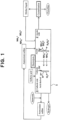
- Fig. 2 exemplifies a case of using ammonium sulfate (abbreviation thereof) solution as the cathode-side feedstock solution.
- ammonium sulfate (abbreviation thereof) solution as the cathode-side feedstock solution.
- symbol 11 indicates an electrolyzer, and ammonium sulfate ((NH 4 ) 2 SO 4 ) produced as a byproduct, for example, in a lactam production process 14 as other production processes 14 is supplied to the anode side 12 of the electrolyzer 11 as the anode-side feedstock, and as the anode reaction, sulfuric ion is reacted (consumed) to generate persulfuric ion, as shown in the following description, similarly to in the conventional technology.
- ammonium sulfate (NH 4 ) 2 SO 4 ) produced as a byproduct, for example, in a lactam production process 14 as other production processes 14 is supplied to the anode side 12 of the electrolyzer 11 as the anode-side feedstock, and as the anode reaction, sulfuric ion is reacted (consumed) to generate persulfuric ion, as shown in the following description, similarly to in the conventional technology.
- ammonium sulfate solution (abbreviation thereof solution) comprising ammonium sulfate is supplied to the cathode side 13, is as follows:
- ammonia, ammonia-containing water, and hydrogen are produced without producing ammonium sulfate, and ammonia and ammonia-containing water can be used for the lactam production process etc., and the hydrogen is recovered and can be used in various fields.
- an electrode comprising an 80 opening per 25.4 mm (80 mesh) platinum wire mesh and titanium was used as the anode
- an electrode comprising an 80 opening per 25.4 mm (80 mesh) SUS 316 wire mesh was used as the cathode.
- 500g of an aqueous solution adding 0.03 wt% of guanidine sulfamate as a polarizer to a 43 wt% ammonium sulfate aqueous solution was supplied.
- ammonium ion is 3.25mol
- sulfuric ion is 1.63mol
- 500g of 43 wt% ammonium sulfate aqueous solution was supplied to the cathode chamber.
- the anode current density was energized at 45 A/dm 2 .
- the amount of charge transfer was 0.67mol.
- the amount of charge transfer can be determined by a value of the amount of current flow ⁇ time of current flow.
- the concentration of ammonium persulfate in the resulting anode produced solution was measured by titration. In the anode, 0.315mol of ammonium persulfate was produced, and the current efficiency was 94%. Further, generation of hydrogen and ammonia corresponding to the amounts of electrolytic reaction was recognized from the cathode generated gas during the electrolysis.
- the energization was performed at an anode current density of 6.43 A/dm 2 using the same device as in Example 1 and the same anode chamber feed solution composition and cathode chamber feed solution composition. The amount of charge transfer was 0.67mol.
- the concentration of ammonium persulfate in the resulting anode produced solution was measured by titration. In the anode, 0.311mol of ammonium persulfate was produced, and the current efficiency was 93%. Further, generation of hydrogen and ammonia corresponding to the amounts of electrolytic reaction was recognized from the cathode generated gas during the electrolysis.
- the energization was performed at an anode current density of 2.86 A/dm 2 using the same device as in Example 1 and the same anode chamber feed solution composition and cathode chamber feed solution composition. The amount of charge transfer was 0.30mol. After energization, the concentration of ammonium persulfate in the resulting anode produced solution was measured by titration. In the anode, 0.140mol of ammonium persulfate was produced, and the current efficiency was 93%. Further, generation of hydrogen and ammonia corresponding to the amounts of electrolytic reaction was recognized from the cathode generated gas during the electrolysis.
- a neutral alumina diaphragm was used as the diaphragm, and the other experimental device such as electrolyzer and the like and the anode chamber feed solution composition were the same as in Example 1.
- 500g of a 10 wt% ammonia aqueous solution was supplied to the cathode chamber.
- the energization was performed at an anode current density of 45 A/dm 2 .
- the amount of charge transfer was 0.67mol.
- the concentration of ammonium persulfate in the resulting anode produced solution was measured by titration. In the anode, 0.295mol of ammonium persulfate was produced, and the current efficiency was 88%. Further, generation of hydrogen and ammonia corresponding to the amounts of electrolytic reaction was recognized from the cathode generated gas during the electrolysis.
- ammonium sulfate containing an impurity produced as a byproduct in the lactam process was directly used to make the feed solution compositions for the anode chamber and the cathode chamber similar to in Example 1.
- the anode current density was 45 A/dm 2 , and electricity was applied so as to achieve the amount of charge transfer by which the concentration of ammonium persulfate in the anode produced solution became the same as in Example 1.
- the concentration of ammonium persulfate in the resulting anode produced solution was measured by titration. In the anode, 0.535mol of ammonium persulfate was produced, and the current efficiency was 80%.
- the obtained anode produced solution was dehydrated and concentrated under reduced pressure while being stirred in a double-tube glass vessel to crystallize ammonium persulfate.
- the pressure in the glass vessel at the time of concentration was about 2.67 kPa (20torr)
- the temperature of the contained solution was about 30°C.
- the dehydration rate was 34.1%.
- the resulting slurry was filtered to separate it into mother liquid and cake, and the cake was further dried at a room temperature to obtain crystals of ammonium persulfate. When the purity of this ammonium persulfate crystal was determined, it was 98.4%.
- the mother liquid obtained by the filtration was added with an aqueous solution of ammonium sulfate produced as a byproduct in the lactam process by an equivalent amount of ammonium sulfate consumed in the electrolysis, and recycled as an anode chamber feed solution, and as the cathode chamber feed solution, the same one as in the previously performed first electrolysis was prepared separately. Electricity was applied under the same conditions as in the previously performed first electrolysis, and when the concentration of ammonium persulfate in the anode produced solution was measured, in the anode, 0.510mol of ammonium persulfate was produced, and the current efficiency was 86%.
- the dehydration rate was 25.9%, and the purity of ammonium persulfate crystal was 98.7%.
- the mother liquid was recycled by the same operation and the electrolysis and crystallization were performed twice, for a total of 4 cycles, and the current efficiency at the 4th cycle was 85%, the dehydration rate was 31.8%, and the purity of the ammonium persulfate crystal was 99.4%. Further, in each of the electrolysis, generation of hydrogen and ammonia corresponding to the amounts of electrolytic reaction was recognized from the cathode generated gas during the electrolysis.
- Electrolysis of ammonium persulfate was carried out with the composition and the amount of charge transfer based on the description of Patent document 2.
- the experimental device such as electrolyzer was the same as in Example 1.
- 500g of an aqueous solution adding 0.05 wt% of guanidine sulfamate as a polarizer to a 43 wt% ammonium sulfate aqueous solution was supplied.
- ammonium ion was 3.26mol and sulfuric ion was 1.63mol.
- 500g of aqueous solution of 18.9 wt% sulfuric acid and 28.4 wt% ammonium sulfate was supplied.
- ammonium ion was 2.15mol
- sulfuric ion was 2.14mol
- hydrogen ion was 1.93mol.
- the amount of current flow and the current flow time were controlled so that the amount of charge transfer became 1.92mol.
- the composition of the solution in which the gas was collected with an excess of water from the anode produced solution, the cathode produced solution, and the cathode generation gas was analyzed by titration.
- the method according to the present invention can produce ammonium persulfate with a high efficiency by electrolyzing ammonium sulfate as a feedstock, and can co-produce ammonia which can be effectively utilized for various processes without producing ammonium sulfate which is reused as in the conventional method, and can be applied extremely suitably to the production of ammonium persulfate which is required to efficiently consume ammonium sulfate that is excessively produced as a byproduct.
Landscapes
- Chemical & Material Sciences (AREA)
- Organic Chemistry (AREA)
- Engineering & Computer Science (AREA)
- Chemical Kinetics & Catalysis (AREA)
- Electrochemistry (AREA)
- Materials Engineering (AREA)
- Metallurgy (AREA)
- Inorganic Chemistry (AREA)
- Electrolytic Production Of Non-Metals, Compounds, Apparatuses Therefor (AREA)
Applications Claiming Priority (3)
| Application Number | Priority Date | Filing Date | Title |
|---|---|---|---|
| JP2017003993 | 2017-01-13 | ||
| JP2017161111 | 2017-08-24 | ||
| PCT/JP2017/047065 WO2018131493A1 (ja) | 2017-01-13 | 2017-12-27 | 過硫酸アンモニウムの製造方法 |
Publications (4)
| Publication Number | Publication Date |
|---|---|
| EP3569739A1 EP3569739A1 (en) | 2019-11-20 |
| EP3569739A4 EP3569739A4 (en) | 2020-09-02 |
| EP3569739C0 EP3569739C0 (en) | 2025-05-07 |
| EP3569739B1 true EP3569739B1 (en) | 2025-05-07 |
Family
ID=62839517
Family Applications (1)
| Application Number | Title | Priority Date | Filing Date |
|---|---|---|---|
| EP17891882.7A Active EP3569739B1 (en) | 2017-01-13 | 2017-12-27 | Method of producing ammonium persulfate |
Country Status (9)
| Country | Link |
|---|---|
| US (1) | US20190323133A1 (pl) |
| EP (1) | EP3569739B1 (pl) |
| JP (1) | JP6512362B2 (pl) |
| KR (1) | KR102260402B1 (pl) |
| CN (1) | CN110073036A (pl) |
| ES (1) | ES3032619T3 (pl) |
| PL (1) | PL3569739T3 (pl) |
| TW (1) | TWI736732B (pl) |
| WO (1) | WO2018131493A1 (pl) |
Families Citing this family (7)
| Publication number | Priority date | Publication date | Assignee | Title |
|---|---|---|---|---|
| JP7163841B2 (ja) * | 2019-03-28 | 2022-11-01 | 東レ株式会社 | 過硫酸アンモニウムの製造方法 |
| CN111020623A (zh) * | 2019-12-31 | 2020-04-17 | 河北中科同创科技发展有限公司 | 一种密闭电解槽 |
| KR102372734B1 (ko) * | 2020-06-18 | 2022-03-10 | 한국지질자원연구원 | 탈황석고의 광물 탄산화 공정에서 발생하는 부산물을 이용한 과황산암모늄의 제조방법 |
| JP7683238B2 (ja) * | 2021-02-25 | 2025-05-27 | 東レ株式会社 | 過硫酸アンモニウムの製造方法 |
| CN113174604B (zh) * | 2021-04-13 | 2022-12-06 | 浙江工业大学 | 一种直接电氧化制备过硫酸钠的方法 |
| CN114314765A (zh) * | 2021-12-28 | 2022-04-12 | 湖北华德莱节能减排科技有限公司 | 一种电化学资源化脱硫废水协同产氢的方法、装置及应用 |
| CN116272760B (zh) * | 2023-02-08 | 2025-12-05 | 安徽中医药大学 | 离子置换膜反应器清洁化制备l-门冬氨酸镁的方法及装置 |
Family Cites Families (14)
| Publication number | Priority date | Publication date | Assignee | Title |
|---|---|---|---|---|
| GB746786A (en) * | 1952-11-13 | 1956-03-21 | Rohm & Haas | Improvements in or relating to the production of aqueous solutions of persulfuric acid and ammonium persulfate |
| NL6603696A (pl) * | 1965-04-28 | 1966-10-31 | ||
| JPS57198275A (en) | 1981-05-27 | 1982-12-04 | Asahi Glass Co Ltd | Production of ammonium peroxodisulfate |
| DE4230399A1 (de) * | 1992-09-11 | 1994-03-17 | Basf Ag | Verfahren zur elektrochemischen Spaltung von Alkalisulfaten und Ammoniumsulfat in die freien Laugen und Schwefelsäure bei gleichzeitiger anodischer Oxidation von Schwefeldioxid |
| US5643437A (en) * | 1995-11-03 | 1997-07-01 | Huron Tech Canada, Inc. | Co-generation of ammonium persulfate anodically and alkaline hydrogen peroxide cathodically with cathode products ratio control |
| JP3832534B2 (ja) * | 1998-04-07 | 2006-10-11 | 三菱瓦斯化学株式会社 | 過硫酸ナトリウムの製造方法 |
| JP3832533B2 (ja) | 1998-04-07 | 2006-10-11 | 三菱瓦斯化学株式会社 | 過硫酸アンモニウムの製造方法 |
| TW416997B (en) * | 1998-03-30 | 2001-01-01 | Mitsubishi Gas Chemical Co | Process for producing persulfate |
| JP2000038691A (ja) * | 1998-07-23 | 2000-02-08 | Mitsubishi Gas Chem Co Inc | 過硫酸塩類の電解製法 |
| JP2001220695A (ja) | 2000-02-07 | 2001-08-14 | Mitsubishi Gas Chem Co Inc | 過硫酸アンモニウムの製造方法 |
| EP2588449A2 (en) * | 2010-07-02 | 2013-05-08 | DSM IP Assets B.V. | High temperature lactam neutralisation |
| CN102877085B (zh) * | 2012-09-24 | 2015-06-17 | 山东东岳高分子材料有限公司 | 一种基于氯碱离子膜电解槽的电解氧化制备高纯度过硫酸盐的方法 |
| CN104152943B (zh) * | 2014-08-15 | 2017-05-10 | 东南大学 | 氨和尿素溶液烟气净化吸收液制过硫酸铵的装置及方法 |
| KR101528911B1 (ko) * | 2014-12-26 | 2015-06-15 | (주) 테크윈 | 과황산암모늄의 고효율 연속 생산 방법 및 장치 |
-
2017
- 2017-12-27 US US16/475,738 patent/US20190323133A1/en not_active Abandoned
- 2017-12-27 WO PCT/JP2017/047065 patent/WO2018131493A1/ja not_active Ceased
- 2017-12-27 JP JP2018502427A patent/JP6512362B2/ja active Active
- 2017-12-27 CN CN201780077071.3A patent/CN110073036A/zh active Pending
- 2017-12-27 ES ES17891882T patent/ES3032619T3/es active Active
- 2017-12-27 KR KR1020197018759A patent/KR102260402B1/ko active Active
- 2017-12-27 PL PL17891882.7T patent/PL3569739T3/pl unknown
- 2017-12-27 EP EP17891882.7A patent/EP3569739B1/en active Active
-
2018
- 2018-01-05 TW TW107100400A patent/TWI736732B/zh active
Also Published As
| Publication number | Publication date |
|---|---|
| ES3032619T3 (en) | 2025-07-22 |
| EP3569739C0 (en) | 2025-05-07 |
| WO2018131493A1 (ja) | 2018-07-19 |
| KR102260402B1 (ko) | 2021-06-03 |
| PL3569739T3 (pl) | 2025-06-30 |
| TWI736732B (zh) | 2021-08-21 |
| JPWO2018131493A1 (ja) | 2019-01-17 |
| CN110073036A (zh) | 2019-07-30 |
| KR20190104328A (ko) | 2019-09-09 |
| EP3569739A4 (en) | 2020-09-02 |
| JP6512362B2 (ja) | 2019-05-15 |
| EP3569739A1 (en) | 2019-11-20 |
| TW201831729A (zh) | 2018-09-01 |
| US20190323133A1 (en) | 2019-10-24 |
Similar Documents
| Publication | Publication Date | Title |
|---|---|---|
| EP3569739B1 (en) | Method of producing ammonium persulfate | |
| AU2010351550B2 (en) | A process for making lithium carbonate from lithium chloride | |
| JP7163841B2 (ja) | 過硫酸アンモニウムの製造方法 | |
| RU2751710C2 (ru) | Способ получения моногидрата гидроксида лития высокой степени чистоты из материалов, содержащих карбонат лития или хлорид лития | |
| US4059496A (en) | Process for the preparation of sulfuric acid from sulphur dioxide | |
| US6491807B2 (en) | Process for producing sodium persulfate | |
| CN102828198A (zh) | 氯碱用全氟离子交换膜法电解有机铵盐制备高纯季铵碱的方法 | |
| KR910001138B1 (ko) | 이산화염소와 수산화나트륨의 제조방법 | |
| US3915816A (en) | Process for the electrolytic production of sodium peroxodisulfate | |
| US5004527A (en) | Continuous electrolytic production of alkali metal perchlorates | |
| KR101528911B1 (ko) | 과황산암모늄의 고효율 연속 생산 방법 및 장치 | |
| CN102839383A (zh) | 一种基于氯碱用全氟离子交换膜的有机酸盐电解制备有机酸的方法 | |
| JP2014015649A (ja) | 苛性ソーダの製造方法 | |
| CA2726438A1 (en) | Process for producing pure ammonium perrhenate | |
| CA1090286A (en) | Electrolytic production of sodium persulfate | |
| EP0254361B1 (en) | Process for the preparation of potassium nitrate | |
| JP7683238B2 (ja) | 過硫酸アンモニウムの製造方法 | |
| CN1246501C (zh) | 同时电化学制备连二亚硫酸钠和过氧二硫酸钠的方法 | |
| JPH11293484A (ja) | 過硫酸アンモニウムの製造方法 | |
| JPH11189888A (ja) | 過硫酸ナトリウムの製造方法 | |
| JP2023176312A (ja) | 過硫酸アンモニウムの製造方法 | |
| US4444633A (en) | Production of sodium hydroxide and boric acid by the electrolysis of sodium borate solutions | |
| JP4182302B2 (ja) | 過硫酸カリウムの製造方法 | |
| CN1121540A (zh) | 从碘和氢氧化钾获得碘酸钾的方法 | |
| CN110590620B (zh) | 一种电渗析纯化二甲基砜的方法 |
Legal Events
| Date | Code | Title | Description |
|---|---|---|---|
| STAA | Information on the status of an ep patent application or granted ep patent |
Free format text: STATUS: THE INTERNATIONAL PUBLICATION HAS BEEN MADE |
|
| PUAI | Public reference made under article 153(3) epc to a published international application that has entered the european phase |
Free format text: ORIGINAL CODE: 0009012 |
|
| STAA | Information on the status of an ep patent application or granted ep patent |
Free format text: STATUS: REQUEST FOR EXAMINATION WAS MADE |
|
| 17P | Request for examination filed |
Effective date: 20190705 |
|
| AK | Designated contracting states |
Kind code of ref document: A1 Designated state(s): AL AT BE BG CH CY CZ DE DK EE ES FI FR GB GR HR HU IE IS IT LI LT LU LV MC MK MT NL NO PL PT RO RS SE SI SK SM TR |
|
| AX | Request for extension of the european patent |
Extension state: BA ME |
|
| DAV | Request for validation of the european patent (deleted) | ||
| DAX | Request for extension of the european patent (deleted) | ||
| A4 | Supplementary search report drawn up and despatched |
Effective date: 20200803 |
|
| RIC1 | Information provided on ipc code assigned before grant |
Ipc: C25B 1/28 20060101AFI20200728BHEP Ipc: C25B 1/30 20060101ALI20200728BHEP Ipc: C25B 1/00 20060101ALI20200728BHEP |
|
| STAA | Information on the status of an ep patent application or granted ep patent |
Free format text: STATUS: EXAMINATION IS IN PROGRESS |
|
| 17Q | First examination report despatched |
Effective date: 20220704 |
|
| GRAP | Despatch of communication of intention to grant a patent |
Free format text: ORIGINAL CODE: EPIDOSNIGR1 |
|
| STAA | Information on the status of an ep patent application or granted ep patent |
Free format text: STATUS: GRANT OF PATENT IS INTENDED |
|
| INTG | Intention to grant announced |
Effective date: 20250120 |
|
| GRAS | Grant fee paid |
Free format text: ORIGINAL CODE: EPIDOSNIGR3 |
|
| GRAA | (expected) grant |
Free format text: ORIGINAL CODE: 0009210 |
|
| STAA | Information on the status of an ep patent application or granted ep patent |
Free format text: STATUS: THE PATENT HAS BEEN GRANTED |
|
| AK | Designated contracting states |
Kind code of ref document: B1 Designated state(s): AL AT BE BG CH CY CZ DE DK EE ES FI FR GB GR HR HU IE IS IT LI LT LU LV MC MK MT NL NO PL PT RO RS SE SI SK SM TR |
|
| REG | Reference to a national code |
Ref country code: GB Ref legal event code: FG4D |
|
| REG | Reference to a national code |
Ref country code: CH Ref legal event code: EP |
|
| REG | Reference to a national code |
Ref country code: DE Ref legal event code: R096 Ref document number: 602017089394 Country of ref document: DE |
|
| REG | Reference to a national code |
Ref country code: IE Ref legal event code: FG4D |
|
| U01 | Request for unitary effect filed |
Effective date: 20250527 |
|
| U07 | Unitary effect registered |
Designated state(s): AT BE BG DE DK EE FI FR IT LT LU LV MT NL PT RO SE SI Effective date: 20250605 |
|
| REG | Reference to a national code |
Ref country code: ES Ref legal event code: FG2A Ref document number: 3032619 Country of ref document: ES Kind code of ref document: T3 Effective date: 20250722 |
|
| PG25 | Lapsed in a contracting state [announced via postgrant information from national office to epo] |
Ref country code: GR Free format text: LAPSE BECAUSE OF FAILURE TO SUBMIT A TRANSLATION OF THE DESCRIPTION OR TO PAY THE FEE WITHIN THE PRESCRIBED TIME-LIMIT Effective date: 20250808 Ref country code: NO Free format text: LAPSE BECAUSE OF FAILURE TO SUBMIT A TRANSLATION OF THE DESCRIPTION OR TO PAY THE FEE WITHIN THE PRESCRIBED TIME-LIMIT Effective date: 20250807 |
|
| PG25 | Lapsed in a contracting state [announced via postgrant information from national office to epo] |
Ref country code: HR Free format text: LAPSE BECAUSE OF FAILURE TO SUBMIT A TRANSLATION OF THE DESCRIPTION OR TO PAY THE FEE WITHIN THE PRESCRIBED TIME-LIMIT Effective date: 20250507 |
|
| PG25 | Lapsed in a contracting state [announced via postgrant information from national office to epo] |
Ref country code: RS Free format text: LAPSE BECAUSE OF FAILURE TO SUBMIT A TRANSLATION OF THE DESCRIPTION OR TO PAY THE FEE WITHIN THE PRESCRIBED TIME-LIMIT Effective date: 20250807 |
|
| PG25 | Lapsed in a contracting state [announced via postgrant information from national office to epo] |
Ref country code: IS Free format text: LAPSE BECAUSE OF FAILURE TO SUBMIT A TRANSLATION OF THE DESCRIPTION OR TO PAY THE FEE WITHIN THE PRESCRIBED TIME-LIMIT Effective date: 20250907 |
|
| U20 | Renewal fee for the european patent with unitary effect paid |
Year of fee payment: 9 Effective date: 20251110 |
|
| PGFP | Annual fee paid to national office [announced via postgrant information from national office to epo] |
Ref country code: GB Payment date: 20251114 Year of fee payment: 9 |
|
| PG25 | Lapsed in a contracting state [announced via postgrant information from national office to epo] |
Ref country code: SM Free format text: LAPSE BECAUSE OF FAILURE TO SUBMIT A TRANSLATION OF THE DESCRIPTION OR TO PAY THE FEE WITHIN THE PRESCRIBED TIME-LIMIT Effective date: 20250507 |
|
| PG25 | Lapsed in a contracting state [announced via postgrant information from national office to epo] |
Ref country code: CZ Free format text: LAPSE BECAUSE OF FAILURE TO SUBMIT A TRANSLATION OF THE DESCRIPTION OR TO PAY THE FEE WITHIN THE PRESCRIBED TIME-LIMIT Effective date: 20250507 |
|
| PGFP | Annual fee paid to national office [announced via postgrant information from national office to epo] |
Ref country code: PL Payment date: 20251028 Year of fee payment: 9 |
|
| PG25 | Lapsed in a contracting state [announced via postgrant information from national office to epo] |
Ref country code: SK Free format text: LAPSE BECAUSE OF FAILURE TO SUBMIT A TRANSLATION OF THE DESCRIPTION OR TO PAY THE FEE WITHIN THE PRESCRIBED TIME-LIMIT Effective date: 20250507 |
|
| PLBE | No opposition filed within time limit |
Free format text: ORIGINAL CODE: 0009261 |
|
| STAA | Information on the status of an ep patent application or granted ep patent |
Free format text: STATUS: NO OPPOSITION FILED WITHIN TIME LIMIT |
|
| REG | Reference to a national code |
Ref country code: CH Ref legal event code: L10 Free format text: ST27 STATUS EVENT CODE: U-0-0-L10-L00 (AS PROVIDED BY THE NATIONAL OFFICE) Effective date: 20260318 |