EP3556897A1 - Ferritischer edelstahl eines fahrzeugabgassystems mit verbesserter wärmebeständigkeit und kondenswasserkorrosionsbeständigkeit sowie herstellungsverfahren dafür - Google Patents
Ferritischer edelstahl eines fahrzeugabgassystems mit verbesserter wärmebeständigkeit und kondenswasserkorrosionsbeständigkeit sowie herstellungsverfahren dafür Download PDFInfo
- Publication number
- EP3556897A1 EP3556897A1 EP17881802.7A EP17881802A EP3556897A1 EP 3556897 A1 EP3556897 A1 EP 3556897A1 EP 17881802 A EP17881802 A EP 17881802A EP 3556897 A1 EP3556897 A1 EP 3556897A1
- Authority
- EP
- European Patent Office
- Prior art keywords
- stainless steel
- less
- ferritic stainless
- base material
- steel
- Prior art date
- Legal status (The legal status is an assumption and is not a legal conclusion. Google has not performed a legal analysis and makes no representation as to the accuracy of the status listed.)
- Pending
Links
Images




Classifications
-
- C—CHEMISTRY; METALLURGY
- C22—METALLURGY; FERROUS OR NON-FERROUS ALLOYS; TREATMENT OF ALLOYS OR NON-FERROUS METALS
- C22C—ALLOYS
- C22C38/00—Ferrous alloys, e.g. steel alloys
- C22C38/60—Ferrous alloys, e.g. steel alloys containing lead, selenium, tellurium, or antimony, or more than 0.04% by weight of sulfur
-
- C—CHEMISTRY; METALLURGY
- C22—METALLURGY; FERROUS OR NON-FERROUS ALLOYS; TREATMENT OF ALLOYS OR NON-FERROUS METALS
- C22C—ALLOYS
- C22C38/00—Ferrous alloys, e.g. steel alloys
- C22C38/02—Ferrous alloys, e.g. steel alloys containing silicon
-
- B—PERFORMING OPERATIONS; TRANSPORTING
- B32—LAYERED PRODUCTS
- B32B—LAYERED PRODUCTS, i.e. PRODUCTS BUILT-UP OF STRATA OF FLAT OR NON-FLAT, e.g. CELLULAR OR HONEYCOMB, FORM
- B32B15/00—Layered products comprising a layer of metal
- B32B15/01—Layered products comprising a layer of metal all layers being exclusively metallic
- B32B15/012—Layered products comprising a layer of metal all layers being exclusively metallic one layer being formed of an iron alloy or steel, another layer being formed of aluminium or an aluminium alloy
-
- C—CHEMISTRY; METALLURGY
- C21—METALLURGY OF IRON
- C21D—MODIFYING THE PHYSICAL STRUCTURE OF FERROUS METALS; GENERAL DEVICES FOR HEAT TREATMENT OF FERROUS OR NON-FERROUS METALS OR ALLOYS; MAKING METAL MALLEABLE, e.g. BY DECARBURISATION OR TEMPERING
- C21D6/00—Heat treatment of ferrous alloys
- C21D6/002—Heat treatment of ferrous alloys containing Cr
-
- C—CHEMISTRY; METALLURGY
- C21—METALLURGY OF IRON
- C21D—MODIFYING THE PHYSICAL STRUCTURE OF FERROUS METALS; GENERAL DEVICES FOR HEAT TREATMENT OF FERROUS OR NON-FERROUS METALS OR ALLOYS; MAKING METAL MALLEABLE, e.g. BY DECARBURISATION OR TEMPERING
- C21D8/00—Modifying the physical properties of ferrous metals or ferrous alloys by deformation combined with, or followed by, heat treatment
- C21D8/02—Modifying the physical properties of ferrous metals or ferrous alloys by deformation combined with, or followed by, heat treatment during manufacturing of plates or strips
- C21D8/0221—Modifying the physical properties of ferrous metals or ferrous alloys by deformation combined with, or followed by, heat treatment during manufacturing of plates or strips characterised by the working steps
- C21D8/0226—Hot rolling
-
- C—CHEMISTRY; METALLURGY
- C21—METALLURGY OF IRON
- C21D—MODIFYING THE PHYSICAL STRUCTURE OF FERROUS METALS; GENERAL DEVICES FOR HEAT TREATMENT OF FERROUS OR NON-FERROUS METALS OR ALLOYS; MAKING METAL MALLEABLE, e.g. BY DECARBURISATION OR TEMPERING
- C21D8/00—Modifying the physical properties of ferrous metals or ferrous alloys by deformation combined with, or followed by, heat treatment
- C21D8/02—Modifying the physical properties of ferrous metals or ferrous alloys by deformation combined with, or followed by, heat treatment during manufacturing of plates or strips
- C21D8/0221—Modifying the physical properties of ferrous metals or ferrous alloys by deformation combined with, or followed by, heat treatment during manufacturing of plates or strips characterised by the working steps
- C21D8/0236—Cold rolling
-
- C—CHEMISTRY; METALLURGY
- C21—METALLURGY OF IRON
- C21D—MODIFYING THE PHYSICAL STRUCTURE OF FERROUS METALS; GENERAL DEVICES FOR HEAT TREATMENT OF FERROUS OR NON-FERROUS METALS OR ALLOYS; MAKING METAL MALLEABLE, e.g. BY DECARBURISATION OR TEMPERING
- C21D8/00—Modifying the physical properties of ferrous metals or ferrous alloys by deformation combined with, or followed by, heat treatment
- C21D8/12—Modifying the physical properties of ferrous metals or ferrous alloys by deformation combined with, or followed by, heat treatment during manufacturing of articles with special electromagnetic properties
- C21D8/1277—Modifying the physical properties of ferrous metals or ferrous alloys by deformation combined with, or followed by, heat treatment during manufacturing of articles with special electromagnetic properties involving a particular surface treatment
-
- C—CHEMISTRY; METALLURGY
- C21—METALLURGY OF IRON
- C21D—MODIFYING THE PHYSICAL STRUCTURE OF FERROUS METALS; GENERAL DEVICES FOR HEAT TREATMENT OF FERROUS OR NON-FERROUS METALS OR ALLOYS; MAKING METAL MALLEABLE, e.g. BY DECARBURISATION OR TEMPERING
- C21D9/00—Heat treatment, e.g. annealing, hardening, quenching or tempering, adapted for particular articles; Furnaces therefor
- C21D9/0081—Heat treatment, e.g. annealing, hardening, quenching or tempering, adapted for particular articles; Furnaces therefor for slabs; for billets
-
- C—CHEMISTRY; METALLURGY
- C21—METALLURGY OF IRON
- C21D—MODIFYING THE PHYSICAL STRUCTURE OF FERROUS METALS; GENERAL DEVICES FOR HEAT TREATMENT OF FERROUS OR NON-FERROUS METALS OR ALLOYS; MAKING METAL MALLEABLE, e.g. BY DECARBURISATION OR TEMPERING
- C21D9/00—Heat treatment, e.g. annealing, hardening, quenching or tempering, adapted for particular articles; Furnaces therefor
- C21D9/46—Heat treatment, e.g. annealing, hardening, quenching or tempering, adapted for particular articles; Furnaces therefor for sheet metals
-
- C—CHEMISTRY; METALLURGY
- C22—METALLURGY; FERROUS OR NON-FERROUS ALLOYS; TREATMENT OF ALLOYS OR NON-FERROUS METALS
- C22C—ALLOYS
- C22C38/00—Ferrous alloys, e.g. steel alloys
- C22C38/001—Ferrous alloys, e.g. steel alloys containing N
-
- C—CHEMISTRY; METALLURGY
- C22—METALLURGY; FERROUS OR NON-FERROUS ALLOYS; TREATMENT OF ALLOYS OR NON-FERROUS METALS
- C22C—ALLOYS
- C22C38/00—Ferrous alloys, e.g. steel alloys
- C22C38/004—Very low carbon steels, i.e. having a carbon content of less than 0,01%
-
- C—CHEMISTRY; METALLURGY
- C22—METALLURGY; FERROUS OR NON-FERROUS ALLOYS; TREATMENT OF ALLOYS OR NON-FERROUS METALS
- C22C—ALLOYS
- C22C38/00—Ferrous alloys, e.g. steel alloys
- C22C38/008—Ferrous alloys, e.g. steel alloys containing tin
-
- C—CHEMISTRY; METALLURGY
- C22—METALLURGY; FERROUS OR NON-FERROUS ALLOYS; TREATMENT OF ALLOYS OR NON-FERROUS METALS
- C22C—ALLOYS
- C22C38/00—Ferrous alloys, e.g. steel alloys
- C22C38/04—Ferrous alloys, e.g. steel alloys containing manganese
-
- C—CHEMISTRY; METALLURGY
- C22—METALLURGY; FERROUS OR NON-FERROUS ALLOYS; TREATMENT OF ALLOYS OR NON-FERROUS METALS
- C22C—ALLOYS
- C22C38/00—Ferrous alloys, e.g. steel alloys
- C22C38/18—Ferrous alloys, e.g. steel alloys containing chromium
- C22C38/28—Ferrous alloys, e.g. steel alloys containing chromium with titanium or zirconium
-
- C—CHEMISTRY; METALLURGY
- C22—METALLURGY; FERROUS OR NON-FERROUS ALLOYS; TREATMENT OF ALLOYS OR NON-FERROUS METALS
- C22C—ALLOYS
- C22C38/00—Ferrous alloys, e.g. steel alloys
- C22C38/18—Ferrous alloys, e.g. steel alloys containing chromium
- C22C38/40—Ferrous alloys, e.g. steel alloys containing chromium with nickel
- C22C38/50—Ferrous alloys, e.g. steel alloys containing chromium with nickel with titanium or zirconium
-
- F—MECHANICAL ENGINEERING; LIGHTING; HEATING; WEAPONS; BLASTING
- F01—MACHINES OR ENGINES IN GENERAL; ENGINE PLANTS IN GENERAL; STEAM ENGINES
- F01N—GAS-FLOW SILENCERS OR EXHAUST APPARATUS FOR MACHINES OR ENGINES IN GENERAL; GAS-FLOW SILENCERS OR EXHAUST APPARATUS FOR INTERNAL-COMBUSTION ENGINES
- F01N13/00—Exhaust or silencing apparatus characterised by constructional features
- F01N13/16—Selection of particular materials
-
- C—CHEMISTRY; METALLURGY
- C21—METALLURGY OF IRON
- C21D—MODIFYING THE PHYSICAL STRUCTURE OF FERROUS METALS; GENERAL DEVICES FOR HEAT TREATMENT OF FERROUS OR NON-FERROUS METALS OR ALLOYS; MAKING METAL MALLEABLE, e.g. BY DECARBURISATION OR TEMPERING
- C21D2211/00—Microstructure comprising significant phases
- C21D2211/005—Ferrite
Definitions
- the present invention relates to a ferritic stainless steel and a method for manufacturing the same, and more particularly, a ferritic stainless steel for automotive exhaust systems with improved heat resistance and condensate corrosion resistance and a method for manufacturing the same in order to satisfy characteristics required for the automotive exhaust systems.
- a cold-rolled stainless steel product particularly a cold-rolled ferritic stainless steel product, has excellent high temperature properties such as a thermal expansion rate, a thermal fatigue property, etc., and is resistant to stress corrosion cracking. Therefore, the ferritic stainless steel has been widely used in parts for automotive exhaust systems, home apparatuses, structures, home appliances, elevators, etc.
- members of the automotive exhaust systems are classified into hot parts and cold parts according to the temperature of an exhaust gas.
- the hot parts of an automobile include an exhaust manifold, a converter, and a bellows, and such parts are generally used at 600 °C or above and have excellent high temperature strength, thermal fatigue and salt corrosion properties.
- the cold parts are members that are used at approximately 400 °C, and include a muffler which reduces noise caused by an automotive exhaust gas.
- STS 409L the cheapest material among stainless steels, is a type of steel which includes approximately 11 wt% Cr and in which C and N are stabilized by Ti, thereby preventing sensitivity of a welded area and exhibiting excellent processability, is generally used at 700 °C or below, and has some resistance to corrosion caused by a condensate component generated in the automotive exhaust systems, and thus has been most widely used.
- STS 439 steels containing 17 wt% Cr, and STS 436L steel containing approximately 1 wt% Mo as well as STS 439 steel have been used, but there is a problem of increased cost for parts.
- the sulfur (S) content in gasoline is concentrated by a sulfate ion (SO 4 2- ) of a condensate component in automobile exhaust gas, and a sulfate (H 2 SO 4 ) atmosphere with a high corrosive property of pH 2 or less is created. For this reason, corrosion resistance may not be ensured with conventional STS 409L, and thus high chromium-based stainless materials containing 17 wt% or more of a Cr component or Mo, such as STS 439 and 436L, are gradually being used.
- Patent Document 0001 Korean Unexamined Patent Application Publication No. 10-2008-0110662
- the present invention is directed to providing a ferritic stainless steel for an automotive exhaust system to satisfy properties required for the automotive exhaust system, such as heat resistance and corrosion resistance in a condensate atmosphere by containing Sn in the ferritic stainless steel for the automotive exhaust system, allowing Sn to be concentrated at the surface area of the stainless steel and forming an Al-plated layer on a base material to form a plating compound at an interface between the base material and the plated layer.
- the present invention is also directed to providing a method for manufacturing the ferritic stainless steel for the automotive exhaust system.
- a ferritic stainless steel includes a stainless steel base material comprising, in % by weight, C: 0.01% or less, Si: 0.5 to 1.0%, Mn: 0.5% or less, P: 0.035% or less, S: 0.01% or less, Cr: 11 to 18%, N: 0.013% or less, Ti: 0.15 to 0.5%, Sn: 0.03 to 0.5%, and the remainder of Fe and other inevitable impurities, and an Al-plated layer formed on the stainless steel base material, wherein the ferritic stainless steel comprises a plating compound comprising (Al 19 FeMnSi 2 ) 5,31 (Aluminum Iron Manganese Silicide) at an interface between the stainless steel base material and the Al-plated layer.
- the plating compound may further include at least one selected from a group consisting of Al 9 FeSi 2 (Aluminum Iron Silicon), Al 3 FeSi 2 (Aluminum Iron Silicon), and Al (Aluminum).
- Sn may be concentrated on a surface of the stainless steel base material adjacent to the Al-plated layer by 4.5 times or more as compared to the stainless steel base material.
- Sn may be concentrated on the surface of the stainless steel base material by 4.5 to 6.1 times as compared to the stainless steel base material.
- the ferritic stainless steel may include Sn: 0.05 to 0.5%.
- the ferritic stainless steel may have a maximum pitting corrosion depth of less than 0.4 mm in the evaluation of condensate corrosion characteristics (JASO-B M611-92).
- a chrominance ( ⁇ E) of a surface of the stainless steel before and after a heat treatment is 10 or less.
- a method for manufacturing a ferritic stainless steel according to an exemplary embodiment of the present invention includes hot-rolling a ferritic stainless steel slab comprising, in % by weight, C: 0.01% or less, Si: 0.5 to 1.0%, Mn: 0.5% or less, P: 0.035% or less, S: 0.01% or less, Cr: 11 to 18%, N: 0.013% or less, Ti: 0.15 to 0.5%, Sn: 0.03 to 0.5%, and the remainder of Fe and other inevitable impurities; cold-rolling a hot-rolled steel plate; and aluminum-plating a cold-rolled steel plate.
- the ferritic stainless steel is manufactured by a conventional STS 409L manufacturing process.
- the method may further include heat-treating the aluminum-plated ferritic stainless steel at a temperature of 300 to 500°C within 48 hours, wherein a chrominance ( ⁇ E) of a surface of the stainless steel before and after the heat treatment is 10 or less.
- a chrominance ( ⁇ E) of a surface of the stainless steel before and after the heat treatment is 10 or less.
- a ferritic stainless steel having excellent pitting corrosion resistance and condensate corrosion resistance without an increase in production cost and without a decrease in processability may be manufactured by adding approximately 0.05 wt% or more of Sn to a pre-existing 11Cr stainless steel such as STS 409 among conventional ferritic stainless steels.
- ferritic stainless steel according to exemplary embodiments of the present invention when used in the end part of an exhaust system, for example, in a muffler-related material for an automotive exhaust system, a member of the automotive exhaust system, which ensures excellent corrosion resistance, without an increase in production cost in regions such as China, which uses conventional high sulfur fuel, may be manufactured.
- a ferritic stainless steel for automotive exhaust systems with improved heat resistance and condensate corrosion resistance includes a stainless steel base material comprising, in % by weight, C: 0.01% or less, Si: 0.5 to 1.0%, Mn: 0.5% or less, P: 0.035% or less, S: 0.01% or less, Cr: 11 to 18%, N: 0.013% or less, Ti: 0.15 to 0.5%, Sn: 0.03 to 0.5%, and the remainder of Fe and other inevitable impurities, and an Al-plated layer formed on the stainless steel base material, wherein the ferritic stainless steel comprises a plating compound comprising (Al 19 FeMnSi 2 ) 5,31 (Aluminum Iron Manganese Silicide) at an interface between the stainless steel base material and the Al-plated layer.
- the ferritic stainless steel for automotive exhaust systems comprises, in % by weight, C: 0.01% or less, Si: 0.5 to 1.0%, Mn: 0.5% or less, P: 0.035% or less, S: 0.01% or less, Cr: 11 to 18%, N: 0.013% or less, Ti: 0.15 to 0.5%, Sn: 0.03 to 0.5%, and the remainder of Fe and other inevitable impurities.
- C and N being present in an interstitial form as Ti(C, N) carbonitride-forming elements
- Ti(C, N) carbonitride is not formed when C and N contents are high, and C and N present at a high concentration deteriorate elongation and low-temperature impact properties of the material.
- the material is used at 600 °C or below for a long period of time after welding, intergranular corrosion occurs due to generation of Cr 23 C 6 carbide, and therefore the content of C is preferably controlled to be 0.01 wt% or less, and the content of N is preferably controlled to be 0.01 wt% or less.
- the C+N content is preferably controlled to be 0.02 wt% or less.
- Si is an element added as a deoxidizing element, and when its content is increased as a ferrite-phase forming element, ferrite-phase stability is increased.
- the Si content is increased, a pitting corrosion potential is increased, and oxidation resistance is increased.
- at least 0.5 wt% or more of Si is preferably contained. If the Si content is increased to 1.0 wt% or more, steelmaking Si inclusions are increased and surface defects occur. For this reason, the Si content is preferably controlled not to exceed 1.0 wt% or more.
- the Mn content is preferably controlled to be 0.5 wt% or less.
- P and S form grain boundary segregation and an MnS precipitate, leading to degradation in hot workability, it is preferable that a small amount of P and S are present.
- P is preferably controlled to be 0.035 wt% or less
- S is preferably controlled to be 0.01 wt% or less.
- Cr is an essential element for ensuring corrosion resistance of a stainless steel.
- the Cr content is preferably controlled to be 10 to 18 wt%.
- Ti is an effective element that fixes C and N to prevent intergranular corrosion.
- Ti/(C+N) ratio is decreased, due to intergranular corrosion occurring at welded areas, corrosion resistance is decreased, and therefore Ti is preferably controlled to be at least 0.15 wt% or more.
- the Ti content is preferably controlled to be 0.5 wt% or less.
- Sn is an essential element to ensure heat resistance and corrosion resistance in a condensate atmosphere, for which the present invention aims.
- Sn is preferably controlled to be at least 0.03 wt% or more.
- the Sn content is preferably controlled to be 0.5 wt%. More preferably, the Sn content is controlled to be 0.05 to 0.5 wt%.
- the ferritic stainless steel according to one embodiment of the present invention may be an Al-plated ferritic stainless steel, which includes a stainless steel base material and an Al-plated layer formed on the stainless steel base material.
- the ferritic stainless steel according to an embodiment of the present invention includes (Al 19 FeMnSi 2 ) 5,31 (Aluminum Iron Manganese Silicide) as a plating compound at the interface between the stainless steel base material and the Al-plated layer.
- the ferritic stainless steel according to an embodiment of the present invention does not include Al 17 (Fe 32 Mn 0.8 )Si 2 (Aluminum Iron Manganese Silicon) as a plating compound at the interface between the stainless steel base material and the Al-plated layer.
- This is a plating compound to be formed on Sn-free Al-plated stainless steel, that is, the composition of the plating compound formed on the interface between the stainless steel base material and the Al-plated layer differs depending on whether Sn is added or not.
- the plating compound may further include at least one selected from a group consisting of Al 9 FeSi 2 (Aluminum Iron Silicon), Al 3 FeSi 2 (Aluminum Iron Silicon), Al (Aluminum).
- Sn is concentrated on a surface of the stainless steel base material adjacent to the Al-plated layer by 4.5 times or more as compared with the stainless steel base material.
- Sn is relatively strong in oxygen affinity compared with other elements, and may be concentrated on the surface of the stainless steel on which the oxidation scale is formed.
- the Sn may be concentrated on the surface of the stainless steel base material by 4.5 to 6.1 times as compared to the stainless steel base material.
- the stainless steel not only includes a region where Sn is concentrated on the surface but also includes (Al 19 FeMnS 12 ) 5,31 (Aluminum Iron Manganese Silicide) as a plating compound at the interface between the stainless steel base material and the Al-plated layer, accordingly the desired improved heat resistance and condensate corrosion resistance may be obtained as compared with the ferritic stainless steels which do not contain Sn or in which Sn is not concentrated on the surface.
- FIG. 1 is a graph showing a maximum pitting corrosion depth of a Sn-added stainless steel of the present invention and a Sn-free stainless steel in a condensate solution of an automotive exhaust system.
- FIG. 1 is a ferritic stainless steel to which Sn is added according to an embodiment of the present invention, and a comparative example shows the maximum pitting corrosion depth after the evaluation of condensate corrosion characteristics (JASO-B M611-92) of a conventional Al-coated 409L steel.
- the ferritic stainless steel according to one embodiment of the present invention may have the maximum pitting corrosion depth of less than 0.4 mm when evaluating the condensate corrosion characteristics (JASO-B M611-92).
- conventional Al-coated 409L steels exhibit the maximum pitting corrosion depth of greater than about 0.6 mm.
- the ferritic stainless steel according to one embodiment of the present invention may have a chrominance ( ⁇ E) of the surface of the stainless steel before and after a heat treatment of 10 or less.
- the method for manufacturing the ferritic stainless steel according to one embodiment of the present invention may include subjecting a ferritic stainless steel slab containing the above composition to hot-rolling, hot annealing, hot pickling, cold-rolling and finishing annealing.
- This manufacturing process may be a conventional STS 409L manufacturing process.
- the cold-rolled steel sheet may be subjected to an aluminum plating process to produce an Al-coated ferrite stainless steel.
- the method for manufacturing the ferritic stainless steel according to an embodiment of the present invention may further include heat-treating the Al-coated ferritic stainless steel at a temperature of 300 to 500 °C. within 48 hours, and the chrominance ( ⁇ E) of the surface of the stainless steel before and after the heat treatment is 10 or less.
- ferritic stainless steel for an automotive exhaust system according to an exemplary embodiment of the present invention is described in further detail with reference to examples.
- a ferritic stainless steel slab was prepared having the composition shown in Table 1 below.
- the slab was hot-rolled at a temperature of 1,150 °C to prepare a hot-rolled steel plate having a thickness of 3.0 mm.
- the hot-rolled steel plate was annealed, pickled and cold-rolled to produce a cold-rolled steel plate having a thickness of 1.2 mm, followed by finish annealing and pickling, and then subjected to Al plating to produce a final Al-plated ferritic stainless steel product.
- a ferritic stainless steel product was manufactured by the same method as that described for Inventive Steel 1, except that the composition of Inventive Steel 2 shown in Table 1 below was used.
- a ferritic stainless steel product was manufactured by the same method as that described for Inventive Steel 1, except that the composition of Inventive Steel 3 shown in Table 1 below was used.
- a ferritic stainless steel product was manufactured by the same method as that described for Inventive Steel 1, except that the composition of Comparative Steel 1 shown in Table 1 below was used.
- a ferritic stainless steel product was manufactured by the same method as that described for Inventive Steel 1, except that the composition of Comparative Steel 2 shown in Table 1 below was used.
- Table 1 Classification C Si Mn P S Cr Ti Sb N Ti/(C+N)
- Inventive Steel 1 0.005 0.597 0.30 0.021 ⁇ 0.003 11.14 0.22 0.048 0.0074 17.4
- Inventive Steel 2 0.005 0.613 0.31 0.023 ⁇ 0.003 11.21 0.21 0.11 0.0089 15.1
- Inventive Steel 3 0.006 0.592 0.30 0.019 ⁇ 0.003 11.24 0.24 0.2 0.0072 18.2
- Comparative Steel 1 0.005 0.62 0.30 0.023 ⁇ 0.003 11.24 0.22 0 0.0074 17.7
- Comparative Steel 2 0.006 0.594 0.30 0.020 ⁇ 0.003 11.29 0.23 0.02 0.0072 18.8
- Table 2 shows the results of measurement of main components in the concentrated layer of the surface of the stainless steel base material adjacent to the stainless steel base material and the aluminum plating layer of Inventive Steel 3 above.
- Concentrated layer 1 (wt%) Concentrated layer 2 (wt%) Concentrated layer 3 (wt%) Base material (wt%) Fe 79.11074 83.80825 82.11589 88.5022 Cr 11.32846 9.647609 10.79504 10.30857 Al 6.784723 4.033176 4.799919 0.157073 Si 1.798595 1.204887 1.276994 0.781254 Sn 0.977485 1.306278 1.012158 0.214902 Concentrated layer Sn/ Base material Sn 4.5 6.1 4.7 -
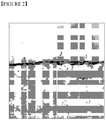
- FIG. 2 is a drawing showing the results of analysis of an interface between an Al-plated layer of the Sn-added stainless steel of the present invention and a stainless steel base material by transmission electron microscopy (TEM) and EDS (Energy-Dispersive Spectroscopy).
- TEM transmission electron microscopy
- EDS Energy-Dispersive Spectroscopy
- Sn is concentrated on the surface of the stainless steel base material adjacent to the Al-plated layer by 4.5 to 6.1 times as compared to the stainless steel base material.
- FIG. 3 is a drawing showing the results of line analysis by transmission electron microscopy (TEM) and EDS (Energy-Dispersive Spectroscopy) from the Al-plated layer of the Sn-added stainless steel of the present invention to a base material.
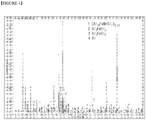
- FIG. 4 is a graph showing the results of X-ray diffraction (XRD) analysis of the interface between the Al-plated layer of the Sn-added stainless steel of the present invention and the stainless steel base material.
- TEM transmission electron microscopy
- EDS Electronic-Dispersive Spectroscopy
- the ferritic stainless steel comprises a plating compound comprising (Al 19 FeMnSi 2 ) 5,31 (Aluminum Iron Manganese Silicide), Al 9 FeSi 2 (Aluminum Iron Silicon), Al 3 FeSi 2 (Aluminum Iron Silicon), and Al (Aluminum) at the interface between the stainless steel base material and the Al-plated layer.
- FIG. 5 is a drawing showing the results of the line analysis by transmission electron microscopy (TEM) and EDS (Energy-Dispersive Spectroscopy) from the Al-plated layer of the Sn-free stainless steel to the base material.
- FIG. 6 is a graph showing the results of the X-ray diffraction (XRD) analysis of the interface between the Al-plated layer of the Sn-free stainless steel and the stainless steel base material.
- TEM transmission electron microscopy
- EDS Electronic-Dispersive Spectroscopy
- the ferritic stainless steel comprises a plating compound comprising Al 17 (Fe 32 Mn 0.8 )Si 2 (Aluminum Iron Manganese Silicon), Al 9 FeSi 2 (Aluminum Iron Silicon), Al 3 FeSi 2 (Aluminum Iron Silicon), and Al (Aluminum) at the interface between the stainless steel base material and the Al-plated layer. That is, it can be confirmed that the plating compound of (Al 19 FeMnSl 2 ) 5,31 (Aluminum Iron Manganese Silicide) formed in the Sn-added steel is not formed.
- Tables 3 to 5 show the results of measurement of whiteness before and after a heat treatment of the stainless steel of Inventive Steel 3 to which Sn was added and the stainless steel of Comparative Steel 1 to which no Sn was added.
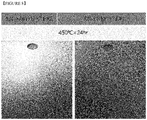
- FIGS. 7 and 8 are photographs showing the Sn-added stainless steel of the present invention and the Sn-free stainless steel before and after a heat treatment.
- FIG. 7 is a photograph of the surface of the stainless steel according to Experimental Example 2
- FIG. 8 is a photograph of the surface of the stainless steel according to Experiment Example 3.
- the color of the surface of the steel becomes darker and the whiteness is lowered after the heat treatment in the case of the Sn-free steel, but the whiteness does not decrease even when the heat treatment is performed in the case of Sn-added steel, for example, the difference in whiteness is 10 or less. As a result, it can be confirmed that the Sn-added steel is superior in heat resistance to the Sn-free steel.
- the corrosion resistance was evaluated according to Japanese standard JASO-B M611-92 for condensate corrosion resistance.
- the maximum pitting corrosion depth was measured after repeating a cycle 4 times, and the cycle includes holding the mixture at 80°C for 24 hours in an aqueous solution having a Cl - concentration: 100 ppm, a NO3 - concentration: 20 ppm, a SO 3 2- concentration: 600 ppm, a SO 4 2- concentration: 600 ppm, a CH 3 COO - concentration: 800 ppm, and a pH of 8.0 ⁇ 0.2 for 5 times, and then holding the mixture at 250°C for 24 hours.
- the solution was maintained at 80°C for 24 hours in an aqueous solution having a Cl - concentration: 100 ppm, a NO 3 - concentration: 20 ppm, a SO 3 2- concentration: 600 ppm, a SO 4 2- concentration: 600 ppm, a CH 3 COO - concentration: 800 ppm, and a pH of 8.0 ⁇ 0.2.
- the maximum formal depth was measured after repeating a total of 4 cycles with one cycle maintained at 250 °C for 24 hours.
- FIG. 1 is a graph showing a maximum pitting corrosion depth of a Sn-added stainless steel of the present invention and a Sn-free stainless steel in a condensate solution of an automotive exhaust system.
- FIG. 1 is a Sn-added ferritic stainless steel of Inventive Steel 3, and a comparative example is a conventional Al-plated 409L steel of Comparative Steel 1.
- Inventive Steel 3 has a maximum pitting corrosion depth of 0.35 mm and Comparative Steel 1 has 0.66 mm when evaluating condensate corrosion characteristics (JASO-B M611-92).
- Sn-added Al-plated ferritic stainless steels according to embodiments of the present invention have excellent condensate corrosion resistance and heat resistance.
- Ferritic stainless steel according to the embodiments of the present invention is excellent in heat resistance and condensate corrosion resistance without adding expensive elements such as Cr and Mo, and may be applied to an automotive exhaust system.
Landscapes
- Chemical & Material Sciences (AREA)
- Engineering & Computer Science (AREA)
- Mechanical Engineering (AREA)
- Metallurgy (AREA)
- Organic Chemistry (AREA)
- Materials Engineering (AREA)
- Physics & Mathematics (AREA)
- Crystallography & Structural Chemistry (AREA)
- Thermal Sciences (AREA)
- Electromagnetism (AREA)
- Manufacturing & Machinery (AREA)
- Combustion & Propulsion (AREA)
- General Engineering & Computer Science (AREA)
- Heat Treatment Of Sheet Steel (AREA)
- Exhaust Silencers (AREA)
- Coating With Molten Metal (AREA)
Applications Claiming Priority (2)
| Application Number | Priority Date | Filing Date | Title |
|---|---|---|---|
| KR1020160169695A KR101844577B1 (ko) | 2016-12-13 | 2016-12-13 | 내열성 및 내응축수 부식성이 개선된 자동차 배기계용 페라이트계 스테인리스강 및 이의 제조 방법 |
| PCT/KR2017/013589 WO2018110858A1 (ko) | 2016-12-13 | 2017-11-27 | 내열성 및 내응축수 부식성이 개선된 자동차 배기계용 페라이트계 스테인리스강 및 이의 제조 방법 |
Publications (2)
| Publication Number | Publication Date |
|---|---|
| EP3556897A1 true EP3556897A1 (de) | 2019-10-23 |
| EP3556897A4 EP3556897A4 (de) | 2019-11-13 |
Family
ID=61973421
Family Applications (1)
| Application Number | Title | Priority Date | Filing Date |
|---|---|---|---|
| EP17881802.7A Pending EP3556897A4 (de) | 2016-12-13 | 2017-11-27 | Ferritischer edelstahl eines fahrzeugabgassystems mit verbesserter wärmebeständigkeit und kondenswasserkorrosionsbeständigkeit sowie herstellungsverfahren dafür |
Country Status (7)
| Country | Link |
|---|---|
| US (1) | US11414732B2 (de) |
| EP (1) | EP3556897A4 (de) |
| KR (1) | KR101844577B1 (de) |
| CN (1) | CN110073025B (de) |
| CA (1) | CA3046945C (de) |
| MX (1) | MX2019006916A (de) |
| WO (1) | WO2018110858A1 (de) |
Families Citing this family (2)
| Publication number | Priority date | Publication date | Assignee | Title |
|---|---|---|---|---|
| KR102424980B1 (ko) * | 2020-11-19 | 2022-07-25 | 주식회사 포스코 | 강도, 가공성 및 내식성이 향상된 페라이트계 스테인리스강 |
| JP2023125006A (ja) * | 2022-02-28 | 2023-09-07 | 日鉄ステンレス株式会社 | 耐候性に優れたフェライト系ステンレス鋼 |
Family Cites Families (9)
| Publication number | Priority date | Publication date | Assignee | Title |
|---|---|---|---|---|
| JP4390962B2 (ja) * | 2000-04-04 | 2009-12-24 | 新日鐵住金ステンレス株式会社 | 表面特性及び耐食性に優れた高純度フェライト系ステンレス鋼 |
| KR101120764B1 (ko) | 2006-05-09 | 2012-03-22 | 닛폰 스틸 앤드 스미킨 스테인레스 스틸 코포레이션 | 내식성이 우수한 스테인리스 강 |
| KR20110105400A (ko) * | 2010-01-18 | 2011-09-26 | 수미도모 메탈 인더스트리즈, 리미티드 | 용접 변형이 작고 내식성이 뛰어난 강판 |
| JP5586279B2 (ja) | 2010-03-15 | 2014-09-10 | 新日鐵住金ステンレス株式会社 | 自動車排気系部材用フェライト系ステンレス鋼 |
| KR20120063793A (ko) | 2010-12-08 | 2012-06-18 | 주식회사 포스코 | 가공성이 우수한 페라이트계 스테인레스강 |
| KR20130074220A (ko) | 2011-12-26 | 2013-07-04 | 주식회사 포스코 | 내식성이 우수한 알루미늄 도금 스테인리스강 및 그의 제조방법 |
| CN104870674B (zh) * | 2012-12-24 | 2018-01-30 | Posco公司 | 具有优良的耐冷凝液腐蚀性、成型性和抗高温氧化性的用于汽车排气系统的铁素体不锈钢及其制造方法 |
| KR101485643B1 (ko) * | 2012-12-26 | 2015-01-22 | 주식회사 포스코 | 고온 내산화 및 내응축수 부식특성이 우수한 자동차 배기계용 알루미늄 도금 스테인리스강 및 그 제조방법 |
| JP6106450B2 (ja) | 2013-02-12 | 2017-03-29 | 新日鐵住金ステンレス株式会社 | 耐テンパーカラー性と加工性に優れた高純度フェライト系ステンレス鋼板およびその製造方法 |
-
2016
- 2016-12-13 KR KR1020160169695A patent/KR101844577B1/ko active Active
-
2017
- 2017-11-27 MX MX2019006916A patent/MX2019006916A/es unknown
- 2017-11-27 WO PCT/KR2017/013589 patent/WO2018110858A1/ko not_active Ceased
- 2017-11-27 CN CN201780077234.8A patent/CN110073025B/zh not_active Expired - Fee Related
- 2017-11-27 US US16/468,878 patent/US11414732B2/en active Active
- 2017-11-27 EP EP17881802.7A patent/EP3556897A4/de active Pending
- 2017-11-27 CA CA3046945A patent/CA3046945C/en active Active
Also Published As
| Publication number | Publication date |
|---|---|
| US11414732B2 (en) | 2022-08-16 |
| CA3046945C (en) | 2021-11-23 |
| MX2019006916A (es) | 2019-11-12 |
| CN110073025A (zh) | 2019-07-30 |
| CN110073025B (zh) | 2021-12-14 |
| US20200080174A1 (en) | 2020-03-12 |
| KR101844577B1 (ko) | 2018-04-03 |
| CA3046945A1 (en) | 2018-06-21 |
| WO2018110858A1 (ko) | 2018-06-21 |
| EP3556897A4 (de) | 2019-11-13 |
Similar Documents
| Publication | Publication Date | Title |
|---|---|---|
| EP2392683B1 (de) | Hochfestes feuerverzinktes stahlblech und verfahren zu seiner herstellung | |
| CA2767439C (en) | High-strength steel sheet and method for manufacturing the same | |
| KR102267129B1 (ko) | Nb함유 페라이트계 스테인리스 열연 강판 및 그 제조 방법과, Nb함유 페라이트계 스테인리스 냉연 강판 및 그 제조 방법 | |
| EP2548988B1 (de) | Ferritischer edelstahl zur verwendung in komponenten eines automobilabgassystems | |
| EP2623629B1 (de) | Hochfeste feuerverzinkte stahlplatte mit hervorragenden ermüdungseigenschaften und herstellungsverfahren dafür | |
| JP7329984B2 (ja) | ステンレス鋼 | |
| EP2980245B1 (de) | Hochfestes legiertes verzinktes stahlblech und verfahren zur herstellung davon | |
| EP3556880A1 (de) | Warmgewalztes ferritedelstahlblech und herstellungsverfahren dafür | |
| EP3399064B1 (de) | Hochfestes kaltgewalztes stahlblech | |
| EP3604589A1 (de) | Ferritischer edelstahl | |
| KR20130031284A (ko) | 냉연 강판의 제조 방법, 냉연 강판 및 자동차 부재 | |
| EP3556881A1 (de) | Hochfestes stahlblech und herstellungsverfahren dafür | |
| KR102442836B1 (ko) | 내염해 부식성이 우수한 페라이트계 스테인리스강 | |
| JP6112273B1 (ja) | フェライト系ステンレス熱延鋼板および熱延焼鈍板、ならびにそれらの製造方法 | |
| US11414732B2 (en) | Ferritic stainless steel for automotive exhaust system with improved heat resistance and condensate corrosion resistance, and method for manufacturing the same | |
| WO2016157257A1 (ja) | 高強度鋼板およびその製造方法 | |
| KR101787282B1 (ko) | 응축수 부식 저항성을 갖는 내식강 및 그 제조 방법 | |
| KR102047401B1 (ko) | 내공식성 및 내응축수 부식성이 개선된 자동차 배기계용 페라이트계 스테인리스강 및 이의 제조 방법 | |
| JP7570858B2 (ja) | マルテンサイト系ステンレス鋼板およびマルテンサイト系ステンレス鋼板の製造方法 | |
| KR102003225B1 (ko) | 응축수 부식저항성이 우수한 알루미늄 도금 페라이트계 스테인리스강 및 이의 제조방법 | |
| EP4273282B1 (de) | Stahlblech | |
| EP3561099A1 (de) | Kaltgewalztes stahlblech mit hervorragender korrosionsbeständigkeit und formbarkeit und verfahren zur herstellung davon | |
| JP3874147B2 (ja) | 表面性状に優れた鋼板の製造方法 | |
| JP2000045034A (ja) | 表面性状に優れた鋼板の製造方法 |
Legal Events
| Date | Code | Title | Description |
|---|---|---|---|
| STAA | Information on the status of an ep patent application or granted ep patent |
Free format text: STATUS: THE INTERNATIONAL PUBLICATION HAS BEEN MADE |
|
| PUAI | Public reference made under article 153(3) epc to a published international application that has entered the european phase |
Free format text: ORIGINAL CODE: 0009012 |
|
| STAA | Information on the status of an ep patent application or granted ep patent |
Free format text: STATUS: REQUEST FOR EXAMINATION WAS MADE |
|
| 17P | Request for examination filed |
Effective date: 20190612 |
|
| AK | Designated contracting states |
Kind code of ref document: A1 Designated state(s): AL AT BE BG CH CY CZ DE DK EE ES FI FR GB GR HR HU IE IS IT LI LT LU LV MC MK MT NL NO PL PT RO RS SE SI SK SM TR |
|
| AX | Request for extension of the european patent |
Extension state: BA ME |
|
| A4 | Supplementary search report drawn up and despatched |
Effective date: 20191011 |
|
| RIC1 | Information provided on ipc code assigned before grant |
Ipc: C22C 38/02 20060101ALI20191007BHEP Ipc: C22C 38/28 20060101ALI20191007BHEP Ipc: B32B 15/01 20060101ALI20191007BHEP Ipc: C22C 38/04 20060101ALI20191007BHEP Ipc: C22C 38/00 20060101ALI20191007BHEP Ipc: C21D 8/02 20060101ALI20191007BHEP Ipc: C21D 6/00 20060101ALI20191007BHEP Ipc: C22C 38/50 20060101ALI20191007BHEP Ipc: C22C 38/60 20060101AFI20191007BHEP Ipc: C21D 9/46 20060101ALI20191007BHEP |
|
| RIN1 | Information on inventor provided before grant (corrected) |
Inventor name: KIM, HYUNG JOON |
|
| DAV | Request for validation of the european patent (deleted) | ||
| DAX | Request for extension of the european patent (deleted) | ||
| RAP3 | Party data changed (applicant data changed or rights of an application transferred) |
Owner name: POSCO HOLDINGS INC. |
|
| RAP1 | Party data changed (applicant data changed or rights of an application transferred) |
Owner name: POSCO CO., LTD |