EP3533348A1 - Duftstoffhaltige folie für rauchartikel und rauchartikel damit - Google Patents
Duftstoffhaltige folie für rauchartikel und rauchartikel damit Download PDFInfo
- Publication number
- EP3533348A1 EP3533348A1 EP16923055.4A EP16923055A EP3533348A1 EP 3533348 A1 EP3533348 A1 EP 3533348A1 EP 16923055 A EP16923055 A EP 16923055A EP 3533348 A1 EP3533348 A1 EP 3533348A1
- Authority
- EP
- European Patent Office
- Prior art keywords
- flavor
- mass
- containing sheet
- raw material
- filler
- Prior art date
- Legal status (The legal status is an assumption and is not a legal conclusion. Google has not performed a legal analysis and makes no representation as to the accuracy of the status listed.)
- Pending
Links
Images



Classifications
-
- A—HUMAN NECESSITIES
- A24—TOBACCO; CIGARS; CIGARETTES; SIMULATED SMOKING DEVICES; SMOKERS' REQUISITES
- A24B—MANUFACTURE OR PREPARATION OF TOBACCO FOR SMOKING OR CHEWING; TOBACCO; SNUFF
- A24B15/00—Chemical features or treatment of tobacco; Tobacco substitutes, e.g. in liquid form
- A24B15/18—Treatment of tobacco products or tobacco substitutes
- A24B15/28—Treatment of tobacco products or tobacco substitutes by chemical substances
- A24B15/30—Treatment of tobacco products or tobacco substitutes by chemical substances by organic substances
-
- A—HUMAN NECESSITIES
- A24—TOBACCO; CIGARS; CIGARETTES; SIMULATED SMOKING DEVICES; SMOKERS' REQUISITES
- A24B—MANUFACTURE OR PREPARATION OF TOBACCO FOR SMOKING OR CHEWING; TOBACCO; SNUFF
- A24B15/00—Chemical features or treatment of tobacco; Tobacco substitutes, e.g. in liquid form
- A24B15/10—Chemical features of tobacco products or tobacco substitutes
- A24B15/16—Chemical features of tobacco products or tobacco substitutes of tobacco substitutes
-
- A—HUMAN NECESSITIES
- A24—TOBACCO; CIGARS; CIGARETTES; SIMULATED SMOKING DEVICES; SMOKERS' REQUISITES
- A24B—MANUFACTURE OR PREPARATION OF TOBACCO FOR SMOKING OR CHEWING; TOBACCO; SNUFF
- A24B15/00—Chemical features or treatment of tobacco; Tobacco substitutes, e.g. in liquid form
- A24B15/10—Chemical features of tobacco products or tobacco substitutes
- A24B15/12—Chemical features of tobacco products or tobacco substitutes of reconstituted tobacco
- A24B15/14—Chemical features of tobacco products or tobacco substitutes of reconstituted tobacco made of tobacco and a binding agent not derived from tobacco
-
- A—HUMAN NECESSITIES
- A24—TOBACCO; CIGARS; CIGARETTES; SIMULATED SMOKING DEVICES; SMOKERS' REQUISITES
- A24B—MANUFACTURE OR PREPARATION OF TOBACCO FOR SMOKING OR CHEWING; TOBACCO; SNUFF
- A24B15/00—Chemical features or treatment of tobacco; Tobacco substitutes, e.g. in liquid form
- A24B15/18—Treatment of tobacco products or tobacco substitutes
- A24B15/28—Treatment of tobacco products or tobacco substitutes by chemical substances
- A24B15/281—Treatment of tobacco products or tobacco substitutes by chemical substances the action of the chemical substances being delayed
- A24B15/283—Treatment of tobacco products or tobacco substitutes by chemical substances the action of the chemical substances being delayed by encapsulation of the chemical substances
-
- A—HUMAN NECESSITIES
- A24—TOBACCO; CIGARS; CIGARETTES; SIMULATED SMOKING DEVICES; SMOKERS' REQUISITES
- A24B—MANUFACTURE OR PREPARATION OF TOBACCO FOR SMOKING OR CHEWING; TOBACCO; SNUFF
- A24B3/00—Preparing tobacco in the factory
- A24B3/14—Forming reconstituted tobacco products, e.g. wrapper materials, sheets, imitation leaves, rods, cakes; Forms of such products
-
- A—HUMAN NECESSITIES
- A24—TOBACCO; CIGARS; CIGARETTES; SIMULATED SMOKING DEVICES; SMOKERS' REQUISITES
- A24D—CIGARS; CIGARETTES; TOBACCO SMOKE FILTERS; MOUTHPIECES OF CIGARS OR CIGARETTES; MANUFACTURE OF TOBACCO SMOKE FILTERS OR MOUTHPIECES
- A24D1/00—Cigars; Cigarettes
- A24D1/002—Cigars; Cigarettes with additives, e.g. for flavouring
-
- A—HUMAN NECESSITIES
- A24—TOBACCO; CIGARS; CIGARETTES; SIMULATED SMOKING DEVICES; SMOKERS' REQUISITES
- A24B—MANUFACTURE OR PREPARATION OF TOBACCO FOR SMOKING OR CHEWING; TOBACCO; SNUFF
- A24B15/00—Chemical features or treatment of tobacco; Tobacco substitutes, e.g. in liquid form
- A24B15/18—Treatment of tobacco products or tobacco substitutes
- A24B15/28—Treatment of tobacco products or tobacco substitutes by chemical substances
- A24B15/30—Treatment of tobacco products or tobacco substitutes by chemical substances by organic substances
- A24B15/302—Treatment of tobacco products or tobacco substitutes by chemical substances by organic substances by natural substances obtained from animals or plants
- A24B15/303—Plant extracts other than tobacco
-
- A—HUMAN NECESSITIES
- A24—TOBACCO; CIGARS; CIGARETTES; SIMULATED SMOKING DEVICES; SMOKERS' REQUISITES
- A24C—MACHINES FOR MAKING CIGARS OR CIGARETTES
- A24C5/00—Making cigarettes; Making tipping materials for, or attaching filters or mouthpieces to, cigars or cigarettes
- A24C5/01—Making cigarettes for simulated smoking devices
Definitions
- the present invention relates to a flavor-containing sheet for a smoking article, and a smoking article comprising the same.
- a flavor-containing sheet for a smoking article in which a flavor is dispersed in a non-volatile gelled matrix containing a thickening polysaccharide is known (see Patent Literatures 1 to 3).
- the flavor-containing sheet contains a flavor with the flavor being coated with the thickening polysaccharide, and therefore exhibits high storage stability of flavor.
- the flavor-containing sheet is prepared by extending, onto a substrate, a raw material slurry containing a thickening polysaccharide and a flavor, followed by drying. The prepared flavor-containing sheet is cut and used as a filler for a smoking article.
- the present inventors focused on the findings that when the cut pieces of the flavor-containing sheet contain the flavor at a low concentration, while there is a need to add a large amount of cut pieces to the smoking article to exhibit a desired flavor, the cut pieces can be uniformly distributed in the smoking article. Because of the uniform distribution of the cut pieces, the smoking article can be expected to provide a flavor in a stable manner during a smoking period.
- the present inventors tried to prepare a flavor-containing sheet that contains a flavor at a low concentration.
- the problem occurred during preparation. Namely, when the concentration of the blended flavor was reduced based on the known composition of the raw material slurry, this resulted in the increase in the total amount of the raw material slurry required for preparing the sheet having a predetermined thickness, and as a result, the drying time increased (see Samples 1 and 2 of later-described Example 1).
- an object of the present invention is to provide a technique capable of preparing a flavor-containing sheet in a stable manner under practical preparation conditions, even when the flavor-containing sheet has a composition in which a concentration of the blended flavor is low, and to provide the flavor-containing sheet.
- the present inventors conducted studies to solve the problem. They found that a flavor-containing sheet including a filler can be prepared under practical preparation conditions even if the blending amount of the flavor is reduced, and accomplished the present invention.
- a flavor-containing sheet for a smoking article comprising a thickening polysaccharide, a flavor, an emulsifier, and a filler.
- a smoking article comprising cut pieces of the flavor-containing sheet for a smoking article.
- a flavor-containing sheet that may be prepared in a stable manner under practical preparation conditions even if the flavor-containing sheet has a composition in which a concentration of the blended flavor is low, and a smoking article comprising the same.
- a flavor-containing sheet for a smoking article (hereinafter, also simply referred to as “flavor-containing sheet” or “sheet”) of the present invention includes a thickening polysaccharide, a flavor, an emulsifier, and a filler.
- the flavor-containing sheet can be prepared by kneading a raw material including the thickening polysaccharide, the flavor, the emulsifier, and the filler in water to prepare a raw material slurry, and extending the raw material slurry onto the substrate, followed by drying.
- the thickening polysaccharide contained in the flavor-containing sheet has a property of fixing and coating a flavor dispersed in the sheet.
- the thickening polysaccharide include: a single-component system such as carrageenan, agar, xanthan gum, gellan gum, psyllium seed gum, or konjac glucomannan; or a combined system of a combination of two or more components selected from the group consisting of carrageenan, locust bean gum, guar gum, agar, gellan gum, tamarind gum, xanthan gum, tara gum, konjac glucomannan, starch, cassia gum, and psyllium seed gum.
- the thickening polysaccharide is a single-component system such as carrageenan, agar, xanthan gum, or gellan gum; or a combined system of a combination of carrageenan, agar, xanthan gum or gellan gum with at least one component selected from the group consisting of locust bean gum, guar gum, tamarind gum, tara gum, konjac glucomannan, cassia gum, and psyllium seed gum.
- the thickening polysaccharide is selected from the group consisting of carrageenan, agar, xanthan gum, gellan gum and a mixture of gellan gum and tamarind gum.
- An aqueous solution of carrageenan, agar, xanthan gum or gellan gum has a property that once the solution is cooled to a specific temperature or less to form gel (that is, losing fluidity to be solidified), the solution is capable of maintaining the gel state without easily returning to a sol state even if the temperature is raised afterward to reach the gel transition temperature (hereinafter, referred to as "temperature responsive sol-gel transition property").
- the raw material slurry contains any one of carrageenan, agar, xanthan gum and gellan gum as the thickening polysaccharide, there is an advantage that the sheet can be prepared in a short time by cooling the raw material slurry to form gel and then drying the gelled raw material at a high temperature.
- the thickening polysaccharide is selected from the group consisting of agar, gellan gum, and a mixture of gellan gum and tamarind gum.
- the mass ratio of gellan gum and tamarind gum is preferably within a range of 1:1 to 3:1.
- the blending amount of the thickening polysaccharide in the raw material slurry is preferably 10 to 35% by mass, more preferably 12 to 25% by mass, with respect to the total mass (i.e., dry matter mass) of the constituent components other than water in the raw material slurry.
- the blending amount (% by mass) of the thickening polysaccharide can be calculated using the values of the blending mass of the constituent components other than water in the raw material slurry.
- a flavor contained in the flavor-containing sheet is not limited as long as it is used for a smoking article. Any type of flavor can be used.
- Main examples of the flavor include: menthol; leaf tobacco extract; natural plant flavors (e.g., cinnamon, sage, herb, chamomile, kudzu (Pueraria lobata), hydrangeae dulcis folium, clove, lavender, cardamom, caryophyllus, nutmeg, bergamot, geranium, honey essence, rose oil, lemon, orange, cassia bark, caraway, jasmine, ginger, coriander, vanilla extract, spearmint, peppermint, cassia, coffee, celery, cascarilla, sandalwood, cocoa, ylang-ylang, fennel, anise, licorice, St John's bread, prune extract, and peach extract); saccharides (e.g., glucose, fructose, isomerized saccharide, and caramel); cocoa (e.
- flavors may be used as solids, or may be used by being dissolved or dispersed in a suitable solvent such as propylene glycol, ethyl alcohol, benzyl alcohol, or triethyl citrate.
- a suitable solvent such as propylene glycol, ethyl alcohol, benzyl alcohol, or triethyl citrate.
- Such flavors may be used alone or in combination.
- the content of the flavor in the sheet is preferably less than 18% by mass with respect to the total mass of the flavor-containing sheet.
- the content of the flavor in the sheet is more preferably 2.5% by mass or more and less than 18% by mass, still more preferably from 2.5 to 12% by mass, most preferably from 3 to 6% by mass, with respect to the total mass of the flavor-containing sheet.
- the content of the flavor in the sheet can be determined by the measuring method described in the later-described examples.
- any emulsifier may be used.
- lecithin specifically, SUN LECITHIN A-1 (Taiyo Kagaku Co., Ltd.), may be used.
- the content of the emulsifier in the sheet is preferably from 0.5 to 5% by mass, more preferably from 1.0 to 4.5% by mass, with respect to the mass of the thickening polysaccharide in the sheet.
- the content of the emulsifier in the sheet can be calculated using values of the blending mass of the emulsifier and the thickening polysaccharide in the raw material slurry.
- the filler contained in the flavor-containing sheet plays a role of increasing the total mass (i.e., dry matter mass) of the constituent components other than water in the raw material slurry and ultimately increasing the bulk of the flavor-containing sheet. That is, the filler serves only to increase the bulk of the flavor-containing sheet, and does not affect the original functions of the flavor-containing sheet. Specifically, the filler serves only to increase the bulk of the flavor-containing sheet, and satisfies the following requirements (i) and (ii):
- “not substantially increasing the viscosity of the raw material slurry” indicates not increasing the viscosity of the raw material slurry to the extent that preparation of the sheet becomes difficult (i.e., to the extent that kneading and emulsification processes of the raw material slurry become difficult).
- “not adversely affecting the flavor retention function of the flavor-containing sheet” indicates not degrading the flavor retention function of the sheet to the extent that the original functions of the flavor-containing sheet (i.e., functions as a flavor component in the smoking article) are not exhibited.
- the filler is, as a matter of course, a substance permitted in the art to be added to a smoking article as an additive.
- a substance that does not affect the smoking flavor of the smoking article is preferable (see “1-3. Smoking flavor” in Example 1 below).
- a substance that does not adversely affect the sheet preparation process is preferable, for example, a substance that does not act to cause a significant shrinkage of the sheet in the drying process is preferable (see “1-2. Shrinkage rate of sheet” in Example 1 below).
- the filler is preferably a starch hydrolysate.
- the starch hydrolysate refers to a substance obtained by a process including the step of hydrolyzing starch.
- the starch hydrolysate is, for example, a substance obtained by directly hydrolyzing starch (i.e., dextrin), or a substance obtained by hydrolyzing starch after heat treatment (i.e., indigestible dextrin).
- the starch hydrolysate may be prepared by a process including a hydrolysis step using starch as a raw material, or a commercially available starch hydrolysate may be used.
- Naturally-derived starch may be used for "starch" of a raw material.
- plant-derived starch may be used, an example of which includes corn starch, wheat starch, potato starch, and sweet potato starch.
- a starch hydrolysate having a desired DE value may be obtained by controlling hydrolysis conditions.
- the starch hydrolysate is generally a starch hydrolysate having a DE value within a range of 2 to 40, preferably a starch hydrolysate having a DE value within a range of 2 to 20.
- a starch hydrolysate having a DE value within a range of 2 to 20 for example, Pinedex #100 (Matsutani Chemical Industry Co., Ltd.), Pinefiber (Matsutani Chemical Industry Co., Ltd.), and TK-16 (Matsutani Chemical Industry Co., Ltd.) may be used.
- DE stands for dextrose equivalent
- a DE value is a value indicating the degree of hydrolysis of starch, that is, the saccharification rate of starch.
- the DE value is a value measured by the Willstatter-Schudel method.
- the DE value is measured as a specific numerical value by the Willstatter-Schudel method.
- the hydrolyzed starch (starch hydrolysate) has characteristics, such as characteristics of the molecular weight of the starch hydrolysate and the arrangement of the saccharide molecules constituting the starch hydrolysate, that are non-uniform for each molecule of the starch hydrolysate, and they exist with some distribution or variation.
- the starch hydrolysate exhibits different physical property features (e.g., DE value) for each molecule.
- DE value physical property features
- the starch hydrolysate is selected from the group consisting of dextrin having a DE value of 2 to 5, indigestible dextrin having a DE value of 10 to 15, and a mixture thereof.
- dextrin having a DE value of 2 to 5 Pinedex #100 (Matsutani Chemical Industry Co., Ltd.) may be used, for example.
- pinefiber (Matsutani Chemical Industry Co., Ltd.) may be used.
- the filler may be added in an amount that can exert the filler's function of increasing the bulk of the sheet and that does not affect the smoking flavor of the smoking article.
- the content of the filler in the sheet is preferably from 100 to 500% by mass, more preferably from 200 to 500% by mass, with respect to the mass of the thickening polysaccharide.
- the content of the filler in the sheet can be calculated using the values of the blending mass of the filler and the thickening polysaccharide in the raw material slurry.
- the filler plays a role of increasing the dry matter mass of the raw material slurry and increasing the bulk of the sheet, and this allows for shortening of the drying time required to prepare a sheet having a desired thickness.
- the filler does not substantially increase the viscosity of the raw material slurry, no trouble is caused in the kneading process and extension process of the raw material slurry.
- the flavor-containing sheet may contain water. That is, water contained in the raw material slurry may remain in the flavor-containing sheet after drying.
- the moisture content is preferably less than 10% by mass, more preferably from 3 to 9% by mass, still more preferably from 3 to 6% by mass, with respect to the total mass of the sheet.
- the moisture content of the sheet can be determined using GC-TCD as described below.
- methanol reagent of special grade or higher
- shaking at 200 rpm
- the resulting mixture is left overnight, shaken again (at 200 rpm) for 40 minutes, and allowed to stand.
- the supernatant is used as a measurement solution.
- the measurement solution is analyzed by GC-TCD and quantified by the calibration curve method.
- the conditions of GC-TCD may be set to, for example, the following conditions.
- the flavor-containing sheet may contain additional components, if necessary.
- the flavor-containing sheet may contain a humectant.
- the humectant include glycerin, hyaluronic acid, and magnesium chloride.
- the flavor-containing sheet may contain a colorant.
- cocoa, caramel, food additive dyes such as Blue No. 2, polyphenols such as chlorogenic acid, melanoidin, and the like, may be used.
- the flavor-containing sheet has a thickness of, for example, from 0.05 to 0.15 mm, preferably, from 0.06 to 0.10 mm.
- the flavor-containing sheet may be prepared by, according to the known technique, kneading the raw material including the thickening polysaccharide, the flavor, the emulsifier, and the filler in water to prepare a raw material slurry, and extending the raw material slurry onto the substrate, followed by drying.
- the composition of the raw material slurry may be, for example, 350 to 500 g of the thickening polysaccharide, 400 to 600 g of the flavor, 10 to 20 g of the emulsifier, and 1000 to 2000 g of the filler, for 10 L of water. Kneading of the raw material can be carried out by the known emulsification technique using a homogenizer while heating to 60 to 100°C.
- the obtained raw material slurry has a viscosity of, for example, 10,000 [mPa ⁇ s/60°C] or less, preferably 1,000 to 10,000 [mPa ⁇ s/60°C], more preferably 1,000 to 5,000 [mPa ⁇ s/60°C].
- the obtained raw material slurry can be extended on a substrate so that the thickness of the sheet obtained after drying is, for example, about 0.05 to 0.15 mm. Thereafter, the raw material slurry is dried until reaching the desired moisture content.
- the raw material slurry contains a thickening polysaccharide having temperature-responsive sol-gel transition property
- the aqueous solution of the thickening polysaccharide forms gel, it does not easily return to a sol state even if the temperature is raised afterward to reach the gel transition temperature, and therefore it is possible to perform heat-drying at a high temperature and to shorten the drying time.
- the flavor-containing sheet of the present invention can be cut into a size equivalent to ordinary cut tobacco, for example, and the obtained cut pieces can be incorporated in any smoking article.
- the flavor-containing sheet can be incorporated into: a combustion type smoking article, such as a cigarette, that burns a tobacco filler; or a non-combustion type smoking article, such as a heating type inhalation article, that does not burn a tobacco filler.
- a combustion type smoking article such as a cigarette
- a non-combustion type smoking article such as a heating type inhalation article
- the heating type inhalation article examples include: a carbonaceous heat source type inhalation article that heats a tobacco filler with combustion heat of a carbon heat source (see, for example, WO 2006/073065 ); an electrical heating type inhalation article provided with an inhaler and a heating device for electrically heating the inhaler (see, for example, WO 2010/110226 ); and a liquid atomization type inhalation article that atomizes, by heating, a liquid aerosol source containing a smoking flavor source (see, for example, WO2015/046385 ).
- a smoking article including cut pieces of the flavor-containing sheet of the present invention.
- a smoking article including cut tobacco and cut pieces of the flavor-containing sheet of the present invention mixed with the cut tobacco.
- the cut pieces of the flavor-containing sheet are cut pieces of a flavor-containing sheet having a thickness of from 0.05 to 0.15 mm, preferably from 0.06 to 0.10 mm, and the cut pieces each have a long side of from 2.0 to 7.0 mm and a short side of from 0.5 to 2.0 mm.
- the cut pieces of the flavor-containing sheet are contained in the smoking article in an amount of 4 to 20% by mass with respect to the total mass of the cut tobacco and the cut pieces. If the cut pieces are blended in the smoking article in an amount of 4% by mass or more with respect to the total mass of the cut tobacco and the cut pieces, it is possible to suppress variations in the distribution of the flavor in the smoking article.
- the flavor-containing sheet contains a flavor at a low concentration. If the flavor-containing sheet contains a flavor at a low concentration, it is necessary to add a large amount of cut pieces of the flavor-containing sheet to the smoking article in order to exhibit a desired flavor by adding the cut pieces of the flavor-containing sheet to the smoking article. In this case, since a large amount of cut pieces of the flavor-containing sheet is added to the smoking article, the cut pieces can be distributed uniformly in the smoking article. Owing to the uniform distribution of the cut pieces, such a smoking article has the advantage that the flavor can be provided in a stable manner during the smoking period.
- the flavor-containing sheet which contains a flavor at a low concentration is prepared based on the known composition of the raw material slurry, the dry matter mass of the raw material slurry will be small; thus, in order to prepare a sheet having a predetermined thickness, the required total amount of the raw material slurry will increase, thereby leading to the problem of the increased drying time.
- such a preparation problem is solved by adding a filler to the raw material of the flavor-containing sheet, and as a result, it is possible to prepare a sheet having a predetermined thickness and containing a flavor at a low concentration.
- the flavor-containing sheet was prepared using the candidate substance for the filler (hereinafter, referred to as "candidate filler”), and the evaluation was conducted on how the candidate filler affects the following four evaluation items, "1-1. Viscosity of raw material slurry”, “1-2. Shrinkage rate of sheet”, “1-3. Smoking flavor”, and "1-4. Flavor retention rate after storage”.
- Example 1 for the thickening polysaccharide, gellan gum and tamarind gum were used at a mass ratio of 1:1.
- Sample 1 corresponds to Example 1 disclosed in Patent Literatures 1 to 3.
- Deacylated type gellan gum, tamarind gum, and lecithin were dissolved in 0.3 L of water heated and kept at about 70°C to prepare a polysaccharide solution.
- L-menthol was added to the polysaccharide solution and the mixture was kneaded and emulsified with a homogenizer (DMM type; ATEC Japan) to prepare a raw material slurry.
- a raw material slurry was prepared by the same procedure as Sample 1.
- a raw material slurry was prepared by the same procedure as Sample 1.
- Deacylated type gellan gum, tamarind gum, and lecithin were dissolved in 0.3 L of water heated and kept at about 70°C to prepare a polysaccharide solution. After the candidate filler was added to the polysaccharide solution, 1-menthol was added and the mixture was kneaded and emulsified with a homogenizer (DMM type; ATEC Japan) to prepare a raw material slurry.
- DDM type ATEC Japan
- a raw material slurry was prepared with the same composition and by the same procedure as Sample 4, except that cellulose (cellulose microcrystalline; Sigma-Aldrich) was used as a candidate filler.
- a raw material slurry was prepared with the same composition and by the same procedure as Sample 4, except that calcium carbonate (special grade reagent; Wako Pure Chemical Industries, Ltd.) was used as a candidate filler.
- calcium carbonate special grade reagent; Wako Pure Chemical Industries, Ltd.
- a raw material slurry was prepared with the same composition and by the same procedure as Sample 4, except that starch (reagent derived from corn; Wako Pure Chemical Industries, Ltd.) was used as a candidate filler.
- a raw material slurry was prepared with the same composition and by the same procedure as Sample 4, except that Pinedex #100 (dextrin having a DE value of 2 to 5; Matsutani Chemical Industry Co., Ltd.) was used as a candidate filler.
- a raw material slurry was prepared with the same composition and by the same procedure as Sample 4, except that Pinefiber (indigestible dextrin having a DE value of 10 to 15; Matsutani Chemical Industry Co., Ltd.) was used as a candidate filler.
- Pinefiber indigestible dextrin having a DE value of 10 to 15; Matsutani Chemical Industry Co., Ltd.
- the raw material slurry was extended to have a thickness of 1.0 mm on a stainless steel plate wrapped with Saran Wrap (registered trademark).
- the extended raw material slurry was once cooled to a sample temperature of 20°C to form gel. Thereafter, hot air of about 100°C generated by a hot air generator (New Hot Blaster MS 5841-6D; set temperature: about 140°C; Miyamoto Seisakusho Co., Ltd.) was applied to the gelled raw material for about 10 minutes to dry the raw material. In this manner, the flavor-containing sheet (thickness: about 0.1 mm) was prepared.
- the flavor contents of the flavor-containing sheets of Samples 4 to 9 were measured by the later-described method, and they were, respectively, 0.08% by mass, 0.94% by mass, 0.04% by mass, ⁇ 0% by mass, ⁇ 0% by mass, and ⁇ 0% by mass, with respect to the sheet.
- the viscosity of the raw material slurry of each of Samples 1 to 9 was measured with a rheometer (RheoStrees-1; Thermo Haake) in the following manner.
- the viscosity of the raw material slurry was evaluated by complex viscosity. Details of the measurement conditions are as follows.
- the raw material slurry of Sample 2 While the blending amount of the flavor was reduced based on the composition of the raw material slurry of Sample 1, the raw material slurry of Sample 2 had a viscosity to the extent that emulsification process and extension process can be carried out without problems in a manner similar to Sample 1.
- the attempt to prepare a flavor-containing sheet having a predetermined thickness with the raw material slurry of Sample 2 ended up increasing the total amount of the raw material slurry necessary to prepare a sheet having a predetermined thickness. This led to the problem of the increased drying time.
- the decrease in the concentration of the blended flavor was supplemented with the candidate filler.
- the candidate fillers For Samples 4, 5, 6, 8, and 9, granulated sugar, cellulose, calcium carbonate, dextrin, and indigestible dextrin were used, respectively, as the candidate fillers.
- the raw material slurry had a viscosity to the extent that emulsification process and extension process could be carried out without problems.
- the flavor-containing sheet was prepared using the raw material slurry of each of Samples 4 to 9.
- the candidate filler played a role of increasing the bulk of the sheet, and therefore it was possible to shorten the drying time required to prepare a sheet having a predetermined thickness and containing a flavor at a low concentration.
- Shrinkage rate % length of one side of extended raw material slurry ⁇ length of one side of flavor-containing sheet immediately after preparation / lenght of one side of extended raw material slurry ⁇ 100
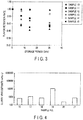
- the measurement results of the shrinkage rate are shown in FIG. 2 .
- Sample 4 (candidate filler: granulated sugar), Sample 8 (candidate filler: dextrin), and Sample 9 (candidate filler: indigestible dextrin) each had a low shrinkage rate, and therefore they are considered to have high manufacturing suitability.
- Sample 6 (candidate filler: calcium carbonate) had a shrinkage rate of about 40%. This shrinkage rate does not adversely affect the preparation of the sheet, and is a permissible range from the viewpoint of manufacturing suitability.
- Sample 5 (candidate filler: cellulose) had the highest shrinkage rate of about 50%.
- the flavor-containing sheets of Samples 10 to 15 were each prepared by adjusting the blending amount of the flavor for each candidate filler so that the flavor-containing sheet contained about 2.5% by mass of the flavor.
- Deacylated type gellan gum, tamarind gum, and lecithin were dissolved in 0.3 L of water heated and kept at about 70°C to prepare a polysaccharide solution. After the candidate filler was added to the polysaccharide solution, 1-menthol was added and the mixture was kneaded and emulsified with a homogenizer (DMM type, ATEC Japan) to prepare a raw material slurry.
- DDM type ATEC Japan
- the prepared raw material slurry was extended to have a thickness of 1.0 mm on a stainless steel plate wrapped with Saran Wrap (registered trademark).
- the extended raw material slurry was once cooled to a sample temperature of 20°C to form gel. Thereafter, hot air of about 100°C generated by a hot air generator (New Hot Blaster MS 5841-6D; Miyamoto Seisakusho Co., Ltd.) was applied to the gelled raw material for about 10 minutes to dry the raw material. In this manner, the flavor-containing sheet (thickness: 0.1 mm) was prepared.
- the flavor content of the prepared flavor-containing sheet was 2.2% by mass with respect to the sheet.
- a flavor-containing sheet was prepared with the same composition and by the same procedure as Sample 10, except that cellulose (cellulose microcrystalline; Sigma-Aldrich) was used as a candidate filler and that the blending amount of the flavor was changed to 2.7 parts by mass.
- the flavor content of the prepared flavor-containing sheet was 3.7% by mass with respect to the sheet.
- a flavor-containing sheet was prepared with the same composition and by the same procedure as Sample 10, except that calcium carbonate (special grade reagent; Wako Pure Chemical Industries, Ltd.) was used as a candidate filler and that the blending amount of the flavor was changed to 3.4 parts by mass.
- the flavor content of the prepared flavor-containing sheet was 3.7% by mass with respect to the sheet.
- a flavor-containing sheet was prepared with the same composition and by the same procedure as Sample 10, except that starch (reagent derived from corn; Wako Pure Chemical Industries, Ltd.) was used as a candidate filler and that the blending amount of the flavor was changed to 3.9 parts by mass.
- the flavor content of the prepared flavor-containing sheet was 1.9% by mass with respect to the sheet.
- a flavor-containing sheet was prepared with the same composition and by the same procedure as Sample 10, except that Pinedex #100 (Matsutani Chemical Industry Co., Ltd.) was used as a candidate filler and that the blending amount of the flavor was changed to 3.9 parts by mass.
- the flavor content of the prepared flavor-containing sheet was 2.5% by mass with respect to the sheet.
- a flavor-containing sheet was prepared with the same composition and by the same procedure as Sample 10, except that Pinefiber (Matsutani Chemical Industry Co., Ltd.) was used as a candidate filler and that the blending amount of the flavor was changed to 16.1 parts by mass.
- the flavor content of the prepared flavor-containing sheet was 3.9% by mass with respect to the sheet.
- the flavor-containing sheet (thickness 0.1 mm) of Sample 10 was cut to obtain cut pieces each having a long side of 4 mm and a short side of 1.5 mm.
- the cut pieces were mixed with cut tobacco taken from the Winston Tar 12 mg product (Japan Tobacco Inc.) (hereinafter, referred to as "control cigarette") at a mass ratio of 5:95 to obtain mixed cut tobacco.
- control cigarette cut tobacco taken from the Winston Tar 12 mg product (Japan Tobacco Inc.) (hereinafter, referred to as "control cigarette") at a mass ratio of 5:95 to obtain mixed cut tobacco.
- the mixed cut tobacco was rewrapped with a cigarette paper to prepare a cigarette of Sample 10.
- the smoking flavor of each of the cigarettes of Samples 10 to 15 was evaluated by sensory evaluation. Specifically, the evaluation was conducted on the extent to which the smoking flavor of each of the cigarettes of Samples 10 to 15 had changed in comparison to the smoking flavor of the control cigarette.
- the scores provided by the eight panelists were averaged, the average value was rounded to one decimal place, and the obtained value was taken as the evaluation score of each cigarette.
- the cigarettes of Samples 10 and 11 demonstrated a smoking flavor which had changed considerably from that of the control cigarette.
- the cigarette of Sample 10 had a sweet smoking flavor.
- the cigarette of Sample 11 had a smoking flavor weaker than that of the control cigarette.
- this change in the cigarette of Sample 10 is not an adverse effect depending on the concept of the smoking flavor of the cigarette.
- the cigarette of Sample 12 demonstrated a smoking flavor which had changed significantly from that of the control cigarette, and had a smoking flavor weaker than that of the control cigarette.
- the cigarette of Sample 13 demonstrated a smoking flavor which had changed from that of the control cigarette, while the change was smaller than those demonstrated by the cigarettes of Samples 10 and 11.
- the prepared flavor-containing sheet was cut into a size of 1 ⁇ 10 mm to obtain cut pieces.
- the obtained cut pieces were spread on a sample dish, and stored for predetermined periods (7 days, 14 days, and 30 days) in a constant temperature apparatus (DX 600; Yamato Scientific, Co., Ltd.) set at 50°C. The flavor content of each sample after storage was measured.
- DX 600 Yamato Scientific, Co., Ltd.
- Menthol in the measurement solution prepared as described above was quantified by the following GC-MSD and the calibration curve method.
- flavor retention rate flavor content of flavor-containing sheet after storage / flavor content of flavor-containing sheet immediately after preparation
- a substance that does not affect the smoking flavor of the smoking article is preferable as a filler.
- a substance that does not adversely affect the sheet-preparation process is preferable, and for example, a substance that does not act to cause a significant shrinkage of the sheet in the drying process is preferable.
- agar was used as thickening polysaccharide.
- the flavor-containing sheet was prepared using the candidate filler, and the evaluation was conducted on how the candidate filler affects the following three evaluation items, "2-1. Viscosity of raw material slurry”, "2-2. Shrinkage after drying”, and "2-3. Flavor retention rate after storage”.
- the blending amount of the flavor was adjusted for each candidate filler so that the flavor-containing sheet contained about 2.5% by mass of the flavor.
- aqueous agar solution 0.3 L of water containing agar was boiled in a boiling water bath and the agar was sufficiently dissolved in water to prepare an aqueous agar solution.
- Lecithin, the candidate filler, and 1-menthol were added to the obtained aqueous agar solution, and the mixture was kneaded and emulsified with a homogenizer (DMM type; ATEC Japan) to prepare a raw material slurry.
- DDMM type ATEC Japan
- a raw material slurry was prepared with the same composition and by the same procedure as Sample 16, except that cellulose (cellulose microcrystalline; Sigma-Aldrich) was used as a candidate filler.
- a raw material slurry was prepared with the same composition and by the same procedure as Sample 16, except that calcium carbonate (special grade reagent; Wako Pure Chemical Industries, Ltd.) was used as a candidate filler and that the blending amount of 1-menthol was changed to 1.0 part by mass.
- calcium carbonate special grade reagent; Wako Pure Chemical Industries, Ltd.
- a raw material slurry was prepared with the same composition and by the same procedure as Sample 16, except that starch (reagent derived from corn; Wako Pure Chemical Industries, Ltd.) was used as a candidate filler and the blending amount of 1-menthol was changed to 1.0 parts by mass.
- starch (reagent derived from corn; Wako Pure Chemical Industries, Ltd.) was used as a candidate filler and the blending amount of 1-menthol was changed to 1.0 parts by mass.
- a raw material slurry was prepared with the same composition and by the same procedure as Sample 16, except that Pinedex #100 (Matsutani Chemical Industry Co., Ltd.) was used as a candidate filler and that the blending amount of 1-menthol was changed to 1.3 parts by mass.
- a raw material slurry was prepared with the same composition and by the same procedure as Sample 16, except that Pinefiber (Matsutani Chemical Industry Co., Ltd.) was used as a candidate filler and that the blending amount of 1-menthol was changed to 8.7 parts by mass.
- Pinefiber Matsutani Chemical Industry Co., Ltd.
- a flavor-containing sheet of each of Samples 16 to 21 was prepared in the same manner as in Example 1.
- the flavor content and the moisture content of each of the obtained flavor-containing sheets of Samples 16 to 21 were measured by the aforementioned measurement method.
- the flavor contents of the flavor-containing sheets of Samples 16 to 21 were, respectively, 2.5% by mass, 2.5% by mass, 3.5% by mass, 2.2% by mass, 2.4% by mass, and 4.5% by mass, with respect to the sheet.
- the raw material slurry of each sample had a viscosity to the extent that emulsification and extension processes could be carried out without problems.
- the raw material slurry of Sample 19 (candidate filler: starch) had a tendency of exhibiting the higher viscosity than other candidate fillers as in Example 1.
- the flavor-containing sheet was prepared using the raw material slurry of each of Samples 16 to 21.
- the candidate filler played a role of increasing the bulk of the sheet, and therefore it was possible to shorten the drying time required to prepare a sheet having a predetermined thickness and containing a flavor at a low concentration.
- Sample 16 (candidate filler: granulated sugar) had a low shrinkage rate of 20%, and is thus considered to have high manufacturing suitability.
- Samples 17 to 21 (candidate fillers: cellulose, calcium carbonate, starch, dextrin and indigestible dextrin) each had a shrinkage rate of about 30 to 40%. This shrinkage rate does not adversely affect the preparation of the sheet, and is a permissible range from the viewpoint of manufacturing suitability.
- the storage test was conducted in the same manner as in Example 1.
- the flavor content of the flavor-containing sheet immediately after preparation and the flavor content of the flavor-containing sheet after storage were measured to calculate the flavor retention rate.
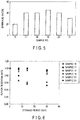
- the flavor retention rates of the flavor-containing sheets of all samples were 0.5 or more.
- the flavor retention rates of the flavor-containing sheets of Samples 16, 17, 19 and 20 were extremely high as 0.75 or more.
- Example 2 using agar used as thickening polysaccharide, the evaluation was conducted on how the candidate filler affects the three evaluation items, "2-1. Viscosity of raw material slurry”, “2-2. Shrinkage rate of sheet” and "2-3. Flavor retention rate after storage”. The evaluation results are summarized in Table 5.
- the evaluation criteria for each evaluation item are as described above.
- the evaluation results of the "viscosity of raw material slurry” and “shrinkage rate of sheet” showed that when agar is used as the thickening polysaccharide, it is possible, as in Example 1, to prepare a flavor-containing sheet including a filler without impediments in preparation.
- the evaluation results of the "flavor retention rate after storage” showed that when agar is used as the thickening polysaccharide, a flavor-containing sheet including a filler has a high flavor retention rate after storage, as in Example 1.
- agar can be used as the thickening polysaccharide in the flavor-containing sheet including the filler, as is the mixture of gellan gum and tamarind gum (Example 1).
- the evaluation was conducted on how the blending amount of the candidate filler affects the following five evaluation items, "3-1. Drying time”, “3-2. Viscosity of raw material slurry”, “3-3. Shrinkage rate of sheet, “3-4. Smoking flavor”, and "3-5. Flavor retention rate after storage”.
- a mixture of Pinedex and Pinefiber (mass ratio of 7:3) was used as a filler.
- the relationship between the blending amount of the filler and the drying time was examined.
- the filler was blended at a ratio of 0, 100, 200, 300, and 380% by mass with respect to the thickening polysaccharide.
- a raw material slurry was prepared by the same procedure as in Example 1.
- a raw material slurry was prepared with the same composition and by the same procedure as Sample 22, except that the blending amount of the filler was changed to 4.3 parts by mass (100% by mass with respect to thickening polysaccharide).
- a raw material slurry was prepared with the same composition and by the same procedure as Sample 22, except that the blending amount of the filler was changed to 8.6 parts by mass (200% by mass with respect to thickening polysaccharide).
- a raw material slurry was prepared with the same composition and by the same procedure as Sample 22, except that the blending amount of the filler was changed to 12.9 parts by mass (300% by mass with respect to thickening polysaccharide).
- a raw material slurry was prepared with the same composition and by the same procedure as Sample 22, except that the blending amount of the filler was changed to 16.3 parts by mass (380% by mass with respect to thickening polysaccharide).
- the raw material slurry of each of Samples 22 to 26 was extended on a stainless steel plate wrapped with Saran Wrap (registered trademark) so that the sheet after drying has a thickness of 0.1 mm.
- Saran Wrap registered trademark
- the thicknesses of the raw material slurries of Samples 22 to 26 extended on the substrates were 4.0 mm, 2.2 mm, 1.4 mm, 1.3 mm, and 1.1 mm, respectively.
- the extended raw material slurry was once cooled to a sample temperature of 20°C to form gel. Thereafter, hot air of 100°C generated by a hot air generator (New Hot Blaster MS 5841-6D; Miyamoto Seisakusho Co., Ltd.) was applied to the gelled raw material for drying to thereby prepare a sheet having a thickness of 0.1 mm. For each sample, the time required for drying was recorded.
- a hot air generator New Hot Blaster MS 5841-6D; Miyamoto Seisakusho Co., Ltd.
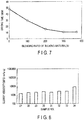
- FIG. 7 shows the relationship between the blending ratio of the filler and the drying time.
- the content of the filler is preferably from 100 to 500% by mass, more preferably from 200 to 500% by mass, with respect to the thickening polysaccharide.
- the relationship between the blending amount of the filler and the viscosity of the raw material slurry was examined.
- the filler was blended at a ratio of 0, 100, 200, 300, 380, 500, 600 and 700% by mass with respect to the thickening polysaccharide.
- the blending amount of the flavor was adjusted according to the blending amount of the filler in consideration of the yield of the flavor so that all the flavor-containing sheets contained about 2.5% by mass of the flavor.
- a raw material slurry was prepared by the same procedure as in Example 1.
- a raw material slurry was prepared with the same composition and by the same procedure as Sample 27, except that the blending amount of the filler was changed to 4.3 parts by mass (100% by mass with respect to thickening polysaccharide) and that the blending amount of 1-menthol was changed to 3.7 parts by mass.
- a raw material slurry was prepared with the same composition and by the same procedure as Sample 27, except that the blending amount of the filler was changed to 8.6 parts by mass (200% by mass with respect to thickening polysaccharide) and that the blending amount of 1-menthol was changed to 4.8 parts by mass.
- a raw material slurry was prepared with the same composition and by the same procedure as Sample 27, except that the blending amount of the filler was changed to 12.9 parts by mass (300% by mass with respect to thickening polysaccharide) and that the blending amount of 1-menthol was changed to 5.8 parts by mass.
- a raw material slurry was prepared with the same composition and by the same procedure as Sample 27, except that the blending amount of the filler was changed to 16.3 parts by mass (380% by mass with respect to thickening polysaccharide) and that the blending amount of 1-menthol was changed to 5.2 parts by mass.
- a raw material slurry was prepared with the same composition and by the same procedure as Sample 27, except that the blending amount of the filler was changed to 21.5 parts by mass (500% by mass with respect to thickening polysaccharide) and that the blending amount of 1-menthol was changed to 6.5 parts by mass.
- a raw material slurry was prepared with the same composition and by the same procedure as Sample 27, except that the blending amount of the filler was changed to 25.8 parts by mass (600% by mass with respect to thickening polysaccharide) and that the blending amount of 1-menthol was changed to 7.6 parts by mass.
- a raw material slurry was prepared with the same composition and by the same procedure as Sample 27, except that the blending amount of the filler was changed to 30.1 parts by mass (700% by mass with respect to thickening polysaccharide) and the blending amount of 1-menthol was changed to 7.6 parts by mass.
- a flavor-containing sheet was prepared in the same manner as in Example 1.
- the flavor content and the moisture content of each of the obtained flavor-containing sheets of Samples 27 to 34 were measured by the measurement method described above.
- the flavor contents of the flavor-containing sheets of Samples 27 to 34 were, respectively, 3.5% by mass, 2.8% by mass, 3.9% by mass, 3.5% by mass, 2.3% by mass, 2.9% by mass, 2.9% by mass, and 2.5% by mass, with respect to the sheet.
- the raw material slurry of each sample had a viscosity to the extent that emulsification and extension processes could be carried out without problems. These results indicate that the viscosity of the raw material slurry is not significantly increased even if the blending amount of the mixture of Pinedex and Pinefiber used as the filler is increased to 7 times the amount of the thickening polysaccharide.
- the shrinkage rates of the flavor-containing sheets of all samples were about 10 to 20%, causing no impediment to preparation.
- the results indicate that the shrinkage rate of the sheet is not increased even if the blending amount of the mixture of Pinedex and Pinefiber used as the filler is increased to 7 times the amount of thickening polysaccharide.
- the flavor-containing sheet (thickness 0.1 mm) of Sample 27 was cut to obtain cut pieces each having a long side of 4 mm and a short side of 1.5 mm.
- the cut pieces were mixed with cut tobacco taken from the MEVIUS SUPERLIGHTS Tar 6 mg product (Japan Tobacco Inc.) at a mass ratio of 5:95 to obtain mixed cut tobacco.
- the mixed cut tobacco was rewrapped with a cigarette paper to prepare a cigarette of Sample 27.
- the smoking flavor of each of the cigarettes of Sample 27 and Samples 30 to 34 was evaluated by sensory evaluation. Specifically, the evaluation was conducted on the extent to which the smoking flavor of each of the cigarettes of Samples 30 to 34 had changed in comparison to the smoking flavor of the cigarette of Sample 27 (containing no filler).
- the scoring criteria and the method of calculating the evaluation score are as described in Example 1.
- the cigarettes of Samples 30 to 32 demonstrated little or no change in the smoking flavor in comparison to the cigarette of Sample 27.
- the cigarette of Sample 33 demonstrated a smoking flavor which had changed from that of the cigarette of Sample 27.
- the cigarette of Sample 34 demonstrated a smoking flavor which had changed considerably from that of the cigarette of Sample 27.
- Example 1 For the flavor-containing sheets of Samples 27 to 34, the storage test was conducted in the same manner as in Example 1. In addition, in the same manner as in Example 1, the flavor content of the flavor-containing sheet immediately after preparation and the flavor content of the flavor-containing sheet after storage were measured to calculate the flavor retention rate.
- the flavor retention rates of the flavor-containing sheets of all samples measured were 0.5 or more.
- the flavor retention rates of the flavor-containing sheets of Samples 28, 29 and 30 were extremely high, 0.75 or more.
- Example 3 the evaluation was conducted on how the blending amount of the candidate filler affects the following five evaluation items, "3-1. Drying time”, “3-2. Viscosity of raw material slurry”, “3-3. Shrinkage rate of sheet, “3-4. Smoking flavor”, and "3-5. Flavor retention rate after storage”. The evaluation results are summarized in Table 8.
- drying time For the evaluation item of "drying time", it was found that the drying time tends to increase as the amount of the filler is reduced, and that the lower limit of the blending amount of the filler is preferably 100% by mass or more, more preferably 200% by mass or more, with respect to the blending amount of the thickening polysaccharide.
- the content of the filler in the sheet is preferably 100 to 500% by mass, more preferably 200 to 500% by mass, with respect to the mass of the thickening polysaccharide.
- the relationship between the blending amount of the cut pieces of the flavor-containing sheet and the blending uniformity was examined. Specifically, the cigarette rod including the cut pieces of the flavor-containing sheet was divided into five equal parts to prepare cigarette rod fragments, and the degree of variation in the flavor content among the cigarette rod fragments was calculated as a variation coefficient (%).
- a flavor-containing sheet (thickness 0.1 mm) was prepared with the same composition and by the same procedure as the flavor-containing sheet of Sample 1.
- the prepared flavor-containing sheet was cut to obtain cut pieces each having a long side of 4 mm and a short side of 1.5 mm.
- the obtained cut pieces were mixed with cut tobacco taken from the MEVIUS SUPERLIGHTS to prepare a tobacco filler.
- the cut pieces were blended at ratios of 2.5% by mass, 5% by mass, 7.5% by mass, and 10% by mass with respect to the tobacco filler, to prepare the tobacco filler.
- the tobacco filler was wrapped with a cigarette paper to prepare a cigarette rod.
- the prepared cigarette rod was divided into five equal parts to obtain cigarette rod fragments.
- the amount of menthol contained in each cigarette rod fragment was measured by GC-MSD as described in Example 1.
- the variation coefficient (%) of the flavor content was calculated for each cigarette rod. Based on the obtained variation coefficient, variation in the distribution of the flavor in each cigarette rod was evaluated.
- FIG. 11 shows the relationship between the blending ratio of the cut pieces of the flavor-containing sheet and the variation coefficient of the flavor content.
- the cut pieces of the flavor-containing sheet may be blended in an amount of more than 10% by mass, but from the viewpoint of cost effectiveness, it is preferable to blend them in an amount of, for example, 10% by mass or less, at most 20% by mass or less.
Landscapes
- Chemical & Material Sciences (AREA)
- Chemical Kinetics & Catalysis (AREA)
- General Chemical & Material Sciences (AREA)
- Health & Medical Sciences (AREA)
- General Health & Medical Sciences (AREA)
- Toxicology (AREA)
- Manufacture Of Tobacco Products (AREA)
- Fats And Perfumes (AREA)
- Jellies, Jams, And Syrups (AREA)
Applications Claiming Priority (1)
| Application Number | Priority Date | Filing Date | Title |
|---|---|---|---|
| PCT/JP2016/085593 WO2018100688A1 (ja) | 2016-11-30 | 2016-11-30 | 喫煙物品用香料含有シートおよびそれを含む喫煙物品 |
Publications (2)
| Publication Number | Publication Date |
|---|---|
| EP3533348A1 true EP3533348A1 (de) | 2019-09-04 |
| EP3533348A4 EP3533348A4 (de) | 2020-07-08 |
Family
ID=62242771
Family Applications (1)
| Application Number | Title | Priority Date | Filing Date |
|---|---|---|---|
| EP16923055.4A Pending EP3533348A4 (de) | 2016-11-30 | 2016-11-30 | Duftstoffhaltige folie für rauchartikel und rauchartikel damit |
Country Status (7)
| Country | Link |
|---|---|
| US (2) | US11528932B2 (de) |
| EP (1) | EP3533348A4 (de) |
| JP (1) | JP6926116B2 (de) |
| KR (1) | KR20190077434A (de) |
| CN (1) | CN110022698B (de) |
| RU (1) | RU2721625C1 (de) |
| WO (1) | WO2018100688A1 (de) |
Cited By (3)
| Publication number | Priority date | Publication date | Assignee | Title |
|---|---|---|---|---|
| WO2023067060A1 (en) | 2021-10-20 | 2023-04-27 | Jt International S.A. | A flat-shaped consumable article for an aerosol generating device, comprising a support structure |
| WO2023067160A1 (en) | 2021-10-21 | 2023-04-27 | Jt International S.A. | Tobacco substrate for use in an aerosol generating device, consumable article and associated producing and optimization methods |
| WO2023144327A1 (en) | 2022-01-28 | 2023-08-03 | Jt International S.A. | A pack of distinguishing aerosol generating articles and corresponding distinguishing aerosol generating article |
Families Citing this family (21)
| Publication number | Priority date | Publication date | Assignee | Title |
|---|---|---|---|---|
| JP7164867B2 (ja) * | 2018-10-02 | 2022-11-02 | 松谷化学工業株式会社 | 炭酸飲料 |
| GB201917494D0 (en) * | 2019-11-29 | 2020-01-15 | Nicoventures Trading Ltd | Aerosol generation |
| GB201917484D0 (en) * | 2019-11-29 | 2020-01-15 | Nicoventures Trading Ltd | Aerosol generation |
| GB201917470D0 (en) * | 2019-11-29 | 2020-01-15 | Nicoventures Trading Ltd | Aerosolo generation |
| GB201917492D0 (en) * | 2019-11-29 | 2020-01-15 | Nicoventures Trading Ltd | Aerosol generation |
| US20210195938A1 (en) * | 2019-12-27 | 2021-07-01 | Nicoventures Trading Limited | Substrate with multiple aerosol forming materials for aerosol delivery device |
| KR102560124B1 (ko) * | 2020-08-25 | 2023-07-26 | 주식회사 케이티앤지 | 개질된 셀룰로오스를 포함하는 흡연 물품용 향료 함유 시트 및 이를 포함하는 흡연 물품 |
| KR102628986B1 (ko) * | 2020-08-25 | 2024-01-24 | 주식회사 케이티앤지 | Lm-펙틴을 포함하는 흡연 물품용 향료 함유 시트 및 이를 포함하는 흡연 물품 |
| JP7609886B2 (ja) * | 2020-11-13 | 2025-01-07 | 日本たばこ産業株式会社 | センブラトリエンジオールを含むたばこ抽出物およびその製造方法 |
| KR102605497B1 (ko) * | 2021-04-29 | 2023-11-22 | 주식회사 케이티앤지 | 담배추출물시트, 이의 제조 방법 및 이를 포함하는 흡연물품 |
| KR102640562B1 (ko) * | 2021-05-20 | 2024-02-23 | 주식회사 케이티앤지 | 담배 냄새가 저감된 흡연 물품 및 그의 제조 방법 |
| CN113383982A (zh) * | 2021-07-09 | 2021-09-14 | 四川三联新材料有限公司 | 一种用于无序加热卷烟的制丝掺配方法 |
| KR102616655B1 (ko) * | 2021-09-06 | 2023-12-21 | 주식회사 케이티앤지 | 향보유량과 향보류성이 증진된 향료시트 및 이를 포함하는 흡연물품 |
| KR102616657B1 (ko) * | 2021-09-06 | 2023-12-20 | 주식회사 케이티앤지 | 물리성이 향상된 향료 시트, 이를 포함하는 흡연 물품 및 이들의 제조 방법 |
| KR102687776B1 (ko) * | 2021-09-06 | 2024-07-25 | 주식회사 케이티앤지 | 소리 발생 향료시트 및 이를 포함하는 흡연물품 |
| KR102885192B1 (ko) * | 2021-10-01 | 2025-11-12 | 주식회사 케이티앤지 | 표면 거칠기가 향상된 향료 시트, 이를 포함하는 흡연 물품 및 이들의 제조 방법 |
| CN120302894A (zh) | 2022-12-23 | 2025-07-11 | 韩国烟草人参公社 | 超低尼古丁吸烟制品 |
| KR102904797B1 (ko) * | 2022-12-23 | 2025-12-29 | 주식회사 케이티앤지 | 초저니코틴 흡연물품 |
| JPWO2024142149A1 (de) | 2022-12-26 | 2024-07-04 | ||
| KR20250021748A (ko) * | 2023-08-07 | 2025-02-14 | 주식회사 케이티앤지 | 흡연물품용 향료 시트 및 이의 제조방법 |
| WO2025230259A1 (ko) * | 2024-04-30 | 2025-11-06 | 주식회사 케이티앤지 | 에어로졸 생성물품용 시트 및 이를 포함하는 에어로졸 생성물품 |
Family Cites Families (29)
| Publication number | Priority date | Publication date | Assignee | Title |
|---|---|---|---|---|
| CH607892A5 (en) * | 1975-01-29 | 1978-12-15 | Givaudan & Cie Sa | Process for aromatising materials |
| GB8704196D0 (en) * | 1987-02-23 | 1987-04-01 | British American Tobacco Co | Tobacco reconstitution |
| GB2202422B (en) * | 1987-03-23 | 1991-09-25 | Imp Tobacco Co Ltd | Smoking material and process for making same |
| GB9414889D0 (en) * | 1994-07-23 | 1994-09-14 | Imp Tobacco Co Ltd | Tobacco reconstitution |
| GB0011351D0 (en) * | 2000-05-12 | 2000-06-28 | British American Tobacco Co | Tobacco reconstitution |
| AU2004200284B2 (en) * | 2000-05-12 | 2006-10-12 | British American Tobacco (Investments) Limited | Tobacco reconstitution |
| DK1336345T4 (da) * | 2000-11-06 | 2014-02-03 | Japan Tobacco Inc | Anvendelse af parfumesammensætninger som middel til at formindske siderøgslugt i cigaretter |
| US7032601B2 (en) * | 2001-09-28 | 2006-04-25 | U.S. Smokeless Tobacco Company | Encapsulated materials |
| GB0324525D0 (en) * | 2003-10-21 | 2003-11-26 | British American Tobacco Co | Smoking articles and smokable filler material therefor |
| UA89803C2 (ru) | 2005-01-06 | 2010-03-10 | Джапан Тобакко Инк. | Углеродсодержащая композиция для нагревательного элемента курительного изделия несжигаемого типа |
| US20090038629A1 (en) * | 2007-08-07 | 2009-02-12 | Ergle J Dennis | Flavor sheet for smoking article |
| US9816119B2 (en) * | 2008-02-29 | 2017-11-14 | Syngenta Participations Ag | Methods for starch hydrolysis |
| CN101548797B (zh) * | 2008-03-31 | 2011-12-07 | 湖北中烟工业有限责任公司 | 一种含烟及其制作方法 |
| RU2010151986A (ru) | 2008-05-19 | 2012-06-27 | Джапан Тобакко Инк. (Jp) | Содержащий ароматизатор материал для сигареты, способ его получения и сигарета |
| KR20130091787A (ko) | 2008-06-25 | 2013-08-19 | 니뽄 다바코 산교 가부시키가이샤 | 끽연 물품 |
| JPWO2010110226A1 (ja) | 2009-03-23 | 2012-09-27 | 日本たばこ産業株式会社 | 非燃焼タイプ香味吸引物品 |
| US20110271968A1 (en) * | 2010-05-07 | 2011-11-10 | Carolyn Rierson Carpenter | Filtered Cigarette With Modifiable Sensory Characteristics |
| JP5622543B2 (ja) | 2010-12-03 | 2014-11-12 | Dowaテクノロジー株式会社 | 無機粉体に含有される高級脂肪酸の定量分析方法 |
| JP2012118033A (ja) | 2010-12-03 | 2012-06-21 | Toshiba Corp | 半導体装置およびその検査方法 |
| JP2012118034A (ja) | 2010-12-03 | 2012-06-21 | Azbil Corp | 差圧センサの故障判定方法及び故障判定装置 |
| EP2682009B1 (de) | 2011-03-02 | 2018-10-24 | Japan Tobacco, Inc. | Verfahren zur herstellung einer duftstoffhaltigen folie für rauchartikel |
| US9474303B2 (en) * | 2011-09-22 | 2016-10-25 | R.J. Reynolds Tobacco Company | Translucent smokeless tobacco product |
| US20130118512A1 (en) * | 2011-11-16 | 2013-05-16 | R.J. Reynolds Tobacco Company | Smokeless tobacco products with starch component |
| US20130125904A1 (en) * | 2011-11-18 | 2013-05-23 | R.J. Reynolds Tobacco Company | Smokeless tobacco product comprising pectin component |
| CN103054158A (zh) * | 2013-01-17 | 2013-04-24 | 羊芙蓉 | 一种新型烟草膨化材料的制造方法及其应用 |
| CN103110549B (zh) * | 2013-01-30 | 2014-06-18 | 深圳劲创生物技术有限公司 | 一种含羟基酪醇的橄榄叶提取物微乳的制备方法 |
| JP6232228B2 (ja) * | 2013-08-26 | 2017-11-15 | フタムラ化学株式会社 | 香気吸着放散剤 |
| JP2016189700A (ja) | 2013-08-27 | 2016-11-10 | 日本たばこ産業株式会社 | 喫煙物品用香料含有材料の製造方法、該方法により製造される喫煙物品用香料含有材料、およびそれを含む喫煙物品 |
| WO2015046385A1 (ja) | 2013-09-30 | 2015-04-02 | 日本たばこ産業株式会社 | 非燃焼型香味吸引器及びカプセルユニット |
-
2016
- 2016-11-30 JP JP2018553581A patent/JP6926116B2/ja active Active
- 2016-11-30 RU RU2019120013A patent/RU2721625C1/ru active
- 2016-11-30 WO PCT/JP2016/085593 patent/WO2018100688A1/ja not_active Ceased
- 2016-11-30 CN CN201680091222.6A patent/CN110022698B/zh active Active
- 2016-11-30 KR KR1020197014812A patent/KR20190077434A/ko not_active Ceased
- 2016-11-30 EP EP16923055.4A patent/EP3533348A4/de active Pending
-
2019
- 2019-05-30 US US16/427,234 patent/US11528932B2/en active Active
-
2022
- 2022-11-22 US US17/992,528 patent/US11805803B2/en active Active
Cited By (4)
| Publication number | Priority date | Publication date | Assignee | Title |
|---|---|---|---|---|
| WO2023067060A1 (en) | 2021-10-20 | 2023-04-27 | Jt International S.A. | A flat-shaped consumable article for an aerosol generating device, comprising a support structure |
| EP4674289A2 (de) | 2021-10-20 | 2026-01-07 | JT International S.A. | Flacher verbrauchsartikel für eine aerosolerzeugungsvorrichtung mit einer stützstruktur |
| WO2023067160A1 (en) | 2021-10-21 | 2023-04-27 | Jt International S.A. | Tobacco substrate for use in an aerosol generating device, consumable article and associated producing and optimization methods |
| WO2023144327A1 (en) | 2022-01-28 | 2023-08-03 | Jt International S.A. | A pack of distinguishing aerosol generating articles and corresponding distinguishing aerosol generating article |
Also Published As
| Publication number | Publication date |
|---|---|
| US20230077518A1 (en) | 2023-03-16 |
| CN110022698A (zh) | 2019-07-16 |
| RU2721625C1 (ru) | 2020-05-21 |
| JP6926116B2 (ja) | 2021-08-25 |
| WO2018100688A1 (ja) | 2018-06-07 |
| JPWO2018100688A1 (ja) | 2019-06-24 |
| US11805803B2 (en) | 2023-11-07 |
| CN110022698B (zh) | 2021-12-21 |
| KR20190077434A (ko) | 2019-07-03 |
| EP3533348A4 (de) | 2020-07-08 |
| US20190274349A1 (en) | 2019-09-12 |
| US11528932B2 (en) | 2022-12-20 |
Similar Documents
| Publication | Publication Date | Title |
|---|---|---|
| US11805803B2 (en) | Flavor-containing sheet for smoking article and smoking article comprising the same | |
| EP2682008B1 (de) | Verfahren zur herstellung einer duftstoffhaltigen folie für rauchartikel | |
| EP2891408B1 (de) | Trägerelement für eine geschmackskomponente und tabakprodukt damit | |
| KR102560124B1 (ko) | 개질된 셀룰로오스를 포함하는 흡연 물품용 향료 함유 시트 및 이를 포함하는 흡연 물품 | |
| EP3243393B1 (de) | Wärmereversible zusammensetzung für rauchwaren, die bei normalen temperaturen gelartig sind | |
| EP2891409B1 (de) | Duftstoffhaltiger bestandteil einer zigarette und zigarette damit | |
| TW201442647A (zh) | 菸材料、添加該菸材料之菸製品,及菸材料之製造方法 | |
| JP2016189700A (ja) | 喫煙物品用香料含有材料の製造方法、該方法により製造される喫煙物品用香料含有材料、およびそれを含む喫煙物品 | |
| EP4144231A1 (de) | Orales beutelprodukt zur nikotinversorgung und herstellungsverfahren dafür | |
| JP7087038B2 (ja) | 喫煙物品用香料含有シートおよびそれを含む喫煙物品 | |
| CN108013498B (zh) | 一种提高再造烟叶物理保润性能的复合添加剂 | |
| TWI714682B (zh) | 吸煙物品用含有香料之薄片及含有該薄片之吸煙物品 | |
| JP7833557B2 (ja) | エアロゾル発生物品用香料シートの製造方法 | |
| TW202042675A (zh) | 加熱型香味吸嚐器用含香料片及加熱型香味吸嚐器 | |
| HK40004450B (en) | Fragrance-containing sheet for smoking article and smoking article including same | |
| HK40004450A (en) | Fragrance-containing sheet for smoking article and smoking article including same |
Legal Events
| Date | Code | Title | Description |
|---|---|---|---|
| STAA | Information on the status of an ep patent application or granted ep patent |
Free format text: STATUS: THE INTERNATIONAL PUBLICATION HAS BEEN MADE |
|
| PUAI | Public reference made under article 153(3) epc to a published international application that has entered the european phase |
Free format text: ORIGINAL CODE: 0009012 |
|
| STAA | Information on the status of an ep patent application or granted ep patent |
Free format text: STATUS: REQUEST FOR EXAMINATION WAS MADE |
|
| 17P | Request for examination filed |
Effective date: 20190531 |
|
| AK | Designated contracting states |
Kind code of ref document: A1 Designated state(s): AL AT BE BG CH CY CZ DE DK EE ES FI FR GB GR HR HU IE IS IT LI LT LU LV MC MK MT NL NO PL PT RO RS SE SI SK SM TR |
|
| AX | Request for extension of the european patent |
Extension state: BA ME |
|
| DAV | Request for validation of the european patent (deleted) | ||
| DAX | Request for extension of the european patent (deleted) | ||
| A4 | Supplementary search report drawn up and despatched |
Effective date: 20200609 |
|
| RIC1 | Information provided on ipc code assigned before grant |
Ipc: A24B 15/16 20200101ALI20200604BHEP Ipc: A24D 1/00 20200101ALI20200604BHEP Ipc: A24B 15/30 20060101AFI20200604BHEP |
|
| RAP3 | Party data changed (applicant data changed or rights of an application transferred) |
Owner name: JAPAN TOBACCO INC. |
|
| STAA | Information on the status of an ep patent application or granted ep patent |
Free format text: STATUS: EXAMINATION IS IN PROGRESS |
|
| 17Q | First examination report despatched |
Effective date: 20240613 |
|
| 17Q | First examination report despatched |
Effective date: 20240627 |