EP3527426A1 - Anzeigevorrichtung für ein kraftfahrzeug sowie kraftfahrzeug mit einer anzeigevorrichtung - Google Patents
Anzeigevorrichtung für ein kraftfahrzeug sowie kraftfahrzeug mit einer anzeigevorrichtung Download PDFInfo
- Publication number
- EP3527426A1 EP3527426A1 EP18208533.2A EP18208533A EP3527426A1 EP 3527426 A1 EP3527426 A1 EP 3527426A1 EP 18208533 A EP18208533 A EP 18208533A EP 3527426 A1 EP3527426 A1 EP 3527426A1
- Authority
- EP
- European Patent Office
- Prior art keywords
- motor vehicle
- vehicle
- display device
- light
- image
- Prior art date
- Legal status (The legal status is an assumption and is not a legal conclusion. Google has not performed a legal analysis and makes no representation as to the accuracy of the status listed.)
- Granted
Links
Images


Classifications
-
- B—PERFORMING OPERATIONS; TRANSPORTING
- B60—VEHICLES IN GENERAL
- B60Q—ARRANGEMENT OF SIGNALLING OR LIGHTING DEVICES, THE MOUNTING OR SUPPORTING THEREOF OR CIRCUITS THEREFOR, FOR VEHICLES IN GENERAL
- B60Q1/00—Arrangement of optical signalling or lighting devices, the mounting or supporting thereof or circuits therefor
- B60Q1/26—Arrangement of optical signalling or lighting devices, the mounting or supporting thereof or circuits therefor the devices being primarily intended to indicate the vehicle, or parts thereof, or to give signals, to other traffic
- B60Q1/30—Arrangement of optical signalling or lighting devices, the mounting or supporting thereof or circuits therefor the devices being primarily intended to indicate the vehicle, or parts thereof, or to give signals, to other traffic for indicating rear of vehicle, e.g. by means of reflecting surfaces
- B60Q1/302—Arrangement of optical signalling or lighting devices, the mounting or supporting thereof or circuits therefor the devices being primarily intended to indicate the vehicle, or parts thereof, or to give signals, to other traffic for indicating rear of vehicle, e.g. by means of reflecting surfaces mounted in the vicinity, e.g. in the middle, of a rear window
-
- B—PERFORMING OPERATIONS; TRANSPORTING
- B60—VEHICLES IN GENERAL
- B60Q—ARRANGEMENT OF SIGNALLING OR LIGHTING DEVICES, THE MOUNTING OR SUPPORTING THEREOF OR CIRCUITS THEREFOR, FOR VEHICLES IN GENERAL
- B60Q1/00—Arrangement of optical signalling or lighting devices, the mounting or supporting thereof or circuits therefor
- B60Q1/26—Arrangement of optical signalling or lighting devices, the mounting or supporting thereof or circuits therefor the devices being primarily intended to indicate the vehicle, or parts thereof, or to give signals, to other traffic
- B60Q1/2607—Arrangement of optical signalling or lighting devices, the mounting or supporting thereof or circuits therefor the devices being primarily intended to indicate the vehicle, or parts thereof, or to give signals, to other traffic comprising at least two indicating lamps
-
- B—PERFORMING OPERATIONS; TRANSPORTING
- B60—VEHICLES IN GENERAL
- B60Q—ARRANGEMENT OF SIGNALLING OR LIGHTING DEVICES, THE MOUNTING OR SUPPORTING THEREOF OR CIRCUITS THEREFOR, FOR VEHICLES IN GENERAL
- B60Q1/00—Arrangement of optical signalling or lighting devices, the mounting or supporting thereof or circuits therefor
- B60Q1/26—Arrangement of optical signalling or lighting devices, the mounting or supporting thereof or circuits therefor the devices being primarily intended to indicate the vehicle, or parts thereof, or to give signals, to other traffic
- B60Q1/2661—Arrangement of optical signalling or lighting devices, the mounting or supporting thereof or circuits therefor the devices being primarily intended to indicate the vehicle, or parts thereof, or to give signals, to other traffic mounted on parts having other functions
-
- B—PERFORMING OPERATIONS; TRANSPORTING
- B60—VEHICLES IN GENERAL
- B60Q—ARRANGEMENT OF SIGNALLING OR LIGHTING DEVICES, THE MOUNTING OR SUPPORTING THEREOF OR CIRCUITS THEREFOR, FOR VEHICLES IN GENERAL
- B60Q1/00—Arrangement of optical signalling or lighting devices, the mounting or supporting thereof or circuits therefor
- B60Q1/26—Arrangement of optical signalling or lighting devices, the mounting or supporting thereof or circuits therefor the devices being primarily intended to indicate the vehicle, or parts thereof, or to give signals, to other traffic
- B60Q1/50—Arrangement of optical signalling or lighting devices, the mounting or supporting thereof or circuits therefor the devices being primarily intended to indicate the vehicle, or parts thereof, or to give signals, to other traffic for indicating other intentions or conditions, e.g. request for waiting or overtaking
- B60Q1/52—Arrangement of optical signalling or lighting devices, the mounting or supporting thereof or circuits therefor the devices being primarily intended to indicate the vehicle, or parts thereof, or to give signals, to other traffic for indicating other intentions or conditions, e.g. request for waiting or overtaking for indicating emergencies
-
- B—PERFORMING OPERATIONS; TRANSPORTING
- B60—VEHICLES IN GENERAL
- B60Q—ARRANGEMENT OF SIGNALLING OR LIGHTING DEVICES, THE MOUNTING OR SUPPORTING THEREOF OR CIRCUITS THEREFOR, FOR VEHICLES IN GENERAL
- B60Q1/00—Arrangement of optical signalling or lighting devices, the mounting or supporting thereof or circuits therefor
- B60Q1/26—Arrangement of optical signalling or lighting devices, the mounting or supporting thereof or circuits therefor the devices being primarily intended to indicate the vehicle, or parts thereof, or to give signals, to other traffic
- B60Q1/50—Arrangement of optical signalling or lighting devices, the mounting or supporting thereof or circuits therefor the devices being primarily intended to indicate the vehicle, or parts thereof, or to give signals, to other traffic for indicating other intentions or conditions, e.g. request for waiting or overtaking
- B60Q1/547—Arrangement of optical signalling or lighting devices, the mounting or supporting thereof or circuits therefor the devices being primarily intended to indicate the vehicle, or parts thereof, or to give signals, to other traffic for indicating other intentions or conditions, e.g. request for waiting or overtaking for issuing requests to other traffic participants; for confirming to other traffic participants they can proceed, e.g. they can overtake
-
- F—MECHANICAL ENGINEERING; LIGHTING; HEATING; WEAPONS; BLASTING
- F21—LIGHTING
- F21S—NON-PORTABLE LIGHTING DEVICES; SYSTEMS THEREOF; VEHICLE LIGHTING DEVICES SPECIALLY ADAPTED FOR VEHICLE EXTERIORS
- F21S43/00—Signalling devices specially adapted for vehicle exteriors, e.g. brake lamps, direction indicator lights or reversing lights
- F21S43/10—Signalling devices specially adapted for vehicle exteriors, e.g. brake lamps, direction indicator lights or reversing lights characterised by the light source
- F21S43/13—Signalling devices specially adapted for vehicle exteriors, e.g. brake lamps, direction indicator lights or reversing lights characterised by the light source characterised by the type of light source
- F21S43/14—Light emitting diodes [LED]
-
- F—MECHANICAL ENGINEERING; LIGHTING; HEATING; WEAPONS; BLASTING
- F21—LIGHTING
- F21S—NON-PORTABLE LIGHTING DEVICES; SYSTEMS THEREOF; VEHICLE LIGHTING DEVICES SPECIALLY ADAPTED FOR VEHICLE EXTERIORS
- F21S43/00—Signalling devices specially adapted for vehicle exteriors, e.g. brake lamps, direction indicator lights or reversing lights
- F21S43/10—Signalling devices specially adapted for vehicle exteriors, e.g. brake lamps, direction indicator lights or reversing lights characterised by the light source
- F21S43/19—Attachment of light sources or lamp holders
-
- F—MECHANICAL ENGINEERING; LIGHTING; HEATING; WEAPONS; BLASTING
- F21—LIGHTING
- F21S—NON-PORTABLE LIGHTING DEVICES; SYSTEMS THEREOF; VEHICLE LIGHTING DEVICES SPECIALLY ADAPTED FOR VEHICLE EXTERIORS
- F21S43/00—Signalling devices specially adapted for vehicle exteriors, e.g. brake lamps, direction indicator lights or reversing lights
- F21S43/20—Signalling devices specially adapted for vehicle exteriors, e.g. brake lamps, direction indicator lights or reversing lights characterised by refractors, transparent cover plates, light guides or filters
- F21S43/235—Light guides
- F21S43/236—Light guides characterised by the shape of the light guide
- F21S43/239—Light guides characterised by the shape of the light guide plate-shaped
-
- F—MECHANICAL ENGINEERING; LIGHTING; HEATING; WEAPONS; BLASTING
- F21—LIGHTING
- F21S—NON-PORTABLE LIGHTING DEVICES; SYSTEMS THEREOF; VEHICLE LIGHTING DEVICES SPECIALLY ADAPTED FOR VEHICLE EXTERIORS
- F21S43/00—Signalling devices specially adapted for vehicle exteriors, e.g. brake lamps, direction indicator lights or reversing lights
- F21S43/20—Signalling devices specially adapted for vehicle exteriors, e.g. brake lamps, direction indicator lights or reversing lights characterised by refractors, transparent cover plates, light guides or filters
- F21S43/235—Light guides
- F21S43/242—Light guides characterised by the emission area
- F21S43/245—Light guides characterised by the emission area emitting light from one or more of its major surfaces
-
- F—MECHANICAL ENGINEERING; LIGHTING; HEATING; WEAPONS; BLASTING
- F21—LIGHTING
- F21S—NON-PORTABLE LIGHTING DEVICES; SYSTEMS THEREOF; VEHICLE LIGHTING DEVICES SPECIALLY ADAPTED FOR VEHICLE EXTERIORS
- F21S43/00—Signalling devices specially adapted for vehicle exteriors, e.g. brake lamps, direction indicator lights or reversing lights
- F21S43/20—Signalling devices specially adapted for vehicle exteriors, e.g. brake lamps, direction indicator lights or reversing lights characterised by refractors, transparent cover plates, light guides or filters
- F21S43/26—Refractors, transparent cover plates, light guides or filters not provided in groups F21S43/235 - F21S43/255
-
- B—PERFORMING OPERATIONS; TRANSPORTING
- B60—VEHICLES IN GENERAL
- B60Q—ARRANGEMENT OF SIGNALLING OR LIGHTING DEVICES, THE MOUNTING OR SUPPORTING THEREOF OR CIRCUITS THEREFOR, FOR VEHICLES IN GENERAL
- B60Q2900/00—Features of lamps not covered by other groups in B60Q
- B60Q2900/50—Arrangements to reconfigure features of lighting or signalling devices, or to choose from a list of pre-defined settings
-
- F—MECHANICAL ENGINEERING; LIGHTING; HEATING; WEAPONS; BLASTING
- F21—LIGHTING
- F21W—INDEXING SCHEME ASSOCIATED WITH SUBCLASSES F21K, F21L, F21S and F21V, RELATING TO USES OR APPLICATIONS OF LIGHTING DEVICES OR SYSTEMS
- F21W2103/00—Exterior vehicle lighting devices for signalling purposes
- F21W2103/30—Hazard lights
-
- F—MECHANICAL ENGINEERING; LIGHTING; HEATING; WEAPONS; BLASTING
- F21—LIGHTING
- F21W—INDEXING SCHEME ASSOCIATED WITH SUBCLASSES F21K, F21L, F21S and F21V, RELATING TO USES OR APPLICATIONS OF LIGHTING DEVICES OR SYSTEMS
- F21W2103/00—Exterior vehicle lighting devices for signalling purposes
- F21W2103/35—Brake lights
Definitions
- the invention relates to a display device for a motor vehicle and a motor vehicle with such a display device.
- Light functions on motor vehicles are generally carried out so that from the signal direction, a lens is visible, behind which are arranged with or without further optically active elements light sources.
- the position of the light function is visible even when the lamp is turned off.
- a holographic image is generated by illuminating a hologram mounted adjacent to an automobile rear window by a light positioned outside the field of vision of the driver of the motor vehicle. This holographic image is visible to a viewer who is behind the motor vehicle.
- a device is also described with which information can be projected onto a projection surface mounted on the inside of the rear window of a motor vehicle. This is done by a corresponding illumination and activation of this projection surface from the interior of the motor vehicle, whereupon the projected information is made visible to a viewer of the motor vehicle.
- the rear window is normally translucent and transparent.
- a brake light system for a motor vehicle in which light beams of a light source are projected onto the rear vehicle window from the vehicle interior.
- This vehicle window has baffles or light reflectors which serve to guide the light beams projected onto the vehicle window like a screen to the outside, that is to say into the surroundings of the motor vehicle.
- This system serves as additional brake lighting on a rear vehicle window of a motor vehicle.
- a brake lamp for a motor vehicle is described.
- the light source of this brake light is hidden from view of the motor vehicle.
- a holographic-optical device which is mounted on the inside of a vehicle window, illuminated. An observer of the motor vehicle ultimately sees the light of the light source refracted or mirrored on the holographic-optical component.
- a lighting device for a motor vehicle which is designed to project with the light of a projector light source, for example, a picture next to a license plate of a motor vehicle and to illuminate the license plate with an additional light source.
- 04-154448 A describes a lighting device for a motor vehicle in which the rear window is illuminated by means of a light source arranged in a motor vehicle interior in a rear area, the light of which is reflected on mirror-coated fins on a surface of a rear window of the motor vehicle.
- corresponding optical elements are always provided on a vehicle window of the motor vehicle, for example holographic foils, light breakers or other light reflectors.
- This object is achieved by a display device for a motor vehicle.
- the display device according to the invention for a motor vehicle comprises a vehicle attachment, in which a display device is arranged.
- the display device is characterized in that it has a backlit display surface for projecting an image on an outside of a vehicle window of the motor vehicle.
- the vehicle attachment hidden in its intended mounting position, the display surface at least from a predetermined viewing position, which is outside the motor vehicle. In the intended mounting position through the display surface passing light hits in such a way on the outside of the vehicle window and is reflected by it in such a way that the image is visible from the given viewing position.
- the device according to the invention for a motor vehicle is thus designed as a vehicle component which is arranged on the outside of the body of the motor vehicle and has a unit for displaying a display, such as a symbol or lettering.
- This display device of the display device in turn comprises a display surface, the so-called display area, which can be illuminated from behind. With a corresponding illumination of the display surface, the display, that is, a predetermined by the formation of the display surface image, displayed on an outer window surface of the motor vehicle.
- the vehicle attachment with the display device is attached to the motor vehicle in such a way that the display surface itself is not visible from a certain viewing direction, for example from a vehicle driving behind the motor vehicle.
- the vehicle attachment is also attached to the motor vehicle such that the outer side of the window surface of the motor vehicle is illuminated by the light beam radiating through the display surface in such a way that the light beam reflected back from the vehicle window can be seen from the determined viewing direction and thus the image for an observer of the motor vehicle can be seen.
- the display device proposed according to the invention can be positioned, for example, on a roof spoiler above the rear window of a motor vehicle.
- the display device of this display device may be designed, for example, to project a warning triangle on the outside of the rear window.
- This warning triangle projected onto the rear window can be seen, for example, by persons in other vehicles driving behind the motor vehicle or by persons who are in the vicinity of the motor vehicle and are looking at the rear window. This is possible since the reflected light, due to a corresponding arrangement of the roof spoiler, radiates relative to the rear window in the direction of the viewing positions of these persons.
- the warning triangle projected onto the rear window can always be displayed when a user of the motor vehicle actuates the hazard warning lights.
- a viewer of the motor vehicle sees here only the warning triangle displayed on the rear window, but not the display device itself, which projects the image on the rear window, as this is hidden for the viewer of the motor vehicle in the roof spoiler, that is integrated in the display device.
- this display device it is thus possible with relatively simple means an additional and hidden for a viewer of the motor vehicle display possibility for warning and informing, for example, persons in a behind the motor vehicle driving another vehicle or in the environment behind the vehicle resident to realize people.
- the image to be imaged is predetermined by the design and choice of the display surface.
- the image to be imaged is predetermined by the design and choice of the display surface.
- DE 10 2011 012 520 A1 no holographic-optical device on the vehicle window is necessary to represent the desired image on the vehicle window.
- the image is already generated within the display device and reflected only on the vehicle window so that it is visible from the predetermined viewing position.
- the display device comprises at least one light source, with which the display surface is backlit.
- at least one type of light is integrated into the display device.
- this is one or more LEDs.
- This at least one light source can flash, for example.
- these can also be actuated successively or alternatively, whereby ultimately different optical light effects can be generated.
- different colors of the light sources can be selected, for example the particularly striking warning color red.
- warning triangle is displayed due to actuation of the hazard warning lights on the rear window of the motor vehicle, but several warning triangles, for example, from the perspective of an observer of the motor vehicle viewed from left to right over the Moving rear window, in addition to blink at predetermined time intervals and thereby warn particularly advantageous persons in a behind the motor vehicle driving another vehicle and a possible risk of danger, due to which the operation of the hazard warning lights by the user of the preceding motor vehicle was informed.
- the light source is a brake light, which is arranged in the vehicle attachment that radiated in the intended mounting position by the brake lamp light from the predetermined viewing position is visible and light of the brake light is directed by a light guide to the display area and this backlit.
- the display device can thus be a combination of a brake light and a display device.
- the brake light itself is positioned in such a way in the vehicle attachment, that this brake light from the specific line of sight, that is, for example, for the people in a behind the motor vehicle other vehicle, can be seen directly.
- part of the light emitted by the brake light in the case of its operation is directed through a corresponding optical element to the display surface so that it is backlit with this brake light and projects a desired image on the outside of the corresponding vehicle window of the motor vehicle.
- the display device comprises both the light source and the brake light, wherein the brake light is used to generate a brake light beam, whereas from the light source, but using the light guide, the display surface is backlit.
- the brake light thus continues to serve only to generate a brake light beam, while still from the light source, but using a light guide, the display area is backlit.
- the display device and the brake light are thus for example both integrated in a housing. However, these still have two separate sources of their lighting, namely the light source and the brake light.
- a corresponding warning signal such as a warning triangle
- the brake lights in this case are high-level brake lights, which are located above the rear window of the motor vehicle.
- the emission direction of the reflected light is at least substantially parallel to the vehicle longitudinal direction.
- the display device is thus arranged on the body of the motor vehicle such that the light reflected back at the vehicle window is emitted parallel to the vehicle background.
- a second virtual display plane of the image is generated, which is arranged behind a virtual display plane of the image reflected on the outside of the vehicle window image and the vehicle window.
- a warning triangle with the display device is projected onto the outside of the vehicle window of the motor vehicle, this warning triangle appears appearing three-dimensionally and thereby particularly attracts an observer of the motor vehicle in an eye-catching manner, whereby the warning and informing function of the display device becomes particularly advantageous.
- the three-dimensional effect is ultimately based on the fact that the light emitted from the display surface light both partially at the interface of air to the outside of the vehicle window but also to a part at the interface of the vehicle window to the interior and thus the interface to the air in the motor vehicle is bent back.
- the display surface has a transparent pane which is masked by means of an image mask defining the image.
- an image mask defining the image.
- the image is given that is ultimately projected in a backlighting of the display surface on the outside of the vehicle window of the vehicle.
- the warning triangle symbol a lettering such as "Please turn off main beam” or another lettering or another symbol as an image can be specified. This allows a display device for projecting an image predetermined by means of the mask on the outside of the vehicle window of the motor vehicle to be realized with particularly simple technical means.
- the display surface further, masked by a respective images mask masked transparent discs which are positioned by means of an exchange mechanism such that light passing through the display surface so incident on the outside of the vehicle window and from this is reflected that the respective image from the given viewing position is visible. It can therefore be provided various images, between which can be changed. With a mechanism provided for this purpose, these individual images can be positioned by means of corresponding masks as a display surface in such a way that the light illuminating the display surface is influenced by these masks in such a way that the corresponding desired image is projected onto the outside of the vehicle window of the motor vehicle.
- the image projected in this way is reflected from the outside of the vehicle window of the motor vehicle in such a way that the image from the predetermined viewing direction, that is, for example, for persons in a behind the motor vehicle other vehicle or people who are behind in the environment to stop the motor vehicle, can be seen.
- the selection between these individual transparent panes and thus between the various desired images can be done manually or automatically.
- the image that can be displayed by the display device would be set for at least one drive of the motor vehicle.
- a corresponding selection of the image via a button or another button in the vehicle interior is possible.
- two different masked transparent slices are provided in the display device.
- One of these transparent panes has a warning triangle and the other has the message "Please turn off the main beam.”
- the mask with the warning triangle would be positioned in front of the display surface so that this warning triangle is projected onto the outside of the vehicle window.
- the driver via a corresponding button in the vehicle interior, it would also be possible for the driver to select the second mask with the words "please turn off main beam” in order to ask a driver of another vehicle driving behind the motor vehicle in an appropriate situation, or to remind him that this turns off its high beam.
- the display surface has a screen.
- the display surface may thus be an electrically driven display without moving parts for optically signaling variable information such as images or characters.
- the screen can also be backlit by the at least one light source. In that case, it would be possible in particular in daylight, and thus also when it is particularly bright outside the motor vehicle, to project it onto the outside of the vehicle window of the motor vehicle Image is particularly visible.
- the images that can be displayed using the screen can either be preset or arbitrary, for example, controlled or designed using a corresponding mobile phone app.
- predetermined images these can also be selected by appropriate buttons and buttons in the vehicle interior or by appropriate control of the mobile phone app. This allows a large potential number of images that can be displayed on the outside of the vehicle window for other road users. This also makes it possible to respond to different regional conditions, such as national languages or special traffic rules, as part of a corresponding display by the display device.
- the vehicle attachment is a roof spoiler for a rear area of the motor vehicle.
- the externally arranged on the body component was thus a protruding part, which is located above the rear window.
- a particularly advantageous position for warning and informing persons in motor vehicles traveling behind the motor vehicle is thus possible.
- a motor vehicle with a display device with the above features is also provided.
- This motor vehicle thus has a vehicle attachment, in which a display device is arranged.
- a display device With the display device of the motor vehicle, an image can finally be projected on an outside of a vehicle window of the motor vehicle that is visible from a predetermined viewing position. From the given viewing position, however, the display device with a backlit display surface, which ultimately projects the image onto the outside of the vehicle window of the motor vehicle, can not be viewed.
- the motor vehicle thus has a particularly advantageous display device for displaying warnings and information for other road users, such as persons in another vehicle located behind the motor vehicle.
- the invention also includes the combinations of the described embodiments.
- the invention also includes developments of the method according to the invention, which have features as they have already been described in connection with the developments of the motor vehicle according to the invention. For this reason, the corresponding developments of the method according to the invention are not described again here.
- the described components of the embodiments each represent individual features of the invention, which are to be considered independently of one another, which each further develop the invention independently of one another and thus also individually or in a different combination than the one shown as part of the invention. Furthermore, the described embodiments can also be supplemented by further features of the invention already described.
- Fig. 1 is the rear portion 21 of a motor vehicle 1 sketched.
- This motor vehicle 1 has a display device 2, which comprises a roof spoiler 3.
- a display device 4 is integrated, which has a display surface 5 and a light source 6.
- the display surface 5 is illuminated from behind by the light source 6, that is, backlit, and as a result, an image of the display surface 5 is projected onto the outside 9 of the vehicle window 22 of the motor vehicle 1.
- This image can For example, a warning triangle or a lettering "Please turn off main beam".
- the display device 4 with the display surface 5 is not visible from a predetermined viewing position 10 and hidden by corresponding components of the roof spoiler 3.
- This viewing position 10 corresponds, for example, to the position of persons in a further motor vehicle 1 traveling behind the motor vehicle 1 or the viewing position 10 of persons located in the vicinity of the motor vehicle 1.
- the reflection of the projected onto the outside 9 of the vehicle window 22 of the motor vehicle 1 image is visible.
- the Fig. 1 is outgoing from the light source 6 and the display surface 5 backlit light beam 7 shown as an arrow.
- the emission direction 8 of the light reflected on the outside 9 of the vehicle window 22 of the motor vehicle 1 is shown.
- the radiation direction 8 extends in the intended mounting position of the roof spoiler 3 parallel to the vehicle longitudinal direction in the direction of the viewing position 10th
- a virtual image of the display area 5 on a virtual display plane 12 is generated for a viewer at the viewing position 10.
- a part of the light beam 7 is not reflected on the outer surface 9 of the vehicle window 22 but transmitted through the vehicle window 22.
- this transmitted light beam 7 ' is at least partially reflected on the inner side 11 of the vehicle window 22 and indeed in the emission direction 8'.
- This second image is slightly offset from the first image reflected on the outside 9 of the vehicle window 22.
- a warning triangle is projected by means of the display surface 5 on the vehicle window 22, this is Warning triangle by the reflection on the outside 9 and on the inside 11 of the vehicle window 22 for a viewer appearing three-dimensional appearing on the vehicle window 22.
- This three-dimensional warning triangle can be projected onto the vehicle window 22, for example, when the driver triggers the hazard warning lights in the motor vehicle 1, for example in a traffic jam situation or another dangerous situation on a highway.
- the display device 4 the projection of a warning triangle on the vehicle window 22 with the activation of a brake light 13 and thus be combined with a braking of the motor vehicle 1.
- a warning triangle is projected onto the vehicle window 22 whenever the brake light 13 is activated due to braking of the motor vehicle 1.
- the vehicle window 22 is a normally glazed vehicle window 22, it has a relatively high transmittance of typically over 90%, so that only typically 4% of the incident intensity is reflected in the emission direction 8. On the inner side 11 of the vehicle window 22 also typically 4% of the intensity of the transmitted light beam 7 'in the emission direction 8' are reflected. If the vehicle window 22 is, for example, a vehicle window 22 with privacy glazing with a transmittance of typically 75%, the intensity of the light reflected in the emission direction 8 is likewise typically 4%. However, only typically 0.3% of the intensity of the transmitted light beam 7 'in the emission direction 8' is reflected on the inner side 11 of the vehicle window 22 made of privacy glazing.
- the total intensity of the reflected light is thus reduced by approximately 50% in privacy glazing compared to normal glazing.
- a higher light output of the light source 6 is necessary in order to achieve the same luminous intensity of the image projected on the vehicle window 22.
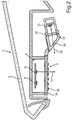
- Fig. 2 the display device 2 is sketched with integrated brake light 13, wherein the brake light 13 and the light source 6 are separated from each other.
- image mask 15 the image projected on the vehicle window 22 is defined, for example by being shown in mirror-image or as a mirrored symbol on the image mask 15.
- the image mask 15 in the display device 4 there may be a plurality of such transparent panes 14 with the image mask 15 in the display device 4, which can be positioned individually in front of the light source 6 as a display surface 5 by a corresponding exchange mechanism, for example selected by a corresponding button in the vehicle interior.
- a plurality of light sources 6 it is possible for a plurality of light sources 6 to be present which can be controlled separately, so that individual regions of an image mask 15 can ultimately be illuminated individually with the aid of a corresponding optical system, as a result of which different images can also be projected onto the vehicle window 22.
- a corresponding exchange mechanism of the transparent panes 14 it would be possible, for example, that as soon as a driver of the motor vehicle 1 actuates the hazard warning lights of the motor vehicle 1, a warning triangle is projected onto the vehicle window 22 by means of a corresponding image mask 15.
- the driver presses a corresponding key or a corresponding button in the motor vehicle 1 he can select that the lettering "Please turn off the main beam" is projected onto the vehicle window 22 instead of the potentially projected warning triangle in order for the driver behind the motor vehicle 1 moving other motor vehicle 1 point out the high beam off, as this example, the driver of the motor vehicle 1 fades.
- a display area 5 which includes a screen
- This screen that is, this display surface 5, would also be illuminated from behind by a light source 6 to ensure that even in bright daylight the image projected onto the vehicle window 22 is clearly visible from the viewing position 10.
- the content shown on this screen that is, the respective image projected on the vehicle window 22, can either also be selected by key combination in the vehicle interior, but could also be individually controlled and designed by a user via a corresponding mobile phone app or other interface.
- the roof spoiler 3 and thus the display device 2 also comprises a brake light 13, which emits a brake light beam 19 by means of a brake light optics 17 through a brake light disc 16, which is also visible from the viewing position 10.
- a brake light 13 which emits a brake light beam 19 by means of a brake light optics 17 through a brake light disc 16, which is also visible from the viewing position 10.
- These components, that is, the brake light 13, the brake light optics 17 and the brake light disc 16 are integrated into a brake light housing 18, which is part of the display device 2.
- the brake light 13 and the display device 2 are thus decoupled from each other.
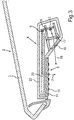
- the brake light 13 is integrated into the display device 4 together with the brake light optics 17 and the brake light disc 16.
- the brake light 13 is still only the generation of the brake light beam 19, whereas continue from the light source 6, but using a light guide 20, the display surface 5 with the transparent plate 14 and the image mask 15 is backlit.
- the display device 4 and the brake light 13 are thus both integrated in a housing 23.
- Fig. 4 is also an integrated into a housing 23 display device 4 with a brake light 13 outlined.
- the display area 5 and the brake light optics 17 with the brake light disc 16 are illuminated by a single light source 6 here.
- a correspondingly selected image is then always projected by means of the display device 4 onto the vehicle window 22 when the brake light 13, here illuminated by the light source 6, is activated.
- An independent of a brake of the motor vehicle 1 control of the display device 4 is thus with this in Fig. 4 ski satisfy display device 2 not possible.
- the image projected on the vehicle window 22 different optical effects reproduces for example, is flashing or along the width of the roof spoiler 3 of one side to the other moves.
- the examples show that with the display device 2, which comprises a roof spoiler 3 in which a display device 4 is arranged, in that the display device 4 has a backlit display surface 5, an image is projected onto an outside 9 of a vehicle window 22 of the motor vehicle 1 can be seen from the viewing position 10, wherein the display surface 5 itself is hidden from the viewing position 10 from.
Landscapes
- Engineering & Computer Science (AREA)
- Mechanical Engineering (AREA)
- General Engineering & Computer Science (AREA)
- Physics & Mathematics (AREA)
- Microelectronics & Electronic Packaging (AREA)
- Optics & Photonics (AREA)
- Lighting Device Outwards From Vehicle And Optical Signal (AREA)
Abstract
Description
- Die Erfindung betrifft eine Anzeigevorrichtung für ein Kraftfahrzeug sowie ein Kraftfahrzeug mit einer derartigen Anzeigevorrichtung.
- Lichtfunktionen an Kraftfahrzeugen werden in der Regel so ausgeführt, dass aus Signalrichtung eine Lichtscheibe sichtbar ist, hinter der mit oder ohne weitere optisch wirksame Elemente Lichtquellen angeordnet sind. Somit ist die Lage der Lichtfunktion auch im ausgeschalteten Zustand der Leuchte sichtbar. Hierdurch ergeben sich jedoch Einschränkungen bezüglich der Lichtfunktion am Kraftfahrzeug, denn ein beispielsweise in einer Warnsituation zu beleuchtendes Symbol am Kraftfahrzeug wäre auch im ausgeschalteten Zustand der entsprechenden Leuchte stets zu sehen.
- Im Stand der Technik werden verschiedene Lichtfunktionen beschrieben, bei denen die jeweilige Lichtquelle außerhalb des Sichtfelds eines Betrachters oder Benutzers eines Kraftfahrzeugs positioniert ist.
- In der
DE 689 20 985 T2 wird ein holografisches Automobil-Stopplicht-System für ein Kraftfahrzeug beschrieben. Hierbei wird ein holografisches Bild erzeugt, indem ein Hologramm, das benachbart zu einer Automobilheckscheibe angebracht ist, durch eine außerhalb des Sichtfelds des Fahrers des Kraftfahrzeugs positionierte Beleuchtung beleuchtet wird. Dieses holografische Bild ist für einen Betrachter, der sich hinter dem Kraftfahrzeug befindet, sichtbar. - In der
DE 41 02 571 C2 wird ebenfalls eine Anordnung für ein Kraftfahrzeug beschrieben, bei der durch eine Beleuchtung der Heckscheibe des Kraftfahrzeugs, auf der ein Transmissionshologramm angeordnet ist, das in Flächenbereiche mit jeweils einzelnen Hologrammen aufgeteilt ist, das Transmissionshologramm für einen Betrachter des Kraftfahrzeugs sichtbar gemacht wird. - In der
DE 89 02 121 U1 wird ebenfalls eine Vorrichtung beschrieben, mit der Informationen auf eine an der Innenseite der Heckscheibe eines Kraftfahrzeugs angebrachte Projektionsfläche projiziert werden können. Dies erfolgt durch eine entsprechende Beleuchtung und Aktivierung dieser Projektionsfläche vom Inneren des Kraftfahrzeugs aus, woraufhin die projizierten Informationen für einen Betrachter des Kraftfahrzeugs sichtbar gemacht werden. In nicht-aktiviertem Zustand ist die Heckscheibe jedoch normal lichtdurchlässig und durchsichtig. - In der
DE 201 15 792 U1 wird ein Bremslichtsystem für ein Kraftfahrzeug beschrieben, bei dem Lichtstrahlen einer Lichtquelle auf die hintere Fahrzeugscheibe vom Fahrzeuginneren aus projiziert werden. Diese Fahrzeugscheibe weist Lichtbrecher oder Lichtreflektoren auf, die dazu dienen, die auf die Fahrzeugscheibe projizierten Lichtstrahlen wie eine Leinwand nach außen, das heißt in die Umgebung des Kraftfahrzeugs, zu leiten. Dieses System dient als zusätzliche Bremsbeleuchtung an einer hinteren Fahrzeugscheibe eines Kraftfahrzeugs. - In der
DE 10 2011 012 520 A1 wird ebenfalls eine Bremsleuchte für ein Kraftfahrzeug beschrieben. Die Lichtquelle dieser Bremsleuchte ist für einen Betrachter des Kraftfahrzeugs jedoch verdeckt angeordnet. Mit der Lichtquelle wird ein holografisch-optisches Bauelement, das an der Innenseite einer Fahrzeugscheibe angebracht ist, beleuchtet. Ein Betrachter des Kraftfahrzeugs sieht letztendlich das an dem holografisch-optischen Bauelement gebrochene beziehungsweise gespiegelte Licht der Lichtquelle. - In der
US 9,604,568 B1 - In der
JP,04-154448 - Für die genannten optischen Systeme sind jedoch stets entsprechende optische Elemente an einer Fahrzeugscheibe des Kraftfahrzeugs vorgesehen, beispielsweise holografische Folien, Lichtbrecher oder andere Lichtreflektoren.
- Es ist daher die Aufgabe der Erfindung, eine Lösung bereitzustellen, mittels welcher eine Anzeige auf einer Fahrzeugscheibe mit relativ einfachen technischen Mitteln und ohne Beeinflussung der Fahrzeugscheibe realisiert werden kann.
- Diese Aufgabe wird durch eine Anzeigevorrichtung für ein Kraftfahrzeug gelöst.
- Die erfindungsgemäße Anzeigevorrichtung für ein Kraftfahrzeug umfasst ein Fahrzeuganbauteil, in welchem eine Anzeigeeinrichtung angeordnet ist. Die Anzeigevorrichtung ist dadurch gekennzeichnet, dass sie eine hinterleuchtbare Anzeigefläche zum Projizieren eines Abbilds auf eine Außenseite einer Fahrzeugscheibe des Kraftfahrzeugs aufweist. Das Fahrzeuganbauteil verdeckt in seiner bestimmungsgemäßen Anbaulage die Anzeigefläche zumindest aus einer vorgegebenen Betrachtungsposition, welche außerhalb des Kraftfahrzeugs ist. In der bestimmungsgemäßen Anbaulage durch die Anzeigefläche hindurchtretendes Licht trifft derart auf die Außenseite der Fahrzeugscheibe und wird von dieser derart reflektiert, dass das Abbild aus der vorgegebenen Betrachtungsposition sichtbar ist.
- Die erfindungsgemäße Vorrichtung für ein Kraftfahrzeug ist somit als eine von außen an der Karosserie des Kraftfahrzeugs angeordnete Fahrzeugkomponente ausgebildet, die eine Einheit zum Anzeigen einer Anzeige, wie einem Symbol oder Schriftzug, aufweist. Diese Anzeigeeinrichtung der Anzeigevorrichtung umfasst wiederum eine Anzeigeoberfläche, die sogenannte Anzeigefläche, die von hinten angeleuchtet werden kann. Bei entsprechender Anleuchtung der Anzeigefläche wird die Anzeige, das heißt ein durch die Ausbildung der Anzeigefläche vorgegebenes Abbild, auf einer äußeren Fensterfläche des Kraftfahrzeugs dargestellt. Das Fahrzeuganbauteil mit der Anzeigeeinrichtung ist dabei derart am Kraftfahrzeug befestigt, dass die Anzeigefläche selbst aus einer bestimmten Blickrichtung, beispielsweise von einem hinter dem Kraftfahrzeug fahrenden anderen Fahrzeug aus, nicht einsehbar ist. Das Fahrzeuganbauteil ist außerdem derart am Kraftfahrzeug befestigt, dass die äußere Seite der Fensterfläche des Kraftfahrzeugs von dem durch die Anzeigefläche hindurch strahlenden Lichtstrahl derart angestrahlt wird, dass der von der Fahrzeugscheibe zurückgebeugte Lichtstrahl aus der bestimmten Blickrichtung zu sehen ist und somit das Abbild für einen Betrachter des Kraftfahrzeugs zu sehen ist.
- Die erfindungsgemäß vorgeschlagene Anzeigevorrichtung kann zum Beispiel an einem Dachspoiler oberhalb der Heckscheibe eines Kraftfahrzeugs positioniert sein. Die Anzeigeeinrichtung dieser Anzeigevorrichtung kann beispielsweise dazu ausgelegt sein, ein Warndreieck auf die Außenseite der Heckscheibe zu projizieren. Dieses auf die Heckscheibe projizierte Warndreieck kann beispielsweise von Personen in hinter dem Kraftfahrzeug fahrenden anderen Fahrzeugen oder von Personen, die sich in der Umgebung des Kraftfahrzeugs aufhalten und auf die Heckscheibe blicken, gesehen werden. Dies ist möglich, da das reflektierte Licht aufgrund einer entsprechenden Anordnung des Dachspoilers relativ zur Heckscheibe in Richtung der Betrachtungspositionen dieser Personen strahlt. Das derart auf die Heckscheibe projizierte Warndreieck kann beispielsweise immer dann angezeigt werden, wenn ein Benutzer des Kraftfahrzeugs den Warnblinker betätigt.
- Ein Betrachter des Kraftfahrzeugs sieht hierbei nur das auf der Heckscheibe angezeigte Warndreieck, jedoch nicht die Anzeigeeinrichtung selbst, die das Abbild auf die Heckscheibe projiziert, da diese für den Betrachter des Kraftfahrzeugs verdeckt in den Dachspoiler, das heißt in die Anzeigevorrichtung, integriert ist. Mit dieser Anzeigevorrichtung ist es somit mit relativ einfachen Mitteln möglich eine zusätzliche und für einen Betrachter des Kraftfahrzeugs verdeckte Anzeigemöglichkeit zum Warnen und Informieren von zum Beispiel Personen in einem hinter dem Kraftfahrzeug fahrenden anderen Fahrzeug oder sich in der Umgebung hinter dem Kraftfahrzeug aufhaltenden Personen zu realisieren.
- Erfindungsgemäß ist es allerdings vorgesehen, dass durch die Ausbildung und Wahl der Anzeigefläche das abzubildende Abbild vorgegeben ist. Im Gegensatz beispielsweise zur
DE 10 2011 012 520 A1 ist somit kein holografisch-optisches Bauelement auf der Fahrzeugscheibe notwendig, um das gewünschte Abbild auf der Fahrzeugscheibe darzustellen. Denn erfindungsgemäß wird das Abbild bereits innerhalb der Anzeigevorrichtung generiert und lediglich an der Fahrzeugscheibe derart reflektiert, dass es aus der vorgegebenen Betrachtungsposition sichtbar ist. - Erfindungsgemäß ist es zudem vorgesehen, dass die Anzeigevorrichtung zumindest eine Lichtquelle umfasst, mit der die Anzeigefläche hinterleuchtbar ist. Zum Hinterleuchten der Anzeigefläche ist somit mindestens eine Art von Leuchte in die Anzeigevorrichtung integriert. Hierbei handelt es sich beispielsweise um eine oder mehrere LED. Diese wenigstens eine Lichtquelle kann beispielsweise blinken. Bei mehreren Lichtquellen können diese zudem oder alternativ nacheinander angesteuert werden, wodurch letztendlich verschiedene optische Lichteffekte erzeugt werden können. Zudem können verschiedene Farben der Lichtquellen gewählt werden, beispielsweise die besonders markante Warnfarbe Rot.
- Durch die entsprechende Wahl der Lichtquelle wäre es beispielsweise möglich, dass nicht nur ein Warndreieck aufgrund eines Betätigens des Warnblinkers auf der Heckscheibe des Kraftfahrzeugs angezeigt wird, sondern mehrere Warndreiecke, die sich beispielsweise aus der Perspektive eines Betrachters des Kraftfahrzeugs betrachtet von links nach rechts über die Heckscheibe bewegen, zusätzlich in vorgegebenen Zeitintervallen aufblinken und dadurch besonders vorteilhaft Personen in einem hinter dem Kraftfahrzeug fahrenden anderen Fahrzeug warnen und über ein mögliches Gefahrenrisiko, aufgrund dessen die Betätigung des Warnblinkers durch den Benutzer des voranfahrenden Kraftfahrzeugs erfolgte, informieren.
- Erfindungsgemäß ist es außerdem vorgesehen, dass die Lichtquelle eine Bremsleuchte ist, die derart in dem Fahrzeuganbauteil angeordnet ist, dass in der bestimmungsgemäßen Anbaulage durch die Bremsleuchte abgestrahltes Licht aus der vorgegebenen Betrachtungsposition sichtbar ist und Licht der Bremsleuchte mittels eines Lichtleiters zur Anzeigefläche geleitet wird und diese hinterleuchtet. Bei der Anzeigevorrichtung kann es sich somit um eine Kombination aus einer Bremsleuchte und einer Anzeigeeinrichtung handeln. Die Bremsleuchte selbst ist dabei derart in dem Fahrzeuganbauteil positioniert, dass diese Bremsleuchte aus der bestimmten Blickrichtung, das heißt beispielsweise für die Personen im einem sich hinter dem Kraftfahrzeug befindenden anderen Fahrzeug, direkt zu sehen ist. Ein Teil des von der Bremsleuchte im Falle ihrer Betätigung abgestrahlten Lichts wird jedoch durch ein entsprechendes optisches Element zur Anzeigefläche geleitet, sodass diese mit diesem Bremslicht hinterleuchtet wird und ein gewünschtes Abbild auf die Außenseite der entsprechenden Fahrzeugscheibe des Kraftfahrzeugs projiziert.
- Alternativ dazu umfasst die Anzeigeeinrichtung sowohl die Lichtquelle als auch die Bremsleuchte, wobei die Bremsleuchte einer Erzeugung eines Bremslichtstrahls dient, wohingegen von der Lichtquelle aus, jedoch mithilfe des Lichtleiters, die Anzeigefläche hinterleuchtbar ist. Die Bremsleuchte dient also weiterhin nur der Erzeugung eines Bremslichtstrahls, wohingegen weiterhin von der Lichtquelle aus, jedoch mithilfe eines Lichtleiters, die Anzeigefläche hinterleuchtet wird. Die Anzeigeeinrichtung und die Bremsleuchte sind somit beispielsweise beide in einem Gehäuse integriert. Jedoch verfügen diese weiterhin über zwei getrennte Quellen für ihre Beleuchtung und zwar die Lichtquelle und die Bremsleuchte.
- Hierdurch ist es beispielsweise möglich, dass bei einem Bremsen des Kraftfahrzeugs zusätzlich zu den aufleuchtenden Bremslichtern ein entsprechendes Warnsignal, wie beispielsweise ein Warndreieck, auf der Außenseite der Heckscheibe angezeigt wird. Bei den Bremsleuchten handelt es sich in diesem Fall um hochgesetzte Bremsleuchten, die sich oberhalb der Heckscheibe des Kraftfahrzeugs befinden. Hiermit ist es also möglich, dass Personen in einem sich hinter dem Kraftfahrzeug befindenden anderen Fahrzeug besonders vorteilhaft, denn besonders gut sichtbar, über ein Bremsen des sich vor ihnen befindenden Kraftfahrzeugs informiert beziehungsweise gewarnt werden. Insbesondere in einer Gefahrensituation, wie sie beispielsweise durch ein abruptes Bremsen des vorfahrenden Kraftfahrzeugs entstehen kann, ist ein solches zusätzliches optisches Warnsignal in direkter Blickhöhe des Fahrers des sich hinter dem Kraftfahrzeug befindenden anderen Fahrzeugs besonders sinnvoll.
- In weiterer vorteilhafter Ausgestaltung der Erfindung ist es vorgesehen, dass in der bestimmungsgemäßen Anbauanlage die Abstrahlrichtung des reflektierten Lichts zumindest im Wesentlichen parallel zur Fahrzeuglängsrichtung ist. Die Anzeigevorrichtung wird also derart an der Karosserie des Kraftfahrzeugs angeordnet, dass das an der Fahrzeugscheibe zurückgebeugte Licht parallel zum Fahrzeuguntergrund ausgestrahlt wird. Dies ermöglicht, dass unabhängig von der Beschaffenheit des Fahrzeuguntergrunds beispielsweise Personen in einem sich hinter dem Kraftfahrzeug befindenden anderen Fahrzeugs oder Personen, die sich in der Umgebung hinter dem Kraftfahrzeug aufhalten, die Projektion des Abbilds der Anzeigeeinrichtung auf der Außenseite der Fahrzeugscheibe des Kraftfahrzeugs besonders vorteilhaft sehen können. Diese Personen sehen jedoch lediglich das reflektierte Licht und nicht die Lichtquelle selbst, was bewirkt, dass ein direktes Blenden dieser Person durch eine zu stark leuchtende direkte Lichtquelle verhindert wird. In der bestimmungsgemäßen Anbauanlage trifft durch die Anzeigefläche abgestrahltes Licht derart auf die Außenseite der Fahrzeugscheibe, wird durch die Fahrzeugscheibe transmittiert und an einer Innenseite der Fahrzeugscheibe reflektiert, dass ein zweites Abbild, versetzt zum an der Außenseite der Fahrzeugscheibe reflektierten Abbild, aus der vorgegebenen Betrachtungsposition sichtbar ist. Von der Fahrzeugscheibe, auf die das von der Anzeigefläche abgestrahlte Licht trifft, wird, je nach Transmissionsgrad der Scheibe, ein gewisser Anteil des Lichts transmittiert, das heißt durchgelassen. Dieses Licht wird daraufhin abhängig von der Materialbeschaffenheit der Fahrzeugscheibe zumindest teilweise an der Innenseite der Fahrzeugscheibe wieder zurückgebeugt. Hierdurch wird das Abbild der Anzeigefläche erneut für einen Betrachter aus der vorbestimmten Blickrichtung sichtbar. Es entsteht also ein zweites Abbild, das jedoch räumlich versetzt zum direkt an der Außenseite der Fahrzeugscheibe reflektierten Abbild sichtbar ist. Infolgedessen wird also eine zweite virtuelle Anzeigeebene des Abbilds erzeugt, die hinter einer virtuellen Anzeigeebene des an der Außenseite der Fahrzeugscheibe reflektierten Abbilds und der Fahrzeugscheibe angeordnet ist. Hierdurch wird ermöglicht, dass die Anzeige, das heißt das auf die Außenseite der Fahrzeugscheibe projizierte Abbild, auf zwei virtuellen Anzeigeebenen und somit dreidimensional erscheinend angezeigt wird. Dies verstärkt den warnenden Effekt einer derartigen Anzeige auf der Fahrzeugscheibe.
- Wird beispielsweise ein Warndreieck mit der Anzeigevorrichtung auf die Außenseite der Fahrzeugscheibe des Kraftfahrzeugs projiziert, wird dieses Warndreieck dreidimensional erscheinend angezeigt und sticht dadurch einen Betrachter des Kraftfahrzeugs besonders aufmerksamkeitserweckend ins Auge, wodurch die warnende und informierende Funktion der Anzeigevorrichtung besonders vorteilhaft wird. Der dreidimensionale Effekt basiert hierbei letztendlich darauf, dass das von der Anzeigefläche abgestrahlte Licht sowohl zum Teil an der Grenzfläche von Luft zur Außenseite der Fahrzeugscheibe aber auch zu einem Teil an der Grenzfläche von der Fahrzeugscheibe zum Innenraum und somit der Grenzfläche zur sich im Kraftfahrzeug befindenden Luft zurückgebeugt wird.
- In weiterer vorteilhafter Ausgestaltung der Erfindung ist es vorgesehen, dass die Anzeigefläche eine transparente Scheibe aufweist, welche mittels einer das Abbild bestimmenden Bildmaske maskiert ist. Auf der Anzeigefläche befindet sich somit eine Art Maske, in der mit Spiegelschrift beziehungsweise als gespiegeltes Symbol das Abbild vorgegeben ist, dass letztendlich bei einem Hinterleuchten der Anzeigefläche auf die Außenseite der Fahrzeugscheibe des Kraftfahrzeugs projiziert wird. Mithilfe der Maske kann beispielsweise das Warndreiecksymbol, ein Schriftzug wie "Bitte Fernlicht ausschalten" oder ein anderer Schriftzug beziehungsweise ein anderes Symbol als Abbild vorgegeben werden. Dies ermöglicht, dass mit besonders einfachen technischen Mitteln eine Anzeigevorrichtung zum Projizieren eines mithilfe der Maske vorgegebenen Abbilds auf der Außenseite der Fahrzeugscheibe des Kraftfahrzeugs realisiert werden kann.
- In weiterer vorteilhafter Ausgestaltung der Erfindung ist es vorgesehen, dass die Anzeigefläche weitere, mittels einer jeweilige Abbilder bestimmenden Bildmaske maskierte transparente Scheiben aufweist, die mittels eines Austauschmechanismus derart positionierbar sind, dass durch die Anzeigefläche hindurchtretendes Licht derart auf die Außenseite der Fahrzeugscheibe trifft und von dieser reflektiert wird, dass das jeweilige Abbild aus der vorgegebenen Betrachtungsposition sichtbar ist. Es können also verschiedene Abbilder vorgesehen sein, zwischen denen gewechselt werden kann. Mit einem dafür vorgesehenen Mechanismus können diese einzelnen Abbilder mittels entsprechender Masken derart als Anzeigefläche positioniert werden, dass das die Anzeigefläche hinterleuchtende Licht durch diese Masken derart beeinflusst wird, dass das entsprechende gewünschte Abbild auf die Außenseite der Fahrzeugscheibe des Kraftfahrzeugs projiziert wird. Das auf diese Art und Weise projizierte Abbild wird derart von der Außenseite der Fahrzeugscheibe des Kraftfahrzeugs reflektiert, dass das Abbild aus der vorbestimmten Blickrichtung, das heißt beispielsweise für Personen in einem sich hinter dem Kraftfahrzeug befindenden anderen Fahrzeug oder Personen, die sich in der Umgebung hinter dem Kraftfahrzeug aufhalten, zu sehen ist.
- Die Auswahl zwischen diesen einzelnen transparenten Scheiben und somit zwischen den verschiedenen gewünschten Abbildern kann manuell oder automatisch erfolgen. Bei einer manuellen Auswahl wäre das Abbild, das von der Anzeigevorrichtung angezeigt werden kann, für zumindest eine Fahrt des Kraftfahrzeugs festgelegt. Bei einer automatischen Austauschmöglichkeit der transparenten Scheiben und somit der Abbilder ist eine entsprechende Auswahl des Abbilds über eine Taste oder einen anderen Knopf im Fahrzeuginneren möglich. Es wäre zum Beispiel denkbar, dass zwei verschiedene maskierte transparente Scheiben in der Anzeigevorrichtung vorgesehen sind. Die eine dieser transparenten Scheiben weist ein Warndreieck auf und die andere die Botschaft "Bitte Fernlicht ausschalten." Sobald der Benutzer des Kraftfahrzeugs die Warnblinker im Kraftfahrzeug betätigt, würde die Maske mit dem Warndreieck vor der Anzeigefläche positioniert werden, damit dieses Warndreieck auf die Außenseite der Fahrzeugscheibe projiziert wird. Über einen entsprechenden Knopf im Fahrzeuginneren wäre es jedoch auch möglich für den Fahrer, die zweite Maske mit dem Schriftzug "Bitte Fernlicht ausschalten" auszuwählen, um in einer entsprechenden Situation einem Fahrer eines hinter dem Kraftfahrzeug fahrenden anderen Fahrzeugs zu bitten, beziehungsweise ihn daran zu erinnern, dass dieser sein Fernlicht ausschaltet. Mit der Anzeigevorrichtung können somit verschiedene und situationsbezogene Informationen und Warnungen für andere Verkehrsteilnehmer bereitgestellt werden.
- In weiterer vorteilhafter Ausgestaltung der Erfindung ist es vorgesehen, dass die Anzeigefläche einen Bildschirm aufweist. Bei der Anzeigefläche kann es sich somit um eine elektrisch angesteuerte Anzeige ohne bewegliche Teile zur optischen Signalisierung von veränderlichen Informationen wie Bildern oder Zeichen handeln. Damit die auf diesem Bildschirm angezeigten Informationen besonders gut aus der vorgegebenen Betrachtungsposition sichtbar sind, kann der Bildschirm zudem von der zumindest einen Lichtquelle hinterleuchtet sein. Dann wäre es insbesondere möglich, dass bei Tageslicht und somit auch dann, wenn es außerhalb des Kraftfahrzeugs besonders hell ist, das auf die Außenseite der Fahrzeugscheibe des Kraftfahrzeugs projizierte Abbild besonders gut sichtbar ist. Die mithilfe des Bildschirms anzeigbaren Abbilder können entweder vorgegeben sein oder beliebig, beispielsweise mithilfe einer entsprechenden Mobiltelefon-App, gesteuert oder designt werden. Im Falle von vorgegebenen Abbildern können diese ebenfalls durch entsprechende Tasten und Knöpfe im Fahrzeuginneren oder durch entsprechende Steuerung der Mobiltelefon-App ausgewählt werden. Dies ermöglicht eine große potenzielle Anzahl an Abbildern, die auf der Außenseite der Fahrzeugscheibe für andere Verkehrsteilnehmer angezeigt werden können. Dies ermöglicht zudem, dass auf unterschiedliche regionale Gegebenheiten, wie beispielsweise Landessprachen oder besondere Verkehrsregeln, im Rahmen einer entsprechenden Anzeige durch die Anzeigevorrichtung eingegangen werden kann.
- In einer weiteren vorteilhaften Ausgestaltung der Erfindung ist es vorgesehen, dass das Fahrzeuganbauteil ein Dachspoiler für einen Heckbereich des Kraftfahrzeugs ist. Bei dem außen an der Karosserie angeordneten Bauteil handelte es sich somit um einen vorstehenden Teil, der oberhalb der Heckscheibe angeordnet ist. Mit einer entsprechenden Anzeige im oberen Bereich des Heckfensters des Kraftfahrzeugs ist somit eine besonders vorteilhafte Position zum Warnen und Informieren von Personen in hinter dem Kraftfahrzeug fahrenden Kraftfahrzeugen möglich.
- Erfindungsgemäß ist zudem ein Kraftfahrzeug mit einer Anzeigevorrichtung mit den oben genannten Merkmalen vorgesehen. Dieses Kraftfahrzeug weist somit ein Fahrzeuganbauteil auf, in dem eine Anzeigeeinrichtung angeordnet ist. Mit der Anzeigevorrichtung des Kraftfahrzeugs kann letztendlich auf einer Außenseite einer Fahrzeugscheibe des Kraftfahrzeugs ein Abbild projiziert werden, dass aus einer vorgegebenen Betrachtungsposition sichtbar ist. Aus der vorgegebenen Betrachtungsposition kann die Anzeigeeinrichtung mit einer hinterleuchtbaren Anzeigefläche, die letztendlich das Abbild auf die Außenseite der Fahrzeugscheibe des Kraftfahrzeugs projiziert, jedoch nicht eingesehen werden. Das Kraftfahrzeug weist somit eine besonders vorteilhafte Anzeigevorrichtung zum Anzeigen von Warnungen und Informationen für andere Verkehrsteilnehmer, wie beispielsweise Personen in einem sich hinter dem Kraftfahrzeug befindenden anderen Fahrzeug, auf.
- Alternativ ist es bei einer entsprechenden Anordnung des Fahrzeuganbauteils mit der Anzeigeeinrichtung relativ zur Fahrzeugscheibe, auf die das Abbild projiziert werden soll, möglich, eine Spiegelung des Abbilds an der Innenseite der Fahrzeugscheibe zu erreichen. Dies ist möglich, falls das von der Anzeigefläche durch deren Hinterleuchtung ausgehende Licht mit einem vorbestimmten Winkel auf die Fahrzeugscheibe trifft und gebrochen wird, dass der Winkel, mit dem der durch die Fahrzeugscheibe transmittierte Lichtstrahl auf die Innenseite der Fahrzeugscheibe trifft, größer als ein vorbestimmter kritischer Winkel der Totalreflexion ist. Dieser Winkel ist abhängig von den Brechungsindizes des umgebenden Mediums, das heißt von Luft, und des Materials der verwendeten Fahrzeugscheibe. Falls die gewählte Anordnung des Fahrzeuganbauteils relativ zur Fahrzeugscheibe das Auftreten von Totalreflexion an der Innenseite der Fahrzeugscheibe ermöglicht, ist somit eine besonders hohe Intensität des reflektierten Lichts und somit letztendlich des projizierten Abbilds auf der Fahrzeugscheibe möglich.
- Die Erfindung umfasst auch die Kombinationen der beschriebenen Ausführungsformen.
- Zu der Erfindung gehören auch Weiterbildungen des erfindungsgemäßen Verfahrens, die Merkmale aufweisen, wie sie bereits im Zusammenhang mit den Weiterbildungen des erfindungsgemäßen Kraftfahrzeugs beschrieben worden sind. Aus diesem Grund sind die entsprechenden Weiterbildungen des erfindungsgemäßen Verfahrens hier nicht noch einmal beschrieben.
- Im Folgenden sind Ausführungsbeispiele der Erfindung beschrieben. Hierzu zeigt:
- Fig. 1
- eine schematische Darstellung eines Heckbereichs eines Kraftfahrzeugs mit einer in einen Dachspoiler integrierten Anzeigevorrichtung;
- Fig. 2
- eine schematische Darstellung einer Anzeigevorrichtung in einem Fahrzeuganbauteil eines Kraftfahrzeugs mit einer separaten Bremsleuchte;
- Fig.3
- eine schematische Darstellung einer Anzeigevorrichtung in einem Fahrzeuganbauteil eines Kraftfahrzeugs mit einer integrierten Bremsleuchte und zwei Lichtquellen;
- Fig. 4
- eine schematische Darstellung einer Anzeigevorrichtung in einem Fahrzeuganbauteil eines Kraftfahrzeugs mit einer integrierten Bremsleuchte und einer Lichtquelle.
- Bei den im Folgenden erläuterten Ausführungsbeispielen handelt es sich um bevorzugte Ausführungsformen der Erfindung. Bei den Ausführungsbeispielen stellen die beschriebenen Komponenten der Ausführungsformen jeweils einzelne, unabhängig voneinander zu betrachtende Merkmale der Erfindung dar, welche die Erfindung jeweils auch unabhängig voneinander weiterbilden und damit auch einzeln oder in einer anderen als der gezeigten Kombination als Bestandteil der Erfindung anzusehen sind. Des Weiteren sind die beschriebenen Ausführungsformen auch durch weitere der bereits beschriebenen Merkmale der Erfindung ergänzbar.
- In den Figuren sind funktionsgleiche Elemente jeweils mit denselben Bezugszeichen versehen.
- In
Fig. 1 ist der Heckbereich 21 eines Kraftfahrzeugs 1 skizziert. Dieses Kraftfahrzeug 1 weist eine Anzeigevorrichtung 2 auf, die einen Dachspoiler 3 umfasst. In diesen Dachspoiler 3 ist eine Anzeigeeinrichtung 4 integriert, die eine Anzeigefläche 5 sowie eine Lichtquelle 6 aufweist. Die Anzeigefläche 5 wird von hinten von der Lichtquelle 6 beleuchtet, also hinterleuchtet, und infolgedessen wird ein Abbild der Anzeigefläche 5 auf die Außenseite 9 der Fahrzeugscheibe 22 des Kraftfahrzeugs 1 projiziert. Dieses Abbild kann beispielsweise ein Warndreieck oder einen Schriftzug "Bitte Fernlicht ausschalten" darstellen. - Die Anzeigeeinrichtung 4 mit der Anzeigefläche 5 ist von einer vorgegebenen Betrachtungsposition 10 aus nicht sichtbar und durch entsprechende Komponenten des Dachspoilers 3 verdeckt. Diese Betrachtungsposition 10 entspricht beispielsweise der Position von Personen in einem hinter dem Kraftfahrzeug 1 fahrenden weiteren Kraftfahrzeug 1 oder der Betrachtungsposition 10 von sich in der Umgebung des Kraftfahrzeugs 1 befindenden Personen.
- Von der Betrachtungsposition 10 aus ist jedoch die Reflexion des auf die Außenseite 9 der Fahrzeugscheibe 22 des Kraftfahrzeugs 1 projizierten Abbilds sichtbar. In der
Fig. 1 ist der von der Lichtquelle 6 ausgehende und die Anzeigefläche 5 hinterleuchtende Lichtstrahl 7 als Pfeil eingezeichnet. Zudem ist die Abstrahlrichtung 8 des an der Außenseite 9 der Fahrzeugscheibe 22 des Kraftfahrzeugs 1 reflektierten Lichts eingezeichnet. Die Abstrahlrichtung 8 verläuft in der bestimmungsgemäßen Anbaulage des Dachspoilers 3 parallel zur Fahrzeuglängsrichtung in Richtung der Betrachtungsposition 10. - Durch die Reflexion des Lichtstrahls 7 an der Außenseite 9 der Fahrzeugscheibe 22 wird für einen Betrachter an der Betrachtungsposition 10 eine virtuelle Abbildung der Anzeigefläche 5 auf einer virtuellen Anzeigeebene 12 erzeugt. Zudem wird ein Teil des Lichtstrahls 7 nicht an der Außenfläche 9 der Fahrzeugscheibe 22 reflektiert sondern durch die Fahrzeugscheibe 22 transmittiert. Dieser transmittierte Lichtstrahl 7' wird allerdings zumindest teilweise an der Innenseite 11 der Fahrzeugscheibe 22 reflektiert und zwar in Abstrahlrichtung 8'. Hierdurch entsteht ein zweites Abbild der Anzeigefläche 5 und infolgedessen eine zweite virtuelle Anzeigeebene 12' hinter der virtuellen Anzeigeebene 12 und der Ebene der Fahrzeugscheibe 22. Dieses zweite Abbild ist leicht versetzt zu dem an der Außenseite 9 der Fahrzeugscheibe 22 reflektierten ersten Abbild. Wird beispielsweise ein Warndreieck mittels der Anzeigefläche 5 auf die Fahrzeugscheibe 22 projiziert, wird dieses Warndreieck durch die Reflektion an der Außenseite 9 sowie an der Innenseite 11 der Fahrzeugscheibe 22 für einen Betrachter dreidimensional erscheinend auf der Fahrzeugscheibe 22 dargestellt. Dieses dreidimensional erscheinende Warndreieck kann zum Beispiel dann auf die Fahrzeugscheibe 22 projiziert werden, wenn der Fahrer den Warnblinker im Kraftfahrzeug 1 auslöst, beispielsweise bei einer Stausituation oder einer anderen Gefahrensituation auf einer Schnellstraße.
- Zudem kann die Anzeigeeinrichtung 4 das Projizieren eines Warndreiecks auf die Fahrzeugscheibe 22 mit der Aktivierung einer Bremsleuchte 13 und somit mit einem Bremsen des Kraftfahrzeugs 1 kombiniert sein. Beispielsweise wäre es möglich, dass immer dann mit der Anzeigevorrichtung 2 ein Warndreieck auf die Fahrzeugscheibe 22 projiziert wird, wenn die Bremsleuchte 13 aufgrund eines Bremsen des Kraftfahrzeugs 1 aktiviert wird.
- Handelt es sich bei der Fahrzeugscheibe 22 um eine normal verglaste Fahrzeugscheibe 22 weist diese einen relativ hohen Transmissionsgrad von typischerweise über 90% auf, sodass nur typischerweise 4% der einfallenden Intensität in Abstrahlrichtung 8 reflektiert werden. An der Innenseite 11 der Fahrzeugscheibe 22 werden ebenfalls typischerweise 4% der Intensität des transmittierten Lichtstrahls 7' in Abstrahlrichtung 8' reflektiert. Handelt es sich bei der Fahrzeugscheibe 22 beispielsweise um eine Fahrzeugscheibe 22 mit Privacy-Verglasung mit einem Transmissionsgrad von typischerweise 75%, beträgt die Intensität des in Abstrahlrichtung 8 reflektierten Lichts ebenfalls typischerweise 4%. An der Innenseite 11 der Fahrzeugscheibe 22 aus Privacy-Verglasung werden jedoch nur typischerweise 0,3% der Intensität des transmittierten Lichtstrahls 7' in Abstrahlrichtung 8' reflektiert. Die gesamte Intensität des reflektierten Lichts wird somit bei einer Privacy-Verglasung um annähernd 50% verglichen mit einer normalen Verglasung reduziert. Wird also die Anzeigevorrichtung 2 in Kombination mit einer Fahrzeugscheibe 22 aus Privacy-Verglasung verwendet, ist eine höhere Lichtleistung der Lichtquelle 6 nötig, um die gleiche Leuchtintensität des auf der Fahrzeugscheibe 22 projizierten Abbilds zu erreichen.
- In
Fig. 2 ist die Anzeigevorrichtung 2 mit integrierter Bremsleuchte 13 skizziert, wobei die Bremsleuchte 13 und die Lichtquelle 6 voneinander getrennt sind. Der Lichtstrahl 7 von der Lichtquelle 6, der auf die Anzeigefläche 5 trifft, beleuchtet eine transparente Scheibe 14, welche mittels einer das Abbild bestimmenden Bildmaske 15 maskiert ist. Mit Hilfe dieser Bildmaske 15 wird das auf der Fahrzeugscheibe 22 projizierte Abbild definiert, zum Beispiel indem es in Spiegelschrift oder als gespiegeltes Symbol auf der Bildmaske 15 dargestellt ist. - Es können beispielsweise mehrere solcher transparenten Scheiben 14 mit der Bildmaske 15 in der Anzeigeeinrichtung 4 vorhanden sein, die durch einen entsprechenden Austauschmechanismus einzeln, zum Beispiel ausgewählt durch eine entsprechende Taste im Fahrzeuginneren, als Anzeigefläche 5 vor der Lichtquelle 6 positioniert werden können. Alternativ ist es möglich, dass mehrere Lichtquellen 6 vorhanden sind, die getrennt voneinander angesteuert werden können, sodass letztendlich mithilfe einer entsprechenden Optik einzelne Bereiche einer Bildmaske 15 einzeln beleuchtet werden können, wodurch ebenfalls verschiedene Abbilder auf die Fahrzeugscheibe 22 projizierbar sind.
- Mithilfe eines entsprechenden Austauschmechanismus der transparenten Scheiben 14 wäre es beispielsweise möglich, dass sobald ein Fahrer des Kraftfahrzeugs 1 den Warnblinker des Kraftfahrzeugs 1 betätigt, ein Warndreieck mittels einer entsprechenden Bildmaske 15 auf die Fahrzeugscheibe 22 projiziert wird. Drückt der Fahrer jedoch im Kraftfahrzeug 1 eine entsprechende Taste beziehungsweise einen entsprechenden Knopf, kann er auswählen, dass der Schriftzug "Bitte Fernlicht ausschalten" anstelle des potentiell dort projizierten Warndreiecks auf die Fahrzeugscheibe 22 projiziert wird, um damit den Fahrer eines sich hinter dem Kraftfahrzeug 1 bewegenden anderen Kraftfahrzeug 1 darauf hinzuweisen, das Fernlicht auszuschalten, da dieses beispielsweise den Fahrer des Kraftfahrzeugs 1 blendet.
- Anstelle einer Anzeigefläche 5 mit zumindest einer transparenten Scheibe 14 mit einer Bildmaske 15, die von hinten von mindestens einer Lichtquelle 6 beleuchtet wird, wäre auch eine Anzeigefläche 5, die einen Bildschirm umfasst, möglich. Dieser Bildschirm, das heißt diese Anzeigefläche 5, würde ebenfalls von einer Lichtquelle 6 von hinten beleuchtet werden, um sicherzustellen, dass auch bei hellem Tageslicht das auf die Fahrzeugscheibe 22 projizierte Abbild von der Betrachtungsposition 10 aus gut sichtbar ist. Der auf diesem Bildschirm dargestellte Inhalt, das heißt das jeweilige auf die Fahrzeugscheibe 22 projizierte Abbild, kann entweder ebenfalls per Tastenkombination im Fahrzeuginneren ausgewählt werden, könnte jedoch auch von einem Benutzer individuell über eine entsprechende Mobiltelefon-App oder eine andere Schnittstelle gesteuert und designt werden.
- Anstelle eines Austauschmechanismus für verschiedene transparente Scheiben 14 als Anzeigeflächen 5 wäre zudem auch ein manuelles Austauschen der transparenten Scheiben 14 möglich.
- In
Fig. 2 umfasst der Dachspoiler 3 und somit die Anzeigevorrichtung 2 zudem eine Bremsleuchte 13, die mithilfe einer Bremslichtoptik 17 durch eine Bremslichtscheibe 16 einen Bremslichtstrahl 19 emittiert, der von der Betrachtungsposition 10 aus ebenfalls sichtbar ist. Diese Komponenten, das heißt die Bremsleuchte 13, die Bremslichtoptik 17 und die Bremslichtscheibe 16 sind in ein Bremsleuchtgehäuse 18 integriert, das Bestandteil der Anzeigevorrichtung 2 ist. Die Bremsleuchte 13 und die Anzeigevorrichtung 2 sind somit voneinander entkoppelt. - In
Fig. 3 ist die Bremsleuchte 13 zusammen mit der Bremslichtoptik 17 und der Bremslichtscheibe 16 in die Anzeigeeinrichtung 4 integriert. Die Bremsleuchte 13 dient jedoch weiterhin nur der Erzeugung des Bremslichtstrahls 19, wohingegen weiterhin von der Lichtquelle 6 aus, jedoch mithilfe eines Lichtleiters 20, die Anzeigefläche 5 mit der transparenten Scheibe 14 und der Bildmaske 15 hinterleuchtet wird. Die Anzeigeeinrichtung 4 und die Bremsleuchte 13 sind somit beide in einem Gehäuse 23 integriert. Jedoch verfügen diese weiterhin über zwei getrennte Quellen für ihre Beleuchtung und zwar die Lichtquelle 6 und die Bremsleuchte 13. - In
Fig. 4 ist ebenfalls eine in ein Gehäuse 23 integrierte Anzeigeeinrichtung 4 mit einer Bremsleuchte 13 skizziert. Allerdings werden hier die Anzeigefläche 5 und die Bremslichtoptik 17 mit der Bremslichtscheibe 16 von einer einzelnen Lichtquelle 6 beleuchtet. Bei dieser Form der Anzeigevorrichtung 2 wird also immer dann ein entsprechend gewähltes Abbild mithilfe der Anzeigeeinrichtung 4 auf die Fahrzeugscheibe 22 projiziert, wenn die Bremsleuchte 13, hier beleuchtet durch die Lichtquelle 6, aktiviert wird. Eine von einem Bremsen des Kraftfahrzeugs 1 unabhängige Ansteuerung der Anzeigeeinrichtung 4 ist somit mit dieser inFig. 4 skizierten Anzeigevorrichtung 2 nicht möglich. - Je nachdem welche Lichtquelle 6 verwendet wird, beziehungsweise je nachdem wie diese Lichtquelle 6 gesteuert wird, kann zudem erreicht werden, dass das auf der Fahrzeugscheibe 22 projizierte Abbild verschiedene optische Effekte wiedergibt, zum Beispiel blinkend dargestellt wird oder sich entlang der Breite des Dachspoilers 3 von einer Seite zur anderen bewegt.
- Insgesamt zeigen die Beispiele, dass mit der Anzeigevorrichtung 2, die einen Dachspoiler 3 umfasst, in dem eine Anzeigeeinrichtung 4 angeordnet ist, dadurch dass die Anzeigeeinrichtung 4 eine hinterleuchtbare Anzeigefläche 5 aufweist, ein Abbild auf eine Außenseite 9 einer Fahrzeugscheibe 22 des Kraftfahrzeugs 1 projiziert werden kann, dass von der Betrachtungsposition 10 aus sichtbar ist, wobei die Anzeigefläche 5 selbst von der Betrachtungsposition 10 aus verdeckt ist.
Claims (7)
- Anzeigevorrichtung (2) für ein Kraftfahrzeug (1), umfassend ein Fahrzeuganbauteil , in welchem eine Anzeigeeinrichtung (4) angeordnet ist, dadurch gekennzeichnet, dass- die Anzeigeeinrichtung (4) eine hinterleuchtbare Anzeigefläche (5) zum Projizieren eines Abbilds auf eine Außenseite (9) einer Fahrzeugscheibe (22) des Kraftfahrzeugs (1) aufweist;- das Fahrzeuganbauteil in seiner bestimmungsgemäßen Anbaulage die Anzeigefläche (5) zumindest aus einer vorgegebenen Betrachtungsposition (10), welche außerhalb des Kraftfahrzeugs (1) ist, verdeckt;- in der bestimmungsgemäßen Anbaulage durch die Anzeigefläche (5) hindurchtretendes Licht derart auf die Außenseite (9) der Fahrzeugscheibe (22) trifft und von dieser reflektiert wird, dass das Abbild aus der vorgegebenen Betrachtungsposition (10) sichtbar ist;- die Anzeigevorrichtung (2) zumindest eine Lichtquelle (6) umfasst, mit der die Anzeigefläche (5) hinterleuchtbar ist;- die Lichtquelle (6) eine Bremsleuchte (13) ist, die derart in dem Fahrzeuganbauteil angeordnet ist, dass in der bestimmungsgemäßen Anbaulage durch die Bremsleuchte (13) abgestrahltes Licht aus der vorgegebenen Betrachtungsposition (10) sichtbar ist und Licht der Bremsleuchte (13) mittels eines Lichtleiters (20) zur Anzeigefläche (5) geleitet wird und diese hinterleuchtet, oder die Anzeigeeinrichtung (4) sowohl die Lichtquelle (6) als auch die Bremsleuchte (13) umfasst, wobei die Bremsleuchte (13) einer Erzeugung eines Bremslichtstrahls (19) dient, wohingegen von der Lichtquelle (6) aus, jedoch mithilfe des Lichtleiters (20), die Anzeigefläche (5) hinterleuchtbar ist.
- Anzeigevorrichtung (2) nach Anspruch 1,
dadurch gekennzeichnet, dass
in der bestimmungsgemäßen Anbaulage die Abstrahlrichtung des reflektierten Lichts zumindest im Wesentlichen parallel zur Fahrzeuglängsrichtung ist. - Anzeigevorrichtung (2) nach einem der vorhergehenden Ansprüche,
dadurch gekennzeichnet, dass
die Anzeigefläche (5) eine transparente Scheibe (14) aufweist, welche mittels einer das Abbild bestimmenden Bildmaske (15) maskiert ist. - Anzeigevorrichtung (2) nach Anspruch 3,
dadurch gekennzeichnet, dass
die Anzeigefläche (5) weitere, mittels einer jeweilige Abbilder bestimmenden Bildmaske (15) maskierte transparente Scheiben (14) aufweist, die mittels eines Austauschmechanismus derart positionierbar sind, dass durch die Anzeigefläche (5) hindurchtretendes Licht derart auf die Außenseite (9) der Fahrzeugscheibe (22) trifft und von dieser reflektiert wird, dass das jeweilige Abbild aus der vorgegebenen Betrachtungsposition (10) sichtbar ist. - Anzeigevorrichtung (2) nach einem der vorhergehenden Ansprüche,
dadurch gekennzeichnet, dass
die Anzeigefläche (5) einen Bildschirm aufweist. - Anzeigevorrichtung (2) nach einem der vorhergehenden Ansprüche,
dadurch gekennzeichnet, dass
das Fahrzeuganbauteil ein Dachspoiler (3) für einen Heckbereich (21) des Kraftfahrzeugs (1) ist. - Kraftfahrzeug (1) mit einer Anzeigevorrichtung (2) nach einem der vorhergehenden Ansprüche.
Applications Claiming Priority (1)
| Application Number | Priority Date | Filing Date | Title |
|---|---|---|---|
| DE102018202384.0A DE102018202384A1 (de) | 2018-02-16 | 2018-02-16 | Anzeigevorrichtung für ein Kraftfahrzeug sowie Kraftfahrzeug mit einer Anzeigevorrichtung |
Publications (2)
| Publication Number | Publication Date |
|---|---|
| EP3527426A1 true EP3527426A1 (de) | 2019-08-21 |
| EP3527426B1 EP3527426B1 (de) | 2020-09-30 |
Family
ID=64500232
Family Applications (1)
| Application Number | Title | Priority Date | Filing Date |
|---|---|---|---|
| EP18208533.2A Active EP3527426B1 (de) | 2018-02-16 | 2018-11-27 | Anzeigevorrichtung für ein kraftfahrzeug sowie kraftfahrzeug mit einer anzeigevorrichtung |
Country Status (2)
| Country | Link |
|---|---|
| EP (1) | EP3527426B1 (de) |
| DE (1) | DE102018202384A1 (de) |
Cited By (6)
| Publication number | Priority date | Publication date | Assignee | Title |
|---|---|---|---|---|
| CN114846270A (zh) * | 2019-12-27 | 2022-08-02 | 市光工业株式会社 | 车辆用灯具 |
| EP4043282A1 (de) * | 2021-02-16 | 2022-08-17 | odelo GmbH | Fahrzeugpartie und eine solche aufweisendes fahrzeug |
| FR3139885A1 (fr) * | 2022-09-19 | 2024-03-22 | Valeo Vision | Dispositif lumineux de véhicule configuré pour réaliser une fonction de feu de stop surélevé |
| FR3139884A1 (fr) * | 2022-09-19 | 2024-03-22 | Valeo Vision | Dispositif lumineux de véhicule configuré pour réaliser une fonction de feu de stop surélevé |
| FR3139883A1 (fr) * | 2022-09-19 | 2024-03-22 | Valeo Vision | Dispositif lumineux de véhicule configuré pour réaliser une fonction de feu de stop surélevé |
| WO2024208468A1 (de) * | 2023-04-03 | 2024-10-10 | HELLA GmbH & Co. KGaA | Beleuchtungsvorrichtung für den heckbereich eines kraftfahrzeugs |
Families Citing this family (2)
| Publication number | Priority date | Publication date | Assignee | Title |
|---|---|---|---|---|
| DE102022130204A1 (de) * | 2022-11-15 | 2024-05-16 | Webasto SE | Optisches Element, optisches System und Fahrzeugscheibe und/oder Scheibenlaminat |
| DE102023108414A1 (de) * | 2023-04-03 | 2024-10-10 | HELLA GmbH & Co. KGaA | Beleuchtungsvorrichtung für den Heckbereich eines Kraftfahrzeugs |
Citations (4)
| Publication number | Priority date | Publication date | Assignee | Title |
|---|---|---|---|---|
| DE8902121U1 (de) * | 1989-02-22 | 1989-06-08 | FERENCZY PUBLICITY GmbH München, 8022 Grünwald | Straßenfahrzeug |
| GB2507279A (en) * | 2012-10-24 | 2014-04-30 | Mohammed Ali Baig Mirza | A signal device for automotive vehicles |
| US20150077272A1 (en) * | 2013-09-17 | 2015-03-19 | Toyota Motor Engineering & Manufacturing North America, Inc. | Interactive vehicle window display system with personal convenience reminders |
| JP2015169431A (ja) * | 2014-03-04 | 2015-09-28 | 株式会社デンソー | 車両用表示装置 |
Family Cites Families (8)
| Publication number | Priority date | Publication date | Assignee | Title |
|---|---|---|---|---|
| US4916593A (en) | 1989-01-04 | 1990-04-10 | Hughes Aircraft Company | Remotely illuminated transparent holographic stoplight for automobiles |
| JP2808780B2 (ja) | 1990-01-30 | 1998-10-08 | 日産自動車株式会社 | 車両用灯具 |
| JPH04154448A (ja) * | 1990-10-18 | 1992-05-27 | Nissan Motor Co Ltd | 車両用灯具 |
| DE20115792U1 (de) | 2001-09-26 | 2002-03-07 | Merlaku, Kastriot, 80807 München | Bremslicht-System für Fahrzeuge |
| DE20212462U1 (de) * | 2002-08-11 | 2002-11-07 | Will, Kurt, Dipl.-Betriebsw., 97762 Hammelburg | Projektion von Bildern, Grafiken und Texten mittels Diaprojektoren in Fahrzeugen |
| DE102004007802A1 (de) * | 2004-02-18 | 2005-09-08 | Robert Bosch Gmbh | Anzeigevorrichtung in einem Fahrzeug |
| DE102011012520A1 (de) | 2011-02-26 | 2012-08-30 | GM Global Technology Operations LLC (n. d. Ges. d. Staates Delaware) | Dritte Bremsleuchte für ein Kraftfahrzeug und Verfahren zum Betreiben einer dritten Bremsleuchte für ein Kraftfahrzeug |
| US9604568B1 (en) * | 2016-09-01 | 2017-03-28 | Ford Global Technologies, Llc | Vehicle light system |
-
2018
- 2018-02-16 DE DE102018202384.0A patent/DE102018202384A1/de not_active Withdrawn
- 2018-11-27 EP EP18208533.2A patent/EP3527426B1/de active Active
Patent Citations (4)
| Publication number | Priority date | Publication date | Assignee | Title |
|---|---|---|---|---|
| DE8902121U1 (de) * | 1989-02-22 | 1989-06-08 | FERENCZY PUBLICITY GmbH München, 8022 Grünwald | Straßenfahrzeug |
| GB2507279A (en) * | 2012-10-24 | 2014-04-30 | Mohammed Ali Baig Mirza | A signal device for automotive vehicles |
| US20150077272A1 (en) * | 2013-09-17 | 2015-03-19 | Toyota Motor Engineering & Manufacturing North America, Inc. | Interactive vehicle window display system with personal convenience reminders |
| JP2015169431A (ja) * | 2014-03-04 | 2015-09-28 | 株式会社デンソー | 車両用表示装置 |
Cited By (12)
| Publication number | Priority date | Publication date | Assignee | Title |
|---|---|---|---|---|
| CN114846270A (zh) * | 2019-12-27 | 2022-08-02 | 市光工业株式会社 | 车辆用灯具 |
| EP4083498A4 (de) * | 2019-12-27 | 2024-01-24 | Ichikoh Industries, Ltd. | Fahrzeugbeleuchtungshalterung |
| US12049996B2 (en) | 2019-12-27 | 2024-07-30 | Ichikoh Industries, Ltd. | Vehicle lighting fixture |
| CN114846270B (zh) * | 2019-12-27 | 2026-01-13 | 市光工业株式会社 | 车辆用灯具 |
| EP4043282A1 (de) * | 2021-02-16 | 2022-08-17 | odelo GmbH | Fahrzeugpartie und eine solche aufweisendes fahrzeug |
| FR3139885A1 (fr) * | 2022-09-19 | 2024-03-22 | Valeo Vision | Dispositif lumineux de véhicule configuré pour réaliser une fonction de feu de stop surélevé |
| FR3139884A1 (fr) * | 2022-09-19 | 2024-03-22 | Valeo Vision | Dispositif lumineux de véhicule configuré pour réaliser une fonction de feu de stop surélevé |
| FR3139883A1 (fr) * | 2022-09-19 | 2024-03-22 | Valeo Vision | Dispositif lumineux de véhicule configuré pour réaliser une fonction de feu de stop surélevé |
| WO2024061830A1 (fr) * | 2022-09-19 | 2024-03-28 | Valeo Vision | Dispositif lumineux de véhicule configuré pour réaliser une fonction de feu de stop surélevé |
| WO2024061835A1 (fr) * | 2022-09-19 | 2024-03-28 | Valeo Vision | Dispositif lumineux de véhicule configuré pour réaliser une fonction de feu de stop surélevé |
| WO2024061831A1 (fr) * | 2022-09-19 | 2024-03-28 | Valeo Vision | Dispositif lumineux de véhicule configuré pour réaliser une fonction de feu de stop surélevé |
| WO2024208468A1 (de) * | 2023-04-03 | 2024-10-10 | HELLA GmbH & Co. KGaA | Beleuchtungsvorrichtung für den heckbereich eines kraftfahrzeugs |
Also Published As
| Publication number | Publication date |
|---|---|
| DE102018202384A1 (de) | 2019-08-22 |
| EP3527426B1 (de) | 2020-09-30 |
Similar Documents
| Publication | Publication Date | Title |
|---|---|---|
| EP3527426B1 (de) | Anzeigevorrichtung für ein kraftfahrzeug sowie kraftfahrzeug mit einer anzeigevorrichtung | |
| DE102016204096B4 (de) | Verfahren zum Betreiben des Fahrerassistenzsystems und Fahrerassistenzsystem | |
| DE102017115957B4 (de) | Pixellicht-frontscheinwerfer für ein fahrzeug | |
| EP1022190A2 (de) | Rückspiegel | |
| DE3347271C2 (de) | Optische Einrichtung an Kraftfahrzeugen | |
| DE102005052424A1 (de) | Projektionsanzeige | |
| DE102012108488A1 (de) | Rückblickanordnung für ein Kraftfahrzeug | |
| DE102015115242A1 (de) | Fahrzeug mit Lichtprojektionssystem und Verfahren zur Erzeugung eines Sicherheitsbereichs auf einer Bodenoberfläche | |
| DE102012016782A1 (de) | Verfahren zum Betreiben eines Scheinwerfersystems und Scheinwerfersystem für ein Fahrzeug | |
| DE102015102243A1 (de) | Beleuchtungsvorrichtung für Fahrzeuge | |
| DE102009002979A1 (de) | Projektionsanzeigevorrichtung für Fahrzeuge | |
| DE3532120A1 (de) | Windschutzscheibe mit einer reflektierenden einrichtung zur einspiegelung von optischen signalen in das gesichtsfeld des fahrers | |
| EP0820900B1 (de) | Äussere Fassung mit Multirichtungssignal für Fahrzeuge mit zwei, vier oder mehreren Rädern | |
| DE102009010623A1 (de) | Vorrichtung und Verfahren zur Ausgabe einer optischen Warninformation an einen Fahrzeugführer | |
| EP1346877B1 (de) | Vorrichtung zur Anzeige einer Gefahrensituation bei einem Spurwechsel in einem Kraftfahrzeug | |
| DE102009020910A1 (de) | Scheinwerfersystem für ein Fahrzeug mit einem Bildgeber | |
| DE102019129397A1 (de) | Scheinwerfer für ein Kraftfahrzeug | |
| DE102017210219B4 (de) | Verfahren zum Unterstützen eines Benutzers eines Kraftfahrzeugs beim Ausweichen eines Hindernisses, Fahrerassistenzeinrichtung, und Kraftfahrzeug | |
| EP3242815B1 (de) | Verfahren und fahrerassistenzsystem zum unterstützen eines fahrers eines fahrzeugs | |
| EP1470957A2 (de) | Fahrerassistentensystem | |
| DE102019125265A1 (de) | Optische Anordnung, Scheinwerfer, Fahrzeug und Verfahren | |
| DE102015115240A1 (de) | Fahrzeug mit Lichtprojektionssystem und Verfahren zur Erzeugung einer Sicherheitsmarkierung auf einer Bodenoberfläche | |
| DE102017104488A1 (de) | Warnvorrichtung für ein Flurförderzeug | |
| DE202021101367U1 (de) | Mehrlicht-Warnvorrichtung für das Abbiegen eines Kraftfahrzeugs | |
| WO2009071140A1 (de) | Anzeigeeinrichtung für ein kraftfahrzeug |
Legal Events
| Date | Code | Title | Description |
|---|---|---|---|
| PUAI | Public reference made under article 153(3) epc to a published international application that has entered the european phase |
Free format text: ORIGINAL CODE: 0009012 |
|
| STAA | Information on the status of an ep patent application or granted ep patent |
Free format text: STATUS: THE APPLICATION HAS BEEN PUBLISHED |
|
| AK | Designated contracting states |
Kind code of ref document: A1 Designated state(s): AL AT BE BG CH CY CZ DE DK EE ES FI FR GB GR HR HU IE IS IT LI LT LU LV MC MK MT NL NO PL PT RO RS SE SI SK SM TR |
|
| AX | Request for extension of the european patent |
Extension state: BA ME |
|
| STAA | Information on the status of an ep patent application or granted ep patent |
Free format text: STATUS: REQUEST FOR EXAMINATION WAS MADE |
|
| 17P | Request for examination filed |
Effective date: 20191114 |
|
| RBV | Designated contracting states (corrected) |
Designated state(s): AL AT BE BG CH CY CZ DE DK EE ES FI FR GB GR HR HU IE IS IT LI LT LU LV MC MK MT NL NO PL PT RO RS SE SI SK SM TR |
|
| GRAP | Despatch of communication of intention to grant a patent |
Free format text: ORIGINAL CODE: EPIDOSNIGR1 |
|
| STAA | Information on the status of an ep patent application or granted ep patent |
Free format text: STATUS: GRANT OF PATENT IS INTENDED |
|
| INTG | Intention to grant announced |
Effective date: 20200715 |
|
| GRAS | Grant fee paid |
Free format text: ORIGINAL CODE: EPIDOSNIGR3 |
|
| GRAA | (expected) grant |
Free format text: ORIGINAL CODE: 0009210 |
|
| STAA | Information on the status of an ep patent application or granted ep patent |
Free format text: STATUS: THE PATENT HAS BEEN GRANTED |
|
| AK | Designated contracting states |
Kind code of ref document: B1 Designated state(s): AL AT BE BG CH CY CZ DE DK EE ES FI FR GB GR HR HU IE IS IT LI LT LU LV MC MK MT NL NO PL PT RO RS SE SI SK SM TR |
|
| REG | Reference to a national code |
Ref country code: CH Ref legal event code: EP Ref country code: GB Ref legal event code: FG4D Free format text: NOT ENGLISH |
|
| REG | Reference to a national code |
Ref country code: DE Ref legal event code: R096 Ref document number: 502018002605 Country of ref document: DE Ref country code: AT Ref legal event code: REF Ref document number: 1318467 Country of ref document: AT Kind code of ref document: T Effective date: 20201015 |
|
| REG | Reference to a national code |
Ref country code: IE Ref legal event code: FG4D Free format text: LANGUAGE OF EP DOCUMENT: GERMAN |
|
| PG25 | Lapsed in a contracting state [announced via postgrant information from national office to epo] |
Ref country code: NO Free format text: LAPSE BECAUSE OF FAILURE TO SUBMIT A TRANSLATION OF THE DESCRIPTION OR TO PAY THE FEE WITHIN THE PRESCRIBED TIME-LIMIT Effective date: 20201230 Ref country code: GR Free format text: LAPSE BECAUSE OF FAILURE TO SUBMIT A TRANSLATION OF THE DESCRIPTION OR TO PAY THE FEE WITHIN THE PRESCRIBED TIME-LIMIT Effective date: 20201231 Ref country code: SE Free format text: LAPSE BECAUSE OF FAILURE TO SUBMIT A TRANSLATION OF THE DESCRIPTION OR TO PAY THE FEE WITHIN THE PRESCRIBED TIME-LIMIT Effective date: 20200930 Ref country code: BG Free format text: LAPSE BECAUSE OF FAILURE TO SUBMIT A TRANSLATION OF THE DESCRIPTION OR TO PAY THE FEE WITHIN THE PRESCRIBED TIME-LIMIT Effective date: 20201230 Ref country code: HR Free format text: LAPSE BECAUSE OF FAILURE TO SUBMIT A TRANSLATION OF THE DESCRIPTION OR TO PAY THE FEE WITHIN THE PRESCRIBED TIME-LIMIT Effective date: 20200930 Ref country code: FI Free format text: LAPSE BECAUSE OF FAILURE TO SUBMIT A TRANSLATION OF THE DESCRIPTION OR TO PAY THE FEE WITHIN THE PRESCRIBED TIME-LIMIT Effective date: 20200930 |
|
| PG25 | Lapsed in a contracting state [announced via postgrant information from national office to epo] |
Ref country code: RS Free format text: LAPSE BECAUSE OF FAILURE TO SUBMIT A TRANSLATION OF THE DESCRIPTION OR TO PAY THE FEE WITHIN THE PRESCRIBED TIME-LIMIT Effective date: 20200930 Ref country code: LV Free format text: LAPSE BECAUSE OF FAILURE TO SUBMIT A TRANSLATION OF THE DESCRIPTION OR TO PAY THE FEE WITHIN THE PRESCRIBED TIME-LIMIT Effective date: 20200930 |
|
| REG | Reference to a national code |
Ref country code: NL Ref legal event code: MP Effective date: 20200930 |
|
| REG | Reference to a national code |
Ref country code: LT Ref legal event code: MG4D |
|
| PG25 | Lapsed in a contracting state [announced via postgrant information from national office to epo] |
Ref country code: SM Free format text: LAPSE BECAUSE OF FAILURE TO SUBMIT A TRANSLATION OF THE DESCRIPTION OR TO PAY THE FEE WITHIN THE PRESCRIBED TIME-LIMIT Effective date: 20200930 Ref country code: LT Free format text: LAPSE BECAUSE OF FAILURE TO SUBMIT A TRANSLATION OF THE DESCRIPTION OR TO PAY THE FEE WITHIN THE PRESCRIBED TIME-LIMIT Effective date: 20200930 Ref country code: CZ Free format text: LAPSE BECAUSE OF FAILURE TO SUBMIT A TRANSLATION OF THE DESCRIPTION OR TO PAY THE FEE WITHIN THE PRESCRIBED TIME-LIMIT Effective date: 20200930 Ref country code: PT Free format text: LAPSE BECAUSE OF FAILURE TO SUBMIT A TRANSLATION OF THE DESCRIPTION OR TO PAY THE FEE WITHIN THE PRESCRIBED TIME-LIMIT Effective date: 20210201 Ref country code: RO Free format text: LAPSE BECAUSE OF FAILURE TO SUBMIT A TRANSLATION OF THE DESCRIPTION OR TO PAY THE FEE WITHIN THE PRESCRIBED TIME-LIMIT Effective date: 20200930 Ref country code: EE Free format text: LAPSE BECAUSE OF FAILURE TO SUBMIT A TRANSLATION OF THE DESCRIPTION OR TO PAY THE FEE WITHIN THE PRESCRIBED TIME-LIMIT Effective date: 20200930 |
|
| PG25 | Lapsed in a contracting state [announced via postgrant information from national office to epo] |
Ref country code: AL Free format text: LAPSE BECAUSE OF FAILURE TO SUBMIT A TRANSLATION OF THE DESCRIPTION OR TO PAY THE FEE WITHIN THE PRESCRIBED TIME-LIMIT Effective date: 20200930 Ref country code: ES Free format text: LAPSE BECAUSE OF FAILURE TO SUBMIT A TRANSLATION OF THE DESCRIPTION OR TO PAY THE FEE WITHIN THE PRESCRIBED TIME-LIMIT Effective date: 20200930 Ref country code: PL Free format text: LAPSE BECAUSE OF FAILURE TO SUBMIT A TRANSLATION OF THE DESCRIPTION OR TO PAY THE FEE WITHIN THE PRESCRIBED TIME-LIMIT Effective date: 20200930 Ref country code: IS Free format text: LAPSE BECAUSE OF FAILURE TO SUBMIT A TRANSLATION OF THE DESCRIPTION OR TO PAY THE FEE WITHIN THE PRESCRIBED TIME-LIMIT Effective date: 20210130 |
|
| PG25 | Lapsed in a contracting state [announced via postgrant information from national office to epo] |
Ref country code: MC Free format text: LAPSE BECAUSE OF FAILURE TO SUBMIT A TRANSLATION OF THE DESCRIPTION OR TO PAY THE FEE WITHIN THE PRESCRIBED TIME-LIMIT Effective date: 20200930 Ref country code: SK Free format text: LAPSE BECAUSE OF FAILURE TO SUBMIT A TRANSLATION OF THE DESCRIPTION OR TO PAY THE FEE WITHIN THE PRESCRIBED TIME-LIMIT Effective date: 20200930 Ref country code: NL Free format text: LAPSE BECAUSE OF FAILURE TO SUBMIT A TRANSLATION OF THE DESCRIPTION OR TO PAY THE FEE WITHIN THE PRESCRIBED TIME-LIMIT Effective date: 20200930 |
|
| REG | Reference to a national code |
Ref country code: DE Ref legal event code: R097 Ref document number: 502018002605 Country of ref document: DE |
|
| PG25 | Lapsed in a contracting state [announced via postgrant information from national office to epo] |
Ref country code: LU Free format text: LAPSE BECAUSE OF NON-PAYMENT OF DUE FEES Effective date: 20201127 |
|
| PLBE | No opposition filed within time limit |
Free format text: ORIGINAL CODE: 0009261 |
|
| STAA | Information on the status of an ep patent application or granted ep patent |
Free format text: STATUS: NO OPPOSITION FILED WITHIN TIME LIMIT |
|
| REG | Reference to a national code |
Ref country code: BE Ref legal event code: MM Effective date: 20201130 |
|
| PG25 | Lapsed in a contracting state [announced via postgrant information from national office to epo] |
Ref country code: DK Free format text: LAPSE BECAUSE OF FAILURE TO SUBMIT A TRANSLATION OF THE DESCRIPTION OR TO PAY THE FEE WITHIN THE PRESCRIBED TIME-LIMIT Effective date: 20200930 |
|
| 26N | No opposition filed |
Effective date: 20210701 |
|
| PG25 | Lapsed in a contracting state [announced via postgrant information from national office to epo] |
Ref country code: IT Free format text: LAPSE BECAUSE OF FAILURE TO SUBMIT A TRANSLATION OF THE DESCRIPTION OR TO PAY THE FEE WITHIN THE PRESCRIBED TIME-LIMIT Effective date: 20200930 Ref country code: IE Free format text: LAPSE BECAUSE OF NON-PAYMENT OF DUE FEES Effective date: 20201127 |
|
| PG25 | Lapsed in a contracting state [announced via postgrant information from national office to epo] |
Ref country code: SI Free format text: LAPSE BECAUSE OF FAILURE TO SUBMIT A TRANSLATION OF THE DESCRIPTION OR TO PAY THE FEE WITHIN THE PRESCRIBED TIME-LIMIT Effective date: 20200930 |
|
| PG25 | Lapsed in a contracting state [announced via postgrant information from national office to epo] |
Ref country code: IS Free format text: LAPSE BECAUSE OF FAILURE TO SUBMIT A TRANSLATION OF THE DESCRIPTION OR TO PAY THE FEE WITHIN THE PRESCRIBED TIME-LIMIT Effective date: 20210130 Ref country code: TR Free format text: LAPSE BECAUSE OF FAILURE TO SUBMIT A TRANSLATION OF THE DESCRIPTION OR TO PAY THE FEE WITHIN THE PRESCRIBED TIME-LIMIT Effective date: 20200930 Ref country code: MT Free format text: LAPSE BECAUSE OF FAILURE TO SUBMIT A TRANSLATION OF THE DESCRIPTION OR TO PAY THE FEE WITHIN THE PRESCRIBED TIME-LIMIT Effective date: 20200930 Ref country code: CY Free format text: LAPSE BECAUSE OF FAILURE TO SUBMIT A TRANSLATION OF THE DESCRIPTION OR TO PAY THE FEE WITHIN THE PRESCRIBED TIME-LIMIT Effective date: 20200930 |
|
| PG25 | Lapsed in a contracting state [announced via postgrant information from national office to epo] |
Ref country code: MK Free format text: LAPSE BECAUSE OF FAILURE TO SUBMIT A TRANSLATION OF THE DESCRIPTION OR TO PAY THE FEE WITHIN THE PRESCRIBED TIME-LIMIT Effective date: 20200930 |
|
| REG | Reference to a national code |
Ref country code: CH Ref legal event code: PL |
|
| PG25 | Lapsed in a contracting state [announced via postgrant information from national office to epo] |
Ref country code: BE Free format text: LAPSE BECAUSE OF NON-PAYMENT OF DUE FEES Effective date: 20201130 |
|
| P01 | Opt-out of the competence of the unified patent court (upc) registered |
Effective date: 20230530 |
|
| PG25 | Lapsed in a contracting state [announced via postgrant information from national office to epo] |
Ref country code: LI Free format text: LAPSE BECAUSE OF NON-PAYMENT OF DUE FEES Effective date: 20220701 Ref country code: CH Free format text: LAPSE BECAUSE OF NON-PAYMENT OF DUE FEES Effective date: 20220701 |
|
| REG | Reference to a national code |
Ref country code: AT Ref legal event code: MM01 Ref document number: 1318467 Country of ref document: AT Kind code of ref document: T Effective date: 20231127 |
|
| PG25 | Lapsed in a contracting state [announced via postgrant information from national office to epo] |
Ref country code: AT Free format text: LAPSE BECAUSE OF NON-PAYMENT OF DUE FEES Effective date: 20231127 |
|
| PG25 | Lapsed in a contracting state [announced via postgrant information from national office to epo] |
Ref country code: AT Free format text: LAPSE BECAUSE OF NON-PAYMENT OF DUE FEES Effective date: 20231127 |
|
| PGFP | Annual fee paid to national office [announced via postgrant information from national office to epo] |
Ref country code: DE Payment date: 20251130 Year of fee payment: 8 |
|
| PGFP | Annual fee paid to national office [announced via postgrant information from national office to epo] |
Ref country code: GB Payment date: 20251120 Year of fee payment: 8 |
|
| PGFP | Annual fee paid to national office [announced via postgrant information from national office to epo] |
Ref country code: FR Payment date: 20251125 Year of fee payment: 8 |
|
| PGFP | Annual fee paid to national office [announced via postgrant information from national office to epo] |
Ref country code: AT Payment date: 20260410 Year of fee payment: 5 |