EP3527078A1 - Mittel zur behandlung von fluginsekten, insbesondere honigbienen, die von milben befallen sind - Google Patents
Mittel zur behandlung von fluginsekten, insbesondere honigbienen, die von milben befallen sind Download PDFInfo
- Publication number
- EP3527078A1 EP3527078A1 EP19158369.9A EP19158369A EP3527078A1 EP 3527078 A1 EP3527078 A1 EP 3527078A1 EP 19158369 A EP19158369 A EP 19158369A EP 3527078 A1 EP3527078 A1 EP 3527078A1
- Authority
- EP
- European Patent Office
- Prior art keywords
- mixture
- substance
- treatment
- siloxanes
- siloxane
- Prior art date
- Legal status (The legal status is an assumption and is not a legal conclusion. Google has not performed a legal analysis and makes no representation as to the accuracy of the status listed.)
- Granted
Links
Images
Classifications
-
- A—HUMAN NECESSITIES
- A01—AGRICULTURE; FORESTRY; ANIMAL HUSBANDRY; HUNTING; TRAPPING; FISHING
- A01N—PRESERVATION OF BODIES OF HUMANS OR ANIMALS OR PLANTS OR PARTS THEREOF; BIOCIDES, e.g. AS DISINFECTANTS, AS PESTICIDES OR AS HERBICIDES; PEST REPELLANTS OR ATTRACTANTS; PLANT GROWTH REGULATORS
- A01N55/00—Biocides, pest repellants or attractants, or plant growth regulators, containing organic compounds containing elements other than carbon, hydrogen, halogen, oxygen, nitrogen and sulfur
Definitions
- the invention relates to a substance or mixture of substances comprising at least one siloxane or a mixture of siloxanes for use in the treatment of flying insects, in particular bees, preferably honey bees, which are attacked by arachnids, in particular mites and a formulation containing these.
- Varroa mite (varroa destructor) is an immigrant parasite.
- the mite uses the honey bee as a host. On the one hand to the diet on the other hand for reproduction.
- the capped brood of the bee serves the Varroa mite thereby for multiplication.
- the mite taps the growing bee larvae of the brood cell and feeds on their blood (hemolymph).
- the European bees have no natural strategies to fight the mite and ultimately die from it.
- the peritrema is the respiratory organ. It is located on the side of the abdomen in the form of an oblong depression. It is linked with the stigmas of the tracheal system on which the effect of the new treatment method is aimed.
- the object of the invention was therefore to find a means which is preferably non-toxic and / or has a substantially neutral pH. Another object of the invention was to find a means that preferably acts on the parasites physically without significantly stressing the bees.
- an agent which is commonly used in the treatment of human head lice or lice in mammals can also be used to treat avian insects, especially bees, preferably of different bee species, to treat the varroosis.
- avian insects especially bees, preferably of different bee species
- a substance or mixture of substances comprising at least one siloxane or a mixture of siloxanes for use in the treatment of flying insects against infestation with pine claw carriers, in particular arachnids.
- Arachnids include mites (Acari), most preferably the Varo-mite.
- a polydimethylsiloxane is used for the treatment of varrose in bees dimeticon, international free name (INN).
- Dimeticon is a commercial name for a non-toxic silicone oil. It is also used in technical areas as brake and hydraulic fluid. It is also used in household or pharmaceutical formulations for the treatment of human head lice.
- Varroex® (dimethicone, polydimethylsiloxane) is the use of Dimeticon for the Varroa mite.
- the dimethicone has no toxic effect on the bee and therefore provides a gentler method of combating the varroa mite in bees.
- the direct spray method on the bees when they sit on the honeycomb is the most effective. Furthermore, it is possible to treat the bees by other methods with the dimethicone, e.g. to drizzle or Dimeticon to expose so that a regular contact takes place.
- the bees can also be treated with a foam of low stability. In other alternatives, it may be envisaged to run the bees over a sponge or brush wetted with at least one siloxane or mixture of siloxanes so as to allow the bees to contact the siloxanes.
- the indicated dimethicone is already commercially available as a lice agent under the name NYDA® and is used in both children and adults against head lice.
- the invention relates to a substance or mixture of substances comprising at least one siloxane or a mixture of siloxanes, in particular a dimethicone or a mixture of Dimeticonen optionally with cyclic polydimethylsiloxanes, for use as a veterinary medicine or medical device for use in the treatment of flying insects and / or their larvae in particular for use as an antiparasitic agent for use in the treatment of avian insects, in particular bees, and / or their larvae.
- the substance or mixture of substances is suitable for use in killing arachnids in flying insects and / or their larvae, in particular for killing mites (Acari) and / or their eggs in flying insects and / or their larvae, preferably in bees, particularly preferably in honey bees and / or bee larvae.
- the treatment of flying insects also includes treating the hive with the substance or mixture of substances to kill the arachnids, especially the mites.
- a substance or mixture of substances comprising at least one siloxane or a mixture of siloxanes, in particular a dimethicone or a mixture of dimethicones optionally with cyclic polydimethylsiloxanes, for use in a process for the treatment of flying insects and / or their larvae, in particular for use as an antiparasitic agent for use in the treatment of avian insects, especially bees, and / or their larvae.
- the invention likewise relates to a substance or substance mixture comprising at least one siloxane or a mixture of siloxanes, in particular a dimethicone or a mixture of dimethicones optionally with cyclic polydimethylsiloxanes, for use in veterinary therapy in the treatment of flying insects and / or their larvae, in particular for veterinary use as an antiparasitic agent in the treatment of flying insects, in particular bees, and / or their larvae.
- the invention relates to at least one siloxane or a mixture of siloxanes comprising at least one polydimethylsiloxane or a mixture of polydimethylsiloxanes, in particular of linear, cyclic or branched polydimethylsiloxane. At least one linear polydimethylsiloxane or a mixture of linear polydimethylsiloxanes and optionally cyclic polydimethylsiloxanes is preferred. Dimeticone ( CAS No. 900-65-9 ) ⁇ -trimethylsilyl- ⁇ -methyl-poly [oxy (dimethylsilanediyl)] ( Ph. Eur. 8 issue, basic work 2014 )
- the polydimethylsilicone, ie polydimethylsiloxane may also be present in admixture with cyclic and / or branched polydimethylsiloxanes.
- the invention also provides a composition comprising from 10 to 100% by weight of siloxanes, such as polydimethylsiloxanes, preferably a dimethicone or a mixture of dimethicones optionally with cyclic polydimethylsiloxanes, in the total composition of the composition of 100% by weight for use in the treatment of flying insects. Preference is given to 20 to 90 wt .-%, more preferably 30 to 50 wt .-%, based on the total composition of the mixture of 100 wt .-%.
- siloxanes such as polydimethylsiloxanes, preferably a dimethicone or a mixture of dimethicones optionally with cyclic polydimethylsiloxanes
- the invention also provides a substance mixture comprising from 10 to 100% by weight of polydimethylsiloxanes in the total composition of the substance mixture of 100% by weight for use in the treatment of flying insects.
- Preferred are 30 to 50 wt .-% based on the total composition of the mixture of 100 wt .-% of a low viscosity linear polysiloxane having a viscosity of less than 10 cSt and 35-65 wt .-%, based on the total composition of a higher viscosity linear polysiloxane with a Viscosity greater than 90 cSt and less than 150 cSt.
- a spreading agent may be present in the substance mixture.
- the invention also provides a substance mixture comprising from 10 to 100% by weight of polydimethylsiloxanes in the total composition of the substance mixture of 100% by weight for use in the treatment of flying insects.
- Preferred are 30 to 50 wt .-% based on the total composition of the mixture of 100 wt .-% of a low viscosity linear polysiloxane having a viscosity of less than 10 cSt, 35-65 wt .-%, based on the composition, of a higher viscosity linear polysiloxane with a viscosity greater than 90 cSt and less than 150 cSt and at least one spreading agent.
- the low-viscosity polysiloxane dimethicone preferably has a viscosity of 1 cSt and the higher-viscosity polysiloxane dimethicone has a viscosity of 100 cSt.
- the viscosity can be measured with a rotational viscometer according to ISO 1652 (LV-measuring body) and ISO 2555 (RV measuring body) are determined (preferably the viscosity is determined at room temperature 20 to 23 ° C).
- the spreading agent may preferably contain from 2 to 10% by weight of medium-chain triglycerides and / or from 1 to 5% by weight of jojoba oil, in each case based on the total composition of the substance mixture of 100% by weight.
- Suitable polydimethylsiloxanes or suitable dimethicone is inter alia in the DE600 06 556T2 or DE10 2008 004 676A1 each of which is fully incorporated by reference.
- the EP1993363 B1 suitable compositions for killing ectoparasites and / or their eggs.
- the spreading agent may be selected from medium-chain triglycerides, coconut oil, palm kernel oil, babassu oil, triacetin, jojoba wax, cetearyl isononanoate, cetearyl octanoate, isopropyl myristate, isopropyl palmitate, ethylhexyl palmitate and cocoyl caprylocaprate.
- composition may comprise from 10% to 70% by weight of triglycerides in the total composition of the composition of 100% by weight.
- the invention further provides a substance or substance mixture comprising at least one siloxane or a mixture of siloxanes for use as a veterinary medicinal product or medical device for killing arachnids in flying insects.
- a substance or mixture of substances comprising at least one siloxane or a mixture of siloxanes for use as a veterinary medicinal product for use in the treatment of flying insects and / or their larvae infected by mites (Acari) and / or their eggs.
- a substance or mixture of at least one siloxane or a mixture of siloxanes which is used for the treatment of bees and / or their larvae, in particular of honey bees, that of mites (Acari), in particular the Varroa mite, and / or eggs of the mites are infested.
- mites Acari
- the subject matter of the invention is a substance or mixture of substances which is used for the treatment of varroosis in honey bees.
- the invention likewise relates to a formulation comprising a substance or a mixture of at least one siloxane or a mixture of siloxanes, such as polydimethylsiloxanes, preferably of dimethicone, as a medicinal substance or therapeutically active ingredient for use in the treatment of flying insects, the formulation being a powder , Aerosol, spray and / or foamable formulation, wherein the spray, aerosol or foamable formulation optionally comprises a propellant.
- the substance or the substance mixture or the composition is an aerosol, spray, oil, emulsion or a liquid formulation.
- the substance, the composition or the composition is particularly preferably a liquid comprising oil or a liquid formulation comprising emulsion or oil, in particular each independently having a viscosity of 0.1 to 10 5 cP (mPas, 20-23 ° C), preferably 1 up to 10 2 cP (mPas, 20-23 ° C), Viscometer according to EN ISO 3219.
- a formulation containing at least one siloxane or a mixture of siloxanes for the treatment of flying insects and / or their larvae preferably bees, more preferably claimed by honeybees, which are affected by mites and / or their eggs.
- the mites whose eggs are removed from the flying insects by these fall off.
- propellants in particular propellant, in a formulation can be used: saturated hydrocarbons, such as propane, butane, pentane, air, nitrogen and / or inert gas.
- saturated hydrocarbons such as propane, butane, pentane, air, nitrogen and / or inert gas.
- the invention relates to a substance or substance mixture comprising at least one siloxane or a mixture of siloxanes comprising a dimethicone or a mixture of dimethicones optionally with cyclic polydimethylsiloxanes, for use as a veterinary medicinal product or medical device for use in the treatment of flying insects and / or their larvae, in particular for use as an antiparasitic agent for use in the treatment of flying insects, in particular bees, and / or their larvae.
- the invention likewise relates to the use of siloxanes, such as polydimethylsiloxanes, for the treatment of honey bees and / or their larvae affected by the Varroa mite or for the treatment of the breeding of flying insects, in particular beehives, bee larvae or honeycombs, of arachnids, in particular Mites are infested.
- siloxanes such as polydimethylsiloxanes
- the invention further relates to the use for treating a hive or parts thereof of honey bees which are infested by the Varroa mite and / or their eggs with at least one siloxane or a mixture of siloxanes.
- Preferred insects to be treated include bees (bee species), such as the honey bee, or also bumblebees or butterflies.
- the bees may include the following bee species: insect group Apiformes or Anthophila bee species, polylectic bee species, oligolectic bee species, and / or monolectic bee species. Particularly preferred is the western honeybee (Apis mellifera).
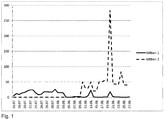
- the people 1 (about 20,000 bees) was in the period from 23. - 25.07.18 equipped with a soaked sponge on the ground. The bees could walk over the sponge to leave the hive. The days before 23.07.18 were counted mites - without treatment with Dimeticon - counted. In the period from 30.07. - 01.08.18 the people 1 were sprayed with Dimeticon. On 13.08.2018 and 20.08.2018 individual honeycombs (Volk 1) were additionally sprayed with Dimeticon
- the most effective method proved to be direct spraying of bees on honeycombs.
- the people 2 (about 50,000 bees) showed a massive mite case in the first treatment on 10 August.
- the initial treatment resulted in a very pronounced mite death on a day with further mite death on subsequent days.
- Volk 2 started directly spraying individual honeycombs (08/20/18).
- Table 1 Treatment of people 1 and people2 with dimeticone on the days mentioned above People 1 People 2 Day mites Mites 2 16.7. 5 - 17.7. 12 - 18.7. 9 - 19.7. 14 - 7.20. 16 - 21.7. 21 - 22.7. 24 - 23.7. 24 - 24.07. 14 - 25.07. 8th - 26.07. 10 - 27.07. 18 - 28.07. 18 - 29.07. 17 - 30.07. 17 - 31.07. 26 - 8.1. 15 - 2.8. 15 - 3.8. 14 - 4.8. 0 - 5.8. 0 - 6.8.
Landscapes
- Life Sciences & Earth Sciences (AREA)
- Dentistry (AREA)
- Pest Control & Pesticides (AREA)
- Plant Pathology (AREA)
- Health & Medical Sciences (AREA)
- Engineering & Computer Science (AREA)
- Agronomy & Crop Science (AREA)
- General Health & Medical Sciences (AREA)
- Wood Science & Technology (AREA)
- Zoology (AREA)
- Environmental Sciences (AREA)
- Catching Or Destruction (AREA)
- Agricultural Chemicals And Associated Chemicals (AREA)
- Pharmaceuticals Containing Other Organic And Inorganic Compounds (AREA)
Abstract
Description
- Gegenstand der Erfindung ist ein Stoff oder Stoffgemisch umfassend mindestens ein Siloxan oder ein Gemisch von Siloxanen zur Verwendung bei der Behandlung von Fluginsekten, insbesondere Bienen, bevorzugt Honigbienen, die von Spinnentieren, insbesondere Milben befallen sind sowie eine Formulierung enthaltend diese.
- Die Varroamilbe (varroa destructor) ist ein eingewanderter Parasit. Die Milbe nutzt die Honigbiene als Wirt. Einerseits zur Ernährung andererseits zur Fortpflanzung. Die verdeckelte Brut der Biene dient der Varroamilbe dabei zur Vermehrung. Die Milbe zapft die wachsenden Bienenlarven der Brutzelle an und ernährt sich von ihrem Blut (Hämolymphe). Die europäischen Bienen haben keine natürlichen Strategien um die Milbe zu bekämpfen und gehen letztlich an ihr zu Grunde.
- Heute ist die Varroamilbe in ihrer Stellung als Parasit von Apis mellifera (Europäische Honigbiene) von herausragender Bedeutung. Deshalb wird die Varroose, wie die Erkrankung verursacht durch Varroamilben genannt wird, von einigen Autoren auch als die schwerwiegendste Bedrohung für die weltweite Bienenwirtschaft erachtet. Kein anderes Pathogen hatte bisher vergleichbare Auswirkungen auf die Bienenhaltung. Der wirtschaftliche Schaden übersteigt bei Weitem den aller anderen Bienenkrankheiten zusammen.
- Bei der Varroamilbe ist das Peritrema das Atemorgan. Es befindet sich auf der Seite des Bauches in Form einer länglichen Einsenkung. Vernetzt ist es mit den Stigmen des Tracheensystems auf dem die Wirkung der neuen Behandlungsmethode zielt.
- Die momentan in Deutschland zugelassenen Mittel sind zur Behandlung der Bienen sind Perizin, Bayvarol, Apiguard, Thymovar, Api-Life VAR, Milchsäure 50%tig, Ameisensäure 60%tig, MAQS, Oxalsäurehydrat - Lösung und Oxuvar.
- Diese Behandlungsmittel sind Säuen und dienen dazu die Varroamilbe zu vergiften/ zu verätzen. Hierbei besteht jedoch immer ein Risiko auch den Bienenstock unter massiven Stress und unter toxische Substanzen zu setzen, so dass auf der einen Seite das Bienenvolk bzw. die Bienen darunter leiden und ebenfalls absterben können. Des Weiteren besteht die Gefahr unter der Stressreaktion, dass die Königin vom eigenen Volk getötet wird.
- Aufgabe der Erfindung war es daher ein Mittel zu finden, das vorzugsweise nicht giftig ist und/oder einen im Wesentlichen neutralen pH-Wert aufweist. Eine weitere Aufgabe der Erfindung bestand darin ein Mittel zu finden, dass vorzugsweise physikalisch auf die Parasiten einwirkt ohne die Bienen signifikant zu stressen.
- Überraschend wurde gefunden, dass ein Mittel, welches üblicherweise bei der Behandlung von Kopfläusen am Menschen oder Läusen bei Säugetieren verwendet wird, auch zur Behandlung von Fluginsekten, insbesondere von Bienen, bevorzugt von verschiedenen Bienenarten, verwendet werden kann, um die Varroose zu behandeln. Gleichfalls Gegenstand der Erfindung ist ein Stoff oder Stoffgemisch umfassend mindestens ein Siloxan oder eine Mischung von Siloxanen zur Verwendung bei der Behandlung von Fluginsekten gegen einen Befall mit Kieferklauenträgern, insbesondere Spinnentieren. Spinnentiere umfassen Milben (Acari), besonders bevorzugt die Varoamilbe.
- Erfindungsgemäß wird zur Behandlung der Varrose bei Bienen Dimeticon, internationaler Freiname (INN), ein Polydimethylsiloxan verwendet. Dimeticon ist eine handelsübliche Bezeichnung für ein ungiftiges Silikonöl. Es findet zudem Anwendung in technischen Bereichen als Brems- und Hydraulikflüssigkeit. Ebenso wird es in Haushaltsmitteln oder auch in pharmazeutischen Formulierungen zur Behandlung von Kopfläusen bei Menschen verwendet. Bei Varroex® (Dimeticon, Polydimethylsiloxan) handelt es ich um die Anwendung von Dimeticon gegen die Varroamilbe.
- Nach einer Pilotstudie zeigt sich, dass das Dimeticon, ähnlich wie bei der Kopflaus, die Stigmen und Tracheen (Atemöffnung der Laus und Milbe) durch die Kriecheigenschaften des Öls verstopfen und die Varroamilbe so erstickt und abstirbt.
- Überraschend wurde festgestellt, dass das Dimeticon keinen toxischen Einfluss auf die Biene ausübt und daher eine sanftere Methode bietet gegen die Varroamilbe bei Bienen vorzugehen.
- Das direkte Sprühverfahren auf die Bienen, wenn diese auf den Waben sitzen, ist am effektivsten. Des Weiteren besteht die Möglichkeit die Bienen durch andere Verfahren mit dem Dimeticon zu behandeln, so z.B. zu beträufeln bzw. Dimeticon so zu exponieren, dass ein regelmäßiger Kontakt stattfindet. Die Bienen können ebenso mit einem Schaum geringer Standfestigkeit behandelt werden. In anderen Alternativen kann vorgesehen werden die Bienen über mit mindestens einem Siloxan oder einer Mischung von Siloxanen benetztem Schwamm oder Bürste laufen zu lassen, um so die Bienen mit den Siloxanen in Kontakt treten zu lassen.
- In einer Pilotstudie zeigt sich an zwei Bienenvölkern nach der Behandlung der Bienen mit dem Dimeticon eine massive Zunahme des Falls (Absterben) der Varroamilbe in den behandelnden Bienenvölkern. Dieses wurde durch das Zählen der toten und gefallenen Milben auf die Bodenplatte erfasst.
- Die Völker sind über einen längeren Zeitraum regelmäßig mit NYDA® behandelt worden und der Fall der Varroamilbe wurde dokumentiert. Es zeigt sich immer eine Zunahme des Falls der Milbe nach Behandlung in einem Zeitraum von 1 bis 3 Tagen. Unter dem Begriff Bienen werden alle Bienenarten, von denen es über 20tausend gibt erfasst.
- Das angegebene Dimeticon ist bereits als Läusemittel unter dem Namen NYDA® im Handel und wird sowohl bei Kindern als auch bei Erwachsenen gegen die Kopflaus angewendet.
- Gegenstand der Erfindung ist ein Stoff oder Stoffgemisch umfassend mindestens ein Siloxan oder eine Mischung von Siloxanen, insbesondere ein Dimeticon oder eine Mischung von Dimeticonen optional mit cyclischen Polydimethylsiloxanen, zur Anwendung als veterinärmedizinisches Arzneimittel oder Medizinprodukt zur Anwendung bei der Behandlung von Fluginsekten und/oder deren Larven, insbesondere zur Verwendung als Antiparasitikum zur Anwendung bei der Behandlung von Fluginsekten, insbesondere Bienen, und/oder deren Larven. Insbesondere ist der Stoff oder das Stoffgemisch geeignet zur Anwendung zum Abtöten von Spinnentieren bei Fluginsekten und/oder deren Larven, insbesondere zum Abtöten von Milben (Acari) und/oder deren Eiern bei Fluginsekten und/oder deren Larven, vorzugsweise bei Bienen, besonders bevorzugt bei Honigbienen und/oder Bienenlarven. Die Behandlung von Fluginsekten umfasst auch die Behandlung des Bienenstocks mit dem Stoff oder Stoffgemisch zum Abtöten der Spinnentiere, insbesondere der Milben.
- Ebenso Gegenstand der Erfindung ist ein Stoff oder Stoffgemisch umfassend mindestens ein Siloxan oder eine Mischung von Siloxanen, insbesondere ein Dimeticon oder eine Mischung von Dimeticonen optional mit cyclischen Polydimethylsiloxanen, zur Anwendung in einem Verfahren zur Behandlung von Fluginsekten und/oder deren Larven, insbesondere zur Verwendung als Antiparasitikum zur Verwendung bei der Behandlung von Fluginsekten, insbesondere Bienen, und/oder deren Larven.
- Gleichfalls Gegenstand der Erfindung ist ein Stoff oder Stoffgemisch umfassend mindestens ein Siloxan oder eine Mischung von Siloxanen, insbesondere ein Dimeticon oder eine Mischung von Dimeticonen optional mit cyclischen Polydimethylsiloxanen, zur Anwendung bei der Therapie im Veterinärbereich bei der Behandlung von Fluginsekten und/oder deren Larven, insbesondere zur Anwendung im Veterinärberiech als Antiparasitikum bei der Behandlung von Fluginsekten, insbesondere Bienen, und/oder deren Larven.
- Gegenstand der Erfindung ist mindestens ein Siloxan oder eine Mischung von Siloxanen umfassend mindestens ein Polydimethylsiloxan oder eine Mischung von Polydimethylsiloxanen, insbesondere von linearen, cyclischen oder verzweigten Polydimethylsiloxanan. Bevorzugt ist mindestens ein lineares Polydimethylsiloxan oder eine Mischung von linearen Polydimethylsiloxanen und optional cyclischen Polydimethylsiloxanen. Dimeticon (CAS Nr. 900-65-9) α-Trimethylsilyl-ω-methyl-poly[oxy(dimethylsilandiyl)] (Ph. Eur. 8 Ausgabe, Grundwerk 2014)
- Der Polymerisationsgrad des Polydimethylsilicons (H3C)3Si-[(H3C)2Si]n-Si(CH3)3 ist zur pharmazeutischen und zu erfindungsgemäßen Anwendung mit n = 20 bis 400, insbesondere n = 20 bis 100, so gewählt, dass die kinematische Viskosität zwischen 1 bis 1300 mm2/s, insbesondere 20 bis 1000 mm2/s beträgt, bevorzugt von 10 bis 100 mm2/s, besonders bevorzugt von 10 bis 50 mm2/s. Das Polydimethylsilicon, d.h. Polydimethylsiloxan kann gleichfalls im Gemisch mit cyclischen und/oder verzweigten Polydimethylsiloxanen vorliegen.
- Gegenstand der Erfindung ist auch ein Stoffgemisch umfassend von 10 bis 100 Gew.-% Siloxanen, wie Polydimethylsiloxane, bevorzugt ein Dimeticon oder eine Mischung von Dimeticonen optional mit cyclischen Polydimethylsiloxanen, in der Gesamtzusammensetzung des Stoffgemisches von 100 Gew.-% zur Verwendung bei der Behandlung von Fluginsekten. Bevorzugt sind 20 bis 90 Gew.-%, weiter bevorzugt sind 30 bis 50 Gew.-%, bezogen auf die Gesamtzusammensetzung des Stoffgemisches von 100 Gew.-%.
- Gegenstand der Erfindung ist auch ein Stoffgemisch umfassend von 10 bis 100 Gew.-% Polydimethylsiloxane in der Gesamtzusammensetzung des Stoffgemisches von 100 Gew.-% zur Verwendung bei der Behandlung von Fluginsekten. Bevorzugt sind 30 bis 50 Gew.-% bezogen auf die Gesamtzusammensetzung des Stoffgemisches von 100 Gew.-% eines niedrigviskosen linearen Polysiloxans mit einer Viskosität kleiner 10 cSt und 35-65 Gew.-%, bezogen auf die Gesamtzusammensetzung eines höherviskosen linearen Polysiloxans mit einer Viskosität größer 90 cSt und kleiner 150 cSt. Optional kann ein Spreitmittel im Stoffgemisch vorliegen.
- Gegenstand der Erfindung ist auch ein Stoffgemisch umfassend von 10 bis 100 Gew.-% Polydimethylsiloxane in der Gesamtzusammensetzung des Stoffgemisches von 100 Gew.-% zur Verwendung bei der Behandlung von Fluginsekten. Bevorzugt sind 30 bis 50 Gew.-% bezogen auf die Gesamtzusammensetzung des Stoffgemisches von 100 Gew.-%, eines niedrigviskosen linearen Polysiloxans mit einer Viskosität kleiner 10 cSt, 35-65 Gew.-%, bezogen auf die Zusammensetzung, eines höherviskosen linearen Polysiloxans mit einer Viskosität größer 90 cSt und kleiner 150 cSt sowie mindestens ein Spreitmittel.
- Das niedrigviskose Polysiloxan Dimeticon weist vorzugsweise eine Viskosität von 1 cSt und das höherviskose Polysiloxan Dimeticon eine Viskosität von 100 cSt auf. Die kinematische Viskosität kann in cSt = Zentistokes beschrieben werden. (1 cST = 1 mm2/s). Die Viskosität kann mit einem Rotationsviskosimeter gemäß ISO 1652 (LV-Messkörper) und ISO 2555 (RV-Messkörper) bestimmt werden (bevorzugt wird die Viskosität bei Raumtemperatur 20 bis 23 °C bestimmt) .
- Bevorzugt kann das Spreitmittel von 2 bis 10 Gew.-% mittelkettige Triglyceride und/oder von 1 bis 5 Gew.-% Jojobaöl, jeweils bezogen auf die Gesamtzusammensetzung des Stoffgemisches von 100 Gew.-% enthalten.
- Geeignete Polydimethylsiloxane bzw. geeignetes Dimeticon ist u.a. in der
DE600 06 556T2 oderDE10 2008 004 676A1 offenbart, auf die jeweils vollständig Bezug genommen wird. Gleichfalls offenbart dieEP1993363 B1 geeignete Zusammensetzungen zur Abtötung von Ectoparasiten und/oder deren Eiern. - Das Spreitmittel kann ausgewählt sein aus mittelkettigen Triglyceriden, Kokosöl, Palmkernöl, Babassuöl, Triacetin, Jojobawachs, Cetearylisononanoat, Cetearyloctanoat, Isopropylmyristat, Isopropylpalmitat, Ethylhexylpalmitat und Cocoylcaprylocaprat.
- Gleichfalls kann das Stoffgemisch von 10 bis 70 Gew.-% Triglyceride in der Gesamtzusammensetzung des Stoffgemisches von 100 Gew.-% umfassen.
- Ferner ist Gegenstand der Erfindung ein Stoff oder Stoffgemisch umfassend mindestens ein Siloxan oder eine Mischung von Siloxanen zur Anwendung als veterinärmedizinisches Arzneimittel oder Medizinprodukt zum Abtöten von Spinnentieren bei Fluginsekten. Bevorzugt ist ein Stoff oder Stoffgemisch umfassend mindestens ein Siloxan oder eine Mischung von Siloxanen zur Anwendung als veterinärmedizinisches Arzneimittel zur Verwendung bei der Behandlung von Fluginsekten und/oder deren Larven, die von Milben (Acari) und/oder deren Eiern befallen sind. Besonders bevorzugt ist ein Stoff oder Stoffgemisch von mindestens einem Siloxan oder einer Mischung von Siloxanen welches verwendet wird zur Behandlung von Bienen und/oder deren Larven, insbesondere von Honigbienen, die von Milben (Acari), insbesondere der Varroamilbe, und/oder Eiern der Milben befallen sind. Ferner ist Gegenstand der Erfindung ein Stoff oder Stoffgemisch, das zur Behandlung der Varroose bei Honigbienen verwendet wird.
- Gleichfalls Gegenstand der Erfindung ist eine Formulierung umfassend einen Stoff oder ein Stoffgemisch von mindestens einem Siloxan oder einer Mischung von Siloxanen, wie Polydimethylsiloxanen, bevorzugt von Dimeticon, als arzneilichen Wirkstoff oder therapeutisch wirksamen Wirkstoff zur Verwendung bei der Behandlung von Fluginsekten, wobei die Formulierung ein Pulver, Aerosol, Spray und/oder schäumbare Formulierung ist, wobei das Spray, das Aerosol oder die schäumbare Formulierung optional ein Treibmittel umfasst.
- Besonders bevorzugt ist der Stoff oder das Stoffgemisch oder die Zusammensetzung ein Aerosol, Spray, Öl, Emulsion oder eine flüssige Formulierung. Besonders bevorzugt ist der Stoff, die Stoffmischung oder die Zusammensetzung eine Flüssigkeit umfassend Öl oder eine flüssige Formulierung umfassend Emulsion oder Öl, insbesondere jeweils unabhängig mit einer Viskosität von 0,1 bis 105 cP (mPas, 20-23 °C), bevorzugt 1 bis 102 cP (mPas, 20-23 °C), Viskosimeter nach EN ISO 3219.
- Ebenso wird die Verwendung einer mindestens ein Siloxan oder eine Mischung von Siloxanen enthaltenden Formulierung zur Behandlung von Fluginsekten und/oder deren Larven, vorzugsweise Bienen, besonders bevorzugt von Honigbienen, die von Milben und/oder deren Eiern befallen sind, beansprucht. Bevorzugt können die Milben, deren Eier von den Fluginsekten entfernt werden, indem diese abfallen.
- Als Treibmittel, insbesondere Treibgas, in einer Formulierung können verwendet werden: gesättigte Kohlenwasserstoffe, wie Propan, Butan, Pentan, Luft, Stickstoff und/oder Inertgas.
- Gegenstand der Erfindung ist ein Stoff oder Stoffgemisch umfassend mindestens ein Siloxan oder eine Mischung von Siloxanen umfassend ein Dimeticon oder eine Mischung von Dimeticonen optional mit cyclischen Polydimethylsiloxanen, zur Anwendung als veterinärmedizinisches Arzneimittel oder Medizinprodukt zur Anwendung bei der Behandlung von Fluginsekten und/oder deren Larven, insbesondere zur Verwendung als Antiparasitikum zur Anwendung bei der Behandlung von Fluginsekten, insbesondere Bienen, und/oder deren Larven.
- Gegenstand der Erfindung ist ein Stoff oder Stoffgemisch umfassend mindestens ein Siloxan oder eine Mischung von Siloxanen, umfassend mindestens ein lineares Polydimethylsiloxan oder eine Mischung von linearen Polydimethylsiloxanen und optional cyclischen und/oder verzweigten Polydimethylsiloxanen umfassend Polydimethylsilicon der Struktur (H3C)3Si-[(H3C)2Si]n-Si(CH3)3 mit n = 20 bis 400, gewählt, dass die kinematische Viskosität zwischen 1 bis 1300 mm2/s beträgt.
- Gleichfalls Gegenstand der Erfindung ist die Verwendung von Siloxanen, wie Polydimethylsiloxanen, zur Behandlung von Honigbienen und/oder deren Larven, die von der Varroamilbe befallen sind oder zur Behandlung der Brut von Fluginsekten, insbesondere von Bienenstöcken, Bienenlarven oder Bienenwaben, die von Spinnentieren, insbesondere Milben befallen sind.
- Ferner ist Gegenstand der Erfindung die Verwendung zur Behandlung eines Bienenstocks oder Teilen davon von Honigbienen, die von der Varroamilbe und/oder deren Eiern befallen sind mit mindestens einem Siloxan oder einem Stoffgemisch von Siloxanen.
- Bevorzugt zu behandelnde Fluginsekten umfassen Bienen (Bienenarten), wie die Honigbiene, oder auch Hummeln oder Schmetterlinge.
- Die Bienen können die folgenden Bienenarten umfassen: Insektengruppe Apiformes oder Anthophila Bienarten, polylektische Bienenarten, oligolektische Bienenarten und/oder monolektie Bienenarten. Besonders bevorzugt ist die westliche Honigbiene (Apis mellifera).
- Nachfolgend wird die Erfindung anhand der Beispiele beschreiben ohne die Erfindung auf diese zu beschränken.
- Es wurden Versuche an zwei Bienenvölkern vorgenommen, deren Ergebnisse in der Tabelle 1 und
Figur 1 dargestellt sind. Die Art der Behandlung mit Dimeticon, wie nachfolgend dargestellt, variierte, um nach der ersten Behandlungserfolg auszuloten, welche Behandlungsmethode besonders gut gegen Milben wirksam ist. - Das Volk 1 (ca 20.000 Bienen) wurde im Zeitraum vom 23. - 25.07.18 mit einem getränkten Schwamm am Boden ausgestattet. Die Bienen konnten zum Verlassen des Bienenstocks über den Schwamm laufen. Die Tage vor dem 23.07.18 wurden die herabgefallenen Milben - ohne Behandlung mit Dimeticon - ausgezählt. Im Zeitraum vom 30.07. - 01.08.18 wurde das Volk 1 mit Dimeticon besprüht. Am 13.08.2018 und am 20.08.2018 wurden einzelne Waben (Volk 1) zusätzlich mit Dimeticon besprüht
- Die Auswertung der Versuche belegt eindeutig die Wirksamkeit des Dimeticons zur Behandlung von Bienen und deren Larven gegenüber einem Milbenbefall.
- Als die effektivste Methode hat sich das direkte Besprühung der Bienen auf den Waben erwiesen.
- Als Ergebnis kann festgestellt werden, dass das Volk 1 nach dem 20.08.2018 kaum noch Milbenfall zeigt, obwohl es nach der letzten Behandlung am 20.082018 nicht weiter behandelt wurde.
- Das Volk 2 (ca. 50.000 Bienen) zeigte einen massiven Milbenfall bei der Erstbehandlung am 10. August. Die Erstbehandlung führte zu einem sehr ausgeprägten Milbensterben an einem Tag mit weiterem Milbensterben an nachfolgenden Tagen. Zudem wurde beim Volk 2 direkt damit begonnen einzelne Waben zu besprühen (20.08.18).
- Eine negative Auswirkung auf die Bienenvölker konnte nicht festgestellt werden. Diese Daten motivieren zu einer weiteren standardisierten Folgestudie an mehreren Völkern.
Tabelle 1: Behandlung Volk 1 und Volk2 mit Dimeticon an den vorgenannten Tagen Volk 1 Volk 2 Tag Milben Milben 2 16.07. 5 - 17.07. 12 - 18.07. 9 - 19.07. 14 - 20.07. 16 - 21.07. 21 - 22.07. 24 - 23.07. 24 - 24.07. 14 - 25.07. 8 - 26.07. 10 - 27.07. 18 - 28.07. 18 - 29.07. 17 - 30.07. 17 - 31.07. 26 - 01.08. 15 - 02.08. 15 - 03.08. 14 - 04.08. 0 - 05.08. 0 - 06.08. 0 - 07.08. 2 - 08.08. 2 - 09.08. 2 - 10.08. 0 50 11.08. 0 30 12.08. 5 30 13.08. 23 50 14.08. 1 20 15.08. 0 20 16.08. 0 50 17.08. 0 50 18.08. 1 55 19.08. 1 53 20.08. 18 283 21.08. 2 43 22.08. 1 43 23.08. 1 40 24.08. 0 83 25.08. 0 40 26.08. 0 40 27.08. 1 40
Claims (15)
- Stoff oder Stoffgemisch umfassend mindestens ein Siloxan oder eine Mischung von Siloxanen zur Anwendung als veterinärmedizinisches Arzneimittel oder Medizinprodukt zur Verwendung bei der Behandlung von Fluginsekten und/oder deren Larven.
- Stoff oder Stoffgemisch umfassend mindestens ein Siloxan oder eine Mischung von Siloxanen zur Anwendung als veterinärmedizinisches Arzneimittel oder Medizinprodukt zum Abtöten von Spinnentieren oder deren Eiern bei Fluginsekten.
- Stoff oder Stoffgemisch umfassend mindestens ein Siloxan oder eine Mischung von Siloxanen zur Anwendung als veterinärmedizinisches Arzneimittel oder Medizinprodukt zur Verwendung bei der Behandlung von Fluginsekten und/oder deren Larven, die von Milben (Acari) befallen sind.
- Stoff oder Stoffgemisch nach einem der Ansprüche 1 bis 3, dadurch gekennzeichnet, dass es angewendet wird zur Behandlung von Bienen und/oder deren Larven, insbesondere Honigbienen, die von Milben (Acari) und/oder deren Eiern befallen sind.
- Stoff oder Stoffgemisch nach einem der Ansprüche 1 bis 4, dadurch gekennzeichnet, dass es angewendet wird zur Behandlung von Bienen, die von Varroamilben und/oder deren Eiern befallen sind.
- Stoff oder Stoffgemisch nach einem der Ansprüche 1 bis 5, dadurch gekennzeichnet, dass es angewendet wird zur Behandlung der Varroose bei Honigbienen und/oder deren Larven.
- Stoff oder Stoffgemisch nach einem der Ansprüche 1 bis 6, dadurch gekennzeichnet, dass das Siloxan oder die Mischung von Siloxanen Dimeticon umfasst.
- Stoff oder Stoffgemisch nach einem der Ansprüche 1 bis 7, dadurch gekennzeichnet, dass das Siloxan oder die Mischung von Siloxanen Polydimethylsiloxan oder Mischungen von Polydimethylsiloxanen, insbesondere von linearen, cyclischen oder verzweigten Polydimethylsiloxanen, umfasst.
- Stoff oder Stoffgemisch nach Anspruch 8, dadurch gekennzeichnet, dass das Siloxan oder die Mischung von Siloxanen ausgewählt ist aus linearen Polydimethylsiloxanen.
- Stoff oder Stoffgemisch umfassend mindestens ein Siloxan oder eine Mischung von Siloxanen umfassend ein Dimeticon oder eine Mischung von Dimeticonen optional mit cyclischen Polydimethylsiloxanen, zur Anwendung als veterinärmedizinisches Arzneimittel oder Medizinprodukt zur Anwendung bei der Behandlung von Fluginsekten und/oder deren Larven, insbesondere zur Verwendung als Antiparasitikum zur Anwendung bei der Behandlung von Fluginsekten, insbesondere Bienen, und/oder deren Larven.
- Stoff oder Stoffgemisch umfassend mindestens ein Siloxan oder eine Mischung von Siloxanen, umfassend mindestens ein lineares Polydimethylsiloxan oder eine Mischung von linearen Polydimethylsiloxanen und optional cyclischen und/oder verzweigten Polydimethylsiloxanen umfassend Polydimethylsilicon der Struktur (H3C)3Si-[(H3C)2Si]n-Si(CH3)3 mit n = 20 bis 400, gewählt, dass die kinematische Viskosität zwischen 1 bis 1300 mm2/s beträgt.
- Formulierung umfassend einen Stoff oder ein Stoffgemisch nach einem der Ansprüche 1 bis 11 als arzneilichen Wirkstoff oder therapeutisch wirksamen Wirkstoff zur Verwendung bei der Behandlung von Fluginsekten, deren Brut und/oder deren Waben dadurch gekennzeichnet, dass die Formulierung ein Pulver, Aerosol, Spray und/oder schäumbare Formulierung ist, wobei das Spray, das Aerosol oder die schäumbare Formulierung optional ein Treibmittel umfasst.
- Verwendung mindestens eines Siloxans oder einer Mischung von Siloxanen zur Behandlung von Fluginsekten, vorzugsweise Bienen, besonders bevorzugt von Honigbienen, deren Larven, Brut, Waben und/oder Bienenstöcken, die von Spinnentieren, insbesondere von Milben befallen sind.
- Verwendung nach Anspruch 13, dadurch gekennzeichnet, dass von Honigbienen, die von der Varroamilbe befallen sind.
- Verwendung nach Anspruch 13 oder 14, dadurch gekennzeichnet, dass ein Bienenstock oder Teile davon von Honigbienen und/oder deren Larven, die von der Varroamilbe und/oder deren Eiern befallen sind mit mindestens einem Siloxan oder einem Stoffgemisch von Siloxanen behandelt wird.
Applications Claiming Priority (1)
| Application Number | Priority Date | Filing Date | Title |
|---|---|---|---|
| DE102018103768.6A DE102018103768A1 (de) | 2018-02-20 | 2018-02-20 | Mittel zur Behandlung von Fluginsekten, insbesondere Honigbienen, die von Milben befallen sind |
Publications (2)
| Publication Number | Publication Date |
|---|---|
| EP3527078A1 true EP3527078A1 (de) | 2019-08-21 |
| EP3527078B1 EP3527078B1 (de) | 2021-04-07 |
Family
ID=65529433
Family Applications (1)
| Application Number | Title | Priority Date | Filing Date |
|---|---|---|---|
| EP19158369.9A Active EP3527078B1 (de) | 2018-02-20 | 2019-02-20 | Mittel zur behandlung von fluginsekten, insbesondere honigbienen, die von milben befallen sind |
Country Status (3)
| Country | Link |
|---|---|
| EP (1) | EP3527078B1 (de) |
| DE (1) | DE102018103768A1 (de) |
| ES (1) | ES2879239T3 (de) |
Citations (6)
| Publication number | Priority date | Publication date | Assignee | Title |
|---|---|---|---|---|
| DE60006556T2 (de) | 1999-09-16 | 2004-09-23 | Durminster Ltd. | Verfahren und zusammensetzung zur arthropodenbekämpfung |
| DE102008004676A1 (de) | 2007-01-16 | 2008-07-17 | Oystershell N. V. | Schäumbare Zusammensetzung zum Abtöten von Arthropoden und deren Verwendung |
| EP1993363B1 (de) | 2006-03-13 | 2010-07-14 | G. Pohl-Boskamp GmbH & Co. KG | Zusammensetzung zur bekämpfung von ektoparasiten und ihren eiern |
| WO2012069785A2 (en) * | 2010-11-25 | 2012-05-31 | Excella-Tec Limited | A composition and method for the control of arthropods |
| WO2017005827A1 (en) * | 2015-07-06 | 2017-01-12 | J. V. Barrett & Co. Limited | Compositions and methods for the control of arthropods |
| US20170035820A1 (en) * | 2000-10-04 | 2017-02-09 | Paul Edward Stamets | Integrative fungal solutions for protecting bees and overcoming colony collapse disorder (CCD) |
Family Cites Families (4)
| Publication number | Priority date | Publication date | Assignee | Title |
|---|---|---|---|---|
| TW529906B (en) * | 1997-03-05 | 2003-05-01 | Engelhard Corp | Method for protecting surfaces from arthropod infestation |
| DE10211428A1 (de) * | 2002-03-15 | 2003-10-23 | Bayer Ag | Bekämpfung von Parasiten an Tieren durch Halogenpyrimidine |
| NZ586140A (en) * | 2010-06-14 | 2013-04-26 | Hive Doctor Ltd | Bottom board for a beehive capable of adjusting the size of, or closing the hive entrance |
| CN105477173A (zh) * | 2016-01-28 | 2016-04-13 | 张慧 | 蜜蜂大肠杆菌病的药物 |
-
2018
- 2018-02-20 DE DE102018103768.6A patent/DE102018103768A1/de active Pending
-
2019
- 2019-02-20 ES ES19158369T patent/ES2879239T3/es active Active
- 2019-02-20 EP EP19158369.9A patent/EP3527078B1/de active Active
Patent Citations (6)
| Publication number | Priority date | Publication date | Assignee | Title |
|---|---|---|---|---|
| DE60006556T2 (de) | 1999-09-16 | 2004-09-23 | Durminster Ltd. | Verfahren und zusammensetzung zur arthropodenbekämpfung |
| US20170035820A1 (en) * | 2000-10-04 | 2017-02-09 | Paul Edward Stamets | Integrative fungal solutions for protecting bees and overcoming colony collapse disorder (CCD) |
| EP1993363B1 (de) | 2006-03-13 | 2010-07-14 | G. Pohl-Boskamp GmbH & Co. KG | Zusammensetzung zur bekämpfung von ektoparasiten und ihren eiern |
| DE102008004676A1 (de) | 2007-01-16 | 2008-07-17 | Oystershell N. V. | Schäumbare Zusammensetzung zum Abtöten von Arthropoden und deren Verwendung |
| WO2012069785A2 (en) * | 2010-11-25 | 2012-05-31 | Excella-Tec Limited | A composition and method for the control of arthropods |
| WO2017005827A1 (en) * | 2015-07-06 | 2017-01-12 | J. V. Barrett & Co. Limited | Compositions and methods for the control of arthropods |
Non-Patent Citations (2)
| Title |
|---|
| "Ph. Eur.", 2014 |
| CHEMICAL ABSTRACTS, Columbus, Ohio, US; abstract no. 900-65-9 |
Also Published As
| Publication number | Publication date |
|---|---|
| ES2879239T3 (es) | 2021-11-22 |
| DE102018103768A1 (de) | 2019-08-22 |
| EP3527078B1 (de) | 2021-04-07 |
Similar Documents
| Publication | Publication Date | Title |
|---|---|---|
| Sajid et al. | Efficacy assessment of soft and hard acaricides against Varroa destructor mite infesting honey bee (Apis mellifera) colonies, through sugar roll method | |
| Imdorf et al. | Use of essential oils for the control of Varroa jacobsoni Oud. in honey bee colonies | |
| DE69908626T2 (de) | Orale kombination von lufenuron und nitenpyram gegen flöhe | |
| DE69821995T2 (de) | Antimikrobielle zusammensetzung | |
| DE69210438T2 (de) | Akarizides Mittel verwendbar gegen Varroatose der Bienen, und eine dieses enthaltende Vorrichtung | |
| WO2020176697A1 (en) | Insect repelling compositions and methods of manufacture thereof | |
| DE69914505T2 (de) | Behandlungen von der foulbroodbienenkrankheit | |
| EP0734727A2 (de) | Verwendung von Teebaumöl zur Herstellung von Arznei- bzw. Pflegemitteln, sowie Arznei- bzw. Pflegemittel mit Teebaumöl | |
| EP0616494B1 (de) | 1- n-(halo-3-pyridylmethyl)]-n-methylamino-1-alkylamino-2-nitroethylen-derivate zur bekämpfung von flöhen bei haustieren | |
| DE19780441B3 (de) | Anti-Floh- und -Zecken-Halsband auf der Grundlage von N-Phenylpyrazol für Katzen und Hunde | |
| DE2823594C2 (de) | ||
| DE60017465T2 (de) | Kombination aus fluazuron und ivermectin gegen parasiten | |
| AT400395B (de) | Mittel zur pflege des felles, der haut und gegebenenfalls der hufe von pferden | |
| DE69824813T2 (de) | D-limonen enthaltendes ameisenspray und verfahren zu seiner herstellung und verwendung | |
| EP1909568A2 (de) | Stoffgemisch zur behandlung von wirbellosen und wirbeltieren bei tierischem schädlingsbefall | |
| EP3527078B1 (de) | Mittel zur behandlung von fluginsekten, insbesondere honigbienen, die von milben befallen sind | |
| Rasool et al. | Efficacy of various botanicals and chemicals on ectoparasitic mite, Varroa destructor feeding on European honey bee, Apis mellifera | |
| DE10254072B4 (de) | Verwendung von Vitex agnus-castus als Repellent gegen Zecken und/oder Milben | |
| DE60018737T2 (de) | Verbessertes verfahren zur bekämpfung von parasitosen in bienenstöcken | |
| CN118453489A (zh) | 一种用于驱蚊杀菌止痒消肿的驱蚊组合物 | |
| DE4410778C2 (de) | Mittel zur Herstellung eines medizinisch und/oder kosmetisch und/oder keimabtötend und/oder parasitenabtötend wirkenden wässrigen stabilen Schaums und dessen Verwendung | |
| US20220151915A1 (en) | Insect repellent compositions and methods of use | |
| DE2719722B2 (de) | Bekämpfung von Ektroparasiten der Bienen | |
| DE69007931T2 (de) | Akarizide zusammensetzung und ihre verwendung in der befallsbekämpfung. | |
| WO2011103694A1 (de) | Spot-on präparat mit parasiten- repellierender wirkung |
Legal Events
| Date | Code | Title | Description |
|---|---|---|---|
| PUAI | Public reference made under article 153(3) epc to a published international application that has entered the european phase |
Free format text: ORIGINAL CODE: 0009012 |
|
| STAA | Information on the status of an ep patent application or granted ep patent |
Free format text: STATUS: THE APPLICATION HAS BEEN PUBLISHED |
|
| STAA | Information on the status of an ep patent application or granted ep patent |
Free format text: STATUS: REQUEST FOR EXAMINATION WAS MADE |
|
| AK | Designated contracting states |
Kind code of ref document: A1 Designated state(s): AL AT BE BG CH CY CZ DE DK EE ES FI FR GB GR HR HU IE IS IT LI LT LU LV MC MK MT NL NO PL PT RO RS SE SI SK SM TR |
|
| AX | Request for extension of the european patent |
Extension state: BA ME |
|
| 17P | Request for examination filed |
Effective date: 20190803 |
|
| STAA | Information on the status of an ep patent application or granted ep patent |
Free format text: STATUS: EXAMINATION IS IN PROGRESS |
|
| 17Q | First examination report despatched |
Effective date: 20191219 |
|
| RBV | Designated contracting states (corrected) |
Designated state(s): AL AT BE BG CH CY CZ DE DK EE ES FI FR GB GR HR HU IE IS IT LI LT LU LV MC MK MT NL NO PL PT RO RS SE SI SK SM TR |
|
| GRAP | Despatch of communication of intention to grant a patent |
Free format text: ORIGINAL CODE: EPIDOSNIGR1 |
|
| STAA | Information on the status of an ep patent application or granted ep patent |
Free format text: STATUS: GRANT OF PATENT IS INTENDED |
|
| INTG | Intention to grant announced |
Effective date: 20201124 |
|
| GRAS | Grant fee paid |
Free format text: ORIGINAL CODE: EPIDOSNIGR3 |
|
| GRAA | (expected) grant |
Free format text: ORIGINAL CODE: 0009210 |
|
| STAA | Information on the status of an ep patent application or granted ep patent |
Free format text: STATUS: THE PATENT HAS BEEN GRANTED |
|
| AK | Designated contracting states |
Kind code of ref document: B1 Designated state(s): AL AT BE BG CH CY CZ DE DK EE ES FI FR GB GR HR HU IE IS IT LI LT LU LV MC MK MT NL NO PL PT RO RS SE SI SK SM TR |
|
| REG | Reference to a national code |
Ref country code: GB Ref legal event code: FG4D Free format text: NOT ENGLISH |
|
| REG | Reference to a national code |
Ref country code: AT Ref legal event code: REF Ref document number: 1378502 Country of ref document: AT Kind code of ref document: T Effective date: 20210415 Ref country code: CH Ref legal event code: EP |
|
| REG | Reference to a national code |
Ref country code: DE Ref legal event code: R096 Ref document number: 502019001146 Country of ref document: DE |
|
| REG | Reference to a national code |
Ref country code: IE Ref legal event code: FG4D Free format text: LANGUAGE OF EP DOCUMENT: GERMAN |
|
| REG | Reference to a national code |
Ref country code: LT Ref legal event code: MG9D |
|
| REG | Reference to a national code |
Ref country code: NL Ref legal event code: MP Effective date: 20210407 |
|
| PG25 | Lapsed in a contracting state [announced via postgrant information from national office to epo] |
Ref country code: NL Free format text: LAPSE BECAUSE OF FAILURE TO SUBMIT A TRANSLATION OF THE DESCRIPTION OR TO PAY THE FEE WITHIN THE PRESCRIBED TIME-LIMIT Effective date: 20210407 Ref country code: BG Free format text: LAPSE BECAUSE OF FAILURE TO SUBMIT A TRANSLATION OF THE DESCRIPTION OR TO PAY THE FEE WITHIN THE PRESCRIBED TIME-LIMIT Effective date: 20210707 Ref country code: FI Free format text: LAPSE BECAUSE OF FAILURE TO SUBMIT A TRANSLATION OF THE DESCRIPTION OR TO PAY THE FEE WITHIN THE PRESCRIBED TIME-LIMIT Effective date: 20210407 Ref country code: HR Free format text: LAPSE BECAUSE OF FAILURE TO SUBMIT A TRANSLATION OF THE DESCRIPTION OR TO PAY THE FEE WITHIN THE PRESCRIBED TIME-LIMIT Effective date: 20210407 Ref country code: LT Free format text: LAPSE BECAUSE OF FAILURE TO SUBMIT A TRANSLATION OF THE DESCRIPTION OR TO PAY THE FEE WITHIN THE PRESCRIBED TIME-LIMIT Effective date: 20210407 |
|
| REG | Reference to a national code |
Ref country code: ES Ref legal event code: FG2A Ref document number: 2879239 Country of ref document: ES Kind code of ref document: T3 Effective date: 20211122 |
|
| PG25 | Lapsed in a contracting state [announced via postgrant information from national office to epo] |
Ref country code: GR Free format text: LAPSE BECAUSE OF FAILURE TO SUBMIT A TRANSLATION OF THE DESCRIPTION OR TO PAY THE FEE WITHIN THE PRESCRIBED TIME-LIMIT Effective date: 20210708 Ref country code: IS Free format text: LAPSE BECAUSE OF FAILURE TO SUBMIT A TRANSLATION OF THE DESCRIPTION OR TO PAY THE FEE WITHIN THE PRESCRIBED TIME-LIMIT Effective date: 20210807 Ref country code: PT Free format text: LAPSE BECAUSE OF FAILURE TO SUBMIT A TRANSLATION OF THE DESCRIPTION OR TO PAY THE FEE WITHIN THE PRESCRIBED TIME-LIMIT Effective date: 20210809 Ref country code: RS Free format text: LAPSE BECAUSE OF FAILURE TO SUBMIT A TRANSLATION OF THE DESCRIPTION OR TO PAY THE FEE WITHIN THE PRESCRIBED TIME-LIMIT Effective date: 20210407 Ref country code: SE Free format text: LAPSE BECAUSE OF FAILURE TO SUBMIT A TRANSLATION OF THE DESCRIPTION OR TO PAY THE FEE WITHIN THE PRESCRIBED TIME-LIMIT Effective date: 20210407 Ref country code: NO Free format text: LAPSE BECAUSE OF FAILURE TO SUBMIT A TRANSLATION OF THE DESCRIPTION OR TO PAY THE FEE WITHIN THE PRESCRIBED TIME-LIMIT Effective date: 20210707 Ref country code: PL Free format text: LAPSE BECAUSE OF FAILURE TO SUBMIT A TRANSLATION OF THE DESCRIPTION OR TO PAY THE FEE WITHIN THE PRESCRIBED TIME-LIMIT Effective date: 20210407 Ref country code: LV Free format text: LAPSE BECAUSE OF FAILURE TO SUBMIT A TRANSLATION OF THE DESCRIPTION OR TO PAY THE FEE WITHIN THE PRESCRIBED TIME-LIMIT Effective date: 20210407 |
|
| REG | Reference to a national code |
Ref country code: DE Ref legal event code: R097 Ref document number: 502019001146 Country of ref document: DE |
|
| PG25 | Lapsed in a contracting state [announced via postgrant information from national office to epo] |
Ref country code: EE Free format text: LAPSE BECAUSE OF FAILURE TO SUBMIT A TRANSLATION OF THE DESCRIPTION OR TO PAY THE FEE WITHIN THE PRESCRIBED TIME-LIMIT Effective date: 20210407 Ref country code: SK Free format text: LAPSE BECAUSE OF FAILURE TO SUBMIT A TRANSLATION OF THE DESCRIPTION OR TO PAY THE FEE WITHIN THE PRESCRIBED TIME-LIMIT Effective date: 20210407 Ref country code: SM Free format text: LAPSE BECAUSE OF FAILURE TO SUBMIT A TRANSLATION OF THE DESCRIPTION OR TO PAY THE FEE WITHIN THE PRESCRIBED TIME-LIMIT Effective date: 20210407 Ref country code: RO Free format text: LAPSE BECAUSE OF FAILURE TO SUBMIT A TRANSLATION OF THE DESCRIPTION OR TO PAY THE FEE WITHIN THE PRESCRIBED TIME-LIMIT Effective date: 20210407 Ref country code: CZ Free format text: LAPSE BECAUSE OF FAILURE TO SUBMIT A TRANSLATION OF THE DESCRIPTION OR TO PAY THE FEE WITHIN THE PRESCRIBED TIME-LIMIT Effective date: 20210407 Ref country code: DK Free format text: LAPSE BECAUSE OF FAILURE TO SUBMIT A TRANSLATION OF THE DESCRIPTION OR TO PAY THE FEE WITHIN THE PRESCRIBED TIME-LIMIT Effective date: 20210407 |
|
| PLBE | No opposition filed within time limit |
Free format text: ORIGINAL CODE: 0009261 |
|
| STAA | Information on the status of an ep patent application or granted ep patent |
Free format text: STATUS: NO OPPOSITION FILED WITHIN TIME LIMIT |
|
| REG | Reference to a national code |
Ref country code: DE Ref legal event code: R082 Ref document number: 502019001146 Country of ref document: DE Representative=s name: BENDELE, TANJA, DIPL.-CHEM. DR. RER. NAT., DE |
|
| 26N | No opposition filed |
Effective date: 20220110 |
|
| PG25 | Lapsed in a contracting state [announced via postgrant information from national office to epo] |
Ref country code: IS Free format text: LAPSE BECAUSE OF FAILURE TO SUBMIT A TRANSLATION OF THE DESCRIPTION OR TO PAY THE FEE WITHIN THE PRESCRIBED TIME-LIMIT Effective date: 20210807 Ref country code: AL Free format text: LAPSE BECAUSE OF FAILURE TO SUBMIT A TRANSLATION OF THE DESCRIPTION OR TO PAY THE FEE WITHIN THE PRESCRIBED TIME-LIMIT Effective date: 20210407 |
|
| PG25 | Lapsed in a contracting state [announced via postgrant information from national office to epo] |
Ref country code: MC Free format text: LAPSE BECAUSE OF FAILURE TO SUBMIT A TRANSLATION OF THE DESCRIPTION OR TO PAY THE FEE WITHIN THE PRESCRIBED TIME-LIMIT Effective date: 20210407 |
|
| REG | Reference to a national code |
Ref country code: BE Ref legal event code: MM Effective date: 20220228 |
|
| PG25 | Lapsed in a contracting state [announced via postgrant information from national office to epo] |
Ref country code: LU Free format text: LAPSE BECAUSE OF NON-PAYMENT OF DUE FEES Effective date: 20220220 |
|
| PG25 | Lapsed in a contracting state [announced via postgrant information from national office to epo] |
Ref country code: IE Free format text: LAPSE BECAUSE OF NON-PAYMENT OF DUE FEES Effective date: 20220220 |
|
| PG25 | Lapsed in a contracting state [announced via postgrant information from national office to epo] |
Ref country code: BE Free format text: LAPSE BECAUSE OF NON-PAYMENT OF DUE FEES Effective date: 20220228 |
|
| PG25 | Lapsed in a contracting state [announced via postgrant information from national office to epo] |
Ref country code: MK Free format text: LAPSE BECAUSE OF FAILURE TO SUBMIT A TRANSLATION OF THE DESCRIPTION OR TO PAY THE FEE WITHIN THE PRESCRIBED TIME-LIMIT Effective date: 20210407 Ref country code: CY Free format text: LAPSE BECAUSE OF FAILURE TO SUBMIT A TRANSLATION OF THE DESCRIPTION OR TO PAY THE FEE WITHIN THE PRESCRIBED TIME-LIMIT Effective date: 20210407 |
|
| PG25 | Lapsed in a contracting state [announced via postgrant information from national office to epo] |
Ref country code: HU Free format text: LAPSE BECAUSE OF FAILURE TO SUBMIT A TRANSLATION OF THE DESCRIPTION OR TO PAY THE FEE WITHIN THE PRESCRIBED TIME-LIMIT; INVALID AB INITIO Effective date: 20190220 |
|
| PG25 | Lapsed in a contracting state [announced via postgrant information from national office to epo] |
Ref country code: MT Free format text: LAPSE BECAUSE OF FAILURE TO SUBMIT A TRANSLATION OF THE DESCRIPTION OR TO PAY THE FEE WITHIN THE PRESCRIBED TIME-LIMIT Effective date: 20210407 |
|
| PGFP | Annual fee paid to national office [announced via postgrant information from national office to epo] |
Ref country code: DE Payment date: 20250218 Year of fee payment: 7 |
|
| PGFP | Annual fee paid to national office [announced via postgrant information from national office to epo] |
Ref country code: CH Payment date: 20250301 Year of fee payment: 7 Ref country code: AT Payment date: 20250219 Year of fee payment: 7 |
|
| PGFP | Annual fee paid to national office [announced via postgrant information from national office to epo] |
Ref country code: FR Payment date: 20250224 Year of fee payment: 7 |
|
| PGFP | Annual fee paid to national office [announced via postgrant information from national office to epo] |
Ref country code: IT Payment date: 20250224 Year of fee payment: 7 Ref country code: GB Payment date: 20250220 Year of fee payment: 7 |
|
| PGFP | Annual fee paid to national office [announced via postgrant information from national office to epo] |
Ref country code: TR Payment date: 20250210 Year of fee payment: 7 |
|
| PGFP | Annual fee paid to national office [announced via postgrant information from national office to epo] |
Ref country code: ES Payment date: 20250331 Year of fee payment: 7 |