EP3514212B1 - Variable printed uv curable adhesive retail signs - Google Patents
Variable printed uv curable adhesive retail signs Download PDFInfo
- Publication number
- EP3514212B1 EP3514212B1 EP19151536.0A EP19151536A EP3514212B1 EP 3514212 B1 EP3514212 B1 EP 3514212B1 EP 19151536 A EP19151536 A EP 19151536A EP 3514212 B1 EP3514212 B1 EP 3514212B1
- Authority
- EP
- European Patent Office
- Prior art keywords
- adhesive
- composition
- layer
- photo
- substrate
- Prior art date
- Legal status (The legal status is an assumption and is not a legal conclusion. Google has not performed a legal analysis and makes no representation as to the accuracy of the status listed.)
- Active
Links
Images


Classifications
-
- B—PERFORMING OPERATIONS; TRANSPORTING
- B41—PRINTING; LINING MACHINES; TYPEWRITERS; STAMPS
- B41M—PRINTING, DUPLICATING, MARKING, OR COPYING PROCESSES; COLOUR PRINTING
- B41M7/00—After-treatment of prints, e.g. heating, irradiating, setting of the ink, protection of the printed stock
- B41M7/0081—After-treatment of prints, e.g. heating, irradiating, setting of the ink, protection of the printed stock using electromagnetic radiation or waves, e.g. ultraviolet radiation, electron beams
-
- B—PERFORMING OPERATIONS; TRANSPORTING
- B05—SPRAYING OR ATOMISING IN GENERAL; APPLYING FLUENT MATERIALS TO SURFACES, IN GENERAL
- B05D—PROCESSES FOR APPLYING FLUENT MATERIALS TO SURFACES, IN GENERAL
- B05D3/00—Pretreatment of surfaces to which liquids or other fluent materials are to be applied; After-treatment of applied coatings, e.g. intermediate treating of an applied coating preparatory to subsequent applications of liquids or other fluent materials
- B05D3/06—Pretreatment of surfaces to which liquids or other fluent materials are to be applied; After-treatment of applied coatings, e.g. intermediate treating of an applied coating preparatory to subsequent applications of liquids or other fluent materials by exposure to radiation
- B05D3/061—Pretreatment of surfaces to which liquids or other fluent materials are to be applied; After-treatment of applied coatings, e.g. intermediate treating of an applied coating preparatory to subsequent applications of liquids or other fluent materials by exposure to radiation using U.V.
- B05D3/065—After-treatment
- B05D3/067—Curing or cross-linking the coating
-
- B—PERFORMING OPERATIONS; TRANSPORTING
- B31—MAKING ARTICLES OF PAPER, CARDBOARD OR MATERIAL WORKED IN A MANNER ANALOGOUS TO PAPER; WORKING PAPER, CARDBOARD OR MATERIAL WORKED IN A MANNER ANALOGOUS TO PAPER
- B31D—MAKING ARTICLES OF PAPER, CARDBOARD OR MATERIAL WORKED IN A MANNER ANALOGOUS TO PAPER, NOT PROVIDED FOR IN SUBCLASSES B31B OR B31C
- B31D1/00—Multiple-step processes for making flat articles ; Making flat articles
- B31D1/02—Multiple-step processes for making flat articles ; Making flat articles the articles being labels or tags
- B31D1/021—Making adhesive labels having a multilayered structure, e.g. provided on carrier webs
-
- B—PERFORMING OPERATIONS; TRANSPORTING
- B41—PRINTING; LINING MACHINES; TYPEWRITERS; STAMPS
- B41J—TYPEWRITERS; SELECTIVE PRINTING MECHANISMS, i.e. MECHANISMS PRINTING OTHERWISE THAN FROM A FORME; CORRECTION OF TYPOGRAPHICAL ERRORS
- B41J2/00—Typewriters or selective printing mechanisms characterised by the printing or marking process for which they are designed
- B41J2/005—Typewriters or selective printing mechanisms characterised by the printing or marking process for which they are designed characterised by bringing liquid or particles selectively into contact with a printing material
- B41J2/01—Ink jet
-
- B—PERFORMING OPERATIONS; TRANSPORTING
- B41—PRINTING; LINING MACHINES; TYPEWRITERS; STAMPS
- B41J—TYPEWRITERS; SELECTIVE PRINTING MECHANISMS, i.e. MECHANISMS PRINTING OTHERWISE THAN FROM A FORME; CORRECTION OF TYPOGRAPHICAL ERRORS
- B41J3/00—Typewriters or selective printing or marking mechanisms characterised by the purpose for which they are constructed
- B41J3/407—Typewriters or selective printing or marking mechanisms characterised by the purpose for which they are constructed for marking on special material
- B41J3/4075—Tape printers; Label printers
-
- B—PERFORMING OPERATIONS; TRANSPORTING
- B41—PRINTING; LINING MACHINES; TYPEWRITERS; STAMPS
- B41M—PRINTING, DUPLICATING, MARKING, OR COPYING PROCESSES; COLOUR PRINTING
- B41M3/00—Printing processes to produce particular kinds of printed work, e.g. patterns
- B41M3/006—Patterns of chemical products used for a specific purpose, e.g. pesticides, perfumes, adhesive patterns; use of microencapsulated material; Printing on smoking articles
-
- B—PERFORMING OPERATIONS; TRANSPORTING
- B41—PRINTING; LINING MACHINES; TYPEWRITERS; STAMPS
- B41M—PRINTING, DUPLICATING, MARKING, OR COPYING PROCESSES; COLOUR PRINTING
- B41M5/00—Duplicating or marking methods; Sheet materials for use therein
- B41M5/0011—Pre-treatment or treatment during printing of the recording material, e.g. heating, irradiating
- B41M5/0017—Application of ink-fixing material, e.g. mordant, precipitating agent, on the substrate prior to printing, e.g. by ink-jet printing, coating or spraying
-
- B—PERFORMING OPERATIONS; TRANSPORTING
- B41—PRINTING; LINING MACHINES; TYPEWRITERS; STAMPS
- B41M—PRINTING, DUPLICATING, MARKING, OR COPYING PROCESSES; COLOUR PRINTING
- B41M5/00—Duplicating or marking methods; Sheet materials for use therein
- B41M5/0023—Digital printing methods characterised by the inks used
-
- B—PERFORMING OPERATIONS; TRANSPORTING
- B41—PRINTING; LINING MACHINES; TYPEWRITERS; STAMPS
- B41M—PRINTING, DUPLICATING, MARKING, OR COPYING PROCESSES; COLOUR PRINTING
- B41M5/00—Duplicating or marking methods; Sheet materials for use therein
- B41M5/0041—Digital printing on surfaces other than ordinary paper
- B41M5/0047—Digital printing on surfaces other than ordinary paper by ink-jet printing
-
- B—PERFORMING OPERATIONS; TRANSPORTING
- B41—PRINTING; LINING MACHINES; TYPEWRITERS; STAMPS
- B41M—PRINTING, DUPLICATING, MARKING, OR COPYING PROCESSES; COLOUR PRINTING
- B41M5/00—Duplicating or marking methods; Sheet materials for use therein
- B41M5/0041—Digital printing on surfaces other than ordinary paper
- B41M5/0064—Digital printing on surfaces other than ordinary paper on plastics, horn, rubber, or other organic polymers
-
- C—CHEMISTRY; METALLURGY
- C09—DYES; PAINTS; POLISHES; NATURAL RESINS; ADHESIVES; COMPOSITIONS NOT OTHERWISE PROVIDED FOR; APPLICATIONS OF MATERIALS NOT OTHERWISE PROVIDED FOR
- C09D—COATING COMPOSITIONS, e.g. PAINTS, VARNISHES OR LACQUERS; FILLING PASTES; CHEMICAL PAINT OR INK REMOVERS; INKS; CORRECTING FLUIDS; WOODSTAINS; PASTES OR SOLIDS FOR COLOURING OR PRINTING; USE OF MATERIALS THEREFOR
- C09D11/00—Inks
- C09D11/02—Printing inks
- C09D11/10—Printing inks based on artificial resins
- C09D11/101—Inks specially adapted for printing processes involving curing by wave energy or particle radiation, e.g. with UV-curing following the printing
-
- C—CHEMISTRY; METALLURGY
- C09—DYES; PAINTS; POLISHES; NATURAL RESINS; ADHESIVES; COMPOSITIONS NOT OTHERWISE PROVIDED FOR; APPLICATIONS OF MATERIALS NOT OTHERWISE PROVIDED FOR
- C09D—COATING COMPOSITIONS, e.g. PAINTS, VARNISHES OR LACQUERS; FILLING PASTES; CHEMICAL PAINT OR INK REMOVERS; INKS; CORRECTING FLUIDS; WOODSTAINS; PASTES OR SOLIDS FOR COLOURING OR PRINTING; USE OF MATERIALS THEREFOR
- C09D133/00—Coating compositions based on homopolymers or copolymers of compounds having one or more unsaturated aliphatic radicals, each having only one carbon-to-carbon double bond, and at least one being terminated by only one carboxyl radical, or of salts, anhydrides, esters, amides, imides, or nitriles thereof; Coating compositions based on derivatives of such polymers
- C09D133/04—Homopolymers or copolymers of esters
- C09D133/06—Homopolymers or copolymers of esters of esters containing only carbon, hydrogen and oxygen, the oxygen atom being present only as part of the carboxyl radical
- C09D133/08—Homopolymers or copolymers of acrylic acid esters
-
- C—CHEMISTRY; METALLURGY
- C09—DYES; PAINTS; POLISHES; NATURAL RESINS; ADHESIVES; COMPOSITIONS NOT OTHERWISE PROVIDED FOR; APPLICATIONS OF MATERIALS NOT OTHERWISE PROVIDED FOR
- C09D—COATING COMPOSITIONS, e.g. PAINTS, VARNISHES OR LACQUERS; FILLING PASTES; CHEMICAL PAINT OR INK REMOVERS; INKS; CORRECTING FLUIDS; WOODSTAINS; PASTES OR SOLIDS FOR COLOURING OR PRINTING; USE OF MATERIALS THEREFOR
- C09D133/00—Coating compositions based on homopolymers or copolymers of compounds having one or more unsaturated aliphatic radicals, each having only one carbon-to-carbon double bond, and at least one being terminated by only one carboxyl radical, or of salts, anhydrides, esters, amides, imides, or nitriles thereof; Coating compositions based on derivatives of such polymers
- C09D133/04—Homopolymers or copolymers of esters
- C09D133/14—Homopolymers or copolymers of esters of esters containing halogen, nitrogen, sulfur or oxygen atoms in addition to the carboxy oxygen
-
- C—CHEMISTRY; METALLURGY
- C09—DYES; PAINTS; POLISHES; NATURAL RESINS; ADHESIVES; COMPOSITIONS NOT OTHERWISE PROVIDED FOR; APPLICATIONS OF MATERIALS NOT OTHERWISE PROVIDED FOR
- C09J—ADHESIVES; NON-MECHANICAL ASPECTS OF ADHESIVE PROCESSES IN GENERAL; ADHESIVE PROCESSES NOT PROVIDED FOR ELSEWHERE; USE OF MATERIALS AS ADHESIVES
- C09J7/00—Adhesives in the form of films or foils
- C09J7/30—Adhesives in the form of films or foils characterised by the adhesive composition
-
- G—PHYSICS
- G09—EDUCATION; CRYPTOGRAPHY; DISPLAY; ADVERTISING; SEALS
- G09F—DISPLAYING; ADVERTISING; SIGNS; LABELS OR NAME-PLATES; SEALS
- G09F3/00—Labels, tag tickets, or similar identification or indication means; Seals; Postage or like stamps
- G09F3/02—Forms or constructions
- G09F3/0288—Labels or tickets consisting of more than one part, e.g. with address of sender or other reference on separate section to main label; Multi-copy labels
-
- G—PHYSICS
- G09—EDUCATION; CRYPTOGRAPHY; DISPLAY; ADVERTISING; SEALS
- G09F—DISPLAYING; ADVERTISING; SIGNS; LABELS OR NAME-PLATES; SEALS
- G09F3/00—Labels, tag tickets, or similar identification or indication means; Seals; Postage or like stamps
- G09F3/08—Fastening or securing by means not forming part of the material of the label itself
- G09F3/10—Fastening or securing by means not forming part of the material of the label itself by an adhesive layer
-
- C—CHEMISTRY; METALLURGY
- C09—DYES; PAINTS; POLISHES; NATURAL RESINS; ADHESIVES; COMPOSITIONS NOT OTHERWISE PROVIDED FOR; APPLICATIONS OF MATERIALS NOT OTHERWISE PROVIDED FOR
- C09J—ADHESIVES; NON-MECHANICAL ASPECTS OF ADHESIVE PROCESSES IN GENERAL; ADHESIVE PROCESSES NOT PROVIDED FOR ELSEWHERE; USE OF MATERIALS AS ADHESIVES
- C09J2203/00—Applications of adhesives in processes or use of adhesives in the form of films or foils
- C09J2203/334—Applications of adhesives in processes or use of adhesives in the form of films or foils as a label
-
- C—CHEMISTRY; METALLURGY
- C09—DYES; PAINTS; POLISHES; NATURAL RESINS; ADHESIVES; COMPOSITIONS NOT OTHERWISE PROVIDED FOR; APPLICATIONS OF MATERIALS NOT OTHERWISE PROVIDED FOR
- C09J—ADHESIVES; NON-MECHANICAL ASPECTS OF ADHESIVE PROCESSES IN GENERAL; ADHESIVE PROCESSES NOT PROVIDED FOR ELSEWHERE; USE OF MATERIALS AS ADHESIVES
- C09J2301/00—Additional features of adhesives in the form of films or foils
- C09J2301/40—Additional features of adhesives in the form of films or foils characterized by the presence of essential components
-
- C—CHEMISTRY; METALLURGY
- C09—DYES; PAINTS; POLISHES; NATURAL RESINS; ADHESIVES; COMPOSITIONS NOT OTHERWISE PROVIDED FOR; APPLICATIONS OF MATERIALS NOT OTHERWISE PROVIDED FOR
- C09J—ADHESIVES; NON-MECHANICAL ASPECTS OF ADHESIVE PROCESSES IN GENERAL; ADHESIVE PROCESSES NOT PROVIDED FOR ELSEWHERE; USE OF MATERIALS AS ADHESIVES
- C09J2301/00—Additional features of adhesives in the form of films or foils
- C09J2301/40—Additional features of adhesives in the form of films or foils characterized by the presence of essential components
- C09J2301/416—Additional features of adhesives in the form of films or foils characterized by the presence of essential components use of irradiation
-
- C—CHEMISTRY; METALLURGY
- C09—DYES; PAINTS; POLISHES; NATURAL RESINS; ADHESIVES; COMPOSITIONS NOT OTHERWISE PROVIDED FOR; APPLICATIONS OF MATERIALS NOT OTHERWISE PROVIDED FOR
- C09J—ADHESIVES; NON-MECHANICAL ASPECTS OF ADHESIVE PROCESSES IN GENERAL; ADHESIVE PROCESSES NOT PROVIDED FOR ELSEWHERE; USE OF MATERIALS AS ADHESIVES
- C09J2433/00—Presence of (meth)acrylic polymer
-
- G—PHYSICS
- G09—EDUCATION; CRYPTOGRAPHY; DISPLAY; ADVERTISING; SEALS
- G09F—DISPLAYING; ADVERTISING; SIGNS; LABELS OR NAME-PLATES; SEALS
- G09F3/00—Labels, tag tickets, or similar identification or indication means; Seals; Postage or like stamps
- G09F3/02—Forms or constructions
- G09F2003/023—Adhesive
-
- G—PHYSICS
- G09—EDUCATION; CRYPTOGRAPHY; DISPLAY; ADVERTISING; SEALS
- G09F—DISPLAYING; ADVERTISING; SIGNS; LABELS OR NAME-PLATES; SEALS
- G09F3/00—Labels, tag tickets, or similar identification or indication means; Seals; Postage or like stamps
- G09F3/02—Forms or constructions
- G09F2003/0257—Multilayer
Definitions
- the exemplary embodiment relates to printed signage suitable for retail applications and finds particular application in connection with an adhesive sign and method of manufacture.
- Adhesive signs are often used in retail applications to provide product information, such as prices and reference numbers of items offered for sale. These are adhered on or adjacent to store shelves that display the items.
- One process used to manufacture adhesive signage for store shelving includes applying an adhesive tape to a paper or other substrate. The product information is then printed on the resulting multi-layer assembly, and it is cut to the desired size for the signs.
- the adhesive tape includes a carrier layer with a pressure sensitive adhesive (PSA) on one side and a permanent adhesive on the other.
- PSA layer is protected with a release liner. Problems can occur in printing the multi-layer assembly, including deposit of the adhesive on the printer components, such as print heads, slitters and diecutters, and feed problems due to uneven deformation of the multi-layer assembly.
- the adhesive tape used in the process is applied to the entire paper surface and adds considerable cost to the signs. Additionally, at a store, the removal of the tape release liner can be time consuming, particularly when large numbers of signs are to be positioned throughout the store.
- UV-curable inks with adhesive properties are described, for example, in U.S. Pub. No. 20080316244, published December 25, 2008, entitled UV CURABLE INK WITH IMPROVED ADHESION, by Lugassi, et al. ; U.S. Pub. No. 20070093571, published April 26, 2007, entitled ULTRAVIOLET-CURING RESIN COMPOSITION, PAINT, INK, ADHESIVE, SEALING AGENT AND PRIMER, by Tamai, et al. ; U.S. Pub. No.
- US patent application US 2006/234014 A1 discloses a tampering indicating article with patterned adhesives.
- the article has a first substrate, an adhesive layer disposed on the first substrate.
- the adhesive layer has a first and second adhesive region having a first and second adhesive region, respectively.
- the first adhesive region forms indicia.
- European patent application EP 1349900 A2 relates to methods, systems and compositions for forming high resolution, pressure sensitive adhesive patterns or films on a range of substrates.
- the compositions comprise a curable, fluid composition which, when cured, forms a pressure sensitive adhesive.
- EP 29422203 A1 discloses an inkjet printing method including the steps a) inject printing on a substrate a UV curable colourless primer including monofunctional monomers; b) at least partially UV curing said primer; and c) inkjet printing one or more UV curable colour inkjet inks on the at least partially cured primer.
- EP 2786878 A1 further discloses methods of printing articles using a photocurable adhesive promoter and varnish composition jetted onto a media substrate.
- European application EP 2644405 A1 relates to inkjet recording methods including: discharging first UV curable ink of a radical polymerization type which contains a radical photopolymerization initiator and a radical polymerization compound in which transmittance at a wavelength of 395nm is less than or equal to 1%, onto a recording medium; and UV curing the first UV curable ink with a UV LED in which peak intensity of the irradiated UV light is equal to or more than 800 mW/cm 2 .
- an adhesive sign according to claim 1 including a transparent substrate layer having opposed first and second surfaces.
- An adhesive layer having an inner surface and an outer surface is disposed on the second surface of the substrate layer, the adhesive layer defining an exposed region of the outer surface for attachment to an associated structure.
- the adhesive layer is derived from a photo-curable composition suitable for inkjet printing wherein the viscosity of the uncured photo-curable adhesive composition is from 2 to 3000 mPa ⁇ s at 25 °C, as determined with a Brookfield Dial Reading Viscometer with an RV/HA-3 spindle setting.
- An ink layer is disposed on the second surface of the substrate layer.
- the ink layer includes an image.
- the ink layer is derived from a photo-curable composition suitable for inkjet printing, the image being visible through the transparent substrate, wherein the viscosity of the uncured photo-curable ink composition is from 2 to 50 mPa ⁇ s at 25 °C, as determined with a Brookfield Dial Reading Viscometer with an RV/HA-3 spindle setting.
- a first composition is inkjet printed on the substrate layer.
- the first composition includes at least one of a photo-curable monomer and a photo-curable oligomer.
- the first composition is an uncured adhesive composition and has a first viscosity of from 2 to 3000 mPa ⁇ s at 25 °C, as determined with a Brookfield Dial Reading Viscometer with an RV/HA-3 spindle setting.
- a second composition is inkjet printed to form an image on the substrate layer.
- the second composition includes a colorant and at least one of a photo-curable monomer and a photo-curable oligomer.
- the second composition is an uncured ink composition having a having a viscosity of from 2 to 50 mPa ⁇ s at 25 °C, as determined with a Brookfield Dial Reading Viscometer with an RV/HA-3 spindle setting, wherein the image is visible through the transparent substrate.
- the first composition and the second composition are applied to the same side of the substrate, and photo-cured on the substrate, whereby the first composition defines an exposed adhesive surface which has a second viscosity higher than the first viscosity.
- an inkjet printing apparatus which includes a transport system which transports a substrate material along a paper path from a media feeder to a curing station.
- a first inkjet printhead intermediate the media feeder and the curing station, deposits an adhesive-forming composition onto the substrate material.
- a second inkjet printhead intermediate the media feeder and the curing station, which deposits at least one ink composition onto the substrate material.
- the curing station cures the adhesive-forming composition to form an adhesive layer on the substrate material with an adhesive exposed surface region and cures the at least one ink composition to form an ink layer on the substrate material, which defines an image.
- the apparatus optionally includes at least one of a slitter, downstream of the curing station, which cuts the cured substrate material to form substrate sheets of a selected size, each sheet having an adhesive layer and an ink layer thereon, and a stacker, downstream of the curing station, which stacks the cured and optionally cut substrate material with the adhesive layer and the ink layer thereon to form a stack.
- a slitter downstream of the curing station, which cuts the cured substrate material to form substrate sheets of a selected size, each sheet having an adhesive layer and an ink layer thereon
- a stacker downstream of the curing station, which stacks the cured and optionally cut substrate material with the adhesive layer and the ink layer thereon to form a stack.
- an adhesive sign includes a transparent substrate having a first surface and a second surface, the first and second surfaces being spaced by a thickness of up to 0.5 mm.
- a photo-cured adhesive layer is disposed on the second surface, the adhesive layer defining an exposed region for attachment to an associated structure.
- the substrate and adhesive layer in combination, define a transparent window through the adhesive sign.
- a photo-cured ink layer is disposed on the second surface, the ink layer including an image.
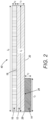
- an adhesive printed sign (or label) 10 is shown.
- the illustrated sign consists of a substrate layer 12, an adhesive layer 14 and a printed layer or coating 16, although additional layers may be included in some embodiments.
- the substrate layer 12 may be formed from a flexible transparent printable medium, such as plastic, which defines opposed first and second substantially planar surfaces 18, 20, each having a length l 1 .
- the surfaces 18, 20 are spaced by a thickness t 1 , which is the smallest dimension of the substrate layer.
- the thickness t 1 may be, for example, from 0.1 mm to 0.5 mm, such as up to 0.3 mm.
- the length l 1 may be any suitable length for a sign, such as from 2-50 cm.
- the adhesive layer 14 is be formed from a photo-curable adhesive, such as a UV-curable primer, of the type conventionally used for adhering UV-curable inks to a substrate. However, in the exemplary embodiment, the adhesive layer 14 does not primarily serve that function.
- the adhesive layer 14 is disposed on the second surface 20 of the substrate layer 12 and defines an exposed region on its outer surface 22, which is adhesive. Being exposed allows the adhesive printed sign 10 to be adhered to a surface of a structure, such as a display unit, by the adhesive layer 14. An inner surface 24 of the adhesive layer is adhered directly to the second surface of the substrate layer 12.
- the adhesive layer 14, or at least the outer surface 22 thereof, has a length l 2 which is no greater than l 1 , e.g., less than l 1 , such that the adhesive layer covers only a portion of the substrate layer, e.g., as a strip.
- the adhesive layer may be partially, but not wholly, covered by the printed layer 16.
- at least a portion of the adhesive layer remains exposed after forming the printed layer.
- the length l 2 of the exposed portion of the adhesive layer may be, for example, from 0.5-5 cm. While the illustrated adhesive layer 14 is shown as extending from a first end 26 of the substrate layer, in other embodiments, the adhesive layer 14 may be offset from the first end.
- the adhesive layer has a thickness t 2 which may be, for example, at least 4 microns ( ⁇ m), such as up to 25 ⁇ m, or up to 10 ⁇ m.
- the thickness of the adhesive layer may be adjusted to suit the smoothness of the substrate, with higher thicknesses suited to more uneven substrate surfaces.
- the printed layer 16 which may include one or more ink layers, is disposed on the second surface 20 of the substrate layer 12.
- the printed layer 16 includes one or more photo-cured inks, such as cured UV-curable inks, which, in combination, define an image.
- the printed layer 16 has a thickness t 3 and a length l 3 which is less than l 1 , e.g., no more than l 1 - l 2 , to leave a transparent window 28 which provides visibility through the sign 10.
- the thickness t 3 may be, for example, from 4-25 microns, such as up to 10 microns.
- the length l 3 may be, for example, from 1-49 cm. While the illustrated printed layer 16 is shown as extending from a second end 30 of the substrate layer, in other embodiments, the printed layer 16 may be offset from the second end.
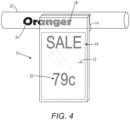
- the first surface 18 of the sign 10 is outermost, with the printed layer 16 being visible through the substrate layer 12 and with the adhesive layer 14 attaching the sign to a display structure 32, such as a store shelf or display bar, as illustrated in FIGURE 4 .
- the substrate layer 12 may be formed from a flexible, transparent or opaque printable medium, such as plastic, paper, or card.
- the adhesive layer 14 is disposed on the second surface 20 of the substrate layer 12, as in the embodiment of FIGURE 1 , while the printed layer 16 is disposed on the opposed first surface 18 and extends partially or fully between the ends 26, 28 of the substrate 12, i.e., l 3 ⁇ l 1 .
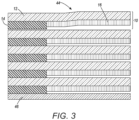
- a stack 44 is assembled from multiple adhesive printed signs 10 (or 40).
- the adhesive layer 14 of each sign is removably and adhesively attached to the sign below it, e.g., directly to the substrate layer 12, except for the bottom sign, which may be supported on a release liner 46.
- the signs can be peeled, in turn, from the stack 44, and attached to a display structure 32, as illustrated in FIGURE 4 .
- a text image or other image 50 on the display structure 32 is visible through the adhesive layer 14 and transparent substrate 12, via the window 28.
- the printed layer 16, which includes a printed image 52 (such as text, a photographic image, and/or graphics) is visible through the transparent substrate 12.
- the material of the substrate layer 12 can be paper, card, or a synthetic polymer, which is transparent.
- Example polymers include C 2 -C 6 polyalkylene polymers, such as polyethylene and polypropylene, polyethylene terephthalate, polycarbonate, polyacrylates and methacrylates, such as polymethylmethacrylate, polyvinylchloride, mixtures thereof, and copolymers thereof.
- the substrate may alternatively be formed from glass or metal.
- the adhesive layer 14 is formed from a photo-curable (e.g., UV-curable) adhesive-forming composition which includes one or more photo-curable monomers and/or oligomers (which are defined as containing up to 8 monomer units) and generally a photoinitiator, which is capable of initiating free-radical polymerization of the monomers/oligomers.
- the adhesive-forming composition has a viscosity and a surface tension which allow the composition to be dispensed in droplet form from a printhead of an inkjet printer.
- the adhesive-forming composition is photo-curable by exposure to a radiation source, such as a UV-emitting light emitting diode (UV-LED).
- UV-LED UV-emitting light emitting diode
- the resulting adhesive layer When fully photo-cured (i.e., no further polymerization occurs with further exposure to the curing radiation), the resulting adhesive layer has a higher viscosity than the adhesive-forming composition but remains viscous rather than solid and is tacky. It is therefore able to wet a surface, such as the display structure 32 (unlike the cured printed layer 16, which cannot wet another surface).
- the fully photo-cured adhesive composition may have a viscosity of at least 5000 cP (mPa ⁇ s), or at least 10,000 mPa ⁇ s, or up to 10,000,000 mPa ⁇ s, or up to 100,000 mPa ⁇ s, at 25°C, as determined with a Brookfield Dial Reading Viscometer (serial no 200500) with an RV/HB-6 spindle setting, available from AMETEK Brookfield, Middleboro, MA 02346 USA. See www.brookfieldengineering.com /products/viscometers/laboratory-viscometers/dial-reading-viscometer.
- the viscosity of the uncured adhesive composition is from 2 to 3000 mPa ⁇ s, such as up to 2000 mPa ⁇ s, or at least 5 mPa ⁇ s, or at least 100 mPa ⁇ s, such as about 1000 mPa ⁇ s, at 25°C, as determined with the Brookfield Dial Reading Viscometer with an RV/HA-3 spindle setting.
- Example monomers for use in the adhesive-forming composition include mono-, di-, and poly-functional acrylates, methacrylates, alkoxylated acrylates, and oligomers thereof.
- Examples include 1,6-hexanediol diacrylate, tripropylene glycol diacrylate, propoxylated-2-neopentyl glycol diacrylate, alkoxylated hexanediol diacrylate, trimethylol propane triacrylate, ethoxylated trimethylolpropane triacrylate, pentaerythritol tetraacrylate, polyfunctional oligomers such as epoxy acrylates, urethane acrylates and polyester acrylates.
- UV primers are used currently to provide a tacky surface to allow UV inks to adhere to solid products such as water bottles or other objects being printed in systems such as the Contoura TM printer by Xerox Corporation.
- One example UV primer composition suitable for forming the adhesive layer is available from Molecule, 5110-A Port Chicago Hwy, Concord, CA 94520 (https://www.molecule.ink/) under the tradename MO178 UV Primer, which remains adhesive when 100% cured, and has been formulated for use in drop-on-demand printers suited to printing on contoured surfaces.
- Other UV-curable inks with adhesive properties which may be used are described, for example, in above-mentioned U.S. Pub. Nos. 20080316244 , 20070093571 , 20080063799 , 20150353739 , and 20140227494 .
- the adhesive-forming composition is free or substantially free of silicon-containing compounds, including monomers, oligomers, and polymers, such as silicones.
- substantially free it is meant that the adhesive-forming composition contains less than 2 wt %, or less than 1 wt %, or less than 0.5 wt %, or less than 0.1 wt % of silicon-containing compounds.
- the printed layer 16 is formed from one or more photo-curable (e.g., UV-curable) ink compositions.
- Each ink composition includes a colorant, such as a pigment or dye, one or more photo-curable monomers and/or oligomers, generally a photoinitiator capable of initiating free-radical polymerization of the monomers/oligomers, and optionally one or more auxiliary additives.
- the UV-curable ink composition is of a type that undergoes a polymerization reaction and curing upon exposure to a radiation source, such as a UV-emitting light emitting diode (UV-LED). In contrast to the adhesive composition, however, the ink compositions harden when fully cured and are no longer viscous.
- UV-LED UV-emitting light emitting diode
- the photo-cured inks may have a hardness of at least 2 or at least 3 on the Mohs' hardness scale and/or a hardness, as measured by indentation, of at least 50 MPa, as determined by the Knoop hardness test.
- the viscosity of the uncured ink composition is from 2 to 50 mpPa-s, such as up to 30 mpPa-s or at least 5 mPa-s, at 25°C, as determined with the Brookfield Dial Reading Viscometer with an RV/HA-3 spindle setting.
- Example monomers and oligomers for use in the ink composition include unsaturated monomers, such as monofunctional, di-functional, and polyfunctional acrylates, methacrylates, N-vinylamides, acrylamides, and combinations thereof.
- Example acrylates include isoamyl acrylate, stearyl acrylate, lauryl acrylate, octyl acrylate, decyl acrylate, isoamylstyl acrylate, isostearyl acrylate, 2-ethylhexyl-diglycol acrylate, 2-hydroxybutyl acrylate, 2-acryloyloxyethylhexahydrophthalic acid, butoxyethyl acrylate, ethoxydiethylene glycol acrylate, methoxydiethylene glycol acrylate, methoxypolyethylene glycol acrylate, methoxypropylene glycol acrylate, phenoxyethyl acrylate, tetrahydrofurfur
- Example methacrylates may be used that correspond to the above-mentioned acrylates.
- examples of such methacrylates include methoxypolyethylene glycol methacrylate, methoxytriethylene glycol methacrylate, hydroxyethyl methacrylate, phenoxyethyl methacrylate, cyclohexyl methacrylate, tetraethylene glycol dimethacrylate, and polyethylene glycol dimethacrylate.
- Example N-vinylamides include N-vinylcaprolactam and N-vinylformamide.
- Example acrylamides include acryloylmorpholine.
- the monomers and oligomers may together be at least 5 wt %, or at least 10 wt %, or at least 20 wt %, or at least 50 wt %, or up to 99 wt % of the ink composition.
- Example photo-initiators for use in the ink composition(s) and/or adhesive-forming composition include benzophenone, benzoin, acetophenone, thioxanthone, and acylphosphine oxide.
- the photo-initiator maybe at least 0.1 wt %, or at least 0.2 wt % of the respective composition, such as up to 8 wt %, or up to 4 wt %, or up to 2 wt %, or up to 1 wt %.
- Example colorants include organic dyes and pigments.
- Example pigments include milled pigments, including inorganic pigments, such as carbon black, titanium dioxide, cobalt blue, chrome yellow, and iron oxide, and organic pigments.
- Example auxiliary additives include defoaming agents, dispersants, wetting agents, surfactants, leveling agents, and the like.
- the ink composition may include a liquid medium such as water or an organic solvent, such as an alkane, alcohol, ether, combination thereof, or the like.
- Suitable release liners 46 include silicone- or polyalkylene-coated release substrates, such as those formed of paper, polyester, polyethylene or a thermoplastic material. Such substrates are often coated with a thermally-cured silicone release coating, such as a cross-linked, vinyl functionalized polydimethylsiloxane, UV curable silicone, or electron-beam curable silicone.
- a media feeder 62 feeds substrate material 64, in roll or sheet form, in a downstream direction A along a paper path 66.
- the substrate material 64 is transported along the path 66 by a transport mechanism composed of driven rollers 68, idler rollers 70, belts, and/or other transport members.
- a pretreatment is applied to the substrate material 64 at a pretreatment station (not shown), such as a flame, plasma discharge, or corona discharge.
- a first printhead assembly 72 deposits an adhesive-forming composition 74 onto the substrate material 64.
- a second printhead assembly 76 downstream of the first printhead assembly 72, deposits one or more ink compositions 78 onto the adhesive-coated substrate material 64.
- a first UV curing station 80 intermediate the printhead assemblies 72, 76, at least partially cures the adhesive-forming composition prior to application of the adjacent ink composition 78.
- a second (or only) UV curing station 82 downstream of second printhead assembly 76, cures the ink composition 78 and may cure or partially cure the adhesive-forming composition 74.
- a slitter 84 downstream of the UV curing station 82, receives the UV-cured substrate 64 with the adhesive layer 14 and printed layer 16. The slitter 84 cuts the substrate into sign-sized pieces.
- a stacker 86 collates and stacks the cut pieces into a stack 44, which is output from the printer device.
- the substrate in sheet form, may be assembled into a stack before final cutting to the desired shape.
- a release liner 46 may be applied to the bottom layer of the stack before or after assembly.
- the operating components of the printing apparatus 60 may be under the control of a controller 88.
- the controller receives image data 90 for forming one or more images 52 on the sheet media 64 and may also receive instructions 92 regarding a selected size and position of the adhesive layer 14. Since a single sheet of media may be cut to form smaller-sized signs, several images and adhesive layers may be printed on a single sheet 64 or continuous roll.
- the controller may include an input device 94, which receives the image data 90 and instructions 92, an input/output device 96, which outputs control instructions to the operational components of the printing device, and which also may receive feedback therefrom, memory 98 which stores instructions for operating the printing apparatus, or various operational components thereof, and a processor device 100, in communication with the memory, for executing the instructions.
- the hardware components 94, 96, 98, 100 of the controller 88 may be communicatively connected by a data/control bus 102.
- the printhead assemblies 72, 76 include printheads which eject the adhesive-forming composition and ink composition(s), respectively, onto the media sheets 64.
- the assembly 72 includes a supply 104 of adhesive-forming composition 74, in liquid form.
- the controller 88 modulates the volume of the adhesive drops ejected by the printheads of the assembly 72 to form the adhesive layer.
- the controller 88 also modulates the volume of the ink drops ejected by the printheads of the assembly 76 to form the selected image 52.
- the controller 88 is configured to receive image data from an image data source (not shown) and optionally instructions for the adhesive layer, and generate firing signals for the operation of the printheads in the printhead assemblies 72, 76 for the formation of the adhesive layer and ink images on media sheets as the sheets pass by the printheads.
- the controller may operate the media feeder 62 to retrieve media sheets from a storage receptacle for the sheets and feed the sheets onto the paper path and the transport system components 68.
- the image data 90 generally include information in electronic form that the controller renders and uses to operate the inkjet ejectors in printheads in the printer to compensate for moisture in ink and to form an ink image on media sheets.
- These data can include text, graphics, pictures, and the like.
- the operation of producing images with colorants on print media, for example, graphics, text, photographs, and the like, is generally referred to herein as printing or marking.
- the inkjet printing apparatus 60 may be a drop-on-demand inkjet printer.
- the printheads of assemblies 72, 76 are configured with inkjet ejectors to eject drops of the adhesive-forming composition 74 or ink composition 78 from a supply 106, respectively, onto a receiving surface 20 of the substrate 64.
- a typical printhead suited to use in the assembly 76 includes a plurality of inkjet ejectors that eject ink drops of one or more ink colors onto the image receiving surface in response to firing signals that operate actuators in the inkjet ejectors.
- the inkjets are arranged in an array of one or more rows and columns in the process and cross-process directions. In some embodiments, the inkjets are arranged in staggered diagonal rows across a face of the printhead.
- printer embodiments include one or more printheads that form ink images on an image receiving surface.
- Some printer embodiments include a plurality of printheads arranged in a print zone.
- print head ejectors may be designated for cyan, magenta, yellow, and black (C, M, Y, K) and optionally white inks, respectively.
- the printhead employed in the assembly 72 may be similarly configured, since the adhesive-forming composition are of low enough viscosity to be dispensed as droplets in the same manner.
- the adhesive composition and ink composition(s) are applied to the same side of the substrate, so there is no need to position an inverter between the assemblies 72, 76.
- the printing apparatus may be similarly configured to that of FIGURE 5 , except that an inverter is positioned between the assemblies 72, 76, e.g., downstream of the first UV curing station 80 and upstream of the assembly 76.
- the inverter where used, turns the sheet media over, so that the adhesive layer and printed layer are formed on opposed sides of the substrate.
- the positions of the assemblies 72, 76 may be reversed, such that the image 52 is formed on the substrate prior to forming the adhesive layer. In some embodiments, the assemblies 72, 76 may be combined into a single assembly (and the intermediate UV curing station omitted).
- downstream direction or “process direction” refers to movement along the path towards the stacker and "cross-process direction” refers to a direction orthogonal to the process direction axis in the plane of the paper path 66.
- the UV curing stations 80, 82 include one or more sources of radiation, such as UV radiation.
- sources of radiation such as UV radiation.
- each may include a UV-emitting LED or an array of such UVLEDs.
- the UVLEDs are controlled to apply sufficient radiation to cure the image 52 and the adhesive layer 14.
- the apparatus 60 may include a graphical user interface (GUI) 110, which allows a user to input commands to the processor, such as one or more of the size of the signs, the number of signs to be assembled into a stack, amount of adhesive-forming composition to be used, and the like, or information from which these parameters can be determined.
- GUI graphical user interface
- the apparatus 60 may include an optical scanner (not shown) as the source of the image data 90.
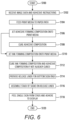
- FIGURE 6 a method for forming a stack of printed adhesive signs which can be performed with the printing apparatus of FIGURE 5 is shown. The method begins at S100.
- image data 90, and optionally adhesive layer instructions 92 are received by the controller 88.
- print media 64 such as single layer clear stock
- the media feeder 62 is fed by the media feeder 62 to a paper path 66 of the printing apparatus 60.
- the surface 20 of the print media may be pretreated, e.g., by flame, corona, or plasma treatment, to improve wettability with the adhesive layer.
- an adhesive-forming composition 74 is ink-jetted onto the substrate 64.
- the controller 88 controls the assembly 72 to eject droplets of the adhesive-forming composition.
- the substrate, with the adhesive-forming composition thereon may be partially or completely cured, e.g., by the curing station 80.
- an ink forming composition 78 is ink-jetted onto the substrate 64 to form an image 52 that corresponds to the received image data 90, leaving at least a portion 22 of the adhesive-forming composition/cured adhesive layer exposed to the atmosphere.
- the controller 88 controls the assembly 76 to eject droplets of the ink composition(s) in accordance with the image data 90.
- the UV inks can be used to print text and images on the substrate and then print a layer of white ink to form a white background.
- the top portion 28 of the sign (left side in FIGURES 1 and 2 ) can be left transparent for unit pricing visibility.
- the substrate 64 may be inverted prior to this step.
- the substrate is cured to cure the ink composition 78 jetted onto the substrate and to cure or complete the cure of the adhesive-forming composition 104.
- the controller controls the UV curing station 82 to effect the curing.
- a release liner 46 may be applied to some of the cured sheets which are to form a bottom layer in the stack 44.
- the UV-cured, printed and adhesive coated substrate sheets are assembled into a stack and cut to the desired size to form a stack 44 of signs 10.
- the resulting stack 44 includes a plurality of signs but has only one release liner 46.
- a sign 10 can be peeled from the stack 44 and the variably printed top-portion of the sign, which includes an adhesive layer 14, is used to adhere the sign to a shelf edge or end caps of a product display unit.
- the sign remains adhesive for an extended period of weeks or months and thus can be peeled from the display structure when it is no longer needed.
- the method ends at S120.
- the exemplary signs find application in retail displays, although other applications where adhesive signs are used are also contemplated, such as directly on products.
- the apparatus and method allow using UV inks and a UV print system to not only print the retail signage but use the unique properties of the UV inks and UV primers to create the signage on one media layer while printing both the sign information and the adhesive in one process.
- An additional benefit is the ability of stacking these signs post processing to create a post-it TM type stack where no release liner is needed and aisle sorted stacks can be delivered to each store for application based on sales data.
- the method provides for a low cost solution that reduces media substrate complexity, creates less waste due to the reduction in media layers while still being able to provide for a transparent window.
- the sign cards can be fully cured while still allowing for adhesive properties to adhere signs to the shelving and creating a card that allows for self-adhesive properties to create a variable printed pad of store signage.
- UV primer that becomes an adhesive in the print module rather than adding an additional adhesive either post process or pre-process at the converter that needs a release liner; ability to not need a release liner, reducing time in hanging the signs and lowering the amount of scrap generated; avoiding additional adhesive layers; stacking signs one on top of another to create a variable printed store sign stack that can be used to mark each aisle; ability to provide adhesive properties only where needed, and limiting glue buildup issues in the post process cutting systems.
- variable data retail signage with adhesive backing using Ultra Violet inks and a print system was implemented on the laboratory scale.
Landscapes
- Chemical & Material Sciences (AREA)
- Engineering & Computer Science (AREA)
- Organic Chemistry (AREA)
- Life Sciences & Earth Sciences (AREA)
- Physics & Mathematics (AREA)
- Wood Science & Technology (AREA)
- Materials Engineering (AREA)
- Pest Control & Pesticides (AREA)
- Chemical Kinetics & Catalysis (AREA)
- General Chemical & Material Sciences (AREA)
- General Physics & Mathematics (AREA)
- Theoretical Computer Science (AREA)
- General Health & Medical Sciences (AREA)
- Toxicology (AREA)
- Electromagnetism (AREA)
- Health & Medical Sciences (AREA)
- Plasma & Fusion (AREA)
- Inks, Pencil-Leads, Or Crayons (AREA)
- Ink Jet (AREA)
- Ink Jet Recording Methods And Recording Media Thereof (AREA)
- Adhesives Or Adhesive Processes (AREA)
- Application Of Or Painting With Fluid Materials (AREA)
- Laminated Bodies (AREA)
- Adhesive Tapes (AREA)
Applications Claiming Priority (1)
| Application Number | Priority Date | Filing Date | Title |
|---|---|---|---|
| US15/873,056 US10899155B2 (en) | 2018-01-17 | 2018-01-17 | Variable printed UV curable adhesive retail signs |
Publications (2)
| Publication Number | Publication Date |
|---|---|
| EP3514212A1 EP3514212A1 (en) | 2019-07-24 |
| EP3514212B1 true EP3514212B1 (en) | 2025-05-14 |
Family
ID=65023731
Family Applications (1)
| Application Number | Title | Priority Date | Filing Date |
|---|---|---|---|
| EP19151536.0A Active EP3514212B1 (en) | 2018-01-17 | 2019-01-14 | Variable printed uv curable adhesive retail signs |
Country Status (4)
| Country | Link |
|---|---|
| US (2) | US10899155B2 (enExample) |
| EP (1) | EP3514212B1 (enExample) |
| JP (1) | JP7212525B2 (enExample) |
| CN (1) | CN110047375B (enExample) |
Families Citing this family (5)
| Publication number | Priority date | Publication date | Assignee | Title |
|---|---|---|---|---|
| CN111145635A (zh) * | 2019-12-26 | 2020-05-12 | 深圳深汕特别合作区昌茂粘胶新材料有限公司 | 一种pe/eva泡棉胶粘带及其制备方法 |
| JP2021124595A (ja) * | 2020-02-05 | 2021-08-30 | 大阪シーリング印刷株式会社 | ラベル |
| CN111210716B (zh) * | 2020-03-16 | 2024-11-15 | 町洋机电(中国)有限公司 | 用于识别电器部件的标示牌及其印刷方法 |
| JP7533822B2 (ja) * | 2020-04-06 | 2024-08-14 | 有限会社エムアンドジーキタデ | 装飾鏡の製造方法及び装飾鏡 |
| JP2024117950A (ja) * | 2023-02-20 | 2024-08-30 | セイコーエプソン株式会社 | ラベルの製造方法及びラベル |
Citations (2)
| Publication number | Priority date | Publication date | Assignee | Title |
|---|---|---|---|---|
| EP1349900B1 (en) * | 2001-01-08 | 2007-02-14 | 3M Innovative Properties Company | Methods and compositions for ink jet printing of pressure sensitive adhesive patterns |
| EP2644405B1 (en) * | 2012-03-28 | 2015-06-17 | Seiko Epson Corporation | Ink jet recording method and ink jet recording apparatus |
Family Cites Families (33)
| Publication number | Priority date | Publication date | Assignee | Title |
|---|---|---|---|---|
| US4770320A (en) * | 1987-06-03 | 1988-09-13 | Minnesota Mining And Manufacturing Company | Sheet and dispenser package therefor |
| US5376418A (en) * | 1993-09-13 | 1994-12-27 | Uarco Incorporated | Image protected pressure sensitive label |
| US6475585B1 (en) * | 1997-10-21 | 2002-11-05 | Teikoku Printing Inks Mfg. Co., Ltd | Releasable adhesive element having image reception layer and method of producing the same |
| JP3059095U (ja) | 1998-11-13 | 1999-07-02 | 株式会社銀河通信 | 広告媒体用附箋集合体 |
| US6348262B1 (en) * | 1999-09-24 | 2002-02-19 | Plastic Packaging Inc. | Self adhesive tape and method of fabricating same |
| US6457585B1 (en) * | 2000-10-31 | 2002-10-01 | Sonoco Development, Inc. | Packaging with incorporated temporary tattoo |
| US6910667B2 (en) * | 2002-06-17 | 2005-06-28 | 3M Innovative Properties Company | Stretch releasable tape flag |
| US7673909B2 (en) * | 2003-06-03 | 2010-03-09 | L'oreal | Dual-adhesive label for applying to an article, particularly an item of cosmetic product packaging |
| JP4423497B2 (ja) | 2003-11-06 | 2010-03-03 | 東洋化成工業株式会社 | 紫外線硬化型樹脂組成物 |
| US7510277B2 (en) * | 2004-03-01 | 2009-03-31 | Fujifilm Corporation | Image forming apparatus and method |
| US20060234014A1 (en) | 2005-04-14 | 2006-10-19 | Liu Yaoqi J | Patterned adhesives for tamper evident feature |
| US8153195B2 (en) | 2006-09-09 | 2012-04-10 | Electronics For Imaging, Inc. | Dot size controlling primer coating for radiation curable ink jet inks |
| US20080090932A1 (en) * | 2006-10-11 | 2008-04-17 | Hexion Specialty Chemicals, Inc. | Radiation curable inkjettable adhesive |
| US8857961B2 (en) | 2007-06-21 | 2014-10-14 | Hewlett-Packard Development Company, L.P. | UV curable ink with improved adhesion |
| JP2010276921A (ja) * | 2009-05-29 | 2010-12-09 | Yoshino Kogyosho Co Ltd | インモールドラベル |
| JP3161611U (ja) | 2010-05-24 | 2010-08-05 | 株式会社PlasticArts | 透明樹脂製付箋及び透明樹脂製付箋シート、樹脂製付箋及び樹脂製付箋シート |
| JP5817059B2 (ja) | 2011-09-06 | 2015-11-18 | 株式会社ミマキエンジニアリング | Uvインクの印刷方法 |
| JP5877102B2 (ja) * | 2012-03-27 | 2016-03-02 | 株式会社ミマキエンジニアリング | 印刷方法及び印刷装置 |
| US8746490B2 (en) * | 2012-11-06 | 2014-06-10 | Sonoco Development, Inc. | Resealable package film |
| BR112015016650A2 (pt) | 2013-01-17 | 2017-07-11 | Sun Chemical Corp | composição de primer, artigo impresso, e, métodos para impressão de uma composição do primer curável por energia e para formação de um material de papel metálico brilhante revestido |
| EP2786878A1 (en) | 2013-04-04 | 2014-10-08 | Hewlett-Packard Industrial Printing Ltd. | Methods for printing articles |
| JP2015025884A (ja) | 2013-07-25 | 2015-02-05 | 株式会社ギケン | 両面印刷ラベル及び両面印刷ラベルの作製方法 |
| US9193204B2 (en) * | 2013-08-28 | 2015-11-24 | Avery Dennison Corporation | Heat transfers suitable for application on dye sublimation apparel |
| EP2942203A1 (en) | 2014-05-06 | 2015-11-11 | Agfa Graphics Nv | Inkjet printing outdoor graphics |
| US9592655B2 (en) | 2014-11-03 | 2017-03-14 | Xerox Corporation | Method and apparatus for inline adhesive signage |
| US9463945B2 (en) | 2014-12-24 | 2016-10-11 | Xerox Corporation | Multi-stage collation system and method for high speed compiling sequentially ordered signage |
| US9981458B2 (en) | 2015-06-04 | 2018-05-29 | Xerox Corporation | Controlled silicone release during xerographic printing to create pressure sensitive adhesive release coat |
| US9809730B2 (en) * | 2015-06-10 | 2017-11-07 | Upm Raflatac Oy | Printable label comprising a clear face layer and a clear adhesive layer |
| CN204791784U (zh) * | 2015-06-16 | 2015-11-18 | 深圳市领域实业有限公司 | 局部无胶标签 |
| CN107025841A (zh) * | 2016-02-01 | 2017-08-08 | 天津市英诺印刷有限公司 | 一种背面印刷标签及其制造方法 |
| JP6691807B2 (ja) | 2016-04-12 | 2020-05-13 | 株式会社ウイル・コーポレーション | 付箋 |
| CN205881316U (zh) * | 2016-08-08 | 2017-01-11 | 广州市宝绅纸塑有限公司 | 镭射条防伪贴标 |
| CN206520364U (zh) * | 2017-02-27 | 2017-09-26 | 浙江宇狮包装材料有限公司 | 一种新型环保功能性烫金膜 |
-
2018
- 2018-01-17 US US15/873,056 patent/US10899155B2/en active Active
-
2019
- 2019-01-03 CN CN201910004392.1A patent/CN110047375B/zh active Active
- 2019-01-08 JP JP2019001001A patent/JP7212525B2/ja active Active
- 2019-01-14 EP EP19151536.0A patent/EP3514212B1/en active Active
-
2020
- 2020-12-17 US US17/124,951 patent/US11376880B2/en active Active
Patent Citations (2)
| Publication number | Priority date | Publication date | Assignee | Title |
|---|---|---|---|---|
| EP1349900B1 (en) * | 2001-01-08 | 2007-02-14 | 3M Innovative Properties Company | Methods and compositions for ink jet printing of pressure sensitive adhesive patterns |
| EP2644405B1 (en) * | 2012-03-28 | 2015-06-17 | Seiko Epson Corporation | Ink jet recording method and ink jet recording apparatus |
Also Published As
| Publication number | Publication date |
|---|---|
| JP2019124933A (ja) | 2019-07-25 |
| JP7212525B2 (ja) | 2023-01-25 |
| US11376880B2 (en) | 2022-07-05 |
| US20190217650A1 (en) | 2019-07-18 |
| CN110047375B (zh) | 2022-06-14 |
| US20210101399A1 (en) | 2021-04-08 |
| EP3514212A1 (en) | 2019-07-24 |
| CN110047375A (zh) | 2019-07-23 |
| US10899155B2 (en) | 2021-01-26 |
Similar Documents
| Publication | Publication Date | Title |
|---|---|---|
| US11376880B2 (en) | Variable printed UV curable adhesive retail signs | |
| JP6058100B2 (ja) | 下塗り組成物、組成物セット、インクジェット記録方法、及び、印刷物 | |
| US11332629B2 (en) | Curable clear ink composition, storing container, ink set, printing method, printed matter, and cured material | |
| US11241821B2 (en) | Method of manufacturing laminar object and active energy ray curable ink | |
| JP2004175906A (ja) | 活性光線硬化型インクジェット無溶剤インクとそれを用いた画像形成方法及びインクジェット記録装置 | |
| CN101291816A (zh) | 可固化液体套装和喷墨印刷法 | |
| EP3668932B1 (en) | Inkjettable adhesive | |
| JP2003191593A (ja) | 画像形成方法及び画像形成装置 | |
| KR20190095881A (ko) | 신축성 uv 잉크를 사용한 굴곡진 표면 상으로의 uv 인쇄물 전사 | |
| JP4744131B2 (ja) | 紫外線硬化型インクジェットインク | |
| JP2017088805A (ja) | 活性エネルギー線硬化型組成物、活性エネルギー線硬化型インク、組成物収容容器、2次元又は3次元の像の形成方法及び形成装置、並びに成形加工品 | |
| JP2017132091A (ja) | 像形成方法、像形成装置、及び積層硬化物 | |
| JP7283527B1 (ja) | 活性エネルギー線硬化型インクジェット用インク組成物、組成物収容容器、2次元又は3次元の像形成装置、2次元又は3次元の像形成方法、硬化物、及び加飾体 | |
| JP2020089873A (ja) | 液体吐出装置および液体吐出方法 | |
| JP2017160362A (ja) | 活性エネルギー線硬化型組成物、活性エネルギー線硬化型インク、組成物収容容器、2次元又は3次元の像の形成方法及び形成装置 | |
| JP2004182808A (ja) | 活性光線硬化型インクジェット無溶剤インクとそれを用いた画像形成方法及びインクジェット記録装置 | |
| JP2024071426A (ja) | 活性エネルギー線硬化型組成物、活性エネルギー線硬化型インク組成物、活性エネルギー線硬化型インクジェット用インク組成物、組成物収容容器、2次元又は3次元の像形成装置、2次元又は3次元の像形成方法、硬化物、及び加飾体 | |
| JP2024056057A (ja) | 活性エネルギー線硬化型組成物、活性エネルギー線硬化型インク組成物、インクジェット用インク組成物、組成物収容容器、2次元又は3次元の像形成装置、2次元又は3次元の像形成方法、硬化物、加飾体、積層体、フレキシブルデバイス用部材、及びフレキシブルデバイス | |
| CN115122761B (zh) | 喷墨记录方法 | |
| JP2020001230A (ja) | 硬化型組成物、収容容器、装飾部材の製造方法、装飾部材の製造装置、及び装飾部材 | |
| JP2023043824A (ja) | 活性エネルギー線硬化型組成物、活性エネルギー線硬化型インク組成物、活性エネルギー線硬化型インクジェット用インク組成物、組成物収容容器、及び2次元又は3次元の像形成装置 | |
| CN117087346A (zh) | 记录物的制造方法 | |
| JP2023038690A (ja) | 活性エネルギー線硬化型組成物、活性エネルギー線硬化型インク組成物、インクジェットインク組成物および像形成装置 | |
| US10589560B2 (en) | Active energy ray curing inkjet ink, printed product, inkjet printing apparatus, and inkjet printing method | |
| JP2023008529A (ja) | 活性エネルギー線硬化型組成物、活性エネルギー線硬化型インク組成物、活性エネルギー線硬化型インクジェット用インク組成物、像形成装置体及び像形成方法 |
Legal Events
| Date | Code | Title | Description |
|---|---|---|---|
| PUAI | Public reference made under article 153(3) epc to a published international application that has entered the european phase |
Free format text: ORIGINAL CODE: 0009012 |
|
| STAA | Information on the status of an ep patent application or granted ep patent |
Free format text: STATUS: THE APPLICATION HAS BEEN PUBLISHED |
|
| AK | Designated contracting states |
Kind code of ref document: A1 Designated state(s): AL AT BE BG CH CY CZ DE DK EE ES FI FR GB GR HR HU IE IS IT LI LT LU LV MC MK MT NL NO PL PT RO RS SE SI SK SM TR |
|
| AX | Request for extension of the european patent |
Extension state: BA ME |
|
| STAA | Information on the status of an ep patent application or granted ep patent |
Free format text: STATUS: REQUEST FOR EXAMINATION WAS MADE |
|
| 17P | Request for examination filed |
Effective date: 20200124 |
|
| RBV | Designated contracting states (corrected) |
Designated state(s): AL AT BE BG CH CY CZ DE DK EE ES FI FR GB GR HR HU IE IS IT LI LT LU LV MC MK MT NL NO PL PT RO RS SE SI SK SM TR |
|
| STAA | Information on the status of an ep patent application or granted ep patent |
Free format text: STATUS: EXAMINATION IS IN PROGRESS |
|
| 17Q | First examination report despatched |
Effective date: 20220912 |
|
| GRAP | Despatch of communication of intention to grant a patent |
Free format text: ORIGINAL CODE: EPIDOSNIGR1 |
|
| STAA | Information on the status of an ep patent application or granted ep patent |
Free format text: STATUS: GRANT OF PATENT IS INTENDED |
|
| RIC1 | Information provided on ipc code assigned before grant |
Ipc: B41M 3/00 20060101ALI20241105BHEP Ipc: B31D 1/02 20060101ALI20241105BHEP Ipc: B41M 7/00 20060101ALI20241105BHEP Ipc: B41J 2/01 20060101ALI20241105BHEP Ipc: C09J 7/30 20180101AFI20241105BHEP |
|
| INTG | Intention to grant announced |
Effective date: 20241204 |
|
| GRAS | Grant fee paid |
Free format text: ORIGINAL CODE: EPIDOSNIGR3 |
|
| GRAA | (expected) grant |
Free format text: ORIGINAL CODE: 0009210 |
|
| STAA | Information on the status of an ep patent application or granted ep patent |
Free format text: STATUS: THE PATENT HAS BEEN GRANTED |
|
| AK | Designated contracting states |
Kind code of ref document: B1 Designated state(s): AL AT BE BG CH CY CZ DE DK EE ES FI FR GB GR HR HU IE IS IT LI LT LU LV MC MK MT NL NO PL PT RO RS SE SI SK SM TR |
|
| REG | Reference to a national code |
Ref country code: GB Ref legal event code: FG4D |
|
| REG | Reference to a national code |
Ref country code: CH Ref legal event code: EP |
|
| REG | Reference to a national code |
Ref country code: IE Ref legal event code: FG4D |
|
| REG | Reference to a national code |
Ref country code: DE Ref legal event code: R096 Ref document number: 602019069866 Country of ref document: DE |
|
| REG | Reference to a national code |
Ref country code: NL Ref legal event code: MP Effective date: 20250514 |
|
| PG25 | Lapsed in a contracting state [announced via postgrant information from national office to epo] |
Ref country code: PT Free format text: LAPSE BECAUSE OF FAILURE TO SUBMIT A TRANSLATION OF THE DESCRIPTION OR TO PAY THE FEE WITHIN THE PRESCRIBED TIME-LIMIT Effective date: 20250915 Ref country code: FI Free format text: LAPSE BECAUSE OF FAILURE TO SUBMIT A TRANSLATION OF THE DESCRIPTION OR TO PAY THE FEE WITHIN THE PRESCRIBED TIME-LIMIT Effective date: 20250514 Ref country code: ES Free format text: LAPSE BECAUSE OF FAILURE TO SUBMIT A TRANSLATION OF THE DESCRIPTION OR TO PAY THE FEE WITHIN THE PRESCRIBED TIME-LIMIT Effective date: 20250514 |
|
| REG | Reference to a national code |
Ref country code: LT Ref legal event code: MG9D |
|
| PG25 | Lapsed in a contracting state [announced via postgrant information from national office to epo] |
Ref country code: NO Free format text: LAPSE BECAUSE OF FAILURE TO SUBMIT A TRANSLATION OF THE DESCRIPTION OR TO PAY THE FEE WITHIN THE PRESCRIBED TIME-LIMIT Effective date: 20250814 Ref country code: GR Free format text: LAPSE BECAUSE OF FAILURE TO SUBMIT A TRANSLATION OF THE DESCRIPTION OR TO PAY THE FEE WITHIN THE PRESCRIBED TIME-LIMIT Effective date: 20250815 |
|
| PG25 | Lapsed in a contracting state [announced via postgrant information from national office to epo] |
Ref country code: NL Free format text: LAPSE BECAUSE OF FAILURE TO SUBMIT A TRANSLATION OF THE DESCRIPTION OR TO PAY THE FEE WITHIN THE PRESCRIBED TIME-LIMIT Effective date: 20250514 Ref country code: PL Free format text: LAPSE BECAUSE OF FAILURE TO SUBMIT A TRANSLATION OF THE DESCRIPTION OR TO PAY THE FEE WITHIN THE PRESCRIBED TIME-LIMIT Effective date: 20250514 |
|
| REG | Reference to a national code |
Ref country code: AT Ref legal event code: MK05 Ref document number: 1794794 Country of ref document: AT Kind code of ref document: T Effective date: 20250514 |
|
| PG25 | Lapsed in a contracting state [announced via postgrant information from national office to epo] |
Ref country code: BG Free format text: LAPSE BECAUSE OF FAILURE TO SUBMIT A TRANSLATION OF THE DESCRIPTION OR TO PAY THE FEE WITHIN THE PRESCRIBED TIME-LIMIT Effective date: 20250514 |
|
| PG25 | Lapsed in a contracting state [announced via postgrant information from national office to epo] |
Ref country code: HR Free format text: LAPSE BECAUSE OF FAILURE TO SUBMIT A TRANSLATION OF THE DESCRIPTION OR TO PAY THE FEE WITHIN THE PRESCRIBED TIME-LIMIT Effective date: 20250514 |
|
| PG25 | Lapsed in a contracting state [announced via postgrant information from national office to epo] |
Ref country code: AT Free format text: LAPSE BECAUSE OF FAILURE TO SUBMIT A TRANSLATION OF THE DESCRIPTION OR TO PAY THE FEE WITHIN THE PRESCRIBED TIME-LIMIT Effective date: 20250514 |
|
| PG25 | Lapsed in a contracting state [announced via postgrant information from national office to epo] |
Ref country code: RS Free format text: LAPSE BECAUSE OF FAILURE TO SUBMIT A TRANSLATION OF THE DESCRIPTION OR TO PAY THE FEE WITHIN THE PRESCRIBED TIME-LIMIT Effective date: 20250814 |
|
| PG25 | Lapsed in a contracting state [announced via postgrant information from national office to epo] |
Ref country code: IS Free format text: LAPSE BECAUSE OF FAILURE TO SUBMIT A TRANSLATION OF THE DESCRIPTION OR TO PAY THE FEE WITHIN THE PRESCRIBED TIME-LIMIT Effective date: 20250914 |
|
| PG25 | Lapsed in a contracting state [announced via postgrant information from national office to epo] |
Ref country code: LV Free format text: LAPSE BECAUSE OF FAILURE TO SUBMIT A TRANSLATION OF THE DESCRIPTION OR TO PAY THE FEE WITHIN THE PRESCRIBED TIME-LIMIT Effective date: 20250514 |