EP3500465B1 - Autonomes fahrzeug und verfahren - Google Patents
Autonomes fahrzeug und verfahren Download PDFInfo
- Publication number
- EP3500465B1 EP3500465B1 EP17842067.5A EP17842067A EP3500465B1 EP 3500465 B1 EP3500465 B1 EP 3500465B1 EP 17842067 A EP17842067 A EP 17842067A EP 3500465 B1 EP3500465 B1 EP 3500465B1
- Authority
- EP
- European Patent Office
- Prior art keywords
- driver
- vehicle
- autonomous vehicle
- autonomous
- driving
- Prior art date
- Legal status (The legal status is an assumption and is not a legal conclusion. Google has not performed a legal analysis and makes no representation as to the accuracy of the status listed.)
- Active
Links
Images




Classifications
-
- B—PERFORMING OPERATIONS; TRANSPORTING
- B60—VEHICLES IN GENERAL
- B60W—CONJOINT CONTROL OF VEHICLE SUB-UNITS OF DIFFERENT TYPE OR DIFFERENT FUNCTION; CONTROL SYSTEMS SPECIALLY ADAPTED FOR HYBRID VEHICLES; ROAD VEHICLE DRIVE CONTROL SYSTEMS FOR PURPOSES NOT RELATED TO THE CONTROL OF A PARTICULAR SUB-UNIT
- B60W30/00—Purposes of road vehicle drive control systems not related to the control of a particular sub-unit, e.g. of systems using conjoint control of vehicle sub-units
- B60W30/18—Propelling the vehicle
- B60W30/182—Selecting between different operative modes, e.g. comfort and performance modes
-
- B—PERFORMING OPERATIONS; TRANSPORTING
- B60—VEHICLES IN GENERAL
- B60W—CONJOINT CONTROL OF VEHICLE SUB-UNITS OF DIFFERENT TYPE OR DIFFERENT FUNCTION; CONTROL SYSTEMS SPECIALLY ADAPTED FOR HYBRID VEHICLES; ROAD VEHICLE DRIVE CONTROL SYSTEMS FOR PURPOSES NOT RELATED TO THE CONTROL OF A PARTICULAR SUB-UNIT
- B60W60/00—Drive control systems specially adapted for autonomous road vehicles
- B60W60/005—Handover processes
- B60W60/0059—Estimation of the risk associated with autonomous or manual driving, e.g. situation too complex, sensor failure or driver incapacity
-
- B—PERFORMING OPERATIONS; TRANSPORTING
- B60—VEHICLES IN GENERAL
- B60W—CONJOINT CONTROL OF VEHICLE SUB-UNITS OF DIFFERENT TYPE OR DIFFERENT FUNCTION; CONTROL SYSTEMS SPECIALLY ADAPTED FOR HYBRID VEHICLES; ROAD VEHICLE DRIVE CONTROL SYSTEMS FOR PURPOSES NOT RELATED TO THE CONTROL OF A PARTICULAR SUB-UNIT
- B60W40/00—Estimation or calculation of non-directly measurable driving parameters for road vehicle drive control systems not related to the control of a particular sub unit, e.g. by using mathematical models
- B60W40/08—Estimation or calculation of non-directly measurable driving parameters for road vehicle drive control systems not related to the control of a particular sub unit, e.g. by using mathematical models related to drivers or passengers
- B60W40/09—Driving style or behaviour
-
- B—PERFORMING OPERATIONS; TRANSPORTING
- B60—VEHICLES IN GENERAL
- B60W—CONJOINT CONTROL OF VEHICLE SUB-UNITS OF DIFFERENT TYPE OR DIFFERENT FUNCTION; CONTROL SYSTEMS SPECIALLY ADAPTED FOR HYBRID VEHICLES; ROAD VEHICLE DRIVE CONTROL SYSTEMS FOR PURPOSES NOT RELATED TO THE CONTROL OF A PARTICULAR SUB-UNIT
- B60W60/00—Drive control systems specially adapted for autonomous road vehicles
-
- B—PERFORMING OPERATIONS; TRANSPORTING
- B60—VEHICLES IN GENERAL
- B60W—CONJOINT CONTROL OF VEHICLE SUB-UNITS OF DIFFERENT TYPE OR DIFFERENT FUNCTION; CONTROL SYSTEMS SPECIALLY ADAPTED FOR HYBRID VEHICLES; ROAD VEHICLE DRIVE CONTROL SYSTEMS FOR PURPOSES NOT RELATED TO THE CONTROL OF A PARTICULAR SUB-UNIT
- B60W60/00—Drive control systems specially adapted for autonomous road vehicles
- B60W60/001—Planning or execution of driving tasks
- B60W60/0015—Planning or execution of driving tasks specially adapted for safety
-
- B—PERFORMING OPERATIONS; TRANSPORTING
- B60—VEHICLES IN GENERAL
- B60W—CONJOINT CONTROL OF VEHICLE SUB-UNITS OF DIFFERENT TYPE OR DIFFERENT FUNCTION; CONTROL SYSTEMS SPECIALLY ADAPTED FOR HYBRID VEHICLES; ROAD VEHICLE DRIVE CONTROL SYSTEMS FOR PURPOSES NOT RELATED TO THE CONTROL OF A PARTICULAR SUB-UNIT
- B60W60/00—Drive control systems specially adapted for autonomous road vehicles
- B60W60/001—Planning or execution of driving tasks
- B60W60/0015—Planning or execution of driving tasks specially adapted for safety
- B60W60/0018—Planning or execution of driving tasks specially adapted for safety by employing degraded modes, e.g. reducing speed, in response to suboptimal conditions
- B60W60/00182—Planning or execution of driving tasks specially adapted for safety by employing degraded modes, e.g. reducing speed, in response to suboptimal conditions in response to weather conditions
-
- B—PERFORMING OPERATIONS; TRANSPORTING
- B60—VEHICLES IN GENERAL
- B60W—CONJOINT CONTROL OF VEHICLE SUB-UNITS OF DIFFERENT TYPE OR DIFFERENT FUNCTION; CONTROL SYSTEMS SPECIALLY ADAPTED FOR HYBRID VEHICLES; ROAD VEHICLE DRIVE CONTROL SYSTEMS FOR PURPOSES NOT RELATED TO THE CONTROL OF A PARTICULAR SUB-UNIT
- B60W60/00—Drive control systems specially adapted for autonomous road vehicles
- B60W60/005—Handover processes
- B60W60/0051—Handover processes from occupants to vehicle
-
- B—PERFORMING OPERATIONS; TRANSPORTING
- B60—VEHICLES IN GENERAL
- B60W—CONJOINT CONTROL OF VEHICLE SUB-UNITS OF DIFFERENT TYPE OR DIFFERENT FUNCTION; CONTROL SYSTEMS SPECIALLY ADAPTED FOR HYBRID VEHICLES; ROAD VEHICLE DRIVE CONTROL SYSTEMS FOR PURPOSES NOT RELATED TO THE CONTROL OF A PARTICULAR SUB-UNIT
- B60W60/00—Drive control systems specially adapted for autonomous road vehicles
- B60W60/005—Handover processes
- B60W60/0053—Handover processes from vehicle to occupant
-
- B—PERFORMING OPERATIONS; TRANSPORTING
- B60—VEHICLES IN GENERAL
- B60W—CONJOINT CONTROL OF VEHICLE SUB-UNITS OF DIFFERENT TYPE OR DIFFERENT FUNCTION; CONTROL SYSTEMS SPECIALLY ADAPTED FOR HYBRID VEHICLES; ROAD VEHICLE DRIVE CONTROL SYSTEMS FOR PURPOSES NOT RELATED TO THE CONTROL OF A PARTICULAR SUB-UNIT
- B60W60/00—Drive control systems specially adapted for autonomous road vehicles
- B60W60/007—Emergency override
-
- G—PHYSICS
- G05—CONTROLLING; REGULATING
- G05D—SYSTEMS FOR CONTROLLING OR REGULATING NON-ELECTRIC VARIABLES
- G05D1/00—Control of position, course, altitude or attitude of land, water, air or space vehicles, e.g. using automatic pilots
- G05D1/0055—Control of position, course, altitude or attitude of land, water, air or space vehicles, e.g. using automatic pilots with safety arrangements
- G05D1/0061—Control of position, course, altitude or attitude of land, water, air or space vehicles, e.g. using automatic pilots with safety arrangements for transition from automatic pilot to manual pilot and vice versa
-
- G—PHYSICS
- G06—COMPUTING OR CALCULATING; COUNTING
- G06Q—INFORMATION AND COMMUNICATION TECHNOLOGY [ICT] SPECIALLY ADAPTED FOR ADMINISTRATIVE, COMMERCIAL, FINANCIAL, MANAGERIAL OR SUPERVISORY PURPOSES; SYSTEMS OR METHODS SPECIALLY ADAPTED FOR ADMINISTRATIVE, COMMERCIAL, FINANCIAL, MANAGERIAL OR SUPERVISORY PURPOSES, NOT OTHERWISE PROVIDED FOR
- G06Q10/00—Administration; Management
- G06Q10/04—Forecasting or optimisation specially adapted for administrative or management purposes, e.g. linear programming or "cutting stock problem"
-
- G—PHYSICS
- G06—COMPUTING OR CALCULATING; COUNTING
- G06Q—INFORMATION AND COMMUNICATION TECHNOLOGY [ICT] SPECIALLY ADAPTED FOR ADMINISTRATIVE, COMMERCIAL, FINANCIAL, MANAGERIAL OR SUPERVISORY PURPOSES; SYSTEMS OR METHODS SPECIALLY ADAPTED FOR ADMINISTRATIVE, COMMERCIAL, FINANCIAL, MANAGERIAL OR SUPERVISORY PURPOSES, NOT OTHERWISE PROVIDED FOR
- G06Q30/00—Commerce
- G06Q30/02—Marketing; Price estimation or determination; Fundraising
- G06Q30/0283—Price estimation or determination
-
- G—PHYSICS
- G06—COMPUTING OR CALCULATING; COUNTING
- G06Q—INFORMATION AND COMMUNICATION TECHNOLOGY [ICT] SPECIALLY ADAPTED FOR ADMINISTRATIVE, COMMERCIAL, FINANCIAL, MANAGERIAL OR SUPERVISORY PURPOSES; SYSTEMS OR METHODS SPECIALLY ADAPTED FOR ADMINISTRATIVE, COMMERCIAL, FINANCIAL, MANAGERIAL OR SUPERVISORY PURPOSES, NOT OTHERWISE PROVIDED FOR
- G06Q50/00—Information and communication technology [ICT] specially adapted for implementation of business processes of specific business sectors, e.g. utilities or tourism
- G06Q50/40—Business processes related to the transportation industry
-
- B—PERFORMING OPERATIONS; TRANSPORTING
- B60—VEHICLES IN GENERAL
- B60W—CONJOINT CONTROL OF VEHICLE SUB-UNITS OF DIFFERENT TYPE OR DIFFERENT FUNCTION; CONTROL SYSTEMS SPECIALLY ADAPTED FOR HYBRID VEHICLES; ROAD VEHICLE DRIVE CONTROL SYSTEMS FOR PURPOSES NOT RELATED TO THE CONTROL OF A PARTICULAR SUB-UNIT
- B60W40/00—Estimation or calculation of non-directly measurable driving parameters for road vehicle drive control systems not related to the control of a particular sub unit, e.g. by using mathematical models
- B60W40/08—Estimation or calculation of non-directly measurable driving parameters for road vehicle drive control systems not related to the control of a particular sub unit, e.g. by using mathematical models related to drivers or passengers
- B60W2040/0809—Driver authorisation; Driver identity check
-
- B—PERFORMING OPERATIONS; TRANSPORTING
- B60—VEHICLES IN GENERAL
- B60W—CONJOINT CONTROL OF VEHICLE SUB-UNITS OF DIFFERENT TYPE OR DIFFERENT FUNCTION; CONTROL SYSTEMS SPECIALLY ADAPTED FOR HYBRID VEHICLES; ROAD VEHICLE DRIVE CONTROL SYSTEMS FOR PURPOSES NOT RELATED TO THE CONTROL OF A PARTICULAR SUB-UNIT
- B60W50/00—Details of control systems for road vehicle drive control not related to the control of a particular sub-unit, e.g. process diagnostic or vehicle driver interfaces
- B60W2050/0062—Adapting control system settings
- B60W2050/0075—Automatic parameter input, automatic initialising or calibrating means
- B60W2050/0095—Automatic control mode change
-
- B—PERFORMING OPERATIONS; TRANSPORTING
- B60—VEHICLES IN GENERAL
- B60W—CONJOINT CONTROL OF VEHICLE SUB-UNITS OF DIFFERENT TYPE OR DIFFERENT FUNCTION; CONTROL SYSTEMS SPECIALLY ADAPTED FOR HYBRID VEHICLES; ROAD VEHICLE DRIVE CONTROL SYSTEMS FOR PURPOSES NOT RELATED TO THE CONTROL OF A PARTICULAR SUB-UNIT
- B60W2420/00—Indexing codes relating to the type of sensors based on the principle of their operation
- B60W2420/40—Photo, light or radio wave sensitive means, e.g. infrared sensors
- B60W2420/403—Image sensing, e.g. optical camera
-
- B—PERFORMING OPERATIONS; TRANSPORTING
- B60—VEHICLES IN GENERAL
- B60W—CONJOINT CONTROL OF VEHICLE SUB-UNITS OF DIFFERENT TYPE OR DIFFERENT FUNCTION; CONTROL SYSTEMS SPECIALLY ADAPTED FOR HYBRID VEHICLES; ROAD VEHICLE DRIVE CONTROL SYSTEMS FOR PURPOSES NOT RELATED TO THE CONTROL OF A PARTICULAR SUB-UNIT
- B60W2540/00—Input parameters relating to occupants
- B60W2540/043—Identity of occupants
-
- B—PERFORMING OPERATIONS; TRANSPORTING
- B60—VEHICLES IN GENERAL
- B60W—CONJOINT CONTROL OF VEHICLE SUB-UNITS OF DIFFERENT TYPE OR DIFFERENT FUNCTION; CONTROL SYSTEMS SPECIALLY ADAPTED FOR HYBRID VEHICLES; ROAD VEHICLE DRIVE CONTROL SYSTEMS FOR PURPOSES NOT RELATED TO THE CONTROL OF A PARTICULAR SUB-UNIT
- B60W2540/00—Input parameters relating to occupants
- B60W2540/225—Direction of gaze
-
- B—PERFORMING OPERATIONS; TRANSPORTING
- B60—VEHICLES IN GENERAL
- B60W—CONJOINT CONTROL OF VEHICLE SUB-UNITS OF DIFFERENT TYPE OR DIFFERENT FUNCTION; CONTROL SYSTEMS SPECIALLY ADAPTED FOR HYBRID VEHICLES; ROAD VEHICLE DRIVE CONTROL SYSTEMS FOR PURPOSES NOT RELATED TO THE CONTROL OF A PARTICULAR SUB-UNIT
- B60W2540/00—Input parameters relating to occupants
- B60W2540/229—Attention level, e.g. attentive to driving, reading or sleeping
-
- B—PERFORMING OPERATIONS; TRANSPORTING
- B60—VEHICLES IN GENERAL
- B60W—CONJOINT CONTROL OF VEHICLE SUB-UNITS OF DIFFERENT TYPE OR DIFFERENT FUNCTION; CONTROL SYSTEMS SPECIALLY ADAPTED FOR HYBRID VEHICLES; ROAD VEHICLE DRIVE CONTROL SYSTEMS FOR PURPOSES NOT RELATED TO THE CONTROL OF A PARTICULAR SUB-UNIT
- B60W2540/00—Input parameters relating to occupants
- B60W2540/30—Driving style
-
- B—PERFORMING OPERATIONS; TRANSPORTING
- B60—VEHICLES IN GENERAL
- B60W—CONJOINT CONTROL OF VEHICLE SUB-UNITS OF DIFFERENT TYPE OR DIFFERENT FUNCTION; CONTROL SYSTEMS SPECIALLY ADAPTED FOR HYBRID VEHICLES; ROAD VEHICLE DRIVE CONTROL SYSTEMS FOR PURPOSES NOT RELATED TO THE CONTROL OF A PARTICULAR SUB-UNIT
- B60W2552/00—Input parameters relating to infrastructure
- B60W2552/05—Type of road, e.g. motorways, local streets, paved or unpaved roads
-
- B—PERFORMING OPERATIONS; TRANSPORTING
- B60—VEHICLES IN GENERAL
- B60W—CONJOINT CONTROL OF VEHICLE SUB-UNITS OF DIFFERENT TYPE OR DIFFERENT FUNCTION; CONTROL SYSTEMS SPECIALLY ADAPTED FOR HYBRID VEHICLES; ROAD VEHICLE DRIVE CONTROL SYSTEMS FOR PURPOSES NOT RELATED TO THE CONTROL OF A PARTICULAR SUB-UNIT
- B60W2554/00—Input parameters relating to objects
- B60W2554/40—Dynamic objects, e.g. animals, windblown objects
- B60W2554/404—Characteristics
- B60W2554/4046—Behavior, e.g. aggressive or erratic
-
- B—PERFORMING OPERATIONS; TRANSPORTING
- B60—VEHICLES IN GENERAL
- B60W—CONJOINT CONTROL OF VEHICLE SUB-UNITS OF DIFFERENT TYPE OR DIFFERENT FUNCTION; CONTROL SYSTEMS SPECIALLY ADAPTED FOR HYBRID VEHICLES; ROAD VEHICLE DRIVE CONTROL SYSTEMS FOR PURPOSES NOT RELATED TO THE CONTROL OF A PARTICULAR SUB-UNIT
- B60W2555/00—Input parameters relating to exterior conditions, not covered by groups B60W2552/00, B60W2554/00
- B60W2555/20—Ambient conditions, e.g. wind or rain
-
- B—PERFORMING OPERATIONS; TRANSPORTING
- B60—VEHICLES IN GENERAL
- B60W—CONJOINT CONTROL OF VEHICLE SUB-UNITS OF DIFFERENT TYPE OR DIFFERENT FUNCTION; CONTROL SYSTEMS SPECIALLY ADAPTED FOR HYBRID VEHICLES; ROAD VEHICLE DRIVE CONTROL SYSTEMS FOR PURPOSES NOT RELATED TO THE CONTROL OF A PARTICULAR SUB-UNIT
- B60W2556/00—Input parameters relating to data
- B60W2556/10—Historical data
-
- B—PERFORMING OPERATIONS; TRANSPORTING
- B60—VEHICLES IN GENERAL
- B60W—CONJOINT CONTROL OF VEHICLE SUB-UNITS OF DIFFERENT TYPE OR DIFFERENT FUNCTION; CONTROL SYSTEMS SPECIALLY ADAPTED FOR HYBRID VEHICLES; ROAD VEHICLE DRIVE CONTROL SYSTEMS FOR PURPOSES NOT RELATED TO THE CONTROL OF A PARTICULAR SUB-UNIT
- B60W2556/00—Input parameters relating to data
- B60W2556/45—External transmission of data to or from the vehicle
-
- B—PERFORMING OPERATIONS; TRANSPORTING
- B60—VEHICLES IN GENERAL
- B60W—CONJOINT CONTROL OF VEHICLE SUB-UNITS OF DIFFERENT TYPE OR DIFFERENT FUNCTION; CONTROL SYSTEMS SPECIALLY ADAPTED FOR HYBRID VEHICLES; ROAD VEHICLE DRIVE CONTROL SYSTEMS FOR PURPOSES NOT RELATED TO THE CONTROL OF A PARTICULAR SUB-UNIT
- B60W2556/00—Input parameters relating to data
- B60W2556/45—External transmission of data to or from the vehicle
- B60W2556/65—Data transmitted between vehicles
Definitions
- the present invention relates to autonomous (i.e. self-navigating and driving) vehicles. More specifically, it relates to methods, software, and apparatuses for improving the technological functionality of a motorized vehicle by considering a driver's experience level and a vehicle's operating environment to determine whether to activate autonomous navigation in response to a danger or challenging situation detected by the automobile, and restore driver control in response to the danger or situation passing.
- the driver may be accompanied by a parent or instructor in the passenger seat, instructing the driver, providing feedback, and warning about possible dangers.
- Traditional vehicles specialized for driver's education may have an additional brake pedal installed for the front passenger to allow a driving instructor to brake the car to prevent a collision.
- any other intervention to transfer control from the driver to the instructor requires the driver to park the car and trade seats with the instructor.
- Existing autonomous navigation systems automate parallel parking for drivers who might cause a collision if attempting to park between cars.
- Existing autonomous navigation systems also detect an unseen car in a blind spot and may take over control to prevent a lane change that would lead to a collision.
- existing autonomous systems do not react to a wide variety of other situations or dangers to which an autonomous navigation response might be preferable to continuing control by an inexperienced driver.
- Such systems also fail to incorporate educational components, inter alia, that might lead to the driver improving and better understanding the nature of a dangerous situation.
- Example prior art document US2016/0187879 describes an autonomous vehicle interface for an autonomous vehicle and a method of enabling and employing an autonomous vehicle interface for a vehicle.
- the autonomous vehicle interface may be configured to seamlessly transition driving modes or the vehicle's mode of operation from user controlled to an autonomous controlled driving without the user physically activating the autonomous controlled driving.
- EP3045369 describes a system that includes an acquisition unit that acquires an operation amount or a duration count, and a switching unit that switches a driving state.
- the switching unit switches the driving state to the cooperative driving state when the operation amount is equal to or greater than an intervention threshold and less than a start threshold or the duration count is equal to or greater than a first threshold and less than a second threshold during the autonomous driving state, switches the driving state to the autonomous driving state when the operation amount is less than the intervention threshold or the duration count is less than the first threshold during the cooperative driving state, and switches the driving state to the manual driving state when the operation amount is equal to or greater than the start threshold or the duration count is equal to or greater than the second threshold.
- Example prior art also includes EP 3045369 discloses a system including an acquisition unit that acquires an operation amount or a duration count, and a switching unit that switches a driving state.
- the switching unit switches the driving state to the cooperative driving state when the operation amount is equal to or greater than an intervention threshold and less than a start threshold or the duration count is equal to or greater than a first threshold and less than a second threshold during the autonomous driving state, switches the driving state to the autonomous driving state when the operation amount is less than the intervention threshold or the duration count is less than the first threshold during the cooperative driving state, and switches the driving state to the manual driving state when the operation amount is equal to or greater than the start threshold or the duration count is equal to or greater than the second threshold.
- Examples not falling within the subject-matter for which protection is sought, relate to methods, computer-readable media, and apparatuses for training inexperienced drivers in vehicles with autonomous navigation systems.
- Drivers may be trained to become accustomed to sudden takeover of autonomous navigation by the vehicle, and may also learn to drive a vehicle with less risk of injury or property damage if the autonomous vehicle has the capability to prevent the driver from operating the vehicle under unfamiliar circumstances or from causing a collision.
- Data regarding a driver's past experience with vehicles and operating environments may be used to proactively warn the driver about a potential danger detected or predicted by the vehicle. If the danger is sufficiently great, or the driver sufficiently inexperienced, the vehicle may assume autonomous navigation until the danger has subsided. When the vehicle restores manual control to the driver, the vehicle may generate a debriefing message to inform the driver why autonomous navigation was activated, and if the need for autonomous navigation was avoidable, what steps would have been prudent.
- Data regarding a driver's past experience with vehicles and the safety features thereof may be used to mitigate risk of injury or property damage by selectively activating safety features in a new vehicle which the driver has not previously driven.
- the driver may be advised or warned that safety and navigation features to which the driver is accustomed are not present in the vehicle, so that the driver may drive more defensively and not inadvertently cause a collision by relying on a feature not present.
- Data regarding a driver's past experience with vehicles, safety features thereof and operating environments may be used to determine a decreased or increased rental rate for a particular vehicle, whose safety features may mitigate driver risk which would otherwise exist, or whose lack of safety features may elevate driver risk for a driver that may be dependent on safety features from a previously-driven vehicle.
- aspects described herein may be embodied as a method, a computer system, or a computer program product. Accordingly, those aspects may take the form of an entirely hardware embodiment, an entirely software embodiment or an embodiment combining software and hardware aspects. Furthermore, such aspects may take the form of a computer program product stored by one or more computer-readable storage media having computer-readable program code, or instructions, embodied in or on the storage media.
- Any suitable computer readable storage media may be utilized, including hard disks, CD-ROMs, optical storage devices, magnetic storage devices, and/or any combination thereof
- signals representing data or events as described herein may be transferred between a source and a destination in the form of electromagnetic waves traveling through signal-conducting media such as metal wires, optical fibers, and/or wireless transmission media (e.g., air and/or space).
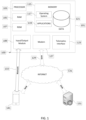
- FIG. 1 illustrates a block diagram of a computing device (or system) 101 in communication system 100 that may be used according to one or more illustrative embodiments of the invention.
- the device 101 may have a processor 103 for controlling overall operation of the device 101 and its associated components, including RAM 105, ROM 107, input/output module 109, and memory 115.
- the computing device 101, along with one or more additional devices may correspond to any of multiple systems or devices configured as described herein to identify a driver of a vehicle, retrieve driver experience parameters, and use telematics and other sensor data to determine whether to assume autonomous navigation control over a vehicle.
- I/O 109 may include a microphone, keypad, touch screen, and/or stylus through which a user of the computing device 101 may provide input, and may also include one or more of a speaker for providing audio output and a video display device for providing textual, audiovisual and/or graphical output.
- Software may be stored within memory 115 and/or storage to provide instructions to processor 103 for enabling device 101 to perform various functions.
- memory 115 may store software used by the device 101, such as an operating system 117, application programs 119, and an associated internal database 121.
- Processor 103 and its associated components may allow the computing device 101 to execute a series of computer-readable instructions to identify a driver of a vehicle, retrieve driver experience parameters, and use telematics and other sensor data to determine whether to assume autonomous navigation control over a vehicle.
- the computing device 101 may operate in a networked environment 100 supporting connections to one or more remote computers, such as terminals 141 and 151.
- the terminals 141 and 151 may be personal computers (e.g., end-user customer computers), servers (e.g., web servers, database servers), mobile communication devices, portable computing devices and the like that include many or all of the elements described above with respect to the computing device 101.
- the network connections depicted in FIG. 1 include a wide area network (WAN) 129, but may also include other networks such as a Bluetooth connection 133 to a nearby computing device 141, or local area network (LAN).
- WAN wide area network
- LAN local area network
- the computing device 101 may include a modem 127 or other means for establishing communications over the WAN 129, such as network 131 (e.g., the Internet).
- network 131 e.g., the Internet
- the network connections shown are illustrative and other means of establishing a communications link between the computers may be used.
- the existence of any of various well-known protocols such as TCP/IP, Ethernet, FTP, HTTP and the like is presumed.
- one or more application programs 119 used by the computing device 101 may include computer executable instructions or algorithms for identifying a driver of a vehicle, retrieving driver experience parameters, and using telematics and other sensor data to determine whether to assume autonomous navigation control over a vehicle, and performing other related functions as described herein.
- FIG. 2 is a diagram of the interior and various components of an autonomous vehicle, according to one or more aspects of the invention.
- the autonomous vehicle may have a plurality of input and output interfaces for a driver.
- the driver may take in information about the vehicle's surroundings via seeing through windshield 201, rear view mirror 202, and side view mirrors 203.
- the vehicle itself may be further able to communicate with the driver via display 204, which may comprise a screen capable of simulating a speedometer and odometer, displaying other information, or receiving user menu selections via a touchscreen.
- the vehicle may be further able to communicate with the driver via stereo audio speakers 205 built into the doors of the vehicle, or the front or rear of the vehicle.
- the autonomous vehicle may be controlled by the driver, when not in an autonomous navigation mode, via the steering wheel 206, accelerator or gas pedal 207, brake pedal 208, clutch 209, gearshift 210, or interior control buttons 211 (which may control, for example, a radio, a music player, other audio settings, fans, heating, air conditioning or other air circulation settings).
- Display 204 may also comprise a touchscreen to allow the driver to tap and select options.
- the steering wheel 206, gearshift 210, or a touchscreen of display 204 may comprise a fingerprint reader that can read a thumb print or other fingerprint to authenticate the identity of a driver.
- the autonomous vehicle may comprise an internal camera that can track the head position and eye movement of the driver to determine where the driver is currently looking and where the limits of the driver's range of vision lie.
- the autonomous vehicle may also comprise an internal microphone to allow the vehicle to pick up speech from the driver, respond to verbal commands from the driver, determine whether loud music or other noise exists inside the vehicle, or otherwise monitor the interior.
- FIG. 3 is a diagram of the exterior and data input/output connections of an autonomous vehicle.
- the autonomous vehicle 300 comprises external sensors 335, which may include, among other sensing apparatuses, one or more external cameras to view the vehicle's surroundings, one or more external microphones to detect the sound and direction of sirens or of the operation of other vehicles not perceived by an external camera, one or more motion detection sensors to detect obstacles entering the road, or a radar or sonar emitter and receiver to determine the distance to or relative motion of objects.
- the vehicle may also comprise a global positioning system (GPS) receiver 310 to determine the current location of the vehicle.
- GPS global positioning system
- the vehicle may comprise telematics sensors 305 such as a speedometer, an odometer, or on-board diagnostic (OBD) system for tracking the functioning of the engine and other systems of the vehicle.
- Data gathered by these devices may include speed, acceleration, G-forces (i.e., units of acceleration in comparison to normal gravity), distance traveled, turns performed, engine revolutions per minute, mileage per gallon, or engine damage or malfunctions.
- Additional data may be gathered by a connection to a mobile computing device 141 possessed by the driver of the car, such as GPS data from a GPS sensor of the mobile computing device or acceleration / deceleration / lane change / turn / swerving data from a multiple-axis accelerometer of the mobile computing device.
- the vehicle comprises also a vehicle-to-vehicle (V2V) communication system 315 for sending information to and receiving information from a similar communications device in one or more other nearby vehicles 301.
- V2V communication systems of two vehicles may communicate directly with one another, using a near field communications system, or may both connect to a centralized network location 302, such as a wireless router or cell tower, that may route communications between the vehicles.
- the headlights 325 of the vehicle may comprise one or more lenses or mirrors that allow focusing of headlight beams much more precisely than the traditional settings of "high beams" or "low beams".
- the headlights may be able to focus at an angle away from the front-back axis of the vehicle, so that they can particularly light up an obstacle at the side of the road, or which may enter the road, such as a pedestrian, deer, or other animal.
- the vehicle comprises an autonomous control system 330.
- the autonomous control system may be directly coupled via actuators to the steering wheel, brake pedal, and acceleration pedal of the vehicle, and be capable of causing them to turn or depress without a driver's touching them or application of force.
- the autonomous control system may bypass the mechanisms of the steering wheel, brake pedal, and acceleration pedal, allowing axles, the engine, or brake pads to be controlled without the steering wheel, brake pedal, and acceleration pedal being manipulated.
- the autonomous control system may be coupled to and receive data from a number of components and sensors, including but not limited to on-board diagnostic system, speedometer, GPS receiver, external cameras, radar, sonar, external microphone, and V2V communications systems, in order to determine and follow a lane of a road, determine any turns or other maneuvers necessary to reach a destination, and determine the locations of other vehicles or obstacles in the road.
- a number of components and sensors including but not limited to on-board diagnostic system, speedometer, GPS receiver, external cameras, radar, sonar, external microphone, and V2V communications systems, in order to determine and follow a lane of a road, determine any turns or other maneuvers necessary to reach a destination, and determine the locations of other vehicles or obstacles in the road.
- a device 100 embodying some aspects as presented herein may connect to mobile computing device 141 or centralized server location 151 in order to retrieve historical driving data, authentication or permission data for a particular driver, additional information about the operating environment of the vehicle which has not been picked up by internal or external sensors of the vehicle, or updates to the device's software.
- the device may connect to the autonomous control system and have the ability to issue the autonomous control system a command to begin autonomous navigation or to conclude autonomous navigation.
- the command may comprise further information, such as a command to navigate to a particular location or a command to avoid a particular obstacle that has been identified in or near the road.
- the device may also be connected to and have access to data determined by the external sensors, telematics sensors, GPS receiver, and V2V communications receiver, and may be able to issue commands to a V2V transmitter to communicate information to other vehicles on the road.
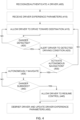
- FIG. 4 is a flow diagram illustrating an example method of assuming autonomous control over a vehicle in response to detecting a situation for which the driver may be unprepared, and restoring manual control to the driver after the situation has been resolved.
- the vehicle recognizes a driver who has entered the vehicle and determine that he or she is authorized to control the vehicle.
- the recognition or authentication of the driver may be performed by detecting that a unique key fob having a radio transmitter and associated with a particular driver has entered the vehicle, by having a driver select a name from a predetermined set of drivers authorized to operate the vehicle, by having the driver sign in using a password associated with that driver out of the predetermined set of all drivers authorized to operate the vehicle, by having the driver use a mobile phone application that communicates with the vehicle to sign in and uniquely identify the driver, by detecting a thumbprint or other fingerprint of the driver using a fingerprint scanner in steering wheel 206, in a touchscreen of display 204, or of a mobile computing device in communication with the vehicle, by facial recognition of the driver using internal cameras of the vehicle, or by voice recognition using one or more internal microphones of the vehicle.
- the vehicle retrieves driver experience parameters corresponding to the driver from a driver data store.
- the experience parameters may be locally stored in a memory module in the vehicle, may be stored in a mobile computing device possessed by the driver to which the vehicle may connect via wireless network, Bluetooth, or other direct data connection, or may be stored at a centralized server location with which the vehicle is capable of communicating via a wireless communications device of the vehicle.
- the driver experience parameters may comprise total amount of time spent driving the vehicle, total amount of time spent driving each of one or more other vehicles, an enumeration of safety features or autonomous features in each of the vehicles driven by the driver, amounts of time spent driving at one or more times of day (such as dawn, daylight, dusk, or nighttime), amounts of time spent driving in one or more weather conditions (such as rain, snow, sleet, strong wind, hail, thunderstorm, fog, flash flood, extreme cold, extreme heat, or clear weather), amounts of time spent driving on one or more road types (highway driving, urban driving suburban driving, rural driving, paved roads, gravel roads, or dirt roads), a history of driving test results (such as grades given by a driving instructor on one or more tasks, or a score given by a driving simulation in which the driver participated), and/or a history of the driver's driving events (such as acceleration events, turns, lane changes, braking/deceleration events, collisions with stationary objects, collisions with other vehicles, reactions to changes in traffic lights, issued tickets,
- the driver may begin driving the vehicle towards a destination.
- the driver may have input a specific destination beforehand, such as by entering an address into a GPS system of the vehicle or of a mobile computing device in order to receive directions or explicitly inform the vehicle of the intended destination.
- the vehicle may determine a likely destination based on previous schedules and behavior of the driver. For example, a drive beginning at 7:00 am on a Tuesday morning may be assumed to be a trip to a school that the driver attends and travels to daily at that time. A drive at 4:00 pm on Saturday may be assumed to be a trip to a local shopping center if the driver often visits the shopping center on Saturday afternoons. If the driver is on an interstate and has not indicated a destination, the destination may be assumed to be an off-ramp often used by the driver, or the nearest off-ramp from the interstate.
- the vehicle takes in data from the environment using its various external sensors and communications devices.
- the vehicle may determine its location via a GPS unit built into the vehicle, else associated with the vehicle (e.g., via a user's smartphone in the vehicle, or other device in the vehicle's proximity). It may determine external weather conditions via external cameras, or by wirelessly obtaining a current weather report from a meteorological data source and cross-referencing the report with a GPS reading to determine the current weather at the vehicle's location.
- the vehicle may determine external light level via external cameras, and may determine either that there is too little light to see potential obstacles ahead, or too much light, if the sun, another vehicle's headlights, or another bright light source is directed towards the driver and may blind the driver.
- the vehicle may alternatively determine external light level by computing the light level from an internal clock and a determined latitude and longitude of the car to determine the available sunlight at that location.
- the vehicle may determine qualities of a road on which the vehicle is travelling (such as legal speed limit, average speed of traffic, traffic density, suggested or cautionary speed of a curve, paving or surfacing material, or number of lanes) by consulting external cameras and/or telematics sensors of the vehicle, or by determining the vehicle's current location and cross-referencing with a database of roads or traffic reports.
- the vehicle may determine whether any temporary dangers associated with the road are present (such as obstacles, pedestrians, animals, other traffic, other inattentive or unconscious drivers, emergency vehicles, law enforcement vehicles, railroad crossings/trains, potholes, or other road damage) using external cameras.
- any temporary dangers associated with the road such as obstacles, pedestrians, animals, other traffic, other inattentive or unconscious drivers, emergency vehicles, law enforcement vehicles, railroad crossings/trains, potholes, or other road damage.
- the vehicle may additionally sense information about the driver's mental state, and especially whether the driver is inattentive to the current state of the vehicle's surroundings.
- Inattention may be determined, in one example, by tracking the driver's eye movements or head orientation using a camera inside the vehicle and determining that it is impossible or unlikely that the driver would be aware of anything in a particular field of vision or direction.
- Inattention may be determined, in another example, by sensing that the driver is manipulating vehicle controls such as a radio tuner or volume control of the vehicle.
- Inattention may be determined, in yet another example, by sensing that the driver is using a mobile phone, either via a camera inside the vehicle or by a report from an app of the mobile phone itself.
- Inattention may be determined, in yet another example, based on music or other audio content being played by speakers of the vehicle, or a determination may be made that the audio content will make it difficult for the driver to hear a potential danger outside the vehicle, such as an emergency vehicle, law enforcement vehicle, another vehicle on the road., or a train
- Inattention may be determined, in yet another example, by the driver's failure to match the speed of traffic, erratic braking and acceleration, failure to respond to green traffic lights, delayed reaction to red or yellow traffic lights, or by erratic or swerving motion within a lane.
- the vehicle may additionally determine that the driver is asleep or losing consciousness, for example by tracking eye movement, eye closure, drifting out of lane by the driver, or any of the inattention evidence described above.
- V2V communications may be used to transmit information that a current driver is a novice, playing a role analogous to a "student driver” sign but allowing both human drivers and autonomous navigation systems to take into account the driver's inexperience while driving nearby.
- V2V communications may also transmit information that a driver has been involved in collisions of a particular type or exhibited reckless behavior in the past.
- the vehicle may receive information regarding the inattention, unconsciousness, inexperience, or reckless behavior of other drivers in order to prime its own autonomous navigation system for defensive driving or to warn the driver.
- the vehicle may additionally track data regarding the driver's control over the vehicle (such as acceleration, speed, turns, lane changes, centering within a lane, or braking). Data may be stored to determine whether the driver is generally improving with respect to smooth acceleration and deceleration, staying centered within a lane, maintaining appropriate speed before and during turns, and generally avoiding any reckless action.
- data regarding the driver's control over the vehicle such as acceleration, speed, turns, lane changes, centering within a lane, or braking.
- Data may be stored to determine whether the driver is generally improving with respect to smooth acceleration and deceleration, staying centered within a lane, maintaining appropriate speed before and during turns, and generally avoiding any reckless action.
- the vehicle utilizes the data received from the variety of sources described above to attempt to detect an acute or persistent condition that poses a potential challenge to a driver. If nothing about the road, vehicle, environment, driver, or other vehicles indicates that there is any danger, the drive continues without interruption.
- the detected challenge or condition may include driving in a persistent situation unfamiliar to the driver, such as dawn/dusk/twilight, blinding glare, nighttime, rain, sleet, hail, snow, strong wind, high-speed roads/highways, high-traffic roads/"urban driving", gravel or dirt roads, or roads that require a specialized experience to safely traverse.
- driving in a persistent situation unfamiliar to the driver such as dawn/dusk/twilight, blinding glare, nighttime, rain, sleet, hail, snow, strong wind, high-speed roads/highways, high-traffic roads/"urban driving", gravel or dirt roads, or roads that require a specialized experience to safely traverse.
- the detected challenge or condition may alternatively be a temporary acute danger, such as an approaching emergency vehicle, an approaching law-enforcement vehicle, a train at a railroad crossing, approaching heavy or stopped traffic, an animal, pedestrian, or other non-vehicular obstacle in the road.
- the detected challenge or condition is a distracted or incapacitated driver in another nearby vehicle.
- the determination that the challenge exists may be made directly by interpreting data received from external cameras or other sensors of the vehicle, or may be determined by receiving data about the road, weather, or other traffic from an information source from which the existence of the challenge may be derived.
- the vehicle may alert the driver to the danger or challenge using one or more visual or auditory cues.
- the vehicle may use a variety of displays to give visual cues to inform the driver about the danger or challenge.
- a light in one of the rear or side view mirrors 202 and 203 may be turned on or blink to indicate a direction of a vehicle in the driver's blind spot, the direction of an emergency vehicle that may otherwise be invisible or inaudible to the driver, or the direction of another obstacle or hazard.
- Headlights 325 of the car may be able to focus beams directly on an obstacle such as a deer, pedestrian, bicyclist, motorcyclist, or stopped vehicle in the road ahead.
- the vehicle may generate a heads-up display (HUD) intended to overlay a screen and highlight elements therein or convey other information to the driver.
- the windshield 201 may be used as a screen to display the HUD either via a built-in display or via a display projected onto or reflected off of the inner surface of the windshield.
- the dashboard display 204 of the vehicle may also be used to display the HUD.
- the HUD may also be transmitted to and displayed by a MICROSOFT TM HoloLens TM , GOOGLE TM Glass TM , or other optical device used by the driver while driving.
- a HUD may visually highlight a danger (such as a deer, other animal, pedestrian, bicyclist, motorcyclist, train, pothole, or other inanimate object) with a colored or flashing overlay to indicate its location to the driver in real time.
- the HUD may also display information related to dangers outside of the field of vision covered by the HUD, such as indicators that a vehicle is behind the driver or in the driver's blind spot.
- the HUD may also display other operation data of the vehicle, such as the current speed, whether the vehicle is travelling above the speed limit for the road the driver is on, remaining fuel range, distance to destination, etc.
- the vehicle may use one or more auditory cues to inform the driver about the danger or challenge.
- a chime or other auditory effect could be played to indicate that a danger has been sensed ahead, such as stopped traffic, a train approaching a railroad crossing, or an obstacle entering the road (such as a deer, other animal, pedestrian, bicyclist, motorcyclist, pothole, or other inanimate object).
- Audio cues may take advantage of the stereo, "surround sound", or other multiple-speaker features of the vehicle to indicate the direction from which a challenge may come.
- a cue may indicate the direction of another vehicle in the driver's blind spot by playing only from a left or right speaker of the vehicle.
- a cue may indicate the direction of an emergency vehicle or law enforcement vehicle via the balance of the sound emitted from the left, right, front, or rear speakers, and may amplify the sound of the emergency vehicle's siren via the speakers if the siren is too quiet to be heard within the vehicle.
- the vehicle may, at the time a cue is played, decrease the volume of or disable the vehicle's radio or music player to ensure that the cue is audible.
- the vehicle may, instead of a chime, use the speakers to amplify the sound of a siren, train whistle, or car or motorcycle engine that might otherwise be unheard due to the insulation of the vehicle.
- the speakers may be used to play pre-recorded or synthesized speech warning the driver about the acute or persistent condition. For example, the speakers may play a message that "You are approaching stopped traffic. Please decelerate.” or "You are pulling onto a highway on-ramp; automatic navigation will begin until you leave the highway.”
- the vehicle consults the previously retrieved driver data and make a determination whether to assume control and autonomous navigation.
- the determination may be based in part on the driver's experience with the detected danger or situation. If the current drive is the driver's first encounter with the situation, the vehicle may automatically assume autonomous navigation, such as by taking control as soon as falling or accumulated snow is detected. Alternatively, the vehicle may react to the driver's first encounter by assuming control only if the driver takes a predetermined reckless action, such as speeding or following another vehicle too closely while snow is falling.
- the vehicle may react to the driver's first encounter by assuming control at a predetermined interval sooner than the vehicle would intervene if a more experienced driver were driving such as by applying brakes if traffic is stopped five seconds ahead in the snow, when with a more experienced driver, brakes would not be applied until traffic is four seconds ahead, trusting more that the driver will apply brakes himself or herself.
- the vehicle may wait longer before assuming autonomous control. For example, while the vehicle might assume control in response to the driver's first encounter with snow, a third encounter with snowfall might not trigger autonomous control until snow begins accumulating on the road.
- the determination may additionally be based on a total experience level of the driver (such as allowing the driver to maintain control in a given situation if the driver has more than one year of total driving experience, but not if the driver has one month of driving experience).
- the determination may be based in part on a determined severity level of the danger. For example, a possible collision with an emergency vehicle, law enforcement vehicle, train, pedestrian, or large animal like a deer may be assigned a high severity. Blinding light or accumulated snow may also be assigned a high severity due to the risk of a subsequent crash or leaving the road. Driving near a determined reckless driver or in heavy rain or snowfall without accumulation may be assigned a medium severity. Driving on a highway without dense traffic, on a gravel or dirt road, or at night may be assigned a low severity.
- the vehicle may take control without delay under all circumstances where the severity is high and the driver is not experienced with the danger. Alternatively, the vehicle may assume control at a predetermined interval sooner than the vehicle would intervene for a medium or low severity threat.
- the determination may also be based on the imminence of the danger.
- the autonomous navigation may take over if it is determined that a deer or pedestrian has entered the road or is at the edge of the road, but not if the deer or pedestrian is a predetermined distance from the edge of the road and likely cannot move into the vehicle's path in time to cause a collision.
- the autonomous navigation may take over if it is determined that an inattentive driver in another vehicle is no longer centered in his lane, but not if the driver is inattentive but remains centered.
- the autonomous navigation may take over if the vehicle is speeding while traffic is present less than three seconds ahead on the road, but not if the traffic is more than five seconds ahead.
- the vehicle may warn the driver (if engagement is not necessary for a number of seconds) or immediately engage without warning if the danger is imminent. Warning may be performed via a display or HUD generated in step 425, or by a chime or message played over the vehicle's speakers.
- the vehicle may engage autonomous navigation and continue towards the determined or predicted destination while using one or more or all possible safety features and defensive driving to keep the driver safe from the challenge that the autonomous system has determined that the driver is unprepared for and poses unacceptable risk.
- vehicle 300 may be equipped with device 100, which may make determinations whether to assume autonomous control, and external cameras which feed data to both device 100 and the autonomous control system, and after having previously determined that a driver has only been driving for two weeks and has never driven a vehicle at night, the vehicle may continuously monitor light level and prepare to issue a warning that headlights should be activated.
- the vehicle may further use the external cameras to watch for hazards in or beside the road, and upon detecting a hazard, focus headlights upon it and issue an audio warning via the speakers that the hazard has been detected.
- the vehicle may determine whether the driver is appropriately reacting to the hazard, by slowing down and/or adjusting position within the lane to avoid it.
- the vehicle may warn the driver that autonomous mode will be activated, and device 100 may issue the command to autonomous control system 330.
- the vehicle may then take evasive action to avoid the hazard.
- the vehicle may further monitor the vehicle's speed and force the driver to slow down by assuming control over the accelerator if the vehicle's speed exceeds safe driving speeds at the current light level.
- device 100 may monitor the current road via data from GPS and/or external cameras of the vehicle. In response to the driver pulling onto a highway, the vehicle may warn the driver via audio message that the vehicle will be autonomously navigated if the driver exceeds the speed limit and the average speed of surrounding traffic. Device 100 may monitor the surrounding traffic using data from V2V communications and/or external cameras, and may monitor the vehicle's speed via a connection to the telematics sensors / on-board diagnostics, and may determine that the driver is exceeding both the speed limit and the speed of surrounding traffic.
- device 100 may issue a command to autonomous control system 330 to navigate the vehicle to the nearest off-ramp from the highway, or to a particular off-ramp further ahead, and may not restore control of the vehicle to the driver until the vehicle is no longer on the highway.
- the vehicle may assume control over steering but not acceleration or braking over acceleration or braking only and not steering or total control over the vehicle, as circumstances require to avoid a potential collision or reduce risk of future collision.
- the vehicle may assess the previously detected situation as the vehicle drives towards the destination, and determine whether the condition is still in effect. For example, the vehicle may determine via data from an external camera or received weather data that rain, sleet, snow, hail, or other precipitation are no longer falling in the vicinity of the vehicle or are not accumulating on this portion of the road. The vehicle may determine that the level of ambient light has increased via data from external cameras or the passage of time determined since dawn.
- the vehicle may have navigated itself towards a previously determined destination until it is no longer in an urban driving environment, on a highway, or on a dirt or gravel road, as determined by GPS data cross-referenced with received data on road types, or via external cameras.
- the vehicle may determine that an emergency vehicle, train, distracted driver in another vehicle, or other potential collision risk is no longer nearby, based on data from an external camera, external microphone, or V2V data provided from the other vehicle.
- the vehicle may determine that the driver is attentive and no longer has divided attention or loss of consciousness, based on the eye movements or actions picked up by an internal camera of the vehicle.
- the vehicle may determine that it has reached its destination, even if the previously detected situation has not ended. In this case, the vehicle may stop at the destination in order to return control to the driver for parking.
- the vehicle may inform the driver that it will end automatic navigation, and in response to a confirmation from the driver, do so and allow manual control.
- the message informing the driver may be delivered via any of the methods used to warn the driver that the autonomous navigation would be activated.
- the driver may provide confirmation by voice command, by pressing a button inside the vehicle, by selecting a touchscreen option inside the vehicle, or any other input method that may be available. The driver may then continue to control the vehicle unless or until another condition is detected in response to which the autonomous navigation is reengaged, or the destination is reached.
- the vehicle may debrief the driver after the drive is complete.
- the debriefing may include advice for handling driving conditions that were encountered during the drive in the future and advice for actions which the driver could take in the future to avoid the vehicle being forced to assume autonomous control. For example, the driver may be advised to slow down when snow begins accumulating in the road, to allow a greater following distance from vehicles ahead, to activate or deactivate high beam headlights to ensure obstacles are visible without blinding other drivers, or to accelerate and brake more smoothly during stop-and-go high-density traffic.
- the debriefing may include data regarding improvement of the driver on one or more objective criteria such as time spent centered in the lane, smoothness of acceleration and braking distance maintained from vehicles ahead, or other factors of good driving practice and etiquette.
- the debriefing may further include information comparing the driver to other drivers similarly situated, comparing the driver to those of similar age or experience, and highlighting where the driver's strengths and weaknesses lie. For example, a driver may be told that his response time to a yellow traffic light is at a certain percentile for his demographic cohort, that he drives a certain number of miles per hour faster in rainy conditions than the average member of his demographic cohort, that his total time spent driving is greater than average for his demographic cohort, or that he maintains better eye contact with the road than a certain fraction of his demographic cohort.
- the driver may gain experience with low personal or property risk, improve skills, and be better able to handle challenges in the future without interference from autonomous navigation or in other vehicles which lack autonomous navigation features.
- the debriefing process may further be accompanied by updating the driver experience parameters with the actions taken and time spent driving by the driver during the trip, as well as the conditions under which the driving occurred.
- FIG. 5 is a flow diagram illustrating an example method, not falling within the subject-matter for which protection is sought, of responding to a driver's unfamiliarity with a given vehicle, and using the given vehicle's features to mitigate differences between the given vehicle and one the driver is familiar with.
- a driver may be identified by and begin driving a vehicle different from one the driver has previously had experience.
- the current vehicle may have a number of autonomous features, including but not limited to automatic braking in response to stopped or slowed traffic ahead, automatic prevention of lane change when another vehicle is in a blind spot, automatic takeover of navigation in response to changing weather conditions or unexpected driving situations, automatic highlighting or cueing of obstacles, dangers, or emergency vehicles, or automatic takeover of navigation in response to loss of consciousness or loss of attention.
- the vehicle may obtain driver experience parameters from a driver data store, particularly the experience levels of the driver with the current vehicle and with other vehicles previously driven by the driver.
- the driver's history may also be retrieved, including previous collisions, traffic infractions, or situations in which an autonomous safety system was activated in order to protect against a collision or infraction.
- the vehicle may obtain data from a database of car safety features, determining the set of features with which the driver would have experience based on the driver's history, and how much experience the driver has with each.
- the driver experience parameters may be consulted to determine whether each of the vehicle safety features has in fact been activated for the driver in the past, or were present but never activated. If a given safety feature has never been experienced or used by the driver, it may be disregarded despite being present in a vehicle with which the driver has extensive experience.
- the vehicle may inform the driver how the current vehicle's safety or autonomous features differ from previous vehicles operated by the driver.
- the message may be conveyed by a display in the vehicle, by synthesized speech audio played over the vehicle's speakers, projected onto the windshield, or via another interface available to the driver.
- the vehicle may inform the driver that the current vehicle lacks autonomous navigation takeover in response to an attempt to change lanes while a vehicle is in the driver's blind spot, or lacks autonomous navigation takeover in response to heavy snowfall.
- the information may include a reference to the driver's history, such as an audio message that says "You have attempted to change lanes in the past when another vehicle was in your blind spot; this vehicle cannot stop you from changing lanes even if there is danger.”
- the vehicle may inform the driver that additional safety features that the driver has not previously experienced are present and may be activated without warning or with minimal warning in order to minimize the driver's alarm if features such as autonomous navigation takeover are engaged.
- the vehicle may determine that one or more features of the vehicle may be used to mitigate risk created by driver reliance on a safety feature not present. For example, a lack of autonomous navigation takeover in response to an attempt to change lanes while a vehicle is in the driver's blind spot may be mitigated by a windshield-displayed HUD that indicates the presence of a vehicle in the blind spot. A lack of autonomous navigation takeover in response to heavy snowfall may be mitigated by a display HUD with a weather report or by adjustment to the anti-lock braking system and other braking settings to make them more forgiving to an inexperienced driver in snow.
- a lack automatic braking in response to stopped or slowed traffic ahead may be mitigated by a display HUD that displays the distance to or number of seconds until collision with a vehicle ahead if brakes are not activated, or an audio cue which signifies approaching traffic too rapidly with beeps that increase in pitch or rate as a collision becomes imminent.
- the driver experience parameters may be updated to include the additional experience with the current vehicle and its different sets of safety features and settings. Future trips taken in the same vehicle may then cause fewer warnings or advisories to be displayed, as the driver is determined to become more and more accustomed to the vehicle.
- FIG. 6 is a flow diagram illustrating an example method, not falling within the subject-matter for which protection is sought, of setting a rental rate for a vehicle
- a driver may request rental of a vehicle to drive for a period of time such as one day, two or more days, or a long-term lease.
- the request may be made via an oral request at a rental establishment, via telephone, via a website interface, or via a mobile phone application.
- the driver may provide personally identifying information that allows an automated process running on a computer at the rental establishment or a customer service telephone center, or on a server facilitating the website or mobile phone application, to retrieve driver experience parameters associated with the driver from a data store.
- the driver's experience parameters may be retrieved from a data store.
- parameters related to time spent driving one or more previous autonomous or non-autonomous vehicles may be retrieved. Any experience driving the same model of vehicle in the past may also be retrieved.
- Parameters may also be retrieved relating to previous driving behavior, including previous collisions, traffic infractions, or reckless behavior such as running red lights, accelerating through yellow lights, abrupt lane changes, or excessive braking and acceleration. Parameters may also be retrieved relating to previous driving experience in weather or road conditions foreseeable at the time and place of the rental. For example, if the driver requests a vehicle in the Midwest during winter, experience driving in the snow may be retrieved. If renting a vehicle overnight in downtown New York City, experience with urban and night driving may be retrieved. Local weather predictions may be consulted to see if weather-related driver experience parameters are likely to be relevant during the period of the rental.
- step 610 autonomous navigation or safety features of the requested rental vehicle may be obtained and considered in deciding whether the driver represents an increased or mitigated risk of damage to the vehicle.
- Risk may be increased if, for example, the vehicle lacks safety or navigation features which the driver is accustomed to from previous driving experience in other vehicles.
- the vehicle may lack automatic braking in response to stopped or slowed traffic ahead, automatic prevention of lane change when another vehicle is in a blind spot, automatic takeover of navigation in response to changing weather conditions or unexpected driving situations, automatic highlighting or cueing of obstacles or emergency vehicles, or automatic takeover in response to loss of consciousness or loss of attention.
- Risk may also be increased if the driver is known to lack experience in the local driving conditions such as urban roads, highways, snow, rain, sleet, hail, twilight, or darkness. Risk may be increased in response to previous collisions, traffic infractions, or reckless behavior such as running red lights, accelerating through yellow lights, abrupt lane changes, or excessive braking and acceleration.
- Risk may be decreased or mitigated if, for example, the vehicle has additional safety features beyond those with which the driver has experience.
- the vehicle may be able to assume control over navigation in response to sensed dangers in order to avoid a collision or handle a persistent condition with which the driver is unfamiliar.
- Previous reckless behavior or infractions by the driver may be mitigated if the vehicle's autonomous features make the reckless behavior or infraction impossible to perform in the vehicle.
- Risk may be decreased if the driver is accustomed to vehicles with similar safety and autonomous features to those of the requested vehicle.
- a rental rate for the vehicle may be determined based on, among other factors, the value of the vehicle, the length of the rental, one or more demographic characteristics of the driver including age, the retrieved driver experience parameters, and the risk increase or decrease presented by the requested vehicle's features with respect to the driver.
- a base rental rate may be determined based on the driver's age, number of years of driving experience, history of traffic infractions, value of the car, and prevalence of vehicle damage in rentals from a particular location.
- the base rental rate may then be increased in response to a determination that there is a risk increase from a driver who lacks experience driving in particular environments near the rental location.
- the base rental rate may be increased in response to a determination that the driver is accustomed to or has relied upon autonomous safety features in the past (such as automatic braking in response to stopped or slowed traffic ahead, automatic prevention of lane change when another vehicle is in a blind spot, automatic takeover of navigation in response to changing weather conditions or unexpected driving situations, automatic highlighting or cueing of obstacles, dangers, or emergency vehicles, or automatic takeover of navigation in response to loss of consciousness or loss of attention), but that those features are not present in the requested vehicle.
- the base rental rate may be increase in response to a determination that historical driving data stored in the driver experience parameters, even if not recording a traffic infraction, indicates recklessness that may be predictive of a future collision.
- the base rental rate may be decreased in response to a determination that the requested vehicle has several or all safety features to which the driver is accustomed, or in response to a determination that the vehicle contains additional or more advanced versions of safety features than those to which a driver is accustomed.
- the base rental rate may be decreased in response to a determination that the driver has a great deal of experience in the area or climate of the rental location, such as a broad experience of driving in the snow when renting in a snowy area in winter, or a broad experience of urban driving when renting a vehicle in the downtown area of a city.
- the increased or decreased risk may be expressed as a number, such as a decimal value between 0.50 and 10.00, and multiplied by a base rental rate determined without consulting the driver experience parameters in order to determine a final rental rate.
- the final rental rate may be communicated to the driver.
- the communication may be oral, written, transmitted to a personal computer of the driver, or transmitted to a mobile computing device or mobile app used by the driver.
- the communication may be accompanied by an explanation of the factors determined in step 610 that affect the rental rate for the driver particularly, and may include information regarding how the factors would change if renting a vehicle having different autonomous and safety features than those of the requested vehicle.
Landscapes
- Engineering & Computer Science (AREA)
- Business, Economics & Management (AREA)
- Automation & Control Theory (AREA)
- Mechanical Engineering (AREA)
- Transportation (AREA)
- Strategic Management (AREA)
- Physics & Mathematics (AREA)
- Development Economics (AREA)
- Human Computer Interaction (AREA)
- Economics (AREA)
- General Physics & Mathematics (AREA)
- Human Resources & Organizations (AREA)
- General Business, Economics & Management (AREA)
- Theoretical Computer Science (AREA)
- Marketing (AREA)
- Game Theory and Decision Science (AREA)
- Tourism & Hospitality (AREA)
- Entrepreneurship & Innovation (AREA)
- Finance (AREA)
- Accounting & Taxation (AREA)
- Operations Research (AREA)
- Mathematical Physics (AREA)
- Quality & Reliability (AREA)
- Health & Medical Sciences (AREA)
- Primary Health Care (AREA)
- General Health & Medical Sciences (AREA)
- Remote Sensing (AREA)
- Radar, Positioning & Navigation (AREA)
- Aviation & Aerospace Engineering (AREA)
- Traffic Control Systems (AREA)
- Control Of Driving Devices And Active Controlling Of Vehicle (AREA)
- Artificial Intelligence (AREA)
- Evolutionary Computation (AREA)
- Medical Informatics (AREA)
Claims (13)
- Autonomes Fahrzeug, das Folgendes umfasst:ein Lenkrad (206);ein Bremspedal (208);ein Gaspedal (207);einen Datenspeicher, in dem Fahrererfahrungsparameter gespeichert sind;ein autonomes Steuersystem (330), das dazu ausgelegt ist, das autonome Fahrzeug durch Steuern einer Geschwindigkeit und einer Richtung des autonomen Fahrzeugs zu navigieren; undeine Fahrmodusumschaltkomponente, die dazu ausgelegt ist, zwischen einem manuellen Fahrmodus, in dem das autonome Fahrzeug durch das Lenkrad, das Bremspedal und das Gaspedal gesteuert wird, und einem autonomen Fahrmodus, in dem das autonome Steuersystem eine autonome Navigation aktiviert, umzuschalten, wobei das autonome Fahrzeug Schritte durchführt, die Folgendes umfassen:Bestimmen (405) einer Identität eines Fahrers des autonomen Fahrzeugs durch das autonome Fahrzeug;Empfangen (410) einer Vielzahl von Fahrererfahrungsparametern, die mit dem Fahrer verknüpft sind, durch das autonome Fahrzeug vom Datenspeicher;Detektieren (420) einer Fahrbedingung, die ein Risiko eines Personen- oder eines Sachschadens präsentiert, durch einen oder mehrere Sensoren des autonomen Fahrzeugs;
undUmschalten (430) vom manuellen Fahrmodus in den autonomen Fahrmodus durch die Fahrmodusumschaltkomponente mindestens teilweise auf Basis der Vielzahl von Fahrererfahrungsparametern und der Fahrbedingung;und wobei das autonome Fahrzeug dadurch gekennzeichnet ist, dassder eine oder die mehreren Sensoren des autonomen Fahrzeugs ein Fahrzeug-zu-Fahrzeug-Kommunikationssystem (315) umfassen, das dazu ausgelegt ist, Informationen über eine Unaufmerksamkeit, eine Bewusstlosigkeit, eine Unerfahrenheit oder ein rücksichtsloses Verhalten eines anderen Fahrers zu empfangen, unddie Fahrbedingung ein erhöhtes Risiko umfasst, das durch ein Verhalten oder eine Erfahrung des anderen Fahrers repräsentiert wird. - Autonomes Fahrzeug nach Anspruch 1, wobei das autonome Fahrzeug ferner Schritte durchführt, die Folgendes umfassen:Detektieren durch einen oder mehrere Sensoren des autonomen Fahrzeugs, dass die Fahrbedingung beendet ist; undin Reaktion auf das Detektieren, dass die Fahrbedingung beendet ist, Umschalten vom autonomen Fahrmodus in den manuellen Fahrmodus durch die Fahrmodusumschaltkomponente.
- Autonomes Fahrzeug nach Anspruch 1, wobei das autonome Fahrzeug ferner Schritte durchführt, die Folgendes umfassen:Detektieren, dass das autonome Fahrzeug an einem vorbestimmten Ziel angekommen ist, durch einen oder mehrere Sensoren des autonomen Fahrzeugs; undin Reaktion auf das Detektieren, dass das autonome Fahrzeug am vorbestimmten Ziel angekommen ist, Umschalten vom autonomen Fahrmodus in den manuellen Fahrmodus durch die Fahrmodusumschaltkomponente.
- Autonomes Fahrzeug nach Anspruch 1, wobei der eine oder die mehreren Sensoren des autonomen Fahrzeugs eine externe Kamera umfassen und die Fahrbedingung eines von Niederschlag oder unangemessener Lichtstärke ist.
- Autonomes Fahrzeug nach Anspruch 1, wobei der eine oder die mehreren Sensoren des autonomen Fahrzeugs eine interne Kamera umfassen und die Fahrbedingung Unaufmerksamkeit des Fahrers ist.
- Verfahren, das Folgendes umfasst:Bestimmen (405) einer Identität eines Fahrers des autonomen Fahrzeugs durch ein autonomes Fahrzeug;Empfangen (410) einer Vielzahl von Fahrererfahrungsparametern, die mit dem Fahrer verknüpft sind, durch das autonome Fahrzeug von einem Datenspeicher;Detektieren (420) einer Fahrbedingung, die ein Risiko eines Personen- oder eines Sachschadens präsentiert, durch einen oder mehrere Sensoren des autonomen Fahrzeugs;
undAktivieren (430) einer autonomen Navigation des autonomen Fahrzeugs und Beenden der Steuerung des autonomen Fahrzeugs durch den Fahrer mindestens teilweise auf Basis der Vielzahl von Fahrererfahrungsparametern und der Fahrbedingung;wobei das Verfahren dadurch gekennzeichnet ist, dass der eine oder die mehreren Sensoren des autonomen Fahrzeugs ein Fahrzeug-zu-Fahrzeug-Kommunikationssystem (315) umfassen, das dazu ausgelegt ist, Informationen über eine Unaufmerksamkeit, eine Bewusstlosigkeit, eine Unerfahrenheit oder ein rücksichtsloses Verhalten eines anderen Fahrers zu empfangen, unddie Fahrbedingung ein erhöhtes Risiko umfasst, das durch ein Verhalten oder eine Erfahrung des anderen Fahrers repräsentiert wird. - Verfahren nach Anspruch 6, das ferner Folgendes umfasst:Detektieren, dass die Fahrbedingung beendet ist; undin Reaktion auf das Detektieren, dass die Fahrbedingung beendet ist, Deaktivieren der autonomen Navigation und Zurückgeben der Steuerung des autonomen Fahrzeugs an den Fahrer.
- Verfahren nach Anspruch 6,
wobei die Fahrbedingung eines von Niederschlag oder Lichtstärke außerhalb des autonomen Fahrzeugs ist. - Verfahren nach Anspruch 6,
wobei die Fahrbedingung die ist, dass das autonome Fahrzeug auf einer Autobahn oder auf einer Straße in einem Stadtgebiet fährt. - Verfahren nach Anspruch 6, wobei die Fahrbedingung Unaufmerksamkeit des Fahrers ist.
- Verfahren nach Anspruch 6, das ferner Folgendes umfasst:Aktualisieren von einem oder mehreren der Vielzahl von Fahrererfahrungsparametern undÜbertragen des einen oder der mehreren der Vielzahl von Fahrererfahrungsparametern zum Datenspeicher.
- Verfahren nach Anspruch 6, das ferner das Informieren des Fahrers über einen Grund zum Aktivieren der autonomen Navigation des autonomen Fahrzeugs umfasst, nachdem bestimmt wurde, eine autonome Navigation zu aktivieren.
- Nichttransitorisches Medium, das Anweisungen umfasst, die, wenn sie von einem Prozessor eines autonomen Fahrzeugs durchgeführt werden, das autonome Fahrzeug dazu veranlassen, das Verfahren nach einem der Ansprüche 6 bis 12 durchzuführen.
Applications Claiming Priority (2)
| Application Number | Priority Date | Filing Date | Title |
|---|---|---|---|
| US15/239,291 US10640117B2 (en) | 2016-08-17 | 2016-08-17 | Driving cues and coaching |
| PCT/US2017/047175 WO2018035241A1 (en) | 2016-08-17 | 2017-08-16 | Driving cues and coaching |
Publications (3)
| Publication Number | Publication Date |
|---|---|
| EP3500465A1 EP3500465A1 (de) | 2019-06-26 |
| EP3500465A4 EP3500465A4 (de) | 2020-05-06 |
| EP3500465B1 true EP3500465B1 (de) | 2024-05-15 |
Family
ID=61190626
Family Applications (1)
| Application Number | Title | Priority Date | Filing Date |
|---|---|---|---|
| EP17842067.5A Active EP3500465B1 (de) | 2016-08-17 | 2017-08-16 | Autonomes fahrzeug und verfahren |
Country Status (4)
| Country | Link |
|---|---|
| US (3) | US10640117B2 (de) |
| EP (1) | EP3500465B1 (de) |
| CA (1) | CA3033961C (de) |
| WO (1) | WO2018035241A1 (de) |
Families Citing this family (65)
| Publication number | Priority date | Publication date | Assignee | Title |
|---|---|---|---|---|
| DE102015219469A1 (de) | 2014-10-10 | 2016-04-14 | Continental Teves Ag & Co. Ohg | Verfahren zum Handhaben einer Regelkarte |
| DE102015219470A1 (de) * | 2014-10-10 | 2016-04-14 | Continental Teves Ag & Co. Ohg | Verfahren zum Handhaben einer Regelkarte |
| JP6332875B2 (ja) * | 2016-02-17 | 2018-05-30 | 本田技研工業株式会社 | 車両制御装置、車両制御方法、および車両制御プログラム |
| JP6605381B2 (ja) * | 2016-03-30 | 2019-11-13 | 株式会社日立製作所 | 運転診断装置、運転診断システム、端末装置 |
| JP6692261B2 (ja) * | 2016-09-01 | 2020-05-13 | アイシン・エィ・ダブリュ株式会社 | 経路探索システムおよび経路探索プログラム |
| US9919648B1 (en) * | 2016-09-27 | 2018-03-20 | Robert D. Pedersen | Motor vehicle artificial intelligence expert system dangerous driving warning and control system and method |
| FR3056490B1 (fr) * | 2016-09-29 | 2018-10-12 | Valeo Vision | Procede de projection d'une image par un systeme de projection d'un vehicule automobile, et systeme de projection associe |
| US10606276B2 (en) * | 2016-09-30 | 2020-03-31 | Faraday & Future Inc. | User data-based autonomous vehicle system |
| US20180109924A1 (en) * | 2016-10-17 | 2018-04-19 | International Business Machines Corporation | Cognitive Based Optimal Grouping of Users and Trip Planning Based on Learned User Skills |
| US9663118B1 (en) * | 2016-11-02 | 2017-05-30 | Smartdrive Systems, Inc. | Autonomous vehicle operator performance tracking |
| US9823657B1 (en) | 2016-11-02 | 2017-11-21 | Smartdrive Systems, Inc. | Measuring operator readiness and readiness testing triggering in an autonomous vehicle |
| US11244564B2 (en) * | 2017-01-26 | 2022-02-08 | Magna Electronics Inc. | Vehicle acoustic-based emergency vehicle detection |
| US10029685B1 (en) * | 2017-02-24 | 2018-07-24 | Speedgauge, Inc. | Vehicle speed limiter |
| US10733311B2 (en) * | 2017-03-29 | 2020-08-04 | International Business Machines Corporation | Cognitive internet of things (IoT) gateways for data security and privacy protection in real-time context-based data applications |
| EP3410414A1 (de) * | 2017-05-31 | 2018-12-05 | Panasonic Intellectual Property Corporation of America | Informationsverarbeitungsverfahren, informationsverarbeitungsvorrichtung, system und speichermedium |
| JP6920112B2 (ja) * | 2017-06-15 | 2021-08-18 | 株式会社デンソーテン | 運転支援装置および運転支援方法 |
| US10163434B1 (en) * | 2017-06-26 | 2018-12-25 | GM Global Technology Operations LLC | Audio control systems and methods based on road characteristics and vehicle operation |
| WO2019000391A1 (zh) * | 2017-06-30 | 2019-01-03 | 华为技术有限公司 | 车辆的控制方法、装置及设备 |
| US20190023207A1 (en) * | 2017-07-18 | 2019-01-24 | Aptiv Technologies Limited | Safe-exit system for safety protection of a passenger exiting or entering an automated vehicle |
| US20190034857A1 (en) | 2017-07-28 | 2019-01-31 | Nuro, Inc. | Food and beverage delivery system on autonomous and semi-autonomous vehicle |
| JP2019057242A (ja) * | 2017-09-22 | 2019-04-11 | 株式会社Subaru | 車両用警報システム |
| KR102485268B1 (ko) * | 2017-11-03 | 2023-01-06 | 현대자동차주식회사 | 차량 및 그 제어방법 |
| US11048832B2 (en) | 2018-01-12 | 2021-06-29 | Intel Corporation | Simulated vehicle operation modeling with real vehicle profiles |
| DE102018202514A1 (de) * | 2018-02-20 | 2019-08-22 | Bayerische Motoren Werke Aktiengesellschaft | System und Verfahren zur automatischen Erstellung eines Videos einer Fahrt |
| CN118295395A (zh) * | 2018-03-30 | 2024-07-05 | 捷普有限公司 | 为移动机器人提供危险检测和控制的装置、系统和方法 |
| US12572146B2 (en) | 2018-06-11 | 2026-03-10 | Jabil Inc. | Apparatus, system, and method of docking for autonomous robot navigation |
| CN108846519B (zh) * | 2018-06-14 | 2021-09-03 | 大唐高鸿信息通信(义乌)有限公司 | 基于车载短距离通信网络的安全驾驶k最近邻预测方法 |
| US10656647B2 (en) * | 2018-06-27 | 2020-05-19 | Aptiv Technologies Limited | Verification of vehicle operator awareness before transition from autonomous-mode to manual-mode |
| CN109445426A (zh) * | 2018-09-06 | 2019-03-08 | 百度在线网络技术(北京)有限公司 | 自动驾驶模式的切换方法、装置及可读存储介质 |
| US20200143684A1 (en) * | 2018-11-07 | 2020-05-07 | Michael A. HALEM | Vehicle Threat Mitigation Technologies |
| JP7172523B2 (ja) * | 2018-12-03 | 2022-11-16 | トヨタ自動車株式会社 | 情報処理システム、プログラム、及び制御方法 |
| JP7293648B2 (ja) * | 2018-12-21 | 2023-06-20 | トヨタ自動車株式会社 | 運転支援装置、車両、運転支援システム、及び運転支援方法 |
| KR20200084464A (ko) * | 2018-12-27 | 2020-07-13 | 현대자동차주식회사 | 자율 발렛 주차를 지원하는 시스템 및 방법, 그리고 이를 위한 인프라 및 차량 |
| CN110001663A (zh) * | 2019-04-02 | 2019-07-12 | 北汽福田汽车股份有限公司 | 车辆的控制方法、系统及车辆 |
| US10807527B1 (en) | 2019-05-01 | 2020-10-20 | Smartdrive Systems, Inc. | Systems and methods for verifying whether vehicle operators are paying attention |
| US11663913B2 (en) * | 2019-07-01 | 2023-05-30 | Baidu Usa Llc | Neural network with lane aggregation for lane selection prediction of moving objects during autonomous driving |
| JP7402001B2 (ja) * | 2019-09-18 | 2023-12-20 | 株式会社Subaru | 車両の自動運転制御装置 |
| JP7136060B2 (ja) * | 2019-10-11 | 2022-09-13 | トヨタ自動車株式会社 | 駐車支援装置 |
| US11345356B2 (en) * | 2019-12-23 | 2022-05-31 | Qualcomm Incorporated | Passenger-less and driver-less vehicle operating modes |
| CN111152790B (zh) * | 2019-12-29 | 2022-05-24 | 的卢技术有限公司 | 一种基于使用场景的多设备交互车载抬头显示方法及系统 |
| WO2021142442A1 (en) | 2020-01-10 | 2021-07-15 | Optimus Ride, Inc. | Communication system and method |
| JP6937856B2 (ja) * | 2020-02-13 | 2021-09-22 | 本田技研工業株式会社 | 運転支援装置および車両 |
| WO2021194747A1 (en) | 2020-03-23 | 2021-09-30 | Nuro, Inc. | Methods and apparatus for automated deliveries |
| CN111497848B (zh) * | 2020-04-24 | 2021-09-21 | 上海元城汽车技术有限公司 | 车辆行车模式的确定方法、装置、服务器和介质 |
| CN111532263B (zh) * | 2020-05-08 | 2022-05-03 | 奇瑞汽车股份有限公司 | 汽车辅助驾驶方法、装置、设备和存储介质 |
| US11798321B2 (en) * | 2020-08-28 | 2023-10-24 | ANI Technologies Private Limited | Driver score determination for vehicle drivers |
| CN112141119B (zh) * | 2020-09-23 | 2022-03-11 | 上海商汤临港智能科技有限公司 | 智能驾驶控制方法及装置、车辆、电子设备和存储介质 |
| CN112232581B (zh) * | 2020-10-26 | 2024-04-12 | 腾讯科技(深圳)有限公司 | 驾驶风险的预测方法、装置、电子设备及存储介质 |
| JP7347405B2 (ja) * | 2020-11-30 | 2023-09-20 | トヨタ自動車株式会社 | 運転支援システム |
| US12387500B1 (en) | 2020-12-18 | 2025-08-12 | Zoox, Inc. | Parallel vehicle model processing |
| US12434709B1 (en) * | 2020-12-18 | 2025-10-07 | Zoox, Inc. | Adjusting vehicle models based on environmental conditions |
| US11282382B1 (en) * | 2020-12-22 | 2022-03-22 | Waymo Llc | Phase lock loop siren detection |
| JP2022152607A (ja) * | 2021-03-29 | 2022-10-12 | 本田技研工業株式会社 | 運転支援装置、運転支援方法、及びプログラム |
| US11880858B2 (en) * | 2021-05-17 | 2024-01-23 | Ford Global Technologies, Llc | Systems and methods to predict rental vehicle preference of a customer |
| US12280808B2 (en) * | 2021-05-26 | 2025-04-22 | Nissan North America, Inc. | Road user categorization through monitoring |
| US12208820B2 (en) * | 2021-12-01 | 2025-01-28 | International Business Machines Corporation | Hybrid challenger model through peer-peer reinforcement for autonomous vehicles |
| US20240101160A1 (en) * | 2022-09-26 | 2024-03-28 | Bulletproof Property Management, Llc | Self-driving vehicle with driver training facility |
| US12269475B2 (en) * | 2022-11-04 | 2025-04-08 | Gm Cruise Holdings Llc | Using mapping data for generating perception-impacting environmental features for autonomous vehicles |
| US20240199082A1 (en) * | 2022-12-15 | 2024-06-20 | Toyota Research Institute, Inc. | Attention-based agent interaction system |
| JP7711693B2 (ja) * | 2022-12-23 | 2025-07-23 | トヨタ自動車株式会社 | 情報処理装置、情報処理システム、情報処理方法及び情報処理プログラム |
| FR3147896A1 (fr) * | 2023-04-17 | 2024-10-18 | Psa Automobiles Sa | Apprentissage de la conduite sur un véhicule autonome immobilisé |
| US20240424396A1 (en) * | 2023-06-22 | 2024-12-26 | Toyota Research Institute, Inc. | Visual focus overlay |
| US20250100555A1 (en) * | 2023-09-21 | 2025-03-27 | Here Global B.V. | Apparatus and method for dynamic determination of safety distance between vehicles |
| GB2643321A (en) * | 2024-08-09 | 2026-02-11 | Mercedes Benz Group Ag | A method for warning a user of a motor vehicle of a high beam event by an assistance system, a computer program product, a non-transitory computer |
| US12384403B1 (en) * | 2024-11-12 | 2025-08-12 | HAAS, Inc. | Systems and methods for intelligent vehicle- specific digital alerting |
Family Cites Families (39)
| Publication number | Priority date | Publication date | Assignee | Title |
|---|---|---|---|---|
| US8140241B2 (en) * | 2005-12-28 | 2012-03-20 | National University Corporation Nagoya University | Driving action estimating device, driving support device, vehicle evaluating system, driver model creating device, and driving action determining device |
| US10096038B2 (en) | 2007-05-10 | 2018-10-09 | Allstate Insurance Company | Road segment safety rating system |
| US8234063B2 (en) * | 2009-12-18 | 2012-07-31 | Telenav, Inc. | Navigation system with location profiling and method of operation thereof |
| WO2011140993A1 (zh) * | 2010-05-12 | 2011-11-17 | 北京星河易达科技有限公司 | 基于综合状态检测的智能交通安全系统及其决策方法 |
| US20110307188A1 (en) | 2011-06-29 | 2011-12-15 | State Farm Insurance | Systems and methods for providing driver feedback using a handheld mobile device |
| DE102012002307A1 (de) * | 2012-02-06 | 2013-08-08 | Audi Ag | Kraftwagen mit einer Fahrerassistenzeinrichtung und Verfahren zum Betreiben eines Kraftwagens |
| NL2008465C2 (en) | 2012-03-12 | 2013-09-16 | Lely Patent Nv | Milking machine and a method of operating such a milking machine. |
| DE102012206725A1 (de) | 2012-04-24 | 2013-10-24 | Ford Global Technologies, Llc | Verfahren und Vorrichtung zum Versetzen eines autonom fahrenden Kraftfahrzeugs in einen sicheren Zustand |
| KR101736306B1 (ko) * | 2013-02-27 | 2017-05-29 | 한국전자통신연구원 | 차량과 운전자간 협력형 자율 주행 장치 및 방법 |
| US9786178B1 (en) * | 2013-08-02 | 2017-10-10 | Honda Motor Co., Ltd. | Vehicle pedestrian safety system and methods of use and manufacture thereof |
| DE102013013867A1 (de) | 2013-08-20 | 2015-03-12 | Audi Ag | Kraftfahrzeug und Verfahren zur Steuerung eines Kraftfahrzeugs |
| US20150066284A1 (en) * | 2013-09-05 | 2015-03-05 | Ford Global Technologies, Llc | Autonomous vehicle control for impaired driver |
| US9165477B2 (en) | 2013-12-06 | 2015-10-20 | Vehicle Data Science Corporation | Systems and methods for building road models, driver models, and vehicle models and making predictions therefrom |
| WO2015088222A1 (ko) * | 2013-12-09 | 2015-06-18 | 엘지전자 주식회사 | 와이파이 다이렉트 네트워크를 통한 차량간 이상 신호 교환이 가능한 기기 및 그 제어 방법 |
| US9091558B2 (en) * | 2013-12-23 | 2015-07-28 | Automotive Research & Testing Center | Autonomous driver assistance system and autonomous driving method thereof |
| GB2525840B (en) * | 2014-02-18 | 2016-09-07 | Jaguar Land Rover Ltd | Autonomous driving system and method for same |
| EP2916190B1 (de) * | 2014-03-04 | 2019-05-08 | Volvo Car Corporation | Vorrichtung und Verfahren zur Vorhersage von zum autonomen Fahren verfügbarer Zeit in einem Fahrzeug mit autonomer Fahrfähigkeit |
| US20150371153A1 (en) * | 2014-06-24 | 2015-12-24 | General Motors Llc | Vehicle Sharing System Supporting Nested Vehicle Sharing Within A Loan Period For A Primary Vehicle Borrower |
| US9714037B2 (en) * | 2014-08-18 | 2017-07-25 | Trimble Navigation Limited | Detection of driver behaviors using in-vehicle systems and methods |
| US9997077B2 (en) * | 2014-09-04 | 2018-06-12 | Honda Motor Co., Ltd. | Vehicle operation assistance |
| US10705521B2 (en) | 2014-12-30 | 2020-07-07 | Visteon Global Technologies, Inc. | Autonomous driving interface |
| JP6176264B2 (ja) * | 2015-01-19 | 2017-08-09 | トヨタ自動車株式会社 | 自動運転車両システム |
| JP6191633B2 (ja) * | 2015-02-20 | 2017-09-06 | トヨタ自動車株式会社 | 運転支援装置 |
| JP6332179B2 (ja) * | 2015-07-15 | 2018-05-30 | トヨタ自動車株式会社 | 車両の制御装置 |
| JP6552316B2 (ja) * | 2015-07-29 | 2019-07-31 | 修一 田山 | 車輌の自動運転システム |
| US9785145B2 (en) * | 2015-08-07 | 2017-10-10 | International Business Machines Corporation | Controlling driving modes of self-driving vehicles |
| US9914460B2 (en) * | 2015-09-25 | 2018-03-13 | Mcafee, Llc | Contextual scoring of automobile drivers |
| US9566986B1 (en) * | 2015-09-25 | 2017-02-14 | International Business Machines Corporation | Controlling driving modes of self-driving vehicles |
| US9815481B2 (en) | 2015-09-28 | 2017-11-14 | GM Global Technology Operations LLC | Vehicle-user-interaction system |
| US9834224B2 (en) * | 2015-10-15 | 2017-12-05 | International Business Machines Corporation | Controlling driving modes of self-driving vehicles |
| US9944291B2 (en) * | 2015-10-27 | 2018-04-17 | International Business Machines Corporation | Controlling driving modes of self-driving vehicles |
| US10234300B2 (en) * | 2015-11-13 | 2019-03-19 | Here Global B.V. | Private and personalized estimation of travel time |
| US9940834B1 (en) * | 2016-01-22 | 2018-04-10 | State Farm Mutual Automobile Insurance Company | Autonomous vehicle application |
| US10407078B2 (en) * | 2016-04-26 | 2019-09-10 | Sivalogeswaran Ratnasingam | Dynamic learning driving system and method |
| US10183679B2 (en) * | 2016-06-28 | 2019-01-22 | Volkswagen Aktiengesellschaft | Apparatus, system and method for personalized settings for driver assistance systems |
| US10710590B2 (en) * | 2017-12-19 | 2020-07-14 | PlusAI Corp | Method and system for risk based driving mode switching in hybrid driving |
| US10635104B2 (en) * | 2018-08-21 | 2020-04-28 | International Business Machines Corporation | Intelligent transitioning between autonomous and manual driving modes of a vehicle |
| US11294372B2 (en) * | 2019-02-15 | 2022-04-05 | International Business Machines Corporation | Driving mode decision support |
| JP7307639B2 (ja) * | 2019-09-18 | 2023-07-12 | 株式会社Subaru | 車両の自動運転制御装置 |
-
2016
- 2016-08-17 US US15/239,291 patent/US10640117B2/en active Active
-
2017
- 2017-08-16 CA CA3033961A patent/CA3033961C/en active Active
- 2017-08-16 EP EP17842067.5A patent/EP3500465B1/de active Active
- 2017-08-16 WO PCT/US2017/047175 patent/WO2018035241A1/en not_active Ceased
-
2020
- 2020-05-01 US US16/864,235 patent/US11597389B2/en active Active
-
2023
- 2023-03-06 US US18/117,547 patent/US20230278564A1/en active Pending
Also Published As
| Publication number | Publication date |
|---|---|
| US20180050698A1 (en) | 2018-02-22 |
| US11597389B2 (en) | 2023-03-07 |
| CA3033961A1 (en) | 2018-02-22 |
| US10640117B2 (en) | 2020-05-05 |
| CA3033961C (en) | 2022-04-12 |
| EP3500465A4 (de) | 2020-05-06 |
| EP3500465A1 (de) | 2019-06-26 |
| US20210245750A1 (en) | 2021-08-12 |
| US20230278564A1 (en) | 2023-09-07 |
| WO2018035241A1 (en) | 2018-02-22 |
Similar Documents
| Publication | Publication Date | Title |
|---|---|---|
| US20230278564A1 (en) | Driving Cues and Coaching | |
| JP7764919B2 (ja) | 情報処理装置、および情報処理方法、プログラム、並びに車両 | |
| CN113226884B (zh) | 用于检测和动态地减轻驾驶员疲劳的系统和方法 | |
| US11077863B2 (en) | Secondary disengage alert for autonomous vehicles | |
| US11999350B2 (en) | Vehicle control system and method | |
| JP2022078114A (ja) | 車両制御装置及び車両 | |
| JP6372384B2 (ja) | 車間マネジメント装置及び車間マネジメント方法 | |
| JP6930152B2 (ja) | 自動運転システム | |
| US20190012927A1 (en) | Smart Tutorial that Learns and Adapts | |
| US20190276044A1 (en) | User interface apparatus for vehicle and vehicle including the same | |
| GB2578916A (en) | Vehicle control system and method | |
| WO2023007844A1 (ja) | 情報処理装置及び情報処理システム | |
| GB2579021A (en) | Vehicle control system and method | |
| GB2579023A (en) | Vehicle control system and method | |
| US20250206355A1 (en) | Mobile object control device, mobile object control method, and mobile object | |
| US20250069583A1 (en) | Information processing device, information processing method, program, and mobile object | |
| GB2578911A (en) | Vehicle control system and method | |
| GB2578917A (en) | Vehicle control system and method | |
| Neumeister et al. | Automated vehicles and adverse weather | |
| GB2579346A (en) | Vehicle control system and method | |
| US20250242811A1 (en) | Systems and methods for driver control and autonomous vehicle control at intersections | |
| JP2025140875A (ja) | 運転支援装置、運転支援方法、及びプログラム | |
| JP2025140871A (ja) | 運転支援装置、運転支援方法、及びプログラム | |
| WO2026038489A1 (ja) | 車両制御システム、車両制御方法及び車両制御プログラム | |
| GB2603807A (en) | A method for operating an at least partially autonomous motor vehicle by an assistance system as well as a corresponding assistance system |
Legal Events
| Date | Code | Title | Description |
|---|---|---|---|
| STAA | Information on the status of an ep patent application or granted ep patent |
Free format text: STATUS: THE INTERNATIONAL PUBLICATION HAS BEEN MADE |
|
| PUAI | Public reference made under article 153(3) epc to a published international application that has entered the european phase |
Free format text: ORIGINAL CODE: 0009012 |
|
| STAA | Information on the status of an ep patent application or granted ep patent |
Free format text: STATUS: REQUEST FOR EXAMINATION WAS MADE |
|
| 17P | Request for examination filed |
Effective date: 20190313 |
|
| AK | Designated contracting states |
Kind code of ref document: A1 Designated state(s): AL AT BE BG CH CY CZ DE DK EE ES FI FR GB GR HR HU IE IS IT LI LT LU LV MC MK MT NL NO PL PT RO RS SE SI SK SM TR |
|
| AX | Request for extension of the european patent |
Extension state: BA ME |
|
| DAV | Request for validation of the european patent (deleted) | ||
| DAX | Request for extension of the european patent (deleted) | ||
| A4 | Supplementary search report drawn up and despatched |
Effective date: 20200403 |
|
| RIC1 | Information provided on ipc code assigned before grant |
Ipc: B60W 40/09 20120101ALI20200330BHEP Ipc: G06Q 30/02 20120101ALI20200330BHEP Ipc: B60W 30/09 20120101ALI20200330BHEP Ipc: B60W 60/00 20200101ALI20200330BHEP Ipc: B60W 30/085 20120101ALI20200330BHEP Ipc: B60W 30/182 20200101AFI20200330BHEP Ipc: B60W 40/08 20120101ALI20200330BHEP Ipc: G01C 21/34 20060101ALI20200330BHEP Ipc: G06Q 50/30 20120101ALI20200330BHEP Ipc: G05D 1/00 20060101ALI20200330BHEP Ipc: G06Q 10/04 20120101ALI20200330BHEP Ipc: B60W 50/00 20060101ALI20200330BHEP |
|
| STAA | Information on the status of an ep patent application or granted ep patent |
Free format text: STATUS: EXAMINATION IS IN PROGRESS |
|
| 17Q | First examination report despatched |
Effective date: 20220223 |
|
| REG | Reference to a national code |
Free format text: PREVIOUS MAIN CLASS: B60W0030182000 Ref country code: DE Ref legal event code: R079 Ref document number: 602017081985 Country of ref document: DE Ipc: G06Q0030028300 |
|
| RIC1 | Information provided on ipc code assigned before grant |
Ipc: B60W 60/00 20200101ALI20230424BHEP Ipc: G06Q 50/30 20120101ALI20230424BHEP Ipc: G06Q 10/04 20120101ALI20230424BHEP Ipc: G05D 1/00 20060101ALI20230424BHEP Ipc: B60W 50/00 20060101ALI20230424BHEP Ipc: B60W 40/08 20120101ALI20230424BHEP Ipc: B60W 40/09 20120101ALI20230424BHEP Ipc: B60W 30/182 20120101ALI20230424BHEP Ipc: G06Q 30/0283 20230101AFI20230424BHEP |
|
| GRAP | Despatch of communication of intention to grant a patent |
Free format text: ORIGINAL CODE: EPIDOSNIGR1 |
|
| STAA | Information on the status of an ep patent application or granted ep patent |
Free format text: STATUS: GRANT OF PATENT IS INTENDED |
|
| INTG | Intention to grant announced |
Effective date: 20230626 |
|
| GRAJ | Information related to disapproval of communication of intention to grant by the applicant or resumption of examination proceedings by the epo deleted |
Free format text: ORIGINAL CODE: EPIDOSDIGR1 |
|
| STAA | Information on the status of an ep patent application or granted ep patent |
Free format text: STATUS: EXAMINATION IS IN PROGRESS |
|
| GRAP | Despatch of communication of intention to grant a patent |
Free format text: ORIGINAL CODE: EPIDOSNIGR1 |
|
| STAA | Information on the status of an ep patent application or granted ep patent |
Free format text: STATUS: GRANT OF PATENT IS INTENDED |
|
| INTC | Intention to grant announced (deleted) | ||
| INTG | Intention to grant announced |
Effective date: 20231205 |
|
| GRAS | Grant fee paid |
Free format text: ORIGINAL CODE: EPIDOSNIGR3 |
|
| GRAA | (expected) grant |
Free format text: ORIGINAL CODE: 0009210 |
|
| STAA | Information on the status of an ep patent application or granted ep patent |
Free format text: STATUS: THE PATENT HAS BEEN GRANTED |
|
| AK | Designated contracting states |
Kind code of ref document: B1 Designated state(s): AL AT BE BG CH CY CZ DE DK EE ES FI FR GB GR HR HU IE IS IT LI LT LU LV MC MK MT NL NO PL PT RO RS SE SI SK SM TR |
|
| REG | Reference to a national code |
Ref country code: CH Ref legal event code: EP Ref country code: GB Ref legal event code: FG4D |
|
| REG | Reference to a national code |
Ref country code: IE Ref legal event code: FG4D |
|
| REG | Reference to a national code |
Ref country code: DE Ref legal event code: R096 Ref document number: 602017081985 Country of ref document: DE |
|
| REG | Reference to a national code |
Ref country code: LT Ref legal event code: MG9D |
|
| REG | Reference to a national code |
Ref country code: NL Ref legal event code: MP Effective date: 20240515 |
|
| PG25 | Lapsed in a contracting state [announced via postgrant information from national office to epo] |
Ref country code: IS Free format text: LAPSE BECAUSE OF FAILURE TO SUBMIT A TRANSLATION OF THE DESCRIPTION OR TO PAY THE FEE WITHIN THE PRESCRIBED TIME-LIMIT Effective date: 20240915 |
|
| PG25 | Lapsed in a contracting state [announced via postgrant information from national office to epo] |
Ref country code: BG Free format text: LAPSE BECAUSE OF FAILURE TO SUBMIT A TRANSLATION OF THE DESCRIPTION OR TO PAY THE FEE WITHIN THE PRESCRIBED TIME-LIMIT Effective date: 20240515 |
|
| PG25 | Lapsed in a contracting state [announced via postgrant information from national office to epo] |
Ref country code: FI Free format text: LAPSE BECAUSE OF FAILURE TO SUBMIT A TRANSLATION OF THE DESCRIPTION OR TO PAY THE FEE WITHIN THE PRESCRIBED TIME-LIMIT Effective date: 20240515 Ref country code: HR Free format text: LAPSE BECAUSE OF FAILURE TO SUBMIT A TRANSLATION OF THE DESCRIPTION OR TO PAY THE FEE WITHIN THE PRESCRIBED TIME-LIMIT Effective date: 20240515 |
|
| PGFP | Annual fee paid to national office [announced via postgrant information from national office to epo] |
Ref country code: DE Payment date: 20240828 Year of fee payment: 8 |
|
| PG25 | Lapsed in a contracting state [announced via postgrant information from national office to epo] |
Ref country code: GR Free format text: LAPSE BECAUSE OF FAILURE TO SUBMIT A TRANSLATION OF THE DESCRIPTION OR TO PAY THE FEE WITHIN THE PRESCRIBED TIME-LIMIT Effective date: 20240816 |
|
| PG25 | Lapsed in a contracting state [announced via postgrant information from national office to epo] |
Ref country code: PT Free format text: LAPSE BECAUSE OF FAILURE TO SUBMIT A TRANSLATION OF THE DESCRIPTION OR TO PAY THE FEE WITHIN THE PRESCRIBED TIME-LIMIT Effective date: 20240916 |
|
| REG | Reference to a national code |
Ref country code: AT Ref legal event code: MK05 Ref document number: 1687522 Country of ref document: AT Kind code of ref document: T Effective date: 20240515 |
|
| PG25 | Lapsed in a contracting state [announced via postgrant information from national office to epo] |
Ref country code: NL Free format text: LAPSE BECAUSE OF FAILURE TO SUBMIT A TRANSLATION OF THE DESCRIPTION OR TO PAY THE FEE WITHIN THE PRESCRIBED TIME-LIMIT Effective date: 20240515 |
|
| PG25 | Lapsed in a contracting state [announced via postgrant information from national office to epo] |
Ref country code: ES Free format text: LAPSE BECAUSE OF FAILURE TO SUBMIT A TRANSLATION OF THE DESCRIPTION OR TO PAY THE FEE WITHIN THE PRESCRIBED TIME-LIMIT Effective date: 20240515 |
|
| PG25 | Lapsed in a contracting state [announced via postgrant information from national office to epo] |
Ref country code: AT Free format text: LAPSE BECAUSE OF FAILURE TO SUBMIT A TRANSLATION OF THE DESCRIPTION OR TO PAY THE FEE WITHIN THE PRESCRIBED TIME-LIMIT Effective date: 20240515 |
|
| PG25 | Lapsed in a contracting state [announced via postgrant information from national office to epo] |
Ref country code: PL Free format text: LAPSE BECAUSE OF FAILURE TO SUBMIT A TRANSLATION OF THE DESCRIPTION OR TO PAY THE FEE WITHIN THE PRESCRIBED TIME-LIMIT Effective date: 20240515 |
|
| PG25 | Lapsed in a contracting state [announced via postgrant information from national office to epo] |
Ref country code: LV Free format text: LAPSE BECAUSE OF FAILURE TO SUBMIT A TRANSLATION OF THE DESCRIPTION OR TO PAY THE FEE WITHIN THE PRESCRIBED TIME-LIMIT Effective date: 20240515 |
|
| PG25 | Lapsed in a contracting state [announced via postgrant information from national office to epo] |
Ref country code: PT Free format text: LAPSE BECAUSE OF FAILURE TO SUBMIT A TRANSLATION OF THE DESCRIPTION OR TO PAY THE FEE WITHIN THE PRESCRIBED TIME-LIMIT Effective date: 20240916 Ref country code: PL Free format text: LAPSE BECAUSE OF FAILURE TO SUBMIT A TRANSLATION OF THE DESCRIPTION OR TO PAY THE FEE WITHIN THE PRESCRIBED TIME-LIMIT Effective date: 20240515 Ref country code: NO Free format text: LAPSE BECAUSE OF FAILURE TO SUBMIT A TRANSLATION OF THE DESCRIPTION OR TO PAY THE FEE WITHIN THE PRESCRIBED TIME-LIMIT Effective date: 20240815 Ref country code: NL Free format text: LAPSE BECAUSE OF FAILURE TO SUBMIT A TRANSLATION OF THE DESCRIPTION OR TO PAY THE FEE WITHIN THE PRESCRIBED TIME-LIMIT Effective date: 20240515 Ref country code: LV Free format text: LAPSE BECAUSE OF FAILURE TO SUBMIT A TRANSLATION OF THE DESCRIPTION OR TO PAY THE FEE WITHIN THE PRESCRIBED TIME-LIMIT Effective date: 20240515 Ref country code: IS Free format text: LAPSE BECAUSE OF FAILURE TO SUBMIT A TRANSLATION OF THE DESCRIPTION OR TO PAY THE FEE WITHIN THE PRESCRIBED TIME-LIMIT Effective date: 20240915 Ref country code: HR Free format text: LAPSE BECAUSE OF FAILURE TO SUBMIT A TRANSLATION OF THE DESCRIPTION OR TO PAY THE FEE WITHIN THE PRESCRIBED TIME-LIMIT Effective date: 20240515 Ref country code: GR Free format text: LAPSE BECAUSE OF FAILURE TO SUBMIT A TRANSLATION OF THE DESCRIPTION OR TO PAY THE FEE WITHIN THE PRESCRIBED TIME-LIMIT Effective date: 20240816 Ref country code: FI Free format text: LAPSE BECAUSE OF FAILURE TO SUBMIT A TRANSLATION OF THE DESCRIPTION OR TO PAY THE FEE WITHIN THE PRESCRIBED TIME-LIMIT Effective date: 20240515 Ref country code: ES Free format text: LAPSE BECAUSE OF FAILURE TO SUBMIT A TRANSLATION OF THE DESCRIPTION OR TO PAY THE FEE WITHIN THE PRESCRIBED TIME-LIMIT Effective date: 20240515 Ref country code: BG Free format text: LAPSE BECAUSE OF FAILURE TO SUBMIT A TRANSLATION OF THE DESCRIPTION OR TO PAY THE FEE WITHIN THE PRESCRIBED TIME-LIMIT Effective date: 20240515 Ref country code: AT Free format text: LAPSE BECAUSE OF FAILURE TO SUBMIT A TRANSLATION OF THE DESCRIPTION OR TO PAY THE FEE WITHIN THE PRESCRIBED TIME-LIMIT Effective date: 20240515 Ref country code: RS Free format text: LAPSE BECAUSE OF FAILURE TO SUBMIT A TRANSLATION OF THE DESCRIPTION OR TO PAY THE FEE WITHIN THE PRESCRIBED TIME-LIMIT Effective date: 20240815 |
|
| PG25 | Lapsed in a contracting state [announced via postgrant information from national office to epo] |
Ref country code: DK Free format text: LAPSE BECAUSE OF FAILURE TO SUBMIT A TRANSLATION OF THE DESCRIPTION OR TO PAY THE FEE WITHIN THE PRESCRIBED TIME-LIMIT Effective date: 20240515 |
|
| PG25 | Lapsed in a contracting state [announced via postgrant information from national office to epo] |
Ref country code: EE Free format text: LAPSE BECAUSE OF FAILURE TO SUBMIT A TRANSLATION OF THE DESCRIPTION OR TO PAY THE FEE WITHIN THE PRESCRIBED TIME-LIMIT Effective date: 20240515 |
|
| PG25 | Lapsed in a contracting state [announced via postgrant information from national office to epo] |
Ref country code: CZ Free format text: LAPSE BECAUSE OF FAILURE TO SUBMIT A TRANSLATION OF THE DESCRIPTION OR TO PAY THE FEE WITHIN THE PRESCRIBED TIME-LIMIT Effective date: 20240515 |
|
| PG25 | Lapsed in a contracting state [announced via postgrant information from national office to epo] |
Ref country code: SK Free format text: LAPSE BECAUSE OF FAILURE TO SUBMIT A TRANSLATION OF THE DESCRIPTION OR TO PAY THE FEE WITHIN THE PRESCRIBED TIME-LIMIT Effective date: 20240515 Ref country code: RO Free format text: LAPSE BECAUSE OF FAILURE TO SUBMIT A TRANSLATION OF THE DESCRIPTION OR TO PAY THE FEE WITHIN THE PRESCRIBED TIME-LIMIT Effective date: 20240515 |
|
| PG25 | Lapsed in a contracting state [announced via postgrant information from national office to epo] |
Ref country code: SM Free format text: LAPSE BECAUSE OF FAILURE TO SUBMIT A TRANSLATION OF THE DESCRIPTION OR TO PAY THE FEE WITHIN THE PRESCRIBED TIME-LIMIT Effective date: 20240515 |
|
| PG25 | Lapsed in a contracting state [announced via postgrant information from national office to epo] |
Ref country code: SM Free format text: LAPSE BECAUSE OF FAILURE TO SUBMIT A TRANSLATION OF THE DESCRIPTION OR TO PAY THE FEE WITHIN THE PRESCRIBED TIME-LIMIT Effective date: 20240515 Ref country code: SK Free format text: LAPSE BECAUSE OF FAILURE TO SUBMIT A TRANSLATION OF THE DESCRIPTION OR TO PAY THE FEE WITHIN THE PRESCRIBED TIME-LIMIT Effective date: 20240515 Ref country code: RO Free format text: LAPSE BECAUSE OF FAILURE TO SUBMIT A TRANSLATION OF THE DESCRIPTION OR TO PAY THE FEE WITHIN THE PRESCRIBED TIME-LIMIT Effective date: 20240515 Ref country code: EE Free format text: LAPSE BECAUSE OF FAILURE TO SUBMIT A TRANSLATION OF THE DESCRIPTION OR TO PAY THE FEE WITHIN THE PRESCRIBED TIME-LIMIT Effective date: 20240515 Ref country code: DK Free format text: LAPSE BECAUSE OF FAILURE TO SUBMIT A TRANSLATION OF THE DESCRIPTION OR TO PAY THE FEE WITHIN THE PRESCRIBED TIME-LIMIT Effective date: 20240515 Ref country code: CZ Free format text: LAPSE BECAUSE OF FAILURE TO SUBMIT A TRANSLATION OF THE DESCRIPTION OR TO PAY THE FEE WITHIN THE PRESCRIBED TIME-LIMIT Effective date: 20240515 |
|
| PG25 | Lapsed in a contracting state [announced via postgrant information from national office to epo] |
Ref country code: IT Free format text: LAPSE BECAUSE OF FAILURE TO SUBMIT A TRANSLATION OF THE DESCRIPTION OR TO PAY THE FEE WITHIN THE PRESCRIBED TIME-LIMIT Effective date: 20240515 |
|
| REG | Reference to a national code |
Ref country code: DE Ref legal event code: R097 Ref document number: 602017081985 Country of ref document: DE |
|
| PLBE | No opposition filed within time limit |
Free format text: ORIGINAL CODE: 0009261 |
|
| STAA | Information on the status of an ep patent application or granted ep patent |
Free format text: STATUS: NO OPPOSITION FILED WITHIN TIME LIMIT |
|
| REG | Reference to a national code |
Ref country code: CH Ref legal event code: PL |
|
| PG25 | Lapsed in a contracting state [announced via postgrant information from national office to epo] |
Ref country code: LU Free format text: LAPSE BECAUSE OF NON-PAYMENT OF DUE FEES Effective date: 20240816 |
|
| 26N | No opposition filed |
Effective date: 20250218 |
|
| PG25 | Lapsed in a contracting state [announced via postgrant information from national office to epo] |
Ref country code: SI Free format text: LAPSE BECAUSE OF FAILURE TO SUBMIT A TRANSLATION OF THE DESCRIPTION OR TO PAY THE FEE WITHIN THE PRESCRIBED TIME-LIMIT Effective date: 20240515 Ref country code: MC Free format text: LAPSE BECAUSE OF FAILURE TO SUBMIT A TRANSLATION OF THE DESCRIPTION OR TO PAY THE FEE WITHIN THE PRESCRIBED TIME-LIMIT Effective date: 20240515 Ref country code: CH Free format text: LAPSE BECAUSE OF NON-PAYMENT OF DUE FEES Effective date: 20240831 |
|
| REG | Reference to a national code |
Ref country code: BE Ref legal event code: MM Effective date: 20240831 |
|
| PG25 | Lapsed in a contracting state [announced via postgrant information from national office to epo] |
Ref country code: BE Free format text: LAPSE BECAUSE OF NON-PAYMENT OF DUE FEES Effective date: 20240831 |
|
| PG25 | Lapsed in a contracting state [announced via postgrant information from national office to epo] |
Ref country code: FR Free format text: LAPSE BECAUSE OF NON-PAYMENT OF DUE FEES Effective date: 20240831 |
|
| PG25 | Lapsed in a contracting state [announced via postgrant information from national office to epo] |
Ref country code: IE Free format text: LAPSE BECAUSE OF NON-PAYMENT OF DUE FEES Effective date: 20240816 |
|
| PG25 | Lapsed in a contracting state [announced via postgrant information from national office to epo] |
Ref country code: SE Free format text: LAPSE BECAUSE OF FAILURE TO SUBMIT A TRANSLATION OF THE DESCRIPTION OR TO PAY THE FEE WITHIN THE PRESCRIBED TIME-LIMIT Effective date: 20240515 |
|
| PGFP | Annual fee paid to national office [announced via postgrant information from national office to epo] |
Ref country code: GB Payment date: 20250827 Year of fee payment: 9 |
|
| PG25 | Lapsed in a contracting state [announced via postgrant information from national office to epo] |
Ref country code: CY Free format text: LAPSE BECAUSE OF FAILURE TO SUBMIT A TRANSLATION OF THE DESCRIPTION OR TO PAY THE FEE WITHIN THE PRESCRIBED TIME-LIMIT; INVALID AB INITIO Effective date: 20170816 |
|
| REG | Reference to a national code |
Ref country code: DE Ref legal event code: R119 Ref document number: 602017081985 Country of ref document: DE |
|
| PG25 | Lapsed in a contracting state [announced via postgrant information from national office to epo] |
Ref country code: HU Free format text: LAPSE BECAUSE OF FAILURE TO SUBMIT A TRANSLATION OF THE DESCRIPTION OR TO PAY THE FEE WITHIN THE PRESCRIBED TIME-LIMIT; INVALID AB INITIO Effective date: 20170816 |