EP3459167B1 - Power stage for a dc-dc converter - Google Patents
Power stage for a dc-dc converter Download PDFInfo
- Publication number
- EP3459167B1 EP3459167B1 EP17800335.6A EP17800335A EP3459167B1 EP 3459167 B1 EP3459167 B1 EP 3459167B1 EP 17800335 A EP17800335 A EP 17800335A EP 3459167 B1 EP3459167 B1 EP 3459167B1
- Authority
- EP
- European Patent Office
- Prior art keywords
- channel transistor
- voltage
- converter
- transistor
- gate
- Prior art date
- Legal status (The legal status is an assumption and is not a legal conclusion. Google has not performed a legal analysis and makes no representation as to the accuracy of the status listed.)
- Active
Links
Images

Classifications
-
- H—ELECTRICITY
- H02—GENERATION; CONVERSION OR DISTRIBUTION OF ELECTRIC POWER
- H02M—APPARATUS FOR CONVERSION BETWEEN AC AND AC, BETWEEN AC AND DC, OR BETWEEN DC AND DC, AND FOR USE WITH MAINS OR SIMILAR POWER SUPPLY SYSTEMS; CONVERSION OF DC OR AC INPUT POWER INTO SURGE OUTPUT POWER; CONTROL OR REGULATION THEREOF
- H02M3/00—Conversion of DC power input into DC power output
- H02M3/02—Conversion of DC power input into DC power output without intermediate conversion into AC
- H02M3/04—Conversion of DC power input into DC power output without intermediate conversion into AC by static converters
- H02M3/10—Conversion of DC power input into DC power output without intermediate conversion into AC by static converters using discharge tubes with control electrode or semiconductor devices with control electrode
- H02M3/145—Conversion of DC power input into DC power output without intermediate conversion into AC by static converters using discharge tubes with control electrode or semiconductor devices with control electrode using devices of a triode or transistor type requiring continuous application of a control signal
- H02M3/155—Conversion of DC power input into DC power output without intermediate conversion into AC by static converters using discharge tubes with control electrode or semiconductor devices with control electrode using devices of a triode or transistor type requiring continuous application of a control signal using semiconductor devices only
- H02M3/156—Conversion of DC power input into DC power output without intermediate conversion into AC by static converters using discharge tubes with control electrode or semiconductor devices with control electrode using devices of a triode or transistor type requiring continuous application of a control signal using semiconductor devices only with automatic control of output voltage or current, e.g. switching regulators
- H02M3/158—Conversion of DC power input into DC power output without intermediate conversion into AC by static converters using discharge tubes with control electrode or semiconductor devices with control electrode using devices of a triode or transistor type requiring continuous application of a control signal using semiconductor devices only with automatic control of output voltage or current, e.g. switching regulators including plural semiconductor devices as final control devices for a single load
- H02M3/1588—Conversion of DC power input into DC power output without intermediate conversion into AC by static converters using discharge tubes with control electrode or semiconductor devices with control electrode using devices of a triode or transistor type requiring continuous application of a control signal using semiconductor devices only with automatic control of output voltage or current, e.g. switching regulators including plural semiconductor devices as final control devices for a single load comprising at least one synchronous rectifier element
-
- H—ELECTRICITY
- H02—GENERATION; CONVERSION OR DISTRIBUTION OF ELECTRIC POWER
- H02M—APPARATUS FOR CONVERSION BETWEEN AC AND AC, BETWEEN AC AND DC, OR BETWEEN DC AND DC, AND FOR USE WITH MAINS OR SIMILAR POWER SUPPLY SYSTEMS; CONVERSION OF DC OR AC INPUT POWER INTO SURGE OUTPUT POWER; CONTROL OR REGULATION THEREOF
- H02M1/00—Details of apparatus for conversion
- H02M1/08—Circuits specially adapted for the generation of control voltages for semiconductor devices incorporated in static converters
-
- Y—GENERAL TAGGING OF NEW TECHNOLOGICAL DEVELOPMENTS; GENERAL TAGGING OF CROSS-SECTIONAL TECHNOLOGIES SPANNING OVER SEVERAL SECTIONS OF THE IPC; TECHNICAL SUBJECTS COVERED BY FORMER USPC CROSS-REFERENCE ART COLLECTIONS [XRACs] AND DIGESTS
- Y02—TECHNOLOGIES OR APPLICATIONS FOR MITIGATION OR ADAPTATION AGAINST CLIMATE CHANGE
- Y02B—CLIMATE CHANGE MITIGATION TECHNOLOGIES RELATED TO BUILDINGS, e.g. HOUSING, HOUSE APPLIANCES OR RELATED END-USER APPLICATIONS
- Y02B70/00—Technologies for an efficient end-user side electric power management and consumption
- Y02B70/10—Technologies improving the efficiency by using switched-mode power supplies [SMPS], i.e. efficient power electronics conversion e.g. power factor correction or reduction of losses in power supplies or efficient standby modes
Definitions
- the power stage for a typical DC-to-DC converter employs two field effect transistors (FETs) connected in series.
- FETs field effect transistors
- the power transistors used for devices that employ a 2AA cell power source are usually high voltage devices (for reliability reasons) and would not conduct for 1AA cell voltage levels due to the high threshold voltages of these transistors.
- Using low-voltage transistors for the power stage solves this conduction problem, but reliability related concerns would exist when the same device is expected to work from two AA cells.
- GB 2521704 relates to a low power switched mode power supply.
- the power supply has a switching unit that is configured to receive a source voltage from power source and to output a switched voltage.
- the switching unit is provided with a PMOS-transistor and an (NMOS-transistor connected in parallel.
- the N-MOS is configured to switch the source voltage and is driven by an output voltage of output voltage rails.
- a power stage for a DC-to-DC converter is provided according to claim 1.
- the power stage includes a voltage input, a high-side n-channel transistor, a high-side p-channel transistor, and a low-side n-channel transistor.
- the voltage input is couplable to a supply voltage.
- the drain terminal of the high-side n-channel transistor is coupled to the voltage input and the source terminal is coupled to a first node that is couplable to an output stage of the DC-to-DC converter.
- the source terminal of the high-side p-channel transistor is coupled to the voltage input and the drain terminal is coupled to the first node.
- the drain terminal of the low-side n-channel transistor is coupled to the first node and the source terminal is coupled to a ground.
- a DC-to-DC voltage converter includes a voltage input, a high-side n-channel transistor, a high-side p-channel transistor, a low-side n-channel transistor, an inductor, and a capacitor.
- the voltage input is couplable to a supply voltage.
- the drain terminal of the high-side n-channel transistor is coupled to the voltage input and the source terminal is coupled to a first node.
- the source terminal of the high-side p-channel transistor is coupled to the voltage input and the drain terminal is coupled to the first node.
- the drain terminal of the low-side n-channel transistor is coupled to the first node and the source terminal is coupled to a ground.
- the inductor is coupled between the first node and a converter output.
- the capacitor is coupled between the converter output and ground.
- a method of operating a power stage of a DC-to-DC converter is provided.
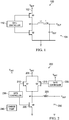
- FIG. 1 is a schematic diagram of a DC-to-DC voltage converter 100.
- the type of DC-to-DC voltage converter 100 depicted in FIG. 1 is sometimes referred to as a buck converter.
- the DC-to-DC voltage converter 100 includes a power stage that includes a high-side transistor Q1 and a low-side transistor Q2 that serve as switches.
- transistor Q1 is a p-channel transistor and transistor Q2 is an n-channel transistor.
- the source of transistor Q1 is coupled to a voltage input 102 that is couplable to a power supply VBAT.
- the voltage input 102 operates at an input voltage VBAT, which is a DC voltage that is to be converted to another DC voltage by the DC-to-DC voltage converter 100.
- the drain of transistor Q1 is coupled to a node N1.
- the drain of transistor Q2 is coupled to the node N1 and the source of transistor Q2 is coupled to a ground node.
- the ground node may operate at a potential of ground or a potential that is different than or lower than the input voltage VBAT. In the illustrative embodiment shown in FIG.
- the high-side transistor Q1 is a PMOS (p-channel metal-oxide-semiconductor field-effect) transistor
- the low-side transistor Q2 is an NMOS (n-channel metal-oxide-semiconductor field-effect) transistor, which constitutes a typical power stage for a DC-to-DC voltage converter.
- a first terminal of an inductor L1 is coupled to the node N1.
- the second terminal of the inductor L1 is coupled to a capacitor COUT.
- the junction of the inductor L1 and the capacitor COUT is the output 104 or output node of the DC-to-DC voltage converter 100, which operates at an output voltage VOUT.
- the voltage VOUT is the DC voltage generated by the DC-to-DC voltage converter 100.
- the gates of transistors Q1 and Q2 are coupled to a gate controller 110 that generates gate voltages to turn the transistors Q1 and Q2 off and on. Accordingly, the gate controller 110 serves as a switch controller to control the switching function of transistors Q1 and Q2.
- the DC-to-DC voltage converter 100 receives the input voltage VBAT at the input 102.
- the gate controller 110 turns transistors Q1 and Q2 off and on, so that one transistor is on while the other transistor is off.
- the off and on period controls the current IL flowing through the inductor L1.
- the current IL generates a voltage across the capacitor COUT, which is the output voltage VOUT of the DC-to-DC voltage converter 100. In discontinuous modes of operation, both transistor Q1 and transistor Q2 are turned off at the same time for a period.
- the power supply VBAT is provided by a battery power supply comprising one or more batteries.
- a battery power supply comprising one or more batteries.
- the PMOS transistor Q1 when VBAT is relatively low, i.e. close to the threshold voltage Vth of the PMOS transistor Q1, the PMOS transistor Q1 will exhibit a very high resistance, and will therefore not act like an effective switch.
- a DC-to-DC voltage converter 100 has a limited of range of operation with regards to the power supply voltage VBAT.
- the power transistors Q1 and Q2 used for devices that employ a 2AA cell power source are typically high voltage devices and would not conduct for 1AA cell voltage levels (which typically range from approximately 1V to 1.6V) due to the high threshold voltages of these transistors.
- Using low-voltage transistors for the power stage solves this conduction problem, but reliability related concerns would exist when the same device is expected to work from two AA cells.
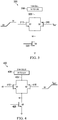
- FIG. 2 is a schematic diagram of a DC-to-DC voltage converter 200 whose power stage includes a high-side switch that includes an n-channel transistor Q1 210 and a p-channel transistor Q2 215 in parallel.
- the illustrative embodiment depicted in FIG. 2 demonstrates aspects with respect to a buck DC-to-DC voltage converter, but the aspects that are described herein can also be implemented with other types of DC-to-DC converters, such as boost converters, buck-boost converters, flyback converters, and flybuck converters.
- the drain of n-channel transistor Q1 210 is coupled to a voltage input 205 that is couplable to a power supply VBAT.
- the source of p-channel transistor Q2 215 is also coupled to the voltage input 205.
- the voltage input 205 operates at the input voltage VBAT, which is a DC voltage that is to be converted to another DC voltage by the DC-to-DC voltage converter 200.
- the drain of the n-channel transistor Q1 210 and the source of the p-channel transistor 215 are both coupled to a node N1.
- the drain of n-channel transistor Q3 220 is coupled to the node N1 and the source of transistor Q3 220 is coupled to a ground node.
- the ground node may operate at a potential of ground or a potential that is different than or lower than the input voltage VBAT.
- the high-side n-channel transistor Q1 210 and the low-side n-channel transistor Q3 220 are NMOS transistors and the high-side p-channel transistor Q2 215 is a PMOS transistor.
- a first terminal of an inductor 225 is coupled to the node N1.
- the second terminal of the inductor 225 is coupled to an output capacitor 230.
- the junction of the inductor 225 and the output capacitor 230 is the output or output node of the DC-to-DC voltage converter 200, which operates at an output voltage VOUT.
- the voltage VOUT is the DC voltage generated by the DC-to-DC voltage converter 200.
- one of the high-side transistors serves as the active switch of the power stage of the DC-to-DC voltage converter 200 while the other high-side transistor is deactivated.
- the determination of which of the high-side transistors Q1 210 and Q2 215 to select as the active high-side switch is made by comparing the power supply voltage VBAT to a supply voltage threshold. If VBAT is less than the supply voltage threshold, the n-channel transistor Q1 210 serves as the active high-side transistor and the p-channel transistor Q2 215 is deactivated.
- the p-channel transistor Q2 215 is selected as the active high-side transistor and the n-channel transistor Q1 210 is deactivated.
- the n-channel transistor Q1 210 is the active high-side switch, thus allowing the high-side of the power stage to conduct at lower supply voltage levels.
- the p-channel transistor Q2 215 is the active high-side switch, thus offering the increased reliability that is associated with a higher-voltage device.
- the determination of which of the high-side transistors Q1 210 and Q2 215 to select as the active high-side switch is made by determining what type and how many batteries make up the power supply VBAT. For example, if the power supply VBAT consists of a single AA battery, the n-channel transistor Q1 210 serves as the active high-side transistor and the p-channel transistor Q2 215 is deactivated. Or, if the power supply VBAT consists of two AA batteries, the p-channel transistor Q2 215 is selected as the active high-side transistor, and the n-channel transistor Q1 210 is deactivated.
- the gates of the high-side n-channel transistor Q1 210, the high-side p-channel transistor Q2 215, and n-channel low-side transistor Q3 220 are coupled to a gate controller 235 that generates gate voltages to turn the transistors Q1 210, Q2 215 and Q3 220 on and off.
- the gate controller 235 serves as a switch controller to control the switching function of transistors Q1 210, Q2 215 and Q3 220.
- the gate control circuit 235 receives information regarding the power supply VBAT and, based on such information, controls one of the transistors Q1 210 and Q2 215 as the active high-side switch of the power stage and deactivates the other of the transistors Q1 210 and Q2 215.
- the gate control circuit 235 receives the supply voltage VBAT and compares it to a supply voltage threshold.
- the gate control circuit 235 includes a comparator for comparing the supply voltage VBAT to the supply voltage threshold.
- the gate control circuit 235 provides gate driver signals to the n-channel transistor Q1 210 and provides a voltage to the gate of p-channel transistor Q2 215 that turns off the p-channel transistor Q2 215.
- the p-channel transistor Q2 215 is deactivated and the n-channel transistor Q1 210 serves as the active transistor of the power stage when the supply voltage VBAT is less than the supply voltage threshold.
- the gate control circuit 235 provides gate driver signals to the p-channel transistor Q2 215 and provides a voltage to the gate of n-channel transistor Q1 210 that turns off the n-channel transistor Q1 210.
- the n-channel transistor Q1 210 is deactivated and the p-channel transistor Q2 215 serves as the active transistor of the power stage when the supply voltage VBAT is greater than the supply voltage threshold.
- the supply voltage threshold is set at a level that lies between the normal ranges of operation of a single-AA-cell power supply and a two-AA-cell power supply.
- the supply voltage threshold can be set at approximately 1.8 volts, which lies between the normal ranges of operation of a single AA cell (1.0-1.6 V) and two AA cells (2.0-3.2 V).
- the gate control circuit 235 receives or determines information regarding what type and how many batteries make up the power supply VBAT. For example, if the gate controller 235 determines, or receives information indicating, that the power supply VBAT consists of a single AA battery, the gate control circuit 235 provides gate driver signals to the n-channel transistor Q1 210 and provides a voltage to the gate of p-channel transistor Q2 215 that turns off the p-channel transistor Q2 215. Thus, the p-channel transistor Q2 215 is deactivated and the n-channel transistor Q1 210 serves as the active transistor of the power stage if the power supply VBAT consists of a single AA battery.
- the gate control circuit 235 determines, or receives information indicating, that the power supply VBAT consists of two AA batteries, the gate control circuit 235 provides gate driver signals to the p-channel transistor Q2 215 and provides a voltage to the gate of n-channel transistor Q1 210 that turns off the n-channel transistor Q1 210.
- the n-channel transistor Q1 210 is deactivated and the p-channel transistor Q2 215 serves as the active transistor of the power stage if the power supply VBAT consists of two AA batteries.
- n-channel transistor Q1 210 when n-channel transistor Q1 210 is the active high-side transistor of the DC-to-DC converter 200, i.e., when the power supply VBAT is a relatively lower-voltage power supply such as a single AA cell, the gate driver signal generated by the gate controller 235 for controlling the switching of the n-channel transistor Q1 210 is boosted using a charge pump circuit 245.
- This boosting of the gate driver signal causes the "on" voltage of the gate driver signal to be greater than the source voltage by an amount that is appreciably greater than the transistor voltage threshold Vth, thereby allowing the n-channel transistor Q1 210 to behave as an effective switch. If the magnitude of the gate driver signal is too low, as would be the case if the maximum level of the gate driver signal was substantially equal to a single AA cell voltage, the transistor Q1 210 does not behave as a switch.
- the transistors Q1 210, Q2 215, and Q3 220 are all implemented with thick gate oxide transistors, which are capable of handling 3.3 volts. Accordingly, all of these transistors are capable of working with either a single AA cell power supply or with a power supply consisting of two AA cells.
- FIG. 3 is a schematic diagram representing a power stage 300 of a DC-to-DC voltage converter, such as that shown in FIG. 2 , powered by a single AA cell power supply.
- the drain of n-channel transistor Q1 310 is coupled to a voltage input 305 that is connected to a power supply VBAT 308 that consists of a single AA cell.
- the source of p-channel transistor Q2 315 is also coupled to the voltage input 305.
- the drain of the n-channel transistor Q1 310 and the source of the p-channel transistor 315 are both coupled to a node N1.
- the drain of n-channel transistor Q3 320 is coupled to the node N1 and the source of transistor Q3 320 is coupled to a ground node. Though not shown in FIG.
- the node N1 is coupled to an output stage of the DC-to-DC power converter as shown in FIG. 2 .
- the gates of the high-side n-channel transistor Q1 310 and the high-side p-channel transistor Q2 315 are coupled to a gate control circuit such as gate controller 235 shown in FIG. 2 , although the gate control circuit is not explicitly shown in FIG. 3 .
- the gate control circuit 235 determines, based on information regarding the power supply VBAT 308, which of the high-side transistors Q1 310 and Q2 315 are to serve as the active high-side transistor of the power stage 300.
- this determination can be made in different ways, including comparing the power supply voltage VBAT to a supply voltage threshold (such as 1.8V), or by determining whether the power supply consists of one battery cell or two. In either case, when the power supply consists of a single AA battery as in FIG.
- the gate controller 235 will determine that the n-channel transistor Q1 310 is to serve as the active high-side transistor of the power stage 300. Based on that determination, the gate controller 235 deactivates, or turns off, the p-channel transistor Q2 315.
- the gate controller 235 turns off the p-channel transistor Q2 315 by applying a voltage that is substantially equal to VBAT to the gate of the p-channel transistor Q2 315.
- the source voltage Vs of transistor Q2 315 is substantially equal to the gate voltage Vg, in which case the p-channel transistor Q2 215 does not conduct any appreciable current.
- the gate controller actively controls the n-channel high-side transistor Q1 310 and the transistor Q3 320 by controlling the duty cycle of gate driver signals provided to Q1 310 and Q3 320.
- the voltage of the gate driver signal provided to the n-channel high-side transistor Q1 310 is boosted using the charge pump circuit 245 shown in FIG. 2 .
- the gate driver signal for transistor Q1 310 might be boosted to have a range from 0V on the low end to approximately 3V on the high end, as shown in FIG. 3 .
- This boosting of the gate driver signal for transistor Q1 310 allows for better performance of the high-side n-channel transistor Q1 310 in view of the relatively lower voltage level of the single AA cell power supply 308, as described with respect to FIG. 2 .
- FIG. 4 is a schematic diagram representing a power stage of DC-to-DC voltage converter such as that shown in FIG. 2 powered by two AA cells.
- the power stage 400 of FIG. 4 is substantially the same as that shown In FIGS. 3 and 4 except for the fact that the power supply VBAT 408 consists of two AA cells.
- the drain of n-channel transistor Q1 410 and the source of p-channel transistor Q2 415 are coupled to a voltage input 405 that is connected to the 2AA power supply VBAT 408.
- the source of the n-channel transistor Q1 410 and the drain of the p-channel transistor 415 are both coupled to a node N1.
- n-channel transistor Q3 420 The drain of n-channel transistor Q3 420 is coupled to the node N1 and the source of transistor Q3 420 is coupled to a ground node. Though not shown in FIG. 4 , the node N1 is coupled to an output stage of the DC-to-DC power converter as shown in FIG. 2 . Also, the gates of the high-side n-channel transistor Q1 410 and the high-side p-channel transistor Q2 415 are coupled to a gate control circuit such as gate controller 235 shown in FIG. 2 , although the gate control circuit is not explicitly shown in FIG. 4 .
- the gate control circuit 235 determines, based on information regarding the power supply VBAT 408, which of the high-side transistors Q1 410 and Q2 415 are to serve as the active high-side transistor of the power stage 400.
- this determination can be made in different ways, including comparing the power supply voltage VBAT to a supply voltage threshold (such as 1.8V), or by determining whether the power supply consists of one battery cell or two. In either case, when the power supply consists of two AA batteries as in FIG.
- the gate controller 235 will determine that the p-channel transistor Q2 410 is to serve as the active high-side transistor of the power stage 400. Based on that determination, the gate controller 235 deactivates, or turns off, the n-channel transistor Q1 410. In an illustrative embodiment, the gate controller 235 turns off the n-channel transistor Q1 410 by applying a voltage that is substantially equal to 0V to the gate of the n-channel transistor Q1 410. At the same time, the gate controller actively controls the p-channel high-side transistor Q2 415 and the transistor Q3 420 by controlling the duty cycle of gate driver signals provided to Q2 415 and Q3 420.
- FIG. 5 is a flow chart representing a method of operating a power stage of a DC-to-DC converter.
- a high-side n-channel transistor is provided.
- the drain terminal of the high-side n-channel transistor is coupled to a voltage input that is couplable to a power supply, and the source terminal is coupled to a first node that is couplable to an output stage of the DC-to-DC converter.
- a high-side p-channel transistor is provided.
- the source terminal of the high-side p-channel transistor is coupled to the voltage input and the drain terminal is coupled to the first node.
- the power supply voltage is compared to a threshold voltage level.
Landscapes
- Engineering & Computer Science (AREA)
- Power Engineering (AREA)
- Dc-Dc Converters (AREA)
Applications Claiming Priority (2)
| Application Number | Priority Date | Filing Date | Title |
|---|---|---|---|
| US15/160,836 US9882490B2 (en) | 2016-05-20 | 2016-05-20 | Parallel high side switches for a buck converter |
| PCT/US2017/033844 WO2017201533A1 (en) | 2016-05-20 | 2017-05-22 | Power stage for a dc-dc converter |
Publications (3)
| Publication Number | Publication Date |
|---|---|
| EP3459167A1 EP3459167A1 (en) | 2019-03-27 |
| EP3459167A4 EP3459167A4 (en) | 2019-05-08 |
| EP3459167B1 true EP3459167B1 (en) | 2021-09-08 |
Family
ID=60326611
Family Applications (1)
| Application Number | Title | Priority Date | Filing Date |
|---|---|---|---|
| EP17800335.6A Active EP3459167B1 (en) | 2016-05-20 | 2017-05-22 | Power stage for a dc-dc converter |
Country Status (6)
| Country | Link |
|---|---|
| US (1) | US9882490B2 (enExample) |
| EP (1) | EP3459167B1 (enExample) |
| JP (1) | JP2019517238A (enExample) |
| KR (1) | KR20190007430A (enExample) |
| CN (1) | CN109155588A (enExample) |
| WO (1) | WO2017201533A1 (enExample) |
Families Citing this family (4)
| Publication number | Priority date | Publication date | Assignee | Title |
|---|---|---|---|---|
| US11095282B2 (en) * | 2018-12-05 | 2021-08-17 | Texas Instruments Incorporated | Methods and apparatus to implement current limit test mode |
| US10845833B1 (en) * | 2019-10-15 | 2020-11-24 | Texas Instruments Incorporated | Method and system for buck converter current re-use for minimum switching frequency pulse-skip operation |
| US12236856B2 (en) | 2022-04-14 | 2025-02-25 | Chengdu Boe Optoelectronics Technology Co., Ltd. | Display driver circuit and display device |
| US12122251B2 (en) | 2022-09-28 | 2024-10-22 | BorgWarner US Technologies LLC | Systems and methods for bidirectional message architecture for inverter for electric vehicle |
Family Cites Families (14)
| Publication number | Priority date | Publication date | Assignee | Title |
|---|---|---|---|---|
| JP3036457B2 (ja) | 1997-02-27 | 2000-04-24 | 日本電気株式会社 | スイッチング電源装置 |
| US7737666B2 (en) * | 2003-08-04 | 2010-06-15 | Marvell World Trade Ltd. | Split gate drive scheme to improve reliable voltage operation range |
| US8598859B2 (en) * | 2006-05-29 | 2013-12-03 | Autonetworks Technologies, Limited | Power supply controller |
| US20080007236A1 (en) * | 2006-07-06 | 2008-01-10 | Alan Elbanhawy | Power converter with segmented power module |
| JP4957122B2 (ja) * | 2006-08-22 | 2012-06-20 | 株式会社ニコン | 電源回路、および撮像装置 |
| JP5029156B2 (ja) * | 2007-06-11 | 2012-09-19 | 富士通セミコンダクター株式会社 | Dc−dcコンバータおよびその制御方法 |
| JP5326421B2 (ja) * | 2008-08-18 | 2013-10-30 | 富士電機株式会社 | Dc−dcコンバータの異常電流防止回路 |
| JP5616104B2 (ja) * | 2010-04-12 | 2014-10-29 | 株式会社マキタ | バッテリパックを電源とする電動工具とそのアダプタ |
| JP5998739B2 (ja) * | 2012-08-20 | 2016-09-28 | 富士通株式会社 | レギュレータ装置 |
| EP2730931B1 (en) * | 2012-11-12 | 2015-08-26 | ST-Ericsson SA | Absolute value current-sensing circuit for step-down DC-to-DC converters with integrated power stage |
| JP5937503B2 (ja) * | 2012-12-26 | 2016-06-22 | ルネサスエレクトロニクス株式会社 | 半導体集積回路およびその動作方法 |
| CN103401423B (zh) | 2013-07-29 | 2015-07-29 | 电子科技大学 | 一种自适应分段驱动dc-dc变换器 |
| US9369033B2 (en) | 2013-12-30 | 2016-06-14 | Qualcomm Technologies International, Ltd. | Low power switched mode power supply |
| EP2933912A1 (en) | 2014-04-16 | 2015-10-21 | Dialog Semiconductor GmbH | Overvoltage reduction in buck converter operating in PFM mode |
-
2016
- 2016-05-20 US US15/160,836 patent/US9882490B2/en not_active Expired - Fee Related
-
2017
- 2017-05-22 JP JP2018561004A patent/JP2019517238A/ja active Pending
- 2017-05-22 WO PCT/US2017/033844 patent/WO2017201533A1/en not_active Ceased
- 2017-05-22 KR KR1020187033131A patent/KR20190007430A/ko not_active Ceased
- 2017-05-22 EP EP17800335.6A patent/EP3459167B1/en active Active
- 2017-05-22 CN CN201780030175.9A patent/CN109155588A/zh active Pending
Also Published As
| Publication number | Publication date |
|---|---|
| CN109155588A (zh) | 2019-01-04 |
| US9882490B2 (en) | 2018-01-30 |
| EP3459167A1 (en) | 2019-03-27 |
| KR20190007430A (ko) | 2019-01-22 |
| WO2017201533A1 (en) | 2017-11-23 |
| US20170338742A1 (en) | 2017-11-23 |
| EP3459167A4 (en) | 2019-05-08 |
| JP2019517238A (ja) | 2019-06-20 |
Similar Documents
| Publication | Publication Date | Title |
|---|---|---|
| US10008932B2 (en) | Synchronous rectification DC/DC converter | |
| US9577520B2 (en) | Power converter with bootstrap circuit | |
| US10243467B2 (en) | Voltage regulators with kickback protection | |
| US6812782B2 (en) | Switch mode converter that allows 100% duty cycle on gate driver | |
| US10498229B2 (en) | Method and circuitry to soft start high power charge pumps | |
| US7528589B2 (en) | Step-up DC/DC converter and electronic appliance therewith | |
| US8299765B2 (en) | Power supply control device and power supply control method | |
| US8004254B2 (en) | Power supply circuit | |
| CN108336895B (zh) | Dc-dc转换器、dc-dc功率转换系统及方法 | |
| US8970185B1 (en) | Method for maintaining high efficiency power conversion in DC-DC switching regulators over wide input supply range | |
| US20090153122A1 (en) | Dropper-type regulator | |
| US20140375376A1 (en) | Adaptive mos transistor gate driver and method therefor | |
| US20110241642A1 (en) | Voltage converter | |
| US7298117B2 (en) | Step-up (boost) DC regulator with two-level back-bias switch gate voltage | |
| US10044263B2 (en) | Using PMOS power switch in a combination switching and linear regulator | |
| US20140266091A1 (en) | Voltage Regulators with Load-Dependent Bias | |
| WO2007010801A1 (ja) | 昇圧型、降圧型スイッチングレギュレータおよびその制御回路ならびにそれを用いた電子機器 | |
| US9882490B2 (en) | Parallel high side switches for a buck converter | |
| US10268221B2 (en) | Power supply device and electronic control unit for lowering a minimum operating voltage and suppressing a consumed current to be low | |
| JP6831713B2 (ja) | ブートストラップ回路 | |
| US10811972B2 (en) | Buck-boost converter power supply with drive circuit | |
| JP7838997B2 (ja) | スイッチング電源装置 | |
| CN107683560A (zh) | 开关元件的驱动装置 | |
| TWI710202B (zh) | 開關調節器 | |
| US20130162234A1 (en) | Buck regulation of a boost regulator |
Legal Events
| Date | Code | Title | Description |
|---|---|---|---|
| STAA | Information on the status of an ep patent application or granted ep patent |
Free format text: STATUS: THE INTERNATIONAL PUBLICATION HAS BEEN MADE |
|
| PUAI | Public reference made under article 153(3) epc to a published international application that has entered the european phase |
Free format text: ORIGINAL CODE: 0009012 |
|
| STAA | Information on the status of an ep patent application or granted ep patent |
Free format text: STATUS: REQUEST FOR EXAMINATION WAS MADE |
|
| 17P | Request for examination filed |
Effective date: 20181220 |
|
| AK | Designated contracting states |
Kind code of ref document: A1 Designated state(s): AL AT BE BG CH CY CZ DE DK EE ES FI FR GB GR HR HU IE IS IT LI LT LU LV MC MK MT NL NO PL PT RO RS SE SI SK SM TR |
|
| AX | Request for extension of the european patent |
Extension state: BA ME |
|
| A4 | Supplementary search report drawn up and despatched |
Effective date: 20190408 |
|
| RIC1 | Information provided on ipc code assigned before grant |
Ipc: H02M 3/158 20060101AFI20190402BHEP |
|
| DAV | Request for validation of the european patent (deleted) | ||
| DAX | Request for extension of the european patent (deleted) | ||
| GRAP | Despatch of communication of intention to grant a patent |
Free format text: ORIGINAL CODE: EPIDOSNIGR1 |
|
| STAA | Information on the status of an ep patent application or granted ep patent |
Free format text: STATUS: GRANT OF PATENT IS INTENDED |
|
| INTG | Intention to grant announced |
Effective date: 20210429 |
|
| GRAS | Grant fee paid |
Free format text: ORIGINAL CODE: EPIDOSNIGR3 |
|
| GRAA | (expected) grant |
Free format text: ORIGINAL CODE: 0009210 |
|
| STAA | Information on the status of an ep patent application or granted ep patent |
Free format text: STATUS: THE PATENT HAS BEEN GRANTED |
|
| AK | Designated contracting states |
Kind code of ref document: B1 Designated state(s): AL AT BE BG CH CY CZ DE DK EE ES FI FR GB GR HR HU IE IS IT LI LT LU LV MC MK MT NL NO PL PT RO RS SE SI SK SM TR |
|
| REG | Reference to a national code |
Ref country code: GB Ref legal event code: FG4D |
|
| REG | Reference to a national code |
Ref country code: AT Ref legal event code: REF Ref document number: 1429458 Country of ref document: AT Kind code of ref document: T Effective date: 20210915 Ref country code: CH Ref legal event code: EP |
|
| REG | Reference to a national code |
Ref country code: IE Ref legal event code: FG4D |
|
| REG | Reference to a national code |
Ref country code: DE Ref legal event code: R096 Ref document number: 602017045757 Country of ref document: DE |
|
| REG | Reference to a national code |
Ref country code: LT Ref legal event code: MG9D |
|
| REG | Reference to a national code |
Ref country code: NL Ref legal event code: MP Effective date: 20210908 |
|
| PG25 | Lapsed in a contracting state [announced via postgrant information from national office to epo] |
Ref country code: HR Free format text: LAPSE BECAUSE OF FAILURE TO SUBMIT A TRANSLATION OF THE DESCRIPTION OR TO PAY THE FEE WITHIN THE PRESCRIBED TIME-LIMIT Effective date: 20210908 Ref country code: FI Free format text: LAPSE BECAUSE OF FAILURE TO SUBMIT A TRANSLATION OF THE DESCRIPTION OR TO PAY THE FEE WITHIN THE PRESCRIBED TIME-LIMIT Effective date: 20210908 Ref country code: ES Free format text: LAPSE BECAUSE OF FAILURE TO SUBMIT A TRANSLATION OF THE DESCRIPTION OR TO PAY THE FEE WITHIN THE PRESCRIBED TIME-LIMIT Effective date: 20210908 Ref country code: SE Free format text: LAPSE BECAUSE OF FAILURE TO SUBMIT A TRANSLATION OF THE DESCRIPTION OR TO PAY THE FEE WITHIN THE PRESCRIBED TIME-LIMIT Effective date: 20210908 Ref country code: RS Free format text: LAPSE BECAUSE OF FAILURE TO SUBMIT A TRANSLATION OF THE DESCRIPTION OR TO PAY THE FEE WITHIN THE PRESCRIBED TIME-LIMIT Effective date: 20210908 Ref country code: BG Free format text: LAPSE BECAUSE OF FAILURE TO SUBMIT A TRANSLATION OF THE DESCRIPTION OR TO PAY THE FEE WITHIN THE PRESCRIBED TIME-LIMIT Effective date: 20211208 Ref country code: LT Free format text: LAPSE BECAUSE OF FAILURE TO SUBMIT A TRANSLATION OF THE DESCRIPTION OR TO PAY THE FEE WITHIN THE PRESCRIBED TIME-LIMIT Effective date: 20210908 Ref country code: NO Free format text: LAPSE BECAUSE OF FAILURE TO SUBMIT A TRANSLATION OF THE DESCRIPTION OR TO PAY THE FEE WITHIN THE PRESCRIBED TIME-LIMIT Effective date: 20211208 |
|
| REG | Reference to a national code |
Ref country code: AT Ref legal event code: MK05 Ref document number: 1429458 Country of ref document: AT Kind code of ref document: T Effective date: 20210908 |
|
| PG25 | Lapsed in a contracting state [announced via postgrant information from national office to epo] |
Ref country code: LV Free format text: LAPSE BECAUSE OF FAILURE TO SUBMIT A TRANSLATION OF THE DESCRIPTION OR TO PAY THE FEE WITHIN THE PRESCRIBED TIME-LIMIT Effective date: 20210908 Ref country code: GR Free format text: LAPSE BECAUSE OF FAILURE TO SUBMIT A TRANSLATION OF THE DESCRIPTION OR TO PAY THE FEE WITHIN THE PRESCRIBED TIME-LIMIT Effective date: 20211209 |
|
| PG25 | Lapsed in a contracting state [announced via postgrant information from national office to epo] |
Ref country code: AT Free format text: LAPSE BECAUSE OF FAILURE TO SUBMIT A TRANSLATION OF THE DESCRIPTION OR TO PAY THE FEE WITHIN THE PRESCRIBED TIME-LIMIT Effective date: 20210908 |
|
| PG25 | Lapsed in a contracting state [announced via postgrant information from national office to epo] |
Ref country code: IS Free format text: LAPSE BECAUSE OF FAILURE TO SUBMIT A TRANSLATION OF THE DESCRIPTION OR TO PAY THE FEE WITHIN THE PRESCRIBED TIME-LIMIT Effective date: 20220108 Ref country code: SM Free format text: LAPSE BECAUSE OF FAILURE TO SUBMIT A TRANSLATION OF THE DESCRIPTION OR TO PAY THE FEE WITHIN THE PRESCRIBED TIME-LIMIT Effective date: 20210908 Ref country code: SK Free format text: LAPSE BECAUSE OF FAILURE TO SUBMIT A TRANSLATION OF THE DESCRIPTION OR TO PAY THE FEE WITHIN THE PRESCRIBED TIME-LIMIT Effective date: 20210908 Ref country code: RO Free format text: LAPSE BECAUSE OF FAILURE TO SUBMIT A TRANSLATION OF THE DESCRIPTION OR TO PAY THE FEE WITHIN THE PRESCRIBED TIME-LIMIT Effective date: 20210908 Ref country code: PT Free format text: LAPSE BECAUSE OF FAILURE TO SUBMIT A TRANSLATION OF THE DESCRIPTION OR TO PAY THE FEE WITHIN THE PRESCRIBED TIME-LIMIT Effective date: 20220110 Ref country code: PL Free format text: LAPSE BECAUSE OF FAILURE TO SUBMIT A TRANSLATION OF THE DESCRIPTION OR TO PAY THE FEE WITHIN THE PRESCRIBED TIME-LIMIT Effective date: 20210908 Ref country code: NL Free format text: LAPSE BECAUSE OF FAILURE TO SUBMIT A TRANSLATION OF THE DESCRIPTION OR TO PAY THE FEE WITHIN THE PRESCRIBED TIME-LIMIT Effective date: 20210908 Ref country code: EE Free format text: LAPSE BECAUSE OF FAILURE TO SUBMIT A TRANSLATION OF THE DESCRIPTION OR TO PAY THE FEE WITHIN THE PRESCRIBED TIME-LIMIT Effective date: 20210908 Ref country code: CZ Free format text: LAPSE BECAUSE OF FAILURE TO SUBMIT A TRANSLATION OF THE DESCRIPTION OR TO PAY THE FEE WITHIN THE PRESCRIBED TIME-LIMIT Effective date: 20210908 Ref country code: AL Free format text: LAPSE BECAUSE OF FAILURE TO SUBMIT A TRANSLATION OF THE DESCRIPTION OR TO PAY THE FEE WITHIN THE PRESCRIBED TIME-LIMIT Effective date: 20210908 |
|
| REG | Reference to a national code |
Ref country code: DE Ref legal event code: R097 Ref document number: 602017045757 Country of ref document: DE |
|
| PLBE | No opposition filed within time limit |
Free format text: ORIGINAL CODE: 0009261 |
|
| STAA | Information on the status of an ep patent application or granted ep patent |
Free format text: STATUS: NO OPPOSITION FILED WITHIN TIME LIMIT |
|
| PG25 | Lapsed in a contracting state [announced via postgrant information from national office to epo] |
Ref country code: DK Free format text: LAPSE BECAUSE OF FAILURE TO SUBMIT A TRANSLATION OF THE DESCRIPTION OR TO PAY THE FEE WITHIN THE PRESCRIBED TIME-LIMIT Effective date: 20210908 |
|
| 26N | No opposition filed |
Effective date: 20220609 |
|
| PG25 | Lapsed in a contracting state [announced via postgrant information from national office to epo] |
Ref country code: SI Free format text: LAPSE BECAUSE OF FAILURE TO SUBMIT A TRANSLATION OF THE DESCRIPTION OR TO PAY THE FEE WITHIN THE PRESCRIBED TIME-LIMIT Effective date: 20210908 |
|
| REG | Reference to a national code |
Ref country code: CH Ref legal event code: PL |
|
| REG | Reference to a national code |
Ref country code: BE Ref legal event code: MM Effective date: 20220531 |
|
| PG25 | Lapsed in a contracting state [announced via postgrant information from national office to epo] |
Ref country code: MC Free format text: LAPSE BECAUSE OF FAILURE TO SUBMIT A TRANSLATION OF THE DESCRIPTION OR TO PAY THE FEE WITHIN THE PRESCRIBED TIME-LIMIT Effective date: 20210908 Ref country code: LU Free format text: LAPSE BECAUSE OF NON-PAYMENT OF DUE FEES Effective date: 20220522 Ref country code: LI Free format text: LAPSE BECAUSE OF NON-PAYMENT OF DUE FEES Effective date: 20220531 Ref country code: IT Free format text: LAPSE BECAUSE OF FAILURE TO SUBMIT A TRANSLATION OF THE DESCRIPTION OR TO PAY THE FEE WITHIN THE PRESCRIBED TIME-LIMIT Effective date: 20210908 Ref country code: CH Free format text: LAPSE BECAUSE OF NON-PAYMENT OF DUE FEES Effective date: 20220531 |
|
| PG25 | Lapsed in a contracting state [announced via postgrant information from national office to epo] |
Ref country code: IE Free format text: LAPSE BECAUSE OF NON-PAYMENT OF DUE FEES Effective date: 20220522 |
|
| PG25 | Lapsed in a contracting state [announced via postgrant information from national office to epo] |
Ref country code: BE Free format text: LAPSE BECAUSE OF NON-PAYMENT OF DUE FEES Effective date: 20220531 |
|
| P01 | Opt-out of the competence of the unified patent court (upc) registered |
Effective date: 20230523 |
|
| PG25 | Lapsed in a contracting state [announced via postgrant information from national office to epo] |
Ref country code: HU Free format text: LAPSE BECAUSE OF FAILURE TO SUBMIT A TRANSLATION OF THE DESCRIPTION OR TO PAY THE FEE WITHIN THE PRESCRIBED TIME-LIMIT; INVALID AB INITIO Effective date: 20170522 |
|
| PG25 | Lapsed in a contracting state [announced via postgrant information from national office to epo] |
Ref country code: MK Free format text: LAPSE BECAUSE OF FAILURE TO SUBMIT A TRANSLATION OF THE DESCRIPTION OR TO PAY THE FEE WITHIN THE PRESCRIBED TIME-LIMIT Effective date: 20210908 Ref country code: CY Free format text: LAPSE BECAUSE OF FAILURE TO SUBMIT A TRANSLATION OF THE DESCRIPTION OR TO PAY THE FEE WITHIN THE PRESCRIBED TIME-LIMIT Effective date: 20210908 |
|
| PG25 | Lapsed in a contracting state [announced via postgrant information from national office to epo] |
Ref country code: TR Free format text: LAPSE BECAUSE OF FAILURE TO SUBMIT A TRANSLATION OF THE DESCRIPTION OR TO PAY THE FEE WITHIN THE PRESCRIBED TIME-LIMIT Effective date: 20210908 |
|
| PG25 | Lapsed in a contracting state [announced via postgrant information from national office to epo] |
Ref country code: MT Free format text: LAPSE BECAUSE OF FAILURE TO SUBMIT A TRANSLATION OF THE DESCRIPTION OR TO PAY THE FEE WITHIN THE PRESCRIBED TIME-LIMIT Effective date: 20210908 |
|
| PGFP | Annual fee paid to national office [announced via postgrant information from national office to epo] |
Ref country code: GB Payment date: 20260421 Year of fee payment: 10 |
|
| PGFP | Annual fee paid to national office [announced via postgrant information from national office to epo] |
Ref country code: DE Payment date: 20260421 Year of fee payment: 10 |
|
| PGFP | Annual fee paid to national office [announced via postgrant information from national office to epo] |
Ref country code: FR Payment date: 20260422 Year of fee payment: 10 |