EP3455166B1 - Verfahren zum herstellen von aeorgelen - Google Patents
Verfahren zum herstellen von aeorgelen Download PDFInfo
- Publication number
- EP3455166B1 EP3455166B1 EP17726977.6A EP17726977A EP3455166B1 EP 3455166 B1 EP3455166 B1 EP 3455166B1 EP 17726977 A EP17726977 A EP 17726977A EP 3455166 B1 EP3455166 B1 EP 3455166B1
- Authority
- EP
- European Patent Office
- Prior art keywords
- minus
- plus
- solution
- seconds
- microwave radiation
- Prior art date
- Legal status (The legal status is an assumption and is not a legal conclusion. Google has not performed a legal analysis and makes no representation as to the accuracy of the status listed.)
- Active
Links
Images



Classifications
-
- C—CHEMISTRY; METALLURGY
- C08—ORGANIC MACROMOLECULAR COMPOUNDS; THEIR PREPARATION OR CHEMICAL WORKING-UP; COMPOSITIONS BASED THEREON
- C08J—WORKING-UP; GENERAL PROCESSES OF COMPOUNDING; AFTER-TREATMENT NOT COVERED BY SUBCLASSES C08B, C08C, C08F, C08G or C08H
- C08J9/00—Working-up of macromolecular substances to porous or cellular articles or materials; After-treatment thereof
- C08J9/28—Working-up of macromolecular substances to porous or cellular articles or materials; After-treatment thereof by elimination of a liquid phase from a macromolecular composition or article, e.g. drying of coagulum
-
- B—PERFORMING OPERATIONS; TRANSPORTING
- B01—PHYSICAL OR CHEMICAL PROCESSES OR APPARATUS IN GENERAL
- B01J—CHEMICAL OR PHYSICAL PROCESSES, e.g. CATALYSIS OR COLLOID CHEMISTRY; THEIR RELEVANT APPARATUS
- B01J13/00—Colloid chemistry, e.g. the production of colloidal materials or their solutions, not otherwise provided for; Making microcapsules or microballoons
- B01J13/0091—Preparation of aerogels, e.g. xerogels
-
- C—CHEMISTRY; METALLURGY
- C01—INORGANIC CHEMISTRY
- C01B—NON-METALLIC ELEMENTS; COMPOUNDS THEREOF; METALLOIDS OR COMPOUNDS THEREOF NOT COVERED BY SUBCLASS C01C
- C01B33/00—Silicon; Compounds thereof
- C01B33/113—Silicon oxides; Hydrates thereof
- C01B33/12—Silica; Hydrates thereof, e.g. lepidoic silicic acid
- C01B33/14—Colloidal silica, e.g. dispersions, gels, sols
- C01B33/157—After-treatment of gels
- C01B33/158—Purification; Drying; Dehydrating
- C01B33/1585—Dehydration into aerogels
-
- C—CHEMISTRY; METALLURGY
- C04—CEMENTS; CONCRETE; ARTIFICIAL STONE; CERAMICS; REFRACTORIES
- C04B—LIME, MAGNESIA; SLAG; CEMENTS; COMPOSITIONS THEREOF, e.g. MORTARS, CONCRETE OR LIKE BUILDING MATERIALS; ARTIFICIAL STONE; CERAMICS; REFRACTORIES; TREATMENT OF NATURAL STONE
- C04B14/00—Use of inorganic materials as fillers, e.g. pigments, for mortars, concrete or artificial stone; Treatment of inorganic materials specially adapted to enhance their filling properties in mortars, concrete or artificial stone
- C04B14/02—Granular materials, e.g. microballoons
- C04B14/04—Silica-rich materials; Silicates
- C04B14/06—Quartz; Sand
- C04B14/064—Silica aerogel
-
- C—CHEMISTRY; METALLURGY
- C04—CEMENTS; CONCRETE; ARTIFICIAL STONE; CERAMICS; REFRACTORIES
- C04B—LIME, MAGNESIA; SLAG; CEMENTS; COMPOSITIONS THEREOF, e.g. MORTARS, CONCRETE OR LIKE BUILDING MATERIALS; ARTIFICIAL STONE; CERAMICS; REFRACTORIES; TREATMENT OF NATURAL STONE
- C04B24/00—Use of organic materials as active ingredients for mortars, concrete or artificial stone, e.g. plasticisers
- C04B24/40—Compounds containing silicon, titanium or zirconium or other organo-metallic compounds; Organo-clays; Organo-inorganic complexes
- C04B24/42—Organo-silicon compounds
-
- C—CHEMISTRY; METALLURGY
- C08—ORGANIC MACROMOLECULAR COMPOUNDS; THEIR PREPARATION OR CHEMICAL WORKING-UP; COMPOSITIONS BASED THEREON
- C08J—WORKING-UP; GENERAL PROCESSES OF COMPOUNDING; AFTER-TREATMENT NOT COVERED BY SUBCLASSES C08B, C08C, C08F, C08G or C08H
- C08J2201/00—Foams characterised by the foaming process
- C08J2201/02—Foams characterised by the foaming process characterised by mechanical pre- or post-treatments
- C08J2201/026—Crosslinking before of after foaming
-
- C—CHEMISTRY; METALLURGY
- C08—ORGANIC MACROMOLECULAR COMPOUNDS; THEIR PREPARATION OR CHEMICAL WORKING-UP; COMPOSITIONS BASED THEREON
- C08J—WORKING-UP; GENERAL PROCESSES OF COMPOUNDING; AFTER-TREATMENT NOT COVERED BY SUBCLASSES C08B, C08C, C08F, C08G or C08H
- C08J2201/00—Foams characterised by the foaming process
- C08J2201/04—Foams characterised by the foaming process characterised by the elimination of a liquid or solid component, e.g. precipitation, leaching out, evaporation
-
- C—CHEMISTRY; METALLURGY
- C08—ORGANIC MACROMOLECULAR COMPOUNDS; THEIR PREPARATION OR CHEMICAL WORKING-UP; COMPOSITIONS BASED THEREON
- C08J—WORKING-UP; GENERAL PROCESSES OF COMPOUNDING; AFTER-TREATMENT NOT COVERED BY SUBCLASSES C08B, C08C, C08F, C08G or C08H
- C08J2201/00—Foams characterised by the foaming process
- C08J2201/04—Foams characterised by the foaming process characterised by the elimination of a liquid or solid component, e.g. precipitation, leaching out, evaporation
- C08J2201/05—Elimination by evaporation or heat degradation of a liquid phase
- C08J2201/0504—Elimination by evaporation or heat degradation of a liquid phase the liquid phase being aqueous
-
- C—CHEMISTRY; METALLURGY
- C08—ORGANIC MACROMOLECULAR COMPOUNDS; THEIR PREPARATION OR CHEMICAL WORKING-UP; COMPOSITIONS BASED THEREON
- C08J—WORKING-UP; GENERAL PROCESSES OF COMPOUNDING; AFTER-TREATMENT NOT COVERED BY SUBCLASSES C08B, C08C, C08F, C08G or C08H
- C08J2203/00—Foams characterized by the expanding agent
- C08J2203/08—Supercritical fluid
-
- C—CHEMISTRY; METALLURGY
- C08—ORGANIC MACROMOLECULAR COMPOUNDS; THEIR PREPARATION OR CHEMICAL WORKING-UP; COMPOSITIONS BASED THEREON
- C08J—WORKING-UP; GENERAL PROCESSES OF COMPOUNDING; AFTER-TREATMENT NOT COVERED BY SUBCLASSES C08B, C08C, C08F, C08G or C08H
- C08J2205/00—Foams characterised by their properties
- C08J2205/02—Foams characterised by their properties the finished foam itself being a gel or a gel being temporarily formed when processing the foamable composition
- C08J2205/026—Aerogel, i.e. a supercritically dried gel
-
- C—CHEMISTRY; METALLURGY
- C08—ORGANIC MACROMOLECULAR COMPOUNDS; THEIR PREPARATION OR CHEMICAL WORKING-UP; COMPOSITIONS BASED THEREON
- C08J—WORKING-UP; GENERAL PROCESSES OF COMPOUNDING; AFTER-TREATMENT NOT COVERED BY SUBCLASSES C08B, C08C, C08F, C08G or C08H
- C08J2333/00—Characterised by the use of homopolymers or copolymers of compounds having one or more unsaturated aliphatic radicals, each having only one carbon-to-carbon double bond, and only one being terminated by only one carboxyl radical, or of salts, anhydrides, esters, amides, imides, or nitriles thereof; Derivatives of such polymers
- C08J2333/04—Characterised by the use of homopolymers or copolymers of compounds having one or more unsaturated aliphatic radicals, each having only one carbon-to-carbon double bond, and only one being terminated by only one carboxyl radical, or of salts, anhydrides, esters, amides, imides, or nitriles thereof; Derivatives of such polymers esters
- C08J2333/06—Characterised by the use of homopolymers or copolymers of compounds having one or more unsaturated aliphatic radicals, each having only one carbon-to-carbon double bond, and only one being terminated by only one carboxyl radical, or of salts, anhydrides, esters, amides, imides, or nitriles thereof; Derivatives of such polymers esters of esters containing only carbon, hydrogen, and oxygen, the oxygen atom being present only as part of the carboxyl radical
-
- C—CHEMISTRY; METALLURGY
- C08—ORGANIC MACROMOLECULAR COMPOUNDS; THEIR PREPARATION OR CHEMICAL WORKING-UP; COMPOSITIONS BASED THEREON
- C08J—WORKING-UP; GENERAL PROCESSES OF COMPOUNDING; AFTER-TREATMENT NOT COVERED BY SUBCLASSES C08B, C08C, C08F, C08G or C08H
- C08J2335/00—Characterised by the use of homopolymers or copolymers of compounds having one or more unsaturated aliphatic radicals, each having only one carbon-to-carbon double bond, and at least one being terminated by a carboxyl radical, and containing at least one other carboxyl radical in the molecule, or of salts, anhydrides, esters, amides, imides or nitriles thereof; Derivatives of such polymers
- C08J2335/02—Characterised by the use of homopolymers or copolymers of esters
Definitions
- the present invention relates to methods of forming aerogels.
- the present invention relates to methods of forming silica aerogels.
- Silica aerogels are highly porous materials, composed of over 90% air and the rest as silica network structure. This unique composition and structure impart peculiar properties such as high surface area, very low bulk density and low thermal conductivity. They find applications in at least catalysis, 1,2 adsorption, 3 thermal insulation, 4,5 environmental remediations and space exploration. 7
- Aerogels are not generally seen as a structural material for a number of reasons. They are fragile, synthesis requires several steps, and drying is complex and time-consuming.
- Aerogel fragility issues have been addressed in large part by the Leventis group, 8,9 who crosslinked the skeletal oxide nanoparticles with a conformal polymer coating.
- Crosslinking increases mechanical strength by orders of magnitude without overly compromising porosity.
- the strengthening strategies include use of higher functionality cross-linker, selective crosslinking of the regions subject to shear and mechanical stress, and specific patterning like honeycomb structures to increase compressive strength of aerogels along the load-bearing direction. 10-12
- Drying is another issue affecting aerogel applications.
- supercritical CO 2 is typically employed.
- supercritical CO 2 drying requires multiple, time-consuming solvent exchanges, which make the method impractical for large-scale applications. Drying issues have been partially addressed by Schwertfeger et al ., 13 and, more recently, the groups of Anderson and Carroll 14 and the present inventors' group 15 developed drying techniques employing supercritical ethanol that eliminated time consuming solvent exchange steps.
- the present invention seeks to address the problems identified above.
- WO2016/019308 A1 refers to a method of synthesising aerogels and cross-linked aerogels in a single step and in a single pot without requiring any solvent exchange.
- WO2012/095346 A2 refers to composite of silica aerogel and hydrogel and a method for the sequential formation thereof.
- WO2015/132418 A1 refers to a process for producing aerogels.
- alkyl refers to straight-chain or branched-chain hydrocarbons having 1, 2, 3, 4, 5, 6, 7, 8, 9, 10, 11, 12, 13, 14, 15, 16, 17, 18, 19 or 20 carbon atoms linked exclusively by single bonds and not having any cyclic structure.
- alkyl includes methyl, ethyl, n-propyl, isopropyl, n-butyl, isobutyl, sec-butyl, tert-butyl, pentyl, iso-amyl, hexyl, heptyl, octyl, noyl, decyl, undecyl, dodecyl tridecyl, tetradecyl, pentadecyl, hexadecyl, heptadecyl, octadecyl, nonadecyl and eicosyl.
- aryl includes phenyl (benzenyl), thiophenyl, indolyl, naphthyl, totyl, xylyl, anthracenyl, phenanthryl, azulenyl, biphenyl, naphthalenyl, 1 -methylnaphthalenyl, acenaphthenyl, acenaphthylenyl, anthracenyl, fluorenyl, phenalenyl, phenanthrenyl, benzo[a]anthracenyl, benzo[c]phenanthrenyl, chrysenyl, fluoranthenyl, pyrenyl, tetracenyl (naphthacenyl), triphenylenyl, anthanthrenyl, benzopyrenyl, benzo[a]pyrenyl, benzo[e]fluoranthenyl, benzo[ghi]pe
- aryl refers to aryls substituted with 1, 2, 3, 4 or 5 substituents selected from the group consisting of H, lower alkyl, aryl, alkenyl, alkynyl, arylalkyl, alkoxy, aryloxy, arylalkoxy, alkoxyalkylaryl, alkylamino, arylamino, NH 2 , OH, CN, NO 2 , OCF 3 , CF 3 , Br, Cl, F, 1 -amidino, 2-amidino, alkylcarbonyl, morpholino, piperidinyl, dioxanyl, pyranyl, heteroaryl, furanyl, thiophenyl, tetrazolo, thiazole, isothiazolo, imidazolo, thiadiazole, thiadiazole S-oxide, thiadiazole S,S-dioxide,pyrazolo, oxazole, isoxazole, is
- “Gelation” refers to a method of forming a gel.
- “Instantaneous gelation” refers to gelation which occurs in 10 seconds or less, 9 seconds or less, 8 seconds or less, 7 seconds or less, 6 seconds or less, 5 seconds or less, 4 seconds or less, 3 seconds or less, 2 seconds or less, or 1 second or less.
- “Instantaneous polymerization” refers to polymerization which occurs in 10 seconds or less, 9 seconds or less, 8 seconds or less, 7 seconds or less, 6 seconds or less, 5 seconds or less, 4 seconds or less, 3 seconds or less, 2 seconds or less, or 1 second or less.
- Microwave radiation refers to electromagnetic waves having a wavelength in the range from 1 mm to 1 m and a frequency in the range from 300 GHz to 300 MHz.
- microwave radiation refers to electromagnetic waves as produced in microwave ovens, for example with a frequency of 2.45 GHz (wavelength 12 cm) plus or minus 10%, plus or minus 9%, plus or minus 8%, plus or minus 7%, plus or minus 6%, plus or minus 5%, plus or minus 4%, plus or minus 3%, plus or minus 2% or plus or minus 1%.
- “Monomer” refers to a molecule which may chemically bond to other molecules to form a polymer.
- Organic group refers to functional groups containing at least one carbon atom, for example substituted or unsubstituted alkyl, alkenyl, alkynyl or aryl groups.
- Photo-initiator refers to a molecule that creates reactive species when exposed to UV or visible light radiation.
- Polymerization refers to a method of forming a polymer from a plurality of monomers.
- “Silica network” refers to a solid comprising three dimensional intertwined clusters of silica, where the silica comprises 50% or less, 49% or less, 48% or less, 47% or less, 46% or less, 45% or less, 44% or less, 43% or less, 42% or less, 41% or less, 40% or less, 39% or less, 38% or less, 37% or less, 36% or less, 35% or less, 34% or less, 33% or less, 32% or less, 31% or less, 30% or less, 29% or less, 28% or less, 27% or less, 26% or less, 25% or less, 24% or less, 23% or less, 22% or less, 21% or less, 20% or less, 19% or less, 18% or less, 17% or less, 16% or less, 15% or less, 14% or less, 13% or less, 12% or less, 11% or less, 10% or less, 9% or less, 8% or less, 7% or less, 6% or less,
- Supercritical drying refers to a method of removing liquid in a controlled and precise way. Aerogels can be produced by extracting the liquid component of the gel by supercritical drying. This allows the liquid to be slowly dried off without causing the solid matrix in the gel to collapse from capillary action, as would happen with conventional evaporation.
- TEOS tetraethyl orthosilicate
- Al chloride hexahydrate AICl 3 .6H 2 O
- trimethoxysilylpropyl methacrylate TMSM
- methyldiethanolethylamine amine
- Eosin Y Eosin Y
- Hexanedioldiacrylate HDDA
- All reagents were used as-received.
- An ethanol-water azeotrope mixture (containing 4.4% water and 95.6% pure ethanol by volume) was used as gelation solvent and as supercritical fluid in the drying method for the samples prepared.
- the methods of the presently claimed invention followed the same procedure for supercritically drying the samples as reported in a recent publication. 15 Briefly, the alcogels with or without their substrate were placed inside the supercritical dryer, a Parr Instruments model 4602 pressure vessel with a capacity of 2 litres. The pressure vessel was equipped with a thermal well and it was heated by three ceramic heaters, each with a power of 800 W. Heating rates were controlled by varying the power delivered to the heaters with a Variac. To prevent solvent evaporation from the alcogels before the supercritical point was reached, an excess volume (500 mL) vessel was heated to reach the supercritical temperature and pressure of the ethanol-water azeotrope mixture, kept at supercritical conditions for 20 minutes and then vented.
- an excess volume (500 mL) vessel was heated to reach the supercritical temperature and pressure of the ethanol-water azeotrope mixture, kept at supercritical conditions for 20 minutes and then vented.
- FTIR spectroscopic measurements were carried out using a Thermo Scientific Nicolet 6700. A smart iTR diamond ATR accessory was used. Background was subtracted each time while obtaining data from ATR accessory. For each sample, 64 scans were taken with data spacing of 0.482 cm -1 and a resolution of 4 cm -1 .
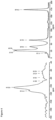
- CPMAS-TOSS solid-state NMR spectra were acquired on a Bruker DRX300WB spectrometer equipped with a 7 mm CPMAS probe. Each sample was packed into a 7 mm Zirconia rotor with Kel-F cap and then spun at 5 kHz at room temperature. The operating frequency was 75.48 and 59.62 MHz for 13 C and 29 Si, respectively. The contact time was 5 ms for 29 Si and 1 ms for 13 C and repetition time was 2 s for both nuclei. The measurement time was sample dependent because of number of scans ranging from 300 to 2000 for 13 C and 1000 to 2000 for 29 Si. A line broadening of 60 Hz ( 13 C) and 100 Hz ( 29 Si) for each was applied before Fourier transformation.
- Eosin Y which absorbs in the green region of the visible spectrum, was used as the photo-initiator and the tertiary amine acted as co-initiator and pH modifier.
- Polymer crosslinked aerogel materials prepared by the presently claimed method can be used to print 3D objects. Rapid and efficient production of aerogels occurs following the inclusion of a microwave heating step, prior to irradiation of the reactant mixture by laser light. Irradiation by laser light leads to instantaneous polymerization and gelation. Internal heat changes involved in the crosslinking reactions play an important role in overcoming the activation energy barrier for condensation reactions that lead to instantaneous formation of silica network structure.
Landscapes
- Chemical & Material Sciences (AREA)
- Organic Chemistry (AREA)
- Dispersion Chemistry (AREA)
- Chemical Kinetics & Catalysis (AREA)
- Engineering & Computer Science (AREA)
- Materials Engineering (AREA)
- Health & Medical Sciences (AREA)
- Medicinal Chemistry (AREA)
- Polymers & Plastics (AREA)
- Inorganic Chemistry (AREA)
- Silicon Polymers (AREA)
- Compositions Of Macromolecular Compounds (AREA)
Claims (12)
- Verfahren zum Ausbilden eines Siliciumdioxidaerogels, das Verfahren umfassend die Schritte:Ausbilden einer ersten Lösung, umfassend ein Alkoxid, wobei das Alkoxid ein Alkoxysilan, Tetraethylorthosilicat oder Tetramethylorthosilicat ist, eine Lewis-Säure, wobei die Lewis-Säure Aluminiumchloridhexahydrat oder wässrige Salzsäure ist, und ein Haftvermittler, wobei der Haftvermittler 3-(Trimethoxysilyl)propylmethacrylat, Vinyltrimethoxysilan oder Allyltrimethoxysilan ist;Ausbilden einer zweiten Lösung, umfassend einen radikalischen Photoinitiator, wobei der radikalische Photoinitiator Eosin Y, Eosin B oder Eosin Y-Dinatriumsalz ist, einen Co-Initiator, wobei der Co-Initiator ein tertiäres Amin ist, wobei der Co-Initiator des tertiären Amins N-Methyldiethanolamin, N-Ethyldiethanolamin oder Ammoniumhydroxid ist, und Monomere, wobei die Monomere 1,6-Hexandioldiacrylat, Vinylacrylat, Vinylmethacrylat, 1,4-Butandioldiacrylat, Glycerin-1,3-diglycerolatdiacrylat, Styrol, Methylmethacrylat, Butylmethacrylat, Butylacrylat, tert-Butylacrylat, Tris(2-acryloyloxyethyl)isocyanurat, Neopentylglycoldiacrylat, Pentaerythrittetraacrylat, Trimethylolpropantriacrylat, Di(trimethylolpropan)tetraacrylat, Glycerinpropoxylat(1PO/OH)-triacrylat sind, Bisphenol-A-Ethoxylatdiacrylat, 1,3,5-Triacryloylhexahydro-1,3,5-triazin, Glycerin-1,3-diglycerolatdiacrylat, Trimethylolpropanpropoxylattriacrylat oder Pentaerythritoltriacrylat;Mischen der ersten Lösung und der zweiten Lösung, um eine Vorgelierungsmischung auszubilden;Erhitzen der Vorgelierungsmischung durch Anwenden von Mikrowellenstrahlung, um eine erhitzte Vorgelierungsmischung auszubilden; undAnwenden von sichtbarem Laserlicht auf die erhitzte Vorgelierungsmischung, um ein Aerogel auszubilden.
- Verfahren nach Anspruch 1, wobei das Verfahren ferner den Schritt umfasst:
überkritisches Trocknen des Aerogels. - Verfahren nach Anspruch 1 oder 2, wobei, nach dem Schritt des Ausbildens der ersten Lösung, die erste Lösung durch Anwenden von Mikrowellenstrahlung erhitzt wird; optional, wobei, nach dem Schritt des Ausbildens der zweiten Lösung, die zweite Lösung durch Anwenden von Mikrowellenstrahlung erhitzt wird.
- Verfahren nach einem der Ansprüche 1 bis 3, wobei die Schritte des Ausbildens der ersten Lösung und des Ausbildens der zweiten Lösung das Ausbilden der ersten Lösung und der zweiten Lösung in getrennten Gefäßen einschließen; optional, wobei der Schritt des Mischens der ersten Lösung und der zweiten Lösung, um eine Vorgelierungsmischung auszubilden, das Mischen der ersten Lösung und der zweiten Lösung in einem Gefäß einschließt; optional, wobei der Schritt des Erhitzens der Vorgelierungsmischung durch Anwenden von Mikrowellenstrahlung, um eine erhitzte Vorgelierungsmischung auszubilden, das Anwenden von Mikrowellenstrahlung mit einer Leistung von bis zu 1200 W oder bis zu 1100 W oder bis zu 1000 W oder bis zu 900 W oder bis zu 800 W oder bis zu 700 W oder bis zu 600 W oder bis zu 500 W oder bis zu 400 W einschließt.
- Verfahren nach Anspruch 3 oder 4, wobei der Schritt des Erhitzens entweder einer der ersten Lösung und/oder der zweiten Lösung oder beider durch Anwenden von Mikrowellenstrahlung das Anwenden von Mikrowellenstrahlung mit einer Leistung von bis zu 1200 W oder bis zu 1100 W oder bis zu 1000 W oder bis zu 900 W oder bis zu 800 W oder bis zu 700 W oder bis zu 600 W oder bis zu 500 W oder bis zu 400 W einschließt.
- Verfahren nach einem der Ansprüche 1 bis 5, wobei der Schritt des Erhitzens der Vorgelierungsmischung durch Anwenden von Mikrowellenstrahlung, um eine erhitzte Vorgelierungsmischung auszubilden, das Anwenden von Mikrowellenstrahlung für bis zu 2 Minuten oder bis zu 1,5 Minuten oder bis zu 1 Minute oder bis zu 50 Sekunden oder bis zu 40 Sekunden oder bis zu 30 Sekunden oder bis zu 20 Sekunden oder bis zu 10 Sekunden oder bis zu 5 Sekunden oder bis zu 4 Sekunden oder bis zu 3 Sekunden oder bis zu 2 Sekunden oder bis zu 1 Sekunde einschließt; optional, wobei sich Mikrowellenstrahlung auf elektromagnetische Wellen bezieht, wie sie in Mikrowellenherden produziert werden.
- Verfahren nach einem der Ansprüche 1 bis 6, wobei sich Mikrowellenstrahlung auf elektromagnetische Wellen mit einer Frequenz von 2,45 Ghz, einer Wellenlänge von 12 cm bezieht; plus oder minus 10 %, plus oder minus 9 %, plus oder minus 8 %, plus oder minus 7 %, plus oder minus 6 %, plus oder minus 5 %, plus oder minus 4 %, plus oder minus 3 %, plus oder minus 2 % oder plus oder minus 1 %; optional, wobei der Schritt des Anwendens von sichtbarem Laserlicht auf die erhitzte Vorgelierungsmischung, um ein Aerogel auszubilden, das Anwenden von Laserlicht einschließt, das durch einen 2 Watt starken, kontinuierlichen, diodengepumpten Festkörperlaser erzeugt wird, der Licht mit einer Wellenlänge von 532 nm, plus oder minus 10 %, plus oder minus 9 %, plus oder minus 8 %, plus oder minus 7 %, plus oder minus 6 %, plus oder minus 5 %, plus oder minus 4 %, plus oder minus 3 %, plus oder minus 2 % oder plus oder minus 1 % emittiert.
- Verfahren nach einem der Ansprüche 2 bis 7, wobei der Schritt des überkritischen Trocknens des Aerogels das Trocknen des Aerogels in überkritischem Ethanol einschließt.
- Verfahren nach einem der Ansprüche 1 bis 8, wobei die Molverhältnisse von Reaktanten in der ersten Lösung sind:Alkoholat: 90-98Lewis-Säure: 0,0002-0,0006Haftvermittler: 1,9994-9,9998.
- Verfahren nach einem der Ansprüche 1 bis 9, wobei die Molmengen der Reaktanten in der zweiten Lösung sind:radikalischer Photoinitiator: 6-20Co-Initiator: 5-9Monomere: 75-85.
- Verfahren nach einem der Ansprüche 1 bis 10, wobei:das Alkoxid Tetraethylorthosilicat ist;die Lewis-Säure Aluminiumchloridhexahydrat ist;der Haftvermittler 3-(Trimethoxysilyl)propylmethacrylat ist;der radikalische Photoinitiator Eosin Y ist;der Co-Initiator N-Methyldiethanolamin ist;die Monomere 1,6-Hexandioldiacrylat sind; optionalwobei die Molverhältnisse der Reaktanten sind:0,9519 Tetraethylorthosilicat;0,0004760 Aluminiumchloridhexahydrat;0,04760 3-(Trimethoxysilyl)propylmethacrylat.
- Verfahren nach Anspruch 11, wobei die Molverhältnisse der Reaktanten sind:0,138 Eosin Y;0,0712 N-Methyldiethanolamin;0,79 1,6-Hexandioldiacrylat.
Applications Claiming Priority (2)
| Application Number | Priority Date | Filing Date | Title |
|---|---|---|---|
| US15/151,059 US9745439B1 (en) | 2016-05-10 | 2016-05-10 | Methods of forming aerogels |
| PCT/GB2017/051270 WO2017194918A1 (en) | 2016-05-10 | 2017-05-08 | Methods of forming aerogels |
Publications (2)
| Publication Number | Publication Date |
|---|---|
| EP3455166A1 EP3455166A1 (de) | 2019-03-20 |
| EP3455166B1 true EP3455166B1 (de) | 2025-06-25 |
Family
ID=58873835
Family Applications (1)
| Application Number | Title | Priority Date | Filing Date |
|---|---|---|---|
| EP17726977.6A Active EP3455166B1 (de) | 2016-05-10 | 2017-05-08 | Verfahren zum herstellen von aeorgelen |
Country Status (3)
| Country | Link |
|---|---|
| US (1) | US9745439B1 (de) |
| EP (1) | EP3455166B1 (de) |
| WO (1) | WO2017194918A1 (de) |
Families Citing this family (9)
| Publication number | Priority date | Publication date | Assignee | Title |
|---|---|---|---|---|
| CN111825879B (zh) * | 2019-04-10 | 2022-06-14 | 中国科学院化学研究所 | 一种用于3d打印气凝胶的前驱溶液及3d打印方法 |
| US12351696B2 (en) | 2019-05-02 | 2025-07-08 | National Research Council Of Canada | Copolymer-silica hybrid aerogels and methods for the preparation thereof |
| CN111004541B (zh) * | 2019-12-24 | 2022-03-08 | 中国科学院苏州纳米技术与纳米仿生研究所 | 二氧化硅气凝胶纤维的3d打印墨水及3d打印制备方法 |
| CN111233443A (zh) * | 2020-02-23 | 2020-06-05 | 西北工业大学 | 一种高固相含量3d打印陶瓷型芯浆料及制备方法 |
| CN113511656B (zh) * | 2020-04-09 | 2023-09-01 | 中国科学院化学研究所 | 一种二氧化硅基气凝胶、其复合材料及其制备方法与应用 |
| CN114957779B (zh) * | 2022-06-10 | 2023-06-20 | 湖北工业大学 | 一种可吸附染料与抗盐的油水分离水凝胶的制备方法 |
| CN115124756B (zh) * | 2022-07-14 | 2023-06-06 | 中国人民解放军国防科技大学 | 一种紫外辅助3d打印聚合物交联氧化硅气凝胶的制备方法 |
| DE102024209915A1 (de) * | 2024-10-11 | 2026-04-16 | Fraunhofer-Gesellschaft zur Förderung der angewandten Forschung eingetragener Verein | Silica-Cluster, Lösung zur Herstellung einer Beschichtung, Verfahren zur Beschichtung eines Substrates sowie beschichteter Gegenstand, Verwendung der Silica-Cluster, Kosmetikum sowie Pharmazeutikum |
| CN120208577B (zh) * | 2025-03-17 | 2025-09-09 | 陕西九域山水生态科技有限公司 | 一种气凝胶@mof复合材料及其制备方法与应用 |
Family Cites Families (8)
| Publication number | Priority date | Publication date | Assignee | Title |
|---|---|---|---|---|
| JP2559597B2 (ja) * | 1987-09-08 | 1996-12-04 | 関西ペイント株式会社 | 生物付着防止方法 |
| WO2003072155A1 (en) | 2002-02-21 | 2003-09-04 | Encelle, Inc. | Cross-linked bioactive hydrogel matrices |
| AU2005231228A1 (en) * | 2004-01-06 | 2005-10-20 | Aspen Aerogels, Inc. | Ormosil aerogels containing silicon bonded polymethacrylate |
| US7732496B1 (en) | 2004-11-03 | 2010-06-08 | Ohio Aerospace Institute | Highly porous and mechanically strong ceramic oxide aerogels |
| US8029871B2 (en) * | 2005-06-09 | 2011-10-04 | Hoya Corporation | Method for producing silica aerogel coating |
| JP5599522B2 (ja) * | 2011-01-10 | 2014-10-01 | コチ・ウニヴェルシテシ | 表面開始光重合を介するpegヒドロゲルでの被包化疎水性および親水性エアロゲル |
| FR3018207B1 (fr) * | 2014-03-07 | 2016-03-18 | Enersens | Procede de fabrication d'aerogels par chauffage dielectrique |
| WO2016019308A1 (en) * | 2014-07-31 | 2016-02-04 | Virginia Commonwealth University | Method for one-step synthesis, cross-linking and drying of aerogels |
-
2016
- 2016-05-10 US US15/151,059 patent/US9745439B1/en active Active
-
2017
- 2017-05-08 EP EP17726977.6A patent/EP3455166B1/de active Active
- 2017-05-08 WO PCT/GB2017/051270 patent/WO2017194918A1/en not_active Ceased
Also Published As
| Publication number | Publication date |
|---|---|
| WO2017194918A1 (en) | 2017-11-16 |
| US9745439B1 (en) | 2017-08-29 |
| EP3455166A1 (de) | 2019-03-20 |
Similar Documents
| Publication | Publication Date | Title |
|---|---|---|
| US9745439B1 (en) | Methods of forming aerogels | |
| US10941897B2 (en) | Preparation method of silica aerogel-containing blanket and silica aerogel-containing blanket prepared by using the same | |
| Saeed et al. | Laser induced instantaneous gelation: aerogels for 3D printing | |
| Innocenzi et al. | Sol-gel reactions of 3-glycidoxypropyltrimethoxysilane in a highly basic aqueous solution | |
| CN106661272B (zh) | 用作光电组件中的涂覆试剂的杂化材料 | |
| Prabunathan et al. | Achieving low dielectric, surface free energy and UV shielding green nanocomposites via reinforcing bio-silica aerogel with polybenzoxazine | |
| Zolotareva et al. | -Diketones and their derivatives in sol–gel processes | |
| CN102046699A (zh) | 制备多孔材料的方法和通过该方法制备的多孔材料 | |
| RU2674057C2 (ru) | Покрывная композиция, способ ее получения и ее применение | |
| Yu et al. | Preparation and dielectric properties of polymer-derived SiCTi ceramics | |
| Kameneva et al. | New photoactive hybrid organic–inorganic materials based on titanium-oxo-PHEMA nanocomposites exhibiting mixed valence properties | |
| Amghar et al. | Optical and dielectric properties of silver-substituted ZnAl 2 O 4 spinels synthesized using a sol-gel auto-combustion method | |
| KR20140066812A (ko) | 마이크로웨이브를 이용한 세라믹-판상형 탄소체 복합체 제조방법 | |
| US10294378B2 (en) | Method for manufacturing hybrid packaging material | |
| Handke et al. | Amorphous SiCxOy coatings from ladder-like polysilsesquioxanes | |
| CN103482663A (zh) | 一种高比表面积块状氧化铝气凝胶的制备方法 | |
| Liu et al. | An aqueous sol–gel route to prepare organic–inorganic hybrid materials | |
| Hassanpour et al. | Fabrication and characterization of inorganic–organic hybrid copper ferrite anchored on chitosan Schiff base as a reusable green catalyst for the synthesis of indeno [1, 2-b] indolone derivatives | |
| EP3202838A1 (de) | Poröser silikonkörper und verfahren zur herstellung eines porösen silikonkörpers | |
| Zhang et al. | Preparation of ZrO2–SiO2 mixed oxide by combination of sol–gel and alcohol-aqueous heating method and its application in tetrahydrofuran polymerization | |
| Milea et al. | Sol–gel Al2O3 powders—matrix in solar thermal absorbers | |
| Yen et al. | Sol–gel synthesis of organic–inorganic hybrid materials comprising boehmite, silica, and thiazole dye | |
| Biswal et al. | Dielectric, electrical and optical properties of aluminosilicate ceramics synthesized by solid-state reaction route | |
| Yu et al. | One-step fabrication and high photocatalytic activity of porous graphitic carbon nitride/graphene oxide hybrid by direct polymerization of cyanamide without templates | |
| Potdevin et al. | Modifications induced by acetylacetone in properties of sol–gel derived Y 3 Al 5 O 12: Tb3+–I: structural and morphological organizations |
Legal Events
| Date | Code | Title | Description |
|---|---|---|---|
| STAA | Information on the status of an ep patent application or granted ep patent |
Free format text: STATUS: UNKNOWN |
|
| STAA | Information on the status of an ep patent application or granted ep patent |
Free format text: STATUS: THE INTERNATIONAL PUBLICATION HAS BEEN MADE |
|
| PUAI | Public reference made under article 153(3) epc to a published international application that has entered the european phase |
Free format text: ORIGINAL CODE: 0009012 |
|
| STAA | Information on the status of an ep patent application or granted ep patent |
Free format text: STATUS: REQUEST FOR EXAMINATION WAS MADE |
|
| 17P | Request for examination filed |
Effective date: 20181002 |
|
| AK | Designated contracting states |
Kind code of ref document: A1 Designated state(s): AL AT BE BG CH CY CZ DE DK EE ES FI FR GB GR HR HU IE IS IT LI LT LU LV MC MK MT NL NO PL PT RO RS SE SI SK SM TR |
|
| AX | Request for extension of the european patent |
Extension state: BA ME |
|
| DAV | Request for validation of the european patent (deleted) | ||
| DAX | Request for extension of the european patent (deleted) | ||
| STAA | Information on the status of an ep patent application or granted ep patent |
Free format text: STATUS: EXAMINATION IS IN PROGRESS |
|
| 17Q | First examination report despatched |
Effective date: 20220201 |
|
| GRAP | Despatch of communication of intention to grant a patent |
Free format text: ORIGINAL CODE: EPIDOSNIGR1 |
|
| STAA | Information on the status of an ep patent application or granted ep patent |
Free format text: STATUS: GRANT OF PATENT IS INTENDED |
|
| INTG | Intention to grant announced |
Effective date: 20230921 |
|
| GRAJ | Information related to disapproval of communication of intention to grant by the applicant or resumption of examination proceedings by the epo deleted |
Free format text: ORIGINAL CODE: EPIDOSDIGR1 |
|
| STAA | Information on the status of an ep patent application or granted ep patent |
Free format text: STATUS: EXAMINATION IS IN PROGRESS |
|
| INTC | Intention to grant announced (deleted) | ||
| GRAP | Despatch of communication of intention to grant a patent |
Free format text: ORIGINAL CODE: EPIDOSNIGR1 |
|
| STAA | Information on the status of an ep patent application or granted ep patent |
Free format text: STATUS: GRANT OF PATENT IS INTENDED |
|
| INTG | Intention to grant announced |
Effective date: 20240606 |
|
| GRAJ | Information related to disapproval of communication of intention to grant by the applicant or resumption of examination proceedings by the epo deleted |
Free format text: ORIGINAL CODE: EPIDOSDIGR1 |
|
| STAA | Information on the status of an ep patent application or granted ep patent |
Free format text: STATUS: EXAMINATION IS IN PROGRESS |
|
| GRAP | Despatch of communication of intention to grant a patent |
Free format text: ORIGINAL CODE: EPIDOSNIGR1 |
|
| STAA | Information on the status of an ep patent application or granted ep patent |
Free format text: STATUS: GRANT OF PATENT IS INTENDED |
|
| INTC | Intention to grant announced (deleted) | ||
| INTG | Intention to grant announced |
Effective date: 20250122 |
|
| GRAS | Grant fee paid |
Free format text: ORIGINAL CODE: EPIDOSNIGR3 |
|
| GRAA | (expected) grant |
Free format text: ORIGINAL CODE: 0009210 |
|
| STAA | Information on the status of an ep patent application or granted ep patent |
Free format text: STATUS: THE PATENT HAS BEEN GRANTED |
|
| AK | Designated contracting states |
Kind code of ref document: B1 Designated state(s): AL AT BE BG CH CY CZ DE DK EE ES FI FR GB GR HR HU IE IS IT LI LT LU LV MC MK MT NL NO PL PT RO RS SE SI SK SM TR |
|
| REG | Reference to a national code |
Ref country code: GB Ref legal event code: FG4D |
|
| REG | Reference to a national code |
Ref country code: CH Ref legal event code: EP |
|
| REG | Reference to a national code |
Ref country code: DE Ref legal event code: R096 Ref document number: 602017090121 Country of ref document: DE |
|
| REG | Reference to a national code |
Ref country code: CH Ref legal event code: EP |
|
| REG | Reference to a national code |
Ref country code: IE Ref legal event code: FG4D |
|
| P01 | Opt-out of the competence of the unified patent court (upc) registered |
Free format text: CASE NUMBER: APP_29356/2025 Effective date: 20250619 |
|
| REG | Reference to a national code |
Ref country code: SE Ref legal event code: TRGR |
|
| PG25 | Lapsed in a contracting state [announced via postgrant information from national office to epo] |
Ref country code: FI Free format text: LAPSE BECAUSE OF FAILURE TO SUBMIT A TRANSLATION OF THE DESCRIPTION OR TO PAY THE FEE WITHIN THE PRESCRIBED TIME-LIMIT Effective date: 20250625 |
|
| REG | Reference to a national code |
Ref country code: LT Ref legal event code: MG9D |
|
| PG25 | Lapsed in a contracting state [announced via postgrant information from national office to epo] |
Ref country code: GR Free format text: LAPSE BECAUSE OF FAILURE TO SUBMIT A TRANSLATION OF THE DESCRIPTION OR TO PAY THE FEE WITHIN THE PRESCRIBED TIME-LIMIT Effective date: 20250926 Ref country code: NO Free format text: LAPSE BECAUSE OF FAILURE TO SUBMIT A TRANSLATION OF THE DESCRIPTION OR TO PAY THE FEE WITHIN THE PRESCRIBED TIME-LIMIT Effective date: 20250925 |
|
| PG25 | Lapsed in a contracting state [announced via postgrant information from national office to epo] |
Ref country code: BG Free format text: LAPSE BECAUSE OF FAILURE TO SUBMIT A TRANSLATION OF THE DESCRIPTION OR TO PAY THE FEE WITHIN THE PRESCRIBED TIME-LIMIT Effective date: 20250625 |
|
| PG25 | Lapsed in a contracting state [announced via postgrant information from national office to epo] |
Ref country code: HR Free format text: LAPSE BECAUSE OF FAILURE TO SUBMIT A TRANSLATION OF THE DESCRIPTION OR TO PAY THE FEE WITHIN THE PRESCRIBED TIME-LIMIT Effective date: 20250625 |
|
| PG25 | Lapsed in a contracting state [announced via postgrant information from national office to epo] |
Ref country code: RS Free format text: LAPSE BECAUSE OF FAILURE TO SUBMIT A TRANSLATION OF THE DESCRIPTION OR TO PAY THE FEE WITHIN THE PRESCRIBED TIME-LIMIT Effective date: 20250925 |
|
| PG25 | Lapsed in a contracting state [announced via postgrant information from national office to epo] |
Ref country code: LV Free format text: LAPSE BECAUSE OF FAILURE TO SUBMIT A TRANSLATION OF THE DESCRIPTION OR TO PAY THE FEE WITHIN THE PRESCRIBED TIME-LIMIT Effective date: 20250625 |
|
| REG | Reference to a national code |
Ref country code: NL Ref legal event code: MP Effective date: 20250625 |
|
| PG25 | Lapsed in a contracting state [announced via postgrant information from national office to epo] |
Ref country code: NL Free format text: LAPSE BECAUSE OF FAILURE TO SUBMIT A TRANSLATION OF THE DESCRIPTION OR TO PAY THE FEE WITHIN THE PRESCRIBED TIME-LIMIT Effective date: 20250625 |
|
| PG25 | Lapsed in a contracting state [announced via postgrant information from national office to epo] |
Ref country code: PT Free format text: LAPSE BECAUSE OF FAILURE TO SUBMIT A TRANSLATION OF THE DESCRIPTION OR TO PAY THE FEE WITHIN THE PRESCRIBED TIME-LIMIT Effective date: 20251027 |
|
| REG | Reference to a national code |
Ref country code: AT Ref legal event code: MK05 Ref document number: 1806325 Country of ref document: AT Kind code of ref document: T Effective date: 20250625 |
|
| PG25 | Lapsed in a contracting state [announced via postgrant information from national office to epo] |
Ref country code: IS Free format text: LAPSE BECAUSE OF FAILURE TO SUBMIT A TRANSLATION OF THE DESCRIPTION OR TO PAY THE FEE WITHIN THE PRESCRIBED TIME-LIMIT Effective date: 20251025 |
|
| PG25 | Lapsed in a contracting state [announced via postgrant information from national office to epo] |
Ref country code: AT Free format text: LAPSE BECAUSE OF FAILURE TO SUBMIT A TRANSLATION OF THE DESCRIPTION OR TO PAY THE FEE WITHIN THE PRESCRIBED TIME-LIMIT Effective date: 20250625 Ref country code: SM Free format text: LAPSE BECAUSE OF FAILURE TO SUBMIT A TRANSLATION OF THE DESCRIPTION OR TO PAY THE FEE WITHIN THE PRESCRIBED TIME-LIMIT Effective date: 20250625 |
|
| PG25 | Lapsed in a contracting state [announced via postgrant information from national office to epo] |
Ref country code: CZ Free format text: LAPSE BECAUSE OF FAILURE TO SUBMIT A TRANSLATION OF THE DESCRIPTION OR TO PAY THE FEE WITHIN THE PRESCRIBED TIME-LIMIT Effective date: 20250625 |
|
| PG25 | Lapsed in a contracting state [announced via postgrant information from national office to epo] |
Ref country code: PL Free format text: LAPSE BECAUSE OF FAILURE TO SUBMIT A TRANSLATION OF THE DESCRIPTION OR TO PAY THE FEE WITHIN THE PRESCRIBED TIME-LIMIT Effective date: 20250625 |
|
| PG25 | Lapsed in a contracting state [announced via postgrant information from national office to epo] |
Ref country code: EE Free format text: LAPSE BECAUSE OF FAILURE TO SUBMIT A TRANSLATION OF THE DESCRIPTION OR TO PAY THE FEE WITHIN THE PRESCRIBED TIME-LIMIT Effective date: 20250625 |
|
| PG25 | Lapsed in a contracting state [announced via postgrant information from national office to epo] |
Ref country code: SK Free format text: LAPSE BECAUSE OF FAILURE TO SUBMIT A TRANSLATION OF THE DESCRIPTION OR TO PAY THE FEE WITHIN THE PRESCRIBED TIME-LIMIT Effective date: 20250625 Ref country code: RO Free format text: LAPSE BECAUSE OF FAILURE TO SUBMIT A TRANSLATION OF THE DESCRIPTION OR TO PAY THE FEE WITHIN THE PRESCRIBED TIME-LIMIT Effective date: 20250625 |
|
| PG25 | Lapsed in a contracting state [announced via postgrant information from national office to epo] |
Ref country code: ES Free format text: LAPSE BECAUSE OF FAILURE TO SUBMIT A TRANSLATION OF THE DESCRIPTION OR TO PAY THE FEE WITHIN THE PRESCRIBED TIME-LIMIT Effective date: 20250625 |
|
| PG25 | Lapsed in a contracting state [announced via postgrant information from national office to epo] |
Ref country code: DK Free format text: LAPSE BECAUSE OF FAILURE TO SUBMIT A TRANSLATION OF THE DESCRIPTION OR TO PAY THE FEE WITHIN THE PRESCRIBED TIME-LIMIT Effective date: 20250625 |
|
| PG25 | Lapsed in a contracting state [announced via postgrant information from national office to epo] |
Ref country code: IT Free format text: LAPSE BECAUSE OF FAILURE TO SUBMIT A TRANSLATION OF THE DESCRIPTION OR TO PAY THE FEE WITHIN THE PRESCRIBED TIME-LIMIT Effective date: 20250625 |
|
| PLBE | No opposition filed within time limit |
Free format text: ORIGINAL CODE: 0009261 |
|
| STAA | Information on the status of an ep patent application or granted ep patent |
Free format text: STATUS: NO OPPOSITION FILED WITHIN TIME LIMIT |
|
| REG | Reference to a national code |
Ref country code: CH Ref legal event code: L10 Free format text: ST27 STATUS EVENT CODE: U-0-0-L10-L00 (AS PROVIDED BY THE NATIONAL OFFICE) Effective date: 20260507 |