US9745439B1 - Methods of forming aerogels - Google Patents
Methods of forming aerogels Download PDFInfo
- Publication number
- US9745439B1 US9745439B1 US15/151,059 US201615151059A US9745439B1 US 9745439 B1 US9745439 B1 US 9745439B1 US 201615151059 A US201615151059 A US 201615151059A US 9745439 B1 US9745439 B1 US 9745439B1
- Authority
- US
- United States
- Prior art keywords
- solution
- forming
- aerogel
- microwave radiation
- gelation
- Prior art date
- Legal status (The legal status is an assumption and is not a legal conclusion. Google has not performed a legal analysis and makes no representation as to the accuracy of the status listed.)
- Active
Links
Images



Classifications
-
- C—CHEMISTRY; METALLURGY
- C08—ORGANIC MACROMOLECULAR COMPOUNDS; THEIR PREPARATION OR CHEMICAL WORKING-UP; COMPOSITIONS BASED THEREON
- C08J—WORKING-UP; GENERAL PROCESSES OF COMPOUNDING; AFTER-TREATMENT NOT COVERED BY SUBCLASSES C08B, C08C, C08F, C08G or C08H
- C08J9/00—Working-up of macromolecular substances to porous or cellular articles or materials; After-treatment thereof
- C08J9/28—Working-up of macromolecular substances to porous or cellular articles or materials; After-treatment thereof by elimination of a liquid phase from a macromolecular composition or article, e.g. drying of coagulum
-
- B—PERFORMING OPERATIONS; TRANSPORTING
- B01—PHYSICAL OR CHEMICAL PROCESSES OR APPARATUS IN GENERAL
- B01J—CHEMICAL OR PHYSICAL PROCESSES, e.g. CATALYSIS OR COLLOID CHEMISTRY; THEIR RELEVANT APPARATUS
- B01J13/00—Colloid chemistry, e.g. the production of colloidal materials or their solutions, not otherwise provided for; Making microcapsules or microballoons
- B01J13/0091—Preparation of aerogels, e.g. xerogels
-
- C—CHEMISTRY; METALLURGY
- C01—INORGANIC CHEMISTRY
- C01B—NON-METALLIC ELEMENTS; COMPOUNDS THEREOF; METALLOIDS OR COMPOUNDS THEREOF NOT COVERED BY SUBCLASS C01C
- C01B33/00—Silicon; Compounds thereof
- C01B33/113—Silicon oxides; Hydrates thereof
- C01B33/12—Silica; Hydrates thereof, e.g. lepidoic silicic acid
- C01B33/14—Colloidal silica, e.g. dispersions, gels, sols
- C01B33/157—After-treatment of gels
- C01B33/158—Purification; Drying; Dehydrating
- C01B33/1585—Dehydration into aerogels
-
- C—CHEMISTRY; METALLURGY
- C04—CEMENTS; CONCRETE; ARTIFICIAL STONE; CERAMICS; REFRACTORIES
- C04B—LIME, MAGNESIA; SLAG; CEMENTS; COMPOSITIONS THEREOF, e.g. MORTARS, CONCRETE OR LIKE BUILDING MATERIALS; ARTIFICIAL STONE; CERAMICS; REFRACTORIES; TREATMENT OF NATURAL STONE
- C04B14/00—Use of inorganic materials as fillers, e.g. pigments, for mortars, concrete or artificial stone; Treatment of inorganic materials specially adapted to enhance their filling properties in mortars, concrete or artificial stone
- C04B14/02—Granular materials, e.g. microballoons
- C04B14/04—Silica-rich materials; Silicates
- C04B14/06—Quartz; Sand
- C04B14/064—Silica aerogel
-
- C—CHEMISTRY; METALLURGY
- C04—CEMENTS; CONCRETE; ARTIFICIAL STONE; CERAMICS; REFRACTORIES
- C04B—LIME, MAGNESIA; SLAG; CEMENTS; COMPOSITIONS THEREOF, e.g. MORTARS, CONCRETE OR LIKE BUILDING MATERIALS; ARTIFICIAL STONE; CERAMICS; REFRACTORIES; TREATMENT OF NATURAL STONE
- C04B24/00—Use of organic materials as active ingredients for mortars, concrete or artificial stone, e.g. plasticisers
- C04B24/40—Compounds containing silicon, titanium or zirconium or other organo-metallic compounds; Organo-clays; Organo-inorganic complexes
- C04B24/42—Organo-silicon compounds
-
- C—CHEMISTRY; METALLURGY
- C08—ORGANIC MACROMOLECULAR COMPOUNDS; THEIR PREPARATION OR CHEMICAL WORKING-UP; COMPOSITIONS BASED THEREON
- C08J—WORKING-UP; GENERAL PROCESSES OF COMPOUNDING; AFTER-TREATMENT NOT COVERED BY SUBCLASSES C08B, C08C, C08F, C08G or C08H
- C08J2201/00—Foams characterised by the foaming process
- C08J2201/02—Foams characterised by the foaming process characterised by mechanical pre- or post-treatments
- C08J2201/026—Crosslinking before of after foaming
-
- C—CHEMISTRY; METALLURGY
- C08—ORGANIC MACROMOLECULAR COMPOUNDS; THEIR PREPARATION OR CHEMICAL WORKING-UP; COMPOSITIONS BASED THEREON
- C08J—WORKING-UP; GENERAL PROCESSES OF COMPOUNDING; AFTER-TREATMENT NOT COVERED BY SUBCLASSES C08B, C08C, C08F, C08G or C08H
- C08J2201/00—Foams characterised by the foaming process
- C08J2201/04—Foams characterised by the foaming process characterised by the elimination of a liquid or solid component, e.g. precipitation, leaching out, evaporation
-
- C—CHEMISTRY; METALLURGY
- C08—ORGANIC MACROMOLECULAR COMPOUNDS; THEIR PREPARATION OR CHEMICAL WORKING-UP; COMPOSITIONS BASED THEREON
- C08J—WORKING-UP; GENERAL PROCESSES OF COMPOUNDING; AFTER-TREATMENT NOT COVERED BY SUBCLASSES C08B, C08C, C08F, C08G or C08H
- C08J2201/00—Foams characterised by the foaming process
- C08J2201/04—Foams characterised by the foaming process characterised by the elimination of a liquid or solid component, e.g. precipitation, leaching out, evaporation
- C08J2201/05—Elimination by evaporation or heat degradation of a liquid phase
- C08J2201/0504—Elimination by evaporation or heat degradation of a liquid phase the liquid phase being aqueous
-
- C—CHEMISTRY; METALLURGY
- C08—ORGANIC MACROMOLECULAR COMPOUNDS; THEIR PREPARATION OR CHEMICAL WORKING-UP; COMPOSITIONS BASED THEREON
- C08J—WORKING-UP; GENERAL PROCESSES OF COMPOUNDING; AFTER-TREATMENT NOT COVERED BY SUBCLASSES C08B, C08C, C08F, C08G or C08H
- C08J2203/00—Foams characterized by the expanding agent
- C08J2203/08—Supercritical fluid
-
- C—CHEMISTRY; METALLURGY
- C08—ORGANIC MACROMOLECULAR COMPOUNDS; THEIR PREPARATION OR CHEMICAL WORKING-UP; COMPOSITIONS BASED THEREON
- C08J—WORKING-UP; GENERAL PROCESSES OF COMPOUNDING; AFTER-TREATMENT NOT COVERED BY SUBCLASSES C08B, C08C, C08F, C08G or C08H
- C08J2205/00—Foams characterised by their properties
- C08J2205/02—Foams characterised by their properties the finished foam itself being a gel or a gel being temporarily formed when processing the foamable composition
- C08J2205/026—Aerogel, i.e. a supercritically dried gel
-
- C—CHEMISTRY; METALLURGY
- C08—ORGANIC MACROMOLECULAR COMPOUNDS; THEIR PREPARATION OR CHEMICAL WORKING-UP; COMPOSITIONS BASED THEREON
- C08J—WORKING-UP; GENERAL PROCESSES OF COMPOUNDING; AFTER-TREATMENT NOT COVERED BY SUBCLASSES C08B, C08C, C08F, C08G or C08H
- C08J2333/00—Characterised by the use of homopolymers or copolymers of compounds having one or more unsaturated aliphatic radicals, each having only one carbon-to-carbon double bond, and only one being terminated by only one carboxyl radical, or of salts, anhydrides, esters, amides, imides, or nitriles thereof; Derivatives of such polymers
- C08J2333/04—Characterised by the use of homopolymers or copolymers of compounds having one or more unsaturated aliphatic radicals, each having only one carbon-to-carbon double bond, and only one being terminated by only one carboxyl radical, or of salts, anhydrides, esters, amides, imides, or nitriles thereof; Derivatives of such polymers esters
- C08J2333/06—Characterised by the use of homopolymers or copolymers of compounds having one or more unsaturated aliphatic radicals, each having only one carbon-to-carbon double bond, and only one being terminated by only one carboxyl radical, or of salts, anhydrides, esters, amides, imides, or nitriles thereof; Derivatives of such polymers esters of esters containing only carbon, hydrogen, and oxygen, the oxygen atom being present only as part of the carboxyl radical
-
- C—CHEMISTRY; METALLURGY
- C08—ORGANIC MACROMOLECULAR COMPOUNDS; THEIR PREPARATION OR CHEMICAL WORKING-UP; COMPOSITIONS BASED THEREON
- C08J—WORKING-UP; GENERAL PROCESSES OF COMPOUNDING; AFTER-TREATMENT NOT COVERED BY SUBCLASSES C08B, C08C, C08F, C08G or C08H
- C08J2335/00—Characterised by the use of homopolymers or copolymers of compounds having one or more unsaturated aliphatic radicals, each having only one carbon-to-carbon double bond, and at least one being terminated by a carboxyl radical, and containing at least one other carboxyl radical in the molecule, or of salts, anhydrides, esters, amides, imides or nitriles thereof; Derivatives of such polymers
- C08J2335/02—Characterised by the use of homopolymers or copolymers of esters
Definitions
- the present invention relates to methods of forming aerogels.
- the present invention relates to methods of forming silica aerogels.
- Silica aerogels are highly porous materials, composed of over 90% air and the rest as silica network structure. This unique composition and structure impart peculiar properties such as high surface area, very low bulk density and low thermal conductivity. They find applications in at least catalysis, 1,2 adsorption, 3 thermal insulation, 4,5 environmental remediation 6 and space exploration. 7
- Aerogels are not generally seen as a structural material for a number of reasons. They are fragile, synthesis requires several steps, and drying is complex and time-consuming.
- Aerogel fragility issues have been addressed in large part by the Leventis group, 8,9 who crosslinked the skeletal oxide nanoparticles with a conformal polymer coating.
- Crosslinking increases mechanical strength by orders of magnitude without overly compromising porosity.
- the strengthening strategies include use of higher functionality cross-linker, selective crosslinking of the regions subject to shear and mechanical stress, and specific patterning like honeycomb structures to increase compressive strength of aerogels along the load-bearing direction. 10-12
- Drying is another issue affecting aerogel applications.
- supercritical CO 2 is typically employed.
- supercritical CO 2 drying requires multiple, time-consuming solvent exchanges, which make the method impractical for large-scale applications. Drying issues have been partially addressed by Schwertfeger et al., 13 and, more recently, the groups of Anderson and Carroll 14 and the present inventors' group 15 developed drying techniques employing supercritical ethanol that eliminated time consuming solvent exchange steps.
- the present invention seeks to address the problems identified above.
- a method of forming an aerogel comprising the steps of:
- the presently claimed invention demonstrates that instantaneous gelation leading to mechanically strong and ultra-lightweight silica aerogels offers a new direction for the 3D industry to fabricate lightweight 3D structures with complex geometries using a visible light emitting low power laser.
- the method of the presently claimed invention allows for instantaneous fabrication of alcogel monoliths.
- the method of the presently claimed invention is demonstrated by the 3D printing of alphabetical letters.
- a precursor solution of an alkoxide, a monomer and a visible-light photo-initiator is prepared and illuminated with a 2 Watt laser source. Illumination initiates free-radical polymerization. The heat of polymerization, in turn, induces gelation. Synthesis employs the ethanol-water azeotrope as a gelation solvent, thus, wet gels can be dried immediately after gelation using the technique developed by the present inventors' group. 15
- the present inventors demonstrate manual printing of 3D letters on different substrates like laminated paper, a glass slide and a silicon wafer using masking techniques, and also the printing of a 50 mm thick line on a glass substrate through direct shining of a laser on the liquid mixture without any mask.
- the samples were then dried at supercritical conditions along with the substrate and as self-standing objects.
- the technique may be extended to fabricate more complex 3D structures, thin films or any patterned objects from the ultralight aerogels.
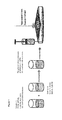
- FIG. 1 shows a schematic for 3D printing of aerogel materials using green laser light.
- FIG. 2 shows letters printed using mask, (A) on laminated paper, (B) on glass, (C) on a silicon wafer, (D) on glass, and letter “V” was dried at supercritical conditions and shown as: (E) without substrate, (F) on glass substrate, whereas (G) shows a line printed without mask on glass.
- the typical thickness of the letters is 2-4 mm whereas each letter has dimensions of 12 mm ⁇ 15 mm.
- FIG. 3 shows an FTIR spectrum of 3D printed samples after supercritical drying showing formation of silica network and acrylate polymer.
- FIG. 4 shows solid-state NMR 29 Si ( ⁇ 180 to ⁇ 40 ppm) and 13 C spectra (0 to 200 ppm) for supercritically-dried cross-linked aerogels.
- FIG. 5 shows SEM (left) and TEM (right) micrographs of the aerogel samples showing cross-linked secondary particles and a nano-porous structure.
- Aerogel refers to a synthetic porous ultralight material derived from a gel, in which the liquid component of the gel has been replaced by a gas. Aerogels can be produced by extracting the liquid component of the gel by supercritical drying.
- Alcogel refers to a substantially dilute cross-linked system which exhibits no flow in the steady state. By weight, alcogels are mostly liquid alcohol with a three-dimensional cross-linked network within the liquid alcohol.
- Alkoxide refers to the conjugate base of an alcohol and therefore consists of an organic group bonded to a negatively charged oxygen atom. Some alkoxysilanes are alkoxides.
- Alkoxysilane refers to compounds which contain an organic group bonded through an oxygen atom to a Si atom. Alkoxysilane refers to compounds of the general formula: R 1 O—SiR 2 R 3 R 4 , where R 1 is an organic group and R 2 , R 3 and R 4 can be the same or different and can be H, an organic group or O bonded to an organic group. Optionally, R 2 , R 3 and R 4 are the same as —OR 1 .
- alkyl refers to straight-chain or branched-chain hydrocarbons having 1, 2, 3, 4, 5, 6, 7, 8, 9, 10, 11, 12, 13, 14, 15, 16, 17, 18, 19 or 20 carbon atoms linked exclusively by single bonds and not having any cyclic structure.
- alkyl includes methyl, ethyl, n-propyl, isopropyl, n-butyl, isobutyl, sec-butyl, tert-butyl, pentyl, iso-amyl, hexyl, heptyl, octyl, noyl, decyl, undecyl, dodecyl tridecyl, tetradecyl, pentadecyl, hexadecyl, heptadecyl, octadecyl, nonadecyl and eicosyl.
- Aryl refers to substituted or unsubstituted aromatic hydrocarbons with a conjugated cyclic molecular ring structure of 3, 4, 5, 6, 7, 8, 9, 10, 11 or 12 carbon atoms.
- aryl includes monocyclic, bicyclic or polycyclic rings.
- aryl includes one to three additional ring structures selected from the group consisting of a cycloalkyl, a cycloalkenyl, a heterocycloalkyl, a heterocycloalkenyl, or a heteroaryl.
- aryl includes phenyl (benzenyl), thiophenyl, indolyl, naphthyl, totyl, xylyl, anthracenyl, phenanthryl, azulenyl, biphenyl, naphthalenyl, 1-methylnaphthalenyl, acenaphthenyl, acenaphthylenyl, anthracenyl, fluorenyl, phenalenyl, phenanthrenyl, benzo[a]anthracenyl, benzo[c]phenanthrenyl, chrysenyl, fluoranthenyl, pyrenyl, tetracenyl (naphthacenyl), triphenylenyl, anthanthrenyl, benzopyrenyl, benzo[a]pyrenyl, benzo[e]fluoranthenyl, benzo[ghi]perylen
- aryl refers to aryls substituted with 1, 2, 3, 4 or 5 substituents selected from the group consisting of H, lower alkyl, aryl, alkenyl, alkynyl, arylalkyl, alkoxy, aryloxy, arylalkoxy, alkoxyalkylaryl, alkylamino, arylamino, NH 2 , OH, CN, NO 2 , OCF 3 , CF 3 , Br, Cl, F, 1-amidino, 2-amidino, alkylcarbonyl, morpholino, piperidinyl, dioxanyl, pyranyl, heteroaryl, furanyl, thiophenyl, tetrazolo, thiazole, isothiazolo, imidazolo, thiadiazole, thiadiazole S-oxide, thiadiazole S,S-dioxide, pyrazolo, oxazole, isoxazole,
- “Gelation” refers to a method of forming a gel.
- “Instantaneous gelation” refers to gelation which occurs in 10 seconds or less, 9 seconds or less, 8 seconds or less, 7 seconds or less, 6 seconds or less, 5 seconds or less, 4 seconds or less, 3 seconds or less, 2 seconds or less, or 1 second or less.
- “Instantaneous polymerization” refers to polymerization which occurs in 10 seconds or less, 9 seconds or less, 8 seconds or less, 7 seconds or less, 6 seconds or less, 5 seconds or less, 4 seconds or less, 3 seconds or less, 2 seconds or less, or 1 second or less.
- Microwave radiation refers to electromagnetic waves having a wavelength in the range from 1 mm to 1 m and a frequency in the range from 300 GHz to 300 MHz.
- microwave radiation refers to electromagnetic waves as produced in microwave ovens, for example with a frequency of 2.45 GHz (wavelength 12 cm) plus or minus 10%, plus or minus 9%, plus or minus 8%, plus or minus 7%, plus or minus 6%, plus or minus 5%, plus or minus 4%, plus or minus 3%, plus or minus 2% or plus or minus 1%.
- “Monomer” refers to a molecule which may chemically bond to other molecules to form a polymer.
- Organic group refers to functional groups containing at least one carbon atom, for example substituted or unsubstituted alkyl, alkenyl, alkynyl or aryl groups.
- Photo-initiator refers to a molecule that creates reactive species when exposed to UV or visible light radiation.
- Polymerization refers to a method of forming a polymer from a plurality of monomers.
- “Silica network” refers to a solid comprising three dimensional intertwined clusters of silica, where the silica comprises 50% or less, 49% or less, 48% or less, 47% or less, 46% or less, 45% or less, 44% or less, 43% or less, 42% or less, 41% or less, 40% or less, 39% or less, 38% or less, 37% or less, 36% or less, 35% or less, 34% or less, 33% or less, 32% or less, 31% or less, 30% or less, 29% or less, 28% or less, 27% or less, 26% or less, 25% or less, 24% or less, 23% or less, 22% or less, 21% or less, 20% or less, 19% or less, 18% or less, 17% or less, 16% or less, 15% or less, 14% or less, 13% or less, 12% or less, 11% or less, 10% or less, 9% or less, 8% or less, 7% or less, 6% or less,
- Supercritical drying refers to a method of removing liquid in a controlled and precise way. Aerogels can be produced by extracting the liquid component of the gel by supercritical drying. This allows the liquid to be slowly dried off without causing the solid matrix in the gel to collapse from capillary action, as would happen with conventional evaporation.
- TEOS tetraethyl orthosilicate
- AlCl 3 .6H 2 O aluminum chloride hexahydrate
- TMSM trimethoxysilylpropyl methacrylate
- amine methyldiethanolethylamine
- Eosin Y Eosin Y
- Hexanedioldiacrylate (HDDA) was purchased from Sigma-Aldrich. All reagents were used as-received.
- An ethanol-water azeotrope mixture (containing 4.4% water and 95.6% pure ethanol by volume) was used as gelation solvent and as supercritical fluid in the drying method for the samples prepared.
- the methods of the presently claimed invention followed the same procedure for supercritically drying the samples as reported in a recent publication. 15 Briefly, the alcogels with or without their substrate were placed inside the supercritical dryer, a Parr Instruments model 4602 pressure vessel with a capacity of 2 liters. The pressure vessel was equipped with a thermal well and it was heated by three ceramic heaters, each with a power of 800 W. Heating rates were controlled by varying the power delivered to the heaters with a Variac. To prevent solvent evaporation from the alcogels before the supercritical point was reached, an excess volume (500 mL) vessel was heated to reach the supercritical temperature and pressure of the ethanol-water azeotrope mixture, kept at supercritical conditions for 20 minutes and then vented.
- an excess volume (500 mL) vessel was heated to reach the supercritical temperature and pressure of the ethanol-water azeotrope mixture, kept at supercritical conditions for 20 minutes and then vented.
- FTIR spectroscopic measurements were carried out using a Thermo Scientific Nicolet 6700. A smart iTR diamond ATR accessory was used. Background was subtracted each time while obtaining data from ATR accessory. For each sample, 64 scans were taken with data spacing of 0.482 cm ⁇ 1 and a resolution of 4 cm ⁇ 1 .
- CPMAS-TOSS solid-state NMR spectra were acquired on a Bruker DRX300WB spectrometer equipped with a 7 mm CPMAS probe. Each sample was packed into a 7 mm Zirconia rotor with Kel-F cap and then spun at 5 kHz at room temperature. The operating frequency was 75.48 and 59.62 MHz for 13 C and 29 Si, respectively. The contact time was 5 ms for 29 Si and 1 ms for 13 C and repetition time was 2 s for both nuclei. The measurement time was sample dependent because of number of scans ranging from 300 to 2000 for 13 C and 1000 to 2000 for 29 Si. A line broadening of 60 Hz ( 13 C) and 100 Hz ( 29 Si) for each was applied before Fourier transformation.
- a Scanning Electron Microscope (model: Hitachi SU-70) was used to image aerogel samples. The nominal thickness of the samples was ⁇ 1 mm, and they were placed on carbon conductive tabs adhered to the sample mount. A strip of adhesive copper tape, connecting the sample and sample mount, was placed in contact with each piece of aerogel to avoid charging during imaging. The samples were sputter coated for 30 seconds with gold and then imaged. High Resolution Transmission Electron Microscopy (HRTEM; model: JEOL JEM-2100F) was used for the morphological characterization of the samples.
- HRTEM High Resolution Transmission Electron Microscopy
- Solution A Abbreviated No. of Function Chemical name name Amount moles 1A Alkoxide Tetraethyl TEOS 0.88 ml 4.0 orthosilicate mmol 2A Lewis acid Aluminium chloride AlCl 3 •6H 2 O 1.35 ml (of 0.002 hexahydrate 0.015 g in 45 mmol ml EtOH) 3A Coupling 3-(trimethoxysilyl) MTMS 0.04 ml 0.2 agent propyl methacrylate (dissolved in mmol 0.5 mi EtOH)
- Solution B Abbreviated No. of Function Chemical name name Amount moles 1B Tertiary N- MDA 0.05 ml 0.45 amine (co- methyldiethanolamine mmol initiator) 2B Radical 2-(2,4,5,7-tetrabromo- Eosin Y 0.15 ml 0.87 photoinitiator 6-oxido-3-oxo-3H- (of mmol xanthenyl-9-yl) solution, benzoate 4 g/l in EtOH) 3B Monomer 1,6-hexanediol HDDA 1.1 ml 5.0 diacrylate mmol
- Eosin Y which absorbs in the green region of the visible spectrum, was used as the photo-initiator and the tertiary amine acted as co-initiator and pH modifier.
- Solution A was mixed with solution B and the resulting solution (sometimes referred to as the pre-gelation mixture in this specification) was heated in an 800 W microwave oven for 30 seconds.
- the present inventors found that the pre-gelation mixture was uniformly heated to from 50 to 60° C., thus forming a gel instantly. Instantaneous gelation is necessary to permit formation of an aerogel.
- a 2 Watt, continuous wave, diode-pumped solid-state laser emitting light at a wavelength of 532 nm was employed to apply laser light to the pre-gelation mixture.
- a laser source emitting light at a wavelength of 532 nm plus or minus 10% can be used.
- gelation will take longer if the power source is less than 2 Watts.
- charge is transferred between Eosin Y and the amine, resulting in a reduced radical dye and a radical capable of initiating polymerization. 16,17 During 3D printing, gelation was almost instantaneous upon irradiation.
- the solution preparation and 3D printing method is illustrated schematically in FIG. 1 .
- a layer by layer technique was used for 3D printing where solution mixture was added to a Petri dish covered with a stencil mask. Light was directed through the cut-out holes of the letters to gel the solution underneath and then another quantity of mixture was added. Light was redirected through the cut-out holes and it was repeated until the desired thickness of the letters was achieved.
- the aerogel material showed good adhesion to substrate and good rigidity as a self-standing object ( FIG. 2 ).
- the amount of the reagents stated in the tables referring to solution A or solution B list the molar amounts of the reactants.
- the molar amounts of each respective reactant, or the alternative reactants listed above can be changed by up to 25%, or up to 24%, or up to 23%, or up to 22%, or up to 21%, or up to 20%, or up to 19%, or up to 18%, or up to 17%, or up to 16%, or up to 15%, or up to 14%, or up to 13%, or up to 12%, or up to 11%, or up to 10%, or up to 9%, or up to 8%, or up to 7%, or up to 6%, or up to 5%, or up to 4%, or up to 3%, or up to 2%, or up to 1%.
- solution A was mixed with solution B and the resulting solution (sometimes referred to as the pre-gelation mixture in this specification) was heated in an 800 W microwave oven for 30 seconds.
- the microwave oven had a power of up to 1200 W, or up to 1100 W, or up to 1000 W, or up to 900 W, or up to 800 W, or up to 700 W, or up to 600 W, or up to 500 W, or up to 400 W.
- the resulting solution (sometimes referred to as the pre-gelation mixture in this specification) was heated by applying microwave radiation for up to 2 minutes, or up to 1.5 minutes, or up to 1 minute, or up to 50 seconds, or up to 40 seconds, or up to 30 seconds, or up to 20 seconds, or up to 10 seconds, or up to 5 seconds, or up to 4 seconds, or up to 3 seconds, or up to 2 seconds, or up to 1 second.
- the presently claimed method is particularly beneficial because instantaneous gelation spreads within seconds throughout the entirety of the exposed area.
- polymerization is believed to provide sufficient heat locally to raise the temperature and accelerate the gelation.
- the energy required by the condensation reaction is between 0.28 and 2.8 kcal mol ⁇ 1 . 18,22-24 This energy is about one order of magnitude lower than the energy ⁇ H liberated by the double bond conversion, and this also explains the observed rapid gelation.
- the direct heating by the laser beam may be considered a reason to cause gelation.
- the present inventors do not think that direct heating played a relevant role in this case.
- direct laser heating was employed to induce chemical reactions.
- a temperature increase was noticed only in the immediate vicinity (40 to 80 microns) when an infrared laser was employed and the laser was focused with a lens.
- the laser was not focused and green light was employed, which does not cause heating as infrared light does.
- FTIR analysis ( FIG. 3 ) was performed using a Thermo Scientific Nicolet 6700 instrument on the supercritically dried sample to confirm formation of both silica and polyacrylate structures.
- the spectrum shows the presence of a relatively large band at 1730 cm ⁇ 1 , which is attributed to the C ⁇ O stretch vibrations, whereas vibrations of C—O from the same ester groups of the polyacrylate appears at 1060 cm ⁇ 1 .
- the absence of a band around 1640 cm ⁇ 1 which corresponds to C ⁇ C (acrylic double bond), indicates the formation of polyacrylate and the engagement of TMSM through its acrylic group.
- the presence of bands maxima at positions 1160, 1090-1060, 980 structures in the system The bands centred around 1160 and 1090-1060 cm ⁇ 1 correspond to the intense silicon-oxygen covalent bond vibrations that confirm the formation of silica network.
- the absorption band around 980 cm ⁇ 1 corresponds to in-plane stretching vibrations of Si—O of the silanol Si—OH groups.
- the bands appearing around 1090 cm ⁇ 1 and the shoulder at around 1200 cm ⁇ 1 are assigned respectively to the transversal optical and longitudinal optical modes of the Si—O—Si asymmetric stretching vibrations.
- the band at 810 cm ⁇ 1 reflects symmetric stretching vibrations of Si—C—Si. 28
- the comparison of the spectra show formation of silica network and polymerization of HDDA monomer took place in both samples.
- Solid-state NMR analysis was performed on the samples using a Bruker DRX300WB spectrometer to further confirm the formation of both network structures and to find out any anomaly due to incomplete hydrolysis, condensation or polymerization during extraordinarily fast fabrication of aerogels.
- the spectrum obtained using 29 Si and 13 C modes are presented in FIG. 4 .
- the 29 Si spectra exhibit two major characteristic peaks at ⁇ 103.04 ppm due to silanol and ⁇ 111.52 ppm due to siloxane structures.
- a very small peak at ⁇ 67.67 ppm points toward a low concentration of tridentate bonding of TMSM to silica 29 which correlates to the small amount of TMSM in the system.
- Absence of peaks at ⁇ 52 ppm and ⁇ 59 ppm confirms presence of almost no mono or bidentate bonding of TMSM or TEOS to the silica framework which further confirms completion of the hydrolysis and condensation methods.
- Morphological evaluation of the aerogel materials was performed using SEM and TEM.
- the SEM and TEM micrographs for the 3D printed letters, depicted in FIG. 5 clearly show the formation and arrangement of secondary particles with a diameter between about 10 and 30 nm, as well as a clearly defined pore structure.
- Primary particles could not be observed in SEM because of the polymer cross-linking, as is customary for this class of materials.
- Polymer crosslinked aerogel materials prepared by the presently claimed method can be used to print 3D objects. Rapid and efficient production of aerogels occurs following the inclusion of a microwave heating step, prior to irradiation of the reactant mixture by laser light. Irradiation by laser light leads to instantaneous polymerization and gelation. Internal heat changes involved in the crosslinking reactions play an important role in overcoming the activation energy barrier for condensation reactions that lead to instantaneous formation of silica network structure.
Landscapes
- Chemical & Material Sciences (AREA)
- Organic Chemistry (AREA)
- Dispersion Chemistry (AREA)
- Chemical Kinetics & Catalysis (AREA)
- Engineering & Computer Science (AREA)
- Materials Engineering (AREA)
- Health & Medical Sciences (AREA)
- Medicinal Chemistry (AREA)
- Polymers & Plastics (AREA)
- Inorganic Chemistry (AREA)
- Silicon Polymers (AREA)
- Compositions Of Macromolecular Compounds (AREA)
Priority Applications (3)
| Application Number | Priority Date | Filing Date | Title |
|---|---|---|---|
| US15/151,059 US9745439B1 (en) | 2016-05-10 | 2016-05-10 | Methods of forming aerogels |
| PCT/GB2017/051270 WO2017194918A1 (en) | 2016-05-10 | 2017-05-08 | Methods of forming aerogels |
| EP17726977.6A EP3455166B1 (de) | 2016-05-10 | 2017-05-08 | Verfahren zum herstellen von aeorgelen |
Applications Claiming Priority (1)
| Application Number | Priority Date | Filing Date | Title |
|---|---|---|---|
| US15/151,059 US9745439B1 (en) | 2016-05-10 | 2016-05-10 | Methods of forming aerogels |
Publications (1)
| Publication Number | Publication Date |
|---|---|
| US9745439B1 true US9745439B1 (en) | 2017-08-29 |
Family
ID=58873835
Family Applications (1)
| Application Number | Title | Priority Date | Filing Date |
|---|---|---|---|
| US15/151,059 Active US9745439B1 (en) | 2016-05-10 | 2016-05-10 | Methods of forming aerogels |
Country Status (3)
| Country | Link |
|---|---|
| US (1) | US9745439B1 (de) |
| EP (1) | EP3455166B1 (de) |
| WO (1) | WO2017194918A1 (de) |
Cited By (7)
| Publication number | Priority date | Publication date | Assignee | Title |
|---|---|---|---|---|
| CN111004541A (zh) * | 2019-12-24 | 2020-04-14 | 中国科学院苏州纳米技术与纳米仿生研究所 | 二氧化硅气凝胶纤维的3d打印墨水及3d打印制备方法 |
| CN111233443A (zh) * | 2020-02-23 | 2020-06-05 | 西北工业大学 | 一种高固相含量3d打印陶瓷型芯浆料及制备方法 |
| CN111825879A (zh) * | 2019-04-10 | 2020-10-27 | 中国科学院化学研究所 | 一种用于3d打印气凝胶的前驱溶液及3d打印方法 |
| CN113511656A (zh) * | 2020-04-09 | 2021-10-19 | 中国科学院化学研究所 | 一种二氧化硅基气凝胶、其复合材料及其制备方法与应用 |
| CN114957779A (zh) * | 2022-06-10 | 2022-08-30 | 湖北工业大学 | 一种可吸附染料与抗盐的油水分离水凝胶的制备方法 |
| CN115124756A (zh) * | 2022-07-14 | 2022-09-30 | 中国人民解放军国防科技大学 | 一种紫外辅助3d打印聚合物交联氧化硅气凝胶的制备方法 |
| CN120208577A (zh) * | 2025-03-17 | 2025-06-27 | 陕西九域山水生态科技有限公司 | 一种气凝胶@mof复合材料及其制备方法与应用 |
Families Citing this family (2)
| Publication number | Priority date | Publication date | Assignee | Title |
|---|---|---|---|---|
| US12351696B2 (en) | 2019-05-02 | 2025-07-08 | National Research Council Of Canada | Copolymer-silica hybrid aerogels and methods for the preparation thereof |
| DE102024209915A1 (de) * | 2024-10-11 | 2026-04-16 | Fraunhofer-Gesellschaft zur Förderung der angewandten Forschung eingetragener Verein | Silica-Cluster, Lösung zur Herstellung einer Beschichtung, Verfahren zur Beschichtung eines Substrates sowie beschichteter Gegenstand, Verwendung der Silica-Cluster, Kosmetikum sowie Pharmazeutikum |
Citations (5)
| Publication number | Priority date | Publication date | Assignee | Title |
|---|---|---|---|---|
| US4904504A (en) * | 1987-09-08 | 1990-02-27 | Kansai Paint Company, Limited | Method of preventing adhesion of organisms |
| WO2003072155A1 (en) | 2002-02-21 | 2003-09-04 | Encelle, Inc. | Cross-linked bioactive hydrogel matrices |
| US20050192366A1 (en) * | 2004-01-06 | 2005-09-01 | Aspen Aerogels, Inc. | Ormosil aerogels containing silicon bonded polymethacrylate |
| US20060281828A1 (en) * | 2005-06-09 | 2006-12-14 | Pentax Corporation | Method for producing silica aerogel coating |
| US8227363B2 (en) | 2004-11-03 | 2012-07-24 | Ohio Aerospace Institute | Highly porous and mechanically strong ceramic oxide aerogels |
Family Cites Families (3)
| Publication number | Priority date | Publication date | Assignee | Title |
|---|---|---|---|---|
| JP5599522B2 (ja) * | 2011-01-10 | 2014-10-01 | コチ・ウニヴェルシテシ | 表面開始光重合を介するpegヒドロゲルでの被包化疎水性および親水性エアロゲル |
| FR3018207B1 (fr) * | 2014-03-07 | 2016-03-18 | Enersens | Procede de fabrication d'aerogels par chauffage dielectrique |
| WO2016019308A1 (en) * | 2014-07-31 | 2016-02-04 | Virginia Commonwealth University | Method for one-step synthesis, cross-linking and drying of aerogels |
-
2016
- 2016-05-10 US US15/151,059 patent/US9745439B1/en active Active
-
2017
- 2017-05-08 EP EP17726977.6A patent/EP3455166B1/de active Active
- 2017-05-08 WO PCT/GB2017/051270 patent/WO2017194918A1/en not_active Ceased
Patent Citations (6)
| Publication number | Priority date | Publication date | Assignee | Title |
|---|---|---|---|---|
| US4904504A (en) * | 1987-09-08 | 1990-02-27 | Kansai Paint Company, Limited | Method of preventing adhesion of organisms |
| WO2003072155A1 (en) | 2002-02-21 | 2003-09-04 | Encelle, Inc. | Cross-linked bioactive hydrogel matrices |
| US8957050B2 (en) | 2002-02-21 | 2015-02-17 | Pioneer Surgical Technology, Inc. | Bone implant materials comprising cross-linked bioactive hydrogel matrices |
| US20050192366A1 (en) * | 2004-01-06 | 2005-09-01 | Aspen Aerogels, Inc. | Ormosil aerogels containing silicon bonded polymethacrylate |
| US8227363B2 (en) | 2004-11-03 | 2012-07-24 | Ohio Aerospace Institute | Highly porous and mechanically strong ceramic oxide aerogels |
| US20060281828A1 (en) * | 2005-06-09 | 2006-12-14 | Pentax Corporation | Method for producing silica aerogel coating |
Non-Patent Citations (42)
| Title |
|---|
| Anderson, et al., "Silica aerogels prepared via rapid supercritical extraction: Effect of process variables on aerogel properties", Journal of Non-Crystalline Solids, 355, 2009, pp. 101-108. |
| Avens, et al., "Mechanism of Cyclic Dye Regeneration During Eosin-Sensitized Photoinitiation in the Presence of Polymerization Inhibitors", Journal of Polymer Science, Part A, vol. 47, issue 22, 2009, pp. 6083-6094. |
| Baetens, et al., "Aerogel insulation for building applications: A state-of-the-art review", Energy and Buildings, 42, 2011, pp. 761-769. |
| Burget, et al., "Photopolymerizaton of thiol-allyl ether and thiol-acrylate coatings with visible light photosensitive systems", Polymer, 45, issue 19, 2004, pp. 6561-6567. |
| C. Wingfield, "Fabrication of Anisotropic Sol-gel Materials by Photo-Crosslinking", Virginia Commonwealth University, Graduate School, 2012, pp. 1-29. |
| Cevik, et al., "Visible-Light-Induced Synthesis of pH Responsive Composite Hydrogels for Controlled Delivery of an Anticonvulsant Drug Pregabalin", Acta Biomaterialia, Jan. 2015, 35 pages. |
| Coherent. Verdi V Series. Accessed via Wayback Machine to Apr. 26, 2014. Available at http://coherent.com/products/?1852/Verdi-V-Series. * |
| Duran, et al., "Structural Considerations About SiO2 Glasses Prepared by Sol-Gel", Journal of Non-Crystalline Solids, 32, 1986, pp. 69-77. |
| Ek, et al., "A 29Si and 13C CP/MAS NMR Study on the Surface Species of Gas-Phase-Deposited y-Aminopropylalkoxysilanes on Heat-Treated Silica", J. Phy. Chem. B, 108, 2004, pp. 11454-11463. |
| Franzel, et al., "Regioselective cross-linking of silica aerogels with magesium silicate ceramics", J. Mater. Chem. A, 1, 2013, pp. 6021-6029. |
| Friberg, et al., "Reaction between Copper Nitrate Hydrate and Tetraethoxysilane in Methanol. A 29Si NMR Investigation", J. Phys. Chem, 98, 1994, pp. 13528-13531. |
| Giray, et al., "PEG Hydrogel Encapsulation of Eosin Functionalized Hydrophobic Aerogels via Supercritical Fluid Routes", Dept. of Chemical and Biological Engineering, Ko University, Istanbul, Turkey, 6 pages, May 2010. |
| Gopal, et al., "EPR, optical, infrared and Raman spectral studies of Actinolite mineral", Spectrochimica acta. Part A., vol. 60, 2004, pp. 2441-2448. |
| Heckman, et al., "Sol-Gel Materials for High Capacity, Rapid Removal of Metal Contaminants", Separation Science and Technology, 43, 2008, pp. 1474-1487. |
| Horie, et al., "Calorimetric Investigation of Polymerization Reactions. V. Crosslinked Copolymerization of Methyl Methacrylate with Ethylene Dimethacrylate", Journal of Polymer Science, vol. 13, 1975, pp. 445-454. |
| Hrubesh, et al., Solvent removal from water with hydrophobic aerogels, Journal of Non-Crystalline Solids, 285, 2001, pp. 328-332. |
| K. G. Sharp, "A Two-Component, Non-Aqueous Route to Silica Gel", Journal of Sol-Gel Science and Technology, 2, 1994, pp. 35-41. |
| Kim, et al., "Synthesis of window glazing coated with silica aerogel films via ambient drying", Journal of Non-Crystalline Solids, vol. 320, issue 1-3, 2003, pp. 125-132. |
| Leventis, et al., "Nanoengineering Strong Silica Aerogels", Nano Letters, vol. 2, No. 9, 2002, pp. 957-960. |
| Leventis, et al., "Polymer-Crosslinked Aerogels", Aerogels Handbook, 2011, pp. 251-285. |
| Lewis, et al., "NMR and Electron Microscopic Investigation of Polymerized Coatings Prepared from Methacrylate-Functionalized Silica in an Acrylic Monomer Matrix", Chem. Mater. 7, 1995, pp. 1369-1375. |
| Lu, et al., "Mechanical Characterization of Aerogels", Aerogels Handbook, 2011, pp. 499-535. |
| M. Bertino, "Anisotropic Aerogels by Photolithography", Aerogels Handbook, 2011, pp. 403-418. |
| Maleki, H.; Duraes, L.; Portugal, A. An overview on silica aerogels synthesis and different mechanical reinforcement strategies. Journal of Non-Crystalline Solids 385 (2014) 55-74. * |
| Matsuoka et al., "Heat of Reaction of the Hydrolysis-Polymerization of Tetraethyl Orthosiliate in Acidic Condition", Journal of Sol-Gel Science and Technology, 19, 2000, pp. 661-664. |
| Maury, et al., "Influence of the sol-gel chemistry on the activity of a lipase encapsulated in a silica aerogel", Journal of Molecular Catalysis, vol. 29, issue 1-6, 2004, pp. 133-148. |
| Miyazaki, et al., "Polymerization of multifunctional methacrylates and acrylates", Journal of Biomedical Materials R0.esearch. vol. 22, 1988, pp. 1011-1022. |
| Osterholtz, et al., "Kinetics of the hydrolysis and condensation of organofunctional alkoxysilanes: a review", J. Adhesion Sci. Technol., vol. 6, No. 1, 1992, pp. 127-149. |
| Pope, E.J.A.; Mackenzie, J.D. Sol-Gel Processing of Silica II. The role of the catalyst. Nov. 20, 1985. Journal of Non-Crystalline Solids 87 (1986) 185-198. * |
| S. Jones, "A method for producing gradient density aerogel", J. Sol-Gel Sci Technol, 44, 2007, pp. 255-258. |
| Saeed et al., "Rapid fabrication of cross-linked silica aerogel by laser induced gelation", Microporous and Mesoporous Materials, 221, 2016, pp. 245-252. |
| Saeed, et al., "Laser induced instantaneous gelation: aerogels for 3D printing", J. Mater. Chem. A, 3, 2015, pp. 17606-17611. |
| Sakka, et al., "The Sol-Gel Transition in the Hydrolysis of Metal Alkoxides in Relation to the Formation of Glass Fibers and Films", Journal of Non-Crystalline Solids, 48, 1982, pp. 31-46. |
| Schmidt, et al., "Applications for silica aerogel products", Journal of Non-Crystalline Solids, 225, 1998, pp. 364-368. |
| Schneider, et al., Aerogels in Catalysis, Catal. Rev.-Sci. Eng., 37(4), 1995, pp. 515-556. |
| Shaukat Saeed, Rola M. Al Soubaihi, Lauren S. White, Massimo F. Bertino, Khaled M. Saoud. "Rapid fabrication of cross-linked silica aerogel by laser induced gelation". Microporous and Mesoporous Materials vol. 221, Feb. 2016, pp. 245-252. * |
| Shaukat Saeed, Rola M. Al-Sobaihi, Massimo F. Bertino, Lauren S. White and Khaled M. Saoud. "Laser induced instantaneous gelation: aerogels for 3D printing". J. Mater. Chem. A, 2015,3, 17606-17611. * |
| Translation of FR 3018207 by Bonnardel et al. Published Sep. 11, 2015. * |
| White, et al., "Influence of silica derivatizer and monomer functionality and concentration on the mechanical properties of rapid synthesis cross-linked aerogels", Microporous and Mesoporous Materials, 217, 2015, pp. 244-252. |
| White, et al., "Shortened aerogel fabrication times using an ethanol-water azeotrope as a gelation and drying solvent", J. Mater. Chem. A, 3, 2015, pp. 762-772. |
| Wingfield, C.; Franzel, L.; Bertino, M.; Leventis, N. Fabrication of functionally graded aerogels, cellular aerogels and anisotropic ceramics. Journal of Materials Chemistry, 2011, 21, 11737. * |
| Wingfield, et al., "Fabrication of functionality graded aerogels, cellular aerogels and anisotropic ceramics", J. Mater. Chem., 21, 2011, pp. 11741-11741. |
Cited By (12)
| Publication number | Priority date | Publication date | Assignee | Title |
|---|---|---|---|---|
| CN111825879A (zh) * | 2019-04-10 | 2020-10-27 | 中国科学院化学研究所 | 一种用于3d打印气凝胶的前驱溶液及3d打印方法 |
| CN111825879B (zh) * | 2019-04-10 | 2022-06-14 | 中国科学院化学研究所 | 一种用于3d打印气凝胶的前驱溶液及3d打印方法 |
| CN111004541A (zh) * | 2019-12-24 | 2020-04-14 | 中国科学院苏州纳米技术与纳米仿生研究所 | 二氧化硅气凝胶纤维的3d打印墨水及3d打印制备方法 |
| CN111004541B (zh) * | 2019-12-24 | 2022-03-08 | 中国科学院苏州纳米技术与纳米仿生研究所 | 二氧化硅气凝胶纤维的3d打印墨水及3d打印制备方法 |
| CN111233443A (zh) * | 2020-02-23 | 2020-06-05 | 西北工业大学 | 一种高固相含量3d打印陶瓷型芯浆料及制备方法 |
| CN113511656A (zh) * | 2020-04-09 | 2021-10-19 | 中国科学院化学研究所 | 一种二氧化硅基气凝胶、其复合材料及其制备方法与应用 |
| CN113511656B (zh) * | 2020-04-09 | 2023-09-01 | 中国科学院化学研究所 | 一种二氧化硅基气凝胶、其复合材料及其制备方法与应用 |
| CN114957779A (zh) * | 2022-06-10 | 2022-08-30 | 湖北工业大学 | 一种可吸附染料与抗盐的油水分离水凝胶的制备方法 |
| CN115124756A (zh) * | 2022-07-14 | 2022-09-30 | 中国人民解放军国防科技大学 | 一种紫外辅助3d打印聚合物交联氧化硅气凝胶的制备方法 |
| CN115124756B (zh) * | 2022-07-14 | 2023-06-06 | 中国人民解放军国防科技大学 | 一种紫外辅助3d打印聚合物交联氧化硅气凝胶的制备方法 |
| CN120208577A (zh) * | 2025-03-17 | 2025-06-27 | 陕西九域山水生态科技有限公司 | 一种气凝胶@mof复合材料及其制备方法与应用 |
| CN120208577B (zh) * | 2025-03-17 | 2025-09-09 | 陕西九域山水生态科技有限公司 | 一种气凝胶@mof复合材料及其制备方法与应用 |
Also Published As
| Publication number | Publication date |
|---|---|
| WO2017194918A1 (en) | 2017-11-16 |
| EP3455166B1 (de) | 2025-06-25 |
| EP3455166A1 (de) | 2019-03-20 |
Similar Documents
| Publication | Publication Date | Title |
|---|---|---|
| EP3455166B1 (de) | Verfahren zum herstellen von aeorgelen | |
| Saeed et al. | Laser induced instantaneous gelation: aerogels for 3D printing | |
| Saeed et al. | Rapid fabrication of cross-linked silica aerogel by laser induced gelation | |
| US10260670B2 (en) | Preparation method of silica aerogel-containing blanket and silica aerogel-containing blanket prepared by using the same | |
| KR101750584B1 (ko) | 다공질 실리카의 제조 방법 및 다공질 실리카 | |
| Bhagat et al. | Surface chemical modification of TEOS based silica aerogels synthesized by two step (acid–base) sol–gel process | |
| Innocenzi et al. | Sol-gel reactions of 3-glycidoxypropyltrimethoxysilane in a highly basic aqueous solution | |
| Zolotareva et al. | -Diketones and their derivatives in sol–gel processes | |
| Prabunathan et al. | Achieving low dielectric, surface free energy and UV shielding green nanocomposites via reinforcing bio-silica aerogel with polybenzoxazine | |
| CN102046699A (zh) | 制备多孔材料的方法和通过该方法制备的多孔材料 | |
| Amini et al. | Synthesis and Characterization of Amorphous Nano‐Alumina Powders with High Surface Area for Biodiesel Production | |
| US10294378B2 (en) | Method for manufacturing hybrid packaging material | |
| Chen et al. | Vacuum-dried flexible hydrophobic aerogels using bridged methylsiloxane as reinforcement: performance regulation with alkylorthosilicate or alkyltrimethoxysilane co-precursors | |
| Hano et al. | Monodisperse surface-charge-controlled black nanoparticles for near-infrared shielding | |
| Ruff et al. | Surface structuring of mesoporous materials by controlled synthesis of nanocavities | |
| Hurwitz et al. | The role of phase changes in maintaining pore structure on thermal exposure of aluminosilicate aerogels | |
| Handke et al. | Amorphous SiCxOy coatings from ladder-like polysilsesquioxanes | |
| CN103482663A (zh) | 一种高比表面积块状氧化铝气凝胶的制备方法 | |
| Hassanpour et al. | Fabrication and characterization of inorganic–organic hybrid copper ferrite anchored on chitosan Schiff base as a reusable green catalyst for the synthesis of indeno [1, 2-b] indolone derivatives | |
| EP3202838A1 (de) | Poröser silikonkörper und verfahren zur herstellung eines porösen silikonkörpers | |
| Castellanos et al. | Synthesis and characterization of poly (methyl methacrylate)-boehmite nanocomposites by direct microemulsion polymerization combined with the in-situ sol-gel method | |
| Milea et al. | Sol–gel Al2O3 powders—matrix in solar thermal absorbers | |
| Zhang et al. | Preparation of ZrO2–SiO2 mixed oxide by combination of sol–gel and alcohol-aqueous heating method and its application in tetrahydrofuran polymerization | |
| Yu et al. | One-step fabrication and high photocatalytic activity of porous graphitic carbon nitride/graphene oxide hybrid by direct polymerization of cyanamide without templates | |
| Yen et al. | Sol–gel synthesis of organic–inorganic hybrid materials comprising boehmite, silica, and thiazole dye |
Legal Events
| Date | Code | Title | Description |
|---|---|---|---|
| AS | Assignment |
Owner name: QATAR FOUNDATION FOR EDUCATION, SCIENCE AND COMMUN Free format text: ASSIGNMENT OF ASSIGNORS INTEREST;ASSIGNORS:SAOUD, KHALED M.;SAEED, SHAUKAT;REEL/FRAME:039139/0870 Effective date: 20160615 |
|
| STCF | Information on status: patent grant |
Free format text: PATENTED CASE |
|
| CC | Certificate of correction | ||
| MAFP | Maintenance fee payment |
Free format text: PAYMENT OF MAINTENANCE FEE, 4TH YEAR, LARGE ENTITY (ORIGINAL EVENT CODE: M1551); ENTITY STATUS OF PATENT OWNER: LARGE ENTITY Year of fee payment: 4 |
|
| MAFP | Maintenance fee payment |
Free format text: PAYMENT OF MAINTENANCE FEE, 8TH YEAR, LARGE ENTITY (ORIGINAL EVENT CODE: M1552); ENTITY STATUS OF PATENT OWNER: LARGE ENTITY Year of fee payment: 8 |