EP3402486B1 - Ccx168 for use in the treatment of c3 glomerulopathy - Google Patents
Ccx168 for use in the treatment of c3 glomerulopathy Download PDFInfo
- Publication number
- EP3402486B1 EP3402486B1 EP17738902.0A EP17738902A EP3402486B1 EP 3402486 B1 EP3402486 B1 EP 3402486B1 EP 17738902 A EP17738902 A EP 17738902A EP 3402486 B1 EP3402486 B1 EP 3402486B1
- Authority
- EP
- European Patent Office
- Prior art keywords
- compound
- group
- human
- treatment
- complement
- Prior art date
- Legal status (The legal status is an assumption and is not a legal conclusion. Google has not performed a legal analysis and makes no representation as to the accuracy of the status listed.)
- Active
Links
Images
Classifications
-
- A—HUMAN NECESSITIES
- A61—MEDICAL OR VETERINARY SCIENCE; HYGIENE
- A61K—PREPARATIONS FOR MEDICAL, DENTAL OR TOILETRY PURPOSES
- A61K31/00—Medicinal preparations containing organic active ingredients
- A61K31/33—Heterocyclic compounds
- A61K31/395—Heterocyclic compounds having nitrogen as a ring hetero atom, e.g. guanethidine or rifamycins
- A61K31/435—Heterocyclic compounds having nitrogen as a ring hetero atom, e.g. guanethidine or rifamycins having six-membered rings with one nitrogen as the only ring hetero atom
- A61K31/44—Non condensed pyridines; Hydrogenated derivatives thereof
- A61K31/445—Non condensed piperidines, e.g. piperocaine
- A61K31/451—Non condensed piperidines, e.g. piperocaine having a carbocyclic group directly attached to the heterocyclic ring, e.g. glutethimide, meperidine, loperamide, phencyclidine, piminodine
-
- A—HUMAN NECESSITIES
- A61—MEDICAL OR VETERINARY SCIENCE; HYGIENE
- A61K—PREPARATIONS FOR MEDICAL, DENTAL OR TOILETRY PURPOSES
- A61K31/00—Medicinal preparations containing organic active ingredients
- A61K31/33—Heterocyclic compounds
- A61K31/395—Heterocyclic compounds having nitrogen as a ring hetero atom, e.g. guanethidine or rifamycins
- A61K31/435—Heterocyclic compounds having nitrogen as a ring hetero atom, e.g. guanethidine or rifamycins having six-membered rings with one nitrogen as the only ring hetero atom
- A61K31/44—Non condensed pyridines; Hydrogenated derivatives thereof
- A61K31/445—Non condensed piperidines, e.g. piperocaine
- A61K31/4523—Non condensed piperidines, e.g. piperocaine containing further heterocyclic ring systems
- A61K31/454—Non condensed piperidines, e.g. piperocaine containing further heterocyclic ring systems containing a five-membered ring with nitrogen as a ring hetero atom, e.g. pimozide, domperidone
-
- A—HUMAN NECESSITIES
- A61—MEDICAL OR VETERINARY SCIENCE; HYGIENE
- A61K—PREPARATIONS FOR MEDICAL, DENTAL OR TOILETRY PURPOSES
- A61K31/00—Medicinal preparations containing organic active ingredients
- A61K31/33—Heterocyclic compounds
- A61K31/395—Heterocyclic compounds having nitrogen as a ring hetero atom, e.g. guanethidine or rifamycins
- A61K31/495—Heterocyclic compounds having nitrogen as a ring hetero atom, e.g. guanethidine or rifamycins having six-membered rings with two or more nitrogen atoms as the only ring heteroatoms, e.g. piperazine or tetrazines
- A61K31/505—Pyrimidines; Hydrogenated pyrimidines, e.g. trimethoprim
- A61K31/517—Pyrimidines; Hydrogenated pyrimidines, e.g. trimethoprim ortho- or peri-condensed with carbocyclic ring systems, e.g. quinazoline, perimidine
-
- A—HUMAN NECESSITIES
- A61—MEDICAL OR VETERINARY SCIENCE; HYGIENE
- A61K—PREPARATIONS FOR MEDICAL, DENTAL OR TOILETRY PURPOSES
- A61K31/00—Medicinal preparations containing organic active ingredients
- A61K31/33—Heterocyclic compounds
- A61K31/395—Heterocyclic compounds having nitrogen as a ring hetero atom, e.g. guanethidine or rifamycins
- A61K31/55—Heterocyclic compounds having nitrogen as a ring hetero atom, e.g. guanethidine or rifamycins having seven-membered rings, e.g. azelastine, pentylenetetrazole
- A61K31/551—Heterocyclic compounds having nitrogen as a ring hetero atom, e.g. guanethidine or rifamycins having seven-membered rings, e.g. azelastine, pentylenetetrazole having two nitrogen atoms, e.g. dilazep
-
- A—HUMAN NECESSITIES
- A61—MEDICAL OR VETERINARY SCIENCE; HYGIENE
- A61K—PREPARATIONS FOR MEDICAL, DENTAL OR TOILETRY PURPOSES
- A61K45/00—Medicinal preparations containing active ingredients not provided for in groups A61K31/00 - A61K41/00
- A61K45/06—Mixtures of active ingredients without chemical characterisation, e.g. antiphlogistics and cardiaca
-
- A—HUMAN NECESSITIES
- A61—MEDICAL OR VETERINARY SCIENCE; HYGIENE
- A61K—PREPARATIONS FOR MEDICAL, DENTAL OR TOILETRY PURPOSES
- A61K9/00—Medicinal preparations characterised by special physical form
- A61K9/0012—Galenical forms characterised by the site of application
- A61K9/0053—Mouth and digestive tract, i.e. intraoral and peroral administration
-
- A—HUMAN NECESSITIES
- A61—MEDICAL OR VETERINARY SCIENCE; HYGIENE
- A61P—SPECIFIC THERAPEUTIC ACTIVITY OF CHEMICAL COMPOUNDS OR MEDICINAL PREPARATIONS
- A61P13/00—Drugs for disorders of the urinary system
-
- A—HUMAN NECESSITIES
- A61—MEDICAL OR VETERINARY SCIENCE; HYGIENE
- A61P—SPECIFIC THERAPEUTIC ACTIVITY OF CHEMICAL COMPOUNDS OR MEDICINAL PREPARATIONS
- A61P13/00—Drugs for disorders of the urinary system
- A61P13/12—Drugs for disorders of the urinary system of the kidneys
Definitions
- C3 glomerulopathy is a rare disease of the kidney (the prevalence of C3G is estimated at 2-3 per 1,000,000 people).
- C3G is characterized by deposition of the protein known as C3 (a component of the body's complement system) in the filtration units (the glomeruli) of the kidney, indicating complement involvement in causing kidney damage.
- C3 glomerulopathy is characterized by evidence of alternative complement activation based on C3 deposition in the glomeruli.
- DDD dense deposit disease
- MPGN membranoproliferative glomerulonephritis
- C3GN C3 glomerulonephritis
- C3 glomerulopathy Genetic lesions leading to defective complement regulation, including mutations in complement factor H (CFH) have been described in these patients.
- C3 glomerulopathy often have high proteinuria and progressive deterioration in renal function.
- C3GN There is no approved treatment for patients with C3 glomerulopathy, including C3GN.
- C3G Invariably leads to kidney failure, and kidney transplant is frequently the only option. Even after transplantation, the new kidney will frequently fail due to recurrence of the disease.
- the present disclosure is directed to a compound for use in a method of treating a human suffering from or susceptible to C3 glomerulopathy comprising administering to the human an effective amount of the compound, wherein the compound is a C5aR antagonist as defined in the claims.
- alkynyl refers to an unsaturated alkyl group having one or more triple bonds.
- unsaturated alkyl groups include vinyl, 2-propenyl, crotyl, 2-isopentenyl, 2-(butadienyl), 2,4-pentadienyl, 3-(1,4-pentadienyl), ethynyl, 1- and 3-propynyl, 3-butynyl, and the higher homologs and isomers.
- cycloalkyl refers to hydrocarbon rings having the indicated number of ring atoms ( e.g.
- Cycloalkyl is also meant to refer to bicyclic and polycyclic hydrocarbon rings such as, for example, bicyclo[2.2.1]heptane, bicyclo[2.2.2]octane, etc.
- heterocycloalkyl refers to a cycloalkyl group that contain from one to five heteroatoms selected from N, O, and S, wherein the nitrogen and sulfur atoms are optionally oxidized, and the nitrogen atom(s) are optionally quaternized.
- heteroalkyl by itself or in combination with another term, means, unless otherwise stated, a stable straight or branched chain, or cyclic hydrocarbon radical, or combinations thereof, consisting of the stated number of carbon atoms and from one to three heteroatoms selected from the group consisting of O, N, Si and S, and wherein the nitrogen and sulfur atoms may optionally be oxidized and the nitrogen heteroatom may optionally be quaternized.
- the heteroatom(s) O, N and S may be placed at any interior position of the heteroalkyl group.
- the heteroatom Si may be placed at any position of the heteroalkyl group, including the position at which the alkyl group is attached to the remainder of the molecule.
- halo or halogen
- substituents mean, unless otherwise stated, a fluorine, chlorine, bromine, or iodine atom.
- terms such as “haloalkyl,” are meant to include monohaloalkyl and polyhaloalkyl.
- C 1 - 4 haloalkyl is mean to include trifluoromethyl, 2,2,2-trifluoroethyl, 4-chlorobutyl, 3-bromopropyl, and the like.
- alkyl in some embodiments, will include both substituted and unsubstituted forms of the indicated radical. Preferred substituents for each type of radical are provided below.
- aryl and heteroaryl will refer to substituted or unsubstituted versions as provided below, while the term “alkyl” and related aliphatic radicals is meant to refer to unsubstituted version, unless indicated to be substituted.
- Two of the substituents on adjacent atoms of the aryl or heteroaryl ring may optionally be replaced with a substituent of the formula -T-C(O)-(CH 2 ) q -U-, wherein T and U are independently -NH-, -O-, -CH 2 - or a single bond, and q is an integer of from 0 to 2.
- two of the substituents on adjacent atoms of the aryl or heteroaryl ring may optionally be replaced with a substituent of the formula -A-(CH 2 ) r -B-, wherein A and B are independently -CH 2 -, -O-, -NH-, -S-, -S(O)-, -S(O) 2 -, -S(O) 2 NR'- or a single bond, and r is an integer of from 1 to 3.
- One of the single bonds of the new ring so formed may optionally be replaced with a double bond.
- two of the substituents on adjacent atoms of the aryl or heteroaryl ring may optionally be replaced with a substituent of the formula -(CH 2 ) s -X-(CH 2 ) t - , where s and t are independently integers of from 0 to 3, and X is -O-, -NR'-, -S-, -S(O)-, - S(O) 2 -, or -S(O) 2 NR'-.
- the substituent R' in -NR'- and -S(O) 2 NR'- is selected from hydrogen or unsubstituted C 1 - 6 alkyl.
- heteroatom is meant to include oxygen (O), nitrogen (N), sulfur (S) and silicon (Si).
- salts are meant to include salts of the active compounds which are prepared with relatively nontoxic acids or bases, depending on the particular substituents found on the compounds described herein.
- base addition salts can be obtained by contacting the neutral form of such compounds with a sufficient amount of the desired base, either neat or in a suitable inert solvent.
- salts derived from pharmaceutically-acceptable inorganic bases include aluminum, ammonium, calcium, copper, ferric, ferrous, lithium, magnesium, manganic, manganous, potassium, sodium, zinc and the like.
- salts of amino acids such as arginate and the like, and salts of organic acids like glucuronic or galactunoric acids and the like (see, for example, Berge, S.M., et al, "Pharmaceutical Salts", Journal of Pharmaceutical Science, 1977, 66, 1-19 ).
- Certain specific compounds of the present disclosure contain both basic and acidic functionalities that allow the compounds to be converted into either base or acid addition salts.
- the neutral forms of the compounds may be regenerated by contacting the salt with a base or acid and isolating the parent compound in the conventional manner.
- the parent form of the compound differs from the various salt forms in certain physical properties, such as solubility in polar solvents, but otherwise the salts are equivalent to the parent form of the compound for the purposes of the present disclosure.
- a compound for use in a method of treating a human suffering from or susceptible to complement 3 glomerulopathy comprising administering to the human an effective amount of the compound, wherein the compound has the formula (I), or a pharmaceutically acceptable salt thereof, wherein
- the compound has the formula (Ia):
- the compound has the formula (Ib): wherein
- the compound has the formula (Ic): wherein
- the compound has the formula (Id): wherein
- the compound has the formula (Ie): wherein p is 0, 1 or 2.
- the compound is selected from the group consisting of or a pharmaceutically acceptable salt thereof.
- the compound is or a pharmaceutically acceptable salt thereof.
- a compound for use in a method of slowing the rate of decline in Estimated Glomerular Filtration Rate (eGFR) in a human suffering from or susceptible to C3 glomerulopathy comprising administering to the human an effective amount of the compound, wherein the compound has the formula (I), or a pharmaceutically acceptable salt thereof, wherein
- the compound has the formula (Ie): wherein p is 0, 1 or 2.
- the compound is or a pharmaceutically acceptable salt thereof.
- a compound for use in a method of reducing glomerular inflammation in a human suffering from or susceptible to C3 glomerulopathy comprising administering to the human an effective amount of the compound, wherein the compound has the formula (I), or a pharmaceutically acceptable salt thereof, wherein
- the compound has the formula (Ie):
- the compound is or a pharmaceutically acceptable salt thereof.
- a compound for use in a method of reducing C3 deposits and/or C5b-9 deposits in a human suffering from or susceptible to C3 glomerulopathy comprising administering to the human an effective amount of the compound, wherein the compound has the formula (I), or a pharmaceutically acceptable salt thereof, wherein
- the compound has the formula (Ie): wherein p is 0, 1 or 2.
- the compound is or a pharmaceutically acceptable salt thereof.
- the human suffers from complement 3 glomerulonephritis. In some embodiments, the human suffers from progressive complement 3 glomerulonephritis. In some embodiments, the human suffers from recurrent complement 3 glomerulonephritis after a renal transplant. In some embodiments, the human suffers from dense deposit disease.
- a compound for use in a method of clearing glomerular endocapillary proliferation in a human suffering from or susceptible to C3 glomerulopathy comprising administering to the human an effective amount of the compound, wherein the compound has the formula (I), or a pharmaceutically acceptable salt thereof, wherein
- the compound has the formula (Ie): wherein p is 0, 1 or 2.
- the compound is or a pharmaceutically acceptable salt thereof.
- a compound for use in a method of reducing glomerular inflammatory macrophages in a human suffering from or susceptible to C3 glomerulopathy comprising administering to the human an effective amount of the compound, wherein the compound has the formula (I), or a pharmaceutically acceptable salt thereof, wherein
- the compound has the formula (Ie): wherein p is 0, 1 or 2.
- the compound is or a pharmaceutically acceptable salt thereof.
- a compound for use in a method of reducing proteinuria in a human suffering from or susceptible to C3 glomerulopathy comprising administering to the human an effective amount of the compound, wherein the compound has the formula (I), or a pharmaceutically acceptable salt thereof, wherein
- the compound has the formula (Ie):
- the compound is or a pharmaceutically acceptable salt thereof.
- the human suffers from complement 3 glomerulonephritis. In some embodiments, the human suffers from progressive complement 3 glomerulonephritis. In some embodiments, the human suffers from recurrent complement 3 glomerulonephritis after a renal transplant. In some embodiments, the human suffers from dense deposit disease. In some embodiments, the human had refractory disease to immunosuppressive drugs.
- a compound for use in a method of treating a human suffering from or susceptible to complement 3 glomerulopathy comprising administering to the human an effective amount of the compound, wherein the compound has the formula (Ie), or a pharmaceutically acceptable salt thereof, wherein
- the compound is selected from the group consisting of or a pharmaceutically acceptable salt thereof.
- the compound is or a pharmaceutically acceptable salt thereof.
- the method comprises one or more of: slowing the rate of decline in Estimated Glomerular Filtration Rate (eGFR) in the human, reducing glomerular inflammation in the human, clearing glomerular endocapillary proliferation in the human, reducing glomerular inflammatory macrophages in the human, reducing proteinuria in the human, slowing down the progression of renal disease in the human, stopping the progression of renal disease in the human, delaying end stage renal disease in the human, improving renal histology in the human, decreasing proteinuria in the human, slowing the increase in proteinuria in the human.
- the improvements may be supported by kidney biopsy.
- a compound for use in a method of slowing the rate of decline in Estimated Glomerular Filtration Rate (eGFR) in a human suffering from or susceptible to C3 glomerulopathy comprising administering to the human an effective amount of the compound, wherein the compound has the following formula: or a pharmaceutically acceptable salt thereof.
- a compound for use in a method of reducing glomerular inflammation in a human suffering from or susceptible to C3 glomerulopathy comprising administering to the human an effective amount of the compound, wherein the compound has the following formula: or a pharmaceutically acceptable salt thereof.
- a compound for use in a method of reducing C3 deposits and/or C5b-9deposits in a human suffering from or susceptible to C3 glomerulopathy comprising administering to the human an effective amount of the compound, wherein the compound has the following formula: or a pharmaceutically acceptable salt thereof.
- a compound for use in a method of clearing glomerular endocapillary proliferation in a human suffering from or susceptible to C3 glomerulopathy comprising administering to the human an effective amount of the compound, wherein the compound has the following formula: or a pharmaceutically acceptable salt thereof.
- a compound for use in a method of reducing glomerular inflammatory macrophages in a human suffering from or susceptible to C3 glomerulopathy comprising administering to the human an effective amount of the compound, wherein the compound has the following formula: or a pharmaceutically acceptable salt thereof.
- a compound for use in a method of reducing proteinuria in a human suffering from or susceptible to C3 glomerulopathy comprising administering to the human an effective amount of the compound, wherein the compound has the following formula: or a pharmaceutically acceptable salt thereof.
- the human suffers from complement 3 glomerulonephritis. In some embodiments, the human suffers from progressive complement 3 glomerulonephritis. In some embodiments, the human suffers from recurrent complement 3 glomerulonephritis after a renal transplant. In some embodiments, the human suffers from dense deposit disease.
- the complement 3 glomerulopathy is refractory to treatment. In some embodiments, the complement 3 glomerulonephritis is refractory to other treatment. In some embodiments, the human has refractory disease to immunosuppressive drugs. In some embodiments, the human has refractory disease to one or more of rituximab, cyclophosphamide, mycophenolate mofetil, tacrolimus, and steroids. In some embodiments, the human has refractory disease to one or more of rituximab, cyclophosphamide, mycophenolate mofetil, tacrolimus, and glucocorticosteroids. In some embodiments, the human shows improved health-related quality of life changes.
- the health-related quality-of-life is based on Short Form-36 version 2 (SF-36 v2) or EuroQOL-5D-5L (EQ-5D-5L) assessment. In some embodiments, the health-related quality-of-life is based on Short Form-36 version 2 (SF-36 v2) assessment. In some embodiments, the health-related quality-of-life is based on EuroQOL-5D-5L (EQ-5D-5L) assessment.
- the compound is administered twice daily. In some embodiments, the compound is administered once a day. In some embodiments, the compound is administered every other day. In some embodiments, the compound is administered every 3 days. In some embodiments, the compound is administered 3 times per day. In some embodiments, the compound is administered 4 times per day.
- the human receives 30 mg of the compound daily. In some embodiments, the human receives 20 mg of the compound daily. In some embodiments, the human receives 10 mg of the compound daily. In some embodiments, the human receives 40 mg of the compound daily. In some embodiments, the human receives 60 mg of the compound daily. In some embodiments, the human receives 50 mg, 70 mg, 80 mg, 90 mg, 100 mg, 150 mg or 200 mg of the compound daily.
- the human receives 30 mg of the compound twice daily. In some embodiments, the human receives 20 mg of the compound twice daily. In some embodiments, the human receives 10 mg of the compound twice daily.
- the compound is administered orally.
- the human has a Complement factor H related protein 5 (CFHR5) mutation.
- CFHR5 Complement factor H related protein 5
- the human receives treatment for 12 weeks. In some embodiments, the human receives treatment for 26 weeks. In some embodiments, the human receives treatment for 52 weeks. In some embodiments, the human receives chronic treatment. In some embodiments, the human receives continuous treatment.
- the method further comprises administering to the human a therapeutically effective amount of one or more additional therapeutic agents.
- the one or more additional therapeutic agents is administered sequentially or concurrently in the same composition or not.
- the one or more additional therapeutic agents is selected from immunosuppressive drugs, angiotensin-converting enzyme (ACE) inhibitors, angiotensin II type-1 receptor blockers (ARBs) and corticosteroids.
- ACE angiotensin-converting enzyme
- ARBs angiotensin II type-1 receptor blockers
- the one or more additional therapeutic agents is selected from the group consisting of cyclophosphamide, mycophenolate mofetil, rituximab, eculizumab, tacrolimus, belimumab, OMS721, ACH-4471, AMY-101, Acthar Gel, SAND-5, corticotropin, CDX-1135, ramipril, perindopril, lisinopril, perindopril arginine, captopril, spirapril, quinapril, enalapril, imidapril, fosinopril, zofenopril, benazepril, trandolapril, verapamil, benazepril, amlodipine, trandolapril, P-003, cilazapril, delapril, moexipril, quinapril, fosinopril, temocapril
- the one or more additional therapeutic agents is selected from the group consisting of corticosteroids, steroids, immunosuppressants, Immunoglobulin G agonists, Dipeptidyl peptidase IV inhibitors, Lymphocyte function antigen-3 receptor antagonists, Interleukin-2 ligands, Interleukin-1 beta ligand inhibitors, IL-2 receptor alpha subunit inhibitors, HGF gene stimulators, IL-6 antagonists, IL-5 antagonists, Alpha 1 antitrypsin stimulators, Cannabinoid receptor antagonists, Histone deacetylase inhibitors, AKT protein kinase inhibitors, CD20 inhibitors, Abl tyrosine kinase inhibitors, JAK tyrosine kinase inhibitors, TNF alpha ligand inhibitors, Hemoglobin modulators, TNF antagonists, proteasome inhibitors, CD3 modulators, Hsp 70 family inhibitors, Immunoglobulin agonists, CD30 antagonists, tubulin antagonists, tubulin
- the one or more additional therapeutic agents is selected from the group consisting of obinutuzumab, rituximab, ocrelizumab, cyclophosphamide, prednisone, hydrocortisone, hydrocortisone acetate, cortisone acetate, tixocortol pivalate, prednisolone, methylprednisolone, triamcinolone acetonide, triamcinolone alcohol, mometasone, amcinonide, budesonide, desonide, fluocinonide, fluocinolone acetonide, halcinonide, betamethasone, betamethasone sodium phosphate, dexamethasone, dexamethasone sodium phosphate, fluocortolone, hydrocortisone-17-valerate, halometasone, alclometasone dipropionate, beclomethasone, betamethasone valerate,
- Certain compounds of the present disclosure can exist in unsolvated forms as well as solvated forms, including hydrated forms. In general, the solvated forms are equivalent to unsolvated forms and are intended to be encompassed within the scope of the present disclosure. Certain compounds of the present disclosure may exist in multiple crystalline or amorphous forms. In general, all physical forms are equivalent for the uses contemplated by the present disclosure and are intended to be within the scope of the present disclosure.
- Certain compounds of the present disclosure possess asymmetric carbon atoms (optical centers) or double bonds; the racemates, diastereomers, geometric isomers, regioisomers and individual isomers (e.g., separate enantiomers) are all intended to be encompassed within the scope of the present disclosure.
- the compounds of the present disclosure may also contain unnatural proportions of atomic isotopes at one or more of the atoms that constitute such compounds.
- the compounds may be radiolabeled with radioactive isotopes, such as for example tritium ( 3 H), iodine-125 ( 125 I) or carbon-14 ( 14 C). All isotopic variations of the compounds of the present disclosure, whether radioactive or not, are intended to be encompassed within the scope of the present disclosure.
- the compounds disclosed herein are also meant to encompass all pharmaceutically acceptable compounds of compound 1 being isotopically-labeled by having one or more atoms replaced by an atom having a different atomic mass or mass number.
- isotopes that can be incorporated into the disclosed compounds include isotopes of hydrogen, carbon, nitrogen, oxygen, phosphorous, fluorine, chlorine, and iodine, such as 2 H, 3 H, 11 C, 13 C, 14 C, 13 N, 15 N, 15 O, 17 O, 18 O, 31 P, 32 P, 35 S, 18 F, 36 Cl, 123 I, and 125 I, respectively.
- radiolabeled compounds could be useful to help determine or measure the effectiveness of the compounds, by characterizing, for example, the site or mode of action, or binding affinity to pharmacologically important site of action.
- Certain isotopically-labeled compounds of compound 1 for example, those incorporating a radioactive isotope, are useful in drug and/or substrate tissue distribution studies.
- the radioactive isotopes tritium, i.e. 3 H, and carbon-14, i.e. 14 C, are particularly useful for this purpose in view of their ease of incorporation and ready means of detection.
- Substitution with heavier isotopes such as deuterium, i.e. 2 H, may afford certain therapeutic advantages resulting from greater metabolic stability. For example, in vivo half-life may increase or dosage requirements may be reduced. Thus, heavier isotopes may be preferred in some circumstances.
- Isotopically-labeled compounds of compound 1 can generally be prepared by conventional techniques known to those skilled in the art or by processes analogous to those described in the Examples as set out below using an appropriate isotopically-labeled reagent in place of the non-labeled reagent previously employed.
- the methods, compositions, kits and articles of manufacture provided herein use or include compounds (e.g., compound 1) or pharmaceutically acceptable salts, prodrugs, or solvates thereof, in which from 1 to n hydrogen atoms attached to a carbon atom may be replaced by a deuterium atom or D, in which n is the number of hydrogen atoms in the molecule.
- the deuterium atom is a non-radioactive isotope of the hydrogen atom.
- Such compounds may increase resistance to metabolism, and thus may be useful for increasing the half-life of compounds or pharmaceutically acceptable salts, prodrugs, or solvates thereof, when administered to a mammal.
- Treatment methods provided herein include, in general, administration to a patient an effective amount of the compounds provided herein.
- Suitable patients include those patients suffering from or susceptible to (i.e., prophylactic treatment) C3 glomerulonephritis.
- treatment methods provided herein comprise administering to a patient an effective amount of a compound provided herein.
- the compound(s) of the disclosure are preferably administered to a patient ( e.g., a human) orally or topically.
- the compound(s) of the disclosure are administered to a patient ( e.g., a human) systemically (intravenously or subcutaneously).
- the effective amount may be an amount sufficient to modulate C5a receptor activity and/or an amount sufficient to reduce or alleviate the symptoms presented by the patient.
- the amount administered is sufficient to yield a plasma concentration of the compound (or its active metabolite, if the compound is a pro-drug) high enough to detectably inhibit white blood cell (e.g., neutrophil) chemotaxis in vitro.
- Treatment regimens may vary depending on the compound used and the particular condition to be treated; for treatment of most disorders, a frequency of administration of 4 times daily or less is preferred. In general, a dosage regimen of 2 times daily is more preferred, with once a day dosing particularly preferred.
- the specific dose level and treatment regimen for any particular patient will depend upon a variety of factors including the activity of the specific compound employed, the age, body weight, general health, sex, diet, time of administration, route of administration, rate of excretion, drug combination ( i.e., other drugs being administered to the patient) and the severity of the particular disease undergoing therapy, as well as the judgment of the prescribing medical practitioner. In general, the use of the minimum dose sufficient to provide effective therapy is preferred. Patients may generally be monitored for therapeutic effectiveness using medical or veterinary criteria suitable for the condition being treated or prevented.
- Dosage levels of the order of from about 0.1 mg to about 140 mg per kilogram of body weight per day are useful in the treatment or preventions of conditions involving pathogenic C5a activity (about 0.5 mg to about 7 g per human patient per day).
- the amount of active ingredient that may be combined with the carrier materials to produce a single dosage form will vary depending upon the host treated and the particular mode of administration.
- Dosage unit forms will generally contain between from about 1 mg to about 500 mg of an active ingredient.
- the compound be administered orally, transdermally, intravenously, or subcutaneously, it is preferred that sufficient amount of the compound be administered to achieve a serum concentration of 5 ng (nanograms)/mL-10 ⁇ g (micrograms)/mL serum, more preferably sufficient compound to achieve a serum concentration of 20 ng-1 ⁇ g/ml serum should be administered, most preferably sufficient compound to achieve a serum concentration of 50 ng/ml-200 ng/ml serum should be administered.
- a serum concentration of approximately 1 micromolar for direct injection into the synovium (for the treatment of arthritis) sufficient compounds should be administered to achieve a local concentration of approximately 1 micromolar.
- Frequency of dosage may also vary depending on the compound used and the particular disease treated. However, for treatment of most disorders, a dosage regimen of 4 times daily, three times daily, or less is preferred, with a dosage regimen of once daily or 2 times daily being particularly preferred. It will be understood, however, that the specific dose level for any particular patient will depend upon a variety of factors including the activity of the specific compound employed, the age, body weight, general health, sex, diet, time of administration, route of administration, and rate of excretion, drug combination ( i.e., other drugs being administered to the patient), the severity of the particular disease undergoing therapy, and other factors, including the judgment of the prescribing medical practitioner.
- compositions which will typically contain a pharmaceutical carrier or diluent.
- composition as used herein is intended to encompass a product comprising the specified ingredients in the specified amounts, as well as any product which results, directly or indirectly, from combination of the specified ingredients in the specified amounts.
- the pharmaceutical composition further comprises one or more additional therapeutic agents.
- compositions for the administration of the compounds of this disclosure may conveniently be presented in unit dosage form and may be prepared by any of the methods well known in the art of pharmacy and drug delivery. All methods include the step of bringing the active ingredient into association with the carrier which constitutes one or more accessory ingredients.
- the pharmaceutical compositions are prepared by uniformly and intimately bringing the active ingredient into association with a liquid carrier or a finely divided solid carrier or both, and then, if necessary, shaping the product into the desired formulation.
- the active object compound is included in an amount sufficient to produce the desired effect upon the process or condition of diseases.
- compositions containing the active ingredient may be in a form suitable for oral use, for example, as tablets, troches, lozenges, aqueous or oily suspensions, dispersible powders or granules, emulsions and self-emulsifications as described in U.S. Patent Application 2002-0012680 , hard or soft capsules, syrups, elixirs, solutions, buccal patch, oral gel, chewing gum, chewable tablets, effervescent powder and effervescent tablets.
- compositions intended for oral use may be prepared according to any method known to the art for the manufacture of pharmaceutical compositions and such compositions may contain one or more agents selected from the group consisting of sweetening agents, flavoring agents, coloring agents, antioxidants and preserving agents in order to provide pharmaceutically elegant and palatable preparations.
- Tablets contain the active ingredient in admixture with non-toxic pharmaceutically acceptable excipients which are suitable for the manufacture of tablets.
- excipients may be for example, inert diluents, such as cellulose, silicon dioxide, aluminum oxide, calcium carbonate, sodium carbonate, glucose, mannitol, sorbitol, lactose, calcium phosphate or sodium phosphate; granulating and disintegrating agents, for example, corn starch, or alginic acid; binding agents, for example PVP, cellulose, PEG, starch, gelatin or acacia, and lubricating agents, for example magnesium stearate, stearic acid or talc.
- the tablets may be uncoated or they may be coated, enterically or otherwise, by known techniques to delay disintegration and absorption in the gastrointestinal tract and thereby provide a sustained action over a longer period.
- a time delay material such as glyceryl monostearate or glyceryl distearate may be employed. They may also be coated by the techniques described in the U.S. Pat. Nos. 4,256,108 ; 4,166,452 ; and 4,265,874 to form osmotic therapeutic tablets for control release.
- Formulations for oral use may also be presented as hard gelatin capsules wherein the active ingredient is mixed with an inert solid diluent, for example, calcium carbonate, calcium phosphate or kaolin, polyethylene glycol (PEG) of various average sizes (e.g., PEG400, PEG4000) and certain surfactants such as cremophor or solutol, or as soft gelatin capsules wherein the active ingredient is mixed with water or an oil medium, for example peanut oil, liquid paraffin, or olive oil.
- emulsions can be prepared with a non-water miscible ingredient such as oils and stabilized with surfactants such as mono- or di-glycerides, PEG esters and the like.
- Aqueous suspensions contain the active materials in admixture with excipients suitable for the manufacture of aqueous suspensions.
- excipients are suspending agents, for example sodium carboxymethylcellulose, methylcellulose, hydroxy-propylmethylcellulose, sodium alginate, polyvinyl-pyrrolidone, gum tragacanth and gum acacia; dispersing or wetting agents may be a naturally-occurring phosphatide, for example lecithin, or condensation products of an alkylene oxide with fatty acids, for example polyoxy-ethylene stearate, or condensation products of ethylene oxide with long chain aliphatic alcohols, for example heptadecaethyleneoxycetanol, or condensation products of ethylene oxide with partial esters derived from fatty acids and a hexitol such as polyoxyethylene sorbitol monooleate, or condensation products of ethylene oxide with partial esters derived from fatty acids and hexitol anhydrides, for example polyethylene sorbitan mono
- the aqueous suspensions may also contain one or more preservatives, for example ethyl, or n-propyl, p-hydroxybenzoate, one or more coloring agents, one or more flavoring agents, and one or more sweetening agents, such as sucrose or saccharin.
- preservatives for example ethyl, or n-propyl, p-hydroxybenzoate
- coloring agents for example ethyl, or n-propyl, p-hydroxybenzoate
- coloring agents for example ethyl, or n-propyl, p-hydroxybenzoate
- flavoring agents for example ethyl, or n-propyl, p-hydroxybenzoate
- sweetening agents such as sucrose or saccharin.
- Oily suspensions may be formulated by suspending the active ingredient in a vegetable oil, for example arachis oil, olive oil, sesame oil or coconut oil, or in a mineral oil such as liquid paraffin.
- the oily suspensions may contain a thickening agent, for example beeswax, hard paraffin or cetyl alcohol. Sweetening agents such as those set forth above, and flavoring agents may be added to provide a palatable oral preparation. These compositions may be preserved by the addition of an anti-oxidant such as ascorbic acid.
- the pharmaceutical compositions of the disclosure may also be in the form of oil-in-water emulsions.
- the oily phase may be a vegetable oil, for example olive oil or arachis oil, or a mineral oil, for example liquid paraffin or mixtures of these.
- Suitable emulsifying agents may be naturally-occurring gums, for example gum acacia or gum tragacanth, naturally-occurring phosphatides, for example soy bean, lecithin, and esters or partial esters derived from fatty acids and hexitol anhydrides, for example sorbitan monooleate, and condensation products of the said partial esters with ethylene oxide, for example polyoxyethylene sorbitan monooleate.
- the emulsions may also contain sweetening and flavoring agents.
- Syrups and elixirs may be formulated with sweetening agents, for example glycerol, propylene glycol, sorbitol or sucrose. Such formulations may also contain a demulcent, a preservative and flavoring and coloring agents.
- Oral solutions can be prepared in combination with, for example, cyclodextrin, PEG and surfactants.
- the pharmaceutical compositions may be in the form of a sterile injectable aqueous or oleagenous suspension.
- This suspension may be formulated according to the known art using those suitable dispersing or wetting agents and suspending agents which have been mentioned above.
- the sterile injectable preparation may also be a sterile injectable solution or suspension in a non-toxic parenterally-acceptable diluent or solvent, for example as a solution in 1,3-butane diol.
- the acceptable vehicles and solvents that may be employed are water, Ringer's solution and isotonic sodium chloride solution.
- sterile, fixed oils are conventionally employed as a solvent or suspending medium.
- any bland fixed oil may be employed including synthetic mono- or diglycerides.
- fatty acids such as oleic acid find use in the preparation of injectables.
- the compounds of the present disclosure may also be administered in the form of suppositories for rectal administration of the drug.
- These compositions can be prepared by mixing the drug with a suitable non-irritating excipient which is solid at ordinary temperatures but liquid at the rectal temperature and will therefore melt in the rectum to release the drug.
- a suitable non-irritating excipient which is solid at ordinary temperatures but liquid at the rectal temperature and will therefore melt in the rectum to release the drug.
- Such materials include cocoa butter and polyethylene glycols.
- the compounds can be administered via ocular delivery by means of solutions or ointments.
- transdermal delivery of the subject compounds can be accomplished by means of iontophoretic patches and the like.
- creams, ointments, jellies, solutions or suspensions, etc., containing the compounds of the present disclosure are employed.
- topical application is also meant to include the use of mouth washes and gargles.
- the compounds of this disclosure may also be coupled a carrier that is a suitable polymers as targetable drug carriers.
- suitable polymers can include polyvinylpyrrolidone, pyran copolymer, polyhydroxy-propyl-methacrylamide-phenol, polyhydroxyethyl-aspartamide-phenol, or polyethyleneoxide-polylysine substituted with palmitoyl residues.
- the compounds of the disclosure may be coupled to a carrier that is a class of biodegradable polymers useful in achieving controlled release of a drug, for example polylactic acid, polyglycolic acid, copolymers of polylactic and polyglycolic acid, polyepsilon caprolactone, polyhydroxy butyric acid, polyorthoesters, polyacetals, polydihydropyrans, polycyanoacrylates and cross linked or amphipathic block copolymers of hydrogels.
- Polymers and semipermeable polymer matrices may be formed into shaped articles, such as valves, stents, tubing, prostheses and the like.
- the compound of the disclosure is coupled to a polymer or semipermeable polymer matrix that is formed as a stent or stent-graft device.
- kits and “pharmaceutical kit” refer to a commercial kit or package comprising, in one or more suitable containers, one or more pharmaceutical compositions and instructions for their use. Also disclosed, are kits comprising compound 1, or a pharmaceutically acceptable salt thereof, and instructions for its administration. Also disclosed, are kits comprising compound 1, or a pharmaceutically acceptable salt thereof, in combination with one or more (e.g., one, two, three, one or two, or one to three) additional therapeutic agents and instructions for their administration.
- one or more e.g., one, two, three, one or two, or one to three
- the compounds of this disclosure are formulated into administration units which are packaged in a single packaging.
- the single packaging encompasses but is not limited to a bottle, a child-resistant bottle, an ampoule, and a tube.
- the compounds of this disclosure and optionally additional therapeutic agents are formulated into administration units and every single administration unit is individually packaged in a single packaging.
- Such individually packaged units may contain the pharmaceutical composition in any form including but not limited to liquid form, solid form, powder form, granulate form, an effervescent powder or tablet, hard or soft capsules, emulsions, suspensions, syrup, suppositories, tablet, troches, lozenges, solution, buccal patch, thin film, oral gel, chewable tablet, chewing gum, and single-use syringes.
- Such individually packaged units may be combined in a package made of one or more of paper, cardboard, paperboard, metal foil and plastic foil, for example a blister pack.
- One or more administration units may be administered once or several times a day.
- One or more administration units may be administered three times a day.
- One or more administration units may be administered twice a day.
- One or more administration units may be administered on a first day and one or more administration units may be administered on the following days.
- Compound 1 has the formula:
- Example 1 study of compound 1 in a patient with progressive complement 3 glomerulonephritis
- a C3 glomerulonephritis patient received treatment with the orally administered complement inhibitor compound 1, following the protocol detailed below.
- the patient had refractory disease despite a kidney transplant and prior treatment with the broadly immunosuppressive drugs rituximab, cyclophosphamide, mycophenolate mofetil, tacrolimus, and steroids. Renal allograft biopsies were taken pre-dose, 2 and 7 months during therapy.
- the patient's condition improved in response to compound 1 treatment.
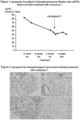
- the improvement seen with compound 1 treatment in this patient was based on the on-treatment kidney biopsy histologic findings that showed clearance of glomerular endocapillary proliferation and a marked decrease in glomerular inflammatory macrophages compared to the pre-treatment biopsy. Proteinuria dropped approximately 80% with compound 1 treatment.
- eGFR estimated glomerular filtration rate
- Figure 2 represents the histopathological improvement following treatment with compound 1.
- the aim of this study is to evaluate the efficacy, safety, and tolerability of compound 1 in a patient with progressive complement 3 (C3) glomerulonephritis.
- the primary safety objective of this study is to evaluate the safety and tolerability of compound 1.
- the primary efficacy objective is to evaluate the efficacy of compound 1 based on change from baseline in eGFR (MDRD, Estimated Glomerular Filtration Rate) and proteinuria.
- the secondary objectives of this study include assessment of:
- the patient will have biopsy proven recurrent C3GN prior to start of dosing, and be deemed eligible based on the inclusion and exclusion criteria.
- Screening procedures will include recording of demographics, medical history, medication history, physical examination and vital signs, serum chemistry, hematology, urinalysis (including UPCR measurement), viral screening (if not performed within prior 12 weeks), and estimated glomerular filtration rate (eGFR) assessment based on serum creatinine.
- the baseline eGFR needs to be at least 25 mL/min/1.73 m 2 for study eligibility.
- the patient On Day 1, the patient will start compound 1 treatment. Patients will take compound 1 30 mg orally twice daily for an initial period of 84 days. The patient will visit the study center on Days 1, 8, 15, 29, 57, and 85. The compound 1 dose will be taken in the morning optimally within one hour after breakfast and in the evening optimally within one hour after dinner. If the patient's clinical condition stabilizes or improves, and there are no adverse events preventing further treatment, the patient may be treated for another 84-day treatment cycle. The 84-day cycles may be repeated for a total of up to 4 cycles under this protocol. For the 84-day cycles after the first cycle, the patient will visit the study center every 4 weeks. There will be 4-week follow-up period after the patient stops the compound 1 treatment.
- Duration of treatment with compound 1 84 days with up to 3 repeats of the 84-day cycle for a total period of up to 336 days.
- the patient's condition will be evaluated by the Investigator at the end of the study and appropriate standard of care medical treatment will be provided as needed.
- the patient will be screened within a period not to exceed 21 days prior to Day 1.
- the compound 1 treatment period is at least 84 days and up to 336 days, and the patient will be followed for 4 weeks (28 days) after dosing is stopped.
- any adverse events that are deemed study drug-related and are ongoing at discharge will be followed-up to resolution or until a determination is made that the unresolved event is stable.
- the patient's condition will be evaluated by the Investigator at the end of the study and appropriate standard of care medical treatment will be provided as needed.
- Plasma samples will be collected on Day 1 (pre-dose), and Days 8, 15, 29, 57, and 85 for pharmacodynamic marker measurements, including, for example, complement fragments, and inflammatory cytokine and chemokine levels.
- Urine samples will also be collected on Day 1 (pre-dose) and Days 8, 15, 29, 57, and 85 for biomarker assessments including, for example, MCP-1, complement fragments, and inflammatory chemokine and cytokine levels.
- Plasma and urine samples will continue to be collected every 4 weeks during any subsequent 84-day cycles.
- Example 2 A Randomized, Double-Blind, Placebo-Controlled Phase 2 Study to Evaluate the Safety and Efficacy of compound 1 in Patients with C3 Glomerulopathy
- changes from baseline in markers of alternative complement pathway involvement e.g., C3, C3d, C3c, C3adesArg, C5, C5a, C5b-9, C5adesArg, and other markers of inflammation, may be assessed in plasma/serum or urine over the course of the treatment period.
- the dose(s) of concomitant immunosuppressive treatment may not be increased during the study.
- Treatment with these other drugs may be reduced or stopped during the study, if the patient's condition justifies it. No new treatments may be added during the study period (active treatment period or follow up), unless the patient's condition deteriorates to the extent that the investigator deems it in the best interest of the patient to do so. This will be considered a treatment failure.
- AUC 0-6 AUC 0-6 thresholds are based on the mean compound 1 plasma exposure (525 ng•hr/mL) and one standard deviation (174 ng•hr/mL) above or below the mean in adult patients from Phase 2 study CL002_168 in AAV.
- Body weight Initial compound 1/placebo dose compound 1 Plasma AUC 0-6 (ng•hr/mL) on Day 1 compound 1
- any adverse events that are deemed study drug-related and are ongoing at discharge will be followed-up to resolution or until a determination is made that the unresolved event is stable.
- the patient's condition will be evaluated by the Investigator at the end of the clinical trial and appropriate standard of care medical treatment will be provided to all patients as needed.
- Safety assessments include adverse events, physical examination abnormalities, vital signs, and clinical laboratory tests (including blood chemistry, hematology, and urinalysis).
- Plasma/serum samples will be collected according to the Time and Events Table for pharmacodynamic marker measurements, including, for example, complement fragments, and inflammatory cytokine and chemokine levels.
- Urine samples will also be collected according to the Time and Events Table for biomarker assessments including, for example, complement fragments, sCD163, and inflammatory chemokine and cytokine levels.
- renal biopsy samples will be assessed by immunofluorescence staining for C3 and immunoglobulins.
- Patients must have biopsy-proven C3 glomerulopathy, either DDD or C3GN, with ⁇ 2-levels of magnitude greater staining of C3 than any combination of IgG, IgM, IgA, and C1q, and with evidence of inflammation, based on leukocyte infiltration or endocapillary proliferation, observed in a renal biopsy taken within 12 weeks prior to screening or during screening.
- All renal biopsies will also be analyzed based on hematoxylin-eosin (H&E) staining, periodic acid-Schiff (PAS) staining, trichrome, and Jones methenamine silver staining. These renal biopsies will be evaluated by a central reader, blinded to treatment assignment from either slides or high-resolution electronic images.
- H&E hematoxylin-eosin
- PAS periodic acid-Schiff
- trichrome trichrome
- Jones methenamine silver staining will be evaluated by a central reader, blinded to treatment assignment from either slides or high-resolution electronic images.
- the central reader will determine the degree of disease activity and chronicity.
- the primary efficacy endpoint is the percent change from baseline to week 26 in the C3G Histologic Index (CHI) for disease activity.
- the compound 1 and placebo groups will be compared by ANCOVA with treatment group and randomization strata (C3GN or DDD, and renal transplant or not) as factors, and baseline as covariate. Point estimates and corresponding 95% confidence intervals will be estimated for the difference between the compound 1 and placebo control group.
- the change from Week 26 to Week 52 in the CHI in the placebo control group will be compared to the change from baseline to Week 26 in this group. This analysis will be done by the paired t-test. Point estimates and corresponding 95% confidence intervals will be estimated for the difference between the second 26 weeks (compound 1 treatment) and the first 26 weeks (placebo treatment).
- Continuous variables including eGFR, urinary PCR, urinary MCP-1:creatinine ratio, EQ-5D-5L, and SF-36 v2 will be analyzed using a mixed effects model for repeated measures (MMRM) with treatment group, visit, treatment-by-visit interaction, and randomization strata (C3GN or DDD, and renal transplant or not) as factors, and baseline as covariate. Patients will be considered as repeated measure units over visits. Point estimates and corresponding 95% confidence intervals will be estimated for the difference between the compound 1 group and the control group across 26 weeks using simple contrast from the model. Similar to the primary endpoint, the second 26 weeks will be compared to the first 26 weeks for the placebo group.
- MMRM mixed effects model for repeated measures
- Safety endpoints include:
- Treatment-emergent adverse events will be listed and summarized by treatment group by System Organ Class, by relatedness and by maximum severity.
- Treatment-emergent serious adverse events and adverse events leading to withdrawal will be summarized by treatment group.
- Laboratory data (actual values and change from baseline) will be listed by treatment group, patient, and study visit. Abnormal laboratory values will be flagged. Laboratory data will also be summarized by treatment group and study visit. Shift tables will be generated for shifts in laboratory parameters by study visit.
- Plasma samples will be collected over the course of the study to determine the PK profile of compound 1 (and metabolites). Individual plasma concentrations of compound 1 (and metabolites) will be listed, plotted, and summarized descriptively and graphically. PK parameters will be calculated based on plasma compound 1 concentrations at the time of sample collection in relation to time of administration of the most recent dose of study medication. PK parameters of significant metabolites may also be calculated.
- Plasma and urinary PD markers will be summarized and may be analyzed using methods analogous to the efficacy parameters. The following parameters will be determined, where possible, in 12-17 year old patients:
Landscapes
- Health & Medical Sciences (AREA)
- Chemical & Material Sciences (AREA)
- Medicinal Chemistry (AREA)
- Pharmacology & Pharmacy (AREA)
- Life Sciences & Earth Sciences (AREA)
- Animal Behavior & Ethology (AREA)
- General Health & Medical Sciences (AREA)
- Public Health (AREA)
- Veterinary Medicine (AREA)
- Epidemiology (AREA)
- Chemical Kinetics & Catalysis (AREA)
- Engineering & Computer Science (AREA)
- Bioinformatics & Cheminformatics (AREA)
- Urology & Nephrology (AREA)
- General Chemical & Material Sciences (AREA)
- Nuclear Medicine, Radiotherapy & Molecular Imaging (AREA)
- Organic Chemistry (AREA)
- Physiology (AREA)
- Nutrition Science (AREA)
- Pharmaceuticals Containing Other Organic And Inorganic Compounds (AREA)
- Medicines That Contain Protein Lipid Enzymes And Other Medicines (AREA)
- Medicines Containing Plant Substances (AREA)
Applications Claiming Priority (5)
| Application Number | Priority Date | Filing Date | Title |
|---|---|---|---|
| US201662278788P | 2016-01-14 | 2016-01-14 | |
| US201662280346P | 2016-01-19 | 2016-01-19 | |
| US201662347450P | 2016-06-08 | 2016-06-08 | |
| US201662397527P | 2016-09-21 | 2016-09-21 | |
| PCT/US2017/013132 WO2017123716A1 (en) | 2016-01-14 | 2017-01-12 | Method of treating c3 glomerulopathy |
Publications (4)
| Publication Number | Publication Date |
|---|---|
| EP3402486A1 EP3402486A1 (en) | 2018-11-21 |
| EP3402486A4 EP3402486A4 (en) | 2019-08-28 |
| EP3402486B1 true EP3402486B1 (en) | 2025-03-19 |
| EP3402486C0 EP3402486C0 (en) | 2025-03-19 |
Family
ID=59312069
Family Applications (1)
| Application Number | Title | Priority Date | Filing Date |
|---|---|---|---|
| EP17738902.0A Active EP3402486B1 (en) | 2016-01-14 | 2017-01-12 | Ccx168 for use in the treatment of c3 glomerulopathy |
Country Status (18)
| Country | Link |
|---|---|
| US (3) | US20170202821A1 (enExample) |
| EP (1) | EP3402486B1 (enExample) |
| JP (4) | JP7339733B2 (enExample) |
| KR (1) | KR102767008B1 (enExample) |
| CN (1) | CN108601790B (enExample) |
| AU (1) | AU2017207359C1 (enExample) |
| BR (2) | BR112018014222A2 (enExample) |
| CA (1) | CA3010735C (enExample) |
| ES (1) | ES3026359T3 (enExample) |
| IL (1) | IL260539B (enExample) |
| MA (1) | MA43872A (enExample) |
| MX (2) | MX2022006069A (enExample) |
| NZ (1) | NZ744083A (enExample) |
| RU (1) | RU2742888C2 (enExample) |
| SG (1) | SG11201805828YA (enExample) |
| TW (1) | TWI791423B (enExample) |
| WO (1) | WO2017123716A1 (enExample) |
| ZA (1) | ZA201804513B (enExample) |
Families Citing this family (23)
| Publication number | Priority date | Publication date | Assignee | Title |
|---|---|---|---|---|
| JP5819730B2 (ja) | 2008-12-22 | 2015-11-24 | ケモセントリックス,インコーポレイティド | C5aRアンタゴニスト |
| DK2585064T3 (en) | 2010-06-24 | 2017-07-24 | Chemocentryx Inc | C5aR antagonists |
| JP6898229B6 (ja) | 2014-09-29 | 2021-07-28 | ケモセントリックス,インコーポレイティド | C5aRアンタゴニスト製造における方法及び中間体 |
| WO2017035405A1 (en) | 2015-08-26 | 2017-03-02 | Achillion Pharmaceuticals, Inc. | Amino compounds for treatment of immune and inflammatory disorders |
| WO2017035401A1 (en) | 2015-08-26 | 2017-03-02 | Achillion Pharmaceuticals, Inc. | Amide compounds for treatment of immune and inflammatory disorders |
| AR106018A1 (es) | 2015-08-26 | 2017-12-06 | Achillion Pharmaceuticals Inc | Compuestos de arilo, heteroarilo y heterocíclicos para el tratamiento de trastornos médicos |
| WO2017035409A1 (en) | 2015-08-26 | 2017-03-02 | Achillion Pharmaceuticals, Inc. | Aryl, heteroaryl, and heterocyclic compounds for treatment of immune and inflammatory disorders |
| SG11201805828YA (en) | 2016-01-14 | 2018-08-30 | Chemocentryx Inc | Method of treating c3 glomerulopathy |
| CA3053818A1 (en) | 2017-03-01 | 2018-09-07 | Achillion Pharmaceuticals, Inc. | Aryl, heteroaryl, and heterocyclic pharmaceutical compounds for treatment of medical disorders |
| WO2018160891A1 (en) | 2017-03-01 | 2018-09-07 | Achillion Pharmaceutical, Inc. | Pharmaceutical compounds for treatment of medical disorders |
| WO2019021091A1 (en) * | 2017-07-27 | 2019-01-31 | Procter & Gamble International Operations Sa | SPRAYABLE, STABLE PHASE REFRIGERATING COMPOSITIONS COMPRISING SUSPENDED PARTICLES |
| WO2019028284A1 (en) | 2017-08-02 | 2019-02-07 | Achillion Pharmaceuticals, Inc. | THERAPEUTIC REGIMES FOR THE TREATMENT OF NOCTURNAL PAROXYSTIC HEMOGLOBINURIA |
| WO2019227102A1 (en) * | 2018-05-25 | 2019-11-28 | Achillion Pharmaceuticals, Inc. | Complement alternative pathway-associated nephropathy biomarkers |
| JP7443375B2 (ja) | 2018-09-06 | 2024-03-05 | アキリオン ファーマシューティカルズ, インコーポレーテッド | 医学的障害の治療のための大環状化合物 |
| WO2020051538A1 (en) * | 2018-09-06 | 2020-03-12 | Achillion Pharmaceuticals, Inc. | Morphic forms of complement factor d inhibitors |
| WO2020069024A1 (en) | 2018-09-25 | 2020-04-02 | Achillion Pharmaceuticals, Inc. | Morphic forms of complement factor d inhibitors |
| CN113164403A (zh) | 2018-11-30 | 2021-07-23 | 凯莫森特里克斯股份有限公司 | 胶囊制剂 |
| CN113195472A (zh) | 2018-12-17 | 2021-07-30 | 艾其林医药公司 | 用于治疗补体介导的病症的靶向给药 |
| BR112021017756A2 (pt) | 2019-03-11 | 2021-11-16 | Inflarx Gmbh | Piperidinila bicíclica fundida e compostos relacionados como moduladores do receptor c5a |
| MX2021011507A (es) | 2019-03-22 | 2021-12-15 | Achillion Pharmaceuticals Inc | Compuestos farmaceuticos para el tratamiento de trastornos mediados por complemento. |
| CN116322683A (zh) * | 2020-08-07 | 2023-06-23 | 科越医药(苏州)有限公司 | 作为c5ar抑制剂的化合物 |
| CN116635075A (zh) * | 2020-12-21 | 2023-08-22 | 坎莫森特里克斯公司 | 使用c5a抑制剂治疗c3肾小球病 |
| CN115192563B (zh) * | 2022-05-09 | 2023-10-13 | 北京大学第一医院 | C3a/C3aR通路拮抗剂治疗原发性膜性肾病的用途 |
Family Cites Families (53)
| Publication number | Priority date | Publication date | Assignee | Title |
|---|---|---|---|---|
| US1268002A (en) | 1917-09-12 | 1918-05-28 | William M Goodwin | Measuring instrument. |
| US4166452A (en) | 1976-05-03 | 1979-09-04 | Generales Constantine D J Jr | Apparatus for testing human responses to stimuli |
| US4256108A (en) | 1977-04-07 | 1981-03-17 | Alza Corporation | Microporous-semipermeable laminated osmotic system |
| US4265874A (en) | 1980-04-25 | 1981-05-05 | Alza Corporation | Method of delivering drug with aid of effervescent activity generated in environment of use |
| US4686100A (en) | 1985-04-02 | 1987-08-11 | The Board Of Trustees Of The Leland Stanford Junior University | Method for the treatment of adult respiratory distress syndrome |
| CA2342251A1 (en) | 1998-08-28 | 2000-03-09 | Scios Inc. | Use of piperidines and/or piperazines as inhibitors of p38-alpha kinase |
| RU2197288C2 (ru) * | 1999-08-03 | 2003-01-27 | Тверская медицинская академия | Способ лечения больных хроническим гломерулонефритом |
| EP1278743A4 (en) | 2000-05-05 | 2003-05-14 | Smithkline Beecham Corp | NEW ANTI-INFECTIOUS ACTIVE SUBSTANCES |
| ES2353077T3 (es) | 2000-08-10 | 2011-02-25 | Mitsubishi Tanabe Pharma Corporation | Derivados de urea con sustitución en posición 3 y uso medicinal de los mismos. |
| JP4751567B2 (ja) | 2000-09-14 | 2011-08-17 | 田辺三菱製薬株式会社 | 新規アミド誘導体およびその医薬としての用途 |
| AU7622500A (en) | 2000-09-29 | 2002-07-01 | Neurogen Corp | High affinity small molecule c5a receptor modulators |
| MXPA04001301A (es) | 2001-08-17 | 2004-07-08 | Tanox Inc | Inhibidores de la ruta del complemento que se unen a c5 y c5a son evitar la formacion de c5b. |
| EP1427720B1 (en) | 2001-09-21 | 2009-03-04 | Mitsubishi Tanabe Pharma Corporation | 3-substituted-4-pyrimidone derivatives |
| ITMI20012025A1 (it) | 2001-09-28 | 2003-03-28 | Dompe Spa | Sali di ammonio quaternari di omega-amminoalchilammidi di acidi r 2-aril-propionici e composizioni farmaceutiche che li contengono |
| US20030195192A1 (en) | 2002-04-05 | 2003-10-16 | Fortuna Haviv | Nicotinamides having antiangiogenic activity |
| WO2003082828A1 (en) | 2002-03-28 | 2003-10-09 | Neurogen Corporation | Substituted tetrahydroisoquinolines as c5a receptor modulators |
| CA2479928A1 (en) | 2002-03-28 | 2003-10-09 | Neurogen Corporation | Substituted biaryl amides as c5a receptor modulators |
| WO2003084524A1 (en) | 2002-03-29 | 2003-10-16 | Neurogen Corporation | Combination therapy for the treatment of conditions with pathogenic inflammatory components |
| US20040014744A1 (en) | 2002-04-05 | 2004-01-22 | Fortuna Haviv | Substituted pyridines having antiangiogenic activity |
| JP2005536533A (ja) | 2002-08-08 | 2005-12-02 | ベーリンガー インゲルハイム ファーマシューティカルズ インコーポレイテッド | 置換ベンゾイミダゾール化合物 |
| US7169775B2 (en) | 2002-08-21 | 2007-01-30 | Neurogen Corporation | Amino methyl imidazoles as C5a receptor modulators |
| US7455837B2 (en) | 2002-11-05 | 2008-11-25 | The Regents Of The University Of Michigan | Compositions and methods for the diagnosis and treatment of sepsis |
| FR2846654A1 (fr) | 2002-11-05 | 2004-05-07 | Servier Lab | Nouveaux derives de la 2,3-dihydro-4(1h)-pyridinone, leur procede de preparation et les compositions pharmaceutiques qui les contiennent |
| AU2003291403A1 (en) | 2002-11-08 | 2004-06-03 | Neurogen Corporation | 3-substituted-6-aryl pyridined as ligands of c5a receptors |
| AU2003902354A0 (en) | 2003-05-15 | 2003-05-29 | Harkin, Denis W. | Treatment of haemorrhagic shock |
| JP2006527756A (ja) | 2003-06-19 | 2006-12-07 | ファイザー・プロダクツ・インク | Nk1拮抗薬 |
| US20060154917A1 (en) | 2003-07-03 | 2006-07-13 | Neurogen Corporation | Substituted (heterocycloalkyl)methyl azole derivatives as c5a receptor modulators |
| GB0325956D0 (en) | 2003-11-06 | 2003-12-10 | Addex Pharmaceuticals Sa | Novel compounds |
| WO2006012226A2 (en) | 2004-06-24 | 2006-02-02 | Incyte Corporation | N-substituted piperidines and their use as pharmaceuticals |
| US7635698B2 (en) | 2004-12-29 | 2009-12-22 | Millennium Pharmaceuticals, Inc. | Compounds useful as chemokine receptor antagonists |
| ES2430569T3 (es) | 2005-02-18 | 2013-11-21 | Astrazeneca Ab | Compuestos antibacterianos derivados de piperidina |
| WO2007035428A1 (en) | 2005-09-15 | 2007-03-29 | Bristol-Myers Squibb Company | Met kinase inhibitors |
| US20070112015A1 (en) | 2005-10-28 | 2007-05-17 | Chemocentryx, Inc. | Substituted dihydropyridines and methods of use |
| JP5374157B2 (ja) | 2005-11-24 | 2013-12-25 | ドムペ・ファ.ル.マ・ソチエタ・ペル・アツィオーニ | (r)−アリールアルキルアミノ誘導体類と、それらを含有する薬剤組成物 |
| HUE066795T2 (hu) | 2006-03-15 | 2024-09-28 | Alexion Pharma Inc | Paroxysmalis nocturnalis haemoglobinuriában szenvedõ betegek kezelése egy komplement inhibitorral |
| WO2008022060A2 (en) | 2006-08-14 | 2008-02-21 | Novartis Ag | Imidazo-pyridine derivatives for modulating protein kinase activity |
| WO2008053270A2 (en) * | 2006-10-31 | 2008-05-08 | INSERM (Institut National de la Santé et de la Recherche Médicale) | Use of an egfr antagonist for the treatment of glomerolonephritis |
| BRPI0812997A2 (pt) | 2007-06-29 | 2014-12-23 | Torrent Pharmaceuticals Ltd | Novas piperidonas substituídas como indutores de hsp |
| CA2737219C (en) | 2008-08-11 | 2017-02-28 | Tracy Keller | Halofuginone analogs for inhibition of trna synthetases and uses thereof |
| US20110172126A1 (en) | 2008-09-03 | 2011-07-14 | Xenome Ltd | Libraries of peptide conjugates and methods for making them |
| US20100074863A1 (en) | 2008-09-17 | 2010-03-25 | Yat Sun Or | Anti-infective pyrrolidine derivatives and analogs |
| JP6223659B2 (ja) | 2008-11-10 | 2017-11-01 | アレクシオン ファーマシューティカルズ, インコーポレイテッド | 補体関連障害を処置するための方法および組成物 |
| US20110275639A1 (en) | 2008-12-22 | 2011-11-10 | Chemocentryx, Inc. | C5aR ANTAGONISTS |
| JP5819730B2 (ja) | 2008-12-22 | 2015-11-24 | ケモセントリックス,インコーポレイティド | C5aRアンタゴニスト |
| US20120252792A1 (en) | 2009-09-17 | 2012-10-04 | The Regents Of The University Of Michigan | Methods and compositions for modulating rho-mediated gene transcription |
| DK2585064T3 (en) | 2010-06-24 | 2017-07-24 | Chemocentryx Inc | C5aR antagonists |
| US8147400B1 (en) * | 2011-01-17 | 2012-04-03 | Coloplast A/S | Penile implant with dilatant liquid |
| CA2877526A1 (en) * | 2012-06-20 | 2013-12-27 | Novartis Ag | Complement pathway modulators and uses thereof |
| DK2994488T3 (da) | 2013-05-08 | 2022-10-03 | Novo Nordisk As | Anvendelse af c5ar-antagonister |
| JP6898229B6 (ja) | 2014-09-29 | 2021-07-28 | ケモセントリックス,インコーポレイティド | C5aRアンタゴニスト製造における方法及び中間体 |
| SG11201805828YA (en) | 2016-01-14 | 2018-08-30 | Chemocentryx Inc | Method of treating c3 glomerulopathy |
| SG11201808625QA (en) | 2016-04-04 | 2018-10-30 | Chemocentryx Inc | SOLUBLE C5aR ANTAGONISTS |
| CN116635075A (zh) | 2020-12-21 | 2023-08-22 | 坎莫森特里克斯公司 | 使用c5a抑制剂治疗c3肾小球病 |
-
2017
- 2017-01-12 SG SG11201805828YA patent/SG11201805828YA/en unknown
- 2017-01-12 CA CA3010735A patent/CA3010735C/en active Active
- 2017-01-12 AU AU2017207359A patent/AU2017207359C1/en active Active
- 2017-01-12 EP EP17738902.0A patent/EP3402486B1/en active Active
- 2017-01-12 TW TW106100938A patent/TWI791423B/zh active
- 2017-01-12 WO PCT/US2017/013132 patent/WO2017123716A1/en not_active Ceased
- 2017-01-12 US US15/404,610 patent/US20170202821A1/en not_active Abandoned
- 2017-01-12 KR KR1020187023360A patent/KR102767008B1/ko active Active
- 2017-01-12 MX MX2022006069A patent/MX2022006069A/es unknown
- 2017-01-12 NZ NZ744083A patent/NZ744083A/en unknown
- 2017-01-12 JP JP2018536408A patent/JP7339733B2/ja active Active
- 2017-01-12 MX MX2018008624A patent/MX2018008624A/es unknown
- 2017-01-12 MA MA043872A patent/MA43872A/fr unknown
- 2017-01-12 RU RU2018129378A patent/RU2742888C2/ru active
- 2017-01-12 ES ES17738902T patent/ES3026359T3/es active Active
- 2017-01-12 CN CN201780006962.XA patent/CN108601790B/zh active Active
- 2017-01-12 BR BR112018014222-0A patent/BR112018014222A2/pt not_active Application Discontinuation
- 2017-01-12 BR BR122024002810-7A patent/BR122024002810A2/pt not_active Application Discontinuation
-
2018
- 2018-07-06 ZA ZA2018/04513A patent/ZA201804513B/en unknown
- 2018-07-11 IL IL260539A patent/IL260539B/en active IP Right Grant
- 2018-11-08 US US16/184,535 patent/US11285138B2/en active Active
-
2021
- 2021-08-06 JP JP2021129774A patent/JP7788814B2/ja active Active
-
2022
- 2022-02-14 US US17/670,604 patent/US11779576B2/en active Active
-
2023
- 2023-06-20 JP JP2023100664A patent/JP2023126235A/ja active Pending
-
2024
- 2024-06-06 JP JP2024092498A patent/JP2024110998A/ja not_active Withdrawn
Non-Patent Citations (3)
| Title |
|---|
| ANONYMOUS: "ChemoCentryx Granted EU Orphan Drug Designation for CCX168, an Orally Administered Complement C5a Receptor Inhibitor, for the Treatment of Microscopic Polyangiitis and Granulomatosis With Polyangiitis, Two Forms of ANCA-Associated Vasculitis | ChemoCentryx, Inc.", 4 December 2014 (2014-12-04), XP055792791, Retrieved from the Internet <URL:https://ir.chemocentryx.com/news-releases/news-release-details/chemocentryx-granted-eu-orphan-drug-designation-ccx168-orally> [retrieved on 20210406] * |
| ANONYMOUS: "Committee for Orphan Medicinal Products (COMP) meeting report on the review of applications for orphan designation", 1 December 2014 (2014-12-01), XP055792737, Retrieved from the Internet <URL:https://www.ema.europa.eu/en/documents/committee-report/comp-meeting-report-review-applications-orphan-designation-december-2014_en.pdf> [retrieved on 20210406] * |
| ANONYMOUS: "Public summary of opinion on orphan designation (2R,3S)-2-(4-cyclopentylaminophenyl)-1-(2-fluoro-6- methylbenzoyl)piperidine-3-carboxylic acid(4-methyl-3- trifluoromethylphenyl)amide for the treatment of granulomatosis with polyangiitis", 12 January 2015 (2015-01-12), XP055792740, Retrieved from the Internet <URL:https://www.ema.europa.eu/en/documents/orphan-designation/eu/3/14/1373-public-summary-opinion-orphan-designation-2r3s-2-4-cyclopentylaminophenyl-1-2-fluoro-6_en.pdf> [retrieved on 20210406] * |
Also Published As
Similar Documents
| Publication | Publication Date | Title |
|---|---|---|
| US11779576B2 (en) | Method of treating C3 glomerulopathy | |
| EP3439658B1 (en) | Soluble c5ar antagonists | |
| EP4671767A2 (en) | URINARY SCD163 C5AR INHIBITOR REDUCTION | |
| US20180271889A1 (en) | Combination therapy for cancer | |
| US20220257580A1 (en) | Treatment of c3 glomerulopathy using a c5a inhibitor | |
| HK1262045A1 (en) | Ccx168 for use in the treatment of c3 glomerulopathy | |
| HK1262045B (en) | Ccx168 for use in the treatment of c3 glomerulopathy | |
| HK40089184A (en) | Treatment of c3 glomerulopathy using a c5a inhibitor | |
| HK40004502B (en) | Soluble c5ar antagonists |
Legal Events
| Date | Code | Title | Description |
|---|---|---|---|
| STAA | Information on the status of an ep patent application or granted ep patent |
Free format text: STATUS: THE INTERNATIONAL PUBLICATION HAS BEEN MADE |
|
| PUAI | Public reference made under article 153(3) epc to a published international application that has entered the european phase |
Free format text: ORIGINAL CODE: 0009012 |
|
| STAA | Information on the status of an ep patent application or granted ep patent |
Free format text: STATUS: REQUEST FOR EXAMINATION WAS MADE |
|
| 17P | Request for examination filed |
Effective date: 20180808 |
|
| AK | Designated contracting states |
Kind code of ref document: A1 Designated state(s): AL AT BE BG CH CY CZ DE DK EE ES FI FR GB GR HR HU IE IS IT LI LT LU LV MC MK MT NL NO PL PT RO RS SE SI SK SM TR |
|
| AX | Request for extension of the european patent |
Extension state: BA ME |
|
| RAV | Requested validation state of the european patent: fee paid |
Extension state: MA Effective date: 20180808 |
|
| A4 | Supplementary search report drawn up and despatched |
Effective date: 20190726 |
|
| RIC1 | Information provided on ipc code assigned before grant |
Ipc: A61K 31/454 20060101ALI20190722BHEP Ipc: A61P 13/12 20060101ALI20190722BHEP Ipc: A61K 31/551 20060101AFI20190722BHEP |
|
| REG | Reference to a national code |
Ref country code: HK Ref legal event code: DE Ref document number: 1262045 Country of ref document: HK |
|
| STAA | Information on the status of an ep patent application or granted ep patent |
Free format text: STATUS: EXAMINATION IS IN PROGRESS |
|
| 17Q | First examination report despatched |
Effective date: 20210414 |
|
| GRAP | Despatch of communication of intention to grant a patent |
Free format text: ORIGINAL CODE: EPIDOSNIGR1 |
|
| STAA | Information on the status of an ep patent application or granted ep patent |
Free format text: STATUS: GRANT OF PATENT IS INTENDED |
|
| INTG | Intention to grant announced |
Effective date: 20241022 |
|
| GRAS | Grant fee paid |
Free format text: ORIGINAL CODE: EPIDOSNIGR3 |
|
| GRAA | (expected) grant |
Free format text: ORIGINAL CODE: 0009210 |
|
| STAA | Information on the status of an ep patent application or granted ep patent |
Free format text: STATUS: THE PATENT HAS BEEN GRANTED |
|
| AK | Designated contracting states |
Kind code of ref document: B1 Designated state(s): AL AT BE BG CH CY CZ DE DK EE ES FI FR GB GR HR HU IE IS IT LI LT LU LV MC MK MT NL NO PL PT RO RS SE SI SK SM TR |
|
| REG | Reference to a national code |
Ref country code: GB Ref legal event code: FG4D |
|
| REG | Reference to a national code |
Ref country code: CH Ref legal event code: EP |
|
| REG | Reference to a national code |
Ref country code: DE Ref legal event code: R096 Ref document number: 602017088396 Country of ref document: DE |
|
| REG | Reference to a national code |
Ref country code: IE Ref legal event code: FG4D |
|
| U01 | Request for unitary effect filed |
Effective date: 20250411 |
|
| U07 | Unitary effect registered |
Designated state(s): AT BE BG DE DK EE FI FR IT LT LU LV MT NL PT RO SE SI Effective date: 20250422 |
|
| RAP4 | Party data changed (patent owner data changed or rights of a patent transferred) |
Owner name: CHEMOCENTRYX, INC. |
|
| REG | Reference to a national code |
Ref country code: ES Ref legal event code: FG2A Ref document number: 3026359 Country of ref document: ES Kind code of ref document: T3 Effective date: 20250611 |
|
| U1H | Name or address of the proprietor changed after the registration of the unitary effect |
Owner name: CHEMOCENTRYX, INC.; US |
|
| PG25 | Lapsed in a contracting state [announced via postgrant information from national office to epo] |
Ref country code: RS Free format text: LAPSE BECAUSE OF FAILURE TO SUBMIT A TRANSLATION OF THE DESCRIPTION OR TO PAY THE FEE WITHIN THE PRESCRIBED TIME-LIMIT Effective date: 20250619 |
|
| PG25 | Lapsed in a contracting state [announced via postgrant information from national office to epo] |
Ref country code: NO Free format text: LAPSE BECAUSE OF FAILURE TO SUBMIT A TRANSLATION OF THE DESCRIPTION OR TO PAY THE FEE WITHIN THE PRESCRIBED TIME-LIMIT Effective date: 20250619 |
|
| PG25 | Lapsed in a contracting state [announced via postgrant information from national office to epo] |
Ref country code: HR Free format text: LAPSE BECAUSE OF FAILURE TO SUBMIT A TRANSLATION OF THE DESCRIPTION OR TO PAY THE FEE WITHIN THE PRESCRIBED TIME-LIMIT Effective date: 20250319 |
|
| PG25 | Lapsed in a contracting state [announced via postgrant information from national office to epo] |
Ref country code: GR Free format text: LAPSE BECAUSE OF FAILURE TO SUBMIT A TRANSLATION OF THE DESCRIPTION OR TO PAY THE FEE WITHIN THE PRESCRIBED TIME-LIMIT Effective date: 20250620 |
|
| PG25 | Lapsed in a contracting state [announced via postgrant information from national office to epo] |
Ref country code: SM Free format text: LAPSE BECAUSE OF FAILURE TO SUBMIT A TRANSLATION OF THE DESCRIPTION OR TO PAY THE FEE WITHIN THE PRESCRIBED TIME-LIMIT Effective date: 20250319 |
|
| PG25 | Lapsed in a contracting state [announced via postgrant information from national office to epo] |
Ref country code: PL Free format text: LAPSE BECAUSE OF FAILURE TO SUBMIT A TRANSLATION OF THE DESCRIPTION OR TO PAY THE FEE WITHIN THE PRESCRIBED TIME-LIMIT Effective date: 20250319 |
|
| PG25 | Lapsed in a contracting state [announced via postgrant information from national office to epo] |
Ref country code: CZ Free format text: LAPSE BECAUSE OF FAILURE TO SUBMIT A TRANSLATION OF THE DESCRIPTION OR TO PAY THE FEE WITHIN THE PRESCRIBED TIME-LIMIT Effective date: 20250319 |
|
| PG25 | Lapsed in a contracting state [announced via postgrant information from national office to epo] |
Ref country code: SK Free format text: LAPSE BECAUSE OF FAILURE TO SUBMIT A TRANSLATION OF THE DESCRIPTION OR TO PAY THE FEE WITHIN THE PRESCRIBED TIME-LIMIT Effective date: 20250319 |
|
| PG25 | Lapsed in a contracting state [announced via postgrant information from national office to epo] |
Ref country code: IS Free format text: LAPSE BECAUSE OF FAILURE TO SUBMIT A TRANSLATION OF THE DESCRIPTION OR TO PAY THE FEE WITHIN THE PRESCRIBED TIME-LIMIT Effective date: 20250719 |
|
| PGFP | Annual fee paid to national office [announced via postgrant information from national office to epo] |
Ref country code: GB Payment date: 20251217 Year of fee payment: 10 |
|
| U20 | Renewal fee for the european patent with unitary effect paid |
Year of fee payment: 10 Effective date: 20251217 |
|
| PLBE | No opposition filed within time limit |
Free format text: ORIGINAL CODE: 0009261 |
|
| STAA | Information on the status of an ep patent application or granted ep patent |
Free format text: STATUS: NO OPPOSITION FILED WITHIN TIME LIMIT |
|
| REG | Reference to a national code |
Ref country code: CH Ref legal event code: L10 Free format text: ST27 STATUS EVENT CODE: U-0-0-L10-L00 (AS PROVIDED BY THE NATIONAL OFFICE) Effective date: 20260128 |
|
| REG | Reference to a national code |
Ref country code: CH Ref legal event code: U11 Free format text: ST27 STATUS EVENT CODE: U-0-0-U10-U11 (AS PROVIDED BY THE NATIONAL OFFICE) Effective date: 20260201 |
|
| U1N | Appointed representative for the unitary patent procedure changed after the registration of the unitary effect |
Representative=s name: KILBURN & STRODE LLP; GB |
|
| 26N | No opposition filed |
Effective date: 20251222 |
|
| PGFP | Annual fee paid to national office [announced via postgrant information from national office to epo] |
Ref country code: ES Payment date: 20260202 Year of fee payment: 10 |
|
| VS25 | Lapsed in a validation state [announced via postgrant information from nat. office to epo] |
Ref country code: MA Free format text: LAPSE BECAUSE OF FAILURE TO SUBMIT A TRANSLATION OF THE DESCRIPTION OR TO PAY THE FEE WITHIN THE PRESCRIBED TIME-LIMIT Effective date: 20250319 |
|
| PGFP | Annual fee paid to national office [announced via postgrant information from national office to epo] |
Ref country code: CH Payment date: 20260201 Year of fee payment: 10 |