EP3400960A1 - Outer membrane vesicles - Google Patents
Outer membrane vesicles Download PDFInfo
- Publication number
- EP3400960A1 EP3400960A1 EP18178079.2A EP18178079A EP3400960A1 EP 3400960 A1 EP3400960 A1 EP 3400960A1 EP 18178079 A EP18178079 A EP 18178079A EP 3400960 A1 EP3400960 A1 EP 3400960A1
- Authority
- EP
- European Patent Office
- Prior art keywords
- omv
- omvs
- protein
- spycep
- heterologous protein
- Prior art date
- Legal status (The legal status is an assumption and is not a legal conclusion. Google has not performed a legal analysis and makes no representation as to the accuracy of the status listed.)
- Withdrawn
Links
Images







Classifications
-
- A—HUMAN NECESSITIES
- A61—MEDICAL OR VETERINARY SCIENCE; HYGIENE
- A61K—PREPARATIONS FOR MEDICAL, DENTAL OR TOILETRY PURPOSES
- A61K39/00—Medicinal preparations containing antigens or antibodies
- A61K39/39—Medicinal preparations containing antigens or antibodies characterised by the immunostimulating additives, e.g. chemical adjuvants
-
- A—HUMAN NECESSITIES
- A61—MEDICAL OR VETERINARY SCIENCE; HYGIENE
- A61K—PREPARATIONS FOR MEDICAL, DENTAL OR TOILETRY PURPOSES
- A61K39/00—Medicinal preparations containing antigens or antibodies
- A61K39/02—Bacterial antigens
- A61K39/09—Lactobacillales, e.g. aerococcus, enterococcus, lactobacillus, lactococcus, streptococcus
- A61K39/092—Streptococcus
-
- A—HUMAN NECESSITIES
- A61—MEDICAL OR VETERINARY SCIENCE; HYGIENE
- A61K—PREPARATIONS FOR MEDICAL, DENTAL OR TOILETRY PURPOSES
- A61K39/00—Medicinal preparations containing antigens or antibodies
- A61K39/02—Bacterial antigens
- A61K39/095—Neisseria
-
- A—HUMAN NECESSITIES
- A61—MEDICAL OR VETERINARY SCIENCE; HYGIENE
- A61P—SPECIFIC THERAPEUTIC ACTIVITY OF CHEMICAL COMPOUNDS OR MEDICINAL PREPARATIONS
- A61P31/00—Antiinfectives, i.e. antibiotics, antiseptics, chemotherapeutics
- A61P31/04—Antibacterial agents
-
- A—HUMAN NECESSITIES
- A61—MEDICAL OR VETERINARY SCIENCE; HYGIENE
- A61P—SPECIFIC THERAPEUTIC ACTIVITY OF CHEMICAL COMPOUNDS OR MEDICINAL PREPARATIONS
- A61P31/00—Antiinfectives, i.e. antibiotics, antiseptics, chemotherapeutics
- A61P31/10—Antimycotics
-
- A—HUMAN NECESSITIES
- A61—MEDICAL OR VETERINARY SCIENCE; HYGIENE
- A61P—SPECIFIC THERAPEUTIC ACTIVITY OF CHEMICAL COMPOUNDS OR MEDICINAL PREPARATIONS
- A61P31/00—Antiinfectives, i.e. antibiotics, antiseptics, chemotherapeutics
- A61P31/12—Antivirals
-
- A—HUMAN NECESSITIES
- A61—MEDICAL OR VETERINARY SCIENCE; HYGIENE
- A61P—SPECIFIC THERAPEUTIC ACTIVITY OF CHEMICAL COMPOUNDS OR MEDICINAL PREPARATIONS
- A61P33/00—Antiparasitic agents
-
- A—HUMAN NECESSITIES
- A61—MEDICAL OR VETERINARY SCIENCE; HYGIENE
- A61P—SPECIFIC THERAPEUTIC ACTIVITY OF CHEMICAL COMPOUNDS OR MEDICINAL PREPARATIONS
- A61P35/00—Antineoplastic agents
-
- A—HUMAN NECESSITIES
- A61—MEDICAL OR VETERINARY SCIENCE; HYGIENE
- A61P—SPECIFIC THERAPEUTIC ACTIVITY OF CHEMICAL COMPOUNDS OR MEDICINAL PREPARATIONS
- A61P35/00—Antineoplastic agents
- A61P35/02—Antineoplastic agents specific for leukemia
-
- A—HUMAN NECESSITIES
- A61—MEDICAL OR VETERINARY SCIENCE; HYGIENE
- A61P—SPECIFIC THERAPEUTIC ACTIVITY OF CHEMICAL COMPOUNDS OR MEDICINAL PREPARATIONS
- A61P37/00—Drugs for immunological or allergic disorders
- A61P37/02—Immunomodulators
- A61P37/04—Immunostimulants
-
- A—HUMAN NECESSITIES
- A61—MEDICAL OR VETERINARY SCIENCE; HYGIENE
- A61P—SPECIFIC THERAPEUTIC ACTIVITY OF CHEMICAL COMPOUNDS OR MEDICINAL PREPARATIONS
- A61P37/00—Drugs for immunological or allergic disorders
- A61P37/08—Antiallergic agents
-
- A—HUMAN NECESSITIES
- A61—MEDICAL OR VETERINARY SCIENCE; HYGIENE
- A61K—PREPARATIONS FOR MEDICAL, DENTAL OR TOILETRY PURPOSES
- A61K39/00—Medicinal preparations containing antigens or antibodies
- A61K2039/555—Medicinal preparations containing antigens or antibodies characterised by a specific combination antigen/adjuvant
- A61K2039/55511—Organic adjuvants
- A61K2039/55555—Liposomes; Vesicles, e.g. nanoparticles; Spheres, e.g. nanospheres; Polymers
-
- Y—GENERAL TAGGING OF NEW TECHNOLOGICAL DEVELOPMENTS; GENERAL TAGGING OF CROSS-SECTIONAL TECHNOLOGIES SPANNING OVER SEVERAL SECTIONS OF THE IPC; TECHNICAL SUBJECTS COVERED BY FORMER USPC CROSS-REFERENCE ART COLLECTIONS [XRACs] AND DIGESTS
- Y02—TECHNOLOGIES OR APPLICATIONS FOR MITIGATION OR ADAPTATION AGAINST CLIMATE CHANGE
- Y02A—TECHNOLOGIES FOR ADAPTATION TO CLIMATE CHANGE
- Y02A50/00—TECHNOLOGIES FOR ADAPTATION TO CLIMATE CHANGE in human health protection, e.g. against extreme weather
- Y02A50/30—Against vector-borne diseases, e.g. mosquito-borne, fly-borne, tick-borne or waterborne diseases whose impact is exacerbated by climate change
Definitions
- This invention relates to vesicles from Gram-negative bacteria.
- the vesicles comprise heterologous proteins in their lumens.
- the vesicles are particularly useful in immunogenic compositions, e.g. vaccines.
- OMVs outer membrane vesicles
- the formation of such OMVs can be facilitated by disruption of certain bacterial components e.g. references 1 and 2 disrupted the E. coli Tol-Pal system to provide strains which release vesicles into the culture medium during growth.
- OMVs can also be produced by disruption of whole bacteria.
- Known OMV production methods include methods which use detergent treatment (e.g. with deoxycholate) [3 & 4], detergent-free methods [5], or sonication [6], etc.
- OMVs are rich in immunogenic cell surface-associated, periplasmic and secreted antigens and have been used as vaccines, e.g. against Neisseria meningitidis serogroup B [7]. They are particularly suited for this use because the vesicles contain compounds that act as adjuvants, eliciting strong immune responses against the antigens. In this way, the vesicles are a closer mimic of the native bacterium for the immune system than purified antigenic proteins or other bacterial components. OMVs therefore remain an attractive target for vaccines and other immunogenic compositions. It has been suggested that the immunogenic properties of some protein antigens can be increased by engineering OMVs to display multiple antigens on the surfaces of OMVs by using ClyA as a fusion partner [8].
- covalently-linked heterologous proteins examples include fusions of the FLAG epitope to the full-length sequence of OmpA (outer membrane protein A), fusions of the FLAG epitope to the full-length sequence of PagP (PhoPQ-activated gene P) [9], and fusions of GFP to ClyA (Cytolysin) [10].
- OmpA outer membrane protein A
- PagP peripheral membrane protein A
- GFP GFP to ClyA
- periplasmic proteins Targeting periplasmic proteins to OMVs has also proven to be difficult.
- a fusion of GFP to a Tat (twin arginine transporter) signal sequence resulted in overexpression of GFP that was targeted to the periplasm, but GFP fluorescence was barely above background fluorescence levels in OMVs [11], suggesting that the GFP was either not incorporated into the OMVs or was non-functional in the OMV because of incorrect folding.
- the inventors have discovered that targeting heterologous proteins to the lumen of OMVs overcomes many of the problems associated with targeting heterologous proteins to the membrane of OMVs. Surprisingly, the inventors have also found that OMVs containing heterologous proteins that are in the lumen are capable of eliciting immune responses to the proteins when administered to a mammal.
- the invention provides an outer membrane vesicle (OMV) from a Gram-negative bacterium, wherein the OMV comprises at least one heterologous protein that is free in its lumen, and the OMV is capable of eliciting an immune response to the heterologous protein when administered to a mammal.
- OMV outer membrane vesicle
- the invention also provides a method of preparing an OMV of the invention, the method comprising the step of expressing the heterologous protein in the periplasm of the Gram-negative bacterium.
- the invention further provides an OMV obtained or obtainable by this method.
- the invention also provides a pharmaceutical composition
- a pharmaceutical composition comprising (a) an OMV of the invention and (b) a pharmaceutically acceptable carrier.
- the invention also provides a method of generating an immune response in a mammal, the method comprising administering an effective amount of an OMV from a Gram-negative bacterium to the mammal, wherein the OMV comprises at least one heterologous protein in its lumen, and wherein the immune response is to the heterologous protein in the OMV.
- the protein is free in the lumen of the OMV.
- the invention also provides a method of generating an immune response in a mammal comprising administering a pharmaceutical composition of the invention to the mammal, wherein the immune response is to the heterologous protein in the OMV.
- the present invention provides an outer membrane vesicle (OMV) from a Gram-negative bacterium, wherein the OMV comprises at least one heterologous protein that is free in its lumen, and the OMV is capable of eliciting an immune response to the heterologous protein when administered to a mammal.
- OMV outer membrane vesicle
- OMVs are well known in the art and are spontaneously released into culture medium by bacteria. 'Native OMVs' ('NOMVs' [12]), microvesicles (MVs [13]), detergent-extracted OMVs (DOMVs), mutant-derived OMVs (m-OMV), and blebs, which are outer-membrane protrusions that remain attached to bacteria prior to release as MVs ([14]; [15]), all form part of the invention and are collectively referred to as OMVs herein.
- OMVs of the invention can be obtained from any suitable Gram-negative bacterium.
- the Gram-negative bacterium is typically E. coli. However, instead of E. coli it may be a different Gram-negative bacterium.
- Preferred Gram-negative bacteria for use in the invention include bacteria that are not pathogenic in humans. For example, the bacteria may be commensalistic in humans. However, in some embodiments bacteria are used that are not typically found in human hosts at all.
- Exemplary species for use in the invention include species in any of genera Escherichia, Shigella, Neisseria, Moraxella, Bordetella, Borrelia, Brucella, Chlamydia Haemophilus, Legionella, Pseudomonas, Yersinia, Helicobacter, Salmonella, Vibrio, etc.
- the bacterium may be a Shigella species (such as S.dysenteriae, S.flexneri, S.boydii or S.sonnei).
- Neisseria species particularly a non-pathogenic species such as N.bacilliformis, N.cinerea, Nelongata, N.flavescens, N.lactamica, N.macacae, N.mucosa, N.polysaccharea, N.sicca or N.subflava, and in particular N.lactamica.
- a pathogenic species of Neisseria may be used, e.g. N.gonorrhoeae or N.meningitidis.
- the bacterium may be Bordetella pertussis, Borrelia burgdorferi, Brucella melitensis, Brucella ovis, Chlamydia psittaci, Chlamydia trachomatis, Moraxella catarrhalis, Haemophilus influenzae (including non-typeable stains), Legionella pneumophila, Pseudomonas aeruginosa, Yersinia enterocolitica, Helicobacter pylori, Salmonella enterica (including serovars typhi and typhimurium, as well as serovars paratyphi and enteritidis), Vibrio cholerae, Proteus, Citrobacter, Serratia, Erwinia, Pasteurella etc. Photosynthetic Gram-negative bacteria may also be used. Typically, the bacterium is a competent strain. This feature facilitates genetic modification of the bacterium.
- the Gram-negative bacterium is a "hyperblebbing" strain of that bacterium. Hyperblebbing Gram-negative bacteria from which blebs may more easily be made in higher yield and may be more homogeneous in nature are described in WO 02/062378 .
- the blebs may be derived from bacteria selected from the group consisting of Neisseria meningitidis, Neisseria lactamica, Neisseria gonorrhoeae, Helicobacter pylori, Salmonella typhi, Salmonella typhimurium, Vibrio cholerae, Shigella spp., Haemophilus influenzae, Bordetella pertussis, Pseudomonas aeruginosa and Moraxella catarrhalis.
- bacteria selected from the group consisting of Neisseria meningitidis, Neisseria lactamica, Neisseria gonorrhoeae, Helicobacter pylori, Salmonella typhi, Salmonella typhimurium, Vibrio cholerae, Shigella spp., Haemophilus influenzae, Bordetella pertussis, Pseudomonas aeruginosa and Moraxella catar
- the bacterium is an E. coli ompA mutant and/or E. coli tolR mutant.
- the bacterium is selected from E . coli BL21(DE3) ⁇ ompA, E . coli BL21(DE3) ⁇ ompA ⁇ tolR, E. coli BL21(DE3)AtolR, E. coli ⁇ nlpI, or E. coli AdegP.
- the ⁇ symbol is used herein to refer to a bacterial strain from which the coding sequence of the gene recited after the ⁇ symbol has been deleted. Thus, a bacterial strain which is " ⁇ ompA" does not comprise the coding sequence for the ompA gene.
- a bacterial strain which is " ⁇ tolR" does not comprise the coding sequence for the tolR gene.
- the entire coding sequence may be deleted.
- the coding sequence may alternatively be deleted in part.
- the N-terminal half or the C-terminal half may be deleted.
- the ompA and/or tolR genes may be mutated by the introduction of one or more substitutions and/or insertions.
- the E. coli ⁇ tolR mutant strains and E. coli ⁇ ompA mutant strains overproduce OMVs relative to wild type E. coli.
- the mutation of the ompA gene and/or one or more components of the Tol-Pal complex results in the mutant bacterium producing an increased number of OMVs compared to its respective wild type strain which carries a wild type ompA gene and/or Tol-Pal complex.
- OmpA is an integral membrane protein and is the most abundant of the outer membrane proteins in E. coli. It is, therefore, surprising that an E. coli lacking the OmpA protein is viable. Indeed, according to Murakami et al. [16], an E. coli ompA single mutant cannot promote vesicle release.
- the heterologous protein of the invention is targeted to and expressed in the periplasm of the Gram-negative bacterium such that the heterologous protein is in the lumen of the OMV.
- the heterologous protein is free in the lumen of the OMV.
- the protein may be an amino acid polymer of any length.
- the amino acid polymer may be linear or branched, it may comprise modified amino acids, and it may be interrupted by non-amino acids.
- the terms also encompass an amino acid polymer may have been modified naturally or by intervention; for example, by disulfide bond formation, additional glycosylation, partial or complete deglycosylation, lipidation, acetylation, phosphorylation, or any other manipulation or modification, such as conjugation with a labelling component.
- proteins containing one or more analogues of an amino acid including, for example, unnatural amino acids, etc.
- Proteins can occur as single chains or associated chains. Proteins in the context of the invention can be naturally or non-naturally glycosylated ( i.e. the polypeptide has a glycosylation pattern that differs from the glycosylation pattern found in the corresponding naturally occurring polypeptide).
- heterologous means that the protein is from a species that is different from the species of bacterium from which the OMV is obtained (the heterologous organism).
- the protein is an antigen from a pathogen genus different from the genus of bacterium from which the OMV is obtained.
- the heterologous protein is an immunogenic protein which can elicit an immune response in the recipient.
- the immunogenic protein and thus the heterologous protein, comprises or consists of an antigen.
- the antigen may elicit an immune response against a protist, a bacterium, a virus, a fungus, or any other pathogen including multicellular pathogens, or a parasite (or, in some embodiments, against an allergen; and in other embodiments, against a tumor antigen).
- the immune response may comprise an antibody response (usually including IgG) and/or a cell-mediated immune response.
- the polypeptide antigen will typically elicit an immune response which recognises the corresponding bacterial, viral, fungal or parasite (or allergen or tumour) polypeptide, but in some embodiments the polypeptide may act as a mimotope to elicit an immune response which recognises a bacterial, viral, fungal or parasite saccharide.
- the antigen will typically be a surface polypeptide e.g. an adhesin, a hemagglutinin, an envelope glycoprotein, a spike glycoprotein, etc.
- the antigen is an antigen from Chlamydia, Streptococcus, Pseudomonas, Shigella, Campylobacter, Salmonella, Neisseria or Helicobacter.
- the antigen elicits an immune response against a virus which infects fish, such as: infectious salmon anemia virus (ISAV), salmon pancreatic disease virus (SPDV), infectious pancreatic necrosis virus (IPNV), channel catfish virus (CCV), fish lymphocystis disease virus (FLDV), infectious hematopoietic necrosis virus (IHNV), koi herpesvirus, salmon picorna-like virus (also known as picorna-like virus of atlantic salmon), landlocked salmon virus (LSV), atlantic salmon rotavirus (ASR), trout strawberry disease virus (TSD), coho salmon tumor virus (CSTV), or viral hemorrhagic septicemia virus (VHSV).
- infectious salmon anemia virus ISAV
- SPDV salmon pancreatic disease virus
- IPNV infectious pancreatic necrosis virus
- CCV channel catfish virus
- FLDV fish lymphocystis disease virus
- IHNV infectious hematopoietic necrosis virus
- Fungal antigens may be derived from Dermatophytres, including: Epidermophyton floccusum, Microsporum audouini, Microsporum canis, Microsporum distortum, Microsporum equinum, Microsporum gypsum, Microsporum nanum, Trichophyton concentricum, Trichophyton equinum, Trichophyton gallinae, Trichophyton gypseum, Trichophyton megnini, Trichophyton mentagrophytes, Trichophyton quinckeanum, Trichophyton rubrum, Trichophyton schoenleini, Trichophyton tonsurans, Trichophyton verrucosum, T. verrucosum var. album, var.
- the antigen elicits an immune response against a parasite from the Plasmodium genus, such as P.falciparum, P.vivax, P.malariae or P.ovale.
- the invention may be used for immunising against malaria.
- the antigen elicits an immune response against a parasite from the Caligidae family, particularly those from the Lepeophtheirus and Caligus genera e.g. sea lice such as Lepeophtheirus salmonis or Caligus rogercresseyi.
- the antigen elicits an immune response against: pollen allergens (tree-, herb, weed-, and grass pollen allergens); insect or arachnid allergens (inhalant, saliva and venom allergens, e.g. mite allergens, cockroach and midges allergens, hymenopthera venom allergens); animal hair and dandruff allergens (from e.g. dog, cat, horse, rat, mouse, etc. ); and food allergens ( e.g. a gliadin).
- pollen allergens tree-, herb, weed-, and grass pollen allergens
- insect or arachnid allergens inhalant, saliva and venom allergens, e.g. mite allergens, cockroach and midges allergens, hymenopthera venom allergens
- animal hair and dandruff allergens from e.g. dog, cat
- Important pollen allergens from trees, grasses and herbs are such originating from the taxonomic orders of Fagales, Oleales, Pinales and platanaceae including, but not limited to, birch (Betula), alder (Alnus), hazel (Corylus), hornbeam (Carpinus) and olive (Olea), cedar (Cryptomeria and Juniperus), plane tree (Platanus), the order of Poales including grasses of the genera Lolium, Phleum, Poa, Cynodon, Dactylis, Holcus, Phalaris, Secale, and Sorghum, the orders of Asterales and Urticales including herbs of the genera Ambrosia, Artemisia, and Parietaria.
- venom allergens including such originating from stinging or biting insects such as those from the taxonomic order of Hymenoptera including bees ( Apidae ), wasps ( Vespidea ), and ants ( Formicoidae ).
- the antigen is a tumor antigen selected from: (a) cancer-testis antigens such as NY-ESO-1, SSX2, SCP1 as well as RAGE, BAGE, GAGE and MAGE family polypeptides, for example, GAGE-1, GAGE-2, MAGE-1, MAGE-2, MAGE-3, MAGE-4, MAGE-5, MAGE-6, and MAGE-12 (which can be used, for example, to address melanoma, lung, head and neck, NSCLC, breast, gastrointestinal, and bladder tumors; (b) mutated antigens, for example, p53 (associated with various solid tumors, e.g., colorectal, lung, head and neck cancer), p21/Ras (associated with, e.g., melanoma, pancreatic cancer and colorectal cancer), CDK4 (associated with, e.g.
- cancer-testis antigens such as NY-ESO-1, SSX2, SCP1 as well as RAGE, BAGE,
- melanoma melanoma
- MUM1 associated with, e.g., melanoma
- caspase-8 associated with, e.g., head and neck cancer
- CIA 0205 associated with, e.g., bladder cancer
- HLA-A2-R1701 beta catenin
- TCR associated with, e.g., T-cell non-Hodgkins lymphoma
- BCR-abl associated with, e.g., chronic myelogenous leukemia
- triosephosphate isomerase KIA 0205, CDC-27, and LDLR-FUT
- over-expressed antigens for example, Galectin 4 (associated with, e.g.
- Galectin 9 associated with, e.g., Hodgkin's disease
- proteinase 3 associated with, e.g., chronic myelogenous leukemia
- WT 1 associated with, e.g., various leukemias
- carbonic anhydrase associated with, e.g., renal cancer
- aldolase A associated with, e.g., lung cancer
- PRAME associated with, e.g., melanoma
- HER-2/neu associated with, e.g., breast, colon, lung and ovarian cancer
- mammaglobin alpha-fetoprotein
- KSA associated with, e.g., colorectal cancer
- gastrin associated with, e.g., pancreatic and gastric cancer
- telomerase catalytic protein associated with, e.g., breast and ovarian cancer
- MUC-1 associated with, e.g., breast and ovarian cancer
- tumor antigens include, but are not limited to, p15, Hom/Mel-40, H-Ras, E2A-PRL, H4-RET, IGH-IGK, MYL-RAR, Epstein Barr virus antigens, EBNA, human papillomavirus (HPV) antigens, including E6 and E7, hepatitis B and C virus antigens, human T-cell lymphotropic virus antigens, TSP-180, p185erbB2, p180erbB-3, c-met, mn-23H1, TAG-72-4, CA 19-9, CA 72-4, CAM 17.1, NuMa, K-ras, p16, TAGE, PSCA, CT7, 43-9F, 5T4, 791 Tgp72, beta-HCG, BCA225, BTAA, CA 125, CA 15-3 (CA 27.29 ⁇ BCAA), CA 195, CA 242, CA-50, CAM43, CD68 ⁇ KP1,
- the heterologous protein is ⁇ lactamase (TEM1), fHbp from Neisseria meningitides, the double mutant of extracellular cholesterol depending streptolysin O (Slo-dm) from Streptococcus pyogenes, the cell envelope serine protease SpyCep from Streptococcus pyogenes, or the putative surface exclusion protein Spy0269 from Streptococcus pyogenes.
- TEM1 ⁇ lactamase
- fHbp from Neisseria meningitides
- Slo-dm double mutant of extracellular cholesterol depending streptolysin O
- SpyCep the cell envelope serine proteasep from Streptococcus pyogenes
- Spy0269 putative surface exclusion protein
- the heterologous protein may be a soluble protein, a peripheral membrane protein or an integral membrane protein when expressed in the heterologous organism from which it is derived, i.e. when present in its native environment.
- the heterologous protein when derived from a Gram-negative bacterium, it may be a cytoplasmic, periplasmic or membrane-associated protein in the native Gram-negative bacterium.
- the heterologous protein when present in the OMV, the heterologous protein is in the lumen of the OMV, and preferably free in the lumen of the OMV. Therefore, the heterologous protein may be modified, as compared to the wild-type protein, for example by deleting any membrane anchor(s).
- the term "in the lumen" of the OMV encompasses both proteins that are membrane associated but not surface exposed, and proteins that are free in the lumen of the OMV.
- the heterologous protein is generally free in the lumen of the OMV in the present invention. By “free in the lumen” it is meant that the heterologous protein is not integrally associated with the membrane of the OMV. Integral association with the membrane describes those proteins that require the use of a detergent or other apolar solvent to dissociate the protein from the membrane. A review of membrane anchors for integral association with the membrane can be found in reference 35.
- a protein that is free in the lumen of the OMV may be associated with the membrane or an integral membrane protein by non-covalent interactions or may not associate with the membrane of the OMV at all. For example, the protein may loosely or temporarily associate with the membrane, e.g. via hydrophobic, electrostatic, ionic and/or other non-covalent interactions with the lipid bilayer and/or to an integral protein.
- heterologous protein being in the lumen of OMV, rather than being associated with the membrane and exposed, is that it may be protected from protease degradation in vivo. This protection may in turn result in more efficient B cell activation.
- the heterologous protein is a soluble protein.
- soluble protein it is meant that the protein does not form any association with lipid membrane.
- a soluble protein does not contain a membrane anchor such as a peptide transmembrane domain, other peptide membrane anchoring domain, or a non-peptide membrane anchor such as a lipid.
- the OMV is capable of eliciting an immune response to the heterologous protein when administered to a mammal.
- the immune response may be a cellular or a humoral immune response.
- the immune response is an antibody response.
- the OMV of the invention is capable of eliciting an immune response against the pathogen from which the heterologous protein is derived.
- the heterologous protein preferably elicits a T-cell immune response that can neutralise the infection and/or virulence of the pathogen from which the heterologous protein is derived.
- Preferred heterologous proteins for use in the invention are therefore those which are recognised by the cellular immune system upon infection with a pathogen of interest. More preferred are those heterologous proteins which elicit a protective T-cell immune response against a pathogen of interest.
- the OMV of the invention is capable of eliciting antibodies that recognise a pathogen from which the heterologous protein is derived.
- the heterologous protein preferably elicits antibodies that can bind to, and preferably neutralise the infection and/or virulence of the pathogen from which the heterologous protein is derived.
- Preferred heterologous proteins for use in the invention are therefore those which are recognised by anti-sera upon infection with a pathogen of interest. More preferred are those heterologous proteins which elicit a protective immune response against a pathogen of interest.
- the heterologous protein is immunogenic when it is presented in the OMV but is not immunogenic when administered in purified form.
- the heterologous proteins of the invention are functionally active in the lumen of the OMV and/or upon release from the lumen of the OMV (e.g. by detergent-mediated disruption of the OMV).
- Functional activity is an indicator that the heterologous protein is folded correctly and has the same or substantially the same tertiary and quaternary structure as the same protein in its native state.
- functionally active it is meant that the heterologous protein retains at least 50% or more of at least one biological activity of the same protein when expressed in its native environment ( e.g. in the organism from which it is derived).
- the heterologous protein can be considered to be functionally active if it retains at least 50%, 60%, 70%, 80%, 90% or more or of at least one biological activity of the same protein when expressed in its native environment.
- the heterologous protein comprises or consists of a fragment of a wild type protein or of a variant thereof
- the fragment or variant may be functionally active.
- fragment of a wild type protein it is meant that the heterologous protein comprises or consists of at least 7 consecutive amino acids from the wild type protein. In some embodiments, the fragment consists of at least 7, 8, 9, 10, 20, 30, 40 or more amino acids from the wild type protein. The fragment may consist of at least 10%, 20%, 30%, 40%, 50%, 60%, 70%, 80%, 90%, 95% or more of the wild type protein.
- the fragment is an immunogenic fragment of the heterologous protein.
- immunogenic fragment it is meant that the fragment has at least one epitope in common with the heterologous protein.
- epitope encompasses any kind of epitope and includes both ⁇ -cell and T-cell epitopes, and both linear and discontinuous epitopes.
- an antibody that binds specifically to the heterologous protein also binds specifically to the immunogenic fragment, i.e. the heterologous protein and immunogenic fragment thereof both contain the epitope to which that antibody binds.
- binds specifically it is meant that the antibodies bind to the heterologous protein of the invention with substantially greater affinity than to BSA.
- the affinity is at least 100-fold, 10 3 -fold, 10 4 -fold, 10 5 -fold, 10 6 -fold etc. greater for the heterologous protein of the invention than for BSA.
- Epitopes present in heterologous proteins can be determined and/or predicted using any methods known in the art.
- epitiope prediction software such as EpiToolKit, which is a web server for computational immunomics [36]. This epitope prediction software provides several methods for predicting potential T-cell eptiopes, both for MHC Class I and MHC Class II binding epitopes.
- B-cell epitopes can also be predicted using any known method in the art, for example as described in references [37, 38 and 39].
- the presence of continuous linear epitopes and/or discontinuous epitopes can be predicted using the methods described therein.
- variant of a wild type protein it is meant that the heterologous protein comprises or consists of a full length protein, e.g. a protein with the same number of amino acids as the wild-type protein, or a fragment of the wild type protein that contains one or more variations in amino acid sequence when compared to the wild type sequence.
- a variant may have at least 50%, 60%, 70%, 80%, 90%, 95% or more sequence identity to the wild type protein. In some embodiments, the variant is also functionally active.
- the heterologous protein may be fused to a fusion partner, i.e. the heterologous protein may be part of a fusion protein.
- Fusion proteins may comprise a sequence -X-Y- or -Y-X-, wherein: -X- is a heterologous protein as defined above, and -Y- is an additional polypeptide sequence.
- -Y- is a protein tag that aids detection of the heterologous protein such as 6xHIS, FLAG, HA, GST, GFP or another fluorescent protein, and/or luciferase or any suitable polypeptide which aids in the function of the heterologous protein.
- the heterologous protein is part of a fusion protein, the entire fusion protein will be in the lumen of the OMV. In some embodiments, the fusion protein will be free in the lumen of the OMV.
- the OMV of the present invention comprises at least one heterologous protein in the lumen of the OMV.
- the OMV may therefore contain at least 1, 2, 3, 4, 5, 6, 7, 8, 9, 10 or more heterologous proteins in the lumen of the OMV, and preferably free in the lumen of the OMV.
- the OMV of the invention may also comprise at least one heterologous protein associated with the membrane of the OMV.
- the OMV of the invention may comprise at least one heterologous protein in the lumen of the OMV and 1, 2, 3, 4, 5, 6, 7, 8, 9, 10 or more heterologous proteins associated with the membrane of the OMV.
- the heterologous proteins comprise the double mutant of extracellular cholesterol depending streptolysin O (Slo-dm) from Streptococcus pyogenes and the putative surface exclusion protein Spy0269 from Streptococcus pyogenes .
- the heterologous proteins comprise the double mutant of extracellular cholesterol depending streptolysin O (Slo-dm) from Streptococcus pyogenes, the cell envelope serine protease SpyCEP from Streptococcus pyogenes, and the putative surface exclusion protein Spy0269 from Streptococcus pyogenes.
- the invention also provides a method of preparing an OMV of the invention, the method comprising the step of expressing the heterologous protein in the periplasm of the Gram-negative bacterium.
- the heterologous protein is expressed in the periplasm of the Gram-negative bacterium using an expression vector comprising a nucleic acid sequence encoding the heterologous protein operatively linked to a nucleic acid encoding a signal sequence of a periplasmic protein.
- Targeting of the heterologous proteins can be achieved by fusing the signal sequence of a protein which is naturally found in the periplasm and/or OMVs to a heterologous protein.
- Protein translocation through the inner membrane and to the periplasm may, for example, be accomplished by way of one of three pathways: SecB-dependent (SEC), signal recognition particle (SRP) or twin-arginine translocation (TAT). Any of these pathways can be used.
- a periplasmic signal sequence that can be used in the present invention is the signal sequence of OmpA.
- other possible signal sequences could be used including the Tat signal sequence, and the DsbA signal sequence.
- Export to the periplasm can be optimised using a series of vectors, each targeting a different export pathway.
- the ACES Signal Sequence Expression Vectors [40] can be used to optimise translocation of the heterologous protein to the periplasm.
- the native signal sequence of the heterologous protein is replaced by the signal sequence of a periplasmic protein.
- the heterologous protein is fused to the signal sequence of the periplasmic protein without replacing the native signal sequence, if present.
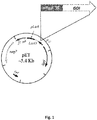
- an expression vector comprising a nucleic acid sequence encoding the signal sequence of OmpA operably linked to a nucleic acid encoding the heterologous protein, for example the pET-OmpA plasmid shown in Fig. 1 .
- the OmpA signal sequence may have the nucleotide sequence ATGAAAAAGACAGCTATCGCGATTGCAGTGGCACTGGCTGGTTTCGCTACCGTAGCGCAGG CC (SEQ ID NO:1).
- the plasmid is a pET21b-derived plasmid.
- any other suitable plasmid backbone known in the art can also be used.
- Suitable plasmid backbones include pGEX, pUC19, pALTR, pET, pQE, pLEX, pHAT or any other plasmid vector that is cablable of replication in gram-negative bacteria.
- Any Gram-negative bacteria that are capable of producing OMVs can be transformed with the expression vectors described above in order to produce OMVs comprising the heterologous protein in their lumen, and preferably free in their lumen
- OMVs are known in the art, and any suitable method can be used to generate OMVs of the invention. These methods generally involve a step of obtaining vesicles from a culture of the bacterium.
- the OMVs can be obtained by disruption of or blebbing from the outer membrane of the bacterium to form vesicles therefrom.
- OMVs can also be prepared artificially from bacteria, for example by sarkosyl-extraction of OMVs from ' ⁇ GNA33' meningococci, as described in reference 41.
- OMVs 'Native OMVs' ('NOMVs' [42]), microvesicles (MVs [43]), detergent-extracted OMVs (DOMVs), mutant-derived OMVs (m-OMV), and blebs, which are outer-membrane protrusions that remain attached to bacteria prior to release as MVs ([44]; [45]), all form part of the invention and are collectively referred to as OMVs herein.
- OMVs include naturally-occurring membrane vesicles that form spontaneously during bacterial growth and are released into culture medium.
- the OMVs of the invention are naturally occurring OMVs because separation of spontaneously-released OMVs from the culture medium is more convenient than methods which involve deliberate disruption of the outer membrane ( e.g. by detergent treatment or sonication) to produce artificially induced OMVs.
- they are substantially free from inner membrane and cytoplasmic contamination.
- OMVs typically have a diameter of 35-120nm by electron microscopy e.g. 50nm diameter and can be purified from the culture medium.
- the purification ideally involves separating the OMVs from living and/or intact bacteria e.g. by size-based filtration using a filter, such as a 0.22 ⁇ m filter, which allows the OMVs to pass through but which does not allow intact bacteria to pass through, or by using low speed centrifugation to pellet cells while leaving the blebs in suspension.
- a filter such as a 0.22 ⁇ m filter
- a preferred method involving a two stage size filtration process is described in ref. 46.
- OMV-containing compositions of the invention will generally be substantially free from whole bacteria, whether living or dead.
- the size of the OMVs means that they can readily be separated from whole bacteria by filtration e.g. as typically used for filter sterilisation.
- OMVs will pass through a standard 0.22 ⁇ m filters, these can rapidly become clogged by other material, and so it may be useful to perform sequential steps of filter sterilisation through a series of filters of decreasing pore size before using a 0.22 ⁇ m filter. Examples of preceding filters would be those with pore size of 0.8 ⁇ m, 0.45 ⁇ m, etc.
- OMVs may be prepared artificially from bacteria, and may be prepared using detergent treatment (e.g. with deoxycholate or sarkosyl), or by non-detergent means (e.g. see reference 47).
- Techniques for forming OMVs include treating bacteria with a bile acid salt detergent (e.g. salts of lithocholic acid, chenodeoxycholic acid, ursodeoxycholic acid, deoxycholic acid, cholic acid, ursocholic acid, etc., with sodium deoxycholate [48 & 49] being preferred for treating Neisseria ) at a pH sufficiently high not to precipitate the detergent [50].
- a bile acid salt detergent e.g. salts of lithocholic acid, chenodeoxycholic acid, ursodeoxycholic acid, deoxycholic acid, cholic acid, ursocholic acid, etc., with sodium deoxycholate [48 & 49] being preferred for treating Neisseria ) at a pH sufficiently high
- a method may use an OMV extraction buffer with about 0.5% deoxycholate or lower e.g. about 0.2%, about 0.1%, ⁇ 0.05% or zero.
- a useful process for OMV preparation is described in reference 51 and involves ultrafiltration on crude OMVs, rather than instead of high speed centrifugation.
- the process may involve a step of ultracentrifugation after the ultrafiltration takes place.
- the invention provides an OMV obtained or obtainable by the methods described above.
- the invention provides a pharmaceutical composition comprising (a) an OMV of the invention and (b) a pharmaceutically acceptable carrier.
- the invention also provides a process for preparing such a composition, comprising the step of admixing OMVs of the invention with a pharmaceutically acceptable carrier.
- the invention also provides a container (e.g. vial) or delivery device (e.g. syringe) pre-filled with a pharmaceutical composition of the invention.
- a container e.g. vial
- delivery device e.g. syringe
- the invention also provides a process for providing such a container or device, comprising introducing into the container or device a vesicle-containing composition of the invention.
- the immunogenic composition may include a pharmaceutically acceptable carrier, which can be any substance that does not itself induce the production of antibodies harmful to the patient receiving the composition, and which can be administered without undue toxicity.
- Pharmaceutically acceptable carriers can include liquids such as water, saline, glycerol and ethanol.
- auxiliary substances such as wetting or emulsifying agents, pH buffering substances, and the like, can also be present in such vehicles. A thorough discussion of suitable carriers is available in ref. 52.
- compositions of the invention may be prepared in various forms.
- the compositions may be prepared as injectables, either as liquid solutions or suspensions. Solid forms suitable for solution in, or suspension in, liquid vehicles prior to injection can also be prepared.
- the composition may be prepared for topical administration e.g. as an ointment, cream or powder.
- the composition be prepared for oral administration e.g. as a tablet or capsule, or as a syrup (optionally flavoured).
- the composition may be prepared for pulmonary administration e.g. as an inhaler, using a fine powder or a spray.
- the composition may be prepared as a suppository or pessary.
- the composition may be prepared for nasal, aural or ocular administration e.g. as drops.
- a pharmaceutical carrier may include a temperature protective agent, and this component may be particularly useful in adjuvanted compositions (particularly those containing a mineral adjuvant, such as an aluminium salt).
- a liquid temperature protective agent may be added to an aqueous vaccine composition to lower its freezing point e.g. to reduce the freezing point to below 0°C.
- the temperature protective agent also permits freezing of the composition while protecting mineral salt adjuvants against agglomeration or sedimentation after freezing and thawing, and may also protect the composition at elevated temperatures e.g. above 40°C.
- a starting aqueous vaccine and the liquid temperature protective agent may be mixed such that the liquid temperature protective agent forms from 1-80% by volume of the final mixture.
- Suitable temperature protective agents should be safe for human administration, readily miscible/soluble in water, and should not damage other components (e. g . antigen and adjuvant) in the composition. Examples include glycerin, propylene glycol, and/or polyethylene glycol (PEG). Suitable PEGs may have an average molecular weight ranging from 200-20,000 Da. In a preferred embodiment, the polyethylene glycol can have an average molecular weight of about 300 Da ('PEG-300').
- composition is preferably sterile. It is preferably pyrogen-free. It is preferably buffered e.g. at between pH 6 and pH 8, generally around pH 7. Compositions of the invention may be isotonic with respect to humans.
- Immunogenic compositions comprise an immunologically effective amount of immunogenic vesicles, as well as any other of other specified components, as needed.
- 'immunologically effective amount' it is meant that the administration of that amount to an individual, either in a single dose or as part of a series, is effective for treatment or prevention. This amount varies depending upon the health and physical condition of the individual to be treated, age, the taxonomic group of individual to be treated ( e.g. non-human primate, primate, etc. ), the capacity of the individual's immune system to synthesise antibodies, the degree of protection desired, the formulation of the vaccine, the treating doctor's assessment of the medical situation, and other relevant factors. It is expected that the amount will fall in a relatively broad range that can be determined through routine trials.
- compositions of the invention will generally be between 10 and 500 ⁇ g/ml, preferably between 25 and 200 ⁇ g/ml, and more preferably about 50 ⁇ g/ml or about 100 ⁇ g/ml (expressed in terms of total protein in the vesicles).
- a dosage volume of 0.5ml is typical for injection.
- composition may be administered in conjunction with other immunoregulatory agents.
- Adjuvants which may be used in compositions of the invention include, but are not limited to:
- Mineral containing compositions suitable for use as adjuvants in the invention include mineral salts, such as aluminium salts and calcium salts.
- the invention includes mineral salts such as hydroxides (e.g. oxyhydroxides), phosphates ( e.g. hydroxyphosphates, orthophosphates), sulphates, etc. [ e.g. see chapters 8 & 9 of ref. 57], or mixtures of different mineral compounds, with the compounds taking any suitable form ( e.g. gel, crystalline, amorphous, etc. ), and with adsorption being preferred.
- the mineral containing compositions may also be formulated as a particle of metal salt.
- aluminium hydroxide typically aluminium oxyhydroxide salts, which are usually at least partially crystalline.
- Aluminium oxyhydroxide which can be represented by the formula AIO(OH)
- IR infrared
- the degree of crystallinity of an aluminium hydroxide adjuvant is reflected by the width of the diffraction band at half height (WHH), with poorly-crystalline particles showing greater line broadening due to smaller crystallite sizes.
- aluminium hydroxide adjuvants The surface area increases as WHH increases, and adjuvants with higher WHH values have been seen to have greater capacity for antigen adsorption.
- a fibrous morphology e.g. as seen in transmission electron micrographs
- the pI of aluminium hydroxide adjuvants is typically about 11 i.e. the adjuvant itself has a positive surface charge at physiological pH.
- Adsorptive capacities of between 1.8-2.6 mg protein per mg Al +++ at pH 7.4 have been reported for aluminium hydroxide adjuvants.
- the adjuvants known as "aluminium phosphate” are typically aluminium hydroxyphosphates, often also containing a small amount of sulfate (i.e. aluminium hydroxyphosphate sulfate). They may be obtained by precipitation, and the reaction conditions and concentrations during precipitation influence the degree of substitution of phosphate for hydroxyl in the salt.
- Hydroxyphosphates generally have a PO 4 /Al molar ratio between 0.3 and 1.2. Hydroxyphosphates can be distinguished from strict AlPO 4 by the presence of hydroxyl groups. For example, an IR spectrum band at 3164cm -1 ( e.g. at 200°C) indicates the presence of structural hydroxyls [ch. 9 of ref. 57].
- the PO 4 /Al 3+ molar ratio of an aluminium phosphate adjuvant will generally be between 0.3 and 1.2, preferably between 0.8 and 1.2, and more preferably 0.95+0.1.
- the aluminium phosphate will generally be amorphous, particularly for hydroxyphosphate salts.
- a typical adjuvant is amorphous aluminium hydroxyphosphate with PO 4 /Al molar ratio between 0.84 and 0.92, included at 0.6mg Al 3+ /ml.
- the aluminium phosphate will generally be particulate ( e.g. plate-like morphology as seen in transmission electron micrographs). Typical diameters of the particles are in the range 0.5-20 ⁇ m ( e.g. about 5-10 ⁇ m) after any antigen adsorption.
- Adsorptive capacities of between 0.7-1.5 mg protein per mg Al +++ at pH 7.4 have been reported for aluminium phosphate adjuvants.
- Suspensions of aluminium salts used to prepare compositions of the invention may contain a buffer (e.g. a phosphate or a histidine or a Tris buffer), but this is not always necessary.
- the suspensions are preferably sterile and pyrogen-free.
- a suspension may include free aqueous phosphate ions e.g. present at a concentration between 1.0 and 20 mM, preferably between 5 and 15 mM, and more preferably about 10 mM.
- the suspensions may also comprise sodium chloride.
- an adjuvant component includes a mixture of both an aluminium hydroxide and an aluminium phosphate.
- there may be more aluminium phosphate than hydroxide e.g. a weight ratio of at least 2:1 e.g. ⁇ 5:1, ⁇ 6:1, ⁇ 7:1, ⁇ 8:1, ⁇ 9:1, etc.
- the concentration of Al +++ in a composition for administration to a patient is preferably less than 10mg/ml e.g. ⁇ 5 mg/ml, ⁇ 4 mg/ml, ⁇ 3 mg/ml, ⁇ 2 mg/ml, ⁇ 1 mg/ml, etc.
- a preferred range is between 0.3 and 1mg/ml.
- a maximum of ⁇ 0.85mg/dose is preferred.
- Oil emulsion compositions suitable for use as adjuvants in the invention include squalene-water emulsions, such as MF59 [Chapter 10 of ref. 57; see also ref. 54] (5% Squalene, 0.5% Tween 80, and 0.5% Span 85, formulated into submicron particles using a microfluidizer). Complete Freund's adjuvant (CFA) and incomplete Freund's adjuvant (IFA) may also be used.
- CFA Complete Freund's adjuvant
- IFA incomplete Freund's adjuvant
- oil-in-water emulsions typically include at least one oil and at least one surfactant, with the oil(s) and surfactant(s) being biodegradable (metabolisable) and biocompatible.
- the oil droplets in the emulsion are generally less than 5 ⁇ m in diameter, and advantageously the emulsion comprises oil droplets with a sub-micron diameter, with these small sizes being achieved with a microfluidiser to provide stable emulsions. Droplets with a size less than 220nm are preferred as they can be subjected to filter sterilization.
- the invention can be used with oils such as those from an animal (such as fish) or vegetable source.
- Sources for vegetable oils include nuts, seeds and grains. Peanut oil, soybean oil, coconut oil, and olive oil, the most commonly available, exemplify the nut oils.
- Jojoba oil can be used e.g. obtained from the jojoba bean. Seed oils include safflower oil, cottonseed oil, sunflower seed oil, sesame seed oil and the like. In the grain group, corn oil is the most readily available, but the oil of other cereal grains such as wheat, oats, rye, rice, teff, triticale and the like may also be used.
- 6-10 carbon fatty acid esters of glycerol and 1,2-propanediol may be prepared by hydrolysis, separation and esterification of the appropriate materials starting from the nut and seed oils.
- Fats and oils from mammalian milk are metabolizable and may therefore be used in the practice of this invention.
- the procedures for separation, purification, saponification and other means necessary for obtaining pure oils from animal sources are well known in the art.
- Most fish contain metabolizable oils which may be readily recovered. For example, cod liver oil, shark liver oils, and whale oil such as spermaceti exemplify several of the fish oils which may be used herein.
- branched chain oils are synthesized biochemically in 5-carbon isoprene units and are generally referred to as terpenoids.
- Shark liver oil contains a branched, unsaturated terpenoid known as squalene, 2,6,10,15,19,23-hexamethyl-2,6,10,14,18,22-tetracosahexaene.
- Other preferred oils are the tocopherols (see below). Oil in water emulsions comprising squalene are particularly preferred. Mixtures of oils can be used.
- Surfactants can be classified by their 'HLB' (hydrophile/lipophile balance). Preferred surfactants of the invention have a HLB of at least 10, preferably at least 15, and more preferably at least 16.
- the invention can be used with surfactants including, but not limited to: the polyoxyethylene sorbitan esters surfactants (commonly referred to as the Tweens), especially polysorbate 20 and polysorbate 80; copolymers of ethylene oxide (EO), propylene oxide (PO), and/or butylene oxide (BO), sold under the DOWFAXTM tradename, such as linear EO/PO block copolymers; octoxynols, which can vary in the number of repeating ethoxy (oxy-1,2-ethanediyl) groups, with octoxynol-9 (Triton X-100, or t-octylphenoxypolyethoxyethanol) being of particular interest; (octylphenoxy)polyethoxy
- Preferred surfactants for including in the emulsion are Tween 80 (polyoxyethylene sorbitan monooleate), Span 85 (sorbitan trioleate), lecithin and Triton X-100.
- detergents such as Tween 80 may contribute to the thermal stability seen in the examples below.
- surfactants can be used e.g. Tween 80/Span 85 mixtures.
- a combination of a polyoxyethylene sorbitan ester such as polyoxyethylene sorbitan monooleate (Tween 80) and an octoxynol such as t-octylphenoxypolyethoxyethanol (Triton X-100) is also suitable.
- Another useful combination comprises laureth 9 plus a polyoxyethylene sorbitan ester and/or an octoxynol.
- Preferred amounts of surfactants are: polyoxyethylene sorbitan esters (such as Tween 80) 0.01 to 1%, in particular about 0.1 %; octyl- or nonylphenoxy polyoxyethanols (such as Triton X-100, or other detergents in the Triton series) 0.001 to 0.1 %, in particular 0.005 to 0.02%; polyoxyethylene ethers (such as laureth 9) 0.1 to 20 %, preferably 0.1 to 10 % and in particular 0.1 to 1 % or about 0.5%.
- polyoxyethylene sorbitan esters such as Tween 80
- octyl- or nonylphenoxy polyoxyethanols such as Triton X-100, or other detergents in the Triton series
- polyoxyethylene ethers such as laureth 9
- oil-in-water emulsion adjuvants useful with the invention include, but are not limited to:
- Antigens and adjuvants in a composition will typically be in admixture at the time of delivery to a patient.
- the emulsions may be mixed with antigen during manufacture, or extemporaneously, at the time of delivery.
- the adjuvant and antigen may be kept separately in a packaged or distributed vaccine, ready for final formulation at the time of use.
- the antigen will generally be in an aqueous form, such that the vaccine is finally prepared by mixing two liquids.
- the volume ratio of the two liquids for mixing can vary (e.g. between 5:1 and 1:5) but is generally about 1:1.
- Saponin formulations may also be used as adjuvants in the invention.
- Saponins are a heterogeneous group of sterol glycosides and triterpenoid glycosides that are found in the bark, leaves, stems, roots and even flowers of a wide range of plant species. Saponin from the bark of the Quillaia saponaria Molina tree has been widely studied as adjuvants. Saponin can also be commercially obtained from Smilax ornata (sarsaprilla), Gypsophilla paniculata (brides veil), and Saponaria officianalis (soap root).
- Saponin adjuvant formulations include purified formulations, such as QS21, as well as lipid formulations, such as ISCOMs. QS21 is marketed as StimulonTM.
- Saponin compositions have been purified using HPLC and RP-HPLC. Specific purified fractions using these techniques have been identified, including QS7, QS17, QS18, QS21, QH-A, QH-B and QH-C.
- the saponin is QS21.
- a method of production of QS21 is disclosed in ref. 66.
- Saponin formulations may also comprise a sterol, such as cholesterol [67].
- ISCOMs immunostimulating complexs
- phospholipid such as phosphatidylethanolamine or phosphatidylcholine.
- Any known saponin can be used in ISCOMs.
- the ISCOM includes one or more of QuilA, QHA & QHC.
- the ISCOMS may be devoid of additional detergent [70].
- Adjuvants suitable for use in the invention include bacterial or microbial derivatives such as non-toxic derivatives of enterobacterial lipopolysaccharide (LPS), Lipid A derivatives, immunostimulatory oligonucleotides and ADP-ribosylating toxins and detoxified derivatives thereof.
- LPS enterobacterial lipopolysaccharide
- Lipid A derivatives Lipid A derivatives
- immunostimulatory oligonucleotides and ADP-ribosylating toxins and detoxified derivatives thereof.
- Non-toxic derivatives of LPS include monophosphoryl lipid A (MPL) and 3-O-deacylated MPL (3dMPL).
- 3dMPL is a mixture of 3 de-O-acylated monophosphoryl lipid A with 4, 5 or 6 acylated chains.
- a preferred "small particle" form of 3 De-O-acylated monophosphoryl lipid A is disclosed in ref. 73. Such "small particles" of 3dMPL are small enough to be sterile filtered through a 0.22 ⁇ m membrane [73].
- Other non-toxic LPS derivatives include monophosphoryl lipid A mimics, such as aminoalkyl glucosaminide phosphate derivatives e.g. RC-529 [74,75].
- Lipid A derivatives include derivatives of lipid A from Escherichia coli such as OM-174.
- OM-174 is described for example in refs. 76 & 77.
- Immunostimulatory oligonucleotides suitable for use as adjuvants in the invention include nucleotide sequences containing a CpG motif (a dinucleotide sequence containing an unmethylated cytosine linked by a phosphate bond to a guanosine). Double-stranded RNAs and oligonucleotides containing palindromic or poly(dG) sequences have also been shown to be immunostimulatory.
- the CpG's can include nucleotide modifications/analogs such as phosphorothioate modifications and can be double-stranded or single-stranded.
- References 78, 79 and 80 disclose possible analog substitutions e.g. replacement of guanosine with 2'-deoxy-7-deazaguanosine.
- the adjuvant effect of CpG oligonucleotides is further discussed in refs. 81-86.
- the CpG sequence may be directed to TLR9, such as the motif GTCGTT or TTCGTT [87].
- the CpG sequence may be specific for inducing a Th1 immune response, such as a CpG-A ODN, or it may be more specific for inducing a B cell response, such a CpG-B ODN.
- CpG-A and CpG-B ODNs are discussed in refs. 88-90.
- the CpG is a CpG-A ODN.
- the CpG oligonucleotide is constructed so that the 5' end is accessible for receptor recognition.
- two CpG oligonucleotide sequences may be attached at their 3' ends to form "immunomers". See, for example, refs. 91-93.
- an adjuvant used with the invention may comprise a mixture of (i) an oligonucleotide (e.g. between 15-40 nucleotides) including at least one (and preferably multiple) CpI motifs (i.e. a cytosine linked to an inosine to form a dinucleotide), and (ii) a polycationic polymer, such as an oligopeptide ( e.g. between 5-20 amino acids) including at least one (and preferably multiple) Lys-Arg-Lys tripeptide sequence(s).
- an oligonucleotide e.g. between 15-40 nucleotides
- CpI motifs i.e. a cytosine linked to an inosine to form a dinucleotide
- a polycationic polymer such as an oligopeptide (e.g. between 5-20 amino acids) including at least one (and preferably multiple) Lys-Arg-Lys tripeptide sequence(s).
- the oligonucleotide may be a deoxynucleotide comprising 26-mer sequence 5'-(IC) 13 -3' (SEQ ID NO: 2).
- the polycationic polymer may be a peptide comprising 11-mer amino acid sequence KLKLLLLLKLK (SEQ ID NO: 3). This combination of SEQ ID NOs: 6 and 7 provides the IC-31TM adjuvant.
- Bacterial ADP-ribosylating toxins and detoxified derivatives thereof may be used as adjuvants in the invention.
- the protein is derived from E. coli ( E. coli heat labile enterotoxin "LT"), cholera ("CT"), or pertussis ("PT").
- LT E. coli heat labile enterotoxin
- CT cholera
- PT pertussis
- the use of detoxified ADP-ribosylating toxins as mucosal adjuvants is described in ref. 97 and as parenteral adjuvants in ref. 98.
- the toxin or toxoid is preferably in the form of a holotoxin, comprising both A and B subunits.
- the A subunit contains a detoxifying mutation; preferably the B subunit is not mutated.
- the adjuvant is a detoxified LT mutant such as LT-K63, LT-R72, and LT-G192.
- LT-K63 LT-K63
- LT-R72 LT-G192.
- a useful CT mutant is or CT-E29H [107].
- Numerical reference for amino acid substitutions is preferably based on the alignments of the A and B subunits of ADP-ribosylating toxins set forth in ref. 108, specifically incorporated herein by reference in its entirety.
- Human immunomodulators suitable for use as adjuvants in the invention include cytokines, such as interleukins (e.g. IL-1, IL-2, IL-4, IL-5, IL-6, IL-7, IL-12 [109], etc.) [110], interferons (e.g. interferon-y), macrophage colony stimulating factor, and tumor necrosis factor.
- cytokines such as interleukins (e.g. IL-1, IL-2, IL-4, IL-5, IL-6, IL-7, IL-12 [109], etc.) [110], interferons (e.g. interferon-y), macrophage colony stimulating factor, and tumor necrosis factor.
- interferons e.g. interferon-y
- macrophage colony stimulating factor e.g. interferon-y
- tumor necrosis factor e.g. tumor necrosis factor.
- a preferred immunomodulator is IL-12.
- Bioadhesives and mucoadhesives may also be used as adjuvants in the invention.
- Suitable bioadhesives include esterified hyaluronic acid microspheres [111] or mucoadhesives such as cross-linked derivatives of poly(acrylic acid), polyvinyl alcohol, polyvinyl pyrollidone, polysaccharides and carboxymethylcellulose. Chitosan and derivatives thereof may also be used as adjuvants in the invention [112].
- Microparticles may also be used as adjuvants in the invention.
- Microparticles i.e. a particle of ⁇ 100nm to ⁇ 150 ⁇ m in diameter, more preferably ⁇ 200nm to ⁇ 30 ⁇ m in diameter, and most preferably ⁇ 500nm to 10 ⁇ m in diameter
- materials that are biodegradable and non-toxic e.g. a poly( ⁇ -hydroxy acid), a polyhydroxybutyric acid, a polyorthoester, a polyanhydride, a polycaprolactone, etc.
- a negatively-charged surface e.g. with SDS
- a positively-charged surface e.g. with a cationic detergent, such as CTAB
- liposome formulations suitable for use as adjuvants are described in refs. 113-115.
- imidazoquinolone compounds suitable for use adjuvants in the invention include Imiquamod and its homologues (e.g. "Resiquimod 3M"), described further in refs. 116 and 117.
- the invention may also comprise combinations of aspects of one or more of the adjuvants identified above.
- the following adjuvant compositions may be used in the invention: (1) a saponin and an oil-in-water emulsion [118]; (2) a saponin (e.g. QS21) + a non-toxic LPS derivative (e.g. 3dMPL) [119]; (3) a saponin (e.g. QS21) + a non-toxic LPS derivative (e.g. 3dMPL) + a cholesterol; (4) a saponin (e.g.
- RibiTM adjuvant system (RAS), (Ribi Immunochem) containing 2% squalene, 0.2% Tween 80, and one or more bacterial cell wall components from the group consisting of monophosphorylipid A (MPL), trehalose dimycolate (TDM), and cell wall skeleton (CWS), preferably MPL + CWS (DetoxTM); and (8) one or more mineral salts (such as an aluminum salt) + a non-toxic derivative of LPS (such as 3dMPL).
- MPL monophosphorylipid A
- TDM trehalose dimycolate
- CWS cell wall skeleton
- LPS such as 3dMPL
- An aluminium hydroxide adjuvant is useful, and antigens are generally adsorbed to this salt.
- Oil-in-water emulsions comprising squalene, with submicron oil droplets, are also preferred, particularly in the elderly.
- Useful adjuvant combinations include combinations of Th1 and Th2 adjuvants such as CpG & an aluminium salt, or resiquimod & an aluminium salt.
- a combination of an aluminium salt and 3dMPL may be used.
- the invention also provides a method for raising an immune response in a mammal, comprising administering an immunogenic composition of the invention to the mammal.
- the immune response is an antibody response.
- the antibody response is preferably a protective antibody response.
- the invention also provides compositions of the invention for use in such methods.
- the invention also provides a method for protecting a mammal against a bacterial infection and/or disease, comprising administering to the mammal an immunogenic composition of the invention.
- compositions of the invention for use as medicaments (e.g. as immunogenic compositions or as vaccines). It also provides the use of OMVs of the invention in the manufacture of a medicament for preventing a bacterial infection in a mammal.
- the mammal is preferably a human.
- the human may be an adult or, preferably, a child.
- the vaccine is for prophylactic use, the human is preferably a child (e.g. a toddler or infant); where the vaccine is for therapeutic use, the human is preferably an adult.
- a vaccine intended for children may also be administered to adults e.g. to assess safety, dosage, immunogenicity, etc.
- Efficacy of therapeutic treatment can be tested by monitoring bacterial infection after administration of the composition of the invention.
- Efficacy of prophylactic treatment can be tested by monitoring immune responses against immunogenic proteins in the vesicles or other antigens after administration of the composition.
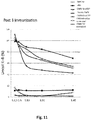
- Immunogenicity of compositions of the invention can be determined by administering them to test subjects ( e.g. children 12-16 months age) and then determining standard serological parameters. These immune responses will generally be determined around 4 weeks after administration of the composition, and compared to values determined before administration of the composition. Where more than one dose of the composition is administered, more than one post-administration determination may be made.
- compositions of the invention will generally be administered directly to a patient.
- Direct delivery may be accomplished by parenteral injection (e.g. subcutaneously, intraperitoneally, intravenously, intramuscularly, or to the interstitial space of a tissue), or by rectal, oral, vaginal, topical, transdermal, intranasal, ocular, aural, pulmonary or other mucosal administration.
- Intramuscular administration to the thigh or the upper arm is preferred.
- Injection may be via a needle (e.g. a hypodermic needle), but needle-free injection may alternatively be used.
- a typical intramuscular dose is about 0.5 ml.
- the invention may be used to elicit systemic and/or mucosal immunity.
- Dosage treatment can be a single dose schedule or a multiple dose schedule. Multiple doses may be used in a primary immunisation schedule and/or in a booster immunisation schedule. A primary dose schedule may be followed by a booster dose schedule. Suitable timing between priming doses ( e.g. between 4-16 weeks), and between priming and boosting, can be routinely determined.
- composition comprising X may consist exclusively of X or may include something additional e.g. X + Y.
- Recombination-prone BL21(DE3) cells were produced by using the highly proficient homologous recombination system ( red operon) [122]. Briefly, electrocompetent bacterial cells were transformed with 5 ⁇ g of plasmid pAJD434 by electroporation (5.9 ms at 2.5 kV). Bacteria were then grown for 1 h at 37 °C in 1 ml of SOC broth and then plated on Luria-Bertani (LB) plates containing trimethoprim (100 ⁇ g/ml). Expression of the red genes carried by pAJD434 was induced by adding 0.2% L-arabinose to the medium.
- red operon red operon
- ⁇ tolR and ⁇ ompA E. coli BL21 mutant strains which are known to spontaneously produce a large amount of OMVs, were produced by replacing ompA and tolR coding sequences with kanamycin (kmr) and chloramphenicol (cmr) resistance cassettes, respectively.
- a three-step PCR protocol was used to fuse the upstream and downstream regions of ompA and tolR to the kmr and cmr genes, respectively.
- the upstream and downstream regions of the tolR and ompA gene were amplified from BL21(DE3) genomic DNA with the specific primer pairs tolR-1/tolR-2 and tolR-3/tolR-4; ompA-1/ ompA-2 and ompA-3/ompA 4, respectively (Table 1).
- the kmr cassette was amplified from plasmid pUC4K using the primers PUC4K-rev and PUC4K-for and cmr was amplified using primers CMR-for/CMR-rev. Finally, 100 ng of each of the three amplified fragments were fused together by mixing in a PCR containing the 1/4 primers.
- Linear fragments in which the antibiotic resistance gene was flanked by the tolR / ompA upstream and downstream regions were used to transform the recombination-prone BL21(DE3) E. coli strain, which was made electrocompetent by three washing steps in cold water. Transformation was by an electroporation of 5.9 ms at 2.5 kV. Transformants were selected by plating the cells on LB plates containing 30 ⁇ g/ml of kanamycin or 20 ⁇ g/ml chloramphenicol.
- tolR and ompA genes The deletion of the tolR and ompA genes was confirmed by PCR-amplification of genomic DNA using primers pairs tolR-1 / PUC4K-rev and PUC4K-for /tolR-4; ompA-1/CMR-rev and CMR-for/ompA-4.
- Oligonucleotide primers Name Sequence SEQ ID NO GAS25-F ACCGTAGCGCAGGCCAACAAACAAAACACTGCTAGTACAG 4 GAS25-R GTGATGGTGATGTTACTACTTATAAGTAATCGAACCATATG 5 SpyCEP-F3 6 SpyCEP-R3 7 Bla-omp-F ACCGTAGCGCAGGCCCGGTAAGATCCTTGAGATTTTTCG 8 Bla-omp-R GTGATGGTGATGTTATTACCAATGCTTAATCAGTGAGGC 9 fHbp-F ACCGTAGCGCAGGCCGTCGCCGCCGACATCG 10 fHbp-R GTGATGGTGATGTTATTGCTTGGCGGCAAGGC 11 omprev GGCCTGCGCTACGGTAGCGAAA 12 nohisflag TAACATCACCATCACCATCACGATTACAAAGA 13 tolR-1 TCTGGAATCGAACTCTCTCG 14 tolR-2 ATTTTGAGACACAACGTGG
- heterologous proteins from different bacterial species, both Gram positive and Gram-negative, and belonging to different cellular compartments were selected as model proteins to determine whether heterologous proteins can be incorporated into E. coli OMVs in their native conformations. These proteins included: (1) the periplasmic TEM1 beta lactamase (Bla) from E.
- the factor H-binding protein (fHbp) lipoprotein from Neisseria meningitidis (2) the factor H-binding protein (fHbp) lipoprotein from Neisseria meningitidis , (3) the extracellular cholesterol depending streptolysin O (Slo also called GAS25) from Streptococcus pyogenes , (4) the cell envelope serine protease SpyCEP (also called GAS57) from Streptococcus pyogenes and (5) the putative surface exclusion protein Spy0269 (also known GAS40) also from Streptococcus pyogenes .
- fHbp factor H-binding protein lipoprotein from Neisseria meningitidis
- the extracellular cholesterol depending streptolysin O (Slo also called GAS25) from Streptococcus pyogenes
- the cell envelope serine protease SpyCEP also called GAS57
- the nucleic acid coding sequences for each of these five proteins were cloned into the pET-OmpA plasmid using the polymerase incomplete primer extension (PIPE) cloning method [1].
- the pET-OmpA plasmid (as provided in e . g . [2] and [3]) is a pET21b-derived plasmid.
- Slo-dm (slo double mutant, SEQ ID:42) was PCR-amplified from plasmid pET21-Slo-dm, which contains the slo-dm gene, using the GAS25-F/GAS25-R primers (see Table 1).
- the SpyCEP gene (a double mutant sequence is also provided as SEQ ID:40) was PCR-amplified from the M1 GAS strain ISS3348 using SpyCEP-F3/SpyCEP-R3 primers, which were designed to exclude the C-terminal LPXTG motif cell-wall anchor (located at aa 1614-1647).
- the spy0269 (SEQ ID:44) gene was PCR amplified from the M1 GAS strain ISS3348 using spy0269-F/spy0269-R primers. Primers for fHbp gene amplification were designed to exclude the lipobox (which is located at aa 17-25 in fHbp) in order to avoid membrane anchoring. In order to target the proteins to the periplasm, the sequences encoding the signal sequences of each of these proteins was removed and replaced with the E. coli OmpA signal sequence (SS) (see Fig. 1).
- SS E. coli OmpA signal sequence
- Bla and fHbp were amplified from pET21b and Neisseria meningitidis MC58 genome respectively using primers Bla-omp-F/Bla-omp-R and fHbp-F/fHbp-R, respectively.
- pET-OmpA plasmid was amplified by PCR using primers omprev/nohisflag. In this way plasmids pET-21_Bla (SEQ ID:37), pET-21_slo (SEQ ID:33), pET-21_SpyCEP (SEQ ID:34), pET-21_fHbp (SEQ ID:36) and pET21_spy0269 (SEQ ID:35) were generated.
- the ⁇ tolR and AompA E. coli BL21 strains were transformed with the pET-21_Bla, pET-21_slo, pET-21_SpyCEP, pET-21_fHbp plasmids and pET21_spy0269.
- the ⁇ tolR and ⁇ ompA E. coli BL21 strains were transformed with the pET-OmpA empty vector.
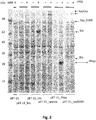
- Fig. 2 shows the SDS-polyacrylamide gel electrophoresis (SDS-PAGE) of total lysates of these cultures before and after induction with 1 mM IPTG. Bands corresponding to Bla, slo, SpyCEP, fHbp and Spy0269 proteins are present in all induced samples and are indicated by arrows. Thus, all five of the tested heterologous proteins were successfully induced in E. coli.
- OMVs were sonicated in a hypotonic buffer (10 mM Tris pH 7.5, 1.5 mM MgCl2, 10 mM KCl) by 10 bursts of 30 seconds each, followed by cooling on ice.
- a hypotonic buffer (10 mM Tris pH 7.5, 1.5 mM MgCl2, 10 mM KCl)
- Total lysates were prepared from 1 ml of culture, which was centrifuged at 13,000 x g for 5 minutes. The pellet was resuspended in SDS-PAGE sample loading buffer, heated at 100°C for 5 minutes and loaded onto a 4-12% polyacrylamide gel (Invitrogen). Gels were run in MES buffer (Invitrogen) and stained with Comassie Blue.
- FIG. 3 shows the polyacrylamide gels for approximately 30 ⁇ g OMVs obtained from ⁇ tolR and ⁇ ompA strains which contain plasmids to express the different heterologous proteins. Bands corresponding to the weight of SpyCEP, Slo, Bla and fHbp are indicated by arrows. To confirm protein identification, the bands were excised and digested with trypsin and the resulting proteolytic peptides were then analysed by matrix-assisted laser desorption ionization-time of flight (MALDI-TOF).
- MALDI-TOF matrix-assisted laser desorption ionization-time of flight
- protein bands were excised from the gels, washed with 50 mM ammonium bicarbonate-acetonitrile (50/50, vol/vol), and air dried. Dried spots were digested for 2 h at 37°C in 12 ⁇ l of 0.012- ⁇ g/ ⁇ l sequencing-grade modified trypsin (sequencing grade modified porcine trypsin; Promega, Madison, WI) in 5 mM ammonium bicarbonate. After digestion, 0.6 ⁇ l of the digested product was loaded on a matrix-prespotted Anchorchip (PAC 384 HCCA; Bruker-Daltonics, Bremen, Germany) and air-dried.
- PAC 384 HCCA matrix-prespotted Anchorchip
- the MASCOT software identified the bands as corresponding to Bla, Slo, SpyCEP and fHbp proteins respectively. These results confirm that Bla, Slo, SpyCEP and fHbp can all be expressed and incorporated into OMVs produced both by ⁇ tolR and ⁇ ompA E. coli strains.
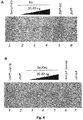
- OMVs containing the heterologous proteins were loaded onto 4-12% SDS-polyacrylamide gels along with increasing concentration (20-80 ng) of the corresponding purified protein. Empty OMVs were also loaded as a negative control.
- the polyacrylamide gels were then transferred onto nitrocellulose filter by standard methods [126]. The filters were blocked overnight at 4°C by agitation in blocking solution (10% skimmed milk and 0.05% Tween in PBS), followed by incubation for 90 minutes at 37°C with a 1:1000 dilution of the required antibody serum (anti-Bla (Abcam), anti-slo, anti-SpyCEP and anti-fHbp) in 3% skimmed milk and 0.05% Tween in PBS.
- blocking solution 10% skimmed milk and 0.05% Tween in PBS
- the filters were incubated in a 1:2000 dilution of peroxidase-conjugated anti-mouse immunoglobulin (Dako) in 3% skimmed milk and 0.05% Tween in PBS for an hour, and after three washing steps, the resulting signal was detected by using the SuperSignal West Pico chemiluminescent substrate (Pierce).
- Dako peroxidase-conjugated anti-mouse immunoglobulin
- Fig. 4 and Fig. 5 show the results from the four different Western blots performed. As expected from the MALDI-TOF analysis, all the OMV preparations contain the heterologous proteins selected.
- Example 5 Heterologous proteins are localized in the OMVs periplasm
- the signal sequences of all four of the heterologous proteins were replaced by the E . coli OmpA signal sequence in order to target the proteins into the E. coli periplasm. It was therefore important to confirm that the proteins are expressed as luminal components of OMVs rather than attached to the extracellular surface of OMVs.
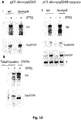
- proteinase K (Fermentas) was added to 15 ⁇ g intact and solubilized (in 1% SDS) OMVs expressing Slo-dm or SpyCEP, and the mixture was then incubated at 37°C for 10 minutes. After proteinase K deactivation with 10mM phenylmethylsulfonyl fluoride (PMSF; Sigma Aldrich) samples were loaded on a 4-12% polyacrylamide gel and Western blot analysis was performed with the required antibody to detect the presence of the heterologous proteins.
- PMSF phenylmethylsulfonyl fluoride
- Fig. 6 and Fig. 7 show that Slo-dm, SpyCEP and Bla were all protected from proteinase K-mediated degradation in unsolubilised OMVs (but not in solubilized OMVs), demonstrating than they are both expressed as periplasmic proteins in the lumen of E. coli OMVs.
- Example 6 - OMVs containing SpyCEP are able to hydrolyse IL-8
- SpyCEP has been reported to hydrolyse IL-8, converting it into a 6-kDa inactive fragment [127].
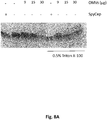
- OMVs expressing the SpyCEP protein were incubated at different concentrations with human IL-8 (50 ⁇ g/ml) at 37°C for 2 hours.
- the SpyCEP wild type protein (at a concentration of 10 ⁇ g/ml) was used as positive control.
- IL-8 was incubated with 10 ng/ml GAS57 purified protein (which is known to hydrolyse IL-8), as a positive control.
- the hydrolytic products were analysed using an 18% SDS-PAGE with silver staining.
- IL-8 was almost completely cleaved after 2 hours incubation with 30 ⁇ g OMVs containing SpyCEP.
- SpyCEP's biological activity is preserved in OMVs.
- Retention of functional activity indicates that the heterologous protein is correctly folded in the OMV and will therefore display the same or substantially the same structural epitopes as the wild-type protein in its native environment.
- the IL-8 hydrolysis activity was increased in permeabilised OMVs, suggesting that an active form of SpyCEP is located inside OMVs. Retention of functional activity indicates that the heterologous protein is correctly folded in the OMV and will therefore display the same or substantially the same antigens as the wild-type protein in its native environment.
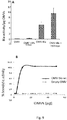
- OMVs expressing Bla were incubated with the chromogenic substrate nitrocefin and the Bla activity was measured as described herein.
- OMV preparations were incubated with nitrocefin (0.5 mg/ml; Oxoid, Thermo Scientific, Cambridge, United Kingdom) for 30 min at 37°C in the dark.
- the chromogen hydrolysis and subsequent color change of supernatants were determined immediately with the Tecan spectrophotometer at OD485.
- the enzymatic activity was estimated using a standard curve, where OD485 was related to the amount of nitrocefin hydrolyzed. This was quantified using recombinant ⁇ -lactamase (VWR).
- Fig. 9A shows that empty OMVs showed no Bla activity, whereas Bla activity was shown in Bla-containing OMVs. Hence, the biological activity of Bla is preserved in OMVs.
- Slo hemolytic activity was tested by incubating OMVs expressing the wild type (wt) form of the toxin with sheep blood erythrocytes, using the following method. Serial dilutions of the samples were prepared in 96-well plates with U-shaped bottoms using PBS + 0.5% BSA as dilution buffer. 1ml of sheep blood was washed three times in PBS (with centrifugation at 3000 x g), and blood cells were finally suspended in 5 ml of PBS. 50 ⁇ l of this suspension was added to 50 ⁇ l of each diluted samples and incubated at 37°C for 30 min. Water was used to give 100% haemolysis, and PBS + BSA 0.5% was used as negative control. Plates were then centrifuged for 5 min at 1,000 x g, and the supernatant was carefully transferred to 96-well flat-bottomed plates to read the absorbance at 540 nm [128].
- Example 8 Antibody titers elicited in mice immunized with Slo and SpyCEP in engineered OMVs
- mice were immunized intraperitoneally on days 0, 21 and 35 with 25 ⁇ g of sonicated or unsonicated OMVs over-expressing the Slo or SpyCEP proteins. All samples were formulated with 2 mg/ml alum hydroxide as adjuvant. Control mice were immunized with PBS and adjuvant. Positive control groups consisted of mice immunized with 20 ⁇ g of recombinant purified Slo or SpyCEP proteins. To test the OMVs adjuvanticity, mice were also immunized with 25 ⁇ g of empty OMVs or with 25 ⁇ g of empty OMVs plus 20 ⁇ g of Slo or SpyCEP antigen.
- Sera were collected before the first immunization (pre-immune sera) and after each of the 3 immunizations (post1, post2 and post3 sera), and ELISA titers were analysed.
- ELISAs were performed using 96-well Maxisorp plates (Nunc, Thermo Fisher Scientific) coated with 3 ⁇ g/ml or 2 ⁇ g/ml of Slo or SpyCEP protein, respectively, in PBS. Plates were incubated for 2 h at room temperature, then washed three times with TPBS (0.05% Tween 20 in PBS, pH 7.4) and blocked with 250 ⁇ l/well of 2% BSA (Sigma-Aldrich) for 1 h at room temperature.
- Serum samples were initially diluted 1:500-1:1000 in 2% BSA in TPBS, transferred onto coated-blocked plates (200 ⁇ L) and serially diluted (by two-fold) followed by 2 h incubation at 37 °C. Then 100 ⁇ l/well of 1:2000 diluted alkaline phosphatase-conjugated goat anti-mouse IgG were added and left for 2 h at 30 °C. Bound alkaline phosphatase was visualized by adding 100 ⁇ L/well of 3 mg/mL para-nitrophenyl-phosphate disodium hexahydrate (Sigma-Aldrich) in 1 M diethanolamine buffer (pH 9.8).
- Fig. 10 shows the geometric mean of the ELISA titers obtained from the 8 mice for each group of immunizations after the third immunization (day 49). Sera from mice immunized with PBS and adjuvant alone or with empty OMVs gave negative results. As shown in Fig. 10 , the antibody response to all five preparations was statistically equivalent, suggesting that engineered OMV preparations are able to induce antibody against Slo and SpyCEP antigens.
- Example 9 OMV-SpyCEP immune serum inhibits SpyCEP mediated processing of IL-8
- mice immunized with PBS alone, empty OMVs, OMV-SpyCEP and OMV + SpyCEP were tested for their capacity to neutralize IL-8 proteolytic activity of SpyCEP.
- SpyCEP (0.1 ⁇ g/ml) and IL-8 (1 ⁇ g/ml) were incubated with pools of mice polyclonal serum from the 8 immunized mice for each group at five different dilutions (1:2,5, 1:5, 1:10, 1:20, and 1:40) at 37 °C for 2 hours in PBS, 0.5 mg/ml BSA.
- SpyCEP was incubated with buffer only, and sera without SpyCEP were used.
- the amount of uncleaved IL-8 was quantified after 2 h by ELISA (human IL-8 Immunoassay kit, Invitrogen) and expressed as a percentage of uncleaved IL-8 in the reaction (incubation with SpyCEP) compared with IL-8 in the control reaction (incubation with buffer only).
- ELISA human IL-8 Immunoassay kit, Invitrogen
- Figs. 11 , 12A and 12B show the percent of uncleaved IL-8 in the presence of 100 ng of recombinant SpyCEP and different dilutions of immune sera collected after 3 (post 3) and 2 (post 2) immunizations, respectively, as determined by the ELISA assay.
- mice immunized with recombinant SpyCEP, as positive control, and with engineered OMVs containing SpyCEP (OMV-SpyCEP) were able to neutralize SpyCEP proteolytic activity in a dose-dependent manner and gave statistically equivalent results.
- Example 10 OMV-Slo immune serum inhibits Slo mediated haemolysis
- Figure 13 shows the percent of haemolysis provided by each sample at different sera dilutions.
- Sera from mice immunized with recombinant Slo, as positive control, and with engineered OMVs containing Slo (OMV-Slo) were able to neutralize the hemolytic activity of Slo in a dose-dependent manner and gave statistically equivalent results.
- Example 11 OMVs carrying foreign antigens in their lumen elicit strong protective responses
- mice were also immunized with 25 ⁇ g OMVs carrying Slo and SpyCEP sonicated just before absorption to Alum Hydroxide, and with recombinant Slo, recombinant SpyCEP and recombinant M protein from M1 strain (20 ⁇ g each), all formulated in Alum Hydroxide.
- mice were infected intraperitoneally with 200 ⁇ l of a bacterial suspension containing about 2.5E+06 CFU of M1 3348 strain. Mice were monitored on a daily basis for 6 days after treatment and euthanized when they exhibited defined humane endpoints that had been pre-established for the study in agreement with Novartis Animal Welfare Policies.
- Example 12 Generation of a bi-cistronic construct for expression of Spy0269 and Slo-dm, and a tri-cistronic construct for expression of Spy0269, Slo and SpyCEP, in the OMV lumen
- slo-dm and spy0269 genes were amplified from pET-21_slo and pET-21_spy0269 using slo-fus-F/slo-fus-R3 and Spy0269-fus3/Spy0269-R primers respectively. Generated fragments were phopshorylated, ligated and cloned into a pET-OmpA plasmid using the PIPE cloning method [123] generating a pET-slo+spy0269 plasmid (SEQ ID:38) ( Fig. 15A ).
- the Slo-dm and Spy0269 proteins were cloned into the pET-OmpA plasmid under the same T7 promoter, to generate a bi-cistronic construct.
- An OmpA leader sequence was cloned upstream of each gene, so that its expression was directed to the lumen of the OMVs that were subsequently produced (see below).
- the pET-spy0269+slo plasmid was amplified with nohisflag/Spy0269-fus-R primers and spycep gene was amplified from pET-21_spycep plasmid using spycep-fus-F/spycep-R3 primers and cloned into the plasmid using the PIPE cloning method.
- OMVs were prepared, as described above, from the ⁇ ompA and wild type strains containing the bi-cistronic construct.
- the Western blot results of Fig. 16B show that both Slo and Spy0269 proteins are expressed and present into the OMVs.
- Variant sequences of spy0269 are provided in SEQ IDs:43 to 69.
- Variant sequences of spyCEP are provided in SEQ IDs:71 to 75 and a detoxified or enzymatically inactive mutant (GAS57 D151A-S617A) is provided in SEQ IDs:39 and 40.
- the slo (GAS25) W535F-P427L double mutant is provide in SEQ IDs:41 and 42.
Landscapes
- Health & Medical Sciences (AREA)
- Life Sciences & Earth Sciences (AREA)
- Chemical & Material Sciences (AREA)
- Veterinary Medicine (AREA)
- General Health & Medical Sciences (AREA)
- Medicinal Chemistry (AREA)
- Public Health (AREA)
- Pharmacology & Pharmacy (AREA)
- Animal Behavior & Ethology (AREA)
- Immunology (AREA)
- Chemical Kinetics & Catalysis (AREA)
- General Chemical & Material Sciences (AREA)
- Nuclear Medicine, Radiotherapy & Molecular Imaging (AREA)
- Organic Chemistry (AREA)
- Epidemiology (AREA)
- Microbiology (AREA)
- Mycology (AREA)
- Oncology (AREA)
- Communicable Diseases (AREA)
- Engineering & Computer Science (AREA)
- Bioinformatics & Cheminformatics (AREA)
- Pulmonology (AREA)
- Virology (AREA)
- Tropical Medicine & Parasitology (AREA)
- Hematology (AREA)
- Medicines Containing Antibodies Or Antigens For Use As Internal Diagnostic Agents (AREA)
- Medicinal Preparation (AREA)
- Micro-Organisms Or Cultivation Processes Thereof (AREA)
- Peptides Or Proteins (AREA)
- Medicines Containing Material From Animals Or Micro-Organisms (AREA)
Priority Applications (1)
| Application Number | Priority Date | Filing Date | Title |
|---|---|---|---|
| EP22155041.1A EP4056198A3 (en) | 2012-09-18 | 2013-09-18 | Outer membrane vesicles |
Applications Claiming Priority (4)
| Application Number | Priority Date | Filing Date | Title |
|---|---|---|---|
| US201261702296P | 2012-09-18 | 2012-09-18 | |
| US201361799311P | 2013-03-15 | 2013-03-15 | |
| EP13766496.7A EP2897635A1 (en) | 2012-09-18 | 2013-09-18 | Outer membrane vesicles |
| PCT/EP2013/069415 WO2014044728A1 (en) | 2012-09-18 | 2013-09-18 | Outer membrane vesicles |
Related Parent Applications (1)
| Application Number | Title | Priority Date | Filing Date |
|---|---|---|---|
| EP13766496.7A Division EP2897635A1 (en) | 2012-09-18 | 2013-09-18 | Outer membrane vesicles |
Related Child Applications (1)
| Application Number | Title | Priority Date | Filing Date |
|---|---|---|---|
| EP22155041.1A Division EP4056198A3 (en) | 2012-09-18 | 2013-09-18 | Outer membrane vesicles |
Publications (1)
| Publication Number | Publication Date |
|---|---|
| EP3400960A1 true EP3400960A1 (en) | 2018-11-14 |
Family
ID=49237191
Family Applications (3)
| Application Number | Title | Priority Date | Filing Date |
|---|---|---|---|
| EP18178079.2A Withdrawn EP3400960A1 (en) | 2012-09-18 | 2013-09-18 | Outer membrane vesicles |
| EP13766496.7A Ceased EP2897635A1 (en) | 2012-09-18 | 2013-09-18 | Outer membrane vesicles |
| EP22155041.1A Pending EP4056198A3 (en) | 2012-09-18 | 2013-09-18 | Outer membrane vesicles |
Family Applications After (2)
| Application Number | Title | Priority Date | Filing Date |
|---|---|---|---|
| EP13766496.7A Ceased EP2897635A1 (en) | 2012-09-18 | 2013-09-18 | Outer membrane vesicles |
| EP22155041.1A Pending EP4056198A3 (en) | 2012-09-18 | 2013-09-18 | Outer membrane vesicles |
Country Status (9)
| Country | Link |
|---|---|
| US (1) | US9764027B2 (enExample) |
| EP (3) | EP3400960A1 (enExample) |
| JP (1) | JP6283674B2 (enExample) |
| CN (1) | CN104602702B (enExample) |
| AU (1) | AU2013320313B2 (enExample) |
| CA (1) | CA2882382A1 (enExample) |
| MX (1) | MX363529B (enExample) |
| RU (1) | RU2662970C2 (enExample) |
| WO (1) | WO2014044728A1 (enExample) |
Families Citing this family (27)
| Publication number | Priority date | Publication date | Assignee | Title |
|---|---|---|---|---|
| CN103357003A (zh) * | 2006-09-07 | 2013-10-23 | 葛兰素史密丝克莱恩生物有限公司 | 疫苗 |
| WO2015144691A1 (en) * | 2014-03-26 | 2015-10-01 | Glaxosmithkline Biologicals Sa | Compositions for immunising against staphylococcus aureus |
| WO2015155178A1 (en) * | 2014-04-07 | 2015-10-15 | INSERM (Institut National de la Santé et de la Recherche Médicale) | New method for producing outer membrane vesicles |
| WO2015169773A2 (en) * | 2014-05-07 | 2015-11-12 | Glaxosmithkline Biologicals S.A. | Mutants of spy0269 |
| KR101742236B1 (ko) * | 2014-10-29 | 2017-05-31 | 인하대학교 산학협력단 | 쯔쯔가무시병에 대한 면역 조성물 및 이의 제조방법 |
| BR112017025954A2 (pt) | 2015-06-02 | 2018-08-14 | De Staat Der Nederlanden, Vert. Door De Minister Van Vws, Ministerie Van Volksgezondheid, Welzijn En Sport | apresentação em superfície de antígenos em vesículas de membrana externa gram-negativa |
| CN105861402B (zh) * | 2015-07-20 | 2020-02-14 | 中国医学科学院医学生物学研究所 | 将异源蛋白呈递于大肠杆菌外膜囊泡表面的新型疫苗形式 |
| CN106866804B (zh) * | 2015-12-11 | 2021-03-05 | 中国科学院植物研究所 | 一种与植物光合作用相关的cam01蛋白及其编码基因和应用 |
| KR101858840B1 (ko) * | 2016-01-15 | 2018-05-16 | 단국대학교 천안캠퍼스 산학협력단 | 집먼지진드기 유래 알레르겐에 의한 과민반응 면역조절제 |
| GB201607510D0 (en) * | 2016-04-29 | 2016-06-15 | Inst Of Food Res The | Engineering gut commensal bacteria to express heterologous proteins in their outer membrane vesicles (OMV) for delivery to the GI-tract |
| JP7104027B2 (ja) | 2016-09-02 | 2022-07-20 | グラクソスミスクライン バイオロジカルズ ソシエテ アノニム | 淋菌に対するワクチン |
| MX2019006105A (es) * | 2016-11-25 | 2019-08-21 | Glaxosmithkline Biologicals Sa | Conjugados de vmen-antigeno y uso de los mismos. |
| CN110891599A (zh) * | 2017-03-31 | 2020-03-17 | 印度医学研究理事会 | 基于来自伤寒样沙门菌物种的两种不同菌株的外膜囊泡的肠热疫苗 |
| US11744884B2 (en) * | 2017-05-15 | 2023-09-05 | University Of Maryland, Baltimore | Live Salmonella typhi vectors engineered to express heterologous outer membrane protein antigens and methods of use thereof |
| GB201708277D0 (en) * | 2017-05-24 | 2017-07-05 | Ge Healthcare | A Recombinant protein |
| WO2019035963A1 (en) * | 2017-08-16 | 2019-02-21 | Ohio State Innovation Foundation | NANOPARTICLE COMPOSITIONS FOR VACCINES AGAINST SALMONELLA |
| AU2019252112A1 (en) * | 2018-04-10 | 2020-11-26 | The Administrators Of The Tulane Educational Fund | Burkholderia pseudomallei complex outer membrane vesicles as adjuvants |
| CN109554311B (zh) * | 2018-12-18 | 2022-01-14 | 中国农业科学院兰州兽医研究所 | 一种鼠伤寒沙门氏菌外膜囊泡的提取方法 |
| WO2020172492A2 (en) * | 2019-02-22 | 2020-08-27 | Evelo Biosciences, Inc. | Bacterial membrane preparations |
| JP7356742B2 (ja) * | 2019-04-26 | 2023-10-05 | エムディー ヘルスケア インコーポレイテッド | ストレプトコッカスパイオジェネス細菌由来タンパク質及びその用途 |
| CN110272910A (zh) * | 2019-06-25 | 2019-09-24 | 四川农业大学 | 一种包括jev抗原基因的重组载体、重组菌株和递呈jev抗原的外膜囊泡及其应用 |
| US20220378902A1 (en) * | 2019-08-22 | 2022-12-01 | Sichuan University | Bacterial membrane vesicles, and separation and preparation system and method therefor |
| KR20220130719A (ko) | 2020-01-17 | 2022-09-27 | 위니베르시트카솔리끄드루뱅 | 엔벨로프 완전성이 변화된 유전자 변형 세균 및 이의 용도 |
| WO2021167996A1 (en) * | 2020-02-18 | 2021-08-26 | Vaxcyte, Inc. | Group a strep immunogenic compositions with polysaccharide-protein conjugates |
| CA3170693A1 (en) * | 2020-07-30 | 2022-02-03 | Omvax, Inc. | Sars-cov-2 receptor binding domain in native outer membrane vesicles |
| CN117065041B (zh) * | 2023-04-04 | 2024-02-27 | 山东大学 | 一种包被载药脂质纳米粒的外膜囊泡及其制备方法和应用 |
| CN119932075A (zh) * | 2025-01-25 | 2025-05-06 | 四川大学 | 一种携带外源蛋白的重组单增李斯特菌膜囊泡及其制备方法和应用 |
Citations (61)
| Publication number | Priority date | Publication date | Assignee | Title |
|---|---|---|---|---|
| EP0011243A1 (de) | 1978-11-11 | 1980-05-28 | BEHRINGWERKE Aktiengesellschaft | Verfahren zur Herstellung von Membranproteinen aus Neisseria meningitidis und diese enthaltende Vaccine |
| EP0109942A2 (en) | 1982-10-18 | 1984-05-30 | Bror Morein | Immunogenic protein or peptide complex, method of producing said complex and the use thereof as an immune stimulant and as a vaccine |
| WO1990014837A1 (en) | 1989-05-25 | 1990-12-13 | Chiron Corporation | Adjuvant formulation comprising a submicron oil droplet emulsion |
| US5057540A (en) | 1987-05-29 | 1991-10-15 | Cambridge Biotech Corporation | Saponin adjuvant |
| WO1994000153A1 (en) | 1992-06-25 | 1994-01-06 | Smithkline Beecham Biologicals (S.A.) | Vaccine composition containing adjuvants |
| EP0626169A2 (en) | 1988-08-25 | 1994-11-30 | The Liposome Company, Inc. | A dosage form comprising an antigen and a salt form of an organic acid derivative of a sterol |
| WO1995011700A1 (en) | 1993-10-29 | 1995-05-04 | Pharmos Corp. | Submicron emulsions as vaccine adjuvants |
| WO1995017211A1 (en) | 1993-12-22 | 1995-06-29 | Biocine S.P.A. | Non-toxic mucosal adjuvant |
| EP0689454A1 (en) | 1993-03-23 | 1996-01-03 | Smithkline Beecham Biolog | VACCINE COMPOSITIONS CONTAINING 3-O DESACETYL MONOPHOSPHORYLIC LIPID |
| WO1996011711A1 (en) | 1994-10-12 | 1996-04-25 | Iscotec Ab | Saponin preparations and use thereof in iscoms |
| EP0735898A1 (en) | 1993-12-23 | 1996-10-09 | SMITHKLINE BEECHAM BIOLOGICALS s.a. | Vaccines |
| WO1996033739A1 (en) | 1995-04-25 | 1996-10-31 | Smithkline Beecham Biologicals S.A. | Vaccines containing a saponin and a sterol |
| EP0835318A2 (en) | 1995-06-29 | 1998-04-15 | SMITHKLINE BEECHAM BIOLOGICALS s.a. | Vaccines against hepatitis c |
| WO1998040100A1 (en) | 1997-03-10 | 1998-09-17 | Ottawa Civic Loeb Research Institute | USE OF NUCLEIC ACIDS CONTAINING UNMETHYLATED CpG DINUCLEOTIDE AS AN ADJUVANT |
| WO1998042375A1 (en) | 1997-03-21 | 1998-10-01 | Chiron Corporation | Detoxified mutants of bacterial adp-ribosylating toxins as parenteral adjuvants |
| WO1998057659A1 (en) | 1997-06-14 | 1998-12-23 | Smithkline Beecham Biologicals S.A. | Adjuvant compositions for vaccines |
| WO1999011241A1 (en) | 1997-09-05 | 1999-03-11 | Smithkline Beecham Biologicals S.A. | Oil in water emulsions containing saponins |
| WO1999027960A1 (en) | 1997-11-28 | 1999-06-10 | West Pharmaceutical Services | Vaccine compositions for mucosal administration comprising chitosan |
| US5916588A (en) | 1984-04-12 | 1999-06-29 | The Liposome Company, Inc. | Peptide-containing liposomes, immunogenic liposomes and methods of preparation and use |
| WO1999040936A2 (en) | 1998-02-12 | 1999-08-19 | American Cyanamid Company | Pneumococcal and meningococcal vaccines formulated with interleukin-12 |
| WO1999044636A2 (en) | 1998-03-05 | 1999-09-10 | The Medical College Of Ohio | Il-12 enhancement of immune responses to t-independent antigens |
| WO1999062923A2 (en) | 1998-06-05 | 1999-12-09 | Dynavax Technologies Corporation | Immunostimulatory oligonucleotides with modified bases and methods of use thereof |
| WO2000007621A2 (en) | 1998-08-05 | 2000-02-17 | Smithkline Beecham Biologicals S.A. | Vaccine comprising an iscom consisting of sterol and saponin which is free of additional detergent |
| US6080725A (en) | 1997-05-20 | 2000-06-27 | Galenica Pharmaceuticals, Inc. | Immunostimulating and vaccine compositions employing saponin analog adjuvants and uses thereof |
| US6090406A (en) | 1984-04-12 | 2000-07-18 | The Liposome Company, Inc. | Potentiation of immune responses with liposomal adjuvants |
| US6207646B1 (en) | 1994-07-15 | 2001-03-27 | University Of Iowa Research Foundation | Immunostimulatory nucleic acid molecules |
| US6239116B1 (en) | 1994-07-15 | 2001-05-29 | University Of Iowa Research Foundation | Immunostimulatory nucleic acid molecules |
| WO2001091788A1 (en) | 2000-06-02 | 2001-12-06 | Statens Institutt For Folkehelse | Outer membrane vesicle vaccine against disease caused by neisseria meningitidis serogroup a and process for the production thereof |
| WO2001095935A1 (en) | 2000-01-20 | 2001-12-20 | Ottawa Health Research Institute | Immunostimulatory nucleic acids for inducing a th2 immune response |
| WO2002002606A2 (en) | 2000-07-03 | 2002-01-10 | Chiron S.P.A. | Immunisation against chlamydia pneumoniae |
| WO2002009643A2 (en) | 2000-07-27 | 2002-02-07 | Children's Hospital & Research Center At Oakland | Vaccines for broad spectrum protection against diseases caused by neisseria meningitidis |
| WO2002026757A2 (en) | 2000-09-26 | 2002-04-04 | Hybridon, Inc. | Modulation of immunostimulatory activity of immunostimulatory oligonucleotide analogs by positional chemical changes |
| WO2002034771A2 (en) | 2000-10-27 | 2002-05-02 | Chiron Srl | Nucleic acids and proteins from streptococcus groups a & b |
| US6429199B1 (en) | 1994-07-15 | 2002-08-06 | University Of Iowa Research Foundation | Immunostimulatory nucleic acid molecules for activating dendritic cells |
| WO2002062378A2 (en) | 2001-02-08 | 2002-08-15 | Smithkline Beecham Biologicals S.A. | Hyperblebbing bacterial strains and use thereof for production of vaccines |
| WO2003018054A1 (en) | 2001-08-31 | 2003-03-06 | Chiron Srl. | Helicobacter pylori vaccination |
| WO2003035836A2 (en) | 2001-10-24 | 2003-05-01 | Hybridon Inc. | Modulation of immunostimulatory properties of oligonucleotide-based compounds by optimal presentation of 5' ends |
| WO2004019977A2 (en) | 2002-08-30 | 2004-03-11 | Chiron Srl | Improved bacterial outer membrane vesicles |
| WO2004084938A1 (en) | 2003-03-24 | 2004-10-07 | Intercell Ag | Improved vaccines |
| WO2005002619A2 (en) | 2003-06-26 | 2005-01-13 | Chiron Corporation | Immunogenic compositions for chlamydia trachomatis |
| WO2005004908A1 (en) | 2003-07-15 | 2005-01-20 | Chiron Srl | Ultrafiltration for preparing outer membrane vesicles |
| WO2005032582A2 (en) | 2003-07-31 | 2005-04-14 | Chiron Corporation | Immunogenic compositions for streptococcus pyogenes |
| WO2005097181A1 (en) | 2004-04-05 | 2005-10-20 | Pfizer Products Inc. | Microfluidized oil-in-water emulsions and vaccine compositions |
| WO2005111066A2 (en) | 2004-05-14 | 2005-11-24 | Chiron Srl | Polypeptides from non-typeable haemophilus influenzae |
| WO2006046143A2 (en) | 2004-10-29 | 2006-05-04 | Novartis Vaccines And Diagnostics Srl | Immunogenic bacterial vesicles with outer membrane proteins |
| WO2006089264A2 (en) | 2005-02-18 | 2006-08-24 | Novartis Vaccines And Diagnostics Inc. | Proteins and nucleic acids from meningitis/sepsis-associated escherichia coli |
| WO2006091517A2 (en) | 2005-02-18 | 2006-08-31 | Novartis Vaccines And Diagnostics Inc. | Immunogens from uropathogenic escherichia coli |
| WO2006110413A2 (en) | 2005-03-30 | 2006-10-19 | Novartis Vaccines And Diagnostics Inc. | Haemophilus influenzae type b |
| WO2006110603A1 (en) | 2005-04-11 | 2006-10-19 | Program For Appropriate Technology In Health | Stabilization and preservation of temperature-sensitive vaccines |
| WO2006113373A2 (en) | 2005-04-15 | 2006-10-26 | Merial Limited | Novel vaccine formulations |
| WO2006138004A2 (en) | 2005-05-12 | 2006-12-28 | Novartis Vaccines And Diagnostics, Inc. | Immunogenic compositions for chlamydia trachomatis |
| US20070014805A1 (en) | 2005-07-07 | 2007-01-18 | Sanofi Pasteur | Immuno-adjuvant emulsion |
| WO2007049155A2 (en) | 2005-10-25 | 2007-05-03 | Novartis Vaccines And Diagnostics Srl | Compositions comprising yersinia pestis antigens |
| WO2008020330A2 (en) | 2006-08-16 | 2008-02-21 | Novartis Ag | Immunogens from uropathogenic escherichia coli |
| WO2009016515A2 (en) | 2007-08-01 | 2009-02-05 | Novartis Ag | Compositions comprising pneumococcal antigens |
| WO2009031043A2 (en) | 2007-09-04 | 2009-03-12 | Novartis Ag | Compositions comprising yersinia pestis antigens |
| WO2009104092A2 (en) | 2008-02-22 | 2009-08-27 | Novartis Ag | Escherichia coli immunogens with improved solubility |
| WO2009109860A2 (en) | 2008-03-06 | 2009-09-11 | Novartis Ag | Mutant forms of chlamydia htra |
| WO2010010983A1 (en) | 2008-07-25 | 2010-01-28 | Korea Research Institute Of Bioscience And Biotechnology | Recombinant gram-negative bacteria producing outer membrane vesicles and method for preparing outer membrane vesicles tagged with foreign epitopes using the same |
| WO2010119343A2 (en) | 2009-04-14 | 2010-10-21 | Novartis Ag | Compositions for immunising against staphylococcus aureus |
| WO2011036562A1 (en) | 2009-09-28 | 2011-03-31 | Novartis Vaccines Institute For Global Health Srl | Purification of bacterial vesicles |
Family Cites Families (27)
| Publication number | Priority date | Publication date | Assignee | Title |
|---|---|---|---|---|
| ES2145072T3 (es) | 1993-05-13 | 2000-07-01 | American Cyanamid Co | Preparacion y usos de proteinas de membranas externas carentes de los de cocos gramnegativos. |
| ES2128055T3 (es) | 1994-04-20 | 1999-05-01 | Us Army | Vacuna contra infecciones de bacterias gram-negativas. |
| US6180111B1 (en) | 1995-05-18 | 2001-01-30 | University Of Maryland | Vaccine delivery system |
| AU748973B2 (en) | 1997-07-17 | 2002-06-13 | Baxter Healthcare Sa | Immunogenic conjugates comprising a group B meningococcal porin and an H. influenzae polysaccharide |
| ES2278446T3 (es) | 1998-05-29 | 2007-08-01 | Novartis Vaccines And Diagnostics, Inc. | Vacunas combinadas b/c contra la meningitis. |
| EP1741443B1 (en) | 1998-05-29 | 2014-05-21 | Novartis Vaccines and Diagnostics, Inc. | Combination meningitidis B/C vaccines |
| AU1917501A (en) | 1999-11-12 | 2001-06-06 | University Of Iowa Research Foundation, The | Control of neisserial membrane synthesis |
| GB0118249D0 (en) | 2001-07-26 | 2001-09-19 | Chiron Spa | Histidine vaccines |
| AR045702A1 (es) | 2001-10-03 | 2005-11-09 | Chiron Corp | Composiciones de adyuvantes. |
| GB0130123D0 (en) | 2001-12-17 | 2002-02-06 | Microbiological Res Agency | Outer membrane vesicle vaccine and its preparation |
| DK2255826T3 (en) | 2002-08-02 | 2016-06-20 | Glaxosmithkline Biologicals Sa | Neisserial vaccine compositions comprising a combination of antigens. |
| RU2364418C2 (ru) * | 2002-08-02 | 2009-08-20 | ГлаксоСмитКлайн Байолоджикалз с.а. | ВАКЦИННЫЕ КОМПОЗИЦИИ, СОДЕРЖАЩИЕ ЛИПОПОЛИСАХАРИДЫ ИММУНОТИПА L2 И/ИЛИ L3, ПРОИСХОДЯЩИЕ ИЗ ШТАММА NEISSERIA MENINGITIDIS IgtB- |
| DE60335477D1 (de) | 2002-10-11 | 2011-02-03 | Novartis Vaccines & Diagnostic | Polypeptidimpstoffe zum breiten schutz gegen hypervirulente meningokokken-linien |
| US20070059329A1 (en) | 2002-11-15 | 2007-03-15 | Nathalie Norais | Unexpected surface proteins in meningococcus |
| WO2004054611A1 (en) | 2002-12-16 | 2004-07-01 | Nasjonalt Folkehelseinstitutt | Meningococcal vaccine based on outer membrane proteins porb2 and pora |
| US7628995B2 (en) | 2003-12-23 | 2009-12-08 | Glaxosmithkline Biologicals S.A. | Outer membrane vesicles and uses thereof |
| GB0419627D0 (en) | 2004-09-03 | 2004-10-06 | Chiron Srl | Immunogenic bacterial vesicles with outer membrane proteins |
| DK2682126T3 (en) * | 2005-01-27 | 2017-02-27 | Children's Hospital & Res Center At Oakland | GNA1870-based vesicle vaccines for broad-spectrum protection against diseases caused by Neisseria meningitidis |
| EP2292648A3 (en) * | 2006-07-07 | 2011-06-08 | Intercell AG | Small Streptococcus pyogenes antigens and their use |
| AU2007348285A1 (en) * | 2006-10-30 | 2008-09-12 | Novartis Ag | Immunogenic and therapeutic compositions for streptococcus pyogenes |
| US9387239B2 (en) | 2008-05-30 | 2016-07-12 | U.S. Army Medical Research And Materiel Command | Meningococcal multivalent native outer membrane vesicle vaccine, methods of making and use thereof |
| GB0816284D0 (en) | 2008-09-05 | 2008-10-15 | Nat Biolog Standards Board | Vaccine |
| DK2344523T3 (da) * | 2008-09-17 | 2016-04-18 | Glaxosmithkline Biolog Sa | Gas-kombinationsvacciner og lægemidler |
| EP2493499A1 (en) * | 2009-10-27 | 2012-09-05 | Novartis AG | Modified meningococcal fhbp polypeptides |
| WO2012020326A1 (en) * | 2010-03-18 | 2012-02-16 | Novartis Ag | Adjuvanted vaccines for serogroup b meningococcus |
| GB201009861D0 (en) * | 2010-06-11 | 2010-07-21 | Novartis Ag | OMV vaccines |
| US20140112950A1 (en) * | 2011-03-02 | 2014-04-24 | Manmohan Singh | Combination vaccines with lower doses of antigen and/or adjuvant |
-
2013
- 2013-09-18 RU RU2015106917A patent/RU2662970C2/ru active
- 2013-09-18 EP EP18178079.2A patent/EP3400960A1/en not_active Withdrawn
- 2013-09-18 CA CA2882382A patent/CA2882382A1/en active Pending
- 2013-09-18 AU AU2013320313A patent/AU2013320313B2/en not_active Ceased
- 2013-09-18 JP JP2015531610A patent/JP6283674B2/ja not_active Expired - Fee Related
- 2013-09-18 EP EP13766496.7A patent/EP2897635A1/en not_active Ceased
- 2013-09-18 MX MX2015002484A patent/MX363529B/es unknown
- 2013-09-18 US US14/424,839 patent/US9764027B2/en active Active
- 2013-09-18 EP EP22155041.1A patent/EP4056198A3/en active Pending
- 2013-09-18 WO PCT/EP2013/069415 patent/WO2014044728A1/en not_active Ceased
- 2013-09-18 CN CN201380045396.5A patent/CN104602702B/zh not_active Expired - Fee Related
Patent Citations (62)
| Publication number | Priority date | Publication date | Assignee | Title |
|---|---|---|---|---|
| EP0011243A1 (de) | 1978-11-11 | 1980-05-28 | BEHRINGWERKE Aktiengesellschaft | Verfahren zur Herstellung von Membranproteinen aus Neisseria meningitidis und diese enthaltende Vaccine |
| EP0109942A2 (en) | 1982-10-18 | 1984-05-30 | Bror Morein | Immunogenic protein or peptide complex, method of producing said complex and the use thereof as an immune stimulant and as a vaccine |
| US5916588A (en) | 1984-04-12 | 1999-06-29 | The Liposome Company, Inc. | Peptide-containing liposomes, immunogenic liposomes and methods of preparation and use |
| US6090406A (en) | 1984-04-12 | 2000-07-18 | The Liposome Company, Inc. | Potentiation of immune responses with liposomal adjuvants |
| US5057540A (en) | 1987-05-29 | 1991-10-15 | Cambridge Biotech Corporation | Saponin adjuvant |
| EP0626169A2 (en) | 1988-08-25 | 1994-11-30 | The Liposome Company, Inc. | A dosage form comprising an antigen and a salt form of an organic acid derivative of a sterol |
| WO1990014837A1 (en) | 1989-05-25 | 1990-12-13 | Chiron Corporation | Adjuvant formulation comprising a submicron oil droplet emulsion |
| WO1994000153A1 (en) | 1992-06-25 | 1994-01-06 | Smithkline Beecham Biologicals (S.A.) | Vaccine composition containing adjuvants |
| EP0761231A1 (en) | 1992-06-25 | 1997-03-12 | SMITHKLINE BEECHAM BIOLOGICALS s.a. | Vaccine composition containing adjuvants |
| EP0689454A1 (en) | 1993-03-23 | 1996-01-03 | Smithkline Beecham Biolog | VACCINE COMPOSITIONS CONTAINING 3-O DESACETYL MONOPHOSPHORYLIC LIPID |
| WO1995011700A1 (en) | 1993-10-29 | 1995-05-04 | Pharmos Corp. | Submicron emulsions as vaccine adjuvants |
| WO1995017211A1 (en) | 1993-12-22 | 1995-06-29 | Biocine S.P.A. | Non-toxic mucosal adjuvant |
| EP0735898A1 (en) | 1993-12-23 | 1996-10-09 | SMITHKLINE BEECHAM BIOLOGICALS s.a. | Vaccines |
| US6429199B1 (en) | 1994-07-15 | 2002-08-06 | University Of Iowa Research Foundation | Immunostimulatory nucleic acid molecules for activating dendritic cells |
| US6239116B1 (en) | 1994-07-15 | 2001-05-29 | University Of Iowa Research Foundation | Immunostimulatory nucleic acid molecules |
| US6207646B1 (en) | 1994-07-15 | 2001-03-27 | University Of Iowa Research Foundation | Immunostimulatory nucleic acid molecules |
| WO1996011711A1 (en) | 1994-10-12 | 1996-04-25 | Iscotec Ab | Saponin preparations and use thereof in iscoms |
| WO1996033739A1 (en) | 1995-04-25 | 1996-10-31 | Smithkline Beecham Biologicals S.A. | Vaccines containing a saponin and a sterol |
| EP0835318A2 (en) | 1995-06-29 | 1998-04-15 | SMITHKLINE BEECHAM BIOLOGICALS s.a. | Vaccines against hepatitis c |
| WO1998040100A1 (en) | 1997-03-10 | 1998-09-17 | Ottawa Civic Loeb Research Institute | USE OF NUCLEIC ACIDS CONTAINING UNMETHYLATED CpG DINUCLEOTIDE AS AN ADJUVANT |
| WO1998042375A1 (en) | 1997-03-21 | 1998-10-01 | Chiron Corporation | Detoxified mutants of bacterial adp-ribosylating toxins as parenteral adjuvants |
| US6080725A (en) | 1997-05-20 | 2000-06-27 | Galenica Pharmaceuticals, Inc. | Immunostimulating and vaccine compositions employing saponin analog adjuvants and uses thereof |
| WO1998057659A1 (en) | 1997-06-14 | 1998-12-23 | Smithkline Beecham Biologicals S.A. | Adjuvant compositions for vaccines |
| WO1999011241A1 (en) | 1997-09-05 | 1999-03-11 | Smithkline Beecham Biologicals S.A. | Oil in water emulsions containing saponins |
| WO1999027960A1 (en) | 1997-11-28 | 1999-06-10 | West Pharmaceutical Services | Vaccine compositions for mucosal administration comprising chitosan |
| WO1999040936A2 (en) | 1998-02-12 | 1999-08-19 | American Cyanamid Company | Pneumococcal and meningococcal vaccines formulated with interleukin-12 |
| WO1999044636A2 (en) | 1998-03-05 | 1999-09-10 | The Medical College Of Ohio | Il-12 enhancement of immune responses to t-independent antigens |
| WO1999062923A2 (en) | 1998-06-05 | 1999-12-09 | Dynavax Technologies Corporation | Immunostimulatory oligonucleotides with modified bases and methods of use thereof |
| WO2000007621A2 (en) | 1998-08-05 | 2000-02-17 | Smithkline Beecham Biologicals S.A. | Vaccine comprising an iscom consisting of sterol and saponin which is free of additional detergent |
| WO2001095935A1 (en) | 2000-01-20 | 2001-12-20 | Ottawa Health Research Institute | Immunostimulatory nucleic acids for inducing a th2 immune response |
| WO2001091788A1 (en) | 2000-06-02 | 2001-12-06 | Statens Institutt For Folkehelse | Outer membrane vesicle vaccine against disease caused by neisseria meningitidis serogroup a and process for the production thereof |
| WO2002002606A2 (en) | 2000-07-03 | 2002-01-10 | Chiron S.P.A. | Immunisation against chlamydia pneumoniae |
| WO2002009643A2 (en) | 2000-07-27 | 2002-02-07 | Children's Hospital & Research Center At Oakland | Vaccines for broad spectrum protection against diseases caused by neisseria meningitidis |
| WO2002026757A2 (en) | 2000-09-26 | 2002-04-04 | Hybridon, Inc. | Modulation of immunostimulatory activity of immunostimulatory oligonucleotide analogs by positional chemical changes |
| WO2002034771A2 (en) | 2000-10-27 | 2002-05-02 | Chiron Srl | Nucleic acids and proteins from streptococcus groups a & b |
| WO2002062378A2 (en) | 2001-02-08 | 2002-08-15 | Smithkline Beecham Biologicals S.A. | Hyperblebbing bacterial strains and use thereof for production of vaccines |
| WO2003018054A1 (en) | 2001-08-31 | 2003-03-06 | Chiron Srl. | Helicobacter pylori vaccination |
| WO2003035836A2 (en) | 2001-10-24 | 2003-05-01 | Hybridon Inc. | Modulation of immunostimulatory properties of oligonucleotide-based compounds by optimal presentation of 5' ends |
| WO2004019977A2 (en) | 2002-08-30 | 2004-03-11 | Chiron Srl | Improved bacterial outer membrane vesicles |
| WO2004084938A1 (en) | 2003-03-24 | 2004-10-07 | Intercell Ag | Improved vaccines |
| WO2005002619A2 (en) | 2003-06-26 | 2005-01-13 | Chiron Corporation | Immunogenic compositions for chlamydia trachomatis |
| WO2005004908A1 (en) | 2003-07-15 | 2005-01-20 | Chiron Srl | Ultrafiltration for preparing outer membrane vesicles |
| WO2005032582A2 (en) | 2003-07-31 | 2005-04-14 | Chiron Corporation | Immunogenic compositions for streptococcus pyogenes |
| WO2005097181A1 (en) | 2004-04-05 | 2005-10-20 | Pfizer Products Inc. | Microfluidized oil-in-water emulsions and vaccine compositions |
| WO2005111066A2 (en) | 2004-05-14 | 2005-11-24 | Chiron Srl | Polypeptides from non-typeable haemophilus influenzae |
| WO2006046143A2 (en) | 2004-10-29 | 2006-05-04 | Novartis Vaccines And Diagnostics Srl | Immunogenic bacterial vesicles with outer membrane proteins |
| WO2006089264A2 (en) | 2005-02-18 | 2006-08-24 | Novartis Vaccines And Diagnostics Inc. | Proteins and nucleic acids from meningitis/sepsis-associated escherichia coli |
| WO2006091517A2 (en) | 2005-02-18 | 2006-08-31 | Novartis Vaccines And Diagnostics Inc. | Immunogens from uropathogenic escherichia coli |
| WO2006110413A2 (en) | 2005-03-30 | 2006-10-19 | Novartis Vaccines And Diagnostics Inc. | Haemophilus influenzae type b |
| WO2006110603A1 (en) | 2005-04-11 | 2006-10-19 | Program For Appropriate Technology In Health | Stabilization and preservation of temperature-sensitive vaccines |
| WO2006113373A2 (en) | 2005-04-15 | 2006-10-26 | Merial Limited | Novel vaccine formulations |
| WO2006138004A2 (en) | 2005-05-12 | 2006-12-28 | Novartis Vaccines And Diagnostics, Inc. | Immunogenic compositions for chlamydia trachomatis |
| US20070014805A1 (en) | 2005-07-07 | 2007-01-18 | Sanofi Pasteur | Immuno-adjuvant emulsion |
| WO2007049155A2 (en) | 2005-10-25 | 2007-05-03 | Novartis Vaccines And Diagnostics Srl | Compositions comprising yersinia pestis antigens |
| WO2008020330A2 (en) | 2006-08-16 | 2008-02-21 | Novartis Ag | Immunogens from uropathogenic escherichia coli |
| WO2009016515A2 (en) | 2007-08-01 | 2009-02-05 | Novartis Ag | Compositions comprising pneumococcal antigens |
| WO2009031043A2 (en) | 2007-09-04 | 2009-03-12 | Novartis Ag | Compositions comprising yersinia pestis antigens |
| WO2009104092A2 (en) | 2008-02-22 | 2009-08-27 | Novartis Ag | Escherichia coli immunogens with improved solubility |
| WO2009109860A2 (en) | 2008-03-06 | 2009-09-11 | Novartis Ag | Mutant forms of chlamydia htra |
| WO2010010983A1 (en) | 2008-07-25 | 2010-01-28 | Korea Research Institute Of Bioscience And Biotechnology | Recombinant gram-negative bacteria producing outer membrane vesicles and method for preparing outer membrane vesicles tagged with foreign epitopes using the same |
| WO2010119343A2 (en) | 2009-04-14 | 2010-10-21 | Novartis Ag | Compositions for immunising against staphylococcus aureus |
| WO2011036562A1 (en) | 2009-09-28 | 2011-03-31 | Novartis Vaccines Institute For Global Health Srl | Purification of bacterial vesicles |
Non-Patent Citations (73)
| Title |
|---|
| "Methods in Molecular Medicine series", vol. 42, article "Vaccine Adjuvants: Preparation Methods and Research Protocols" |
| "Vaccine Design: The Subunit and Adjuvant Approach", 1995, PLENUM PRESS |
| ALBERTS ET AL.: "Molecular Biology of The Cell", 2008, pages: 630 |
| ALLISON; BYARS, RES IMMUNOL, vol. 143, 1992, pages 519 - 25 |
| ALOUF ET AL: "Streptococcal toxins (streptolysin O, streptolysin S, erythrogenic toxin)", PHARMACOLOGY AND THERAPEUTICS, ELSEVIER, GB, vol. 11, no. 3, 1 January 1980 (1980-01-01), pages 661 - 717, XP025484823, ISSN: 0163-7258, [retrieved on 19800101], DOI: 10.1016/0163-7258(80)90045-5 * |
| BARR ET AL., ADVANCED DRUG DELIVERY REVIEWS, vol. 32, 1998, pages 247 - 271 |
| BEIGNON ET AL., INFECT IMMUN, vol. 70, 2002, pages 3012 - 3019 |
| BENSI ET AL., MOL. CELL PROTEOMICS, 2012 |
| BERLANDA SCORZA ET AL., MOL CELL PROTEOMICS, vol. 7, 2008, pages 473 - 85 |
| BERLANDA SCORZA FRANCESCO ET AL: "Proteomics characterization of outer membrane vesicles from the extraintestinal pathogenic Escherichia coli DeltatolR IHE3034 mutant.", MOLECULAR & CELLULAR PROTEOMICS : MCP MAR 2008, vol. 7, no. 3, March 2008 (2008-03-01), pages 473 - 485, XP002715781, ISSN: 1535-9484 * |
| BEVERIDGE, J. BACTERIOL., vol. 181, 1999, pages 4725 - 4733 |
| BHAGAT ET AL., BBRC, vol. 300, 2003, pages 853 - 861 |
| BLACKWELL ET AL., J IMMUNOL, vol. 170, 2003, pages 4061 - 4068 |
| BROEDEL, JR., S. E.; PAPCIAK, S. M.: "ACESTM Signal Sequence and YebF Expression Systems", December 2007, ATHENA ENVIRONMENTAL SCIENCES, INC. |
| CHEN, DJ ET AL., PNAS, vol. 107, 2010, pages 3099 - 3104 |
| COLLINS, BS, DISCOV MED, vol. 12, no. 62, 2011, pages 7 - 15 |
| D. J. CHEN ET AL: "Delivery of foreign antigens by engineered outer membrane vesicle vaccines", PROCEEDINGS OF THE NATIONAL ACADEMY OF SCIENCES, vol. 107, no. 7, 16 February 2010 (2010-02-16), pages 3099 - 3104, XP055035314, ISSN: 0027-8424, DOI: 10.1073/pnas.0805532107 * |
| DENG, T.; NOEL, J.P.; TSAI, M.D., GENE, vol. 93, 1990, pages 229 - 234 |
| DOMENIGHINI ET AL., MOL MICROBIOL, vol. 15, 1995, pages 1165 - 1167 |
| DONG CHAN MOON ET AL: "outer membrane protein a modulates the biogenesis of outer membrane vesicles", THE JOURNAL OF MICROBIOLOGY, THE MICROBIOLOGICAL SOCIETY OF KOREA, HEIDELBERG, vol. 50, no. 1, 27 February 2012 (2012-02-27), pages 155 - 160, XP035021025, ISSN: 1976-3794, DOI: 10.1007/S12275-012-1589-4 * |
| EDWARDS RJ; TAYLOR GW; FERGUSON M; MURRAY S; RENDELL N; WRIGLEY A; BAI Z; BOYLE J; FINNEY SJ; JONES A, J INFECT DIS, vol. 192, 2005, pages 783 - 790 |
| EVANS ET AL., EXPERT REV VACCINES, vol. 2, 2003, pages 219 - 229 |
| FINDLAY, H.E.; MCCLAFFERTY, H.; ASHLEY, R.H., BMC MICROBIOLOGY, vol. 5, 2005, pages 5 |
| FREDRIKSEN ET AL., NIPHANN., vol. 14, no. 2, 1991, pages 67 - 80 |
| G. BENSI ET AL: "Multi High-Throughput Approach for Highly Selective Identification of Vaccine Candidates: the Group A Streptococcus Case", MOLECULAR & CELLULAR PROTEOMICS, vol. 11, no. 6, 1 June 2012 (2012-06-01), US, pages M111.015693 - M111.01569, XP055229043, ISSN: 1535-9476, DOI: 10.1074/mcp.M111.015693 * |
| GENNARO: "Remington: The Science and Practice of Pharmacy", 2000 |
| GIULIANI ET AL., PROC NATL ACAD SCI USA, vol. 103, no. 29, 2006, pages 10834 - 9 |
| HARIHARAN ET AL., CANCER RES, vol. 55, 1995, pages 3486 - 9 |
| HASTE ANDERSEN P ET AL., PROTEIN SCI, vol. 15, 2006, pages 2558 - 2567 |
| HOZBOR ET AL., CURR MICROBIOL, vol. 38, 1999, pages 273 - 8 |
| INFECT IMMUN., vol. 72, 2004, pages 1914 - 1919 |
| JEDRZEJAS M J: "PNEUMOCOCCAL VIRULENCE FACTORS: STRUCTURE AND FUNCTION", MICROBIOLOGY AND MOLECULAR BIOLOGY REVIEWS, AMERICAN SOCIETY FOR MICROBIOLOGY, US, vol. 65, no. 2, 1 June 2001 (2001-06-01), pages 187 - 207, XP001100692, ISSN: 1092-2172, DOI: 10.1128/MMBR.65.2.187-207.2001 * |
| JOHNSON ET AL., BIOORG MED CHEM LETT, vol. 9, 1999, pages 2273 - 2278 |
| JONES, CURR OPIN INVESTIG DRUGS, vol. 4, 2003, pages 214 - 218 |
| KANDIMALLA ET AL., BBRC, vol. 306, 2003, pages 948 - 953 |
| KANDIMALLA ET AL., BIOCHEMICAL SOCIETY TRANSACTIONS, vol. 31, 2003, pages 654 - 658 |
| KANDIMALLA ET AL., NUCLEIC ACIDS RESEARCH, vol. 31, 2003, pages 2393 - 2400 |
| KATIAL ET AL., INFECT IMMUN, vol. 70, 2002, pages 702 - 707 |
| KETSY, NC; KUEHN, MJ, J BIOL CHEM, vol. 279, 2004, pages 2069 - 2076 |
| KIM J Y ET AL: "Engineered Bacterial Outer Membrane Vesicles with Enhanced Functionality", JOURNAL OF MOLECULAR BIOLOGY, ACADEMIC PRESS, UNITED KINGDOM, vol. 380, no. 1, 27 June 2008 (2008-06-27), pages 51 - 66, XP022709433, ISSN: 0022-2836, [retrieved on 20080409], DOI: 10.1016/J.JMB.2008.03.076 * |
| KLOCK H.E.; LESLEY S.A., METHODS MOL BIOL, vol. 498, 2009, pages 91 - 103 |
| KRIEG, NATURE MEDICINE, vol. 9, 2003, pages 831 - 835 |
| KRIEG, TRENDS IMMUNOL, vol. 23, 2002, pages 64 - 65 |
| LARSEN ET AL., IMMUNOME RES, vol. 2, 2006, pages 2 |
| LAURA FANTAPPI? ET AL: "Antibody-mediated immunity induced by engineered Escherichia coli OMVs carrying heterologous antigens in their lumen", JOURNAL OF EXTRACELLULAR VESICLES, vol. 3, no. 1, 1 January 2014 (2014-01-01), pages 24015, XP055342003, DOI: 10.3402/jev.v3.24015 * |
| LINGNAU ET AL., EXPERT REV VACCINES, vol. 6, 2007, pages 741 - 6 |
| M. FELDHAHN ET AL., NUCLEIC ACID RESEARCH, vol. 36, 1 July 2008 (2008-07-01), pages W519 - 22 |
| MARGARIT IMMACULADA ET AL: "Preventing bacterial infections with pilus-based vaccines: the group B streptococcus paradigm", JOURNAL OF INFECTIOUS DISEASES, UNIVERSITY OF CHICAGO PRESS, US, vol. 199, no. 1, 1 January 2009 (2009-01-01), pages 108 - 115, XP008106292, ISSN: 0022-1899, [retrieved on 20081215], DOI: 10.1086/595564 * |
| MAXSON, M. E.; DARWIN, A. J., J. BACTERIOL, vol. 186, 2004, pages 4199 - 4208 |
| MCCLUSKIE ET AL., FEMS IMMUNOLOGY AND MEDICAL MICROBIOLOGY, vol. 32, 2002, pages 179 - 185 |
| MERALDI ET AL., VACCINE, vol. 21, 2003, pages 2485 - 2491 |
| MOE ET AL., INFECT. IMMUN., vol. 70, 2002, pages 6021 - 6031 |
| MURAKAMI ET AL., ORAL MICROBIOL. IMMUNOL., vol. 22, 2007, pages 356 - 360 |
| MURALINATH MANEESHA ET AL: "Immunization with Salmonella enterica serovar Typhimurium-derived outer membrane vesicles delivering the pneumococcal protein PspA confers protection against challenge with Streptococcus pneumoniae.", INFECTION AND IMMUNITY FEB 2011, vol. 79, no. 2, February 2011 (2011-02-01), pages 887 - 894, XP002715780, ISSN: 1098-5522 * |
| PAJAK ET AL., VACCINE, vol. 21, 2003, pages 836 - 842 |
| PARTIDOS ET AL., IMMUNOL LETT, vol. 67, 1999, pages 209 - 216 |
| PEPPOLONI ET AL., EXPERT REV VACCINES, vol. 2, 2003, pages 285 - 293 |
| PINE ET AL., J CONTROL RELEASE, vol. 85, 2002, pages 263 - 270 |
| PIZZA ET AL., INT J MED MICROBIOL, vol. 290, 2000, pages 455 - 461 |
| PIZZA ET AL., VACCINE, vol. 19, 2001, pages 2534 - 2541 |
| PODDA, VACCINE, vol. 19, 2001, pages 2673 - 2680 |
| PODDA; DEL GIUDICE, EXPERT REV VACCINES, vol. 2, 2003, pages 197 - 203 |
| PONOMARENKO JV ET AL., BMC BIOINFORMATICS, vol. 9, 2008, pages 514 |
| RYAN ET AL., INFECT IMMUN, vol. 67, 1999, pages 6270 - 6280 |
| SAMBROOK J; FRITCH, EF; MANIATIS, T: "Mol Cloning: A Laboratory Manual", 1989, COLD SPRING HARBOR LABORATORY PRESS |
| SCHARTON-KERSTEN ET AL., INFECT IMMUN, vol. 68, 2000, pages 5306 - 5313 |
| SCHELLACK ET AL., VACCINE, vol. 24, 2006, pages 5461 - 72 |
| SINGH ET AL., J CONT RELEASE, vol. 70, 2001, pages 267 - 276 |
| SJOLANDERET ET AL., ADVANCED DRUG DELIVERY REVIEWS, vol. 32, 1998, pages 321 - 338 |
| STANLEY, CLIN EXP DERMATOL, vol. 27, 2002, pages 571 - 577 |
| TAN ET AL., N ENGL J MED, vol. 362, no. 16, 2010, pages 1511 - 20 |
| TEBBEY ET AL., VACCINE, vol. 18, 2000, pages 2723 - 34 |
| V. SCHAAR ET AL: "Moraxella catarrhalis Outer Membrane Vesicles Carry ?-Lactamase and Promote Survival of Streptococcus pneumoniae and Haemophilus influenzae by Inactivating Amoxicillin", ANTIMICROBIAL AGENTS AND CHEMOTHERAPY, vol. 55, no. 8, 1 August 2011 (2011-08-01), US, pages 3845 - 3853, XP055387081, ISSN: 0066-4804, DOI: 10.1128/AAC.01772-10 * |
Also Published As
| Publication number | Publication date |
|---|---|
| AU2013320313A1 (en) | 2015-02-26 |
| CN104602702A (zh) | 2015-05-06 |
| CA2882382A1 (en) | 2014-03-27 |
| WO2014044728A1 (en) | 2014-03-27 |
| RU2015106917A (ru) | 2016-11-10 |
| EP4056198A2 (en) | 2022-09-14 |
| US9764027B2 (en) | 2017-09-19 |
| JP2015535812A (ja) | 2015-12-17 |
| CN104602702B (zh) | 2021-08-27 |
| US20150231232A1 (en) | 2015-08-20 |
| JP6283674B2 (ja) | 2018-02-21 |
| MX363529B (es) | 2019-03-27 |
| AU2013320313B2 (en) | 2018-07-12 |
| EP4056198A3 (en) | 2022-12-07 |
| RU2662970C2 (ru) | 2018-07-31 |
| EP2897635A1 (en) | 2015-07-29 |
| MX2015002484A (es) | 2015-06-05 |
Similar Documents
| Publication | Publication Date | Title |
|---|---|---|
| US9764027B2 (en) | Outer membrane vesicles | |
| JP7023248B2 (ja) | 過剰ブレブ形成Shigella株 | |
| ES2732893T3 (es) | Administración de ARN autorreplicante utilizando partículas de polímeros biodegradables | |
| RU2628705C2 (ru) | Пегилированные липосомы для доставки кодирующей иммуноген рнк | |
| US12054521B2 (en) | FhuD2 fusion proteins for the outer membrane vesicle (OMV) delivery of heterologous polypetides and immunogenic compositions thereof | |
| EP2890394B1 (en) | Stabilised proteins for immunising against staphylococcus aureus | |
| WO2013006842A2 (en) | Immunogenic compositions and uses thereof | |
| MX2013002332A (es) | Lipidos apropiados para suministro liposomal del arn que codifica la proteina. | |
| ES2612511T3 (es) | Nanoemulsiones de adyuvante con inhibidores de cristalización | |
| EP2890387A1 (en) | Stabilised proteins for immunising against staphylococcus aureus | |
| HK40074942A (en) | Outer membrane vesicles | |
| ES2826555T3 (es) | Antígenos de Pseudomonas y combinación de antígenos | |
| EP2890395A1 (en) | Stabilised proteins for immunising against staphylococcus aureus | |
| WO2017003305A1 (en) | Peptides and uses thereof | |
| EP2890388A1 (en) | Stabilised proteins for immunising against staphylococcus aureus |
Legal Events
| Date | Code | Title | Description |
|---|---|---|---|
| PUAI | Public reference made under article 153(3) epc to a published international application that has entered the european phase |
Free format text: ORIGINAL CODE: 0009012 |
|
| STAA | Information on the status of an ep patent application or granted ep patent |
Free format text: STATUS: REQUEST FOR EXAMINATION WAS MADE |
|
| 17P | Request for examination filed |
Effective date: 20180615 |
|
| AC | Divisional application: reference to earlier application |
Ref document number: 2897635 Country of ref document: EP Kind code of ref document: P |
|
| AK | Designated contracting states |
Kind code of ref document: A1 Designated state(s): AL AT BE BG CH CY CZ DE DK EE ES FI FR GB GR HR HU IE IS IT LI LT LU LV MC MK MT NL NO PL PT RO RS SE SI SK SM TR |
|
| STAA | Information on the status of an ep patent application or granted ep patent |
Free format text: STATUS: EXAMINATION IS IN PROGRESS |
|
| 17Q | First examination report despatched |
Effective date: 20200421 |
|
| STAA | Information on the status of an ep patent application or granted ep patent |
Free format text: STATUS: THE APPLICATION HAS BEEN WITHDRAWN |
|
| 18W | Application withdrawn |
Effective date: 20220204 |