EP3375754B1 - Amorphous carbon coating of carbonaceous particles from dispersions including amphiphilic organic compounds - Google Patents
Amorphous carbon coating of carbonaceous particles from dispersions including amphiphilic organic compounds Download PDFInfo
- Publication number
- EP3375754B1 EP3375754B1 EP18164006.1A EP18164006A EP3375754B1 EP 3375754 B1 EP3375754 B1 EP 3375754B1 EP 18164006 A EP18164006 A EP 18164006A EP 3375754 B1 EP3375754 B1 EP 3375754B1
- Authority
- EP
- European Patent Office
- Prior art keywords
- particles
- carbonaceous particles
- carbon
- less
- graphite
- Prior art date
- Legal status (The legal status is an assumption and is not a legal conclusion. Google has not performed a legal analysis and makes no representation as to the accuracy of the status listed.)
- Active
Links
Images

Classifications
-
- C—CHEMISTRY; METALLURGY
- C01—INORGANIC CHEMISTRY
- C01B—NON-METALLIC ELEMENTS; COMPOUNDS THEREOF; METALLOIDS OR COMPOUNDS THEREOF NOT COVERED BY SUBCLASS C01C
- C01B32/00—Carbon; Compounds thereof
- C01B32/20—Graphite
- C01B32/21—After-treatment
-
- B—PERFORMING OPERATIONS; TRANSPORTING
- B01—PHYSICAL OR CHEMICAL PROCESSES OR APPARATUS IN GENERAL
- B01J—CHEMICAL OR PHYSICAL PROCESSES, e.g. CATALYSIS OR COLLOID CHEMISTRY; THEIR RELEVANT APPARATUS
- B01J13/00—Colloid chemistry, e.g. the production of colloidal materials or their solutions, not otherwise provided for; Making microcapsules or microballoons
- B01J13/02—Making microcapsules or microballoons
-
- B—PERFORMING OPERATIONS; TRANSPORTING
- B01—PHYSICAL OR CHEMICAL PROCESSES OR APPARATUS IN GENERAL
- B01J—CHEMICAL OR PHYSICAL PROCESSES, e.g. CATALYSIS OR COLLOID CHEMISTRY; THEIR RELEVANT APPARATUS
- B01J13/00—Colloid chemistry, e.g. the production of colloidal materials or their solutions, not otherwise provided for; Making microcapsules or microballoons
- B01J13/02—Making microcapsules or microballoons
- B01J13/04—Making microcapsules or microballoons by physical processes, e.g. drying, spraying
- B01J13/043—Drying and spraying
-
- B—PERFORMING OPERATIONS; TRANSPORTING
- B01—PHYSICAL OR CHEMICAL PROCESSES OR APPARATUS IN GENERAL
- B01J—CHEMICAL OR PHYSICAL PROCESSES, e.g. CATALYSIS OR COLLOID CHEMISTRY; THEIR RELEVANT APPARATUS
- B01J2/00—Processes or devices for granulating materials, e.g. fertilisers in general; Rendering particulate materials free flowing in general, e.g. making them hydrophobic
- B01J2/02—Processes or devices for granulating materials, e.g. fertilisers in general; Rendering particulate materials free flowing in general, e.g. making them hydrophobic by dividing the liquid material into drops, e.g. by spraying, and solidifying the drops
- B01J2/04—Processes or devices for granulating materials, e.g. fertilisers in general; Rendering particulate materials free flowing in general, e.g. making them hydrophobic by dividing the liquid material into drops, e.g. by spraying, and solidifying the drops in a gaseous medium
-
- C—CHEMISTRY; METALLURGY
- C01—INORGANIC CHEMISTRY
- C01B—NON-METALLIC ELEMENTS; COMPOUNDS THEREOF; METALLOIDS OR COMPOUNDS THEREOF NOT COVERED BY SUBCLASS C01C
- C01B32/00—Carbon; Compounds thereof
-
- C—CHEMISTRY; METALLURGY
- C01—INORGANIC CHEMISTRY
- C01B—NON-METALLIC ELEMENTS; COMPOUNDS THEREOF; METALLOIDS OR COMPOUNDS THEREOF NOT COVERED BY SUBCLASS C01C
- C01B32/00—Carbon; Compounds thereof
- C01B32/05—Preparation or purification of carbon not covered by groups C01B32/15, C01B32/20, C01B32/25, C01B32/30
-
- C—CHEMISTRY; METALLURGY
- C04—CEMENTS; CONCRETE; ARTIFICIAL STONE; CERAMICS; REFRACTORIES
- C04B—LIME, MAGNESIA; SLAG; CEMENTS; COMPOSITIONS THEREOF, e.g. MORTARS, CONCRETE OR LIKE BUILDING MATERIALS; ARTIFICIAL STONE; CERAMICS; REFRACTORIES; TREATMENT OF NATURAL STONE
- C04B38/00—Porous mortars, concrete, artificial stone or ceramic ware; Preparation thereof
- C04B38/06—Porous mortars, concrete, artificial stone or ceramic ware; Preparation thereof by burning-out added substances by burning natural expanding materials or by sublimating or melting out added substances
-
- C—CHEMISTRY; METALLURGY
- C08—ORGANIC MACROMOLECULAR COMPOUNDS; THEIR PREPARATION OR CHEMICAL WORKING-UP; COMPOSITIONS BASED THEREON
- C08K—Use of inorganic or non-macromolecular organic substances as compounding ingredients
- C08K3/00—Use of inorganic substances as compounding ingredients
- C08K3/02—Elements
- C08K3/04—Carbon
-
- C—CHEMISTRY; METALLURGY
- C08—ORGANIC MACROMOLECULAR COMPOUNDS; THEIR PREPARATION OR CHEMICAL WORKING-UP; COMPOSITIONS BASED THEREON
- C08K—Use of inorganic or non-macromolecular organic substances as compounding ingredients
- C08K9/00—Use of pretreated ingredients
- C08K9/02—Ingredients treated with inorganic substances
-
- H—ELECTRICITY
- H01—ELECTRIC ELEMENTS
- H01M—PROCESSES OR MEANS, e.g. BATTERIES, FOR THE DIRECT CONVERSION OF CHEMICAL ENERGY INTO ELECTRICAL ENERGY
- H01M10/00—Secondary cells; Manufacture thereof
- H01M10/05—Accumulators with non-aqueous electrolyte
- H01M10/052—Li-accumulators
- H01M10/0525—Rocking-chair batteries, i.e. batteries with lithium insertion or intercalation in both electrodes; Lithium-ion batteries
-
- H—ELECTRICITY
- H01—ELECTRIC ELEMENTS
- H01M—PROCESSES OR MEANS, e.g. BATTERIES, FOR THE DIRECT CONVERSION OF CHEMICAL ENERGY INTO ELECTRICAL ENERGY
- H01M4/00—Electrodes
- H01M4/02—Electrodes composed of, or comprising, active material
- H01M4/04—Processes of manufacture in general
- H01M4/0471—Processes of manufacture in general involving thermal treatment, e.g. firing, sintering, backing particulate active material, thermal decomposition, pyrolysis
-
- H—ELECTRICITY
- H01—ELECTRIC ELEMENTS
- H01M—PROCESSES OR MEANS, e.g. BATTERIES, FOR THE DIRECT CONVERSION OF CHEMICAL ENERGY INTO ELECTRICAL ENERGY
- H01M4/00—Electrodes
- H01M4/02—Electrodes composed of, or comprising, active material
- H01M4/36—Selection of substances as active materials, active masses, active liquids
- H01M4/362—Composites
- H01M4/366—Composites as layered products
-
- H—ELECTRICITY
- H01—ELECTRIC ELEMENTS
- H01M—PROCESSES OR MEANS, e.g. BATTERIES, FOR THE DIRECT CONVERSION OF CHEMICAL ENERGY INTO ELECTRICAL ENERGY
- H01M4/00—Electrodes
- H01M4/02—Electrodes composed of, or comprising, active material
- H01M4/36—Selection of substances as active materials, active masses, active liquids
- H01M4/58—Selection of substances as active materials, active masses, active liquids of inorganic compounds other than oxides or hydroxides, e.g. sulfides, selenides, tellurides, halogenides or LiCoFy; of polyanionic structures, e.g. phosphates, silicates or borates
- H01M4/583—Carbonaceous material, e.g. graphite-intercalation compounds or CFx
- H01M4/587—Carbonaceous material, e.g. graphite-intercalation compounds or CFx for inserting or intercalating light metals
-
- C—CHEMISTRY; METALLURGY
- C01—INORGANIC CHEMISTRY
- C01P—INDEXING SCHEME RELATING TO STRUCTURAL AND PHYSICAL ASPECTS OF SOLID INORGANIC COMPOUNDS
- C01P2002/00—Crystal-structural characteristics
- C01P2002/02—Amorphous compounds
-
- C—CHEMISTRY; METALLURGY
- C01—INORGANIC CHEMISTRY
- C01P—INDEXING SCHEME RELATING TO STRUCTURAL AND PHYSICAL ASPECTS OF SOLID INORGANIC COMPOUNDS
- C01P2004/00—Particle morphology
- C01P2004/60—Particles characterised by their size
- C01P2004/61—Micrometer sized, i.e. from 1-100 micrometer
-
- C—CHEMISTRY; METALLURGY
- C01—INORGANIC CHEMISTRY
- C01P—INDEXING SCHEME RELATING TO STRUCTURAL AND PHYSICAL ASPECTS OF SOLID INORGANIC COMPOUNDS
- C01P2006/00—Physical properties of inorganic compounds
- C01P2006/12—Surface area
-
- C—CHEMISTRY; METALLURGY
- C01—INORGANIC CHEMISTRY
- C01P—INDEXING SCHEME RELATING TO STRUCTURAL AND PHYSICAL ASPECTS OF SOLID INORGANIC COMPOUNDS
- C01P2006/00—Physical properties of inorganic compounds
- C01P2006/40—Electric properties
-
- H—ELECTRICITY
- H01—ELECTRIC ELEMENTS
- H01M—PROCESSES OR MEANS, e.g. BATTERIES, FOR THE DIRECT CONVERSION OF CHEMICAL ENERGY INTO ELECTRICAL ENERGY
- H01M4/00—Electrodes
- H01M4/02—Electrodes composed of, or comprising, active material
- H01M2004/026—Electrodes composed of, or comprising, active material characterised by the polarity
- H01M2004/027—Negative electrodes
-
- H—ELECTRICITY
- H01—ELECTRIC ELEMENTS
- H01M—PROCESSES OR MEANS, e.g. BATTERIES, FOR THE DIRECT CONVERSION OF CHEMICAL ENERGY INTO ELECTRICAL ENERGY
- H01M2220/00—Batteries for particular applications
- H01M2220/20—Batteries in motive systems, e.g. vehicle, ship, plane
-
- H—ELECTRICITY
- H01—ELECTRIC ELEMENTS
- H01M—PROCESSES OR MEANS, e.g. BATTERIES, FOR THE DIRECT CONVERSION OF CHEMICAL ENERGY INTO ELECTRICAL ENERGY
- H01M4/00—Electrodes
- H01M4/02—Electrodes composed of, or comprising, active material
- H01M4/13—Electrodes for accumulators with non-aqueous electrolyte, e.g. for lithium-accumulators; Processes of manufacture thereof
- H01M4/133—Electrodes based on carbonaceous material, e.g. graphite-intercalation compounds or CFx
-
- Y—GENERAL TAGGING OF NEW TECHNOLOGICAL DEVELOPMENTS; GENERAL TAGGING OF CROSS-SECTIONAL TECHNOLOGIES SPANNING OVER SEVERAL SECTIONS OF THE IPC; TECHNICAL SUBJECTS COVERED BY FORMER USPC CROSS-REFERENCE ART COLLECTIONS [XRACs] AND DIGESTS
- Y02—TECHNOLOGIES OR APPLICATIONS FOR MITIGATION OR ADAPTATION AGAINST CLIMATE CHANGE
- Y02E—REDUCTION OF GREENHOUSE GAS [GHG] EMISSIONS, RELATED TO ENERGY GENERATION, TRANSMISSION OR DISTRIBUTION
- Y02E60/00—Enabling technologies; Technologies with a potential or indirect contribution to GHG emissions mitigation
- Y02E60/10—Energy storage using batteries
Definitions
- the present invention relates to a process for preparing surface-modified carbonaceous particles wherein the carbonaceous particles are coated with a surface layer of amorphous carbon, as well as to the carbonaceous particles obtainable by said process.
- the invention also relates to the uses of said surface-modified carbonaceous particles in various applications, including as negative electrode material in lithium ion batteries, or as components in carbon brushes or polymer composite materials.
- Amorphous coatings of carbon at the surface of graphitic materials are desirable for technical applications utilizing the core properties of crystalline carbon but in which the particle surface with a high degree of graphitization deteriorates some of the application parameters related to the surface properties of the graphitic material.
- amorphous coatings are desirable for technical applications in which the surface chemistry or morphology of the carbonaceous core deteriorates some of the application parameters related to the surface properties of the carbonaceous material.
- the adjustment of the carbon surface can be achieved by coating the appropriate carbon at the surface of the carbon core. Examples of technical applications utilizing graphitic carbon with a higher compatibility given by a higher degree of amorphization at the surface are manifold.
- Such a core-shell principle could be applied to graphite materials used as filler in thermally conductive polymers.
- Graphitic carbon is well-known for its ability to increase the thermal conductivity of polymers. Compared to graphite, the thermal conductivity of amorphous carbon is significantly lower.
- the amount of surface groups being typically linked to sp 3 -carbon at superficial defects like prismatic edges and dislocation lines is limited for graphite. This is one reason why the addition of graphite powders to polymers causes a dramatic reduction of the mechanical properties of the resulting polymer compound.
- the surface groups at the carbon surface may form chemical bonds to some polymer types and therefore significantly improve the mechanical properties of a polymer compound.
- graphite material with core-shell structure Another prominent example of the application of graphite material with core-shell structure is the use of graphite as negative electrode material in lithium-ion batteries.
- Lithium-ion batteries are widely used in portable consumer devices like portable computers, mobile phones, and video or photographic cameras.
- large-scale lithium batteries are an attractive battery technology for hybrid electric vehicles, plug-in electric vehicles, and fully electric vehicles that will have a growing future market share due to their improved fuel economy and lowered CO 2 gas emission.
- the growing importance of renewable energy production requires large energy storage systems and large-scale lithium batteries are considered as potential battery system used in smart grids to compensate peak power consumption in houses or to store the energy produced in off-grid photovoltaic systems.
- Graphite is used as the electrochemically active material in the negative electrode of a lithium-ion battery.
- the graphite crystallinity is required to obtain high reversible specific charges (reversible electrochemical capacity) up to a theoretical value of 372 Ah/kg of graphite.
- the electrochemical redox process generating the energy is based on the reversible electrochemical intercalation of lithium into the graphite structure.
- the theoretical reversible capacity corresponds to a stoichiometry of LiC 6 of the stage-1 lithium-graphite intercalation compound formed in this intercalation process.
- the lithium ions are deintercalated from the graphite and inserted in the structure of the positive electrode material.
- Graphite materials used as electrochemically active negative electrode material in lithium-ion batteries often have reduced surface crystallinity obtained by an amorphous carbon coating.
- the amorphous carbon coating reduces the BET surface area of the graphite negative electrode material thereby together with the lower reactivity of the amorphous carbon surface reduces the reactivity of the graphite surface towards the electrolyte being in contact to the electrodes. This leads to decreased specific charge losses (“irreversible electrochemical capacity") during the first lithium insertion cycle from the passivation of the graphite particles.
- the passivation of the graphite particles occurs by the formation of the so-called solid electrolyte interphase (SEI) layer at the graphite particle surface from electrolyte decomposition products.
- SEI solid electrolyte interphase
- a better SEI quality leads to a better capacity retention during the subsequent charge/discharge cycles, an improved cell durability, cell safety, and reliability.
- isotropic graphite materials are advantageous for graphite bipolar plates in PEM fuel cells.
- Bipolar plates in fuel cells are normally plagued by the low through-plane conductivity when flaky additives are used.
- a material with a higher isotropy such as a spherical core-shell structure, improves the through-plane conductivity of the bipolar plate.
- the amorphous carbon coating of the graphite filler improves the compatibility to the polymer matrix.
- the addition of metallic nanoparticles to the core-shell structure increases the conductivity of the bipolar plate while maintaining the corrosion resistance of the graphite core.
- the combination of a spherical shape and an amorphous carbon coating in the core-shell material also has advantages for carbon brush applications.
- Rounded carbon particle shape is normally achieved by special mechanical treatments. The mechanical treatments abrase the edges thereby rounding the particles and as a consequence increasing the fine fraction in the particle size distribution.
- these mechanical treatments do not significantly change the anisotropic particle character, i.e. resulting particles show rounded particle contours but do not have a spherical shape.
- the increase in the amount of fines increases the consumption of resin which is often the most expensive component.
- With the highly spherical shape of the core-shell structure graphite material there is an increase in electrical resistivity without the loss of mechanical properties of the final carbon brush and there are significantly fewer fines during production.
- the spherical shape of the core-shell material can increase the lifetime of the friction material by having a more controlled wearing of the material in comparison to flaky graphite particles.
- the amorphous coating in the shell may also decrease the wear and increase the lifetime of the material.
- US 3 838 188 inter alia describes cured phenol-aldehyde novolac resin-coated graphite and coke particles prior to and after carbonization.
- US 2014/065488 A1 discloses a method for the preparation of carbon-coated graphite composite particles wherein spherical natural graphite particles are dispersed in a solvent, optionally together with a carbon precursor such as sulfonated EPDM, sodium polyacrylate, polyacrylonitrile, phenolic resins and epoxy resins, and where the dispersion is subsequently spray-dried and subjected to a heating step to effect carbonization of the precursor, yielding graphite-modified composite particles.
- WO 03/064560 A1 discloses coated carbonaceous particles comprising a coating layer formed by an oxidized fusible carbon residue forming material, and processes for making such particles.
- the rounding of platelet-like graphite particles can be achieved by special mechanical treatments, typically of natural graphite, in ball mills, hammer mills, or by an autogenous grinding process. Usually, in these processes a large amount of fines or graphite dust is created that has to be separated from the rounded graphite product, causing a significant loss of graphite: typical industrial processes for the roundening of graphite particles have yields of about 30 % and therefore are not sustainable if large industrial quantities of spherically shaped graphite are demanded. In addition, the rounding of particle contours does not significantly change the anisotropic character of the particle.
- the coating of the graphite particles by an amorphous carbon layer at present is achieved in the industry mostly by mixing the graphite particles with coal tar pitch either in a mixing process in which the pitch is mixed either as dry powder, molten liquid, or dissolved in an organic solvent. Subsequently the dry graphite/pitch mixture is carbonized and subsequently calcined under inert gas conditions at temperatures around 1500°C.
- One major problem of this coating process is the impact of coal tar pitch or other pitch types on the environment and health as some of the polyaromatic organic pitch ingredients (“PAHs”) are considered highly toxic, carcinogenic, and/or mutagenic.
- coal tar pitch is considered as a substance of very high concern in the European REACH regulation and requires a controlled use in existing manufacturing processes.
- New permissions for production processes involving coal tar pitch are usually not granted by state authorities in Europe.
- Newly developed production processes therefore require alternatives to the pitch coating that so far do not appear to exist.
- Pitch alternatives like special polymers or other solid organic substances that result in high carbon yield during carbonization are significantly more expensive, may not lead to the same quality of carbon coating, or are of environmental or health concern as well.
- Chemical vapor deposition (CVD) of pyrolytic carbon at the surface of graphite particles has been used, but CVD processes involving powders are inter alia difficult to be up-scaled to industrial quantities and therefore are very expensive.
- Graphitized mesocarbon microbeads stands for an artificial graphitic coke with spherical particle shape.
- coal tar pitch at about 450°C solid spherical coke particles are formed in the melt.
- the spherical particles are extracted, oxidized at elevated temperatures in air, carbonized and finally graphitized.
- the process principles for obtaining MCMBs are therefore fundamentally different to the processes starting from graphitic products as the core material.
- the present invention provides processes and particles obtainable by said processes which are suited to overcome the problems and limitations observed in connection with the processes in the prior art. Accordingly, in a first aspect, the present invention relates to surface-modified carbonaceous particles coated with amorphous carbon, characterized by a BET SSA of below 6 m 2 /g, or below 3 m 2 /g, or below 2 m 2 /g; wherein the core of the particles coated with amorphous carbon is graphitic carbon having an interlayer distance c/2 of 0.337 nm or less, as defined in the appended claims.
- the present invention encompasses surface-modified carbonaceous particles coated with amorphous carbon, characterized by a BET SSA of below 12 m 2 /g, characterized by an interlayer distance c/2 of the core particles of 0.340 nm or more; wherein the core of the particles coated with amorphous carbon is formed by anthracites, cokes, petrol coke, acetylene coke, carbon black, carbon nanotubes, fullerenes or mixtures thereof, as defined in the appended claims.
- the coated surface-modified carbon particles inter alia exhibit a reduced BET surface area compared to the untreated material, and are also generally characterized by a higher sphericity and isotropicity compared to the untreated material.
- the spray-drying of the carbon particle dispersion will result in quite spherically shaped particles, at least partly due to agglomerization of smaller particles, provided the starting graphite particle size is not too coarse (i.e. with a D 90 below about 25 ⁇ m).
- Raw carbonaceous materials with larger particle size than a D 90 of about 25 ⁇ m typically do not form spherical particles but will still result in particles having an amorphous carbon coating on their surface.
- the process described herein can therefore be considered as a "one-step" process to produce with a high yield spherically shaped carbonaceous particles coated by amorphous carbon and characterized by a reduced BET surface area, starting from natural or synthetic graphite, exfoliated graphite, carbon black, petroleum- or coal-based coke, graphene, graphene fiber, nanotubes, fullerenes, nanographite, or combinations thereof.
- composites of these carbons with metals or alloys can be formed by adding these metals or alloys to the dispersion.
- the sustainable nature of the process and resulting product is another advantage of the process described herein. Due to the possibility to avoid hazardous materials and to use non-hazardous solvents (such as alcohols or even water), the processes of the present invention are not only very cost-effective, but also environmentally friendly.
- PAHs polycyclic aromatic hydrocarbons
- a low content of PAHs is thus generally advantageous, and may, depending on where the carbonaceous material is used, become even mandatory in the future in view of the increasingly tightened regulations with regard to cancerogeneous and/or teratogenous compounds (such as PAHs) in consumer products and other materials.
- the content of certain PAHs such as the ones mentioned above must not exceed 1 mg/kg or 0.5 mg/kg.
- Another advantage provided by the process is, without wishing to be bound by any theory, associated with the use of a spray-drying step which ensures an increased uniformity of the carbonaceous particles compared to untreated particles.
- the coated carbons and carbon composites have a high degree of isotropy and a decreased surface area. Accordingly, they can be used as negative electrode materials in lithium-ion batteries.
- the surface-modified particles described herein may be used in batteries (e.g., lithium-ion batteries) for electric vehicles, hybrid electric vehicles, and plug-in hybrid electric vehicles.
- the surface-modified particles having a graphitic core described herein may be used in lithium ion batteries that require a high cell capacity such as electric vehicles or plug-in hybrid electric vehicles.
- the surface-modified particles having a non-graphitic core described herein may be used in lithium ion batteries that require high power but may tolerate a lower cell capacity, such as but not limited to hybrid electric vehicles.
- the surface-modified particles described herein can also be used advantageously as fill material in carbon brushes, friction materials, and plastic bipolar plates. Furthermore, the surface-modified particles described herein can be used in ceramic precursor or green materials as a pore former in ceramic pieces, such as diesel particulate fillers.
- the present disclosure includes a process for preparing surface-modified carbonaceous particles wherein said carbonaceous particles are coated with a surface layer of amorphous carbon, comprising dispersing carbonaceous particles together with an amphiphilic organic compound, followed by spray-drying of the dispersion, and subsequent carbonization of the spray-dried particles comprising the amphiphilic organic compound on the surface of said particles.
- the dispersion step is carried out in the presence of a solvent.
- a solvent Due to the amphiphilic nature of organic compound, thereby leading to carbonaceous particles exhibiting a rather polar, hydrophilic surface (cf. Fig. 2b ), the solvent in certain instances is a polar solvent.
- the solvent can be selected from water, methanol, ethanol, propanol, isopropanol, acetone or mixtures thereof.
- water is in some cases used as a solvent for the dispersion of the carbonaceous particles.
- the water employed as a solvent is deionized water to avoid the deposition of unwanted salts, ions, etc. on the surface of the particles.
- Carbonaceous particles to be modified generally include graphitic and non-graphitic carbon particles, such as natural or synthetic graphite, exfoliated graphite, carbon black, petroleum- or coal-based coke, hard carbon, glassy carbon, graphene, few-layer graphene, graphite fibers; nanotubes, including carbon nanotubes, where the nanotubes are single-walled nanotubes (SWNT), multiwalled nanotubes (MWNT), or combinations of these; fullerenes, nanographite, or combinations thereof.
- non-carbonaceous particles e.g., metal or metal oxide particles
- Graphitic particles include natural and synthetic graphite powders, exfoliated graphite, graphene (including few-layer graphene), graphite fibers or nanographite.
- Non-graphitic particles that may be used as the core particles in the coating process described herein include fine soft and hard carbon powders like carbon black, petrol cokes, anthracites or glassy carbon, nanotubes (including carbon nanotubes), fullerenes, or mixtures thereof. In the latter case, the coating serves to lower the surface area and to optimize the carbon surface morphology of the non-graphitic carbon particles.
- the carbonaceous particles to be modified have a non-spherical morphology, particular in the context of graphitic particles.
- at least 10%, at least 20%, at least 30%, at least 40%, at least 50%, at least 60%, at least 70% or at least 80 % of the particles representing the starting material have an aspect ratio of equal or less than 0.8.
- the non-spherical nature of graphitic particles can in these instances also be characterized by the ratio of the intensity of the [004] versus the [110] peaks by X-ray diffraction (for details regarding the determination see method section below).
- the carbonaceous starting material is a graphitic material characterized by a ratio of the peak areas of the [004] and [110] reflections (peak area% [004]/[110]) of higher than 3, higher than 4, higher than 5, higher than 6, higher than 7, higher than 8, higher than 9 or higher than 10.
- peak area% [004]/[110] ratio of the starting (i.e. unmodified) particles will typically be higher than that observed for the particles obtained by the processes described herein, particularly for particles with a D 90 of below about ⁇ 25 ⁇ m.
- the carbonaceous starting material used as a starting material in the process has, with the possible exception of a standard milling step, e.g. to achieve a desired PSD or higher particle size uniformity, not undergone any treatment (e.g. other surface modification steps) prior to preparing the dispersion with the amphiphilic organic compound.
- the process is generally not limited to any size.
- carbonaceous particles with a size above 100 ⁇ m are at any rate not useful in many applications.
- the particle size distribution (PSD) of said untreated particles is characterized by a D 90 of ⁇ 90 ⁇ m and/or a D 50 of ⁇ 50 ⁇ m, although in some applications a PSD with a D 90 of ⁇ 25 ⁇ m is preferred.
- the PSD of the untreated carbonaceous particles is characterized by a D 90 of ⁇ 50 ⁇ m, ⁇ 40 ⁇ m, ⁇ 30 ⁇ m, ⁇ 25 ⁇ m, or even ⁇ 20 ⁇ m, and/or a D 50 of ⁇ 25 ⁇ m, ⁇ 20 ⁇ m, ⁇ 15 ⁇ m, or even ⁇ 10 ⁇ m.
- the amphiphilic organic compound is added at a ratio of equal or less than 1:3 (w/w), or at a ratio of equal or less than 1:4 (w/w), or at a ratio of equal or less than 1:5 (w/w), or at a ratio of equal or less than 1:6 (w/w), with respect to the carbonaceous particles to be coated (i.e., for example, 1 kg of the amphiphilic compound and 3 kg of graphite powder would represent a ratio of 1:3 (w/w), as referred to above).
- the amphiphilic organic compound serves to stabilize the graphite particles, particularly when present in the polar or aqueous solvent medium.
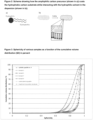
- Amphiphilic organic compounds are molecules with a nonpolar entity that have a high affinity to graphite and a polar entity with a high affinity to water or another polar solvent (see Fig. 2 a) ).
- the amphiphilic molecules and the carbonaceous particles together form a self-assembled arrangement wherein the carbonaceous particles are coated by the amphiphilic molecules such that the nonpolar entities of these molecules are attached to the surface of the graphite particles while the polar entities form at the outside of the arrangement a polar surface in contact with the solvent or water molecules (shown schematically in Fig. 2 b) ). This procedure stabilizes the dispersion of the graphite particles in polar solvents such as water.
- amphiphilic compound used in this process should have a high carbon yield when thermally decomposed at high temperatures in an inert gas atmosphere (carbonization).
- Suitable amphiphilic compounds may thus include but are not limited to PEO-PPO-PEO block copolymers, polyglycol ethers, alkyl-aryl polyethylene glycol ethers, aryl-ethyl-phenyl polyglycol ethers, aryl polyglycol ether-ester, carboxylic acid polyethylene glycol ester nonionic surfactant, alkyl polyoxyethylene ethers, aryl polyoxyethylene ethers, novolac based resins like nonyl phenol novolac ethoxylate, polystyrene methacrylate co-polymers, polyacrylates, polyacrylate co-polymers, alkyl or phenyl sulfonates, or combinations thereof.
- the inventors have found that excellent results can be achieved by using sulfated lignins or lignosulfonate salts, and mixtures thereof as the amphiphilic compound in the processes of the invention. They are high-molecular polyalkylphenyl sulfonates typically generated as by-products of paper production from wood.
- the lignosulfonate salts useful in the processes described herein can have a variety of counter ions (ammonium, calcium, sodium, etc.).
- the amphiphilic compound represents the only source for the amorphous carbon coating of the carbonaceous particles.
- additional organic additives optionally with high carbon yield, may be added to the dispersion to influence the coating quality, thickness and resulting particle morphology. These additives should be either solvent-soluble or colloidally dispersed in the liquid medium.
- Suitable additives may include, but are not limited to furfuryl alcohol, furfural, polyvinyl alcohol, formaldehyde phenol resins, formaldehyde tetrahydrofuran resins, sucrose, glucose, or other sugars, polyethylether ketone, ethylene glycol, polyphenylene sulfide, polyvinyl chloride, polystyrene, pyromellitic acid, citric acid, polyaniline, styrene, tannic acid, acetic acid, cinnamaldehyde, p-toluenesulfonic acid, or synthetic latex based on styrene butyl rubber, nitrile butyl rubber, polystyrene acryl rubber, or other suitable carbon-based additives.
- Other preferred additives are selected from the group consisting of sugars such as sucrose, glucose, or other sugars, and organic acids such as citric acid, acetic acid, formic acid, tannic acid, or malic acid. As described in the working examples, excellent results have inter alia been obtained with sucrose, glucose, and citric acid as additional additive in the processes of the invention.
- the process also allows a homogeneous mixing of a metal / metalloid or alloy component, which in some cases is ideally attached at the surface of the carbon core by incorporating it in the carbon coating.
- a metal / metalloid or alloy component which in some cases is ideally attached at the surface of the carbon core by incorporating it in the carbon coating.
- carbon black, colloidal graphite, carbon nanotubes, or at least one fine metal/metalloid powder such as silicon, aluminum, tin, silver, copper, nickel, antimony, germanium; metal / metalloid oxides such as TiO 2 , lithium titanate, SiOx, or SnO x ; chalcogenides; or metal alloy powder is added to the dispersion.
- said metal/metalloid is selected from silicon, aluminum, tin, or from alloys comprising said metals.
- metals/metalloids like silicon, aluminum, or tin or derived metal alloys are able to insert lithium electrochemically with high reversible electrochemical capacities. These metals or metalloids may thus be optionally added to the dispersion in order to increase the electrochemical reversible capacity of the composite particles above the theoretical capacity of the graphite.
- additives may be added to the dispersion to stabilize it or to influence the spray-drying and particle formation process.
- additives include for example rheological thickeners like starch, carboxy methyl cellulose, methyl cellulose, polyacrylates, and polyurethanes which additionally stabilize the dispersion and suppress fast sedimentation of the particles, thereby optimizing the spray-drying process.
- rheological thickeners like starch, carboxy methyl cellulose, methyl cellulose, polyacrylates, and polyurethanes which additionally stabilize the dispersion and suppress fast sedimentation of the particles, thereby optimizing the spray-drying process.
- Yet other possible additives include ammonia, maltodextrin, gum arabic, gelatins, polystyrene latex, polyvinyl pyrrolidone, polylactic acid, stearic acid, or combinations thereof.
- the dispersion made during the process described herein is typically dried by spray-drying. Adjusting the spray-drying conditions allows varying the particle size of the final particles prior to calcination.
- the spray formation and consequent contact of the droplets with the hot air in the chamber are its main characteristics. It was found that the size of the droplets created during the atomization step as well as the solvent evaporation rate correlate strongly with the particle size of the final product.
- the hot air flow is typically co-current which ensures that the spray evaporation is rapid and the dried product does not experience any significant heat degradation.
- the dried product is entrained in the hot air flow from which it can be separated, for example by a cyclone.
- the process parameters such as inlet temperature, outlet temperature, pump speed, and gas flow for atomization, of the spray dryer can be optimized individually, depending on the desired characteristics of the particles, as is well-known to those of skill in the art.
- Carbonization (also referred to herein as "calcination") of the spray-dried particles is then achieved by thermal decomposition of the amphiphilic compound and, optionally the additives.
- the carbonization step (which at higher temperatures may include graphitization processes) is generally performed under vacuum, or in an inert gas atmosphere (e.g. nitrogen, or argon) at temperatures of up to 3000°C.
- the carbonization is carried out under a nitrogen or argon atmosphere, at temperatures generally ranging from 600°C to 3000°C, or from 800°C to 3000°C, or from 1000°C to 2000°C, or from 1000°C to 1800°C, or from 1000°C to 1500°C, or from 1000 °C to 1400 °C.
- the spray-dried particles may be subjected to a pre-treatment, either oxidative or non-oxidative, in order to adjust the desired final surface morphology.
- This optional pre-treatment step is typically performed under vacuum, or in an air, nitrogen, argon or CO 2 atmosphere at temperatures of up to 700°C.
- the pre-treatment is carried out under a nitrogen atmosphere, and the temperature is below 700°C, or below 500°C or even below 300°C.
- the carbonized particles may also be subjected to an additional heat treatment in a gas atmosphere such as nitrogen, argon, mixtures of nitrogen with hydrocarbons like acetylene, propane or methane, or with oxidative gases such as air, steam, or CO 2 to adjust the morphology and surface chemistry of the amorphous carbon-coated carbonaceous particles.
- a gas atmosphere such as nitrogen, argon, mixtures of nitrogen with hydrocarbons like acetylene, propane or methane
- oxidative gases such as air, steam, or CO 2
- the optional heat treatment of the carbonized particles is typically carried out at a temperature ranging from 800 °C to 1600 °C.
- Non-graphitizable (hard carbon) coatings as well as soft carbon coatings may even be treated at higher temperatures up to 3000°C in an inert gas atmosphere.
- the resulting carbon particle composites are typically spherically or blocky shaped and show a reduced surface area compared to the starting core carbon particles.
- BET SSA BET specific surface area
- the resulting surface-modified carbonaceous powders coated with amorphous carbon have superior properties compared to uncoated particles. For example, they lend high thermal conductivity to polymer compounds while maintaining better mechanical stability than the pristine (i.e. unmodified) carbon powders.
- the coated graphite powders according to the present invention show high reversible capacity with reduced irreversible capacities in the first electrochemical reduction, and also high cycling stability.
- the reversible capacity can be further improved above the theoretical reversible capacity of graphite by including metal powders or alloys that form lithium alloys when inserting lithium electrochemically. Exemplary metals are, e.g., silicon or tin powders.
- the present invention relates to surface-modified carbonaceous particles coated with amorphous carbon as defined in the appended claims. They can for example be obtained by the processes described herein.
- These surface-modified carbonaceous particles are in certain embodiments characterized by a BET SSA of below 12 m 2 /g, or below 9 m 2 /g, or below 6 m 2 /g, or below 3 m 2 /g, and in some cases even below 2 m 2 /g, although it will be apparent to those of skill in the art that the BET SSA of the particles is somewhat dependent on the BET SSA of the uncoated core particles (with smaller particles generally having a higher BET SSA). In any event, the coating typically reduces the BET SSA to lower values compared to the untreated materials.
- the surface-modified carbonaceous particles according to the present invention may be broadly divided into two groups:
- the surface-modified carbonaceous particles coated with amorphous carbon are characterized by a BET SSA of below 6 m 2 /g, or below 3 m 2 /g, or below 2 m 2 /g; wherein the core of the particles coated with amorphous carbon is graphitic carbon having an interlayer distance c/2 of 0.337 nm or less ("surface-modified graphitic particles").
- These surface-modified carbonaceous particles may in certain embodiments be further characterized in that the core particles exhibit an aspect ratio of less than 0.8.
- said surface-modified carbonaceous particles may be characterized in that at least 10%, at least 20%, at least 30%, at least 40%, at least 50%, at least 60%, at least 70% or at least 80 % of the particles forming the core of the surface-modified carbonaceous particles exhibit an aspect ratio of equal or less than 0.8.
- the surface-modified carbonaceous particles are further characterized by a xylene density of below about 2.22 g/cm 3 , or below about 2.21 g/cm 3 , or below about 2.20 g/cm 3 , although in some embodiments the xylene density may even be below 2.18 g/cm 3 or 2.15 g/cm 3 , which differs from conventional (uncoated) graphitic carbons that typically have a xylene density of between 2.25-2.26 g/cm 3 .
- mixtures together with non-carbonaceous particles can be used as a starting material for the process described herein.
- non-carbonaceous particles e.g., metal / metalloid or metal / metalloid oxide particles
- These surface-modified graphitic particles are in some embodiments characterized by a ratio of the peak areas of the [004] and [110] reflections (peak area % [004]/[110]) being lower than 3.6, or lower than 3.0, or lower than 2.0.
- the small values for the [004]/[110] ratio of the peak areas reflect the isotropic distribution of the crystalline domains within the particle.
- the theoretical [004]/[110] ratio for a fully isotropic distribution of the crystalline domains would be 1.56.
- the surface-modified graphitic particles are further characterized by a porosity determined by mercury intrusion porosimetry of at least about 70%, or at least about 72% or 74%.
- the surface-modified graphitic particles are in certain embodiments further characterized by a mass loss of pyrolated carbon in a pure oxygen atmosphere determined by TGA of at least 4%, or at least 5% by weight.
- the mass loss of pyrolated carbon generally depends on the thickness of the coating which in turn depends on the process parameters as well as on the amount and carbon yield of the carbon source for the coating. In any event, in preferred embodiments the coating will have a thickness giving a mass loss of between 4 and 35%, or between 5 and 25%, or between 5 and 20%.
- the aspect ratio AR is the ratio of the minimum to maximum Feret diameters determined by the slide gauge principle. The minimum and maximum Feret diameters are determined for each individual particle and the cumulative distribution of
- the sphericity is obtained as the ratio of the perimeter of the equivalent circle to the actual perimeter (for details, see the Materials and Methods section below).
- Another aspect of the present invention relates to surface-modified carbonaceous particles coated with amorphous carbon comprising a non-graphitic core, wherein the particles are characterized by a BET SSA of below 12 m 2 /g, and by an interlayer distance c/2 of the core particles of 0.340 nm or more.
- the core of said particles coated with amorphous carbon is formed by anthracites, cokes, petrol coke, acetylene coke, carbon black, carbon nanotubes, fullerenes or mixtures thereof
- the carbonaceous particles having a non-graphitic core are characterized by a crystallite size L c of less than 10 nm, or of less than 7nm. They can be further characterized by a BET surface area of less than 7 m 2 /g, or of less than 5 m 2 /g.
- the surface-modified carbonaceous particles having a non-graphitic core are in certain, preferred embodiments further characterized by a porosity (determined by mercury intrusion porosimetry) ranging from about 55% to about 80%, or from about 55% to about 75%, or from 60% to 75%.
- a porosity determined by mercury intrusion porosimetry
- the aspect ratio AR is the ratio of the minimum to maximum Feret diameters determined by the slide gauge principle as described above (for details, see the Materials and Methods section below).
- the sphericity is obtained as the ratio of the perimeter of the equivalent circle to the actual perimeter (for details, see again the Materials and Methods section below).
- the carbonaceous core of the surface-modified carbonaceous particles is formed by a multiplicity of agglomerated smaller particles, regardless of whether the core is formed by graphitic or non-graphitic particles. Agglomeration of the core particles is typically observed for smaller core particles, such as particles having a D 50 of ⁇ about 25 ⁇ m.
- the starting core particles to be coated are characterized by a PSD having lower D 50 and/or D 90 values.
- the starting material is characterized by a PSD having a D 50 of less than about 15 ⁇ m and/or a D 90 of less than about 25 ⁇ m.
- the surface-modified carbonaceous particles may in certain embodiments further comprise an additive selected from the group consisting of carbon black, colloidal graphite, carbon nanotubes, metals/metalloids such as silicon, aluminum, tin, silver, copper, nickel, antimony, germanium; metal / metalloid oxides such as TiO 2 , lithium titanate, SiOx, or SnO x ; chalcogenides; or metal / metalloid alloys.
- said metal/metalloid is selected from silicon, aluminum, tin, or from alloys comprising said metals.
- TGA analysis shows that the pyrolated carbon on the surface burns off earlier compared to particles wherein no pyrolated carbon is present on the surface of the particles. Accordingly, pyrolated (i.e. coated) carbon particles can therefore be distinguished from the respective non-pyrolated carbon particles.
- the surface-modified carbonaceous particles further comprise one or even more than one additional coatings or layers on the core. These additional layers can be either directly on the surface (i.e. below the layer of amorphous carbon), or on top of the amorphous carbon layer.
- the surface-modified carbonaceous particles consist essentially of graphite core particles and amorphous carbon. In yet other embodiments, the surface-modified carbonaceous particles consist essentially of non-graphite core particles (wherein the core particles are, e.g., anthracites, cokes, carbon black, nanotubes, fullerenes, etc., or mixtures thereof), and amorphous carbon.
- the surface modification of the carbonaceous particles described herein in some embodiments consists essentially of, or consists of amorphous carbon.
- the amorphous carbon coating is produced exclusively by carbonization of an amphiphilic compound on the surface of the carbonaceous core, as opposed to a coating obtained from, e.g. CVD or (coal tar) pitch.
- the surface modified carbonaceous particles of the present invention can be further characterized by a polycyclic aromatic hydrocarbon (PAH) concentration of less than 200 mg/kg, or less than 150 mg/kg, less than 30 mg/kg, or even less than 10 mg/kg.
- PAH polycyclic aromatic hydrocarbon
- the PAH content is even less than 5 mg/kg, less than 2 mg/kg, less than 1 mg/kg, or even less than 0.5 mg/kg.
- a further aspect of the present invention therefore relates to surface-modified carbonaceous particles coated with amorphous carbon obtainable by a process according to the present invention, as described in detail herein above.
- the carbonaceous particles obtainable from the process of the invention are characterized by the parameters as set out herein above.
- compositions comprising the surface-modified carbonaceous particles as described herein.
- the composition comprises mixtures of surface-modified carbonaceous particles as described herein, wherein the particles are different from each other.
- the compositions may in other embodiments furthermore, or alternatively, comprise other unmodified (e.g. natural or synthetic graphite) or modified carbonaceous, e.g. graphitic or non-graphitic particles.
- unmodified e.g. natural or synthetic graphite
- modified carbonaceous e.g. graphitic or non-graphitic particles.
- compositions of the surface-modified carbonaceous particles of the invention with other carbonaceous or non-carbonaceous materials in various ratios (e.g. from 1:99 % to 99:1 %) are also contemplated by the present invention.
- unmodified graphite may be added to the surface-modified carbonaceous particles at various stages of making the products described herein.
- CVD coated or functionalized (e.g., oxidized) carbonaceous particles may be added to the surface-modified carbonaceous particles at various stages of making the products described herein.
- Yet another aspect of the present invention relates to the use of the surface-modified carbonaceous particles according to the present invention for preparing a negative electrode material for lithium ion batteries.
- Another, related aspect of the present invention relates thus to a negative electrode of a lithium ion battery and / or to a lithium ion battery comprising the surface-modified carbonaceous particles according to the present invention as an active material in the negative electrode of the battery.
- a composition comprising a binder and the surface-modified carbonaceous particles could be made into an electrode.
- the present invention relates to an energy storage device comprising the surface-modified carbonaceous particles according to the present invention.
- a further aspect of the present invention relates to a carbon brush comprising the surface-modified carbonaceous particles according to the present invention.
- Polymer composite materials comprising the surface-modified carbonaceous particles according to the present invention represent another aspect of the present invention.
- An electric vehicle, hybrid electric vehicle, or plug-in hybrid electric vehicle which comprises a lithium ion battery, wherein the lithium ion battery comprises the surface-modified carbonaceous particles as defined herein as an active material in the negative electrode of the battery is another aspect of the present invention.
- the carbonaceous particles comprise graphitic material, while in other materials the carbonaceous particles comprise non-graphitic material.
- a ceramic, ceramic precursor material, or a green material comprising the surface-modified carbonaceous particles as defined herein as a pore forming material are another aspect of the present invention.
- the monolayer adsorption capacity can be determined.
- the specific surface area can then be calculated.
- XRD data were collected using a PANalytical X'Pert PRO diffractometer coupled with a PANalytical X'Celerator detector.
- the diffractometer has following characteristics shown in Table 1: Table 1: Instrument data and measurement parameters Instrument PANalytical X'Pert PRO X-ray detector PANalytical X'Celerator X-ray source Cu-K ⁇ Generator parameters 45 kV - 40 mA Scan speed 0.07°/s (for L c and c/2) 0.01°/s (for [004]/[110] ratio) Divergence slit 1° (for L c and c/2) 2° (for [004]/[110] ratio) Sample spinning 60 rpm
- the data were analyzed using the PANalytical X'Pert HighScore Plus software.
- the interlayer space c/2 is determined by X-ray diffractometry.
- the angular position of the peak maximum of the [002] and [004] reflection profiles are determined and, by applying the Bragg equation, the interlayer spacing is calculated ( Klug and Alexander, X-ray diffraction Procedures, John Wiley & Sons Inc., New York, London (1967 )).
- an internal standard, silicon powder is added to the sample and the graphite peak position is recalculated on the basis of the position of the silicon peak.
- the graphite sample is mixed with the silicon standard powder by adding a mixture of polyglycol and ethanol.
- the obtained slurry is subsequently applied on a glass plate by meaning of a blade with 150 ⁇ m spacing and dried.
- Crystallite size is determined by analysis of the [002] and [004] diffraction profiles and determining the widths of the peak profiles at the half maximum.
- the broadening of the peak should be affected by crystallite size as proposed by Scherrer ( P. Scherrer, Göttinger bark 2, 98 (1918 )).
- the broadening is also affected by other factors such X-ray absorption, Lorentz polarization and the atomic scattering factor.
- Several methods have been proposed to take into account these effects by using an internal silicon standard and applying a correction function to the Scherrer equation.
- Iwashita N. Iwashita, C. Rae Park, H. Fujimoto, M. Shiraishi and M. Inagaki, Carbon 42, 701-714 (2004 ) was used.
- the sample preparation was the same as for the c/2 determination described above.
- the isotropicity of the crystallites is determined by the ratio of the intensity and/or by the ratio of the area between the [004] and the [110] XRD peaks.
- the intensity and the area of the peaks are determined after applying a peak fitting program using the PANalytical X'Pert HighScore Plus software.
- the samples are prepared as a slurry on a glass plate which is then dried. During the blading of the slurry on the plate, an alignment of flaky particles occurs. Through this blading procedure, a preferred orientation of anisotropic particles like graphite is introduced.
- the [004]/[110] ratio of the peak areas is very high (i.e. in a preferred orientation).
- the presence of particles within a coherent light beam causes diffraction.
- the dimensions of the diffraction pattern are correlated with the particle size.
- a parallel beam from a low-power laser is irradiated on a cell which contains the sample suspended in water.
- the beam leaving the cell is focused by an optical system.
- the distribution of the light energy in the focal plane of the system is then analyzed.
- the electrical signals provided by the optical detectors are transformed into particle size distribution by means of a calculator.
- a small sample of graphite is mixed with a few drops of wetting agent and a small amount of water.
- the sample prepared in the described manner is introduced in the storage vessel of the apparatus and measured.
- the analysis is based on the principle of liquid exclusion as defined in DIN 51 901. Approx. 2.5 g (accuracy 0.1 mg) of powder is weighed in a 25 ml pycnometer. Xylene is added under vacuum (20 mbar). After a few hours dwell time under normal pressure, the pycnometer is conditioned and weighed. The density represents the ratio of mass and volume. The mass is given by the weight of the sample and the volume is calculated from the difference in weight of the xylene filled pycnometer with and without sample powder.
- the Scott density is determined by passing the dry carbon powder through the Scott volumeter according to ASTM B 329-98 (2003).
- the powder is collected in a 1 in 3 vessel (corresponding to 16.39 cm 3 ) and weighed to 0.1 mg accuracy.
- the ratio of weight and volume corresponds to the Scott density. It is necessary to measure three times and calculate the average value.
- the bulk density of graphite is calculated from the weight of a 250 ml sample in a calibrated glass cylinder.
- the method is based on the registration of the amount of mercury intrusion versus the pressure applied to a sample immersed in mercury. On the basis of the applied pressure, the surface tension of the mercury and the contact angle between the mercury and the solid surface, the pore size can then be calculated.
- the experiments were performed on a sample (ca. 0.1 - 0.3 g) over the pressure range of 0.5 - 4000 bar using a Micromeritics Autopore III machine. For treating the data, a contact angle of 140° and a surface tension of 485 x 10 -3 N/m were used.
- thermogravimetric equipment TGA
- the atmosphere in the thermogravimetric equipment is pure oxygen with a flow rate of 10 mL/min (with initial purging of 30 mL/min) with a heating rate of 5°C/minute up to 1000°C followed by an isotherm of 2 hours.
- the pyrolated carbon particles burn off carbon earlier and can therefore be distinguished from the respective non-pyrolated carbon particles.
- the sphericity and the aspect-ratio of the particles of the material were obtained from an image analysis sensor, which is a combination of particle size and shape analysis.
- the experiments were performed using a Sympatec QICPIC sensor and a MIXCEL dispersing unit.
- the material was prepared as a paste with water and a surfactant (liquid detergent).
- the instrument uses a high speed camera (up to 500 fps) and a pulsed light source to capture clear rear-illuminated images of entrained particles.
- the measurement time varied between 30-60 seconds with an average of more than 500000 measured particles. Each sample was repeated three times for reproducibility measurements.
- the software program determines all of the parameters for the particles.
- the sphericity, S is the ratio of the perimeter of the equivalent circle (assuming the particles are circles with a diameter such that it has the same area of the projection area of the particle), P EQPC , to the real perimeter, P real .
- the Feret diameter is determined by the software of the Dynamic Image Analysis system.
- the aspect-ratio is determined from the minimum and maximum Feret diameter for each individual particle.
- a small percentage indicates a sample with highly spherical particles, as the majority of the particles in the sample have an aspect-ratio greater than 0.8.
- the concentration of polycyclic aromatic hydrocarbons PAH was determined by the Grimmer method and the analyses were performed externally by BIU-Grimmer (Germany).
- the Grimmer method generally used for PAH analysis is based on a stable isotope dilution methodology using GC-MS(SIM) for quantification in the sub ppb range.
- This test was used to quantify the reversible and irreversible capacity of the surface-modified coated carbonaceous particles.
- a calibrated spring (100 N) was used in order to have a defined force on the electrode. Tests were carried out at 25 °C.
- Coated Cu foils were dried for 1 h at 80 °C, followed by 12 h at 120° C under vacuum ( ⁇ 50 mbar). After cutting, the electrodes were dried for 10 h at 120 °C under vacuum ( ⁇ 50 mbar) before insertion into the glove box.
- Ethylenecarbonate (EC) Ethylmethylcarbonate (EMC) 1:3, 1 M LiPF 6 for all examples was used.
- 1 st charge constant current step 10 mA/g to a potential of 5 mV vs. Li/Li + , followed by a constant voltage step at 5 mV vs. Li/Li + until a cutoff current of 5 mA/g was reached.
- the resulting dried powder was pre-treated at 180 °C in a nitrogen gas atmosphere in a tube furnace for 1 h, then slowly heated to 420 °C and subsequently carbonized at 1050 °C in an inert atmosphere and held for 2 h (heating rates of 120 and 240 °C/h, respectively).
- Table 4 Properties of Coated Materials with Graphite Core Example 1 2 3 4 5 6 7 8 9 Starting material Synth. Graph. No. 3 Synth. Graph. No. 2 Synth. Graph. No. 6 Synth. Graph. No. 3 Synth. Graph. No. 1 Synth. Graph. No. 3 Synth. Graph. No. 5 Synth. Graph. No. 4 / LB2053 Synth. Graph. No.
- Table 5 Properties of Coated Materials with Non-Graphitic Carbon Core
- Example 10 11 12 13 14 Starting material Petrol coke Acetylene coke Petrol coke / lamp black Petrol coke / carbon nanotubes Petrol coke / tin nanopowder 60-80 nm Particle size D 10 ( ⁇ m) 6.7 6.6 6.0 11.0 5.7 D 50 ( ⁇ m) 13.2 13.8 13.8 24.5 13.7 D 90 ( ⁇ m) 24.9 26.2 27.4 44.5 27.9
- BET SSA (m 2 g -1 ) 5.4 1.6 14.7 11.7 9
- Xylene density (g cm -3 ) 2.024 1.96 2.032 2.089 2.123 Scott density (g cm -3 ) 0.4 n.d.
- amorphous carbon coated acetylene coke showed a slightly higher xylene density compared to the starting material. This appears to be caused by partial graphitization as the material was carbonized at 1800°C.
Landscapes
- Chemical & Material Sciences (AREA)
- Organic Chemistry (AREA)
- Chemical Kinetics & Catalysis (AREA)
- Electrochemistry (AREA)
- General Chemical & Material Sciences (AREA)
- Inorganic Chemistry (AREA)
- Composite Materials (AREA)
- Engineering & Computer Science (AREA)
- Dispersion Chemistry (AREA)
- Manufacturing & Machinery (AREA)
- Materials Engineering (AREA)
- Health & Medical Sciences (AREA)
- Ceramic Engineering (AREA)
- Polymers & Plastics (AREA)
- Medicinal Chemistry (AREA)
- Structural Engineering (AREA)
- Geology (AREA)
- General Life Sciences & Earth Sciences (AREA)
- Life Sciences & Earth Sciences (AREA)
- Battery Electrode And Active Subsutance (AREA)
- Carbon And Carbon Compounds (AREA)
- Fuel Cell (AREA)
Applications Claiming Priority (3)
| Application Number | Priority Date | Filing Date | Title |
|---|---|---|---|
| EP14164651 | 2014-04-14 | ||
| EP15719635.3A EP3131848B1 (en) | 2014-04-14 | 2015-04-14 | Amorphous carbon coating of carbonaceous particles from dispersions including amphiphilic organic compounds |
| PCT/EP2015/058112 WO2015158741A2 (en) | 2014-04-14 | 2015-04-14 | Amorphous carbon coating of carbonaceous particles from dispersions including amphiphilic organic compounds |
Related Parent Applications (1)
| Application Number | Title | Priority Date | Filing Date |
|---|---|---|---|
| EP15719635.3A Division EP3131848B1 (en) | 2014-04-14 | 2015-04-14 | Amorphous carbon coating of carbonaceous particles from dispersions including amphiphilic organic compounds |
Publications (2)
| Publication Number | Publication Date |
|---|---|
| EP3375754A1 EP3375754A1 (en) | 2018-09-19 |
| EP3375754B1 true EP3375754B1 (en) | 2024-10-09 |
Family
ID=50543437
Family Applications (2)
| Application Number | Title | Priority Date | Filing Date |
|---|---|---|---|
| EP18164006.1A Active EP3375754B1 (en) | 2014-04-14 | 2015-04-14 | Amorphous carbon coating of carbonaceous particles from dispersions including amphiphilic organic compounds |
| EP15719635.3A Active EP3131848B1 (en) | 2014-04-14 | 2015-04-14 | Amorphous carbon coating of carbonaceous particles from dispersions including amphiphilic organic compounds |
Family Applications After (1)
| Application Number | Title | Priority Date | Filing Date |
|---|---|---|---|
| EP15719635.3A Active EP3131848B1 (en) | 2014-04-14 | 2015-04-14 | Amorphous carbon coating of carbonaceous particles from dispersions including amphiphilic organic compounds |
Country Status (15)
| Country | Link |
|---|---|
| US (1) | US20170033360A1 (enExample) |
| EP (2) | EP3375754B1 (enExample) |
| JP (1) | JP6687531B2 (enExample) |
| KR (1) | KR20160145565A (enExample) |
| CN (1) | CN106170880B (enExample) |
| BR (1) | BR112016021042A2 (enExample) |
| CA (1) | CA2942243A1 (enExample) |
| DK (1) | DK3131848T3 (enExample) |
| ES (2) | ES2999147T3 (enExample) |
| HK (1) | HK1231457A1 (enExample) |
| HU (2) | HUE037398T2 (enExample) |
| MX (1) | MX381644B (enExample) |
| NO (1) | NO3131848T3 (enExample) |
| PL (2) | PL3131848T3 (enExample) |
| WO (1) | WO2015158741A2 (enExample) |
Families Citing this family (63)
| Publication number | Priority date | Publication date | Assignee | Title |
|---|---|---|---|---|
| AU2015249295B2 (en) | 2014-04-25 | 2018-07-05 | South Dakota Board Of Regents | High capacity electrodes |
| KR101783446B1 (ko) * | 2014-09-30 | 2017-09-29 | 주식회사 엘지화학 | 중공형 탄소 캡슐의 제조 방법 |
| KR102642375B1 (ko) * | 2015-10-21 | 2024-02-28 | 이머리스 그래파이트 앤드 카본 스위춰랜드 리미티드 | 스노우볼상 형태를 가진 탄소질 복합 물질 |
| KR102825626B1 (ko) * | 2016-01-21 | 2025-06-26 | 이머리스 그래파이트 앤드 카본 스위춰랜드 리미티드 | 탄소질 물질 및 그의 사용 방법 |
| DE102016202459A1 (de) * | 2016-02-17 | 2017-08-17 | Wacker Chemie Ag | Kern-Schale-Kompositpartikel |
| JP2018006072A (ja) * | 2016-06-29 | 2018-01-11 | オートモーティブエナジーサプライ株式会社 | リチウムイオン二次電池用負極 |
| US11362324B2 (en) | 2016-09-12 | 2022-06-14 | Imerys Graphite & Carbon Switzerland Ltd. | Compositions and their uses |
| CN106633178B (zh) * | 2016-10-25 | 2018-09-21 | 天津烯航石墨烯科技有限公司 | 石墨烯/橡胶复合材料的制备方法、装置及装置的使用方法 |
| CN110121800A (zh) * | 2016-11-11 | 2019-08-13 | 昭和电工株式会社 | 负极材料及锂离子电池 |
| US20180145317A1 (en) * | 2016-11-18 | 2018-05-24 | Semiconductor Energy Laboratory Co., Ltd. | Positive electrode active material, method for manufacturing positive electrode active material, and secondary battery |
| US9997334B1 (en) * | 2017-02-09 | 2018-06-12 | Lyten, Inc. | Seedless particles with carbon allotropes |
| KR102357190B1 (ko) * | 2017-03-13 | 2022-02-03 | 한국과학기술원 | 마이크로기공과 메조기공이 공존하는 구형의 위계다공성 카본 및 그 제조방법 |
| CN107176602B (zh) * | 2017-05-18 | 2019-04-09 | 太原理工大学 | 一种具有有序结构的氧化石墨烯材料及其制备方法 |
| CN107293765A (zh) * | 2017-07-28 | 2017-10-24 | 韦德永 | 一种燃料电池气体扩散层结构 |
| EP3476818A1 (en) * | 2017-10-27 | 2019-05-01 | Heraeus Battery Technology GmbH | A process for the preparation of a porous carbon material using an improved carbon source |
| EP3678228B1 (en) | 2017-12-01 | 2022-10-19 | LG Energy Solution, Ltd. | Negative electrode and secondary battery including the same |
| CN108047495B (zh) * | 2017-12-06 | 2020-03-10 | 山东大展纳米材料有限公司 | 一种碳纳米管和炭黑超强复合填料的原位制备方法 |
| US10468674B2 (en) | 2018-01-09 | 2019-11-05 | South Dakota Board Of Regents | Layered high capacity electrodes |
| JP7158689B2 (ja) * | 2018-03-01 | 2022-10-24 | 国立研究開発法人科学技術振興機構 | 表面修飾炭素材料及び表面修飾炭素材料の製造方法 |
| CN108807959B (zh) * | 2018-04-28 | 2019-04-23 | 宁德时代新能源科技股份有限公司 | 二次电池 |
| CN108807849B (zh) * | 2018-05-16 | 2019-11-15 | 宁德时代新能源科技股份有限公司 | 负极极片及含有它的二次电池 |
| CN108565401B (zh) | 2018-05-18 | 2020-12-15 | 国家能源投资集团有限责任公司 | 无定形碳材料及制备方法与用途 |
| CN115181436B (zh) * | 2018-06-27 | 2024-09-27 | 伊梅科技 | 表面功能化碳质颗粒、其制备方法和应用 |
| KR102658749B1 (ko) * | 2018-08-17 | 2024-04-19 | 주식회사 엘지에너지솔루션 | 음극 활물질, 상기 음극 활물질의 제조 방법, 음극, 및 상기 음극을 포함하는 이차전지 |
| CN109148865B (zh) * | 2018-09-06 | 2021-07-20 | 天津工业大学 | 锂或钠离子电池硬炭复合碳微球负极材料的制备方法 |
| CN109346110B (zh) * | 2018-10-29 | 2019-12-31 | 东北师范大学 | 应用于彩色全息存储的碳基纳米复合薄膜及其制造方法 |
| CN109019561A (zh) * | 2018-11-02 | 2018-12-18 | 浙江工业大学 | 一种氮掺杂超轻淀粉基炭材料的制备方法 |
| CN109824047B (zh) * | 2018-12-28 | 2022-05-24 | 福建翔丰华新能源材料有限公司 | 一种高性能微晶石墨负极材料及其低成本制备方法 |
| CN111384375B (zh) * | 2018-12-29 | 2022-04-19 | 上海杉杉科技有限公司 | 硅碳负极材料及其制备方法、应用和制得的锂离子电池 |
| CN111384380B (zh) * | 2018-12-29 | 2022-02-01 | 上海杉杉科技有限公司 | 硅碳负极材料及其制备方法、应用和制得的锂离子电池 |
| JP2020145108A (ja) * | 2019-03-07 | 2020-09-10 | 住友大阪セメント株式会社 | 電極材料、該電極材料の製造方法、電極、及びリチウムイオン電池 |
| CN112563491B (zh) * | 2019-03-21 | 2023-10-24 | 宁德新能源科技有限公司 | 负极材料及包含该负极材料的负极及电化学装置 |
| EP3718967A1 (en) * | 2019-04-02 | 2020-10-07 | Heraeus Battery Technology GmbH | Process for the preparation of a porous carbonaceous material, an electrochemical energy storage device and a catalyst |
| US12057588B2 (en) * | 2019-05-08 | 2024-08-06 | Eocell Limited | Silicon carbon nanocomposite (SCN) material, fabrication process therefor, and use thereof in an anode electrode of a lithium ion battery |
| KR20220069940A (ko) | 2019-08-20 | 2022-05-27 | 씨티아이 컨설팅, 엘엘씨 | 낮은 공극률의, 작용화된 탄소 미세 분말 |
| EP3789113A1 (en) * | 2019-09-05 | 2021-03-10 | Evonik Operations GmbH | Materials comprising carbon-embedded nickel nanoparticles, processes for their manufacture, and use as heterogeneous catalysts |
| EP4041679A1 (en) | 2019-10-07 | 2022-08-17 | Imertech | Graphite compositions and uses in battery technology |
| KR102316264B1 (ko) * | 2019-10-22 | 2021-11-02 | 한국세라믹기술원 | 양친매성 고분자를 이용한 천연 풀러렌의 수분산성 개선 방법 및 상기 방법에 의해 제조된 천연 풀러렌의 용도 |
| CN112751017A (zh) * | 2019-10-30 | 2021-05-04 | 格林美股份有限公司 | 一种铝掺杂镍钴锰三元正极材料前驱体及其制备方法和应用 |
| CN112640163B (zh) * | 2020-04-10 | 2022-08-09 | 宁德新能源科技有限公司 | 负极活性材料及使用其的电化学装置和电子装置 |
| WO2021212481A1 (zh) * | 2020-04-24 | 2021-10-28 | 宁德新能源科技有限公司 | 负极活性材料及使用其的电化学装置和电子装置 |
| HUE062084T2 (hu) * | 2020-04-30 | 2023-09-28 | Contemporary Amperex Technology Co Ltd | Negatív elektróda aktív anyag, elõállítása, szekunder akkumulátor és a szekunder akkumulátort tartalmazó készülék |
| CN111900397A (zh) * | 2020-07-10 | 2020-11-06 | 上海纳米技术及应用国家工程研究中心有限公司 | 一种碳包覆硅纳米球负极材料的制备方法及其产品和应用 |
| KR20220054049A (ko) | 2020-10-23 | 2022-05-02 | 주식회사 엘지에너지솔루션 | 코어-쉘 구조의 다공성 탄소재, 이의 제조방법, 이를 포함하는 황-탄소 복합체, 및 리튬 이차 전지 |
| CN114455567B (zh) * | 2020-11-03 | 2023-06-30 | 广东量子墨滴生物科技有限公司 | 一种碳纳米粒子的制备方法及应用 |
| RU2756308C1 (ru) * | 2020-11-30 | 2021-09-29 | Акционерное общество "Информационные спутниковые системы" имени академика М.Ф.Решетнёва" (АО "ИСС") | Способ получения пироуглеродных покрытий из производных гуанидина |
| CN112563509A (zh) * | 2020-12-08 | 2021-03-26 | 昆山宝创新能源科技有限公司 | 二氧化钛纳米管负载碳包纳米硅复合材料及其制备方法和应用 |
| CN112803001B (zh) * | 2020-12-10 | 2023-06-27 | 宁波杉杉新材料科技有限公司 | 包覆剂、快充石墨及其制备方法和应用、电池 |
| CN113437293B (zh) * | 2021-06-21 | 2022-06-17 | 宁德新能源科技有限公司 | 负极活性材料、二次电池和电子装置 |
| WO2023018547A2 (en) * | 2021-08-09 | 2023-02-16 | Phillips 66 Company | Methods for coating nano-ordered carbon materials |
| CN115763793B (zh) * | 2021-09-02 | 2025-12-12 | 天津中能锂业有限公司 | 锂碳颗粒及其制备方法 |
| CN113571684B (zh) * | 2021-09-26 | 2021-12-28 | 河南电池研究院有限公司 | 一种锂离子电池用铝碳双包覆天然石墨负极材料及其制备方法 |
| KR102700998B1 (ko) * | 2021-12-28 | 2024-08-30 | 베스트그래핀(주) | 실리콘 또는 실리콘화합물에 대해 자가흡착되는 기능화 그래핀, 기능화 그래핀이 표면에 자가흡착된 실리콘 또는 실리콘화합물을 포함하는 하이브리드 소재, 및 하이브리드 소재를 포함하는 리튬 이차전지용 음극재 |
| CN115440959B (zh) * | 2022-09-23 | 2025-09-05 | 广东凯金新能源科技股份有限公司 | 石墨基负极材料的制备方法、石墨基负极材料及其应用 |
| CN115577653A (zh) * | 2022-10-19 | 2023-01-06 | 南方电网电力科技股份有限公司 | 一种掺烧污泥数值模拟中焦炭燃烧模型改进方法与系统 |
| US20240405198A1 (en) * | 2022-12-29 | 2024-12-05 | Sila Nanotechnologies, Inc. | Jagged electrochemically-active composite particles for lithium-ion batteries |
| WO2024192532A1 (en) * | 2023-03-22 | 2024-09-26 | Nouveau Monde Graphite Inc. | Graphite agglomerate particles, method of production thereof, and their use in electrochemical cells |
| CN116422287A (zh) * | 2023-04-23 | 2023-07-14 | 西安正阳嘉禾化工科技有限公司 | 电池电极材料改为锂离子吸附剂的方法及其用途 |
| NO348679B1 (en) * | 2023-05-24 | 2025-04-28 | Vianode AS | A method for surface-modifying carbonaceous particles |
| EP4474346A1 (en) * | 2023-06-08 | 2024-12-11 | Rain Carbon Germany GmbH | A process for producing isotropic carbonaceous precursor agglomerates |
| EP4495451A1 (en) * | 2023-07-17 | 2025-01-22 | ImerTech SAS | Improved friction materials |
| KR20250102182A (ko) * | 2023-12-27 | 2025-07-07 | 오씨아이 주식회사 | 이차전지 음극 활물질용 실리콘-탄소 복합체, 이의 제조방법 및 이를 포함하는 이차전지 음극 활물질 |
| KR102822441B1 (ko) * | 2024-08-29 | 2025-06-20 | 주식회사 이엠코 | 표면 개질된 탄소 음극재, 음극 및 2차 전지 |
Family Cites Families (12)
| Publication number | Priority date | Publication date | Assignee | Title |
|---|---|---|---|---|
| US3838188A (en) * | 1972-06-29 | 1974-09-24 | Carborundum Co | Vacuum baked composite molded carbonaceous electrodes |
| JP3643920B2 (ja) * | 1997-10-28 | 2005-04-27 | 日立造船株式会社 | 板状活性炭の製造方法 |
| KR100315232B1 (ko) * | 1999-02-24 | 2001-11-26 | 김순택 | 리튬 이차 전지용 음극 활물질 및 그 제조 방법 |
| JP3685364B2 (ja) * | 1999-03-23 | 2005-08-17 | シャープ株式会社 | 炭素被覆黒鉛粒子の製造方法及び非水系二次電池 |
| US6827854B2 (en) * | 2001-04-11 | 2004-12-07 | The Procter + Gamble Co. | Filters and filter materials for the removal of microorganisms and processes for using the same |
| US20030160215A1 (en) * | 2002-01-31 | 2003-08-28 | Zhenhua Mao | Coated carbonaceous particles particularly useful as electrode materials in electrical storage cells, and methods of making the same |
| CN1279635C (zh) * | 2003-05-16 | 2006-10-11 | 比亚迪股份有限公司 | 一种改性石墨的制备方法 |
| US20040229041A1 (en) * | 2003-05-16 | 2004-11-18 | Caisong Zou | Graphite granules and their method of fabrication |
| US20070092429A1 (en) * | 2005-10-24 | 2007-04-26 | Conocophillips Company | Methods of preparing carbon-coated particles and using same |
| CN103190019A (zh) * | 2010-10-29 | 2013-07-03 | 三菱化学株式会社 | 非水电解质二次电池负极用复层结构碳材、非水系二次电池用负极、锂离子二次电池及非水电解质二次电池负极用复层结构碳材的制造方法 |
| CN104362371A (zh) * | 2011-01-31 | 2015-02-18 | 三菱化学株式会社 | 非水系电解液和使用该非水系电解液的非水系电解液二次电池 |
| US9580322B2 (en) * | 2012-08-28 | 2017-02-28 | Knu-Industry Cooperation Foundation | Method of preparing negative active material for rechargeable lithium battery, and negative active material and rechargeable lithium battery prepared from the same |
-
2015
- 2015-04-14 MX MX2016012115A patent/MX381644B/es unknown
- 2015-04-14 HU HUE15719635A patent/HUE037398T2/hu unknown
- 2015-04-14 CN CN201580019573.1A patent/CN106170880B/zh active Active
- 2015-04-14 WO PCT/EP2015/058112 patent/WO2015158741A2/en not_active Ceased
- 2015-04-14 DK DK15719635.3T patent/DK3131848T3/en active
- 2015-04-14 EP EP18164006.1A patent/EP3375754B1/en active Active
- 2015-04-14 KR KR1020167027323A patent/KR20160145565A/ko not_active Abandoned
- 2015-04-14 ES ES18164006T patent/ES2999147T3/es active Active
- 2015-04-14 HU HUE18164006A patent/HUE069221T2/hu unknown
- 2015-04-14 ES ES15719635.3T patent/ES2667211T3/es active Active
- 2015-04-14 PL PL15719635T patent/PL3131848T3/pl unknown
- 2015-04-14 EP EP15719635.3A patent/EP3131848B1/en active Active
- 2015-04-14 US US15/303,941 patent/US20170033360A1/en not_active Abandoned
- 2015-04-14 HK HK17104934.2A patent/HK1231457A1/zh unknown
- 2015-04-14 BR BR112016021042A patent/BR112016021042A2/pt not_active Application Discontinuation
- 2015-04-14 NO NO15719635A patent/NO3131848T3/no unknown
- 2015-04-14 JP JP2016559553A patent/JP6687531B2/ja active Active
- 2015-04-14 PL PL18164006.1T patent/PL3375754T3/pl unknown
- 2015-04-14 CA CA2942243A patent/CA2942243A1/en not_active Abandoned
Also Published As
| Publication number | Publication date |
|---|---|
| DK3131848T3 (en) | 2018-05-22 |
| ES2999147T3 (en) | 2025-02-24 |
| CN106170880B (zh) | 2020-12-01 |
| HUE037398T2 (hu) | 2018-08-28 |
| MX2016012115A (es) | 2017-01-19 |
| HK1231457A1 (zh) | 2017-12-22 |
| HUE069221T2 (hu) | 2025-02-28 |
| NO3131848T3 (enExample) | 2018-08-25 |
| KR20160145565A (ko) | 2016-12-20 |
| ES2667211T3 (es) | 2018-05-10 |
| CN106170880A (zh) | 2016-11-30 |
| US20170033360A1 (en) | 2017-02-02 |
| PL3131848T3 (pl) | 2018-09-28 |
| EP3131848B1 (en) | 2018-03-28 |
| WO2015158741A3 (en) | 2015-12-23 |
| MX381644B (es) | 2025-03-12 |
| WO2015158741A2 (en) | 2015-10-22 |
| EP3375754A1 (en) | 2018-09-19 |
| BR112016021042A2 (pt) | 2017-08-15 |
| JP6687531B2 (ja) | 2020-04-22 |
| JP2017513793A (ja) | 2017-06-01 |
| EP3131848A2 (en) | 2017-02-22 |
| PL3375754T3 (pl) | 2025-02-10 |
| CA2942243A1 (en) | 2015-10-22 |
Similar Documents
| Publication | Publication Date | Title |
|---|---|---|
| EP3375754B1 (en) | Amorphous carbon coating of carbonaceous particles from dispersions including amphiphilic organic compounds | |
| US10637058B2 (en) | Carbonaceous composite materials with snowball-like morphology | |
| US11814296B2 (en) | Carbon-coated silicon oxide/graphite composite particles, methods of making, and applications of the same | |
| CA3011539C (en) | Carbonaceous materials and methods of use thereof | |
| KR102723357B1 (ko) | 복합체 입자, 부극 활물질 및 리튬 이온 이차 전지 | |
| US12087936B2 (en) | Compositions and uses thereof | |
| US11362324B2 (en) | Compositions and their uses | |
| US20220384811A1 (en) | Graphite compositions and uses in battery technology | |
| US20190207206A1 (en) | Compositions and uses thereof | |
| CN117529450A (zh) | 复合体粒子、其制造方法及其用途 |
Legal Events
| Date | Code | Title | Description |
|---|---|---|---|
| PUAI | Public reference made under article 153(3) epc to a published international application that has entered the european phase |
Free format text: ORIGINAL CODE: 0009012 |
|
| STAA | Information on the status of an ep patent application or granted ep patent |
Free format text: STATUS: THE APPLICATION HAS BEEN PUBLISHED |
|
| AC | Divisional application: reference to earlier application |
Ref document number: 3131848 Country of ref document: EP Kind code of ref document: P |
|
| AK | Designated contracting states |
Kind code of ref document: A1 Designated state(s): AL AT BE BG CH CY CZ DE DK EE ES FI FR GB GR HR HU IE IS IT LI LT LU LV MC MK MT NL NO PL PT RO RS SE SI SK SM TR |
|
| RIN1 | Information on inventor provided before grant (corrected) |
Inventor name: ZUERCHER, SIMONE Inventor name: MICHAUD, JULIE Inventor name: SPAHR, MICHAEL |
|
| STAA | Information on the status of an ep patent application or granted ep patent |
Free format text: STATUS: REQUEST FOR EXAMINATION WAS MADE |
|
| 17P | Request for examination filed |
Effective date: 20190318 |
|
| RBV | Designated contracting states (corrected) |
Designated state(s): AL AT BE BG CH CY CZ DE DK EE ES FI FR GB GR HR HU IE IS IT LI LT LU LV MC MK MT NL NO PL PT RO RS SE SI SK SM TR |
|
| RAP1 | Party data changed (applicant data changed or rights of an application transferred) |
Owner name: IMERTECH SAS |
|
| STAA | Information on the status of an ep patent application or granted ep patent |
Free format text: STATUS: EXAMINATION IS IN PROGRESS |
|
| 17Q | First examination report despatched |
Effective date: 20190930 |
|
| RIC1 | Information provided on ipc code assigned before grant |
Ipc: B01J 13/02 20060101ALI20240328BHEP Ipc: H01M 4/133 20100101ALI20240328BHEP Ipc: H01M 4/587 20100101ALI20240328BHEP Ipc: H01M 4/36 20060101ALI20240328BHEP Ipc: C01B 32/05 20170101ALI20240328BHEP Ipc: C01B 32/00 20170101AFI20240328BHEP |
|
| GRAP | Despatch of communication of intention to grant a patent |
Free format text: ORIGINAL CODE: EPIDOSNIGR1 |
|
| STAA | Information on the status of an ep patent application or granted ep patent |
Free format text: STATUS: GRANT OF PATENT IS INTENDED |
|
| INTG | Intention to grant announced |
Effective date: 20240503 |
|
| P01 | Opt-out of the competence of the unified patent court (upc) registered |
Free format text: CASE NUMBER: APP_40882/2024 Effective date: 20240710 |
|
| GRAS | Grant fee paid |
Free format text: ORIGINAL CODE: EPIDOSNIGR3 |
|
| GRAA | (expected) grant |
Free format text: ORIGINAL CODE: 0009210 |
|
| STAA | Information on the status of an ep patent application or granted ep patent |
Free format text: STATUS: THE PATENT HAS BEEN GRANTED |
|
| AC | Divisional application: reference to earlier application |
Ref document number: 3131848 Country of ref document: EP Kind code of ref document: P |
|
| AK | Designated contracting states |
Kind code of ref document: B1 Designated state(s): AL AT BE BG CH CY CZ DE DK EE ES FI FR GB GR HR HU IE IS IT LI LT LU LV MC MK MT NL NO PL PT RO RS SE SI SK SM TR |
|
| REG | Reference to a national code |
Ref country code: CH Ref legal event code: EP |
|
| REG | Reference to a national code |
Ref country code: DE Ref legal event code: R096 Ref document number: 602015090118 Country of ref document: DE |
|
| REG | Reference to a national code |
Ref country code: IE Ref legal event code: FG4D |
|
| REG | Reference to a national code |
Ref country code: SE Ref legal event code: TRGR |
|
| REG | Reference to a national code |
Ref country code: LT Ref legal event code: MG9D |
|
| REG | Reference to a national code |
Ref country code: NL Ref legal event code: MP Effective date: 20241009 |
|
| REG | Reference to a national code |
Ref country code: ES Ref legal event code: FG2A Ref document number: 2999147 Country of ref document: ES Kind code of ref document: T3 Effective date: 20250224 |
|
| REG | Reference to a national code |
Ref country code: HU Ref legal event code: AG4A Ref document number: E069221 Country of ref document: HU |
|
| REG | Reference to a national code |
Ref country code: AT Ref legal event code: MK05 Ref document number: 1730437 Country of ref document: AT Kind code of ref document: T Effective date: 20241009 |
|
| PG25 | Lapsed in a contracting state [announced via postgrant information from national office to epo] |
Ref country code: NL Free format text: LAPSE BECAUSE OF FAILURE TO SUBMIT A TRANSLATION OF THE DESCRIPTION OR TO PAY THE FEE WITHIN THE PRESCRIBED TIME-LIMIT Effective date: 20241009 |
|
| PG25 | Lapsed in a contracting state [announced via postgrant information from national office to epo] |
Ref country code: NL Free format text: LAPSE BECAUSE OF FAILURE TO SUBMIT A TRANSLATION OF THE DESCRIPTION OR TO PAY THE FEE WITHIN THE PRESCRIBED TIME-LIMIT Effective date: 20241009 |
|
| PGFP | Annual fee paid to national office [announced via postgrant information from national office to epo] |
Ref country code: SE Payment date: 20250319 Year of fee payment: 11 |
|
| PG25 | Lapsed in a contracting state [announced via postgrant information from national office to epo] |
Ref country code: HR Free format text: LAPSE BECAUSE OF FAILURE TO SUBMIT A TRANSLATION OF THE DESCRIPTION OR TO PAY THE FEE WITHIN THE PRESCRIBED TIME-LIMIT Effective date: 20241009 Ref country code: IS Free format text: LAPSE BECAUSE OF FAILURE TO SUBMIT A TRANSLATION OF THE DESCRIPTION OR TO PAY THE FEE WITHIN THE PRESCRIBED TIME-LIMIT Effective date: 20250209 Ref country code: PT Free format text: LAPSE BECAUSE OF FAILURE TO SUBMIT A TRANSLATION OF THE DESCRIPTION OR TO PAY THE FEE WITHIN THE PRESCRIBED TIME-LIMIT Effective date: 20250210 |
|
| PG25 | Lapsed in a contracting state [announced via postgrant information from national office to epo] |
Ref country code: FI Free format text: LAPSE BECAUSE OF FAILURE TO SUBMIT A TRANSLATION OF THE DESCRIPTION OR TO PAY THE FEE WITHIN THE PRESCRIBED TIME-LIMIT Effective date: 20241009 |
|
| PG25 | Lapsed in a contracting state [announced via postgrant information from national office to epo] |
Ref country code: BG Free format text: LAPSE BECAUSE OF FAILURE TO SUBMIT A TRANSLATION OF THE DESCRIPTION OR TO PAY THE FEE WITHIN THE PRESCRIBED TIME-LIMIT Effective date: 20241009 |
|
| PG25 | Lapsed in a contracting state [announced via postgrant information from national office to epo] |
Ref country code: NO Free format text: LAPSE BECAUSE OF FAILURE TO SUBMIT A TRANSLATION OF THE DESCRIPTION OR TO PAY THE FEE WITHIN THE PRESCRIBED TIME-LIMIT Effective date: 20250109 |
|
| PG25 | Lapsed in a contracting state [announced via postgrant information from national office to epo] |
Ref country code: LV Free format text: LAPSE BECAUSE OF FAILURE TO SUBMIT A TRANSLATION OF THE DESCRIPTION OR TO PAY THE FEE WITHIN THE PRESCRIBED TIME-LIMIT Effective date: 20241009 Ref country code: GR Free format text: LAPSE BECAUSE OF FAILURE TO SUBMIT A TRANSLATION OF THE DESCRIPTION OR TO PAY THE FEE WITHIN THE PRESCRIBED TIME-LIMIT Effective date: 20250110 Ref country code: AT Free format text: LAPSE BECAUSE OF FAILURE TO SUBMIT A TRANSLATION OF THE DESCRIPTION OR TO PAY THE FEE WITHIN THE PRESCRIBED TIME-LIMIT Effective date: 20241009 |
|
| PGFP | Annual fee paid to national office [announced via postgrant information from national office to epo] |
Ref country code: FR Payment date: 20250319 Year of fee payment: 11 Ref country code: PL Payment date: 20250319 Year of fee payment: 11 |
|
| PG25 | Lapsed in a contracting state [announced via postgrant information from national office to epo] |
Ref country code: RS Free format text: LAPSE BECAUSE OF FAILURE TO SUBMIT A TRANSLATION OF THE DESCRIPTION OR TO PAY THE FEE WITHIN THE PRESCRIBED TIME-LIMIT Effective date: 20250109 |
|
| PG25 | Lapsed in a contracting state [announced via postgrant information from national office to epo] |
Ref country code: SM Free format text: LAPSE BECAUSE OF FAILURE TO SUBMIT A TRANSLATION OF THE DESCRIPTION OR TO PAY THE FEE WITHIN THE PRESCRIBED TIME-LIMIT Effective date: 20241009 |
|
| PGFP | Annual fee paid to national office [announced via postgrant information from national office to epo] |
Ref country code: DE Payment date: 20250319 Year of fee payment: 11 |
|
| PG25 | Lapsed in a contracting state [announced via postgrant information from national office to epo] |
Ref country code: DK Free format text: LAPSE BECAUSE OF FAILURE TO SUBMIT A TRANSLATION OF THE DESCRIPTION OR TO PAY THE FEE WITHIN THE PRESCRIBED TIME-LIMIT Effective date: 20241009 |
|
| PGFP | Annual fee paid to national office [announced via postgrant information from national office to epo] |
Ref country code: ES Payment date: 20250502 Year of fee payment: 11 |
|
| REG | Reference to a national code |
Ref country code: DE Ref legal event code: R097 Ref document number: 602015090118 Country of ref document: DE |
|
| PGFP | Annual fee paid to national office [announced via postgrant information from national office to epo] |
Ref country code: HU Payment date: 20250423 Year of fee payment: 11 |
|
| PG25 | Lapsed in a contracting state [announced via postgrant information from national office to epo] |
Ref country code: EE Free format text: LAPSE BECAUSE OF FAILURE TO SUBMIT A TRANSLATION OF THE DESCRIPTION OR TO PAY THE FEE WITHIN THE PRESCRIBED TIME-LIMIT Effective date: 20241009 |
|
| PG25 | Lapsed in a contracting state [announced via postgrant information from national office to epo] |
Ref country code: RO Free format text: LAPSE BECAUSE OF FAILURE TO SUBMIT A TRANSLATION OF THE DESCRIPTION OR TO PAY THE FEE WITHIN THE PRESCRIBED TIME-LIMIT Effective date: 20241009 |
|
| PG25 | Lapsed in a contracting state [announced via postgrant information from national office to epo] |
Ref country code: SK Free format text: LAPSE BECAUSE OF FAILURE TO SUBMIT A TRANSLATION OF THE DESCRIPTION OR TO PAY THE FEE WITHIN THE PRESCRIBED TIME-LIMIT Effective date: 20241009 |
|
| PG25 | Lapsed in a contracting state [announced via postgrant information from national office to epo] |
Ref country code: CZ Free format text: LAPSE BECAUSE OF FAILURE TO SUBMIT A TRANSLATION OF THE DESCRIPTION OR TO PAY THE FEE WITHIN THE PRESCRIBED TIME-LIMIT Effective date: 20241009 |
|
| PG25 | Lapsed in a contracting state [announced via postgrant information from national office to epo] |
Ref country code: IT Free format text: LAPSE BECAUSE OF FAILURE TO SUBMIT A TRANSLATION OF THE DESCRIPTION OR TO PAY THE FEE WITHIN THE PRESCRIBED TIME-LIMIT Effective date: 20241009 |
|
| PLBE | No opposition filed within time limit |
Free format text: ORIGINAL CODE: 0009261 |
|
| STAA | Information on the status of an ep patent application or granted ep patent |
Free format text: STATUS: NO OPPOSITION FILED WITHIN TIME LIMIT |
|
| 26N | No opposition filed |
Effective date: 20250710 |
|
| REG | Reference to a national code |
Ref country code: CH Ref legal event code: H13 Free format text: ST27 STATUS EVENT CODE: U-0-0-H10-H13 (AS PROVIDED BY THE NATIONAL OFFICE) Effective date: 20251125 |
|
| PG25 | Lapsed in a contracting state [announced via postgrant information from national office to epo] |
Ref country code: LU Free format text: LAPSE BECAUSE OF NON-PAYMENT OF DUE FEES Effective date: 20250414 |
|
| PG25 | Lapsed in a contracting state [announced via postgrant information from national office to epo] |
Ref country code: MC Free format text: LAPSE BECAUSE OF FAILURE TO SUBMIT A TRANSLATION OF THE DESCRIPTION OR TO PAY THE FEE WITHIN THE PRESCRIBED TIME-LIMIT Effective date: 20241009 |