EP3373975B1 - Dialyselösung mit wenigstens einem osmotikum - Google Patents
Dialyselösung mit wenigstens einem osmotikum Download PDFInfo
- Publication number
- EP3373975B1 EP3373975B1 EP16795232.4A EP16795232A EP3373975B1 EP 3373975 B1 EP3373975 B1 EP 3373975B1 EP 16795232 A EP16795232 A EP 16795232A EP 3373975 B1 EP3373975 B1 EP 3373975B1
- Authority
- EP
- European Patent Office
- Prior art keywords
- dialysis solution
- accordance
- mol
- starch
- ions
- Prior art date
- Legal status (The legal status is an assumption and is not a legal conclusion. Google has not performed a legal analysis and makes no representation as to the accuracy of the status listed.)
- Active
Links
Images






Classifications
-
- A—HUMAN NECESSITIES
- A61—MEDICAL OR VETERINARY SCIENCE; HYGIENE
- A61K—PREPARATIONS FOR MEDICAL, DENTAL OR TOILETRY PURPOSES
- A61K47/00—Medicinal preparations characterised by the non-active ingredients used, e.g. carriers or inert additives; Targeting or modifying agents chemically bound to the active ingredient
- A61K47/30—Macromolecular organic or inorganic compounds, e.g. inorganic polyphosphates
- A61K47/36—Polysaccharides; Derivatives thereof, e.g. gums, starch, alginate, dextrin, hyaluronic acid, chitosan, inulin, agar or pectin
-
- A—HUMAN NECESSITIES
- A61—MEDICAL OR VETERINARY SCIENCE; HYGIENE
- A61K—PREPARATIONS FOR MEDICAL, DENTAL OR TOILETRY PURPOSES
- A61K31/00—Medicinal preparations containing organic active ingredients
- A61K31/185—Acids; Anhydrides, halides or salts thereof, e.g. sulfur acids, imidic, hydrazonic or hydroximic acids
-
- A—HUMAN NECESSITIES
- A61—MEDICAL OR VETERINARY SCIENCE; HYGIENE
- A61K—PREPARATIONS FOR MEDICAL, DENTAL OR TOILETRY PURPOSES
- A61K31/00—Medicinal preparations containing organic active ingredients
- A61K31/185—Acids; Anhydrides, halides or salts thereof, e.g. sulfur acids, imidic, hydrazonic or hydroximic acids
- A61K31/205—Amine addition salts of organic acids; Inner quaternary ammonium salts, e.g. betaine, carnitine
-
- A—HUMAN NECESSITIES
- A61—MEDICAL OR VETERINARY SCIENCE; HYGIENE
- A61K—PREPARATIONS FOR MEDICAL, DENTAL OR TOILETRY PURPOSES
- A61K31/00—Medicinal preparations containing organic active ingredients
- A61K31/70—Carbohydrates; Sugars; Derivatives thereof
- A61K31/715—Polysaccharides, i.e. having more than five saccharide radicals attached to each other by glycosidic linkages; Derivatives thereof, e.g. ethers, esters
- A61K31/716—Glucans
- A61K31/718—Starch or degraded starch, e.g. amylose, amylopectin
-
- A—HUMAN NECESSITIES
- A61—MEDICAL OR VETERINARY SCIENCE; HYGIENE
- A61K—PREPARATIONS FOR MEDICAL, DENTAL OR TOILETRY PURPOSES
- A61K36/00—Medicinal preparations of undetermined constitution containing material from algae, lichens, fungi or plants, or derivatives thereof, e.g. traditional herbal medicines
- A61K36/18—Magnoliophyta (angiosperms)
- A61K36/185—Magnoliopsida (dicotyledons)
- A61K36/47—Euphorbiaceae (Spurge family), e.g. Ricinus (castorbean)
-
- A—HUMAN NECESSITIES
- A61—MEDICAL OR VETERINARY SCIENCE; HYGIENE
- A61K—PREPARATIONS FOR MEDICAL, DENTAL OR TOILETRY PURPOSES
- A61K45/00—Medicinal preparations containing active ingredients not provided for in groups A61K31/00 - A61K41/00
- A61K45/06—Mixtures of active ingredients without chemical characterisation, e.g. antiphlogistics and cardiaca
-
- A—HUMAN NECESSITIES
- A61—MEDICAL OR VETERINARY SCIENCE; HYGIENE
- A61K—PREPARATIONS FOR MEDICAL, DENTAL OR TOILETRY PURPOSES
- A61K9/00—Medicinal preparations characterised by special physical form
- A61K9/08—Solutions
-
- A—HUMAN NECESSITIES
- A61—MEDICAL OR VETERINARY SCIENCE; HYGIENE
- A61P—SPECIFIC THERAPEUTIC ACTIVITY OF CHEMICAL COMPOUNDS OR MEDICINAL PREPARATIONS
- A61P13/00—Drugs for disorders of the urinary system
- A61P13/12—Drugs for disorders of the urinary system of the kidneys
-
- A—HUMAN NECESSITIES
- A61—MEDICAL OR VETERINARY SCIENCE; HYGIENE
- A61P—SPECIFIC THERAPEUTIC ACTIVITY OF CHEMICAL COMPOUNDS OR MEDICINAL PREPARATIONS
- A61P7/00—Drugs for disorders of the blood or the extracellular fluid
- A61P7/08—Plasma substitutes; Perfusion solutions; Dialytics or haemodialytics; Drugs for electrolytic or acid-base disorders, e.g. hypovolemic shock
Definitions
- the present invention relates to a dialysis solution with at least one osmotic agent.
- Dialysis solutions such as those used in peritoneal dialysis, hemodialysis, hemodiafiltration, etc., are known in numerous different compositions.
- the DE 10 2004 023 828 A1 a solution for peritoneal dialysis, which, in addition to electrolytes, contains an osmotic agent in the form of glucose.
- the glucose which serves as an osmotic agent, accelerates the transport of water across the membrane and thus improves the ultrafiltration rate.
- Another well-known osmotic is icodextrin, which is a starch-based branched glucose polymer.
- KR 2014 0092593 Starch sulfate as an osmotic agent.
- the present invention is based on the object of further developing a dialysis solution such that its ultrafiltration performance is increased compared to known dialysis solutions.
- the osmotic is a polysaccharide modified with 2-sulfoethyl groups.
- the modification occurs on the free hydroxyl groups of the polysaccharide.
- R is a cation, for example sodium or potassium, such that the sulfoethyl starch is in the form of a salt, preferably a sodium salt.
- the modified polysaccharide is a 2-sulfoethyl starch.
- Starches from various sources e.g. from potato, corn, manioc (tapioca), rice, peas, wheat and other types of grain
- special starch types such as Hylon VII, amioca powder or waxy maize starch are conceivable as starting materials for the production of 2-sulfoethyl starch.
- reaction conditions it is possible to achieve a preferred substitution at the 2- or the 6-position.
- the 3's position is typically less substituted than both the 2's and 6's.
- the modified polysaccharide is produced by reacting starch with sodium vinyl sulfonate.
- the starch is reduced with sodium borohydride before the sulfoethylation.
- the modified polysaccharide has a degree of substitution of between 0.05 and 1.0, and preferably between 0.2 and 0.5.
- the degree of substitution is defined as the average number of substituents per repeat unit of the polymer.
- the molar mass of the unmodified polysaccharide on which the modified polysaccharide is based is between 1,000 and 50,000 g/mol and preferably between 1,000 and 20,000 g/mol.
- the molar mass of the unmodified sulfoethyl starch is preferably between 1,000 and 50,000 g/mol, and particularly preferably between 1,000 and 20,000 g/mol.
- the dialysis solution apart from the modified polysaccharide, contains no further osmotic agent such as unmodified starch, icodextrin or glucose.
- modified polysaccharide and additives and/or other osmotics such as unmodified starch, icodextrin, L-carnitine, dipeptive, taurine or glucose or a combination of two or more of these components are also conceivable.
- the dialysis solution has exactly one type of modified polysaccharide.
- mixtures of several such polysaccharides are also conceivable.
- the modified polysaccharide is completely water soluble.
- the dialysis solution also contains electrolytes and a buffer system.
- Suitable electrolytes include sodium, potassium, calcium, magnesium and/or chloride ions.
- Suitable buffer systems include lactate buffers, bicarbonate buffers, or a combination thereof. The buffer system is used to set a physiological pH.
- the pH of the dialysis solution is preferably in the range between 5.0 and 8.0.
- the pH is preferably between 5.0 and 8.0, particularly preferably between 5.5 and 6.5.
- the mixing pH (after the partial solutions have been mixed) is preferably between 5.0 and 8.0, and particularly preferably between 6.5 and 7.5.
- the pH of the acidic partial solution is preferably between 3.0 and 5.0 and the pH of the basic partial solution is preferably between 7.0 and 9.0.
- the electrolytes if present and independent of one another, are present in the dialysis solution in the following concentrations (data in mmol/l): sodium ions 125-150 potassium ions 0-4.5 calcium ions 0-2.5 magnesium ions 0-5 chloride ions 90-120 Lactate/lactic acid/(hydrogen)carbonate/CO 2 30-60
- the dialysis solution according to the invention is preferably used in peritoneal dialysis.
- an application of the solution according to the invention in hemodialysis or hemodiafiltration is also conceivable.
- the present invention further relates to a method for preparing an osmotic of a dialysis solution by modifying a polysaccharide having 2-sulfoethyl groups. All of the features mentioned above can also be part of the method, i.e. the disclosure content relating to the dialysis solution according to the invention is accordingly also the disclosure content of the method according to the invention.
- figure 1 shows a tube 10, the wall of which is formed by a semipermeable membrane.
- the membrane can be regenerated cellulose, for example.
- a dialysis solution L1 containing an osmotic agent Inside the tube 10 is a dialysis solution L1 containing an osmotic agent.
- the tube 10 is in a solution L2 which has the same composition as the solution L1 in the tube 10 with the only difference that the solution L2 does not contain an osmotic agent.
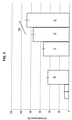
- the reference numbers 3 and 4 refer to solutions with 5% (w/v) glucose (solution 4) and with 5% (w/v) icodextrin (solution 3).
- the reference character A shows the result when using 5% (w/v) glucose and makes it clear that the volume has increased by 10% after an exposure time of 24 hours.
- Reference B shows the result when using a 5% (w/v) icodextrin solution, with an increase in volume of 40% having taken place after 24 hours of exposure.
- test conditions for the results according to figure 2 and 3 are as follows: A filling volume of 10 ml of a liquid was filled into a tube with a semipermeable tube wall made of regenerated cellulose (MWCO: 1000 Da, Carl Roth). This liquid consists of an aqueous solution of the appropriate osmotic with a concentration of the osmotic of 5%
- This filled tube was stored at a temperature of 38 °C in a bath of the same test solution but without osmotic agent for 24 hours with agitation.
- the increase in volume of the filling volume of the tube was determined at different points in time, which reflects the osmotic effect of the agent.
- the osmotic agents according to the present invention were compared to known osmotic agents in the form of glucose and icodextrin.
- FIG. 2 shows that after 24 hours exposure, the tubing volume increase is over 70% for all dialysis solutions containing 2-sulphoethyl starch. A maximum volume increase of approx. 95% is achieved after 24 hours.
- the osmotics according to the invention not only show an increased ultrafiltration efficiency after 24 hours, but also a higher value compared to icodextrin with short residence times.
Landscapes
- Health & Medical Sciences (AREA)
- Life Sciences & Earth Sciences (AREA)
- Chemical & Material Sciences (AREA)
- Public Health (AREA)
- Animal Behavior & Ethology (AREA)
- General Health & Medical Sciences (AREA)
- Veterinary Medicine (AREA)
- Pharmacology & Pharmacy (AREA)
- Medicinal Chemistry (AREA)
- Epidemiology (AREA)
- Natural Medicines & Medicinal Plants (AREA)
- Engineering & Computer Science (AREA)
- Inorganic Chemistry (AREA)
- Molecular Biology (AREA)
- Botany (AREA)
- Microbiology (AREA)
- Mycology (AREA)
- Medical Informatics (AREA)
- Biotechnology (AREA)
- Alternative & Traditional Medicine (AREA)
- Chemical Kinetics & Catalysis (AREA)
- General Chemical & Material Sciences (AREA)
- Organic Chemistry (AREA)
- Nuclear Medicine, Radiotherapy & Molecular Imaging (AREA)
- Bioinformatics & Cheminformatics (AREA)
- Hematology (AREA)
- Diabetes (AREA)
- Urology & Nephrology (AREA)
- External Artificial Organs (AREA)
- Polysaccharides And Polysaccharide Derivatives (AREA)
- Medicinal Preparation (AREA)
Description
- Die vorliegende Erfindung betrifft eine Dialyselösung mit wenigstens einem Osmotikum.
- Dialyselösungen, wie sie beispielsweise bei der Peritonealdialyse, Hämodialyse, Hämodiafiltration etc. eingesetzt werden, sind in zahlreichen unterschiedlichen Zusammensetzungen bekannt.
- So offenbart beispielsweise die
DE 10 2004 023 828 A1 eine Lösung für eine Peritonealdialyse, die neben Elektrolyten ein Osmotikum in Form von Glucose enthält. - Die als Osmotikum dienende Glucose führt dazu, dass der Transport von Wasser über die Membran beschleunigt und somit die Ultrafiltrationsrate verbessert wird. Ein weiteres bekanntes Osmotikum ist Icodextrin, bei dem es sich um ein stärkebasiertes, verzweigtes Glucosepolymer handelt.
- Ferner offenbart die
KR 2014 0092593 - Der vorliegenden Erfindung liegt die Aufgabe zugrunde, eine Dialyselösung dahingehend weiterzubilden, dass deren Ultrafiltrationsleistung gegenüber bekannten Dialyselösungen gesteigert ist.
- Diese Aufgabe wird durch eine Dialyselösung mit den Merkmalen des Anspruchs 1 gelöst. Danach ist vorgesehen, dass es sich bei dem Osmotikum um um ein Polysaccharid handelt, das mit 2-Sulfoethylgruppen modifiziert ist.
- Es hat sich überraschenderweise gezeigt, dass Polysaccharide, die mit 2-Sulfoethylgruppen modifiziert sind, eine sehr hohe Wirksamkeit bei der Verwendung als osmotische Agenzien aufweisen.
- Die Modifikation erfolgt an den freien Hydroxylgruppen des Polysaccharids. Die 2-Sulfoethylgruppen haben die chemische Formel -CH2-CH2-S(=O)(=O)OR, wobei R Wasserstoff oder einem Kohlenwasserstoffrest mit beispielsweise 1 bis 10 Kohlenstoffatomen darstellt und vorzugsweise Wasserstoff ist.
- In einer weiteren Ausführungsform ist R ein Kation, beispielsweise Natrium oder Kalium, so dass die Sulfoethylstärke als Salz, vorzugsweise als Natriumsalz, vorliegt.
- In einer Ausführungsform handelt es sich bei dem modifizierten Polysaccharid um eine 2-Sulfoethylstärke.
- Als Ausgangsmaterialien für die Herstellung der 2-Sulfoethylstärke sind Stärken verschiedener Quelle (z.B. aus Kartoffel, Mais, Maniok (Tapioka), Reis, Erbse, Weizen und weitere Getreidearten) sowie spezielle Stärketypen wie Hylon VII, Amiocapowder oder Wachsmaisstärke denkbar.
- Durch die Wahl der Reaktionsbedingungen ist es möglich, eine bevorzugte Substitution an der 2er oder der 6er Position zu erreichen. Die 3er Position ist typischerweise schwächer substituiert als sowohl die 2er als auch die 6er Position.
- In einer bevozugten Ausführung der Erfindung erfolgt die Herstellung des modifizierten Polysaccharids durch die Umsetzung von Stärke mit Natriumvinylsulfonat.
- In einer weiteren bevorzugten Ausgestaltung der Erfindung erfolgt die Reduktion der Stärke mit Natriumborhydrid vor der Sulfoethylierung.
- In einer Ausführungsform weist das modifizierte Polysaccharid einen Substitutionsgrad von zwischen 0,05 und 1,0 und vorzugsweise von zwischen 0,2 und 0,5 auf. Der Substitutionsgrad ist definiert als die durchschnittliche Anzahl an Substituenten per Wiederholungseinheit des Polymers.
- In einer Ausführungsform liegt die molare Masse des dem modifizierten Polysaccharid zugrundeliegenden unmodifizierten Polysaccharids zwischen 1.000 und 50.000 g/mol und vorzugsweise zwischen 1.000 und 20.000 g/mol.
- Die molare Masse der unmodifizierten Sulfoethylstärke liegt vorzugweise zwischen 1.000 und 50.000 g/mol, und besonders bevorzugt zwischen 1.000 und 20.000 g/mol.
- In einer Ausführungsform enthält die Dialyselösung außer dem modifizierten Polysaccharid kein weiteres Osmotikum wie beispielsweise unmodifizierte Stärke, Icodextrin oder Glukose.
- Alternativ sind auch Mischungen aus dem modifizierten Polysaccharid und Additiven und/oder weiteren Osmotika wie beispielsweise unmodifizierte Stärke, Icodextrin , L-Carnitin, Dipeptiven, Taurin oder Glukose oder eine Kombination zweier oder mehrerer dieser Komponenten denkbar.
- In einer Ausführungsform weist die Dialyselösung genau eine Art des modifizierten Polysaccharids auf. Alternativ sind auch Mischungen aus mehreren derartiger Polysaccharide denkbar.
- In einer Ausführungsform ist das modifizierte Polysaccharid vollständig wasserlöslich.
- In einer Ausführungsform enthält die Dialyselösung ferner Elektrolyte und ein Puffersystem. Geeignete Elektrolyte umfassen Natrium-, Kalium-, Calcium-, Magnesium- und/oder Chloridionen. Geeignete Puffersysteme umfassen Lactatpuffer, Hydrogencarbonatpuffer oder eine Kombination daraus. Das Puffersystem dient zur Einstellung eines physiologischen pH-Wertes.
- Der pH-Wert der Dialyselösung liegt vorzugsweise im Bereich zwischen 5,0 und 8,0.
- Handelt es sich um ein Einkammerbeutelsystem liegt der pH-Wert vorzugsweise zwischen 5,0 und 8,0, besonders bevorzugt zwischen 5,5 und 6,5.
- Handelt es sich um ein Zweikammerbeutelsystem liegt der Misch pH-Wert (nach dem Mischen der Teillösungen) vorzugsweise zwischen 5,0 und 8,0, und besonders bevorzugt zwischen 6,5 und 7,5. Der pH-Wert der sauren Teillösung liegt vorzugsweise zwischen 3,0 und 5,0 und der pH-Wert der basischen Teillösung liegt vorzugsweise zwischen 7,0 und 9,0.
- In einer Ausführungsform liegen die Elektrolyte, soweit vorhanden und unabhängig voneinander, in den folgenden Konzentrationen in der Dialyselösung vor (Angaben in mmol/l):
Natriumionen 125-150 Kaliumionen 0-4,5 Calciumionen 0-2,5 Magnesiumionen 0-5 Chloridionen 90-120 Lactat/Milchsäure/(Hydrogen)Carbonat/CO2 30-60 - Die erfindungsgemäße Dialyselösung dient vorzugsweise der Anwendung in der Peritonealdialyse. Alternativ ist auch eine Anwendung der erfindungsgemäßen Lösung in der Hämodialyse oder der Hämodiafiltration denkbar.
- Die vorliegende Erfindung betrifft des weiteren ein Verfahren zur Herstellung eines Osmotikums einer Dialyselösung durch Modifikation eines Polysaccharids mit 2-Sulfoethylgruppen. Sämtliche der oben genannten Merkmale können auch Bestandteil des Verfahrens sein, d.h. der sich auf die erfindungsgemäße Dialyselösung beziehende Offenbarungsgehalt ist entsprechend auch Offenbarungsgehalt des erfindungsgemäßen Verfahrens.
- Weitere Einzelheiten und Vorteile werden anhand der nachfolgend beschriebenen Figuren und Ausführungsbeispiele erläutert. In den Figuren zeigen:
-
Figur 1 : schematische Darstellungen von mit der erfindungsgemäßen Dialyselösung gefüllten Schlauches zu unterschiedlichen Zeitpunkten; -
Figur 2 : Verläufe der Volumenzunahme für mit unterschiedlichen Dialyselösung gefüllte Schläuche über die Zeit; -
Figur 3 : ein Balkendiagramm über die Volumenzunahme für mit unterschiedlichen Dialyselösung gefüllte Schläuche nach 24 Stunden und -
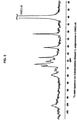
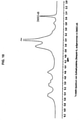
Figuren 4 - 11 : 1H-NMR und 13C-NMR Spektren von Sulphoethylstärke gemäß der Beispiele 1 bis 4. -
Figur 1 zeigt einen Schlauch 10, dessen Wandung durch eine semipermeable Membran gebildet wird. Bei der Membran kann es sich beispielsweise um regenerierte Cellulose handeln. - In dem Inneren des Schlauches 10 befindet sich eine Dialyselösung L1, die ein Osmotikum enthält. Der Schlauch 10 befindet sich in einer Lösung L2, die dieselbe Zusammensetzung aufweist wie die Lösung L1 in dem Schlauch 10 mit dem einzigen Unterschied, dass die Lösung L2 kein Osmotikum aufweist.
-
Figur 1 , linke Darstellung zeigt die Anordnung zum Zeitpunkt t=0, d.h. zu dem Versuchsbeginn, zu dem der gefüllte Schlauch 10 in die Lösung L2 eingesetzt wurde. -
Figur 1 , mittlere Darstellung zeigt die Anordnung nach zweistündiger Einwirkdauer (t=2h) undFigur 1 , rechte Darstellung zeigt die Anordnung nach 24-stündiger Einwirkdauer (t=24 h). - Wie dies aus einem Vergleich der Abbildungen gemäß
Figur 1 hervorgeht, ist aufgrund der osmotischen Wirkung der Lösung L1 Wasser in den Schlauch eingeströmt, womit sich dessen Volumen über die Zeit entsprechend vergrößert. -
Figur 2 zeigt die Volumenzunahme in % (ausgehend von dem Versuchsstart bei t=0) über die Zeit bei einem weiteren Schlauchversuch für Lösungen mit unterschiedlichen Osmotika. Dabei weisen diejenigen Lösungen, deren Verläufe mit den Bezugszeichen 1 und 2 versehen sind, als einziges Osmotikum 5 % (w/v) 2-Sulfoethylstärke mit einem durchschnittlichen Substitutionsgrad DS von 0,46 (Lösung 1) und 0,20 (Lösung 2), jeweils hergestellt aus Tapiokastärke (zahlenmittlere Molmasse, Mn = 3321 g/mol), auf. - Die Bezugszeichen 3 und 4 betreffen Lösungen mit 5 % (w/v) Glucose (Lösung 4) und mit 5 % (w/v) Icodextrin (Lösung 3).
- Eine weitere Auswertung der osmotischen Wirkung bekannter und erfindungsgemäßer Osmotika ist in
Figur 3 gezeigt, wobeiFigur 3 auf der Ordinate den Volumenzuwachs, d.h. die UF-Performance (UF=Ultrafiltration) des Schlauches 10 nach 24-stündiger Einwirkdauer zeigt. Der Wert 0 % bedeutet, dass sich gegenüber dem Versuchsbeginn (t=0) keine Volumenänderung ergeben hat, der Wert 100 % bedeutet gegenüber dem Ausgangszustand bei t=0 eine Volumenverdopplung. - Die Versuchsbedingungen waren für beide
Figuren 2 und3 identisch. - Das Bezugszeichen A zeigt das Ergebnis bei Einsatz von 5 % (w/v) Glucose und verdeutlicht, dass nach 24-stündiger Einwirkzeit eine Volumenzunahme um 10% erfolgt ist. Das Bezugszeichen B zeigt das Ergebnis bei der Verwendung einer 5 % (w/v) Icodextrinlösung, wobei nach 24-stündiger Einwirkdauer eine Volumenzunahme von 40% erfolgt ist. Das Bezugszeichen C zeigt das Ergebnis bei Einsatz von 5 % (w/v) Tapiokastärke (Mn = 3321 g/mol), wobei nach 24-stündiger Einwirkdauer eine Volumenzunahme von gut 50% erfolgt ist.
- Die Bezugszeichen D und E zeigen das Ergebnis für Dialyselösungen gemäß der vorliegenden Erfindung, wobei als einziges Osmotikum 5 % (w/v) 2-Sulfoethylstärke mit einem durchschnittlichen Substitutionsgrad DS von 0,46 (E) und 0,20 (D), jeweils hergestellt aus Tapiokastärke (zahlenmittlere Molmasse, Mn = 3321 g/mol). wie im Zusammenhang mit
Figur 2 beschrieben zum Einsatz kommen. - Aus
Figur 3 wird deutlich, dass bei dem Einsatz der erfindungsgemäßen Osmotika ein Volumenzuwachs von bis zu 90% erzielt wird, was deutlich über dem liegt, was mit bekannten Osmotika erreicht wird. - Die Versuchsbedingungen für die Ergebnisse gemäß
Figur 2 und3 sind wie folgt: In einen Schlauch mit einer semipermeablen Schlauchwandung aus regenerierter Cellulose (MWCO: 1000 Da, Fa. Carl Roth) wurde ein Füllvolumen von 10 ml einer Flüssigkeit eingefüllt. Diese Flüssigkeit besteht aus einer wässrigen Lösung des entsprechenden Osmotikums mit einer Konzentration des Osmotikums von 5 % - (w/v), wobei weitere Inhaltsstoffe durch Ca2+ in einer Konzentration von 1 mmol/l, Mg2+ in einer Konzentration von 0,5 mmol/l, Na+ in einer Konzentration von 138 mmol/l, Cl- in einer Konzentration von 106 mmol/l und Lactat in einer Konzentration von 35 mmol/l vorliegen.
- Dieser gefüllte Schlauch wurde bei einer Temperatur von 38 °C in einem Bad derselben Versuchslösung allerdings ohne osmotisches Agens für 24 Stunden unter Bewegung gelagert.
- Zu verschiedenen Zeitpunkten wurde die Volumenzunahme des Füllvolumens des Schlauches ermittelt, die die osmotische Wirkung des Agens wiederspiegelt. Wie dies aus
Figur 2 ersichtlich ist, wurden die osmotischen Agenzien gemäß der vorliegenden Erfindung mit bekanntem osmotischen Agenzien in Form von Glucose und Icodextrin verglichen. -
Figur 2 zeigt, dass nach 24-stündiger Einwirkdauer die Volumenzunahme des Schlauches für sämtliche Dialyselösungen, die 2-Sulfoethylstärke enthalten, über 70 % liegt. Als Maximalwert wird eine Volumenzunahme von ca. 95 % nach 24 Stunden erreicht. - Demgegenüber liegen die Endwerte nach 24 h für Icodextrin bei gut 40 % und von Glucose bei ca. 10 %.
- Die erfindungsgemäßen Osmotika zeigen nicht nur eine erhöhte Ultrafiltrationseffizienz nach 24 Stunden, sondern gegenüber Icodextrin auch einen höheren Wert bei geringen Verweildauern.
- Während die Volumenzunahme bei Icodextrin im Wesentlichen linear verläuft, ist bei den Dialyselösungen, die 2-Sulfoethylstärke enthalten, ein vergleichsweise steiler Anstieg zu erkennen, der dann, bei höheren Verweilzeiten etwas abflacht und in einen im Wesentlichen linearen Verlauf übergeht.
- Der Anstieg des Schlauchvolumens bei kleinen Verweilzeiten ist bei dem Einsatz von 2-Sulfoethylstärke vergleichbar mit dem von Glucose. Bei höheren Werten ist jedoch der Volumenanstieg bei Glucose als Osmotikum weitaus geringer und bleibt ab einer Verweildauer von ca. drei Stunden konstant, wie dies aus
Figur 2 hervorgeht. - Im Folgenden werden einige Ausführungsbeispiele zur Durchführung der Erfindung beschrieben:
- Beispiel 1: 40,0 g abgebaute Tapiokastärke (
M n = 3.321g/mol) in 480 mL Isopropanol werden in Stickstoffatmosphäre unter Rühren mit 77,1 g 25 %iger (w/w) wässriger Natriumvinylsulfonatlösung (0,6 mol/mol Anhydroglucoseeinheit, AGE), in der 14,82 g NaOH gelöst wurden, versetzt. Die Reaktionsmischung wird auf 80 °C erhitzt, 1 h bei dieser Temperatur gerührt und anschließend werden erneut 77,1 g der Natriumvinylsulfonatlösung (0,6 mol/mol AGE) zugefügt. Nach weiteren 3 h Reaktionszeit bei 80 °C wird das Gemisch auf Raumtemperatur abgekühlt und mit Essigsäure neutralisiert. Das Produkt wird in 4 L Methanol gefällt, filtriert, fünfmal mit 1 L Methanol gewaschen und zweimal aus 150 mL Wasser in 1,5 L Methanol umgefällt. Es wird in 300 mL Wasser gelöst, die Polymerlösung filtriert und gefriergetrocknet. Der Strukturbeleg erfolgte durch 1H- und 13C-NMR-Spektroskopie (Abbildungen 4 und 5) sowie Elementaranalyse. Durchschnittlicher Substitutionsgrad (DS, bestimmt mittels Elementaranalyse): 0,46. - Beispiel 2: Gemäß Beispiel 1 werden 40,0 g abgebaute Tapiokastärke (
M n = 3.321g/mol) mit insgesamt 64,28 g 25 %iger wässriger Natriumvinylsulfonatlösung (0,5 mol/mol AGE) und 7,41 g NaOH umgesetzt. Das Rohprodukt wird vom Reaktionsmedium dekantiert, dreimal mit je 500 mL Methanol gewaschen und dreimal aus 300 mL Wasser in 3 L Methanol umgefällt. Nach Lösen in 300 mL Wasser wird die Lösung filtriert und gefriergetrocknet. 1H- und 13C-NMR-Spektren bestätigen die Struktur (Abbildungen 6 und 7).
DS (bestimmt mittels Elementaranalyse): 0,20. - Beispiel 3: Gemäß Beispiel 1 werden 40,0 g abgebaute Tapiokastärke (
M n = 3.321g/mol) mit insgesamt 385,64 g 25 %iger (w/w) wässriger Natriumvinylsulfonatlösung (3 mol/mol AGE) und 44,46 g NaOH umgesetzt. Die erhaltene Sulfoethylstärke wird nach Isolierung ein zweites Mal gemäß Beispiel 1 umgesetzt (1,2 mol Natriumvinylsulfonat/ mol AGE) und gereinigt. 1H- und 13C-NMR-Spektren bestätigen die Struktur (Abbildungen 8 und 9).
DS (bestimmt mittels Elementaranalyse): 0,68. - Beispiel 4: 30,0 g abgebaute Tapiokastärke (
M n = 3.321g/mol) bei 80 °C werden in 270 mL Wasser gelöst und die Lösung mit NaHCO3 auf pH 8 eingestellt. Nach Abkühlung auf 60 °C wird portionsweise 1,74 g Natriumborhydrid (0,25 mol/mol AGE) zugefügt und die Lösung 24 h gerührt. Durch Zugabe von 10 mL Aceton wird das überschüssige Natriumborhydrid zerstört. Nach Einengung der Lösung im Vakuum und Filtration wird die Probe gegen Wasser dialysiert (Membran mit Molecular weight cut-off von 2500 g/mol) und anschließend gefriergetrocknet.
Gemäß Beispiel 2 werden 25,0 g der mit Natriumborhydrid behandelten Stärke mit insgesamt 40 g 25 %iger (w/w) wässriger Natriumvinylsulfonatlösung (0,5 mol/mol AGE) und 4,63 g NaOH umgesetzt und isoliert. 1H- und 13C-NMR-Spektren bestätigen die Struktur (Abbildungen 10 und 11).
DS (bestimmt mittels Elementaranalyse): 0,09.
Claims (13)
- Dialyselösung mit wenigstens einem Osmotikum,dadurch gekennzeichnet,dass es sich bei dem Osmotikum um ein Polysaccharid handelt, das mit 2-Sulfoethylgruppen modifiziert ist.
- Dialyselösung nach Anspruch 1, dadurch gekennzeichnet, dass es sich bei dem modifizierten Polysaccharid um eine 2-Sulfoethylstärke handelt.
- Dialyselösung nach einem der vorhergehenden Ansprüche, dadurch gekennzeichnet, dass das modifizierte Polysaccharid einen Substitutionsgrad von zwischen 0,05 und 1,0 und vorzugsweise von zwischen 0,2 und 0,5 aufweist.
- Dialyselösung nach einem der Ansprüche 2 bis 3, dadurch gekennzeichnet, dass es sich bei der 2-Sulfoethylstärke zugrundeliegenden Stärke um eine Stärke handelt, die mit NaBH4 vor der Sulfoethylierung reduziert wurde.
- Dialyselösung nach einem der vorhergehenden Ansprüche, dadurch gekennzeichnet, dass das dem modifizierten Polysaccharid zugrundeliegende unmodifizierte Polysaccharid eine molare Masse zwischen 1.000-50.000 g/mol, vorzugsweise zwischen 1.000-20.000 g/mol aufweist und/oder dass die molare Masse der unmodifizierten Sulfoethylstärke zwischen 1.000 und 50.000 g/mol, vorzugsweise zwischen 1.000 und 20.000 g/mol liegt.
- Dialyselösung nach einem der vorhergehenden Ansprüche, dadurch gekennzeichnet, dass die Dialyselösung außer dem modifizierten Polysaccharid kein weiteres Osmotikum enthält oder dass die Dialyselösung Mischungen aus dem modifizierten Polysaccharid und weiteren Osmotika und/oder Additiven wie z.B. L-Carnitin oder Taurin umfasst.
- Dialyselösung nach einem der vorhergehenden Ansprüche, dadurch gekennzeichnet, dass die Dialyselösung ferner Elektrolyte und ein Puffersystem aufweist.
- Dialyselösung nach Anspruch 7, dadurch gekennzeichnet, dass die Elektrolyte Natrium-, Kalium-, Calcium-, Magnesium- und/oder Chloridionen umfassen.
- Dialyselösung nach Anspruch 7 oder 8, dadurch gekennzeichnet, dass es sich bei dem Puffersystem um einen Lactatpuffer, einen Hydrogencarbonatpuffer oder eine Kombination daraus handelt.
- Dialyselösung nach einem der Ansprüche 7 bis 9, dadurch gekennzeichnet, dass die Elektrolyte, soweit vorhanden und unabhängig voneinander, in den folgenden Konzentrationen in der Dialyselösung vorliegen (Angaben in mmol/l):
Natriumionen 125-150 Kaliumionen 0-4,5 Calciumionen 0-2,5 Magnesiumionen 0-5 Chloridionen 90-120 Lactat/Milchsäure/(Hydrogen)Carbonat/CO2 30-60 - Dialyselösung nach einem der vorhergehenden Ansprüche, dadurch gekennzeichnet, dass der pH-Wert der Dialyselösung bei Verwendung eines Einkammerbeutelssystems zwischen 5.0 und 8.0 und vorzugsweise zwischen 5.5 und 6.5 liegt und dass der pH-Wert der aus den in den Kammern eines Mehrkammerbeutels aufgenommenen Teillösungen hergestellten Dialyselösungen zwischen 5.0 und 8.0 und vorzugsweise zwischen 6.5 und 7.5 liegt.
- Dialyselösung nach einem der vorhergehenden Ansprüche zur Anwendung in der Peritonealdialyse.
- Verfahren zur Herstellung einer Dialyselösung nach einem der vorhergehenden Ansprüche umfassend den Schritt einer Modifikation eines Polysaccharids mit 2-Sulfoethylgruppen.
Applications Claiming Priority (2)
| Application Number | Priority Date | Filing Date | Title |
|---|---|---|---|
| DE102015014699.8A DE102015014699A1 (de) | 2015-11-13 | 2015-11-13 | Dialyselösung mit wenigstens einem Osmotikum |
| PCT/EP2016/001898 WO2017080675A1 (de) | 2015-11-13 | 2016-11-14 | Dialyselösung mit wenigstens einem osmotikum |
Publications (2)
| Publication Number | Publication Date |
|---|---|
| EP3373975A1 EP3373975A1 (de) | 2018-09-19 |
| EP3373975B1 true EP3373975B1 (de) | 2022-02-09 |
Family
ID=57321256
Family Applications (1)
| Application Number | Title | Priority Date | Filing Date |
|---|---|---|---|
| EP16795232.4A Active EP3373975B1 (de) | 2015-11-13 | 2016-11-14 | Dialyselösung mit wenigstens einem osmotikum |
Country Status (6)
| Country | Link |
|---|---|
| US (1) | US11090388B2 (de) |
| EP (1) | EP3373975B1 (de) |
| JP (1) | JP6928935B2 (de) |
| CN (1) | CN108430513B (de) |
| DE (1) | DE102015014699A1 (de) |
| WO (1) | WO2017080675A1 (de) |
Families Citing this family (1)
| Publication number | Priority date | Publication date | Assignee | Title |
|---|---|---|---|---|
| CN112210020B (zh) * | 2020-09-28 | 2022-02-22 | 河南省化工研究所有限责任公司 | 一种冷水速溶高直链淀粉的制备方法及应用 |
Citations (1)
| Publication number | Priority date | Publication date | Assignee | Title |
|---|---|---|---|---|
| KR20140092593A (ko) * | 2013-01-16 | 2014-07-24 | 경북대학교병원 | 설페이트 전분을 포함하는 복막투석액용 삼투압제 및 이를 포함하는 복막투석용 조성물 |
Family Cites Families (14)
| Publication number | Priority date | Publication date | Assignee | Title |
|---|---|---|---|---|
| US2580352A (en) * | 1949-03-31 | 1951-12-25 | Hercules Powder Co Ltd | Preparation of sulfoethyl ethers of polysaccharides |
| US2883378A (en) * | 1954-02-05 | 1959-04-21 | Ciba Pharm Prod Inc | 11,18-dioxygenated-delta-3,20-dioxopregnene-21 als |
| US2883375A (en) * | 1956-06-25 | 1959-04-21 | Du Pont | Preparation of alkali metal salts of sulfoethyl starch |
| GB1514720A (en) * | 1974-10-07 | 1978-06-21 | Secr Defence | Preparation of hydroxyethyl starch |
| EP0172437B1 (de) * | 1984-08-18 | 1989-09-06 | Akzo Patente GmbH | Dialysemembran aus modifizierter Cellulose mit verbesserter Biokompatibilität |
| DE4242926C2 (de) * | 1992-12-18 | 1994-12-15 | Fresenius Ag | Dialyselösung für die Peritonealdialyse |
| JP4054407B2 (ja) * | 1997-06-24 | 2008-02-27 | 花王株式会社 | 新規多糖誘導体及びこれを含有する化粧料 |
| AU1073400A (en) * | 1999-10-11 | 2001-04-23 | Sigma-Tau Industrie Farmaceutiche Riunite S.P.A. | Use of l-carnitine and its alkanoyl derivatives as osmotic agents in solutions for medical use |
| DE10237442B4 (de) * | 2002-08-16 | 2004-08-19 | Fresenius Kabi Deutschland Gmbh | Hochverzweigte, niedrig substituierte Stärkeprodukte |
| DE102004023828A1 (de) | 2004-05-13 | 2005-12-08 | Fresenius Medical Care Deutschland Gmbh | Lösung für die Peritonealdialyse |
| JP5608366B2 (ja) * | 2009-12-28 | 2014-10-15 | 花王株式会社 | 水中油型乳化化粧料 |
| FR2955861B1 (fr) * | 2010-02-02 | 2013-03-22 | Roquette Freres | Polymeres solubles de glucose branches pour la dialyse peritoneale |
| DE102010012282A1 (de) * | 2010-03-22 | 2011-09-22 | Fresenius Medical Care Deutschland Gmbh | Pharmazeutische Zusammensetzung enthaltend Cyclodextrin-Copolymer |
| DE102010012281A1 (de) * | 2010-03-22 | 2011-09-22 | Fresenius Medical Care Deutschland Gmbh | Pharmazeutische Zusammensetzungen enthaltend substituiertes 6-Deoxy-6-sulfanylcyclodextrin |
-
2015
- 2015-11-13 DE DE102015014699.8A patent/DE102015014699A1/de not_active Withdrawn
-
2016
- 2016-11-14 WO PCT/EP2016/001898 patent/WO2017080675A1/de not_active Ceased
- 2016-11-14 CN CN201680066248.5A patent/CN108430513B/zh active Active
- 2016-11-14 EP EP16795232.4A patent/EP3373975B1/de active Active
- 2016-11-14 US US15/775,956 patent/US11090388B2/en active Active
- 2016-11-14 JP JP2018544401A patent/JP6928935B2/ja active Active
Patent Citations (1)
| Publication number | Priority date | Publication date | Assignee | Title |
|---|---|---|---|---|
| KR20140092593A (ko) * | 2013-01-16 | 2014-07-24 | 경북대학교병원 | 설페이트 전분을 포함하는 복막투석액용 삼투압제 및 이를 포함하는 복막투석용 조성물 |
Also Published As
| Publication number | Publication date |
|---|---|
| JP6928935B2 (ja) | 2021-09-01 |
| CN108430513A (zh) | 2018-08-21 |
| DE102015014699A1 (de) | 2017-05-18 |
| JP2018533630A (ja) | 2018-11-15 |
| EP3373975A1 (de) | 2018-09-19 |
| US11090388B2 (en) | 2021-08-17 |
| WO2017080675A1 (de) | 2017-05-18 |
| US20180326075A1 (en) | 2018-11-15 |
| CN108430513B (zh) | 2022-03-01 |
Similar Documents
| Publication | Publication Date | Title |
|---|---|---|
| EP0147685B1 (de) | Ether des beta-Cyclodextrins und ein Verfahren zu ihrer Herstellung | |
| DE3645226C2 (de) | ||
| DE69829135T2 (de) | Modifizierung von Polysaccharid in verdichteter Flüssigkeit | |
| DE69408454T2 (de) | Verfahren zur herstellung von amid-modifiziertem carboxyl enthaltenden polysaccharid und so erzeugtes fettsäureamid modifiziertes polysaccharid | |
| DE3102621A1 (de) | Verfahren zur herstellung von heparinen mit niederem molekulargewicht mit ausgezeichneten pharmakologischen eigenschaften, nach dem verfahren hergestellte heparine und diese enthaltende arzneimittel | |
| DE69708862T2 (de) | Derivate von k5 polysaccharid mit hoher, blutgerinnungshemmender wirkung | |
| DE2032377C3 (de) | Verfahren zur Herstellung eines rauchbaren Produktes | |
| DE2949886A1 (de) | Verfahren zur herstellung kationischer staerkeaether | |
| EP1967221B1 (de) | Verfahren zur Bereitstellung einer Lösung für die Peritonealdialyse | |
| DE2604481C2 (de) | ||
| DE10237442B4 (de) | Hochverzweigte, niedrig substituierte Stärkeprodukte | |
| DE102011112526A1 (de) | Pharmazeutische Zusammensetzung enthaltend carboxylierte Stärke | |
| WO2017080675A1 (de) | Dialyselösung mit wenigstens einem osmotikum | |
| DE2339953A1 (de) | Hydroxyalkyl- oder mercaptoalkylglucane | |
| DE19746805C1 (de) | Oxidierte Stärke und ihre Verwendung | |
| EP3789055B1 (de) | Dialyselösung, verwendung einer dialyselösung sowie chemische verbindung | |
| DE1668542A1 (de) | Verfahren zur Herstellung der Schwefelsaeureester von Zellulose und Staerke | |
| EP0033385B1 (de) | Verfahren zur Herstellung von Viskose | |
| DE1543007B2 (de) | Hydroxy äthyl-hydroxypropyl-Cellulosen und Verfahren zu deren Herstellung | |
| DE69014472T2 (de) | Einschlussverbindungen von Dicumylperoxid mit Beta-Cyclodextrinen. | |
| DE2700011C2 (de) | ||
| DE60300877T2 (de) | Verfahren zur depolymerisierung von glykosaminoglykanen und so hergestellte produkte | |
| EP3350228B1 (de) | Verwendung von celluloseethern mit 3-azido-hydroxyalkyl-gruppen in wasserunlöslichen klebstoffen | |
| DE2530451A1 (de) | Ester von polyhydroxypolymeren und verfahren zu ihrer herstellung | |
| WO2000061639A1 (de) | Oxidierte stärke sowie deren verwendung, insbesondere als superabsorber |
Legal Events
| Date | Code | Title | Description |
|---|---|---|---|
| STAA | Information on the status of an ep patent application or granted ep patent |
Free format text: STATUS: UNKNOWN |
|
| STAA | Information on the status of an ep patent application or granted ep patent |
Free format text: STATUS: THE INTERNATIONAL PUBLICATION HAS BEEN MADE |
|
| PUAI | Public reference made under article 153(3) epc to a published international application that has entered the european phase |
Free format text: ORIGINAL CODE: 0009012 |
|
| STAA | Information on the status of an ep patent application or granted ep patent |
Free format text: STATUS: REQUEST FOR EXAMINATION WAS MADE |
|
| 17P | Request for examination filed |
Effective date: 20180611 |
|
| AK | Designated contracting states |
Kind code of ref document: A1 Designated state(s): AL AT BE BG CH CY CZ DE DK EE ES FI FR GB GR HR HU IE IS IT LI LT LU LV MC MK MT NL NO PL PT RO RS SE SI SK SM TR |
|
| AX | Request for extension of the european patent |
Extension state: BA ME |
|
| DAV | Request for validation of the european patent (deleted) | ||
| DAX | Request for extension of the european patent (deleted) | ||
| RIC1 | Information provided on ipc code assigned before grant |
Ipc: A61K 45/06 20060101ALI20201118BHEP Ipc: A61K 31/205 20060101ALI20201118BHEP Ipc: A61K 9/08 20060101ALI20201118BHEP Ipc: A61K 36/47 20060101ALI20201118BHEP Ipc: A61K 47/36 20060101AFI20201118BHEP Ipc: A61P 13/12 20060101ALI20201118BHEP Ipc: A61P 7/08 20060101ALI20201118BHEP Ipc: A61K 31/185 20060101ALI20201118BHEP Ipc: A61K 31/718 20060101ALI20201118BHEP |
|
| STAA | Information on the status of an ep patent application or granted ep patent |
Free format text: STATUS: EXAMINATION IS IN PROGRESS |
|
| 17Q | First examination report despatched |
Effective date: 20210121 |
|
| GRAP | Despatch of communication of intention to grant a patent |
Free format text: ORIGINAL CODE: EPIDOSNIGR1 |
|
| STAA | Information on the status of an ep patent application or granted ep patent |
Free format text: STATUS: GRANT OF PATENT IS INTENDED |
|
| INTG | Intention to grant announced |
Effective date: 20210903 |
|
| GRAS | Grant fee paid |
Free format text: ORIGINAL CODE: EPIDOSNIGR3 |
|
| GRAA | (expected) grant |
Free format text: ORIGINAL CODE: 0009210 |
|
| STAA | Information on the status of an ep patent application or granted ep patent |
Free format text: STATUS: THE PATENT HAS BEEN GRANTED |
|
| AK | Designated contracting states |
Kind code of ref document: B1 Designated state(s): AL AT BE BG CH CY CZ DE DK EE ES FI FR GB GR HR HU IE IS IT LI LT LU LV MC MK MT NL NO PL PT RO RS SE SI SK SM TR |
|
| REG | Reference to a national code |
Ref country code: GB Ref legal event code: FG4D Free format text: NOT ENGLISH |
|
| REG | Reference to a national code |
Ref country code: CH Ref legal event code: EP Ref country code: AT Ref legal event code: REF Ref document number: 1467112 Country of ref document: AT Kind code of ref document: T Effective date: 20220215 |
|
| REG | Reference to a national code |
Ref country code: IE Ref legal event code: FG4D Free format text: LANGUAGE OF EP DOCUMENT: GERMAN |
|
| REG | Reference to a national code |
Ref country code: DE Ref legal event code: R096 Ref document number: 502016014506 Country of ref document: DE |
|
| REG | Reference to a national code |
Ref country code: LT Ref legal event code: MG9D |
|
| REG | Reference to a national code |
Ref country code: NL Ref legal event code: MP Effective date: 20220209 |
|
| PG25 | Lapsed in a contracting state [announced via postgrant information from national office to epo] |
Ref country code: SE Free format text: LAPSE BECAUSE OF FAILURE TO SUBMIT A TRANSLATION OF THE DESCRIPTION OR TO PAY THE FEE WITHIN THE PRESCRIBED TIME-LIMIT Effective date: 20220209 Ref country code: RS Free format text: LAPSE BECAUSE OF FAILURE TO SUBMIT A TRANSLATION OF THE DESCRIPTION OR TO PAY THE FEE WITHIN THE PRESCRIBED TIME-LIMIT Effective date: 20220209 Ref country code: PT Free format text: LAPSE BECAUSE OF FAILURE TO SUBMIT A TRANSLATION OF THE DESCRIPTION OR TO PAY THE FEE WITHIN THE PRESCRIBED TIME-LIMIT Effective date: 20220609 Ref country code: NO Free format text: LAPSE BECAUSE OF FAILURE TO SUBMIT A TRANSLATION OF THE DESCRIPTION OR TO PAY THE FEE WITHIN THE PRESCRIBED TIME-LIMIT Effective date: 20220509 Ref country code: NL Free format text: LAPSE BECAUSE OF FAILURE TO SUBMIT A TRANSLATION OF THE DESCRIPTION OR TO PAY THE FEE WITHIN THE PRESCRIBED TIME-LIMIT Effective date: 20220209 Ref country code: LT Free format text: LAPSE BECAUSE OF FAILURE TO SUBMIT A TRANSLATION OF THE DESCRIPTION OR TO PAY THE FEE WITHIN THE PRESCRIBED TIME-LIMIT Effective date: 20220209 Ref country code: HR Free format text: LAPSE BECAUSE OF FAILURE TO SUBMIT A TRANSLATION OF THE DESCRIPTION OR TO PAY THE FEE WITHIN THE PRESCRIBED TIME-LIMIT Effective date: 20220209 Ref country code: ES Free format text: LAPSE BECAUSE OF FAILURE TO SUBMIT A TRANSLATION OF THE DESCRIPTION OR TO PAY THE FEE WITHIN THE PRESCRIBED TIME-LIMIT Effective date: 20220209 Ref country code: BG Free format text: LAPSE BECAUSE OF FAILURE TO SUBMIT A TRANSLATION OF THE DESCRIPTION OR TO PAY THE FEE WITHIN THE PRESCRIBED TIME-LIMIT Effective date: 20220509 |
|
| PG25 | Lapsed in a contracting state [announced via postgrant information from national office to epo] |
Ref country code: PL Free format text: LAPSE BECAUSE OF FAILURE TO SUBMIT A TRANSLATION OF THE DESCRIPTION OR TO PAY THE FEE WITHIN THE PRESCRIBED TIME-LIMIT Effective date: 20220209 Ref country code: LV Free format text: LAPSE BECAUSE OF FAILURE TO SUBMIT A TRANSLATION OF THE DESCRIPTION OR TO PAY THE FEE WITHIN THE PRESCRIBED TIME-LIMIT Effective date: 20220209 Ref country code: GR Free format text: LAPSE BECAUSE OF FAILURE TO SUBMIT A TRANSLATION OF THE DESCRIPTION OR TO PAY THE FEE WITHIN THE PRESCRIBED TIME-LIMIT Effective date: 20220510 Ref country code: FI Free format text: LAPSE BECAUSE OF FAILURE TO SUBMIT A TRANSLATION OF THE DESCRIPTION OR TO PAY THE FEE WITHIN THE PRESCRIBED TIME-LIMIT Effective date: 20220209 |
|
| PG25 | Lapsed in a contracting state [announced via postgrant information from national office to epo] |
Ref country code: IS Free format text: LAPSE BECAUSE OF FAILURE TO SUBMIT A TRANSLATION OF THE DESCRIPTION OR TO PAY THE FEE WITHIN THE PRESCRIBED TIME-LIMIT Effective date: 20220609 |
|
| PG25 | Lapsed in a contracting state [announced via postgrant information from national office to epo] |
Ref country code: SM Free format text: LAPSE BECAUSE OF FAILURE TO SUBMIT A TRANSLATION OF THE DESCRIPTION OR TO PAY THE FEE WITHIN THE PRESCRIBED TIME-LIMIT Effective date: 20220209 Ref country code: SK Free format text: LAPSE BECAUSE OF FAILURE TO SUBMIT A TRANSLATION OF THE DESCRIPTION OR TO PAY THE FEE WITHIN THE PRESCRIBED TIME-LIMIT Effective date: 20220209 Ref country code: RO Free format text: LAPSE BECAUSE OF FAILURE TO SUBMIT A TRANSLATION OF THE DESCRIPTION OR TO PAY THE FEE WITHIN THE PRESCRIBED TIME-LIMIT Effective date: 20220209 Ref country code: EE Free format text: LAPSE BECAUSE OF FAILURE TO SUBMIT A TRANSLATION OF THE DESCRIPTION OR TO PAY THE FEE WITHIN THE PRESCRIBED TIME-LIMIT Effective date: 20220209 Ref country code: DK Free format text: LAPSE BECAUSE OF FAILURE TO SUBMIT A TRANSLATION OF THE DESCRIPTION OR TO PAY THE FEE WITHIN THE PRESCRIBED TIME-LIMIT Effective date: 20220209 Ref country code: CZ Free format text: LAPSE BECAUSE OF FAILURE TO SUBMIT A TRANSLATION OF THE DESCRIPTION OR TO PAY THE FEE WITHIN THE PRESCRIBED TIME-LIMIT Effective date: 20220209 |
|
| REG | Reference to a national code |
Ref country code: DE Ref legal event code: R097 Ref document number: 502016014506 Country of ref document: DE |
|
| PG25 | Lapsed in a contracting state [announced via postgrant information from national office to epo] |
Ref country code: AL Free format text: LAPSE BECAUSE OF FAILURE TO SUBMIT A TRANSLATION OF THE DESCRIPTION OR TO PAY THE FEE WITHIN THE PRESCRIBED TIME-LIMIT Effective date: 20220209 |
|
| PLBE | No opposition filed within time limit |
Free format text: ORIGINAL CODE: 0009261 |
|
| STAA | Information on the status of an ep patent application or granted ep patent |
Free format text: STATUS: NO OPPOSITION FILED WITHIN TIME LIMIT |
|
| 26N | No opposition filed |
Effective date: 20221110 |
|
| PG25 | Lapsed in a contracting state [announced via postgrant information from national office to epo] |
Ref country code: SI Free format text: LAPSE BECAUSE OF FAILURE TO SUBMIT A TRANSLATION OF THE DESCRIPTION OR TO PAY THE FEE WITHIN THE PRESCRIBED TIME-LIMIT Effective date: 20220209 |
|
| PG25 | Lapsed in a contracting state [announced via postgrant information from national office to epo] |
Ref country code: MC Free format text: LAPSE BECAUSE OF FAILURE TO SUBMIT A TRANSLATION OF THE DESCRIPTION OR TO PAY THE FEE WITHIN THE PRESCRIBED TIME-LIMIT Effective date: 20220209 |
|
| REG | Reference to a national code |
Ref country code: CH Ref legal event code: PL |
|
| P01 | Opt-out of the competence of the unified patent court (upc) registered |
Effective date: 20230606 |
|
| GBPC | Gb: european patent ceased through non-payment of renewal fee |
Effective date: 20221114 |
|
| REG | Reference to a national code |
Ref country code: BE Ref legal event code: MM Effective date: 20221130 |
|
| PG25 | Lapsed in a contracting state [announced via postgrant information from national office to epo] |
Ref country code: LI Free format text: LAPSE BECAUSE OF NON-PAYMENT OF DUE FEES Effective date: 20221130 Ref country code: IT Free format text: LAPSE BECAUSE OF FAILURE TO SUBMIT A TRANSLATION OF THE DESCRIPTION OR TO PAY THE FEE WITHIN THE PRESCRIBED TIME-LIMIT Effective date: 20220209 Ref country code: CH Free format text: LAPSE BECAUSE OF NON-PAYMENT OF DUE FEES Effective date: 20221130 |
|
| PG25 | Lapsed in a contracting state [announced via postgrant information from national office to epo] |
Ref country code: LU Free format text: LAPSE BECAUSE OF NON-PAYMENT OF DUE FEES Effective date: 20221114 |
|
| PG25 | Lapsed in a contracting state [announced via postgrant information from national office to epo] |
Ref country code: IE Free format text: LAPSE BECAUSE OF NON-PAYMENT OF DUE FEES Effective date: 20221114 Ref country code: GB Free format text: LAPSE BECAUSE OF NON-PAYMENT OF DUE FEES Effective date: 20221114 |
|
| PG25 | Lapsed in a contracting state [announced via postgrant information from national office to epo] |
Ref country code: BE Free format text: LAPSE BECAUSE OF NON-PAYMENT OF DUE FEES Effective date: 20221130 |
|
| REG | Reference to a national code |
Ref country code: AT Ref legal event code: MM01 Ref document number: 1467112 Country of ref document: AT Kind code of ref document: T Effective date: 20221114 |
|
| PG25 | Lapsed in a contracting state [announced via postgrant information from national office to epo] |
Ref country code: AT Free format text: LAPSE BECAUSE OF NON-PAYMENT OF DUE FEES Effective date: 20221114 |
|
| PG25 | Lapsed in a contracting state [announced via postgrant information from national office to epo] |
Ref country code: HU Free format text: LAPSE BECAUSE OF FAILURE TO SUBMIT A TRANSLATION OF THE DESCRIPTION OR TO PAY THE FEE WITHIN THE PRESCRIBED TIME-LIMIT; INVALID AB INITIO Effective date: 20161114 |
|
| PG25 | Lapsed in a contracting state [announced via postgrant information from national office to epo] |
Ref country code: CY Free format text: LAPSE BECAUSE OF FAILURE TO SUBMIT A TRANSLATION OF THE DESCRIPTION OR TO PAY THE FEE WITHIN THE PRESCRIBED TIME-LIMIT Effective date: 20220209 |
|
| PG25 | Lapsed in a contracting state [announced via postgrant information from national office to epo] |
Ref country code: MK Free format text: LAPSE BECAUSE OF FAILURE TO SUBMIT A TRANSLATION OF THE DESCRIPTION OR TO PAY THE FEE WITHIN THE PRESCRIBED TIME-LIMIT Effective date: 20220209 |
|
| PG25 | Lapsed in a contracting state [announced via postgrant information from national office to epo] |
Ref country code: MT Free format text: LAPSE BECAUSE OF FAILURE TO SUBMIT A TRANSLATION OF THE DESCRIPTION OR TO PAY THE FEE WITHIN THE PRESCRIBED TIME-LIMIT Effective date: 20220209 |
|
| PG25 | Lapsed in a contracting state [announced via postgrant information from national office to epo] |
Ref country code: TR Free format text: LAPSE BECAUSE OF FAILURE TO SUBMIT A TRANSLATION OF THE DESCRIPTION OR TO PAY THE FEE WITHIN THE PRESCRIBED TIME-LIMIT Effective date: 20220209 |
|
| PGFP | Annual fee paid to national office [announced via postgrant information from national office to epo] |
Ref country code: DE Payment date: 20251022 Year of fee payment: 10 |
|
| PGFP | Annual fee paid to national office [announced via postgrant information from national office to epo] |
Ref country code: FR Payment date: 20251022 Year of fee payment: 10 |