EP3369808A1 - A method for selection of agents influencing intestinal motility disorders and pain - Google Patents
A method for selection of agents influencing intestinal motility disorders and pain Download PDFInfo
- Publication number
- EP3369808A1 EP3369808A1 EP18167810.3A EP18167810A EP3369808A1 EP 3369808 A1 EP3369808 A1 EP 3369808A1 EP 18167810 A EP18167810 A EP 18167810A EP 3369808 A1 EP3369808 A1 EP 3369808A1
- Authority
- EP
- European Patent Office
- Prior art keywords
- bacterial strain
- decrease
- mmc
- motility
- intestinal motility
- Prior art date
- Legal status (The legal status is an assumption and is not a legal conclusion. Google has not performed a legal analysis and makes no representation as to the accuracy of the status listed.)
- Pending
Links
Images





Classifications
-
- C—CHEMISTRY; METALLURGY
- C12—BIOCHEMISTRY; BEER; SPIRITS; WINE; VINEGAR; MICROBIOLOGY; ENZYMOLOGY; MUTATION OR GENETIC ENGINEERING
- C12N—MICROORGANISMS OR ENZYMES; COMPOSITIONS THEREOF; PROPAGATING, PRESERVING, OR MAINTAINING MICROORGANISMS; MUTATION OR GENETIC ENGINEERING; CULTURE MEDIA
- C12N1/00—Microorganisms; Compositions thereof; Processes of propagating, maintaining or preserving microorganisms or compositions thereof; Processes of preparing or isolating a composition containing a microorganism; Culture media therefor
- C12N1/20—Bacteria; Culture media therefor
- C12N1/205—Bacterial isolates
-
- A—HUMAN NECESSITIES
- A23—FOODS OR FOODSTUFFS; TREATMENT THEREOF, NOT COVERED BY OTHER CLASSES
- A23L—FOODS, FOODSTUFFS OR NON-ALCOHOLIC BEVERAGES, NOT OTHERWISE PROVIDED FOR; PREPARATION OR TREATMENT THEREOF
- A23L33/00—Modifying nutritive qualities of foods; Dietetic products; Preparation or treatment thereof
- A23L33/10—Modifying nutritive qualities of foods; Dietetic products; Preparation or treatment thereof using additives
- A23L33/135—Bacteria or derivatives thereof, e.g. probiotics
-
- A—HUMAN NECESSITIES
- A61—MEDICAL OR VETERINARY SCIENCE; HYGIENE
- A61K—PREPARATIONS FOR MEDICAL, DENTAL OR TOILETRY PURPOSES
- A61K35/00—Medicinal preparations containing materials or reaction products thereof with undetermined constitution
- A61K35/66—Microorganisms or materials therefrom
- A61K35/74—Bacteria
-
- A—HUMAN NECESSITIES
- A61—MEDICAL OR VETERINARY SCIENCE; HYGIENE
- A61K—PREPARATIONS FOR MEDICAL, DENTAL OR TOILETRY PURPOSES
- A61K35/00—Medicinal preparations containing materials or reaction products thereof with undetermined constitution
- A61K35/66—Microorganisms or materials therefrom
- A61K35/74—Bacteria
- A61K35/741—Probiotics
- A61K35/744—Lactic acid bacteria, e.g. enterococci, pediococci, lactococci, streptococci or leuconostocs
- A61K35/747—Lactobacilli, e.g. L. acidophilus or L. brevis
-
- A—HUMAN NECESSITIES
- A61—MEDICAL OR VETERINARY SCIENCE; HYGIENE
- A61K—PREPARATIONS FOR MEDICAL, DENTAL OR TOILETRY PURPOSES
- A61K49/00—Preparations for testing in vivo
- A61K49/0004—Screening or testing of compounds for diagnosis of disorders, assessment of conditions, e.g. renal clearance, gastric emptying, testing for diabetes, allergy, rheuma, pancreas functions
-
- A—HUMAN NECESSITIES
- A61—MEDICAL OR VETERINARY SCIENCE; HYGIENE
- A61P—SPECIFIC THERAPEUTIC ACTIVITY OF CHEMICAL COMPOUNDS OR MEDICINAL PREPARATIONS
- A61P1/00—Drugs for disorders of the alimentary tract or the digestive system
-
- A—HUMAN NECESSITIES
- A61—MEDICAL OR VETERINARY SCIENCE; HYGIENE
- A61P—SPECIFIC THERAPEUTIC ACTIVITY OF CHEMICAL COMPOUNDS OR MEDICINAL PREPARATIONS
- A61P1/00—Drugs for disorders of the alimentary tract or the digestive system
- A61P1/04—Drugs for disorders of the alimentary tract or the digestive system for ulcers, gastritis or reflux esophagitis, e.g. antacids, inhibitors of acid secretion, mucosal protectants
-
- A—HUMAN NECESSITIES
- A61—MEDICAL OR VETERINARY SCIENCE; HYGIENE
- A61P—SPECIFIC THERAPEUTIC ACTIVITY OF CHEMICAL COMPOUNDS OR MEDICINAL PREPARATIONS
- A61P1/00—Drugs for disorders of the alimentary tract or the digestive system
- A61P1/06—Anti-spasmodics, e.g. drugs for colics, esophagic dyskinesia
-
- A—HUMAN NECESSITIES
- A61—MEDICAL OR VETERINARY SCIENCE; HYGIENE
- A61P—SPECIFIC THERAPEUTIC ACTIVITY OF CHEMICAL COMPOUNDS OR MEDICINAL PREPARATIONS
- A61P1/00—Drugs for disorders of the alimentary tract or the digestive system
- A61P1/10—Laxatives
-
- A—HUMAN NECESSITIES
- A61—MEDICAL OR VETERINARY SCIENCE; HYGIENE
- A61P—SPECIFIC THERAPEUTIC ACTIVITY OF CHEMICAL COMPOUNDS OR MEDICINAL PREPARATIONS
- A61P1/00—Drugs for disorders of the alimentary tract or the digestive system
- A61P1/12—Antidiarrhoeals
-
- A—HUMAN NECESSITIES
- A61—MEDICAL OR VETERINARY SCIENCE; HYGIENE
- A61P—SPECIFIC THERAPEUTIC ACTIVITY OF CHEMICAL COMPOUNDS OR MEDICINAL PREPARATIONS
- A61P1/00—Drugs for disorders of the alimentary tract or the digestive system
- A61P1/14—Prodigestives, e.g. acids, enzymes, appetite stimulants, antidyspeptics, tonics, antiflatulents
-
- A—HUMAN NECESSITIES
- A61—MEDICAL OR VETERINARY SCIENCE; HYGIENE
- A61P—SPECIFIC THERAPEUTIC ACTIVITY OF CHEMICAL COMPOUNDS OR MEDICINAL PREPARATIONS
- A61P25/00—Drugs for disorders of the nervous system
- A61P25/04—Centrally acting analgesics, e.g. opioids
-
- A—HUMAN NECESSITIES
- A61—MEDICAL OR VETERINARY SCIENCE; HYGIENE
- A61P—SPECIFIC THERAPEUTIC ACTIVITY OF CHEMICAL COMPOUNDS OR MEDICINAL PREPARATIONS
- A61P29/00—Non-central analgesic, antipyretic or antiinflammatory agents, e.g. antirheumatic agents; Non-steroidal antiinflammatory drugs [NSAID]
-
- C—CHEMISTRY; METALLURGY
- C12—BIOCHEMISTRY; BEER; SPIRITS; WINE; VINEGAR; MICROBIOLOGY; ENZYMOLOGY; MUTATION OR GENETIC ENGINEERING
- C12N—MICROORGANISMS OR ENZYMES; COMPOSITIONS THEREOF; PROPAGATING, PRESERVING, OR MAINTAINING MICROORGANISMS; MUTATION OR GENETIC ENGINEERING; CULTURE MEDIA
- C12N1/00—Microorganisms; Compositions thereof; Processes of propagating, maintaining or preserving microorganisms or compositions thereof; Processes of preparing or isolating a composition containing a microorganism; Culture media therefor
- C12N1/20—Bacteria; Culture media therefor
-
- C—CHEMISTRY; METALLURGY
- C12—BIOCHEMISTRY; BEER; SPIRITS; WINE; VINEGAR; MICROBIOLOGY; ENZYMOLOGY; MUTATION OR GENETIC ENGINEERING
- C12Q—MEASURING OR TESTING PROCESSES INVOLVING ENZYMES, NUCLEIC ACIDS OR MICROORGANISMS; COMPOSITIONS OR TEST PAPERS THEREFOR; PROCESSES OF PREPARING SUCH COMPOSITIONS; CONDITION-RESPONSIVE CONTROL IN MICROBIOLOGICAL OR ENZYMOLOGICAL PROCESSES
- C12Q1/00—Measuring or testing processes involving enzymes, nucleic acids or microorganisms; Compositions therefor; Processes of preparing such compositions
- C12Q1/02—Measuring or testing processes involving enzymes, nucleic acids or microorganisms; Compositions therefor; Processes of preparing such compositions involving viable microorganisms
-
- G—PHYSICS
- G06—COMPUTING OR CALCULATING; COUNTING
- G06T—IMAGE DATA PROCESSING OR GENERATION, IN GENERAL
- G06T7/00—Image analysis
- G06T7/0002—Inspection of images, e.g. flaw detection
- G06T7/0012—Biomedical image inspection
-
- G—PHYSICS
- G06—COMPUTING OR CALCULATING; COUNTING
- G06T—IMAGE DATA PROCESSING OR GENERATION, IN GENERAL
- G06T7/00—Image analysis
- G06T7/10—Segmentation; Edge detection
- G06T7/13—Edge detection
-
- A—HUMAN NECESSITIES
- A23—FOODS OR FOODSTUFFS; TREATMENT THEREOF, NOT COVERED BY OTHER CLASSES
- A23V—INDEXING SCHEME RELATING TO FOODS, FOODSTUFFS OR NON-ALCOHOLIC BEVERAGES AND LACTIC OR PROPIONIC ACID BACTERIA USED IN FOODSTUFFS OR FOOD PREPARATION
- A23V2002/00—Food compositions, function of food ingredients or processes for food or foodstuffs
-
- A—HUMAN NECESSITIES
- A61—MEDICAL OR VETERINARY SCIENCE; HYGIENE
- A61K—PREPARATIONS FOR MEDICAL, DENTAL OR TOILETRY PURPOSES
- A61K35/00—Medicinal preparations containing materials or reaction products thereof with undetermined constitution
- A61K2035/11—Medicinal preparations comprising living procariotic cells
-
- C—CHEMISTRY; METALLURGY
- C12—BIOCHEMISTRY; BEER; SPIRITS; WINE; VINEGAR; MICROBIOLOGY; ENZYMOLOGY; MUTATION OR GENETIC ENGINEERING
- C12R—INDEXING SCHEME ASSOCIATED WITH SUBCLASSES C12C - C12Q, RELATING TO MICROORGANISMS
- C12R2001/00—Microorganisms ; Processes using microorganisms
- C12R2001/01—Bacteria or Actinomycetales ; using bacteria or Actinomycetales
- C12R2001/225—Lactobacillus
-
- G—PHYSICS
- G06—COMPUTING OR CALCULATING; COUNTING
- G06T—IMAGE DATA PROCESSING OR GENERATION, IN GENERAL
- G06T2207/00—Indexing scheme for image analysis or image enhancement
- G06T2207/30—Subject of image; Context of image processing
- G06T2207/30004—Biomedical image processing
- G06T2207/30092—Stomach; Gastric
Definitions
- intestinal motility disorders applies to abnormal intestinal contractions often associated with pain, constipation or diarrhea. This phrase is used to describe a variety of disorders in which the gut has not developed properly or lost its ability to coordinate muscular activity due to various causes. Such disorders may manifest in a variety of ways, and includes but are not limited to the following:
- any significant alteration in the transit of foods and secretions into the digestive tract may be considered an intestinal motility disorder.
- GI motility e.g., physical exercise, emotional distress
- Newborn infants have to develop the complex system of motility in the GI tract.
- the pathogenesis of intestinal motility disorders is in most cases multifactorial.
- each part has distinct motor activities. Stationary or short propagated contractions with occasional longer peristaltic and antiperistaltic complexes occur during and after feeding and this allows the food bolus to be broken up and mixed with digestive juices for proper absorption. After digestion the motor program changes to one with longer propagated contractions that move digested products in the anal direction. Other motor activity occurs, which is more regular, making the peristaltic waves (i.e., contractions of the circular musculature of the small intestine) that allow progression of undigested food through the intestines.
- peristaltic waves i.e., contractions of the circular musculature of the small intestine
- IBS a commonly diagnosed disorder of intestinal motility
- IBS may be accompanied by abdominal pain.
- IBS irritable bowel syndrome
- Constipation is the most common digestive complaint in the United States but despite its frequency, often remains unrecognized until the patient develops secondary disorders, such as anorectal disorders or diverticular disease.
- Constipation commonly has several causes, either primary or secondary. The most frequent of these are the following:
- Intestinal hypermotility secondary to a presumed autonomic imbalance also has been proposed as one etiology for colic.
- Many of the mechanisms that regulate motor activity are immature in infants. The immaturity of these mechanisms may result in increased vulnerability to feeding intolerance.
- colic may be a common clinical manifestation in the subpopulation of infants who have maturational dysfunction in one or more of the aspects of motility regulation.
- Lactic Acid Bacteria has been studied in a randomized clinical trial: Efficacy of Lactobacillus paracasei-enriched Artichokes in the Treatment of Patients With Functional Constipation ( Riezzo et al; Aliment Pharmacol Ther. 2012 Feb;35(4):441-50 )
- Intestinal motility disorders applies to abnormal intestinal contractions often associated with pain, there are many different kinds of treatments and recommendations for the different disorders, some which work better than many others.
- the inventors of the invention herein have developed a new method for evaluating agents for the treatment of different intestinal motility disorders, using distinct methodological parts related to musculature and nerves of the GI tract and their communication with the brain.
- the present invention relates to a method for the selection of an agent effective for the treatment of an intestinal motility disorder, wherein said method comprises:
- step a) is carried out by video imaging or recording.
- step a) preferably comprises using the ST map generated in step a) to measure migrating motor complex (MMC) frequency and/or migrating motor complex (MMC) velocity in said gastrointestinal segment.
- MMC migrating motor complex
- MMC migrating motor complex
- step a) preferably further comprises the measurement of intraluminal pressure, for example intraluminal peak pressure (PPr).
- intraluminal pressure for example intraluminal peak pressure (PPr).
- step b) comprises measuring the spontaneous firing frequencies of mesenteric afferent nerve bundles.
- the present invention discloses a two-step method for selection of agents effective in motility disorders.
- the inventors combined intraluminal pressure recordings with spatiotemporal maps to analyze effects of different agents on motility.
- intraluminal peak pressure (PPr) is preferably measured and video recordings made of mouse ex vivo jejunum and colon segments before and after intraluminal applications of agents.
- Migrating motor complex frequency and velocity are also calculated in the first step of the method.
- intestinal nerve signaling is analyzed and the spontaneous firing frequencies of mesenteric afferent nerve bundles is measured.
- the present invention discloses a method for selection of agents effective in motility disorders comprising a first step using simultaneous recording of intraluminal pressure changes in addition to video recording and spatiotcmporal maps and a second step which is an analysis of nerve signaling, for example by taking mesenteric, e.g. extracellular mesenteric, nerve recordings.
- the present invention provides a method for the selection of an agent effective for the treatment of an intestinal motility disorder, comprising the steps:
- step (a) intraluminal peak pressure (PPr) is measured.
- the present invention relates to the described two-step method and also to new bacterial strains.
- intraluminal peak pressure is based on intraluminal pressure recordings, where intraluminal pressure changes are measured at the midpoint of the longitudinal axis of the gut segment. The pressure signal is analyzed and intraluminal peak pressure (PPr) is identified and measured.
- MMC frequency migrate motor complex frequency
- MMC velocity migraterating motor complex velocity
- firing frequency is used to measure the sensory spike trains to the brain.
- Single sensory neurons including those among the vagus fibers, represent continuous physical stimuli as patterned spike trains that encode the nature and intensity of the stimulus.
- stimuli may be represented in a population code determined by the number of active fibres in the bundle. All the information reaching the brain via primary afferents has to be encoded in the language of neuronal spike trains. Therefore, knowing how the sensory spike trains are affected by commensals, probiotic strains and different substances enable us to identify new beneficial gut microorganisms and their active molecules by their effects on primary afferent firing as well as new drugs and other compounds that in various fashion can intervene in this signaling system.
- Visceral pain results from the activation of nociceptors of the abdominal viscera (organs).
- Visceral structures are highly sensitive to distension (stretch), ischemia and inflammation, but relatively insensitive to other stimuli that normally evoke pain.
- Visceral pain is diffuse, difficult to localize and often referred to a distant, usually superficial, structure. It may be accompanied by symptoms such as nausea, vomiting, changes in vital signs as well as emotional manifestations. The pain may be described as sickening, deep, squeezing, and dull. Distinct structural lesions or biochemical abnormalities explain this type of pain in only a proportion of patients.
- These diseases are sometimes grouped under gastrointestinal neuromuscular diseases (GINMD). Persons can also experience visceral pains, often very intense in nature, without any evidence of structural, biochemical or histolopathologic reason for such symptoms.
- GINMD gastrointestinal neuromuscular diseases
- step a) and step b) of the provided methods are used to determine whether the agent is effective for the treatment of an intestinal motility disorder.
- a preferred parameter to be measured in step b) is the spontaneous firing frequencies of mesenteric afferent nerve bundles. This technique can be used to determine changes in the excitability of the mesenteric nerve fibres induced by different treatments.
- Lactobacillus gasseri 621A (LG621A)
- LG621A Lactobacillus gasseri 621A
- This strain has also been shown to decrease pain signalling by decreasing mesenteric afferent nerve firing (by decreasing the frequency of firing of mesenteric afferent nerve bundles).
- This isolated bacterial strain and other strains, e.g. L gasseri strains, with the characteristics, e.g.
- a yet further preferred aspect of the invention provides an agent, preferably a bacterial strain, selected by the method of the invention for use in therapy, more particularly for use in the treatment of an intestinal motility disorder such as those described herein.
- an intestinal motility disorder such as those described herein.
- Appropriate intestinal motility disorders to be treated are described elsewhere herein.
- Preferred intestinal motility disorders to be treated by the agents or bacterial strains of the invention are those in which it is desired to reduce the transit time of material through the intestine, for example colic, regurgitation or constipation.
- Other preferred intestinal motility disorders are those in which it is desired to increase the transit time of material through the intestine, for example IBS or diarrhea.
- a bacterial strain of the invention in the manufacture of a composition or medicament for use in the treatment of an intestinal motility disorder.
- Preferred strains are LG345A or LG621A for the treatment of intestinal motility disorders as described elsewhere herein.
- the terms “increase”, “decrease”, “reduce”, ctc. refer to a measurable change in levels, preferably a significant change in levels, more preferably a statistically significant change, preferably with a probability value of ⁇ 0.05.
- the object is to select a probiotic bacterial strain that can be effective in preventing or treating constipation in humans, especially elderly subjects or pregnant women.
- mice We used adult male Swiss Webster mice (20-30 g) bought from Charles River Laboratories (Wilmington, MA, USA). The mice were killed by cervical dislocation, in line with McMaster guidelines for the use and care of animals. All ensuing procedures were ex vivo.
- Oxygenated Krebs buffer was of the following composition (mM): 118 NaCl, 4.8 KCl, 25 NaHCO 3 , 1.0 NaH 2 PO 4 , 1.2 MgSO 4 , 11.1 glucose, and 2.5 CaCl2 bubbled with carbogen gas (95% O 2 and 5% CO 2 ).
- intraluminal pressure was adjusted to 3 hPa and the recordings were made at this filling pressure.
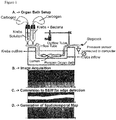
- Bacteria were applied by switching the oral luminal inflow from Marriotte bottles containing Krebs to ones containing Krebs plus bacteria by closing and opening the appropriate stopcocks, as illustrated in Fig. 1A .
- Intraluminal pressure changes were measured at the midpoint of the longitudinal axis of the gut segment. The pressure signal was amplified, digitized, stored on a PC computer and analyzed off-line using PClamp 9 software (Molecular Devices, Sunny Vale, CA, USA).
- the final video clips were resampled to a resolution of 384 ⁇ 256 pixels and 25 fps.
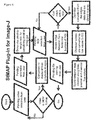
- Video recordings were analyzed using in-house image processing software (StMap, see example 1) developed as a plug-in for NIH ImageJ (version 1.43c, Open source software available at http://rsbweb.nih.gov/ij/).
- the software converts the image (1B) in each frame of the video into a black-and-white silhouette (1C) and generates a spatiotemporal map using an edge detection routine.
- the routine first measures the diameter at each position along the gut and it then represents the physical diameter at each position as a hue value (ranges from 0-255, black to white).
- the hue value is reduced towards 0 and will be shown as toward darker values.
- the software reads through each 10 minute clip, it generates a spatiotemporal map - a pattern of alternating bands of light and dark hues that contains 3 sets of information: position along the gut (ordinate), time (abscissa) and gut diameter (applicate or z-axis) ( Fig. 1D ).
- the spatiotemporal map becomes a motility "fingerprint" whose sensitivity is critically important in defining the detailed and nuanced effects that specific probiotic strains and other agents have on motility and the ability to distinguish between them.
- StMap measures the diameter changes at each position
- StMap can be interpreted as a stacking of numerous 2D diameters versus time graphs.
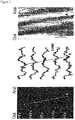
- the location of the pressure transducer were identified (dotted line in Fig. 2A ) and were shown as a grey scale versus time graph ( Fig. 2B ), this graph would be in register with the simultaneously recorded pressure vs. time recording at that locus ( Fig. 2C ).
- Motility parameters were measured directly from the spatiotemporal map using the StMap plugin.
- StMap plugin we arc able to test (using tetrodotoxin neuron silencing) whether contractions depend on the enteric nervous system or are myogenic (driven by rhythmic muscle contractions but neuron independent)
- slopes of 3-5 successive MCs were averaged to calculate the propagation velocity.
- MC frequency (mHz) was gauged by counting the number of dark MC bands during a 10 min segment.
- MC amplitude was measured directly from the baseline diameter ( Fig 2B ) or pressure ( Fig 2C ) to the next peak with 3 values being averaged for each treatment.
- the rate of diameter change (cm/s) was calculated from the time taken for the diameter to constrict maximally from baseline (downstroke of MCs in ( Fig2B ).
- Lactobacillus rhamnosus JB-1
- Lactobacillus reuteri DSM 17938
- Lactobacillus reuteri ATCC PTA 6475 Lactobacillus gasseri 345A (DSM 27123), Lactobacilllus gasseri 621A (DSM 27126), Lactobacillus gasseri T1 and Lactobacillus gasseri T2 were all tested in the first step of the methods of the invention.
- Cell numbers were determined optically and viability was always checked by ability to grow after plating on growth medium agar plates. Cells from frozen stocks were thawed and centrifuged at 2000 rpm for 15 min, and the pellet was suspended in equal volume of Krebs buffer.
- mice Twenty-30 g were procured from Charles River Laboratories (Wilmington, MA, USA). The mice were sacrificed by cervical dislocation. All ensuing procedures were ex vivo. Segments of excised distal jejunum ( ⁇ 2.5 cm) with attached mesenteric tissue were removed from euthanized animals ( Fig 4 ) and immediately placed in a Sylgard-coated recording Petri dish filled with Krebs buffer of the following composition (mM): 118 NaCl, 4.8 KCl, 25 NaHCO3, 1.0 NaH2PO4, 1.2 MgSO4, 11.1 glucose and 2.5 CaCl2 bubbled with carbogen (95% O2/5% CO2).
- mM 118 NaCl, 4.8 KCl, 25 NaHCO3, 1.0 NaH2PO4, 1.2 MgSO4, 11.1 glucose and 2.5 CaCl2 bubbled with carbogen (95% O2/5% CO2).
- the oral and anal ends of the gut segment were cannulated with plastic tubing and gently emptied using an attached syringe filled with oxygenated Krebs buffer; then, the segment and mesenteric tissue were pinned out and the mesenteric nerve bundle isolated by careful dissection under a stereo microscope ( Fig 5 ) as described by Barbara et al (Gastroenterology, Volume 132, Issue 1 , Pages 26-37, January 2007 ).
- the preparation was transferred to an inverted microscope and the lumen gravity perfused at 0.5-1 ml/min with room temp ( ⁇ 22°C) oxygenated Krebs and/or additives using several Mariotte bottles.
- the serosal compartment was separately perfused with prewarmed (34°C) Krebs solution at 3-5 ml/min.
- the nerve bundle was gently drawn by suction into a glass pipette attached to a patch clamp electrode holder (CV-7B; Molecular Devices, Sunnyvale, California, USA) and extracellular nerve recordings were made using a Multi-Clamp 700B amplifier and Digidata 1440A signal converter (Molecular Devices). Electrical signals were bandpass-filtered at 0.1 to 2 kHz, sampled at 20 kHz and stored on a personal computer running pClamp 10 software (Molecular Devices) for post-hoc analysis.
- CV-7B patch clamp electrode holder
- Digidata 1440A signal converter Digidata 1440A signal converter
- JB-1 were washed twice in PBS and suspended in a final concentration of CFSE of 5 ⁇ M in PBS supplemented with 5% fetal calf serum and incubated for 25 min at 37 °C.
- rhamnosus were grown from frozen (-80°C) 1 ml aliquots, which consisted of 5x10 9 cells in Man-Rogosa Sharpe broth (Difco Laboratories, Sparks, MD, USA). Cells from frozen stocks were thawed and centrifuged at 2000 rpm for 15 min, and the pellet was suspended in equal volume of Krebs buffer. The suspension was again centrifuged, and the cells removed and resuspended in Krebs at the original concentration. Just prior to use, the cells were diluted to working concentrations with Krebs buffer. For some experiments the bacteria were diluted directly to working concentrations after thawing (in broth); the bacteria were always applied into the lumen of the jejunal segment.
- Cholecystokinin 25-33 sulphated (CCK; AnaSpec, Fremont, CA) was dissolved in DMSO to make a 1 mM stock solution. Aliquots were diluted on the day of the experiment to working concentration in Krebs buffer, with a final DMSO concentrations ⁇ 0.0001 %.
- Multi- and single-unit spontaneous firing frequencies of mesenteric afferent nerve bundles were measured using Clampfit 10.2 (Molecular Devices). Both methods (multi-unit spike discharge and waveform analysis) of measurement are routinely used to determine changes in the excitability of the mesenteric nerve fibers induced by different treatments. The timing of multi-unit spikes was determined using the peak detection module of Clampfit, and average frequency calculated from spike intervals. Single-unit activity was isolated from the multi-unit activity using the spike shape automatic template detection tool of Clampfit (computerized waveform analysis). After template detection, discrimination was always checked by visual inspection and visually non-spike shapes events were discarded ( ⁇ 0.2%). The results are presented in figure 8 .
Landscapes
- Health & Medical Sciences (AREA)
- Life Sciences & Earth Sciences (AREA)
- Engineering & Computer Science (AREA)
- Chemical & Material Sciences (AREA)
- General Health & Medical Sciences (AREA)
- Organic Chemistry (AREA)
- Bioinformatics & Cheminformatics (AREA)
- Medicinal Chemistry (AREA)
- Zoology (AREA)
- Wood Science & Technology (AREA)
- Biotechnology (AREA)
- Genetics & Genomics (AREA)
- Microbiology (AREA)
- Veterinary Medicine (AREA)
- Animal Behavior & Ethology (AREA)
- Public Health (AREA)
- Pharmacology & Pharmacy (AREA)
- Biomedical Technology (AREA)
- Nuclear Medicine, Radiotherapy & Molecular Imaging (AREA)
- Mycology (AREA)
- Biochemistry (AREA)
- General Engineering & Computer Science (AREA)
- Epidemiology (AREA)
- Tropical Medicine & Parasitology (AREA)
- Virology (AREA)
- Chemical Kinetics & Catalysis (AREA)
- General Chemical & Material Sciences (AREA)
- Physics & Mathematics (AREA)
- Molecular Biology (AREA)
- General Physics & Mathematics (AREA)
- Theoretical Computer Science (AREA)
- Computer Vision & Pattern Recognition (AREA)
- Rheumatology (AREA)
- Pathology (AREA)
- Medical Informatics (AREA)
- Nutrition Science (AREA)
- Urology & Nephrology (AREA)
- Radiology & Medical Imaging (AREA)
- Toxicology (AREA)
- Quality & Reliability (AREA)
Applications Claiming Priority (3)
| Application Number | Priority Date | Filing Date | Title |
|---|---|---|---|
| US201261696277P | 2012-09-03 | 2012-09-03 | |
| EP13756897.8A EP2893045B1 (en) | 2012-09-03 | 2013-09-03 | A method for selection of agents influencing intestinal motility disorders and pain |
| PCT/EP2013/068202 WO2014033330A1 (en) | 2012-09-03 | 2013-09-03 | A method for selection of agents influencing intestinal motility disorders and pain |
Related Parent Applications (1)
| Application Number | Title | Priority Date | Filing Date |
|---|---|---|---|
| EP13756897.8A Division EP2893045B1 (en) | 2012-09-03 | 2013-09-03 | A method for selection of agents influencing intestinal motility disorders and pain |
Publications (1)
| Publication Number | Publication Date |
|---|---|
| EP3369808A1 true EP3369808A1 (en) | 2018-09-05 |
Family
ID=49115523
Family Applications (2)
| Application Number | Title | Priority Date | Filing Date |
|---|---|---|---|
| EP18167810.3A Pending EP3369808A1 (en) | 2012-09-03 | 2013-09-03 | A method for selection of agents influencing intestinal motility disorders and pain |
| EP13756897.8A Active EP2893045B1 (en) | 2012-09-03 | 2013-09-03 | A method for selection of agents influencing intestinal motility disorders and pain |
Family Applications After (1)
| Application Number | Title | Priority Date | Filing Date |
|---|---|---|---|
| EP13756897.8A Active EP2893045B1 (en) | 2012-09-03 | 2013-09-03 | A method for selection of agents influencing intestinal motility disorders and pain |
Country Status (27)
| Country | Link |
|---|---|
| US (5) | US9555065B2 (enExample) |
| EP (2) | EP3369808A1 (enExample) |
| JP (3) | JP6259458B2 (enExample) |
| KR (1) | KR102293438B1 (enExample) |
| CN (4) | CN108904545A (enExample) |
| AU (1) | AU2013308299B2 (enExample) |
| CA (2) | CA2883440A1 (enExample) |
| CL (2) | CL2015000490A1 (enExample) |
| CO (1) | CO7350654A2 (enExample) |
| DK (1) | DK2893045T3 (enExample) |
| ES (1) | ES2681974T3 (enExample) |
| GE (1) | GEP201706775B (enExample) |
| HK (1) | HK1258778A1 (enExample) |
| HR (1) | HRP20181033T1 (enExample) |
| IL (2) | IL237397B (enExample) |
| IN (1) | IN2015DN01572A (enExample) |
| LT (1) | LT2893045T (enExample) |
| MX (2) | MX362495B (enExample) |
| MY (2) | MY182358A (enExample) |
| NZ (1) | NZ705358A (enExample) |
| PH (1) | PH12015500452B1 (enExample) |
| RU (1) | RU2701348C2 (enExample) |
| SG (3) | SG10202101556WA (enExample) |
| SI (1) | SI2893045T1 (enExample) |
| UA (2) | UA118339C2 (enExample) |
| WO (1) | WO2014033330A1 (enExample) |
| ZA (1) | ZA201501472B (enExample) |
Families Citing this family (11)
| Publication number | Priority date | Publication date | Assignee | Title |
|---|---|---|---|---|
| CA2807242C (en) | 2010-08-04 | 2017-05-02 | Thomas Julius Borody | Compositions for fecal floral transplantation and methods for making and using them and devices for delivering them |
| CN108094541A (zh) * | 2018-01-11 | 2018-06-01 | 黑龙江完达山林海液奶有限公司 | 一种具有保健益生功能的风味发酵乳及其制备方法 |
| US11911424B2 (en) * | 2018-07-24 | 2024-02-27 | Biogaia Ab | Selection and use of melatonin supporting bacteria to reduce infantile colic |
| EP3980288B1 (en) * | 2019-06-05 | 2025-02-26 | AVL Mobility Technologies, Inc. | Vehicle axle assembly |
| US12263752B2 (en) | 2019-06-05 | 2025-04-01 | Avl Mobility Technologies, Inc. | Vehicle frame and power supply assembly and related systems and methods |
| CN113939417A (zh) | 2019-06-05 | 2022-01-14 | Avl动力工程公司 | 车辆框架组件和电源托盘 |
| CN110186922B (zh) * | 2019-06-25 | 2021-07-23 | 西安交通大学医学院第一附属医院 | 一种监测结肠移行性复合运动的实验装置及方法 |
| US11843097B2 (en) | 2019-09-10 | 2023-12-12 | Avl Powertrain Engineering, Inc. | Power supply control systems and methods |
| CN112710823B (zh) * | 2020-12-17 | 2024-03-29 | 中国科学院深圳先进技术研究院 | 一种肠移行性复合运动的离体检测系统及其应用 |
| CN114342878B (zh) * | 2022-01-10 | 2022-09-30 | 南京鼓楼医院 | 一种慢传输型便秘动物模型的建立方法 |
| CN117384804A (zh) * | 2023-12-12 | 2024-01-12 | 北京三元食品股份有限公司 | 格氏乳杆菌b1-26及其应用 |
Citations (1)
| Publication number | Priority date | Publication date | Assignee | Title |
|---|---|---|---|---|
| WO2007142596A1 (en) * | 2006-06-05 | 2007-12-13 | Biogaia Ab | Use of selected lactic acid bacteria for reducing infantile colic |
Family Cites Families (15)
| Publication number | Priority date | Publication date | Assignee | Title |
|---|---|---|---|---|
| US5438989A (en) * | 1990-08-10 | 1995-08-08 | Hochman; Darryl | Solid tumor, cortical function, and nerve tissue imaging methods and device |
| ID28510A (id) * | 1998-08-21 | 2001-05-31 | Novartis Ag | Formulasi oral yang baru untuk agonis atau antagonis 5-ht4 |
| EP1196164A2 (en) * | 1999-07-06 | 2002-04-17 | Enpharma L.P. | Methods and compositions for regulating gut motility and food intake |
| EP1384483A1 (en) * | 2002-07-23 | 2004-01-28 | Nestec S.A. | Probiotics for treatment of irritable bowel disease (IBS) through improvement of gut neuromuscular function |
| TWI241912B (en) * | 2002-10-30 | 2005-10-21 | Food Industry Res & Dev Inst | Novel Acid-and bile salt-resistant Lactobacillus isolates having the ability to lower and assimilate cholesterol |
| CN1663573B (zh) * | 2004-03-04 | 2010-04-28 | 青岛东海药业有限公司 | 一种稳定安全的微生态制剂及其制备方法和用途 |
| US20090233888A1 (en) * | 2005-03-23 | 2009-09-17 | Usc Stevens, University Of Southern California | Treatment of disease conditions through modulation of hydrogen sulfide produced by small intestinal bacterial overgrowth |
| JP5036020B2 (ja) * | 2005-11-30 | 2012-09-26 | 雪印メグミルク株式会社 | 腎周囲脂肪蓄積抑制剤 |
| JP5019563B2 (ja) * | 2006-06-16 | 2012-09-05 | 旭化成ケミカルズ株式会社 | 腸内細菌賦活剤 |
| CN101801200B (zh) * | 2007-09-17 | 2014-10-29 | 康奈尔大学 | 用于预防或治疗胃肠病症的支链脂肪酸 |
| EP2459202A1 (en) * | 2009-07-31 | 2012-06-06 | Nestec S.A. | Nutritional composition for breast-fed infants or pets with probiotics and selected nutrients |
| US20110110905A1 (en) * | 2009-11-06 | 2011-05-12 | Ritchie Jennifer A | Infant Colic Supplement |
| WO2011148219A1 (en) * | 2010-05-28 | 2011-12-01 | Compagnie Gervais Danone | Probiotic strains for use in improving the enteric nervous system |
| US20120034198A1 (en) * | 2010-08-04 | 2012-02-09 | Microbios, Inc. | Carriers for storage and delivery of biologics |
| CN102304489B (zh) * | 2011-09-23 | 2013-06-12 | 北京龙科方舟生物工程技术有限公司 | 一株罗伊氏乳杆菌及其应用 |
-
2013
- 2013-03-09 UA UAA201503061A patent/UA118339C2/uk unknown
- 2013-09-03 MY MYPI2015700601A patent/MY182358A/en unknown
- 2013-09-03 CN CN201810593302.2A patent/CN108904545A/zh active Pending
- 2013-09-03 EP EP18167810.3A patent/EP3369808A1/en active Pending
- 2013-09-03 SG SG10202101556WA patent/SG10202101556WA/en unknown
- 2013-09-03 AU AU2013308299A patent/AU2013308299B2/en active Active
- 2013-09-03 CA CA2883440A patent/CA2883440A1/en active Pending
- 2013-09-03 LT LTEP13756897.8T patent/LT2893045T/lt unknown
- 2013-09-03 CA CA3268968A patent/CA3268968A1/en active Pending
- 2013-09-03 EP EP13756897.8A patent/EP2893045B1/en active Active
- 2013-09-03 SG SG10201608055XA patent/SG10201608055XA/en unknown
- 2013-09-03 CN CN201810593303.7A patent/CN108753645B/zh active Active
- 2013-09-03 RU RU2015112102A patent/RU2701348C2/ru active
- 2013-09-03 UA UAA201808043A patent/UA126374C2/uk unknown
- 2013-09-03 HR HRP20181033TT patent/HRP20181033T1/hr unknown
- 2013-09-03 CN CN201380049249.5A patent/CN104918640B/zh not_active Expired - Fee Related
- 2013-09-03 US US14/425,470 patent/US9555065B2/en not_active Expired - Fee Related
- 2013-09-03 PH PH1/2015/500452A patent/PH12015500452B1/en unknown
- 2013-09-03 CN CN201910121265.XA patent/CN109966511A/zh active Pending
- 2013-09-03 IN IN1572DEN2015 patent/IN2015DN01572A/en unknown
- 2013-09-03 DK DK13756897.8T patent/DK2893045T3/en active
- 2013-09-03 MY MYPI2019004045A patent/MY195532A/en unknown
- 2013-09-03 WO PCT/EP2013/068202 patent/WO2014033330A1/en not_active Ceased
- 2013-09-03 KR KR1020157007682A patent/KR102293438B1/ko active Active
- 2013-09-03 SI SI201331106T patent/SI2893045T1/en unknown
- 2013-09-03 SG SG11201501297TA patent/SG11201501297TA/en unknown
- 2013-09-03 ES ES13756897.8T patent/ES2681974T3/es active Active
- 2013-09-03 GE GEAP201313744A patent/GEP201706775B/en unknown
- 2013-09-03 JP JP2015529067A patent/JP6259458B2/ja not_active Expired - Fee Related
- 2013-09-03 MX MX2015002792A patent/MX362495B/es active IP Right Grant
- 2013-09-03 NZ NZ705358A patent/NZ705358A/en unknown
-
2015
- 2015-02-24 IL IL237397A patent/IL237397B/en active IP Right Grant
- 2015-02-27 CL CL2015000490A patent/CL2015000490A1/es unknown
- 2015-03-03 MX MX2018013097A patent/MX2018013097A/es unknown
- 2015-03-04 ZA ZA2015/01472A patent/ZA201501472B/en unknown
- 2015-03-25 CO CO15068564A patent/CO7350654A2/es unknown
-
2016
- 2016-12-23 US US15/389,577 patent/US9816150B2/en active Active
-
2017
- 2017-08-18 JP JP2017158075A patent/JP6322326B2/ja active Active
- 2017-09-15 US US15/705,922 patent/US10174388B2/en active Active
- 2017-11-08 CL CL2017002826A patent/CL2017002826A1/es unknown
-
2018
- 2018-02-22 JP JP2018029505A patent/JP6476328B2/ja active Active
- 2018-05-28 IL IL259652A patent/IL259652B/en active IP Right Grant
- 2018-12-12 US US16/217,507 patent/US20190112676A1/en not_active Abandoned
-
2019
- 2019-01-23 HK HK19101138.0A patent/HK1258778A1/zh unknown
-
2022
- 2022-06-15 US US17/840,923 patent/US20220306984A1/en not_active Abandoned
Patent Citations (1)
| Publication number | Priority date | Publication date | Assignee | Title |
|---|---|---|---|---|
| WO2007142596A1 (en) * | 2006-06-05 | 2007-12-13 | Biogaia Ab | Use of selected lactic acid bacteria for reducing infantile colic |
Non-Patent Citations (12)
| Title |
|---|
| "German Collection of Microorganisms and Cell Cultures, Inhoffenstr", vol. 7B, 18 April 2013, LEIBNIZ INSTITUTE DSMZ, pages: D-38124 |
| B. WANG ET AL: "Lactobacillus reuteri ingestion and IK Ca channel blockade have similar effects on rat colon motility and myenteric neurones", NEUROGASTROENTEROLOGY & MOTILITY, 1 September 2009 (2009-09-01), XP055084695, ISSN: 1350-1925, DOI: 10.1111/j.1365-2982.2009.01384.x * |
| B. WANG ET AL: "Luminal administration ex vivo of a live Lactobacillus species moderates mouse jejunal motility within minutes", THE FASEB JOURNAL, vol. 24, no. 10, 1 October 2010 (2010-10-01), pages 4078 - 4088, XP055084694, ISSN: 0892-6638, DOI: 10.1096/fj.09-153841 * |
| BARBARA ET AL., GASTROENTEROLOGY, vol. 132, no. 1, January 2007 (2007-01-01), pages 26 - 37 |
| COCCORULLO P ET AL: "Lactobacillus reuteri (DSM 17938) in Infants with Functional Chronic Constipation: A Double-Blind, Randomized, Placebo-Controlled Study", JOURNAL OF PEDIATRICS, MOSBY-YEAR BOOK, ST. LOUIS, MO, US, vol. 157, no. 4, 1 October 2010 (2010-10-01), pages 598 - 602, XP027256213, ISSN: 0022-3476, [retrieved on 20100612] * |
| KLEIJ H., AM J PHYSIOL REGUL INTEGR COMP PHYSIOL, vol. 295, 2008, pages 1131 - 1137 |
| NIEDZIELIN K ET AL: "A CONTROLLED, DOUBLE-BLIND, RANDOMIZED STUDY ON THE EFFICACY OF LACTOBACILLUS PLANTARUM 299V IN PATIENTS WITH IRRITABLE BOWEL SYNDROME", EUROPEAN JOURNAL OF GASTROENTEROLOGY HEPATOLOGY, XX, XX, vol. 13, no. 10, 1 October 2001 (2001-10-01), pages 1143 - 1147, XP001119326, DOI: 10.1097/00042737-200110000-00004 * |
| R WU ET AL: "SPATIOTEMPORAL MAPS OF EX VIVO PERISTALSIS REVEAL DETAILS OF PROBIOTIC EFFECTS ON MOUSE JEJUNUM MOTILITY", CANADIAN JOURNAL OF GASTROENTEROLOGY, 27 February 2012 (2012-02-27), pages 526, XP055084681, Retrieved from the Internet <URL:http://www.pulsus.com/cddw2012/abs/291.htm> [retrieved on 20131021] * |
| RIEZZO ET AL., ALIMENT PHARMACOL THER., vol. 35, no. 4, February 2012 (2012-02-01), pages 441 - 50 |
| SAVINO F ET AL., PEDIATRICS., vol. 119, no. 1, 2007, pages e124 |
| T KAMIYA: "Inhibitory effects of Lactobacillus reuteri on visceral pain induced by colorectal distension in Sprague-Dawley rats", GUT, vol. 55, no. 2, 1 February 2006 (2006-02-01), pages 191 - 196, XP055060727, ISSN: 0017-5749, DOI: 10.1136/gut.2005.070987 * |
| WOLFGANG A. KUNZE ET AL: "Lactobacillus reuteri enhances excitability of colonic AH neurons by inhibiting calcium-dependent potassium channel opening", JOURNAL OF CELLULAR AND MOLECULAR MEDICINE, vol. 13, no. 8b, 2 August 2009 (2009-08-02), RO, pages 2261 - 2270, XP055474426, ISSN: 1582-1838, DOI: 10.1111/j.1582-4934.2009.00686.x * |
Also Published As
Similar Documents
| Publication | Publication Date | Title |
|---|---|---|
| US20220306984A1 (en) | Method for selection of agents influencing intestinal motility disorders and pain | |
| US20200225214A1 (en) | Selection of agents modulating gastrointestinal pain | |
| HK40004510A (en) | A method for selection of agents influencing intestinal motility disorders and pain | |
| HK1258774B (en) | Method for selection of agents influencing intestinal motility disorders and pain | |
| HK1211848B (en) | A method for selection of agents influencing intestinal motility disorders and pain |
Legal Events
| Date | Code | Title | Description |
|---|---|---|---|
| PUAI | Public reference made under article 153(3) epc to a published international application that has entered the european phase |
Free format text: ORIGINAL CODE: 0009012 |
|
| STAA | Information on the status of an ep patent application or granted ep patent |
Free format text: STATUS: THE APPLICATION HAS BEEN PUBLISHED |
|
| AC | Divisional application: reference to earlier application |
Ref document number: 2893045 Country of ref document: EP Kind code of ref document: P |
|
| AK | Designated contracting states |
Kind code of ref document: A1 Designated state(s): AL AT BE BG CH CY CZ DE DK EE ES FI FR GB GR HR HU IE IS IT LI LT LU LV MC MK MT NL NO PL PT RO RS SE SI SK SM TR |
|
| AX | Request for extension of the european patent |
Extension state: BA ME |
|
| STAA | Information on the status of an ep patent application or granted ep patent |
Free format text: STATUS: REQUEST FOR EXAMINATION WAS MADE |
|
| 17P | Request for examination filed |
Effective date: 20190305 |
|
| RBV | Designated contracting states (corrected) |
Designated state(s): AL AT BE BG CH CY CZ DE DK EE ES FI FR GB GR HR HU IE IS IT LI LT LU LV MC MK MT NL NO PL PT RO RS SE SI SK SM TR |
|
| STAA | Information on the status of an ep patent application or granted ep patent |
Free format text: STATUS: EXAMINATION IS IN PROGRESS |
|
| 17Q | First examination report despatched |
Effective date: 20200227 |