EP3369704B1 - Polykristalliner verbundstoff - Google Patents
Polykristalliner verbundstoff Download PDFInfo
- Publication number
- EP3369704B1 EP3369704B1 EP16859530.4A EP16859530A EP3369704B1 EP 3369704 B1 EP3369704 B1 EP 3369704B1 EP 16859530 A EP16859530 A EP 16859530A EP 3369704 B1 EP3369704 B1 EP 3369704B1
- Authority
- EP
- European Patent Office
- Prior art keywords
- diamond
- equal
- composite polycrystal
- carbon
- less
- Prior art date
- Legal status (The legal status is an assumption and is not a legal conclusion. Google has not performed a legal analysis and makes no representation as to the accuracy of the status listed.)
- Active
Links
Images
Classifications
-
- B—PERFORMING OPERATIONS; TRANSPORTING
- B23—MACHINE TOOLS; METAL-WORKING NOT OTHERWISE PROVIDED FOR
- B23B—TURNING; BORING
- B23B27/00—Tools for turning or boring machines; Tools of a similar kind in general; Accessories therefor
- B23B27/14—Cutting tools of which the bits or tips or cutting inserts are of special material
- B23B27/18—Cutting tools of which the bits or tips or cutting inserts are of special material with cutting bits or tips or cutting inserts rigidly mounted, e.g. by brazing
- B23B27/20—Cutting tools of which the bits or tips or cutting inserts are of special material with cutting bits or tips or cutting inserts rigidly mounted, e.g. by brazing with diamond bits or cutting inserts
-
- C—CHEMISTRY; METALLURGY
- C04—CEMENTS; CONCRETE; ARTIFICIAL STONE; CERAMICS; REFRACTORIES
- C04B—LIME, MAGNESIA; SLAG; CEMENTS; COMPOSITIONS THEREOF, e.g. MORTARS, CONCRETE OR LIKE BUILDING MATERIALS; ARTIFICIAL STONE; CERAMICS; REFRACTORIES; TREATMENT OF NATURAL STONE
- C04B35/00—Shaped ceramic products characterised by their composition; Ceramics compositions; Processing powders of inorganic compounds preparatory to the manufacturing of ceramic products
- C04B35/515—Shaped ceramic products characterised by their composition; Ceramics compositions; Processing powders of inorganic compounds preparatory to the manufacturing of ceramic products based on non-oxide ceramics
- C04B35/52—Shaped ceramic products characterised by their composition; Ceramics compositions; Processing powders of inorganic compounds preparatory to the manufacturing of ceramic products based on non-oxide ceramics based on carbon, e.g. graphite
-
- C—CHEMISTRY; METALLURGY
- C04—CEMENTS; CONCRETE; ARTIFICIAL STONE; CERAMICS; REFRACTORIES
- C04B—LIME, MAGNESIA; SLAG; CEMENTS; COMPOSITIONS THEREOF, e.g. MORTARS, CONCRETE OR LIKE BUILDING MATERIALS; ARTIFICIAL STONE; CERAMICS; REFRACTORIES; TREATMENT OF NATURAL STONE
- C04B35/00—Shaped ceramic products characterised by their composition; Ceramics compositions; Processing powders of inorganic compounds preparatory to the manufacturing of ceramic products
- C04B35/622—Forming processes; Processing powders of inorganic compounds preparatory to the manufacturing of ceramic products
- C04B35/626—Preparing or treating the powders individually or as batches ; preparing or treating macroscopic reinforcing agents for ceramic products, e.g. fibres; mechanical aspects section B
- C04B35/62605—Treating the starting powders individually or as mixtures
- C04B35/62645—Thermal treatment of powders or mixtures thereof other than sintering
- C04B35/62675—Thermal treatment of powders or mixtures thereof other than sintering characterised by the treatment temperature
-
- C—CHEMISTRY; METALLURGY
- C04—CEMENTS; CONCRETE; ARTIFICIAL STONE; CERAMICS; REFRACTORIES
- C04B—LIME, MAGNESIA; SLAG; CEMENTS; COMPOSITIONS THEREOF, e.g. MORTARS, CONCRETE OR LIKE BUILDING MATERIALS; ARTIFICIAL STONE; CERAMICS; REFRACTORIES; TREATMENT OF NATURAL STONE
- C04B35/00—Shaped ceramic products characterised by their composition; Ceramics compositions; Processing powders of inorganic compounds preparatory to the manufacturing of ceramic products
- C04B35/622—Forming processes; Processing powders of inorganic compounds preparatory to the manufacturing of ceramic products
- C04B35/626—Preparing or treating the powders individually or as batches ; preparing or treating macroscopic reinforcing agents for ceramic products, e.g. fibres; mechanical aspects section B
- C04B35/62605—Treating the starting powders individually or as mixtures
- C04B35/62645—Thermal treatment of powders or mixtures thereof other than sintering
- C04B35/6268—Thermal treatment of powders or mixtures thereof other than sintering characterised by the applied pressure or type of atmosphere, e.g. in vacuum, hydrogen or a specific oxygen pressure
-
- C—CHEMISTRY; METALLURGY
- C04—CEMENTS; CONCRETE; ARTIFICIAL STONE; CERAMICS; REFRACTORIES
- C04B—LIME, MAGNESIA; SLAG; CEMENTS; COMPOSITIONS THEREOF, e.g. MORTARS, CONCRETE OR LIKE BUILDING MATERIALS; ARTIFICIAL STONE; CERAMICS; REFRACTORIES; TREATMENT OF NATURAL STONE
- C04B35/00—Shaped ceramic products characterised by their composition; Ceramics compositions; Processing powders of inorganic compounds preparatory to the manufacturing of ceramic products
- C04B35/622—Forming processes; Processing powders of inorganic compounds preparatory to the manufacturing of ceramic products
- C04B35/64—Burning or sintering processes
-
- C—CHEMISTRY; METALLURGY
- C04—CEMENTS; CONCRETE; ARTIFICIAL STONE; CERAMICS; REFRACTORIES
- C04B—LIME, MAGNESIA; SLAG; CEMENTS; COMPOSITIONS THEREOF, e.g. MORTARS, CONCRETE OR LIKE BUILDING MATERIALS; ARTIFICIAL STONE; CERAMICS; REFRACTORIES; TREATMENT OF NATURAL STONE
- C04B35/00—Shaped ceramic products characterised by their composition; Ceramics compositions; Processing powders of inorganic compounds preparatory to the manufacturing of ceramic products
- C04B35/622—Forming processes; Processing powders of inorganic compounds preparatory to the manufacturing of ceramic products
- C04B35/64—Burning or sintering processes
- C04B35/645—Pressure sintering
-
- B—PERFORMING OPERATIONS; TRANSPORTING
- B23—MACHINE TOOLS; METAL-WORKING NOT OTHERWISE PROVIDED FOR
- B23B—TURNING; BORING
- B23B2226/00—Materials of tools or workpieces not comprising a metal
- B23B2226/27—Composites
-
- B—PERFORMING OPERATIONS; TRANSPORTING
- B23—MACHINE TOOLS; METAL-WORKING NOT OTHERWISE PROVIDED FOR
- B23B—TURNING; BORING
- B23B2226/00—Materials of tools or workpieces not comprising a metal
- B23B2226/31—Diamond
- B23B2226/315—Diamond polycrystalline [PCD]
-
- B—PERFORMING OPERATIONS; TRANSPORTING
- B23—MACHINE TOOLS; METAL-WORKING NOT OTHERWISE PROVIDED FOR
- B23B—TURNING; BORING
- B23B2240/00—Details of connections of tools or workpieces
- B23B2240/08—Brazed connections
-
- B—PERFORMING OPERATIONS; TRANSPORTING
- B24—GRINDING; POLISHING
- B24D—TOOLS FOR GRINDING, BUFFING OR SHARPENING
- B24D18/00—Manufacture of grinding tools or other grinding devices, e.g. wheels, not otherwise provided for
- B24D18/0009—Manufacture of grinding tools or other grinding devices, e.g. wheels, not otherwise provided for using moulds or presses
-
- C—CHEMISTRY; METALLURGY
- C04—CEMENTS; CONCRETE; ARTIFICIAL STONE; CERAMICS; REFRACTORIES
- C04B—LIME, MAGNESIA; SLAG; CEMENTS; COMPOSITIONS THEREOF, e.g. MORTARS, CONCRETE OR LIKE BUILDING MATERIALS; ARTIFICIAL STONE; CERAMICS; REFRACTORIES; TREATMENT OF NATURAL STONE
- C04B2235/00—Aspects relating to ceramic starting mixtures or sintered ceramic products
- C04B2235/02—Composition of constituents of the starting material or of secondary phases of the final product
- C04B2235/30—Constituents and secondary phases not being of a fibrous nature
- C04B2235/42—Non metallic elements added as constituents or additives, e.g. sulfur, phosphor, selenium or tellurium
- C04B2235/422—Carbon
-
- C—CHEMISTRY; METALLURGY
- C04—CEMENTS; CONCRETE; ARTIFICIAL STONE; CERAMICS; REFRACTORIES
- C04B—LIME, MAGNESIA; SLAG; CEMENTS; COMPOSITIONS THEREOF, e.g. MORTARS, CONCRETE OR LIKE BUILDING MATERIALS; ARTIFICIAL STONE; CERAMICS; REFRACTORIES; TREATMENT OF NATURAL STONE
- C04B2235/00—Aspects relating to ceramic starting mixtures or sintered ceramic products
- C04B2235/02—Composition of constituents of the starting material or of secondary phases of the final product
- C04B2235/30—Constituents and secondary phases not being of a fibrous nature
- C04B2235/42—Non metallic elements added as constituents or additives, e.g. sulfur, phosphor, selenium or tellurium
- C04B2235/422—Carbon
- C04B2235/425—Graphite
-
- C—CHEMISTRY; METALLURGY
- C04—CEMENTS; CONCRETE; ARTIFICIAL STONE; CERAMICS; REFRACTORIES
- C04B—LIME, MAGNESIA; SLAG; CEMENTS; COMPOSITIONS THEREOF, e.g. MORTARS, CONCRETE OR LIKE BUILDING MATERIALS; ARTIFICIAL STONE; CERAMICS; REFRACTORIES; TREATMENT OF NATURAL STONE
- C04B2235/00—Aspects relating to ceramic starting mixtures or sintered ceramic products
- C04B2235/02—Composition of constituents of the starting material or of secondary phases of the final product
- C04B2235/30—Constituents and secondary phases not being of a fibrous nature
- C04B2235/42—Non metallic elements added as constituents or additives, e.g. sulfur, phosphor, selenium or tellurium
- C04B2235/422—Carbon
- C04B2235/427—Diamond
-
- C—CHEMISTRY; METALLURGY
- C04—CEMENTS; CONCRETE; ARTIFICIAL STONE; CERAMICS; REFRACTORIES
- C04B—LIME, MAGNESIA; SLAG; CEMENTS; COMPOSITIONS THEREOF, e.g. MORTARS, CONCRETE OR LIKE BUILDING MATERIALS; ARTIFICIAL STONE; CERAMICS; REFRACTORIES; TREATMENT OF NATURAL STONE
- C04B2235/00—Aspects relating to ceramic starting mixtures or sintered ceramic products
- C04B2235/02—Composition of constituents of the starting material or of secondary phases of the final product
- C04B2235/50—Constituents or additives of the starting mixture chosen for their shape or used because of their shape or their physical appearance
- C04B2235/54—Particle size related information
- C04B2235/5418—Particle size related information expressed by the size of the particles or aggregates thereof
- C04B2235/5445—Particle size related information expressed by the size of the particles or aggregates thereof submicron sized, i.e. from 0,1 to 1 micron
-
- C—CHEMISTRY; METALLURGY
- C04—CEMENTS; CONCRETE; ARTIFICIAL STONE; CERAMICS; REFRACTORIES
- C04B—LIME, MAGNESIA; SLAG; CEMENTS; COMPOSITIONS THEREOF, e.g. MORTARS, CONCRETE OR LIKE BUILDING MATERIALS; ARTIFICIAL STONE; CERAMICS; REFRACTORIES; TREATMENT OF NATURAL STONE
- C04B2235/00—Aspects relating to ceramic starting mixtures or sintered ceramic products
- C04B2235/02—Composition of constituents of the starting material or of secondary phases of the final product
- C04B2235/50—Constituents or additives of the starting mixture chosen for their shape or used because of their shape or their physical appearance
- C04B2235/54—Particle size related information
- C04B2235/5418—Particle size related information expressed by the size of the particles or aggregates thereof
- C04B2235/5454—Particle size related information expressed by the size of the particles or aggregates thereof nanometer sized, i.e. below 100 nm
-
- C—CHEMISTRY; METALLURGY
- C04—CEMENTS; CONCRETE; ARTIFICIAL STONE; CERAMICS; REFRACTORIES
- C04B—LIME, MAGNESIA; SLAG; CEMENTS; COMPOSITIONS THEREOF, e.g. MORTARS, CONCRETE OR LIKE BUILDING MATERIALS; ARTIFICIAL STONE; CERAMICS; REFRACTORIES; TREATMENT OF NATURAL STONE
- C04B2235/00—Aspects relating to ceramic starting mixtures or sintered ceramic products
- C04B2235/60—Aspects relating to the preparation, properties or mechanical treatment of green bodies or pre-forms
- C04B2235/604—Pressing at temperatures other than sintering temperatures
-
- C—CHEMISTRY; METALLURGY
- C04—CEMENTS; CONCRETE; ARTIFICIAL STONE; CERAMICS; REFRACTORIES
- C04B—LIME, MAGNESIA; SLAG; CEMENTS; COMPOSITIONS THEREOF, e.g. MORTARS, CONCRETE OR LIKE BUILDING MATERIALS; ARTIFICIAL STONE; CERAMICS; REFRACTORIES; TREATMENT OF NATURAL STONE
- C04B2235/00—Aspects relating to ceramic starting mixtures or sintered ceramic products
- C04B2235/60—Aspects relating to the preparation, properties or mechanical treatment of green bodies or pre-forms
- C04B2235/608—Green bodies or pre-forms with well-defined density
-
- C—CHEMISTRY; METALLURGY
- C04—CEMENTS; CONCRETE; ARTIFICIAL STONE; CERAMICS; REFRACTORIES
- C04B—LIME, MAGNESIA; SLAG; CEMENTS; COMPOSITIONS THEREOF, e.g. MORTARS, CONCRETE OR LIKE BUILDING MATERIALS; ARTIFICIAL STONE; CERAMICS; REFRACTORIES; TREATMENT OF NATURAL STONE
- C04B2235/00—Aspects relating to ceramic starting mixtures or sintered ceramic products
- C04B2235/65—Aspects relating to heat treatments of ceramic bodies such as green ceramics or pre-sintered ceramics, e.g. burning, sintering or melting processes
- C04B2235/656—Aspects relating to heat treatments of ceramic bodies such as green ceramics or pre-sintered ceramics, e.g. burning, sintering or melting processes characterised by specific heating conditions during heat treatment
-
- C—CHEMISTRY; METALLURGY
- C04—CEMENTS; CONCRETE; ARTIFICIAL STONE; CERAMICS; REFRACTORIES
- C04B—LIME, MAGNESIA; SLAG; CEMENTS; COMPOSITIONS THEREOF, e.g. MORTARS, CONCRETE OR LIKE BUILDING MATERIALS; ARTIFICIAL STONE; CERAMICS; REFRACTORIES; TREATMENT OF NATURAL STONE
- C04B2235/00—Aspects relating to ceramic starting mixtures or sintered ceramic products
- C04B2235/70—Aspects relating to sintered or melt-casted ceramic products
- C04B2235/72—Products characterised by the absence or the low content of specific components, e.g. alkali metal free alumina ceramics
-
- C—CHEMISTRY; METALLURGY
- C04—CEMENTS; CONCRETE; ARTIFICIAL STONE; CERAMICS; REFRACTORIES
- C04B—LIME, MAGNESIA; SLAG; CEMENTS; COMPOSITIONS THEREOF, e.g. MORTARS, CONCRETE OR LIKE BUILDING MATERIALS; ARTIFICIAL STONE; CERAMICS; REFRACTORIES; TREATMENT OF NATURAL STONE
- C04B2235/00—Aspects relating to ceramic starting mixtures or sintered ceramic products
- C04B2235/70—Aspects relating to sintered or melt-casted ceramic products
- C04B2235/74—Physical characteristics
- C04B2235/78—Grain sizes and shapes, product microstructures, e.g. acicular grains, equiaxed grains, platelet-structures
- C04B2235/781—Nanograined materials, i.e. having grain sizes below 100 nm
-
- C—CHEMISTRY; METALLURGY
- C04—CEMENTS; CONCRETE; ARTIFICIAL STONE; CERAMICS; REFRACTORIES
- C04B—LIME, MAGNESIA; SLAG; CEMENTS; COMPOSITIONS THEREOF, e.g. MORTARS, CONCRETE OR LIKE BUILDING MATERIALS; ARTIFICIAL STONE; CERAMICS; REFRACTORIES; TREATMENT OF NATURAL STONE
- C04B2235/00—Aspects relating to ceramic starting mixtures or sintered ceramic products
- C04B2235/70—Aspects relating to sintered or melt-casted ceramic products
- C04B2235/74—Physical characteristics
- C04B2235/78—Grain sizes and shapes, product microstructures, e.g. acicular grains, equiaxed grains, platelet-structures
- C04B2235/785—Submicron sized grains, i.e. from 0,1 to 1 micron
-
- C—CHEMISTRY; METALLURGY
- C04—CEMENTS; CONCRETE; ARTIFICIAL STONE; CERAMICS; REFRACTORIES
- C04B—LIME, MAGNESIA; SLAG; CEMENTS; COMPOSITIONS THEREOF, e.g. MORTARS, CONCRETE OR LIKE BUILDING MATERIALS; ARTIFICIAL STONE; CERAMICS; REFRACTORIES; TREATMENT OF NATURAL STONE
- C04B2235/00—Aspects relating to ceramic starting mixtures or sintered ceramic products
- C04B2235/70—Aspects relating to sintered or melt-casted ceramic products
- C04B2235/80—Phases present in the sintered or melt-cast ceramic products other than the main phase
-
- C—CHEMISTRY; METALLURGY
- C04—CEMENTS; CONCRETE; ARTIFICIAL STONE; CERAMICS; REFRACTORIES
- C04B—LIME, MAGNESIA; SLAG; CEMENTS; COMPOSITIONS THEREOF, e.g. MORTARS, CONCRETE OR LIKE BUILDING MATERIALS; ARTIFICIAL STONE; CERAMICS; REFRACTORIES; TREATMENT OF NATURAL STONE
- C04B2235/00—Aspects relating to ceramic starting mixtures or sintered ceramic products
- C04B2235/70—Aspects relating to sintered or melt-casted ceramic products
- C04B2235/80—Phases present in the sintered or melt-cast ceramic products other than the main phase
- C04B2235/85—Intergranular or grain boundary phases
-
- C—CHEMISTRY; METALLURGY
- C04—CEMENTS; CONCRETE; ARTIFICIAL STONE; CERAMICS; REFRACTORIES
- C04B—LIME, MAGNESIA; SLAG; CEMENTS; COMPOSITIONS THEREOF, e.g. MORTARS, CONCRETE OR LIKE BUILDING MATERIALS; ARTIFICIAL STONE; CERAMICS; REFRACTORIES; TREATMENT OF NATURAL STONE
- C04B2235/00—Aspects relating to ceramic starting mixtures or sintered ceramic products
- C04B2235/70—Aspects relating to sintered or melt-casted ceramic products
- C04B2235/96—Properties of ceramic products, e.g. mechanical properties such as strength, toughness, wear resistance
Definitions
- the present invention relates to a composite polycrystal.
- the present application claims the priority based on Japanese Patent Application No. 2015-214041 filed on October 30, 2015 .
- diamond is a substance having the highest hardness of the substances existing on the earth
- a sintered material or a polycrystal containing diamond is used as a material for an abrasion resistant tool, a cutting tool or the like.
- Japanese Patent Laying-Open No. 2003-292397 discloses a diamond polycrystal composed of diamond that is obtained by conversion and sintering from a carbon substance having a graphite-type layered structure under ultra-high pressure and high temperature without addition of a sintering aid or a catalyst, and that has a mean grain size of diamond of less than or equal to 100 nm, and a purity of greater than or equal to 99%. Also disclosed is a method for producing a diamond polycrystal by direct conversion without addition of a sintering aid or a catalyst by putting a non-diamond carbon substance into a pressure cell equipped with a means for indirect heating, and conducting heating and pressurization.
- PTD 2 discloses a diamond polycrystal produced by converting and sintering non-diamond carbon under ultrahigh pressure and high temperature without addition of a sintering aid or a catalyst, wherein the sintered diamond grains forming the diamond polycrystal have a mean grain size of larger than 50 nm and less than 2500 nm, and the diamond polycrystal has a purity of greater than or equal to 99% and a D90 grain size of the diamond of less than or equal to (mean grain size + mean grain size ⁇ 0.9).
- Japanese Patent Laying-Open No. 9-142933 discloses a diamond polycrystal containing 0.1 to 30% by volume of a substance composed of an oxide and/or a carbonate and/or a carbide of a rare-earth element, and the rest of diamond.
- Japanese Patent Laying-Open No. 2005-239472 discloses a diamond sintered material having high strength and high abrasion resistance, containing sintered diamond grains having a mean grain size of less than or equal to 2 ⁇ m, and the rest of a binder phase, wherein the content of the sintered diamond grains in the diamond sintered material is greater than or equal to 80% by volume and less than or equal to 98% by volume;
- the binder phase contains at least one element selected from the group consisting of titanium, zirconium, hafnium, vanadium, niobium, tantalum, chromium, and molybdenum in a content in the binder phase of greater than or equal to 0.5% by mass and less than 50% by mass, and cobalt in a content in the binder phase of greater than or equal to 50% by mass and less than 99.5% by mass; part or all of the at least one element selected from the group consisting of titanium, zirconium, hafnium, vanadium, niobium,
- POPOV C ET AL “Nanocrystalline diamond/amorphous carbon composite films for applications in tribology, optics and biomedicine”, THIN SOLID FILMS, ELSEVIER, AMSTERDAM, NL, vol. 494, no. 1-2, 3 January 2006 (2006-01-03), pages 92-97 , discloses a nanocrystalline diamond/amorphous carbon composite film having a hydrogen concentration of 9.8%.
- a composite polycrystal of the present disclosure contains polycrystalline diamond formed of diamond grains that are directly bonded mutually, and non-diamond carbon dispersed in the polycrystalline diamond, and has a concentration of contained hydrogen of more than 1000 ppm and less than or equal to 20000 ppm.
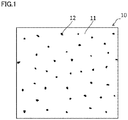
- Fig. 1 is a schematic sectional view of a composite polycrystal according to one aspect of the present invention.
- the diamond polycrystal disclosed in Japanese Patent Laying-Open No. 2003-292397 (PTD 1) and International Publication No. 2009/099130 (PTD 2) has such a problem that when it is applied to a wiredrawing die which is an abrasion resistant tool, the pull-out resistance at the time of wiredrawing increases due to local abrasion, and the diameter of the wire after drawing decreases to result in frequent breaking of the wire, and when it is applied to a scribe wheel or a drilling bit which is a cutting tool, the service life of the tool is shortened due to local abrasion or chipping by impact.
- the diamond polycrystal or sintered material disclosed in Japanese Patent Laying-Open No. 9-142933 (PTD 3) and Japanese Patent Laying-Open No. 2005-239472 (PTD 4) has such a problem that when it is applied to a wiredrawing die which is an abrasion resistant tool, the coefficient of friction increases due to the contained metal oxide or metal, and the wiredrawing resistance increases and the diameter of the wire after drawing decreases to result in frequent breaking of the wire, and when it is applied to a scribe wheel or a drilling bit which is a cutting tool, the coefficient of friction increases due to the contained metal oxide or metal, and the cutting resistance increases and the service life of the tool is shortened due to the internal breakage caused by the thermal expansion of the contained metal.
- the problem of shortening of the service life of the tool is associated with the abrasion of the diamond polycrystal or sintered material.
- a composite polycrystal containing polycrystalline diamond and non-diamond carbon which has high abrasion resistance and is suitably used as a material for an abrasion resistant tool, a cutting tool or the like. Since the composite polycrystal has high abrasion resistance, it is possible to prevent the service life of the tool from being shortened by abrasion, and it is possible to prolong the service life of the tool.
- a composite polycrystal which is one embodiment of the present invention contains polycrystalline diamond formed of diamond grains that are directly bonded mutually, and non-diamond carbon dispersed in the polycrystalline diamond, and has a concentration of contained hydrogen of greater than 1000 ppm and less than or equal to 20000 ppm. Since the composite polycrystal of the present embodiment has a concentration of contained hydrogen of greater than 1000 ppm and less than or equal to 20000 ppm, it has high abrasion resistance.
- the polycrystalline diamond has a phase that is continuous three-dimensionally.
- Such a composite polycrystal has higher abrasion resistance.
- the diamond grains forming the polycrystalline diamond have a mean grain size of greater than or equal to 10 nm and less than or equal to 200 nm. Such a composite polycrystal has higher abrasion resistance.
- the non-diamond carbon has a mean grain size of greater than or equal to 10 nm and less than or equal to 200 nm. Such a composite polycrystal has higher abrasion resistance.
- the non-diamond carbon has a percentage in the composite polycrystal in whole of greater than or equal to 0.01% and less than or equal to 5% by an occupancy of the non-diamond carbon calculated as a percentage of an area of the non-diamond carbon in the total area of one arbitrarily specified cross-section of the composite polycrystal.
- Such a composite polycrystal has higher abrasion resistance.
- the non-diamond carbon is graphite.
- Such a composite polycrystal has higher abrasion resistance.
- the non-diamond carbon is amorphous carbon.
- Such a composite polycrystal has higher abrasion resistance.
- the composite polycrystal of the present embodiment has a Knoop hardness of greater than or equal to 50 GPa.
- Such a composite polycrystal has higher abrasion resistance.
- the composite polycrystal of the present embodiment contains polycrystalline diamond formed of diamond grains that are directly bound mutually, and non-diamond carbon dispersed in the polycrystalline diamond, wherein the composite polycrystal has a concentration of contained hydrogen of greater than 1000 ppm and less than or equal to 20000 ppm; the polycrystalline diamond has a phase that is continuous three-dimensionally; the diamond grains forming the polycrystalline diamond have a mean grain size of greater than or equal to 10 nm and less than or equal to 200 nm; the non-diamond carbon has a mean grain size of greater than or equal to 10 nm and less than or equal to 200 nm; the non-diamond carbon has a percentage in the composite polycrystal in whole of greater than or equal to 0.01% and less than or equal to 5% by an occupancy of the non-diamond carbon calculated as a percentage of an area of the non-diamond carbon in the total area of one arbitrarily specified cross-section of the composite polycrystal; the non-
- a composite polycrystal 10 of the present embodiment contains polycrystalline diamond 11 formed of diamond grains that are directly bonded mutually, and non-diamond carbon 12 dispersed in polycrystalline diamond 11, and has a concentration of contained hydrogen of greater than 1000 ppm and less than or equal to 20000 ppm.
- composite polycrystal 10 of the present embodiment has a concentration of contained hydrogen of greater than 1000 ppm, preferably greater than or equal to 1500 ppm, more preferably greater than or equal to 5000 ppm. From the view point of sufficient rigidness, composite polycrystal 10 of the present embodiment has a concentration of contained hydrogen of less than or equal to 20000 ppm, preferably less than or equal to 10000 ppm.
- Polycrystalline diamond 11 and non-diamond carbon 12 contained in composite poly crystal 10 are observed with a SEM (scanning electron microscope) or a TEM (transmission electron microscope). In SEM observation or TEM observation, polycrystalline diamond 11 is observed as a bright field, and non-diamond carbon 12 is observed as a dark field.
- diamond grains are directly bonded mutually means that diamond grains are mutually bonded in such manner that they come into direct contact with each other, and for example, it means that diamond grains are mutually bonded without being interposed by other grains such as a binder.
- Mutual direct bonding of diamond grains is observed by SEM observation or TEM observation. Concentration of hydrogen contained in composite polycrystal 10 is measured by SIMS (secondary ion-mass spectroscopy).
- polycrystalline diamond 11 has a phase that is continuous three-dimensionally.
- the phrase "polycrystalline diamond 11 has a phase that is continuous three-dimensionally” means that the phase of polycrystalline diamond 11 is a continuous phase that exists continuously without any interruption in a three-dimensional space.
- the mean grain size of the diamond grains forming polycrystalline diamond 11 is preferably greater than or equal to 10 nm and less than or equal to 200 nm, more preferably greater than or equal to 20 nm and less than or equal to 150 nm.
- the mean grain size of non-diamond carbon 12 is preferably greater than or equal to 10 nm and less than or equal to 200 nm, more preferably greater than or equal to 20 nm and less than or equal to 150 nm.
- the mean grain size of the diamond grains that form the polycrystalline diamond and the mean grain size of non-diamond carbon in composite polycrystal 10 each mean the diameter of an area equal to the average cross-sectional area of the respective grains.
- the percentage of non-diamond carbon 12 in composite poly crystal 10 in whole is preferably greater than or equal to 0.01% and less than or equal to 5%, more preferably greater than or equal to 0.1% and less than or equal to 3% by an occupancy of the non-diamond carbon calculated as a percentage of an area of the non-diamond carbon in the total area of one arbitrarily specified cross-section of the composite polycrystal.
- the occupancy of the non-diamond carbon phase means the percentage of the area of non-diamond carbon 12 in the total area of one arbitrarily specified cross-section of composite polycrystal 10, and is calculated as the percentage of the area of the phase of non-diamond carbon 12 observed as a dark field, in the sum of the area of the phase of polycrystalline diamond 11 observed as a bright field in observation of one cross-section of composite polycrystal 10 (referred to as one arbitrarily specified cross-section, hereinafter) by SEM or TEM, and the area of the phase of non-diamond carbon 12 observed as a dark field (the sum corresponds to the total area of the cross-section).
- non-diamond carbon 12 is graphite.
- non-diamond carbon 12 is amorphous carbon.
- composite poly crystal 10 of the present embodiment preferably has a Knoop hardness of greater than or equal to 50 GPa, more preferably greater than or equal to 60 GPa.
- composite poly crystal 10 of the present embodiment contains polycrystalline diamond 11 formed of diamond grains that are directly bound mutually, and non-diamond carbon 12 dispersed in polycrystalline diamond 11, wherein composite polycrystal 10 has a concentration of contained hydrogen of greater than 1000 ppm and less than or equal to 20000 ppm; polycrystalline diamond 11 has a phase that is continuous three-dimensionally; the diamond grains forming polycrystalline diamond 11 have a mean grain size of greater than or equal to 10 nm and less than or equal to 200 nm; non-diamond carbon 12 has a mean grain size of greater than or equal to 10 nm and less than or equal to 200 nm; non-diamond carbon 12 has a percentage in composite polycrystal 10 in whole of greater than or equal to 0.01% and less than or equal to 5% by an occupancy of the non-diamond carbon calculated as a percentage of an area of non-diamond carbon 12 in the total area of one arbitrarily specified cross-section of
- a method for producing composite polycrystal 10 of the present embodiment is not particularly limited, but from the view point of efficiently producing composite polycrystal 10 having high abrasion resistance at a low cost, preferably, the method includes a material preparing step of preparing non-diamond carbon as a material, and a composite polycrystal forming step of forming composite polycrystal 10 by sintering the material under temperature and pressure conditions under which a diamond phase is formed.
- the material non-diamond carbon prepared in the material preparing step may be a powder or a compact.
- the mean grain size of the powder, or the mean grain size of grains forming the compact is preferably less than or equal to 300 nm, more preferably less than or equal to 100 nm.
- the material non-diamond carbon may be amorphous carbon such as glassy carbon or carbon black, or non-graphite carbon such as carbon nanotube (CNT) or fullerene (C60, C70, etc.) besides graphite.
- the material non-diamond carbon preferably has a concentration of contained hydrogen of greater than 1000 ppm and less than or equal to 20000 ppm.
- a concentration of contained hydrogen of greater than 1000 ppm and less than or equal to 20000 ppm.
- the sintering conditions are not particularly limited as long as they are the temperature and pressure conditions under which a diamond phase is formed. However, from the view point of efficient formation of the diamond phase and ease of adjustment of the percentage of the phase of the non-diamond carbon, conditions including a temperature of greater than or equal to 1600°C and less than or equal to 2500°C, and a pressure of greater than or equal to 8 GPa and less than or equal to 15 GPa are preferred.
- the temperature is greater than or equal to 2000°C and less than or equal to 2500°C at 9 GPa, the temperature is greater than or equal to 1800°C and less than or equal to 2400°C at 12 GPa, and the temperature is greater than or equal to 1800°C and less than or equal to 2000°C at 15 GPa.
- a high temperature and high pressure generating device that generates such a high temperature and a high pressure is not particularly limited, and a belt type, cubic type or blastomere type device can be recited.
- Composite polycrystals according to Examples 1 to 3 were prepared in the following manner.
- a graphite powder having a grain size of 1 ⁇ m to 3 ⁇ m was ground with a planetary ball mill to prepare an ultrafine graphite powder having a mean grain size of less than 10 nm.
- the powder was press-molded to prepare a graphite compact having a density of 1.8 g/cm 3 (material preparing step). Concentration of hydrogen contained in the graphite compact measured by thermal desorption spectrometry was about 1000 ppm.
- the graphite compact prepared as described above was put into a capsule made of high-melting-point metal, and the graphite compact was converted into diamond and sintered by retaining the compact for 20 minutes at a temperature and a pressure shown in Table 1 (the column of "synthesis conditions") by using a high pressure generating device (sintering step). In this manner, a composite polycrystal of each example was obtained.
- Composite polycrystals according to Examples 4 to 6 were prepared in the following manner.
- a starting material glassy carbon, carbon black or C60 having a concentration of contained hydrogen of 3000 ppm to 20000 ppm was prepared, and each of these starting materials was press-molded to prepare a graphite compact having a density of 1.8 g/cm 3 (material preparing step).
- the compact prepared as described above was put into a capsule made of high-melting-point metal, and the compact was converted into diamond and sintered by retaining the compact for 20 minutes at a temperature and a pressure shown in Table 1 (the column of "synthesis conditions") by using a high pressure generating device (sintering step). In this manner, a composite polycrystal of each example was obtained.
- Composite polycrystals according to Comparative Examples 1 and 2 were prepared in the following manner.
- a graphite powder having a grain size of 1 ⁇ m to 3 ⁇ m was ground with a planetary ball mill to prepare an ultrafine graphite powder having a mean grain size of less than 10 nm.
- the powder was press-molded to prepare a graphite compact having a density of 1.8 g/cm 3 (material preparing step). Concentration of hydrogen contained in the graphite compact was about 1000 ppm.
- the graphite compact prepared as described above was put into a capsule made of high-melting-point metal, and the graphite compact was converted into diamond and sintered by retaining the compact for 20 minutes at a temperature and a pressure shown in Table 1 (the column of "synthesis conditions") by using a high pressure generating device (sintering step). In this manner, a composite polycrystal of each comparative example was obtained.
- the mean grain sizes of diamond grains of the polycrystalline diamond and non-diamond carbon in the composite polycrystal in each of Examples 1 to 6 and Comparative Examples 1 and 2 obtained in the manner as described above were determined by the following technique.
- a contrast analysis by SEM observation or TEM observation of one section of the composite polycrystal a polycrystalline diamond phase (phase of polycrystalline diamond) and a non-diamond carbon phase (phase of non-diamond carbon) in the composite polycrystal were observed.
- an image processing (binarization) was conducted, and an average of areas of diamond grains forming the polycrystalline diamond phase and non-diamond carbon forming the non-diamond carbon phase was calculated.
- the diameter of a circle having the same area as the determined area was calculated, and the mean grain size of the diamond grains and the mean grain size of non-diamond carbon were obtained.
- occupancy of the non-diamond carbon in the composite polycrystal in each of Examples 1 to 6 and Comparative Examples 1 and 2 was calculated by 100 ⁇ (area of non-diamond carbon phase)/ ⁇ (area of polycrystalline diamond phase) + (area of non-diamond carbon phase) ⁇ from the area of the polycrystalline diamond phase and the area of the non-diamond carbon phase.
- concentration of hydrogen contained in the composite polycrystal of each of Examples 1 to 6 and Comparative Examples 1 and 2 was measured by SIMS.
- Knoop hardness of each composite polycrystal of Examples 1 to 6 and Comparative Examples 1 and 2 was measured by a microhardness tester using a Knoop indenter made of diamond at a load of 4.9 N.
- abrasion resistance of each composite polycrystal of Examples 1 to 6 and Comparative Examples 1 and 2 was evaluated in the following manner.
- a sample of a composite polycrystal was worked to have a diameter ⁇ of 2 mm and a height of 2 mm, and joined to a sample holder with an active brazing material, and then the sample was worked into a conical shape having a point angle of 120°.
- a flat surface having a diameter ⁇ of 0.3 ⁇ 0.005 mm which was to be a test surface was formed by skeif polishing, and thus a diamond test piece having a truncated conical shape was prepared.
- test piece was attached to the main shaft of the machining center to give a tool, and the test piece was slid while being pressed against an alumina (Al 2 O 3 ) sintered plate (grain size: several microns, purity: 99.9%) by applying a constant load to the test piece at an air pressure of 0.3 MPa by using an air cylinder.
- the size of the Al 2 O 3 sintered plate was 100 mm ⁇ 100 mm ⁇ 0.1 mm, and the track of the tool was set so that the test piece drew a spiral pattern.
- the moving speed of the tool was 5 m/min, the sliding distance was 10 km, and the sliding time was 2000 min.
Landscapes
- Engineering & Computer Science (AREA)
- Chemical & Material Sciences (AREA)
- Ceramic Engineering (AREA)
- Manufacturing & Machinery (AREA)
- Structural Engineering (AREA)
- Organic Chemistry (AREA)
- Materials Engineering (AREA)
- Inorganic Chemistry (AREA)
- Physics & Mathematics (AREA)
- Thermal Sciences (AREA)
- Mechanical Engineering (AREA)
- Carbon And Carbon Compounds (AREA)
- Cutting Tools, Boring Holders, And Turrets (AREA)
Claims (9)
- Zusammengesetzter Polykristall, umfassend: polykristallinen Diamant, gebildet aus Diamantkörnern, die gegenseitig direkt gebunden sind, und in dem polykristallinen Diamant dispergiertem Nicht-Diamant-Kohlenstoff, wobei
der zusammengesetzte Polykristall eine Konzentration an enthaltenem Wasserstoff von mehr als 1000 ppm und weniger als oder gleich 20000 ppm aufweist. - Zusammengesetzter Polykristall gemäß Anspruch 1, wobei der polykristalline Diamant eine Phase aufweist, die dreidimensional kontinuierlich ist.
- Zusammengesetzter Polykristall gemäß Anspruch 1 oder 2, wobei die den polykristallinen Diamant bildenden Diamantkörner eine mittlere Korngröße von mehr als oder gleich 10 nm und weniger als oder gleich 200 nm aufweisen.
- Zusammengesetzter Polykristall gemäß einem der Ansprüche 1 bis 3, wobei der Nicht-Diamant-Kohlenstoff eine mittlere Korngröße von mehr als oder gleich 10 nm und weniger als oder gleich 200 nm aufweist.
- Zusammengesetzter Polykristall gemäß einem der Ansprüche 1 bis 4, wobei der Nicht-Diamant-Kohlenstoff in dem zusammengesetzten Polykristall, auf Grundlage einer Besetzung des Nicht-Diamant-Kohlenstoffs, berechnet als Prozentsatz einer Fläche des Nicht-Diamant-Kohlenstoffs in der Gesamtfläche eines beliebig spezifizierten Querschnitts des zusammengesetzten Polykristalls, im Ganzen einen Prozentsatz von mehr als oder gleich 0,01 % und weniger als oder gleich 5 % ausmacht.
- Zusammengesetzter Polykristall gemäß einem der Ansprüche 1 bis 5, wobei es sich bei dem Nicht-Diamant-Kohlenstoff um Graphit handelt.
- Zusammengesetzter Polykristall gemäß einem der Ansprüche 1 bis 5, wobei es sich bei dem Nicht-Diamant-Kohlenstoff um amorphen Kohlenstoff handelt.
- Zusammengesetzter Polykristall gemäß einem der Ansprüche 1 bis 7, der eine Knoop-Härte von mehr als oder gleich 50 Gpa aufweist.
- Zusammengesetzter Polykristall gemäß Anspruch 1, wobeider polykristalline Diamant eine Phase aufweist, die dreidimensional kontinuierlich ist;die den polykristallinen Diamant bildenden Diamantkörper eine mittlere Korngröße von mehr als oder gleich 10 nm und weniger als oder gleich 200 nm aufweisen;der Nicht-Diamant-Kohlenstoff eine mittlere Korngröße von mehr als oder gleich 10 nm und weniger als oder gleich 200 nm aufweist;der Nicht-Diamant-Kohlenstoff in dem zusammengesetzten Polykristall, auf Grundlage einer Besetzung des Nicht-Diamant-Kohlenstoffs, berechnet als Prozentsatz einer Fläche des Nicht-Diamant-Kohlenstoffs in der Gesamtfläche eines beliebig spezifizierten Querschnitts des zusammengesetzten Polykristalls, im Ganzen einen Prozentsatz von mehr als oder gleich 0,01 % und weniger als oder gleich 5 % ausmacht;es sich bei dem Nicht-Diamant-Kohlenstoff um einen aus Graphit und amorphem Kohlenstoff handelt undder zusammengesetzte Polykristall eine Knoop-Härte von mehr als oder gleich 50 Gpa aufweist.
Applications Claiming Priority (2)
| Application Number | Priority Date | Filing Date | Title |
|---|---|---|---|
| JP2015214041 | 2015-10-30 | ||
| PCT/JP2016/079917 WO2017073293A1 (ja) | 2015-10-30 | 2016-10-07 | 複合多結晶体 |
Publications (3)
| Publication Number | Publication Date |
|---|---|
| EP3369704A1 EP3369704A1 (de) | 2018-09-05 |
| EP3369704A4 EP3369704A4 (de) | 2019-07-10 |
| EP3369704B1 true EP3369704B1 (de) | 2020-02-19 |
Family
ID=58631576
Family Applications (1)
| Application Number | Title | Priority Date | Filing Date |
|---|---|---|---|
| EP16859530.4A Active EP3369704B1 (de) | 2015-10-30 | 2016-10-07 | Polykristalliner verbundstoff |
Country Status (5)
| Country | Link |
|---|---|
| US (1) | US10399149B2 (de) |
| EP (1) | EP3369704B1 (de) |
| JP (1) | JP6741016B2 (de) |
| CN (1) | CN107108230B (de) |
| WO (1) | WO2017073293A1 (de) |
Families Citing this family (4)
| Publication number | Priority date | Publication date | Assignee | Title |
|---|---|---|---|---|
| WO2018066319A1 (ja) * | 2016-10-07 | 2018-04-12 | 住友電気工業株式会社 | ダイヤモンド多結晶体の製造方法、ダイヤモンド多結晶体、切削工具、耐摩工具および研削工具 |
| WO2019146353A1 (ja) * | 2018-01-24 | 2019-08-01 | 住友電気工業株式会社 | 複合多結晶ダイヤモンド及びその製造方法 |
| US20240368040A1 (en) * | 2021-06-11 | 2024-11-07 | Sumitomo Electric Hardmetal Corp. | Composite polycrystal and tool with composite polycrystal |
| CN116143518B (zh) * | 2021-11-23 | 2024-09-20 | 燕山大学 | 导电高强金刚石/非晶碳复合材料及其制备方法 |
Family Cites Families (22)
| Publication number | Priority date | Publication date | Assignee | Title |
|---|---|---|---|---|
| US3816085A (en) * | 1971-01-29 | 1974-06-11 | Megadiamond Corp | Diamond-nondiamond carbon polycrystalline composites |
| US4381271A (en) * | 1981-02-02 | 1983-04-26 | General Electric Company | Use of fired fibrous graphite in fabricating polycrystalline diamond and/or cubic boron nitride/silicon carbide/silicon composite bodies |
| US4919974A (en) * | 1989-01-12 | 1990-04-24 | Ford Motor Company | Making diamond composite coated cutting tools |
| JPH09142933A (ja) | 1995-11-21 | 1997-06-03 | Sumitomo Electric Ind Ltd | ダイヤモンド焼結体及びその製造方法 |
| JP2002060733A (ja) * | 2000-08-17 | 2002-02-26 | Ishizuka Kenkyusho:Kk | ダイヤモンド研磨材粒子及びその製法 |
| JP4275896B2 (ja) | 2002-04-01 | 2009-06-10 | 株式会社テクノネットワーク四国 | ダイヤモンド多結晶体およびその製造方法 |
| JP4203900B2 (ja) * | 2002-10-11 | 2009-01-07 | 住友電気工業株式会社 | ダイヤモンド多結晶体およびその製造方法 |
| JP3992595B2 (ja) * | 2002-11-15 | 2007-10-17 | 独立行政法人科学技術振興機構 | 高純度高硬度超微粒ダイヤモンド焼結体の製造法 |
| JP4542799B2 (ja) | 2004-02-25 | 2010-09-15 | 住友電工ハードメタル株式会社 | 高強度・高耐摩耗性ダイヤモンド焼結体およびその製造方法 |
| US7749863B1 (en) * | 2005-05-12 | 2010-07-06 | Hrl Laboratories, Llc | Thermal management substrates |
| JP5013156B2 (ja) * | 2005-07-21 | 2012-08-29 | 住友電気工業株式会社 | 高硬度ダイヤモンド多結晶体およびその製造方法 |
| JP5070688B2 (ja) * | 2005-08-22 | 2012-11-14 | 住友電気工業株式会社 | 高硬度ダイヤモンド多結晶体及びその製造方法 |
| CN101583450B (zh) * | 2007-01-19 | 2014-01-08 | 住友电气工业株式会社 | 切削工具 |
| JP4900803B2 (ja) * | 2007-01-24 | 2012-03-21 | 住友電気工業株式会社 | ダイヤモンド圧子 |
| JP2009067610A (ja) * | 2007-09-11 | 2009-04-02 | Sumitomo Electric Ind Ltd | 高硬度ダイヤモンド多結晶体およびその製造方法 |
| EP2239228B1 (de) * | 2008-02-06 | 2020-06-24 | Sumitomo Electric Industries, Ltd. | Polykristalliner diamant |
| JP5621291B2 (ja) * | 2010-03-23 | 2014-11-12 | 住友電気工業株式会社 | ダイヤモンドの剥離方法及び剥離装置 |
| US9079295B2 (en) * | 2010-04-14 | 2015-07-14 | Baker Hughes Incorporated | Diamond particle mixture |
| EP3401040A1 (de) * | 2010-08-19 | 2018-11-14 | Sumitomo Electric Industries, Ltd. | Polykristalliner diamant und verfahren zur herstellung davon |
| US9403215B2 (en) * | 2011-04-11 | 2016-08-02 | Sumitomo Electric Industries, Ltd. | Cutting tool and method for producing same |
| CN103732535B (zh) * | 2011-07-28 | 2016-07-06 | 住友电气工业株式会社 | 多晶金刚石及其制造方法 |
| JP6098050B2 (ja) * | 2012-07-02 | 2017-03-22 | 住友電気工業株式会社 | 複合多結晶ダイヤモンドおよびその製造方法 |
-
2016
- 2016-10-07 JP JP2017547707A patent/JP6741016B2/ja active Active
- 2016-10-07 EP EP16859530.4A patent/EP3369704B1/de active Active
- 2016-10-07 CN CN201680004553.1A patent/CN107108230B/zh active Active
- 2016-10-07 US US15/534,859 patent/US10399149B2/en active Active
- 2016-10-07 WO PCT/JP2016/079917 patent/WO2017073293A1/ja not_active Ceased
Non-Patent Citations (1)
| Title |
|---|
| None * |
Also Published As
| Publication number | Publication date |
|---|---|
| EP3369704A1 (de) | 2018-09-05 |
| JP6741016B2 (ja) | 2020-08-19 |
| CN107108230B (zh) | 2021-06-25 |
| EP3369704A4 (de) | 2019-07-10 |
| CN107108230A (zh) | 2017-08-29 |
| US10399149B2 (en) | 2019-09-03 |
| US20170333998A1 (en) | 2017-11-23 |
| WO2017073293A1 (ja) | 2017-05-04 |
| JPWO2017073293A1 (ja) | 2018-08-16 |
Similar Documents
| Publication | Publication Date | Title |
|---|---|---|
| EP2647444A2 (de) | Drahtziehmatrize | |
| EP3369704A1 (de) | Polykristalliner verbundstoff | |
| CN107406334A (zh) | 金刚石多晶体、切削工具、耐磨工具、磨削工具以及金刚石多晶体的制造方法 | |
| EP3862336B1 (de) | Polykristalliner diamant, werkzeug mit polykristallinem diamant und verfahren zur herstellung von polykristallinen diamanten | |
| WO2017073257A1 (ja) | 複合多結晶体およびその製造方法 | |
| EP3369706B1 (de) | Verbundpolykristall | |
| CN108349819A (zh) | 金刚石多晶体的制造方法、金刚石多晶体、切削工具、耐磨工具以及磨削工具 | |
| CN106132906B (zh) | 复合烧结体 | |
| EP3369705B1 (de) | Polykristalliner verbundstoff | |
| EP3825293A1 (de) | Diamantpolykristall und damit ausgestattetes werkzeug | |
| US20190247814A1 (en) | Polycrystalline diamond from vitreous carbon and transition metal free carbonate catalyst and method of producing | |
| EP4353677A1 (de) | Verbundpolykristall und werkzeug mit verbundpolykristall | |
| TW202248125A (zh) | 鑽石多晶體、及具備鑽石多晶體之工具 |
Legal Events
| Date | Code | Title | Description |
|---|---|---|---|
| STAA | Information on the status of an ep patent application or granted ep patent |
Free format text: STATUS: THE INTERNATIONAL PUBLICATION HAS BEEN MADE |
|
| PUAI | Public reference made under article 153(3) epc to a published international application that has entered the european phase |
Free format text: ORIGINAL CODE: 0009012 |
|
| STAA | Information on the status of an ep patent application or granted ep patent |
Free format text: STATUS: REQUEST FOR EXAMINATION WAS MADE |
|
| 17P | Request for examination filed |
Effective date: 20180110 |
|
| AK | Designated contracting states |
Kind code of ref document: A1 Designated state(s): AL AT BE BG CH CY CZ DE DK EE ES FI FR GB GR HR HU IE IS IT LI LT LU LV MC MK MT NL NO PL PT RO RS SE SI SK SM TR |
|
| AX | Request for extension of the european patent |
Extension state: BA ME |
|
| DAV | Request for validation of the european patent (deleted) | ||
| DAX | Request for extension of the european patent (deleted) | ||
| A4 | Supplementary search report drawn up and despatched |
Effective date: 20190607 |
|
| RIC1 | Information provided on ipc code assigned before grant |
Ipc: B23B 27/20 20060101ALI20190531BHEP Ipc: B23B 27/14 20060101ALI20190531BHEP Ipc: C01B 32/25 20170101AFI20190531BHEP |
|
| GRAP | Despatch of communication of intention to grant a patent |
Free format text: ORIGINAL CODE: EPIDOSNIGR1 |
|
| STAA | Information on the status of an ep patent application or granted ep patent |
Free format text: STATUS: GRANT OF PATENT IS INTENDED |
|
| INTG | Intention to grant announced |
Effective date: 20190918 |
|
| GRAS | Grant fee paid |
Free format text: ORIGINAL CODE: EPIDOSNIGR3 |
|
| GRAA | (expected) grant |
Free format text: ORIGINAL CODE: 0009210 |
|
| STAA | Information on the status of an ep patent application or granted ep patent |
Free format text: STATUS: THE PATENT HAS BEEN GRANTED |
|
| AK | Designated contracting states |
Kind code of ref document: B1 Designated state(s): AL AT BE BG CH CY CZ DE DK EE ES FI FR GB GR HR HU IE IS IT LI LT LU LV MC MK MT NL NO PL PT RO RS SE SI SK SM TR |
|
| REG | Reference to a national code |
Ref country code: CH Ref legal event code: EP |
|
| REG | Reference to a national code |
Ref country code: DE Ref legal event code: R096 Ref document number: 602016030319 Country of ref document: DE |
|
| REG | Reference to a national code |
Ref country code: AT Ref legal event code: REF Ref document number: 1234761 Country of ref document: AT Kind code of ref document: T Effective date: 20200315 |
|
| REG | Reference to a national code |
Ref country code: IE Ref legal event code: FG4D |
|
| REG | Reference to a national code |
Ref country code: NL Ref legal event code: MP Effective date: 20200219 |
|
| PG25 | Lapsed in a contracting state [announced via postgrant information from national office to epo] |
Ref country code: NO Free format text: LAPSE BECAUSE OF FAILURE TO SUBMIT A TRANSLATION OF THE DESCRIPTION OR TO PAY THE FEE WITHIN THE PRESCRIBED TIME-LIMIT Effective date: 20200519 Ref country code: RS Free format text: LAPSE BECAUSE OF FAILURE TO SUBMIT A TRANSLATION OF THE DESCRIPTION OR TO PAY THE FEE WITHIN THE PRESCRIBED TIME-LIMIT Effective date: 20200219 Ref country code: FI Free format text: LAPSE BECAUSE OF FAILURE TO SUBMIT A TRANSLATION OF THE DESCRIPTION OR TO PAY THE FEE WITHIN THE PRESCRIBED TIME-LIMIT Effective date: 20200219 |
|
| REG | Reference to a national code |
Ref country code: LT Ref legal event code: MG4D |
|
| PG25 | Lapsed in a contracting state [announced via postgrant information from national office to epo] |
Ref country code: HR Free format text: LAPSE BECAUSE OF FAILURE TO SUBMIT A TRANSLATION OF THE DESCRIPTION OR TO PAY THE FEE WITHIN THE PRESCRIBED TIME-LIMIT Effective date: 20200219 Ref country code: LV Free format text: LAPSE BECAUSE OF FAILURE TO SUBMIT A TRANSLATION OF THE DESCRIPTION OR TO PAY THE FEE WITHIN THE PRESCRIBED TIME-LIMIT Effective date: 20200219 Ref country code: SE Free format text: LAPSE BECAUSE OF FAILURE TO SUBMIT A TRANSLATION OF THE DESCRIPTION OR TO PAY THE FEE WITHIN THE PRESCRIBED TIME-LIMIT Effective date: 20200219 Ref country code: IS Free format text: LAPSE BECAUSE OF FAILURE TO SUBMIT A TRANSLATION OF THE DESCRIPTION OR TO PAY THE FEE WITHIN THE PRESCRIBED TIME-LIMIT Effective date: 20200619 Ref country code: BG Free format text: LAPSE BECAUSE OF FAILURE TO SUBMIT A TRANSLATION OF THE DESCRIPTION OR TO PAY THE FEE WITHIN THE PRESCRIBED TIME-LIMIT Effective date: 20200519 Ref country code: GR Free format text: LAPSE BECAUSE OF FAILURE TO SUBMIT A TRANSLATION OF THE DESCRIPTION OR TO PAY THE FEE WITHIN THE PRESCRIBED TIME-LIMIT Effective date: 20200520 |
|
| PG25 | Lapsed in a contracting state [announced via postgrant information from national office to epo] |
Ref country code: NL Free format text: LAPSE BECAUSE OF FAILURE TO SUBMIT A TRANSLATION OF THE DESCRIPTION OR TO PAY THE FEE WITHIN THE PRESCRIBED TIME-LIMIT Effective date: 20200219 |
|
| PG25 | Lapsed in a contracting state [announced via postgrant information from national office to epo] |
Ref country code: ES Free format text: LAPSE BECAUSE OF FAILURE TO SUBMIT A TRANSLATION OF THE DESCRIPTION OR TO PAY THE FEE WITHIN THE PRESCRIBED TIME-LIMIT Effective date: 20200219 Ref country code: CZ Free format text: LAPSE BECAUSE OF FAILURE TO SUBMIT A TRANSLATION OF THE DESCRIPTION OR TO PAY THE FEE WITHIN THE PRESCRIBED TIME-LIMIT Effective date: 20200219 Ref country code: SK Free format text: LAPSE BECAUSE OF FAILURE TO SUBMIT A TRANSLATION OF THE DESCRIPTION OR TO PAY THE FEE WITHIN THE PRESCRIBED TIME-LIMIT Effective date: 20200219 Ref country code: SM Free format text: LAPSE BECAUSE OF FAILURE TO SUBMIT A TRANSLATION OF THE DESCRIPTION OR TO PAY THE FEE WITHIN THE PRESCRIBED TIME-LIMIT Effective date: 20200219 Ref country code: EE Free format text: LAPSE BECAUSE OF FAILURE TO SUBMIT A TRANSLATION OF THE DESCRIPTION OR TO PAY THE FEE WITHIN THE PRESCRIBED TIME-LIMIT Effective date: 20200219 Ref country code: DK Free format text: LAPSE BECAUSE OF FAILURE TO SUBMIT A TRANSLATION OF THE DESCRIPTION OR TO PAY THE FEE WITHIN THE PRESCRIBED TIME-LIMIT Effective date: 20200219 Ref country code: LT Free format text: LAPSE BECAUSE OF FAILURE TO SUBMIT A TRANSLATION OF THE DESCRIPTION OR TO PAY THE FEE WITHIN THE PRESCRIBED TIME-LIMIT Effective date: 20200219 Ref country code: PT Free format text: LAPSE BECAUSE OF FAILURE TO SUBMIT A TRANSLATION OF THE DESCRIPTION OR TO PAY THE FEE WITHIN THE PRESCRIBED TIME-LIMIT Effective date: 20200712 Ref country code: RO Free format text: LAPSE BECAUSE OF FAILURE TO SUBMIT A TRANSLATION OF THE DESCRIPTION OR TO PAY THE FEE WITHIN THE PRESCRIBED TIME-LIMIT Effective date: 20200219 |
|
| REG | Reference to a national code |
Ref country code: AT Ref legal event code: MK05 Ref document number: 1234761 Country of ref document: AT Kind code of ref document: T Effective date: 20200219 |
|
| REG | Reference to a national code |
Ref country code: DE Ref legal event code: R097 Ref document number: 602016030319 Country of ref document: DE |
|
| PLBE | No opposition filed within time limit |
Free format text: ORIGINAL CODE: 0009261 |
|
| STAA | Information on the status of an ep patent application or granted ep patent |
Free format text: STATUS: NO OPPOSITION FILED WITHIN TIME LIMIT |
|
| 26N | No opposition filed |
Effective date: 20201120 |
|
| PG25 | Lapsed in a contracting state [announced via postgrant information from national office to epo] |
Ref country code: IT Free format text: LAPSE BECAUSE OF FAILURE TO SUBMIT A TRANSLATION OF THE DESCRIPTION OR TO PAY THE FEE WITHIN THE PRESCRIBED TIME-LIMIT Effective date: 20200219 Ref country code: AT Free format text: LAPSE BECAUSE OF FAILURE TO SUBMIT A TRANSLATION OF THE DESCRIPTION OR TO PAY THE FEE WITHIN THE PRESCRIBED TIME-LIMIT Effective date: 20200219 |
|
| PG25 | Lapsed in a contracting state [announced via postgrant information from national office to epo] |
Ref country code: PL Free format text: LAPSE BECAUSE OF FAILURE TO SUBMIT A TRANSLATION OF THE DESCRIPTION OR TO PAY THE FEE WITHIN THE PRESCRIBED TIME-LIMIT Effective date: 20200219 Ref country code: SI Free format text: LAPSE BECAUSE OF FAILURE TO SUBMIT A TRANSLATION OF THE DESCRIPTION OR TO PAY THE FEE WITHIN THE PRESCRIBED TIME-LIMIT Effective date: 20200219 |
|
| REG | Reference to a national code |
Ref country code: CH Ref legal event code: PL |
|
| GBPC | Gb: european patent ceased through non-payment of renewal fee |
Effective date: 20201007 |
|
| PG25 | Lapsed in a contracting state [announced via postgrant information from national office to epo] |
Ref country code: MC Free format text: LAPSE BECAUSE OF FAILURE TO SUBMIT A TRANSLATION OF THE DESCRIPTION OR TO PAY THE FEE WITHIN THE PRESCRIBED TIME-LIMIT Effective date: 20200219 Ref country code: LU Free format text: LAPSE BECAUSE OF NON-PAYMENT OF DUE FEES Effective date: 20201007 |
|
| REG | Reference to a national code |
Ref country code: BE Ref legal event code: MM Effective date: 20201031 |
|
| PG25 | Lapsed in a contracting state [announced via postgrant information from national office to epo] |
Ref country code: FR Free format text: LAPSE BECAUSE OF NON-PAYMENT OF DUE FEES Effective date: 20201031 |
|
| PG25 | Lapsed in a contracting state [announced via postgrant information from national office to epo] |
Ref country code: GB Free format text: LAPSE BECAUSE OF NON-PAYMENT OF DUE FEES Effective date: 20201007 Ref country code: LI Free format text: LAPSE BECAUSE OF NON-PAYMENT OF DUE FEES Effective date: 20201031 Ref country code: CH Free format text: LAPSE BECAUSE OF NON-PAYMENT OF DUE FEES Effective date: 20201031 Ref country code: BE Free format text: LAPSE BECAUSE OF NON-PAYMENT OF DUE FEES Effective date: 20201031 |
|
| PG25 | Lapsed in a contracting state [announced via postgrant information from national office to epo] |
Ref country code: IE Free format text: LAPSE BECAUSE OF NON-PAYMENT OF DUE FEES Effective date: 20201007 |
|
| PG25 | Lapsed in a contracting state [announced via postgrant information from national office to epo] |
Ref country code: TR Free format text: LAPSE BECAUSE OF FAILURE TO SUBMIT A TRANSLATION OF THE DESCRIPTION OR TO PAY THE FEE WITHIN THE PRESCRIBED TIME-LIMIT Effective date: 20200219 Ref country code: MT Free format text: LAPSE BECAUSE OF FAILURE TO SUBMIT A TRANSLATION OF THE DESCRIPTION OR TO PAY THE FEE WITHIN THE PRESCRIBED TIME-LIMIT Effective date: 20200219 Ref country code: CY Free format text: LAPSE BECAUSE OF FAILURE TO SUBMIT A TRANSLATION OF THE DESCRIPTION OR TO PAY THE FEE WITHIN THE PRESCRIBED TIME-LIMIT Effective date: 20200219 |
|
| PG25 | Lapsed in a contracting state [announced via postgrant information from national office to epo] |
Ref country code: MK Free format text: LAPSE BECAUSE OF FAILURE TO SUBMIT A TRANSLATION OF THE DESCRIPTION OR TO PAY THE FEE WITHIN THE PRESCRIBED TIME-LIMIT Effective date: 20200219 Ref country code: AL Free format text: LAPSE BECAUSE OF FAILURE TO SUBMIT A TRANSLATION OF THE DESCRIPTION OR TO PAY THE FEE WITHIN THE PRESCRIBED TIME-LIMIT Effective date: 20200219 |
|
| P01 | Opt-out of the competence of the unified patent court (upc) registered |
Effective date: 20230515 |
|
| PGFP | Annual fee paid to national office [announced via postgrant information from national office to epo] |
Ref country code: DE Payment date: 20250902 Year of fee payment: 10 |