EP3360741B1 - Verfahren zum betreiben eines fahrzeugs, insbesondere eines nutzfahrzeugs - Google Patents
Verfahren zum betreiben eines fahrzeugs, insbesondere eines nutzfahrzeugs Download PDFInfo
- Publication number
- EP3360741B1 EP3360741B1 EP18152016.4A EP18152016A EP3360741B1 EP 3360741 B1 EP3360741 B1 EP 3360741B1 EP 18152016 A EP18152016 A EP 18152016A EP 3360741 B1 EP3360741 B1 EP 3360741B1
- Authority
- EP
- European Patent Office
- Prior art keywords
- vehicle
- driving
- driving strategy
- transmitted
- bend
- Prior art date
- Legal status (The legal status is an assumption and is not a legal conclusion. Google has not performed a legal analysis and makes no representation as to the accuracy of the status listed.)
- Active
Links
Images
Classifications
-
- G—PHYSICS
- G01—MEASURING; TESTING
- G01C—MEASURING DISTANCES, LEVELS OR BEARINGS; SURVEYING; NAVIGATION; GYROSCOPIC INSTRUMENTS; PHOTOGRAMMETRY OR VIDEOGRAMMETRY
- G01C21/00—Navigation; Navigational instruments not provided for in groups G01C1/00 - G01C19/00
- G01C21/26—Navigation; Navigational instruments not provided for in groups G01C1/00 - G01C19/00 specially adapted for navigation in a road network
- G01C21/34—Route searching; Route guidance
- G01C21/36—Input/output arrangements for on-board computers
- G01C21/3697—Output of additional, non-guidance related information, e.g. low fuel level
-
- B—PERFORMING OPERATIONS; TRANSPORTING
- B60—VEHICLES IN GENERAL
- B60K—ARRANGEMENT OR MOUNTING OF PROPULSION UNITS OR OF TRANSMISSIONS IN VEHICLES; ARRANGEMENT OR MOUNTING OF PLURAL DIVERSE PRIME-MOVERS IN VEHICLES; AUXILIARY DRIVES FOR VEHICLES; INSTRUMENTATION OR DASHBOARDS FOR VEHICLES; ARRANGEMENTS IN CONNECTION WITH COOLING, AIR INTAKE, GAS EXHAUST OR FUEL SUPPLY OF PROPULSION UNITS IN VEHICLES
- B60K31/00—Vehicle fittings, acting on a single sub-unit only, for automatically controlling vehicle speed, i.e. preventing speed from exceeding an arbitrarily established velocity or maintaining speed at a particular velocity, as selected by the vehicle operator
- B60K31/0066—Vehicle fittings, acting on a single sub-unit only, for automatically controlling vehicle speed, i.e. preventing speed from exceeding an arbitrarily established velocity or maintaining speed at a particular velocity, as selected by the vehicle operator responsive to vehicle path curvature
-
- B—PERFORMING OPERATIONS; TRANSPORTING
- B60—VEHICLES IN GENERAL
- B60W—CONJOINT CONTROL OF VEHICLE SUB-UNITS OF DIFFERENT TYPE OR DIFFERENT FUNCTION; CONTROL SYSTEMS SPECIALLY ADAPTED FOR HYBRID VEHICLES; ROAD VEHICLE DRIVE CONTROL SYSTEMS FOR PURPOSES NOT RELATED TO THE CONTROL OF A PARTICULAR SUB-UNIT
- B60W10/00—Conjoint control of vehicle sub-units of different type or different function
-
- B—PERFORMING OPERATIONS; TRANSPORTING
- B60—VEHICLES IN GENERAL
- B60W—CONJOINT CONTROL OF VEHICLE SUB-UNITS OF DIFFERENT TYPE OR DIFFERENT FUNCTION; CONTROL SYSTEMS SPECIALLY ADAPTED FOR HYBRID VEHICLES; ROAD VEHICLE DRIVE CONTROL SYSTEMS FOR PURPOSES NOT RELATED TO THE CONTROL OF A PARTICULAR SUB-UNIT
- B60W10/00—Conjoint control of vehicle sub-units of different type or different function
- B60W10/04—Conjoint control of vehicle sub-units of different type or different function including control of propulsion units
-
- B—PERFORMING OPERATIONS; TRANSPORTING
- B60—VEHICLES IN GENERAL
- B60W—CONJOINT CONTROL OF VEHICLE SUB-UNITS OF DIFFERENT TYPE OR DIFFERENT FUNCTION; CONTROL SYSTEMS SPECIALLY ADAPTED FOR HYBRID VEHICLES; ROAD VEHICLE DRIVE CONTROL SYSTEMS FOR PURPOSES NOT RELATED TO THE CONTROL OF A PARTICULAR SUB-UNIT
- B60W10/00—Conjoint control of vehicle sub-units of different type or different function
- B60W10/18—Conjoint control of vehicle sub-units of different type or different function including control of braking systems
-
- B—PERFORMING OPERATIONS; TRANSPORTING
- B60—VEHICLES IN GENERAL
- B60W—CONJOINT CONTROL OF VEHICLE SUB-UNITS OF DIFFERENT TYPE OR DIFFERENT FUNCTION; CONTROL SYSTEMS SPECIALLY ADAPTED FOR HYBRID VEHICLES; ROAD VEHICLE DRIVE CONTROL SYSTEMS FOR PURPOSES NOT RELATED TO THE CONTROL OF A PARTICULAR SUB-UNIT
- B60W20/00—Control systems specially adapted for hybrid vehicles
-
- B—PERFORMING OPERATIONS; TRANSPORTING
- B60—VEHICLES IN GENERAL
- B60W—CONJOINT CONTROL OF VEHICLE SUB-UNITS OF DIFFERENT TYPE OR DIFFERENT FUNCTION; CONTROL SYSTEMS SPECIALLY ADAPTED FOR HYBRID VEHICLES; ROAD VEHICLE DRIVE CONTROL SYSTEMS FOR PURPOSES NOT RELATED TO THE CONTROL OF A PARTICULAR SUB-UNIT
- B60W30/00—Purposes of road vehicle drive control systems not related to the control of a particular sub-unit, e.g. of systems using conjoint control of vehicle sub-units
- B60W30/02—Control of vehicle driving stability
- B60W30/045—Improving turning performance
-
- B—PERFORMING OPERATIONS; TRANSPORTING
- B60—VEHICLES IN GENERAL
- B60W—CONJOINT CONTROL OF VEHICLE SUB-UNITS OF DIFFERENT TYPE OR DIFFERENT FUNCTION; CONTROL SYSTEMS SPECIALLY ADAPTED FOR HYBRID VEHICLES; ROAD VEHICLE DRIVE CONTROL SYSTEMS FOR PURPOSES NOT RELATED TO THE CONTROL OF A PARTICULAR SUB-UNIT
- B60W30/00—Purposes of road vehicle drive control systems not related to the control of a particular sub-unit, e.g. of systems using conjoint control of vehicle sub-units
- B60W30/18—Propelling the vehicle
-
- B—PERFORMING OPERATIONS; TRANSPORTING
- B60—VEHICLES IN GENERAL
- B60W—CONJOINT CONTROL OF VEHICLE SUB-UNITS OF DIFFERENT TYPE OR DIFFERENT FUNCTION; CONTROL SYSTEMS SPECIALLY ADAPTED FOR HYBRID VEHICLES; ROAD VEHICLE DRIVE CONTROL SYSTEMS FOR PURPOSES NOT RELATED TO THE CONTROL OF A PARTICULAR SUB-UNIT
- B60W30/00—Purposes of road vehicle drive control systems not related to the control of a particular sub-unit, e.g. of systems using conjoint control of vehicle sub-units
- B60W30/18—Propelling the vehicle
- B60W30/18009—Propelling the vehicle related to particular drive situations
- B60W30/18072—Coasting
-
- B—PERFORMING OPERATIONS; TRANSPORTING
- B60—VEHICLES IN GENERAL
- B60W—CONJOINT CONTROL OF VEHICLE SUB-UNITS OF DIFFERENT TYPE OR DIFFERENT FUNCTION; CONTROL SYSTEMS SPECIALLY ADAPTED FOR HYBRID VEHICLES; ROAD VEHICLE DRIVE CONTROL SYSTEMS FOR PURPOSES NOT RELATED TO THE CONTROL OF A PARTICULAR SUB-UNIT
- B60W30/00—Purposes of road vehicle drive control systems not related to the control of a particular sub-unit, e.g. of systems using conjoint control of vehicle sub-units
- B60W30/18—Propelling the vehicle
- B60W30/18009—Propelling the vehicle related to particular drive situations
- B60W30/18109—Braking
- B60W30/18127—Regenerative braking
-
- B—PERFORMING OPERATIONS; TRANSPORTING
- B60—VEHICLES IN GENERAL
- B60W—CONJOINT CONTROL OF VEHICLE SUB-UNITS OF DIFFERENT TYPE OR DIFFERENT FUNCTION; CONTROL SYSTEMS SPECIALLY ADAPTED FOR HYBRID VEHICLES; ROAD VEHICLE DRIVE CONTROL SYSTEMS FOR PURPOSES NOT RELATED TO THE CONTROL OF A PARTICULAR SUB-UNIT
- B60W40/00—Estimation or calculation of non-directly measurable driving parameters for road vehicle drive control systems not related to the control of a particular sub unit, e.g. by using mathematical models
- B60W40/02—Estimation or calculation of non-directly measurable driving parameters for road vehicle drive control systems not related to the control of a particular sub unit, e.g. by using mathematical models related to ambient conditions
- B60W40/06—Road conditions
- B60W40/072—Curvature of the road
-
- B—PERFORMING OPERATIONS; TRANSPORTING
- B60—VEHICLES IN GENERAL
- B60W—CONJOINT CONTROL OF VEHICLE SUB-UNITS OF DIFFERENT TYPE OR DIFFERENT FUNCTION; CONTROL SYSTEMS SPECIALLY ADAPTED FOR HYBRID VEHICLES; ROAD VEHICLE DRIVE CONTROL SYSTEMS FOR PURPOSES NOT RELATED TO THE CONTROL OF A PARTICULAR SUB-UNIT
- B60W50/00—Details of control systems for road vehicle drive control not related to the control of a particular sub-unit, e.g. process diagnostic or vehicle driver interfaces
- B60W50/0098—Details of control systems ensuring comfort, safety or stability not otherwise provided for
-
- B—PERFORMING OPERATIONS; TRANSPORTING
- B60—VEHICLES IN GENERAL
- B60W—CONJOINT CONTROL OF VEHICLE SUB-UNITS OF DIFFERENT TYPE OR DIFFERENT FUNCTION; CONTROL SYSTEMS SPECIALLY ADAPTED FOR HYBRID VEHICLES; ROAD VEHICLE DRIVE CONTROL SYSTEMS FOR PURPOSES NOT RELATED TO THE CONTROL OF A PARTICULAR SUB-UNIT
- B60W50/00—Details of control systems for road vehicle drive control not related to the control of a particular sub-unit, e.g. process diagnostic or vehicle driver interfaces
- B60W50/08—Interaction between the driver and the control system
- B60W50/14—Means for informing the driver, warning the driver or prompting a driver intervention
-
- G—PHYSICS
- G01—MEASURING; TESTING
- G01C—MEASURING DISTANCES, LEVELS OR BEARINGS; SURVEYING; NAVIGATION; GYROSCOPIC INSTRUMENTS; PHOTOGRAMMETRY OR VIDEOGRAMMETRY
- G01C21/00—Navigation; Navigational instruments not provided for in groups G01C1/00 - G01C19/00
- G01C21/26—Navigation; Navigational instruments not provided for in groups G01C1/00 - G01C19/00 specially adapted for navigation in a road network
- G01C21/34—Route searching; Route guidance
- G01C21/3453—Special cost functions, i.e. other than distance or default speed limit of road segments
- G01C21/3469—Fuel consumption; Energy use; Emission aspects
-
- G—PHYSICS
- G05—CONTROLLING; REGULATING
- G05D—SYSTEMS FOR CONTROLLING OR REGULATING NON-ELECTRIC VARIABLES
- G05D1/00—Control of position, course, altitude or attitude of land, water, air or space vehicles, e.g. using automatic pilots
- G05D1/0005—Control of position, course, altitude or attitude of land, water, air or space vehicles, e.g. using automatic pilots with arrangements to save energy
-
- G—PHYSICS
- G05—CONTROLLING; REGULATING
- G05D—SYSTEMS FOR CONTROLLING OR REGULATING NON-ELECTRIC VARIABLES
- G05D1/00—Control of position, course, altitude or attitude of land, water, air or space vehicles, e.g. using automatic pilots
- G05D1/02—Control of position or course in two dimensions
-
- G—PHYSICS
- G05—CONTROLLING; REGULATING
- G05D—SYSTEMS FOR CONTROLLING OR REGULATING NON-ELECTRIC VARIABLES
- G05D1/00—Control of position, course, altitude or attitude of land, water, air or space vehicles, e.g. using automatic pilots
- G05D1/02—Control of position or course in two dimensions
- G05D1/021—Control of position or course in two dimensions specially adapted to land vehicles
- G05D1/0212—Control of position or course in two dimensions specially adapted to land vehicles with means for defining a desired trajectory
- G05D1/0217—Control of position or course in two dimensions specially adapted to land vehicles with means for defining a desired trajectory in accordance with energy consumption, time reduction or distance reduction criteria
-
- G—PHYSICS
- G05—CONTROLLING; REGULATING
- G05D—SYSTEMS FOR CONTROLLING OR REGULATING NON-ELECTRIC VARIABLES
- G05D1/00—Control of position, course, altitude or attitude of land, water, air or space vehicles, e.g. using automatic pilots
- G05D1/02—Control of position or course in two dimensions
- G05D1/021—Control of position or course in two dimensions specially adapted to land vehicles
- G05D1/0287—Control of position or course in two dimensions specially adapted to land vehicles involving a plurality of land vehicles, e.g. fleet or convoy travelling
- G05D1/0291—Fleet control
- G05D1/0297—Fleet control by controlling means in a control room
-
- B—PERFORMING OPERATIONS; TRANSPORTING
- B60—VEHICLES IN GENERAL
- B60W—CONJOINT CONTROL OF VEHICLE SUB-UNITS OF DIFFERENT TYPE OR DIFFERENT FUNCTION; CONTROL SYSTEMS SPECIALLY ADAPTED FOR HYBRID VEHICLES; ROAD VEHICLE DRIVE CONTROL SYSTEMS FOR PURPOSES NOT RELATED TO THE CONTROL OF A PARTICULAR SUB-UNIT
- B60W50/00—Details of control systems for road vehicle drive control not related to the control of a particular sub-unit, e.g. process diagnostic or vehicle driver interfaces
- B60W2050/0062—Adapting control system settings
- B60W2050/0075—Automatic parameter input, automatic initialising or calibrating means
-
- B—PERFORMING OPERATIONS; TRANSPORTING
- B60—VEHICLES IN GENERAL
- B60W—CONJOINT CONTROL OF VEHICLE SUB-UNITS OF DIFFERENT TYPE OR DIFFERENT FUNCTION; CONTROL SYSTEMS SPECIALLY ADAPTED FOR HYBRID VEHICLES; ROAD VEHICLE DRIVE CONTROL SYSTEMS FOR PURPOSES NOT RELATED TO THE CONTROL OF A PARTICULAR SUB-UNIT
- B60W50/00—Details of control systems for road vehicle drive control not related to the control of a particular sub-unit, e.g. process diagnostic or vehicle driver interfaces
- B60W50/08—Interaction between the driver and the control system
- B60W50/14—Means for informing the driver, warning the driver or prompting a driver intervention
- B60W2050/146—Display means
-
- B—PERFORMING OPERATIONS; TRANSPORTING
- B60—VEHICLES IN GENERAL
- B60W—CONJOINT CONTROL OF VEHICLE SUB-UNITS OF DIFFERENT TYPE OR DIFFERENT FUNCTION; CONTROL SYSTEMS SPECIALLY ADAPTED FOR HYBRID VEHICLES; ROAD VEHICLE DRIVE CONTROL SYSTEMS FOR PURPOSES NOT RELATED TO THE CONTROL OF A PARTICULAR SUB-UNIT
- B60W2552/00—Input parameters relating to infrastructure
- B60W2552/30—Road curve radius
-
- B—PERFORMING OPERATIONS; TRANSPORTING
- B60—VEHICLES IN GENERAL
- B60W—CONJOINT CONTROL OF VEHICLE SUB-UNITS OF DIFFERENT TYPE OR DIFFERENT FUNCTION; CONTROL SYSTEMS SPECIALLY ADAPTED FOR HYBRID VEHICLES; ROAD VEHICLE DRIVE CONTROL SYSTEMS FOR PURPOSES NOT RELATED TO THE CONTROL OF A PARTICULAR SUB-UNIT
- B60W2556/00—Input parameters relating to data
- B60W2556/10—Historical data
-
- B—PERFORMING OPERATIONS; TRANSPORTING
- B60—VEHICLES IN GENERAL
- B60W—CONJOINT CONTROL OF VEHICLE SUB-UNITS OF DIFFERENT TYPE OR DIFFERENT FUNCTION; CONTROL SYSTEMS SPECIALLY ADAPTED FOR HYBRID VEHICLES; ROAD VEHICLE DRIVE CONTROL SYSTEMS FOR PURPOSES NOT RELATED TO THE CONTROL OF A PARTICULAR SUB-UNIT
- B60W2556/00—Input parameters relating to data
- B60W2556/45—External transmission of data to or from the vehicle
- B60W2556/50—External transmission of data to or from the vehicle of positioning data, e.g. GPS [Global Positioning System] data
-
- G—PHYSICS
- G05—CONTROLLING; REGULATING
- G05D—SYSTEMS FOR CONTROLLING OR REGULATING NON-ELECTRIC VARIABLES
- G05D1/00—Control of position, course, altitude or attitude of land, water, air or space vehicles, e.g. using automatic pilots
- G05D1/02—Control of position or course in two dimensions
- G05D1/021—Control of position or course in two dimensions specially adapted to land vehicles
- G05D1/0212—Control of position or course in two dimensions specially adapted to land vehicles with means for defining a desired trajectory
- G05D1/0223—Control of position or course in two dimensions specially adapted to land vehicles with means for defining a desired trajectory involving speed control of the vehicle
-
- G—PHYSICS
- G05—CONTROLLING; REGULATING
- G05D—SYSTEMS FOR CONTROLLING OR REGULATING NON-ELECTRIC VARIABLES
- G05D1/00—Control of position, course, altitude or attitude of land, water, air or space vehicles, e.g. using automatic pilots
- G05D1/02—Control of position or course in two dimensions
- G05D1/021—Control of position or course in two dimensions specially adapted to land vehicles
- G05D1/0276—Control of position or course in two dimensions specially adapted to land vehicles using signals provided by a source external to the vehicle
- G05D1/0278—Control of position or course in two dimensions specially adapted to land vehicles using signals provided by a source external to the vehicle using satellite positioning signals, e.g. GPS
Definitions
- the invention relates to a method for operating a vehicle, in particular a commercial vehicle, according to patent claim 1, a system for operating a vehicle, in particular a commercial vehicle, according to patent claim 13 and a vehicle, in particular a commercial vehicle, for carrying out the method according to patent claim 14.
- the DE 10 2010 048 323 A1 an operating method for a motor vehicle is known in which at least one consumption-relevant road property of a road on the upcoming route of the motor vehicle is first determined and then a driving recommendation is made depending on the determined consumption-relevant road property on the upcoming route of the motor vehicle.
- This driving recommendation can then be communicated to a driver of the vehicle. Specifically, for example, it is checked whether there is a hill on the upcoming route of the motor vehicle that the motor vehicle will drive over. If the motor vehicle is shortly before such a hill, a driving recommendation is issued to reduce the drive power of the motor vehicle or even to coast to a stop without propulsion. If the motor vehicle has passed the hill and is on a downhill stretch, a driving recommendation to increase the driving speed is also issued.
- the DE 10 2011 112990 A1 reveals an automatic driving aid for vehicles.
- From the US 4 335 429 A is a control unit for a motor/electric hybrid vehicle.
- the DE 196 48 943 A1 discloses an automatic driving control unit for vehicles.
- DE 10 2009 033752 A1 A method and a device for switching different functions are known.
- the US 2015/375756 A1 discloses a method for determining the collision risk of vehicles.
- DE 10 2012 024859 B3 is a method for providing an operating strategy for a motor vehicle.
- the EP 2 953 110 A1 discloses a motion control device and a motion control system.
- the object of the invention is to provide a method for operating a vehicle, in particular a commercial vehicle, and a system for operating a vehicle, in particular a commercial vehicle, by means of which the vehicle operation can be further optimized in a simple and effective manner.
- a method for operating a motor vehicle in particular a commercial vehicle, wherein the vehicle has a travel information determination device by means of which at least the current position or GPS position, in particular together with the currently set travel route, of the moving vehicle is continuously or continuously determined as current travel information, wherein the vehicle has a transmitting and receiving device by means of which the determined current travel information is transmitted together with vehicle information to an evaluation station.
- a driving strategy determination device of the evaluation station it is first detected or determined on the basis of the transmitted travel information and on the basis of map data stored in a storage device of the evaluation station whether there is a curve, in particular one with a defined curve course, directly in front of the vehicle in the direction of travel.
- a driving strategy for driving through the curve is determined by means of the driving strategy determination device.
- the determined driving strategy is transmitted from the evaluation station to the vehicle-side transmitting and receiving device and thus to the vehicle.
- the driving strategy determination device uses experience data stored in the storage device on at least one passage through a curve with an identical or similar curve with the vehicle and the transmitted vehicle information to determine a driving strategy for driving through the curve that is optimal for energy consumption.
- the driving strategy determination device uses the map data stored in the storage device to determine the curve of the detected curve. The determined curve is taken into account when determining the driving strategy that is optimal for energy consumption.
- the vehicle operation can be further optimized, since the optimal driving strategy determined according to the invention for driving through a curve ahead can now also be used to optimize the vehicle operation with regard to driving through a curve.
- the evaluation station outside the vehicle for example a cloud server, in which experience data regarding the passage of the curve ahead or a similar curve are stored, the optimal driving strategy for passing through the curve ahead can be determined simply and effectively (for example via so-called "big data analyses").
- the method according to the invention is particularly effective because a single evaluation station can be used by a large number of vehicles. No or only minor modifications need to be made to the vehicles in order to optimize their passage through the curve.
- the vehicles can communicate with the evaluation station via a UMTS data connection, for example.
- Driving through the curve should also include approaching the curve, so that the driving strategy determination device can also determine an optimal driving strategy for approaching the curve.
- the driving strategy can be used to specify a reduction in the vehicle speed before reaching the curve in order to reduce the lateral forces acting when cornering.
- a wear-optimized driving strategy for example, the use of the vehicle's braking systems, in particular a vehicle's recuperation braking system, can be optimized.
- a safety-optimized driving strategy for example, the speed, deceleration and acceleration of the vehicle can be optimized.
- a driving strategy can of course be determined for every curve ahead and transmitted to the vehicle.
- an optimal driving strategy for driving through the curve is only determined for curves ahead with a defined curve profile in order to increase the efficiency of the method according to the invention.
- the optimal driving strategy can, for example, only be determined for curves ahead whose curve radius falls below a defined curve radius value, so that the driving strategy is only determined for tighter or particularly tight curves.
- At least one drive component of the vehicle is controlled independently or automatically by means of a control unit of the vehicle in order to comply with the driving strategy transmitted to the vehicle. It is ensured in a comfortable and reliable manner that the vehicle is operated in accordance with the determined driving strategy.
- the at least one drive component is formed by an internal combustion engine of the vehicle and/or by a vehicle transmission and/or by an electric machine of the vehicle. For example, with a driving strategy that is optimal for energy consumption, the shutdown of parts of the drive train when the vehicle brakes or coasts, the operation of the internal combustion engine or the switching behavior of the vehicle transmission, in particular when the vehicle accelerates, can be optimized.
- At least one braking system of the vehicle can be controlled independently or automatically by means of a control unit of the vehicle in order to comply with the driving strategy transmitted to the vehicle. This also makes it possible to conveniently and reliably ensure that the vehicle is operated in accordance with the determined driving strategy.
- the at least one braking system is formed by a recuperation braking system of the vehicle.
- the vehicle has an actuating device that can be actuated by a driver of the vehicle, in particular a button and/or a switch, by means of which the automatic control of the at least one drive component and/or the at least one braking system can be deactivated, in particular deactivated and activated.
- actuating device can easily deactivate the automatic control of the at least one drive component or the at least one braking system if he does not want this or does not consider it necessary.
- the driving strategy transmitted to the vehicle is displayed to a driver of the vehicle by means of a display device, in particular a screen.
- a display device in particular a screen.
- the driver can thus be informed of the determined driving strategy. If necessary, the driver can also use this display to control the vehicle to adhere to the displayed driving strategy.
- the vehicle information transmitted to the evaluation station can be formed, for example, by current vehicle status data, which are determined by means of a status determination device of the vehicle.
- vehicle status data transmitted to the evaluation station are determined by the current speed of the vehicle and/or by the currently selected gear of a vehicle transmission. by the amount of electrical energy currently stored by an energy storage device of the vehicle and/or by the amount of fuel stored in a fuel tank of the vehicle. Using this vehicle status data, the optimal driving strategy for driving through a curve ahead can be determined effectively.
- the current vehicle status data determined by the status determination device, as well as the current travel information are continuously or continuously transmitted to the evaluation station using the vehicle-side transmitting and receiving device.
- the evaluation station is always informed about the current status of the vehicle.
- This transmission of the current travel information and the current vehicle status data can be activated automatically, for example, when the vehicle is started.
- this transmission of the current travel information and the current vehicle status data can also only be activated when an operating device, in particular a button or a switch, is actuated by the vehicle driver.
- the vehicle information transmitted to the evaluation station is preferably formed by the type of vehicle and/or the current loading state of the vehicle and/or the engine of the vehicle. This vehicle information can be used to determine an effective driving strategy for optimally negotiating the curve.
- vehicle condition data is determined using a condition determination device of the vehicle.
- This determined vehicle condition data is then transmitted to the evaluation station using the vehicle's transmitting and receiving device and stored there as experience data in the memory device of the evaluation station.
- This further increases the effectiveness of the method according to the invention since the vehicle condition data transmitted to the evaluation station and stored there as new experience data can be used by a vehicle to determine an optimal driving strategy for driving through the curve when driving through the curve again.
- the effectiveness of determining an optimal driving strategy for driving through the curve therefore increases with the amount of experience data stored in the memory device.
- these vehicle status data are formed by the speed curve of the vehicle while cornering and/or the at least one selected gear of a vehicle transmission while cornering and/or by the acceleration curve (positive and negative acceleration) of the vehicle while cornering and/or by the energy consumption of the vehicle, in particular by the fuel consumption of the vehicle, while cornering.
- These vehicle status data represent particularly valuable or useful empirical data for determining an optimal driving strategy for cornering.
- the curve course of the detected curve is determined using the driving strategy determination device, in particular using the map data stored in the storage device. This determined curve course is then taken into account when determining the optimal driving strategy. In this way, the driving strategy for driving through the curve ahead can be determined simply and effectively.
- a vehicle in particular a commercial vehicle, is also claimed by carrying out the method according to the invention.
- the advantages resulting from this are also identical to the already acknowledged advantages of the method according to the invention and are also not repeated here.
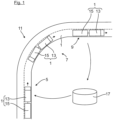
- a vehicle 3 driving on a road 1 is shown in three driving situations 5, 7, 9.
- a first driving situation 5 the vehicle 1 is located, viewed in the direction of travel, directly in front of a curve 11 of the road 1.
- a later second driving situation 7 the vehicle 1 is in the middle of the curve 11, so that the curve 11 is driven through by the vehicle 1.
- a later third driving situation 9 the vehicle 1 has driven through the curve 11, so that the curve 11 is located behind the vehicle 1 in the direction of travel.
- the vehicle 1 is shown here by way of example by a A train combination is formed which consists of a towing vehicle 13 and a trailer 15 coupled to the towing vehicle 13.
- the vehicle 1 is connected to a schematically indicated evaluation station 17 for data transmission.
- This evaluation station 17 can be formed by a cloud server, for example.
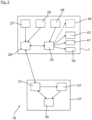
- the vehicle 1 and the evaluation station 17 together form a system 19 ( Fig. 2 ) to operate the vehicle 1.
- the structure of this system 19 is described below using Figure 2 explained in more detail:
- the vehicle 1 has a trip information determination device 25, by means of which the current position and the current route of the vehicle 1 are continuously or continuously determined as trip information.
- the vehicle 1 also has a state determination device 27, by means of which the current state of the vehicle is also continuously or continuously determined. Specifically, the current speed of the vehicle 1, the currently selected gear of a vehicle transmission and the amount of fuel stored in a fuel tank of the vehicle 1 are continuously determined by means of the state determination device 27.
- the determination of the current trip information and the current vehicle state data can be activated automatically, for example, when the vehicle 1 is started.
- the trip information determination device 25 and the status determination device 27 of the vehicle 1 are connected to a transmitting and receiving device 29 of the vehicle for data transmission.
- the transmitting and receiving device 29 By means of the transmitting and receiving device 29, the current trip information determined by means of the trip information determination device 25 and the current vehicle status data determined by means of the status determination device 27 are continuously or continuously transmitted to a transmitting and receiving device 31 of the evaluation station 17, which is connected to the vehicle-side transmitting and receiving device 29 for data transmission.
- This transmission of the current trip information and the current vehicle status data to the evaluation station 17 can be activated, for example, when a driver of the vehicle 1 activates a speed control system or cruise control of the vehicle 1.
- vehicle information stored in a control unit 33 of the vehicle 1 is also transmitted to the evaluation station 17 by means of the vehicle-side transmitting and receiving device 29.
- This vehicle information stored in the control unit 33 is here, for example, represented by the type of vehicle, the current loading state of the Vehicle 1 and the engine of the vehicle 1.
- This vehicle information can also be transmitted to the evaluation station 17 when a cruise control of the vehicle 1 is activated.
- the evaluation station 17 has a driving strategy determination device 35 which is connected to the transmitting and receiving device 31 for data transmission.
- This driving strategy determination device 35 is also connected to a storage device 37 of the evaluation station 17 in which map data or road data are stored. Based on the driving information of the vehicle 1 transmitted to the evaluation station 17 and on the road data stored in the storage device 37, the driving strategy determination device 35 continuously or continuously determines whether there is a curve with a defined curve course directly in front of the vehicle 1 in the direction of travel.
- the driving strategy determination device 35 determines an optimal, in particular an energy-consumption-optimized, driving strategy for driving through the curve based on experience data stored in the storage device 37 for at least one passage through a curve with an identical or similar curve course with a vehicle, preferably with the same or a similar vehicle, and based on the transmitted vehicle information of the vehicle 1.
- the determined driving strategy is then transmitted to the transmitting and receiving device 29 and thus to the vehicle 1 by means of the transmitting and receiving device 31 of the evaluation station 17 before driving through the curve.
- Figure 1 This transmission of the optimal driving strategy takes place in the first driving situation 5 of the vehicle 1 before the curve 11.
- the determined driving strategy is then forwarded from the vehicle-side transmitting and receiving device 29 to the control unit 33 of the vehicle 1.
- the control unit 33 By means of the control unit 33, an internal combustion engine 39 of the vehicle 1, a transmission 41 of the vehicle 1 and a recuperation braking system 43 of the vehicle 1 are then controlled automatically in such a way that the vehicle 1 adheres as far as possible to the determined optimal driving strategy for driving through the curve 11.
- the control unit 33 can also control a screen 45 of the vehicle 1 indicated with dashed lines, so that the determined driving strategy is displayed to a driver of the vehicle 1 on the screen 45.
- the vehicle 1 here also has, for example, an actuating device 46 that can be actuated by the driver of the vehicle 1, for example a button and/or a switch, by means of which the automatic control of the internal combustion engine 39, the transmission 41 and the recuperation braking system 43 of the vehicle 1 can be deactivated and activated.
- an actuating device 46 that can be actuated by the driver of the vehicle 1, for example a button and/or a switch, by means of which the automatic control of the internal combustion engine 39, the transmission 41 and the recuperation braking system 43 of the vehicle 1 can be deactivated and activated.
- vehicle condition data determined during the curve by means of the condition determination device 27 are also transmitted to the evaluation station 17 by means of the vehicle-side transmitting and receiving device 29.
- vehicle condition data are formed here, for example, by the speed curve of the vehicle 1 during the curve, by the at least one selected gear of the vehicle transmission 41 during the curve, by the acceleration curve of the vehicle 1 during the curve and by the fuel consumption of the vehicle 1 during the curve.
- the vehicle status data determined during cornering are then forwarded to the storage device 37 of the evaluation station 17, which is connected to the transmitting and receiving device 31 for data transmission, and stored there as experience data.
- Figure 1 The vehicle status data determined during cornering are transmitted from the vehicle 1 to the evaluation station 17 in the third driving situation 9 of the vehicle.
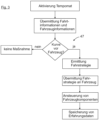
- FIG. 3 a flow chart is shown, which summarizes the process according to the invention: After the vehicle-side cruise control is activated, the current driving information, the current vehicle status data as vehicle information and the vehicle information stored in the control unit 33 are transmitted from the vehicle 1 to the evaluation station 17.
- the driving strategy determination device 35 of the evaluation station 17 then continuously determines, according to the decision diamond 47, whether there is a curve with a defined curve course in front of the vehicle 1 in the direction of travel. If there is such a curve in front of the vehicle 1, an optimal driving strategy for driving through this curve is determined. This driving strategy is then transmitted from the evaluation station 17 to the vehicle 1 before driving through the curve.
- control unit 33 is used to control vehicle components, in this case the internal combustion engine 39, the vehicle transmission 41 and the recuperation braking system 43 of the vehicle 1, to comply with the determined driving strategy.
- vehicle components in this case the internal combustion engine 39, the vehicle transmission 41 and the recuperation braking system 43 of the vehicle 1, to comply with the determined driving strategy.
- the vehicle status data determined during the curve are then transmitted to the evaluation station 17 and stored there as experience data.
Landscapes
- Engineering & Computer Science (AREA)
- Automation & Control Theory (AREA)
- Transportation (AREA)
- Mechanical Engineering (AREA)
- Radar, Positioning & Navigation (AREA)
- Remote Sensing (AREA)
- Combustion & Propulsion (AREA)
- Chemical & Material Sciences (AREA)
- Physics & Mathematics (AREA)
- General Physics & Mathematics (AREA)
- Aviation & Aerospace Engineering (AREA)
- Human Computer Interaction (AREA)
- Mathematical Physics (AREA)
- Control Of Vehicle Engines Or Engines For Specific Uses (AREA)
- Traffic Control Systems (AREA)
- Control Of Driving Devices And Active Controlling Of Vehicle (AREA)
- Hybrid Electric Vehicles (AREA)
- Electric Propulsion And Braking For Vehicles (AREA)
- Control Of Transmission Device (AREA)
Description
- Die Erfindung betrifft ein Verfahren zum Betreiben eines Fahrzeugs, insbesondere eines Nutzfahrzeugs, nach Patentanspruch 1, ein System zum Betreiben eines Fahrzeugs, insbesondere eines Nutzfahrzeugs, nach Patentanspruch 13 sowie ein Fahrzeug, insbesondere ein Nutzfahrzeug, zur Durchführung des Verfahrens nach Patentanspruch 14.
- Es ist bekannt, an einem Fahrzeug ein System vorzusehen, mittels dem der Fahrzeugbetrieb durch Berücksichtigung von in Fahrtrichtung vor dem Fahrzeug befindlichen Änderungen der Fahrbahnsteigung optimiert werden kann. Der Fahrbetrieb wird dabei zur Verringerung des Kraftstoffverbrauchs bzw. des Energieverbrauchs des Fahrzeugs optimiert.
- Beispielsweise ist aus der
DE 10 2010 048 323 A1 ein Betriebsverfahren für ein Kraftfahrzeug bekannt, bei dem zunächst wenigstens eine verbrauchsrelevante Straßeneigenschaft einer Straße auf der bevorstehenden Fahrroute des Kraftfahrzeugs ermittelt und anschließend eine Fahrempfehlung in Abhängigkeit von der ermittelten verbrauchsrelevanten Straßeneigenschaft auf der bevorstehenden Fahrroute des Kraftfahrzeugs bestimmt wird. Diese Fahrempfehlung kann dann einem Fahrzeugführer des Fahrzeugs mitgeteilt werden. Konkret wird hier beispielsweise überprüft, ob sich auf der bevorstehenden Fahrroute des Kraftfahrzeugs eine Kuppe befindet, über die das Kraftfahrzeug fahren wird. Befindet sich das Kraftfahrzeug kurz vor einer derartigen Kuppe, wird eine Fahrempfehlung zur Verringerung der Antriebsleistung des Kraftfahrzeugs oder sogar zum antriebslosen Ausrollen des Kraftfahrzeugs ausgegeben. Hat das Kraftfahrzeug die Kuppe passiert und befindet sich das Kraftfahrzeug auf einer Gefällestrecke, wird zudem eine Fahrempfehlung zur Erhöhung der Fahrgeschwindigkeit ausgegeben. - Aus der
US 2016/018821 A1 sind ein Fernsteuerungsgerät und ein Fernsteuerungssystem bekannt, welches das Fernsteuerungsgerät verwendet. DieDE 10 2011 112990 A1 offenbart eine automatische Fahrhilfe für Fahrzeuge. Aus derUS 4 335 429 A ist ein Steuergerät für ein Motor/Elektro-Hybridfahrzeug bekannt. DieDE 196 48 943 A1 offenbart eine automatische Fahrsteuerungseinheit für Fahrzeuge. Aus derDE 10 2009 033752 A1 sind ein Verfahren und eine Vorrichtung zum Schalten verschiedener Funktionen bekannt. DieUS 2015/375756 A1 offenbart ein Verfahren zur Bestimmung des Kollisionsrisikos von Fahrzeugen. Aus derDE 10 2012 024859 B3 ist ein Verfahren zum Bereitstellen einer Betriebsstrategie für ein Kraftfahrzeug bekannt. DieEP 2 953 110 A1 offenbart eine Bewegungssteuerungsvorrichtung und ein Bewegungssteuerungssystem. - Aufgabe der Erfindung ist es, ein Verfahren zum Betreiben eines Fahrzeugs, insbesondere eines Nutzfahrzeugs, sowie ein System zum Betreiben eines Fahrzeugs, insbesondere eines Nutzfahrzeugs, bereitzustellen, mittels denen der Fahrzeugbetrieb auf einfache und effektive Weise weiter optimiert werden kann.
- Diese Aufgabe wird gelöst mit den Merkmalen der unabhängigen Patentansprüche. Bevorzugte Weiterbildungen sind in den Unteransprüchen offenbart.
- Gemäß Patentanspruch 1 wird ein Verfahren zum Betreiben eines Kraftfahrzeugs, insbesondere eines Nutzfahrzeugs, vorgeschlagen, wobei das Fahrzeug eine Fahrtinformation-Ermittlungseinrichtung aufweist, mittels der zumindest die aktuelle Position bzw. GPS-Position, insbesondere zusammen mit der aktuell eingestellten Fahrroute, des fahrenden Fahrzeugs kontinuierlich bzw. fortlaufend als aktuelle Fahrtinformation ermittelt wird, wobei das Fahrzeug eine Sende- und Empfangseinrichtung aufweist, mittels der die ermittelten aktuellen Fahrtinformationen zusammen mit Fahrzeuginformationen an eine Auswertestation übermittelt werden. Mittels einer Fahrstrategie-Ermittlungseinrichtung der Auswertestation wird anhand der übermittelten Fahrtinformationen sowie anhand von in einer Speichereinrichtung der Auswertestation gespeicherten Kartendaten zunächst erfasst bzw. ermittelt, ob sich in Fahrtrichtung unmittelbar vor dem Fahrzeug eine, insbesondere einen definierten Kurvenverlauf aufweisende, Kurve befindet. Sofern mittels der Fahrstrategie-Ermittlungseinrichtung eine Kurve erfasst wird, wird mittels der Fahrstrategie-Ermittlungseinrichtung eine Fahrstrategie zum Durchfahren der Kurve ermittelt. Die ermittelte Fahrstrategie wird von der Auswertestation an die fahrzeugseitige Sende- und Empfangseinrichtung und somit an das Fahrzeug übermittelt. Die Fahrstrategie-Ermittlungseinrichtung ermittelt anhand von in der Speichereinrichtung gespeicherten Erfahrungsdaten zu wenigstens einer Durchfahrt einer Kurve mit einem identischen oder einem ähnlichen Kurvenverlauf mit dem Fahrzeug sowie anhand der übermittelten Fahrzeuginformationen eine energieverbrauchsoptimale Fahrstrategie zum Durchfahren der Kurve. Mittels der Fahrstrategie-Ermittlungseinrichtung wird anhand der in der Speichereinrichtung gespeicherten Kartendaten der Kurvenverlauf der erfassten Kurve ermittelt. Der ermittelte Kurvenverlauf wird bei der Ermittlung der energieverbrauchsoptimalen Fahrstrategie berücksichtigt.
- Auf diese Weise kann der Fahrzeugbetrieb weiter optimiert werden, da mit der erfindungsgemäß ermittelten optimalen Fahrstrategie zum Durchfahren einer vorausliegenden Kurve nun der Fahrzeugbetrieb auch im Hinblick auf eine Kurven-Durchfahrt optimiert werden kann. Über die fahrzeugexterne Auswertestation, beispielsweise ein Cloud-Server, in der Erfahrungsdaten bezüglich der Durchfahrt der vorausliegenden Kurve oder einer ähnlichen Kurve gespeichert sind, kann die optimale Fahrstrategie zum Durchfahren der vorausliegenden Kurve dabei einfach und effektiv ermittelt werden (beispielsweise über sogenannte "Big Data Analysen"). Die erfindungsgemäße Verfahrensführung ist dabei besonders effektiv, da eine einzige Auswertestation von einer Vielzahl von Fahrzeugen genutzt werden kann. Dabei müssen an den Fahrzeugen keine bzw. nur geringfügige Modifikationen vorgenommen werden, um deren Kurven-Durchfahrt zu optimieren. Die Fahrzeuge können beispielsweise über eine UMTS-Datenverbindung mit der Auswertstation kommunizieren.
- Die Begrifflichkeit "Durchfahren der Kurve" ist hier dabei ausdrücklich in einem weiten Sinne zu verstehen. So soll die Kurven-Durchfahrt hier auch die Anfahrt auf die Kurve mitumfassen, so dass mittels der Fahrstrategie-Ermittlungseinrichtung auch bezüglich des Anfahrens der Kurve eine optimale Fahrstrategie ermittelt wird.
- Des Weiteren sind eine Vielzahl von Fahrstrategien zur Optimierung der Kurven-Durchfahrt denkbar. Sofern eine erfasste vorausliegende Kurve beispielsweise energieverbrauchsoptimal bzw. mit möglichst geringem Energieverbrauch durchfahren werden soll, kann mittels der Fahrstrategie beispielsweise eine Reduzierung der Fahrzeuggeschwindigkeit vor dem Erreichen der Kurve vorgegeben werden, um die während der Kurven-Durchfahrt wirkenden Querkräfte zu verringern. Bei einer verschleißoptimierten Fahrstrategie kann beispielsweise der Einsatz von Bremssystemen des Fahrzeugs, insbesondere auch eines Rekuperations-Bremssystems des Fahrzeugs, optimiert werden. Bei einer sicherheitsoptimierten Fahrstrategie kann beispielsweise die Geschwindigkeit, die Entschleunigung und die Beschleunigung des Fahrzeugs optimiert werden.
- Grundsätzlich kann natürlich zu jeder vorausliegenden Kurve eine Fahrstrategie ermittelt und an das Fahrzeug übermittelt werden. Bevorzugt ist es jedoch, wenn nur zu vorausliegenden Kurven mit einem definierten Kurvenverlauf eine optimale Fahrstrategie zum Durchfahren der Kurve ermittelt wird, um die Effizienz der erfindungsgemäßen Verfahrensführung zu erhöhen. Die optimale Fahrstrategie kann dabei beispielsweise nur für vorausliegende Kurven ermittelt werden, deren Kurvenradius einen definierten Kurvenradius-Wert unterschreitet, so dass die Fahrstrategie nur für engere bzw. für besonders enge Kurven ermittelt wird.
- In einer bevorzugten erfindungsgemäßen Verfahrensführung wird wenigstens eine Antriebskomponente des Fahrzeugs zum Einhalten der an das Fahrzeug übermittelten Fahrstrategie selbsttätig bzw. automatisch mittels eines Steuergeräts des Fahrzeugs angesteuert. So wird komfortabel und zuverlässig sichergestellt, dass das Fahrzeug gemäß der ermittelten Fahrstrategie betrieben wird. Bevorzugt ist dabei vorgesehen, dass die wenigstens eine Antriebskomponente durch eine Brennkraftmaschine des Fahrzeugs und/oder durch ein Fahrzeuggetriebe und/oder durch eine Elektromaschine des Fahrzeugs gebildet ist. Dabei kann beispielsweise bei einer energieverbrauchsoptimalen Fahrstrategie die Abschaltung von Teilen des Antriebsstrangs bei einem Bremsen oder Ausrollen des Fahrzeugs, die Betriebsweise der Brennkraftmaschine oder das Schaltverhalten des Fahrzeuggetriebes, insbesondere bei einer Fahrzeugbeschleunigung, optimiert werden.
- Alternativ oder zusätzlich kann auch wenigstens ein Bremssystem des Fahrzeugs zum Einhalten der an das Fahrzeug übermittelten Fahrstrategie selbsttätig bzw. automatisch mittels eines Steuergeräts des Fahrzeugs angesteuert werden. So kann ebenfalls komfortabel und zuverlässig sichergestellt werden, dass das Fahrzeug gemäß der ermittelten Fahrstrategie betrieben wird. Bevorzugt ist dabei vorgesehen, dass das wenigstens eine Bremssystem durch ein Rekuperations-Bremssystem des Fahrzeugs gebildet ist.
- Vorteilhaft ist es, wenn das Fahrzeug eine durch einen Fahrer des Fahrzeugs betätigbare Betätigungseinrichtung, insbesondere einen Taster und/oder einen Schalter aufweist, mittels der die selbsttätige bzw. automatische Ansteuerung der wenigstens einen Antriebskomponente und/oder des wenigstens einen Bremssystems deaktiviert, insbesondere deaktiviert und aktiviert, werden kann. Mittels einer derartigen Betätigungseinrichtung kann der Fahrer die selbsttätige Ansteuerung der wenigstens einen Antriebskomponente bzw. des wenigstens einen Bremssystems auf einfache Weise deaktivieren, wenn er dies nicht wünscht bzw. nicht für erforderlich hält.
- In einer weiteren bevorzugten Ausgestaltung wird die an das Fahrzeug übermittelte Fahrstrategie einem Fahrer des Fahrzeugs mittels einer Anzeigeeinrichtung, insbesondere mit einem Bildschirm, angezeigt. So kann der Fahrer über die ermittelte Fahrstrategie informiert werden. Gegebenenfalls kann der Fahrer mittels dieser Anzeige auch das Fahrzeug zum Einhalten der angezeigten Fahrstrategie steuern.
- Die an die Auswertestation übermittelten Fahrzeuginformationen können beispielsweise durch aktuelle Fahrzeug-Zustandsdaten gebildet, die mittels einer Zustands-Ermittlungseinrichtung des Fahrzeugs ermittelt werden. Bevorzugt ist dabei vorgesehen, dass die an die Auswertestation übermittelten Fahrzeug-Zustandsdaten durch die aktuelle Geschwindigkeit des Fahrzeugs und/oder durch den aktuell gewählten Gang eines Fahrzeuggetriebes durch die aktuell mittels einer Energie-Speichereinrichtung des Fahrzeugs gespeicherte elektrische Energiemenge und/oder durch die in einem Kraftstofftank des Fahrzeugs gespeicherte Kraftstoffmenge gebildet sind. Mittels dieser Fahrzeug-Zustandsdaten kann die optimale Fahrstrategie zum Durchfahren einer vorausliegenden Kurve auf effektive Weise ermittelt werden.
- Vorzugsweise werden während des Fahrzeugbetriebs die mittels der Zustand-Ermittlungseinrichtung ermittelten aktuellen Fahrzeug-Zustandsdaten, ebenso wie auch die aktuellen Fahrtinformationen, kontinuierlich bzw. fortlaufend mittels der fahrzeugseitigen Sende- und Empfangseinrichtung an die Auswertestation übermittelt. So ist die Auswertestation stets über den aktuellen Zustand des Fahrzeugs informiert. Diese Übermittlung der aktuellen Fahrtinformationen und der aktuellen Fahrzeug-Zustandsdaten kann beispielsweise bei einem Fahrzeug-Start automatisch aktiviert werden. Alternativ kann diese Übermittlung der aktuellen Fahrtinformationen und der aktuellen Fahrzeug-Zustandsdaten aber auch erst bei einer Betätigung einer Betätigungseinrichtung, insbesondere einer Taste oder eines Schalters, durch den Fahrer Fahrzeugs aktiviert werden.
- Weiter bevorzugt sind die an die Auswertestation übermittelten Fahrzeuginformationen durch die Fahrzeugart bzw. den Fahrzeugtyp und/oder den aktuellen Beladungszustand des Fahrzeugs und/oder durch die Motorisierung des Fahrzeugs gebildet. Mit diesen Fahrzeuginformationen kann eine effektive Fahrstrategie zum optimalen Durchfahren der Kurve ermittelt werden.
- Vorteilhaft ist es weiter, wenn während der Durchfahrt der erfassten Kurve mittels einer Zustand-Ermittlungseinrichtung des Fahrzeugs Fahrzeug-Zustandsdaten ermittelt werden. Diese ermittelten Fahrzeug-Zustandsdaten werden dann mittels der Sende- und Empfangseinrichtung des Fahrzeugs an die Auswertestation übermittelt und dort als Erfahrungsdaten in der Speichereinrichtung der Auswertestation abgespeichert. So wird die Effektivität der erfindungsgemäßen Verfahrensführung weiter erhöht, da die an die Auswertestation übermittelten und dort als neue Erfahrungsdaten gespeicherten Fahrzeug-Zustandsdaten bei einer erneuten Durchfahrt der Kurve von einem Fahrzeug bei der Ermittlung einer optimalen Fahrstrategie zum Durchfahren der Kurve verwendet werden können. Mit der Menge an in der Speichereinrichtung gespeicherten Erfahrungsdaten steigt daher auch die Effektivität der Ermittlung einer optimalen Fahrstrategie zum Durchfahren der Kurve an.
- Bevorzugt sind diese Fahrzeug-Zustandsdaten dabei durch den Geschwindigkeitsverlauf des Fahrzeugs während der Kurven-Durchfahrt und/oder den wenigstens einen gewählten Gang eines Fahrzeuggetriebes während der Kurven-Durchfahrt und/oder durch den Beschleunigungsverlauf (positive und negative Beschleunigung) des Fahrzeugs während der Kurven-Durchfahrt und/oder durch den Energieverbrauch des Fahrzeugs, insbesondere durch den Kraftstoffverbrauch des Fahrzeugs, während der Kurven-Durchfahrt gebildet. Diese Fahrzeug-Zustandsdaten stellen besonders wertvolle bzw. nützliche Erfahrungsdaten zur Ermittlung einer optimalen Fahrstrategie zum Durchfahren der Kurve dar.
- Es wird mittels der Fahrstrategie-Ermittlungseinrichtung, insbesondere anhand der in der Speichereinrichtung gespeicherten Kartendaten, der Kurvenverlauf der erfassten Kurve ermittelt. Dieser ermittelte Kurvenverlauf wird dann bei der Ermittlung der optimalen Fahrstrategie berücksichtigt. So kann die Fahrstrategie zum Durchfahren der vorausliegenden Kurve einfach und effektiv ermittelt werden.
- Zusätzlich können, sofern in der Speichereinrichtung der Auswertestation bereits Erfahrungsdaten zu wenigstens einer Durchfahrt der erfassten Kurve mit einem Fahrzeug, insbesondere mit einem ähnlichen Fahrzeug, gespeichert sind, diese gespeicherten Erfahrungsdaten bei der Ermittlung der optimalen Fahrstrategie berücksichtigt werden. So kann der Kurvenverlauf der erfassten Kurve besonders einfach bzw. mit besonders geringem Aufwand bei der Ermittlung der optimalen Fahrstrategie zum Durchfahren der Kurve berücksichtigt werden.
- Zur Lösung der bereits genannten Aufgabe wird ferner ein System zur Durchführung eines Verfahrens nach einem der Ansprüche 1 bis 12 beansprucht.
- Die sich durch das erfindungsgemäße System ergebenden Vorteile sind identisch mit den bereits gewürdigten Vorteilen der erfindungsgemäßen Verfahrensführung, so dass diese an dieser Stelle nicht wiederholt werden.
- Des Weiteren wird auch ein Fahrzeug, insbesondere ein Nutzfahrzeug, durch Durchführung des erfindungsgemäßen Verfahrens beansprucht. Die sich hieraus ergebenden Vorteile sind ebenfalls identisch mit den bereits gewürdigten Vorteilen der erfindungsgemäßen Verfahrensführung und werden an dieser Stelle ebenfalls nicht wiederholt.
- Die Erfindung und ihre vorteilhaften Aus- und/oder Weiterbildungen sowie deren Vorteile werden nachfolgend anhand von Zeichnungen lediglich beispielhaft näher erläutert.
- Es zeigen:
- Figur 1
- eine schematische Darstellung, anhand der die erfindungsgemäße Verfahrensführung erläutert wird;
- Figur 2
- eine schematische Darstellung, aus der der Aufbau eines erfindungsgemäßen Systems hervorgeht; und
- Figur 3
- ein Ablaufdiagramm, anhand dem die erfindungsgemäßen Verfahrensführung erläutert wird.
- In
Figur 1 ist ein auf einer Fahrbahn 1 fahrendes Fahrzeug 3 in drei Fahrsituationen 5, 7, 9 gezeigt. In einer ersten Fahrsituation 5 befindet sich das Fahrzeug 1 dabei, in Fahrtrichtung gesehen, unmittelbar vor einer Kurve 11 der Fahrbahn 1. In einer zeitlich späteren zweiten Fahrsituation 7 befindet sich das Fahrzeug 1 inmitten der Kurve 11, so dass die Kurve 11 hier von dem Fahrzeug 1 durchfahren wird. In einer zeitlich noch späteren dritten Fahrsituation 9 hat das Fahrzeug 1 die Kurve 11 durchfahren, so dass sich die Kurve 11 hier in Fahrtrichtung hinter dem Fahrzeug 1 befindet. Das Fahrzeug 1 ist hier beispielhaft durch eine Zugkombination gebildet, die sich aus einem Zugfahrzeug 13 und einem mit dem Zugfahrzeug 13 gekoppelten Anhänger 15 zusammensetzt. - Wie in
Figur 1 weiter gezeigt ist, ist das Fahrzeug 1 datenübertragend mit einer schematisch angedeuteten Auswertestation 17 verbunden. Diese Auswertestation 17 kann beispielsweise durch einen Cloud-Server gebildet sein. Das Fahrzeug 1 und die Auswertestation 17 bilden zusammen ein System 19 (Fig. 2 ) zum Betreiben des Fahrzeugs 1 aus. Der Aufbau dieses Systems 19 wird nachfolgend anhand vonFigur 2 näher erläutert: - Wie in
Figur 2 schematisch angedeutet ist, weist das Fahrzeug 1 eine Fahrtinformation-Ermittlungseinrichtung 25 auf, mittels der die aktuelle Position und die aktuelle Fahrroute des Fahrzeugs 1 als Fahrtinformationen kontinuierlich bzw. fortlaufend neu ermittelt werden. Zudem weist das Fahrzeug 1 auch eine Zustand-Ermittlungseinrichtung 27 auf, mittels der der aktuelle Zustand des Fahrzeugs ebenfalls kontinuierlich bzw. fortlaufend neu ermittelt wird. Konkret wird hier dabei die aktuelle Geschwindigkeit des Fahrzeugs 1, der aktuell gewählte Gang eines Fahrzeuggetriebes und die in einem Kraftstofftank des Fahrzeugs 1 gespeicherte Kraftstoffmenge kontinuierlich mittels der Zustand-Ermittlungseinrichtung 27 ermittelt. Die Ermittlung der aktuellen Fahrtinformationen und der aktuellen Fahrzeug-Zustandsdaten kann beispielsweise bei einem Start des Fahrzeugs 1 automatisch aktiviert werden. - Weiter sind die Fahrtinformation-Ermittlungseinrichtung 25 und die Zustand-Ermittlungseinrichtung 27 des Fahrzeugs 1 datenübertragend mit einer Sende- und Empfangseinrichtung 29 des Fahrzeugs verbunden. Mittels der Sende- und Empfangseinrichtung 29 werden die mittels der Fahrtinformation-Ermittlungseinrichtung 25 ermittelten aktuellen Fahrtinformationen und die mittels der Zustand-Ermittlungseinrichtung 27 ermittelten aktuellen Fahrzeug-Zustandsdaten kontinuierlich bzw. fortlaufend an eine datenübertragend mit fahrzeugseitigen Sende- und Empfangseinrichtung 29 verbundene Sende- und Empfangseinrichtung 31 der Auswertestation 17 übermittelt. Diese Übermittlung der aktuellen Fahrtinformationen und der aktuellen Fahrzeug-Zustandsdaten an die Auswertestation 17 kann beispielsweise bei einer Aktivierung einer Geschwindigkeits-Regelsystems bzw. eines Tempomats des Fahrzeugs 1 durch einen Fahrer des Fahrzeugs 1 aktiviert werden.
- Zudem werden in einem Steuergerät 33 des Fahrzeugs 1 gespeicherte Fahrzeuginformationen ebenfalls mittels der fahrzeugseitigen Sende- und Empfangseinrichtung 29 an die Auswertestation 17 übermittelt. Diese in dem Steuergerät 33 gespeicherten Fahrzeuginformationen sind hier beispielhaft durch die Fahrzeugart, durch den aktuellen Beladungszustand des Fahrzeugs 1 und durch die Motorisierung des Fahrzeugs 1 gebildet. Diese Fahrzeuginformationen können ebenfalls bei einer Aktivierung eines Tempomats des Fahrzeugs 1 an die Auswertestation 17 übermittelt werden.
- Wie aus
Figur 2 weiter hervorgeht, weist die Auswertestation 17 eine datenübertragend mit der Sende- und Empfangseinrichtung 31 verbundene Fahrstrategie-Ermittlungseinrichtung 35 auf. Diese Fahrstrategie-Ermittlungseinrichtung 35 ist auch datenübertragend mit einer Speichereinrichtung 37 der Auswertestation 17 verbunden, in der Kartendaten bzw. Straßendaten gespeichert sind. Anhand der an die Auswertestation 17 übermittelten Fahrtinformationen des Fahrzeugs 1 sowie anhand der in der Speichereinrichtung 37 gespeicherten Straßendaten ermittelt die Fahrstrategie-Ermittlungseinrichtung 35 kontinuierlich bzw. fortlaufend, ob sich in Fahrtrichtung unmittelbar vor dem Fahrzeug 1 eine Kurve mit einem definierten Kurvenverlauf befindet. Wird mittels der Fahrstrategie-Ermittlungseinrichtung 35 eine derartige Kurve ermittelt bzw. erfasst, ermittelt die Fahrstrategie-Ermittlungseinrichtung 35 anhand von in der Speichereinrichtung 37 gespeicherten Erfahrungsdaten zu wenigstens einer Durchfahrt einer Kurve mit einem identischen oder einem ähnlichen Kurvenverlauf mit einem Fahrzeug, vorzugsweise mit dem gleichen oder einem ähnlichen Fahrzeug, sowie anhand der übermittelten Fahrzeuginformationen des Fahrzeugs 1 eine optimale, insbesondere eine energieverbrauchsoptimale, Fahrstrategie zum Durchfahren der Kurve. - Die ermittelte Fahrstrategie wird dann vor dem Durchfahren der Kurve mittels der Sende- und Empfangseinrichtung 31 der Auswertestation 17 an die Sende- und Empfangseinrichtung 29 und somit an das Fahrzeug 1 übermittelt. Bei dem in
Figur 1 gezeigten Fahrbahnverlauf erfolgt diese Übermittlung der optimalen Fahrstrategie in der ersten Fahrsituation 5 des Fahrzeugs 1 vor der Kurve 11. - Gemäß
Figur 2 wird die ermittelte Fahrstrategie dann von der fahrzeugseitigen Sende- und Empfangseinrichtung 29 an das Steuergerät 33 des Fahrzeugs 1 weitergeleitet. Mittels des Steuergeräts 33 werden hier dann selbsttätig bzw. automatisch eine Brennkraftmaschine 39 des Fahrzeugs 1, ein Getriebe 41 des Fahrzeugs 1 sowie ein Rekuperations-Bremssystem 43 des Fahrzeugs 1 angesteuert, dergestalt, dass das Fahrzeug 1 möglichst die ermittelte optimale Fahrstrategie zum Durchfahren der Kurve 11 einhält. Optional kann mit dem Steuergerät 33 zusätzlich ein mit gestrichelten Linien angedeuteter Bildschirm 45 des Fahrzeugs 1 angesteuert werden, so dass einem Fahrer des Fahrzeugs 1 die ermittelte Fahrstrategie mit dem Bildschirm 45 angezeigt wird. - Des Weiteren weist das Fahrzeug 1 hier beispielhaft auch eine durch den Fahrer des Fahrzeugs 1 betätigbare Betätigungseinrichtung 46, beispielsweise eine Taste und/oder einen Schalter auf, mittels der die selbsttätige bzw. automatische Ansteuerung der Brennkraftmaschine 39, des Getriebes 41 und des Rekuperations-Bremssystems 43 des Fahrzeugs 1 deaktiviert und aktiviert werden kann.
- Nach der Kurven-Durchfahrt werden hier zudem während der Kurven-Durchfahrt mittels der Zustands-Ermittlungseinrichtung 27 ermittelte Fahrzeug-Zustandsdaten mittels der fahrzeugseitigen Sende- und Empfangseinrichtung 29 an die Auswertestation 17 übermittelt. Diese Fahrzeug-Zustandsdaten sind hier beispielhaft durch den Geschwindigkeitsverlauf des Fahrzeugs 1 während der Kurven-Durchfahrt, durch den wenigstens einen gewählten Gang des Fahrzeuggetriebes 41 während der Kurven-Durchfahrt, durch den Beschleunigungsverlauf des Fahrzeugs 1 während der Kurven-Durchfahrt und durch den Kraftstoffverbrauch des Fahrzeugs 1 während der Kurven-Durchfahrt gebildet
- Die während der Kurvenfahrt ermittelten Fahrzeug-Zustandsdaten werden dann an die datenübertragend mit der Sende- und Empfangseinrichtung 31 verbundene Speichereinrichtung 37 der Auswertestation 17 weitergeleitet und dort als Erfahrungsdaten abgespeichert. Bei dem in
Figur 1 gezeigten Fahrbahnverlauf erfolgt die Übermittlung der während der Kurvenfahrt ermittelten Fahrzeug-Zustandsdaten von dem Fahrzeug 1 an die Auswertestation 17 in der dritten Fahrsituation 9 des Fahrzeugs. - In
Figur 3 ist ein Ablaufdiagramm gezeigt, anhand dem die erfindungsgemäße Verfahrensführung nochmals zusammenfassend erläutert wird:
Nach der Aktivierung des fahrzeugseitigen Tempomats werden die aktuellen Fahrtinformationen, die aktuellen Fahrzeug-Zustandsdaten als Fahrzeuginformationen und die in dem Steuergerät 33 gespeicherten Fahrzeuginformationen von dem Fahrzeug 1 an die Auswertestation 17 übermittelt. Mittels der Fahrstrategie-Ermittlungseinrichtung 35 der Auswertestation 17 wird dann gemäß der Entscheidungsraute 47 kontinuierlich ermittelt, ob sich in Fahrtrichtung vor dem Fahrzeug 1 eine Kurve mit einem definierten Kurvenverlauf befindet. Befindet sich vor dem Fahrzeug 1 eine derartige Kurve, wird eine optimale Fahrstrategie zum Durchfahren dieser Kurve ermittelt. Diese Fahrstrategie wird dann vor der Kurven-Durchfahrt von der Auswertestation 17 an das Fahrzeug 1 übermittelt. Anschließend werden dann mittels des Steuergeräts 33 Fahrzeugkomponenten, hier die Brennkraftmaschine 39, das Fahrzeuggetriebe 41 und das Rekuperations-Bremssystem 43 des Fahrzeugs 1, zum Einhalten der ermittelten Fahrstrategie angesteuert. Nach Durchfahrt der Kurve werden die während der Kurven-Durchfahrt ermittelten Fahrzeug-Zustandsdaten dann an die Auswertestation 17 übermittelt und dort als Erfahrungsdaten abgespeichert. -
- 1
- Fahrzeug
- 3
- Fahrbahn
- 5
- erste Fahrsituation
- 7
- zweite Fahrsituation
- 9
- dritte Fahrsituation
- 11
- Kurve
- 13
- Zugfahrzeug
- 15
- Anhänger
- 17
- Auswertestation
- 19
- System
- 25
- Fahrtinformation-Ermittlungseinrichtung
- 27
- Zustand-Ermittlungseinrichtung
- 29
- Sende- und Empfangseinrichtung
- 31
- Sende- und Empfangseinrichtung
- 33
- Steuergerät
- 35
- Fahrstrategie-Ermittlungseinrichtung
- 37
- Speichereinrichtung
- 39
- Brennkraftmaschine
- 41
- Getriebe
- 43
- Rekuperations-Bremssystem
- 45
- Bildschirm
- 46
- Betätigungseinrichtung
- 47
- Entscheidungsraute
Claims (14)
- Verfahren zum Betreiben eines Fahrzeugs, wobei das Fahrzeug (1) eine Fahrtinformation-Ermittlungseinrichtung (25) aufweist, mittels der zumindest die aktuelle Position des fahrenden Fahrzeugs (1) als aktuelle Fahrtinformation kontinuierlich ermittelt wird,wobei das Fahrzeug (1) eine Sende- und Empfangseinrichtung (29) aufweist, mittels der die ermittelten aktuellen Fahrtinformationen zusammen mit Fahrzeuginformationen an eine Auswertestation (17) übermittelt werden,wobei mittels einer Fahrstrategie-Ermittlungseinrichtung (35) der Auswertestation (17) anhand der übermittelten Fahrtinformationen und anhand von in einer Speichereinrichtung (37) der Auswertestation gespeicherten Kartendaten zunächst erfasst wird, ob sich in Fahrtrichtung vor dem Fahrzeug (1) eine Kurve (11) befindet,wobei, sofern mittels der Fahrstrategie-Ermittlungseinrichtung (35) eine Kurve (11) erfasst wird, mittels der Fahrstrategie-Ermittlungseinrichtung (35) eine Fahrstrategie zum Durchfahren der Kurve (11) ermittelt wird, undwobei die ermittelte Fahrstrategie von der Auswertestation (17) an die fahrzeugseitige Sende- und Empfangseinrichtung (29) und somit an das Fahrzeug (1) übermittelt wird,dadurch gekennzeichnet, dassdie Fahrstrategie-Ermittlungseinrichtung (35) anhand von in der Speichereinrichtung (37) gespeicherten Erfahrungsdaten zu wenigstens einer Durchfahrt einer Kurve mit einem identischen oder einem ähnlichen Kurvenverlauf mit dem Fahrzeug (1) sowie anhand der übermittelten Fahrzeuginformationen eine energieverbrauchsoptimale Fahrstrategie zum Durchfahren der Kurve ermittelt, unddass mittels der Fahrstrategie-Ermittlungseinrichtung (35) anhand der in der Speichereinrichtung (37) gespeicherten Kartendaten der Kurvenverlauf der erfassten Kurve (11) ermittelt wird, und dass der ermittelte Kurvenverlauf bei der Ermittlung der energieverbrauchsoptimalen Fahrstrategie berücksichtigt wird.
- Verfahren nach Anspruch 1, dadurch gekennzeichnet, dass wenigstens eine Antriebskomponente des Fahrzeugs (1) zum Einhalten der an das Fahrzeug (1) übermittelten Fahrstrategie selbsttätig mittels eines Steuergeräts (33) des Fahrzeugs (1) angesteuert wird, wobei bevorzugt vorgesehen ist, dass die wenigstens eine Antriebskomponente durch eine Brennkraftmaschine (39) des Fahrzeugs (1) und/oder durch eine Fahrzeuggetriebe (41) und/oder durch eine Elektromaschine des Fahrzeugs (1) gebildet ist.
- Verfahren nach Anspruch 1 oder 2, dadurch gekennzeichnet, dass wenigstens ein Bremssystem des Fahrzeugs (1) zum Einhalten der an das Fahrzeug (1) übermittelten Fahrstrategie selbsttätig mittels eines Steuergeräts (33) des Fahrzeugs (1) angesteuert wird, wobei bevorzugt vorgesehen ist, dass das wenigstens eine Bremssystem durch ein Rekuperations-Bremssystem (43) des Fahrzeugs (1) gebildet ist.
- Verfahren nach Anspruch 2 oder 3, dadurch gekennzeichnet, dass das Fahrzeug (1) eine durch einen Fahrer des Fahrzeugs betätigbare Betätigungseinrichtung (46), insbesondere eine Taste und/oder einen Schalter, aufweist, mittels der die selbsttätige Ansteuerung der wenigstens einen Antriebskomponente und/oder des wenigstens einen Bremssystems deaktivierbar, insbesondere deaktivierbar und aktivierbar, ist.
- Verfahren nach einem der vorhergehenden Ansprüche, dadurch gekennzeichnet, dass die an das Fahrzeug (1) übermittelte Fahrstrategie einem Fahrer des Fahrzeugs (1) mittels einer Anzeigeeinrichtung (45), insbesondere mit einem Bildschirm, angezeigt wird.
- Verfahren nach einem der vorhergehenden Ansprüche, dadurch gekennzeichnet, dass die an die Auswertestation (17) übermittelten Fahrzeuginformationen durch aktuelle Fahrzeug-Zustandsdaten gebildet sind, die mittels einer Zustand-Ermittlungseinrichtung (27) des Fahrzeugs ermittelt werden.
- Verfahren nach Anspruch 6, dadurch gekennzeichnet, dass die übermittelten aktuellen Fahrzeug-Zustandsdaten durch die aktuelle Geschwindigkeit des Fahrzeugs (1) und/oder den aktuell gewählten Gang eines Fahrzeuggetriebes (41) und/oder durch die aktuell mittels einer Energie-Speichereinrichtung des Fahrzeug (1) gespeicherte elektrische Energiemenge und/oder durch die in einem Kraftstofftank des Fahrzeugs (1) gespeicherte Kraftstoffmenge gebildet sind.
- Verfahren nach Anspruch 6 oder 7, dadurch gekennzeichnet, dass während des Fahrzeugbetriebs die ermittelten aktuellen Fahrzeug-Zustandsdaten kontinuierlich mittels der fahrzeugseitigen Sende- und Empfangseinrichtung (29) an die Auswertestation (17) übermittelt werden.
- Verfahren nach einem der vorhergehenden Ansprüche, dadurch gekennzeichnet, dass die an die Auswertestation (17) übermittelten Fahrzeuginformationen durch die Fahrzeugart und/oder durch den aktuellen Beladungszustand des Fahrzeugs (1) und/oder durch die Motorisierung des Fahrzeugs (1) gebildet sind.
- Verfahren nach einem der vorhergehenden Ansprüche, dadurch gekennzeichnet, dass während der Durchfahrt der erfassten Kurve (11) mittels einer Zustand-Ermittlungseinrichtung (27) des Fahrzeugs (1) aktuelle Fahrzeug-Zustandsdaten ermittelt werden, und dass die ermittelten Fahrzeugzustandsdaten mittels der Sende- und Empfangseinrichtung (29) an die Auswertestation (17) übermittelt und dort als Erfahrungsdaten in der Speichereinrichtung (37) der Auswertestation (17) abgespeichert werden.
- Verfahren nach Anspruch 10, dadurch gekennzeichnet, dass die Fahrzeug-Zustandsdaten durch den Geschwindigkeitsverlauf des Fahrzeugs (1) und/oder durch den wenigstens einen gewählten Gang eines Fahrzeuggetriebes (41) und/oder durch den Beschleunigungsverlauf des Fahrzeugs (1) und/oder durch den Energieverbrauch des Fahrzeugs (1), insbesondere durch den Kraftstoffverbrauch des Fahrzeugs (1), während der Kurven-Durchfahrt gebildet sind.
- Verfahren nach einem der vorhergehenden Ansprüche, dadurch gekennzeichnet, dass, sofern in der Speichereinrichtung (37) der Auswertestation (17) bereits Erfahrungsdaten zu wenigstens einer Durchfahrt der erfassten Kurve (11) mit einem ähnlichen Fahrzeug gespeichert sind, diese gespeicherten Erfahrungsdaten bei der Ermittlung der optimalen Fahrstrategie berücksichtigt werden.
- System zur Durchführung eines Verfahrens nach einem der vorhergehenden Ansprüche.
- Fahrzeug, insbesondere Nutzfahrzeug, zur Durchführung eines Verfahrens nach einem der Ansprüche 1 bis 12.
Applications Claiming Priority (1)
| Application Number | Priority Date | Filing Date | Title |
|---|---|---|---|
| DE102017000608.3A DE102017000608A1 (de) | 2017-01-24 | 2017-01-24 | Verfahren zum Betreiben eines Fahrzeugs, insbesondere eines Nutzfahrzeugs |
Publications (2)
| Publication Number | Publication Date |
|---|---|
| EP3360741A1 EP3360741A1 (de) | 2018-08-15 |
| EP3360741B1 true EP3360741B1 (de) | 2025-03-05 |
Family
ID=61005722
Family Applications (1)
| Application Number | Title | Priority Date | Filing Date |
|---|---|---|---|
| EP18152016.4A Active EP3360741B1 (de) | 2017-01-24 | 2018-01-17 | Verfahren zum betreiben eines fahrzeugs, insbesondere eines nutzfahrzeugs |
Country Status (5)
| Country | Link |
|---|---|
| US (1) | US11009369B2 (de) |
| EP (1) | EP3360741B1 (de) |
| CN (1) | CN108340923B (de) |
| DE (1) | DE102017000608A1 (de) |
| RU (1) | RU2752702C2 (de) |
Families Citing this family (2)
| Publication number | Priority date | Publication date | Assignee | Title |
|---|---|---|---|---|
| CN116215252B (zh) * | 2023-03-11 | 2024-03-08 | 南京农业大学 | 动态交互式新能源交通系统及其交互方法 |
| CN119636734B (zh) * | 2025-01-08 | 2025-12-05 | 中国重汽集团济南动力有限公司 | 车辆弯道控制方法、装置、设备、介质及计算机程序产品 |
Family Cites Families (51)
| Publication number | Priority date | Publication date | Assignee | Title |
|---|---|---|---|---|
| JPS55127221A (en) * | 1979-03-20 | 1980-10-01 | Daihatsu Motor Co Ltd | Driving system of vehicle |
| JP3239727B2 (ja) * | 1995-12-05 | 2001-12-17 | トヨタ自動車株式会社 | 車両の自動運転制御装置 |
| US6125325A (en) * | 1996-04-25 | 2000-09-26 | Sirf Technology, Inc. | GPS receiver with cross-track hold |
| JP4046742B2 (ja) * | 2005-07-14 | 2008-02-13 | 三菱電機株式会社 | 道路形状推定装置 |
| DE102005055744A1 (de) * | 2005-11-23 | 2007-05-24 | Robert Bosch Gmbh | Fahrerassistenzsystem für Kraftfahrzeuge |
| DE102006028277A1 (de) * | 2006-06-20 | 2007-12-27 | Robert Bosch Gmbh | Vorrichtung und Verfahren zur Kurvenvorwarnung |
| US7522069B2 (en) * | 2006-07-27 | 2009-04-21 | Vmatter Holdings, Llc | Vehicle trip logger |
| JP4254844B2 (ja) * | 2006-11-01 | 2009-04-15 | トヨタ自動車株式会社 | 走行制御計画評価装置 |
| KR101013906B1 (ko) * | 2007-12-18 | 2011-02-14 | 기아자동차주식회사 | 경제운전 안내 시스템 |
| JP4475342B2 (ja) * | 2008-03-28 | 2010-06-09 | アイシン・エィ・ダブリュ株式会社 | 道路形状推定装置、道路形状推定方法及びプログラム |
| JP5013211B2 (ja) * | 2008-08-21 | 2012-08-29 | アイシン・エィ・ダブリュ株式会社 | 運転評価システム及び運転評価プログラム |
| US20100185389A1 (en) * | 2009-01-21 | 2010-07-22 | Michael Glenn Woodard | GPS-based vehicle alert and control system |
| JP4873042B2 (ja) * | 2009-04-13 | 2012-02-08 | トヨタ自動車株式会社 | 車両制御装置および車両制御方法 |
| DE102009033752A1 (de) * | 2009-07-17 | 2011-01-27 | Volkswagen Ag | Verfahren und Vorrichtung zum Schalten verschiedener Funktionen |
| US8423273B2 (en) * | 2010-03-30 | 2013-04-16 | Honda Motor Co., Ltd. | Minimum energy route for a motor vehicle |
| JP5672822B2 (ja) * | 2010-07-29 | 2015-02-18 | トヨタ自動車株式会社 | 車両制御システム |
| DE102010048323A1 (de) | 2010-10-13 | 2012-04-19 | Man Truck & Bus Ag | Fahrerassistenzsystem und entsprechendes Betriebsverfahren zur Anzeige oder Mitteilung einer Kraftstoffeinsparungssituation zur Senkung des Kraftstoffverbrauchs eines Kraftfahrzeugs |
| JP5375805B2 (ja) * | 2010-11-26 | 2013-12-25 | トヨタ自動車株式会社 | 運転支援システム及び運転支援管理センター |
| DE102011010653A1 (de) * | 2011-02-09 | 2012-08-09 | Audi Ag | Verfahren und Warnvorrichtung zum Warnen eines Führers eines Fahrzeugs sowie Fahrzeug |
| US8700299B2 (en) * | 2011-02-24 | 2014-04-15 | Mitsubishi Electric Corporation | Navigation device, recommended speed arithmetic device, and recommended speed presentation device |
| JP5856387B2 (ja) * | 2011-05-16 | 2016-02-09 | トヨタ自動車株式会社 | 車両データの解析方法及び車両データの解析システム |
| US8583361B2 (en) * | 2011-08-24 | 2013-11-12 | Modular Mining Systems, Inc. | Guided maneuvering of a mining vehicle to a target destination |
| DE102011112990A1 (de) * | 2011-09-10 | 2013-03-14 | Ina Fischer | Automatische Fahrhilfe für Fahrzeuge |
| CN103247185B (zh) * | 2012-02-14 | 2016-01-20 | 厦门金龙联合汽车工业有限公司 | 一种车辆入弯防侧翻提醒系统和方法 |
| DE102012215100A1 (de) * | 2012-08-24 | 2014-02-27 | Continental Teves Ag & Co. Ohg | Verfahren und System zur Förderung eines gleichmäßigen Fahrstils |
| DE102012024859B3 (de) * | 2012-12-19 | 2014-01-09 | Audi Ag | Verfahren zum Bereitstellen einer Betriebsstrategie für ein Kraftfahrzeug |
| EP2953110B1 (de) * | 2013-02-01 | 2021-11-10 | Hitachi Astemo, Ltd. | Bewegungssteuerungsvorrichtung und bewegungssteuerungssystem |
| US20140257686A1 (en) * | 2013-03-05 | 2014-09-11 | GM Global Technology Operations LLC | Vehicle lane determination |
| US20140309790A1 (en) * | 2013-04-15 | 2014-10-16 | Flextronics Ap, Llc | Adjusting home automation comfort based on vehicle associated user profile data |
| US9211891B2 (en) * | 2013-08-02 | 2015-12-15 | Inrix Inc. | Personalized vehicle driving suggestions |
| US9805521B1 (en) * | 2013-12-03 | 2017-10-31 | United Parcel Service Of America, Inc. | Systems and methods for assessing turns made by a vehicle |
| CN103927895B (zh) * | 2014-04-25 | 2015-11-11 | 清华大学 | 一种基于车路/车车通讯的车辆弯道通行辅助系统 |
| JP5855163B2 (ja) * | 2014-05-13 | 2016-02-09 | 三菱電機株式会社 | 車両用エネルギーマネジメント装置 |
| JP2016007894A (ja) * | 2014-06-23 | 2016-01-18 | トヨタ自動車株式会社 | 注意喚起装置及び走行制御装置 |
| US9242654B2 (en) * | 2014-06-27 | 2016-01-26 | International Business Machines Corporation | Determining vehicle collision risk |
| JP6421481B2 (ja) * | 2014-07-18 | 2018-11-14 | 株式会社デンソー | 遠隔制御装置およびそれを用いた遠隔制御システム |
| JP6201927B2 (ja) * | 2014-08-01 | 2017-09-27 | トヨタ自動車株式会社 | 車両制御装置 |
| CN105992713B (zh) * | 2014-11-27 | 2018-09-28 | 株式会社小松制作所 | 矿山机械的管理系统、矿山机械的管理方法及自卸车 |
| JP6222477B2 (ja) * | 2014-12-03 | 2017-11-01 | マツダ株式会社 | 車両の走行ライン生成装置 |
| KR20170015115A (ko) * | 2015-07-30 | 2017-02-08 | 삼성전자주식회사 | 자율 주행 차량 및 자율 주행 차량 제어 방법 |
| US10076970B2 (en) * | 2015-11-30 | 2018-09-18 | Ford Global Technologies, Llc | Method and system for an energy storage system |
| DE102015015923A1 (de) | 2015-12-09 | 2017-06-14 | Wabco Gmbh | Verfahren zum adaptiven Regeln einer Fahrzeuggeschwindigkeit in einem Fahrzeug sowie Geschwindigkeitsregelanlage zum Durchführen des Verfahrens |
| CN105564429A (zh) * | 2016-01-29 | 2016-05-11 | 深圳市美好幸福生活安全系统有限公司 | 行车安全预警的方法及装置 |
| US9672738B1 (en) * | 2016-02-02 | 2017-06-06 | Allstate Insurance Company | Designing preferred vehicle routes based on driving scores from other vehicles |
| US9896089B2 (en) * | 2016-04-07 | 2018-02-20 | Ford Global Technologies, Llc | Methods and systems for adjusting engine operation based on weather data |
| US9672734B1 (en) * | 2016-04-08 | 2017-06-06 | Sivalogeswaran Ratnasingam | Traffic aware lane determination for human driver and autonomous vehicle driving system |
| US10502574B2 (en) * | 2016-09-20 | 2019-12-10 | Waymo Llc | Devices and methods for a sensor platform of a vehicle |
| DE102016218070B4 (de) * | 2016-09-21 | 2024-09-26 | Vitesco Technologies GmbH | Bestimmung des optimalen Beginns der Verzögerungsphase im Backend |
| US10377260B2 (en) * | 2017-01-13 | 2019-08-13 | Uber Technologies, Inc. | Charge control system for mobile energy storage fleet |
| US20180364739A1 (en) * | 2017-06-19 | 2018-12-20 | Cnh Industrial America Llc | Choreographer system for autonomous off-road vehicles |
| US10684372B2 (en) * | 2017-10-03 | 2020-06-16 | Uatc, Llc | Systems, devices, and methods for autonomous vehicle localization |
-
2017
- 2017-01-24 DE DE102017000608.3A patent/DE102017000608A1/de active Pending
-
2018
- 2018-01-17 EP EP18152016.4A patent/EP3360741B1/de active Active
- 2018-01-22 US US15/876,851 patent/US11009369B2/en active Active
- 2018-01-23 RU RU2018102527A patent/RU2752702C2/ru active
- 2018-01-24 CN CN201810068362.2A patent/CN108340923B/zh active Active
Also Published As
| Publication number | Publication date |
|---|---|
| DE102017000608A1 (de) | 2018-07-26 |
| EP3360741A1 (de) | 2018-08-15 |
| CN108340923A (zh) | 2018-07-31 |
| CN108340923B (zh) | 2023-09-05 |
| RU2018102527A (ru) | 2019-07-24 |
| US20180209813A1 (en) | 2018-07-26 |
| US11009369B2 (en) | 2021-05-18 |
| RU2752702C2 (ru) | 2021-07-30 |
| RU2018102527A3 (de) | 2021-05-28 |
Similar Documents
| Publication | Publication Date | Title |
|---|---|---|
| EP2010423B1 (de) | Geschwindigkeitsregelvorrichtung und kraftfahrzeug mit einer solchen geschwindigkeitsregelvorrichtung | |
| DE102008015046A1 (de) | Verfahren und Vorrichtung zur prädiktiven Steuerung und/oder Regelung eines Hybridantriebs in einem Kraftfahrzeug sowie Hybridfahrzeug | |
| DE102010023198A1 (de) | Vorrichtung und Verfahren zum Steuern des Fahrverhaltens eines Fahrzeugs bei Annäherung an einen Haltepunkt | |
| DE102007054453A1 (de) | Verfahren zur Ermittlung einer Wahrscheinlichkeit für das Stattfinden eines bevorstehenden Überholvorgangs | |
| DE102014019543A1 (de) | Verfahren und Vorrichtung zum Betrieb eines Antriebsstrangs eines Fahrzeugs | |
| DE102011007034A1 (de) | Vorrichtung und Verfahren zum Betreiben eines Fahrzeugs | |
| DE102010039642A1 (de) | Einstellung des Schleppmoments eines Kraftfahrzeugs-Antriebsstrangs für den Schubbetrieb | |
| DE102016011411A1 (de) | Verfahren zum Betreiben eines Antriebsstrangs eines Kraftfahrzeugs | |
| DE102012017526A1 (de) | Verfahren zum Betrieb eines Fahrzeuges | |
| DE102016012414B4 (de) | Verfahren zum Steuern eines Antriebsstrangs eines Kraftfahrzeugs | |
| DE102010026769A1 (de) | Verfahren und Vorrichtung zum Betrieb eines Fahrzeugs | |
| DE112018004528T5 (de) | Fahrkontrollvorrichtung, fahrzeug und fahrkontrollverfahren | |
| DE102009057393A1 (de) | Verfahren zum Steuern des Betriebs eines Fahrzeugs | |
| DE102008054663A1 (de) | Verfahren zum Betreiben eines Antriebsstrangs | |
| DE19914428C1 (de) | Antriebsanordnung für ein Kraftfahrzeug | |
| EP3360741B1 (de) | Verfahren zum betreiben eines fahrzeugs, insbesondere eines nutzfahrzeugs | |
| DE102007005030A1 (de) | Verfahren für die Steuerung eines Fahrzeugs mit Hybridantrieb | |
| EP3360744B1 (de) | Verfahren zum betreiben eines fahrzeugs, insbesondere eines nutzfahrzeugs | |
| DE102014201765A1 (de) | Verfahren zum Betreiben eines Antriebsstrangs eines Hybridfahrzeuges | |
| DE102010010557A1 (de) | Vorrichtung und Verfahren zum Betrieb eines Fahrerassistenzsystems für ein Fahrzeug | |
| DE102019004368A1 (de) | Verfahren und Vorrichtung zum Steuern einer Fahrzeuggeschwindigkeit | |
| DE102017221887A1 (de) | Verfahren zum Betreiben eines Antriebsstrangs eines Kraftfahrzeuges | |
| DE102023107814A1 (de) | Verfahren und Steueranordnung zur Steuerung eines Fahrzeugs während einer Geschwindigkeitsreduzierung | |
| DE102009014187A1 (de) | Verfahren und Vorrichtung zum Betreiben eines Fahrzeuges | |
| EP4377176B1 (de) | Verfahren, datenverarbeitungsvorrichtung und software zum bestimmen einer verzögerungsstrategie für ein fahrzeug |
Legal Events
| Date | Code | Title | Description |
|---|---|---|---|
| PUAI | Public reference made under article 153(3) epc to a published international application that has entered the european phase |
Free format text: ORIGINAL CODE: 0009012 |
|
| STAA | Information on the status of an ep patent application or granted ep patent |
Free format text: STATUS: THE APPLICATION HAS BEEN PUBLISHED |
|
| AK | Designated contracting states |
Kind code of ref document: A1 Designated state(s): AL AT BE BG CH CY CZ DE DK EE ES FI FR GB GR HR HU IE IS IT LI LT LU LV MC MK MT NL NO PL PT RO RS SE SI SK SM TR |
|
| AX | Request for extension of the european patent |
Extension state: BA ME |
|
| STAA | Information on the status of an ep patent application or granted ep patent |
Free format text: STATUS: REQUEST FOR EXAMINATION WAS MADE |
|
| 17P | Request for examination filed |
Effective date: 20190215 |
|
| RBV | Designated contracting states (corrected) |
Designated state(s): AL AT BE BG CH CY CZ DE DK EE ES FI FR GB GR HR HU IE IS IT LI LT LU LV MC MK MT NL NO PL PT RO RS SE SI SK SM TR |
|
| RAP1 | Party data changed (applicant data changed or rights of an application transferred) |
Owner name: MAN TRUCK & BUS SE |
|
| STAA | Information on the status of an ep patent application or granted ep patent |
Free format text: STATUS: EXAMINATION IS IN PROGRESS |
|
| 17Q | First examination report despatched |
Effective date: 20211027 |
|
| GRAP | Despatch of communication of intention to grant a patent |
Free format text: ORIGINAL CODE: EPIDOSNIGR1 |
|
| STAA | Information on the status of an ep patent application or granted ep patent |
Free format text: STATUS: GRANT OF PATENT IS INTENDED |
|
| RIC1 | Information provided on ipc code assigned before grant |
Ipc: G05D 1/00 20060101ALI20240909BHEP Ipc: B60W 50/00 20060101ALI20240909BHEP Ipc: B60W 50/14 20120101ALI20240909BHEP Ipc: B60W 30/18 20120101ALI20240909BHEP Ipc: B60W 30/045 20120101ALI20240909BHEP Ipc: B60W 20/00 20160101ALI20240909BHEP Ipc: B60W 10/18 20120101ALI20240909BHEP Ipc: B60W 10/04 20060101ALI20240909BHEP Ipc: B60W 10/00 20060101AFI20240909BHEP |
|
| INTG | Intention to grant announced |
Effective date: 20240923 |
|
| GRAS | Grant fee paid |
Free format text: ORIGINAL CODE: EPIDOSNIGR3 |
|
| GRAA | (expected) grant |
Free format text: ORIGINAL CODE: 0009210 |
|
| STAA | Information on the status of an ep patent application or granted ep patent |
Free format text: STATUS: THE PATENT HAS BEEN GRANTED |
|
| AK | Designated contracting states |
Kind code of ref document: B1 Designated state(s): AL AT BE BG CH CY CZ DE DK EE ES FI FR GB GR HR HU IE IS IT LI LT LU LV MC MK MT NL NO PL PT RO RS SE SI SK SM TR |
|
| REG | Reference to a national code |
Ref country code: GB Ref legal event code: FG4D Free format text: NOT ENGLISH |
|
| REG | Reference to a national code |
Ref country code: CH Ref legal event code: EP |
|
| REG | Reference to a national code |
Ref country code: IE Ref legal event code: FG4D Free format text: LANGUAGE OF EP DOCUMENT: GERMAN |
|
| REG | Reference to a national code |
Ref country code: DE Ref legal event code: R096 Ref document number: 502018015616 Country of ref document: DE |
|
| REG | Reference to a national code |
Ref country code: NL Ref legal event code: FP |
|
| REG | Reference to a national code |
Ref country code: SE Ref legal event code: TRGR |
|
| PG25 | Lapsed in a contracting state [announced via postgrant information from national office to epo] |
Ref country code: RS Free format text: LAPSE BECAUSE OF FAILURE TO SUBMIT A TRANSLATION OF THE DESCRIPTION OR TO PAY THE FEE WITHIN THE PRESCRIBED TIME-LIMIT Effective date: 20250605 |
|
| PG25 | Lapsed in a contracting state [announced via postgrant information from national office to epo] |
Ref country code: FI Free format text: LAPSE BECAUSE OF FAILURE TO SUBMIT A TRANSLATION OF THE DESCRIPTION OR TO PAY THE FEE WITHIN THE PRESCRIBED TIME-LIMIT Effective date: 20250305 |
|
| PG25 | Lapsed in a contracting state [announced via postgrant information from national office to epo] |
Ref country code: ES Free format text: LAPSE BECAUSE OF FAILURE TO SUBMIT A TRANSLATION OF THE DESCRIPTION OR TO PAY THE FEE WITHIN THE PRESCRIBED TIME-LIMIT Effective date: 20250305 |
|
| REG | Reference to a national code |
Ref country code: LT Ref legal event code: MG9D |
|
| PG25 | Lapsed in a contracting state [announced via postgrant information from national office to epo] |
Ref country code: NO Free format text: LAPSE BECAUSE OF FAILURE TO SUBMIT A TRANSLATION OF THE DESCRIPTION OR TO PAY THE FEE WITHIN THE PRESCRIBED TIME-LIMIT Effective date: 20250605 |
|
| PG25 | Lapsed in a contracting state [announced via postgrant information from national office to epo] |
Ref country code: HR Free format text: LAPSE BECAUSE OF FAILURE TO SUBMIT A TRANSLATION OF THE DESCRIPTION OR TO PAY THE FEE WITHIN THE PRESCRIBED TIME-LIMIT Effective date: 20250305 |
|
| PG25 | Lapsed in a contracting state [announced via postgrant information from national office to epo] |
Ref country code: LV Free format text: LAPSE BECAUSE OF FAILURE TO SUBMIT A TRANSLATION OF THE DESCRIPTION OR TO PAY THE FEE WITHIN THE PRESCRIBED TIME-LIMIT Effective date: 20250305 |
|
| PG25 | Lapsed in a contracting state [announced via postgrant information from national office to epo] |
Ref country code: GR Free format text: LAPSE BECAUSE OF FAILURE TO SUBMIT A TRANSLATION OF THE DESCRIPTION OR TO PAY THE FEE WITHIN THE PRESCRIBED TIME-LIMIT Effective date: 20250606 Ref country code: BG Free format text: LAPSE BECAUSE OF FAILURE TO SUBMIT A TRANSLATION OF THE DESCRIPTION OR TO PAY THE FEE WITHIN THE PRESCRIBED TIME-LIMIT Effective date: 20250305 |
|
| PG25 | Lapsed in a contracting state [announced via postgrant information from national office to epo] |
Ref country code: SM Free format text: LAPSE BECAUSE OF FAILURE TO SUBMIT A TRANSLATION OF THE DESCRIPTION OR TO PAY THE FEE WITHIN THE PRESCRIBED TIME-LIMIT Effective date: 20250305 |
|
| PG25 | Lapsed in a contracting state [announced via postgrant information from national office to epo] |
Ref country code: PT Free format text: LAPSE BECAUSE OF FAILURE TO SUBMIT A TRANSLATION OF THE DESCRIPTION OR TO PAY THE FEE WITHIN THE PRESCRIBED TIME-LIMIT Effective date: 20250707 |
|
| PG25 | Lapsed in a contracting state [announced via postgrant information from national office to epo] |
Ref country code: PL Free format text: LAPSE BECAUSE OF FAILURE TO SUBMIT A TRANSLATION OF THE DESCRIPTION OR TO PAY THE FEE WITHIN THE PRESCRIBED TIME-LIMIT Effective date: 20250305 |
|
| PG25 | Lapsed in a contracting state [announced via postgrant information from national office to epo] |
Ref country code: CZ Free format text: LAPSE BECAUSE OF FAILURE TO SUBMIT A TRANSLATION OF THE DESCRIPTION OR TO PAY THE FEE WITHIN THE PRESCRIBED TIME-LIMIT Effective date: 20250305 Ref country code: EE Free format text: LAPSE BECAUSE OF FAILURE TO SUBMIT A TRANSLATION OF THE DESCRIPTION OR TO PAY THE FEE WITHIN THE PRESCRIBED TIME-LIMIT Effective date: 20250305 |
|
| PG25 | Lapsed in a contracting state [announced via postgrant information from national office to epo] |
Ref country code: RO Free format text: LAPSE BECAUSE OF FAILURE TO SUBMIT A TRANSLATION OF THE DESCRIPTION OR TO PAY THE FEE WITHIN THE PRESCRIBED TIME-LIMIT Effective date: 20250305 |
|
| PG25 | Lapsed in a contracting state [announced via postgrant information from national office to epo] |
Ref country code: SK Free format text: LAPSE BECAUSE OF FAILURE TO SUBMIT A TRANSLATION OF THE DESCRIPTION OR TO PAY THE FEE WITHIN THE PRESCRIBED TIME-LIMIT Effective date: 20250305 |
|
| PG25 | Lapsed in a contracting state [announced via postgrant information from national office to epo] |
Ref country code: IS Free format text: LAPSE BECAUSE OF FAILURE TO SUBMIT A TRANSLATION OF THE DESCRIPTION OR TO PAY THE FEE WITHIN THE PRESCRIBED TIME-LIMIT Effective date: 20250705 |
|
| PG25 | Lapsed in a contracting state [announced via postgrant information from national office to epo] |
Ref country code: DK Free format text: LAPSE BECAUSE OF FAILURE TO SUBMIT A TRANSLATION OF THE DESCRIPTION OR TO PAY THE FEE WITHIN THE PRESCRIBED TIME-LIMIT Effective date: 20250305 |
|
| REG | Reference to a national code |
Ref country code: CH Ref legal event code: L10 Free format text: ST27 STATUS EVENT CODE: U-0-0-L10-L00 (AS PROVIDED BY THE NATIONAL OFFICE) Effective date: 20260114 |