EP3357905A1 - Herstellung n-substituierter aromatischer hydroxylamine - Google Patents
Herstellung n-substituierter aromatischer hydroxylamine Download PDFInfo
- Publication number
- EP3357905A1 EP3357905A1 EP17020041.4A EP17020041A EP3357905A1 EP 3357905 A1 EP3357905 A1 EP 3357905A1 EP 17020041 A EP17020041 A EP 17020041A EP 3357905 A1 EP3357905 A1 EP 3357905A1
- Authority
- EP
- European Patent Office
- Prior art keywords
- process according
- catalyst
- formula
- hypophosphorous acid
- compounds
- Prior art date
- Legal status (The legal status is an assumption and is not a legal conclusion. Google has not performed a legal analysis and makes no representation as to the accuracy of the status listed.)
- Withdrawn
Links
- -1 aromatic hydroxylamines Chemical class 0.000 title claims abstract description 37
- 238000002360 preparation method Methods 0.000 title claims abstract description 16
- 239000003054 catalyst Substances 0.000 claims abstract description 51
- 238000000034 method Methods 0.000 claims abstract description 50
- 239000001257 hydrogen Substances 0.000 claims abstract description 20
- 229910052739 hydrogen Inorganic materials 0.000 claims abstract description 20
- UFHFLCQGNIYNRP-UHFFFAOYSA-N Hydrogen Chemical compound [H][H] UFHFLCQGNIYNRP-UHFFFAOYSA-N 0.000 claims abstract description 19
- 238000005984 hydrogenation reaction Methods 0.000 claims abstract description 16
- 238000009903 catalytic hydrogenation reaction Methods 0.000 claims abstract description 10
- 239000000010 aprotic solvent Substances 0.000 claims abstract description 3
- IAZDPXIOMUYVGZ-UHFFFAOYSA-N Dimethylsulphoxide Chemical compound CS(C)=O IAZDPXIOMUYVGZ-UHFFFAOYSA-N 0.000 claims description 21
- BASFCYQUMIYNBI-UHFFFAOYSA-N platinum Chemical group [Pt] BASFCYQUMIYNBI-UHFFFAOYSA-N 0.000 claims description 18
- ACVYVLVWPXVTIT-UHFFFAOYSA-N phosphinic acid Chemical compound O[PH2]=O ACVYVLVWPXVTIT-UHFFFAOYSA-N 0.000 claims description 15
- XLYOFNOQVPJJNP-UHFFFAOYSA-N water Substances O XLYOFNOQVPJJNP-UHFFFAOYSA-N 0.000 claims description 13
- XMJHPCRAQCTCFT-UHFFFAOYSA-N methyl chloroformate Chemical compound COC(Cl)=O XMJHPCRAQCTCFT-UHFFFAOYSA-N 0.000 claims description 12
- IJGRMHOSHXDMSA-UHFFFAOYSA-N nitrogen Substances N#N IJGRMHOSHXDMSA-UHFFFAOYSA-N 0.000 claims description 12
- 238000006243 chemical reaction Methods 0.000 claims description 11
- 150000001875 compounds Chemical class 0.000 claims description 10
- 229930195733 hydrocarbon Natural products 0.000 claims description 9
- 229910000510 noble metal Inorganic materials 0.000 claims description 9
- WYURNTSHIVDZCO-UHFFFAOYSA-N Tetrahydrofuran Chemical compound C1CCOC1 WYURNTSHIVDZCO-UHFFFAOYSA-N 0.000 claims description 8
- 239000003607 modifier Substances 0.000 claims description 8
- 229910052757 nitrogen Inorganic materials 0.000 claims description 8
- 229910052697 platinum Inorganic materials 0.000 claims description 8
- 239000002904 solvent Substances 0.000 claims description 8
- JWUJQDFVADABEY-UHFFFAOYSA-N 2-methyltetrahydrofuran Chemical compound CC1CCCO1 JWUJQDFVADABEY-UHFFFAOYSA-N 0.000 claims description 7
- 239000004215 Carbon black (E152) Substances 0.000 claims description 7
- SKTCDJAMAYNROS-UHFFFAOYSA-N methoxycyclopentane Chemical compound COC1CCCC1 SKTCDJAMAYNROS-UHFFFAOYSA-N 0.000 claims description 7
- BNIILDVGGAEEIG-UHFFFAOYSA-L disodium hydrogen phosphate Chemical compound [Na+].[Na+].OP([O-])([O-])=O BNIILDVGGAEEIG-UHFFFAOYSA-L 0.000 claims description 6
- 229910052736 halogen Inorganic materials 0.000 claims description 6
- 125000001997 phenyl group Chemical group [H]C1=C([H])C([H])=C(*)C([H])=C1[H] 0.000 claims description 6
- 239000011541 reaction mixture Substances 0.000 claims description 6
- 239000010953 base metal Substances 0.000 claims description 5
- 239000012442 inert solvent Substances 0.000 claims description 5
- 150000007529 inorganic bases Chemical class 0.000 claims description 5
- 239000000203 mixture Substances 0.000 claims description 5
- 150000003464 sulfur compounds Chemical class 0.000 claims description 5
- UIIMBOGNXHQVGW-UHFFFAOYSA-M Sodium bicarbonate Chemical group [Na+].OC([O-])=O UIIMBOGNXHQVGW-UHFFFAOYSA-M 0.000 claims description 4
- 150000004945 aromatic hydrocarbons Chemical group 0.000 claims description 4
- 125000001797 benzyl group Chemical group [H]C1=C([H])C([H])=C(C([H])=C1[H])C([H])([H])* 0.000 claims description 4
- 150000002390 heteroarenes Chemical group 0.000 claims description 4
- 150000002828 nitro derivatives Chemical class 0.000 claims description 4
- YLQBMQCUIZJEEH-UHFFFAOYSA-N tetrahydrofuran Natural products C=1C=COC=1 YLQBMQCUIZJEEH-UHFFFAOYSA-N 0.000 claims description 4
- KBMDBLCFKPRPOC-UHFFFAOYSA-N 2-bromo-3,3,3-trifluoro-2-(trifluoromethyl)propanenitrile Chemical compound FC(F)(F)C(Br)(C#N)C(F)(F)F KBMDBLCFKPRPOC-UHFFFAOYSA-N 0.000 claims description 3
- PLAZTCDQAHEYBI-UHFFFAOYSA-N 2-nitrotoluene Chemical compound CC1=CC=CC=C1[N+]([O-])=O PLAZTCDQAHEYBI-UHFFFAOYSA-N 0.000 claims description 3
- BZLVMXJERCGZMT-UHFFFAOYSA-N Methyl tert-butyl ether Chemical compound COC(C)(C)C BZLVMXJERCGZMT-UHFFFAOYSA-N 0.000 claims description 3
- 125000000217 alkyl group Chemical group 0.000 claims description 3
- 125000004122 cyclic group Chemical group 0.000 claims description 3
- ZPWVASYFFYYZEW-UHFFFAOYSA-L dipotassium hydrogen phosphate Chemical compound [K+].[K+].OP([O-])([O-])=O ZPWVASYFFYYZEW-UHFFFAOYSA-L 0.000 claims description 3
- 150000003018 phosphorus compounds Chemical class 0.000 claims description 3
- 150000003462 sulfoxides Chemical class 0.000 claims description 3
- HVZJRWJGKQPSFL-UHFFFAOYSA-N tert-Amyl methyl ether Chemical compound CCC(C)(C)OC HVZJRWJGKQPSFL-UHFFFAOYSA-N 0.000 claims description 3
- NUMQCACRALPSHD-UHFFFAOYSA-N tert-Butyl ethyl ether Natural products CCOC(C)(C)C NUMQCACRALPSHD-UHFFFAOYSA-N 0.000 claims description 3
- 150000003568 thioethers Chemical class 0.000 claims description 3
- 125000006552 (C3-C8) cycloalkyl group Chemical group 0.000 claims description 2
- QJGQUHMNIGDVPM-UHFFFAOYSA-N nitrogen group Chemical group [N] QJGQUHMNIGDVPM-UHFFFAOYSA-N 0.000 claims description 2
- MPQXHAGKBWFSNV-UHFFFAOYSA-N oxidophosphanium Chemical class [PH3]=O MPQXHAGKBWFSNV-UHFFFAOYSA-N 0.000 claims description 2
- 150000003003 phosphines Chemical class 0.000 claims description 2
- 150000003016 phosphoric acids Chemical class 0.000 claims description 2
- 239000002798 polar solvent Substances 0.000 claims description 2
- 229910000030 sodium bicarbonate Inorganic materials 0.000 claims description 2
- 235000017557 sodium bicarbonate Nutrition 0.000 claims description 2
- 239000000758 substrate Substances 0.000 claims description 2
- 150000003512 tertiary amines Chemical class 0.000 claims description 2
- 150000003573 thiols Chemical class 0.000 claims description 2
- 229960001760 dimethyl sulfoxide Drugs 0.000 claims 5
- IAZDPXIOMUYVGZ-WFGJKAKNSA-N Dimethyl sulfoxide Chemical group [2H]C([2H])([2H])S(=O)C([2H])([2H])[2H] IAZDPXIOMUYVGZ-WFGJKAKNSA-N 0.000 claims 2
- 150000003057 platinum Chemical class 0.000 claims 2
- 125000005843 halogen group Chemical group 0.000 claims 1
- 125000002950 monocyclic group Chemical group 0.000 claims 1
- BSCCSDNZEIHXOK-UHFFFAOYSA-N phenyl carbamate Chemical compound NC(=O)OC1=CC=CC=C1 BSCCSDNZEIHXOK-UHFFFAOYSA-N 0.000 claims 1
- 235000011007 phosphoric acid Nutrition 0.000 claims 1
- 229910052698 phosphorus Inorganic materials 0.000 claims 1
- 239000011574 phosphorus Substances 0.000 claims 1
- 125000005575 polycyclic aromatic hydrocarbon group Chemical group 0.000 claims 1
- 150000003585 thioureas Chemical class 0.000 claims 1
- 125000001424 substituent group Chemical group 0.000 description 15
- OKKJLVBELUTLKV-UHFFFAOYSA-N Methanol Chemical compound OC OKKJLVBELUTLKV-UHFFFAOYSA-N 0.000 description 9
- 239000011521 glass Substances 0.000 description 8
- 238000004128 high performance liquid chromatography Methods 0.000 description 8
- 239000008367 deionised water Substances 0.000 description 7
- 229910021641 deionized water Inorganic materials 0.000 description 7
- 239000002253 acid Substances 0.000 description 6
- 229910052799 carbon Inorganic materials 0.000 description 6
- 150000002148 esters Chemical class 0.000 description 6
- 239000007787 solid Substances 0.000 description 6
- RTZKZFJDLAIYFH-UHFFFAOYSA-N Diethyl ether Chemical compound CCOCC RTZKZFJDLAIYFH-UHFFFAOYSA-N 0.000 description 5
- 150000002367 halogens Chemical group 0.000 description 5
- 238000004519 manufacturing process Methods 0.000 description 5
- 125000002496 methyl group Chemical group [H]C([H])([H])* 0.000 description 5
- KDLHZDBZIXYQEI-UHFFFAOYSA-N Palladium Chemical compound [Pd] KDLHZDBZIXYQEI-UHFFFAOYSA-N 0.000 description 4
- 125000003118 aryl group Chemical group 0.000 description 4
- 125000005337 azoxy group Chemical group [N+]([O-])(=N*)* 0.000 description 4
- 239000000543 intermediate Substances 0.000 description 4
- JOZFRGBAVMTVLW-UHFFFAOYSA-N methyl n-hydroxy-n-(2-methylphenyl)carbamate Chemical compound COC(=O)N(O)C1=CC=CC=C1C JOZFRGBAVMTVLW-UHFFFAOYSA-N 0.000 description 4
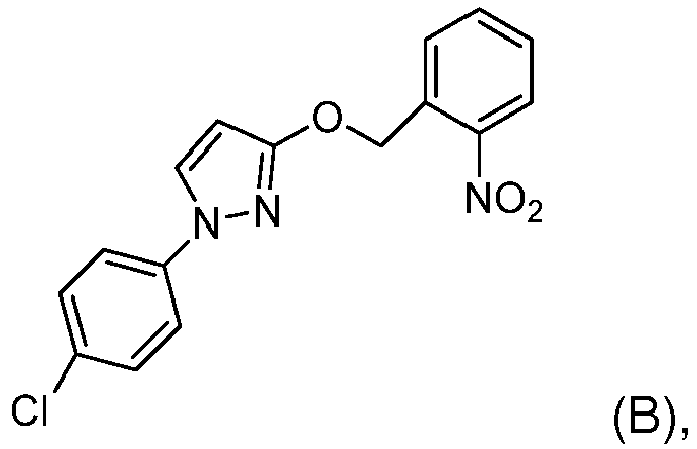
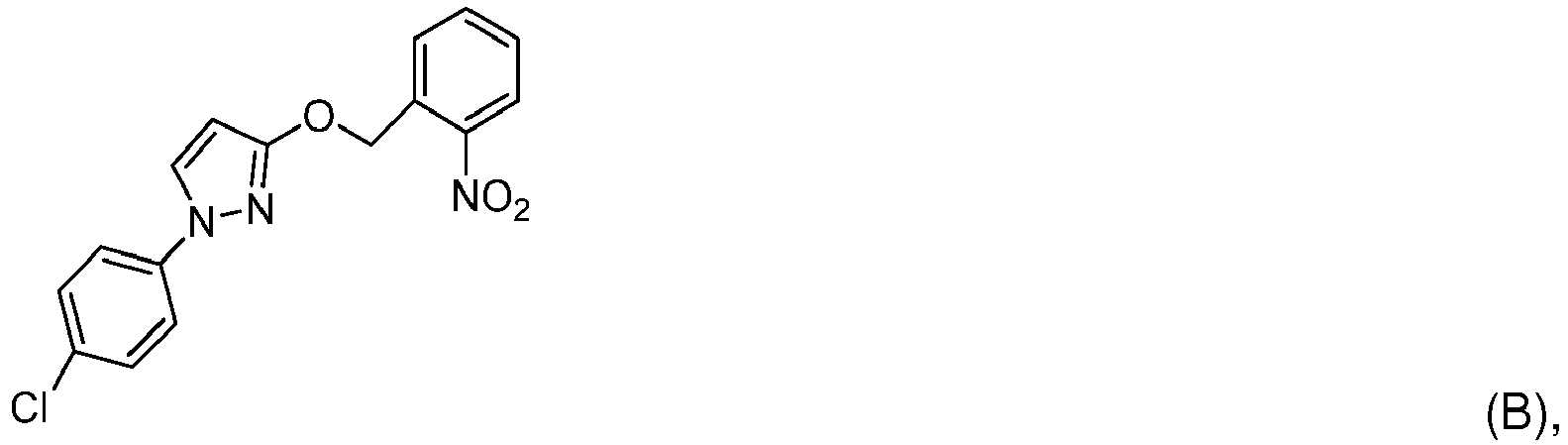
- UITWYQJNAOKGNX-UHFFFAOYSA-N 1-(4-chlorophenyl)-3-[(2-nitrophenyl)methoxy]pyrazole Chemical compound [O-][N+](=O)C1=CC=CC=C1COC1=NN(C=2C=CC(Cl)=CC=2)C=C1 UITWYQJNAOKGNX-UHFFFAOYSA-N 0.000 description 3
- QTBSBXVTEAMEQO-UHFFFAOYSA-N Acetic acid Chemical compound CC(O)=O QTBSBXVTEAMEQO-UHFFFAOYSA-N 0.000 description 3
- WEVYAHXRMPXWCK-UHFFFAOYSA-N Acetonitrile Chemical compound CC#N WEVYAHXRMPXWCK-UHFFFAOYSA-N 0.000 description 3
- UHOVQNZJYSORNB-UHFFFAOYSA-N Benzene Chemical compound C1=CC=CC=C1 UHOVQNZJYSORNB-UHFFFAOYSA-N 0.000 description 3
- OKTJSMMVPCPJKN-UHFFFAOYSA-N Carbon Chemical compound [C] OKTJSMMVPCPJKN-UHFFFAOYSA-N 0.000 description 3
- YMWUJEATGCHHMB-UHFFFAOYSA-N Dichloromethane Chemical compound ClCCl YMWUJEATGCHHMB-UHFFFAOYSA-N 0.000 description 3
- AVXURJPOCDRRFD-UHFFFAOYSA-N Hydroxylamine Chemical compound ON AVXURJPOCDRRFD-UHFFFAOYSA-N 0.000 description 3
- SJRJJKPEHAURKC-UHFFFAOYSA-N N-Methylmorpholine Chemical compound CN1CCOCC1 SJRJJKPEHAURKC-UHFFFAOYSA-N 0.000 description 3
- 239000005869 Pyraclostrobin Substances 0.000 description 3
- PMZURENOXWZQFD-UHFFFAOYSA-L Sodium Sulfate Chemical compound [Na+].[Na+].[O-]S([O-])(=O)=O PMZURENOXWZQFD-UHFFFAOYSA-L 0.000 description 3
- YXFVVABEGXRONW-UHFFFAOYSA-N Toluene Chemical compound CC1=CC=CC=C1 YXFVVABEGXRONW-UHFFFAOYSA-N 0.000 description 3
- ZMANZCXQSJIPKH-UHFFFAOYSA-N Triethylamine Chemical compound CCN(CC)CC ZMANZCXQSJIPKH-UHFFFAOYSA-N 0.000 description 3
- 150000004982 aromatic amines Chemical class 0.000 description 3
- JFDZBHWFFUWGJE-UHFFFAOYSA-N benzonitrile Chemical compound N#CC1=CC=CC=C1 JFDZBHWFFUWGJE-UHFFFAOYSA-N 0.000 description 3
- 239000006227 byproduct Substances 0.000 description 3
- 239000000460 chlorine Substances 0.000 description 3
- 229910052801 chlorine Inorganic materials 0.000 description 3
- 150000002170 ethers Chemical class 0.000 description 3
- VLKZOEOYAKHREP-UHFFFAOYSA-N n-Hexane Chemical compound CCCCCC VLKZOEOYAKHREP-UHFFFAOYSA-N 0.000 description 3
- 239000012074 organic phase Substances 0.000 description 3
- HZRSNVGNWUDEFX-UHFFFAOYSA-N pyraclostrobin Chemical compound COC(=O)N(OC)C1=CC=CC=C1COC1=NN(C=2C=CC(Cl)=CC=2)C=C1 HZRSNVGNWUDEFX-UHFFFAOYSA-N 0.000 description 3
- 229910052938 sodium sulfate Inorganic materials 0.000 description 3
- 235000011152 sodium sulphate Nutrition 0.000 description 3
- 238000003756 stirring Methods 0.000 description 3
- 239000000126 substance Substances 0.000 description 3
- 239000000725 suspension Substances 0.000 description 3
- CXWXQJXEFPUFDZ-UHFFFAOYSA-N tetralin Chemical compound C1=CC=C2CCCCC2=C1 CXWXQJXEFPUFDZ-UHFFFAOYSA-N 0.000 description 3
- 125000005913 (C3-C6) cycloalkyl group Chemical group 0.000 description 2
- OZJPLYNZGCXSJM-UHFFFAOYSA-N 5-valerolactone Chemical compound O=C1CCCCO1 OZJPLYNZGCXSJM-UHFFFAOYSA-N 0.000 description 2
- QGZKDVFQNNGYKY-UHFFFAOYSA-N Ammonia Chemical compound N QGZKDVFQNNGYKY-UHFFFAOYSA-N 0.000 description 2
- NLXLAEXVIDQMFP-UHFFFAOYSA-N Ammonia chloride Chemical compound [NH4+].[Cl-] NLXLAEXVIDQMFP-UHFFFAOYSA-N 0.000 description 2
- XKRFYHLGVUSROY-UHFFFAOYSA-N Argon Chemical compound [Ar] XKRFYHLGVUSROY-UHFFFAOYSA-N 0.000 description 2
- KXDHJXZQYSOELW-UHFFFAOYSA-M Carbamate Chemical compound NC([O-])=O KXDHJXZQYSOELW-UHFFFAOYSA-M 0.000 description 2
- HEDRZPFGACZZDS-UHFFFAOYSA-N Chloroform Chemical compound ClC(Cl)Cl HEDRZPFGACZZDS-UHFFFAOYSA-N 0.000 description 2
- XTHFKEDIFFGKHM-UHFFFAOYSA-N Dimethoxyethane Chemical compound COCCOC XTHFKEDIFFGKHM-UHFFFAOYSA-N 0.000 description 2
- OAKJQQAXSVQMHS-UHFFFAOYSA-N Hydrazine Chemical compound NN OAKJQQAXSVQMHS-UHFFFAOYSA-N 0.000 description 2
- AFVFQIVMOAPDHO-UHFFFAOYSA-N Methanesulfonic acid Chemical compound CS(O)(=O)=O AFVFQIVMOAPDHO-UHFFFAOYSA-N 0.000 description 2
- SECXISVLQFMRJM-UHFFFAOYSA-N N-Methylpyrrolidone Chemical compound CN1CCCC1=O SECXISVLQFMRJM-UHFFFAOYSA-N 0.000 description 2
- UFWIBTONFRDIAS-UHFFFAOYSA-N Naphthalene Chemical compound C1=CC=CC2=CC=CC=C21 UFWIBTONFRDIAS-UHFFFAOYSA-N 0.000 description 2
- PXHVJJICTQNCMI-UHFFFAOYSA-N Nickel Chemical compound [Ni] PXHVJJICTQNCMI-UHFFFAOYSA-N 0.000 description 2
- OFBQJSOFQDEBGM-UHFFFAOYSA-N Pentane Chemical compound CCCCC OFBQJSOFQDEBGM-UHFFFAOYSA-N 0.000 description 2
- VYPSYNLAJGMNEJ-UHFFFAOYSA-N Silicium dioxide Chemical compound O=[Si]=O VYPSYNLAJGMNEJ-UHFFFAOYSA-N 0.000 description 2
- CDBYLPFSWZWCQE-UHFFFAOYSA-L Sodium Carbonate Chemical compound [Na+].[Na+].[O-]C([O-])=O CDBYLPFSWZWCQE-UHFFFAOYSA-L 0.000 description 2
- YTPLMLYBLZKORZ-UHFFFAOYSA-N Thiophene Chemical compound C=1C=CSC=1 YTPLMLYBLZKORZ-UHFFFAOYSA-N 0.000 description 2
- HCHKCACWOHOZIP-UHFFFAOYSA-N Zinc Chemical compound [Zn] HCHKCACWOHOZIP-UHFFFAOYSA-N 0.000 description 2
- 125000001931 aliphatic group Chemical group 0.000 description 2
- RDOXTESZEPMUJZ-UHFFFAOYSA-N anisole Chemical compound COC1=CC=CC=C1 RDOXTESZEPMUJZ-UHFFFAOYSA-N 0.000 description 2
- MWPLVEDNUUSJAV-UHFFFAOYSA-N anthracene Chemical compound C1=CC=CC2=CC3=CC=CC=C3C=C21 MWPLVEDNUUSJAV-UHFFFAOYSA-N 0.000 description 2
- 239000008346 aqueous phase Substances 0.000 description 2
- 125000004104 aryloxy group Chemical group 0.000 description 2
- 230000015572 biosynthetic process Effects 0.000 description 2
- 125000004432 carbon atom Chemical group C* 0.000 description 2
- 239000012876 carrier material Substances 0.000 description 2
- MVPPADPHJFYWMZ-UHFFFAOYSA-N chlorobenzene Chemical compound ClC1=CC=CC=C1 MVPPADPHJFYWMZ-UHFFFAOYSA-N 0.000 description 2
- 125000000113 cyclohexyl group Chemical group [H]C1([H])C([H])([H])C([H])([H])C([H])(*)C([H])([H])C1([H])[H] 0.000 description 2
- 125000001511 cyclopentyl group Chemical group [H]C1([H])C([H])([H])C([H])([H])C([H])(*)C1([H])[H] 0.000 description 2
- ZUOUZKKEUPVFJK-UHFFFAOYSA-N diphenyl Chemical compound C1=CC=CC=C1C1=CC=CC=C1 ZUOUZKKEUPVFJK-UHFFFAOYSA-N 0.000 description 2
- 125000001495 ethyl group Chemical group [H]C([H])([H])C([H])([H])* 0.000 description 2
- 239000000706 filtrate Substances 0.000 description 2
- 229910052731 fluorine Inorganic materials 0.000 description 2
- 230000000855 fungicidal effect Effects 0.000 description 2
- 239000000417 fungicide Substances 0.000 description 2
- 238000004895 liquid chromatography mass spectrometry Methods 0.000 description 2
- 239000000463 material Substances 0.000 description 2
- UAEPNZWRGJTJPN-UHFFFAOYSA-N methylcyclohexane Chemical compound CC1CCCCC1 UAEPNZWRGJTJPN-UHFFFAOYSA-N 0.000 description 2
- 125000000449 nitro group Chemical group [O-][N+](*)=O 0.000 description 2
- LQNUZADURLCDLV-UHFFFAOYSA-N nitrobenzene Chemical compound [O-][N+](=O)C1=CC=CC=C1 LQNUZADURLCDLV-UHFFFAOYSA-N 0.000 description 2
- 229910052763 palladium Inorganic materials 0.000 description 2
- 229910052703 rhodium Inorganic materials 0.000 description 2
- 239000010948 rhodium Substances 0.000 description 2
- MHOVAHRLVXNVSD-UHFFFAOYSA-N rhodium atom Chemical compound [Rh] MHOVAHRLVXNVSD-UHFFFAOYSA-N 0.000 description 2
- 125000000446 sulfanediyl group Chemical group *S* 0.000 description 2
- HHVIBTZHLRERCL-UHFFFAOYSA-N sulfonyldimethane Chemical compound CS(C)(=O)=O HHVIBTZHLRERCL-UHFFFAOYSA-N 0.000 description 2
- 229930192474 thiophene Natural products 0.000 description 2
- UMGDCJDMYOKAJW-UHFFFAOYSA-N thiourea Chemical compound NC(N)=S UMGDCJDMYOKAJW-UHFFFAOYSA-N 0.000 description 2
- LWIHDJKSTIGBAC-UHFFFAOYSA-K tripotassium phosphate Chemical compound [K+].[K+].[K+].[O-]P([O-])([O-])=O LWIHDJKSTIGBAC-UHFFFAOYSA-K 0.000 description 2
- 229910052725 zinc Inorganic materials 0.000 description 2
- LZDKZFUFMNSQCJ-UHFFFAOYSA-N 1,2-diethoxyethane Chemical compound CCOCCOCC LZDKZFUFMNSQCJ-UHFFFAOYSA-N 0.000 description 1
- RYHBNJHYFVUHQT-UHFFFAOYSA-N 1,4-Dioxane Chemical compound C1COCCO1 RYHBNJHYFVUHQT-UHFFFAOYSA-N 0.000 description 1
- FCEHBMOGCRZNNI-UHFFFAOYSA-N 1-benzothiophene Chemical class C1=CC=C2SC=CC2=C1 FCEHBMOGCRZNNI-UHFFFAOYSA-N 0.000 description 1
- DURPTKYDGMDSBL-UHFFFAOYSA-N 1-butoxybutane Chemical compound CCCCOCCCC DURPTKYDGMDSBL-UHFFFAOYSA-N 0.000 description 1
- WKBOTKDWSSQWDR-UHFFFAOYSA-N Bromine atom Chemical compound [Br] WKBOTKDWSSQWDR-UHFFFAOYSA-N 0.000 description 1
- ZAMOUSCENKQFHK-UHFFFAOYSA-N Chlorine atom Chemical compound [Cl] ZAMOUSCENKQFHK-UHFFFAOYSA-N 0.000 description 1
- XDTMQSROBMDMFD-UHFFFAOYSA-N Cyclohexane Chemical compound C1CCCCC1 XDTMQSROBMDMFD-UHFFFAOYSA-N 0.000 description 1
- ZAFNJMIOTHYJRJ-UHFFFAOYSA-N Diisopropyl ether Chemical compound CC(C)OC(C)C ZAFNJMIOTHYJRJ-UHFFFAOYSA-N 0.000 description 1
- QXNVGIXVLWOKEQ-UHFFFAOYSA-N Disodium Chemical compound [Na][Na] QXNVGIXVLWOKEQ-UHFFFAOYSA-N 0.000 description 1
- SNRUBQQJIBEYMU-UHFFFAOYSA-N Dodecane Natural products CCCCCCCCCCCC SNRUBQQJIBEYMU-UHFFFAOYSA-N 0.000 description 1
- FXHOOIRPVKKKFG-UHFFFAOYSA-N N,N-Dimethylacetamide Chemical compound CN(C)C(C)=O FXHOOIRPVKKKFG-UHFFFAOYSA-N 0.000 description 1
- CTQNGGLPUBDAKN-UHFFFAOYSA-N O-Xylene Chemical compound CC1=CC=CC=C1C CTQNGGLPUBDAKN-UHFFFAOYSA-N 0.000 description 1
- XBDQKXXYIPTUBI-UHFFFAOYSA-M Propionate Chemical compound CCC([O-])=O XBDQKXXYIPTUBI-UHFFFAOYSA-M 0.000 description 1
- KJTLSVCANCCWHF-UHFFFAOYSA-N Ruthenium Chemical compound [Ru] KJTLSVCANCCWHF-UHFFFAOYSA-N 0.000 description 1
- UIIMBOGNXHQVGW-DEQYMQKBSA-M Sodium bicarbonate-14C Chemical compound [Na+].O[14C]([O-])=O UIIMBOGNXHQVGW-DEQYMQKBSA-M 0.000 description 1
- XSQUKJJJFZCRTK-UHFFFAOYSA-N Urea Natural products NC(N)=O XSQUKJJJFZCRTK-UHFFFAOYSA-N 0.000 description 1
- 238000009825 accumulation Methods 0.000 description 1
- KXKVLQRXCPHEJC-UHFFFAOYSA-N acetic acid trimethyl ester Natural products COC(C)=O KXKVLQRXCPHEJC-UHFFFAOYSA-N 0.000 description 1
- 150000007513 acids Chemical class 0.000 description 1
- 150000001251 acridines Chemical class 0.000 description 1
- 239000013543 active substance Substances 0.000 description 1
- 239000000654 additive Substances 0.000 description 1
- 239000003905 agrochemical Substances 0.000 description 1
- 150000001299 aldehydes Chemical class 0.000 description 1
- 150000001408 amides Chemical class 0.000 description 1
- 150000001412 amines Chemical class 0.000 description 1
- 125000003277 amino group Chemical group 0.000 description 1
- 229910021529 ammonia Inorganic materials 0.000 description 1
- 235000019270 ammonium chloride Nutrition 0.000 description 1
- PYKYMHQGRFAEBM-UHFFFAOYSA-N anthraquinone Natural products CCC(=O)c1c(O)c2C(=O)C3C(C=CC=C3O)C(=O)c2cc1CC(=O)OC PYKYMHQGRFAEBM-UHFFFAOYSA-N 0.000 description 1
- 150000004056 anthraquinones Chemical class 0.000 description 1
- 229940111121 antirheumatic drug quinolines Drugs 0.000 description 1
- 229910052786 argon Inorganic materials 0.000 description 1
- 125000003710 aryl alkyl group Chemical group 0.000 description 1
- 125000004429 atom Chemical group 0.000 description 1
- 125000000751 azo group Chemical group [*]N=N[*] 0.000 description 1
- 150000003851 azoles Chemical class 0.000 description 1
- 150000001555 benzenes Chemical class 0.000 description 1
- 150000001565 benzotriazoles Chemical class 0.000 description 1
- 125000000051 benzyloxy group Chemical group [H]C1=C([H])C([H])=C(C([H])=C1[H])C([H])([H])O* 0.000 description 1
- 239000004305 biphenyl Substances 0.000 description 1
- 235000010290 biphenyl Nutrition 0.000 description 1
- GDTBXPJZTBHREO-UHFFFAOYSA-N bromine Substances BrBr GDTBXPJZTBHREO-UHFFFAOYSA-N 0.000 description 1
- 229910052794 bromium Inorganic materials 0.000 description 1
- 235000013877 carbamide Nutrition 0.000 description 1
- VSKFADHADUWCCL-UHFFFAOYSA-N carbamoperoxoic acid Chemical compound NC(=O)OO VSKFADHADUWCCL-UHFFFAOYSA-N 0.000 description 1
- 125000000609 carbazolyl group Chemical class C1(=CC=CC=2C3=CC=CC=C3NC12)* 0.000 description 1
- 229910002091 carbon monoxide Inorganic materials 0.000 description 1
- 150000004649 carbonic acid derivatives Chemical class 0.000 description 1
- 150000001732 carboxylic acid derivatives Chemical class 0.000 description 1
- 150000001733 carboxylic acid esters Chemical class 0.000 description 1
- 230000003197 catalytic effect Effects 0.000 description 1
- FZFAMSAMCHXGEF-UHFFFAOYSA-N chloro formate Chemical compound ClOC=O FZFAMSAMCHXGEF-UHFFFAOYSA-N 0.000 description 1
- 229910017052 cobalt Inorganic materials 0.000 description 1
- 239000010941 cobalt Substances 0.000 description 1
- GUTLYIVDDKVIGB-UHFFFAOYSA-N cobalt atom Chemical compound [Co] GUTLYIVDDKVIGB-UHFFFAOYSA-N 0.000 description 1
- 239000013065 commercial product Substances 0.000 description 1
- 150000001907 coumarones Chemical class 0.000 description 1
- 239000013078 crystal Substances 0.000 description 1
- 238000002425 crystallisation Methods 0.000 description 1
- 230000008025 crystallization Effects 0.000 description 1
- 125000004210 cyclohexylmethyl group Chemical group [H]C([H])(*)C1([H])C([H])([H])C([H])([H])C([H])([H])C([H])([H])C1([H])[H] 0.000 description 1
- 125000004851 cyclopentylmethyl group Chemical group C1(CCCC1)C* 0.000 description 1
- 125000001559 cyclopropyl group Chemical group [H]C1([H])C([H])([H])C1([H])* 0.000 description 1
- 125000004186 cyclopropylmethyl group Chemical group [H]C([H])(*)C1([H])C([H])([H])C1([H])[H] 0.000 description 1
- 125000002704 decyl group Chemical group [H]C([H])([H])C([H])([H])C([H])([H])C([H])([H])C([H])([H])C([H])([H])C([H])([H])C([H])([H])C([H])([H])C([H])([H])* 0.000 description 1
- 150000004891 diazines Chemical class 0.000 description 1
- SBZXBUIDTXKZTM-UHFFFAOYSA-N diglyme Chemical compound COCCOCCOC SBZXBUIDTXKZTM-UHFFFAOYSA-N 0.000 description 1
- IEJIGPNLZYLLBP-UHFFFAOYSA-N dimethyl carbonate Chemical compound COC(=O)OC IEJIGPNLZYLLBP-UHFFFAOYSA-N 0.000 description 1
- 238000004821 distillation Methods 0.000 description 1
- 125000003438 dodecyl group Chemical group [H]C([H])([H])C([H])([H])C([H])([H])C([H])([H])C([H])([H])C([H])([H])C([H])([H])C([H])([H])C([H])([H])C([H])([H])C([H])([H])C([H])([H])* 0.000 description 1
- 239000003814 drug Substances 0.000 description 1
- 239000000975 dye Substances 0.000 description 1
- 230000000694 effects Effects 0.000 description 1
- ZSWFCLXCOIISFI-UHFFFAOYSA-N endo-cyclopentadiene Natural products C1C=CC=C1 ZSWFCLXCOIISFI-UHFFFAOYSA-N 0.000 description 1
- 238000000605 extraction Methods 0.000 description 1
- 238000001914 filtration Methods 0.000 description 1
- 239000000796 flavoring agent Substances 0.000 description 1
- 235000019634 flavors Nutrition 0.000 description 1
- 150000002240 furans Chemical class 0.000 description 1
- 150000008282 halocarbons Chemical class 0.000 description 1
- 125000004051 hexyl group Chemical group [H]C([H])([H])C([H])([H])C([H])([H])C([H])([H])C([H])([H])C([H])([H])* 0.000 description 1
- 150000002430 hydrocarbons Chemical class 0.000 description 1
- 150000002431 hydrogen Chemical class 0.000 description 1
- 239000000852 hydrogen donor Substances 0.000 description 1
- 238000007327 hydrogenolysis reaction Methods 0.000 description 1
- 125000002887 hydroxy group Chemical group [H]O* 0.000 description 1
- 150000002443 hydroxylamines Chemical class 0.000 description 1
- 238000011065 in-situ storage Methods 0.000 description 1
- 150000002475 indoles Chemical class 0.000 description 1
- 229910052741 iridium Inorganic materials 0.000 description 1
- GKOZUEZYRPOHIO-UHFFFAOYSA-N iridium atom Chemical compound [Ir] GKOZUEZYRPOHIO-UHFFFAOYSA-N 0.000 description 1
- 125000000959 isobutyl group Chemical group [H]C([H])([H])C([H])(C([H])([H])[H])C([H])([H])* 0.000 description 1
- 125000001449 isopropyl group Chemical group [H]C([H])([H])C([H])(*)C([H])([H])[H] 0.000 description 1
- 150000002537 isoquinolines Chemical class 0.000 description 1
- 150000003951 lactams Chemical class 0.000 description 1
- 150000002596 lactones Chemical class 0.000 description 1
- 229910044991 metal oxide Inorganic materials 0.000 description 1
- 150000004706 metal oxides Chemical class 0.000 description 1
- 229910052914 metal silicate Inorganic materials 0.000 description 1
- 229940098779 methanesulfonic acid Drugs 0.000 description 1
- UZKWTJUDCOPSNM-UHFFFAOYSA-N methoxybenzene Substances CCCCOC=C UZKWTJUDCOPSNM-UHFFFAOYSA-N 0.000 description 1
- SEUOYURJKYLAPC-UHFFFAOYSA-N methyl n-[2-[[1-(4-chlorophenyl)pyrazol-3-yl]oxymethyl]phenyl]carbamate Chemical compound COC(=O)NC1=CC=CC=C1COC1=NN(C=2C=CC(Cl)=CC=2)C=C1 SEUOYURJKYLAPC-UHFFFAOYSA-N 0.000 description 1
- IAGUPODHENSJEZ-UHFFFAOYSA-N methyl n-phenylcarbamate Chemical compound COC(=O)NC1=CC=CC=C1 IAGUPODHENSJEZ-UHFFFAOYSA-N 0.000 description 1
- GYNNXHKOJHMOHS-UHFFFAOYSA-N methyl-cycloheptane Natural products CC1CCCCCC1 GYNNXHKOJHMOHS-UHFFFAOYSA-N 0.000 description 1
- 239000012452 mother liquor Substances 0.000 description 1
- 125000004108 n-butyl group Chemical group [H]C([H])([H])C([H])([H])C([H])([H])C([H])([H])* 0.000 description 1
- 125000004123 n-propyl group Chemical group [H]C([H])([H])C([H])([H])C([H])([H])* 0.000 description 1
- 239000002105 nanoparticle Substances 0.000 description 1
- 125000001624 naphthyl group Chemical group 0.000 description 1
- 229910052759 nickel Inorganic materials 0.000 description 1
- 150000002825 nitriles Chemical class 0.000 description 1
- 125000004433 nitrogen atom Chemical group N* 0.000 description 1
- 229910017464 nitrogen compound Inorganic materials 0.000 description 1
- 150000002830 nitrogen compounds Chemical class 0.000 description 1
- SRGBVXWKCOEGJK-UHFFFAOYSA-N octane-1,2,7,8-tetramine Chemical compound NCC(N)CCCCC(N)CN SRGBVXWKCOEGJK-UHFFFAOYSA-N 0.000 description 1
- 125000002347 octyl group Chemical group [H]C([*])([H])C([H])([H])C([H])([H])C([H])([H])C([H])([H])C([H])([H])C([H])([H])C([H])([H])[H] 0.000 description 1
- 235000019645 odor Nutrition 0.000 description 1
- 150000002916 oxazoles Chemical class 0.000 description 1
- 125000004430 oxygen atom Chemical group O* 0.000 description 1
- 125000001147 pentyl group Chemical group C(CCCC)* 0.000 description 1
- 239000000575 pesticide Substances 0.000 description 1
- 239000003208 petroleum Substances 0.000 description 1
- 125000000951 phenoxy group Chemical group [H]C1=C([H])C([H])=C(O*)C([H])=C1[H] 0.000 description 1
- 150000003009 phosphonic acids Chemical class 0.000 description 1
- 125000004437 phosphorous atom Chemical group 0.000 description 1
- LFSXCDWNBUNEEM-UHFFFAOYSA-N phthalazine Chemical class C1=NN=CC2=CC=CC=C21 LFSXCDWNBUNEEM-UHFFFAOYSA-N 0.000 description 1
- 239000000049 pigment Substances 0.000 description 1
- 229910000160 potassium phosphate Inorganic materials 0.000 description 1
- 235000011009 potassium phosphates Nutrition 0.000 description 1
- 150000003141 primary amines Chemical class 0.000 description 1
- 239000000047 product Substances 0.000 description 1
- FVSKHRXBFJPNKK-UHFFFAOYSA-N propionitrile Chemical compound CCC#N FVSKHRXBFJPNKK-UHFFFAOYSA-N 0.000 description 1
- 150000003212 purines Chemical class 0.000 description 1
- 150000003222 pyridines Chemical class 0.000 description 1
- 150000003233 pyrroles Chemical class 0.000 description 1
- 150000003248 quinolines Chemical class 0.000 description 1
- 239000002516 radical scavenger Substances 0.000 description 1
- 230000009257 reactivity Effects 0.000 description 1
- 238000006479 redox reaction Methods 0.000 description 1
- 229910052707 ruthenium Inorganic materials 0.000 description 1
- 150000003335 secondary amines Chemical class 0.000 description 1
- 238000000926 separation method Methods 0.000 description 1
- 238000007086 side reaction Methods 0.000 description 1
- 150000004760 silicates Chemical class 0.000 description 1
- 229910052710 silicon Chemical group 0.000 description 1
- 239000000377 silicon dioxide Substances 0.000 description 1
- 235000012239 silicon dioxide Nutrition 0.000 description 1
- 229910000029 sodium carbonate Inorganic materials 0.000 description 1
- 235000017550 sodium carbonate Nutrition 0.000 description 1
- 239000001488 sodium phosphate Substances 0.000 description 1
- 229910000162 sodium phosphate Inorganic materials 0.000 description 1
- 235000011008 sodium phosphates Nutrition 0.000 description 1
- HXJUTPCZVOIRIF-UHFFFAOYSA-N sulfolane Chemical compound O=S1(=O)CCCC1 HXJUTPCZVOIRIF-UHFFFAOYSA-N 0.000 description 1
- 150000003457 sulfones Chemical class 0.000 description 1
- 125000004434 sulfur atom Chemical group 0.000 description 1
- 230000001629 suppression Effects 0.000 description 1
- 125000000999 tert-butyl group Chemical group [H]C([H])([H])C(*)(C([H])([H])[H])C([H])([H])[H] 0.000 description 1
- 150000003577 thiophenes Chemical class 0.000 description 1
- 231100000331 toxic Toxicity 0.000 description 1
- 230000002588 toxic effect Effects 0.000 description 1
- 238000009901 transfer hydrogenation reaction Methods 0.000 description 1
- 125000004665 trialkylsilyl group Chemical group 0.000 description 1
- 150000003918 triazines Chemical class 0.000 description 1
- 150000003852 triazoles Chemical class 0.000 description 1
- RYFMWSXOAZQYPI-UHFFFAOYSA-K trisodium phosphate Chemical compound [Na+].[Na+].[Na+].[O-]P([O-])([O-])=O RYFMWSXOAZQYPI-UHFFFAOYSA-K 0.000 description 1
- 125000002948 undecyl group Chemical group [H]C([*])([H])C([H])([H])C([H])([H])C([H])([H])C([H])([H])C([H])([H])C([H])([H])C([H])([H])C([H])([H])C([H])([H])C([H])([H])[H] 0.000 description 1
- 239000008096 xylene Substances 0.000 description 1
- 239000011701 zinc Substances 0.000 description 1
- 235000005074 zinc chloride Nutrition 0.000 description 1
- 239000011592 zinc chloride Substances 0.000 description 1
Classifications
-
- C—CHEMISTRY; METALLURGY
- C07—ORGANIC CHEMISTRY
- C07D—HETEROCYCLIC COMPOUNDS
- C07D231/00—Heterocyclic compounds containing 1,2-diazole or hydrogenated 1,2-diazole rings
- C07D231/02—Heterocyclic compounds containing 1,2-diazole or hydrogenated 1,2-diazole rings not condensed with other rings
- C07D231/10—Heterocyclic compounds containing 1,2-diazole or hydrogenated 1,2-diazole rings not condensed with other rings having two or three double bonds between ring members or between ring members and non-ring members
- C07D231/14—Heterocyclic compounds containing 1,2-diazole or hydrogenated 1,2-diazole rings not condensed with other rings having two or three double bonds between ring members or between ring members and non-ring members with hetero atoms or with carbon atoms having three bonds to hetero atoms with at the most one bond to halogen, e.g. ester or nitrile radicals, directly attached to ring carbon atoms
- C07D231/18—One oxygen or sulfur atom
- C07D231/20—One oxygen atom attached in position 3 or 5
- C07D231/22—One oxygen atom attached in position 3 or 5 with aryl radicals attached to ring nitrogen atoms
-
- C—CHEMISTRY; METALLURGY
- C07—ORGANIC CHEMISTRY
- C07C—ACYCLIC OR CARBOCYCLIC COMPOUNDS
- C07C269/00—Preparation of derivatives of carbamic acid, i.e. compounds containing any of the groups, the nitrogen atom not being part of nitro or nitroso groups
-
- C—CHEMISTRY; METALLURGY
- C07—ORGANIC CHEMISTRY
- C07D—HETEROCYCLIC COMPOUNDS
- C07D257/00—Heterocyclic compounds containing rings having four nitrogen atoms as the only ring hetero atoms
- C07D257/02—Heterocyclic compounds containing rings having four nitrogen atoms as the only ring hetero atoms not condensed with other rings
- C07D257/04—Five-membered rings
- C07D257/06—Five-membered rings with nitrogen atoms directly attached to the ring carbon atom
Definitions
- the present invention relates to a process for preparing N-alkoxycarbonyl- or N-aryloxycarbonyl-substituted aromatic hydroxylamines by catalytic hydrogenation with hydrogen gas and with optionally modified hydrogenation catalysts in an inert solvent and in the presence of a haloformate and optionally a base.
- N-substituted aromatic hydroxylamines are important chemicals, for example for the production of pesticides.
- the preparation is carried out by means of a 2-stage reaction, i. that first the aromatic hydroxylamine is prepared and this is substituted in a subsequent step on the nitrogen.
- the preparation of the Arylhydroxylamine often takes place by means of catalytic hydrogenation, catalytic transfer hydrogenation (for example, with a rhodium catalyst and hydrazine as a hydrogen donor) or zinc reduction of nitroaromatics.
- catalytic hydrogenation catalytic transfer hydrogenation
- By-products such as aromatic amines and azoxy, azo and hydrazo compounds often form. Efforts have therefore been made to minimize these side reactions and thus to improve the yield.
- WO 2016/181386 is the preparation of the intermediate of formula A for the fungicide pyraclostrobin by means of a two-step process.
- the corresponding nitro compound is first hydrogenated with a platinum catalyst in the presence of a nitrogen base and a sulfur compound with hydrogen and reacted in a second stage with methyl chloroformate.
- the process is not yet sufficiently economical, since two consecutive chemical steps are required and the yield is not yet optimal.
- the subject of the present invention is a process for the preparation of N-substituted aromatic hydroxylamines of the formula I.
- the group R may be aromatic hydrocarbons or heteroaromatics whose ring systems may be condensed or linked and unsubstituted or substituted.
- aromatic hydrocarbons are benzenes such as e.g. 2-nitrotoluene, naphthalene or anthracene, polycyclic hydrocarbons (also partially hydrogenated such as tetralin), biphenyl, cyclopentadienyl anion and anthraquinone.
- heteroaromatics are pyridines, pyrroles, azoles, diazines, triazines, triazoles, furans, thiophenes, oxazoles, indoles, quinolines, isoquinolines, carbazoles, purines, phthalazines, benzotriazoles, benzofurans, quinazoles, acridines and benzothiophenes.
- the group R can be substituted, even with substituents which can in principle also be hydrogenated. If such a reaction is desired, one can use appropriate catalysts. If desired, either per se selective catalysts or modified catalysts can be used.
- the group R may be identical or different substituents such as halogen, hydroxyl, or one of a C atom, O atom, S atom, N atom, P atom or Si atom or groups CO, C (O) O,
- substituents such as halogen, hydroxyl, or one of a C atom, O atom, S atom, N atom, P atom or Si atom or groups CO, C (O) O,
- SO, SO 2 , bonded hydrocarbon radical may contain one to six times, preferably one to four times and particularly preferably one to two times, wherein hydrocarbon radicals in the substituents may in turn be substituted.
- the cyclic radicals R can also be provided with ring-forming substituents, for example C 2 -C 4 -alkylene, C 2 -C 4 -alkenylene, C 4 -C 8 -alkadienylene, C 1 -C 2 -alkylenediamino or C 1 -C 2- alkylenedioxy.
- the optionally substituted substituent may be, for example, C 1 -C 12 -alkyl, preferably C 1 -C 8 -alkyl and particularly preferably C 1 -C 4 -alkyl.
- Examples are methyl, ethyl, n- or i-propyl, n-, i- or t-butyl, pentyl, Hexyl, octyl, decyl, undecyl and dodecyl.
- the optionally substituted substituent may be, for example, C 3 -C 8 -cycloalkyl, preferably C 3 -C 6 -cycloalkyl. Examples are cyclopentyl, cyclohexyl and cyclopropyl.
- the optionally substituted substituent may be, for example, C 3 -C 8 -cycloalkyl-alkyl, preferably C 3 -C 6 -cycloalkyl-alkyl having, for example, 1 to 4 carbon atoms in the alkyl.
- Examples are cyclopentylmethyl, cyclohexylmethyl or -ethyl and cyclopropylmethyl.
- the optionally substituted substituent may be, for example, C 6 -C 18 -aryl and preferably C 6 -C 10 -aryl. Examples are phenyl or naphthyl.
- the optionally substituted substituent may be, for example, C 7 -C 12 aralkyl, for example benzyl or 1-phenyleth-2-yl.
- the optionally substituted substituent may be, for example, tri (C 1 -C 4 alkyl) Si or triphenylsilyl.
- Examples of trialkylsilyl are trimethyl, triethyl, tri-n-propyl, tri-n-butyl and dimethyl-t-butylsilyl.
- the substituent may be, for example, halogen. Examples are F and Cl.
- the optionally substituted substituent may be, for example, an alkyloxy radical, dialkylamino radical or alkylthio radical in which alkyl groups are C 1 -C 12 -alkyl, preferably C 1 -C 8 -alkyl and particularly preferably C 1 -C 4 -alkyl.
- substituents are C 5 -C 8 -cycloalkyloxy or -thio, preferably C 5 -C 6 -cycloalkyloxy or -thio; (C 5 -C 8 -cycloalkyl) 2 N-, C 6 -C 18 aryloxy or thio, and preferably C 6 -C 10 aryloxy or thio; or C 7 -C 12 aralkyloxythio.
- Examples of the hydrocarbon radicals in the substituents have been previously mentioned.
- the hydrocarbon radicals of the substituents may in turn be mono- or polysubstituted, for example monosubstituted to trisubstituted, for example with halogen (F or Cl, especially F), -N (C 1 -C 4 -alkyl) 2 , C 1 -C 4 alkyl, C 1 -C 4 alkoxy, C 1 -C 4 alkylthio, C 5 -C 6 cycloalkyl, phenyl, benzyl, phenoxy or benzyloxy.
- halogen F or Cl, especially F
- R 1 may preferably be radicals selected from the group consisting of linear or branched C 1 -C 8 -, preferably C 1 -C 6 - and particularly preferably C 1 -C 4 -alkyl, C 4 -C 8 - and preferably C 3 C 6 -Cycloalkyl, for example cyclopentyl or cyclohexyl, benzyl or phenyl.
- R 1 is C 1 -C 4 -alkyl.
- the compounds of the formula III are haloformic acid esters, where halogen is preferably bromine and particularly preferably chlorine.
- the compounds of the formula III are C 1 -C 4 -alkyl-O-CO-Cl, very particularly preferably methyl chloroformate.
- the hydrogenation can be carried out in the presence of an inert aprotic and apolar or polar solvent, whereby a solvent or mixtures of solvents can be used.
- Suitable solvents are, for example, aliphatic, cycloaliphatic and aromatic hydrocarbons (pentane, hexane, petroleum ether, cyclohexane, methylcyclohexane, benzene, toluene, xylene), aliphatic and aromatic halogenated hydrocarbons (dichloromethane, chloroform, chlorobenzene), nitriles (acetonitrile, propionitrile, benzonitrile), ethers (diethyl ether, dibutyl ether, diisopropyl ether, tert-butyl methyl ether, tert -Butylethylether, t-amyl methyl ether, cyclopentyl methyl ether, ethylene glycol dimethyl
- Water can also be added to the reaction mixture, for example in an amount of up to 50% by weight and more preferably up to 20% by weight, based on the amount of the solvent.
- Preferred solvents are ethers, hydrocarbons, halogenated hydrocarbons, carboxylic acid esters, carbonates and amides. Particular preference is given to ethers, in particular tetrahydrofuran, 2-methyltetrahydrofuran, cyclopentyl methyl ether, tert- butyl methyl ether, tert- butyl ethyl ether and tert- amyl methyl ether.
- noble metal catalysts or base metal catalysts can be used as catalysts.
- Suitable noble metals are ruthenium, rhodium, iridium, palladium and platinum. Preference is given to palladium and in particular platinum.
- the noble metals are usually applied to carrier materials and contain, for example, up to 20% by weight of noble metal, based on the carrier material.
- Support materials are in particular carbon, metal oxides and silicates.
- Suitable base metal catalysts usually consist of nickel or cobalt, which are optionally applied to a support material such as silicon dioxide. More recently, methods for the preparation of catalysts in the form of nanoparticles have become known with noble metal or base metal catalysts. Such catalysts can also be used in the process according to the invention.
- the catalysts are usually used in amounts of 0.1 to 10 wt .-%, more preferably 0.1 to 5 wt .-%, based on the substrate.
- Halogenoformates have a similar reactivity as carboxylic acid halides, which can be easily converted into aldehydes by catalytic hydrogenation. It is therefore surprising and it was not foreseeable that haloformate esters would not themselves be hydrogenated appreciably in the catalytic hydrogenation of aromatic nitro compounds according to the invention. This makes it possible to use haloformate in stoichiometric to slightly more than stoichiometric amounts.
- per se selective or modified catalysts which are suitable for stopping the hydrogenation of the nitro group at the stage of the arylhydroxylamines.
- modifiers are sulfur compounds (for example sulfoxides, thioethers, thiols, thiourea, thiophene), phosphorus compounds (for example phosphines, Phosphine oxides, phosphoric and phosphonic acids or esters), optionally in combination with acids (acetic acid, methanesulfonic acid) or tertiary amines (N-methylmorpholine, tetramethyleneethylenediamine). Preference is given to dimethyl sulfoxide and in particular hypophosphorous acid.
- hypophosphorous acid H 3 PO 2 or dimethyl sulfoxide (DMSO) or a combination thereof is used as a modifier, because with its addition the desired arylN (OH) COOR are obtained in particularly high selectivity and yield.
- the further hydrogenation of the arylhydroxylamines and the arylN (OH) COOR is thereby greatly suppressed, without the hydrogenation activity being excessively reduced.
- H 3 PO 2 and DMSO tolerate the use of a haloformic acid ester, because the former, in contrast to the nitrogen compounds mentioned, do not react with it.
- H 3 PO 2 as a modifier is also particularly attractive because when using hypophosphorous acid-modified noble metal catalysts, the catalytic hydrogenation of other functionalities is particularly strongly inhibited (see EP-B1-0 931 053 ).
- N-substituted arylhydroxylamines can be prepared not only practically free of N-substituted arylamines and azoxy and Hydrazoharmen, but also with the greatest possible protection of further hydrogenatable functionalities.
- a preferred embodiment of the method according to the invention is characterized in that hypophosphorous acid H 3 PO 2 and / or DMSO are used as modifier.
- a further, particularly preferred embodiment of the process according to the invention is characterized in that the catalyst used is platinum on carbon (Pt / C) in combination with hypophosphorous acid H 3 PO 2 and / or DMSO.
- the catalyst used is platinum on carbon (Pt / C) in combination with hypophosphorous acid H 3 PO 2 and / or DMSO.
- the reaction temperature is, for example, preferably -20 ° C to 100 ° C, and more preferably 0 ° C to 60 ° C.
- the hydrogen pressure can be up to 100 bar and preferably 1 to 20 bar.
- the reaction may be carried out in the presence of inorganic bases such as sodium bicarbonate, sodium carbonate, sodium phosphate, potassium phosphate, disodium hydrogenphosphate, dipotassium hydrogenphosphate or tertiary nitrogen bases such as triethylamine as the acid scavenger of hydrogen halides formed. It can stoichiometric amounts, based on haloformate, or an excess can be used. Preference is given to using inorganic bases. Particularly preferred is the use of weak, inorganic bases such as disodium or dipotassium hydrogen phosphate or sodium bicarbonate.
- a further, very particularly preferred embodiment of the process according to the invention serves to prepare methyl hydroxy (o-tolyl) carbamate by hydrogenating 2-nitrotoluene with hydrogen in the presence of a hydrogenation catalyst in an inert solvent and in the presence of a base which is characterized in that it is carried out in the presence of at least stoichiometric amounts of a haloformate of the formula C 1 -C 4 -alkyl-O-C (OO) -Hal.
- the process according to the invention is generally carried out by initially charging the nitro compound and the haloformate with the solvent. Subsequently, the catalyst and optionally the base are added. But it is also easily possible to proceed in reverse order. Hydrogen is then pressed on and the reaction is started. The course of the reaction can be monitored by the hydrogen uptake. If no more hydrogen is taken up, the process is finished. The reaction mixture is then worked up in a known manner such as filtration, extraction, distillation or crystallization. The process can be carried out continuously or batchwise in different reactor types.
- N-substituted compounds which can be prepared according to the invention are either directly active substances or intermediates for the preparation of such substances, in particular in the production of flavors and odors, pharmaceuticals and agrochemicals and technical products such as dyes, pigments and additives.
- the direct production of the commercial product pyraclostrobin has already been mentioned before.
- the catalyst suspension is then rinsed with 4 ml of deionized water in the Parr ® glass bottle and hydrogenated for 7 hours at a temperature of 22 ° C and egg nem hydrogen pressure of 4 bar. After inerting the apparatus with nitrogen, 1 mL of methanol is added and stirred for 15 minutes to destroy the excess of methyl chloroformate. Then the Filtered off solids and washed with 20 ml of cyclopentyl methyl ether. The filtrate is dried over sodium sulfate and evaporated in vacuo at ⁇ 1 mbar and 60 ° C.
- the catalyst suspension is then rinsed in the autoclave with 2 ml of deionized water and hydrogenated at a temperature of 21 ° C. and a hydrogen pressure of 7 bar. After 1.5 hours, the hydrogen uptake comes to a standstill. After inerting the apparatus with nitrogen, 1 mL of methanol is added and stirred for 20 minutes to destroy the excess of methyl chloroformate. Subsequently, the reaction mixture is rinsed with 20 mL of 2-MeTHF and 5 mL of water from the autoclave. The aqueous phase is separated in a separating funnel.
- the organic phase is washed with 3 mL of water and dried after separation of the aqueous phase over sodium sulfate, filtered and evaporated on a rotary evaporator at 60 ° C. The residue is dried for one hour at 80 ° C / ⁇ 1 mbar.
- the solid is dissolved at 60 ° C in 40 mL of 2-Methyltetrah ydrofuran, distilled from 30 mL and the resulting solution was cooled to 15 ° C with stirring.
- Example 4 Various solvents were tested analogously to Example 4.
- the following table contains the results of the HPLC analysis (area% at 220 nm) of the organic phase.
Landscapes
- Chemical & Material Sciences (AREA)
- Organic Chemistry (AREA)
- Organic Low-Molecular-Weight Compounds And Preparation Thereof (AREA)
- Low-Molecular Organic Synthesis Reactions Using Catalysts (AREA)
Abstract
Description
- Die vorliegende Erfindung betrifft ein Verfahren zur Herstellung N-Alkoxycarbonyl- oder N-Aryloxycarbonyl-substituierter aromatischer Hydroxylamine durch katalytische Hydrierung mit Wasserstoffgas und mit gegebenenfalls modifizierten Hydrierkatalysatoren in einem inerten Lösungsmittel und in Gegenwart eines Halogenameisensäureesters und gegebenenfalls einer Base.
- N-substituierte aromatische Hydroxylamine sind wichtige Chemikalien, zum Beispiel zur Herstellung von Pestiziden. Die Herstellung erfolgt mittels 2-Stufen Reaktion, d.h. dass zuerst das aromatische Hydroxylamin hergestellt und dieses in einem nachfolgenden Schritt am Stickstoff substituiert wird. Die Herstellung der Arylhydroxylamine erfolgt häufig mittels katalytischer Hydrierung, katalytischer Transferhydrierung (zum Beispiel mit einem Rhodium Katalysator und Hydrazin als Wasserstoffdonor) oder Zink-Reduktion von Nitroaromaten. Hierbei bilden sich oft Nebenprodukte wie aromatische Amine sowie Azoxy-, Azo- und Hydrazoverbindungen. Es gab daher Bemühungen, diese Nebenreaktionen zu minimieren und damit die Ausbeute zu verbessern.
- A. Porzelle et al. beschreibt in Synlett 2009, Nr. 5, Seiten 798 bis 802 die Herstellung N-substituierter Hydroxylaminen mittels einer Redoxreaktion. Nitroaromaten werden mit Zink und Ammoniumchlorid reduziert, wobei das Reaktionsgemisch Chlorameisensäureester enthält, um mittels Carbamatbildung das aromatische Hydroxylamin abzufangen und eine Überreduktion zum Amin zu unterdrücken. Die Reaktion ist jedoch unspezifisch. Es werden unerwünschte Gemische unterschiedlicher Zusammensetzung aus N-mono und N,0-disubstituierten Hydroxylaminen gebildet. Dieses Verfahren eignet sich daher nicht zur Herstellung N-substituierter Arylhydroxylamine im industriellen Massstab.
- In der
WO 2016/181386 wird die Herstellung des Zwischenproduktes der Formel A
- Es besteht ein grosses Bedürfnis an einem ökonomischen, direkten, katalytischen Hydrierverfahren zur Herstellung von aromatischen N-substituierten Hydroxylaminen in einem einzigen Verfahrensschritt, mit dem hohe Selektivitäten und hohe Ausbeuten erzielt werden können. Ausserdem ist es sehr wünschenswert, die Akkumulation der häufig unstabilen und toxischen Arylhydroxylamine zu vermeiden. Aufgabe vorliegender Erfindung ist die Bereitstellung eines solchen Verfahrens.
- Es wurde nun überraschend gefunden, dass die Anwesenheit von Halogenameisensäureestern während der katalytischen Hydrierung von aromatischen Nitroverbindungen toleriert wird, d.h. dass erstere praktisch nicht hydriert werden, und ein solches Verfahren in hohen bis sehr hohen Selektivitäten und Ausbeuten und zum gewünschten N-substituierten aromatischen Hydroxylamin führt. Nebenprodukte wie z.B. Azoxyverbindungen, N-substituierte aromatische Amine oder N,O-disubstituierte Arylhydroxylamine werden nur in geringem Ausmass gebildet.
- Gegenstand vorliegender Erfindung ist ein Verfahren zur Herstellung von N-substituierten aromatischen Hydroxylaminen der Formel I
R-N(OH)-C(=O)-(O)R1 (I),
worin R ein aromatischer Rest ist und R1 einen Kohlenwasserstoffrest bedeutet, durch Hydrierung von aromatischen Nitroverbindungen der Formel II
R-NO2 (II),
worin R die zuvor angegebene Bedeutung hat, mit einem Hydrierkatalystor und Wasserstoff in einem aprotischen Lösungsmittel, das dadurch gekennzeichnet ist, dass man die Reaktion in Anwesenheit wenigstens stöchiometrischer Mengen einer Verbindung der Formel III
Y-C(=O)-(O)R1 (III),
worin Y Halogen ist und R1 die zuvor angegebene Bedeutung hat, durchführt. - Bei der Gruppe R kann es sich um aromatische Kohlenwasserstoffe oder Heteroaromaten handeln, deren Ringsysteme kondensiert oder verknüpft und unsubstituiert oder substituiert sein können. Einige Beispiele für aromatische Kohlenwasserstoffe sind Benzole wie z.B. 2-Nitrotoluol, Naphthalin oder Anthracen, polycyclische Kohlenwasserstoffe (auch teilhydrierte wie Tetralin), Biphenyl, Cyclopentadienyl-Anion und Anthrachinon. Einige Beispiele für Heteroaromaten sind Pyridine, Pyrrole, Azole, Diazine, Triazine, Triazole, Furane, Thiophene, Oxazole, Indole, Chinoline, Isochinoline, Carbazole, Purine, Phtalazine, Benztriazole, Benzofurane, Chinazole, Acridine und Benzothiophene.
- Die Gruppe R kann substituiert sein, auch mit Substituenten, die grundsätzlich ebenfalls hydriert werden können. Wenn eine solche Reaktion erwünscht ist, kann man entsprechende Katalysatoren verwenden. Falls es unerwünscht ist, können entweder per se selektive Katalysatoren oder modifizierte Katalysatoren eingesetzt werden.
- Die Gruppe R kann gleiche oder verschiedene Substituenten wie Halogen, Hydroxyl, oder einen über ein C-Atom, O-Atom, S-Atom, N-Atom, P-Atom oder Si-Atom oder Gruppen CO, C(O)O, SO, SO2, gebundenen Kohlenwasserstoffrest zum Beispiel ein- bis sechsmal, bevorzugt ein- bis viermal und besonders bevorzugt einbis zweimal enthalten, wobei Kohlenwasserstoffreste in den Substituenten ihrerseits substituiert sein können. Die cyclischen Reste R können auch mit ringbildenden Substituenten versehen sein, zum Beispiel C2-C4-Alkylen, C2-C4-Alkenylen, C4-C8-Alkdienylen, C1-C2-Alkylendiamino oder C1-C2-Alkylendioxyl.
- Bei dem gegebenenfalls substituierten Substituenten kann es sich zum Beispiel um C1-C12-Alkyl, bevorzugt C1-C8-Alkyl und besonders bevorzugt C1-C4-Alkyl handeln. Beispiele sind Methyl, Ethyl, n- oder i-Propyl, n-, i- oder t-Butyl, Pentyl,
Hexyl, Octyl, Decyl, Undecyl und Dodecyl. - Bei dem gegebenenfalls substituierten Substituenten kann es sich zum Beispiel um C3-C8-Cycloalkyl, bevorzugt C3-C6-Cycloalkyl handeln. Beispiele sind Cyclopentyl, Cyclohexyl und Cyclopropyl.
- Bei dem gegebenenfalls substituierten Substituenten kann es sich zum Beispiel um C3-C8-Cycloalkyl-alkyl, bevorzugt C3-C6-Cycloalkyl-alkyl mit zum Beispiel 1 bis 4 C-Atomen im Alkyl handeln. Beispiele sind Cyclopentylmethyl, Cyclohexylmethyl oder -ethyl und Cyclopropylmethyl.
- Bei dem gegebenenfalls substituierten Substituenten kann es sich zum Beispiel um C6-C18-Aryl und bevorzugt C6-C10-Aryl handeln. Beispiele sind Phenyl oder Naphthyl.
- Bei dem gegebenenfalls substituierten Substituenten kann es sich zum Beispiel um C7-C12-Aralkyl handeln, zum Beispiel Benzyl oder 1-Phenyleth-2-yl.
- Bei dem gegebenenfalls substituierten Substituenten kann es sich zum Beispiel um Tri(C1-C4-Alkyl)Si oder Triphenylsilyl handeln. Beispiele für Trialkylsilyl sind Trimethyl-, Triethyl-, Tri-n-propyl-, Tri-n-Butyl- und Dimethyl-t-butylsilyl.
- Bei dem Substituenten kann es sich zum Beispiel um Halogen handeln. Beispiele sind F und Cl.
- Bei dem gegebenenfalls substituierten Substituenten kann es sich zum Beispiel um einen Alkyloxyrest, Dialkylaminorest oder Alkylthiorest handeln, worin Alkylgruppen C1-C12-Alkyl, bevorzugt C1-C8-Alkyl und besonders bevorzugt C1-C4-Alkyl bedeuten. Andere mögliche Substituenten sind C5-C8-Cycloalkyloxy oder - thio, bevorzugt C5-C6-Cycloalkyloxy oder -thio; (C5-C8-Cycloalkyl)2N-, C6-C18-Aryloxy oder -thio und bevorzugt C6-C10-Aryloxy oder -thio; oder C7-C12-Aralkyloxy -thio bedeutet. Beispiele für die Kohlenwasserstoffreste in den Substituenten sind zuvor erwähnt worden.
- Die Kohlenwasserstoffreste der Substituenten können ihrerseits ein- oder mehrfach, zum Beispiel ein- bis dreifach substituiert sein, zum Beispiel mit Halogen (F oder Cl, besonders F), -N(C1-C4-Alkyl)2, C1-C4-Alkyl, C1-C4-Alkoxy, C1-C4-Alkylthio, C5-C6-Cycloalkyl, Phenyl, Benzyl, Phenoxy oder Benzyloxy.
- R1 kann als Kohlenwasserstoffrest bevorzugt Reste, ausgewählt aus der Gruppe lineares oder verzweigtes C1-C8-, bevorzugt C1-C6- und besonders bevorzugt C1-C4-Alkyl, C4-C8- und bevorzugt C3-C6-Cycloalkyl, zum Beispiel Cyclopentyl oder Cyclohexyl, Benzyl oder Phenyl bedeuten.
- Besonders bevorzugt bedeutet R1 C1-C4-Alkyl.
- Bei den Verbindungen der Formel III handelt es sich um Halogenameisensäureester, wobei Halogen bevorzugt für Brom und insbesondere bevorzugt für Chlor steht.
- In einer bevorzugten Ausführungsform handelt es sich bei den Verbindungen der Formel III um C1-C4-AlkylO-CO-Cl, ganz besonders bevorzugt um Chlorameisensäuremethylester.
- Die Hydrierung kann in Gegenwart eines inerten aprotischen und apolaren oder polaren Lösungsmittels durchgeführt werden, wobei ein Lösungsmittel oder Gemische von Lösungsmitteln eingesetzt werden können. Geeignete Lösungsmittel sind zum Beispiel aliphatische, cycloaliphatische und aromatische Kohlenwasserstoffe (Pentan, Hexan, Petrolether, Cyclohexan, Methylcyclohexan, Benzol, Toluol, Xylol), aliphatische und aromatische Halogenkohlenwasserstoffe (Dichlormethan, Chloroform, Chlorbenzol), Nitrile (Acetonitril, Propionitril, Benzonitril), Ether (Diethylether, Dibutylether, Diisopropylether, tert-Butylmethylether, tert-Butylethylether, t-Amylmethylether, Cyclopentylmethylether, Ethylenglykoldimethylether, Ethylenglykoldiethylether, Diethylenglykoldimethylether, Tetrahydrofuran, 2-Methyltetrahydrofuran, Dioxan, Anisol), Kohlensäureester (Dimethylcarbonat), Carbonsäureester und Lactone (Essigsäuremethyl-, -ethyl- oder -isopropylester, Valerolacton), N-substituierte Lactame (N-Methylpyrrolidon), Carbonsäureamide (Dimethylacetamid, N-Methylpyrrolidon), acyclische Harnstoffe (N,N-Dimethyl-2-imidazolidinon), Sulfoxide (Dimethylsulfoxid) und Sulfone (Dimethylsulfon, Tetramethylensulfon). Dem Reaktionsgemisch kann auch Wasser zugesetzt werden zum Beispiel in einer Menge von bis zu 50 Gew.-% und bevorzugter bis zu 20 Gew.-%, bezogen auf die Menge des Lösungsmittels. Bevorzugte Lösungsmittel sind Ether, Kohlenwasserstoffe, halogenierte Kohlenwasserstoffe, Carbonsäureester, Carbonate und Amide. Besonders bevorzugt sind Ether, insbesondere Tetrahydrofuran, 2-Methyltetrahydrofuran, Cyclopentylmethylether, tert-Butylmethylether, tert-Butylethylether und tert-Amylmethylether.
- Als Katalysatoren können (handelsübliche) Edelmetallkatalysatoren oder auch Basismetall-Katalysatoren verwendet werden. Geeignete Edelmetalle sind Ruthenium, Rhodium, Iridium, Palladium und Platin. Bevorzugt sind Palladium und insbesondere Platin. Die Edelmetalle sind üblicherweise auf Trägermaterialien aufgebracht und enthalten zum Beispiel bis zu 20 Gew.-% Edelmetall, bezogen auf das Trägermaterial. Trägermaterialien sind insbesondere Kohlenstoff, Metalloxide und Silikate. Geeignete Basismetall-Katalysatoren bestehen meist aus Nickel oder Kobalt, welche gegebenenfalls auf einem Trägermaterial wie z.B. Siliziumdioxid aufgebracht sind. In neuerer Zeit sind auch Methoden zur Herstellung von Katalysatoren in Form von Nanopartikeln bekannt geworden, sei es bei Edelmetall- oder bei Basismetallkatalysatoren. Auch solche Katalysatoren können im erfindungsgemässen Verfahren verwendet werden.
- Die Katalysatoren werden in der Regel in Mengen von 0,1 bis 10 Gew.-%, bevorzugter 0,1 bis 5 Gew.-% verwendet, bezogen auf das Substrat.
- Die meisten handelsüblichen Katalysatoren hydrieren die aromatische Nitrogruppe zur Aminogruppe, ohne dass das Arylhydroxylamin in hoher Selektivität gebildet wird. Es wurde nun gefunden, dass die Weiterhydrierung des intermediären Arylhydroxylamins unterdrückt werden kann, indem die katalytische Hydrierung in Gegenwart eines Halogenameisensäureesters durchgeführt wird. Die Gegenwart eines Halogenameisensäureesters sowie die in-situ Umwandlung der Hydroxylamino-Gruppe in eine N-Alkoxycarbonyl- oder N-Aryloxycarbonyl-Hydroxylaminogruppe führen offensichtlich zu einer stark verminderten Hydrogenolysierbarkeit der N-0 Bindung und somit zu einer stark erhöhten Selektivität. Überraschenderweise werden selbst bei Verwendung von Katalysatoren, welche normalerweise Nitroaromaten nicht in hoher Selektivität zu Arylhydroxylaminen hydrieren, hohe Selektivitäten an N-substituierten Arylhydroxylaminen erhalten.
- Halogenameisensäureester haben eine ähnliche Reaktivität wie Carbonsäurehalogenide, welche durch Katalytische Hydrierung sehr leicht in Aldehyde umgewandelt werden können. Es ist daher überraschend und es war nicht vorhersehbar, dass Halogenameisensäureester während der erfindungsgemässen katalytischen Hydrierung aromatischer Nitroverbindungen nicht selbst in nennenswerter Weise hydriert werden. Dadurch ist es möglich, Halogenameisensäureester in stöchiometrischen bis leicht überstöchiometrischen Mengen zu verwenden.
- Selbstverständlich können auch per se selektive oder modifizierte Katalysatoren, welche geeignet sind, die Hydrierung der Nitrogruppe auf der Stufe der Arylhydroxylamine anzuhalten, zu verwenden. Beispiele solcher Modifikatoren sind Schwefelverbindungen (zum Beispiel Sulfoxide, Thioether, Thiole, Thioharnstoff, Thiophen), Phosphorverbindungen (zum Beispiel Phosphine, Phosphinoxide, Phosphor- und Phosphonsäuren oder -ester), gegebenenfalls in Kombination mit Säuren (Essigsäure, Methansulfonsäure) oder tertiären Amine (N-Methylmorpholin, Tetramethylenethylendiamin). Bevorzugt sind Dimethylsulfoxid und insbesondere Hypophosphorige Säure.
- Die Kombination eines möglichst selektiven, gegebenenfalls modifizierten Hydrierkatalysators mit der Verwendung eines Halogenameisensäureesters während der Hydrierung führt zu besonders hoher Selektivität in Bezug auf die Unterdrückung der Hydrogenolyse der N-0 Bindung und der Bildung von Azoxy- oder Hydrazoverbindungen.
- Im erfindungsgemässen Verfahren wird hypophosphorige Säure H3PO2 oder Dimethylsulfoxid (DMSO) oder eine Kombination davon als Modifikator verwendet, weil mit deren Zusatz die gewünschten ArylN(OH)COOR in besonders hoher Selektivität und Ausbeute erhalten werden. Die Weiterhydrierung der Arylhydroxylamine und der ArylN(OH)COOR wird hiedurch besonders stark unterdrückt, ohne dass die Hydrieraktivität übermässig reduziert wird. Im Übrigen tolerieren H3PO2 und DMSO im Gegensatz zu Modifikatoren aus der Gruppe "Ammoniak, primäre und sekundäre Amine" die Verwendung eines Halogenameisensäureesters, weil erstere im Gegensatz zu den genannten Stickstoffverbindungen nicht mit diesem reagieren.
- Der Einsatz von H3PO2 als Modifikator ist ausserdem besonders attraktiv, weil bei Verwendung von mit hypophosphoriger Säure modifizierter Edelmetall-Katalysatoren die katalytische Hydrierung anderer Funktionalitäten besonders stark gehemmt wird (siehe
EP-B1-0 931 053 ). Somit können N-substituierte Arylhydroxylamine nicht nur praktisch frei von N-substituierter Arylaminen und von Azoxy- und Hydrazoverbindungen hergestellt werden, sondern auch unter grösstmöglicher Schonung weiterer hydrierbarer Funktionalitäten. - Eine bevorzugte Ausführungsform des erfindungsgemässen Verfahrens ist dadurch gekennzeichnet, dass hypophosphorige Säure H3PO2 und/oder DMSO als Modifikator verwendet werden.
- Eine weitere, besonders bevorzugte Ausführungsform des erfindungsgemässen Verfahrens ist dadurch gekennzeichnet, dass als Katalysator Platin auf Kohlenstoff (Pt/C) in Kombination mit hypophosphoriger Säure H3PO2 und/oder DMSO eingesetzt wird.
- Die Reaktionstemperatur beträgt zum Beispiel bevorzugt -20°C bis 100°C und besonders bevorzugt 0°C bis 60°C.
- Der Wasserstoffdruck kann bis zu 100 bar und bevorzugt 1 bis 20 bar betragen.
- Die Reaktion kann in Anwesenheit von anorganischen Basen wie zum Beispiel Natriumhydrogencarbonat, Natriumcarbonat, Natriumphosphat, Kaliumphosphat, Dinatriumhydrogenphosphat, Dikaliumhydrogenphosphat oder tertiären Stickstoffbasen wie zum Beispiel Triethylamin als Säurefänger von gebildeten Halogenwasserstoffen durchgeführt werden. Es können stöchiometrische Mengen, bezogen auf Halogenameisensäureester, oder auch ein Überschuss eingesetzt werden. Bevorzugt werden anorganische Basen eingesetzt. Besonders bevorzugt ist die Verwendung schwacher, anorganischer Basen wie Dinatrium- oder Dikaliumhydrogenphosphat oder Natriumhydrogencarbonat.
- Eine ganz besonders bevorzugte Ausführungsform des erfindungsgemässen Verfahrens dient der Herstellung eines Zwischenproduktes der Formel A des Fungizids Pyraclostrobin

- Eine weitere, ganz besonders bevorzugte Ausführungsform des erfindungsgemässen Verfahrens dient der Herstellung von Methyl hydroxy(o-tolyl)carbamat durch Hydrierung von 2-Nitrotoluol mit Wasserstoff in Gegenwart eines Hydrierkatalysators in einem inerten Lösungsmittel und in Gegenwart einer Base, das dadurch gekennzeichnet ist, dass es in Gegenwart mindestens stöchiometrischer Mengen eines Halogenameisensäureesters der Formel C1-C4-AlkylO-C(=O)-Hal durchgeführt wird.
- Das erfindungsgemässe Verfahren wird im Allgemeinen so durchgeführt, dass man Die Nitroverbindung und den Halogenameisensäureester mit dem Lösungsmittel vorlegt. Anschliessend werden der Katalysator und gegebenenfalls die Base zugegeben. Es ist aber ohne weiteres auch möglich, in umgekehrter Reihenfolge zu verfahren. Danach wird Wasserstoff aufgepresst und die Reaktion gestartet. Der Reaktionsverlauf kann durch die Wasserstoffaufnahme verfolgt werden. Wenn kein Wasserstoff mehr aufgenommen wird, ist das Verfahren beendet. Das Reaktionsgemisch wird dann in bekannter Weise aufgearbeitet wie zum Beispiel Filtration, Extraktion, Destillation oder Kristallisation. Das Verfahren kann in verschiedenen Reaktortypen kontinuierlich oder satzweise durchgeführt werden.
- Die erfindungsgemäss herstellbaren N-substituierten Verbindungen sind entweder direkt aktive Substanzen oder Zwischenprodukte zur Herstellung solcher Substanzen, insbesondere im Bereich der Herstellung von Aromen und Geruchsstoffen, Pharmazeutika und Agrochemikalien und technischer Produkte wie Farbstoffe, Pigmente und Additive. Die direkte Herstellung des Handelsproduktes Pyraclostrobin ist schon zuvor erwähnt worden.
- Die nachfolgenden Beispiele erläutern die Erfindung.
- In einem Glasgefäss legt man 50 mg 5% Pt-Kohle-Katalysator mit 15 mg 50%-iger wässriger hypophosphoriger Säure und 1 mL deionisiertem Wasser vor und rührt 10 Minuten.
In einer Parr®-Glasflasche legt man 1,04 g Nitrobenzol in 30 mL Cyclopentylmethylether vor und gibt 1,68 g (1,4 Äquivalente) Dinatriumhydrogenphosphat sowie 1,04 g (1,3 Äquivalente) Chlorameisensäuremethylester dazu. Die Katalysatorsuspension spült man anschliessend mit 4 mL deionisiertem Wasser in die Parr®-Glasflasche und hydriert 3 Stunden bei einer Temperatur von 22°C un d einem Wasserstoffdruck von 4 bar. Nach Inertisieren der Apparatur mit Stickstoff wird 1 mL Methanol dazugegeben und 15 Minuten gerührt um den überschüssigen Chlorameisensäuremethylester zu vernichten. Anschliessend werden die Feststoffe abfiltriert und mit 20 ml Cyclopentylmethylether gewaschen. Das Filtrat wird über Natriumsulfat getrocknet und im Vakuum bei 60°C eingedampft. Man erhält 1,43 g (101% der Theorie) Methyl hydroxy(phenyl)carbamat mit einer Reinheit von 91,7 % (Ausbeute 92,6%), welches noch 8,3% Methyl phenylcarbamat enthält (bestimmt mit HPLC (220 nm)). - In einem Glasgefäss legt man 83 mg 5% Pt-Kohle-Katalysator mit 164 mg 50%-iger, wässriger hypophosphoriger Säure und 1 mL deionisiertem Wasser vor und rührt 10 Minuten.
In einer Parr®-Glasflasche legt man 1,65 g 1-(4-Chlorophenyl)-3-((2-nitrobenzyl)oxy)-1H-pyrazol in 30 mL Cyclopentylmethylether vor und gibt 0,994g (1.4 Äquivalente) Dinatriumhydrogenphosphat sowie 0,614 g (1,3 Äquivalente) Chlorameisensäuremethylester dazu. Die Katalysatorsuspension spült man anschliessend mit 4 mL deionisiertem Wasser in die Parr®-Glasflasche und hydriert 7 Stunden bei einer Temperatur 22°C und ei nem Wasserstoffdruck von 4 bar. Nach Inertisieren der Apparatur mit Stickstoff wird 1 mL Methanol dazugegeben und 15 Minuten gerührt um den überschüssigen Chlorameisensäuremethylester zu vernichten. Anschliessend werden die Feststoffe abfiltriert und mit 20 mL Cyclopentylmethylether gewaschen. Das Filtrat wird über Natriumsulfat getrocknet und im Vakuum bei < 1 mbar und 60°C eingedampft. Man erhält 1,80 g beigen Feststoff bestehend aus Methyl(2-(((1-(4-chlorophenyl)-1 H-pyrazol-3-yl)oxy)methyl)phenyl)(hydroxy)carbamat mit einer Reinheit nach HPLC (220nm) von 97%, welches nach HPLC und LC-MS noch 3% Methyl(2-(((1-(4-chlorophenyl)-1H-pyrazol-3-yl)oxy)methyl)phenyl)carbamat enthält. Daraus errechnet sich eine Ausbeute von 93% der Theorie. - In einem Glasgefäss legt man 1086 mg 5% Pt-Kohle-Katalysator (Wassergehalt: 54%) mit 3 mL deionisiertem Wasser und 550 mg 50%-iger, wässriger hypophosphoriger Säure und vor und rührt 10 Minuten.
In einem 100 mL Rührautoklaven legt man 10.00 g 1-(4-Chlorophenyl)-3-((2-nitrobenzyl)oxy)-1H-pyrazol in 50 mL 2-Methyltetrahydrofuran vor und gibt 6.03 g (1.4 Äquivalente) Dinatriumhydrogenphosphat sowie 3.73 g (1,3 Äquivalente) Chlorameisensäuremethylester dazu. Die Katalysatorsuspension spült man anschliessend mit 2 mL deionisiertem Wasser in den Autoklaven und hydriert bei einer Temperatur 21°C und einem Wasserstoffdruck vo n 7 bar. Nach 1.5 Stunden kommt die Wasserstoffaufnahme zum Stillstand. Nach Inertisieren der Apparatur mit Stickstoff wird 1 mL Methanol dazugegeben und 20 Minuten gerührt um den überschüssigen Chlorameisensäuremethylester zu vernichten. Anschliessend wird das Reaktionsgemisch mit 20 mL 2-MeTHF und 5 mL Wasser aus dem Autoklaven gespült. Die wässrige Phase wird im Scheidetrichter abgetrennt. Die organische Phase wird mit 3 mL Wasser gewaschen und nach Abtrennung der wässrigen Phase über Natriumsulfat getrocknet, filtriert und am Rotationsverdampfer bei 60°C eingedampft. Der Rückstand wird eine Stunde bei 80°C / < 1 mbar getrocknet. Es werden 11.06g beiger Feststoff isoliert mit einer Reinheit nach HPLC (254nm) von 98.4%, entsprechend einer Ausbeute von 96%. Der Feststoff wird bei 60°C in 40 mL 2-Methyltetrah ydrofuran gelöst, daraus 30 mL abdestilliert und die erhaltene Lösung unter Rühren auf 15°C abgekühlt. Nach 30 Minuten rühren werden die erhaltenen Kristalle abgenutscht und mit 10 mL kaltem 2-MeTHF gewaschen. Es werden 9.46 g umkristallisiertes Methyl(2-(((1-(4-chlorophenyl)-1 H-pyrazol-3-yl)oxy)methyl) phenyl) (hydroxy) carbamat mit einer Reinheit nach HPLC (220nm und 254nm) von 100% erhalten. Die Mutterlauge wird eingedampft und der Rückstand eine Stunde bei 80°C / < 1 mbar getrocknet. Man erhält 1.54g rötlichen Feststoff, der gemäss HPLC (220 nm) 86.8% Methyl(2-(((1-(4-chlorophenyl)-1H-pyrazol-3-yl)oxy)methyl)phenyl)(hydroxy) carbamat und 9.8% Methyl(2-(((1-(4-chlorophenyl)-1H-pyrazol-3-yl)oxy)methyl)phenyl)carbamat enthält. - In einem 22 mL Glasvial legt man 38 mg 5% Pt-Kohle-Katalysator (Wassergehalt: 54%) mit 0.7 mL deionisiertem Wasser und 19 mg 50%-iger, wässriger hypophosphoriger Säure vor und rührt 10 Minuten. Anschliessend werden 3.4 mL Tetrahydrofuran, 497 mg Dinatriumhydrogenphosphat und 307 mg Methylchloroformat dazu gegeben. Nach Spülen mit Argon und Wasserstoff wird das Gemisch während 7 Stunden unter 6 bar Wasserstoff bei 25°C gerührt. Die organische Phase wird anschliessend mittels HPLC und LC-MS analyisiert. Es werden 90% Methyl hydroxy(o-tolyl)carbamat und 7% Methyl (o-tolyl)carbamat nachgewiesen, sowie 3% eines unbekannten Nebenprodukts (Flächen-%, UV 220nm).
- Analog Beispiel 4 wurden verschiedene Lösungsmittel getestet.
Die nachfolgende Tabelle enthält die Resultate der HPLC-Analyse (Flächen-% bei 220 nm) der organischen Phase.

Claims (31)
- Verfahren zur Herstellung von aromatischen Hydroxylaminen der Formel I
R-N(OH)-C(=O)-(O)R1 (I),
worin R ein aromatischer Rest ist und R1 einen Kohlenwasserstoffrest bedeutet, durch Hydrierung von aromatischen Nitroverbindungen der Formel II
R-NO2 (II),
worin R die zuvor angegebene Bedeutung hat, mit einem Hydrierkatalystor und Wasserstoff in einem aprotischen Lösungsmittel, dadurch gekennzeichnet, dass man die Reaktion in Anwesenheit wenigstens stöchiometrischer Mengen einer Verbindung der Formel III
Y-C(=O)-(O)R1 (III),
worin Y Halogen ist und R1 die zuvor angegebene Bedeutung hat, durchführt. - Verfahren gemäss Anspruch 1, dadurch gekennzeichnet, dass es sich bei der Gruppe R um aromatische Kohlenwasserstoffe oder Heteroaromaten handelt, oder um kondensierte oder verknüpfte Ringsysteme, und die Gruppe R unsubstituiert oder substituiert ist.
- Verfahren gemäss Anspruch 2, dadurch gekennzeichnet, dass es sich bei der Gruppe R um mono- oder polycyclische aromatische Kohlenwasserstoffe oder Heteroaromaten handeln, deren Ringsysteme kondensiert oder verknüpft sind, und die Gruppe R unsubstituiert oder substituiert ist.
- Verfahren gemäss Anspruch 1, dadurch gekennzeichnet, dass R1 für lineares oder verzweigtes C1-C8-Alkyl, C3-C8-Cycloalkyl, Benzyl oder Phenyl steht.
- Verfahren gemäss Anspruch 4, dadurch gekennzeichnet, dass R1 C1-C4-Alkyl bedeutet.
- Verfahren gemäss Anspruch 1, dadurch gekennzeichnet, dass es sich bei den Verbindungen der Formel III um C1-C4-AlkylO-CO-Cl handelt.
- Verfahren gemäss Anspruch 1, dadurch gekennzeichnet, dass es sich bei den Verbindungen der Formel III um Chlorameisensäuremethylester handelt.
- Verfahren gemäss Anspruch 1, dadurch gekennzeichnet, dass es in Gegenwart eines inerten aprotischen und apolaren oder polaren Lösungsmittels durchgeführt wird.
- Verfahren gemäss Anspruch 1, dadurch gekennzeichnet, dass dem Reaktionsgemisch Wasser zugesetzt wird.
- Verfahren gemäss Anspruch 1, dadurch gekennzeichnet, dass es sich bei dem Katalysator um einen Platinkatalysator handelt.
- Verfahren gemäss Anspruch 1, dadurch gekennzeichnet, dass die Edelmetallkatalysatoren in Mengen von 0.1 bis 10 Gew.% verwendet werden, bezogen auf das Substrat.
- Verfahren gemäss Anspruch 1, dadurch gekennzeichnet, dass Modifikatoren zum Katalysator oder zum Reaktionsgemisch gegeben werden.
- Verfahren gemäss Anspruch 12, dadurch gekennzeichnet, dass tertiäre Amine, Phosphorverbindungen oder Schwefelverbindungen oder Gemische davon als Modifikatoren zugegeben werden.
- Verfahren gemäss Anspruch 13, dadurch gekennzeichnet, dass die Phosphorverbindungen ausgewählt sind aus der Gruppe Phosphine, Phosphinoxide und Phosphorsäuren.
- Verfahren gemäss Anspruch 14, dadurch gekennzeichnet, dass die Phosphorverbindung hypophosphorige Säure H3PO2 ist.
- Verfahren gemäss Anspruch 13, dadurch gekennzeichnet, dass die Schwefelverbindungen ausgewählt sind aus der Gruppe Sulfide, Thiole, Thioether, Sulfoxide, Thioharnstoffe und aromatische Schwefelverbindungen.
- Verfahren gemäss Anspruch 14, dadurch gekennzeichnet, dass die Schwefelverbindung Dimethylsulfoxid ist.
- Verfahren gemäss Anspruch 1, dadurch gekennzeichnet, dass als Katalysator Platin auf Kohlenstoff (Pt/C) in Kombination mit Dimethylsulfoxid und/oder hypophosphoriger Säure H3PO2 eingesetzt wird.
- Verfahren gemäss Anspruch 15, dadurch gekennzeichnet, dass die hypophosphorige Säure oder deren Derivat im Verhältnis vom Modifikator zu Katalysator von 0,01 bis 20 zu 1 Gewichtsteilen, bevorzugt 0,1 bis 5 zu 1 Gewichtsteilen Katalysator verwendet wird.
- Verfahren gemäss Anspruch 17, dadurch gekennzeichnet, dass Dimethylsulfoxid im Verhältnis von 0,1 bis 20 zu 1 Gewichtsteilen, bevorzugt 1 bis 6 zu 1 Gewichtsteilen Katalysator verwendet wird.
- Verfahren gemäss Anspruch 1, dadurch gekennzeichnet, dass man als Lösungsmittel tert-Butylmethylether, tert-Butylethylether, tert-Amylmethylether, Cyclopentylmethylether, Tetrahydrofuran oder 2-Methyltetrahydrofuran verwendet.
- Verfahren gemäss Anspruch 1, dadurch gekennzeichnet, dass der Wasserstoffdruck 1 bar bis 20 bar beträgt.
- Verfahren gemäss Anspruch 1, dadurch gekennzeichnet, dass die Reaktionstemperatur 0°C bis 60°C beträgt.
- Verfahren gemäss Anspruch 1, dadurch gekennzeichnet, dass zusätzlich eine Base zugegeben wird.
- Verfahren gemäss Anspruch 24, dadurch gekennzeichnet, dass es sich bei der Base um Natriumhydrogencarbonat, Dinatriumhydrogenphosphat, Dikaliumhydrogenphosphat oder eine tertiäre Stickstoffbase handelt.
- Verfahren gemäss Anspruch 1, dadurch gekennzeichnet, dass man eine Verbindung der Formel A

- Verfahren gemäss Anspruch 26, dadurch gekennzeichnet, dass der Katalysator ein mit hypophosphoriger Säure der Formel H3PO2 modifizierter Platin-Katalysator ist.
- Verfahren gemäss Anspruch 26, dadurch gekennzeichnet, dass der Katalysator ein mit Dimethylsulfoxid und gegebenenfalls hypophosphoriger Säure der Formel H3PO2 modifizierter Platin-Katalysator ist.
- Verfahren gemäss Anspruch 1, dadurch gekennzeichnet, dass man N-Methyl-hydroxy-(phenyl)carbamat durch Hydrierung von 2-Nitrotoluol mit Wasserstoff in Gegenwart eines Edelmetall- oder Basismetallkatalysators in einem inerten Lösungsmittel und in Gegenwart einer anorganischen Base herstellt, dadurch gekennzeichnet, dass es in Gegenwart mindestens stöchiometrischer Mengen Chlorameisensäuremethylester durchgeführt wird.
- Verfahren gemäss Anspruch 29, dadurch gekennzeichnet, dass der Katalysator ein mit hypophosphoriger Säure der Formel H3PO2 modifizierter Platin-Katalysator ist.
- Verfahren gemäss Anspruch 29, dadurch gekennzeichnet, dass der Katalysator ein mit Dimethylsulfoxid und gegebenenfalls hypophosphoriger Säure der Formel H3PO2 modifizierter Platin-Katalysator ist.
Priority Applications (10)
| Application Number | Priority Date | Filing Date | Title |
|---|---|---|---|
| EP17020041.4A EP3357905A1 (de) | 2017-02-01 | 2017-02-01 | Herstellung n-substituierter aromatischer hydroxylamine |
| PCT/EP2018/052291 WO2018141751A1 (de) | 2017-02-01 | 2018-01-30 | Herstellung n-substituierter aromatischer hydroxylamine |
| ES18701370T ES2866983T3 (es) | 2017-02-01 | 2018-01-30 | Producción de hidroxilaminas aromáticas N-sustituidas |
| PT187013701T PT3577105T (pt) | 2017-02-01 | 2018-01-30 | Produção de hidroxilaminas aromáticas n-substituídas |
| EP18701370.1A EP3577105B1 (de) | 2017-02-01 | 2018-01-30 | Herstellung n-substituierter aromatischer hydroxylamine |
| CN201880020036.2A CN110494417B (zh) | 2017-02-01 | 2018-01-30 | N-取代的芳族羟胺的生产 |
| CA3051635A CA3051635A1 (en) | 2017-02-01 | 2018-01-30 | Production of n-substituted aromatic hydroxylamine |
| MX2019008986A MX2019008986A (es) | 2017-02-01 | 2018-01-30 | Produccion de hidroxilaminas aromaticas n-sustituidas. |
| BR112019015546-5A BR112019015546B1 (pt) | 2017-02-01 | 2018-01-30 | Método para a produção de hidroxilaminas aromáticas nsubstituídas |
| US16/481,984 US11220484B2 (en) | 2017-02-01 | 2018-01-30 | Production of N-substituted aromatic hydroxylamine |
Applications Claiming Priority (1)
| Application Number | Priority Date | Filing Date | Title |
|---|---|---|---|
| EP17020041.4A EP3357905A1 (de) | 2017-02-01 | 2017-02-01 | Herstellung n-substituierter aromatischer hydroxylamine |
Publications (1)
| Publication Number | Publication Date |
|---|---|
| EP3357905A1 true EP3357905A1 (de) | 2018-08-08 |
Family
ID=57965633
Family Applications (2)
| Application Number | Title | Priority Date | Filing Date |
|---|---|---|---|
| EP17020041.4A Withdrawn EP3357905A1 (de) | 2017-02-01 | 2017-02-01 | Herstellung n-substituierter aromatischer hydroxylamine |
| EP18701370.1A Active EP3577105B1 (de) | 2017-02-01 | 2018-01-30 | Herstellung n-substituierter aromatischer hydroxylamine |
Family Applications After (1)
| Application Number | Title | Priority Date | Filing Date |
|---|---|---|---|
| EP18701370.1A Active EP3577105B1 (de) | 2017-02-01 | 2018-01-30 | Herstellung n-substituierter aromatischer hydroxylamine |
Country Status (9)
| Country | Link |
|---|---|
| US (1) | US11220484B2 (de) |
| EP (2) | EP3357905A1 (de) |
| CN (1) | CN110494417B (de) |
| BR (1) | BR112019015546B1 (de) |
| CA (1) | CA3051635A1 (de) |
| ES (1) | ES2866983T3 (de) |
| MX (1) | MX2019008986A (de) |
| PT (1) | PT3577105T (de) |
| WO (1) | WO2018141751A1 (de) |
Citations (2)
| Publication number | Priority date | Publication date | Assignee | Title |
|---|---|---|---|---|
| EP0931053B1 (de) | 1996-09-23 | 2003-04-16 | Syngenta Participations AG | Verfahren zur herstellung von substituierten aromatischen aminoverbindungen |
| WO2016181386A1 (en) | 2015-05-14 | 2016-11-17 | Adama Makhteshim Ltd. | Process for preparing a hydroxylamine pyrazole compound |
Family Cites Families (9)
| Publication number | Priority date | Publication date | Assignee | Title |
|---|---|---|---|---|
| DE19545878A1 (de) * | 1995-12-08 | 1997-06-12 | Basf Ag | Pyridylcarbamate, Verfahren und Zwischenprodukte zu ihrer Herstellung und ihre Verwendung |
| AU9264398A (en) * | 1997-09-05 | 1999-03-29 | Basf Aktiengesellschaft | Method for producing (hetero)aromatic hydroxylamines |
| EP2547653B1 (de) * | 2010-03-18 | 2015-01-28 | Basf Se | N-Carbomethoxy-N-methoxy-(2-chlormethyl)-aniline, ihre Herstellung und Anwendung als Vorläufer zur Herstellung von 2-(pyrazol-3'-yloxymethylen)-aniliden |
| CN103396364A (zh) * | 2013-04-11 | 2013-11-20 | 南京理工大学 | N-烷氧基-n-2-[1-(4-卤代苯基)-3-吡唑氧基甲基]苯基氨基甲酸烷基酯 |
| CN104211641B (zh) * | 2014-08-19 | 2016-08-24 | 山东康乔生物科技有限公司 | 一种吡唑醚菌酯的合成工艺 |
| CN104557712A (zh) * | 2014-12-26 | 2015-04-29 | 北京颖泰嘉和生物科技有限公司 | 芳族羟胺化合物的制备方法和n-酰化芳族羟胺化合物的制备方法 |
| CN104592117A (zh) * | 2015-01-13 | 2015-05-06 | 安徽国星生物化学有限公司 | 一种吡唑醚菌酯的合成方法 |
| CN105218450A (zh) * | 2015-11-06 | 2016-01-06 | 江苏托球农化股份有限公司 | 一种吡唑醚菌酯的绿色生产工艺 |
| CN106117143B (zh) * | 2016-06-28 | 2019-01-08 | 青岛瀚生生物科技股份有限公司 | 一种吡唑醚菌酯的制备方法 |
-
2017
- 2017-02-01 EP EP17020041.4A patent/EP3357905A1/de not_active Withdrawn
-
2018
- 2018-01-30 MX MX2019008986A patent/MX2019008986A/es unknown
- 2018-01-30 CN CN201880020036.2A patent/CN110494417B/zh active Active
- 2018-01-30 US US16/481,984 patent/US11220484B2/en active Active
- 2018-01-30 CA CA3051635A patent/CA3051635A1/en active Pending
- 2018-01-30 PT PT187013701T patent/PT3577105T/pt unknown
- 2018-01-30 BR BR112019015546-5A patent/BR112019015546B1/pt active IP Right Grant
- 2018-01-30 EP EP18701370.1A patent/EP3577105B1/de active Active
- 2018-01-30 WO PCT/EP2018/052291 patent/WO2018141751A1/de not_active Ceased
- 2018-01-30 ES ES18701370T patent/ES2866983T3/es active Active
Patent Citations (2)
| Publication number | Priority date | Publication date | Assignee | Title |
|---|---|---|---|---|
| EP0931053B1 (de) | 1996-09-23 | 2003-04-16 | Syngenta Participations AG | Verfahren zur herstellung von substituierten aromatischen aminoverbindungen |
| WO2016181386A1 (en) | 2015-05-14 | 2016-11-17 | Adama Makhteshim Ltd. | Process for preparing a hydroxylamine pyrazole compound |
Non-Patent Citations (3)
| Title |
|---|
| A. PORZELLE ET AL., SYNLETT, 2009, pages 798 - 802 |
| A. PORZELLE, ET AL.: "Facile procedure for the synthesis of N-aryl-N-hydroxy carbamates", SYNLETT, no. 5, 24 February 2009 (2009-02-24), Georg Thieme Verlag, Stuttgart, DE, pages 798 - 802, XP055390238, ISSN: 0936-5214, DOI: 10.1055/s-0028-1087943 * |
| QIONGYOU WU, ET AL.: "Synthesis and biological activity of novel phenyltriazolinone derivatives", MOLECULES, vol. 15, no. 12, 9 December 2010 (2010-12-09), MDPI, Basel, CH, pages 9024 - 9034, XP055390266, ISSN: 1431-5157, DOI: 10.3390/molecules15129024 * |
Also Published As
| Publication number | Publication date |
|---|---|
| US20190389808A1 (en) | 2019-12-26 |
| CN110494417A (zh) | 2019-11-22 |
| CA3051635A1 (en) | 2018-08-09 |
| PT3577105T (pt) | 2021-04-19 |
| MX2019008986A (es) | 2019-12-11 |
| EP3577105A1 (de) | 2019-12-11 |
| BR112019015546B1 (pt) | 2023-01-24 |
| WO2018141751A1 (de) | 2018-08-09 |
| US11220484B2 (en) | 2022-01-11 |
| BR112019015546A2 (pt) | 2020-03-17 |
| ES2866983T3 (es) | 2021-10-20 |
| EP3577105B1 (de) | 2021-03-10 |
| CN110494417B (zh) | 2022-07-15 |
Similar Documents
| Publication | Publication Date | Title |
|---|---|---|
| EP1012144B1 (de) | Verfahren zur herstellung (hetero)aromatischer hydroxylamine | |
| DE1956384B2 (de) | 1 -Isopropyl-4 phenyl-2-( 1 H)-chinazolinonderivate, Verfahren zu ihrer Herstellung und diese enthaltende Arzneimittel | |
| DE2457911A1 (de) | Verfahren zur herstellung von chinazolinen | |
| DE19741411A1 (de) | Verfahren zur Herstellung von 3-Aryluracilen | |
| DE60035109T2 (de) | Verfahren zur herstellung von thiamethoxam | |
| EP0385210B1 (de) | Amidierung von Pyridinen | |
| DE69721027T2 (de) | Verfahren zur herstellung von substituierten aromatischen aminoverbindungen | |
| EP3577105B1 (de) | Herstellung n-substituierter aromatischer hydroxylamine | |
| EP4499620B1 (de) | Verfahren zur herstellung von cis-4-aminotetrahydrofuran-2-carbonsäureestern | |
| DE69427827T2 (de) | Verfahren zur Herstellung von Sulfonylharnstoffderivaten und Zwischenprodukte für dieses Verfahren | |
| EP3452446B1 (de) | Verfahren zur herstellung von cis-alkoxysubstituierten spirocyclischen 1-h-pyrrolidin-2,4-dion- derivaten | |
| DE2804263C3 (de) | Verfahren zur Herstellung von Indolin-Derivaten | |
| EP0971907B1 (de) | Verfahren zur herstellung von 1,3-disubstituierten 2-nitroguanidinen | |
| DE2438077A1 (de) | Verfahren zur herstellung von propanolaminderivaten und nach dem verfahren hergestellte propanolaminderivate | |
| DE10332684B3 (de) | Verfahren zur Herstellung von Bifonazol | |
| DE2351556C2 (de) | Verfahren zur Herstellung von N-Halogenformyl-carbamidsäurehalogeniden | |
| DE2628469C3 (de) | Verfahren zur Herstellung von γ -Aminoalkoholen | |
| DE2263527B2 (de) | 2,2-Disubstituierte Phenylacetonitril-Derivate, Verfahren zu ihrer Herstellung und deren Verwendung | |
| EP1833814B1 (de) | Verfahren zur herstellung von substituierten 2-alkoxycarbonyl-3-aminothiophenen | |
| DE2924712A1 (de) | Verfahren zur herstellung von n-alkylbenzothiazolonderivaten | |
| EP0358018A2 (de) | Verfahren zur Herstellung von Oxyguanidinen | |
| DE2208434C2 (de) | Substituierte 2-(N-Furylmethyl-N-phenyl-amino)-2-imidazoline, deren Säureadditionssalze, Verfahren zu ihrer Herstellung und diese enthaltende Mittel | |
| DE69924702T2 (de) | Difluormethoxybenzolderivate und ihre verwendung als zwischenprodukte | |
| CH634835A5 (de) | Verfahren zur herstellung von neuen benzodiazepinderivaten. | |
| EP0242551A2 (de) | Verfahren zur Herstellung von Diaziridinen und Produkte daraus |
Legal Events
| Date | Code | Title | Description |
|---|---|---|---|
| PUAI | Public reference made under article 153(3) epc to a published international application that has entered the european phase |
Free format text: ORIGINAL CODE: 0009012 |
|
| STAA | Information on the status of an ep patent application or granted ep patent |
Free format text: STATUS: THE APPLICATION HAS BEEN PUBLISHED |
|
| AK | Designated contracting states |
Kind code of ref document: A1 Designated state(s): AL AT BE BG CH CY CZ DE DK EE ES FI FR GB GR HR HU IE IS IT LI LT LU LV MC MK MT NL NO PL PT RO RS SE SI SK SM TR |
|
| AX | Request for extension of the european patent |
Extension state: BA ME |
|
| STAA | Information on the status of an ep patent application or granted ep patent |
Free format text: STATUS: REQUEST FOR EXAMINATION WAS MADE |
|
| STAA | Information on the status of an ep patent application or granted ep patent |
Free format text: STATUS: THE APPLICATION HAS BEEN WITHDRAWN |
|
| 17P | Request for examination filed |
Effective date: 20190208 |
|
| RBV | Designated contracting states (corrected) |
Designated state(s): AL AT BE BG CH CY CZ DE DK EE ES FI FR GB GR HR HU IE IS IT LI LT LU LV MC MK MT NL NO PL PT RO RS SE SI SK SM TR |
|
| 18W | Application withdrawn |
Effective date: 20190225 |