EP3352290B1 - Aziridino-functional polyether thermally-conductive gap filler - Google Patents
Aziridino-functional polyether thermally-conductive gap filler Download PDFInfo
- Publication number
- EP3352290B1 EP3352290B1 EP17152180.0A EP17152180A EP3352290B1 EP 3352290 B1 EP3352290 B1 EP 3352290B1 EP 17152180 A EP17152180 A EP 17152180A EP 3352290 B1 EP3352290 B1 EP 3352290B1
- Authority
- EP
- European Patent Office
- Prior art keywords
- thermally
- gap filler
- conductive gap
- conductive
- battery
- Prior art date
- Legal status (The legal status is an assumption and is not a legal conclusion. Google has not performed a legal analysis and makes no representation as to the accuracy of the status listed.)
- Active
Links
Images

Classifications
-
- C—CHEMISTRY; METALLURGY
- C08—ORGANIC MACROMOLECULAR COMPOUNDS; THEIR PREPARATION OR CHEMICAL WORKING-UP; COMPOSITIONS BASED THEREON
- C08G—MACROMOLECULAR COMPOUNDS OBTAINED OTHERWISE THAN BY REACTIONS ONLY INVOLVING UNSATURATED CARBON-TO-CARBON BONDS
- C08G65/00—Macromolecular compounds obtained by reactions forming an ether link in the main chain of the macromolecule
- C08G65/02—Macromolecular compounds obtained by reactions forming an ether link in the main chain of the macromolecule from cyclic ethers by opening of the heterocyclic ring
- C08G65/32—Polymers modified by chemical after-treatment
- C08G65/329—Polymers modified by chemical after-treatment with organic compounds
- C08G65/333—Polymers modified by chemical after-treatment with organic compounds containing nitrogen
- C08G65/33303—Polymers modified by chemical after-treatment with organic compounds containing nitrogen containing amino group
- C08G65/33317—Polymers modified by chemical after-treatment with organic compounds containing nitrogen containing amino group heterocyclic
-
- C—CHEMISTRY; METALLURGY
- C08—ORGANIC MACROMOLECULAR COMPOUNDS; THEIR PREPARATION OR CHEMICAL WORKING-UP; COMPOSITIONS BASED THEREON
- C08K—Use of inorganic or non-macromolecular organic substances as compounding ingredients
- C08K3/00—Use of inorganic substances as compounding ingredients
- C08K3/02—Elements
- C08K3/04—Carbon
-
- C—CHEMISTRY; METALLURGY
- C08—ORGANIC MACROMOLECULAR COMPOUNDS; THEIR PREPARATION OR CHEMICAL WORKING-UP; COMPOSITIONS BASED THEREON
- C08K—Use of inorganic or non-macromolecular organic substances as compounding ingredients
- C08K5/00—Use of organic ingredients
- C08K5/0008—Organic ingredients according to more than one of the "one dot" groups of C08K5/01 - C08K5/59
- C08K5/0016—Plasticisers
-
- C—CHEMISTRY; METALLURGY
- C08—ORGANIC MACROMOLECULAR COMPOUNDS; THEIR PREPARATION OR CHEMICAL WORKING-UP; COMPOSITIONS BASED THEREON
- C08K—Use of inorganic or non-macromolecular organic substances as compounding ingredients
- C08K5/00—Use of organic ingredients
- C08K5/0008—Organic ingredients according to more than one of the "one dot" groups of C08K5/01 - C08K5/59
- C08K5/0066—Flame-proofing or flame-retarding additives
-
- C—CHEMISTRY; METALLURGY
- C08—ORGANIC MACROMOLECULAR COMPOUNDS; THEIR PREPARATION OR CHEMICAL WORKING-UP; COMPOSITIONS BASED THEREON
- C08K—Use of inorganic or non-macromolecular organic substances as compounding ingredients
- C08K5/00—Use of organic ingredients
- C08K5/36—Sulfur-, selenium-, or tellurium-containing compounds
- C08K5/41—Compounds containing sulfur bound to oxygen
- C08K5/42—Sulfonic acids; Derivatives thereof
-
- H—ELECTRICITY
- H01—ELECTRIC ELEMENTS
- H01M—PROCESSES OR MEANS, e.g. BATTERIES, FOR THE DIRECT CONVERSION OF CHEMICAL ENERGY INTO ELECTRICAL ENERGY
- H01M10/00—Secondary cells; Manufacture thereof
- H01M10/60—Heating or cooling; Temperature control
- H01M10/62—Heating or cooling; Temperature control specially adapted for specific applications
- H01M10/625—Vehicles
-
- H—ELECTRICITY
- H01—ELECTRIC ELEMENTS
- H01M—PROCESSES OR MEANS, e.g. BATTERIES, FOR THE DIRECT CONVERSION OF CHEMICAL ENERGY INTO ELECTRICAL ENERGY
- H01M10/00—Secondary cells; Manufacture thereof
- H01M10/60—Heating or cooling; Temperature control
- H01M10/65—Means for temperature control structurally associated with the cells
- H01M10/653—Means for temperature control structurally associated with the cells characterised by electrically insulating or thermally conductive materials
-
- H—ELECTRICITY
- H01—ELECTRIC ELEMENTS
- H01M—PROCESSES OR MEANS, e.g. BATTERIES, FOR THE DIRECT CONVERSION OF CHEMICAL ENERGY INTO ELECTRICAL ENERGY
- H01M50/00—Constructional details or processes of manufacture of the non-active parts of electrochemical cells other than fuel cells, e.g. hybrid cells
- H01M50/20—Mountings; Secondary casings or frames; Racks, modules or packs; Suspension devices; Shock absorbers; Transport or carrying devices; Holders
-
- H—ELECTRICITY
- H01—ELECTRIC ELEMENTS
- H01M—PROCESSES OR MEANS, e.g. BATTERIES, FOR THE DIRECT CONVERSION OF CHEMICAL ENERGY INTO ELECTRICAL ENERGY
- H01M50/00—Constructional details or processes of manufacture of the non-active parts of electrochemical cells other than fuel cells, e.g. hybrid cells
- H01M50/20—Mountings; Secondary casings or frames; Racks, modules or packs; Suspension devices; Shock absorbers; Transport or carrying devices; Holders
- H01M50/204—Racks, modules or packs for multiple batteries or multiple cells
- H01M50/207—Racks, modules or packs for multiple batteries or multiple cells characterised by their shape
- H01M50/209—Racks, modules or packs for multiple batteries or multiple cells characterised by their shape adapted for prismatic or rectangular cells
-
- H—ELECTRICITY
- H01—ELECTRIC ELEMENTS
- H01M—PROCESSES OR MEANS, e.g. BATTERIES, FOR THE DIRECT CONVERSION OF CHEMICAL ENERGY INTO ELECTRICAL ENERGY
- H01M50/00—Constructional details or processes of manufacture of the non-active parts of electrochemical cells other than fuel cells, e.g. hybrid cells
- H01M50/20—Mountings; Secondary casings or frames; Racks, modules or packs; Suspension devices; Shock absorbers; Transport or carrying devices; Holders
- H01M50/289—Mountings; Secondary casings or frames; Racks, modules or packs; Suspension devices; Shock absorbers; Transport or carrying devices; Holders characterised by spacing elements or positioning means within frames, racks or packs
- H01M50/293—Mountings; Secondary casings or frames; Racks, modules or packs; Suspension devices; Shock absorbers; Transport or carrying devices; Holders characterised by spacing elements or positioning means within frames, racks or packs characterised by the material
-
- C—CHEMISTRY; METALLURGY
- C08—ORGANIC MACROMOLECULAR COMPOUNDS; THEIR PREPARATION OR CHEMICAL WORKING-UP; COMPOSITIONS BASED THEREON
- C08G—MACROMOLECULAR COMPOUNDS OBTAINED OTHERWISE THAN BY REACTIONS ONLY INVOLVING UNSATURATED CARBON-TO-CARBON BONDS
- C08G2650/00—Macromolecular compounds obtained by reactions forming an ether link in the main chain of the macromolecule
- C08G2650/02—Macromolecular compounds obtained by reactions forming an ether link in the main chain of the macromolecule characterized by the type of post-polymerisation functionalisation
- C08G2650/04—End-capping
-
- C—CHEMISTRY; METALLURGY
- C08—ORGANIC MACROMOLECULAR COMPOUNDS; THEIR PREPARATION OR CHEMICAL WORKING-UP; COMPOSITIONS BASED THEREON
- C08G—MACROMOLECULAR COMPOUNDS OBTAINED OTHERWISE THAN BY REACTIONS ONLY INVOLVING UNSATURATED CARBON-TO-CARBON BONDS
- C08G2650/00—Macromolecular compounds obtained by reactions forming an ether link in the main chain of the macromolecule
- C08G2650/28—Macromolecular compounds obtained by reactions forming an ether link in the main chain of the macromolecule characterised by the polymer type
- C08G2650/50—Macromolecular compounds obtained by reactions forming an ether link in the main chain of the macromolecule characterised by the polymer type containing nitrogen, e.g. polyetheramines or Jeffamines(r)
-
- C—CHEMISTRY; METALLURGY
- C08—ORGANIC MACROMOLECULAR COMPOUNDS; THEIR PREPARATION OR CHEMICAL WORKING-UP; COMPOSITIONS BASED THEREON
- C08K—Use of inorganic or non-macromolecular organic substances as compounding ingredients
- C08K3/00—Use of inorganic substances as compounding ingredients
- C08K3/02—Elements
- C08K2003/026—Phosphorus
-
- C—CHEMISTRY; METALLURGY
- C08—ORGANIC MACROMOLECULAR COMPOUNDS; THEIR PREPARATION OR CHEMICAL WORKING-UP; COMPOSITIONS BASED THEREON
- C08L—COMPOSITIONS OF MACROMOLECULAR COMPOUNDS
- C08L2201/00—Properties
- C08L2201/02—Flame or fire retardant/resistant
-
- C—CHEMISTRY; METALLURGY
- C08—ORGANIC MACROMOLECULAR COMPOUNDS; THEIR PREPARATION OR CHEMICAL WORKING-UP; COMPOSITIONS BASED THEREON
- C08L—COMPOSITIONS OF MACROMOLECULAR COMPOUNDS
- C08L2312/00—Crosslinking
-
- H—ELECTRICITY
- H01—ELECTRIC ELEMENTS
- H01M—PROCESSES OR MEANS, e.g. BATTERIES, FOR THE DIRECT CONVERSION OF CHEMICAL ENERGY INTO ELECTRICAL ENERGY
- H01M2220/00—Batteries for particular applications
- H01M2220/20—Batteries in motive systems, e.g. vehicle, ship, plane
-
- Y—GENERAL TAGGING OF NEW TECHNOLOGICAL DEVELOPMENTS; GENERAL TAGGING OF CROSS-SECTIONAL TECHNOLOGIES SPANNING OVER SEVERAL SECTIONS OF THE IPC; TECHNICAL SUBJECTS COVERED BY FORMER USPC CROSS-REFERENCE ART COLLECTIONS [XRACs] AND DIGESTS
- Y02—TECHNOLOGIES OR APPLICATIONS FOR MITIGATION OR ADAPTATION AGAINST CLIMATE CHANGE
- Y02E—REDUCTION OF GREENHOUSE GAS [GHG] EMISSIONS, RELATED TO ENERGY GENERATION, TRANSMISSION OR DISTRIBUTION
- Y02E60/00—Enabling technologies; Technologies with a potential or indirect contribution to GHG emissions mitigation
- Y02E60/10—Energy storage using batteries
Definitions
- compositions containing aziridino-functional polyether polymers and thermally-conductive fillers may be used as thermally conductive gap fillers, which may be suitable for use in electronic applications such as battery assemblies.
- US 2004/014907 A1 discloses a material containing 45-80 wt.-% of a curable aziridino-functional polyether polymer which is suitable as a thermo-conductive gap filler and comprises a sulfonium salt as initiator and a plasticizer.
- WO 02/057365 A1 , JP 2004 022242 A , and WO 01/79328 A1 also describe such a gap filler.
- the present disclosure provides a thermally-conductive gap filler comprising an aziridino-functional polyether polymer and at least 30% by volume of a thermally-conductive filler based on the total volume of the gap filler, wherein at least one polyether polymer has the formula wherein: R1 is a an alkylene group; each R2 is independently selected from the group consisting of alkylene groups having 2 to 6 carbon atoms; and n is an integer selected such that the molecular weight of the polyether polymer is between 2000 and 10 000 grams per mole.
- the gap filler comprises at least 50% by volume of a thermally-conductive filler based on the total volume of the gap filler.
- the thermally conductive filler is selected from the groups consisting of ceramics, metals, graphite, and combinations thereof.
- the thermally-conductive gap filler further comprises an initiator, e.g., a tosylate such as zinc tosylate.
- the thermally-conductive gap filler further comprises at least one of a plasticizer and a flame retardant.
- the present disclosure provides a battery module comprising a plurality of battery cells connected to a first base plate by a first layer of a reaction product of a first thermally-conductive gap filler according to any of the embodiments of the present disclosure.
- the aziridino groups have been reacted to cure the thermally-conductive gap filler.
- the present disclosure provides a battery subunit comprising a plurality of battery modules connected to a second base plate by a second layer of a second thermally-conductive gap filler, wherein each battery module comprises a plurality of battery cells connected to a first base plate by a first layer of a reaction product of a first thermally-conductive gap filler, wherein the first thermally-conductive gap filler and the second thermally conductive gap filler are independently selected, and each is a thermally-conductive gap filler according to any of the embodiments of the present disclosure.
- the aziridino groups have been reacted to cure the first and second thermally-conductive gap fillers.
- the present disclosure provides a method of making a battery module comprising: applying a first layer of a first thermally-conductive gap filler according to any of the embodiments of the present disclosure to a first surface of a first base plate, attaching a plurality of battery cells to the first layer to connect the battery cells to the first base plate, and curing the first thermally-conducting gap filler.
- the present disclosure provides a method of making a battery subunit comprising: applying a second layer of a second thermally-conductive gap filler according to any of the embodiments of the present disclosure to a first surface of a second base plate, attaching a plurality of battery modules to the second layer to connect the battery modules to the second base plate, and curing the second thermally-conducting gap filler.
- the method further comprises making the plurality of battery modules according to any of the methods of the present disclosure.
- Thermal management plays an important role in many electronics applications. For example, challenges for integrating lithium-ion batteries into electric vehicle battery packs include performance, reliability and safety. Proper thermal management of battery assemblies contributes to addressing each of these challenges. This includes both first level thermal management where battery cells are assembled in a battery module, and second level thermal management where these modules are assembled into battery subunits or battery systems. Thermal management can also be important in the cooling of battery control units, as well as non-battery electronic applications.
- thermal management for battery assemblies relies on curable-liquid gap fillers or pads.
- the curable liquids flow during assembly and can adjust to dimensional variations before being cured. Also, the liquids can be applied at the time of assembly allowing greater design flexibility.
- the current uncured and cured compositions have several limitations including the presence of contaminants, as discussed below. Pads comprise a pre-determined lay-out of cured material; thus, pads have a reduced tendency to introduce contaminants.
- the cured materials may not provide sufficient conformability to accommodate the range of dimensional variations seen in typical battery assemblies. Also, design changes can be more costly and complex, as new design lay-outs must be generated.
- Liquid thermal gap fillers are typically based on silicones or polyurethanes. Although silicones offer good elastomer properties for this application, they often contain non-functional polymer and volatile residuals from their production processes. Electrical contacts of the battery cell can become contaminated by silicone oil migration. Residuals of volatiles can lead to shrinkage over time. Also, even minute amounts of non-functional polymer can lead to detrimental contamination on metal surfaces inhibiting adhesion of paints or adhesives.
- Si-H to vinyl addition cure The most common curing mechanism for silicones that is applicable at temperatures rechargeable batteries can take and that does not release condensation byproducts is Si-H to vinyl addition cure. This reaction is based on platinum catalysis. Although the amounts of platinum used are small this remains a cost factor. Improving the speed of cure and production throughput requires the addition of more platinum and further costs. In addition, these minute amounts of catalyst can be deactivated by surface contamination leading to uncured regions and the creation of silicone contaminants. Also, the cure of silicon based materials on previously cured material of the same kind often results in a poor bond, as unreacted material displaced from the bulk acts as a separation layer. This limits the reparability of such silicone-based battery systems.
- Gap fillers based on urethane chemistry can also produce very good elastomers.
- isocyanates used in such products may pose safety concerns.
- the curing reaction should be performed in the absence of moisture, as water can react with the isocyanates leading to the formation of carbon dioxide bubbles. Gas bubbles are very detrimental to thermal conductivity and thus to be avoided.
- thermal gap fillers require high loadings of inorganic fillers having high surface areas. Such fillers typically come with some moisture adsorbed. Very thorough and therefore expensive drying and handling steps may be required to overcome this issue.
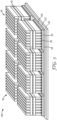
- Battery module 50 is formed by positioning a plurality of battery cells 10 on first base plate 20.
- any known battery cell may be used including, e.g., hard case prismatic cells or pouch cells.
- the number, dimensions, and positions of the cells associated with a particular battery module may be adjusted to meet specific design and performance requirements.
- the constructions and designs of the base plate are well-known, and any base plate (typically metal base plates) suitable for the intended application may be used.
- Battery cells 10 are connected to first base plate 20 through first layer 30 of a first thermally conductive gap filler according to any of the embodiments of the present disclosure.
- thermally conductive gap fillers comprise an aziridino-functional polyether polymer and thermally-conductive fillers.
- First layer 30 of the first thermally conductive gap filler provides first level thermal management where the battery cells are assembled in a battery module.
- a voltage difference e.g., a voltage difference of up to 2.3 Volts
- breakthrough voltage may be an important safety feature for this layer. Therefore, in some embodiments, electrically insulating fillers like ceramics (typically alumina and boron nitride) may be preferred for use in the first thermally conductive gap filler.
- layer 30 may comprise a discrete pattern of the first thermally conductive gap filler applied to first surface 22 of first base plate 20, as shown in FIG. 1 .
- a pattern of gap filler corresponding to the desired lay-out of the battery cells may be applied, e.g., robotically applied, to the surface of the base plate.
- the first layer may be formed as a coating of the first thermally conductive gap filler covering all or substantially all of the first surface of the first base plate.
- the first layer may be formed by applying the first thermally conductive gap filler directly to the battery cells and then mounting them to the first surface of the first base plate.
- the first thermally conductive gap filler is not yet cured. This allows the individual battery cells to be positioned and repositioned as needed to achieve the desired layout.
- the rheological behavior of the uncured thermally conductive gap filler aides in allowing the gap filler to flow and accommodate the dimensional variations (tolerances) within and between individual battery cells.
- the gap filler may need to accommodate dimensional variations of up to 2 mm, up to 4 mm, or even more. Therefore, in some embodiments, the first layer of the first thermally conductive gap filler is at least 0.05 mm thick, e.g., at least 0.1 mm, or even at least 0.5 mm thick. Higher breakthrough voltages may require thicker layers depending on the electrical properties of the gap filler, e.g., in some embodiments, at least 1, at least 2, or even at least 3 mm thick. Generally, to maximize heat conduction through the gap filler and to minimize cost, the gap filler layer should be as thin as possible, while still ensure good contact with the heat sink. Therefore, in some embodiments, the first layer is no greater than 5 mm thick, e.g., no greater than 4 mm thick, or even no greater than 2 mm thick.
- the first thermally conductive gap filler exhibits shear thinning behavior in its uncured state. This can assist in the uniform application of the gap filler by, e.g., spray, jet, or roll coating. In particular, this rheological behavior may aide in allowing the gap filler to be applied using conventional robotic techniques. Shear thinning may also aide in easing the positioning of the individual battery cells by allowing easier movement while still holding the cells in place before final cure is achieved.
- the battery cells are held more firmly in-place.
- the battery cells are finally fixed in their desired position, as illustrated in FIG. 2 . Additional elements, such as bands 40 may be used to secure the cells for transport and further handling.
- the thermally conductive gap filler cures at typical application conditions, e.g., without the need for elevated temperatures or actinic radiation (e.g., ultraviolet light).
- the first thermally conductive gap filler cures at no greater than 30 °C, e.g., no greater than 25 °C, or even no greater than 20 °C.
- the time to cure is no greater than 60 minutes, e.g., no greater than 40 minutes, or even no greater than 20 minutes.
- very rapid cure e.g., less than 5 minutes or even less than 1 minute
- an open time of at least 5 minutes, e.g., at least 10 minutes, or even at least 15 minutes may be desirable to allow time for positioning and repositioning of the battery cells.
- a plurality of battery modules 50 are assembled to form battery subunit 100.
- the number, dimensions, and positions of the modules associated with a particular battery subunit may be adjusted to meet specific design and performance requirements.
- the constructions and designs of the second base plate are well-known, and any base plate (typically metal base plates) suitable for the intended application may be used.
- thermally conductive gap fillers comprise an aziridino-functional polyether polymer and thermally-conductive fillers.
- Second layer 130 of a second thermally conductive gap filler is positioned between second surface 24 of first base plate 20 (see FIGS. 1 and 2 ) and first surface 122 of second base plate 120.
- the second thermally conductive gap filler provides second level thermal management where the battery modules are assembled into battery subunits. At this level, breakthrough voltage may not be a requirement. Therefore, in some embodiments, electrically conductive fillers such as graphite and metallic fillers may be used or alone or in combinations with electrically insulating fillers like ceramics.
- the second layer 130 may be formed as coating of the second thermally conductive gap filler covering all or substantially all of first surface 122 of second base plate 120, as shown in FIG. 3 .
- the second layer may comprise a discrete pattern of the second thermally conductive gap filler applied to the surface of the second base plate. For example, a pattern of gap filler corresponding to the desired lay-out of the battery modules may be applied, e.g., robotically applied, to the surface of the second base plate.
- the second layer may be formed by applying the second thermally conductive gap filler directly to second surface 24 of first base plate 20 (see FIGS. 1 and 2 ) and then mounting the modules to first surface 122 of second base plate 120.
- the second thermally conductive gap filler is not yet cured. This allows the individual battery modules to be positioned and repositioned as needed to achieve the desired layout. As the second thermally conductive gap filler continues to cure, the battery modules are held more firmly in-place, until they are finally fixed in their desired position.
- the second thermally conductive gap filler exhibits shear thinning behavior in its uncured state. This can assist in the uniform application of the gap filler to the surface of the second base plate by, e.g., spray, jet, or roll coating. In particular, this rheological behavior may aide in allowing the gap filler to be applied the surface of the second base plate using conventional robotic techniques, or may aide in easing the positioning of the individual battery modules by allowing easier movement while still holding the modules in place before final cure is achieved.
- the layer of second thermally conductive gap filler is at least 0.05 mm think, e.g., at least 0.1, or even at least 0.5 mm thick.
- thicker layers may be required to provide the required mechanical strength, e.g., in some embodiments, at least 1, at least 2, or even at least 3 mm thick.
- the second layer should be as thin as possible, while still ensure good contact. Therefore, in some embodiments, the second layer is no greater than 5 mm thick, e.g., no greater than 4 mm thick, or even no greater than 2 mm thick.
- the second thermally conductive gap filler cures at typical application conditions, i.e., without the need for elevated temperatures or actinic radiation (e.g., ultraviolet light).
- the second thermally conductive gap filler cures at no greater than 30 °C, e.g., no greater than 25 °C, or even no greater than 20 °C.
- the time to cure is no greater than 60 minutes, e.g., no greater than 40 minutes, or even no greater than 20 minutes. Although very rapid cure (e.g., less than 5 minutes or even less than 1 minute) may be suitable for some applications, in some embodiments, an open time of at least 5 minutes, e.g., at least 10 minutes, or even at least 15 minutes may be desirable to allow time for positioning and repositioning of the battery modules.
- the assembled battery subunits may be combined to form further structures.
- battery modules may be combined with other elements such as battery control units to form a battery system, e.g., battery systems used in electric vehicles.
- additional layers of thermally conductive gap filler according to the present disclosure may be used in the assembly of such battery systems.
- thermally conductive gap filler according to the present disclosure may be used to mount and help cool the battery control unit.
- gap fillers provide desirable thermal and mechanical properties.
- the thermally-conductive gap fillers provide the desired level of thermal conductivity.
- a thermal conductivity of at least 1 W/mK (Watt per meter x Kelvin) may be desired, e.g., at least 1.5, at least 2, or even at least 2.5 W/mK.
- Even higher thermal conductivities may be desirable for the second level thermal management, e.g., at least 5 W/mk (e.g., at least 10 or even 15 W/mK).
- the selection and loading levels of the thermally conductive fillers are used to control the thermal conductivity.
- the selection of the polymer, including its rheological properties has a significant influence on the maximum achievable filler loading, and thus, the maximum achievable thermal conductivity.
- filler loadings of at least 30% by volume (vol.%), e.g., at least 40, or even at least 50 vol.% may be needed to achieve the desired thermal conductivity.
- thermally conductive fillers may be used, although electrically insulting fillers may be preferred where breakthrough voltage is a concern.
- Suitable electrically insulating, thermally conductive fillers include ceramics such as oxides, hydrates, silicates, borides, carbides, and nitrides.
- Suitable oxides include, e.g., silicon oxide and aluminum oxide.
- Suitable nitrides include, e.g., boron nitride.
- Suitable carbides include, e.g., silicon carbide.
- Other thermally conducting fillers include graphite and metals such as aluminum. Through-plane thermal conductivity is most critical in this application. Therefore, in some embodiments, generally symmetrical (e.g., spherical fillers) may be preferred, as asymmetrical fibers, flakes, or plates may tend to align in the in-plane direction.
- the thermally conductive fillers may be surface-treated or coated. Generally, any known surface treatments and coatings may be suitable.
- the selection of the polymer used to form the thermally-conducting gap filler plays a critical role in achieving the desired end-use performance requirements.
- the polymer plays a major role in controlling one or more of:
- the gap filler may need to provide stability in the range of - 40°C to 85 °C.
- the gap filler may further need to provide the desired deformation and recovery (e.g., low hardness) needed to withstand charging and discharging processes, as well as travel over varying road conditions.
- a Shore A hardness of no greater than 80, e.g., no greater than 70, or even no greater than 50 may be desired.
- the polymer should permit subsequent cure and bonding of additional layers, e.g., multiple layers of the same thermally-conducting gap filler.
- aziridino-functional polyether polymers provide a good balance of the desired properties.
- the polyether backbone provides both the desired uncured rheological properties as well as the desired cured mechanical and thermal properties, while allowing the necessary filler loadings to achieve adequate thermal conductivity.
- the aziridino functionality provides the desired cure behavior.
- Polyethers are generally known and the specific choice of polyether may depend on a variety of factors including the desired thermal and mechanical properties.
- Polyether generally refer to polymers having ether groups in their main chain. Suitable polyethers for use in the present disclosure include aliphatic polyethers. Such polyethers include straight and branched alkylene groups connected through the ether linkages. In some embodiments, the alkylene groups have 1 to 6 carbon atoms, e.g., 2 to 4 carbon atoms.
- the polyether is a homopolymer having repeat units of only a single alkylene group.
- the polyether is a copolymer of two or more alkylene groups.
- Such copolymers may be block copolymers, multi-block copolymers, alternating copolymers, or random copolymers.
- Such copolymers can show homogenous or gradient distributions of the monomers along the chain.
- the copolymers may contain blocks of homopolymer, blocks of random copolymers, blocks of alternating copolymers, and combinations thereof.
- the polyether blocks may be selected from polytetrahydrofuran, polypropylene oxide, polyethylene oxide, copolymers of ethyleneoxide and tetrahydrofuran, copolymers of propylene oxide and tetrahydrofuran, copolymers of ethylene oxide and propylene oxide, block copolymers of ethylene oxide and propylene oxide and random terpolymers of ethylene oxide, propylene oxide, and tetrahydrofuran.
- the polyethers may be prepared by the polymerization or copolymerization of cyclic ethers.
- Suitable cyclic ethers include, e.g., oxirane, alkyl-oxiranes (e.g., methyl-oxirane and ethyl-oxirane), substituted alkyl-oxiranes (e.g., chloro-methyl-oxirane, hydoxymethyl-oxiranes, alkoxyalkyl-oxiranes, and phenoxyalkyl-oxiranes), oxetane, tetrahydrofurane, and substituted tetrahydrofuranes, e.g., 3-methyl-tetrahydrofurane.
- a polyether prepolymer of the general formula consisting of one, two three or more different repeating units is: wherein: B is O or NR4;
- Integers m, n, and o may be independently selected and may be zero, provided that at least one is not zero, and these values are selected such that the resulting molecular weight meets the desired conditions.
- n, m, and o are selected such that the molecular weight is at least 2000 grams per mole, e.g., at least 3000, or even at least 5000 grams per mole.
- n, m, and o are selected such that the molecular weight is no greater than 20,000 grams per mole, e.g., no greater 15,000 grams per mole, e.g., no greater than 10,000 grams per mole.
- n, m, and o are selected such that the molecular weight is between 2000 and 20,000 grams per mole, e.g., between 3000 and 15,000 grams per mole, between 3000 and 10,000 grams per mole, where all ranges are inclusive of the end points.
- Aziridino functional (sometime referred to as aziridinyl functional) organic moieties are attached to backbones containing oxygen atoms in the main chain.
- R1 is H-, Methyl-, Ethyl-, Ethenyl-, Propenyl-, Phenyl-, or Tolyl-.
- the aziridino groups may attached to the polyether backbone through any of a variety of divalent linking groups. For example, they may be attached through carbonate-, urethane-, urea-, ester- ether- or other linkages.
- the resulting aziridino-functional polyether has the general formula: wherein: R1 is a covalent bond or an alkylene group; each R2 is independently selected from the group consisting of alkylene groups; and n is an integer selected to achieve the desired molecular weight of the polyether.
- n is selected such that the molecular weight is at least 2000 grams per mole, e.g., at least 3000, or even at least 5000 grams per mole. n is selected such that the molecular weight is no greater than 10,000 grams per mole. In some embodiments, n is selected such that the molecular weight is between 3000 and 10,000 grams per mole, where all ranges are inclusive of the end points.
- R1 is an alkylene group having 1 to 4 carbon atoms, e.g., 2 carbon atoms.
- the alkylene groups may be straight chain or branched alkylene groups.
- each R2 is independently selected from the group consisting of straight chain and branched alkylene groups having 1 to 6 carbon atoms, e.g., 2 to 4 carbon atoms.
- the R2 groups comprise alkylene groups having three carbon atoms.
- each of the R2 groups is an alkylene groups having three carbon atoms.
- the aziridino-functional polyether has the general formula: wherein R1 and n are as previously described.
- R1 is an alkylene group having two carbon atoms.
- the R2 groups are selected to produce a copolymer, e.g., a random copolymer of two or more different alkylene groups connected by the ether linkages.
- such copolymers include both alkylene groups having two carbon atoms and alkylene groups having four carbon atoms.
- the aziridino-functional polyether has the general formula: wherein: a and b are integers, and the sum of a and b equals n, which has been described herein.
- the R1 groups are show as ethylene groups, other alkylene groups may be used. It is understood that the polymer can be a block copolymer, a random copolymer or any other arrangement of repeating units.
- the thermally-conductive gap fillers of the present disclosure comprise a single aziridino-functional polyether. In some embodiments, two or more different aziridino-functional polyethers may be combined.
- any of the thermally-conductive gap fillers of the present disclosure may include other additives.
- the gap fillers further comprise at least one of a plasticizer and a flame retardant.
- a plasticizer may be used.
- polyether plasticizers may be used.
- any known flame retardants may be used alone or in combination.
- the thermally-conductive gap fillers of the present disclosure include an initiator.
- the initiator is selected to initiate the reaction of the aziridino-groups and any initiator suitable for that purpose may be used.
- acids are known to initiate such reactions.
- the initiator is a tosylate, e.g., zinc toslylate having the general formula: referred to herein as Zn-TOS.
- two-part systems may be preferred.
- the initiator is in one part, often referred to as Part A
- the aziridino-function polyether polymer is in the second part, often referred to as Part B.
- the non-reactive components may be distributed as desired between Parts A and B.
- all of the thermally-conductive fillers are in Part B with the polyether polymer.
- thermally-conductive fillers may be present in both Parts A and B.
- Samples of a thermally conductive gap filler were prepared by combining an aziridino-functional polyether polymer, a thermally conductive filler, and an initiator formulation.
- the first aziridino-functional polyether polymer (AZ-PE-1) corresponded to the following structure: wherein: a was 73 and b was 16.
- Mn molecular weight
- the viscosity measured at 23 °C was 26 Pa•seconds.
- This polymer may be obtained as PREGON aziridino-functional polyether from 3M Company.
- the second aziridino-functional polyether polymer corresponded to the following structure: with a calculated molecular weight (Mn) of 4400 Daltons.
- Mn molecular weight
- the viscosity measured at 23 °C was 2.2 Pa•seconds.
- This polymer may be obtained as A-PREGON-4 aziridino-functional polyether from 3M Company.
- the third aziridino-functional polyether polymer (AZ-PE-3) corresponded to the following structure: with a calculated molecular weight (Mn) of 8400 Daltons. The viscosity measured at 23 °C was 4.5 Pa•seconds.
- This polymer may be obtained as A-PREGON-8 aziridino-functional polyether from 3M Company.
- Thermally conductive fillers TCF Chemistry Surface-treated Tradename (Source) A aluminum oxide yes MARTOXID TM 2250 (Huber-Martinswerke) B aluminum trihydrate yes APYRAL 2E (Nabaltec) C aluminum oxide yes SILATHERM PLUS 1443-024 SST (Quarzwerke) D aluminum silicate yes SILATHERM 1360-506 SST (Quarzwerke) E aluminum oxide (spherical) yes A-Sample 212 (Showa Denko) F boron nitride no BN-Cooling Filler Flakes 70/500 (3M Company) G graphite no GraphTherm 23/99.9 (G. Luh GmbH)
- Part A is the initiator formulation.
- Part B contained the aziridino-functional polyether polymer and the thermally conductive fillers.
- Part A was prepared by combining 18 grams of p-Toluene sulfonic acid Monohydrate; 11 grams of water, and 40.5 grams of polypropylenglycol (ACCLAIM 4200, from Covestro with a reported molecular weight of 4000 grams per mole). This solution was mixed for 20 minutes at room temperature and then heated to 60 °C. While stirring at 60 °C, the filler (24.5 grams of fused silica (3M TM Fused Silica 20, from 3M Company) and zinc oxide (6 grams) were added in two steps. First, half of the filler was added and the solution was stirred for ten minutes. Next, the zinc oxide and the remaining half of the filler were added, and composition was stirred for an additional five minutes. The final solution was allowed to cool to room temperature while stirring, resulting in zinc tosylate initiator in a paste containing the water, polypropylenglycol, and filler
- Part B for Examples EX-1 to EX-12 was prepared by mixing together 15 grams of the first aziridino-functional polyether polymer (AZ-PE-1) with 5 grams of plasticizer (a low molecular weight, cyclic, polyether), and various thermally-conductive fillers as listed in Table 2.
- Table 2 Summary of Part B compositions prepared with the AZ-PE-1 polyether. Ex. Filler 1 Filler 2 Filler total TCF grams vol. % TCF grams vol.
- cured samples were prepared by adding 7.5 g of Part A (the initiator paste) to Part B. The composition was mixed then coated between two release liners with a knife coater to a thickness of one millimeter (mm) and cured at room temperature. Curing was complete in about 5 to 10 minutes. However, the samples were allowed to dwell overnight prior to testing.
- Part B of Examples EX-13 to EX-20 were prepared by combining 20 grams of the second aziridino-functional polyether polymer (AZ-PE-2) and various thermally-conductive fillers as listed in Table 3.
- Table 3 Summary of Part B compositions prepared with the AZ-PE-2 polyether. Ex. TCF grams vol. % EX-13 A 80 44 EX-14 A 110 50 EX-15 C 80 44 EX-16 C 110 50 EX-17 C 140 55 EX-18 E 80 44 EX-19 E 240 63 EX-20 E 240 63
- cured samples were prepared by adding 7.5 g of Part A (the initiator paste) to Part B. The composition was mixed then coated between two release liners with a knife coater to a thickness of one millimeter (mm) and cured at room temperature. Curing was complete in about 5 to 10 minutes. However, the samples were allowed to dwell overnight prior to testing.
- Part B of Examples EX-21 and EX-22 were prepared by combining 20 grams of the third aziridino-functional polyether polymer (AZ-PE-3) with thermally-conductive filler TCF-E.
- EX-21 contained 180 grams (59 volume %) of TCF-E.
- EX-22 contained 240 grams (63 volume percent) of TCF-E.
- cured samples were prepared by adding 7.5 g of Part A (the initiator paste) to Part B. The composition was mixed then coated between two release liners with a knife coater to a thickness of one millimeter (mm) and cured at room temperature. Curing was complete in about 5 to 10 minutes. However, the samples were allowed to dwell overnight prior to testing.
- Thermal Conductivity Test Samples 10 mm by 10 mm were cut from the cured films.
- the thermal diffusivity (a) of the cured samples was measured in square millimeters per second according to ASTM E1461/DIN EN 821 (2013) on a Netzsch-LFA HyperFlash device (Netzsch, Selb, Germany).
- the thermal capacity (Cp) was calculated in Joules per gram per Kelvin using the Netzsch-LFA HyperFlash in combination with a standard sample (Polyceram).
- the samples were tested according to ASTM D2240 (2015) with a durometer Type A.
- the sample size was at least 10 mm by 10 mm with a thickness of 6 mm.
- the load on the indentor was 12.5 N.
Landscapes
- Chemical & Material Sciences (AREA)
- Chemical Kinetics & Catalysis (AREA)
- General Chemical & Material Sciences (AREA)
- Electrochemistry (AREA)
- Engineering & Computer Science (AREA)
- Manufacturing & Machinery (AREA)
- Health & Medical Sciences (AREA)
- Medicinal Chemistry (AREA)
- Polymers & Plastics (AREA)
- Organic Chemistry (AREA)
- Compositions Of Macromolecular Compounds (AREA)
- Adhesives Or Adhesive Processes (AREA)
- Secondary Cells (AREA)
- Battery Mounting, Suspending (AREA)
- Polyethers (AREA)
Priority Applications (6)
| Application Number | Priority Date | Filing Date | Title |
|---|---|---|---|
| EP17152180.0A EP3352290B1 (en) | 2017-01-19 | 2017-01-19 | Aziridino-functional polyether thermally-conductive gap filler |
| KR1020197023755A KR20190103380A (ko) | 2017-01-19 | 2018-01-15 | 아지리디노-작용성 폴리에테르 열전도성 간극 충전제 |
| US16/479,032 US11171370B2 (en) | 2017-01-19 | 2018-01-15 | Aziridino-functional polyether thermally-conductive gap filler |
| CN201880007336.7A CN110214394B (zh) | 2017-01-19 | 2018-01-15 | 氮丙啶基官能聚醚导热间隙填料 |
| JP2019538618A JP7282034B2 (ja) | 2017-01-19 | 2018-01-15 | アジリジノ官能性ポリエーテル熱伝導性ギャップフィラー |
| PCT/IB2018/050238 WO2018134721A1 (en) | 2017-01-19 | 2018-01-15 | Aziridino-functional polyether thermally-conductive gap filler |
Applications Claiming Priority (1)
| Application Number | Priority Date | Filing Date | Title |
|---|---|---|---|
| EP17152180.0A EP3352290B1 (en) | 2017-01-19 | 2017-01-19 | Aziridino-functional polyether thermally-conductive gap filler |
Publications (2)
| Publication Number | Publication Date |
|---|---|
| EP3352290A1 EP3352290A1 (en) | 2018-07-25 |
| EP3352290B1 true EP3352290B1 (en) | 2024-07-17 |
Family
ID=57960238
Family Applications (1)
| Application Number | Title | Priority Date | Filing Date |
|---|---|---|---|
| EP17152180.0A Active EP3352290B1 (en) | 2017-01-19 | 2017-01-19 | Aziridino-functional polyether thermally-conductive gap filler |
Country Status (6)
| Country | Link |
|---|---|
| US (1) | US11171370B2 (enExample) |
| EP (1) | EP3352290B1 (enExample) |
| JP (1) | JP7282034B2 (enExample) |
| KR (1) | KR20190103380A (enExample) |
| CN (1) | CN110214394B (enExample) |
| WO (1) | WO2018134721A1 (enExample) |
Families Citing this family (30)
| Publication number | Priority date | Publication date | Assignee | Title |
|---|---|---|---|---|
| DE102017204412A1 (de) * | 2017-03-16 | 2018-09-20 | Audi Ag | Batterie für ein Kraftfahrzeug und Kraftfahrzeug |
| EP3570296A1 (en) * | 2018-05-14 | 2019-11-20 | 3M Innovative Properties Company | Thermally-conductive gap filler |
| DE112019002449T5 (de) * | 2018-05-14 | 2021-02-11 | 3M Innovative Properties Company | Wärmeleitfähige spaltfüllstoffmaterialien mit kontrollierter härtung |
| EP3650486A1 (en) * | 2018-11-06 | 2020-05-13 | 3M Innovative Properties Company | Acid-curable composition |
| EP3650485A1 (en) * | 2018-11-06 | 2020-05-13 | 3M Innovative Properties Company | Acid-curable composition |
| JP7738478B2 (ja) | 2018-11-16 | 2025-09-12 | スリーエム イノベイティブ プロパティズ カンパニー | 硬化性組成物、それからなる物品、並びにその製造方法及び使用 |
| EP3719088B1 (en) * | 2019-04-02 | 2024-09-04 | 3M Innovative Properties Company | Curable precursor of a structural adhesive composition |
| EP3719090A1 (en) * | 2019-04-02 | 2020-10-07 | 3M Innovative Properties Company | Elastic one-part structural adhesive tape |
| EP3719089B1 (en) | 2019-04-02 | 2024-07-31 | 3M Innovative Properties Company | Process of manufacturing a curable precursor of a structural adhesive composition |
| KR20210000551A (ko) * | 2019-06-25 | 2021-01-05 | 주식회사 엘지화학 | 전지 팩 및 이를 포함하는 디바이스 |
| EP3819328A1 (en) | 2019-11-06 | 2021-05-12 | 3M Innovative Properties Company | Thermally-conductive curable composition |
| EP4077459B1 (en) | 2019-12-19 | 2026-04-08 | 3M Innovative Properties Company | Two-part compositions including a uretdione-containing material and inorganic filler, products, and methods |
| EP4077460B1 (en) * | 2019-12-19 | 2026-06-03 | 3M Innovative Properties Company | Polymeric material including a uretdione-containing material and inorganic filler, two-part compositions, products, and methods |
| EP3875519A1 (en) | 2020-03-03 | 2021-09-08 | 3M Innovative Properties Company | Silicone rubber foam with thermal insulation properties |
| DE102020107399A1 (de) * | 2020-03-18 | 2021-09-23 | Audi Aktiengesellschaft | Verfahren zum Herstellen einer Batterie sowie entsprechende Herstellungsvorrichtung |
| KR20220003730A (ko) | 2020-07-02 | 2022-01-11 | 주식회사 엘지에너지솔루션 | 전지 모듈, 이를 포함하는 전지팩 및 이의 제조 방법 |
| JP7837313B2 (ja) | 2020-07-28 | 2026-03-30 | スリーエム イノベイティブ プロパティズ カンパニー | 熱充填剤粒子、熱伝導性組成物、及びそれらを含むアセンブリ |
| EP4188696A1 (en) | 2020-07-31 | 2023-06-07 | 3M Innovative Properties Company | Article with thermal insulation properties |
| WO2022023902A1 (en) | 2020-07-31 | 2022-02-03 | 3M Innovative Properties Company | Construction with thermal insulation properties |
| WO2022023903A1 (en) | 2020-07-31 | 2022-02-03 | 3M Innovative Properties Company | Article with thermal insulation properties |
| WO2022084774A1 (en) | 2020-10-22 | 2022-04-28 | 3M Innovative Properties Company | Curable compositions, articles therefrom, and methods of making and using same |
| KR102922355B1 (ko) * | 2020-12-10 | 2026-02-03 | 현대자동차주식회사 | 배터리 팩 제조 방법 |
| KR102821619B1 (ko) * | 2021-01-11 | 2025-06-16 | 주식회사 엘지에너지솔루션 | 전지 모듈 및 이를 포함하는 전지팩 |
| WO2022195363A1 (en) | 2021-03-17 | 2022-09-22 | 3M Innovative Properties Company | Curable composition comprising polyaziridine and oxidized boron nitride particles, method of curing the same, and cured composition |
| WO2023058547A1 (ja) | 2021-10-04 | 2023-04-13 | 東京インキ株式会社 | 放熱性ギャップフィラー用樹脂組成物、放熱性ギャップフィラーおよび物品 |
| CN114256559B (zh) * | 2021-12-24 | 2023-05-26 | 合肥艺光高分子材料科技有限公司 | 一种应用于新能源汽车动力电池包硅胶发泡隔片 |
| DE102022102620A1 (de) | 2022-02-03 | 2023-08-03 | Webasto SE | Zellhalter zum Halten einer Mehrzahl von Batteriezellen und Fahrzeugbatterieanordnung |
| US20250375950A1 (en) * | 2022-06-21 | 2025-12-11 | 3M Innovative Properties Company | Article with pressure management and thermal insulation properties |
| WO2024211183A1 (en) * | 2023-04-03 | 2024-10-10 | Board Of Supervisors Of Louisiana State University And Agricultural And Mechanical College | Smart hybrid sealants for concrete cracks and joints, methods of making, and methods of use |
| WO2025224511A1 (en) | 2024-04-25 | 2025-10-30 | 3M Innovative Properties Company | Microsphere-containing silicone foam composites and methods of making them |
Citations (1)
| Publication number | Priority date | Publication date | Assignee | Title |
|---|---|---|---|---|
| WO2001079328A1 (de) * | 2000-04-17 | 2001-10-25 | 3M Espe Ag | Katalysatorkomponente |
Family Cites Families (29)
| Publication number | Priority date | Publication date | Assignee | Title |
|---|---|---|---|---|
| DE914325C (de) * | 1949-09-13 | 1954-07-01 | Hoechst Ag | Verfahren zur Herstellung stickstoffhaltiger Polymerisationsprodukte |
| DE1544837C3 (de) | 1963-05-29 | 1974-02-07 | Espe Pharm Praep | Verfahren zur Herstellung von Formkörpern auf der Basis von Äthyleniminverbindungen |
| DE1745810B2 (de) | 1963-05-29 | 1971-12-02 | Espe Fabrik pharmazeutischer Prapa rate GmbH, 8031 Seefeld | Verfahren zur herstellung von formkoerpern auf der basis von aethyleniminverbindungen |
| US3842019A (en) * | 1969-04-04 | 1974-10-15 | Minnesota Mining & Mfg | Use of sulfonic acid salts in cationic polymerization |
| US4167618A (en) * | 1975-04-15 | 1979-09-11 | Espe Fabrik Pharmazeutischer Praparate Gmbh | Polymerization process for aziridine compounds |
| DE2521859C3 (de) * | 1975-05-16 | 1981-11-05 | Basf Ag, 6700 Ludwigshafen | Verfahren zur Herstellung von Aziridincarbonsäureestern |
| DE3246654A1 (de) * | 1982-12-16 | 1984-06-20 | ESPE Fabrik pharmazeutischer Präparate GmbH, 8031 Seefeld | Nichtadhaesive abdruckmasse |
| DE19942459A1 (de) | 1999-09-06 | 2001-03-15 | Espe Dental Ag | Elastomermassen mit verbesserter Katalysatorkomponente |
| US6905637B2 (en) * | 2001-01-18 | 2005-06-14 | General Electric Company | Electrically conductive thermoset composition, method for the preparation thereof, and articles derived therefrom |
| DE10026852A1 (de) * | 2000-05-31 | 2001-12-13 | 3M Espe Ag | N-Alkyl-Azirdinoblock Copolymere und deren Verwendung |
| JP2002128931A (ja) | 2000-10-30 | 2002-05-09 | Sekisui Chem Co Ltd | 熱伝導性樹脂シート |
| DE10058846B4 (de) | 2000-11-28 | 2004-09-16 | 3M Espe Ag | Dentalmassen mit verringerter Temperatursensibilität |
| JP2002194232A (ja) | 2000-12-26 | 2002-07-10 | Sekisui Chem Co Ltd | 熱伝導材 |
| US6905795B2 (en) * | 2001-06-19 | 2005-06-14 | Samsung Sdi Co., Ltd. | Polymer electrolyte and a lithium secondary battery having the same |
| JP4413471B2 (ja) * | 2002-06-13 | 2010-02-10 | 三星エスディアイ株式会社 | 電解質及びリチウム二次電池 |
| JP2006328352A (ja) * | 2005-04-28 | 2006-12-07 | Idemitsu Kosan Co Ltd | 絶縁性熱伝導性樹脂組成物及び成形品並びにその製造方法 |
| EP1820815A1 (en) * | 2006-02-15 | 2007-08-22 | 3M Innovative Properties Company | Composition containing aziridino groups and use thereof |
| EP1865014A1 (en) | 2006-06-07 | 2007-12-12 | 3M Innovative Properties Company | Composition containing aziridino groups, method of production and use thereof |
| DE102008061277A1 (de) * | 2008-12-10 | 2010-06-24 | Conti Temic Microelectronic Gmbh | Energiespeicher |
| IT1392391B1 (it) * | 2008-12-19 | 2012-03-02 | Polimeri Europa Spa | Composizioni di polimeri vinilaromatici espansibili a migliorata capacita' di isolamento termico, procedimento per la loro preparazione ed articoli espansi da loro ottenuti |
| JP4848434B2 (ja) | 2009-01-30 | 2011-12-28 | 日東電工株式会社 | 熱伝導性粘着剤組成物および熱伝導性粘着シート |
| JP5740103B2 (ja) | 2009-10-19 | 2015-06-24 | 日東電工株式会社 | 熱伝導部材、及びそれを用いた組電池装置 |
| WO2011108515A1 (ja) | 2010-03-02 | 2011-09-09 | アドバンスト・ソフトマテリアルズ株式会社 | 架橋ポリロタキサンを有する材料、及びその製造方法 |
| US8658725B2 (en) | 2010-03-02 | 2014-02-25 | Advanced Softmaterials Inc. | Material having cross-linked polyrotaxane, and method for producing same |
| US20120129990A1 (en) * | 2010-07-21 | 2012-05-24 | Mitsubishi Engineering-Plastics Corporation | High-thermal-conductivity polycarbonate resin composition and formed product |
| JP6020942B2 (ja) | 2011-01-07 | 2016-11-02 | 株式会社Gsユアサ | 蓄電装置 |
| JP2013166277A (ja) | 2012-02-15 | 2013-08-29 | Nitto Denko Corp | 熱伝導性を有する伸長性有機基材 |
| JP2014216298A (ja) | 2013-04-30 | 2014-11-17 | 日立オートモティブシステムズ株式会社 | 電池モジュール |
| JP6206754B2 (ja) | 2013-06-12 | 2017-10-04 | ナガセケムテックス株式会社 | 熱伝導性樹脂シート |
-
2017
- 2017-01-19 EP EP17152180.0A patent/EP3352290B1/en active Active
-
2018
- 2018-01-15 KR KR1020197023755A patent/KR20190103380A/ko not_active Withdrawn
- 2018-01-15 CN CN201880007336.7A patent/CN110214394B/zh active Active
- 2018-01-15 US US16/479,032 patent/US11171370B2/en active Active
- 2018-01-15 WO PCT/IB2018/050238 patent/WO2018134721A1/en not_active Ceased
- 2018-01-15 JP JP2019538618A patent/JP7282034B2/ja active Active
Patent Citations (1)
| Publication number | Priority date | Publication date | Assignee | Title |
|---|---|---|---|---|
| WO2001079328A1 (de) * | 2000-04-17 | 2001-10-25 | 3M Espe Ag | Katalysatorkomponente |
Also Published As
| Publication number | Publication date |
|---|---|
| WO2018134721A1 (en) | 2018-07-26 |
| JP2020511732A (ja) | 2020-04-16 |
| US11171370B2 (en) | 2021-11-09 |
| US20190393574A1 (en) | 2019-12-26 |
| EP3352290A1 (en) | 2018-07-25 |
| JP7282034B2 (ja) | 2023-05-26 |
| CN110214394A (zh) | 2019-09-06 |
| CN110214394B (zh) | 2022-10-14 |
| KR20190103380A (ko) | 2019-09-04 |
Similar Documents
| Publication | Publication Date | Title |
|---|---|---|
| EP3352290A1 (en) | Aziridino-functional polyether thermally-conductive gap filler | |
| US20210189211A1 (en) | Thermally-conductive gap filler | |
| US20210189212A1 (en) | Control cure thermally-conductive gap filler materials | |
| US20190016938A1 (en) | Method for producing insulating heat dissipation sheet | |
| WO2020191579A1 (en) | Curable compositions, articles therefrom, and methods of making and using same | |
| KR20200040787A (ko) | 복합 부재 | |
| US20190288247A1 (en) | Semi-finished product for contacting components | |
| JP7543909B2 (ja) | 樹脂組成物、樹脂硬化物および複合成形体 | |
| KR101589312B1 (ko) | 열압착용 실리콘 고무 시트 | |
| KR20200123085A (ko) | 열전도성 습기 경화형 수지 조성물 및 그 경화물 | |
| US20240199934A1 (en) | Thermally conductive composite sheet and method for mounting heat-generating electronic component | |
| EP3310142A1 (en) | Device heat dissipation method | |
| US20240010814A1 (en) | Resin composition, cured product sheet, composite molded body, and semiconductor device | |
| US20210403646A1 (en) | Acid-curable composition | |
| US20250101227A1 (en) | Thermally conductive silicone composition | |
| KR20250113506A (ko) | 열전도성 실리콘 수지 조성물 및 열전도 부재 | |
| CN113166405A (zh) | 可酸固化组合物 | |
| EP4513549A1 (en) | Insulating heat transfer sheet | |
| JP2026021971A (ja) | 硬化物、複合成形体、半導体デバイス及び複合成形体の製造方法 |
Legal Events
| Date | Code | Title | Description |
|---|---|---|---|
| PUAI | Public reference made under article 153(3) epc to a published international application that has entered the european phase |
Free format text: ORIGINAL CODE: 0009012 |
|
| STAA | Information on the status of an ep patent application or granted ep patent |
Free format text: STATUS: THE APPLICATION HAS BEEN PUBLISHED |
|
| AK | Designated contracting states |
Kind code of ref document: A1 Designated state(s): AL AT BE BG CH CY CZ DE DK EE ES FI FR GB GR HR HU IE IS IT LI LT LU LV MC MK MT NL NO PL PT RO RS SE SI SK SM TR |
|
| AX | Request for extension of the european patent |
Extension state: BA ME |
|
| STAA | Information on the status of an ep patent application or granted ep patent |
Free format text: STATUS: REQUEST FOR EXAMINATION WAS MADE |
|
| 17P | Request for examination filed |
Effective date: 20190114 |
|
| RBV | Designated contracting states (corrected) |
Designated state(s): AL AT BE BG CH CY CZ DE DK EE ES FI FR GB GR HR HU IE IS IT LI LT LU LV MC MK MT NL NO PL PT RO RS SE SI SK SM TR |
|
| STAA | Information on the status of an ep patent application or granted ep patent |
Free format text: STATUS: EXAMINATION IS IN PROGRESS |
|
| 17Q | First examination report despatched |
Effective date: 20201215 |
|
| GRAP | Despatch of communication of intention to grant a patent |
Free format text: ORIGINAL CODE: EPIDOSNIGR1 |
|
| STAA | Information on the status of an ep patent application or granted ep patent |
Free format text: STATUS: GRANT OF PATENT IS INTENDED |
|
| RIC1 | Information provided on ipc code assigned before grant |
Ipc: H01M 50/293 20210101ALI20240116BHEP Ipc: H01M 50/209 20210101ALI20240116BHEP Ipc: H01M 10/653 20140101ALI20240116BHEP Ipc: H01M 10/625 20140101AFI20240116BHEP |
|
| INTG | Intention to grant announced |
Effective date: 20240208 |
|
| GRAS | Grant fee paid |
Free format text: ORIGINAL CODE: EPIDOSNIGR3 |
|
| GRAA | (expected) grant |
Free format text: ORIGINAL CODE: 0009210 |
|
| STAA | Information on the status of an ep patent application or granted ep patent |
Free format text: STATUS: THE PATENT HAS BEEN GRANTED |
|
| AK | Designated contracting states |
Kind code of ref document: B1 Designated state(s): AL AT BE BG CH CY CZ DE DK EE ES FI FR GB GR HR HU IE IS IT LI LT LU LV MC MK MT NL NO PL PT RO RS SE SI SK SM TR |
|
| REG | Reference to a national code |
Ref country code: GB Ref legal event code: FG4D |
|
| REG | Reference to a national code |
Ref country code: CH Ref legal event code: EP |
|
| REG | Reference to a national code |
Ref country code: DE Ref legal event code: R096 Ref document number: 602017083313 Country of ref document: DE |
|
| P01 | Opt-out of the competence of the unified patent court (upc) registered |
Free format text: CASE NUMBER: APP_38733/2024 Effective date: 20240627 |
|
| REG | Reference to a national code |
Ref country code: IE Ref legal event code: FG4D |
|
| REG | Reference to a national code |
Ref country code: LT Ref legal event code: MG9D |
|
| REG | Reference to a national code |
Ref country code: NL Ref legal event code: MP Effective date: 20240717 |
|
| PG25 | Lapsed in a contracting state [announced via postgrant information from national office to epo] |
Ref country code: PT Free format text: LAPSE BECAUSE OF FAILURE TO SUBMIT A TRANSLATION OF THE DESCRIPTION OR TO PAY THE FEE WITHIN THE PRESCRIBED TIME-LIMIT Effective date: 20241118 |
|
| REG | Reference to a national code |
Ref country code: AT Ref legal event code: MK05 Ref document number: 1705008 Country of ref document: AT Kind code of ref document: T Effective date: 20240717 |
|
| PG25 | Lapsed in a contracting state [announced via postgrant information from national office to epo] |
Ref country code: NL Free format text: LAPSE BECAUSE OF FAILURE TO SUBMIT A TRANSLATION OF THE DESCRIPTION OR TO PAY THE FEE WITHIN THE PRESCRIBED TIME-LIMIT Effective date: 20240717 |
|
| PG25 | Lapsed in a contracting state [announced via postgrant information from national office to epo] |
Ref country code: PT Free format text: LAPSE BECAUSE OF FAILURE TO SUBMIT A TRANSLATION OF THE DESCRIPTION OR TO PAY THE FEE WITHIN THE PRESCRIBED TIME-LIMIT Effective date: 20241118 Ref country code: NL Free format text: LAPSE BECAUSE OF FAILURE TO SUBMIT A TRANSLATION OF THE DESCRIPTION OR TO PAY THE FEE WITHIN THE PRESCRIBED TIME-LIMIT Effective date: 20240717 |
|
| PG25 | Lapsed in a contracting state [announced via postgrant information from national office to epo] |
Ref country code: NO Free format text: LAPSE BECAUSE OF FAILURE TO SUBMIT A TRANSLATION OF THE DESCRIPTION OR TO PAY THE FEE WITHIN THE PRESCRIBED TIME-LIMIT Effective date: 20241017 |
|
| PG25 | Lapsed in a contracting state [announced via postgrant information from national office to epo] |
Ref country code: FI Free format text: LAPSE BECAUSE OF FAILURE TO SUBMIT A TRANSLATION OF THE DESCRIPTION OR TO PAY THE FEE WITHIN THE PRESCRIBED TIME-LIMIT Effective date: 20240717 Ref country code: PL Free format text: LAPSE BECAUSE OF FAILURE TO SUBMIT A TRANSLATION OF THE DESCRIPTION OR TO PAY THE FEE WITHIN THE PRESCRIBED TIME-LIMIT Effective date: 20240717 Ref country code: GR Free format text: LAPSE BECAUSE OF FAILURE TO SUBMIT A TRANSLATION OF THE DESCRIPTION OR TO PAY THE FEE WITHIN THE PRESCRIBED TIME-LIMIT Effective date: 20241018 |
|
| PG25 | Lapsed in a contracting state [announced via postgrant information from national office to epo] |
Ref country code: BG Free format text: LAPSE BECAUSE OF FAILURE TO SUBMIT A TRANSLATION OF THE DESCRIPTION OR TO PAY THE FEE WITHIN THE PRESCRIBED TIME-LIMIT Effective date: 20240717 |
|
| PG25 | Lapsed in a contracting state [announced via postgrant information from national office to epo] |
Ref country code: LV Free format text: LAPSE BECAUSE OF FAILURE TO SUBMIT A TRANSLATION OF THE DESCRIPTION OR TO PAY THE FEE WITHIN THE PRESCRIBED TIME-LIMIT Effective date: 20240717 |
|
| PG25 | Lapsed in a contracting state [announced via postgrant information from national office to epo] |
Ref country code: IS Free format text: LAPSE BECAUSE OF FAILURE TO SUBMIT A TRANSLATION OF THE DESCRIPTION OR TO PAY THE FEE WITHIN THE PRESCRIBED TIME-LIMIT Effective date: 20241117 Ref country code: AT Free format text: LAPSE BECAUSE OF FAILURE TO SUBMIT A TRANSLATION OF THE DESCRIPTION OR TO PAY THE FEE WITHIN THE PRESCRIBED TIME-LIMIT Effective date: 20240717 |
|
| PG25 | Lapsed in a contracting state [announced via postgrant information from national office to epo] |
Ref country code: HR Free format text: LAPSE BECAUSE OF FAILURE TO SUBMIT A TRANSLATION OF THE DESCRIPTION OR TO PAY THE FEE WITHIN THE PRESCRIBED TIME-LIMIT Effective date: 20240717 |
|
| PG25 | Lapsed in a contracting state [announced via postgrant information from national office to epo] |
Ref country code: ES Free format text: LAPSE BECAUSE OF FAILURE TO SUBMIT A TRANSLATION OF THE DESCRIPTION OR TO PAY THE FEE WITHIN THE PRESCRIBED TIME-LIMIT Effective date: 20240717 Ref country code: RS Free format text: LAPSE BECAUSE OF FAILURE TO SUBMIT A TRANSLATION OF THE DESCRIPTION OR TO PAY THE FEE WITHIN THE PRESCRIBED TIME-LIMIT Effective date: 20241017 |
|
| PG25 | Lapsed in a contracting state [announced via postgrant information from national office to epo] |
Ref country code: RS Free format text: LAPSE BECAUSE OF FAILURE TO SUBMIT A TRANSLATION OF THE DESCRIPTION OR TO PAY THE FEE WITHIN THE PRESCRIBED TIME-LIMIT Effective date: 20241017 Ref country code: PL Free format text: LAPSE BECAUSE OF FAILURE TO SUBMIT A TRANSLATION OF THE DESCRIPTION OR TO PAY THE FEE WITHIN THE PRESCRIBED TIME-LIMIT Effective date: 20240717 Ref country code: NO Free format text: LAPSE BECAUSE OF FAILURE TO SUBMIT A TRANSLATION OF THE DESCRIPTION OR TO PAY THE FEE WITHIN THE PRESCRIBED TIME-LIMIT Effective date: 20241017 Ref country code: LV Free format text: LAPSE BECAUSE OF FAILURE TO SUBMIT A TRANSLATION OF THE DESCRIPTION OR TO PAY THE FEE WITHIN THE PRESCRIBED TIME-LIMIT Effective date: 20240717 Ref country code: IS Free format text: LAPSE BECAUSE OF FAILURE TO SUBMIT A TRANSLATION OF THE DESCRIPTION OR TO PAY THE FEE WITHIN THE PRESCRIBED TIME-LIMIT Effective date: 20241117 Ref country code: HR Free format text: LAPSE BECAUSE OF FAILURE TO SUBMIT A TRANSLATION OF THE DESCRIPTION OR TO PAY THE FEE WITHIN THE PRESCRIBED TIME-LIMIT Effective date: 20240717 Ref country code: GR Free format text: LAPSE BECAUSE OF FAILURE TO SUBMIT A TRANSLATION OF THE DESCRIPTION OR TO PAY THE FEE WITHIN THE PRESCRIBED TIME-LIMIT Effective date: 20241018 Ref country code: FI Free format text: LAPSE BECAUSE OF FAILURE TO SUBMIT A TRANSLATION OF THE DESCRIPTION OR TO PAY THE FEE WITHIN THE PRESCRIBED TIME-LIMIT Effective date: 20240717 Ref country code: ES Free format text: LAPSE BECAUSE OF FAILURE TO SUBMIT A TRANSLATION OF THE DESCRIPTION OR TO PAY THE FEE WITHIN THE PRESCRIBED TIME-LIMIT Effective date: 20240717 Ref country code: BG Free format text: LAPSE BECAUSE OF FAILURE TO SUBMIT A TRANSLATION OF THE DESCRIPTION OR TO PAY THE FEE WITHIN THE PRESCRIBED TIME-LIMIT Effective date: 20240717 Ref country code: AT Free format text: LAPSE BECAUSE OF FAILURE TO SUBMIT A TRANSLATION OF THE DESCRIPTION OR TO PAY THE FEE WITHIN THE PRESCRIBED TIME-LIMIT Effective date: 20240717 |
|
| PG25 | Lapsed in a contracting state [announced via postgrant information from national office to epo] |
Ref country code: SM Free format text: LAPSE BECAUSE OF FAILURE TO SUBMIT A TRANSLATION OF THE DESCRIPTION OR TO PAY THE FEE WITHIN THE PRESCRIBED TIME-LIMIT Effective date: 20240717 Ref country code: RO Free format text: LAPSE BECAUSE OF FAILURE TO SUBMIT A TRANSLATION OF THE DESCRIPTION OR TO PAY THE FEE WITHIN THE PRESCRIBED TIME-LIMIT Effective date: 20240717 Ref country code: DK Free format text: LAPSE BECAUSE OF FAILURE TO SUBMIT A TRANSLATION OF THE DESCRIPTION OR TO PAY THE FEE WITHIN THE PRESCRIBED TIME-LIMIT Effective date: 20240717 |
|
| REG | Reference to a national code |
Ref country code: DE Ref legal event code: R097 Ref document number: 602017083313 Country of ref document: DE |
|
| PG25 | Lapsed in a contracting state [announced via postgrant information from national office to epo] |
Ref country code: EE Free format text: LAPSE BECAUSE OF FAILURE TO SUBMIT A TRANSLATION OF THE DESCRIPTION OR TO PAY THE FEE WITHIN THE PRESCRIBED TIME-LIMIT Effective date: 20240717 |
|
| PG25 | Lapsed in a contracting state [announced via postgrant information from national office to epo] |
Ref country code: CZ Free format text: LAPSE BECAUSE OF FAILURE TO SUBMIT A TRANSLATION OF THE DESCRIPTION OR TO PAY THE FEE WITHIN THE PRESCRIBED TIME-LIMIT Effective date: 20240717 |
|
| PG25 | Lapsed in a contracting state [announced via postgrant information from national office to epo] |
Ref country code: SK Free format text: LAPSE BECAUSE OF FAILURE TO SUBMIT A TRANSLATION OF THE DESCRIPTION OR TO PAY THE FEE WITHIN THE PRESCRIBED TIME-LIMIT Effective date: 20240717 |
|
| PLBE | No opposition filed within time limit |
Free format text: ORIGINAL CODE: 0009261 |
|
| STAA | Information on the status of an ep patent application or granted ep patent |
Free format text: STATUS: NO OPPOSITION FILED WITHIN TIME LIMIT |
|
| 26N | No opposition filed |
Effective date: 20250422 |
|
| REG | Reference to a national code |
Ref country code: CH Ref legal event code: PL |
|
| PG25 | Lapsed in a contracting state [announced via postgrant information from national office to epo] |
Ref country code: SE Free format text: LAPSE BECAUSE OF FAILURE TO SUBMIT A TRANSLATION OF THE DESCRIPTION OR TO PAY THE FEE WITHIN THE PRESCRIBED TIME-LIMIT Effective date: 20240717 |
|
| PG25 | Lapsed in a contracting state [announced via postgrant information from national office to epo] |
Ref country code: MC Free format text: LAPSE BECAUSE OF FAILURE TO SUBMIT A TRANSLATION OF THE DESCRIPTION OR TO PAY THE FEE WITHIN THE PRESCRIBED TIME-LIMIT Effective date: 20240717 Ref country code: LU Free format text: LAPSE BECAUSE OF NON-PAYMENT OF DUE FEES Effective date: 20250119 |
|
| PG25 | Lapsed in a contracting state [announced via postgrant information from national office to epo] |
Ref country code: BE Free format text: LAPSE BECAUSE OF NON-PAYMENT OF DUE FEES Effective date: 20250131 |
|
| PG25 | Lapsed in a contracting state [announced via postgrant information from national office to epo] |
Ref country code: CH Free format text: LAPSE BECAUSE OF NON-PAYMENT OF DUE FEES Effective date: 20250131 |
|
| REG | Reference to a national code |
Ref country code: BE Ref legal event code: MM Effective date: 20250131 |
|
| PGFP | Annual fee paid to national office [announced via postgrant information from national office to epo] |
Ref country code: GB Payment date: 20251220 Year of fee payment: 10 |
|
| PGFP | Annual fee paid to national office [announced via postgrant information from national office to epo] |
Ref country code: FR Payment date: 20251217 Year of fee payment: 10 |
|
| PG25 | Lapsed in a contracting state [announced via postgrant information from national office to epo] |
Ref country code: IE Free format text: LAPSE BECAUSE OF NON-PAYMENT OF DUE FEES Effective date: 20250119 |
|
| PG25 | Lapsed in a contracting state [announced via postgrant information from national office to epo] |
Ref country code: IT Free format text: LAPSE BECAUSE OF FAILURE TO SUBMIT A TRANSLATION OF THE DESCRIPTION OR TO PAY THE FEE WITHIN THE PRESCRIBED TIME-LIMIT Effective date: 20240717 |
|
| PGFP | Annual fee paid to national office [announced via postgrant information from national office to epo] |
Ref country code: DE Payment date: 20251217 Year of fee payment: 10 |
|
| PG25 | Lapsed in a contracting state [announced via postgrant information from national office to epo] |
Ref country code: CY Free format text: LAPSE BECAUSE OF FAILURE TO SUBMIT A TRANSLATION OF THE DESCRIPTION OR TO PAY THE FEE WITHIN THE PRESCRIBED TIME-LIMIT Effective date: 20240717 |
|
| PG25 | Lapsed in a contracting state [announced via postgrant information from national office to epo] |
Ref country code: TR Free format text: LAPSE BECAUSE OF FAILURE TO SUBMIT A TRANSLATION OF THE DESCRIPTION OR TO PAY THE FEE WITHIN THE PRESCRIBED TIME-LIMIT Effective date: 20240717 |
|
| PG25 | Lapsed in a contracting state [announced via postgrant information from national office to epo] |
Ref country code: LT Free format text: LAPSE BECAUSE OF FAILURE TO SUBMIT A TRANSLATION OF THE DESCRIPTION OR TO PAY THE FEE WITHIN THE PRESCRIBED TIME-LIMIT Effective date: 20240717 |