EP3349599B1 - Inhalierbare nikotinformulierungen sowie verfahren zur herstellung und verwendung davon - Google Patents
Inhalierbare nikotinformulierungen sowie verfahren zur herstellung und verwendung davon Download PDFInfo
- Publication number
- EP3349599B1 EP3349599B1 EP16847315.5A EP16847315A EP3349599B1 EP 3349599 B1 EP3349599 B1 EP 3349599B1 EP 16847315 A EP16847315 A EP 16847315A EP 3349599 B1 EP3349599 B1 EP 3349599B1
- Authority
- EP
- European Patent Office
- Prior art keywords
- nicotine
- formulation
- particles
- another embodiment
- menthol
- Prior art date
- Legal status (The legal status is an assumption and is not a legal conclusion. Google has not performed a legal analysis and makes no representation as to the accuracy of the status listed.)
- Active
Links
Images

Classifications
-
- A—HUMAN NECESSITIES
- A24—TOBACCO; CIGARS; CIGARETTES; SIMULATED SMOKING DEVICES; SMOKERS' REQUISITES
- A24B—MANUFACTURE OR PREPARATION OF TOBACCO FOR SMOKING OR CHEWING; TOBACCO; SNUFF
- A24B15/00—Chemical features or treatment of tobacco; Tobacco substitutes, e.g. in liquid form
- A24B15/10—Chemical features of tobacco products or tobacco substitutes
- A24B15/16—Chemical features of tobacco products or tobacco substitutes of tobacco substitutes
-
- A—HUMAN NECESSITIES
- A24—TOBACCO; CIGARS; CIGARETTES; SIMULATED SMOKING DEVICES; SMOKERS' REQUISITES
- A24B—MANUFACTURE OR PREPARATION OF TOBACCO FOR SMOKING OR CHEWING; TOBACCO; SNUFF
- A24B15/00—Chemical features or treatment of tobacco; Tobacco substitutes, e.g. in liquid form
- A24B15/18—Treatment of tobacco products or tobacco substitutes
-
- A—HUMAN NECESSITIES
- A24—TOBACCO; CIGARS; CIGARETTES; SIMULATED SMOKING DEVICES; SMOKERS' REQUISITES
- A24B—MANUFACTURE OR PREPARATION OF TOBACCO FOR SMOKING OR CHEWING; TOBACCO; SNUFF
- A24B15/00—Chemical features or treatment of tobacco; Tobacco substitutes, e.g. in liquid form
- A24B15/18—Treatment of tobacco products or tobacco substitutes
- A24B15/28—Treatment of tobacco products or tobacco substitutes by chemical substances
- A24B15/30—Treatment of tobacco products or tobacco substitutes by chemical substances by organic substances
- A24B15/36—Treatment of tobacco products or tobacco substitutes by chemical substances by organic substances containing a heterocyclic ring
- A24B15/40—Treatment of tobacco products or tobacco substitutes by chemical substances by organic substances containing a heterocyclic ring having only oxygen or sulfur as hetero atoms
-
- A—HUMAN NECESSITIES
- A61—MEDICAL OR VETERINARY SCIENCE; HYGIENE
- A61K—PREPARATIONS FOR MEDICAL, DENTAL OR TOILETRY PURPOSES
- A61K31/00—Medicinal preparations containing organic active ingredients
- A61K31/045—Hydroxy compounds, e.g. alcohols; Salts thereof, e.g. alcoholates
-
- A—HUMAN NECESSITIES
- A61—MEDICAL OR VETERINARY SCIENCE; HYGIENE
- A61K—PREPARATIONS FOR MEDICAL, DENTAL OR TOILETRY PURPOSES
- A61K31/00—Medicinal preparations containing organic active ingredients
- A61K31/185—Acids; Anhydrides, halides or salts thereof, e.g. sulfur acids, imidic, hydrazonic or hydroximic acids
- A61K31/19—Carboxylic acids, e.g. valproic acid
- A61K31/195—Carboxylic acids, e.g. valproic acid having an amino group
- A61K31/197—Carboxylic acids, e.g. valproic acid having an amino group the amino and the carboxyl groups being attached to the same acyclic carbon chain, e.g. gamma-aminobutyric acid [GABA], beta-alanine, epsilon-aminocaproic acid or pantothenic acid
- A61K31/198—Alpha-amino acids, e.g. alanine or edetic acid [EDTA]
-
- A—HUMAN NECESSITIES
- A61—MEDICAL OR VETERINARY SCIENCE; HYGIENE
- A61K—PREPARATIONS FOR MEDICAL, DENTAL OR TOILETRY PURPOSES
- A61K31/00—Medicinal preparations containing organic active ingredients
- A61K31/33—Heterocyclic compounds
- A61K31/395—Heterocyclic compounds having nitrogen as a ring hetero atom, e.g. guanethidine or rifamycins
- A61K31/435—Heterocyclic compounds having nitrogen as a ring hetero atom, e.g. guanethidine or rifamycins having six-membered rings with one nitrogen as the only ring hetero atom
- A61K31/465—Nicotine; Derivatives thereof
-
- A—HUMAN NECESSITIES
- A61—MEDICAL OR VETERINARY SCIENCE; HYGIENE
- A61K—PREPARATIONS FOR MEDICAL, DENTAL OR TOILETRY PURPOSES
- A61K36/00—Medicinal preparations of undetermined constitution containing material from algae, lichens, fungi or plants, or derivatives thereof, e.g. traditional herbal medicines
- A61K36/18—Magnoliophyta (angiosperms)
- A61K36/185—Magnoliopsida (dicotyledons)
- A61K36/53—Lamiaceae or Labiatae (Mint family), e.g. thyme, rosemary or lavender
- A61K36/534—Mentha (mint)
-
- A—HUMAN NECESSITIES
- A61—MEDICAL OR VETERINARY SCIENCE; HYGIENE
- A61K—PREPARATIONS FOR MEDICAL, DENTAL OR TOILETRY PURPOSES
- A61K45/00—Medicinal preparations containing active ingredients not provided for in groups A61K31/00 - A61K41/00
- A61K45/06—Mixtures of active ingredients without chemical characterisation, e.g. antiphlogistics and cardiaca
-
- A—HUMAN NECESSITIES
- A61—MEDICAL OR VETERINARY SCIENCE; HYGIENE
- A61K—PREPARATIONS FOR MEDICAL, DENTAL OR TOILETRY PURPOSES
- A61K9/00—Medicinal preparations characterised by special physical form
- A61K9/0012—Galenical forms characterised by the site of application
- A61K9/007—Pulmonary tract; Aromatherapy
- A61K9/0073—Sprays or powders for inhalation; Aerolised or nebulised preparations generated by other means than thermal energy
- A61K9/0075—Sprays or powders for inhalation; Aerolised or nebulised preparations generated by other means than thermal energy for inhalation via a dry powder inhaler [DPI], e.g. comprising micronized drug mixed with lactose carrier particles
-
- A—HUMAN NECESSITIES
- A61—MEDICAL OR VETERINARY SCIENCE; HYGIENE
- A61K—PREPARATIONS FOR MEDICAL, DENTAL OR TOILETRY PURPOSES
- A61K9/00—Medicinal preparations characterised by special physical form
- A61K9/14—Particulate form, e.g. powders, Processes for size reducing of pure drugs or the resulting products, Pure drug nanoparticles
- A61K9/141—Intimate drug-carrier mixtures characterised by the carrier, e.g. ordered mixtures, adsorbates, solid solutions, eutectica, co-dried, co-solubilised, co-kneaded, co-milled, co-ground products, co-precipitates, co-evaporates, co-extrudates, co-melts; Drug nanoparticles with adsorbed surface modifiers
- A61K9/145—Intimate drug-carrier mixtures characterised by the carrier, e.g. ordered mixtures, adsorbates, solid solutions, eutectica, co-dried, co-solubilised, co-kneaded, co-milled, co-ground products, co-precipitates, co-evaporates, co-extrudates, co-melts; Drug nanoparticles with adsorbed surface modifiers with organic compounds
-
- A—HUMAN NECESSITIES
- A61—MEDICAL OR VETERINARY SCIENCE; HYGIENE
- A61K—PREPARATIONS FOR MEDICAL, DENTAL OR TOILETRY PURPOSES
- A61K9/00—Medicinal preparations characterised by special physical form
- A61K9/14—Particulate form, e.g. powders, Processes for size reducing of pure drugs or the resulting products, Pure drug nanoparticles
- A61K9/141—Intimate drug-carrier mixtures characterised by the carrier, e.g. ordered mixtures, adsorbates, solid solutions, eutectica, co-dried, co-solubilised, co-kneaded, co-milled, co-ground products, co-precipitates, co-evaporates, co-extrudates, co-melts; Drug nanoparticles with adsorbed surface modifiers
- A61K9/148—Intimate drug-carrier mixtures characterised by the carrier, e.g. ordered mixtures, adsorbates, solid solutions, eutectica, co-dried, co-solubilised, co-kneaded, co-milled, co-ground products, co-precipitates, co-evaporates, co-extrudates, co-melts; Drug nanoparticles with adsorbed surface modifiers with compounds of unknown constitution, e.g. material from plants or animals
-
- A—HUMAN NECESSITIES
- A61—MEDICAL OR VETERINARY SCIENCE; HYGIENE
- A61P—SPECIFIC THERAPEUTIC ACTIVITY OF CHEMICAL COMPOUNDS OR MEDICINAL PREPARATIONS
- A61P11/00—Drugs for disorders of the respiratory system
- A61P11/14—Antitussive agents
-
- A—HUMAN NECESSITIES
- A61—MEDICAL OR VETERINARY SCIENCE; HYGIENE
- A61P—SPECIFIC THERAPEUTIC ACTIVITY OF CHEMICAL COMPOUNDS OR MEDICINAL PREPARATIONS
- A61P25/00—Drugs for disorders of the nervous system
- A61P25/30—Drugs for disorders of the nervous system for treating abuse or dependence
- A61P25/34—Tobacco-abuse
Definitions
- Smoking is an addictive habit which has been determined to be a contributory or causative factor in a number of diseases including respiratory diseases such as emphysema, chronic bronchitis, lung infections and lung cancer, but also in various cardiac pathologies.
- respiratory diseases such as emphysema, chronic bronchitis, lung infections and lung cancer
- respiratory diseases such as emphysema, chronic bronchitis, lung infections and lung cancer
- a common strategy in overcoming nicotine addiction in general, and nicotine cravings in particular, is the mimicking of cigarette smoking's effects, followed by gradual reduction and, eventually, by complete elimination.
- Leucine is an amino acid having an aliphatic isobutyl side chain. As a result, leucine is typically classified as a hydrophobic amino acid. Leucine is an essential amino acid because the human body cannot synthesize it and it must be provided from extraneous sources. Leucine has various metabolic roles, and participates, inter alia, to the formation of sterols and to the stimulation of muscle protein synthesis. Lactose is a disaccharide found in milk, having two residues: a galactose and a glucose. Lactose is used in pharmaceutical applications, for example as a filler, due to its physical properties (e.g., compressibility). Tartaric acid is a diprotic acid, occurring naturally in many plants, for example grapes and bananas. Tartrates are salts of tartaric acid with basic compounds, such as nicotine.
- Menthol is a known and widely used topical analgesic, decongestant, and cough suppressant. Almost all cigarettes contain menthol in order to adjust flavoring and reduce coughing. When the menthol concentration in cigarettes exceeds 3%, then it is labeled as a menthol cigarette. Methods of using menthol in cigarettes include addition to the tobacco leaf. A plastic ball filled with menthol can be stored in the filter of a cigarette, and then crushed prior to smoking the cigarette. Upon lighting up the cigarette, the heated smoke acts to volatilize and carry the menthol into the airways of the smoker.
- WO 02/035034 relates to drug formulae for nasal administration and insufflators filled with said formula. It also concerns methods for making said formulae available as well as primary particles for obtaining chimerical agglomerates that can be used in said formulae.
- WO 2008/069970 relates to formulations, compositions, aerosols and kits used to provide habitual tobacco users with products, methods and apparatus to reduce and eventually terminate their dependence on nicotine containing products. More specifically, it relates to a nicotine based medicament and dosage forms thereof formulated in such a way as to effectively reduce or eliminate the sensations of craving associated with addictive nicotine use.
- WO 2014/047569 relates to a composition comprising a nicotine-containing material and an anti-cancer agent usable in the treatment and/or prevention or reduction of the risk of cancer and precancerous conditions as well as for preventing or reducing the risk of cancer recurrence.
- WO2006/056812 relates to a method of preparing a powder formulation, wherein active particles are co-milled with an additive material, carrier particles are separately co-milled with an additive material, and the co-milled active and carrier particles are then combined.
- WO03/035034A2 relates to drug formulae for nasal administration and insufflators filled with said formula, methods for making said formulae available as well as primary particles for obtaining chimerical agglomerates that can be used in said formulae.
- WO2008/069970A2 relates to formulations, compositions, aerosols and kits used to provide habitual tobacco users with products, methods and apparatus to reduce and eventually terminate their dependence on nicotine containing products. More specifically, to a nicotine-based medicament and dosage forms thereof formulated in such a way as to effectively reduce or eliminate the sensations of craving associated with addictive nicotine use.
- WO2007/057714A2 relates to pharmaceutical compositions and their uses in therapy.
- compositions comprising methotrexate, preferably wherein the compositions are for administration via the inhaled or intranasal route.
- WO2006/056812A1 relates to a refinement of the processing of particles that are to form a dry powder formulation which is to be administered to the lung using a dry powder inhaler (DPI) device.
- DPI dry powder inhaler
- the processing of particles of active material and particles of carrier material in the presence of additive material to provide a powder composition which exhibits excellent powder properties and which is economical to produce.
- a dry powder nicotine formulation suitable for inhalation comprises nicotine particles and cough suppressant component particles.
- the formulation includes from 0.5 % to 10 % nicotine and from 50 % to 99 % of at least one sugar.
- the cough suppressant component particles have a mass median aerodynamic diameter of at least 5 micrometres.
- the nicotine includes at least one nicotine salt. In another embodiment, the at least one nicotine salt is nicotine tartrate. In another embodiment, the concentration of nicotine is between about 0.7% and about 5%. In another embodiment, the concentration of nicotine is about 0.5%. In another embodiment, the concentration of nicotine is about 0.7%. In another embodiment, the concentration of nicotine is about 1%. In another embodiment, the concentration of nicotine is about 1.5%. In another embodiment, the concentration of nicotine is about 2%. In another embodiment, the concentration of nicotine is about 2.5%. In another embodiment, the concentration of nicotine is about 3%. In another embodiment, the concentration of nicotine is about 3.5%. In another embodiment, the concentration of nicotine is about 4%. In another embodiment, the concentration of nicotine is about 4.5%. In another embodiment, the concentration of nicotine is about 5%.
- the concentration of nicotine is about 10%.
- the at least one sugar is lactose.
- the concentration of lactose is between about 50% and about 80%.
- the concentration of lactose is between about 50% and about 99%.
- the concentration of lactose is at least about 50%.
- the concentration of lactose is about 85%.
- the concentration of lactose is about 90%.
- the formulation comprises leucine.
- the concentration of leucine is between about 0.5% and about 10%.
- the concentration of leucine is about 10%.
- the formulation further includes at least one flavor component.
- the cough suppressant component is menthol, and the concentration of menthol is between about 0.5% and about 20%.
- the formulation further includes mint.
- the concentration of mint is between about 0.5% and about 20%.
- the concentration of mint is about 0.5%.
- the present invention provides dry powder formulations comprising nicotine.
- the dry powder formulations may further comprise excipients.
- the dry powder formulations may further comprise therapeutic agents, and flavor components.
- the dry powder formulations may be manufactured by dry processes and wet processes.
- an element means one element or more than one element.
- composition refers to a mixture of at least one compound or molecule useful within the invention with one or more different compound, molecule, or material.
- formulation amount refers to the total or partial amount of a dry powder nicotine formulation packed in a disposable container, such as a capsule or blister pack, to be used with a dry powder inhaler, or to the total or partial amount of a bulk dry powder nicotine formulation that can be loaded into a delivery chamber or compartment of a dry powder inhaler.
- inhalation refers to the act of inhaling an amount of a nicotine dry powder formulation, typically from a dry powder inhaler, and can mean for example a single inhalation, or multiple inhalations.
- an "instructional material” includes a physical or electronic publication, a recording, a diagram, or any other medium of expression which can be used to communicate the usefulness of the composition and method of the invention for its designated use.
- the instructional material of the kit of the invention may, for example, be affixed to a container which contains the composition or be shipped together with a container which contains the composition. Alternatively, the instructional material may be delivered separately from the container with the intention that the instructional material and the composition be used cooperatively by the recipient.
- pharmaceutically acceptable refers to those properties and/or substances that are acceptable to the patient from a pharmacological/toxicological point of view and to the manufacturing pharmaceutical chemist from a physical/chemical point of view regarding composition, formulation, stability, patient acceptance and bioavailability.
- “Pharmaceutically acceptable” may also refer to a carrier, meaning a medium that does not interfere with the effectiveness of the biological activity of the active ingredient(s) and is not toxic to the host to which it is administered.
- carrier meaning a medium that does not interfere with the effectiveness of the biological activity of the active ingredient(s) and is not toxic to the host to which it is administered.
- Other additional ingredients that may be included in the pharmaceutical compositions used in the practice of the invention are known in the art and described, for example in Remington's Pharmaceutical Sciences (Genaro, Ed., Mack Publishing Co., 1985, Easton, PA ).
- the described size or size range of a particle should be considered as the mass median aerodynamic diameter (MMAD) of the particle or set of particles.
- MMAD mass median aerodynamic diameter
- Such values are based on the distribution of the aerodynamic particle diameters defined as the diameter of a sphere with a density of 1 gm/cm 3 that has the same aerodynamic behavior as the particle which is being characterized. Because the particles described herein may be in a variety of densities and shapes, the size of the particles is expressed as the MMAD and not the actual diameter of the particles.
- range format is merely for convenience and brevity and should not be construed as an inflexible limitation on the scope of the invention. Accordingly, the description of a range should be considered to have specifically disclosed all the possible subranges as well as individual numerical values within that range. For example, description of a range such as from 1 to 6 should be considered to have specifically disclosed subranges such as from 1 to 3, from 1 to 4, from 1 to 5, from 2 to 4, from 2 to 6, from 3 to 6, etc., as well as individual numbers within that range, for example, 1, 2, 2.7, 3, 4, 5, 5.3, 6, and any whole and partial increments there between. This applies regardless of the breadth of the range.
- the invention relates to a dry powder nicotine formulation suitable for inhalation.
- the formulation comprises nicotine particles and cough suppressant component particles.
- the formulation includes from 0.5 % to 10 % nicotine and from 50 % to 99 % of at least one sugar.
- the cough suppressant component particles have a mass median aerodynamic diameter of at least 5 micrometres.
- nicotine is present in the formulation as a free base.
- the formulation comprises a nicotine salt.
- the nicotine salt is nicotine tartrate.
- the nicotine salt is nicotine hydrogen tartrate.
- the nicotine salt can be prepared from any suitably non-toxic acid, including inorganic acids, organic acids, solvates, hydrates, or clathrates thereof.
- inorganic acids examples include hydrochloric, hydrobromic, hydroiodic, nitric, sulfuric, phosphoric, acetic, hexafluorophosphoric, citric, gluconic, benzoic, propionic, butyric, sulfosalicylic, maleic, lauric, malic, fumaric, succinic, tartaric, amsonic, pamoic, p-toluenesulfonic, and mesylic.
- Appropriate organic acids may be selected, for example, from aliphatic, aromatic, carboxylic and sulfonic classes of organic acids, examples of which are formic, acetic, propionic, succinic, camphorsulfonic, citric, fumaric, gluconic, isethionic, lactic, malic, mucic, tartaric, paratoluenesulfonic, glycolic, glucuronic, maleic, furoic, glutamic, benzoic, anthranilic, salicylic, phenylacetic, mandelic, embonic (pamoic), methanesulfonic, ethanesulfonic, pantothenic, benzenesulfonic (besylate), stearic, sulfanilic, alginic, galacturonic, and the like.
- the sugar is a disaccharide.
- the disaccharide is selected from the group consisting of sucrose, lactose, maltose, trehalose, and cellobiose.
- the sugar is lactose.
- the invention relates to a dry powder nicotine formulation suitable for inhalation further comprising an amino acid.
- the amino acid is selected from the group consisting of histidine, alanine, isoleucine, arginine, leucine, asparagine, lysine, aspartic acid, methionine, cysteine, phenylalanine, glutamic acid, threonine, glutamine, tryptophan, glycine, valine, pyrrolysine, proline, selenocysteine, serine, and tyrosine.
- the amino acid is leucine.
- the dry powder nicotine formulation may further comprise a flavor component.
- the flavor component is derived from natural flavoring substances, nature-identical flavoring substances, or artificial flavoring substances.
- Non-limiting examples of flavor components, or flavors include banana, cherry, cinnamon, fruit, grape, orange, pear, pineapple, vanilla, wintergreen, strawberry, and mint.
- the flavor component is menthol.
- the flavor component is mint.
- mint refers generally, but without being limited, to any and all flavors associated with the genus of plants in the family Lamiaceae.
- mint is a natural extract.
- mint is a commercially available formulation, such as for example Coolmint Trusil Flavouring Powder, supplied by International Flavors & Fragrances.
- mint is one substance.
- mint is a mixture of substances.
- mint comprises menthol.
- mint comprises trans-menthone.
- mint comprises pinene.
- mint comprises isomenthone.
- mint comprises limonene.
- mint comprises eucalyptol.
- mint comprises pin-2(3)-ene.
- mint comprises menthyl acetate.
- mint comprises cineole.
- mint comprises 4,5,6,7-tetrahydro-3,6-dimethylbenzofuran.
- mint comprises pin-2(10)-ene.
- mint comprises dipentene.
- mint comprises d-limonene.
- mint comprises (R)-p-mentha-1,8-diene.
- the cough suppressant is menthol. In another embodiment, the cough suppressant is mint.
- menthol and/or mint can perform multiple roles in a formulation.
- menthol is a flavoring component.
- menthol is a therapeutic agent, such as for example a cough suppressant.
- mint is a flavoring component.
- mint is a therapeutic agent, such as for example a cough suppressant.
- the invention relates to a dry powder nicotine formulation suitable for inhalation.
- the formulation comprises nicotine particles and cough suppressant component particles.
- the formulation includes from 0.5 % to 10 % nicotine and from 50 % to 99 % of at least one sugar.
- the cough suppressant component particles have a mass median aerodynamic diameter of at least 5 micrometres.
- the formulation further comprises excipients. In another embodiment, the formulation further comprises therapeutic agents. In another embodiment, the formulation further comprises flavor components.
- any form of nicotine may be used as the nicotine-based component.
- the form of nicotine used is one which achieves the fast uptake into the lungs of the patient.
- a form of nicotine which can be formed into particles is preferable.
- a form of nicotine which can be milled, or co-milled with a sugar or other components can also be used.
- the nicotine is blended with a sugar or other components.
- the nicotine is a salt, which, at room temperature, is a solid.
- the nicotine may further be a pharmacologically active analog or derivative of nicotine or substance that mimics the effect of nicotine, either alone or in combination with other active substances.
- the nicotine may be added to a liquid carrier, such as water, and mixed to produce a generally homogeneous liquid mixture, which can then be dried by various method to form a dry particulate formulation.
- a form of nicotine which is soluble in or miscible with a liquid carrier may also be used.
- the nicotine may be a nicotine base, which, at room temperature, is a liquid that is miscible in water.
- the nicotine base may be an oil formulation.
- the concentration of nicotine is between about 0.7% and about 5%. In one embodiment, the concentration of nicotine is about 0.5%. In one embodiment, the concentration of nicotine is about 0.7%. In another embodiment, the concentration of nicotine is about 1%. In another embodiment, the concentration of nicotine is about 1.5%. In another embodiment, the concentration of nicotine is about 2%. In another embodiment, the concentration of nicotine is about 2.5%. In another embodiment, the concentration of nicotine is about 3%. In another embodiment, the concentration of nicotine is about 3.5%. In another embodiment, the concentration of nicotine is about 4%. In another embodiment, the concentration of nicotine is about 4.5%. In another embodiment, the concentration of nicotine is about 5%. In another embodiment, the concentration of nicotine is about 5.5%. In another embodiment, the concentration of nicotine is about 6%.
- the concentration of nicotine is about 6.5%. In another embodiment, the concentration of nicotine is about 7%. In another embodiment, the concentration of nicotine is about 7.5%. In another embodiment, the concentration of nicotine is about 8%. In another embodiment, the concentration of nicotine is about 8.5%. In another embodiment, the concentration of nicotine is about 9%. In another embodiment, the concentration of nicotine is about 9.5%. In another embodiment, the concentration of nicotine is about 10%.
- the formulation includes nicotine particles (also referred to herein as the nicotine-based component) sized substantially between about 1-10 microns, based on the MMD of the particles. In yet another embodiment, the formulation includes nicotine particles sized substantially between about 1-7 microns. In another embodiment, the formulation includes nicotine particles sized substantially between about 2-5 microns. In yet another embodiment, the formulation includes nicotine particles sized substantially between about 2-3 microns.
- the formulations of the present invention reduce unwanted irritation caused by nicotine particles trapped in the larger airways, oro-pharynx, the glottis vocal cords and other anatomic regions more proximal or closer to the mouth.
- the smallest particles within the nicotine particle size range are at least about 1 micron, at least about 1.1 microns, at least about 1.2 microns, at least about 1.3 microns, at least about 1.4 microns, at least about 1.5 microns, at least about 1.6 microns, at least about 1.7 microns, at least about 1.8 microns, at least about 1.9 microns, or at least about 2 microns.
- the largest particles within the nicotine particle size range are no greater than about 10 microns, no greater than about 7 microns, no greater than about 6 microns, no greater than about 5 microns, no greater than about 4.5 microns, no greater than about 4 microns, no greater than about 3.5 microns, or no greater than about 3 microns.
- no more than about 10% of the nicotine particles are less than about 1 micron. In certain embodiments, no more than about 10% of the nicotine particles are less than about 2 microns. In other embodiments, at least 90% of the nicotine particles are less than about 10 microns. In other embodiments, at least 90% of the nicotine particles are less than about 7 microns.
- At least 90% of the nicotine particles are less than about 5 microns. In one embodiment, no more than about 10% of the nicotine particles are less than about 1 micron and at least 90% of the nicotine particles are less than about 10 microns. In one embodiment, no more than about 10% of the nicotine particles are less than about 1 micron and at least 90% of the nicotine particles are less than about 7 microns. In one embodiment, no more than about 10% of the nicotine particles are less than about 2 microns and at least 90% of the nicotine particles are less than about 5 microns. In one embodiment, no more than about 10% of the nicotine particles are less than about 2 microns and at least 90% of the nicotine particles are less than about 3 microns.
- the particle size ranges described herein are not absolute ranges.
- a nicotine particle mixture of the present invention with a size range of about 2-5 microns can contain a portion of particles that are smaller or larger than the about 2-5 microns range.
- the particle size value as presented for any particular component of the formulations of the present invention represents a D90 value, wherein 90% of the particles sizes of the mixture are less than the D90 value.
- the particle size range represents a particles size distribution (PSD) wherein a percentage of the particles of the mixture lie within the listed range.
- PSD particles size distribution
- a nicotine particle size range of about 2-5 microns can represent a mixture of nicotine particles having at least 50% of the particles in the range of about 2-5 microns, but more preferably a higher percentage, such as, but not limited to: 60%, 70%, 80%, 90%, 95%, 97%, 98% or even 99%.
- the nicotine-based component particles may be spherical or of any other shape desired.
- the particles may have an uneven or a "dimpled" surface.
- the uneven surface may increase the ability of additional components to cling to the nicotine particles and produce a uniform coating.
- the additional component may be a therapeutic such as menthol assuring that every nicotine particle that hits a cough receptor is coated with menthol which will suppress the cough reflex.
- the uneven surface may also produce a relative turbulence as the particles travel through the air, thus providing the particles with aerodynamic lift.
- particles having such shape may be more readily entrained, and to remain entrained, in the air inhaled by a subject, thereby improving the ability of the nicotine-based component particles to travel and to be retained in the alveoli and airways of the subject.
- the formulation includes an amino acid.
- the amino acid is leucine.
- leucine acts as a stabilizer, by reducing by any degree the degradation of a composition of the invention.
- leucine prevents the degradation of a composition of the invention by acting as a buffer by virtue of its buffering capabilities.
- leucine acts as a powder flow enhancer.
- the leucine in a composition of the invention improves the flow of the powder.
- the leucine in a composition of the invention causes the particles of the powder formulation to be more readily entrained, and to remain entrained, in the air inhaled by a subject, thereby improving the ability of the composition particles to travel to and to be retained in the alveoli and airways.
- the percentage of leucine in the formulation is between 0.5% and 10%. In some embodiments, the percentage of leucine in the formulation is between 1.5% and 2.5%. In other embodiments, the percentage of leucine in the formulation is between 0.5% and 2.5%. In yet other embodiments the percentage of leucine in the formulation is between 1.5% and 5%. In one embodiment, the percentage of leucine in the formulation is about 2.5%. In another embodiment, the percentage of leucine in the formulation is about 5%. In another embodiment, the percentage of leucine in the formulation is about 7.5%. In another embodiment, the percentage of leucine in the formulation is about 10%.
- the formulation further comprises excipients.
- an excipient is a bulking agent.
- Bulking agents may include inhalable sugars that are generally solid at room temperature.
- the sugar can be milled into a particulate formulation, either by itself, or co-milled with a nicotine component.
- the sugar may also be soluble in a liquid carrier, such as water.
- suitable sugars are lactose, sucrose, raffinose, trehalose, fructose, dextrose, glucose, maltose, lecithin, mannitol, or combinations thereof.
- the sugar is lactose.
- the lactose is coarse lactose.
- the sugar is alpha monohydrate lactose.
- the sugar may be a natural or a synthetic sugar, and may include any analogs or derivatives of sugars. It should be appreciated that any form of sugar approved as an excipient may be used as a carrier in the production of the nicotine-based component.
- the sugar is preferably of a pharmaceutical grade as would be understood by those skilled in the art.
- the pharmaceutical grade sugar used to be milled by itself, co-milled with a nicotine component or to create the flowable mixture is a non-spheronized sugar.
- the pharmaceutical grade sugar may be prepared in a non-spheronized form prior to dry or wet admixture with nicotine.
- the pharmaceutical grade sugar may be first prepared in a non-spheronized form by freeze drying, milling, micronizing or the like.
- the pharmaceutical grade sugar may be subjected to milling, bashing, grinding, crushing, cutting, sieving or other physical degradation process as understood by those skilled in the art, which ultimately reduces the particle size of the sugar and results in a non-spheronized sugar.
- the actual ratio of nicotine to sugar used will be based on the concentration of nicotine desired in the nicotine based component particles.
- the concentration of sugar is about 85%. In another embodiment, the concentration of sugar is about 90%.
- the formulation can further comprise an excipient that is any pharmaceutically acceptable material, composition or carrier, such as a liquid or solid filler, stabilizer, dispersing agent, suspending agent, diluent, thickening agent, solvent or encapsulating material, involved in carrying or transporting a compound useful within the invention within or to the subject such that it may perform its intended function.
- the formulation further comprises a stabilizing agent. Each material must be "acceptable” in the sense of being compatible with the other ingredients of the formulation, including nicotine, and not injurious to the subject.
- Some materials that may useful in the formulation of the present invention include pharmaceutically acceptable carriers, for example sugars, such as lactose, glucose and sucrose; starches, such as corn starch and potato starch; cellulose, and its derivatives, such as sodium carboxymethyl cellulose, ethyl cellulose and cellulose acetate; powdered tragacanth; malt; gelatin; talc; excipients, such as cocoa butter and suppository waxes; oils, such as peanut oil, cottonseed oil, safflower oil, sesame oil, olive oil, corn oil and soybean oil; glycols, such as propylene glycol; polyols, such as glycerin, sorbitol, mannitol and polyethylene glycol; esters, such as ethyl oleate and ethyl laurate; agar; buffering agents, such as magnesium hydroxide and aluminum hydroxide; surface active agents; amino acids, such as leucine, L-leucine
- compositions used in the formulation include any and all coatings, antibacterial and antifungal agents, and absorption delaying agents, and the like that are compatible with the activity of nicotine or any other compound useful within the invention, and are physiologically acceptable to the subject.
- Supplementary active compounds, including pharmaceutically acceptable salts of those compounds, may also be incorporated into the compositions.
- Other additional ingredients that may be included in the compositions used in the practice of the invention are known in the art and described, for example in Remington's Pharmaceutical Sciences (Genaro, Ed., Mack Publishing Co., 1985, Easton, PA ).
- the formulation of the present invention may further comprise therapeutic agents.
- the additional cough suppressant component is menthol.
- the concentration of menthol in the formulation is between about 0.5% and about 20%.
- any form of menthol such as a solid form of menthol can be used for processing into menthol particles, powder, solution or suspension useful within the present invention.
- solid forms of menthol include powders, crystals, solidified distillate, flakes, and pressed articles.
- menthol is in the form of crystals. Menthol can be processed into particles of a size ranging from about 5 microns ( ⁇ m) to about 10 ⁇ m using any method known in the art.
- menthol is admixed with further liquid or solid additives for processing. Particulate additives can furthermore also be used.
- menthol is admixed with silicon dioxide.
- menthol is admixed with a sugar, such as lactose.
- the menthol is processed in a liquid carrier.
- the additional cough suppressant component is mint.
- the concentration of mint in the formulation is between about 0.5% and about 20%.
- the concentration of mint in the formulation is about 0.5%.
- any form of mint such as a solid form of mint can be used for processing into mint particles, powder, solution or suspension useful within the present invention.
- cough suppressant component may have particles sized substantially between 5 and 10 microns.
- the additional cough suppressant component may include benzocaine. It should be appreciated that the additional cough suppressant component can include any compound approved for suppressing cough. By selectively including menthol particles between 5-10 microns, these non-respirable menthol particles can reduce cough in the subject's upper airways. Accordingly, in some embodiments, the smallest particles within the additional cough suppressant component particle size range are at least about 5 microns, at least about 6 microns, at least about 7 microns, or at least about 8 microns.
- the largest particles within the additional cough suppressant component particle size range are no greater than about 10 microns, no greater than about 9 microns, no greater than about 8 microns, or no greater than about 7 microns. In certain embodiments, no more than about 10% of the additional cough suppressant particles are less than about 5 microns. In other embodiments, at least 90% of the additional cough suppressant particles are less than about 10 microns. In other embodiments, at least 90% of the additional cough suppressant particles are less than about 8 microns. In one embodiment, no more than about 10% of the additional cough suppressant particles are less than 4 microns and at least 90% of the additional cough suppressant particles are less than about 10 microns.
- no more than about 10% of the additional cough suppressant particles are less than about 5 microns and at least 90% of the additional cough suppressant particles are less than about 8 microns.
- the additional cough suppressant component is composed of particles substantially in the range of 5-10 microns, the additional cough suppressant component can comprise particles in a broader range. In one embodiment, the additional cough suppressant component can comprise particles in the range of 5-25 microns. In another embodiment, the additional cough suppressant component comprises particles substantially in the range of 5-50 microns. In yet another embodiment, the additional cough suppressant component comprises particles substantially in the range of 5-100 microns.
- the cough suppressant component has a particle size substantially between 10-200 microns.
- This cough suppressant component can be added to the formulation instead of, or in addition to, the additional cough suppressant component in the range of 5-10 previously discussed.
- the formulation of the present invention can comprise two additional cough suppressant components, wherein each additional cough suppressant component has a substantially different particle size distribution.
- the 10-200 micron additional cough suppressant component may reduce a cough caused by irritation of the oro-pharynx, the glottis vocal cords and other anatomic regions more proximal or closer to the mouth that contain receptors that can trigger cough or trigger other unwanted sensations. As contemplated herein, these larger particles are substantially prohibited from entering the sub-glottic airways.
- the smallest particles within the additional cough suppressant component particle size range are at least about 10 micron, at least about 12 micron, at least about 20 micron, at least about 30 micron, or at least about 50 micron.
- the largest particles within the additional cough suppressant component particle size range are no greater than about 200 micron, no greater than about 150 micron, no greater than about 120 micron, no greater than about 100 micron, no greater than about 90 micron, or no greater than about 80 micron.
- no more than about 10% of the additional cough suppressant component particles are less than about 10 micron. In certain embodiments, no more than about 10% of the additional cough suppressant component particles are less than about 20 micron.
- the additional cough suppressant component particles are less than about 200 micron. In other embodiments, at least 90% of the additional cough suppressant component particles are less than about 150 micron. In other embodiments, at least 90% of the additional cough suppressant component particles are less than about 100 micron. In one embodiment, no more than about 10% of the additional cough suppressant component particles are less than 10 micron and at least 90% of the additional cough suppressant component particles are less than about 200 micron. In one embodiment, no more than about 10% of the additional cough suppressant component particles are less than about 12 micron and at least 90% of the additional cough suppressant component particles are less than about 100 micron. In one embodiment, the additional cough suppressant component includes menthol particles between about 10-200 microns in size.
- the additional cough suppressant component having particles between about 10-200 microns in size may include benzocaine. It should be appreciated that the additional cough suppressant component having particles between about 10-200 microns in size can include any compound approved for suppressing cough.
- the addition of at least one component in the formulation of the present invention other than the nicotine component may act to dilute the nicotine containing particles and decrease cough caused by nicotine irritating the oro-pharynx, vocal cords and other anatomic regions proximal to the trachea.
- the formulations of the present invention may optionally include a flavor component having particles sized substantially between about 10-1000 microns.
- the flavor component is composed of particles substantially in the range of about 10-200 micron.
- the flavor component is composed of particles substantially in the range of about 10-100 micron. This flavor component utilizes such embedded larger particles that may impact the subject in the oral cavity to produce a desired flavor. Further, by limiting such flavor component particles to larger than about 10 microns in size, these particles are limited in their ability to enter into the subject's lungs.
- the smallest particles within the flavoring component particle size range are at least about 10 micron, at least about 12 micron, at least about 20 micron, at least about 30 micron, or at least about 50 micron.
- the largest particles within the flavoring component particle size range are no greater than about 1000 micron, no greater than about 500 micron, no greater than about 200 micron, no greater than about 150 micron, no greater than about 120 micron, no greater than about 100 micron, no greater than about 90 micron, or no greater than about 80 micron.
- no more than about 10% of the flavor component particles are less than about 10 micron. In certain embodiments, no more than about 10% of the flavor component particles are less than about 20 micron.
- At least 90% of the flavor component particles are less than about 1000 micron. In other embodiments, at least 90% of the flavor component particles are less than about 500 micron. In other embodiments, at least 90% of the flavor component particles are less than about 200 micron. In other embodiments, at least 90% of the flavor component particles are less than about 150 micron. In other embodiments, at least 90% of the flavor component particles are less than about 100 micron. In one embodiment, no more than about 10% of the flavor component particles are less than 10 micron and at least 90% of the flavor component particles are less than about 1000 micron. In one embodiment, no more than about 10% of the flavor component particles are less than 10 micron and at least 90% of the flavor component particles are less than about 200 micron.
- the flavor component is mint. In another embodiment, the flavor component is menthol. In other embodiments, the flavor component may include tobacco, fruit flavors, or food grade flavorings used in candy or baking. It should be appreciated that the flavor compound may be any flavoring compound known in the art, preferably a regulatory-approved flavoring compound.
- the relative weight percentage of each component in the formulation of the present invention can be varied to achieve different characteristics.
- the relative weight percentages of the components can be modified for various reasons, for example, but not limited to: achieving a certain level of blood nicotine concentration while modulating the level of harshness on the airways of the subject, achieving a certain level of harshness while modulating the level of satisfaction perceived by the subject of the therapy, achieving better uptake of nicotine in the lungs of the patient, achieving faster blood nicotine kinetics, optimizing the cough suppressant performance of the formulation, varying or improving the taste of the formulation, and adjusting the relative dose of nicotine.
- the formulation can be about 1-20% by weight flavor component, with a preferred weight of 1-5% flavor component. In certain embodiments, the formulation can be about 1% to about 10% by weight cough suppressant, with a preferred weight of about 0.5% to about 5% cough suppressant. In various embodiments, the remaining portion of the formulation, aside from any flavor components, cough suppressant components, carriers, or other components, is the nicotine component. In one embodiment, the formulation can be approximately 10% nicotine component. In another embodiment, the formulation can be approximately 0.7% nicotine component. In another embodiment, the formulation can be approximately 0.75% nicotine component. In another embodiment, the formulation can be approximately 1.5% nicotine component. In another embodiment, the formulation can be approximately 5% nicotine component.
- the percentage of lactose in the formulation is between 50% and 99%. In one embodiment, the percentage of lactose in the formulation is between 50% and 80%. In some embodiments, the percentage of lactose in the formulation is between 75% and 90%. In other embodiments, the percentage of lactose in the formulation is between 75% and 85%. In yet other embodiments the percentage of lactose in the formulation is between 80% and 90%. In yet other embodiments the percentage of lactose in the formulation is between 80% and 99%. In one embodiment, the percentage of lactose in the formulation is about 50%. In one embodiment, the percentage of lactose in the formulation is about 60%. In one embodiment, the percentage of lactose in the formulation is about 70%.
- the percentage of lactose in the formulation is about 80%. In one embodiment, the percentage of lactose in the formulation is about 85%. In another embodiment, the percentage of lactose in the formulation is about 90%. In another embodiment, the percentage of lactose in the formulation is about 95%. In another embodiment, the percentage of lactose in the formulation is about 99%.
- the percentage of menthol in the formulation is between 0% and 20%. In some embodiments, the percentage of menthol in the formulation is between 5% and 20 %. In other embodiments, the percentage of menthol in the formulation is between 5% and 15%. In yet other embodiments the percentage of menthol in the formulation is between 10% and 20%. In one embodiment, the percentage of menthol in the formulation is about 0.5%. In one embodiment, the percentage of menthol in the formulation is about 5%. In another embodiment, the percentage of menthol in the formulation is about 20%.
- the percentage of mint in the formulation is between 0% and 20%. In some embodiments, the percentage of mint in the formulation is between 5% and 20 %. In other embodiments, the percentage of mint in the formulation is between 5% and 15%. In yet other embodiments the percentage of mint in the formulation is between 10% and 20%. In one embodiment, the percentage of mint in the formulation is about 0.5%. In another embodiment, the percentage of mint in the formulation is about 5%. In another embodiment, the percentage of mint in the formulation is about 20%.
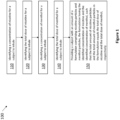
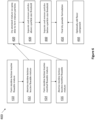
- method 100 includes the steps of identifying a concentration of nicotine for a subject to inhale 110, identifying the total dose of nicotine for a subject to inhale 120, identifying a concentration of menthol for a subject to inhale 130, identifying the total dose of menthol for a subject to inhale 140.
- step 150 provides a subject with an amount of a formulation comprising nicotine particles having the identified concentration of nicotine and comprising menthol particles having the identified concentration of menthol, such that the total amount of nicotine particles and menthol particles in the formulation equals the total dose of nicotine and the total dose of menthol.
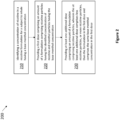
- method 200 comprises steps for decreasing the amount of nicotine while maintaining the amount of menthol inhaled by a subject.
- Method 200 includes the steps of identifying a concentration of nicotine in a nicotine formulation for a subject to inhale having a base menthol concentration 210, providing a first dose comprising an amount of a formulation comprising nicotine particles having the identified concentration of nicotine and menthol particles having the base menthol concentration 220, and providing at least one additional dose comprising an amount of a formulation comprising nicotine particles, wherein the at least one additional dose comprises less nicotine particles than the formulation in the first dose and comprises the same base menthol concentration in the first dose 230.
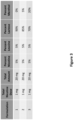
- each formulation is designed to deliver the same dose of nicotine (1 mg).
- the total dose of nicotine forms part of a 20 mg total formulation amount of powder comprising 5% leucine and 90% lactose, which results in a nicotine concentration of 5% in the formulation.
- approximately 1 mg of powder can be inhaled per a single inhalation
- about 0.05 mg of nicotine is inhaled per single inhalation
- the total dose of nicotine is administered after completion of about 20 single inhalations to take up the 20 mg of formulation powder.
- the total dose of nicotine is part of a 20 mg total formulation amount of powder comprising 5% leucine, 85% lactose, and 5% menthol, which results in a nicotine concentration of 5% (Formulation 2). Assuming that approximately 1 mg of powder can be inhaled per single inhalation, then about 0.05 mg of nicotine is inhaled per single inhalation, and the total dose of nicotine is administered after completion of about 20 single inhalations to take up the 20 mg of formulation powder. By taking up an amount of menthol per inhalation, the user experiences an increased level of cough suppression compared to Formulation 1.
- the total dose of nicotine forms part of a 20 mg total formulation amount of powder comprising 5% leucine, 70% lactose, and 20% menthol, which results in a nicotine concentration of 5% (Formulation 3).
- a 20 mg total formulation amount of powder comprising 5% leucine, 70% lactose, and 20% menthol, which results in a nicotine concentration of 5% (Formulation 3).
- the total dose of nicotine is administered after completion of about 20 single inhalations to take up the 20 mg of formulation powder.
- the user experiences an increased level of cough suppression compared to Formulations 1 and 2.
- the total dose of nicotine can be gradually reduced.
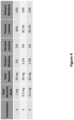
- Figure 4 three different formulations are outlined, where each formulation is designed to deliver a different (smaller) total dose of nicotine while maintaining the same amount of cough suppression.
- 1 mg total dose of nicotine forms part of a 20 mg total formulation amount of powder comprising 5% leucine, 80% lactose, and 10% menthol, which results in a nicotine concentration of 5%.
- approximately 1 mg of powder can be inhaled per single inhalation this means that about 0.05 mg of nicotine is inhaled per single inhalation, and the total dose of nicotine is administered after completion of about 20 single inhalations at the initial nicotine dose.
- Formulation 5 is designed for delivery of a total dose of 0.5 mg of nicotine with the same level of cough suppression. Accordingly, 0.5 mg total dose of nicotine may form part of a 20 mg total formulation amount of powder comprising 5% leucine, 82.5% lactose, and 10% menthol, which results in a nicotine concentration of about 2.5%. Assuming that approximately 1 mg of powder can be inhaled per single inhalation, this means that about 0.025 mg of nicotine is inhaled per single inhalation, and the total dose of nicotine is administered after completion of about 20 single inhalations with the same level of cough suppression.
- Formulation 6 is designed for delivery of a total dose of 0.3 mg of nicotine with again the same level of cough suppression.
- 0.3 mg total dose of nicotine may form part of a 20 mg total formulation amount of powder comprising 5% leucine, 83.5% lactose, and 10% menthol, which results in a nicotine concentration of about 1.5%.
- a subject can gradually step down the total dose of nicotine administered by subsequently administering Formulations 4-6, while experiencing a constant level of cough suppression throughout the reduction in delivered nicotine.
- formulations of decreasing nicotine concentrations can be used in a smoke cessation regimen.
- a subject can gradually step up the total dose of nicotine administered by subsequently administering formulations of increasing nicotine concentrations, while experiencing a constant level of cough suppression throughout the increasing in delivered nicotine.
- any manner of increasing, decreasing or maintaining the total dose of nicotine in a nicotine formulation can be combined with any manner of increasing, decreasing or maintaining the amount of menthol in the formulation.
- the present invention relates to the ability to alter one or both of these parameters when delivering a total dose of nicotine to a subject via a dry powder inhaler.
- the actual amount of powder inhaled per inhalation can be dependent on the functionality of the dry powder inhaler used, or it can be user performance dependent, where a user elects to take a shallower, or deeper, inhalation through the dry powder inhaler used.
- the subject can more consistently insure uptake of the total dose of nicotine, as any user error occurring during a single inhalation is ultimately corrected through one or more subsequent inhalations.
- the present invention also relates to methods of making the formulations of the present invention.
- the methods comprise dry mixing. In one embodiment, the methods comprise wet mixing.
- step 310 nicotine tartrate is dry milled.
- nicotine is mixed with lactose and leucine.
- a therapeutic such as menthol is added.
- the nicotine or nicotine salt is not bound to any other components of the formulation. That is, the formulation contains distinct particles of nicotine or a nicotine salt, and distinct particles of other components of the formulation, such as a sugar.
- the nicotine is not bound to the lactose and leucine particles.
- the nicotine is not bound to the menthol particles.
- the nicotine is at least partially bound to the menthol particles.
- nicotine tartrate, lactose and leucine may be first dry mixed, such as in step 314, and co-milled in step 316.
- nicotine tartrate, lactose, leucine, and a therapeutic such as menthol are first dry mixed, such as in step 318, and co-milled in step 320.
- the particles of the resulting formulation are filtered, such as with a sieve, to remove any particles larger than a threshold size value.
- the particles of the resulting formulation are filtered again to remove any particles smaller than a threshold size value, resulting in the final dry powder formulation 350.
- only one filtering step is needed.
- two or more filtering steps are needed.
- a flavor component may be added to final formulation 350.
- Step 360 may contain any number of processing steps needed to obtain the desired particle size (e.g., 10-1000 micron) for the flavor component being added.
- any method of blending particles in and for the methods and formulations of the present invention is contemplated here.
- the blending can be conducted in one or more steps, in a continuous, batch, or semi-batch process.
- two or more excipients are used, they can be blended together before, or at the same time as, being blended with the pharmaceutical agent microparticles.
- the blending can be carried out using essentially any technique or device suitable for combining the microparticles with one or more other materials (e.g., excipients) effective to achieve uniformity of blend.
- the blending process may be performed using a variety of blenders.
- suitable blenders include V-blenders, slant-cone blenders, cube blenders, bin blenders, static continuous blenders, dynamic continuous blenders, orbital screw blenders, planetary blenders, Forberg blenders, horizontal double-arm blenders, horizontal high intensity mixers, vertical high intensity mixers, stirring vane mixers, twin cone mixers, drum mixers, and tumble blenders.
- the blender preferably is of a strict sanitary design required for pharmaceutical products.
- Tumble blenders are often preferred for batch operation.
- blending is accomplished by aseptically combining two or more components (which can include both dry components and small portions of liquid components) in a suitable container.
- a tumble blender is the TURBULA TM , distributed by Glen Mills Inc., Clifton, N.J., USA, and made by Willy A. Bachofen AG, Maschinenfabrik, Basel, Switzerland.
- the blender optionally may be provided with a rotary feeder, screw conveyor, or other feeder mechanism for controlled introduction of one or more of the dry powder components into the blender.
- a milling step is used to fracture and/or deagglomerate the blended particles, to achieve a desired particle size and size distribution, as well as to enhance distribution of the particles within the blend.
- Any method of milling can be used to form the particles of the invention, as understood by one of ordinary skill in the art.
- a variety of milling processes and equipment known in the art may be used. Examples include hammer mills, ball mills, roller mills, disc grinders, jet milling and the like.
- a dry milling process is used.
- step 410 nicotine tartrate is admixed with excipients, such as lactose and leucine, to form a flowable mixture.
- excipients such as lactose and leucine
- step 412 the mixture is atomized.
- step 414 nicotine tartrate may be admixed with excipients, such as lactose and leucine, as well as a therapeutic agent, such as menthol, to form a flowable mixture.
- any liquid carrier may be used in the process of producing the solution or suspension.
- the liquid carrier is water.
- the liquid carrier is one in which the components of the formulation are either soluble or suspendable.
- the liquid carrier may be any liquid or liquids with which the components of the formulation, either alone or in combination, form a flowable mixture or suspension which is preferably of a generally uniform composition.
- the mixture is atomized.
- the mixture is dried, such as via a spray drier.
- the process may optionally be performed via fluid bed drying, wherein nicotine tartrate can instead be spray dried onto an excipient mixture.
- the resulting nicotine particles are filtered, such as with a sieve, to remove any particles larger than a threshold size value.
- the resulting nicotine particles are filtered again to remove any particles smaller than a threshold size value, resulting in the final dry powder formulation 450.
- only one filtering step is needed.
- two or more filtering steps are needed.
- a flavor component may be added to final formulation 450.
- Step 460 may contain any number of processing steps needed to obtain the desired particle size (e.g., 10-1000 micron) for the flavor component being added.
- the flowable mixtures are dried, such as via a spray drier, to produce composite particles of the flowable mixtures that are suitable for delivery to the alveoli and lower airways of a subject.
- a spray drier there is no limitation to the method of drying the flowable mixtures. While a preferred method utilizes a spray drier, other drying techniques capable of producing appropriately sized particles may be used, such as fluidized bed drying.
- the mixture is finely divided via passage through an orifice upon on entry to a spray dryer.
- the flowable mixture may be passed through an atomizer, such as a rotary atomizer, to feed the flowable liquid into a spray dryer.
- any rate of drying may be used (e.g., slow or rapid rate drying), provided such rate of drying results in the formation of dry particles of the desired size range.
- the resultant particles formed via the spray drier may have a particle size from about 0.1 to about 5 micron.
- a rotary atomizer may be operated at a liquid feed rate from about 2 to about 20 ml/min, or from 2 to about 10 ml/min, or from about 2 to about 5 ml/min. Further, the rotary atomizer may be operated from about 10,000 to about 30,000 rpm, from about 15,000 to about 25,000 rpm, or from about 20,000 to about 25,000 rpm.
- particles of various sizes may be obtained by spray drying, and particles having the desired particle size may be more specifically selected when filtered, such as via one or more sieving steps, as described elsewhere herein.
- the spray dryer may be operated at temperatures sufficiently high to cause the liquid carrier to rapidly evolve without raising the temperature of the sugar and nicotine within the mixture to a point at which these compounds begin to degrade. Accordingly, the spray dryer may be operated with an inlet temperature from about 120°C to about 170°C, and an outlet temperature from about 70°C to about 100°C.
- any rate of drying may be used (e.g., slow or rapid rate drying), provided such rate of drying results in the formation of dry particles of the desired size range.
- the liquid carrier is dried, such as via a fluidized bed dryer, to produce composite particles of nicotine coated with menthol that are suitable for delivery to the alveoli and lower airways of a subject.
- a fluidized bed dryer there is no limitation to the method of drying the flowable mixture. While a preferred method utilizes a fluidized bed dryer, other drying techniques capable of removing the liquid carrier and leaving a uniform menthol coating on the nicotine particles may be used.
- the particles of the present invention can be produced in relatively narrow size ranges via the use of at least one sieving step.
- the sieving step includes using a sieve corresponding to the minimum or maximum of the desired particle size range to eliminate particles from the mixture that are smaller or bigger than the desired range.
- a mixture of nicotine particles produced using the milling process described herein can be provided.
- the mixture of nicotine particles will have a size distribution that is dependent on the milling conditions used and/or the characteristics of the input mixture to the mill.
- the mixture of nicotine particles can first be passed through a 5 micron sieve, wherein substantially all of the particles smaller than 5 microns pass through the sieve and are collected.
- the particles passing through the sieve can then transferred to a 1 micron sieve, wherein substantially all of the particles greater than 1 micron do not pass through the sieve.
- the particles greater than 1 micron can be collected from the sieve, wherein the collected particles will be substantially sized in the range of 1-5 microns. Accordingly, such a process can be used to narrow the range of any mixture of particles to any of the desired particle size ranges as described herein throughout
- a mixture of particles can be provided that substantially meets either the minimum or maximum criteria of the desired particle size range. For example, if a nicotine particle size range of about 2-5 microns is desired, a mixture of nicotine particles can be provided wherein substantially all of the particles are less than 5 microns. Such a mixture can be produced by modifying the milling conditions, or when the particles are spray dried, by milling the spray dried material to result in a mixture of particles that are generally less than 5 microns. The mixture can then be transferred through a 2 micron sieve, wherein the particles not passing through the sieve are collected, and wherein the collected particles are substantially within the desired 2-3 micron range.
- the percentage of particles falling within the desired particle size range for any of the components of the formulation of the present invention can be dependent on the technique used to produce that component. For example, if the targeted size of the nicotine component is in the range of 2-5 micron, it is understood that greater than 90% of that component will fall within the desired range when using a spray drying production technique on a relatively small scale. However, using a relatively large scale milling production technique may only yield greater than 70% of the nicotine component within such a targeted range.
Landscapes
- Health & Medical Sciences (AREA)
- Chemical & Material Sciences (AREA)
- Life Sciences & Earth Sciences (AREA)
- General Health & Medical Sciences (AREA)
- Animal Behavior & Ethology (AREA)
- Pharmacology & Pharmacy (AREA)
- Public Health (AREA)
- Veterinary Medicine (AREA)
- Medicinal Chemistry (AREA)
- Epidemiology (AREA)
- Engineering & Computer Science (AREA)
- Bioinformatics & Cheminformatics (AREA)
- General Chemical & Material Sciences (AREA)
- Chemical Kinetics & Catalysis (AREA)
- Pulmonology (AREA)
- Natural Medicines & Medicinal Plants (AREA)
- Otolaryngology (AREA)
- Nuclear Medicine, Radiotherapy & Molecular Imaging (AREA)
- Addiction (AREA)
- Organic Chemistry (AREA)
- Botany (AREA)
- Biomedical Technology (AREA)
- Neurosurgery (AREA)
- Toxicology (AREA)
- Biotechnology (AREA)
- Medical Informatics (AREA)
- Mycology (AREA)
- Psychiatry (AREA)
- Microbiology (AREA)
- Neurology (AREA)
- Alternative & Traditional Medicine (AREA)
- Zoology (AREA)
- Pharmaceuticals Containing Other Organic And Inorganic Compounds (AREA)
- Medicinal Preparation (AREA)
- Oil, Petroleum & Natural Gas (AREA)
- Proteomics, Peptides & Aminoacids (AREA)
- Biochemistry (AREA)
- Molecular Biology (AREA)
- Manufacture Of Tobacco Products (AREA)
- Medicines That Contain Protein Lipid Enzymes And Other Medicines (AREA)
Claims (11)
- Trockenpulver-Nikotinformulierung, geeignet zur Inhalation, wobei die Formulierung Nikotinpartikel und Hustenunterdrückungs-Bestandteilpartikel umfasst,wobei die Formulierung umfasst: 0,5 % bis 10 % Nikotin und 50 % bis 99 % wenigstens eines Zuckers undwobei die Hustenunterdrückungs-Bestandteilpartikel einen massenmittleren aerodynamischen Durchmesser von wenigstens 5 Mikrometer aufweisen.
- Formulierung von Anspruch 1, wobei das Nikotin wenigstens ein Nikotinsalz umfasst.
- Formulierung von Anspruch 2, wobei das wenigstens eine Nikotinsalz ein Salz von Nikotin und einer organischen Säure, ausgewählt aus Ameisensäure, Essigsäure, Propionsäure, Bernsteinsäure, Camphersulfonsäure, Zitronensäure, Fumarsäure, Gluconsäure, Isethionsäure, Milchsäure, Äpfelsäure, Schleimsäure, Weinsäure, para-Toluolsulfonsäure, Glykolsäure, Glucuronsäure, Maleinsäure, Furansäure, Glutaminsäure, Benzoesäure, Anthranilsäure, Salicylsäure, Phenylessigsäure, Benzolsulfonsäure (Besylat), Stearinsäure, Sulfanilsäure, Alginsäure und Galacturonsäure, ist.
- Formulierung von Anspruch 1, wobei der wenigstens eine Zucker ausgewählt ist aus Lactose, Saccharose, Raffinose, Trehalose, Fructose, Dextrose, Glucose, Maltose, Lecithin, Mannit und Kombinationen davon.
- Formulierung nach Anspruch 1, ferner umfassend Leucin.
- Formulierung von Anspruch 5, wobei die Konzentration von Leucin zwischen etwa 0,5 % und etwa 10 % liegt.
- Formulierung nach Anspruch 1, ferner umfassend wenigstens einen Aromabestandteil.
- Formulierung nach Anspruch 1, wobei die Hustenunterdrückungs-Bestandteilpartikel Menthol sind und wobei die Konzentration von Menthol zwischen etwa 0,5 % und etwa 20 % liegt.
- Formulierung von Anspruch 1, ferner umfassend Minze, wobei die Konzentration von Minze zwischen etwa 0,5 % und etwa 20 % liegt.
- Formulierung nach Anspruch 1, wobei die Hustenunterdrückungs-Bestandteilpartikel einen massenmittleren aerodynamischen Durchmesser zwischen 10 Mikrometer und 200 Mikrometer aufweisen.
- Formulierung von Anspruch 1, wobei die Formulierung unter Verwendung eines Nassverfahrens, umfassend das Vorbereiten einer Nassbeimischung aus Zucker, Nikotin und Leucin, und das Zerstäuben und Trocknen der Beimischung durch Sprühtrocknen, hergestellt wird.
Applications Claiming Priority (2)
| Application Number | Priority Date | Filing Date | Title |
|---|---|---|---|
| US14/856,102 US9585835B1 (en) | 2015-09-16 | 2015-09-16 | Inhalable nicotine formulations and methods of making and using the same |
| PCT/US2016/051963 WO2017048974A1 (en) | 2015-09-16 | 2016-09-15 | Inhalable nicotine formulations, and methods of making and using thereof |
Publications (4)
| Publication Number | Publication Date |
|---|---|
| EP3349599A1 EP3349599A1 (de) | 2018-07-25 |
| EP3349599A4 EP3349599A4 (de) | 2019-04-17 |
| EP3349599B1 true EP3349599B1 (de) | 2024-11-20 |
| EP3349599C0 EP3349599C0 (de) | 2024-11-20 |
Family
ID=58162192
Family Applications (1)
| Application Number | Title | Priority Date | Filing Date |
|---|---|---|---|
| EP16847315.5A Active EP3349599B1 (de) | 2015-09-16 | 2016-09-15 | Inhalierbare nikotinformulierungen sowie verfahren zur herstellung und verwendung davon |
Country Status (19)
| Country | Link |
|---|---|
| US (1) | US9585835B1 (de) |
| EP (1) | EP3349599B1 (de) |
| JP (3) | JP7575183B2 (de) |
| KR (1) | KR102760317B1 (de) |
| CN (1) | CN106539794B (de) |
| AU (1) | AU2016323317A1 (de) |
| BR (1) | BR112018005145B1 (de) |
| CA (1) | CA2999082A1 (de) |
| ES (1) | ES2997334T3 (de) |
| HK (1) | HK1258016A1 (de) |
| IL (1) | IL258143A (de) |
| MX (1) | MX394985B (de) |
| MY (1) | MY184362A (de) |
| PH (1) | PH12018500544A1 (de) |
| PL (1) | PL3349599T3 (de) |
| RU (1) | RU2719228C2 (de) |
| UA (1) | UA126849C2 (de) |
| WO (1) | WO2017048974A1 (de) |
| ZA (1) | ZA201801569B (de) |
Families Citing this family (13)
| Publication number | Priority date | Publication date | Assignee | Title |
|---|---|---|---|---|
| US9968125B2 (en) * | 2015-01-09 | 2018-05-15 | Philip Morris Products S.A. | Nicotine—diketopiperazine microparticle formulations and methods of making the same |
| US10149844B2 (en) | 2015-09-16 | 2018-12-11 | Philip Morris Products S.A. | Inhalable nicotine formulations, and methods of making and using thereof |
| US11224594B2 (en) * | 2015-09-16 | 2022-01-18 | Philip Morris Products S.A. | Nicotine formulations and methods of making and using the same |
| US20190133940A1 (en) * | 2016-06-30 | 2019-05-09 | Philip Morris Products S.A. | Nicotine particles and compositions |
| EP3592352A1 (de) * | 2017-03-07 | 2020-01-15 | Philip Morris Products S.a.s. | Inhalierbare nikotinformulierungen sowie verfahren zur herstellung und verwendung davon |
| EP3644962A1 (de) * | 2017-06-28 | 2020-05-06 | Philip Morris Products S.a.s. | Behälter mit partikeln zur verwendung mit inhalator |
| GB201817868D0 (en) * | 2018-11-01 | 2018-12-19 | Nicoventures Trading Ltd | Aerosolised formulation |
| GB201817862D0 (en) | 2018-11-01 | 2018-12-19 | Nicoventures Trading Ltd | Aerosolisable formulation |
| US20220395015A1 (en) * | 2019-11-14 | 2022-12-15 | Philip Morris Products S.A. | Improved tobacco flavoured dry powder formulation |
| CA3170742A1 (en) * | 2020-06-15 | 2021-12-23 | Fabiana SPADARO | Anatabine powder compositions |
| WO2024090890A1 (ko) * | 2022-10-27 | 2024-05-02 | 주식회사 케이티앤지 | 흡입용 저용량 니코틴 건조 분말 조성물 |
| CN120417888A (zh) * | 2022-10-27 | 2025-08-01 | 韩国烟草人参公社 | 用于吸入的尼古丁干粉的制备方法 |
| CN117158443B (zh) * | 2023-09-05 | 2024-03-22 | 贵州大学 | 烟碱在制备贝莱斯芽胞杆菌生防作用增强剂中的应用 |
Citations (1)
| Publication number | Priority date | Publication date | Assignee | Title |
|---|---|---|---|---|
| WO2006056812A1 (en) * | 2004-11-23 | 2006-06-01 | Vectura Limited | Dry powder inhaler formulations comprising surface-modified particles with anti- adherent additives |
Family Cites Families (54)
| Publication number | Priority date | Publication date | Assignee | Title |
|---|---|---|---|---|
| US5441060A (en) | 1993-02-08 | 1995-08-15 | Duke University | Dry powder delivery system |
| CA2146954C (en) | 1995-04-12 | 2008-06-17 | Arthur Slutsky | Breath activated nicotine inhalers |
| AUPN862596A0 (en) * | 1996-03-12 | 1996-04-04 | F.H. Faulding & Co. Limited | Pharmaceutical compositions |
| BR9806242B1 (pt) * | 1997-09-22 | 2011-05-31 | agente de aromatização de tabaco. | |
| CA2231968A1 (en) | 1998-03-11 | 1999-09-11 | Smoke-Stop, A Partnership Consisting Of Art Slutsky | Method of producing a nicotine medicament |
| CA2265198C (en) | 1998-03-11 | 2009-01-27 | Zamel, Noe | Method of producing a nicotine medicament and a medicament made by the method |
| US20120042886A1 (en) | 1998-03-11 | 2012-02-23 | Hanna Piskorz | Method of producing a nicotine medicament and a medicament made by the method |
| US6234169B1 (en) | 1998-08-14 | 2001-05-22 | Arthur Slutsky | Inhaler |
| AU779986B2 (en) | 1999-06-29 | 2005-02-24 | Mannkind Corporation | Purification and stabilization of peptide and protein pharmaceutical agents |
| US8256433B2 (en) | 1999-07-16 | 2012-09-04 | Aradigm Corporation | Systems and methods for effecting cessation of tobacco use |
| US6799576B2 (en) | 1999-07-16 | 2004-10-05 | Aradigm Corporation | System for effecting smoking cessation |
| US6586008B1 (en) * | 1999-08-25 | 2003-07-01 | Advanced Inhalation Research, Inc. | Use of simple amino acids to form porous particles during spray drying |
| SK11142002A3 (sk) * | 1999-12-30 | 2004-09-08 | Chiron Corporation | Liečivo na podávanie interleukínu-2 a stabilizovaný lyofilizovaný alebo sprejovo sušený farmaceutický prostriedok s obsahom interleukínu-2 |
| US7871598B1 (en) | 2000-05-10 | 2011-01-18 | Novartis Ag | Stable metal ion-lipid powdered pharmaceutical compositions for drug delivery and methods of use |
| CN1446077A (zh) * | 2000-08-07 | 2003-10-01 | 耐科塔医药公司 | 具有最小聚集的可吸入喷雾干燥4-螺旋束蛋白粉剂 |
| FR2815987B1 (fr) | 2000-10-27 | 2003-02-28 | Michel Petiot | Embase enfichable pour poteau ou piquet |
| JP2002161030A (ja) | 2000-11-27 | 2002-06-04 | Unisia Jecs Corp | 異なる粒径をもった混合粉体の吸入方法 |
| ITMI20012174A1 (it) * | 2001-10-18 | 2003-04-18 | Univ Parma | Polvere per somministrazione nasale di farmaci |
| CA2511185C (en) | 2002-12-20 | 2012-09-18 | Niconovum Ab | A physically and chemically stable nicotine-containing particulate material |
| AU2004231342A1 (en) | 2003-04-14 | 2004-11-04 | Vectura Ltd | Dry power inhaler devices and dry power formulations for enhancing dosing efficiency |
| CA2523475C (en) | 2003-05-28 | 2013-02-05 | Nektar Therapeutics | Pharmaceutical formulation comprising a water-insoluble active agent |
| EP1663168B1 (de) | 2003-09-08 | 2009-02-11 | McNeil AB | Nikotinformulierungen und ihre verwendung |
| GB0321607D0 (en) | 2003-09-15 | 2003-10-15 | Vectura Ltd | Manufacture of pharmaceutical compositions |
| SE528121C2 (sv) | 2004-03-29 | 2006-09-05 | Mederio Ag | Preparering av torrpulver för på förhand uppmätt DPI |
| GB0410398D0 (en) | 2004-05-10 | 2004-06-16 | Arakis Ltd | The treatment of respiratory disease |
| WO2005112670A1 (en) * | 2004-05-24 | 2005-12-01 | Mip Technologies Ab | Molecularly imprinted polymers selective for nitrosamines and methods of using the same |
| AU2006247739A1 (en) * | 2005-05-11 | 2006-11-23 | Vector Tobacco Inc. | Reduced risk tobacco products and methods of making same |
| GB0523576D0 (en) * | 2005-11-18 | 2005-12-28 | Theradeas Ltd | Drug composition and its use in therapy |
| CA2631493A1 (en) * | 2005-12-15 | 2007-06-21 | Acusphere, Inc. | Processes for making particle-based pharmaceutical formulations for pulmonary or nasal administration |
| CA2648291A1 (en) | 2006-04-04 | 2007-11-01 | Stc.Unm | Swellable particles for drug delivery |
| FI20060428A7 (fi) * | 2006-05-03 | 2007-11-04 | Esko Kauppinen | Pintamodifioidut aerosolihiukkaset, menetelmä ja laite niiden tuottamiseksi sekä jauheet ja dispersiot jotka sisältävät kyseisiä hiukkasia |
| EP2086317A4 (de) | 2006-12-01 | 2010-03-03 | Aradigm Corp | Nikotinformulierungen, kits und systeme und verfahren zu ihrer verwendung |
| GB0709811D0 (en) * | 2007-05-22 | 2007-07-04 | Vectura Group Plc | Pharmaceutical compositions |
| GB0712308D0 (en) | 2007-06-25 | 2007-08-01 | Kind Group Ltd | An inhalable composition |
| GB0801876D0 (en) * | 2008-02-01 | 2008-03-12 | Vectura Group Plc | Suspension formulations |
| GB0905840D0 (en) * | 2009-04-06 | 2009-05-20 | Sagentia Ltd | Apparatus and methods |
| US20110268809A1 (en) | 2010-04-28 | 2011-11-03 | Paul Andrew Brinkley | Nicotine-Containing Pharmaceutical Compositions |
| US20110274628A1 (en) | 2010-05-07 | 2011-11-10 | Borschke August J | Nicotine-containing pharmaceutical compositions |
| CA2841785A1 (en) * | 2011-07-06 | 2013-01-10 | The Parkinson's Institute | Compositions and methods for treatment of symptoms in parkinson's disease patients |
| HUE041858T2 (hu) * | 2011-08-01 | 2019-05-28 | Univ Monash | Inhalálásra szolgáló eljárás és kiszerelés |
| GB201113662D0 (en) * | 2011-08-08 | 2011-09-21 | Prosonix Ltd | Pharmaceutical compositions |
| US9907748B2 (en) | 2011-10-21 | 2018-03-06 | Niconovum Usa, Inc. | Excipients for nicotine-containing therapeutic compositions |
| US20130177646A1 (en) | 2012-01-05 | 2013-07-11 | Mcneil Ab | Solid Nicotine-Comprising Dosage Form with Reduced Organoleptic Disturbance |
| US9763928B2 (en) | 2012-02-10 | 2017-09-19 | Niconovum Usa, Inc. | Multi-layer nicotine-containing pharmaceutical composition |
| EP4008355A1 (de) | 2012-05-03 | 2022-06-08 | Kala Pharmaceuticals, Inc. | Pharmazeutische nanopartikel mit verbessertem mukosalem transport |
| GB201215273D0 (en) * | 2012-08-28 | 2012-10-10 | Kind Consumer Ltd | Nicotine composition |
| US20140088044A1 (en) * | 2012-09-21 | 2014-03-27 | Basil Rigas | Product comprising a nicotine-containing material and an anti-cancer agent |
| US20140166027A1 (en) | 2012-12-14 | 2014-06-19 | Richard C. Fuisz | Enhanced Delivery of Nicotine, THC, Tobacco, Cannabidiol or Base Alkaloid from an Electronic Cigarette or Other Vapor Producing Device Through Use of an Absorption Conditioning Unit |
| WO2014150245A1 (en) * | 2013-03-15 | 2014-09-25 | Aradigm Corporation | Methods for inhalation of smoke-free nicotine |
| EP3129024A4 (de) * | 2014-04-08 | 2017-11-22 | Sansa Corporation (Barbados) Inc. | Nikotinformulierungen und verfahren zur herstellung davon |
| RU2696570C2 (ru) | 2014-04-28 | 2019-08-06 | Филип Моррис Продактс С.А. | Ингалятор никотинового порошка |
| CA2943746C (en) | 2014-04-28 | 2023-08-15 | Philip Morris Products S.A. | Flavoured nicotine powder inhaler |
| FR3035826B1 (fr) * | 2015-05-07 | 2018-11-16 | Saint-Gobain Glass France | Vitrage de vehicule comprenant une platine pour la fixation de plusieurs accessoires, platine et procede de fixation. |
| US11224594B2 (en) * | 2015-09-16 | 2022-01-18 | Philip Morris Products S.A. | Nicotine formulations and methods of making and using the same |
-
2015
- 2015-09-16 US US14/856,102 patent/US9585835B1/en active Active
- 2015-10-29 CN CN201510717990.5A patent/CN106539794B/zh active Active
-
2016
- 2016-09-15 UA UAA201803890A patent/UA126849C2/uk unknown
- 2016-09-15 MY MYPI2018700899A patent/MY184362A/en unknown
- 2016-09-15 PL PL16847315.5T patent/PL3349599T3/pl unknown
- 2016-09-15 CA CA2999082A patent/CA2999082A1/en not_active Abandoned
- 2016-09-15 EP EP16847315.5A patent/EP3349599B1/de active Active
- 2016-09-15 ES ES16847315T patent/ES2997334T3/es active Active
- 2016-09-15 AU AU2016323317A patent/AU2016323317A1/en not_active Abandoned
- 2016-09-15 KR KR1020187007673A patent/KR102760317B1/ko active Active
- 2016-09-15 HK HK19100385.2A patent/HK1258016A1/zh unknown
- 2016-09-15 BR BR112018005145-4A patent/BR112018005145B1/pt active IP Right Grant
- 2016-09-15 JP JP2018514451A patent/JP7575183B2/ja active Active
- 2016-09-15 MX MX2018003272A patent/MX394985B/es unknown
- 2016-09-15 RU RU2018113460A patent/RU2719228C2/ru active
- 2016-09-15 WO PCT/US2016/051963 patent/WO2017048974A1/en not_active Ceased
-
2018
- 2018-03-07 ZA ZA2018/01569A patent/ZA201801569B/en unknown
- 2018-03-13 PH PH12018500544A patent/PH12018500544A1/en unknown
- 2018-03-15 IL IL258143A patent/IL258143A/en unknown
-
2022
- 2022-05-11 JP JP2022077936A patent/JP2022097639A/ja active Pending
-
2024
- 2024-04-15 JP JP2024065173A patent/JP2024086897A/ja active Pending
Patent Citations (1)
| Publication number | Priority date | Publication date | Assignee | Title |
|---|---|---|---|---|
| WO2006056812A1 (en) * | 2004-11-23 | 2006-06-01 | Vectura Limited | Dry powder inhaler formulations comprising surface-modified particles with anti- adherent additives |
Also Published As
| Publication number | Publication date |
|---|---|
| PL3349599T3 (pl) | 2025-03-24 |
| KR20180077150A (ko) | 2018-07-06 |
| PH12018500544A1 (en) | 2018-09-24 |
| IL258143A (en) | 2018-05-31 |
| JP2018528966A (ja) | 2018-10-04 |
| EP3349599C0 (de) | 2024-11-20 |
| AU2016323317A1 (en) | 2018-04-12 |
| EP3349599A4 (de) | 2019-04-17 |
| CN106539794A (zh) | 2017-03-29 |
| BR112018005145A2 (pt) | 2018-12-11 |
| EP3349599A1 (de) | 2018-07-25 |
| RU2018113460A (ru) | 2019-10-18 |
| BR112018005145B1 (pt) | 2022-05-03 |
| RU2719228C2 (ru) | 2020-04-17 |
| JP7575183B2 (ja) | 2024-10-29 |
| HK1258016A1 (zh) | 2019-11-01 |
| RU2018113460A3 (de) | 2019-10-18 |
| ZA201801569B (en) | 2019-01-30 |
| MX394985B (es) | 2025-03-24 |
| WO2017048974A1 (en) | 2017-03-23 |
| CN106539794B (zh) | 2020-05-15 |
| KR102760317B1 (ko) | 2025-02-03 |
| MY184362A (en) | 2021-04-01 |
| ES2997334T3 (en) | 2025-02-17 |
| CA2999082A1 (en) | 2017-03-23 |
| JP2024086897A (ja) | 2024-06-28 |
| US9585835B1 (en) | 2017-03-07 |
| US20170071856A1 (en) | 2017-03-16 |
| MX2018003272A (es) | 2018-08-16 |
| WO2017048974A8 (en) | 2018-04-12 |
| JP2022097639A (ja) | 2022-06-30 |
| UA126849C2 (uk) | 2023-02-15 |
Similar Documents
| Publication | Publication Date | Title |
|---|---|---|
| EP3349599B1 (de) | Inhalierbare nikotinformulierungen sowie verfahren zur herstellung und verwendung davon | |
| US11707432B2 (en) | System and method for controlling the harshness of nicotine-based dry powder formulations | |
| EP3349755B1 (de) | Nikotinformulierungen sowie verfahren zur herstellung und verwendung davon | |
| US10660883B2 (en) | Inhalable nicotine formulations, and methods of making and using thereof | |
| RU2770039C2 (ru) | Вдыхаемые составы на основе никотина и способы их получения и применения |
Legal Events
| Date | Code | Title | Description |
|---|---|---|---|
| STAA | Information on the status of an ep patent application or granted ep patent |
Free format text: STATUS: THE INTERNATIONAL PUBLICATION HAS BEEN MADE |
|
| PUAI | Public reference made under article 153(3) epc to a published international application that has entered the european phase |
Free format text: ORIGINAL CODE: 0009012 |
|
| STAA | Information on the status of an ep patent application or granted ep patent |
Free format text: STATUS: REQUEST FOR EXAMINATION WAS MADE |
|
| 17P | Request for examination filed |
Effective date: 20180416 |
|
| AK | Designated contracting states |
Kind code of ref document: A1 Designated state(s): AL AT BE BG CH CY CZ DE DK EE ES FI FR GB GR HR HU IE IS IT LI LT LU LV MC MK MT NL NO PL PT RO RS SE SI SK SM TR |
|
| AX | Request for extension of the european patent |
Extension state: BA ME |
|
| DAV | Request for validation of the european patent (deleted) | ||
| DAX | Request for extension of the european patent (deleted) | ||
| A4 | Supplementary search report drawn up and despatched |
Effective date: 20190320 |
|
| RIC1 | Information provided on ipc code assigned before grant |
Ipc: A24F 47/00 20060101ALI20190314BHEP Ipc: A24B 15/28 20060101ALI20190314BHEP Ipc: A61K 9/00 20060101ALI20190314BHEP Ipc: A24B 15/32 20060101ALI20190314BHEP Ipc: A24B 15/40 20060101AFI20190314BHEP Ipc: A24B 15/10 20060101ALI20190314BHEP |
|
| REG | Reference to a national code |
Ref country code: HK Ref legal event code: DE Ref document number: 1258016 Country of ref document: HK |
|
| STAA | Information on the status of an ep patent application or granted ep patent |
Free format text: STATUS: EXAMINATION IS IN PROGRESS |
|
| 17Q | First examination report despatched |
Effective date: 20200107 |
|
| GRAP | Despatch of communication of intention to grant a patent |
Free format text: ORIGINAL CODE: EPIDOSNIGR1 |
|
| STAA | Information on the status of an ep patent application or granted ep patent |
Free format text: STATUS: GRANT OF PATENT IS INTENDED |
|
| INTG | Intention to grant announced |
Effective date: 20240620 |
|
| GRAS | Grant fee paid |
Free format text: ORIGINAL CODE: EPIDOSNIGR3 |
|
| GRAA | (expected) grant |
Free format text: ORIGINAL CODE: 0009210 |
|
| STAA | Information on the status of an ep patent application or granted ep patent |
Free format text: STATUS: THE PATENT HAS BEEN GRANTED |
|
| AK | Designated contracting states |
Kind code of ref document: B1 Designated state(s): AL AT BE BG CH CY CZ DE DK EE ES FI FR GB GR HR HU IE IS IT LI LT LU LV MC MK MT NL NO PL PT RO RS SE SI SK SM TR |
|
| REG | Reference to a national code |
Ref country code: GB Ref legal event code: FG4D |
|
| REG | Reference to a national code |
Ref country code: CH Ref legal event code: EP |
|
| REG | Reference to a national code |
Ref country code: DE Ref legal event code: R096 Ref document number: 602016090338 Country of ref document: DE |
|
| REG | Reference to a national code |
Ref country code: IE Ref legal event code: FG4D |
|
| U01 | Request for unitary effect filed |
Effective date: 20241120 |
|
| U07 | Unitary effect registered |
Designated state(s): AT BE BG DE DK EE FI FR IT LT LU LV MT NL PT RO SE SI Effective date: 20241126 |
|
| REG | Reference to a national code |
Ref country code: ES Ref legal event code: FG2A Ref document number: 2997334 Country of ref document: ES Kind code of ref document: T3 Effective date: 20250217 |
|
| PG25 | Lapsed in a contracting state [announced via postgrant information from national office to epo] |
Ref country code: HR Free format text: LAPSE BECAUSE OF FAILURE TO SUBMIT A TRANSLATION OF THE DESCRIPTION OR TO PAY THE FEE WITHIN THE PRESCRIBED TIME-LIMIT Effective date: 20241120 Ref country code: IS Free format text: LAPSE BECAUSE OF FAILURE TO SUBMIT A TRANSLATION OF THE DESCRIPTION OR TO PAY THE FEE WITHIN THE PRESCRIBED TIME-LIMIT Effective date: 20250320 |
|
| PG25 | Lapsed in a contracting state [announced via postgrant information from national office to epo] |
Ref country code: NO Free format text: LAPSE BECAUSE OF FAILURE TO SUBMIT A TRANSLATION OF THE DESCRIPTION OR TO PAY THE FEE WITHIN THE PRESCRIBED TIME-LIMIT Effective date: 20250220 |
|
| PG25 | Lapsed in a contracting state [announced via postgrant information from national office to epo] |
Ref country code: GR Free format text: LAPSE BECAUSE OF FAILURE TO SUBMIT A TRANSLATION OF THE DESCRIPTION OR TO PAY THE FEE WITHIN THE PRESCRIBED TIME-LIMIT Effective date: 20250221 |
|
| PG25 | Lapsed in a contracting state [announced via postgrant information from national office to epo] |
Ref country code: RS Free format text: LAPSE BECAUSE OF FAILURE TO SUBMIT A TRANSLATION OF THE DESCRIPTION OR TO PAY THE FEE WITHIN THE PRESCRIBED TIME-LIMIT Effective date: 20250220 |
|
| PG25 | Lapsed in a contracting state [announced via postgrant information from national office to epo] |
Ref country code: SM Free format text: LAPSE BECAUSE OF FAILURE TO SUBMIT A TRANSLATION OF THE DESCRIPTION OR TO PAY THE FEE WITHIN THE PRESCRIBED TIME-LIMIT Effective date: 20241120 |
|
| PG25 | Lapsed in a contracting state [announced via postgrant information from national office to epo] |
Ref country code: SK Free format text: LAPSE BECAUSE OF FAILURE TO SUBMIT A TRANSLATION OF THE DESCRIPTION OR TO PAY THE FEE WITHIN THE PRESCRIBED TIME-LIMIT Effective date: 20241120 |
|
| PG25 | Lapsed in a contracting state [announced via postgrant information from national office to epo] |
Ref country code: CZ Free format text: LAPSE BECAUSE OF FAILURE TO SUBMIT A TRANSLATION OF THE DESCRIPTION OR TO PAY THE FEE WITHIN THE PRESCRIBED TIME-LIMIT Effective date: 20241120 |
|
| PLBE | No opposition filed within time limit |
Free format text: ORIGINAL CODE: 0009261 |
|
| STAA | Information on the status of an ep patent application or granted ep patent |
Free format text: STATUS: NO OPPOSITION FILED WITHIN TIME LIMIT |
|
| REG | Reference to a national code |
Ref country code: CH Ref legal event code: U11 Free format text: ST27 STATUS EVENT CODE: U-0-0-U10-U11 (AS PROVIDED BY THE NATIONAL OFFICE) Effective date: 20251001 |
|
| PGFP | Annual fee paid to national office [announced via postgrant information from national office to epo] |
Ref country code: PL Payment date: 20250915 Year of fee payment: 10 |
|
| PGFP | Annual fee paid to national office [announced via postgrant information from national office to epo] |
Ref country code: GB Payment date: 20250919 Year of fee payment: 10 |
|
| 26N | No opposition filed |
Effective date: 20250821 |
|
| U20 | Renewal fee for the european patent with unitary effect paid |
Year of fee payment: 10 Effective date: 20250924 |