EP3334725B1 - Bromodomain and extra terminal (bet) inhibitor and a protein phosphatase 2a (pp2a) activator for treating bet inhibitor resistant cancer - Google Patents
Bromodomain and extra terminal (bet) inhibitor and a protein phosphatase 2a (pp2a) activator for treating bet inhibitor resistant cancer Download PDFInfo
- Publication number
- EP3334725B1 EP3334725B1 EP16835823.2A EP16835823A EP3334725B1 EP 3334725 B1 EP3334725 B1 EP 3334725B1 EP 16835823 A EP16835823 A EP 16835823A EP 3334725 B1 EP3334725 B1 EP 3334725B1
- Authority
- EP
- European Patent Office
- Prior art keywords
- inhibitor
- brd4
- bet
- cancer
- bromodomain
- Prior art date
- Legal status (The legal status is an assumption and is not a legal conclusion. Google has not performed a legal analysis and makes no representation as to the accuracy of the status listed.)
- Active
Links
Images















Classifications
-
- A—HUMAN NECESSITIES
- A61—MEDICAL OR VETERINARY SCIENCE; HYGIENE
- A61K—PREPARATIONS FOR MEDICAL, DENTAL OR TOILETRY PURPOSES
- A61K31/00—Medicinal preparations containing organic active ingredients
- A61K31/13—Amines
- A61K31/135—Amines having aromatic rings, e.g. ketamine, nortriptyline
- A61K31/137—Arylalkylamines, e.g. amphetamine, epinephrine, salbutamol, ephedrine or methadone
-
- A—HUMAN NECESSITIES
- A61—MEDICAL OR VETERINARY SCIENCE; HYGIENE
- A61K—PREPARATIONS FOR MEDICAL, DENTAL OR TOILETRY PURPOSES
- A61K31/00—Medicinal preparations containing organic active ingredients
- A61K31/33—Heterocyclic compounds
- A61K31/395—Heterocyclic compounds having nitrogen as a ring hetero atom, e.g. guanethidine or rifamycins
- A61K31/435—Heterocyclic compounds having nitrogen as a ring hetero atom, e.g. guanethidine or rifamycins having six-membered rings with one nitrogen as the only ring hetero atom
- A61K31/47—Quinolines; Isoquinolines
- A61K31/4738—Quinolines; Isoquinolines ortho- or peri-condensed with heterocyclic ring systems
- A61K31/4745—Quinolines; Isoquinolines ortho- or peri-condensed with heterocyclic ring systems condensed with ring systems having nitrogen as a ring hetero atom, e.g. phenantrolines
-
- A—HUMAN NECESSITIES
- A61—MEDICAL OR VETERINARY SCIENCE; HYGIENE
- A61K—PREPARATIONS FOR MEDICAL, DENTAL OR TOILETRY PURPOSES
- A61K31/00—Medicinal preparations containing organic active ingredients
- A61K31/33—Heterocyclic compounds
- A61K31/395—Heterocyclic compounds having nitrogen as a ring hetero atom, e.g. guanethidine or rifamycins
- A61K31/495—Heterocyclic compounds having nitrogen as a ring hetero atom, e.g. guanethidine or rifamycins having six-membered rings with two or more nitrogen atoms as the only ring heteroatoms, e.g. piperazine or tetrazines
- A61K31/496—Non-condensed piperazines containing further heterocyclic rings, e.g. rifampin, thiothixene or sparfloxacin
-
- A—HUMAN NECESSITIES
- A61—MEDICAL OR VETERINARY SCIENCE; HYGIENE
- A61K—PREPARATIONS FOR MEDICAL, DENTAL OR TOILETRY PURPOSES
- A61K31/00—Medicinal preparations containing organic active ingredients
- A61K31/33—Heterocyclic compounds
- A61K31/395—Heterocyclic compounds having nitrogen as a ring hetero atom, e.g. guanethidine or rifamycins
- A61K31/54—Heterocyclic compounds having nitrogen as a ring hetero atom, e.g. guanethidine or rifamycins having six-membered rings with at least one nitrogen and one sulfur as the ring hetero atoms, e.g. sulthiame
- A61K31/5415—Heterocyclic compounds having nitrogen as a ring hetero atom, e.g. guanethidine or rifamycins having six-membered rings with at least one nitrogen and one sulfur as the ring hetero atoms, e.g. sulthiame ortho- or peri-condensed with carbocyclic ring systems, e.g. phenothiazine, chlorpromazine, piroxicam
-
- A—HUMAN NECESSITIES
- A61—MEDICAL OR VETERINARY SCIENCE; HYGIENE
- A61K—PREPARATIONS FOR MEDICAL, DENTAL OR TOILETRY PURPOSES
- A61K31/00—Medicinal preparations containing organic active ingredients
- A61K31/33—Heterocyclic compounds
- A61K31/395—Heterocyclic compounds having nitrogen as a ring hetero atom, e.g. guanethidine or rifamycins
- A61K31/55—Heterocyclic compounds having nitrogen as a ring hetero atom, e.g. guanethidine or rifamycins having seven-membered rings, e.g. azelastine, pentylenetetrazole
- A61K31/551—Heterocyclic compounds having nitrogen as a ring hetero atom, e.g. guanethidine or rifamycins having seven-membered rings, e.g. azelastine, pentylenetetrazole having two nitrogen atoms, e.g. dilazep
-
- A—HUMAN NECESSITIES
- A61—MEDICAL OR VETERINARY SCIENCE; HYGIENE
- A61K—PREPARATIONS FOR MEDICAL, DENTAL OR TOILETRY PURPOSES
- A61K31/00—Medicinal preparations containing organic active ingredients
- A61K31/63—Compounds containing para-N-benzenesulfonyl-N-groups, e.g. sulfanilamide, p-nitrobenzenesulfonyl hydrazide
- A61K31/635—Compounds containing para-N-benzenesulfonyl-N-groups, e.g. sulfanilamide, p-nitrobenzenesulfonyl hydrazide having a heterocyclic ring, e.g. sulfadiazine
-
- A—HUMAN NECESSITIES
- A61—MEDICAL OR VETERINARY SCIENCE; HYGIENE
- A61K—PREPARATIONS FOR MEDICAL, DENTAL OR TOILETRY PURPOSES
- A61K39/00—Medicinal preparations containing antigens or antibodies
- A61K39/395—Antibodies; Immunoglobulins; Immune serum, e.g. antilymphocytic serum
-
- A—HUMAN NECESSITIES
- A61—MEDICAL OR VETERINARY SCIENCE; HYGIENE
- A61K—PREPARATIONS FOR MEDICAL, DENTAL OR TOILETRY PURPOSES
- A61K45/00—Medicinal preparations containing active ingredients not provided for in groups A61K31/00 - A61K41/00
- A61K45/06—Mixtures of active ingredients without chemical characterisation, e.g. antiphlogistics and cardiaca
-
- A—HUMAN NECESSITIES
- A61—MEDICAL OR VETERINARY SCIENCE; HYGIENE
- A61P—SPECIFIC THERAPEUTIC ACTIVITY OF CHEMICAL COMPOUNDS OR MEDICINAL PREPARATIONS
- A61P35/00—Antineoplastic agents
-
- A—HUMAN NECESSITIES
- A61—MEDICAL OR VETERINARY SCIENCE; HYGIENE
- A61P—SPECIFIC THERAPEUTIC ACTIVITY OF CHEMICAL COMPOUNDS OR MEDICINAL PREPARATIONS
- A61P35/00—Antineoplastic agents
- A61P35/02—Antineoplastic agents specific for leukemia
-
- C—CHEMISTRY; METALLURGY
- C07—ORGANIC CHEMISTRY
- C07D—HETEROCYCLIC COMPOUNDS
- C07D215/00—Heterocyclic compounds containing quinoline or hydrogenated quinoline ring systems
- C07D215/02—Heterocyclic compounds containing quinoline or hydrogenated quinoline ring systems having no bond between the ring nitrogen atom and a non-ring member or having only hydrogen atoms or carbon atoms directly attached to the ring nitrogen atom
- C07D215/16—Heterocyclic compounds containing quinoline or hydrogenated quinoline ring systems having no bond between the ring nitrogen atom and a non-ring member or having only hydrogen atoms or carbon atoms directly attached to the ring nitrogen atom with hetero atoms or with carbon atoms having three bonds to hetero atoms with at the most one bond to halogen, e.g. ester or nitrile radicals, directly attached to ring carbon atoms
- C07D215/38—Nitrogen atoms
- C07D215/42—Nitrogen atoms attached in position 4
-
- C—CHEMISTRY; METALLURGY
- C07—ORGANIC CHEMISTRY
- C07D—HETEROCYCLIC COMPOUNDS
- C07D255/00—Heterocyclic compounds containing rings having three nitrogen atoms as the only ring hetero atoms, not provided for by groups C07D249/00 - C07D253/00
- C07D255/04—Heterocyclic compounds containing rings having three nitrogen atoms as the only ring hetero atoms, not provided for by groups C07D249/00 - C07D253/00 condensed with carbocyclic rings or ring systems
-
- C—CHEMISTRY; METALLURGY
- C07—ORGANIC CHEMISTRY
- C07D—HETEROCYCLIC COMPOUNDS
- C07D471/00—Heterocyclic compounds containing nitrogen atoms as the only ring hetero atoms in the condensed system, at least one ring being a six-membered ring with one nitrogen atom, not provided for by groups C07D451/00 - C07D463/00
- C07D471/02—Heterocyclic compounds containing nitrogen atoms as the only ring hetero atoms in the condensed system, at least one ring being a six-membered ring with one nitrogen atom, not provided for by groups C07D451/00 - C07D463/00 in which the condensed system contains two hetero rings
- C07D471/04—Ortho-condensed systems
-
- C—CHEMISTRY; METALLURGY
- C07—ORGANIC CHEMISTRY
- C07D—HETEROCYCLIC COMPOUNDS
- C07D495/00—Heterocyclic compounds containing in the condensed system at least one hetero ring having sulfur atoms as the only ring hetero atoms
- C07D495/12—Heterocyclic compounds containing in the condensed system at least one hetero ring having sulfur atoms as the only ring hetero atoms in which the condensed system contains three hetero rings
- C07D495/14—Ortho-condensed systems
-
- G—PHYSICS
- G01—MEASURING; TESTING
- G01N—INVESTIGATING OR ANALYSING MATERIALS BY DETERMINING THEIR CHEMICAL OR PHYSICAL PROPERTIES
- G01N33/00—Investigating or analysing materials by specific methods not covered by groups G01N1/00 - G01N31/00
- G01N33/48—Biological material, e.g. blood, urine; Haemocytometers
- G01N33/50—Chemical analysis of biological material, e.g. blood, urine; Testing involving biospecific ligand binding methods; Immunological testing
- G01N33/53—Immunoassay; Biospecific binding assay; Materials therefor
- G01N33/575—Immunoassay; Biospecific binding assay; Materials therefor for cancer
- G01N33/57515—Immunoassay; Biospecific binding assay; Materials therefor for cancer of the breast
-
- G—PHYSICS
- G01—MEASURING; TESTING
- G01N—INVESTIGATING OR ANALYSING MATERIALS BY DETERMINING THEIR CHEMICAL OR PHYSICAL PROPERTIES
- G01N33/00—Investigating or analysing materials by specific methods not covered by groups G01N1/00 - G01N31/00
- G01N33/48—Biological material, e.g. blood, urine; Haemocytometers
- G01N33/50—Chemical analysis of biological material, e.g. blood, urine; Testing involving biospecific ligand binding methods; Immunological testing
- G01N33/68—Chemical analysis of biological material, e.g. blood, urine; Testing involving biospecific ligand binding methods; Immunological testing involving proteins, peptides or amino acids
- G01N33/6872—Intracellular protein regulatory factors and their receptors, e.g. including ion channels
-
- A—HUMAN NECESSITIES
- A61—MEDICAL OR VETERINARY SCIENCE; HYGIENE
- A61K—PREPARATIONS FOR MEDICAL, DENTAL OR TOILETRY PURPOSES
- A61K2300/00—Mixtures or combinations of active ingredients, wherein at least one active ingredient is fully defined in groups A61K31/00 - A61K41/00
-
- G—PHYSICS
- G01—MEASURING; TESTING
- G01N—INVESTIGATING OR ANALYSING MATERIALS BY DETERMINING THEIR CHEMICAL OR PHYSICAL PROPERTIES
- G01N2800/00—Detection or diagnosis of diseases
- G01N2800/52—Predicting or monitoring the response to treatment, e.g. for selection of therapy based on assay results in personalised medicine; Prognosis
Definitions
- TNBC Triple negative breast cancer
- ER estrogen receptor
- PR progesterone receptor
- HER2 human epidermal growth factor receptor 2
- TNBC patients experience a poor clinical outcome owing to a 5-year risk of recurrence that is higher than any other subtype, notably at distant sites.
- Cancer genome sequencing studies focusing on TNBC failed to identify novel recurrently mutated cancer-driving genes, obviating immediate opportunities for targeted therapeutic development.
- TNBC is also a heterogeneous disease, suggesting that one treatment may not suit all patients and that multiple new treatment strategies will be required. Hence, new therapeutic options for TNBC are urgently needed.
- Bromodomain and extra terminal (BET) proteins (BRD2, BRD3 and BRD4) localize to promoter and enhancer regions via twin acetyl-lysine recognition modules (bromodomains). There, they facilitate transcriptional elongation by recruitment of the positive transcription factor elongation complex (CDK9 and Cyclin T; P-TEFb).
- BET bromodomain inhibitors such as JQ1
- BBI bromodomain inhibitors
- JQ1 acetyl-lysine competitive binding by BET bromodomain inhibitors
- adaptive resistance disease to BET inhibitors is a common theme in the widespread literature on BBI in cancer, yet mechanistic insights are completely lacking.
- WO2015/109286 (Gilead Sciences Inc ) describes bromodomain inhibitors and CK2 inhibitors to treat cancer in an extensive list of possible therapeutic agents, in addition to chemotherapeutic agents, immunotherapeutic agents, radiotherapeutic agents, anti-neoplastic agents, anti-cancer agents, anti-proliferation agents, anti-fibrotic agents, anti-angiogenic agents, and therapeutic antibodies, but it does not dislose a combination of BET inhibitors with PP2A activators.
- US2014/296218 (Young et al ) describes bromodomain inhibitors for down-regulating gene expression from a super-enhancer, but it does not disclose a combination of BET inhibitors with PP2A activators. Thus, there is a need to find new treatments for cancers that are or may become resistant to BBI.
- Some aspects of the disclosure provide a method for treating a cancer.
- the invention provides an effective amount of a bromodomain and extra terminal (BET) inhibitor and a protein phosphatase 2A (PP2A) activator for use in treating cancer in a subject in need thereof, wherein the cancer is resistant to treatment by the BET inhibitor alone.
- BET bromodomain and extra terminal
- P2A protein phosphatase 2A
- the cancer is resistant to treatment by the BET inhibitor alone.
- the BET inhibitor and the PP2A activator are synergistic in treating the cancer, compared to the BET inhibitor alone or the PP2A activator alone.
- the assay comprises immunohistochemistry, immunofluorescence, radioimmunoassay, ELISA or FACS analysis.
- the intracellular location of BRD4 is determined using antibodies in conjunction with immunofluorescence.
- the subject is further treated with one or more additional anti-neoplasia therapy.
- the subject may undergo surgery, radiation therapy, chemotherapy, gene therapy, DNA therapy, viral therapy, RNA therapy, adjuvant therapy, immunotherapy or a combination thereof.
- a first therapeutic agent such as BET inhibitor
- BET inhibitor can be administered prior to (e.g ., 5 minutes, 15 minutes, 30 minutes, 45 minutes, 1 hour, 2 hours, 4 hours, 6 hours, 12 hours, 24 hours, 48 hours, 72 hours, 96 hours, 1 week, 2 weeks, 3 weeks, 4 weeks, 5 weeks, 6 weeks, 8 weeks, or 12 weeks before), concomitantly with, or subsequent to (e.g., 5 minutes, 15 minutes, 30 minutes, 45 minutes, 1 hour, 2 hours, 4 hours, 6 hours, 12 hours, 24 hours, 48 hours, 72 hours, 96 hours, 1 week, 2 weeks, 3 weeks, 4 weeks, 5 weeks, 6 weeks, 8 weeks, or 12 weeks after) the administration of a second therapeutic agent, such as a PP2A activator, a Bcl-2 inhibitor, a Bcl-xl inhibitor, a CK2 inhibitor or a MED1 inhibitor described herein, to a subject with cancer.
- a second therapeutic agent such as a PP2A activator,
- BET inhibitors can be administered separately, sequentially or simultaneously with the second therapeutic agent, such as a PP2A activator, a Bcl-2 inhibitor, a Bcl-xl inhibitor, a CK2 inhibitor or a MED1 inhibitor described herein.
- the second therapeutic agent such as a PP2A activator, a Bcl-2 inhibitor, a Bcl-xl inhibitor, a CK2 inhibitor or a MED1 inhibitor described herein.
- the compounds described herein can be administered by any route, including enteral (e.g., oral), parenteral, intravenous, intramuscular, intra-arterial, intramedullary, intrathecal, subcutaneous, intraventricular, transdermal, interdermal, rectal, intravaginal, intraperitoneal, topical (as by powders, ointments, creams, and/or drops), mucosal, nasal, buccal, sublingual; by intratracheal instillation, bronchial instillation, and/or inhalation; and/or as an oral spray, nasal spray, and/or aerosol.
- enteral e.g., oral
- parenteral intravenous
- intramuscular intra-arterial
- intramedullary intrathecal
- subcutaneous intraventricular
- transdermal transdermal
- interdermal interdermal
- rectal intravaginal
- topical as by powders, ointments, creams, and/or drops
- mucosal nasal,
- systemic intravenous injection regional administration via blood and/or lymph supply, and/or direct administration to an affected site.
- direct administration to an affected site.
- the most appropriate route of administration will depend upon a variety of factors including the nature of the agent (e.g. , its stability in the environment of the gastrointestinal tract), and/or the condition of the subject (e.g. , whether the subject is able to tolerate oral administration).
- the exact amount of a compound required to achieve an effective amount will vary from subject to subject, depending, for example, on species, age, and general condition of a subject, severity of the side effects or disorder, identity of the particular compound, mode of administration, and the like.
- the desired dosage can be delivered three times a day, two times a day, once a day, every other day, every third day, every week, every two weeks, every three weeks, or every four weeks.
- the desired dosage can be delivered using multiple administrations (e.g. , two, three, four, five, six, seven, eight, nine, ten, eleven, twelve, thirteen, fourteen, or more administrations).
- an effective amount of a compound for administration one or more times a day to a 70 kg adult human may comprise about 0.0001 mg to about 3000 mg, about 0.0001 mg to about 2000 mg, about 0.0001 mg to about 1000 mg, about 0.001 mg to about 1000 mg, about 0.01 mg to about 1000 mg, about 0.1 mg to about 1000 mg, about 1 mg to about 1000 mg, about 1 mg to about 100 mg, about 10 mg to about 1000 mg, or about 100 mg to about 1000 mg, of a compound per unit dosage form.
- the compounds provided herein may be administered at dosage levels sufficient to deliver from about 0.001 mg/kg to about 100 mg/kg, from about 0.01 mg/kg to about 50 mg/kg, preferably from about 0.1 mg/kg to about 40 mg/kg, preferably from about 0.5 mg/kg to about 30 mg/kg, from about 0.01 mg/kg to about 10 mg/kg, from about 0.1 mg/kg to about 10 mg/kg, and more preferably from about 1 mg/kg to about 25 mg/kg, of subject body weight per day, one or more times a day, to obtain the desired therapeutic effect.
- dose ranges as described herein provide guidance for the administration of provided pharmaceutical compositions to an adult.
- the amount to be administered to, for example, a child or an adolescent can be determined by a medical practitioner or person skilled in the art and can be lower or the same as that administered to an adult.
- the bromodomain inhibitor is 1 -[2-(1 /-/-benzimidazol-2-ylthio)ethyl]-1 ,3-dihydro-3-methyl-2H-benzinidazole-2-thione ( JP2008-156311 ), Alprazolam (Sigma-Aldrich), Midazolam (Sigma-Aldrich, GW841819X (BZD, GlaxoSmithKline), a compound in Table 1 ( WO 2011054843 ), or any other bromodomain inhibitor compound described herein.
- the bromodomain inhibitor is a BET inhibitor.
- a BET inhibitor is any molecule or compound that can prevent or inhibit the binding of the bromodomain of at least one BET family member to acetyl-lysine residues of proteins.
- the BET inhibitor may be any molecule or compound that inhibits a BET as described above, including nucleic acids such as DNA and RNA aptamers, antisense oligonucleotides, siRNA and shRNA, small peptides, antibodies or antibody fragments, and small molecules such as small chemical compounds.
- BET inhibitors are described in US 2011143651 , WO2009/084693A1 , WO 2011143669 , WO 2011143660 , WO 2011054851 , and JP 2008156311 . It is to be understood that a BET inhibitor may inhibit only one BET family member or it may inhibit more than one or all BET family members.
- BET inhibitors known in the art include, but are not limited to, RVX-208 (Resverlogix), PFI-1 (Structural Genomics Consortium), OTX015 (Mitsubishi Tanabe Pharma Corporation), BzT-7, GSK525762A (iBET, GlaxoSmithKline), and the compounds below ( WO 2011054851 , GlaxoSmithKline):
- the BET inhibitor is a small molecule compound (e.g., JQ1 or derivatives thereof and compounds of formulas I-XXII or any other compound described herein) that binds to the binding pocket of the first bromodomain of a BET family member (e.g., BRD1, BRD2, BRD3, BRD4, BRD7, BRDT; see WO 2011143669 ).
- a BET family member e.g., BRD1, BRD2, BRD3, BRD4, BRD7, BRDT; see WO 2011143669 .
- the BET inhibitor is JQ1 and has the formula below:
- each R A is independently H, an optionally substituted alkyl, or any two R A together with the atoms to which each is attached, can form an aryl.
- a bromodomain or BET inhibitor is a compound of Formula II:
- R is aryl or heteroaryl, each of which is optionally substituted.
- R is phenyl or pyridyl, each of which is optionally substituted.
- R is p-Cl-phenyl, o-Cl-phenyl, m-Cl-phenyl, p-F-phenyl, o-F-phenyl, m-F-phenyl or pyridinyl.
- R B is methyl, ethyl, hydroxy methyl, methoxymethyl, trifluoromethyl, COOH, COOMe, COOEt, or COOCH 2 OC(0)CH 3 .
- each R A is independently an optionally substituted alkyl, or any two R A together with the atoms to which each is attached, can form a fused aryl.
- each R A is methyl.
- a bromodomain or BET inhibitor is a compound of formula III: wherein
- R is aryl or heteroaryl, each of which is optionally substituted. In certain embodiments, R is phenyl or pyridyl, each of which is optionally substituted.
- R is p-Cl-phenyl, o-Cl-phenyl, m-Cl-phenyl, p-F-phenyl, o-F-phenyl, m-F-phenyl or pyridinyl.
- each R 4 is independently H, alkyl, cycloalkyl, heterocycloalkyl, aryl, heteroaryl; each of which is optionally substituted.
- R 6 is alkyl, alkenyl, cycloalkyl, cycloalkenyl, heterocycloalkyl, aryl, or heteroaryl, each of which is optionally substituted.
- a bromodomain or BET inhibitor is a compound of formula IV: wherein X is N or CR 5 ; R 5 is H, alkyl, cycloalkyl, heterocycloalkyl, aryl, or heteroaryl, each of which is optionally substituted;
- Ri is -(CH 2 ) n -L, in which n is 0-3 and L is -COO-R 3 , optionally substituted aryl, or optionally substituted heteroaryl; and R 3 is -C 1 -C 8 alkyl, which contains 0, 1, 2, or 3 heteroatoms selected from O, S, or N, and which may be optionally substituted.
- n is 1 or 2 and L is alkyl or - COO-R 3
- R 3 is methyl, ethyl, propyl, i-propyl, butyl, sec-butyl, or t-butyl; or n is 1 or 2 and L is H or optionally substituted phenyl.
- R 2 is H or methyl.
- R B is methyl, ethyl, hydroxy methyl, methoxymethyl, trifluoromethyl, COOH, COOMe, COOEt, COOCH 2 OC(0)CH 3 .
- ring A is phenyl, naphthyl, biphenyl, tetrahydronaphthyl, indanyl, pyridyl, furanyl, indolyl, pyrimidinyl, pyridizinyl, pyrazinyl, imidazolyl, oxazolyl, thienyl, thiazolyl, triazolyl, isoxazolyl, quinolinyl, pyrrolyl, pyrazolyl, or 5,6,7,8-tetrahydroisoquinolinyl.
- each R A is independently an optionally substituted alkyl, or any two R A together with the atoms to which each is attached, can form an aryl.
- the invention also provides compounds of Formulae V-XXII, and any compound described herein.
- a bromodomain or BET inhibitor is: a salt, solvate or hydrate thereof.
- the compound is (+)-JQ1: or a salt, solvate or hydrate thereof.
- a bromodomain or BET inhibitor is a compound represented by the formula: or a salt, solvate or hydrate thereof.
- a bromodomain or BET inhibitor is a compound represented by the formula: or a salt, solvate or hydrate thereof.
- a bromodomain or BET inhibitor is a compound represented by any following formulae: , or a salt, solvate or hydrate thereof. In some embodiments, a bromodomain or BET inhibitor is a compound represented by any one of the following formulae: a salt, solvate or hydrate thereof. In some embodiments, a bromodomain or BET inhibitor is a compound represented by any following structures: or or a salt, solvate or hydrate thereof. In some embodiments, a bromodomain or BET inhibitor can be one of the following structures: a salt, solvate or hydrate thereof.
- a bromodomain or BET inhibitor is a compound represented by the following structure: or a salt, solvate or hydrate thereof. In some embodiments, a bromodomain or BET inhibitor is a compound represented by the following structure: or a salt, solvate or hydrate thereof. In some embodiments, a bromodomain or BET inhibitor is a compound represented by the following structure: or a salt, solvate or hydrate thereof. In some embodiments, a bromodomain or BET inhibitor is a compound with the opposite chirality of any compound shown herein.
- a bromodomain or BET inhibitor is a compound represented by Formula (V), (VI), or (VII): in which R, Ri, and R 2 and RB have the same meaning as in Formula (I); Y is O, N, S, or CR 5 , in which R5 has the same meaning as in Formula (I); n is 0 or 1; and the dashed circle in Formula (VII) indicates an aromatic or non-aromatic ring; or a salt, solvate or hydrate thereof.
- a bromodomain or BET inhibitor is a compound represented by the formula: , or a salt, solvate, or hydrate thereof.
- a bromodomain or BET inhibitor is (racemic) JQ1; in certain embodiments, the compound is (+)-JQ1.
- a bromodomain or BET inhibitor is a compound selected from the group consisting of : and , or a salt, solvate, or hydrate thereof.
- Additional examples of compounds include compounds according to any of the following formulae: ; or a salt solvate or hydrate thereof. ; or a salt, solvate or hydrate thereof.
- R and R' can be, e.g., H, aryl, substituted aryl, heteroaryl, heteroaryl, heterocycloalkyl, -C 1 -C 8 alkyl, -C 2 -C 8 alkenyl, -C 2 -C 8 alkynyl, -C 3 -Ci 2 cycloalkyl, substituted -C 3 -Ci 2 cycloalkyl, -C 3 -Ci 2 cycloalkenyl, or substituted -C 3 -Ci 2 cycloalkenyl, each of which may be optionally substituted.
- X can be any substituent for an aryl group as described herein.
- Alkyl groups included in compounds of this invention may be unsubstituted, or optionally substituted with one or more substituents, such as amino, alkylamino, arylamino, heteroarylamino, alkoxy, alkylthio, oxo, halo, acyl, nitro, hydroxyl, cyano, aryl, heteroaryl, alkylaryl, alkylheteroaryl, aryloxy, heteroaryloxy, arylthio, heteroarylthio, arylamino, heteroarylamino, carbocyclyl, carbocyclyloxy, carbocyclylthio, carbocyclylamino, heterocyclyl, heterocyclyloxy, heterocyclylthio, and the like. Lower alkyls are typically preferred for the compounds of this invention.
- enantiomers refers to two stereoisomers of a compound which are non-superimposable mirror images of one another.
- An equimolar mixture of two enantiomers is called a “racemic mixture” or a “racemate.”
- heteroaryl refers to an aromatic 5-8 membered monocyclic, 8-12 membered bicyclic, or 11-14 membered tricyclic ring system having 1-4 ring heteroatoms if monocyclic, 1-6 heteroatoms if bicyclic, or 1-9 heteroatoms if tricyclic, said heteroatoms selected from O, N, or S, and the remainder ring atoms being carbon.
- Heteroaryl groups may be optionally substituted with one or more substituents as for aryl groups.
- heteroaryl groups include, but are not limited to, pyridyl, furanyl, benzodioxolyl, thienyl, pyrrolyl, oxazolyl, oxadiazolyl, imidazolyl thiazolyl, isoxazolyl, quinolinyl, pyrazolyl, isothiazolyl, pyridazinyl, pyrimidinyl, pyrazinyl, triazinyl, triazolyl, thiadiazolyl, isoquinolinyl, indazolyl, benzoxazolyl, benzofuryl, indolizinyl, imidazopyridyl, tetrazolyl, benzimidazolyl, benzothiazolyl, benzothiadiazolyl, benzoxadiazolyl, and indolyl.
- heterocyclic refers to organic compounds that contain at least at least one atom other than carbon (e.g., S, O, N) within a ring structure.
- the ring structure in these organic compounds can be either aromatic or non-aromatic.
- heterocyclic moeities include, are not limited to, pyridine, pyrimidine, pyrrolidine, furan, tetrahydrofuran, tetrahydrothiophene, and dioxane.
- isomers or “stereoisomers” refers to compounds which have identical chemical constitution, but differ with regard to the arrangement of the atoms or groups in space.
- isotopic derivatives includes derivatives of compounds in which one or more atoms in the compounds are replaced with corresponding isotopes of the atoms.
- an isotopic derivative of a compound containg a carbon atom (C 112") would be one in which the carbon atom of the compound is replaced with the C 13 isotope.
- optical isomers as used herein includes molecules, also known as chiral molecules, that are exact non-superimpo sable mirror images of one another.
- polycyclyl or “polycyclic radical” refer to the radical of two or more cyclic rings (e.g., cycloalkyls, cycloalkenyls, cycloalkynyls, aryls and/or heterocyclyls) in which two or more carbons are common to two adjoining rings, e.g., the rings are "fused rings". Rings that are joined through non-adjacent atoms are termed "bridged" rings.
- Each of the rings of the polycycle can be substituted with such substituents as described above, as for example, halogen, hydroxyl, alkylcarbonyloxy, arylcarbonyloxy, alkoxycarbonyloxy, aryloxycarbonyloxy, carboxylate, alkylcarbonyl, alkoxycarbonyl, aminocarbonyl, alkylthiocarbonyl, alkoxyl, phosphate, phosphonato, phosphinato, cyano, amino (including alkyl amino, dialkylamino, arylamino, diarylamino, and alkylarylamino), acylamino (including alkylcarbonylamino, arylcarbonylamino, carbamoyl and ureido), amidino, imino, sulfhydryl, alkylthio, arylthio, thiocarboxylate, sulfates, sulfonato, sulfamoyl,
- sulfhydryl or "thiol” means -SH.
- small molecule refers to molecules, whether naturally-occurring or artificially created (e.g., via chemical synthesis) that have a relatively low molecular weight.
- a small molecule is an organic compound (i.e., it contains carbon).
- the small molecule may contain multiple carbon-carbon bonds, stereocenters, and other functional groups (e.g., amines, hydroxyl, carbonyls, and heterocyclic rings, etc.).
- the molecular weight of a small molecule is not more than about 1,000 g/mol, not more than about 900 g/mol, not more than about 800 g/mol, not more than about 700 g/mol, not more than about 600 g/mol, not more than about 500 g/mol, not more than about 400 g/mol, not more than about 300 g/mol, not more than about 200 g/mol, or not more than about 100 g/mol.
- the molecular weight of a small molecule is at least about 100 g/mol, at least about 200 g/mol, at least about 300 g/mol, at least about 400 g/mol, at least about 500 g/mol, at least about 600 g/mol, at least about 700 g/mol, at least about 800 g/mol, or at least about 900 g/mol, or at least about 1,000 g/mol. Combinations of the above ranges (e.g., at least about 200 g/mol and not more than about 500 g/mol) are also possible.
- the small molecule is a therapeutically active agent such as a drug (e.g., a molecule approved by the U.S.
- the small molecule may also be complexed with one or more metal atoms and/or metal ions.
- the small molecule is also referred to as a "small organometallic molecule.”
- Preferred small molecules are biologically active in that they produce a biological effect in animals, preferably mammals, more preferably humans. Small molecules include, but are not limited to, radionuclides and imaging agents.
- the small molecule is a drug.
- the drug is one that has already been deemed safe and effective for use in humans or animals by the appropriate governmental agency or regulatory body.
- drugs approved for human use are listed by the FDA under 21 C.F.R. ⁇ 330.5, 331 through 361, and 440 through 460
- drugs for veterinary use are listed by the FDA under 21 C.F.R. ⁇ 500 through 589. All listed drugs are considered acceptable for use in accordance with the present invention.
- the bromodomain inhibitor is any molecule or compound that reduces or prevents expression of BRD-containing proteins.
- examples of such inhibitors include siRNA, shRNA, dsRNA, oligomimics, and proteases that target one or more BRD-containing protein.
- the human genome contains about 107 tyrosine protein phosphatases ( Alonso A et al. (2004) Cell 117:699-711 ), but only a few Serine-Threonine (Ser/Thr) protein phosphatases.
- the Ser/Thr protein phosphatases are classified into three structurally distinct families: PPM, PPP and FCP/SCP.
- Protein phosphatase 2A belongs to the PPP family and is a major Ser/Thr phosphatase that may be involved in many essential aspects of cellular function and regulation ( Janssens V & Goris J (2001) Biochem J 353:417-439 ; Virshup D (2000) Curr Opin Cell Biol 12:180-185 ; Lechward K et al. (2001) Acta Biochim Pol 48:921-933 ).
- PP2A may account for the majority of all Ser/Thr phosphatase activities in mammalian cells.
- PP2A plays a principal role in cell cycle regulation, cell growth control, development, regulation of multiple signal transduction pathways, cytoskeleton dynamics and cell mobility. The essential function of PP2A is reflected by the fact that the catalytic subunit of PP2A is among the most conserved enzymes across species ( Cohen P et al. (1990) FEBS Lett 268:355-359 ).
- a PP2A activator is any molecule or compound that has any detectable positive effect on PP2A expression or PP2A phosphatase activity.
- the PP2A activator activates PP2A as described above at least 10%, at least 20%, at least 50%, at least 100%, at least 200%, at least 300%, at least 500% or more as compared to the activity of a control (e.g., activity in the absence of the activator).
- An activator of PP2A can be a small molecule, a nucleic acid, a protein, a peptide, an antibody or antibody fragments.
- a PP2A activator is a phenothiazine compound, including but not limited to, chlorpromazine, mesoridazine, thioridazine, acetophenazine, fluphenazine, perphenazine, trifluoperazine and pharmaceutically acceptable salts and esters thereof (see WO 2008/119109 ).
- the PP2A activator is FTY720 ((2-Amino-2-[2-(4-octylphenyl) ethyl] propane 1, 3-diol hydrochloride; Fingolimod/Gilenya TM ; see WO 2007/143081 ).
- the BET inhibitor and the PP2A activator are synergistic in treating the cancer, compared to the BET inhibitor alone or the PP2A activator alone.
- the BET inhibitor and the PP2A activator are administered along with a B-cell lymphoma-2 (Bcl-2) inhibitor, a B-cell lymphoma-extra large (Bcl-xl) inhibitor, a casein kinase 2 (CK2) inhibitor and/or a mediator complex subunit 1 (MED1) inhibitor described herein.
- Bcl-2 B-cell lymphoma-2
- Bcl-xl B-cell lymphoma-extra large
- CK2 casein kinase 2
- MED1 mediator complex subunit 1
- Bcl-2 B-cell lymphoma-2 (Bcl-2) inhibitor
- Bcl-2 proteins function as critical regulators of apoptosis in both cancer and normal cells. Bcl-2 proteins serve as a check on apoptosis allowing healthy and useful cells to survive.
- This protein family includes anti-apoptotic proteins, such as Bcl-2, Bcl-xL, and Mcl-1, and pro-apoptotic molecules, including Bid, Bim, Bad, Bak and Bax.
- Bcl-2 and Bcl-xL proteins inhibit apoptosis by heterodimerization with pro-apoptotic Bcl-2 family proteins, such as Bak, Bax, Bim, Bid, Puma, and Bad.
- a "Bcl-xl inhibitor” refers to any molecule or compound that can prevent or inhibit, in part or in whole, the pro-survival function of Bcl-xl.
- the Bcl-xl inhibitor may be any molecule or compound, including nucleic acids such as DNA and RNA aptamers, antisense oligonucleotides, siRNA and shRNA, small peptides, antibodies or antibody fragments, and small molecules such as small chemical compounds. It is to be understood that the Bcl-xl inhibitor may inhibit only Bcl-xl or it may inhibit more than one or all Bcl-2 anti-apoptotic proteins.
- the Bcl-xl inhibitors include, but are not limited to: ABT-737 (4-[4-[[2-(4-chlorophenyl)phenyl]methyl]piperazin-1-yl]-N-[4-[[(2R)-4-(dimethylamino)-1-phenylsulfanylbutan-2-yl]amino]-3-nitrophenyl] sulfonylbenzamide; Santa Cruz Biotechnology), ABT-263 (4-[4-[[2-(4-chlorophenyl)-5,5-dimethylcyclohexen-1-yl]methyl]piperazin-1-yl]-N-[4-[[(2R)-4-morpholin-4-yl-1-phenylsulfanylbutan-2-yl]amino]-3-(trifluoromethylsulfonyl)phenyl]sulfonylbenzamide; Navitoclax - APeXBIO), AT
- the BET inhibitor and the Bcl-xl inhibitor are synergistic in treating the cancer, compared to the BET inhibitor alone or the Bcl-xl inhibitor alone.
- the BET inhibitor and the Bcl-xl inhibitor are administered to the subject along with a protein phosphatase 2A (PP2A) activator, a casein kinase 2 (CK2) inhibitor and/or a mediator complex subunit 1 (MED1) inhibitor described herein.
- P2A protein phosphatase 2A
- CK2 casein kinase 2
- MED1 mediator complex subunit 1
- the BET inhibitor and the Bcl-2 inhibitor are synergistic in treating the cancer, compared to the BET inhibitor alone or the Bcl-2 inhibitor alone.
- the BET inhibitor and the Bcl-2 inhibitor are administered to the subject along with a Bcl-xl, protein phosphatase 2A (PP2A) activator, a casein kinase 2 (CK2) inhibitor and/or a mediator complex subunit 1 (MED1) inhibitor described herein.
- P2A protein phosphatase 2A
- CK2 casein kinase 2
- MED1 mediator complex subunit 1
- Casein protein kinase 2 (CK2) is a ubiquitous protein serine/threonine kinase that has been implicated in multiple functions in the cell including the regulation of cell growth and proliferation as well as apoptosis (see, for example, Tawfic et al., 2001, Histol. HistopathoL, 16:573-82 ).
- CK2 is a highly conserved enzyme, and has been suggested to be essential for cell survival.
- the kinase is a heterotetramer consisting of two catalytic subunits ( ⁇ and/or ⁇ ') complexed with two ⁇ subunits.
- CK2 regulates cell growth is through signaling in the nucleus where nuclear matrix and chromatin appear to be its preferential targets.
- the CK2 inhibitor may be any molecule or compound, including nucleic acids such as DNA and RNA aptamers, antisense oligonucleotides, siRNA and shRNA, small peptides, antibodies or antibody fragments, and small molecules such as small chemical compounds.
- CK2 inhibitors are known in the art. Examples of CK2 inhibitors are described in US 2011/0207789 , US 6607916 , US 2010/0256217 , and WO 2006.065724 . . The methods described herein are useful with any known or hereafter developed CK2 inhibitor.
- the CK2 inhibitors include, but are not limited to: CX-4945 (5-(3-chloroanilino)benzo[c][2,6]naphthyridine-8-carboxylic acid; Silmitasertib; APeXBIO), DMAT (MCE MedChem Express), ellagic acid (MCE MedChem Express), TTP22 (MCE MedChem Express).
- ellaic acid The chemical structure of ellaic acid is:
- TTP22 The chemical structure of TTP22 is:
- the BET inhibitor and the CK2 inhibitor are synergistic in treating the cancer, compared to the BET inhibitor alone or the CK2 inhibitor alone.
- the BET inhibitor and the CK2 inhibitor are administered to the subject along with a protein phosphatase 2A (PP2A) activator, a B-cell lymphoma-2 (Bcl-2) inhibitor, a B-cell lymphoma-extra large (Bcl-xl) inhibitor and/or a mediator complex subunit 1 (MED1) inhibitor described herein.
- P2A protein phosphatase 2A
- Bcl-2 B-cell lymphoma-2
- Bcl-xl B-cell lymphoma-extra large
- MED1 mediator complex subunit 1
- RNA polymerase II transcription subunit 1 The mediator of RNA polymerase II transcription subunit 1 (MED1) protein is a subunit of the CRSP (cofactor required for SP1 activation) complex, which, along with TFIID, is required for efficient activation by SP1.
- MED1 RNA polymerase II transcription subunit 1
- This protein is also a component of other multi subunit complexes (e.g., thyroid hormone receptor-(TR-) associated proteins that interact with TR and facilitate TR function on DNA templates in conjunction with initiation factors and cofactors). It also regulates p53-dependent apoptosis and it is essential for adipogenesis. This protein is known to have the ability to self-oligomerize.
- the CK2 inhibitor may be any molecule or compound, including nucleic acids such as DNA and RNA aptamers, antisense oligonucleotides, siRNA and shRNA, small peptides, antibodies or antibody fragments, and small molecules such as small chemical compounds.
- the MED1 inhibitor disrupts interaction between MED 1 and BRD4.
- the BET inhibitor and the MED1 inhibitor are synergistic in treating the cancer, compared to the BET inhibitor alone or the MED1 inhibitor alone.
- the BET inhibitor and the MED1 inhibitor are administered to the subject along with a protein phosphatase 2A (PP2A) activator, a B-cell lymphoma-2 (Bcl-2) inhibitor, a B-cell lymphoma-extra large (Bcl-xl) inhibitor and/or a casein kinase 2 (CK2) inhibitor described herein.
- P2A protein phosphatase 2A
- Bcl-2 B-cell lymphoma-2
- Bcl-xl B-cell lymphoma-extra large
- CK2 casein kinase 2
- compositions described herein can be prepared by any method known in the art of pharmacology. In general, such preparatory methods include the steps of bringing the active ingredients described herein, such as a BET inhibitor and/or a PP2A activator, into association with a carrier or excipient, and/or one or more other accessory ingredients, and then, if necessary and/or desirable, shaping, and/or packaging the product into a desired single- or multi-dose unit.
- Pharmaceutical compositions can be prepared, packaged, and/or sold in bulk, as a single unit dose, and/or as a plurality of single unit doses.
- a "unit dose" is a discrete amount of the pharmaceutical composition comprising a predetermined amount of the active ingredient. The amount of the active ingredient is generally equal to the dosage of the active ingredient which would be administered to a subject and/or a convenient fraction of such a dosage such as, for example, one-half or one-third of such a dosage.
- the pharmaceutical preparations of the present invention may include or be diluted into a pharmaceutically-acceptable carrier.
- pharmaceutically-acceptable carrier means one or more compatible fillers, diluents or other such substances, which are suitable for administration to a human or other mammal such as a dog, cat, or horse.
- carrier denotes an organic or inorganic ingredient, natural or synthetic, with which the active ingredient is combined to facilitate the application.
- the carriers are capable of being commingled with the preparations of the present invention, and with each other, in a manner such that there is no interaction which would substantially impair the desired pharmaceutical efficacy or stability.
- Carriers suitable for oral, subcutaneous, intravenous, intramuscular, etc. formulations can be found in Remington's Pharmaceutical Sciences, Mack Publishing Company, Easton, Pa .
- Some aspects of the present disclosure provides methods to identify a subject having a cancer that is resistant to or at risk of developing resistance to bromodomain and extra terminal (BET) inhibitor therapy.
- the method comprises performing an assay to determine intracellular location of bromodomain-containing protein 4 (BRD4) in a tumor sample obtained from a subject receiving BET inhibitor therapy; and identifying the subject as having a cancer that is resistant to or at risk of developing resistance to BET inhibitor therapy if the BRD4 has a nuclear localization.
- BET4 bromodomain-containing protein 4
- a cancer that is resistant to BET inhibitor therapy means that the cancer does not respond to such an inhibitor, for example as evidenced by continued proliferation and increasing tumor growth and burden.
- the cancer may have initially responded to treatment with such inhibitor (referred to herein as a previously administered therapy) but is likely to grow resistant after a time (i.e., the cancer is at risk of developing resistance to BET inhibitor therapy). In some embodiments, the cancer may have never responded to treatment with such inhibitor at all.
- the subject is diagnosed by a physician ( e.g ., using methods well known in the art) as having cancer, and is being treated with BET inhibitor therapy.
- the intracellular location of BRD4 in a tumor sample obtained from the subject can be determined using an assay known in the art.
- the intracellular location of BRD4 may be determined by immunohistochemistry, immunofluorescence, immunoblotting, radioimmunoassay, ELISA or FACS analysis.
- the intracellular location of BRD4 is determined using antibodies in conjunction with immunofluorescence.
- the subject is identified as having a cancer that is resistant to or at risk of developing resistance to BET inhibitor therapy if the BRD4 has a nuclear localization.
- the subject is identified as having a cancer that is not resistant to BET inhibitor therapy if the BRD4 has a cytoplasmic localization.
- the subject may be treated by administering a BET inhibitor in combination with a protein phosphatase 2A (PP2A) activator, a B-cell lymphoma-2 (Bcl-2) inhibitor, a B-cell lymphoma-extra large (Bcl-xl) inhibitor, a casein kinase 2 (CK2) inhibitor, and/or a mediator complex subunit 1 (MED1).
- P2A protein phosphatase 2A
- Bcl-2 B-cell lymphoma-2
- Bcl-xl B-cell lymphoma-extra large
- CK2 casein kinase 2
- MED1 mediator complex subunit 1
- the subject is diagnosed by a physician ( e.g ., using methods well known in the art) as having cancer.
- the subject is being treated with BET inhibitor therapy.
- the subject is not receiving but is being considered for treatment with BET inhibitors.
- the ratio of phosphorylated bromodomain-containing protein 4 (pBRD4) to un-phosphorylated BRD4 (BRD4) in a tumor sample can be determined by immunoblotting, immunohistochemistry, immunofluorescence, radioimmunoassay, ELISA or FACS analysis.
- multicolor immunofluorescence is used to determine the ratio of pBRD4 to BRD4.
- the ratio of pBRD4 to BRD4 is determined by immunoblotting.
- the subject is identified as having a cancer that is resistant to or at risk of developing resistance to BET inhibitor therapy if the ratio of pBRD4 to BRD4 is increased as compared to a control ratio of pBRD4 to BRD4.
- the subject is identified as having a cancer that is not resistant to BET inhibitor therapy if the ratio of pBRD4 to BRD4 is decreased or is unchanged as compared to a control ratio of pBRD4 to BRD4.
- a control ratio of pBRD4 to BRD4 can be determined or can be a pre-existing ratio.
- the control ratio is the ratio of pBRD4 to BRD4 in a tumor sample obtained from a subject having a cancer that is not resistant to BRD4 inhibitor therapy.
- the control ratio is the ratio of pBRD4 to BRD4 in a tissue sample obtained from a subject that does not have cancer.
- the magnitude of difference between the subject's ratio of pBRD4 to BRD4 and the control ratio may vary.
- the subject may be identified as having a cancer that is resistant to or at risk of developing resistance to BET inhibitor therapy if the ratio of pBRD4 to BRD4 is at least 1%, at least 5%, at least 10%, at least 25%, at least 50%, at least 100%, at least 250%, at least 500%, or at least 1000% higher than the control ratio.
- the subject may be identified as having a cancer that is resistant to or at risk of developing resistance to BET inhibitor therapy if the ratio of pBRD4 to BRD4 is at least 2-fold, at least 3-fold, at least 4-fold, at least 5-fold, at least 6-fold, at least 7-fold, at least 8-fold, at least 9-fold, at least 10-fold, at least 20-fold, at least 30-fold, at least 40-fold, at least 50-fold, at least 100-fold, or more higher than the control ratio.
- Significant differences may be identified by using an appropriate statistical test. Tests for statistical significance are well known in the art and are exemplified in Applied Statistics for Engineers and Peoples by Petruccelli, Chen and Nandram 1999 Reprint Ed .
- the subject may be treated by administering a BET inhibitor in combination with a protein phosphatase 2A (PP2A) activator, a B-cell lymphoma-2 (Bcl-2) inhibitor, a B-cell lymphoma-extra large (Bcl-xl) inhibitor, a casein kinase 2 (CK2) inhibitor, and/or a mediator complex subunit 1 (MED1).
- P2A protein phosphatase 2A
- Bcl-2 B-cell lymphoma-2
- Bcl-xl B-cell lymphoma-extra large
- CK2 casein kinase 2
- MED1 mediator complex subunit 1
- JQ1 JQ1 to inhibit the growth of breast tumors in four murine xenograft models of human breast cancer in vivo was evaluated.
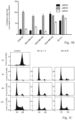
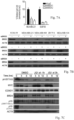
- Two weeks of JQ1 treatment efficiently inhibited the growth of established tumors derived from SUM159 and MDA-MB-231 TNBC cell lines, as well as that of patient-derived primary human TNBC xenografts ( Fig. 1F and Figs. 8E-8F ).
- the specific dependence on BRD4 in vivo was then established using two independent TET-inducible shRNAs in the SUM159 model. Downregulation of BRD4 was found to have even more pronounced effects leading to complete tumor regression and failure to regrow even after doxycycline treatment was discontinued ( Fig.
- Sites of BBI function were mapped by aligning enriched sequence reads to the human genome, and comparing locally and globally to ChIP-seq data for promoters (histone 3 lysine 4 trimethylation; H3K4me3), enhancers (histone 3 lysine 27 acetylation; H3K27ac) and the BRD4 co-activator.
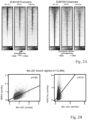
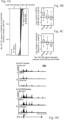
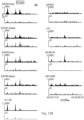
- Bromodomain inhibitor binding was identified at active promoter and enhancer regions ( Fig. 2A ), with a near-perfect co-localization to sites of BRD4 enrichment and strong enrichment at active enhancers, genome-wide ( Fig. 2B ).
- BBI was found to efficiently displace chromatin-bound BRD4 in treated TNBC cells ( Fig. 2C ).
- POU5F1B/MYC 28 Among the top SE-associated genes in SUM159 were POU5F1B/MYC 28 , IRX2 29,30 , HIF1 ⁇ 31 , TFs with known roles in development and breast cancer, and CD180 (RP105), a TLR4-accessory molecule implicated in obesity, inflammation, and atherosclerosis 32 ( Fig. 9B ).
- POU5F1B/MYC 28 and HIF1 ⁇ were top among SE-associated genes in SUM149 cells as well. Analyzing gene expression changes in both cell lines by RNA-seq at different time points following JQ1 treatment demonstrated consistent, proportionate effects on gene expression ( Fig.
- genes associated with SEs were significantly more likely to be down-regulated compared to all active genes ( Fig. 2F and Fig. 9D ).
- the expression of genes that are up or down regulated by JQ1 versus DMSO after 24 hours treatment was performed at 3, 12, and 24 hours after treatment.
- Up regulated genes included DHRS2, HEXIM and CDKNIA and down regulated genes include CD180, PTPN22, and HNF4G. Gene expression changes were observed as early as 3 hours after JQ1 treatment and, as expected acutely following SE disruption, more genes were significantly down- than up-regulated ( Figs. 9D-9F ).
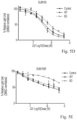
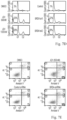
- Fig. 3A Sensitive and resistant TNBC cells are equally sensitive to compounds from divergent drug classes, such as CXCR2 and JAK2 inhibitors known to target TNBC cells 34 ; thus resistance is specific to BET inhibitors among other targeted agents ( Fig. 3D ).
- Adaptive drug resistance was not attributable to outgrowth of a minor subpopulation of cells, as 10 independent single cell-derived clones showed the same resistance profile as a pool of SUM159R cells ( Fig. 3E ). Similar results were obtained in vivo, as xenografts derived from SUM159R cells were not responsive to JQ1 treatment in parallel studies with sensitive TNBC cells ( Fig. 3F ).
- BRD4 In addition to the twin bromodomains, BRD4 possesses additional structural features that bind defined gene-regulatory factors. Indeed, BRD4 was first identified as a mediator-associated factor by Kornberg 39 . More recent proteomic studies revealed avid binding of the extra-terminal domain to ATAD5, CHD4, GLTSCR1, JMJD6, and NSD3 40 , and of the distal carboxy-terminus to CDK9 and Cyclin-T1 41 . Many of these factors possess epigenetic reader modules of their own, and the larger macromolecular complexes in which they function may contribute to bromodomain-independent recruitment of BRD4.
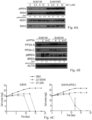
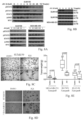
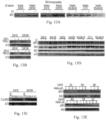
- BRD4 expression constructs encoding a bromodomain-inactivated mutant (BDmut) were generated. The ability of these constructs to rescue effects of knock-down of endogenous BRD4 was assessed in stable cell lines ( Figs. 13B-13C ). Downregulation of endogenous BRD4 decreased cell growth both in parental SUM159 and in resistant SUM159R cells, which was rescued by enforced expression of wild type BRD4 ( Fig. 5D ). Expression of BDmut BRD4 failed to rescue parental SUM159 cells, but supported growth of JQ1-resistant SUM159R providing functional validation of the bromodomain-independent recruitment hypothesis ( Fig. 5D ).
- BRD4 is hyperphosphorylated in resistant cells either due to increased phosphorylation by CK2 or, alternatively, due to decreased dephosphorylation by a not-yet-identified BRD4 phosphatase.
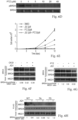
- first CK2 activity was analyzed in parental and resistant cells by performing pan-CK2 substrate immunoblots. Consistent with prior data describing CK2 as a constitutively active kinase 44 , significant differences in CK2 activity between sensitive and resistant cell lines were not detected ( Fig. 13F ).
- PP2A is a prolific serine phosphatase that often opposes CK2 function 46,47 .
- CK2 function 46,47 CK2 function 46,47 .
- Knock-down of PP2A A and C subunits in SUM149 and SUM159 cells lead to increased BRD4 phosphorylation establishing PP2A as a previously unrecognized BRD4 phosphatase.
- BRD4 expression constructs encoding mutants that cannot be phosphorylated by CK2 (7 serine to alanine substitutions; "7A mutant") or mimic constitutive phosphorylation (7 serine to aspartate substitutions; "7D mutant" were generated.
- the ability of these constructs to rescue effects of knock-down of endogenous BRD4 in stable cell lines were assessed and it was found that expression of 7D mutant supported the growth of both parental SUM159 and JQ1-resistant SUM159R cells, whereas 7A mutant had weaker effect especially in SUM159 cells ( Fig. 5D ).
- MED1 binding and subcellular localization of 7A and 7D mutants in the presence and absence of JQ1 was analyzed.
- the 7A mutant was found to display weaker MED1 binding compared to WT BRD4 and completely dissociates after JQ1 whereas the 7D mutant seems to have higher affinity for MED1 that is not affected by JQ1 treatment ( Fig. 6H and Fig. 13H ).
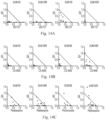
- mice bearing tumors derived from BBI-resistant SUM149 cells ( Fig. 15A ) or tumors derived from BBI-resistant SUM159 cells ( Fig. 15B ) were administered vehicle, single therapy, or BBI combination therapy.
- Single therapies consisted of administering a BET inhibitor (JQ1), a JAK2 inhibitor (INC424, or "JAK2I"), a Bcl-xl/Bcl-2 inhibitor (ABT 263), or a Bcl-2 inhibitor (ABT 199).
- Combination therapies consisted of administering JQ1 along with either INC424, ABT 263, or ABT 199. In both xenograft models, each BBI combination therapy reduced tumor weight to a greater extent than the corresponding single therapy and JQ1 alone.
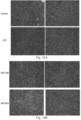
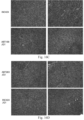
- the xenografts derived from BBI-resistant SUM159 cells were subjected to H&E staining after treatment with vehicle as a control ( Fig. 16A , top panels), JQ1 ( Fig. 16A , bottom panels), ABT 199 ( Fig. 16B , top panels), ABT 263 ( Fig. 16B , bottom panels), INC 424 ( Fig. 16C , top panels), ABT 199 + JQ1 ( Fig. 16C , bottom panels), ABT 263 + JQ1 ( Fig. 16D , top panels), INC 424 + JQ1 ( Fig. 16D , bottom panels).
- the cellularity of the combination treatments was significantly decreased relative to the corresponding single therapies. Taken together, the above results confirm that certain combination therapies achieve higher efficacy in TNBCs than BBIs alone.
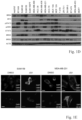
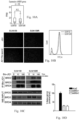
- Bcl-xl In BBI resistance, parental SUM159 cells (BBI-sensitive) and SUM159R cells (BBI-resistant) from xenografts were stained for Bcl-xl by staining with mouse Bcl-xl antibody (1:50, overnight). Fluorescence imaging indicated that Bcl-xl was present to a far greater extent in BBI-resistant SUM159 cells ( Fig. 17 , bottom) than in BBI-sensitive SUM159 cells ( Fig. 17 , top). This evidence is consistent with the postulate that an overexpression of Bcl-xl, an anti-apoptotic protein, may be a contributing factor to BBI resistance.
- Triple negative breast cancer is the only major breast tumor subtype that lacks effective, targeted therapies 4 .
- therapies 4 Although a subset of early-stage TNBC patients responds well to chemotherapy, the majority recurs rapidly with metastatic disease for which treatment options are limited. Thus, novel therapeutic strategies are urgently needed.
- TNBC cancer genome sequencing studies failed to identify genetic alterations that could be explored for therapies 2 necessitating the search for non-genetic targets as unrecognized dependencies.
- a rationale for BET inhibition is identified in TNBC in anticipation of a firm understanding of core regulatory circuitry.
- BET inhibition has demonstrated efficacy in disparate models of cancer in a rapidly expanding literature. Despite apparent resistance in the vast majority of these reports, as observed here in TNBC, mechanisms of BET inhibitor resistance have not been reported. Integrating approaches in epigenomics, proteomics and chemical biology, an example of epigenetic drug resistance by epigenetic mechanism is provided, where BRD4 is recruited to chromatin in a bromodomain-independent manner due to increased binding to MED1 due to its hyperphosphorylation as a consequence of decreased PP2A activity in resistant cells.
- cells were filtered through 500-micron mesh, washed in DMEM/F12 with 5% FBS, frozen in DMEM/F12 with 5% FBS and 10% DMSO, and stored in liquid nitrogen for subsequent xenograft studies.
- a panel of compounds (synthesized in the Bradner lab) was tested in 29 human breast cell lines in a 384-well format at 2,000 cells per well using a semi-automated screen essentially as described 8 . Cell viability at 72 hr was evaluated using ATPlite (Perkin Elmer).
- SUM149, SUM149R, SUM159, and SUM159R cells were seeded in sterile, white, opaque 384-well microtiter plates (Thermo), using an automated dispensing system (BioTek EL406), at 1,000 cells per well in 50 ⁇ l of media.
- Drugs were delivered in DMSO by robotic pin transfer with a JANUS workstation (100 nl) to achieve a matrix of pairwise dose-response incubations of each compound, each pair having eight replicates. Following 72 hours of incubation, ATP levels were determined for treated cells and vehicle controls (ATPlite, PerkinElmer). Data were normalized to vehicle controls.
- Combination indices were determined using the median-effect principle of Chou and Talalay 49 (CalcuSyn Software). Isobologram plots were generated with GraphPad Prism software. Points represent paired values of drug concentrations assessed for synergism. The diagonal line signifies drug additivity. Points above the line represent antagonistic drug combinations, and those below the line represent synergistic drug combinations. Synergy assays were performed in triplicates and repeated 2-3 times.
- mice 5-6-weeks old female CrTac:NCr- Foxn1 nu and NOD.Cg- Prkdc scid Il2rg tm1Sug /JicTac mice were purchased from Taconic. Tumors were induced by bilateral orthotopic mammary fat pad injection of 1 ⁇ 10 6 cells in 50% Matrigel (BD Biosciences) in DMEM/F12 or Medium 171 (except for IDC50-X cells, which were injected with 3% FBS and 4 mg/ml collagen gel in Medium 171). Animal experiments were conducted following protocol 11-023 approved by the Dana-Farber Cancer Institute Animal Care and Use Committee. For all the xenograft studies, the sample size of each group (5-10 mice) is indicated in the figures.
- Cells were cultured at 37°C with 5% CO2 in the media described-above, and cell viability was measured using CellTiter-Glo three days after treatments.
- cells were plated at 5000 (SUM159) or 20000 (SUM149) cells per well in 6-well plates and treated the next day with inhibitors. Cells were counted every three days by cell counter.
- Cellular apoptosis was analyzed with an APC AnnexinV/7ADD Apoptosis Detection kit (BD Pharmingen). AnnexinV/7AAD assessments and cell cycle graphics were generated using FlowJo software V7.6.1 for Windows (Tree Star).
- Senescence Beta-gal staining was performed using Senescence ⁇ -Galactosidase staining kit from Cell signaling. Briefly, after JQ1 treatment (500nM) for 72h, SUM159 and MDA-MB-231 cells were fixed by Fixative Solution for 15 min, followed by ⁇ -Galactosidase solution incubation overnight at 37 °C. The staining was checked under microscope for the development of blue color. MultiDrug Resistance Assay was performed with MDR assay kit from Cayman Chemical (600370). Briefly, SUM159 and SUM159R cells were treated with JQ1 or DMSO for 30 min in SUM medium. Verapamil was used as a positive control at 1:1000 dilution. Calcein AM/Hoechst Dye staining solution was added after that and cells were incubated at 37 °C for 15 min. The cells were analyzed by fluorescent microscope and FACS.
- Cell cycle analysis was performed 72 hr after JQ1 treatment or BRD4 downregulation with doxycycline using propidium iodide (PI) staining.
- Cells were resuspended in 1 ml of growth medium supplemented with 2 ⁇ g/ml PI (Life Technologies) as final concentration. After 60 min at 37°C in the dark, analysis was performed on a FACS AriaII cytometer (BD Biosciences). The cell cycle was plotted as histogram after excluding doublets.
- Cell synchronization Procedure SUM159 cells were treated with nocodazole (200ng/ml) for 12h and then cells were tapped to detach from the plates. After washing twice with PBS, cells were replated with or without JQ1 in collagen coated plates. Cells were collected at 0, 3, 6, 12 h time point for FACS and immunoblot analysis.
- Antibodies used for immunofluorescence were CK18 (Dako, M7010), CK17 (Dako, M7046), HMW (Dako, M0630), LMW (Dako, M0631), CD44 (NeoMarkers, MS-668-P1), CD24 (NeoMarkers, MS-1279-P1), p-STAT3 (Cell Signaling, 9145S), VIM (Dako, M073501), CDH1 (BD Biosciences, 610181), FLAG (Sigma, F1804), BrdU (Roche, 11170376001). Immunofluorescence experiments were performed in cultured cells or in whole sections of formalin-fixed paraffin embedded (FFPE) xenograft tumors.
- FFPE formalin-fixed paraffin embedded
- Antibody dilutions were as follows: pSTAT3 (1:25), CD44 (1:100), CD24 (1:100), CK18 (1:200), CK17 (1:200), HMK (1:200), LMK (1:200), VIM (1:100), CDH1 (1: 100), FLAG (1:50), and BrdU (1:200).
- siRNA transfection cells were plated at 2,000 cells per well in 96-well plates and cultured at 37°C with 5% CO2 in the media. The next day, cells were transfected in triplicate with siGENOME SMARTpools for the genes of interest or "Non-Targeting siRNA" controls using DharmaFECT 1 (Dharmacon). The sequences of the siRNAs in the SMARTpools are listed in Table 2. Cell viability was measured using CellTiter-Glo (Promega) three days after transfections, with the effects of each siRNAs treatment on each cell line compared to the effects of no siRNAs.
- TET-inducible pLKO-TET-ON lentiviral constructs were packaged by co-transfection of the lentiviral hairpin containing plasmid PLKO.1 and the helper plasmids pCMV-dR8.91 and pMD2.G-VSV-G into HEK293T cells using Lipofectamin (Life Technolgies). Following transduction via spinoculation for 30 min hr at 1000 g and selection with 1 ⁇ g/ml puromycin for 72 hr (Sigma, St. Louis, MO), knockdown efficacy was determined by western blotting and cells were seeded for proliferation assays as described above. Sequences of shRNAs used are listed in Table 2.
- BRD4 BD1 (N140A) and BD2 (N433A) bromodomains, 7A and 7D mutants were generated using a Quickchange Multi Site-Directed Mutagenesis Kit (Agilent Technologies) using primers listed in Table 2 and subsequently verified by sequencing.
- nuclear extracts were prepared as follow: 10x 10 6 cells were resuspended in 5ml Buffer A: 10mM Tris pH 7.9, 1.5mM MgCl2, 10mM KCl, 0.05% NP-40, 1mM DTT, and protease and phosphatase inhibitors. Cells were incubated on ice for 15 min and gently vortexed every 5 min.
- pellets were suspended in 0.3 ml buffer B (20mM Tris pH 7.9, 25% glycerol, 0.42 M NaCl, 1.5mM MgCl2, 1mM KCl, 0.5% NP40, 0.2mM EDTA, 1mM DTT, and protease and phosphatase inhibitors) and incubated for 5 min on ice. After centrifugation of the lysates at 14g for 10 min at 4°C, supernatant was diluted with 0.6 ml buffer A, and added NP-40 to final 0.5% and treated with DNase I.
- buffer B 20mM Tris pH 7.9, 25% glycerol, 0.42 M NaCl, 1.5mM MgCl2, 1mM KCl, 0.5% NP40, 0.2mM EDTA, 1mM DTT, and protease and phosphatase inhibitors
- Antibodies used for immunoblotting, immunoprecipitation and Chip-seq were as follows: BRD4 (Bethyl, A301-985A), MED1 (Bethyl, A300-793a), BRD3 (Bethyl, A302-368A), BRD2 (Bethyl, A302-583A), MYC (Santa Cruz, sc764), p-STAT3 (Cell Signaling, 9145S), STAT3 (Cell Signaling, 4904), p-STATS (Cell Signaling, 9351), p-JAK2 (Cell Signaling, 3771), CYCLIN D1 (Cell Signaling, 2922), p-H3 (Cell Signaling, 12201), CK2 substrate (Cell signaling, 8738), PP2A-A (Cell signaling, 2039), PP2A-C (Cell signaling, 2038) and p-BRD4 was a gift from Dr.
- SUM159 and SUM159R cells were grown in R/K-deficient SILAC DMEM (paa; E15-086), 10% dialyzed serum (Sigma-Aldrich; F0392), and supplemented with 800 ⁇ M L-Lysine 13 C 6 15 N 2 Hydrochloride and 482 ⁇ M L-Arginine 13 C 6 15 N 4 hydrochloride (Cambridge Isotope lab) for "heavy"-labeled media or 800 ⁇ M L-Lysine 12 C 6 14 N 2 -Hydrochloride and 482 ⁇ M L-Arginine 12 C 6 14 N 4 hydrochloride for "light"-labeled media.
- RIME was performed as described 42 .
- ChIP-seq was performed essentially as described 27 .
- ChIP-seq SUM159 and SUM159R cells (4 ⁇ 10 7 ) were grown in SUM Medium. The media were then removed and replaced with media containing 1% formaldehyde (EM grade; tebu-bio) and crosslinked for 8 min. Crosslinking was quenched by adding glycine to a final concentration of 0.2 M. The cells were washed with ice-cold PBS, harvested in PBS, and the cell pellet was washed with PBS.
- EM grade tebu-bio
- the nuclear fraction was extracted by first resuspending the pellet in 10 ml of LB1 buffer (50mM HEPES-KOH [pH 7.5], 140mMNaCl, 1mMEDTA, 10% glycerol, 0.5% NP-40 or Igepal CA-630, and 0.25% Triton X-100) for 10 min at 4°C.
- Cells were pelleted, resuspended in 10 ml of LB2 buffer (10 mM Tris-HCL [pH 8.0], 200 mM NaCl, 1 mM EDTA, and 0.5 mM EGTA), and mixed for 5 min.
- Cells were pelleted and resuspended in 300 ⁇ l of LB3 buffer (10 mM Tris-HCl [pH 8], 100 mM NaCl, 1 mM EDTA, 0.5 mM EGTA, 0.1% Na-deoxycholate, and 0.5% N-lauroylsarcosine) and sonicated in a covaris sonicator for 10 min. A total of 30 ⁇ l of 10% Triton X-100 was added, and lysate was centrifuged for 10 min at 20,000 rcf to purify the debris.
- LB3 buffer 10 mM Tris-HCl [pH 8], 100 mM NaCl, 1 mM EDTA, 0.5 mM EGTA, 0.1% Na-deoxycholate, and 0.5% N-lauroylsarcosine
- RNA and protein were digested with 0.2 mg/mL RNase A for 2 hr followed by 0.2 mg/mL Proteinase K for 1 hr. DNA was purified with phenol chloroform extraction and ethanol precipitation. Libraries for Illumina sequencing were prepared following the Rubicon ThruPLEX-FD kit for 10-12 cycles.
- RNA-seq SUM159 and SUM159R were incubated in biological duplicates for 3, 12 and 24 hr with 500 nM of JQ1 or DMSO treatment. Total RNA was extracted using the standard QIAGEN RNeasy kit (74106). RNA concentrations were measured and quality controlled on a Bioanalyzer, RNA-Seq libraries were made using Illumina True-Seq RNA kits using the Sciclone NGSx workstation.
- RNA-seq and ChIP-seq experiments were performed in duplicates.
- RNA-seq data generated in this manuscript. All ChIP-seq, Chem-seq, and RNA-seq data generated in this publication can be found online associated with GEO Publication Reference ID GSE63584 (www.ncbi.nlm.nih.gov/geo/). Gene sets and annotations. All analysis was performed using RefSeq (NCBI37/HG19) human gene annotations. RNA-seq data processing and gene expression quantification. All RNA-Seq datasets were aligned to the transcriptome using Tophat2 52 (version 2.0.11) using the Illumina igenomes NCBI37/HG19 UCSC transcriptome build retrieved from ccb.jhu.edu/software/tophat/igenomes.shtml. Alignments were performed using default parameters. Transcript expression quantification was performed using Cufflinks 53 (version 2.2.0) with default parameters to generate gene expression values in units of FPKM.
- ChIP-seq and Chem-seq data processing All ChIP-seq and Chem-seq datasets were aligned using Bowtie2 54 (version 2.2.1) to build version NCBI37/HG19 of the human genome or build version NCB37/MM9 of the mouse genome. Alignments were performed using the following criteria: -k 1, with all other parameters set to default. These criteria preserved only reads that mapped uniquely to the genome without any mismatches.
- ChIP-seq or Chem-seq dataset was calculated in any region using the Bamliquidator (version 0.9) read density calculator (github.com/BradnerLab/pipeline/wiki/bamliquidator). Briefly, ChIP-Seq reads aligning to the region were extended by 200bp and the density of reads per basepair (bp) was calculated. The density of reads in each region was normalized to the total number of million mapped reads producing read density in units of reads per million mapped reads per bp (rpm/bp).
- ChIP-seq and Chem-seq enriched regions The MACS version 1.4.2 (Model based analysis of ChIP-Seq) 55 peak finding algorithm was used to identify regions of ChIP-Seq enrichment over background. A p-value threshold of enrichment of 1e-9 was used for all datasets.
- Heatmaps of ChIP-seq occupancy were created as described 56 . Heatmaps were created for the +/- 10kb region flanking all transcription start sites (TSS) or for the +/-10kb region flanking all TSS distal BET bromodomain bound enhancers. Each row plots a specific TSS or enhancer region. Rows are ranked by peak occupancy of BET bromodomains as determined by Bio-JQ1 Chem-seq signal ( Fig. 2A ).
- Enhancers and super enhancers were mapped using the ROSE software package described 16,17 and available at (younglab.wi.mit.edu/super_enhancer_code.html).
- SEs Enhancers and super enhancers
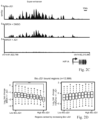
- SUM159 and SUM159R cells Bio-JQ1 Chem-Seq enriched regions were used to map enhancers and SEs ( Fig. 2E ).
- SUM149 cells BRD4 ChIP-seq enriched regions were used to map enhancers and SEs ( Figs. 9A-9G ).
- Identifying differentially expressed genes upon JQ1 treatment To identify genes differentially regulated by JQ1 treatment in SUM159 or SUM149 cells, all genes with a > log 2 fold change in expression were ordered by fold change at 24 hours +/- JQ1 for SUM159 or at 12 hours +/- JQ1 for SUM149. The log 2 row median normalized fold change for each gene is displayed in Figs. 4H-4I for SUM159 and in Fig. 9D for SUM149. For subsequent gene set and pathway analysis, SUM159 genes with consistent and statistically significantly altered expression were selected using a Welch's two-tailed t test between DMSO and JQ1 treated expression values at 12 and 24 hours.
- SE differential regions were defined as in Brown et al. 2014 26 . Briefly, in order to quantify changes in super-enhancers between two conditions, background subtracted ChIP-Seq signal was calculated at the set of all enhancer regions considered super in at least one condition. Gained/lost super-enhancers were determined as those with a greater than log 2 fold change signal in either direction. The log 2 fold change in Bio-JQ1 occupancy at all rank ordered SE containing regions is shown in Fig. 4A . SE regions were classified as either gained, conserved, or lost. Gained/lost regions were classified as those with > 1 log 2 fold change in either direction. Conserved regions were classified as those with ⁇ 0.25 log 2 fold change in either direction. The log 2 fold change in either BRD4 or proximal (within 50kb of region) gene expression is shown in Figs. 4B-4C .
- Bio-JQ1 enriched regions in SUM159 or BRD4 enriched regions in SUM149 were ranked by increasing levels and then distributed into 10 bins.
- Log 2 fold changes in BRD4 or H3K27ac were quantified in each bin of regions and displayed as a box plot ( Fig. 2D and Fig. 9A ).
Landscapes
- Health & Medical Sciences (AREA)
- Chemical & Material Sciences (AREA)
- Life Sciences & Earth Sciences (AREA)
- Medicinal Chemistry (AREA)
- General Health & Medical Sciences (AREA)
- Veterinary Medicine (AREA)
- Animal Behavior & Ethology (AREA)
- Public Health (AREA)
- Pharmacology & Pharmacy (AREA)
- Organic Chemistry (AREA)
- Epidemiology (AREA)
- Engineering & Computer Science (AREA)
- Molecular Biology (AREA)
- Immunology (AREA)
- Hematology (AREA)
- Biomedical Technology (AREA)
- Urology & Nephrology (AREA)
- Cell Biology (AREA)
- Nuclear Medicine, Radiotherapy & Molecular Imaging (AREA)
- Chemical Kinetics & Catalysis (AREA)
- Microbiology (AREA)
- General Chemical & Material Sciences (AREA)
- Pathology (AREA)
- Physics & Mathematics (AREA)
- Analytical Chemistry (AREA)
- Biochemistry (AREA)
- General Physics & Mathematics (AREA)
- Food Science & Technology (AREA)
- Biotechnology (AREA)
- Emergency Medicine (AREA)
- Proteomics, Peptides & Aminoacids (AREA)
- Mycology (AREA)
- Bioinformatics & Cheminformatics (AREA)
- Oncology (AREA)
- Medicines That Contain Protein Lipid Enzymes And Other Medicines (AREA)
- Pharmaceuticals Containing Other Organic And Inorganic Compounds (AREA)
- Medicines Containing Antibodies Or Antigens For Use As Internal Diagnostic Agents (AREA)
- Acyclic And Carbocyclic Compounds In Medicinal Compositions (AREA)
- Peptides Or Proteins (AREA)
- Investigating Or Analysing Biological Materials (AREA)
Priority Applications (1)
| Application Number | Priority Date | Filing Date | Title |
|---|---|---|---|
| EP25171764.1A EP4585273A3 (en) | 2015-08-10 | 2016-08-10 | Mechanism of resistance to bet bromodomain inhibitors |
Applications Claiming Priority (2)
| Application Number | Priority Date | Filing Date | Title |
|---|---|---|---|
| US201562203128P | 2015-08-10 | 2015-08-10 | |
| PCT/US2016/046318 WO2017027571A1 (en) | 2015-08-10 | 2016-08-10 | Mechanism of resistance to bet bromodomain inhibitors |
Related Child Applications (1)
| Application Number | Title | Priority Date | Filing Date |
|---|---|---|---|
| EP25171764.1A Division EP4585273A3 (en) | 2015-08-10 | 2016-08-10 | Mechanism of resistance to bet bromodomain inhibitors |
Publications (3)
| Publication Number | Publication Date |
|---|---|
| EP3334725A1 EP3334725A1 (en) | 2018-06-20 |
| EP3334725A4 EP3334725A4 (en) | 2019-07-31 |
| EP3334725B1 true EP3334725B1 (en) | 2025-04-23 |
Family
ID=57984534
Family Applications (2)
| Application Number | Title | Priority Date | Filing Date |
|---|---|---|---|
| EP16835823.2A Active EP3334725B1 (en) | 2015-08-10 | 2016-08-10 | Bromodomain and extra terminal (bet) inhibitor and a protein phosphatase 2a (pp2a) activator for treating bet inhibitor resistant cancer |
| EP25171764.1A Pending EP4585273A3 (en) | 2015-08-10 | 2016-08-10 | Mechanism of resistance to bet bromodomain inhibitors |
Family Applications After (1)
| Application Number | Title | Priority Date | Filing Date |
|---|---|---|---|
| EP25171764.1A Pending EP4585273A3 (en) | 2015-08-10 | 2016-08-10 | Mechanism of resistance to bet bromodomain inhibitors |
Country Status (16)
| Country | Link |
|---|---|
| US (1) | US11666580B2 (enExample) |
| EP (2) | EP3334725B1 (enExample) |
| JP (1) | JP2018531891A (enExample) |
| KR (1) | KR20180035905A (enExample) |
| CN (1) | CN108137550A (enExample) |
| AU (2) | AU2016304856B8 (enExample) |
| BR (1) | BR112018002550A2 (enExample) |
| CA (1) | CA2995374A1 (enExample) |
| CL (1) | CL2018000377A1 (enExample) |
| HK (1) | HK1254201A1 (enExample) |
| IL (1) | IL257386A (enExample) |
| MX (1) | MX2018001737A (enExample) |
| PE (1) | PE20181088A1 (enExample) |
| RU (1) | RU2018108165A (enExample) |
| WO (1) | WO2017027571A1 (enExample) |
| ZA (1) | ZA201800969B (enExample) |
Families Citing this family (13)
| Publication number | Priority date | Publication date | Assignee | Title |
|---|---|---|---|---|
| BR112018002550A2 (en) | 2015-08-10 | 2018-09-18 | Dana-Farber Cancer Institute, Inc. | inhibitor resistance mechanism |
| GB201704536D0 (en) * | 2017-03-22 | 2017-05-03 | Univ Malta | Method |
| WO2019032810A2 (en) * | 2017-08-09 | 2019-02-14 | Mayo Foundation For Medical Education And Research | METHODS AND MATERIALS FOR IDENTIFYING AND TREATING BETA-INHIBITORY RESISTANT CANCERS |
| CN109503618A (zh) * | 2017-09-14 | 2019-03-22 | 成都海创药业有限公司 | 一种brd4抑制剂 |
| CN108084193A (zh) * | 2017-12-19 | 2018-05-29 | 郭守东 | 一种brd4蛋白抑制剂 |
| US12290521B2 (en) | 2018-07-25 | 2025-05-06 | Mayo Foundation For Medical Education And Research | Methods and materials for identifying and treating BET inhibitor-resistant cancers |
| WO2020132259A1 (en) * | 2018-12-21 | 2020-06-25 | Dana-Farber Cancer Institute, Inc. | Compositions and methods of treating cancers by administering a phenothiazine-related drug that activates protein phosphatase 2a (pp2a) |
| PT116050B (pt) * | 2020-01-09 | 2022-06-15 | Hovione Farm S A | Conjugados fármaco-ligando e inibidores das proteínas da família bromodomínio e domínio extraterminal -(bet) modificados |
| AU2021298154A1 (en) * | 2020-06-25 | 2023-02-23 | Tolremo Therapeutics Ag | Combination of a CBP/p300 bromodomain inhibitor and a KRAS inhibitor for the treatment of cancer |
| US20240316061A1 (en) | 2021-09-17 | 2024-09-26 | Institut Curie | Bet inhibitors for treating pab1 deficient cancer |
| JPWO2023157891A1 (enExample) * | 2022-02-16 | 2023-08-24 | ||
| CN114617878A (zh) * | 2022-05-16 | 2022-06-14 | 深圳大学 | Ck2抑制剂在制备抗衰药物中的应用 |
| CN115894678B (zh) * | 2022-07-15 | 2023-10-20 | 新疆赛尔托马斯生物科技有限公司 | 一种干细胞细胞因子的制备方法及其在制备药品中的用途 |
Family Cites Families (46)
| Publication number | Priority date | Publication date | Assignee | Title |
|---|---|---|---|---|
| CA103867A (en) | 1907-02-01 | 1907-03-05 | Charles M. Thrasher | Nut lock |
| CA120184A (en) | 1908-09-08 | 1909-08-24 | George Albert Thornhill | Bottle labelling machine |
| CA168504A (en) | 1915-01-09 | 1916-03-28 | Carl Lorentz Nilson | Locomotive |
| WO1998047920A1 (en) | 1997-04-18 | 1998-10-29 | Chugai Research Institute For Molecular Medicine, Inc. | Transcriptional regulator |
| EP1077219A4 (en) | 1998-04-30 | 2005-02-23 | Chugai Pharmaceutical Co Ltd | Transcriptional, regulatory factor |
| US20120028912A1 (en) | 2000-02-22 | 2012-02-02 | J.David Gladstone Institute | Methods of modulating bromodomains |
| US6607916B2 (en) | 2001-02-08 | 2003-08-19 | Isis Pharmaceuticals, Inc. | Antisense inhibition of Casein kinase 2-alpha expression |
| US8522267B2 (en) | 2002-03-08 | 2013-08-27 | Caption Colorado Llc | Method and apparatus for control of closed captioning |
| BRPI0514504A (pt) | 2004-08-20 | 2008-06-10 | Univ Michigan | pequenas moléculas inibidoras de membros da famìlia bcl-2 anti-apoptóticos e os usos das mesmas |
| WO2006065724A2 (en) | 2004-12-14 | 2006-06-22 | Regents Of The University Of Minnesota | Casein kinase 2 antisense therapy |
| WO2006069186A2 (en) | 2004-12-22 | 2006-06-29 | The Ohio State Research Foundation | Small molecule bcl-xl/bcl-2 binding inhibitors |
| WO2008060695A2 (en) | 2006-05-22 | 2008-05-22 | The Trustees Of The University Of Pennsylvania | Antiviral inhibition of casein kinase ii |
| ES2414205T3 (es) | 2006-06-02 | 2013-07-18 | The Ohio State University Research Foundation | Agentes terapéuticos para el tratamiento de linfoma de células del manto |
| JP2008156311A (ja) | 2006-12-26 | 2008-07-10 | Institute Of Physical & Chemical Research | Brd2ブロモドメイン結合剤 |
| WO2008119109A1 (en) | 2007-03-29 | 2008-10-09 | Velacor Therapeutics Pty Ltd | Treatment of neurological disorders |
| CA2683559C (en) | 2007-04-13 | 2019-09-24 | Dana Farber Cancer Institute, Inc. | Methods for treating cancer resistant to erbb therapeutics |
| CN101910182B (zh) | 2007-12-28 | 2013-07-17 | 田边三菱制药株式会社 | 抗癌剂 |
| WO2009117769A1 (en) | 2008-03-25 | 2009-10-01 | Newcastle Innovation Limited | Inhibition of c-kit cancers |
| JP2012523458A (ja) | 2009-04-13 | 2012-10-04 | ザ オハイオ ステート ユニバーシティー リサーチ ファウンデーション | タンパク質ホスファターゼ2a活性化剤 |
| US9307184B2 (en) | 2009-07-31 | 2016-04-05 | Echostar Technologies L.L.C. | Multi-user recording allocation |
| US8865901B2 (en) | 2009-10-02 | 2014-10-21 | Fred Hutchinson Cancer Research Center | Gain-of-function Bcl-2 inhibitors |
| GB0919423D0 (en) | 2009-11-05 | 2009-12-23 | Glaxosmithkline Llc | Novel compounds |
| WO2011054851A1 (en) | 2009-11-05 | 2011-05-12 | Glaxosmithkline Llc | Novel process |
| GB0919426D0 (en) | 2009-11-05 | 2009-12-23 | Glaxosmithkline Llc | Novel compounds |
| GB0919434D0 (en) | 2009-11-05 | 2009-12-23 | Glaxosmithkline Llc | Novel compounds |
| GB0919432D0 (en) | 2009-11-05 | 2009-12-23 | Glaxosmithkline Llc | Use |
| US8862173B2 (en) | 2009-12-10 | 2014-10-14 | Motorola Solutions, Inc. | Method for selecting media for delivery to users at an incident |
| US20110207789A1 (en) | 2010-02-19 | 2011-08-25 | Ye Fang | Methods related to casein kinase ii (ck2) inhibitors and the use of purinosome-disrupting ck2 inhibitors for anti-cancer therapy agents |
| ES2606958T3 (es) | 2010-05-14 | 2017-03-28 | Dana-Farber Cancer Institute, Inc. | Compuestos de tienotriazolodiazepina para tratar una neoplasia |
| CN103154246B (zh) | 2010-05-14 | 2015-11-25 | 达那-法伯癌症研究所 | 用于治疗白血病的组合物和方法 |
| RU2593231C2 (ru) | 2010-11-23 | 2016-08-10 | ЭббВи Айэленд Анлимитед Компани | Способы лечения с использованием селективных ингибиторов bcl-2 |
| WO2012075456A1 (en) | 2010-12-02 | 2012-06-07 | Constellation Pharmaceuticals | Bromodomain inhibitors and uses thereof |
| KR101762724B1 (ko) | 2011-01-25 | 2017-07-28 | 더 리젠츠 오브 더 유니버시티 오브 미시건 | Bcl-2/bcl-xl 억제제 및 이를 이용한 치료 방법 |
| WO2013097052A1 (en) | 2011-12-30 | 2013-07-04 | Abbott Laboratories | Bromodomain inhibitors |
| US9220706B2 (en) | 2012-06-01 | 2015-12-29 | National Institutes Of Health (Nih) | Inhibition of leukemic stem cells by PP2A activating agents |
| EP2861255B1 (en) * | 2012-06-19 | 2019-10-09 | The Broad Institute, Inc. | Diagnostic and treatment methods in subjects having or at risk of developing resistance to cancer therapy |
| DE102012212436B4 (de) | 2012-07-16 | 2022-07-14 | Coretronic Corporation | Lichtmodul für eine Projektionsvorrichtung und Verfahren zur Generierung des Blauanteils in einem Lichtmodul für eine Projektionsvorrichtung |
| US20150272970A1 (en) | 2012-09-07 | 2015-10-01 | Carlos Cordon-Cardo | Targeting chemotherapy agent resistance in cancer |
| US20140296218A1 (en) | 2012-10-25 | 2014-10-02 | Whitehead Institute For Biomedical Research | Super-enhancers and methods of use thereof |
| US9073878B2 (en) * | 2012-11-21 | 2015-07-07 | Zenith Epigenetics Corp. | Cyclic amines as bromodomain inhibitors |
| WO2015018522A1 (en) | 2013-08-06 | 2015-02-12 | Oncoethix Sa | Bet-bromodomain inhibitor shows synergism with several anti-cancer agents in pre-clinical models of diffuse large b-cell lymphoma (dlbcl) |
| US11446309B2 (en) * | 2013-11-08 | 2022-09-20 | Dana-Farber Cancer Institute, Inc. | Combination therapy for cancer using bromodomain and extra-terminal (BET) protein inhibitors |
| JP2016538310A (ja) | 2013-11-27 | 2016-12-08 | オンコエシックス ゲーエムベーハー | チエノトリアゾロジアゼピン化合物を含む医薬製剤を用いる白血病の治療方法 |
| AU2015206194A1 (en) * | 2014-01-20 | 2016-07-28 | Gilead Sciences, Inc. | Therapies for treating cancers |
| WO2016203335A1 (en) * | 2015-06-18 | 2016-12-22 | Pfizer Inc. | Novel pyrido[2,3-b]pyrazinones as bet-family bromodomain inhibitors |
| BR112018002550A2 (en) | 2015-08-10 | 2018-09-18 | Dana-Farber Cancer Institute, Inc. | inhibitor resistance mechanism |
-
2016
- 2016-08-10 BR BR112018002550-0A patent/BR112018002550A2/en not_active IP Right Cessation
- 2016-08-10 JP JP2018506976A patent/JP2018531891A/ja active Pending
- 2016-08-10 CN CN201680058347.9A patent/CN108137550A/zh active Pending
- 2016-08-10 EP EP16835823.2A patent/EP3334725B1/en active Active
- 2016-08-10 AU AU2016304856A patent/AU2016304856B8/en active Active
- 2016-08-10 RU RU2018108165A patent/RU2018108165A/ru unknown
- 2016-08-10 MX MX2018001737A patent/MX2018001737A/es unknown
- 2016-08-10 KR KR1020187006573A patent/KR20180035905A/ko not_active Withdrawn
- 2016-08-10 HK HK18113341.9A patent/HK1254201A1/zh unknown
- 2016-08-10 EP EP25171764.1A patent/EP4585273A3/en active Pending
- 2016-08-10 WO PCT/US2016/046318 patent/WO2017027571A1/en not_active Ceased
- 2016-08-10 US US15/751,914 patent/US11666580B2/en active Active
- 2016-08-10 PE PE2018000226A patent/PE20181088A1/es unknown
- 2016-08-10 CA CA2995374A patent/CA2995374A1/en not_active Abandoned
-
2018
- 2018-02-07 IL IL257386A patent/IL257386A/en unknown
- 2018-02-09 CL CL2018000377A patent/CL2018000377A1/es unknown
- 2018-02-13 ZA ZA2018/00969A patent/ZA201800969B/en unknown
-
2021
- 2021-04-20 AU AU2021202388A patent/AU2021202388A1/en not_active Abandoned
Also Published As
| Publication number | Publication date |
|---|---|
| EP3334725A1 (en) | 2018-06-20 |
| ZA201800969B (en) | 2020-10-28 |
| HK1254201A1 (zh) | 2019-07-12 |
| BR112018002550A2 (en) | 2018-09-18 |
| PE20181088A1 (es) | 2018-07-09 |
| CL2018000377A1 (es) | 2018-07-13 |
| AU2016304856B2 (en) | 2021-01-21 |
| AU2021202388A1 (en) | 2021-05-20 |
| EP4585273A3 (en) | 2025-10-22 |
| MX2018001737A (es) | 2018-09-06 |
| AU2016304856A1 (en) | 2018-03-01 |
| WO2017027571A8 (en) | 2017-04-20 |
| US11666580B2 (en) | 2023-06-06 |
| CA2995374A1 (en) | 2017-02-16 |
| IL257386A (en) | 2018-04-30 |
| EP3334725A4 (en) | 2019-07-31 |
| KR20180035905A (ko) | 2018-04-06 |
| WO2017027571A1 (en) | 2017-02-16 |
| RU2018108165A3 (enExample) | 2019-12-25 |
| US20200368248A1 (en) | 2020-11-26 |
| AU2016304856A8 (en) | 2021-02-18 |
| EP4585273A2 (en) | 2025-07-16 |
| RU2018108165A (ru) | 2019-09-12 |
| CN108137550A (zh) | 2018-06-08 |
| AU2016304856B8 (en) | 2021-02-18 |
| JP2018531891A (ja) | 2018-11-01 |
Similar Documents
| Publication | Publication Date | Title |
|---|---|---|
| AU2016304856B2 (en) | Mechanism of resistance to BET bromodomain inhibitors | |
| JP7323592B2 (ja) | 癌を治療するための併用療法 | |
| CN104363913B (zh) | Cdk8/cdk19选择性抑制剂及其在癌症的抗转移和化学预防方法中的用途 | |
| EP2861255B1 (en) | Diagnostic and treatment methods in subjects having or at risk of developing resistance to cancer therapy | |
| CA2953079C (en) | Intermittent dosing of mdm2 inhibitor | |
| WO2014055634A1 (en) | Identification of small molecule inhibitors of jumonji at-rich interactive domain 1a (jarid1a) and 1b (jarid1b) histone demethylase | |
| TW202202143A (zh) | 使用cdk4/6及cdk2抑制劑共同治療以遏止腫瘤對cdk2抑制劑之適應性 | |
| JP2023507816A (ja) | がんを治療するための方法及び組成物 | |
| CA2890108C (en) | Method for treating prostate cancer | |
| Matkar et al. | Kinome reprogramming of G2/M kinases and repression of MYCN contribute to superior efficacy of lorlatinib in ALK-driven neuroblastoma | |
| US11957677B2 (en) | Cancer treatment using FGFR inhibitors and PLK1 inhibitors | |
| JP2022529523A (ja) | 小児対象において神経膠腫を治療するためのtg02の使用 | |
| WO2023141648A1 (en) | 2-fluoroethyl procarbazine compounds | |
| Loganathan | Epigenetic-Based Therapeutic Strategy for the Treatment of Ewing Sarcoma | |
| Bing | Characterization of AAG8 as an oncoprotein | |
| HK1231740B (en) | Intermittent dosing of mdm2 inhibitor | |
| HK1231740A1 (en) | Intermittent dosing of mdm2 inhibitor |
Legal Events
| Date | Code | Title | Description |
|---|---|---|---|
| STAA | Information on the status of an ep patent application or granted ep patent |
Free format text: STATUS: THE INTERNATIONAL PUBLICATION HAS BEEN MADE |
|
| PUAI | Public reference made under article 153(3) epc to a published international application that has entered the european phase |
Free format text: ORIGINAL CODE: 0009012 |
|
| STAA | Information on the status of an ep patent application or granted ep patent |
Free format text: STATUS: REQUEST FOR EXAMINATION WAS MADE |
|
| 17P | Request for examination filed |
Effective date: 20180220 |
|
| AK | Designated contracting states |
Kind code of ref document: A1 Designated state(s): AL AT BE BG CH CY CZ DE DK EE ES FI FR GB GR HR HU IE IS IT LI LT LU LV MC MK MT NL NO PL PT RO RS SE SI SK SM TR |
|
| AX | Request for extension of the european patent |
Extension state: BA ME |
|
| DAV | Request for validation of the european patent (deleted) | ||
| DAX | Request for extension of the european patent (deleted) | ||
| RIC1 | Information provided on ipc code assigned before grant |
Ipc: A61K 45/06 20060101ALI20190315BHEP Ipc: C07D 401/14 20060101AFI20190315BHEP Ipc: A61K 31/517 20060101ALI20190315BHEP Ipc: A61K 31/5415 20060101ALI20190315BHEP Ipc: A61K 31/551 20060101ALI20190315BHEP Ipc: A61K 31/137 20060101ALI20190315BHEP Ipc: C07D 239/91 20060101ALI20190315BHEP |
|
| A4 | Supplementary search report drawn up and despatched |
Effective date: 20190703 |
|
| RIC1 | Information provided on ipc code assigned before grant |
Ipc: A61K 31/551 20060101ALI20190627BHEP Ipc: A61K 31/517 20060101ALI20190627BHEP Ipc: A61K 31/137 20060101ALI20190627BHEP Ipc: A61K 31/5415 20060101ALI20190627BHEP Ipc: C07D 401/14 20060101AFI20190627BHEP Ipc: C07D 239/91 20060101ALI20190627BHEP Ipc: A61K 45/06 20060101ALI20190627BHEP |
|
| STAA | Information on the status of an ep patent application or granted ep patent |
Free format text: STATUS: EXAMINATION IS IN PROGRESS |
|
| 17Q | First examination report despatched |
Effective date: 20220722 |
|
| P01 | Opt-out of the competence of the unified patent court (upc) registered |
Effective date: 20231024 |
|
| GRAP | Despatch of communication of intention to grant a patent |
Free format text: ORIGINAL CODE: EPIDOSNIGR1 |
|
| STAA | Information on the status of an ep patent application or granted ep patent |
Free format text: STATUS: GRANT OF PATENT IS INTENDED |
|
| RIC1 | Information provided on ipc code assigned before grant |
Ipc: A61P 43/00 20060101ALI20241025BHEP Ipc: A61P 35/00 20060101ALI20241025BHEP Ipc: A61K 31/635 20060101ALI20241025BHEP Ipc: A61K 31/517 20060101ALI20241025BHEP Ipc: C07D 239/91 20060101ALI20241025BHEP Ipc: A61K 45/06 20060101ALI20241025BHEP Ipc: A61K 31/137 20060101ALI20241025BHEP Ipc: A61K 31/5415 20060101ALI20241025BHEP Ipc: A61K 31/551 20060101ALI20241025BHEP Ipc: C07D 401/14 20060101AFI20241025BHEP |
|
| INTG | Intention to grant announced |
Effective date: 20241119 |
|
| GRAS | Grant fee paid |
Free format text: ORIGINAL CODE: EPIDOSNIGR3 |
|
| GRAA | (expected) grant |
Free format text: ORIGINAL CODE: 0009210 |
|
| STAA | Information on the status of an ep patent application or granted ep patent |
Free format text: STATUS: THE PATENT HAS BEEN GRANTED |
|
| AK | Designated contracting states |
Kind code of ref document: B1 Designated state(s): AL AT BE BG CH CY CZ DE DK EE ES FI FR GB GR HR HU IE IS IT LI LT LU LV MC MK MT NL NO PL PT RO RS SE SI SK SM TR |
|
| REG | Reference to a national code |
Ref country code: GB Ref legal event code: FG4D |
|
| REG | Reference to a national code |
Ref country code: CH Ref legal event code: EP |
|
| REG | Reference to a national code |
Ref country code: DE Ref legal event code: R096 Ref document number: 602016092013 Country of ref document: DE |
|
| REG | Reference to a national code |
Ref country code: IE Ref legal event code: FG4D |
|
| REG | Reference to a national code |
Ref country code: NL Ref legal event code: MP Effective date: 20250423 |
|
| PG25 | Lapsed in a contracting state [announced via postgrant information from national office to epo] |
Ref country code: NL Free format text: LAPSE BECAUSE OF FAILURE TO SUBMIT A TRANSLATION OF THE DESCRIPTION OR TO PAY THE FEE WITHIN THE PRESCRIBED TIME-LIMIT Effective date: 20250423 |
|
| REG | Reference to a national code |
Ref country code: AT Ref legal event code: MK05 Ref document number: 1787680 Country of ref document: AT Kind code of ref document: T Effective date: 20250423 |
|
| PG25 | Lapsed in a contracting state [announced via postgrant information from national office to epo] |
Ref country code: PT Free format text: LAPSE BECAUSE OF FAILURE TO SUBMIT A TRANSLATION OF THE DESCRIPTION OR TO PAY THE FEE WITHIN THE PRESCRIBED TIME-LIMIT Effective date: 20250825 Ref country code: ES Free format text: LAPSE BECAUSE OF FAILURE TO SUBMIT A TRANSLATION OF THE DESCRIPTION OR TO PAY THE FEE WITHIN THE PRESCRIBED TIME-LIMIT Effective date: 20250423 Ref country code: FI Free format text: LAPSE BECAUSE OF FAILURE TO SUBMIT A TRANSLATION OF THE DESCRIPTION OR TO PAY THE FEE WITHIN THE PRESCRIBED TIME-LIMIT Effective date: 20250423 |
|
| PGFP | Annual fee paid to national office [announced via postgrant information from national office to epo] |
Ref country code: DE Payment date: 20250827 Year of fee payment: 10 |
|
| REG | Reference to a national code |
Ref country code: LT Ref legal event code: MG9D |
|
| PG25 | Lapsed in a contracting state [announced via postgrant information from national office to epo] |
Ref country code: NO Free format text: LAPSE BECAUSE OF FAILURE TO SUBMIT A TRANSLATION OF THE DESCRIPTION OR TO PAY THE FEE WITHIN THE PRESCRIBED TIME-LIMIT Effective date: 20250723 Ref country code: GR Free format text: LAPSE BECAUSE OF FAILURE TO SUBMIT A TRANSLATION OF THE DESCRIPTION OR TO PAY THE FEE WITHIN THE PRESCRIBED TIME-LIMIT Effective date: 20250724 |
|
| PG25 | Lapsed in a contracting state [announced via postgrant information from national office to epo] |
Ref country code: PL Free format text: LAPSE BECAUSE OF FAILURE TO SUBMIT A TRANSLATION OF THE DESCRIPTION OR TO PAY THE FEE WITHIN THE PRESCRIBED TIME-LIMIT Effective date: 20250423 |
|
| PG25 | Lapsed in a contracting state [announced via postgrant information from national office to epo] |
Ref country code: BG Free format text: LAPSE BECAUSE OF FAILURE TO SUBMIT A TRANSLATION OF THE DESCRIPTION OR TO PAY THE FEE WITHIN THE PRESCRIBED TIME-LIMIT Effective date: 20250423 |
|
| PGFP | Annual fee paid to national office [announced via postgrant information from national office to epo] |
Ref country code: GB Payment date: 20250827 Year of fee payment: 10 |
|
| PG25 | Lapsed in a contracting state [announced via postgrant information from national office to epo] |
Ref country code: HR Free format text: LAPSE BECAUSE OF FAILURE TO SUBMIT A TRANSLATION OF THE DESCRIPTION OR TO PAY THE FEE WITHIN THE PRESCRIBED TIME-LIMIT Effective date: 20250423 |
|
| PG25 | Lapsed in a contracting state [announced via postgrant information from national office to epo] |
Ref country code: AT Free format text: LAPSE BECAUSE OF FAILURE TO SUBMIT A TRANSLATION OF THE DESCRIPTION OR TO PAY THE FEE WITHIN THE PRESCRIBED TIME-LIMIT Effective date: 20250423 |
|
| PGFP | Annual fee paid to national office [announced via postgrant information from national office to epo] |
Ref country code: FR Payment date: 20250825 Year of fee payment: 10 |
|
| PGFP | Annual fee paid to national office [announced via postgrant information from national office to epo] |
Ref country code: CH Payment date: 20250901 Year of fee payment: 10 |
|
| PG25 | Lapsed in a contracting state [announced via postgrant information from national office to epo] |
Ref country code: RS Free format text: LAPSE BECAUSE OF FAILURE TO SUBMIT A TRANSLATION OF THE DESCRIPTION OR TO PAY THE FEE WITHIN THE PRESCRIBED TIME-LIMIT Effective date: 20250723 |
|
| PG25 | Lapsed in a contracting state [announced via postgrant information from national office to epo] |
Ref country code: IS Free format text: LAPSE BECAUSE OF FAILURE TO SUBMIT A TRANSLATION OF THE DESCRIPTION OR TO PAY THE FEE WITHIN THE PRESCRIBED TIME-LIMIT Effective date: 20250823 |
|
| PG25 | Lapsed in a contracting state [announced via postgrant information from national office to epo] |
Ref country code: LV Free format text: LAPSE BECAUSE OF FAILURE TO SUBMIT A TRANSLATION OF THE DESCRIPTION OR TO PAY THE FEE WITHIN THE PRESCRIBED TIME-LIMIT Effective date: 20250423 |
|
| PG25 | Lapsed in a contracting state [announced via postgrant information from national office to epo] |
Ref country code: SM Free format text: LAPSE BECAUSE OF FAILURE TO SUBMIT A TRANSLATION OF THE DESCRIPTION OR TO PAY THE FEE WITHIN THE PRESCRIBED TIME-LIMIT Effective date: 20250423 Ref country code: DK Free format text: LAPSE BECAUSE OF FAILURE TO SUBMIT A TRANSLATION OF THE DESCRIPTION OR TO PAY THE FEE WITHIN THE PRESCRIBED TIME-LIMIT Effective date: 20250423 |
|
| PG25 | Lapsed in a contracting state [announced via postgrant information from national office to epo] |
Ref country code: CZ Free format text: LAPSE BECAUSE OF FAILURE TO SUBMIT A TRANSLATION OF THE DESCRIPTION OR TO PAY THE FEE WITHIN THE PRESCRIBED TIME-LIMIT Effective date: 20250423 |
|
| PG25 | Lapsed in a contracting state [announced via postgrant information from national office to epo] |
Ref country code: EE Free format text: LAPSE BECAUSE OF FAILURE TO SUBMIT A TRANSLATION OF THE DESCRIPTION OR TO PAY THE FEE WITHIN THE PRESCRIBED TIME-LIMIT Effective date: 20250423 |
|
| REG | Reference to a national code |
Ref country code: DE Ref legal event code: R097 Ref document number: 602016092013 Country of ref document: DE |
|
| PG25 | Lapsed in a contracting state [announced via postgrant information from national office to epo] |
Ref country code: SK Free format text: LAPSE BECAUSE OF FAILURE TO SUBMIT A TRANSLATION OF THE DESCRIPTION OR TO PAY THE FEE WITHIN THE PRESCRIBED TIME-LIMIT Effective date: 20250423 Ref country code: RO Free format text: LAPSE BECAUSE OF FAILURE TO SUBMIT A TRANSLATION OF THE DESCRIPTION OR TO PAY THE FEE WITHIN THE PRESCRIBED TIME-LIMIT Effective date: 20250423 |
|
| PG25 | Lapsed in a contracting state [announced via postgrant information from national office to epo] |
Ref country code: IT Free format text: LAPSE BECAUSE OF FAILURE TO SUBMIT A TRANSLATION OF THE DESCRIPTION OR TO PAY THE FEE WITHIN THE PRESCRIBED TIME-LIMIT Effective date: 20250423 |
|
| PLBE | No opposition filed within time limit |
Free format text: ORIGINAL CODE: 0009261 |
|
| STAA | Information on the status of an ep patent application or granted ep patent |
Free format text: STATUS: NO OPPOSITION FILED WITHIN TIME LIMIT |
|
| REG | Reference to a national code |
Ref country code: CH Ref legal event code: L10 Free format text: ST27 STATUS EVENT CODE: U-0-0-L10-L00 (AS PROVIDED BY THE NATIONAL OFFICE) Effective date: 20260304 |
|
| PG25 | Lapsed in a contracting state [announced via postgrant information from national office to epo] |
Ref country code: MC Free format text: LAPSE BECAUSE OF FAILURE TO SUBMIT A TRANSLATION OF THE DESCRIPTION OR TO PAY THE FEE WITHIN THE PRESCRIBED TIME-LIMIT Effective date: 20250423 |
|
| 26N | No opposition filed |
Effective date: 20260126 |
|
| PG25 | Lapsed in a contracting state [announced via postgrant information from national office to epo] |
Ref country code: LU Free format text: LAPSE BECAUSE OF NON-PAYMENT OF DUE FEES Effective date: 20250810 |
|
| REG | Reference to a national code |
Ref country code: BE Ref legal event code: MM Effective date: 20250831 |
|
| PG25 | Lapsed in a contracting state [announced via postgrant information from national office to epo] |
Ref country code: LT Free format text: LAPSE BECAUSE OF FAILURE TO SUBMIT A TRANSLATION OF THE DESCRIPTION OR TO PAY THE FEE WITHIN THE PRESCRIBED TIME-LIMIT Effective date: 20250423 |
|
| PG25 | Lapsed in a contracting state [announced via postgrant information from national office to epo] |
Ref country code: BE Free format text: LAPSE BECAUSE OF NON-PAYMENT OF DUE FEES Effective date: 20250831 Ref country code: IE Free format text: LAPSE BECAUSE OF NON-PAYMENT OF DUE FEES Effective date: 20250810 |
|
| PG25 | Lapsed in a contracting state [announced via postgrant information from national office to epo] |
Ref country code: SE Free format text: LAPSE BECAUSE OF FAILURE TO SUBMIT A TRANSLATION OF THE DESCRIPTION OR TO PAY THE FEE WITHIN THE PRESCRIBED TIME-LIMIT Effective date: 20250423 |